
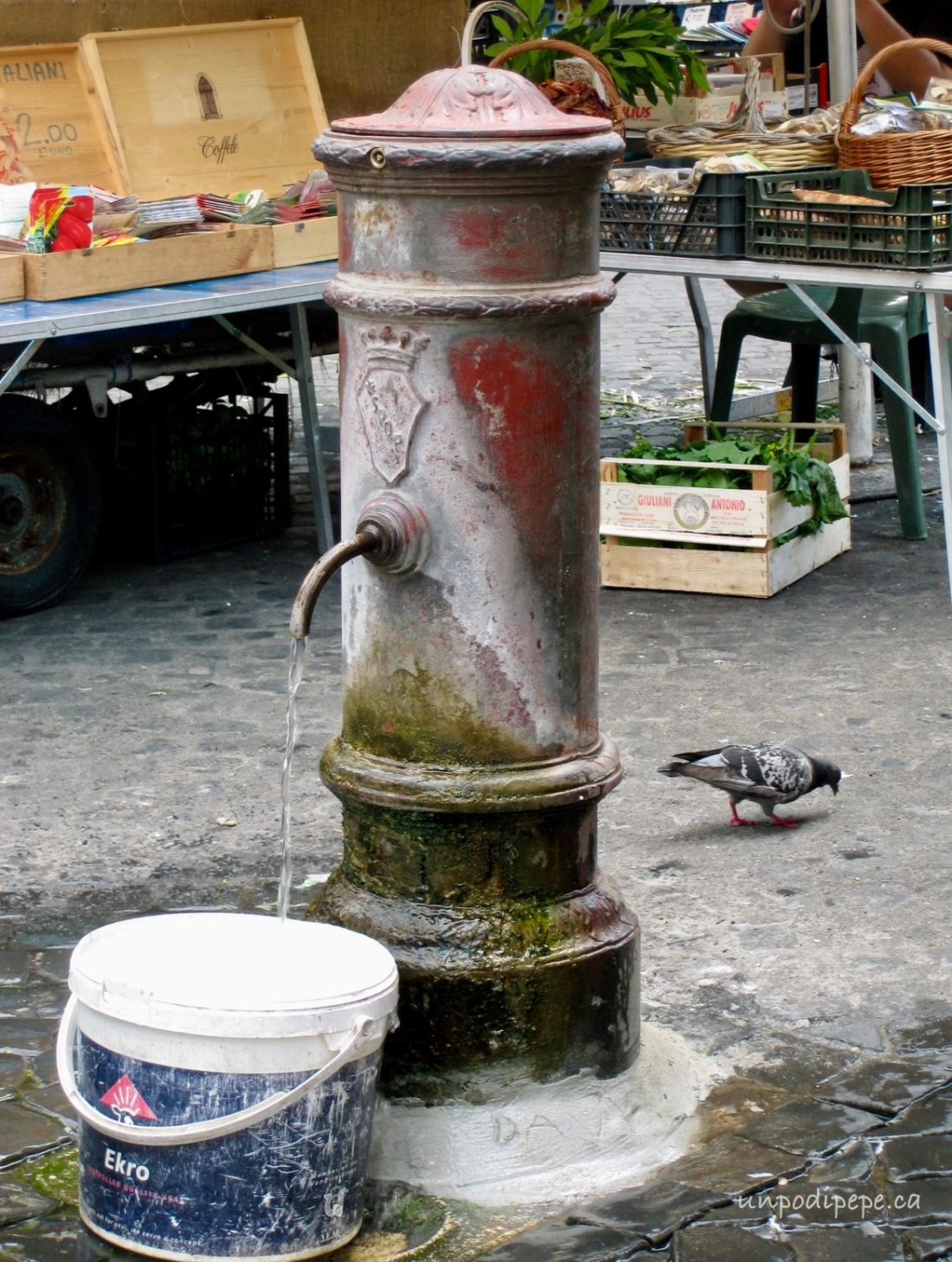
 The characteristic cast iron fontanelle, small drinking fountains found throughout Roma, are affectionately known as nasoni. Nasoni means ‘big noses’, and refers to the curved metal spout, which has a small hole at the top of the arch. Blocking the spout with your finger will force the water up from hole in an arc, like a drinking fountain. This is handy if you want to drink but do not have a water bottle!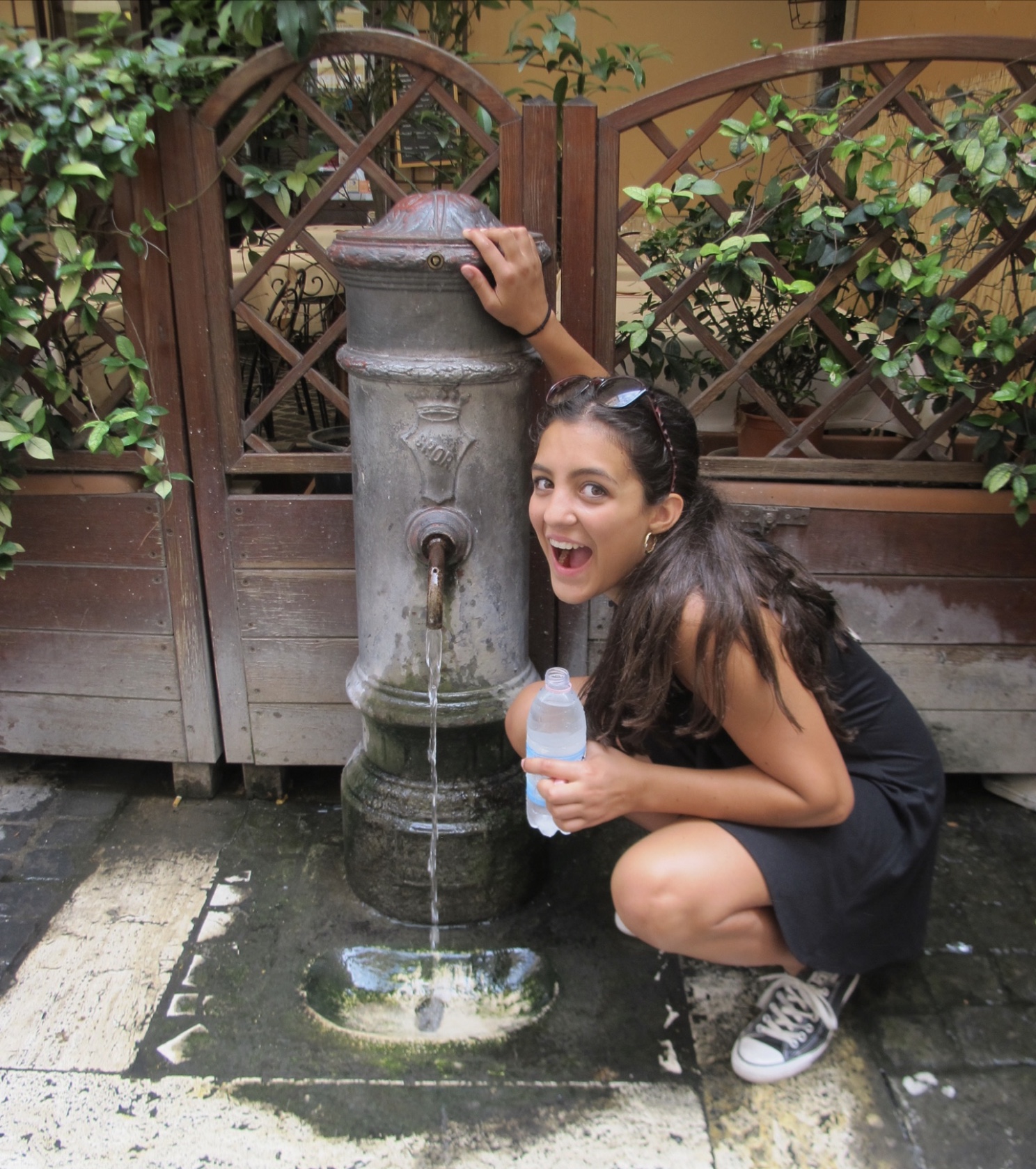
The nasoni date back to 1874, after Italian unification when mayor Luigi Pianciani installed fountains to provide free, accessible public drinking water for the health and hygiene of Romans and visitors. This is often referred to as ‘l’acqua del sindaco’, ‘the water of the mayor’. Some of the fountains in central Roma are supplied by a functioning ancient aqueduct, the Acqua Vergine. Nasoni get their water from Roma’s main drinking water reserve, Lago di Bracciano, 32 km (20 mi) to the northwest.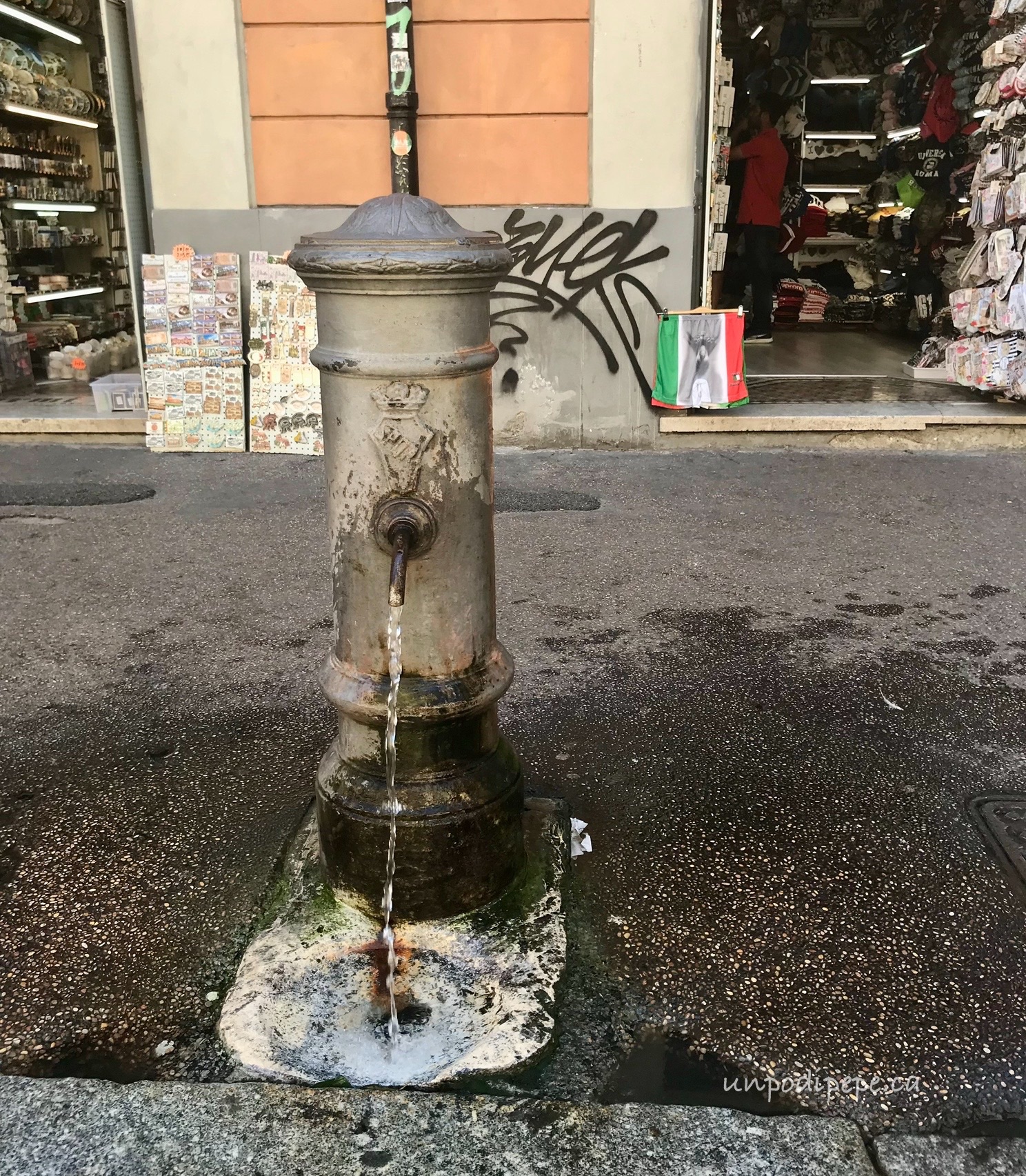
There were originally 5,000 nasoni, but the number decreased as it became more common to have domestic water connections. Today there are over 2500 nasoni in greater Roma, including 280 in the historic center, and 114 in outer areas, such as Fiumicino. For the 150th anniversary of the Nasoni in 2004, 3 new ones were installed near the Colosseo.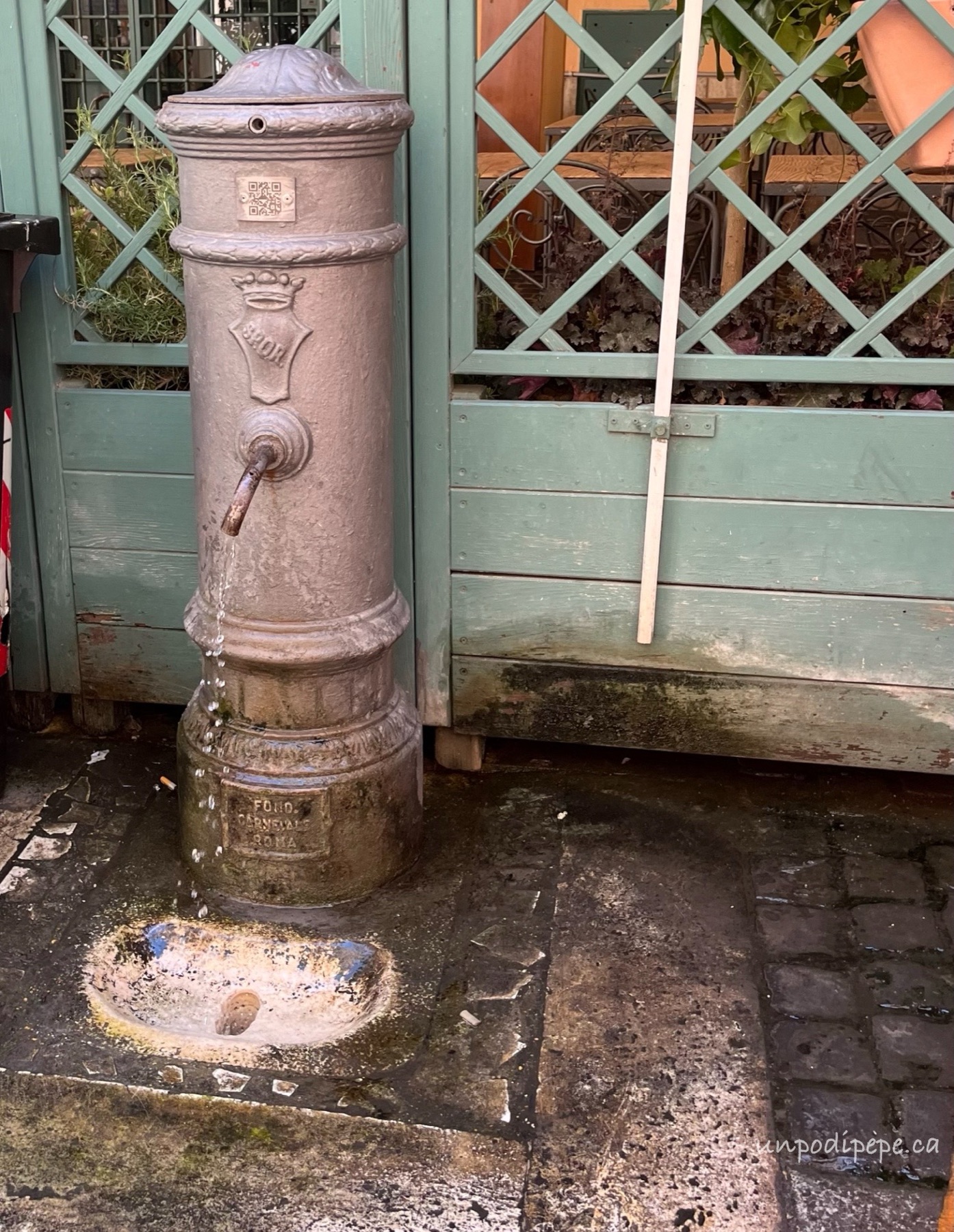 A nasone (singular) weighs ~100 kg and is 1.2 m high (almost 4 ft). Its classic cast iron cylindrical shape allows drinking water to flow continuously. Most nasoni have a metal grate to collect the water. The first Nasoni had 3 spouts, decorated with dragon heads. In the 1920’s the dragons became an endangered species and since then, nasoni are cast iron cylinders with a single smooth curved ‘naso’ spout. Some of them have the SPQR insignia and quite a few are decorated with graffiti. The 3 oldest nasoni are the original dragon spout design. They can be found on Via di San Teodoro, in Piazza della Rotonda in front of the Pantheon, and at the Fontana delle tre Cannelle on Via della Cordonata near Palazzo Quirinale.
Besides quenching the thirst of Roma, nasoni also have a hydraulic purpose. They act as surface ventilation valves for the underground water supply system. This releases pressure in pipes, and the continuous flow of water keeps it from stagnating, preventing uncontrolled bacterial growth. The continuous flow may seem like a waste of drinking water, but in fact the percentage of waste is only about 1%, while waste due to old leaky pipes in poor condition would be over 30%. It costs the city €3-5/day to operate each nasone, depending on the water flow.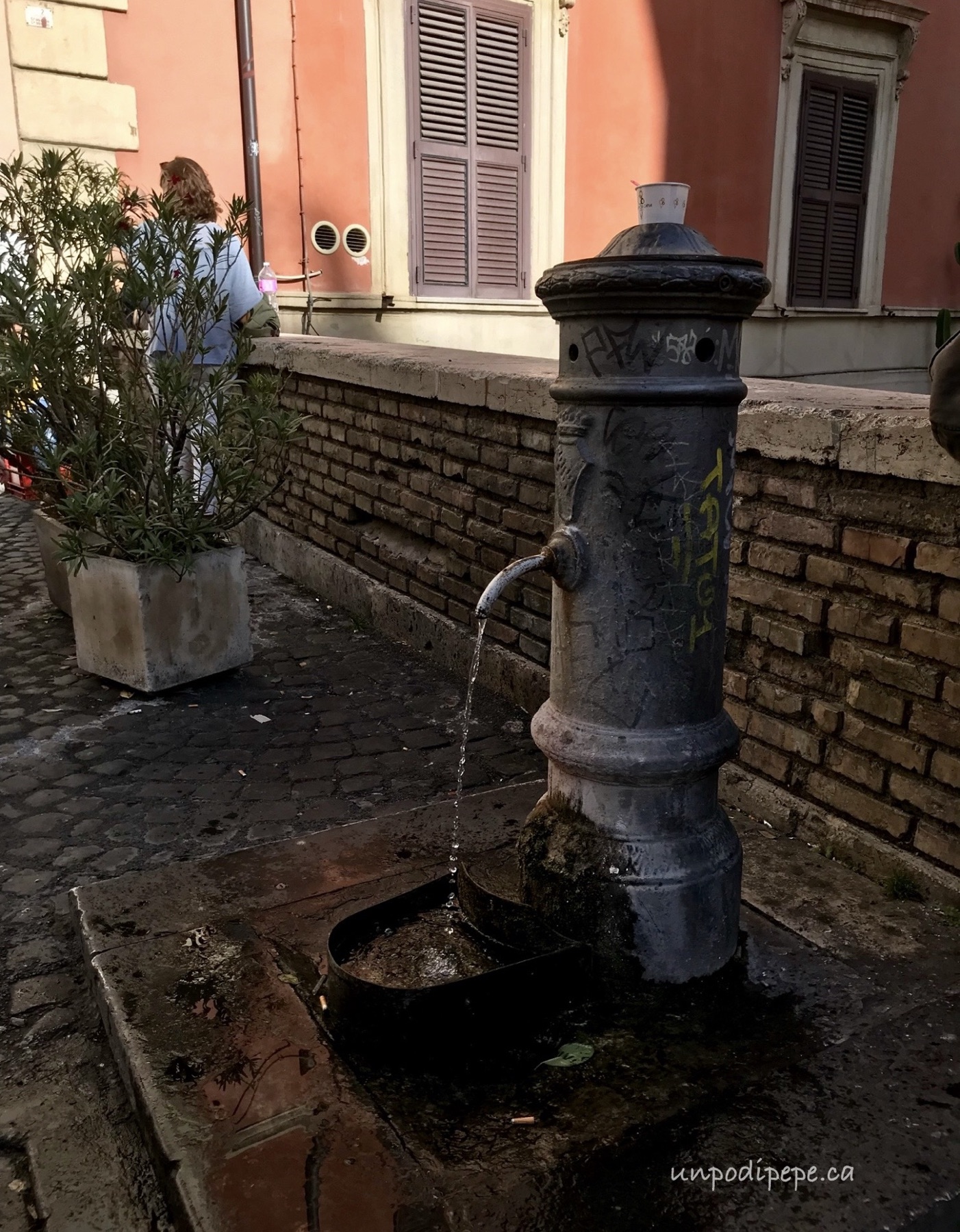
The water company ACEA has the Waidy Wow waterfinder App that maps out 50,000 drinking water points including nasoni and other fountains throughout the country. Wanted in Rome, an online English magazine has a Nasoni map of Rome. The Nasoni di Roma App focuses specifically on locating nasoni. With the nasoni, plus 90 ornamental fountains offering uninterrupted drinking water, Roma is the city with the most drinking fountains in the world. Installed to provide accessible fresh drinking water for thirsty Romans and visitors, the nasoni are now iconic symbols of Roma, representing community and hospitality. Don’t forget to bring a water bottle! If you are visiting in summer, check out Beat the heat: Surviving Summer in Roma.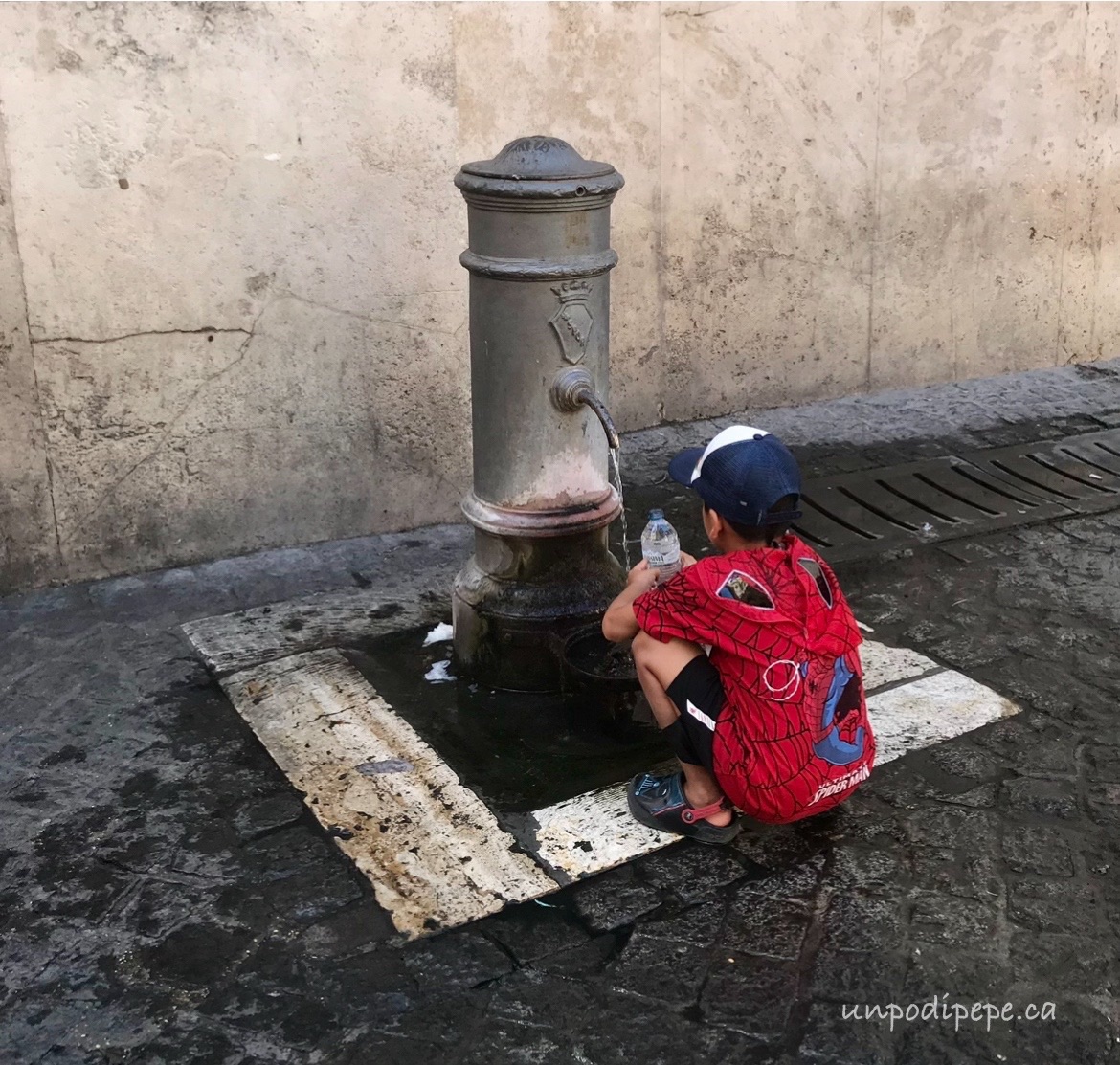
Buon Viaggio, Cristina
 Un po' di pepe