
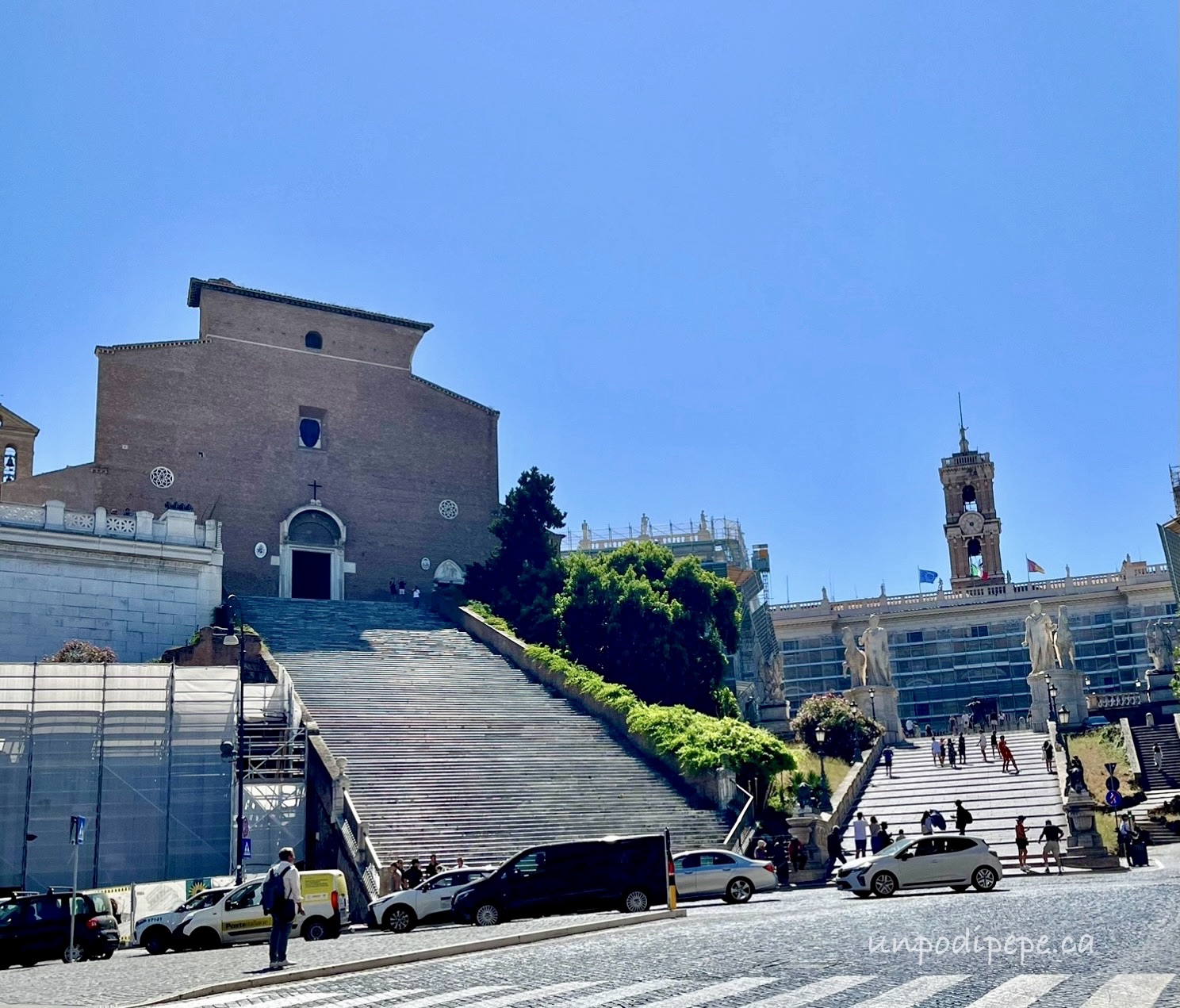
 I recently attended a family wedding in one of the most beautiful churches in Roma, the Basilica Santa Maria in Aracoeli (pronounced Ah*rah*CHEH*lee). Because of its location on the highest point of the Capitoline Hill, sandwiched between Il Vittoriano and the staircase to Il Campidoglio, most visitors have seen it from the outside-but they have no idea what treasures the interior holds. Photos in this post are from the July rehearsal and wedding of Isabella and John.
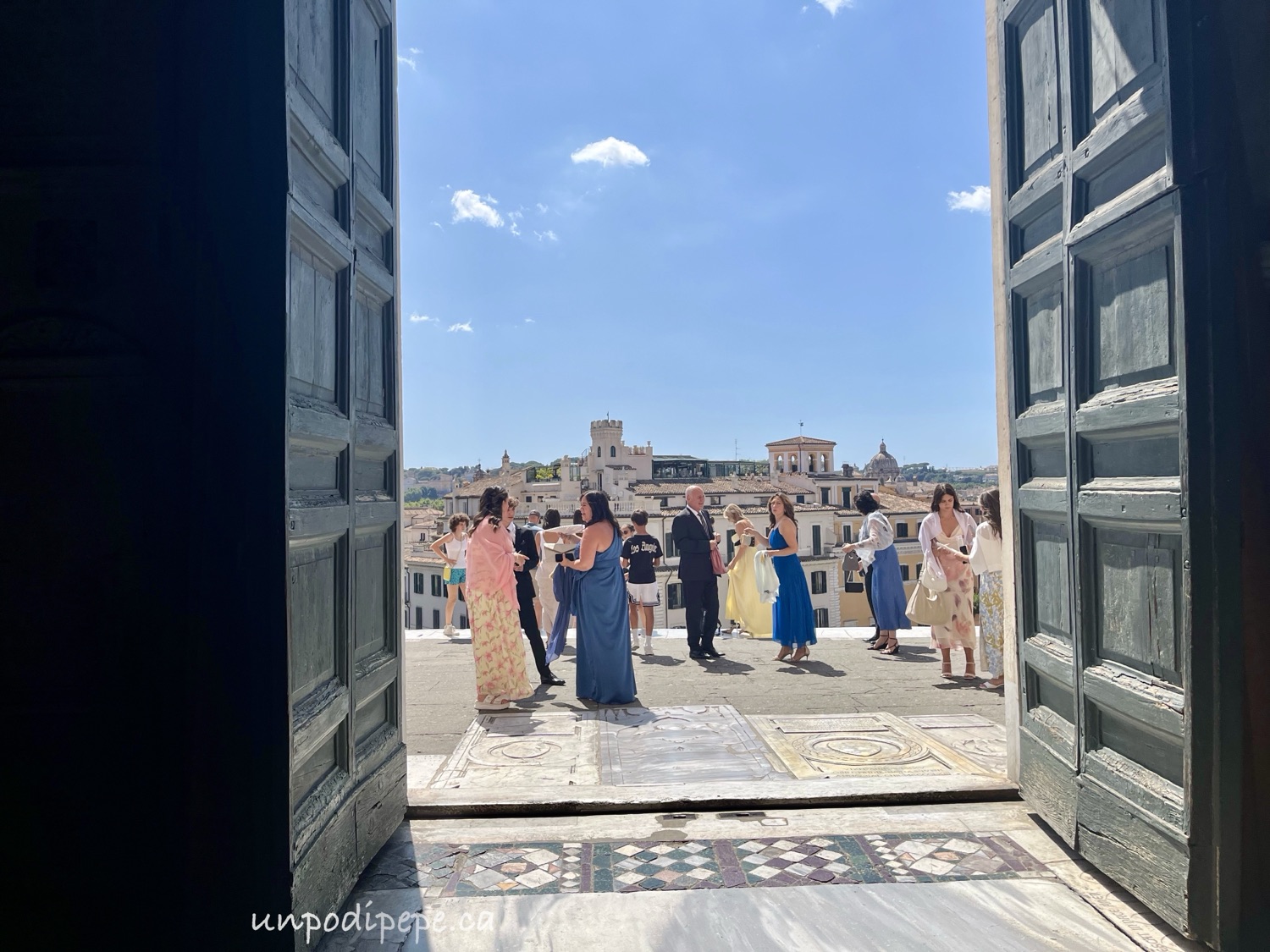 Translated from Latin, Santa Maria in Aracoeli means ‘Santa Maria of the altar in Heaven’. The Romanesque Gothic Basilica was built on the site of a Temple to Giunone (Juno) in the year 574. Originally a Greek Byzantine church, it was taken over by the Benedictines in the 9th Century, then later the Franciscans in 1249. Santa Maria in Aracoeli is one of the principal churches of Roma and the designated church of the city council and the Senate and people of Roma (SPQR).
  The Municipio, or City Hall of Roma is conveniently located behind the Basilica, on the Campidoglio. During the French occupation of 1797, the Basilica was turned into a stable for the French cavalry! It was almost demolished in the 1880’s during construction of its massive neighbour Il Vittoriano /L’Altare della Patria. In the photo above, the white monument is Il Vittoriano, the building behind it with the steep staircase is Santa Maria in Aracoeli and the staircase on the right leads to Piazza del Campidoglio, where the Capitoline Museum and Municipio are located.
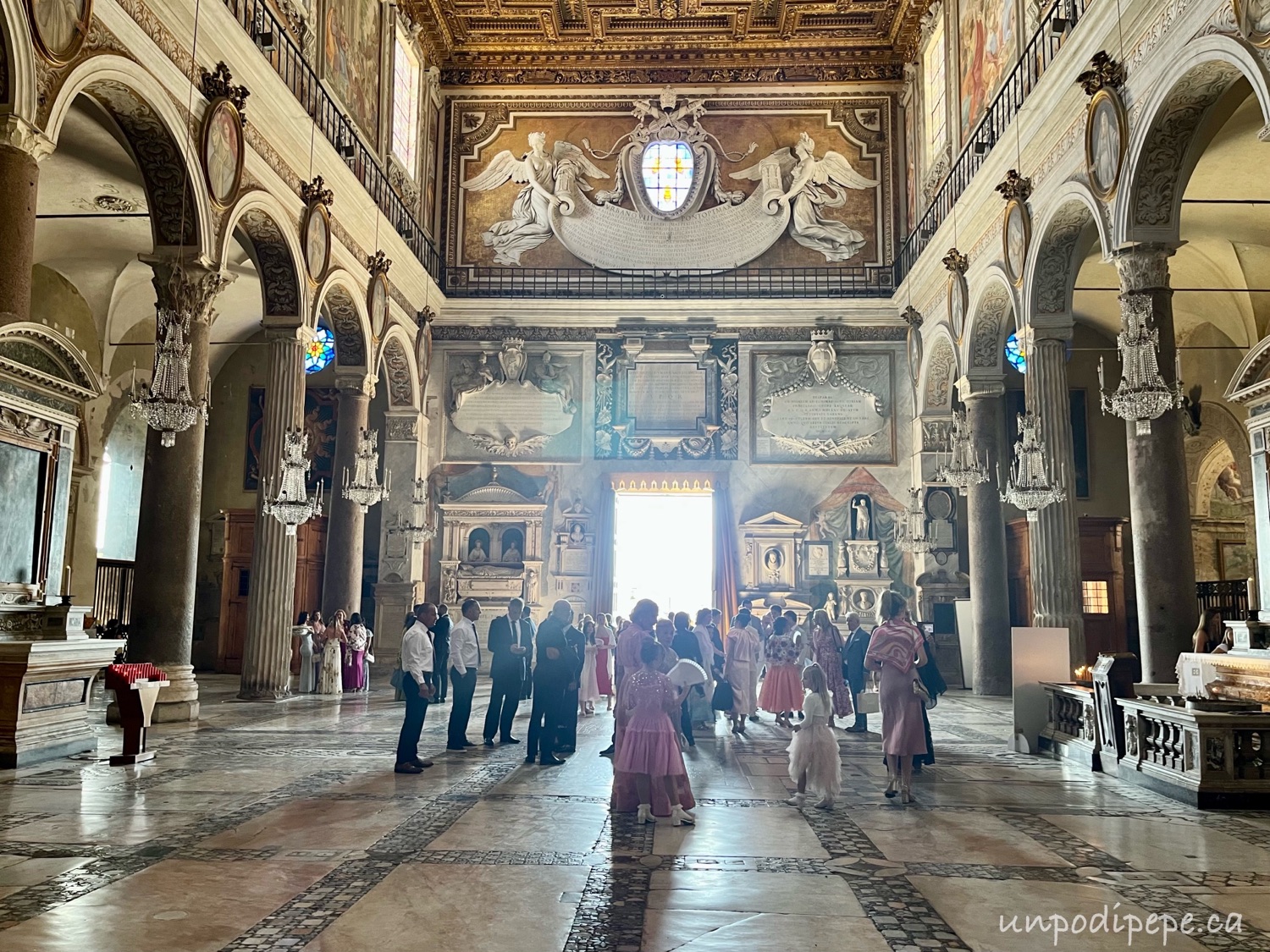 The interior is elaborately decorated, with a coffered and gilded wooden ceiling (1575). The exquisite cream and pink marble floor is decorated with Cosmati, an inlay geometric style of Medieval stonework.
  The arches are supported on 22 columns scavenged and upcycled from diverse ancient ruins throughout the city. This is why no 2 of the columns are alike. 52 gorgeous Murano glass chandeliers hang in the nave and sanctuary. They were all lit during the wedding.
On the altar, is a 10th Century Byzantine icon painted on beech wood, la Madonna di Aracoeli. She is holding up her hand, which is painted in gold. La Madonna di Aracoeli was carried through the streets of Roma during the Black Plague outbreak in 1348, and is credited with the shorter duration of the epidemic. 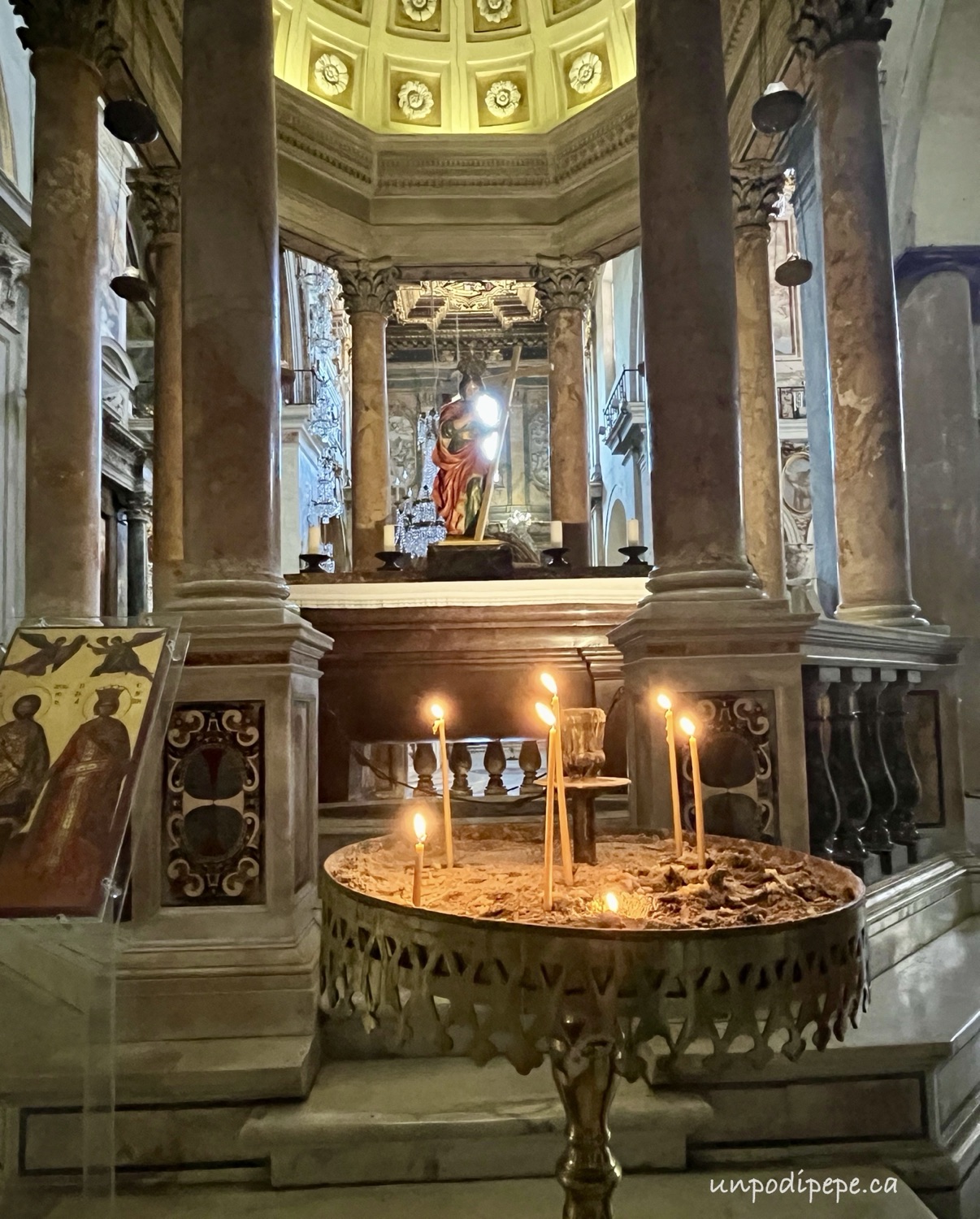 To the left of the altar an octagonal tempietto or shrine contains the Byzantine relics of Sant’ Elena (St. Helena), the mother of Emperor Constantine. Cappella Bufalini, the first chapel on the right of the entrance, contains a series of 15th Century frescoes by Pinturicchio. There are also frescoes by Pietro Cavallini and Arnolfo di Cambio, and countless other works of art.
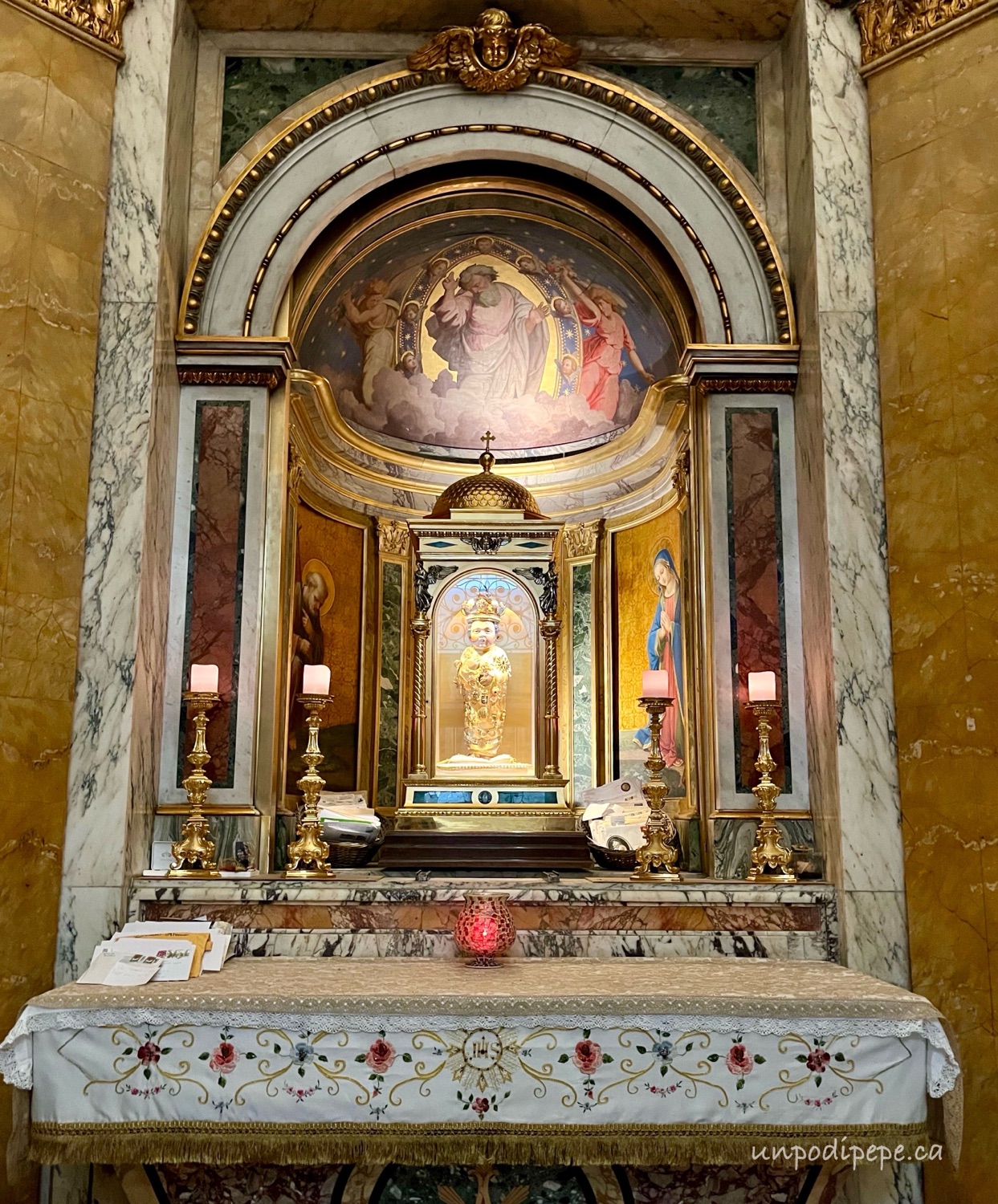 The most famous item in the church is the Santissimo Bambinello, a 15th Century bejewelled wooden sculpture of baby Jesus carved out of olive wood from the gardens of Gethsemane in Jerusalem, and baptised in the river Jordan. It is believed to have healing powers. Unfortunately, he was stolen in 1994, and is still missing. Today, the Bambinello in a private chapel by the small gift shop is a replica.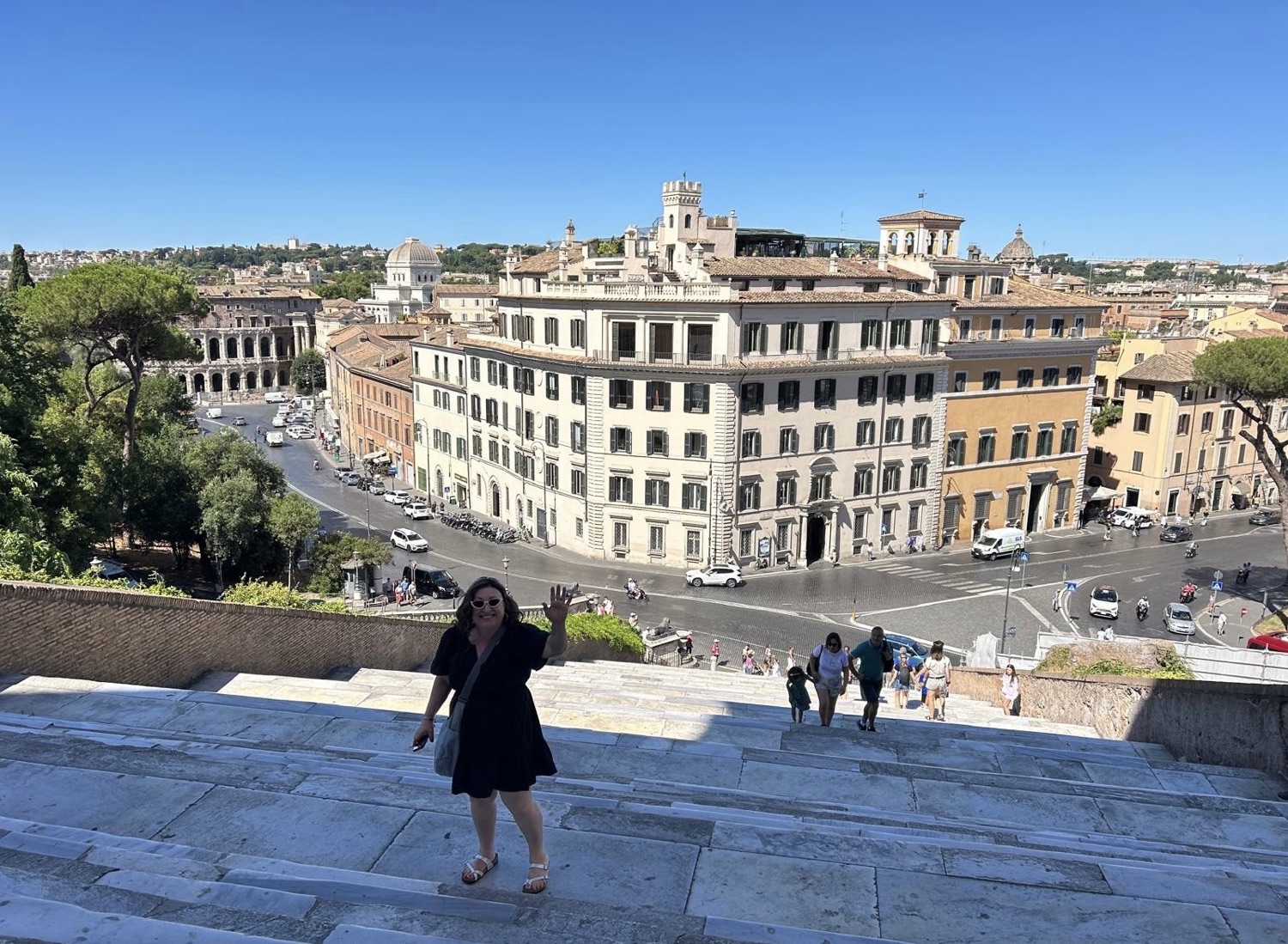
La Scala Santa, the staircase of 124 marble steps leading to the main entrance of the church, was designed in 1348 on the occasion of the end of the Black Death. 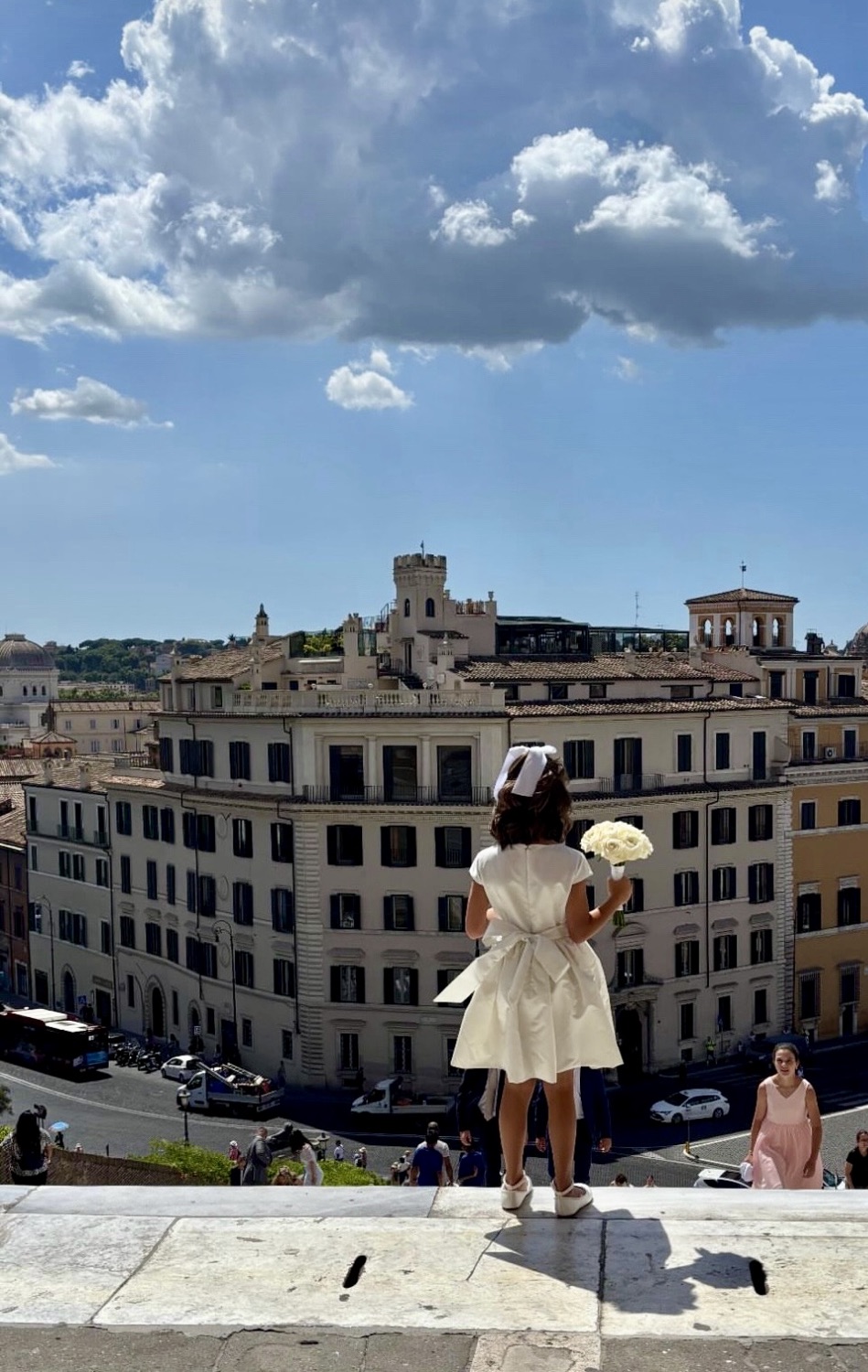 The stairs are considered sacred, and people have been known to climb up on their knees, hoping for a miracle. Luckily, none of the wedding guests chose to do this, but there were many wobbly stilettos climbing the stairs, and one extremely dirty wedding train! Viva gli sposi!
Ciao, Cristina
 Un po' di pepe
Wow!! What a beautiful wedding.
>
It was, and fun too! I will have to come over and show you the photos. Ciao, Cristina