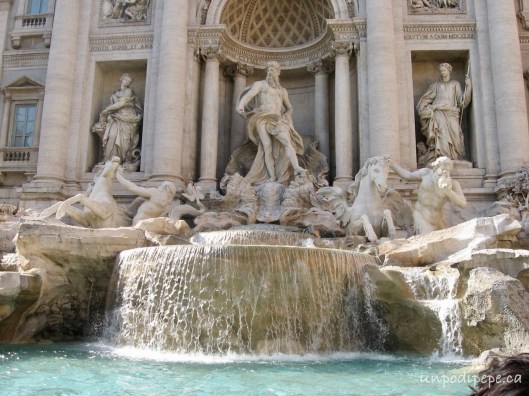
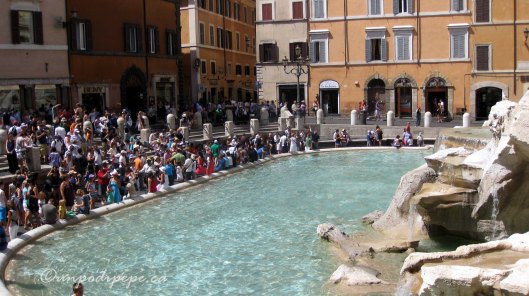
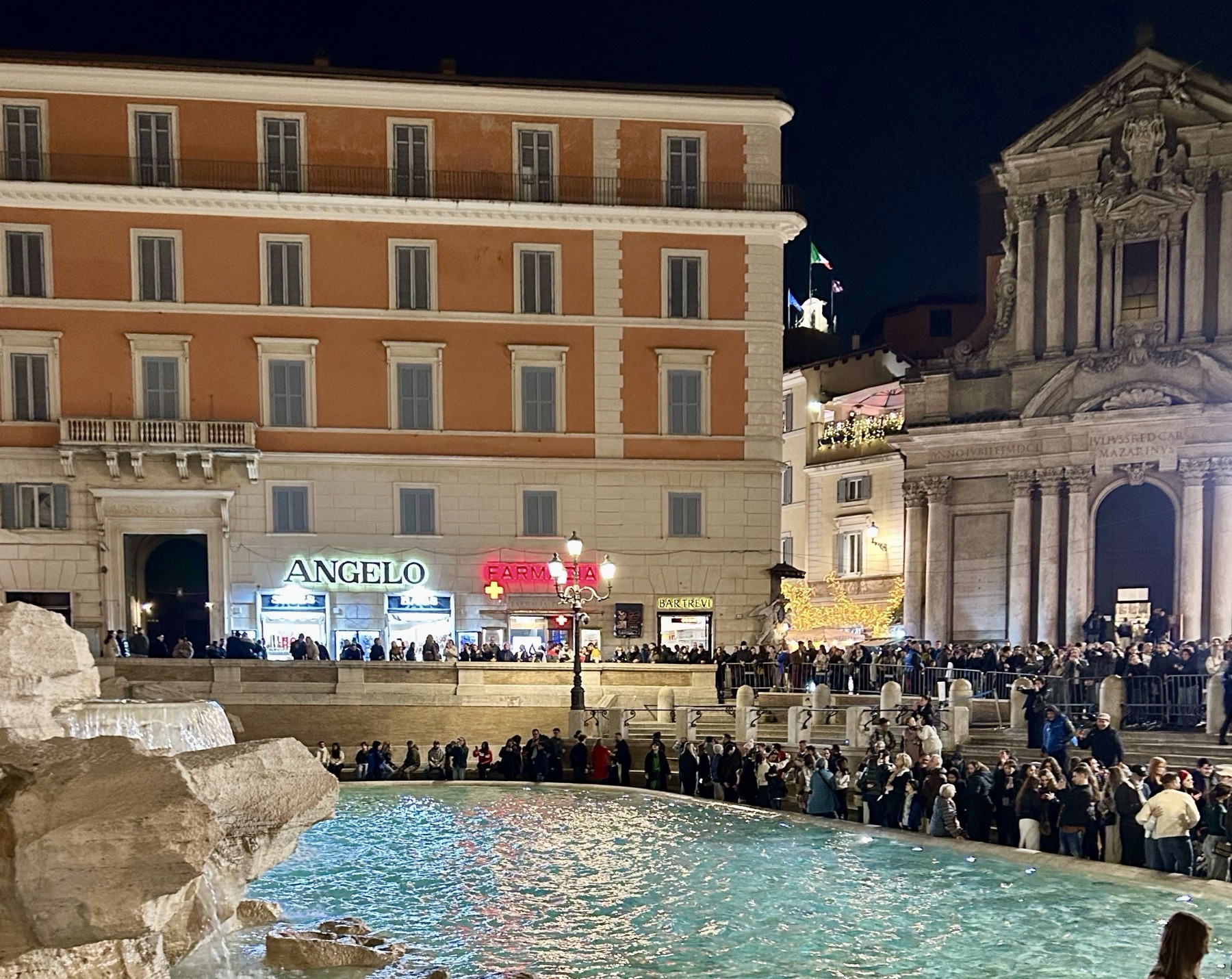
 The Fontana di Trevi is one of the most iconic structures in Roma-a Baroque masterpiece with a direct link to the Ancient Roman Empire. Every year, millions of tourists visit, trying to capture a perfect photo, tossing in a coin to ensure a return visit to Roma. Sometimes it can feel like a mosh pit! The water comes from an ancient aqueduct, Aqua Virgo (Acqua Vergine in Italiano), 9 m below ground, built in 19 BC. It still functions today and provides water to the fountains in Central Roma. Find out more in the previous post Acqua Vergine.
The Fontana di Trevi is named for the piazza. Tre vie means 3 roads, refering to Via De’Crocicchi, Via Poli and Via delle Muratte that come together at Piazza Trevi. The Fontana di Trevi is the final destination of Acqua Vergine.
There was always a fountain to mark the end point of Acqua Vergine. The medieval fountain was a simple rectangular shape with 3 spouts pouring water into 3 basins. In the Baroque era, when everything was over the top and extravagantly decorated, Pope Urban found the existing fountain too boring. He commissioned the Master, Gian Lorenzo Bernini to sketch a design, but they both died before it got going. The next Pope held a contest, and Nicola Salvi’s design was chosen. Construction started in 1732, with many artists involved during the 30 years it took to complete. In a very modern fashion, construction of the Fontana di Trevi was financed with proceeds from the Roman lottery.
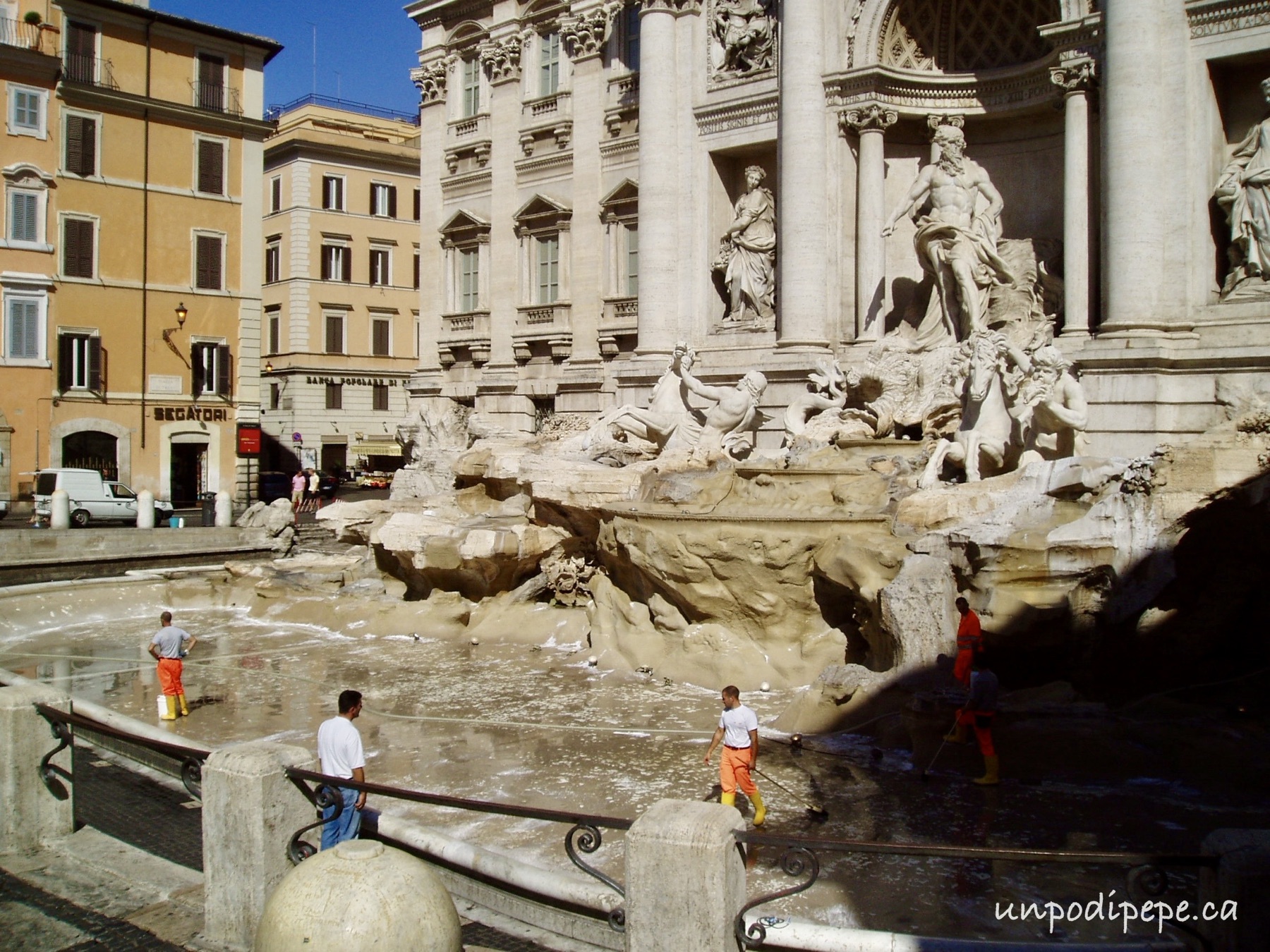
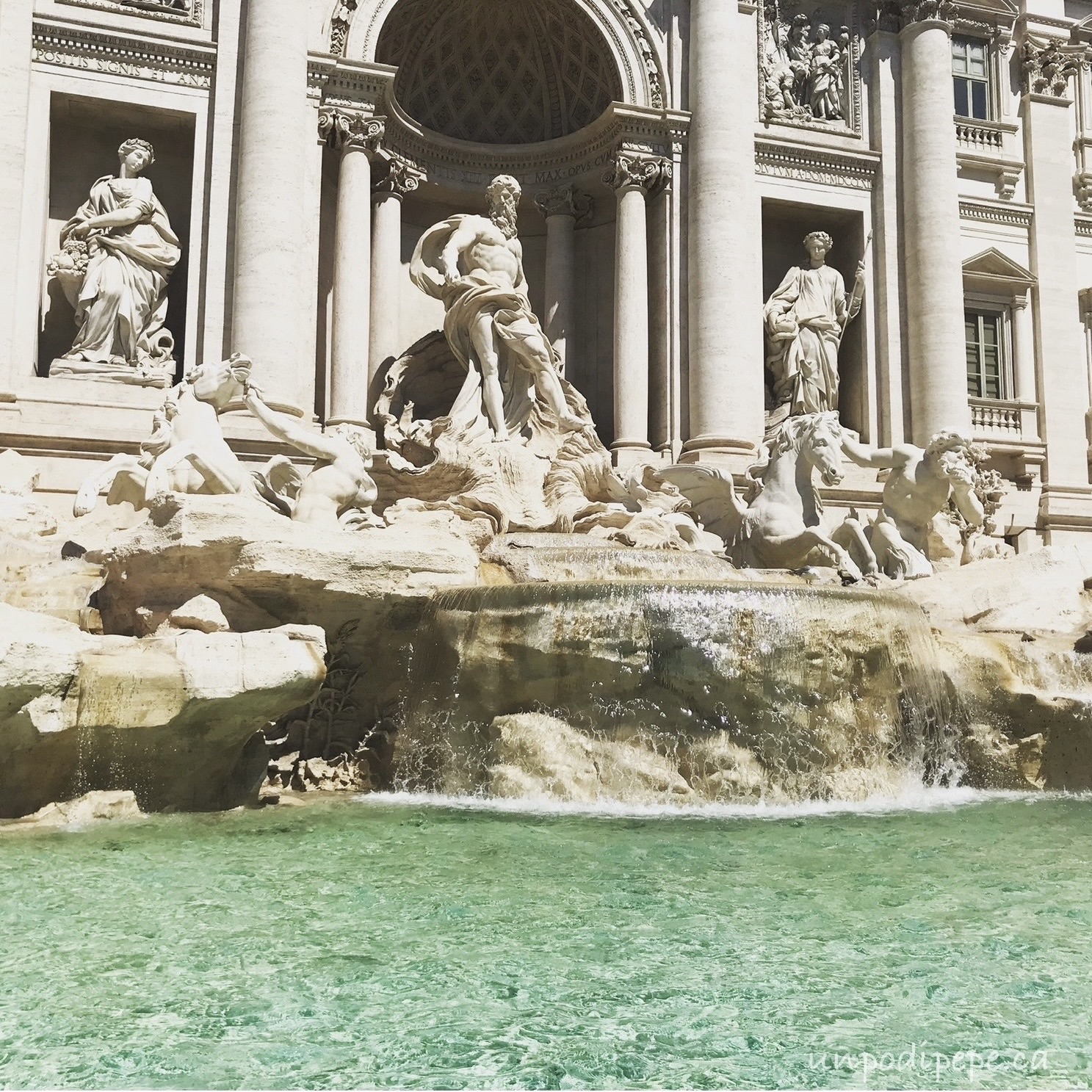
The symmetrically balanced theme ’Taming the Waters’ was built right onto the existing building. Palazzo Poli was given a new façade featuring a giant order of Corinthian columns. The main sculpture is Greek Titan Oceanus, not Neptune as is commonly thought. He is in a large half-shell pulled by 2 seahorses and tritons (sea messengers) with a sea reef below them. The façade and sea reef are made of Travertine from Tivoli, and the sculptures are Carrara marble. Above and on either side of Oceanus are 2 bas reliefs illustrating the origins of Acqua Vergine.  One depicts Marcus Agrippa ordering construction of the aqueduct and the other the vergine, a young girl leading Roman soldiers to the spring. The Fontana di Trevi is 26 m (~85 ft) high and 49 m (~160 ft) wide. It spills 80,000 cu m (2, 825,000 cu ft) of water per day! Today the water is continually recycled.
Tossing a coin in the water with the right hand over the left shoulder while facing away from the fountain is thought to ensure a return to Roma. I never miss this opportunity-even during renovation in 2015 I found a way to toss one in! This tradition dates back to the Ancient Romans who tossed coins in water so the gods would protect them on their journey and ensure a safe return. Throw in a second coin to find true love and a third for wedding bells! I believe these last 2 are just from the 1954 movie ‘3 coins in the Fountain’, not the Ancient Romans! According to another old tradition, drinking the water with your beloved will ensure eternal love and fidelity. Do not drink the water!
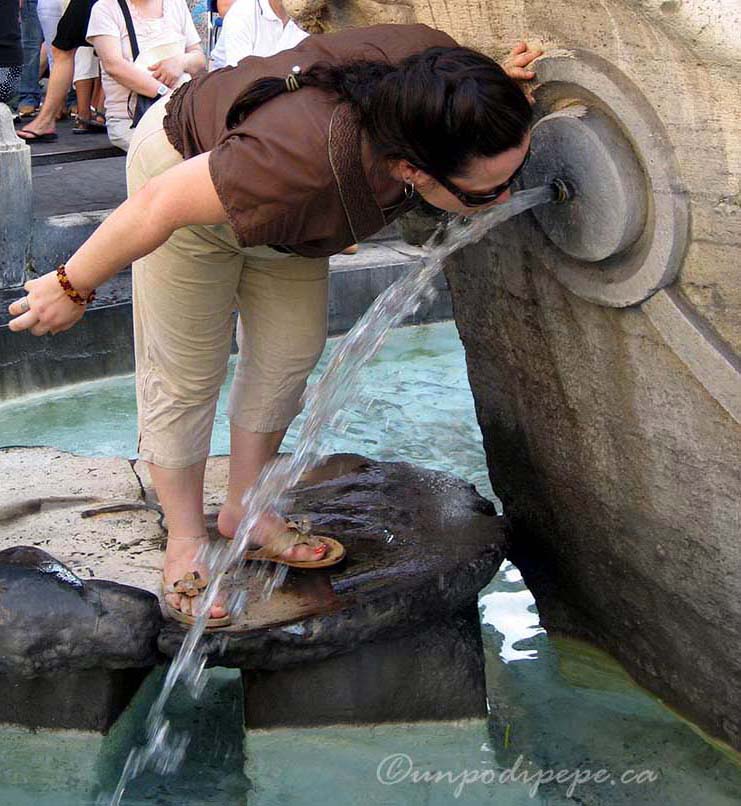
Although the water comes straight from a spring via an ancient aqueduct, it is now continually recirculated. In 1998 when the Fontana was refurbished, recirculating pumps were installed. On the far right and up a few stairs is the Fontanella degli Innamorati (Little Lovers’ Fountain) a small rectangular basin with 2 crossing spouts. Take a drink from this instead-the water is also from Acqua Vergine!
All of those coins in the water can’t be hygienic either. Approximately €3,500 per day is collected nightly and given to the charity Caritas. The money funds a program providing supermercato cards Roma’s needy. There are regular attempts to steal the coins from the basin, which of course is illegal. The water has been vandalized many times, painted red and most recently dyed black with charcoal by climate eco anarchists.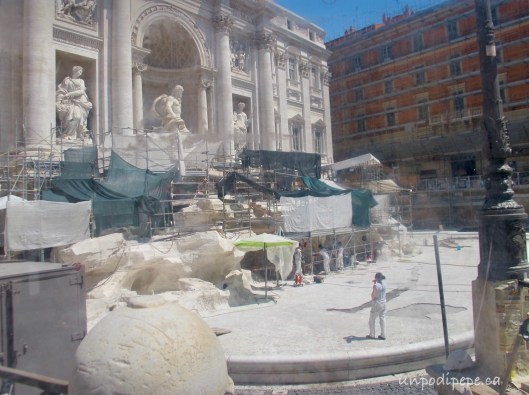
In 2014 Fendi sponsored a 1.5 year, €2.2 million restoration and cleaning, including installation of LED lights to improve night illumination. Most recently, in late 2024 a 3 month restoration also secured the lower basin to restrict access to only 400 visitors at a time. Crowds are expected to be bigger than usual during Giubileo 2025. Early in the morning is usually a good time to visit.
As an outdoor public monument, the Fontana di Trevi is free and always open, so unless it is under renovation, you can check it out at any time. Access to the lower basin may be limited at some times, and cleaning takes place on certain Monday and Friday mornings. Since it is fed by an aqueduct and powered only by gravity, it never needs to be turned off.
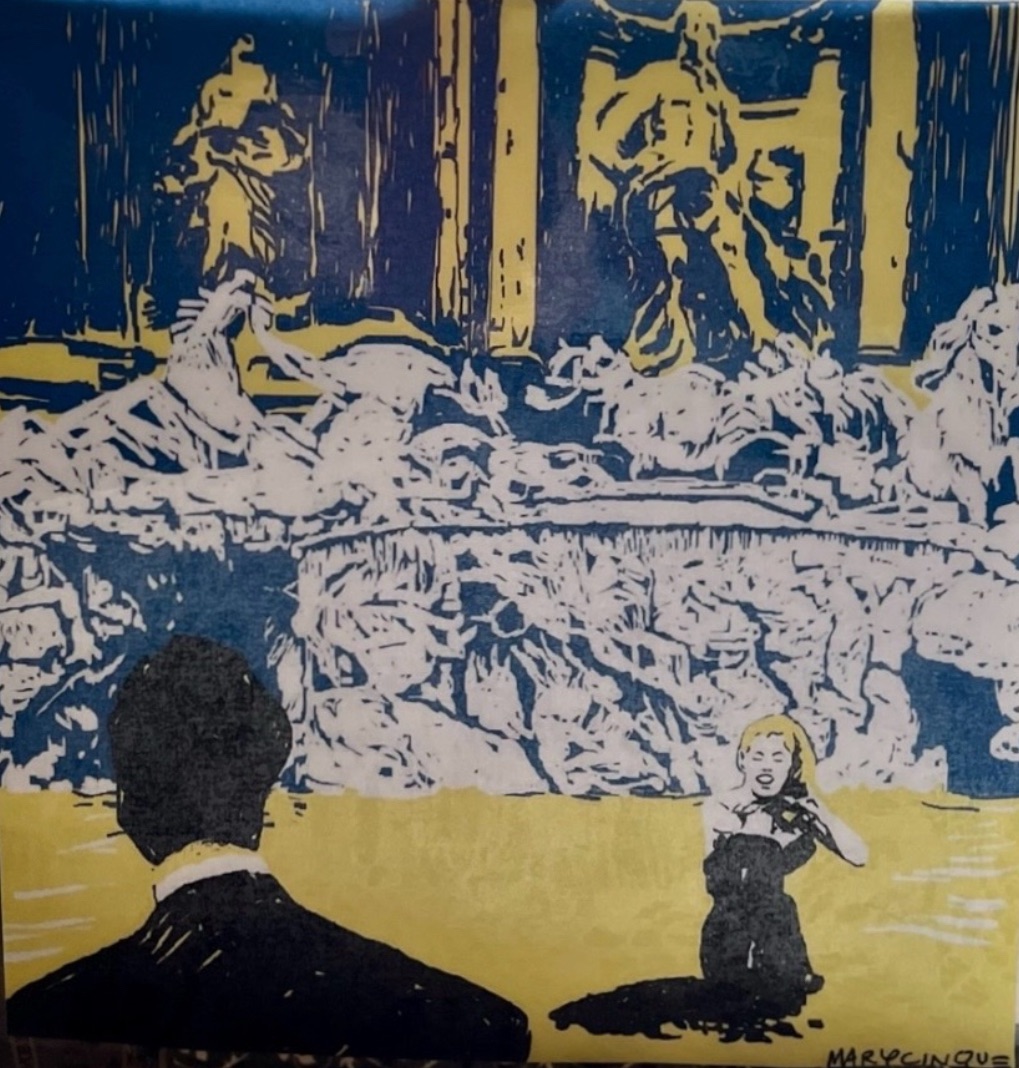
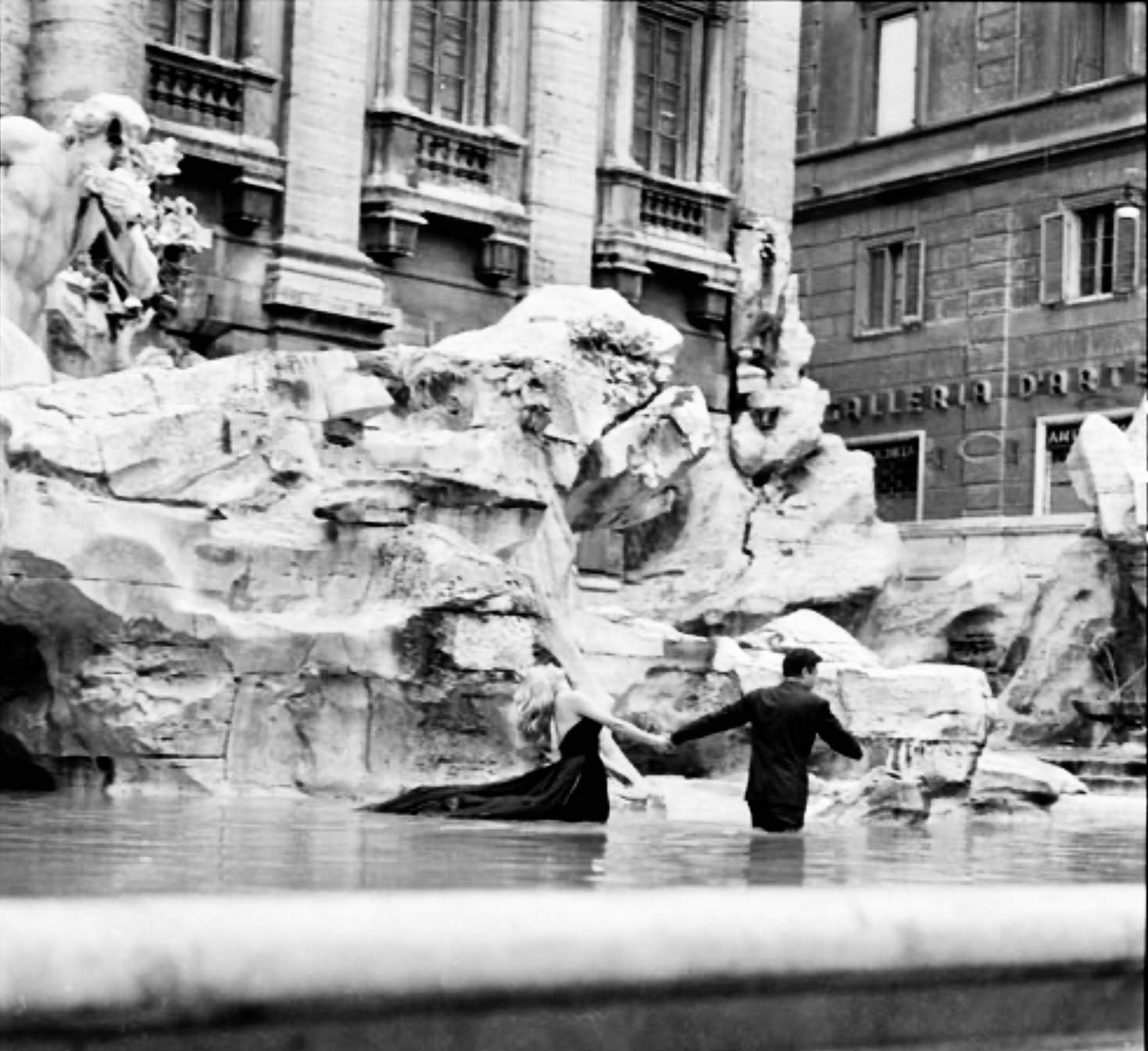
The Fontana was immortalized in film in 1960 when Anita Ekberg walked in with her clothes on in the Fellini classic La Dolce Vita. Do not be like Anita-you will be immediately slapped with a €450 fine. 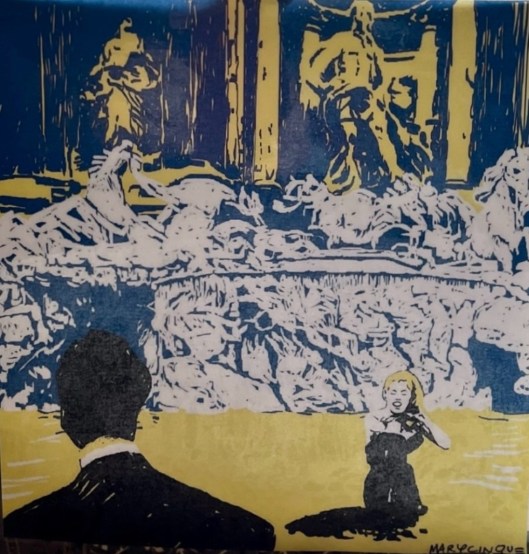 When her costar Marcello Mastroianni died in 1996, the Fontana di Trevi was draped in black, the water and lights turned off in his honour. Below is part of a poster-note how dirty the stone was in 1960! The spouts of Fontanella degli Innamorati can be seen on the far right.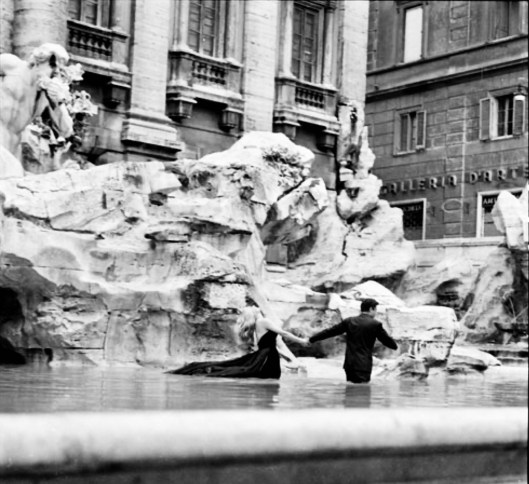
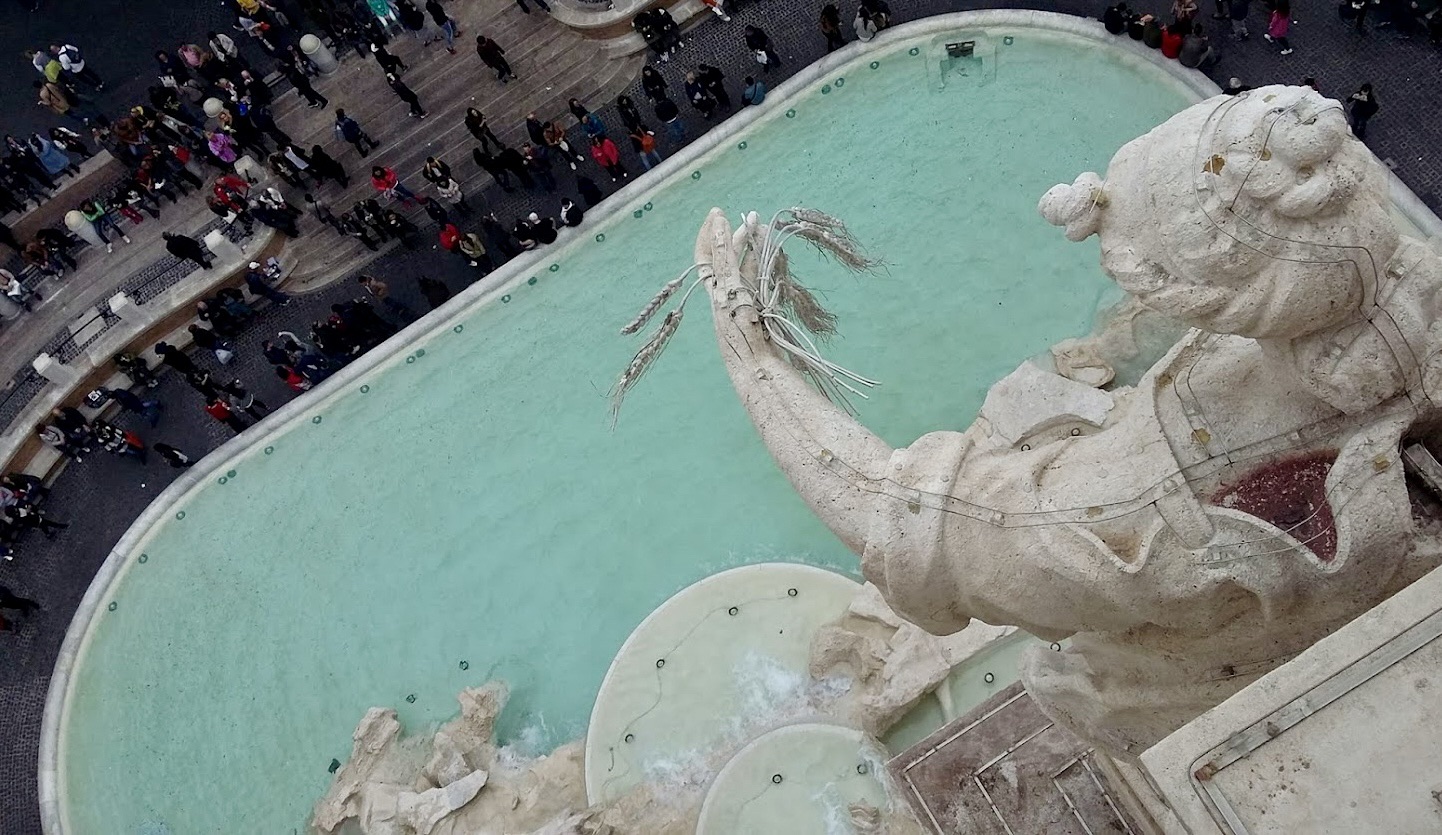
I have a cool Trevi memory. In 2004, I attended a printmaking exhibit with a friend. The entrance was at Via della Stamperia 6, 150 m from Piazza Trevi, down the side street past Fontanella degli Innamorati. I remember climbing a lot of stairs and walking through corridors to get to the exhibit, which was amazing. Then I wandered off to explore the gorgeous architectural details of the building, and heard the sound of running water as I walked past one of the tall, heavily curtained windows. Moving the curtain, I was right above the Fontana di Trevi! It had not even occurred to me that there was a real building behind it. Of course, this was before the time of cell phone cameras!  This photo is from the Istituto’s website and was taken from farther up, possibly the roof. Palazzo Poli was once a private residence, expropriated in 1885. It is now theIstituto Centrale per la Grafica (Central institute for Graphics) a museum and exhibition space created to preserve and promote cultural heritage documenting graphic art. Open Monday to Friday 09-17 and weekends 09-14. Admission is free. The room I wandered into is usually closed, unless you are attending a classical music performance.
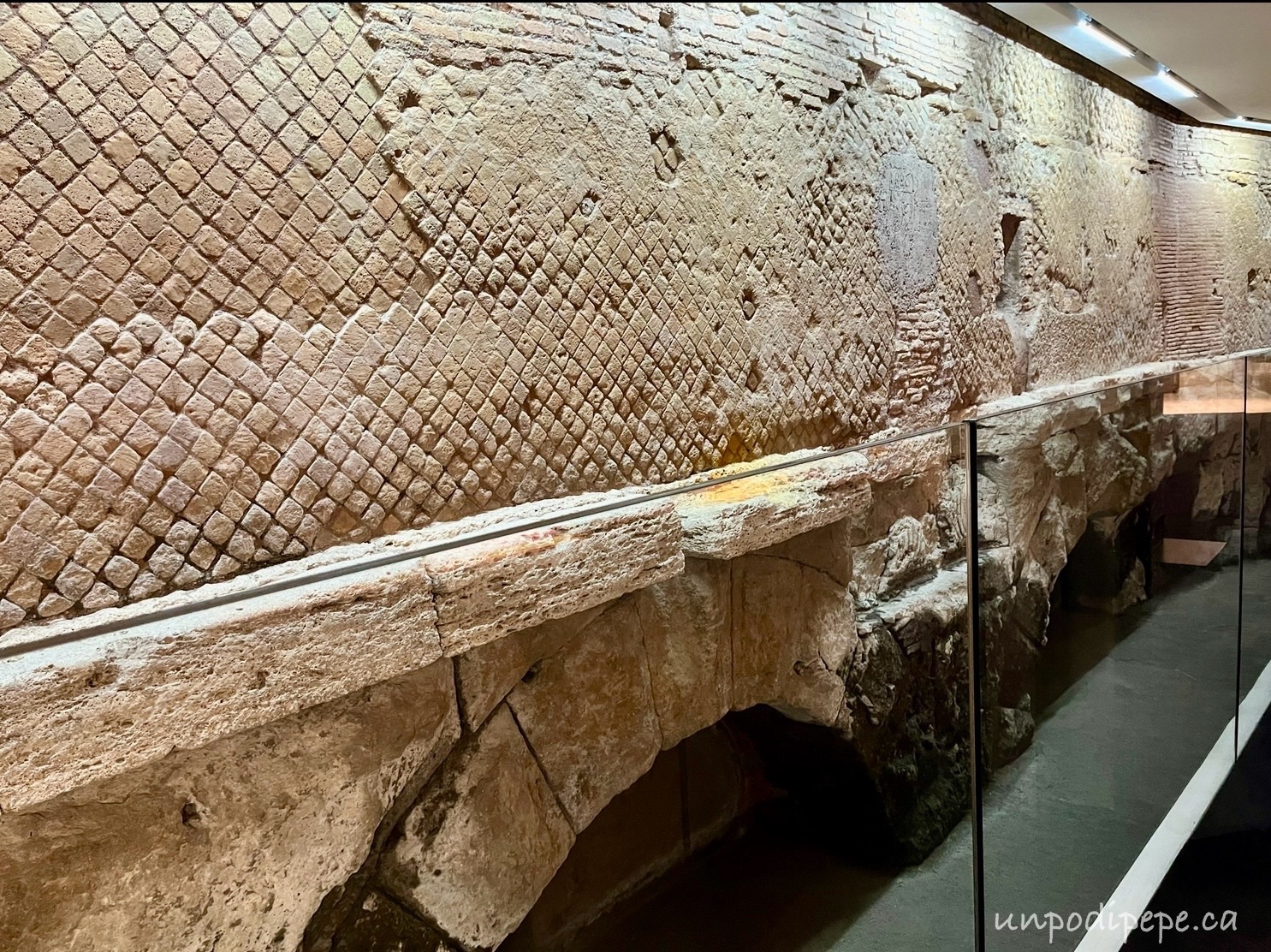
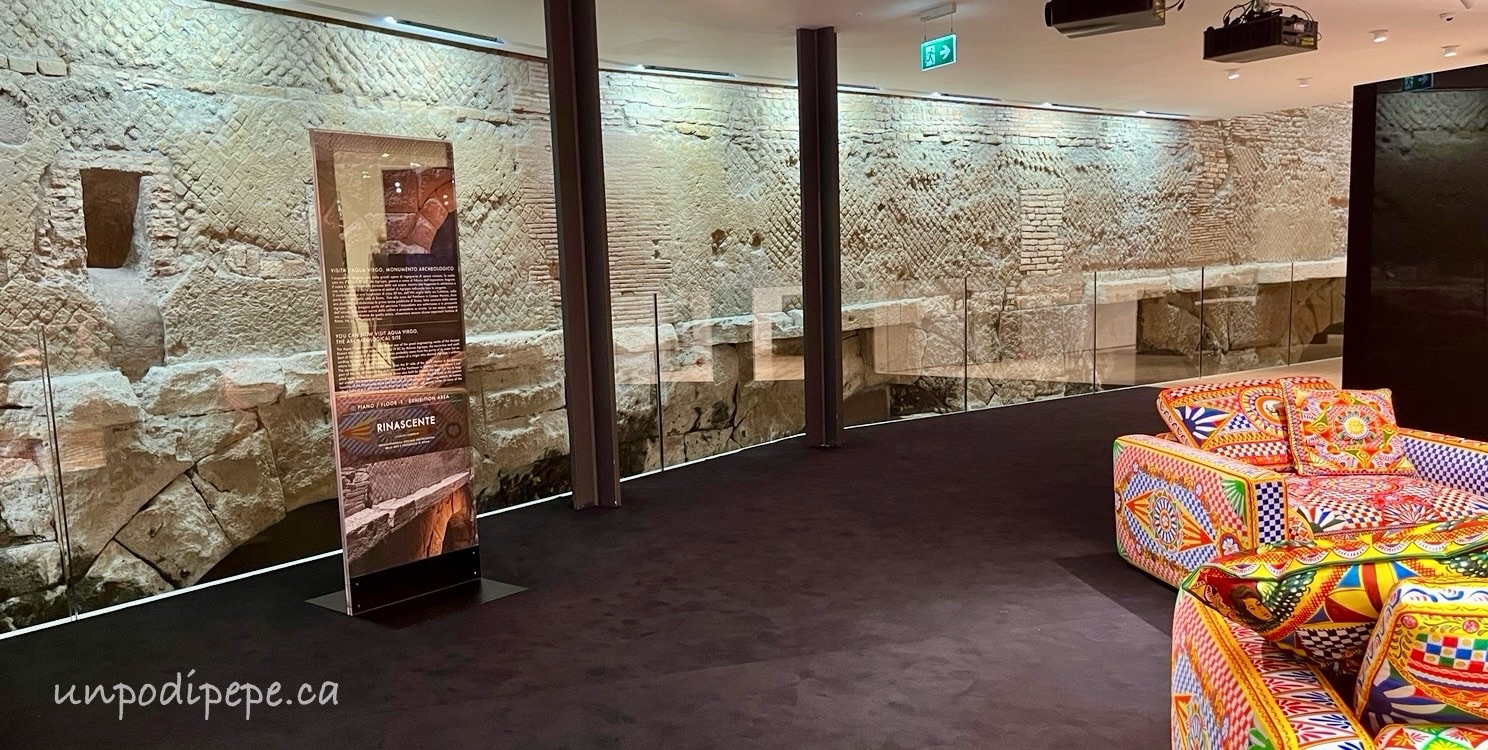
9 m below the Fontana di Trevi, an archeological site was discovered during 2001 renovation of the former Trevi Cinema. Excavations uncovered a building complex from the Imperial Age (27 BC to 476 AD) and a fancy domus (Roman home), including canals still carrying clear water from Acqua Vergine to a holding tank for the domus. The site is called Vicus Caprarius, or “City of water” Vicolo del Puttarello 25. Open Tuesday to Sunday 11-17 Reservations are recommended on weekdays, required weekends and holidays. There are several underground tours, ranging from 30 minutes with audio guide to several hours long. I plan to see it in July!

The photos in this post were taken between 2004 and 2025. Night view and bas reliefs taken by my sorella Lucia in Feb 2025. ‘La Dolce Vita’ oil pastel on paper by the amazing Mary Cinque.
Ciao, Cristina

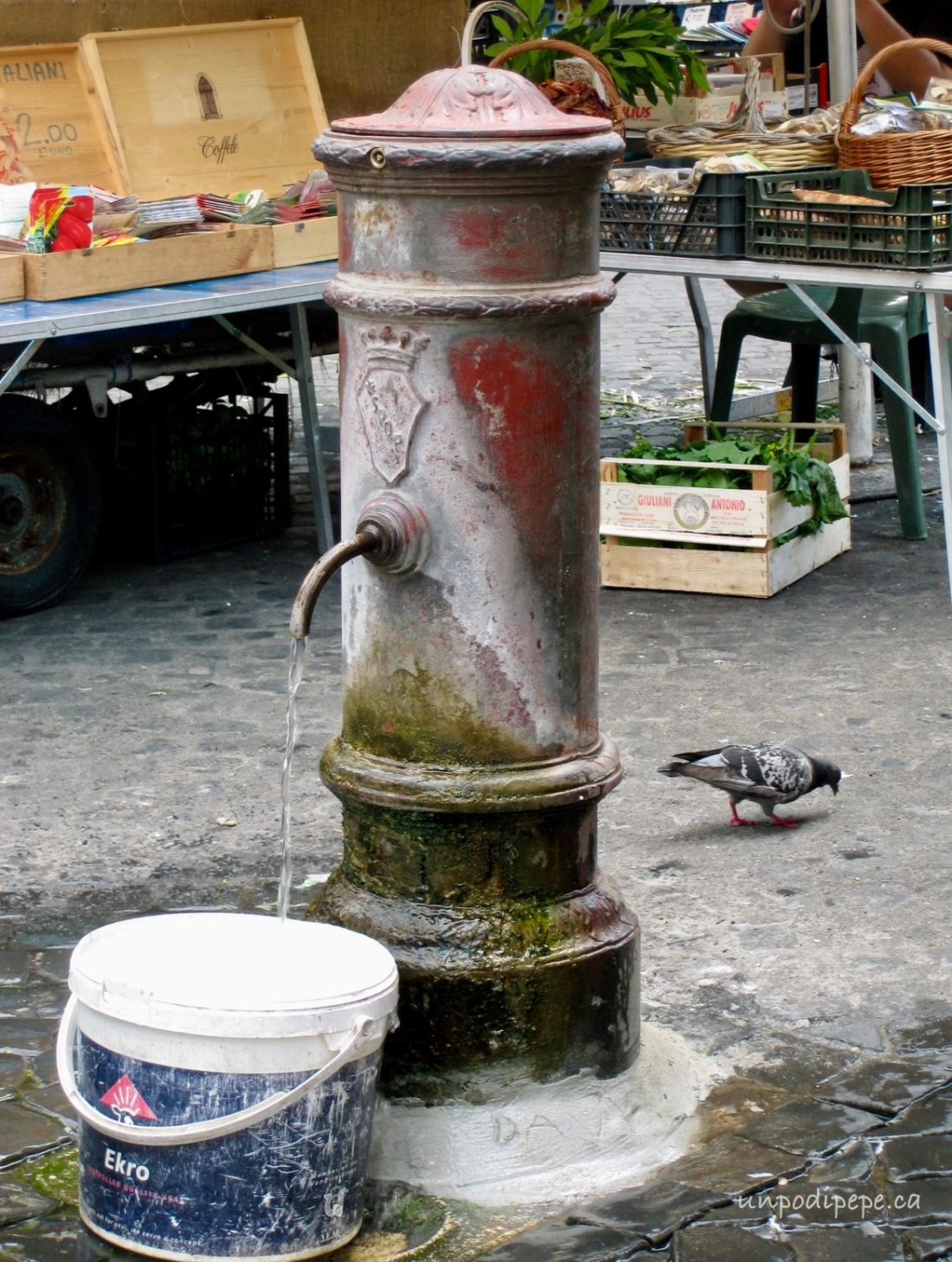 The characteristic cast iron fontanelle, small drinking fountains found throughout Roma, are affectionately known as nasoni. Nasoni means ‘big noses’, and refers to the curved metal spout, which has a small hole at the top of the arch. Blocking the spout with your finger will force the water up from hole in an arc, like a drinking fountain. This is handy if you want to drink but do not have a water bottle!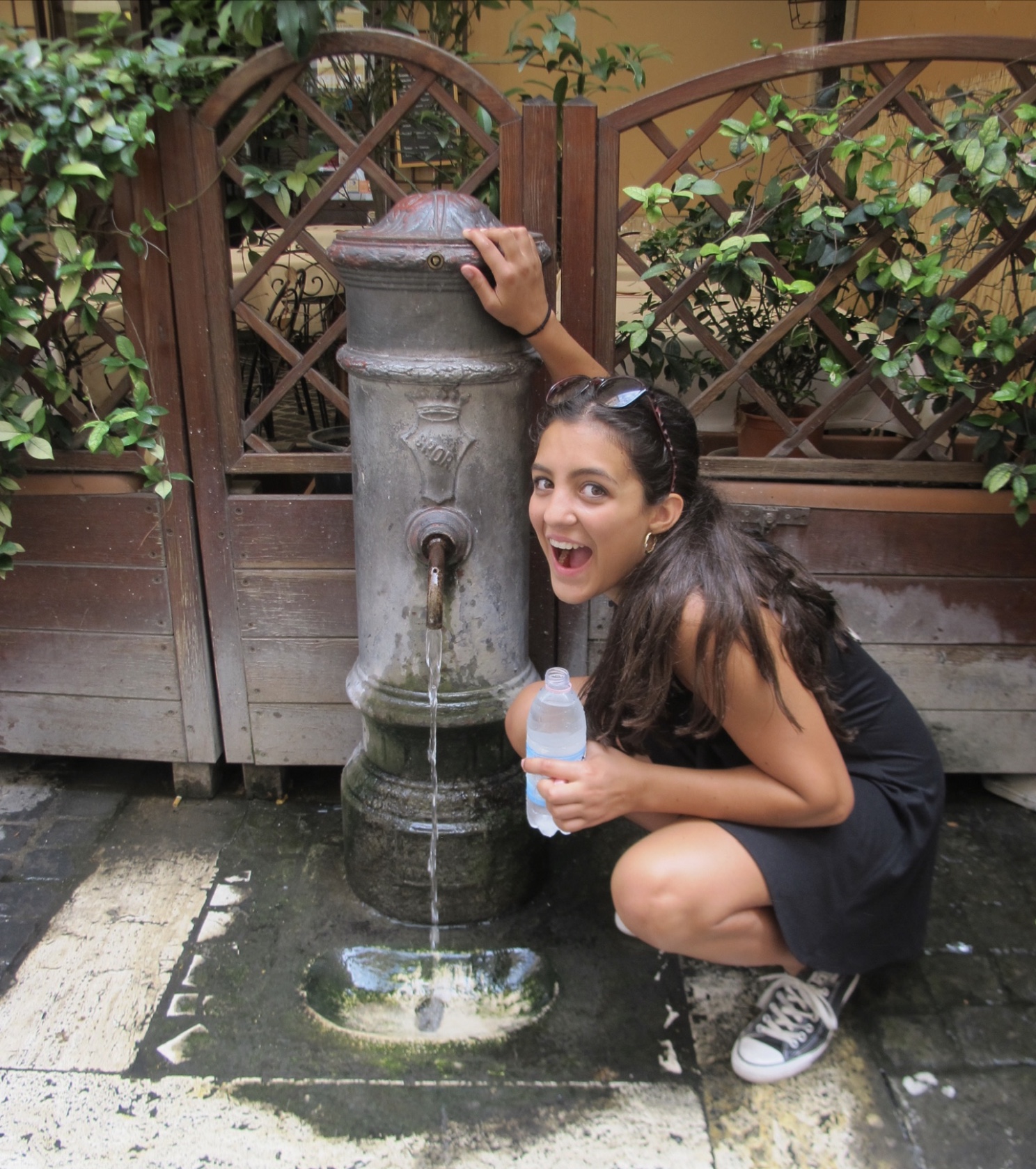
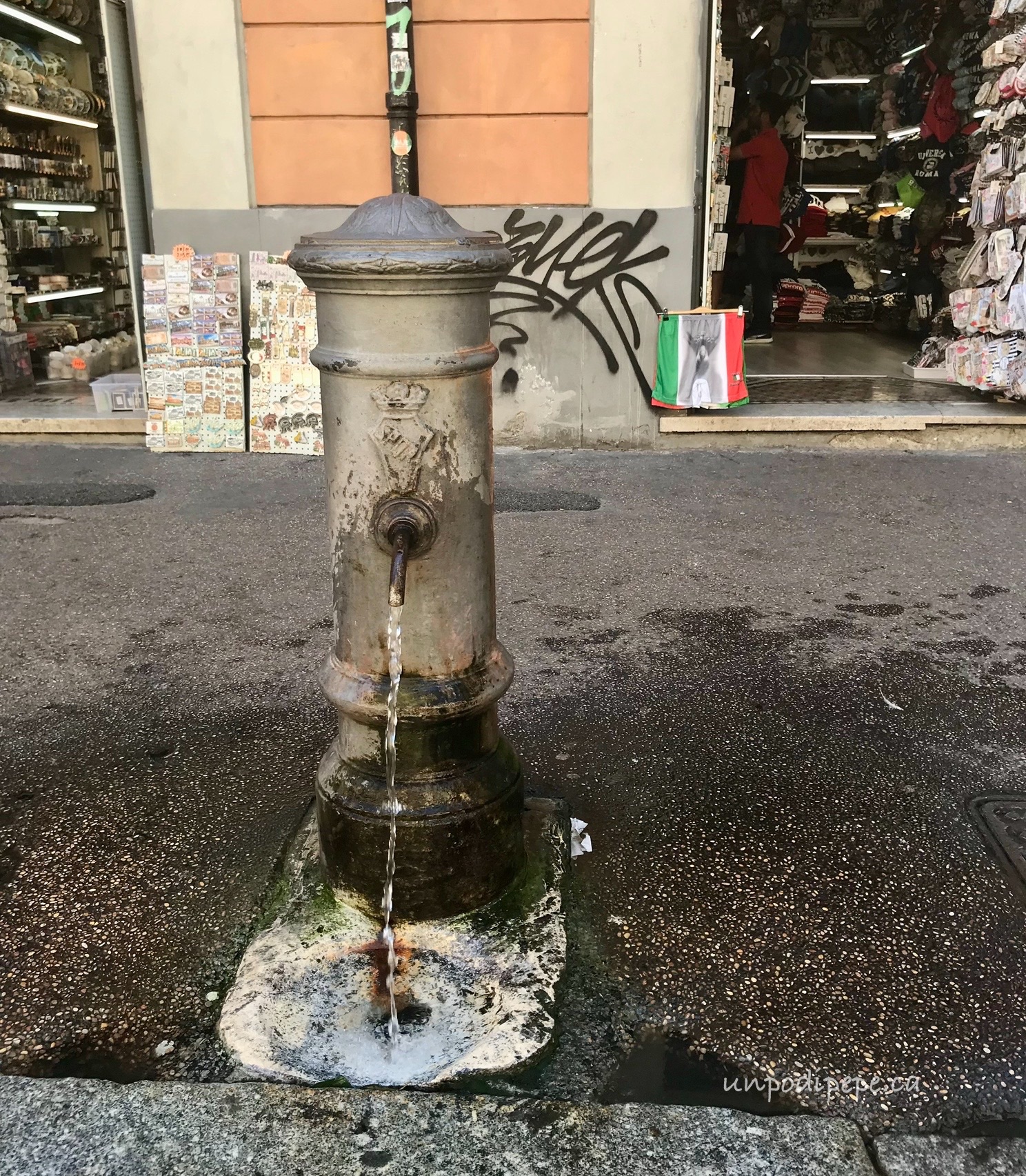
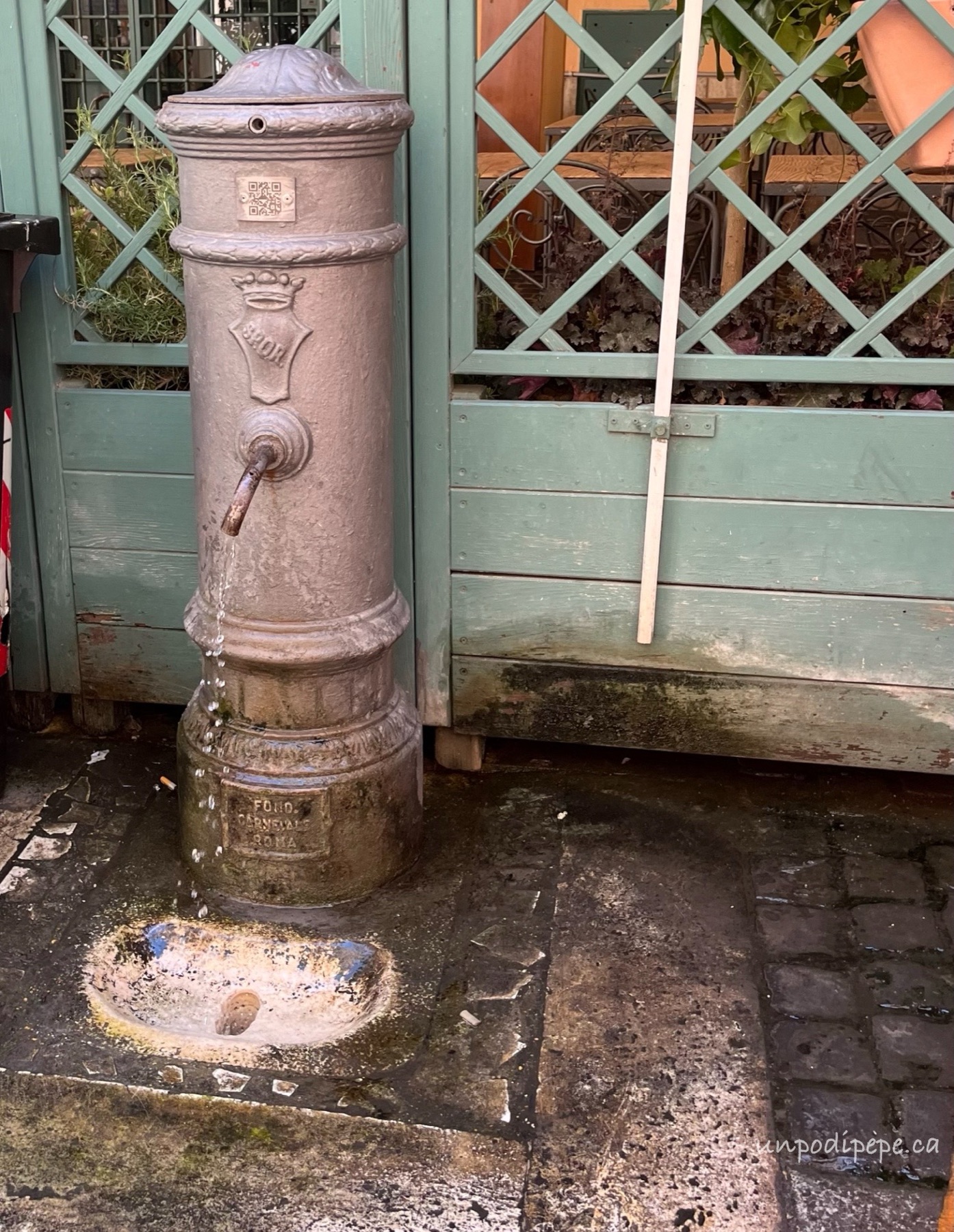 A nasone (singular) weighs ~100 kg and is 1.2 m high (almost 4 ft). Its classic cast iron cylindrical shape allows drinking water to flow continuously. Most nasoni have a metal grate to collect the water. The first Nasoni had 3 spouts, decorated with dragon heads. In the 1920’s the dragons became an endangered species and since then, nasoni are cast iron cylinders with a single smooth curved ‘naso’ spout. Some of them have the SPQR insignia and quite a few are decorated with graffiti. The 3 oldest nasoni are the original dragon spout design. They can be found on Via di San Teodoro, in Piazza della Rotonda in front of the Pantheon, and at the Fontana delle tre Cannelle on Via della Cordonata near Palazzo Quirinale.
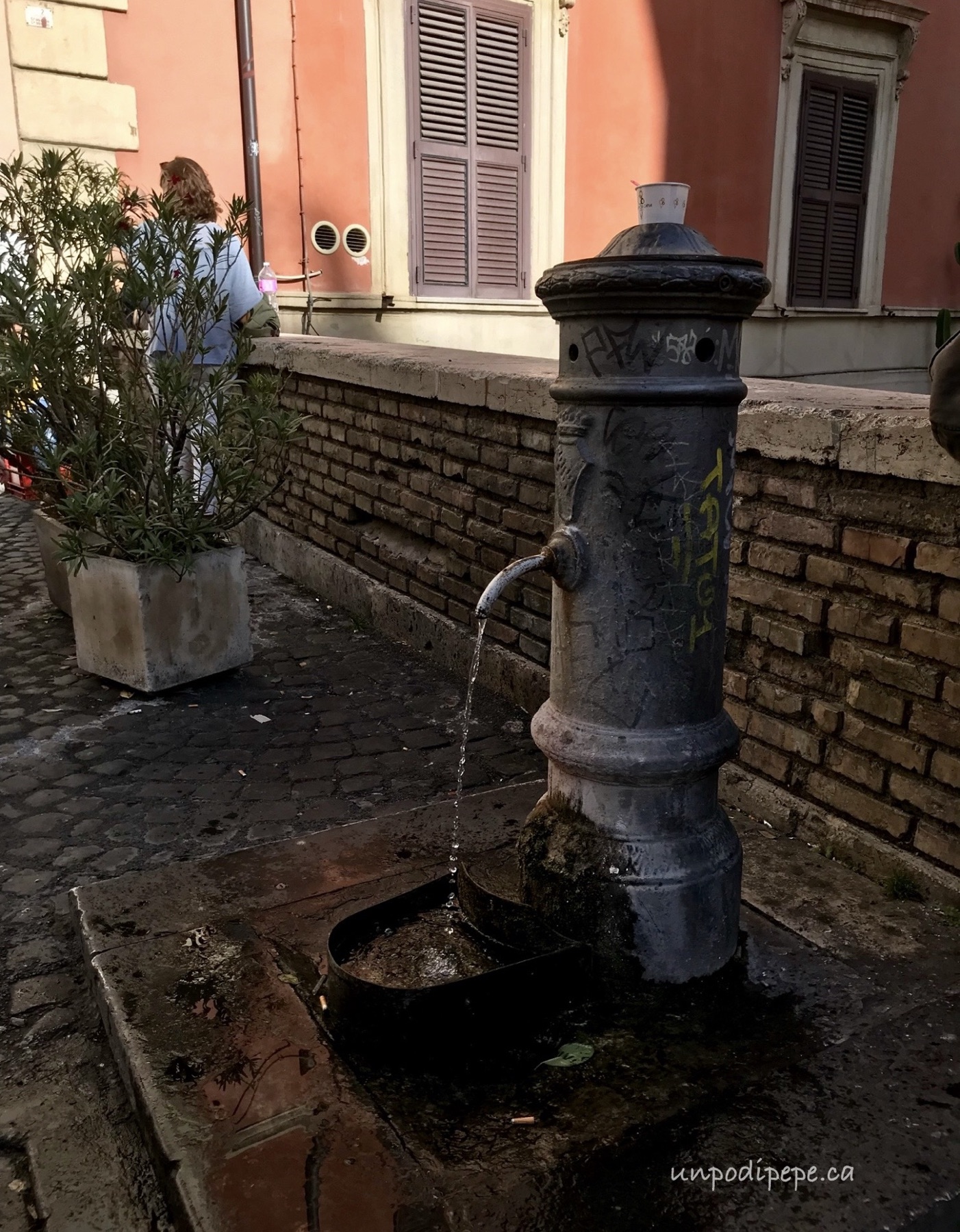
 With the nasoni, plus 90 ornamental fountains offering uninterrupted drinking water, Roma is the city with the most drinking fountains in the world. Installed to provide accessible fresh drinking water for thirsty Romans and visitors, the nasoni are now iconic symbols of Roma, representing community and hospitality. Don’t forget to bring a water bottle! If you are visiting in summer, check out Beat the heat: Surviving Summer in Roma.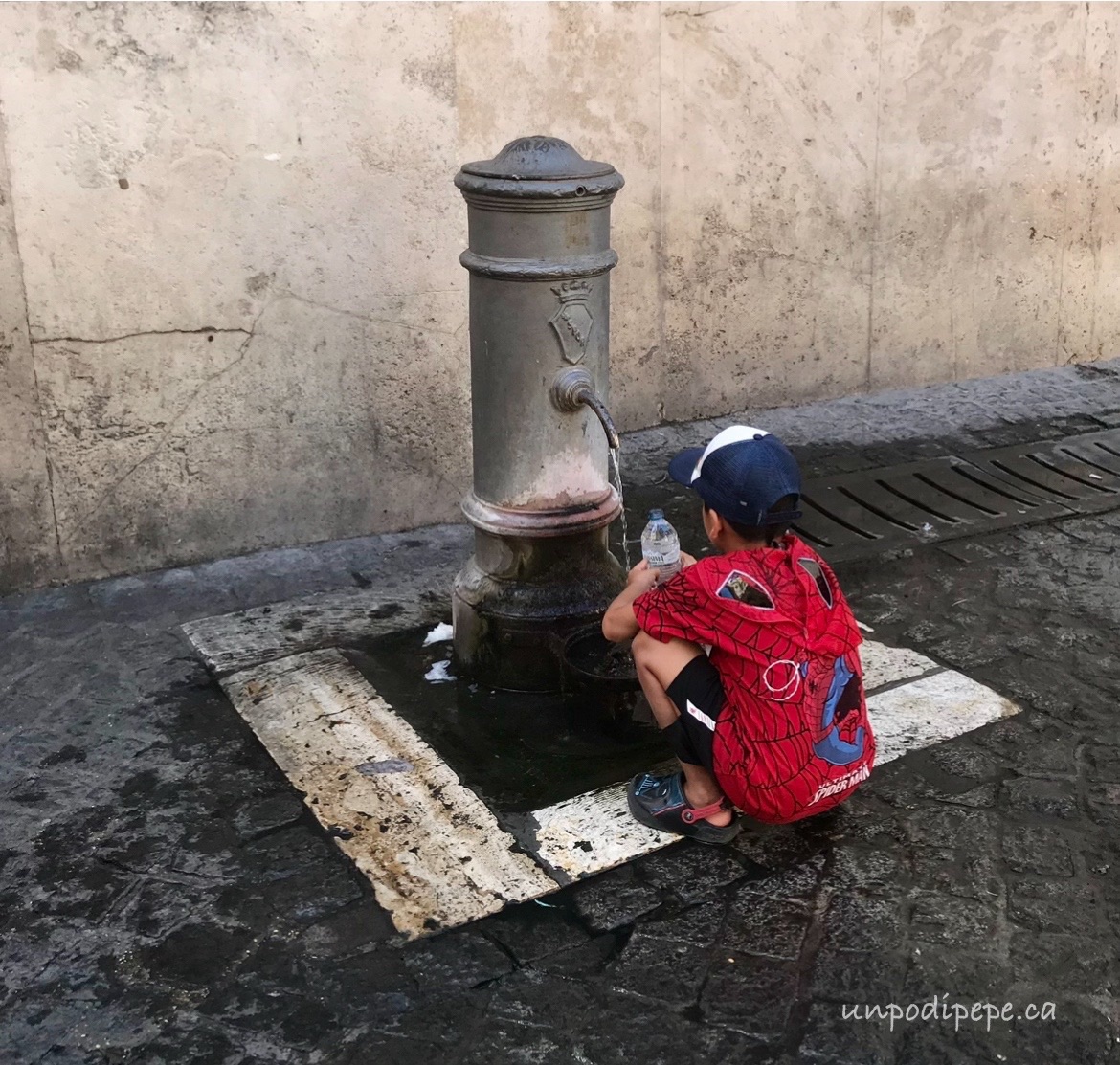






 Un po' di pepe