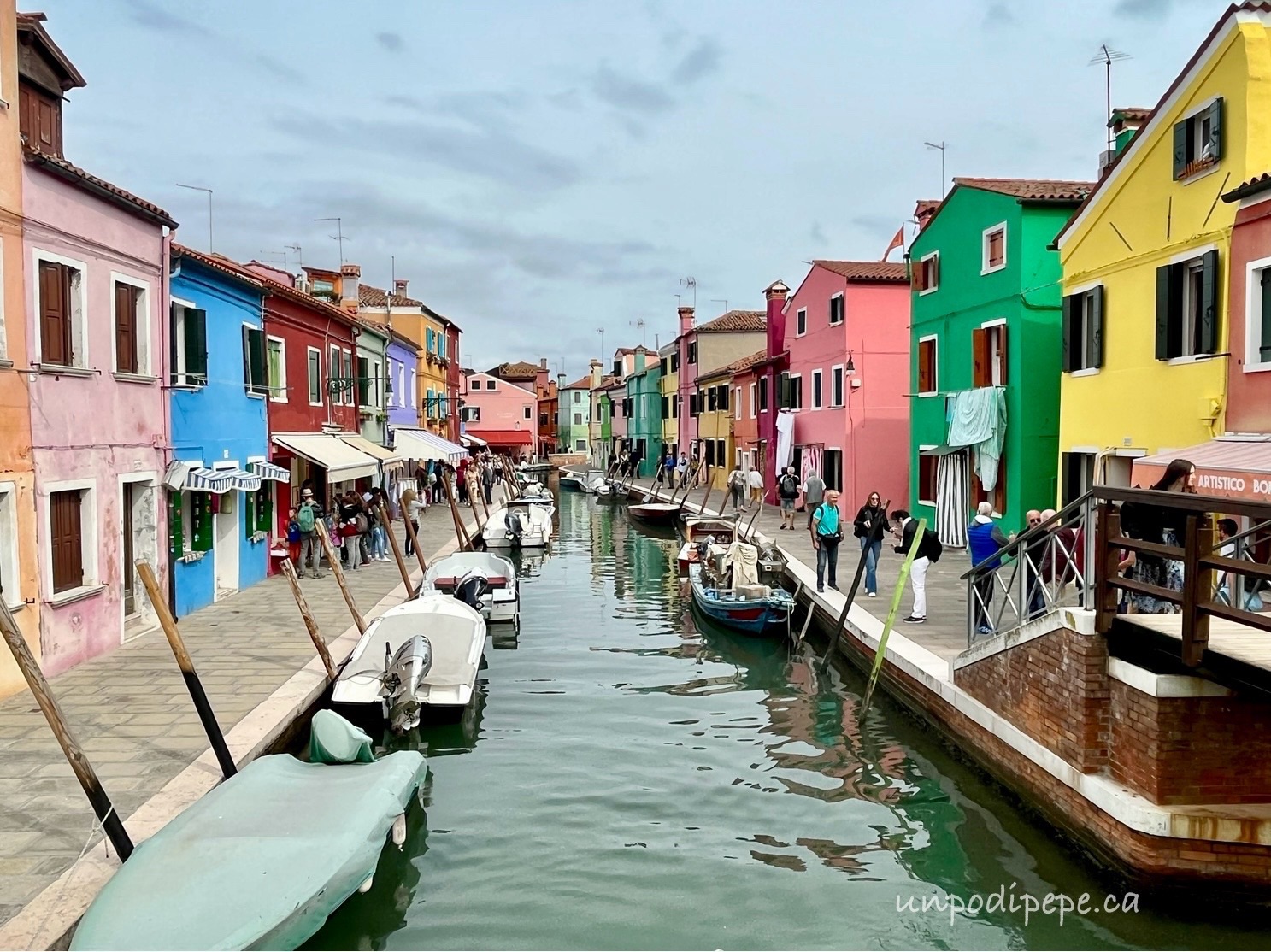
 Burano, an island in the north end of the Venetian lagoon, is one of the most colourful places in the world. It is known for merletto (lace) and houses painted in bright contrasting colours. Burano is only 210 m² with a population of 2,800. That is a lot of people for such a tiny place- 13,000 per km². Burano is actually made up of 4 islands separated by 3 canals and connected by bridges. The highest elevation is only 1m! There are no cars-not even for residents, since there are no roads! Burano is part of the city of Venezia, 7 km away.
Burano was settled in the 6th century by residents of Altino fleeing invaders. They called the island Boreana because it faces north. In the 16th Century, women on the island started making intricate lace with needles from Cyprus. The lace trade was booming until the 18th Century, then revived in 1872 with the opening of the Scuola del Merletto (school of lacemaking). I remember when I first visited Burano in 1994, women sat outside their homes doing lacework. There are not many lacemakers now. It is extremely time consuming to make, and as a result, incredibly expensive. Many of the lace works, especially the larger pieces, are machine made imitations, many of them from China.

Emilia Burano, Via Galuppi 1994
For authentic Burano lace, try La Perla Gallery, or Emilia Burano Via San Martino Sinistro 376, and 205 just off Via Galuppi. Handmade monogrammed fazzoletti (handkerchiefs) start at €49.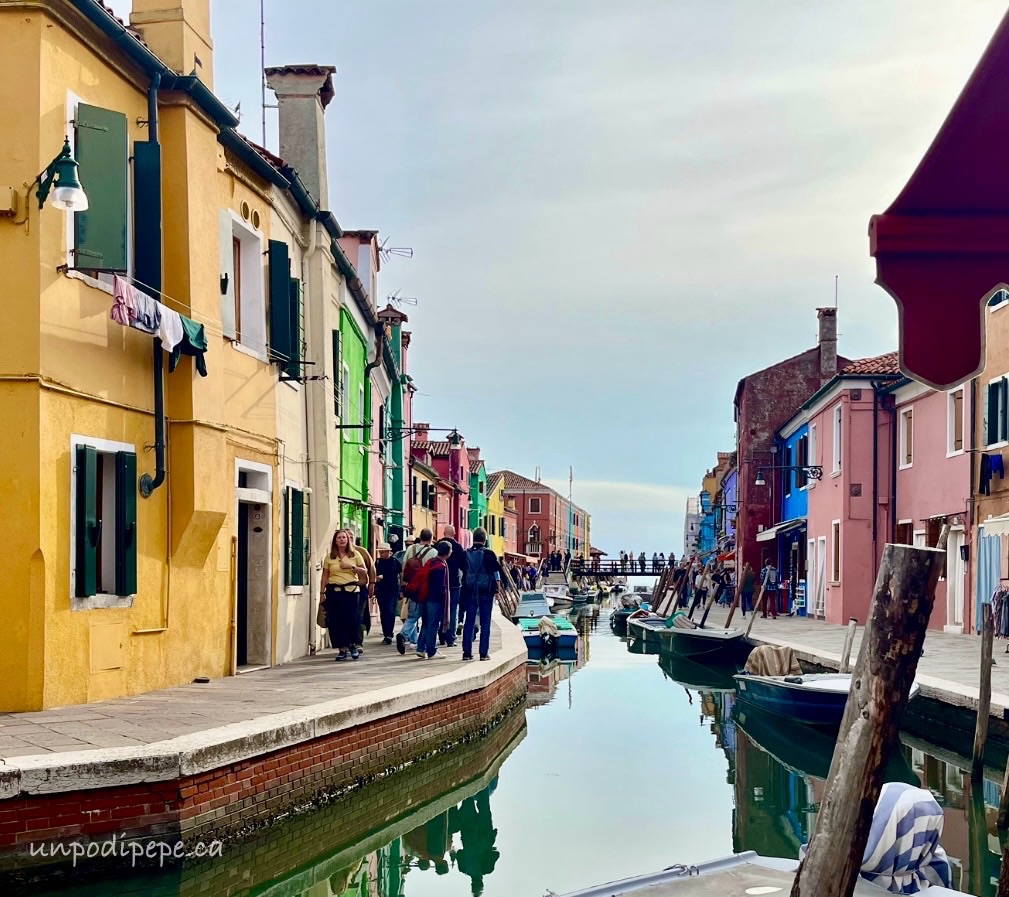
Houses on Burano have been brightly painted since the 15th Century. This was common in fishing communities so that fishermen out on the water could find their way home in the fog. Burano is still a working fishing island, although the primary economy is now tourism.  An official government request must be sent in to paint a home on Burano as there is a system to the colour scheme. The response lists the colours allowed for that particular site! No 2 houses side by side can be the same colour.
Piazza Baldassare Galuppi is the only piazza on Burano. The church of San Martino Vescovo has a 53m high leaning campanile and a 1727 Crucifixion by Tiepolo. The piazza also has the Museo del Merletto, which has examples of 16th and 17th century lace as well as a 6th Century Istrian stone well, shops, and the comune (town hall).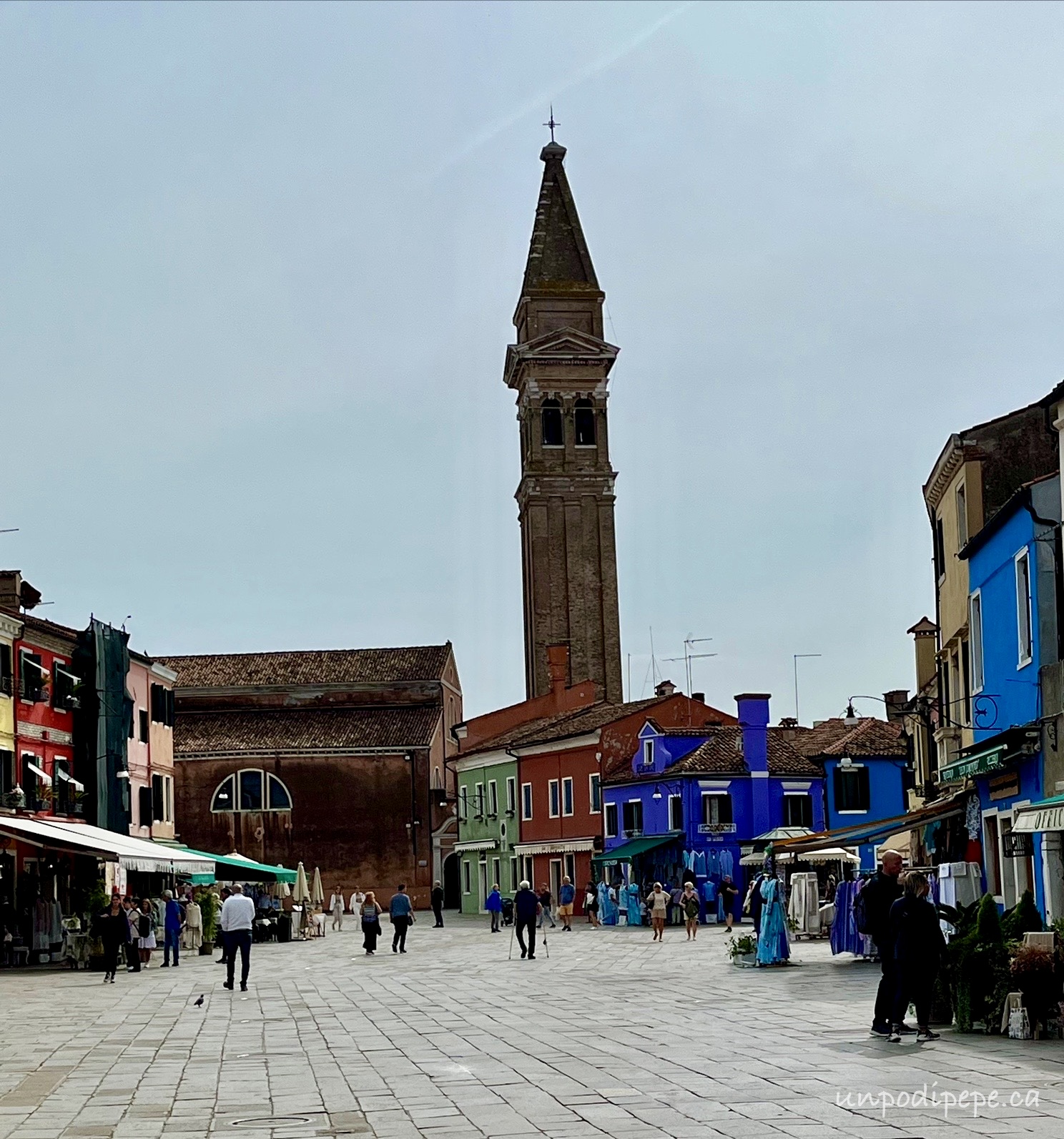 Burano is a photographer’s dream with the rainbow houses, laundry hanging, fishing boats, canals and narrow streets. It is hard to take a bad shot! The wooden Tre Ponti bridge is a great selfie spot.
 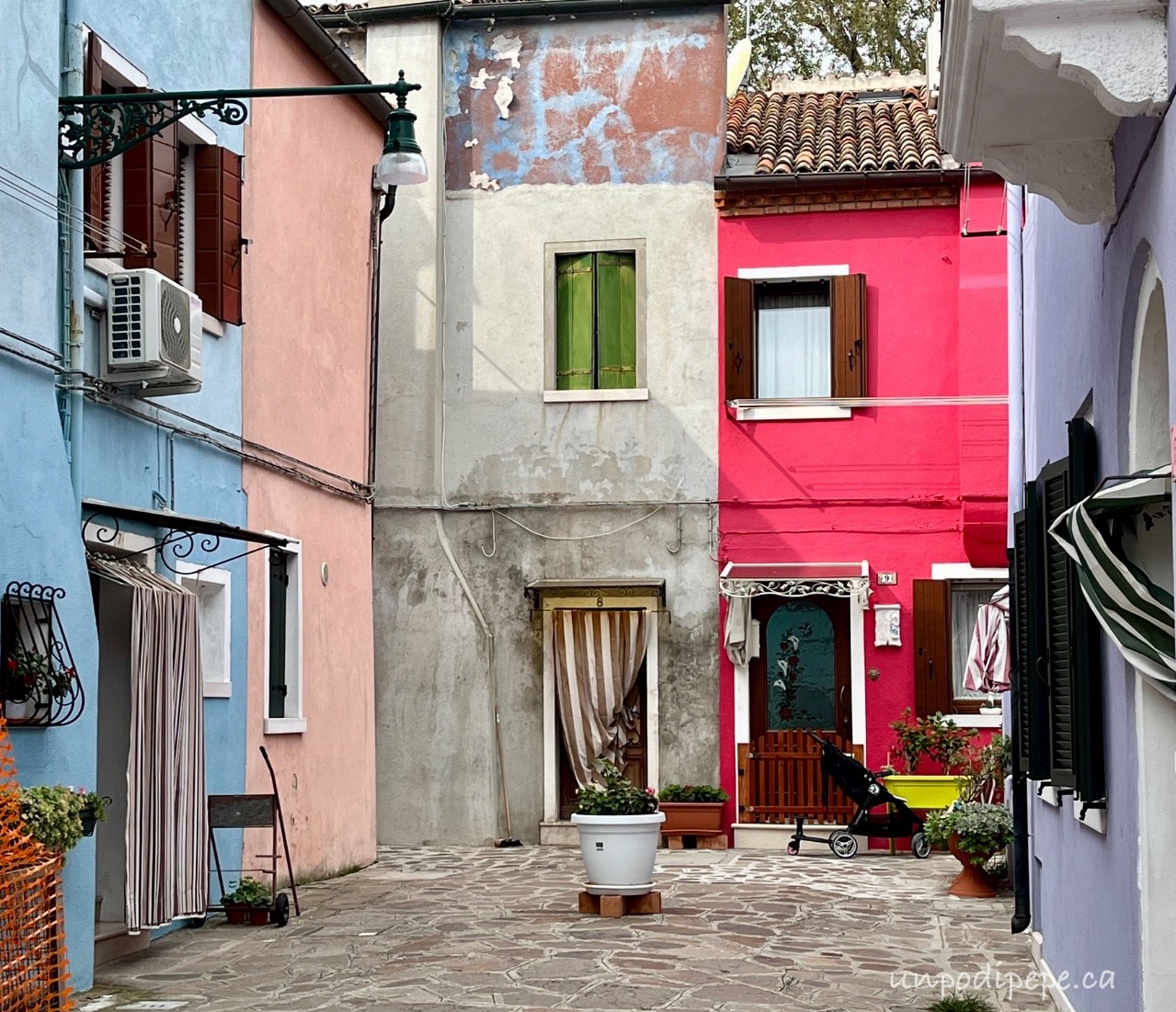 My usual advice would be to just wander and get lost, but Burano is too small to even get lost on! A quick walk around the island only takes about half an hour.
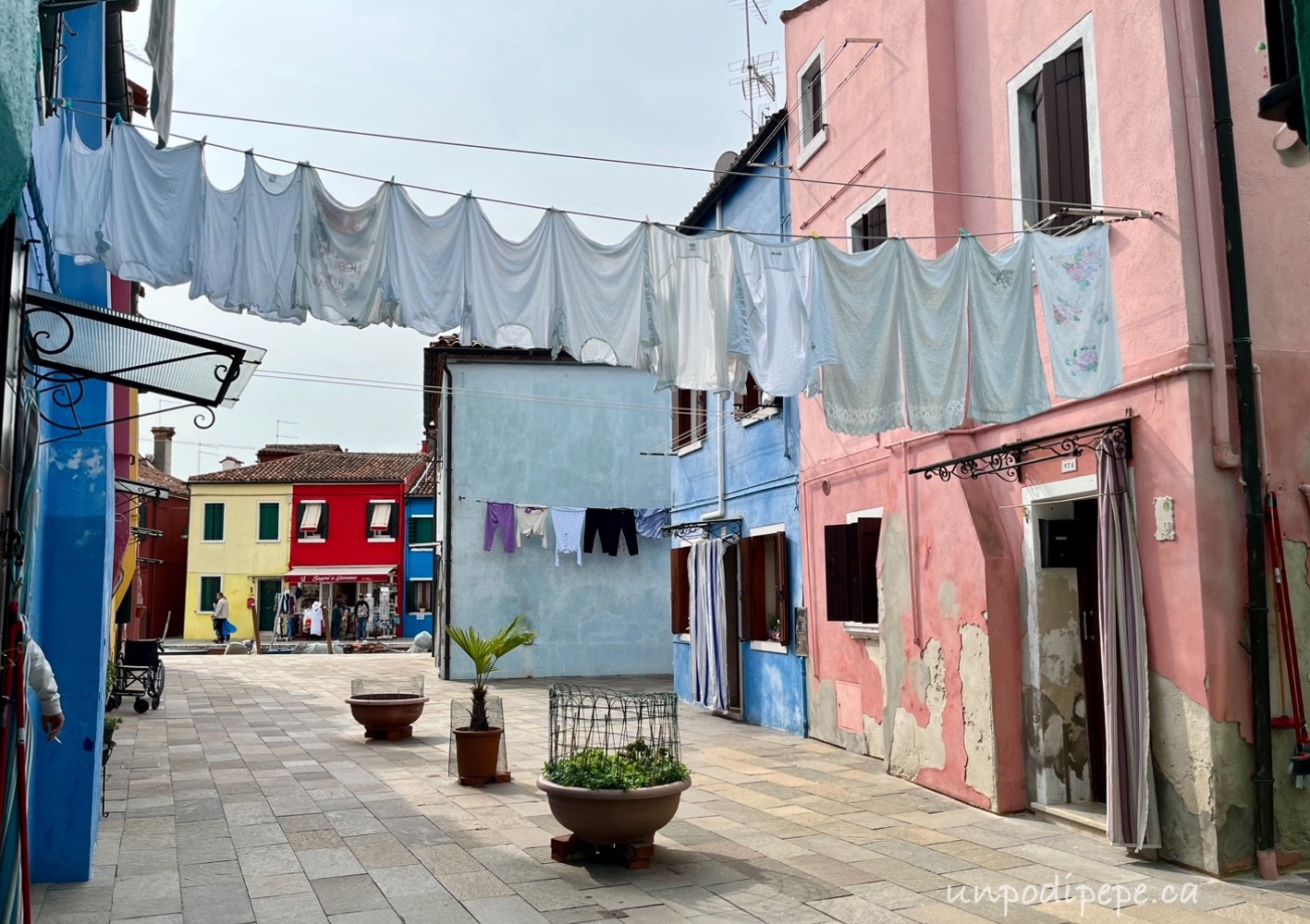 Explore the quieter side streets, browse the shops and have lunch along one of the canals. Being a fishing island, the seafood is exceptional. Try take out fritto misto, assorted fried fish in a paper cone, or the family run Trattoria Al Gatto Nero. a reservation-even in October!
Visit Burano if you are in Venezia for more than 2 days, or if it is not your first visit. Burano and Torcello make a nice daytrip. The busiest time on Burano is from 11am-3pm. Not many visitors stay overnight, but apparently the sunset is gorgeous.

View of Burano from the campanile di Santa Maria Assunta, Torcello
With an ACTV Vaporetto (Venetian water bus) €25 day pass, you can go to 2 of the islands, then cruise around Venezia when you get back. Burano is 45 min by vaporetto #14 (SZ-Lido-Burano) from San Zaccaria, near Piazza San Marco, in front of Hotel Danieli. Vaporetto #12 from Fondamente Nove A goes to Murano and Burano. From Burano, the #9 vaporetto is a 10 minute ride to Torcello. There are also many organized daytrips to the lagoon islands.
For those of you who love this colourful island as much as I do, there is a 2022 trilogy of Hallmark movies about a Burano lace wedding veil bought by 3 friends at an antique store. In the second movie, one of them takes the veil to Burano to find out its history. The family run shop in the movie is based on Emilia Burano, the one in my 1994 photo!
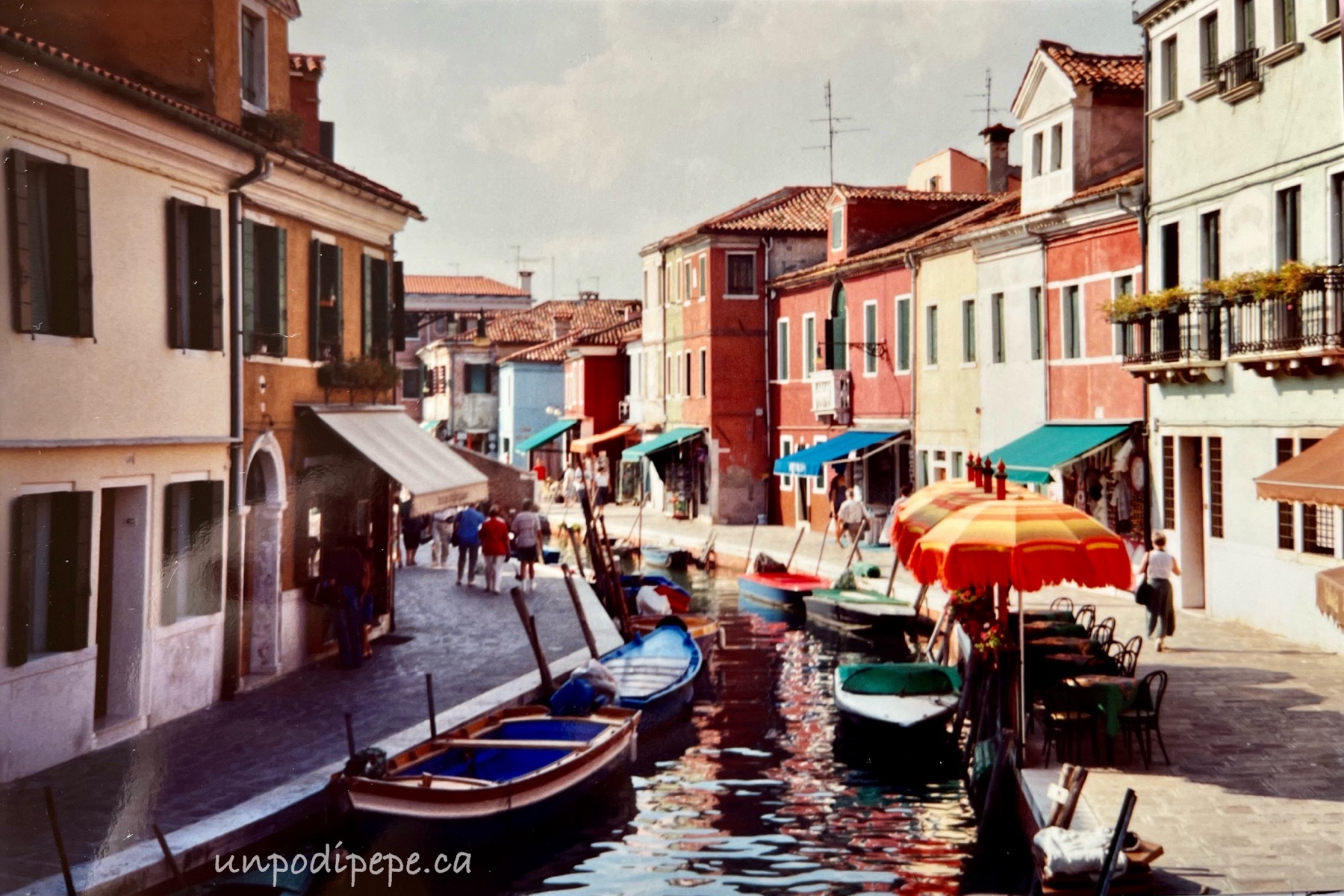
Burano canal 1994
Buon viaggio, Cristina
 Un po' di pepe
I love the colorful houses of Burano! In fact, they are the homepage photo for my Conversational Italian blog!
Lovely spot… Gorgeous shots and history 😍
It is lovely-and happy. It is hard to be grumpy there! Ciao, Cristina
lovely pics, many of which would make interesting puzzles. I’ve been to Murano, to watch the glass blowers working. One of the artists made me a glass unicorn figurine as we watched. He had a cigarette in his mouth and never removed til he finished his creation. In glass , you have to work fast.
Wow-that takes talent and coordination 🤣🤣! You will have to fo to Burano next time Patty.
Burano is certainly an interesting island to see, Cristina.
I love it Yvonne! My next post will be Torcello, which is also interesting. Ciao, Cristina
So cute
Spags
<
div dir=”ltr”>
<
blockquote type=”cite”>
Cute-issimo Sandra!