Tags
Basilico, Italian food, Moretum, Mortar and pestle, Pesto, Pesto Genovese, Pesto recipe, Traditional recipes
 This year, I grew basilico (basil) from seed again. Thanks to the unusually warm summer, my plants were happy and grew nicely. I love to shake the basilico plant a bit, stick my face in it and inhale the incredible aroma. Some of my basilico was already used to make passata di pomodoro. The rest will be used to make Pesto, before it starts to rain and the leaves turn brown.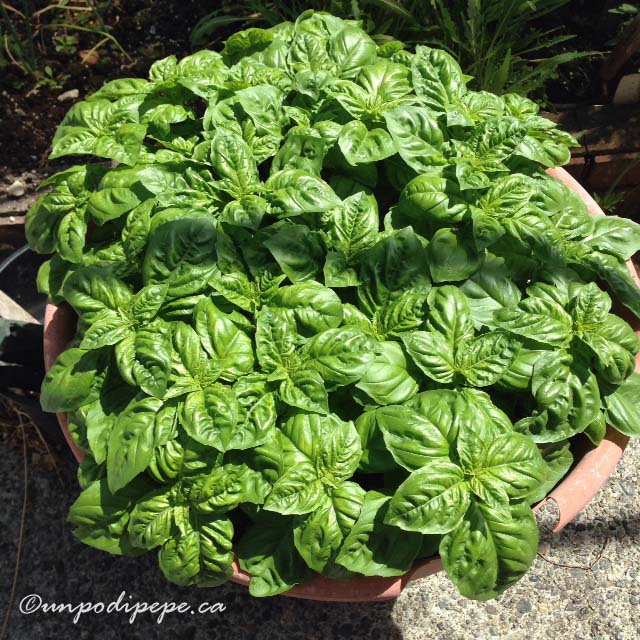
Pesto Genovese, usually just called Pesto, originated in Genoa, Liguria. It is made with fresh basil leaves, garlic, pine nuts, extra virgin olive oil, Pecorino Sardo or Pecorino Romano, and Parmigiano Reggiano.
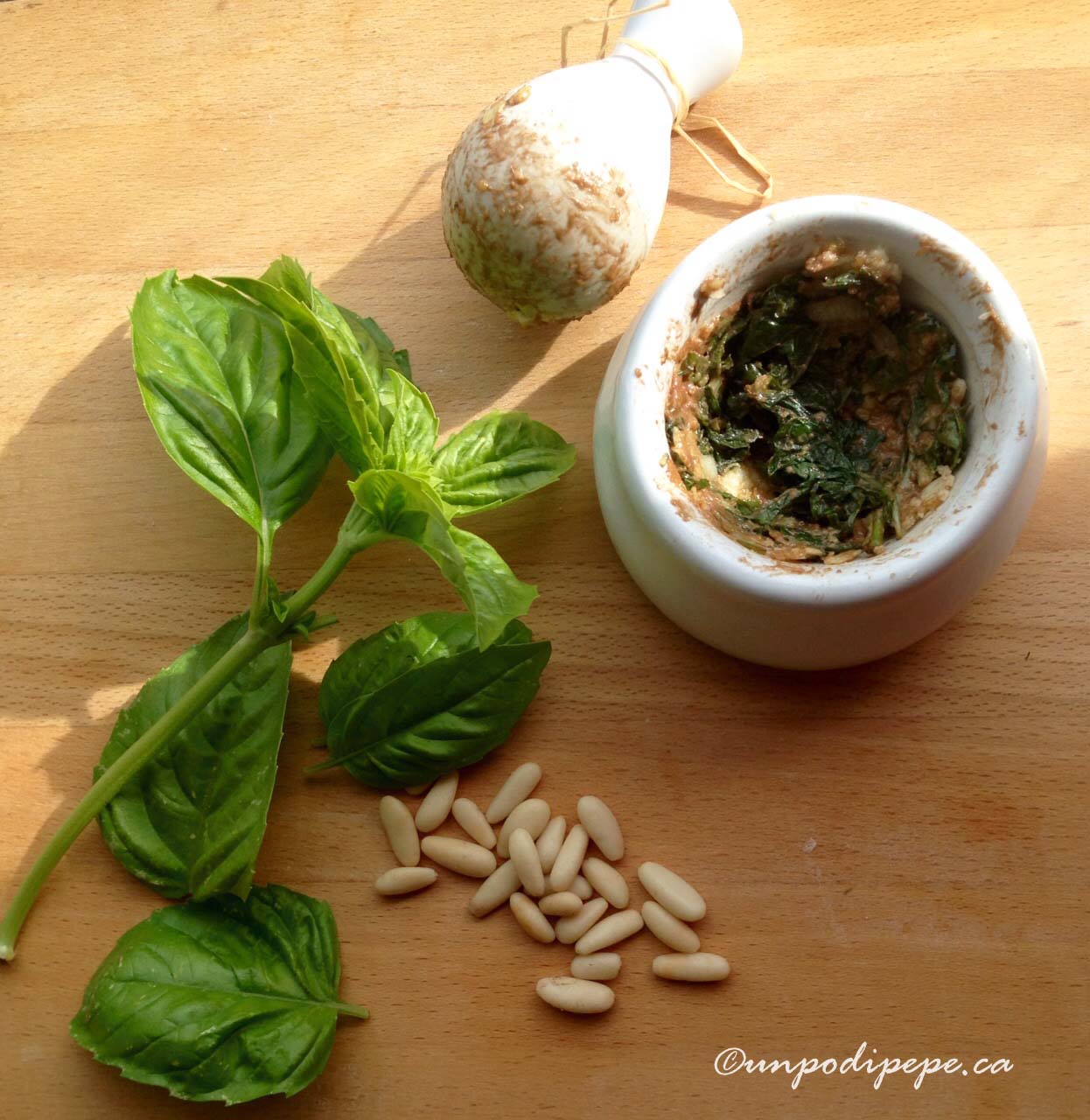
Before the age of food-processors, Pesto was made by grinding the ingredients in a marble or stone mortar with a wooden pestle. The words ‘pesto’ and ‘pestle’ come from ‘pestare‘ which means to pound or crush. The most flavourful pesto is actually made by hand with a mortar and pestle, but it is hard work! 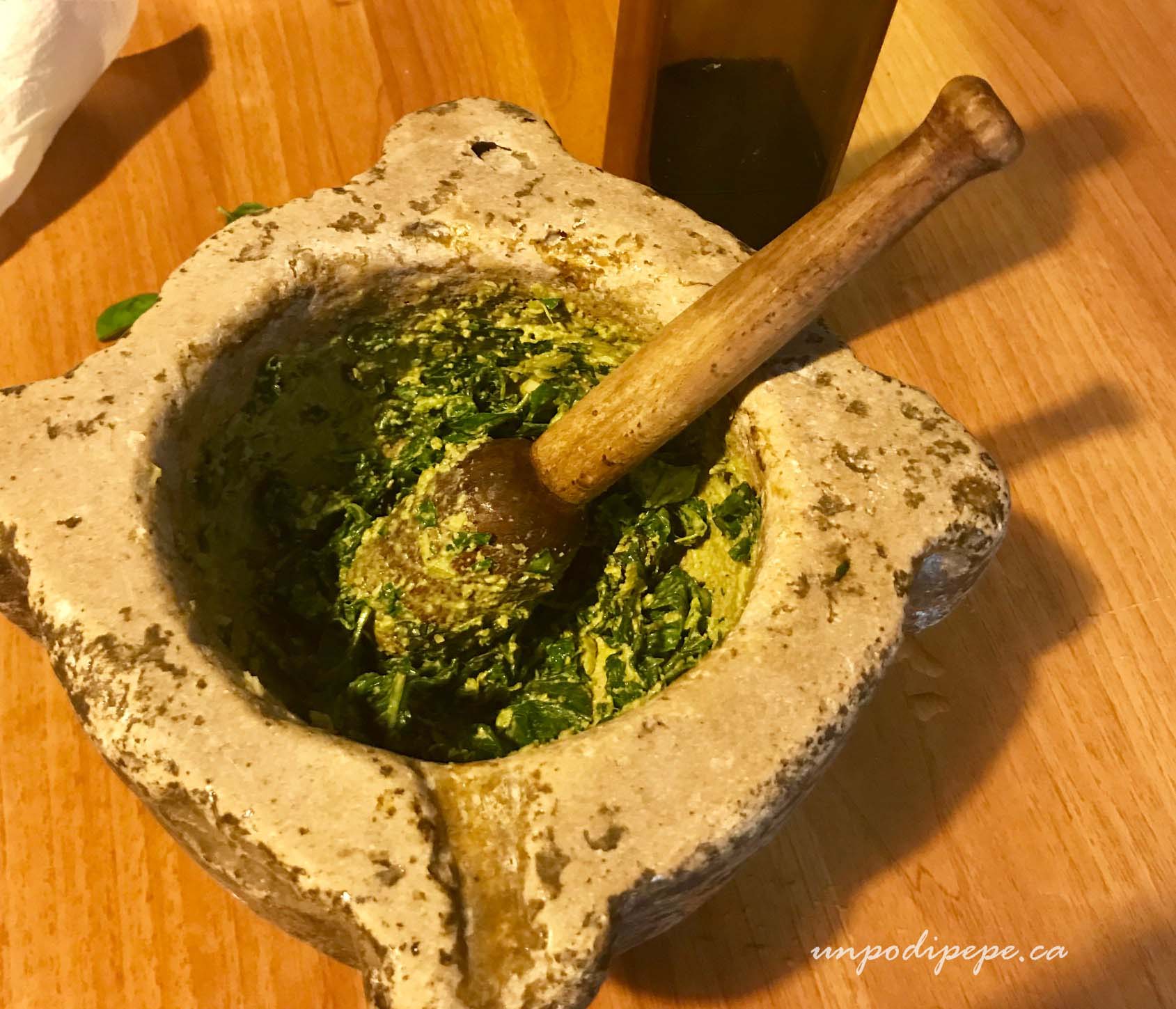 Ligurian basilico has very small leaves and is easier to grind. My basilico tends to have very large leaves and is difficult to crush. The biggest problem with the food processor is that it gets very hot. I recommend putting the blades in the freezer for an hour before making pesto. This prevents the food processor from overheating and the pesto is also less likely to turn brown.
The ancient Romans made something similar called Moretum. They named it after the mortar instead of the pestle! Moretum was a spread made with fresh sheep milk cheese, herbs, salt, pine nuts and olive oil.
Basilico was likely brought to Italia from India, and the climate of Liguria was perfect for it. The Genovese adapted the Romans’ recipe to include basilico, and Pesto Genovese was born! In Liguria, Pesto is usually served with trofie or linguine. It is also used on pasta, potatoes and green beans, all cooked in the same pot of water. Yum!
When I make Pesto, I do not measure the ingredients, but I estimated them here for you. Good quality ingredients are necessary to make delicious Pesto. No skimping!
Pesto Genovese
2 firmly packed cups (500 ml) large basil leaves
3 cloves of garlic
¼ cup (50 grams) European pine nuts
salt and pepper
½ cup (125 ml) good quality extra virgin olive oil
½ cup (45 grams) grated Pecorino Sardo or Pecorino Romano
½ cup (45 grams) grated Parmigiano Reggiano
- Put the blades of the food processor in the freezer for an hour
- Wash the basil and dry well. Water on the leaves will turn them brown and the Pesto will go bad. Yuck!
- I like to toast the pine nuts as it brings out the flavour, but this is optional
- Blend garlic and pine nuts in a food processor until fine
- Add basil, pulsing a handful at a time until blended
- Add salt and pepper. Not too much salt, as the cheese is salty too
- Pour in olive oil slowly while food processor is running
- Pour it all into a bowl and add the Pecorino and Parmigiano
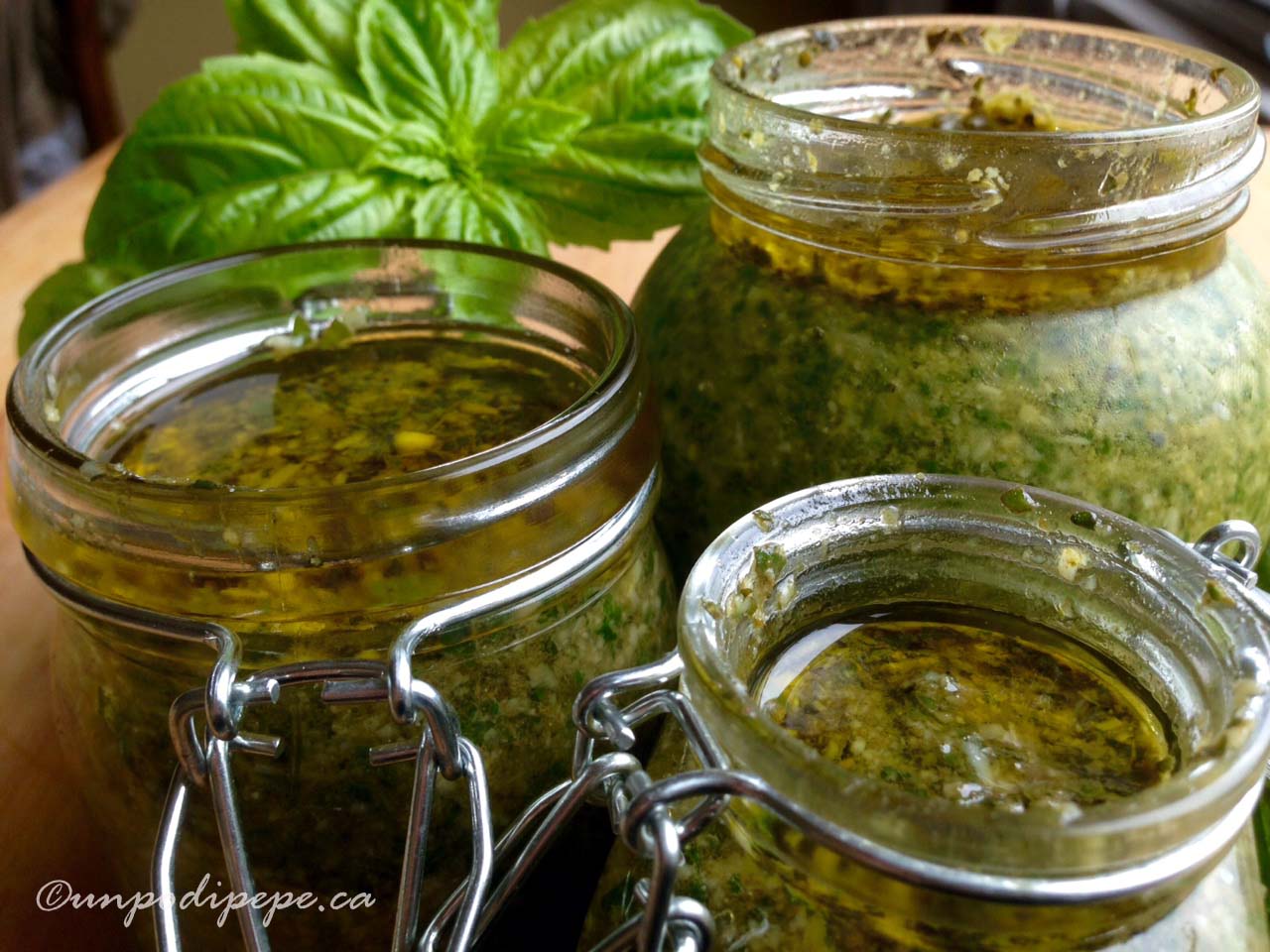
- Spoon the Pesto into small jars with tight fitting lids
- Seal the jar with a thin film of olive oil
- Pesto keeps well in the fridge for 6-8 months. If you use part of a jar, add another thin film of olive oil before putting it back in the fridge
- To freeze the Pesto, leave out the 2 cheeses and add them when you are going to use it

Buon Appetito!
©2015 unpodipepe.ca
 Un po' di pepe