• Home
  • About me/Chi sono
  • Contact

Un po' di pepe

~ …… (oon∙poh∙dee∙PEH∙peh) Cristina writes about interesting stuff /Cristina scrive di cose interessanti

Un po' di pepe

Tag Archives: Piemonte

Il Bicerin

23 Saturday Nov 2024

Posted by Un po' di pepe in Italia, Mangiamo!, Recipes

≈ 20 Comments

Tags

Northern Italy, Piemonte, Torino, Traditional recipes

November weather is dark and dreary, and has me craving a nice warm Bicerin. Bicerin (bee • SHEH • reen) is the official, historic drink of Torino.  The Bicerin was invented in 1763, at the newly opened Caffè Confetteria Al Bicerin in Piazza della Consolata.

Al Bicerin’s strategic location opposite the Santuario della Consolata, where the King and Royal Family attended Mass on Sundays, made it a popular spot and the beverage became well-known.

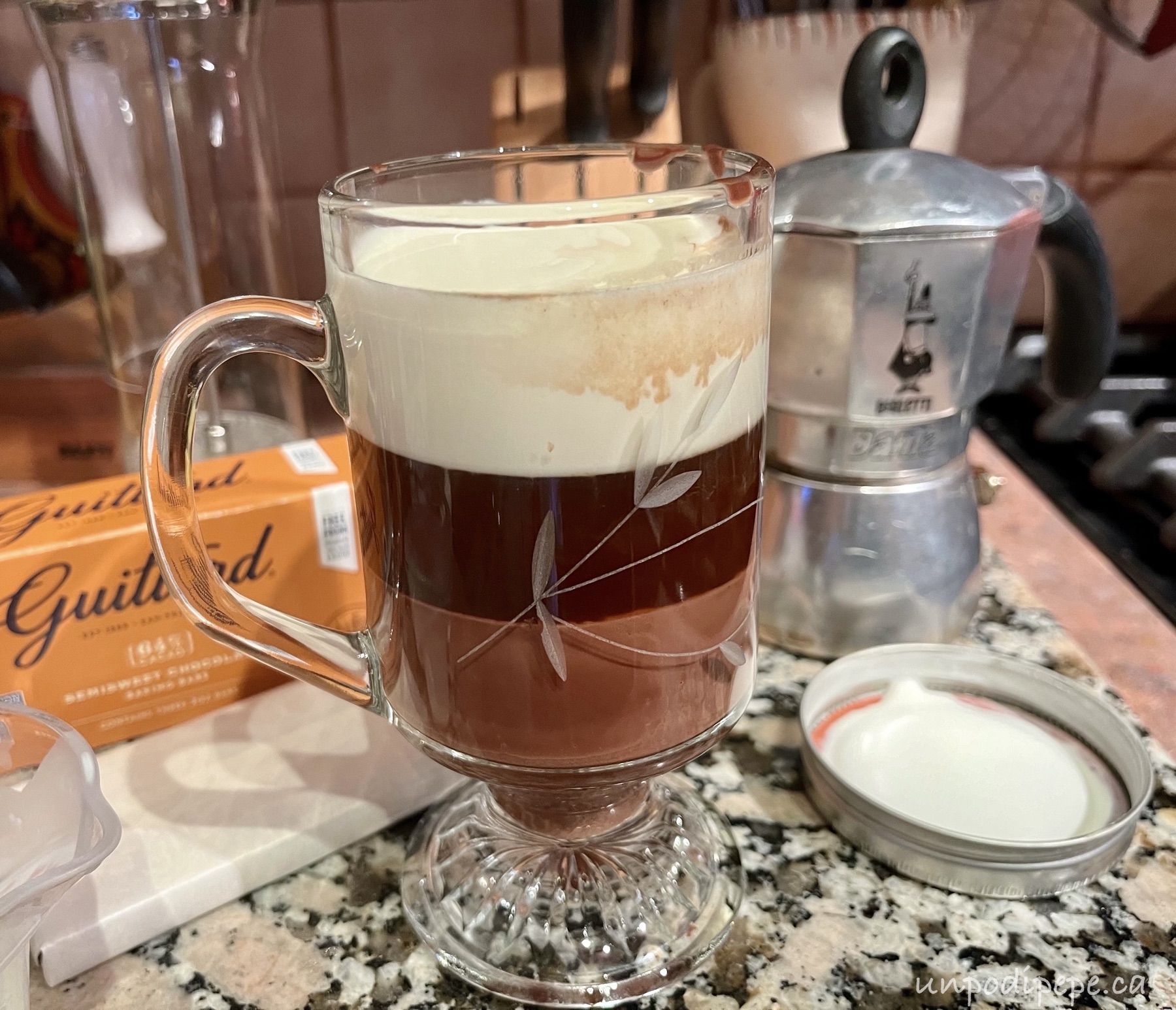
The secret recipe is made with local dark chocolate, espresso and frothed fior di latte, and served in a small stemmed glass.  The drink is actually named after the glass, Bicerin being local dialetto for bicchierino, meaning small glass. The glass is clear so that all 3 layers are visible.  A Bicerin is not supposed to be stirred, so that the temperature and texture of each layer can be tasted separately and blend on the palate.

The facade of Al Bicerin is still original and stepping inside is like travelling back in time. The counter, the cabinet filled with glass jars of Confetti and the woodwork is from the 19th Century.

I went to Al Bicerin twice while I was in Torino.  Since the weather was nice, I sat outside both times, but the inside is inviting and cozy.  Perfect for a cold, wet November day. The photo below was taken just before closing.

Count Camillo Cavour, the first Italian Prime Minister always sat in the same corner on his daily visit to Al Bicerin. Now there is a photo of him in his angolo. Other famous patrons include Picasso, Puccini, Nietzsche, Alexandre Dumas, Umberto Eco, and Ernest Hemingway, who apparently called the Bicerin one of the 100 things in the world worth saving!

A fun fact about Caffè Confetteria Al Bicerin is that since 1763, it has always been managed by women!

In 2001, the Bicerin was finally recognized by the region of Piemonte as a traditional Piemontese beverage. Order with a plate of local cookies, which can include canestrelli, torcetti, krumiri, savoiardi and baci di dama.

Bicerin is now served in all of the historic caffè places in Torino but it will be slightly different than the original recipe at Caffè Confetteria Al Bicerin, located at Piazza della Consolata 5 in the Quadrilatero area.
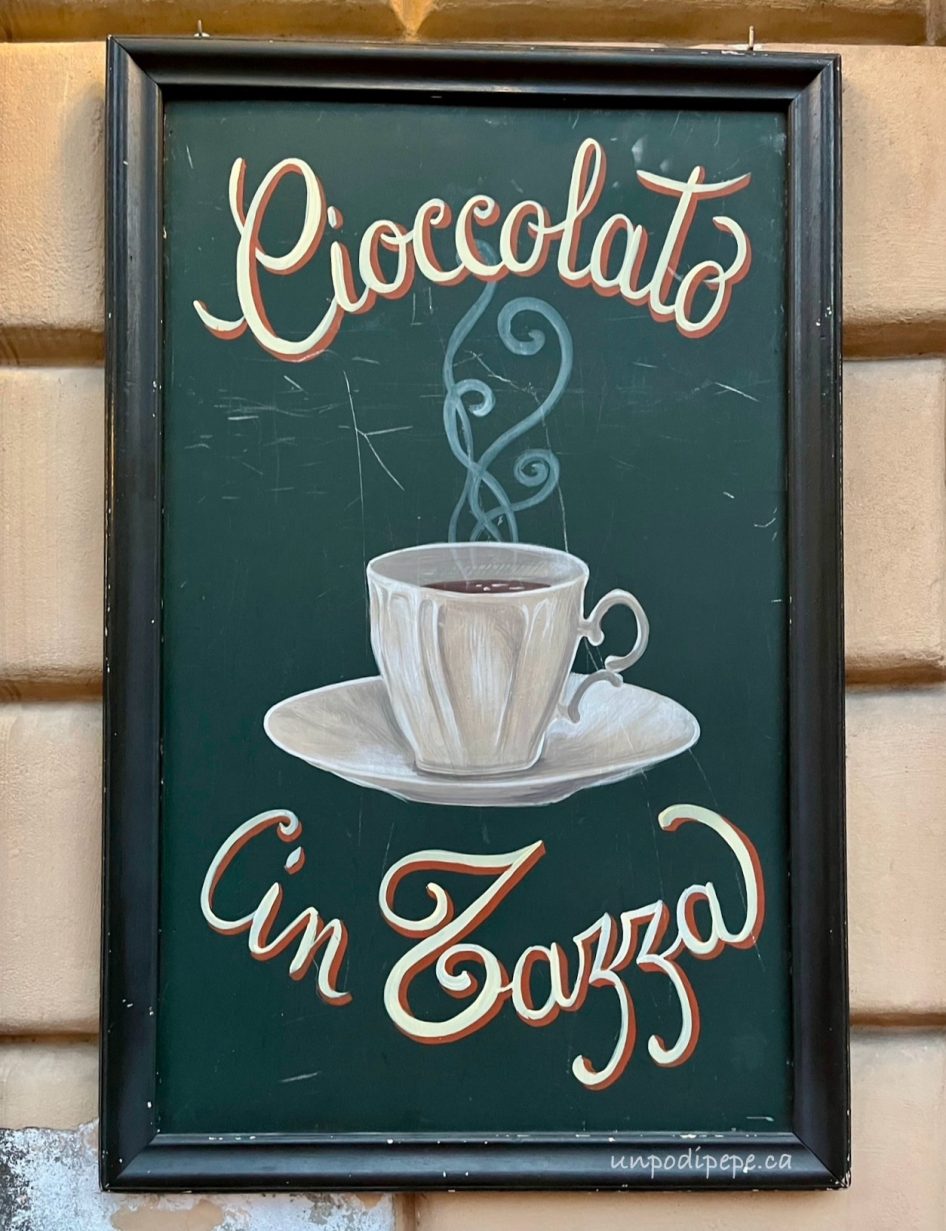
Other historic places to have Bicerin in Torino include:

Baratti e Milano- Piazza Castello 29

Caffè Torino- Piazza San Carlo 29

Caffè Fiorio- Via Po 8/C

Farmacia del Cambio- Piazza Carignano 2

Pepino Piazza Carignano- 8

Pfatish Via Paolo Scacchi- 42

I did some experimenting at home to try and reproduce a Bicerin.  My final product did not taste or look exactly the same, but it was delicious, and the taste-testing ‘research’ was fun.  It takes a bit of juggling to have all 3 layers ready to assemble at once, so do not get discouraged if the first attempt does not look pretty.

Cristina’s attempt at Bicerin

Ingredients:

  • 60 ml (2 oz) light cream*
  • 60 ml (2 oz) chopped 70% dark chocolate, ideally Venchi or other quality brand**
  • 60 ml (2 oz) freshly made espresso doppio/double shot
  • 60 ml (2 oz) frothed whole milk or light cream (must be cold)*

A 300-360 ml (10-12 oz) clear, heat-proof stemmed glass

Instructions:

  • Prepare heat-proof glass by warming with hot water
  • Prepare caffettiera for espresso
  • Pour light cream* and chopped chocolate into a small pan over low heat and whisk until thick.  Meanwhile, make espresso
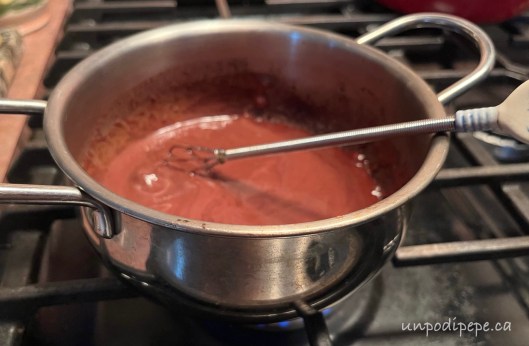
  • Shake milk/cream in a small jar for 2-3 minutes

Assemble the Bicerin:

  • Pour hot chocolate into warm glass
  • Using the back of a spoon, carefully pour espresso towards the side of glass
  • Carefully add shaken milk/cream
  • Do not stir!

*Consistency wise, there is no North American equivalent to Italian fior di latte (milk cream) or panna (cream).  I experimented using combinations of whipping cream and milk.  My best results were using a mixture of half whipping cream and half whole milk (3%).  This is what I recommend using for both the hot chocolate and the topping. 1 part whipping cream and 2 parts whole milk also works.

**A Torino produced chocolate such as Venchi is best to use.  I used Guillard as it was the best good quality chocolate I had available.

Espresso cookies go perfectly with Bicerin.  Buon appetito, Cristina

Share this:

  • Click to share on Facebook (Opens in new window) Facebook
  • Click to share on Pinterest (Opens in new window) Pinterest
  • Click to share on X (Opens in new window) X
  • Click to email a link to a friend (Opens in new window) Email
  • Click to share on WhatsApp (Opens in new window) WhatsApp
Like Loading...

Mercato Porta Palazzo

03 Sunday Nov 2024

Posted by Un po' di pepe in Italia, Photography, Travel

≈ 11 Comments

Tags

Italian food, Northern Italy, Piemonte, Torino

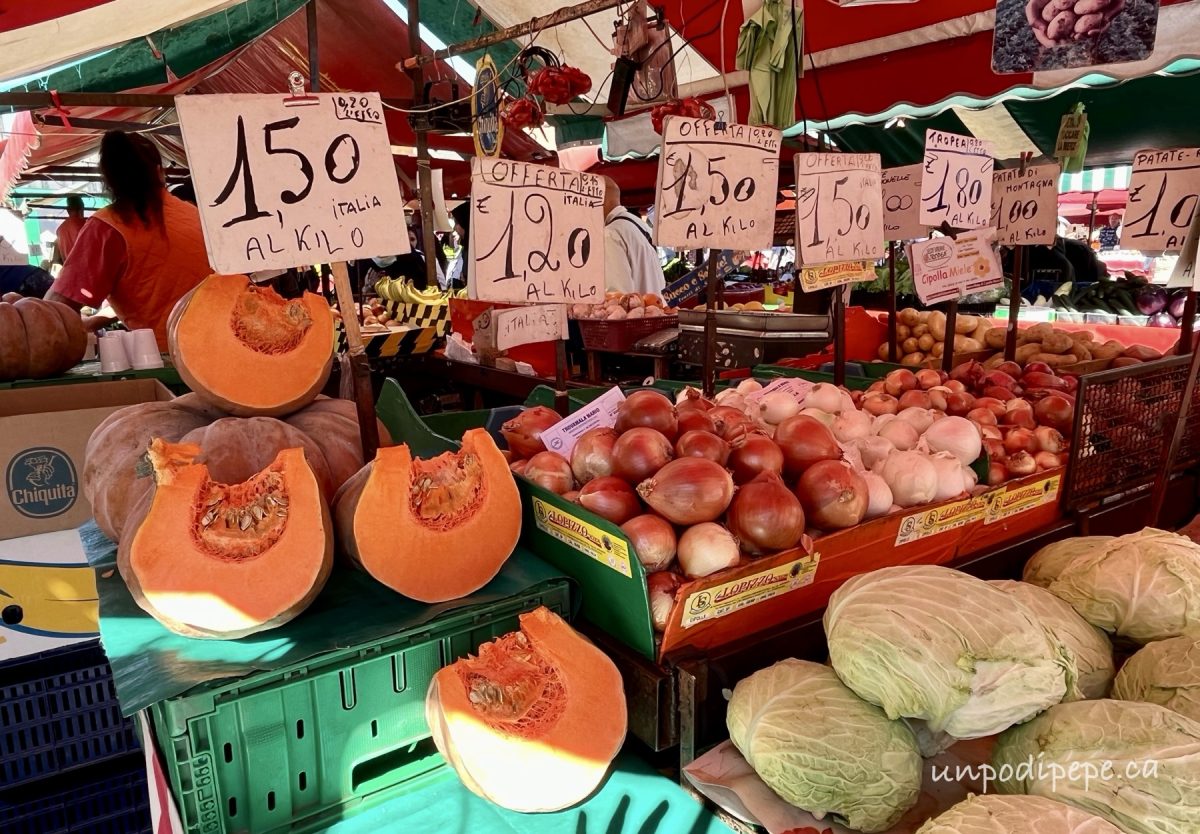
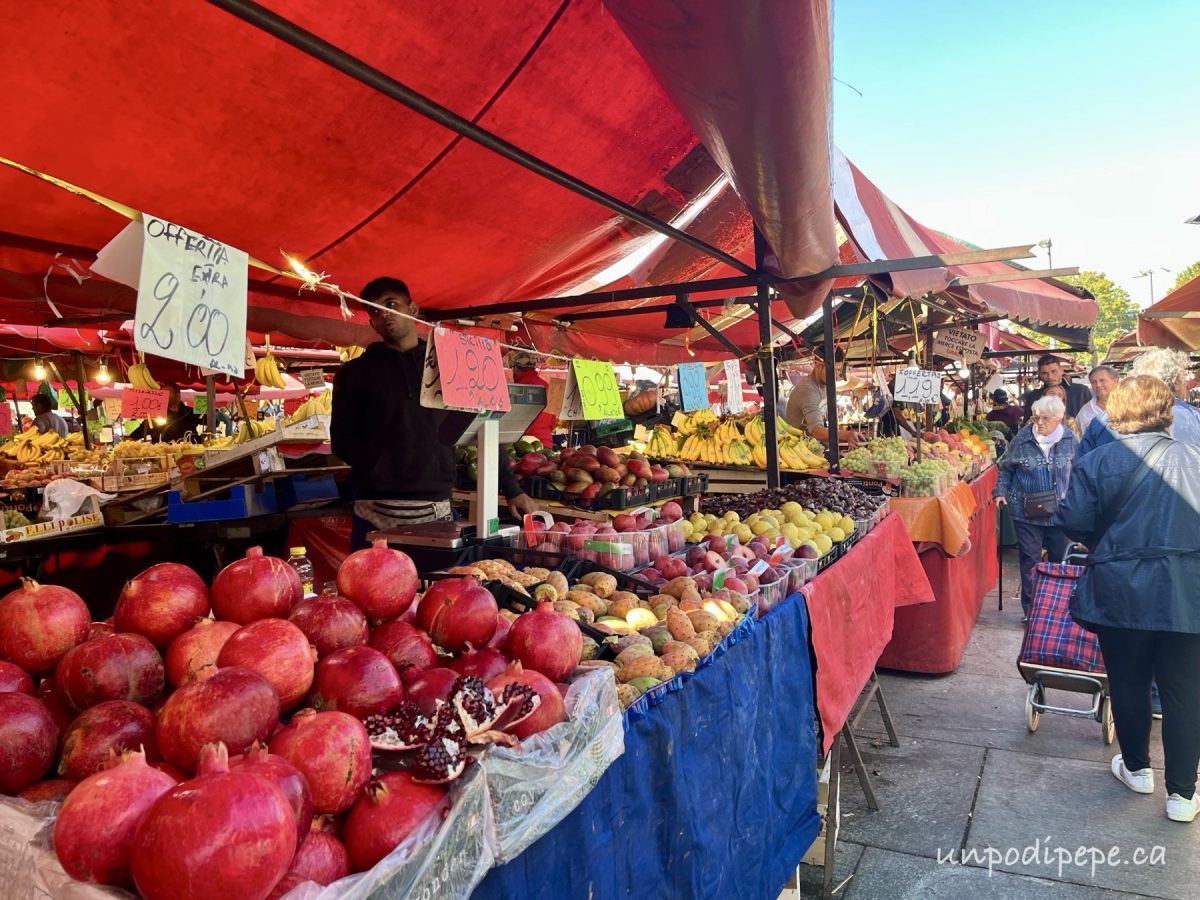
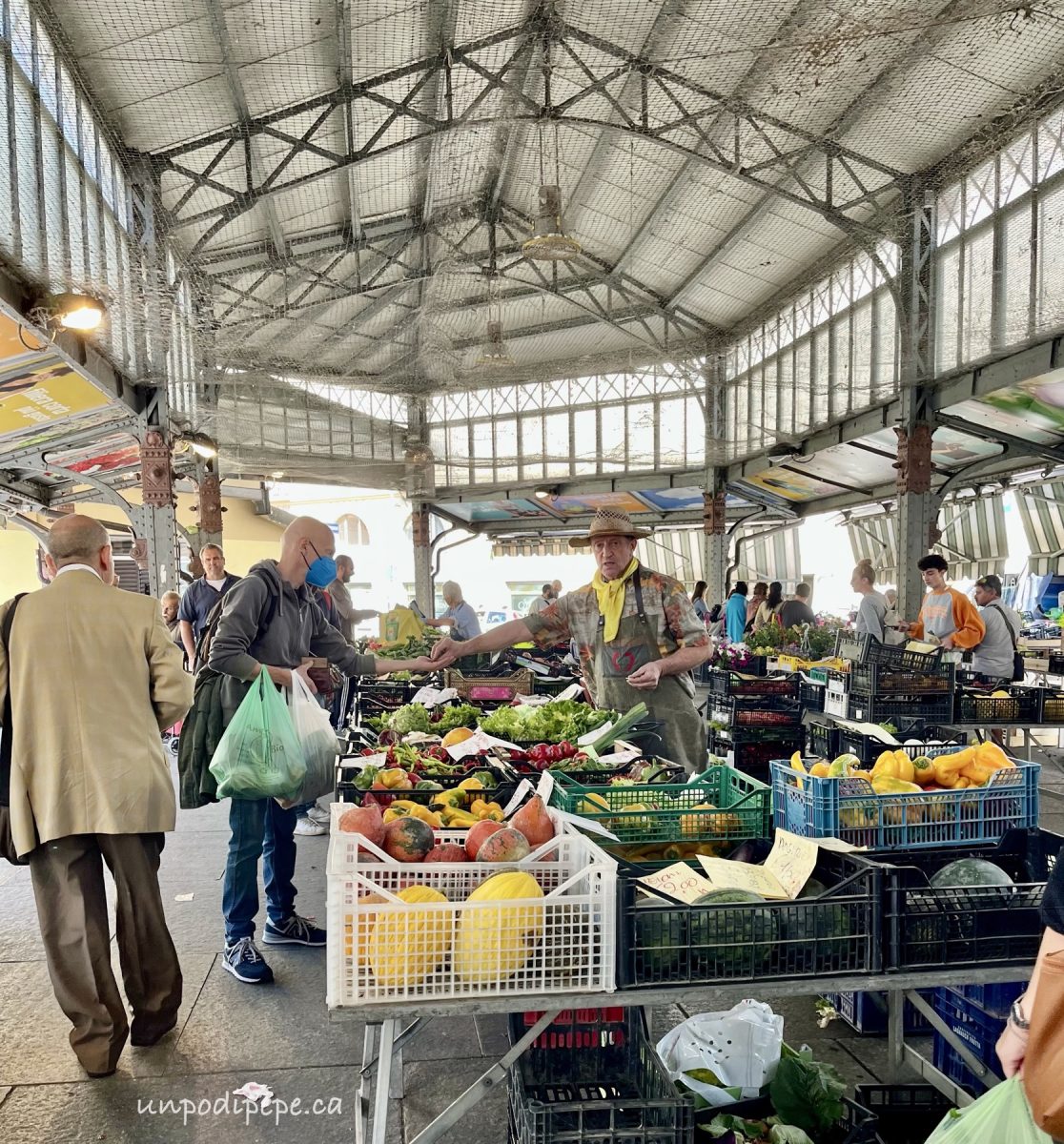
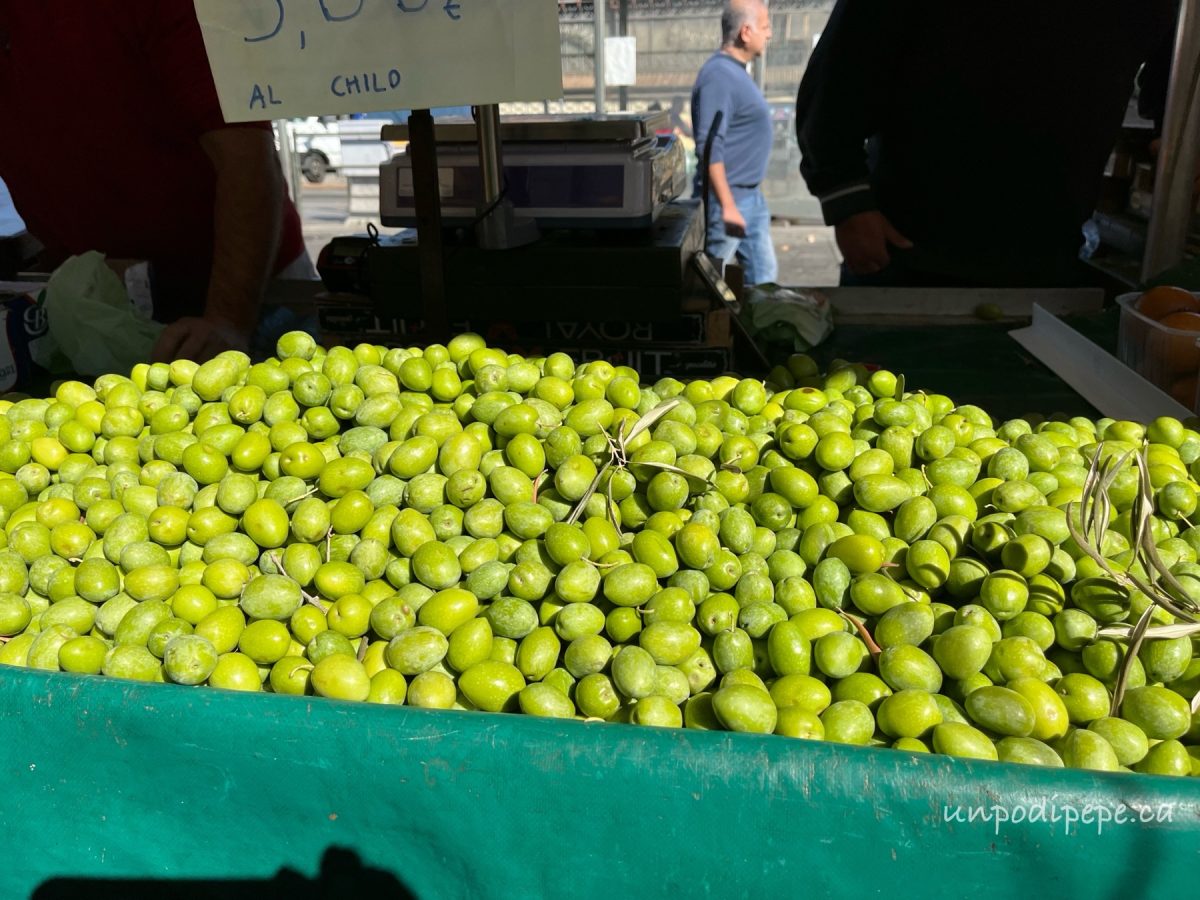
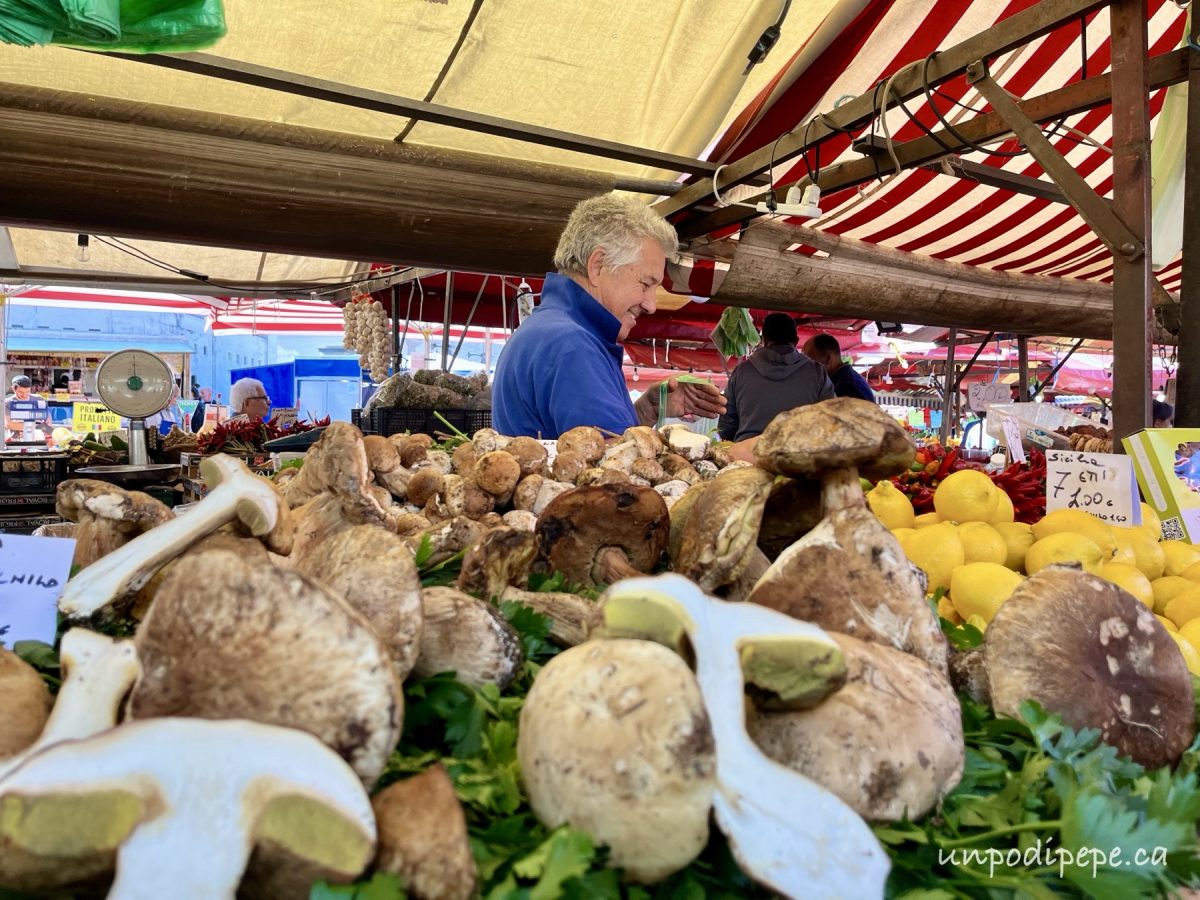
Torino’s Mercato Porta Palazzo in Piazza della Repubblica is the largest open-air market in Europe. My first morning in Torino, I took a walk through the mercato with Lucia from turinepi.  While we walked, I took so many photos of the produce and the bancarelle -the market stalls, that I had to dedicate an entire post to them. Established in 1835, Porta Palazzo is a collection of outdoor and covered market spaces. The bancarelle host vendors from all over, selling products from food and wine to flowers, clothing, shoes and housewares.

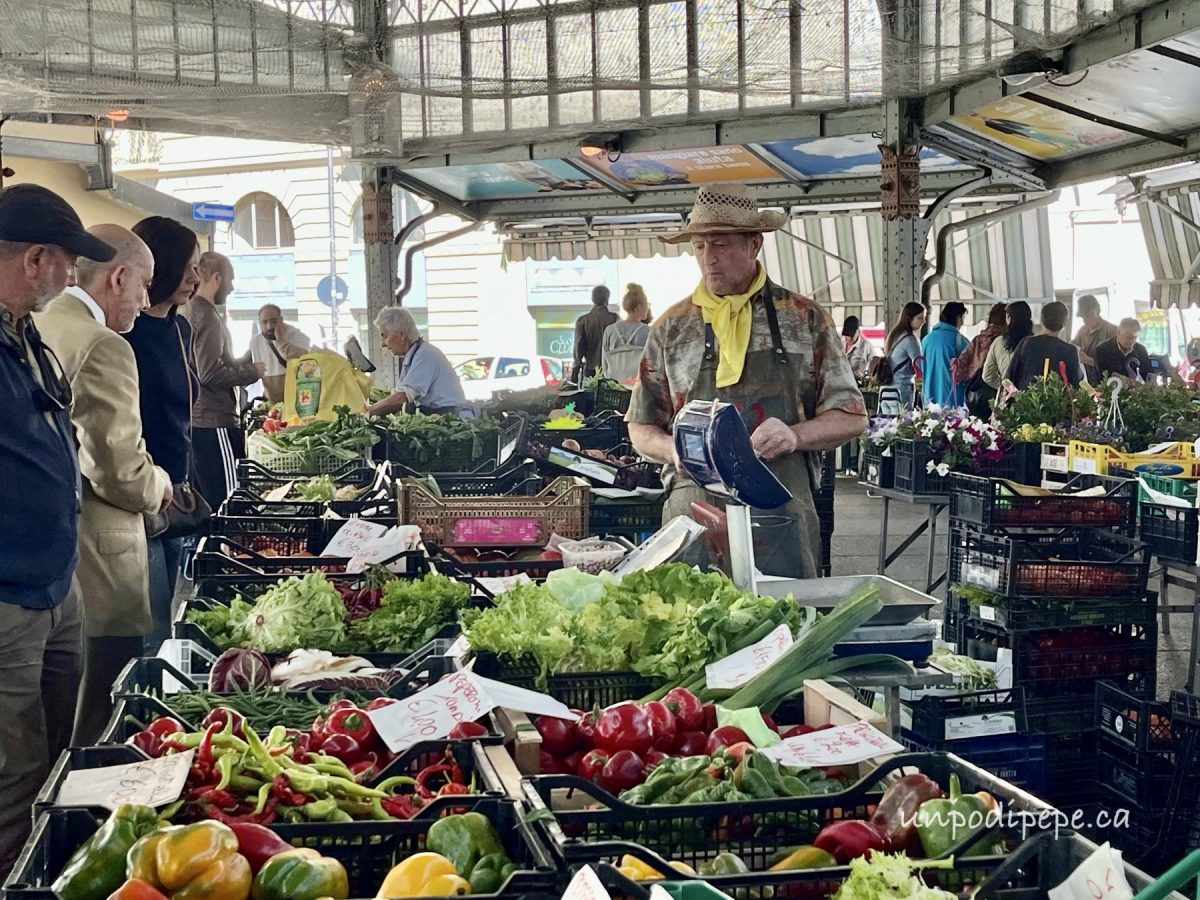
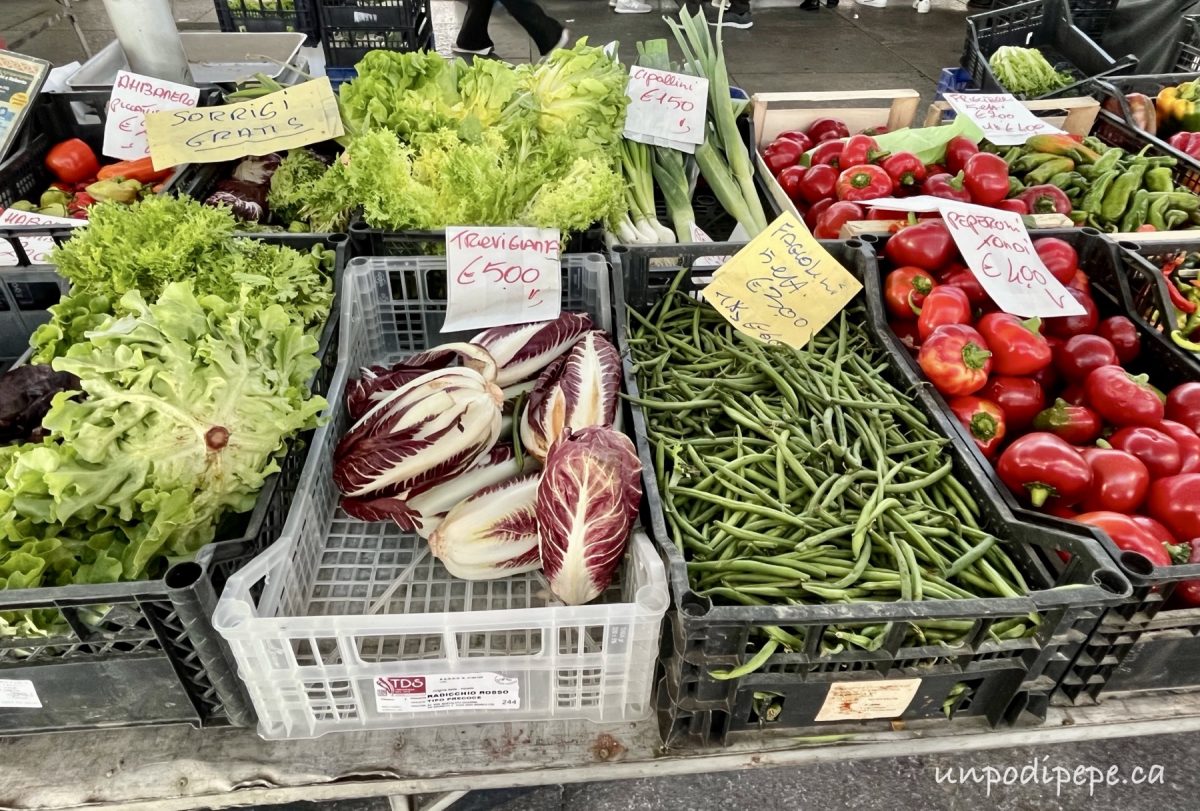
The covered glass pavilion is the local farmers market.  Look at the gorgeous radicchio.  This vendor with the hat is Lucia’s favourite.The produce is surprisingly well-priced.  Porta Palazzo is a clean and lively space.  The Torinesi call it Porta Pila, and do much of their shopping here. The space is huge, so there can be thousands, of people, especially on Saturdays, when many shoppers even drive in from France!A good place to snack, or to taste and see local food, as well as other ethnic specialties. Porta Palazzo is an explosion of colour and a feast for all of the senses-flavours, aromas, colours, sounds and languages.
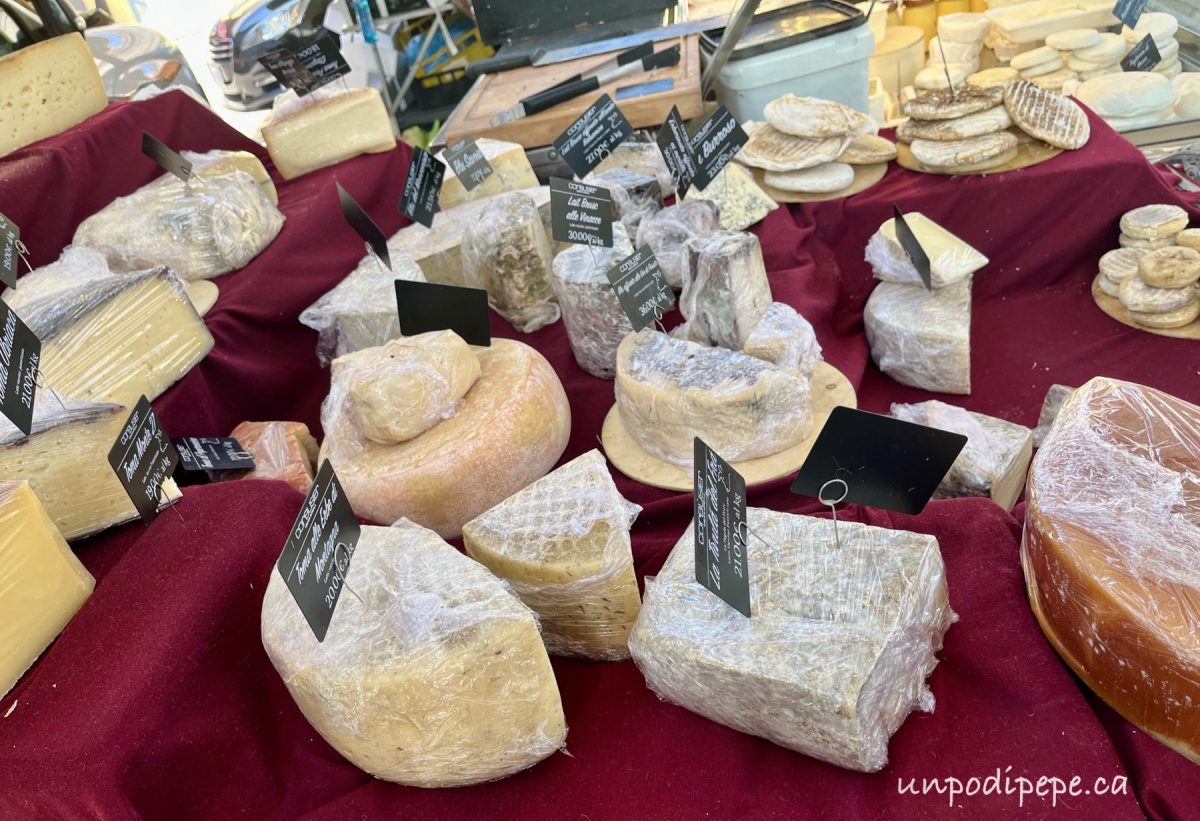
Formaggi can be found from Piemonte and every region of Italia

Besides the bancarelle and pavilion, there are also 4 structures on the site: Mercato Ittico e Alimentare, built in 1826, L’antica Tettoia dell’Orologio, a 1916 metal art deco building, Mercato dell’abbigliamento-the clothing market, and Mercato Centrale di Torino, built in 2011.  A food lover’s Heaven! Also, more formaggi!

Mercato Porta Palazzo is a 5 minute walk from Piazza Castello.  From Piazza Castello, take Via Garibaldi, turn right onto Via Milano, then walk straight until you reach Piazza della Repubblica and the mercato.

Mercato Porta Palazzo is open from 8:00-12:00 Tuesday to Friday, and 7:00-19:30 Saturday. The mercato is closed Sunday and Monday.

More info on Mercato Porta Palazzo can be found on their website.

Buon viaggio, Cristina

Share this:

  • Click to share on Facebook (Opens in new window) Facebook
  • Click to share on Pinterest (Opens in new window) Pinterest
  • Click to share on X (Opens in new window) X
  • Click to email a link to a friend (Opens in new window) Email
  • Click to share on WhatsApp (Opens in new window) WhatsApp
Like Loading...

Torino

13 Sunday Oct 2024

Posted by Un po' di pepe in Architecture, Italia, Photography, Travel tips

≈ 14 Comments

Tags

Bicerin, Italian history, Northern Italy, Piemonte, UNESCO World Heritage Sites

I had no expectations when I visited Torino.  I knew that many of my paesani had moved to the area in the 1970-80’s to look for work, but did not know much about the city itself.  Torino turned out to be a pleasant surprise-a truly underrated, overlooked city on the banks of the river Po, at the foothills of the Alps. With a population of almost 850,000, it is the fourth largest city in Italia but practically unknown to English speaking travellers. It is much less crowded, quieter and cheaper than most other major cities.

L’Universita’ di Torino

I arrived in Torino by highspeed train (TGV) from Paris, to attend an AICW conference at the Università di Torino.  Once the conference started, I only had the evenings to explore the city, so could not visit any buildings/museums.  This is why many of my photos were taken at night!  I need to return to Torino to visit the indoor things!

Named for the ancient Taurini people, the Roman Colony of Taurinorum was founded in 28 BC.  Via Garibaldi, the main shopping street traces the exact path of the ancient Roman street or Decumanus.

Torino was the capital of the Duchy of Savoia, the political center of the Risorgimento (birth of the nation) leading to unification of Italy, and the first capital of the Kingdom of Italy after unification in 1861. The capital moved to Roma in 1865.  Torino was also the center of anti-fascist movements and the Italian resistance movement during WW2.  A lot of history here!

Elegant and sophisticated, Torino has an old world feel, like Paris or Prague, but with an Italian accent.  There is a definite French influence from the Savoia family, even on the local dialetto. The stunning architecture in the centro includes Baroque, Rococo, Neoclassical, Romanesque and Art Nouveau. Most buildings were built between the 16-18th centuries.  In 1997, the historical Center of Torino and residences of the Royal House of Savoia became a UNESCO World Heritage Site.

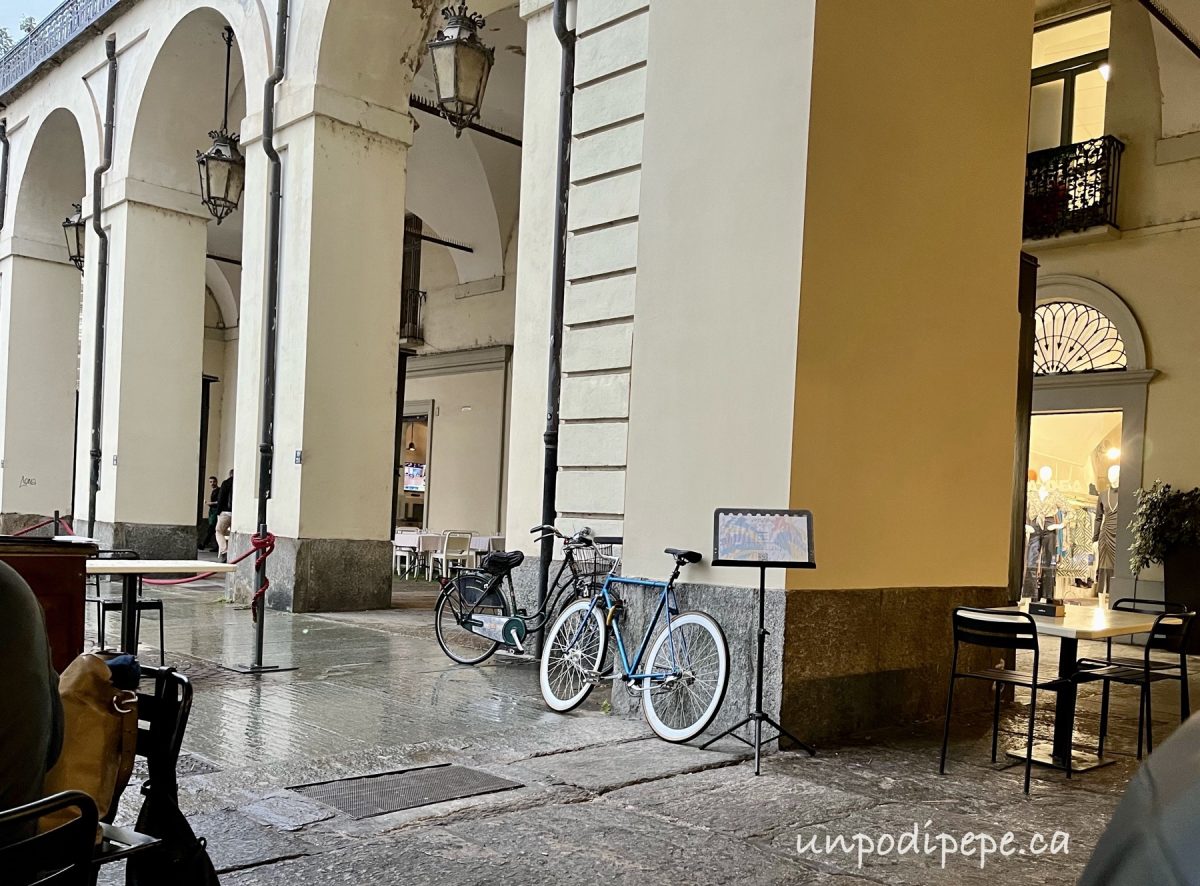
Torino’s centro, the largest pedestrian area in Europe, is easy to navigate. A defining characteristic of Torino’s architecture are the portici (porticoes). 18 km (7 miles) of portici provide shade in summer and shelter from rain, snow and wind.  12.4 km are continuous.  According to legend, King Vittorio Emanuele I wanted Torino to be elegant and also wanted to go on his daily walk to the river Po without getting wet.  So he had the portici built -and now everyone can window shop in all weather conditions.  A whole day can be devoted to walking the portici. Torinesi use them a lot!

Torino is known for, the Shroud of Turin, artisanal chocolate, museums, Royal Palazzi of Savoia, FIAT, Juventus, 2006 winter Olympics, Eurovision 2022, and home to the automotive industry with headquarters for Fiat, Lancia and Alfa Romeo. Torino is also the birthplace of Italian caffè culture, aperitivo, Nutella, Ferrero Rocher, gianduja, Lavazza, FIAT, Vermouth and the Slow food movement!

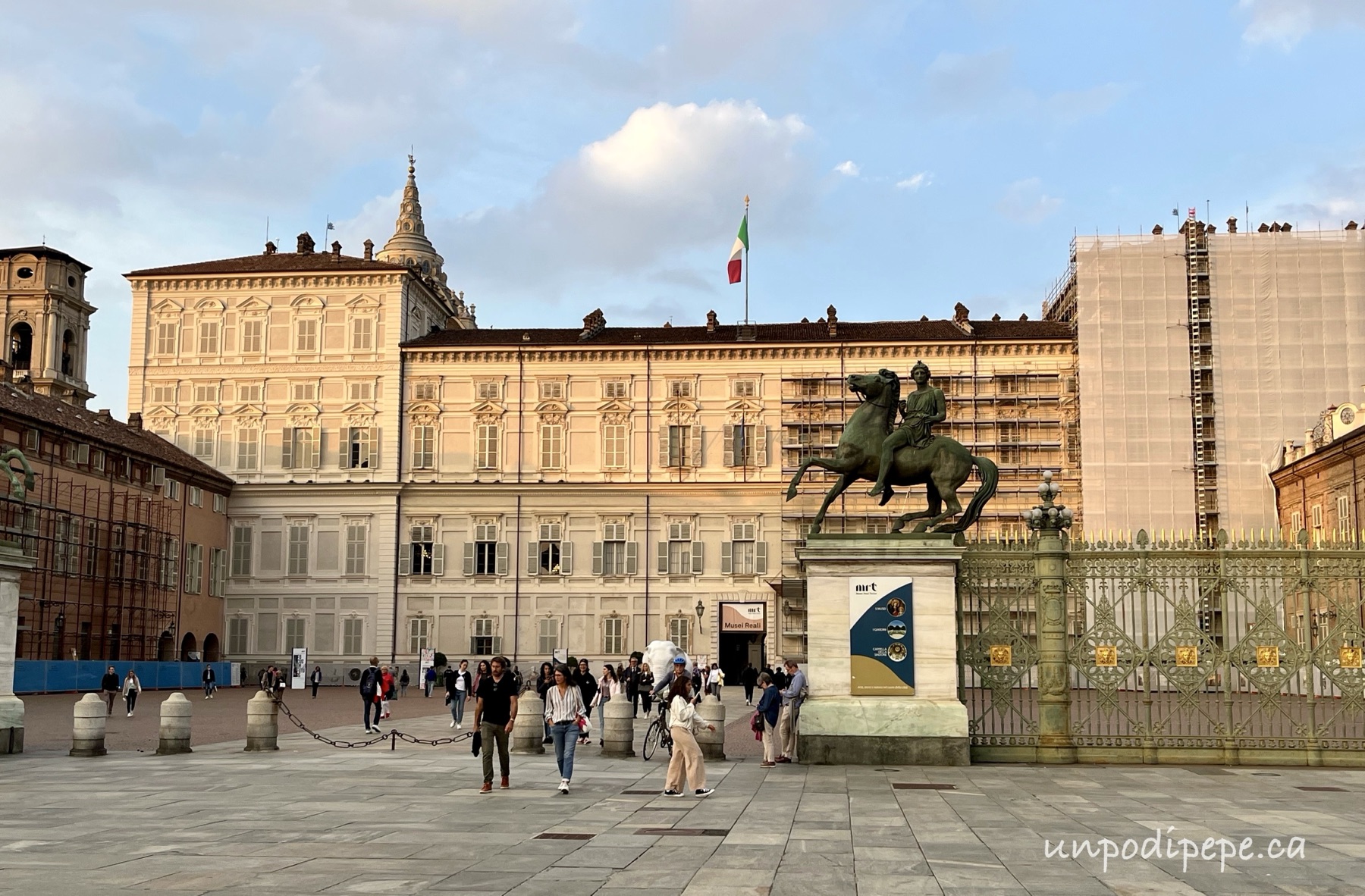
There are many large piazze, full of amazing architectural details, chocolate shops and places to have aperitivo.  Piazza Castello has the Royal Palaces, Palazzo Reale and Palazzo Madama.  Palazzo Madama was the residence of 2 Savoia queens, which explains the name.  It was also the 1st Senate of Italy.  Since 1934 it is a museum of ancient art-although mostly from middle-ages to 18th Century.  Palazzo Reale at the north end, with iron gates contains Armeria Reale, Galleria Sabauda and the Museo di Antichità. The Museo Nazionale del Risorgimento (unification museum) is in Palazzo Carignano.

I had the day before the conference free and met local expert Lucia Hannau from Turinepi for a morning walking tour.  We started in Il Quadrilatero, the oldest part of city, dating back to Roman times.  Piazza della Consolata is home to Caffè Al Bicerin since 1763. They make it in other historic bars, but this is the home of the original Bicerin- with the accompanying plate of local cookies. Bicerin is the iconic drink of Torino, with 3 layers, chocolate, caffè and frothed milk-no stirring!  Stay tuned for a future post! Santuario della Consolata, is across the piazza.  The Baroque exterior looks more like a neoclassical temple, the interior ornate and colourful, gilded and decorated with marble of different colours.

We ended at Mercato Porta Palazzo, Europe’s largest open-air market. My many photos will need a separate post. I had time for only 1 museum visit after my walk with Lucia, and it was Museo Egizio–the world’s oldest Egyptian museum and the largest collection of Egyptology outside of Cairo. Buy €14 tickets online as numbers entering at one time is limited.  If you go to Torino, do not miss this! Stay tuned for a future post.

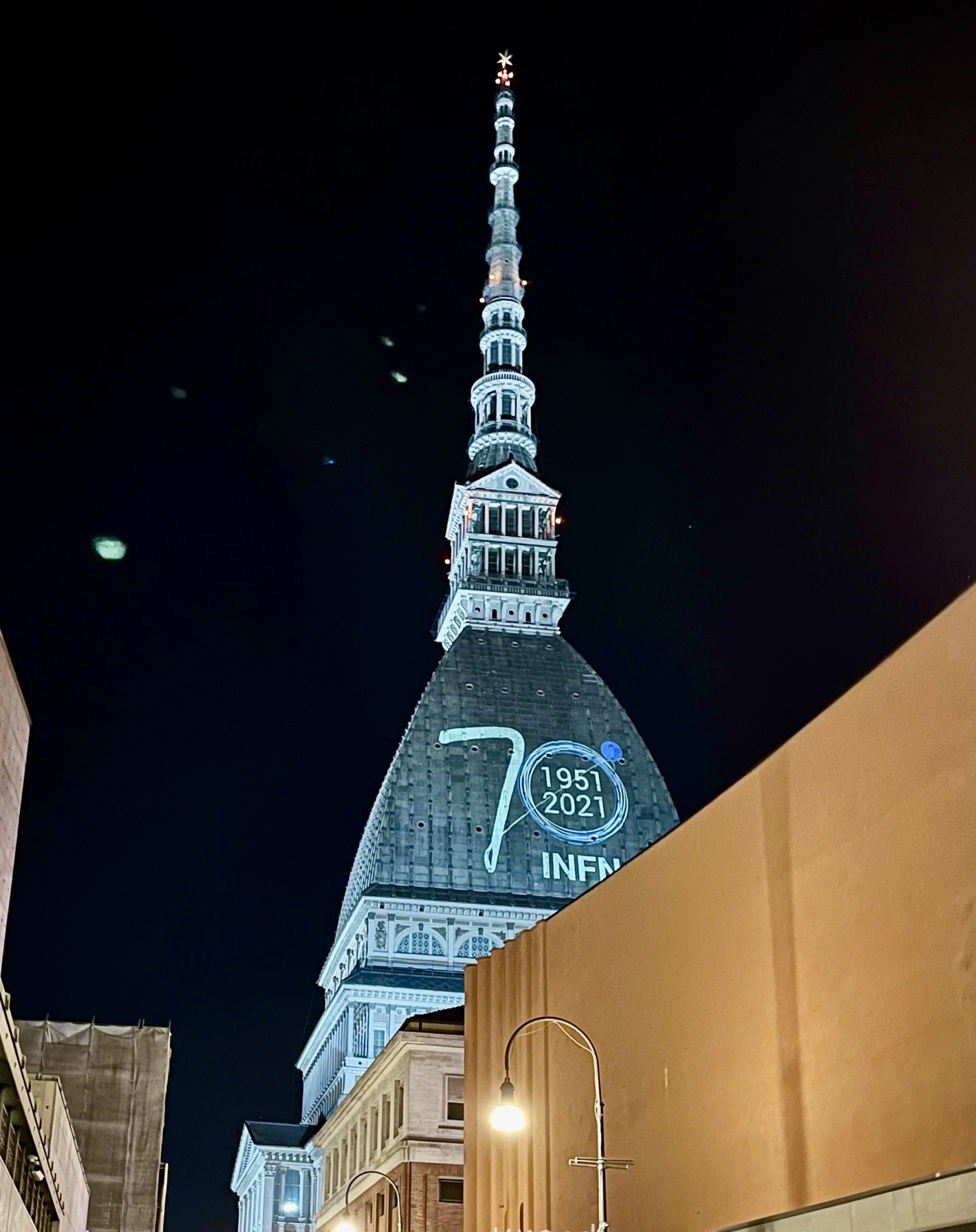
The 167 m (550 ft) tall Mole Antonelliana is featured on the back side of the 2 € coin. Mole means ‘big mound’ and Antonelli was the architect who kept making it taller.  Originally planned as a synagogue, it barely escaped bombing during WW2.  Since 2000 it houses the Museo Nazionale del Cinema, an interactive cinema museum and the tallest museum in the world. It is also the tallest unreinforced brick building in the world (without steel girder skeleton). The top has impressive views of Torino and the Alps.  

The Holy Shroud (Sindone di Torino) is a linen cloth said to have covered the body of Jesus.  An important icon for pilgrims, kept in the Cathedral of San Giovanni Battista, but only displayed for the Jubilee every 25 years.  It will be on display in 2025.

Autumn is a perfect time to visit Piemonte, especially for the seasonal food….zucca, porcini, castagne, tartufo bianco, salsiccia,tajarin and agnolotti del plin.

Tajarin integrale con porcini, salsicce e formaggio Piemontese

Torino has a chocolate festival in November and the Salone dei Libri in May. Milano is only 1 hour by train. Stay 3-4 days if you can, as there is a lot to see in Torino!  I definitely recommend a walking tour with Lucia, Bicerin and the train from Paris!

Buon Viaggio, Cristina

Share this:

  • Click to share on Facebook (Opens in new window) Facebook
  • Click to share on Pinterest (Opens in new window) Pinterest
  • Click to share on X (Opens in new window) X
  • Click to email a link to a friend (Opens in new window) Email
  • Click to share on WhatsApp (Opens in new window) WhatsApp
Like Loading...

Enter your email address to follow 'un po' di pepe' and receive notifications of new posts by email.

Join 511 other subscribers
Follow Un po' di pepe on WordPress.com

Popular Posts

  • Hairstyling in Ancient Roma
    Hairstyling in Ancient Roma
  • Panforte di Siena
    Panforte di Siena
  • Espresso Cookies
    Espresso Cookies
  • Panettone Fatto in Casa
    Panettone Fatto in Casa
  • Il Pumo Pugliese
    Il Pumo Pugliese
  • Dolci di Natale
    Dolci di Natale
  • Internment of Italian Canadians
    Internment of Italian Canadians

Recent Posts

  • Castel del Monte
  • ‘The Nuances of Love’
  • Hostaria Antica Roma~Eat like an Ancient Roman
  • Santa Maria in Aracoeli
  • Casino dell’Aurora~Villa Boncompagni Ludovisi
  • Nasoni di Roma
  • Bloghiversario #11
  • Fontana di Trevi
  • Acqua Vergine
  • Giubileo 2025
  • Sanremo 2025
  • In Vino there are Memories
  • A Literary Harvest
  • 2024~Un po’ di pepe Year in Review
  • Buon Natale 2024
  • Il Bicerin
  • Mercato Porta Palazzo
  • Torino
  • Catanzaro, Calabria
  • Il Pumo Pugliese
  • Artemisia Gentileschi
  • Cavalli di San Marco
  • Panzerotti
  • Torcello
  • 10 years of Un po’ di pepe!

Categories

Amici e Famiglia Architecture Art Art history Art projects Bilingual posts Blogging Canada Culture Feste Firenze Inspiration Italia Italian Folklore Italian language Italian life Italocanadesi Libri Mangiamo! Orsara di Puglia Parole piacevoli Photography Puglia Recipes Roma Travel Travel tips Uncategorized Vino

Archives

Un po’ di pepe on Facebook

Un po’ di pepe on Facebook

Start a Blog at WordPress.com.

  • Subscribe Subscribed
    • Un po' di pepe
    • Join 511 other subscribers
    • Already have a WordPress.com account? Log in now.
    • Un po' di pepe
    • Subscribe Subscribed
    • Sign up
    • Log in
    • Report this content
    • View site in Reader
    • Manage subscriptions
    • Collapse this bar
 

Loading Comments...
 

    %d