 I had no expectations when I visited Torino. I knew that many of my paesani had moved to the area in the 1970-80’s to look for work, but did not know much about the city itself. Torino turned out to be a pleasant surprise-a truly underrated, overlooked city on the banks of the river Po, at the foothills of the Alps. With a population of almost 850,000, it is the fourth largest city in Italia but practically unknown to English speaking travellers. It is much less crowded, quieter and cheaper than most other major cities.

L’Universita’ di Torino
I arrived in Torino by highspeed train (TGV) from Paris, to attend an AICW conference at the Università di Torino. Once the conference started, I only had the evenings to explore the city, so could not visit any buildings/museums. This is why many of my photos were taken at night! I need to return to Torino to visit the indoor things!
Named for the ancient Taurini people, the Roman Colony of Taurinorum was founded in 28 BC. Via Garibaldi, the main shopping street traces the exact path of the ancient Roman street or Decumanus.
Torino was the capital of the Duchy of Savoia, the political center of the Risorgimento (birth of the nation) leading to unification of Italy, and the first capital of the Kingdom of Italy after unification in 1861. The capital moved to Roma in 1865. Torino was also the center of anti-fascist movements and the Italian resistance movement during WW2. A lot of history here!
Elegant and sophisticated, Torino has an old world feel, like Paris or Prague, but with an Italian accent. There is a definite French influence from the Savoia family, even on the local dialetto. The stunning architecture in the centro includes Baroque, Rococo, Neoclassical, Romanesque and Art Nouveau. Most buildings were built between the 16-18th centuries. In 1997, the historical Center of Torino and residences of the Royal House of Savoia became a UNESCO World Heritage Site.
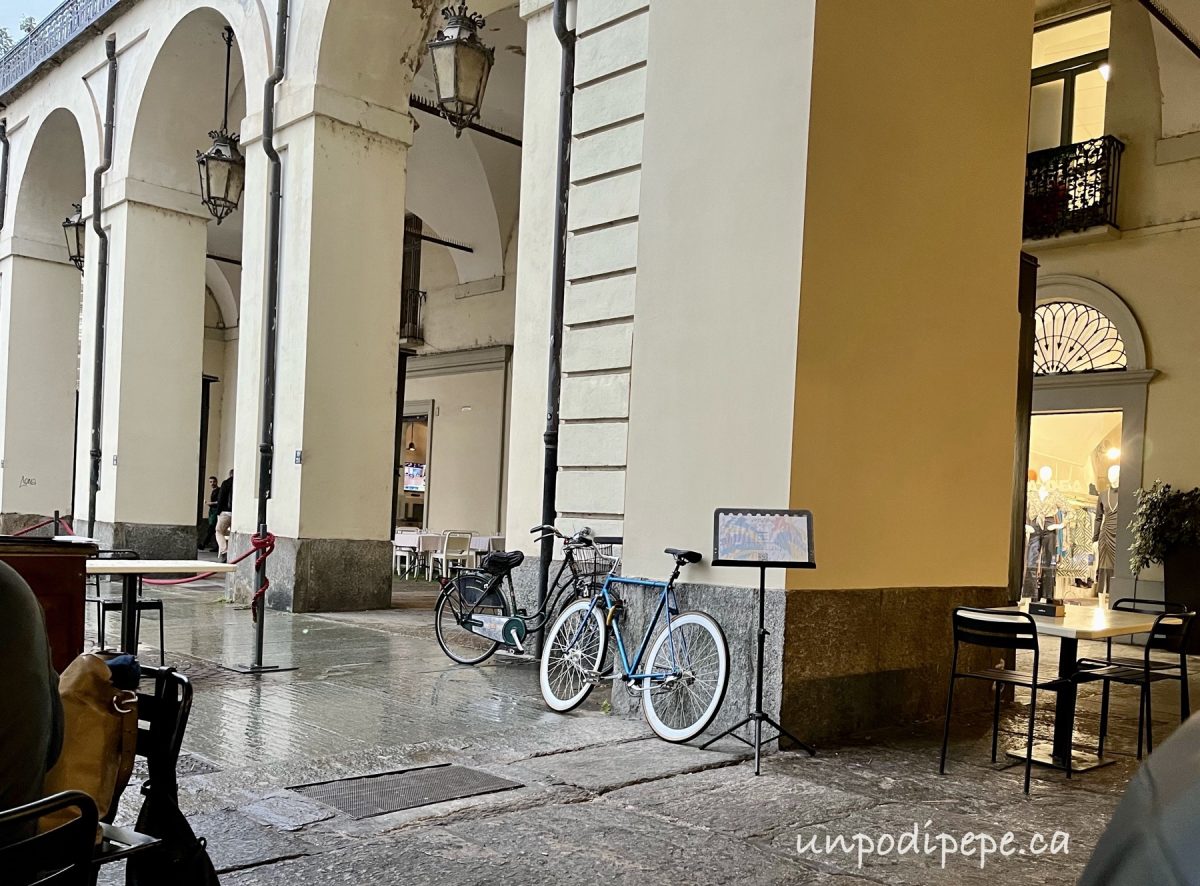 Torino’s centro, the largest pedestrian area in Europe, is easy to navigate. A defining characteristic of Torino’s architecture are the portici (porticoes). 18 km (7 miles) of portici provide shade in summer and shelter from rain, snow and wind. 12.4 km are continuous. According to legend, King Vittorio Emanuele I wanted Torino to be elegant and also wanted to go on his daily walk to the river Po without getting wet. So he had the portici built -and now everyone can window shop in all weather conditions. A whole day can be devoted to walking the portici. Torinesi use them a lot!
Torino is known for, the Shroud of Turin, artisanal chocolate, museums, Royal Palazzi of Savoia, FIAT, Juventus, 2006 winter Olympics, Eurovision 2022, and home to the automotive industry with headquarters for Fiat, Lancia and Alfa Romeo. Torino is also the birthplace of Italian caffè culture, aperitivo, Nutella, Ferrero Rocher, gianduja, Lavazza, FIAT, Vermouth and the Slow food movement!
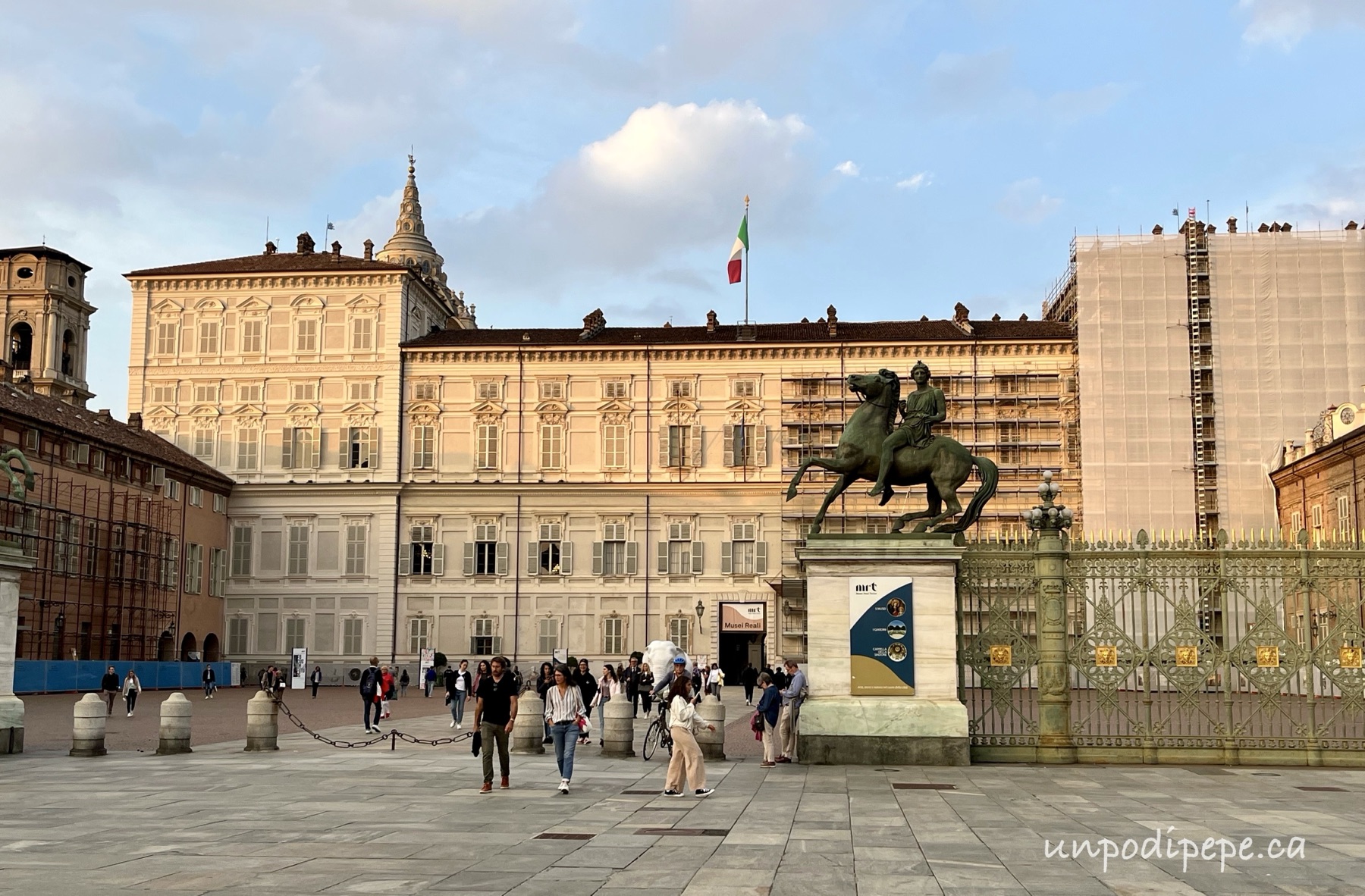 There are many large piazze, full of amazing architectural details, chocolate shops and places to have aperitivo. Piazza Castello has the Royal Palaces, Palazzo Reale and Palazzo Madama. Palazzo Madama was the residence of 2 Savoia queens, which explains the name. It was also the 1st Senate of Italy. Since 1934 it is a museum of ancient art-although mostly from middle-ages to 18th Century. Palazzo Reale at the north end, with iron gates contains Armeria Reale, Galleria Sabauda and the Museo di Antichità. The Museo Nazionale del Risorgimento (unification museum) is in Palazzo Carignano.
I had the day before the conference free and met local expert Lucia Hannau from Turinepi for a morning walking tour. We started in Il Quadrilatero, the oldest part of city, dating back to Roman times. Piazza della Consolata is home to Caffè Al Bicerin since 1763.  They make it in other historic bars, but this is the home of the original Bicerin- with the accompanying plate of local cookies. Bicerin is the iconic drink of Torino, with 3 layers, chocolate, caffè and frothed milk-no stirring! Stay tuned for a future post! Santuario della Consolata, is across the piazza. The Baroque exterior looks more like a neoclassical temple, the interior ornate and colourful, gilded and decorated with marble of different colours.
We ended at Mercato Porta Palazzo, Europe’s largest open-air market. My many photos will need a separate post. 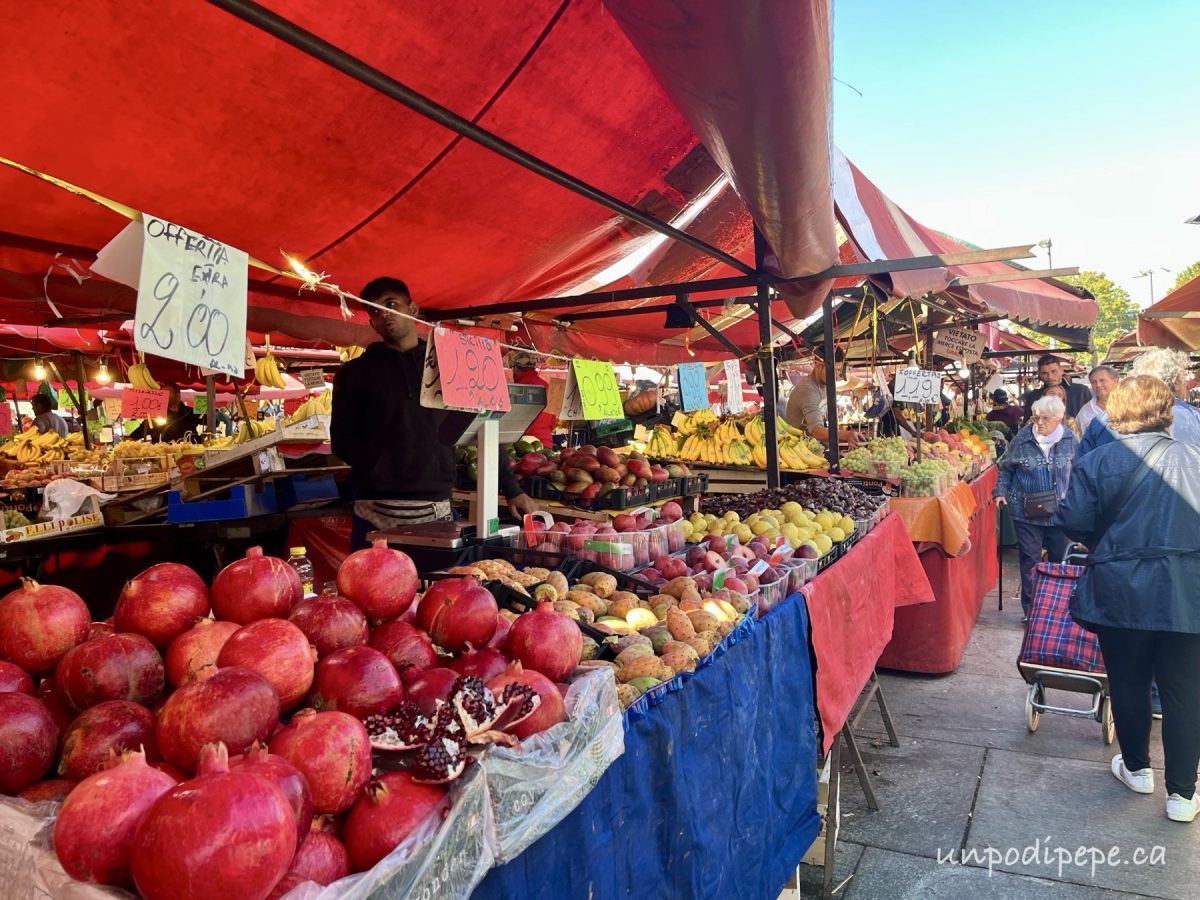 I had time for only 1 museum visit after my walk with Lucia, and it was Museo Egizio–the world’s oldest Egyptian museum and the largest collection of Egyptology outside of Cairo. Buy €14 tickets online as numbers entering at one time is limited. If you go to Torino, do not miss this! Stay tuned for a future post.
The 167 m (550 ft) tall Mole Antonelliana is featured on the back side of the 2 € coin. Mole means ‘big mound’ and Antonelli was the architect who kept making it taller. Originally planned as a synagogue, it barely escaped bombing during WW2. Since 2000 it houses the Museo Nazionale del Cinema, an interactive cinema museum and the tallest museum in the world. It is also the tallest unreinforced brick building in the world (without steel girder skeleton). The top has impressive views of Torino and the Alps. 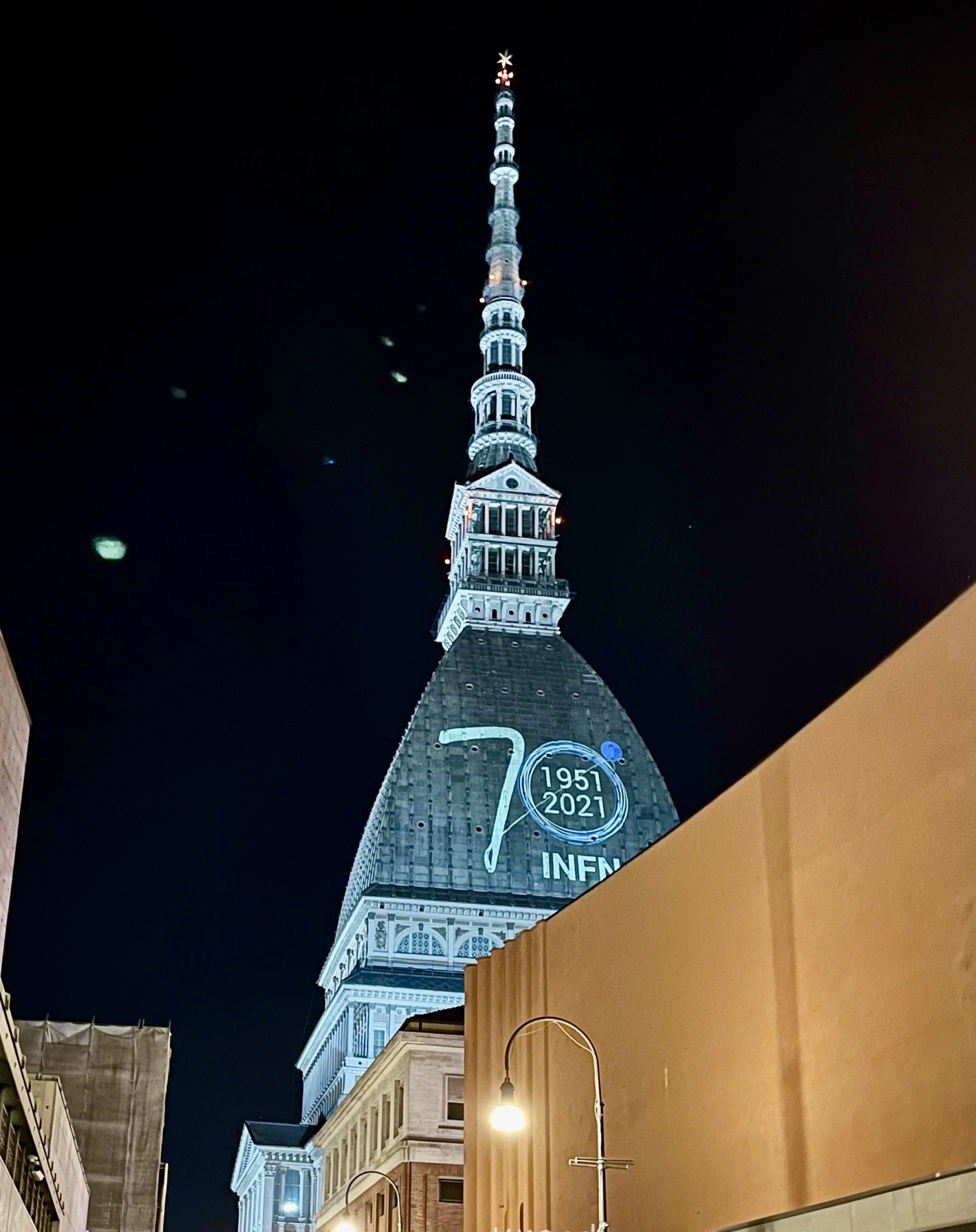
The Holy Shroud (Sindone di Torino) is a linen cloth said to have covered the body of Jesus. An important icon for pilgrims, kept in the Cathedral of San Giovanni Battista, but only displayed for the Jubilee every 25 years. It will be on display in 2025.
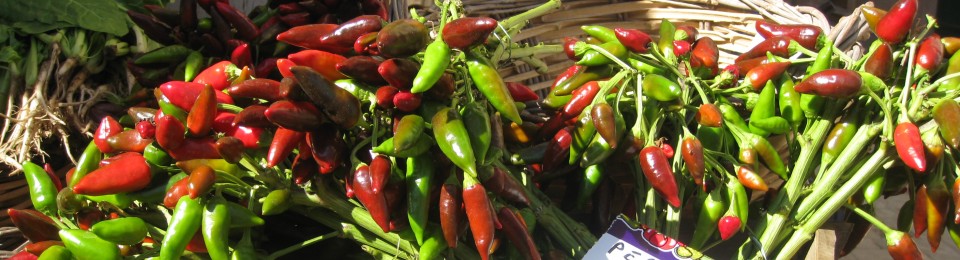
Autumn is a perfect time to visit Piemonte, especially for the seasonal food….zucca, porcini, castagne, tartufo bianco, salsiccia,tajarin and agnolotti del plin.

Tajarin integrale con porcini, salsicce e formaggio Piemontese
Torino has a chocolate festival in November and the Salone dei Libri in May. Milano is only 1 hour by train. Stay 3-4 days if you can, as there is a lot to see in Torino! I definitely recommend a walking tour with Lucia, Bicerin and the train from Paris!
Buon Viaggio, Cristina
 Un po' di pepe
Thanks for the tour of a city I knew nothing about. I hope you’ll get to visit it again.
Grazie Neil. I do hope to go back and see all those great museums i missed. I also dis not have near enough chocolate! Ciao, Cristina
Hi Christina it’s John …… very nice as usual I remember most of those things you wrote about….. having lived in a town called Chieri ….17km from Torino from 1968 to 1975 it was an amazing time
Hey Giovann’. So you didn’t live in S Mauro where most of the Orsaresi went? I was really surprised at how beautiful Torino was, and how much there is to see 😎. We both need a trip back! Ciao, Cristina
yes for sure…. Am planning to go next year
Gre
Thank you for always being so inspiring… I love “travelling” through your lens! I am studying to write the PLIDA exam in one month so have been watching Italian tv and Netflix has a cute little show set in Torino: Guida Astrologica… highly recommended! Buon azione di Grazie! (Felice ringraziamento? Is that a thing?)
Grazie Signora Martini! The main character’s apartment was right by Piazza della Consolata, where i had Bicerin. Thanksgiving isnt a thing it Italia, unless you are an expat, but they do say Buon Giorno del ringraziamento. Out turkey is in the oven 😋. Ciao, Cristina
Thanks for this review, Cristina! I’m certainly guilty of underestimating Torino. Never got there in all my years in Rome, despite being a fan of Piedmontese food. I had the false idea it was a gray, industrial city not worth visiting. I only recently began to realize that I had it all wrong, and this profile confirms it. Now I’m ready to make up for lost time.
Prego Frank! Like me, you will be pleasantly surprised!
Mille grazie for this beautiful and interesting “tour” of Torino.
Prego Pamela. I have a few more coming up for Torino. Ciao, Cristina
Cristina, I very much enjoy your blog, and this one on Torino made for a very interesting read. I had never thought of going to that city, but you have made me think that a trip there would certainly be worth it. Grazie.
Carla
Grazie Carla! I would definitely recommend a visit to Torino, especially in the fall. I have 3 more Torino posts in the works too! Ciao, Cristina