• Home
  • About me/Chi sono
  • Contact

Un po' di pepe

~ …… (oon∙poh∙dee∙PEH∙peh) Cristina writes about interesting stuff /Cristina scrive di cose interessanti

Un po' di pepe

Tag Archives: Fontana di Trevi

Fontana di Trevi

13 Sunday Apr 2025

Posted by Un po' di pepe in Architecture, Italia, Photography, Roma

≈ 12 Comments

Tags

Aqua Virgo, Fontana di Trevi, La Dolce Vita, Palazzo Poli, Roman Fountains, UNESCO World Heritage Sites

The Fontana di Trevi is one of the most iconic structures in Roma-a Baroque masterpiece with a direct link to the Ancient Roman Empire.  Every year, millions of tourists visit, trying to capture a perfect photo, tossing in a coin to ensure a return visit to Roma.  Sometimes it can feel like a mosh pit! The water comes from an ancient aqueduct, Aqua Virgo (Acqua Vergine in Italiano), 9 m below ground, built in 19 BC.  It still functions today and provides water to the fountains in Central Roma.  Find out more in the previous post Acqua Vergine.

The Fontana di Trevi is named for the piazza. Tre vie means 3 roads, refering to Via De’Crocicchi, Via Poli and Via delle Muratte that come together at Piazza Trevi. The Fontana di Trevi is the final destination of Acqua Vergine.

There was always a fountain to mark the end point of Acqua Vergine. The medieval fountain was a simple rectangular shape with 3 spouts pouring water into 3 basins.  In the Baroque era, when everything was over the top and extravagantly decorated, Pope Urban found the existing fountain too boring.  He commissioned the Master, Gian Lorenzo Bernini to sketch a design, but they both died before it got going.  The next Pope held a contest, and Nicola Salvi’s design was chosen.  Construction started in 1732, with many artists involved during the 30 years it took to complete. In a very modern fashion, construction of the Fontana di Trevi was financed with proceeds from the Roman lottery.

The symmetrically balanced theme ’Taming the Waters’ was built right onto the existing building. Palazzo Poli was given a new façade featuring a giant order of Corinthian columns. The main sculpture is Greek Titan Oceanus, not Neptune as is commonly thought.  He is in a large half-shell pulled by 2 seahorses and tritons (sea messengers) with a sea reef below them.  The façade and sea reef are made of Travertine from Tivoli, and the sculptures are Carrara marble. Above and on either side of Oceanus are 2 bas reliefs illustrating the origins of Acqua Vergine.  One depicts Marcus Agrippa ordering construction of the aqueduct and the other the vergine, a young girl leading Roman soldiers to the spring.  The Fontana di Trevi is 26 m (~85 ft) high and 49 m (~160 ft) wide. It spills 80,000 cu m (2, 825,000 cu ft) of water per day! Today the water is continually recycled.

Tossing a coin in the water with the right hand over the left shoulder while facing away from the fountain is thought to ensure a return to Roma. I never miss this opportunity-even during renovation in 2015 I found a way to toss one in! This tradition dates back to the Ancient Romans who tossed coins in water so the gods would protect them on their journey and ensure a safe return. Throw in a second coin to find true love and a third for wedding bells! I believe these last 2 are just from the 1954 movie ‘3 coins in the Fountain’, not the Ancient Romans!  According to another old tradition, drinking the water with your beloved will ensure eternal love and fidelity. Do not drink the water! 

Although the water comes straight from a spring via an ancient aqueduct, it is now continually recirculated. In 1998 when the Fontana was refurbished, recirculating pumps were installed. On the far right and up a few stairs is the Fontanella degli Innamorati (Little Lovers’ Fountain) a small rectangular basin with 2 crossing spouts. Take a drink from this instead-the water is also from Acqua Vergine!
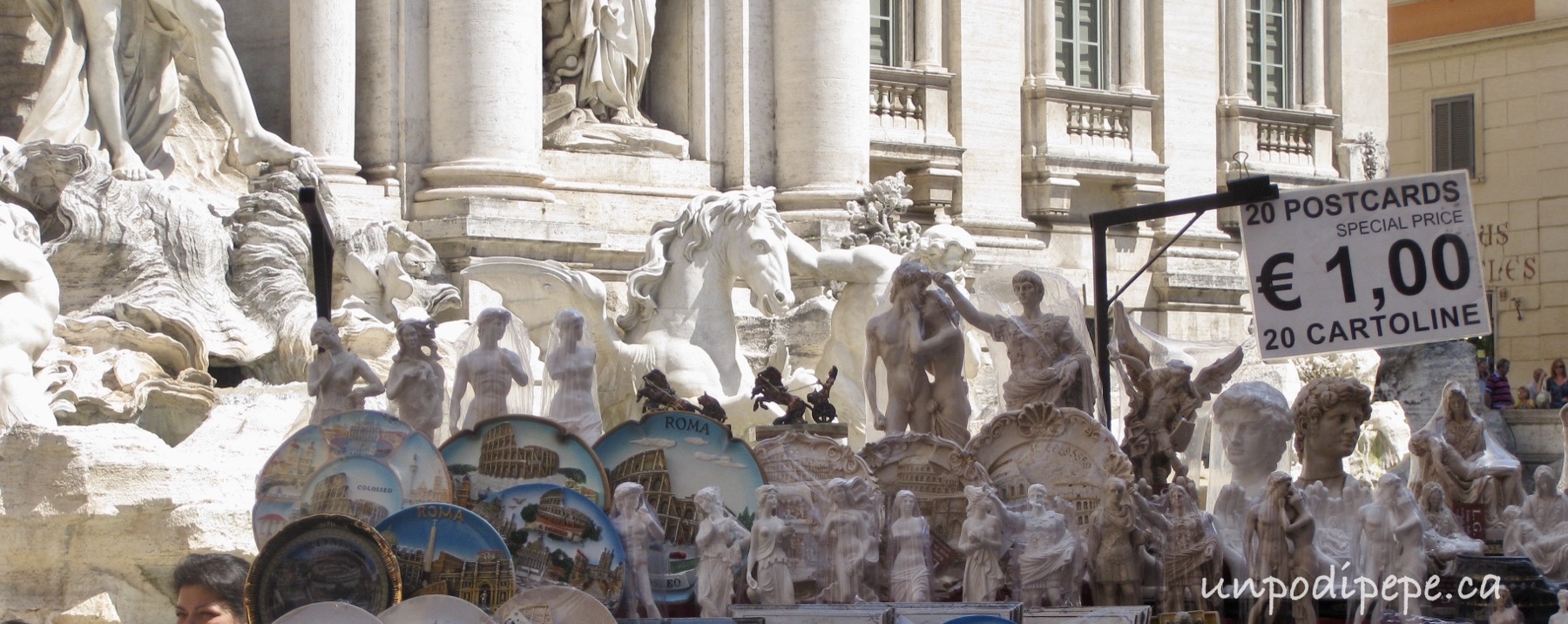
All of those coins in the water can’t be hygienic either.  Approximately €3,500 per day is collected nightly and given to the charity Caritas. The money funds a program providing supermercato cards Roma’s needy.   There are regular attempts to steal the coins from the basin, which of course is illegal.  The water has been vandalized many times, painted red and most recently dyed black with charcoal by climate eco anarchists.

In 2014 Fendi sponsored a 1.5 year, €2.2 million restoration and cleaning, including installation of LED lights to improve night illumination. Most recently, in late 2024 a 3 month restoration also secured the lower basin to restrict access to only 400 visitors at a time. Crowds are expected to be bigger than usual during Giubileo 2025.  Early in the morning is usually a good time to visit.
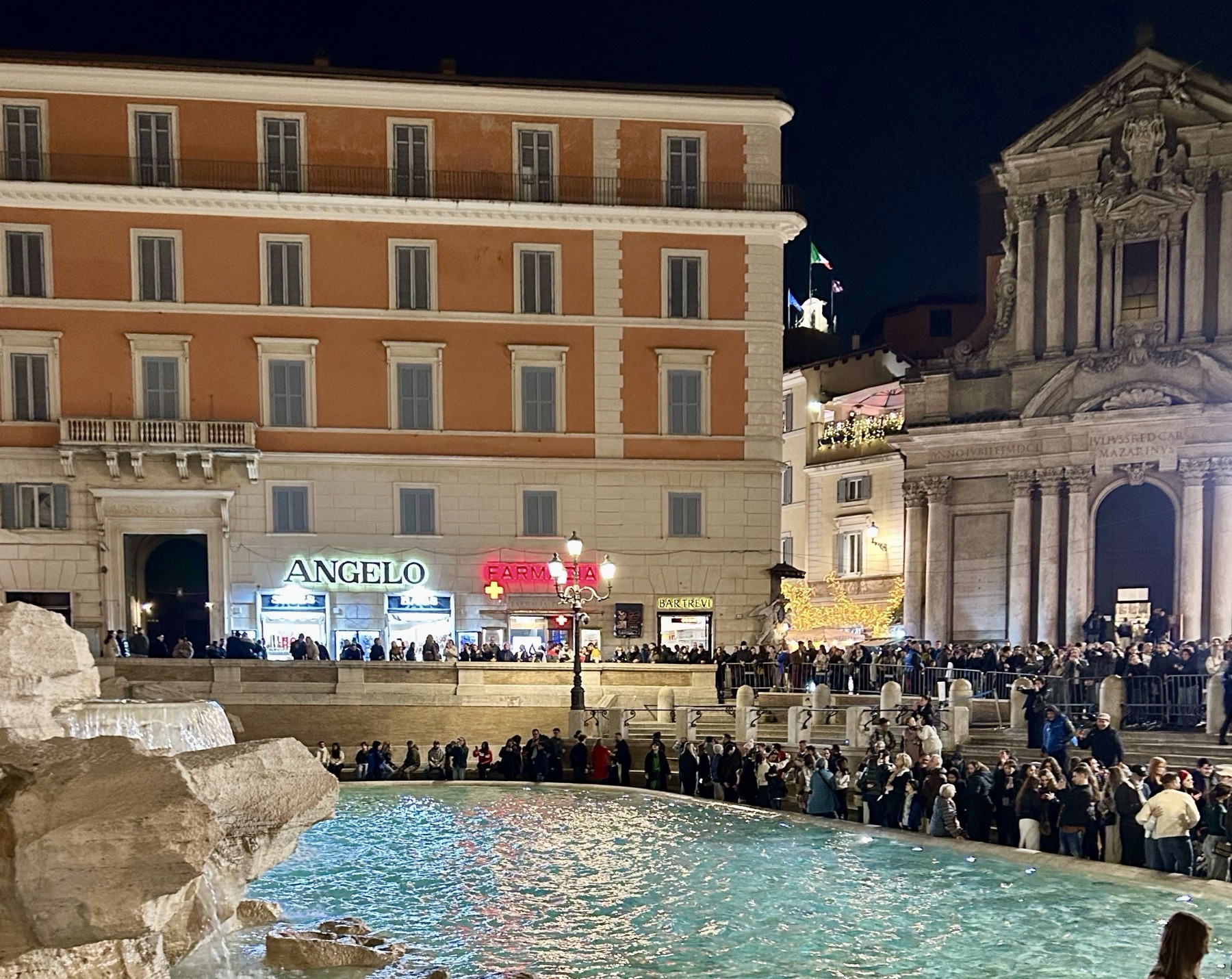
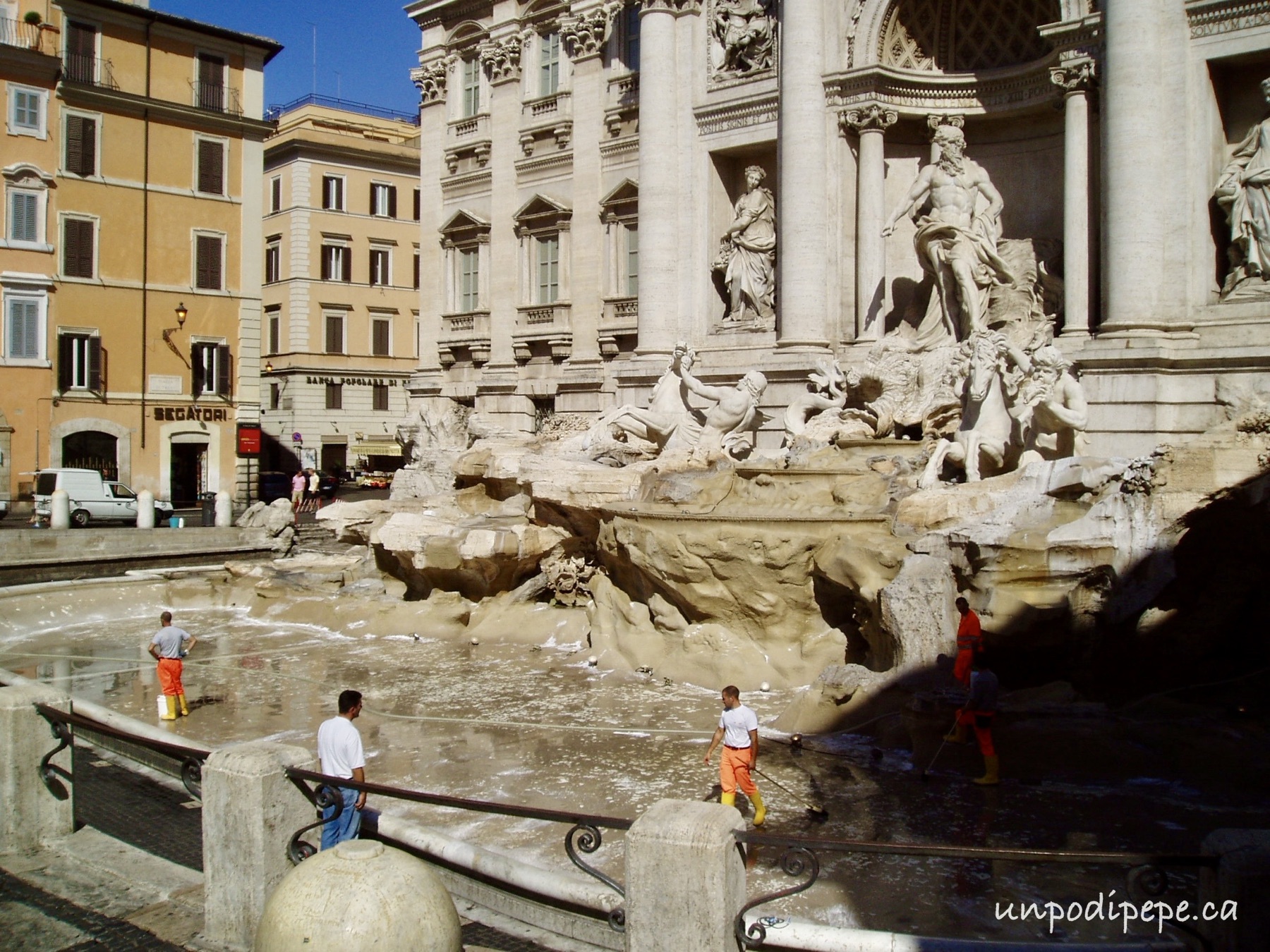
As an outdoor public monument, the Fontana di Trevi is free and always open, so unless it is under renovation, you can check it out at any time.  Access to the lower basin may be limited at some times, and cleaning takes place on certain Monday and Friday mornings. Since it is fed by an aqueduct and powered only by gravity, it never needs to be turned off.
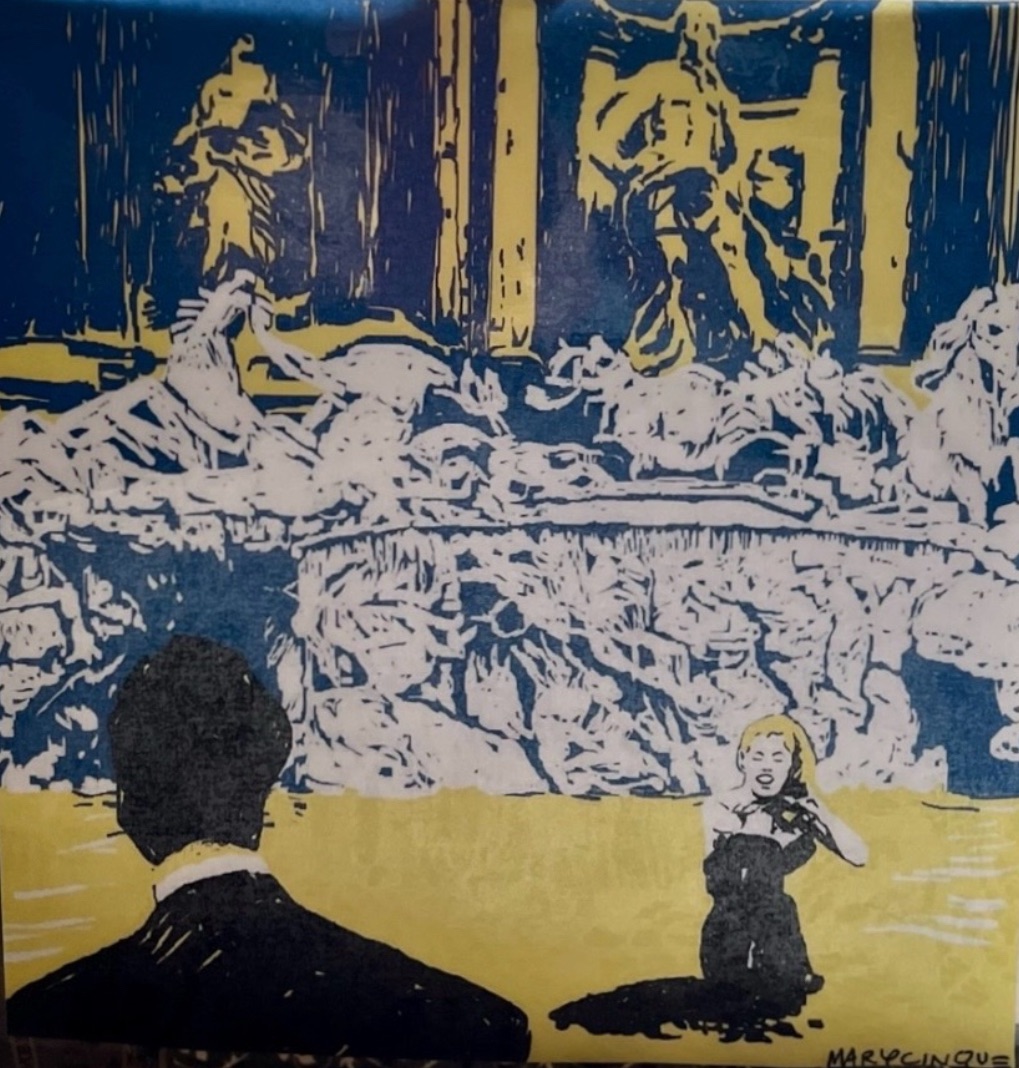
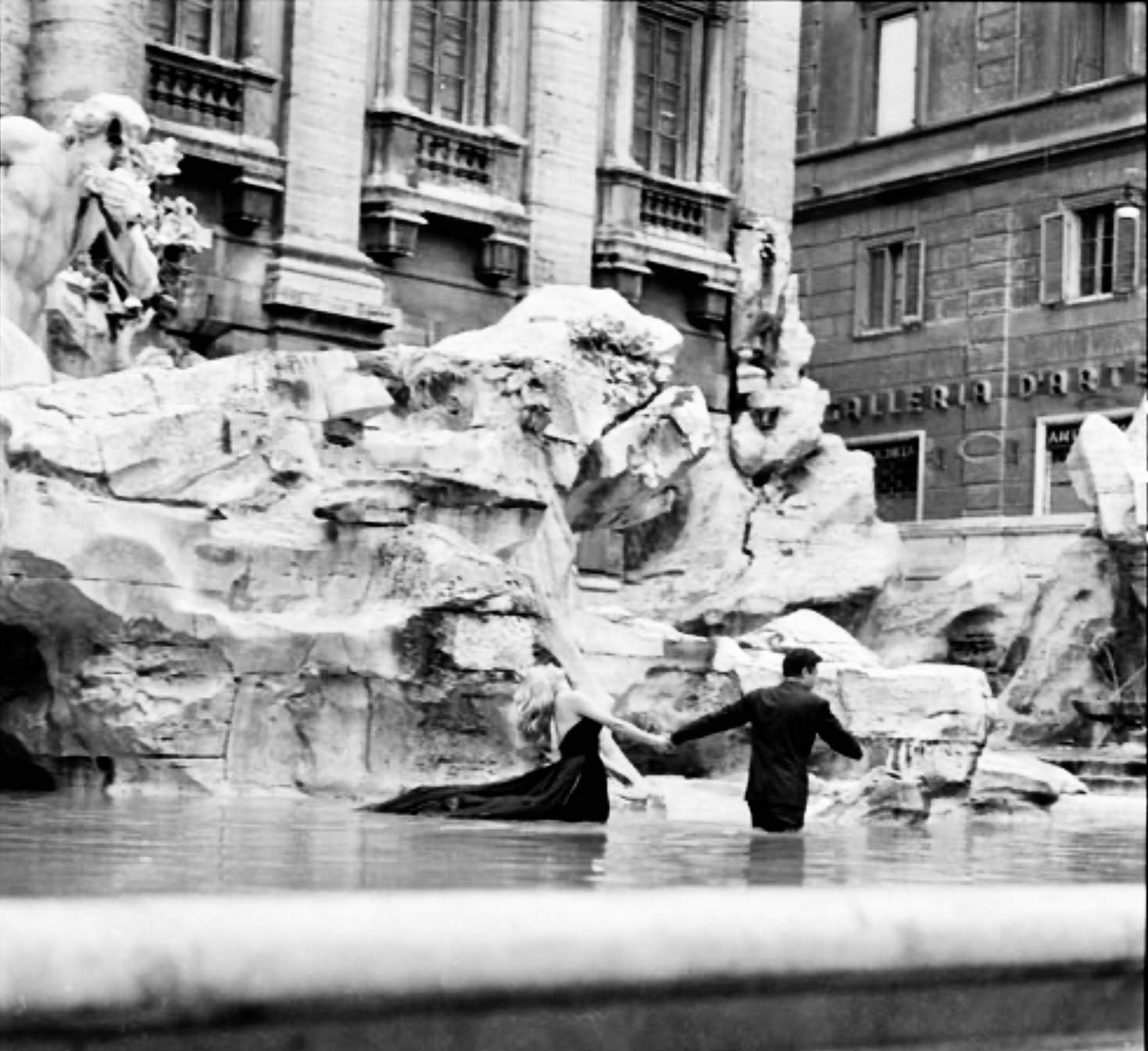
The Fontana was immortalized in film in 1960 when Anita Ekberg walked in with her clothes on in the Fellini classic La Dolce Vita.  Do not be like Anita-you will be immediately slapped with a €450 fine. When her costar Marcello Mastroianni died in 1996, the Fontana di Trevi was draped in black, the water and lights turned off in his honour. Below is part of a poster-note how dirty the stone was in 1960!  The spouts of Fontanella degli Innamorati can be seen on the far right.
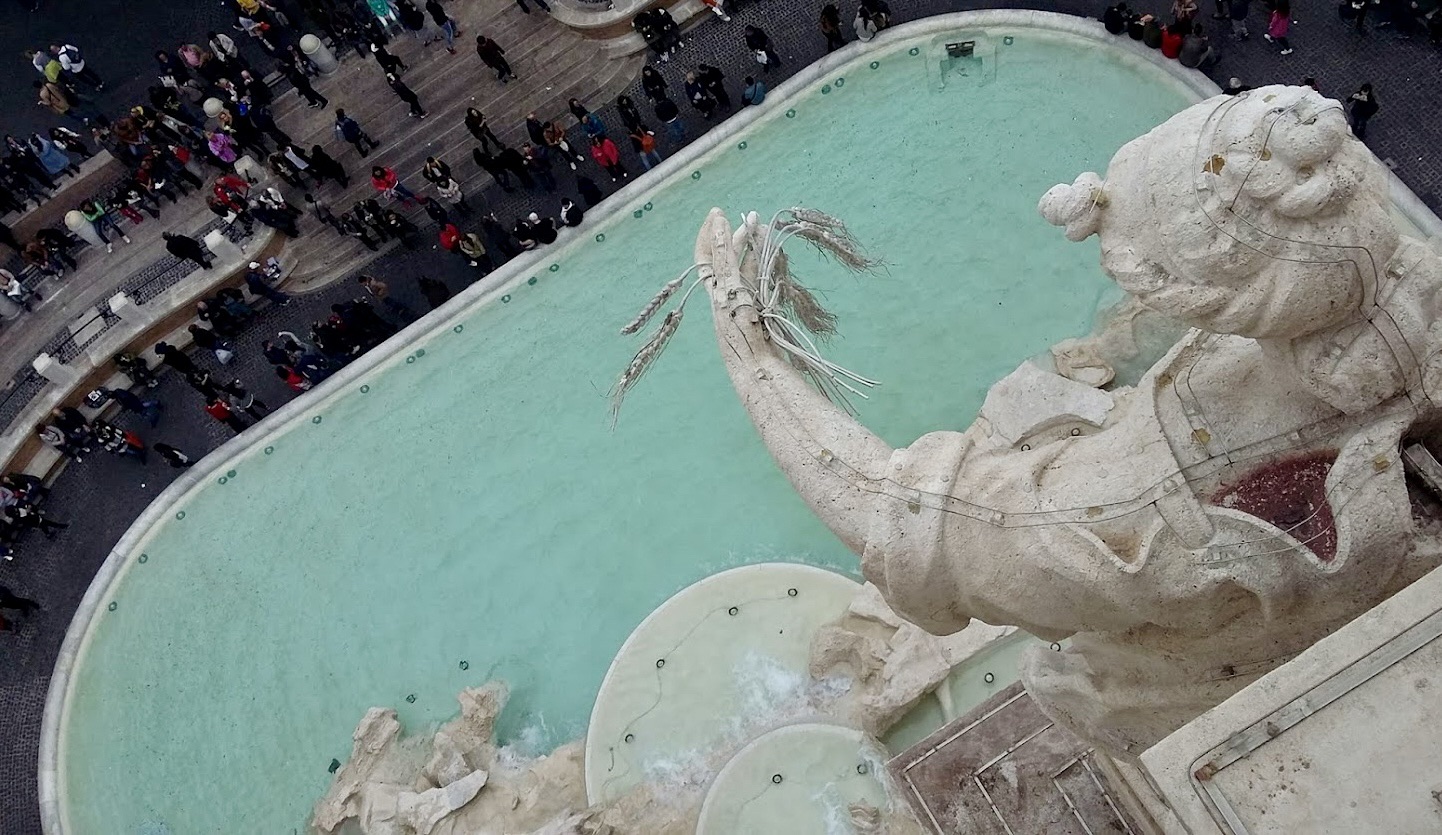
I have a cool Trevi memory.  In 2004, I attended a printmaking exhibit with a friend.  The entrance was at Via della Stamperia 6, 150 m from Piazza Trevi, down the side street past Fontanella degli Innamorati.  I remember climbing a lot of stairs and walking through corridors to get to the exhibit, which was amazing.  Then I wandered off to explore the gorgeous architectural details of the building, and heard the sound of running water as I walked past one of the tall, heavily curtained windows. Moving the curtain, I was right above the Fontana di Trevi!  It had not even occurred to me that there was a real building behind it.  Of course, this was before the time of cell phone cameras! This photo is from the Istituto’s website and was taken from farther up, possibly the roof.  Palazzo Poli was once a private residence, expropriated in 1885.  It is now theIstituto Centrale per la Grafica (Central institute for Graphics) a museum and exhibition space created to preserve and promote cultural heritage documenting graphic art.  Open Monday to Friday 09-17 and weekends 09-14.  Admission is free.  The room I wandered into is usually closed, unless you are attending a classical music performance.
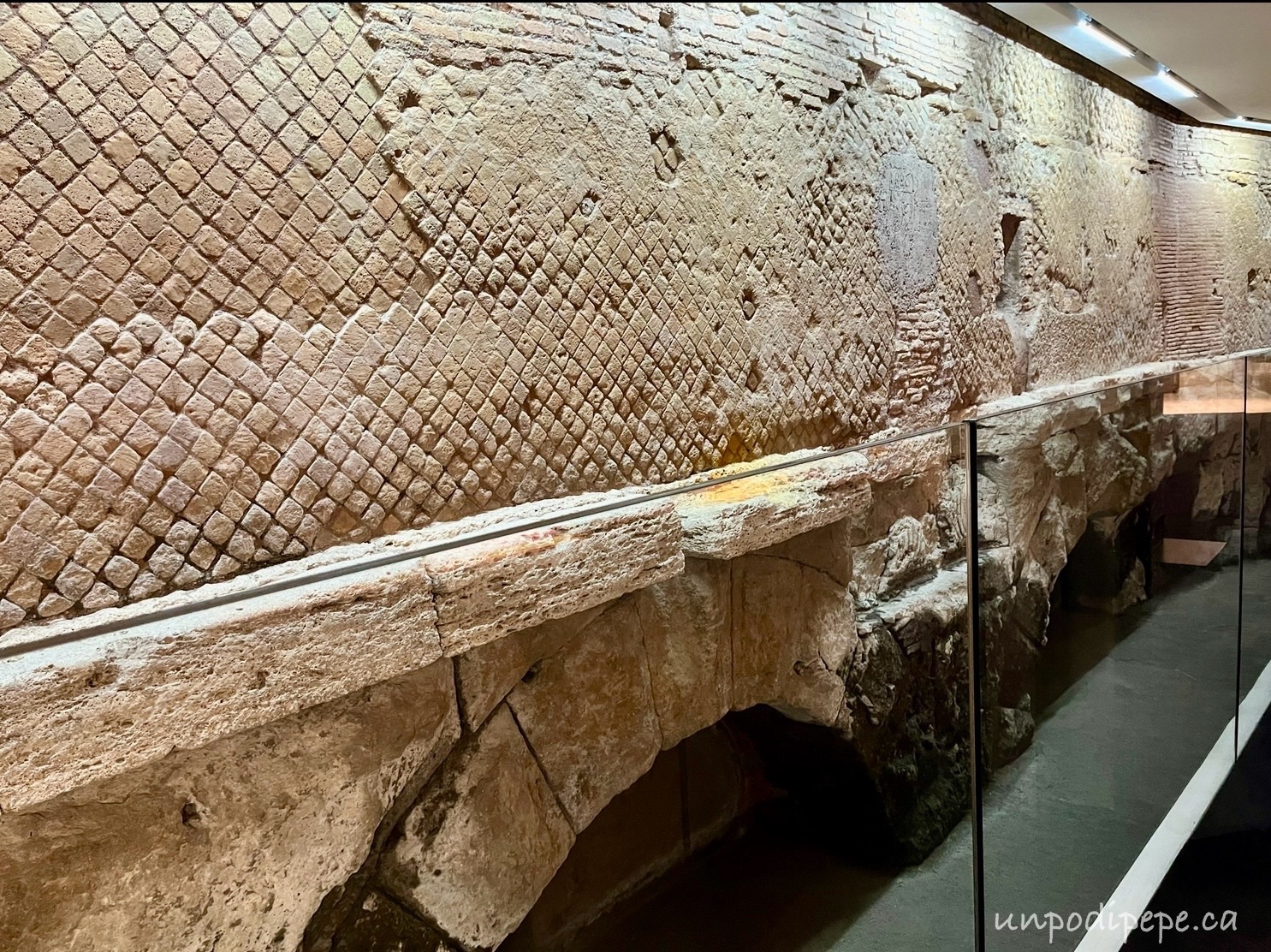
9 m below the Fontana di Trevi, an archeological site was discovered during 2001 renovation of the former Trevi Cinema. Excavations uncovered a building complex from the Imperial Age (27 BC to 476 AD) and a fancy domus (Roman home), including canals still carrying clear water from Acqua Vergine to a holding tank for the domus. The site is called Vicus Caprarius, or “City of water” Vicolo del Puttarello 25.  Open Tuesday to Sunday 11-17 Reservations are recommended on weekdays, required weekends and holidays.  There are several underground tours, ranging from 30 minutes with audio guide to several hours long. I plan to see it in July!
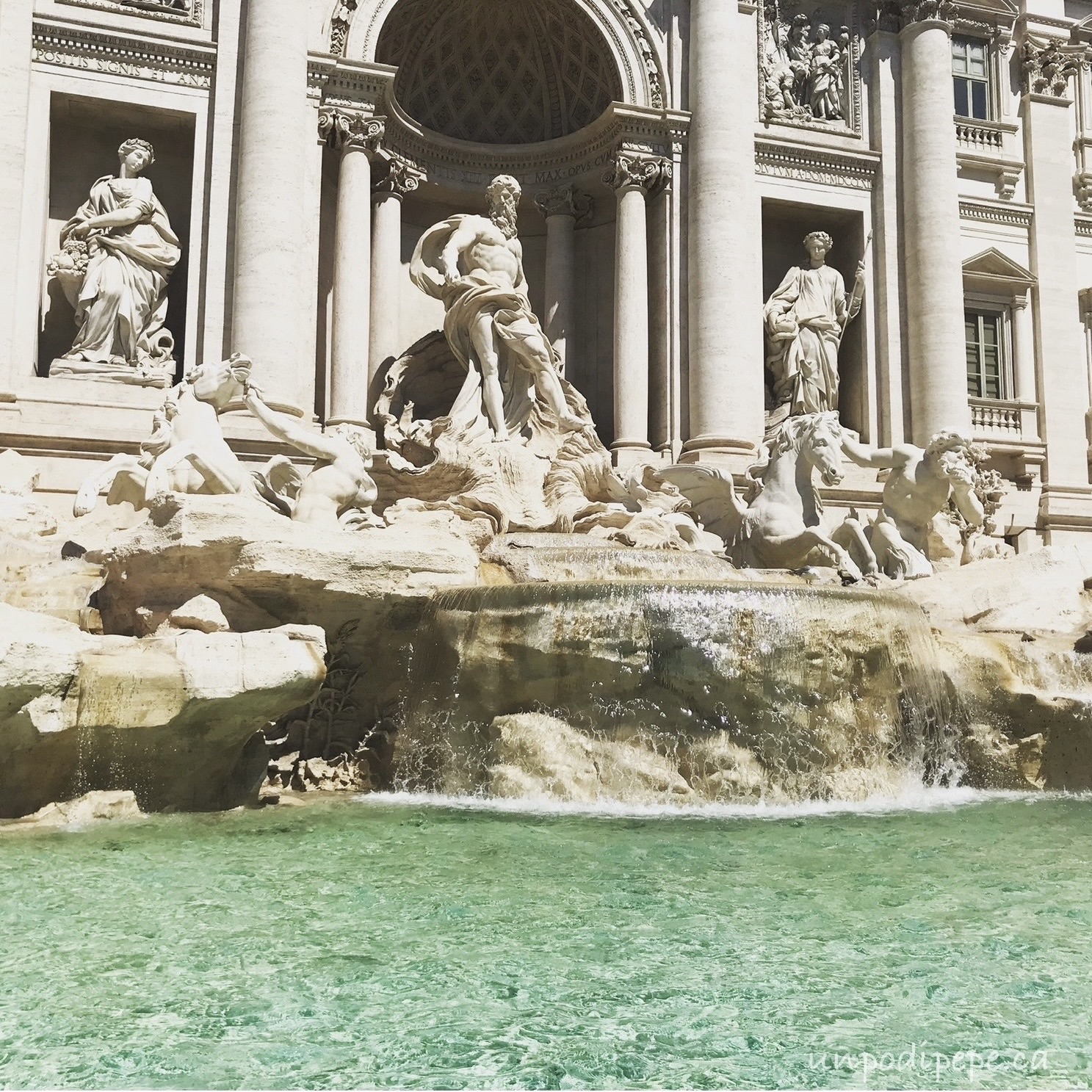
The photos in this post were taken between 2004 and 2025.  Night view and bas reliefs taken by my sorella Lucia in Feb 2025.  ‘La Dolce Vita’ oil pastel on paper by the amazing Mary Cinque.

Ciao, Cristina
Share this:

  • Click to share on Facebook (Opens in new window) Facebook
  • Click to share on Pinterest (Opens in new window) Pinterest
  • Click to share on X (Opens in new window) X
  • Click to email a link to a friend (Opens in new window) Email
  • Click to share on WhatsApp (Opens in new window) WhatsApp
Like Loading...

Acqua Vergine

28 Friday Mar 2025

Posted by Un po' di pepe in Architecture, Roma

≈ 3 Comments

Tags

Ancient Roma, Ancient Roman engineering, Fontana di Trevi, La Barcaccia, Roman Fountains, UNESCO World Heritage Sites

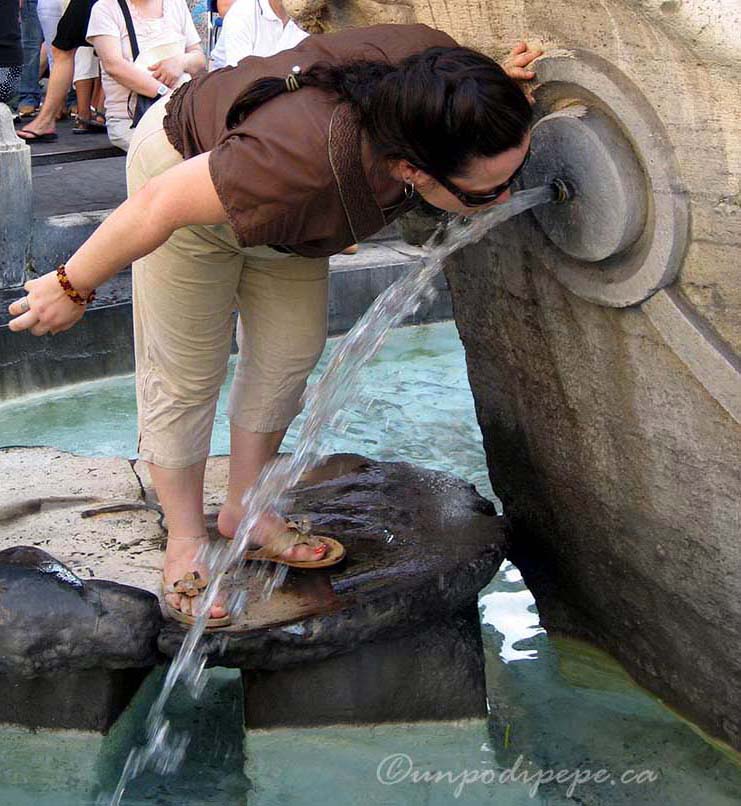
The Ancient Romans were masters of engineering.  One of the greatest examples of this is their aqueducts.  These systems of waterways transported fresh water from springs and melting snow long distances via pipes and tunnels.  The ability to provide a fresh, safe supply of drinking water is one of the reasons the Roman Empire became so powerful. In Roma, 11 aqueducts were built over a period of ~500 years.  Aqueduct #6 out of 11, called Aqua Virgo (Acqua Vergine in Italiano) lives on today.  Not only is it still with us, but it is still functioning, providing water to the most important fountains in central Roma.  The pure, cold, fresh water is drinkable*, constantly flowing and powered by gravity.

Mmmm! Acqua freddissima!

Aqua Virgo was constructed in 19 BC by Marcus Vipsamius Agrippa, son in law and general of Emperor Octavian Augustus.  Yes- the same Marcus Agrippa whose name is carved into the front of the Pantheon. He constructed the original Pantheon, before it burnt down.  Marcus had the aqueduct built to supply water for the thermal baths of Agrippa in the Campo Marzio area near the Pantheon.

Aqua Virgo/Acqua Vergine probably refers to the freshness and purity of the water, but according to legend, in 19 BC, a young girl led Roman soldiers to a spring -the source for the aqueduct.  The source is in the hills 13 km away, at Agro Lucellano between Via Tiburtina and the 8th milestone of Via Collatina (2 of the roads that led to Roma) near present day Salone.  The source is actually only 24m (79 ft) above sea level. Aqua Virgo is 21 km long via indirect route to Roma, making a wide arc.  This is to make use of gravity by shallow downward gradient. 19 km of Acqua Vergine are 9m below ground, with short stretches of brick arches above ground.

There were 1352 fountains in Roma in the 4th Century.  Aqua Virgo was damaged by the invasion of 537 and repaired. It remained in use through the Middle Ages with a few renovations during the Renaissance.  Early Renaissance Popes started to decorate the end point of restored aqueducts with large, ornate fountains.The Fontana di Trevi is the final destination of the original Acqua Vergine and Piazza del Popolo the end of an offshoot.  Carved above the statues next to Oceanus on the Fontana di Trevi, 2 bas reliefs illustrate Marcus Agrippa ordering construction of the aqueduct and the young girl leading Roman soldiers to the source.  They can both be seen in the photo below:

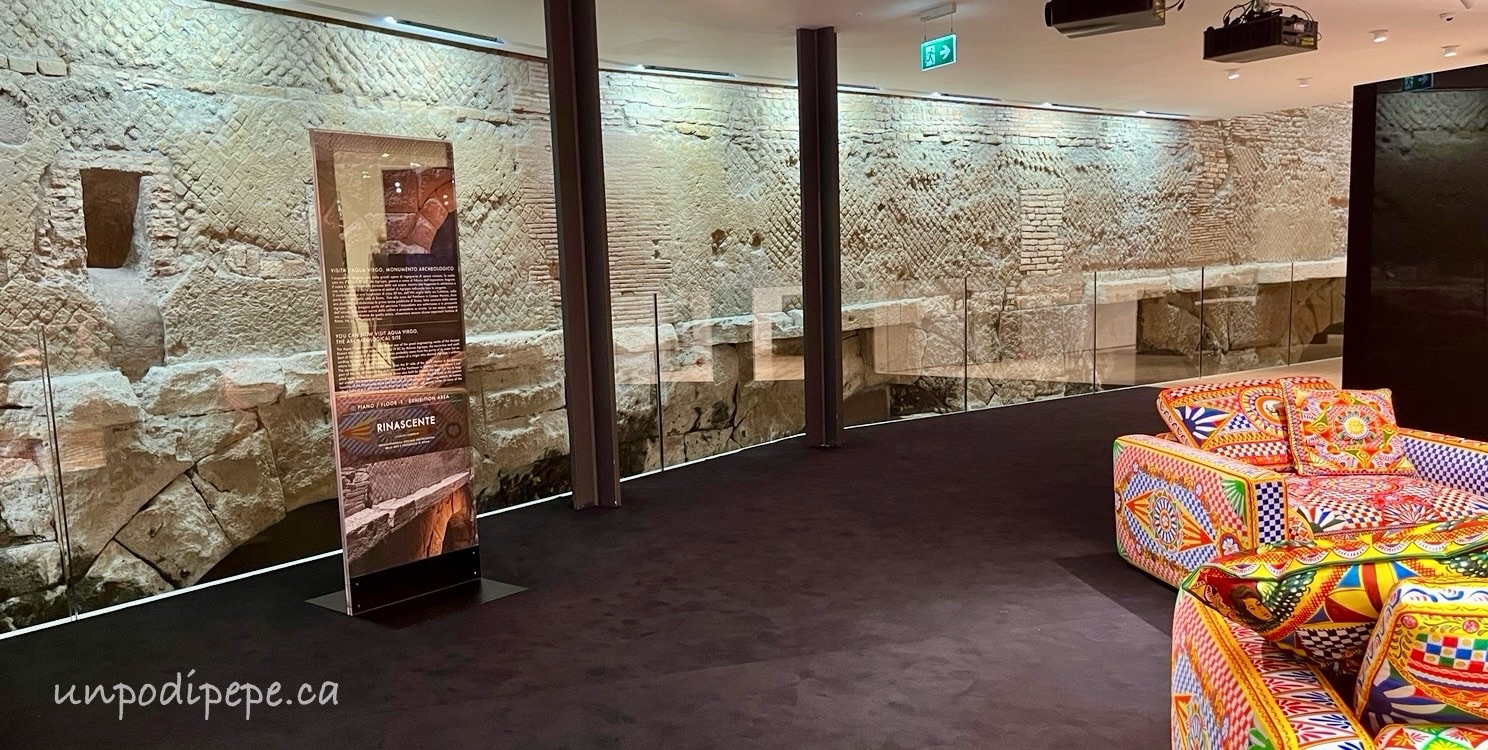
Acqua Vergine Antica runs under Villa Borghese and Villa Medici to Piazza di Spagna and Fontana di Trevi. In 1930 renovated Aqua Vergine Nuova goes behind Piazza di Spagna to Piazza through Giardini Borghese to Piazza Flaminio and Piazza del Popolo. Most of the aqueduct’s 21 km are 9m underground, except for the last stretch running partly on arches as it approached the Campo Marzio area, emerging from the hill by the present La Rinascente Department store. There is also an arch standing on Via del Nazareno, north of Trevi.  Part of Aqua Virgo was found during construction of the new La Rinascente department store location, delaying the opening by 2 years. In 2017 the new Flagship La Rinascente store on Via Tritone 61 opened, including a basement archeological site with a 60 m (197 ft) section of Aqua Virgo on display. Admission is free.  When I went, there was a Dolce and Gabbana furniture exhibit! Just take the escalator down to the bottom floor any time the store is open. Where else but Roma can you combine high end shopping and archeology?

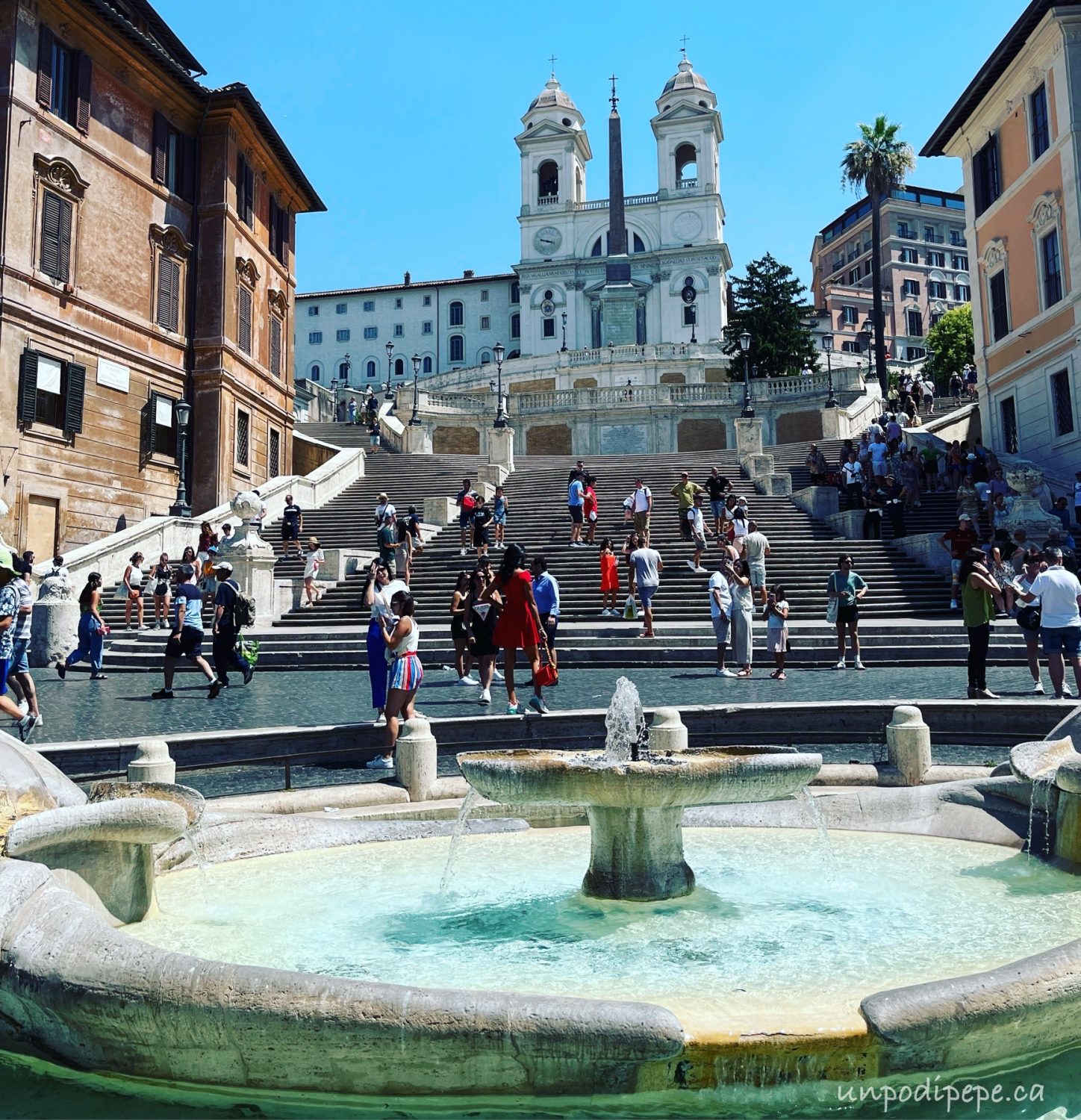
Today Acqua Vergine supplies water to the fountains in Piazza della Rotonda outside the Pantheon, Piazza Mattei (Fontana delle Tartarughe) Fontana del Babuino, Piazza Navona (the 2 outer ones, not the Fontana dei Quattro Fiumi), Campo dei Fiori, Piazza del Popolo (Fontana dei quattro leoni, Fontana di Nettuno and Fontana della Dea di Roma), Piazza Trevi, and my all-time favourite in Piazza di Spagna, La Barcaccia which resembles a sinking ship.  

Don’t forget to bring a water bottle to Roma!  Buon Viaggio, Cristina

*Since 1998, the water in the Fontana di Trevi is recycled, so no longer drinkable.  With €3000 of coins thrown in daily, it was hardly drinkable anyways! Read more about this in my next post!

Photo credits:  Drinking from La Barcaccia by Shannon Milar, Photo with bas reliefs by my sorella Lucia.

Share this:

  • Click to share on Facebook (Opens in new window) Facebook
  • Click to share on Pinterest (Opens in new window) Pinterest
  • Click to share on X (Opens in new window) X
  • Click to email a link to a friend (Opens in new window) Email
  • Click to share on WhatsApp (Opens in new window) WhatsApp
Like Loading...

Un Giorno a Roma

15 Monday Sep 2014

Posted by Un po' di pepe in Italia, Roma, Travel, Travel tips

≈ 11 Comments

Tags

Bernini, Caravaggio, Colosseo, Elefantino, Fontana di Trevi, Il Vittoriano, Italia, La Barcaccia, Pantheon, Roma, Roma photography, Roma walking tour, Roman Forum, San Luigi dei Francesi, Tazza d'oro

TreviRoma truly is ‘la Città Eterna‘-the eternal city! I usually fly in and out of Roma then take the train to Foggia on my way to Orsara di Puglia. I often have one full day in the city at the beginning or end of my trip. When i’m in Roma for just 1 day, I have a usual ‘itinerary’. I do not actually recommend anyone go to Roma for just one day, especially for the first time. 5 days will do but more is better.  One day only gives you enough time to visit a few sites, so it is mostly an entire day of exploring the city on foot. The sites I choose to visit change a bit each time, but the route is basically the same.

I stay with a friend in the Basilica San Paolo area so I take the Metro blue line to the Colosseo stop, exit the station and take a few minutes to absorb the view across the street, which never fails to impress.

The view across the street from the 'Colosseo' metro stop!

The view across the street from the ‘Colosseo’ metro stop!

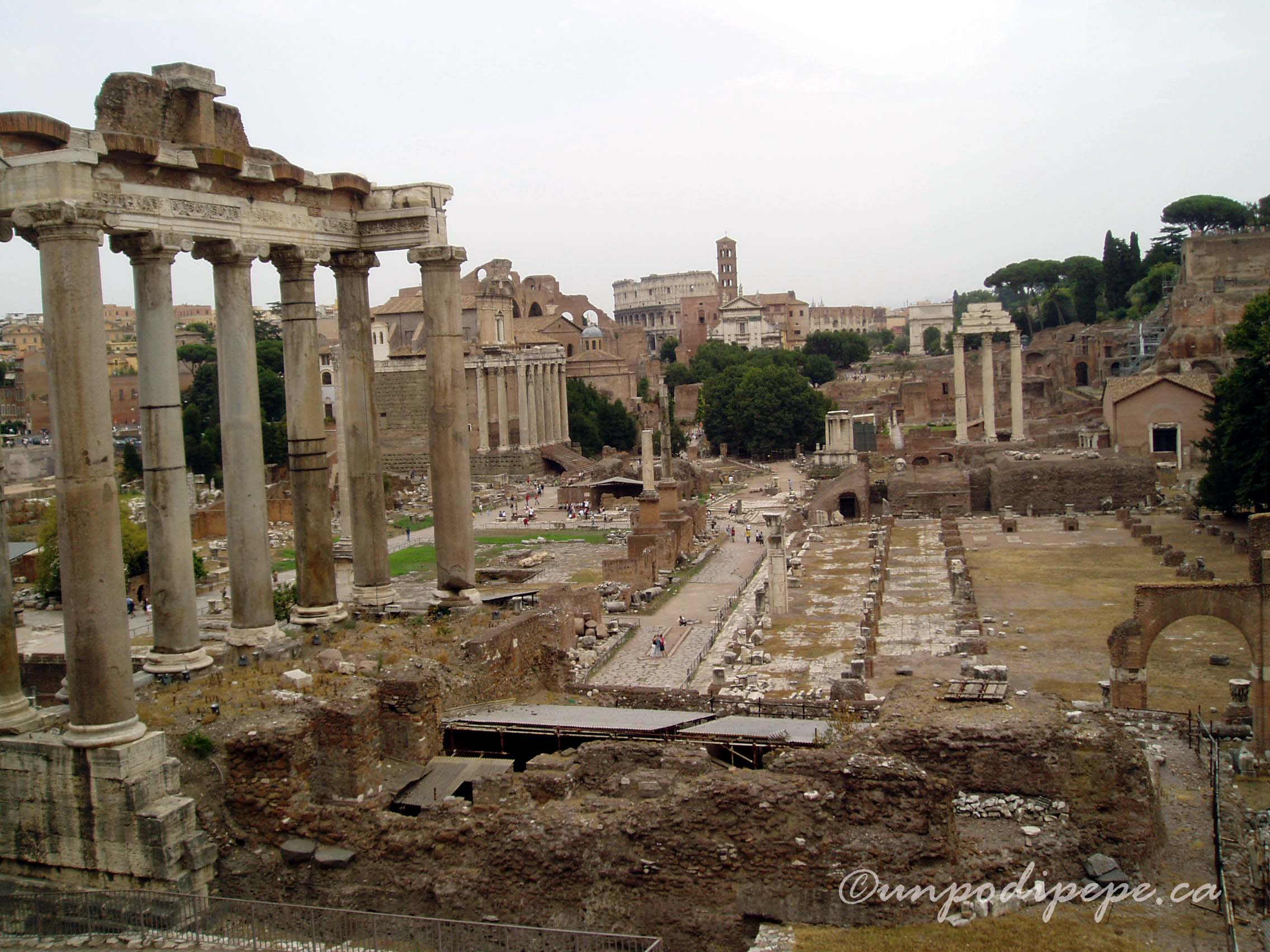
Then I turn right and walk along Via dei Fori Imperiali.  If you visit Il Colosseo, the ticket includes entry to the Forum, so you can walk through there.  Visiting these 2 awesome sites will take all morning, so they are not usually part of my ‘1 day’ itinerary.

View of the Roman Forum (Foro Romano)

View of the Roman Forum (Foro Romano)

Old meets new at the Foro Romano

Old meets new at the Foro Romano

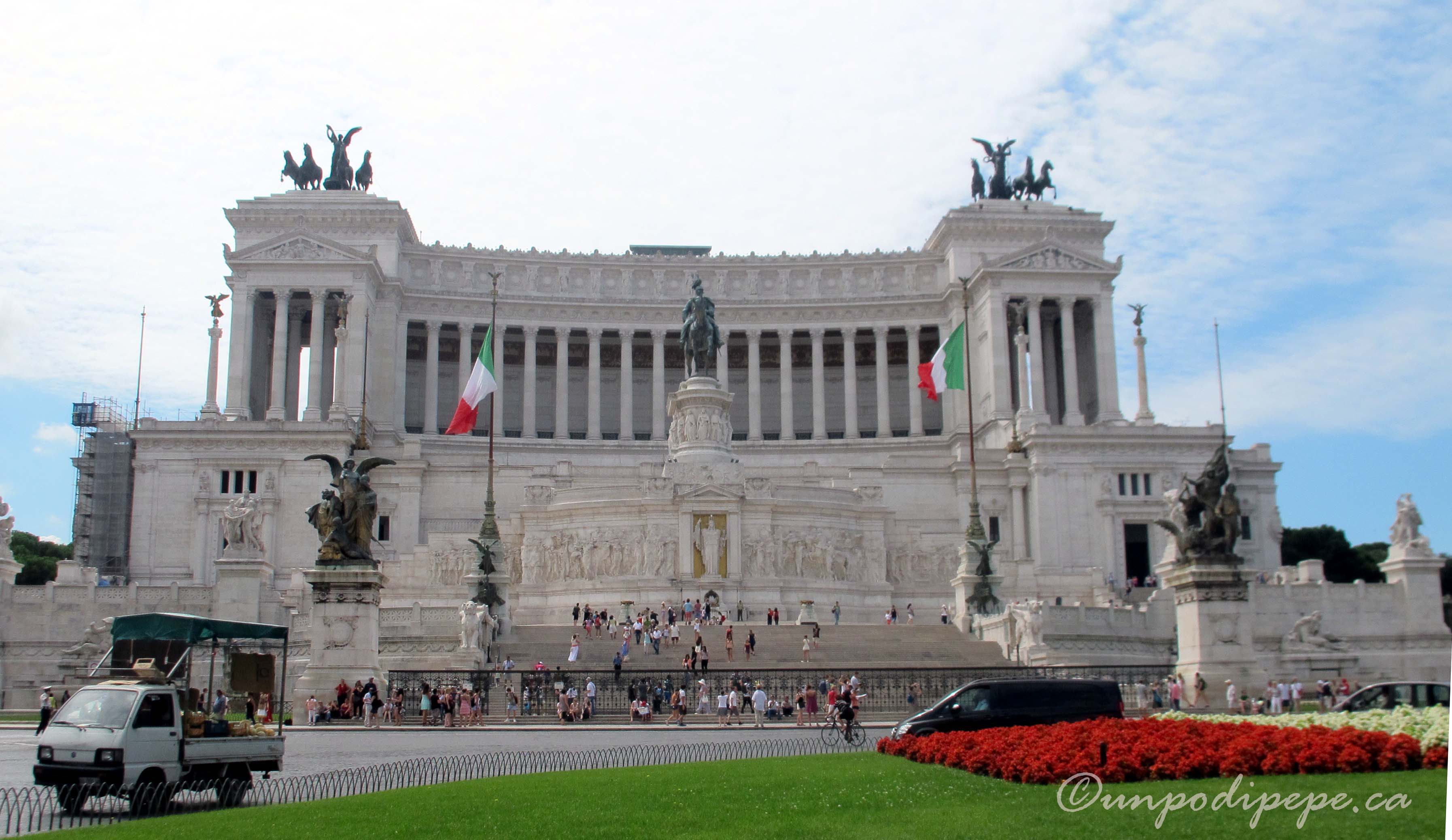
I walk along Via dei Fori Imperiali all the way to Piazza Venezia and Il Vittoriano, which is the neo-classical monument that looks like a giant wedding cake .

Il Vittoriano

Il Vittoriano

If you want some great views of Roma and are not afraid of heights, take the glass elevator to the rooftop terrace.

'Roma dal cielo' view from the roof of Il Vittoriano

‘Roma dal cielo’ view from the roof of Il Vittoriano

Then I turn right again and cross Piazza Venezia, which can be a bit of a challenge, and walk along Via del Corso. Via del Corso is lined with shops and goes all the way to Piazza del Popolo.

Crossing the street can be challenging! Photo taken by Vito!

Crossing the street can be challenging! Photo taken by Vito!

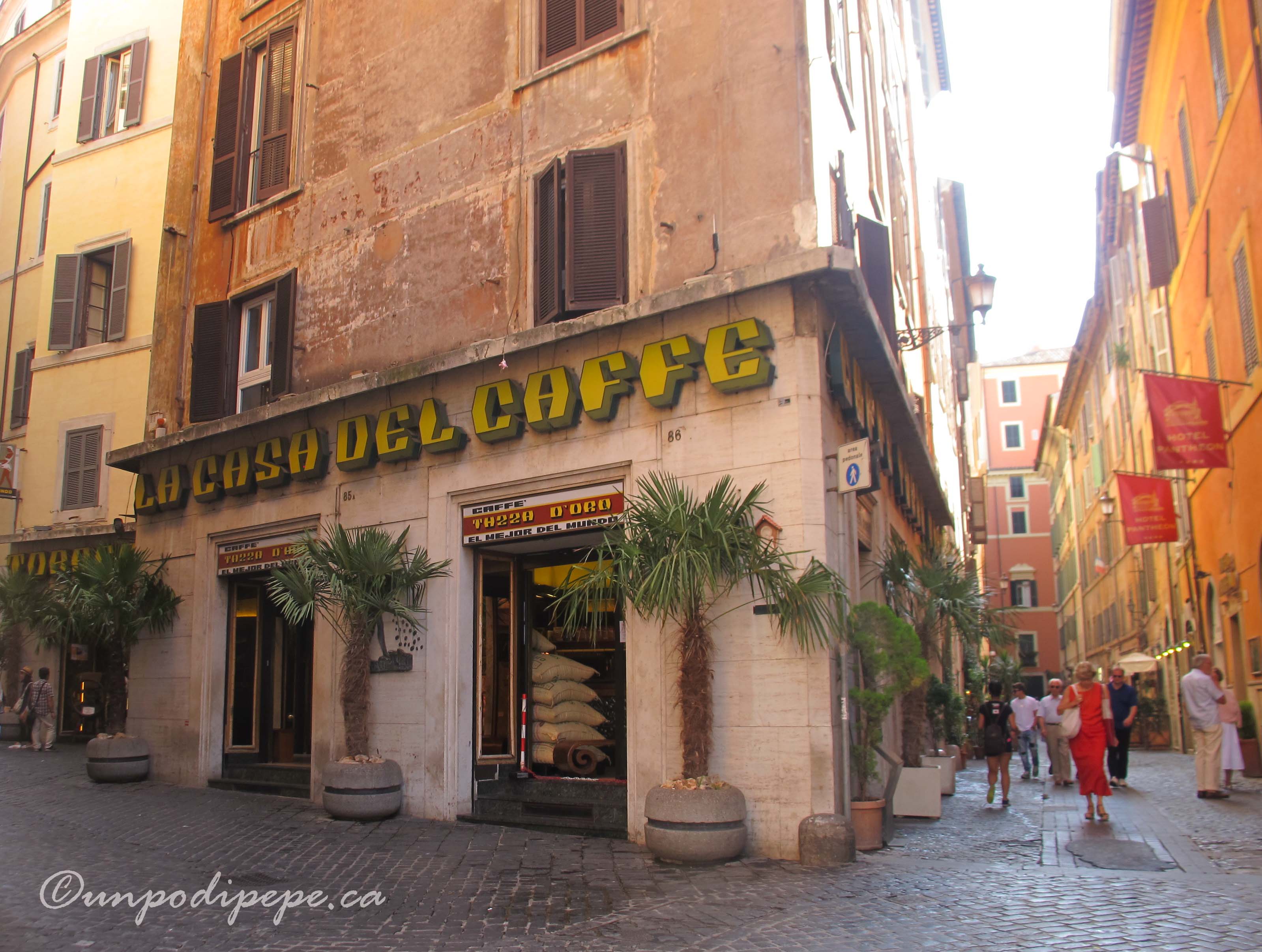
I turn into one of the side streets on the left and walk to the Pantheon-the domed architectural masterpiece that is absolutely not to be missed! The 2000 year old roof is the largest unreinforced concrete dome in the world. IlPantheonAcross the street I have an incredible granita di caffè at Tazza d’Oro.

Tazza d'Oro, Via degli Orfani 84

Tazza d’Oro, Via degli Orfani 84

Granita di caffe

Granita di caffe

Behind the Pantheon is Santa Maria Sopra Minerva with Bernini’s adorable ‘elefantino’ sculpture in the piazza.  I sometimes like to sit and sketch the pudgy little elephant carrying a 5m Egyptian obelisk on its back.

Bernini's elefantino in Piazza Minerva. Behind the obelisk, you can see the domed roof of the Pantheon.

Bernini’s elefantino in Piazza Minerva. Behind the obelisk, you can see the domed roof of the Pantheon.

The molto fancy ‘Grande Hotel de la Minerve’ across from the church has a roof bar with incredible views. Down a side street – Via del Gesù- is Poggi art supplies www.poggi1825.it , so of course I have to stop there and drool at all the stuff I can’t carry home. I also pop into the little Baroque gem San Luigi dei Francesi, which is the National church of France in Roma. It has 3 incredible Caravaggio paintings-the ‘San Matteo’ cycle, in the Capella Contarelli which you can see for free! No lineups, no online bookings!  I always put a coin in the box and light a candle when I visit a church. If you have more time, go on my Caffè con Caravaggio walking tour.

I walk down some side streets and get back onto Via del Corso going left.  A few blocks down I cross the street and walk to the Fontana di Trevi to toss in my coin. I am very superstitious about this, so I have to do the coin toss or I’m afraid I might not return to Roma!  That would be awful! Fontanaditrevi

Fontana di Trevi

Fontana di Trevi

I look at all the tourists then head to my last stop- Piazza di Spagna. I never miss drinking from the Fontana della Barcaccia.  This is the Baroque fountain at the bottom of the steps that looks like a sinking ship. It was sculpted by both Bernini, Pietro and Gianlorenzo (father and son).  La Barcaccia has the best water ever, especially on a hot day –it comes straight from an ancient acqueduct Acqua Vergine and is always ice cold and refreshing.

La Barcaccia, Piazza di Spagna

La Barcaccia, Piazza di Spagna

Mmmm! Acqua freddissima!

Mmmm! Acqua freddissima!

From here I usually walk all the way back to the Colosseo metro stop to take the metro back home to San Paolo and pick up take-out suppli on the way. If I am too tired or have evening plans, I take the metro at Piazza di Spagna (red line) to Stazione Termini then change to the blue line for San Paolo.

Ci vediamo a Roma! Buon viaggio, Cristina

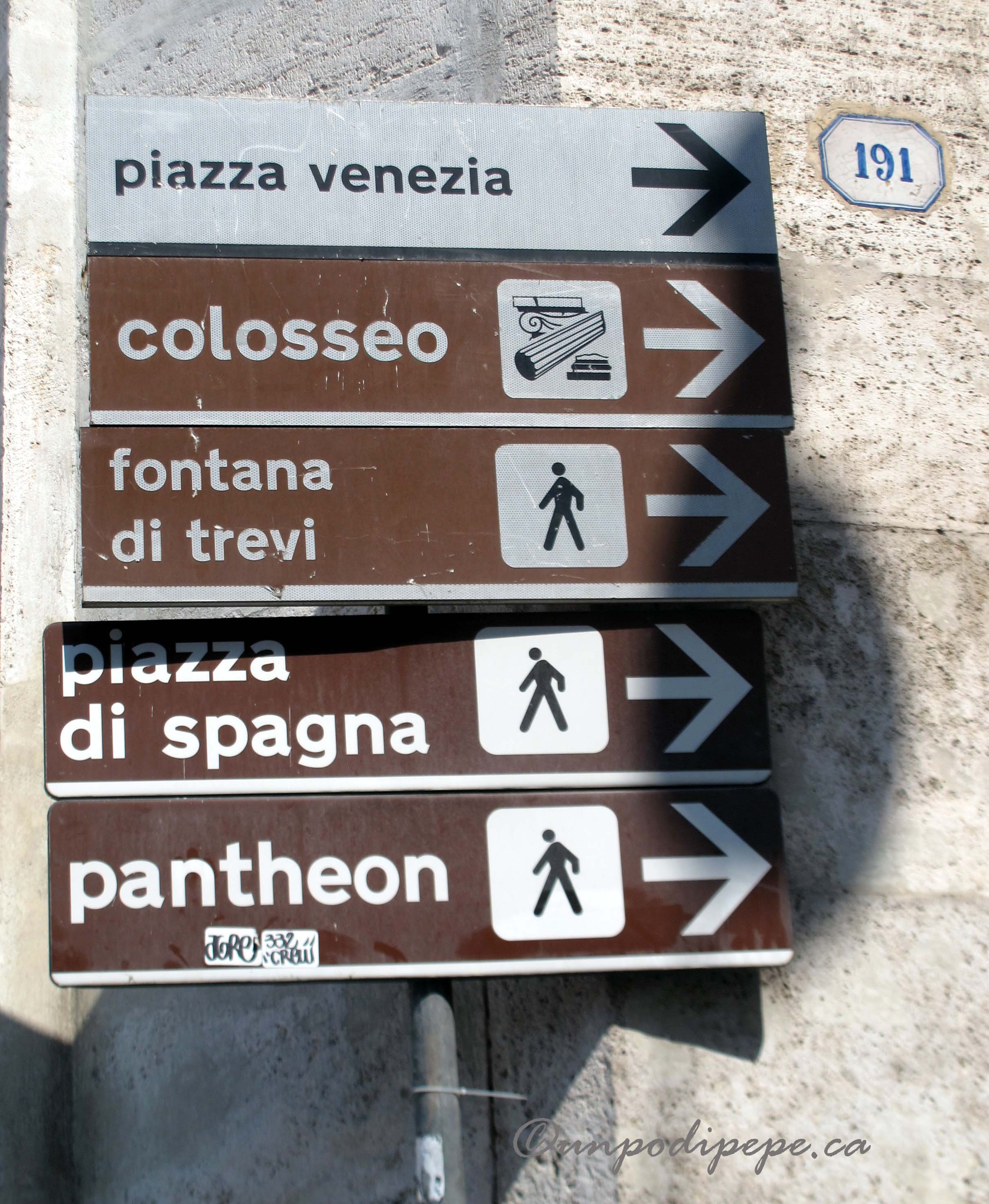
Handy signs at Piazza del Popolo

Handy signs at Piazza del Popolo

PS Stay tuned for future posts on things I like to do if I have more than one day in Roma:

  • Spend the day at the Vatican
  • Trastevere at night
  • Centrale Montemartini
  • Palazzo Massimo
  • Sketching at Piazza Navona
  • Visit more Caravaggio paintings for free at Santa Maria del Popolo
  • Go to Mass sung by cloistered nuns at Santa Brigida near Piazza Farnese

©2014 unpodipepe.ca

Piccoli gladiatori! Beware of fierce gladiators in training!

Piccoli gladiatori! Beware of fierce gladiators in training!

Share this:

  • Click to share on Facebook (Opens in new window) Facebook
  • Click to share on Pinterest (Opens in new window) Pinterest
  • Click to share on X (Opens in new window) X
  • Click to email a link to a friend (Opens in new window) Email
  • Click to share on WhatsApp (Opens in new window) WhatsApp
Like Loading...

Enter your email address to follow 'un po' di pepe' and receive notifications of new posts by email.

Join 507 other subscribers
Follow Un po' di pepe on WordPress.com

Popular Posts

  • Hairstyling in Ancient Roma
    Hairstyling in Ancient Roma
  • Polignano a Mare
    Polignano a Mare
  • L'arte sa nuotare
    L'arte sa nuotare
  • Italian Christmas Vocabulary
    Italian Christmas Vocabulary
  • Cauzuncill'
    Cauzuncill'
  • Madame Gautreau
    Madame Gautreau
  • Artemisia Gentileschi
    Artemisia Gentileschi

Recent Posts

  • Nasoni di Roma
  • Bloghiversario #11
  • Fontana di Trevi
  • Acqua Vergine
  • Giubileo 2025
  • Sanremo 2025
  • In Vino there are Memories
  • A Literary Harvest
  • 2024~Un po’ di pepe Year in Review
  • Buon Natale 2024
  • Il Bicerin
  • Mercato Porta Palazzo
  • Torino
  • Catanzaro, Calabria
  • Il Pumo Pugliese
  • Artemisia Gentileschi
  • Cavalli di San Marco
  • Panzerotti
  • Torcello
  • 10 years of Un po’ di pepe!
  • Burano
  • Venezia~La Serenissima
  • Ostia Antica
  • Sanremo 2024
  • 2023~Un po’ di pepe Year in Review

Categories

Amici e Famiglia Architecture Art Art history Art projects Bilingual posts Blogging Canada Culture Feste Firenze Inspiration Italia Italian Folklore Italian language Italian life Italocanadesi Libri Mangiamo! Orsara di Puglia Parole piacevoli Photography Puglia Recipes Roma Travel Travel tips Uncategorized Vino

Archives

Un po’ di pepe on Facebook

Un po’ di pepe on Facebook

Start a Blog at WordPress.com.

  • Subscribe Subscribed
    • Un po' di pepe
    • Join 507 other subscribers
    • Already have a WordPress.com account? Log in now.
    • Un po' di pepe
    • Subscribe Subscribed
    • Sign up
    • Log in
    • Report this content
    • View site in Reader
    • Manage subscriptions
    • Collapse this bar
 

Loading Comments...
 

    %d