Tags
Acqua sale, Antonio Latini, Conserva di pomodoro, Francesco Leonardi, History of the tomato, Italian food, Mediterranean diet, Passata di pomodoro, Pomodori, Tomato sauce, Traditional recipes
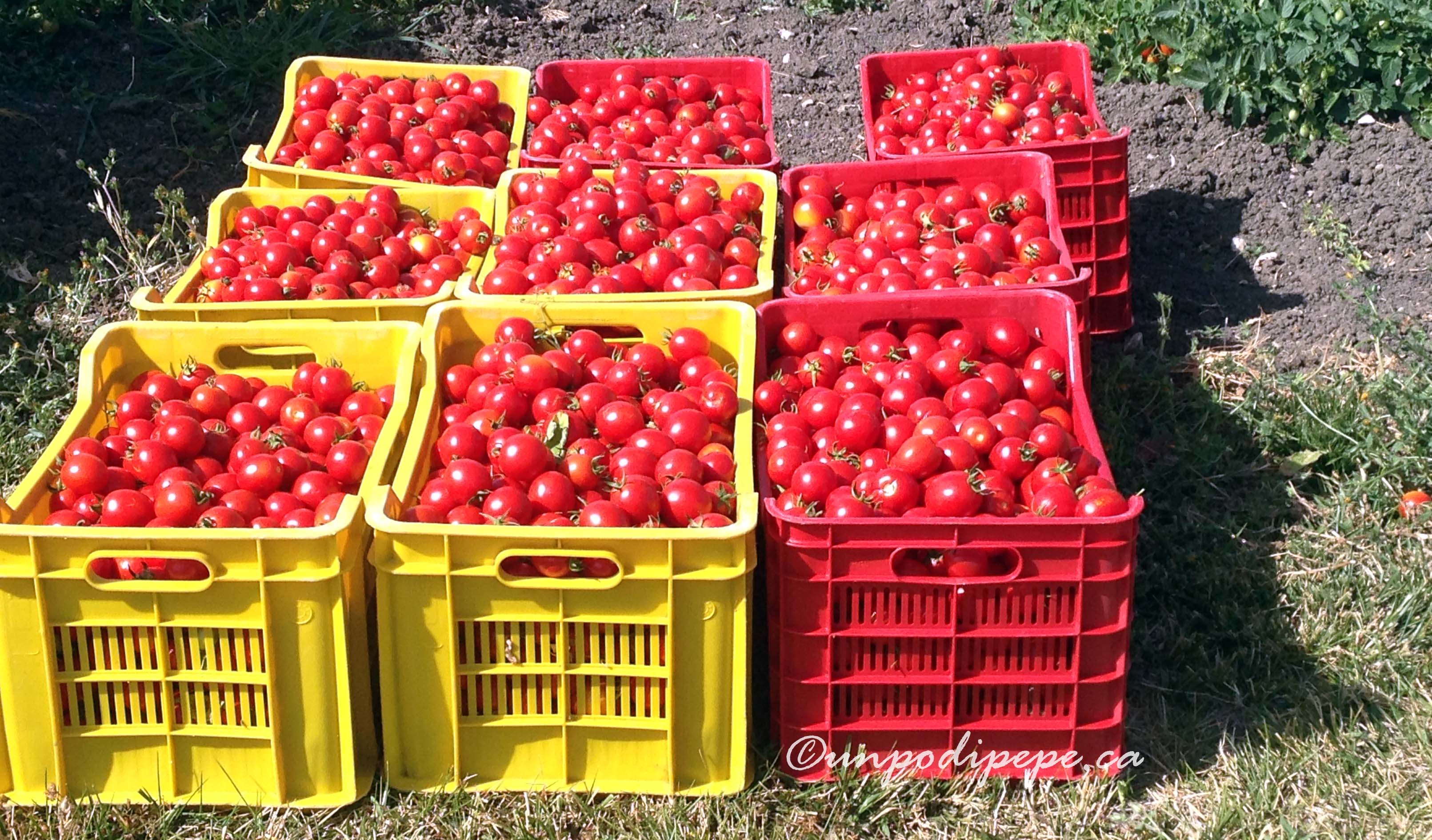 Late August/early September is pomodoro season. Last weekend my family made passata di pomodoro and pomodori pelati in the garage. If you haven’t read last year’s post, check ‘Passata di Pomodoro’ out for a step by step commentary! Passata di pomodoro, or simply ‘salsa’ as we usually call it, is very versatile. It is used to make sugo (tomato sauce) or ragù (meat sauce) and pizza, or added to fagioli (beans) and lenticchie (lentils), minestrone and other zuppe (soups).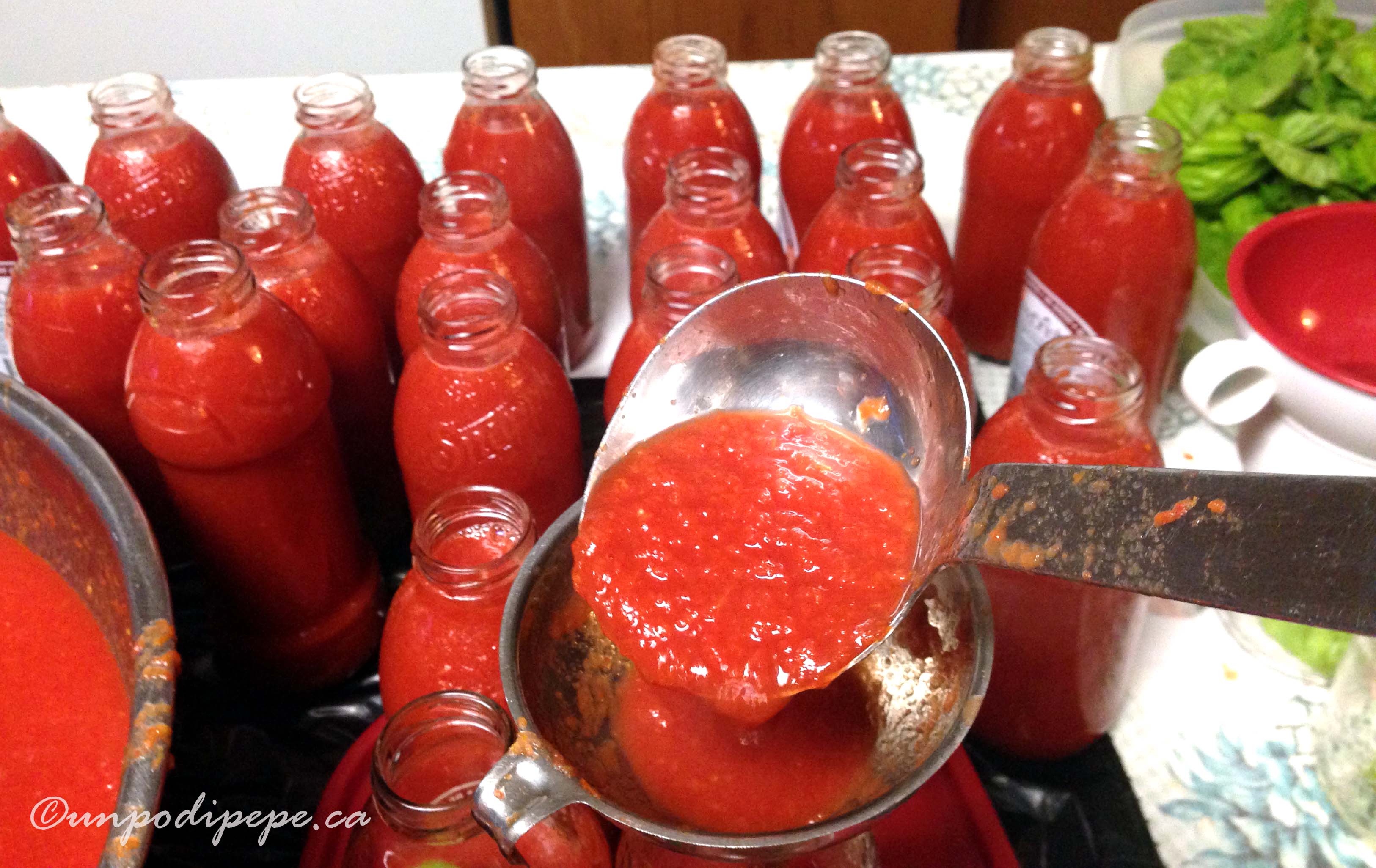
To make pomodori pelati, pomodori are cut into quarters, the seeds removed, and then tightly packed into vasetti (jars) with basilico and a spoonful of salt. The vasetti are sealed and cooked, then turned upside down to cool. Pelati are used for pizza al pomodoro and zuppe. They can also be used for making sauces, although I am not a fan of skins and seeds in my sugo!

Canning or bottling pomodori is a yearly domestic ritual for many Italian and Italocanadese families. It’s a lot of work, but totally worth it. All year round you have the taste of summer in a jar!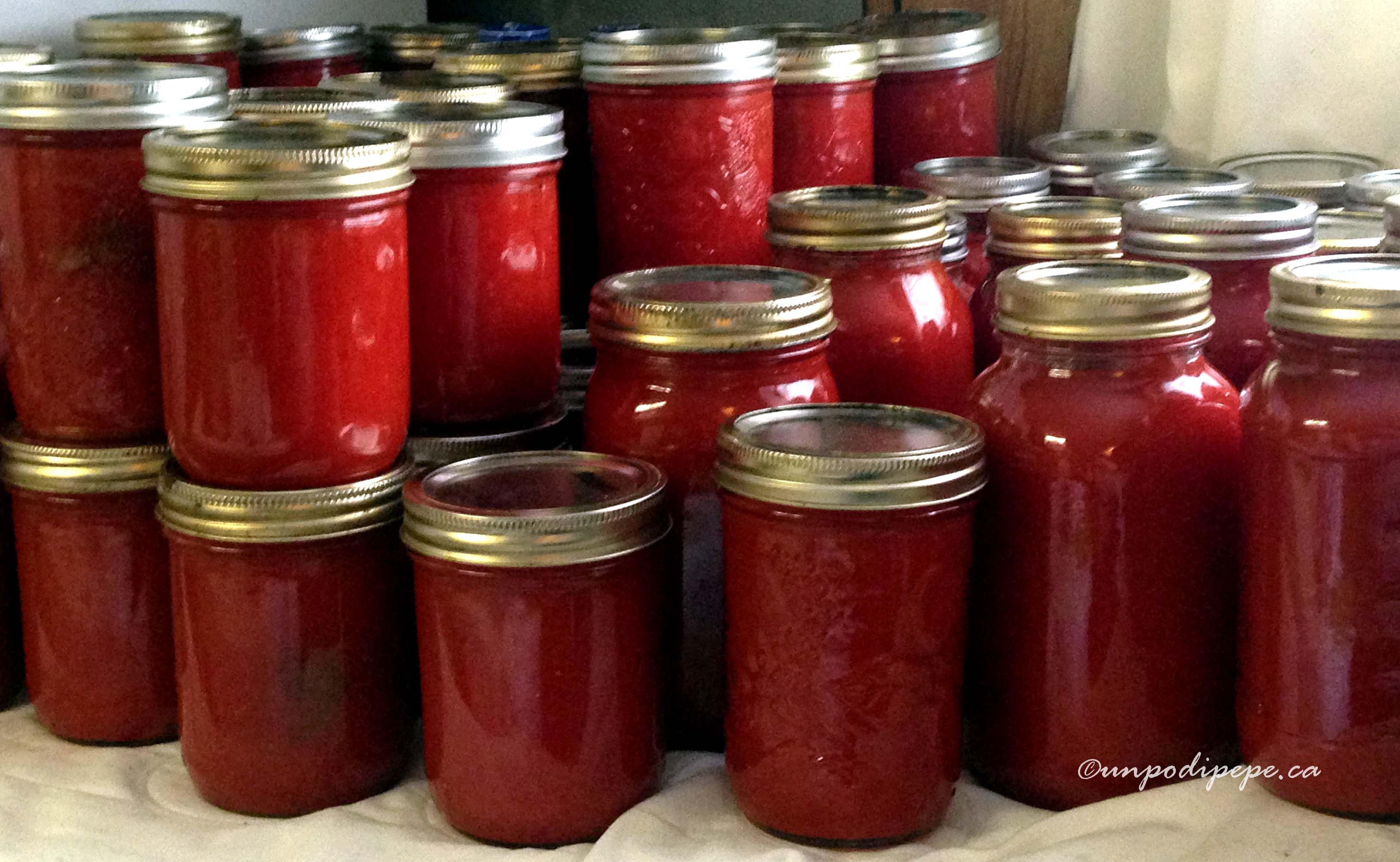
The pomodoro was not always such a staple in the Italian cucina. First grown by the Aztecs in Mexico, then also in the South American Andes, the pomodoro was brought to Europe by the Spanish in the 16th Century. The first documentation of pomodori in Italia is a 1548 note from Cosimo de’ Medici’s household to his secretary. The note states that ‘un cestino di pomodori’ (a basket of tomatoes) from one of the Medici estates had been received. At this time, pomodori were not eaten or used in cooking. They were exotic but their taste was considered really gross, so they were mostly ornamental and sometimes used in potions as an aphrodisiac. Hmmmm.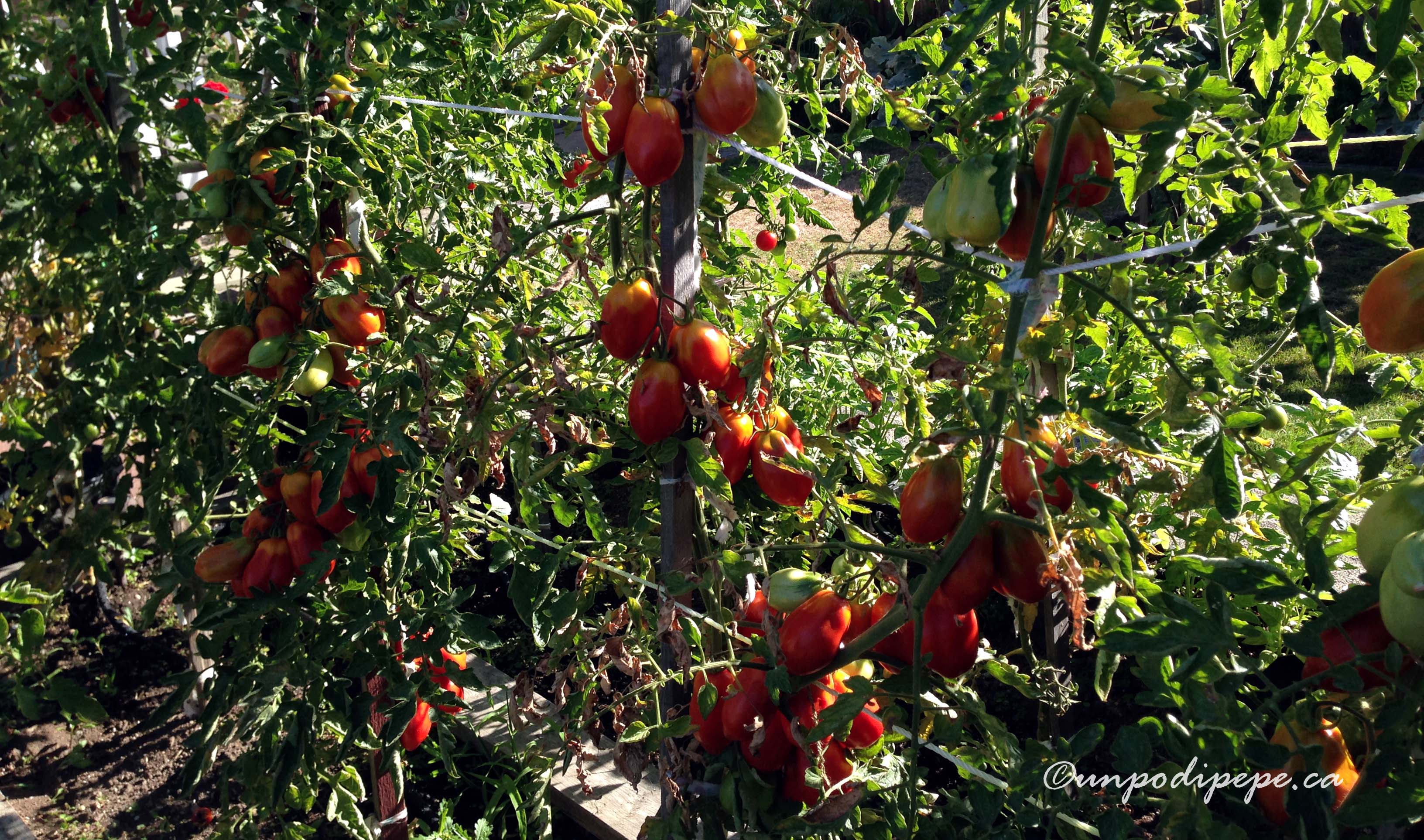
Early pomodori did not taste anything like they do today, and some varieties were even toxic. Fortunately, the Mediterranean climate was ideal for growing the pomodoro. It was able to mutate and create better tasting, sweeter versions of itself. It did take awhile for anyone to figure out what to do with the pomodoro. I’m really glad someone thought of adding olive oil, basilico, salt and of course, un po’ di pepe!
The earliest recorded recipe using pomodori was in Napoli, in Antonio Latini’s book ‘Il Scalco alla Moderna’. This translates to something like ‘The Modern Butler’. The recipe was for ‘Salsa alla Spagnuola’, a Spanish condiment made with pomodoro, melanzane (eggplant) and cipolla (onion). Sounds a bit like ratatouille. The first recipe using pomodori on pasta was in Roman chef Francesco Leonardi’s 1790 cookbook ‘L’Apicio Moderno’. By the mid 1800’s the pomodoro was a staple food of Italian contadini. The ‘Contadino diet’ was mostly raw or cooked pomodori and other vegetables, legumes, bread or pasta, salt and olive oil. Today they call this the ‘Mediterranean diet’.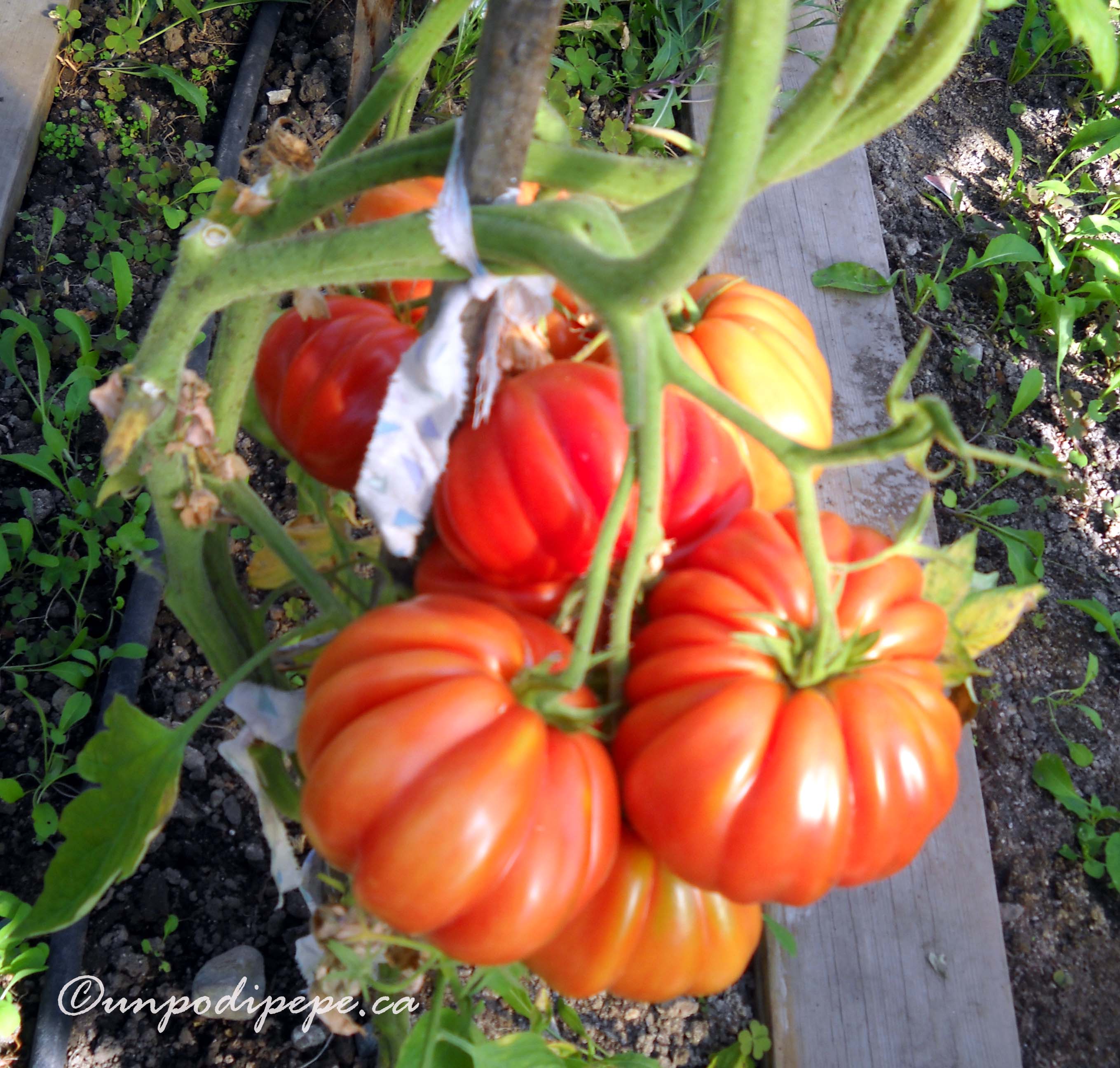
‘Acqua Sale’ is a classic Orsarese comfort food. Older bread slices are soaked in water and then pomodori are squished over it. A drizzle of olive oil, salt, and basilico or oregano and it’s an instant delicious meal, similar to Panzanella Toscana. This tastes even better on freshly baked bread-minus the soaking in water! We always ate ‘pan’ e pomodoro’ when the bread came out of the oven. Yum. So simple yet so delicious.
I asked Mamma what they did before glass vasetti and other modern canning conveniences were available. She said they made ‘la conserva’ which was like a tomato paste that could be stored. It was used in winter to make sugo for pasta or to add flavor to other foods. In August, pomodori were cooked with skins and seeds removed, similar to passata. This salsa was salted, placed in large earthenware dishes and left out in the sun for several days. Once it was dark and thick, la conserva was transferred to terracotta or glass containers and covered with a film of olive oil and fig leaves or basilico to seal it. The container was then covered and tied with un straccio (a dishrag). Quartered pomodori were also sundried to use in winter.
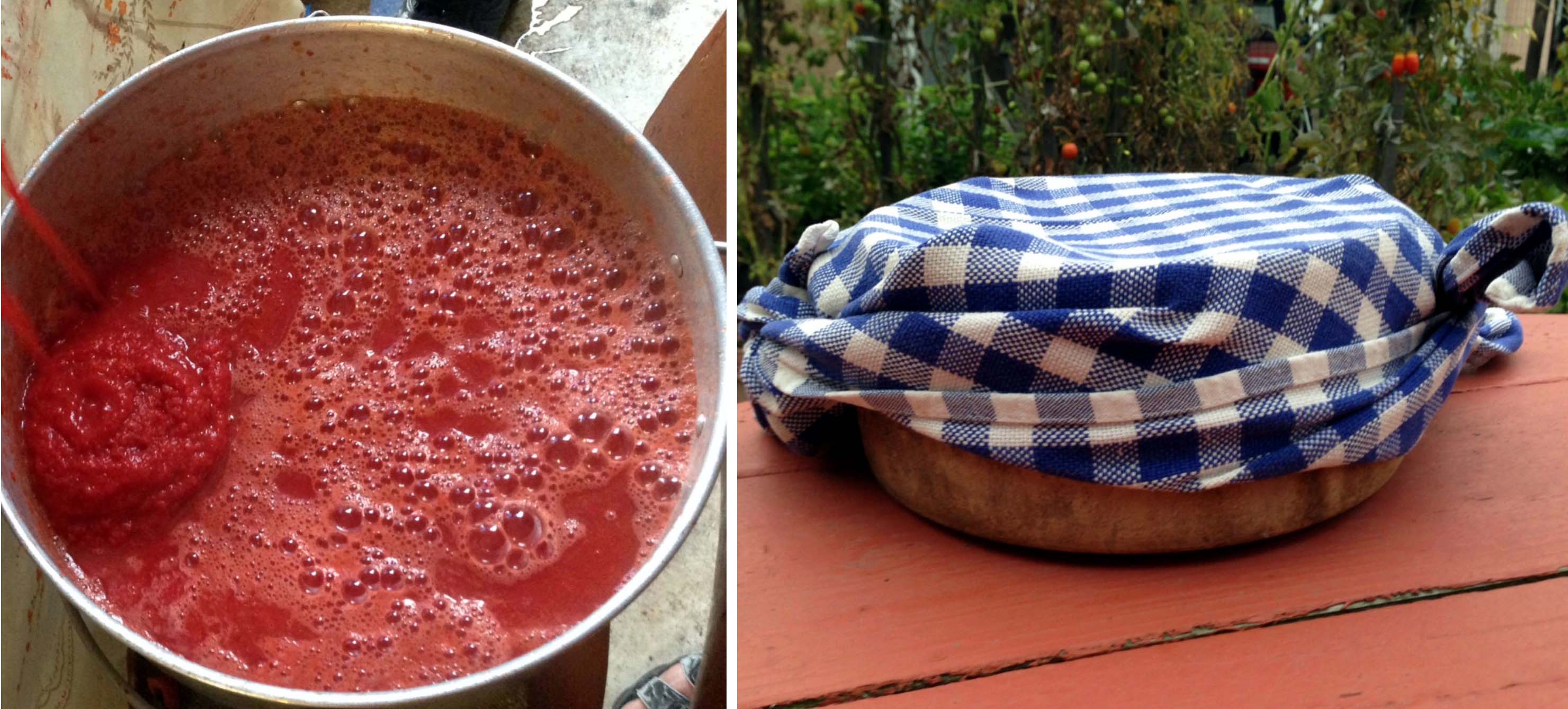
My recreation of ‘la conserva’. The passata was dried in the sun, then the thickened stuff was placed in an earthenware bowl, covered with a film of olive oil and fig leaves, then covered with a dishrag
Talking about pomodori is making me hungry! I’ll go pick some in the garden and make some pan’ e pomodoro!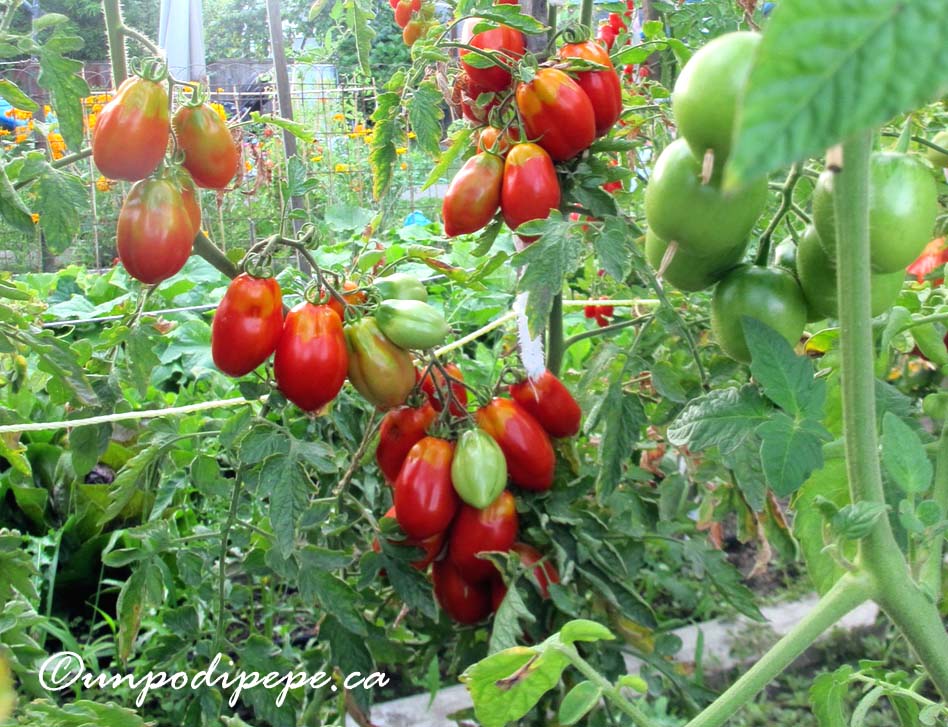
 Un po' di pepe