• Home
  • About me/Chi sono
  • Contact

Un po' di pepe

~ …… (oon∙poh∙dee∙PEH∙peh) Cristina writes about interesting stuff /Cristina scrive di cose interessanti

Un po' di pepe

Tag Archives: Italian language in the world

Che Cavolo!  Non Rompere le Scatole 

22 Sunday Oct 2023

Posted by Un po' di pepe in Italian language, Parole piacevoli

≈ 10 Comments

Tags

Conversational Italian, Euphemisms, How to swear politely in Italian, Italian language, Italian language in the world, Italian slang, Rompere le scatole

Broken boxesWhat the Cabbage and don’t break the boxes?  WTF? Yes, that is exactly what this post is about!  Since it is ‘Settimana della lingua italiana nel Mondo/Week of the Italian language in the World’ this is an Italian language related post about my 2 favourite eufemismi- euphemisms.  A euphemism is a word substitution where a more polite, less vulgar word or expression is used in place of one that may be offensive.  We can subtitle this ‘How to swear politely in Italian’.  Take your conversational Italian to the next level and learn how to swear politely-well, sort of.Cabbage
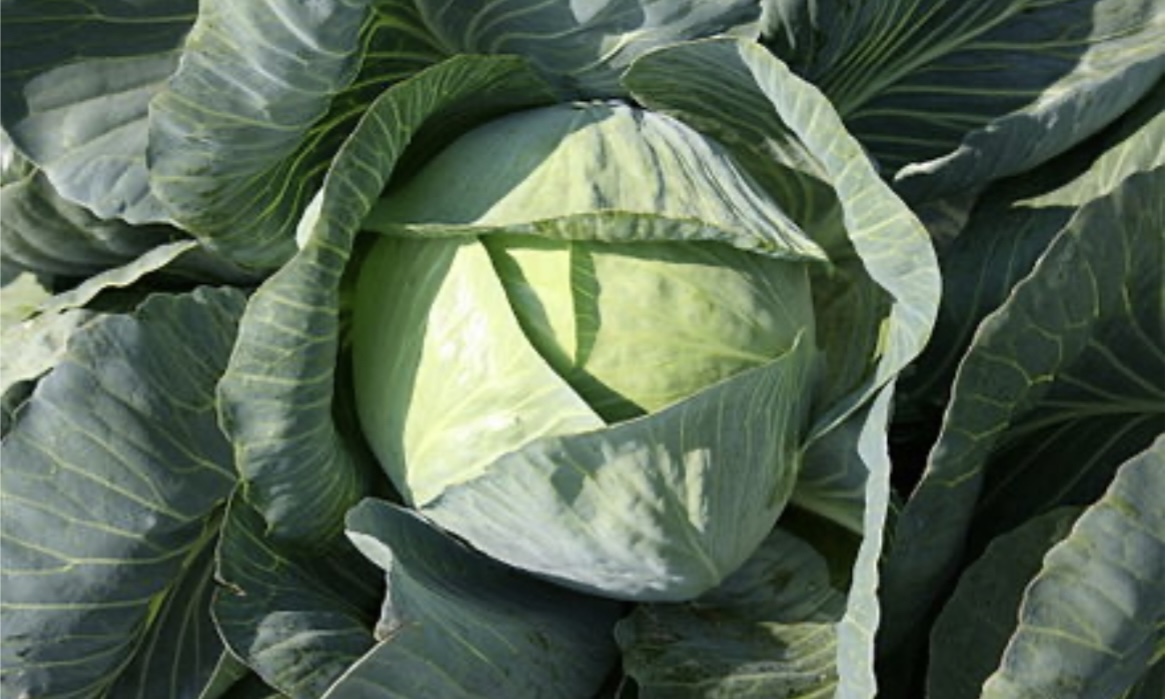
Cavolo means cabbage, and is often used as a euphemism for cazzo -the vulgar term for the male reproductive organ.  Why cabbage? Is it because cabbage can be wilted and limp?  Ha ha!  The reason is probably just because the words sound so similar.  It is like how, in English ‘fudge’ is used to replace ‘f*ck’.  Cavolo can be used anywhere as a replacement-and it is used often in everyday Italian. ‘Che cazzo’ translates to WTF.  This is not the literal translation of this expression, which would be ‘what the dick,’ but it is the Italian equivalent to the English WTF.  For those of you who do not speak text, WTF means ‘what the f*ck’).  Che cavolo!

Flying cazzi amulet mobile at the Napoli Airport gift shop

Cavolo! Followed by an exclamation mark, cavolo is an expression of surprise or frustration.  This is equivalent in English to saying ‘Damn!’ or a long, drawn out fuuuuuu*k!  Example:  Cavolo! Mi sono dimenticato le chiave!

Fare col cavolo means to do something with cabbage.  This expression is used to say that something will never happen or is unlikely to be successful.  Example:  Elio lavoro col cavolo.

Non me ne importa un cavolo literally means ‘I don’t give a cabbage’ and is equivalent to IDGAF (I don’t give a f*ck). Example:  Ho vista tua ex fidanzata con un altro /I saw your ex girlfriend with someone else.  ‘Non me ne importo un cavolo!’

Non vale un cavolo means ‘not worth the cabbage’.  This expression is used to declare something a waste of time.

Fatti i cavoli tuoi means ‘make your own cabbages’ and is equivalent to MYOB -mind your own business. Sono cavoli miei, literally ‘they are my cabbages’ means ‘it’s my business’. Example: ‘Fatti i cavoli tuoi, ma questi sono cavoli miei!’

Non ho fatto un cavolo means ‘I didn’t do a cabbage’-I didn’t do anything. Example: Domenica non ho fatto un cavolo/ On Sunday, I didn’t do a darn thing.

Fare una Cavolata-‘making a mess of cabbages’, means to do something stupid.  Example:  Lorenzo ha fatto una cavolata con la prenotazione /Lorenzo f**ked up the reservation.

Incazzata is the vulgar form of arrabbiata, meaning angry.  When you use incazzata, you are really angry!  Using the cavolo euphemism, we get Incavolata.  Example; Ieri quando ho visto la casa in disordine, mi sono incavolata! /Yesterday when I saw the mess in the house, I got angry!

Substituting with cavolo definitely makes the statement less intense, so if you really want to emphazize how you feel, keep the cazzo!

Scatole means boxes, and is a euphemism for palle or coglioni which are balls or testicles. Rompere le scatole, meaning ‘breaking the boxes’ is the polite way of saying ‘breaking balls’. Mi hai rotto le scatole=you have broken my boxes.  This expression is usually used when someone is annoying and getting on your nerves.

Non rompere le scatole-Don’t break the boxes /Don’t break my balls can be shortened simply to the no nonsense ‘non rompere’! Example: ‘Basta, mi hai rotto le scatole!’ = Enough! You have broken my boxes/balls!

Lui e un rompiscatolo means ‘he is a ball breaker’.  This usually refers to someone who is a PITA -a pain in the ass.

There is a new book on my ‘to read’ list called ‘Lo Zen e l’arte di non rompere le scatole’/Zen and the art of not breaking balls! by Enzo Braschi and Danilo Sacco.

These expressions are widely used in everyday Italiano. Interestingly, although both cavolo and scatole are euphemisms for male genitalia, they are gender neutral and used equally as often by and about women.

‘It is said Live and let live because mind your own F***ing business and don’t break the balls didn’t appear too polite’

Do you ever use these Italian eufemismi?  Or do you prefer to just say what you really mean? For other language posts, check out Italiese, Uffa, allora, purtroppo, magari, ….mannaggia, and Italian Christmas Vocabulary or search the category ‘parole piacevoli’.

Ciao, e non rompere!  Cristina

Share this:

  • Click to share on Facebook (Opens in new window) Facebook
  • Click to share on Pinterest (Opens in new window) Pinterest
  • Click to share on X (Opens in new window) X
  • Click to email a link to a friend (Opens in new window) Email
  • Click to share on WhatsApp (Opens in new window) WhatsApp
Like Loading...

Italiese

21 Thursday Oct 2021

Posted by Un po' di pepe in Canada, Italian language, Italocanadesi

≈ 21 Comments

Tags

Code switching, Italian Diaspora, Italian language, Italian language in the world, Italiese, Italocanadese life

Italiese wordsThis week, we celebrate Settimana della lingua italiana nel mondo – Week of the Italian Language in the World.  The theme this year is Dante, the Italian, because 2021 is the 700th anniversary of his death.  I already wrote a Dante themed post earlier this year 700 years of Dante, so instead I am featuring a post on a topic that has a special significance for me-and probably any of you that grew up in an Italian immigrant household.  The rest of you will hopefully find it interesting too. 

Italiese is a language created by Italian immigrants in English speaking countries to express things they did not already have words for.  It is a combination of Italian, anglicized Italian words, italianized English words, and dialetto.  I grew up with Italiese, and I still sometimes use it with my parents, family and paesani.  When joking around with my siblings and cousins, it is like our own private language.  Some of my favourite Italiese words are disciuascia (dishwasher), i muscirums (mushrooms), boolsheet and sonamabeitch.  I will let you figure out the last 2 words!  Click the blue button to watch a short video :

Renowned Italiese scholar and fellow AICW member Dr Diana Iuele Colilli graciously agreed to answer some questions for me.

What made you want to study Italiese?

I wanted to research Italiese for my PhD dissertation, but my thesis director strongly discouraged me as he said I would be researching Italiese for my entire career.  He was right.  I have always been intrigued by language.  When I embarked on the path of a PhD in Italian linguistics I naturally gravitated toward the “language” that was used extensively in my home, alongside Calabrese.  My parents had a grocery store on St. Clair, so I heard Italiese all the time.  The variations fascinated me.

Why is Italiese important to Italocanadesi and the Italian diaspora in general?

Italiese is extremely important because it documents the language that Italian immigrants had to create when they arrived in Canada.  It demonstrates their resilience and their desire to fit in their adopted land. However, Italiese is a language of passage that is destined to die.  It has never been standardized, it is not used in literature or any other formal setting.  Once the immigrants die there will be no need to use it anymore.  As the child of immigrants, I use it every day with my parents and immigrant relatives.  I use it with my siblings (who grew up with it) for fun.  My children recognize it but don’t really use it beyond a few terms (garbiggio, ghellifrendi, etc) because they use standard English, French and Italian. Italiese is also important as a marker.  In Canada Italians have left their mark in so many industries (construction, food, fashion, etc).  It is important that we document how they spoke, how they assimilated linguistically.  If we don’t document it or keep it alive, as Italians assimilate into the Canadian fabric, we will have generations of Canadians of Italian extraction only.  Language is at the core of culture.  WIthout it, culture gets watered down to memories only.  If we don’t do everything possible to document Italiese, it will get to the point that we won’t know that Italians even immigrated to Canada.  That’s why Christine Sansalone, my late husband Paul Colilli and I have been frantically documenting Italiese through our theatre productions.  We now have 13 published plays that document Italiese in its purest form of the post-WWII period to today with its code-switching.

Does Canada differ from other countries in their Italian/English hybrid language?

It doesn’t.  That’s the beauty and the universality of Italiese.  Italiese is a hybrid language that has at its base (phonology, morphology and syntax) an Italian dialect but the terminology (lexicon) is that of the adopted English speaking country.  So, we have American Italiese, British Italiese, Canadian Italiese, Australian Italiese, South African Italiese …. the dialect mixed with the local English.  The differences will be found in the lexicon.  In Canada we say garbage, so the Italiese word is /garbíggio/.  However, in the US the term is trash, so the Italiese term is “tréscio” and the Australian term is “rábbiscia” because rubbish is used for our garbage.

How can we keep Italiese alive?

By using it.  By continuing to do research on it. However, it needs to be used not only in homes, but in businesses, offices and most importantly in literature. If Italian-Canadian writers would incorporate Italiese in their writings, it would give it much more prestige.

I have my own strong opinion on this, but what do you make of people who are embarrassed by Italiese or dialetto?

I think people are much more embarrassed of their dialects.  Many people who utilize Italiese don’t even realise that they’re using it. The stigma of using the dialect stems from social stigma of using it Italy.  At the time of immigration, the dialect was a marker for low social status.  There is a generation of Italians who were raised without.  Only in the last few years has there been a resurgence of the dialects.  Those stigmas were also felt by the immigrants who left their homeland.  We need to encourage the children and the grandchildren of Italian immigrants to use the “language” (dialect/italiese/mix of the two) that was passed on to them.  In a world in which English is the lingua franca, it’s easy to relegate the dialect/Italiese to the home, or to not use it all. 

Grazie Diana! Who would have thought the word garbage could be so interesting! For more information check out the website for Italiese TV and the You Tube video below.

Diana Iuele-Colilli holds a PhD in Italian Linguistics from the University of Toronto.  She was born and grew up in the Little Italy of St. Clair and Dufferin in Toronto.  Diana is an Emeritus Professor of Italian at Laurentian University in Sudbury, Ontario, where she still continues her research toward a dictionary of Italiese.  She is the author of many books dedicated to the Italian experience in Canada.  She is the co-author of 13 plays written in Italiese in its various forms.  She is also the president of the Paul Colilli Foundation, a non-profit organization that promotes and disseminates the positive image of Italy and Italian Canadians in Ontario.

Now I am motivated to write some poetry in Italiese! If you have been exposed to Italiese in your country, let us know in the comments.  Ciao, Cristina

Share this:

  • Click to share on Facebook (Opens in new window) Facebook
  • Click to share on Pinterest (Opens in new window) Pinterest
  • Click to share on X (Opens in new window) X
  • Click to email a link to a friend (Opens in new window) Email
  • Click to share on WhatsApp (Opens in new window) WhatsApp
Like Loading...

Enter your email address to follow 'un po' di pepe' and receive notifications of new posts by email.

Join 511 other subscribers
Follow Un po' di pepe on WordPress.com

Popular Posts

  • Hairstyling in Ancient Roma
    Hairstyling in Ancient Roma
  • Espresso Cookies
    Espresso Cookies
  • Il Pumo Pugliese
    Il Pumo Pugliese
  • Panforte di Siena
    Panforte di Siena
  • Panettone Fatto in Casa
    Panettone Fatto in Casa
  • Internment of Italian Canadians
    Internment of Italian Canadians
  • San Nicola
    San Nicola

Recent Posts

  • Castel del Monte
  • ‘The Nuances of Love’
  • Hostaria Antica Roma~Eat like an Ancient Roman
  • Santa Maria in Aracoeli
  • Casino dell’Aurora~Villa Boncompagni Ludovisi
  • Nasoni di Roma
  • Bloghiversario #11
  • Fontana di Trevi
  • Acqua Vergine
  • Giubileo 2025
  • Sanremo 2025
  • In Vino there are Memories
  • A Literary Harvest
  • 2024~Un po’ di pepe Year in Review
  • Buon Natale 2024
  • Il Bicerin
  • Mercato Porta Palazzo
  • Torino
  • Catanzaro, Calabria
  • Il Pumo Pugliese
  • Artemisia Gentileschi
  • Cavalli di San Marco
  • Panzerotti
  • Torcello
  • 10 years of Un po’ di pepe!

Categories

Amici e Famiglia Architecture Art Art history Art projects Bilingual posts Blogging Canada Culture Feste Firenze Inspiration Italia Italian Folklore Italian language Italian life Italocanadesi Libri Mangiamo! Orsara di Puglia Parole piacevoli Photography Puglia Recipes Roma Travel Travel tips Uncategorized Vino

Archives

Un po’ di pepe on Facebook

Un po’ di pepe on Facebook

Start a Blog at WordPress.com.

  • Subscribe Subscribed
    • Un po' di pepe
    • Join 511 other subscribers
    • Already have a WordPress.com account? Log in now.
    • Un po' di pepe
    • Subscribe Subscribed
    • Sign up
    • Log in
    • Report this content
    • View site in Reader
    • Manage subscriptions
    • Collapse this bar
 

Loading Comments...
 

    %d