• Home
  • About me/Chi sono
  • Contact

Un po' di pepe

~ …… (oon∙poh∙dee∙PEH∙peh) Cristina writes about interesting stuff /Cristina scrive di cose interessanti

Un po' di pepe

Tag Archives: Traditional recipes

Il Pomodoro

07 Monday Sep 2015

Posted by Un po' di pepe in Italian life, Mangiamo!

≈ 24 Comments

Tags

Acqua sale, Antonio Latini, Conserva di pomodoro, Francesco Leonardi, History of the tomato, Italian food, Mediterranean diet, Passata di pomodoro, Pomodori, Tomato sauce, Traditional recipes
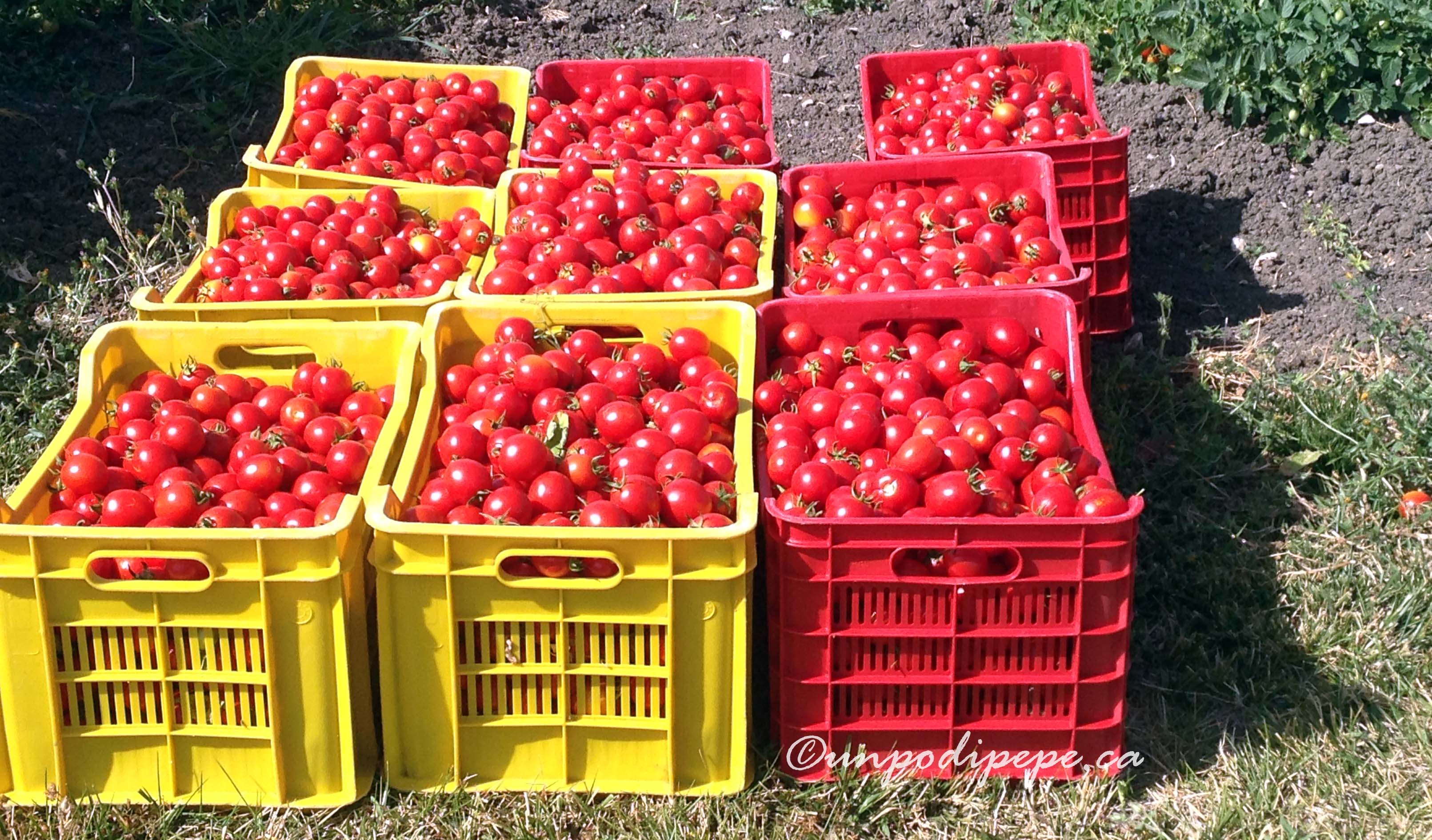
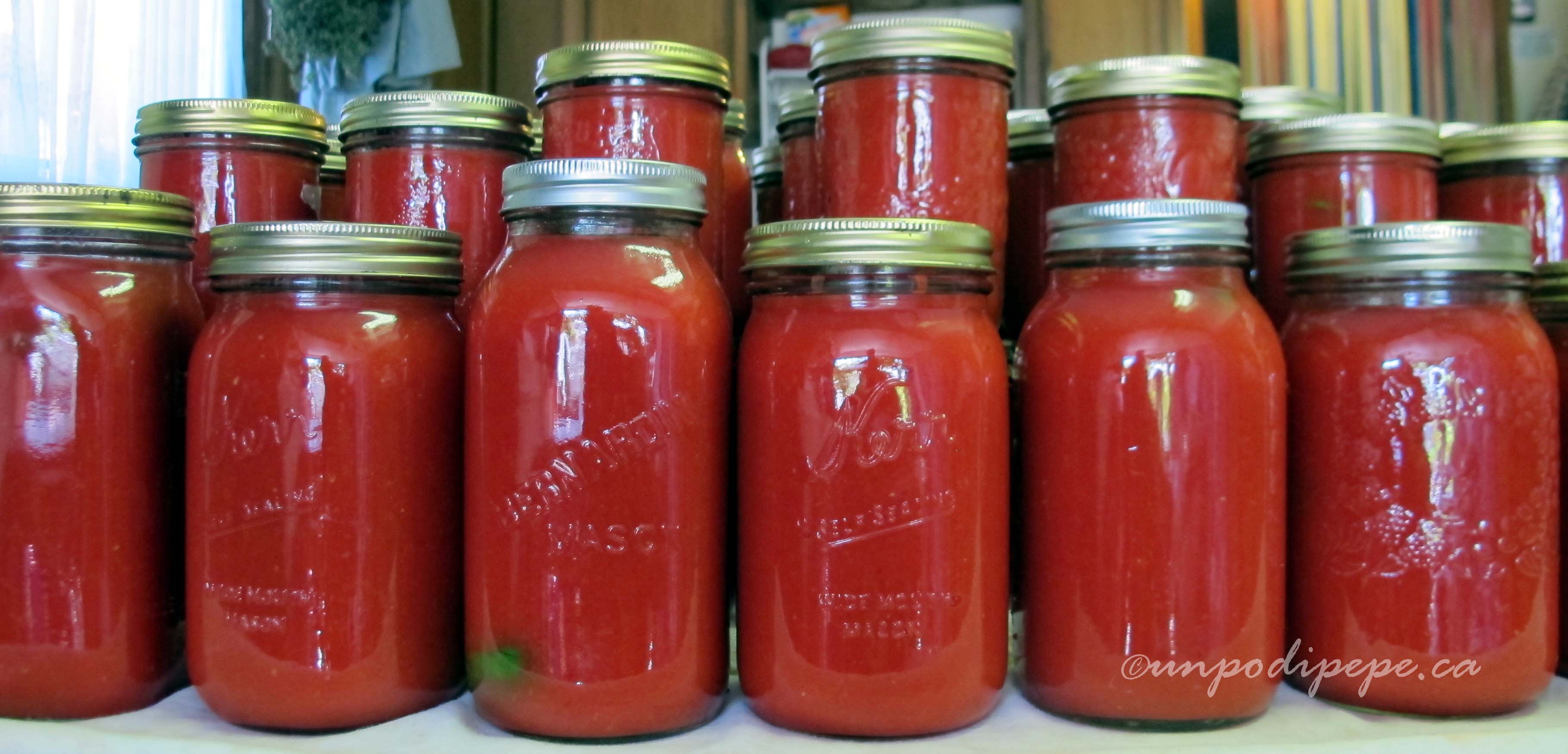
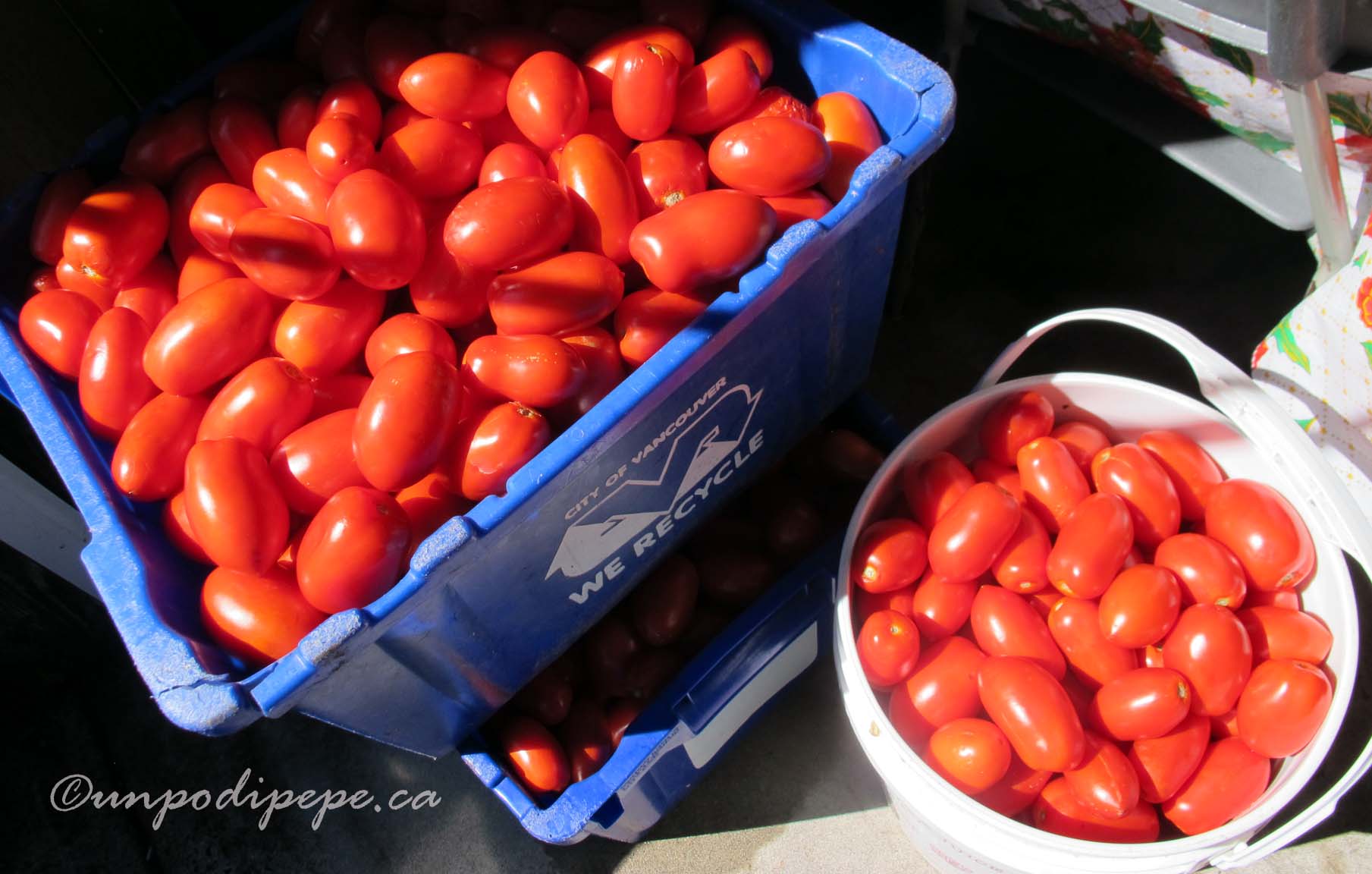
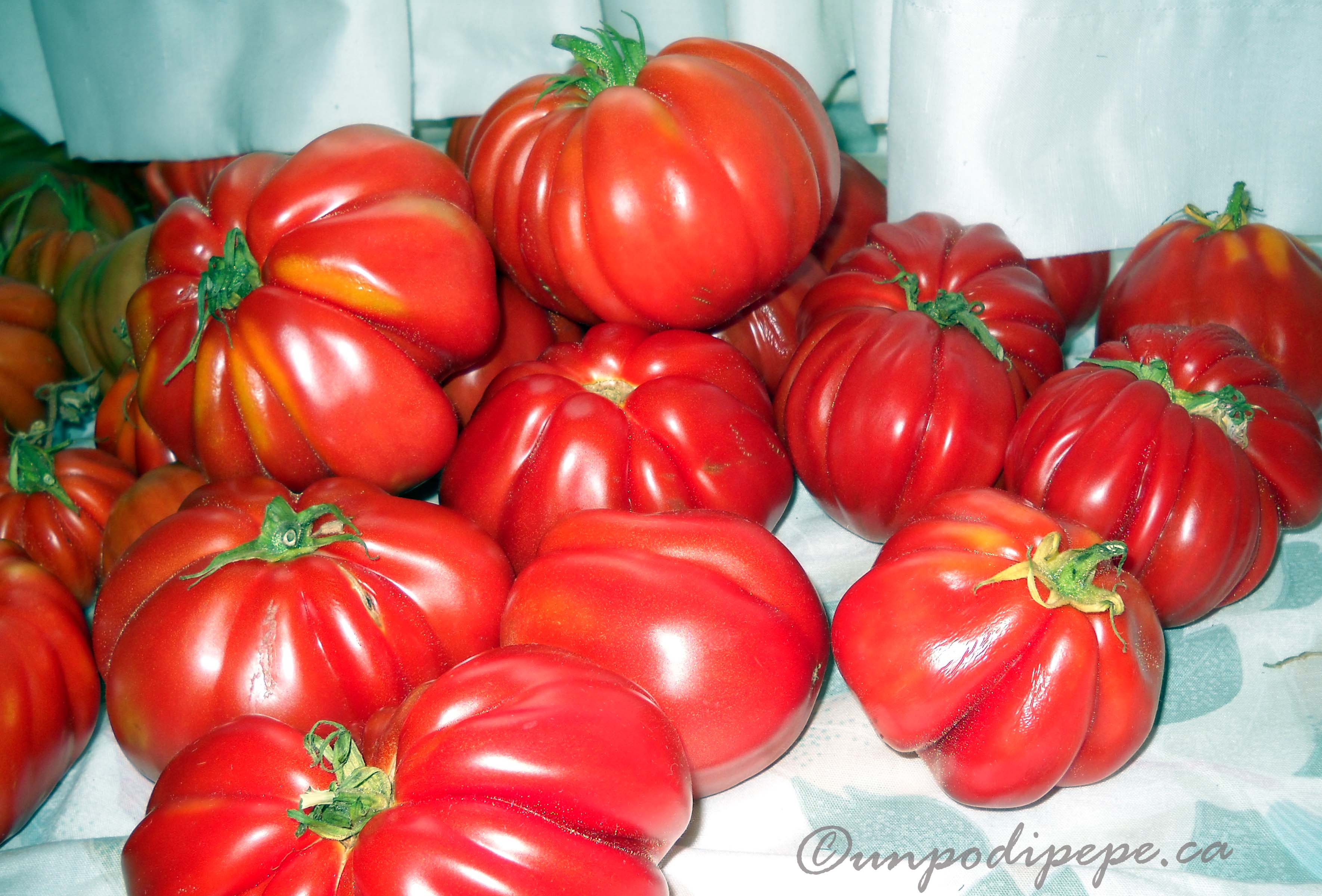
PomodorivillajameleLate August/early September is pomodoro season. Last weekend my family made passata di pomodoro and pomodori pelati in the garage. If you haven’t read last year’s post, check ‘Passata di Pomodoro’ out for a step by step commentary! Passata di pomodoro, or simply ‘salsa’ as we usually call it, is very versatile. It is used to make sugo (tomato sauce) or ragù (meat sauce) and pizza, or added to fagioli (beans) and lenticchie (lentils), minestrone and other zuppe (soups).Salsa2015
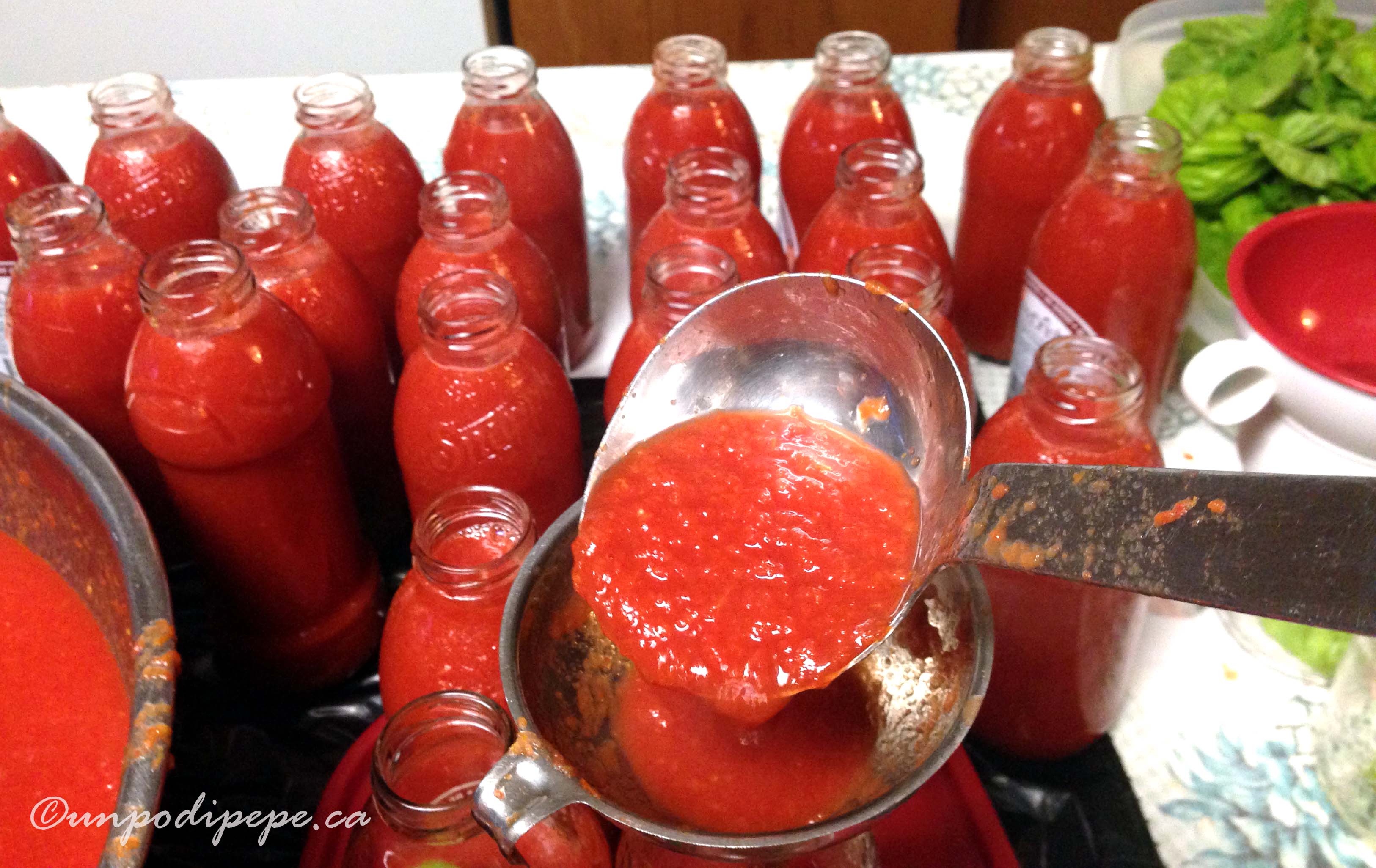
To make pomodori pelati, pomodori are cut into quarters, the seeds removed, and then tightly packed into vasetti (jars) with basilico and a spoonful of salt. The vasetti are sealed and cooked, then turned upside down to cool. Pelati are used for pizza al pomodoro and zuppe. They can also be used for making sauces, although I am not a fan of skins and seeds in my sugo!pomodoripelati2015Pelati2015

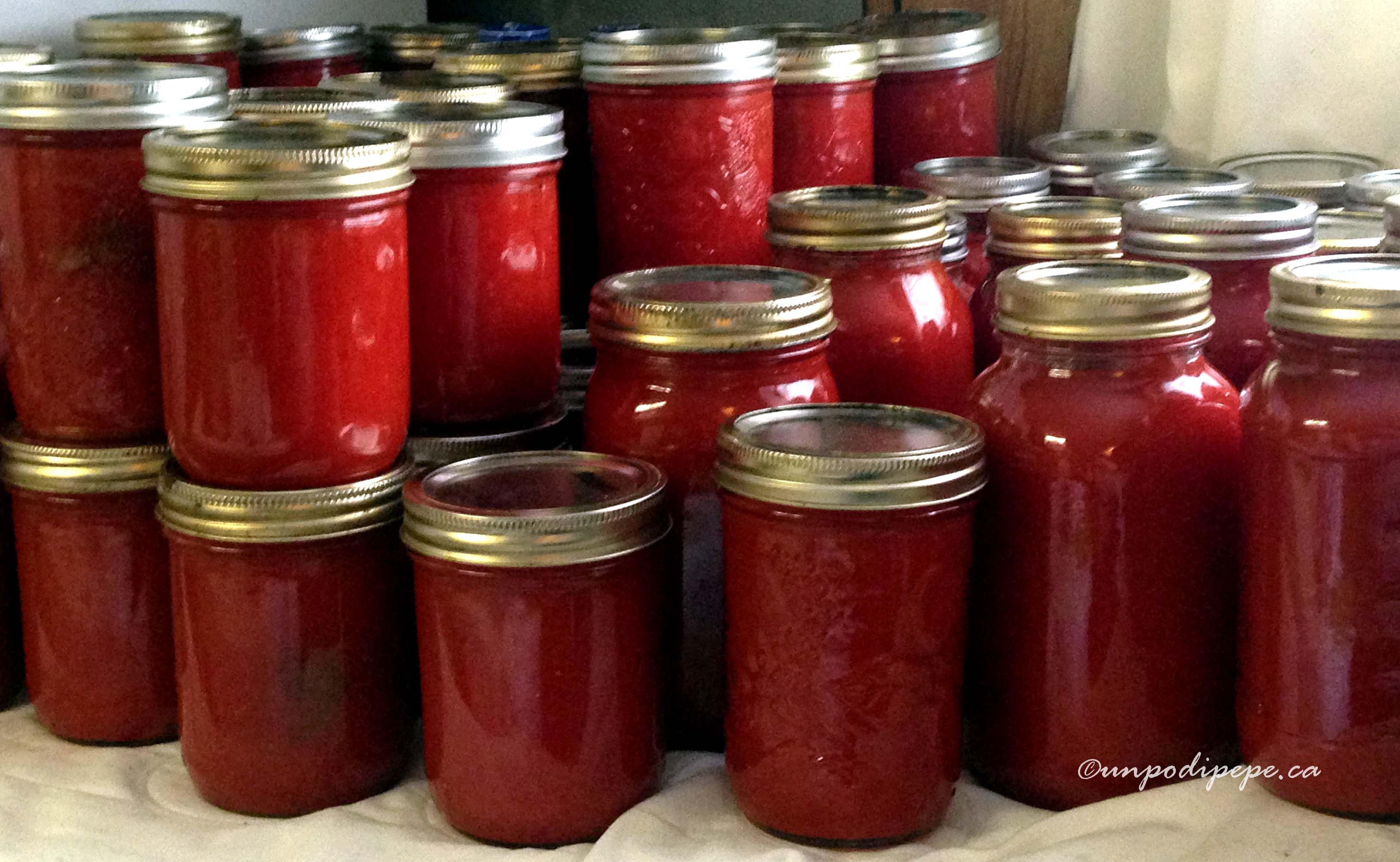
Canning or bottling pomodori is a yearly domestic ritual for many Italian and Italocanadese families. It’s a lot of work, but totally worth it. All year round you have the taste of summer in a jar!Vasetti2015
The pomodoro was not always such a staple in the Italian cucina. First grown by the Aztecs in Mexico, then also in the South American Andes, the pomodoro was brought to Europe by the Spanish in the 16th Century. The first documentation of pomodori in Italia is a 1548 note from Cosimo de’ Medici’s household to his secretary. The note states that ‘un cestino di pomodori’ (a basket of tomatoes) from one of the Medici estates had been received.  At this time, pomodori were not eaten or used in cooking. They were exotic but their taste was considered really gross, so they were mostly ornamental and sometimes used in potions as an aphrodisiac.  Hmmmm.pomodori2015b
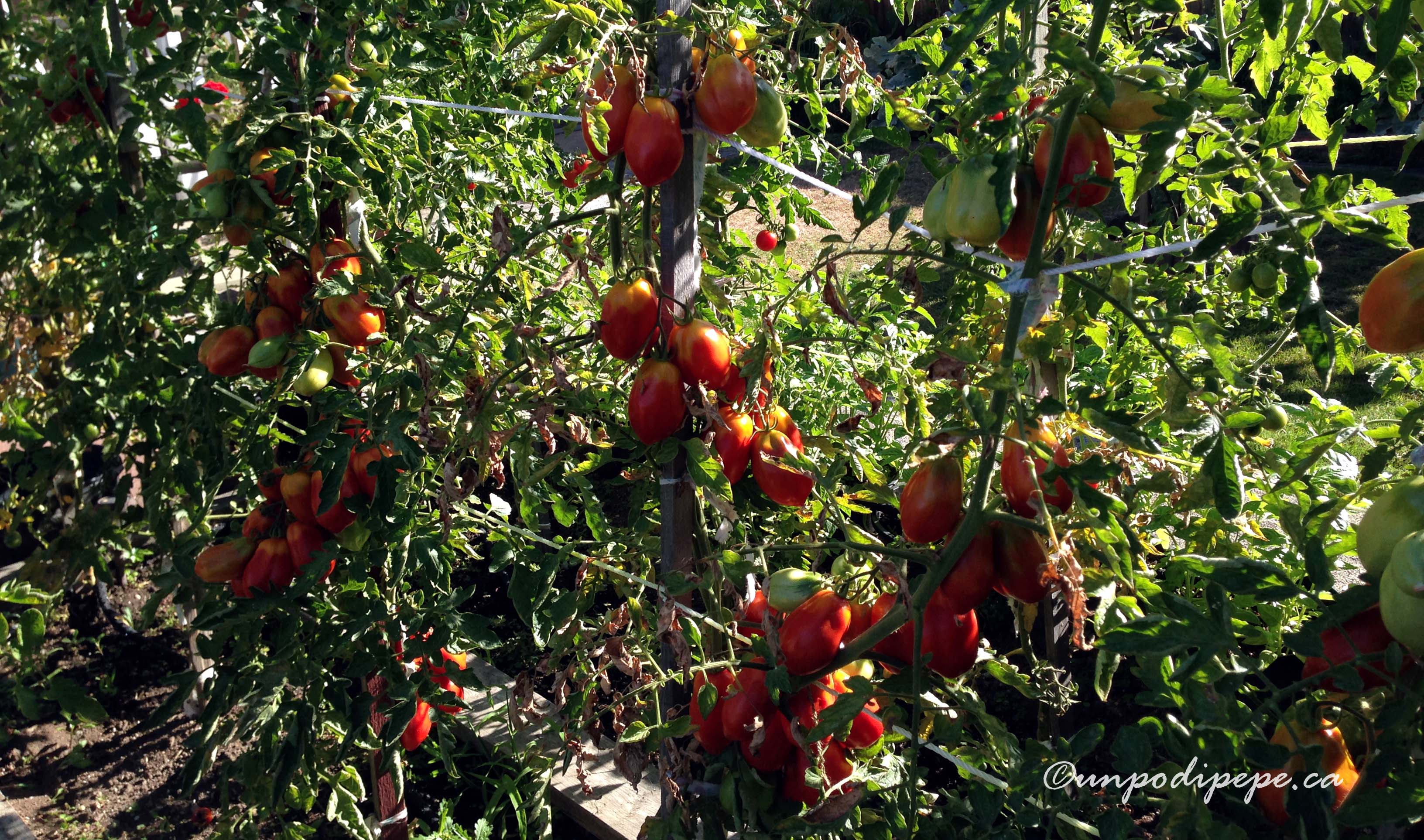
Early pomodori did not taste anything like they do today, and some varieties were even toxic. Fortunately, the Mediterranean climate was ideal for growing the pomodoro.  It was able to mutate and create better tasting, sweeter versions of itself. It did take awhile for anyone to figure out what to do with the pomodoro. I’m really glad someone thought of adding olive oil, basilico, salt and of course, un po’ di pepe!

The earliest recorded recipe using pomodori was in Napoli, in Antonio Latini’s book ‘Il Scalco alla Moderna’.  This translates to something like ‘The Modern Butler’. The recipe was for ‘Salsa alla Spagnuola’, a Spanish condiment made with pomodoro, melanzane (eggplant) and cipolla (onion). Sounds a bit like ratatouille.  The first recipe using pomodori on pasta was in Roman chef Francesco Leonardi’s 1790 cookbook ‘L’Apicio Moderno’. By the mid 1800’s the pomodoro was a staple food of Italian contadini. The ‘Contadino diet’ was mostly raw or cooked pomodori and other vegetables, legumes, bread or pasta, salt and olive oil. Today they call this the ‘Mediterranean diet’.Pomodori2012
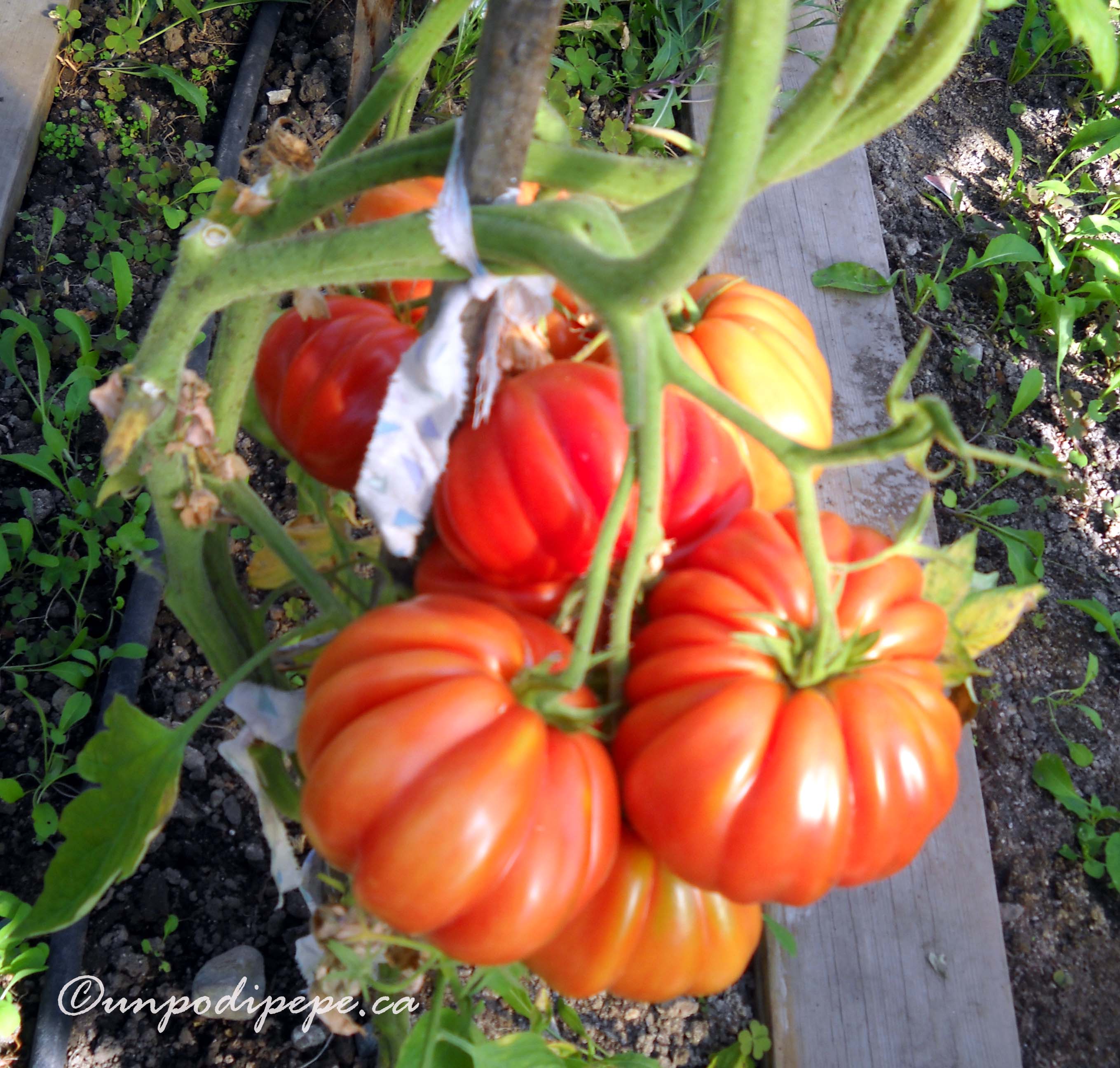
‘Acqua Sale’ is a classic Orsarese comfort food. Older bread slices are soaked in water and then pomodori are squished over it. A drizzle of olive oil, salt, and basilico or oregano and it’s an instant delicious meal, similar to Panzanella Toscana. This tastes even better on freshly baked bread-minus the soaking in water! We always ate ‘pan’ e pomodoro’ when the bread came out of the oven. Yum. So simple yet so delicious.

I asked Mamma what they did before glass vasetti and other modern canning conveniences were available. She said they made ‘la conserva’ which was like a tomato paste that could be stored. It was used in winter to make sugo for pasta or to add flavor to other foods. In August, pomodori were cooked with skins and seeds removed, similar to passata. This salsa was salted, placed in large earthenware dishes and left out in the sun for several days. Once it was dark and thick, la conserva was transferred to terracotta or glass containers and covered with a film of olive oil and fig leaves or basilico to seal it. The container was then covered and tied with un straccio (a dishrag). Quartered pomodori were also sundried to use in winter.
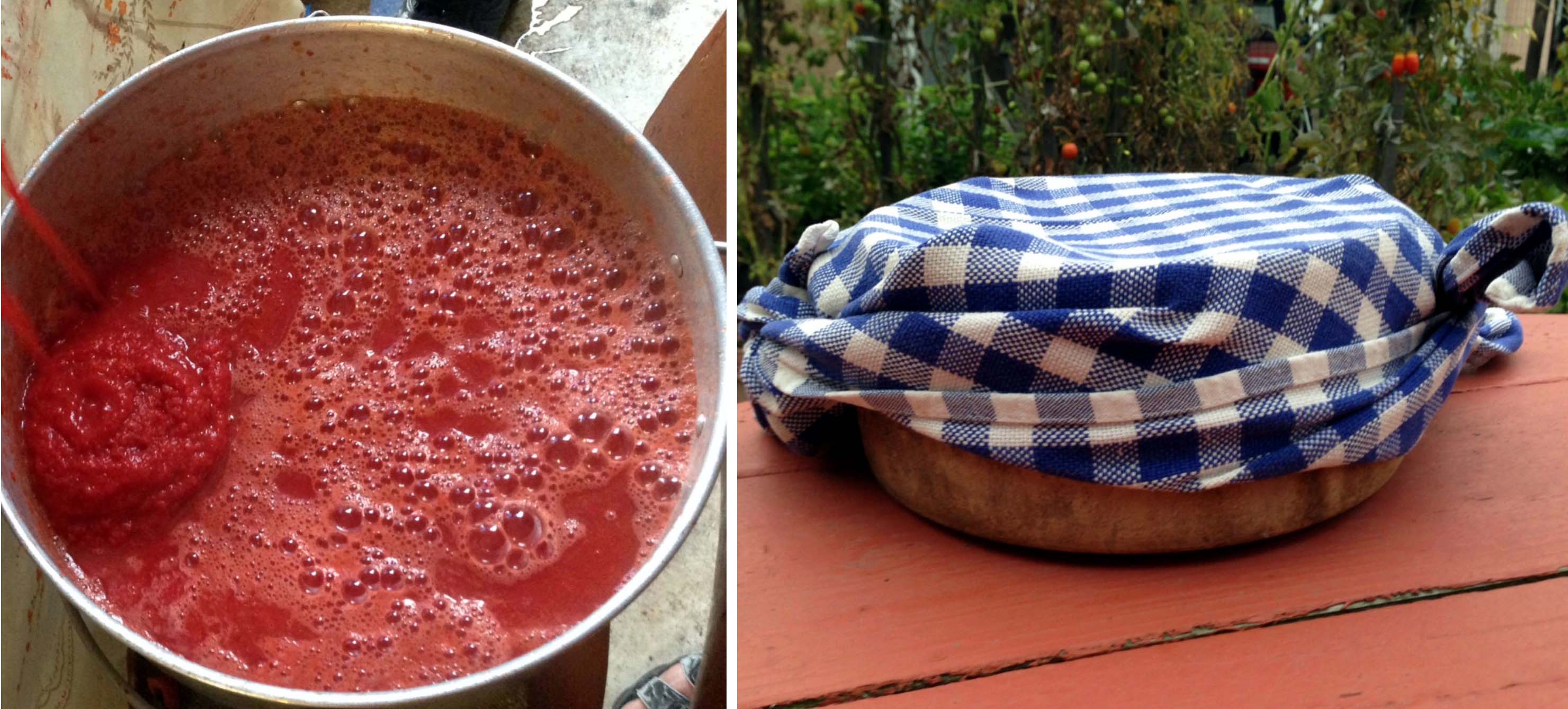
My recreation of 'la conserva'. The passata was dried in the sun, then the thickened stuff was placed in an earthenware bowl, covered with a film of olive oil and fig leaves, then covered with a dishrag

My recreation of ‘la conserva’. The passata was dried in the sun, then the thickened stuff was placed in an earthenware bowl, covered with a film of olive oil and fig leaves, then covered with a dishrag

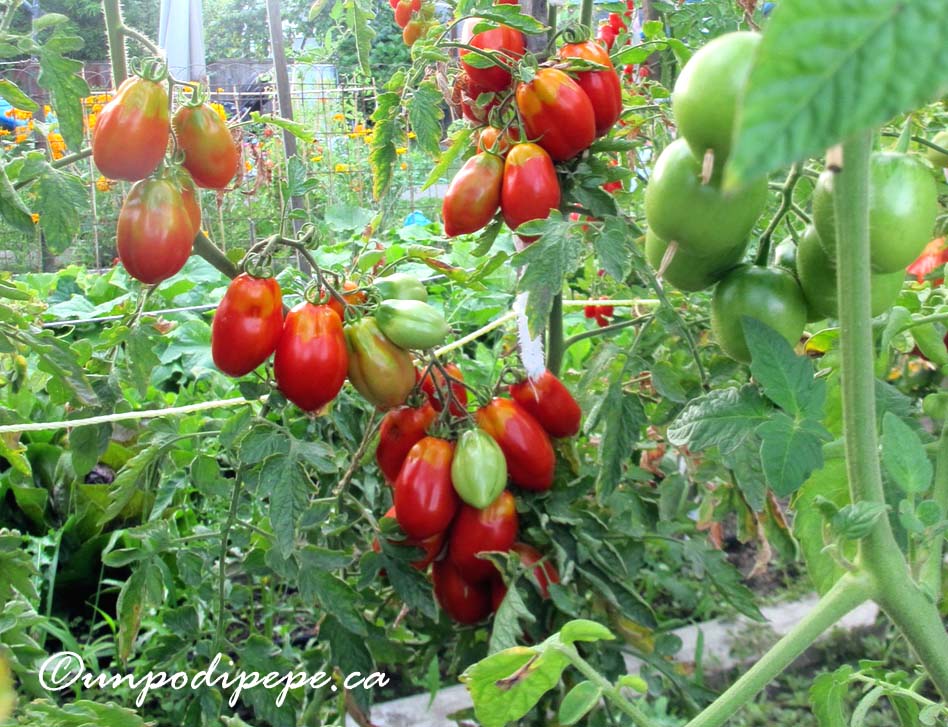
Talking about pomodori is making me hungry! I’ll go pick some in the garden and make some pan’ e pomodoro!pomodori2015a
Share this:

  • Share on Facebook (Opens in new window) Facebook
  • Share on Pinterest (Opens in new window) Pinterest
  • Share on X (Opens in new window) X
  • Email a link to a friend (Opens in new window) Email
  • Share on WhatsApp (Opens in new window) WhatsApp
Like Loading...

Torta Caprese all’ Arancia

25 Saturday Jul 2015

Posted by Un po' di pepe in Mangiamo!, Recipes

≈ 28 Comments

Tags

Cannolo Award, Capri, Dolci, Gluten-free chocolate cake, Italian food, Southern Italy, Torta Caprese, Traditional recipes

Tortacaprese2In honour of my recent Cannolo Award, I thought this post should be food related.  What is a Cannolo Award?  Read about it here.  Although I love them, I will not be writing about cannoli, but rather about Torta Caprese.

The super cute-issimo cannolo logo

The super cute-issimo cannolo logo

Caprese (cah•PREH•seh) means ‘from Capri’ (CAP•ree) the beautiful island off the coast of Napoli.  I suppose caprese could also mean ‘goatlike’ since capra is goat?  We’ll stick with ‘from Capri’.

There are a few different stories about how Torta Caprese came to be.  The most likely is that it was invented by mistake in the 1920’s or 30’s by a kitchen worker who added ground almonds (mandorle tritate) instead of flour while trying to make something similar to an Austrian Sachertorte for visitors at an Austrian owned pensione on Capri.  It was a big hit, and went on to be served at all of the hotels and tea rooms on the island.

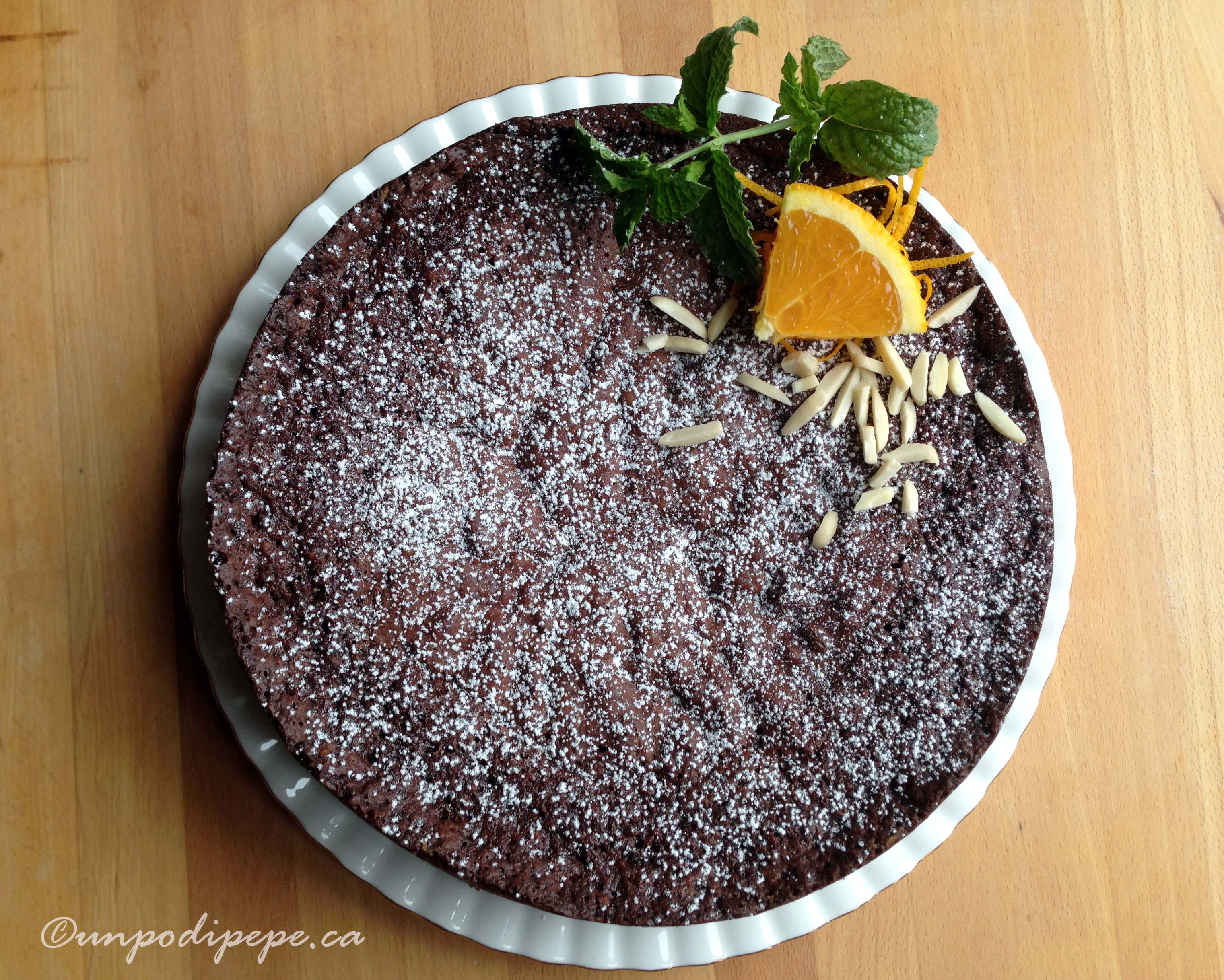
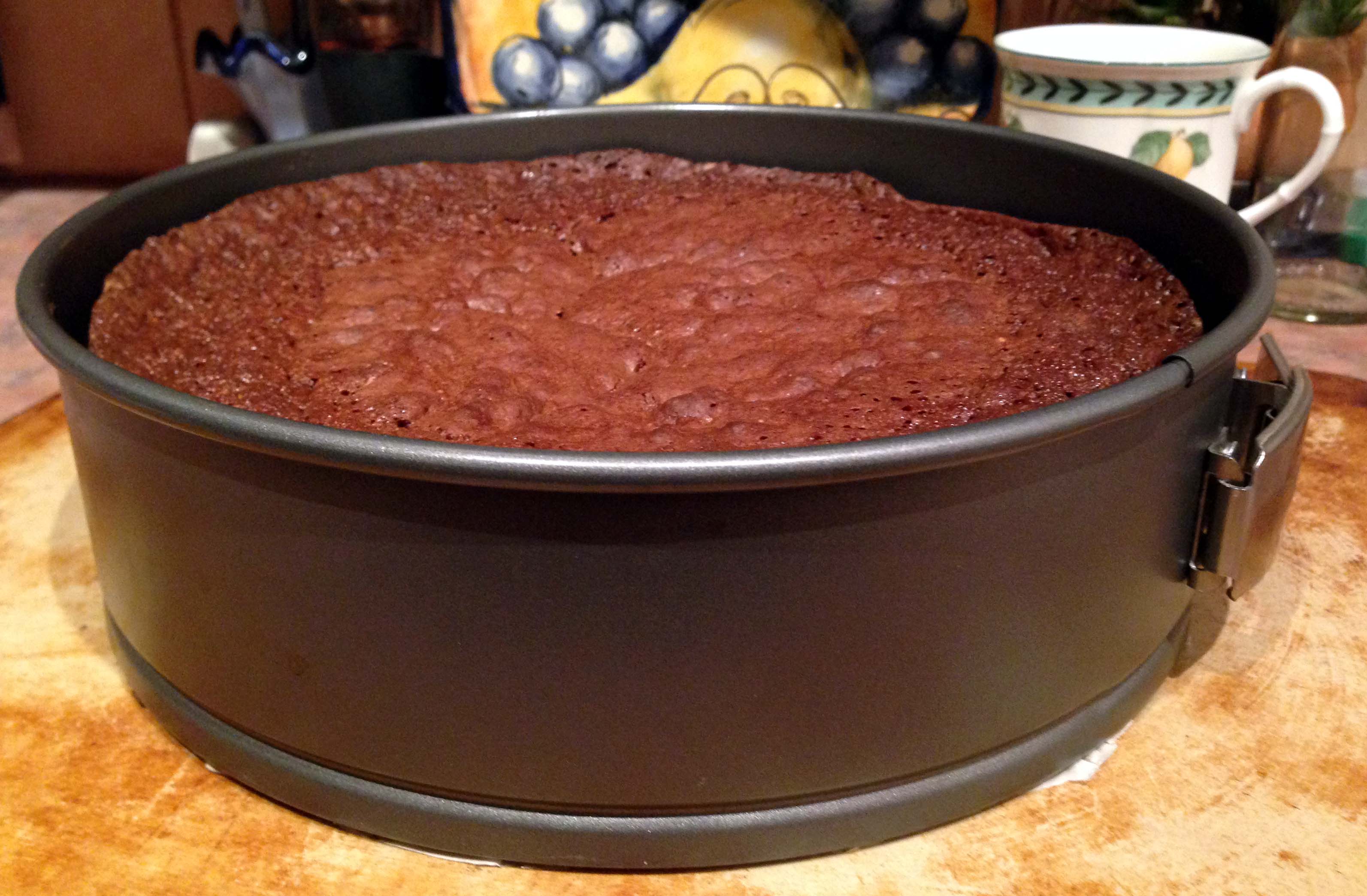
The basic recipe involves mixing melted butter and chocolate in a ‘bagno-maria’ with sugar and egg yolks, then adding whipped egg whites and ground almonds.  Liqueur, usually Strega, is added.  The cake has a hard thin shell and moist interior and the center tends to sink in a bit from the sides.

I recently tasted a yummy orange Torta Caprese, so I decided to try my own version.  After a bit of experimentation, and substituting Gran Marnier for Strega, I ended up with a very nice Torta Caprese all’ Arancia.  It is a 3 bowl recipe, so be prepared to wash lots of dishes!

Torta Caprese all’ Arancia

Ingredients:

  • 250g dark chocolate 70%
  • 175g (¾ cup) butter at room temperature
  • 110g (½ cup) sugar
  • 110g (½ cup) brown or golden sugar
  • grated peel of a large orange
  • 3 tablespoons Gran Marnier, Mandarino, or other orange liqueur
  • 6 eggs, separated
  • 150g (1½ cups) ground blanched almonds (also called almond flour or almond meal)
  • ½ a bustina (packet) Lievito Bertolini or Pane degli Angeli (substitute 2½ teaspoons baking powder if you can’t find these)
  • pinch of salt
  • Icing sugar for dusting

1.  Preheat oven to 180° C (350° F).

2.  Butter the sides of a round springform pan and line the bottom with parchment paper.

3.  Melt butter and chocolate in a double boiler or ‘bagno-maria’ (a stainless steel bowl in a pan of hot water) and let cool.  This can also be done with a glass bowl in the microwave but be careful-only heat in 30 second intervals and stir well.

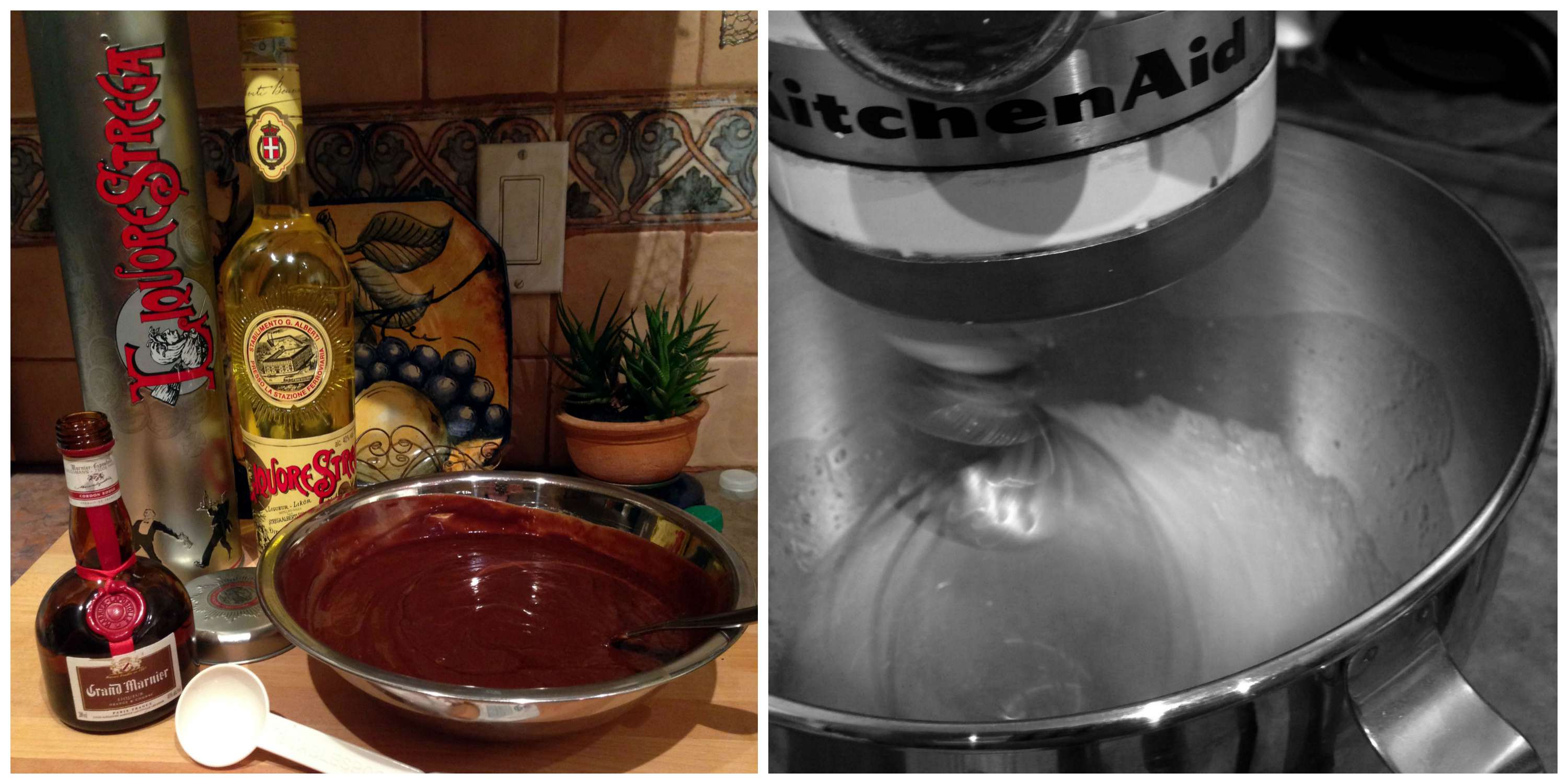
4.  In another bowl, whisk the egg yolks and brown sugar, then add to the chocolate.  Stir in alcohol and grated orange peel.

PicMonkey Collage

5.  Whip egg whites with an electric mixer until stiff peaks form.  Add the white sugar.

Torta Caprese Collage4

6.  In another bowl, mix almond flour, lievito or baking powder and salt together with a fork.  Fold the chocolate mixture in with a rubber spatula, then fold in egg whites.

Torta Caprese Collage3

7.  Pour batter into pan and bake for 55 minutes to 1 hour, until center is firm.  The center sink in a bit.  Remove the sides of the pan and slide the cake onto a platter.

8.  Dust with icing sugar and serve with orange slices and whipped cream or gelato.  Store at room temperature for up to 3 days…if it lasts that long!

Torta Caprese

Buon Appetito!  Mille grazie to my amiche Anna and Shannon who were very motivated to help me photograph the finished cake.  I wouldn’t let them cut it and have a piece until the photos were done!

torta caprese tagliata

Torta Caprese pezzo

Here is me posing on my first visit to Capri when I was 16. Unfortunately I didn't know about Torta Caprese at the time.

Here is me posing on my first visit to Capri when I was 16. Unfortunately I didn’t know about Torta Caprese at the time.

Downloadable recipe and recipe in italiano will be added as soon as I am home from Italia.  Buon Appetito!

©2015unpodipepe.ca

Share this:

  • Share on Facebook (Opens in new window) Facebook
  • Share on Pinterest (Opens in new window) Pinterest
  • Share on X (Opens in new window) X
  • Email a link to a friend (Opens in new window) Email
  • Share on WhatsApp (Opens in new window) WhatsApp
Like Loading...

Fiori di Zucca

12 Sunday Oct 2014

Posted by Un po' di pepe in Mangiamo!, Recipes

≈ 14 Comments

Tags

Fiori di zucca, Fritelle di zucca, Italian cooking, Pastella, Peppe Zullo, Traditional recipes

Fioridizucca

È davvero finita l’estate! Summer is really over.  I just picked the last fiori di zucca in my garden and I’ll have to wait a long time to taste them again.  Fiori di zucca are a real delicacy and one of my favourite foods.  They are ‘i fiori maschili della zucchina’ the male flowers of the zucchina plant.  The flowers growing off of long, thin stems are male.  The ones growing off the end of a future zucchina are female (femminile).  The female flowers are edible too, but if you pick them there will be no crop of zucchine!  If you pick too many of the male flowers, you will also have no zucchine!

Fiori di zucca maschile e femminile-male flowers grow off of long thin stems and female flowers grow off the end of future zucchine.

Fiori di zucca maschile e femminile-male flowers grow off of long thin stems and female flowers grow off the end of future zucchine.

To clarify, zucca is Italiano for squash or pumpkin. ‘Zucchina’ (given a sex change and called zucchini in North America) means little squash.  The flowers of all 3 can be called fiori di zucca, but it is usually the flowers of zucchine (zucchina is singular and zucchine is plural) that are used in cooking.  Squash and pumpkin flowers can also be used, but they can have a bittery taste.

Fiori di zucca are extremely delicate and will only last a few days after picking. They are even too delicate to freeze.  In Italia it isn’t hard to find fiori di zucca in season.  I recently bought a ‘bouquet’ of them at a market in Foggia for 1 Euro.  Sometimes you can even buy small zucchine with the flowers still attached. I’ve only seen fiori di zucca for sale once in North America, several years ago at a farmer’s market in Seattle.  I won’t even mention how much they cost!  So, if you want to eat fiori di zucca you really need to grow your own-or find a friend who grows them and doesn’t know how good they taste!

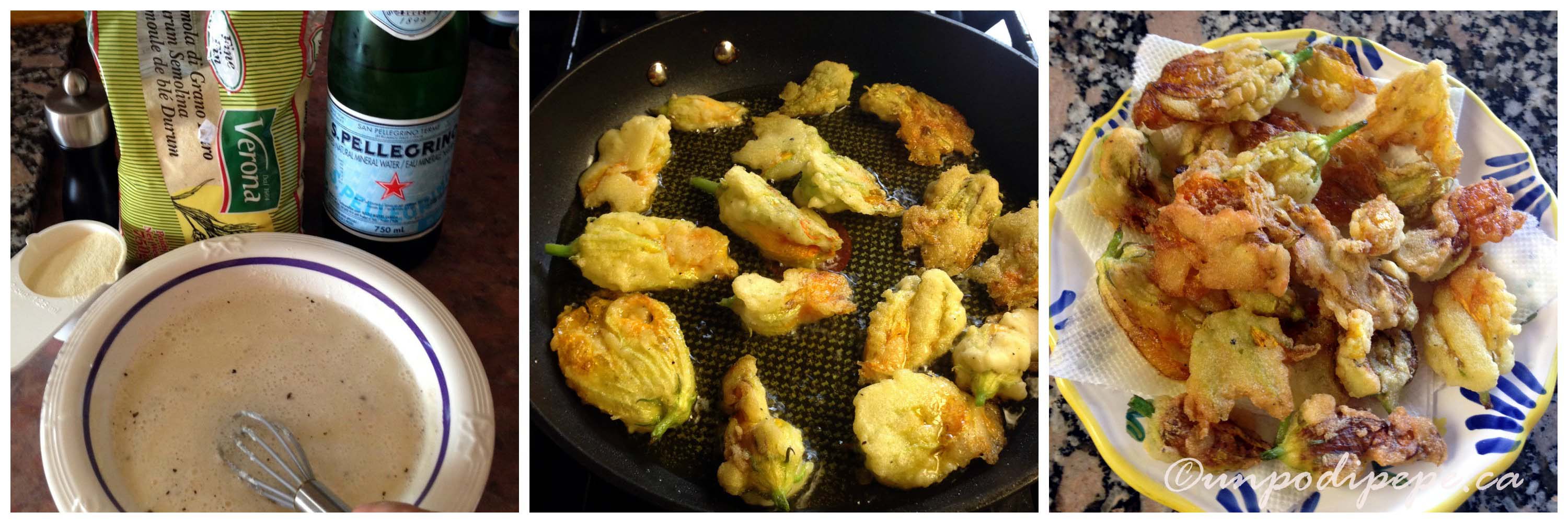
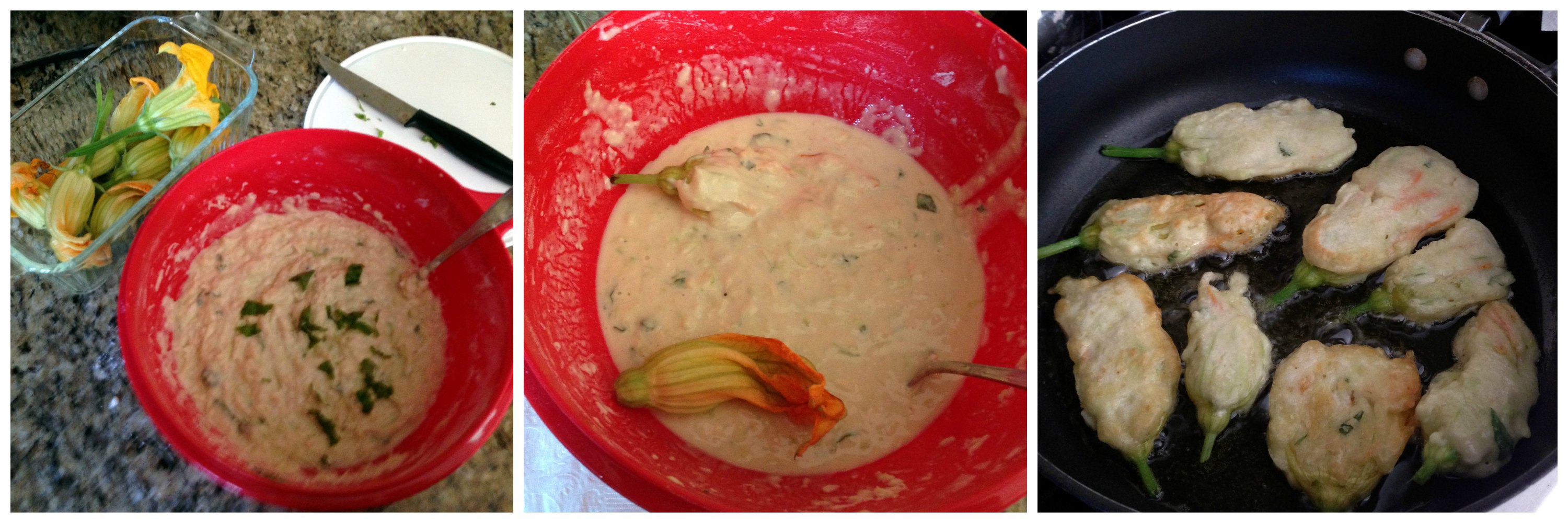
Fiori di zucca have a beautiful, delicate taste. I like to cook them a few different ways, but my favourite is in a simple ‘pastella’.  I whisk cold fizzy mineral water (acqua frizzante) with flour or semolino (durum wheat semolina) a drop of olive oil and pepper until it is not too thick or thin-like the consistency of pancake batter.  If it is too thin, it won’t stick, but if it’s too thick, the fiori can be damaged.  Gently clean fiori and remove the sepals-those green leaves at the base near the stem.  Some people remove the stamens inside, but I usually leave them. Dip them in pastella (batter) and fry in hot oil. I usually use grapeseed oil. When they are done, place on a plate with‘carta assorbente’ (paper towel) and add salt.  The bubbles in the mineral water make this pastella light and crispy. The batter doesn’t overpower delicate taste of the fiori like a heavy egg and flour batter would.

Pastellafioridizuccacollage

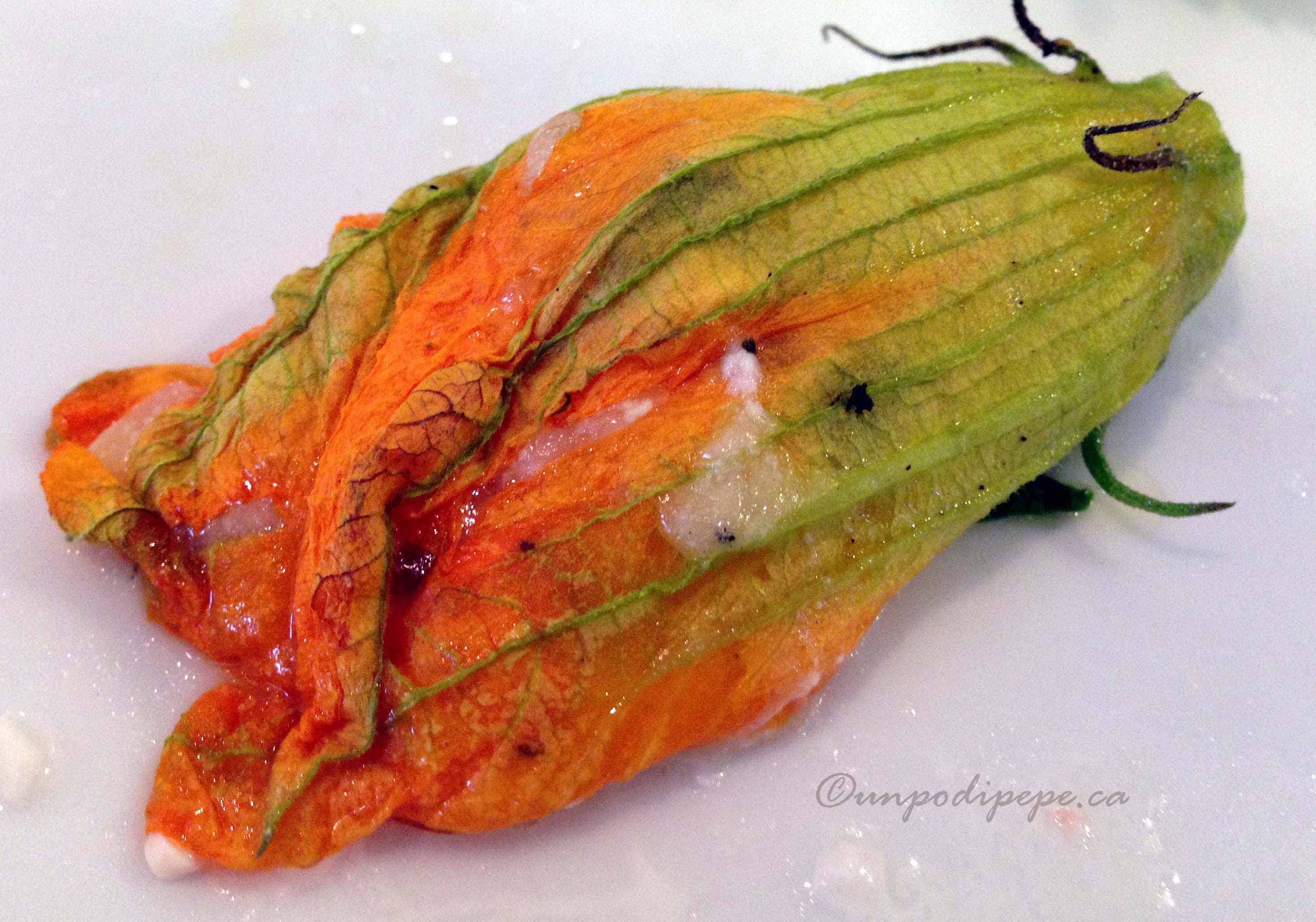
Fiori can also be stuffed with ricotta before frying (remember the ricotta fatta in casa post) or ‘farciti con mozzarella e prosciutto’-stuffed with mozzarella and prosciutto. Gnam, gnam, gnam (English translation…yum, yum, yum).

Lately I have also been making my fiori di zucca into frittelle (little fritters). This is a good way to stretch out your fiori and use broken and torn ones or include some larger pumpkin flowers.  Measurements are not too important here.  I mix some 00 flour and baking powder, then mix in 1 peeled, grated zucchina until it is coated with flour.  Add some fresh torn basil leaves if you have them and some freshly grated parmigiano or asiago and 1 large or 2 small eggs.  Once this is all mixed, add enough water to give it the consistency of pancake batter.  You will need more water than you think!

Fritellecollage

Gently dip the intact fiori in batter and fry in hot oil. When they are finished, chop up the broken ones and add to the rest of the batter.  Drop about 1 tablespoon of batter at a time into the oil to make ‘frittelle.  Place on paper towel and add salt.  They are delicious hot or cold.  For those of you who absolutely, positively can’t manage without measurements….here is a link to a recipe that is fairly similar.

Fritelle

My friend Peppe Zullo in Orsara di Puglia, il ‘cuoco contadino’ www.peppezullo.it picks hundreds of fiori a day in his orto (vegetable garden) when they are in season.  His ristorante serves ‘fiori di zucca al forno, ripiene con caciocavallo’ (baked and stuffed with caciocavallo). Gnam, gnam, gnam!!!

fioreconcaciocavallo

Looking forward to summer when I can enjoy fiori di zucca again! A l’anno prossimo!


Share this:

  • Share on Facebook (Opens in new window) Facebook
  • Share on Pinterest (Opens in new window) Pinterest
  • Share on X (Opens in new window) X
  • Email a link to a friend (Opens in new window) Email
  • Share on WhatsApp (Opens in new window) WhatsApp
Like Loading...

Passata di Pomodoro

01 Monday Sep 2014

Posted by Un po' di pepe in Italian life, Mangiamo!

≈ 24 Comments

Tags

Italian food, Passata di pomodoro, Tomato sauce, Traditional recipes

Passata di pomodoro
Every year my family gets together to make ‘la salsa’, or passata di pomodoro. Everyone participates, even the nipotini. It is a 2 day event and we are all tired today, as we made about 180 litres of salsa/passata! Some of the tomatoes came from our gardens, but most of them were purchased.

Pomodori ready to be washed

Pomodori ready to be washed

Pomodori from the garden

Pomodori from the garden

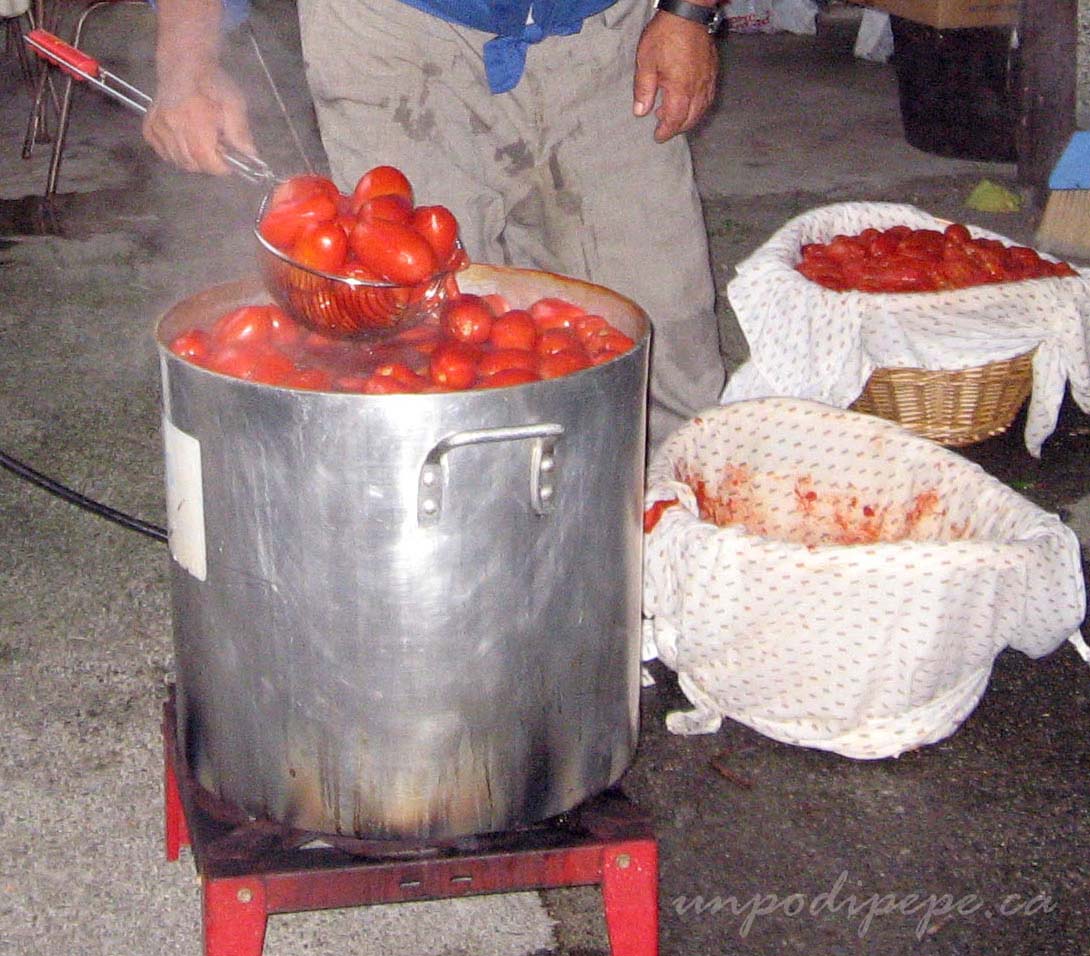
La pentola per i pomodori-a really big pot to cook the tomatoes!

La pentola per i pomodori-a really big pot to cook the tomatoes!

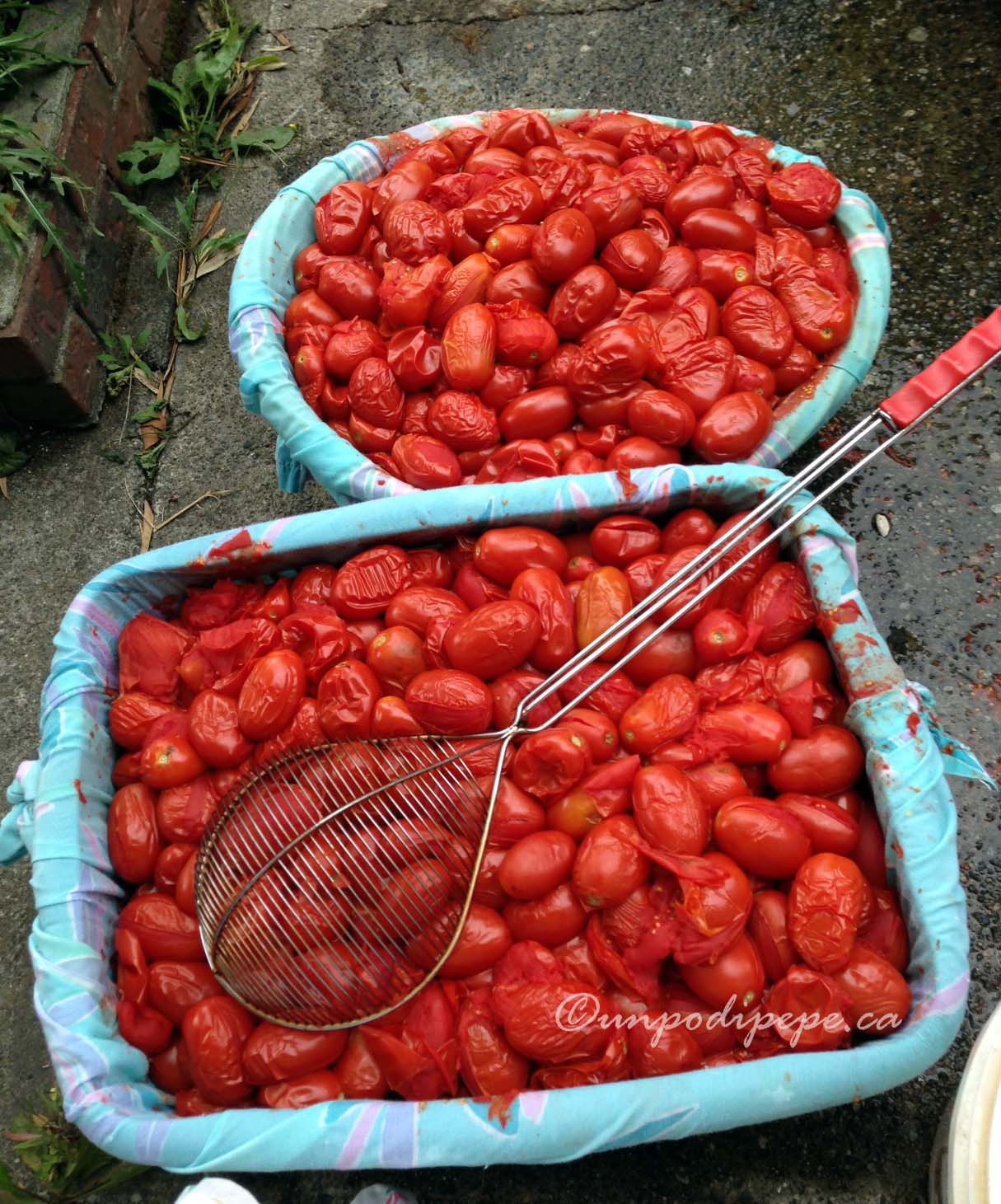
The ripe pomodori are washed, then cooked in a really big pot until soft. Then they are drained in baskets lined with cloth. If they aren’t drained well, then the passata will be too watery.  To make ‘pomodori pelati’ (peeled tomatoes) instead of passata, the skin is removed by hand and the whole pomodori are put in jars.

Cooked pomodori drained in baskets lined with cloth

Cooked pomodori drained in baskets lined with cloth

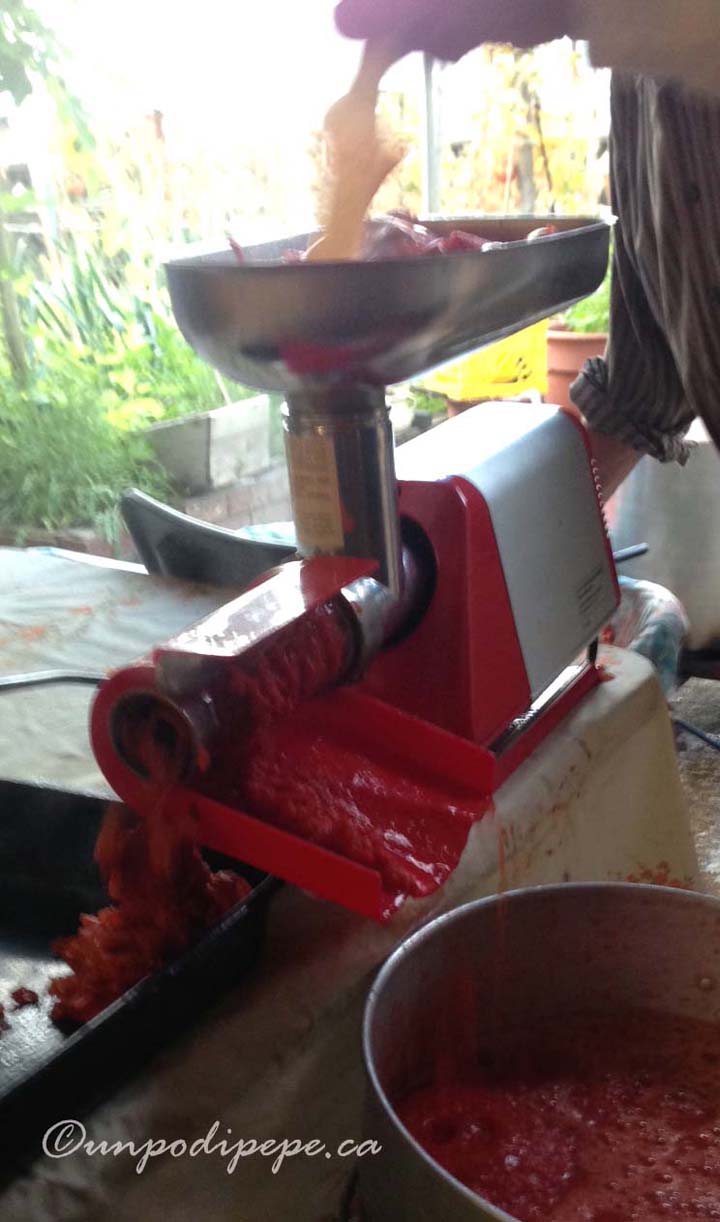
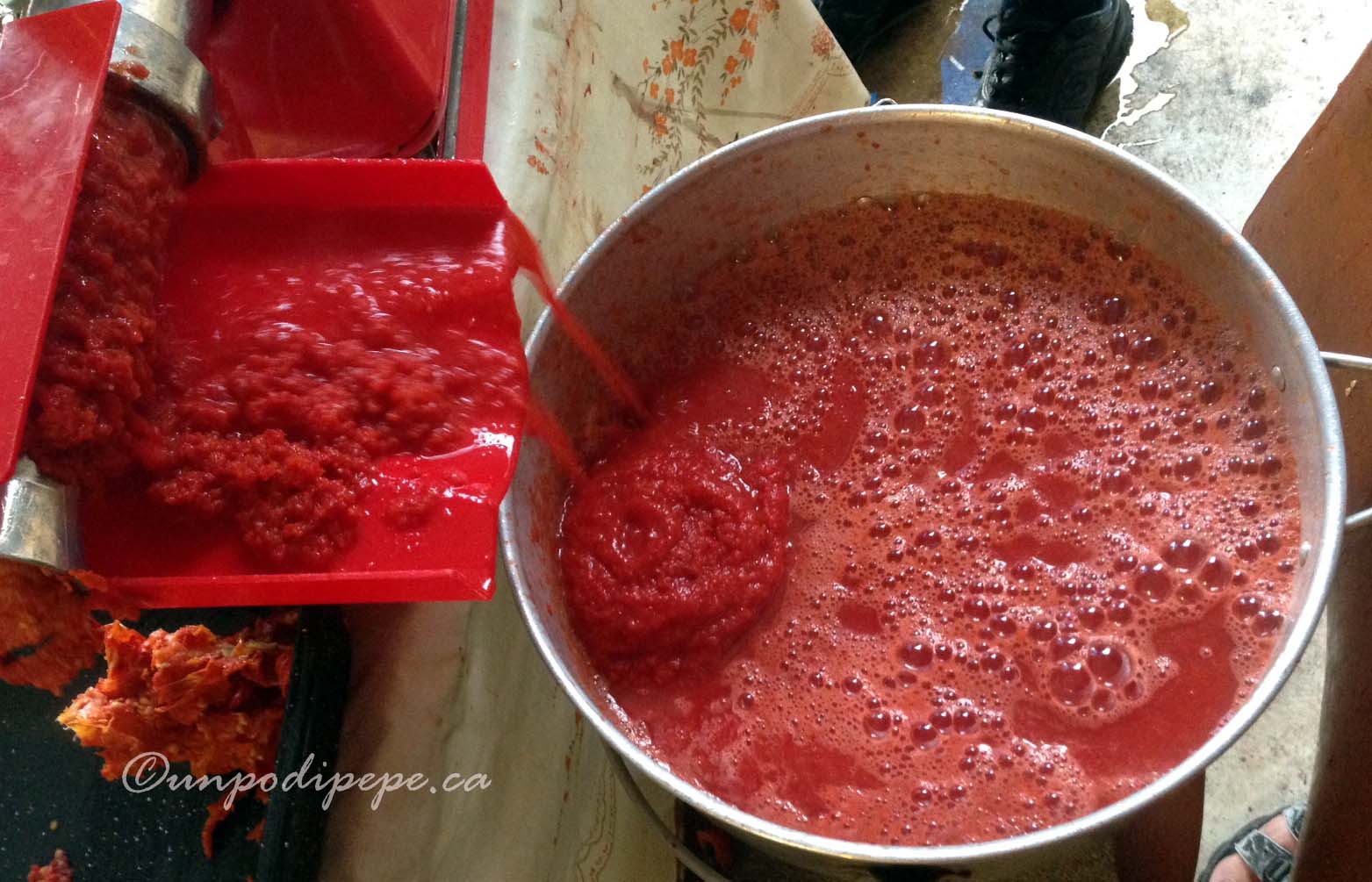
Passata refers to ‘passed’ through a sieve, a passapomodoro, or an electric machine to extract the juice and pulp and remove the skin and seeds. Our machine is called a ‘spremipomodori‘(tomato squeezer!). We thought it bit the dust last year, and bought a new one which didn’t work.  So we had to dig out the old one and give it a try.  This thing just keeps on ticking!

Our 'spremipomodoro' hard at work. The salsa/passata comes out the front and the skins and seeds come out the side.

Our ‘spremipomodoro’ hard at work. The salsa/passata comes out the front and the skins and seeds come out the side.

Passata di pomodoro

Passata di pomodoro

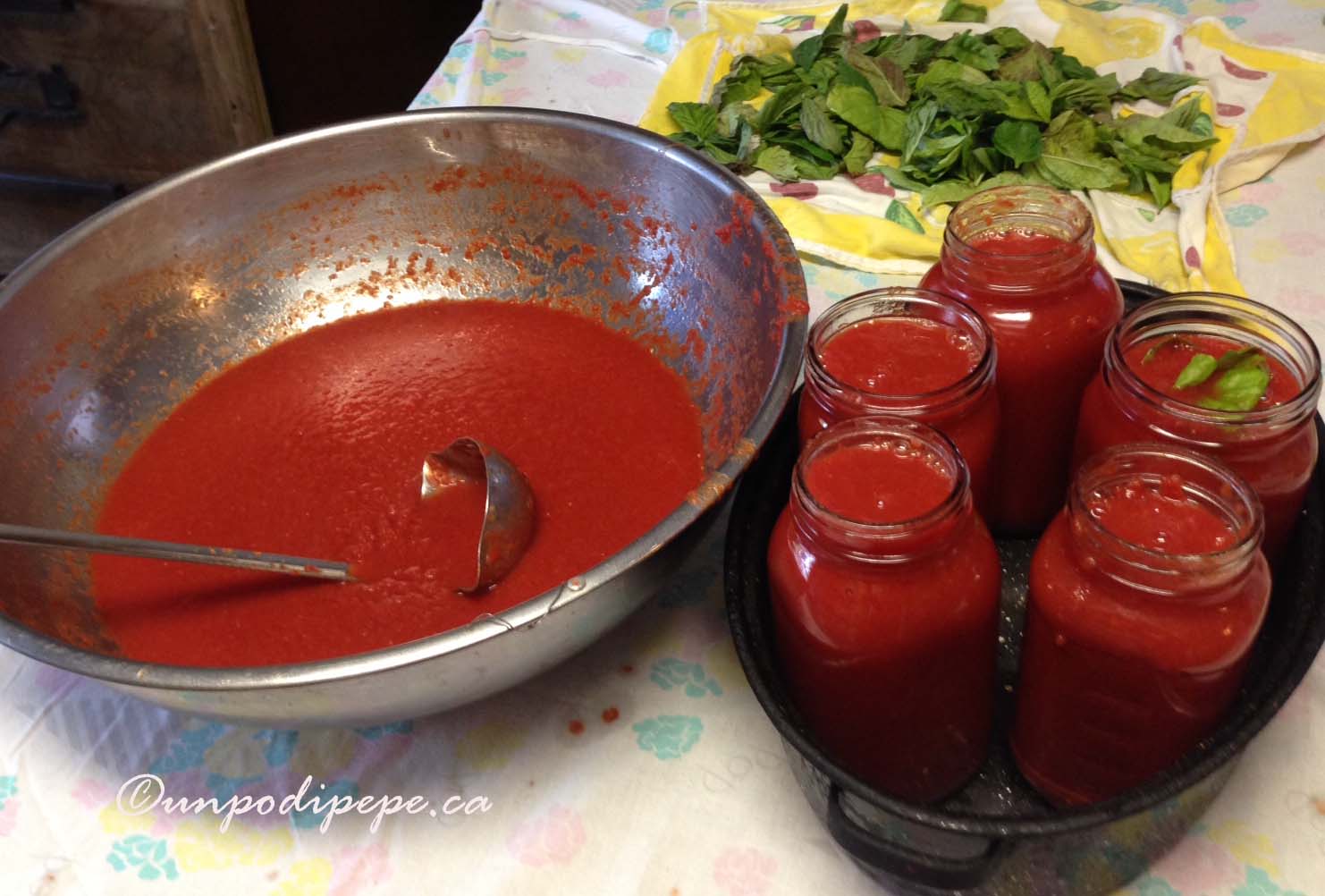
Salt is added to the passata/salsa as a preservative and it is ladled into jars with fresh basilico (basil). We use canning jars and juice bottles.  My relatives in Italia used to ladle their salsa into big amber beer bottles!
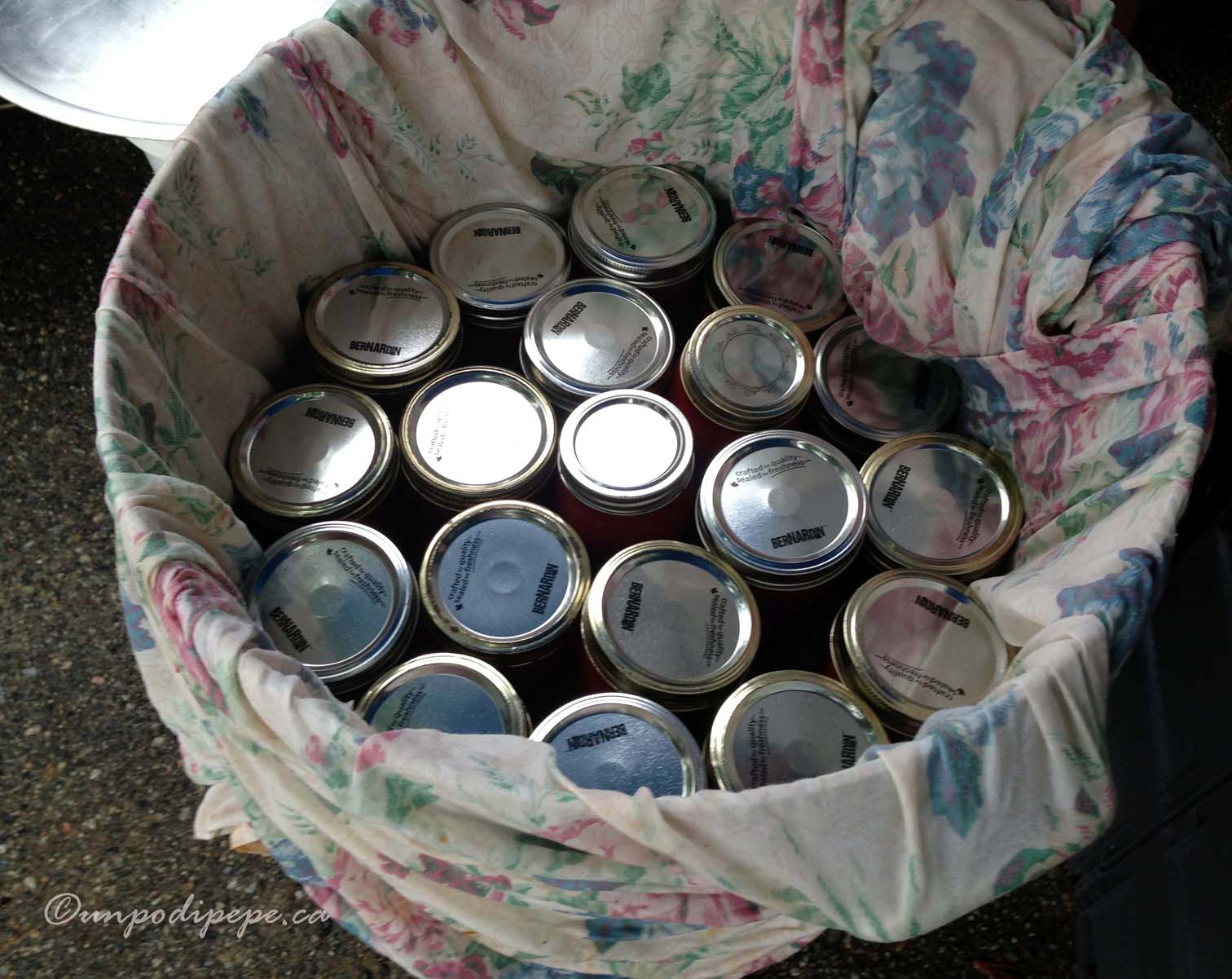
Passatadipomodoro3Sterilized lids are screwed on tightly, and the jars are place back in the large pot, which is lined with cloth so they don’t clang together. The pot is brought to a soft boil for about half an hour.

Vasetti (jars) of passata in a huge cloth lined pot

Vasetti (jars) of passata in a huge cloth lined pot

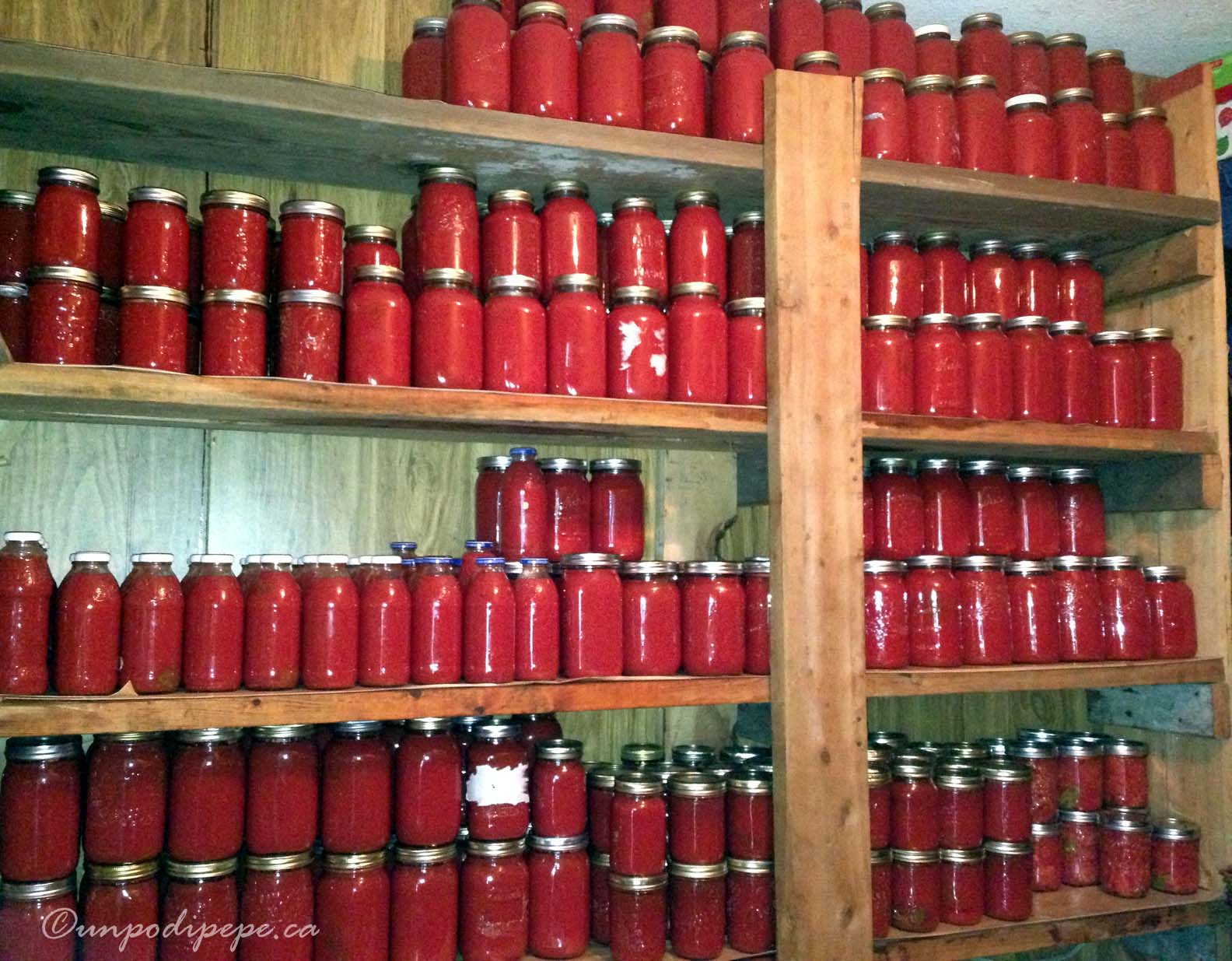
The warm jars are placed upside down and covered in blankets until the next day when they have cooled. Then they are stored in the cantina!

La cantina! The bottom shelf is from last year.

La cantina! The bottom shelf is from last year.

I hope you enjoyed your passata di pomodoro tour! Now I’m in the mood for orecchiette con sugo! Ciao, Cristina


Share this:

  • Share on Facebook (Opens in new window) Facebook
  • Share on Pinterest (Opens in new window) Pinterest
  • Share on X (Opens in new window) X
  • Email a link to a friend (Opens in new window) Email
  • Share on WhatsApp (Opens in new window) WhatsApp
Like Loading...

Ricotta fatta in casa~ Homemade ricotta

02 Monday Jun 2014

Posted by Un po' di pepe in Italian language, Mangiamo!, Recipes

≈ 9 Comments

Tags

cheese making, Food, Homemade ricotta, Italian language, Recipes, Traditional recipes

Ricotta (ree∙COT∙tah) means cooked again. Ricotta is made when the left over liquid from cheese making (whey) is cooked a second time. Vinegar or lemon juice is added to coagulate or curdle the whey and these curds make ricotta. Making ricotta at home from whey isn’t practical, since you need so much of it to make a small amount of ricotta. The do-it-yourself alternative is to use whole milk and the result is every bit as yummy. It will keep in the fridge for up to 5 days, but it won’t last that long!

Freshly made ricotta drizzled with olive oil, ready to spread onto bread

Freshly made ricotta drizzled with olive oil, ready to spread onto bread

You will need:
2 L (8 cups) whole milk (3.25% MF). Organic milk is best. Do not use skim or low-fat milk! I have used lactose-free milk, but it has to be whole milk
1 tsp sea salt
45 ml (3 tablespoons) lemon juice or 60 ml (4 tablespoons) white wine vinegar or clear apple cider vinegar
If using cow’s milk, you can also add up to 250 ml (1 cup) cream depending on how creamy you like it

Directions:
1. In a large pot, stir milk, cream and salt
2. Keep stirring over medium heat until the temperature reaches 80⁰ C (180⁰ F)
3. Add lemon juice or vinegar and stir briefly and gently. Be careful not to stir too much!
4. Keep on low flame for 5 minutes
ricottapentola2014
5. If you start to see bubbles, add a small amount of cold water to keep the milk from reaching boiling temperature
6. Remove from heat and scoop ricotta out with a slotted spoon. Pour through a cheesecloth lined colander or a sieve

ricottacolapasta2
7. Let the liquid drain out, then turn it over onto a plate and ecco-la ricotta!
ricottadicapra

I like to use goat milk, which is naturally creamier. I have had the best results using lemon juice to curdle the milk, but any of the coagulants listed will work well. Do not use the cloudy kind of apple cider vinegar-it gives the ricotta a funny taste. After I made my ricotta, I used the whey to make about 3 tablespoons of ‘real’ ricotta and I added it to the ricotta draining in the colander. I did not notice a taste difference.
Do not throw out the whey! It is rich in vitamins and protein. I used mine to water my olive tree and peperoncini! You can also keep it for adding to soup or risotto, for making bread, or as a substitute for milk in cakes or other recipes.

Links to my other posts featuring ricotta:

Fiori di Zucca

Limoncello Ricotta Cookies

Tortelloni di Ricotta

Buon appetito!

Click here for help with Italian pronunciation.

Vocabolario
Inglese:
                         Italiano:
Whey                              siero
Curds                              caglia
Goat milk                       latte di capra
Cow’s milk                     latte di mucca
Apple cider vinegar        aceto di mele
Whole milk                    latte intero
Lactose-free milk           latte senza lattosio
Skim milk                      latte scremato
Organic                          biologico
Colander                        colapasta
Do-it-yourself (DIY)       fai-da-te
Butterfingers                 Avere le mane di ricotta

Buon appetito, Cristina

Share this:

  • Share on Facebook (Opens in new window) Facebook
  • Share on Pinterest (Opens in new window) Pinterest
  • Share on X (Opens in new window) X
  • Email a link to a friend (Opens in new window) Email
  • Share on WhatsApp (Opens in new window) WhatsApp
Like Loading...
Newer posts →

Enter your email address to follow 'un po' di pepe' and receive notifications of new posts by email.

Join 511 other subscribers
Follow Un po' di pepe on WordPress.com

Popular Posts

  • Hairstyling in Ancient Roma
    Hairstyling in Ancient Roma
  • Cucina Italiana Patrimonio UNESCO
    Cucina Italiana Patrimonio UNESCO
  • Grano Arso
    Grano Arso
  • Napoli Street Art
    Napoli Street Art
  • Venezia~La Serenissima
    Venezia~La Serenissima
  • Halifax and the Titanic
    Halifax and the Titanic
  • Italiano per Ristoranti~How to pronounce your restaurant menu
    Italiano per Ristoranti~How to pronounce your restaurant menu

Recent Posts

  • Cucina Italiana Patrimonio UNESCO
  • 2025~Un po’ di pepe Year in Review
  • Castel del Monte
  • ‘The Nuances of Love’
  • Hostaria Antica Roma~Eat like an Ancient Roman
  • Santa Maria in Aracoeli
  • Casino dell’Aurora~Villa Boncompagni Ludovisi
  • Nasoni di Roma
  • Bloghiversario #11
  • Fontana di Trevi
  • Acqua Vergine
  • Giubileo 2025
  • Sanremo 2025
  • In Vino there are Memories
  • A Literary Harvest
  • 2024~Un po’ di pepe Year in Review
  • Buon Natale 2024
  • Il Bicerin
  • Mercato Porta Palazzo
  • Torino
  • Catanzaro, Calabria
  • Il Pumo Pugliese
  • Artemisia Gentileschi
  • Cavalli di San Marco
  • Panzerotti

Categories

Amici e Famiglia Architecture Art Art history Art projects Bilingual posts Blogging Canada Culture Feste Firenze Inspiration Italia Italian Folklore Italian language Italian life Italocanadesi Libri Mangiamo! Orsara di Puglia Parole piacevoli Photography Puglia Recipes Roma Travel Travel tips Uncategorized Vino

Archives

Un po’ di pepe on Facebook

Un po’ di pepe on Facebook

Start a Blog at WordPress.com.

  • Subscribe Subscribed
    • Un po' di pepe
    • Join 511 other subscribers
    • Already have a WordPress.com account? Log in now.
    • Un po' di pepe
    • Subscribe Subscribed
    • Sign up
    • Log in
    • Report this content
    • View site in Reader
    • Manage subscriptions
    • Collapse this bar
 

Loading Comments...
 

    %d