• Home
  • About me/Chi sono
  • Contact

Un po' di pepe

~ …… (oon∙poh∙dee∙PEH∙peh) Cristina writes about interesting stuff /Cristina scrive di cose interessanti

Un po' di pepe

Tag Archives: Venezia

Cavalli di San Marco

23 Sunday Jun 2024

Posted by Un po' di pepe in Art, Art history, Italia

≈ 7 Comments

Tags

Piazza San Marco, Sculpture, UNESCO World Heritage Sites, Veneto, Venezia

I Cavalli di San Marco are a set of gilded copper statues of 4 horses, originally attached to a quadriga, a four horse carriage used in chariot racing.  Also known as the ‘Triumphal Quadriga’ and the ‘Horses of the Hippodrome of Constantinople’. The sculptures date from classical antiquity.  Because of the style, they were thought to be Greek, by the 4th C BC sculptor Lysippos, but carbon dating shows they are from the 1st-3rd C AD, which makes them 1700-1900 years old. An 8th century document mentions ‘four gilt horses that stand above the Hippodrome brought from the island of Chios by Theodosius II’ (AD 408-450)

The sculptures are expressive and magnificent!  The realism is incredible-bulging veins, rippling muscles, flaring nostrils, raised hooves, and the way they are in sync, with their heads turned to each other.  Streaks of gold leaf are still visible on their bodies.  The poet Francesco Petrarca (1304-1374) remarked ‘they seem to be neighing and pawing at the ground, as if alive’.  They are made using the lost wax method.  A wax sculpture is used to make a mold, usually of clay.  The sculpture is then cast with the mold. Each cavallo weighs close to 900 kg (2000 lbs).  Very few metal masterpieces have survived from antiquity as they were all melted down in medieval times to make weapons.

There is a lot of history to this foursome representing Apollo, God of the sun.  They were likely made on the Greek island of Chios and brought by Emperor Constantine to the new capital Constantinople (modern Istanbul) in 330 AD to adorn the chariot racetrack or by Theodosius 100 years later.  During the sack and looting of Constantinople in 1204, the Venetians took them as spoils of war. The cavalli were in storage in the Arsenale and in 1254 were placed on the terrace above the main door to the Basilica San Marco, as a symbol of military and political power. Small marble columns held up their feet.  Collars on the horses were added to hide where they had to be decapitated for transport from Constantinople.  They lived on the terrace for almost 600 years, until Napoleon looted them in 1797, taking them to Paris. In Paris, they were installed outside the Louvre on top of the Arc de Triomphe du Carrousel, along with a new quadriga. Upon the defeat of Napoleon in 1815, they were actually returned to the terrace in Venezia by the Duke of Wellington- minus their ruby pupils.  Replicas are now on the Paris monument. The cavalli were restored in 1977 and to protect from environmental oxidation they made their final journey in the early 1980’s.  The cavalli were moved inside the Basilica to the Loggia dei Cavalli and replicas made by Fonderia Battaglia di Milano were placed on the terrace

Classical art has a long history as a trophy of war taken by victorious generals.  Greater than art, it had power, and was a symbol of triumph, survival and to how each civilization built on the previous one.  Regardless of how you feel about looted art, for these 4 brothers, it is what saved them.  There is almost zero chance they would have survived if left in Constantinople.  They would have been melted down for ammunition or building materials.

Do not miss a visit to these beauties. Admission to the Basilica San Marco on site is €3 plus admission to the Museum, outdoor terrace and Loggia dei cavalli €7 for a total of €10.

Tickets can also be purchased online in advance for the Basilica €6, and the museum €9 for a total of €15. Have you seen I Cavalli di San Marco?

*Photo credit-Prethika Kumar!

Share this:

  • Click to share on Facebook (Opens in new window) Facebook
  • Click to share on Pinterest (Opens in new window) Pinterest
  • Click to share on X (Opens in new window) X
  • Click to email a link to a friend (Opens in new window) Email
  • Click to share on WhatsApp (Opens in new window) WhatsApp
Like Loading...

Burano

11 Thursday Apr 2024

Posted by Un po' di pepe in Italia, Photography, Travel

≈ 9 Comments

Tags

Daytrips from Venezia, UNESCO World Heritage Sites, Venetian lagoon, Veneto, Venezia

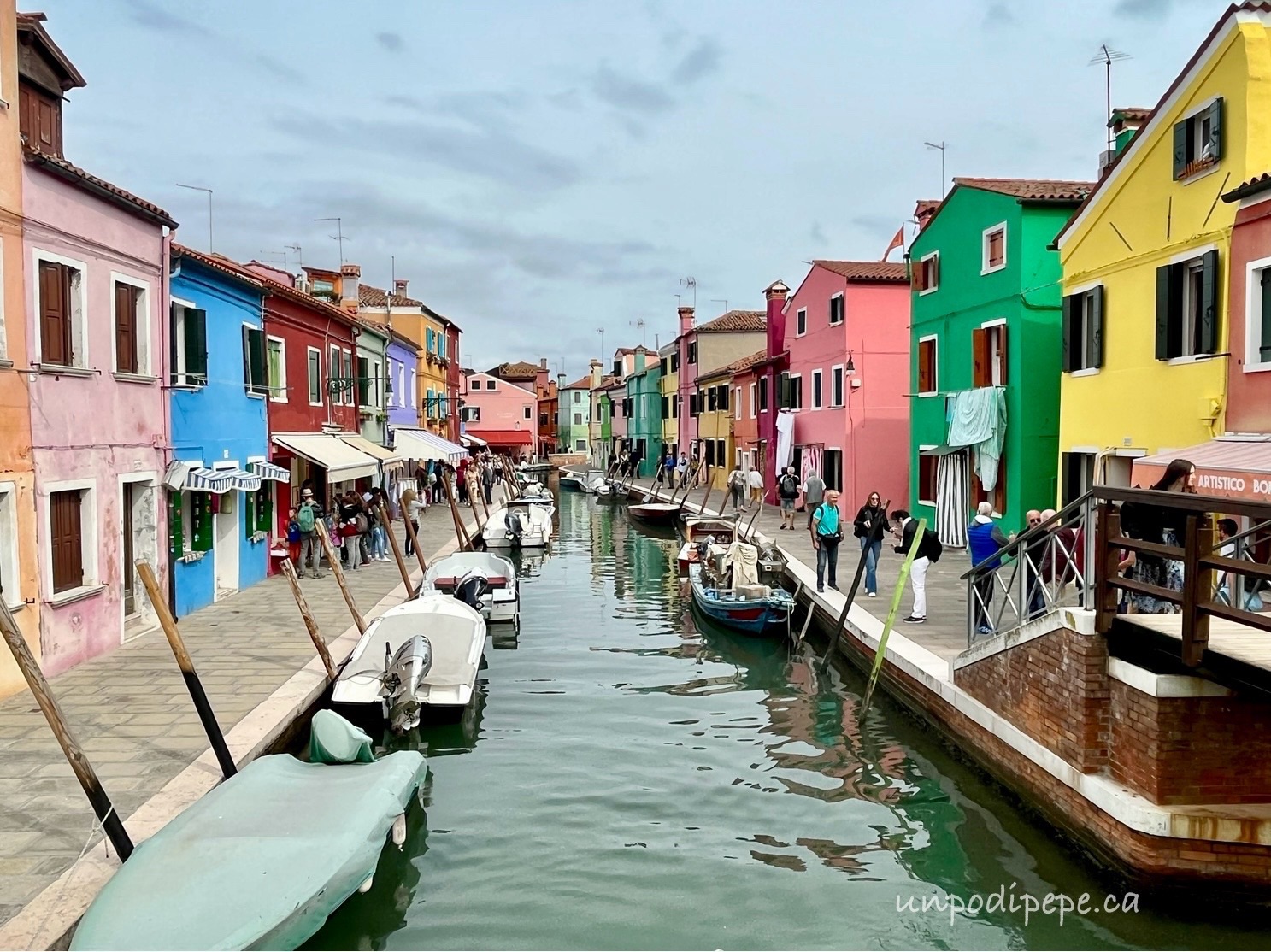
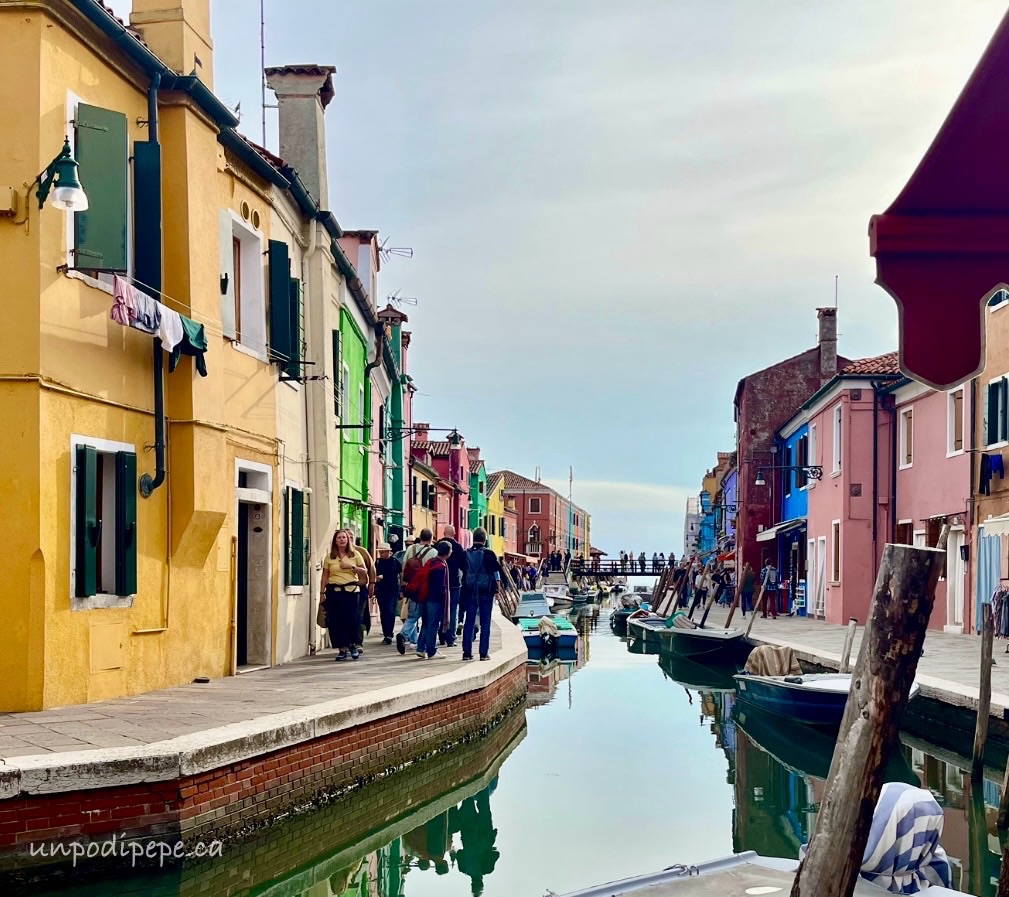
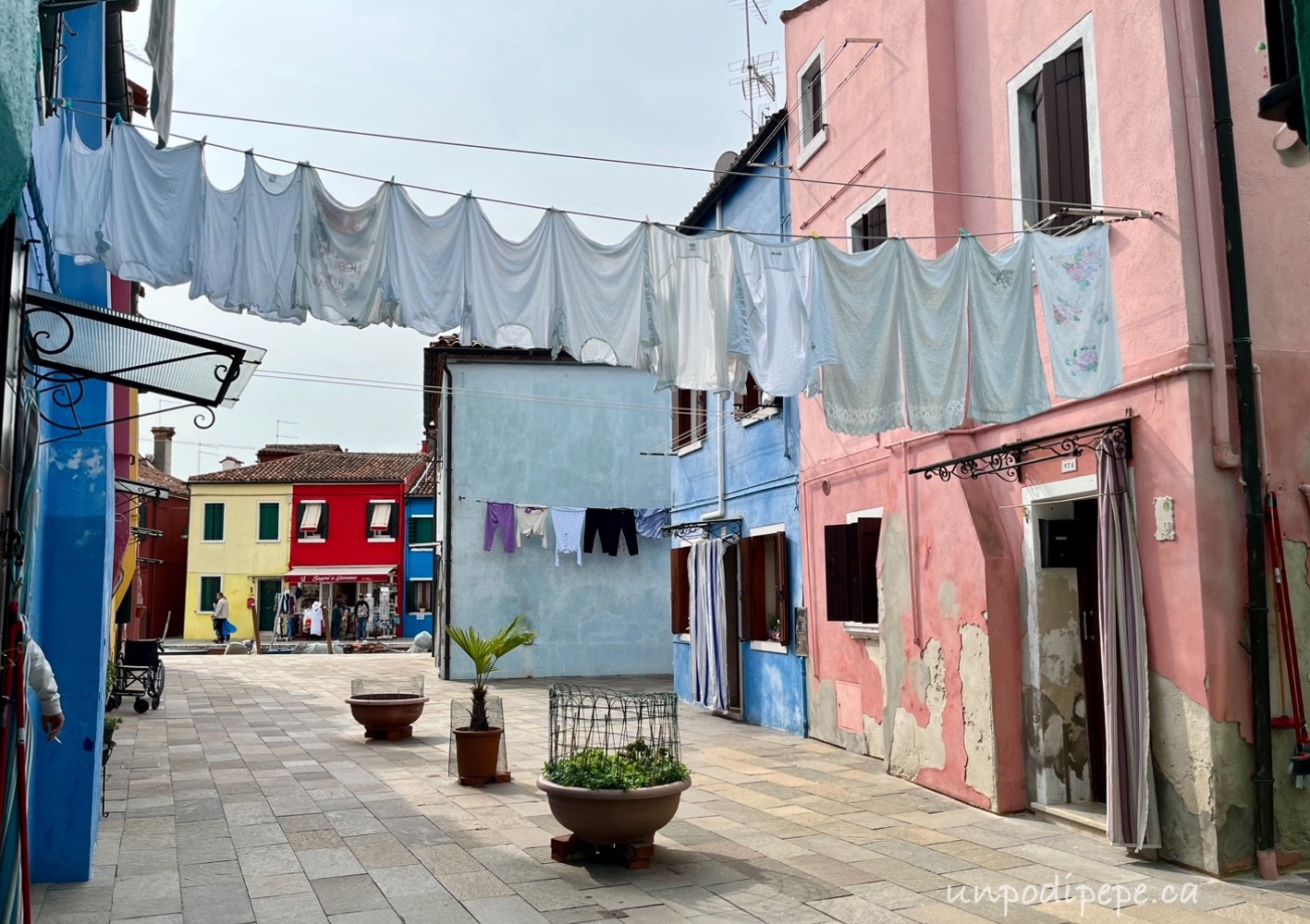
Burano, an island in the north end of the Venetian lagoon, is one of the most colourful places in the world.  It is known for merletto (lace) and houses painted in bright contrasting colours.  Burano is only 210 m² with a population of 2,800.  That is a lot of people for such a tiny place- 13,000 per km². Burano is actually made up of 4 islands separated by 3 canals and connected by bridges. The highest elevation is only 1m! There are no cars-not even for residents, since there are no roads!  Burano is part of the city of Venezia, 7 km away.

Burano was settled in the 6th century by residents of Altino fleeing invaders.  They called the island Boreana because it faces north.  In the 16th Century, women on the island started making intricate lace with needles from Cyprus.  The lace trade was booming until the 18th Century, then revived in 1872 with the opening of the Scuola del Merletto (school of lacemaking).  I remember when I first visited Burano in 1994, women sat outside their homes doing lacework. There are not many lacemakers now.  It is extremely time consuming to make, and as a result, incredibly expensive.  Many of the lace works, especially the larger pieces, are machine made imitations, many of them from China.

Emilia Burano, Via Galuppi 1994

For authentic Burano lace, try La Perla Gallery, or Emilia Burano  Via San Martino Sinistro 376, and 205 just off Via Galuppi.  Handmade monogrammed fazzoletti (handkerchiefs) start at €49.

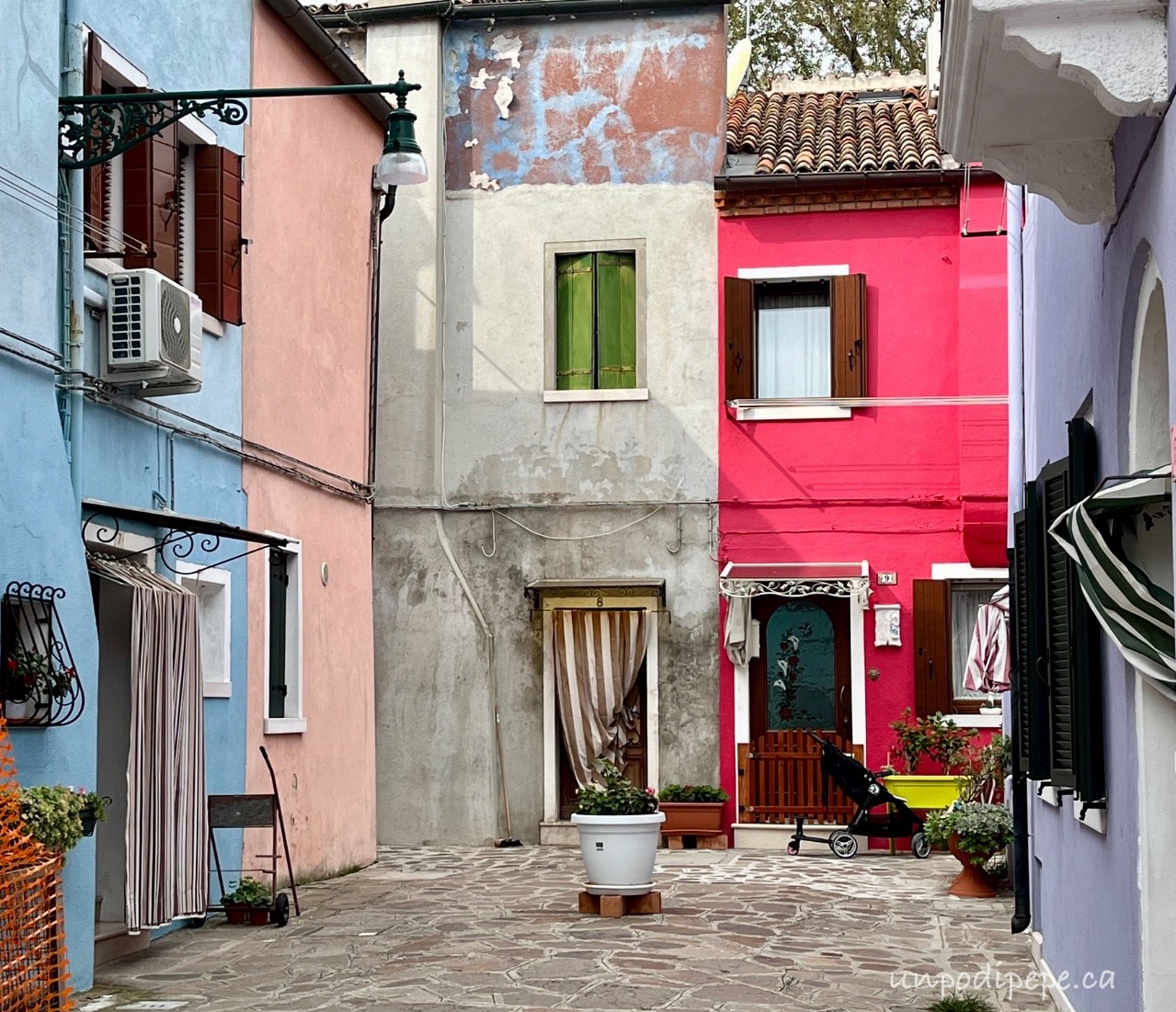
Houses on Burano have been brightly painted since the 15th Century.  This was common in fishing communities so that fishermen out on the water could find their way home in the fog.  Burano is still a working fishing island, although the primary economy is now tourism. An official government request must be sent in to paint a home on Burano as there is a system to the colour scheme.  The response lists the colours allowed for that particular site!  No 2 houses side by side can be the same colour.

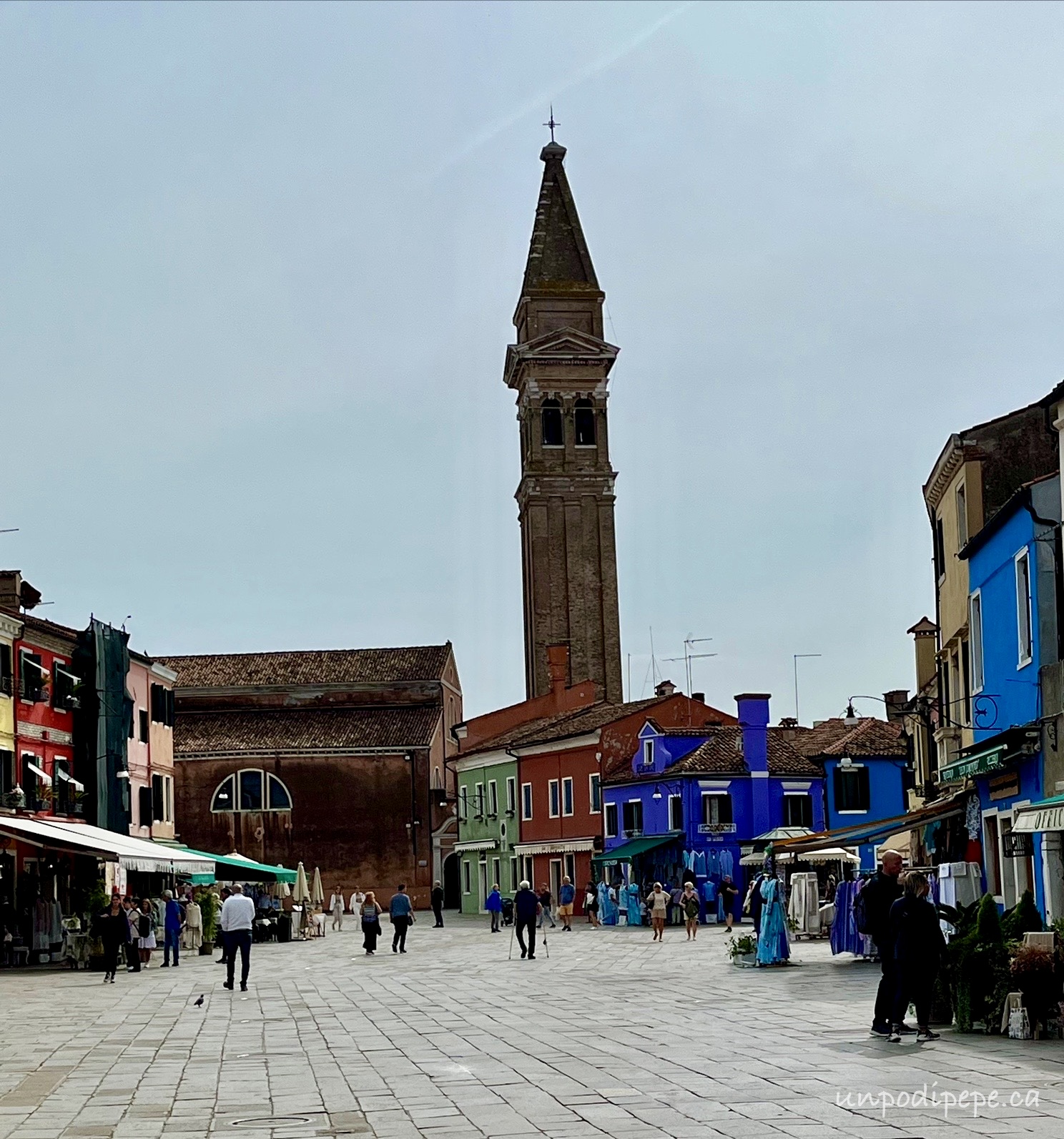
Piazza Baldassare Galuppi is the only piazza on Burano.  The church of San Martino Vescovo has a 53m high leaning campanile and a 1727 Crucifixion by Tiepolo. The piazza also has the Museo del Merletto, which has examples of 16th and 17th century lace as well as a 6th Century Istrian stone well, shops, and the comune (town hall).Burano is a photographer’s dream with the rainbow houses, laundry hanging, fishing boats, canals and narrow streets.  It is hard to take a bad shot! The wooden Tre Ponti bridge is a great selfie spot. My usual advice would be to just wander and get lost, but Burano is too small to even get lost on! A quick walk around the island only takes about half an hour.

Explore the quieter side streets, browse the shops and have lunch along one of the canals.  Being a fishing island, the seafood is exceptional. Try take out fritto misto, assorted fried fish in a paper cone, or the family run Trattoria Al Gatto Nero.  a reservation-even in October!

Visit Burano if you are in Venezia for more than 2 days, or if it is not your first visit. Burano and Torcello make a nice daytrip.  The busiest time on Burano is from 11am-3pm.  Not many visitors stay overnight, but apparently the sunset is gorgeous.

View of Burano from the campanile di Santa Maria Assunta, Torcello

With an ACTV Vaporetto (Venetian water bus) €25 day pass, you can go to 2 of the islands, then cruise around Venezia when you get back. Burano is 45 min by vaporetto #14 (SZ-Lido-Burano) from San Zaccaria, near Piazza San Marco, in front of Hotel Danieli.  Vaporetto #12 from Fondamente Nove A goes to Murano and Burano.  From Burano, the #9 vaporetto is a 10 minute ride to Torcello.  There are also many organized daytrips to the lagoon islands.

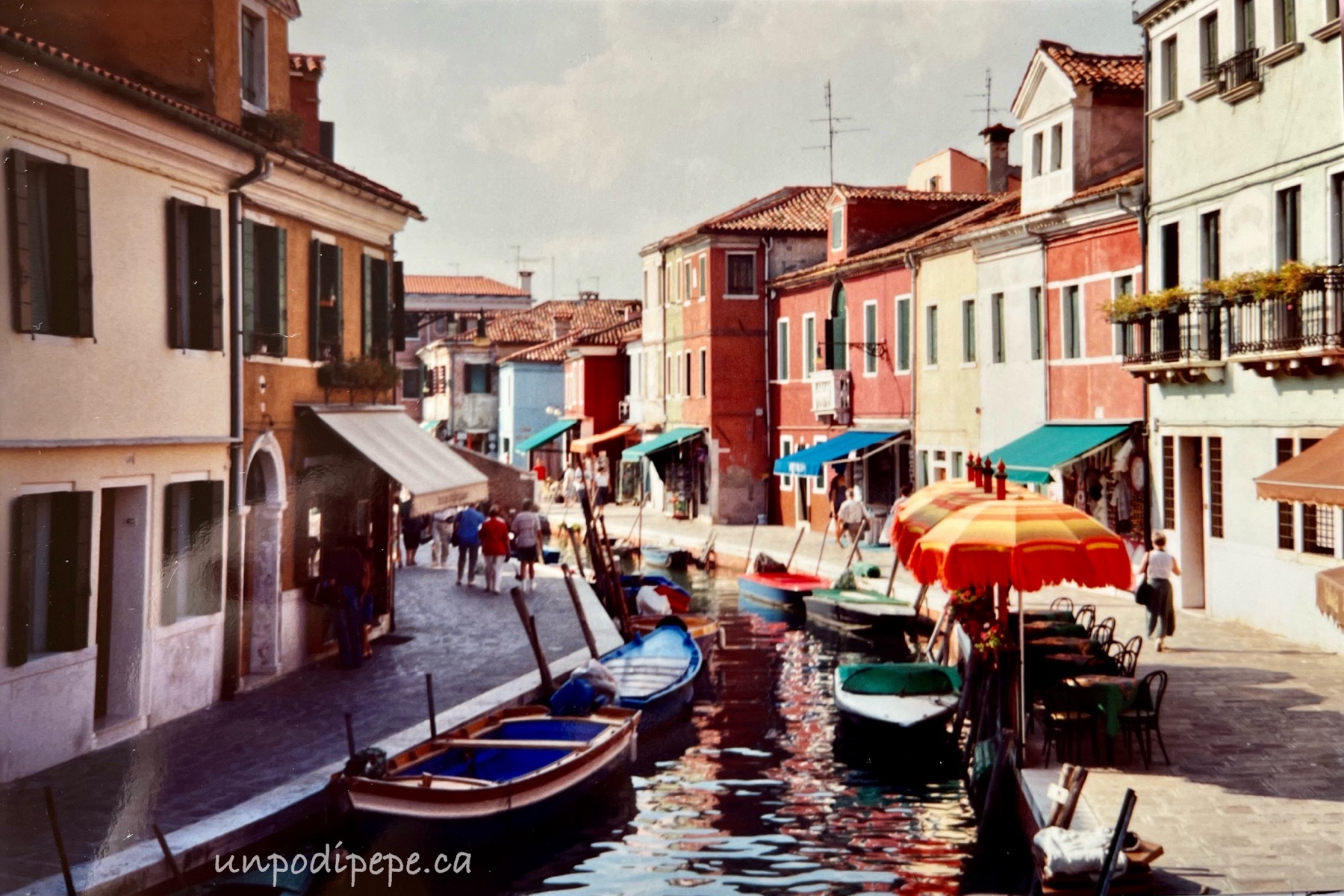
For those of you who love this colourful island as much as I do, there is a 2022 trilogy of Hallmark movies about a Burano lace wedding veil bought by 3 friends at an antique store.  In the second movie, one of them takes the veil to Burano to find out its history.  The family run shop in the movie is based on Emilia Burano, the one in my 1994 photo!

Burano canal 1994

Buon viaggio, Cristina

Share this:

  • Click to share on Facebook (Opens in new window) Facebook
  • Click to share on Pinterest (Opens in new window) Pinterest
  • Click to share on X (Opens in new window) X
  • Click to email a link to a friend (Opens in new window) Email
  • Click to share on WhatsApp (Opens in new window) WhatsApp
Like Loading...

Collezione Peggy Guggenheim

30 Saturday Sep 2023

Posted by Un po' di pepe in Art, Art history, Italia

≈ 8 Comments

Tags

20th Century art, Art history, Grand Canal, Grand Canal Venice, Modern art, Palazzo Venier dei Leoni, Venezia

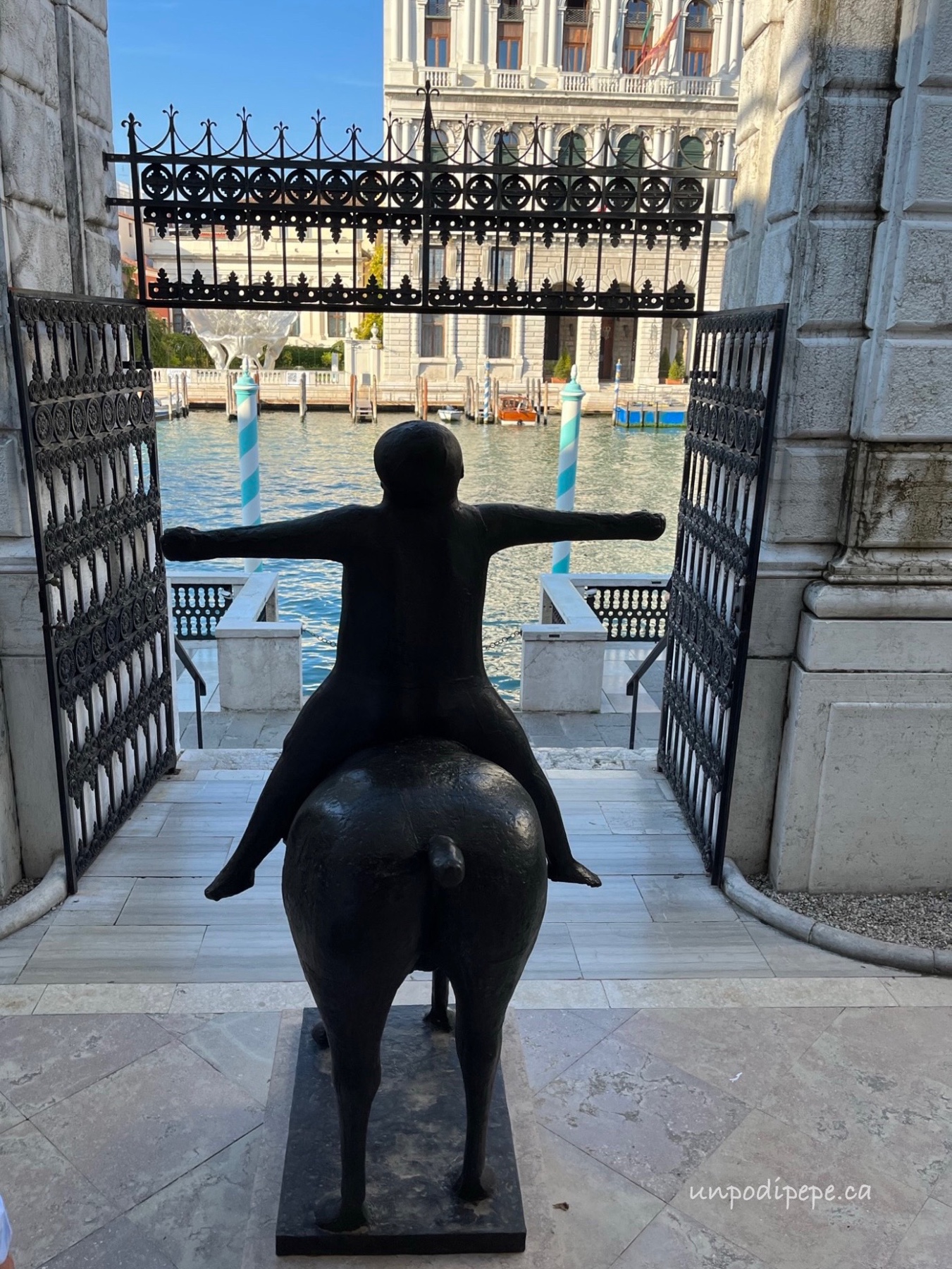
Terrace Horse, Peggy Guggenheim Collection VeniceThe Peggy Guggenheim Collection is one of the most important collections of European and North American 20th Century art.  This was on my ‘must see’ list for years. An unintentional 24 year absence from Venezia got in the way, but I finally made it!Terrace View, Peggy Guggenheim Collection Grand Canal Venice

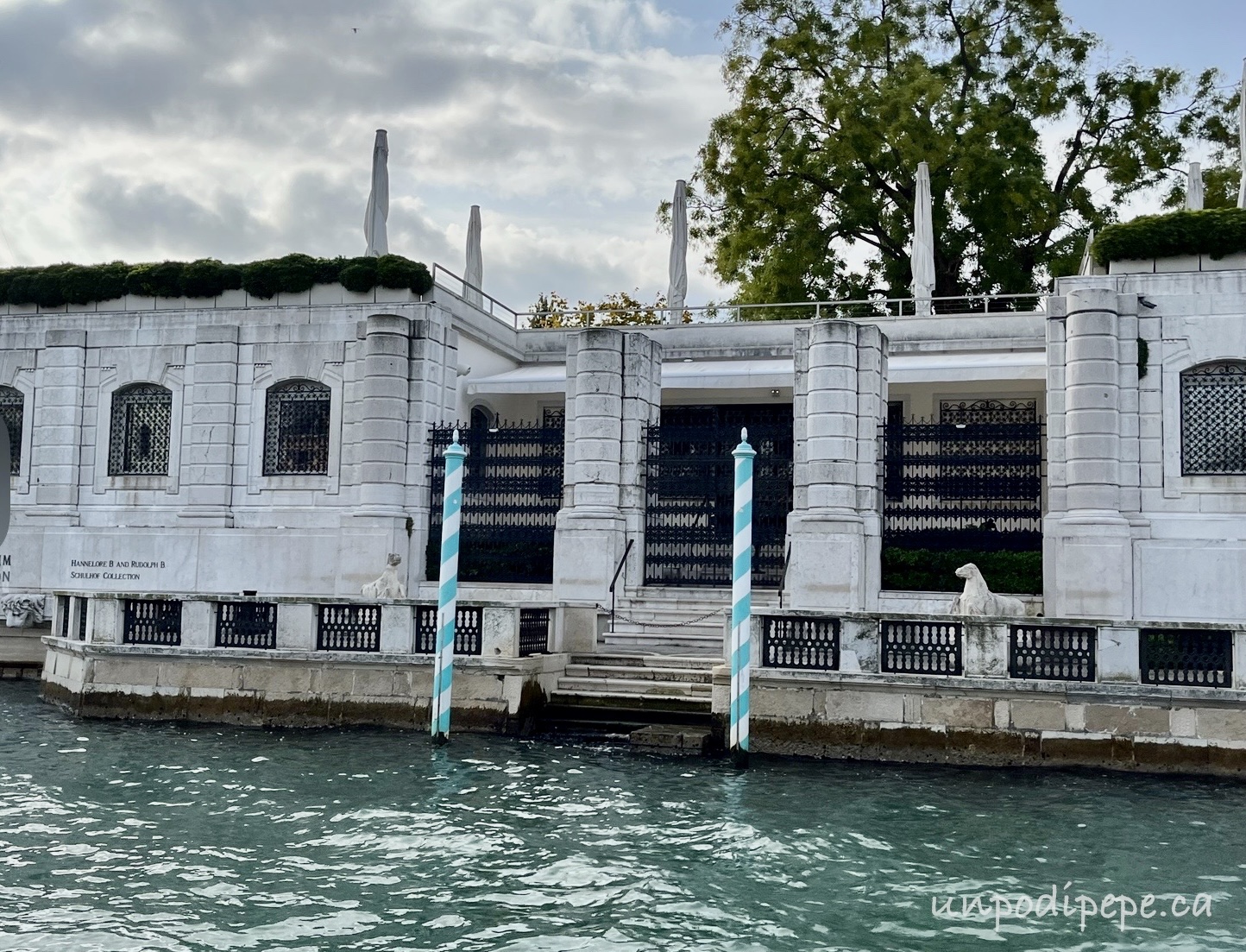
Located in her former home, the unfinished Palazzo Venier dei Leoni on the Grand Canal, the museum includes Peggy Guggenheim’s personal collection and a sculpture garden. Since 1980, it is part of the Solomon Guggenheim Foundation, which includes Guggenheim museums in New York, Bilbao Spain and soon Abu Dhabi.Marino Marini L'angelo della città Guggenheim museum Venezia

Peggy Guggenheim was born in New York in 1898.  Her father, Benjamin Guggenheim, one of 7 brothers who made a fortune in mining, died heroically on the SS Titanic in 1912.  He and his valet helped women and children into lifeboats, then changed into their best clothes to ‘prepare to go down like gentlemen’.  They were last seen on deck chairs by the grand staircase sipping brandy and smoking cigars.

Peggy came into her inheritance in 1919 and devoted her time and fortune to collecting and promoting modern art.  She married Dadaist Laurence Vail and they had 2 children.  The family travelled to Europe in 1921, embracing the Parisian Bohemian and American expat scene, then moved to London in the 1930’s fleeing Nazi occupation.

A self-proclaimed ‘art addict’ and a rebel, Peggy wanted to distinguish herself from her business focused family. In 1938, she began a career which would affect the course of postwar art.  In London, she opened an art gallery called ‘Guggenheim Jeune’, focusing on contemporary art. The gallery lost a lot of money and was closed after a year, then Peggy moved back to France.

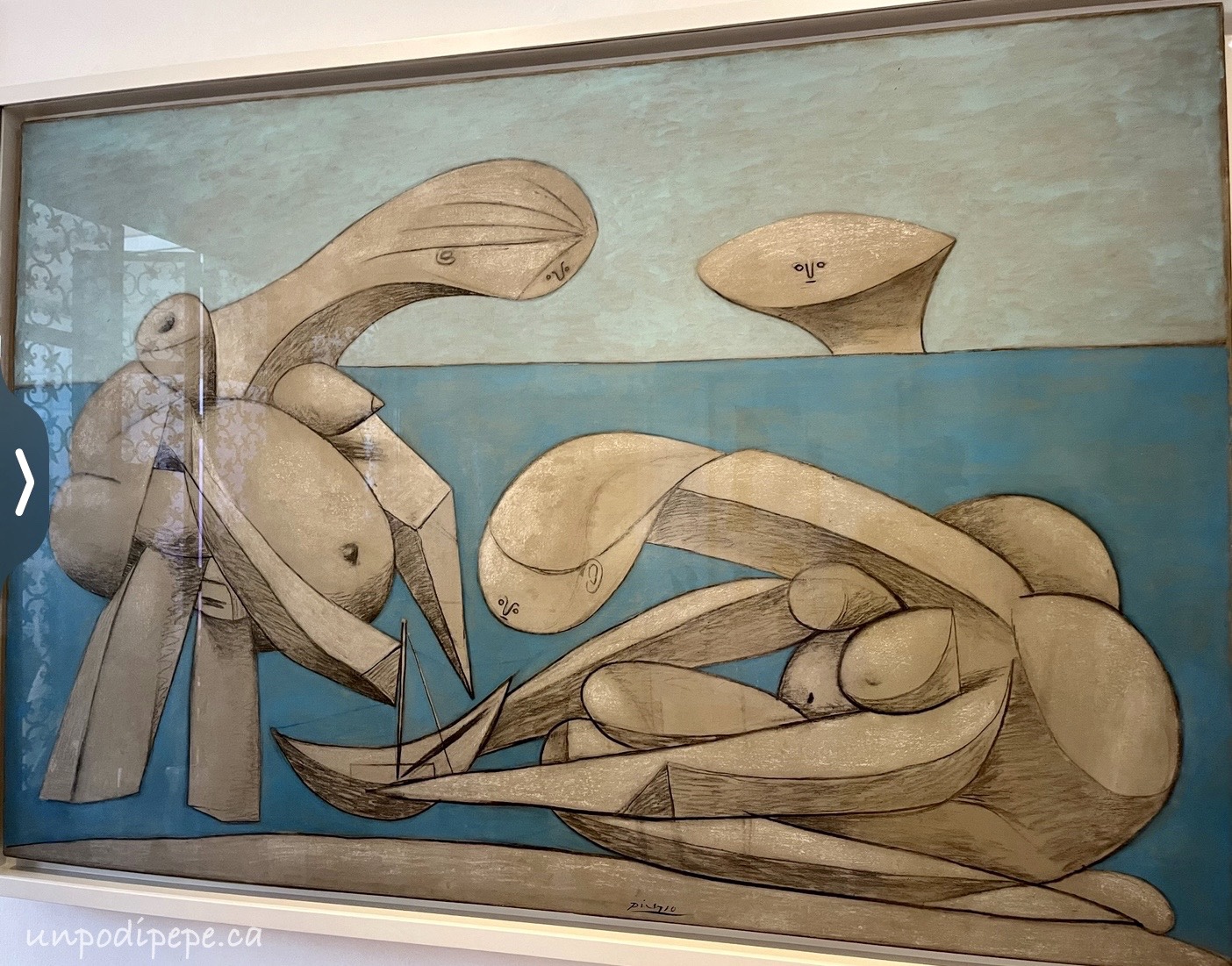
Peggy Guggenheim Collection On the Beach Picasso

On the Beach. Pablo Picasso 1937

From 1939-40, with the motto ‘buy a picture a day’, she started buying art in Paris and London like a madwoman. She purchased Cubist and Surrealist works of art when they were not yet popular or held in high regard. Purchases included masterpieces by Brancusi, Braque, Dali, Ernst, Picasso, Mondrian and others.  The Germans approached Paris just as Peggy was preparing to open a museum for her collection. In 1941 Peggy fled Nazi occupied France for New York with her ex-husband, their children and her future husband, Surrealist Max Ernst.

The Collection followed them to New York.  The Louvre was asked to shelter Peggy’s collection from the war, but the request was denied.  The now priceless artwork was crated up with ‘household goods’ written on the customs declaration, and a non-Jewish name replacing Guggenheim, then shipped across the Atlantic. Miraculously, everything arrived safely.  Peggy’s actions protected the collection, and also supported artists who were in exile and among those branded ‘degenerates’ by Hitler.

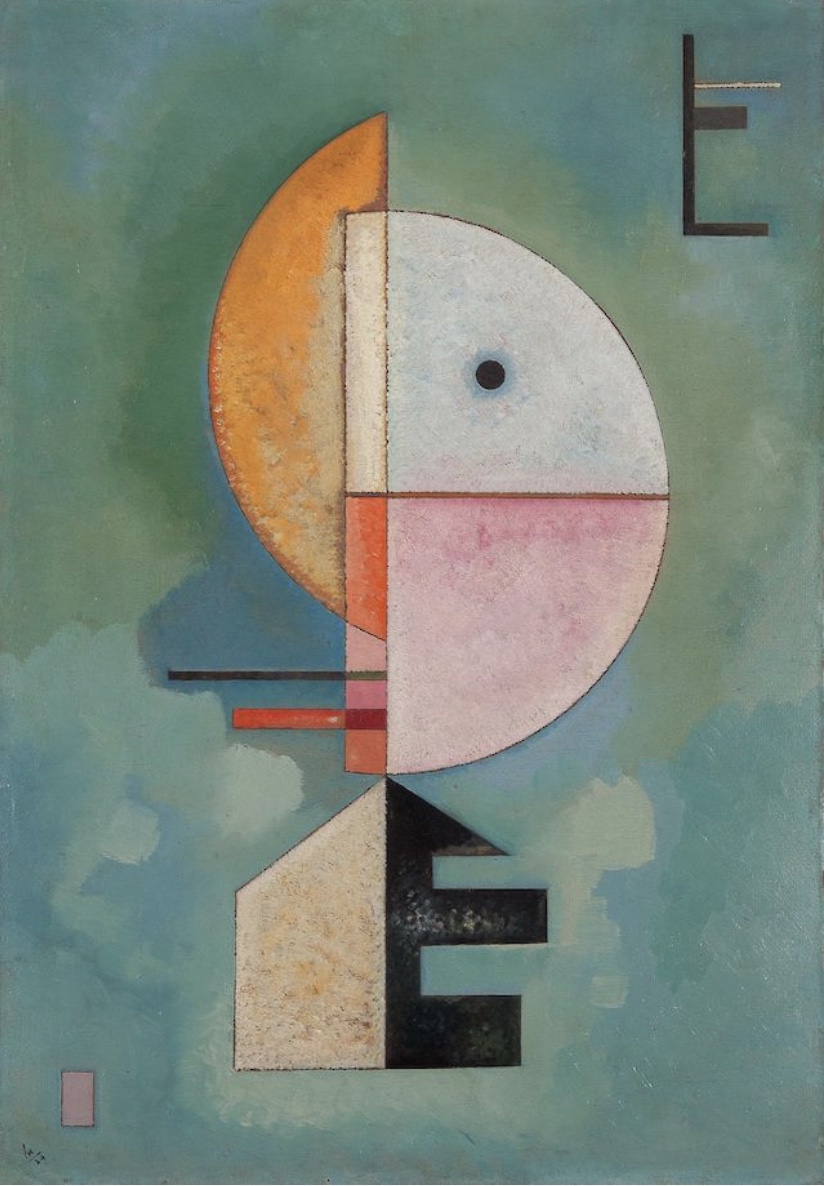
Upward 1929 Vasily Kandinsky Peggy Guggenheim Collection Venice

Upward. Vasily Kandinsky 1929

‘Art of this Century’ was the Manhattan gallery Peggy opened in 1942 to exhibit her growing collection of Cubist, Abstract and Surrealist art.  She also exhibited the work of a new generation of young American artists including Robert Mapplethorpe, Jackson Pollock, Mark Rothko and Robert De Niro Sr. In 1943 the exhibit ’31 Women’ was the first documented all female exhibit in the US

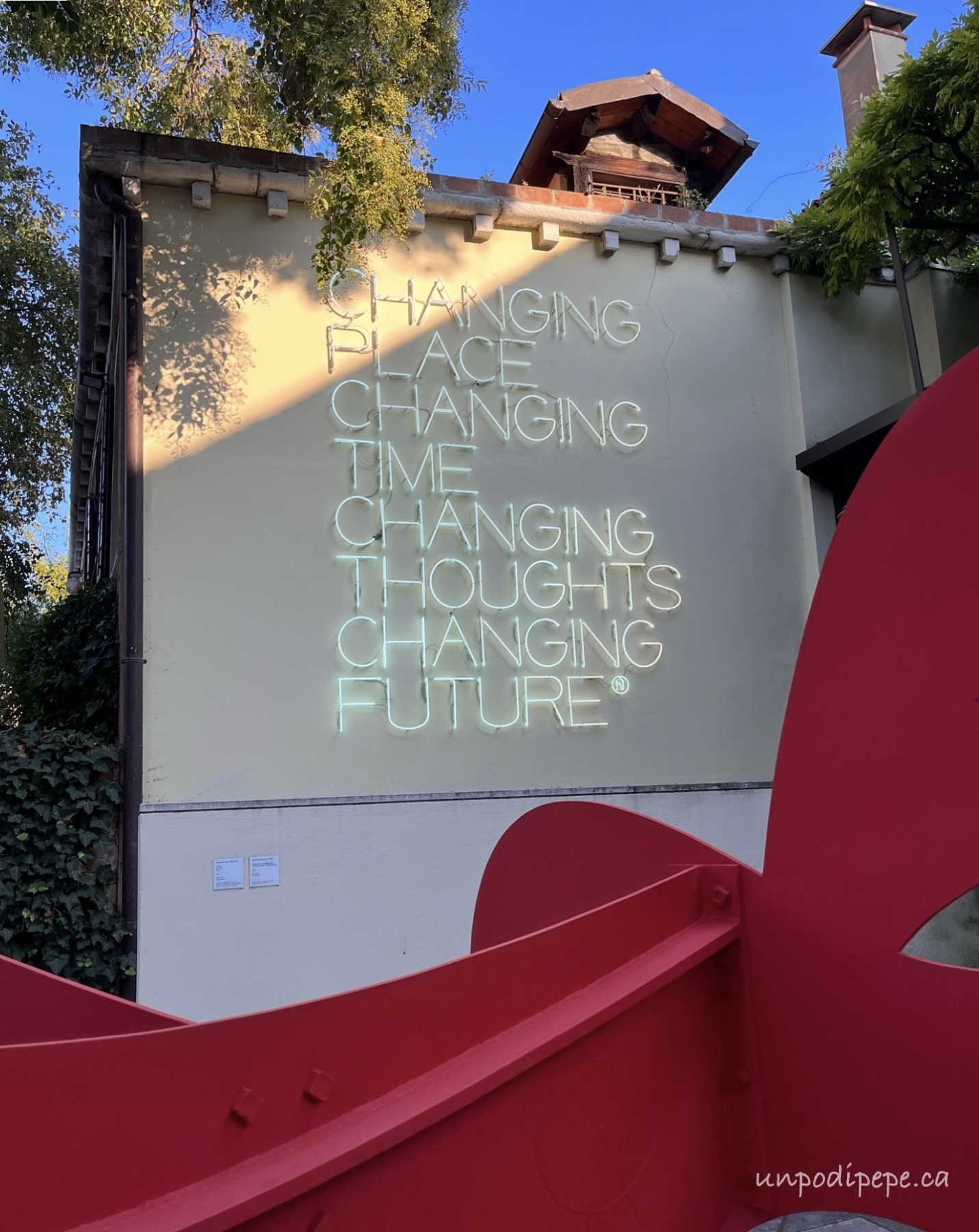
Peggy closed the gallery in 1947 and decided Venezia would be her permanent home.  She was invited to exhibit her collection at the 1948 Biennale di Venezia. The Palazzo Venier dei Leoni was purchased in 1949, and Peggy lived there for 30 years.  Her art collection moved in with her, and the beautiful setting is as much a work of art as the works inside.

Marino Marini L'angelo della città Peggy Guggenheim museum Venezia

L’angelo della Città. Marino Marini Bronze 1948

The Venier family was one of the noblest Venetian families. In 1749 they ran out of money and had family issues which prevented completion of the palazzo.  Only the 1st of 5 planned stories was completed. Lion heads decorating the façade at water level give the palazzo its name. Made of Istrian stone, it is often mistaken for a modern building because of its low, wide façade.  In the late 19th century, the abandoned construction site and garden were purchased by the Levi family and began to take on their present look.  There were various other owners and renters until 1949.Venezia Peggy Guggenheim Collection Facade

From 1951 until her death in 1979, Peggy opened her home and collection to the public for free 3 afternoons a week from March to November. The Peggy Guggenheim Collection opened in 1980, managed by the Guggenheim Foundation as stipulated in her will. In 2017, Peggy’s granddaughter Karole Vail was appointed Director of the Collection.Peggy Guggenheim Collection garden sculpture Venice

The Collection has 400,000 visitors per year and includes 326 paintings and sculptures.  These include masterpieces of Cubism, Surrealism and Abstract expressionism as well as the works of prominent Italian Futurists and American modernists.  Artists represented include Giorgio de Chirico, Gino Severini, Georges Braque, Marcel Duchamp, Joan Miró, Salvador Dali, Pablo Picasso, Constantin Brancusi, Alberto Giacometti, Arshile Gorky, Vasily Kandinsky, Paul Klee, Rene Magritte, Piet Mondrian, Max Ernst, Marino Marini, Jackson Pollock and others.  It is a 20th Century art history textbook come to life.Entrance, Peggy Guggenheim Collection Venice

Peggy Guggenheim Collection is located in the Dorsoduro area, across the Grand Canal from Piazza San Marco.  It is between the Basilica di Santa Maria della Salute and Ponte dell’Accademia.  To get there take a ‘group gondola’ across to Santa Maria della Salute for €2 then head right or cross the Ponte Rialto and head left.  Admission is €16 for adults. Hours 10-18 Closed Tuesdays and December 25th.

Ciao, Cristina

Share this:

  • Click to share on Facebook (Opens in new window) Facebook
  • Click to share on Pinterest (Opens in new window) Pinterest
  • Click to share on X (Opens in new window) X
  • Click to email a link to a friend (Opens in new window) Email
  • Click to share on WhatsApp (Opens in new window) WhatsApp
Like Loading...

Post Pandemic Travel Postcard

20 Sunday Nov 2022

Posted by Un po' di pepe in Puglia, Travel

≈ 21 Comments

Tags

AICW, COVID19 pandemic, Måneskin, Paris, Polpo, Post-pandemic travel, Torino, Venezia

Like most travel postcards, this one is arriving after the vacation is over. Things have been quiet on the blog, with only 3 posts published since May.  Perché? Partly creative block, but also because I tried to make up for almost 3 years of no travel all at once. I did quite the epic job of it too!  If you follow me on Instagram or Facebook, you already have an idea what I have been up to. Here is the short version of my adventures.  More info to follow in future posts.

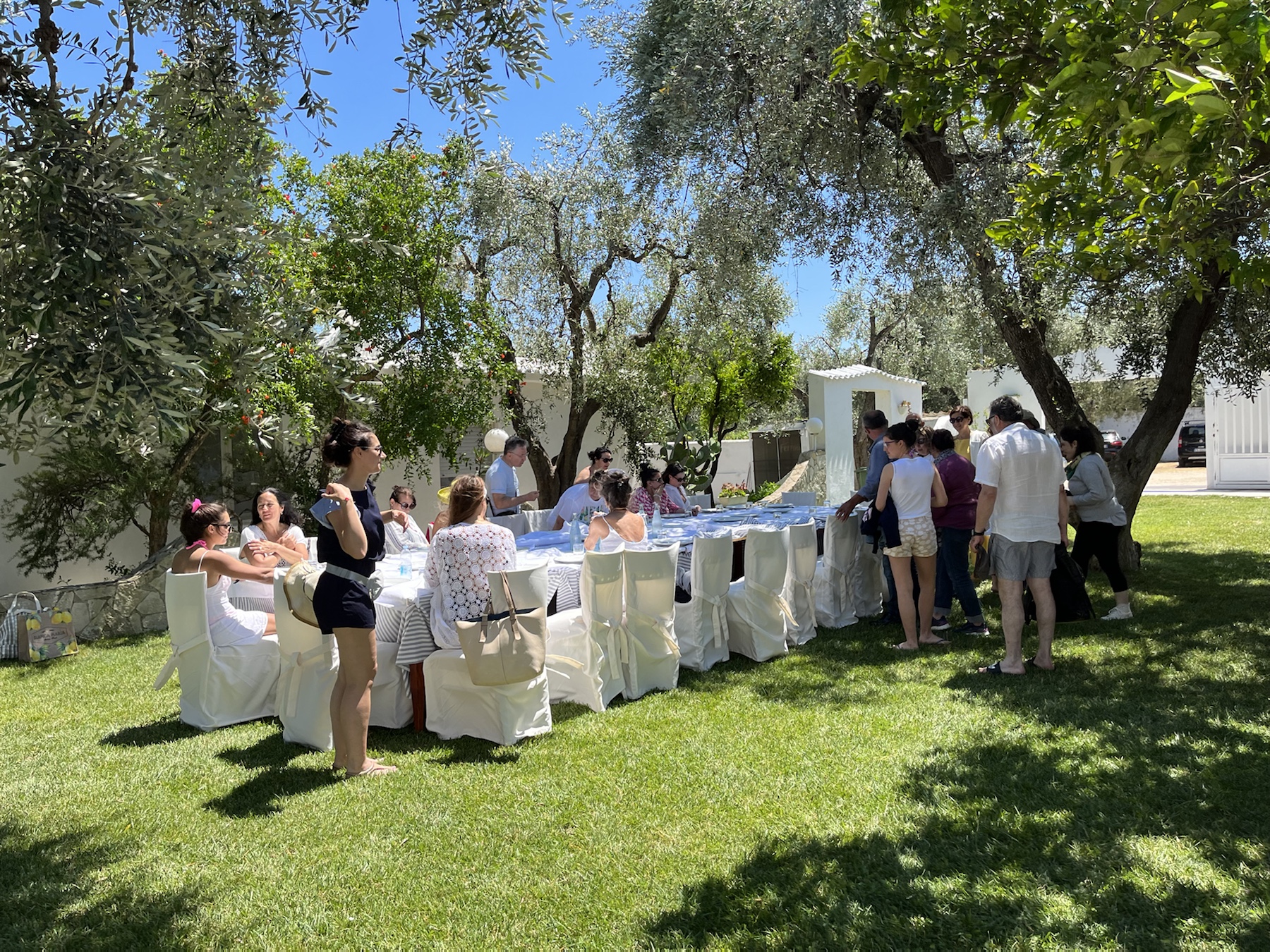
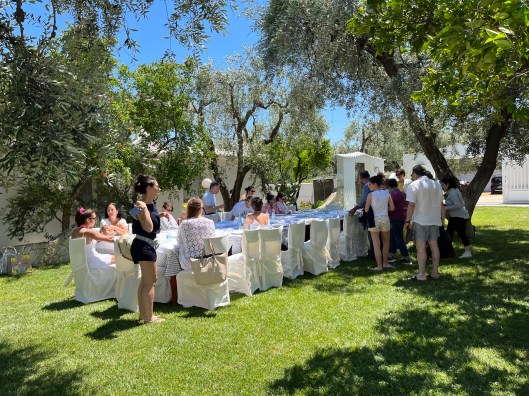
In June, my parents, sister, nipotine* and I attended a family wedding in Manfredonia.  Read all about it in Un Matrimonio in Puglia. The rest of the weekend was full of post-wedding activities, including a long table meal under olive trees by the beach in Mattinata.  We also spent a day in Polignano a Mare.
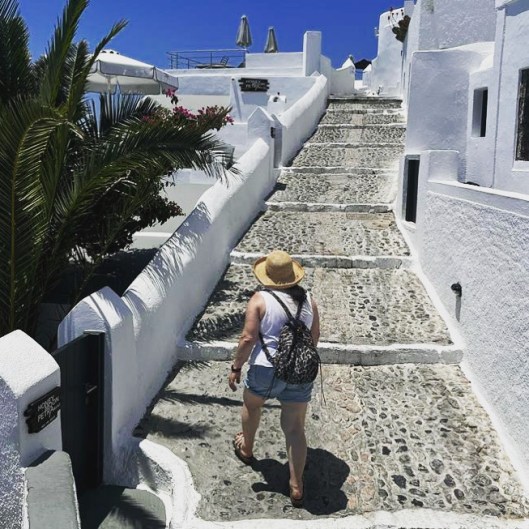
I took an unexpected ‘extra’ trip to Santorini to keep my nipotina Francesca company for a few days before she met her cousins.  Who knew you could fly direct to Santorini from Napoli for €70? I had been to Santorini in 1990 and it is still just as breathtaking but more crowded and expensive.  Bring lots of $ if you go!
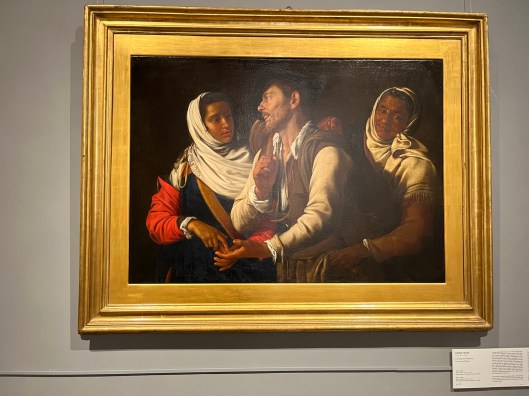
On my way back to Puglia, I stayed in Napoli, since it is one of my favourite places.  Finalmente, I was able to see L’Ultimo Caravaggio in person!!! Also more sfogliatelle.

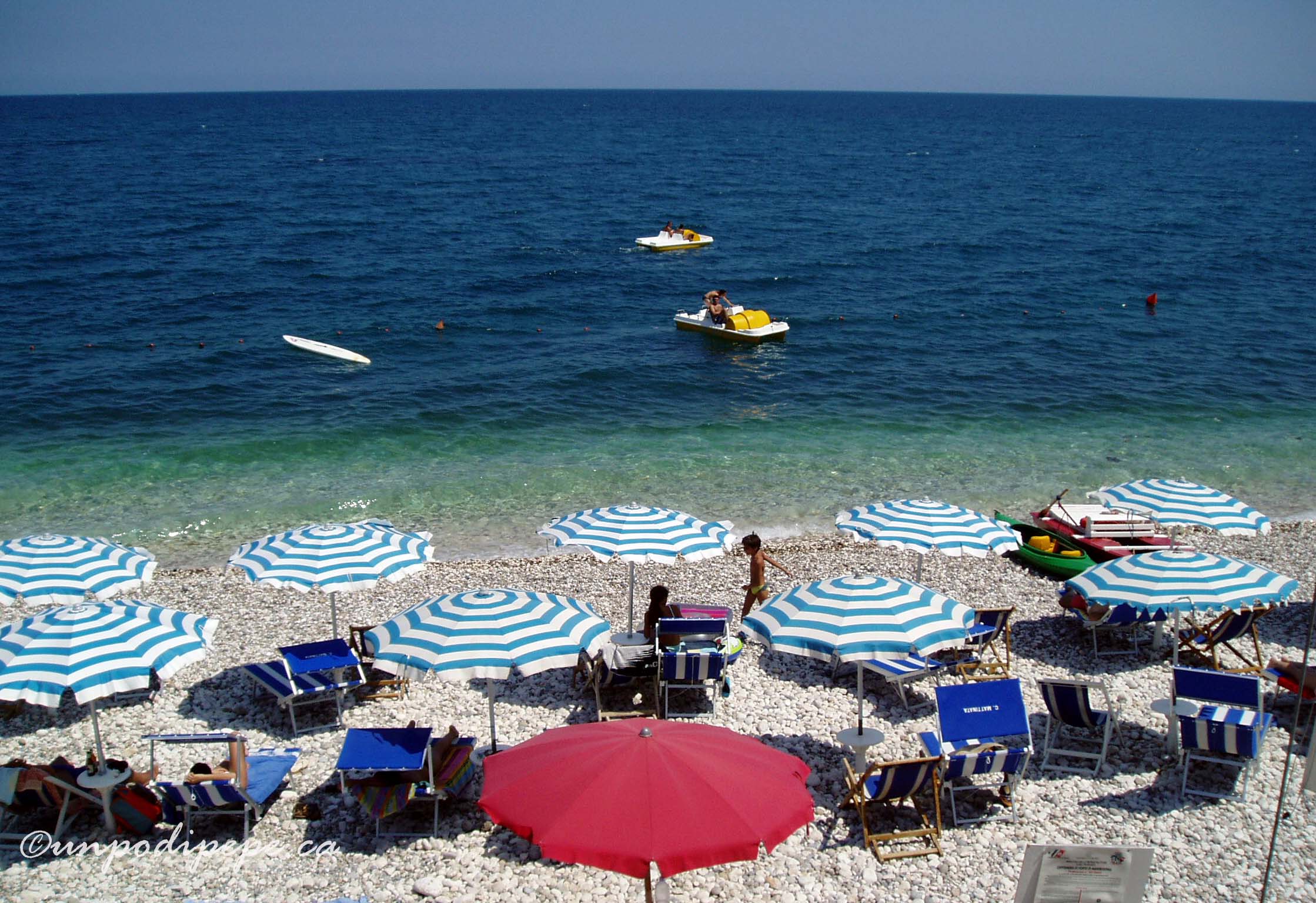
The rest of my time was spent in Orsara di Puglia trying to stay cool.  It was HOT!  The mornings and evenings were amazing.  My weekend camping on the beach in Mattinata was spent almost entirely in the water.
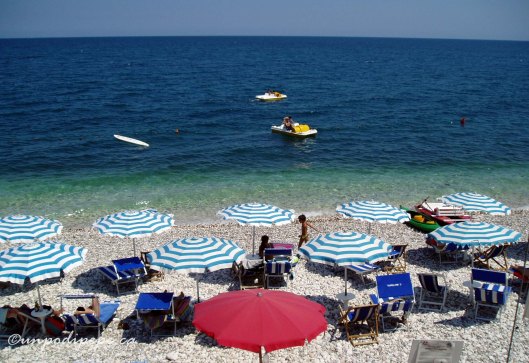
I had pizza one night in the smallest town in Puglia, Celle San Vito, population about 200.  Papà says that is only if you include the cats and dogs, but he was joking…I think.  The pizza was yummy! Apparently there are more than 200 people from Celle who immigrated to Brantford, Ontario.

Between Puglia and Greece, I ate a lot of polpo.  Many photos were posted, and this one of Mamma washing polpo in the sink was popular on Instagram. Stay tuned for a recipe post polpo e patate.washing octopus

My last few days were spent in Roma, where I had to follow my own advice to Beat the heat-Surviving summer in Roma.  My mission was to finish crossing all of the Caravaggio paintings in Roma off my list.  I have now seen them all-except for the ceiling fresco that is in a private home.
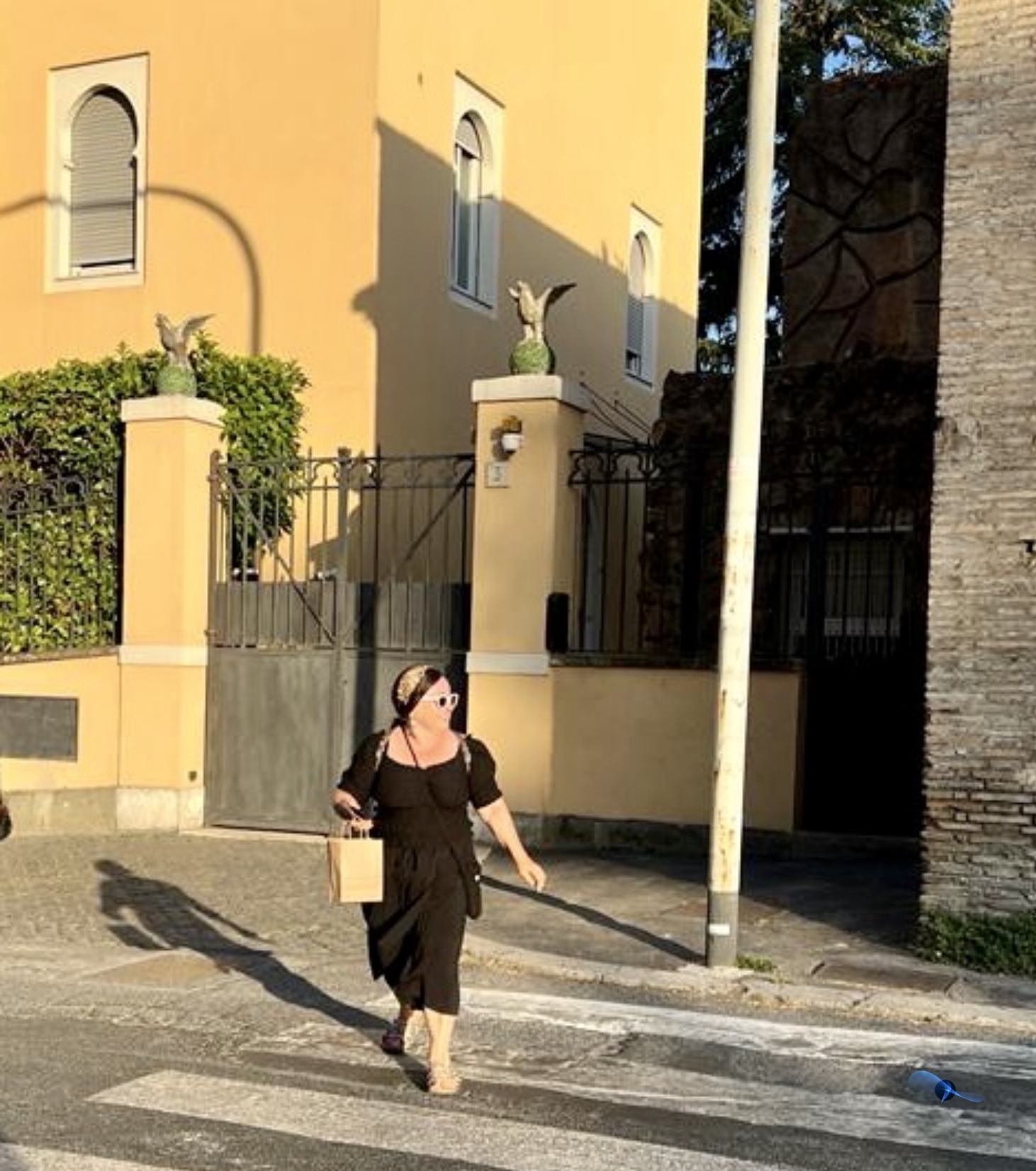
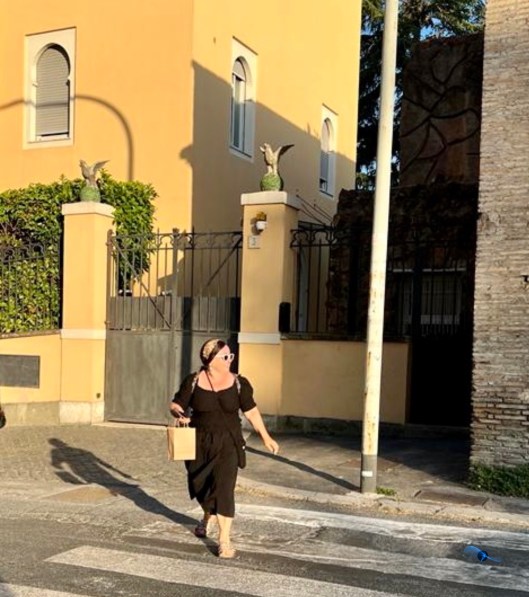
I spent a day with friend and fellow AICW member David, who works at Santa Maria Maggiore for the summer, and I ate at a few Roman restaurants I had wanted to try.  ‘Research’ was required for the post I am editing on Pasta Romana. My amica Shannon from the post Val d’Orcia day trip and I overlapped for 1 day in Roma.  She photographed me crossing the street in style on the Gianicolo, and we made plans to meet in San Francisco in November.
At the end of July, I flew back to Vancouver to work and take care of my garden.  I even managed to publish a post In my kitchen in Puglia.

The Association of Italian Canadian Writers- AICW conference in Torino was postponed 3 times due to the pandemic, and was happening the last week of September. My cousin lives in Nice, and she informed me that the high speed TGV train travels from Paris to Torino in 5½ hours. She knew I had never been to Paris, and suggested we meet there before the conference.  A brilliant idea-the travel planning gene definitely runs in our famiglia!

September 22 I flew to Paris and spent 4 amazing days with Elia.  I will save the details for another post.  The TGV was comfy and the scenery through the Alps beautiful.

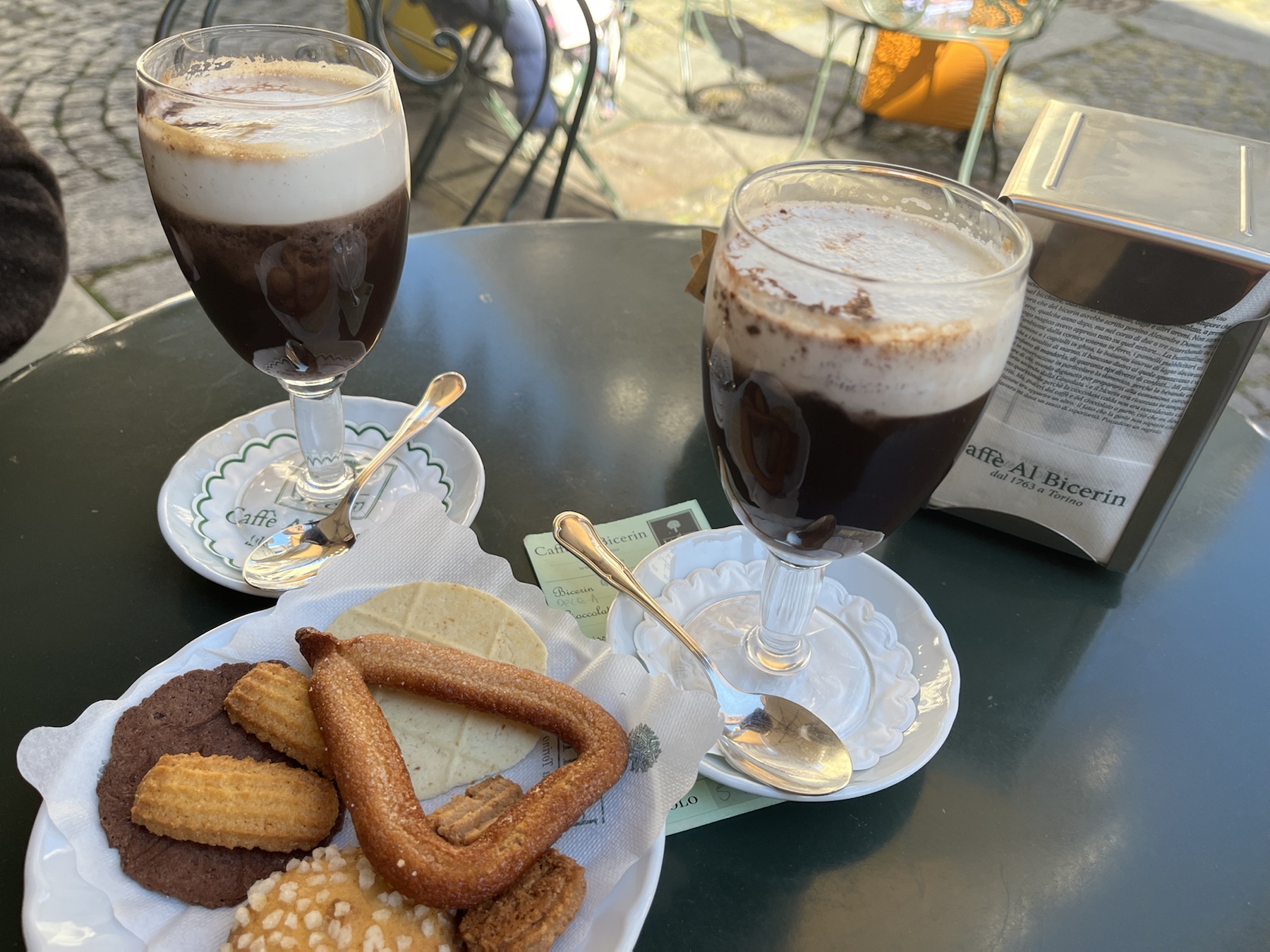
I arrived in Torino the day before the conference started, and met Lucia from Turinepi for a morning walking tour and Bicerin.  The afternoon was spent at il Museo Egizio– the largest collection of Egyptology outside of Cairo.  Torino was a pleasant surprise.  It is walkable, has grand architecture and hardly any tourists in early October! Autumn is a perfect time to visit Piemonte, especially for the seasonal food….zucca, porcini, castagne, salsiccia, with tajarin and agnelotti del plin.
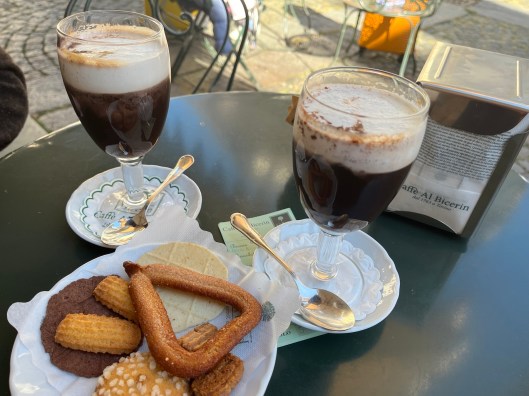
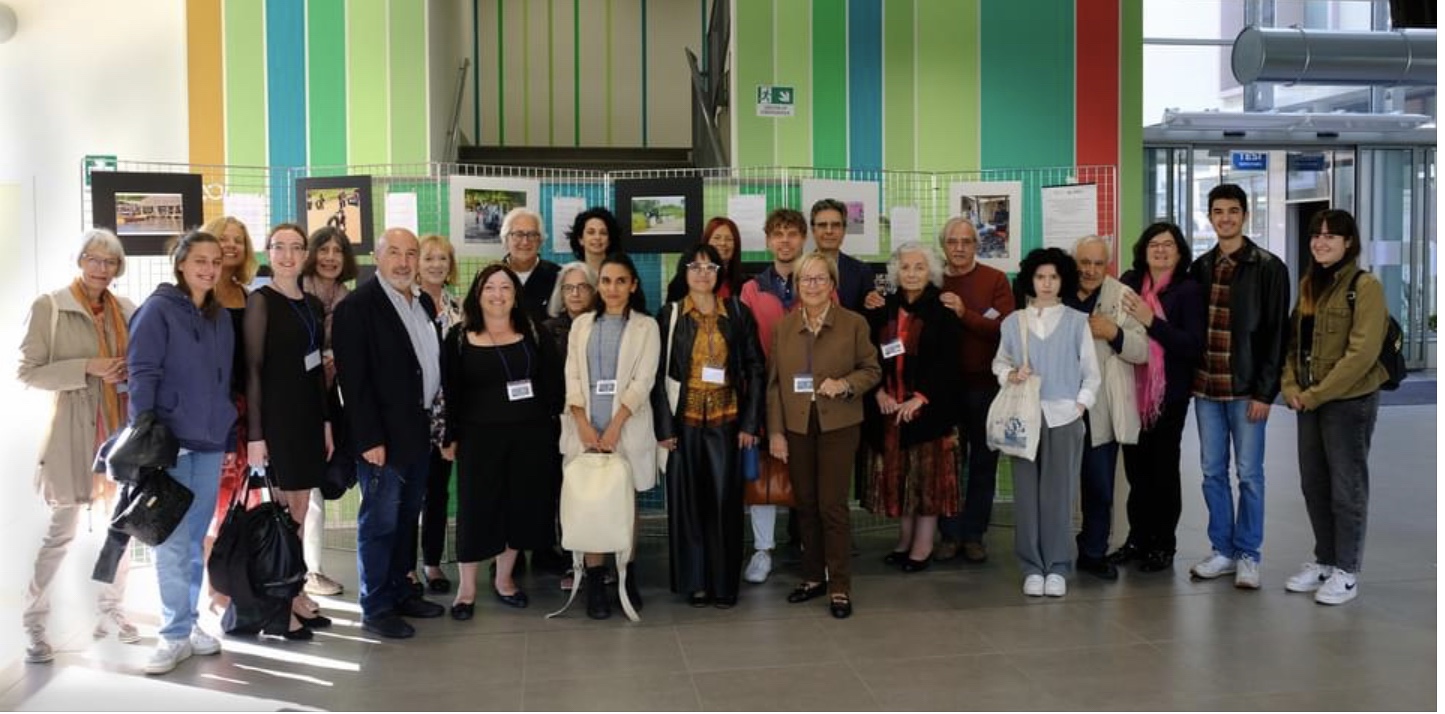
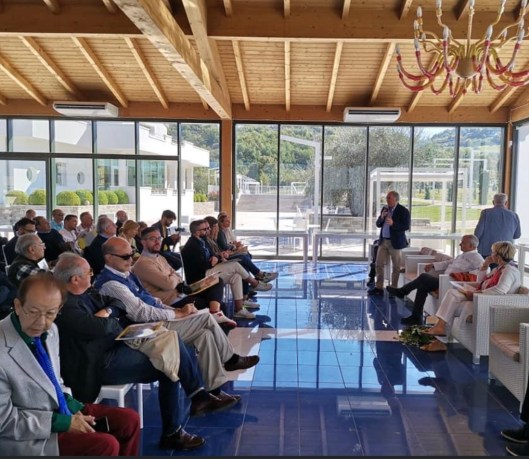
The conference was at l’Università di Torino and featured 4 days of inspirational presentations.  Mine was called ‘A Nzalat d’Purtuall‘, inspired by this blog post. I made lots of new Italocanadesi friends and also Italiani who study Italian Canadian literature—yes, that is a thing!

Following the conference, the plan was to go to Venezia for 3 days.  I have been many times, but the last time was 24 years ago!  I wanted to stay right in Venezia, as I previously stayed in Mestre or went as a day trip.  Things do not always go as planned.  For reasons I won’t elaborate on, I left booking my accommodation too late, and could not find a reasonably priced place to stay-even in Mestre.

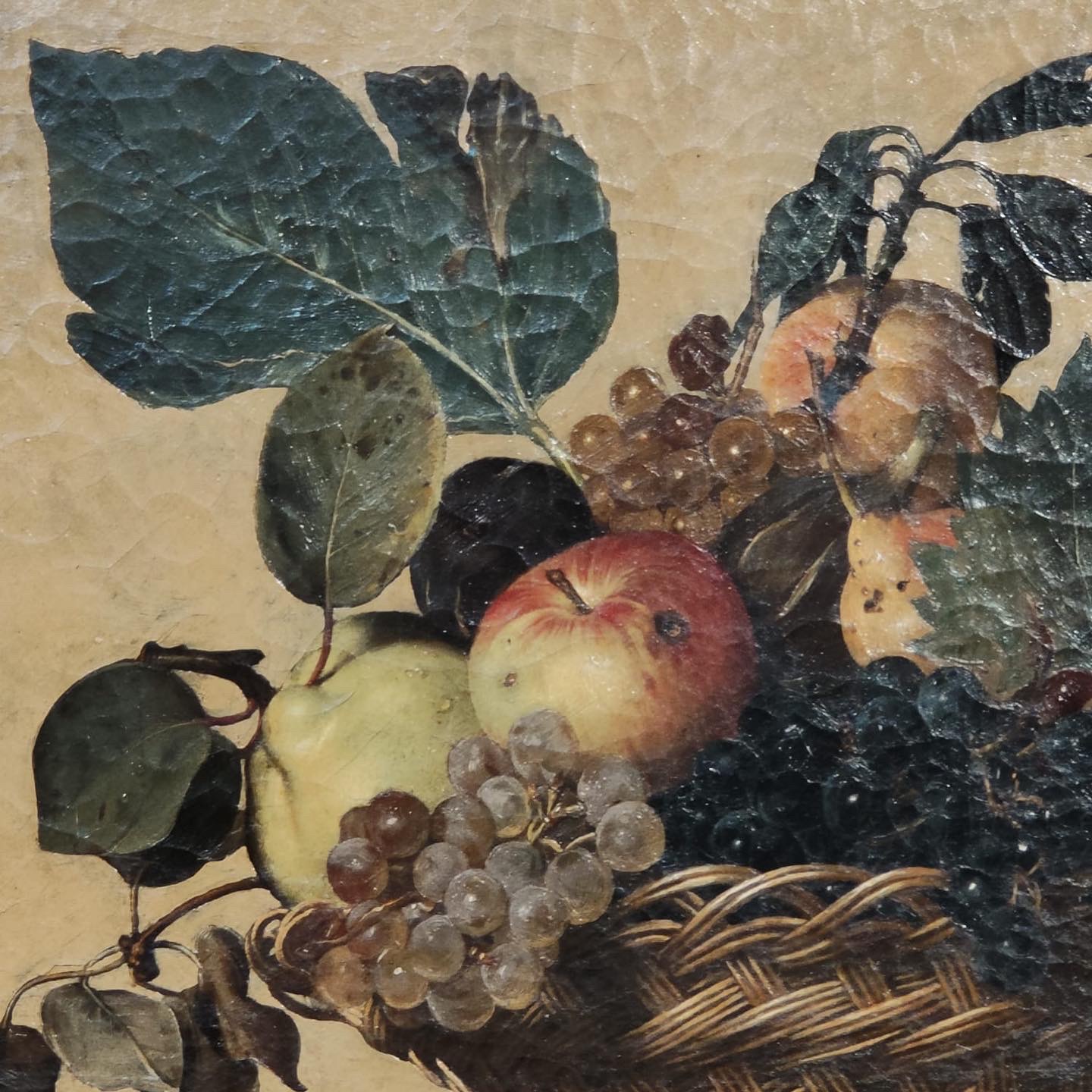
So… I took the train to Milano while I figured out what to do.  I stayed with the new sposini from Un Matrimonio in Puglia and also visited other cugini.  3 cuginetti came with me to the Pinacoteca Ambrosiana to see Caravaggio’s Canestra di Frutta and they may have been even more awestruck than me!

I did manage to find a last minute deal on accommodation in Venezia.  It was even half price!!! I spent 3 days/2 nights in Venezia the first week of October, and no one got the memo that it was not summer!  The crowds were crazy, but the weather was gorgeous. Everything required online reservations and lineups so I mostly just walked and walked.  I finally made it to the Peggy Guggenheim Museum and spent a day on Burano and Torcello.

Venezia was not only crowded, but definitely more expensive than the rest of Italia.  it reminded me of Santorini.  Gorgeous, but expensive.  I can only imagine what it was like in the summer.  I spoke to several Italian business owners and they are not sure if this year was a post pandemic exception or if it will be the new normal. Next year will tell.

The next train journey was Venezia to Foggia (6 hours).  I spent 2 weeks at home in Orsara di Puglia going for walks, meeting friends for caffè, eating good food and just hanging out like a local.  The weather was mostly really nice, but I did have to sleep with 3 blankets, as nights were cold and there is no heat in our little casa.
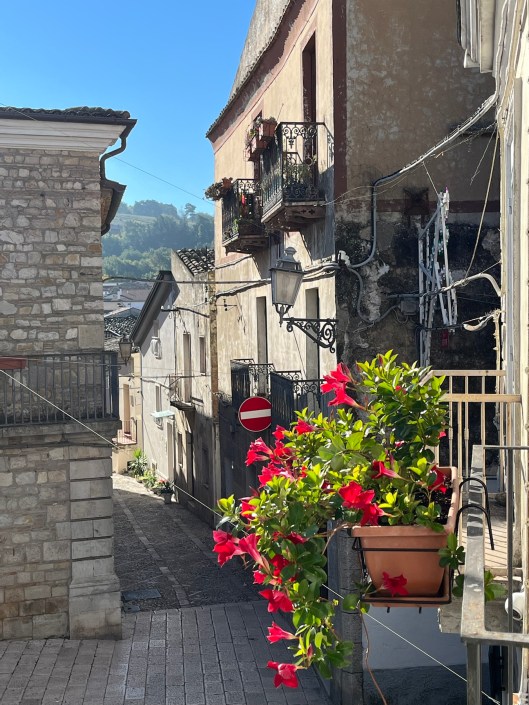
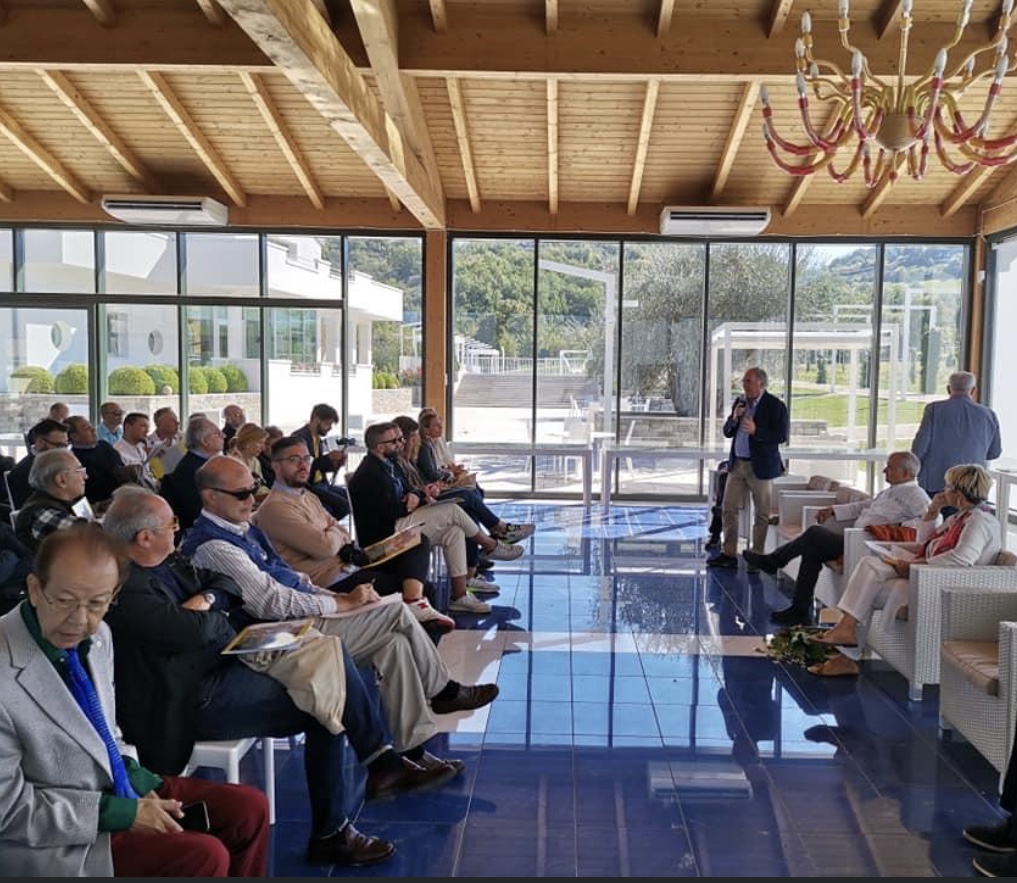
October 17th I attended ‘Appuntamento con la Daunia‘ an annual event hosted by amico Peppe Zullo.  Every year I receive an invite but am not usually in Italia in October.   It is a Slow Food/Farm to Table type of event featuring speakers, tours and local food.  It was attended by food and wine journalists, chefs, RAI, and other enogastronomic types.  Read more about it in my next post.
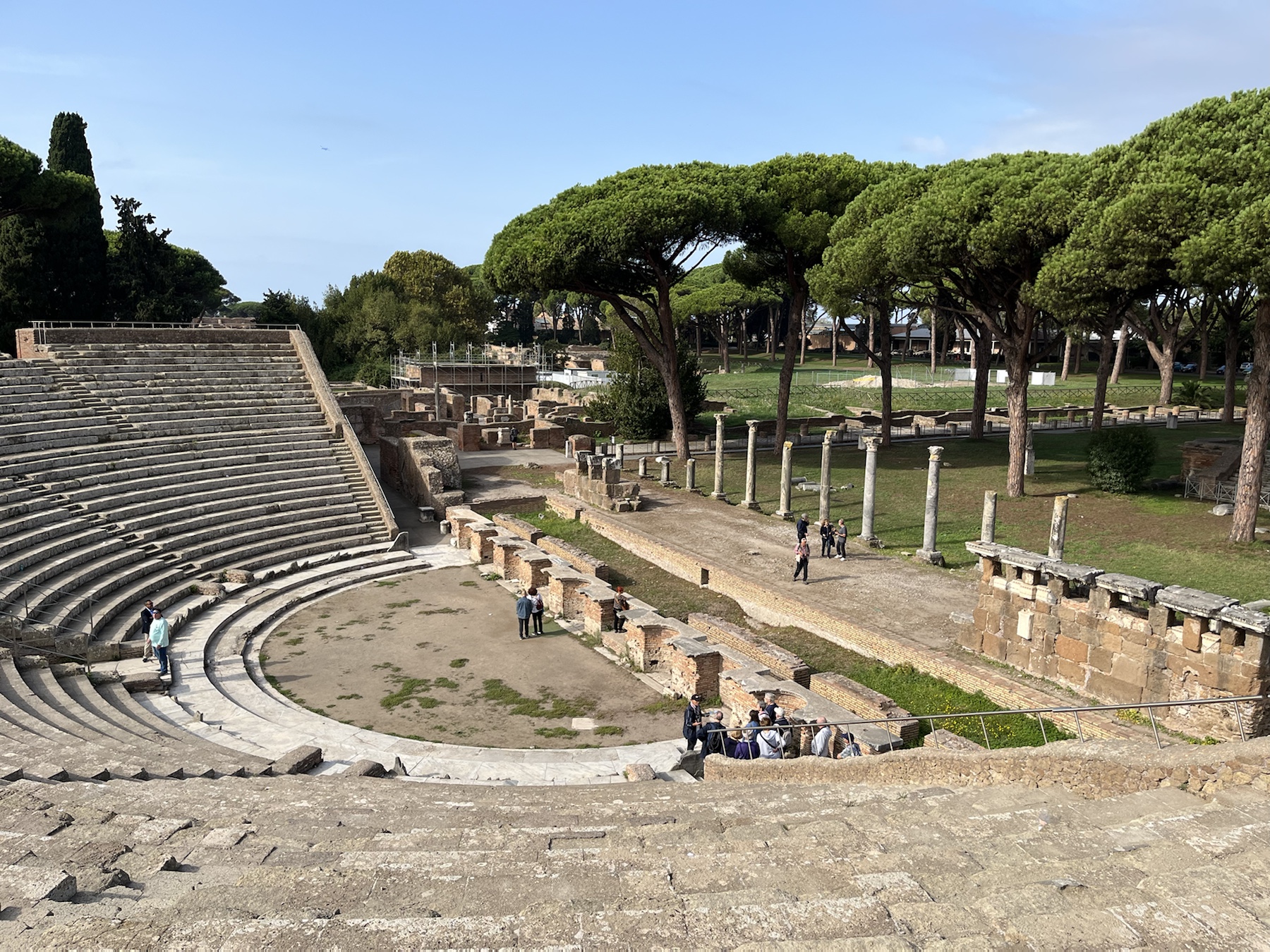
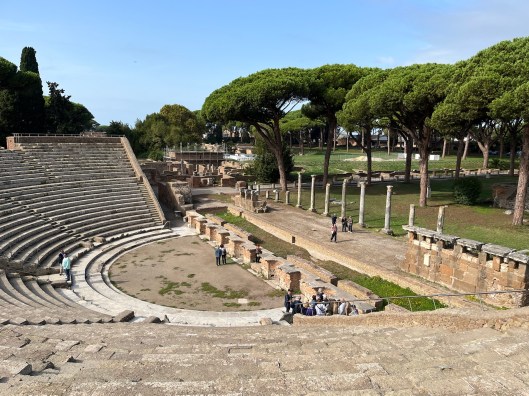
The final train journey was to Roma where I mostly visited with friends. 2 places I had not been to since age 11 were revisited-Ostia Antica and the Musei Vaticani.I also had aperitivo with the Italian Senate representative for Italiani all’Estero, On. Francesca La Marca.  We met earlier this year at a function in Vancouver.
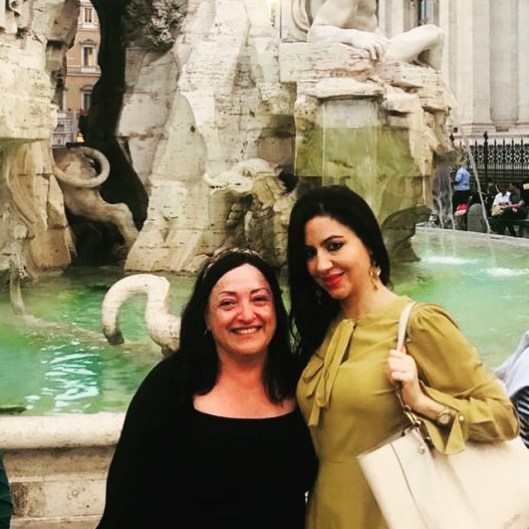
10 days after flying home from Roma, I went to San Francisco.  Shannon and I met there to see Måneskin live at The Masonic.  Read about them here. It was amazing and we felt like teenagers.  Listening to a North American audience singing along to all of the Italian lyrics was so cool.  We were glad to have attended this concert, since we doubt the band will be playing 4,000 seat venues any longer now that they are selling out stadiums!

This brings me to the end of my post-covid travelpalooza.  If anyone is still worried about travelling, I did not have any issues at all. I do not have any travel plans right now, but I am sure something will come up! Got any plans?  Let me know in the comments!  Buon Viaggio, Cristina
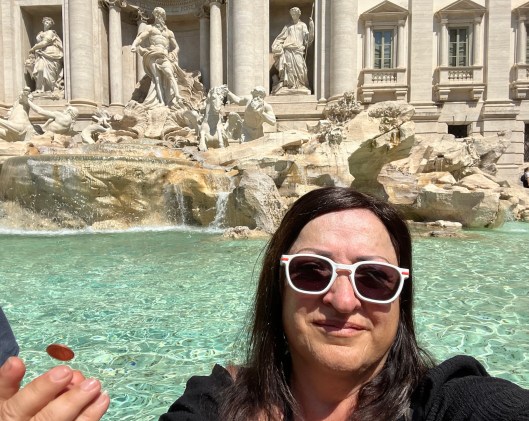
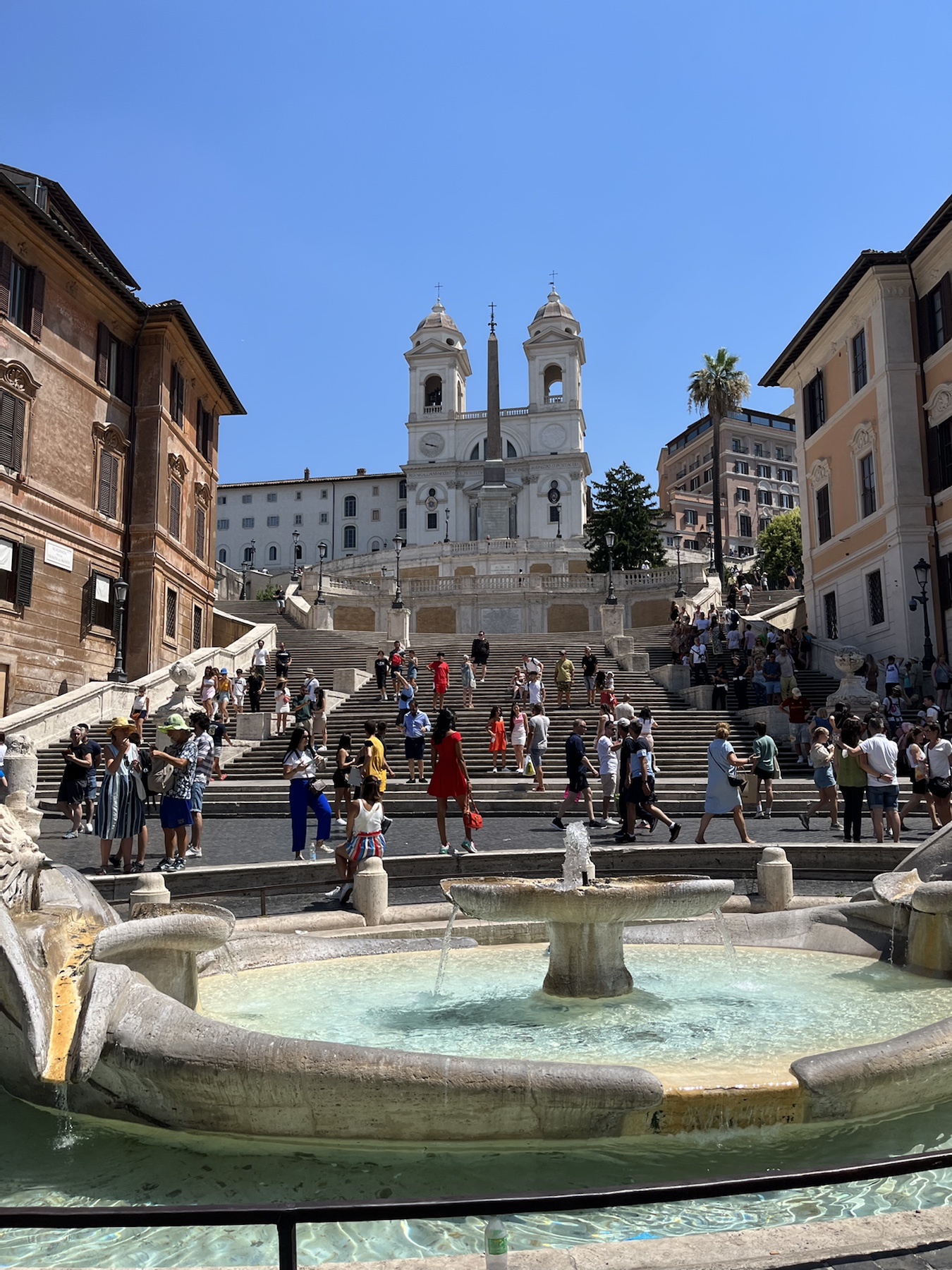
PS My nipotina* Isabella gave me selfie taking lessons, so I practiced during all my travels. At the Fontana di Trevi I impressed myself, managing to capture the coin toss mid air and not cut my head off, while avoiding the 500 other people trying to do the same!

*nipotine can mean nieces or granddaughters.  In this case it is nieces!

AICW Photo by Vincenzo Pietrapaolo

Me crossing the street in style-photo by Shannon Milar
Share this:

  • Click to share on Facebook (Opens in new window) Facebook
  • Click to share on Pinterest (Opens in new window) Pinterest
  • Click to share on X (Opens in new window) X
  • Click to email a link to a friend (Opens in new window) Email
  • Click to share on WhatsApp (Opens in new window) WhatsApp
Like Loading...

MOSE

09 Friday Oct 2020

Posted by Un po' di pepe in Italia

≈ 20 Comments

Tags

Acqua alta, Flood barriers, MOSE, Venezia

MOSE flood barrier Venezia

2020 has been a crappy year, but finally something has gone right.  On October 3rd, MOSE (moh•ZEH) was activated for the first time and prevented flooding in Venezia caused by high tide! Yeah!

MOSE stands for MOdulo Sperimentale Elettromeccanico (experimental electromechanical model). Whoever came up with the acronym is brilliant, because in Italian, Mosè, with an accent on the ‘e’, is Moses, who parted the Red Sea.

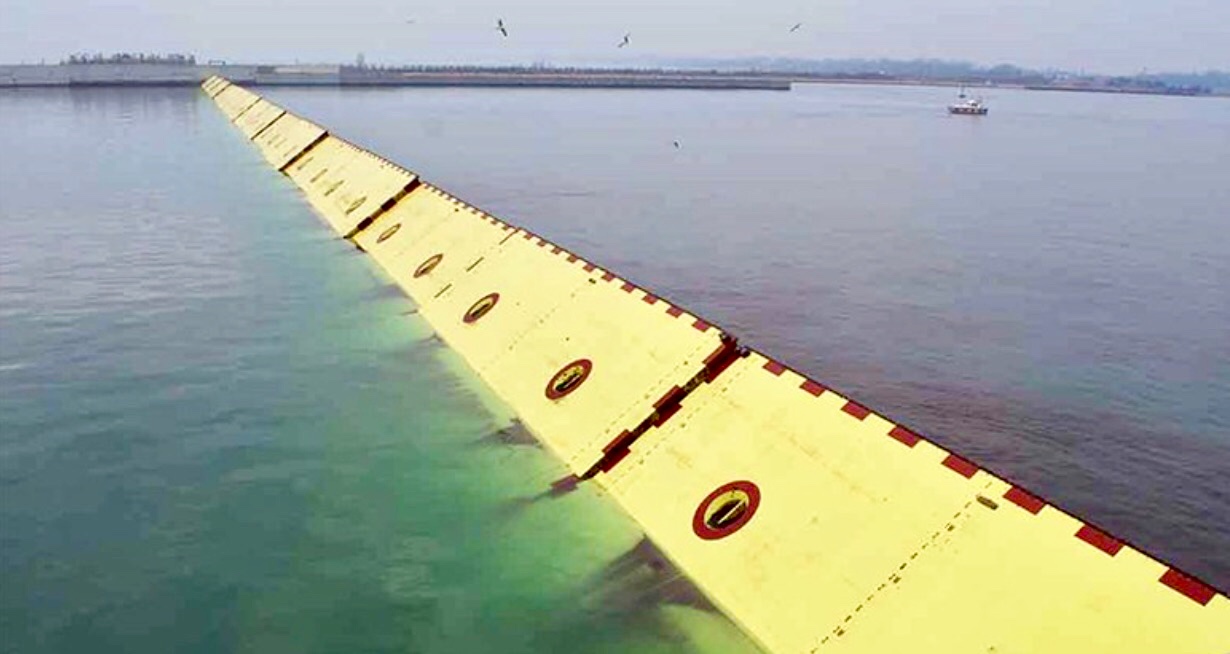
MOSE is floating architecture-a series of temporary barriers formed by 78 bright yellow mobile gates at the bottom of the seabed.  The 4 barriers are located at the 3 inlets; 2 at the Lido, 1 at Malamocco and 1 at Chioggia.

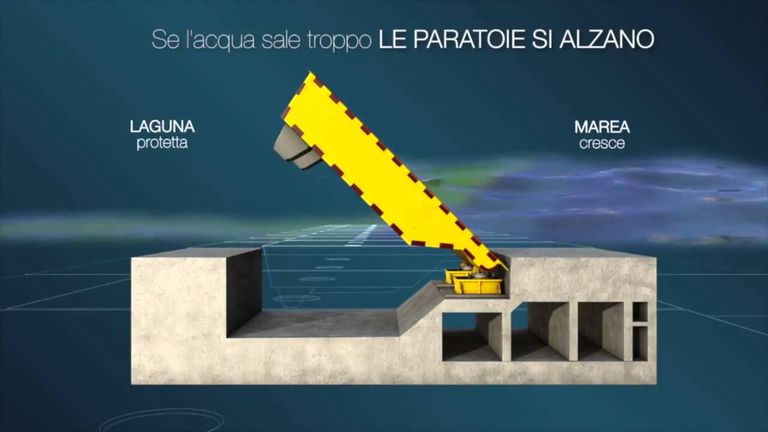
How MOSE works to keep high tide water in the Adriatic Sea and out of the Venetian lagoon. mosevenezia.eu/project/?lang=eng

During normal conditions, the gates are full of water and resting out of view within their housing structures. When a high tide is predicted, compressed air is introduced into the gates to empty them of water. This causes them to rotate around the hinge axis and rise up above the water to block the tide from entering the lagoon. When the tide has dropped, the gates are filled with water and return to their resting places.

It takes about 30 minutes to raise the gates and 15 to lower them. MOSE is designed to protect Venezia from tides of up to 3meters (10 ft). A video on how the system works can be found on the Mosevenezia website.

Acqua alta (high water) occurs mostly from October to March and has always been a problem in the Venetian lagoon. The first documentation of it was on October 17, 589! It has gotten worse since 1935, mostly due to environmental issues. Last year, on November 12, 2019 187 cm of water was the worst flooding since 194cm in 1966.

MOSE has been plagued with delays and cost overruns. Hopefully now that it works, it will stop the worst of the flooding. Measures are also being implemented to improve the lagoon environment, decrease erosion, restore the environment of the smaller islands in the lagoon and decrease pollution in the industrial Porto Marghera. Hopefully they ban cruise ships soon too!

MOSE flood barrier Venezia

Fingers crossed MOSE will continue to work. It has been 26 years since I visited Venezia, and I would like it to still be standing when I manage to get back! Ciao, Cristina

Share this:

  • Click to share on Facebook (Opens in new window) Facebook
  • Click to share on Pinterest (Opens in new window) Pinterest
  • Click to share on X (Opens in new window) X
  • Click to email a link to a friend (Opens in new window) Email
  • Click to share on WhatsApp (Opens in new window) WhatsApp
Like Loading...

Enter your email address to follow 'un po' di pepe' and receive notifications of new posts by email.

Join 511 other subscribers
Follow Un po' di pepe on WordPress.com

Popular Posts

  • Hairstyling in Ancient Roma
    Hairstyling in Ancient Roma
  • Panforte di Siena
    Panforte di Siena
  • Espresso Cookies
    Espresso Cookies
  • Il Pumo Pugliese
    Il Pumo Pugliese
  • Panettone Fatto in Casa
    Panettone Fatto in Casa
  • Dolci di Natale
    Dolci di Natale
  • San Nicola
    San Nicola

Recent Posts

  • Castel del Monte
  • ‘The Nuances of Love’
  • Hostaria Antica Roma~Eat like an Ancient Roman
  • Santa Maria in Aracoeli
  • Casino dell’Aurora~Villa Boncompagni Ludovisi
  • Nasoni di Roma
  • Bloghiversario #11
  • Fontana di Trevi
  • Acqua Vergine
  • Giubileo 2025
  • Sanremo 2025
  • In Vino there are Memories
  • A Literary Harvest
  • 2024~Un po’ di pepe Year in Review
  • Buon Natale 2024
  • Il Bicerin
  • Mercato Porta Palazzo
  • Torino
  • Catanzaro, Calabria
  • Il Pumo Pugliese
  • Artemisia Gentileschi
  • Cavalli di San Marco
  • Panzerotti
  • Torcello
  • 10 years of Un po’ di pepe!

Categories

Amici e Famiglia Architecture Art Art history Art projects Bilingual posts Blogging Canada Culture Feste Firenze Inspiration Italia Italian Folklore Italian language Italian life Italocanadesi Libri Mangiamo! Orsara di Puglia Parole piacevoli Photography Puglia Recipes Roma Travel Travel tips Uncategorized Vino

Archives

Un po’ di pepe on Facebook

Un po’ di pepe on Facebook

Start a Blog at WordPress.com.

  • Subscribe Subscribed
    • Un po' di pepe
    • Join 511 other subscribers
    • Already have a WordPress.com account? Log in now.
    • Un po' di pepe
    • Subscribe Subscribed
    • Sign up
    • Log in
    • Report this content
    • View site in Reader
    • Manage subscriptions
    • Collapse this bar
 

Loading Comments...
 

    %d