• Home
  • About me/Chi sono
  • Contact

Un po' di pepe

~ …… (oon∙poh∙dee∙PEH∙peh) Cristina writes about interesting stuff /Cristina scrive di cose interessanti

Un po' di pepe

Tag Archives: Baroque art

Artemisia Gentileschi

08 Monday Jul 2024

Posted by Un po' di pepe in Art, Art history, Firenze, Inspiration, Roma

≈ 7 Comments

Tags

autoritratto, Baroque art, Caravagisti, Casa Buonarroti, Orazio Gentileschi

Artemisia Gentileschi was born July 8, 1593, 431 years ago today.  One of the greatest artists of the Baroque period, she is best known for using her paintbrush to create empowered female subjects, portraying them from a female perspective, in ways male artists rarely had. Rather than sitting passively, Artemisia’s women are active participants, strong, capable and defiant.

Introduced to art and trained by her father Orazio Gentileschi, an early follower of the dramatic style of Caravaggio, Artemisia worked along with her 3 younger brothers.  She was the only one to show talent and interest, producing her own work by age 15. In 1610, at age 17, she painted her earliest surviving work ‘Susanna and the Elders’ which for years was incorrectly attributed to Orazio. Unlike other painters’ versions, her Susanna is distraught and shields herself from the oglers, as an early depiction of sexual harassment. Artemisia painted this subject 7 times.
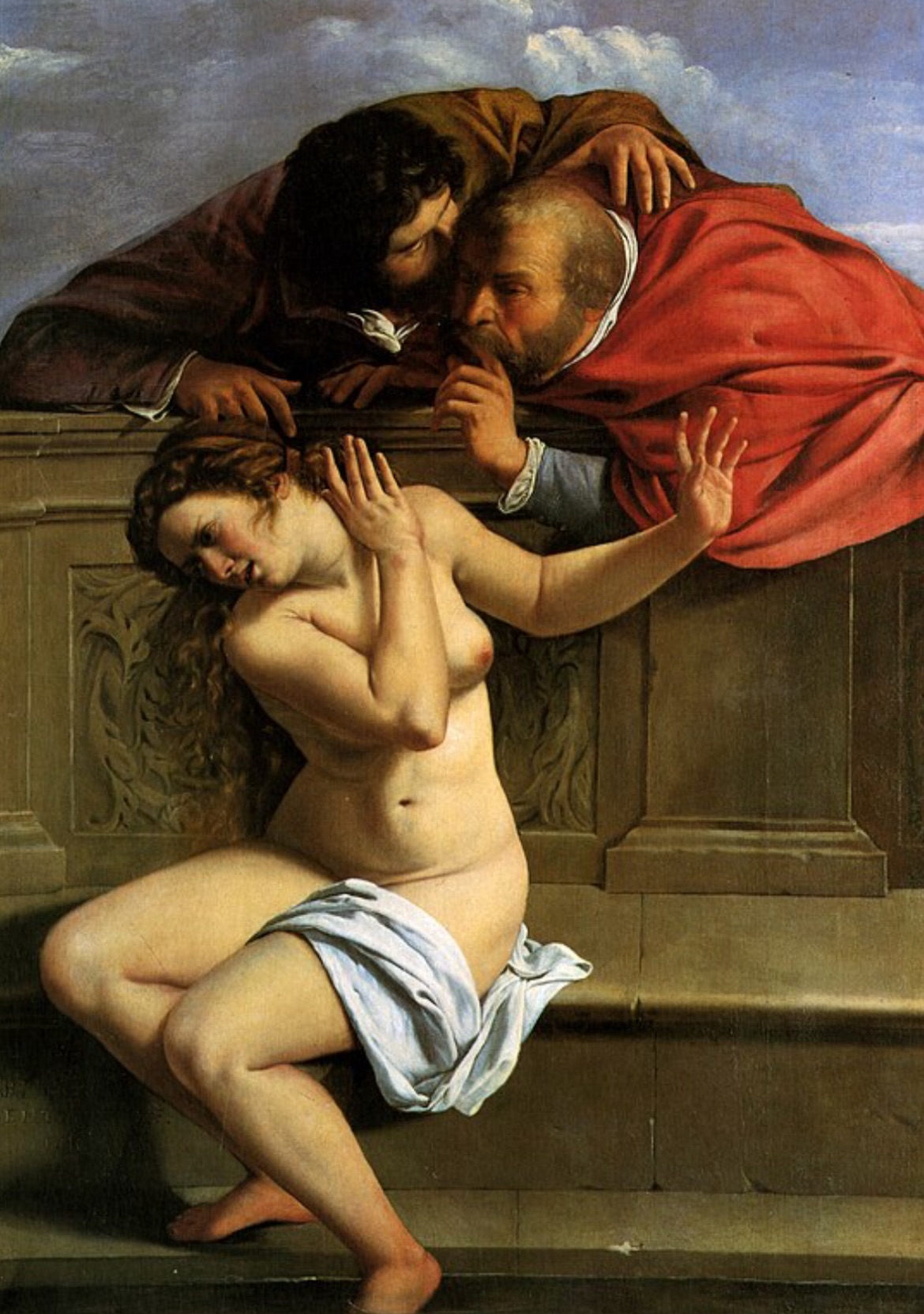
Susanna and the Elders (1610)

In 1611 Orazio decorated a palazzo in Rome with painter Agostino Tassi.  He hired Tassi to tutor 17-year-old Artemisia to help refine her painting skills.  During one of their sessions, he raped her.  They started a relationship, since she believed they were going to be married, as societal norms of the time required.  When it became apparent that Tassi was not going to marry Artemisia, Orazio took the unusual route of pressing charges against him for rape.  The trial went on for 7 months, revealing scandalous details -that Tassi had an affair with his sister-in-law and allegedly hired bandits to murder his missing wife.  Artemisia was subjected to a gynecological exam, and tortured with thumbscrews to verify the truthfulness of her testimony!  Luckily there was no permanent damage to her fingers and this did not affect her ability to paint. Tassi was convicted, and sentenced to 2 years in prison.  He was also exiled from Roma, but this was never enforced.
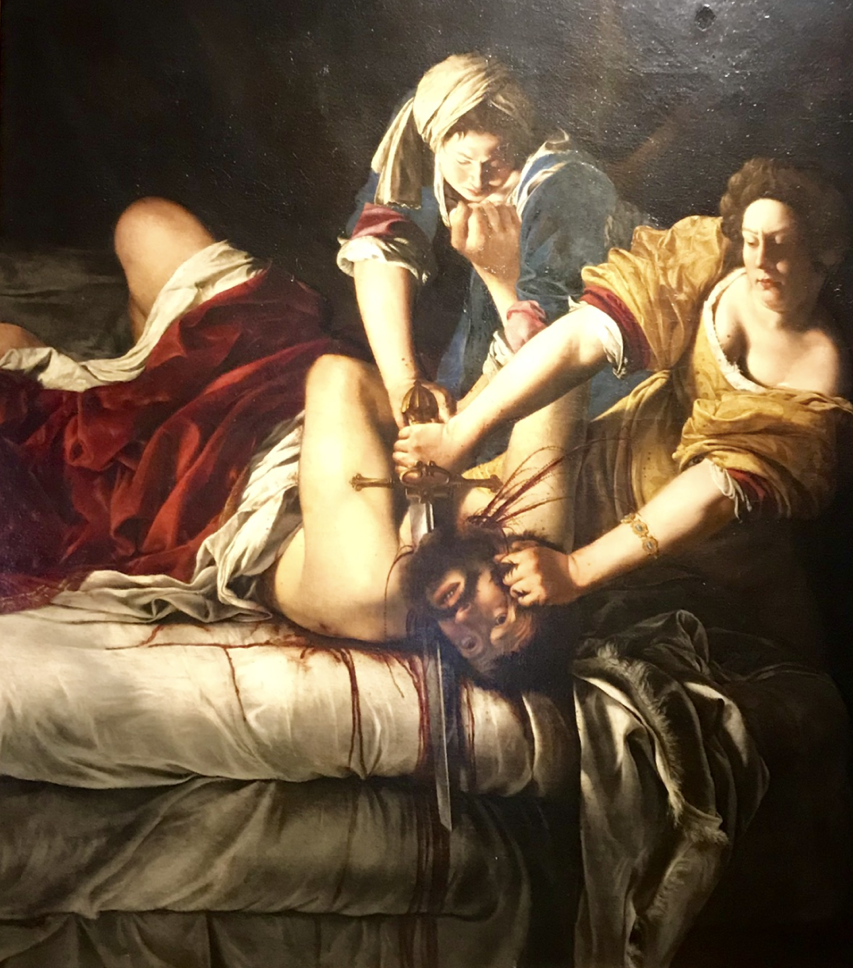
Judith Slaying Holofernes 1620 Galleria degli Uffizi, Firenze

After this ordeal, many of Artemisia’s paintings feature women being attacked or in positions of power, seeking revenge. In 1612 she painted her first of 6 versions of Judith Slaying Holofernes, which is in Museo Capodimonte, Napoli.  The 1620 version in the Galleria degli Uffizi, Firenze is ‘bloodier’ than the first one. I like to imagine Artemisia having a scientific discussion with Galileo about realistic blood spatter patterns!  Below is Caravaggio’s 1598-99 version of the scene, which is a masterpiece, but Judith looks like the 90 pound weakling who is worried about breaking a nail or getting blood on her dress, and her servant just stands there.  In Artemisia’s version, both women mean business, practically sitting on Holofernes to get the job done. 

Judith Beheading Holofernes Caravaggio 1598-99 Palazzo Barberini

After the trial, Orazio arranged for Artemisia to marry artist Pierantonio Stiattesi and they moved to his home city Firenze, where she had a successful career as an artist and an impressive clientele.  She had the support of Cosimo II de Medici and was friends with Galileo.

Allegory of Inclination (1615) Casa Buonarroti

At age 21, Artemisia was the first woman accepted into the prestigious Firenze Accademia delle Arte del Disegno.  This was a major accomplishment!  She was now able to sign her own contracts and purchase art materials without permission from her husband!  In 1615, she was commissioned to paint one of the ceiling frescoes at Casa Buonarroti, former home of Michelangelo, being turned into a museum by his great-nephew. Artemisia was paid more than the male artists working on the frescoes were! ‘Allegory of Inclination’, like many of her paintings, was likely a self-portrait.  Why self-portraits?  The model is free and always available!
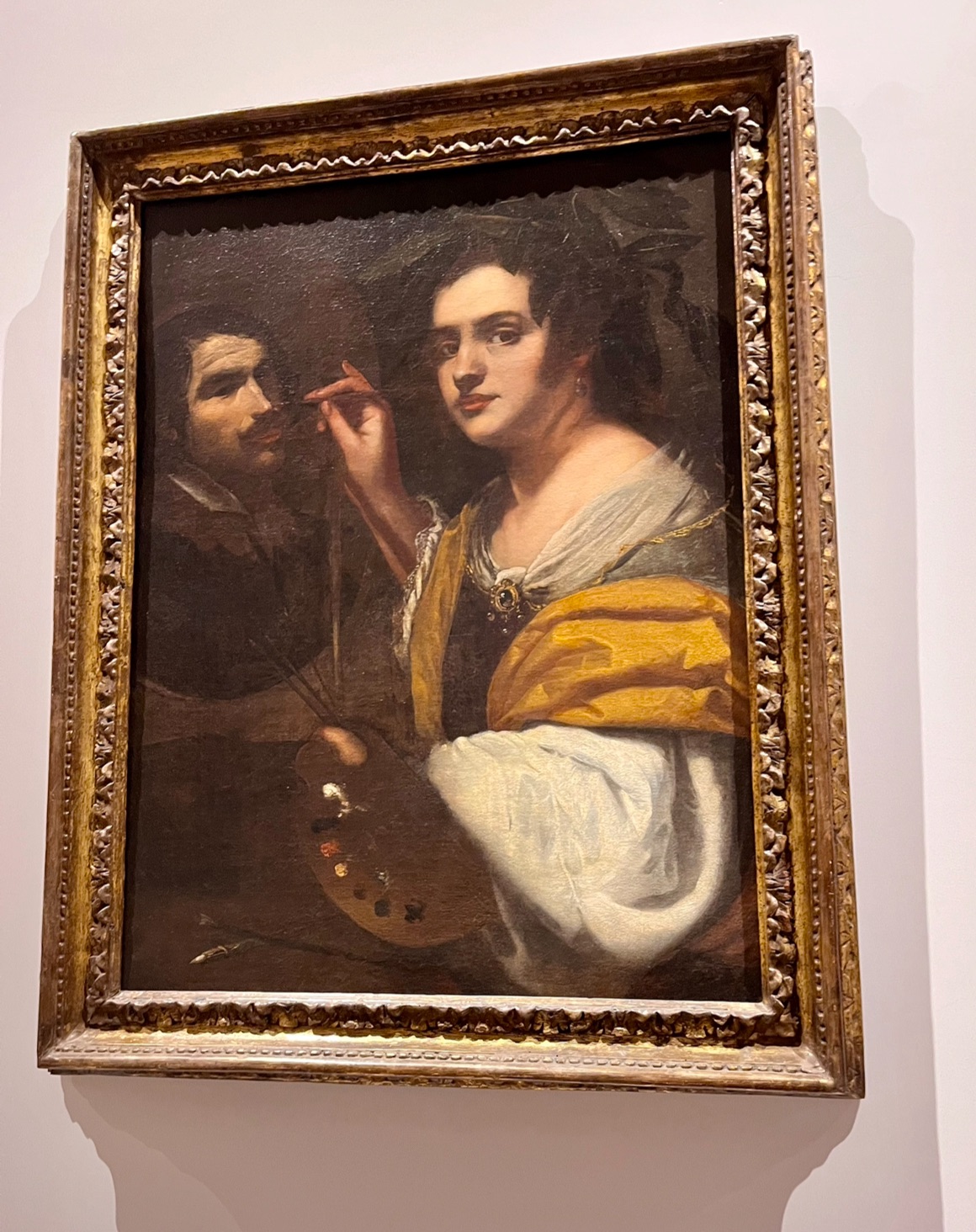
Self-portrait, Galleria Barberini 1630-35

In 1618 Artemisia had a daughter named Prudentia, the only one of her 5 children to survive infancy.  She trained Prudentia as an artist, although none of her work survives that we know of.  Artemisia had an affair with Florentine nobleman Francesco Maria di Niccolo Maringhi, which is documented in a series of 36 letters, discovered in 2011.  Her husband also corresponded with Maringhi, who helped support them financially.  Fed up with her husband’s financial and legal issues, she returned to Roma with her daughter in 1621-1626.  Artemisia continued to be influenced by Caravaggio as she worked with some of his followers, Carravagisti, including Simon Vonet.  She also spent 3 years in Venezia working on commissions.

Sansone e Dalila/Samson and Delilah 1630-38 Galleria d’Italia, Napoli

Artemisia relocated to Napoli in 1630 and worked with many well-known artists such as Massimo Stanzione. In 1638, she was invited to the court of Charles I of England in London, where Orazio had been court painter for 12 years. He was the only Italian painter in London and the first to introduce the style of Caravaggio there.  Orazio and Artemisia had not seen each other for 17 yrs.  She worked alongside Orazio on an allegorical fresco for Greenwich, residence of the Queen. Orazio was 75 and needed her help to complete the work before he died suddenly in 1639.  Artemisia painted some of her most famous works while in England, including Self Portrait as Allegory of Painting (1639), which she likely painted with 2 mirrors, one on either side of her. In 2017 I had the opportunity to see this painting at the Vancouver Art Gallery exhibit from the Royal Collection.

Self-portrait as the Allegory of Painting 1638-39 Royal Collection, Windsor Castle

Once she finished her commissions, Artemisia left England before 1642, returning to Napoli.  The last letter from her agent was dated 1650, which implies she was still painting.  There is additional evidence to suggest she was still working in Napoli in 1654 and likely died during the plague in 1656.

Artemisia’s legacy is complex and full of controversy.  She defied the odds and was well respected as an artist during her own lifetime.  She thrived in a time when women had few opportunities to pursue artistic training, let alone actually work as professional artists.  After her death, Artemisia Gentileschi was almost omitted from the history of art.  The fact that her style was much like her father’s and some of her works were incorrectly attributed to Orazio and even Caravaggio may have something to do with that.  More likely, those documenting art history did not think a woman was worth mentioning.

In the early 1900’s, her work was rediscovered and championed by Caravaggio scholar Roberto Longhi.  In all accounts of her life, Artemisia’s talent and achievements are overshadowed by the story of her rape and trial.  This is partly due to a 1947 over-sexualized fictional novel by Longhi’s wife Anna Banti.  1970’s and 80’s feminist art historians began to reassess Artemisia and her reputation, focusing on her significant artistic achievements and influence on the course of art history rather than events that happened in her life.

A 1976 exhibition ‘Women artists 1550-1950’ proposed that Artemisia was the first female in the history of Western art to make a significant and important contribution to the art of her time.  Following centuries of near obscurity, today Artemisia’s paintings are again celebrated around the world.  An ornate plate rests in her honour at the table of contemporary feminist art as part of Judy Chicago’s iconic 1979 work ‘The Dinner Party’.

Artemisia has left us with 60 paintings, not including collaborations with Orazio.  40 of them feature females from the Bible or mythology. Only 19 of her paintings are signed and 13 are in Private collections!  Can you imagine owning your own Artemisia??? Famous quotes from Artemisia include ‘My illustrious lordship, I’ll show you what a female can do’ and ‘As long as I live, I will have control of my being’.

Enjoy the Monologue ‘Becoming Artemisia'(May 2024) directed by Antonio D’Alfonso, text by Mary Melfi (17 min).

Google doodle of Artemisia GentileschiBuon Compleanno Artemisia!

Photo credits: Susanna and the Elders and Allegory of Inclination, Wikipedia

Google Doodle by Hélène Leroux, July 8, 2020

All other photos taken by Cristina
Share this:

  • Share on Facebook (Opens in new window) Facebook
  • Share on Pinterest (Opens in new window) Pinterest
  • Share on X (Opens in new window) X
  • Email a link to a friend (Opens in new window) Email
  • Share on WhatsApp (Opens in new window) WhatsApp
Like Loading...

Lecce

25 Friday Sep 2020

Posted by Un po' di pepe in Architecture, Italia, Photography, Travel

≈ 24 Comments

Tags

Barocco Leccese, Baroque art, Negroamaro, Puglia, Salento, Southern Italy, UNESCO World Heritage Sites

Santa Croce facade black and whiteLecce reminds me of a Caravaggio painting-Baroque, dramatic and opulent, with attention to detail.  It is unfortunate he did not live long enough to visit the city!  Lecce, in the Salento area of Southern Puglia is over 2000 years old and rich in tradition and local customs.  Originally called Syvar, it was founded by the Mesapii(Mesapians) from Crete.  There is a long history of Greek settlement here, in fact there is still a group of 9 towns called ‘Grecia Salentino’ where ‘Griko’ dialetto is spoken.

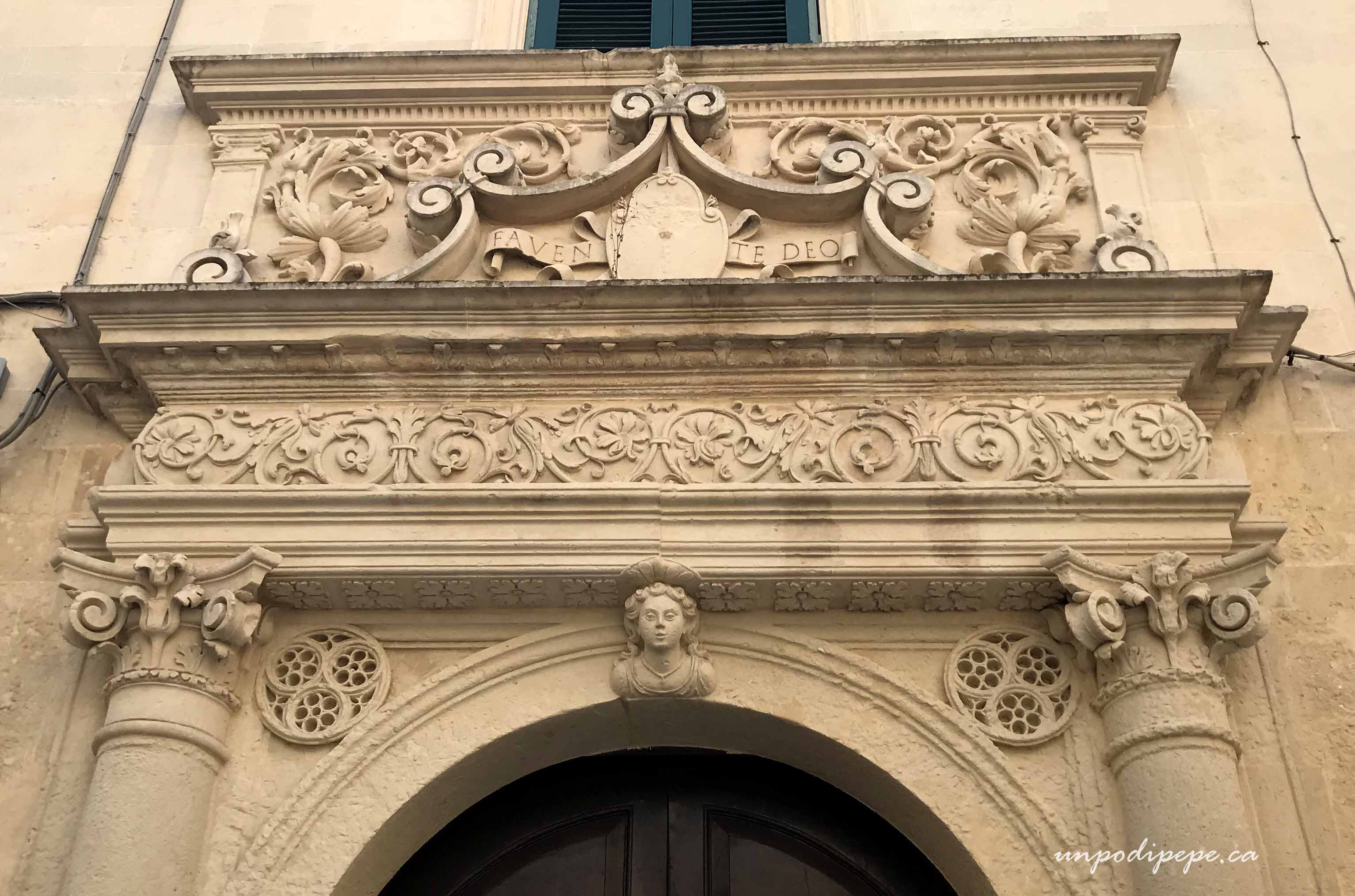
Conquered by the Romans in the 3rd Century BC, it was renamed Lupiae.  Hadrian moved the city 3 Km northeast in the 2nd Century AD and called it Licea. Then came the Byzantines in 549, followed by Orthodox monks.  Lecce and the Salento were an independent country from 1043 until 1463 when Emperor Carlo V conquered Puglia, and they became part of the Kingdom of Napoli until Italian unification in 1861.  Lecce was an important commercial city, with a building and cultural boom. Baroque doorway Lecce

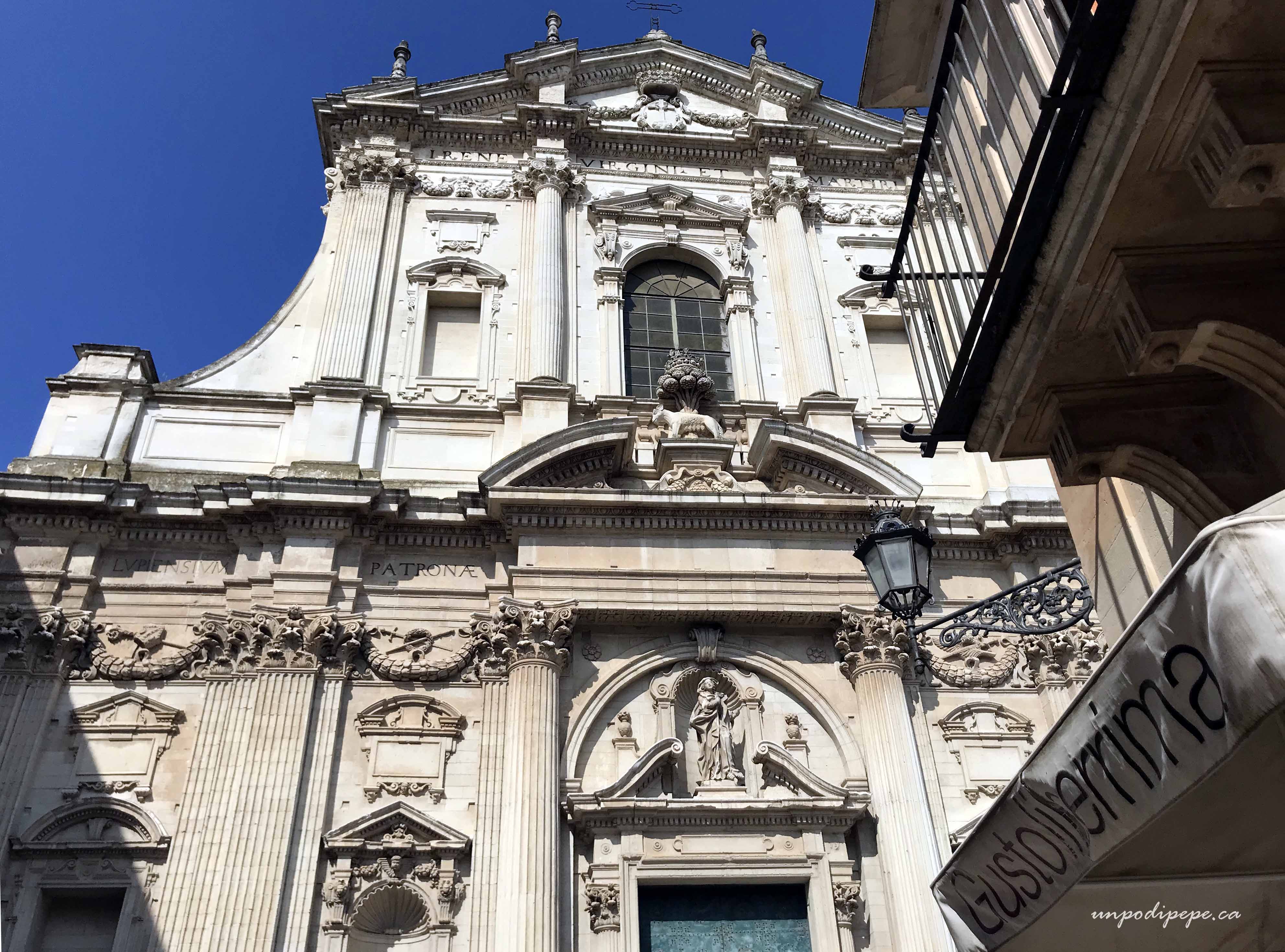
Lecce is best known for its dramatic Baroque architecture and ornamentation, which even has its own name-Barocco Leccese.  The style was around from the mid 1500’s to the early 1700’s, so even among buildings constructed at different times there is continuity of style.Sant'Irene Lecce Interior

The Baroque style features over the top details and intricate carvings that create a sense of movement.  Barocco Leccese is even more expressive and unique.  Windows, balconies and loggias are elaborately ornamented with twisting columns, scrolls and cornices.  They are carved with human figures, animals, wreaths, vines and gargoyles.  There is also a lot of marble, gilt and bronze involved.  Corbels supporting balconies are a common decorative element in Lecce.Duomo Lecce

‘Salento and the Barocco Leccese, including Lecce, Nardò, Gallipoli, Martina Franca, Ostuni, Francavilla, Galatina and Galatone’ are on the UNESCO World Heritage tentative list since 2006. This is the step before becoming a World Heritage Site.Vespa Lecce Puglia

Lecce’s buildings are made of Pietra Leccese, a local, honey coloured porous limestone.  It is soft and workable for sculpture, and was hardened and weatherproofed by soaking in a liquid solution made with whole milk.  Pietra Leccese is still one of the area’s main exports, mined in open quarries.Vicolo, Lecce

What to see in Lecce:

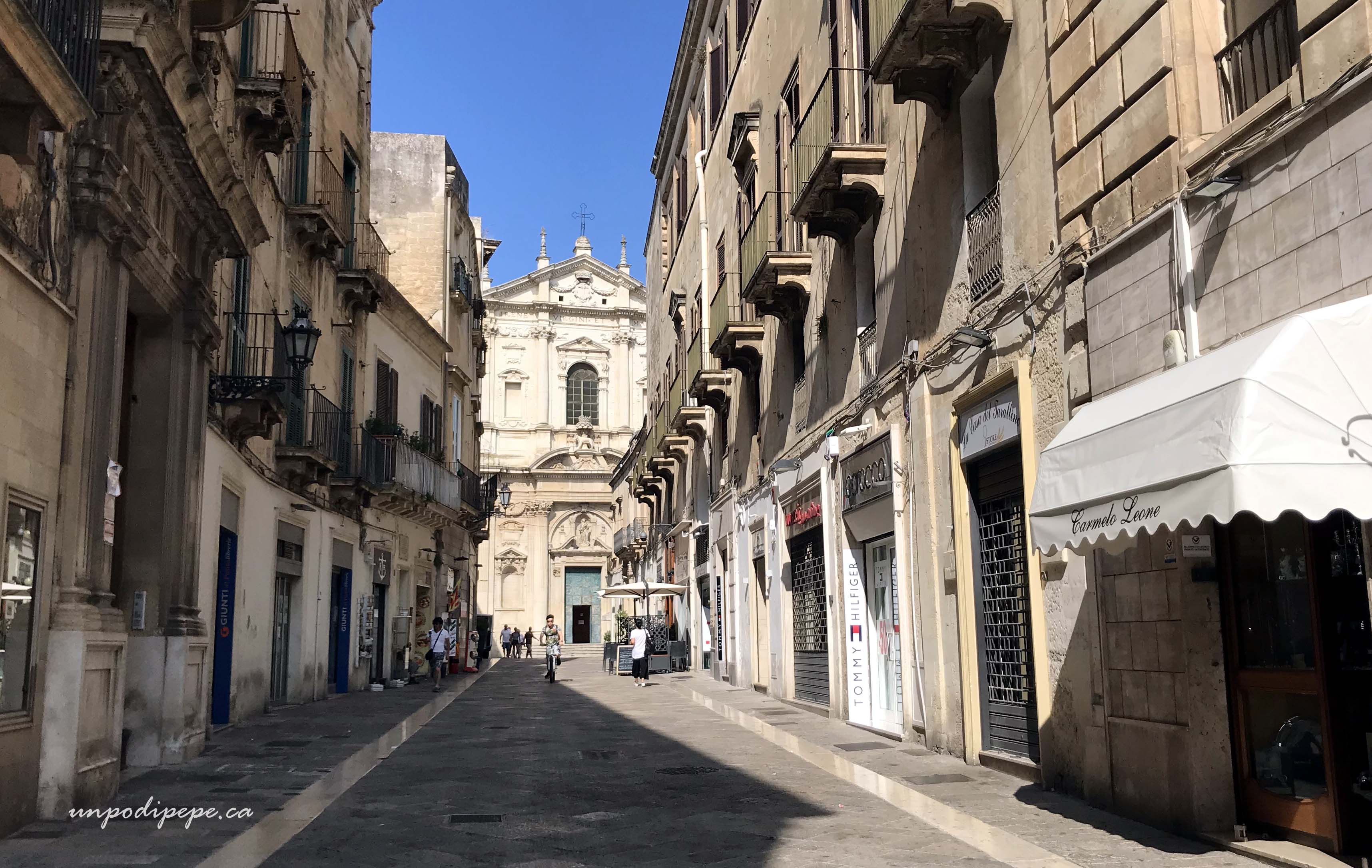
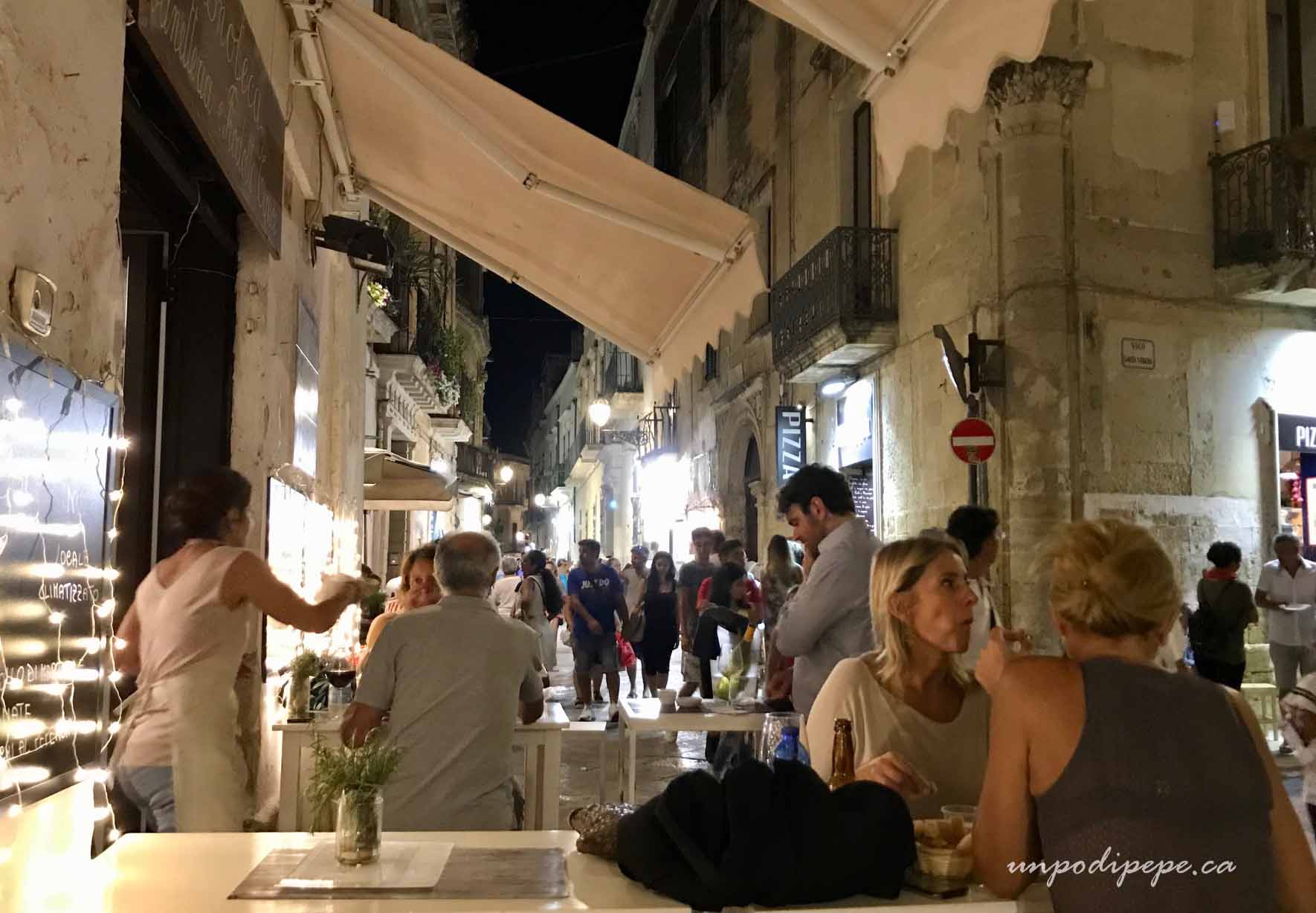
The Centro Storico of Lecce, with its narrow stone streets, 22 churches and unique architecture is a historically preserved walking museum.  It is mostly pedestrian only and very walkable.  Corso Vittorio Emanuele e Sant'Irene LecceAfter dark the streets are lined with outdoor seating for vino and aperitivo, and everyone is out for passeggiata.Lecce di notte

Lecce’s defensive walls are gone, but 3 gates remain: Porta Rudiae, Porta San Biagio and Porta Napoli, which marked the starting point of the road to Napoli.Piazza Duomo Lecce

The 2 main piazze are Piazza Duomo and Piazza Sant’Oronzo, which are connected by Corso Vittorio Emanuele.  Piazza Duomo is a large open space, but you can almost walk by and miss it!  There is only one entrance, and it is closed off on 3 sides.  The Duomo is unique as it has 2 facades.  This was done so that visitors to the piazza did not have to face a big blank side wall as they entered.  Campanile Piazza Duomo LecceThe Campanile is the tallest in Italia at 68 m.  Piazza Duomo also contains the Palazzo Vescovile and Seminario, which is used mainly for exhibitions.

Piazza Sant’Oronzo, named for the first Christian bishop and the patron saint of Lecce, was the site of the mercato.  The 2nd Century AD Roman anfiteatro was discovered in 1901 during construction of a new Banca d’Italia. Anfiteatro LecceThe 20,000 seat arena was originally built outside of the walls of Lecce and was still in use in the 12thCentury. More than half of it has not been excavated!

Looking down over the anfiteatro is Il Sedile, a 1590 Gothic structure which was the seat of the town hall.  It is now the Tourist information office.Anfiteatro and Il Sedile, Lecce, Puglia

The Colonna di S Oronzo, is a column topped with a bronze statue of Sant’Oronzo.  It was originally built in 110 AD-one of a pair of Turkish marble columns marking the end of the Via Appia from Roma to Brindisi.  This one toppled and broke in 1528 and its twin is still standing in Brindisi. In 1659, the broken remains were given to Lecce to thank Sant’Oronzo for saving Brindisi from the 1656 plague.  The Brindisini have wanted it back ever since!

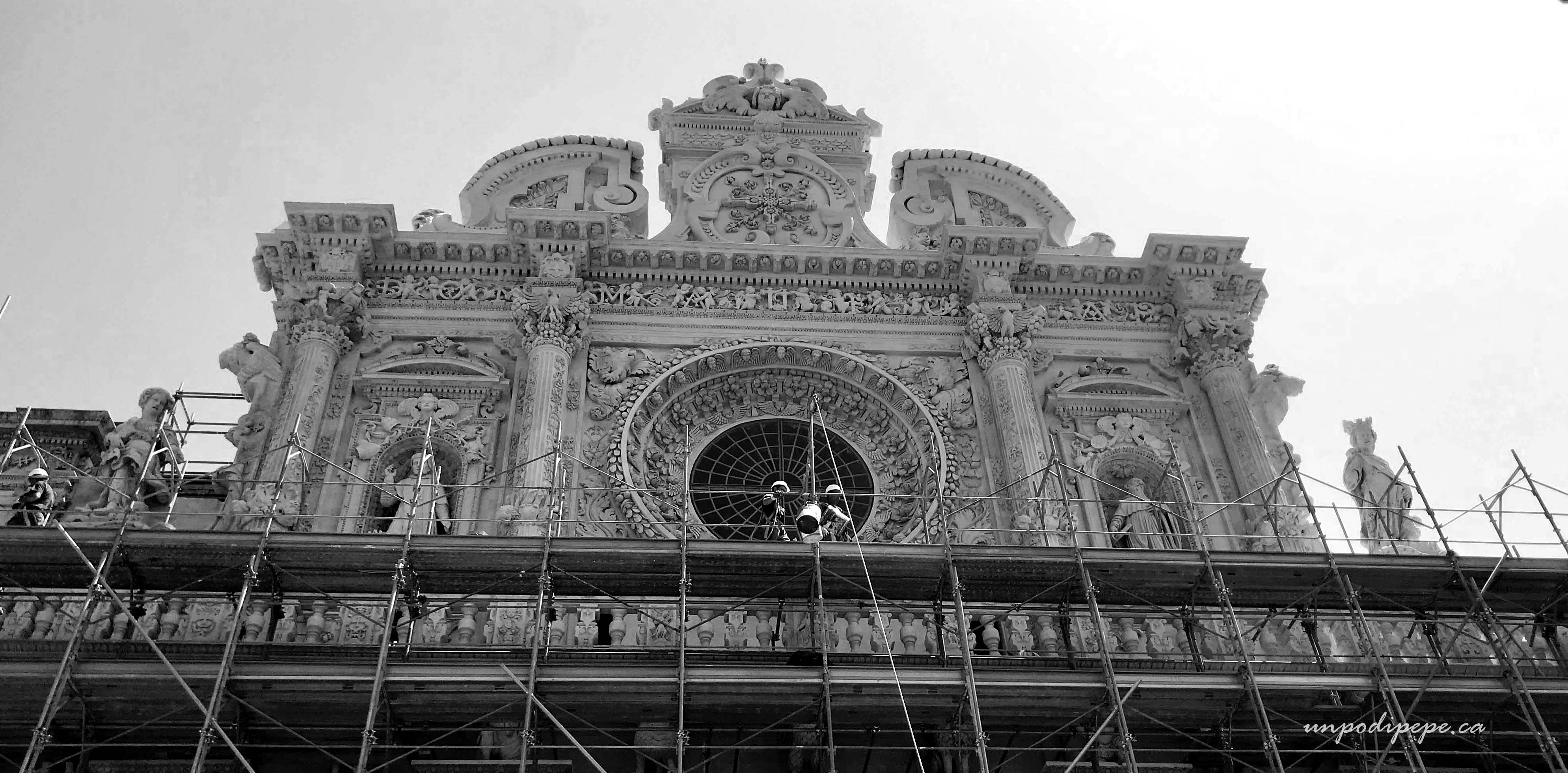
Not far from the piazza is Museo Faggiano- a unique museum, especially for archeology nerds like me!  Plumbing issues result in DIY renovations that uncover layers of history…..Blog post coming!Santa Croce lecce under renovation. Black and white

Santa Croce’s façade is the masterpiece of Barocco Leccese.  It took 200 years to build.  The exterior was recently cleaned and renovated.  The interior has a gilded coffered ceiling and 14 chapels with carved, twisting columns.Santa Croce interior Lecce

Sant’Irene is dedicated to the ancient protector of the city 1591-1639.  The interior is simple, but has twin Baroque side altars.  My amazing balcony at Palazzo Belli B&B looked out onto the side entrance.Sant'Irene Lecce

Santa Chiara built in 1687 has an unusual façade and an extravagant interior with a wooden ceiling. There are loads of other beautiful churches to see in Lecce, but i have only mentioned the main ones. Santa Chiara Lecce

Sometimes the scenery looks like an old movie set!  Walk down Via Palmieri, lined with grand palazzi, ending at Porta Napoli.  Via Palmieri Lecce Puglia

Things I did not have time to see include the Castello Carlo V and its carta pesta (papier maché) museum, the Teatro Romano and the Museo Provinciale.

Lecce is a great place to shop.  Specialties include colourful Pugliese ceramics, carta pesta, olive oil and vino.  Lecce observes the pausa pranzo which means shops are closed from 2-5pm.Lecce ceramic souvenirs

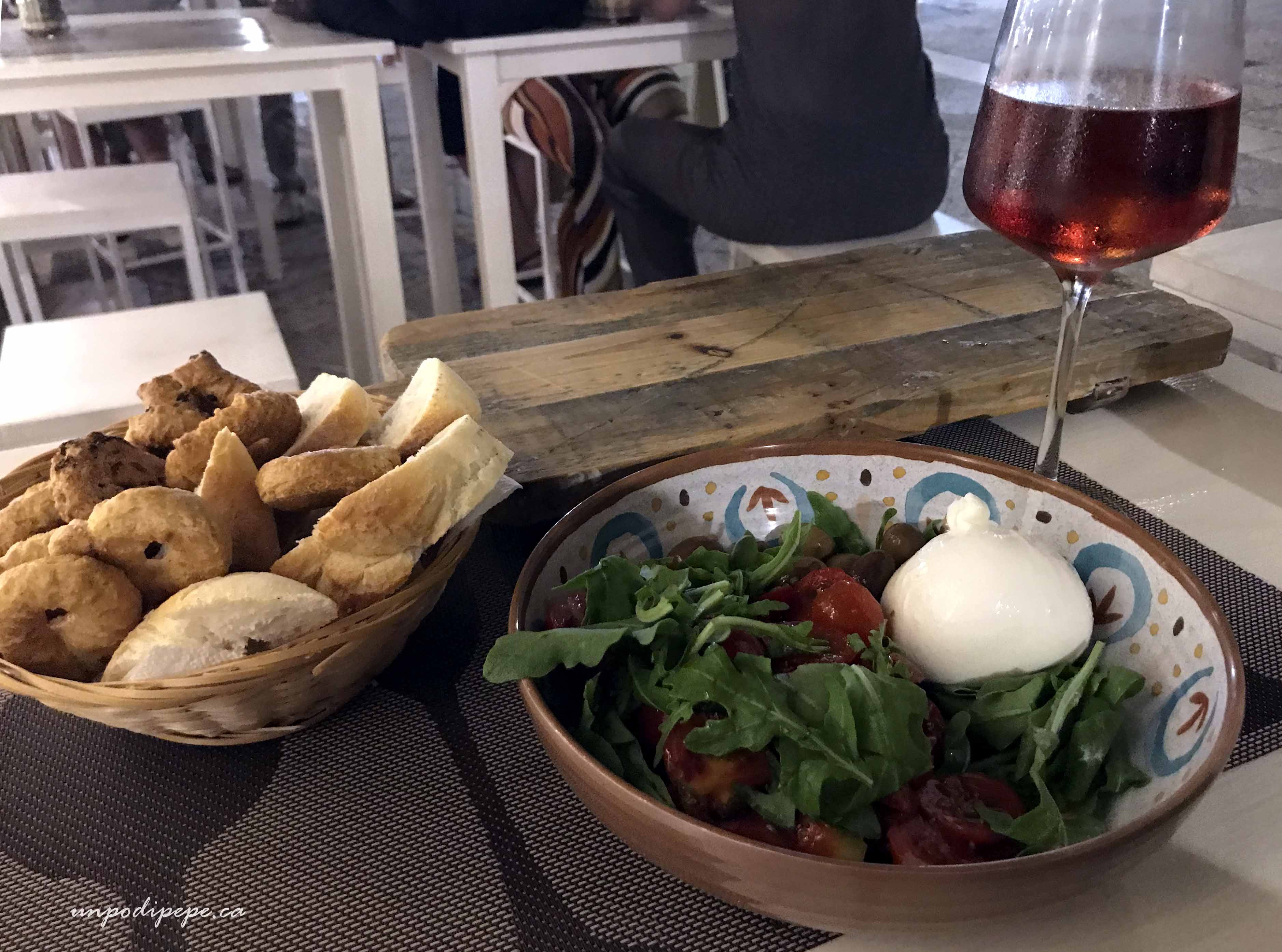
Make sure to try pasticciotto.  My favourite is the kind with crema and amarena. Yum! Colazione LecceSit outside to have Caffè Leccese –espresso on ice with almond milk and of course local vino, especially my favourite-Negroamaro.  Here is my cena with Negroamaro rosé.  Burratina, taralli e Negroamaro Rose,

Since the centro storico is car free, dealing with a car in Lecce can be a pain.  During high season, it is easier to get around by bus or local train.  During low season, a car will make it easier to visit places that are not on the main train line. Lecce is between 2 seas, the Adriatic is 11km away and the Ionian 23 km away.

Lecce (pop. 96,000) is on the Adriatico train route that starts in Bologna.  The Stazione is a flat walk, 1 km south of the Centro Storico.  Last year, I took the train from Foggia (3 hours) staying 3 days in Lecce and 1 in Nardò. It was late July/early August, and not crowded at all. I booked my train and accomodation 3 days in advance. Try to avoid making Lecce a daytrip, as you will miss the beautiful evenings and fun nightlife. I am looking forward to going back as soon as possible!Via Palmieri Lecce black and white

Buon viaggio, Cristina

Share this:

  • Share on Facebook (Opens in new window) Facebook
  • Share on Pinterest (Opens in new window) Pinterest
  • Share on X (Opens in new window) X
  • Email a link to a friend (Opens in new window) Email
  • Share on WhatsApp (Opens in new window) WhatsApp
Like Loading...

L’ultimo Caravaggio

18 Saturday Jul 2020

Posted by Un po' di pepe in Art, Art history, Roma

≈ 19 Comments

Tags

Baroque art, Caravaggio, Life of Caravaggio, Napoli, Palazzo Zevallos Stigliano, Pio Monte della Misericordia, Roma, Sant'Orsola

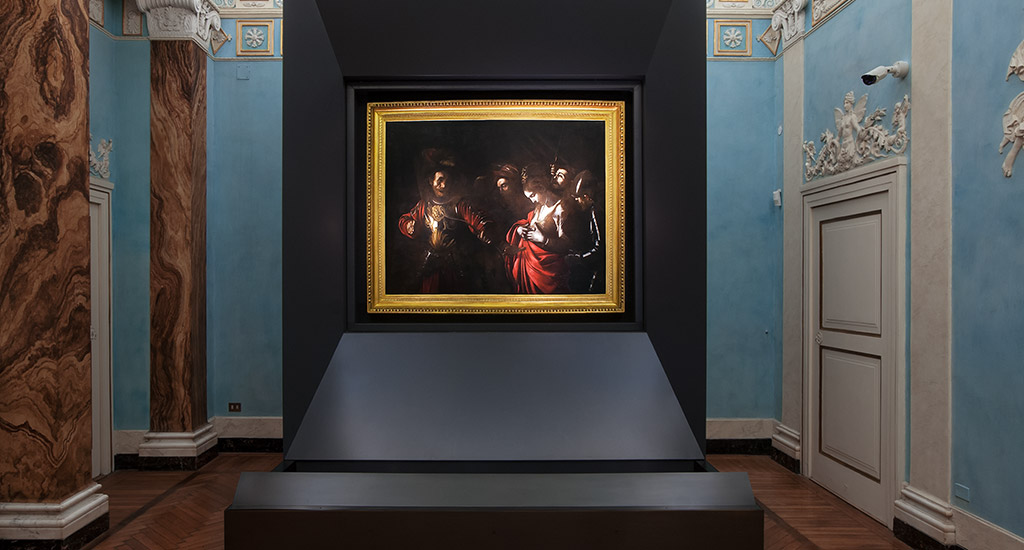
Martirio di Sant'Orsola Caravaggio's last painting410 years ago today, Caravaggio died in a tavern in Porto Ercole. This is about his last painting and the time I went to see the WRONG Caravaggio. I rarely use the words wrong and Caravaggio in the same sentence, but in this case it works.

A few years ago, I had an extremely Caravaggio’d out day in Roma.  After my visit to Galleria Borghese, I stopped in to see more Caravaggio works at Santa Maria del Popolo, then met a friend at Sant’Agostino to see the Madonna dei Pellegrini. Whew!  I ended up in a Caravaggio Coma and had the best day ever!

When my friend Romano heard I was going to Sant’Agostino, he immediately offered to meet me there.  I remember thinking this was odd, since I knew he had a full day.  As soon as we approached the painting, and he said ‘Questo è il collo più sensuale nella storia dell’arte /This is the most sensuous neck in the history of art’, I realized he was a fellow Caravaggio nerd.  This was, in fact his favourite painting.  Afterwards, we went to have caffè freddo and talked about Caravaggio for an hour!

Romano had recently been to Napoli and told me about a Caravaggio painting in a former church owned by a bank.  The bank bought the building and it came with the Caravaggio!  Whaaaaat!  I knew I had to see this Caravaggio if I was ever in Napoli.  The name or subject of the painting, and the name of the palazzo was not part of our discussion.

I usually fly home from Napoli, arriving in time to have caffè marocchino and a sflogliatella at the airport, then off I go.  2 days before my departure, I decided to arrive a day early, and spend 24 hours in Napoli.

One of the 4 things on my list to see that day was the painting Romano spoke about. I quickly googled ‘Caravaggio, Napoli, decomissioned church, bank’ and all results came to the painting ‘Sette Opere di Misericordia’/Seven Acts of Mercy’ located in Pio Monte della Misericordia.  All 4 of my ‘must see’ places were walking distance from Piazza Dante, and I booked a B&B appropriately called ‘Il Paradiso di Dante’.

Caravaggio Sette opere di misericordia Pio Monte della misericordiaI had heard of ‘Sette Opere di Misericordia’ but was not familiar with the location, where it has been hanging for over 400 years.  Pio Monte della Misericordia seemed to be a functioning church, so I suspected that something was off. I was not too concerned because it was earthshatteringly amazing, as you can tell by my happy photo.  I visited the 3 other places, ate lots of sfogliatelle and had an amazing day.  Read all about it in the post Un giorno a Napoli.

Returning to the B&B-and access to wifi- that evening, I looked it up again.  As I suspected, Pio Monte della Misericordia is a functioning church with an incredible history.  It turns out I went to see the WRONG Caravaggio!  If only all of my mistakes were this amazing!Pio Monte della MisericordiaThere are 3 Caravaggio works in Napoli.  The one Romano saw was Il Martirio di Sant’Orsola /The Martyrdom of St Orsola, Caravaggio’s last painting before his death, and only recently re attributed to him.  He may have even referred to it as ‘l’ultimo Caravaggio’, which would have been a helpful clue, but I did not remember that detail.Martirio di Sant'Orsola by Caravaggio in Palazzo Zevallos Stigliano

Palazzo Zevallos Stigliano was converted to a bank from 1898-1920 and now houses the Banca Intesa San Paolo Collection.  It was not far out of my way back to Piazza Dante, so I could have made it there if I had realized my mistake earlier.  Mannaggia!

The painting was commissioned by Marcantonio Doria, a young banker and collector from Genoa.  His stepdaughter was about to enter a religious order and take the name Suor Orsola (Sister Orsola).  Lanfranco Massa, the art agent in Napoli wrote to Doria on May 11, 1610 that the painting was finished but not yet completely dry, so he had put it out in the sun (bad idea!) and the varnish had gone a bit soft.  Massa also encouraged Doria to commission more Caravaggio works, as patrons were fighting over him and this was a good opportunity.

Caravaggio arrived in Napoli for the second time in October 1609.  Within days, his violent past caught up to him and he was brutally attacked by 4 armed men.  There were rumours he had been disfigured or killed.  His recovery was long, and he produced only 3 paintings during this time.  Sant’Orsola arrived in Genoa June 18, 1610.  Soon afterwards, Caravaggio set sail for Roma to finally receive a pardon for his murder conviction from Pope Paul V.  He died enroute in Porto Ercole on July 18th 1610 from a staph infection caused by the attack.Book cover L'ultimo Caravaggio, Martirio di Sant'Orsola

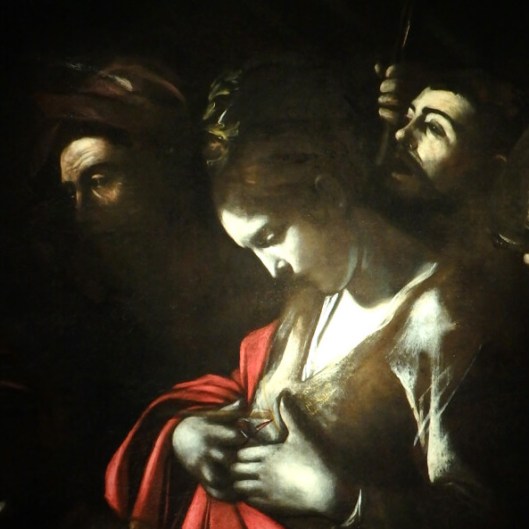
The subject of the painting, Orsola, and her 11 companions were captured by the Huns on the way back from a pilgrimage to Roma.  The companions were killed, but Attila the Hun was impressed by Orsola’s modesty and beauty.  She refused to marry him and he shot her with an arrow.  The painting captures the moment of action when the arrow strikes her. She is deathly pale as she looks down at the entry wound with a surprised expression, as if to say ‘Oh my….look…there is an arrow sticking out of my chest’.  The painting is looser and more impressionistic than usual, as if it was painted in a rush.  It is very dark, less chiaro, more scuro and does not have the divine light present in most Caravaggio works.  He was going through a difficult time, which is reflected in the darkness and mood of the painting.  One of the shocked bystanders behind Orsola is Caravaggio in his last selfie.

Caravaggio-Martirio-Sant-Orsola-2

The Doria estate eventually ended up in Napoli, bringing Sant’Orsola back home. In 1854, it was listed in the inventory of Giovanni Doria’s inheritance along with Palazzo Doria D’Angri. Caravaggio only signed one of his works. The Doria family owned this painting for 300 years-so long that over time the artist was forgotten. Oops!  Caravaggio’s influence and style defined painting in Napoli for several centuries.  During a 1963 exhibit in Napoli called ‘Caravaggio e Caravaggeschi’, Sant’Orsola was attributed to Mattia Preti (1613-1699), although several art historians believed it to be  Caravaggio’s work.  In 1973 Baronessa Avezzano sold it to Banca Intesa.

In 1980, in the Doria family archives, art historian Vincenzo Pacelli (1939-2014) found the letter from the agent which I mentioned earlier, confirming that Sant’Orsola was painted by Caravaggio. Finalmente!Martirio di Sant'Orsola Caravaggio's last painting

Palazzo Zavallos Stigliano is on Via Toledo 185, Napoli, not far from the Toledo Metro station.  Admission is €5. It is closed Mondays.  Hours Tu-F 10-18, Sat/Sun 10-20

Links: For more about the life and death of the Baroque Bad Boy – Caravaggio.

To recreate my Caravaggio coma day in Roma –Caffè con Caravaggio a Roma

I hope you found my convoluted story molto interessante!

Ciao, Cristina

Share this:

  • Share on Facebook (Opens in new window) Facebook
  • Share on Pinterest (Opens in new window) Pinterest
  • Share on X (Opens in new window) X
  • Email a link to a friend (Opens in new window) Email
  • Share on WhatsApp (Opens in new window) WhatsApp
Like Loading...

Caravaggio

23 Sunday Sep 2018

Posted by Un po' di pepe in Art history, Roma

≈ 16 Comments

Tags

Baroque art, Caravaggio, Death of Caravaggio, Life of Caravaggio, Roma

Caravaggio is one of the most brilliant and influential painters that ever lived. He pioneered chiaroscuro-dramatic use of light on a dark background and went for the ‘shock’ factor, really testing the boundaries for his time.  His life was as dramatic as his paintings and he was always getting into trouble with the authorities, drinking, gambling, brawling, sword fighting.  I have a few Caravaggio centered posts planned, so I will start with one about the Baroque bad-boy himself.

Michelangelo Merisi da Caravaggio (1571-1610) was born and studied in Milano. His family was from the town of Caravaggio.  He fled to Roma at the age of 21 after wounding an officer in a fight.  He found employment in the studio of Cavaliere D’Arpino, the Pope’s painter, and spent all his time painting ‘fiori e frutta’.  There is record of him being in hospital for 6 months early on in his time in Roma.  One of his earliest paintings is a self-portrait called ‘Bacchino Malato’ -Young Sick Bacchus.  His pale, yellowish complexion and bluish gray lips do not look healthy. He may have had malaria.  Caravaggio then went to work on his own and quickly developed a name as an artist, earning commissions from wealthy patrons.

Bacchino Malato (1593)

Caravaggio’s work was powerful and dramatic. Unlike other artists of the time, he worked directly from life onto the canvas without any working sketches.  Caravaggio worked quickly and produced a lot of work in his 14 years in Roma. Besides his use of light, dark and shadow, he also came up with dramatic compositions and intense realism…sometimes too intense.  He usually chose to paint the realism of the moment-the exact moment the action is happening. He showed life how it was, but his realism was often seen as graphic, vulgar and shocking.  He pushed boundaries and made people uncomfortable. Caravaggio used live models most of whom he found on the street, including 2 well-known prostitutes. He was frequently disputing with clients who refused to pay or insisted he redo a painting.

100,000 Lire Caravaggio banknote with his works ‘Buona Ventura’ on the front and ‘Canestra di frutta’ on the back

Caravaggio was always getting into trouble, but his name and wealthy clients protected him. In 1606, during a late night street brawl at a tennis court, he killed Ranuccio Tomassoni in a dispute over a prostitute.  Even having big-time patrons like Cardinal Borghese could not save him this time. He fled Rome with a death sentence and a price on his head.  He arrived in Napoli, where his influence and style defined painting in the city for the next few centuries.

In 1607 he went to Malta, hoping that the patronage of the Grand Master of the Knights of St John would help him receive a pardon from the Pope. He was welcomed and produces a lot of incredible art there.  Caravaggio was even inducted as a knight, but in 1608 seriously wounded another knight in a brawl and was imprisoned.  He escaped, was expelled as a ‘foul and rotten member’ and fled to Sicilia where he had a friend.  His behaviour grew increasingly bizarre.  He destroyed paintings at the slightest criticism and slept in his clothes fully armed. Caravaggio returned to Napoli after 9 months, to wait until he could return to Roma to receive a pardon.  In 1609 his dangerous lifestyle cought up to him.  There was an attempt on his life in a violent brawl and his face was disfigured.  There were even rumours of his death.

Davide con la testa di Golia (1610) Galleria Borghese

In 1610 he sent one of his last paintings Davide con la testa di Golia –David with the head of Goliath to his former patron, Cardinal Borghese, hoping he could convince his uncle the Pope to issue a pardon.  Caravaggio painted his own portrait as the gory severed head of Goliath, in a plea for mercy.  Soon after, he got on a boat heading north and ended up on the coast of southern Tuscany waiting for his pardon for the murder.  The pardon came too late.  He died in a tavern in Porto Ercole of a fever, infection from his wounds and heat exhaustion.  There were rumours he was poisoned, but Caravaggio likely also had lead poisoning from the lead in his paints. The homicidal genius was only 38 years old.

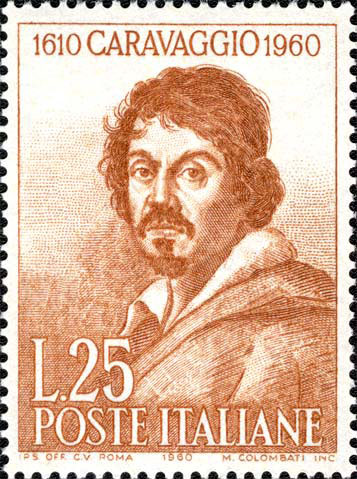
Poste Italiane 1960 stamp commemorating the 350th anniversary of the death of Caravaggio

In 2010, 400 years after his death, scientists think they may have cracked this ‘cold case’.  They are 85% sure that bones found in the cemetery in Porto Ercole belong to Caravaggio.  DNA evidence shows the age, height and date of death match, and they also did DNA testing of some long time residents of the town of Caravaggio and found there was DNA similarity.  The suspected bones also contained high enough levels of lead to drive someone mad.  More recent dental evidence shows that the main cause of death for the owner of these bones was a Staph infection, likely from the Napoli swordfight.  Sounds convincing to me!  Ciao, Cristina
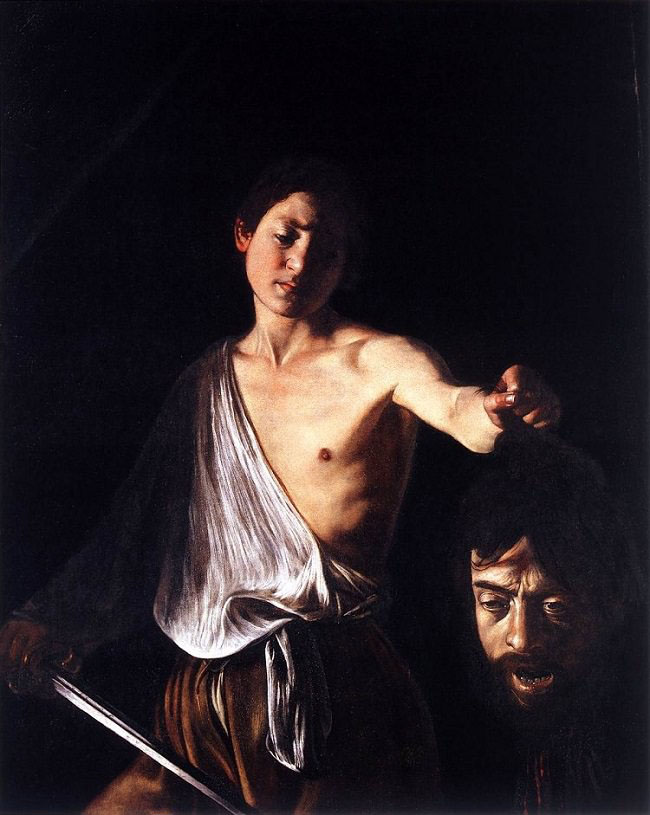
*Image-Ottavio Leoni ‘Ritratto di Michelangelo Merisi da Caravaggio’ ca 1621. Biblioteca Marucellaria, Firenze.  Wikimedia Commons

Share this:

  • Share on Facebook (Opens in new window) Facebook
  • Share on Pinterest (Opens in new window) Pinterest
  • Share on X (Opens in new window) X
  • Email a link to a friend (Opens in new window) Email
  • Share on WhatsApp (Opens in new window) WhatsApp
Like Loading...

Enter your email address to follow 'un po' di pepe' and receive notifications of new posts by email.

Join 511 other subscribers
Follow Un po' di pepe on WordPress.com

Popular Posts

  • Hairstyling in Ancient Roma
    Hairstyling in Ancient Roma
  • Cucina Italiana Patrimonio UNESCO
    Cucina Italiana Patrimonio UNESCO
  • Grano Arso
    Grano Arso
  • Napoli Street Art
    Napoli Street Art
  • Italiano per Ristoranti~How to pronounce your restaurant menu
    Italiano per Ristoranti~How to pronounce your restaurant menu
  • Hostaria Antica Roma~Eat like an Ancient Roman
    Hostaria Antica Roma~Eat like an Ancient Roman
  • Italian Christmas Vocabulary
    Italian Christmas Vocabulary

Recent Posts

  • Cucina Italiana Patrimonio UNESCO
  • 2025~Un po’ di pepe Year in Review
  • Castel del Monte
  • ‘The Nuances of Love’
  • Hostaria Antica Roma~Eat like an Ancient Roman
  • Santa Maria in Aracoeli
  • Casino dell’Aurora~Villa Boncompagni Ludovisi
  • Nasoni di Roma
  • Bloghiversario #11
  • Fontana di Trevi
  • Acqua Vergine
  • Giubileo 2025
  • Sanremo 2025
  • In Vino there are Memories
  • A Literary Harvest
  • 2024~Un po’ di pepe Year in Review
  • Buon Natale 2024
  • Il Bicerin
  • Mercato Porta Palazzo
  • Torino
  • Catanzaro, Calabria
  • Il Pumo Pugliese
  • Artemisia Gentileschi
  • Cavalli di San Marco
  • Panzerotti

Categories

Amici e Famiglia Architecture Art Art history Art projects Bilingual posts Blogging Canada Culture Feste Firenze Inspiration Italia Italian Folklore Italian language Italian life Italocanadesi Libri Mangiamo! Orsara di Puglia Parole piacevoli Photography Puglia Recipes Roma Travel Travel tips Uncategorized Vino

Archives

Un po’ di pepe on Facebook

Un po’ di pepe on Facebook

Start a Blog at WordPress.com.

  • Subscribe Subscribed
    • Un po' di pepe
    • Join 511 other subscribers
    • Already have a WordPress.com account? Log in now.
    • Un po' di pepe
    • Subscribe Subscribed
    • Sign up
    • Log in
    • Report this content
    • View site in Reader
    • Manage subscriptions
    • Collapse this bar
 

Loading Comments...
 

    %d