• Home
  • About me/Chi sono
  • Contact

Un po' di pepe

~ …… (oon∙poh∙dee∙PEH∙peh) Cristina writes about interesting stuff /Cristina scrive di cose interessanti

Un po' di pepe

Tag Archives: Cucina Italiana

Pane e Salute

30 Monday Mar 2026

Posted by Un po' di pepe in Italian life, Orsara di Puglia, Puglia

≈ 4 Comments

Tags

Breadmaking, Cucina Italiana, Cucina Pugliese, Dalla terra alla tavola, Pane e Salute, Pugliese Traditions, Southern Italy
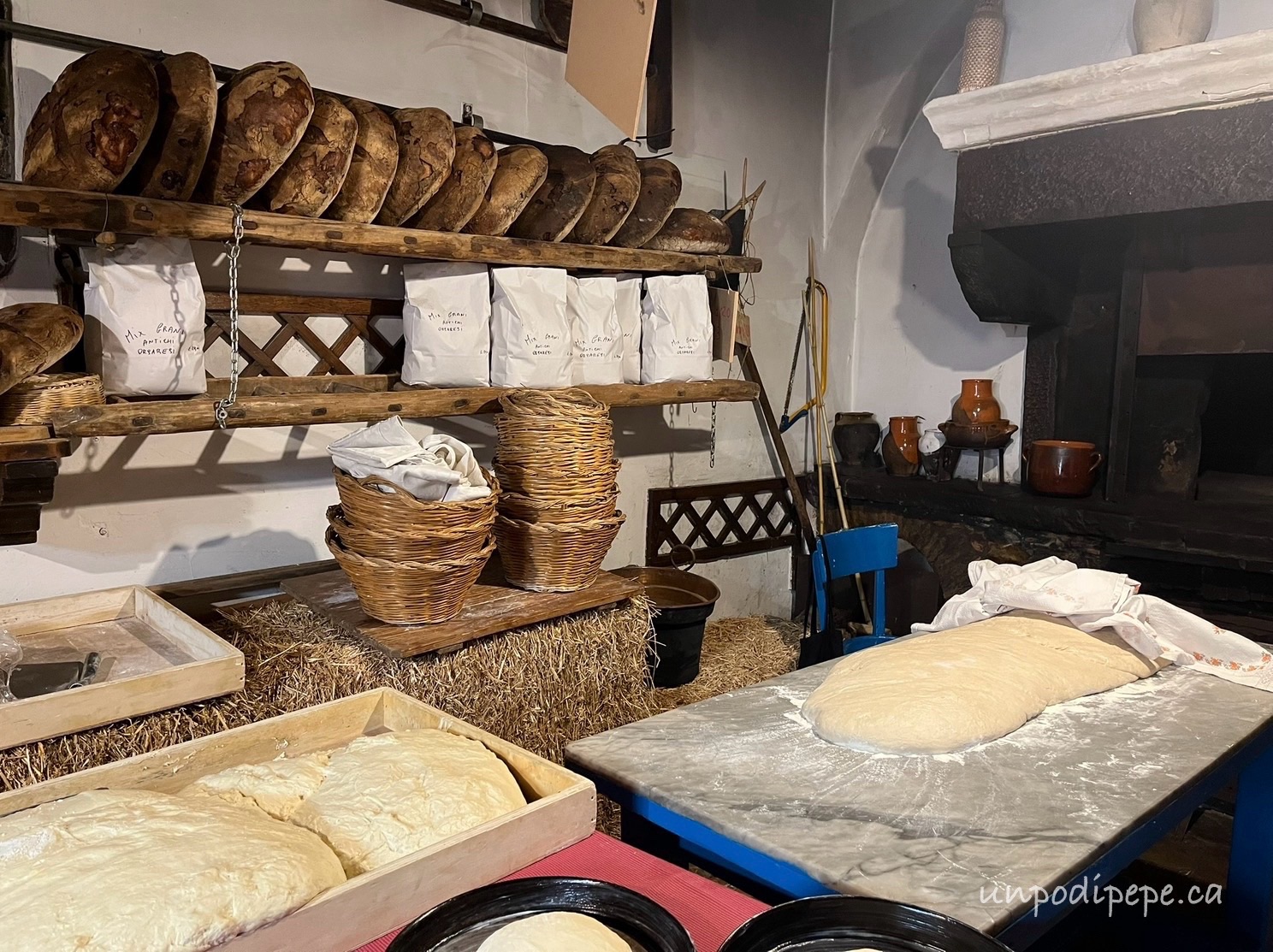
Pane e Salute is a ‘forno a paglia’, a straw burning bread oven that has been in continuous operation since 1526.  This month it celebrates 500 years. The forno is a part of the social and cultural history of Orsara di Puglia. I believe this is the only straw oven and oldest working oven in Puglia. Ownership has changed many times over half a millenium, but the forno has always remained in use.
At one time, women prepared dough at home and formed it into loaves.  They rolled a dishrag into a donut to place on their head. for support. The loaves were carried on the womens’ heads on a spianatoia, a pasta making board, to the neighbourhood ‘forno di communità’.  This was a collective or community oven where the bread was baked. Before baking, the loaves were also imprinted with a wooden stamp as a way to distinguish which family the bread belonged to once it came out of the oven. For women, the forno di communità was a place for social interaction and community.  In fact, even the lievito, the starter, was collective.  The last person to make dough would pinch off and keep a piece to give the next family to use as a starter.  Mamma told me that when she was very young, she was sent into the street to call out ‘à crisctor’ (literally, ‘the grower’) to find out who had it!

Today Pane e Salute, which means ‘bread and health’, is run by the Di Biccari family. Angelo Di Biccari is the maestro del pane along with his 3 sons.  The secret ingredient is the lievito madre, ‘mother yeast’ or starter which has been in the family and regenerating constantly for over 100 yrs. The lievito is fed every 2 days.  Bread is now baked only once a week, on Fridays.
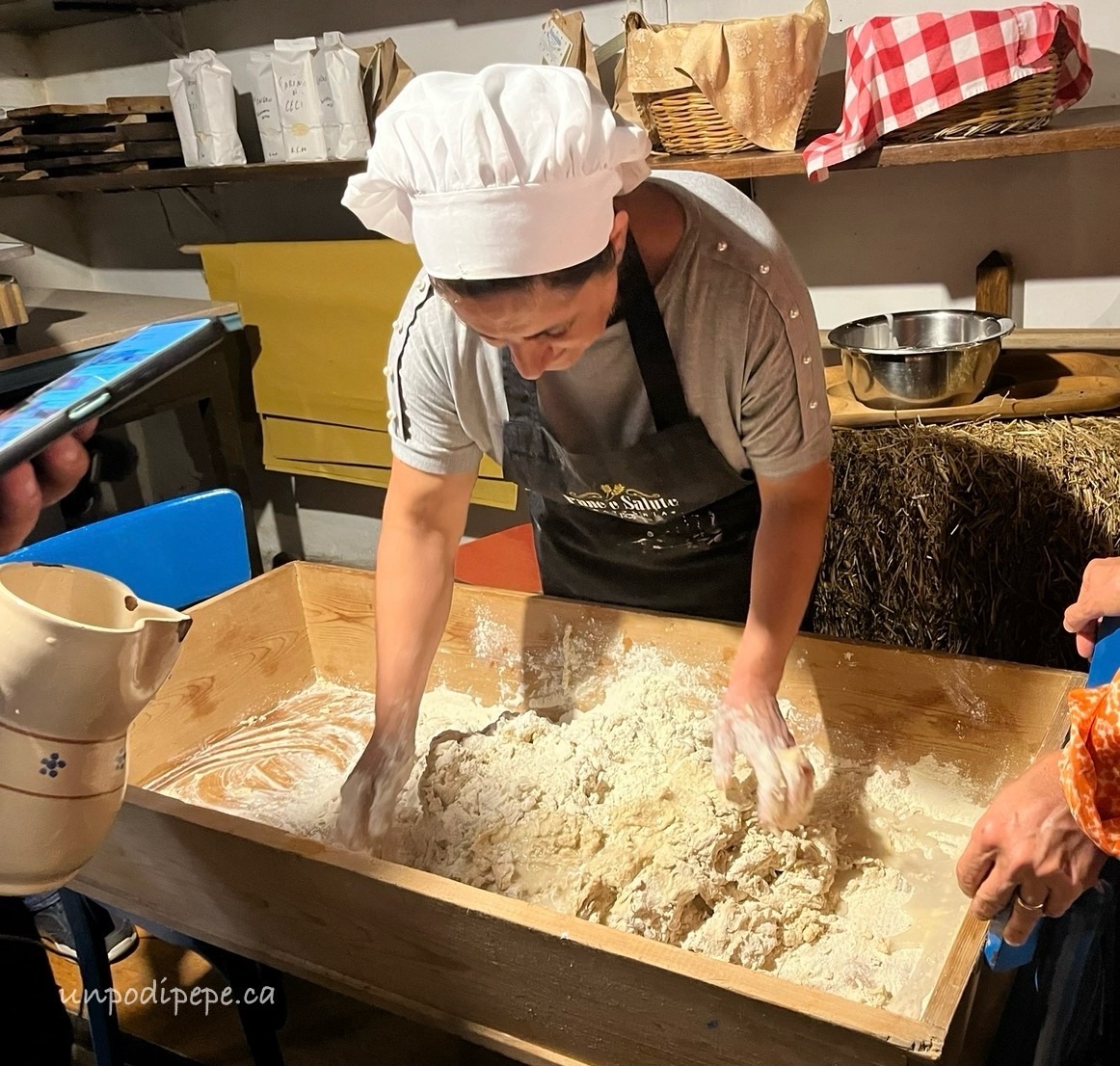
The dough is made with a flour mixture that is 70% Senatore Cappelli, a grain created in the early 1900’s by wheat agronomist Nazareno Strampelli from ancient Mediterranean grains.  In Orsara, this wheat is known as ‘Strambell’ after the creator.  It is grown mostly in Puglia, Basilicata and Sardegna.  Senatore Cappelli grain has a high protein content (14-15%) and is rich in antioxidants, Selenium, B vitamins, magnesium and iron.  It also has a less complex gluten structure, making it more digestible and a lower glycemic index.  Since it is a tall grain, it is less susceptible to weeds, so is usually farmed organically.

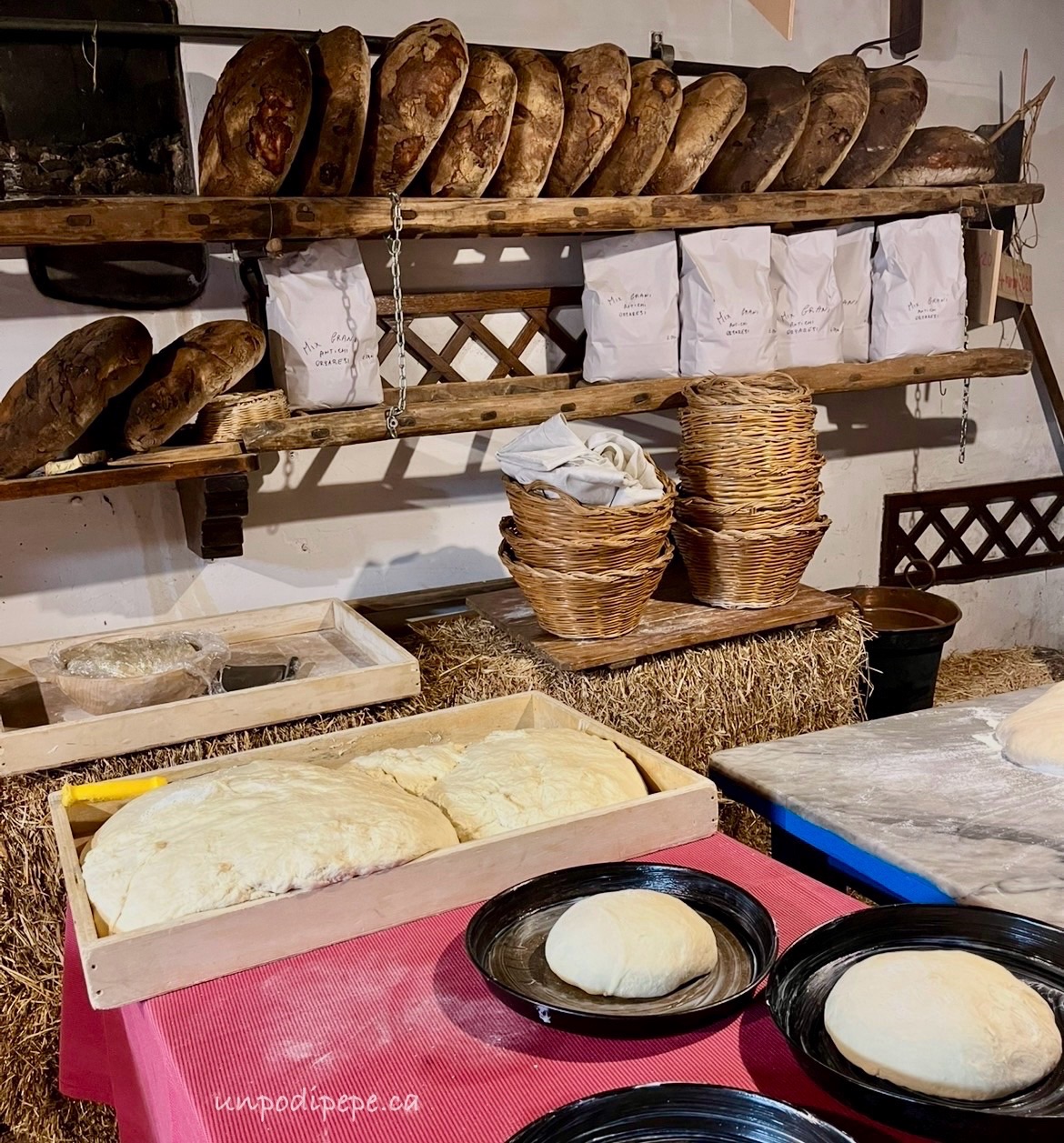
The dough is formed into in 3-4 kg rounds, given the sign of the cross, and left to rise in cloth covered straw baskets.  Straw goes into the bottom door of the forno and heat comes up the central hole, called ‘la bocca del inferno’.
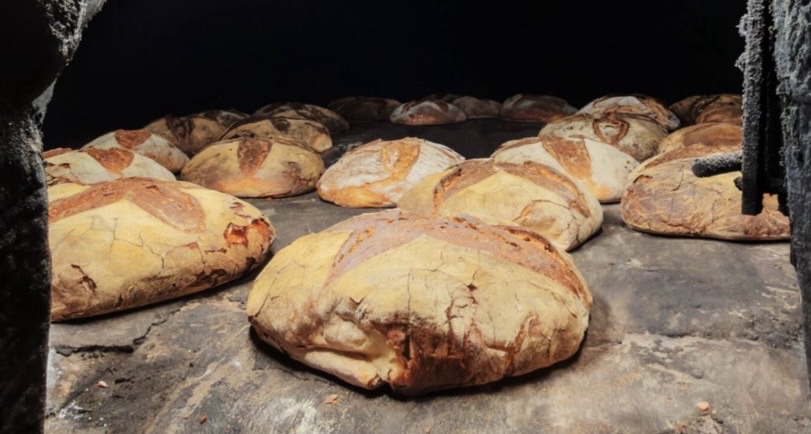
Foto from Pane e Salute website

When the forno is hot enough, the loaves are baked for 2- 2 ½ hours and then placed on the horizontal ladders to cool.  The bread comes out crusty, with a soft inside and has a long shelf life of 15 days.  The straw burning oven gives it a unique taste.  The bread sells for €5 per kilo and it is best to pre-order.
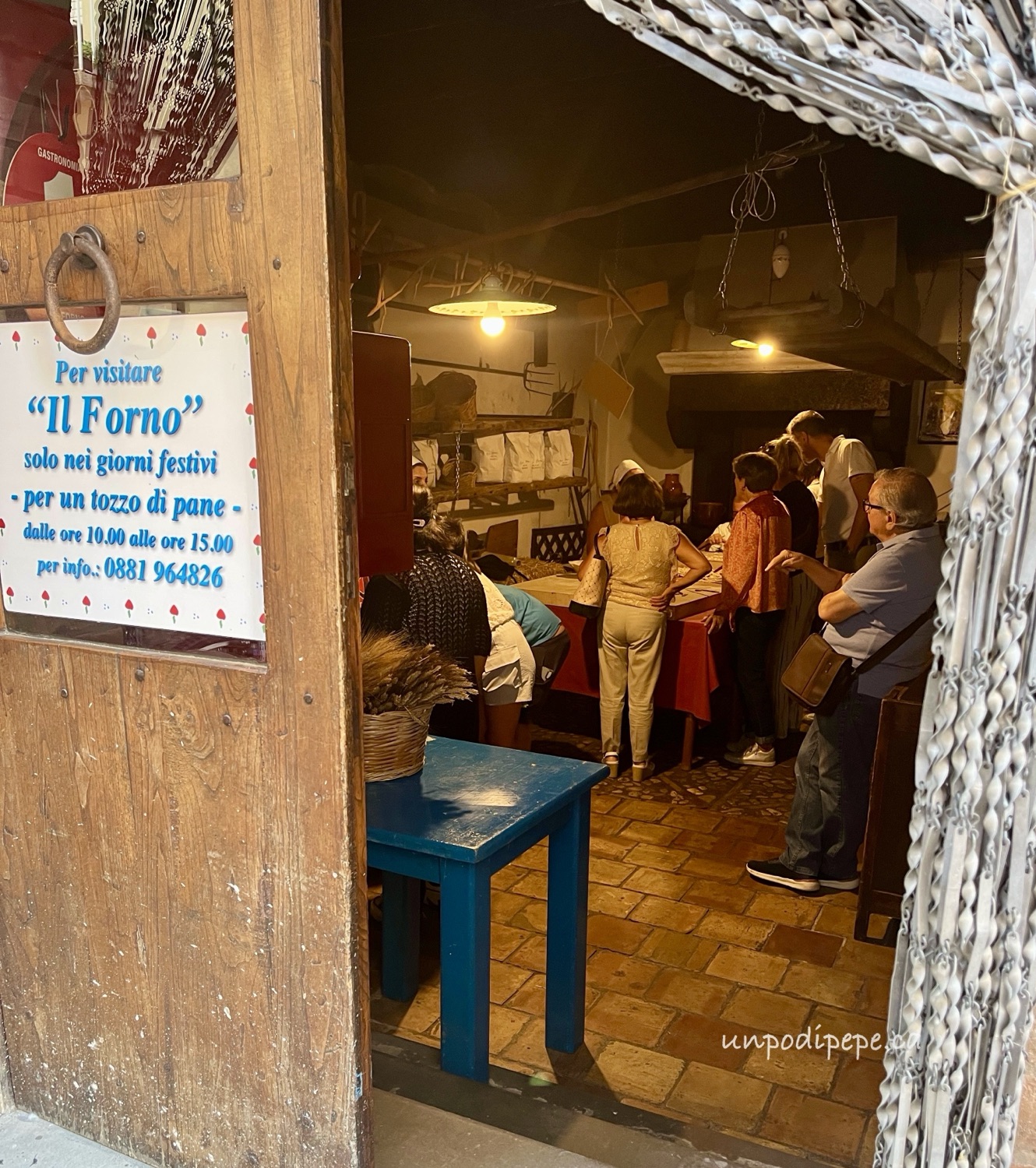
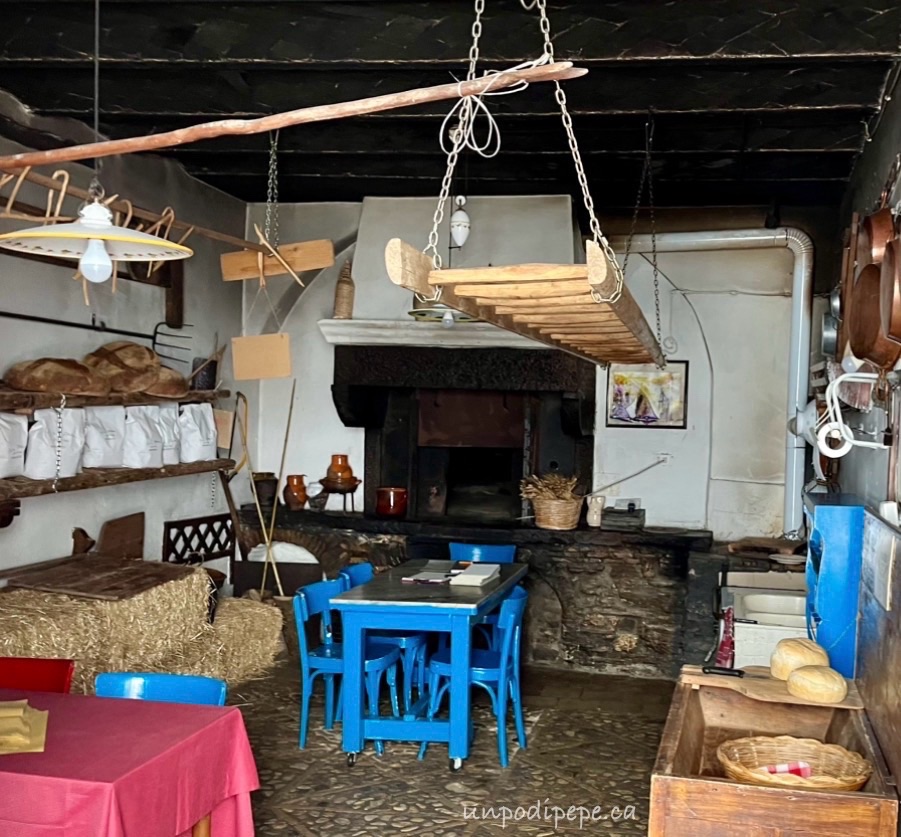
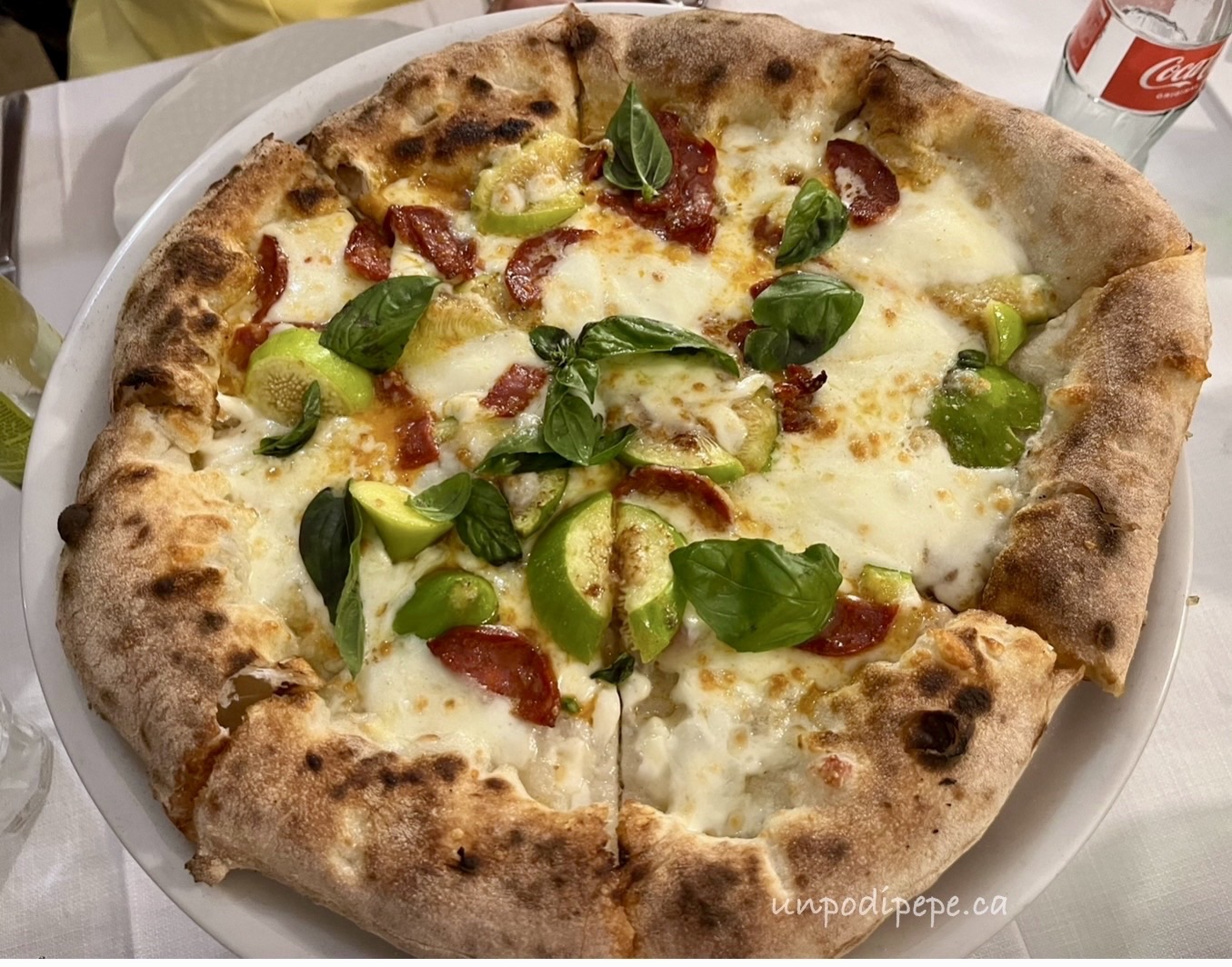
Pane e Salute is also a pizzeria and restaurant, serving traditional Orsarese dishes, such as pancotto e patate.  The restaurant consists of the forno plus 2 other rooms, and has a cozy, rustic look. In the winter, salsicce hang from the ceiling to dry in the room with the forno.  In the summer, there are tables under an archway and in the narrow street with fairy lights. Fun fact…..in the 1970’s, my nonni lived above this archway!  Pizza is made with the same bread dough, but is cooked in a pizza oven in the kitchen, not in the 1526 forno. My favourite is the salsiccia e fichi (sausage and fresh figs) pizza.
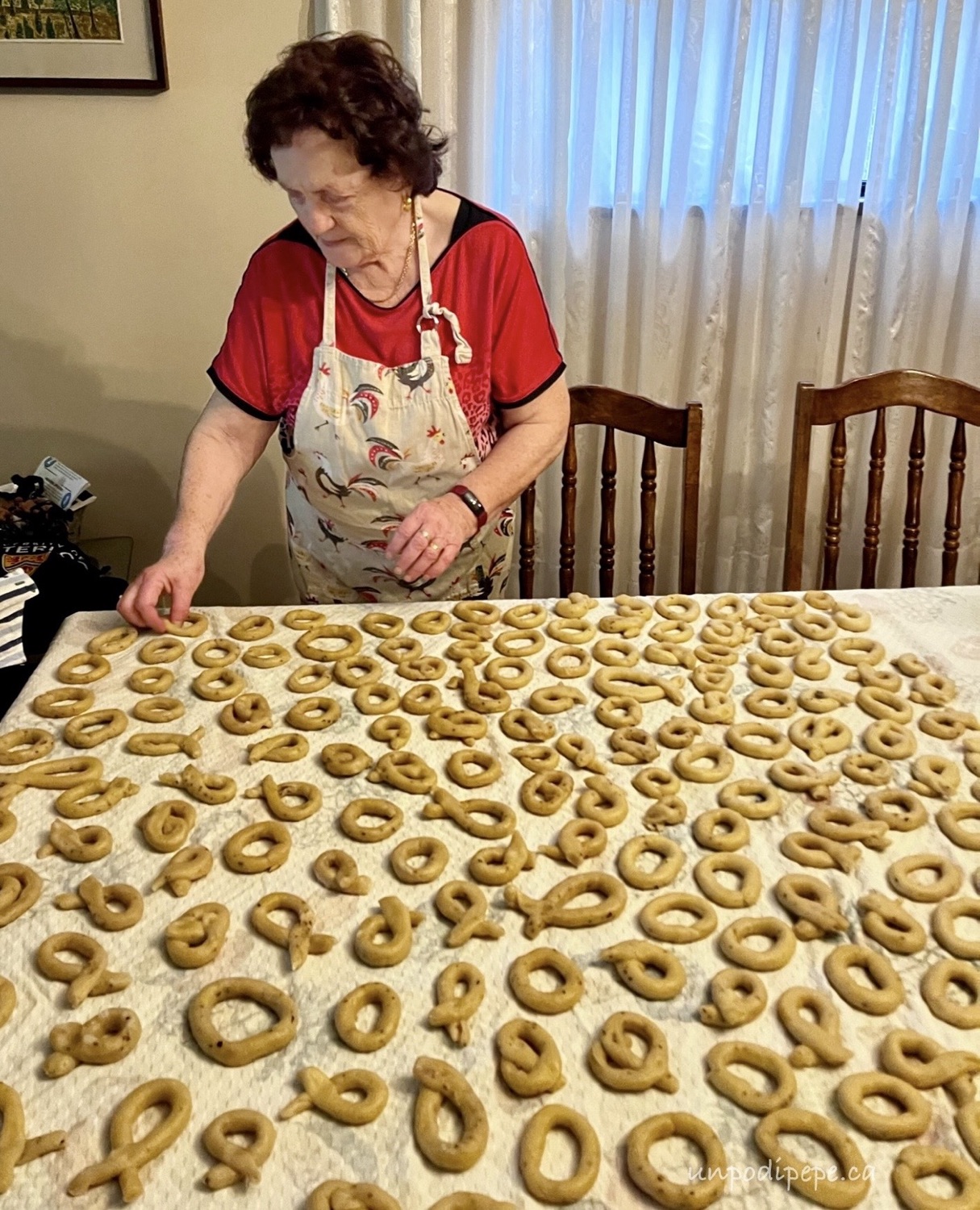
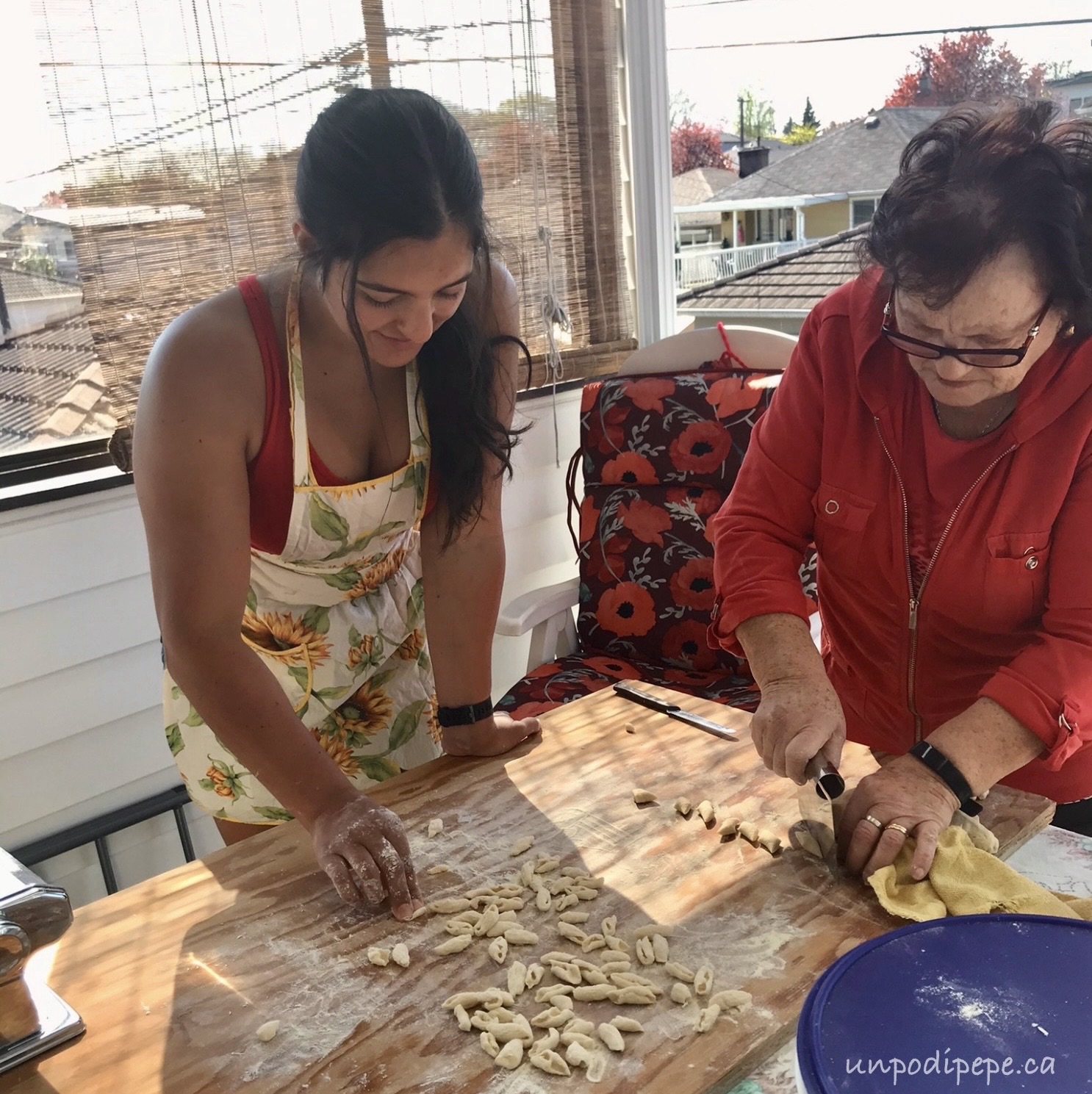
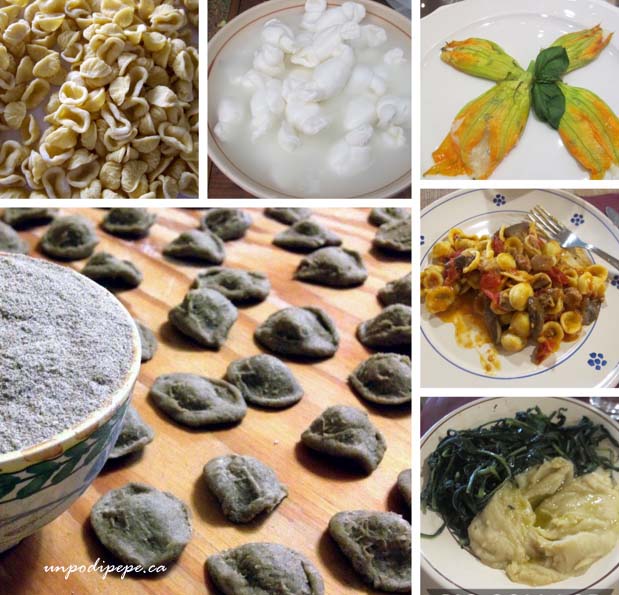
Pane e Salute also has community events, such as ‘Piccoli fornai’ (little bakers) for bambini aged 7 and up to make bread, pizza, taralli and pizze fritte.  Last summer, I attended a bread making demo and an orecchiette making workshop during the Festa del Pane.
Pane e Salute Via Caracciolo 13, Orsara di Puglia 39 327 795 956                        Hours seasonal, but usually open Friday to Sunday.

Ciao, Cristina
Share this:

  • Share on Facebook (Opens in new window) Facebook
  • Share on Pinterest (Opens in new window) Pinterest
  • Share on X (Opens in new window) X
  • Email a link to a friend (Opens in new window) Email
  • Share on WhatsApp (Opens in new window) WhatsApp
Like Loading...

Cucina Italiana Patrimonio UNESCO

31 Saturday Jan 2026

Posted by Un po' di pepe in Culture, Italia, Italian life, Mangiamo!

≈ 3 Comments

Tags

Cucina Italiana, Cucina povera, Culinary Culture, Italian food, Traditional recipes, UNESCO World Heritage Sites

Cucina Pugliese

Last month, UNESCO* (United Nations Educational, Scientific and Cultural Organization) recognized Cucina italiana/Italian cooking, as part of the Intangible Cultural Heritage of Humanity (Patrimonio Culturale Immateriale dell’Umanità).

For the first time, this designation is given to an entire distinctive national food culture rather than to a single dish or tradition. For example, previous entries include ‘The art of the Pizzaiuolo Napoletano‘ (2017) and the ‘Mediterranean Diet’ (2020).

This recognition is not about specific dishes or products.  It celebrates Cucina Italiana as a living heritage, similar to a language, deeply rooted in culinary traditions, community and local diversity. Also highlighted are biocultural diversity and sustainability, referring to the regional variety of Italian cooking, seasonality of fresh, local ingredients, respect for ingredients, and zero waste practices. Cucina Italiana is based on centuries of survival and cucina povera.

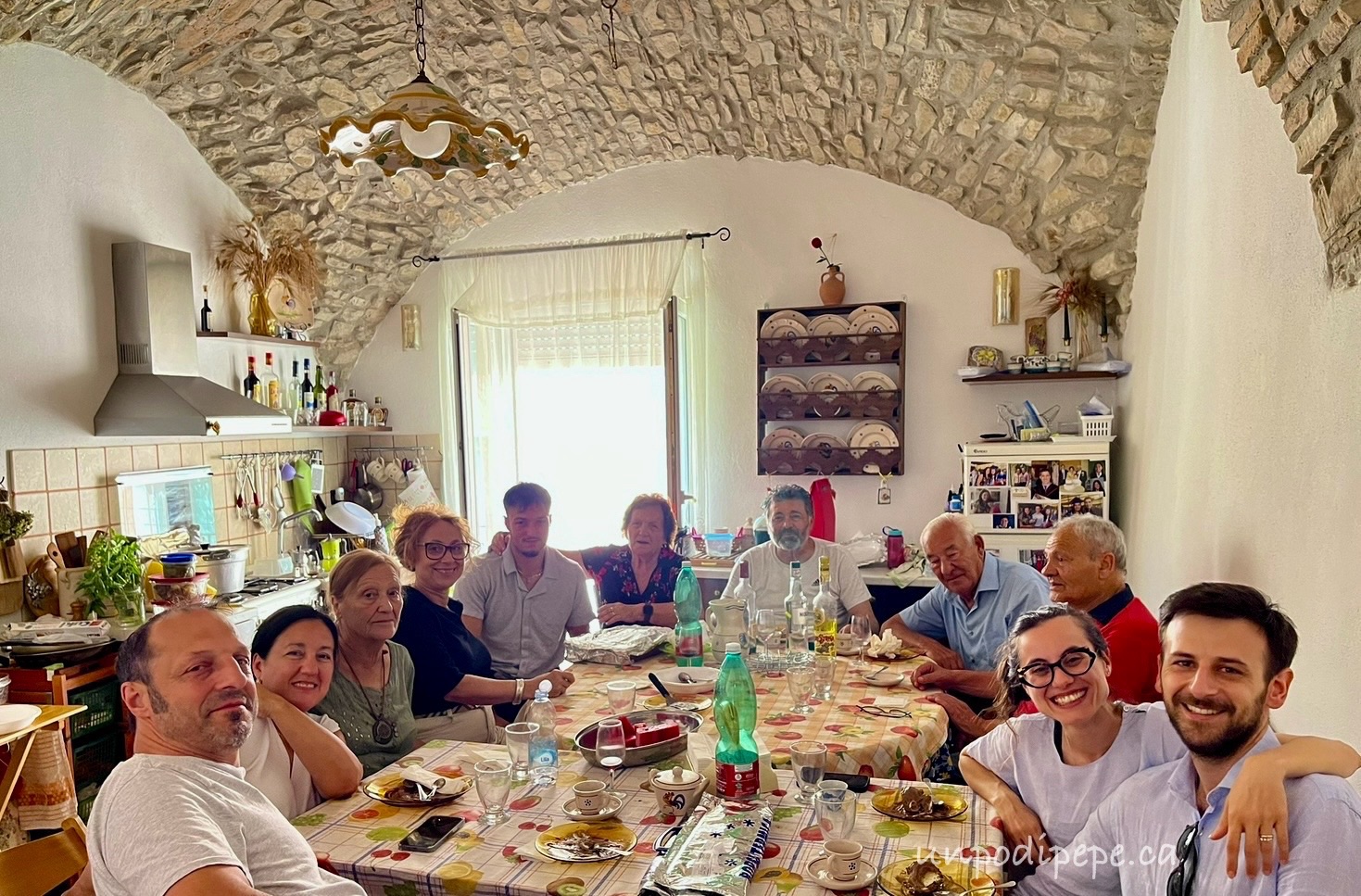
There is intergenerational transmission of artisanal food preparation techniques, skills, knowledge, and stories, often via i nonni.  Cucina Italiana provides a way to express love, preserve traditions and promote a sense of cultural identity, while gathered to share meals around the table.

What does this UNESCO recognition actually mean? Italian Prime Minister Giorgia Meloni called this a victory for Italian identity, protecting food systems, and boosting the economy.  Will this actually protect us from ‘Italian sounding’ products? Likely not, but through awareness and transmission of knowledge…such as what I aim to do with this blog….it can help protect local Italian culinary culture and promote respect for ingredients and preparation techniques.  Most people enjoy eating Italian food, but really know very little about it.

If you are fortunate enough to still have nonni, make sure to learn absolutely everything you can from them while it is still possible. Be a spugna (sponge) and absorb all the knowledge!

Learn more about cucina povera and the resilience of our contadini ancestors in the post Grano Arso.

*UNESCO (United Nations Educational, Scientific and Cultural Organization) is a UN agency that protects biodiversity, safeguards world heritage, promotes quality education, and combats misinformation. UN World Heritage Sites spotlight physical places and monuments worth celebrating and preserving.  Intangible cultural heritage does the same for cultural practices and safeguards cultural traditions at risk.

Italia has 61 entries (55 cultural, 6 natural) on the UNESCO World Heritage list and 30 entries on the tentative list. To read other Un po’ di pepe posts on UNESCO World Heritage entries, enter UNESCO in the search bar.

Buon appetito, Cristina

Share this:

  • Share on Facebook (Opens in new window) Facebook
  • Share on Pinterest (Opens in new window) Pinterest
  • Share on X (Opens in new window) X
  • Email a link to a friend (Opens in new window) Email
  • Share on WhatsApp (Opens in new window) WhatsApp
Like Loading...

Olive Oil Limoncello Cake

25 Thursday Jan 2018

Posted by Un po' di pepe in Mangiamo!, Recipes

≈ 28 Comments

Tags

Casa Berti, Catalyst Art Retreat, Cucina Italiana, Dolci, Gugliano, Italian food, Limoncello, Lucca, Olive oil harvest, Olive oil limoncello cake

In November I attended an art retreat, surrounded by 900 olive trees!  It was at Casa Berti near Gugliano, about 40 minutes outside of Lucca. There were also lemon trees in giant terra cotta pots on the terrace, not yet ready to be moved into the limonaia for the winter. Many of the lemons become limoncello.  I was so inspired and distracted by the olive trees that I took several breaks from art making to pick olives.  I could not help it-they were calling to me!  Every day or two, when there were enough picked, they would be taken to the frantoio or olive press and then return to Casa Berti as lush, fragrant oil.  Green gold as a friend calls it. The Casa Berti cucina had a stainless steel bidone full of new oil with a little spout for pouring.

Being surrounded by olives, freshly pressed oil, fresh lemons and limoncello, I had the urge to make an olive oil limoncello cake.  I have been making this cake for years, but I did not have the recipe with me.  I also left my art making to bake just when Ben, the owner of Casa Berti, had gone on another run to the frantoio with olives. I searched the kitchen but could not find any measuring utensils or a scale, so the measurements were all a big guess. ??? Luckily I knew where the limoncello was!

The cake came out better than usual, probably due to the quality and freshness of the ingredients.  I usually just dust it simply with zucchero in polvere-icing sugar.  For a fancier look, make a limoncello glaze with icing sugar and limoncello.  The cake is also nice with fresh fruit, especially raspberries or blueberries.  It goes equally well with a cup of espresso or a glass of limoncello and is also very easy to make-you don’t even need a mixer-just a wooden spoon and a whisk.  I adjusted some of the amounts to the recipe based on the Casa Berti cake, but if your measurements are not exact, non ti preoccupare, it will probably still taste good!

Casa Berti

Casa Berti Olive Oil Limoncello Cake

400g (~3 cups) flour

200g (almost 1 cup) sugar

4 medium sized eggs or 3 large eggs

160ml (~ ¾ cup) extra virgin olive oil

130 ml (~½ cup) milk

60 ml (¼ cup, 4 tablespoons) limoncello

Grated zest/peel of 2 organic lemons

16g packet Pane degli Angeli (or 15 ml/1 tablespoon baking powder)

  1. Preheat oven to 160°C (325°F)
  2. Butter and flour a 23 cm (9 inch) pan
  3. In a small bowl, add the lemon peel to the sugar and mix with fingers or the back of a spoon until they are well mixed and the sugar looks damp
  4. Whisk the eggs and add the sugar/peel mixture
  5. Add the olive oil, milk and limoncello
  6. Add flour a bit at a time and stir with a wooden spoon just until the flour is mixed in.  Do not over mix
  7. Add Pane degli Angeli
  8. Spoon into the pan and bake for 40-45 minutes.  Be careful not to overbake or it may come out dry
  9. Cool and dust with icing sugar
  10. For a fancier topping, make a limoncello glaze with 1 cup icing sugar and 30 ml (2 tablespoons) limoncello.  If it is too dry, add another 15 ml (1 tablespoon) limoncello or milk.  Mix together and drizzle onto cake.

For a post on how to make your own limoncello, click Limoncello.  Buon appetito, Cristina

Share this:

  • Share on Facebook (Opens in new window) Facebook
  • Share on Pinterest (Opens in new window) Pinterest
  • Share on X (Opens in new window) X
  • Email a link to a friend (Opens in new window) Email
  • Share on WhatsApp (Opens in new window) WhatsApp
Like Loading...

Enter your email address to follow 'un po' di pepe' and receive notifications of new posts by email.

Join 510 other subscribers
Follow Un po' di pepe on WordPress.com

Popular Posts

  • Hairstyling in Ancient Roma
    Hairstyling in Ancient Roma
  • La Trinità di Masaccio
    La Trinità di Masaccio
  • Santa Maria in Aracoeli
    Santa Maria in Aracoeli
  • Melagrana
    Melagrana
  • Internment of Italian Canadians
    Internment of Italian Canadians
  • Italiano per Ristoranti~How to pronounce your restaurant menu
    Italiano per Ristoranti~How to pronounce your restaurant menu
  • Limoncello Ricotta Cookies
    Limoncello Ricotta Cookies

Recent Posts

  • Bloghiversario #12
  • Pane e Salute
  • Sanremo 2026
  • Cucina Italiana Patrimonio UNESCO
  • 2025~Un po’ di pepe Year in Review
  • Castel del Monte
  • ‘The Nuances of Love’
  • Hostaria Antica Roma~Eat like an Ancient Roman
  • Santa Maria in Aracoeli
  • Casino dell’Aurora~Villa Boncompagni Ludovisi
  • Nasoni di Roma
  • Bloghiversario #11
  • Fontana di Trevi
  • Acqua Vergine
  • Giubileo 2025
  • Sanremo 2025
  • In Vino there are Memories
  • A Literary Harvest
  • 2024~Un po’ di pepe Year in Review
  • Buon Natale 2024
  • Il Bicerin
  • Mercato Porta Palazzo
  • Torino
  • Catanzaro, Calabria
  • Il Pumo Pugliese

Categories

Amici e Famiglia Architecture Art Art history Art projects Bilingual posts Blogging Canada Culture Feste Firenze Inspiration Italia Italian Folklore Italian language Italian life Italocanadesi Libri Mangiamo! Orsara di Puglia Parole piacevoli Photography Puglia Recipes Roma Travel Travel tips Uncategorized Vino

Archives

Un po’ di pepe on Facebook

Un po’ di pepe on Facebook

Start a Blog at WordPress.com.

  • Subscribe Subscribed
    • Un po' di pepe
    • Join 510 other subscribers
    • Already have a WordPress.com account? Log in now.
    • Un po' di pepe
    • Subscribe Subscribed
    • Sign up
    • Log in
    • Report this content
    • View site in Reader
    • Manage subscriptions
    • Collapse this bar

Loading Comments...

    %d