• Home
  • About me/Chi sono
  • Contact

Un po' di pepe

~ …… (oon∙poh∙dee∙PEH∙peh) Cristina writes about interesting stuff /Cristina scrive di cose interessanti

Un po' di pepe

Tag Archives: Italian Canadian Literature

‘The Nuances of Love’

13 Monday Oct 2025

Posted by Un po' di pepe in Bilingual posts, Inspiration, Libri, Uncategorized

≈ 2 Comments

Tags

AICW, Association of Italian Canadian Writers, Italian Canadian Literature, Poetry

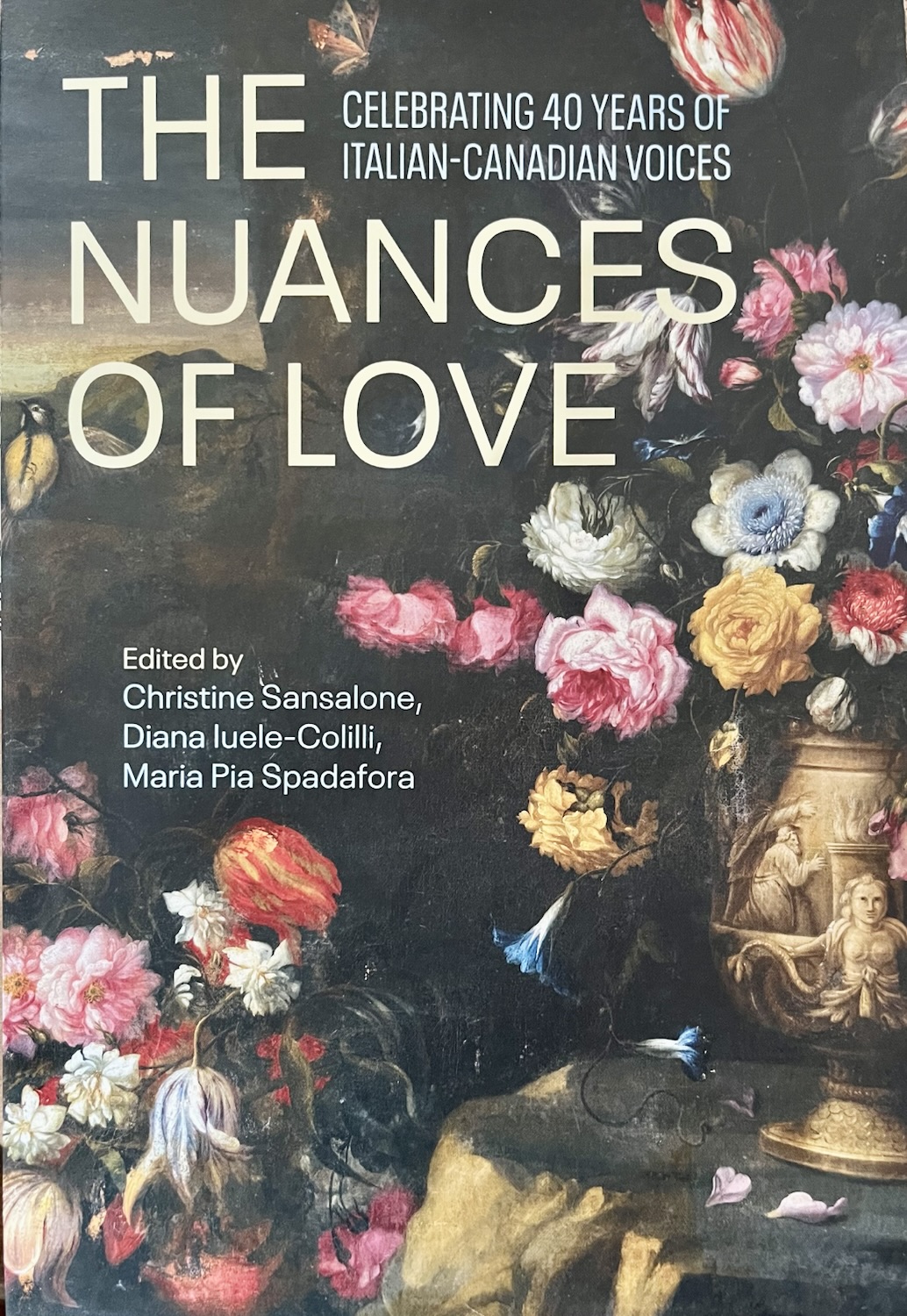
‘The Nuances of Love:  Celebrating 40 years of Italian-Canadian voices‘ celebrates 4 decades of the AICW (Association of Italian Canadian Writers). Edited by Christine Sansalone, Diana Iuele-Colilli and Maria Pia Spadafora, this gorgeous anthology is a collection of poetry and prose on the themes of love and friendship. It also celebrates the power and importance of storytelling and community. 46 Italian-Canadian writers contributed to this anthology, and one of them is me!

It is available for purchase for $25.00 (Can)from Guernica Editions and on Amazon.ca

My contribution is a poem.  I do not normally write poetry, as you can tell from the title ‘Vorrei essere una poetessa‘ (I would like to be a poet). Since I can, I am posting it here, but you will have to get your own book if you want to read the other 45 contributions.

The poem was written directly in Italiano.  Since I know a few of you will ask ‘where can I find it in English’ I did a very quick translation. Some of the concepts do not translate well, but I did my best-you can find it at the end.

Vorrei essere una poetessa

Vorrei essere una poetessa.

Così potrei esprimere tutto cio’ che vorrei dire

con parole magiche

che si sciolgono dalla lingua

Vorrei usare parole come affascinante e meraviglioso

per descrivere le cose di cui scriverò

Che posso mettere a parole…..


la luce gloriosa del sole estivo di meta’ pomeriggio,

che proietta ombre nascoste sui muri di pietra


I suoni allegri dei bambini

quando giocano a calcio

nelle viuzze strette


la vista mozzafiato

dalle scogliere sul mare

e la tenerezza della brezza marina

quando ti accarezza le spalle


la tavolozza ricca di colori brillanti

come il blu oltremare e terra di Siena bruciata

che diventano un dipinto quando incontrano la tela


l’emozione quando uno si trova

adavanti ad un capolavoro di Caravaggio,

con chiaroscuro e luci drammatiche

magnifico da ogni lato


Il profumo indimenticabile

del pane appena sfornato

che fa venire l’acquolina in bocca

e fa brontolare la pancia


Il gusto di un bicchiere di vino profumato e corposo

fatto con un’uva locale

e condiviso con i migliori amici

che valgono più dell’oro


la gioia dell’amore al primo sguardo

e anche la profondità della tristezza

di un cuore spezzato in mille pezzi

per un amore non ricambiato


Per tutti questi è difficile trovare le parole,

o scegliere gli aggettivi adeguati

Vorrei essere una poetessa….

purtroppo non trovo le parole

e non so da dove e come cominciare.

Published in:  ‘The Nuances of Love: Celebrating 40 years of Italian-     Canadian voices.  Editors Christine Sansalone, Diana Iuele-Colilli and Maria Pia Spadafora.  Guernica Editions (2025), p 40-41.

In Inglese/in English:

I would like to be a poet

So that I can express everything I want to say

with magical words

that roll off the tongue

I want to use words like fascinating and wonderful

to describe the things I will write about

So that I can put into words…

the glorious light of the mid-afternoon summer sun,

projecting cast shadows on crumbling stone walls

The joyful sounds of children

playing with a soccer ball

in narrow cobblestone streets

the breathtaking view

from cliffs overlooking the sea

and the tenderness of the sea breeze

when it caresses your shoulders

the rich palette of brilliant colors

such as ultramarine blue and burnt sienna

that become a painting when they meet the canvas

the emotion of finding oneself

in front of a masterpiece by Caravaggio,

painted in chiaroscuro, with dramatic lighting

magnificent from every angle

The unforgettable aroma

of freshly baked bread

that makes the mouth water

and the stomach rumble

The taste of a fragrant, full-bodied glass of wine

made with local grapes

and shared with dearest friends

who are worth more than gold

The joy of love at first sight

and also the profound sadness

of a heart shattered into a thousand pieces

for an unrequited love

For all of these, it is difficult to find the words,

or choose the proper adjectives.

I would like to be a poet…

unfortunately, I cannot find the words

and I do not know where or how to begin.

Ciao, Cristina


Share this:

  • Click to share on Facebook (Opens in new window) Facebook
  • Click to share on Pinterest (Opens in new window) Pinterest
  • Click to share on X (Opens in new window) X
  • Click to email a link to a friend (Opens in new window) Email
  • Click to share on WhatsApp (Opens in new window) WhatsApp
Like Loading...

In Vino there are Memories

24 Friday Jan 2025

Posted by Un po' di pepe in Amici e Famiglia, Bilingual posts, Italocanadesi, Vino

≈ 14 Comments

Tags

Food writing, Italian Canadian Literature, Italocanadesi, Pugliese Traditions, vino cotto, Winemaking

To celebrate my birthday, today I am posting my story from the recently published anthology ‘A Literary Harvest: Canadian Writing about Wine and other Libations’.  I hope you enjoy it as much as I enjoyed writing it.  It is followed by an Italian translation.  Per l’italiano, leggi sotto.  Salute!….

When I look into a glass of wine, I see more than a delicious beverage to sip and enjoy. I see tradition and family, and a piece of my cultural heritage. I think of my Nonno’s vineyard in Puglia and I imagine my ancestors tilling the soil. I also imagine the journey the grapes made, coming from Greece and the Balkans millennia ago, then again across the Atlantic to North America. Immigrant journeys, similar to ours.

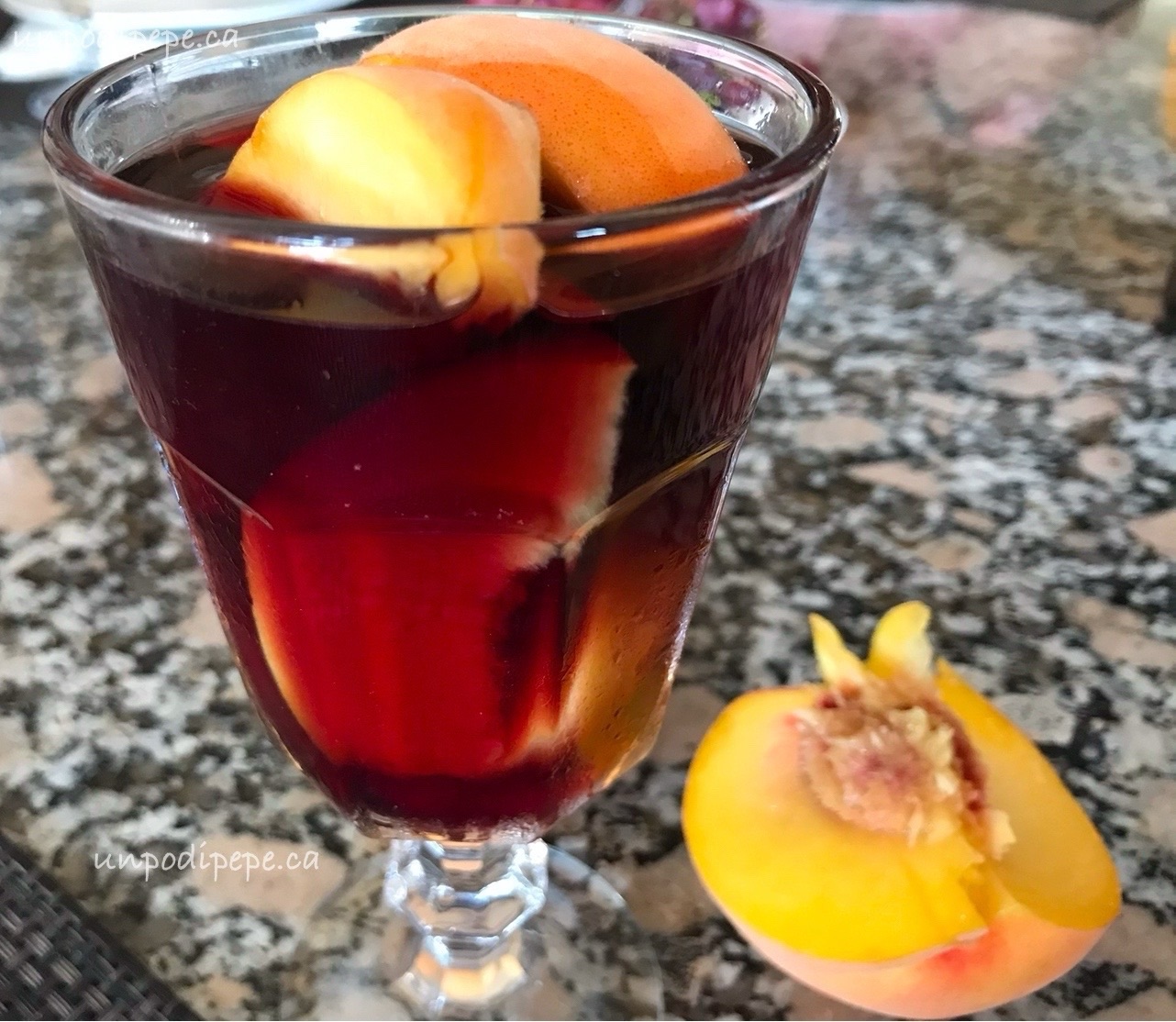
Wine is an integral part of growing up in an italocanadese family and is a staple of every family function. Everyone was allowed to have a bit of vino with dinner – it was exciting and made us feel grown up. Even when we were little … at first with 7-Up, Sprite or Ginger Ale, and eventually straight vino. In the summer, everyone looks forward to la pesca in vino. This involves cutting up a fresh peach, placing the slices in a glass, then filling it with vino. After the wine is consumed, lovely, sweet, wine-saturated peach slices await you for dessert. The peach slices take up most of the space in the glass, so the amount of wine to drink is really very little.

Wine making season is mid- to late-September, right after the pomodori are canned and stored in the cantina. The grapes grown in the back-yard garden are mostly for eating, so wine grapes are purchased from the Okanagan Valley. This is an area with summer weather similar to southern Italia … hot and dry during the day and colder at night. This combination produces the sweetest grapes.

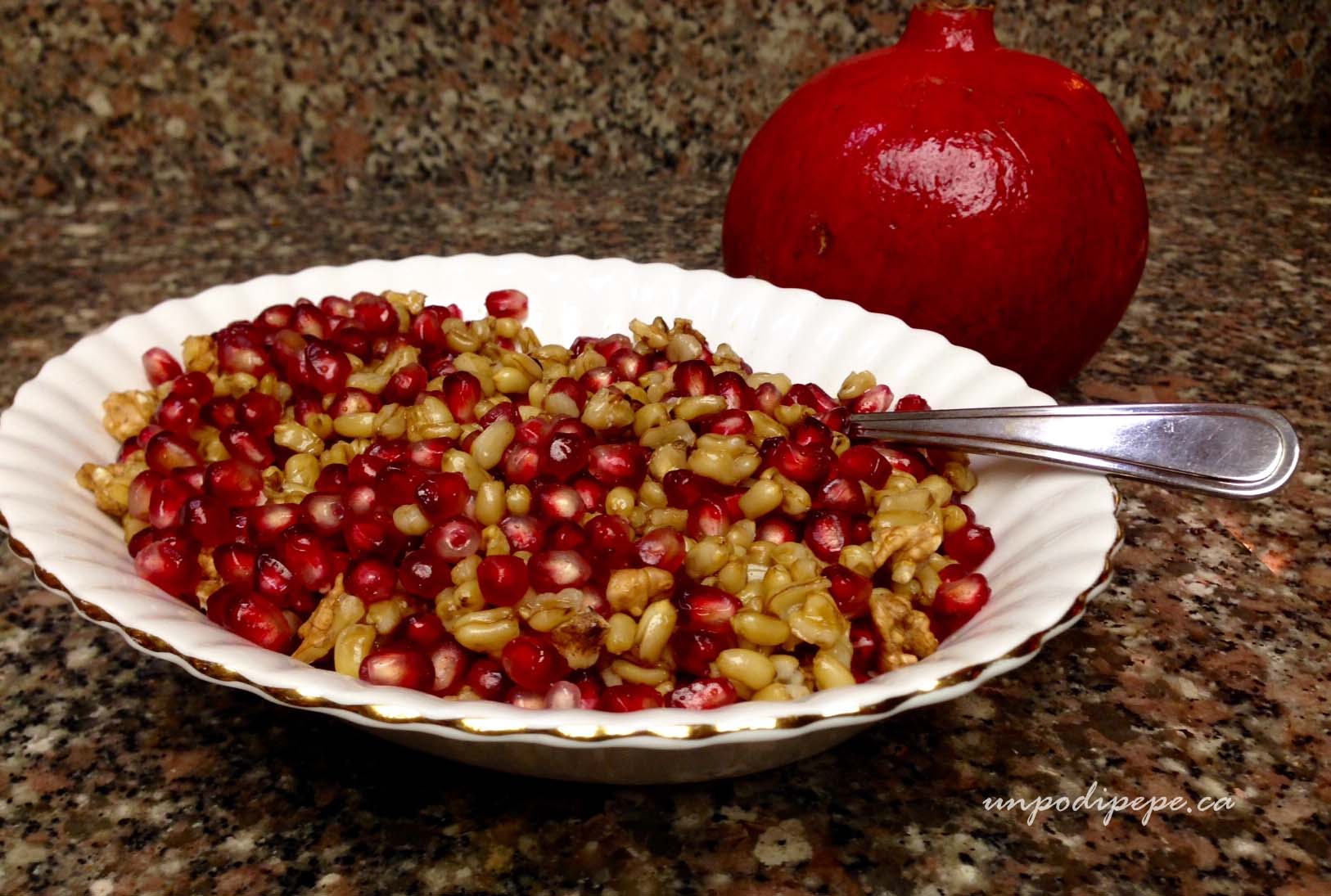
Making vino is a real family affair. When the grapes arrive, everyone who is free lends a hand, even the little ones, the nipotini. We help cart the boxes of grapes from the truck and empty them straight into the hand cranked grape crusher on top of a barrel.  Everything goes in;  skins, seeds and stems. Then we break apart the boxes, or else the wasps soon descend- Vespe know a good thing when they smell it! All month the aroma of fermenting grapes fills the garage!Mamma takes some of the mosto, the wine must, and boils it down like molasses to make vino cotto.  It really should be called mosto cotto, but we have always called it vino cotto. The thick, sweet liquid is poured over boiled wheat berries on November 1st to celebrate Tutti i Santi, All Saints’ Day. This traditional dish, in the local dialect, is called muscitaglia, from the words in Greek and Latin mosto and talia (grain). Walnut pieces and pomegranate seeds are added when available. Vino cotto is also drizzled on cartellate, a traditional Pugliese Christmas treat, and even on snow, like a vino cotto slushie!

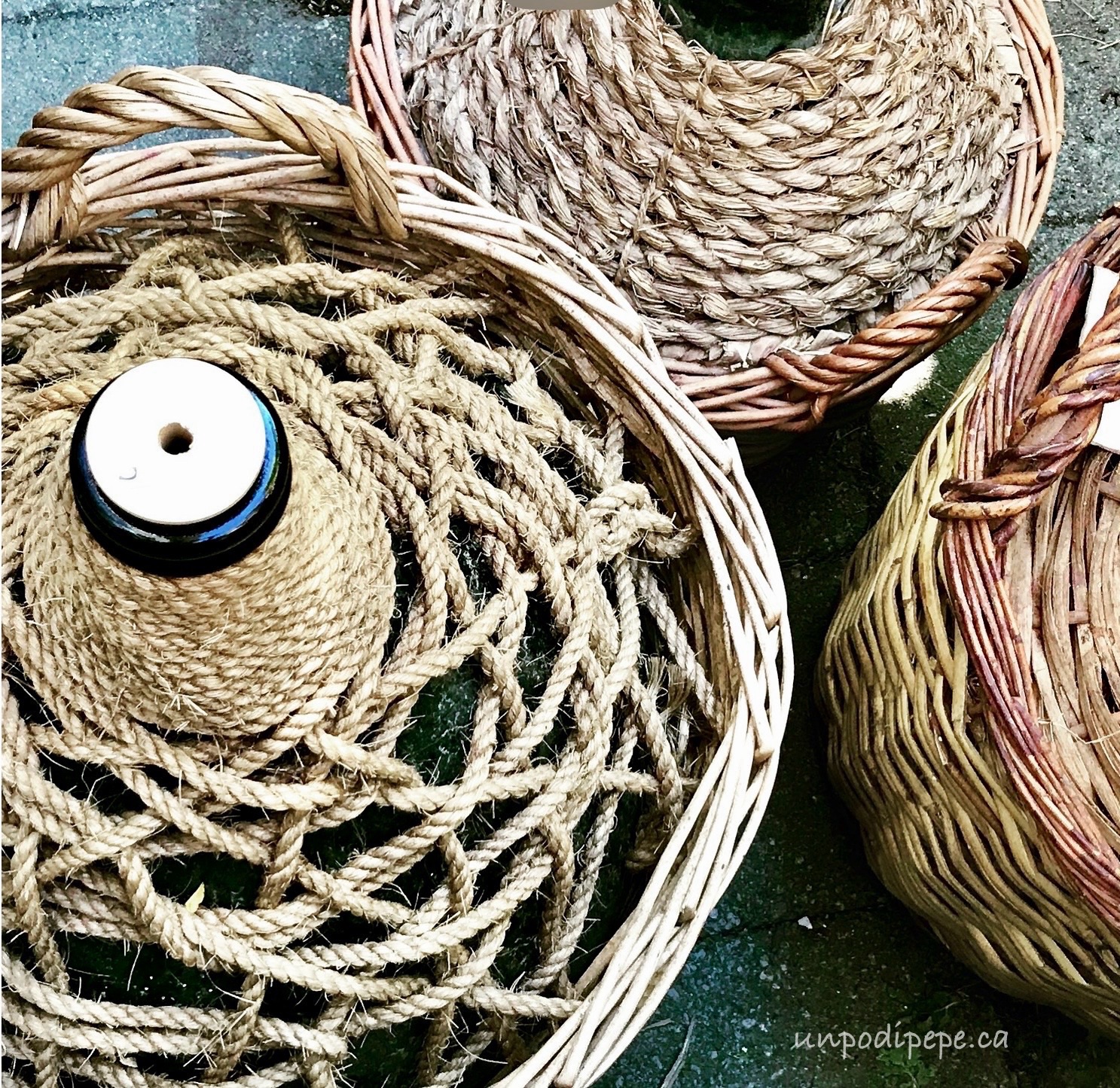
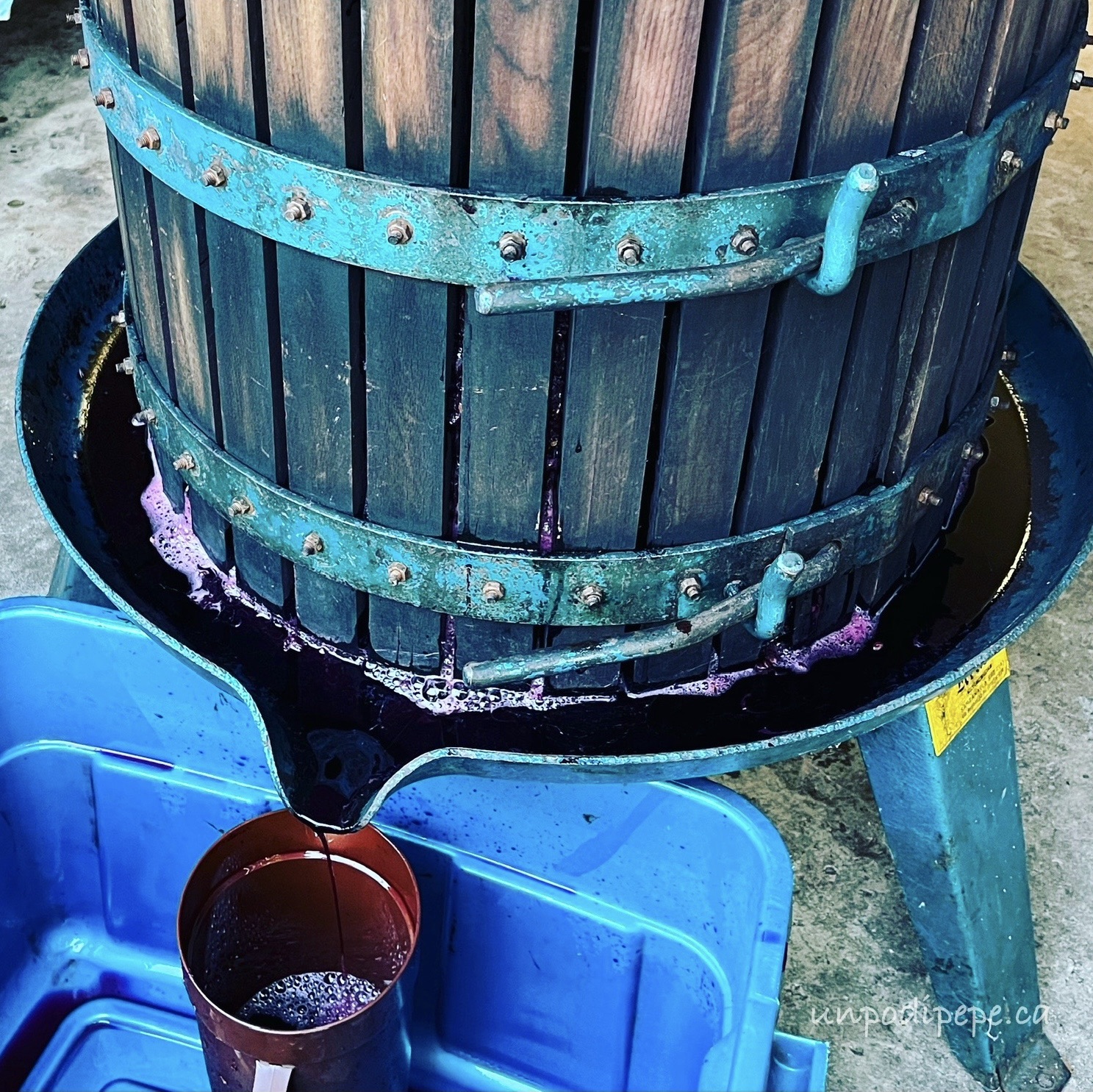
When ready, the fermented grapes are transferred to the old wooden torchio, for pressing. Since there are no preservatives added, our vino is stored in large, bell-shaped, wicker-covered glass damigiane, and siphoned into bottles only as needed. The wine needs to be tramutato a few times. This involves transferring it from one damigiana to another, to remove sediment. Like everything else Papà does, this is done according to the phases of the moon. Vino is tramutato during la luna calante, the waning moon, although the damigiane are still left open to air. On November 11th, the feast day of Saint Martin, the new vino is tasted and then the damigiane are closed until bottling. The old proverbs say “A San Martino, ogni mosto diventa vino” which means “On St Martin’s Day, every must turns into wine”, and ‘A San Martino, si lascia l’acqua e si beve vino’, ‘On Saint Martin’s Day, one abandons water and drinks wine’.

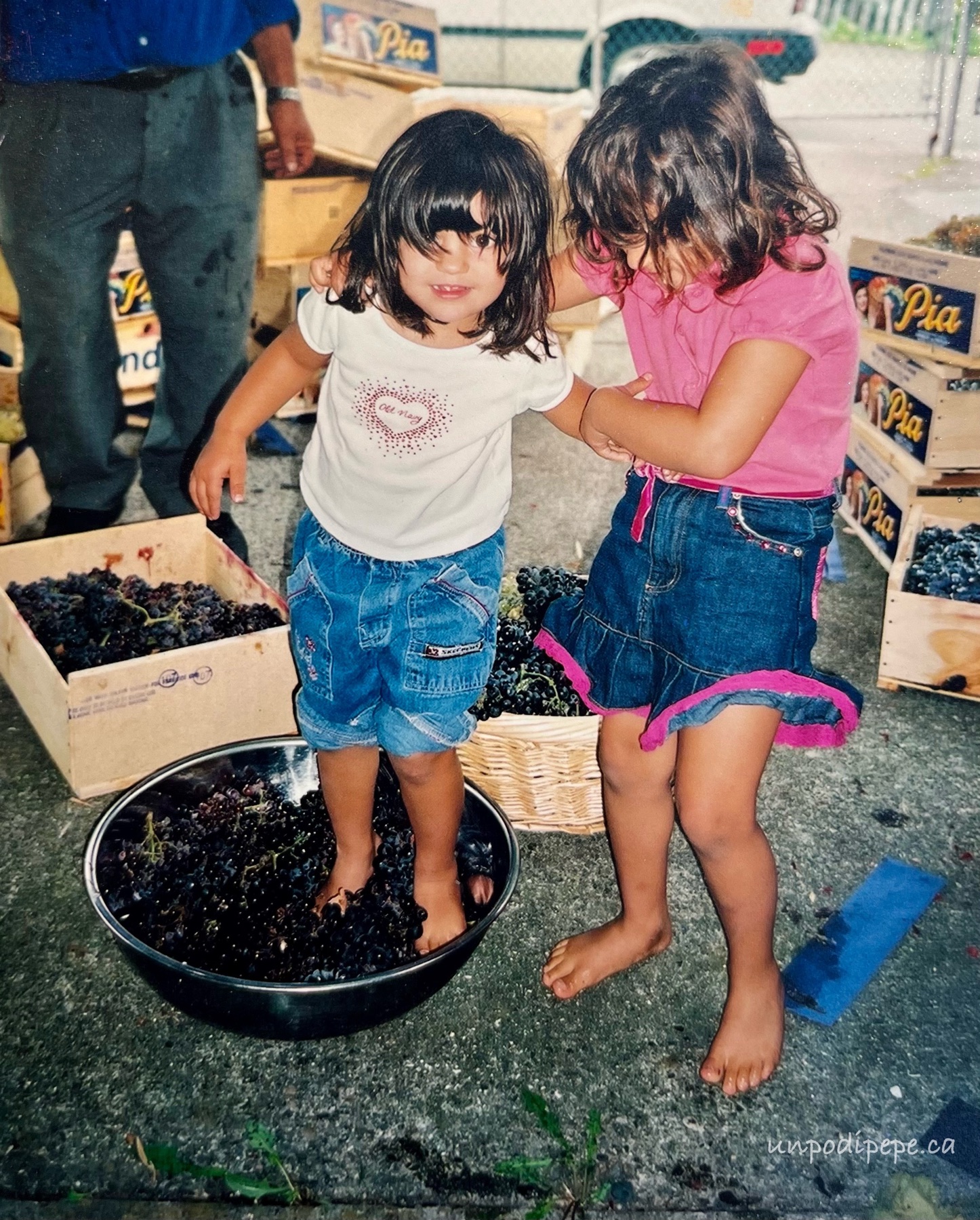
Papà makes the best vino. No sulfites or preservatives, just pure fermented grape juice. It has a full, robust flavour and does not leave you with a headache. Whenever anyone (anyone non-Italian, that is), asks him how he makes such good vino, he always has the same answer. “Ok … I tell you” … then he gets all dramatic… “for 2 weeks … I no wash the feet…” You can see where this is going. It is amazing how many people sit there open-mouthed for a few minutes and actually believe him! That is, until they see the mischievous smirk on his face. Just for fun, all of my nipotini have had photos taken à la “I Love Lucy,” crushing grapes in a half barrel or tub with their bare feet. These grapes are not added to il torchio, even though they did wash their feet. Salute!

         Published in ‘A Literary Harvest:  Canadian Writing about Wine and Other Libations. Editors Licia Canton, Giulia De Gasperi & Decio Cusmano.  Longbridge Books, 2025, p 94-96.

In Italiano:

Nel Vino ci sono Ricordi

Quando guardo dentro un bicchiere di vino, vedo più di una bevanda deliziosa da sorseggiare e gustare. Vedo tradizione e famiglia, e un pezzo del mio patrimonio culturale. Penso al vigneto di mio nonno in Puglia e immagino i miei antenati che coltivano la terra. Immagino anche il viaggio che hanno fatto le uve, provenienti dalla Grecia e dai Balcani millenni fa, poi di nuovo attraverso l’Atlantico fino al Nord America. Viaggi di immigrazione, simili ai nostri.

Il vino è parte integrante della crescita in una famiglia italocanadese ed è un elemento fondamentale di ogni festa familiare. A tutti era permesso bere un po’ di vino a cena: era emozionante e ci faceva sentire grandi. Anche quando eravamo piccoli… all’inizio con 7-Up, Sprite o Ginger Ale, e alla fine vino puro. In estate, tutti aspettano con ansia la pesca in vino. Ciò comporta tagliare una pesca fresca, mettere le fette in un bicchiere, quindi riempirlo di vino. Dopo aver consumato il vino, deliziose, dolci, fette di pesca sature di vino ti aspettano. Le fette di pesca occupano la maggior parte dello spazio nel bicchiere, quindi la quantità di vino da bere è davvero molto ridotta.

La stagione della vinificazione va da metà a fine settembre, subito dopo che i pomodori sono stati inscatolati e conservati in cantina. L’uva coltivata nel orto sul retro è destinata al consumo umano, quindi l’uva da vino viene acquistata nella Okanagan Valley. Questa è una zona con un clima estivo simile a quello dell’Italia meridionale… caldo e secco durante il giorno e più freddo di notte. Questa combinazione produce l’uva più dolce.

La produzione del vino è una vera e propria faccenda di famiglia. Quando arriva l’uva, tutti quelli che sono liberi danno una mano, anche i più piccoli, i nipotini. Aiutiamo a trasportare le casse di uva dal camion e le svuotiamo direttamente nella pigiatrice a manovella in cima a una botte. Ci mettiamo dentro tutto: bucce, semi e raspi. Poi rompiamo le casse, altrimenti le vespe scenderanno presto: le vespe sanno riconoscere una cosa buona quando la sentono! Per tutto il mese l’aroma dell’uva in fermentazione riempie il garage!

Mamma prende un po’ di mosto di vino, e lo fa bollire come la melassa per fare il vino cotto. Dovrebbe chiamarsi mosto cotto, ma noi lo abbiamo sempre chiamato vino cotto. Il liquido denso e dolce viene versato sui chicchi di grano bolliti il ​​1° novembre per celebrare la festa di Tutti i Santi, il giorno di Ognissanti. Questo piatto tradizionale, nel dialetto locale, è chiamato muscitaglia, dalle parole in greco e latino mosto e talia (grano). Pezzi di noce e semi di melograno vengono aggiunti quando disponibili. Il vino cotto viene anche versato sulle cartellate, un dolce natalizio tradizionale pugliese, e anche sulla neve, come un granita di vino cotto!

Quando è pronto, l’uva fermentata viene trasferita nel vecchio torchio di legno, per la pressatura. Poiché non vengono aggiunti conservanti, il nostro vino viene conservato in grandi damigiane di vetro a forma di campana, ricoperte di vimini, e travasato nelle bottiglie solo quando necessario. Il vino deve essere travasato un paio di volte. Ciò comporta il trasferimento da una damigiana all’altra, per rimuovere i sedimenti. Come ogni altra cosa che fa Papà, questo viene fatto in base alle fasi lunari. Il vino viene travasato durante la luna calante, anche se le damigiane vengono comunque lasciate all’aria aperta. L’11 novembre, giorno della festa di San Martino, si assaggia il vino nuovo e poi le damigiane vengono chiuse fino all’imbottigliamento. I vecchi proverbi dicono “A San Martino, ogni mosto diventa vino” e “A San Martino, si lascia l’acqua e si beve vino”.

Papà fa il miglior vino. Niente solfiti o conservanti, solo puro succo d’uva fermentato. Ha un sapore pieno e robusto e non ti lascia il mal di testa. Ogni volta che qualcuno (chiunque non sia italiano, ovviamente) gli chiede come fa a fare un vino così buono, lui ha sempre la stessa risposta. “Ok… ti dico”… poi diventa tutto drammatico… “per due settimane… non si lavano i piedi…” Puoi capire dove vogliamo arrivare. È incredibile quante persone se ne stanno lì a bocca aperta per qualche minuto e ci credono davvero! Cioè, finché non vedono il sorrisetto malizioso sul suo viso. Solo per divertimento, tutti i miei nipotini si sono fatti fotografare alla “I Love Lucy”, mentre schiacciavano l’uva in una mezza botte a piedi nudi. Quest’uva non si aggiunge al torchio, anche se si lavano i piedi. Salute!

Pubblicato in ‘A Literary Harvest: Canadian Writing about Wine and Other Libations. editors Licia Canton, Giulia De Gasperi & Decio Cusmano. Longbridge Books, 2025, p 94-96.

Share this:

  • Click to share on Facebook (Opens in new window) Facebook
  • Click to share on Pinterest (Opens in new window) Pinterest
  • Click to share on X (Opens in new window) X
  • Click to email a link to a friend (Opens in new window) Email
  • Click to share on WhatsApp (Opens in new window) WhatsApp
Like Loading...

A Literary Harvest

10 Friday Jan 2025

Posted by Un po' di pepe in Canada, Libri, Vino

≈ 13 Comments

Tags

Accenti magazine, AICW, Italian Canadian Literature, Italocanadese life, Winemaking

It is finally here!  Today I received ‘A LITERARY HARVEST: Canadian Writing about Wine and other Libations’ (previously known as The Canadian Wine Anthology). When a book with your writing arrives in the mail, it is so exciting!  I am one of the 42 writers in this anthology.

A LITERARY HARVEST:  Canadian Writing about Wine and Other Libations, Eds. Licia Canton, Giulia De Gasperi and Decio Cusmano.  From the blurb ‘The writings presented in A Literary Harvest give us new understanding and diverse perspectives in making and drinking wine and other libations.  This volume introduces or re introduces the writing of 42 authors.  Their text and unique drinking voices form a potable Canadian Literature’.

Contributors:  Nic Battigelli Carolyn Bennett, Licia Canton, Glenn Carley, George Elliott Clarke, Renée Cohen, V.A. Colucci, Joan Crate, Sheldon Currie, Domenic Cusmano, Victoria Dickenson, Francesca Favaro, Terri Favro, Amanda Feder, Anna Fornari, Anna Foschi Ciampolini, Keith Foster, Veena Gokhale, Jacob Hogeterp, Karen Klassen, Alexandra Korey, Penelope Laurence, CarolL. Mackay, Antonio Mauriello, Aislinn McDougall, Adam McDowell, Heather McGuire, Rosanna Micelotta Battigelli, Carmelo Militano, Earl Murphy, Mariam S. Pal, Cristina Pepe, Damiano Pietrapaolo, Giovanna Riccio, Peppino Ruggeri, Laura Sanchini, Jeremy R. Saunders, Christopher Sisca, Christine Sigismondo, Glen Sorestad, Carmine Starnino and Carolyne Van Der Meer

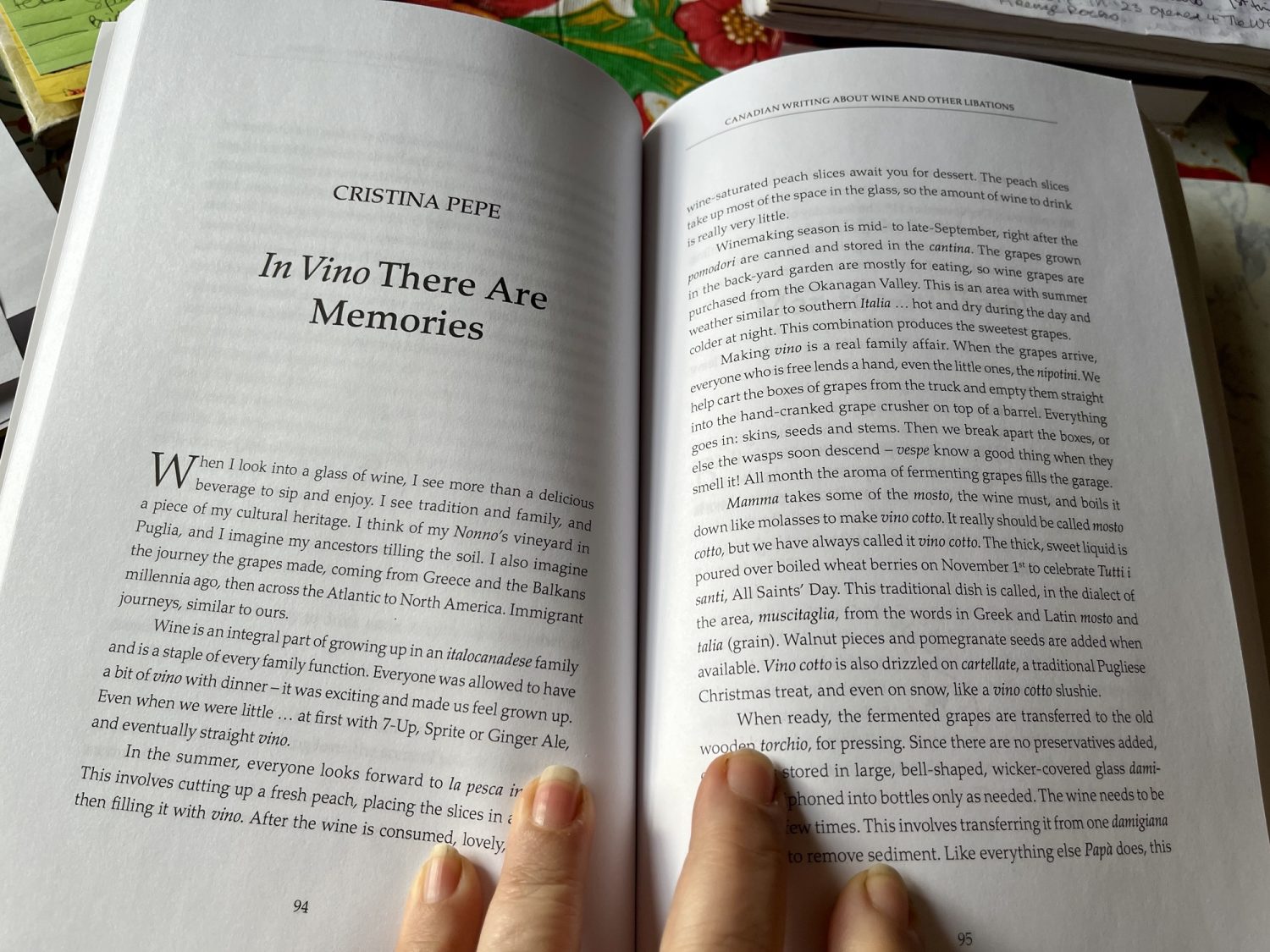
My contribution is titled ‘In Vino there are Memories‘ and it is about my family’s wine and winemaking traditions. It may be featured it in a blog post soon, but for now, if you have great vision, try and read a few paragraphs here:

To order a copy for yourself or for all of the wine enthusiasts in your life, order on the Accenti magazine site here or email info@longbridgebooks.com.  Publication date January 2025, ISBN:  978-1-928065-27-2, 310 pages, $34.95.  Free delivery in Canada/US for orders of $60 or more. The gorgeous cover will go well with any wine collection. Grazie mille to the editors for all of their hard work!

Salute, Cristina

Share this:

  • Click to share on Facebook (Opens in new window) Facebook
  • Click to share on Pinterest (Opens in new window) Pinterest
  • Click to share on X (Opens in new window) X
  • Click to email a link to a friend (Opens in new window) Email
  • Click to share on WhatsApp (Opens in new window) WhatsApp
Like Loading...

Writing about Italian Canadian Food Culture

04 Friday Sep 2020

Posted by Un po' di pepe in Bilingual posts, Italocanadesi, Mangiamo!

≈ 12 Comments

Tags

AICW, Culinary Culture, Food writing, Gastronomic history, Grano Arso, Italian Canadian Literature, Italocanadese life

The Italian Cultural Institute of Montreal and the Association of Italian Canadian Writers (AICW), as part of a webinar series dedicated to writing, an experience animated by Italian-Canadian authors, translators, journalists, publishers and bloggers, are pleased to present “Can you smell the garlic? Writing About Italian-Canadian Food Culture”

Tuesday, September 8, 2020 – 5:00 pm EST

Nonna stirs tomato sauce bubbling in a cauldron in the garage, papà proudly pours a glass of his homemade wine, zie gather to make taralli and biscotti in the basement kitchen…

These culinary traditions are a treasure trove of material for the Italian-Canadian writer. How does nostalgia affect the relationship to food and writing about food? Push past the clichés, what complicates the rosy images? Is it more difficult to write in a critical or unsentimental mode about food and Italian-Canadian identity?

Domenico Capilongo, Monica Meneghetti, Cristina Pepe and Jim Zucchero will read mouth-watering prose and poetry and talk about the connections between food and their writing. The webinar will be moderated by former restaurant critic, Francesca M. LoDico. The series is hosted by the Secretary of the AICW Executive, Giulia Verticchio.

Event details & bios: https://iicmontreal.esteri.it/iic_montreal/en/gli_eventi/calendario/2020/09/senti-l-aglio-scrivere-sulla-cultura.html

Italiano: https://iicmontreal.esteri.it/iic_montreal/it/gli_eventi/calendario/2020/09/senti-l-aglio-scrivere-sulla-cultura.html

I will be reading about Grano Arso.  The webinar will be available to view later on the Istituto Italiano di Cultura-Montreal’s website and Facebook page.

In Italiano:
L’Istituto Italiano di Cultura di Montréal e l’Associazione degli Scrittori italo-canadesi (AICW), nell’ambito della serie di webinar dedicata all’opera della scrittura, un’esperienza animata da autori italocanadesi, traduttori, registi, giornalisti, editori, bloggers…, sono lieti di presentare il webinar intitolato “Senti l’aglio? Scrivere sulla cultura culinaria italocanadese”.
Nonna mescola la salsa di pomodoro che ribolle in un calderone nel garage, papà versa orgoglioso un bicchiere del suo vino fatto in casa, le zie si riuniscono per fare taralli e biscotti nella cucina del seminterrato… Queste tradizioni culinarie sono un tesoro di materiale per lo scrittore italo-canadese. In che modo la nostalgia influenza il rapporto con il cibo e la scrittura sul cibo? Superare i cliché, cosa complica le rosee immagini? È più difficile scrivere in modo critico o non sentimentale sul cibo e sull’identità italo-canadese?
Domenico Capilongo, Monica Meneghetti, Cristina Pepe e Jim Zucchero leggeranno brani e poesie da “leccarsi i baffi” e parleranno delle connessioni tra il cibo e la loro scrittura. Il webinar sarà moderato dal già critico di ristoranti, Francesca M. LoDico. La serie è ospitata dalla Segretaria dell’Esecutivo AICW, Giulia Verticchio.
**********
Buon appetito, Cristina

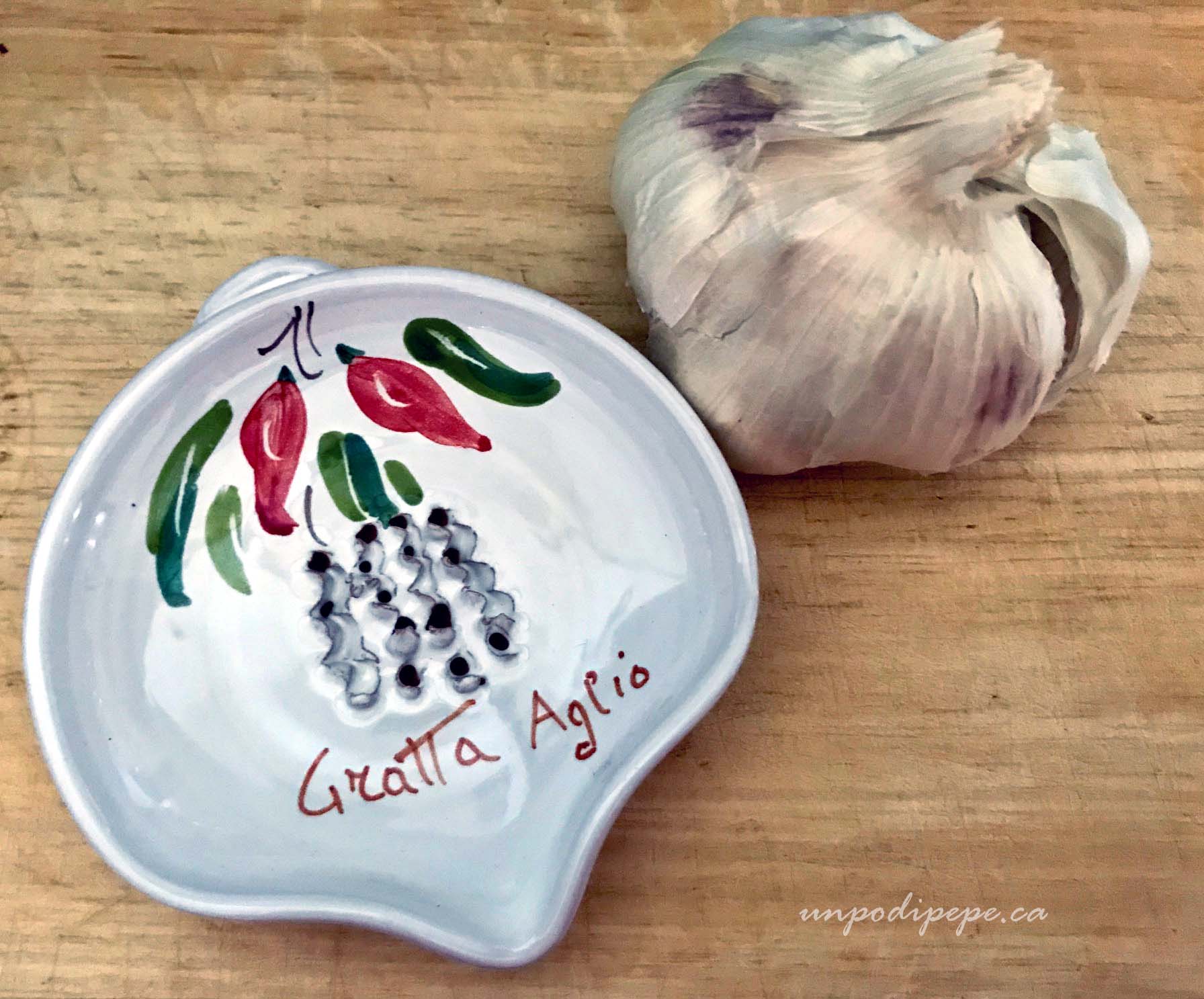
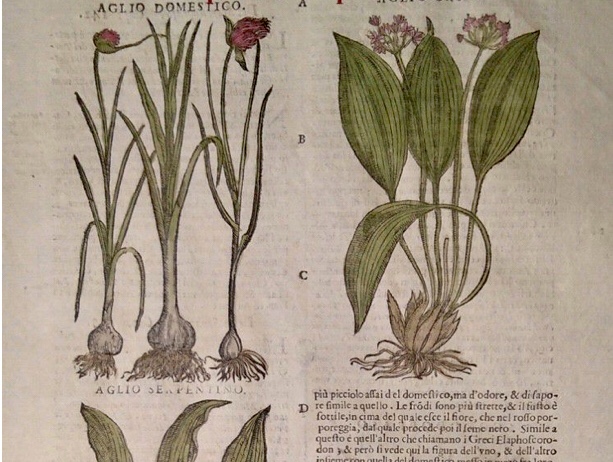
Garlic drawings

Share this:

  • Click to share on Facebook (Opens in new window) Facebook
  • Click to share on Pinterest (Opens in new window) Pinterest
  • Click to share on X (Opens in new window) X
  • Click to email a link to a friend (Opens in new window) Email
  • Click to share on WhatsApp (Opens in new window) WhatsApp
Like Loading...

La Brigantessa~Book Review

07 Monday Jan 2019

Posted by Un po' di pepe in Libri

≈ 13 Comments

Tags

AICW, Association of Italian Canadian Writers, Calabria, Italian Canadian Literature, Italian history, Italocanadesi, Rosanna Micelotta Battigelli

La Brigantessa coverLa Brigantessa is a novel of historical fiction which takes place following the Unification of Italy (1860’s), during a decade of turmoil.  It was a time when law enforcement was often worse than the criminals and the law only protected the wealthy.

The main character, Gabriella Falcone, is a young peasant girl whose family work for the parish priest in a small village in Calabria.  Her inamorato, Tonino has volunteered to fight alongside Giuseppe Garibaldi. When Gabriella stabs a nobleman in self defense, she is forced to flee with the priest, knowing that her version of what happened will not be believed. La Brigantessa has everything a great read needs…love, honour, class struggles, jealousy, betrayal, bravery, suspense, and even a ‘modern’ Calabrese Robin Hood.

The story is told from the point of view of many characters, yet they are all so well-developed there is no confusion.  Each character is given a detailed, credible backstory, revealing their individual struggles and motivations.  I was emotionally invested in these characters, even the nasty ones!  The attention to detail regarding life and customs in 19th Century Calabria transported me there.

I have been waiting 2 years for this book to come out, since I listened to the author read excerpts from it at 2 conferences-and it did not disappoint. This is not one of those book reviews that gives away the whole book, so that is all I am going to say!  Pour yourself a glass of vino-red, of course, sit back and enjoy.  I can’t wait for the sequel and/or movie.

I give La Brigantessa 5 peperoncini out of 5 ! 🌶 🌶🌶🌶🌶

La Brigantessa is published by Inanna Publications, a Canadian Publisher based in Toronto, focusing on women’s writing.  The book is available from the publisher or from Amazon or Chapters.  Viva la Brigantessa!

Buona lettura, Cristina

Share this:

  • Click to share on Facebook (Opens in new window) Facebook
  • Click to share on Pinterest (Opens in new window) Pinterest
  • Click to share on X (Opens in new window) X
  • Click to email a link to a friend (Opens in new window) Email
  • Click to share on WhatsApp (Opens in new window) WhatsApp
Like Loading...

The Sicilian Wife~Book Review

25 Monday Jun 2018

Posted by Un po' di pepe in Libri

≈ 11 Comments

Tags

AICW, Association of Italian Canadian Writers, Italian Canadian Literature, Italocanadesi, The Sicilian Wife

I downloaded The Sicilian Wife onto my ipad before a long flight.  I was actually looking for another book by the same author, Finding Rosa.  It was not available as a ebook at the time, so I purchased The Sicilian Wife instead. Once I started reading, I could not put it down.  I have not read many crime thrillers.  This one was very ‘film noir-ish’.  In fact, I kept visualizing every scene in grainy black and white on a big screen.  I hope someone is working on a screenplay!

The book features 2 strong female characters: Marisa De Luca is the decorated commissario in a small Sicilian village, dealing with local organized crime, a station full of chauvinists and investigating a mysterious death, and Fulvia Arcuri, the reluctant mafia princess, constantly running from her troubled upbringing.  Fulvia immigrates to Canada and starts a new life free from the reach of her family…or so she thinks.

The Sicilian Wife goes back and forth between different timelines, as well as a double setting, Sicily and Edmonton, Alberta. These are not hard to follow, despite twists and turns in the plot.  Sicilian folktales and proverbs, and contemporary Italian history add to the themes of escape and migration.  Just when you think you know what is going on ….. I really can not say any more without giving away too much.  Just read it, especially if you are Italocanadese!

I give it 5 peperoncini out of 5 🌶🌶🌶🌶🌶!

Note:  The author of The Sicilian Wife, Caterina Edwards, is a fellow member of the Association of Italian Canadian Writers (AICW), although we have not met. Hopefully we will meet at a future conference!  I purchased the ebook and the opinions written here are my own.

Buona lettura, Cristina

Share this:

  • Click to share on Facebook (Opens in new window) Facebook
  • Click to share on Pinterest (Opens in new window) Pinterest
  • Click to share on X (Opens in new window) X
  • Click to email a link to a friend (Opens in new window) Email
  • Click to share on WhatsApp (Opens in new window) WhatsApp
Like Loading...

Enter your email address to follow 'un po' di pepe' and receive notifications of new posts by email.

Join 511 other subscribers
Follow Un po' di pepe on WordPress.com

Popular Posts

  • Hairstyling in Ancient Roma
    Hairstyling in Ancient Roma
  • Espresso Cookies
    Espresso Cookies
  • Il Pumo Pugliese
    Il Pumo Pugliese
  • Panforte di Siena
    Panforte di Siena
  • Internment of Italian Canadians
    Internment of Italian Canadians
  • San Nicola
    San Nicola
  • Panettone Fatto in Casa
    Panettone Fatto in Casa

Recent Posts

  • Castel del Monte
  • ‘The Nuances of Love’
  • Hostaria Antica Roma~Eat like an Ancient Roman
  • Santa Maria in Aracoeli
  • Casino dell’Aurora~Villa Boncompagni Ludovisi
  • Nasoni di Roma
  • Bloghiversario #11
  • Fontana di Trevi
  • Acqua Vergine
  • Giubileo 2025
  • Sanremo 2025
  • In Vino there are Memories
  • A Literary Harvest
  • 2024~Un po’ di pepe Year in Review
  • Buon Natale 2024
  • Il Bicerin
  • Mercato Porta Palazzo
  • Torino
  • Catanzaro, Calabria
  • Il Pumo Pugliese
  • Artemisia Gentileschi
  • Cavalli di San Marco
  • Panzerotti
  • Torcello
  • 10 years of Un po’ di pepe!

Categories

Amici e Famiglia Architecture Art Art history Art projects Bilingual posts Blogging Canada Culture Feste Firenze Inspiration Italia Italian Folklore Italian language Italian life Italocanadesi Libri Mangiamo! Orsara di Puglia Parole piacevoli Photography Puglia Recipes Roma Travel Travel tips Uncategorized Vino

Archives

Un po’ di pepe on Facebook

Un po’ di pepe on Facebook

Start a Blog at WordPress.com.

  • Subscribe Subscribed
    • Un po' di pepe
    • Join 511 other subscribers
    • Already have a WordPress.com account? Log in now.
    • Un po' di pepe
    • Subscribe Subscribed
    • Sign up
    • Log in
    • Report this content
    • View site in Reader
    • Manage subscriptions
    • Collapse this bar
 

Loading Comments...
 

    %d