• Home
  • About me/Chi sono
  • Contact

Un po' di pepe

~ …… (oon∙poh∙dee∙PEH∙peh) Cristina writes about interesting stuff /Cristina scrive di cose interessanti

Un po' di pepe

Tag Archives: Association of Italian Canadian Writers

AICW Conference, Viterbo

24 Wednesday Jun 2026

Posted by Un po' di pepe in Italocanadesi, Libri, Travel

≈ 2 Comments

Tags

AICW, Association of Italian Canadian Writers, Italian Canadian Literature, Lazio, Via Francigena, Viterbo
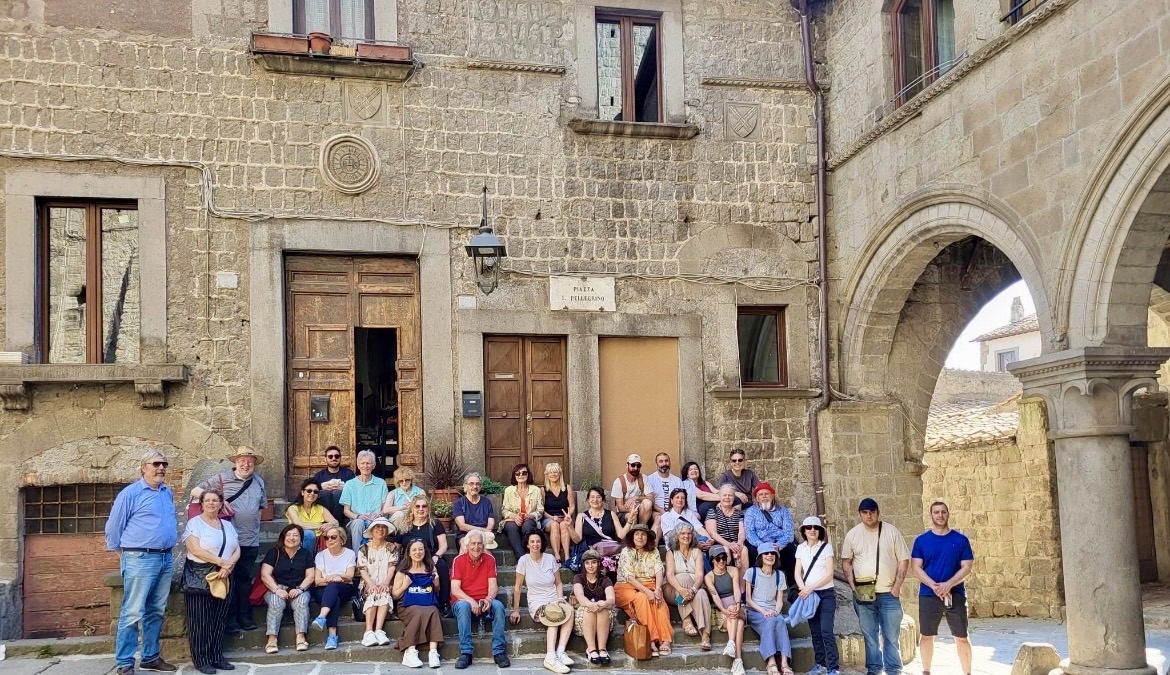
A few weeks ago, I attended the 20th Biennial Association of Italian-Canadian Writers (AICW) Conference. More than 80 speakers and participants from across Canada, Italy the US and beyond gathered at l’Università degli Studi della Tuscia in Viterbo, Italy to share their work.  The theme was Common Ground, Distant Shores:  Prospettive Interdisciplinari tra Italia e Canada (Interdisciplinary perspectives between Italy and Canada).

Attendees included established writers, celebrated novelists and academics, as well as emerging writers and first-time conference participants, ranging in age from early 20’s to mid 80’s. The voices of first, second, third and even fourth generation Italian-Canadians were heard. Friends, family members and students from the university were also in attendance.
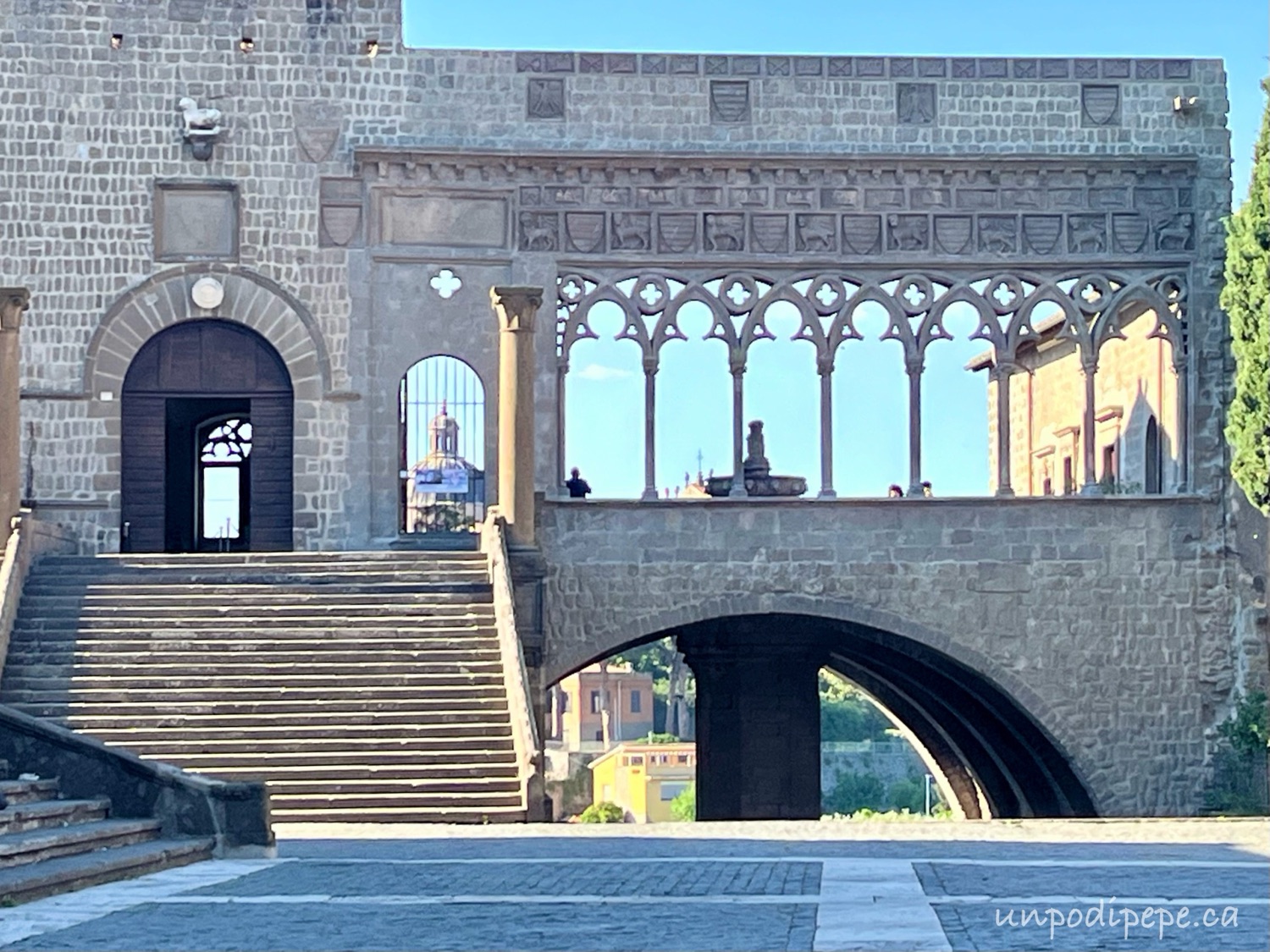
Palazzo dei Papi, Viterbo

The stunning backdrop of Viterbo, one of the most well-preserved medieval walled cities in Italy, added that extra bit of magic to the conference, transporting us back a few centuries and sparking new creative energy.
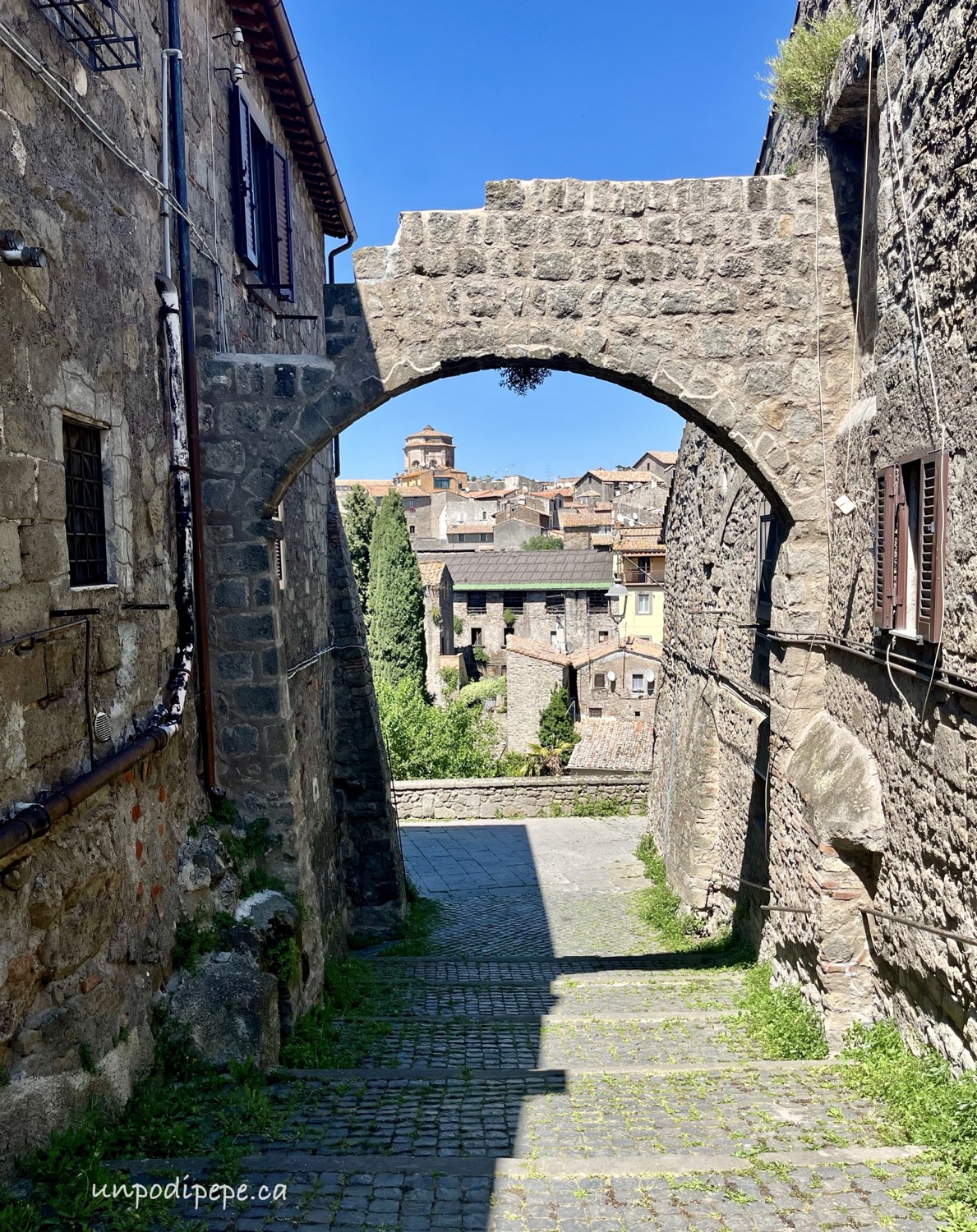
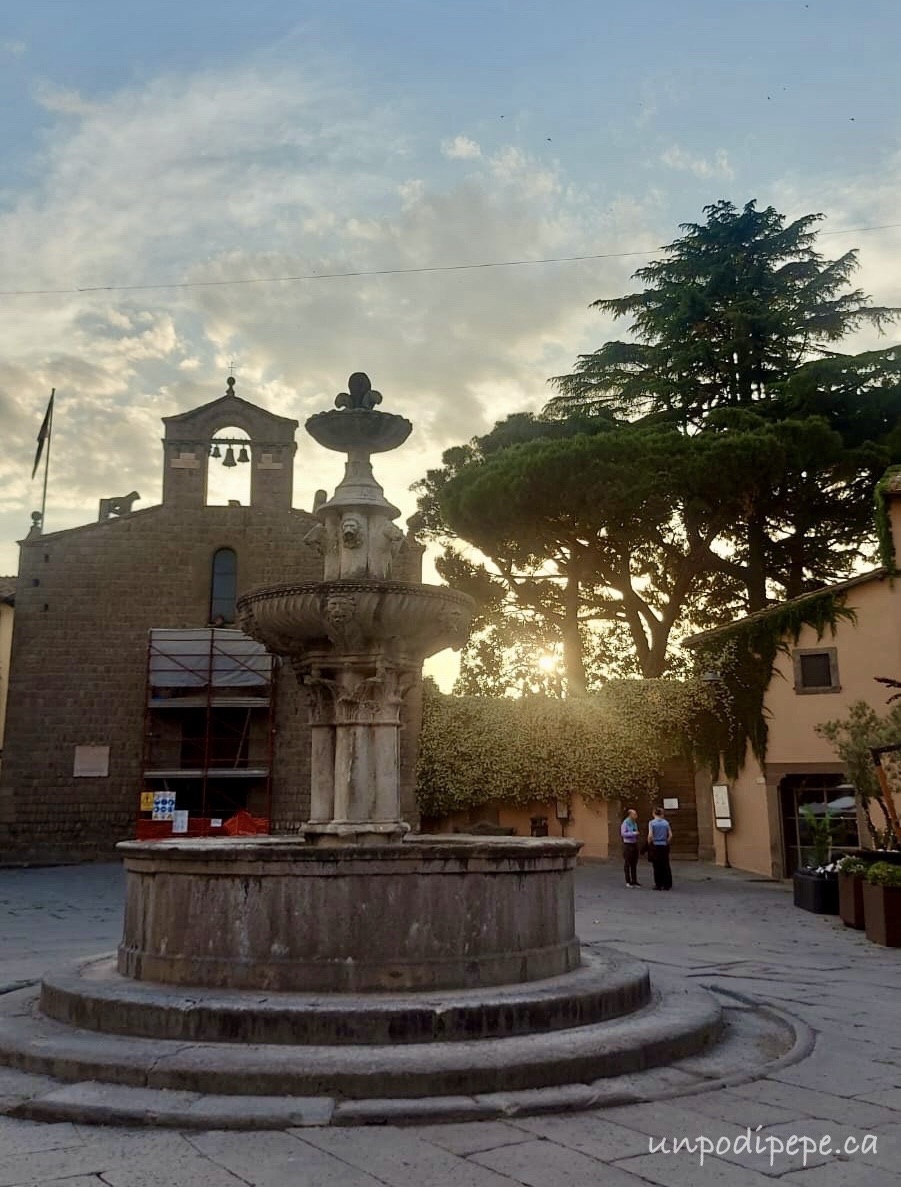
Viterbo is what i would call medievalissimo! My trek to the university took me along the city walls, through arches and narrow cobblestone streets, and up stone staircases and past a piazza with a fountain.  Along the way, I would spot several cats sunbathing on ancient stones.  Viterbo, known as ‘la citta’ dei papi’, the city of popes, is located in central Lazio, 81 km northwest of Rome.  The Via Francigena, an ancient pilgrim route from Canterbury, England to Rome passes through it.On the morning of May 27 pre-conference activities included a poetry-writing workshop led by Silvia Falsaperla and a prose-writing workshop by Licia Canton.  In the afternoon, Università della Tuscia art history professor Fulvio Ricci led a walking history lesson and tour of the medieval center of Viterbo. It seemed as if every time we turned a corner, there was a piazza with a large fountain that we wanted to go back and hang out in-which we did!
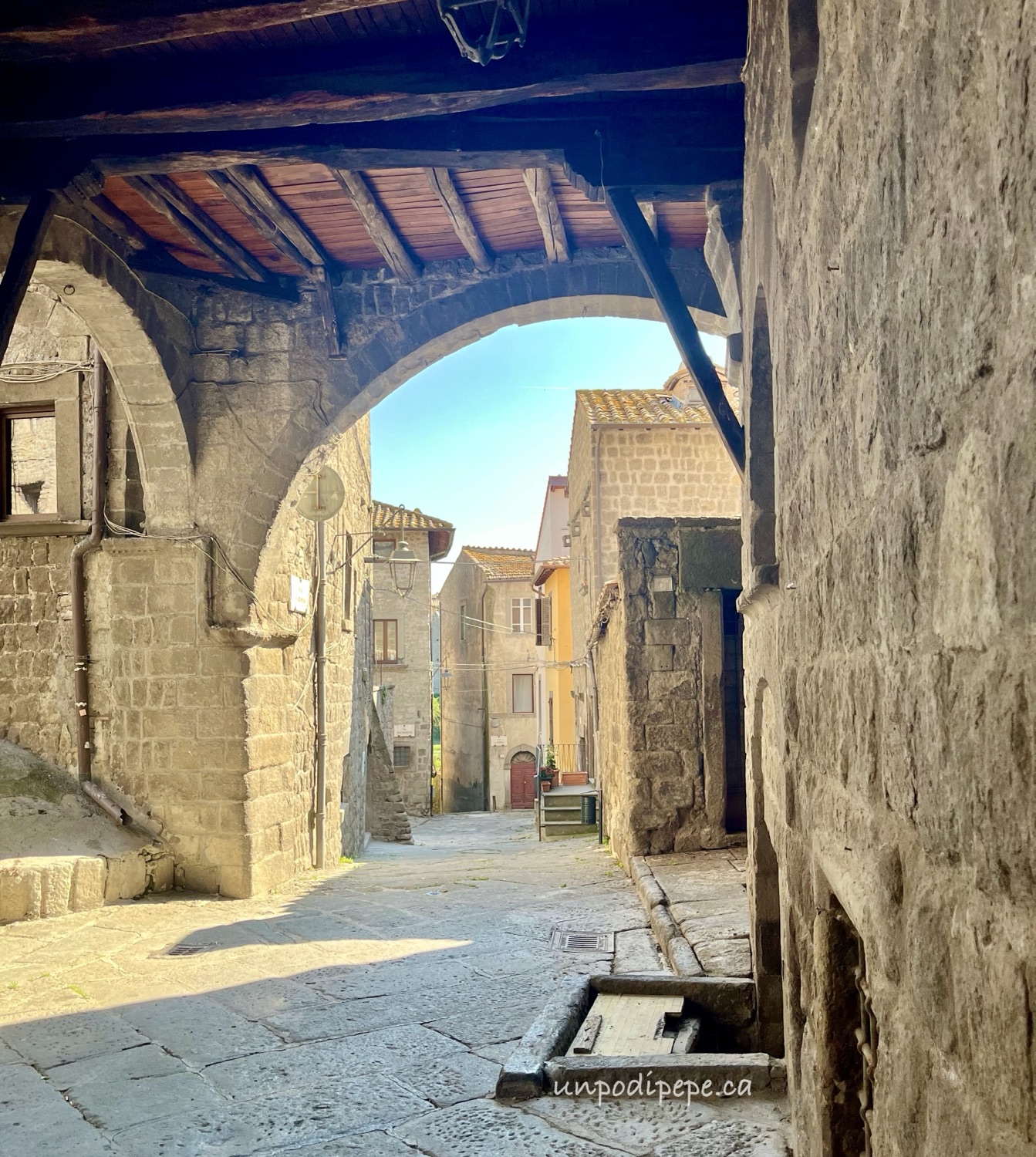
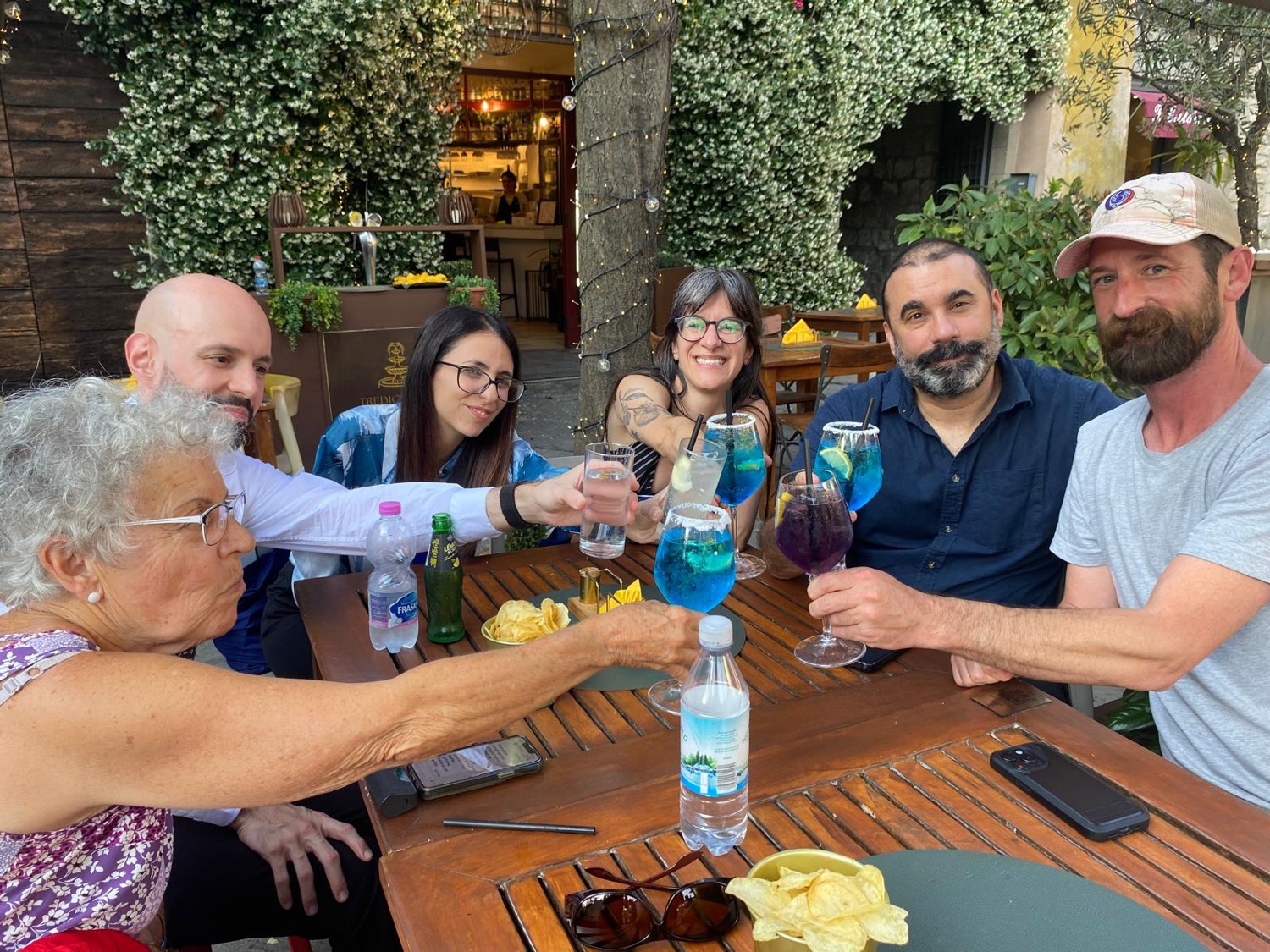
Piazza del Gesu’- Photo Licia Canton
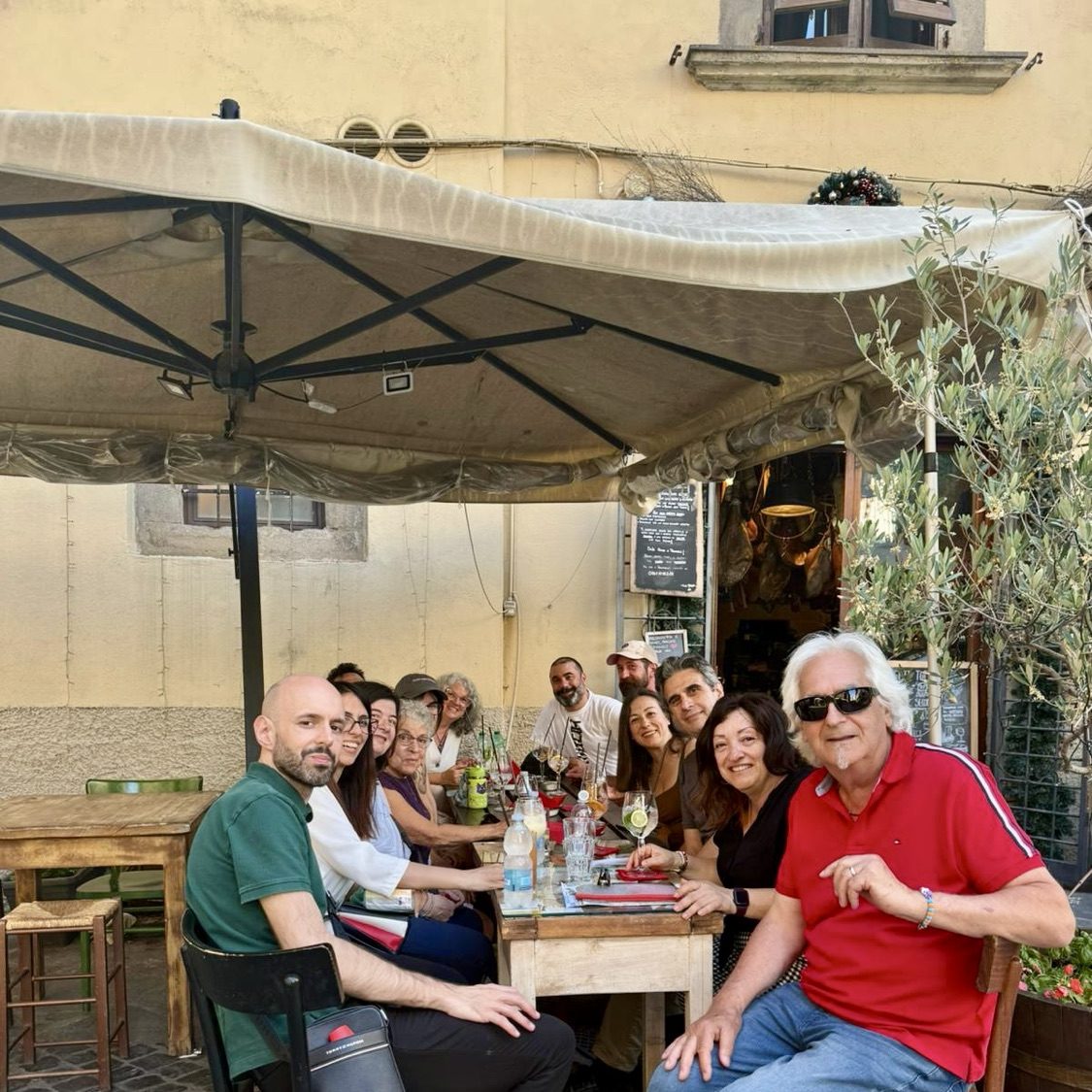
On the following 2 days, conference presentations -in English and Italian- included academic papers, readings of poetry, prose, essays and memoirs.  Also featured were three roundtable discussions, including the role of Italian cultural social clubs in Canada, the writer/translator relationship and teaching Italian as a second language.
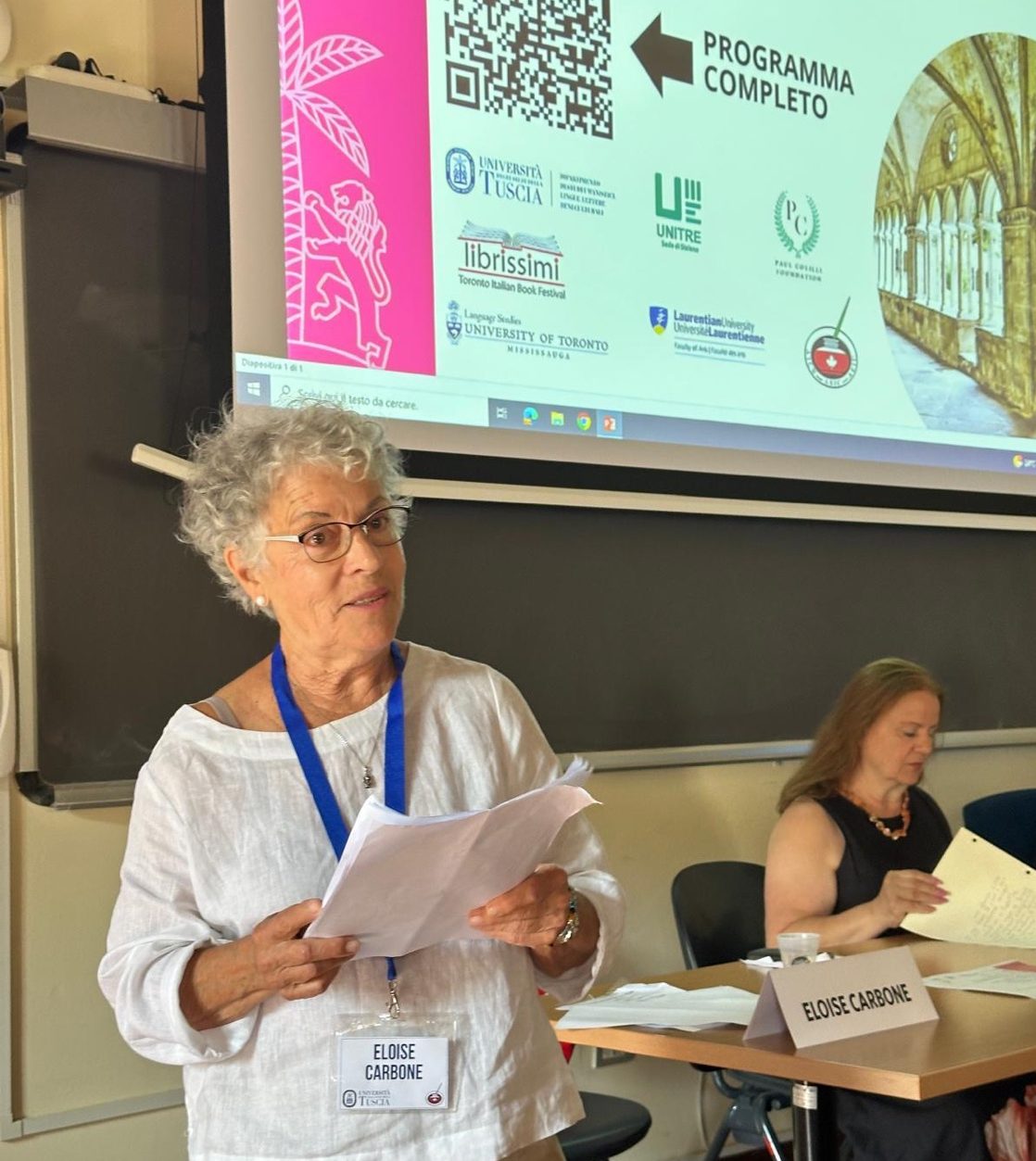
Presentations addressed the general themes of the Italian Diaspora, including migration and return, memory, identity, displacement, loss, family, food and tradition.  Also addressed were the topics of immigrant women and their works, biography and life writing, Italian-Canadian queer identities, self-translation, teaching Italian beyond the classroom, and as a second language, media in Italian culture and Italian cultural narratives across media-literature, journalism and visual culture. Each day had three parallel sessions running, requiring careful scheduling choices. I wanted to attend everything, but it was not possible.
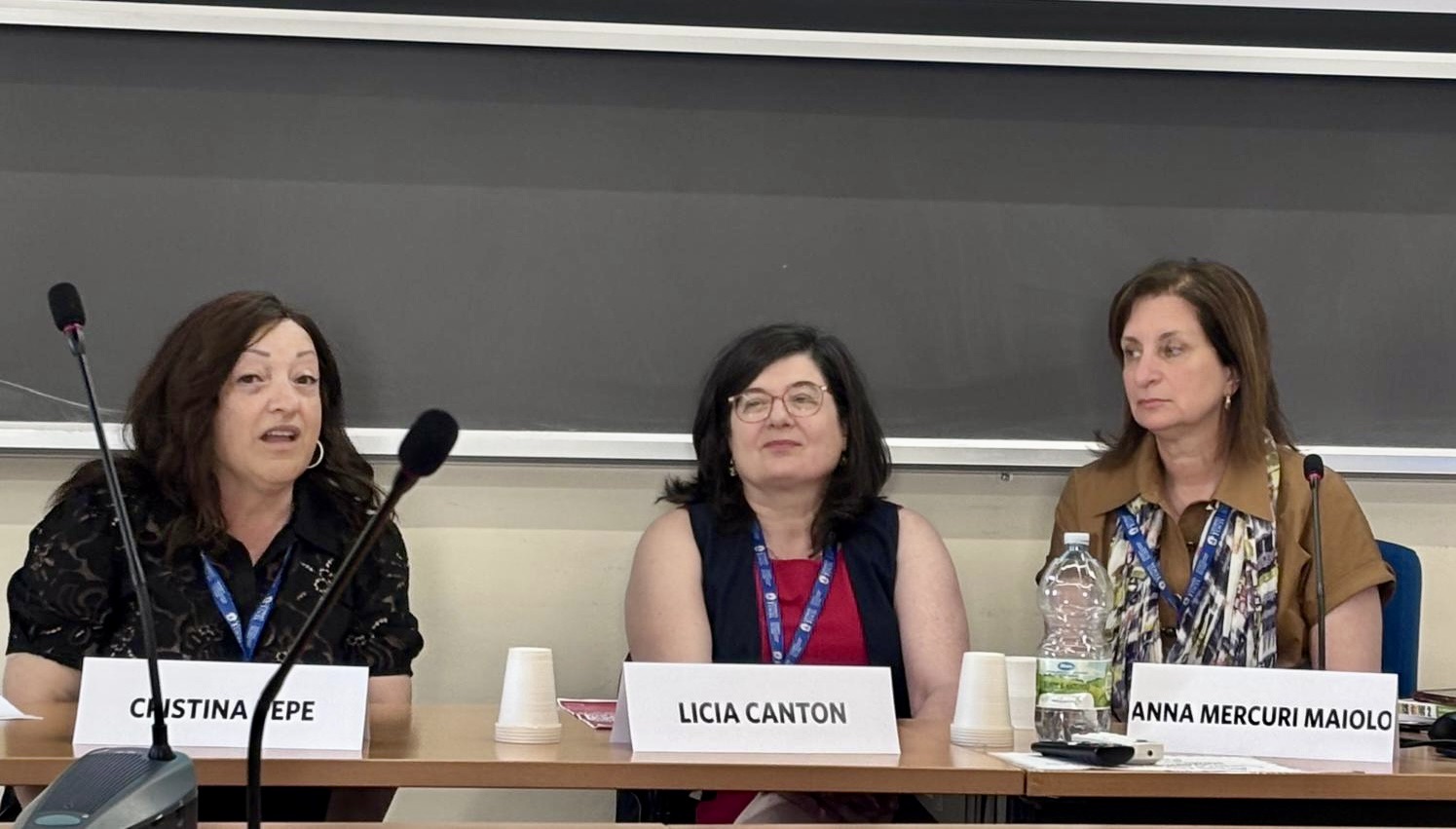
‘Tastes of home: Food, memory and identity’. Photo-Eloise Carbone

What was my contribution? I read ‘In vino there are memories’ from ‘A Literary Harvest-Canadian Writing about Wine and other Libations’ and took part in a group presentation introducing the first of a 3 volume bilingual anthology published in Italy ‘La Letteratura Italo canadese: una storia che continua’ with Anna Romano Milne, Maria Giuseppina (Giusy) Cesari, Darlene Madott and Genni Gunn.  I read from ‘A Nzalat d’Purtuall’, a revised, updated version of this post.
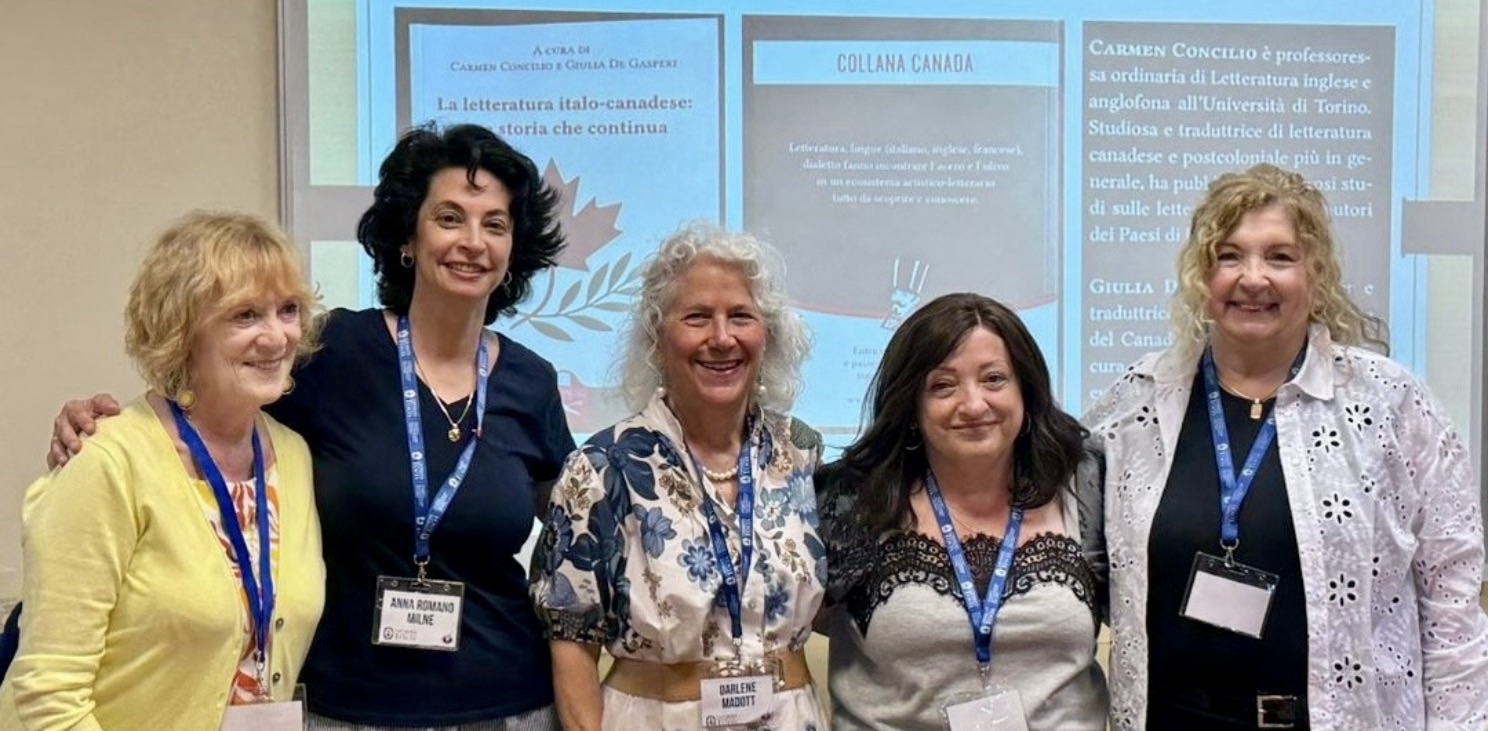
Photo Eloise Carbone

In his opening remarks, Simone Cassini professor at Università della Tuscia spoke on the contacts, cultural interests and studies that brought the university and the AICW together for this conference.  The keynote address, given by Monica Barni of Università La Sapienza, Roma and Massimo Vedovelli of Università per Stranieri in Siena was titled ‘Research on Italian around the world: methodologies, data, interpretations, and interventions, and the potential role of AI’.  It focused on Italian immigration around the world, particularly Italian immigration to Canada after World War II (1966-1971).

The closing keynote address ‘Radici Ciociara… A Life in Three Languages’ was given by long-time AICW member Gianna Patriarca on the topic of identity and cultural roots.  Regarding radici, Gianna spoke about the roots of her identity and stated that roots are what make trees grow- without them, the tree does not survive. She read a selection of her poems in English, Italian and dialetto Ciociaro.  Gianna, who recently published her lucky thirteenth book, lives in Toronto, but her roots are in the town of Ceprano in the Ciociara region of Lazio.
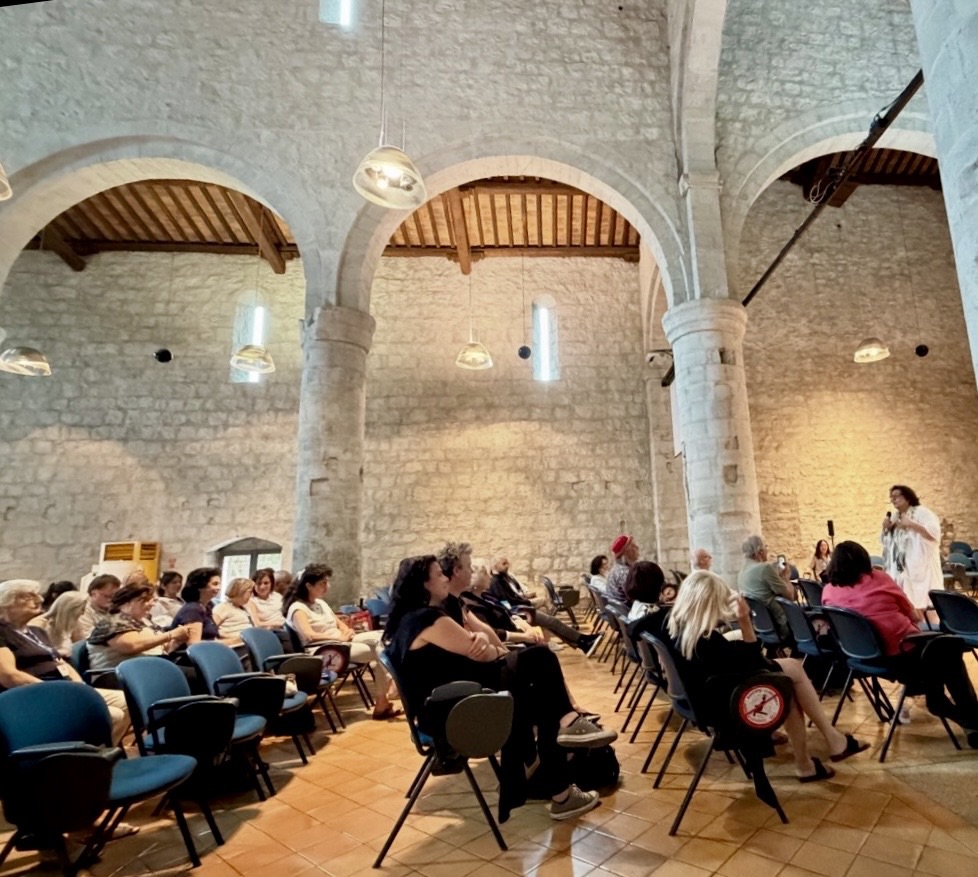
Keynote address. Photo Rosanna Micelotta Battigelli

A formal group dinner at a local ristorante followed, giving everyone a final opportunity to gather, talk to new and old friends, and share ideas.  May 30th was reserved for an optional excursion by bus to Villa Farnese in Gradoli on Lago di Bolsena, and a delicious long, leisurely meal at the agriturismo Azienda Agricola Vazianello in Caprarola.

The quality of the literary work presented at this conference demonstrates that Italian-Canadian writers have a lot to say, carry a strong sense of cultural identity, and those radici that Gianna Patriarca spoke about in her presentation are strong and thriving.

Thanks go to the planning committee:Salvatore Bancheri (University of Toronto), Simone Cassini and Francesca De Caprio (Università della Tuscia), Christine Sansalone (Laurentian University), Maria Pia Spadafora (AICW) and student volunteers Matteo, Anastasia, Luca, Cristina, Ludovica, Antonella,Virgilio and Luca from Università della Tuscia.
The next AICW biennial conference in 2028 will be held somewhere in Canada.  Stay tuned for the location and more information by visiting the AICW website.  Alla prossima!

Read my article about the conference -a shorter version of this post, with different photos-in Accenti Magazine.
Share this:

  • Share on Facebook (Opens in new window) Facebook
  • Share on Pinterest (Opens in new window) Pinterest
  • Share on X (Opens in new window) X
  • Email a link to a friend (Opens in new window) Email
  • Share on WhatsApp (Opens in new window) WhatsApp
Like Loading...

‘The Nuances of Love’

13 Monday Oct 2025

Posted by Un po' di pepe in Bilingual posts, Inspiration, Libri, Uncategorized

≈ 2 Comments

Tags

AICW, Association of Italian Canadian Writers, Italian Canadian Literature, Poetry

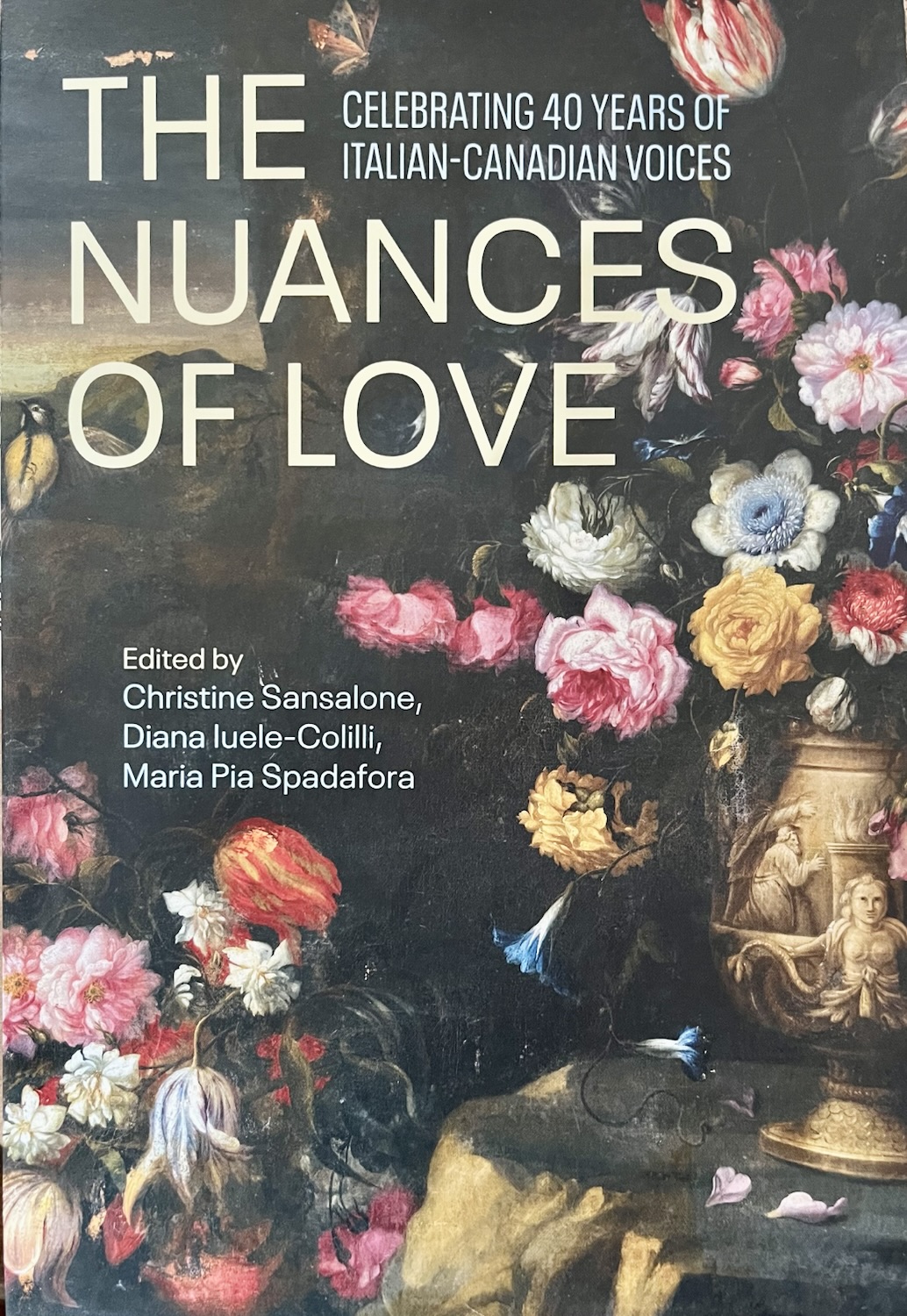
‘The Nuances of Love:  Celebrating 40 years of Italian-Canadian voices‘ celebrates 4 decades of the AICW (Association of Italian Canadian Writers). Edited by Christine Sansalone, Diana Iuele-Colilli and Maria Pia Spadafora, this gorgeous anthology is a collection of poetry and prose on the themes of love and friendship. It also celebrates the power and importance of storytelling and community. 46 Italian-Canadian writers contributed to this anthology, and one of them is me!

It is available for purchase for $25.00 (Can)from Guernica Editions and on Amazon.ca

My contribution is a poem.  I do not normally write poetry, as you can tell from the title ‘Vorrei essere una poetessa‘ (I would like to be a poet). Since I can, I am posting it here, but you will have to get your own book if you want to read the other 45 contributions.

The poem was written directly in Italiano.  Since I know a few of you will ask ‘where can I find it in English’ I did a very quick translation. Some of the concepts do not translate well, but I did my best-you can find it at the end.

Vorrei essere una poetessa

Vorrei essere una poetessa.

Così potrei esprimere tutto cio’ che vorrei dire

con parole magiche

che si sciolgono dalla lingua

Vorrei usare parole come affascinante e meraviglioso

per descrivere le cose di cui scriverò

Che posso mettere a parole…..


la luce gloriosa del sole estivo di meta’ pomeriggio,

che proietta ombre nascoste sui muri di pietra


I suoni allegri dei bambini

quando giocano a calcio

nelle viuzze strette


la vista mozzafiato

dalle scogliere sul mare

e la tenerezza della brezza marina

quando ti accarezza le spalle


la tavolozza ricca di colori brillanti

come il blu oltremare e terra di Siena bruciata

che diventano un dipinto quando incontrano la tela


l’emozione quando uno si trova

adavanti ad un capolavoro di Caravaggio,

con chiaroscuro e luci drammatiche

magnifico da ogni lato


Il profumo indimenticabile

del pane appena sfornato

che fa venire l’acquolina in bocca

e fa brontolare la pancia


Il gusto di un bicchiere di vino profumato e corposo

fatto con un’uva locale

e condiviso con i migliori amici

che valgono più dell’oro


la gioia dell’amore al primo sguardo

e anche la profondità della tristezza

di un cuore spezzato in mille pezzi

per un amore non ricambiato


Per tutti questi è difficile trovare le parole,

o scegliere gli aggettivi adeguati

Vorrei essere una poetessa….

purtroppo non trovo le parole

e non so da dove e come cominciare.

Published in:  ‘The Nuances of Love: Celebrating 40 years of Italian-     Canadian voices.  Editors Christine Sansalone, Diana Iuele-Colilli and Maria Pia Spadafora.  Guernica Editions (2025), p 40-41.

In Inglese/in English:

I would like to be a poet

So that I can express everything I want to say

with magical words

that roll off the tongue

I want to use words like fascinating and wonderful

to describe the things I will write about

So that I can put into words…

the glorious light of the mid-afternoon summer sun,

projecting cast shadows on crumbling stone walls

The joyful sounds of children

playing with a soccer ball

in narrow cobblestone streets

the breathtaking view

from cliffs overlooking the sea

and the tenderness of the sea breeze

when it caresses your shoulders

the rich palette of brilliant colors

such as ultramarine blue and burnt sienna

that become a painting when they meet the canvas

the emotion of finding oneself

in front of a masterpiece by Caravaggio,

painted in chiaroscuro, with dramatic lighting

magnificent from every angle

The unforgettable aroma

of freshly baked bread

that makes the mouth water

and the stomach rumble

The taste of a fragrant, full-bodied glass of wine

made with local grapes

and shared with dearest friends

who are worth more than gold

The joy of love at first sight

and also the profound sadness

of a heart shattered into a thousand pieces

for an unrequited love

For all of these, it is difficult to find the words,

or choose the proper adjectives.

I would like to be a poet…

unfortunately, I cannot find the words

and I do not know where or how to begin.

Ciao, Cristina


Share this:

  • Share on Facebook (Opens in new window) Facebook
  • Share on Pinterest (Opens in new window) Pinterest
  • Share on X (Opens in new window) X
  • Email a link to a friend (Opens in new window) Email
  • Share on WhatsApp (Opens in new window) WhatsApp
Like Loading...

Grano Arso in print!

28 Thursday Feb 2019

Posted by Un po' di pepe in Inspiration

≈ 12 Comments

Tags

AICW, Association of Italian Canadian Writers, C, Gastronomic history, Grano Arso, Italian Canadiana, Laurentian University

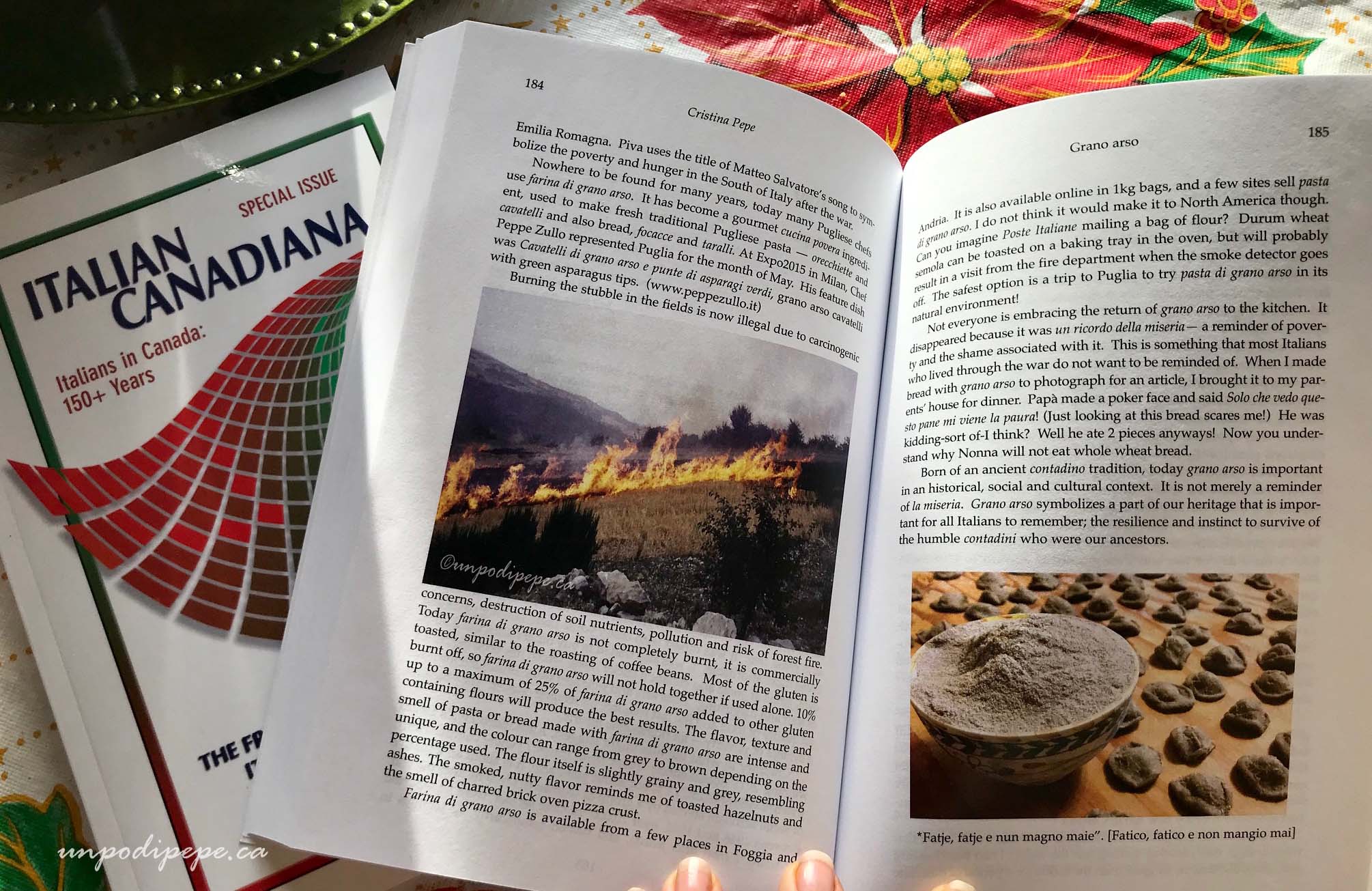
Italian Canadiana Vol 32 2018 Grano Arso Cristina Pepe www.unpodipepe.caMy presentation from the September 2017 ‘Italians in Canada: 150+ years’ 31st anniversary AICW conference at Laurentian University in Sudbury Ontario has been published!  The proceeds of the Association of Italian Canadian Writers Conference is a special edition of the University of Toronto journal Italian Canadiana (Vol 32 2018). This is not my first publication, but it is the first one that is not about diabetes!

Grano Arso is about a Pugliese gastronomic tradition that honours the resilience of our contadini ancestors. The conference proceedings are not available online, but if you have not already done so, read my 2015 post Grano Arso . It is not exactly the same as the publication, but contains similar information and photos.  There has been an increase in views of my post.  This may be due to the publication, or because there is not much written in English on the topic. I made some taralli di grano arso for my presentation and carried them with me on the plane to Ontario. Taralli di grano arso www.unpodipepe.caOther conference presentations included The evolution of the Italian grocery store, Representations of Italian Canadian Internment during WWII, Italianismi e pseudoitalianismi, and Documenting Italiese, which I will write more about in another post. Creative writing readings by Italocanadese authors included short stories, poetry and excerpts from books and a graphic novel. I reviewed one of the books here.

I don’t know if they have many copies left, but they can be ordered by contacting the Frank Iacobucci Center for Italian Canadian Studies c/o Dept of Italian Studies, University of Toronto 100 St. Joseph St.  Toronto, Ontario M5S 1J4 or contact salvatore.bancheri@utoronto.ca.

The next AICW conference will be in Italia in 2020.  Details will be available soon!

Ciao, Cristina

Share this:

  • Share on Facebook (Opens in new window) Facebook
  • Share on Pinterest (Opens in new window) Pinterest
  • Share on X (Opens in new window) X
  • Email a link to a friend (Opens in new window) Email
  • Share on WhatsApp (Opens in new window) WhatsApp
Like Loading...

La Brigantessa~Book Review

07 Monday Jan 2019

Posted by Un po' di pepe in Libri

≈ 13 Comments

Tags

AICW, Association of Italian Canadian Writers, Calabria, Italian Canadian Literature, Italian history, Italocanadesi, Rosanna Micelotta Battigelli

La Brigantessa coverLa Brigantessa is a novel of historical fiction which takes place following the Unification of Italy (1860’s), during a decade of turmoil.  It was a time when law enforcement was often worse than the criminals and the law only protected the wealthy.

The main character, Gabriella Falcone, is a young peasant girl whose family work for the parish priest in a small village in Calabria.  Her inamorato, Tonino has volunteered to fight alongside Giuseppe Garibaldi. When Gabriella stabs a nobleman in self defense, she is forced to flee with the priest, knowing that her version of what happened will not be believed. La Brigantessa has everything a great read needs…love, honour, class struggles, jealousy, betrayal, bravery, suspense, and even a ‘modern’ Calabrese Robin Hood.

The story is told from the point of view of many characters, yet they are all so well-developed there is no confusion.  Each character is given a detailed, credible backstory, revealing their individual struggles and motivations.  I was emotionally invested in these characters, even the nasty ones!  The attention to detail regarding life and customs in 19th Century Calabria transported me there.

I have been waiting 2 years for this book to come out, since I listened to the author read excerpts from it at 2 conferences-and it did not disappoint. This is not one of those book reviews that gives away the whole book, so that is all I am going to say!  Pour yourself a glass of vino-red, of course, sit back and enjoy.  I can’t wait for the sequel and/or movie.

I give La Brigantessa 5 peperoncini out of 5 ! 🌶 🌶🌶🌶🌶

La Brigantessa is published by Inanna Publications, a Canadian Publisher based in Toronto, focusing on women’s writing.  The book is available from the publisher or from Amazon or Chapters.  Viva la Brigantessa!

Buona lettura, Cristina

Share this:

  • Share on Facebook (Opens in new window) Facebook
  • Share on Pinterest (Opens in new window) Pinterest
  • Share on X (Opens in new window) X
  • Email a link to a friend (Opens in new window) Email
  • Share on WhatsApp (Opens in new window) WhatsApp
Like Loading...

The Sicilian Wife~Book Review

25 Monday Jun 2018

Posted by Un po' di pepe in Libri

≈ 11 Comments

Tags

AICW, Association of Italian Canadian Writers, Italian Canadian Literature, Italocanadesi, The Sicilian Wife

I downloaded The Sicilian Wife onto my ipad before a long flight.  I was actually looking for another book by the same author, Finding Rosa.  It was not available as a ebook at the time, so I purchased The Sicilian Wife instead. Once I started reading, I could not put it down.  I have not read many crime thrillers.  This one was very ‘film noir-ish’.  In fact, I kept visualizing every scene in grainy black and white on a big screen.  I hope someone is working on a screenplay!

The book features 2 strong female characters: Marisa De Luca is the decorated commissario in a small Sicilian village, dealing with local organized crime, a station full of chauvinists and investigating a mysterious death, and Fulvia Arcuri, the reluctant mafia princess, constantly running from her troubled upbringing.  Fulvia immigrates to Canada and starts a new life free from the reach of her family…or so she thinks.

The Sicilian Wife goes back and forth between different timelines, as well as a double setting, Sicily and Edmonton, Alberta. These are not hard to follow, despite twists and turns in the plot.  Sicilian folktales and proverbs, and contemporary Italian history add to the themes of escape and migration.  Just when you think you know what is going on ….. I really can not say any more without giving away too much.  Just read it, especially if you are Italocanadese!

I give it 5 peperoncini out of 5 🌶🌶🌶🌶🌶!

Note:  The author of The Sicilian Wife, Caterina Edwards, is a fellow member of the Association of Italian Canadian Writers (AICW), although we have not met. Hopefully we will meet at a future conference!  I purchased the ebook and the opinions written here are my own.

Buona lettura, Cristina

Share this:

  • Share on Facebook (Opens in new window) Facebook
  • Share on Pinterest (Opens in new window) Pinterest
  • Share on X (Opens in new window) X
  • Email a link to a friend (Opens in new window) Email
  • Share on WhatsApp (Opens in new window) WhatsApp
Like Loading...

La Certosa di Padula

27 Sunday Nov 2016

Posted by Un po' di pepe in Architecture, Italia, Travel

≈ 14 Comments

Tags

AICW, Association of Italian Canadian Writers, Campania, La Certosa di Padula, Parco Nazionale del Cilento e Vallo di Diano, Scagliola, Southern Italy, UNESCO World Heritage Sites

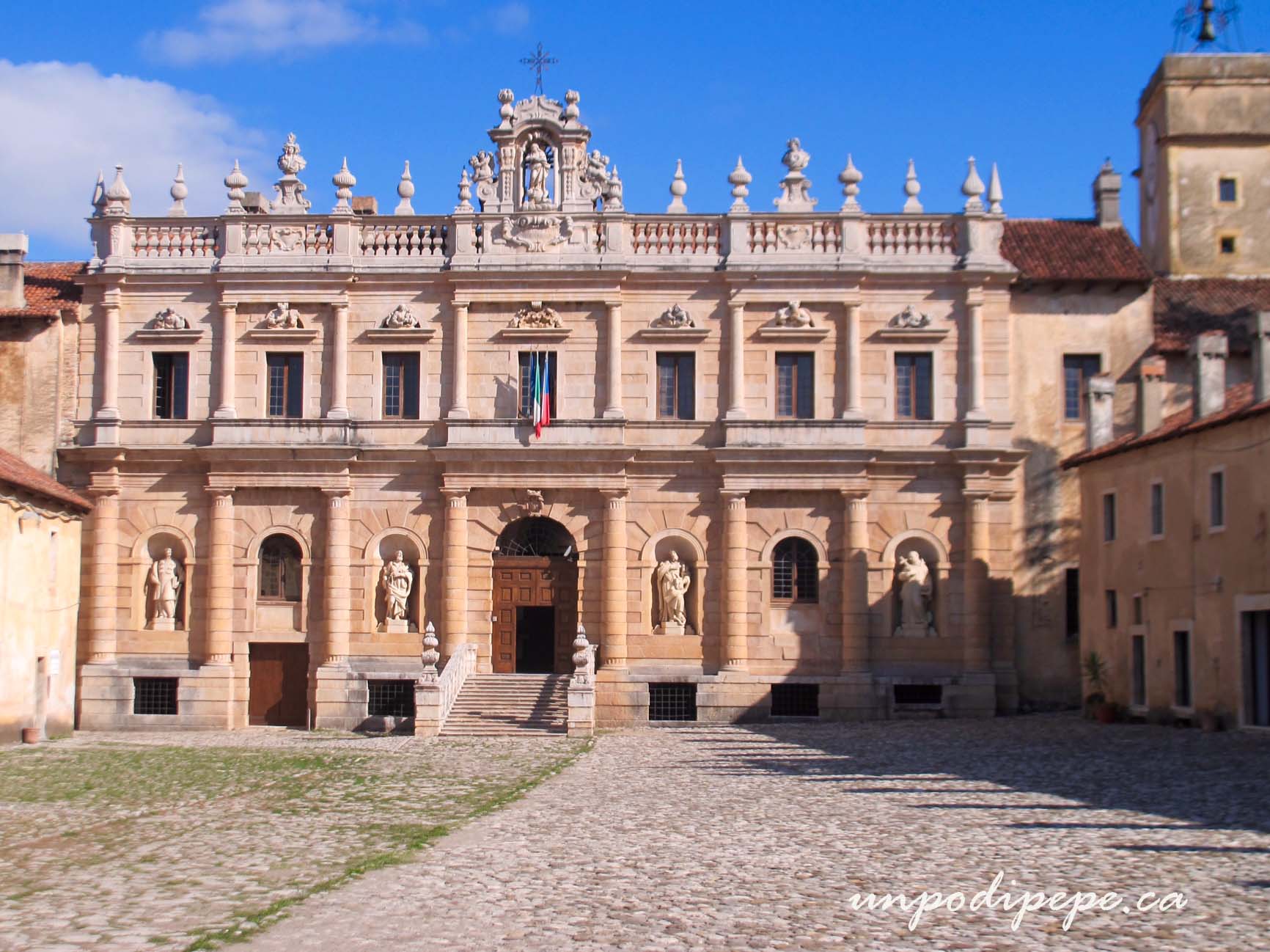
la-certosa-di-padula-facciataIn August, I attended the Association of Italian Canadian Writers (AICW) 16th biennial conference ‘Italian Canadian Literature: Departures, Journeys, Destinations’ where I read my first short story in public.  38 speakers, AICW members and friends came from across Canada, Italy, Germany, Spain, the United States and the United Kingdom.  The conference presentations were amazing and an anthology will be published next year.

View from Conference Room

View from Conference Room

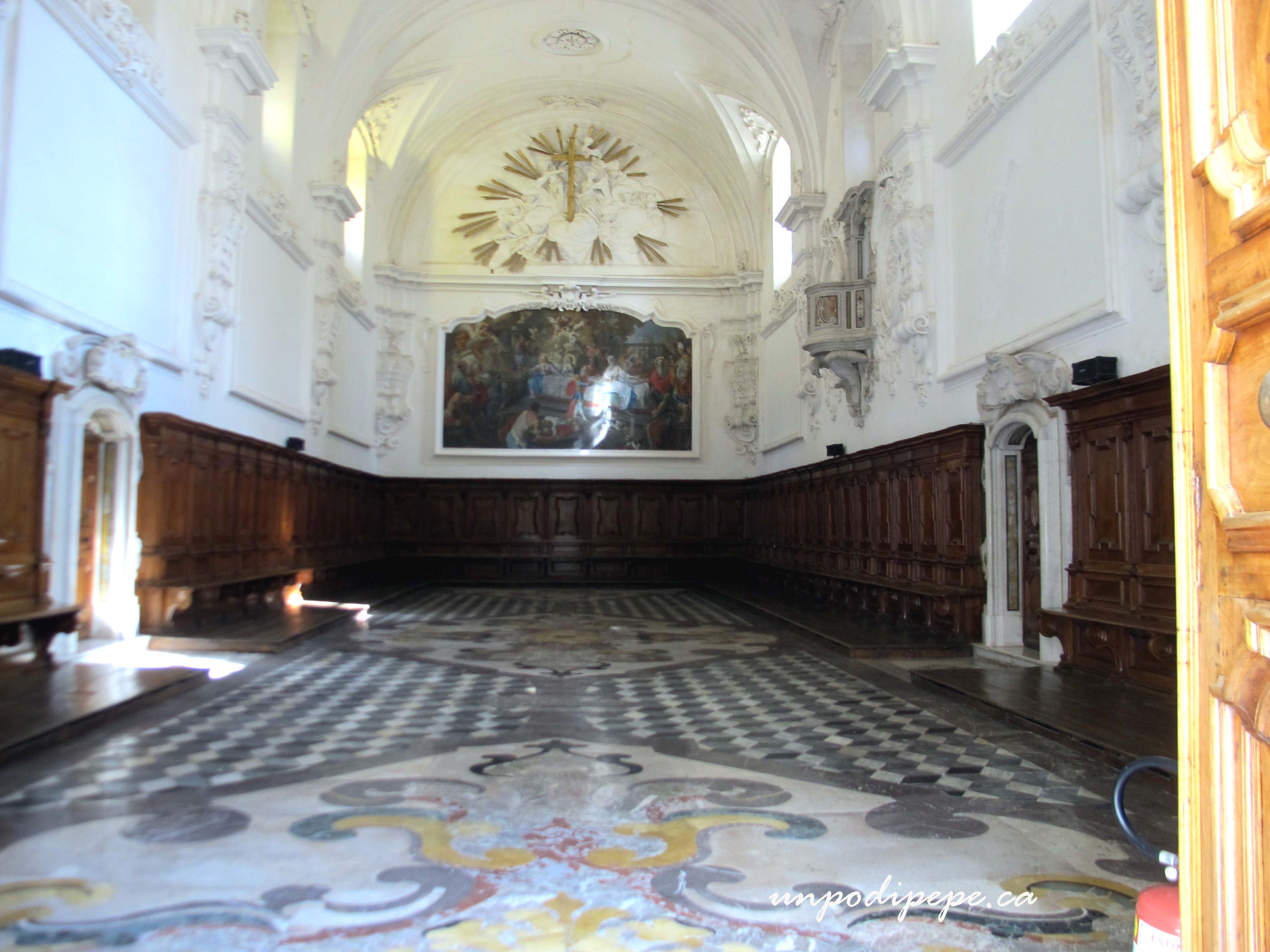
The conference was held in Padula (Salerno, Campania) at La Certosa di Padula, a Carthusian Monastery built in 1306 and added onto over the next 450 years. Dedicated to San Lorenzo, the style is mostly Baroque and it is the largest monastery in Italia. Chiostro Grande is the largest cloister in the world, surrounded by 84 columns.  The place is huge with a total of 320 rooms! In 1998, it became a UNESCO World Heritage Site along with the Parco Nazionale del Cilento e Vallo di Diano and the archeological sites of Paestum and Velia.  I have now been to all of them except Velia.padulachiostro

The Certosa site is made up of spaces for contemplation -the cloisters, library and chapels, and spaces for work -the kitchen, cantina, laundry, stables and gardens.padulafrescocloister

While I was there, due to restoration work the upper floor was not accessible. This meant I was not able to see the monks’ cells or take the white marble scala elittico to the large biblioteca (library) which has a Maiolica tile floor from Vietri sul Mare and 2000 remaining manuscripts. I was also not able to see the last construction added to the site in 1799, the famous Scalone Elicoidale –an ornate double ramped, double helix shaped staircase in an octagonal tower with 8 large open windows overlooking a garden.  The Scalone spirals incorporating the Fibonacci sequence and the Golden Section, which I find fascinating.  It connects the upper floor to the Chiostro Grande and was used by the cloistered monaci for their passeggiata settimanale –weekly walk. Being a lover of staircases, books and libraries, the closure was disappointing, but luckily there was still a lot left to see. padulasanlorenzoMost of the chapels are Baroque and very ornate, with the largest collection of Scagliola work found anywhere. Scagliola (sca·LYOH·lah) is a technique for painting stucco columns, sculptures, and other architectural features to look like inlays in marble and semi-precious stones, such as madre di perla. Those monaci were frugal and talented!  Now I know what to call the areas of my house that I have painted to look like Carrara marble!padulacucina2

The Monastery kitchen, renovated in 1742, could have been the perfect setting for ‘Masterchef: Medieval edition’. It is brightened by yellow and green Maiolica tiles which look completely out of place.  The colours were chosen to keep the flies away- at least that is what the guard told me!  padulacucinaThe most striking feature in the cucina is an enormous cappa or hood, on a furnace with an antique boiler and a base covered in maiolica tiles.  The inside of the cappa is blackened from hundreds of years of use.  Stone work tables are in place and on the back wall is a large fresco, painted in 1650, obscured by time and smoke.  This part of the cucina with its barrel vaulted ceiling used to be a rectory before the 1742 reno. The cucina has its own cloister and small garden, with the cantina and laundries next to it.

Chi lava i piatti?

Chi lava i piatti?

The monaci ate frugal, meatless meals in solitude in their cells, except during special occasions. The refettorio (rectory) hall with 61 stalls carved of walnut wood is where they sat at meal times on feast days and during Lent.  The 1749 fresco is of Le Nozze di Cana.  refettorioOccasionally the cucina was used to prepare rich meals for visits by important guests, most famously the one organized for Emperor Carlo V on his return from Tunisia in 1535.  The monaci prepared him a frittata with 1,000 eggs.  My first night in Padula, August 10th, was the annual Festa della Frittata di Mille Uova, recreating this event. The modern contraption used to make the frittata was made in 1996 and looks like a colossal pizzelle iron that flips over and rolls across a massive fire pit!  Unfortunately we don’t know what the monaci used to make their frittata.

Frittatta di mille uova making contraption!

Frittatta di mille uova making contraption!

In 1802, the monaci had to abandon La Certosa, and Napoleonic troops took away any treasures that were cartable. They returned a few years later, but abandoned La Certosa for the last time in 1866.  20 years later, it was declared a national monument. During the 2 World Wars the complex was mostly abandoned, being used briefly as a prison camp, and as a children’s holiday camp.  Padula received funds for restoration in 1982.view-from-hotel-certosa

Padula is a very nice town of 5,000. Getting there without your own car is extremely difficult.  Padula is on the A3 Salerno-Reggio Calabria road, exit Buonabitacolo.  The closest train station is Sapri on the Cilento coast. There are a couple of buses a day from Napoli, which make stops in every town along the way. Although very out of the way, Padula is worth the detour!  The drive there from Paestum was stunning.  Admission to La Certosa di Padula is €4 for adults. Make sure you have at least 4 hours to visit. There are 2 very nice, affordable hotels in Padula, Grand Hotel Certosa and Villa Cosilinum. padula

Buon Viaggio!

Share this:

  • Share on Facebook (Opens in new window) Facebook
  • Share on Pinterest (Opens in new window) Pinterest
  • Share on X (Opens in new window) X
  • Email a link to a friend (Opens in new window) Email
  • Share on WhatsApp (Opens in new window) WhatsApp
Like Loading...

Enter your email address to follow 'un po' di pepe' and receive notifications of new posts by email.

Join 508 other subscribers
Follow Un po' di pepe on WordPress.com

Popular Posts

  • La Madonna della Neve
    La Madonna della Neve
  • Polignano a Mare 2.0
    Polignano a Mare 2.0
  • Hairstyling in Ancient Roma
    Hairstyling in Ancient Roma
  • Ostia Antica
    Ostia Antica
  • Nasoni di Roma
    Nasoni di Roma
  • Ravioli di Ricotta e Spinaci
    Ravioli di Ricotta e Spinaci
  • Napoli Street Art
    Napoli Street Art

Recent Posts

  • Polignano a Mare 2.0
  • Via dell’ Amore~Riomaggiore
  • AICW Conference, Viterbo
  • Bloghiversario #12
  • Pane e Salute
  • Sanremo 2026
  • Cucina Italiana Patrimonio UNESCO
  • 2025~Un po’ di pepe Year in Review
  • Castel del Monte
  • ‘The Nuances of Love’
  • Hostaria Antica Roma~Eat like an Ancient Roman
  • Santa Maria in Aracoeli
  • Casino dell’Aurora~Villa Boncompagni Ludovisi
  • Nasoni di Roma
  • Bloghiversario #11
  • Fontana di Trevi
  • Acqua Vergine
  • Giubileo 2025
  • Sanremo 2025
  • In Vino there are Memories
  • A Literary Harvest
  • 2024~Un po’ di pepe Year in Review
  • Buon Natale 2024
  • Il Bicerin
  • Mercato Porta Palazzo

Categories

Amici e Famiglia Architecture Art Art history Art projects Bilingual posts Blogging Canada Culture Feste Firenze Inspiration Italia Italian Folklore Italian language Italian life Italocanadesi Libri Mangiamo! Orsara di Puglia Parole piacevoli Photography Puglia Recipes Roma Travel Travel tips Uncategorized Vino

Archives

Un po’ di pepe on Facebook

Un po’ di pepe on Facebook

Start a Blog at WordPress.com.

  • Subscribe Subscribed
    • Un po' di pepe
    • Join 508 other subscribers
    • Already have a WordPress.com account? Log in now.
    • Un po' di pepe
    • Subscribe Subscribed
    • Sign up
    • Log in
    • Report this content
    • View site in Reader
    • Manage subscriptions
    • Collapse this bar
Loading Comments...
%d