• Home
  • About me/Chi sono
  • Contact

Un po' di pepe

~ …… (oon∙poh∙dee∙PEH∙peh) Cristina writes about interesting stuff /Cristina scrive di cose interessanti

Un po' di pepe

Tag Archives: Lazio

AICW Conference, Viterbo

24 Wednesday Jun 2026

Posted by Un po' di pepe in Italocanadesi, Libri, Travel

≈ 2 Comments

Tags

AICW, Association of Italian Canadian Writers, Italian Canadian Literature, Lazio, Via Francigena, Viterbo
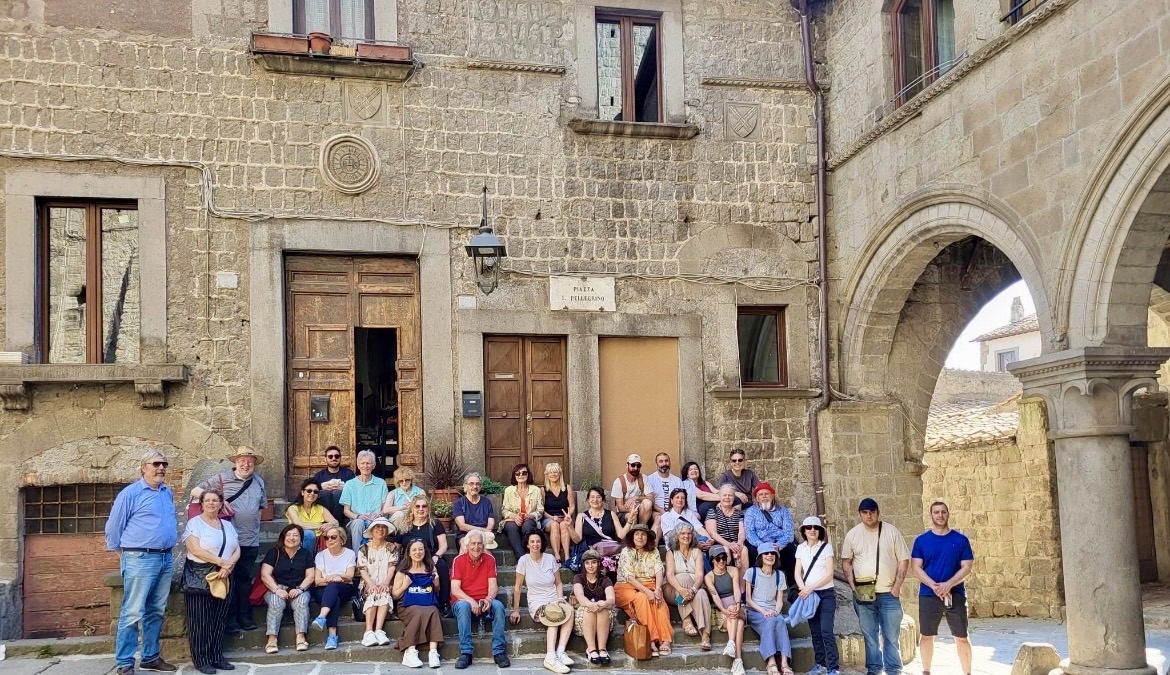
A few weeks ago, I attended the 20th Biennial Association of Italian-Canadian Writers (AICW) Conference. More than 80 speakers and participants from across Canada, Italy the US and beyond gathered at l’Università degli Studi della Tuscia in Viterbo, Italy to share their work.  The theme was Common Ground, Distant Shores:  Prospettive Interdisciplinari tra Italia e Canada (Interdisciplinary perspectives between Italy and Canada).

Attendees included established writers, celebrated novelists and academics, as well as emerging writers and first-time conference participants, ranging in age from early 20’s to mid 80’s. The voices of first, second, third and even fourth generation Italian-Canadians were heard. Friends, family members and students from the university were also in attendance.
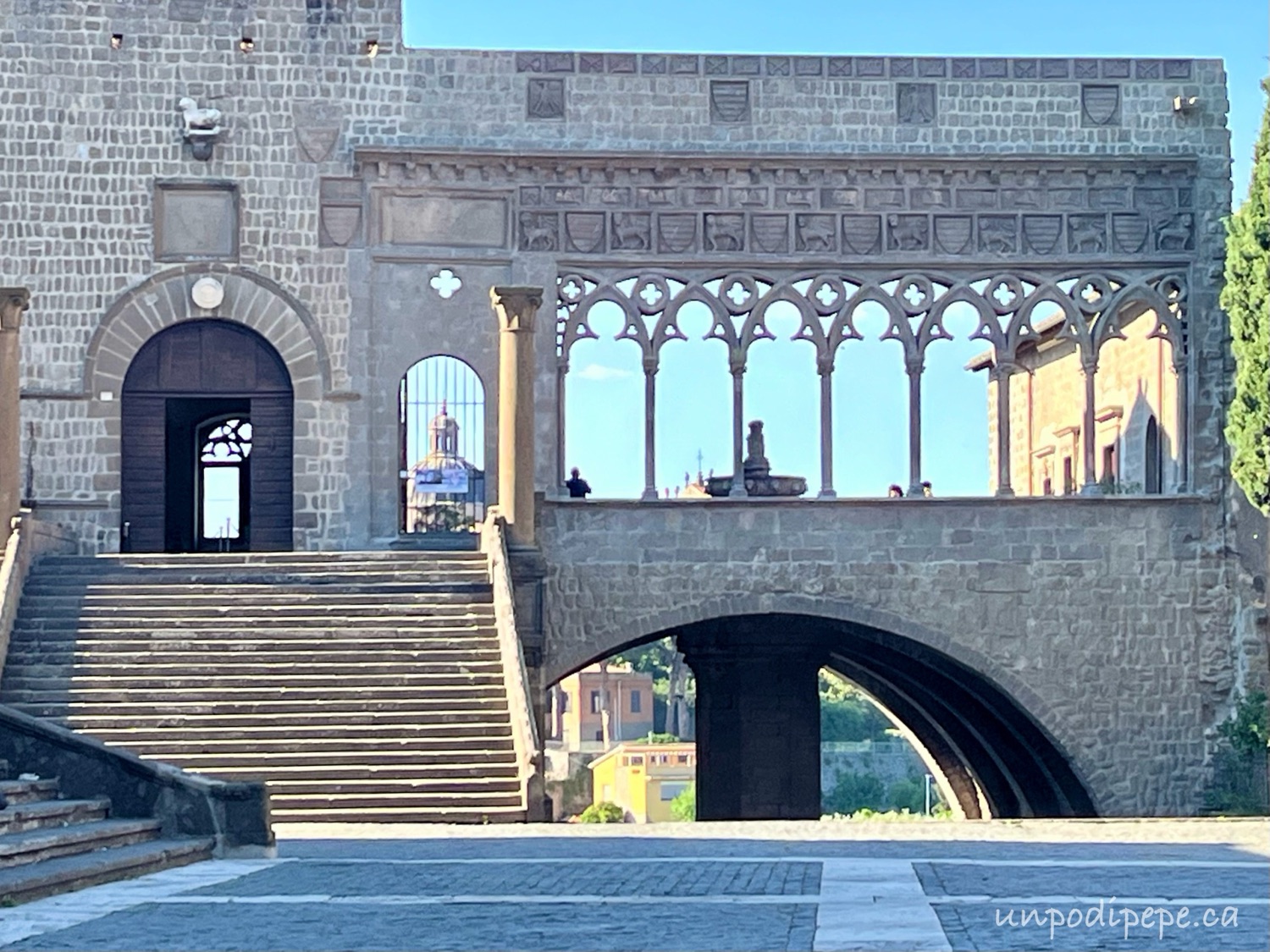
Palazzo dei Papi, Viterbo

The stunning backdrop of Viterbo, one of the most well-preserved medieval walled cities in Italy, added that extra bit of magic to the conference, transporting us back a few centuries and sparking new creative energy.
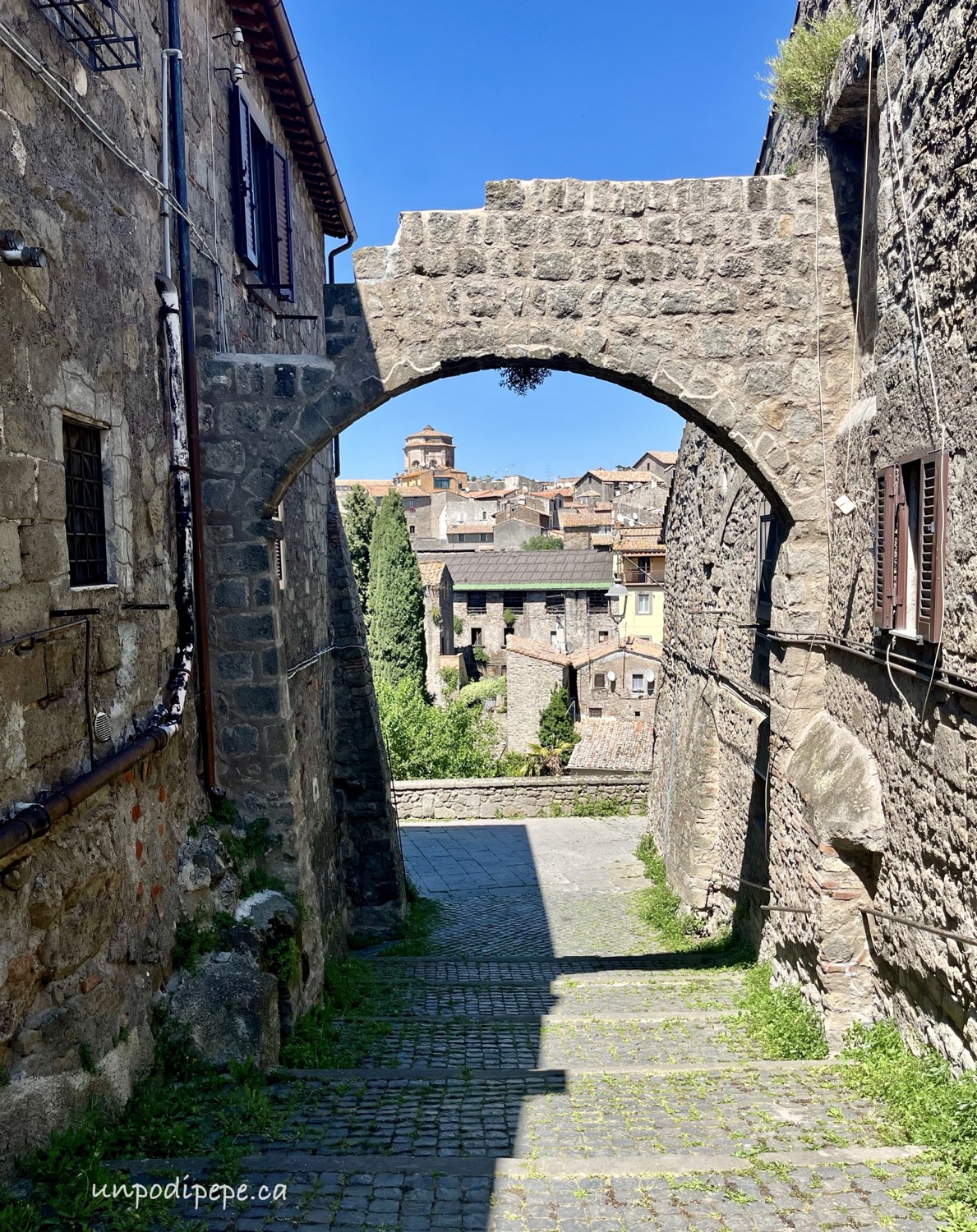
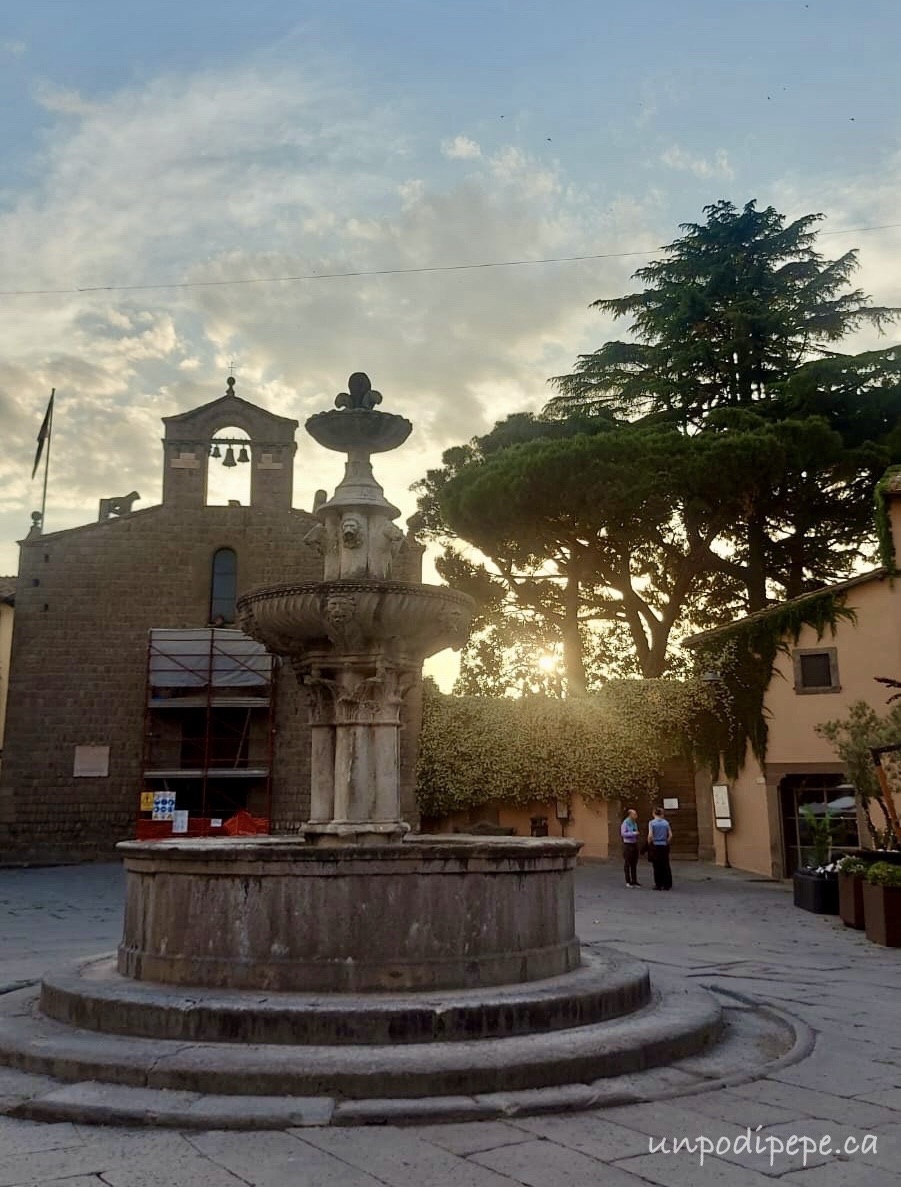
Viterbo is what i would call medievalissimo! My trek to the university took me along the city walls, through arches and narrow cobblestone streets, and up stone staircases and past a piazza with a fountain.  Along the way, I would spot several cats sunbathing on ancient stones.  Viterbo, known as ‘la citta’ dei papi’, the city of popes, is located in central Lazio, 81 km northwest of Rome.  The Via Francigena, an ancient pilgrim route from Canterbury, England to Rome passes through it.On the morning of May 27 pre-conference activities included a poetry-writing workshop led by Silvia Falsaperla and a prose-writing workshop by Licia Canton.  In the afternoon, Università della Tuscia art history professor Fulvio Ricci led a walking history lesson and tour of the medieval center of Viterbo. It seemed as if every time we turned a corner, there was a piazza with a large fountain that we wanted to go back and hang out in-which we did!
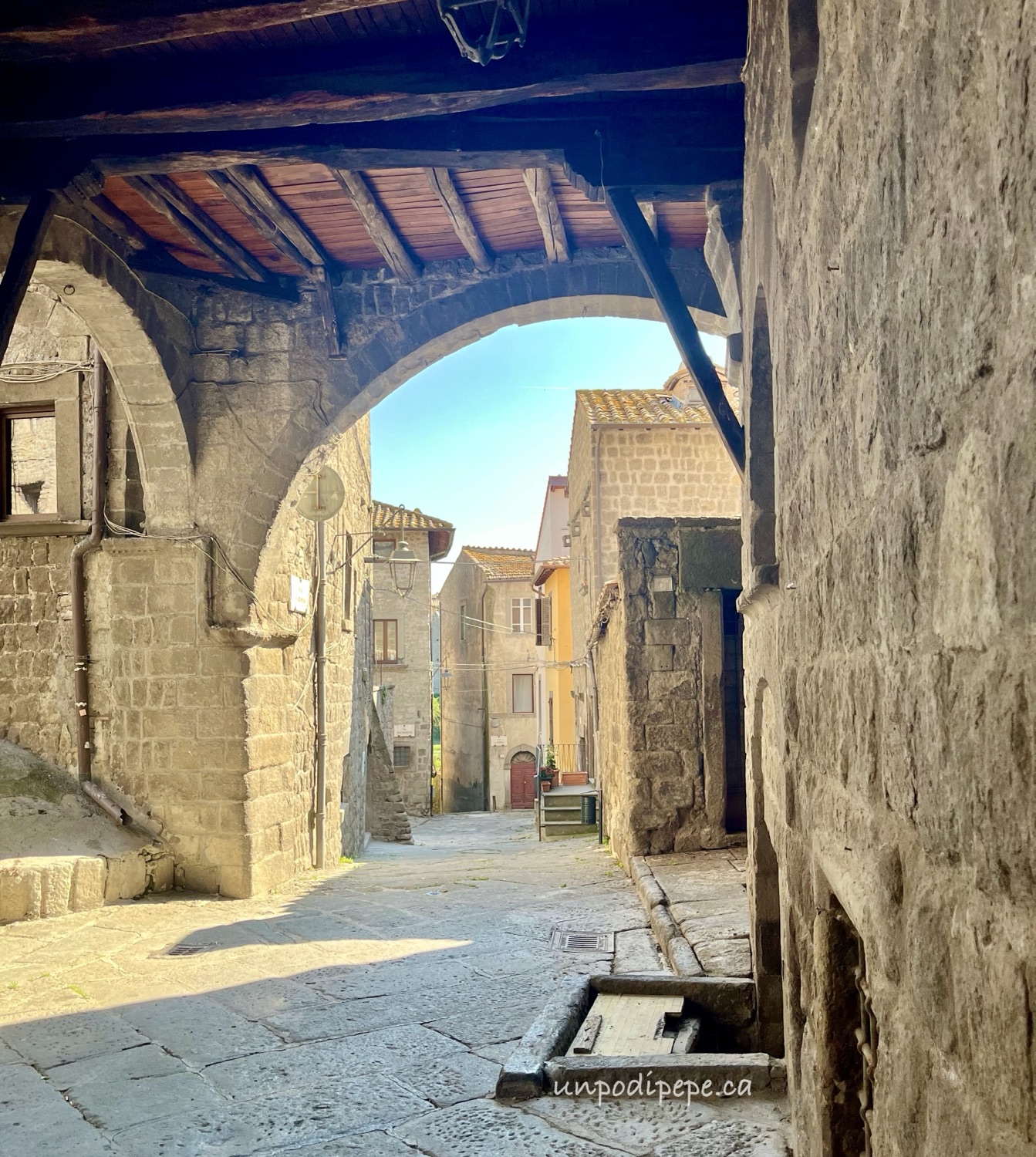
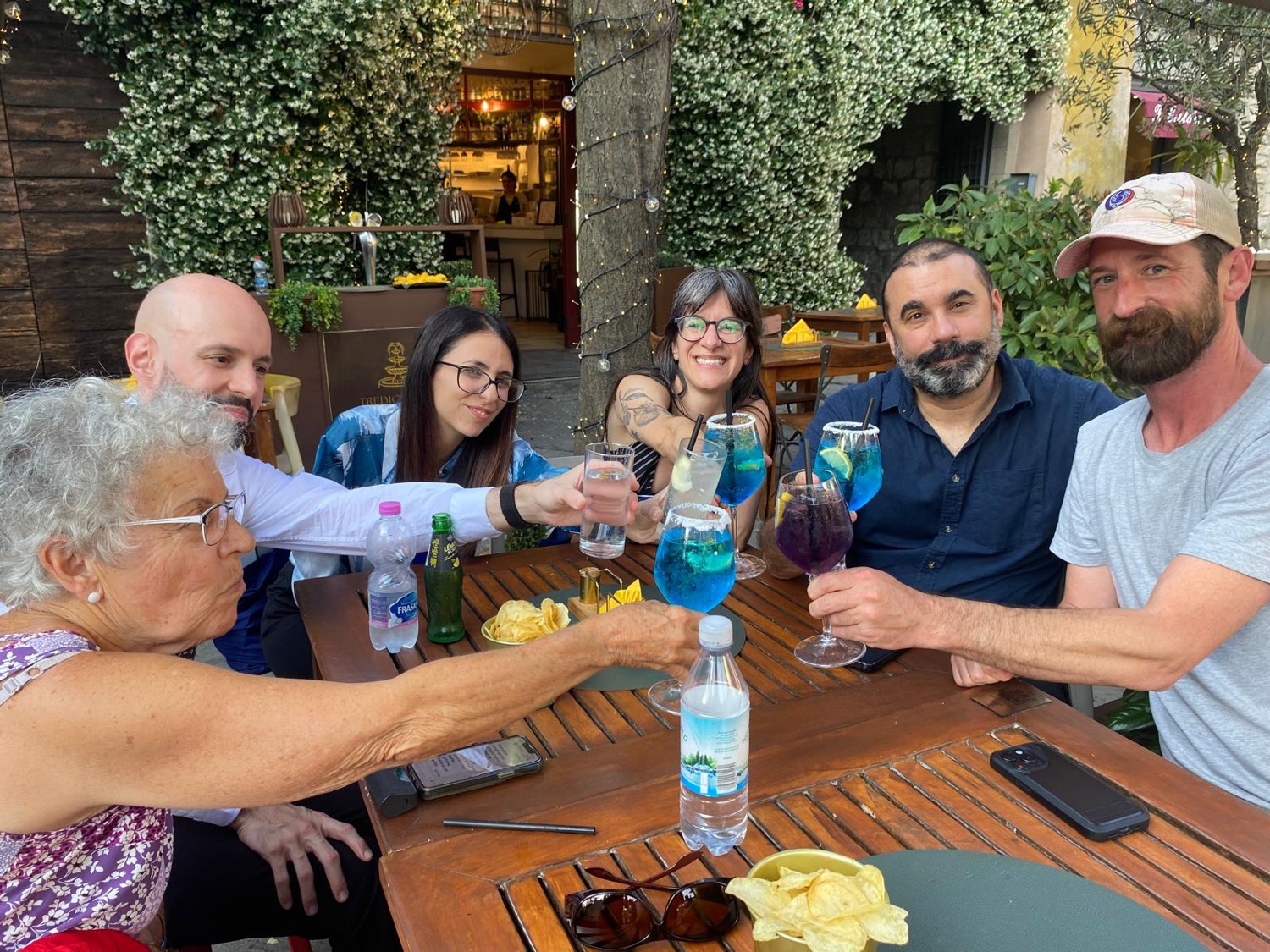
Piazza del Gesu’- Photo Licia Canton
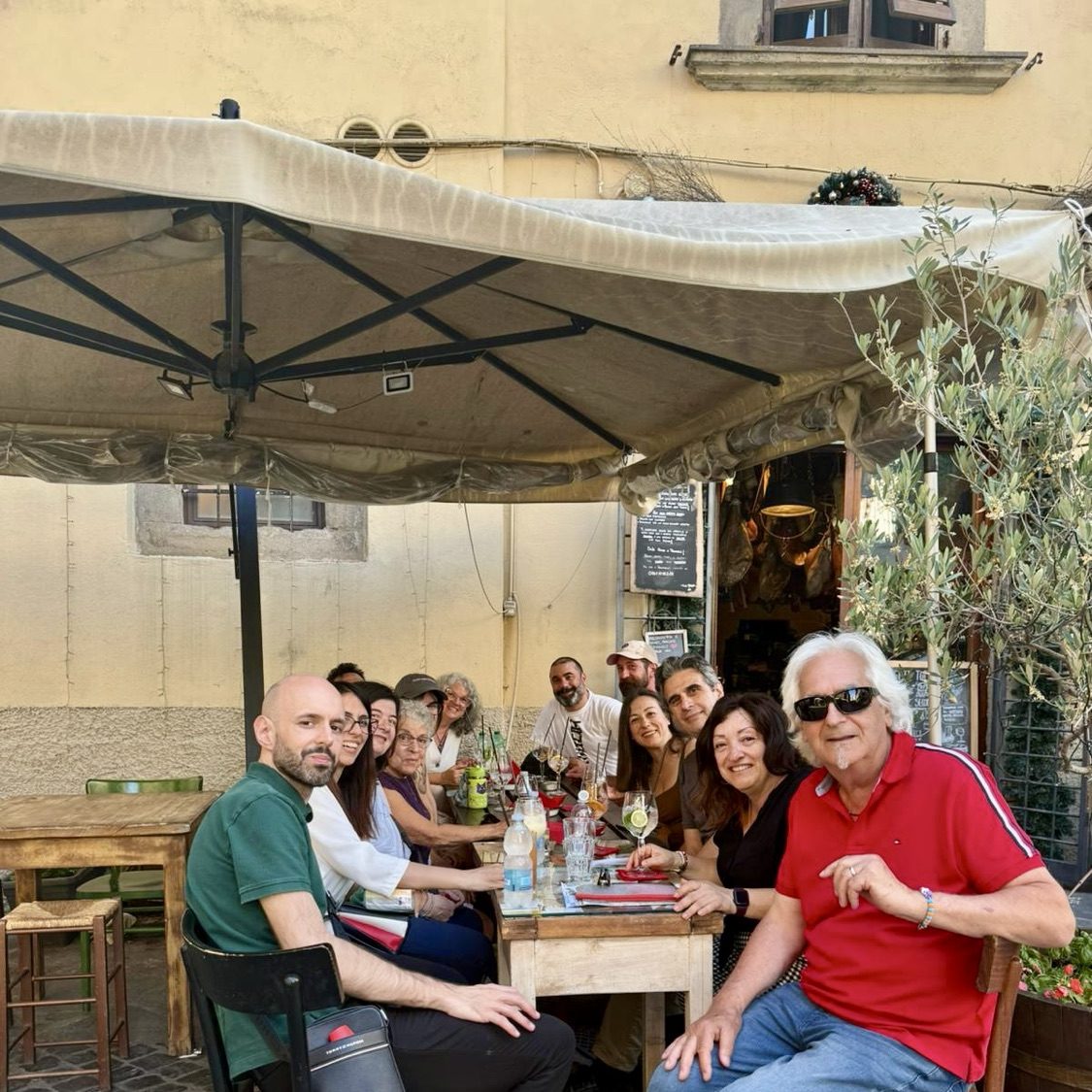
On the following 2 days, conference presentations -in English and Italian- included academic papers, readings of poetry, prose, essays and memoirs.  Also featured were three roundtable discussions, including the role of Italian cultural social clubs in Canada, the writer/translator relationship and teaching Italian as a second language.
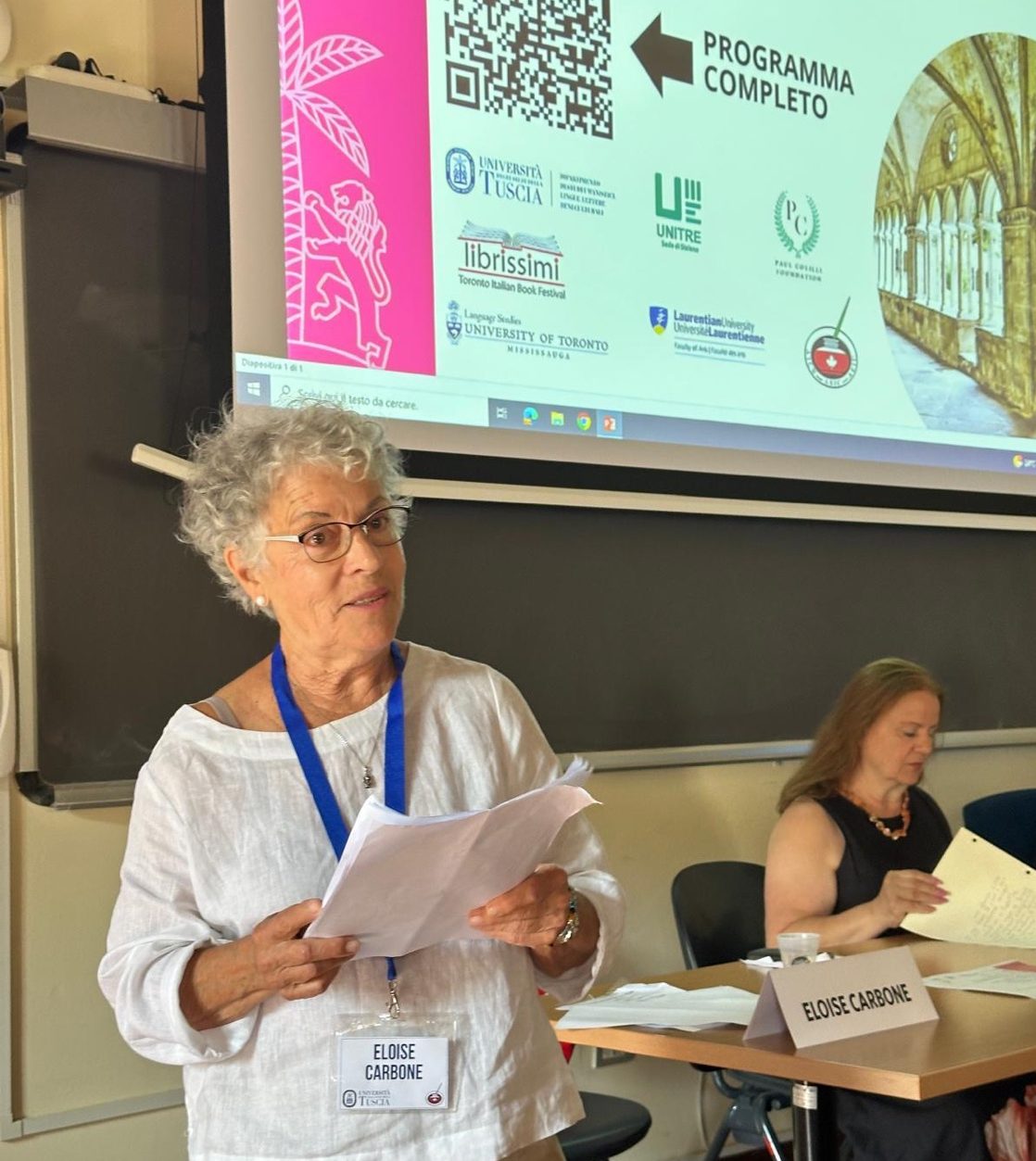
Presentations addressed the general themes of the Italian Diaspora, including migration and return, memory, identity, displacement, loss, family, food and tradition.  Also addressed were the topics of immigrant women and their works, biography and life writing, Italian-Canadian queer identities, self-translation, teaching Italian beyond the classroom, and as a second language, media in Italian culture and Italian cultural narratives across media-literature, journalism and visual culture. Each day had three parallel sessions running, requiring careful scheduling choices. I wanted to attend everything, but it was not possible.
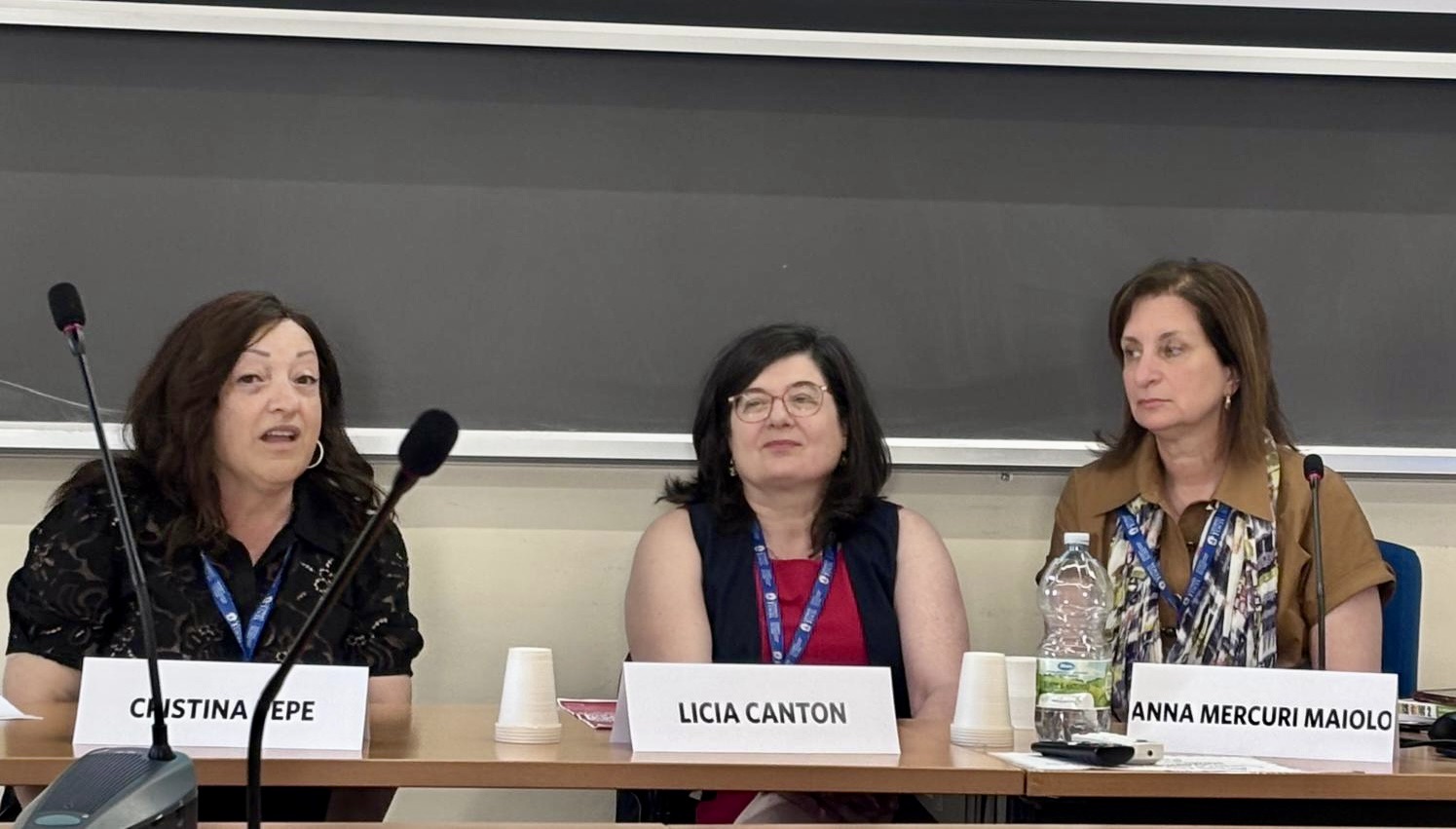
‘Tastes of home: Food, memory and identity’. Photo-Eloise Carbone

What was my contribution? I read ‘In vino there are memories’ from ‘A Literary Harvest-Canadian Writing about Wine and other Libations’ and took part in a group presentation introducing the first of a 3 volume bilingual anthology published in Italy ‘La Letteratura Italo canadese: una storia che continua’ with Anna Romano Milne, Maria Giuseppina (Giusy) Cesari, Darlene Madott and Genni Gunn.  I read from ‘A Nzalat d’Purtuall’, a revised, updated version of this post.
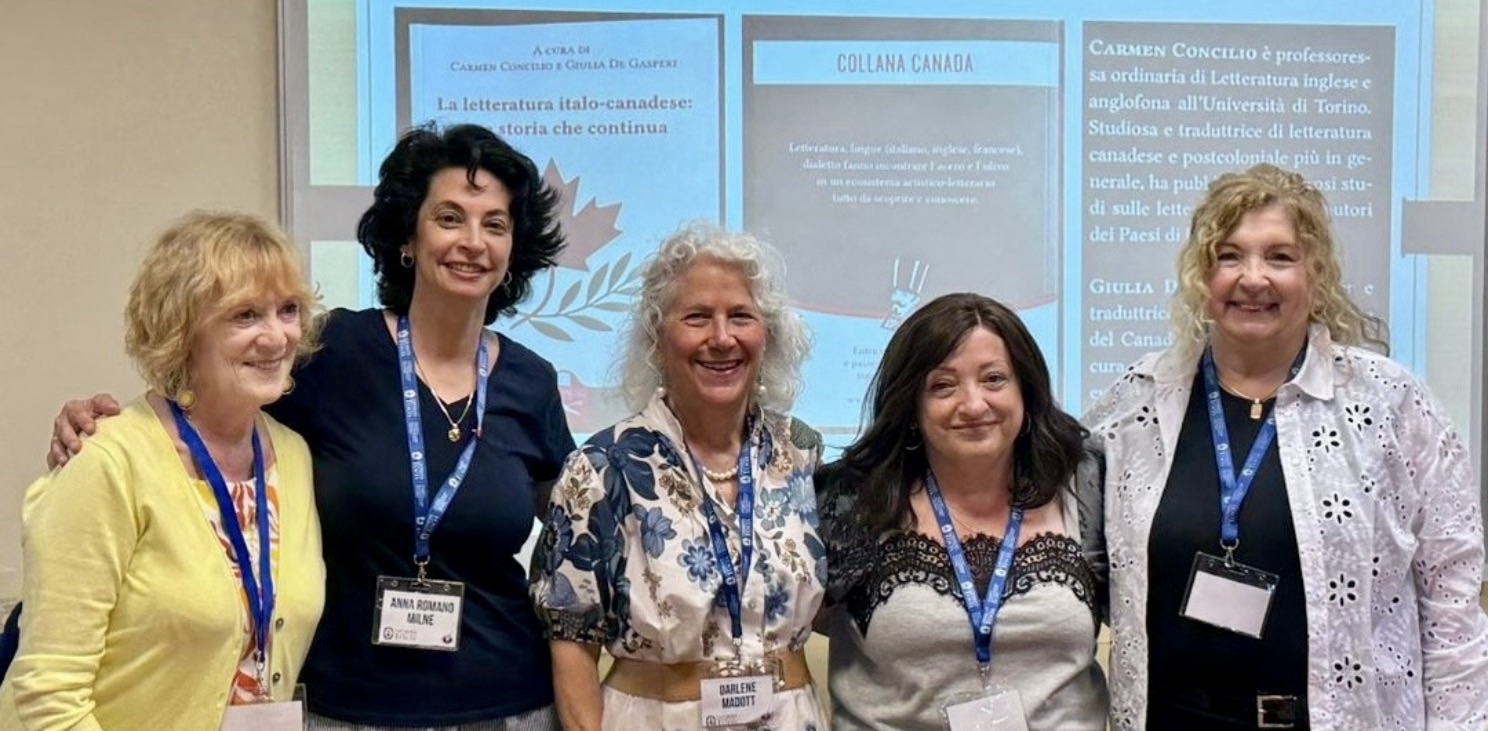
Photo Eloise Carbone

In his opening remarks, Simone Cassini professor at Università della Tuscia spoke on the contacts, cultural interests and studies that brought the university and the AICW together for this conference.  The keynote address, given by Monica Barni of Università La Sapienza, Roma and Massimo Vedovelli of Università per Stranieri in Siena was titled ‘Research on Italian around the world: methodologies, data, interpretations, and interventions, and the potential role of AI’.  It focused on Italian immigration around the world, particularly Italian immigration to Canada after World War II (1966-1971).

The closing keynote address ‘Radici Ciociara… A Life in Three Languages’ was given by long-time AICW member Gianna Patriarca on the topic of identity and cultural roots.  Regarding radici, Gianna spoke about the roots of her identity and stated that roots are what make trees grow- without them, the tree does not survive. She read a selection of her poems in English, Italian and dialetto Ciociaro.  Gianna, who recently published her lucky thirteenth book, lives in Toronto, but her roots are in the town of Ceprano in the Ciociara region of Lazio.
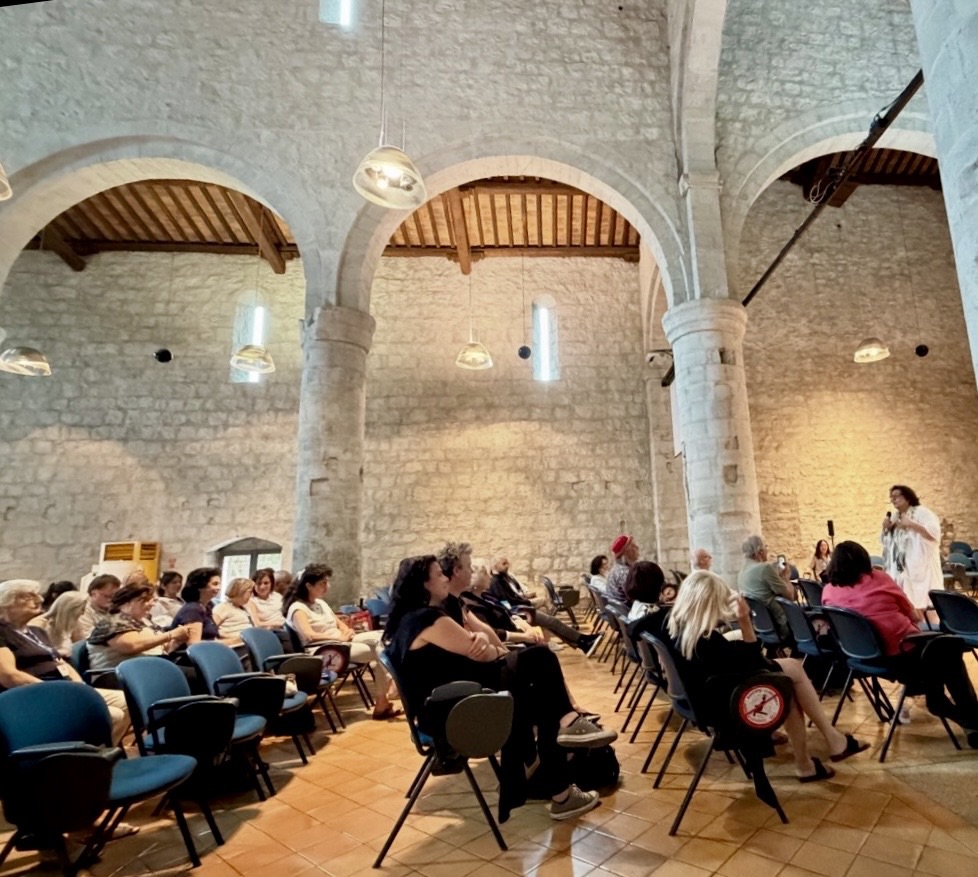
Keynote address. Photo Rosanna Micelotta Battigelli

A formal group dinner at a local ristorante followed, giving everyone a final opportunity to gather, talk to new and old friends, and share ideas.  May 30th was reserved for an optional excursion by bus to Villa Farnese in Gradoli on Lago di Bolsena, and a delicious long, leisurely meal at the agriturismo Azienda Agricola Vazianello in Caprarola.

The quality of the literary work presented at this conference demonstrates that Italian-Canadian writers have a lot to say, carry a strong sense of cultural identity, and those radici that Gianna Patriarca spoke about in her presentation are strong and thriving.

Thanks go to the planning committee:Salvatore Bancheri (University of Toronto), Simone Cassini and Francesca De Caprio (Università della Tuscia), Christine Sansalone (Laurentian University), Maria Pia Spadafora (AICW) and student volunteers Matteo, Anastasia, Luca, Cristina, Ludovica, Antonella,Virgilio and Luca from Università della Tuscia.
The next AICW biennial conference in 2028 will be held somewhere in Canada.  Stay tuned for the location and more information by visiting the AICW website.  Alla prossima!

Read my article about the conference -a shorter version of this post, with different photos-in Accenti Magazine.

Share this:

  • Share on Facebook (Opens in new window) Facebook
  • Share on Pinterest (Opens in new window) Pinterest
  • Share on X (Opens in new window) X
  • Email a link to a friend (Opens in new window) Email
  • Share on WhatsApp (Opens in new window) WhatsApp
Like Loading...

Ostia Antica

27 Tuesday Feb 2024

Posted by Un po' di pepe in Art history, Italia, Roma, Travel

≈ 9 Comments

Tags

Ancient Roma, Archeology, Daytrips from Roma, Italian history, Lazio, Roma, Roman walks

Ostia Antica, 30 km southwest of Rome was once a thriving town and commercially important seaport. It is now a well-preserved archeological site and at 150 hectares, one of the largest archeological parks in Europe. Founded in 620 BC to harvest sea salt at the ‘ostium’ or mouth of the Tevere (Tiber River), Ostia Antica was Rome’s first colony, a naval base and main ancient seaport.  With a population of 60,000 in the 2nd and 3rdcenturies AD, it was the hub for import of grain, olive oil, wine, marble, cloth and other goods destined for Rome.

Originally located on the coast, Ostia Antica is now 3 km inland. After the fall of Rome and barbarian raids, the port was neglected and the harbour eventually silted up. It was completely abandoned in the 9th century AD.  Sand dunes and mud covered the city, helping to preserve the ruins and mosaics for us like a time capsule from Ancient Rome.

Ostia Antica was a working class port city, as opposed to Pompeii, which was a resort getaway and playground for the rich and famous.  The ruins provide insight into regular, daily life in Ancient Rome and give us a sense of urban planning for the time.  There are well preserved cobbled streets, magnificent mosaics, temples, shops, apartment buildings, warehouses, private homes, public baths, warehouses, taverns, inns, a public laundry, theater and even a firefighting service.  The earliest identified synagogue in Western Europe (41-54 AD) was discovered in 1961.

Excavation started in the early 19th Century, but most of it was done from 1938-1942. Only 40% of the site has been excavated! There is a lot to see in Ostia Antica.  Here are some of the highlights:

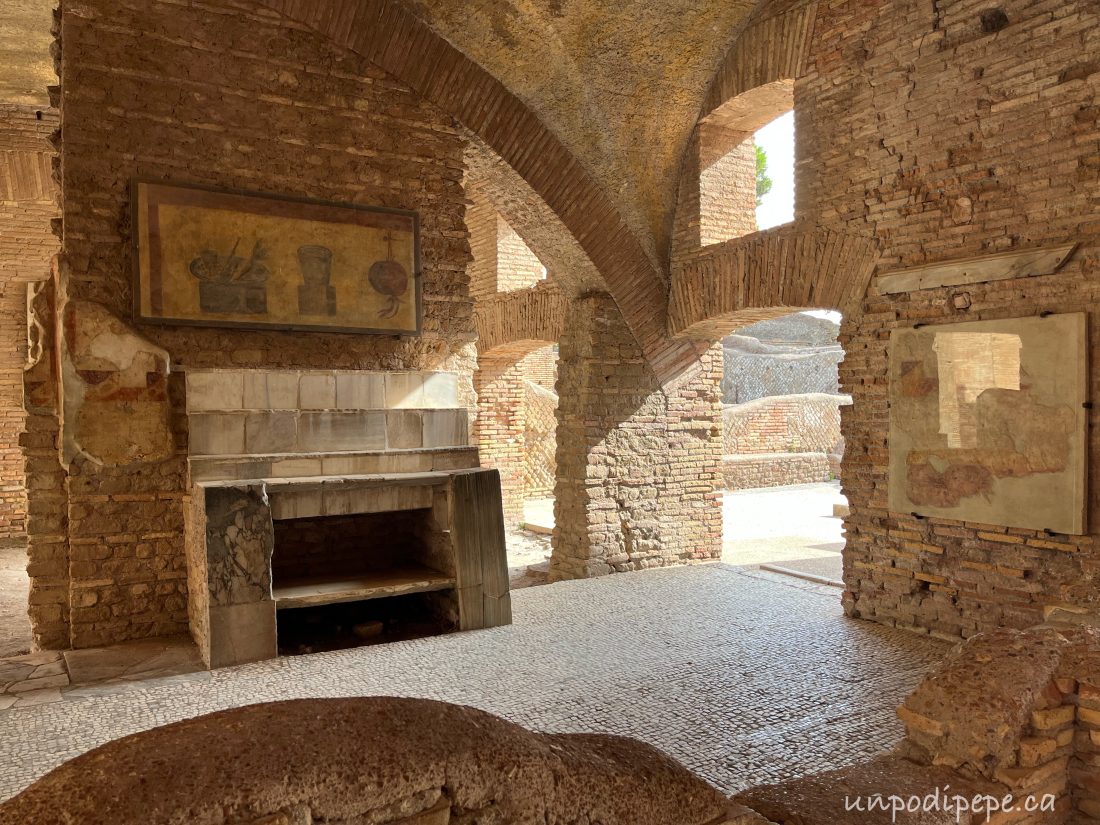
Thermopolium di Via di Diana Thermopolium is Greek for ‘place where hot food is sold’.  A 3rd C ancient fast-food joint and wine bar with windows that open out onto the street and a marble take-out counter, long table to serve hot food, shelves and a courtyard with a fountain for outdoor dining. Amphorae with cheap wine were stored under the counter.  A large fresco ‘menu’ on one wall shows a plate with carrots and beans, a glass of wine, a jar of olives and large onions or pomegranates.
Customers likely topped their food with an ancient condiment called Garum.  It was a pungent rotten fish sauce and makes ketchup sound appetizing.  On the side of the Thermopolium is a single gated public toilet!

Mulino di Silvano A multiroom bakery built in 120 AD. One room has 3 intact lava millstones for grinding the grain into flour, one for kneading the flour into dough and another still has the ovens for baking the loaves.  The bread was sold on site and also transported to sell in Rome.

Teatro Ostia’s semicircular theater survives in excellent condition.  Built in the first century BC and expanded later, it is one of the oldest masonry theaters in the world.  It can seat 4,000 spectators and is still used for summer concerts.

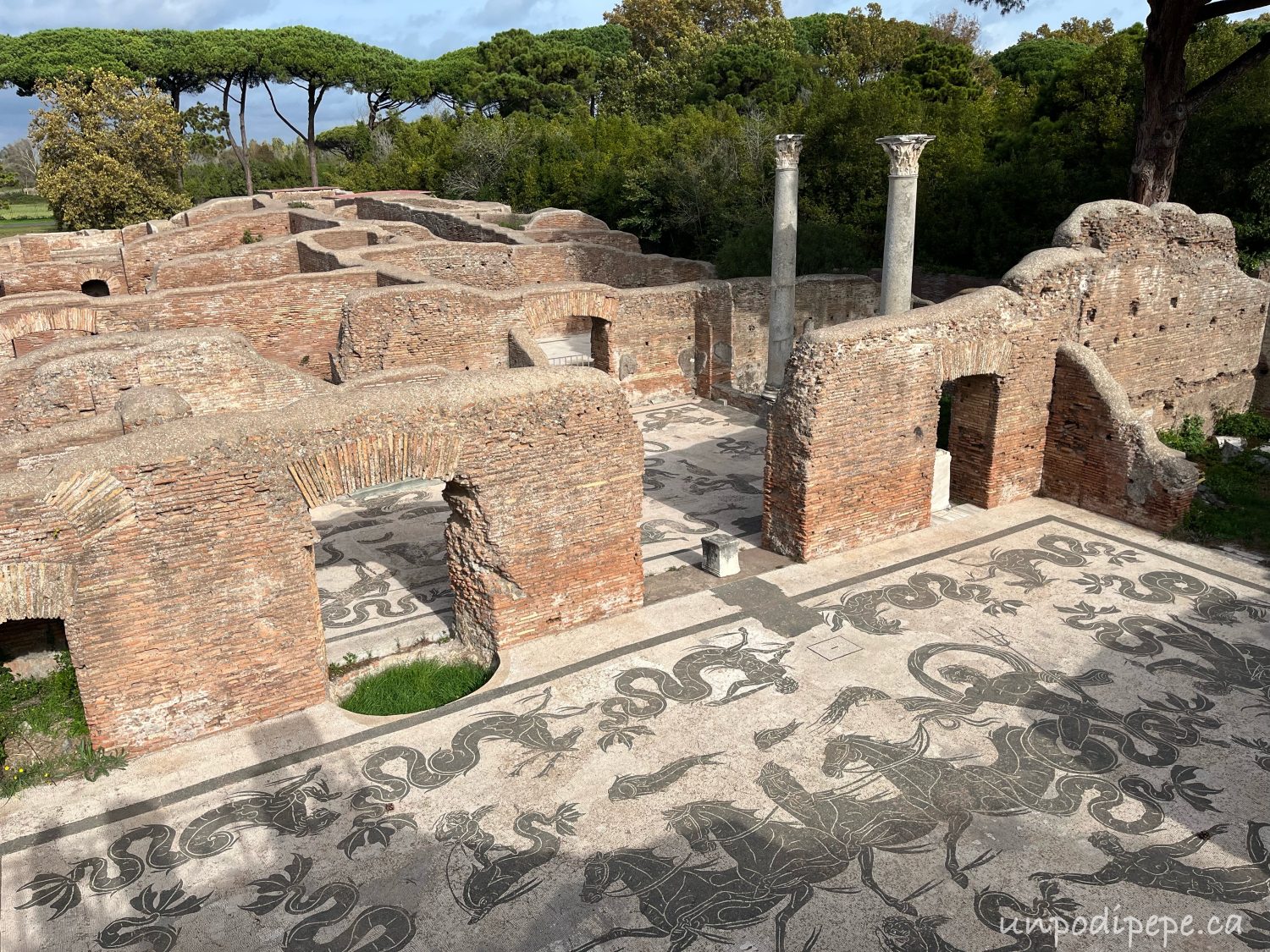
Public Baths  There are several public baths in Ostia.   The Baths of Neptune have incredibly preserved mosaic floors of Neptune and sea creatures.  We can thank the mud that covered them for centuries!  These are often covered up in the winter to protect from the harsh weather.

Public toilets A fine example of Roman plumbing. The toilets consist of a communal marble bench along 3 walls with 20 seats. Each seat had a hole leading down towards a single drain channel fed with running water to flush away waste. Since toilet paper was not a thing yet, a sea sponge attached to a stick was kept in a bucket of saltwater or vinegar for patrons of the toilets to wipe themselves. Yuck!

Piazzale delle Corporazioni (Piazza of the Corporations/Guilds) Located behind the theater, the piazza is a large open air market square with stalls along all 4 sides. Merchants and craftsmen from all over the Mediterranean sold their goods.A small metal model of the piazzale has descriptions written in Braille and Italian.The beautiful black and white mosaics in front of the stalls advertised the goods or services being sold. Stalls included shipbuilders, ropemakers, leather tanners, sailmakers, grain and wine importers, as well as fish and food products.  One of the stalls with fish mosaics likely sold the pungent Garum fish gut sauce!

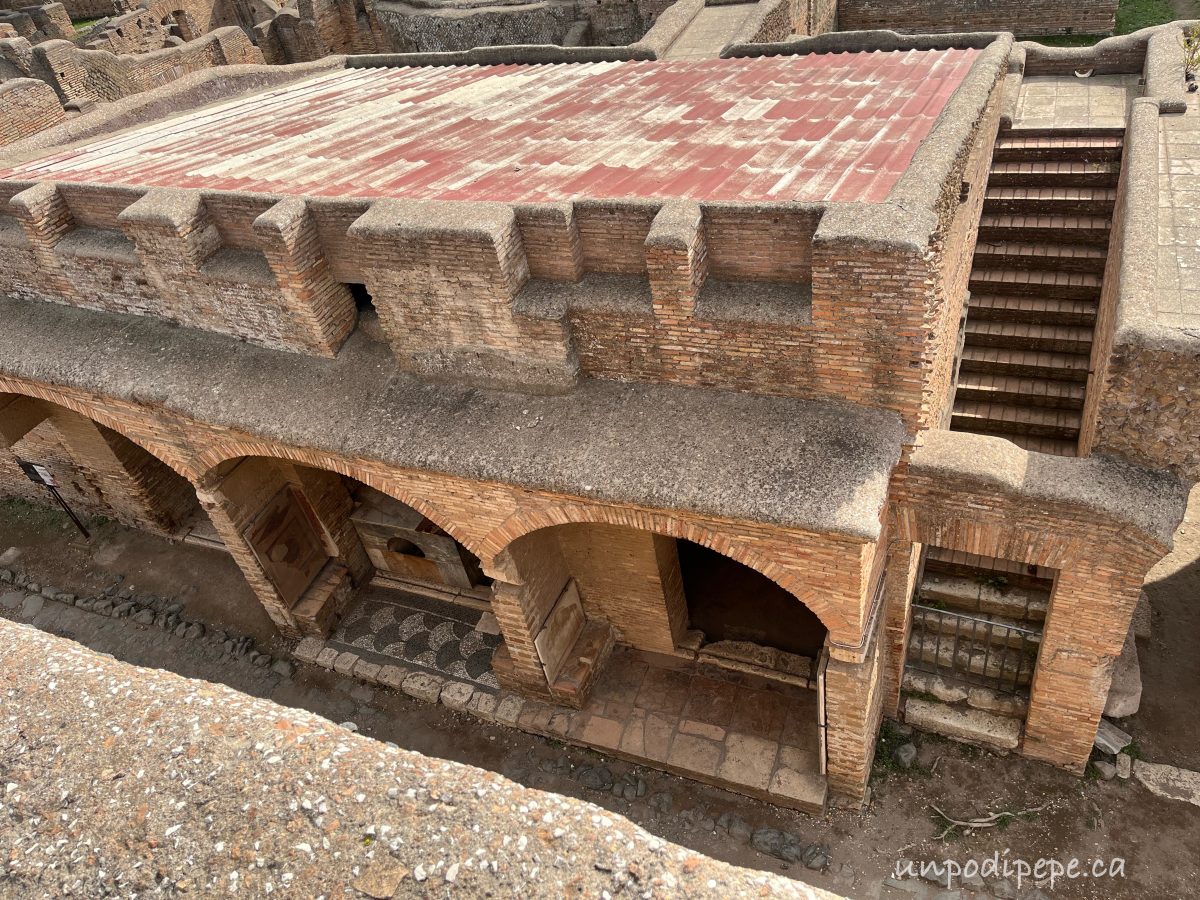
Casa di Diana A complex multifunction residential building -urban planning centuries ahead of its time.  Called an insula, this multilevel apartment has ground floor shops, accommodation for the shopkeepers on the 1stfloor and more modest accommodation on the upper floors.  A 150 AD painting of Diana was found inside.  It is possible to climb the stairs of other insulae to get to the upper floors.

A visit to Ostia Antica is a nice, half day trip from Roma, although it can be a whole day excursion if you explore more of the huge site and have lunch at one of the restaurants nearby.  Ostia Antica is grossly under visited, so it is never crowded! Bring water, a hat, sunscreen and good walking shoes.

Open Tues to Sat 8:30-4:30 in winter 8:30- 7 pm in summer. Admission fee is €18. Free admission the first Sunday of the month.  Tickets can be booked online on the official website .  A PDF guide can also be downloaded from the website.  The museum is worth seeing, but is closed at present.

Getting there by public transportation is easy and cheap: Take Metro line B (Blue line) to San Paolo (or Piramide*) metro station and take the ‘Lido’ commuter train to Ostia. Get off at ‘Ostia Antica’. The ride is 23 minutes. (Do not get off at Ostia Lido Nord or Ostia Lido Centro unless you are going to the beach!)

Use the footbridge to cross the road and walk 5-10 minutes to the main entrance of the Parco Archeologico Ostia Antica. Trains leave every 20 minutes and use the regular metro/bus tickets €1.50.

*If getting there from Piramide, walk out of the metro station and go to Porta San Paolo train station next door to find the Lido commuter train.

Buon viaggio!

Share this:

  • Share on Facebook (Opens in new window) Facebook
  • Share on Pinterest (Opens in new window) Pinterest
  • Share on X (Opens in new window) X
  • Email a link to a friend (Opens in new window) Email
  • Share on WhatsApp (Opens in new window) WhatsApp
Like Loading...

Pantheon update

28 Sunday May 2023

Posted by Un po' di pepe in Architecture, Photography, Roma, Travel

≈ 11 Comments

Tags

Ancient Roma, Italy travel tips, Lazio, Pantheon, Roma photography, Roma travel, Santa Maria ad Martyres, UNESCO World Heritage Sites

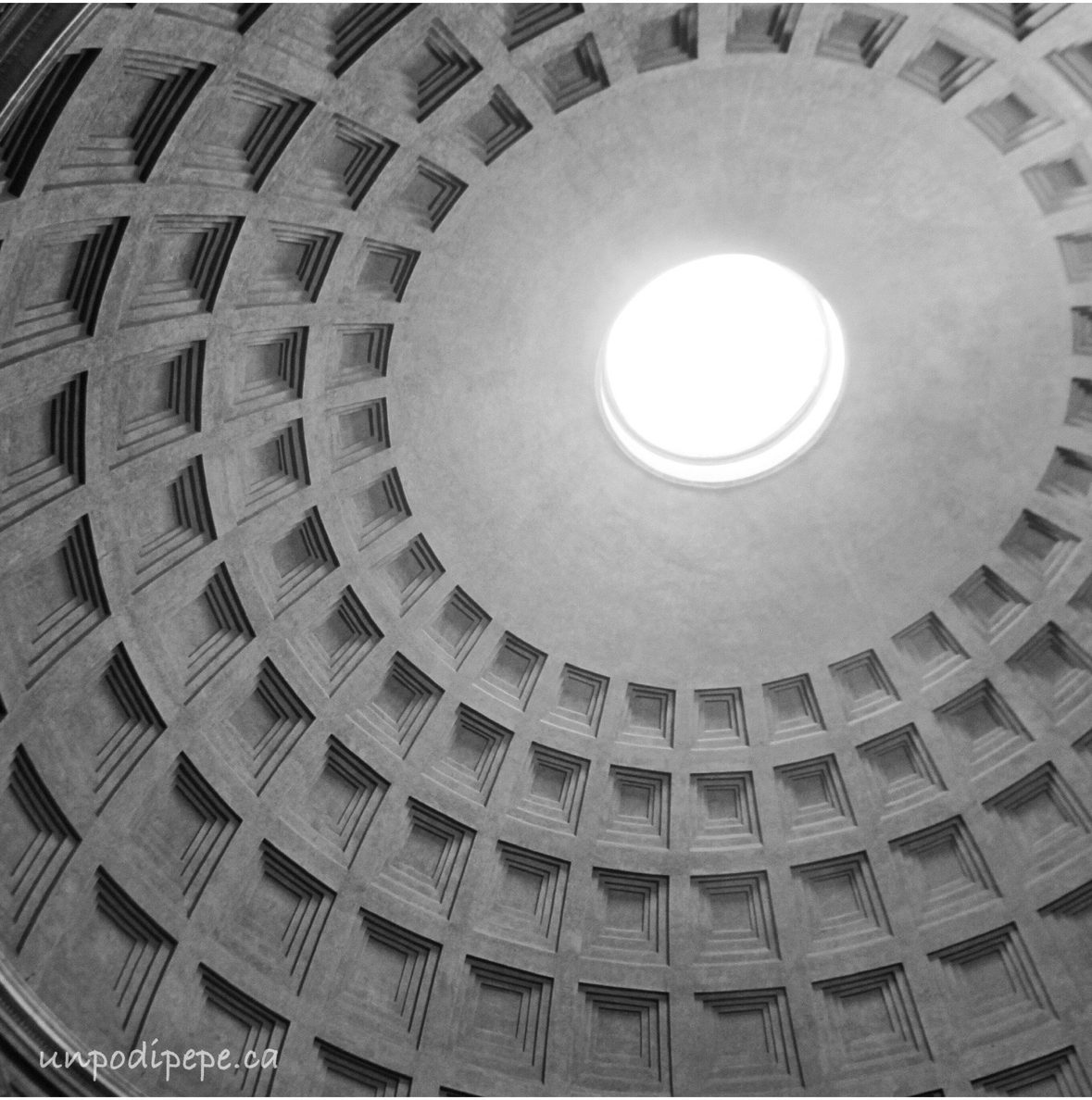
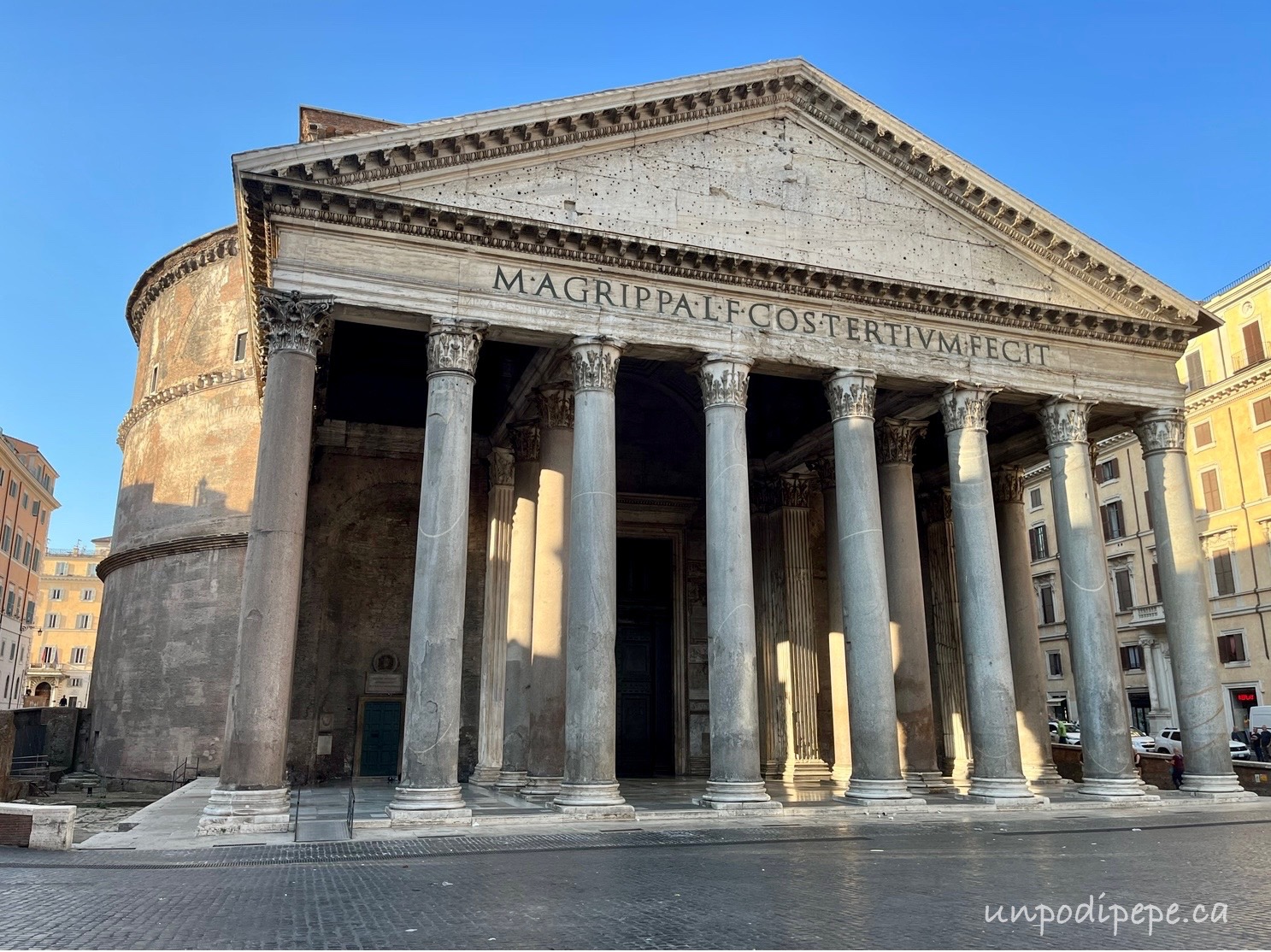
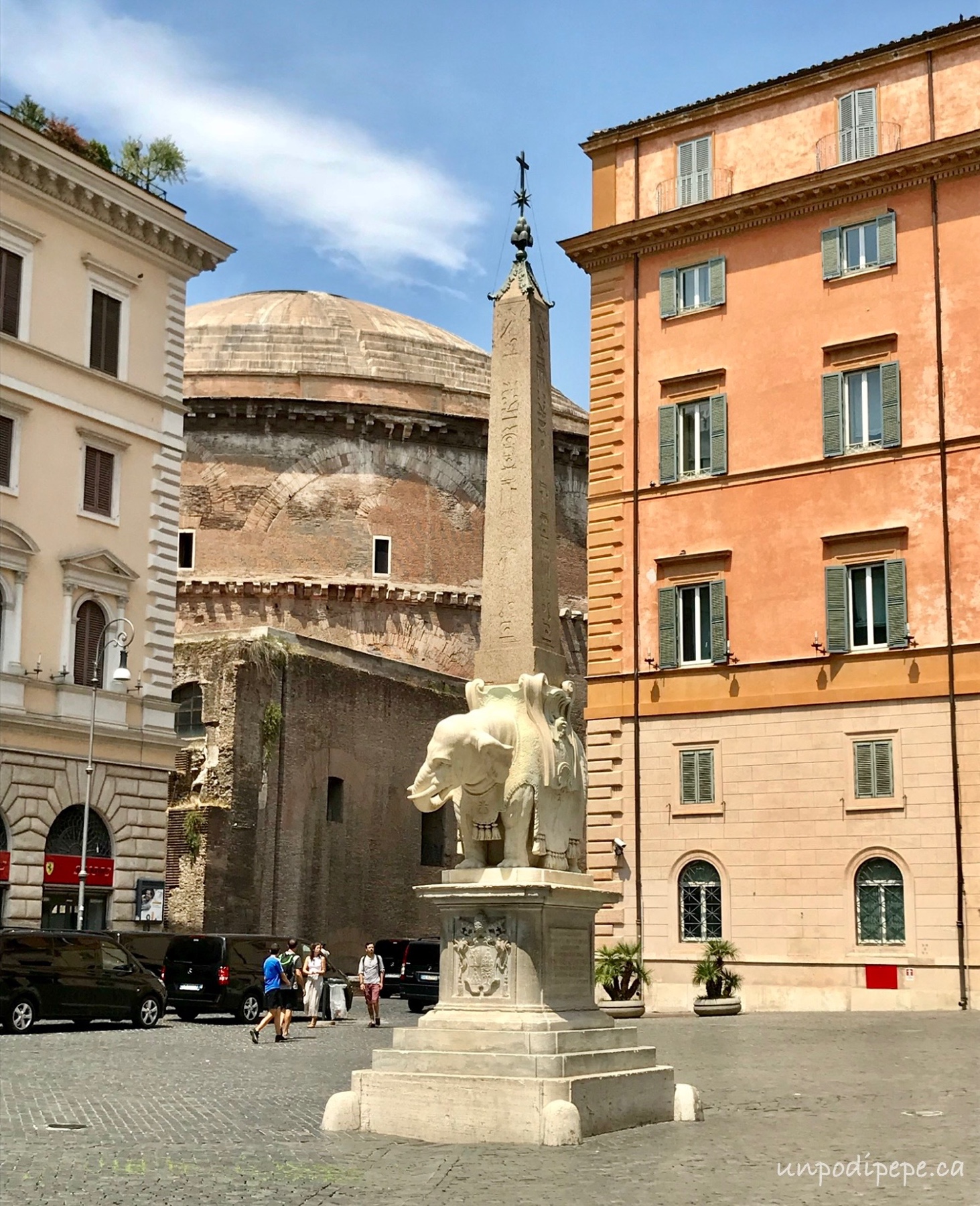
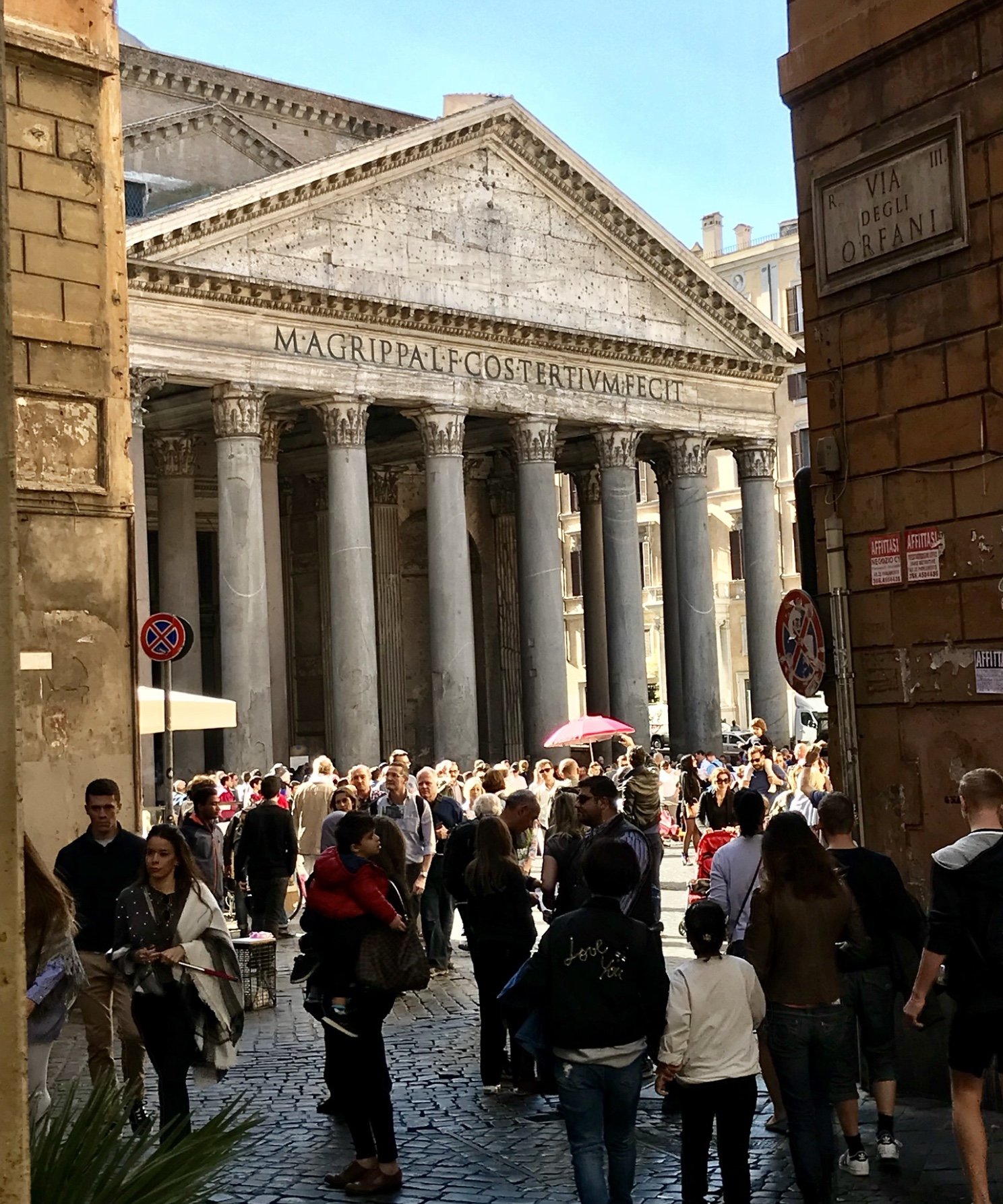
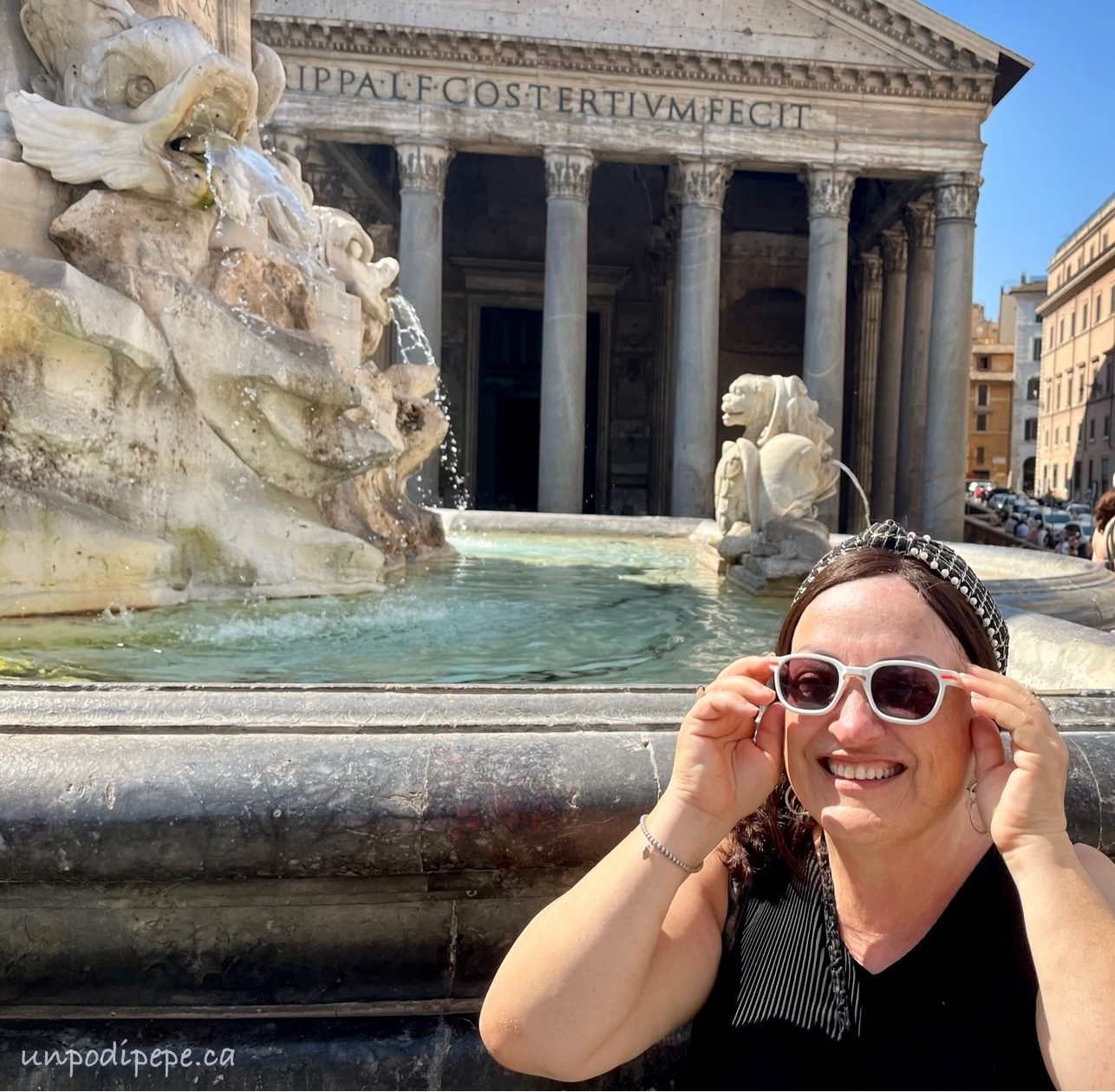
Roma is full of amazing buildings. The most amazing and best-preserved of all is the Pantheon.  Imagine Michelangelo entering the Pantheon 500 years ago, looking up and saying “this looks more like the work of angels than humans’-that is how amazing it is! The perfect mathematical proportions of the Pantheon have provided inspiration for architects for almost 2,000 years. Check out the post Il Pantheon for more details on the history and structure.Admission has always been free, and there has been talk of charging an entry fee for many years…in fact, it has been ‘announced’ several times.  Well….purtroppo, the time has come.  Starting July 1st 2023, there will be a €5 admission fee for entry for tourists/visitors.  Admission will still be free for residents of Roma, those under 18 years old and those attending Mass. Until then, admission remains free, with booking required at least 1 day in advance only on weekends and holidays.

The Pantheon is a classical masterpiece and a monument that requires expensive upkeep, so the need for a modest admission fee is understandable. Since the 7th century it also functions as the Church of Santa Maria ad Martyres.  In Roma entry into churches is free-so that is why there has been so much effort to not charge an admission fee.

Mass is at 5 pm Saturdays, 10:30 am Sundays and public holidays, and midnight on Christmas Eve.  Shoulders, midriff and knees need to be covered, although this is not as strictly enforced as the Vatican.

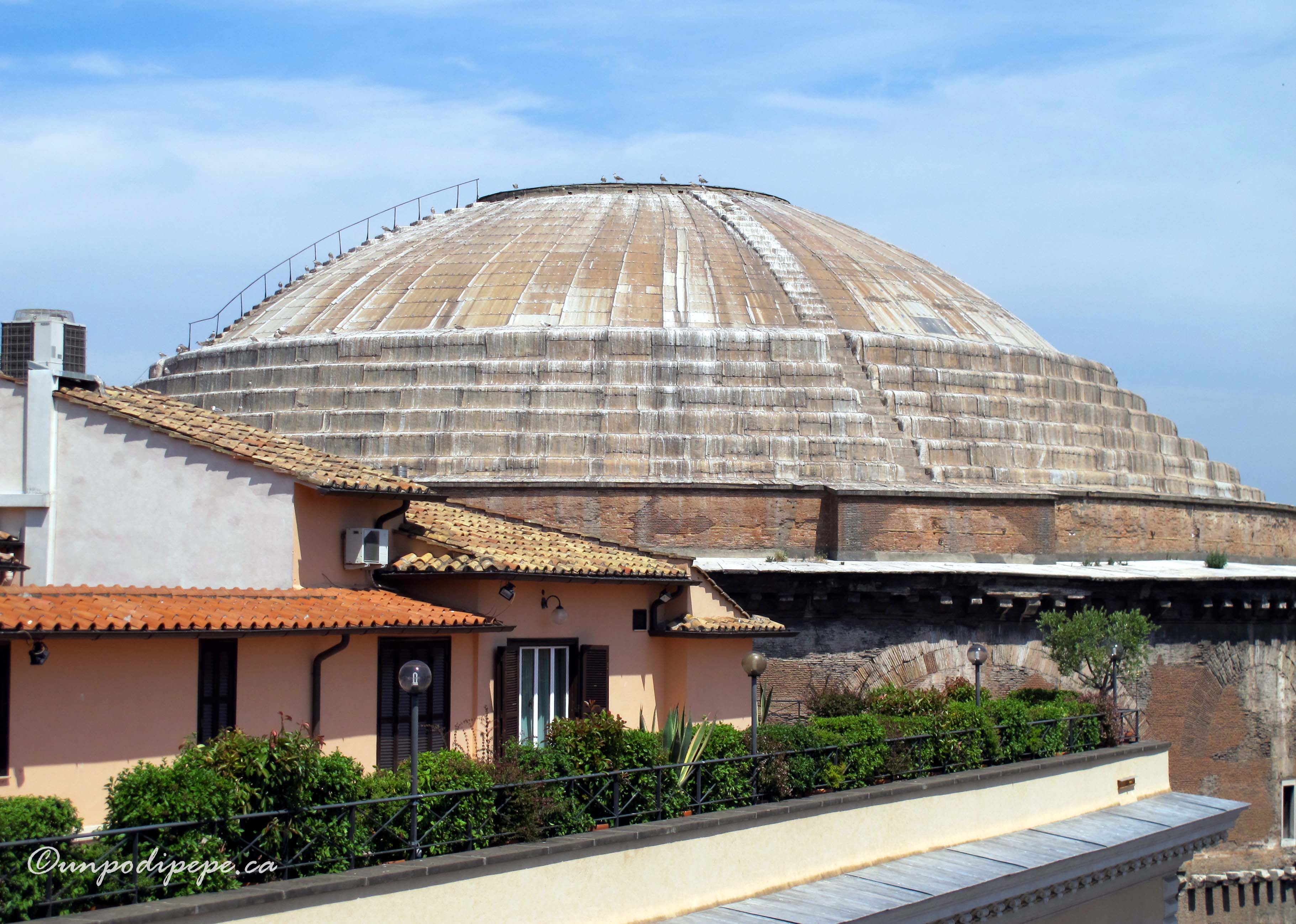
‘La Pioggia delle Rose al Pantheon’ (the rain of roses) is on my list of things to see in my lifetime. This takes place on Pentecost Sunday, 50 days after Easter.  At noon, right after Mass, Roma’s Vigili del Fuoco (fire fighters) climb to the top of the dome and drop thousands of rose petals through the oculus as choirs sing.  The rose petals symbolize the Holy Spirit coming down to earth.  Pentecost Sunday happens to be today! I saw a video of the event this morning, and even Michelangelo would be impressed! Tickets or advance booking are not available for this event.  Arriving by 7am for the 10:30 Mass is apparently necessary to get a spot inside! The ladder used by the vigili to get to the oculus is visible in the foto:

The dome and oculus, viewed from the roof of Grande Hotel de la Minerve

Visiting the Pantheon takes about 45 minutes. It is open daily 0900-1700 Sun 09-1800 with last entry at 18:30. The Pantheon is closed Jan 1, May 1, Aug 15 and Dec 25.  An audio guide with an App can be prebooked for ~€8.50, or a 45 minute guided tour for ~€20.

Details are not yet available on how to book admission, but they should be available soon on the website. Roma is a popular weekend destination for European and Italian travelers, so I imagine tickets will easier to book during the week.  There is really no ‘off season’ except for possibly the period from January 7 until the end of February.

The Pantheon is centrally located, in Piazza della Rotonda.  I walk slower than most people, but it is about a 20 minute walk to Piazza di Spagna, the closest Metro stop.  It is about a 20 minute walk to the Fontana di Trevi, 10 minutes to Piazza Navona and 40 minutes to Colosseo.

Read more about the Pantheon in Caffè con Caravaggio a Roma, Un Giorno a Roma  and Autunno in Italia.

Buon Viaggio, Cristina

Share this:

  • Share on Facebook (Opens in new window) Facebook
  • Share on Pinterest (Opens in new window) Pinterest
  • Share on X (Opens in new window) X
  • Email a link to a friend (Opens in new window) Email
  • Share on WhatsApp (Opens in new window) WhatsApp
Like Loading...

Enter your email address to follow 'un po' di pepe' and receive notifications of new posts by email.

Join 509 other subscribers
Follow Un po' di pepe on WordPress.com

Popular Posts

  • Polignano a Mare 2.0
    Polignano a Mare 2.0
  • Hairstyling in Ancient Roma
    Hairstyling in Ancient Roma
  • Uffa, allora, purtroppo, magari, ….mannaggia!
    Uffa, allora, purtroppo, magari, ….mannaggia!
  • Contact
    Contact
  • About me/Chi sono
    About me/Chi sono
  • Insalata Purtuall'
    Insalata Purtuall'
  • Polignano a Mare
    Polignano a Mare

Recent Posts

  • Polignano a Mare 2.0
  • Via dell’ Amore~Riomaggiore
  • AICW Conference, Viterbo
  • Bloghiversario #12
  • Pane e Salute
  • Sanremo 2026
  • Cucina Italiana Patrimonio UNESCO
  • 2025~Un po’ di pepe Year in Review
  • Castel del Monte
  • ‘The Nuances of Love’
  • Hostaria Antica Roma~Eat like an Ancient Roman
  • Santa Maria in Aracoeli
  • Casino dell’Aurora~Villa Boncompagni Ludovisi
  • Nasoni di Roma
  • Bloghiversario #11
  • Fontana di Trevi
  • Acqua Vergine
  • Giubileo 2025
  • Sanremo 2025
  • In Vino there are Memories
  • A Literary Harvest
  • 2024~Un po’ di pepe Year in Review
  • Buon Natale 2024
  • Il Bicerin
  • Mercato Porta Palazzo

Categories

Amici e Famiglia Architecture Art Art history Art projects Bilingual posts Blogging Canada Culture Feste Firenze Inspiration Italia Italian Folklore Italian language Italian life Italocanadesi Libri Mangiamo! Orsara di Puglia Parole piacevoli Photography Puglia Recipes Roma Travel Travel tips Uncategorized Vino

Archives

Un po’ di pepe on Facebook

Un po’ di pepe on Facebook

Start a Blog at WordPress.com.

  • Subscribe Subscribed
    • Un po' di pepe
    • Join 509 other subscribers
    • Already have a WordPress.com account? Log in now.
    • Un po' di pepe
    • Subscribe Subscribed
    • Sign up
    • Log in
    • Report this content
    • View site in Reader
    • Manage subscriptions
    • Collapse this bar
Loading Comments...
%d