Tags
AICW, Association of Italian Canadian Writers, Italian Canadian Literature, Lazio, Via Francigena, Viterbo
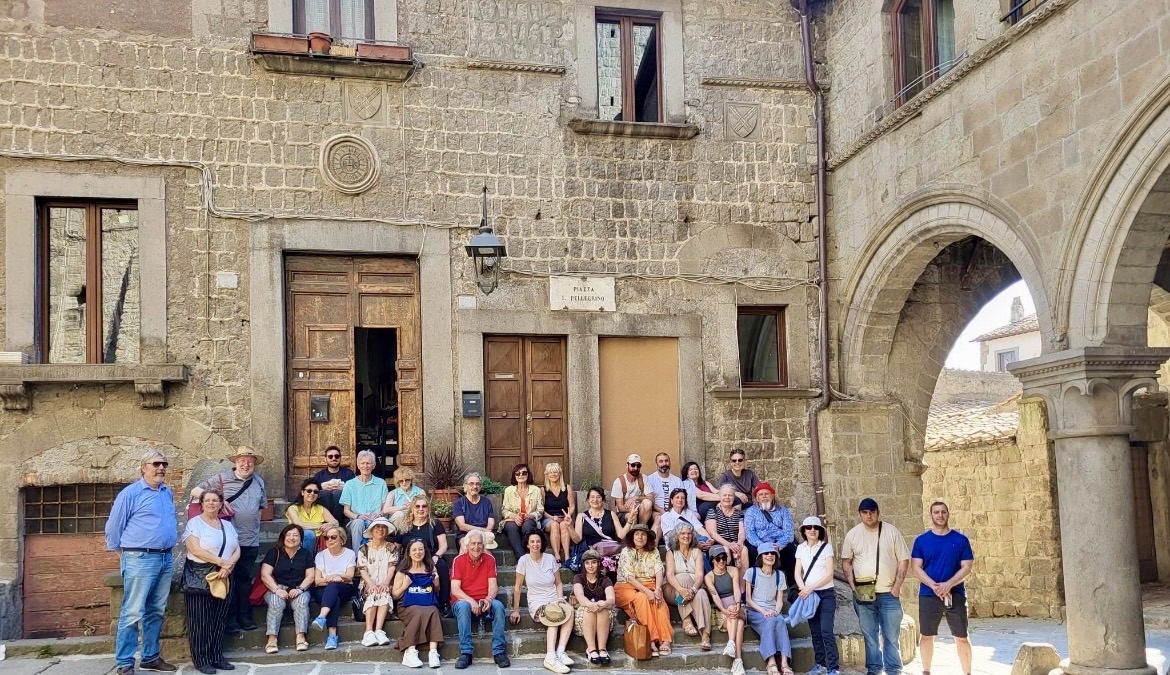 A few weeks ago, I attended the 20th Biennial Association of Italian-Canadian Writers (AICW) Conference. More than 80 speakers and participants from across Canada, Italy the US and beyond gathered at l’Università degli Studi della Tuscia in Viterbo, Italy to share their work. The theme was Common Ground, Distant Shores: Prospettive Interdisciplinari tra Italia e Canada (Interdisciplinary perspectives between Italy and Canada).
Attendees included established writers, celebrated novelists and academics, as well as emerging writers and first-time conference participants, ranging in age from early 20’s to mid 80’s. The voices of first, second, third and even fourth generation Italian-Canadians were heard. Friends, family members and students from the university were also in attendance.
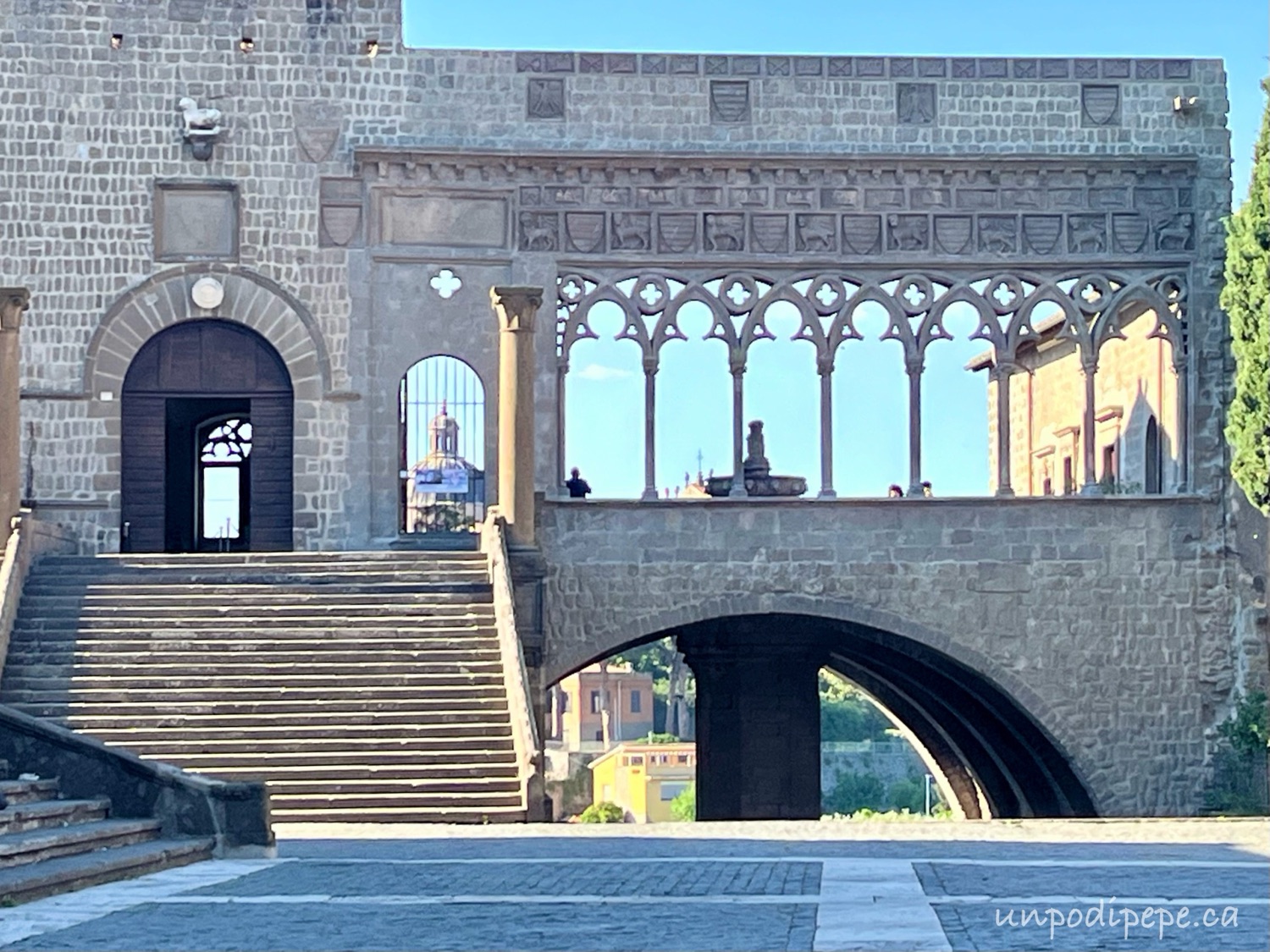
Palazzo dei Papi, Viterbo
The stunning backdrop of Viterbo, one of the most well-preserved medieval walled cities in Italy, added that extra bit of magic to the conference, transporting us back a few centuries and sparking new creative energy.
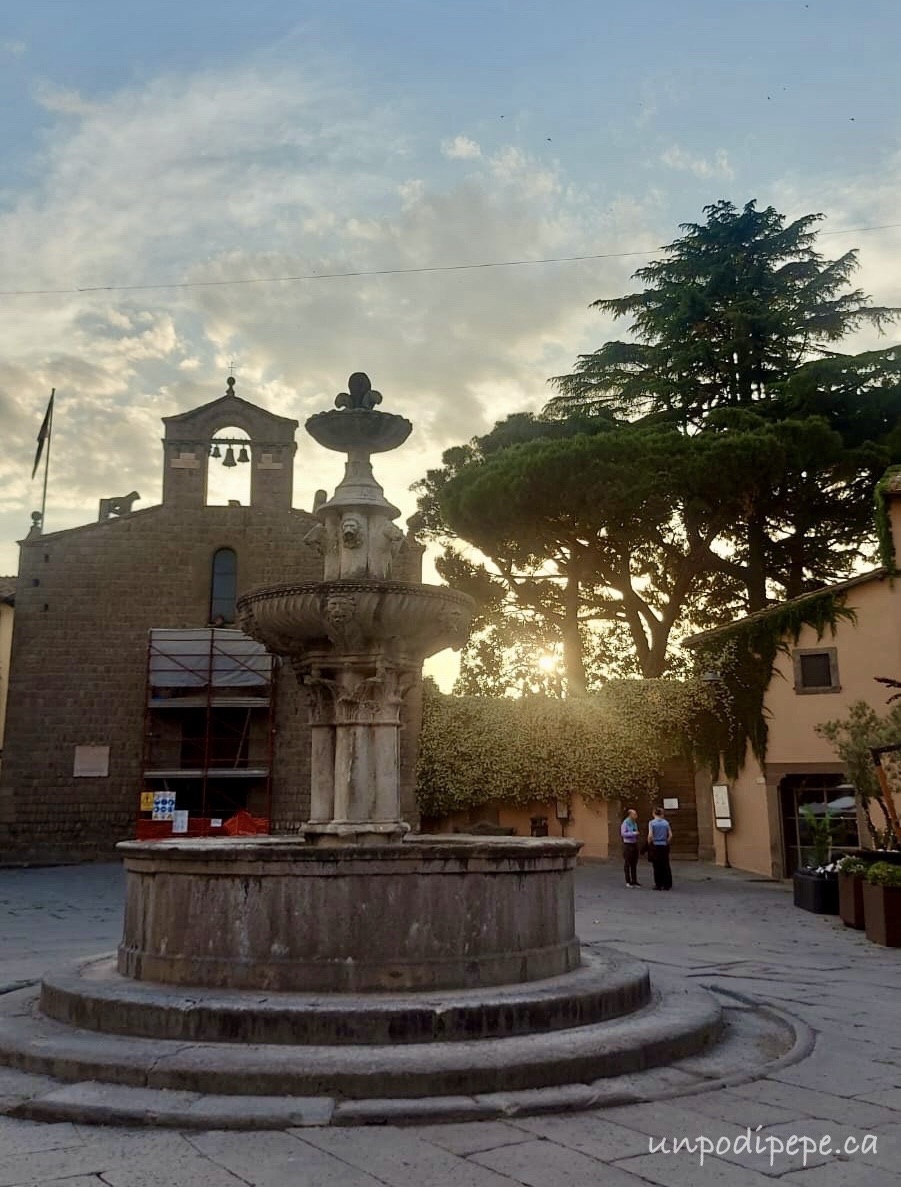
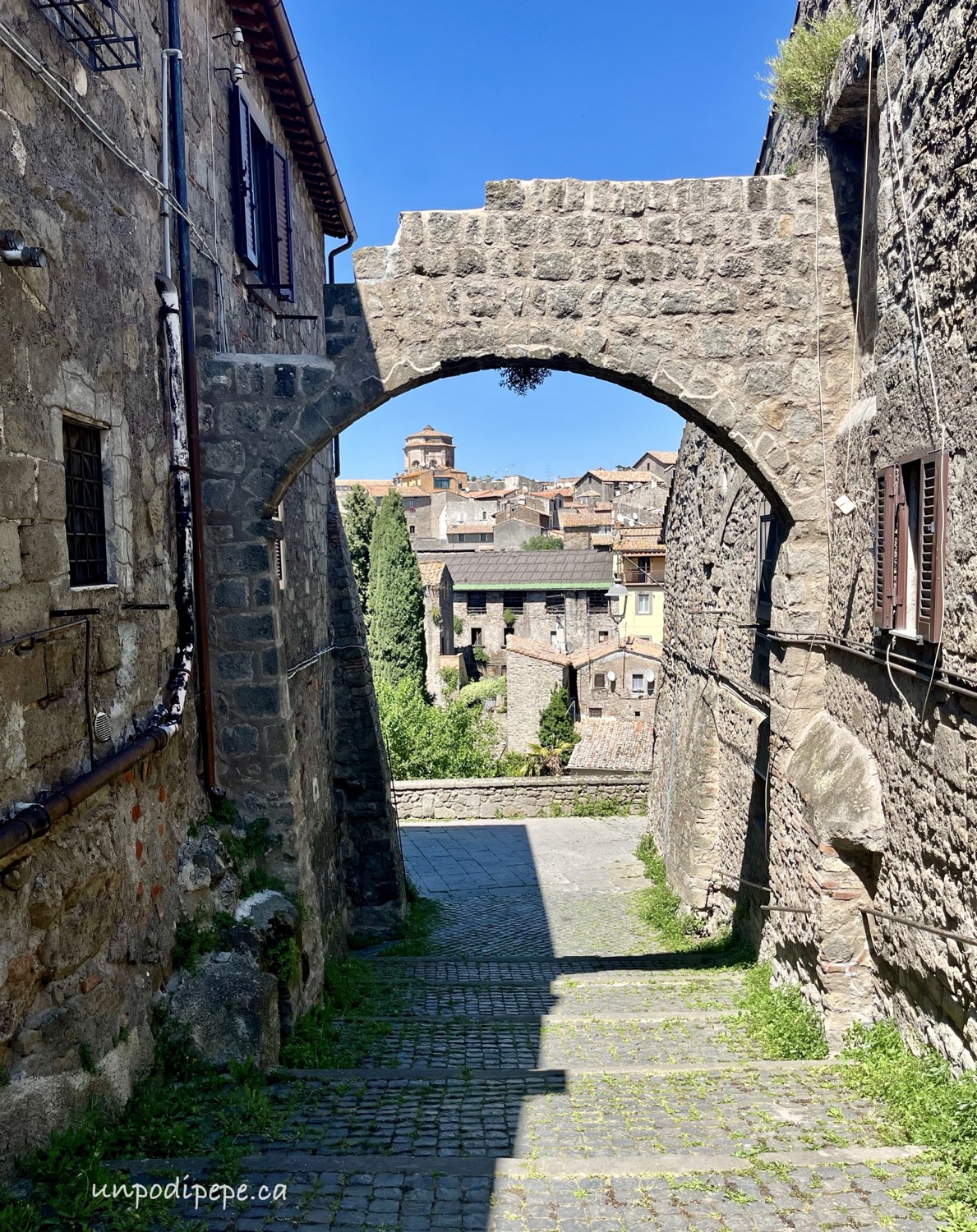 Viterbo is what i would call medievalissimo! My trek to the university took me along the city walls, through arches and narrow cobblestone streets, and up stone staircases and past a piazza with a fountain. Along the way, I would spot several cats sunbathing on ancient stones. Viterbo, known as ‘la citta’ dei papi’, the city of popes, is located in central Lazio, 81 km northwest of Rome. The Via Francigena, an ancient pilgrim route from Canterbury, England to Rome passes through it.
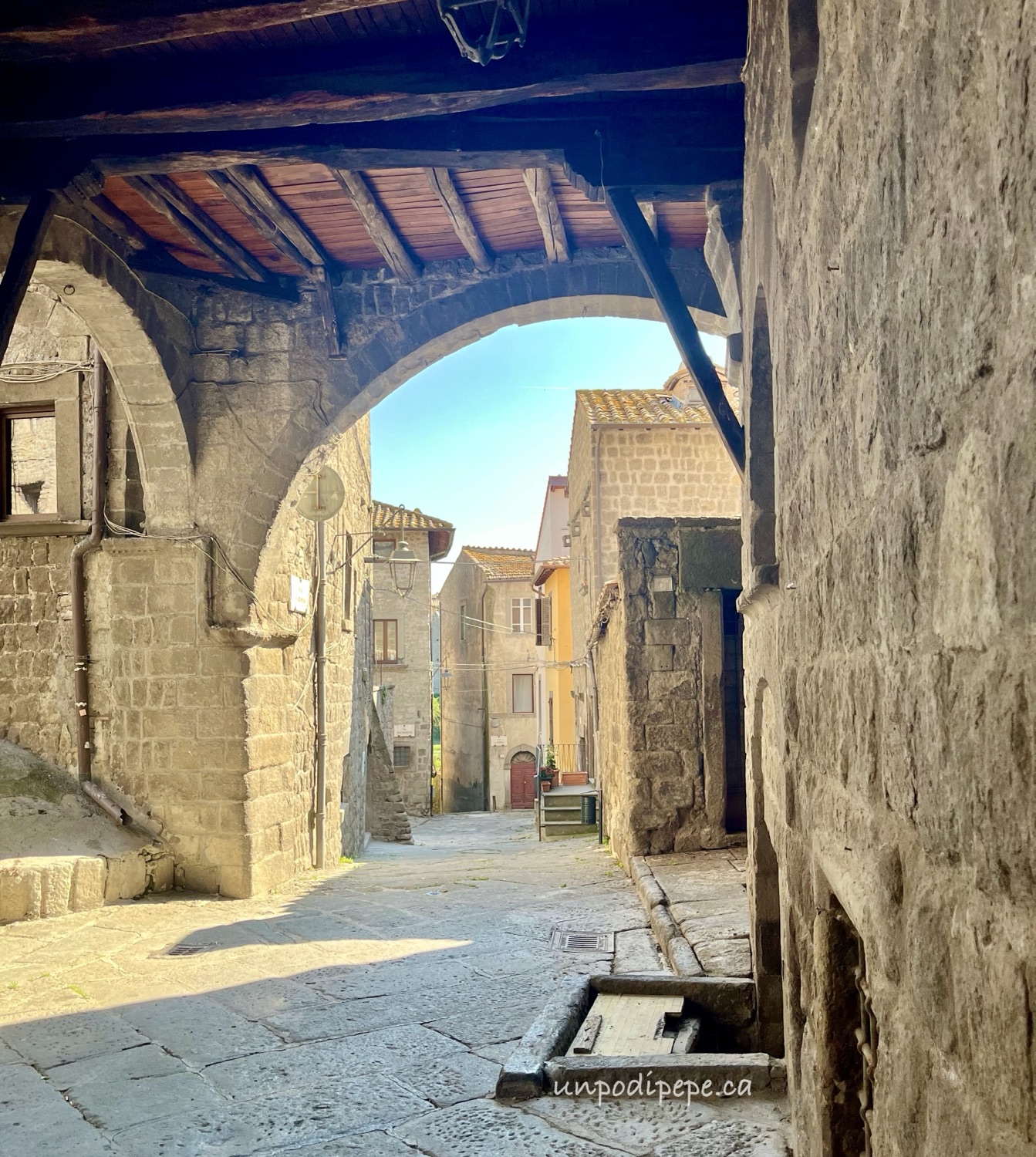 On the morning of May 27 pre-conference activities included a poetry-writing workshop led by Silvia Falsaperla and a prose-writing workshop by Licia Canton. In the afternoon, Università della Tuscia art history professor Fulvio Ricci led a walking history lesson and tour of the medieval center of Viterbo. It seemed as if every time we turned a corner, there was a piazza with a large fountain that we wanted to go back and hang out in-which we did!
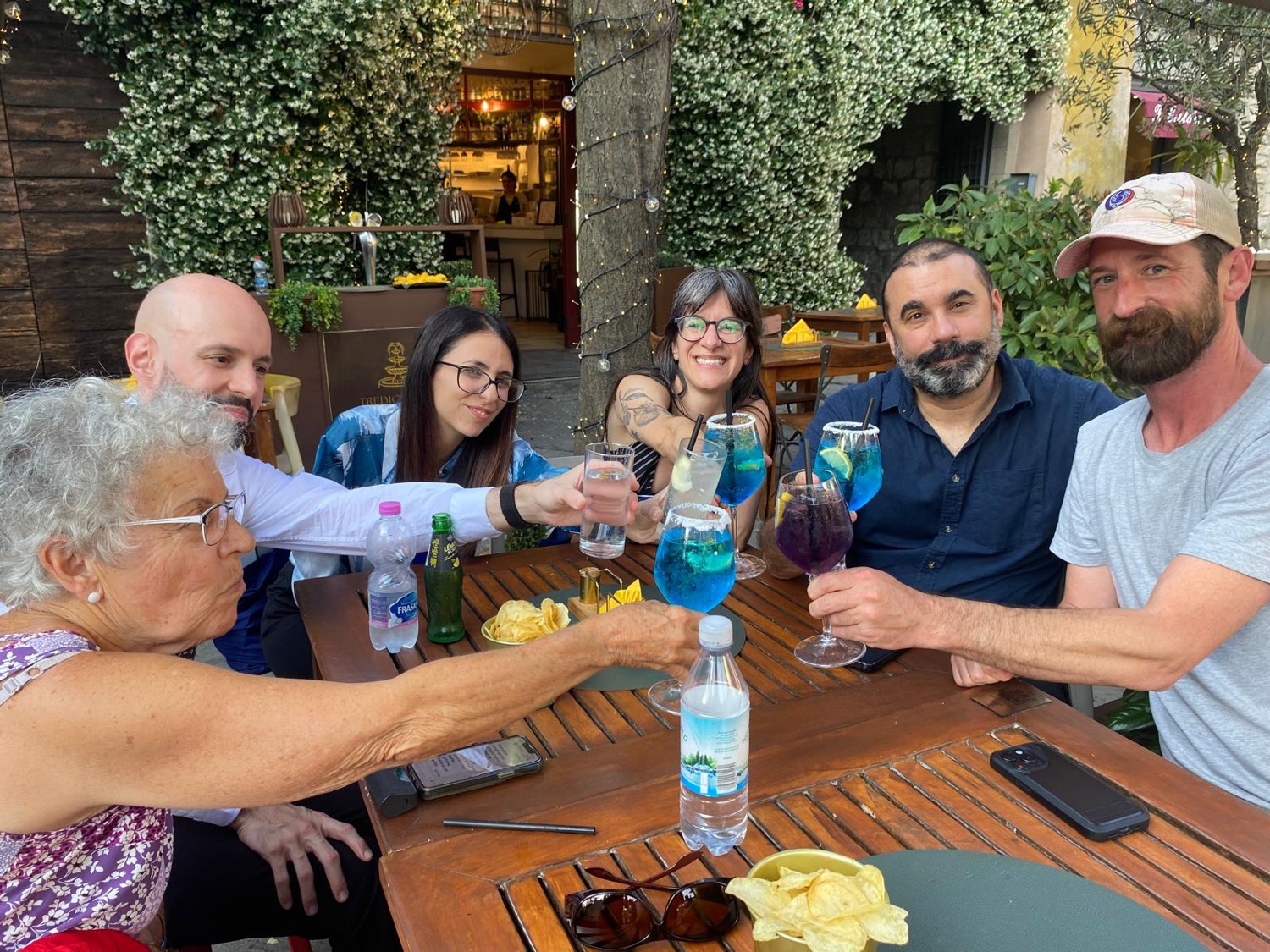
Piazza del Gesu’- Photo Licia Canton
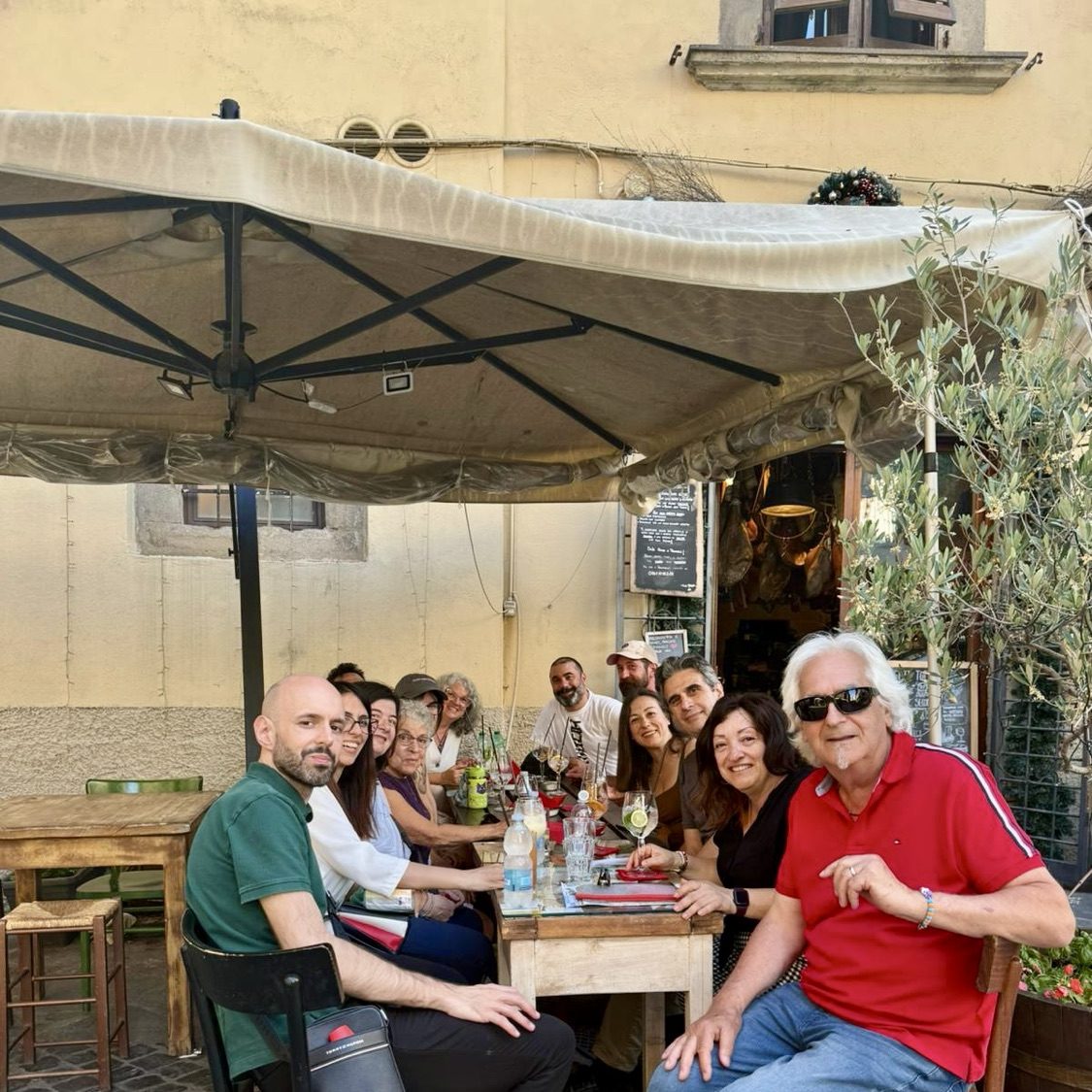 On the following 2 days, conference presentations -in English and Italian- included academic papers, readings of poetry, prose, essays and memoirs. Also featured were three roundtable discussions, including the role of Italian cultural social clubs in Canada, the writer/translator relationship and teaching Italian as a second language.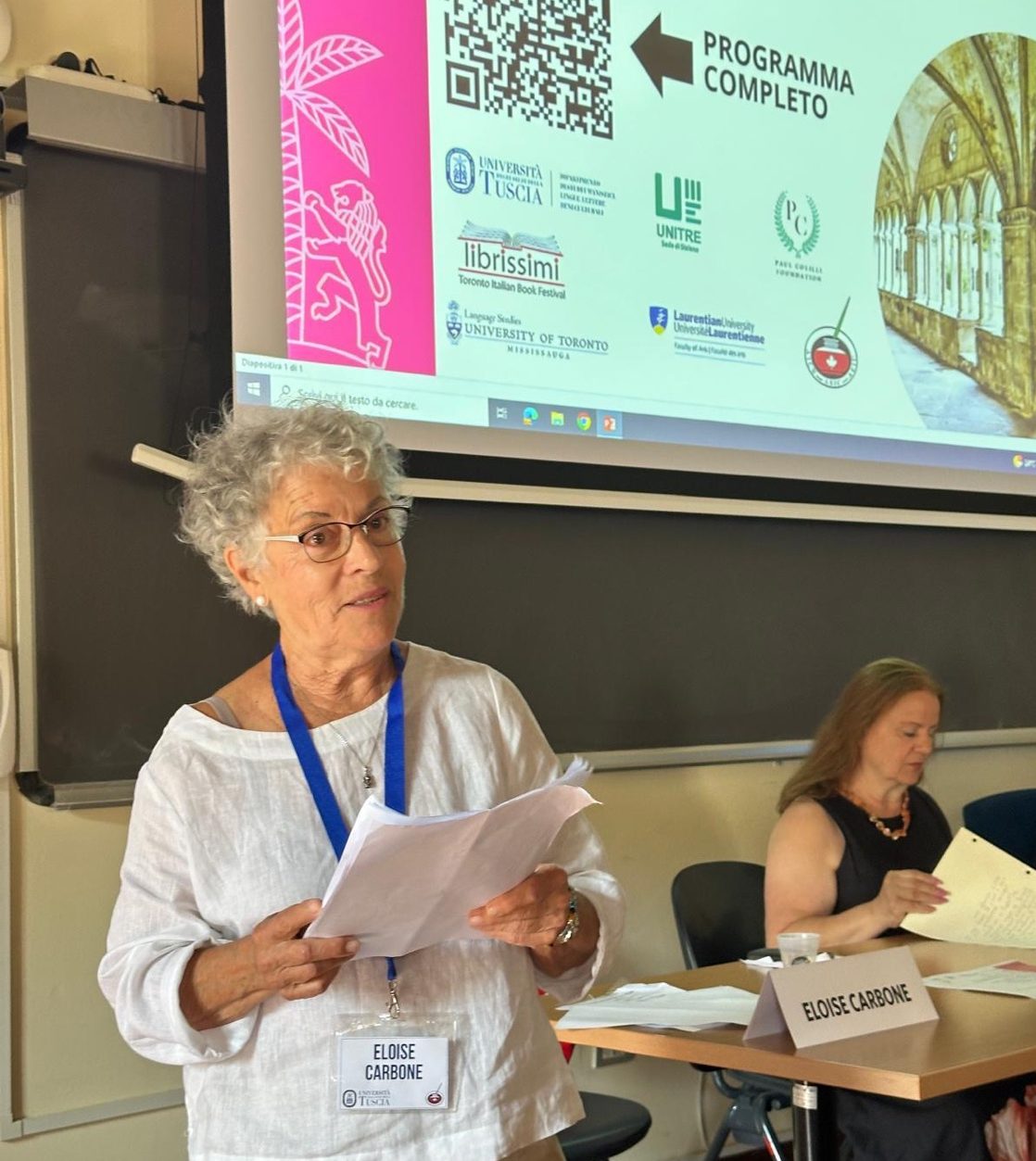
Presentations addressed the general themes of the Italian Diaspora, including migration and return, memory, identity, displacement, loss, family, food and tradition. Also addressed were the topics of immigrant women and their works, biography and life writing, Italian-Canadian queer identities, self-translation, teaching Italian beyond the classroom, and as a second language, media in Italian culture and Italian cultural narratives across media-literature, journalism and visual culture. Each day had three parallel sessions running, requiring careful scheduling choices. I wanted to attend everything, but it was not possible.
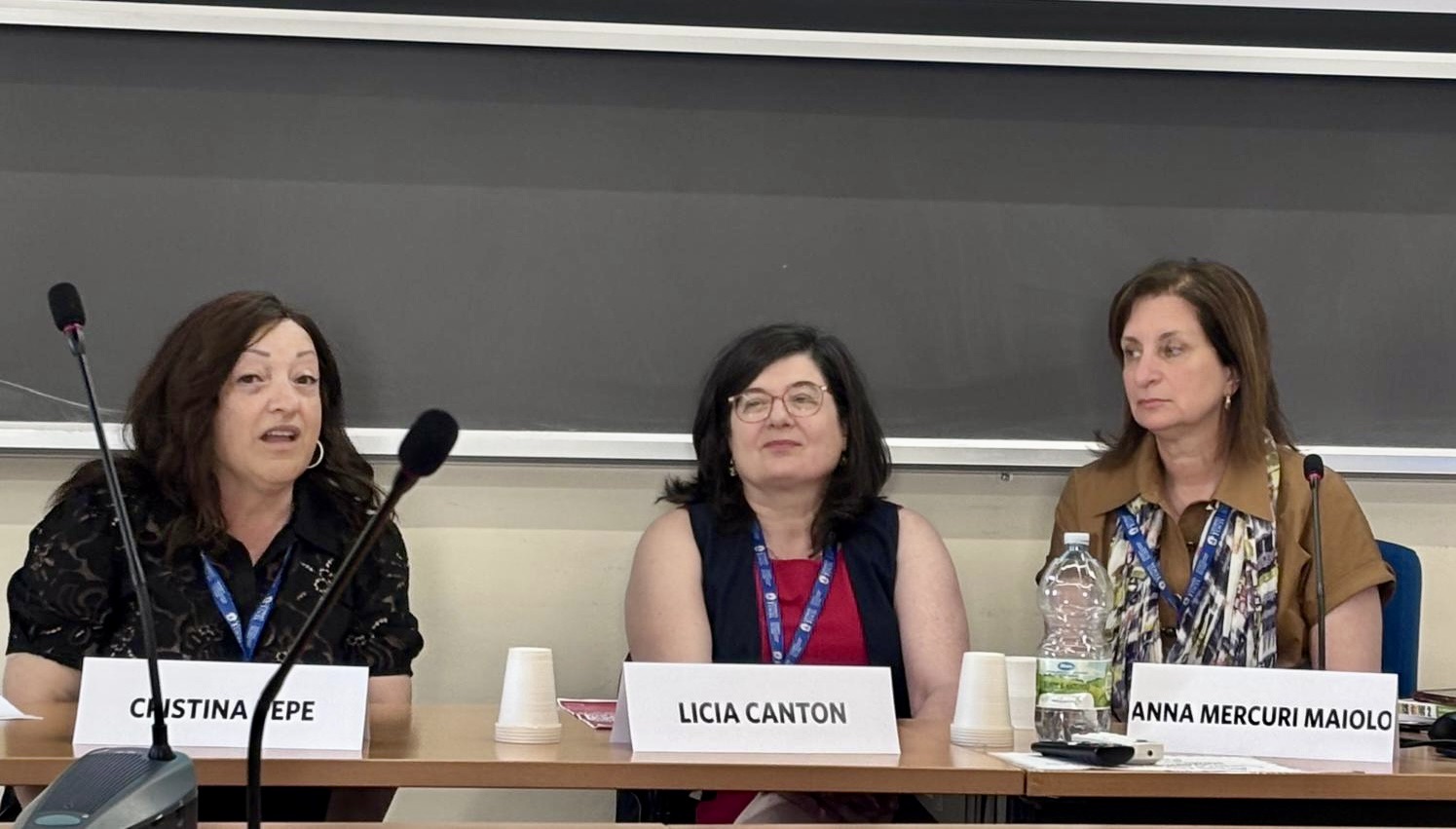
‘Tastes of home: Food, memory and identity’. Photo-Eloise Carbone
What was my contribution? I read ‘In vino there are memories’ from ‘A Literary Harvest-Canadian Writing about Wine and other Libations’ and took part in a group presentation introducing the first of a 3 volume bilingual anthology published in Italy ‘La Letteratura Italo canadese: una storia che continua’ with Anna Romano Milne, Maria Giuseppina (Giusy) Cesari, Darlene Madott and Genni Gunn. I read from ‘A Nzalat d’Purtuall’, a revised, updated version of this post.
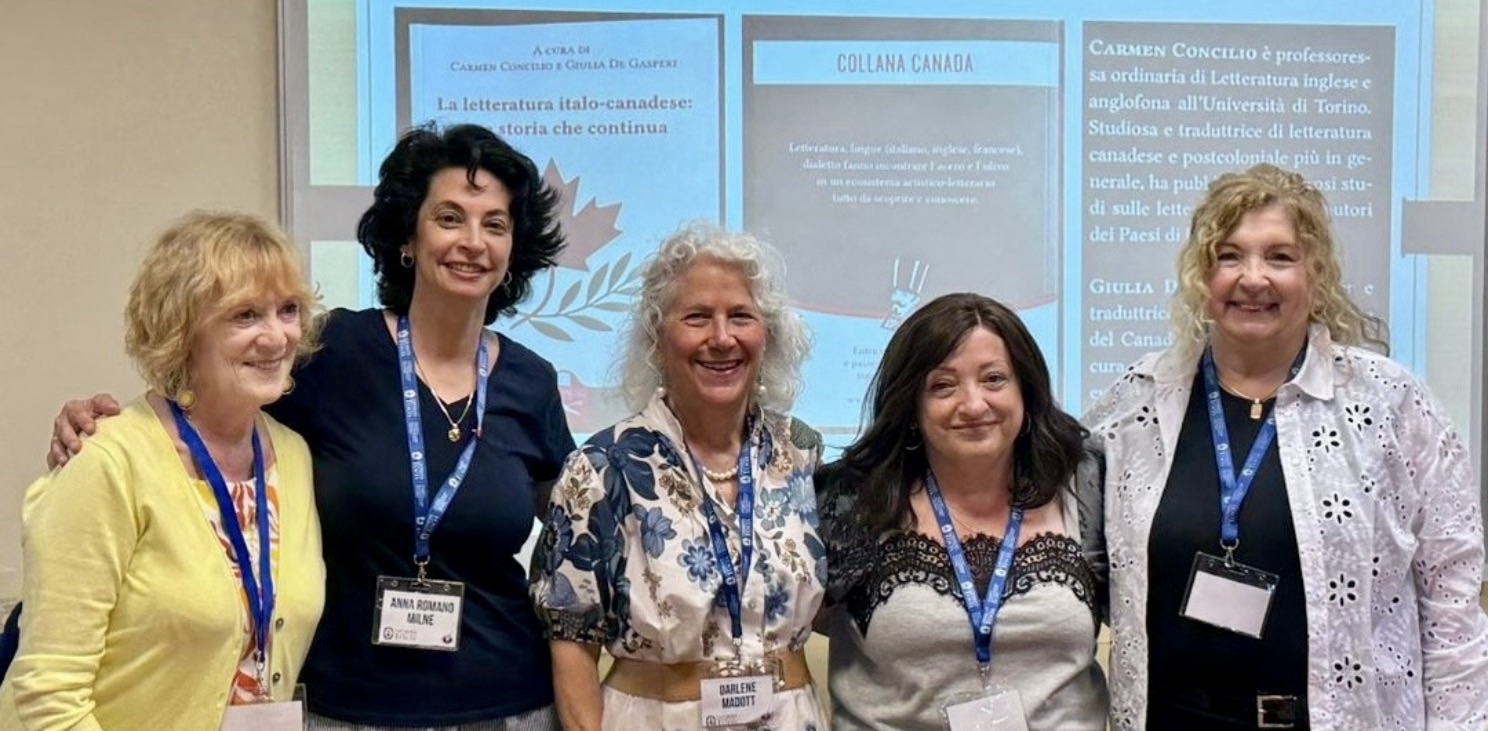
Photo Eloise Carbone
In his opening remarks, Simone Cassini professor at Università della Tuscia spoke on the contacts, cultural interests and studies that brought the university and the AICW together for this conference. The keynote address, given by Monica Barni of Università La Sapienza, Roma and Massimo Vedovelli of Università per Stranieri in Siena was titled ‘Research on Italian around the world: methodologies, data, interpretations, and interventions, and the potential role of AI’. It focused on Italian immigration around the world, particularly Italian immigration to Canada after World War II (1966-1971).
The closing keynote address ‘Radici Ciociara… A Life in Three Languages’ was given by long-time AICW member Gianna Patriarca on the topic of identity and cultural roots. Regarding radici, Gianna spoke about the roots of her identity and stated that roots are what make trees grow- without them, the tree does not survive. She read a selection of her poems in English, Italian and dialetto Ciociaro. Gianna, who recently published her lucky thirteenth book, lives in Toronto, but her roots are in the town of Ceprano in the Ciociara region of Lazio.
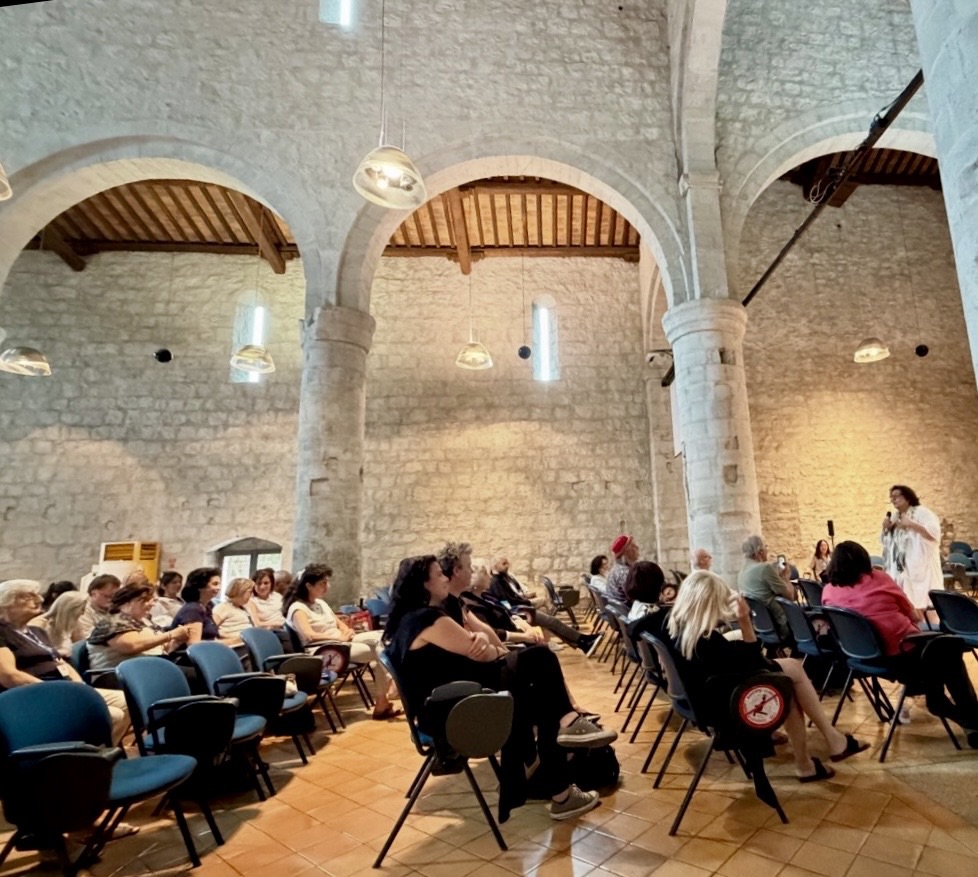
Keynote address. Photo Rosanna Micelotta Battigelli
A formal group dinner at a local ristorante followed, giving everyone a final opportunity to gather, talk to new and old friends, and share ideas. May 30th was reserved for an optional excursion by bus to Villa Farnese in Gradoli on Lago di Bolsena, and a delicious long, leisurely meal at the agriturismo Azienda Agricola Vazianello in Caprarola.
The quality of the literary work presented at this conference demonstrates that Italian-Canadian writers have a lot to say, carry a strong sense of cultural identity, and those radici that Gianna Patriarca spoke about in her presentation are strong and thriving.
Thanks go to the planning committee:Salvatore Bancheri (University of Toronto), Simone Cassini and Francesca De Caprio (Università della Tuscia), Christine Sansalone (Laurentian University), Maria Pia Spadafora (AICW) and student volunteers Matteo, Anastasia, Luca, Cristina, Ludovica, Antonella,Virgilio and Luca from Università della Tuscia.
 The next AICW biennial conference in 2028 will be held somewhere in Canada. Stay tuned for the location and more information by visiting the AICW website. Alla prossima!
Read my article about the conference -a shorter version of this post, with different photos-in Accenti Magazine.




 Doubling the dose is not a great idea since you need to work fast. If you make 2-4 doses in a row like I do, you can prepare everything in advance. I measure all the spices for each dose in a little jar so they are ready to add in, toast the nuts in advance, and have a separate bowl for each dose so I can work quickly. I also have the wafer paper cut in advance and the tart pans ready on a baking sheet.
 Un po' di pepe