
Tags
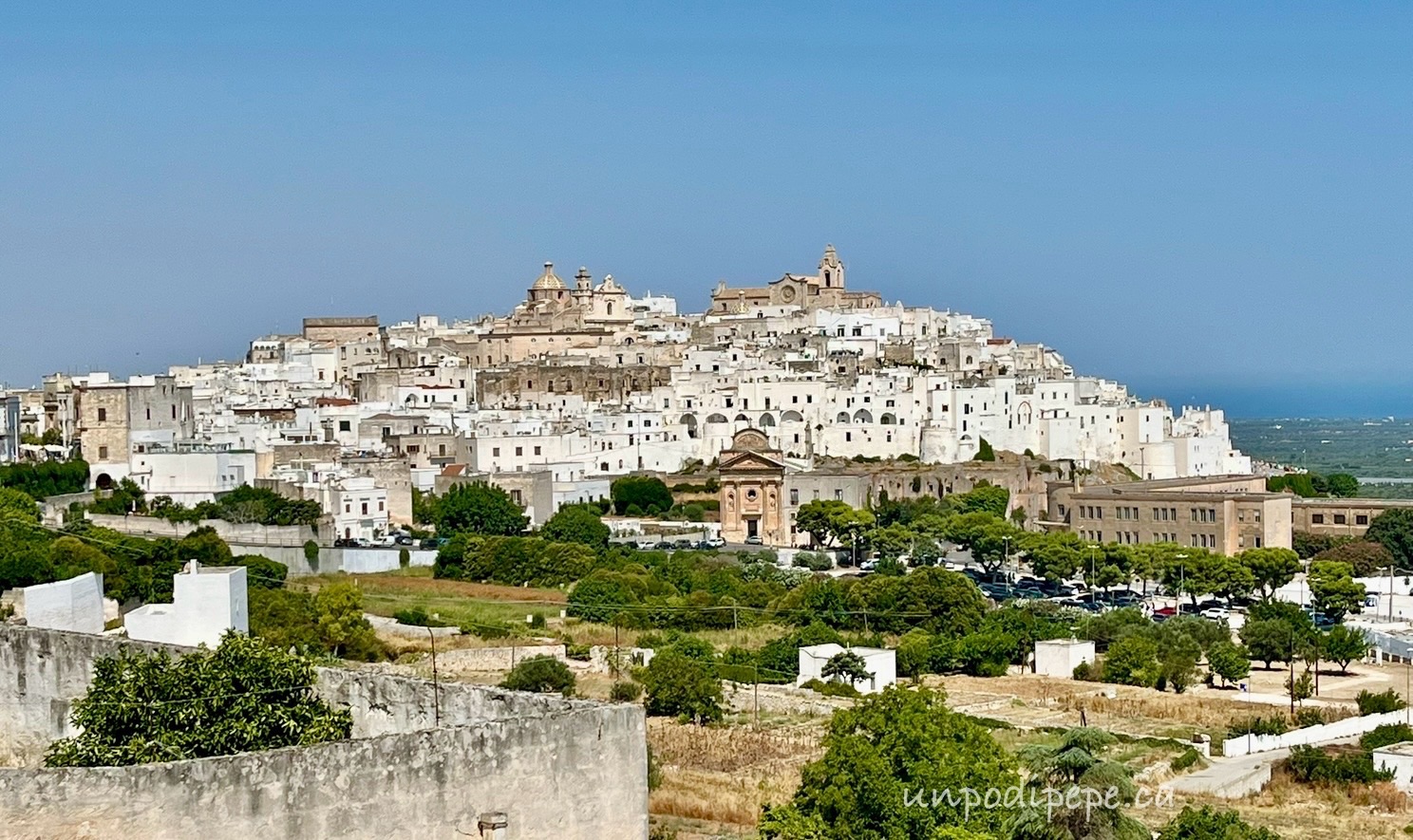 From a distance, Ostuni rises 220 m above the countryside in a Cubist mass of white buildings stacked on top of each other. It is known as ‘la città bianca’/’the white city’ and resembles a 3 tier wedding cake. The town is a maze of winding cobblestone streets, staircases, arches courtyards and narrow alleys. The whitewashed walls absolutely glow against the colours of the surrounding landscape-the green plain of ancient olive groves stretching all the way to the blue of the Adriatic sea.
The Val d’Itria-trulli territory in Puglia has a long history. The area has been inhabited since the Stone Age (~ 40,000 years ago). Ostuni was established by the Messapii, a pre-Roman tribe ~ 1000 BC. Nearly destroyed by Hannibal around 200 BC, it was rebuilt by Greeks, who called it Astu Néon (new town). Over time, the pronunciation turned into ‘Ostuni’. The Romans ruled until the 5th Century. 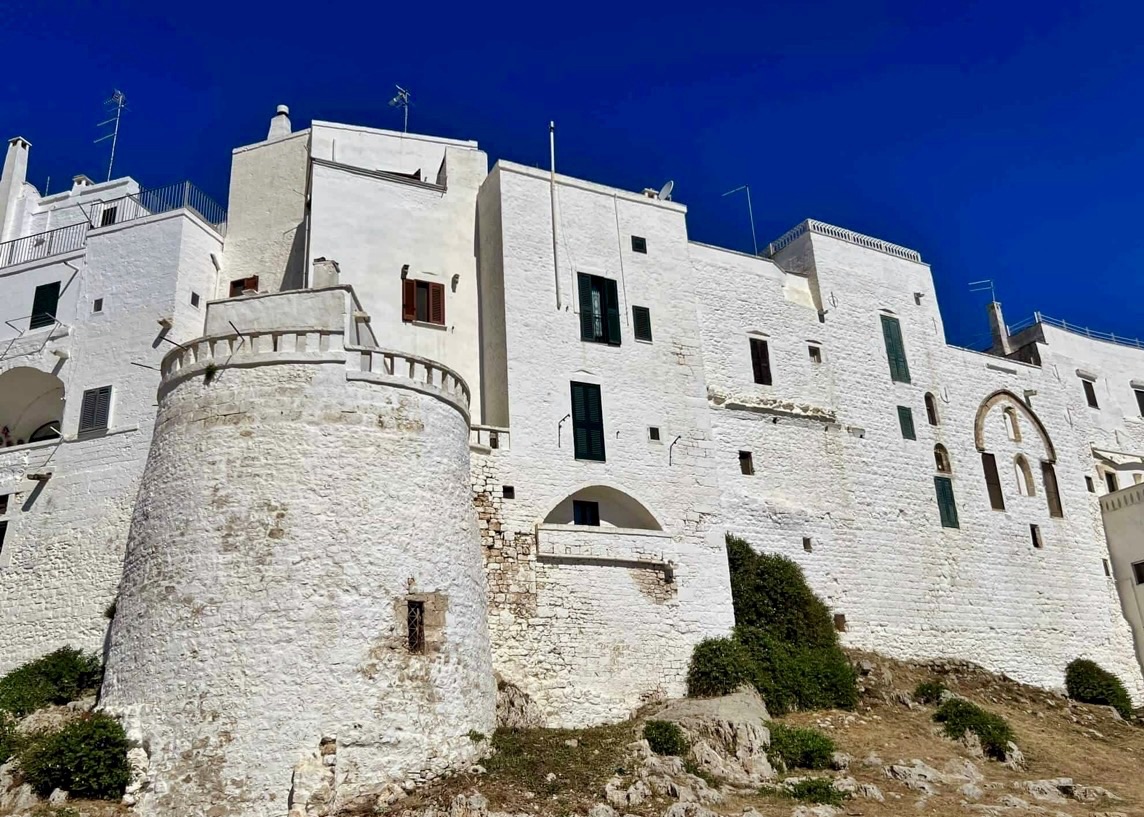 In the 11th Century, the Normans gave Ostuni its tight, stacked labyrinthine layout designed to confuse invaders, and fortified the walls. Next came the Byzantines, who did the same. Porta San Demitrio and Porta Nova, 2 of the 4 Medieval gates, still stand. Ruled by Isabella of Aragon, Queen of Napoli the city grew culturally and artistically in the 16th century. Watchtowers were built along the coast for protection from pirates.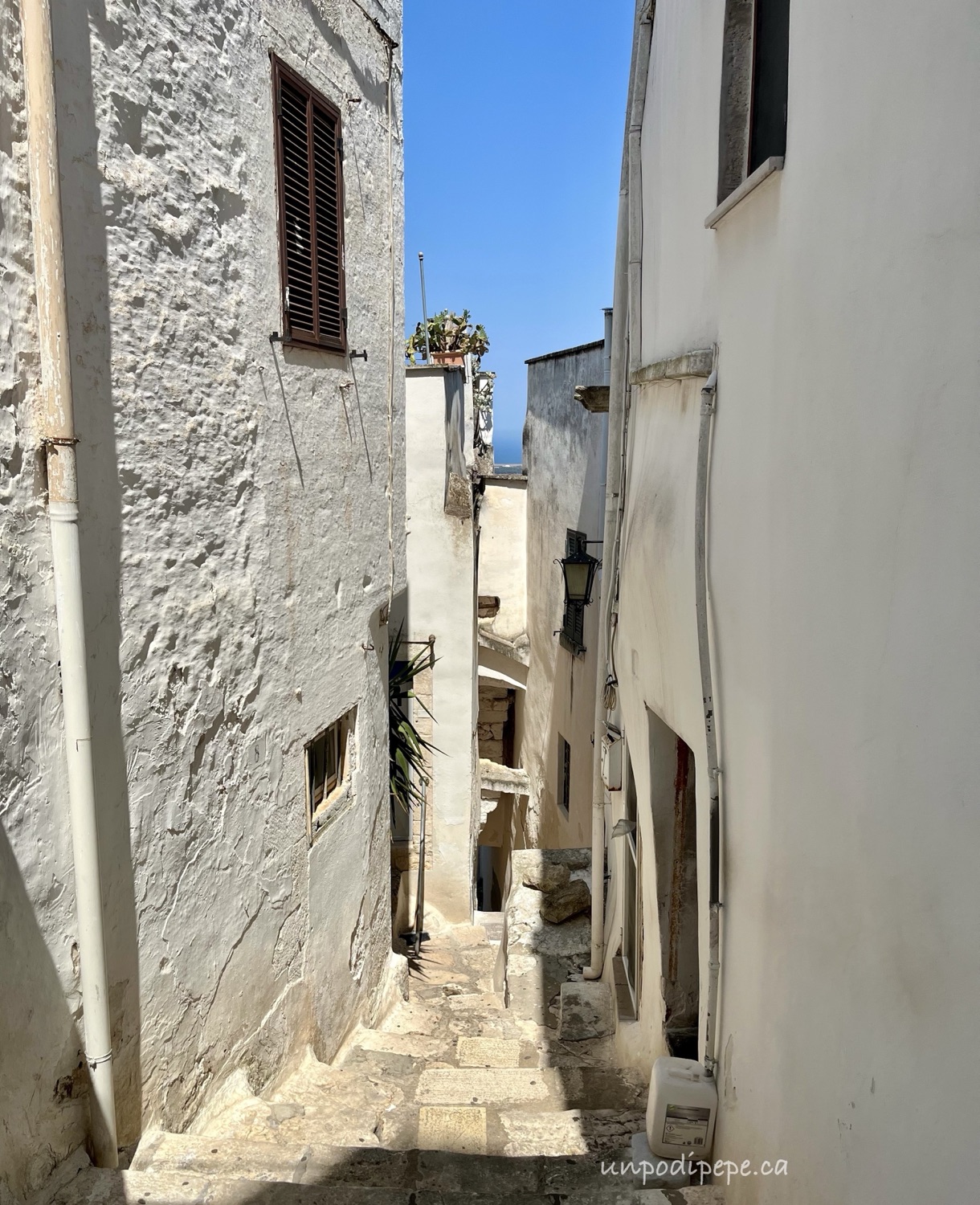
Why is Ostuni so white? One reason is that lime wash is cheap, easy to use, and reflects light, which helps buildings stay cool under the strong Adriatic sun. The other reason is public hygiene. In the 17th Century, the plague killed millions in the area. To take advantage of the antibacterial properties of Calcium Carbonate (lime) and prevent spread of disease, infected houses were whitewashed. This became connected with the poorer class. Of course, the rich also got disease, but hygiene was used to ‘segregate’ the population, creating a ‘ghetto’. The richer areas and churches, mostly in the upper tier of Ostuni, retained their stone facades. Today there are strict regulations re house painting rules.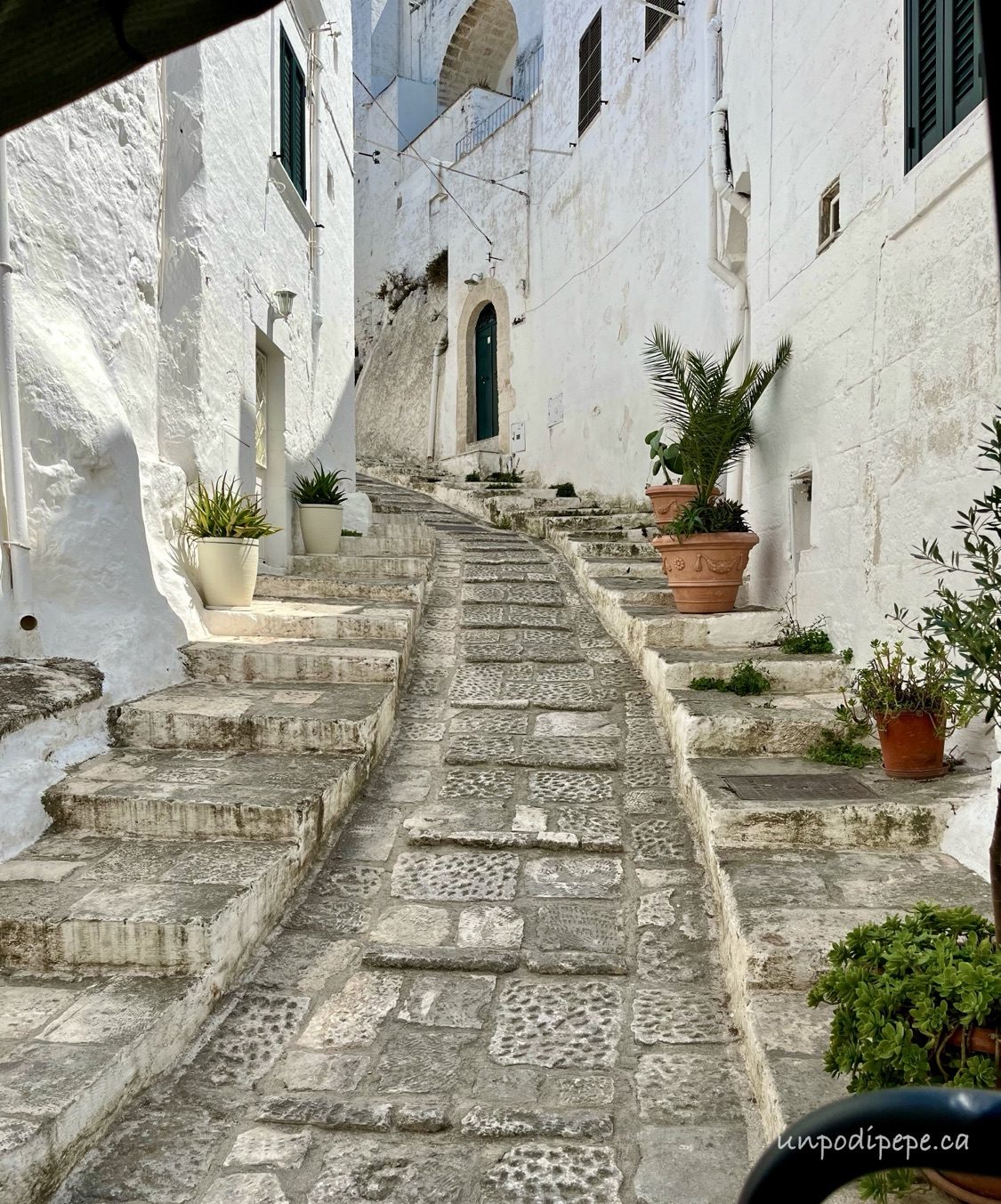
The best way to see Ostuni is to just wander the maze of the Centro Storico on foot. Start low and work your way uphill. Around every corner is another dazzling whitewashed view. 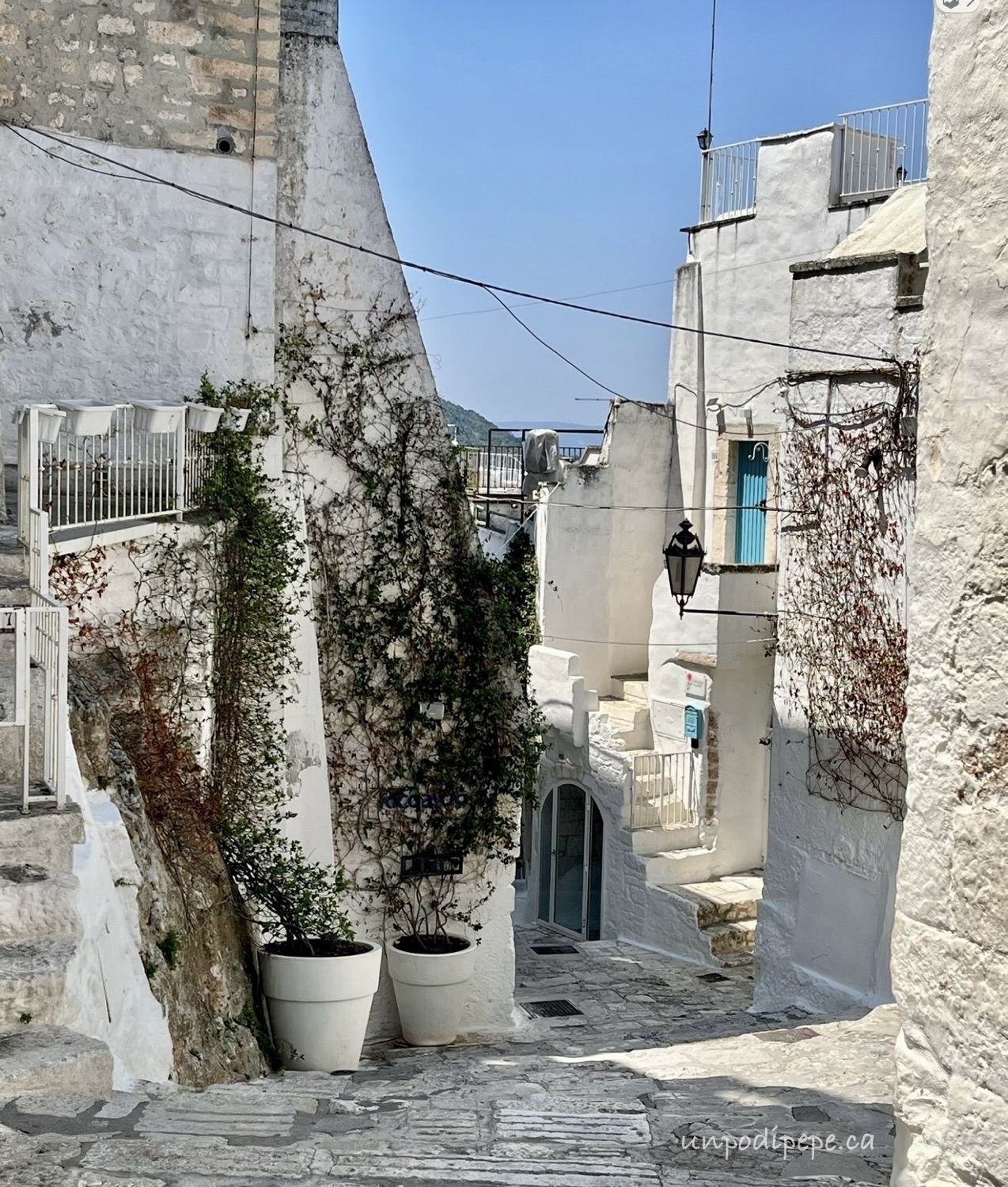
Piazza della Libertà is the large main piazza and a hub for both locals and visitors. It features a 20m tall 18th Century Baroque column, topped with a statue of Sant’Oronzo, the patron saint who miraculously saved Ostuni from the plague in 1656. Palazzo Municipale, the City Hall, is in a former 12th Century Franciscan monastery. Lined with restaurants and bars, the lively piazza hosts live music and cultural events and is popular in the evenings for aperitivo and passeggiata.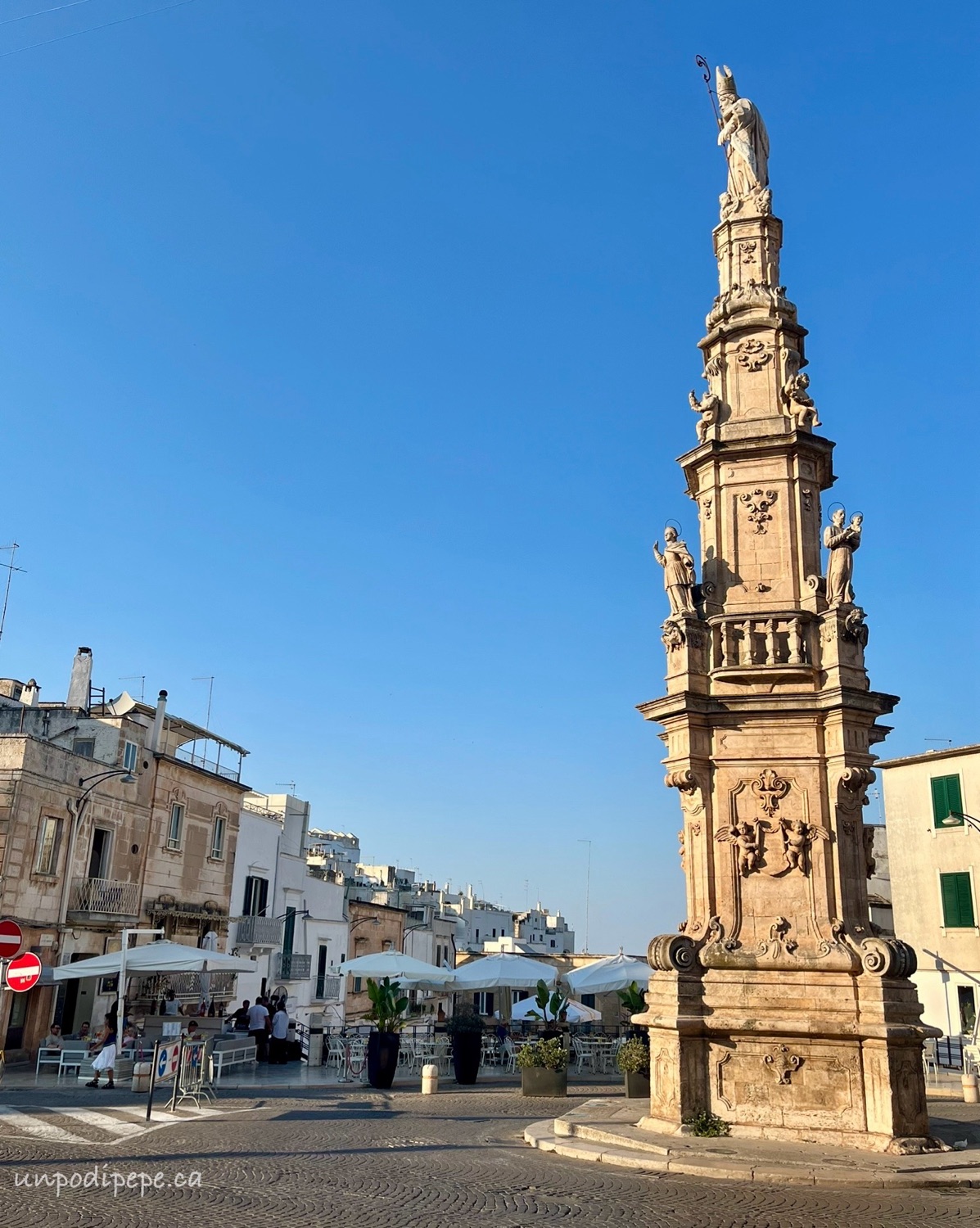
Steps down from Piazza della Libertà, old meets new at La Scalinata Monsignor Antelmi. This beautiful staircase is like an architectural bridge between Ostuni’s Centro Storico and the modern urban layout below. It is lined with restaurants and leads to the large modern carpark. Sit on the stairs to eat an amazing gelato from Cremeria alla Scala.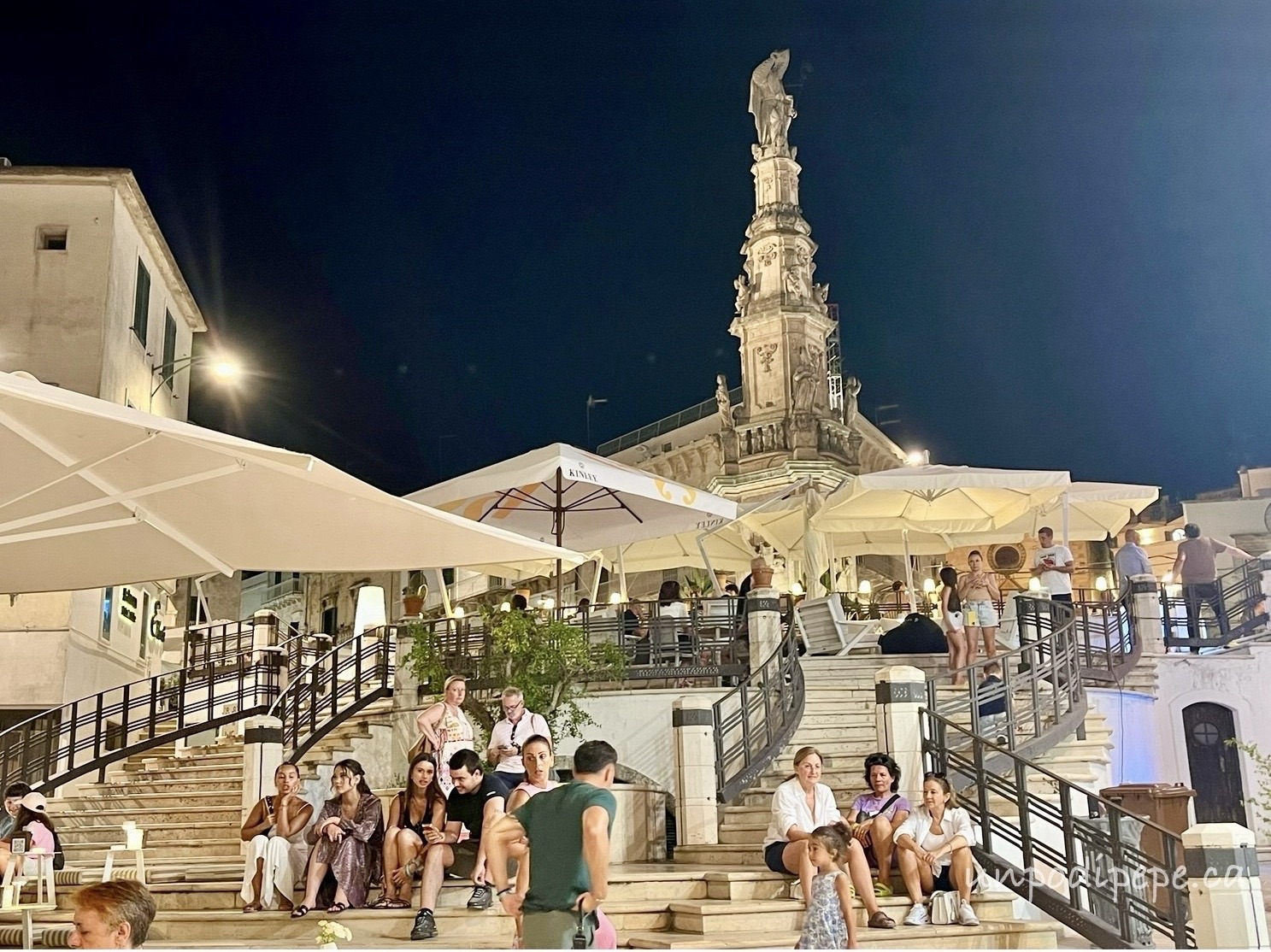
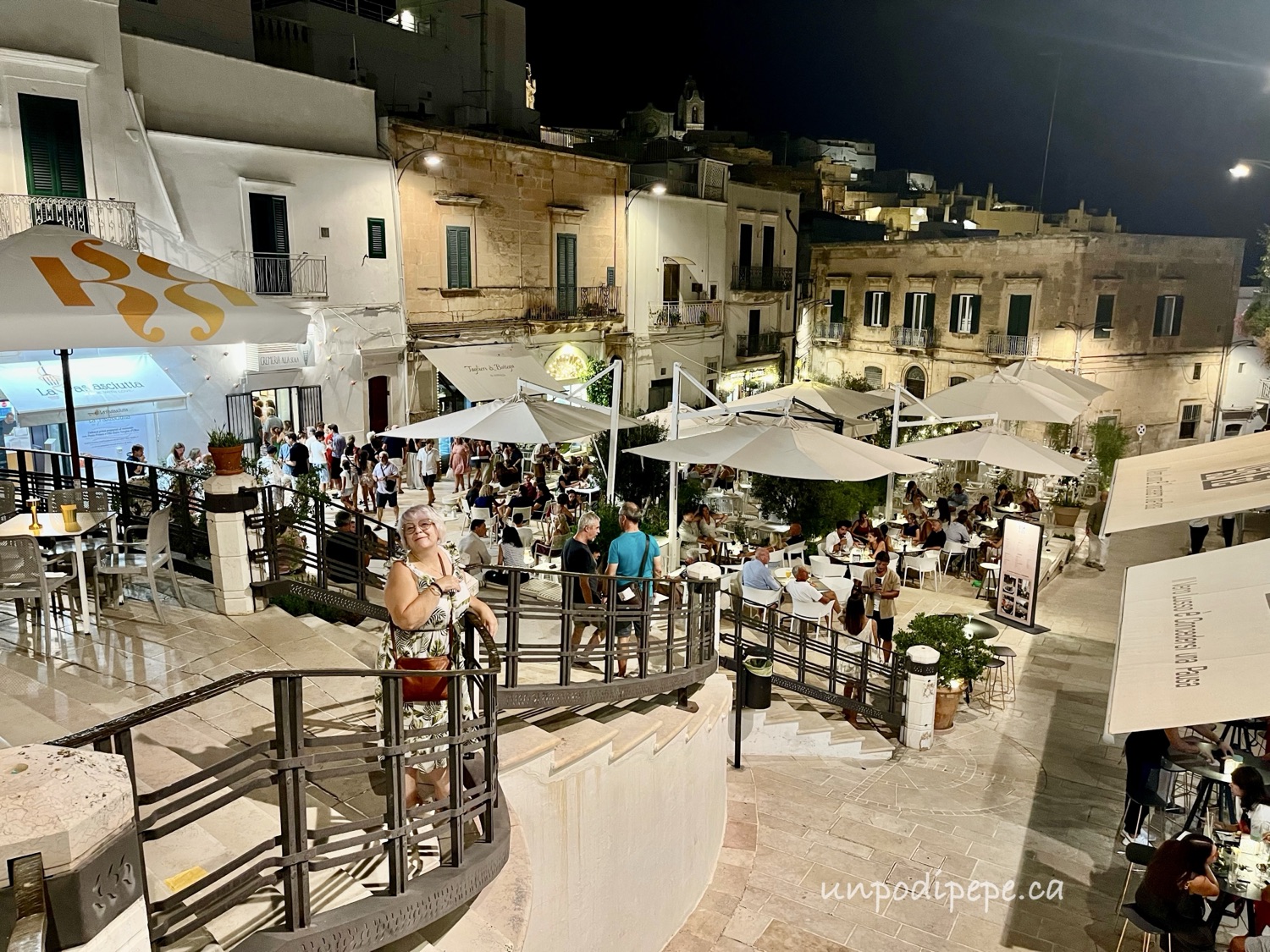
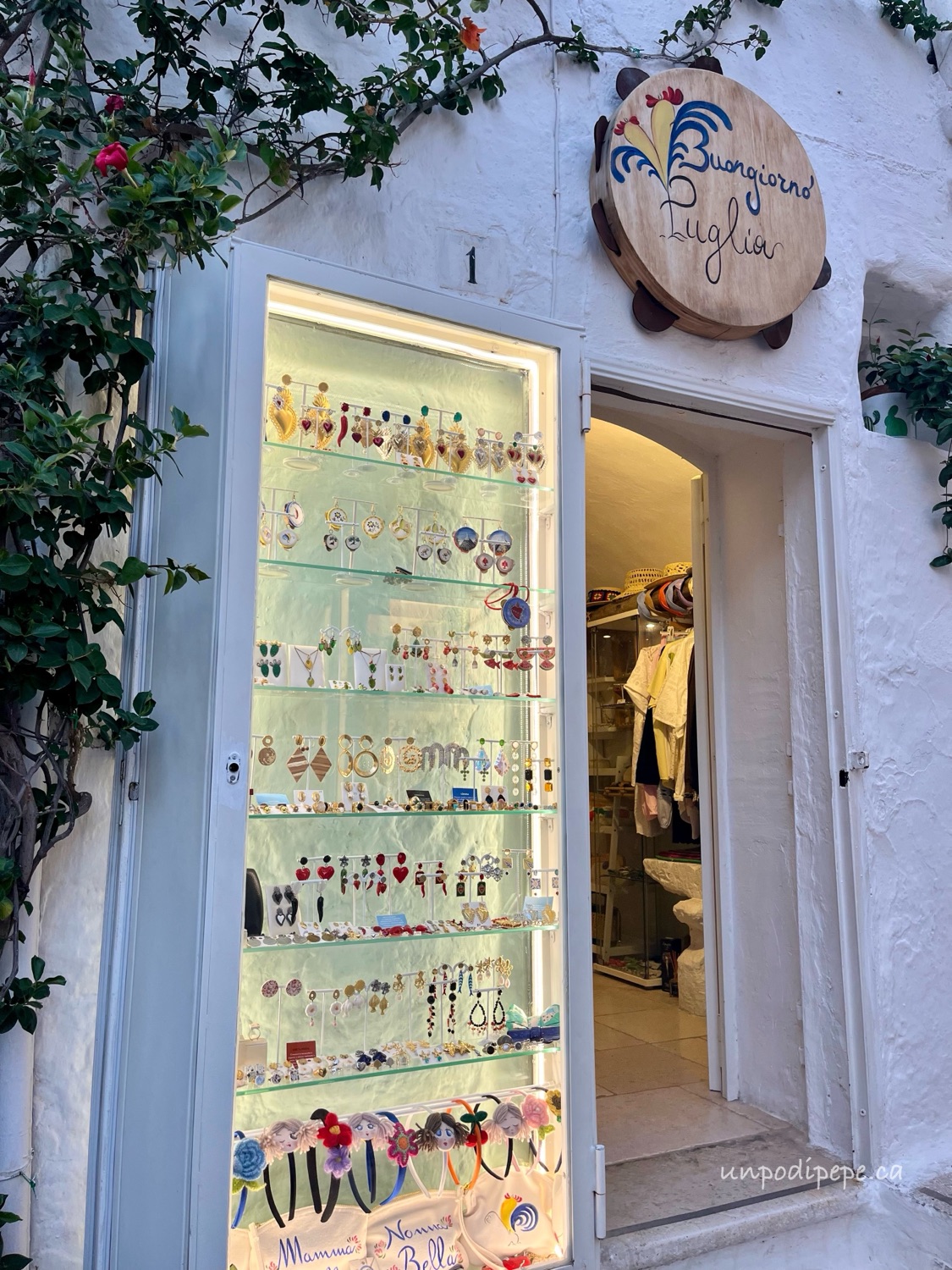
From Piazza della Libertà, veer right, to Via del Cattedrale. The uphill climb is lined with restaurants and shops where artisans sell ceramics, linens, leather, rustic olive wood products and local olive oil. For anyone with mobility issues, cute 3 wheeled Ape (AH•peh) can be hired for a lift.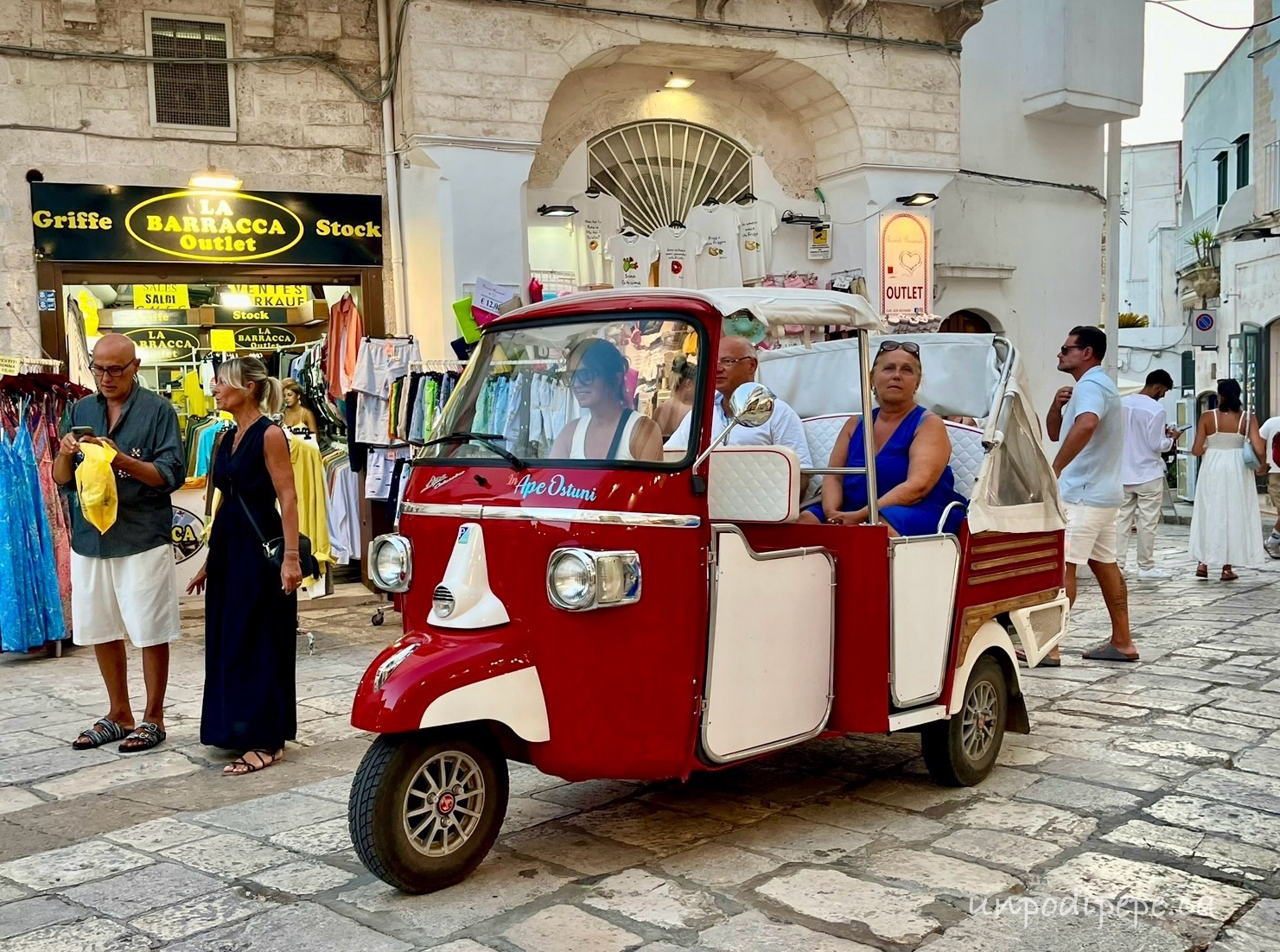
Cattedrale di Santa Maria Assunta, a 15th Century Romanesque church with a Gothic exterior is at the highest point of Ostuni. Built by Federico II in 1228 (read more about him here) it was modified in 1456 after an earthquake, blending the 2 architectural styles. The beautiful rosone features Christ at the center, surrounded by 24 finely carved columns, representing the 24 hours of the day. The interior is a cool place to sit on a hot day. 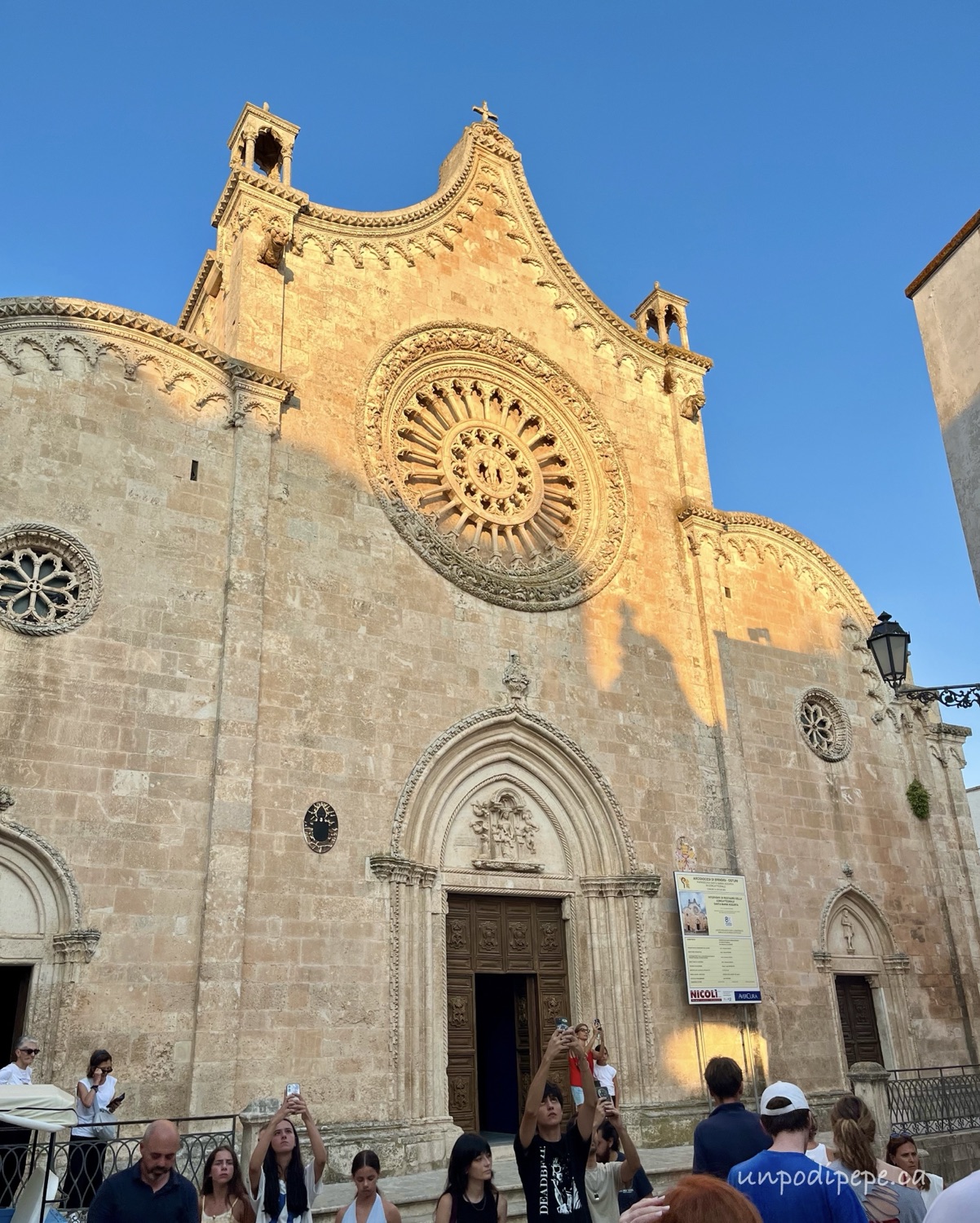 Arco Scopa, a covered walkway which once connected the convent and Archbishop’s Palazzo frames Piazza Cattedrale. Under the Arco is Quarto Caffè.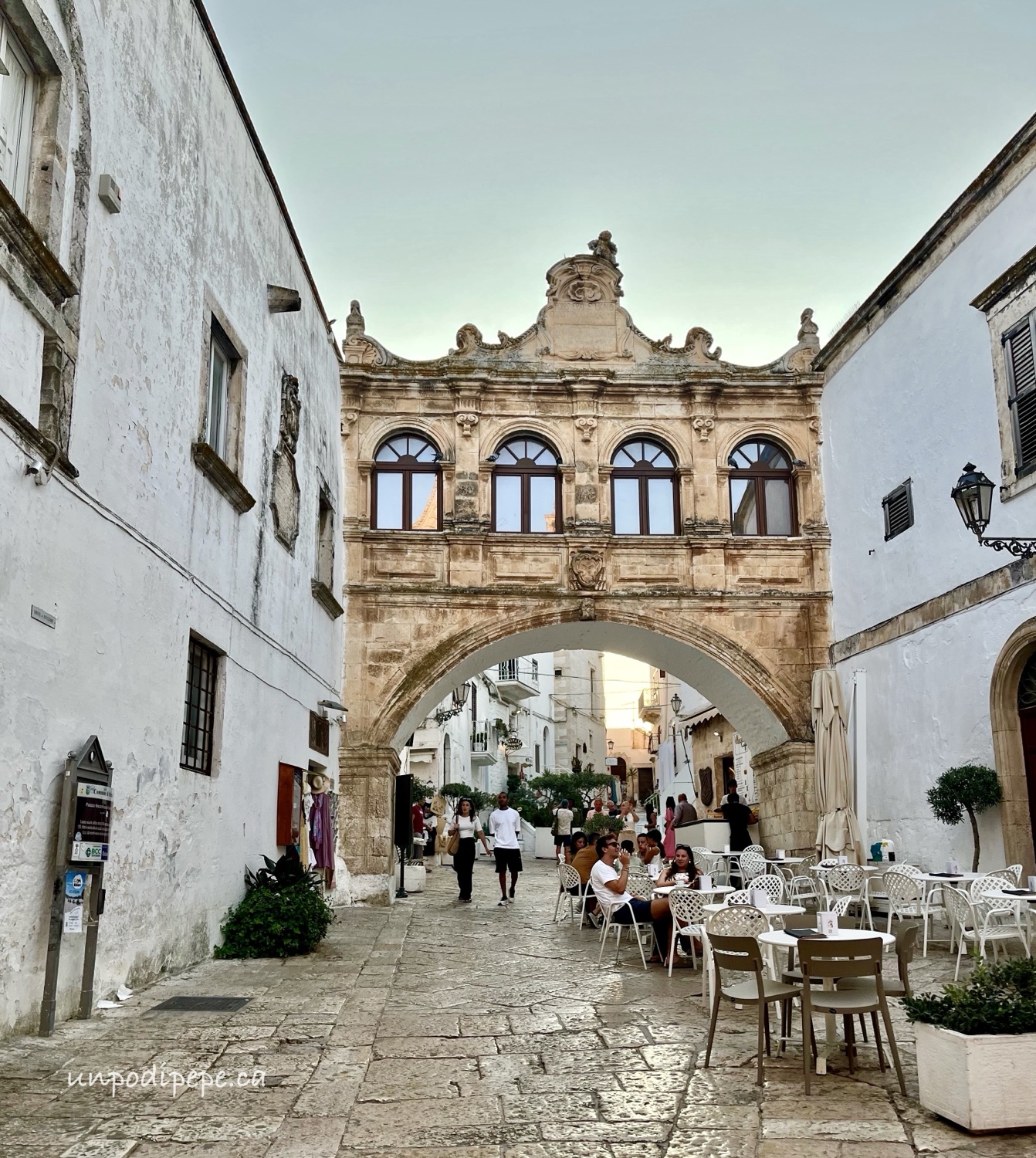
Pass under Arco Scopa, turn right and walk to the end of the narrow street. This is the best view of the surrounding landscape, Piana degli Ulivi Monumentali -the plain of centuries old olive trees, and the sea. The landing is a great place to sit and watch the sun set. If you can get a table for aperitivo at Borgo Antico Bistrot with terraced seating-the view is even better.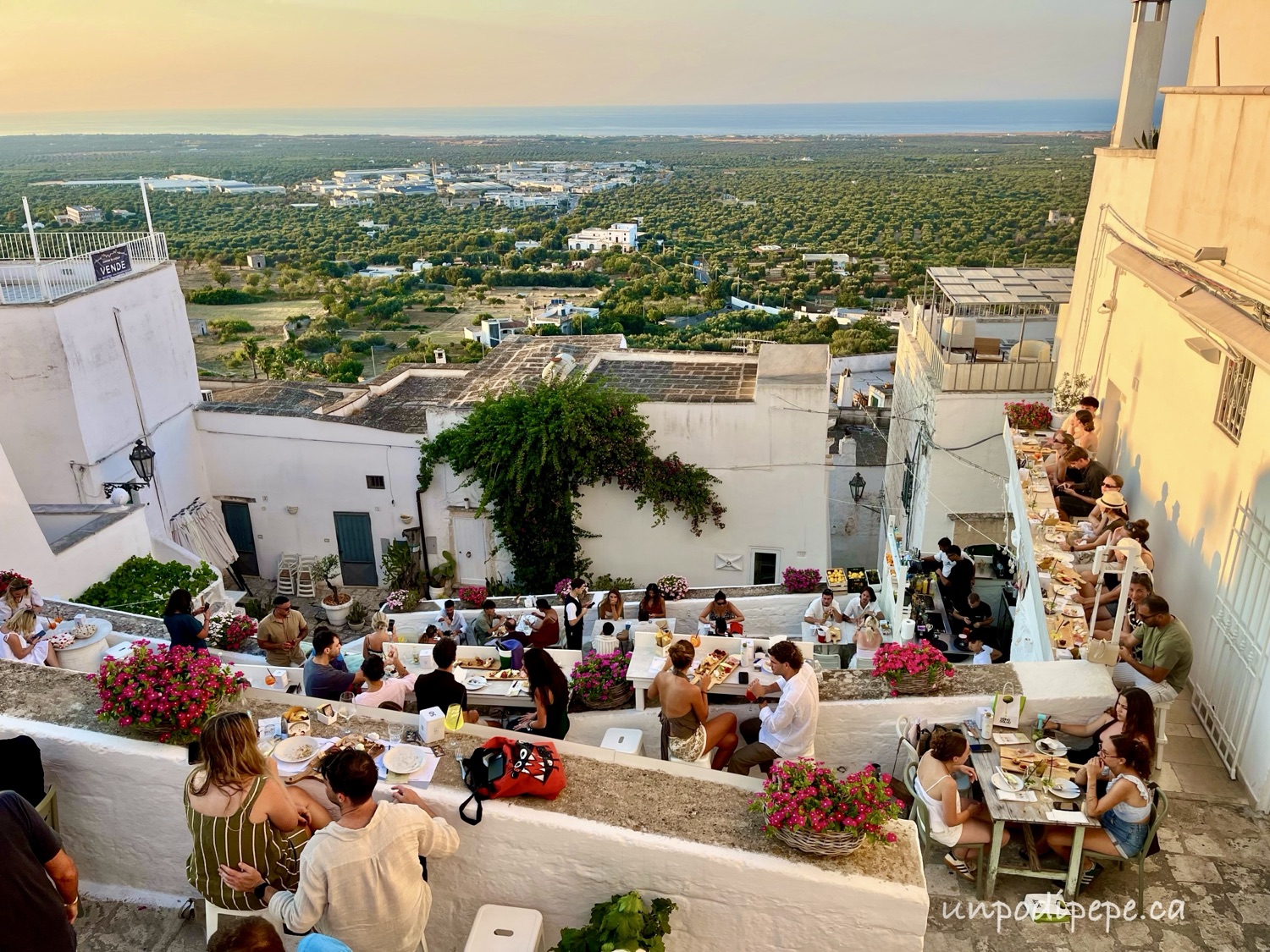
The Museum of Ostuni ‘Museo Civiltà Preclassiche della Murgia Meridionale’ is in the former Baroque church of San Vito Martire, Via Cattedrale 15. There, among other things, is ‘Delia’, aka ‘Donna di Ostuni’, the paleolithic skeleton of a 20 year old woman who was 8 months pregnant. She is ~25,000 years old! Open daily from 1000-1800. Admission to the Museo is €5. The cave where Delia was discovered in 1991 is an archeological site, 2 km from Ostuni.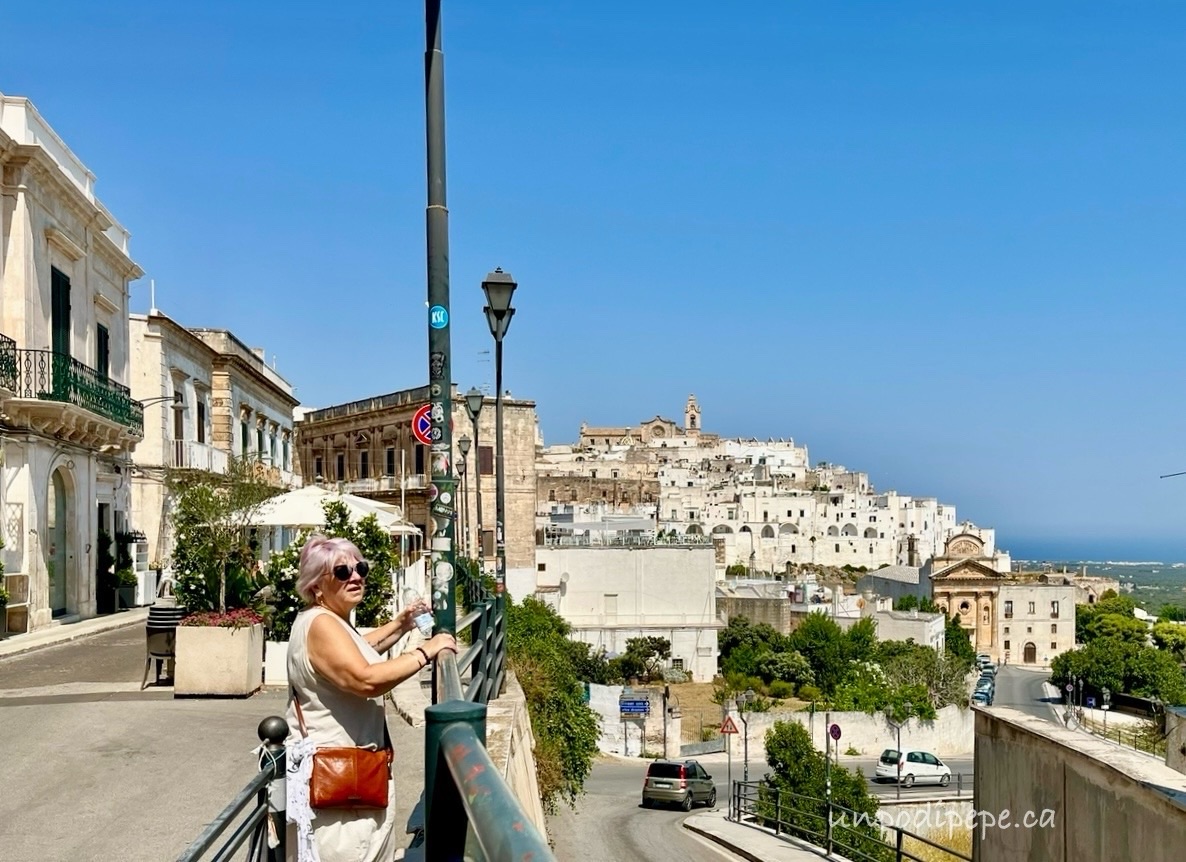
Back down in Piazza della Liberta, from the column, walk in the opposite direction on Corso Vittorio Emanuele II. Walking about ½ hr along the city walls, you will reach Piazzetta Martiri delle Foibe for stunning panoramic views of Ostuni.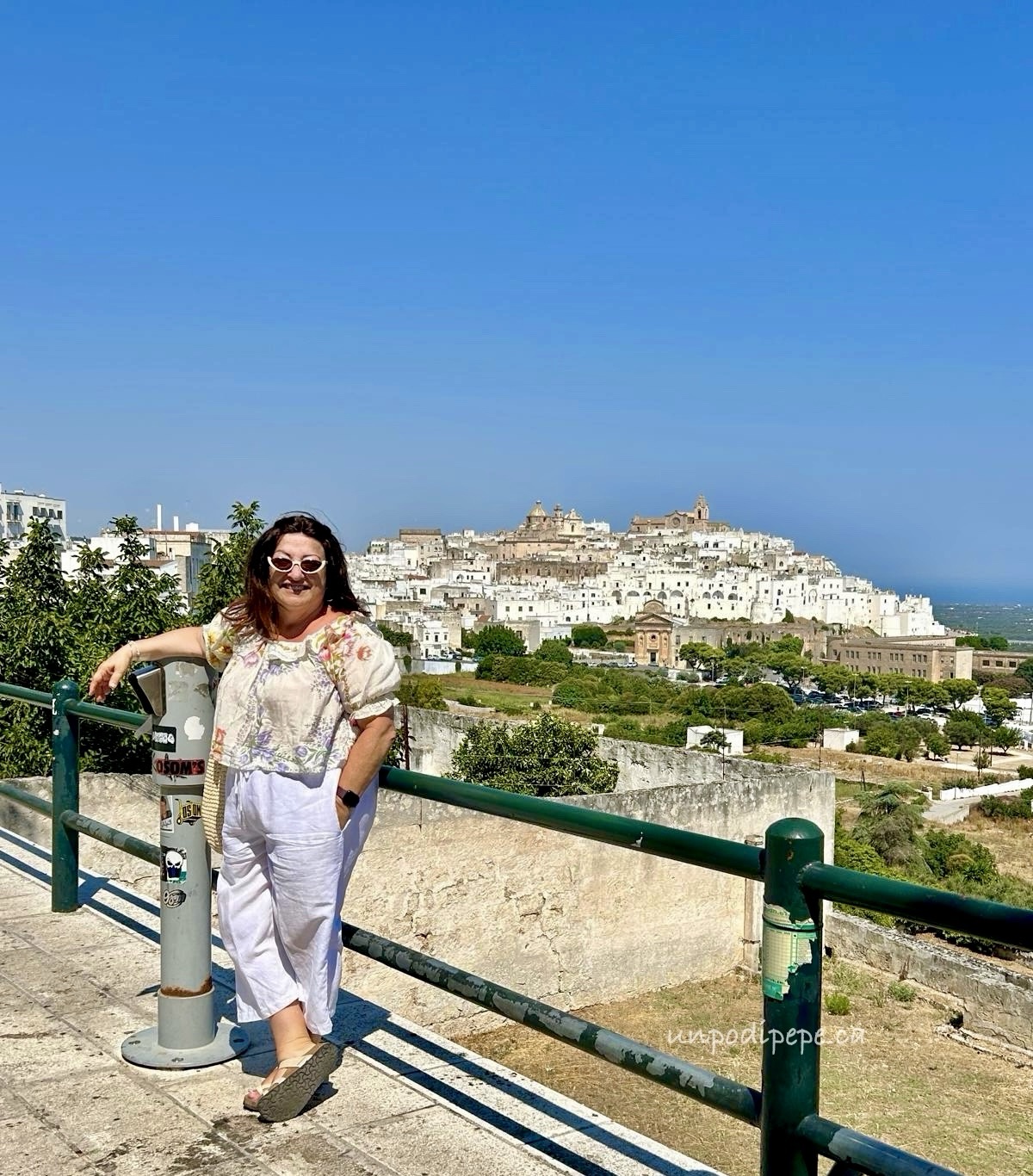
The Centro Storico has a large, well-marked ZTL (Zona traffico limitato) limited traffic area, mainly pedestrian only. Like many places in Southern Italian shops close from 1-5pm for the ‘pausa pranzo’. Try to adjust to local eating times and ‘pausa’. Refer to Beat the heat: Surviving summer in Roma for tips.
Ostuni has a population of about 30,000 and produces fine EVOO and vino. Read more in Vini di Puglia and Vini di Puglia #2. The weekly Mercato is Saturday from 8-12 on Via Nino Sansone, a ½ hr walk SW of Centro Storico. August 24-27th is the annual Festa Patronale di Sant’Oronzo.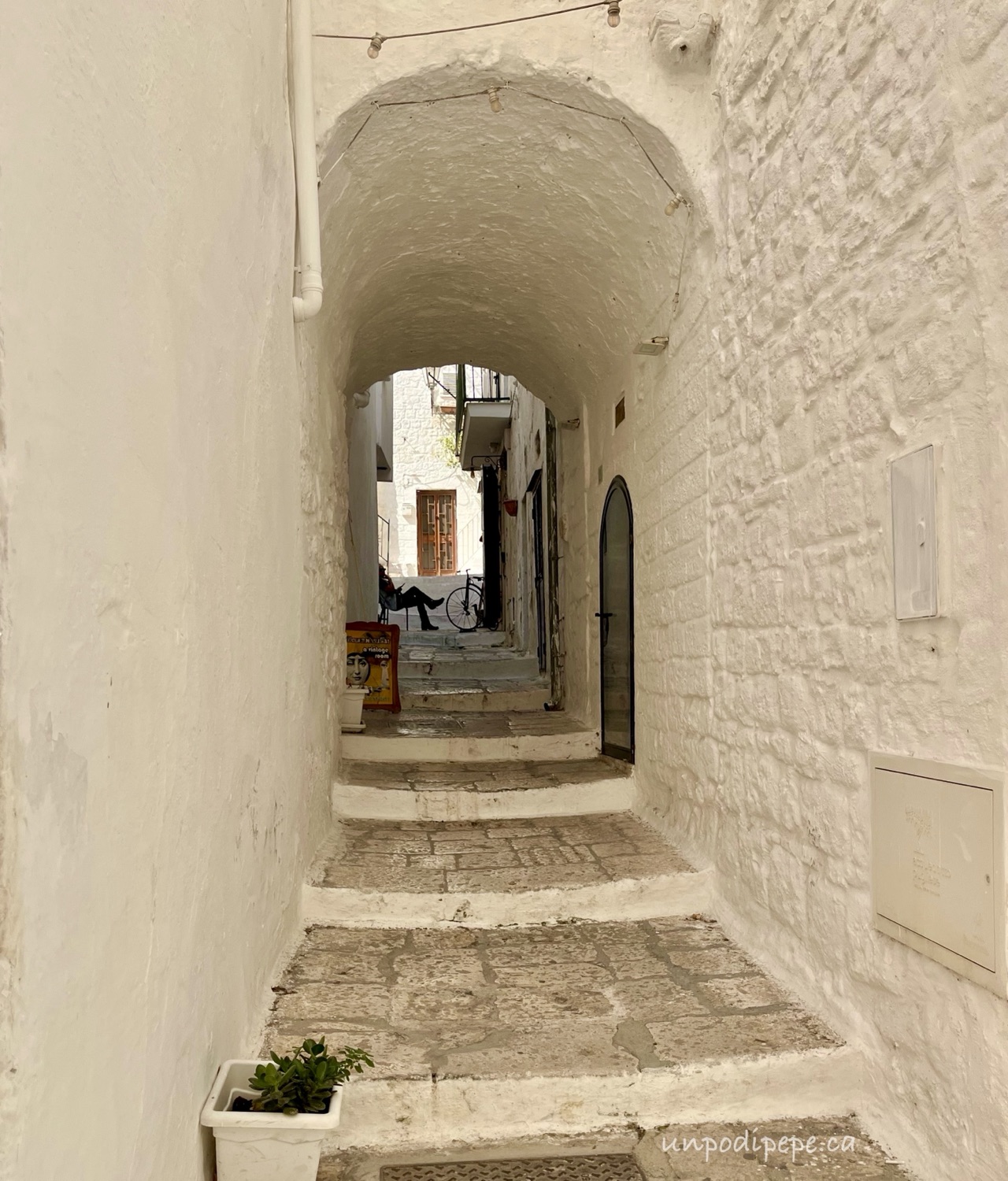
We did not go to the seaside, as there was a lot to do in Ostuni. Marina di Ostuni is 8 km away, accessible by car, taxi or seasonal bus. Lido Morelli has wide sandy beaches backed by dunes and olive groves. There is a bar, umbrella and sun lounger rentals. Spiaggia di Torre Pozzella is 5 sandy coves surrounding a 16th Century Aragonese watchtower. One cove has a small seasonal bar, otherwise there are no commercial facilities. Same with Spiaggia di Gorgognolo, 10km north. These spiagge are in a nature reserve area, so safe from development. I will definitely go next time!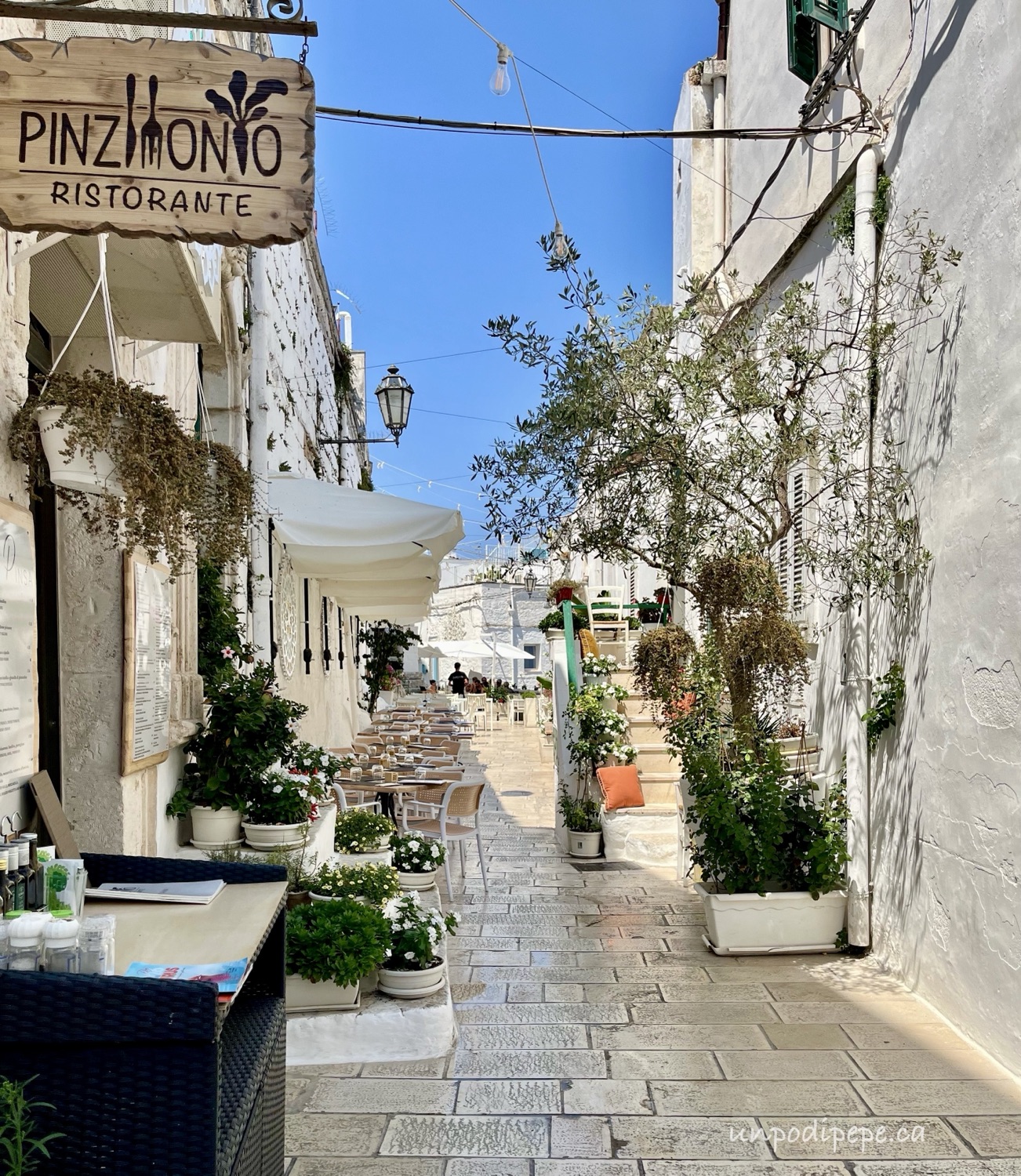
Ostuni is well connected, as it is on the Bari to Lecce train line. The Stazione is 4 km away. It is an 8 min drive, 40 min walk, 10 min ride on the local bus which coincides with train times. Purchase ticket before boarding the bus.
A car is not needed in Ostuni, or to get there. However, you do need a car if staying at a Masseria outside of town, or want to explore the countryside on quick daytrips. Easily reachable by car from Ostuni are Alberobello (45 min), Locorotono (40 min), Martina Franca (30 min), Cisternino (20 min), Polignano a Mare (45 min), Monopoli (40 min), Lecce (1 hr) and even Matera (1 hr 45 min).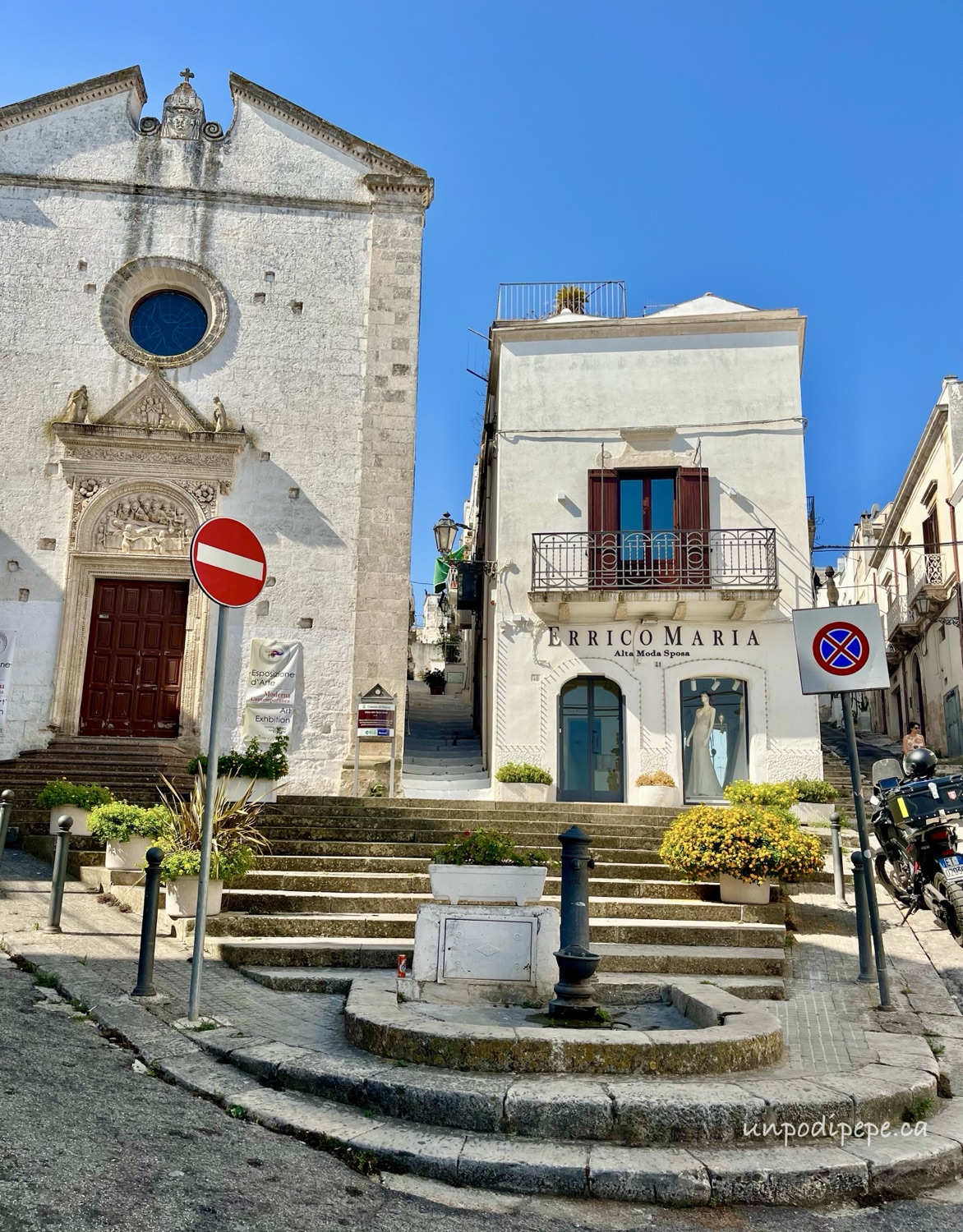
There are no large hotels in Ostuni, only boutique hotels B & Bs and small rental apartments. There are many masserie (farmhouses) in the Val d’Itria to stay in-if you have a car. Some of them are trulli The closest airport is Brindisi 40 min away. Bari and Lecce airports are both 1 hour away.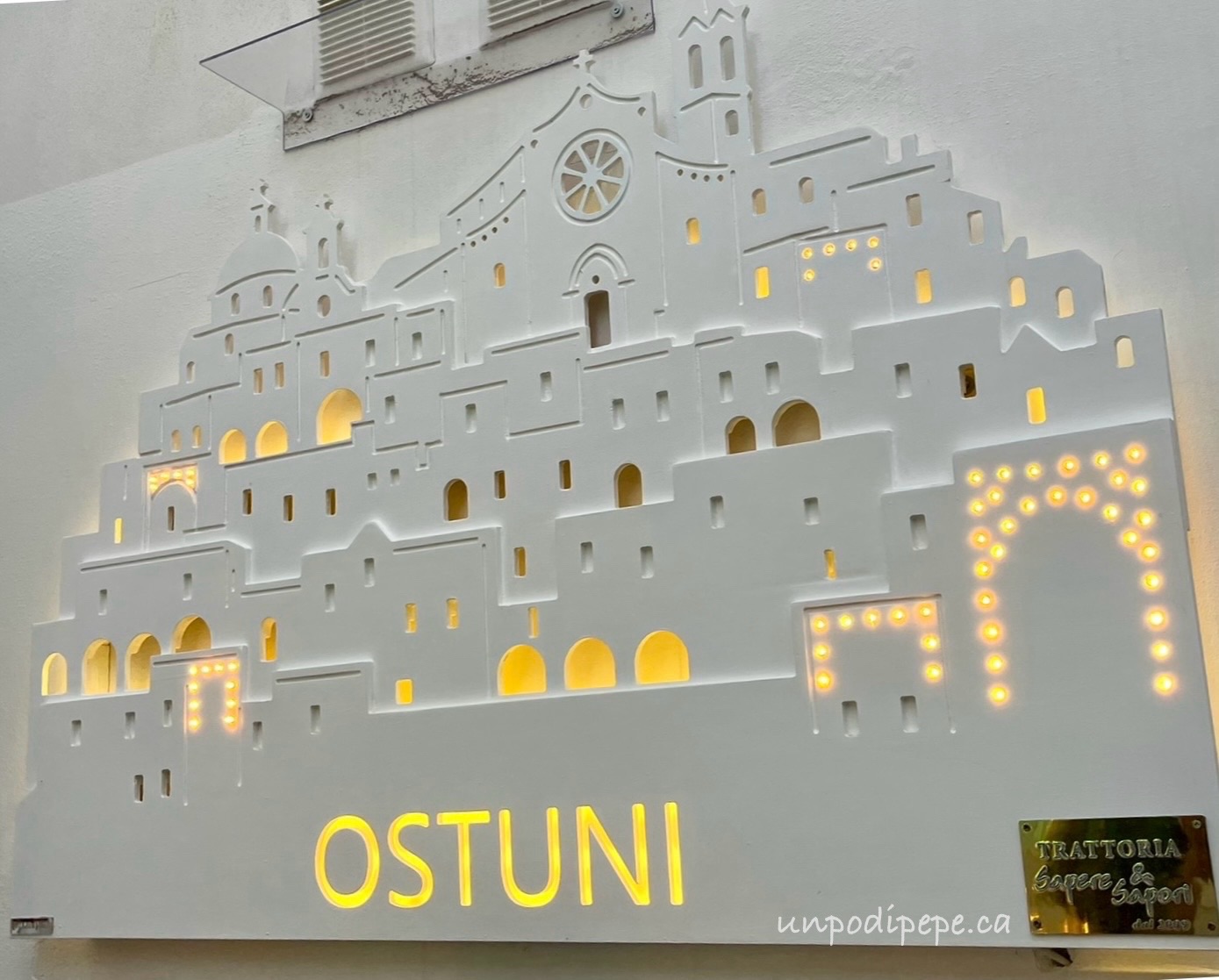
My cugina and I stayed in Ostuni for 3 days in August. We drove 2 hrs and 45 min from Orsara di Puglia with stops in Locorotondo on the way there and Martina Franca on the way home. The drive was beautiful, then the car was parked the whole time. We stayed just outside the Centro Storico in one of ‘Le Piccole Case Bianche’-the little white houses’-an agency with a collection of ~50 cute small apartments for rent.
Hopefully i will be back to Ostuni soon. Buon Viaggio, Ciao, Cristina

