• Home
  • About me/Chi sono
  • Contact

Un po' di pepe

~ …… (oon∙poh∙dee∙PEH∙peh) Cristina writes about interesting stuff /Cristina scrive di cose interessanti

Un po' di pepe

Tag Archives: Val d’Itria

Ostuni ‘La citta’ bianca’

13 Tuesday Oct 2026

Posted by Un po' di pepe in Photography, Puglia

≈ 7 Comments

Tags

Puglia, Salento, Southern Italy, Val d'Itria

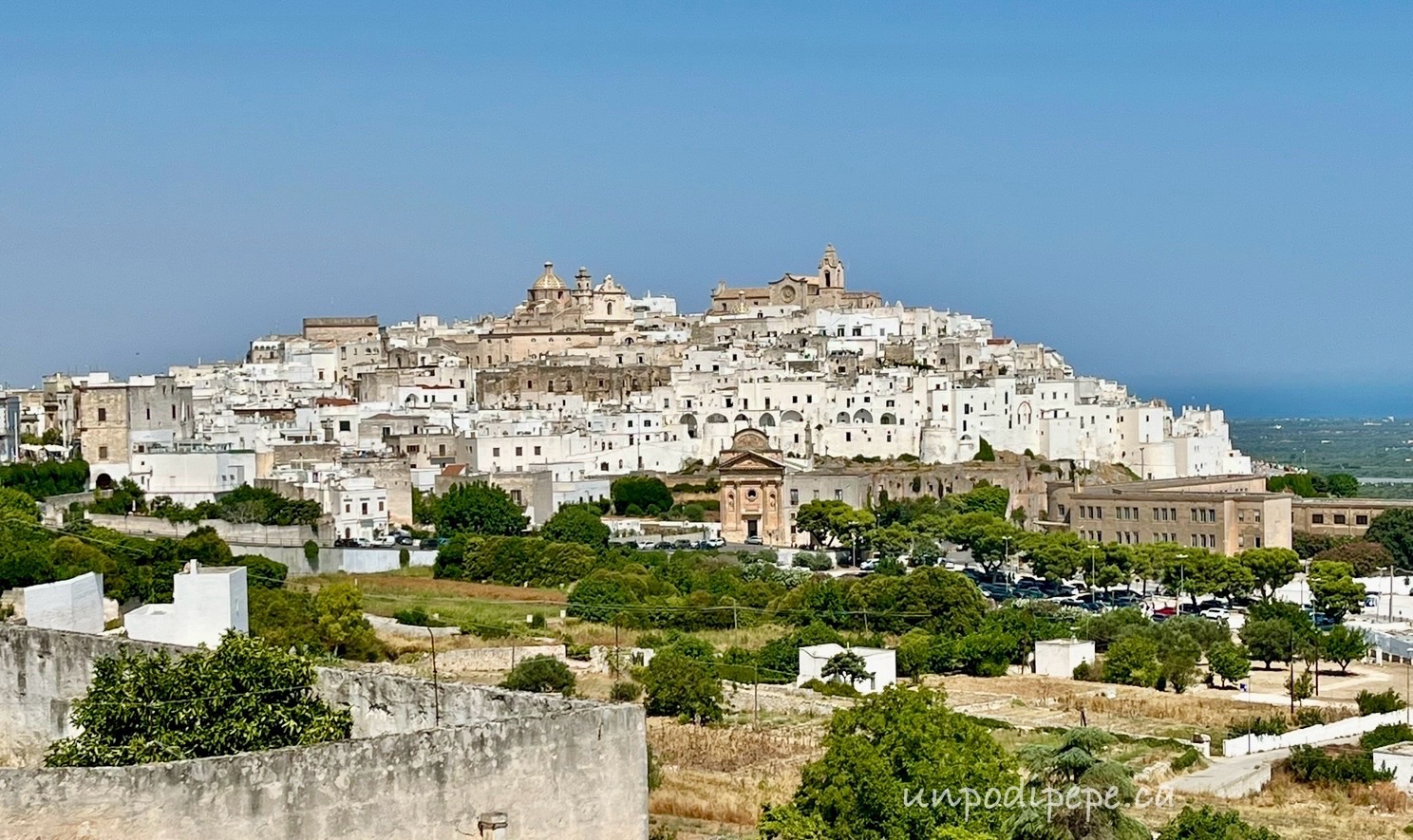
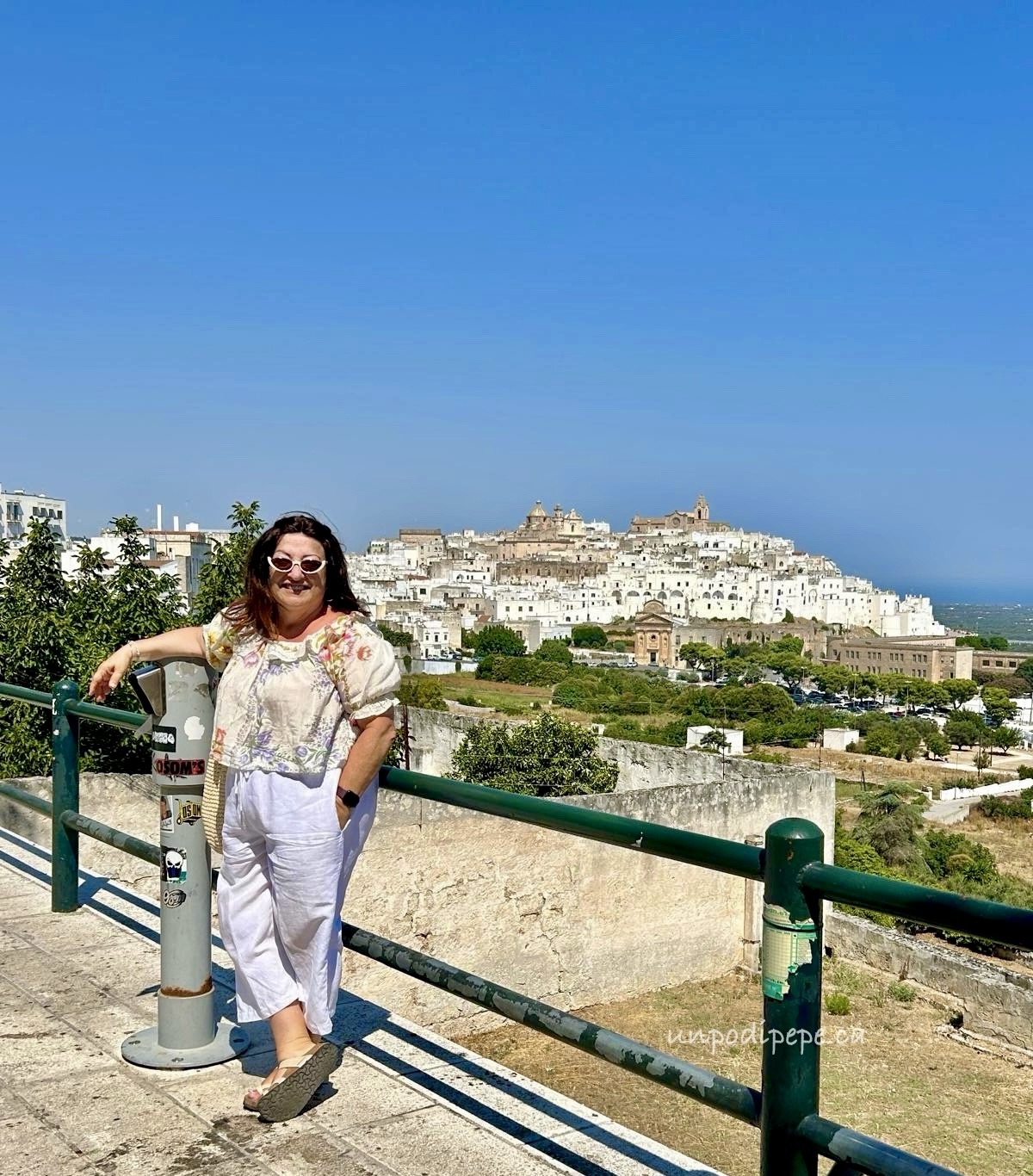
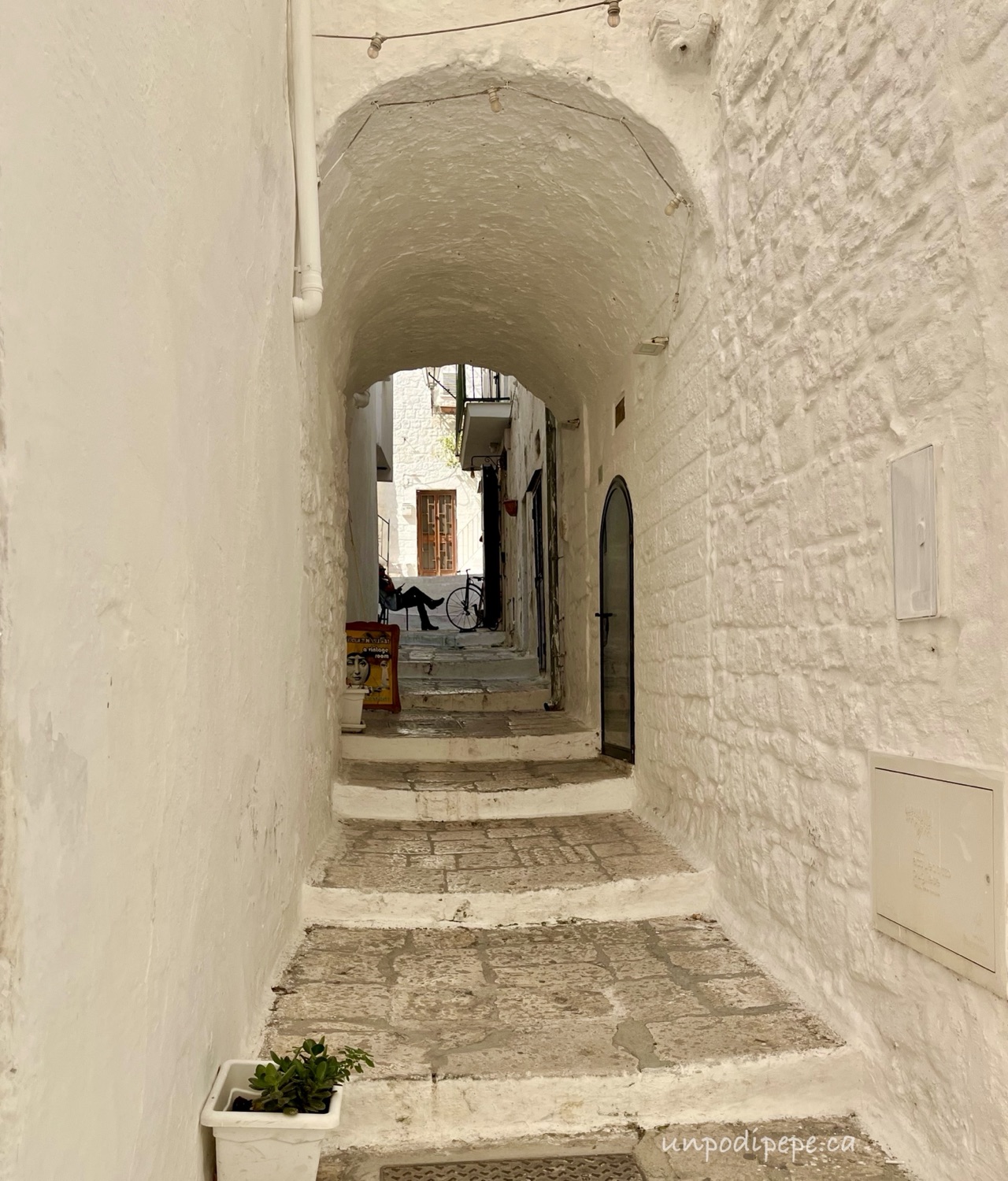
From a distance, Ostuni rises 220 m above the countryside in a Cubist mass of white buildings stacked on top of each other. It is known as ‘la città bianca’/’the white city’ and resembles a 3 tier wedding cake.  The town is a maze of winding cobblestone streets, staircases, arches courtyards and narrow alleys.  The whitewashed walls absolutely glow against the colours of the surrounding landscape-the green plain of ancient olive groves stretching all the way to the blue of the Adriatic sea.

The Val d’Itria-trulli territory in Puglia has a long history.  The area has been inhabited since the Stone Age (~ 40,000 years ago).  Ostuni was established by the Messapii, a pre-Roman tribe ~ 1000 BC.  Nearly destroyed by Hannibal around 200 BC, it was rebuilt by Greeks, who called it Astu Néon (new town).  Over time, the pronunciation turned into ‘Ostuni’. The Romans ruled until the 5th Century.  In the 11th Century, the Normans gave Ostuni its tight, stacked labyrinthine layout designed to confuse invaders, and fortified the walls. Next came the Byzantines, who did the same.  Porta San Demitrio and Porta Nova, 2 of the 4 Medieval gates, still stand.  Ruled by Isabella of Aragon, Queen of Napoli the city grew culturally and artistically in the 16th century. Watchtowers were built along the coast for protection from pirates.
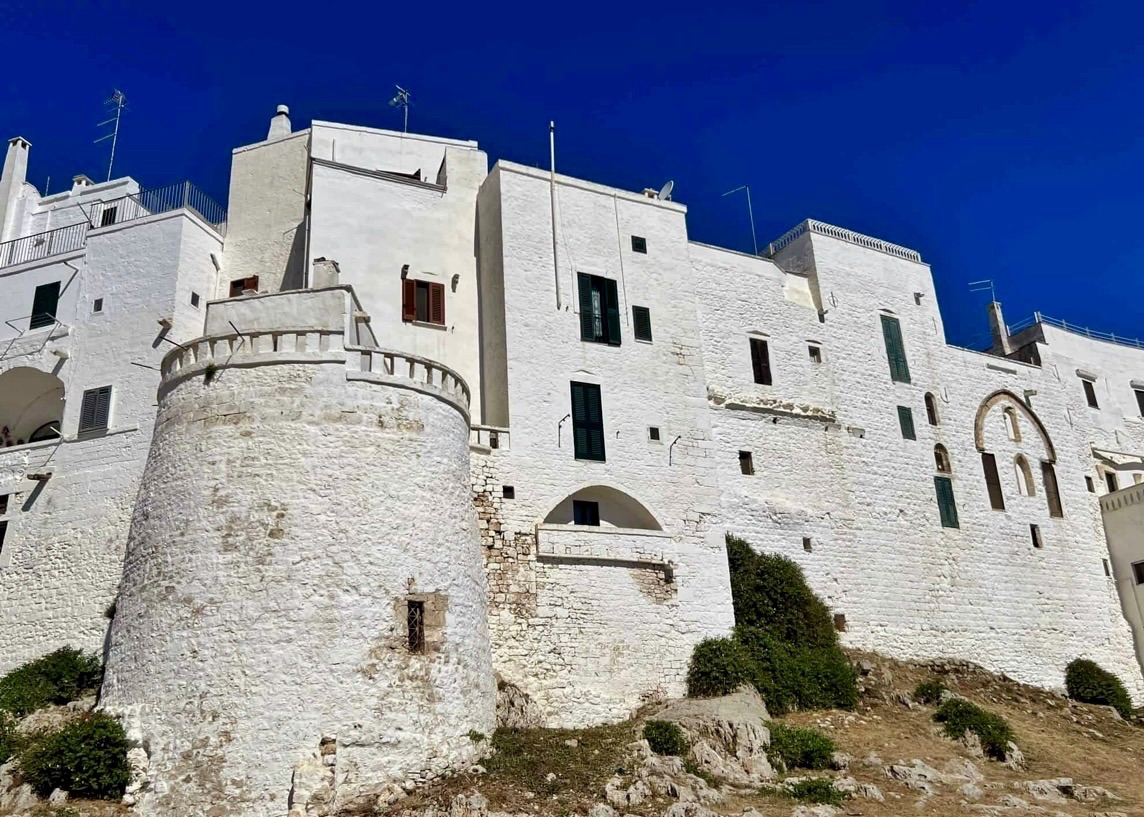
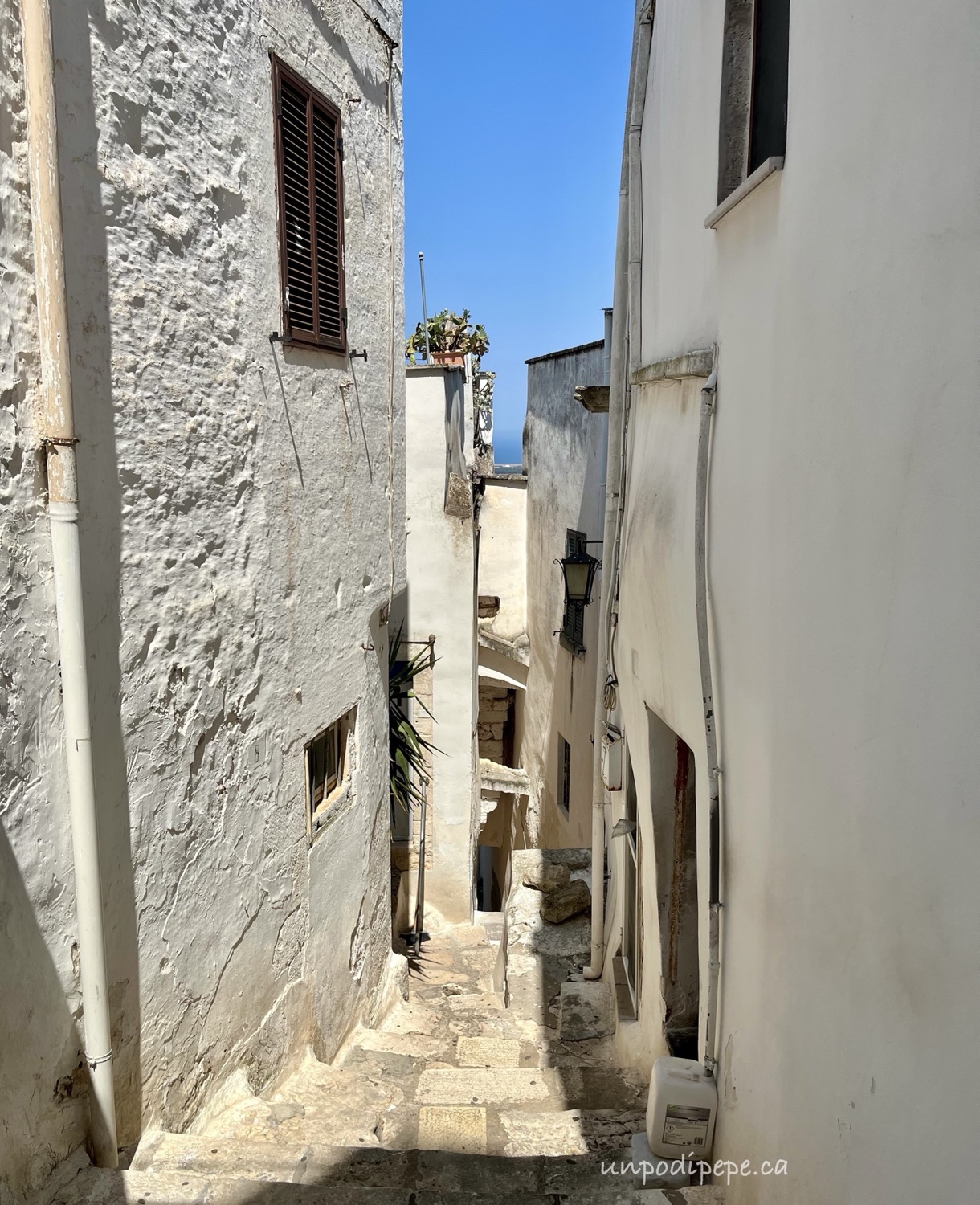
Why is Ostuni so white? One reason is that lime wash is cheap, easy to use, and reflects light, which helps buildings stay cool under the strong Adriatic sun. The other reason is public hygiene. In the 17th Century, the plague killed millions in the area. To take advantage of the antibacterial properties of Calcium Carbonate (lime) and prevent spread of disease, infected houses were whitewashed. This became connected with the poorer class. Of course, the rich also got disease, but hygiene was used to ‘segregate’ the population, creating a ‘ghetto’.  The richer areas and churches, mostly in the upper tier of Ostuni, retained their stone facades.  Today there are strict regulations re house painting rules.
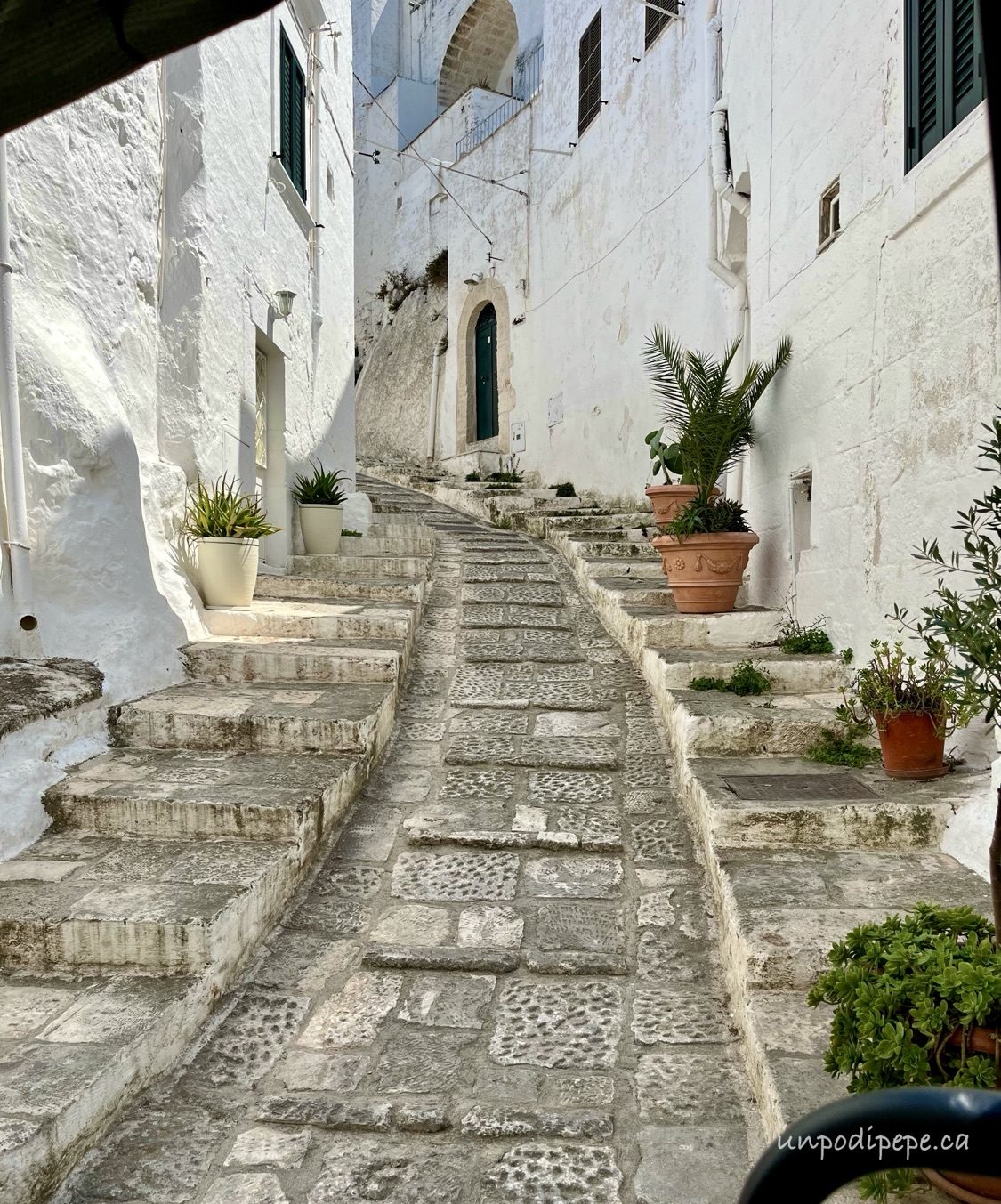
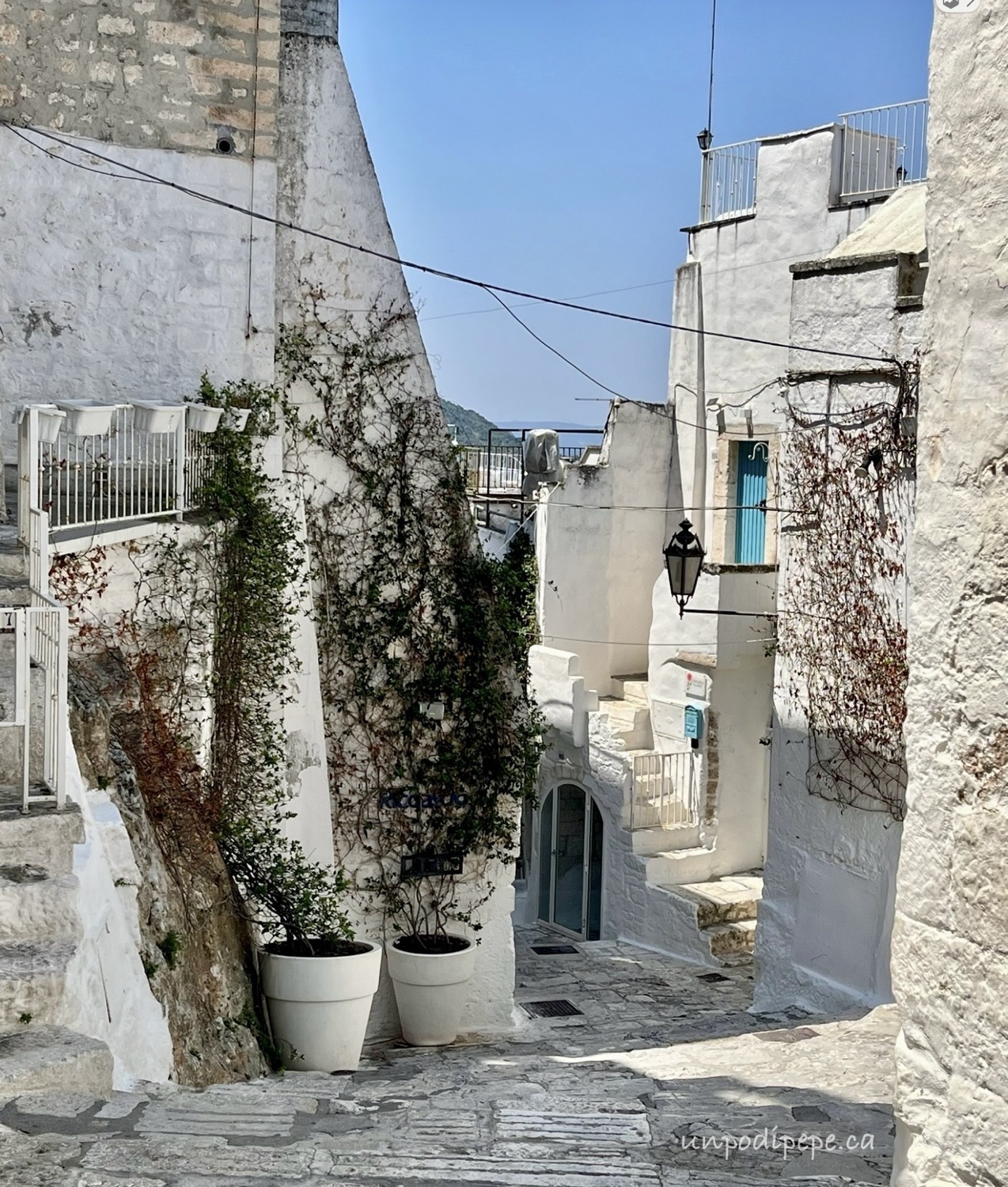
The best way to see Ostuni is to just wander the maze of the Centro Storico on foot. Start low and work your way uphill.  Around every corner is another dazzling whitewashed view.
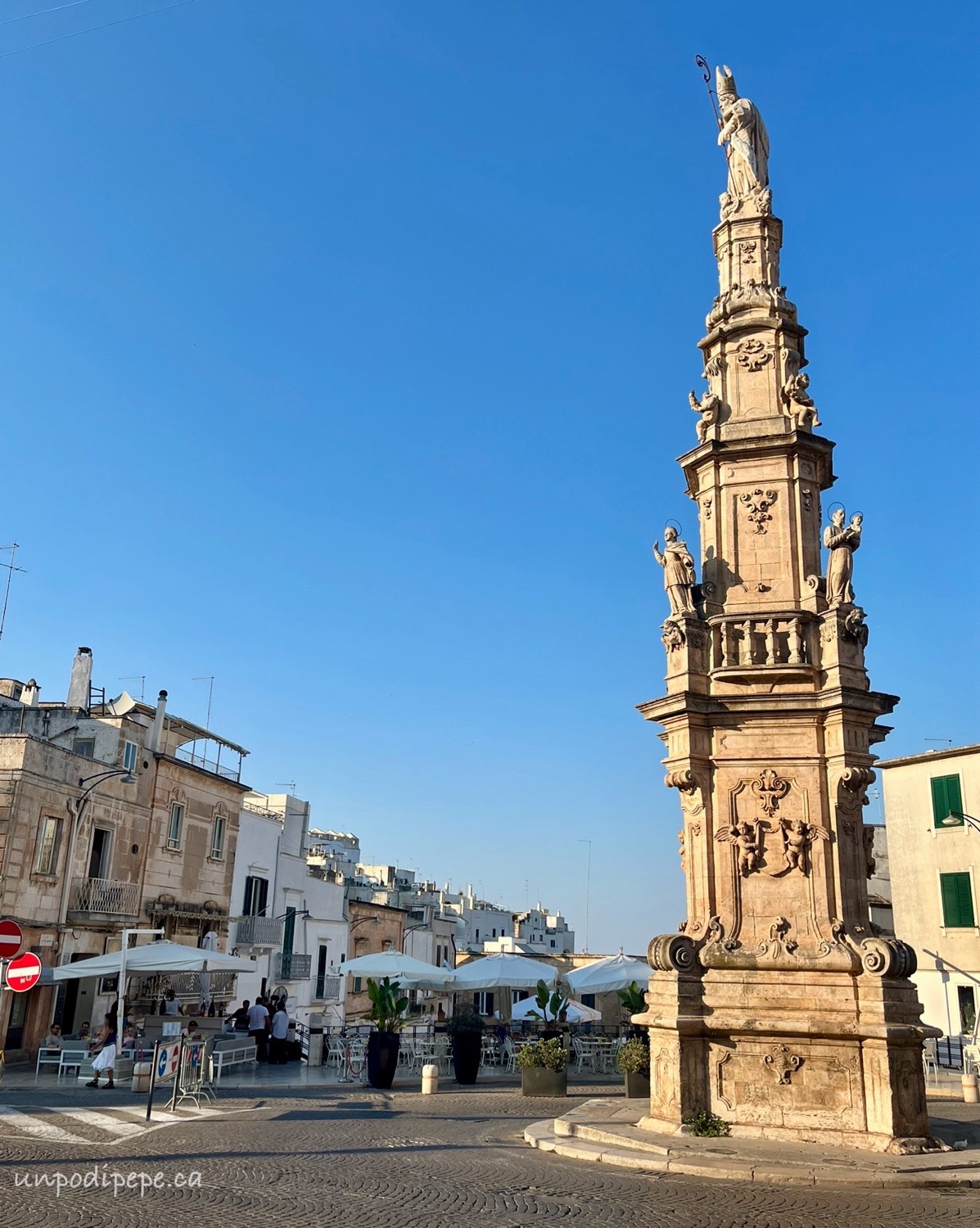
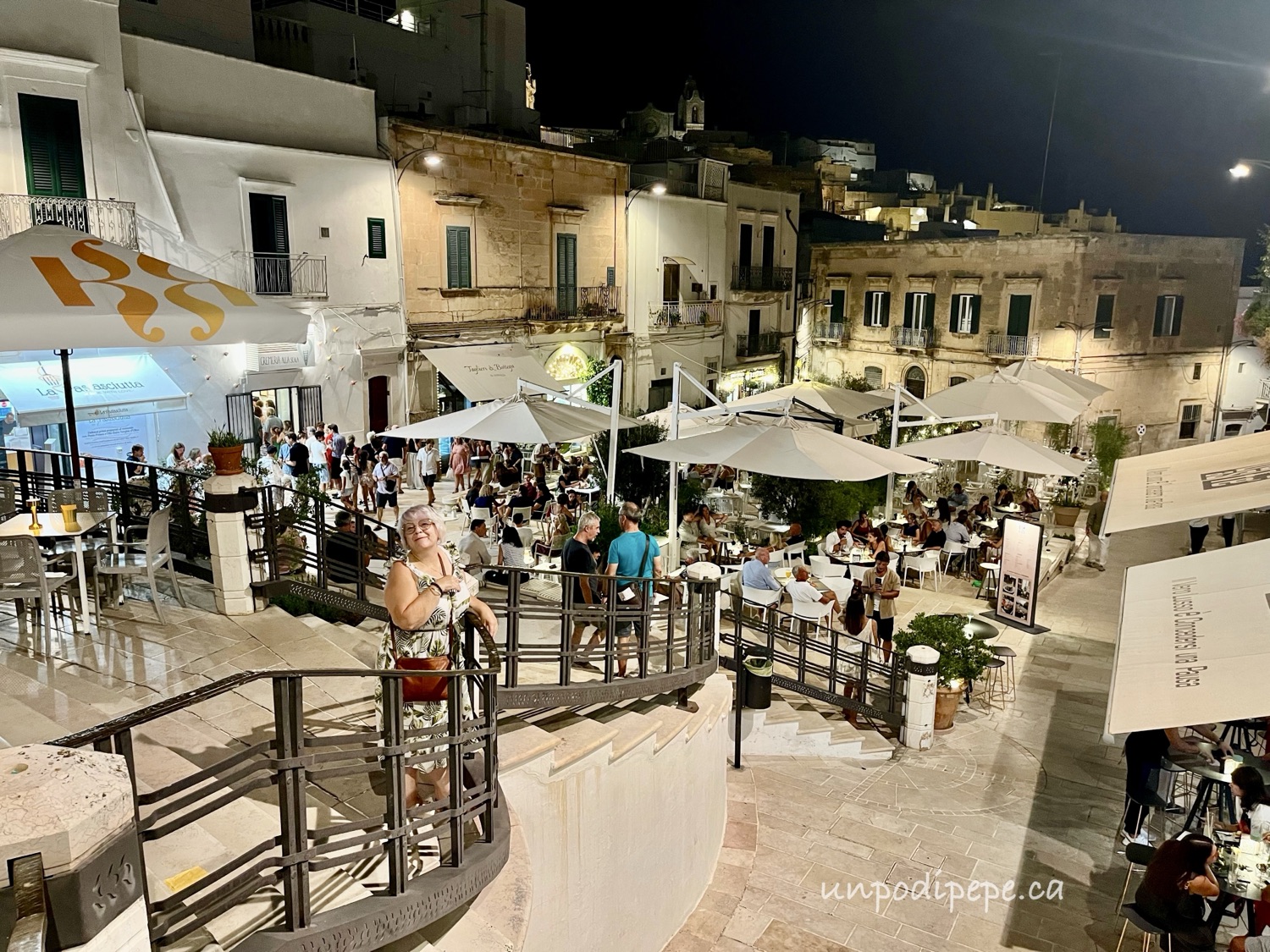
Piazza della Libertà is the large main piazza and a hub for both locals and visitors. It features a 20m tall 18th Century Baroque column, topped with a statue of Sant’Oronzo, the patron saint who miraculously saved Ostuni from the plague in 1656. Palazzo Municipale, the City Hall, is in a former 12th Century Franciscan monastery.  Lined with restaurants and bars, the lively piazza hosts live music and cultural events and is popular in the evenings for aperitivo and passeggiata.
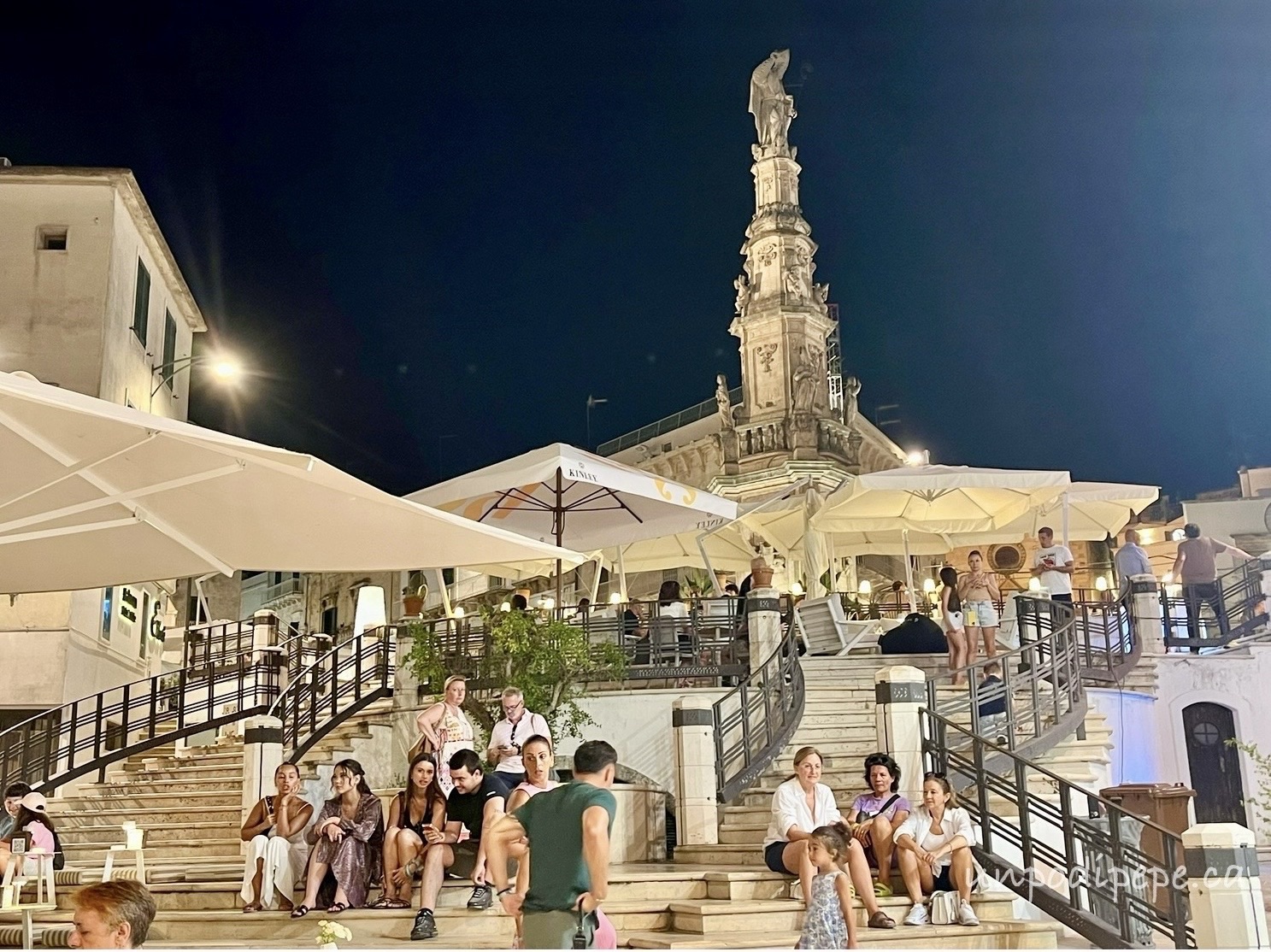
Steps down from Piazza della Libertà, old meets new at La Scalinata Monsignor Antelmi.  This beautiful staircase is like an architectural bridge between Ostuni’s Centro Storico and the modern urban layout below.  It is lined with restaurants and leads to the large modern carpark. Sit on the stairs to eat an amazing gelato from Cremeria alla Scala.
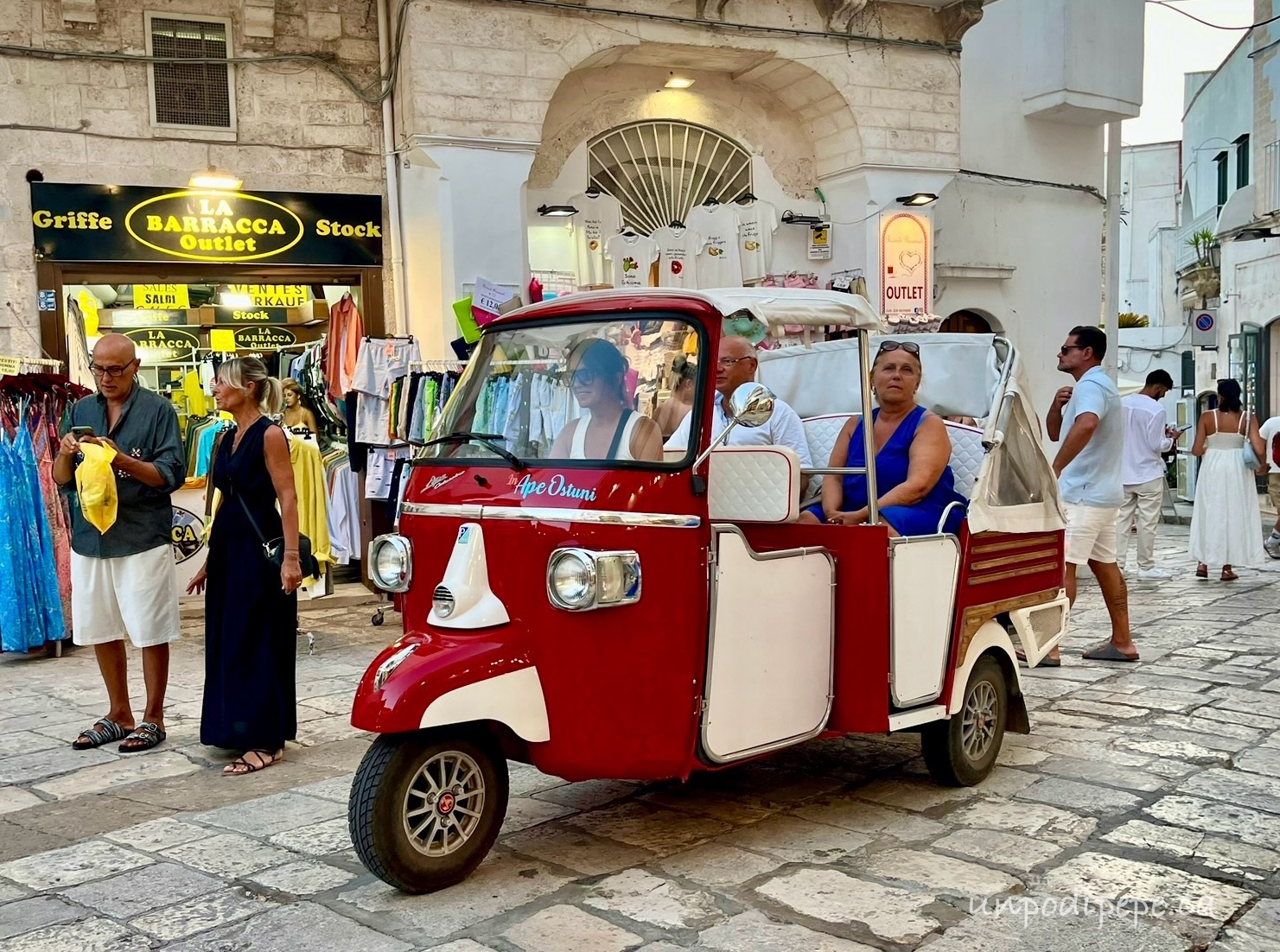
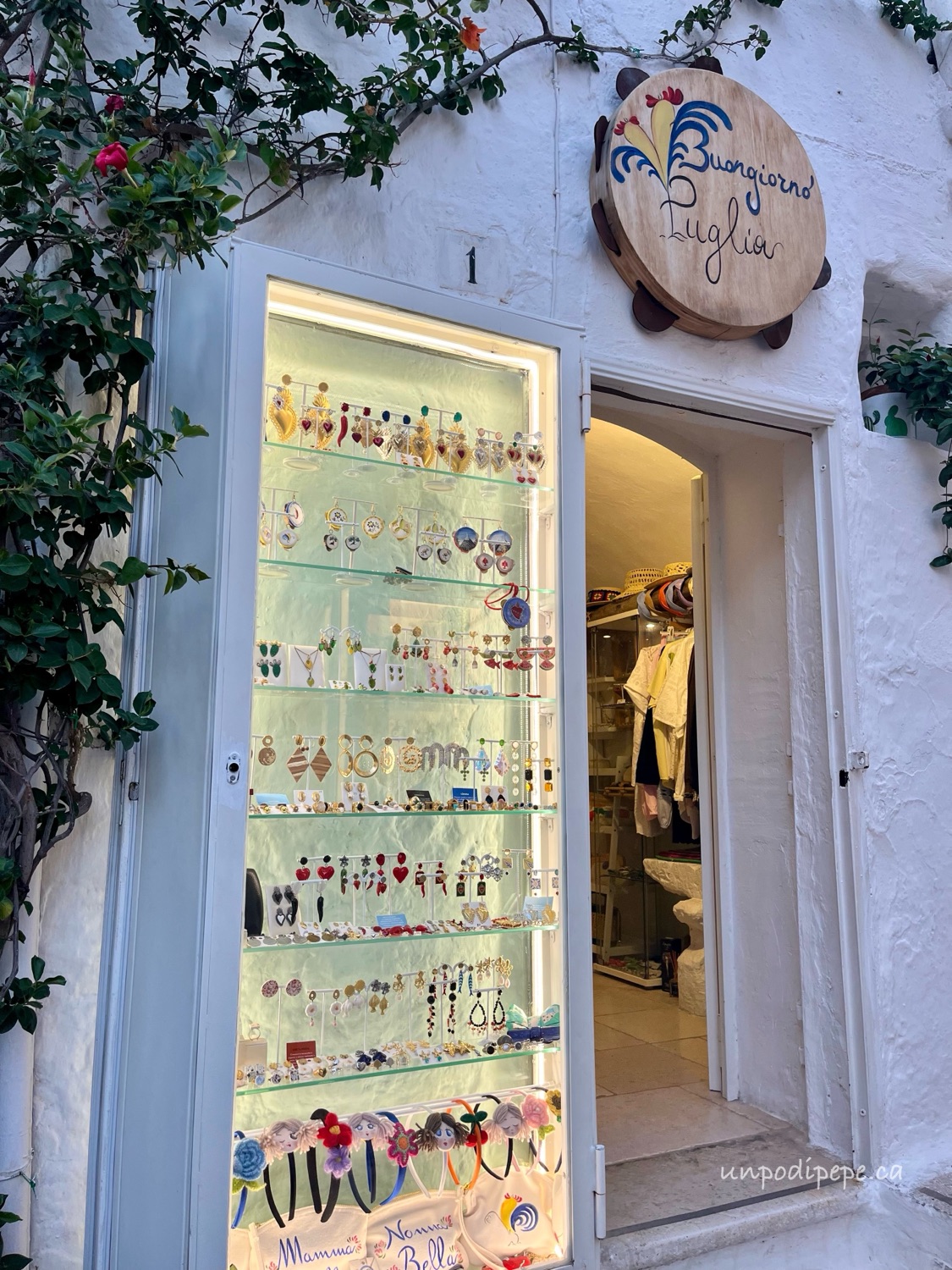
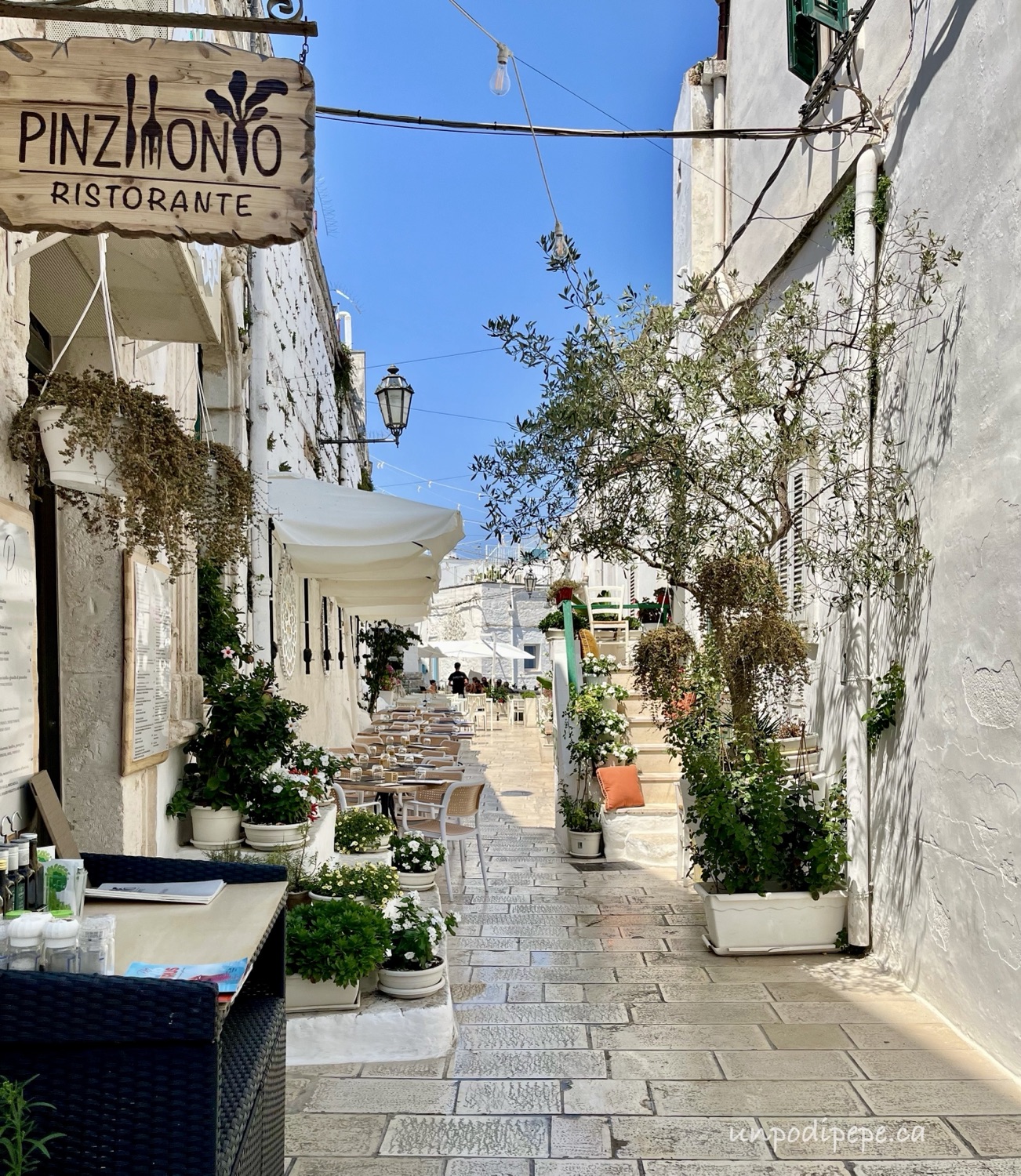
From Piazza della Libertà, veer right, to Via del Cattedrale.  The uphill climb is lined with restaurants and shops where artisans sell ceramics, linens, leather, rustic olive wood products and local olive oil. For anyone with mobility issues, cute 3 wheeled Ape (AH•peh) can be hired for a lift.
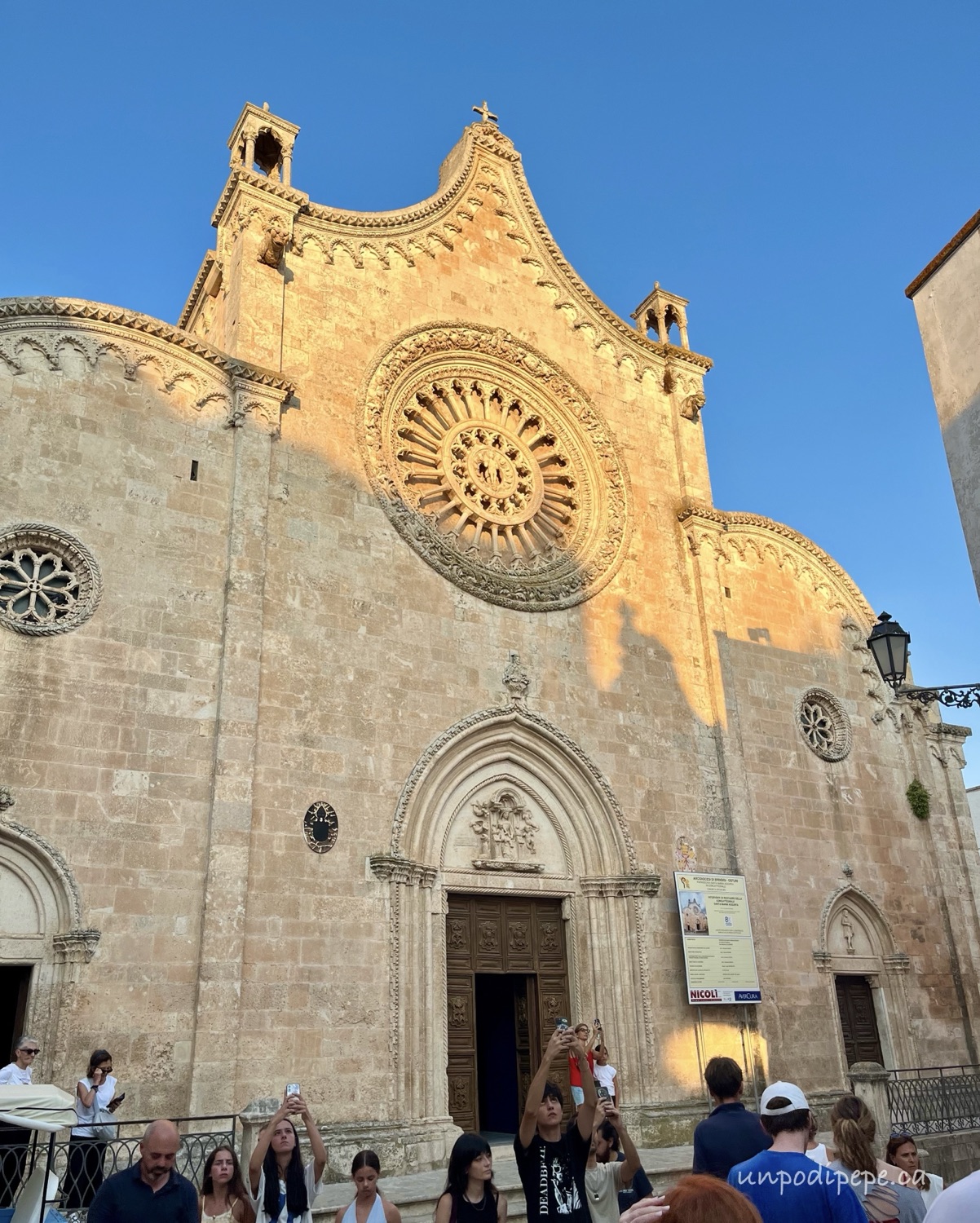
Cattedrale di Santa Maria Assunta, a 15th Century Romanesque church with a Gothic exterior is at the highest point of Ostuni. Built by Federico II in 1228 (read more about him here) it was modified in 1456 after an earthquake, blending the 2 architectural styles. The beautiful rosone features Christ at the center, surrounded by 24 finely carved columns, representing the 24 hours of the day. The interior is a cool place to sit on a hot day.    Arco Scopa, a covered walkway which once connected the convent and Archbishop’s Palazzo frames Piazza Cattedrale.  Under the Arco is Quarto Caffè.
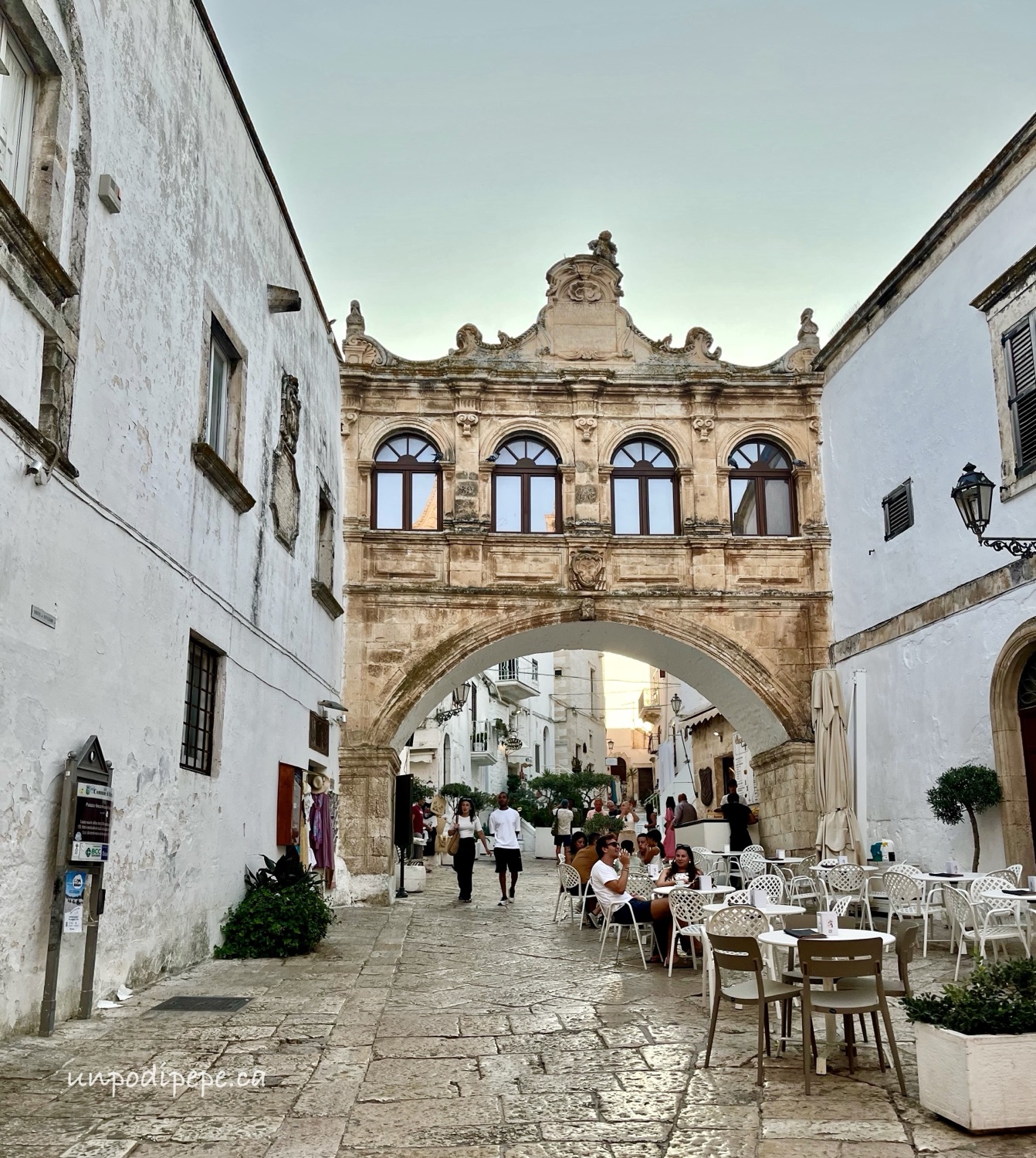
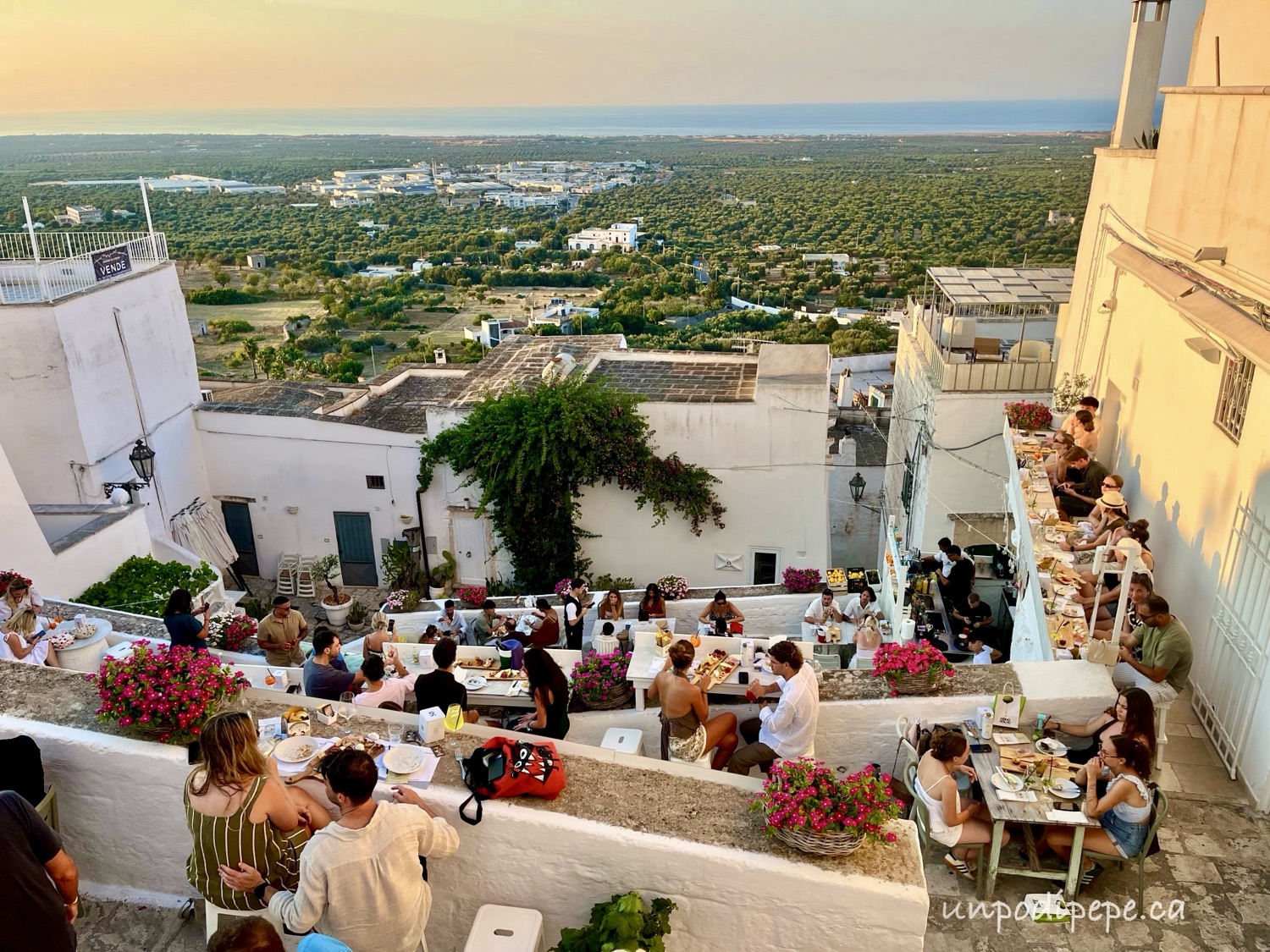
Pass under Arco Scopa, turn right and walk to the end of the narrow street.  This is the best view of the surrounding landscape, Piana degli Ulivi Monumentali -the plain of centuries old olive trees, and the sea.  The landing is a great place to sit and watch the sun set.  If you can get a table for aperitivo at Borgo Antico Bistrot with terraced seating-the view is even better.
The Museum of Ostuni ‘Museo Civiltà Preclassiche della Murgia Meridionale’ is in the former Baroque church of San Vito Martire, Via Cattedrale 15. There, among other things, is ‘Delia’, aka ‘Donna di Ostuni’, the paleolithic skeleton of a 20 year old woman who was 8 months pregnant.  She is ~25,000 years old! Open daily from 1000-1800.  Admission to the Museo is €5. The cave where Delia was discovered in 1991 is an archeological site, 2 km from Ostuni.
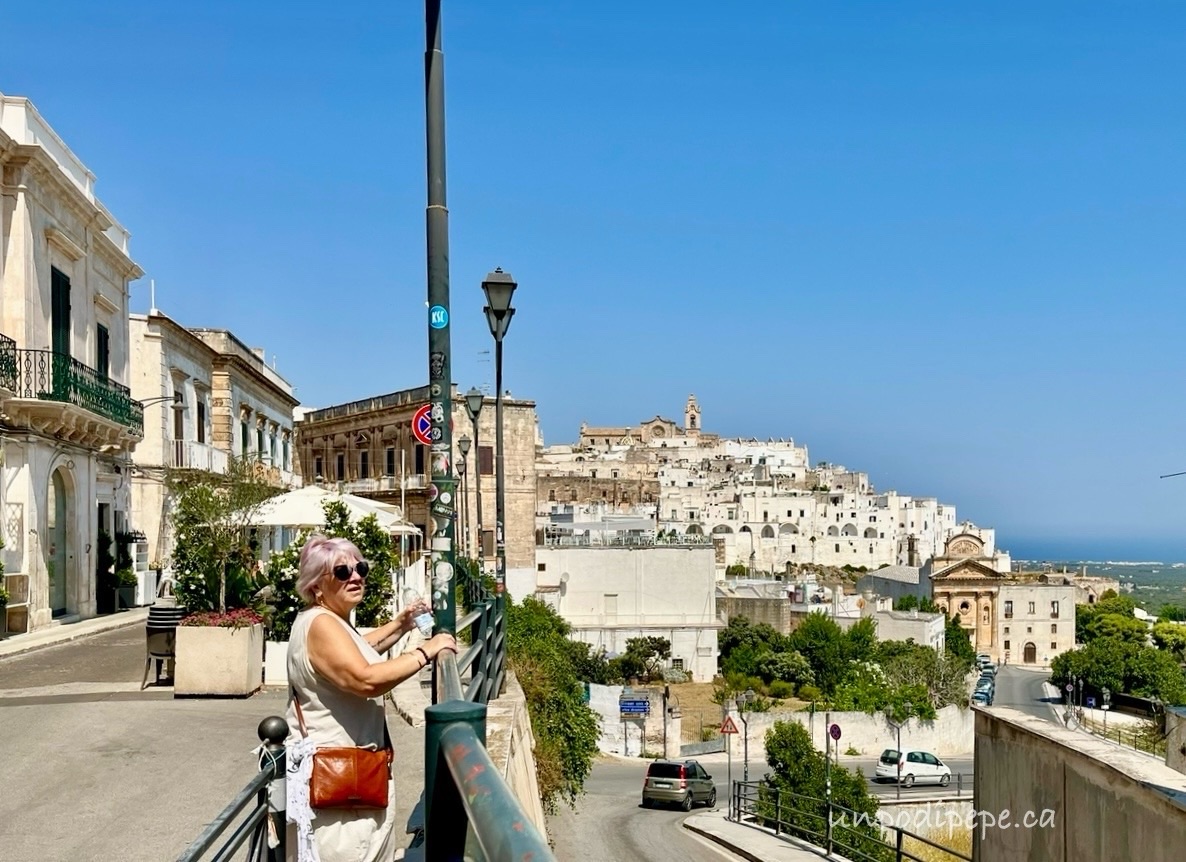
Back down in Piazza della Liberta, from the column, walk in the opposite direction on Corso Vittorio Emanuele II. Walking about ½ hr along the city walls, you will reach Piazzetta Martiri delle Foibe for stunning panoramic views of Ostuni.
The Centro Storico has a large, well-marked ZTL (Zona traffico limitato) limited traffic area, mainly pedestrian only.  Like many places in Southern Italian shops close from 1-5pm for the ‘pausa pranzo’.  Try to adjust to local eating times and ‘pausa’.  Refer to Beat the heat: Surviving summer in Roma for tips.

Ostuni has a population of about 30,000 and produces fine EVOO and vino. Read more in Vini di Puglia and Vini di Puglia #2. The weekly Mercato is Saturday from 8-12 on Via Nino Sansone, a ½ hr walk SW of Centro Storico.  August 24-27th is the annual Festa Patronale di Sant’Oronzo.
We did not go to the seaside, as there was a lot to do in Ostuni.  Marina di Ostuni is 8 km away, accessible by car, taxi or seasonal bus.  Lido Morelli has wide sandy beaches backed by dunes and olive groves. There is a bar, umbrella and sun lounger rentals. Spiaggia di Torre Pozzella is 5 sandy coves surrounding a 16th Century Aragonese watchtower. One cove has a small seasonal bar, otherwise there are no commercial facilities. Same with Spiaggia di Gorgognolo, 10km north.  These spiagge are in a nature reserve area, so safe from development. I will definitely go next time!
Ostuni is well connected, as it is on the Bari to Lecce train line.  The  Stazione is 4 km away.  It is an 8 min drive, 40 min walk, 10 min ride on the local bus which coincides with train times.  Purchase ticket before boarding the bus.

A car is not needed in Ostuni, or to get there.  However, you do need a car if staying at a Masseria outside of town, or want to explore the countryside on quick daytrips.  Easily reachable by car from Ostuni are Alberobello (45 min), Locorotono (40 min), Martina Franca (30 min), Cisternino (20 min), Polignano a Mare (45 min), Monopoli (40 min), Lecce (1 hr) and even Matera (1 hr 45 min).
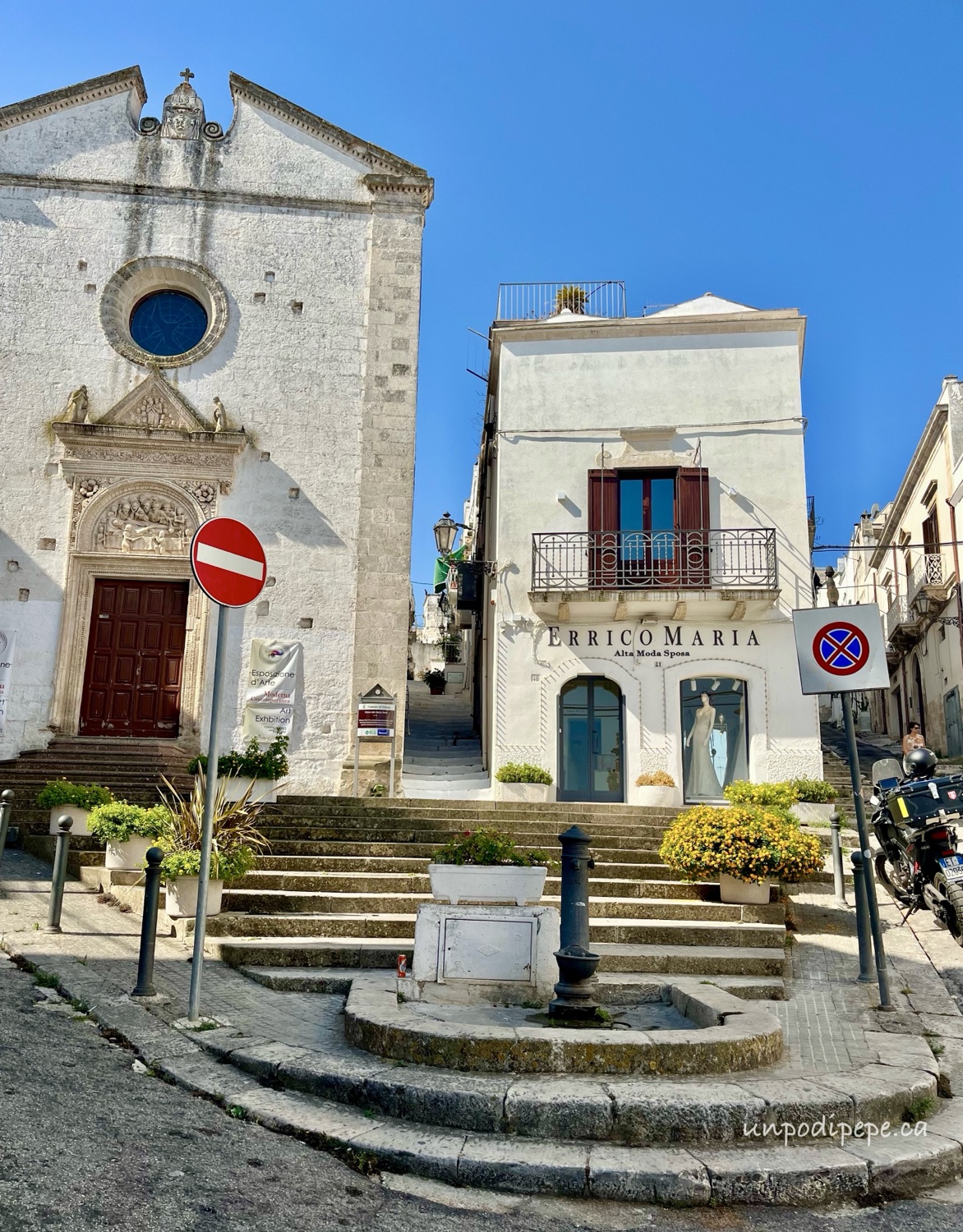
There are no large hotels in Ostuni, only boutique hotels B & Bs and small rental apartments.  There are many masserie (farmhouses) in the Val d’Itria to stay in-if you have a car.  Some of them are trulli  The closest airport is Brindisi 40 min away.  Bari and Lecce airports are both 1 hour away.
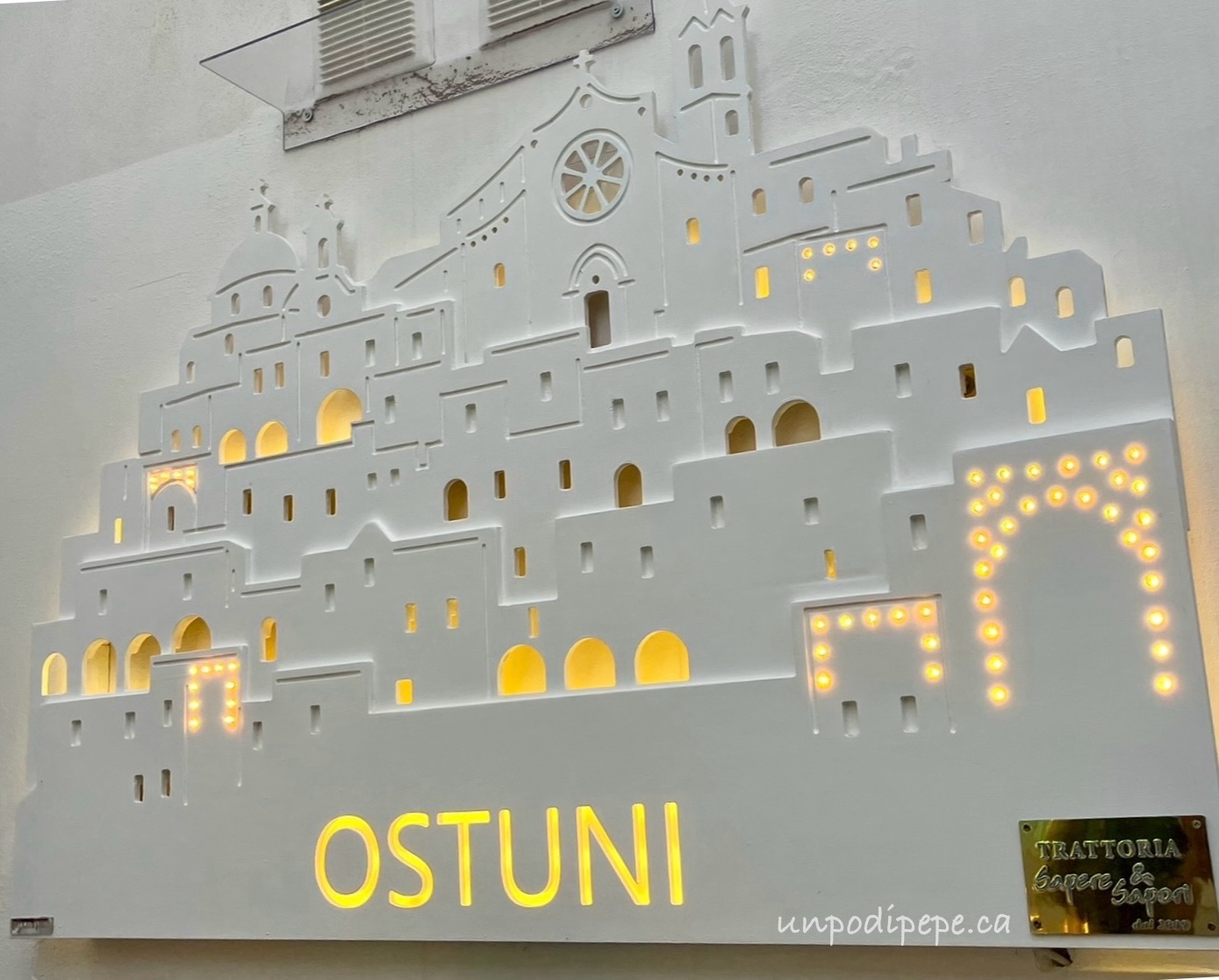
My cugina and I stayed in Ostuni for 3 days in August. We drove 2 hrs and 45 min from Orsara di Puglia with stops in Locorotondo on the way there and Martina Franca on the way home. The drive was beautiful, then the car was parked the whole time. We stayed just outside the Centro Storico in one of ‘Le Piccole Case Bianche’-the little white houses’-an agency with a collection of ~50 cute small apartments for rent.

Hopefully i will be back to Ostuni soon.  Buon Viaggio, Ciao, Cristina
Share this:

  • Share on Facebook (Opens in new window) Facebook
  • Share on Pinterest (Opens in new window) Pinterest
  • Share on X (Opens in new window) X
  • Email a link to a friend (Opens in new window) Email
  • Share on WhatsApp (Opens in new window) WhatsApp
Like Loading...

I Trulli di Alberobello

24 Wednesday Jun 2015

Posted by Un po' di pepe in Italia, Photography, Puglia, Travel

≈ 26 Comments

Tags

Alberobello, Architecture, Bandiera Arancione, Italian history, Italy travel tips, Puglia, Rione Aja Piccola, Rione Monti, Southern Italy, Trulli, UNESCO World Heritage Sites, Val d'Itria, Vernacular architecture, Zona dei Trulli

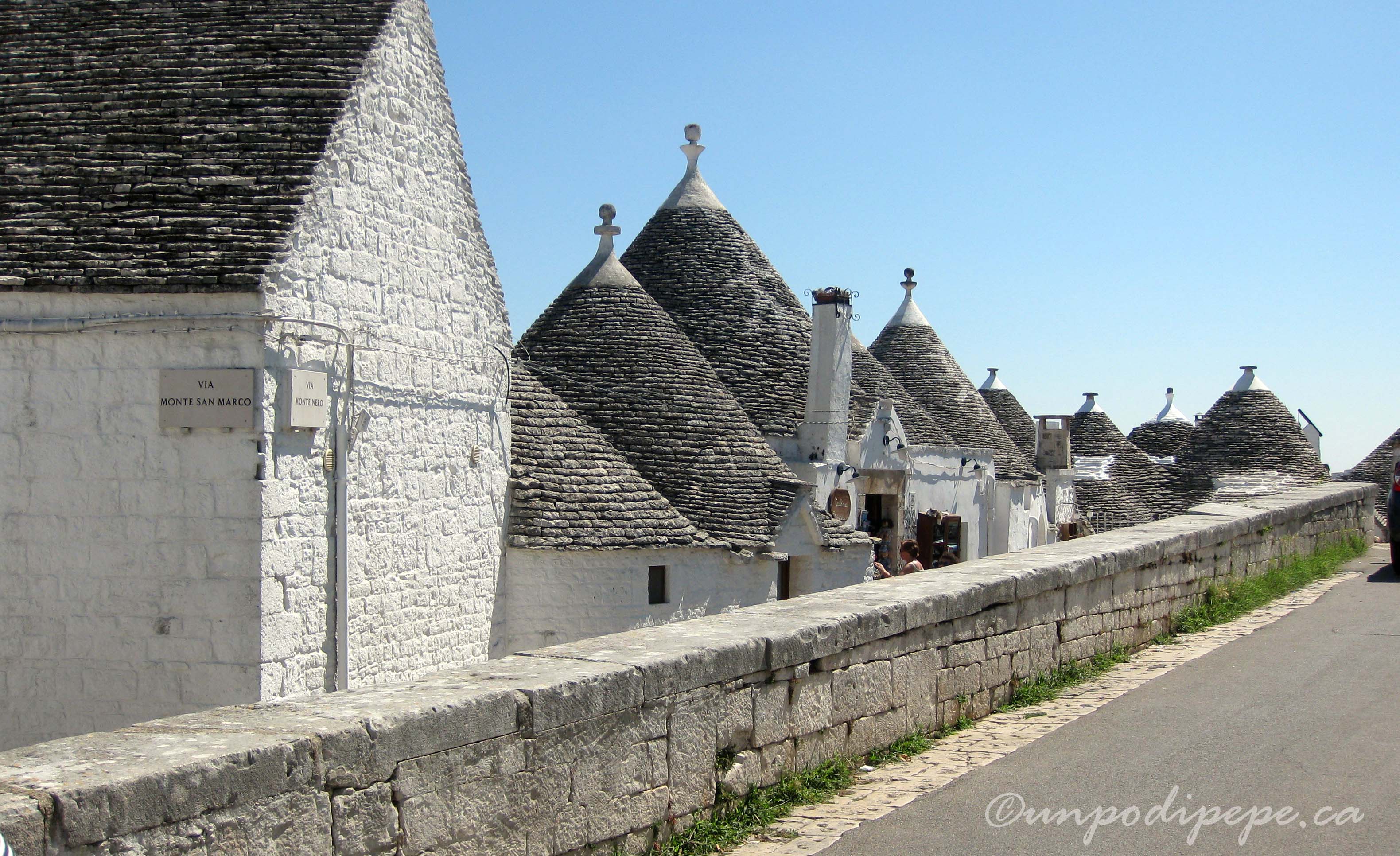
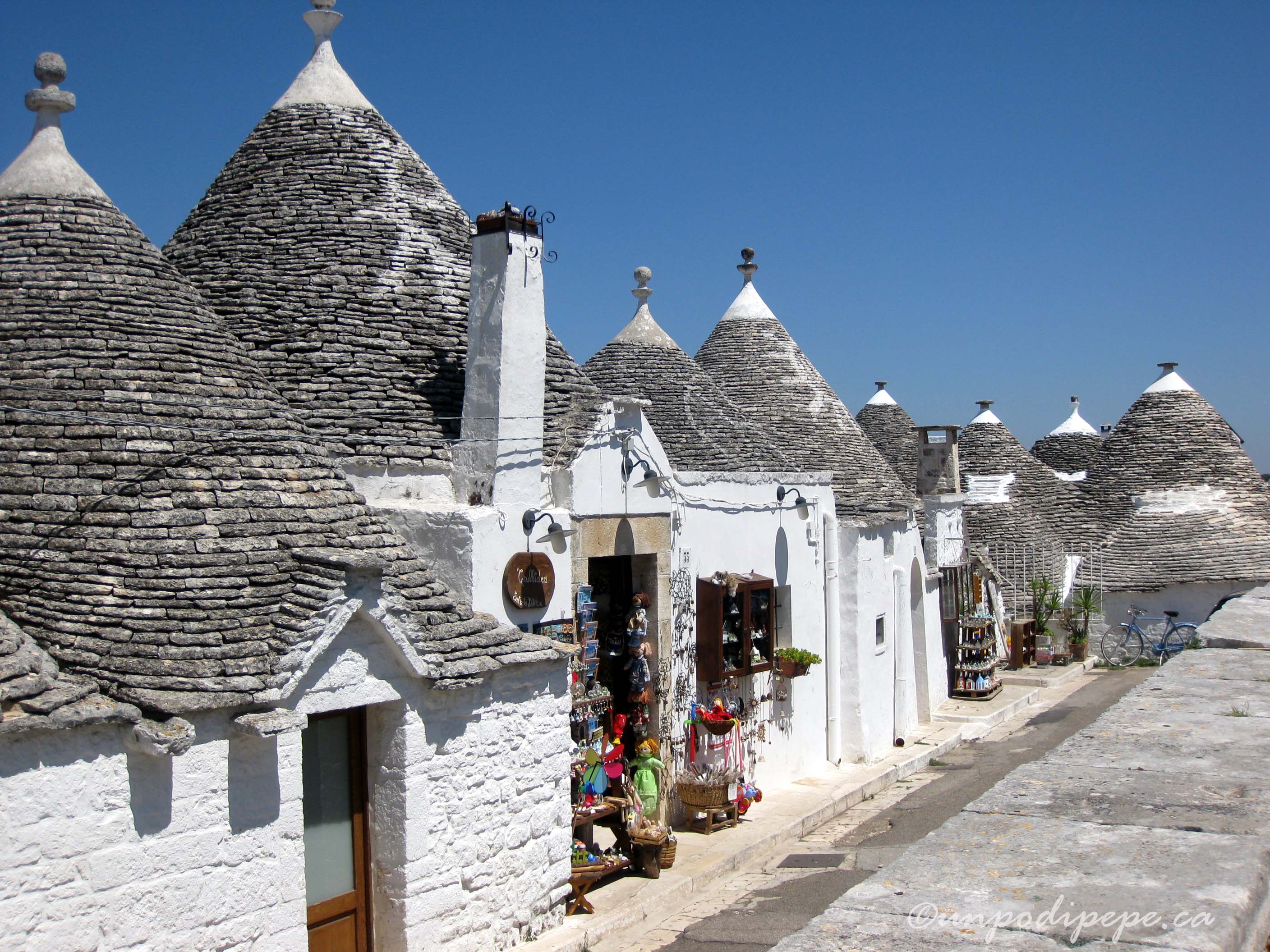
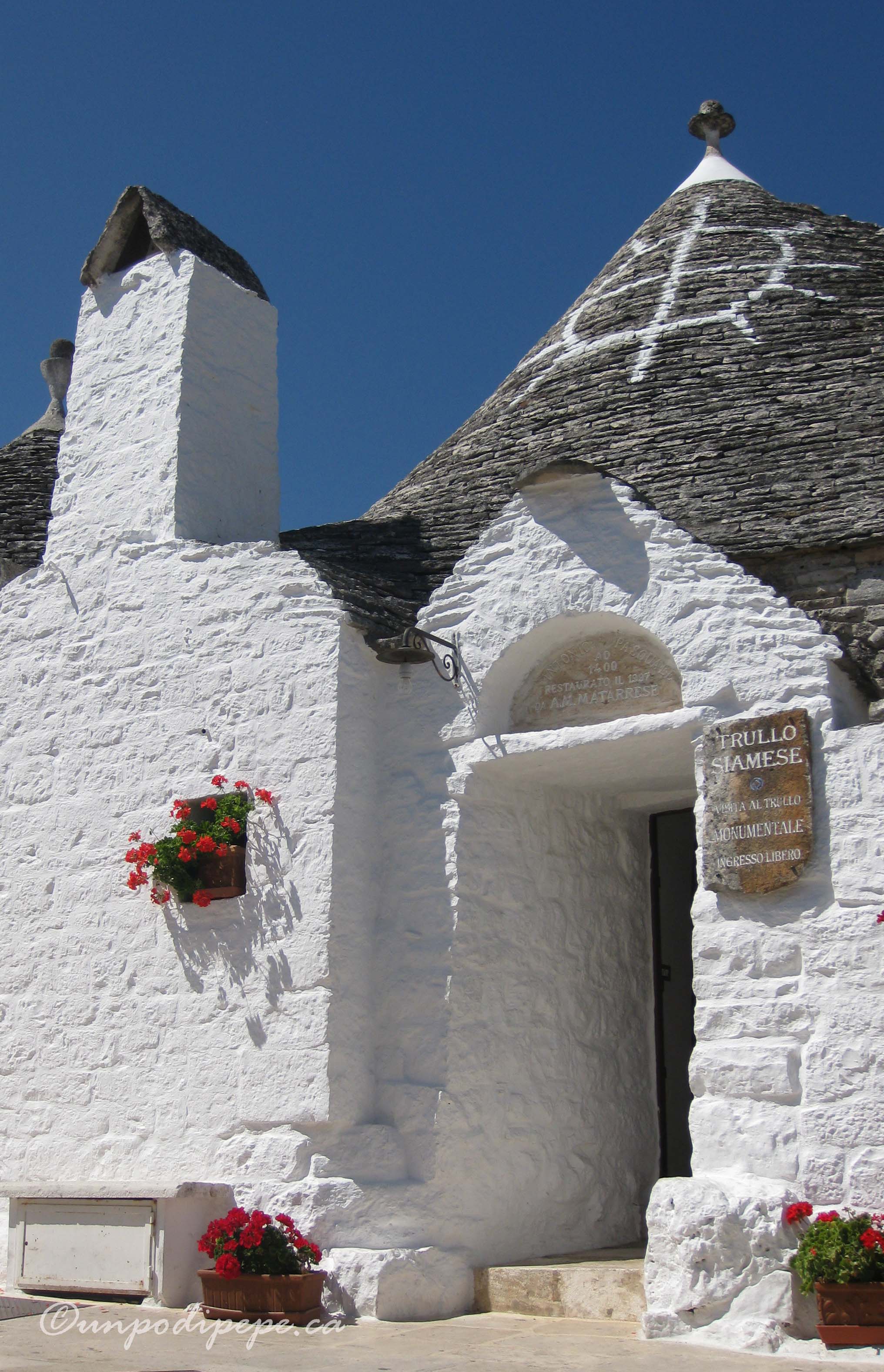
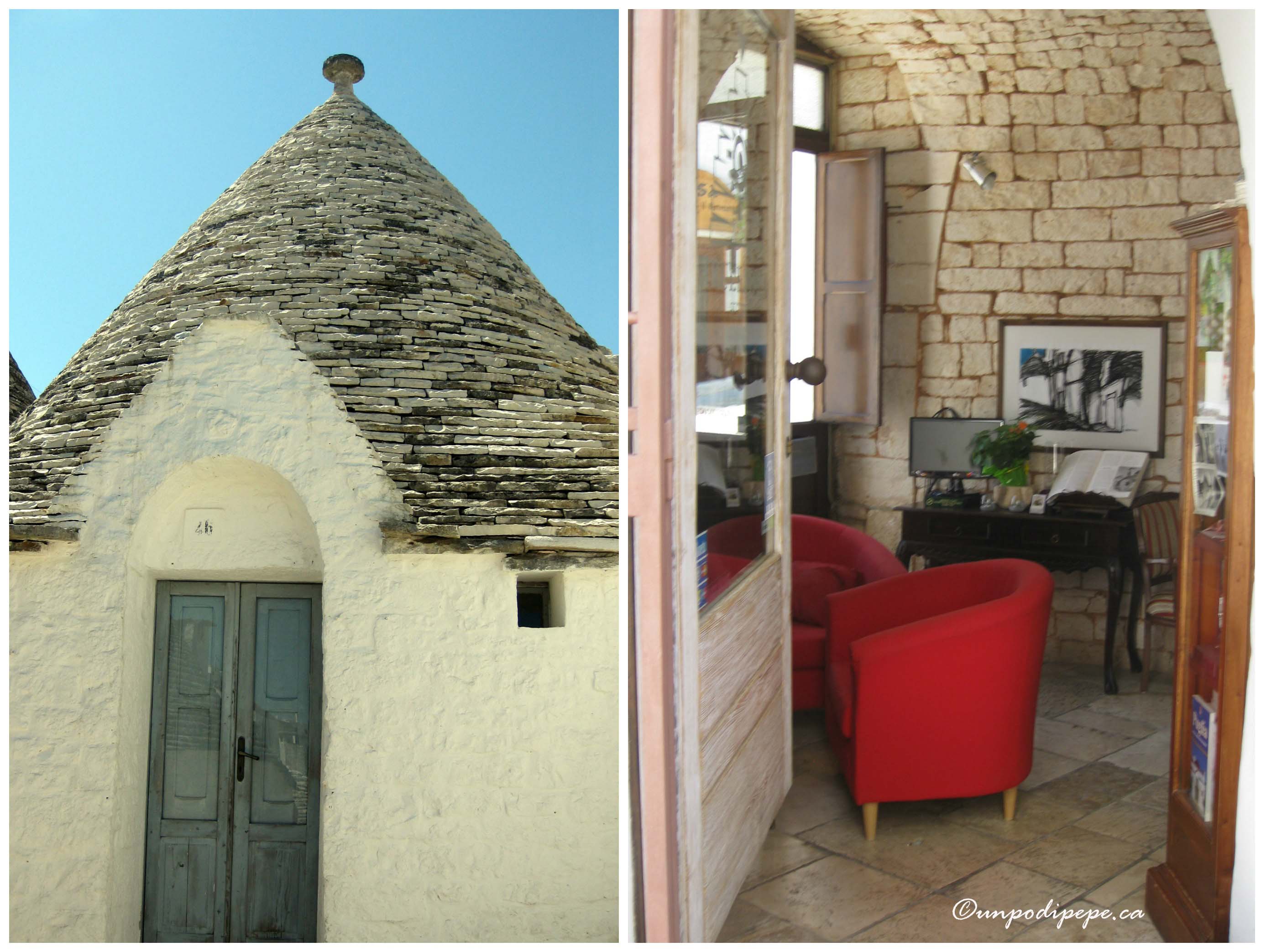
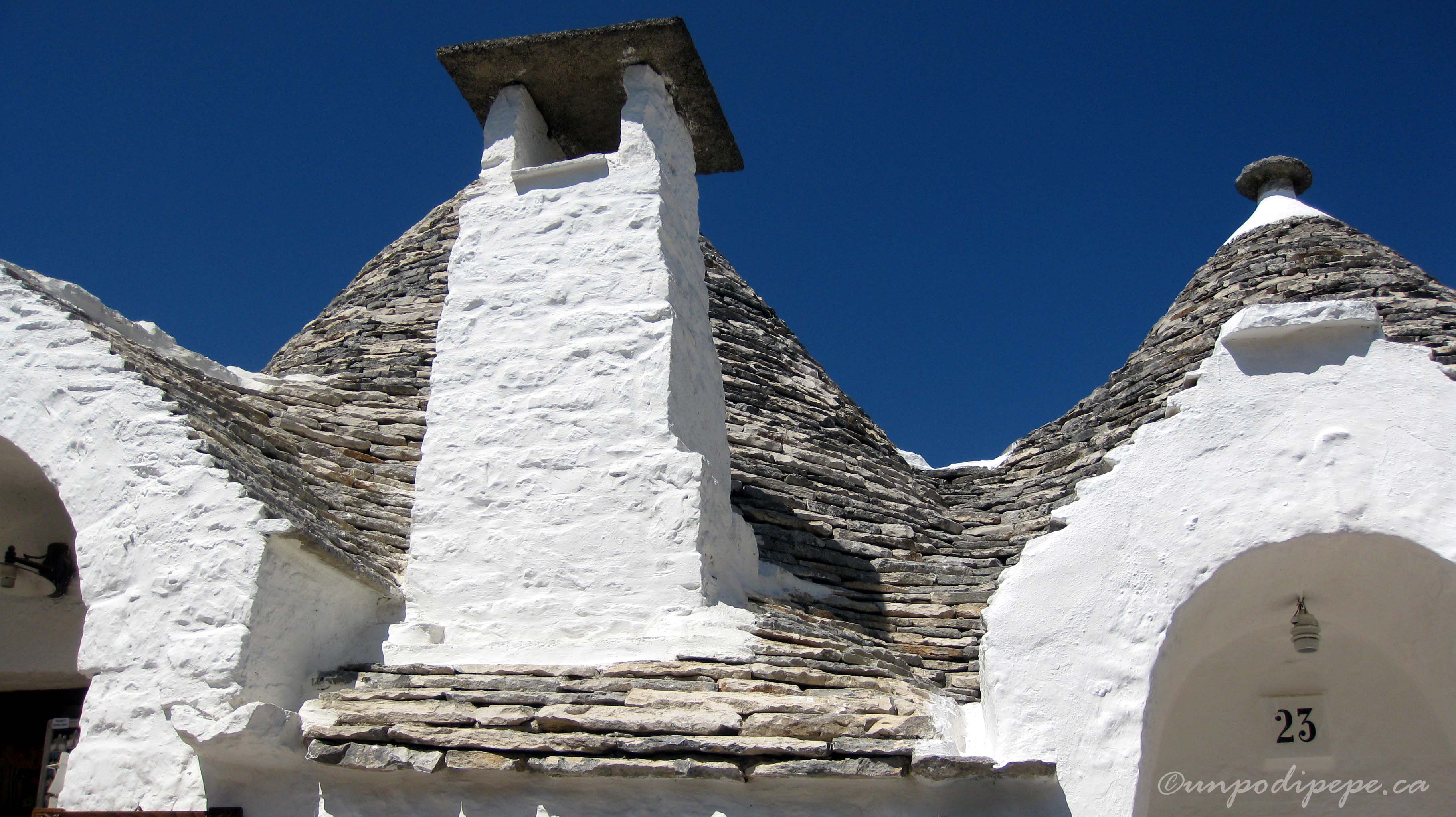
TrulliecielobluAs the car nears Alberobello, trulli (TROOL•lee) start to appear in the rural landscape and my imagination goes into overtime.  I hear the tune ‘La-la-la-la-la-la, la-la-la-la-la’ in my head and I expect i Puffi (the Smurfs) to start dancing around the whitewashed trulli! Too much midday Pugliese sun maybe?  Trulli are traditional limestone houses unique to the Val d’Itria in Southern Puglia.  They were built ‘a secco’, which means dry-without mortar.  Trulli have domed cone-shaped roofs built up of overlapping chiancharelle (kyan•ka•REL•leh)-grey limestone slabs.  On the capstone at the top is a decorative pinnacolo (pinnacle).  The shape of the pinnacolo is said to be a signature of the stonemason who built it.  Some roofs also have mythologic or religious symbols painted on them.

Alberobellostrada‘La Zona dei Trulli’ includes the areas around Locorotondo, Fasano, Cisternino, Martina Franca, Ceglie Massapica and the largest concentration of 1,620 trulli in Alberobello.  Alberobello and its trulli are aUNESCO World Heritage Site. UNESCO believes Alberobello is an exceptional example of the survival of prehistoric building techniques that are still in use. The fact that the buildings are so well-preserved and still occupied make the site unique.Alberobellobiancheria

The word trullo comes from tholos (τρούλος) a variation of the Greek word for cupola or dome. There were already scattered trulli settlements in the Val d’Itria around the year 1000.  These gradually grew into villages, later called Aja Piccola and Monti-the 2 trulli districts in Alberobello today. The oldest trulli we know of date back to about 1350 when the Counts Acquaviva of Conversano were given land for their service during the Crusades and colonized the area by moving people from their nearby areas.Alberobellostrada2

Tradition has it that building ‘a secco’ was imposed on the settlers so their houses could be dismantled quickly and easily. At first this was so the Count could easily dispossess villagers of their homes. Later it was a way to evade taxation imposed on each new construction by the King of Napoli. Trulli could be dismantled when the tax collector came by for an inspection, and then reconstructed just as quickly when he left. Trulli came to be known as temporary, unstable field shelters that were not worth taxing.

Trullo Siamese.  2 brothers in love with the same woman lived here.  They split it in half and the single brother installed a door into the lane.

Trullo Siamese. 2 brothers in love with the same woman lived here. They split it in half and the single brother installed a door into the lane.

In reality, trulli are anything but unstable or primitive. They are built directly on the underlying natural rock and their internal structure is very durable. The thick double walls keep the trullo warm in winter and cool in summer. There are systems for collecting rainwater using eaves projecting at the base of the roof diverting water through a channelled slab into a cistern underneath the trullo. Some trullo homes are made up of groups of 2- 5 trulli.  Most historians agree that the building technique for trulli came about due to the area’s geographical conditions and abundance of limestone. The quickie evictions and tax evasion scam came later.trulliombra

In the early 1600’s there was a group of about 40 trulli in Rione Monti (Monti District) then settlement and trullo construction really expanded with the addition of a bakery, mill, tavern and butcher shop.   In 1797 the feudal rule of the Acquaviva family ended when Ferdinand IV, King of Napoli proclaimed the community a ‘citta regia’, or royal town.  Alberobello took its name from silva arboris belli, the Latin name for the region.

Inner-city trulli?

Inner-city trulli?

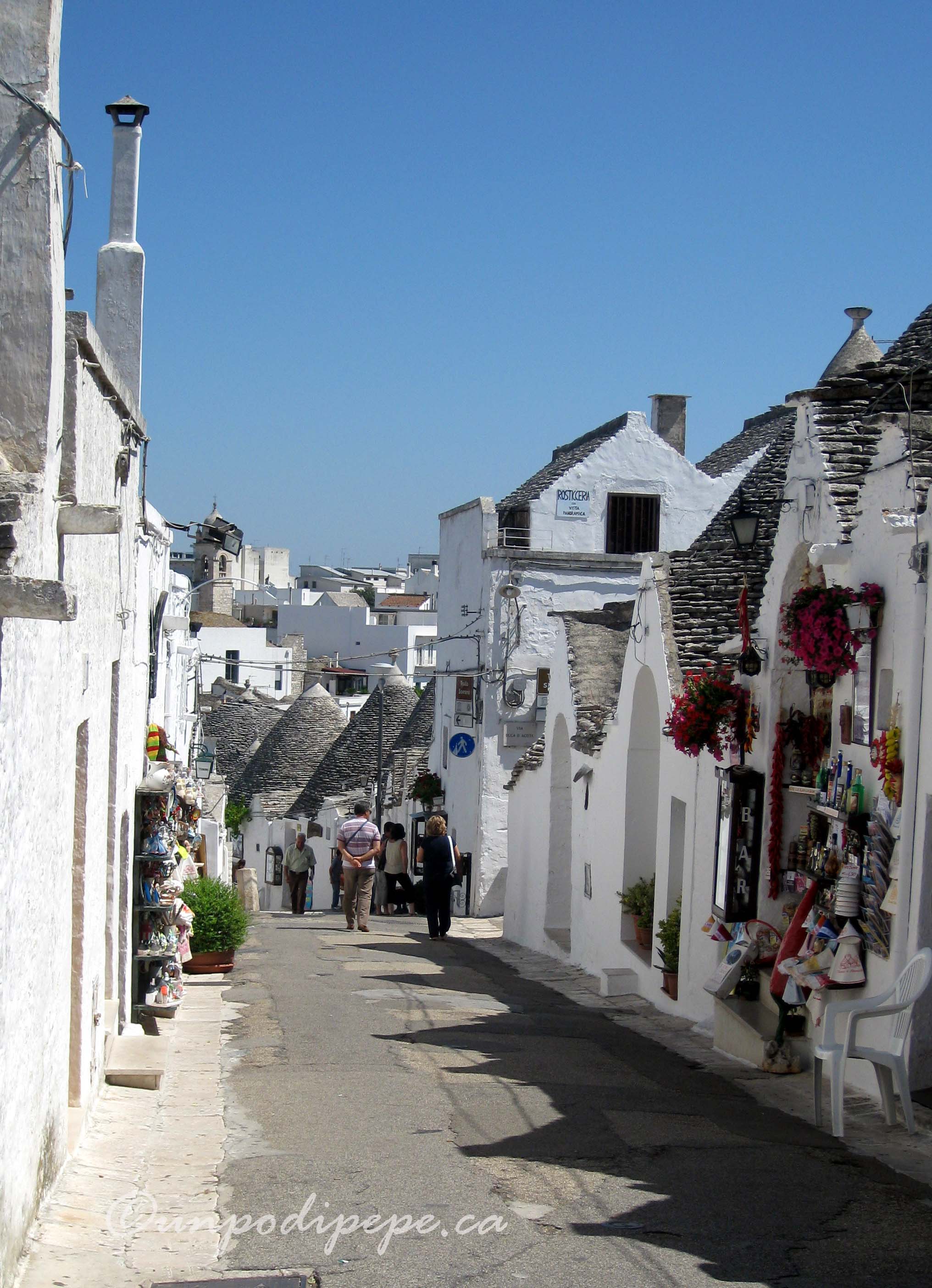
Today Rione Monti has 1,030 trulli and Rione Aja Piccola has 590 trulli, many of which are still inhabited as homes by some of Alberobello’s 11,000 residents.  You can also find the trullo church of Sant’Antonio di Padova, trullo souvenir shops and ristoranti, and a trullo hotel.  In the surrounding countryside there are many trullo masserie (farmhouses) that can be rented.

Exterior of a single trullo and interior of a trullo photo and art gallery

Exterior of a single trullo and interior of a trullo photo and art gallery

In 2010 along with Orsara di Puglia, Alberobello was distinguished with a Bandiera Arancione (orange flag) designation, a seal of quality from the Touring Club Italiano.  Alberobello can be accessed by train or bus from Bari. Although Alberobello is quite ‘touristy’, it still retains its charm and is definitely worth a visit.  If you can brave the mid-day sun in the summer, the cast shadows against whitewashed walls are an artist’s and photographer’s dream….but if you start dreaming about i Puffi, you had better go find some shade!

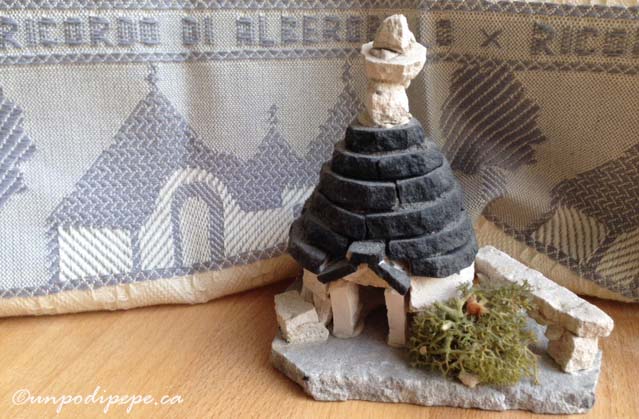
Alberobello souvenirs.  A linen towel and my very own very cute trullo.  I bought it the first time I visited Alberobello.  It's made of real limestone and chiancharelle.

Alberobello souvenirs. A linen towel and my very own very cute trullo. I bought it the first time I visited Alberobello. It’s made of real limestone and chiancharelle.

Not all of the buildings in Alberobello are trulli

Not all of the buildings in Alberobello are trulli

alberobelloombra

Ciao, Cristina

Share this:

  • Share on Facebook (Opens in new window) Facebook
  • Share on Pinterest (Opens in new window) Pinterest
  • Share on X (Opens in new window) X
  • Email a link to a friend (Opens in new window) Email
  • Share on WhatsApp (Opens in new window) WhatsApp
Like Loading...

Enter your email address to follow 'un po' di pepe' and receive notifications of new posts by email.

Join 504 other subscribers
Follow Un po' di pepe on WordPress.com

Popular Posts

  • Hairstyling in Ancient Roma
    Hairstyling in Ancient Roma
  • Tutti i Santi
    Tutti i Santi
  • Cristo si è Fermato a Eboli
    Cristo si è Fermato a Eboli
  • Internment of Italian Canadians
    Internment of Italian Canadians
  • La Trinità di Masaccio
    La Trinità di Masaccio
  • Il Pumo Pugliese
    Il Pumo Pugliese
  • Sanremo 2026
    Sanremo 2026

Recent Posts

  • Ostuni ‘La citta’ bianca’
  • 50 years of U2!
  • Polignano a Mare 2.0
  • Via dell’ Amore~Riomaggiore
  • AICW Conference, Viterbo
  • Bloghiversario #12
  • Pane e Salute
  • Sanremo 2026
  • Cucina Italiana Patrimonio UNESCO
  • 2025~Un po’ di pepe Year in Review
  • Castel del Monte
  • ‘The Nuances of Love’
  • Hostaria Antica Roma~Eat like an Ancient Roman
  • Santa Maria in Aracoeli
  • Casino dell’Aurora~Villa Boncompagni Ludovisi
  • Nasoni di Roma
  • Bloghiversario #11
  • Fontana di Trevi
  • Acqua Vergine
  • Giubileo 2025
  • Sanremo 2025
  • In Vino there are Memories
  • A Literary Harvest
  • 2024~Un po’ di pepe Year in Review
  • Buon Natale 2024

Categories

Amici e Famiglia Architecture Art Art history Art projects Bilingual posts Blogging Canada Culture Feste Firenze Inspiration Italia Italian Folklore Italian language Italian life Italocanadesi Libri Mangiamo! Orsara di Puglia Parole piacevoli Photography Puglia Recipes Roma Travel Travel tips Uncategorized Vino

Archives

Un po’ di pepe on Facebook

Un po’ di pepe on Facebook

Start a Blog at WordPress.com.

  • Subscribe Subscribed
    Un po' di pepe
    Join 504 other subscribers

    Have a WordPress.com account? Log in now.

  • Un po' di pepe
    View site in Reader
    Manage subscriptionsSign upLog in
    Report this content
    Collapse this bar
Loading Comments...
%d