Tags
Ancient Roma, Ancient Roman engineering, Fontana di Trevi, La Barcaccia, Roman Fountains, UNESCO World Heritage Sites
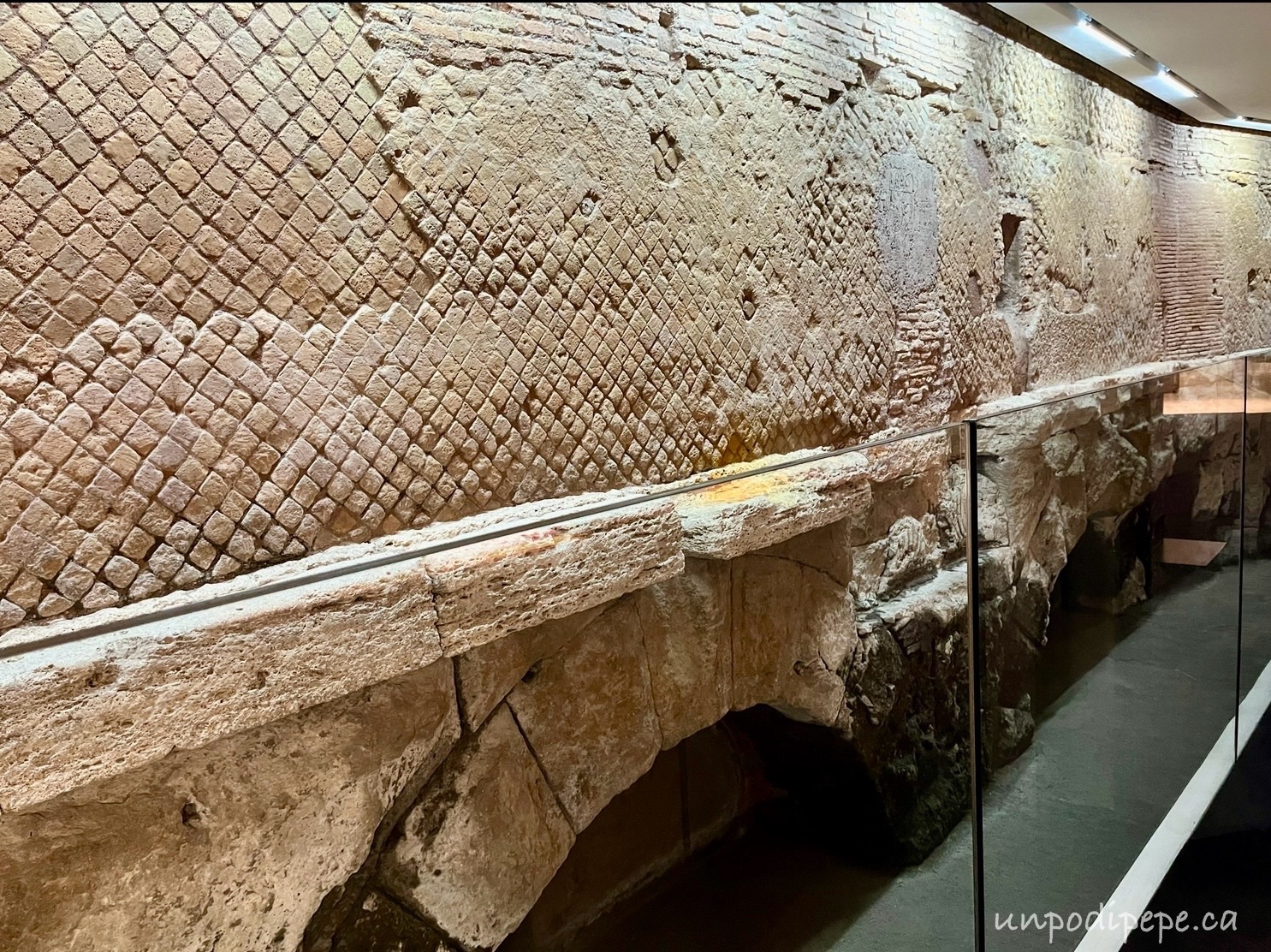 The Ancient Romans were masters of engineering. One of the greatest examples of this is their aqueducts. These systems of waterways transported fresh water from springs and melting snow long distances via pipes and tunnels. The ability to provide a fresh, safe supply of drinking water is one of the reasons the Roman Empire became so powerful. In Roma, 11 aqueducts were built over a period of ~500 years. Aqueduct #6 out of 11, called Aqua Virgo (Acqua Vergine in Italiano) lives on today. Not only is it still with us, but it is still functioning, providing water to the most important fountains in central Roma. The pure, cold, fresh water is drinkable*, constantly flowing and powered by gravity.
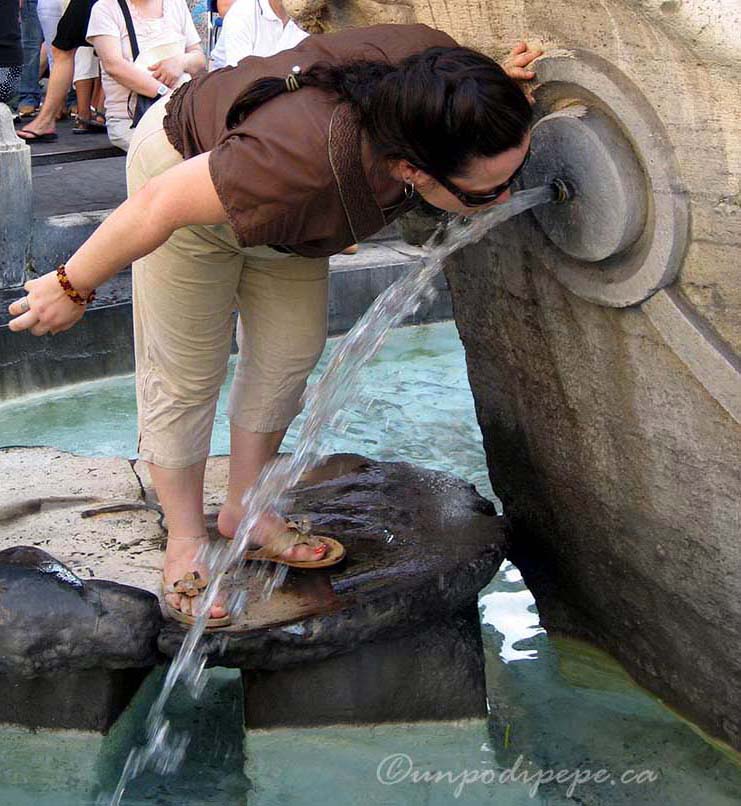
Mmmm! Acqua freddissima!
Aqua Virgo was constructed in 19 BC by Marcus Vipsamius Agrippa, son in law and general of Emperor Octavian Augustus. Yes- the same Marcus Agrippa whose name is carved into the front of the Pantheon. He constructed the original Pantheon, before it burnt down. Marcus had the aqueduct built to supply water for the thermal baths of Agrippa in the Campo Marzio area near the Pantheon.
Aqua Virgo/Acqua Vergine probably refers to the freshness and purity of the water, but according to legend, in 19 BC, a young girl led Roman soldiers to a spring -the source for the aqueduct. The source is in the hills 13 km away, at Agro Lucellano between Via Tiburtina and the 8th milestone of Via Collatina (2 of the roads that led to Roma) near present day Salone. The source is actually only 24m (79 ft) above sea level. Aqua Virgo is 21 km long via indirect route to Roma, making a wide arc. This is to make use of gravity by shallow downward gradient. 19 km of Acqua Vergine are 9m below ground, with short stretches of brick arches above ground.
There were 1352 fountains in Roma in the 4th Century. Aqua Virgo was damaged by the invasion of 537 and repaired. It remained in use through the Middle Ages with a few renovations during the Renaissance. Early Renaissance Popes started to decorate the end point of restored aqueducts with large, ornate fountains. The Fontana di Trevi is the final destination of the original Acqua Vergine and Piazza del Popolo the end of an offshoot. Carved above the statues next to Oceanus on the Fontana di Trevi, 2 bas reliefs illustrate Marcus Agrippa ordering construction of the aqueduct and the young girl leading Roman soldiers to the source. They can both be seen in the photo below:
Acqua Vergine Antica runs under Villa Borghese and Villa Medici to Piazza di Spagna and Fontana di Trevi. In 1930 renovated Aqua Vergine Nuova goes behind Piazza di Spagna to Piazza through Giardini Borghese to Piazza Flaminio and Piazza del Popolo.  Most of the aqueduct’s 21 km are 9m underground, except for the last stretch running partly on arches as it approached the Campo Marzio area, emerging from the hill by the present La Rinascente Department store. There is also an arch standing on Via del Nazareno, north of Trevi. Part of Aqua Virgo was found during construction of the new La Rinascente department store location, delaying the opening by 2 years.
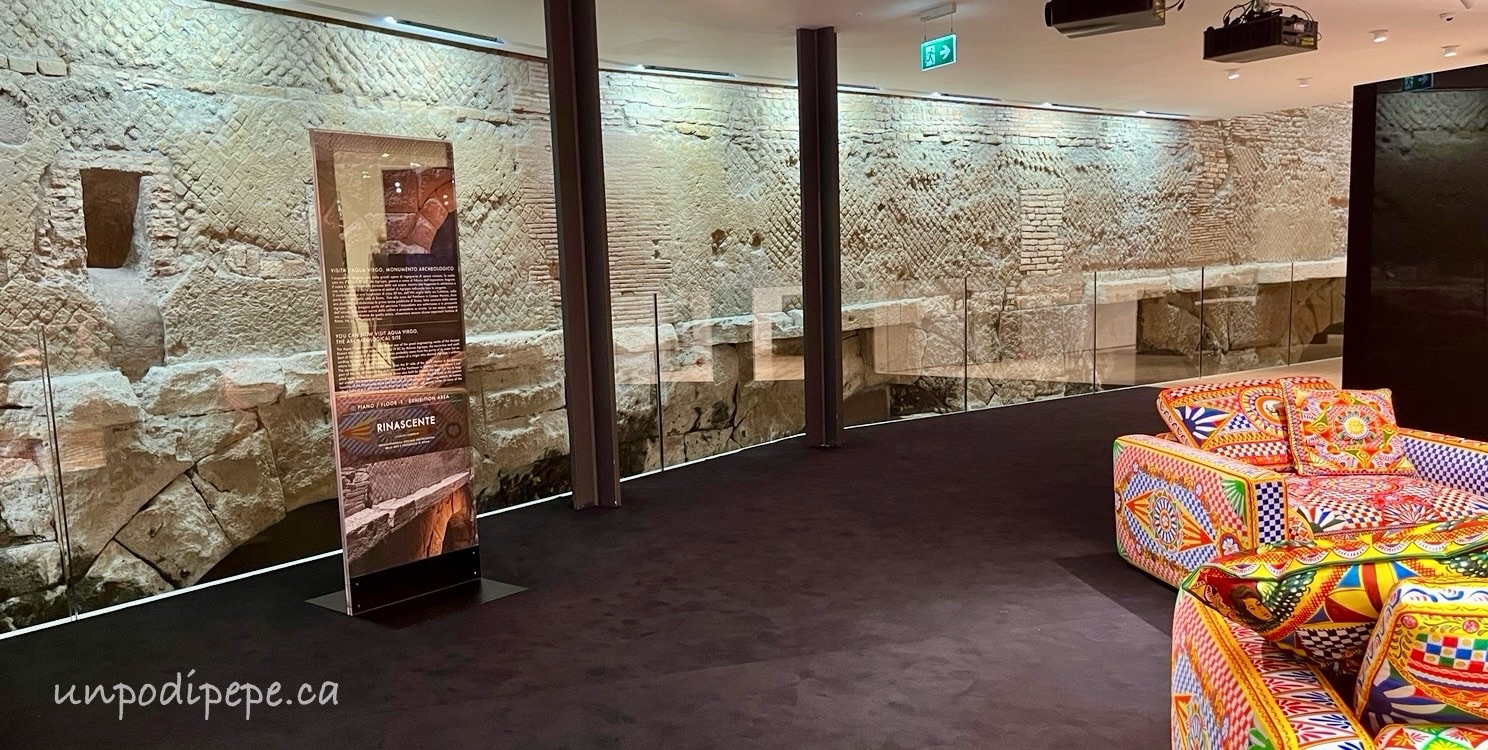
  In 2017 the new Flagship La Rinascente store on Via Tritone 61 opened, including a basement archeological site with a 60 m (197 ft) section of Aqua Virgo on display. Admission is free. When I went, there was a Dolce and Gabbana furniture exhibit! Just take the escalator down to the bottom floor any time the store is open. Where else but Roma can you combine high end shopping and archeology?
Today Acqua Vergine supplies water to the fountains in Piazza della Rotonda outside the Pantheon, Piazza Mattei (Fontana delle Tartarughe) Fontana del Babuino, Piazza Navona (the 2 outer ones, not the Fontana dei Quattro Fiumi), Campo dei Fiori, Piazza del Popolo (Fontana dei quattro leoni, Fontana di Nettuno and Fontana della Dea di Roma), Piazza Trevi, and my all-time favourite in Piazza di Spagna, La Barcaccia which resembles a sinking ship. 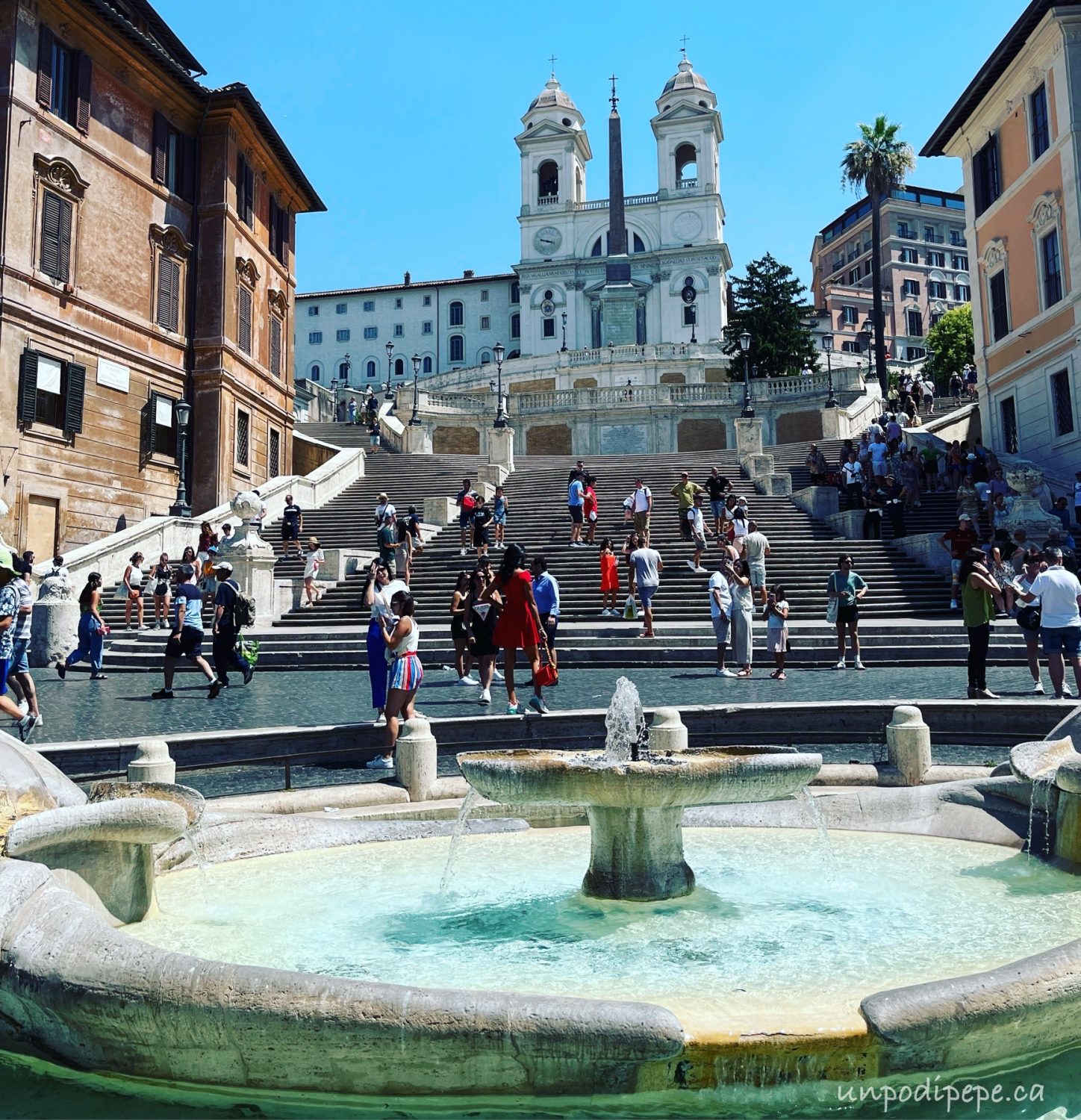
Don’t forget to bring a water bottle to Roma! Buon Viaggio, Cristina
*Since 1998, the water in the Fontana di Trevi is recycled, so no longer drinkable. With €3000 of coins thrown in daily, it was hardly drinkable anyways! Read more about this in my next post!
Photo credits: Drinking from La Barcaccia by Shannon Milar, Photo with bas reliefs by my sorella Lucia.








 Un po' di pepe