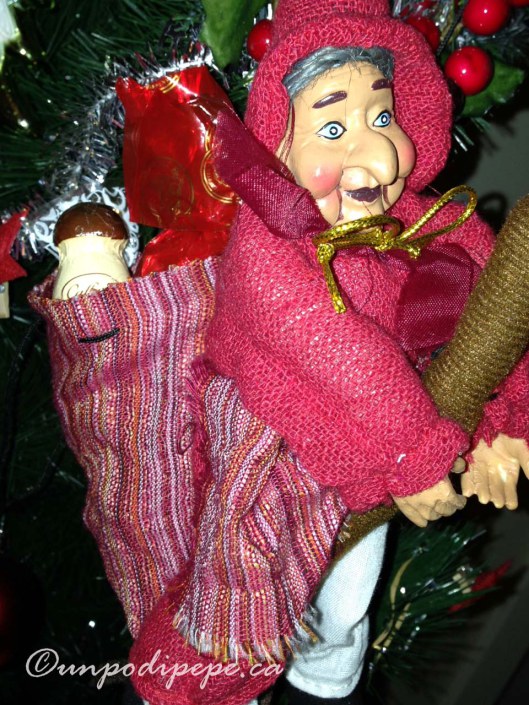
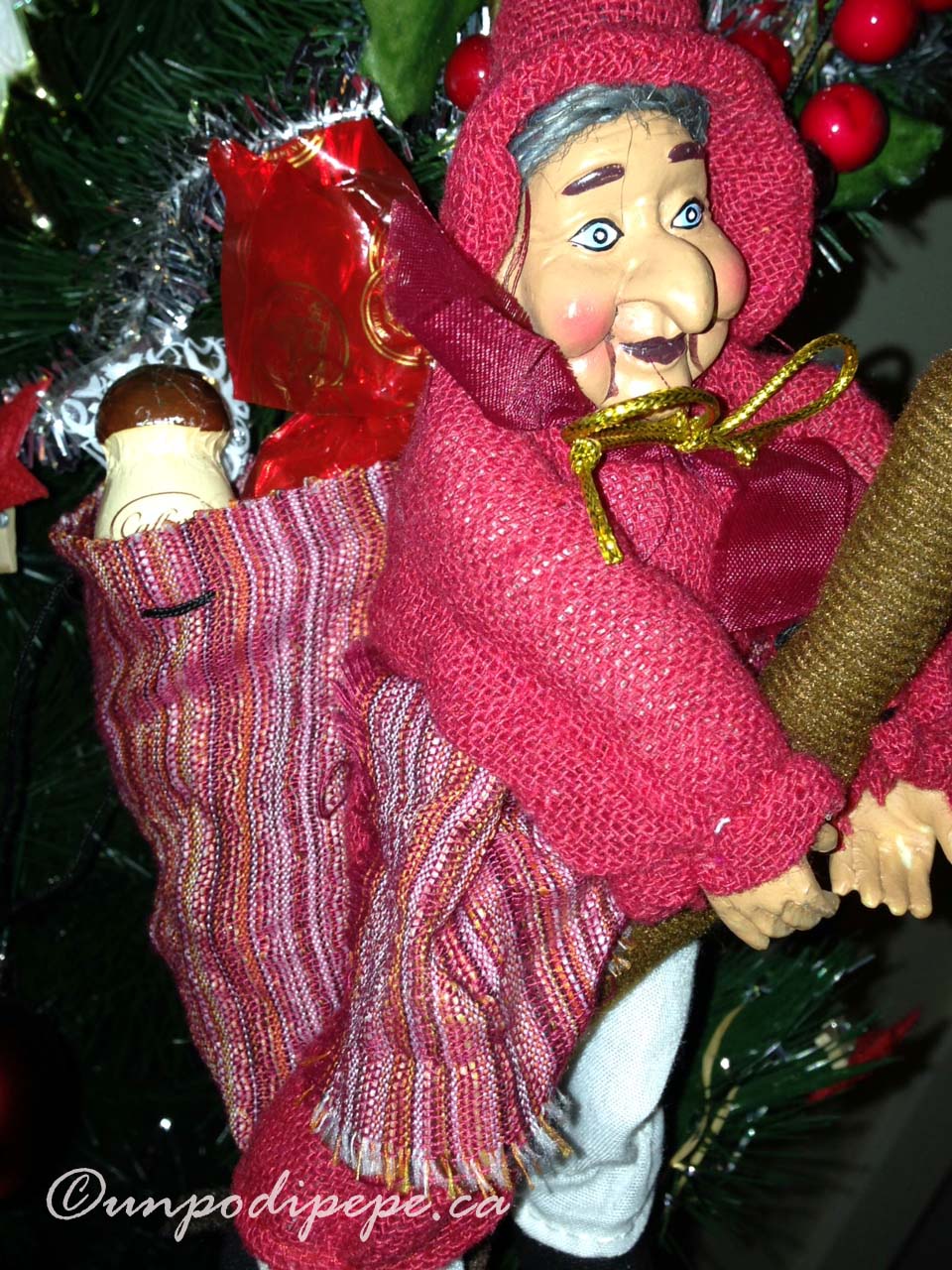
Ogni anno, nella notte tra il 5 e 6 di gennaio, volando cavalcando la scopa, La Befana porta regali ai bambini nella speranza che uno di loro sia il Bambino Gesù……
Today is la Festa dell’Epifania in Italia, celebrating the arrival of i Re Magi (the 3 Wise Men) Gasparre, Melchiorre & Baldassarre with their gifts of oro, incenso e mirra (gold, frankincense …
Continue reading original post: La Befana in English and Italiano. Buona Befana!
December 6th is the festa di San Nicola (Nee·KOHL·ah). San Nicola-or St Nicolas, was Nikolaos of Myra, a 4th Century bishop in Greek Anatolia, which is now Turkey. He was the only child of wealthy parents who died when he was young. He gave away all of his inheritance to help the poor and the sick and became known for his generosity, love of children, and the sea. Nicola is both a popular Christian and Orthodox Saint. Many European and Eastern Orthodox countries celebrate his feast day with gifts for children, who leave their shoes out on the night of December 5th. He is the Patron Saint of children, sailors, archers, pharmacists, harbours, the falsely accused, Amsterdam, Moscow, Russia, Galway and Greece!
San Nicola had a reputation for secret gift-giving and his legends grew after he died. In one of the most famous, he helped a poor man who could not afford dowries for his 3 daughters. Without dowries, they were unlikely to be able to marry, and would be assumed to be prostitutes or end up being sold into slavery. Nicola helped the family, but did not want to cause the father the humiliation of accepting charity. Over a period of 3 nights he went to the house. On the first 2 nights, he threw a purse filled with gold coins in through the window. The purses landed in stockings the daughters had hung by the chimney to dry. On the third night, the father had closed the window and waited by the door, so he could find out who the gift-giver was. Instead of going in through the door, Nicola dropped the bag down the chimney and it landed in the shoes drying by the fire.
San Nicola’s tomb in Anatolia became a popular place of pilgrimage. It seems things haven’t changed a lot since the 4th Century in that part of the world. Due to wars in the area, there was concern for the safety of pilgrims and access to the tomb. In 1087, sailors from Bari took the bones from the tomb home and the Basilica of San Nicola di Bari was built over his crypt. San Nicola di Bari was one of medieval Europe’s most famous places of pilgrimage. The Barese sailors must have been in a hurry because they left a few bones in the grave. These fragments were taken to Venezia where the church of San Nicolò al Lido was built. In the Middle Ages, people went crazy for relics-parts of holy persons’ bodies. They were revered and thought to have magical powers. Scientific investigations proved that the bones in Bari and Venezia do belong to the same skeleton!
In a blending of folklore, legend and religion, San Nicola is the model for Santa Claus, whose name comes from phonetic derivation of ‘San Nikolaos’. If you are ever in Bari, visit the tomb of San Nicola. The traditional Italian gift-bearer is La Befana, who arrives on the 6th of January, but now there is also ‘Babbo Natale’ (Father Christmas).
Today is la Festa dell’Epifania in Italia, celebrating the arrival of i Re Magi (the 3 Wise Men) Gasparre, Melchiorre & Baldassarre with their gifts of oro, incenso e mirra (gold, frankincense and myrrh) for newborn Bambino Gesù (baby Jesus).
The night between January 5th and 6th is also the 12th night between Christmas and the Epiphany, and marks the end of the Christmas holiday season. As the proverb says, ‘L’Epifania tutte le feste porta via’. What does this have to do with La Befana, the ‘Buona Strega’?
La Befana is the traditional ‘gift-bringer’ in Italian folklore. According to legend, which varies from region to region, she is an old woman who prides herself on being a good housekeeper. While she was sweeping, the 3 Wise Men stopped at her house to ask for directions to Bethlehem. She didn’t know the way but they invited her to join them to greet the newborn king and bring him gifts. She was quite abrupt and told them she had housecleaning to do and could not possibly join them.
Once they had left, she realized she had made a very big mistake not going with them. Befana quickly gathered food and gifts for the newborn King into a sack and uno scialle (a shawl) in case she was cold and set off to join the Wise Men. She even brought her scopa (broom) so she could sweep the floor for Bambino Gesù. Befana searched and searched but could not catch up to the 3 kings. She did not know they had taken a different route home.
To make up for the opportunity she missed, every year on the eve of l’Epifania, Befana flies on her broom delivering small gifts to children, in the hope that one of them is Bambino Gesù. Traditionally she fills calze (socks) with ‘caramelle o carbone’ (candies or coal). She leaves dolcetti (sweets), fichi secchi, noci, mandarini, cioccolatine (dried figs, nuts, mandarine oranges, little chocolates) and torrone for children who have been nice and leaves carbone (coal), cenere (ashes), cipolle e aglio (onions and garlic) for cattivoni (naughty children). Christmas markets in Italia sell black candy that looks like lumps of coal! A glass of vino and mandarini or biscotti are left on the kitchen table for La Befana and she sweeps the floor before she leaves. La Befana and her broom also symbolize the old year that is ‘swept away’ after the Christmas festivities.
Her name comes from Epifania which turned into Befania in dialetto and eventually Befana. ‘Una Befana’ can also mean an ugly old hag. If someone calls you a Befana it is not a compliment-unless they are referring to your gift-giving generosity!
‘La Befana vien di notte
Con le scarpe tutte rotte
S’è scucito la sottana
Viva viva la Befana!
Porta cenere e carboni
Ai bambini cattivoni
Ai bambini belli e buoni
Porta chichi e tanti doni!’
In Italiano
Oggi è la festa dell’Epifania in Italia. Si ricorda la visita dei tre Re Magi a Betlemme con regali di oro, incenso e mirra per il neonato Bambino Gesù. La notte tra il 5 e il 6 gennaio è anche la dodicesima notte dopo il Natale e la fine delle feste Natalizie. Il proverbio dice ‘L’Epifania tutte le feste porta via’. Ma questo che c’entra con La Befana, la buona strega?
Si dice che La Befana era una vecchietta molto preoccupata con il lavoro di casa. Mentre scopava fuori, i Re Magi hanno chiesto se lei conosceva la strada per andare a Betlemme perchè là era nato il nuovo Re. La Befana non conosceva la strada. I Re Magi l’hanno invitata ad andare con loro a portare dei regali al Bambino, ma lei ha detto che aveva troppo lavoro da fare e non era possibile. Dopo che se n’erano andati, La Befana ha capito che aveva sbagliato e ha deciso di raggiungere i 3 Re per andare a trovare il Bambino Gesù. Con uno scialle e un sacco con dolcetti e regali sulle spalle se n’è andata. Ha portata anche la scopa, per pulire il pavimento per il Bambino Gesù. La Befana ha cercato dappertutto ma i Re Magi erano già troppo lontani. Allora, ogni anno, nella notte tra il 5 e 6 di gennaio, volando cavalcando la scopa, La Befana porta regali ai bambini nella speranza che uno di loro sia il Bambino Gesù. Lei reimpie le calze dei bambini con ‘caramelle o carbone’. Dolcetti per i bambini bravi e cenere e carbone per i cattivoni. Si lascia un bicchiere di vino e un mandarino o biscotti sul tavolo per La Befana e lei scopa il pavimento prima di andare via.
I know Natale (Christmas) is around the corner when we make cauzuncill’ (cow•zoon•cheel). Cauzuncill’ is Orsarese for calzoncini, which means piccoli calzoni or ‘little pants’.
Cauzuncill’ are ‘a forma di mezzaluna’ (half moon shaped) turnovers traditionally filled with mashed ceci (chick peas), vino cotto, mandarin orange and lemon zest, grated chocolate, sugar and of course alcohol. We also made some with ground almonds instead of ceci. Castagne (chestnuts) are sometimes mixed in with the ceci filling.
Cauzuncill’ are fried and then served drizzled with vino cotto. Don’t know what vino cotto is? When making wine, some of the freshly pressed grape juice (mosto) is slowly cooked all day until it is reduced and caramelized. It’s like a thick wine syrup that is used for desserts, muscitaglia on November 1st, and even drizzled on snow!
Cauzuncill’ (cow-zoon-cheel) with almond and vino cotto filling, drizzled with vino cotto
Dolci di Natale similar to cauzuncill’ are made in Basilicata and Molise, but the name, fillings and even the pastry change depending on the region. What kind of dolci di Natale does your family make?
 Ogni anno, nella notte tra il 5 e 6 di gennaio, volando cavalcando la scopa, La Befana porta regali ai bambini nella speranza che uno di loro sia il Bambino Gesù……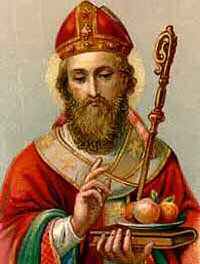



 Un po' di pepe