
The olive tree has been essential to Mediterranean life for over 4,000 years. In addition to being a staple ingredient of the Mediterranean diet and an ancient trading commodity, olive oil has been used as a medication, soap, hair and skin moisturizer, terra cotta lamp fuel, furniture polish, and for cleaning and waterproofing leather.  Olive trees have a strong root system and can live for centuries. It takes up to 8 years before a tree produces its first olives. They grow well in lime and stony, poorly aerated soil, in areas with rainy winters and hot, dry summers. Olive trees have been considered sacred and symbolic. The olive branch has been a symbol of peace and the endurance of life since Genesis 8:11 ‘the dove came back to him in the evening; and, behold, in her mouth was a freshly plucked olive leaf: so Noah knew that the waters had subsided from the earth’.
 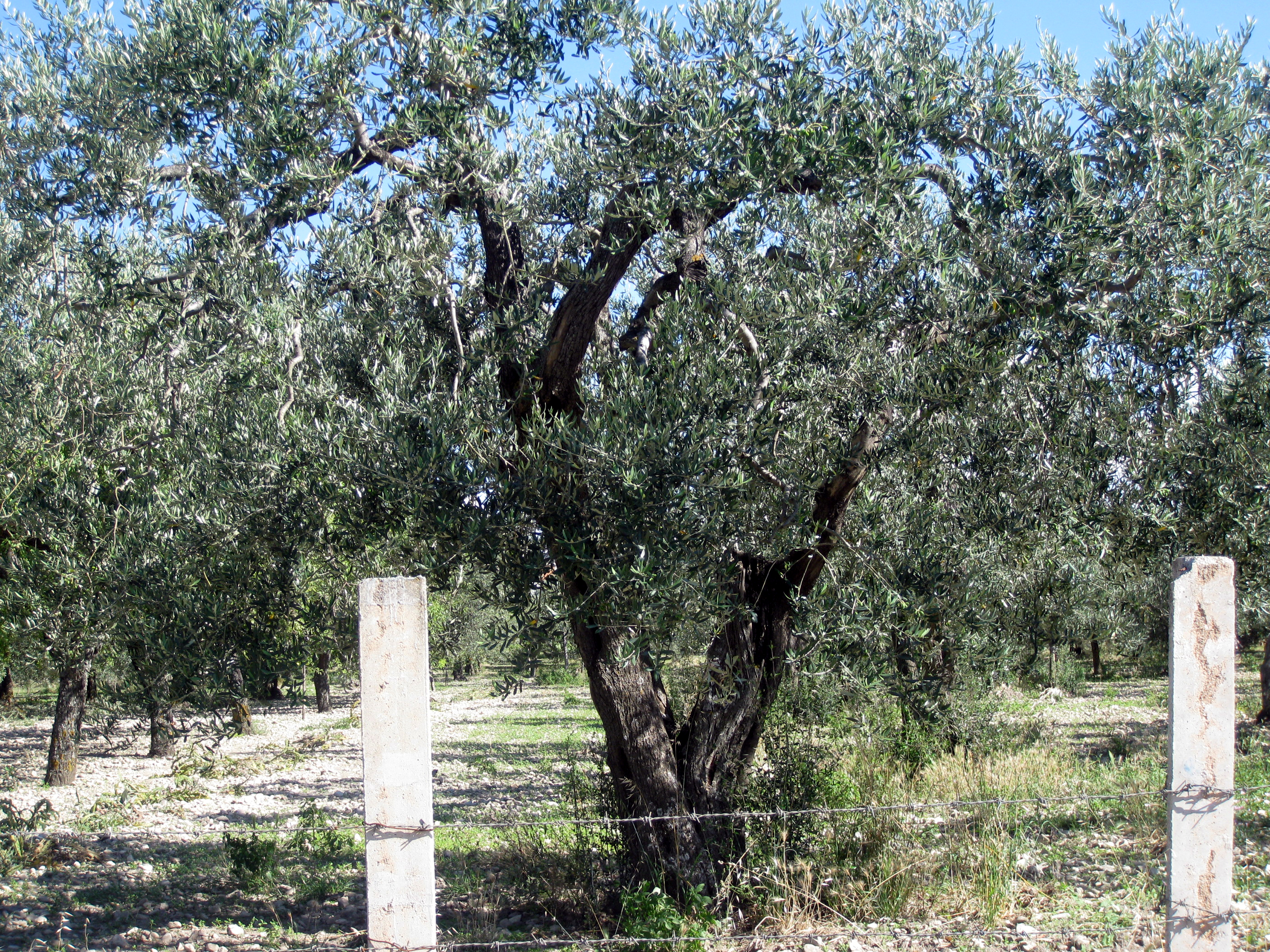 The shape and form of olive trees has always captivated me. I still have not mastered their tangled growth of trunks and leaves with a silvery green underside, but they are frequent subjects in my sketchbook. While in Italia last November, I encountered a lot of olives.
  Seeing the trees heavy with ripe black and purple olives was new for me, as I had only ever seen them in their small green state! Every road near Orsara di Puglia was full of parked cars where families were harvesting their olives. Unfortunately, I missed my family’s olive harvest by one day, but I was in Gugliano near Lucca during their harvest. I used Casa Berti’s fresh olio nuovo to make Olive Oil Limoncello Cake.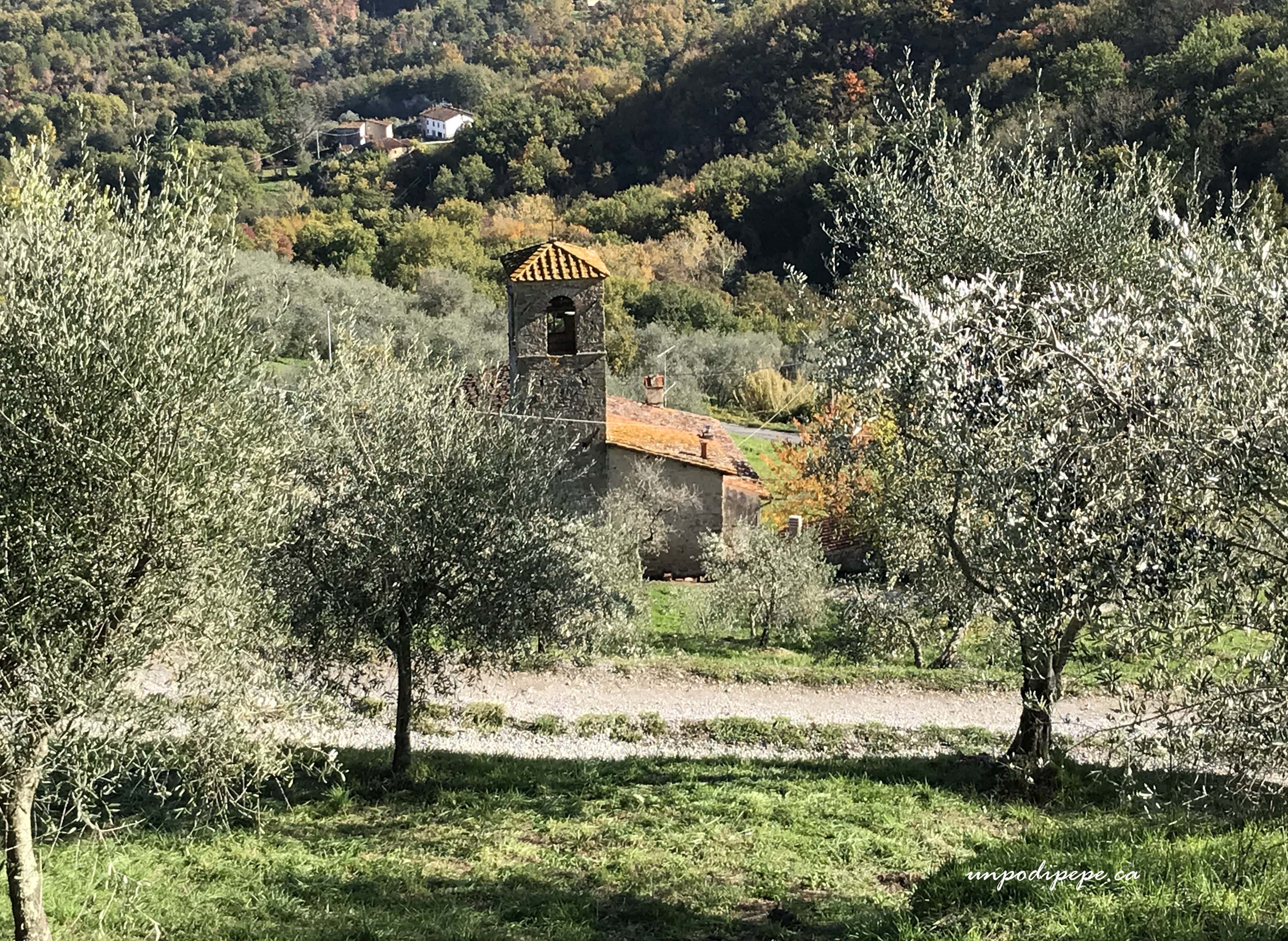
La Raccolta delle olive-the olive harvest, is usually in late October/early November before the first frost. Nylon nets with a split down the middle are spread under trees and wrapped tightly around trunks to catch falling olives. On sloping hills, the edges of the nets are supported with sticks so olives do not go rolling away. Olive harvesting does not go well with mechanization. The more gently olives are picked, handled and stored, the better the quality of the oil they produce. Olives are harvested using a combination of the following methods:
Brucatura (broo·ca·TOO·rah) is picking olives by hand and putting them straight into un cestino-a basket, or a bucket. This preserves the integrity of the olives and does not damage the tree or branches. Ladders are used for the higher, hard to reach branches. This method is slow, with a lower yield, but produces the best oil, with the least acidity. 
Pettinatura (pet·teen·ah·TOO·rah) is ‘combing’ olives off the branches with long handled combs/rakes and collecting them into buckets or nets. Families producing olive oil for their own consumption harvest mainly by brucatura and pettinatura.
Bacchiatura (bahk·kee·ah·TOO·rah) is beating fruit off trees with long poles so they fall into the nets. A long-handled electric version for higher branches looks like 2 rakes facing each other that vibrate in opposite directions. If not done carefully, bacchiatura can cause bruising to the olives and damage to twigs and branches.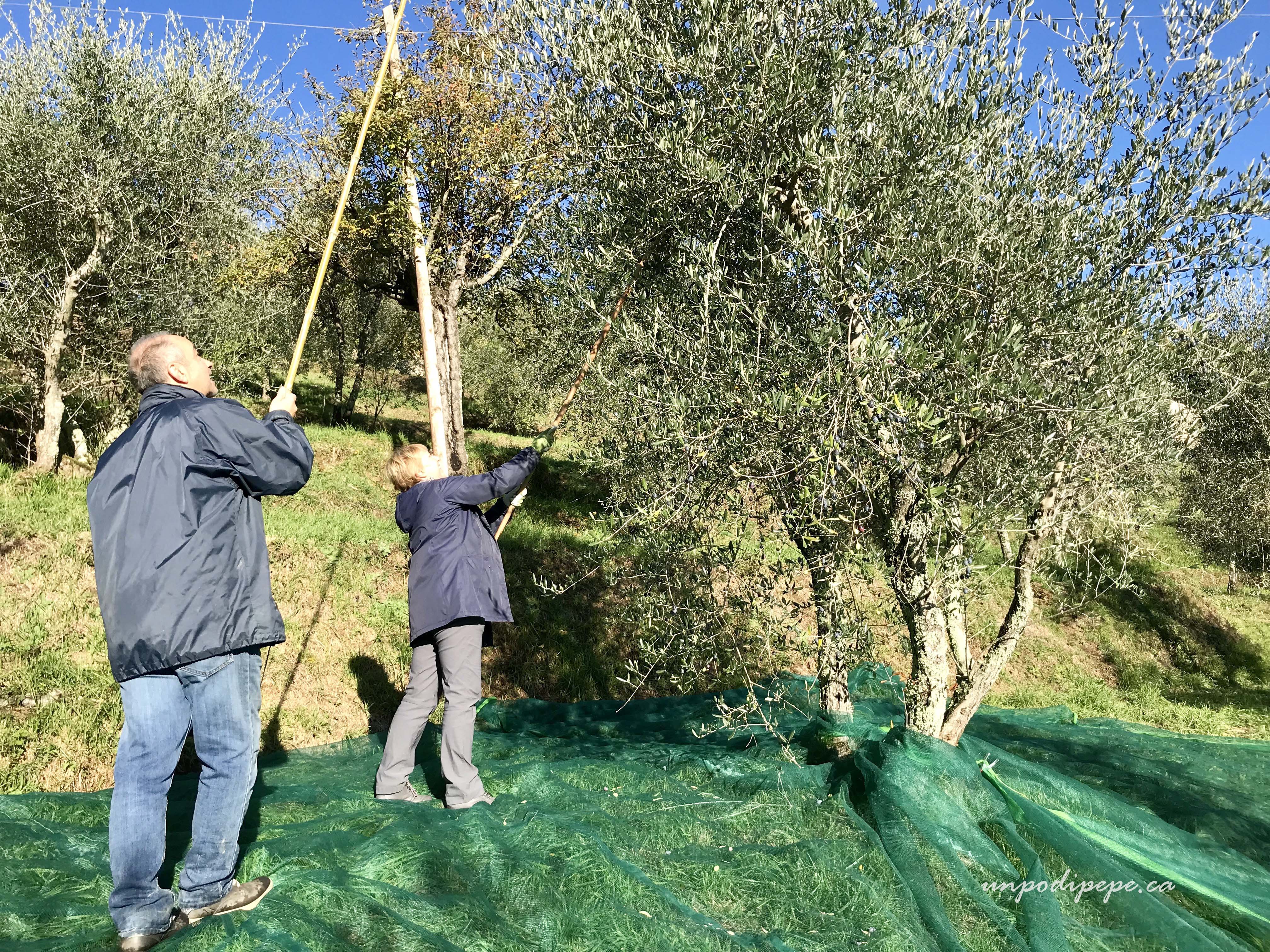
Raccattatura (rak·kat·tah·TOO·rah) is collecting ripe olives that fall spontaneously into nets. If not gathered right away, the olives can be rotting, with mold or bacteria, especially if it is damp or rainy. Raccattatura produces oil with increased acidity
Scrollatura (scrol·lah·TOO·rah) A mechanical arm attached to a tractor wraps around the trunk and shakes the tree until all of the olives fall off into nets. This method is efficient for large olive groves, but damaging to the tree and can produce inferior oil. Luckily this method is not possible on terraced land or if there is not enough space between trees for a tractor.
Olives are stored briefly in crates to get warm and release oil more easily. Then they are taken to the frantoio, the olive mill. Extracting within 24 hours of harvest produces the best quality oil with the lowest acidity.
One evening while I was in Orsara di Puglia, I was lured by the divine smell of olives. It was the frantoio, which of course is closed the rest of the year. During la raccolta delle olive, it is open all the time and is a busy, social place. The frantoio is as cold as outside, since cold prevents oxidation and preserves the nutrients, colour and flavour of olive oil. I was curious to see the olive oil extraction process.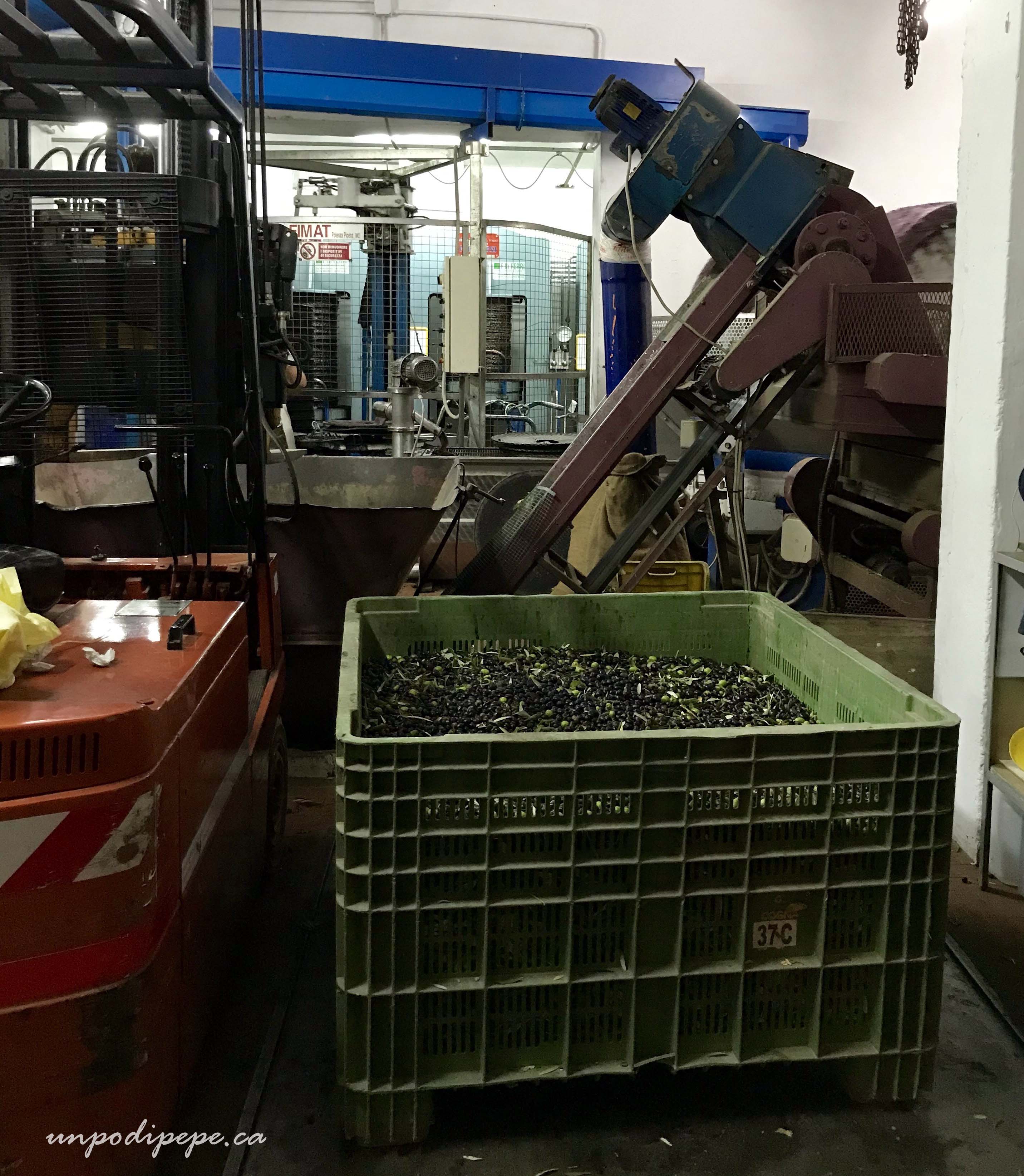
The olives are separated from branches, leaves and debris then weighed, rinsed in cold water and passed along a conveyor belt between rollers. Then they go into a vat with blades that mash or grind the olives into a paste- including the pits! This used to be done with stone or granite wheels like a giant mortar and pestle. 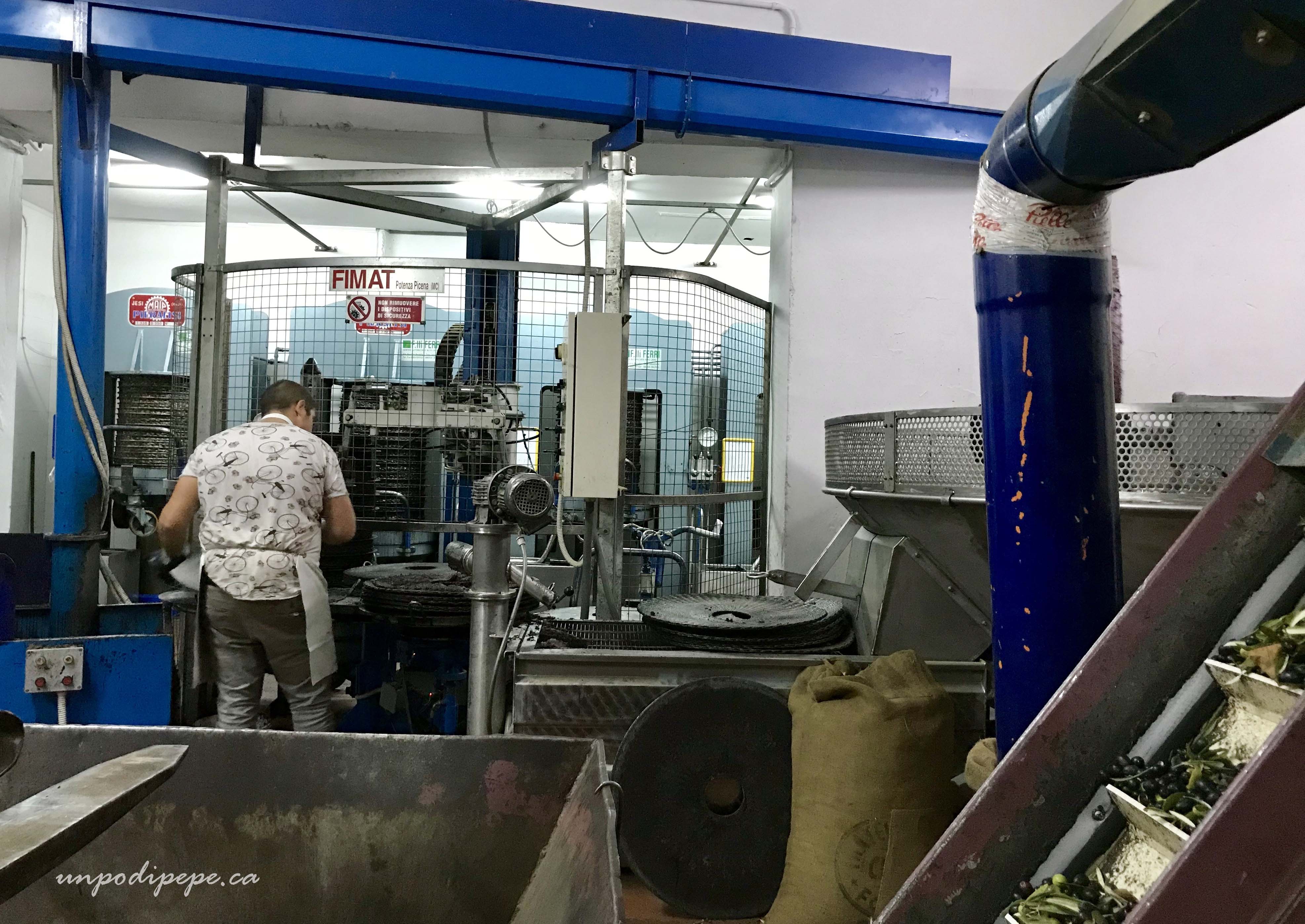 The olive paste is spread evenly over pressing discs/mats, which are stacked onto a press plate to evenly distribute the pressure. The paste is not heated to extract oil, as cold prevents oxidation. Oil and water are separated and sediment removed using a centrifuge, then precious liquid gold, unfiltered olive oil pours out a spout draining into a steel basin.
 The colour of olive oil can range from grassy green to bright yellow gold, depending on the ripeness and type of olives and the level of chlorophyll in leaves. The fresh oil is stored in stainless steel vats until it is bottled.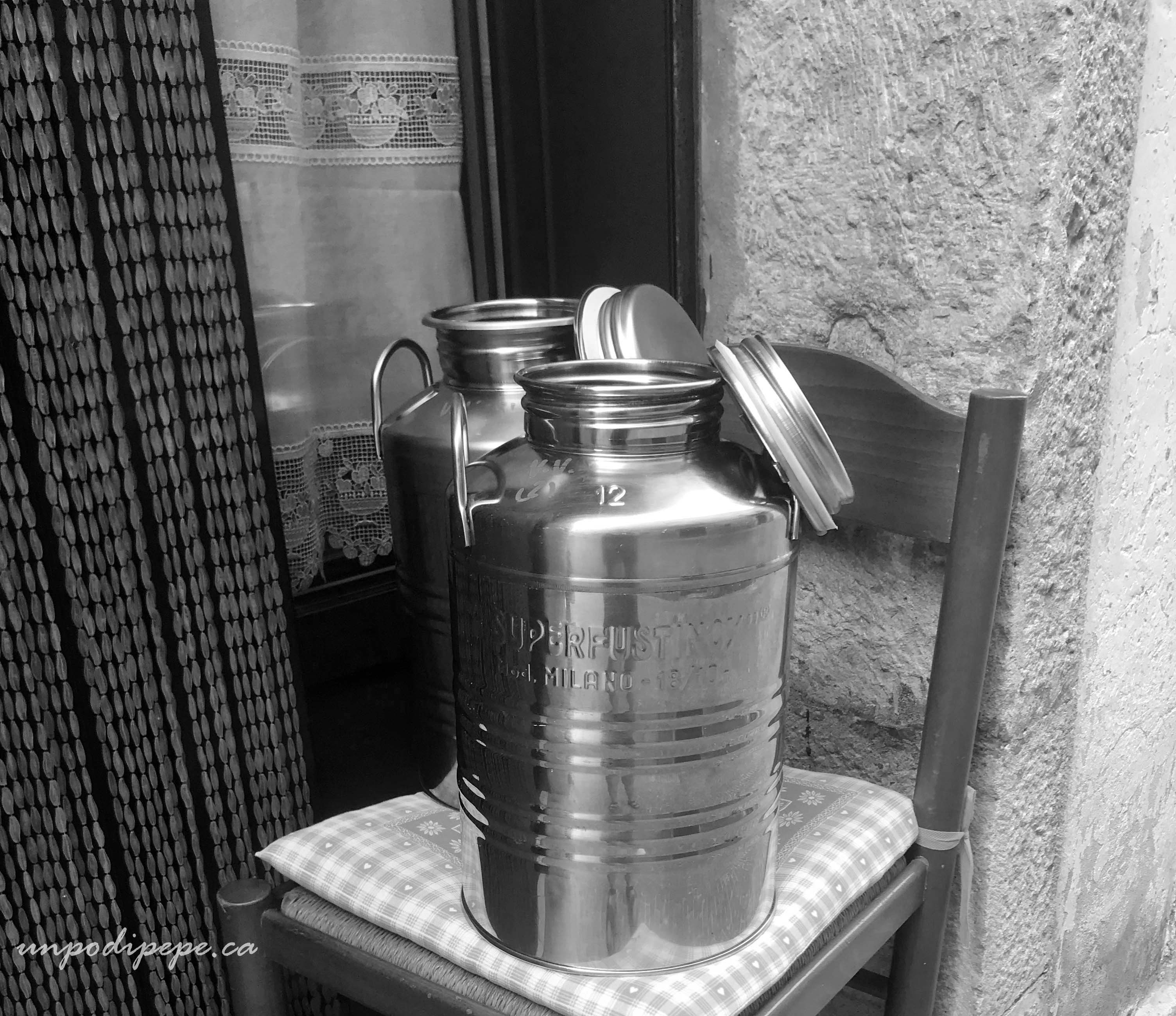
The yield of oil per quintale (100kg/ 220lbs) of olives varies each year. It takes approximately 2,000 olives or 1 tree to produce 1L of olive oil! No wonder it is expensive!
The fresh oil is virgin olive oil. It can be designated as ‘extra virgin’ only if the % acidity is less than 0.8% and it has superior taste and aroma. For more on olive oil terms, read the post Olio d’Oliva.
Photos featured in this post were taken at Frantoio Oleario di Nico Manna in Orsara di Puglia, my family’s olive grove in frazione La Cupa, Orsara di Puglia, and Casa Berti in Gugliano, Lucca.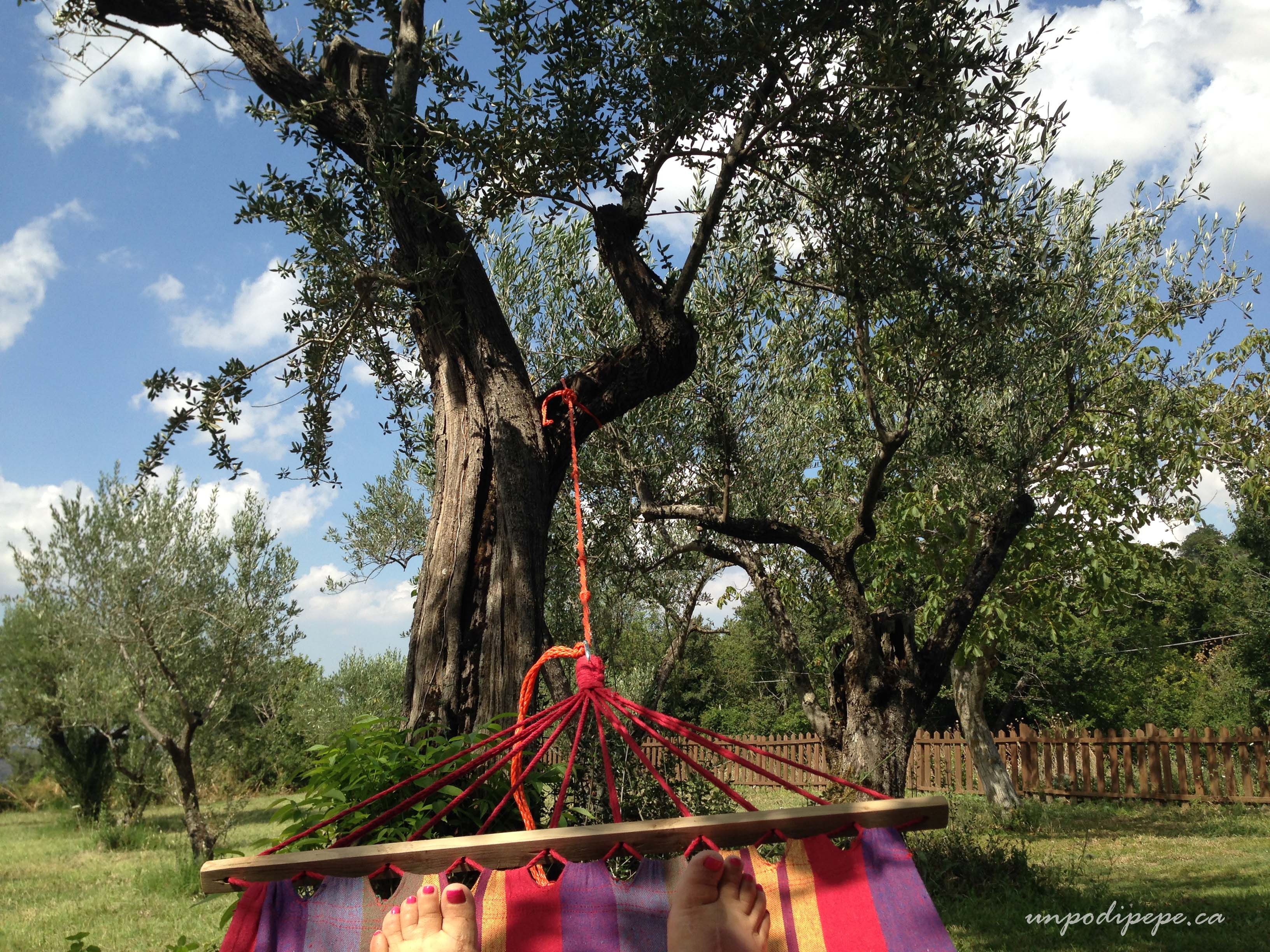
Ciao from my amaca under the olive trees, Cristina
 Un po' di pepe