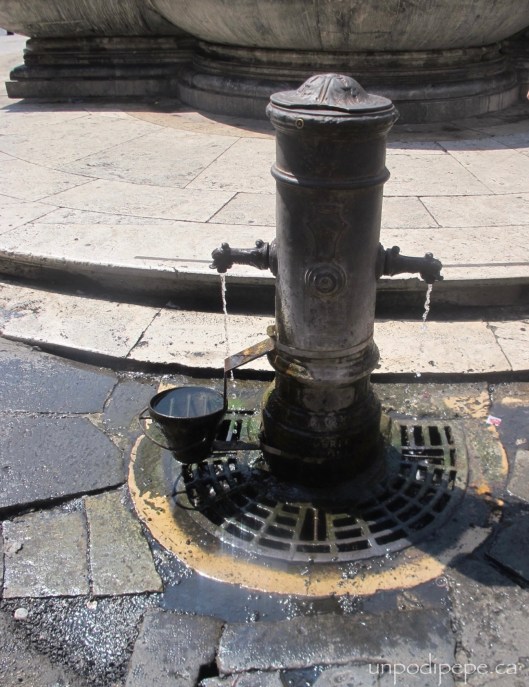
The characteristic cast iron fontanelle, small drinking fountains found throughout Roma, are affectionately known as nasoni. Nasoni means ‘big noses’, and refers to the curved metal spout, which has a small hole at the top of the arch. Blocking the spout with your finger will force the water up from hole in an arc, like a drinking fountain. This is handy if you want to drink but do not have a water bottle!
The nasoni date back to 1874, after Italian unification when mayor Luigi Pianciani installed fountains to provide free, accessible public drinking water for the health and hygiene of Romans and visitors. This is often referred to as ‘l’acqua del sindaco’, ‘the water of the mayor’. Some of the fountains in central Roma are supplied by a functioning ancient aqueduct, the Acqua Vergine. Nasoni get their water from Roma’s main drinking water reserve, Lago di Bracciano, 32 km (20 mi) to the northwest.
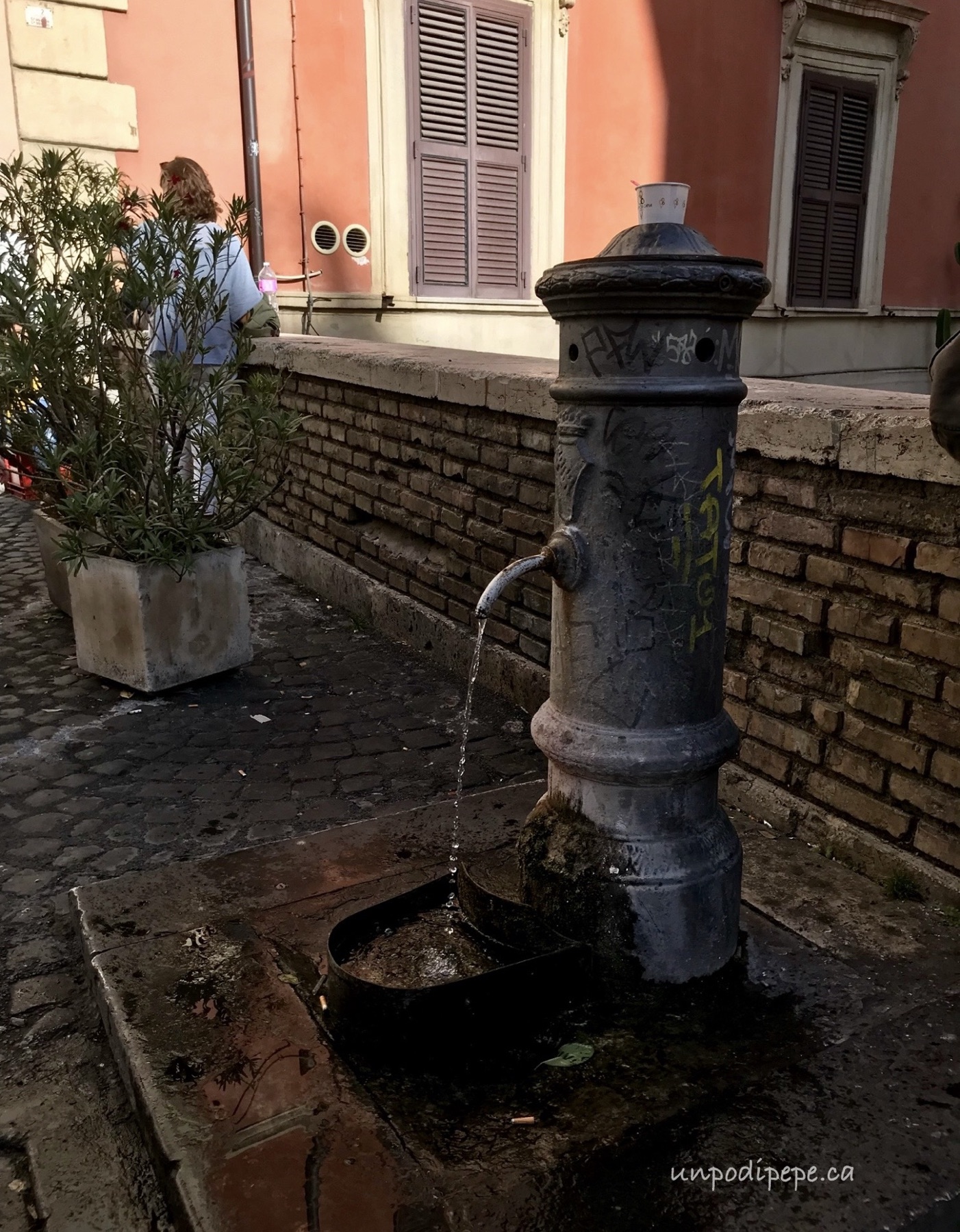
There were originally 5,000 nasoni, but the number decreased as it became more common to have domestic water connections. Today there are over 2500 nasoni in greater Roma, including 280 in the historic center, and 114 in outer areas, such as Fiumicino. For the 150th anniversary of the Nasoni in 2004, 3 new ones were installed near the Colosseo.A nasone (singular) weighs ~100 kg and is 1.2 m high (almost 4 ft). Its classic cast iron cylindrical shape allows drinking water to flow continuously. Most nasoni have a metal grate to collect the water. The first Nasoni had 3 spouts, decorated with dragon heads. In the 1920’s the dragons became an endangered species and since then, nasoni are cast iron cylinders with a single smooth curved ‘naso’ spout. Some of them have the SPQR insignia and quite a few are decorated with graffiti. The 3 oldest nasoni are the original dragon spout design. They can be found on Via di San Teodoro, in Piazza della Rotonda in front of the Pantheon, and at the Fontana delle tre Cannelle on Via della Cordonata near Palazzo Quirinale.
Besides quenching the thirst of Roma, nasoni also have a hydraulic purpose. They act as surface ventilation valves for the underground water supply system. This releases pressure in pipes, and the continuous flow of water keeps it from stagnating, preventing uncontrolled bacterial growth. The continuous flow may seem like a waste of drinking water, but in fact the percentage of waste is only about 1%, while waste due to old leaky pipes in poor condition would be over 30%. It costs the city €3-5/day to operate each nasone, depending on the water flow.
The water company ACEA has the Waidy Wow waterfinder App that maps out 50,000 drinking water points including nasoni and other fountains throughout the country. Wanted in Rome, an online English magazine has a Nasoni map of Rome. The Nasoni di Roma App focuses specifically on locating nasoni.With the nasoni, plus 90 ornamental fountains offering uninterrupted drinking water, Roma is the city with the most drinking fountains in the world. Installed to provide accessible fresh drinking water for thirsty Romans and visitors, the nasoni are now iconic symbols of Roma, representing community and hospitality. Don’t forget to bring a water bottle! If you are visiting in summer, check out Beat the heat: Surviving Summer in Roma.
Visiting Roma this summer? Summer in Roma can be hot, humid, sticky and crowded. The temperature is usually >30° C (85°F) and the humidity can make it feel even hotter. I often hear people say ‘the worst time to go to Roma/Italy is in the summer-it’s too hot!’ Well…anytime is a good time to go. Whatever time works for you. You will just have a different experience depending on the season. Teachers, students, school employees and families with bambini in school can only travel in summer, so advising them to visit at another time is not helpful.
For those of us that go to visit family, especially in smaller villages, August is often the best time to be there. In my small mountain village in Puglia there are feste and concerts, my friends and relatives have time off work, and those who have moved away for work come back to visit. This is why I go in summer.
Roma will have a decreased amount of Romans for the 2 weeks around Ferragosto Aug 15th. Many Romans head to ‘la spiaggia’ so it will be less crowded with fewer cars on the road. Office and public workers are off or have decreased working hours. A lot of smaller businesses are closed as well. Do not worry, there will be more than enough restaurants open that nobody will starve. August 15th is a national holiday, so definitely avoid travel on that particular day. Public transportation will be reduced and nearly everything will be closed. Museums and cultural sites will be open. July is actually more crowded than August. For more info on this, read the post Chiuso per Ferie.
I visit Roma for a few days every summer at the beginning or end of my trip to Puglia and consider myself quite the expert on managing the intense heat and crowds. Here are my tips for surviving summer in Roma:
1-Schedule the day like an Italian! Quando a Roma, fai come i Romani/ When in Roma…..
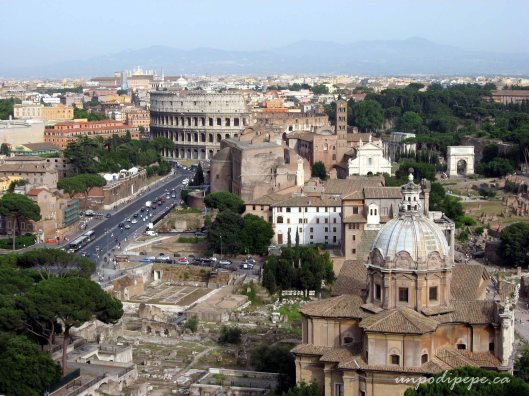
A- Mattina/Morning Wake up early and do your stuff in the morning. Visit ‘non shady’ sites in the morning, as they will be too hot to do in the afternoon. These include the Colosseo, Foro Romano, Piazza Navona and Passeggiata all’Aventino.
BPomeriggio/afternoon During the hottest part of the day-1-5 pm, participate in the riposo or ‘pausa pranzo’. (**Note that this is not known as siesta in Italian) This is a ‘rest period’ and many places are closed. This is not always the case in the larger cities or touristy areas, but it makes sense to follow when it is hot. Have pranzo-the main meal, at 1pm, enjoying the interior of a cool restaurant, then if your lodgings are close by, have a rest, take a nap or check email. Keep it dark with closed shutters/curtains while staying indoors, and also while you are out, so it stays cool.
If it is not feasible or you do not want to participate in the ‘pausa pranzo’ visit cool places during this time. For example:
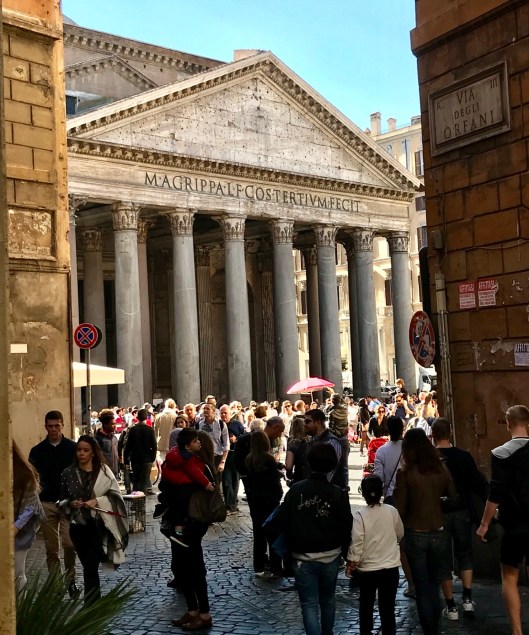
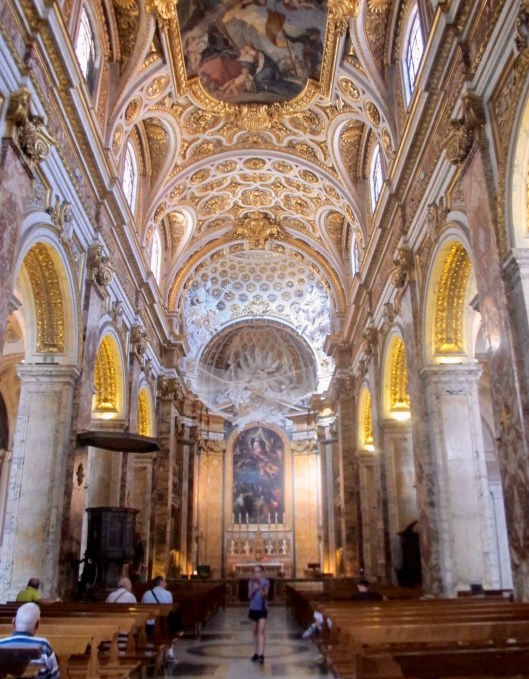
1-Visit churches! Roma has >900 churches- they are dark, cool, free and may even have seats. Some, like San Luigi dei Francesi and Sant’Agostino even have their own Caravaggio works for you to drool over. For the full walking tour, go to Caffè con Caravaggio a Roma. Santa Maria Sopra Minerva, the Pantheon and Santa Prassede are 3 other favourites of mine. Smaller churches may be closed during pausa pranzo, but many are open. Sometimes you even find things by happy accident. I once stepped into Santa Brigida, a very traditional Scandinavian church in Piazza Farnese for a 3 pm Mass which included otherworldly sounding chanting and singing by cloistered nuns.
***Important Note about churches – Churches are primarily places of worship, so please be respectful. Dress appropriately, speak quietly-if the artwork does not render you speechless. Avoid Mass times, especially on Sundays. It may not be possible to visit unless you are attending Mass. There is no charge to visit most churches, but I always like to light a candle when I visit (€.50-€1).
2 –Visit museums Most are air conditioned and open until 1900 (7pm). My favourites are Centrale Montemartini and Palazzo Massimo alle Terme which is downright cold-especially the top floor where the fresco villas are.
Both of these museums are never crowded, even in high season. Galleria Borghese requires a reservation and you can only stay 2 hours. If you time the visit right, go to Villa Borghese afterwards and find shade under a tree.
Smaller museums might not have air conditioning. **A note on AC. Electricity is expensive in Europe. The AC is cool, but not cold like it usually is in North America. Read my amusing post Aria Pericolosa for more on this topic!
3- Go underground and visit the Catacombs of Domitilla, 12 km of cool underground tunnels from the 2nd to the 5th Century or the Basilica San Clemente which has 3 layers of churches, ending in a Mithrean temple.
CSera/evening Get back out in the early evening, then stay out late enjoying the fresh air and longer days. Go for aperitivo! Pop up restaurants, wine bars and stands line the Tevere in summer near Ponte Sisto and Isola Tiberina.
Villa Celimontana holds an outdoor evening jazz festival from June-August. This is also a great time for a passeggiata in Piazza Navona or Trastevere. There is a Colosseo night tour as well as tour of the underground and the Forum. These can be booked online. Roma also has several roof bars including the Terrazza Borromeo, Hotel Pantheon and Hotel Minerva.
More hot weather advice:
2 Keep hydrated Bring a water bottle and drink from from the >2500 cast iron nasonior ‘big noses’. These are running water fountains all over the city, most with SPQR stamped on the front. This one in front of the Pantheon is one of the 3 oldest nasoni, with dragon spouts.
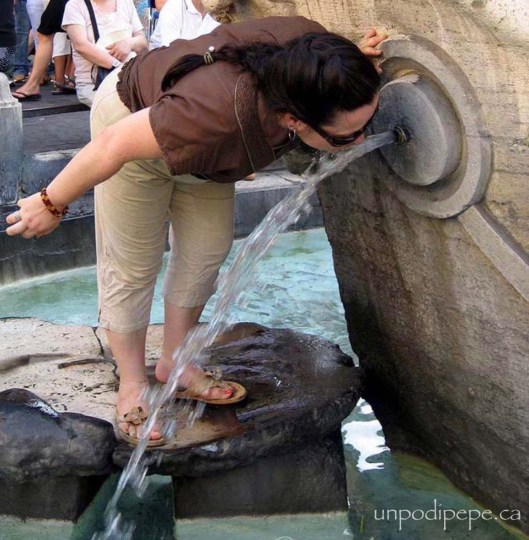
Nasoni were installed in 1874 to make cold drinking water from acqueducts free and accessible to all. Place your hand under the main flow and drink from the gush out the top. My favourite place to drink is La Barcaccia in Piazza di Spagna. The water comes straight from Acqua Vergine, an ancient aqueduct, and is absolutely freddissima!
3 Granita e gelato! Gelato will keep you cool. As if an excuse for more gelato is ever needed! I find the fruit flavors most refreshing, especially limone and pompelmo rosa (pink grapefruit). You must try a granita di caffè at Tazza d’oro near the Pantheon. Also refreshing are Caffé Shakerato, Affogato and Grattachecca. It is hard to find bad gelato. There is Gelato del Teatro, Grom, Gelato San Crispino and 9 locations of Fatamorgana. My favourite is Danielgelo, a small family run gelateria near where I usually stay, in the San Paolo area.
Granita di caffe
4 Dress appropriately Wear a hat! Use sunscreen and dress lightly in layered breathable fabrics such as linen or cotton. Bring a light shawl or coverup if planning to visit churches, especially the Vatican. Walk on the shady side of the street, if possible. Buy a souvenir folding Roma fan. They are available at all the souvenir stands for 2-3 Euro.
Should you avoid going to Italia in August? Absolutely not! If that is when you are able to go-then do it! Hopefully my tips will help. Be sure to click on the post links. Also remember the positive things about summer in Italia-the long days and wonderfully cool evenings, sky so blue it does not look real, the cast shadows of the mid afternoon sun and the seasonal summer food 😋.
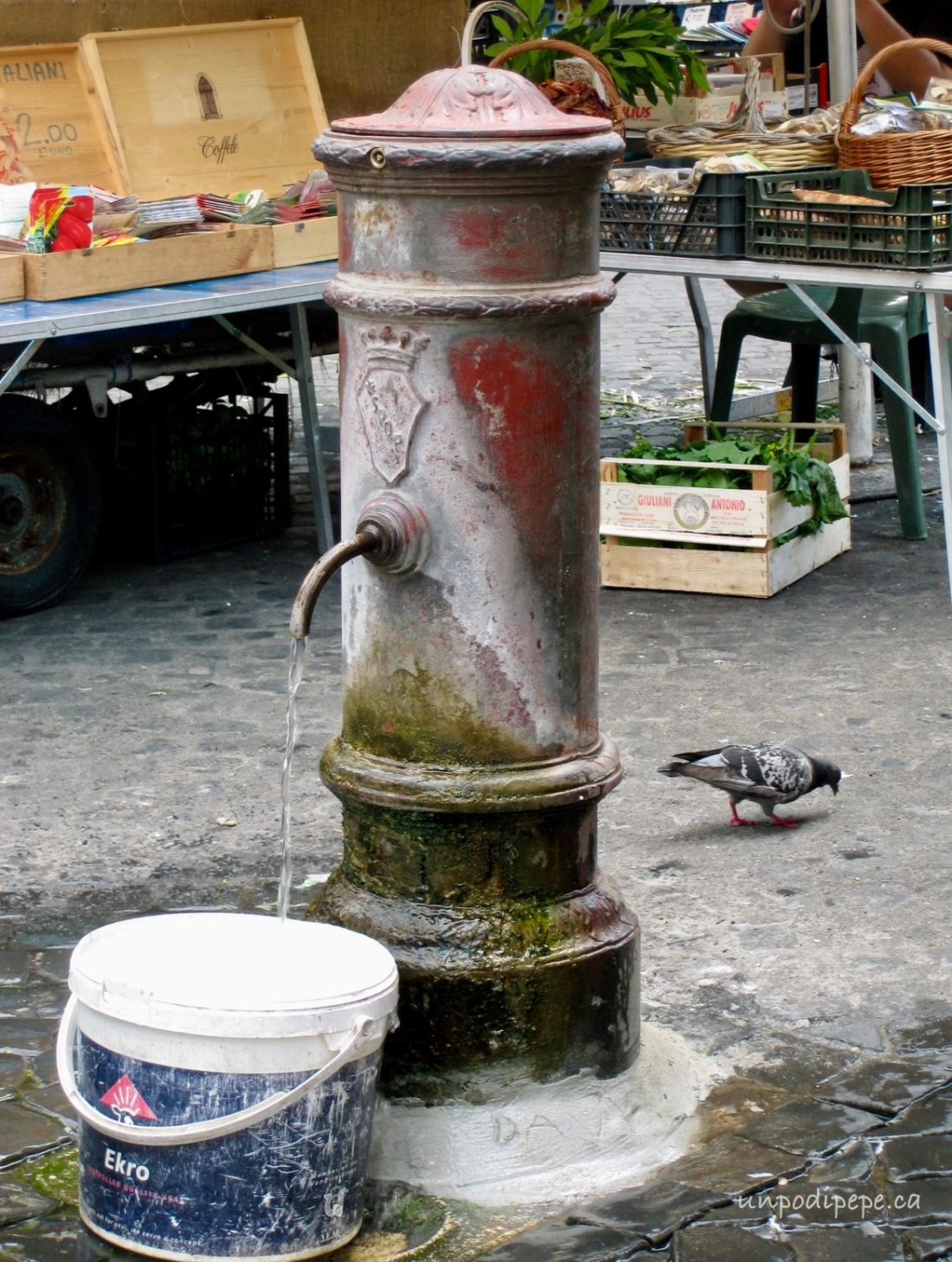 The characteristic cast iron fontanelle, small drinking fountains found throughout Roma, are affectionately known as nasoni. Nasoni means ‘big noses’, and refers to the curved metal spout, which has a small hole at the top of the arch. Blocking the spout with your finger will force the water up from hole in an arc, like a drinking fountain. This is handy if you want to drink but do not have a water bottle!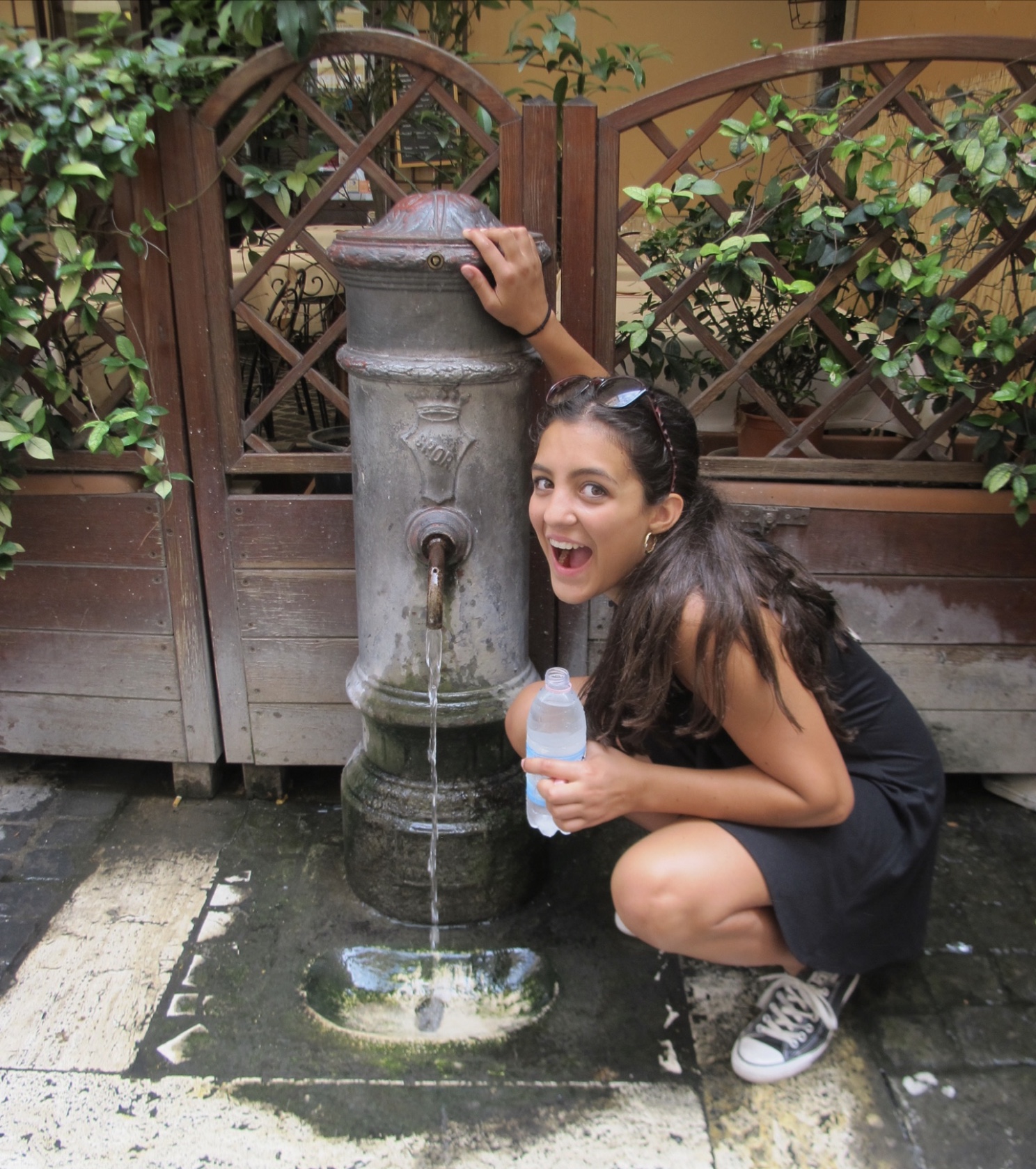
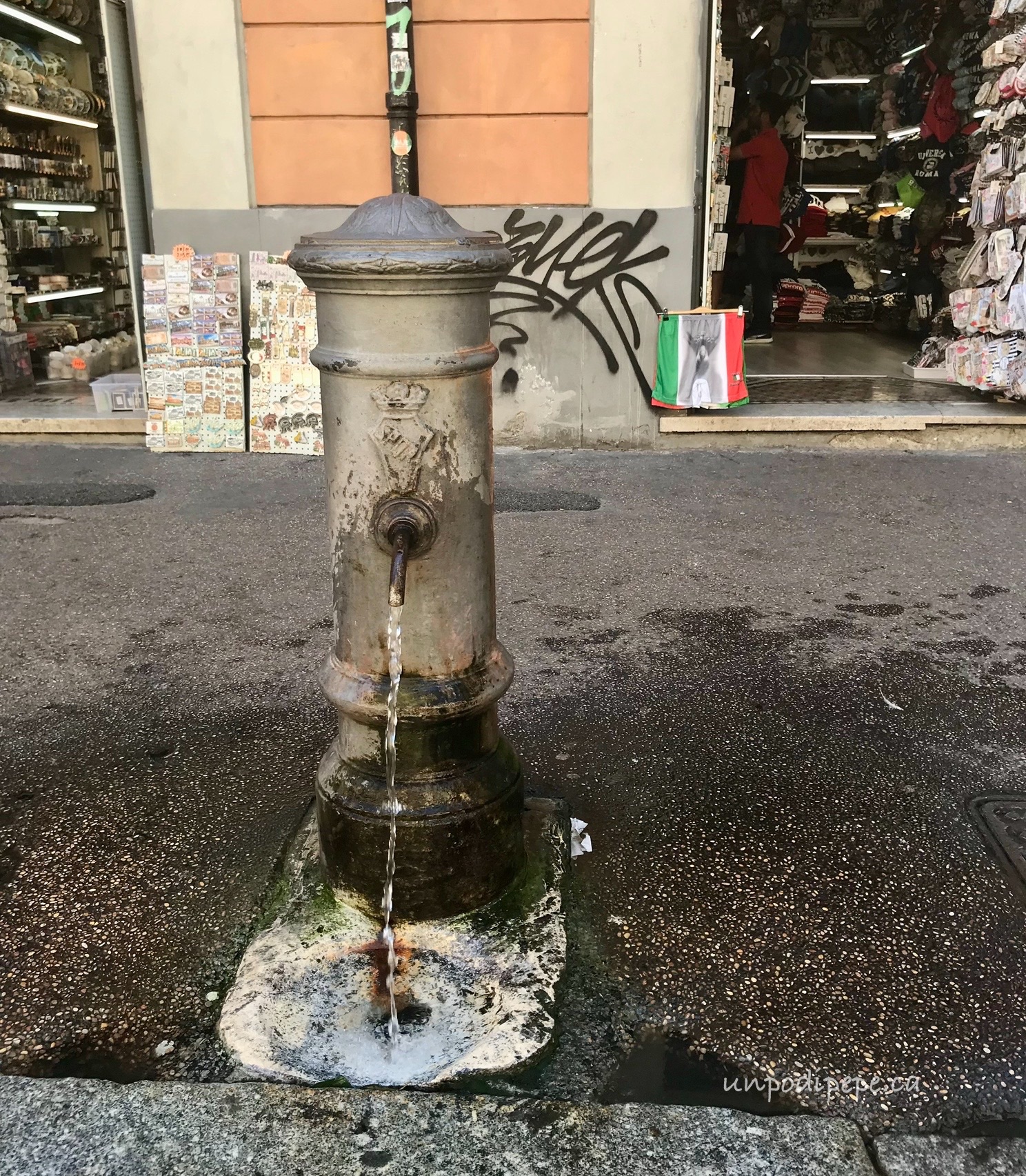
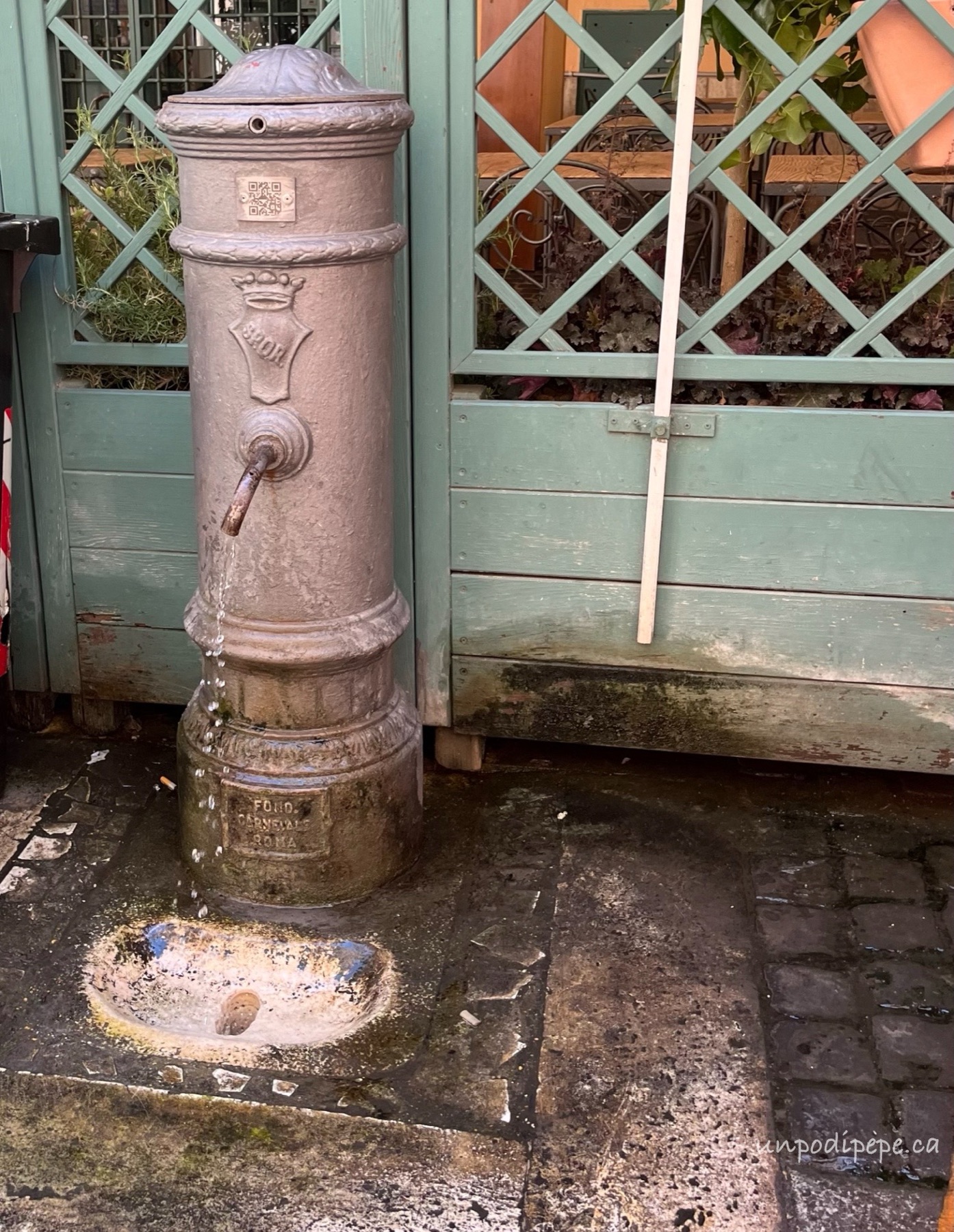 A nasone (singular) weighs ~100 kg and is 1.2 m high (almost 4 ft). Its classic cast iron cylindrical shape allows drinking water to flow continuously. Most nasoni have a metal grate to collect the water. The first Nasoni had 3 spouts, decorated with dragon heads. In the 1920’s the dragons became an endangered species and since then, nasoni are cast iron cylinders with a single smooth curved ‘naso’ spout. Some of them have the SPQR insignia and quite a few are decorated with graffiti. The 3 oldest nasoni are the original dragon spout design. They can be found on Via di San Teodoro, in Piazza della Rotonda in front of the Pantheon, and at the Fontana delle tre Cannelle on Via della Cordonata near Palazzo Quirinale.
 With the nasoni, plus 90 ornamental fountains offering uninterrupted drinking water, Roma is the city with the most drinking fountains in the world. Installed to provide accessible fresh drinking water for thirsty Romans and visitors, the nasoni are now iconic symbols of Roma, representing community and hospitality. Don’t forget to bring a water bottle! If you are visiting in summer, check out Beat the heat: Surviving Summer in Roma.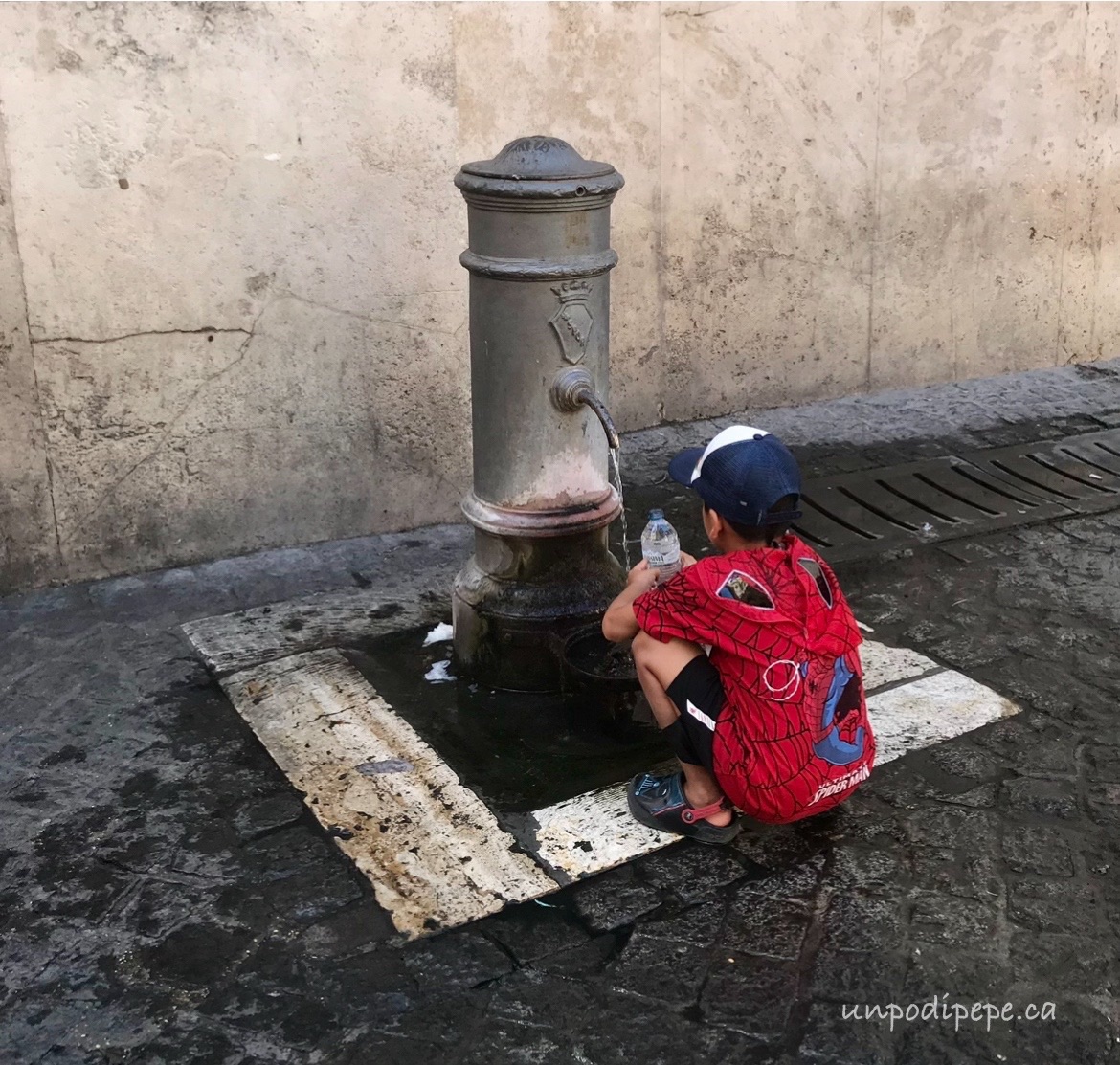


 Santa Maria Sopra Minerva, the




 Un po' di pepe