• Home
  • About me/Chi sono
  • Contact

Un po' di pepe

~ …… (oon∙poh∙dee∙PEH∙peh) Cristina writes about interesting stuff /Cristina scrive di cose interessanti

Un po' di pepe

Category Archives: Art

Casino dell’Aurora~Villa Boncompagni Ludovisi

21 Thursday Aug 2025

Posted by Un po' di pepe in Art, Art history, Italia, Roma

≈ 6 Comments

Tags

Art history, Aurora, Caravaggio, Caravaggio Roma, Guercino, Jubilee2025, Jupiter Neptune and Pluto

Caravaggio 2025 at Palazzo Barberini, the exhibit coinciding with Giubileo 2025, was extended by 2 weeks. Yippee!! This was great for me, since I arrived in Roma the day after it was supposed to end.  As soon as I heard about the extension, I booked tickets before they sold out. It was amazing, and I will post about it after I get home. With the code from my ticket purchase, I was also able to book one of the limited weekend tickets to Casino dell’ Aurora, Villa Boncompagni Ludovisi, a private home, which is not normally open to the public.

Why am I so excited about this? Villa Boncompagni Ludovisi contains the only ceiling painted by Caravaggio, one of his least accessible masterpieces.
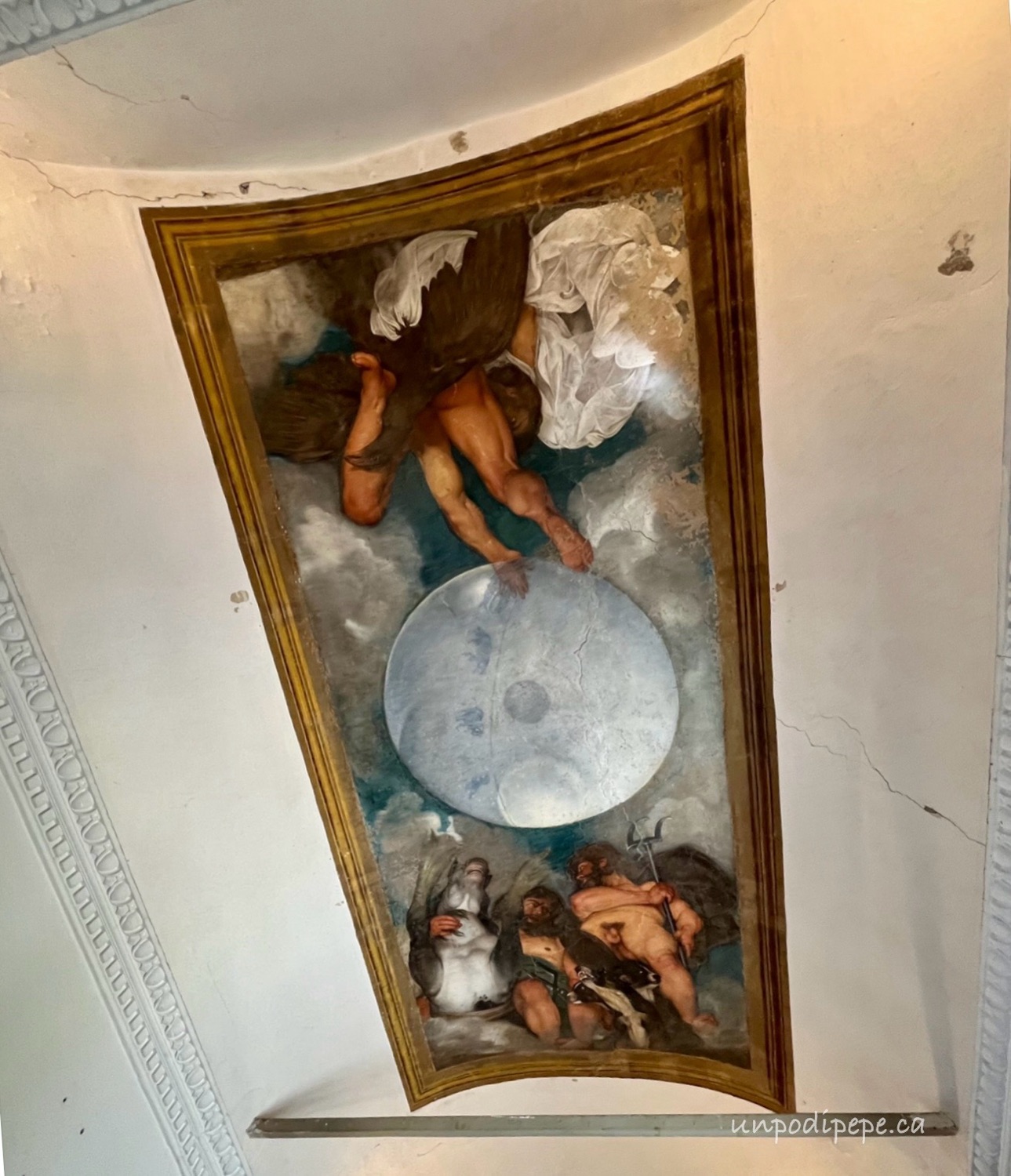
The Villa is the only remaining part of a large suburban retreat, built by Cardinal Francesco del Monte in the 16 th Century. The cardinal was an early patron of Caravaggio and he had an interest in alchemy*. He commissioned 25 year old Caravaggio to paint the ceiling of his small alchemy lab in 1597.

The painting ‘Giove, Nettuno e Plutone’ -Jupiter, Neptune and Pluto is an alchemical allegory with the 3 Olympian gods and their symbols and animals from classical mythology. For Jupiter these are air, sulphur and the eagle, for Neptune water, mercury, a trident and the hippocampus (a mythological seahorse) and for Pluto, earth, salt and Cerberus the 3 headed dog.

This painting may have been a middle finger salute early in his career to critics who accused Caravaggio of having a poor sense of perspective. The 3 figures are foreshortened in the most dramatic way possible. Jupiter floats in the sky with an eagle and reaches out to move a luminous celestial sphere where the sun revolves around the earth. Zodiac signs are barely visible in the center. Neptune and Pluto appear to be standing right over you, with Neptune’s private parts dangling above your head!
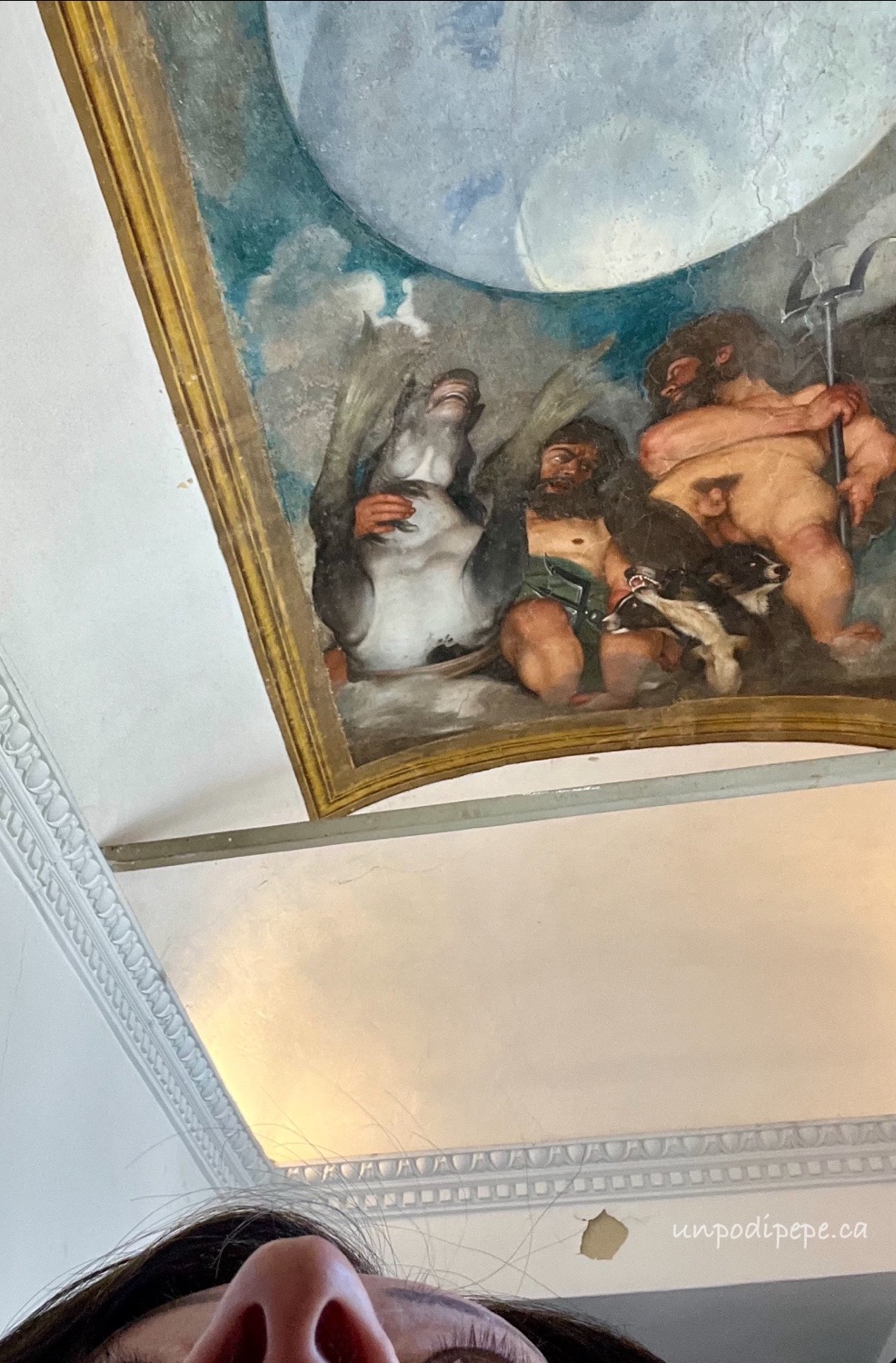
Caravaggio used his own face for all 3 figures. It was common for him to insert his self-portrait into a painting, but not as the main focus.  In this case, it is likely because this early in his career, he could not afford to pay a model, and he had not started using everyday people as models.  Since the 3 figures are supposed to be brothers, it worked. Cerberus may have been painted from his own dog.

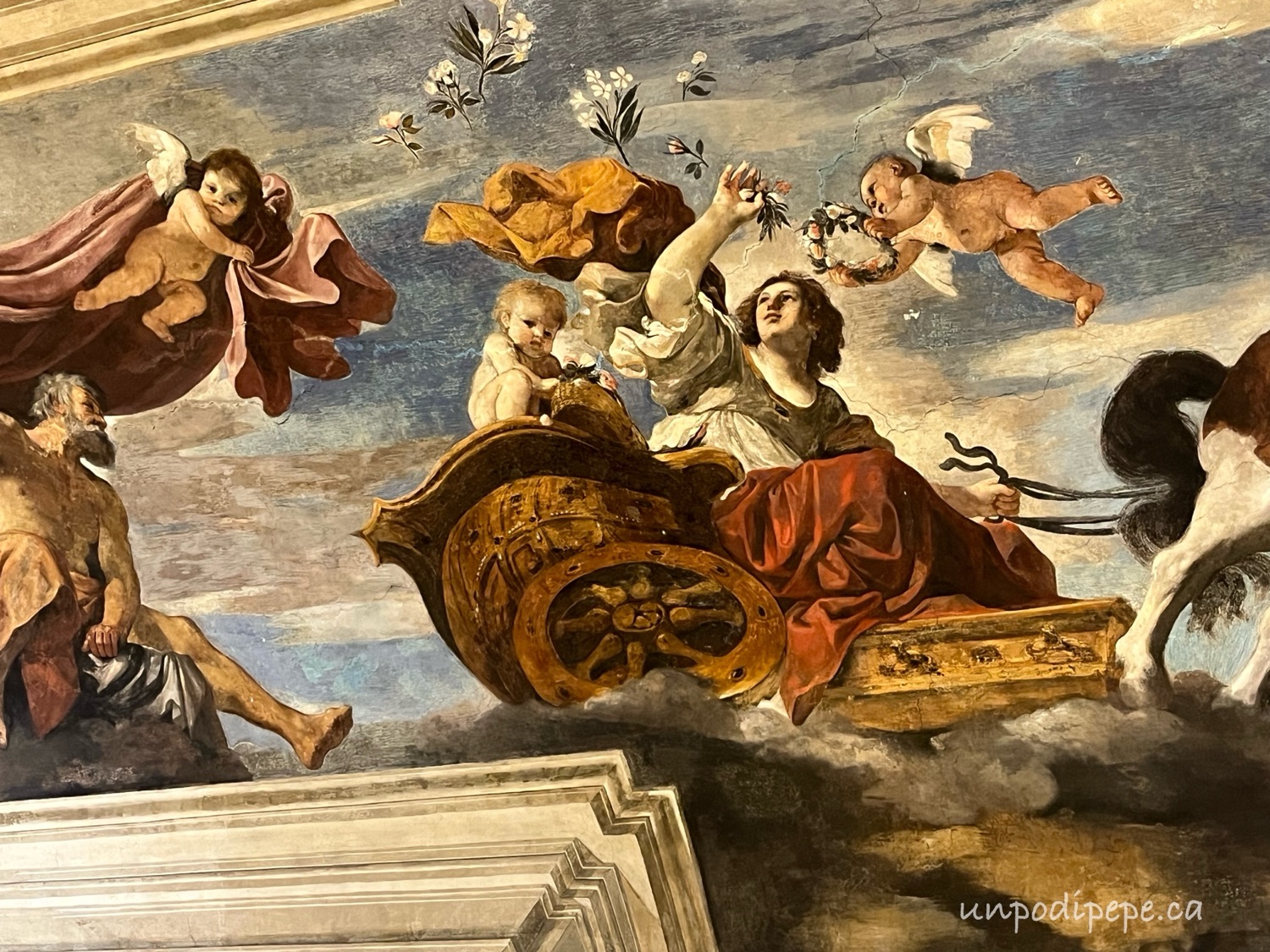
This ceiling painting is unusual as it is oil paint on dry plaster, so essentially it is a mural. It is not a fresco, which is painted with pigments directly into wet plaster. The painting does not have that ‘chalky’ look of a fresco. The size is 300 by 180 cm, about 10’ by 6’. It is on the upper floor, reached via the staircase seen below, in the main ‘Aurora’ reception room.

In 1621, del Monte sold the villa and grounds, a 30 hectare (74 acre) area between Porta Pinciana and Porta Salaria, to Cardinal Ludovico Ludovisi. In 1621, Guercino also completed the Aurora fresco on the ceiling of the main reception hall. This is why the villa is also referred to as Casino dell’Aurora or Villa Aurora. Guercino had help with the illusionist architectural details by the notorious Agostino Tassi. Read more about him in the post Artemisia Gentileschi.
The princes Boncompagni-Ludovisi subdivided and sold the property in 1883. Roma’s Ludovisi district is on these former grounds. The 2200 m² (2400 sq ft) villa and a small  parcel of land remained with the Ludovisi family.

Since the 2018 death of the owner, Prince Niccolò Boncompagni Ludovisi, there has been an inheritance dispute between his American widow and the 3 sons from his first marriage. The widow was evicted in 2023 and a court ordered sale made the villa the most expensive house ever to go on the market. Valued at €470 million, it is still for sale and also needs €10 million worth of restoration work $$$! Hopefully the family comes to some sort of agreement and Villa Boncompagni Ludovisi will eventually become a museum. I will purchase Lotto tickets in the meantime 🤞.

Casino dell’Aurora, Villa Boncompagni-Ludovisi is located at Via Lombardia 46, a short walk from Porta Pinciana and the Marriott Grand Hotel Flora. It is not open to the public and there are no plans for public viewing at this time.  If you somehow happen to get the opportunity-definitely go! Now that I have seen Giove, Nettuno e Plutone, I have seen all 25 of Caravaggio’s paintings in Roma!

*Alchemy was a precursor to actual science. It was aimed at discovering the ‘Philosopher’s Stone’ to turn other metals into gold, and the elixir of youth.

Share this:

  • Click to share on Facebook (Opens in new window) Facebook
  • Click to share on Pinterest (Opens in new window) Pinterest
  • Click to share on X (Opens in new window) X
  • Click to email a link to a friend (Opens in new window) Email
  • Click to share on WhatsApp (Opens in new window) WhatsApp
Like Loading...

Artemisia Gentileschi

08 Monday Jul 2024

Posted by Un po' di pepe in Art, Art history, Firenze, Inspiration, Roma

≈ 7 Comments

Tags

autoritratto, Baroque art, Caravagisti, Casa Buonarroti, Orazio Gentileschi

Artemisia Gentileschi was born July 8, 1593, 431 years ago today.  One of the greatest artists of the Baroque period, she is best known for using her paintbrush to create empowered female subjects, portraying them from a female perspective, in ways male artists rarely had. Rather than sitting passively, Artemisia’s women are active participants, strong, capable and defiant.

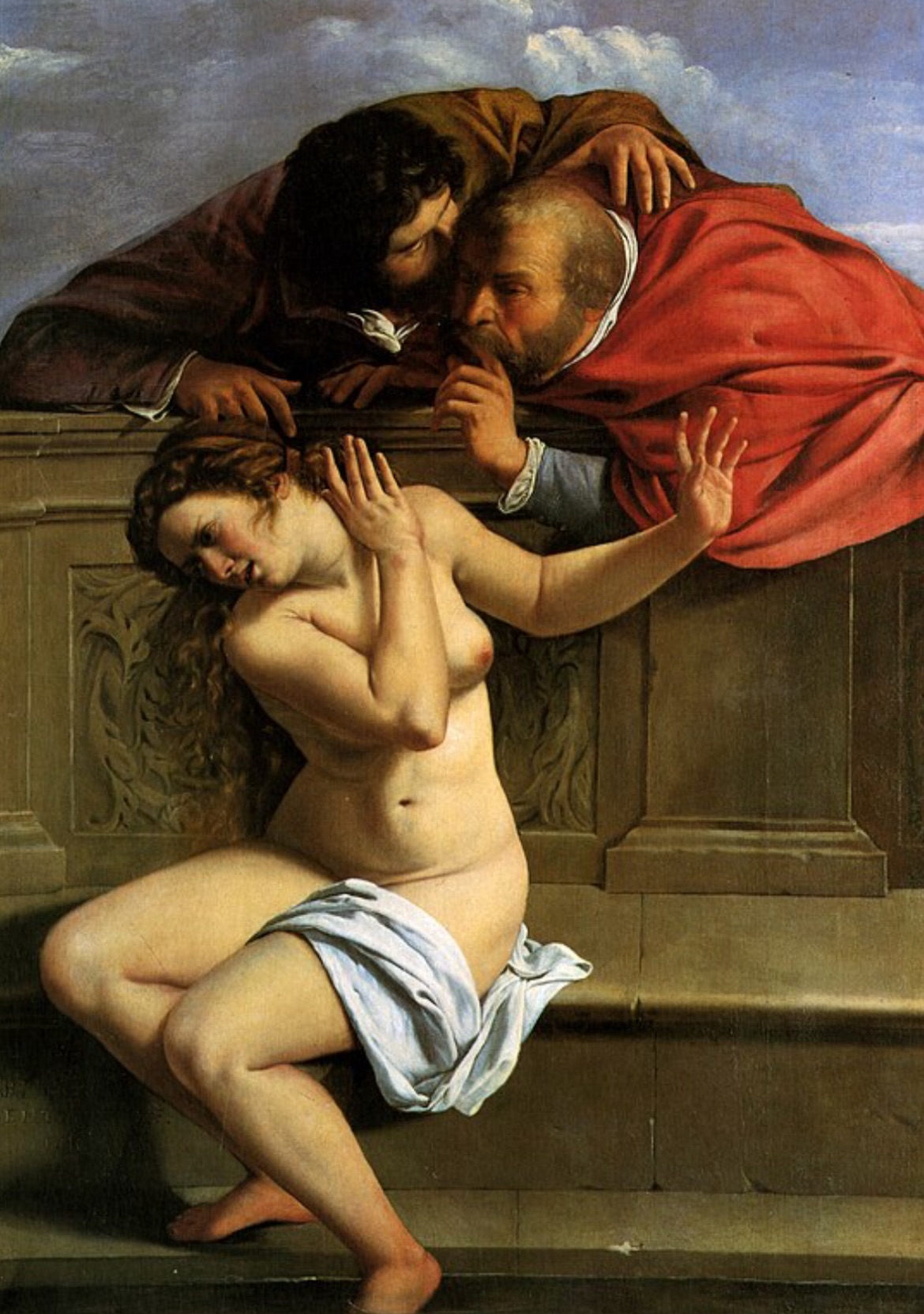
Introduced to art and trained by her father Orazio Gentileschi, an early follower of the dramatic style of Caravaggio, Artemisia worked along with her 3 younger brothers.  She was the only one to show talent and interest, producing her own work by age 15. In 1610, at age 17, she painted her earliest surviving work ‘Susanna and the Elders’ which for years was incorrectly attributed to Orazio. Unlike other painters’ versions, her Susanna is distraught and shields herself from the oglers, as an early depiction of sexual harassment. Artemisia painted this subject 7 times.

Susanna and the Elders (1610)

In 1611 Orazio decorated a palazzo in Rome with painter Agostino Tassi.  He hired Tassi to tutor 17-year-old Artemisia to help refine her painting skills.  During one of their sessions, he raped her.  They started a relationship, since she believed they were going to be married, as societal norms of the time required.  When it became apparent that Tassi was not going to marry Artemisia, Orazio took the unusual route of pressing charges against him for rape.  The trial went on for 7 months, revealing scandalous details -that Tassi had an affair with his sister-in-law and allegedly hired bandits to murder his missing wife.  Artemisia was subjected to a gynecological exam, and tortured with thumbscrews to verify the truthfulness of her testimony!  Luckily there was no permanent damage to her fingers and this did not affect her ability to paint. Tassi was convicted, and sentenced to 2 years in prison.  He was also exiled from Roma, but this was never enforced.

Judith Slaying Holofernes 1620 Galleria degli Uffizi, Firenze

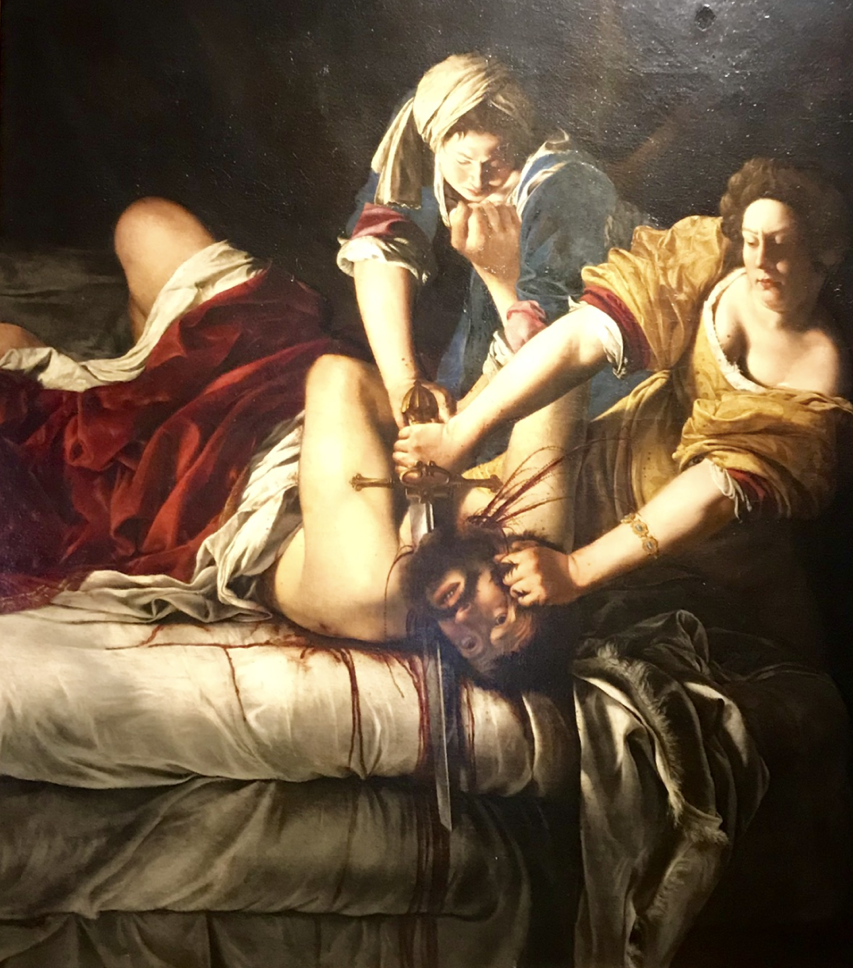
After this ordeal, many of Artemisia’s paintings feature women being attacked or in positions of power, seeking revenge. In 1612 she painted her first of 6 versions of Judith Slaying Holofernes, which is in Museo Capodimonte, Napoli.  The 1620 version in the Galleria degli Uffizi, Firenze is ‘bloodier’ than the first one. I like to imagine Artemisia having a scientific discussion with Galileo about realistic blood spatter patterns!  Below is Caravaggio’s 1598-99 version of the scene, which is a masterpiece, but Judith looks like the 90 pound weakling who is worried about breaking a nail or getting blood on her dress, and her servant just stands there.  In Artemisia’s version, both women mean business, practically sitting on Holofernes to get the job done. 

Judith Beheading Holofernes Caravaggio 1598-99 Palazzo Barberini

After the trial, Orazio arranged for Artemisia to marry artist Pierantonio Stiattesi and they moved to his home city Firenze, where she had a successful career as an artist and an impressive clientele.  She had the support of Cosimo II de Medici and was friends with Galileo.

Allegory of Inclination (1615) Casa Buonarroti

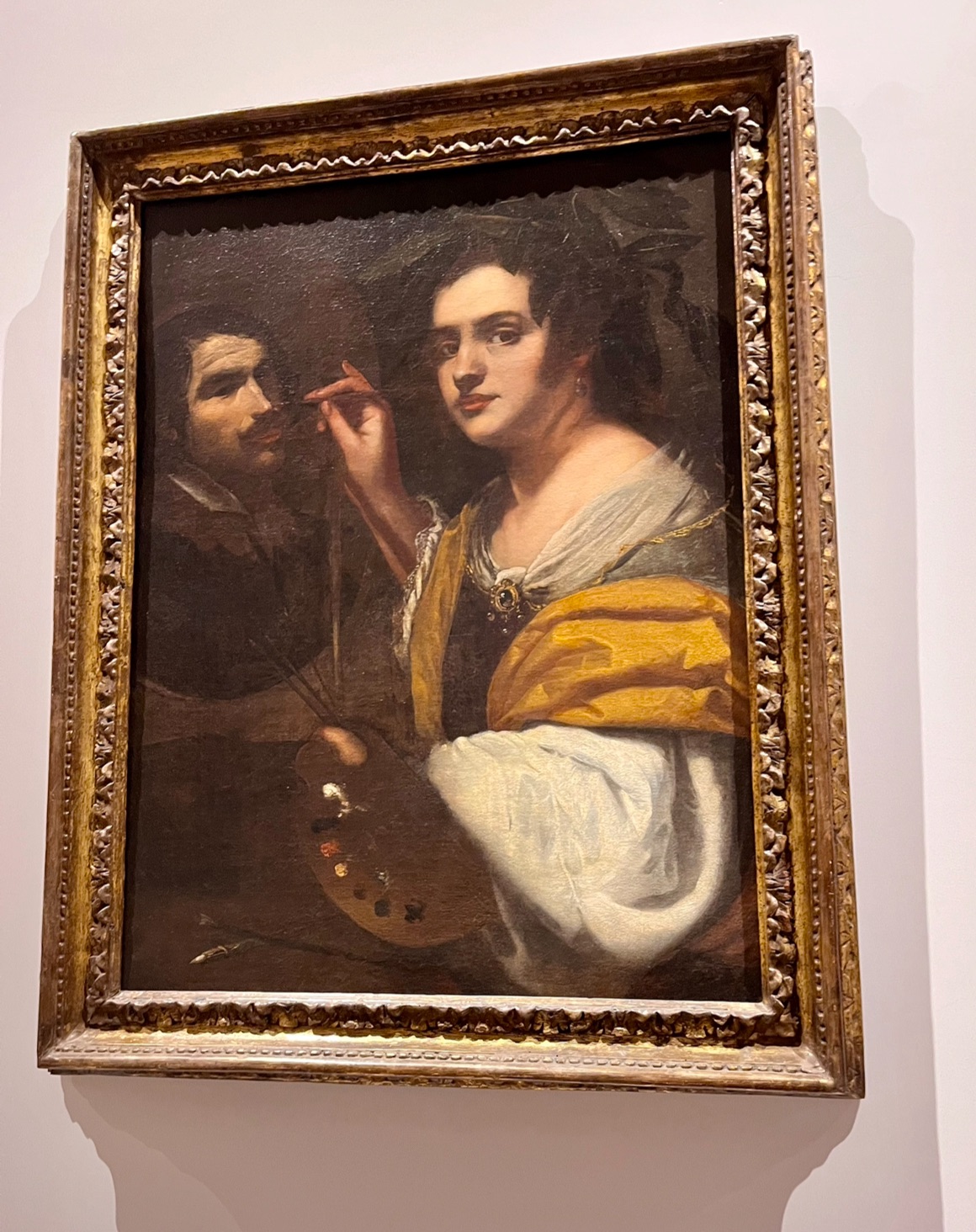
At age 21, Artemisia was the first woman accepted into the prestigious Firenze Accademia delle Arte del Disegno.  This was a major accomplishment!  She was now able to sign her own contracts and purchase art materials without permission from her husband!  In 1615, she was commissioned to paint one of the ceiling frescoes at Casa Buonarroti, former home of Michelangelo, being turned into a museum by his great-nephew. Artemisia was paid more than the male artists working on the frescoes were! ‘Allegory of Inclination’, like many of her paintings, was likely a self-portrait.  Why self-portraits?  The model is free and always available!

Self-portrait, Galleria Barberini 1630-35

In 1618 Artemisia had a daughter named Prudentia, the only one of her 5 children to survive infancy.  She trained Prudentia as an artist, although none of her work survives that we know of.  Artemisia had an affair with Florentine nobleman Francesco Maria di Niccolo Maringhi, which is documented in a series of 36 letters, discovered in 2011.  Her husband also corresponded with Maringhi, who helped support them financially.  Fed up with her husband’s financial and legal issues, she returned to Roma with her daughter in 1621-1626.  Artemisia continued to be influenced by Caravaggio as she worked with some of his followers, Carravagisti, including Simon Vonet.  She also spent 3 years in Venezia working on commissions.

Sansone e Dalila/Samson and Delilah 1630-38 Galleria d’Italia, Napoli

Artemisia relocated to Napoli in 1630 and worked with many well-known artists such as Massimo Stanzione. In 1638, she was invited to the court of Charles I of England in London, where Orazio had been court painter for 12 years. He was the only Italian painter in London and the first to introduce the style of Caravaggio there.  Orazio and Artemisia had not seen each other for 17 yrs.  She worked alongside Orazio on an allegorical fresco for Greenwich, residence of the Queen. Orazio was 75 and needed her help to complete the work before he died suddenly in 1639.  Artemisia painted some of her most famous works while in England, including Self Portrait as Allegory of Painting (1639), which she likely painted with 2 mirrors, one on either side of her. In 2017 I had the opportunity to see this painting at the Vancouver Art Gallery exhibit from the Royal Collection.

Self-portrait as the Allegory of Painting 1638-39 Royal Collection, Windsor Castle

Once she finished her commissions, Artemisia left England before 1642, returning to Napoli.  The last letter from her agent was dated 1650, which implies she was still painting.  There is additional evidence to suggest she was still working in Napoli in 1654 and likely died during the plague in 1656.

Artemisia’s legacy is complex and full of controversy.  She defied the odds and was well respected as an artist during her own lifetime.  She thrived in a time when women had few opportunities to pursue artistic training, let alone actually work as professional artists.  After her death, Artemisia Gentileschi was almost omitted from the history of art.  The fact that her style was much like her father’s and some of her works were incorrectly attributed to Orazio and even Caravaggio may have something to do with that.  More likely, those documenting art history did not think a woman was worth mentioning.

In the early 1900’s, her work was rediscovered and championed by Caravaggio scholar Roberto Longhi.  In all accounts of her life, Artemisia’s talent and achievements are overshadowed by the story of her rape and trial.  This is partly due to a 1947 over-sexualized fictional novel by Longhi’s wife Anna Banti.  1970’s and 80’s feminist art historians began to reassess Artemisia and her reputation, focusing on her significant artistic achievements and influence on the course of art history rather than events that happened in her life.

A 1976 exhibition ‘Women artists 1550-1950’ proposed that Artemisia was the first female in the history of Western art to make a significant and important contribution to the art of her time.  Following centuries of near obscurity, today Artemisia’s paintings are again celebrated around the world.  An ornate plate rests in her honour at the table of contemporary feminist art as part of Judy Chicago’s iconic 1979 work ‘The Dinner Party’.

Artemisia has left us with 60 paintings, not including collaborations with Orazio.  40 of them feature females from the Bible or mythology. Only 19 of her paintings are signed and 13 are in Private collections!  Can you imagine owning your own Artemisia??? Famous quotes from Artemisia include ‘My illustrious lordship, I’ll show you what a female can do’ and ‘As long as I live, I will have control of my being’.

Enjoy the Monologue ‘Becoming Artemisia'(May 2024) directed by Antonio D’Alfonso, text by Mary Melfi (17 min).

Google doodle of Artemisia GentileschiBuon Compleanno Artemisia!

Photo credits: Susanna and the Elders and Allegory of Inclination, Wikipedia

Google Doodle by Hélène Leroux, July 8, 2020

All other photos taken by Cristina

Share this:

  • Click to share on Facebook (Opens in new window) Facebook
  • Click to share on Pinterest (Opens in new window) Pinterest
  • Click to share on X (Opens in new window) X
  • Click to email a link to a friend (Opens in new window) Email
  • Click to share on WhatsApp (Opens in new window) WhatsApp
Like Loading...

Cavalli di San Marco

23 Sunday Jun 2024

Posted by Un po' di pepe in Art, Art history, Italia

≈ 7 Comments

Tags

Piazza San Marco, Sculpture, UNESCO World Heritage Sites, Veneto, Venezia

I Cavalli di San Marco are a set of gilded copper statues of 4 horses, originally attached to a quadriga, a four horse carriage used in chariot racing.  Also known as the ‘Triumphal Quadriga’ and the ‘Horses of the Hippodrome of Constantinople’. The sculptures date from classical antiquity.  Because of the style, they were thought to be Greek, by the 4th C BC sculptor Lysippos, but carbon dating shows they are from the 1st-3rd C AD, which makes them 1700-1900 years old. An 8th century document mentions ‘four gilt horses that stand above the Hippodrome brought from the island of Chios by Theodosius II’ (AD 408-450)

The sculptures are expressive and magnificent!  The realism is incredible-bulging veins, rippling muscles, flaring nostrils, raised hooves, and the way they are in sync, with their heads turned to each other.  Streaks of gold leaf are still visible on their bodies.  The poet Francesco Petrarca (1304-1374) remarked ‘they seem to be neighing and pawing at the ground, as if alive’.  They are made using the lost wax method.  A wax sculpture is used to make a mold, usually of clay.  The sculpture is then cast with the mold. Each cavallo weighs close to 900 kg (2000 lbs).  Very few metal masterpieces have survived from antiquity as they were all melted down in medieval times to make weapons.

There is a lot of history to this foursome representing Apollo, God of the sun.  They were likely made on the Greek island of Chios and brought by Emperor Constantine to the new capital Constantinople (modern Istanbul) in 330 AD to adorn the chariot racetrack or by Theodosius 100 years later.  During the sack and looting of Constantinople in 1204, the Venetians took them as spoils of war. The cavalli were in storage in the Arsenale and in 1254 were placed on the terrace above the main door to the Basilica San Marco, as a symbol of military and political power. Small marble columns held up their feet.  Collars on the horses were added to hide where they had to be decapitated for transport from Constantinople.  They lived on the terrace for almost 600 years, until Napoleon looted them in 1797, taking them to Paris. In Paris, they were installed outside the Louvre on top of the Arc de Triomphe du Carrousel, along with a new quadriga. Upon the defeat of Napoleon in 1815, they were actually returned to the terrace in Venezia by the Duke of Wellington- minus their ruby pupils.  Replicas are now on the Paris monument. The cavalli were restored in 1977 and to protect from environmental oxidation they made their final journey in the early 1980’s.  The cavalli were moved inside the Basilica to the Loggia dei Cavalli and replicas made by Fonderia Battaglia di Milano were placed on the terrace

Classical art has a long history as a trophy of war taken by victorious generals.  Greater than art, it had power, and was a symbol of triumph, survival and to how each civilization built on the previous one.  Regardless of how you feel about looted art, for these 4 brothers, it is what saved them.  There is almost zero chance they would have survived if left in Constantinople.  They would have been melted down for ammunition or building materials.

Do not miss a visit to these beauties. Admission to the Basilica San Marco on site is €3 plus admission to the Museum, outdoor terrace and Loggia dei cavalli €7 for a total of €10.

Tickets can also be purchased online in advance for the Basilica €6, and the museum €9 for a total of €15. Have you seen I Cavalli di San Marco?

*Photo credit-Prethika Kumar!

Share this:

  • Click to share on Facebook (Opens in new window) Facebook
  • Click to share on Pinterest (Opens in new window) Pinterest
  • Click to share on X (Opens in new window) X
  • Click to email a link to a friend (Opens in new window) Email
  • Click to share on WhatsApp (Opens in new window) WhatsApp
Like Loading...

Collezione Peggy Guggenheim

30 Saturday Sep 2023

Posted by Un po' di pepe in Art, Art history, Italia

≈ 8 Comments

Tags

20th Century art, Art history, Grand Canal, Grand Canal Venice, Modern art, Palazzo Venier dei Leoni, Venezia

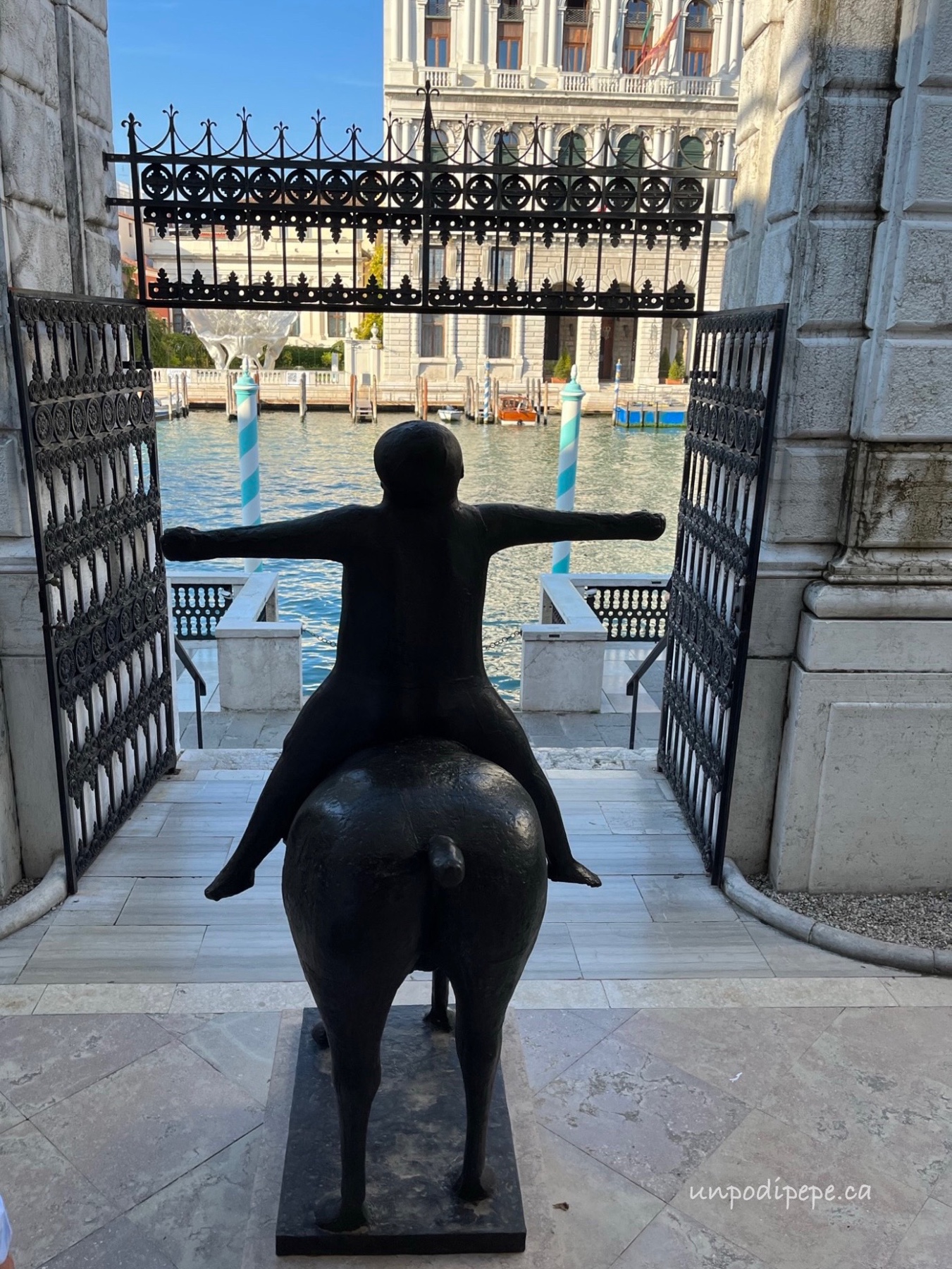
Terrace Horse, Peggy Guggenheim Collection VeniceThe Peggy Guggenheim Collection is one of the most important collections of European and North American 20th Century art.  This was on my ‘must see’ list for years. An unintentional 24 year absence from Venezia got in the way, but I finally made it!Terrace View, Peggy Guggenheim Collection Grand Canal Venice

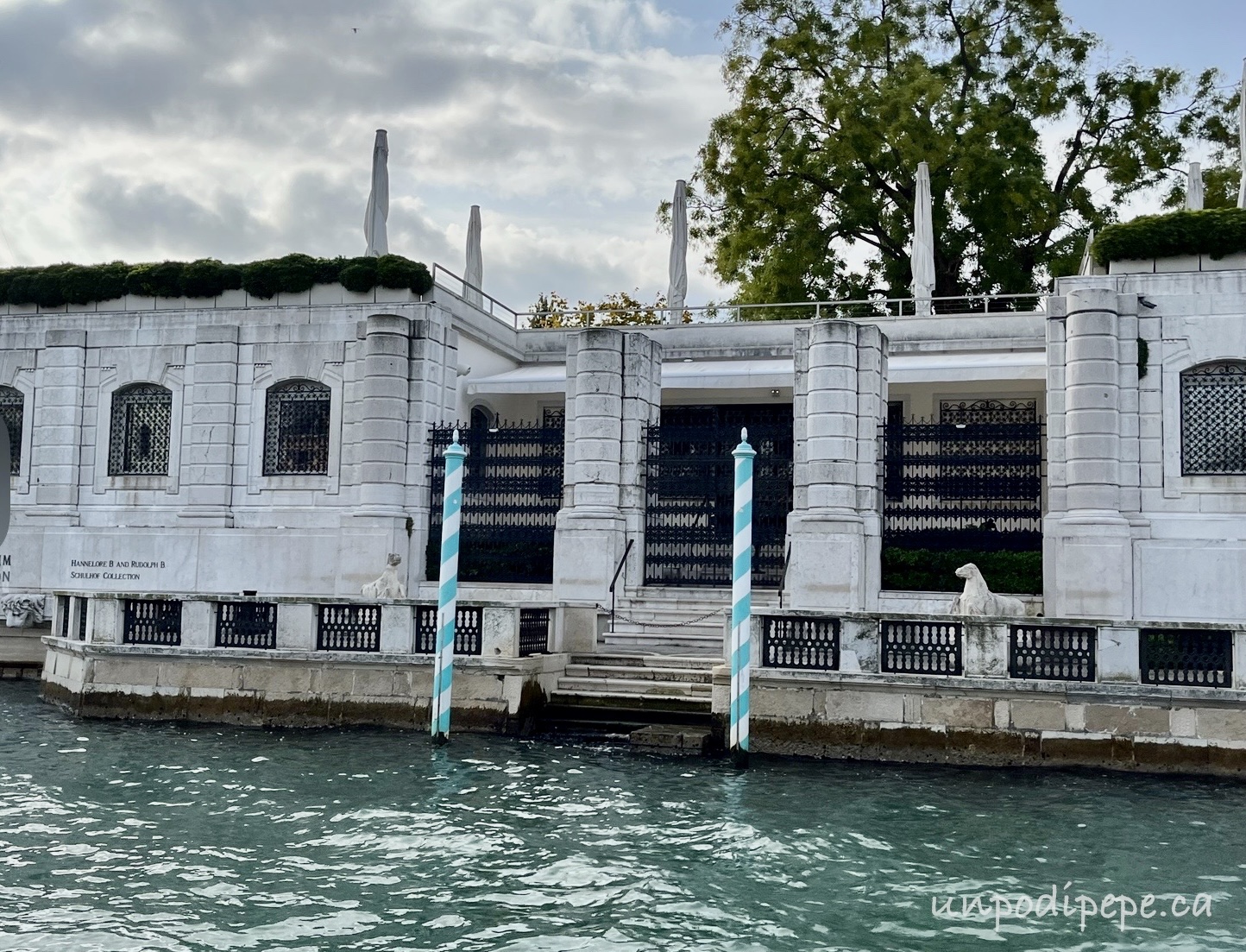
Located in her former home, the unfinished Palazzo Venier dei Leoni on the Grand Canal, the museum includes Peggy Guggenheim’s personal collection and a sculpture garden. Since 1980, it is part of the Solomon Guggenheim Foundation, which includes Guggenheim museums in New York, Bilbao Spain and soon Abu Dhabi.Marino Marini L'angelo della città Guggenheim museum Venezia

Peggy Guggenheim was born in New York in 1898.  Her father, Benjamin Guggenheim, one of 7 brothers who made a fortune in mining, died heroically on the SS Titanic in 1912.  He and his valet helped women and children into lifeboats, then changed into their best clothes to ‘prepare to go down like gentlemen’.  They were last seen on deck chairs by the grand staircase sipping brandy and smoking cigars.

Peggy came into her inheritance in 1919 and devoted her time and fortune to collecting and promoting modern art.  She married Dadaist Laurence Vail and they had 2 children.  The family travelled to Europe in 1921, embracing the Parisian Bohemian and American expat scene, then moved to London in the 1930’s fleeing Nazi occupation.

A self-proclaimed ‘art addict’ and a rebel, Peggy wanted to distinguish herself from her business focused family. In 1938, she began a career which would affect the course of postwar art.  In London, she opened an art gallery called ‘Guggenheim Jeune’, focusing on contemporary art. The gallery lost a lot of money and was closed after a year, then Peggy moved back to France.

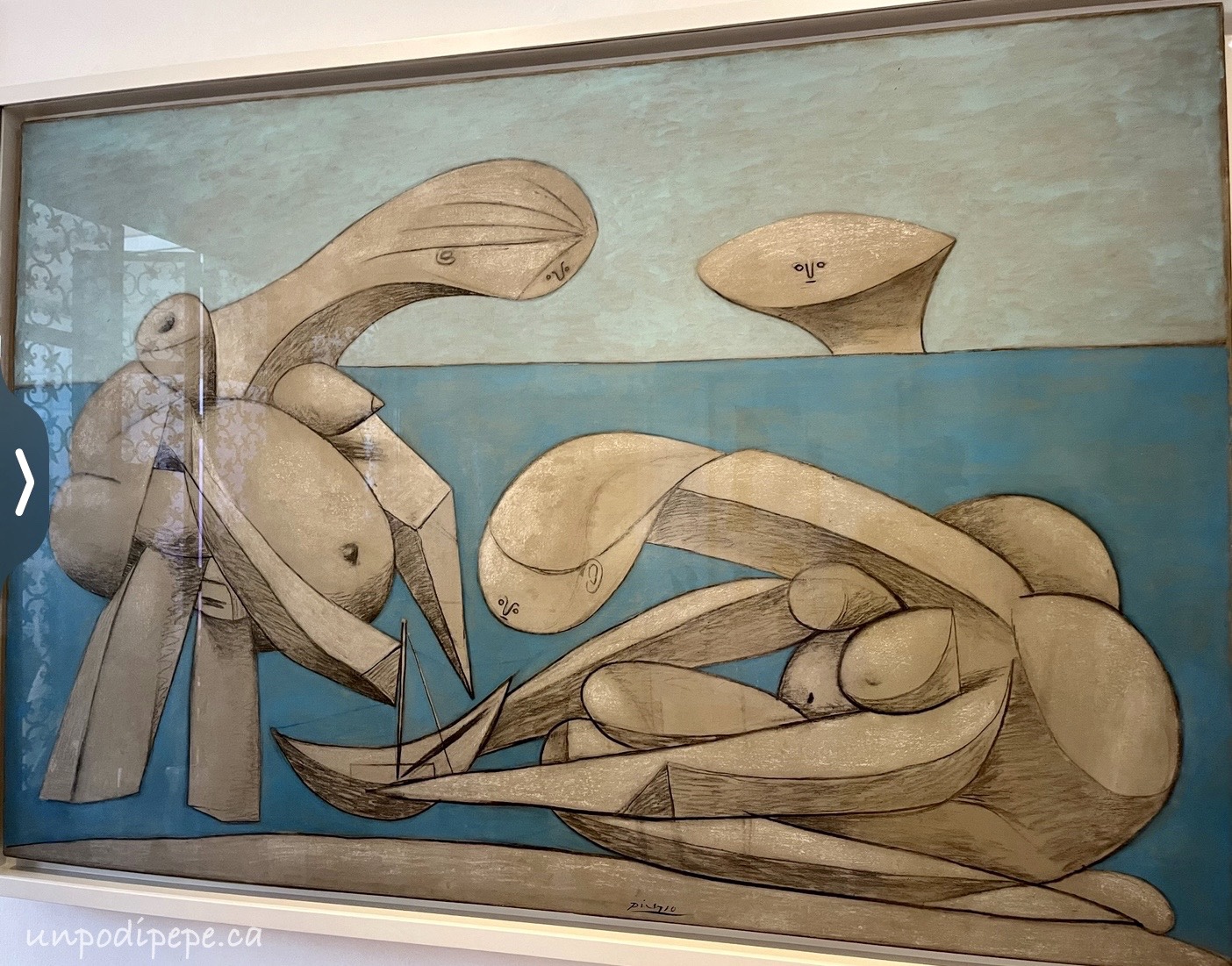
Peggy Guggenheim Collection On the Beach Picasso

On the Beach. Pablo Picasso 1937

From 1939-40, with the motto ‘buy a picture a day’, she started buying art in Paris and London like a madwoman. She purchased Cubist and Surrealist works of art when they were not yet popular or held in high regard. Purchases included masterpieces by Brancusi, Braque, Dali, Ernst, Picasso, Mondrian and others.  The Germans approached Paris just as Peggy was preparing to open a museum for her collection. In 1941 Peggy fled Nazi occupied France for New York with her ex-husband, their children and her future husband, Surrealist Max Ernst.

The Collection followed them to New York.  The Louvre was asked to shelter Peggy’s collection from the war, but the request was denied.  The now priceless artwork was crated up with ‘household goods’ written on the customs declaration, and a non-Jewish name replacing Guggenheim, then shipped across the Atlantic. Miraculously, everything arrived safely.  Peggy’s actions protected the collection, and also supported artists who were in exile and among those branded ‘degenerates’ by Hitler.

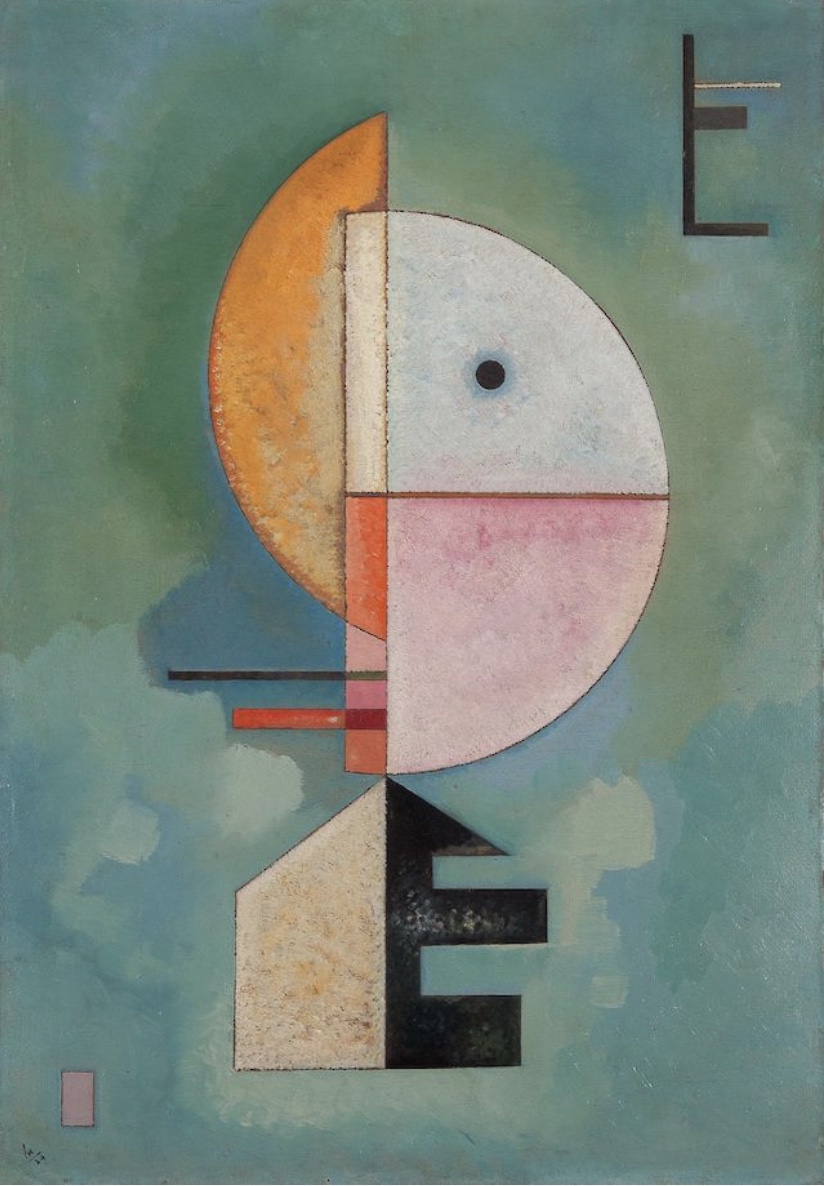
Upward 1929 Vasily Kandinsky Peggy Guggenheim Collection Venice

Upward. Vasily Kandinsky 1929

‘Art of this Century’ was the Manhattan gallery Peggy opened in 1942 to exhibit her growing collection of Cubist, Abstract and Surrealist art.  She also exhibited the work of a new generation of young American artists including Robert Mapplethorpe, Jackson Pollock, Mark Rothko and Robert De Niro Sr. In 1943 the exhibit ’31 Women’ was the first documented all female exhibit in the US

Peggy closed the gallery in 1947 and decided Venezia would be her permanent home.  She was invited to exhibit her collection at the 1948 Biennale di Venezia. The Palazzo Venier dei Leoni was purchased in 1949, and Peggy lived there for 30 years.  Her art collection moved in with her, and the beautiful setting is as much a work of art as the works inside.

Marino Marini L'angelo della città Peggy Guggenheim museum Venezia

L’angelo della Città. Marino Marini Bronze 1948

The Venier family was one of the noblest Venetian families. In 1749 they ran out of money and had family issues which prevented completion of the palazzo.  Only the 1st of 5 planned stories was completed. Lion heads decorating the façade at water level give the palazzo its name. Made of Istrian stone, it is often mistaken for a modern building because of its low, wide façade.  In the late 19th century, the abandoned construction site and garden were purchased by the Levi family and began to take on their present look.  There were various other owners and renters until 1949.Venezia Peggy Guggenheim Collection Facade

From 1951 until her death in 1979, Peggy opened her home and collection to the public for free 3 afternoons a week from March to November. The Peggy Guggenheim Collection opened in 1980, managed by the Guggenheim Foundation as stipulated in her will. In 2017, Peggy’s granddaughter Karole Vail was appointed Director of the Collection.Peggy Guggenheim Collection garden sculpture Venice

The Collection has 400,000 visitors per year and includes 326 paintings and sculptures.  These include masterpieces of Cubism, Surrealism and Abstract expressionism as well as the works of prominent Italian Futurists and American modernists.  Artists represented include Giorgio de Chirico, Gino Severini, Georges Braque, Marcel Duchamp, Joan Miró, Salvador Dali, Pablo Picasso, Constantin Brancusi, Alberto Giacometti, Arshile Gorky, Vasily Kandinsky, Paul Klee, Rene Magritte, Piet Mondrian, Max Ernst, Marino Marini, Jackson Pollock and others.  It is a 20th Century art history textbook come to life.Entrance, Peggy Guggenheim Collection Venice

Peggy Guggenheim Collection is located in the Dorsoduro area, across the Grand Canal from Piazza San Marco.  It is between the Basilica di Santa Maria della Salute and Ponte dell’Accademia.  To get there take a ‘group gondola’ across to Santa Maria della Salute for €2 then head right or cross the Ponte Rialto and head left.  Admission is €16 for adults. Hours 10-18 Closed Tuesdays and December 25th.

Ciao, Cristina

Share this:

  • Click to share on Facebook (Opens in new window) Facebook
  • Click to share on Pinterest (Opens in new window) Pinterest
  • Click to share on X (Opens in new window) X
  • Click to email a link to a friend (Opens in new window) Email
  • Click to share on WhatsApp (Opens in new window) WhatsApp
Like Loading...

Countering Isolation with Creativity

15 Wednesday Mar 2023

Posted by Un po' di pepe in Art, Art projects

≈ 10 Comments

Tags

Accenti magazine, Art history, Art materials, autoritratto, Selfie

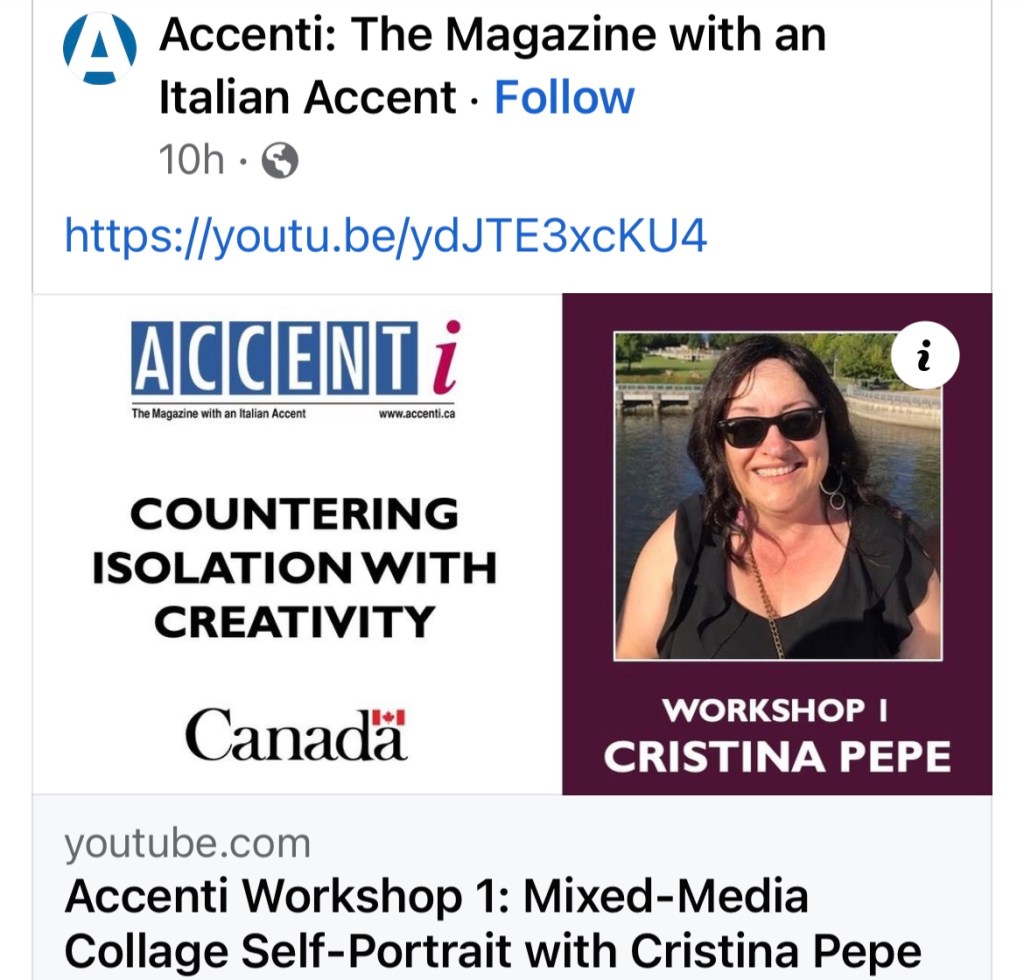
Countering Isolation with Creativity was a Canadian government incentive to engage Canadian seniors post COVID. Accenti Magazine received a grant to host 12 free workshops via Zoom for those over 55.  I had the pleasure of presenting the first workshop May and here it is on Youtube!  I had to figure out how to use 2 cameras so I could talk and also demonstrate.  There was an email sent out to participants in advance with the preparation work.  I am including the information after the video, if anyone is interested.  


Countering Isolation with Creativity: Accenti Magazine Workshops to engage Canadian seniors. Mixed Media Collage Self-Portrait Workshop

Who says ‘selfies’ can only be by phone? Try this mixed-media collage project to make your own selfie at home. In this 90 minute workshop, participants will create a mixed media collage self-portrait.  There is some image gathering and/or preparation work to do in advance. 

Instructions for Workshop preparation and supplies:

For the workshop, you will need 3 self-portrait images.  They can all be the same image, which you will each colour differently, or 3 completely different images.  If you prefer to use a photograph, it is best to use a larger size (5×7 or 8×10). These images can also be prepared during the workshop if you like, but there will probably not be enough time to complete the project. 

To make a self-portrait, use a hand mirror or wall mirror and draw yourself.  Angle the mirror based on the profile you want to draw.  It can be a frontal view, side view, even a view from above if you have ceiling mirrors.  Try to keep the drawing surface as vertical as possible and draw what you see.  Sketch in the main shapes first, then add details and shading.  Put lots of ‘self’ into it.  Use props to express your personality.  If drawing yourself from a mirror is awkward, try drawing from a photo with a plain background. 

Use any media; pencil, pen, sharpie, felt, crayon, eyeliner, lipstick…. The images can be as simple or as complex as you like.  Representational images (meaning it actually looks human) or abstract images will work. 

Make 3 different portraits, or just one, then make 2 photocopies or tracings.  Colour 2 of them, so that you have 3 similar, but different portraits.  If you prefer to work with photographs, it is best if they are larger.  If you only have 1 photo to use, make 2 copies. 

Feel free to start several collages to work on simultaneously and continue after the workshop ends.

Supply List for the workshop:

  • Images; 3 self-portraits on paper, all a similar size
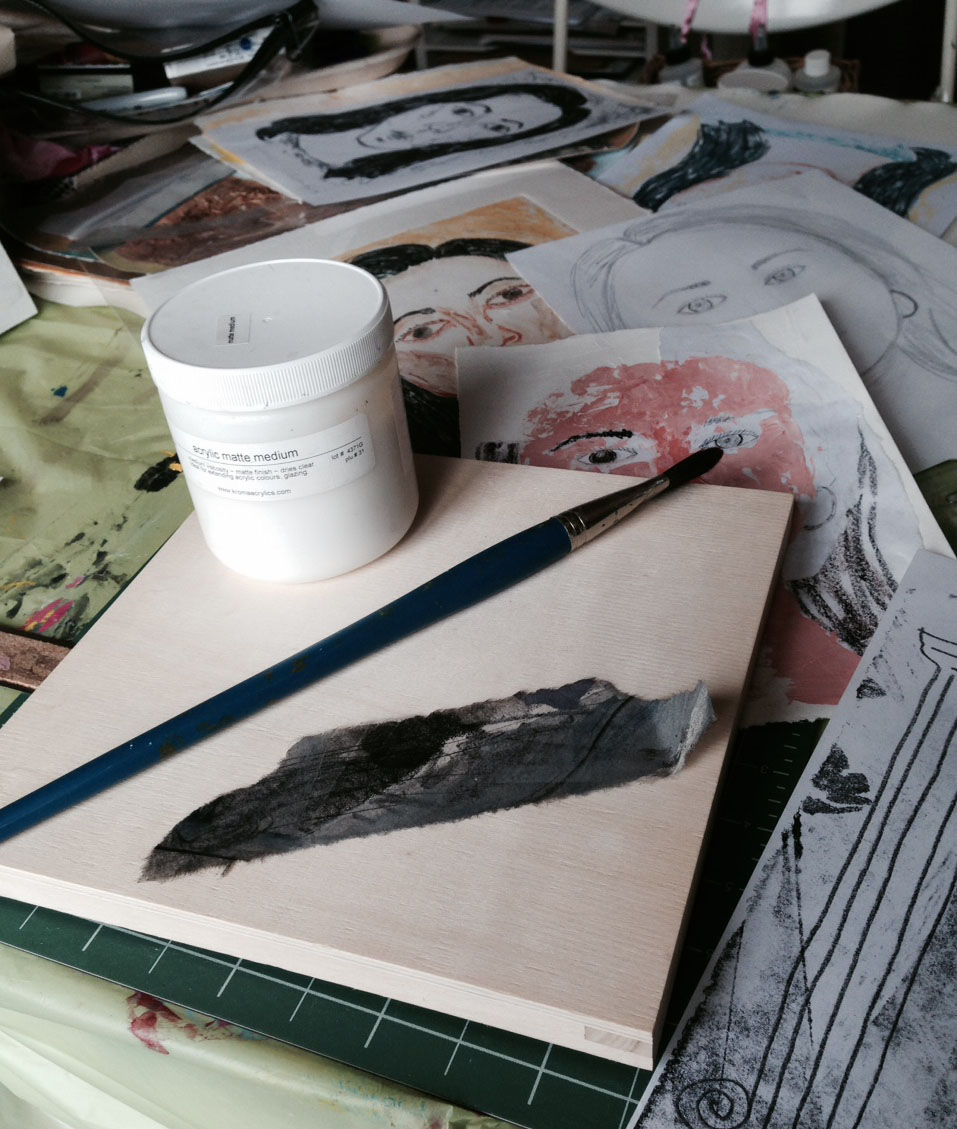
  • A hard surface to glue onto. This can be a wood panel or board, a heavy piece of cardboard or a piece of 250-300 lb paper.  A surface with something already on it works well, since there is already an underpainting!
  • Acrylic matte medium. Matte medium is acrylic paint without the colour. It can be used as a glue and also as a protective coating over top of your work.  White glue can also be used if you do not have matte medium, but it is not archival
  • Paint brush and/or foam brush
  • Scissors
  • Hand mirror (if you need to work on your images)
  • Whatever art supplies you have-anything goes! Ex: acrylic or watercolour paints, pencil crayons, markers, oil or chalk pastels, inks, stencils
  • Bits and pieces of old artwork or fancy paper to collage, magazine clippings, letters, postage stamps, blank or printed rice paper or tissue paper, photos, paper doilies, candy wrappers…..more stuff is better!  

Happy Creating!  If anyone makes a selfie collage, let me know!  Ciao, Cristina


Share this:

  • Click to share on Facebook (Opens in new window) Facebook
  • Click to share on Pinterest (Opens in new window) Pinterest
  • Click to share on X (Opens in new window) X
  • Click to email a link to a friend (Opens in new window) Email
  • Click to share on WhatsApp (Opens in new window) WhatsApp
Like Loading...

Gallerie d’Italia Napoli

26 Sunday Feb 2023

Posted by Un po' di pepe in Art, Art history, Italia

≈ 6 Comments

Tags

Artemisia Gentilleschi, Caravaggio, Napoli, Napoli Centro Storico, Sant'Orsola, Southern Italy, Via Toledo

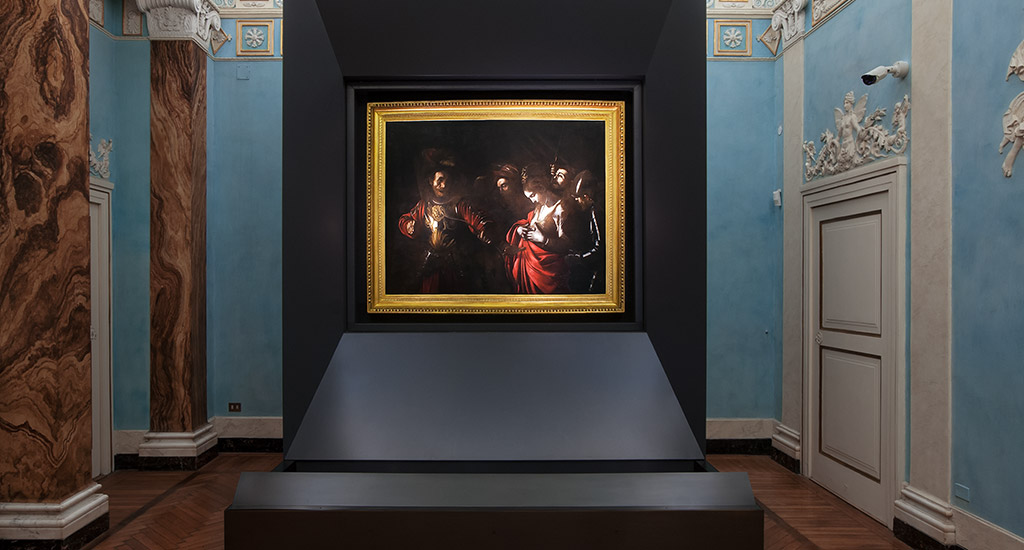
Sant’ Orsola, Caravaggio’s last painting, has a new home! If you have read my posts Pio Monte della Misericordia and L’Ultimo Caravaggio, you know about my adventure to Napoli in search of a Caravaggio painting…only to visit the wrong one.  The ‘wrong’ one was absolutely amazing, but I still wanted to see the intended one.  In June, on my way back from Santorini, I stayed a night in Napoli so I could finally see ‘Il Martirio di Sant’ Orsola/The Martyrdom of Saint Ursula’.  It was painted in May 1610, just before Caravaggio’s death.  For hundreds of years, it was believed to be painted by one of his followers or ‘Caravaggisti’, Mattia Preti.  In 1980 a letter from the agent was found, proving that Sant’ Orsola was painted by Caravaggio.  To read more about the letter and the history of the painting, see L’Ultimo Caravaggio.

I stayed on lively Via Toledo, near the Toledo metro station and in between the port and Quartieri Spagnoli, since it was close to the 1500’s Palazzo Zavalos Stigliano.  A few weeks before my visit, the Napoletano Collection of Banca Intesa Sanpaolo moved 300 m down the street to Palazzo Piacentini at 177 Via Toledo.  Newly renovated Palazzo Piacentini is the new home of Gallerie d’Italia Napoli.  It is a 1930’s building and former home of the Banco di Napoli. The design is described as a modern vision of classical architecture and has 10,000 sq ft of exhibition space.

The atrium features L’Atlante Farnese/Farnese Atlas, a 2nd Century AD sculpture on loan from MANN (Museo Archeologico Nazionale Napoli) under an enormous starry wooden ‘sky’.  At the far end of the ground floor is an actual branch of Banca Intesa Sanpaolo! The building is home to the permanent Intesa Sanpaolo Collection, which includes Napoletani artwork and paintings from the 17th to the 20th Centuries, a Magna Grecia pottery exhibit, space for temporary exhibits, a library and bookshop, and a bistro.

The star of the permanent collection is Sant’ Orsola.  Right beside it is Artemisia Gentilleschi’s Sansone e Dalila/Samson and Delilah (1630-38).  This painting is stunning, but I had to check twice to see that it was an Artemisia.  Those teeny nail scissors are so tame compared to the usual aggression in her Judith and Holofernes paintings with a giant sword and a lot of blood! Incidentally, on the other side of Sant’ Orsola is a Judith and Holofernes painting attributed to Ludovicus Finson that is a copy of a lost Caravaggio.

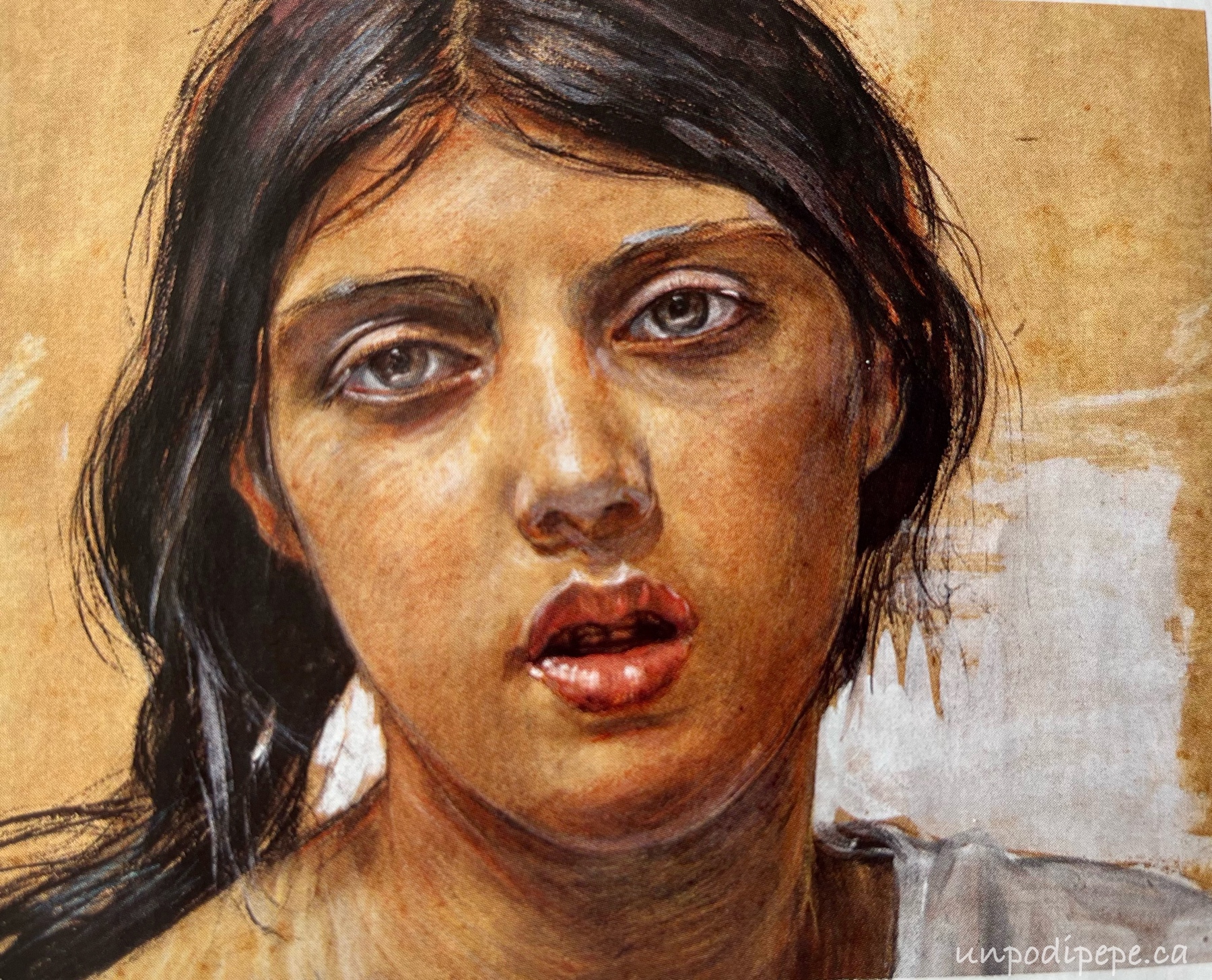
A few of my other favourites from the permanent collection include this amazing loosely sketched painting Fanciulla Napoletana o La Zingara (1885) by Vincenzo Gemito.

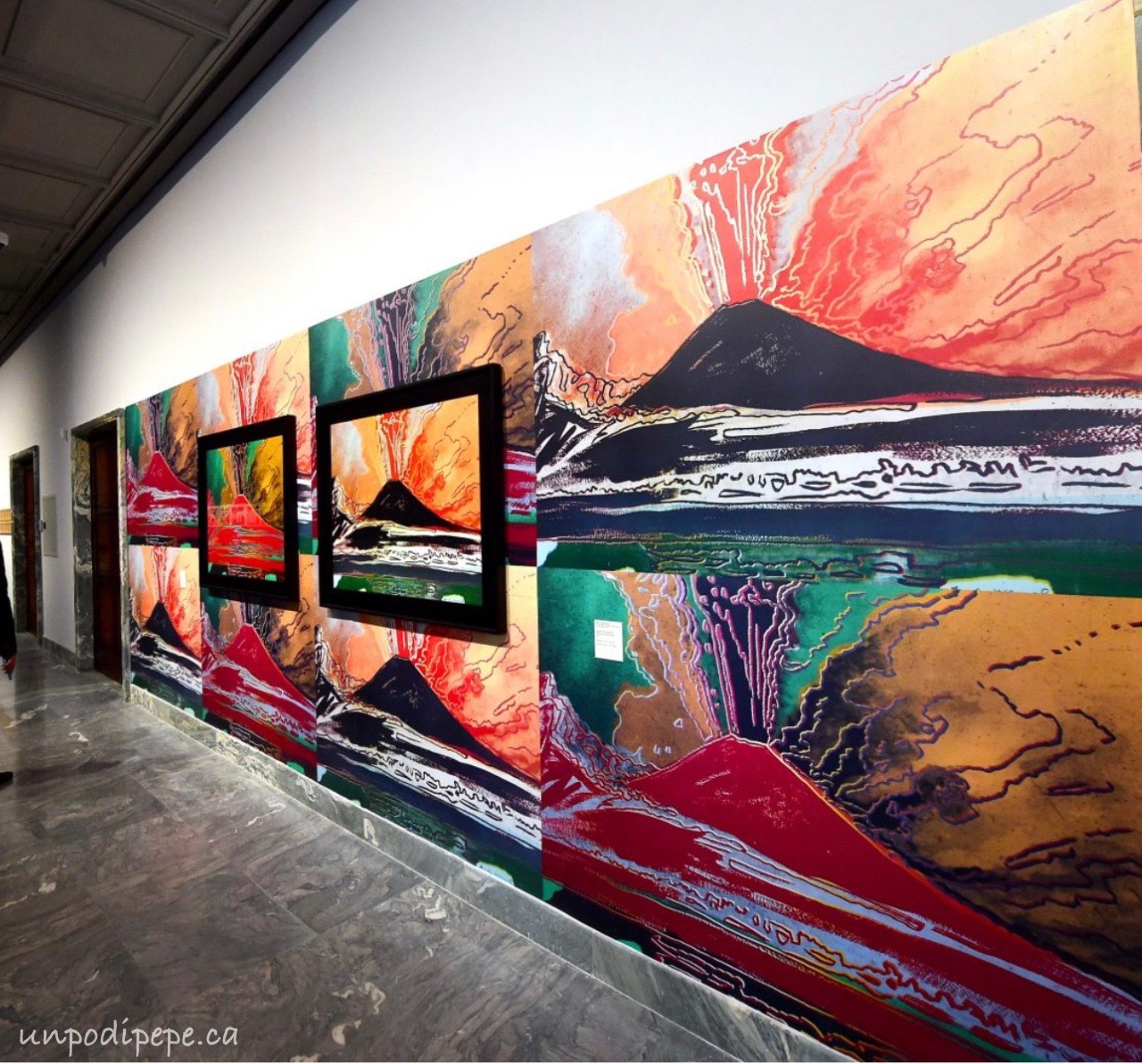
I absolutely love the screen prints Vesuvius (rosso) and Vesuvius (nero) by Andy Warhol (1985) in the 20th Century collection.

The temporary exhibit while I was visiting was ‘Restituzioni’ featuring projects and art restoration presently funded by Intesa Sanpaolo in cooperation with the Ministry of Culture.  There were 200 pieces from all over Italia including paintings, mosaics, jewellery, books and even a giant bell!

Galleria d’Italia Napoli is walking distance from the Toledo metro station.  It is open Tuesday to Friday 10-19 and Saturday/Sunday 10-20.  Mondays closed.  The first Sunday of each month admission is free.  Admission is €7.  Reduced admission is €4 and those under age 18 get in free.  Definitely worth a visit! Ciao, CristinaMartirio di Sant'Orsola Caravaggio's last painting


Share this:

  • Click to share on Facebook (Opens in new window) Facebook
  • Click to share on Pinterest (Opens in new window) Pinterest
  • Click to share on X (Opens in new window) X
  • Click to email a link to a friend (Opens in new window) Email
  • Click to share on WhatsApp (Opens in new window) WhatsApp
Like Loading...

Giornata della Donna~Mariya Prymachenko

08 Tuesday Mar 2022

Posted by Un po' di pepe in Art, Inspiration

≈ 6 Comments

Tags

Giornata Internazionale della Donna, International Womens Day, Women artists

Auguri per la Festa della Donna! Today is la Giornata Internazionale della Donna or International Women’s Day-originally known as International Working Women’s Day. There is no one specific organization or event behind International Women’s Day, but it is celebrated in many countries around the world. It is a day to recognize the achievements of women and a call to action towards gender equality.  More about la festa della donna is in this post.

On International Women’s Day, I like to write about the accomplishments of outstanding women. This year, I have appropriately chosen to share Mariya Prymachenko (1909-1997) with you.  Mariya was a Ukrainian folk art painter and embroidery artist from a peasant family in the village of Bolotnya, about 30km away from Chernobyl.  A self-taught artist, Mariya only went to school for 4 years, then developed polio.  She had several surgeries in Kyiv so that she could stand on her own.  There she also met her partner Vasyl in who was killed in WW2 before they had a chance to marry.  Their son Fedir and his 2 sons Petro and Ivan Prymachenko were/are also artists.

650 of Mariya’s works are in the collection of the National Folk and Decorative Arts Museum in Kyiv.  Mariya’s primitive or ‘naive’ style paintings are bold, colourful and expressive, inspired by Ukrainian folk traditions, the natural environment, and fairy-tales. Pablo Picasso said of her ‘I bow down before the artistic miracle of this brilliant Ukrainian‘-and I do not think he was generous with his compliments!

My first exposure to the 2 paintings pictured here ‘A dove has spread her wings and asks for peace'(1982) and ‘Our army, our protectors'(1972) was on Zöe’s post. In light of the unprovoked aggression on the Ukraine from Russia, I found the imagery and the titles of these paintings extremely moving.

Last week the Ivankiv Historical and Local Museum housing 25 of Mariya’s works was burned in the Russian aggression.  It was thought that the works were lost, but according to her grand-daughter Anastasia Prymachenko, local residents ran in and were able to save 10 of Mariya’s paintings. Hopefully the injustice and aggression taking place in the Ukraine will soon come to an end.

Ciao, Cristina

Share this:

  • Click to share on Facebook (Opens in new window) Facebook
  • Click to share on Pinterest (Opens in new window) Pinterest
  • Click to share on X (Opens in new window) X
  • Click to email a link to a friend (Opens in new window) Email
  • Click to share on WhatsApp (Opens in new window) WhatsApp
Like Loading...

L’ultimo Caravaggio

18 Saturday Jul 2020

Posted by Un po' di pepe in Art, Art history, Roma

≈ 19 Comments

Tags

Baroque art, Caravaggio, Life of Caravaggio, Napoli, Palazzo Zevallos Stigliano, Pio Monte della Misericordia, Roma, Sant'Orsola

Martirio di Sant'Orsola Caravaggio's last painting410 years ago today, Caravaggio died in a tavern in Porto Ercole. This is about his last painting and the time I went to see the WRONG Caravaggio. I rarely use the words wrong and Caravaggio in the same sentence, but in this case it works.

A few years ago, I had an extremely Caravaggio’d out day in Roma.  After my visit to Galleria Borghese, I stopped in to see more Caravaggio works at Santa Maria del Popolo, then met a friend at Sant’Agostino to see the Madonna dei Pellegrini. Whew!  I ended up in a Caravaggio Coma and had the best day ever!

When my friend Romano heard I was going to Sant’Agostino, he immediately offered to meet me there.  I remember thinking this was odd, since I knew he had a full day.  As soon as we approached the painting, and he said ‘Questo è il collo più sensuale nella storia dell’arte /This is the most sensuous neck in the history of art’, I realized he was a fellow Caravaggio nerd.  This was, in fact his favourite painting.  Afterwards, we went to have caffè freddo and talked about Caravaggio for an hour!

Romano had recently been to Napoli and told me about a Caravaggio painting in a former church owned by a bank.  The bank bought the building and it came with the Caravaggio!  Whaaaaat!  I knew I had to see this Caravaggio if I was ever in Napoli.  The name or subject of the painting, and the name of the palazzo was not part of our discussion.

I usually fly home from Napoli, arriving in time to have caffè marocchino and a sflogliatella at the airport, then off I go.  2 days before my departure, I decided to arrive a day early, and spend 24 hours in Napoli.

One of the 4 things on my list to see that day was the painting Romano spoke about. I quickly googled ‘Caravaggio, Napoli, decomissioned church, bank’ and all results came to the painting ‘Sette Opere di Misericordia’/Seven Acts of Mercy’ located in Pio Monte della Misericordia.  All 4 of my ‘must see’ places were walking distance from Piazza Dante, and I booked a B&B appropriately called ‘Il Paradiso di Dante’.

Caravaggio Sette opere di misericordia Pio Monte della misericordiaI had heard of ‘Sette Opere di Misericordia’ but was not familiar with the location, where it has been hanging for over 400 years.  Pio Monte della Misericordia seemed to be a functioning church, so I suspected that something was off. I was not too concerned because it was earthshatteringly amazing, as you can tell by my happy photo.  I visited the 3 other places, ate lots of sfogliatelle and had an amazing day.  Read all about it in the post Un giorno a Napoli.

Returning to the B&B-and access to wifi- that evening, I looked it up again.  As I suspected, Pio Monte della Misericordia is a functioning church with an incredible history.  It turns out I went to see the WRONG Caravaggio!  If only all of my mistakes were this amazing!Pio Monte della MisericordiaThere are 3 Caravaggio works in Napoli.  The one Romano saw was Il Martirio di Sant’Orsola /The Martyrdom of St Orsola, Caravaggio’s last painting before his death, and only recently re attributed to him.  He may have even referred to it as ‘l’ultimo Caravaggio’, which would have been a helpful clue, but I did not remember that detail.Martirio di Sant'Orsola by Caravaggio in Palazzo Zevallos Stigliano

Palazzo Zevallos Stigliano was converted to a bank from 1898-1920 and now houses the Banca Intesa San Paolo Collection.  It was not far out of my way back to Piazza Dante, so I could have made it there if I had realized my mistake earlier.  Mannaggia!

The painting was commissioned by Marcantonio Doria, a young banker and collector from Genoa.  His stepdaughter was about to enter a religious order and take the name Suor Orsola (Sister Orsola).  Lanfranco Massa, the art agent in Napoli wrote to Doria on May 11, 1610 that the painting was finished but not yet completely dry, so he had put it out in the sun (bad idea!) and the varnish had gone a bit soft.  Massa also encouraged Doria to commission more Caravaggio works, as patrons were fighting over him and this was a good opportunity.

Caravaggio arrived in Napoli for the second time in October 1609.  Within days, his violent past caught up to him and he was brutally attacked by 4 armed men.  There were rumours he had been disfigured or killed.  His recovery was long, and he produced only 3 paintings during this time.  Sant’Orsola arrived in Genoa June 18, 1610.  Soon afterwards, Caravaggio set sail for Roma to finally receive a pardon for his murder conviction from Pope Paul V.  He died enroute in Porto Ercole on July 18th 1610 from a staph infection caused by the attack.Book cover L'ultimo Caravaggio, Martirio di Sant'Orsola

The subject of the painting, Orsola, and her 11 companions were captured by the Huns on the way back from a pilgrimage to Roma.  The companions were killed, but Attila the Hun was impressed by Orsola’s modesty and beauty.  She refused to marry him and he shot her with an arrow.  The painting captures the moment of action when the arrow strikes her. She is deathly pale as she looks down at the entry wound with a surprised expression, as if to say ‘Oh my….look…there is an arrow sticking out of my chest’.  The painting is looser and more impressionistic than usual, as if it was painted in a rush.  It is very dark, less chiaro, more scuro and does not have the divine light present in most Caravaggio works.  He was going through a difficult time, which is reflected in the darkness and mood of the painting.  One of the shocked bystanders behind Orsola is Caravaggio in his last selfie.

Caravaggio-Martirio-Sant-Orsola-2

The Doria estate eventually ended up in Napoli, bringing Sant’Orsola back home. In 1854, it was listed in the inventory of Giovanni Doria’s inheritance along with Palazzo Doria D’Angri. Caravaggio only signed one of his works. The Doria family owned this painting for 300 years-so long that over time the artist was forgotten. Oops!  Caravaggio’s influence and style defined painting in Napoli for several centuries.  During a 1963 exhibit in Napoli called ‘Caravaggio e Caravaggeschi’, Sant’Orsola was attributed to Mattia Preti (1613-1699), although several art historians believed it to be  Caravaggio’s work.  In 1973 Baronessa Avezzano sold it to Banca Intesa.

In 1980, in the Doria family archives, art historian Vincenzo Pacelli (1939-2014) found the letter from the agent which I mentioned earlier, confirming that Sant’Orsola was painted by Caravaggio. Finalmente!Martirio di Sant'Orsola Caravaggio's last painting

Palazzo Zavallos Stigliano is on Via Toledo 185, Napoli, not far from the Toledo Metro station.  Admission is €5. It is closed Mondays.  Hours Tu-F 10-18, Sat/Sun 10-20

Links: For more about the life and death of the Baroque Bad Boy – Caravaggio.

To recreate my Caravaggio coma day in Roma –Caffè con Caravaggio a Roma

I hope you found my convoluted story molto interessante!

Ciao, Cristina

Share this:

  • Click to share on Facebook (Opens in new window) Facebook
  • Click to share on Pinterest (Opens in new window) Pinterest
  • Click to share on X (Opens in new window) X
  • Click to email a link to a friend (Opens in new window) Email
  • Click to share on WhatsApp (Opens in new window) WhatsApp
Like Loading...

Quarantine Selfie Collage

30 Monday Mar 2020

Posted by Un po' di pepe in Art, Art projects

≈ 6 Comments

Tags

Art, Art with kids, autoritratto, collage, COVID19 pandemic, mixed media, Quarantine, Selfie

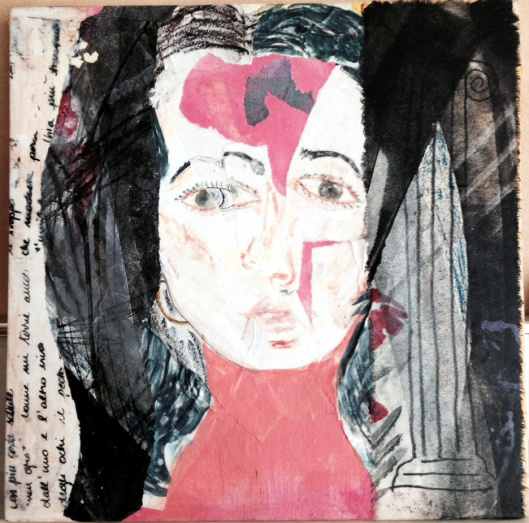
Running out of things to do during this crazy quarantine? Art is a great stress reliever. Try this ‘Quarantine Selfie’, an art project suitable for the whole family. This project was my 2nd ever blog post-back in 2014, and I think only 12 people read it. If the painting looks familiar, it appeared-wearing an N95 mask-a few weeks ago in the post COVID 19 Andrà tutto bene. Stay safe and make art! Ciao, Cristina

Un po' di pepe's avatarUn po' di pepe

Autoritratto, 2013 Autoritratto, 2013

Autoritratto (ow∙tow∙ree∙TRAT∙tow) means self-portrait. Who says ‘selfies’ can only be done via phone? Try this mixed-media collage project to make your own selfie at home.

You will need:
 -3 self portraits on paper, all close to the same size
 -a hard surface such as a wood panel, cradled wood panel or board
- acrylic matte medium. This is acrylic paint without the colour, and it can be used as a glue and also as a protective coating over top of your work
- bits and pieces of old artwork to collage

selfiestuff

  1. Draw or paint 3 ‘selfies’ on paper. If you are like me, you have lots of them lying around from different art classes. You can also make 3 photocopies of the same image, and colour each one differently.
  2. Crumple each selfie into a ball.
  3. Open them up again and tear into several pieces.
  4. Find your…

View original post 169 more words

Share this:

  • Click to share on Facebook (Opens in new window) Facebook
  • Click to share on Pinterest (Opens in new window) Pinterest
  • Click to share on X (Opens in new window) X
  • Click to email a link to a friend (Opens in new window) Email
  • Click to share on WhatsApp (Opens in new window) WhatsApp
Like Loading...

Napoli Street Art

29 Saturday Feb 2020

Posted by Un po' di pepe in Art, Italia, Photography

≈ 20 Comments

Tags

Banksy, Blub, Contemporary art Napoli, Exit/Enter, Jorit, Napoli Centro Storico, Roxy in the box, Southern Italy

volto di Sophia Loren Napoli street artNapoli is gritty, wonderfully chaotic, passionate and anything but boring, making it a perfect place for self-expression.  Graffiti is not a new concept to the Napoletani.  Ancient graffiti can be found in Pompeii, including ‘I was here’ type messages and suggestive notes written on the walls of the brothel.  In the historic center of Napoli graffiti, posters and murals have been elevated to a fine art form.  I was in Napoli on a search for Blub street art and ended up finding so much more.

Volto di Sophia, a colourful Bollywood inspired portrait of iconic Napoletana Sophia Loren is on Vico dei Zuroli, just off of Via dei Tribunali.  The artist is Stikki Peaches, originally from Montreal.Madonna con la Pistola Banksy Napoli street art

Madonna con la Pistola is the only work in Italia by the elusive and mysterious English street artist Banksy.  It is in Piazza Gerolamini, off of Via dei Tribunali.  The Madonna in ecstasy with a gun in place of a halo is the artist’s exploration of the relationship between religion and organized crime.  It has now been covered by glass for protection from the elements.

Street portrait of San Gennaro by Jorit AgochSan Gennaro, a hyperrealistic 15m high portrait of Napoli’s patron saint is by Italian- Dutch artist Jorit Agoch (Jorit Ciro Cerullo).  It is on Via Forcella near the Duomo.  The model is the artist’s friend, a mechanic also named Gennaro.  This could be an homage to Caravaggio, who would take ordinary people off the street to be his models for paintings of extraordinary people. There are more ginormous Jorit murals in the Ponticelli Graffiti park near the airport and in the financial district.Pizza vs McDonalds

Exit/Enter is a street artist from Firenze who paints whimsical, expressive stick figures. There are a few Exit/Enter works around Napoli, including this one which I though was an angry pizza and a clown.  Then I realized the clown looked like a skinny Ronald McDonald.  Sure enough-it is titled ‘Pizza vs McDonald’s’! I do not remember the name of the street, but it was also just off of Via dei Tribunali.

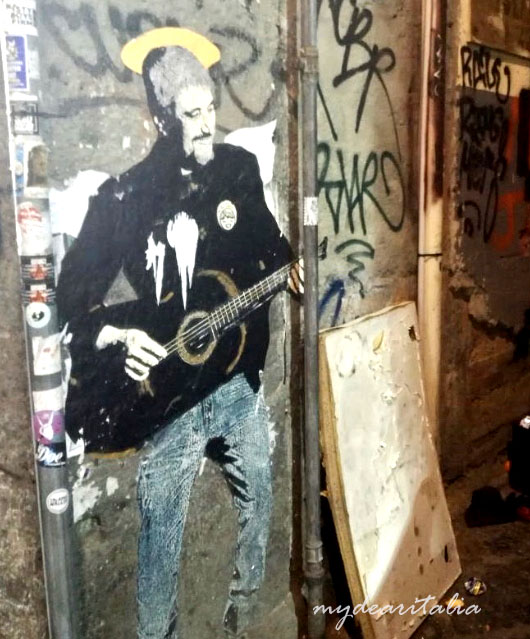
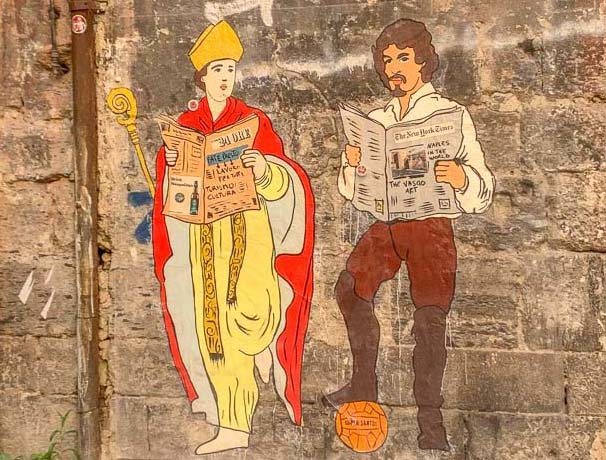
San Pio Daniele TvBoy Street ArtBeloved Napoletano singer Pino Daniele passed away in 2015. Pino with his smile and guitar is sainted by artist TvBoy in San Pino Daniele found in Vico dei Panettieri.  Grazie to Sara from My Dear Italia for the photo.Mission Possible is the colourful mural by Napoletana artist Roxy in the box (Rosaria Bosso). She includes 2 important figures in the history of Napoli; San Gennaro and Caravaggio. They are casually hanging out reading the New York Times and 24 Ore.  It is in Piazza Cardinale Sisto Riario Sforza, near the Duomo, Pio Monte della Misericordia and Via dei Tribunali.

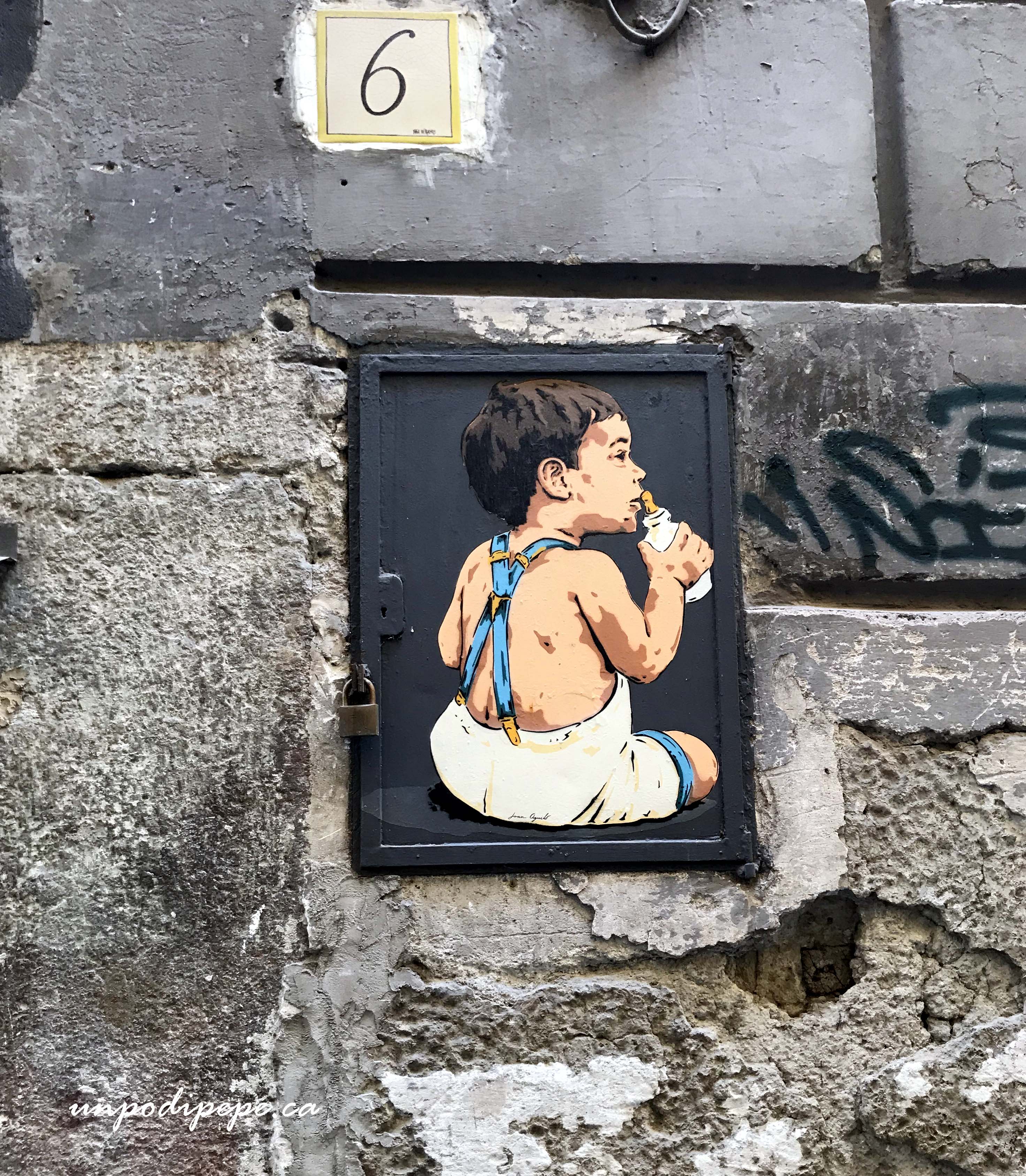
Napoli Street Art StencilThis stencil baby is on an electrical panel is near the lineup to get into the Cappella San Severo.  The signature on the bum says Joan Aquito.

Blub Verdi, NapoliGiuseppe Verdi and a Renaissance woman covered by a shop door are the only Blub work I found on the street after visiting the Blub Pompeii inspired exhibit at the Museo Archeologico Nazionale Napoli.  I was disappointed not to find Totò, another iconic Napoletano.  For more Blub love, read Blub a Napoli and L’arte sa Nuotare.Renaissance woman by Blub

I hope you enjoyed this street art tour of Napoli Centro Storico! More Napoli information can be found in Un Giorno a Napoli. Banksy Madonna con la Pistola Napoli Ciao, Cristina

Share this:

  • Click to share on Facebook (Opens in new window) Facebook
  • Click to share on Pinterest (Opens in new window) Pinterest
  • Click to share on X (Opens in new window) X
  • Click to email a link to a friend (Opens in new window) Email
  • Click to share on WhatsApp (Opens in new window) WhatsApp
Like Loading...
← Older posts

Enter your email address to follow 'un po' di pepe' and receive notifications of new posts by email.

Join 511 other subscribers
Follow Un po' di pepe on WordPress.com

Popular Posts

  • Hairstyling in Ancient Roma
    Hairstyling in Ancient Roma
  • Espresso Cookies
    Espresso Cookies
  • Il Pumo Pugliese
    Il Pumo Pugliese
  • Panforte di Siena
    Panforte di Siena
  • Internment of Italian Canadians
    Internment of Italian Canadians
  • San Nicola
    San Nicola
  • Panettone Fatto in Casa
    Panettone Fatto in Casa

Recent Posts

  • Castel del Monte
  • ‘The Nuances of Love’
  • Hostaria Antica Roma~Eat like an Ancient Roman
  • Santa Maria in Aracoeli
  • Casino dell’Aurora~Villa Boncompagni Ludovisi
  • Nasoni di Roma
  • Bloghiversario #11
  • Fontana di Trevi
  • Acqua Vergine
  • Giubileo 2025
  • Sanremo 2025
  • In Vino there are Memories
  • A Literary Harvest
  • 2024~Un po’ di pepe Year in Review
  • Buon Natale 2024
  • Il Bicerin
  • Mercato Porta Palazzo
  • Torino
  • Catanzaro, Calabria
  • Il Pumo Pugliese
  • Artemisia Gentileschi
  • Cavalli di San Marco
  • Panzerotti
  • Torcello
  • 10 years of Un po’ di pepe!

Categories

Amici e Famiglia Architecture Art Art history Art projects Bilingual posts Blogging Canada Culture Feste Firenze Inspiration Italia Italian Folklore Italian language Italian life Italocanadesi Libri Mangiamo! Orsara di Puglia Parole piacevoli Photography Puglia Recipes Roma Travel Travel tips Uncategorized Vino

Archives

Un po’ di pepe on Facebook

Un po’ di pepe on Facebook

Start a Blog at WordPress.com.

  • Subscribe Subscribed
    • Un po' di pepe
    • Join 511 other subscribers
    • Already have a WordPress.com account? Log in now.
    • Un po' di pepe
    • Subscribe Subscribed
    • Sign up
    • Log in
    • Report this content
    • View site in Reader
    • Manage subscriptions
    • Collapse this bar
 

Loading Comments...
 

    %d