• Home
  • About me/Chi sono
  • Contact

Un po' di pepe

~ …… (oon∙poh∙dee∙PEH∙peh) Cristina writes about interesting stuff /Cristina scrive di cose interessanti

Un po' di pepe

Category Archives: Italia

Casino dell’Aurora~Villa Boncompagni Ludovisi

21 Thursday Aug 2025

Posted by Un po' di pepe in Art, Art history, Italia, Roma

≈ 6 Comments

Tags

Art history, Aurora, Caravaggio, Caravaggio Roma, Guercino, Jubilee2025, Jupiter Neptune and Pluto

Caravaggio 2025 at Palazzo Barberini, the exhibit coinciding with Giubileo 2025, was extended by 2 weeks. Yippee!! This was great for me, since I arrived in Roma the day after it was supposed to end.  As soon as I heard about the extension, I booked tickets before they sold out. It was amazing, and I will post about it after I get home. With the code from my ticket purchase, I was also able to book one of the limited weekend tickets to Casino dell’ Aurora, Villa Boncompagni Ludovisi, a private home, which is not normally open to the public.

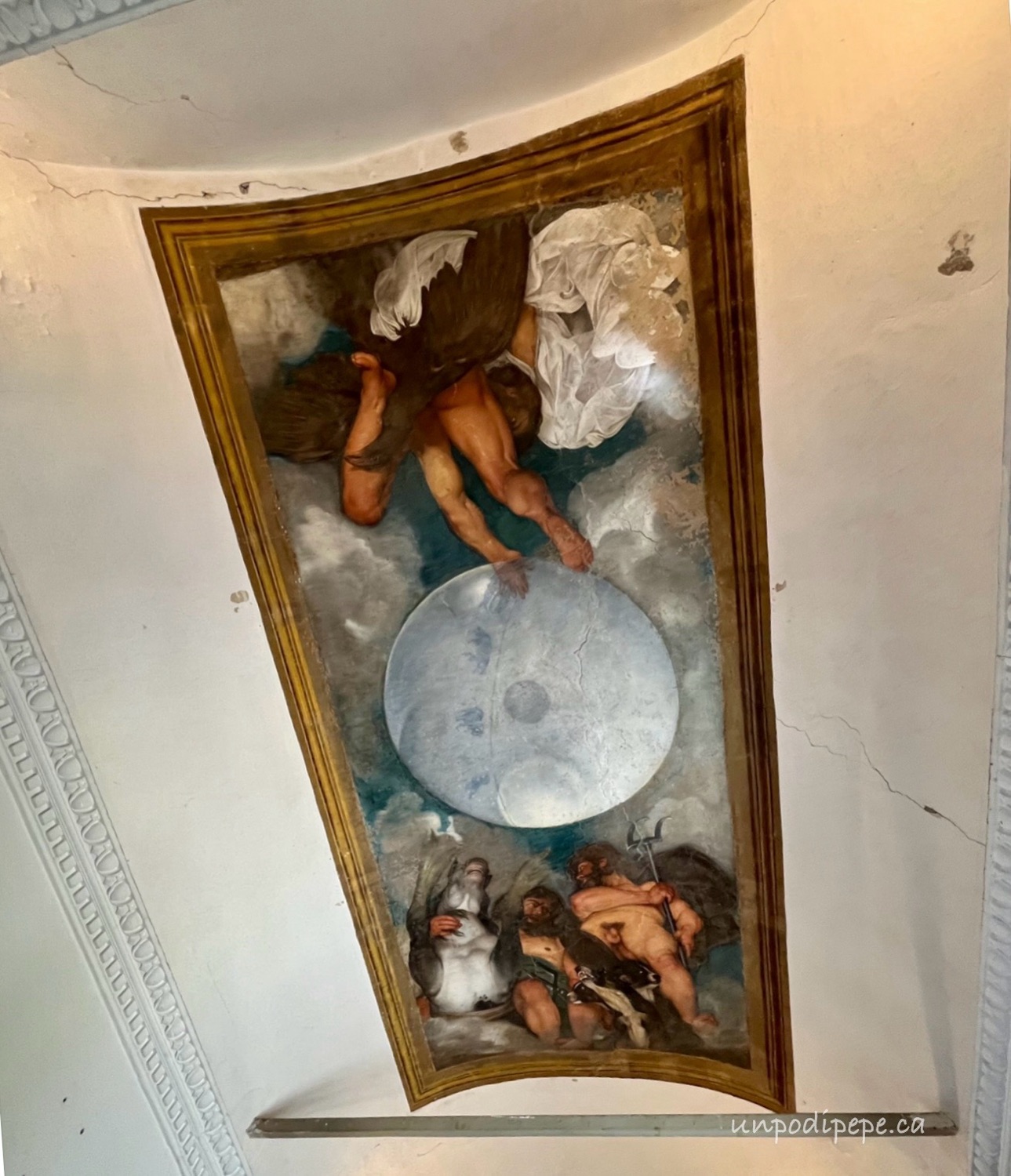
Why am I so excited about this? Villa Boncompagni Ludovisi contains the only ceiling painted by Caravaggio, one of his least accessible masterpieces.

The Villa is the only remaining part of a large suburban retreat, built by Cardinal Francesco del Monte in the 16 th Century. The cardinal was an early patron of Caravaggio and he had an interest in alchemy*. He commissioned 25 year old Caravaggio to paint the ceiling of his small alchemy lab in 1597.

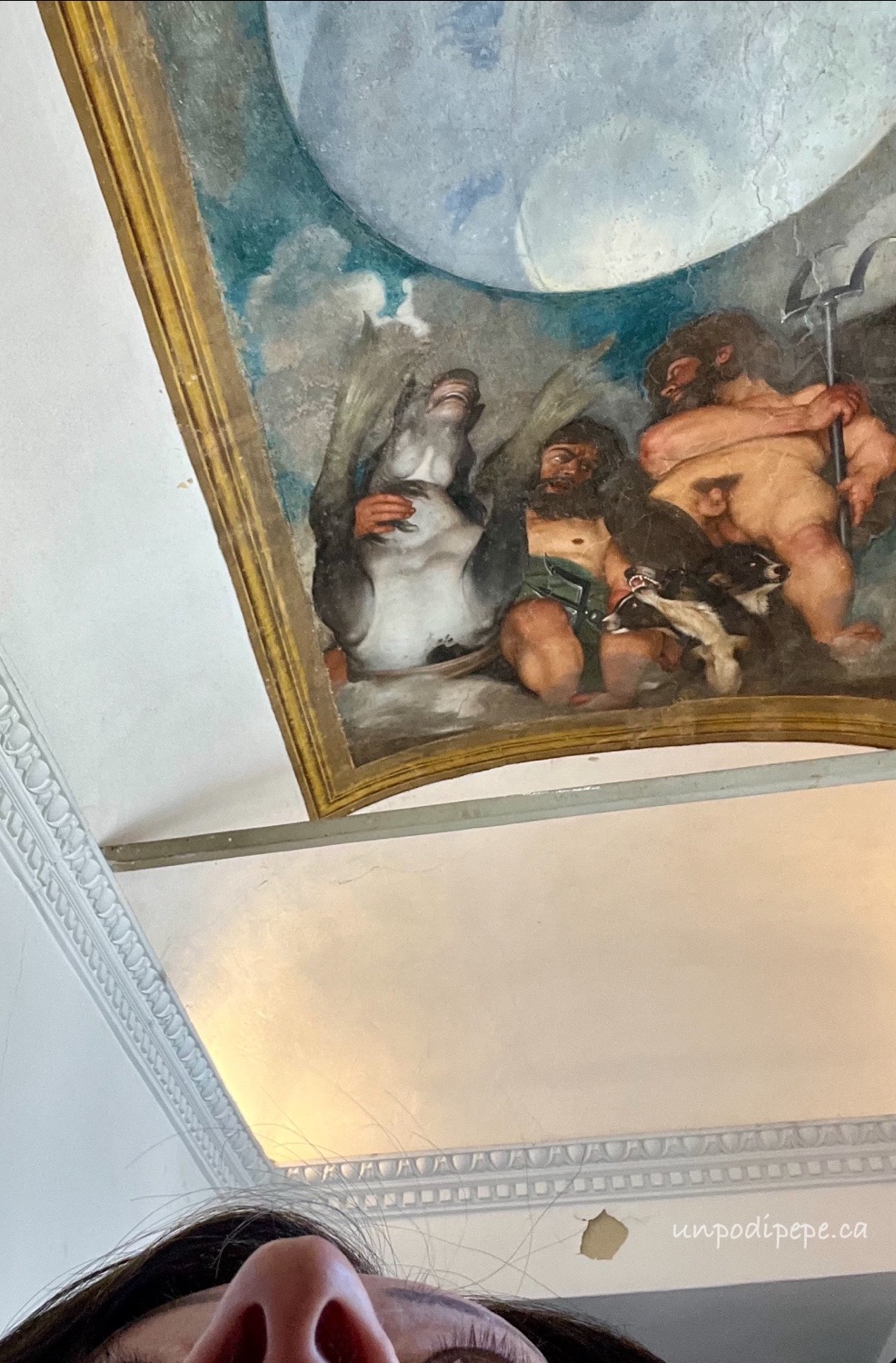
The painting ‘Giove, Nettuno e Plutone’ -Jupiter, Neptune and Pluto is an alchemical allegory with the 3 Olympian gods and their symbols and animals from classical mythology. For Jupiter these are air, sulphur and the eagle, for Neptune water, mercury, a trident and the hippocampus (a mythological seahorse) and for Pluto, earth, salt and Cerberus the 3 headed dog.

This painting may have been a middle finger salute early in his career to critics who accused Caravaggio of having a poor sense of perspective. The 3 figures are foreshortened in the most dramatic way possible. Jupiter floats in the sky with an eagle and reaches out to move a luminous celestial sphere where the sun revolves around the earth. Zodiac signs are barely visible in the center. Neptune and Pluto appear to be standing right over you, with Neptune’s private parts dangling above your head!

Caravaggio used his own face for all 3 figures. It was common for him to insert his self-portrait into a painting, but not as the main focus.  In this case, it is likely because this early in his career, he could not afford to pay a model, and he had not started using everyday people as models.  Since the 3 figures are supposed to be brothers, it worked. Cerberus may have been painted from his own dog.

This ceiling painting is unusual as it is oil paint on dry plaster, so essentially it is a mural. It is not a fresco, which is painted with pigments directly into wet plaster. The painting does not have that ‘chalky’ look of a fresco. The size is 300 by 180 cm, about 10’ by 6’. It is on the upper floor, reached via the staircase seen below, in the main ‘Aurora’ reception room.

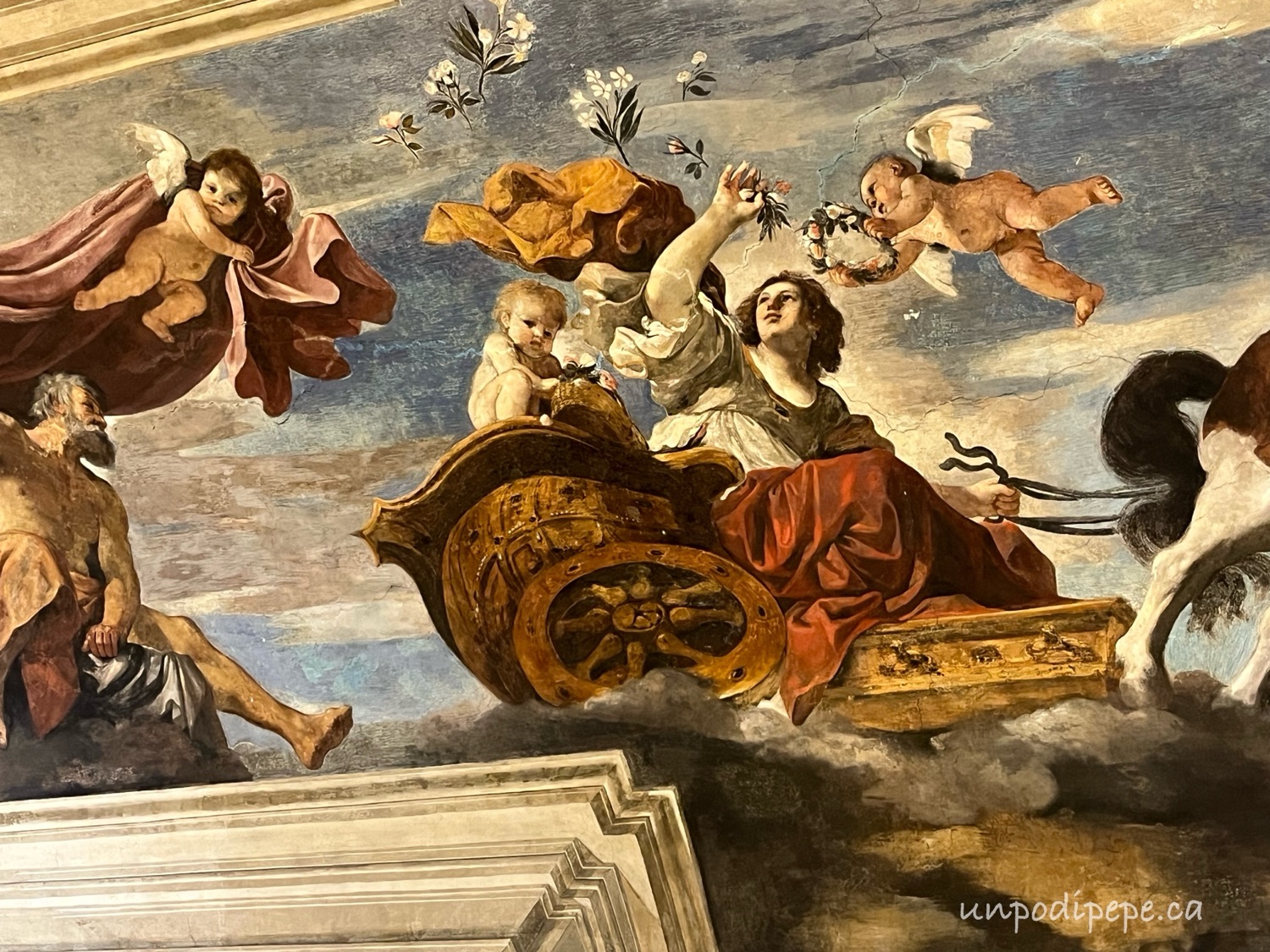
In 1621, del Monte sold the villa and grounds, a 30 hectare (74 acre) area between Porta Pinciana and Porta Salaria, to Cardinal Ludovico Ludovisi. In 1621, Guercino also completed the Aurora fresco on the ceiling of the main reception hall. This is why the villa is also referred to as Casino dell’Aurora or Villa Aurora. Guercino had help with the illusionist architectural details by the notorious Agostino Tassi. Read more about him in the post Artemisia Gentileschi.

The princes Boncompagni-Ludovisi subdivided and sold the property in 1883. Roma’s Ludovisi district is on these former grounds. The 2200 m² (2400 sq ft) villa and a small  parcel of land remained with the Ludovisi family.

Since the 2018 death of the owner, Prince Niccolò Boncompagni Ludovisi, there has been an inheritance dispute between his American widow and the 3 sons from his first marriage. The widow was evicted in 2023 and a court ordered sale made the villa the most expensive house ever to go on the market. Valued at €470 million, it is still for sale and also needs €10 million worth of restoration work $$$! Hopefully the family comes to some sort of agreement and Villa Boncompagni Ludovisi will eventually become a museum. I will purchase Lotto tickets in the meantime 🤞.

Casino dell’Aurora, Villa Boncompagni-Ludovisi is located at Via Lombardia 46, a short walk from Porta Pinciana and the Marriott Grand Hotel Flora. It is not open to the public and there are no plans for public viewing at this time.  If you somehow happen to get the opportunity-definitely go! Now that I have seen Giove, Nettuno e Plutone, I have seen all 25 of Caravaggio’s paintings in Roma!

*Alchemy was a precursor to actual science. It was aimed at discovering the ‘Philosopher’s Stone’ to turn other metals into gold, and the elixir of youth.

Share this:

  • Click to share on Facebook (Opens in new window) Facebook
  • Click to share on Pinterest (Opens in new window) Pinterest
  • Click to share on X (Opens in new window) X
  • Click to email a link to a friend (Opens in new window) Email
  • Click to share on WhatsApp (Opens in new window) WhatsApp
Like Loading...

Nasoni di Roma

18 Sunday May 2025

Posted by Un po' di pepe in Italia, Roma

≈ 4 Comments

Tags

Aqua Virgo, Roman Fountains, Summer in Roma

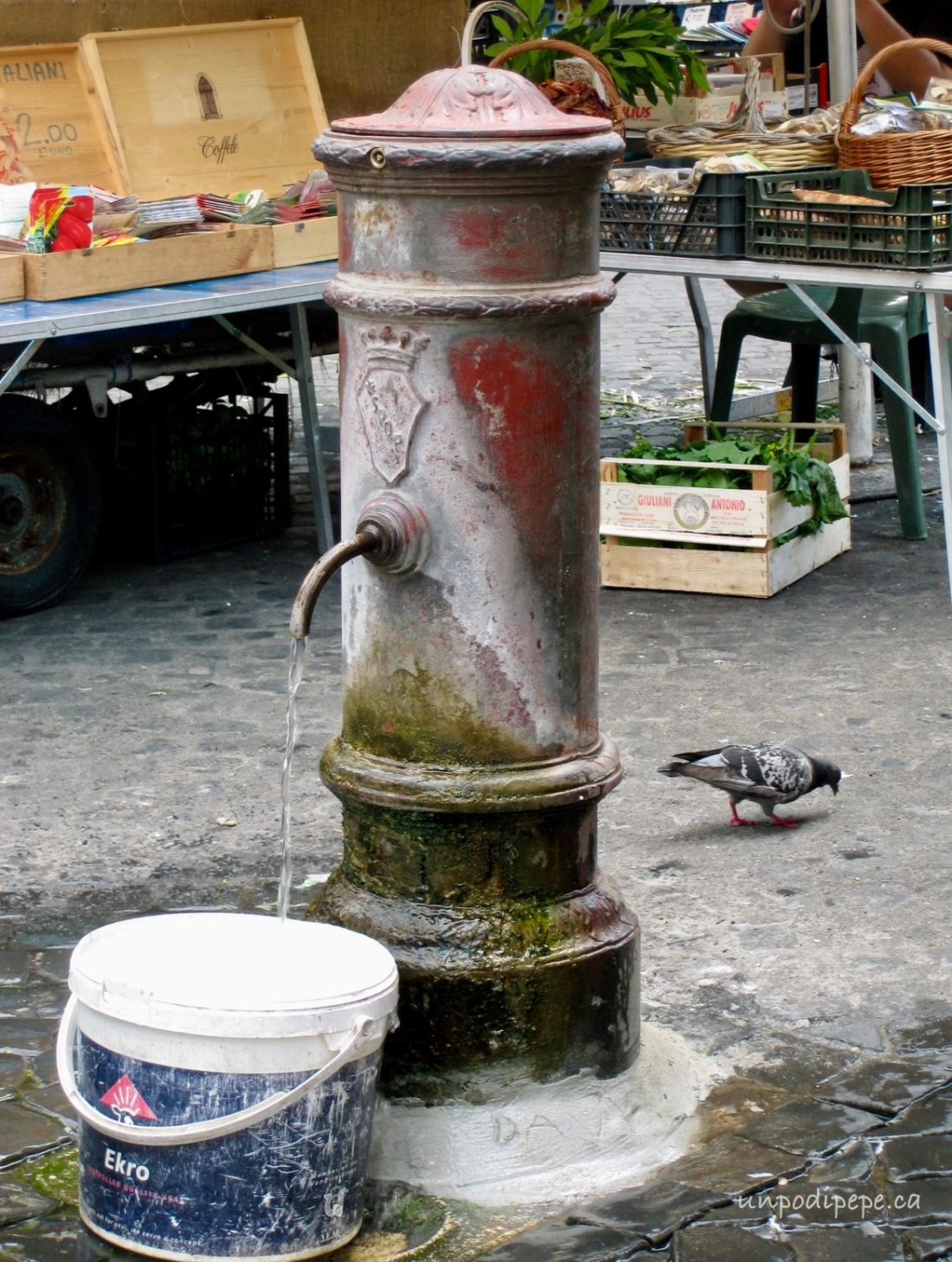
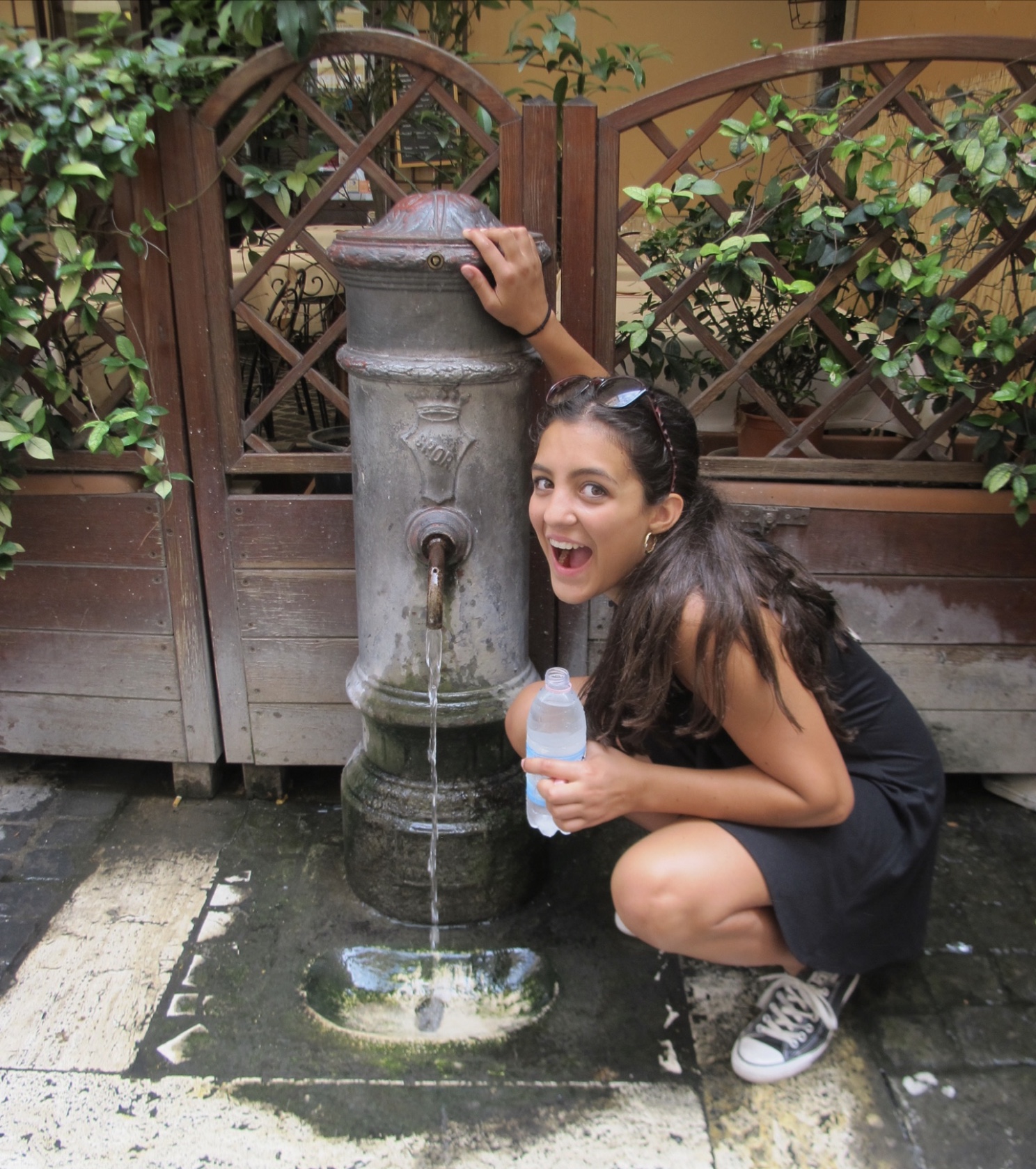
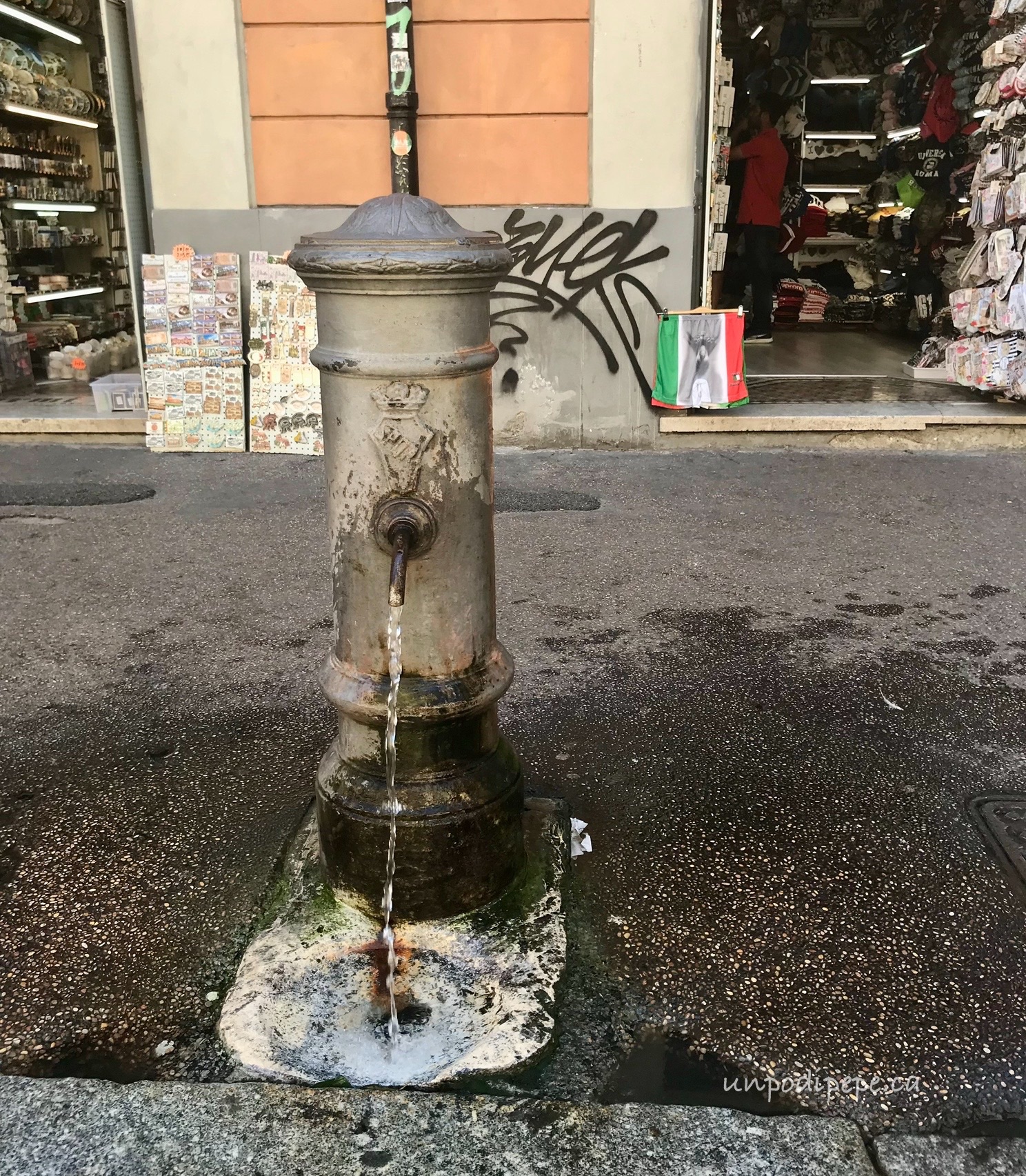
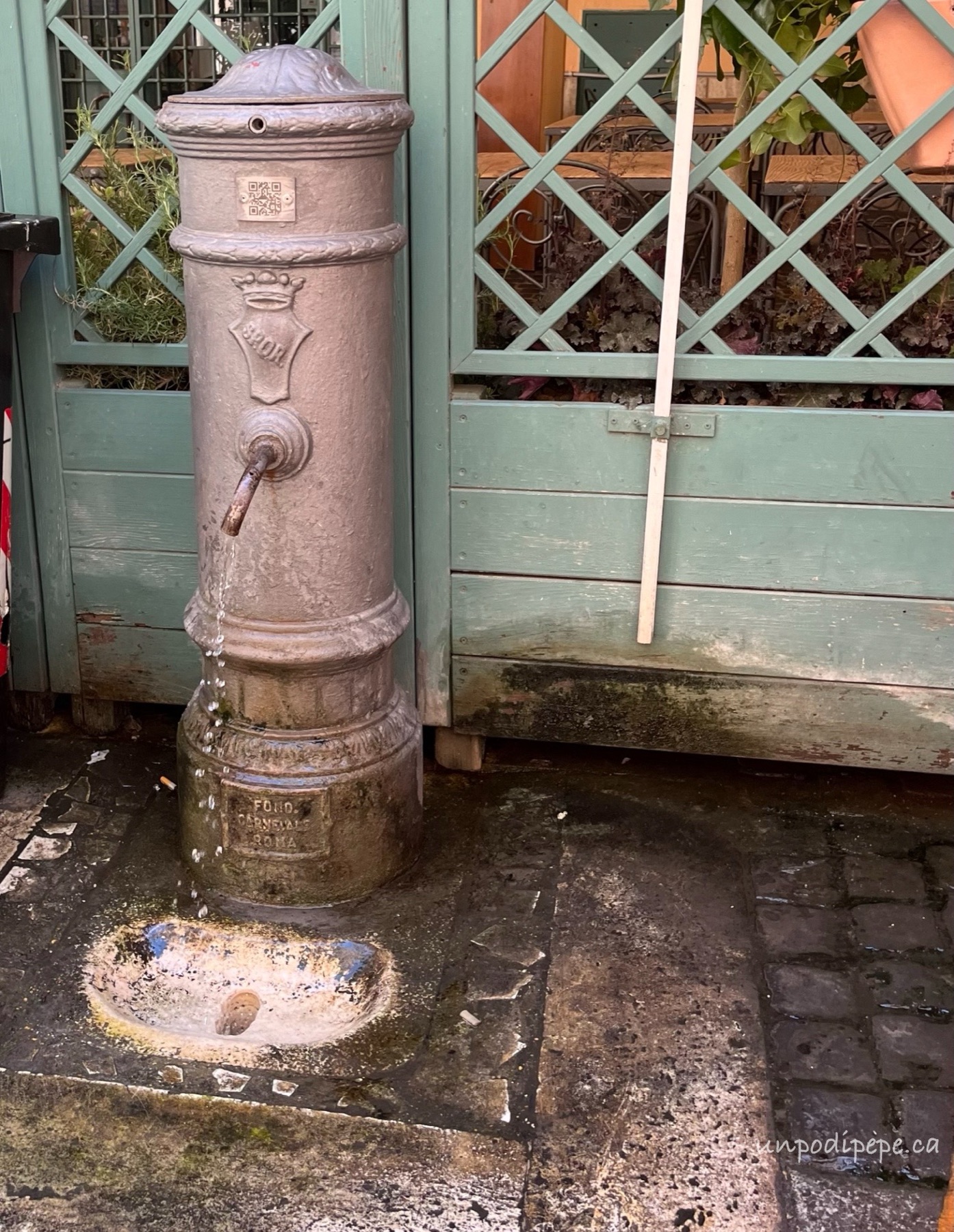
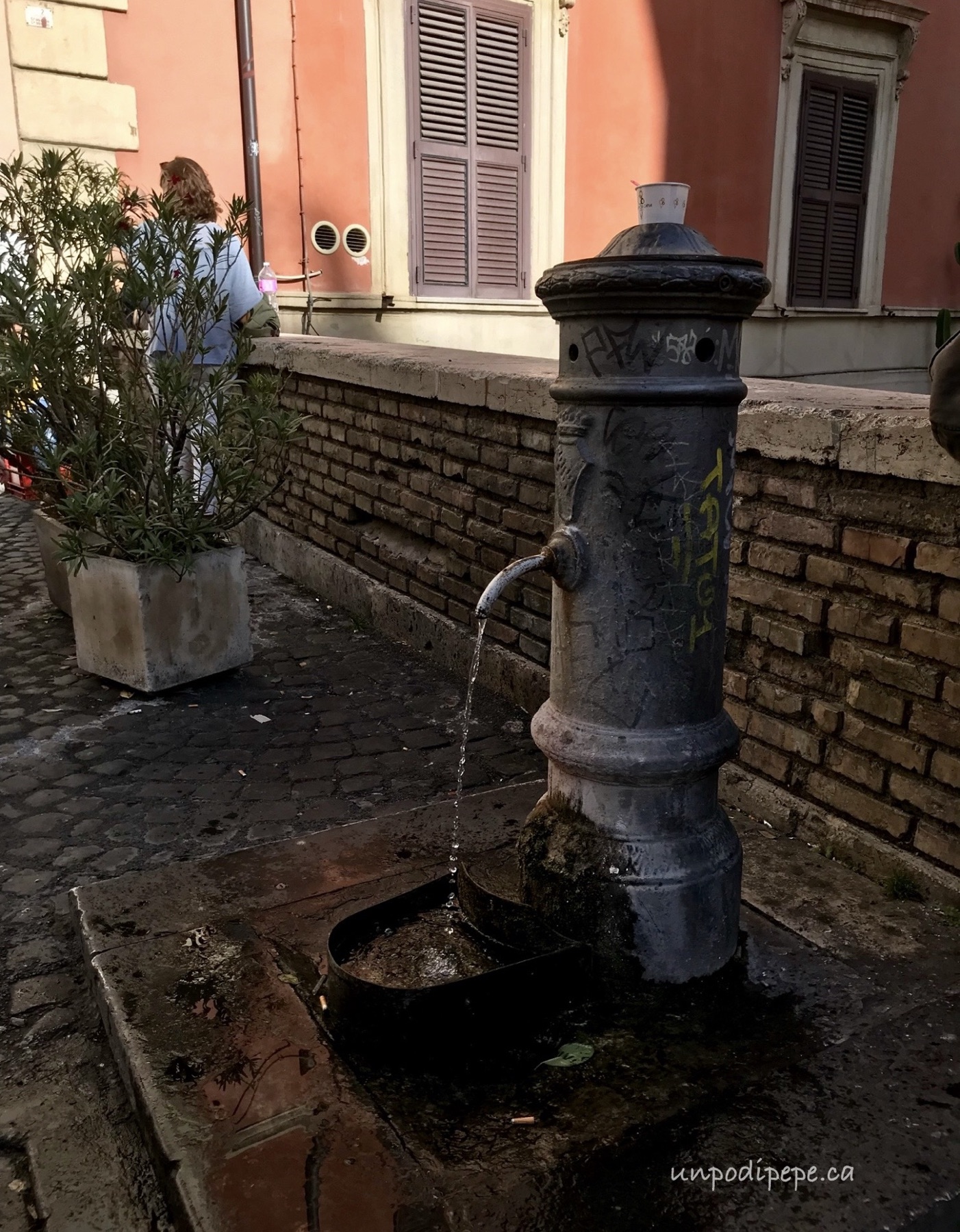
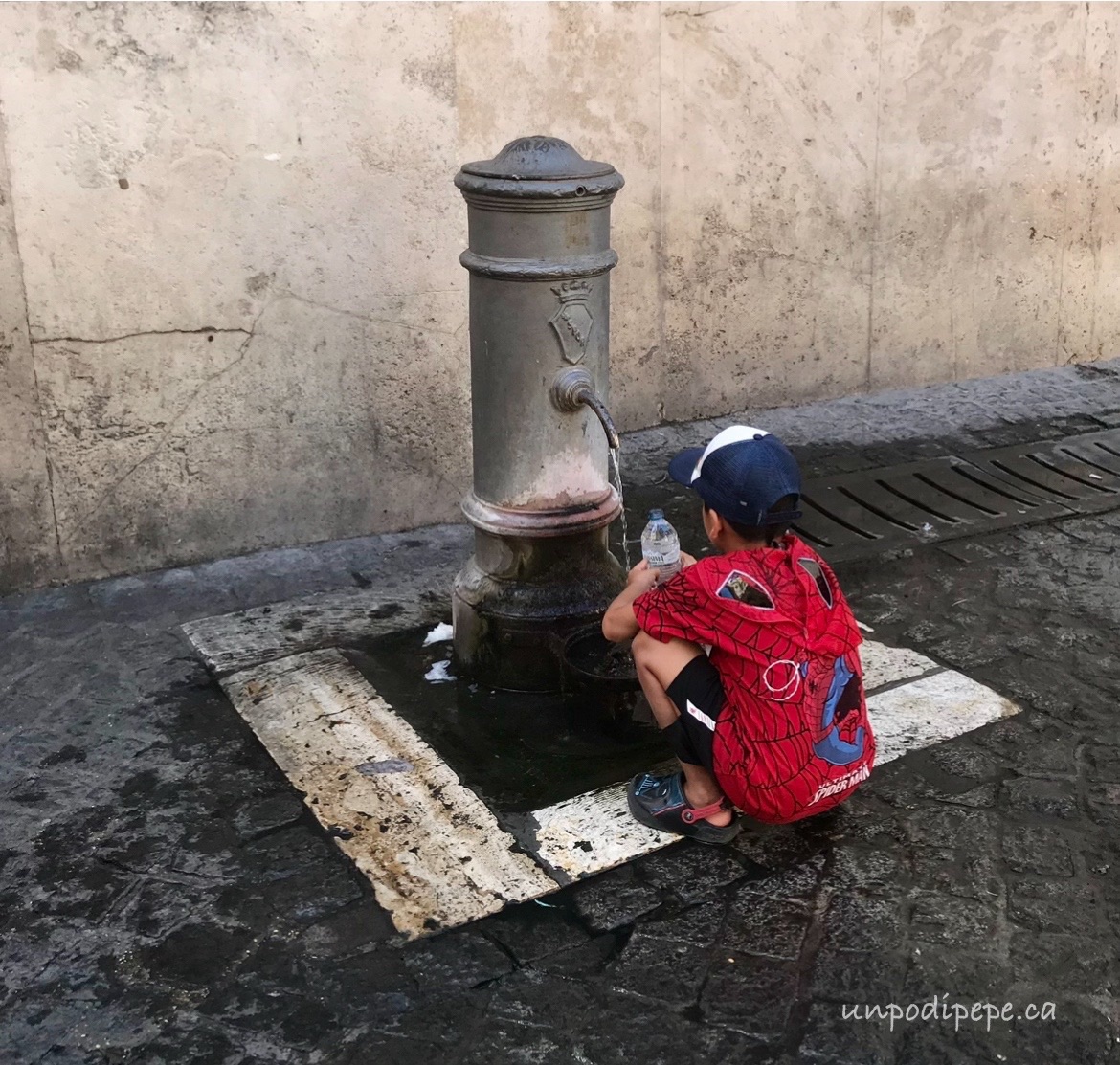
The characteristic cast iron fontanelle, small drinking fountains found throughout Roma, are affectionately known as nasoni.  Nasoni means ‘big noses’, and refers to the curved metal spout, which has a small hole at the top of the arch.  Blocking the spout with your finger will force the water up from hole in an arc, like a drinking fountain.  This is handy if you want to drink but do not have a water bottle!

The nasoni date back to 1874, after Italian unification when mayor Luigi Pianciani installed fountains to provide free, accessible public drinking water for the health and hygiene of Romans and visitors.   This is often referred to as ‘l’acqua del sindaco’, ‘the water of the mayor’.  Some of the fountains in central Roma are supplied by a functioning ancient aqueduct, the Acqua Vergine. Nasoni get their water from Roma’s main drinking water reserve, Lago di Bracciano, 32 km (20 mi) to the northwest.

There were originally 5,000 nasoni, but the number decreased as it became more common to have domestic water connections.  Today there are over 2500 nasoni in greater Roma, including 280 in the historic center, and 114 in outer areas, such as Fiumicino. For the 150th anniversary of the Nasoni in 2004, 3 new ones were installed near the Colosseo.A nasone (singular) weighs ~100 kg and is 1.2 m high (almost 4 ft). Its classic cast iron cylindrical shape allows drinking water to flow continuously. Most nasoni have a metal grate to collect the water.  The first Nasoni had 3 spouts, decorated with dragon heads.  In the 1920’s the dragons became an endangered species and since then, nasoni are cast iron cylinders with a single smooth curved ‘naso’ spout.  Some of them have the SPQR insignia and quite a few are decorated with graffiti.  The 3 oldest nasoni are the original dragon spout design.  They can be found on Via di San Teodoro, in Piazza della Rotonda in front of the Pantheon, and at the Fontana delle tre Cannelle on Via della Cordonata near Palazzo Quirinale.

Besides quenching the thirst of Roma, nasoni also have a hydraulic purpose.  They act as surface ventilation valves for the underground water supply system.  This releases pressure in pipes, and the continuous flow of water keeps it from stagnating, preventing uncontrolled bacterial growth.  The continuous flow may seem like a waste of drinking water, but in fact the percentage of waste is only about 1%, while waste due to old leaky pipes in poor condition would be over 30%.  It costs the city €3-5/day to operate each nasone, depending on the water flow.

The water company ACEA has the Waidy Wow waterfinder App that maps out 50,000 drinking water points including nasoni and other fountains throughout the country. Wanted in Rome, an online English magazine has a Nasoni map of Rome. The Nasoni di Roma App focuses specifically on locating nasoni.With the nasoni, plus 90 ornamental fountains offering uninterrupted drinking water, Roma is the city with the most drinking fountains in the world.  Installed to provide accessible fresh drinking water for thirsty Romans and visitors, the nasoni are now iconic symbols of Roma, representing community and hospitality.  Don’t forget to bring a water bottle! If you are visiting in summer, check out Beat the heat: Surviving Summer in Roma.

Buon Viaggio, Cristina

Share this:

  • Click to share on Facebook (Opens in new window) Facebook
  • Click to share on Pinterest (Opens in new window) Pinterest
  • Click to share on X (Opens in new window) X
  • Click to email a link to a friend (Opens in new window) Email
  • Click to share on WhatsApp (Opens in new window) WhatsApp
Like Loading...

Fontana di Trevi

13 Sunday Apr 2025

Posted by Un po' di pepe in Architecture, Italia, Photography, Roma

≈ 13 Comments

Tags

Aqua Virgo, Fontana di Trevi, La Dolce Vita, Palazzo Poli, Roman Fountains, UNESCO World Heritage Sites

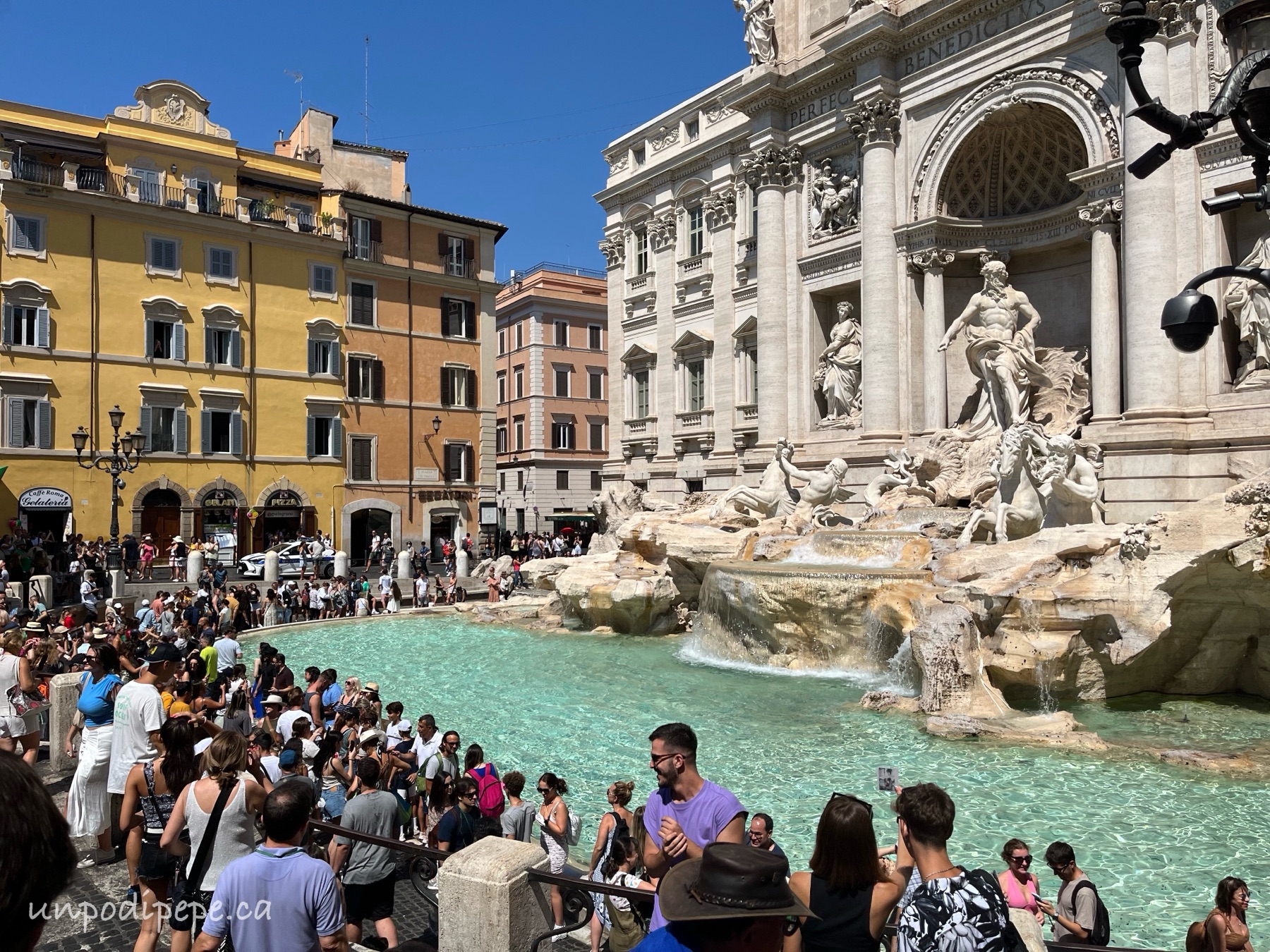
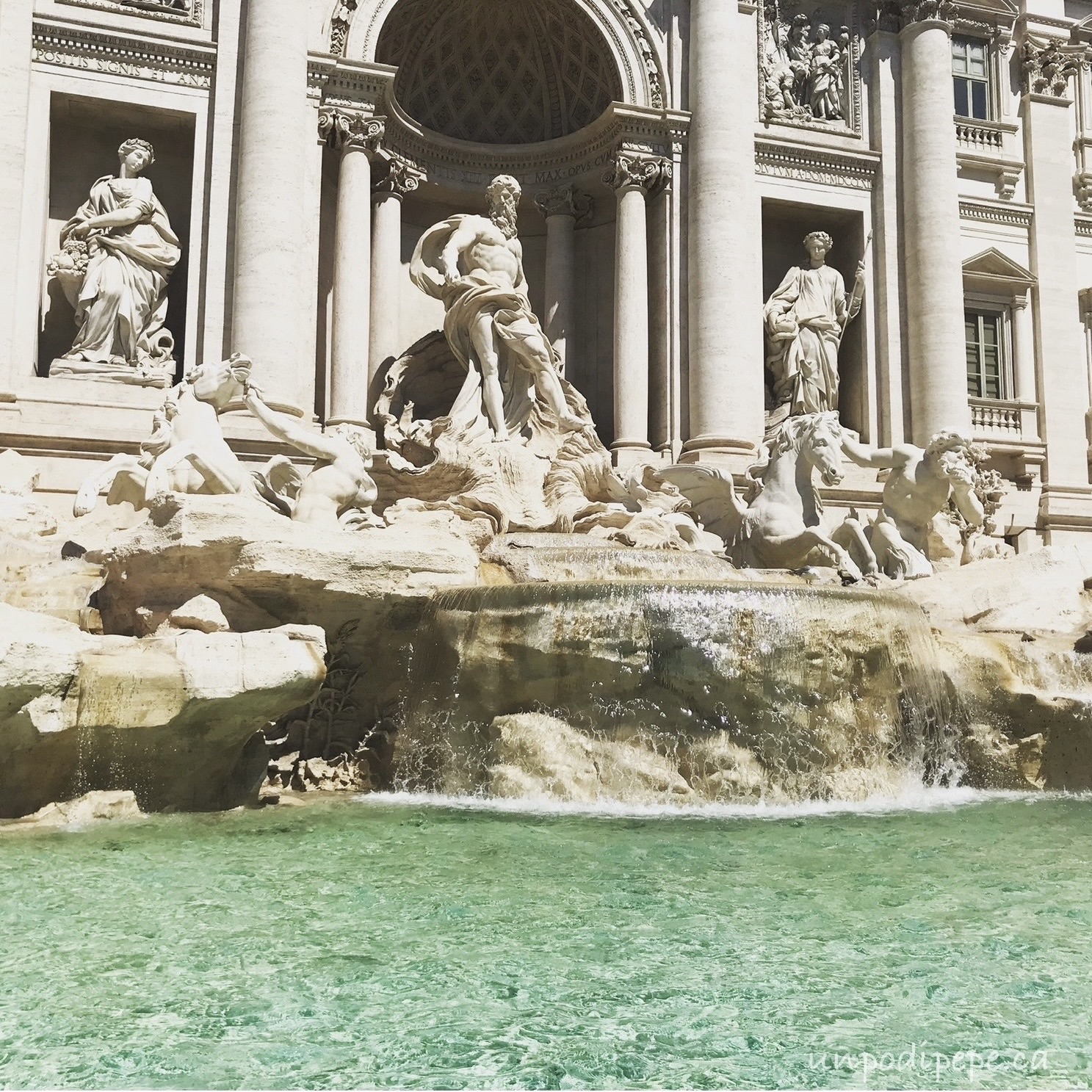
The Fontana di Trevi is one of the most iconic structures in Roma-a Baroque masterpiece with a direct link to the Ancient Roman Empire.  Every year, millions of tourists visit, trying to capture a perfect photo, tossing in a coin to ensure a return visit to Roma.  Sometimes it can feel like a mosh pit! The water comes from an ancient aqueduct, Aqua Virgo (Acqua Vergine in Italiano), 9 m below ground, built in 19 BC.  It still functions today and provides water to the fountains in Central Roma.  Find out more in the previous post Acqua Vergine.

The Fontana di Trevi is named for the piazza. Tre vie means 3 roads, refering to Via De’Crocicchi, Via Poli and Via delle Muratte that come together at Piazza Trevi. The Fontana di Trevi is the final destination of Acqua Vergine.

There was always a fountain to mark the end point of Acqua Vergine. The medieval fountain was a simple rectangular shape with 3 spouts pouring water into 3 basins.  In the Baroque era, when everything was over the top and extravagantly decorated, Pope Urban found the existing fountain too boring.  He commissioned the Master, Gian Lorenzo Bernini to sketch a design, but they both died before it got going.  The next Pope held a contest, and Nicola Salvi’s design was chosen.  Construction started in 1732, with many artists involved during the 30 years it took to complete. In a very modern fashion, construction of the Fontana di Trevi was financed with proceeds from the Roman lottery.

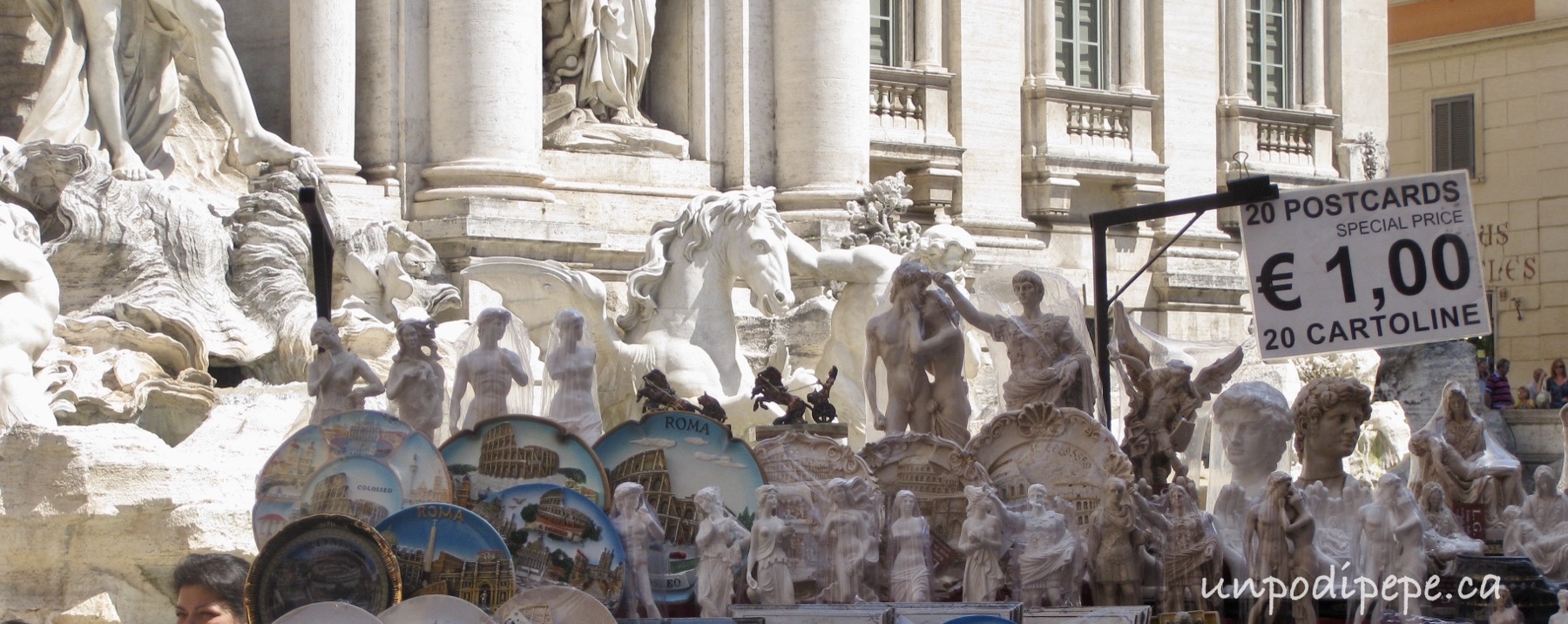
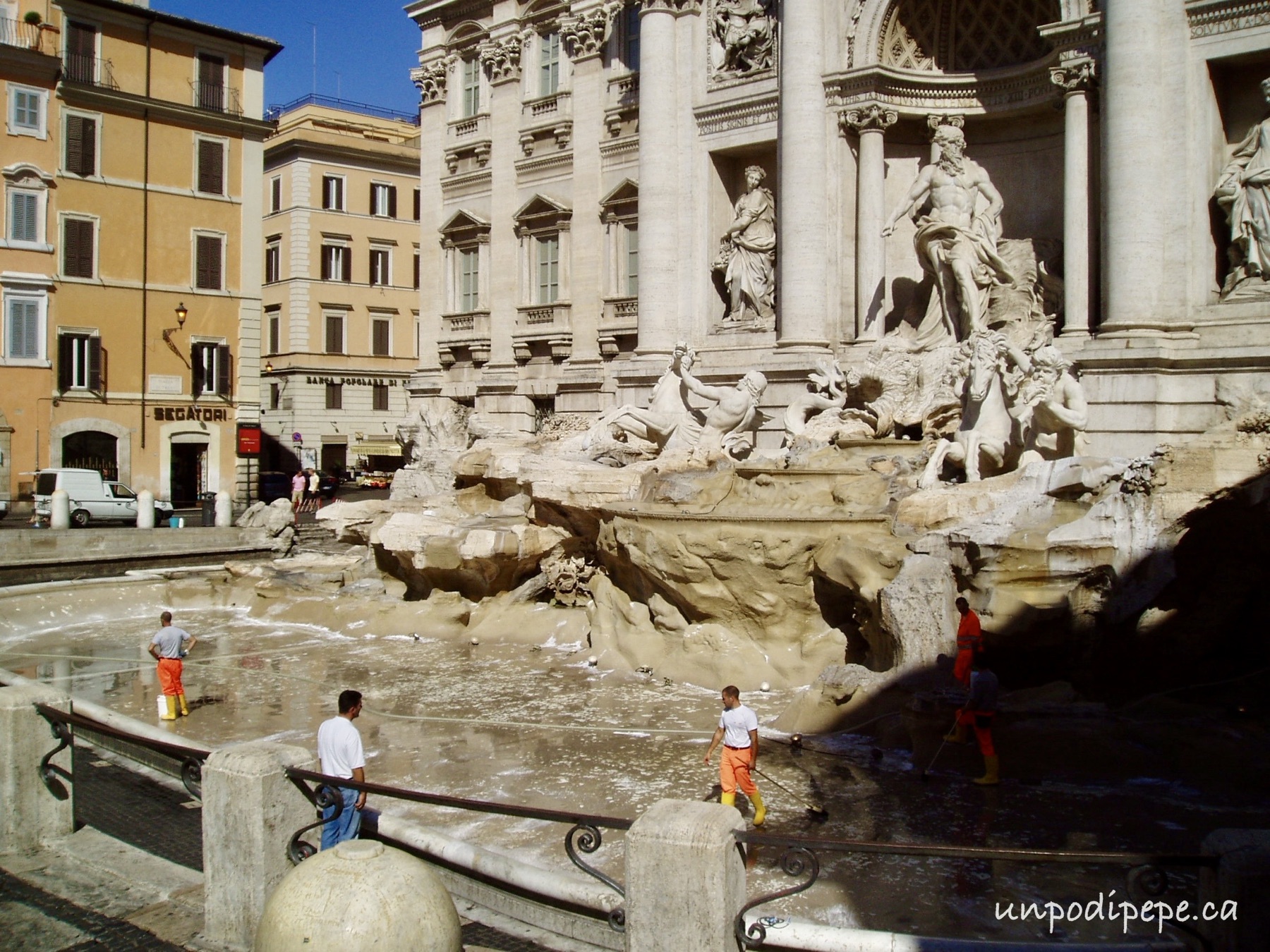
The symmetrically balanced theme ’Taming the Waters’ was built right onto the existing building. Palazzo Poli was given a new façade featuring a giant order of Corinthian columns. The main sculpture is Greek Titan Oceanus, not Neptune as is commonly thought.  He is in a large half-shell pulled by 2 seahorses and tritons (sea messengers) with a sea reef below them.  The façade and sea reef are made of Travertine from Tivoli, and the sculptures are Carrara marble. Above and on either side of Oceanus are 2 bas reliefs illustrating the origins of Acqua Vergine.  One depicts Marcus Agrippa ordering construction of the aqueduct and the other the vergine, a young girl leading Roman soldiers to the spring.  The Fontana di Trevi is 26 m (~85 ft) high and 49 m (~160 ft) wide. It spills 80,000 cu m (2, 825,000 cu ft) of water per day! Today the water is continually recycled.

Tossing a coin in the water with the right hand over the left shoulder while facing away from the fountain is thought to ensure a return to Roma. I never miss this opportunity-even during renovation in 2015 I found a way to toss one in! This tradition dates back to the Ancient Romans who tossed coins in water so the gods would protect them on their journey and ensure a safe return. Throw in a second coin to find true love and a third for wedding bells! I believe these last 2 are just from the 1954 movie ‘3 coins in the Fountain’, not the Ancient Romans!  According to another old tradition, drinking the water with your beloved will ensure eternal love and fidelity. Do not drink the water! 

Although the water comes straight from a spring via an ancient aqueduct, it is now continually recirculated. In 1998 when the Fontana was refurbished, recirculating pumps were installed. On the far right and up a few stairs is the Fontanella degli Innamorati (Little Lovers’ Fountain) a small rectangular basin with 2 crossing spouts. Take a drink from this instead-the water is also from Acqua Vergine!

All of those coins in the water can’t be hygienic either.  Approximately €3,500 per day is collected nightly and given to the charity Caritas. The money funds a program providing supermercato cards Roma’s needy.   There are regular attempts to steal the coins from the basin, which of course is illegal.  The water has been vandalized many times, painted red and most recently dyed black with charcoal by climate eco anarchists.

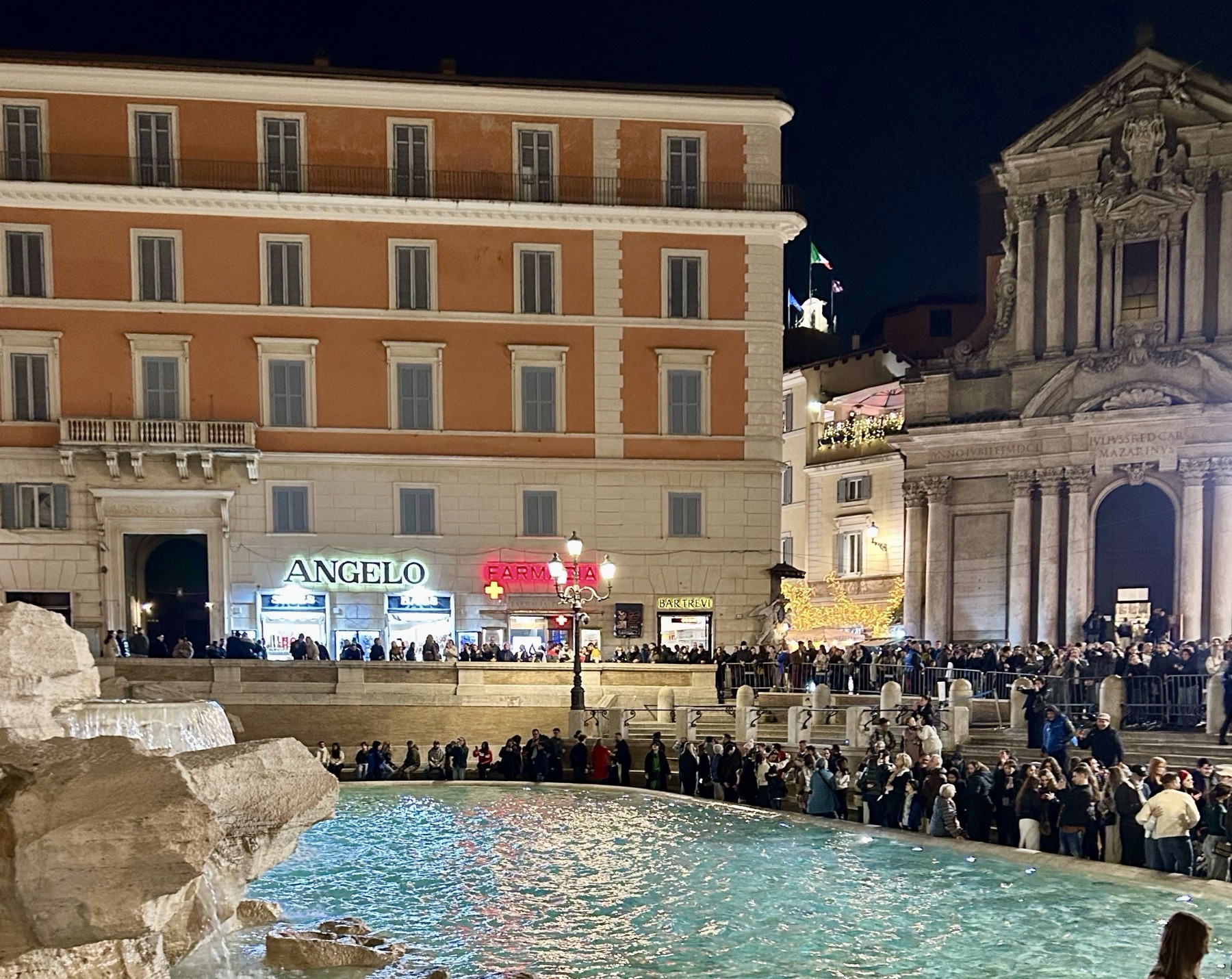
In 2014 Fendi sponsored a 1.5 year, €2.2 million restoration and cleaning, including installation of LED lights to improve night illumination. Most recently, in late 2024 a 3 month restoration also secured the lower basin to restrict access to only 400 visitors at a time. Crowds are expected to be bigger than usual during Giubileo 2025.  Early in the morning is usually a good time to visit.

As an outdoor public monument, the Fontana di Trevi is free and always open, so unless it is under renovation, you can check it out at any time.  Access to the lower basin may be limited at some times, and cleaning takes place on certain Monday and Friday mornings. Since it is fed by an aqueduct and powered only by gravity, it never needs to be turned off.

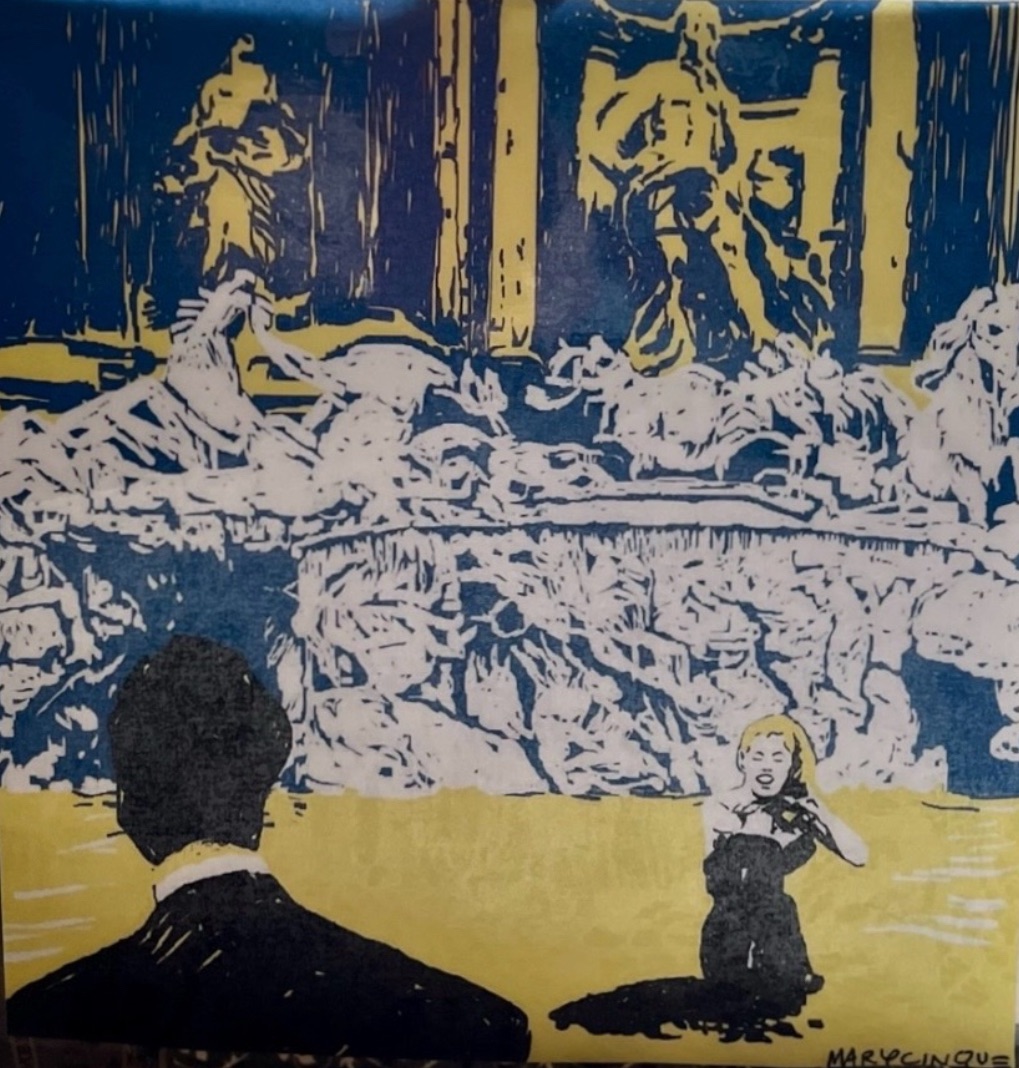
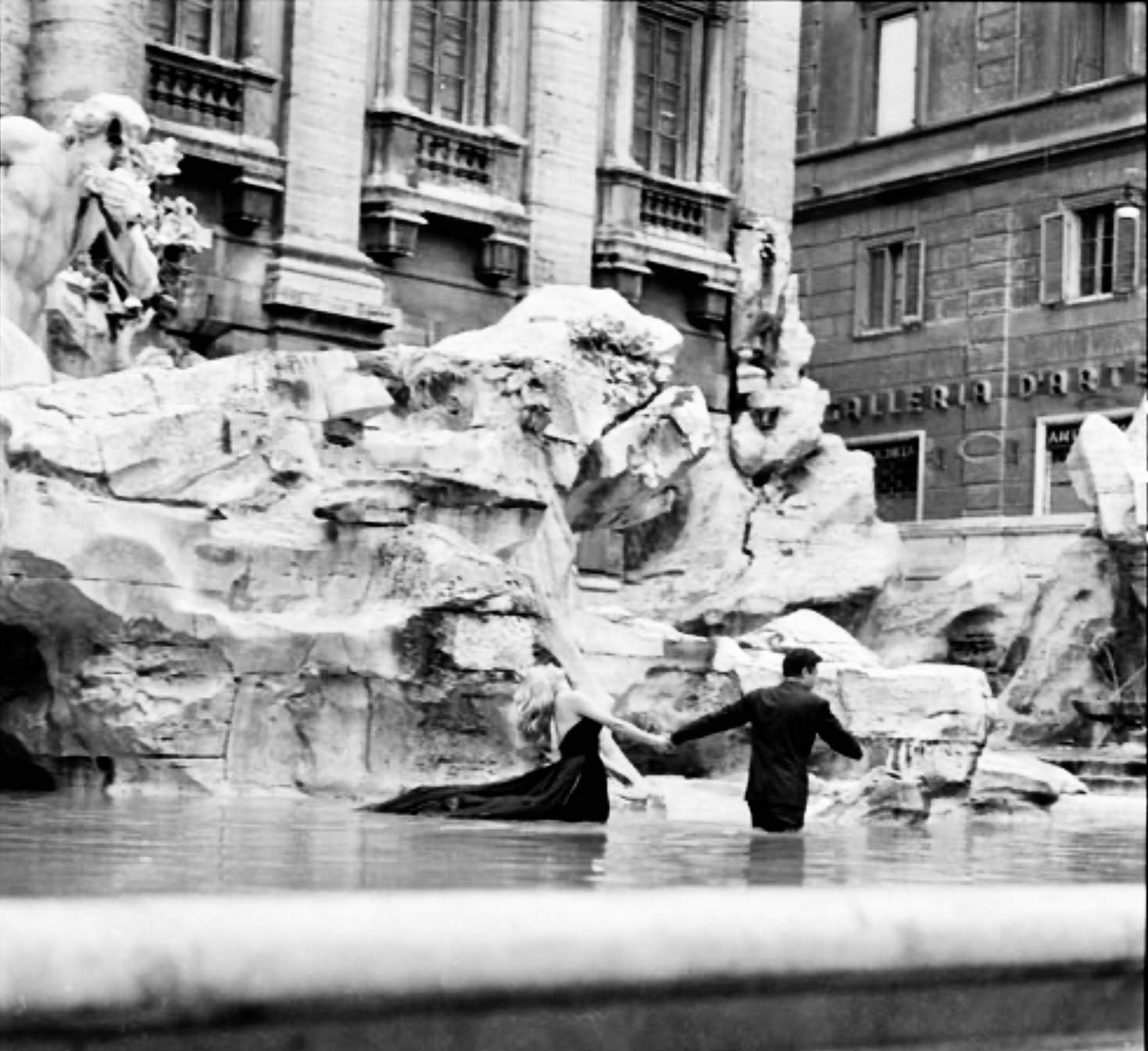
The Fontana was immortalized in film in 1960 when Anita Ekberg walked in with her clothes on in the Fellini classic La Dolce Vita.  Do not be like Anita-you will be immediately slapped with a €450 fine. When her costar Marcello Mastroianni died in 1996, the Fontana di Trevi was draped in black, the water and lights turned off in his honour. Below is part of a poster-note how dirty the stone was in 1960!  The spouts of Fontanella degli Innamorati can be seen on the far right.

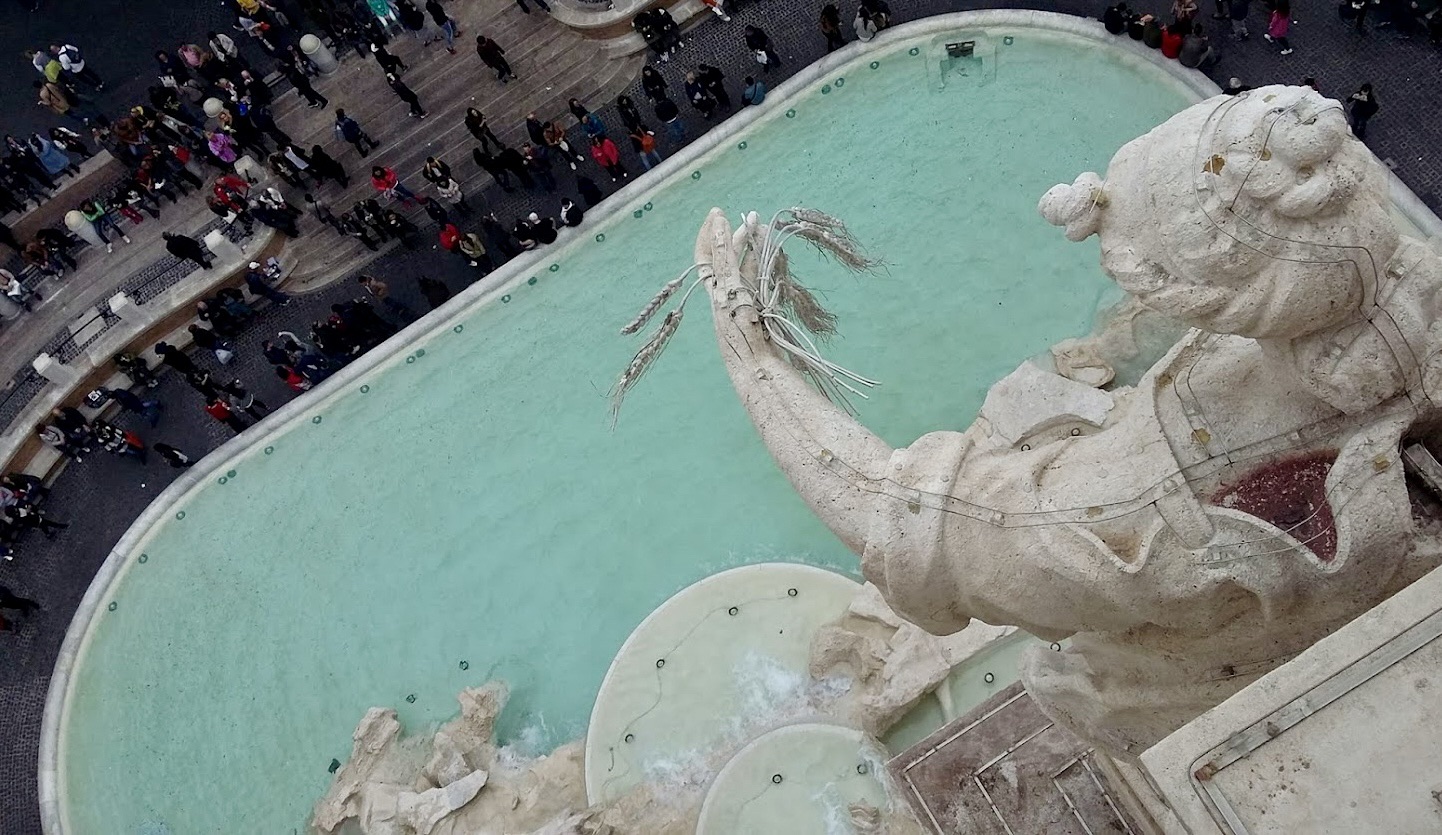
I have a cool Trevi memory.  In 2004, I attended a printmaking exhibit with a friend.  The entrance was at Via della Stamperia 6, 150 m from Piazza Trevi, down the side street past Fontanella degli Innamorati.  I remember climbing a lot of stairs and walking through corridors to get to the exhibit, which was amazing.  Then I wandered off to explore the gorgeous architectural details of the building, and heard the sound of running water as I walked past one of the tall, heavily curtained windows. Moving the curtain, I was right above the Fontana di Trevi!  It had not even occurred to me that there was a real building behind it.  Of course, this was before the time of cell phone cameras! This photo is from the Istituto’s website and was taken from farther up, possibly the roof.  Palazzo Poli was once a private residence, expropriated in 1885.  It is now theIstituto Centrale per la Grafica (Central institute for Graphics) a museum and exhibition space created to preserve and promote cultural heritage documenting graphic art.  Open Monday to Friday 09-17 and weekends 09-14.  Admission is free.  The room I wandered into is usually closed, unless you are attending a classical music performance.

9 m below the Fontana di Trevi, an archeological site was discovered during 2001 renovation of the former Trevi Cinema. Excavations uncovered a building complex from the Imperial Age (27 BC to 476 AD) and a fancy domus (Roman home), including canals still carrying clear water from Acqua Vergine to a holding tank for the domus. The site is called Vicus Caprarius, or “City of water” Vicolo del Puttarello 25.  Open Tuesday to Sunday 11-17 Reservations are recommended on weekdays, required weekends and holidays.  There are several underground tours, ranging from 30 minutes with audio guide to several hours long. I plan to see it in July!

The photos in this post were taken between 2004 and 2025.  Night view and bas reliefs taken by my sorella Lucia in Feb 2025.  ‘La Dolce Vita’ oil pastel on paper by the amazing Mary Cinque.

Ciao, Cristina

Share this:

  • Click to share on Facebook (Opens in new window) Facebook
  • Click to share on Pinterest (Opens in new window) Pinterest
  • Click to share on X (Opens in new window) X
  • Click to email a link to a friend (Opens in new window) Email
  • Click to share on WhatsApp (Opens in new window) WhatsApp
Like Loading...

Giubileo 2025

17 Monday Feb 2025

Posted by Un po' di pepe in Feste, Italia, Roma

≈ 4 Comments

Tags

Jubilee2025, Roma photography, UNESCO World Heritage Sites, Vatican City

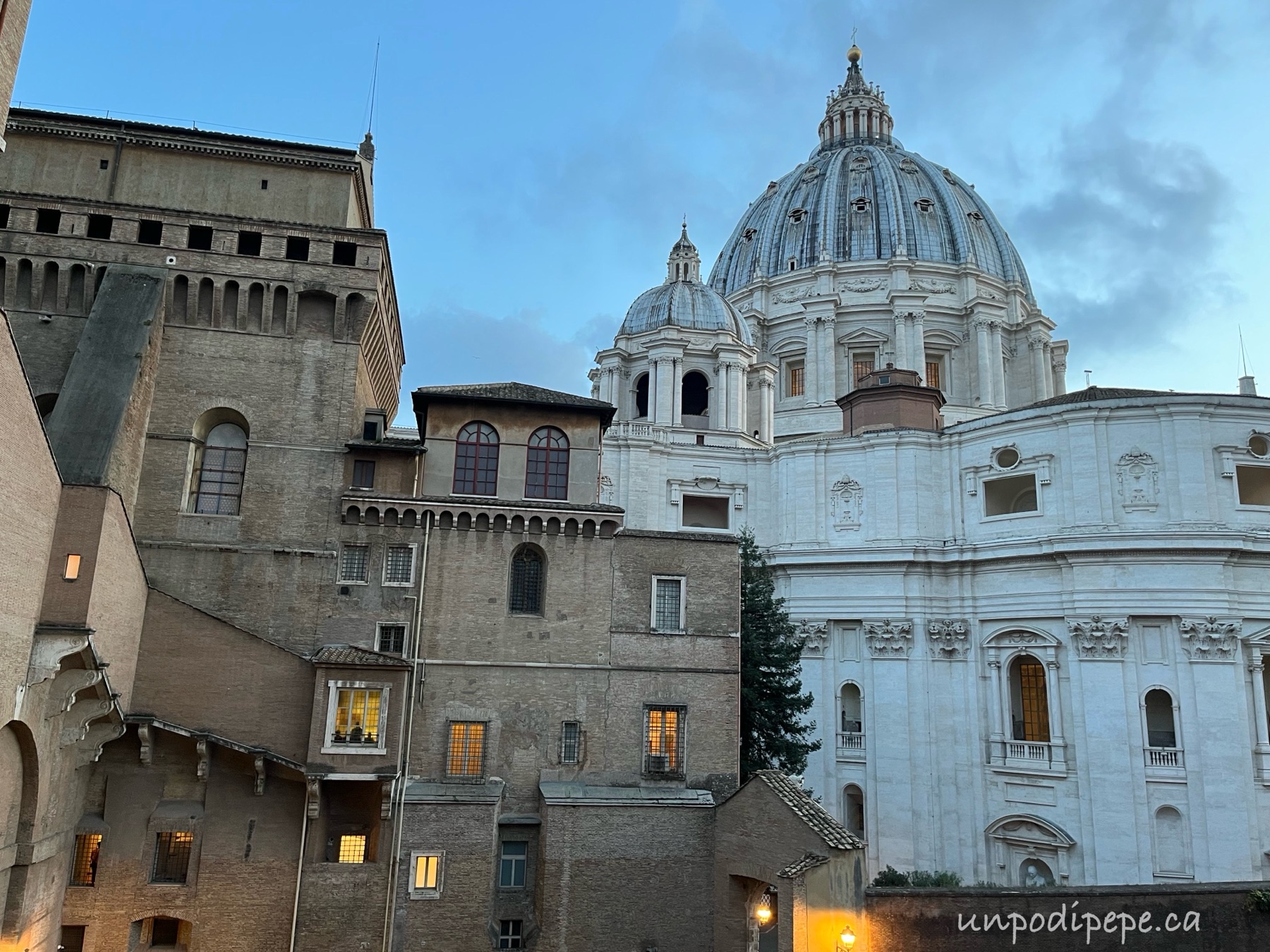
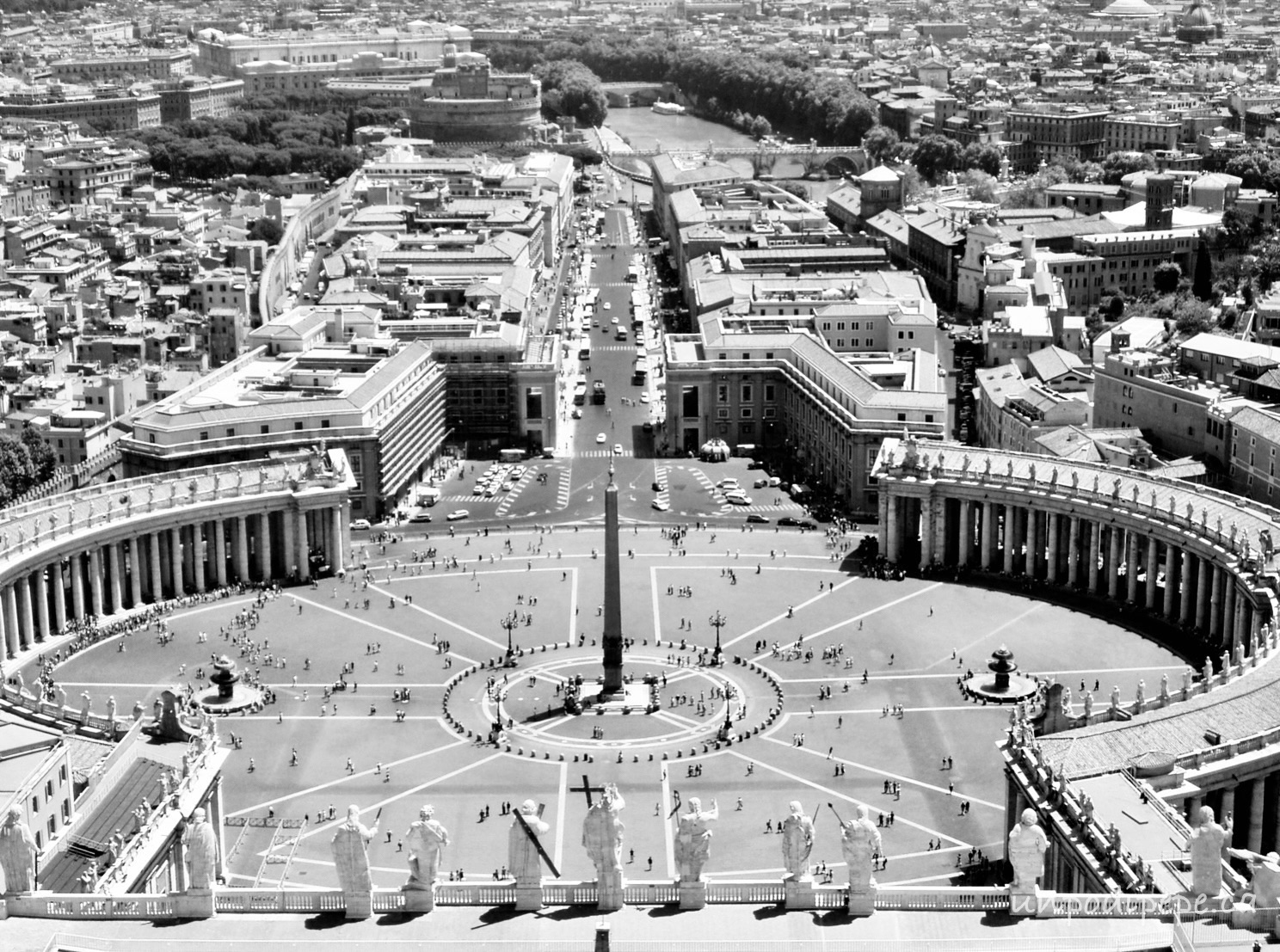
2025 is a Giubileo or Jubilee, also known as a Holy Year or Anno Santo-a Vatican celebration of spirituality and reconciliation, held every 25 years.  Roma and Vatican City- the smallest country in the world, will be a destination for millions of pilgrims.  The event is expected to attract 32 million people from all over the world.  As a reference, in 2023 Roma had 13 million visitors!

The Jubilee has been a tradition in the Catholic Church since the year 1300, started by Pope Boniface VIII as a special year for spiritual renewal, works of mercy, forgiveness and celebration.  It was also seen as an opportunity for a fresh start.  Originally held every 100 years, the timing was changed to every 25 years to give each generation an opportunity to participate.

The theme of Giubileo 2025 is Pellegrini di Speranza– Pilgrims of Hope.  The theme was chosen by Pope Francesco to emphasize hope as a driving force of the Christian faith.  He calls on everyone to embrace values such as peace, solidarity and unity, reflecting on the broader world and the role each person can play in fostering a hopeful, compassionate society. The Giubileo is for anyone-those who are Catholic, curious or just passing through.  In addition to religious observance, it also a cultural celebration, with special exhibitions, concerts and cultural events.

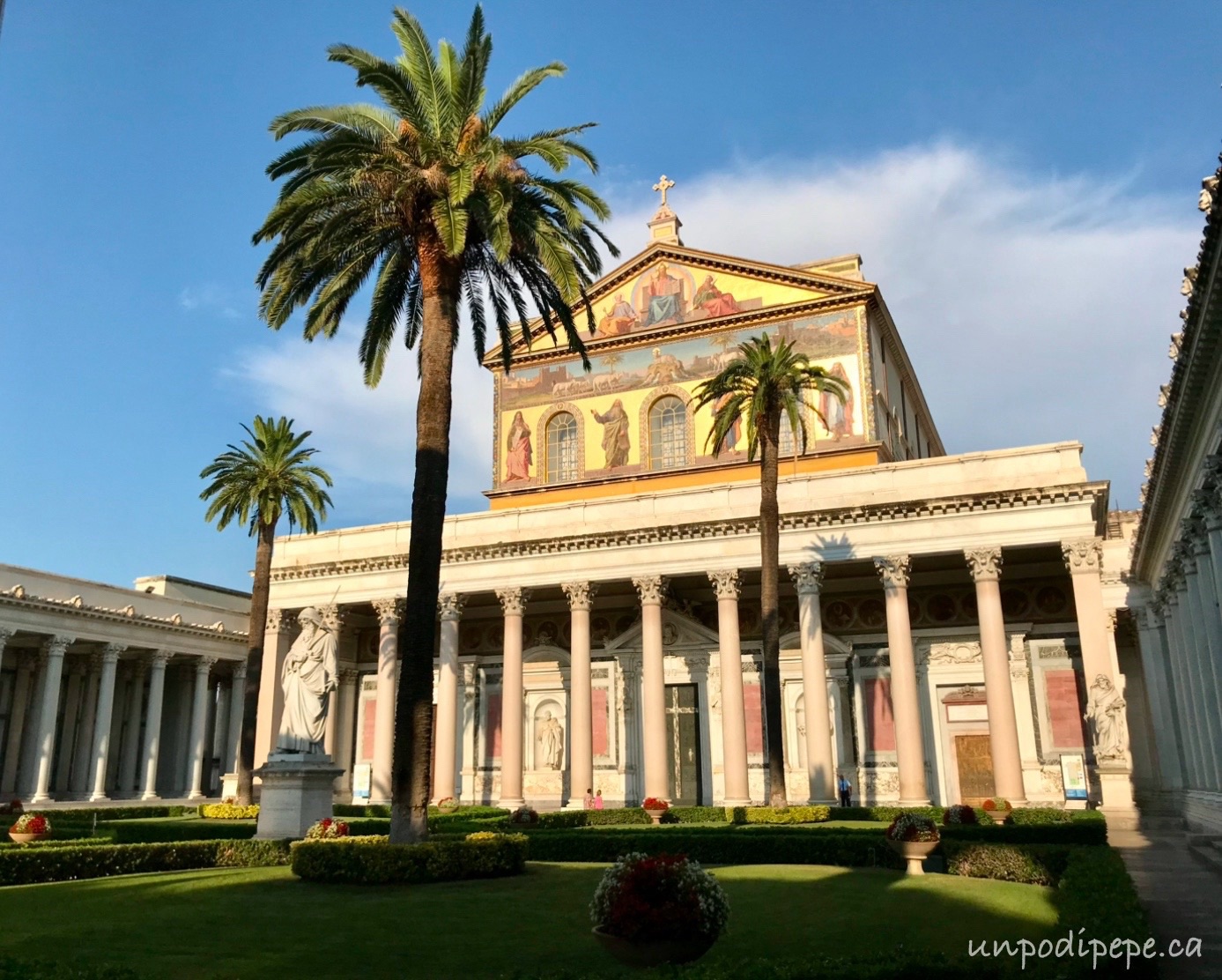
A central part of the pilgrimage is passing through the Holy Doors, which symbolizes the transition from sin to grace.  Each of the 4 Papal Basilicas has a Holy Door.  They are usually sealed shut and opened only during a Holy Year.  The main one, San Pietro at the Vatican, was the first to be opened on Dec 24th.  The other 3 in Roma are- Santa Maria Maggiore, San Giovanni in Laterano and San Paolo Fuori le Mura.  The doors will be sealed shut again on Jan 6th, 2026 until the next Holy Year in 2050.

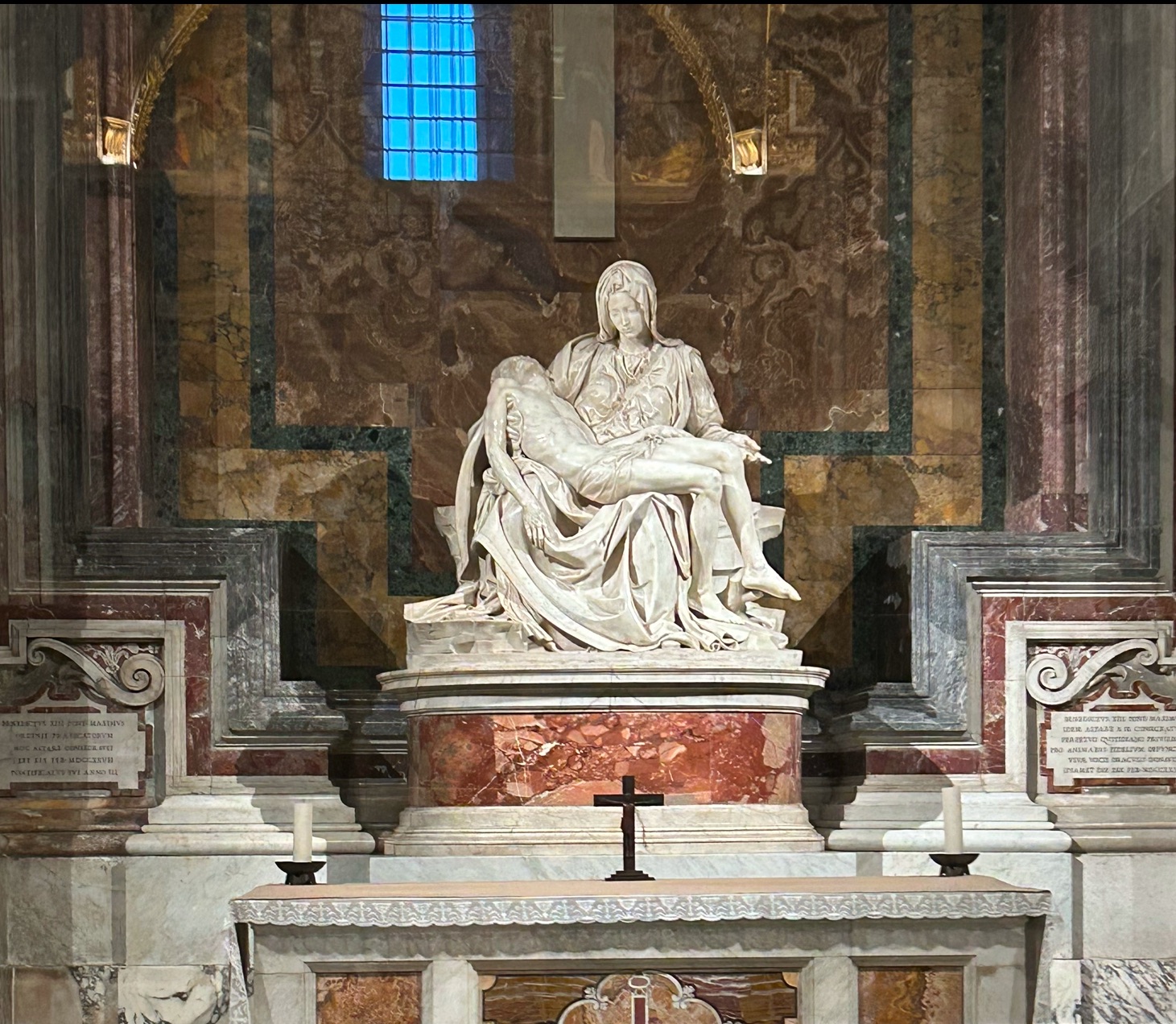
In July, I will be in Roma to attend a family wedding!  We are all excited-and not afraid of crowds or heat!  This will not be my first Holy Year in Roma.  In 1975, very young me and my family spent 3 days in Roma with Don Michele, Papa’s cousin who was a priest.  Not only did I pass through all 4 Holy Doors, but I actually touched Michelangelo’s Pietà before it was surrounded by bulletproof glass, and we may have visited every major church in Roma!  I also had my introduction to Pasta Carbonara at a Vatican cafeteria for pilgrims.  Carbonara should NOT be made for large groups….but I will leave that story for another time.

Roma has been a massive construction zone in preparation for 2025, so it should be all shiny and clean, hopefully with improved public transit.  There will still be ongoing work on Metro line C at Piazza Venezia, but most of the other renovation projects are completed.  Ancient monuments have been restored and refinished.  Bernini’s 29 meter high (94 feet) Baldacchino (altar canopy) in San Pietro has been polished for the first time in 150 years. A large area between Vatican City and Castel Sant’Angelo are now pedestrian only, since they have built an underground tunnel for car traffic.  Like everything in Roma, tunnel construction was delayed because during construction, they found ruins -the remains of a 2nd Century Roman wash house. 55 fountains have been restored including the one in front of the Pantheon, Fontana dei Quattro Fiumi in Piazza Navona and the Fontana di Trevi.  There will now only be 400 people at one time allowed to enter the small piazza to throw throw in their coins  and take photos.

Caravaggio 2025 at Galleria d’Arte Antica at Palazzo Barberini is on from March 7th -July 6th!!!!  This is one of the most ambitious Caravaggio exhibits ever.  More info here. I arrive in Roma July 7th.  Mannaggia!  Ecce Homo, which lives at the Prado Museum in Madrid and has only recently been attributed to Caravaggio will be included in the exhibit, as well as Napoli’s Sant’Orsola, the last Caravaggio, painted shortly before his death!  Martirio di Sant'Orsola Caravaggio's last paintingAdmission is €18 for adults.  Book your tickets now!  Run!  Make me jealous!  If they run out of tickets and you want to see 6 Caravaggio works for free, take yourself on my Caffè con Caravaggio walking tour!

What to expect in Roma this year?

Roma always has lots of visitors, even in ‘low’ season, which is only from January 7th until the beginning of March.  This year there will be increased crowds, especially in the areas around the Vatican.  If you are crowd-averse and not interested in any of the Giubileo activities in Roma, you may want to consider delaying your visit to Roma until 2026.  The busiest times are expected during Easter/Holy Week April 13-21st, Pentecost June 5th and at Christmas.  Different times of year are also aimed at various groups, for example, Jubilee of the sick and health care workers April 5-6th, teens Apr 25-27th, persons with disabilities April 28-30th. Artists, volunteers, public service workers and migrants all have their dates too.  It looks like April is definitely a month to avoid, unless you are attending a specific event!  Luckily none of the special dates are in the summer.  Here is the link to the calendar of events  Tickets are not required but you may need to book on the App.

Tickets for Colosseo, Galleria Borghese, Musei Vaticani and admission to the Basilica di San Pietro and the Pantheon will be in high demand.  Book early! If possible, plan to visit in the early am or evening. Look for accommodation that is not near the Vatican. for more info on how to ‘schedule like an Italian’, read Surviving Summer in Roma.

Download the Iubilaeum 25 APP  from the App store or Play store (android) and apply for a Pilgrim’s card a free digital pass needed for most Jubilee events.  This Portal allows individual or groups to register for events and highlight any special needs or access requirements.

It may be worth buying a 72 hour Roma Pass for €58.50.  The 36 hour Roma pass is already sold out! A Metro pass is always a good idea.

Don’t forget to read my post ‘Beat the heat:  Surviving Summer in Roma’

For some of my favourite things to do in Roma-‘Un Giorno a Roma‘.

If you need to get out of town to get away from the crowds, go to ‘Ostia Antica‘.  Buon Viaggio e Buon Giubileo!  Cristina

Grazie to Lucia for a few of the Vatican photos!

Share this:

  • Click to share on Facebook (Opens in new window) Facebook
  • Click to share on Pinterest (Opens in new window) Pinterest
  • Click to share on X (Opens in new window) X
  • Click to email a link to a friend (Opens in new window) Email
  • Click to share on WhatsApp (Opens in new window) WhatsApp
Like Loading...

Il Bicerin

23 Saturday Nov 2024

Posted by Un po' di pepe in Italia, Mangiamo!, Recipes

≈ 20 Comments

Tags

Northern Italy, Piemonte, Torino, Traditional recipes

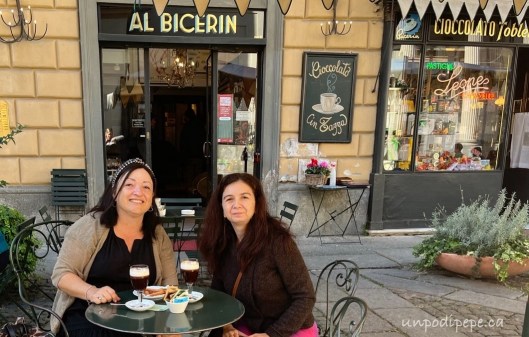
November weather is dark and dreary, and has me craving a nice warm Bicerin. Bicerin (bee • SHEH • reen) is the official, historic drink of Torino.  The Bicerin was invented in 1763, at the newly opened Caffè Confetteria Al Bicerin in Piazza della Consolata.

Al Bicerin’s strategic location opposite the Santuario della Consolata, where the King and Royal Family attended Mass on Sundays, made it a popular spot and the beverage became well-known.

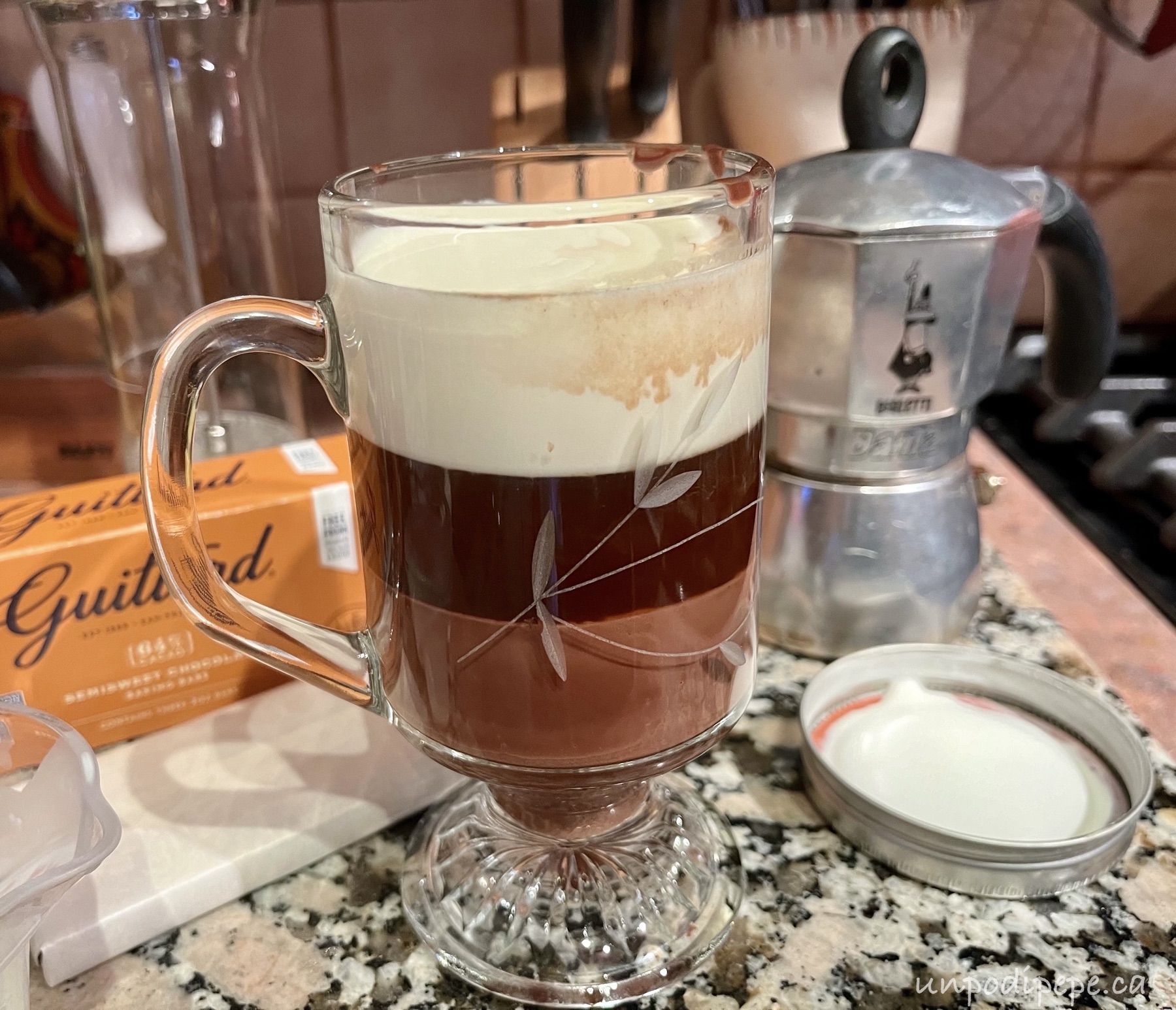
The secret recipe is made with local dark chocolate, espresso and frothed fior di latte, and served in a small stemmed glass.  The drink is actually named after the glass, Bicerin being local dialetto for bicchierino, meaning small glass. The glass is clear so that all 3 layers are visible.  A Bicerin is not supposed to be stirred, so that the temperature and texture of each layer can be tasted separately and blend on the palate.

The facade of Al Bicerin is still original and stepping inside is like travelling back in time. The counter, the cabinet filled with glass jars of Confetti and the woodwork is from the 19th Century.

I went to Al Bicerin twice while I was in Torino.  Since the weather was nice, I sat outside both times, but the inside is inviting and cozy.  Perfect for a cold, wet November day. The photo below was taken just before closing.

Count Camillo Cavour, the first Italian Prime Minister always sat in the same corner on his daily visit to Al Bicerin. Now there is a photo of him in his angolo. Other famous patrons include Picasso, Puccini, Nietzsche, Alexandre Dumas, Umberto Eco, and Ernest Hemingway, who apparently called the Bicerin one of the 100 things in the world worth saving!

A fun fact about Caffè Confetteria Al Bicerin is that since 1763, it has always been managed by women!

In 2001, the Bicerin was finally recognized by the region of Piemonte as a traditional Piemontese beverage. Order with a plate of local cookies, which can include canestrelli, torcetti, krumiri, savoiardi and baci di dama.

Bicerin is now served in all of the historic caffè places in Torino but it will be slightly different than the original recipe at Caffè Confetteria Al Bicerin, located at Piazza della Consolata 5 in the Quadrilatero area.

Other historic places to have Bicerin in Torino include:

Baratti e Milano- Piazza Castello 29

Caffè Torino- Piazza San Carlo 29

Caffè Fiorio- Via Po 8/C

Farmacia del Cambio- Piazza Carignano 2

Pepino Piazza Carignano- 8

Pfatish Via Paolo Scacchi- 42

I did some experimenting at home to try and reproduce a Bicerin.  My final product did not taste or look exactly the same, but it was delicious, and the taste-testing ‘research’ was fun.  It takes a bit of juggling to have all 3 layers ready to assemble at once, so do not get discouraged if the first attempt does not look pretty.

Cristina’s attempt at Bicerin

Ingredients:

  • 60 ml (2 oz) light cream*
  • 60 ml (2 oz) chopped 70% dark chocolate, ideally Venchi or other quality brand**
  • 60 ml (2 oz) freshly made espresso doppio/double shot
  • 60 ml (2 oz) frothed whole milk or light cream (must be cold)*

A 300-360 ml (10-12 oz) clear, heat-proof stemmed glass

Instructions:

  • Prepare heat-proof glass by warming with hot water
  • Prepare caffettiera for espresso
  • Pour light cream* and chopped chocolate into a small pan over low heat and whisk until thick.  Meanwhile, make espresso
  • Shake milk/cream in a small jar for 2-3 minutes

Assemble the Bicerin:

  • Pour hot chocolate into warm glass
  • Using the back of a spoon, carefully pour espresso towards the side of glass
  • Carefully add shaken milk/cream
  • Do not stir!

*Consistency wise, there is no North American equivalent to Italian fior di latte (milk cream) or panna (cream).  I experimented using combinations of whipping cream and milk.  My best results were using a mixture of half whipping cream and half whole milk (3%).  This is what I recommend using for both the hot chocolate and the topping. 1 part whipping cream and 2 parts whole milk also works.

**A Torino produced chocolate such as Venchi is best to use.  I used Guillard as it was the best good quality chocolate I had available.

Espresso cookies go perfectly with Bicerin.  Buon appetito, Cristina

Share this:

  • Click to share on Facebook (Opens in new window) Facebook
  • Click to share on Pinterest (Opens in new window) Pinterest
  • Click to share on X (Opens in new window) X
  • Click to email a link to a friend (Opens in new window) Email
  • Click to share on WhatsApp (Opens in new window) WhatsApp
Like Loading...

Mercato Porta Palazzo

03 Sunday Nov 2024

Posted by Un po' di pepe in Italia, Photography, Travel

≈ 11 Comments

Tags

Italian food, Northern Italy, Piemonte, Torino

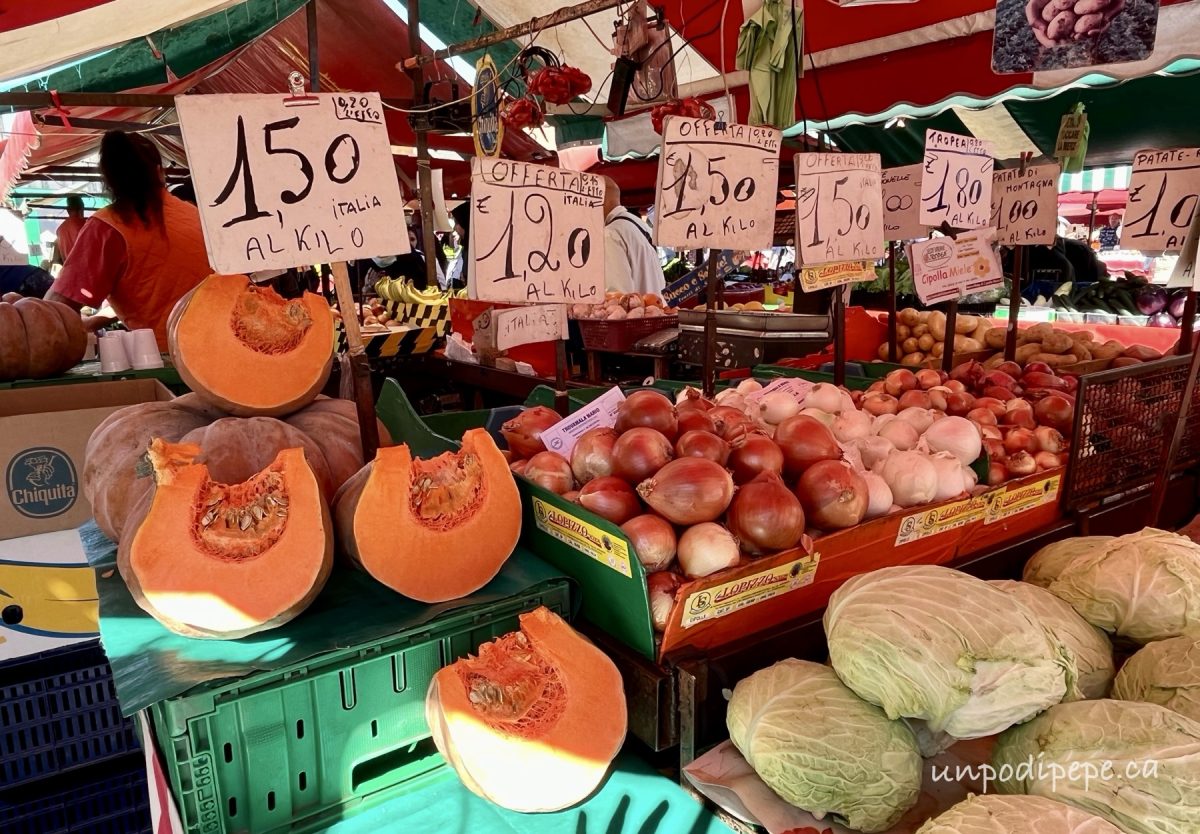
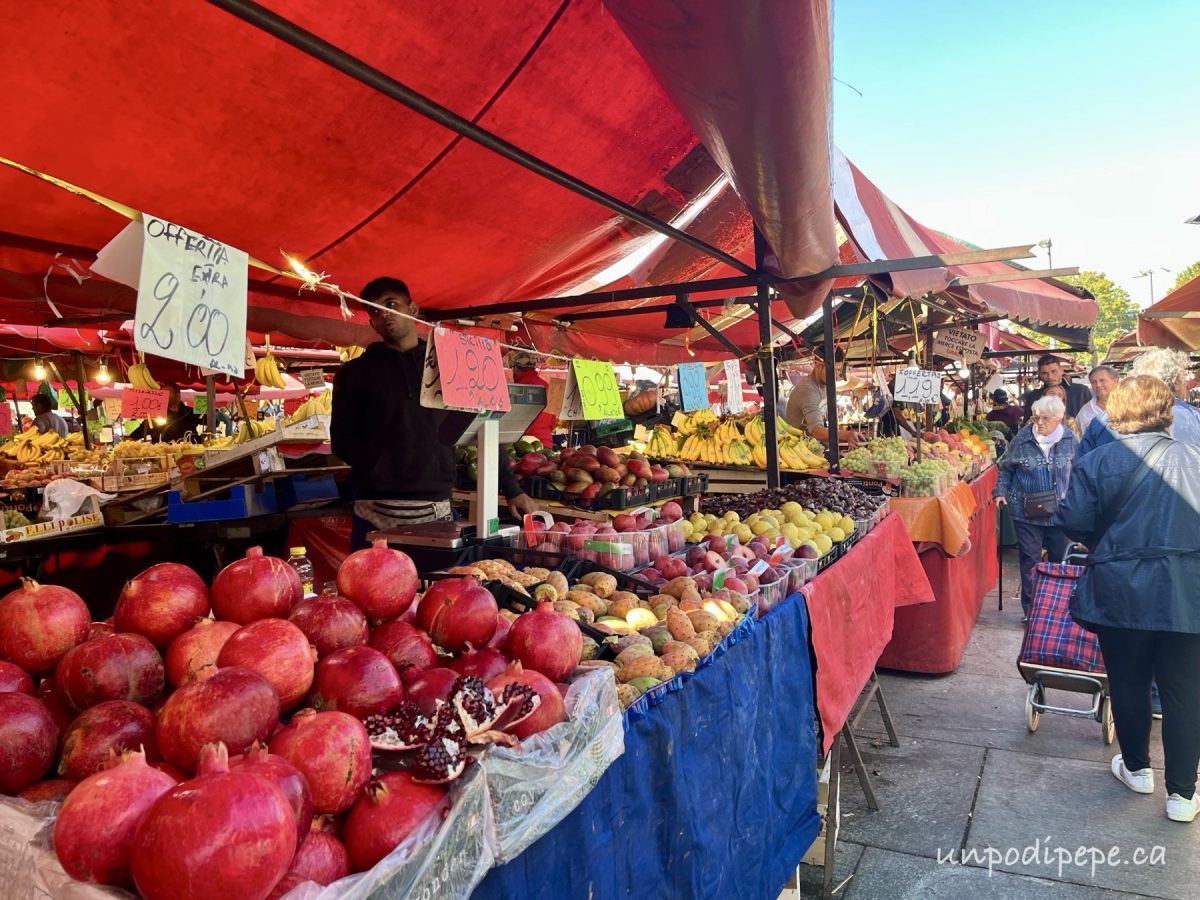
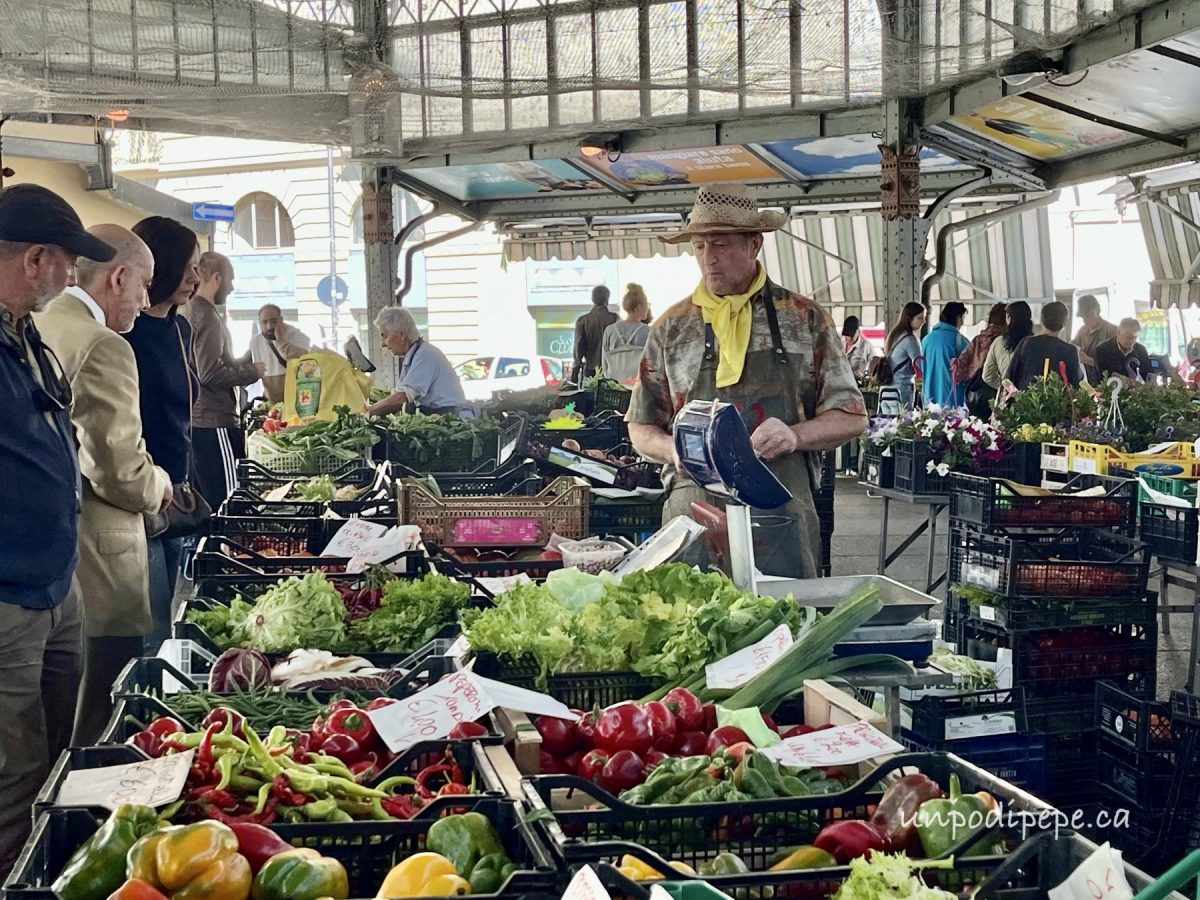
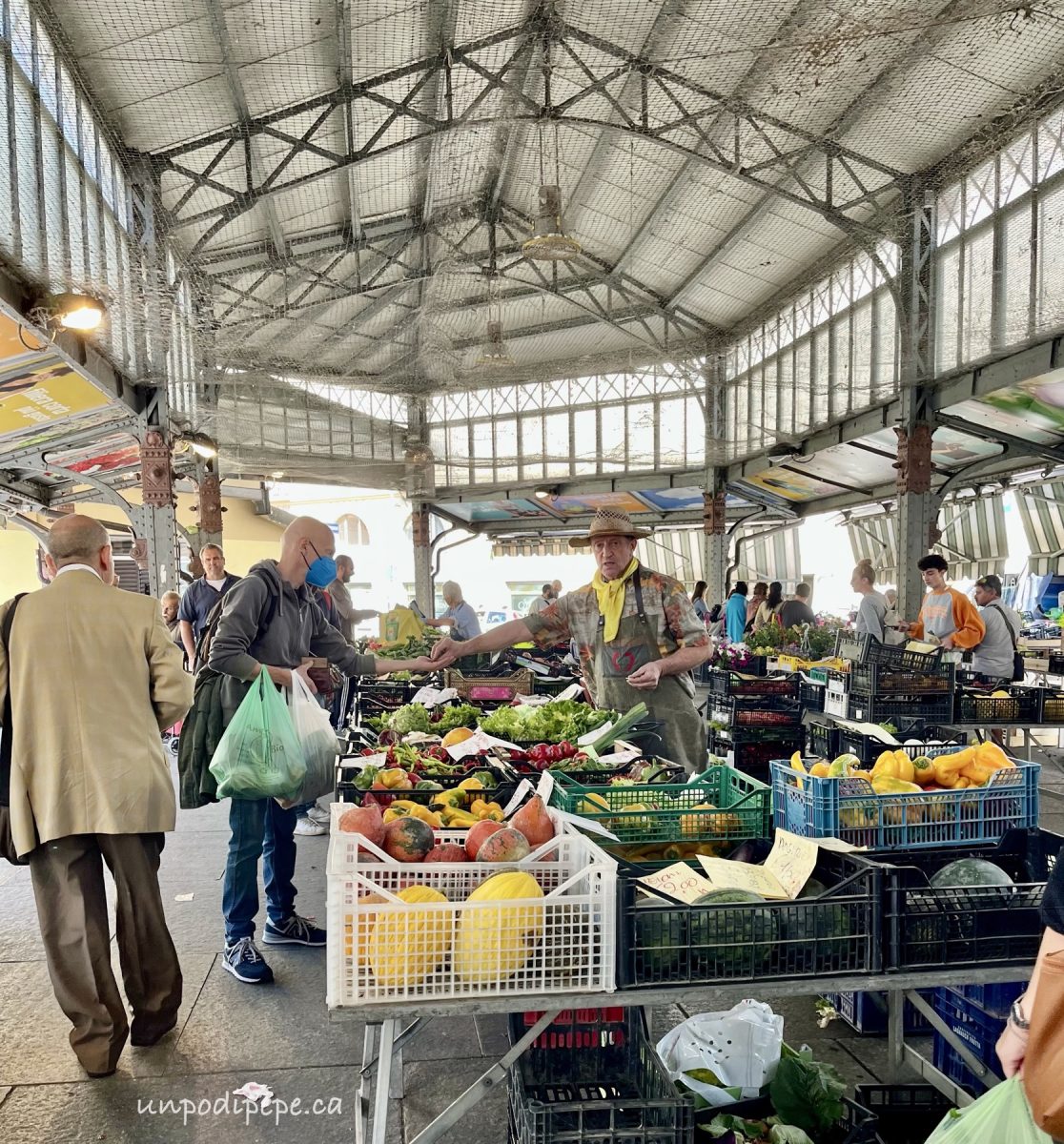
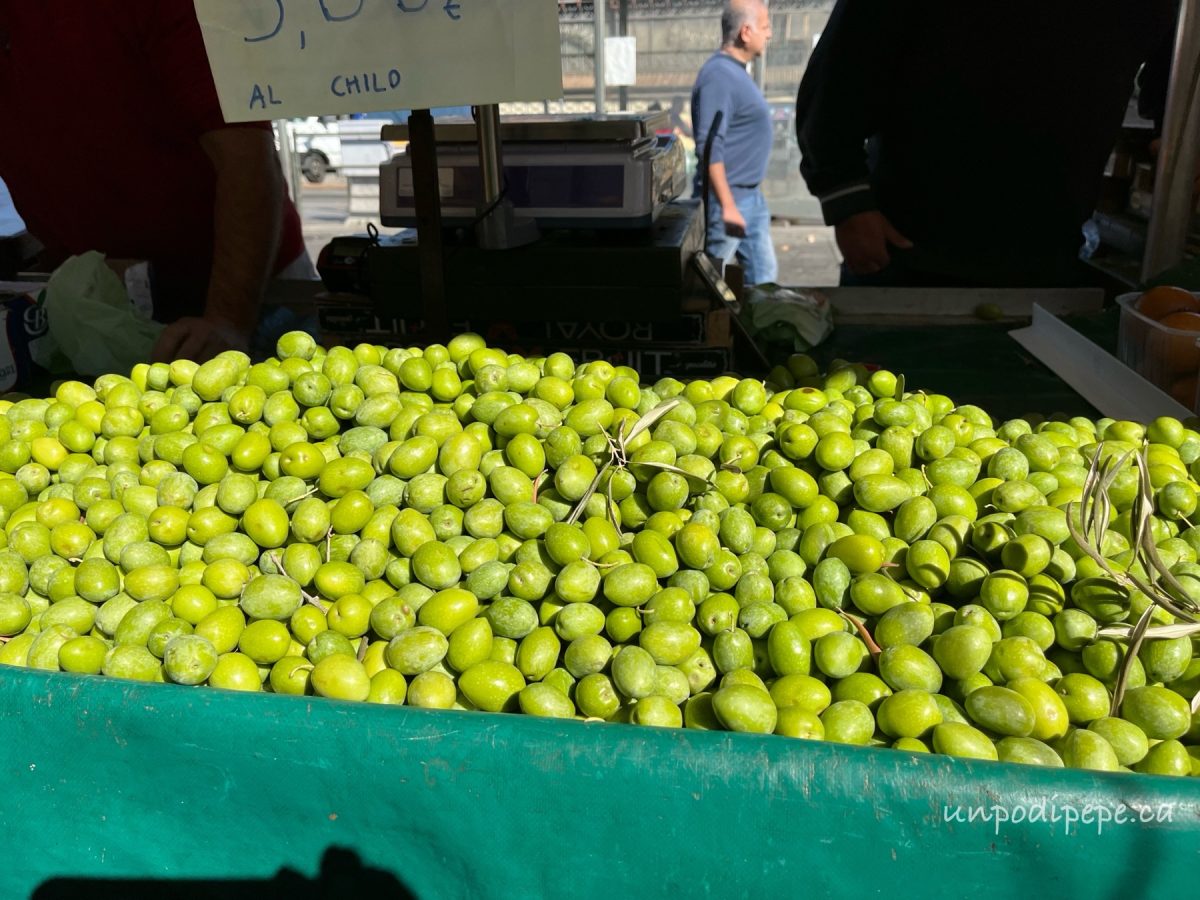
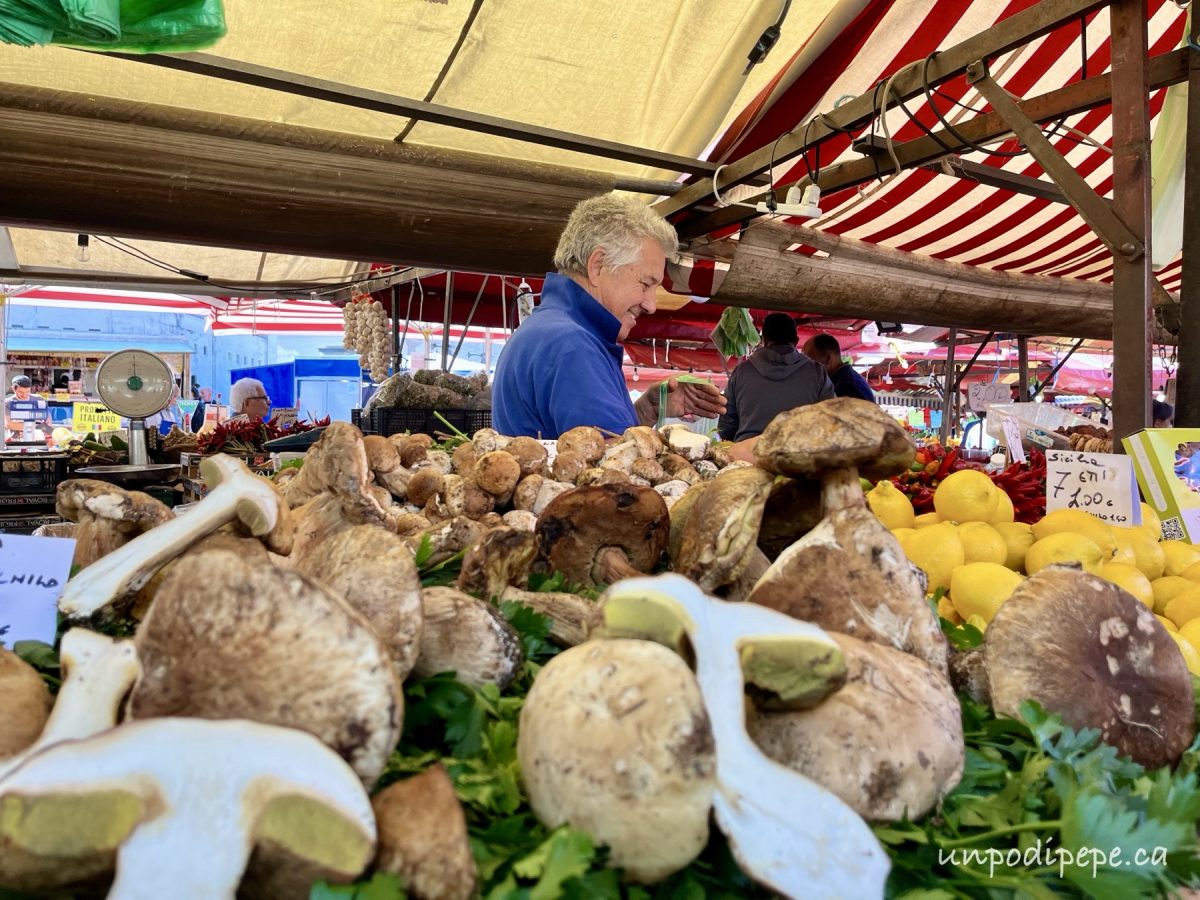
Torino’s Mercato Porta Palazzo in Piazza della Repubblica is the largest open-air market in Europe. My first morning in Torino, I took a walk through the mercato with Lucia from turinepi.  While we walked, I took so many photos of the produce and the bancarelle -the market stalls, that I had to dedicate an entire post to them. Established in 1835, Porta Palazzo is a collection of outdoor and covered market spaces. The bancarelle host vendors from all over, selling products from food and wine to flowers, clothing, shoes and housewares.

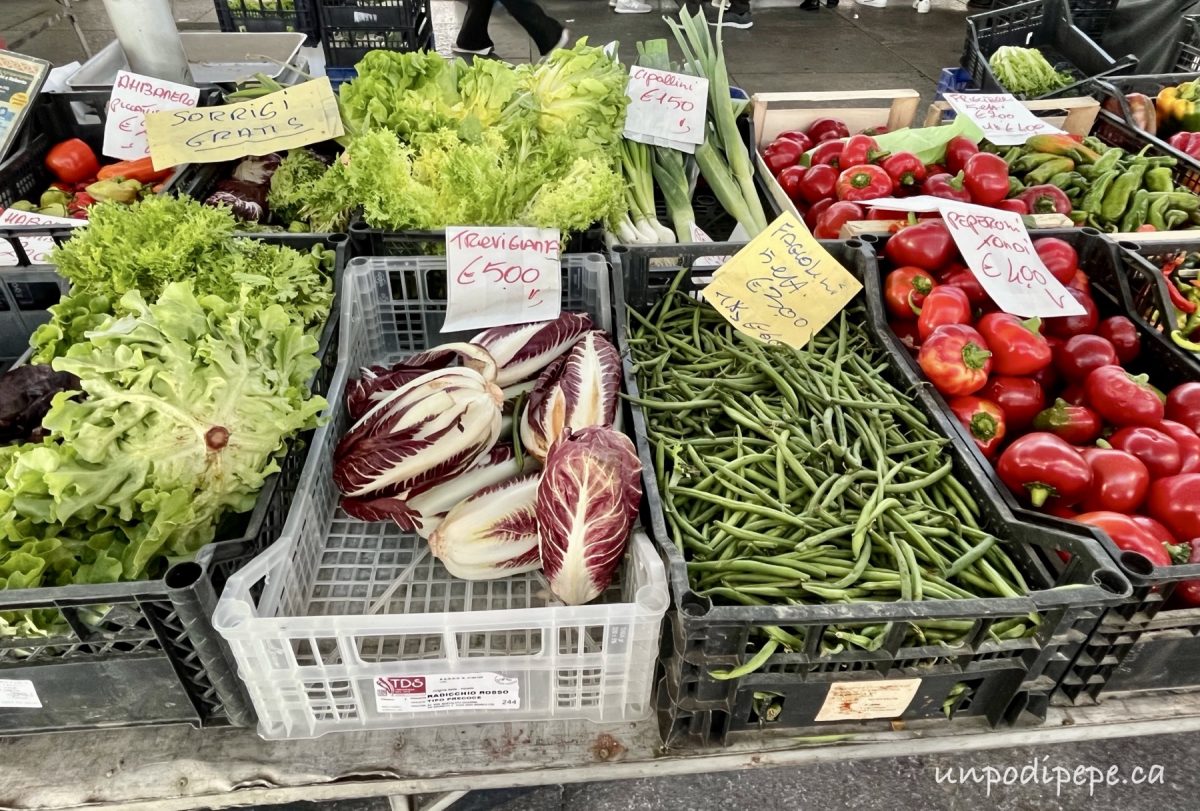
The covered glass pavilion is the local farmers market.  Look at the gorgeous radicchio.  This vendor with the hat is Lucia’s favourite.The produce is surprisingly well-priced.  Porta Palazzo is a clean and lively space.  The Torinesi call it Porta Pila, and do much of their shopping here. The space is huge, so there can be thousands, of people, especially on Saturdays, when many shoppers even drive in from France!A good place to snack, or to taste and see local food, as well as other ethnic specialties. Porta Palazzo is an explosion of colour and a feast for all of the senses-flavours, aromas, colours, sounds and languages.
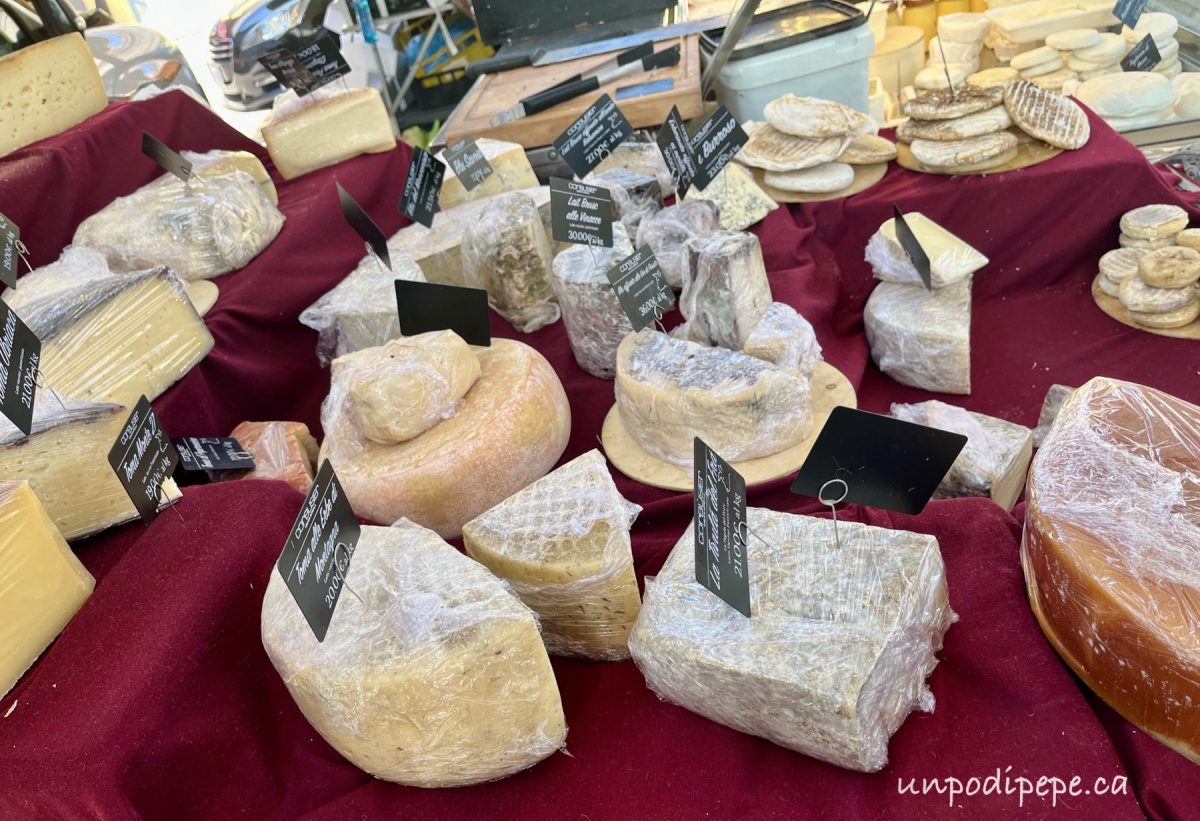
Formaggi can be found from Piemonte and every region of Italia

Besides the bancarelle and pavilion, there are also 4 structures on the site: Mercato Ittico e Alimentare, built in 1826, L’antica Tettoia dell’Orologio, a 1916 metal art deco building, Mercato dell’abbigliamento-the clothing market, and Mercato Centrale di Torino, built in 2011.  A food lover’s Heaven! Also, more formaggi!

Mercato Porta Palazzo is a 5 minute walk from Piazza Castello.  From Piazza Castello, take Via Garibaldi, turn right onto Via Milano, then walk straight until you reach Piazza della Repubblica and the mercato.

Mercato Porta Palazzo is open from 8:00-12:00 Tuesday to Friday, and 7:00-19:30 Saturday. The mercato is closed Sunday and Monday.

More info on Mercato Porta Palazzo can be found on their website.

Buon viaggio, Cristina

Share this:

  • Click to share on Facebook (Opens in new window) Facebook
  • Click to share on Pinterest (Opens in new window) Pinterest
  • Click to share on X (Opens in new window) X
  • Click to email a link to a friend (Opens in new window) Email
  • Click to share on WhatsApp (Opens in new window) WhatsApp
Like Loading...

Torino

13 Sunday Oct 2024

Posted by Un po' di pepe in Architecture, Italia, Photography, Travel tips

≈ 14 Comments

Tags

Bicerin, Italian history, Northern Italy, Piemonte, UNESCO World Heritage Sites

I had no expectations when I visited Torino.  I knew that many of my paesani had moved to the area in the 1970-80’s to look for work, but did not know much about the city itself.  Torino turned out to be a pleasant surprise-a truly underrated, overlooked city on the banks of the river Po, at the foothills of the Alps. With a population of almost 850,000, it is the fourth largest city in Italia but practically unknown to English speaking travellers. It is much less crowded, quieter and cheaper than most other major cities.

L’Universita’ di Torino

I arrived in Torino by highspeed train (TGV) from Paris, to attend an AICW conference at the Università di Torino.  Once the conference started, I only had the evenings to explore the city, so could not visit any buildings/museums.  This is why many of my photos were taken at night!  I need to return to Torino to visit the indoor things!

Named for the ancient Taurini people, the Roman Colony of Taurinorum was founded in 28 BC.  Via Garibaldi, the main shopping street traces the exact path of the ancient Roman street or Decumanus.

Torino was the capital of the Duchy of Savoia, the political center of the Risorgimento (birth of the nation) leading to unification of Italy, and the first capital of the Kingdom of Italy after unification in 1861. The capital moved to Roma in 1865.  Torino was also the center of anti-fascist movements and the Italian resistance movement during WW2.  A lot of history here!
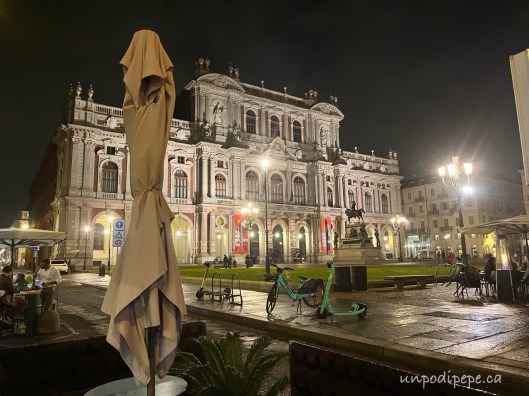
Elegant and sophisticated, Torino has an old world feel, like Paris or Prague, but with an Italian accent.  There is a definite French influence from the Savoia family, even on the local dialetto. The stunning architecture in the centro includes Baroque, Rococo, Neoclassical, Romanesque and Art Nouveau. Most buildings were built between the 16-18th centuries.  In 1997, the historical Center of Torino and residences of the Royal House of Savoia became a UNESCO World Heritage Site.

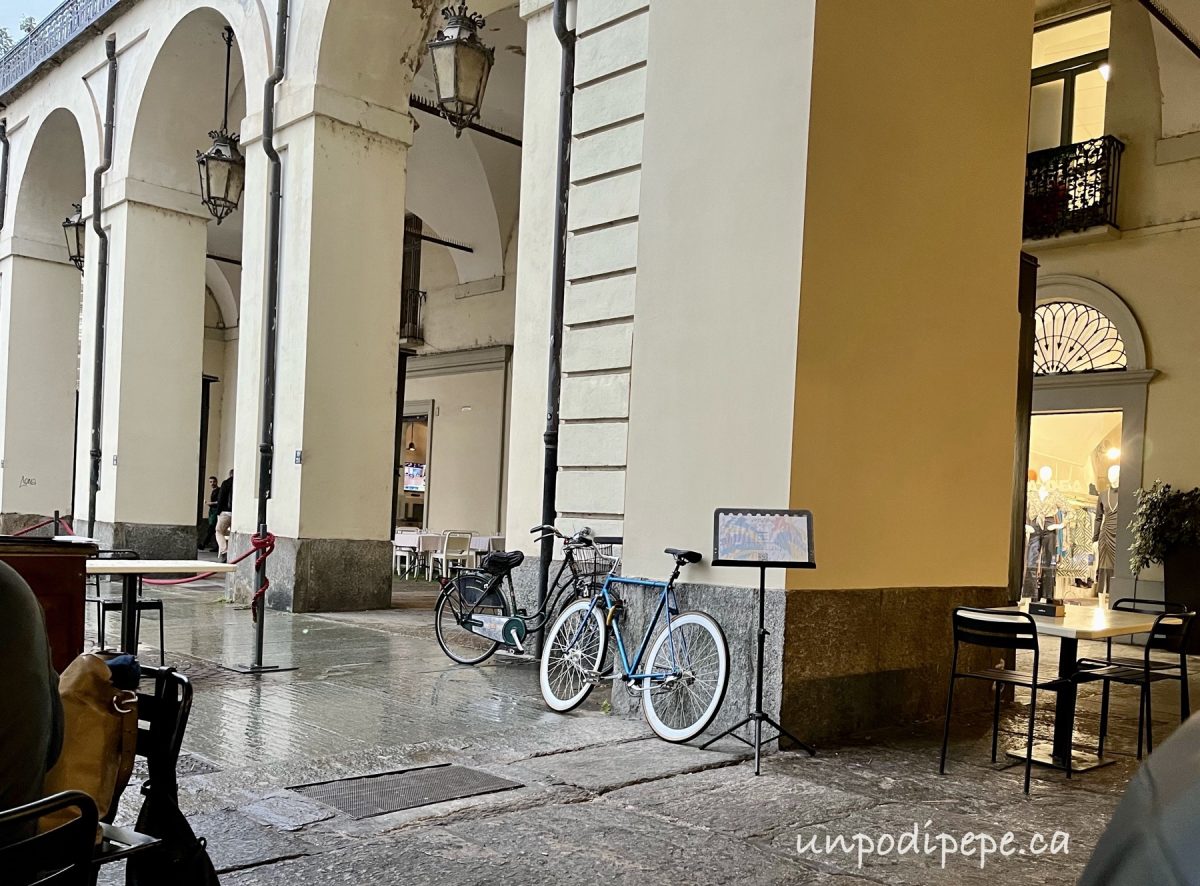
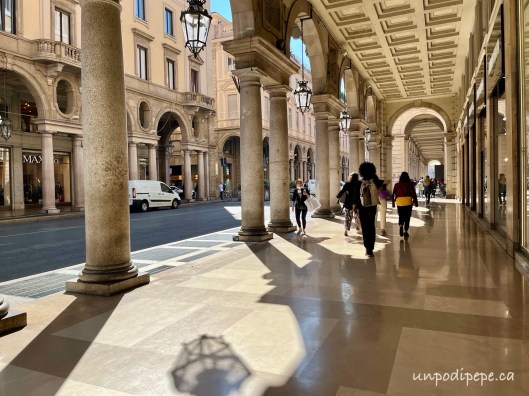
Torino’s centro, the largest pedestrian area in Europe, is easy to navigate. A defining characteristic of Torino’s architecture are the portici (porticoes). 18 km (7 miles) of portici provide shade in summer and shelter from rain, snow and wind.  12.4 km are continuous.  According to legend, King Vittorio Emanuele I wanted Torino to be elegant and also wanted to go on his daily walk to the river Po without getting wet.  So he had the portici built -and now everyone can window shop in all weather conditions.  A whole day can be devoted to walking the portici. Torinesi use them a lot!
Torino is known for, the Shroud of Turin, artisanal chocolate, museums, Royal Palazzi of Savoia, FIAT, Juventus, 2006 winter Olympics, Eurovision 2022, and home to the automotive industry with headquarters for Fiat, Lancia and Alfa Romeo. Torino is also the birthplace of Italian caffè culture, aperitivo, Nutella, Ferrero Rocher, gianduja, Lavazza, FIAT, Vermouth and the Slow food movement!

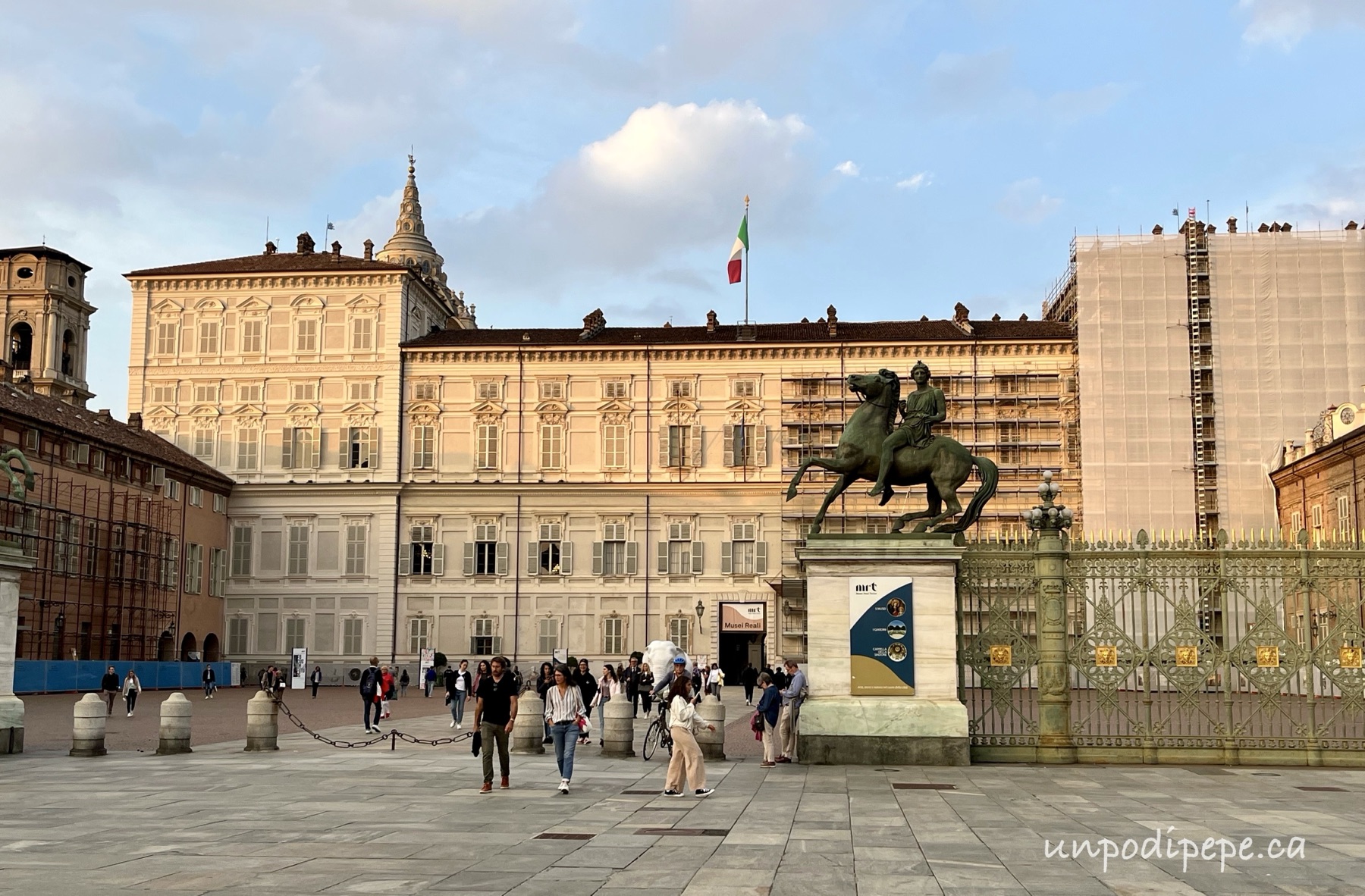
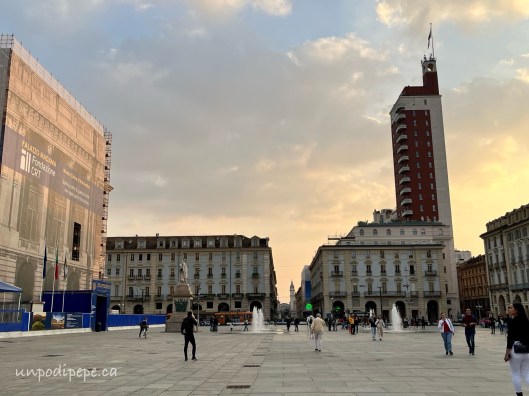
There are many large piazze, full of amazing architectural details, chocolate shops and places to have aperitivo.  Piazza Castello has the Royal Palaces, Palazzo Reale and Palazzo Madama.  Palazzo Madama was the residence of 2 Savoia queens, which explains the name.  It was also the 1st Senate of Italy.  Since 1934 it is a museum of ancient art-although mostly from middle-ages to 18th Century.  Palazzo Reale at the north end, with iron gates contains Armeria Reale, Galleria Sabauda and the Museo di Antichità. The Museo Nazionale del Risorgimento (unification museum) is in Palazzo Carignano.
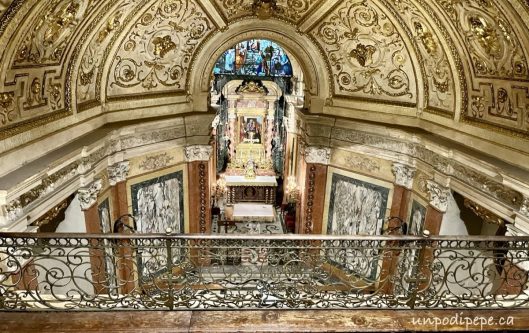
I had the day before the conference free and met local expert Lucia Hannau from Turinepi for a morning walking tour.  We started in Il Quadrilatero, the oldest part of city, dating back to Roman times.  Piazza della Consolata is home to Caffè Al Bicerin since 1763. They make it in other historic bars, but this is the home of the original Bicerin- with the accompanying plate of local cookies. Bicerin is the iconic drink of Torino, with 3 layers, chocolate, caffè and frothed milk-no stirring!  Stay tuned for a future post! Santuario della Consolata, is across the piazza.  The Baroque exterior looks more like a neoclassical temple, the interior ornate and colourful, gilded and decorated with marble of different colours.
We ended at Mercato Porta Palazzo, Europe’s largest open-air market. My many photos will need a separate post. I had time for only 1 museum visit after my walk with Lucia, and it was Museo Egizio–the world’s oldest Egyptian museum and the largest collection of Egyptology outside of Cairo. Buy €14 tickets online as numbers entering at one time is limited.  If you go to Torino, do not miss this! Stay tuned for a future post.

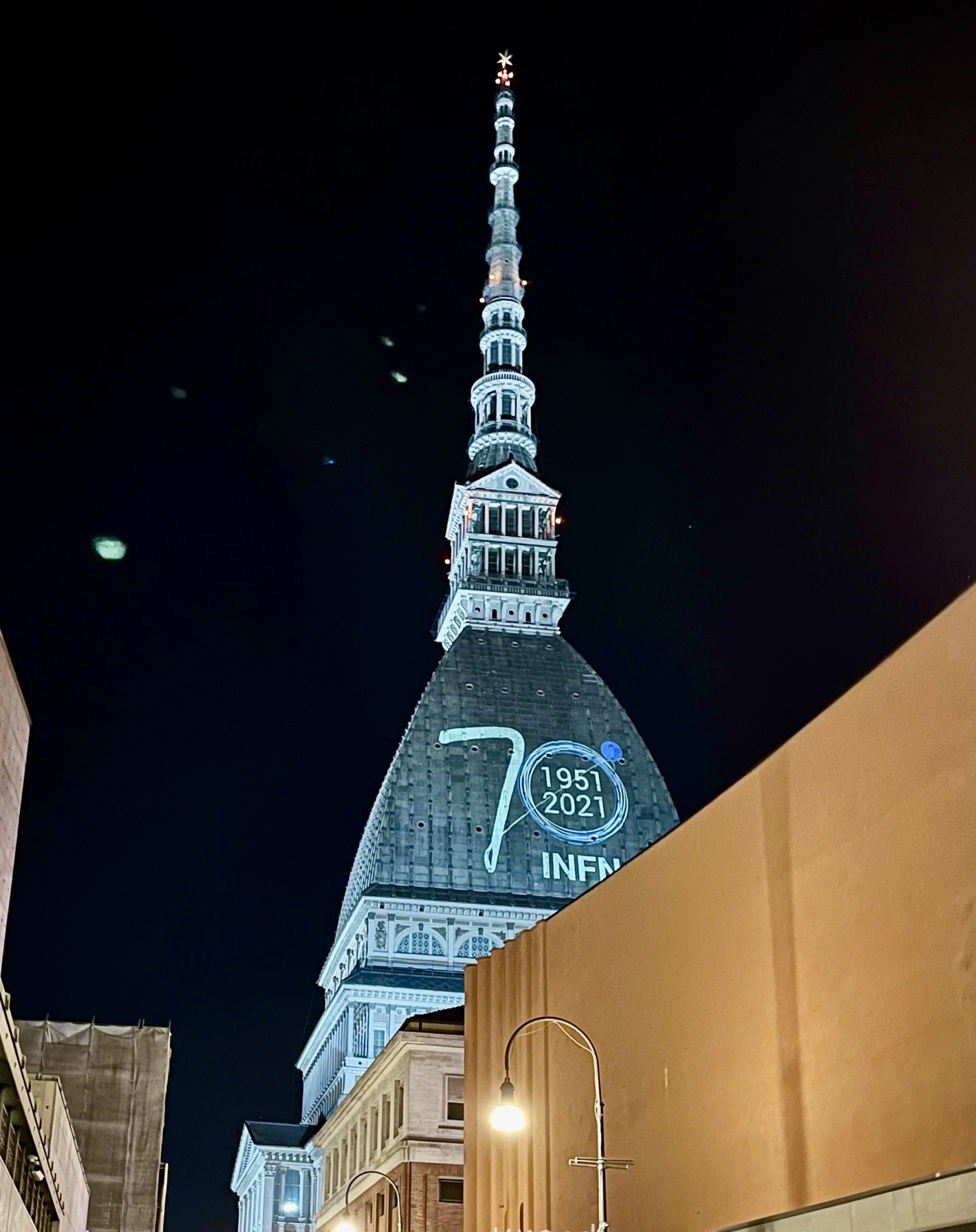
The 167 m (550 ft) tall Mole Antonelliana is featured on the back side of the 2 € coin. Mole means ‘big mound’ and Antonelli was the architect who kept making it taller.  Originally planned as a synagogue, it barely escaped bombing during WW2.  Since 2000 it houses the Museo Nazionale del Cinema, an interactive cinema museum and the tallest museum in the world. It is also the tallest unreinforced brick building in the world (without steel girder skeleton). The top has impressive views of Torino and the Alps.  

The Holy Shroud (Sindone di Torino) is a linen cloth said to have covered the body of Jesus.  An important icon for pilgrims, kept in the Cathedral of San Giovanni Battista, but only displayed for the Jubilee every 25 years.  It will be on display in 2025.

Autumn is a perfect time to visit Piemonte, especially for the seasonal food….zucca, porcini, castagne, tartufo bianco, salsiccia,tajarin and agnolotti del plin.

Tajarin integrale con porcini, salsicce e formaggio Piemontese

Torino has a chocolate festival in November and the Salone dei Libri in May. Milano is only 1 hour by train. Stay 3-4 days if you can, as there is a lot to see in Torino!  I definitely recommend a walking tour with Lucia, Bicerin and the train from Paris!

Buon Viaggio, Cristina
Share this:

  • Click to share on Facebook (Opens in new window) Facebook
  • Click to share on Pinterest (Opens in new window) Pinterest
  • Click to share on X (Opens in new window) X
  • Click to email a link to a friend (Opens in new window) Email
  • Click to share on WhatsApp (Opens in new window) WhatsApp
Like Loading...

Catanzaro, Calabria

15 Sunday Sep 2024

Posted by Un po' di pepe in Amici e Famiglia, Italia

≈ 4 Comments

Tags

Calabria, Catanzaro Lido, Scolacium, Southern Italy, Soverato, Squillace

Calabria for beginners-I finally made it to Calabria!  Just a little slice of it, as an unexpected detour!  I have been wanting to see Calabria for years, but it never seemed to work out.  My amica Rosetta, lives in Northern Italia but spends the summers in Calabria.  She saw on a Facebook post that I was in Puglia and wrote me a comment ‘Vienici a trovare in Calabria’.  Of course, I said ‘si!’ and even managed to find a ride from one of my paesani who lives in Catanzaro Lido. Sometimes the stars just align.

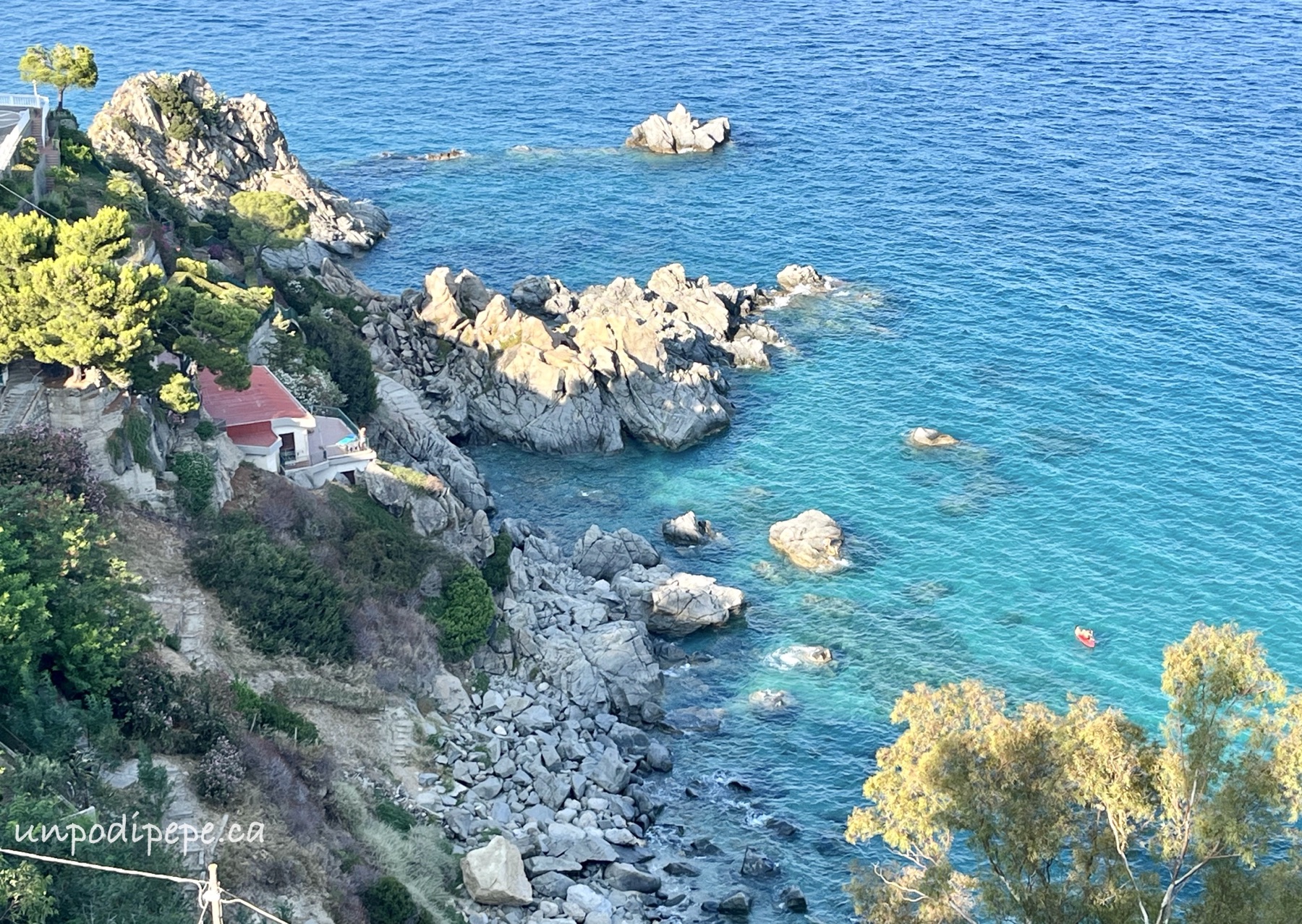
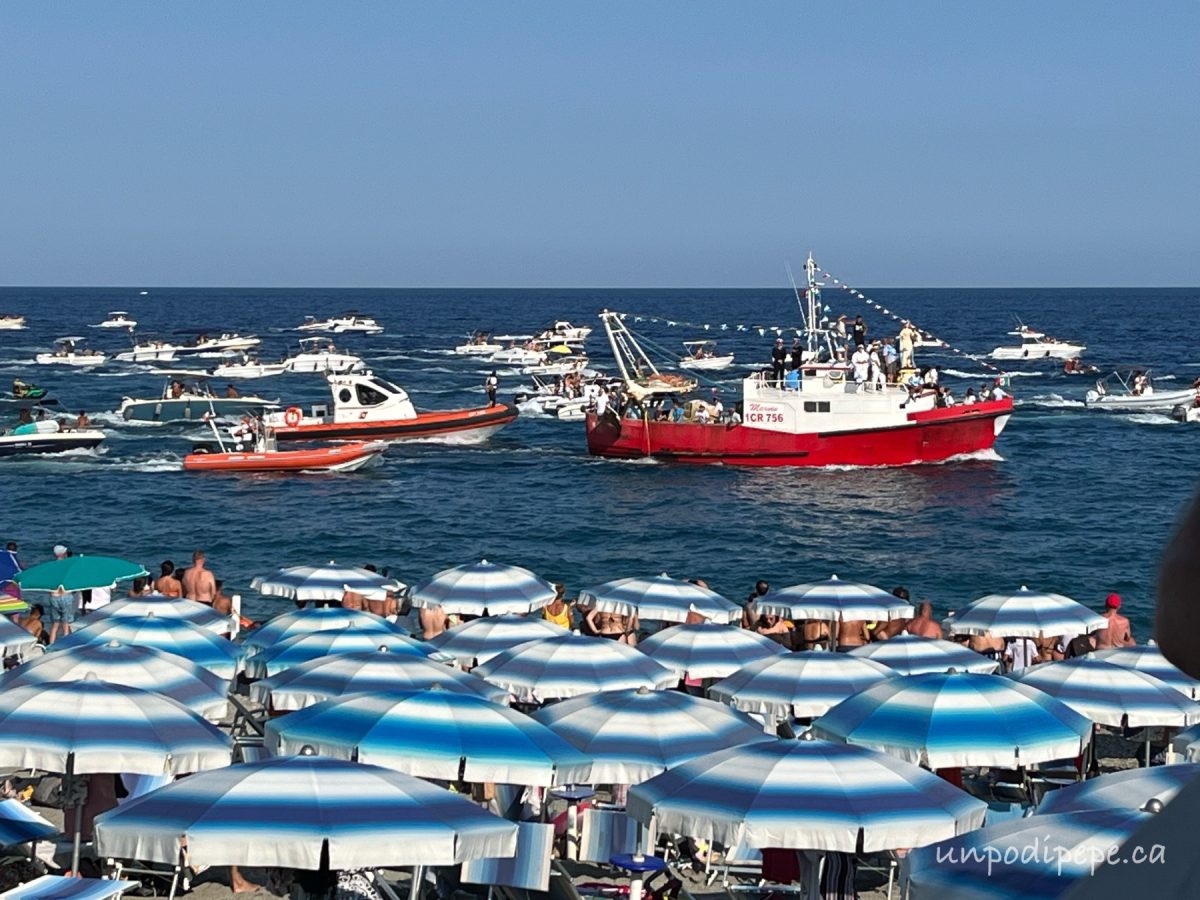
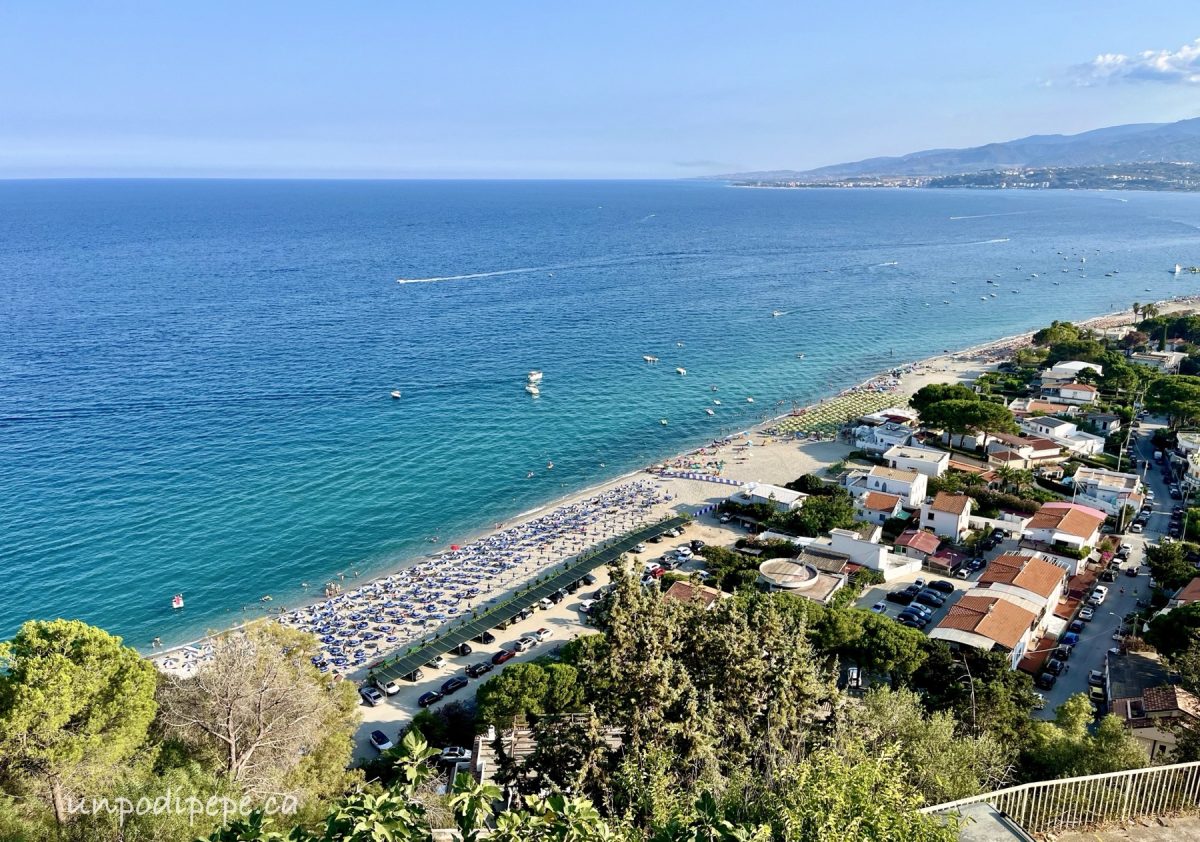
Calabria, the ‘toe’ and ‘foot’ of the Italian boot, is one of the lesser travelled areas of the country, and also one of the least expensive to visit.  I was there during the last week of July and it was not crowded where I was.  Calabria is known for rocky coastlines, crystal clear water, beautiful beaches, ancient mountain villages, castles and archeological sites.  I saw all of the above.I only went to a small area of Calabria on the Ionian Sea (east coast) around the Golfo di Squillace, in the province of Catanzaro. This is the narrowest part of Calabria, so it is possible to drive to the west coast, to Tropea, in an hour and a half.  My friends are in Squillace Lido, and as soon as I arrived, we went to Catanzaro Lido for the Festa della Madonna di Porto Salvo.  The highlight of the festa was a sea procession.  The Madonna was in the large red-hulled boat and all the other boats followed.

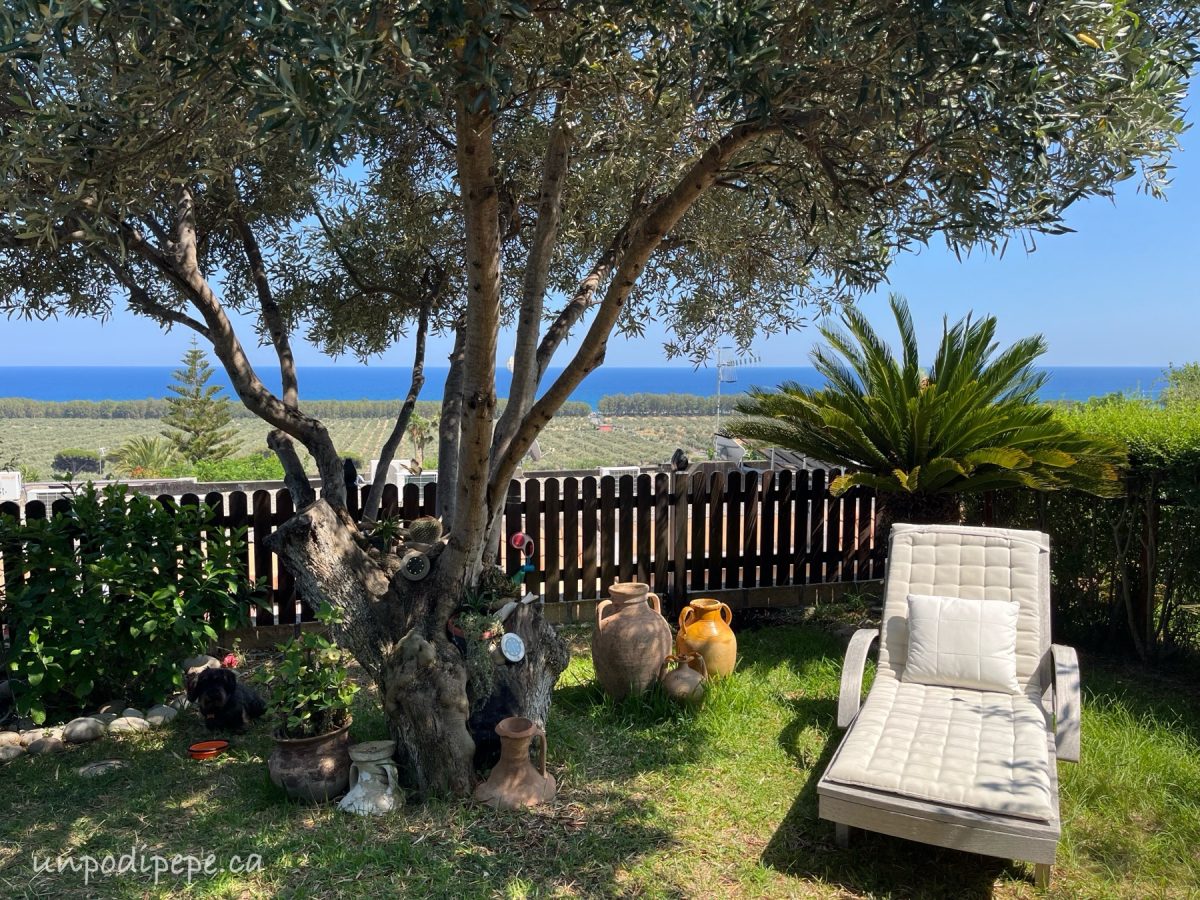
Rosetta’s back yard was heavenly, with an olive tree and a view of the Ionian Sea.  She decided we had to wake up at 0543 to watch l’alba, the sunrise.  I am not a morning person, but it was totally worth getting up for, as you can see.

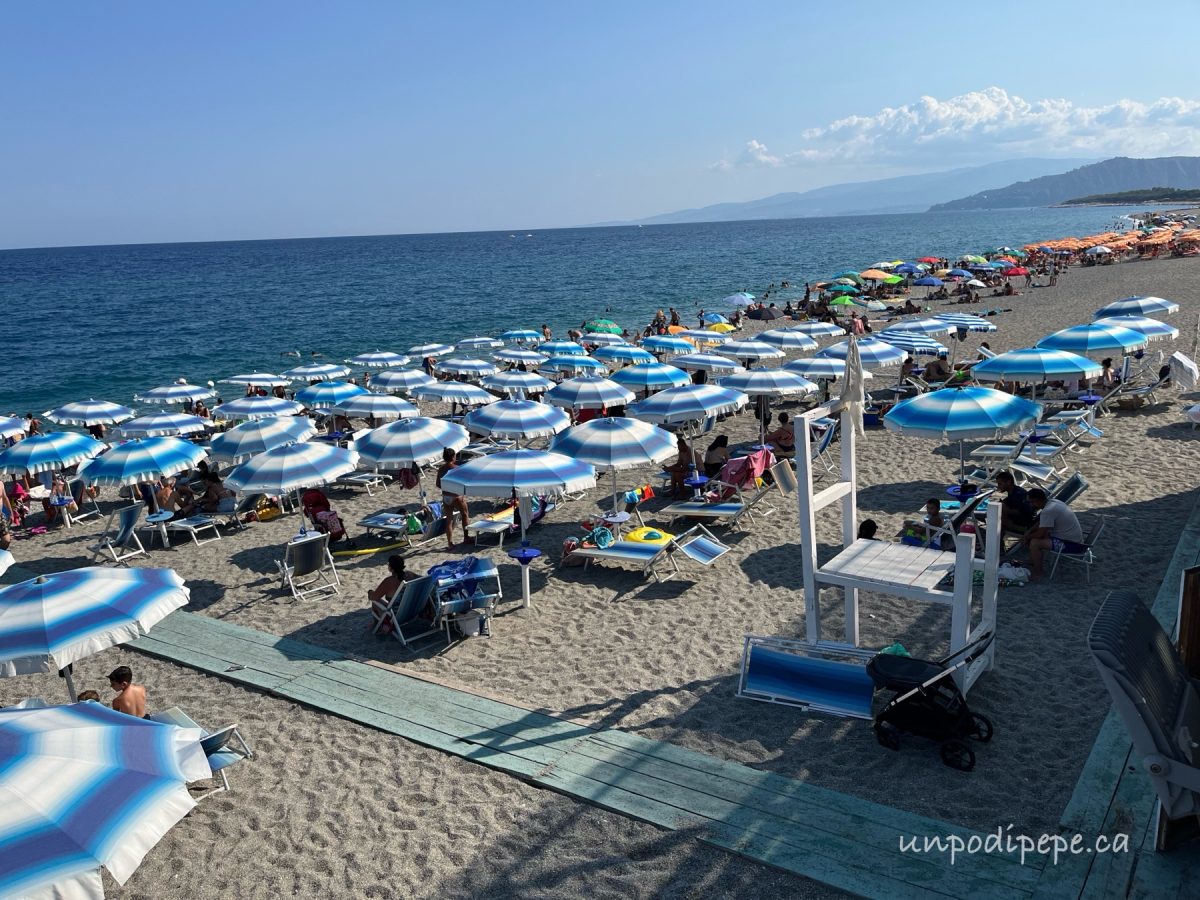
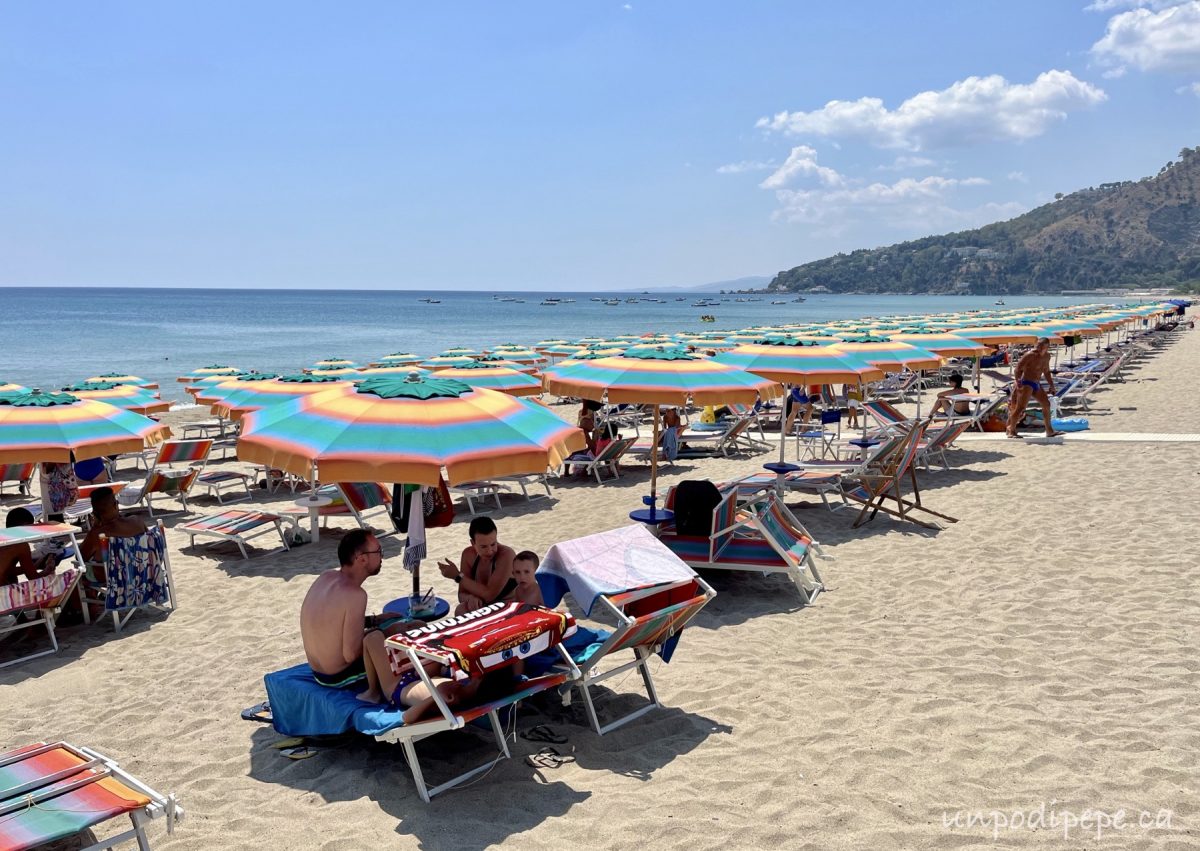
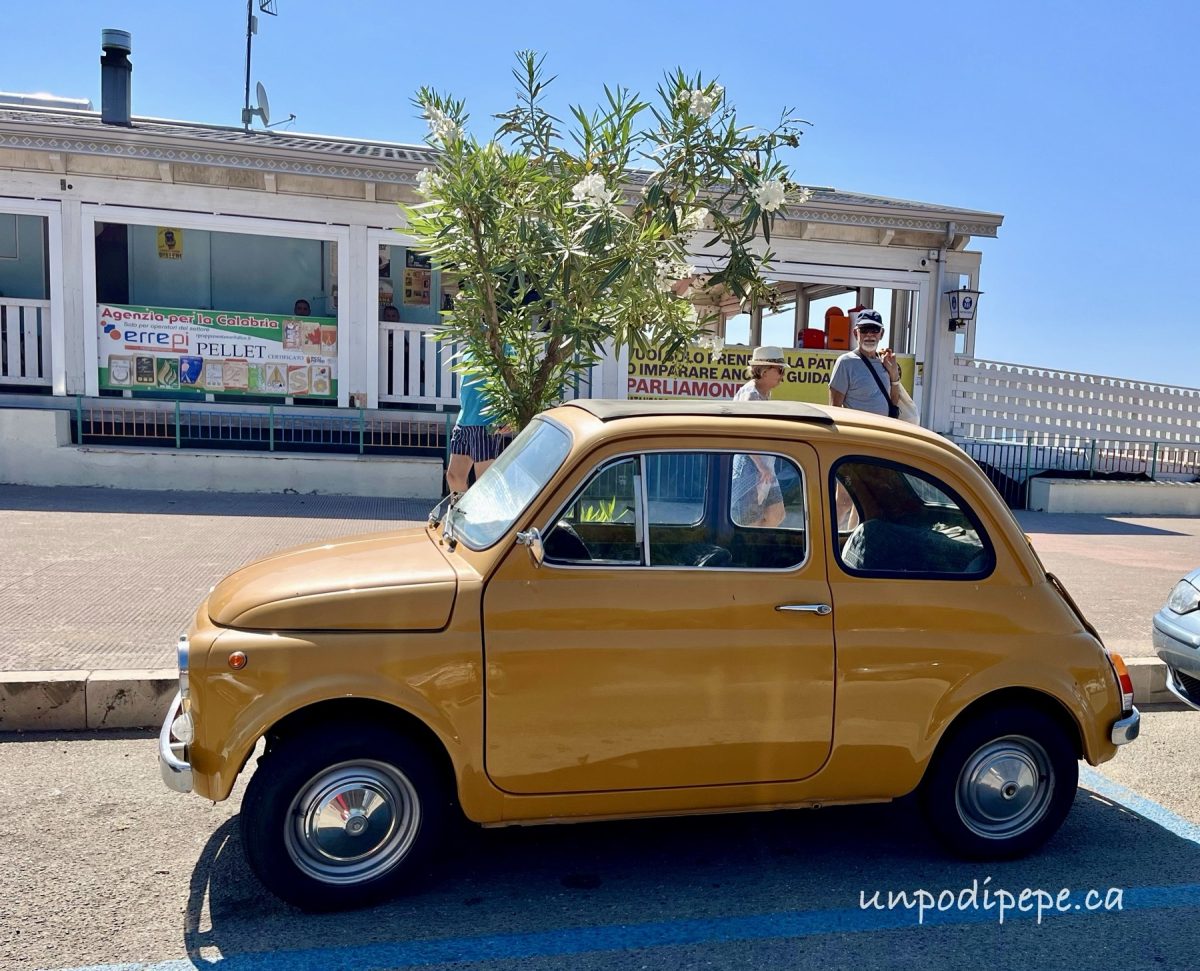
Every morning, we went to the beach -to Squillace Lido, and everyone I met-both on the beach, under an ombrellone, or in the water-was a cousin of Rosetta or her husband Enrico!  Some of these cugini lived in the area and some had moved to other parts of Italia, returning for the summer.  What an amazing thing!  It was so hot, I stayed in the water most of the time.  The sand was coarse, and my feet had a nice daily exfoliation.Even on the beach in Calabria, my Cinquecento radar was on high alert!

Squillace (skwee•LAH•cheh) population ~3500, was originally the Greek colony of Scylletium and then the Roman town of Scolacium.  I visited the Parco Archeologico Scolacium, which was formerly a large olive farm and orchard by the sea.  The site has Roman, Byzantine and Norman ruins.  It was discovered in the 1800’s by farmers, but not excavated until 1965. The residence of the former owner, Baron Mazza, is now the museum and you can also walk through the old olive mill.  The statues in the museum are covered in scrapes made by farm implements!  Ouch! Please read my friend Karen in Calabria’s post about Scolacium, she took better photos than mine.

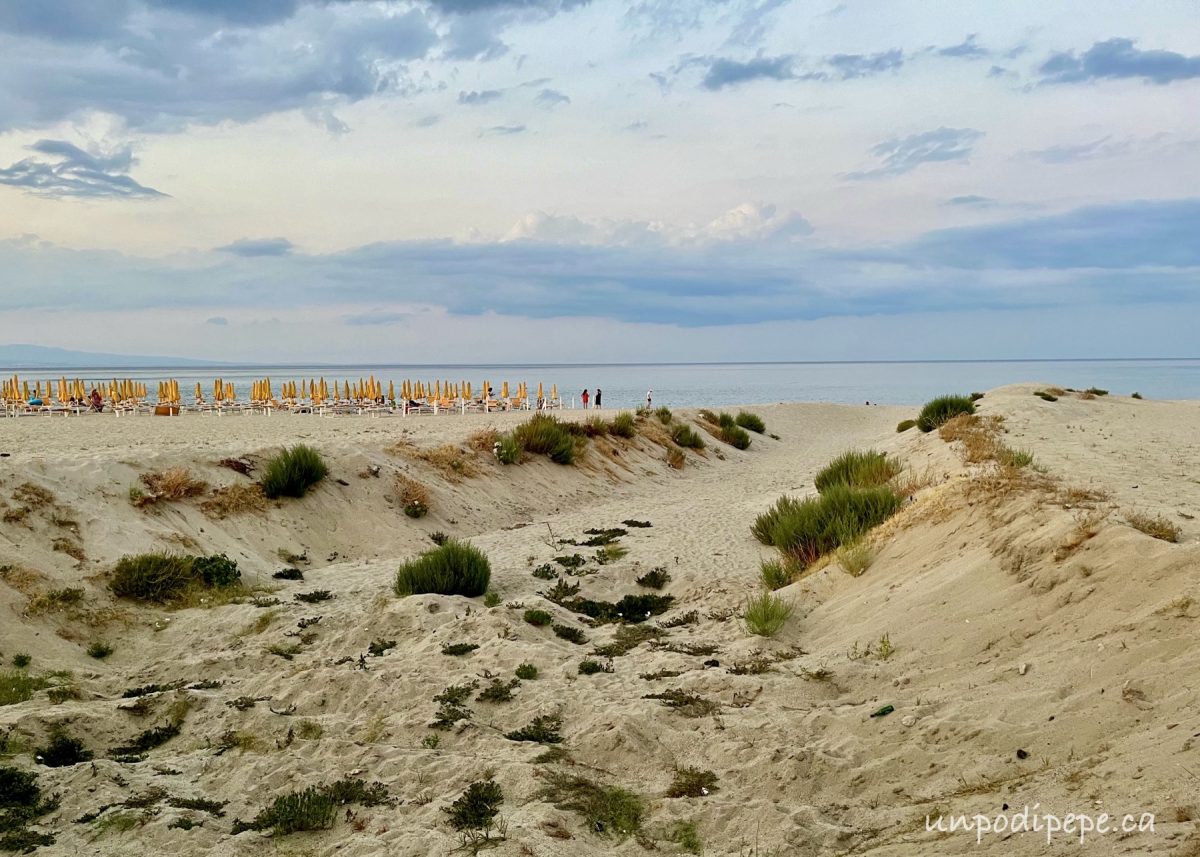
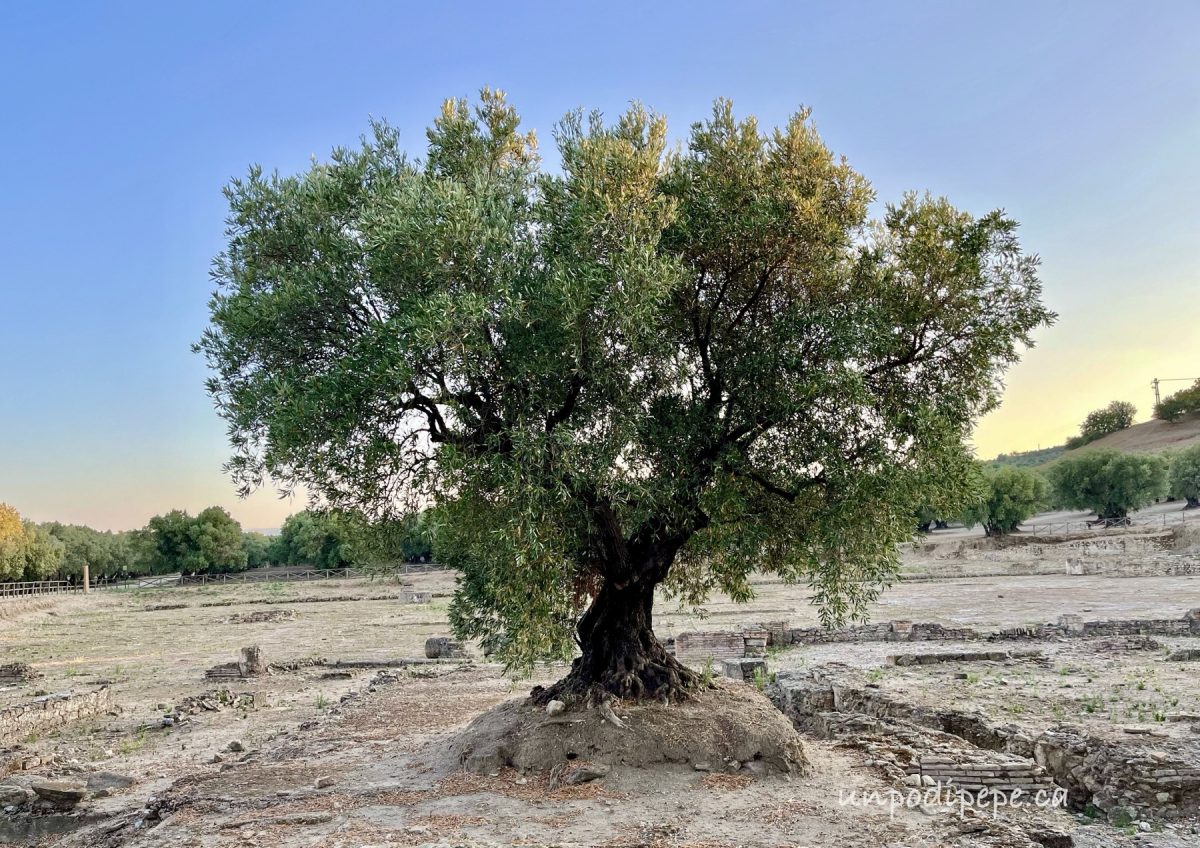
Only a small part of the site has been excavated and it is still ongoing.  There are extensive mosaics that get worked on, then covered again until there is time and $ to excavate some more. Surrounding this magnificent olive tree, you can see stones ready to be excavated.Called ‘the pearl of the Ionian Sea’, Soverato was recently named the 3rd most beautiful beach in Calabria.  Soverato, population ~9000, is known for its beaches, boardwalk and nightlife.  I visited for an evening stroll along the boardwalk.  The beach looked almost otherworldly before sunset!

This night shot was taken from Baia dell’Est where we had pizza. Caminia is right below, then Pietragrande, and Soverato in the far distance. Below is the daytime version of this view.

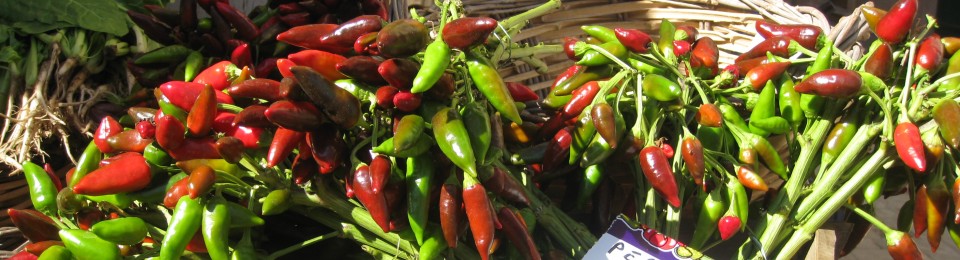
What did I bring back from Calabria?  Peperoncini, also known as ‘Viagra Calabrese‘, Bergamotto-the citrus fruit used to flavour Earl Grey tea, and the famous cipolla rossa di Tropea -Tropea red onions.  This is where I bought my goodies.  Behind the Lanzellotti bancarella is a pepper tree-growing pepe rosso-red peppercorns!  Un po’di pepe!

Getting back to Orsara di Puglia was not so easy.  My options were to go to Lamezia Terme, take the train to Napoli and then take the bus to Foggia and another bus to Orsara, or take a 7.5 hour overnight bus from Catanzaro Lido to Foggia.  I chose the overnight bus so I could have an extra day at the beach!  At 7am my cugina met me for colazione in Foggia, then I took the bus to Orsara.  As mamma would say ‘una sfacchinata’!

Calabria seems to be even more badly connected with transportation than Puglia! Mannaggia! This makes it harder to get around without renting a car, but it is also one of the reasons these areas are less crowded and less pricey.  Tropea was apparently extremely crowded this year, as it has been getting a lot of attention since 2021. Despite the lack of convenient transportation, I will definitely be going back to see more of Calabria some time in the future!

Grazie to Rosetta and Enrico for inviting me to visit their little corner of paradise in Calabria!  Ciao, Cristina

Share this:

  • Click to share on Facebook (Opens in new window) Facebook
  • Click to share on Pinterest (Opens in new window) Pinterest
  • Click to share on X (Opens in new window) X
  • Click to email a link to a friend (Opens in new window) Email
  • Click to share on WhatsApp (Opens in new window) WhatsApp
Like Loading...

Cavalli di San Marco

23 Sunday Jun 2024

Posted by Un po' di pepe in Art, Art history, Italia

≈ 7 Comments

Tags

Piazza San Marco, Sculpture, UNESCO World Heritage Sites, Veneto, Venezia

I Cavalli di San Marco are a set of gilded copper statues of 4 horses, originally attached to a quadriga, a four horse carriage used in chariot racing.  Also known as the ‘Triumphal Quadriga’ and the ‘Horses of the Hippodrome of Constantinople’. The sculptures date from classical antiquity.  Because of the style, they were thought to be Greek, by the 4th C BC sculptor Lysippos, but carbon dating shows they are from the 1st-3rd C AD, which makes them 1700-1900 years old. An 8th century document mentions ‘four gilt horses that stand above the Hippodrome brought from the island of Chios by Theodosius II’ (AD 408-450)

The sculptures are expressive and magnificent!  The realism is incredible-bulging veins, rippling muscles, flaring nostrils, raised hooves, and the way they are in sync, with their heads turned to each other.  Streaks of gold leaf are still visible on their bodies.  The poet Francesco Petrarca (1304-1374) remarked ‘they seem to be neighing and pawing at the ground, as if alive’.  They are made using the lost wax method.  A wax sculpture is used to make a mold, usually of clay.  The sculpture is then cast with the mold. Each cavallo weighs close to 900 kg (2000 lbs).  Very few metal masterpieces have survived from antiquity as they were all melted down in medieval times to make weapons.

There is a lot of history to this foursome representing Apollo, God of the sun.  They were likely made on the Greek island of Chios and brought by Emperor Constantine to the new capital Constantinople (modern Istanbul) in 330 AD to adorn the chariot racetrack or by Theodosius 100 years later.  During the sack and looting of Constantinople in 1204, the Venetians took them as spoils of war. The cavalli were in storage in the Arsenale and in 1254 were placed on the terrace above the main door to the Basilica San Marco, as a symbol of military and political power. Small marble columns held up their feet.  Collars on the horses were added to hide where they had to be decapitated for transport from Constantinople.  They lived on the terrace for almost 600 years, until Napoleon looted them in 1797, taking them to Paris. In Paris, they were installed outside the Louvre on top of the Arc de Triomphe du Carrousel, along with a new quadriga. Upon the defeat of Napoleon in 1815, they were actually returned to the terrace in Venezia by the Duke of Wellington- minus their ruby pupils.  Replicas are now on the Paris monument. The cavalli were restored in 1977 and to protect from environmental oxidation they made their final journey in the early 1980’s.  The cavalli were moved inside the Basilica to the Loggia dei Cavalli and replicas made by Fonderia Battaglia di Milano were placed on the terrace

Classical art has a long history as a trophy of war taken by victorious generals.  Greater than art, it had power, and was a symbol of triumph, survival and to how each civilization built on the previous one.  Regardless of how you feel about looted art, for these 4 brothers, it is what saved them.  There is almost zero chance they would have survived if left in Constantinople.  They would have been melted down for ammunition or building materials.

Do not miss a visit to these beauties. Admission to the Basilica San Marco on site is €3 plus admission to the Museum, outdoor terrace and Loggia dei cavalli €7 for a total of €10.

Tickets can also be purchased online in advance for the Basilica €6, and the museum €9 for a total of €15. Have you seen I Cavalli di San Marco?

*Photo credit-Prethika Kumar!

Share this:

  • Click to share on Facebook (Opens in new window) Facebook
  • Click to share on Pinterest (Opens in new window) Pinterest
  • Click to share on X (Opens in new window) X
  • Click to email a link to a friend (Opens in new window) Email
  • Click to share on WhatsApp (Opens in new window) WhatsApp
Like Loading...

Torcello

13 Monday May 2024

Posted by Un po' di pepe in Italia, Travel, Travel tips

≈ 12 Comments

Tags

Daytrips from Venezia, Locanda Cipriani, Risotto di go', Torcellum, Venetian lagoon, Veneto, Venice

The first time I visited tiny Torcello was with my family in 1984. We were staying with family friends in Mestre and their daughter had just gotten married there. One look at her wedding photos and all 9 of us set off on the vaporetto to Torcello for lunch the next morning!

The Romans called it ‘Torcellum’ meaning tower to the sky. Torcello was the first of the Venetian lagoon islands to be populated in 452 after the fall of the Roman Empire, by refugees from Altino fleeing the mainland from Hun invasions.  They brought the relics of their patron saint, San Heliodorus with them. Torcello had a cathedral and Bishop before San Marco was even built.  Santa Maria Assunta built in 638 is the oldest parish in the lagoon and was the Bishop’s official seat for over 1000 years.

Pre medieval Torcello was a more powerful trade center than Venezia, having close trade ties with Constantinople and Ravenna. In the 10th century, the population was >10,000.  Hard to imagine on 441 m², but it sounds like there was more available land at that time.  Commercial activity included fishing, glass making, and export of salt, fruit, wine and even cucumbers.

As Venezia’s prosperity increased in the 15th century, silting and swamping of Torcello made navigating the ‘laguna morta’ impossible.  This led to malaria and depopulation.  It was slowly abandoned for Murano, Burano and Venezia-even the bishop was moved to Murano.  Most of the 12 churches, cloisters, a monastery and palazzi were looted over time for building materials. The full-time population of Torcello is now 11, including the parish priest.
Torcello is a lovely sanctuary from the crowds, and an opportunity to see the original Venezia.  Strada della Rosina connects the pier to the main piazza along a canal.  On the right is Ponte del Diavolo, a bridge without parapets (railings). There are several versions of a legend about the ponte, regarding a young couple in love, a witch and the devil.  You will pass all the restaurants on the way to Piazza Santa Fosca.  The Basilica Santa Fosca is an 11th century Byzantine church in the form of a Greek cross.  Byzantine architecture is one of my favourites, and this one is a gem with a gorgeous interior.  It was built to house the remains of Santa Fosca da Ravenna.  

Next door is Santa Maria Assunta which was rebuilt in 1008 and has incredible Venetian Byzantine mosaics. The 11th century Campanile is open 10-17:30 for views over Torcello, Burano, and the lagoon. Admission to the campanile is €6. The Torcello museo is in the former council chambers, admission €3.

Venetian Byzantine mosaics Santa Maria Assunta, Torcello

Aironi and fenicotteri rosa (herons and pink flamingos) can be seen in the marshes from March to September at Casa Museo Andrich-an artist home, museum, nature reserve and educational farm garden.  Admission €12.  To get there, when getting off the vaporetto, instead of going straight to Strada della Rosina, turn left. I have not been here, but it sounds nice if you have the time.
Torcello is a great place to eat!  Local specialties include risotto di gò, made with a small local fish-also called risotto alla Buranella, moeche-a soft shell crab, baccalà mantecato, and carciofi Sant’Erasmo in spring.  The first place after the pier is the informal Taverna Tipica Veneziana, a shack in a field with picnic tables serving a limited but yummy local menu.
At Osteria al Ponte del Diavolo (closed Monday), I had a simple radicchio and balsamico salad here with an amazing glass of vino bianco, Torcellum from the golden Dorona grape, which was almost extinct.  Unfortunately, the island only produces enough grapes to supply the local restaurants with wine.

Ristorante Villa ‘600 (closed Wednesday) an old 17th century farmhouse and gardens. This is where my family had seafood risotto in 1984!  I still have the receipt!
Ristorante Al Trono d’ Attila (closed Monday) I believe this is where the 1984 wedding reception was held!

The Locanda Cipriani (the same Cipriani as in Harry’s Bar) is a five room upscale resort and restaurant on Torcello since 1935.  In 1948, Ernest Hemingway wrote ‘Across the River and into the Trees’ here. Celebrities and royalty have been known to stay here. The restaurant is not as pricey as one would expect.Do not miss the last vaporetto, as there are only 2 places to stay on Torcello- Locanda Cipriani and Bed and Breakfast Ca’ Torcello!  There are also 2 places to stay on Burano and 1 on Mazzorbo-which is connected to Burano by a bridge.  On the weekends, restaurants can be open till 2300, which is after vaporetto hours. Water taxi back to Venezia is very expensive. Oh and in case you are wondering, there is no shopping on Torcello!

Torcello 1984

Torcello is 10km away from Venezia and accessible from Burano via a 10 minute vaporetto ride daily from 0800-2000.  Let me know if any of you have been to Torcello!

Share this:

  • Click to share on Facebook (Opens in new window) Facebook
  • Click to share on Pinterest (Opens in new window) Pinterest
  • Click to share on X (Opens in new window) X
  • Click to email a link to a friend (Opens in new window) Email
  • Click to share on WhatsApp (Opens in new window) WhatsApp
Like Loading...
← Older posts

Enter your email address to follow 'un po' di pepe' and receive notifications of new posts by email.

Join 511 other subscribers
Follow Un po' di pepe on WordPress.com

Popular Posts

  • Hairstyling in Ancient Roma
    Hairstyling in Ancient Roma
  • Espresso Cookies
    Espresso Cookies
  • Il Pumo Pugliese
    Il Pumo Pugliese
  • Panforte di Siena
    Panforte di Siena
  • Internment of Italian Canadians
    Internment of Italian Canadians
  • San Nicola
    San Nicola
  • Panettone Fatto in Casa
    Panettone Fatto in Casa

Recent Posts

  • Castel del Monte
  • ‘The Nuances of Love’
  • Hostaria Antica Roma~Eat like an Ancient Roman
  • Santa Maria in Aracoeli
  • Casino dell’Aurora~Villa Boncompagni Ludovisi
  • Nasoni di Roma
  • Bloghiversario #11
  • Fontana di Trevi
  • Acqua Vergine
  • Giubileo 2025
  • Sanremo 2025
  • In Vino there are Memories
  • A Literary Harvest
  • 2024~Un po’ di pepe Year in Review
  • Buon Natale 2024
  • Il Bicerin
  • Mercato Porta Palazzo
  • Torino
  • Catanzaro, Calabria
  • Il Pumo Pugliese
  • Artemisia Gentileschi
  • Cavalli di San Marco
  • Panzerotti
  • Torcello
  • 10 years of Un po’ di pepe!

Categories

Amici e Famiglia Architecture Art Art history Art projects Bilingual posts Blogging Canada Culture Feste Firenze Inspiration Italia Italian Folklore Italian language Italian life Italocanadesi Libri Mangiamo! Orsara di Puglia Parole piacevoli Photography Puglia Recipes Roma Travel Travel tips Uncategorized Vino

Archives

Un po’ di pepe on Facebook

Un po’ di pepe on Facebook

Start a Blog at WordPress.com.

  • Subscribe Subscribed
    • Un po' di pepe
    • Join 511 other subscribers
    • Already have a WordPress.com account? Log in now.
    • Un po' di pepe
    • Subscribe Subscribed
    • Sign up
    • Log in
    • Report this content
    • View site in Reader
    • Manage subscriptions
    • Collapse this bar
 

Loading Comments...
 

    %d