• Home
  • About me/Chi sono
  • Contact

Un po' di pepe

~ …… (oon∙poh∙dee∙PEH∙peh) Cristina writes about interesting stuff /Cristina scrive di cose interessanti

Un po' di pepe

Category Archives: Italia

Le Isole Tremiti

16 Wednesday Jul 2014

Posted by Un po' di pepe in Italia, Photography, Puglia, Travel

≈ 13 Comments

Tags

Alidaunia, Diomedes, Fellini, Il Gargano, Isole Tremiti, Italia, Italian history, Italy travel tips, Parco Nazionale del Gargano, photography, Puglia, Southern Italy

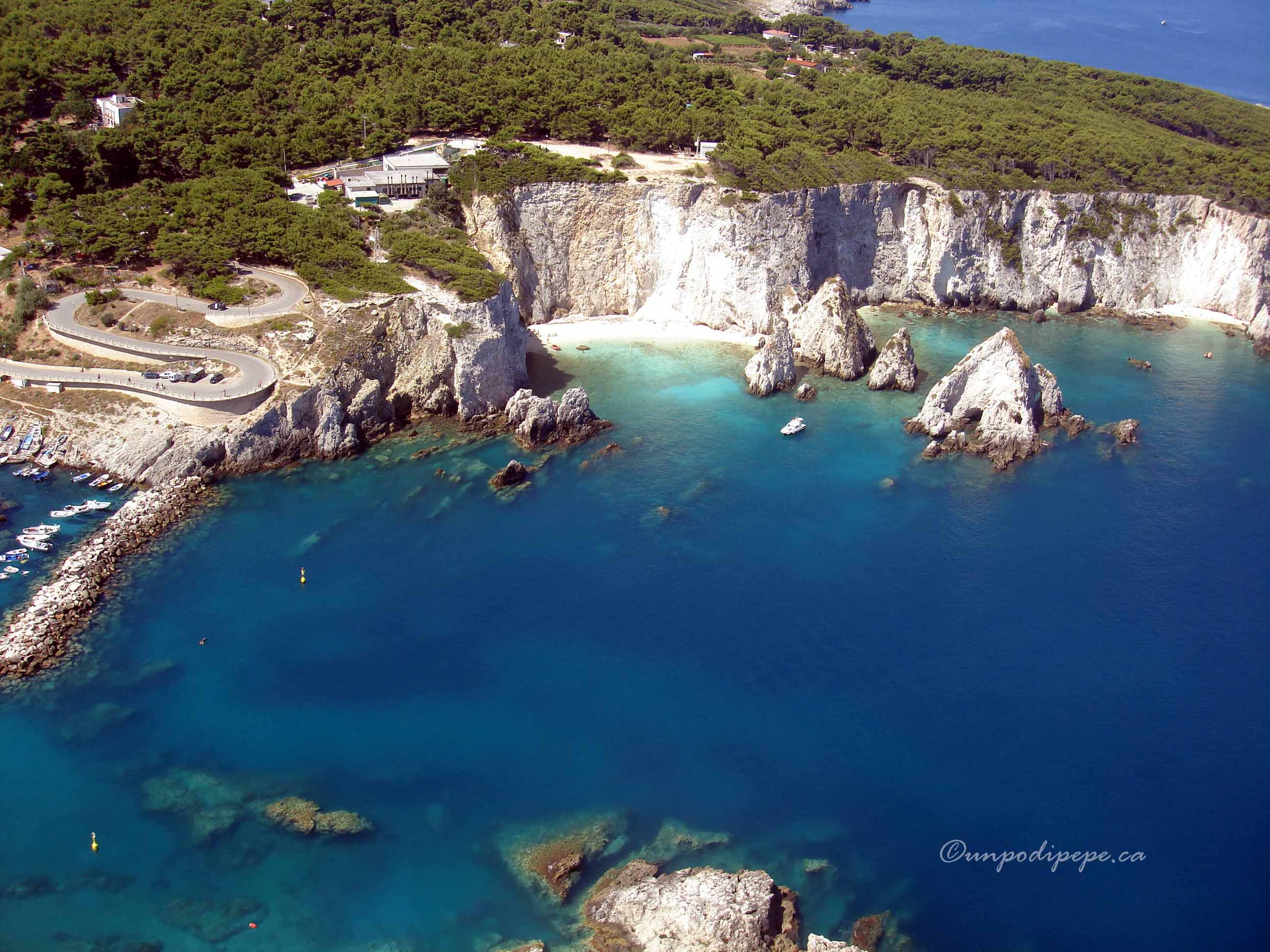
San Nicola and Cretaccio seen from above the helipad, San Domino

San Nicola and Cretaccio seen from above the helipad, San Domino

The Isole Tremiti (ee∙SOH∙leh treh∙MEE∙tee) are an archipelago of 3-5 islands-depending on what you consider an island-in the Adriatic Sea, 22 km off the coast of Italia. The Tremiti, considered ‘le perle dell’Adriatico’ (the pearls of the Adriatic), have been inhabited since at least the 4th century BC.  They are part of the Parco Nazionale del Gargano (Gargano National Park) http://www.parcogargano.it and have been a protected Marine Nature Reserve (Riserva Naturale Marina Isole Tremiti) since 1989. The clear waters make the islands a popular spot for snorkeling, scuba diving and even bird watching.

Isole Tremiti Satellite View
Isole Tremiti Satellite View

Flying into San Domino by helicopter

Flying into San Domino by helicopter

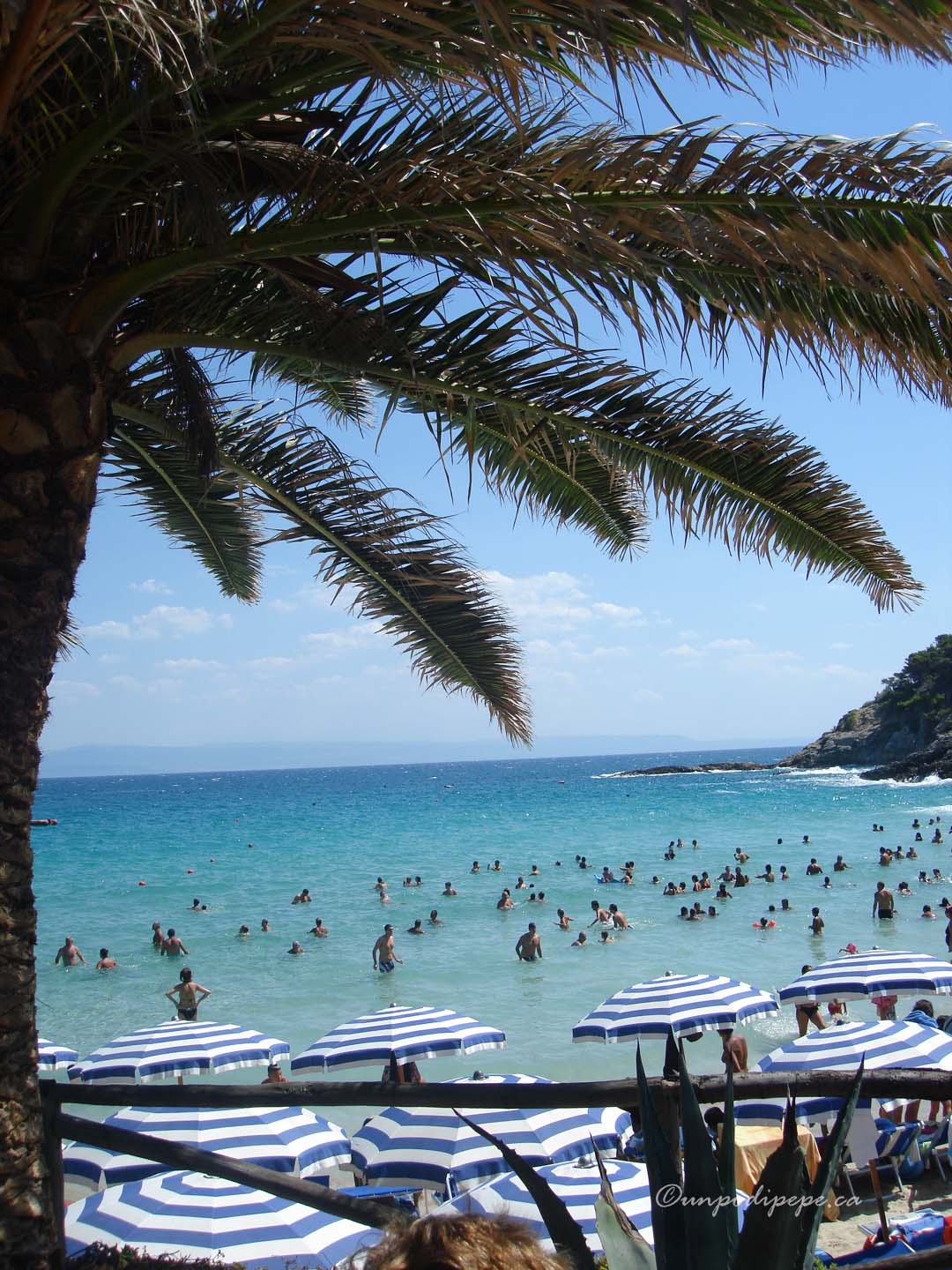
San Domino is the largest island and has most of the facilities such as hotels, restaurants, the Tremiti Diving Center, and the heliport. It is covered by lush Aleppo pine forest, capers and rosemary, and surrounded by small coves and sea caves. San Domino has the Tremiti’s only sandy beach –Cale delle Arene. The rocky coves are beautiful to explore and swim-but don’t go barefoot! My friend stepped on a riccio di mare (sea urchin) and it was not fun.  There is a 2 hour walk around part of the island and bicycles are available for rent.
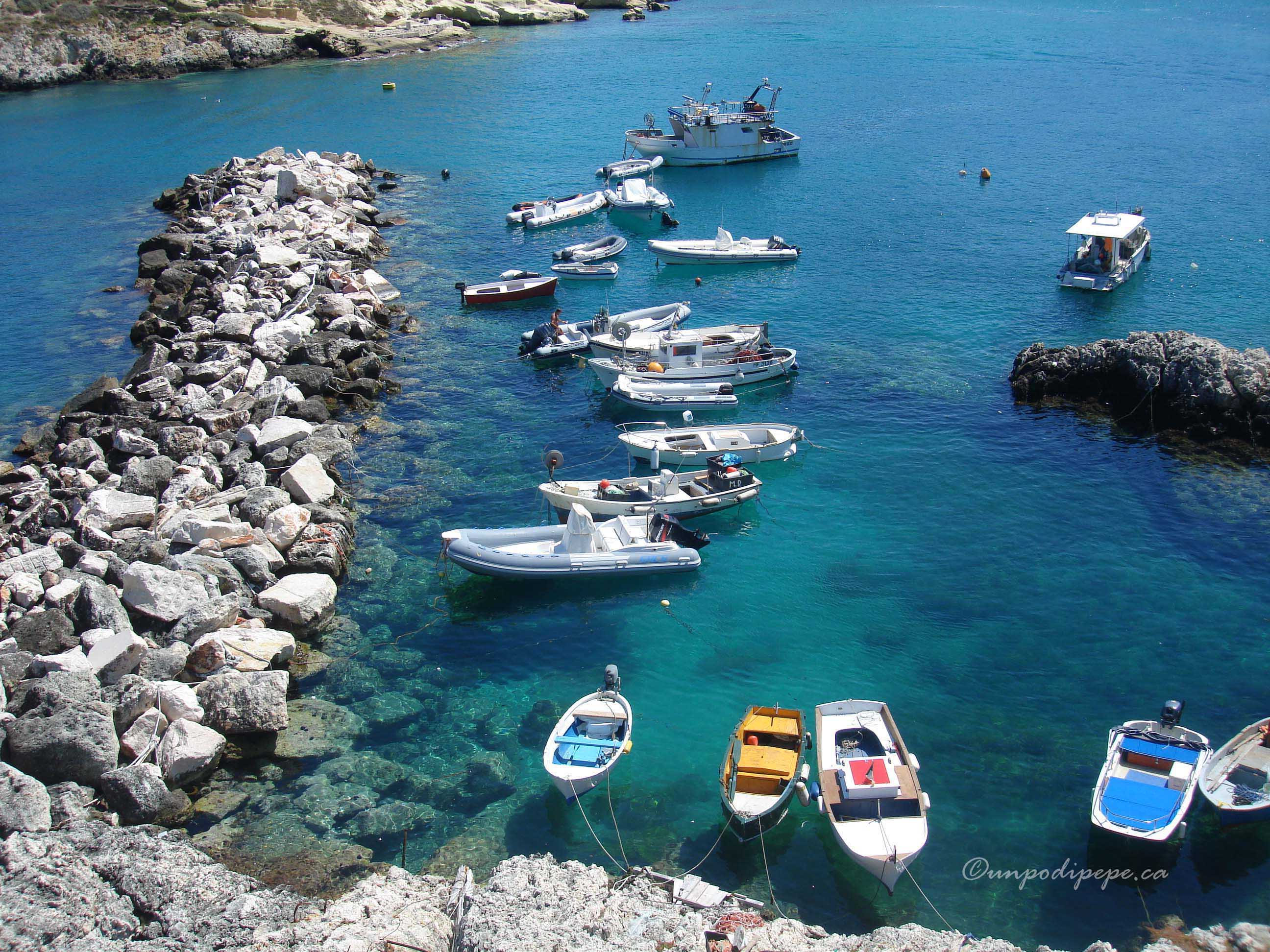
The small port, San Domino
The small port, San Domino

Cale delle Arene, San Domino-the only sandy beach on the Isole Tremiti

Cale delle Arene, San Domino-the only sandy beach on the Isole Tremiti

Scoglio dell 'Elefante, San Domino, looks like a giant sitting elephant drinking from the sea

Scoglio dell ‘Elefante, San Domino, looks like a giant sitting elephant drinking from the sea

San Nicola is the administrative and historic center of the islands, and where most of the 400 or so permanent residents live. The 11th Century Benedictine abbey and church of Santa Maria del Mare seem to rise up out of the limestone cliffs, with fortified walls starting at the port. The church has a beautiful 11th century mosaic floor and a Byzantine painted wood crucifix that was likely brought here by monks fleeing from the Crusades.

San Nicola, seen from San Domino

San Nicola, seen from San Domino

San Nicola Porto
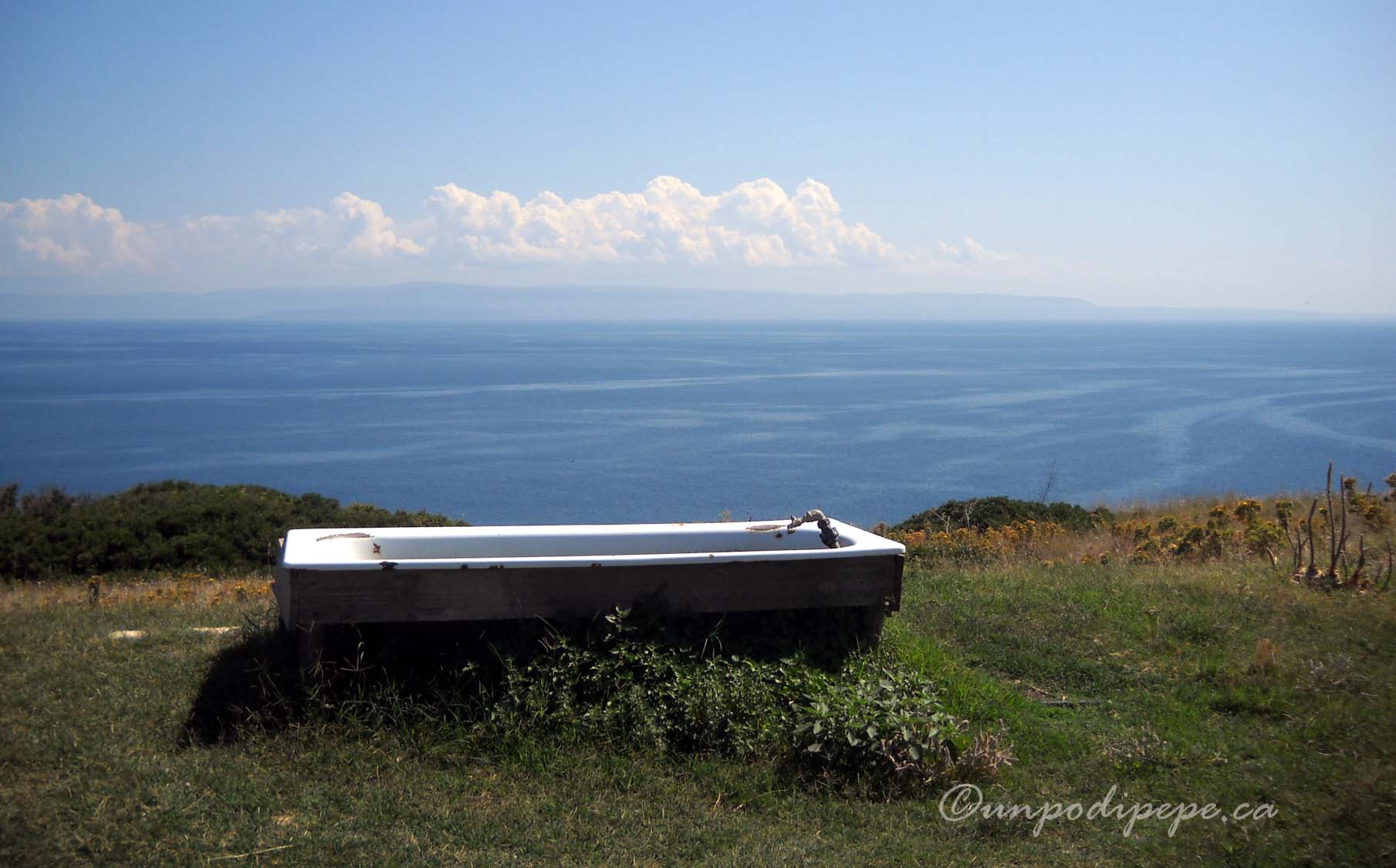
San Nicola Porto

Bagnetto anyone?

Bagnetto anyone?

Capraia (or Caprara) is rocky and uninhabited except for sea birds. It is named for the capers that grow there. There is no organized transport to Capraia, but local fishermen can be hired to take people over.

San Nicola and Capraia.  Yes those are solar panels down there!

San Nicola and Capraia. Yes those are solar panels down there!

Cretaccio is an uninhabited halfmoon shaped block of yellowish clay between San Domino and San Nicola.  Cretaccio literally means ‘big hunk of clay’.
Pianosa is 11 km away from the other islands and is the most northern point of Puglia.  It can be covered by waves during storms, as the elevation is only 15 m.  The waters surrounding Pianosa are in zone A of the Marine Reserve, so access is strictly prohibited except for approved marine research.

Cretaccio and San Domino, seen from Santa Maria al Mare, San Nicola

Cretaccio and San Domino, seen from Santa Maria al Mare, San Nicola

The islands are sometimes known by their former name ‘Le Diomedee’ or ‘I Sassi di Diomede’ and you see a lot of things in the Gargano area called ‘Diomede’. According to legend/mythology, after the Trojan War, the Greek hero Diomedes settled in the Daunia area (Province of Foggia) and created the islands with 3 rocks he threw into the Adriatic.  He was also shipwrecked on the islands with his crew and possibly died here.
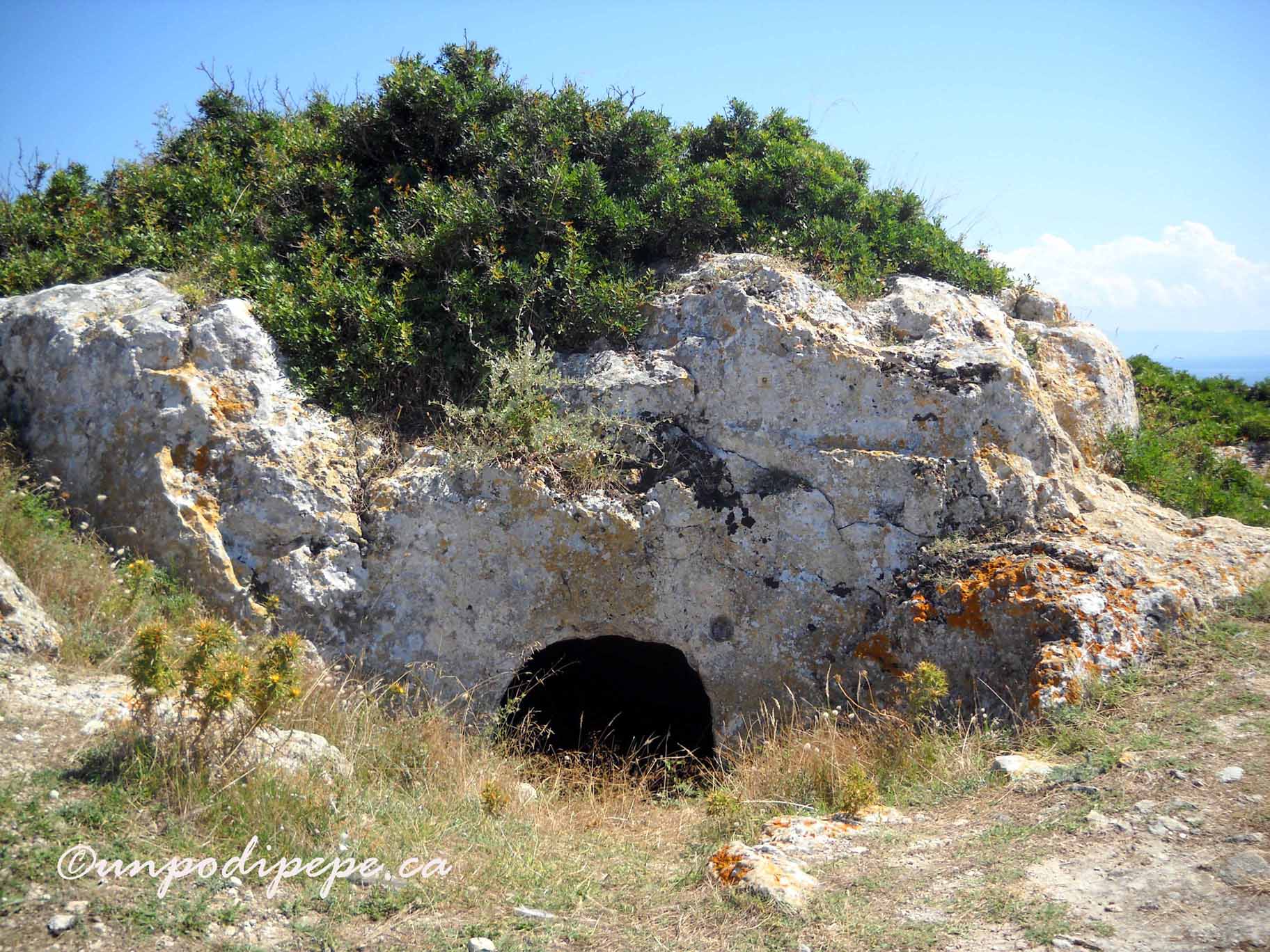
La tomba di Diomede on San Nicola.

La tomba di Diomede on San Nicola.

There is an unmarked Hellenic period tomb on San Nicola that is known as ‘la tomba di Diomede’. His crew was so upset at the loss of their captain that the Goddess Venus took pity on the grieving men and turned them into birds that continue to cry for their loss. The scientific name for the Great Albatross which is common in the area, is ‘Diomedea’.  These birds look a lot like seagulls and make a noise that can sound like a crying newborn.  In Fellini’s ‘Otto e mezzo’ (8½) there is a scene where a cardinal tells this story to Guido (Marcello Mastroianni).

A Diomedea, San Domino

A Diomedea, San Domino

The islands also have a long history as a place of exile. Emperor Octavius Augustus confined his granddaughter Giulia to San Nicola for adultery with a Roman senator. She remained there until her death 20 years later. One of the necropoli beneath the abbey could be her tomb.  Ferdinand, king of Napoli turned the abbey into a penal colony. A hundred years later, another Ferdinand tried to repopulate the islands with criminals and people moved in from the slums. For many years, the Fascists imprisoned those considered a danger to the public on the Isole Tremiti. One of the prisoners held there was Sandro Pertini, future president of the Italian Republic.

Alidaunia flies from Foggia to San Domino daily

Alidaunia flies from Foggia to San Domino daily

I have visited the islands several times by helicopter.  As you can see in the photos, the emerald water is so crystal clear you can see the bottom from the air!  The wonderful thing about visiting the Isole Tremiti is that there are no large hotels or resorts.  All of the hotels are small and surrounded by pine forest, so although this is a tourist destination, it doesn’t feel overrun with people. The Isole Tremiti are accessible by 1-2 hour ferry ride from Vieste, Peschici, Rodi Garganico, Manfredonia and Termoli, or by half hour helicopter ride from Foggia http://www.alidaunia.it .

Over San Nicola

Over San Nicola

Buon Viaggio!
Share this:

  • Share on Facebook (Opens in new window) Facebook
  • Share on Pinterest (Opens in new window) Pinterest
  • Share on X (Opens in new window) X
  • Email a link to a friend (Opens in new window) Email
  • Share on WhatsApp (Opens in new window) WhatsApp
Like Loading...

Benvenuti ad Orsara di Puglia

25 Sunday May 2014

Posted by Un po' di pepe in Italia, Orsara di Puglia, Puglia

≈ 63 Comments

Tags

Bandiera Arancione, Cittaslow, Culture, Italia, Italian history, Orsara di Puglia, Puglia, San Michele, Southern Italy

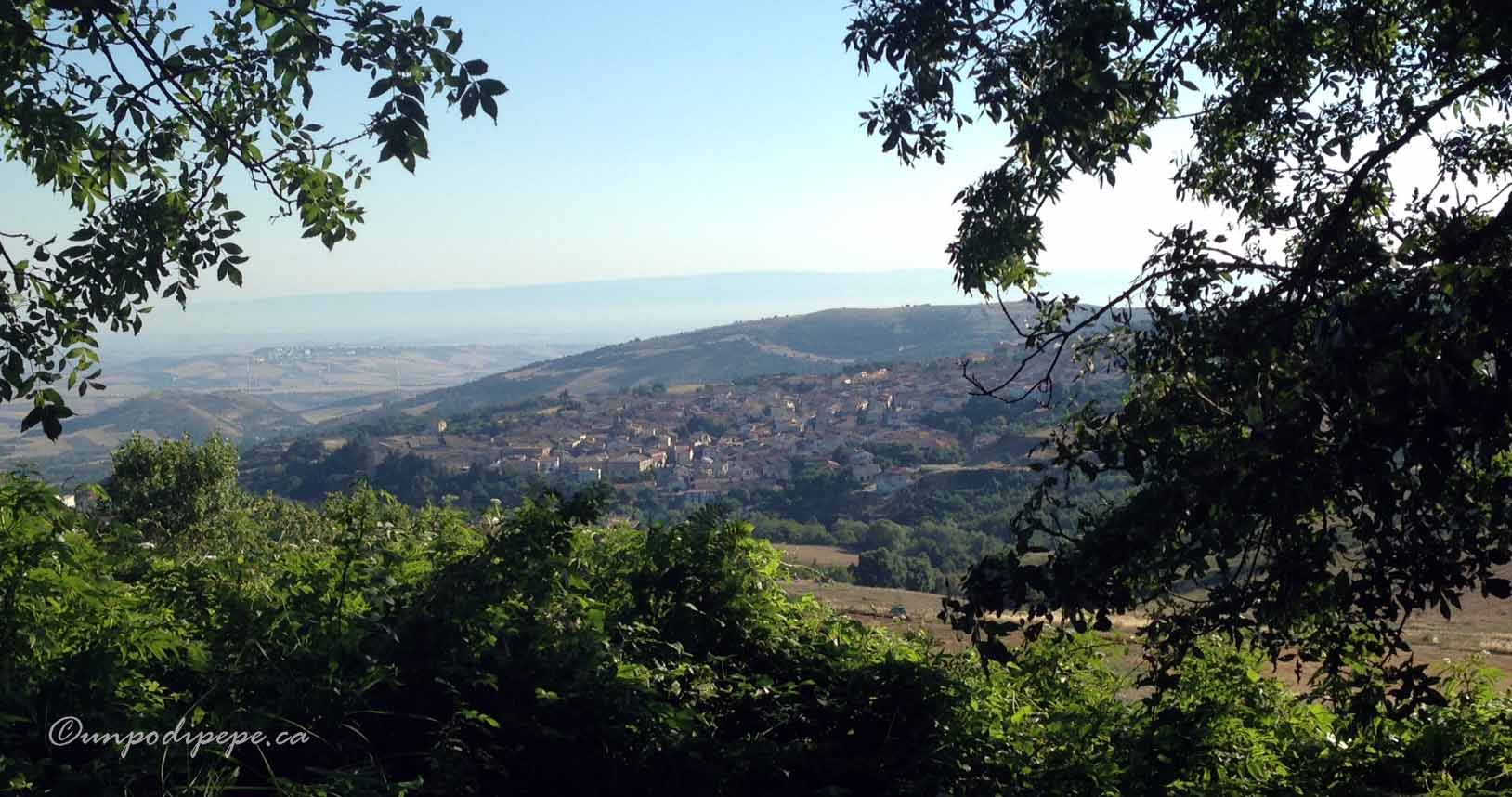
View of Orsara di Puglia

View of Orsara di Puglia

Orsara di Puglia is ‘un borgo medioevale incantevole’ (an enchanting medieval village) on the slopes of Monte San Marco in the Dauno Subappenino area at an elevation of 650 m (~2100 ft). It is surrounded by forests, rolling hills, vineyards, wheat fields and olive groves. Until 1927, it was in the province of Avellino (Campania) which is why it is called Orsara di Puglia. In 1951, before mass emigration, the population was over 7,000. Today the permanent population is just under 3,000. I spent the first 27 months of my life here, and I return every year for some ‘aria di montagna’ (fresh mountain air). This post is an introduction…the first of many Orsarese posts!

Orsara di Puglia-NASA Satellite view

Orsara di Puglia-NASA Satellite view

Orsara is built on a site with natural caves, which made it favourable for settlement. There is evidence of settlement in the area in the 11th Century BC, and Greek colonization as early as the 8th Century BC. There are many legends about the origins of Orsara, but my favourite-definitely the coolest-is that it was founded by the Greek hero Diomedes, who came to Puglia after the Trojan War. Legend also has it that a bear and her cubs had a lair in one of the caves Orsara was built on. The name comes from the Latin Ursus (bear) and aria= Ursaria meaning a place of bears.

The oldest part of Orsara, the Centro Storico or historic town center, is built around the Complesso Abbaziale dell’Angelo.  This complex consists of the pre-7th Century cave church Grotta di San Michele Archangelo with a connecting 1527 church, the exquisite Romanesque Chiesa dell’ Annunziata, and Palazzo Baronale.  The last 2 were the former Abbazia di Sant’Angelo (Abbey of the Holy Angel), a monastery built in the 11th-13th Century.  The Abbazia included a hostel for pilgrims and was home to several orders of monks, incuding the Spanish Cavalieri di Calatrava (Knights of Calatrava) who arrived in 1224. The Calatrava expanded the abbazia, including a hospital, and were an important part of Orsara’s history.  Palazzo Baronale is now private homes except for the basement which is an archeological museum.  The Complesso Abbaziale has seasonal opening hours, and can also be visited by appointment.

Complesso Abbaziale dell'Angelo, seen from Piano Paradiso. The tall, tower-like building is the Chiesa dell'Annunziata.

Complesso Abbaziale dell’Angelo, seen from Piano Paradiso. The tall, tower-like building is the Chiesa dell’Annunziata.

Orsara di Puglia is a member of the Slow Food movement Cittaslow. A gastronomic paradise, Orsara has 8 restaurants, 4 pizzerie, an enoteca, a pub and a cooking school http://www.peppezullo.it. Orsara even has its own designated DOC cheese-cacioricotta, and 3 IGT designated wines. Thanks to the maze of steep, windy cobblestone streets and my morning walk to La Montagna Spaccata, I can eat lots yummy food and still fit into my clothes.

Caciocavallo, pecorino, capicollo & cacioricotta

Caciocavallo, pecorino, capicollo & cacioricotta

In 2010, along with Alberobello, Orsara became one of only 6 towns in Puglia to be distinguished with a Bandiera Arancione (orange flag), a seal of quality from the Touring Club Italiano. The Club certifies small inland towns that are welcoming to visitors and have historic, cultural and environmental significance. For more information http://www.paesiarancioni.net (in Italiano) and http://www.bestsmalltownsitaly.com/town/orsara-di-puglia-apulia-south-islands/ (in English). There are now 13 paesi Pugliesi with a Bandiera Arancione designation.

Via Vittorio Emanuele

Via Vittorio Emanuele

Via Buonarroti

Via Buonarroti

Since 1988, Orsara hosts a Festa del Vino the last weekend in June. The Orsara Musica Jazz Festival and Orsara International Jazz Workshop are held the last week in July. Orsara has 2 patron saints and protectors; Aug 5th is the Festa della Madonna della Neve, and Sept 29th the Festa di San Michele Arcangelo. The night between Nov 1st and Nov 2nd is the Festa dei Fucacoste e Cocce Priatorije, an ancient tradition to honour the dead. For more information on events, check Orsara di Puglia’s official website and blog.

Via Principe Amedeo

Via Principe Amedeo

Ci vediamo ad Orsara!  Buon Viaggio, Cristina

Share this:

  • Share on Facebook (Opens in new window) Facebook
  • Share on Pinterest (Opens in new window) Pinterest
  • Share on X (Opens in new window) X
  • Email a link to a friend (Opens in new window) Email
  • Share on WhatsApp (Opens in new window) WhatsApp
Like Loading...

Sbandieratori~Accenti Magazine Photo Contest

04 Sunday May 2014

Posted by Un po' di pepe in Culture, Italia, Orsara di Puglia, Photography, Puglia

≈ 6 Comments

Tags

Accenti magazine, Accenti photo contest, Culture, History, Italia, Orsara di Puglia, photography, Puglia

Sbandieratori

The 7th annual Accenti Magazine ‘Capture an Italian Moment’ Photo Competition results were just released at the Accenti Magazine Awards during the Blue Metropolis Montreal International Literary Festival. My photo, ‘Sbandieratori’ came in second place!

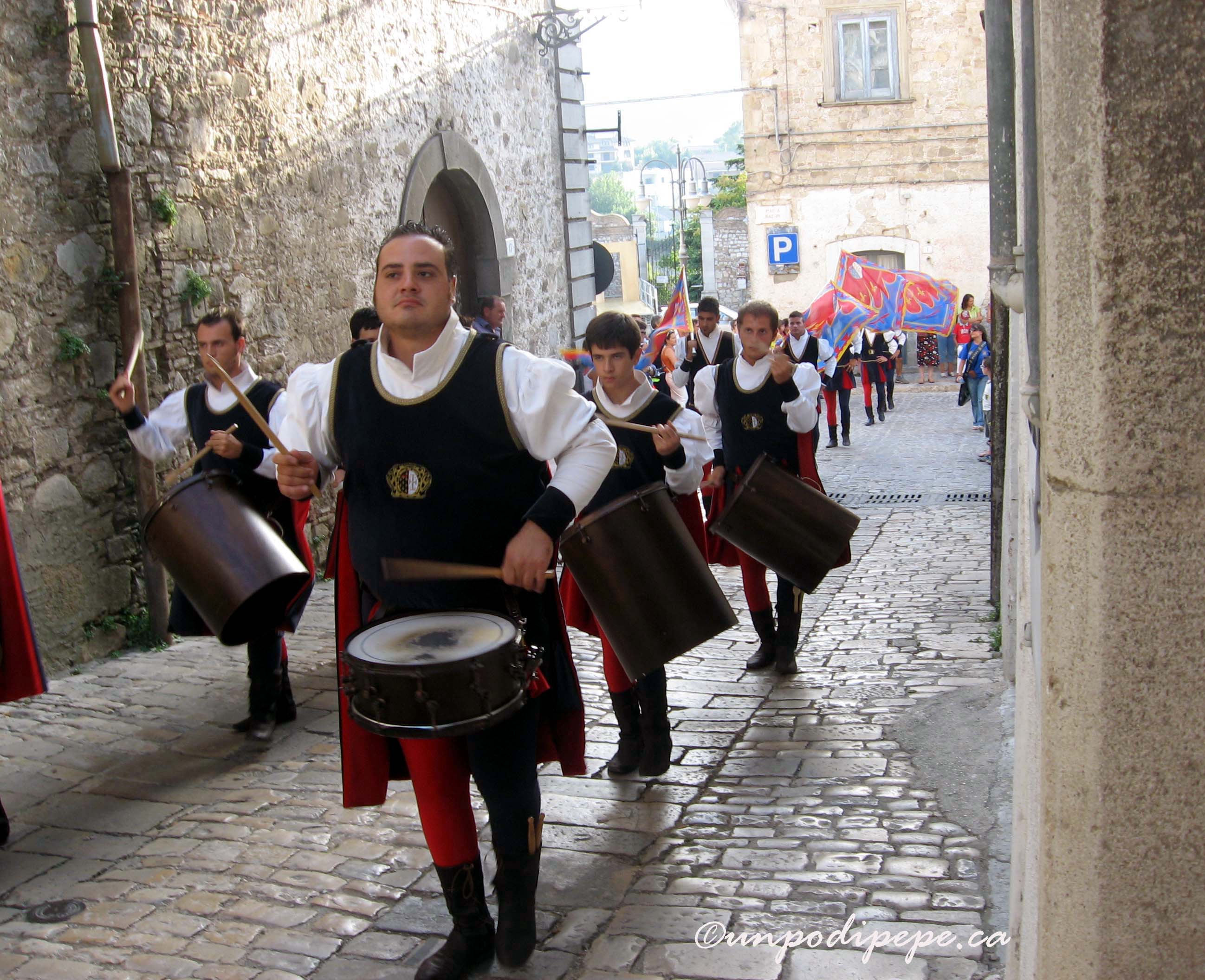
This photo was taken in Orsara di Puglia during the ‘Corteo Storico’, a parade in period costume, reenacting the history of the village. These sbandieratori (flag throwers) came from nearby Lucera to perform. Here, they are in between performances, engaged in casual conversation. What struck me about this image were the bold colours and composition of the costumes and flags. I was also curious to know what their conversation was about….was it early Renaissance gossip, or the latest cell phone app?

In Italiano:

Questa foto è stata scattata ad Orsara di Puglia durante il ‘corteo storico’, una sfilata in costume medioevale, che racconta la storia del paese.  Questi sbandieratori sono venuti da Lucera.  Qui li vediamo in attesa di sfilare, impegnati in una conversazione.  Quello che mi ha colpito sono stati I colori vibranti e la composizione che si è create tra I costume e le bandiere.  Ero anche curiosa di sapere di cosa parlavono…..chiacchiere medioevale o dell’uscita di una nuova app per il telefono?

The mission of Accenti, “the magazine with an Italian accent,” and Accenti Online http://www.accenti.ca is to bring together readers and writers around the idea of shared cultural experience, encourage creative expression, and act as a bridge between cultures. The 2015 photo and writing competition is now accepting submissions. If you are interested in finding out more, go to http://www.accenti.ca/photo-contest or http://www.accenti.ca/writing-contest.

The word Sbandieratori is related to the word bandiera (flag) and is pronounced zban∙ dee∙ ear ∙a∙ tow∙ ree. Say it a few times….now say it faster.

Here are a few more photos from the ‘Corteo Storico’ in Orsara di Puglia:

Sbandieratori, corteo storico, Orsara di Puglia

Sbandieratori, corteo storico, Orsara di Puglia

Corteo Storico, Orsara di Puglia

Corteo Storico, Orsara di Puglia

Share this:

  • Share on Facebook (Opens in new window) Facebook
  • Share on Pinterest (Opens in new window) Pinterest
  • Share on X (Opens in new window) X
  • Email a link to a friend (Opens in new window) Email
  • Share on WhatsApp (Opens in new window) WhatsApp
Like Loading...

‘Il Gigante’- Michelangelo’s David

27 Sunday Apr 2014

Posted by Un po' di pepe in Art, Art history, Culture, Firenze, Italia

≈ 16 Comments

Tags

Art, Art history, Culture, Firenze, Italia, Italian history, Michelangelo

Davide
The sculpture of David by Michelangelo Buonarroti is one of the most recognizable pieces of art in the world. David was in progress from 1501-1504, carved from a ginormous piece of ‘flawed’ Carrara marble. It weighed over 6,000 kilos! 2 other sculptors had previously attempted to use it, and there was a big gaping hole going right through it-between where the legs were going to go. It was nicknamed ‘Il Gigante’ and was sitting in the Opera del Duomo (the works yard of Santa Maria del Fiore) for over 30 years. Several other artists had been to see it, but it was considered useless; too tall and too thin on one side for a figure…and then there was that hole.

Michelangelo was already a bit of a minor celebrity, having just completed his first ‘capolavoro’ (masterpiece), La Pietá, in Roma at the age of 25. He convinced the Operai to let him have the marble. He decided to use it for the originally intended subject; David, the boy who killed the Philistine giant Goliath with his slingshot, 1 rock, and a lot of help from God.  Michelangelo strategically planned his figure in contrapposto, with most of the weight on the right leg, so that it would fit precisely around the large hole in the marble. He even had to leave some of the chisel marks on the chest area made by Simone da Fiesole, one of the previous sculptors because it was such a tight fit. David was supposed to go on one of the pedestals at the end of the buttresses on the roofline of Santa Maria del Fiore (often referred to simply as Il Duomo) with 12 other Old Testament sculptures.

David was originally planned for one of these pedestals on the buttresses of Santa Maria del Fiore

David was originally planned for one of these pedestals on the buttresses of Santa Maria del Fiore

When David was completed in 1504, he was so big-9 arms lengths or 3 times human size, it became apparent they were not going to be able to hoist him up to the roofline of Il Duomo! He was so magnificent that it was also thought to be a waste to put him so high up where no one could see him. According to the original art historian, Giorgio Vasari,  ‘To be sure, anyone who sees this statue need not be concerned with seeing any other piece of sculpture done in our times or in any period by any other artist’. Not everyone was a fan though-some said he didn’t look like a boy, he looked like a grown man, others thought he should be wearing armour-or at least something, and there was no head of Goliath at his feet. This David was captured in the moments before slaying Goliath. His right hand is starting to tense, and the contrapposto stance makes it seem like his body could twist to the left to be in line with his head.

A committee was formed to decide where David should live. Members included Leonardo da Vinci, Sandro Botticelli, and Filippino Lippi. They decided to place David on a pedestal outside the Palazzo Vecchio, the town hall of Firenze in the Piazza della Signoria. This was partly a political statement. David was the ‘little guy’ who defeated the giant. He became of symbol of the new Republic of Firenze, democratic ideals, and a warning to enemies. It was not an accident that his eyes faced Roma. Moving ‘Il Gigante’ took 40 men 4 days to move the distance of less than 1 km from the studio. David was suspended in a sling in a tall cart and rolled over 14 greased logs. The men would take the back log and move it to the front as the cart moved along.

In 1527, during an anti-Medici protest, David’s left arm was broken in 3 pieces by a bench thrown out the window of the Palazzo Vecchio to ward off the protesters. The pieces were picked up by 2 boys who braved the mob. I’ve read in a few places that one of these boys was Giorgio Vasari, who would have been 16 at the time. He doesn’t mention this in his 1560’s bestseller ‘The Lives of the Most Excellent Painters, Sculptors and Architects’, which makes me think this might just be Renaissance urban legend. The 3 pieces were eventually reattached with copper nails, and the 2 joint lines are visible. In 1873, David was moved to his present home in the Galleria dell’Accademia to prevent further environmental damage.

'Galleria dell'Accademia' 2004. My preferred view of David.

‘Galleria dell’Accademia’ 2004. My preferred view of David.

In 1910, ‘Falso Davide’, as I like to call the replica, was installed outside the Palazzo Vecchio where the original stood for 369 years.

'Falso Davide' as I like to call him, outside the Palazzo Vecchio in Piazza della Signoria

‘Falso Davide’ as I like to call him, outside the Palazzo Vecchio in Piazza della Signoria

Share this:

  • Share on Facebook (Opens in new window) Facebook
  • Share on Pinterest (Opens in new window) Pinterest
  • Share on X (Opens in new window) X
  • Email a link to a friend (Opens in new window) Email
  • Share on WhatsApp (Opens in new window) WhatsApp
Like Loading...
Newer posts →

Enter your email address to follow 'un po' di pepe' and receive notifications of new posts by email.

Join 504 other subscribers
Follow Un po' di pepe on WordPress.com

Popular Posts

  • Hairstyling in Ancient Roma
    Hairstyling in Ancient Roma
  • Acqua Vergine
    Acqua Vergine
  • Santa Maria in Aracoeli
    Santa Maria in Aracoeli
  • La Trinità di Masaccio
    La Trinità di Masaccio
  • Visiting Galleria Borghese
    Visiting Galleria Borghese
  • Contact
    Contact
  • Hostaria Antica Roma~Eat like an Ancient Roman
    Hostaria Antica Roma~Eat like an Ancient Roman

Recent Posts

  • Pane e Salute
  • Sanremo 2026
  • Cucina Italiana Patrimonio UNESCO
  • 2025~Un po’ di pepe Year in Review
  • Castel del Monte
  • ‘The Nuances of Love’
  • Hostaria Antica Roma~Eat like an Ancient Roman
  • Santa Maria in Aracoeli
  • Casino dell’Aurora~Villa Boncompagni Ludovisi
  • Nasoni di Roma
  • Bloghiversario #11
  • Fontana di Trevi
  • Acqua Vergine
  • Giubileo 2025
  • Sanremo 2025
  • In Vino there are Memories
  • A Literary Harvest
  • 2024~Un po’ di pepe Year in Review
  • Buon Natale 2024
  • Il Bicerin
  • Mercato Porta Palazzo
  • Torino
  • Catanzaro, Calabria
  • Il Pumo Pugliese
  • Artemisia Gentileschi

Categories

Amici e Famiglia Architecture Art Art history Art projects Bilingual posts Blogging Canada Culture Feste Firenze Inspiration Italia Italian Folklore Italian language Italian life Italocanadesi Libri Mangiamo! Orsara di Puglia Parole piacevoli Photography Puglia Recipes Roma Travel Travel tips Uncategorized Vino

Archives

Un po’ di pepe on Facebook

Un po’ di pepe on Facebook

Start a Blog at WordPress.com.

  • Subscribe Subscribed
    • Un po' di pepe
    • Join 504 other subscribers
    • Already have a WordPress.com account? Log in now.
    • Un po' di pepe
    • Subscribe Subscribed
    • Sign up
    • Log in
    • Report this content
    • View site in Reader
    • Manage subscriptions
    • Collapse this bar
 

Loading Comments...
 

    %d