• Home
  • About me/Chi sono
  • Contact

Un po' di pepe

~ …… (oon∙poh∙dee∙PEH∙peh) Cristina writes about interesting stuff /Cristina scrive di cose interessanti

Un po' di pepe

Category Archives: Photography

Fontana di Trevi

13 Sunday Apr 2025

Posted by Un po' di pepe in Architecture, Italia, Photography, Roma

≈ 13 Comments

Tags

Aqua Virgo, Fontana di Trevi, La Dolce Vita, Palazzo Poli, Roman Fountains, UNESCO World Heritage Sites

The Fontana di Trevi is one of the most iconic structures in Roma-a Baroque masterpiece with a direct link to the Ancient Roman Empire.  Every year, millions of tourists visit, trying to capture a perfect photo, tossing in a coin to ensure a return visit to Roma.  Sometimes it can feel like a mosh pit! The water comes from an ancient aqueduct, Aqua Virgo (Acqua Vergine in Italiano), 9 m below ground, built in 19 BC.  It still functions today and provides water to the fountains in Central Roma.  Find out more in the previous post Acqua Vergine.

The Fontana di Trevi is named for the piazza. Tre vie means 3 roads, refering to Via De’Crocicchi, Via Poli and Via delle Muratte that come together at Piazza Trevi. The Fontana di Trevi is the final destination of Acqua Vergine.

There was always a fountain to mark the end point of Acqua Vergine. The medieval fountain was a simple rectangular shape with 3 spouts pouring water into 3 basins.  In the Baroque era, when everything was over the top and extravagantly decorated, Pope Urban found the existing fountain too boring.  He commissioned the Master, Gian Lorenzo Bernini to sketch a design, but they both died before it got going.  The next Pope held a contest, and Nicola Salvi’s design was chosen.  Construction started in 1732, with many artists involved during the 30 years it took to complete. In a very modern fashion, construction of the Fontana di Trevi was financed with proceeds from the Roman lottery.

The symmetrically balanced theme ’Taming the Waters’ was built right onto the existing building. Palazzo Poli was given a new façade featuring a giant order of Corinthian columns. The main sculpture is Greek Titan Oceanus, not Neptune as is commonly thought.  He is in a large half-shell pulled by 2 seahorses and tritons (sea messengers) with a sea reef below them.  The façade and sea reef are made of Travertine from Tivoli, and the sculptures are Carrara marble. Above and on either side of Oceanus are 2 bas reliefs illustrating the origins of Acqua Vergine.  One depicts Marcus Agrippa ordering construction of the aqueduct and the other the vergine, a young girl leading Roman soldiers to the spring.  The Fontana di Trevi is 26 m (~85 ft) high and 49 m (~160 ft) wide. It spills 80,000 cu m (2, 825,000 cu ft) of water per day! Today the water is continually recycled.

Tossing a coin in the water with the right hand over the left shoulder while facing away from the fountain is thought to ensure a return to Roma. I never miss this opportunity-even during renovation in 2015 I found a way to toss one in! This tradition dates back to the Ancient Romans who tossed coins in water so the gods would protect them on their journey and ensure a safe return. Throw in a second coin to find true love and a third for wedding bells! I believe these last 2 are just from the 1954 movie ‘3 coins in the Fountain’, not the Ancient Romans!  According to another old tradition, drinking the water with your beloved will ensure eternal love and fidelity. Do not drink the water! 

Although the water comes straight from a spring via an ancient aqueduct, it is now continually recirculated. In 1998 when the Fontana was refurbished, recirculating pumps were installed. On the far right and up a few stairs is the Fontanella degli Innamorati (Little Lovers’ Fountain) a small rectangular basin with 2 crossing spouts. Take a drink from this instead-the water is also from Acqua Vergine!
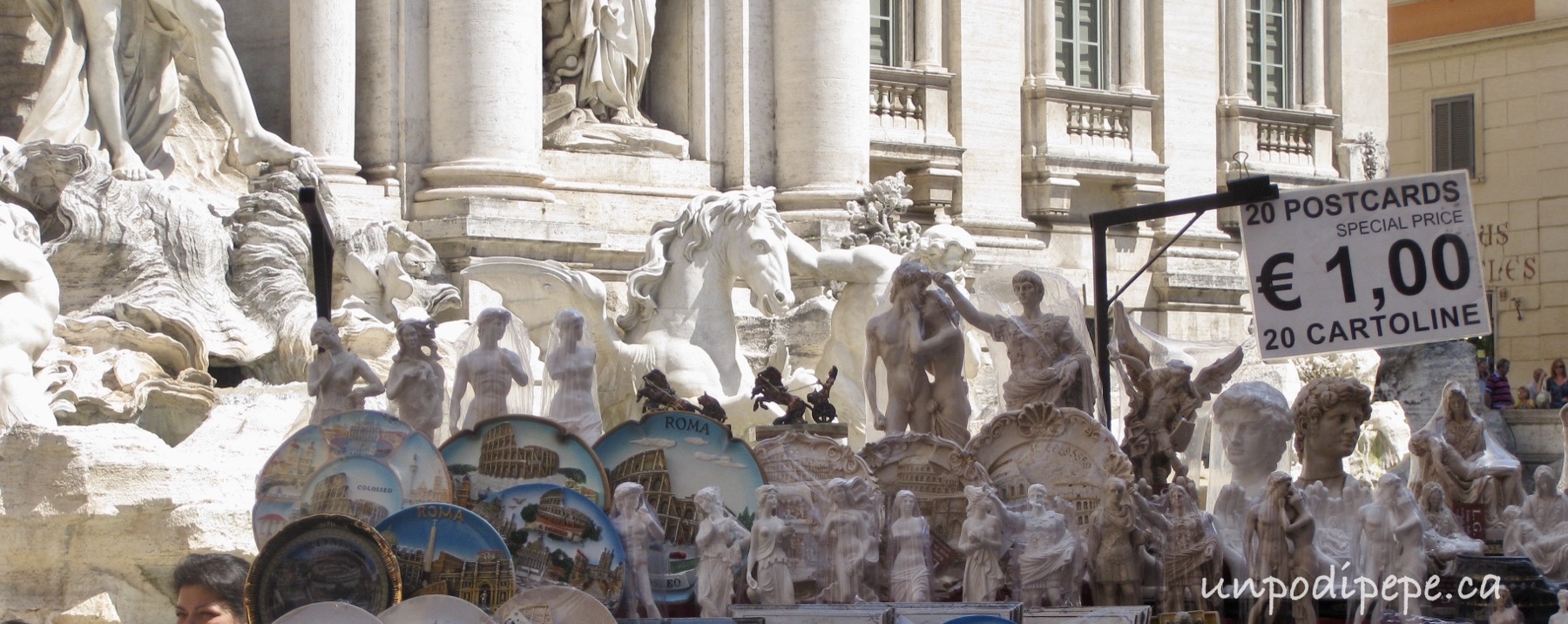
All of those coins in the water can’t be hygienic either.  Approximately €3,500 per day is collected nightly and given to the charity Caritas. The money funds a program providing supermercato cards Roma’s needy.   There are regular attempts to steal the coins from the basin, which of course is illegal.  The water has been vandalized many times, painted red and most recently dyed black with charcoal by climate eco anarchists.

In 2014 Fendi sponsored a 1.5 year, €2.2 million restoration and cleaning, including installation of LED lights to improve night illumination. Most recently, in late 2024 a 3 month restoration also secured the lower basin to restrict access to only 400 visitors at a time. Crowds are expected to be bigger than usual during Giubileo 2025.  Early in the morning is usually a good time to visit.
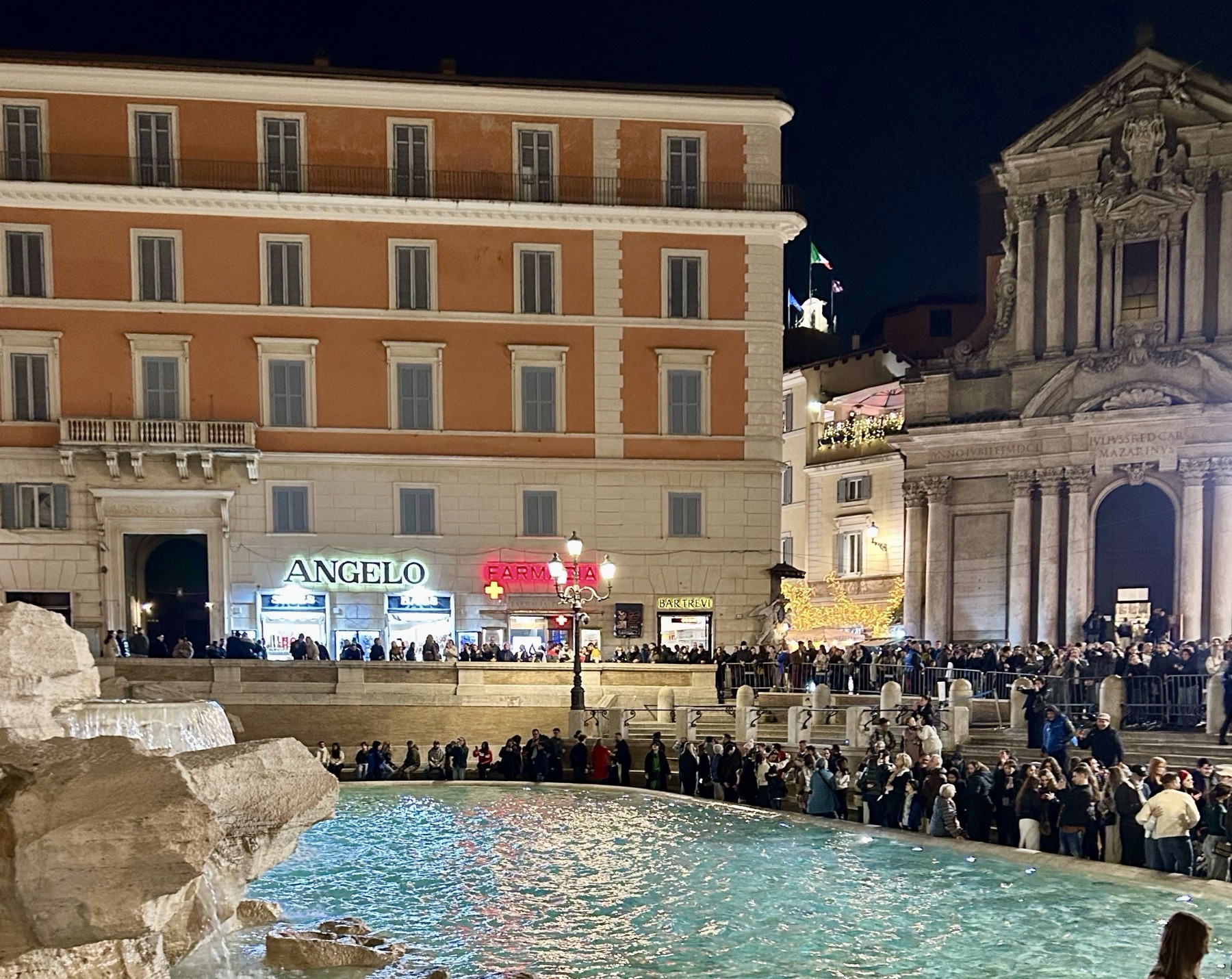
As an outdoor public monument, the Fontana di Trevi is free and always open, so unless it is under renovation, you can check it out at any time.  Access to the lower basin may be limited at some times, and cleaning takes place on certain Monday and Friday mornings. Since it is fed by an aqueduct and powered only by gravity, it never needs to be turned off.
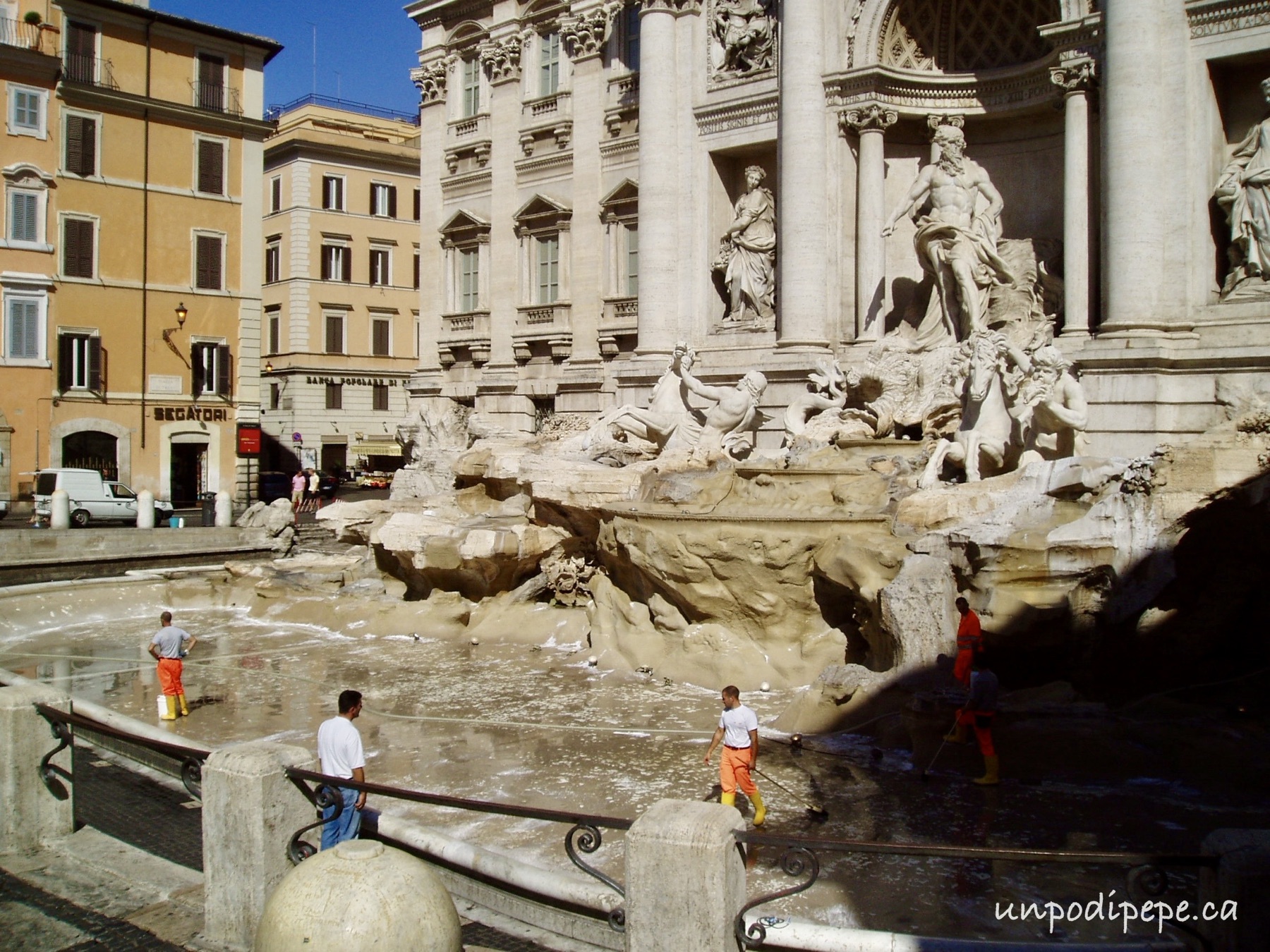
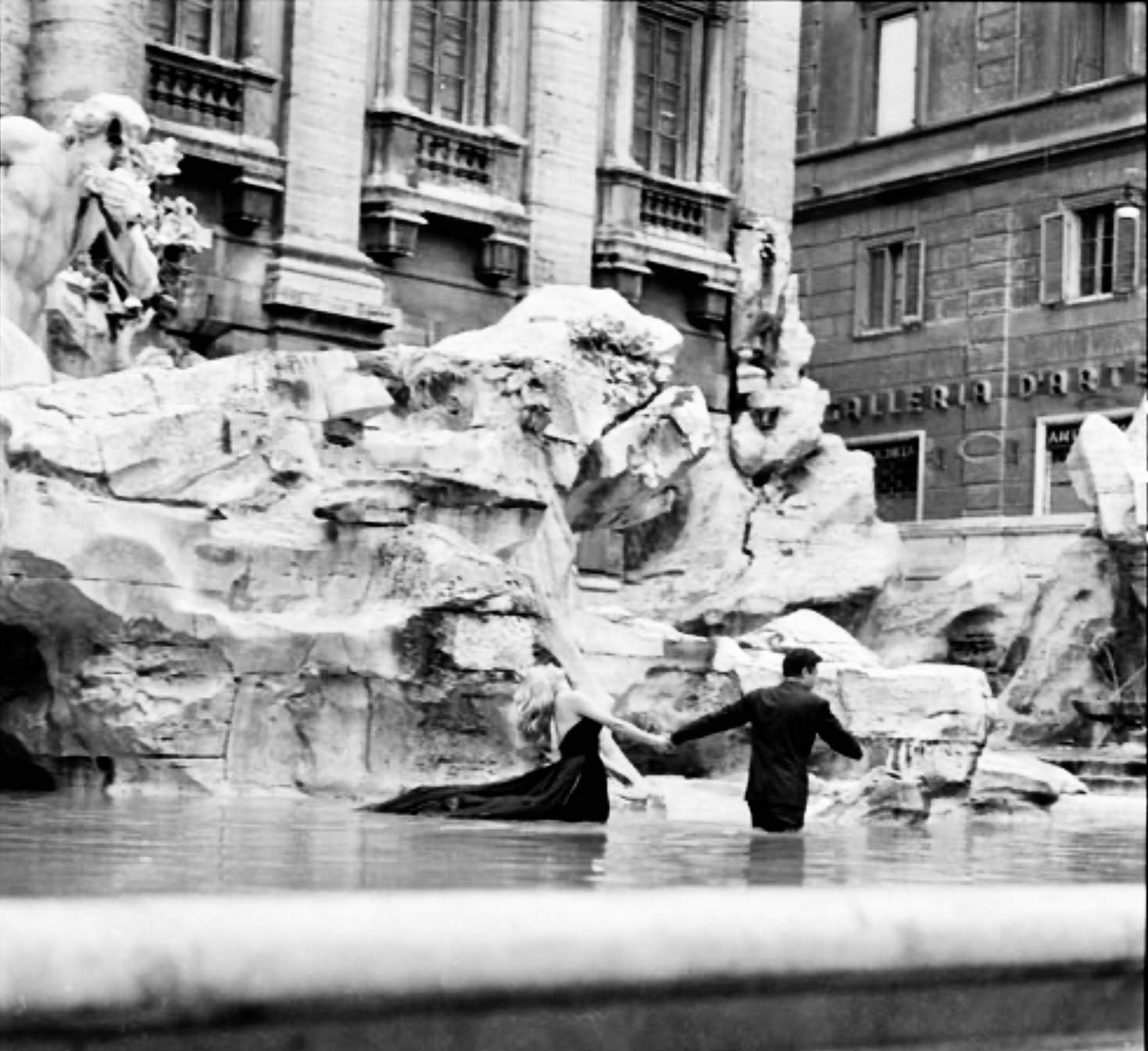
The Fontana was immortalized in film in 1960 when Anita Ekberg walked in with her clothes on in the Fellini classic La Dolce Vita.  Do not be like Anita-you will be immediately slapped with a €450 fine. When her costar Marcello Mastroianni died in 1996, the Fontana di Trevi was draped in black, the water and lights turned off in his honour. Below is part of a poster-note how dirty the stone was in 1960!  The spouts of Fontanella degli Innamorati can be seen on the far right.
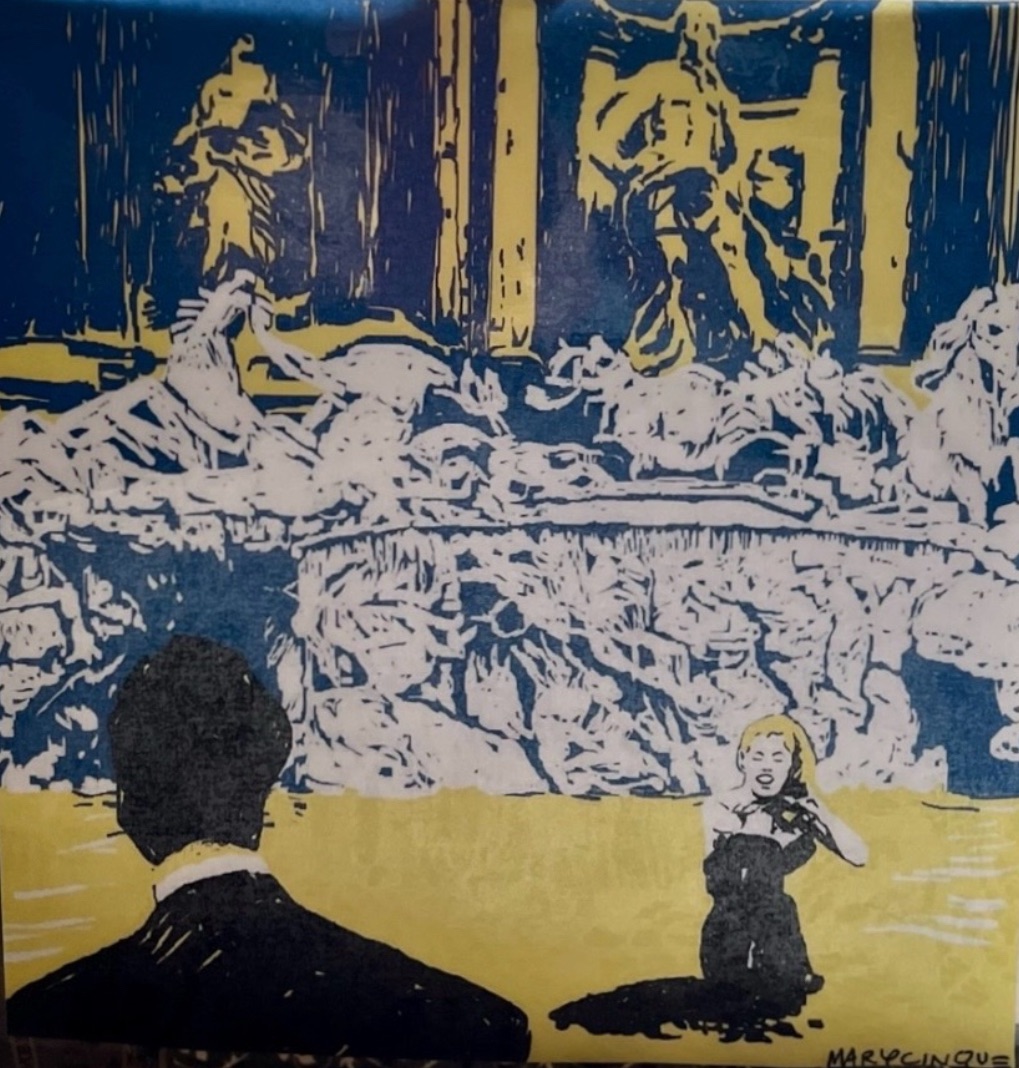
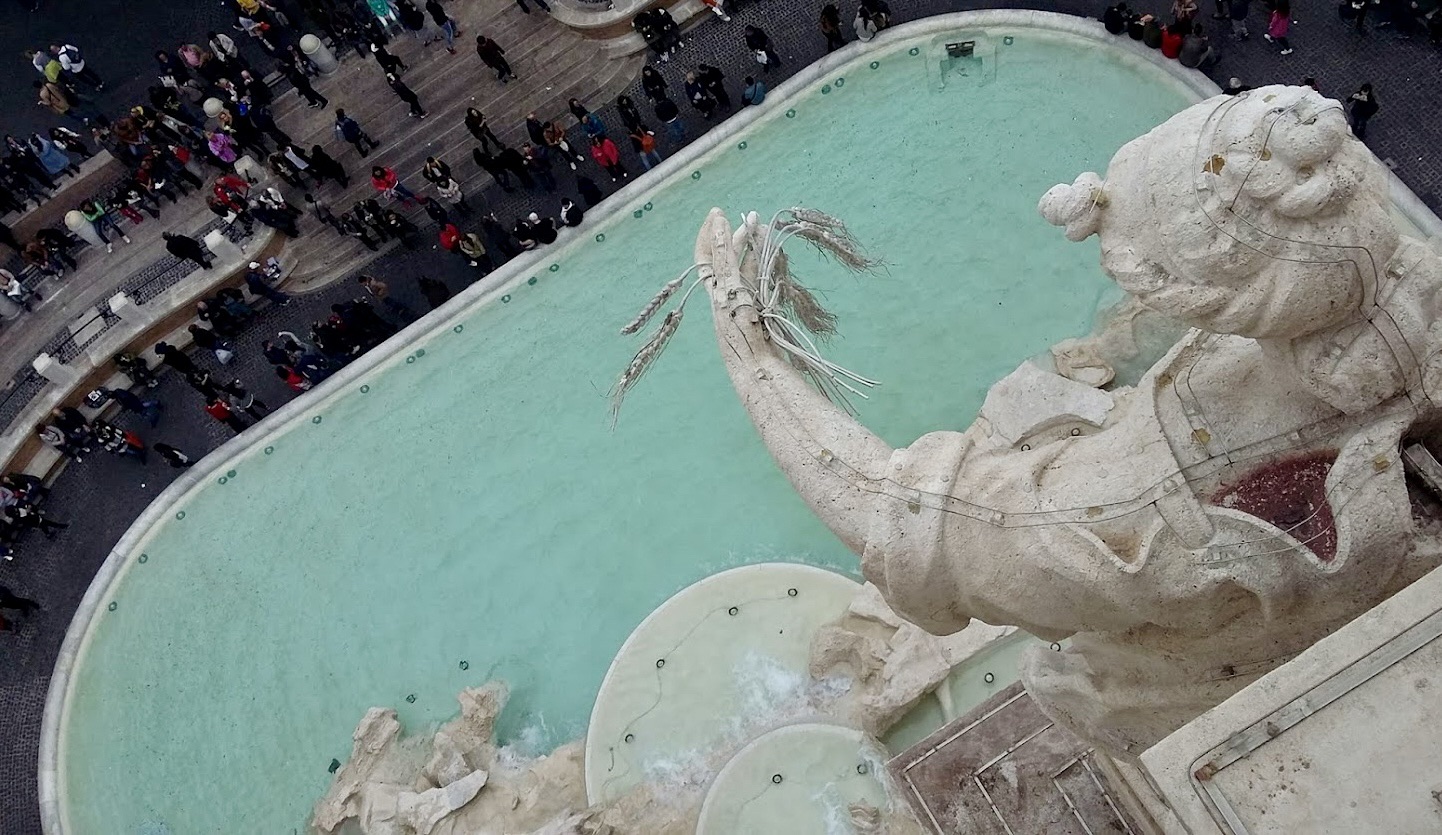
I have a cool Trevi memory.  In 2004, I attended a printmaking exhibit with a friend.  The entrance was at Via della Stamperia 6, 150 m from Piazza Trevi, down the side street past Fontanella degli Innamorati.  I remember climbing a lot of stairs and walking through corridors to get to the exhibit, which was amazing.  Then I wandered off to explore the gorgeous architectural details of the building, and heard the sound of running water as I walked past one of the tall, heavily curtained windows. Moving the curtain, I was right above the Fontana di Trevi!  It had not even occurred to me that there was a real building behind it.  Of course, this was before the time of cell phone cameras! This photo is from the Istituto’s website and was taken from farther up, possibly the roof.  Palazzo Poli was once a private residence, expropriated in 1885.  It is now theIstituto Centrale per la Grafica (Central institute for Graphics) a museum and exhibition space created to preserve and promote cultural heritage documenting graphic art.  Open Monday to Friday 09-17 and weekends 09-14.  Admission is free.  The room I wandered into is usually closed, unless you are attending a classical music performance.
9 m below the Fontana di Trevi, an archeological site was discovered during 2001 renovation of the former Trevi Cinema. Excavations uncovered a building complex from the Imperial Age (27 BC to 476 AD) and a fancy domus (Roman home), including canals still carrying clear water from Acqua Vergine to a holding tank for the domus. The site is called Vicus Caprarius, or “City of water” Vicolo del Puttarello 25.  Open Tuesday to Sunday 11-17 Reservations are recommended on weekdays, required weekends and holidays.  There are several underground tours, ranging from 30 minutes with audio guide to several hours long. I plan to see it in July!
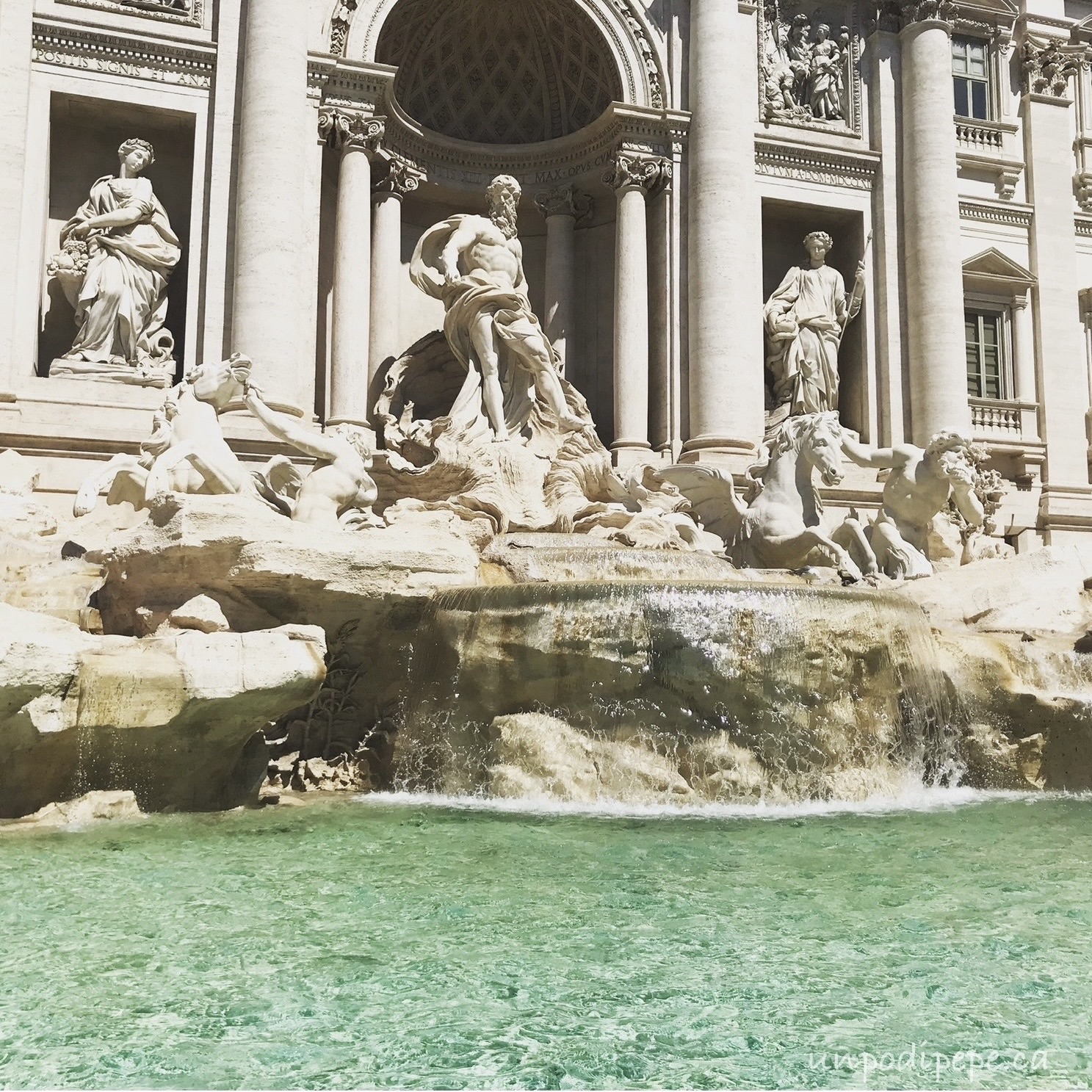
The photos in this post were taken between 2004 and 2025.  Night view and bas reliefs taken by my sorella Lucia in Feb 2025.  ‘La Dolce Vita’ oil pastel on paper by the amazing Mary Cinque.

Ciao, Cristina

Share this:

  • Click to share on Facebook (Opens in new window) Facebook
  • Click to share on Pinterest (Opens in new window) Pinterest
  • Click to share on X (Opens in new window) X
  • Click to email a link to a friend (Opens in new window) Email
  • Click to share on WhatsApp (Opens in new window) WhatsApp
Like Loading...

Mercato Porta Palazzo

03 Sunday Nov 2024

Posted by Un po' di pepe in Italia, Photography, Travel

≈ 11 Comments

Tags

Italian food, Northern Italy, Piemonte, Torino

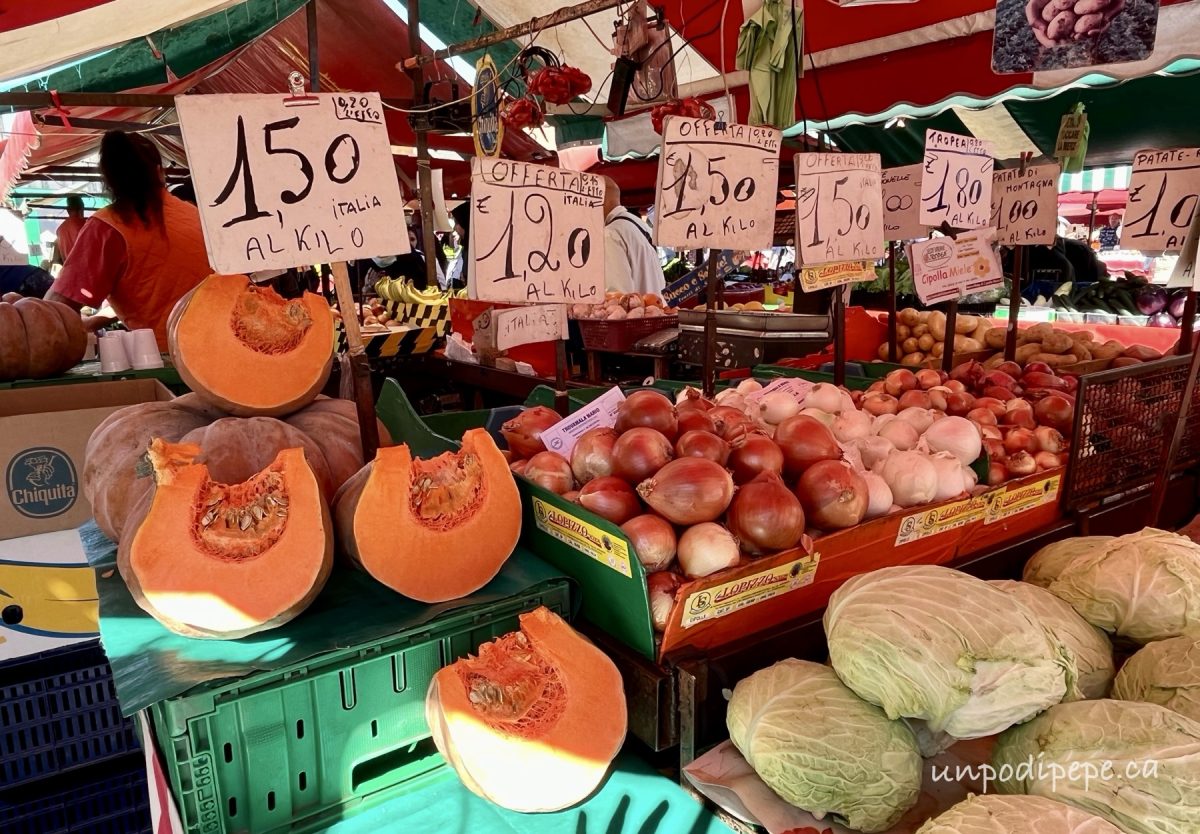
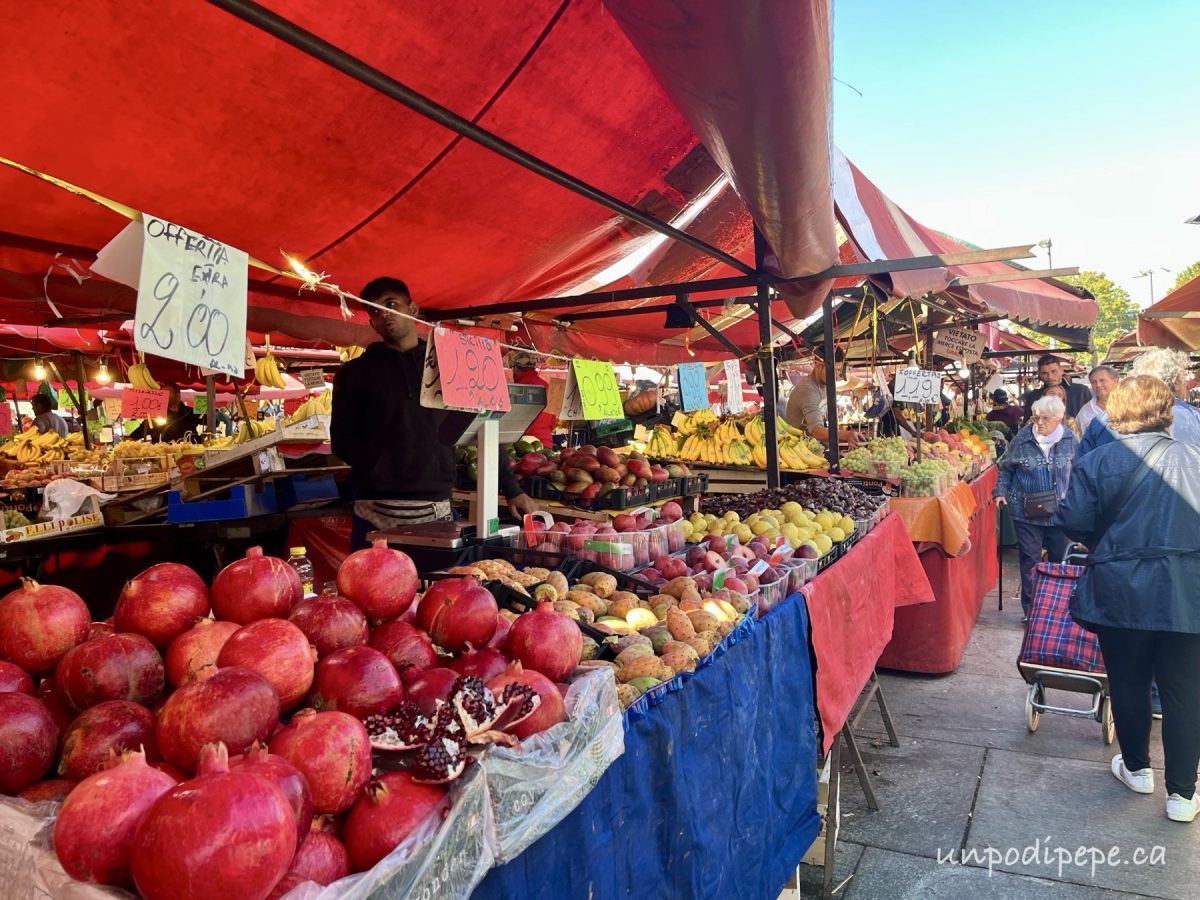
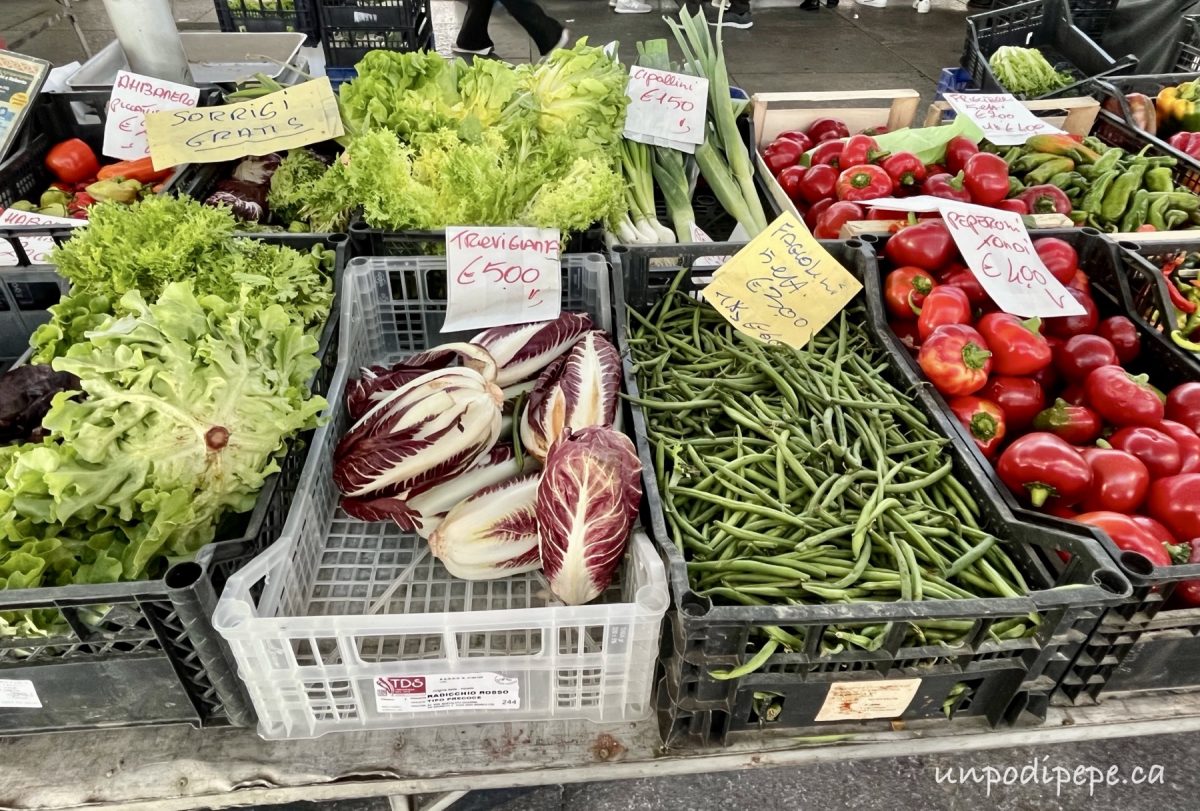
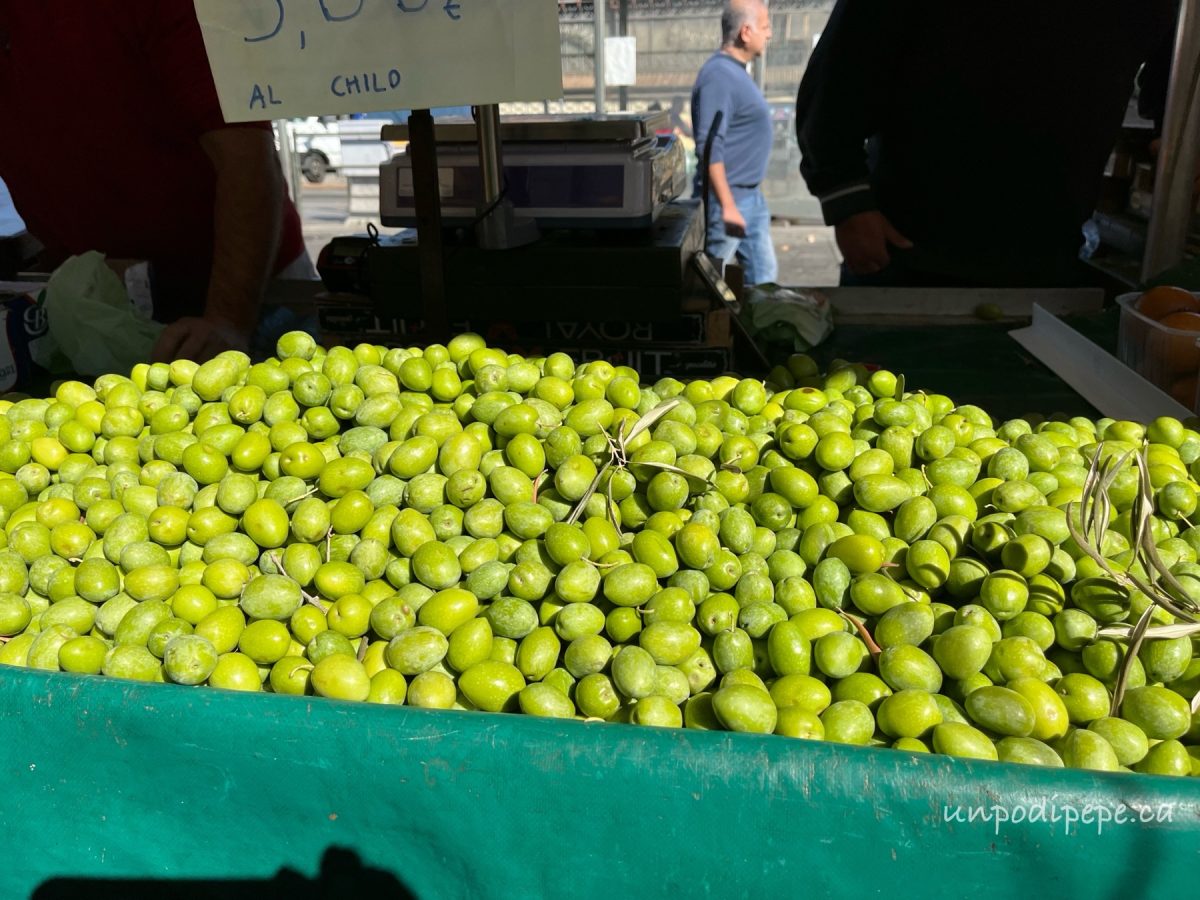
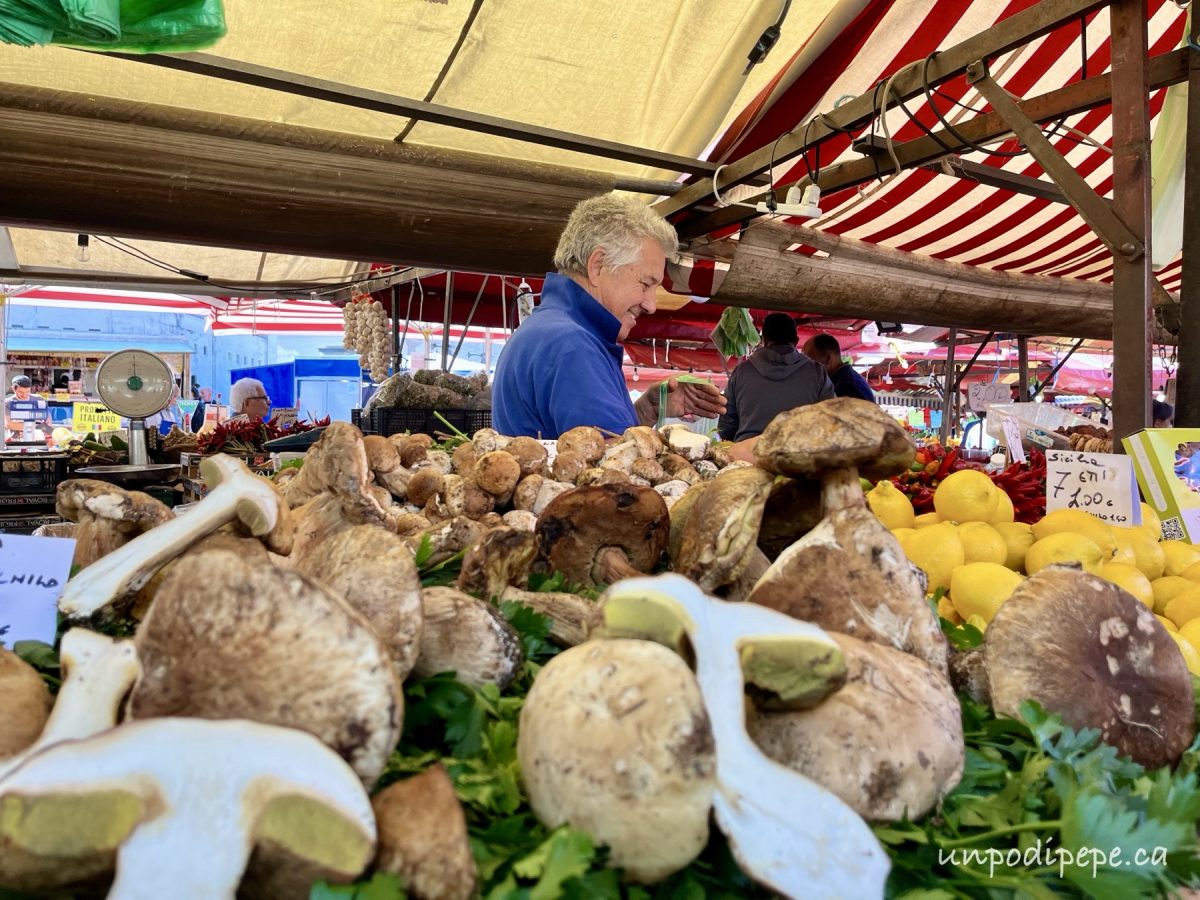
Torino’s Mercato Porta Palazzo in Piazza della Repubblica is the largest open-air market in Europe. My first morning in Torino, I took a walk through the mercato with Lucia from turinepi.  While we walked, I took so many photos of the produce and the bancarelle -the market stalls, that I had to dedicate an entire post to them. Established in 1835, Porta Palazzo is a collection of outdoor and covered market spaces. The bancarelle host vendors from all over, selling products from food and wine to flowers, clothing, shoes and housewares.

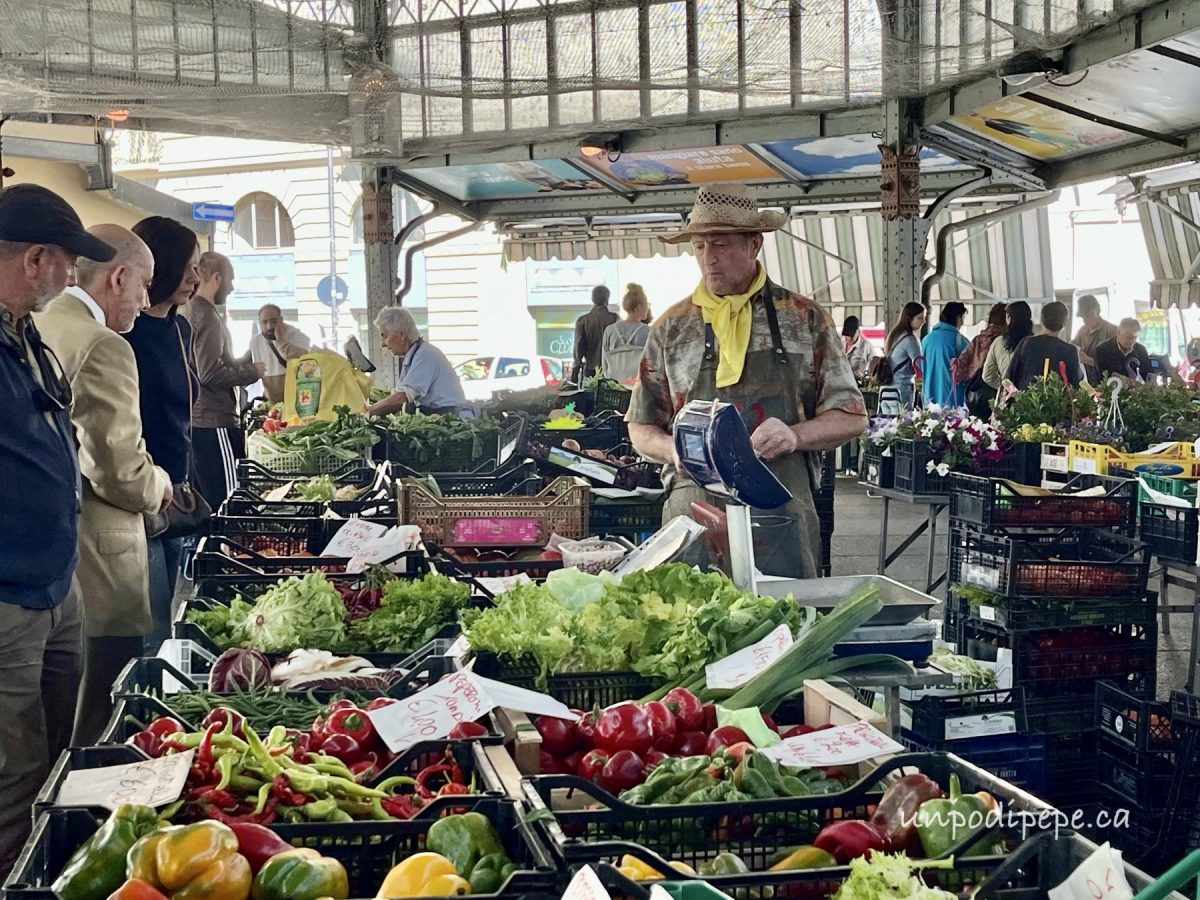
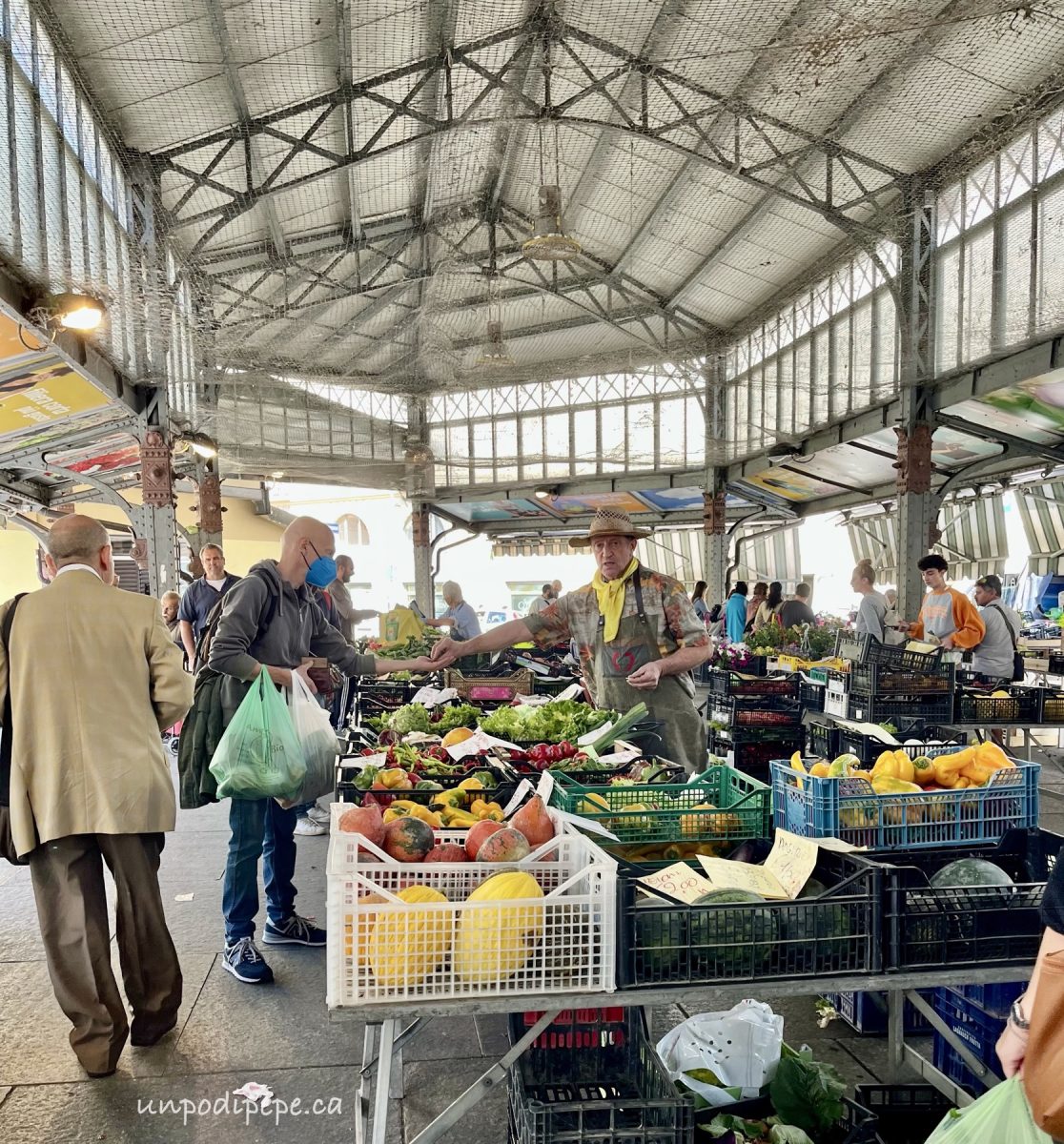
The covered glass pavilion is the local farmers market.  Look at the gorgeous radicchio.  This vendor with the hat is Lucia’s favourite.The produce is surprisingly well-priced.  Porta Palazzo is a clean and lively space.  The Torinesi call it Porta Pila, and do much of their shopping here. The space is huge, so there can be thousands, of people, especially on Saturdays, when many shoppers even drive in from France!A good place to snack, or to taste and see local food, as well as other ethnic specialties. Porta Palazzo is an explosion of colour and a feast for all of the senses-flavours, aromas, colours, sounds and languages.
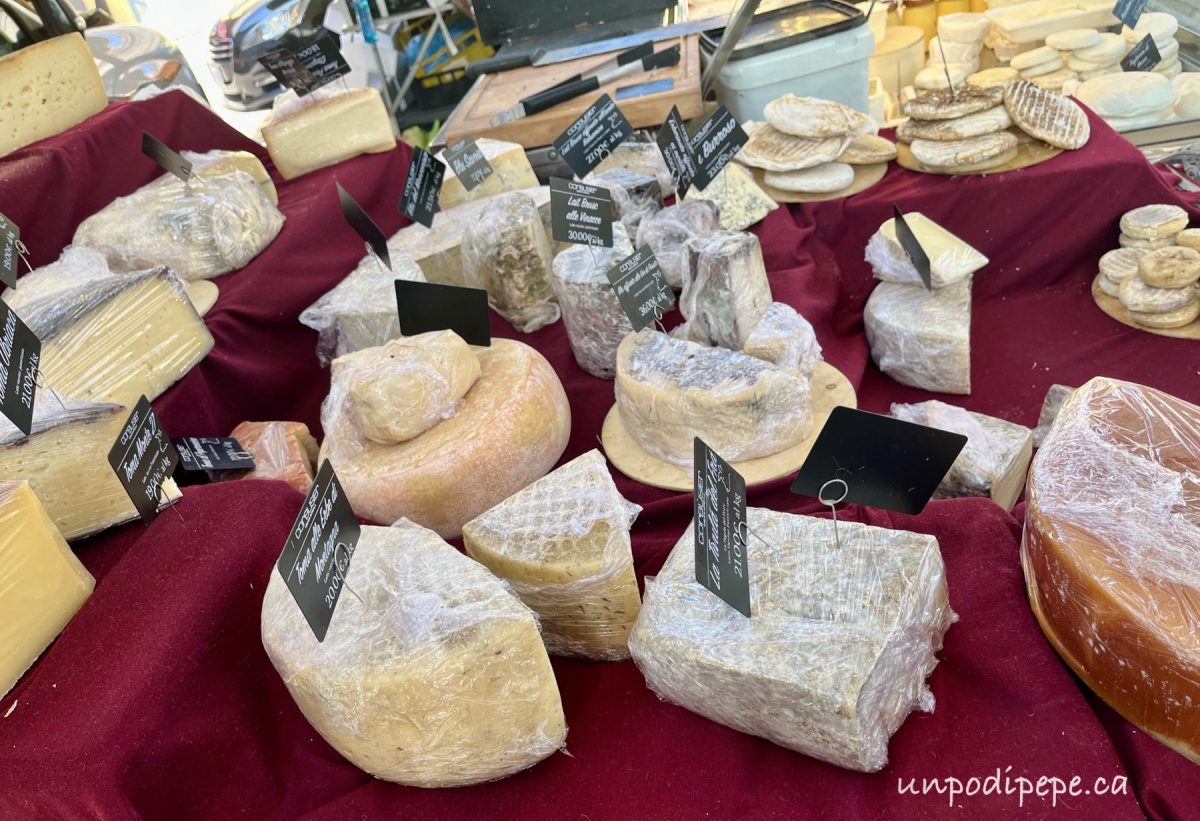
Formaggi can be found from Piemonte and every region of Italia

Besides the bancarelle and pavilion, there are also 4 structures on the site: Mercato Ittico e Alimentare, built in 1826, L’antica Tettoia dell’Orologio, a 1916 metal art deco building, Mercato dell’abbigliamento-the clothing market, and Mercato Centrale di Torino, built in 2011.  A food lover’s Heaven! Also, more formaggi!

Mercato Porta Palazzo is a 5 minute walk from Piazza Castello.  From Piazza Castello, take Via Garibaldi, turn right onto Via Milano, then walk straight until you reach Piazza della Repubblica and the mercato.

Mercato Porta Palazzo is open from 8:00-12:00 Tuesday to Friday, and 7:00-19:30 Saturday. The mercato is closed Sunday and Monday.

More info on Mercato Porta Palazzo can be found on their website.

Buon viaggio, Cristina

Share this:

  • Click to share on Facebook (Opens in new window) Facebook
  • Click to share on Pinterest (Opens in new window) Pinterest
  • Click to share on X (Opens in new window) X
  • Click to email a link to a friend (Opens in new window) Email
  • Click to share on WhatsApp (Opens in new window) WhatsApp
Like Loading...

Torino

13 Sunday Oct 2024

Posted by Un po' di pepe in Architecture, Italia, Photography, Travel tips

≈ 14 Comments

Tags

Bicerin, Italian history, Northern Italy, Piemonte, UNESCO World Heritage Sites

I had no expectations when I visited Torino.  I knew that many of my paesani had moved to the area in the 1970-80’s to look for work, but did not know much about the city itself.  Torino turned out to be a pleasant surprise-a truly underrated, overlooked city on the banks of the river Po, at the foothills of the Alps. With a population of almost 850,000, it is the fourth largest city in Italia but practically unknown to English speaking travellers. It is much less crowded, quieter and cheaper than most other major cities.

L’Universita’ di Torino

I arrived in Torino by highspeed train (TGV) from Paris, to attend an AICW conference at the Università di Torino.  Once the conference started, I only had the evenings to explore the city, so could not visit any buildings/museums.  This is why many of my photos were taken at night!  I need to return to Torino to visit the indoor things!

Named for the ancient Taurini people, the Roman Colony of Taurinorum was founded in 28 BC.  Via Garibaldi, the main shopping street traces the exact path of the ancient Roman street or Decumanus.

Torino was the capital of the Duchy of Savoia, the political center of the Risorgimento (birth of the nation) leading to unification of Italy, and the first capital of the Kingdom of Italy after unification in 1861. The capital moved to Roma in 1865.  Torino was also the center of anti-fascist movements and the Italian resistance movement during WW2.  A lot of history here!

Elegant and sophisticated, Torino has an old world feel, like Paris or Prague, but with an Italian accent.  There is a definite French influence from the Savoia family, even on the local dialetto. The stunning architecture in the centro includes Baroque, Rococo, Neoclassical, Romanesque and Art Nouveau. Most buildings were built between the 16-18th centuries.  In 1997, the historical Center of Torino and residences of the Royal House of Savoia became a UNESCO World Heritage Site.

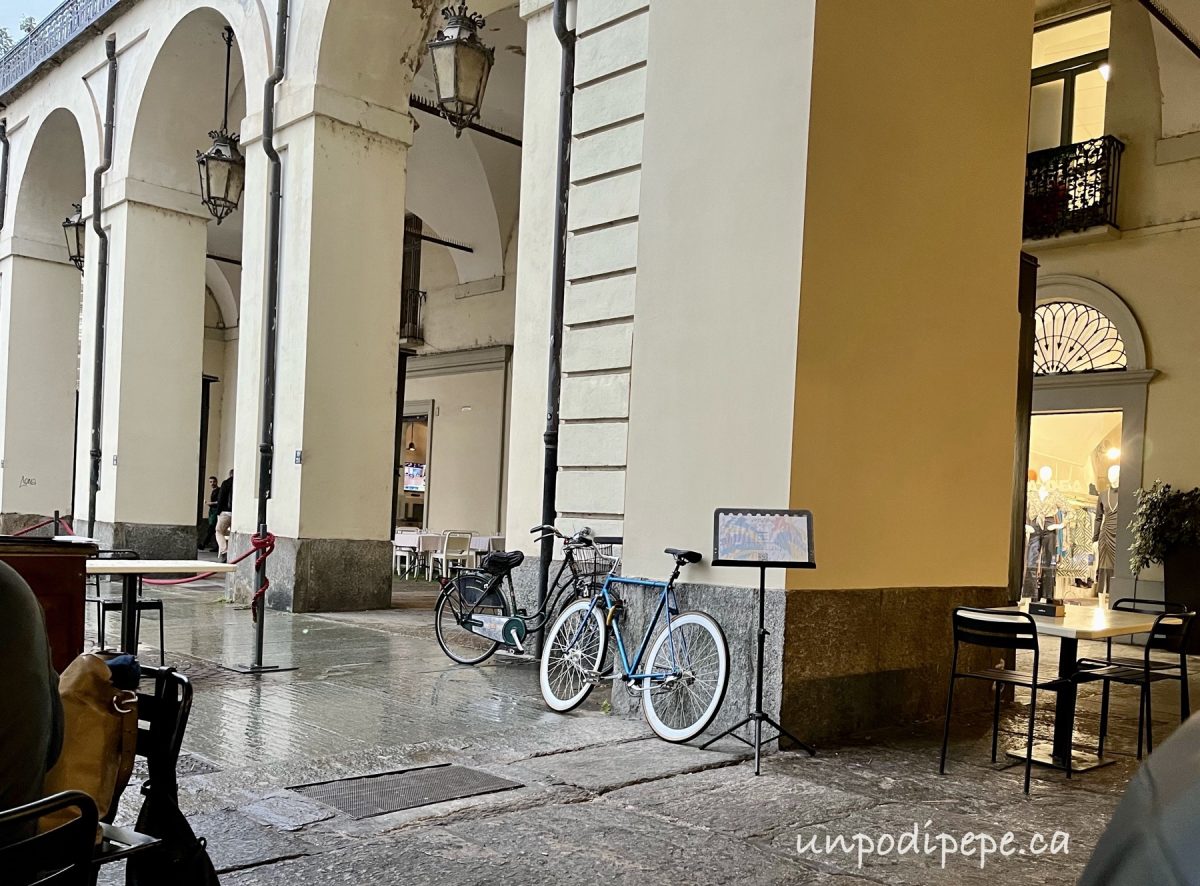
Torino’s centro, the largest pedestrian area in Europe, is easy to navigate. A defining characteristic of Torino’s architecture are the portici (porticoes). 18 km (7 miles) of portici provide shade in summer and shelter from rain, snow and wind.  12.4 km are continuous.  According to legend, King Vittorio Emanuele I wanted Torino to be elegant and also wanted to go on his daily walk to the river Po without getting wet.  So he had the portici built -and now everyone can window shop in all weather conditions.  A whole day can be devoted to walking the portici. Torinesi use them a lot!

Torino is known for, the Shroud of Turin, artisanal chocolate, museums, Royal Palazzi of Savoia, FIAT, Juventus, 2006 winter Olympics, Eurovision 2022, and home to the automotive industry with headquarters for Fiat, Lancia and Alfa Romeo. Torino is also the birthplace of Italian caffè culture, aperitivo, Nutella, Ferrero Rocher, gianduja, Lavazza, FIAT, Vermouth and the Slow food movement!

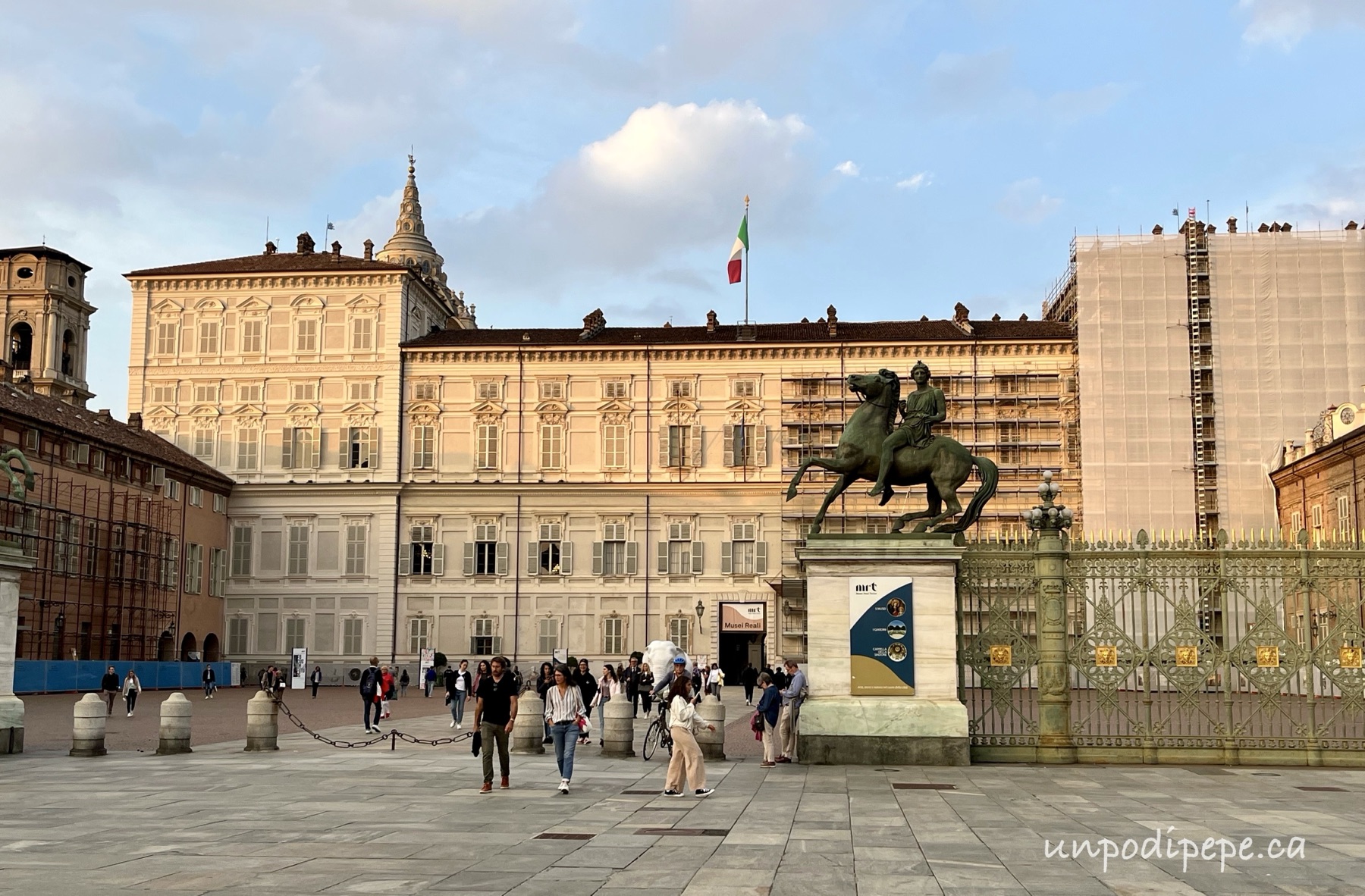
There are many large piazze, full of amazing architectural details, chocolate shops and places to have aperitivo.  Piazza Castello has the Royal Palaces, Palazzo Reale and Palazzo Madama.  Palazzo Madama was the residence of 2 Savoia queens, which explains the name.  It was also the 1st Senate of Italy.  Since 1934 it is a museum of ancient art-although mostly from middle-ages to 18th Century.  Palazzo Reale at the north end, with iron gates contains Armeria Reale, Galleria Sabauda and the Museo di Antichità. The Museo Nazionale del Risorgimento (unification museum) is in Palazzo Carignano.

I had the day before the conference free and met local expert Lucia Hannau from Turinepi for a morning walking tour.  We started in Il Quadrilatero, the oldest part of city, dating back to Roman times.  Piazza della Consolata is home to Caffè Al Bicerin since 1763. They make it in other historic bars, but this is the home of the original Bicerin- with the accompanying plate of local cookies. Bicerin is the iconic drink of Torino, with 3 layers, chocolate, caffè and frothed milk-no stirring!  Stay tuned for a future post! Santuario della Consolata, is across the piazza.  The Baroque exterior looks more like a neoclassical temple, the interior ornate and colourful, gilded and decorated with marble of different colours.

We ended at Mercato Porta Palazzo, Europe’s largest open-air market. My many photos will need a separate post. I had time for only 1 museum visit after my walk with Lucia, and it was Museo Egizio–the world’s oldest Egyptian museum and the largest collection of Egyptology outside of Cairo. Buy €14 tickets online as numbers entering at one time is limited.  If you go to Torino, do not miss this! Stay tuned for a future post.

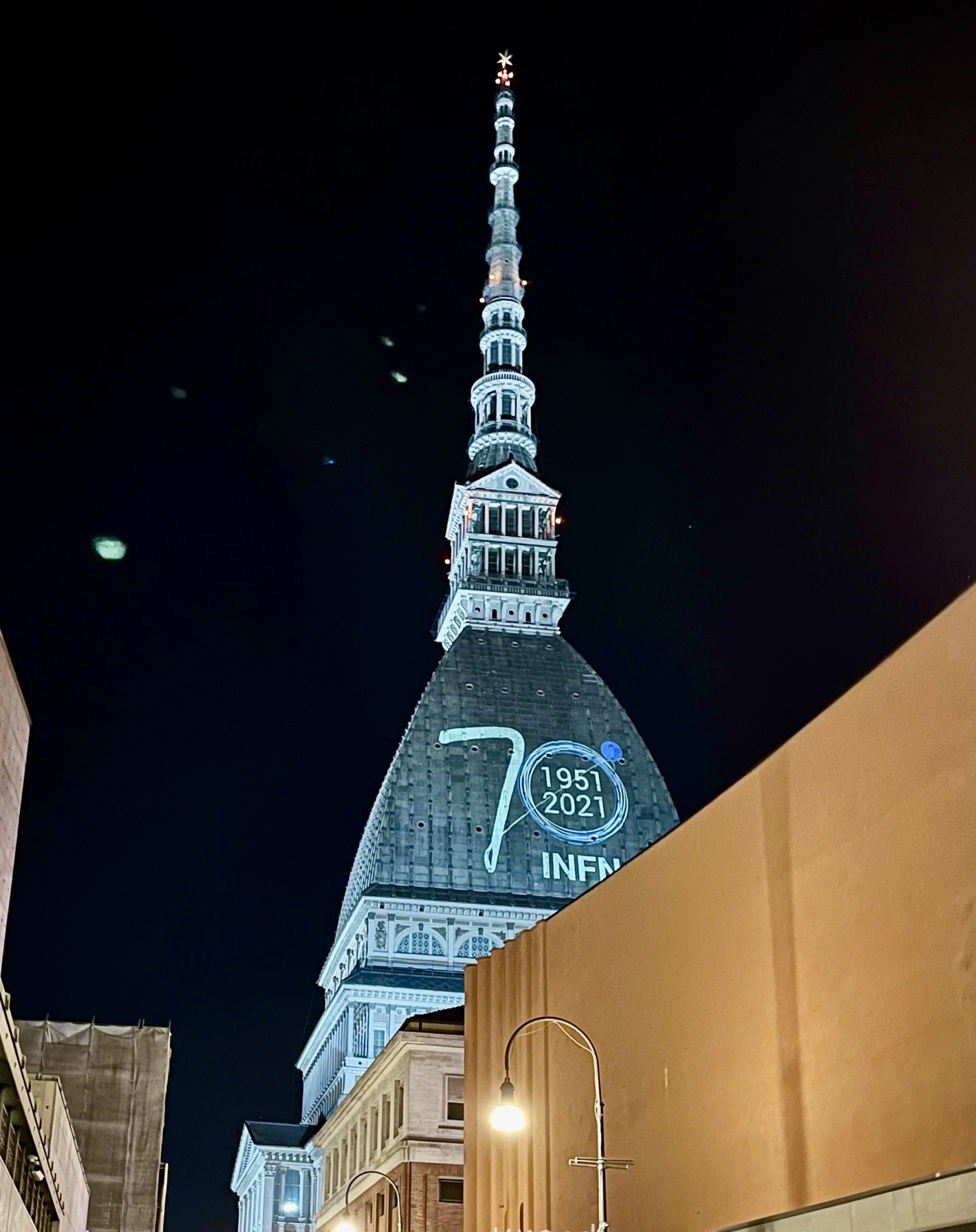
The 167 m (550 ft) tall Mole Antonelliana is featured on the back side of the 2 € coin. Mole means ‘big mound’ and Antonelli was the architect who kept making it taller.  Originally planned as a synagogue, it barely escaped bombing during WW2.  Since 2000 it houses the Museo Nazionale del Cinema, an interactive cinema museum and the tallest museum in the world. It is also the tallest unreinforced brick building in the world (without steel girder skeleton). The top has impressive views of Torino and the Alps.  

The Holy Shroud (Sindone di Torino) is a linen cloth said to have covered the body of Jesus.  An important icon for pilgrims, kept in the Cathedral of San Giovanni Battista, but only displayed for the Jubilee every 25 years.  It will be on display in 2025.

Autumn is a perfect time to visit Piemonte, especially for the seasonal food….zucca, porcini, castagne, tartufo bianco, salsiccia,tajarin and agnolotti del plin.

Tajarin integrale con porcini, salsicce e formaggio Piemontese

Torino has a chocolate festival in November and the Salone dei Libri in May. Milano is only 1 hour by train. Stay 3-4 days if you can, as there is a lot to see in Torino!  I definitely recommend a walking tour with Lucia, Bicerin and the train from Paris!

Buon Viaggio, Cristina
Share this:

  • Click to share on Facebook (Opens in new window) Facebook
  • Click to share on Pinterest (Opens in new window) Pinterest
  • Click to share on X (Opens in new window) X
  • Click to email a link to a friend (Opens in new window) Email
  • Click to share on WhatsApp (Opens in new window) WhatsApp
Like Loading...

Burano

11 Thursday Apr 2024

Posted by Un po' di pepe in Italia, Photography, Travel

≈ 9 Comments

Tags

Daytrips from Venezia, UNESCO World Heritage Sites, Venetian lagoon, Veneto, Venezia

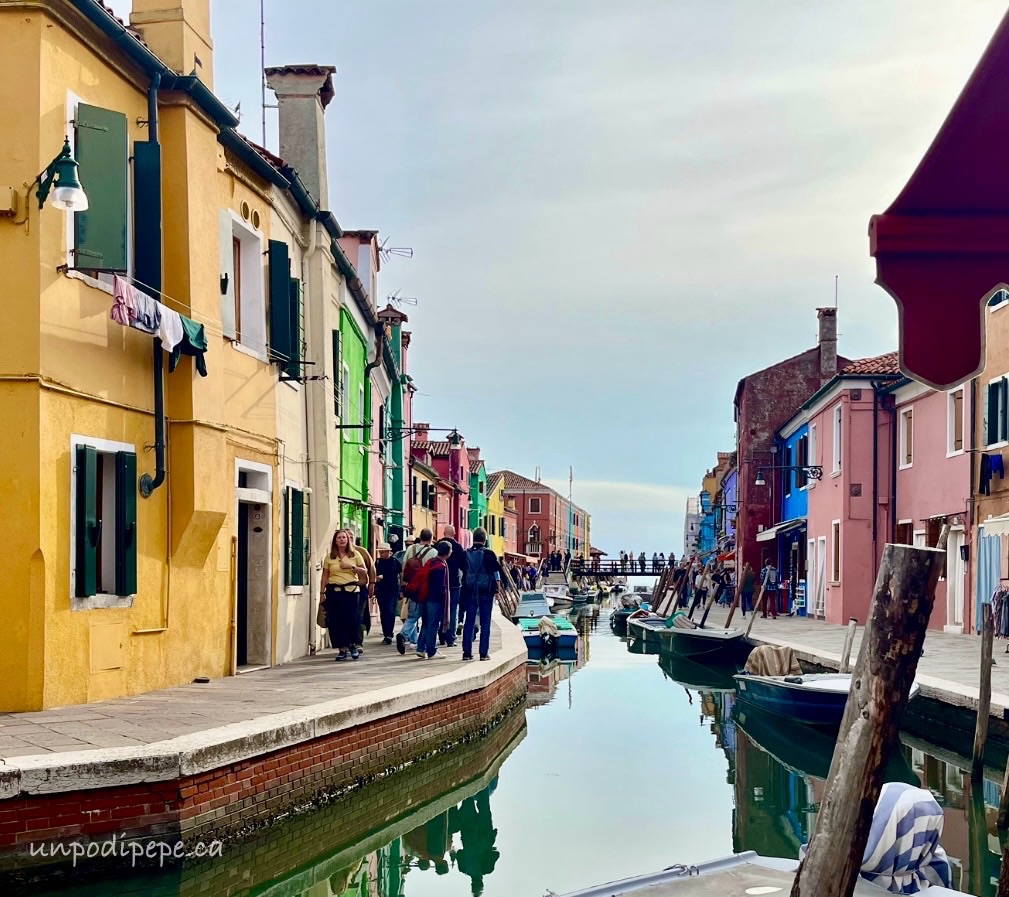
Burano, an island in the north end of the Venetian lagoon, is one of the most colourful places in the world.  It is known for merletto (lace) and houses painted in bright contrasting colours.  Burano is only 210 m² with a population of 2,800.  That is a lot of people for such a tiny place- 13,000 per km². Burano is actually made up of 4 islands separated by 3 canals and connected by bridges. The highest elevation is only 1m! There are no cars-not even for residents, since there are no roads!  Burano is part of the city of Venezia, 7 km away.

Burano was settled in the 6th century by residents of Altino fleeing invaders.  They called the island Boreana because it faces north.  In the 16th Century, women on the island started making intricate lace with needles from Cyprus.  The lace trade was booming until the 18th Century, then revived in 1872 with the opening of the Scuola del Merletto (school of lacemaking).  I remember when I first visited Burano in 1994, women sat outside their homes doing lacework. There are not many lacemakers now.  It is extremely time consuming to make, and as a result, incredibly expensive.  Many of the lace works, especially the larger pieces, are machine made imitations, many of them from China.

Emilia Burano, Via Galuppi 1994

For authentic Burano lace, try La Perla Gallery, or Emilia Burano  Via San Martino Sinistro 376, and 205 just off Via Galuppi.  Handmade monogrammed fazzoletti (handkerchiefs) start at €49.

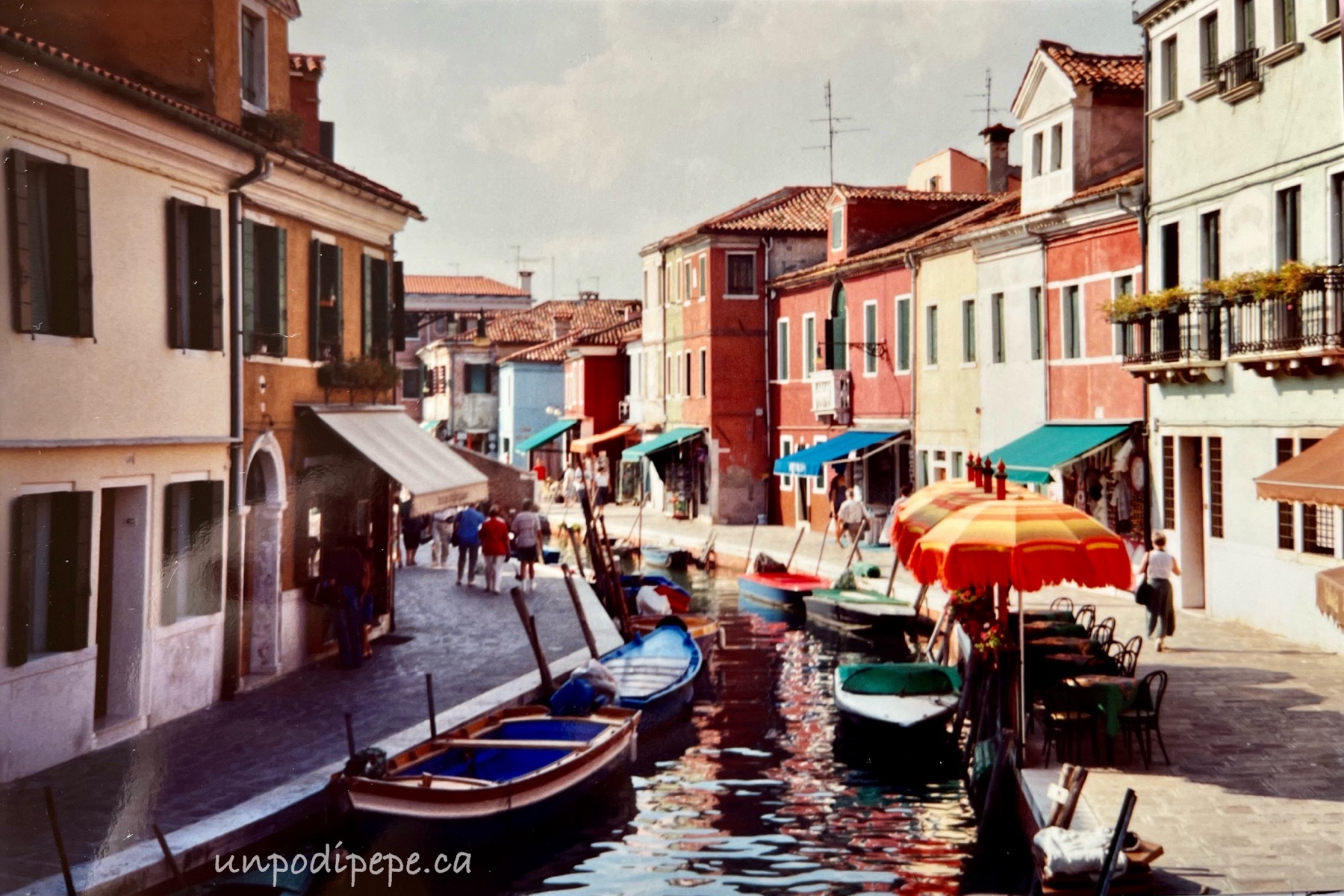
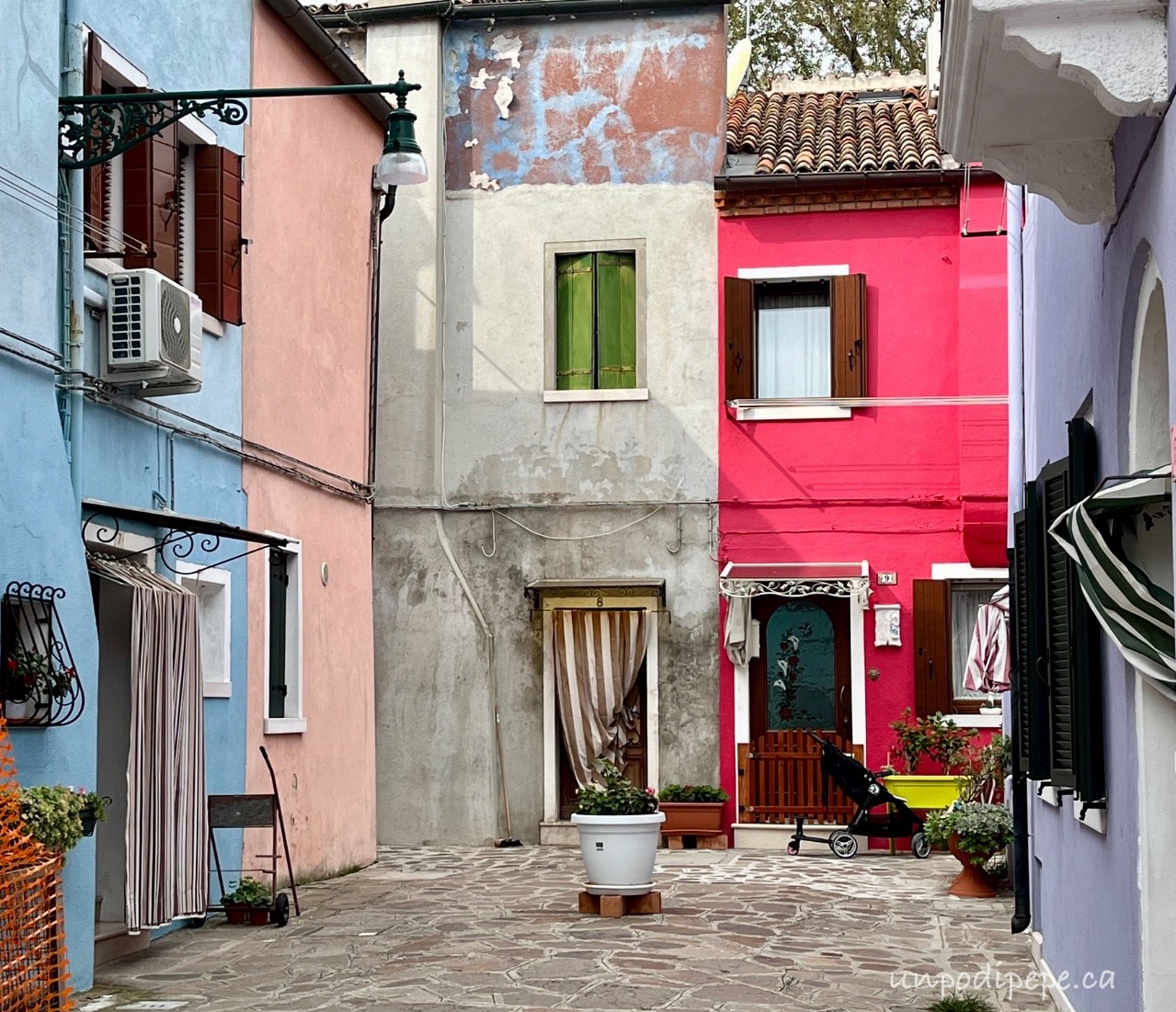
Houses on Burano have been brightly painted since the 15th Century.  This was common in fishing communities so that fishermen out on the water could find their way home in the fog.  Burano is still a working fishing island, although the primary economy is now tourism. An official government request must be sent in to paint a home on Burano as there is a system to the colour scheme.  The response lists the colours allowed for that particular site!  No 2 houses side by side can be the same colour.

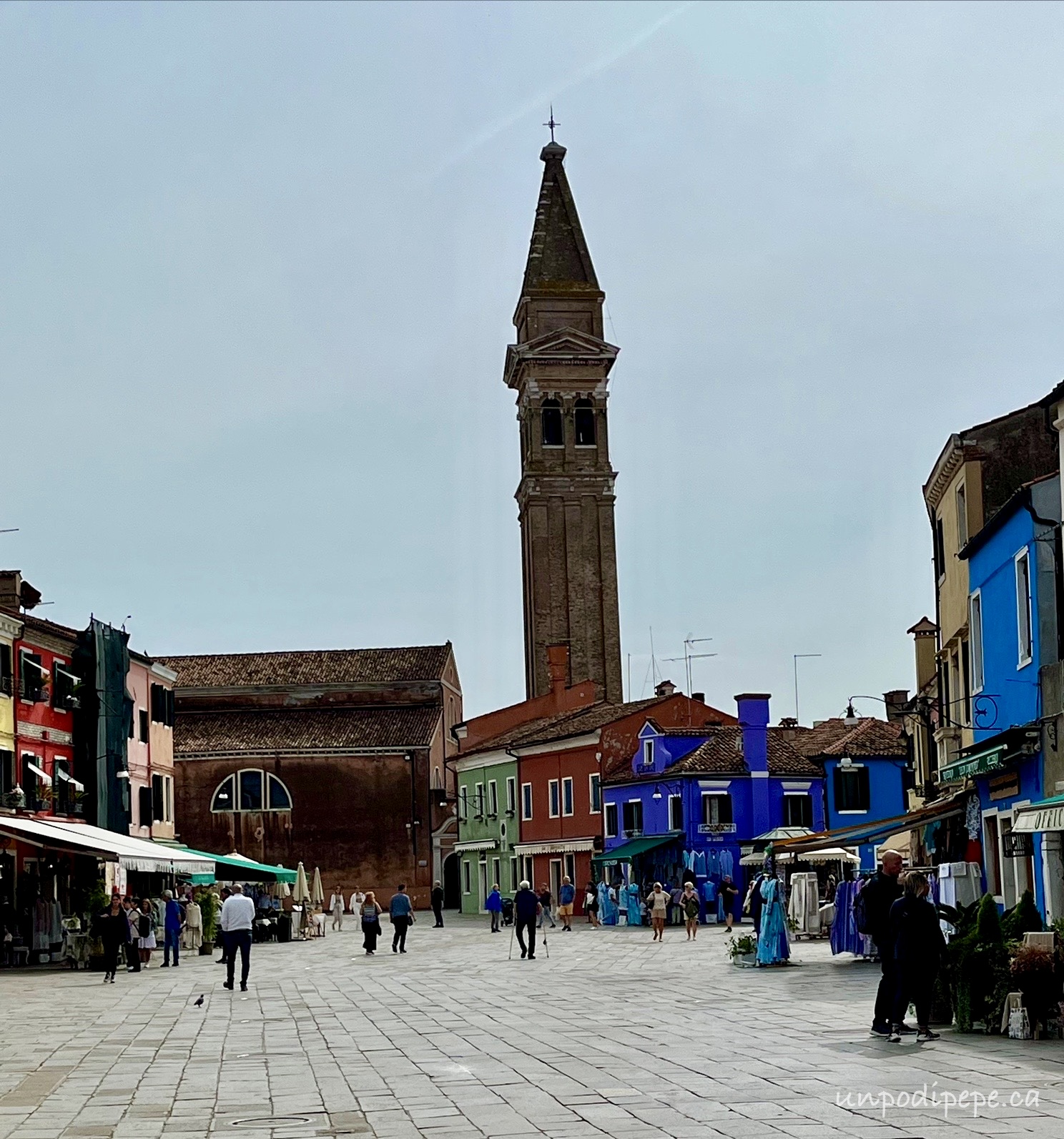
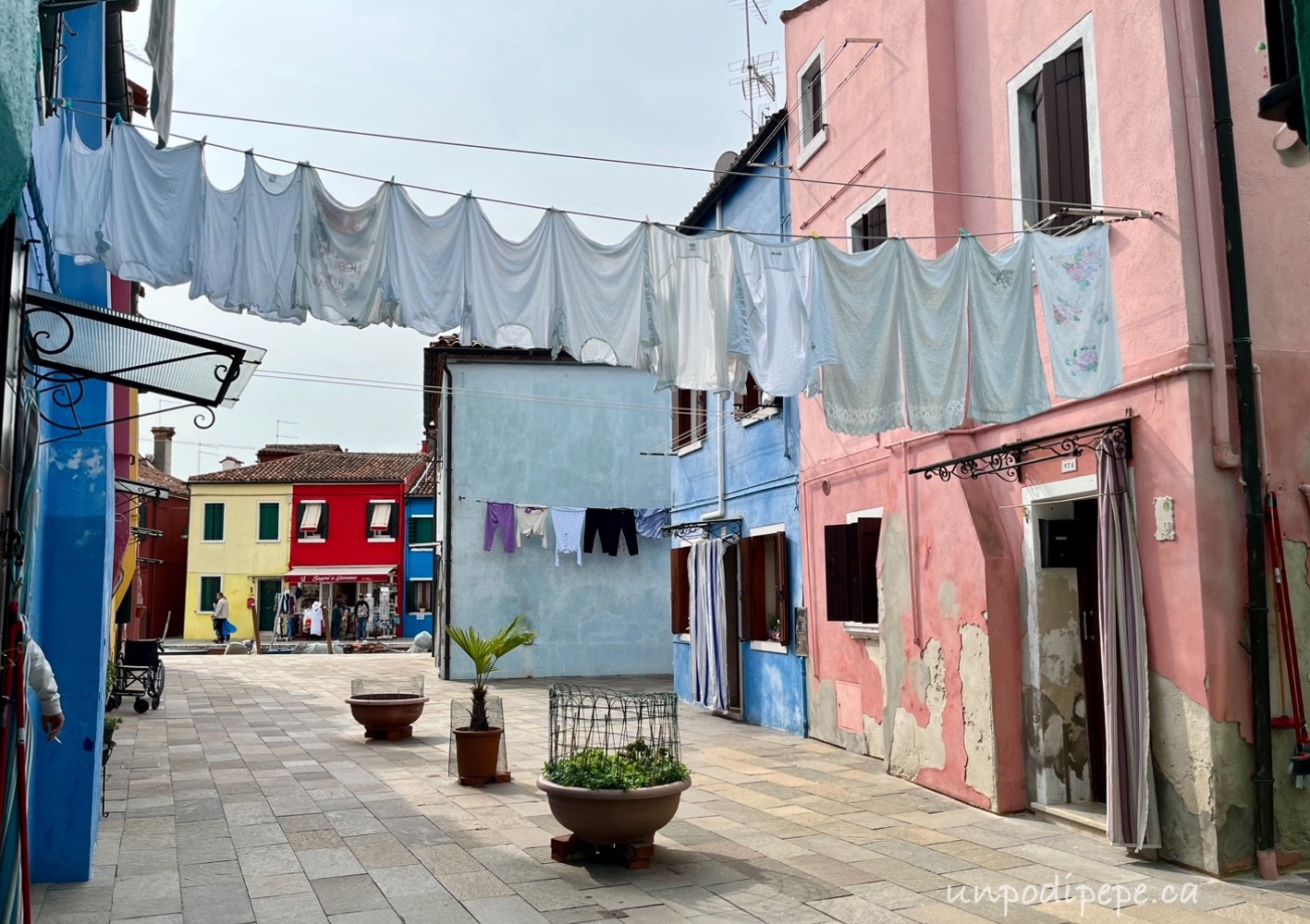
Piazza Baldassare Galuppi is the only piazza on Burano.  The church of San Martino Vescovo has a 53m high leaning campanile and a 1727 Crucifixion by Tiepolo. The piazza also has the Museo del Merletto, which has examples of 16th and 17th century lace as well as a 6th Century Istrian stone well, shops, and the comune (town hall).Burano is a photographer’s dream with the rainbow houses, laundry hanging, fishing boats, canals and narrow streets.  It is hard to take a bad shot! The wooden Tre Ponti bridge is a great selfie spot. My usual advice would be to just wander and get lost, but Burano is too small to even get lost on! A quick walk around the island only takes about half an hour.

Explore the quieter side streets, browse the shops and have lunch along one of the canals.  Being a fishing island, the seafood is exceptional. Try take out fritto misto, assorted fried fish in a paper cone, or the family run Trattoria Al Gatto Nero.  a reservation-even in October!

Visit Burano if you are in Venezia for more than 2 days, or if it is not your first visit. Burano and Torcello make a nice daytrip.  The busiest time on Burano is from 11am-3pm.  Not many visitors stay overnight, but apparently the sunset is gorgeous.

View of Burano from the campanile di Santa Maria Assunta, Torcello

With an ACTV Vaporetto (Venetian water bus) €25 day pass, you can go to 2 of the islands, then cruise around Venezia when you get back. Burano is 45 min by vaporetto #14 (SZ-Lido-Burano) from San Zaccaria, near Piazza San Marco, in front of Hotel Danieli.  Vaporetto #12 from Fondamente Nove A goes to Murano and Burano.  From Burano, the #9 vaporetto is a 10 minute ride to Torcello.  There are also many organized daytrips to the lagoon islands.

For those of you who love this colourful island as much as I do, there is a 2022 trilogy of Hallmark movies about a Burano lace wedding veil bought by 3 friends at an antique store.  In the second movie, one of them takes the veil to Burano to find out its history.  The family run shop in the movie is based on Emilia Burano, the one in my 1994 photo!

Burano canal 1994

Buon viaggio, Cristina

Share this:

  • Click to share on Facebook (Opens in new window) Facebook
  • Click to share on Pinterest (Opens in new window) Pinterest
  • Click to share on X (Opens in new window) X
  • Click to email a link to a friend (Opens in new window) Email
  • Click to share on WhatsApp (Opens in new window) WhatsApp
Like Loading...

Venezia~La Serenissima

25 Monday Mar 2024

Posted by Un po' di pepe in Architecture, Art history, Italia, Photography

≈ 12 Comments

Tags

Acqua alta, Grand Canal Venice, Italy travel tips, Overtourism, UNESCO World Heritage Sites, Veneto, Venice

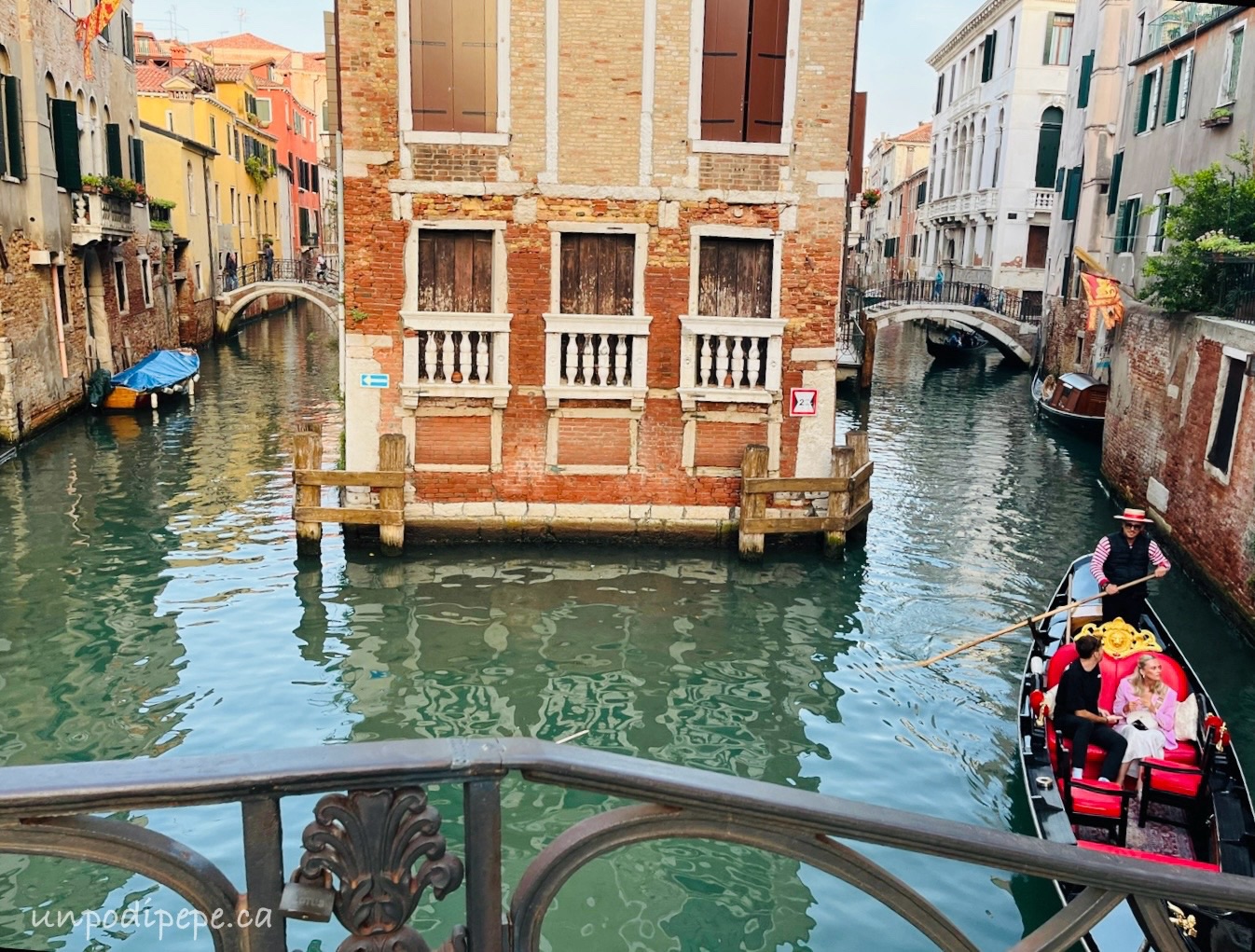
La Serenissima turns 1603 today!  Venezia, a geographically unique engineering marvel, is built on a group of 118 tiny islands in the Venetian lagoon.  They are separated by open water and 170 canals, linked by over 400 footbridges.  Named after the ancient Veneti people of the 10th Century BC, Venezia was founded March 25, 421 by refugees from the Roman cities of Padua, Aquilea and Treviso, and the surrounding countryside fleeing Longobard and Hun invasions.  They first settled on the sandy islands of Torcello and Jesolo. The land of the islands in the lagoon was muddy, some of it barely above water, and not suitable to build on.  Millions of wooden poles or pilings were submerged into the mud and sand to reach the solid layer of earth underneath.  The pilings were covered with wooden boards to form the base that the city was built on.  Since there was no forest in the area, the wood came from Croatia, Slovenia and Montenegro.

Venezia was the capital of the Venetian Republic for almost a century, from 810 until 1797 when it was defeated by Napoleon.  In 1866, along with the rest of the Veneto region, it became part of the Kingdom of Italy.  The title ‘La Serenissima’ refers to its stability as a government compared to others at the time. Venezia was a wealthy city for most of its history, especially the 13th-17th centuries.  It was as an influential financial and maritime power and important center of art, commerce, and trade of silk, grain and spices between East and West.  This east/west connection is apparent in the art and architecture of the city. The Venetian Lagoon and historical parts of the city within the lagoon became a UNESCO World Heritage Site in 1987. The population of Venezia is now about 55,000 and the PATREVE (Padua, Treviso, Venezia) metro area has a population of 2.6 million.

I have been to Venezia 5 times and my most recent visit was following an unintentional 28 year absence!  I still remember stepping out of Stazione Santa Lucia the first time, and immediately being filled with wonder and awe at the view.  That part hasn’t changed a bit since 1980. This time I was there for 3 days in early October but the weather was like summer.  So were the crowds!  It was unbelievable how many people were in the streets and waiting in lines! Someone forgot to tell everyone it was not July! I also noted much more expensive it was than the rest of Italia.  When I saw the lineups for everything in Piazza San Marco-even for those with reservations, I decided to concentrate on exploring outside. I enjoyed the beautiful weather and only visited a few places that were new to me. I definitely want to see the incredible interior of Basilica San Marco and the 4 Cavalli again, but will wait for a rainy day!

Signore in piazza, Cannareggio

Venezia is shaped like a fish and there are 6 sestieri or neighbourhoods:

  • Santa Croce the west end ‘mouth’ of the fish is the transportation hub, with the bus and train stations, harbour of San Basilio, and parking garage in Piazzale Roma.
  • San Marco is the touristy center with Piazza San Marco and Rialto
  • Dorsoduro is the trendy Southeastern area across Canal Grande and includes Giudecca, Piazza and Ponte Accademia, Collezione Peggy Guggenheim and Santa Maria della Salute
  • San Polo across the Ponte Rialto, is the oldest sestiere and includes Rialto fruit and fish mercato
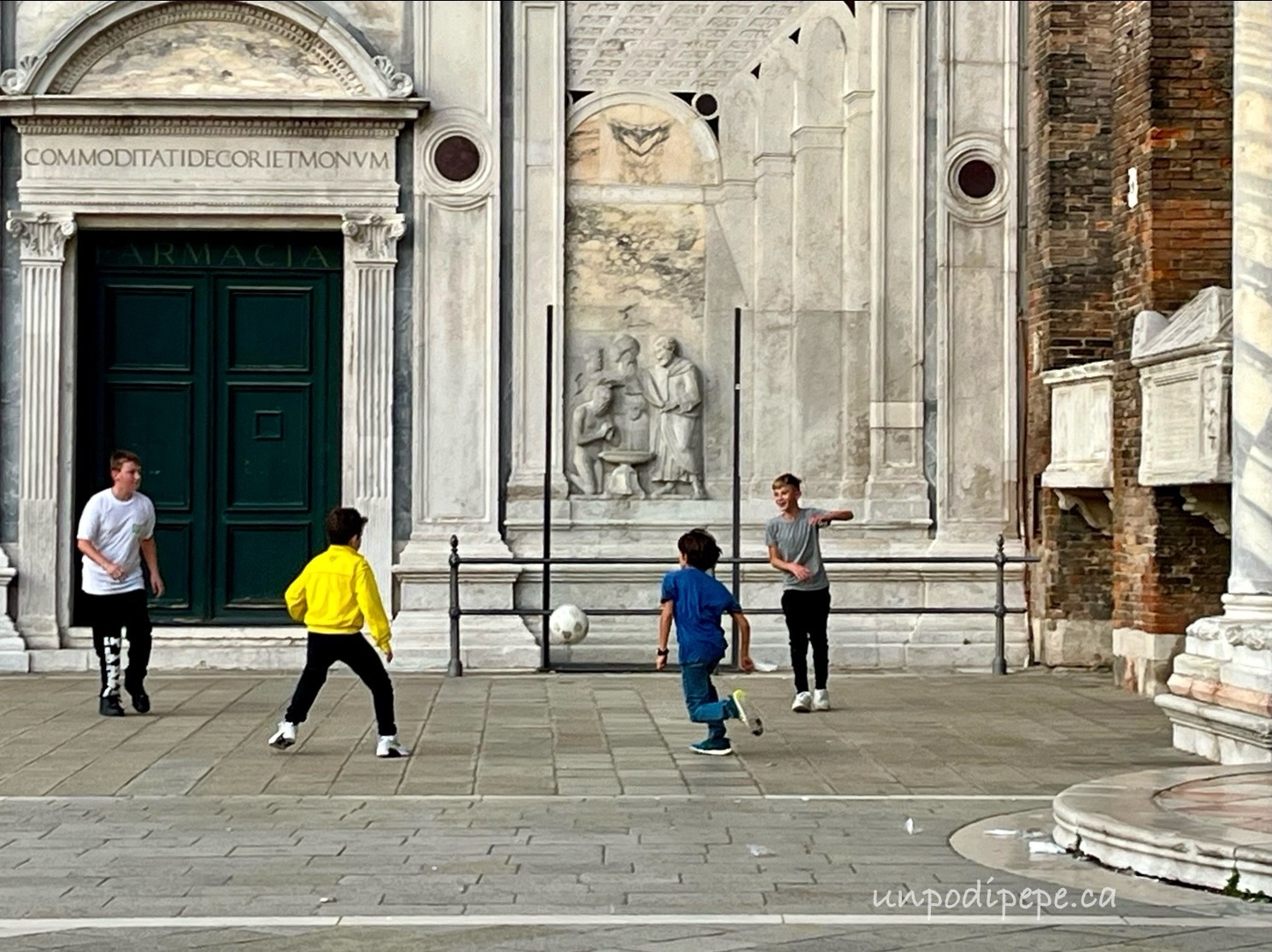
  • Cannareggio the most northern area is less crowded and touristy, more of the ‘real’ Venezia.  It includes the Jewish quarter.  It is picturesque and the best place to get lost among the calli (streets)
  • Castello the eastern ‘tail’ of the fish and largest sestiere is host to the Biennale in the Arsenale Naval base

    Calcio in Castello

Main things to see and do:Wander aimlessly, get lost and explore! Venezia is a photographer’s paradise, a walkable city and many of the sights are clustered.  Walk from Piazzale Roma to Piazza San Marco (40 min-1 hour), explore the ponti (bridges) and narrow calle (streets) look for cisterne (rainwater collection wells), walk along Riva degli Schiavoni to see the gondole bobbing up and down in the water and stop for cicchetti (Venetian snacks).

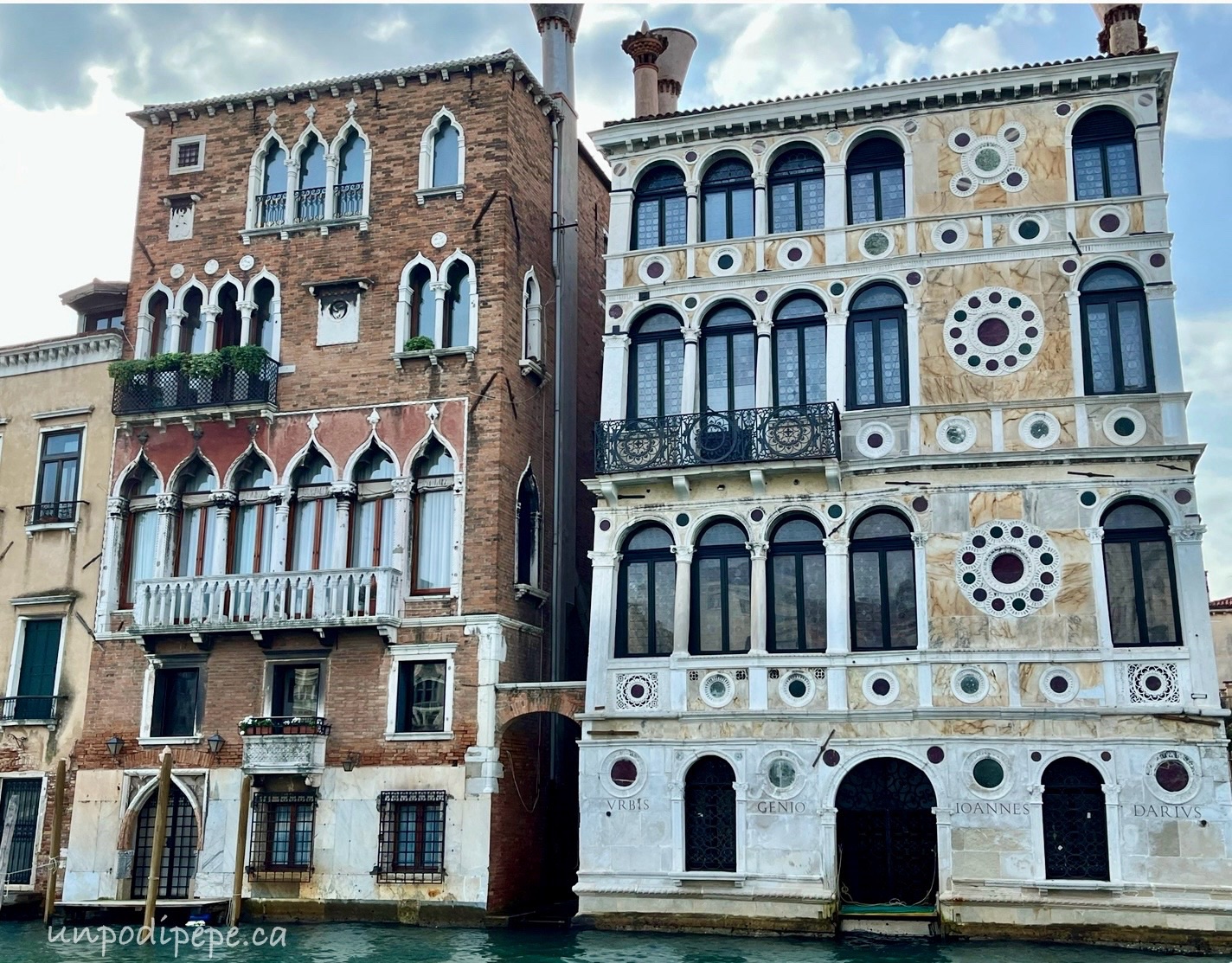
Cruise Canal Grande. Buy a Vaporetto pass and explore the Canal Grande from the water. Get on in front of Stazione Santa Lucia and cruise to San Marco or vice versa. Canal Grande is S shaped and lined with ~170 majestic palazzi, buildings from the 13-18th  Many of them are fondaco houses, meaning the ground floor was a warehouse and merchants lived on the upper floors with their families. 3 of my favourite palazzi are the Fondaco dei Turchi, the Venetian Gothic Ca’ d’Oro, and Palazzo Dario, which is funky because it started out Gothic but was renovated in Renaissance style. I love to spot interesting boats… the ambulance boat, the dry-cleaning delivery boat, etc.

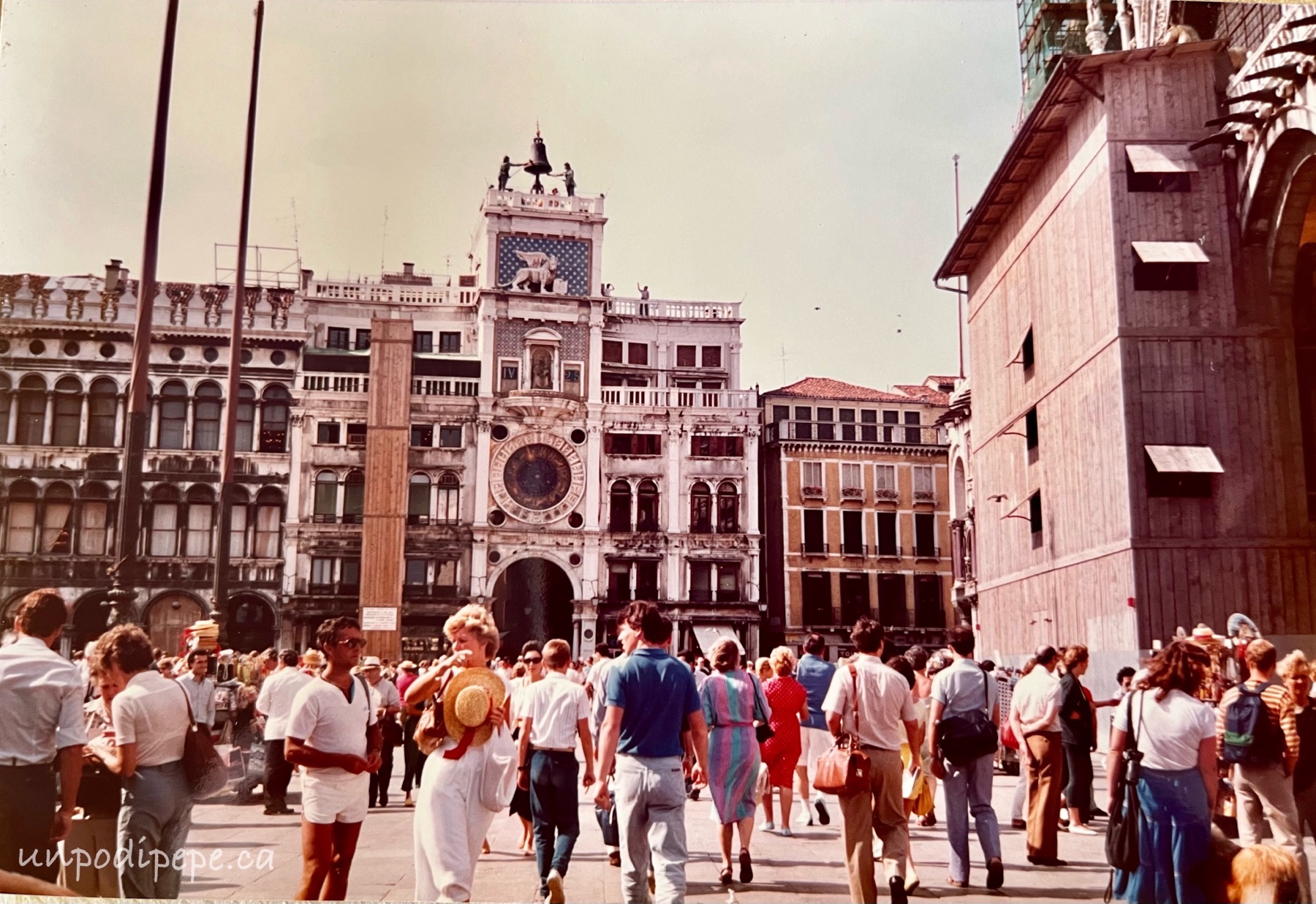
Piazza San Marco is the main piazza in Venezia and is full of things to see. The multi domed Basilica is at the east end, and the rest is lined with arcades.  These were once homes and offices, now shops and restaurants.  In the piazza is a 4.5m bronze winged lion, the symbol of San Marco and the Venetian Republic.  It is on top of Egyptian granite column brought here in the 12th  Napoleon moved it to Paris but it was returned in 1815.  Torre dell’Orologio, the clocktower dates back to the 15th Century.

Torre dell’Orologio 1980

Visit Basilica San Marco, built in the 9th century and enlarged in 1063. Over 8 centuries, golden mosaics and other treasures were added.  The exterior is magnificent, with a combination of Byzantine, Romanesque and Gothic features. The Western side has mosaic archways while the Southern side has gothic adornments.  The Interior has 8000 m² of golden mosaics.  Gold leaf is sandwiched between 2 layers of glass tile, giving an illumination effect.  The evening tour is apparently spectacular as it is lit up. The Cavalli di San Marco, 4 magnificent ancient Greek bronze horses were brought from Constantinople in 1204.  Since 1974, replicas are on the terrace above the entrance, and the originals are inside.  They need their own blog post!  Admission €3 onsite, €6 online in advance.  Extra €5 to see Pala d’oro altar piece and Cavalli. Open 0930—1715, 1400-1715 Sundays.  Note….even if booked online, you still have to arrive early and wait in lineups for security.

Palazzo Ducale-Venetian Gothic style former residence of the Doges and Palazzo di Giustizia (courthouse) next to Basilica San Marco. It is now a museum.  Cross Ponte dei Sospiri (bridge of sighs) to see prisoners’ last view on their way to execution. Admission €25 Open 0900-1800 daily

Climb Campanile-Take the elevator to the top of the belltower for amazing views. Reservations are booked for a specific time slot €10 Euro, €12 online.  May be closed during maltempo-bad weather.

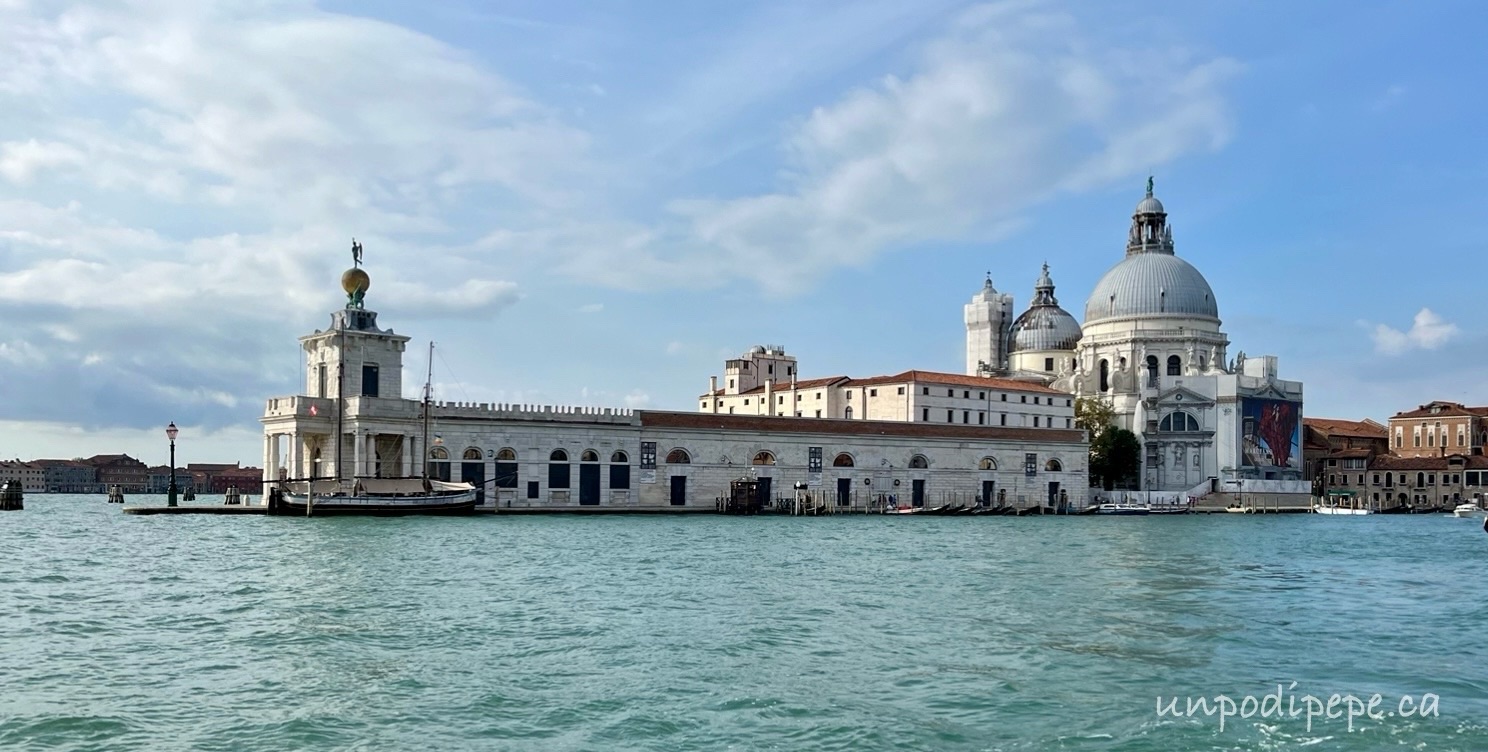
Collezione Peggy Guggenheim Former home of the heiress, now a museum of modern art in the Dorsoduro area. Take a €2 traghetto gondola ride across Canal Grande from San Marco or walk across Ponte dell’ Accademia.  Admission €16 open 1000-1800 Closed Tuesdays. Read my post here.Terrace Horse, Peggy Guggenheim Collection VeniceSanta Maria della Salute the Baroque church at the entrance to Canal Grande next to Punta della Dogana, has been immortalized by artists Canaletto, Sargent, Turner and Monet. The octagonal church made of Istrian stone has 2 domes and 2 bell towers in the back. Built in 1687 to celebrate the end of the plague (black death) that killed 1/3 of the population.  Santa Maria della Salute means ‘Our Lady of Good Health’.

Entrance to the Basilica is free, climb steps to the cupola €4  Open 0900-1200 and 1500-1730.  Cupola closed Mondays. Take the ‘ferry gondola’ across from Piazza San Marco for €2. Nov 21 is the Festa della Salute featuring a parade from San Marco to La Salute over a pontoon bridge.

Ponte dell’ Accademia walk over the old wooden bridge for the best views of Canal Grande

Ponte Rialto a covered footbridge lined with shops has great views from both sides. It is the oldest of 4 bridges that span the Canal Grande.  The original was built in 1173 and it was rebuilt several times.  The present bridge was built in 1591.

Gondola ride Ponte Rialto 1995

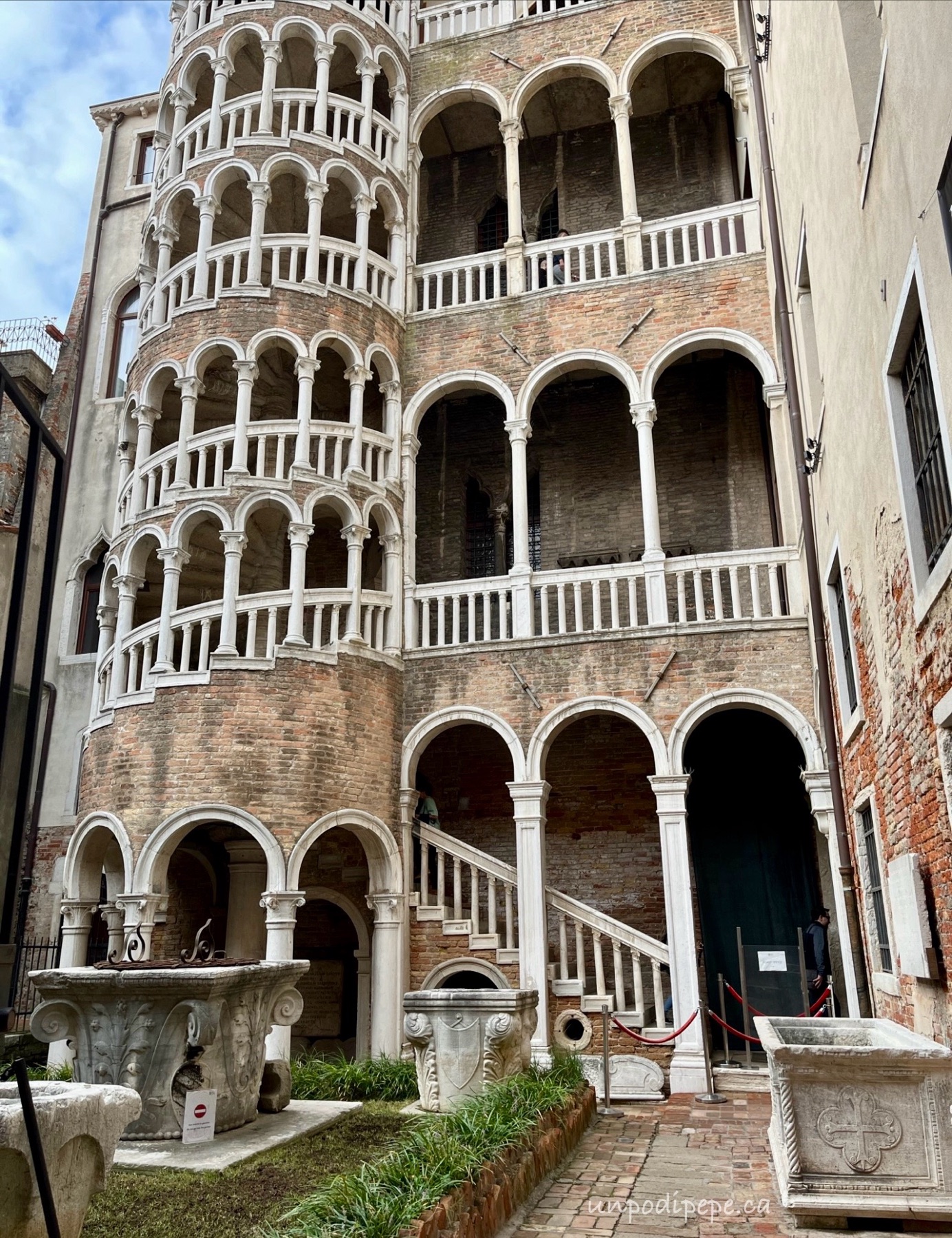
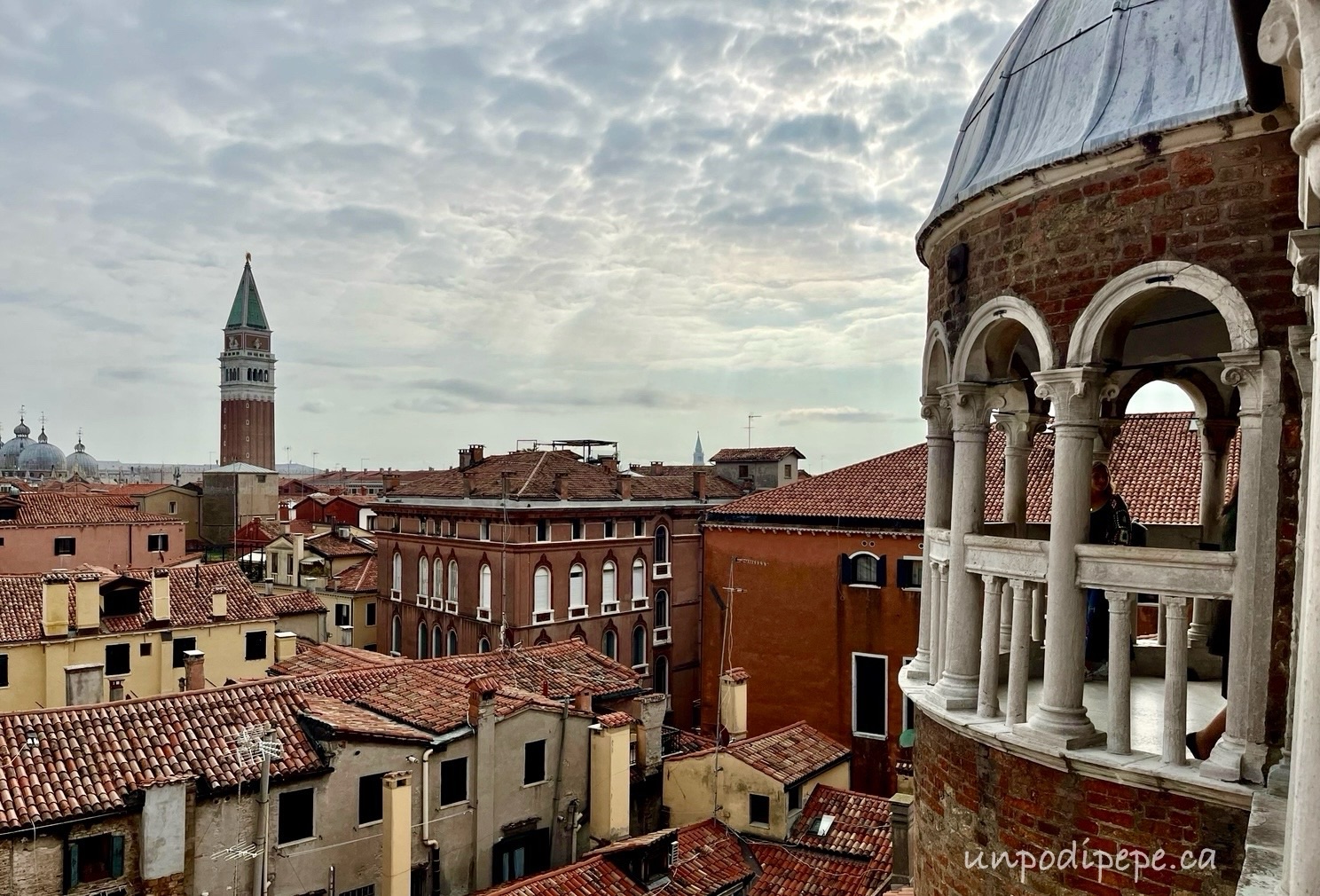
Ride in a gondola Gondolas are unique, symbolic of Venezia and have been a means of transport on waterways here for over 10 Centuries, so you really do need to do this! Gondola rides are usually €80 for a 30-40 minute ride and €100 in the evening. If this is not in your budget, or you are travelling solo like me, there are inexpensive traghetti, or gondola ferries you can take with others to cross to the other side of Canal Grande for € Best deal in town!  Look for the green ‘traghetti’ sign.  There is now a special dock at Piazzale Roma for those with mobility issues to safely get into a gondola.Scala Contarini del Bovolo Cool external 26 m multi arch spiral staircase near Piazza San Marco. It was added to the palazzo in 1499. View of rooftops, the Campanile, the cupole of San Marco and La Salute.  €8 admission Open 1000-1800 daily.

La Fenice The opera house was well named! Like the Phoenix it has risen from the ashes after being destroyed by fire 3 times, most recently in 1996. It was reopened in 2003. Admission €12 including audioguide tour.  Open 0900-1800

Visit the islands Take the vaporetto to Murano, Burano, Torcello, Lido and San Giorgio Maggiore.

Terrazza Fondaco dei Tedeschi (T Fondaco).  Tedeschi are Germans. This was the German merchants’ warehouse, then the post office, now a luxury department store. It is at the foot of Ponte Rialto, northwest end.  The rooftop terrace has panoramic views over Canal Grande. Open daily 1015-1800.  Entrance is free, reservations are required and the timeslot is only 15 minutes.  Reservations must be made on their website.

Feste: Venezia has feste all year round, most of them involve gondola races!

  • January 6th Regatta delle Befane-50 rowing club members dress up as La Befana and race from San Tomà to Ponte Rialto, where the finish line is a giant stocking hanging from the bridge!
  • February-Carnevale the 10 days before Ash Wednesday (22 Feb -4 Mar in 2025).
  • March 25th anniversary of Venezia and festa of the Annunciation
  • Biennale d’Arte held even years. 20 April-24 Nov, 2024
  • April 25 Festa di San Marco, patron Saint of Venezia
  • May-1st since the 11th Century, the Sunday after Ascension Day is Sensa, the marriage of Venezia with the sea
  • May-Vogalonga, a non-competitive 30Km rowing celebration between canals and the islands.  A peaceful protest against damage due to waves from motorboats.
  • July-the 3rd Sunday Redentore Fireworks July 20-21, 2024
  • Late August/early Sept Venice Film Festival on Lido di Venezia Aug 28-Sept7, 2024
  • September, 1st Sunday Regatta Storica
  • October Venice Marathon Oct 24, 2004 38th annual
  • November 21 Salute Celebration.  Feast of Santa Maria della Salute celebrating the end of the devastating Black plague that killed 1/3 of population
  • December 7th-lighting of tree in Piazzetta San Marco
  • December-Mercatino di Natale in Dorsoduro

Getting there and around:The main airport Marco Polo is 10 km away.  Ryanair and some other budget airlines use Treviso airport 40 km away. An airport express bus takes you to Piazzale Roma in half an hour for €10.  Then walk or take vaporetto to hotel. Alilaguna waterbus is €15 and has several stops.  Shared watertaxi is €35 per person with several stops along the 1 hour route.  Private watertaxi is much more expensive.

Train-Stazione Santa Lucia in Santa Croce area.  Walk or take vaporetto to hotel.     Car parking garage ‘Tronchetto parking’ in Piazzale Roma has a capacity of 4500 cars

Actv Vaporetto is a waterbus and an affordable way to sightsee.  Also used by residents to get around and get to work.  Single ticket one way €9.50, daypass €25. Passes for 2, 3 and 7 days are also available.  It is not necessary to buy these in advance.  With my daypass, I cruised to San Marco, then took another vaporetto at San Zaccaria (in front of Hotel Danieli) to Burano and Torcello.

Venezia is a one of the most visited destinations in the world, with over 20 million tourists per year.  It is crowded, more expensive than anywhere else in Italia, and struggling with the effects of overtourism.   Acqua Alta, high water flooding happens in late autumn to early spring.  Usually predictable and lasts only a few hours.  Read my post on MOSE.

Cannareggio

I have talked about the crowds, the lines, the expense….but do not let that put you off.  There is nowhere else like Venezia with its intricate maze of waterways, art, and unique architecture.  Around every corner is another magical scene. The entire city is an extraordinary masterpiece, so I definitely recommend visiting.  It can be compared to Santorini, which is crowded and expensive, but incredibly unique and historically rich.  My recommendation is to stay 3-4 days. In 2022, only 3.2 million visitors out of 30 million stayed overnight.

As of June 1, 2024, in an effort to decrease the effects of mass tourism, regulate huge crowds and improve life for local residents, Venezia will be trialing a €5 entry charge.   Residents, commuters, students and children under 14 will be exempt, as well as anyone who has booked an overnight stay.  Personally, I think the entry fee is too low to be effective.  Constant maintenance to prevent more water damage is expensive.  Tour groups will also be limited to 25 people (=½ the capacity of a bus) and loudspeakers are banned(yeah!!!).  Cruise ships have been banned from the lagoon since 2021 after threats from UNESCO to put it on the endangered list. That is the UNESCO equivalent to ‘the naughty list’!

Hope you all make it to Venezia at some point!  Buon viaggio, Cristina

**Photo credits: 1995 Lucia and Donato on honeymoon taken by unknown gondolier.  All other photos by me!

Share this:

  • Click to share on Facebook (Opens in new window) Facebook
  • Click to share on Pinterest (Opens in new window) Pinterest
  • Click to share on X (Opens in new window) X
  • Click to email a link to a friend (Opens in new window) Email
  • Click to share on WhatsApp (Opens in new window) WhatsApp
Like Loading...

Procida

31 Thursday Aug 2023

Posted by Un po' di pepe in Italia, Photography, Travel

≈ 13 Comments

Tags

Campania, Chiaiolella, Ischia, Italian Capital of Culture, Italian islands, Marina di Corricella, Napoli, Slow travel, Southern Italy

When I mentioned to anyone that i was going to Procida, the response was ‘Where is that?’  It was the 2022 Italian Capital of Culture, but still not well known outside of Italia.  Procida (pronounced PRO·cheedah) is one of the Flegrean Islands off the coast of Napoli and is part of the city of Napoli.  It was created by the eruption of 4 volcanoes, which are now submerged and dormant.   Overshadowed by its sexier neighbours Capri and Ischia, Procida is the least visited of the 3 islands.  It has a tiny area of 4.1 km², but with a population of 11,000, Procida is one of the most populated Italian islands. It is still mainly a fisherman’s island, a living, working place where real people live.  The main industries on the island are the port and fishing. Tourism is #3.

Procida has a laid-back, slow travel vibe-even in the most popular areas. You will not find any resorts, fancy spas or tour groups and the shops cater more to locals, closing for ‘la pausa pranzo’ from 1-5 pm.  Even finding somewhere to buy a few souvenirs was hard! In the summer and on weekends, many of the visitors to Procida are Napoletani going to the beach.

Procida has been featured in movies, most notably the beautiful, multi award winning 1994 film Il Postino and the 1999 psychological thriller The Talented Mr Ripley. Both films were set in the 1950’s-60’s.  In the 1963 Elizabeth Taylor/Richard Burton film Cleopatra, Procida -with the baroque duomo clearly in the background-was briefly featured as the ancient city of Tarsus where Cleo’s barge arrived to meet Marc Antony.  There are signs posted at various filming locations on the island.

Marina Grande is the main port where ferries (traghetti) and hydrofoils (aliscafi) arrive. Here you will find sorbetto coloured buildings, the main bus stop and ferry terminal, several restaurants and bars, a gluten free bakery Il Piccolo Forno Senza Glutine, and ONE gift/souvenir shop.

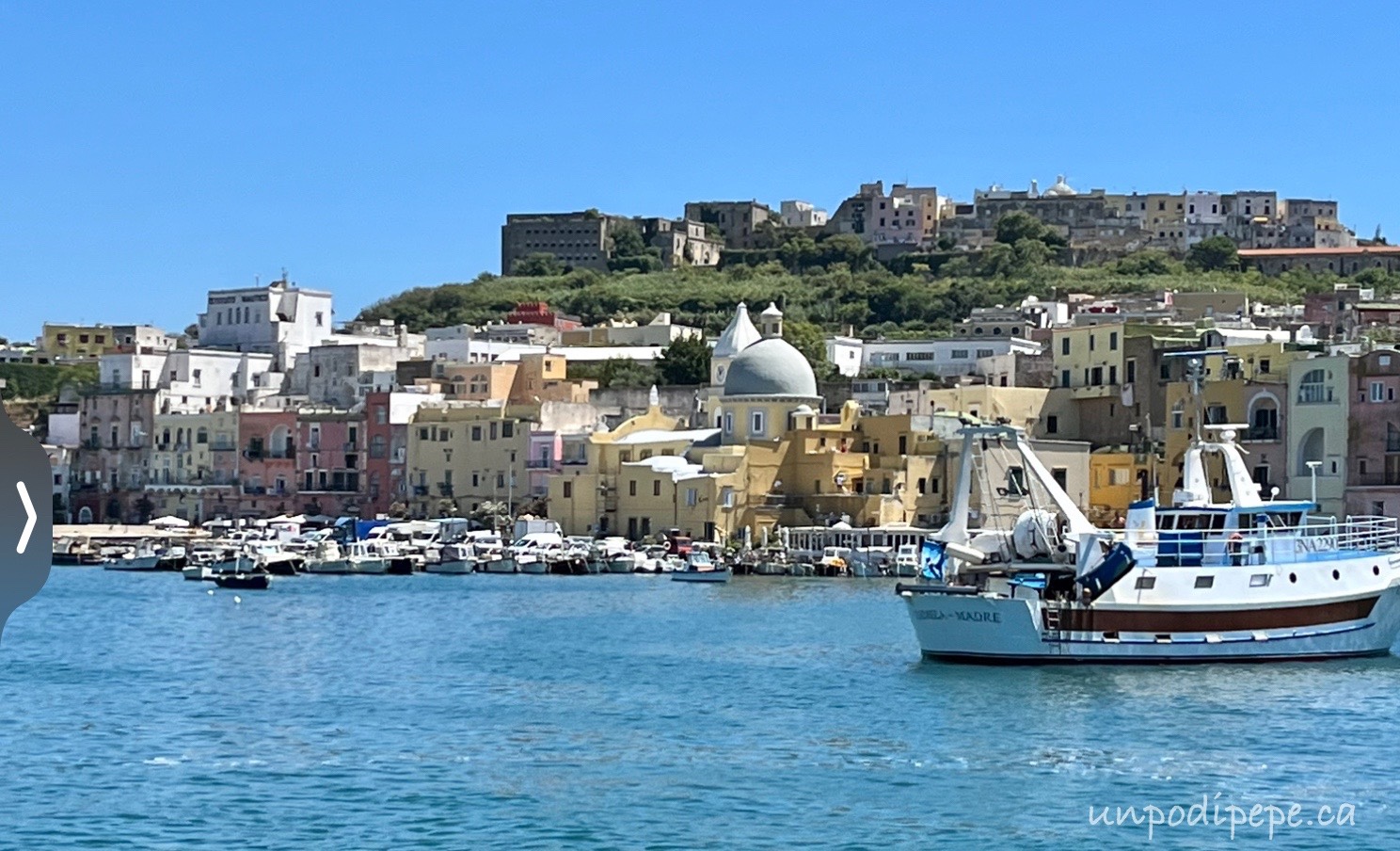
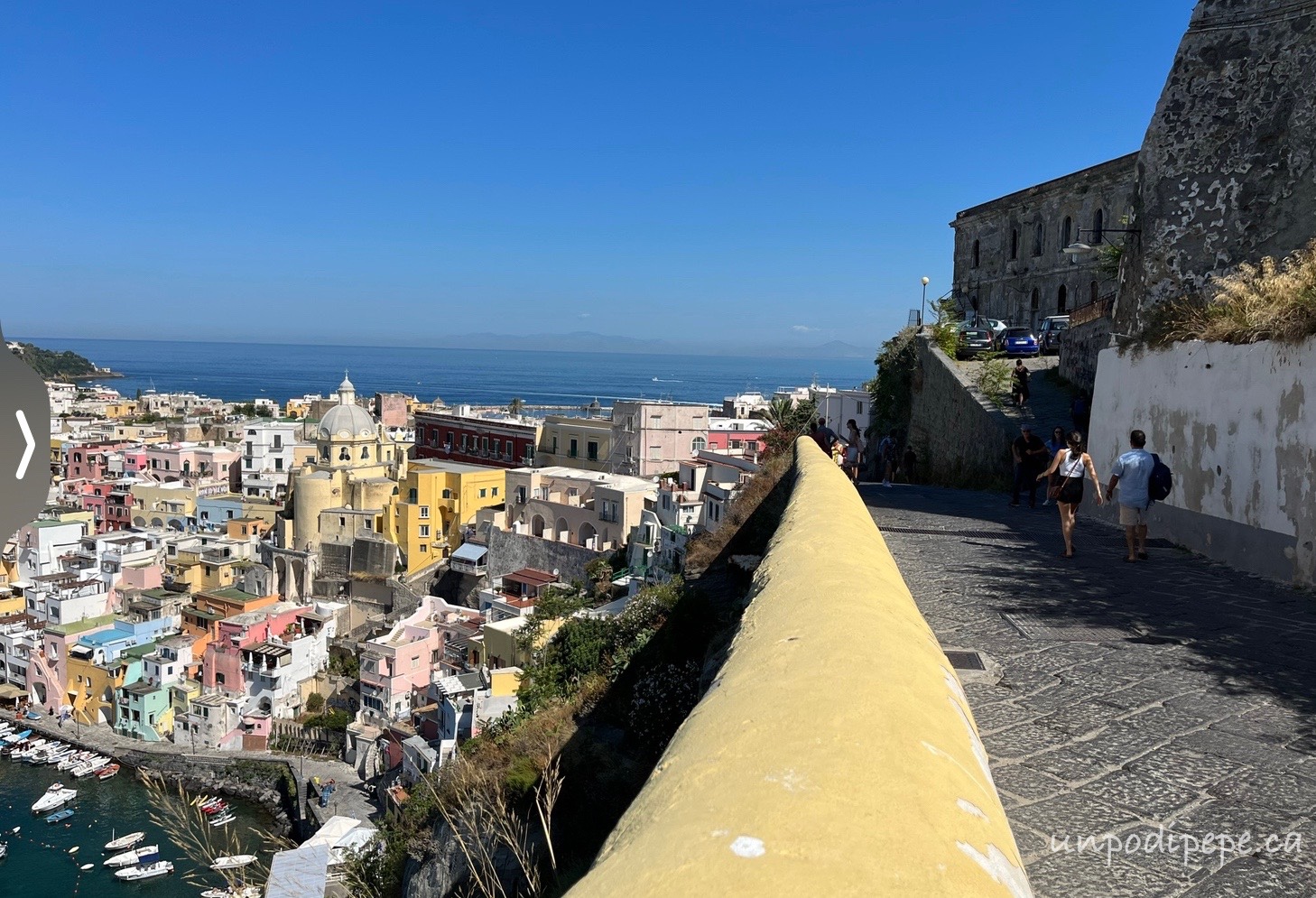
A 20 minute uphill walk from Marina Grande to the other side of the island (~20 min) brings you to the most visited area.  Walking uphill towards Terra Murata is the spectacular view of Marina di Corricella with its limoncello and pink grapefruit coloured 17th century fisherman’s houses and the duomo of Santa Maria delle Grazie Incoronata.  I found Marina Grande colourful and cute, but nothing compared to this view.  The walk is steep, but if mobility is an issue the C2 bus stops here.

Terra Murata (walled land) the highest and oldest part of Procida, is a fortified medieval village at the top of the island.  Abbazia San Michele Archangelo is an 11th Century Benedictine Abbey turned into a church.  Palazzo d’Avalos built in 1563 became a prison in the 1800’s until it closed down in 1988.  Tours of the prison (€13,) need to be booked at least 2 days in advance so I was not able to go. The roof has sweeping views of the entire Bay of Napoli, including Ischia, Capri and the Amalfi coast.  Check out John’s blog post about the prison  for more information.  The 15th Century Santa Margherita Nuova monastery was under renovation, so I was not able to see that either.  The postcard views from up here are absolutely mozzafiato-breathtaking!  A friend asked me how I took the cover photo over Marina di Corricella. ‘Hai volato?’  Did you fly over it?

The walk down to Marina di Corricella (Kor·ree·CHEL·lah) with houses built on top of each other, is steep and looks lived in with plants and laundry hanging out to dry.  Some typical features of Procidano architecture, besides the pastel colours, include exterior staircases and arched windows.  This area is completely vehicle free.

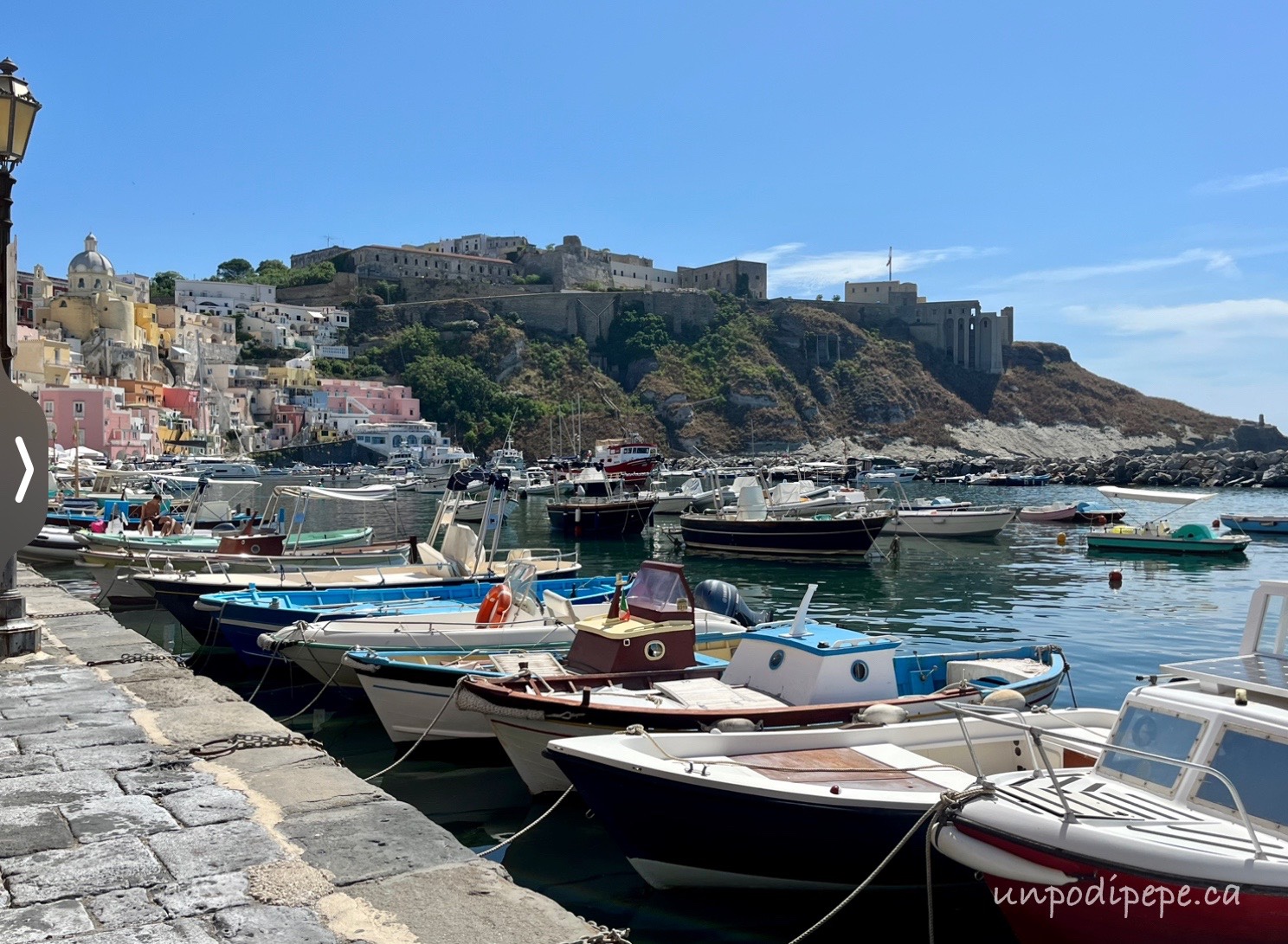
The marina is a full working harbour with colourful fishing boats, and fishermen with their nets.  There are several restaurants, bars and gelaterie.  I enjoyed a limoncello spritz and taralli while watching the fishing boats.  La Locanda del Postino is a restaurant where Mario, il Postino, sat to write poetry to Beatrice in the movie.  Some fishing boats offer a ‘giro dell’isola’ from here.  Terra Murata can be seen from  the Marina below.Chiaiolella (Kyay·oh·LEL·lah) on the West tip of the island is the area where I stayed.  Spiaggia Chiaiolella is a dark volcanic sand beach with warm, shallow water and amazing sunsets.  At the end of the beach is a long walking bridge to Vivara, a tiny green satellite island and nature reserve. Ischia is seen past Vivara in the photo.Around the corner is Marina di Chiaiolella, full of boats and seafood restaurants.  I enjoyed a delicious, reasonably priced seafood meal with a glass of Falanghina at Crescenzo.  The walk back up to the hotel is up a narrow street lined with useful stuff like small supermercati, shops carrying   beach essentials, a Tabacchino and a few takeout restaurants.  There is also a gorgeous jewellery store and a linen shop where I bought Franco a coppola.

There are 4 other beaches on Procida.  Spiaggia Cala del Pozzo Vecchio is the one where Il Postino was filmed.  I will have to go there on my next visit.  The beaches   all have black volcanic sand, except for the small beach by the port, La Lingua which is rocky.

Procida can only be accessed by sea. Unless you have a private boat, that means by ferry or hydrofoil from Napoli, Pozzuoli or Ischia. Napoli to Procida is 1 hour by ferry and 40 min by hydrofoil.  Ischia is 20 min away by hydrofoil-the same boat stops at both islands.  From Napoli the hydrofoil cost me €19 to go and €18 to return.  The ferry is about €15.
Procida can be a daytrip from Napoli or Ischia, but I would recommend staying overnight if you can.  The sunsets are worth it! **Note that from November to March there are less ferries running and some restaurants and hotels are closed.

From April until October, only residents of Procida are allowed to bring cars onto the island.  Scooters, bicycles and ebikes are available for rent.  4 minibuses cross the island; from the port to Chiaiolella (L1 and L2), Corricella (C2) and Il Postino Beach (C1).  Tickets are €1.60 each, or get a daypass and use it like a ‘hop on/hop off’ bus.  These buses go fast and the streets are only about 8 inches wider than the bus!  In the mornings, you may have to wait for a few buses, as they are full of people going to the beach and going to work.  Even the motorini and bikes go fast, so crossing the narrow streets can be a challenge.  Everyone is in a hurry to get to the beach and drives like they are in Napoli!

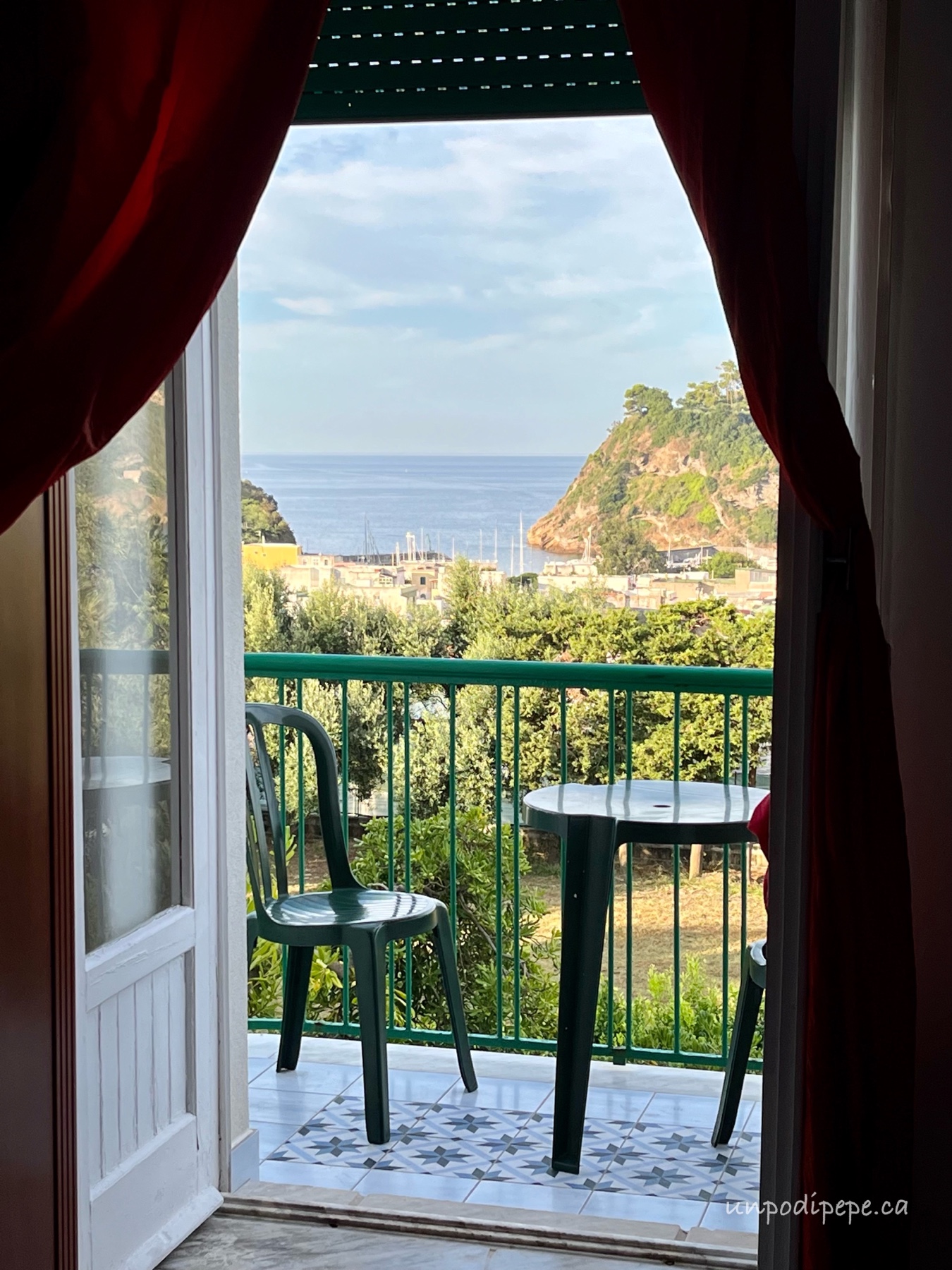
A bit about my trip….. I was in Procida with my cugina Maria from Ontario August 8th and 9th.  It was not a weekend.  We took the 7 am bus from Orsara di Puglia to Foggia, then the bus from Foggia to Napoli.  In Napoli, we took the metro from Stazione Garibaldi to Municipio and walked the short distance to Porto Molo Beverello where we took the hydrofoil to Procida.  Quite the trek to get there!  We did not book the ferry in advance.  We arrived at our hotel at about 2:30 pm. I booked the hotel only 2 weeks in advance.  Ideally, we wanted to stay 2 nights at Hotel La Casa sul Mare which is near Santa Maria delle Grazie in Marina Corricella, but they only accept summer reservations for a 3 night minimum stay.  I booked Hotel Riviera which was only available for 1 night, so we spent the second night in Napoli.  Hotel Riviera was absolutely lovely-right at the bus stop and walking distance to Spiaggia Chiaiolella.  We were pleasantly surprised that our room had a balcony with a view of Marina Chiaiolella, Vivara and Ischia!  This is where I sat to write all of these notes while drinking €1.60 red wine and watching the sunset!

Buon viaggio, Cristina
Share this:

  • Click to share on Facebook (Opens in new window) Facebook
  • Click to share on Pinterest (Opens in new window) Pinterest
  • Click to share on X (Opens in new window) X
  • Click to email a link to a friend (Opens in new window) Email
  • Click to share on WhatsApp (Opens in new window) WhatsApp
Like Loading...

Polpo e patate

20 Tuesday Jun 2023

Posted by Un po' di pepe in Italia, Mangiamo!, Photography, Puglia, Recipes, Travel

≈ 6 Comments

Tags

Cooking octopus, Imerovigli, Mattinata, Octopus and potato salad, Polpo, Santorini, Southern Italy, Traditional recipes

Polpo is one of the joys of visiting the Adriatic in summer.  Polpo or polipo is octopus, from the ancient Greek polypous, meaning ‘many footed.’  In Italiano, polpo and polipo are both correct terms for octopus! It is one of my favourite foods…I love it grilled, or in a summer salad, especially polpo e patate, a cold potato and octopus salad.  Last year, between camping on the beach in Mattinata, a family wedding, a side trip to Santorini, and mamma’s kitchen, there was a lot of polpo in my life.  In this post, I will share some of my polpo photos, instructions for cooking, and how to make polpo e patate.

I had polpo each of the 5 days I was in Santorini.  There it is called Octapodi χταπόδι, meaning ‘eight footed’. The view from the landing outside my hotel room in Thira was the perfect place to sketch.  When I finished sketching, it was too nice to leave.  Instead of going out to dinner, I walked to a restaurant and got takeout octapodi with couscous.  I brought my feast back and ate it at my sketching spot while watching the sunset.  Yiasou!

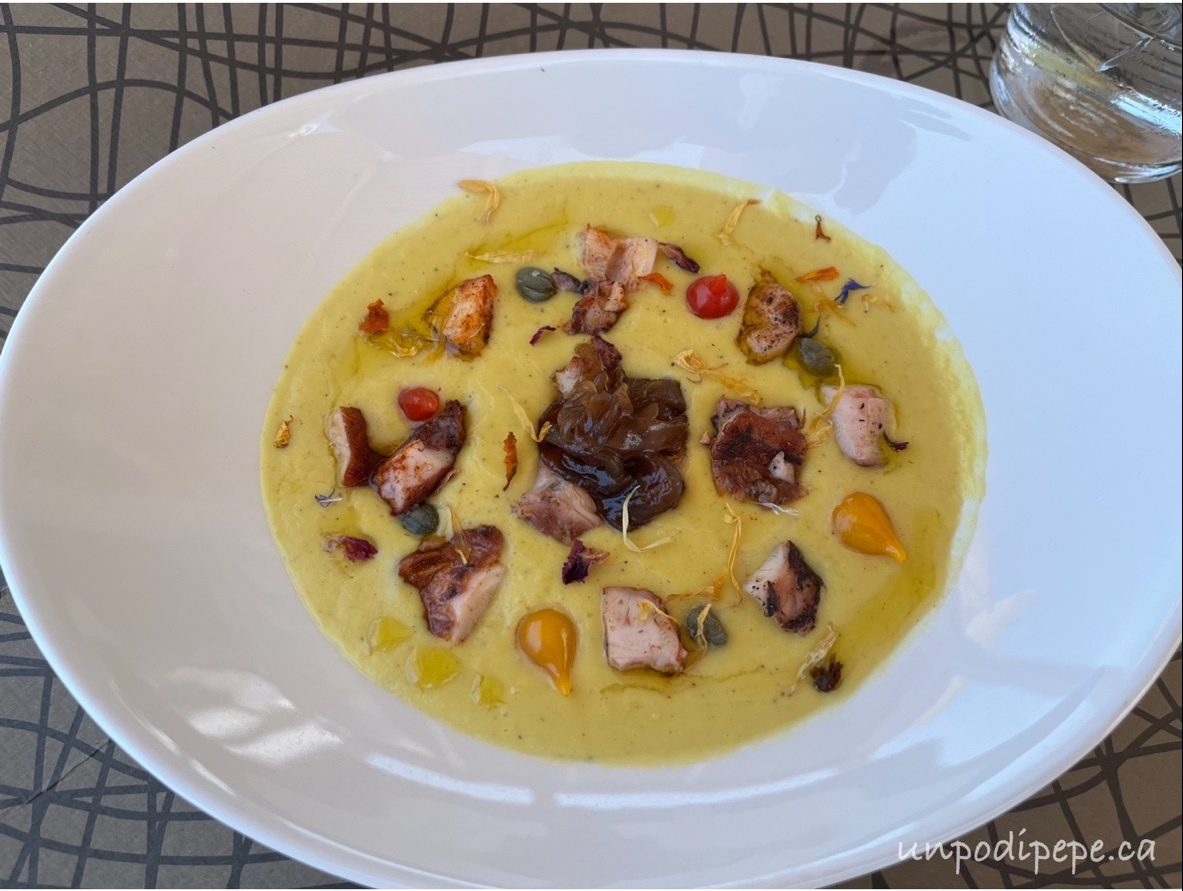
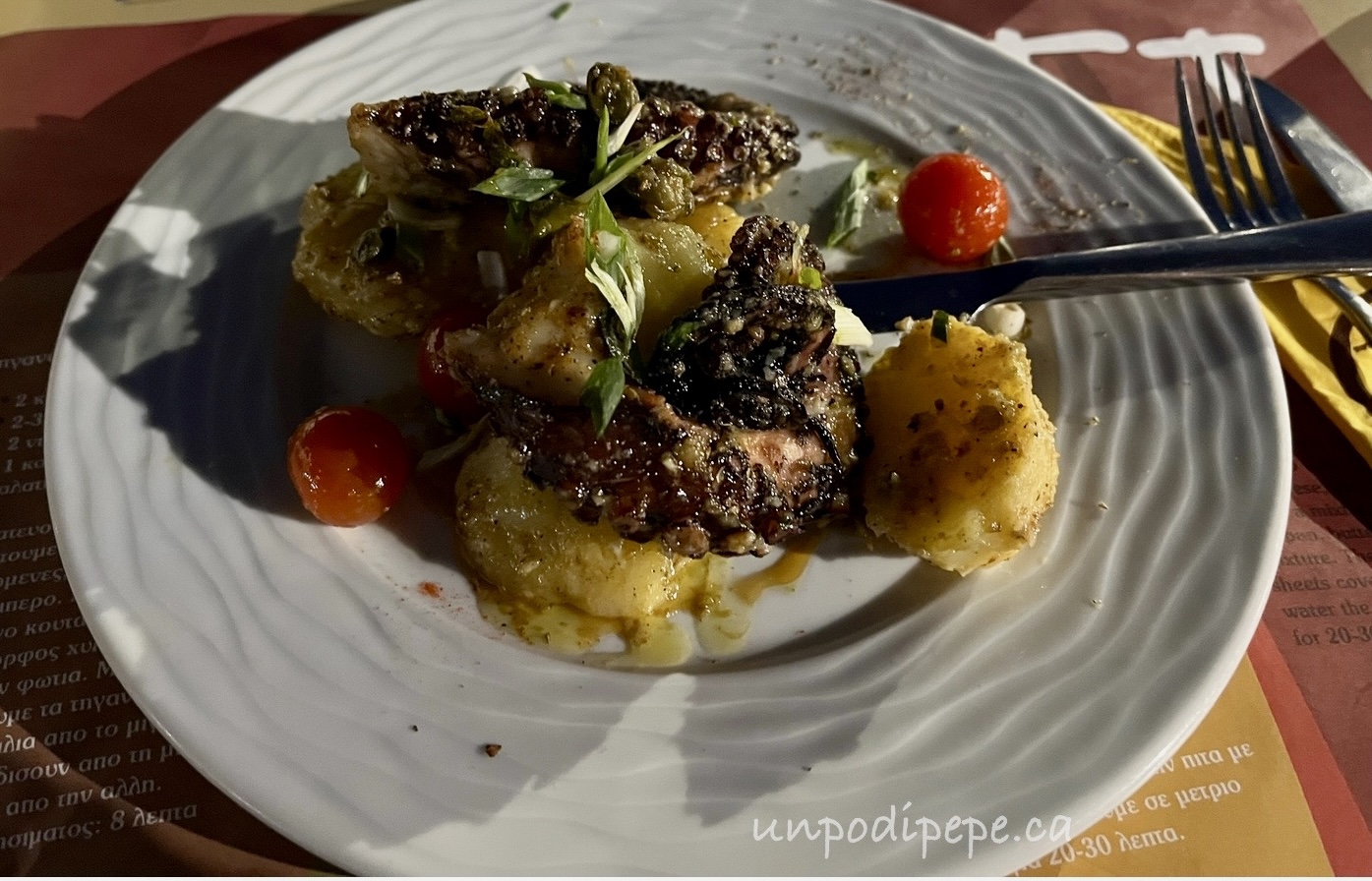
In Imerovigli, I had this orgasmic fava bean puree with grilled polpo, caramelized onions and capers. I have to try making this some time. Also in Imerovigli, I had a late night dinner of grilled octopodi on potatoes.

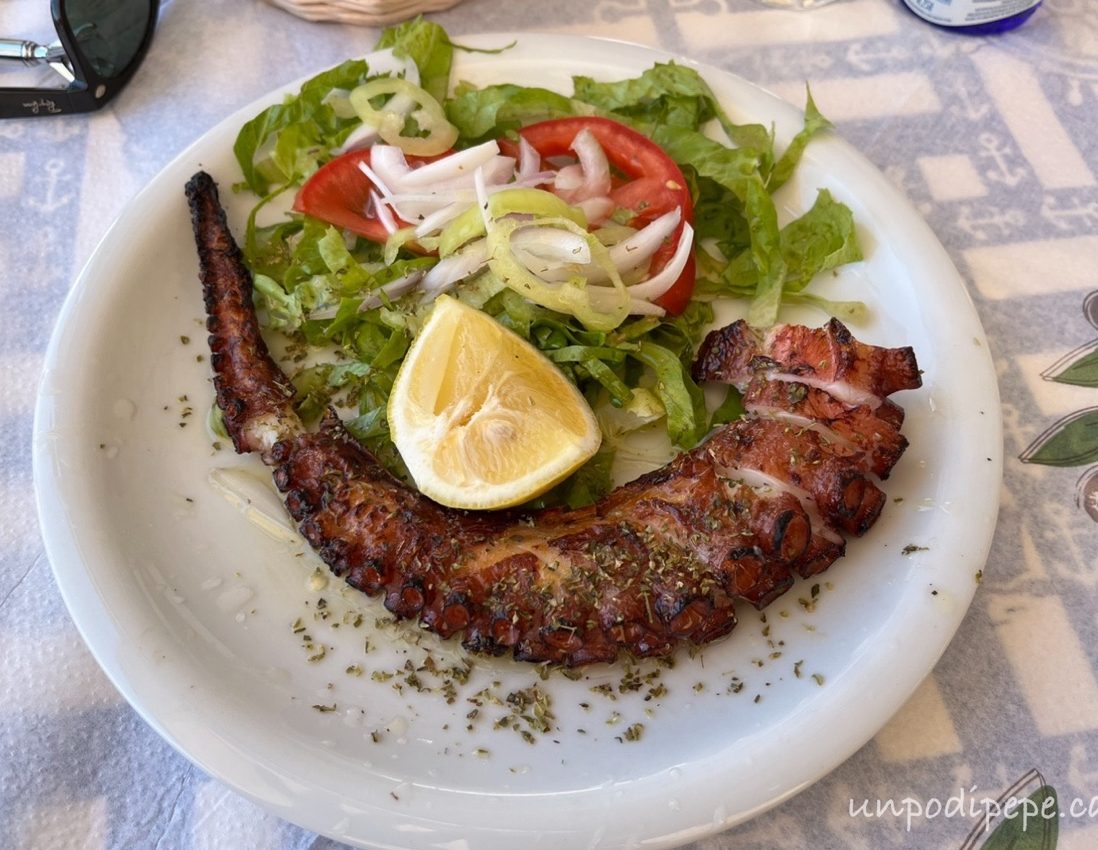
Santorini’s small port has a few seafood restaurants, where I had this very Greek grilled octopodi with oregano.

This photo was taken at the outlet mall in Molfetta.  Yes, polpo is mall food in Puglia!

The day after the matrimonio in Puglia we had a long table dinner in an olive grove by the beach in Mattinata.  This is the gorgeous polpo e patate!  #cookinggoals!

When camping on the beach with my cugini, we often grill polpo and then make a salad with it. The mobile fishmonger il pescivendolo  (pesh·ee·ven·DOH·loh) drives around to the different campsites selling fresh seafood. More about this in Campeggio sul Gargano.  We also have polpo on the grill when we go to my nonno’s olive grove for a grigliata.

This photo of mamma washing polpo in our tiny kitchen in Orsara di Puglia was popular on Instagram.  She made a salad, without potatoes but still yummy! The second one was cooked in a tomato sauce the following day.washing octopus

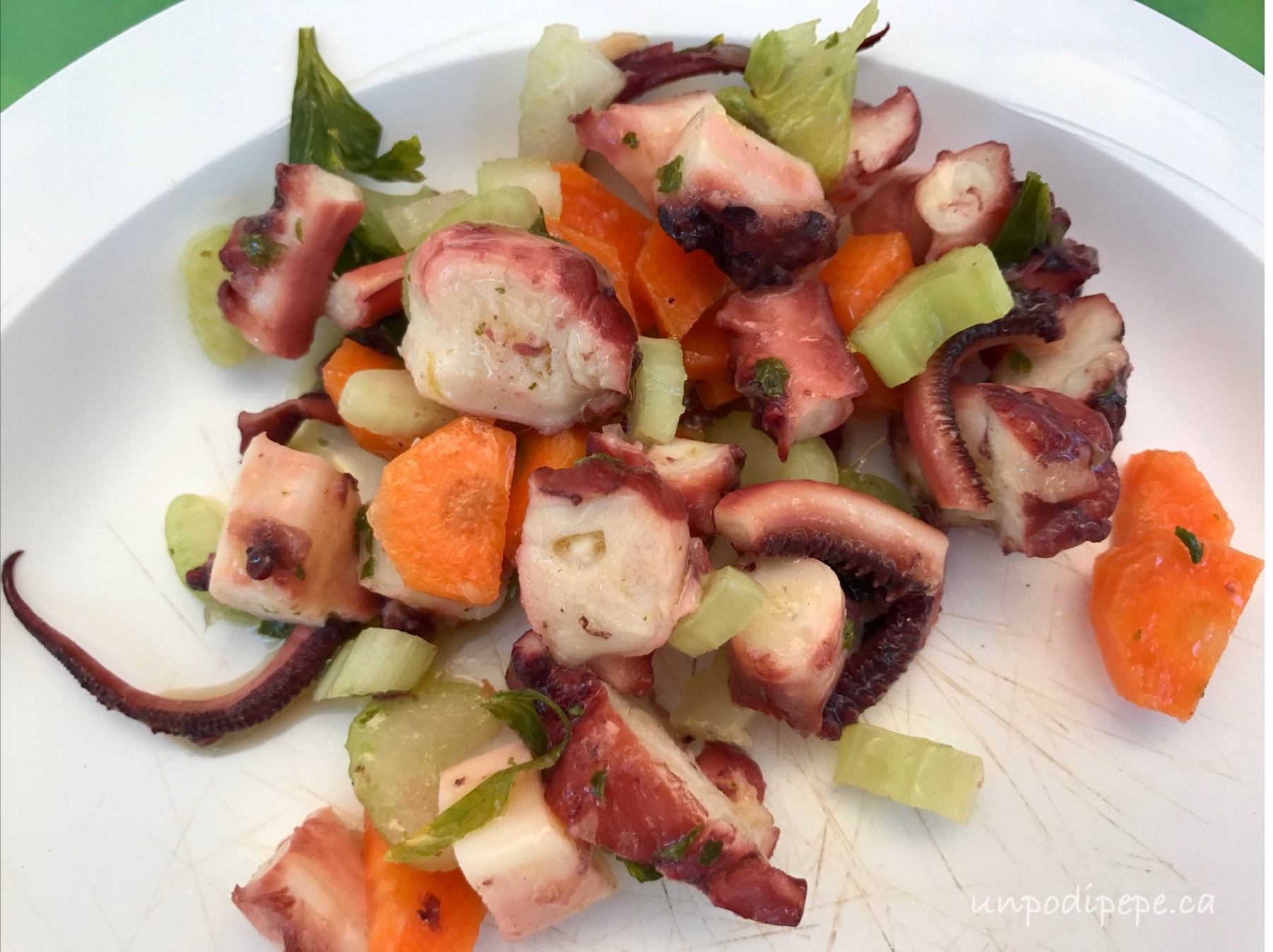
Octopus saladPeople apparently do all sorts of crazy things to tenderize polpo.  It does not need to be beaten against rocks, bashed with a meat tenderizer, or hung on the clothesline!  It just needs to cook in water long enough to tenderize the tough chewy collagen, which is about 1 hour per kg.  Once cooked, it can be eaten, grilled, pan seared in olive oil or saved to use later.  Freezing also helps tenderize, so previously frozen polpo does not need to cook for as long.

Polpo is hard to find in Canada!  I bought a pack of 4 legs/tentacles from Spain, but then had to freeze it as I could not use it right away.  Here is my ‘measurements optional’, flexible recipe for polpo e patate.  It is made with the legs only, as I am not as adventurous as mamma!

Ingredients:      1 kg (2.2 lbs) polpo

                         500 g (1.1 lb) potatoes

                         Good quality extra virgin olive oil

                         10 ml (2 tsp) lemon juice, freshly squeezed

                         10 ml (2 tsp) chopped prezzemolo-Italian parsley

                         2-3 cherry tomatoes

                         1 bay leaf

                         Splash of vinegar

                         100g chopped celery and/or carrots

                         15 ml (1 tsp) capers

                         1 garlic clove, finely chopped (optional)

                         Peperoncino (optional)

                         sale, black pepper

Instructions:

  • Wash and rinse the polpo. I had already done this before freezing it.
  • In a pan, add salt, bay leaf, cherry tomatoes, lemon slices and a splash of vinegar. Cover with water
  • Bring to boil, then lower heat and cook 1 hour. It should be tender enough so that a knife can pierce the polpo with little resistance.
  • Turn off heat and let sit in the cooking water to cool
  • Pick up and immerse 3 times in the hot water if you want the tentacles to curl.
  • When cooled, polpo can either be grilled, pan seared, made into a salad, or stored in the fridge for up to 3 days
  • While cooling, cook potatoes in boiling salted water. Peel and cut into pieces
  • Cut cooled polpo into rounds or pieces. Add to a bowl with potatoes, olive oil, pepper, lemon juice and prezzemolo. You can also add finely chopped garlic and capers, or peperoncino for a little spice.  Add celery, carrots and cherry tomatoes and mix. Add extra prezzemolo and lemon slices for garnish

I didn’t have any celery and was out of capers.  Use whichever of these ingredients you have at the time.  The photos weren’t taken in the best light, but it was delicious! My next one will look like the one I had in Mattinata!

Are you a polpo fan too?  Have you ever cooked it yourself? Let me know in the comments.  Buon appetito, Cristina

Share this:

  • Click to share on Facebook (Opens in new window) Facebook
  • Click to share on Pinterest (Opens in new window) Pinterest
  • Click to share on X (Opens in new window) X
  • Click to email a link to a friend (Opens in new window) Email
  • Click to share on WhatsApp (Opens in new window) WhatsApp
Like Loading...

Pantheon update

28 Sunday May 2023

Posted by Un po' di pepe in Architecture, Photography, Roma, Travel

≈ 11 Comments

Tags

Ancient Roma, Italy travel tips, Lazio, Pantheon, Roma photography, Roma travel, Santa Maria ad Martyres, UNESCO World Heritage Sites

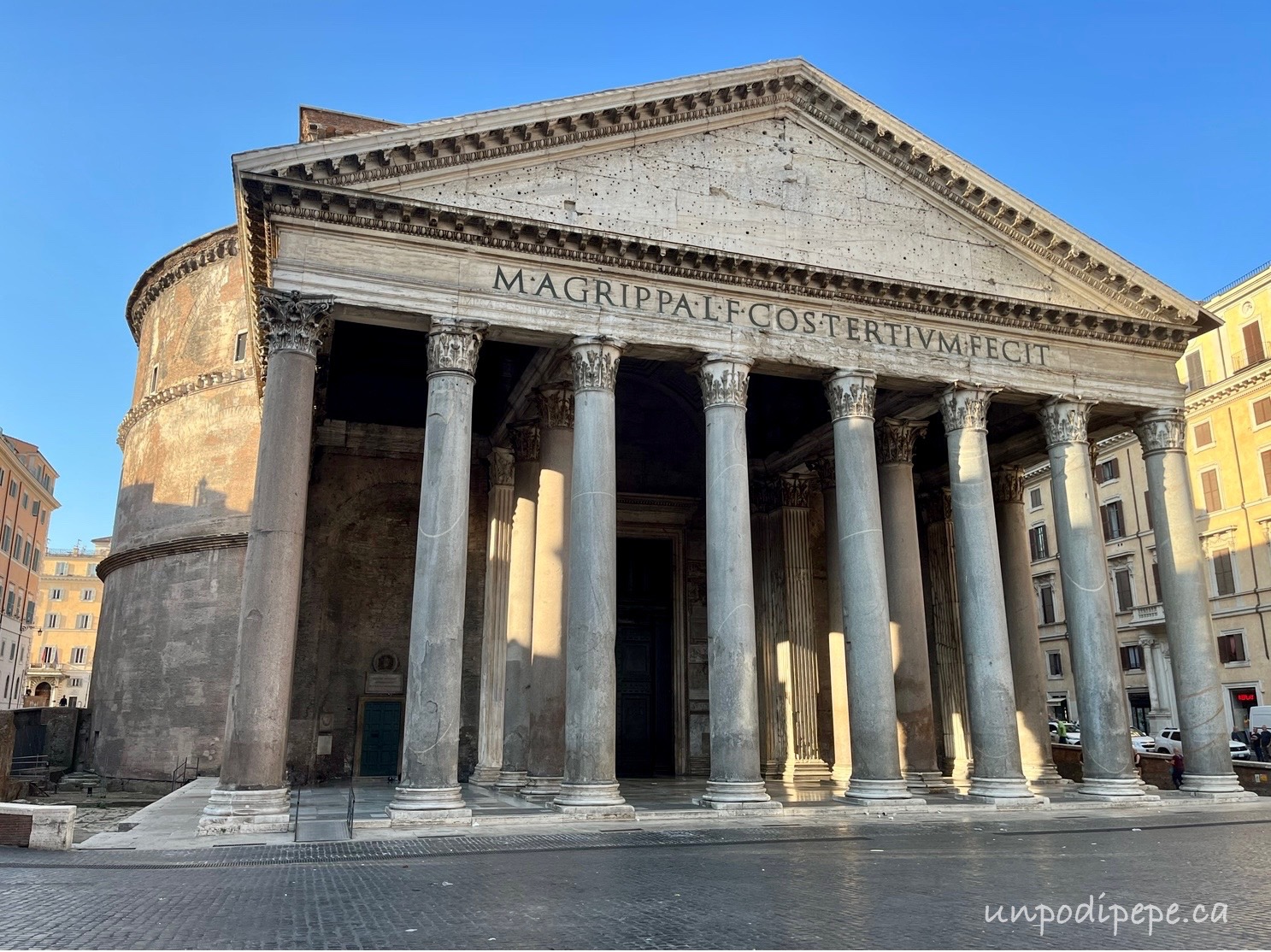
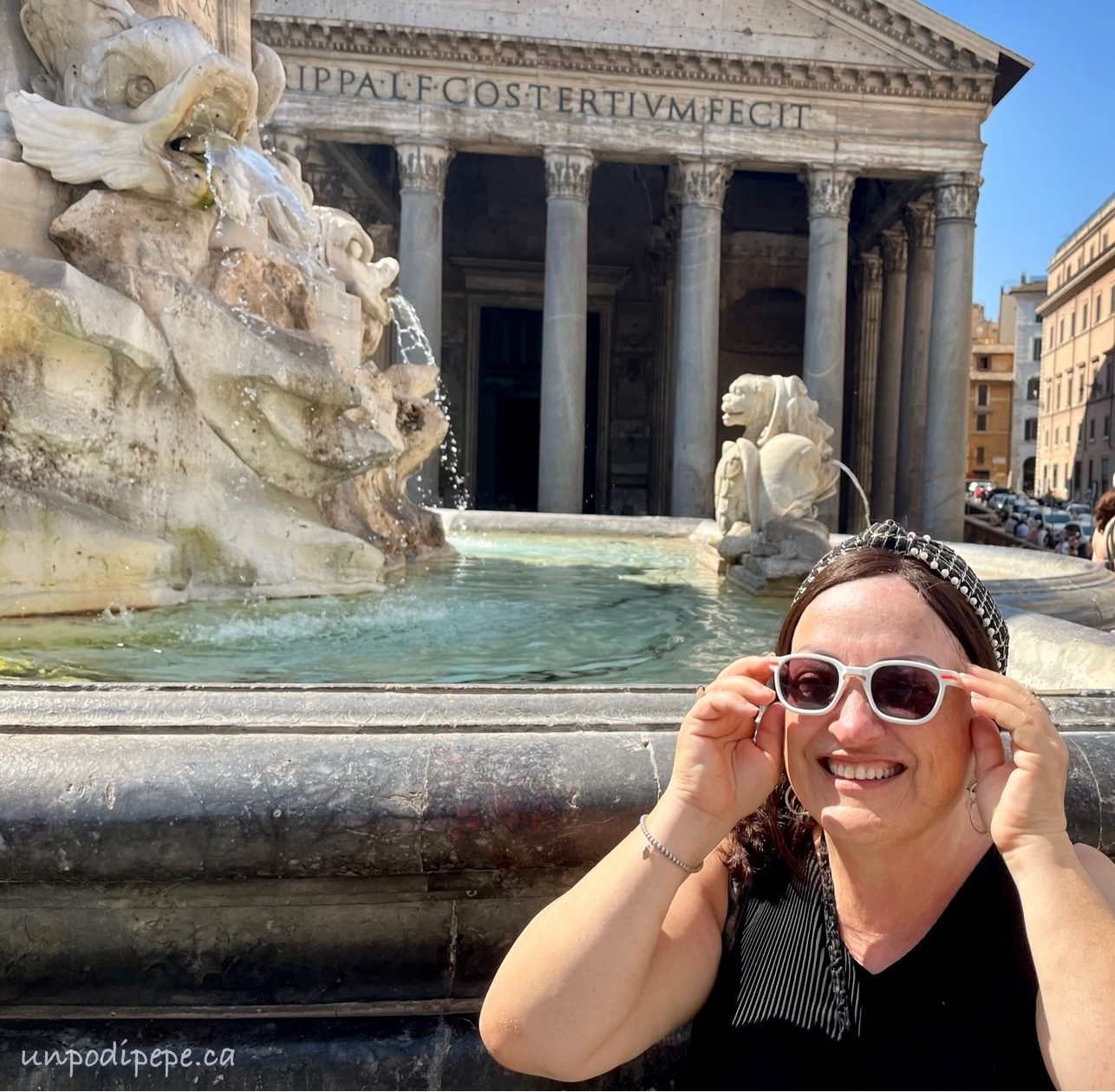
Roma is full of amazing buildings. The most amazing and best-preserved of all is the Pantheon.  Imagine Michelangelo entering the Pantheon 500 years ago, looking up and saying “this looks more like the work of angels than humans’-that is how amazing it is! The perfect mathematical proportions of the Pantheon have provided inspiration for architects for almost 2,000 years. Check out the post Il Pantheon for more details on the history and structure.Admission has always been free, and there has been talk of charging an entry fee for many years…in fact, it has been ‘announced’ several times.  Well….purtroppo, the time has come.  Starting July 1st 2023, there will be a €5 admission fee for entry for tourists/visitors.  Admission will still be free for residents of Roma, those under 18 years old and those attending Mass. Until then, admission remains free, with booking required at least 1 day in advance only on weekends and holidays.

The Pantheon is a classical masterpiece and a monument that requires expensive upkeep, so the need for a modest admission fee is understandable. Since the 7th century it also functions as the Church of Santa Maria ad Martyres.  In Roma entry into churches is free-so that is why there has been so much effort to not charge an admission fee.

Mass is at 5 pm Saturdays, 10:30 am Sundays and public holidays, and midnight on Christmas Eve.  Shoulders, midriff and knees need to be covered, although this is not as strictly enforced as the Vatican.

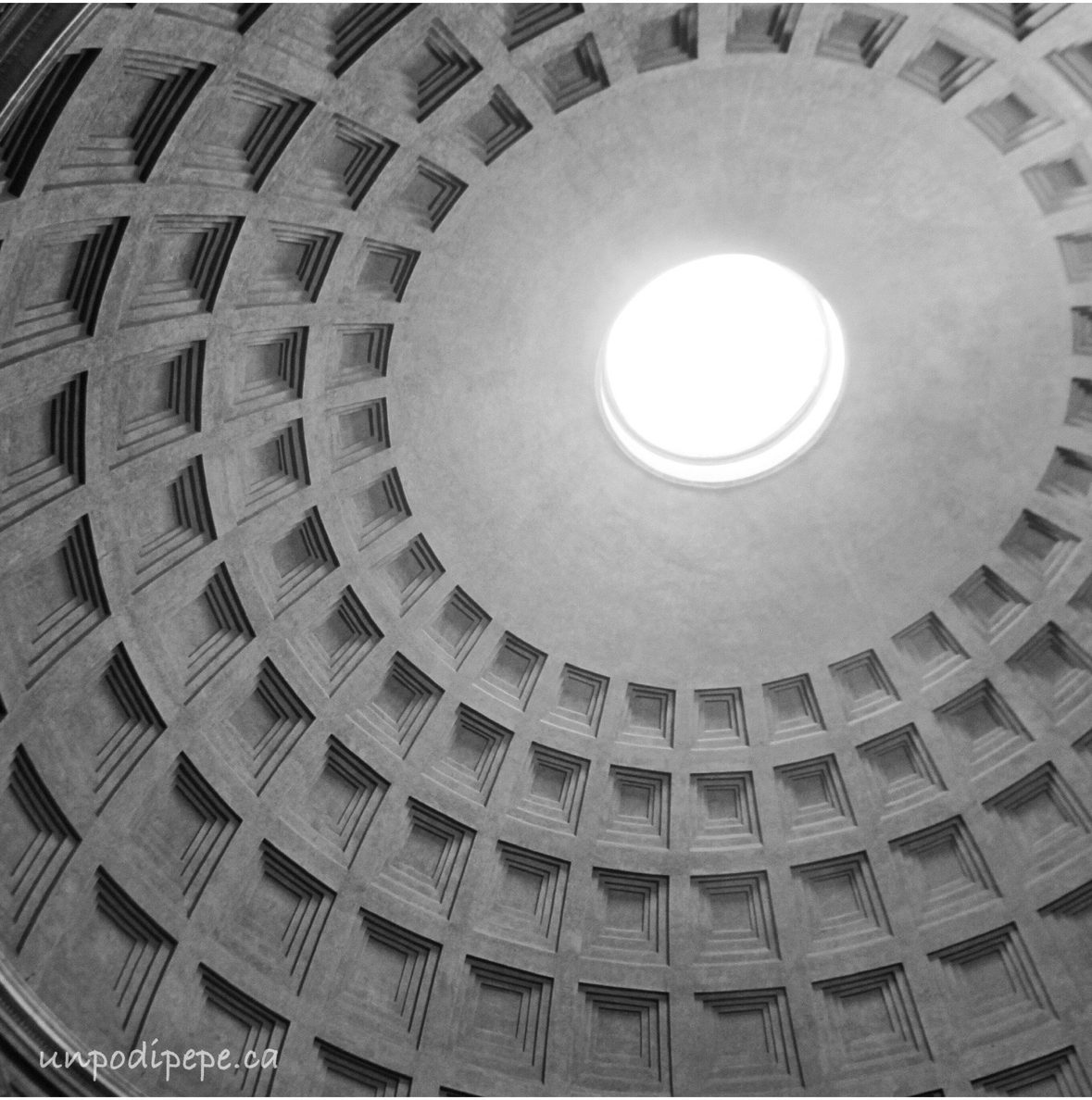
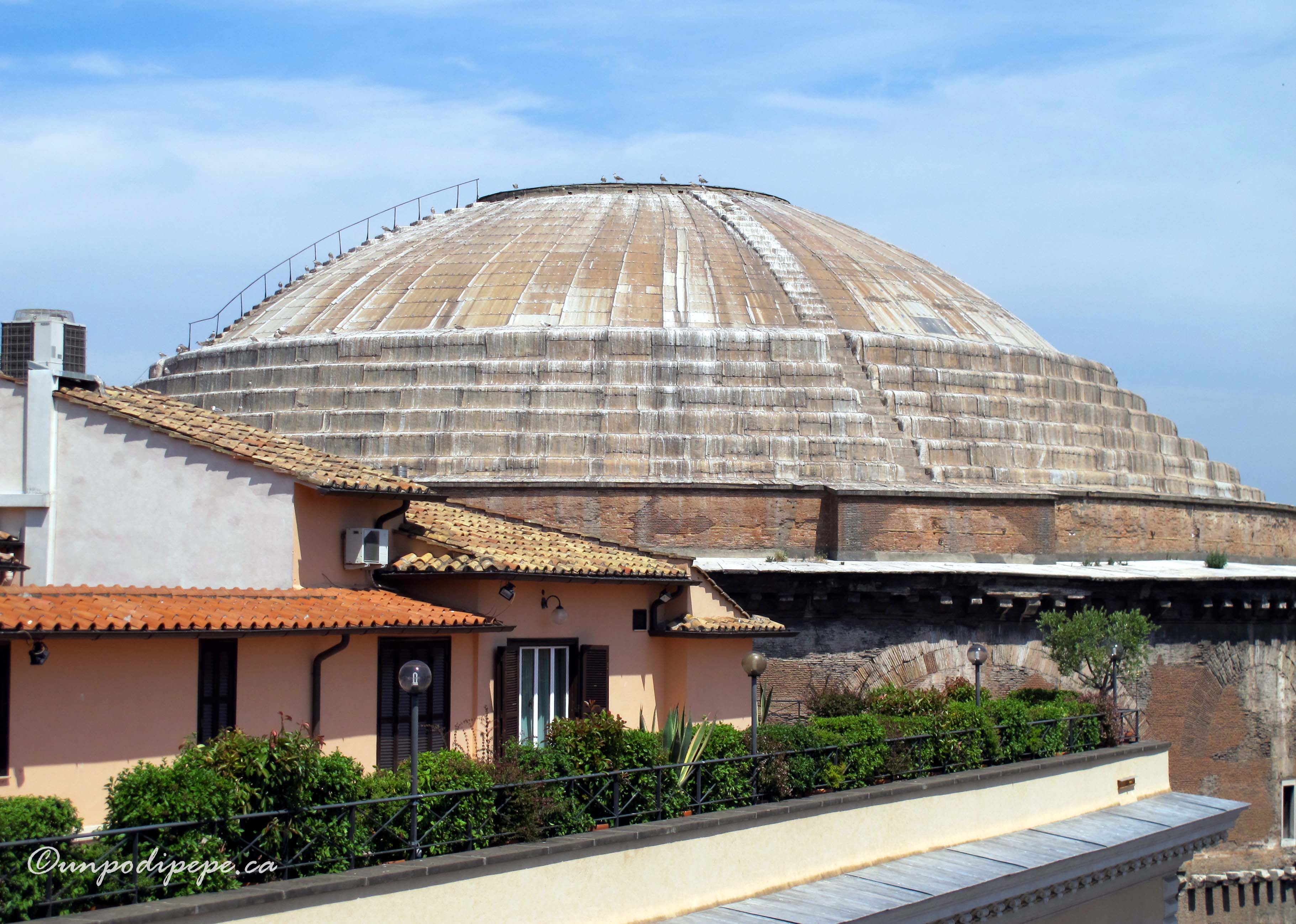
‘La Pioggia delle Rose al Pantheon’ (the rain of roses) is on my list of things to see in my lifetime. This takes place on Pentecost Sunday, 50 days after Easter.  At noon, right after Mass, Roma’s Vigili del Fuoco (fire fighters) climb to the top of the dome and drop thousands of rose petals through the oculus as choirs sing.  The rose petals symbolize the Holy Spirit coming down to earth.  Pentecost Sunday happens to be today! I saw a video of the event this morning, and even Michelangelo would be impressed! Tickets or advance booking are not available for this event.  Arriving by 7am for the 10:30 Mass is apparently necessary to get a spot inside! The ladder used by the vigili to get to the oculus is visible in the foto:

The dome and oculus, viewed from the roof of Grande Hotel de la Minerve

Visiting the Pantheon takes about 45 minutes. It is open daily 0900-1700 Sun 09-1800 with last entry at 18:30. The Pantheon is closed Jan 1, May 1, Aug 15 and Dec 25.  An audio guide with an App can be prebooked for ~€8.50, or a 45 minute guided tour for ~€20.

Details are not yet available on how to book admission, but they should be available soon on the website. Roma is a popular weekend destination for European and Italian travelers, so I imagine tickets will easier to book during the week.  There is really no ‘off season’ except for possibly the period from January 7 until the end of February.

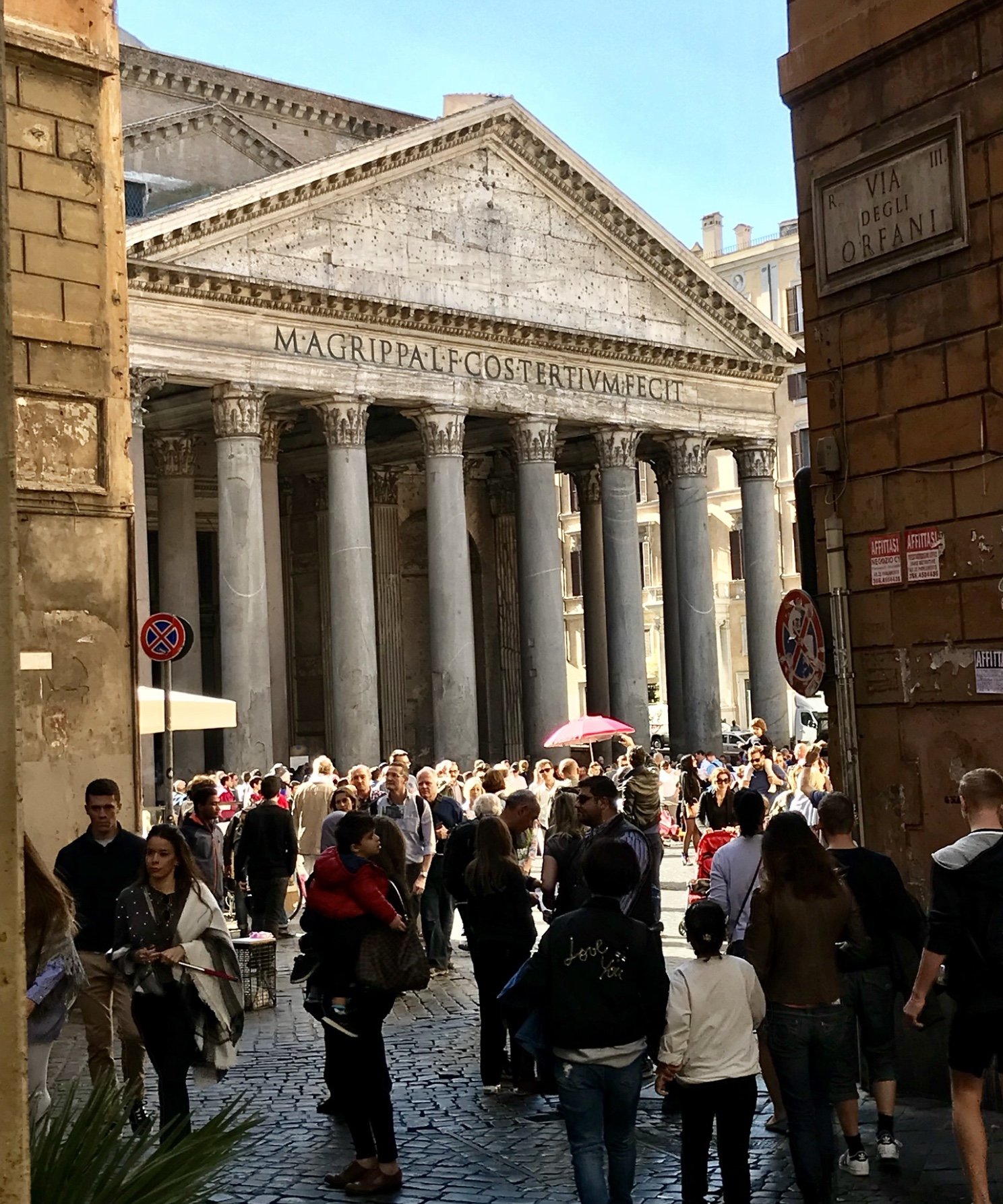
The Pantheon is centrally located, in Piazza della Rotonda.  I walk slower than most people, but it is about a 20 minute walk to Piazza di Spagna, the closest Metro stop.  It is about a 20 minute walk to the Fontana di Trevi, 10 minutes to Piazza Navona and 40 minutes to Colosseo.

Read more about the Pantheon in Caffè con Caravaggio a Roma, Un Giorno a Roma  and Autunno in Italia.

Buon Viaggio, Cristina

Share this:

  • Click to share on Facebook (Opens in new window) Facebook
  • Click to share on Pinterest (Opens in new window) Pinterest
  • Click to share on X (Opens in new window) X
  • Click to email a link to a friend (Opens in new window) Email
  • Click to share on WhatsApp (Opens in new window) WhatsApp
Like Loading...

Un altro giorno a Napoli

12 Friday May 2023

Posted by Un po' di pepe in Italia, Photography, Travel

≈ 10 Comments

Tags

Caravaggio, Napoli, Napoli Centro Storico, Southern Italy, Street art, UNESCO World Heritage Sites

Last week, after 33 years, SSC Napoli won the Series A title and the 2022/23 Scudetto.  The last time they won was 1990, when Maradona played for the team.  This is a big deal!  The streets of Napoli are always vibrant and exciting, but I would have loved to see the celebrations.  The stalls of San Gregorio Armeno likely sold more Napoli team figurines than Presepio pieces this week!

In honour of the big win, I am writing about Napoli-the city. If you have already read my post Un giorno a Napoli, this one is a continuation…..another day in Napoli! In June, I took a spontaneous trip to Santorini, flying in and out of Capodichino, Napoli’s airport. On the way back, I stayed the night and took the bus back to Orsara di Puglia the following afternoon.

My primary objective was to finally see l’ultimo Caravaggio, the artist’s last painting, which up until 1990 was attributed to one of his followers.  Read about my adventure seeing the ‘wrong’ Caravaggio in the post.

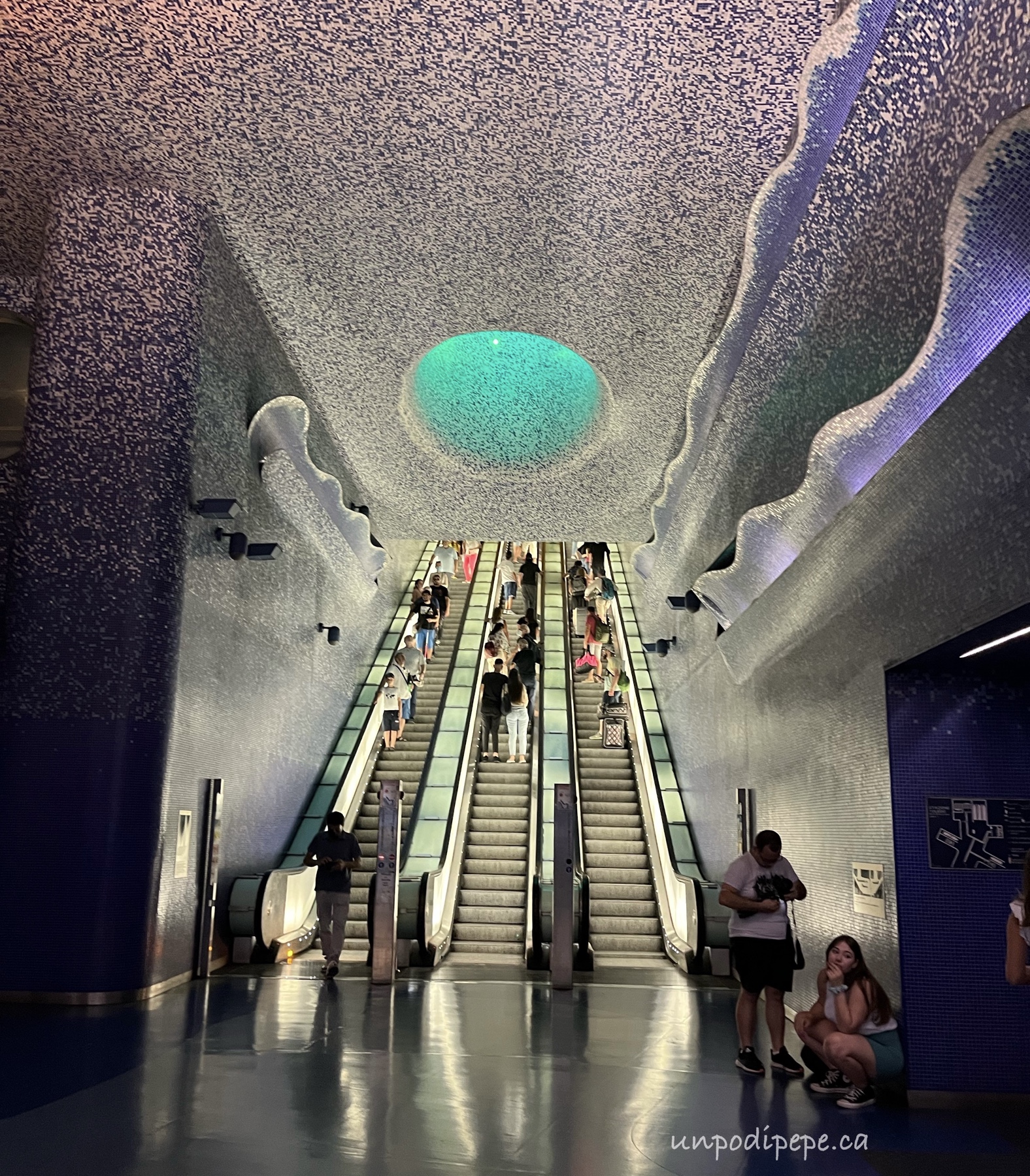
Since it was close to the new location of the painting, I stayed on lively Via Toledo, near the award winning Toledo metro station and in between the port and Quartieri Spagnoli. Read about the new exhibition space and my visit in Gallerie d’Italia Napoli. There is still 1 Caravaggio painting left for me to see in Napoli on my next visit-at the Museo di Capodimonte!

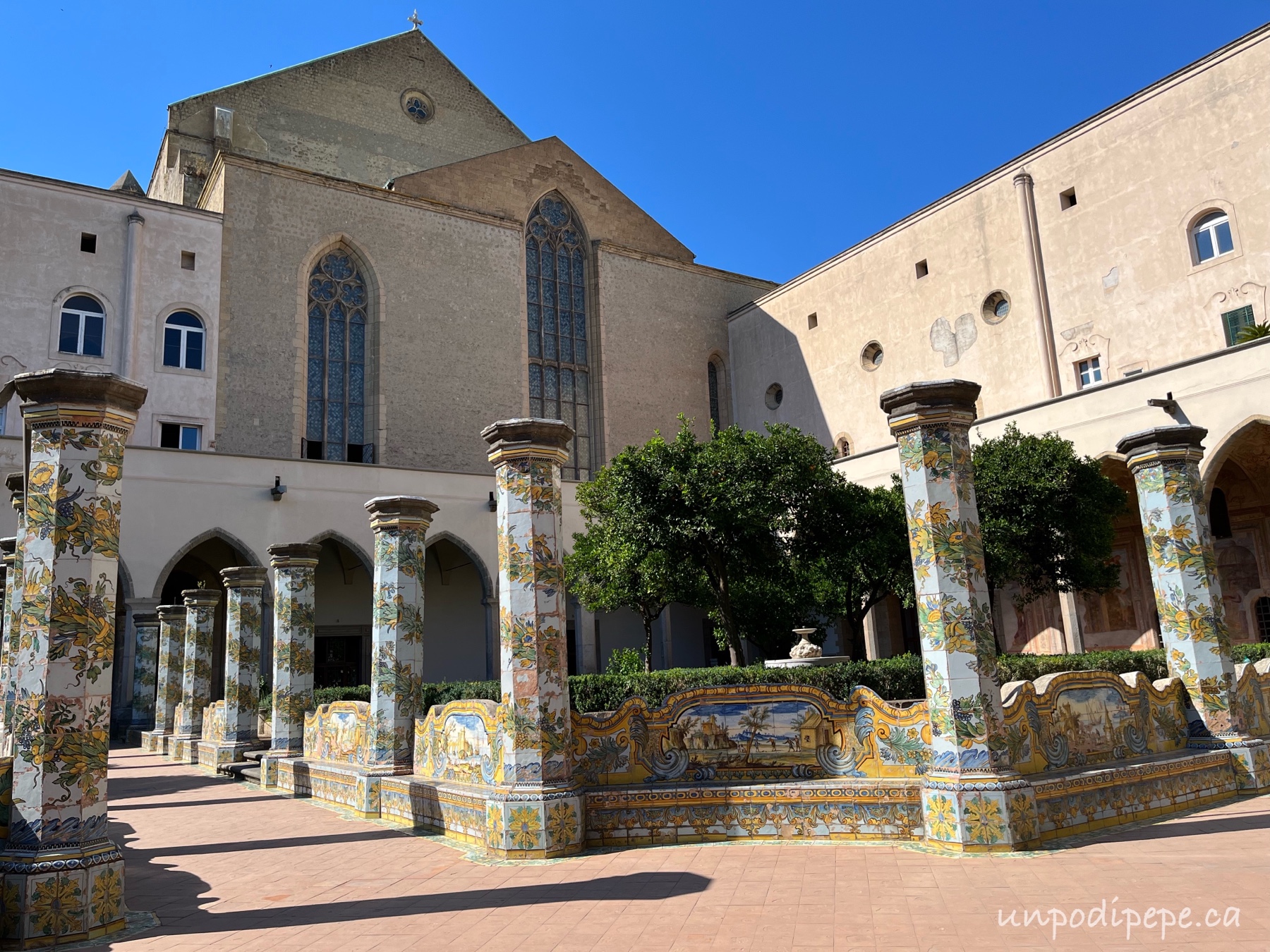
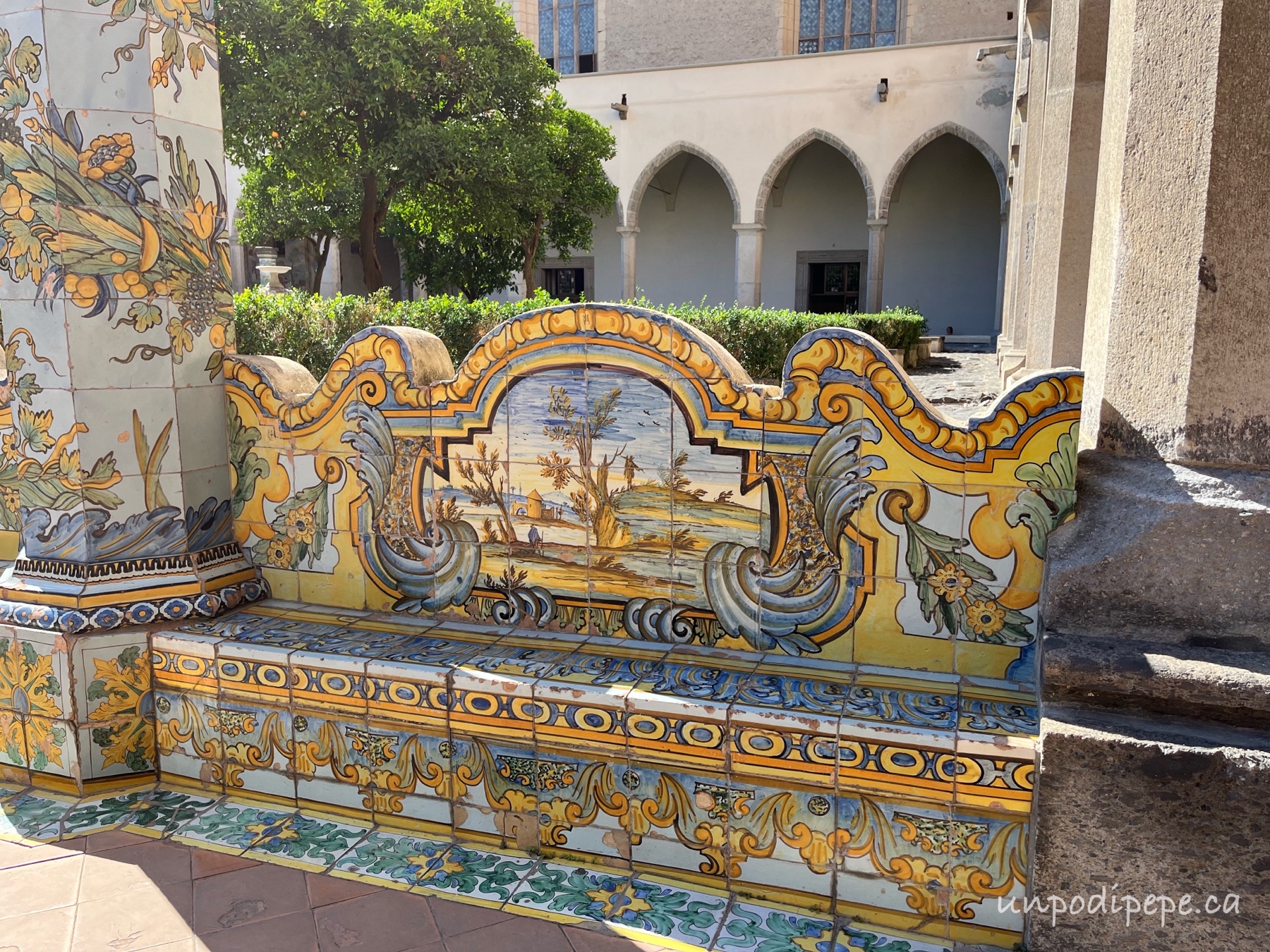
The Chiostro di Santa Chiara is another place I missed on previous day trips. The church was built starting in 1310 and the chiostro or cloister is well known for the addition of Rococo style majolica tiles in 1742.
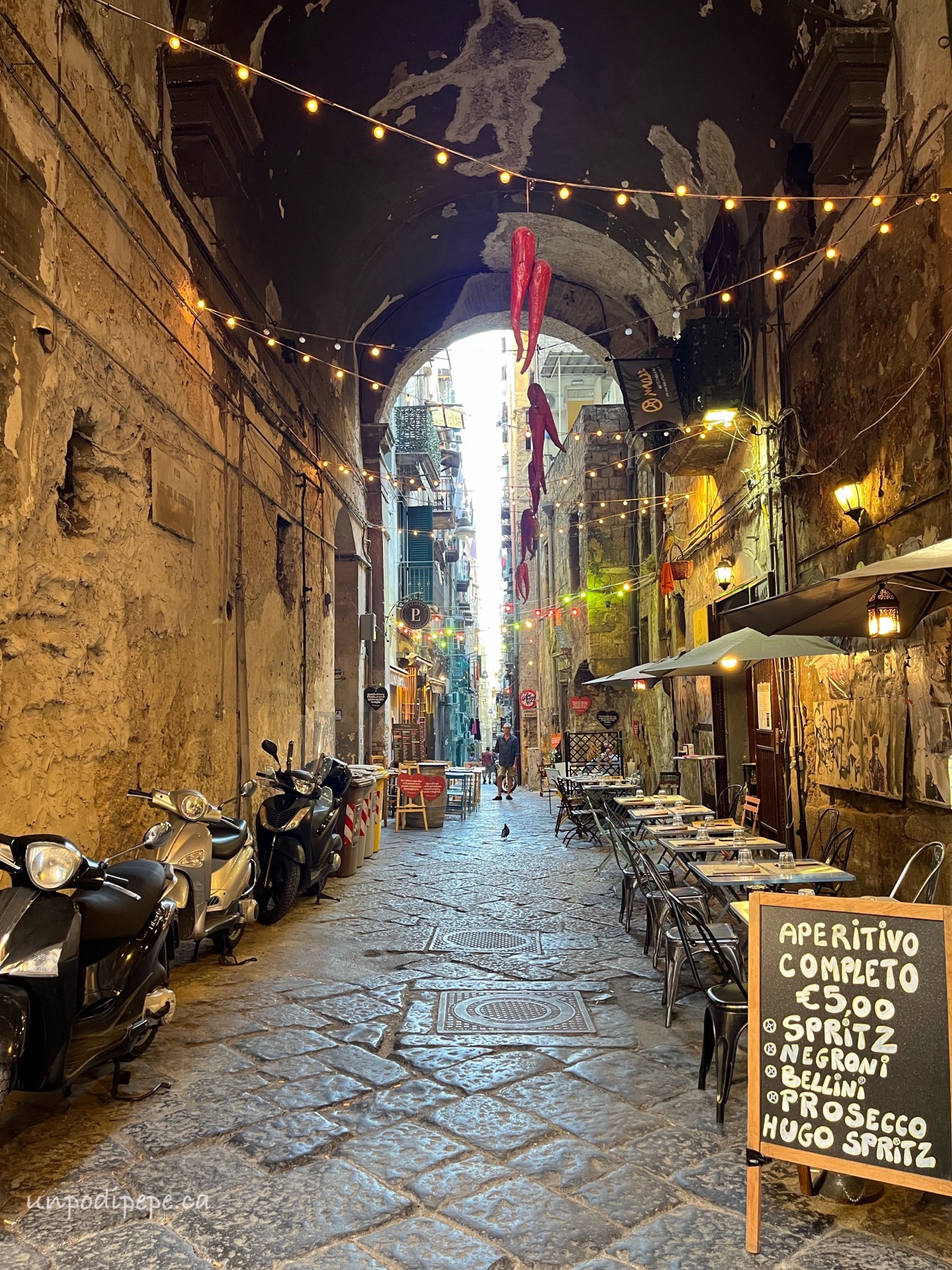
Santa Chiara is located on the 2km long street known as ‘Spaccanapoli’ meaning ‘cut across Napoli’ because it cuts the centro storico in half. It is one of the 3 Decumani, east/west streets in the grid layout of the Greco-Roman city of Neapolis.

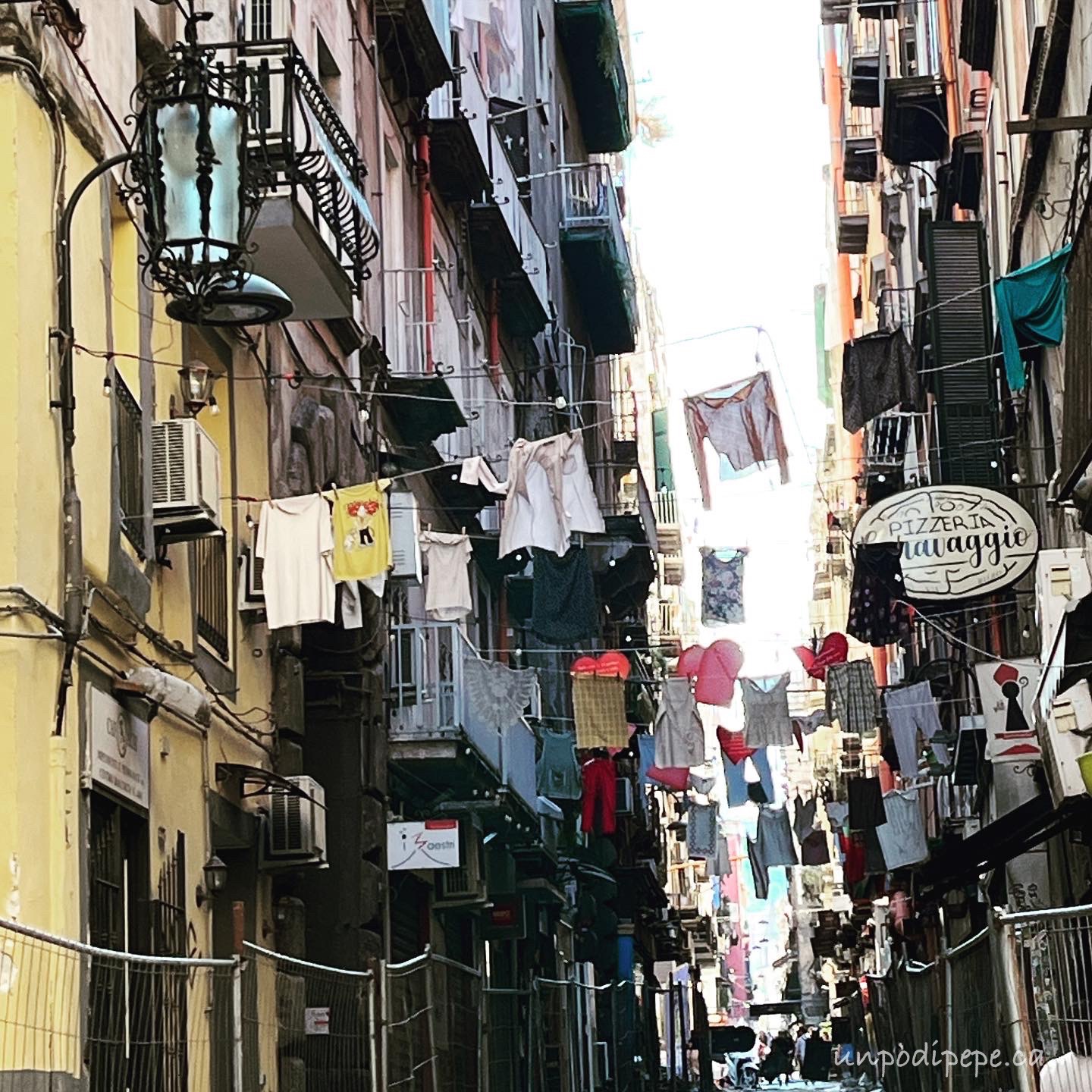
Napoli has the largest Centro Storico in Europe and has been a UNESCO World Heritage Site since 1995. Think of it as an open air museum.  Via dei Tribunali was decorated with a lot of laundry for some reason!

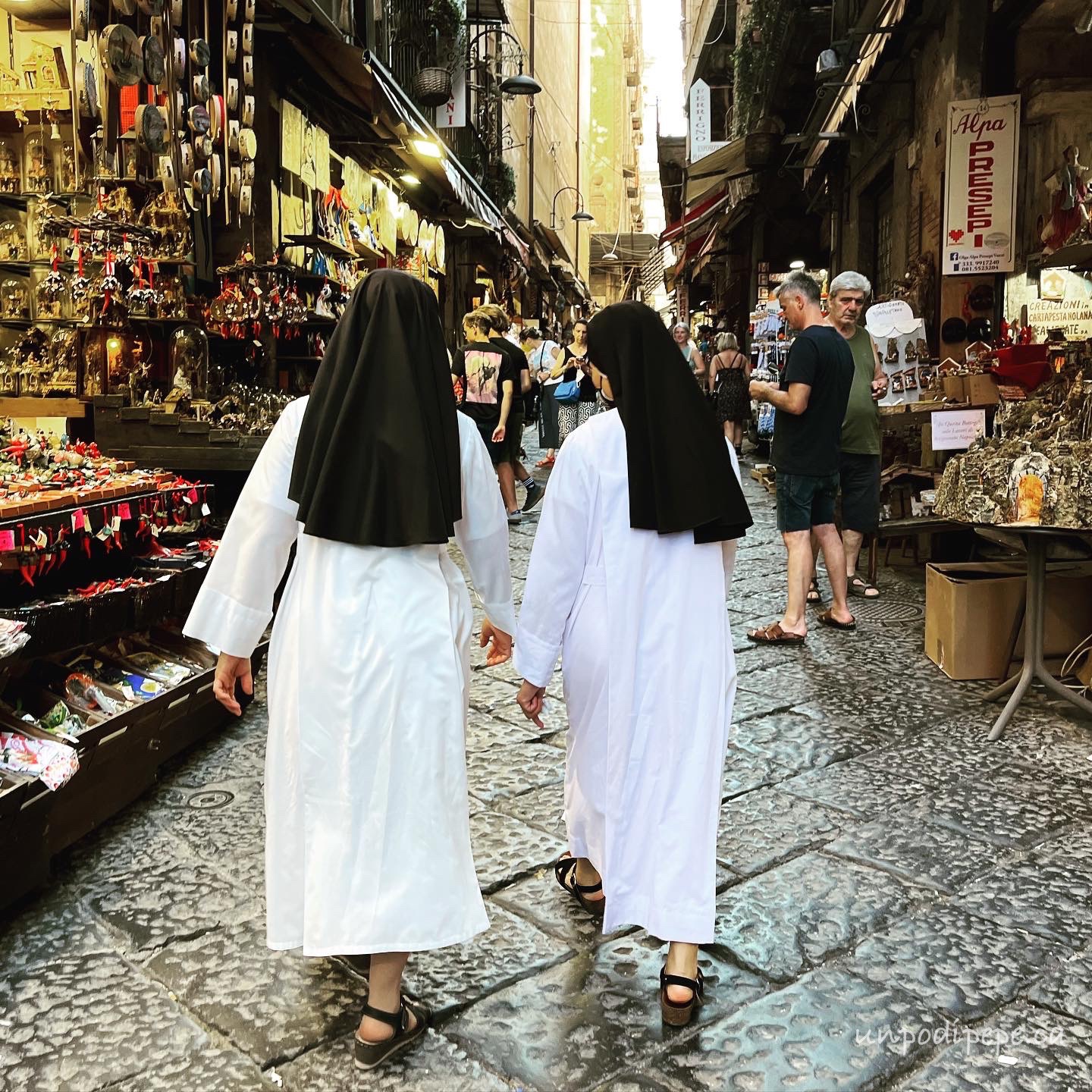
Nunspotting on Via San Gregorio Armeno.  I did not buy any Presepio accessories or Napoli team figurines, but perhaps these sisters did?

I walked past the Duomo just in time to see a dramatic wedding kiss.  The bride was clearly satisfied!  The Duomo Santa Maria Assunta was built over the site of a temple to Neptune.  It was damaged in a 15th century earthquake and repeatedly renovated, resulting in a mishmash of styles and a Neogothic facade.

Walking down Via Toledo to the end, passing Piazza Plebescito, I ended up at the waterfront and a view of Vesuvio.  Hopefully I will be back here at the port in a few months to take the ferry to Procida.

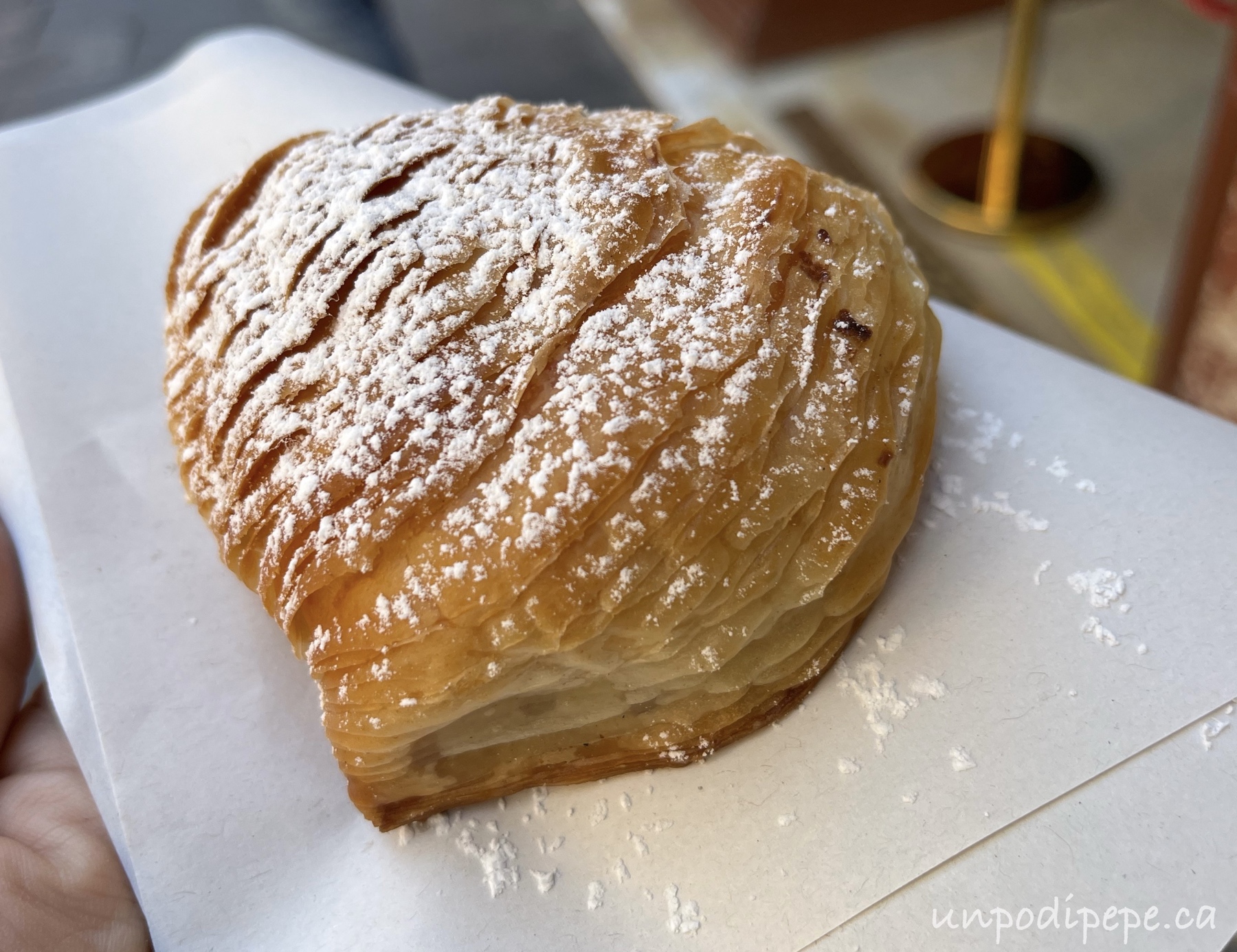
Sfogliatelle were consumed, of course.  This crunchy layered pastry, filled with sweet ricotta, lemon and candied peel is amazing. Sfogliatelle in Napoli are delicious and inexpensive.  I had one served hot from the oven at Antico Forno Attanasio, Via Ferrovia 1-4 just a few blocks from Piazza Garibaldi.  At €1.30, why stop at just one?  I bought a whole bag to bring back to Orsara!  I also had one from Pintauro on Via Toledo 275, the oldest sfogliatelle place in Napoli.  It was heavenly!

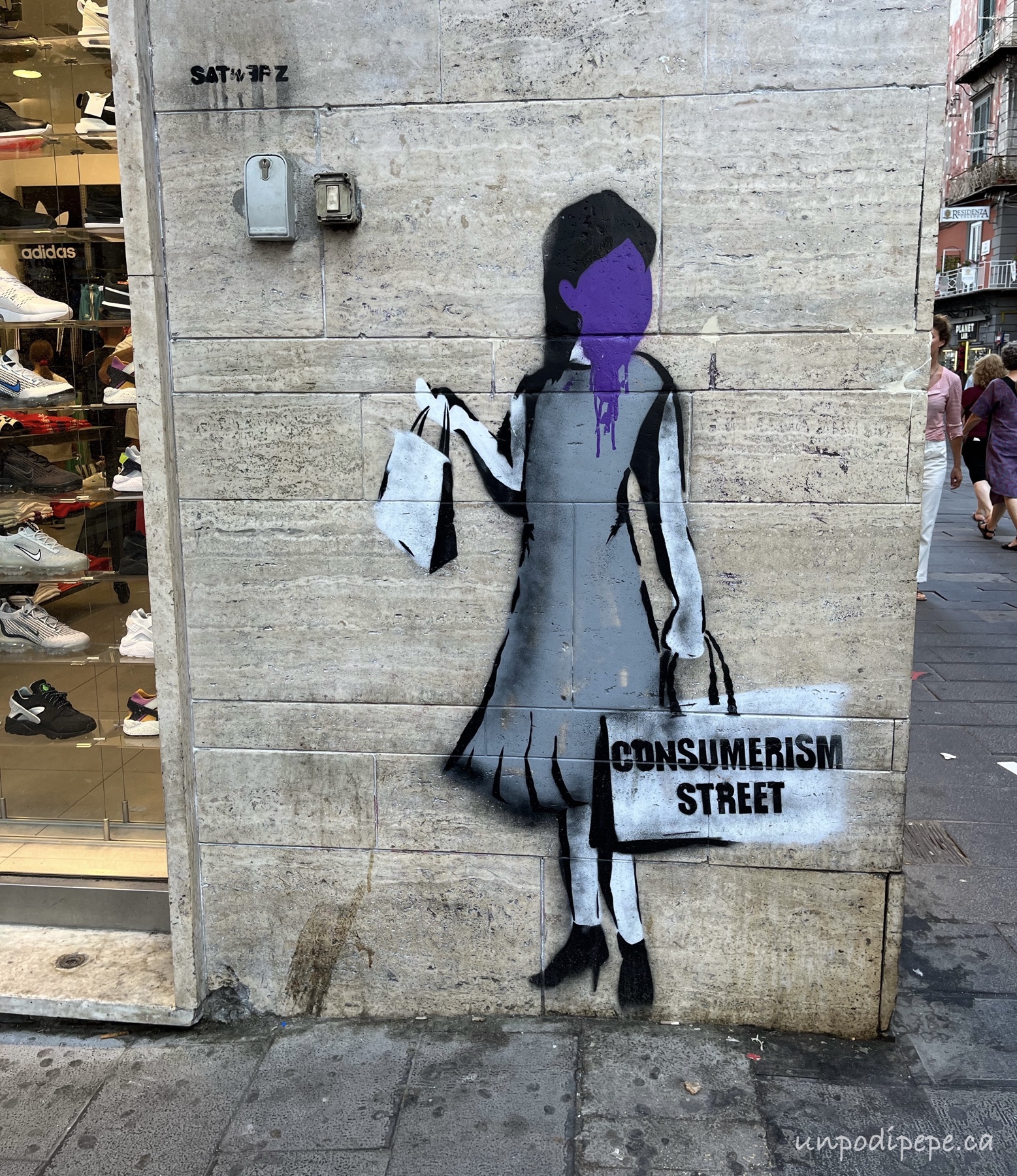
More street food heaven… I had a cuopo friggitori Napoletano.  This is a paper cone filled with fritto misto-a mixture of fried stuff-fish, vegetables and pizze fritte. Yum!Graffiti is elevated to a fine art form in Napoli.  I wrote a post on Napoli street art, and saw some new stuff. ‘Consumerism Street’ was taken on Via Toledo.  The small print under the sardine can says ‘Alla fine siamo tutti uguali’/In the end we are all equal.

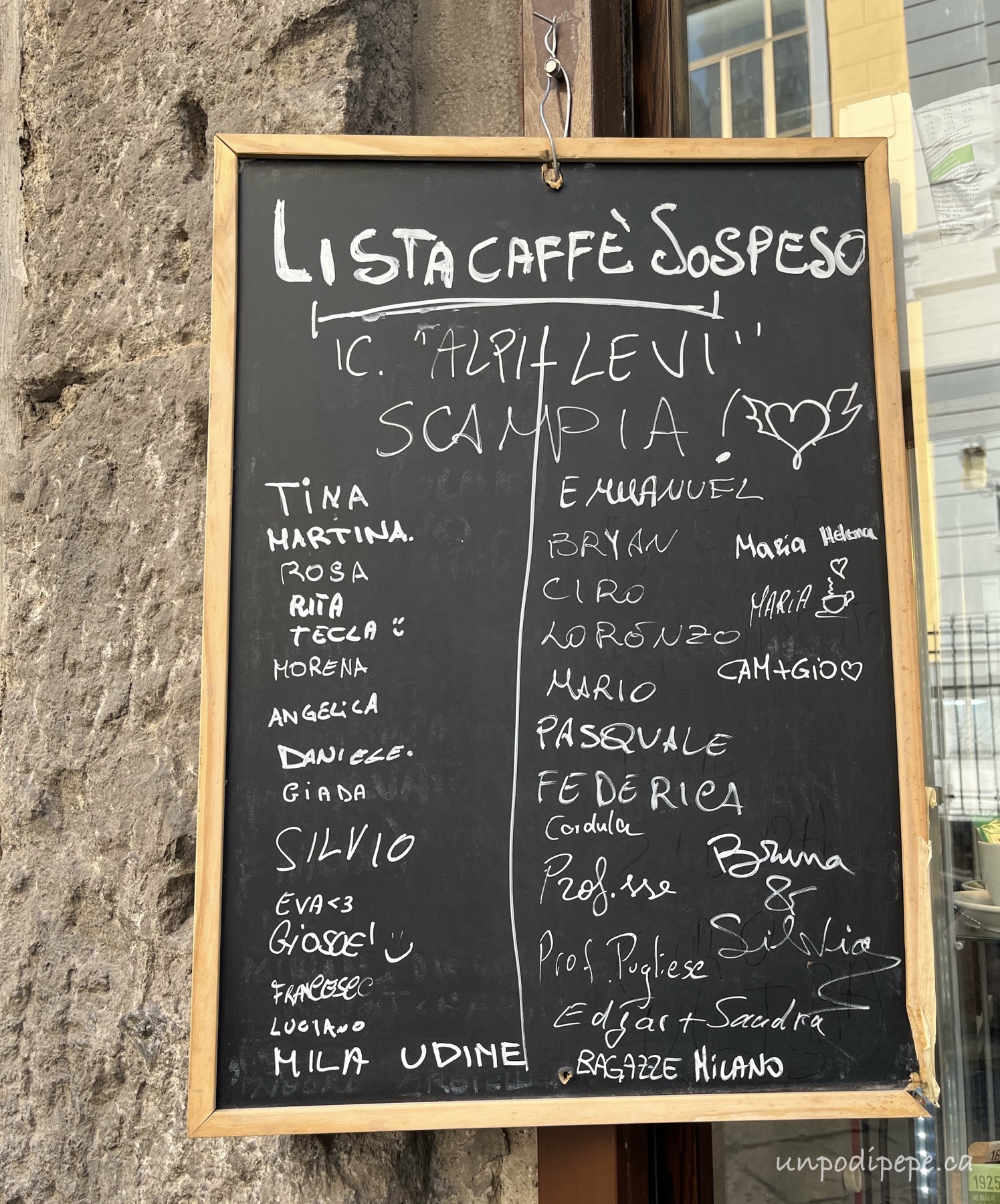
In a tradition of pay it forward, Napoli has ‘caffè sospeso‘. This is a ‘pending caffè’, paid for in advance as an anonymous gift.  Someone asking if there is a caffè sospeso available would receive it for free. This is actually an old tradition that has recently had a resurgence.

Still haven’t visited Napoli?  What are you waiting for?  To quote myself …’Napoli is underrated, misunderstood and does not get the love it deserves, except from fans of Elena Ferrante novels. News of corruption, the Camorra and ongoing garbage crises give it a bad rep. It it ironic that everyone-including many Italians- fears for their life and thinks it is just a crime pit, when Napoli is actually safer than most large North American cities. It is vibrant, wonderfully chaotic, full of life and passionate, friendly people. Napoli has an ‘edge’ to it and is anything but boring’.

According to an old saying ‘Vedi Napoli e mori’. I hope you enjoyed un altro giorno a Napoli!  When you go, have an extra sfogliatella for me! Buon viaggio, Cristina
Share this:

  • Click to share on Facebook (Opens in new window) Facebook
  • Click to share on Pinterest (Opens in new window) Pinterest
  • Click to share on X (Opens in new window) X
  • Click to email a link to a friend (Opens in new window) Email
  • Click to share on WhatsApp (Opens in new window) WhatsApp
Like Loading...

Diamond Anniversary

29 Thursday Dec 2022

Posted by Un po' di pepe in Amici e Famiglia, Orsara di Puglia, Photography

≈ 15 Comments

Tags

Foto d'epoca, Matrimonio d'epoca, Matrimonio Orsara di Puglia, Vintage wedding photos, Wedding in Puglia, Winter wedding

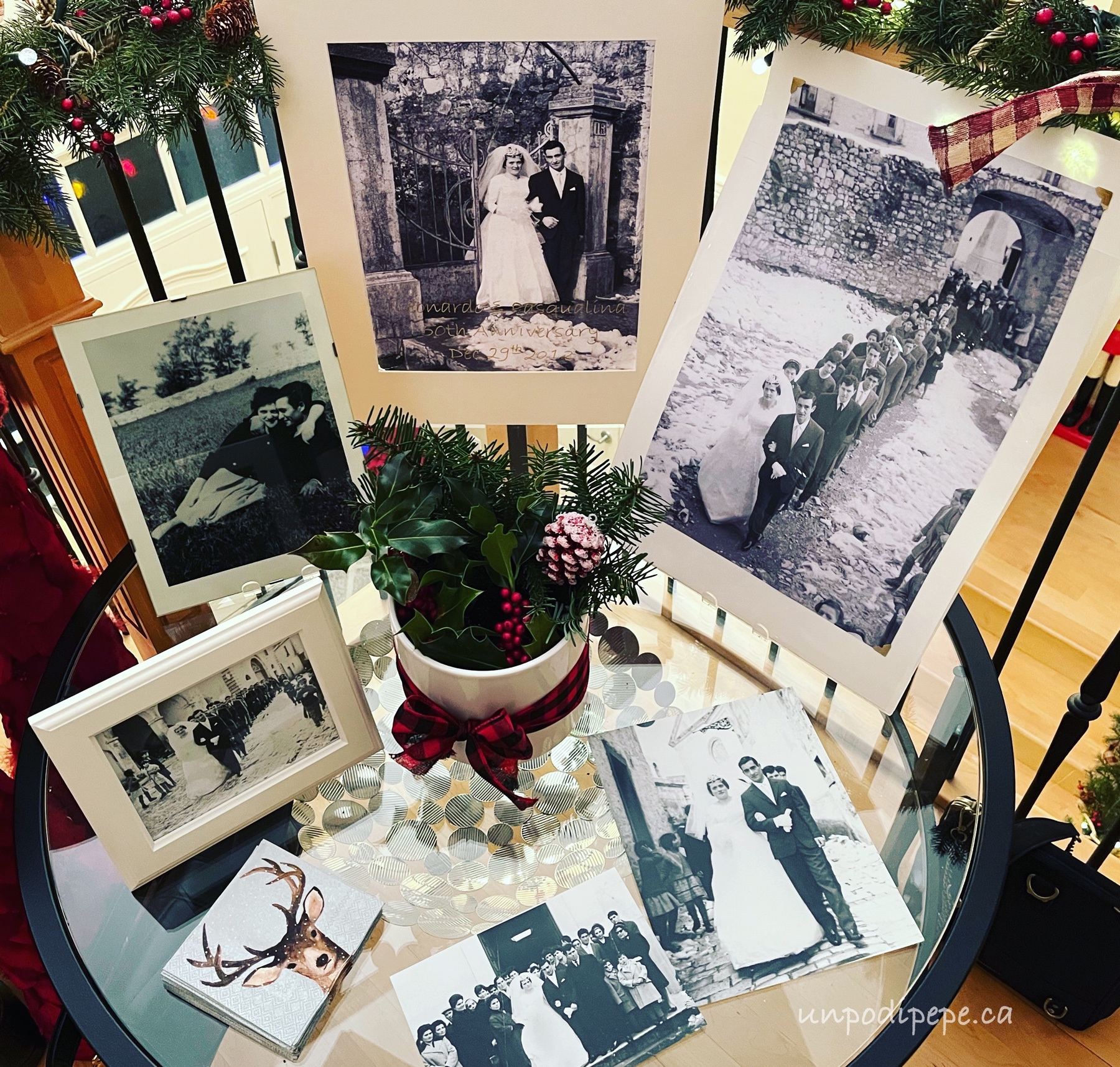
My parents Leonardo and Pasqualina celebrated their 60th wedding anniversary a few days ago.  60 years is the Nozze di Diamante or Diamond Anniversary, and it is a big deal since less than 1% of married couples reach this milestone. Last year at my cousin’s wedding, his new wife did not throw her bouquet to the unmarried ladies-she gave it to Mamma for being married the longest and providing inspiration!
They wanted to celebrate at home with just immediate family and all of our cugini. It was a lovely event and we all had fun.  There was a display of just a few of their December 27, 1962 vintage winter wedding photos.  I also posted them on FB and IG, where they received so much love that I am posting them here as well.  

It was, and still is the custom in Orsara di Puglia for all of the wedding guests and family to depart from the bride’s house and walk behind her to the church. This is called a processione.  Following the ceremony at San Nicola di Bari, the processione continues to the reception location or wherever the vehicles are located.  In 1962 there were not many cars in town.This photo in the Portone Giudice was taken from Palazzo Baronale. It is my favourite as the snow is more visible!This one is in Piazza Mazzini.  The 2 arches in the background is the Fontana Nuova, where the women used to wash clothes.
Since there was snow on the ground, they got a ride in an old Mini.  At their 50th anniversary in 2012, the wedding dress and veil were on display on a mannequin. We could not display it this time since we were at home and the Christmas tree took up all the extra space.

They still look almost the same! I hope you have enjoyed the photos as much as we do.  Viva gli sposi! Auguri Mamma e Papà!

Share this:

  • Click to share on Facebook (Opens in new window) Facebook
  • Click to share on Pinterest (Opens in new window) Pinterest
  • Click to share on X (Opens in new window) X
  • Click to email a link to a friend (Opens in new window) Email
  • Click to share on WhatsApp (Opens in new window) WhatsApp
Like Loading...
← Older posts

Enter your email address to follow 'un po' di pepe' and receive notifications of new posts by email.

Join 511 other subscribers
Follow Un po' di pepe on WordPress.com

Popular Posts

  • Hairstyling in Ancient Roma
    Hairstyling in Ancient Roma
  • Espresso Cookies
    Espresso Cookies
  • Il Pumo Pugliese
    Il Pumo Pugliese
  • Panforte di Siena
    Panforte di Siena
  • Internment of Italian Canadians
    Internment of Italian Canadians
  • San Nicola
    San Nicola
  • Panettone Fatto in Casa
    Panettone Fatto in Casa

Recent Posts

  • Castel del Monte
  • ‘The Nuances of Love’
  • Hostaria Antica Roma~Eat like an Ancient Roman
  • Santa Maria in Aracoeli
  • Casino dell’Aurora~Villa Boncompagni Ludovisi
  • Nasoni di Roma
  • Bloghiversario #11
  • Fontana di Trevi
  • Acqua Vergine
  • Giubileo 2025
  • Sanremo 2025
  • In Vino there are Memories
  • A Literary Harvest
  • 2024~Un po’ di pepe Year in Review
  • Buon Natale 2024
  • Il Bicerin
  • Mercato Porta Palazzo
  • Torino
  • Catanzaro, Calabria
  • Il Pumo Pugliese
  • Artemisia Gentileschi
  • Cavalli di San Marco
  • Panzerotti
  • Torcello
  • 10 years of Un po’ di pepe!

Categories

Amici e Famiglia Architecture Art Art history Art projects Bilingual posts Blogging Canada Culture Feste Firenze Inspiration Italia Italian Folklore Italian language Italian life Italocanadesi Libri Mangiamo! Orsara di Puglia Parole piacevoli Photography Puglia Recipes Roma Travel Travel tips Uncategorized Vino

Archives

Un po’ di pepe on Facebook

Un po’ di pepe on Facebook

Start a Blog at WordPress.com.

  • Subscribe Subscribed
    • Un po' di pepe
    • Join 511 other subscribers
    • Already have a WordPress.com account? Log in now.
    • Un po' di pepe
    • Subscribe Subscribed
    • Sign up
    • Log in
    • Report this content
    • View site in Reader
    • Manage subscriptions
    • Collapse this bar
 

Loading Comments...
 

    %d