• Home
  • About me/Chi sono
  • Contact

Un po' di pepe

~ …… (oon∙poh∙dee∙PEH∙peh) Cristina writes about interesting stuff /Cristina scrive di cose interessanti

Un po' di pepe

Category Archives: Photography

Ruote di Trani

09 Monday Oct 2017

Posted by Un po' di pepe in Italia, Photography, Puglia, Travel

≈ 13 Comments

Tags

Fiat 126, Fiat 500 Giardiniera, Fiat Cinquecento, Piaggio Ape, Renault 4, Southern Italy, Trani

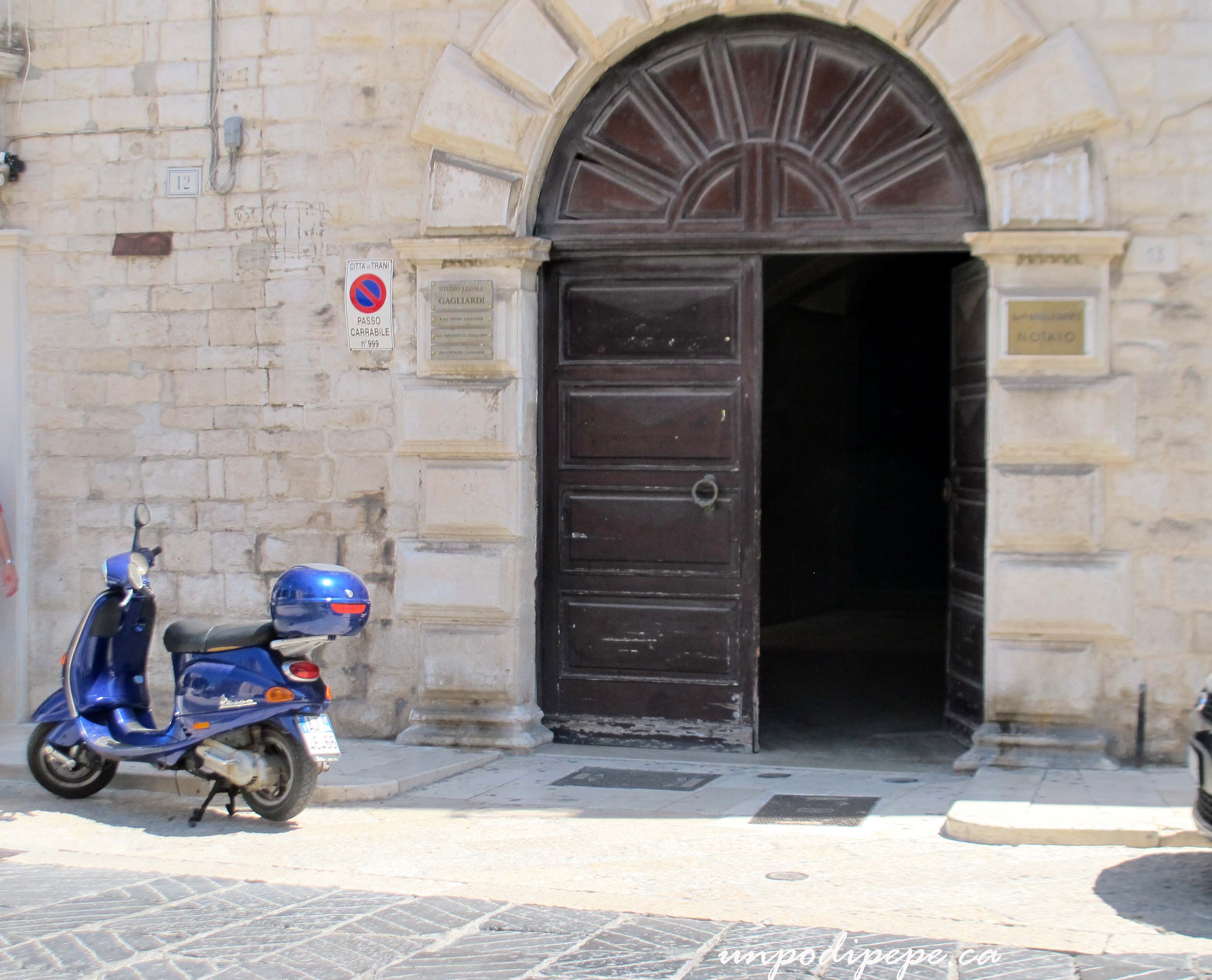
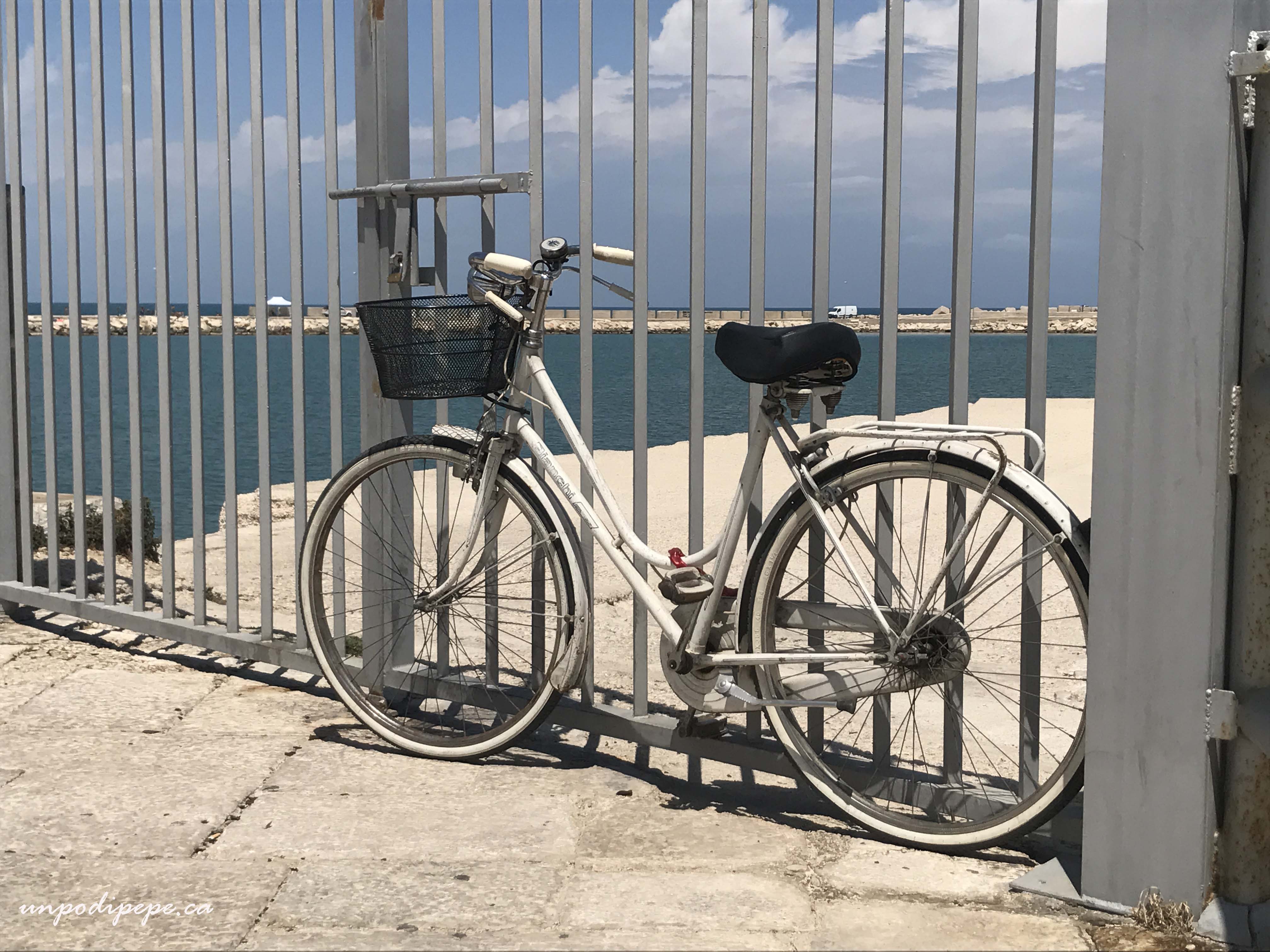
In August I took a lovely daytrip to Trani, a quiet, sun drenched fishing port on the Adriatic.  While walking through town and the port in the late morning/early afternoon there were times I felt like I was walking through a movie set! One of the reasons is because of all the macchine d’epoca or vintage cars that I saw, as well as motorini and biciclette. I have compiled a few photos of these vehicles in this post and, for lack of a better title, I am calling it Ruote di Trani or Wheels of Trani.
I was disappointed because I did not take any photos of my favourite macchina, as every time I saw a Cinquecento, a Fiat 500, it was speeding past me too quick to snap a photo! I have a bit of an obsession with them-but only the old ones.  It turns out I actually did photograph one though! 
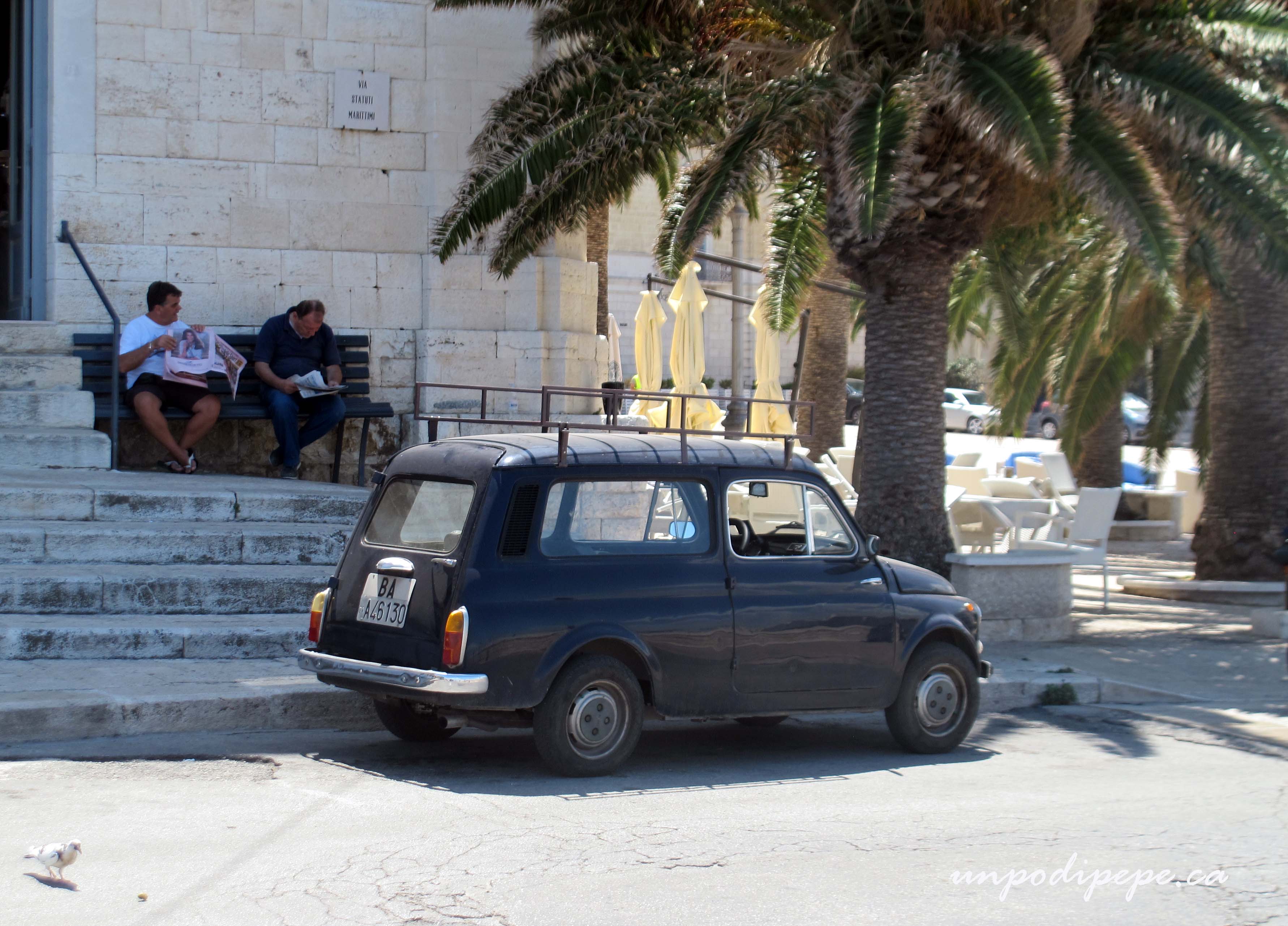
This is a Fiat Cinquecento Giardiniera, also known as the 500K or the Autobianchi Giardiniera.  It is basically a Cinquecento station wagon, made from 1960-1977.  If you think I am joking, cover the back half of the car, and you will see that the front half is totally 500ish!  In 1970, production was transferred to Autobianchi, a Fiat subsidiary in Monza.  Later models were branded as Autobianchi rather than Fiat. Notice this one has porte di suicidio or suicide doors, which are hinged at the rear instead of the front.  They make it easier to get in and out of the car, but are a safety hazard at higher speeds.  I wrote about porte di suicidio here. Notice the bird photobomb in the corner!

The Centoventisei or Fiat 126 was a more modern model to replace the Cinquecento in 1973.  The 126 never became as popular.  My Zio used to have one that was a Robin’s egg blue.  It were very popular in the former eastern bloc countries because of its fuel efficiency.  Later models were made in Poland as the Polski 126p.
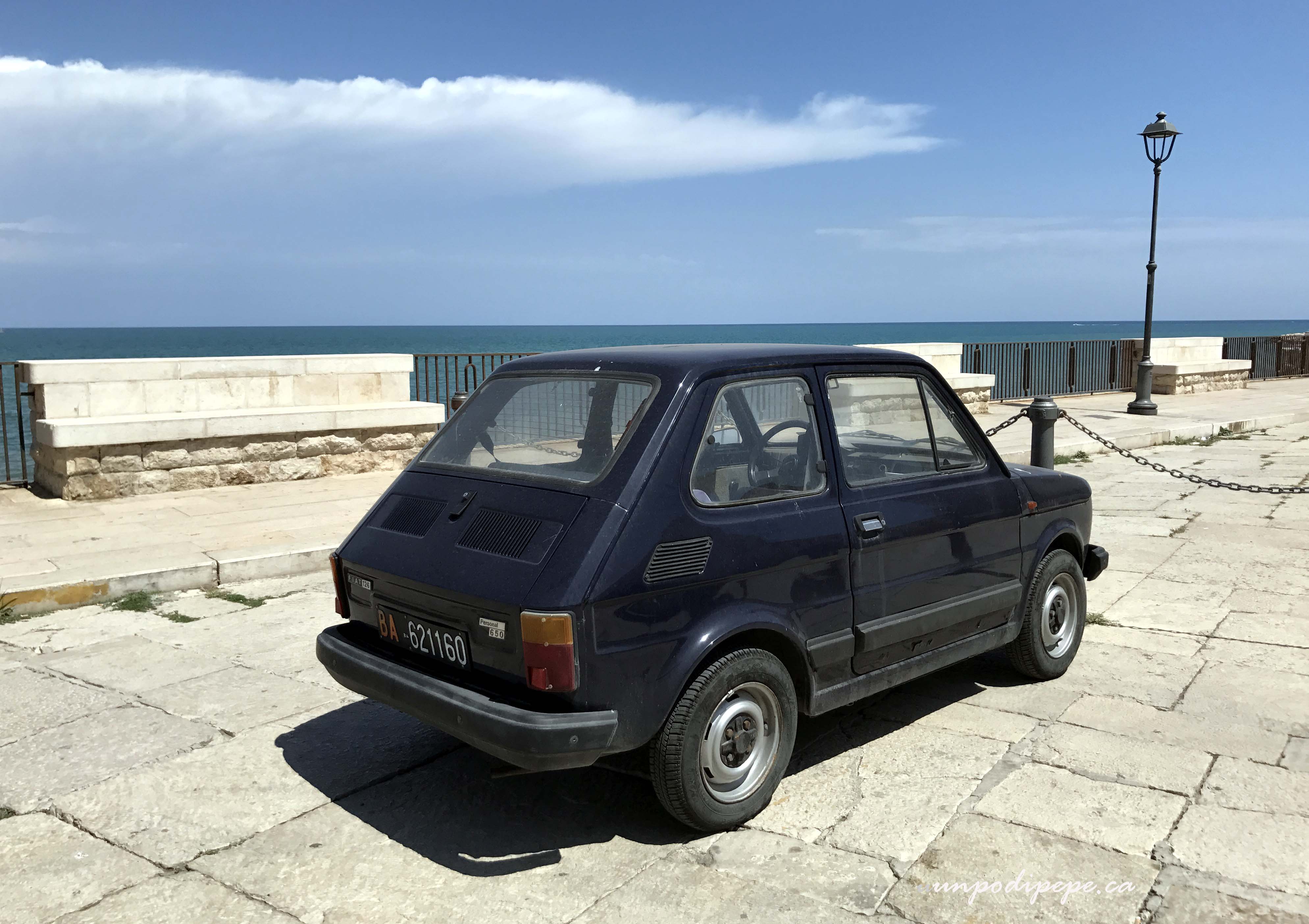
This ‘vintage’ photo of a white Fiat 126 was taken by me on my previous visit to Trani, in 1994.  My Zio had one just like this.  I think it even had the same dented front.  Thankfully, not much has changed to the look of Trani since 1994!
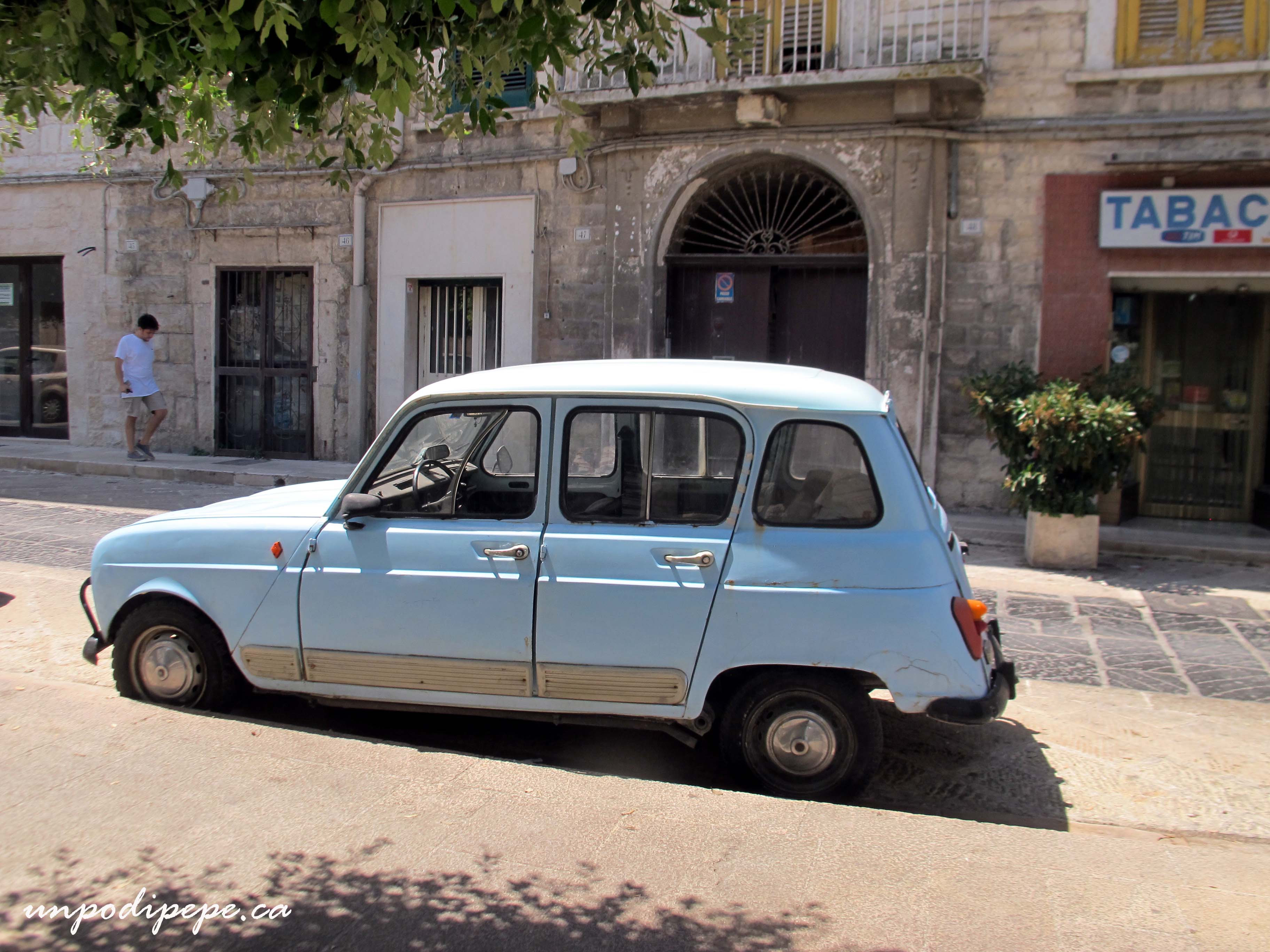
This photo of a late 1960’s/early 1970’s Renault 4 GTL on the street in front of old buildings looks like it was taken 50 years ago rather than just 2 months ago!
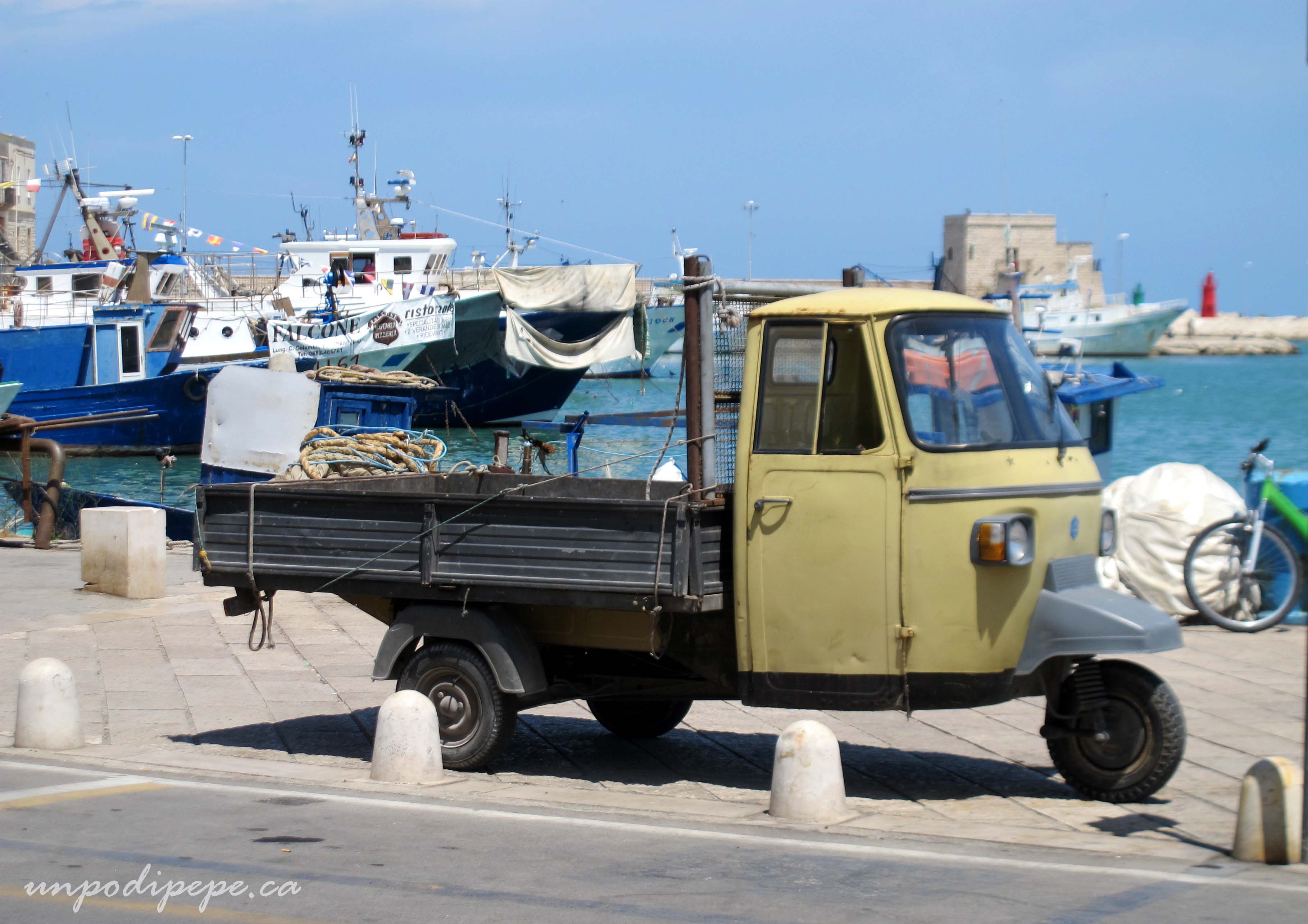
I spotted this Piaggio Ape (AH·peh) 3 wheeled vehicle at the port.  Piaggio also makes the Vespa motorino.  An Ape is basically a Vespa with 2 wheels at the back supporting a flatbed.  Piaggio started making the Ape in 1948 to fill the post-war need for inexpensive light commercial transport.  Ape means bee.  I thought it was named for the cute buzzing sound it makes while driving, but it could also be referring to the work ethic of this ‘worker bee’ hardworking vehicle.  Api make great delivery vehicles for narrow cobblestone streets and alleyways.
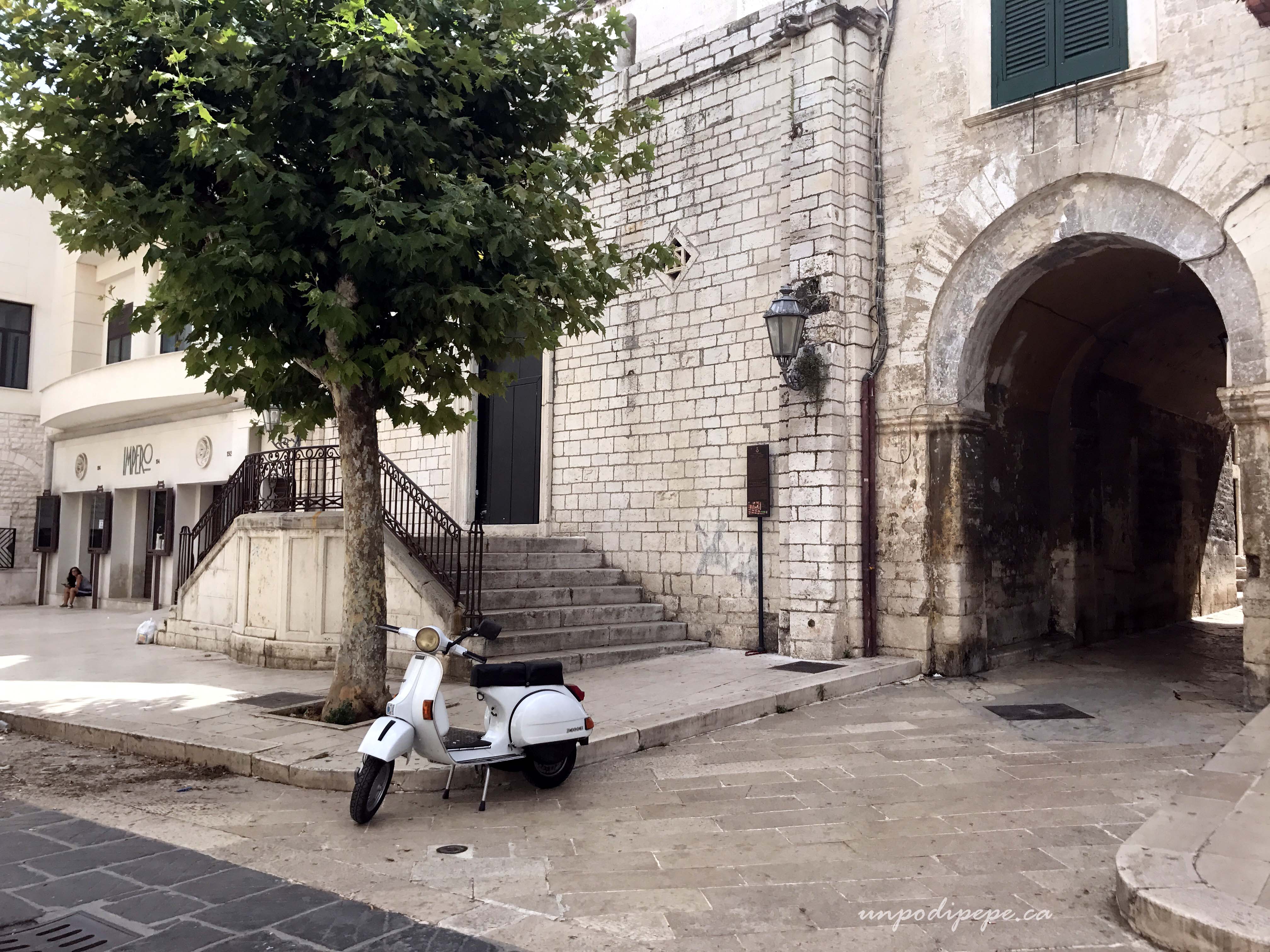
I hope you enjoyed your phototour of Trani’s ruote. Grazie mille to Franco for helping me identify them! Ciao, Cristina
Share this:

  • Share on Facebook (Opens in new window) Facebook
  • Share on Pinterest (Opens in new window) Pinterest
  • Share on X (Opens in new window) X
  • Email a link to a friend (Opens in new window) Email
  • Share on WhatsApp (Opens in new window) WhatsApp
Like Loading...

Trani

30 Saturday Sep 2017

Posted by Un po' di pepe in Architecture, Italia, Photography, Puglia, Travel

≈ 24 Comments

Tags

Diomedes, Italy travel tips, Puglia, Romanico Pugliese, San Nicola Pellegrino, Southern Italy, Trani, UNESCO World Heritage Sites

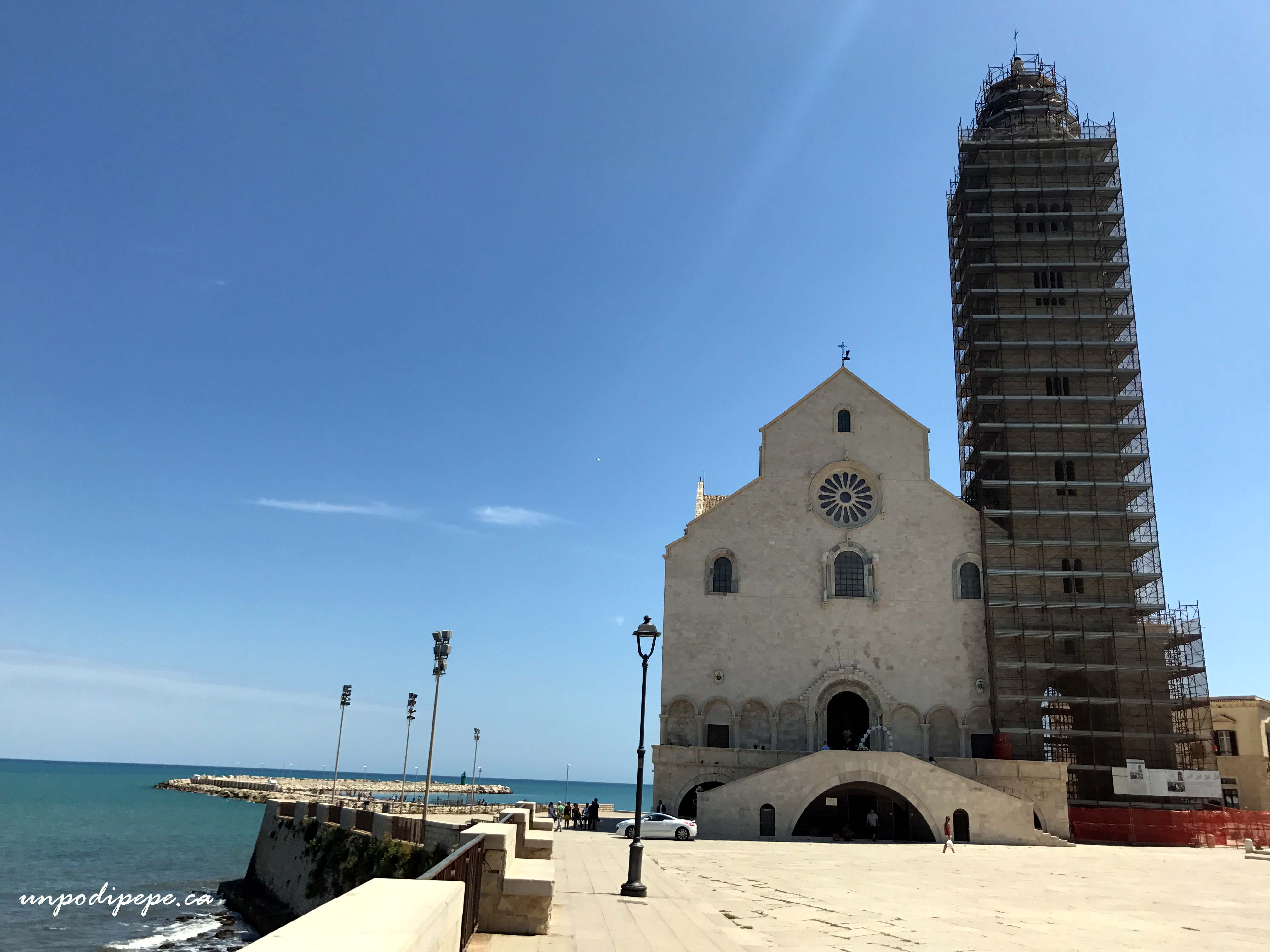
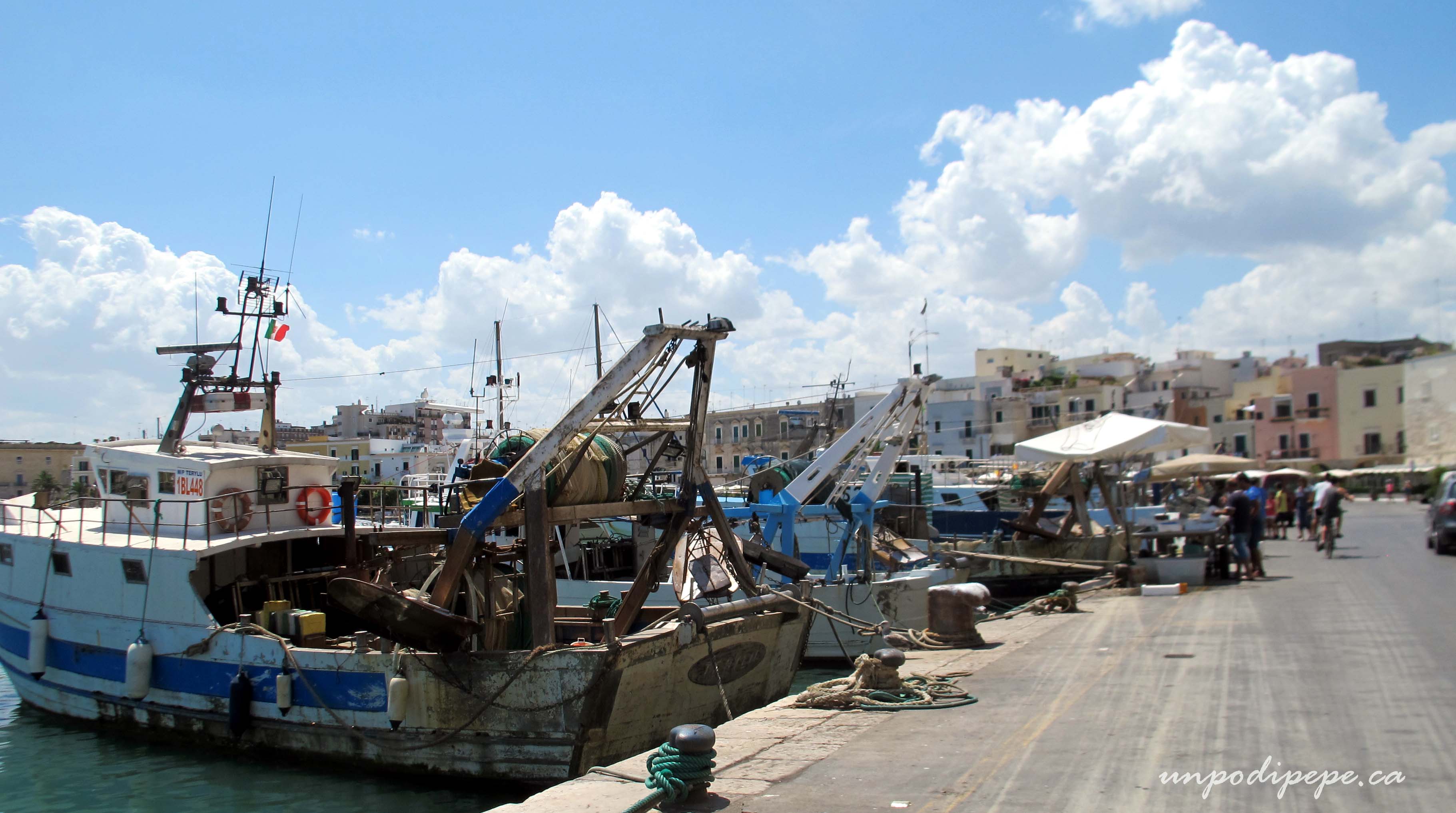
A crescent shaped port, fishermen selling their catch on the waterfront, a timeless, picturesque centro storico that looks like it could be a movie set, a castle, and a stunning limestone Romanesque cathedral right at the water’s edge where you expect to find a lighthouse.  These are some of the reasons why Trani is one of my favourite day trips.  It is a beautiful, peaceful, uncrowded fishing port on the Adriatic, between Barletta and Bari.  Trani is on the main ‘Adriatico’ railway line so it is easily accessible without a car.

Trani is ancient Tirenum, allegedly founded by Tirenus, son of Diomede.  Trani is famous for issuing the ‘Ordinamenta et consultudo Maris’ in 1063.  This is the oldest surviving maritime law code in the west. The street along the harbor is called ‘Via Statuti Marittimi’.  Trani is also known for Moscato di Trani, figs, almonds and olive oil.

During the rule of Federico Secondo (aka Holy Roman Emperor Frederick II) in the early 13th Century, Trani became an important political center and trading port with the Orient.  Since Trani was on the pilgrimage route to the Holy Land it grew and prospered.  Trani also had a close diplomatic and trading relationship with Venezia.When I got off the train in Trani, I walked about half an hour, straight to the cathedral.  I am a big fan of Romanico Pugliese (Pugliese Romanesque), an 11th-13th Century architectural style unique to Puglia.  Romanico Pugliese includes classic Romanesque features such as tall facades, campanili and rose windows, blended with Byzantine and Islamic architectural details.  In fact, since 2006, the Romanico Pugliese churches in Puglia are on the the UNESCO World Heritage Sites tentative list.  This is the step before becoming a World Heritage Site.The Trani cathedral was built in 1099 out of local tufo, a creamy coloured limestone that almost seems to glow in the sun.  One of the oldest and largest cathedrals in Puglia, it was used as a model for the ones built later. It was named for San Nicola Pellegrino (the Pilgrim), a 19 year old Greek shepherd who died while on pilgrimage in Trani in 1094.  His bones are in the crypt.  Note….this is not the same San Nicola who is buried in Bari and is the inspiration for Santa Claus.  Trani’s cathedral was constructed on layers of history.  It was built over the foundations of a 5th Century Byzantine church, Santa Maria della Scala, which was built over the Roman crypt of San Leucio.  Both of these ‘layers’ are accessible. The beautiful bronze doors are a copy.  The original doors are on display inside.  The 32 panels were sculpted by Barisano di Trani who also did work on the cathedrals in Ravenna and Monreale. The 60m high campanile built in 1239 has square corners and an octagonal spire.  The number of windows increase with each floor. The campanile was being renovated when I was there, so I have included a photo I took in 1994 without the scaffolding.

Trani 1994

Right on the harbour is the Chiesa di Ognissanti, built in the 12th Century by the Knights Templar in the courtyard of their hospital.  Trani was on the route to the Holy Land and the knights had a hospital here for those wounded in the crusades.  It is not open to the public.At the far end of the harbour, the Villa Comunale is a park with benches and a seaside walk.  The breakwater near the Cathedral is a nice place to sit and soak up the sun or go for a swim.

Federico II built the Castello Svevo in 1249.  It has square towers at each corner.  The sea water moat was filled in.  From the 1800’s-1974 the castello was used as a prison. Now it is open to visitors and hosts cultural events.  Admission is €3.

Trani once had southern Italia’s largest Giudecca community or Jewish neighborhood.  It was not a ghetto, as it was not closed off.  There were once 4 synagogues.  The Scolanova Synagogue spent centuries as a church, but in 2006 it was rededicated as a synagogue.

Trani is small enough that you can walk everywhere.  From the Stazione, walk straight out and turn left at Piazza della Repubblica.  There is an info point here.  It is about a half hour walk along quiet streets with beautiful palazzi to the cathedral and port.  Just ask a local for ‘Il Porto’ if you need directions.  Shops are closed from 1-5 pm.

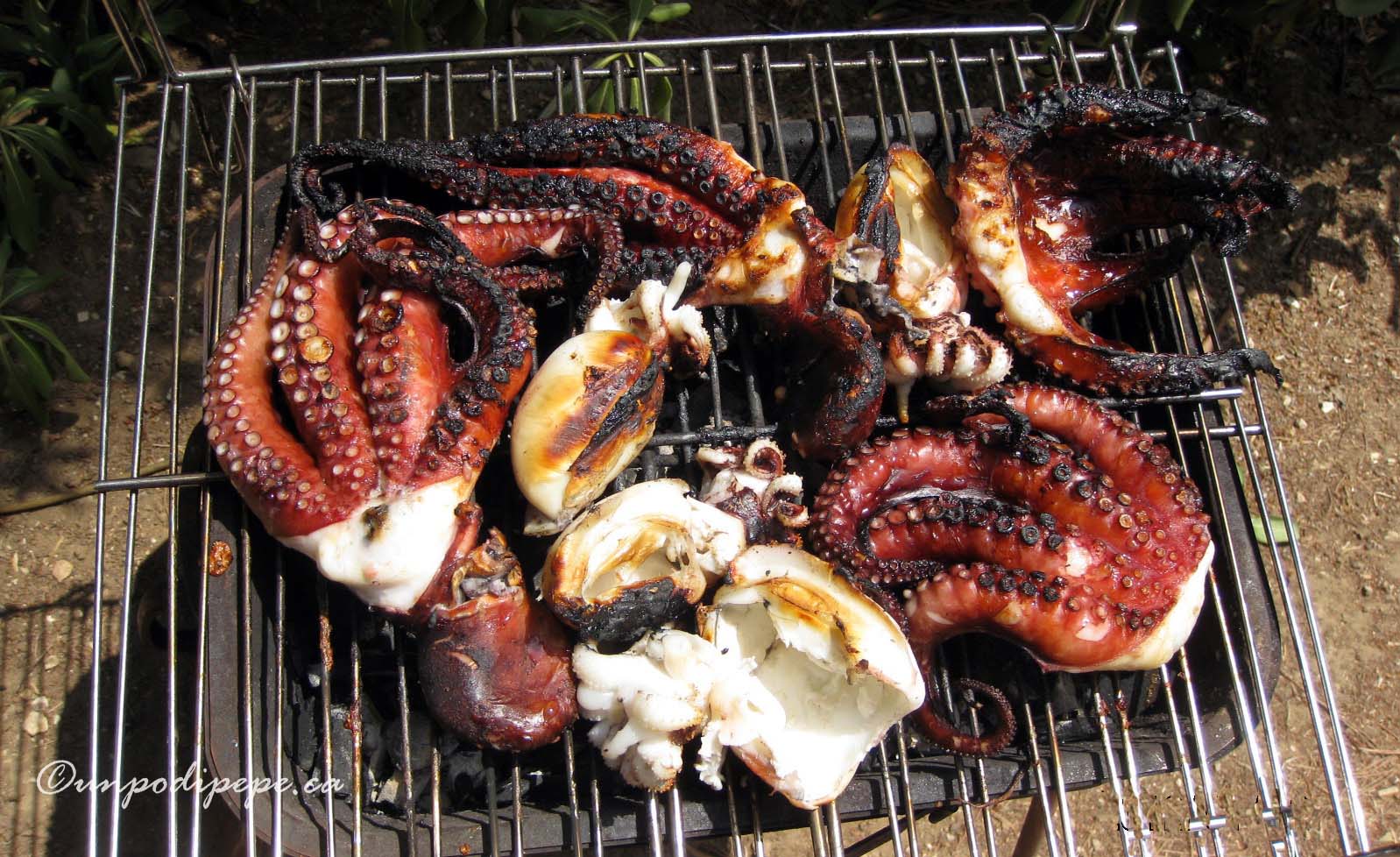
For seafood lovers, the port has many excellent restaurants.  My cousins had given me 3 restaurant recommendations.  It was such a beautiful sunny day I just wanted to sit near the breakwater and enjoy the sea.  I had a mad craving for polipo-octopus.  I ended up getting a take away insalata di polipo and a glass of Falanghina.  It was perfect!

Trani is a great base to stay for exploring several UNESCO World Heritage Sites.  Castel del Monte, Alberobello and Matera are all about 1 hour away.

Ciao e buon viaggio, Cristina

Share this:

  • Share on Facebook (Opens in new window) Facebook
  • Share on Pinterest (Opens in new window) Pinterest
  • Share on X (Opens in new window) X
  • Email a link to a friend (Opens in new window) Email
  • Share on WhatsApp (Opens in new window) WhatsApp
Like Loading...

Villa Jamele

21 Wednesday Jun 2017

Posted by Un po' di pepe in Amici e Famiglia, Italia, Orsara di Puglia, Photography, Puglia

≈ 9 Comments

Tags

Dalla terra alla tavola, Orsara di Puglia, Peppe Zullo, Southern Italy, Villa Jamele

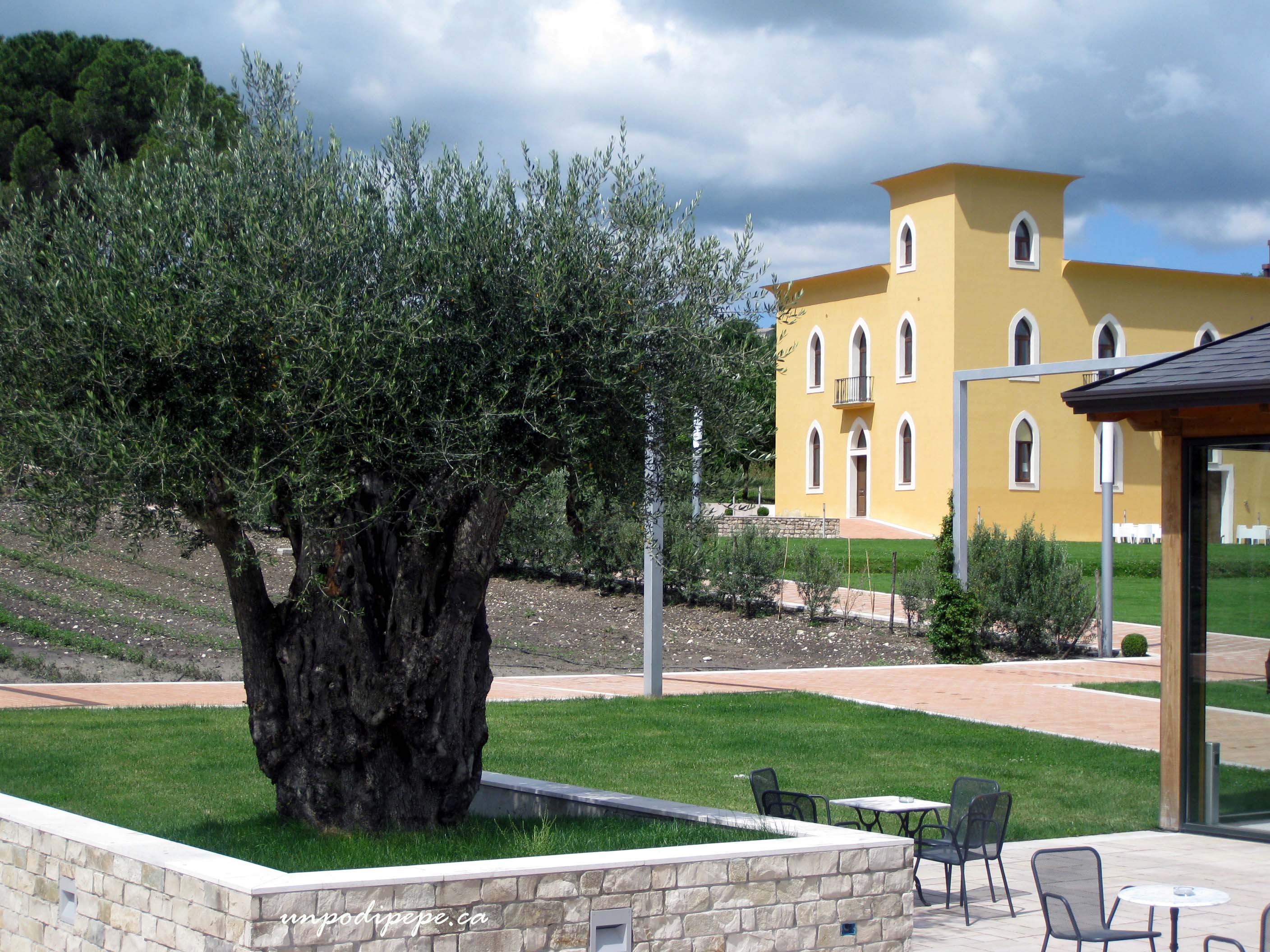
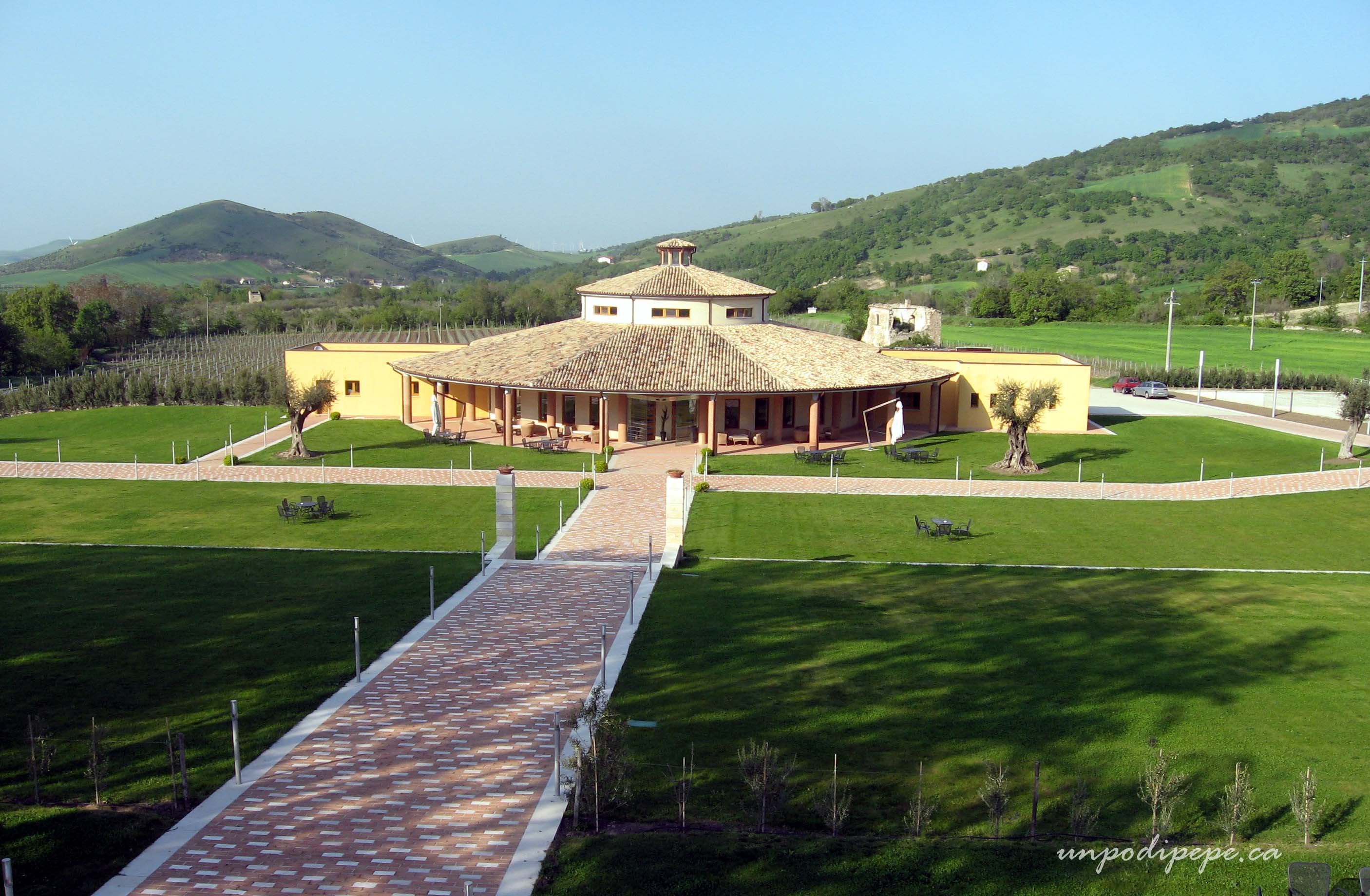
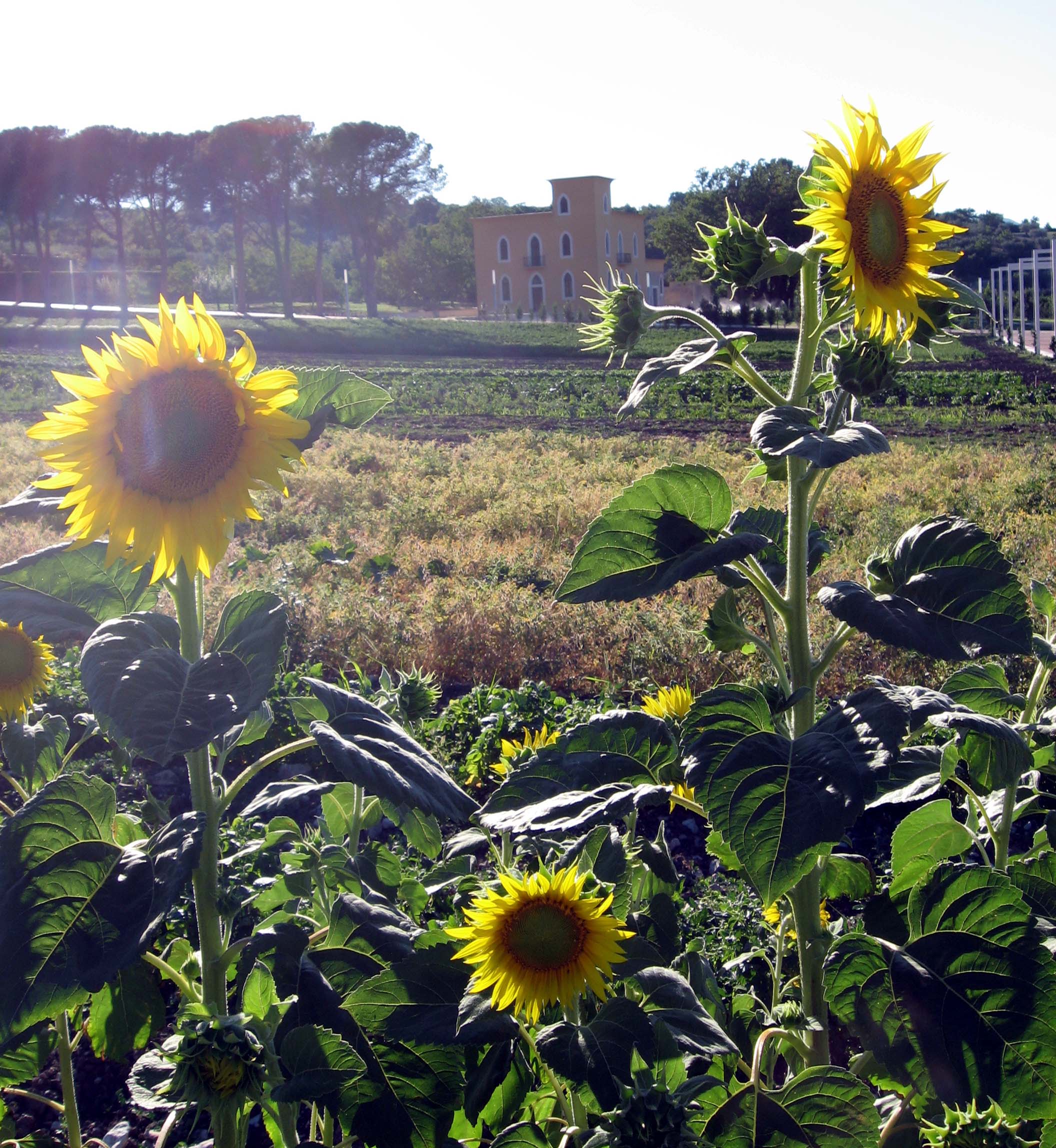
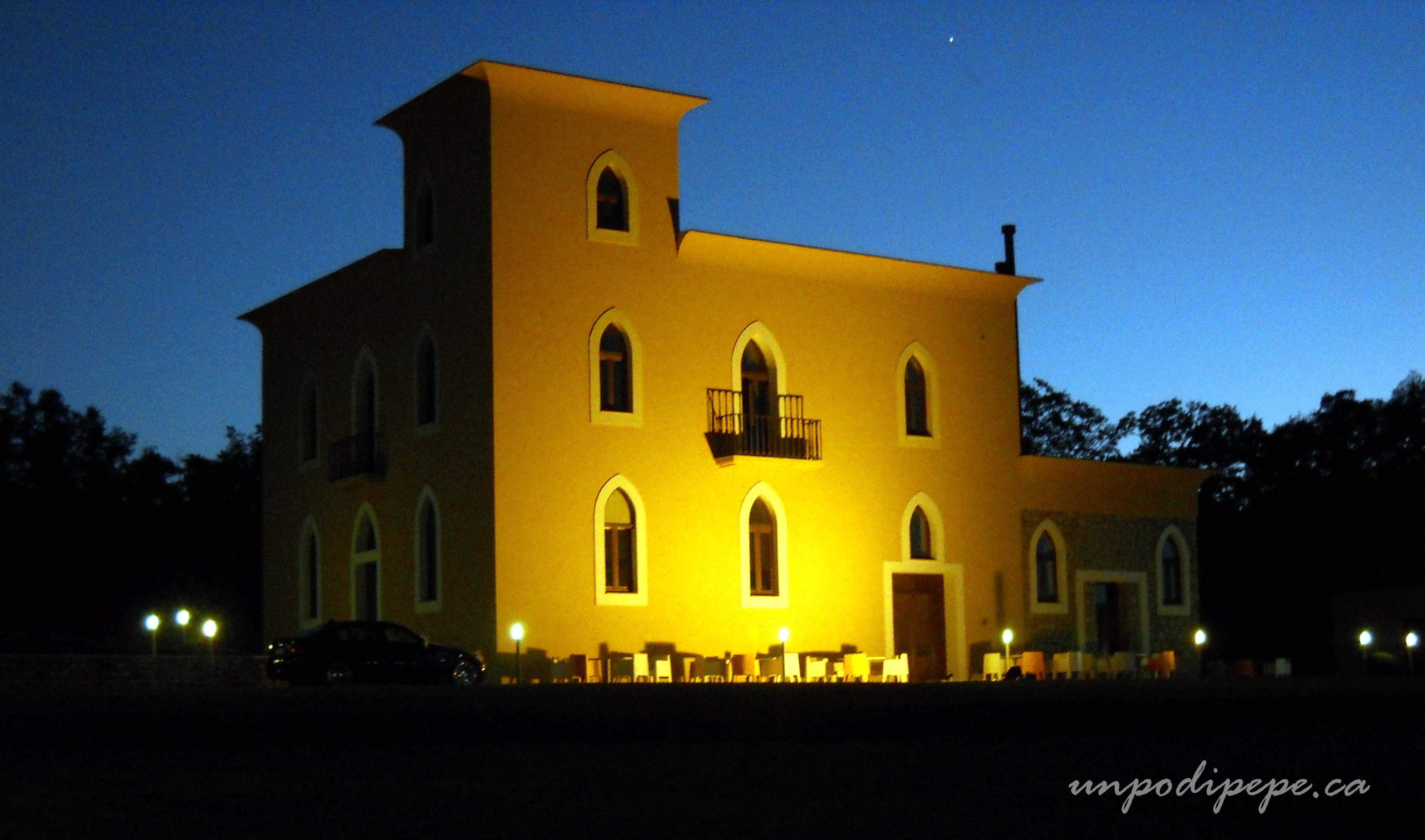
Villa Jamele (ya·MEH·leh) was mentioned in my post Peppe Zullo~Il Cuoco Contadino. Peppe’s 180,000 m² azienda agricola (agricultural estate) includes this second location acquired in 2004.  Villa Jamele is a few km down the road from Orsara di Puglia, towards Troia.  The property takes its name from the historic 1700’s villa of Hector Jamele, which has been reconstructed and is now home to an international cooking school and 5 guest rooms on the upper floor.

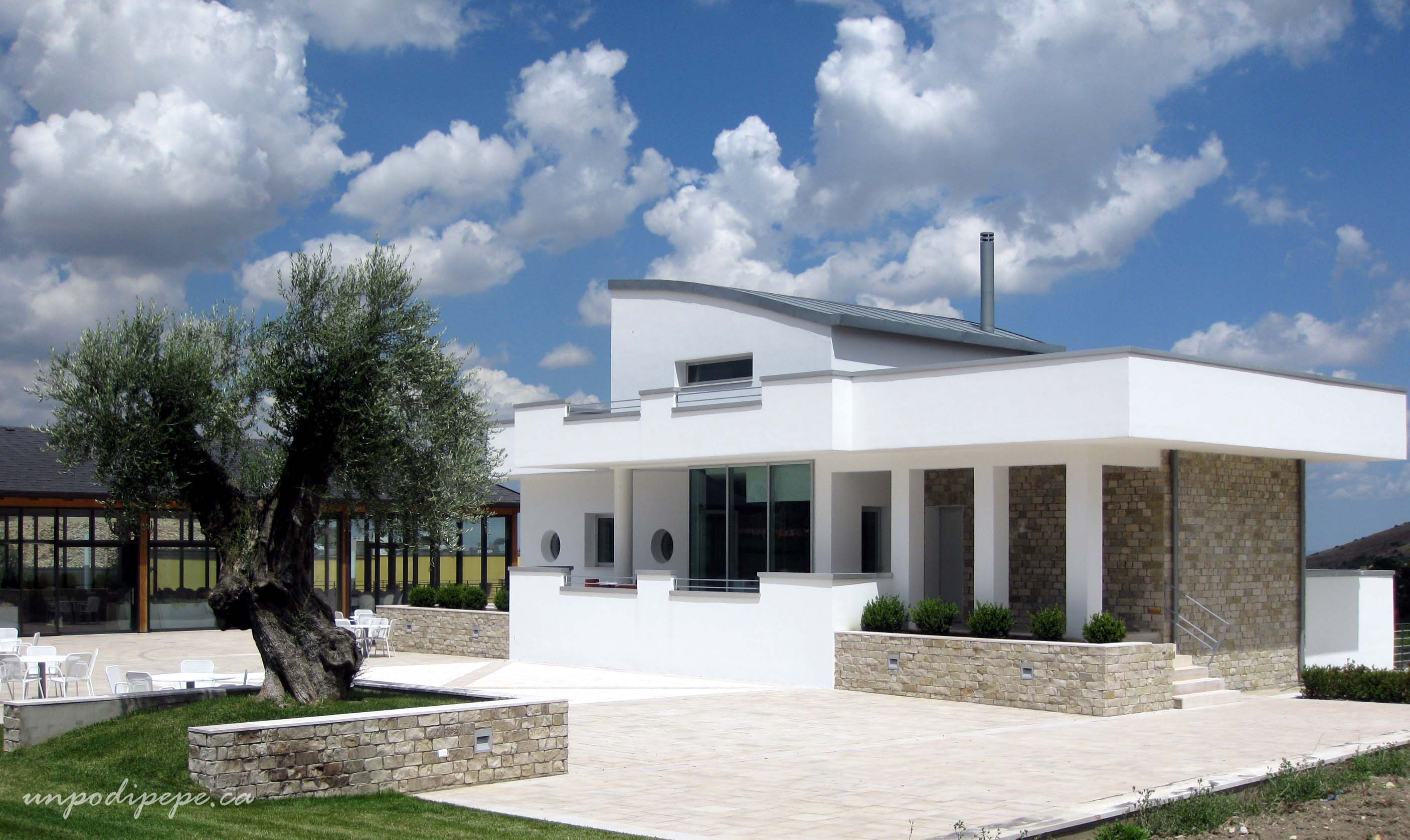
Sala Guadalajara is a large circular reception hall.  There is also a glass reception room, Sala Veracruz.  The photo below was taken from the roof terrace of Villa Jamele.

Dalla terra alla tavola is the philosophy at Villa Jamele.  This translates to ‘Field to table’. Food does not get any fresher. In addition to producing wine and olive oil, Peppe Zullo grows most of his own vegetables here at Villa Jamele, including pomodori which are canned on site in August. 

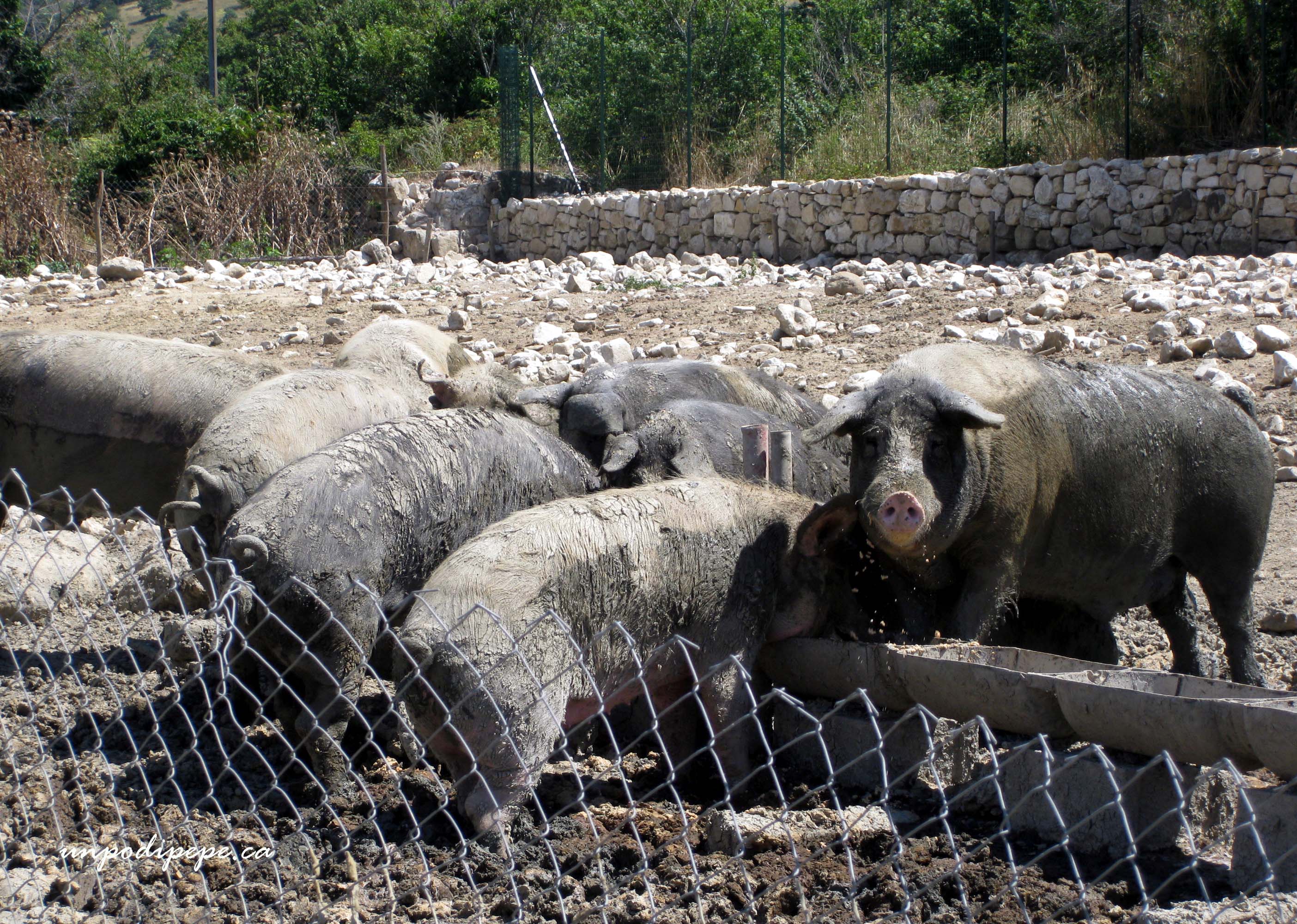
Il Bosco dei Sapori Perduti is a biodiverse orchard which includes over 50 varieties of fruit trees and herbs.  Peppe uses local, traditional products in his cooking, including wild greens and herbs such as boragine (borage), marasciuolo –a type of wild rucola found in Puglia, fiori di zucca, and wild asparagus. Behind Sala Guadalajara, past a reconstructed stone archway is a large vineyard where grapes for Peppe’s vini, Ursaria and Aliuva are grown.  Read more about them in this post.Also on the grounds is a pond and various animals, including ducks, geese, a donkey and one muddy but very photogenic maiale nero and his famiglia.

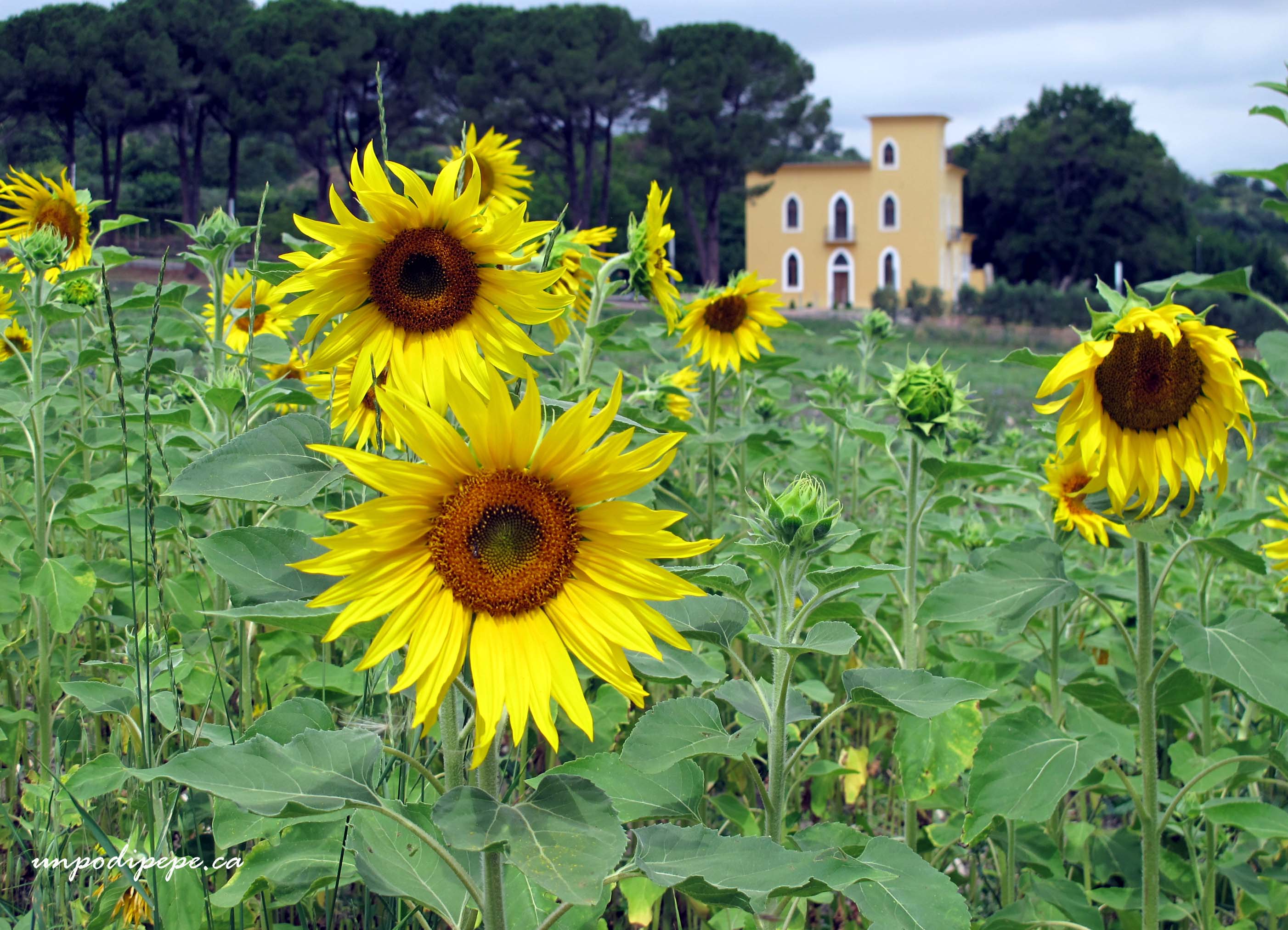
The Villa Jamele site is a tranquil oasis of green, dotted with ancient olive trees. My favourite area of Villa Jamele is the campo dei girasoli-a field of sunflowers blooming every July. 

La Scuola Internazionale di Cucina at Villa Jamele is open from September to November and February to April.  Classes can be organized for 8-16 participants. To book an event, suite, destination wedding , or make a reservation at Ristorante Peppe Zullo, call or email 39 0881 964763 info@peppezullo.it

Villa Jamele, Piano della Corte, Orsara di Puglia (FG) http://www.peppezullo.it

I hope you have enjoyed my favourite ‘scatti‘ of Villa Jamele! Ciao, Cristina
Share this:

  • Share on Facebook (Opens in new window) Facebook
  • Share on Pinterest (Opens in new window) Pinterest
  • Share on X (Opens in new window) X
  • Email a link to a friend (Opens in new window) Email
  • Share on WhatsApp (Opens in new window) WhatsApp
Like Loading...

Campeggio sul Gargano

29 Wednesday Mar 2017

Posted by Un po' di pepe in Italia, Photography, Puglia, Travel

≈ 13 Comments

Tags

Arco San Felice, Baia delle Zagare, Gargano campsites, Il Gargano, Isole Tremiti, Italy travel tips, Mattinata, Parco Nazionale del Gargano, Puglia, Trabucchi del Gargano, Vieste, Vignanotica

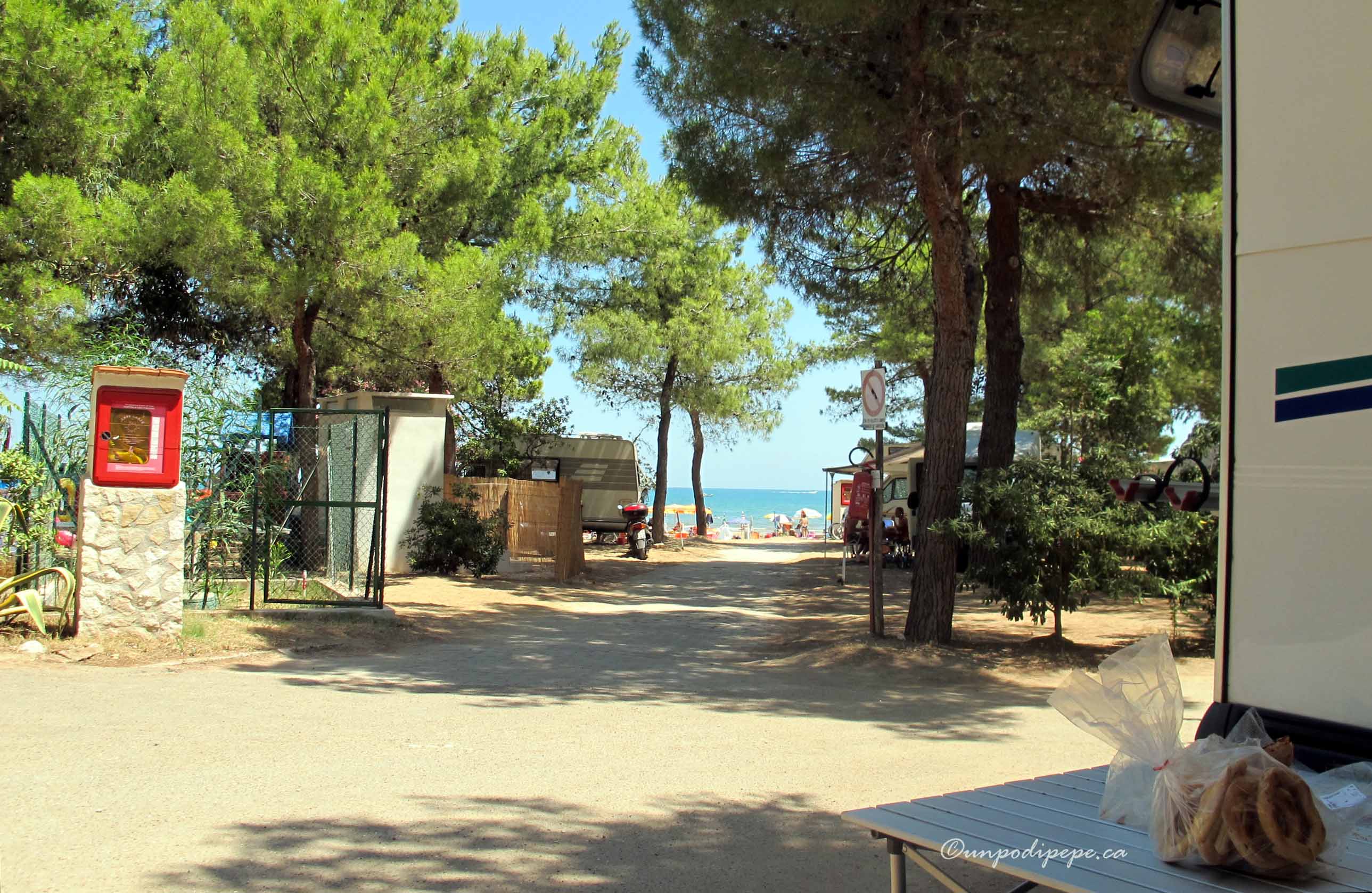
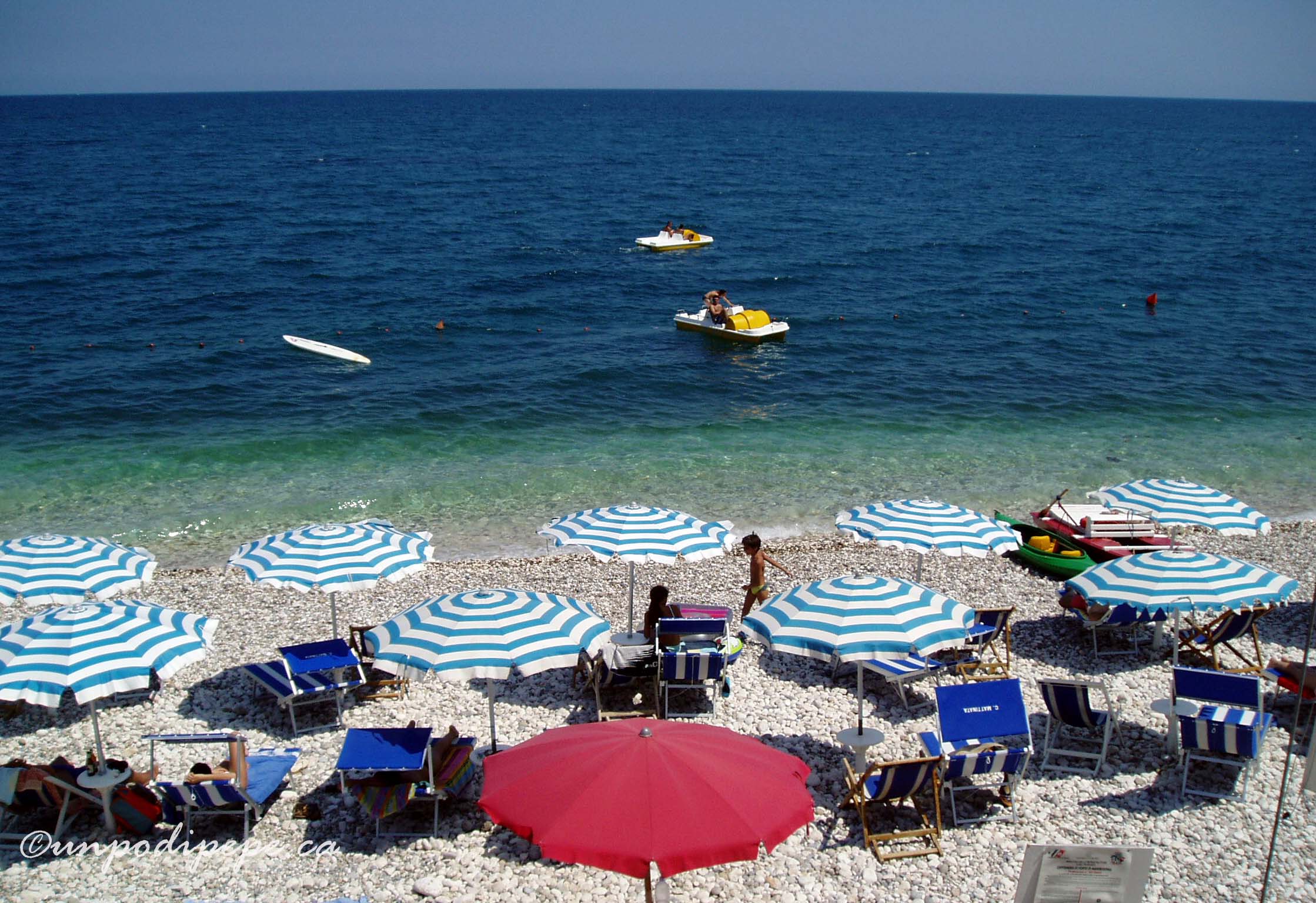
Dovè la primavera?  It was a long, cold winter, with far too much snow.  Now la pioggia has set in.  I am dreaming about il caldo, il sole e la spiaggia-warm weather, sunshine and the beach! I have had the opportunity over the last few years, to spend many weekends at different sites in the Gargano (gar·GAH·noh) with my cugini and their camper.  I would love to be there now!  To get ready for summer and welcome warmer weather, I am sharing my favourite scatti from my Gargano travels.

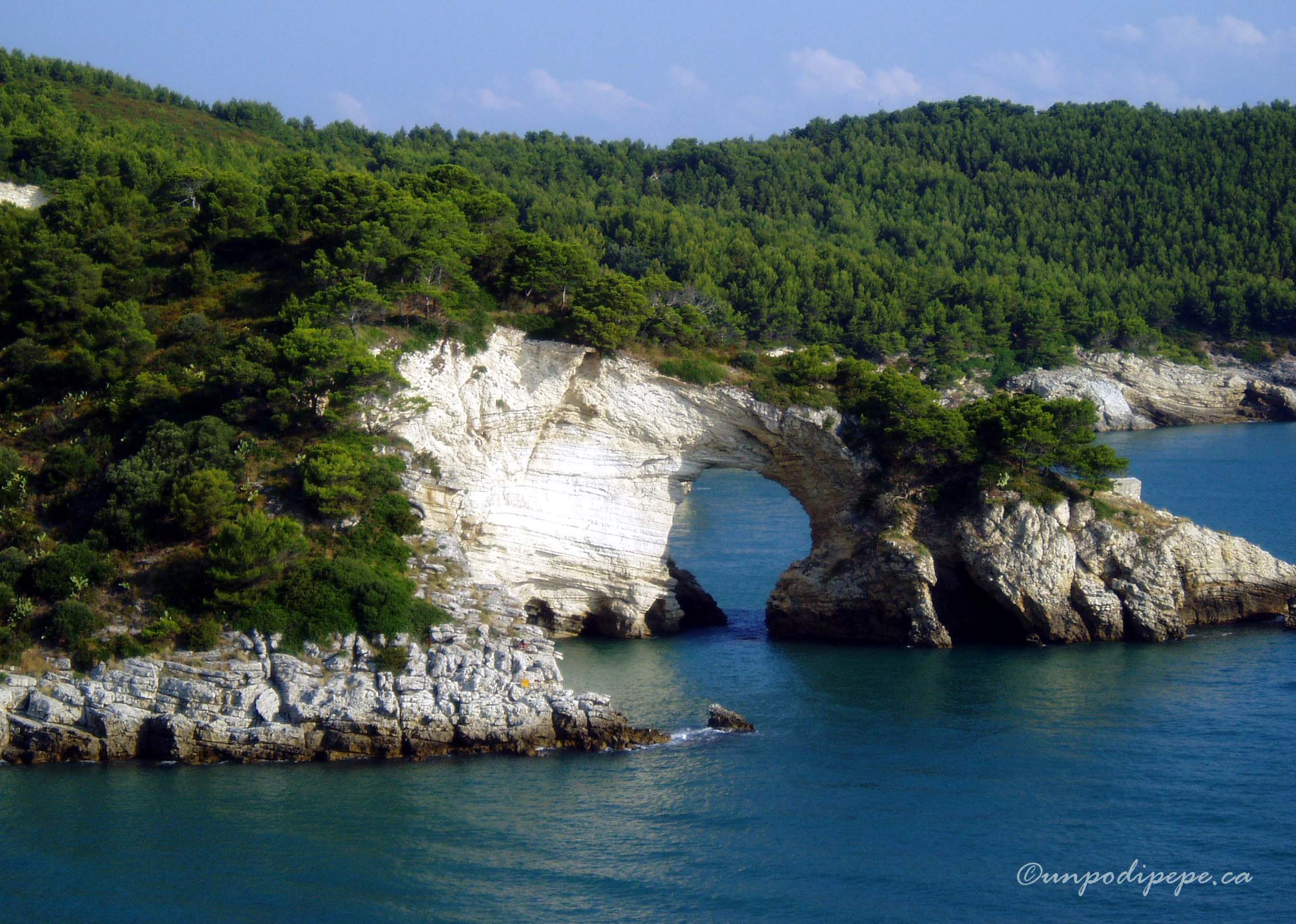
II Arco San Felice

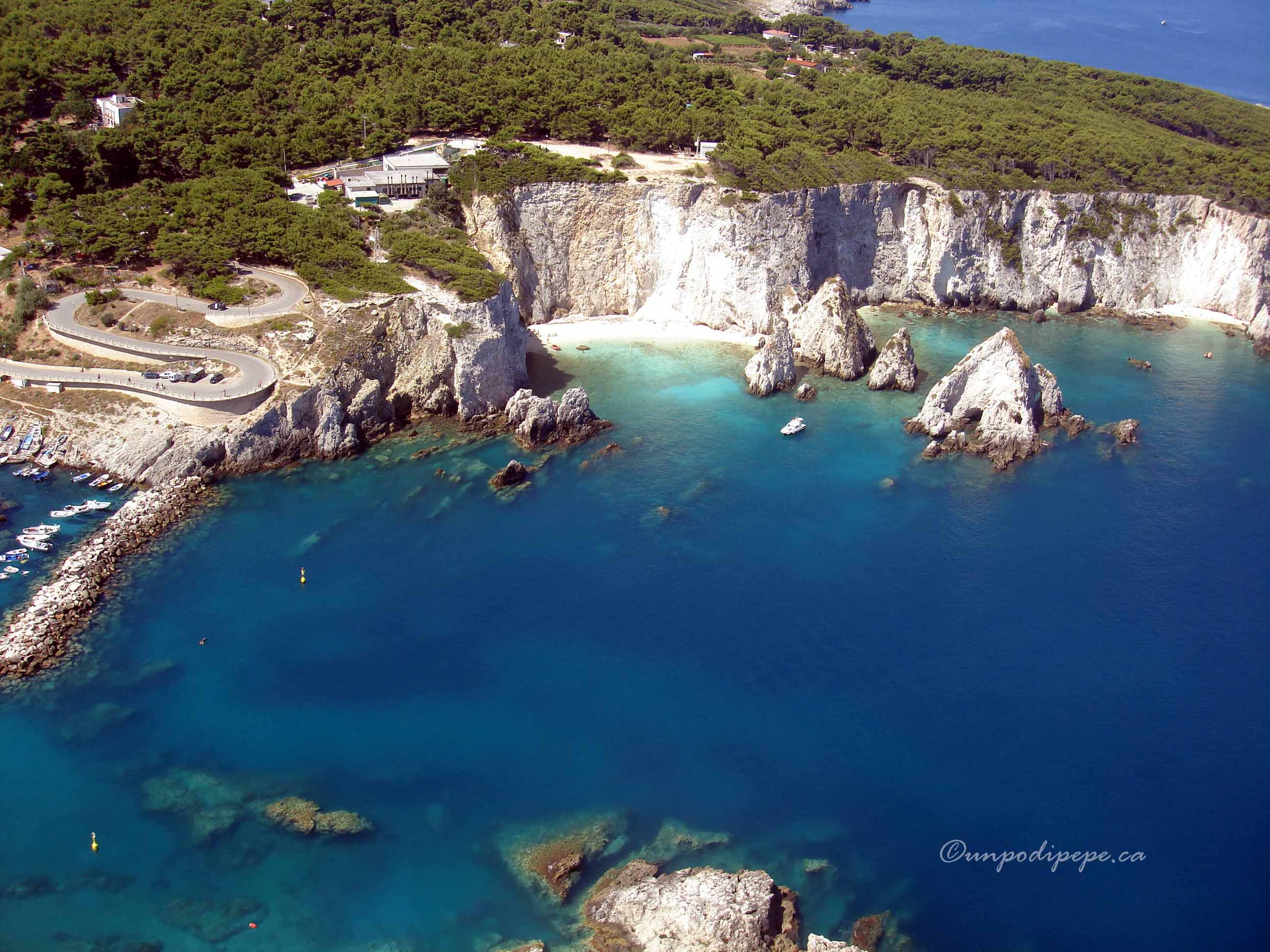
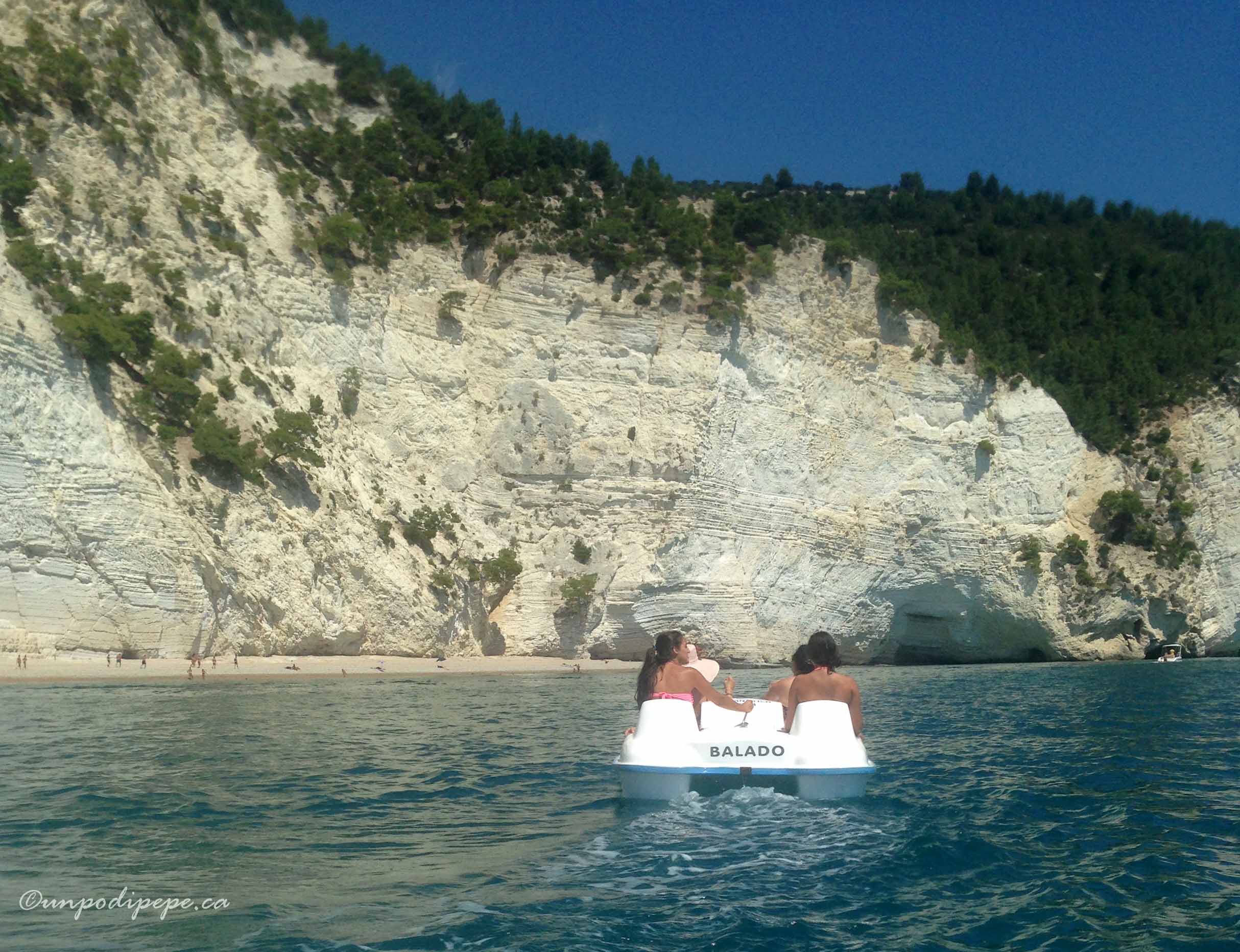
Il Promontorio del Gargano is the promontory sticking out above ‘il tacco’, the heel of Italia.  You can also think of it as la caviglia-the ankle spur of Italia.  One of the most beautiful areas on earth, Il Gargano has unique flora and fauna.  Biodiversity wise the area is more like an island-an island surrounded on 3 sides by the Adriatico with 1 side attached to Italia.  Most of the promontorio is a protected area and marine reserve, Il Parco Nazionale del Gargano, which includes le Isole Tremiti and the ancient Foresta Umbra. Luckily this has prevented the area from being overdeveloped with large multinational hotels and resorts.

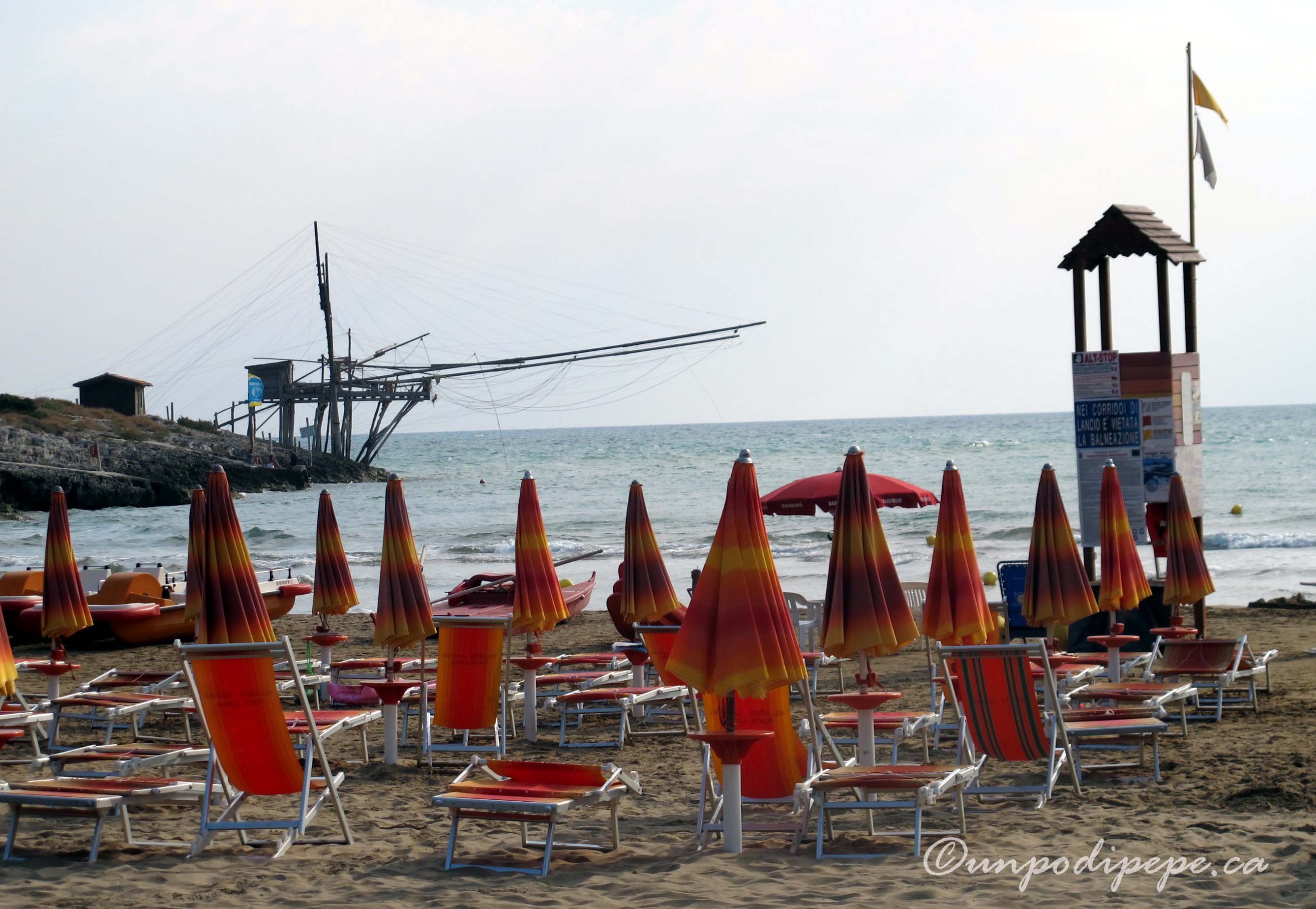
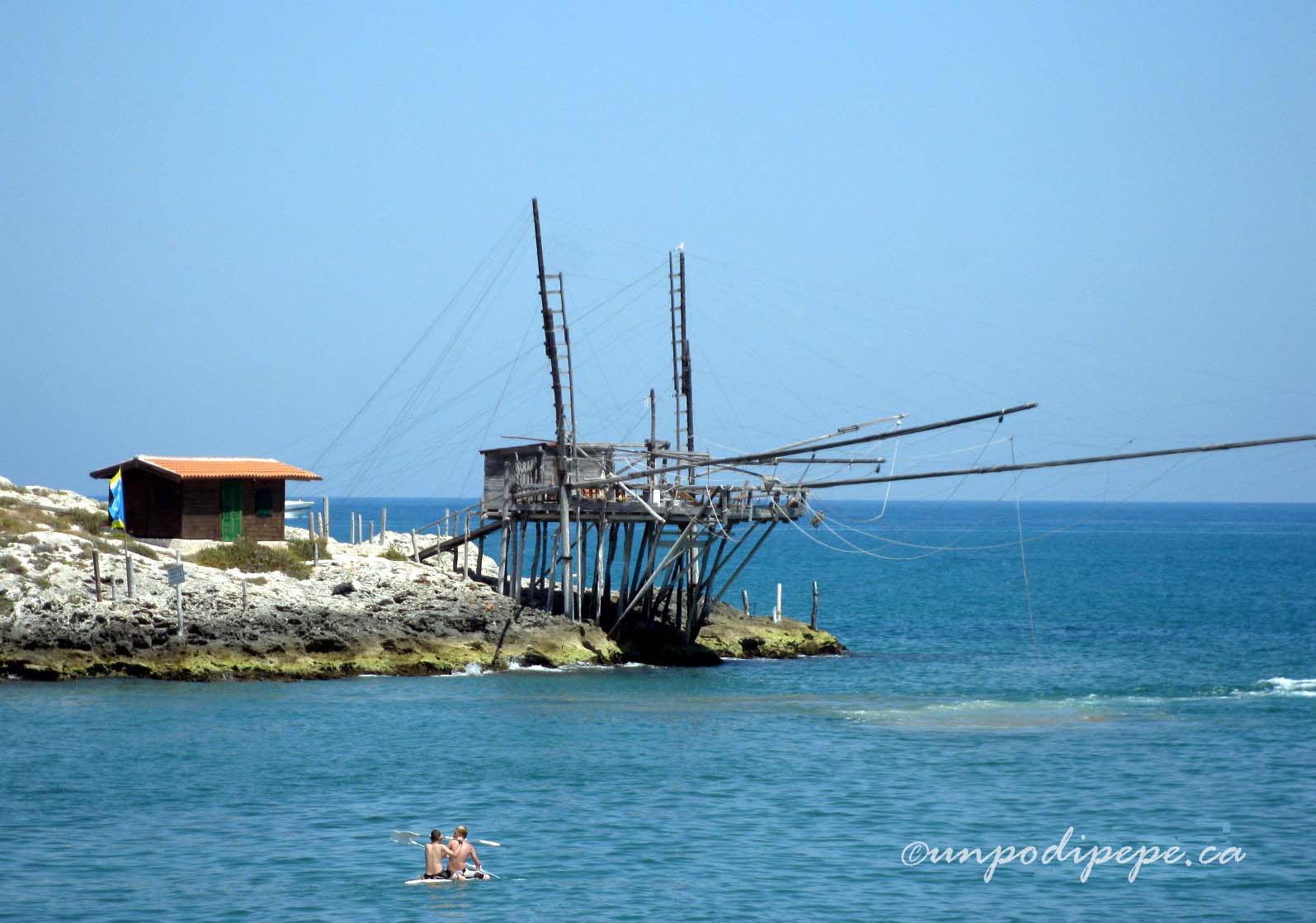
Il Gargano is famous for picchi (woodpeckers) and many other birds, 300 varieties of orchids, almonds and olives.  There are also endless ancient hillside olive groves, pine forests, sea grotte, limestone cliffs, rocky shores, crystalline water and fresh seafood.  The coast between Peschici and Vieste has 13 working trabucchi, fascinating ancient fishing contraptions which I wrote about in this post.

Trabucco Punta Lunga

The winding road around the Gargano, SS 89 from Foggia, has sharp turns and viste mozzafiato (VIS·teh moz·zah·FYAH·toh)-breathtaking views. One of my favourite viewpoints is La Baia delle Zagare. Here you can see the clifftop 4 star resort of the same name, and its private spiaggia.  There is a glass elevator built into the cliff-something I have to see for myself one of these days!

Baia delle Zagare

View of Vieste from the SS89

Il Gargano is full of campsites, inexpensive accommodation and B & B’s.  The campeggi e villaggi turistici -campsites and tourist villages, are ben attrezzati (well-equipped). You can camp with a camper and all the accessories, or just a vehicle and a tent.  There are also villette-little cabins that can be rented, but you have to bring your own sheets and towels, so these are mostly used by locals.  Some campsites even have a small hotel attached. This website (in Italiano) lists Gargano campsites. I have stayed right by the water and in an olive grove near Mattinata, and had a view of the beach near Vieste.

View from the camper, Punta Lunga, Vieste

Our setup is always comfortable and rustic, but some of the things you see at the campeggi are hard to believe. Families set up for the whole summer, with those working joining in on the weekends. I have seen TV with satellite, ceiling fans, generators and portable kitchen tents. Last year at Camping degli Ulivi in Mattinata, the family across from us had brought 5 kinds of brooms!

Ancient olive trees provide an interesting handwashing station, and a place to store 5 different brooms at Camping degli Ulivi

No yucky dehydrated camping food is found here! Fresh seafood is available from the mobile fishmonger il pescivendolo (pesh·ee·ven·DOH·loh) driving around to the different campsites. At Villaggio Camping Punta Lunga, we walked 2 km to Vieste to il pescivendolo along the amazing clifftop trail.

View from the 2km clifftop trail to Vieste

Vignanotica is between Mattinata and Pugnochiuso, closer to Pugnochiuso. It is surrounded by a wall of limestone cliffs and is only accessible by walking down the steep hill. Inaccessibility prevents development on the spiaggia. Parking is available in an olive grove, right under the olive trees for €7 and there is a shuttle down to the beach. Vignanotica can be crowded on Sundays in the summer. There is a small bar on the beach. Vignanotica is in sun until about 2pm, then it is in full shade from the cliffs. Some of the Gargano beaches, including Vignanotica, Mattinata and l’Isole Tremiti are rocky, so water shoes are needed to walk in the water.

Vignanotica. The tiny people walking on the beach provide scale for the limestone cliffs.

Most of the tourists visiting the Gargano area are Italian, especially in the summer.  Many Germans bring their campers too, but you do not meet a lot of North Americans here.  Il Gargano is the place to visit if you want to improve your Italiano.The closest major airport for Il Gargano is Bari. The airport in Foggia sometimes has flights to and from Milano, but usually it just has Alidaunia helicopter service to le Isole Tremiti, San Giovanni Rotondo, Vieste and Peschici. It is difficult to get around the Gargano without a car unless you have lots of time. The SS 89 from Foggia is the major road. On the way, be sure to stop and visit Santa Maria di Siponto near Manfredonia. There is no rail service after Foggia, except a local train from San Severo to Peschici. Ferrovie del Gargano buses outside the Foggia stazione leave for towns in the Gargano, but they are not frequent . Parkinbici is a bikesharing service between Gargano towns. For visitors, a weekly card is € 20 and weekend € 12.

Flying into San Domino by helicopter

As the Gargano website says, visit il Gargano ‘per una vacanza tra natura, mare e cultura’…for a holiday among nature, sea and culture!  Buon Viaggio, Cristina

Share this:

  • Share on Facebook (Opens in new window) Facebook
  • Share on Pinterest (Opens in new window) Pinterest
  • Share on X (Opens in new window) X
  • Email a link to a friend (Opens in new window) Email
  • Share on WhatsApp (Opens in new window) WhatsApp
Like Loading...

Bloccato dalla Neve

19 Monday Dec 2016

Posted by Un po' di pepe in Parole piacevoli, Photography

≈ 17 Comments

Tags

Canada, Inverno incantata, Vancouver, Winter wonderland

hollyI was tempted to call this post ‘Snowmageddon’!  Living in Canada, I’ve always been asked crazy questions when I’m travelling.  These were mostly pre-internet, but I’ve been asked questions like ‘In Canada abitati nelle case di ghiaccio?‘ and ‘I tuoi vicini di casa sono Eschimesi?‘ I don’t live in an igloo and I don’t think any of my neighbours are Eskimo/Inuit.  My response is usually something like ‘Io vivo sulla parte ovest del Canada.  Non fa freddo, e nevica un giorno all’anno!’ No, Vancouver is not cold, and it snows less than one day a year.  Even when it does snow, it usually only lasts a day and then it starts to rain and turns to slush……until now.  finestra

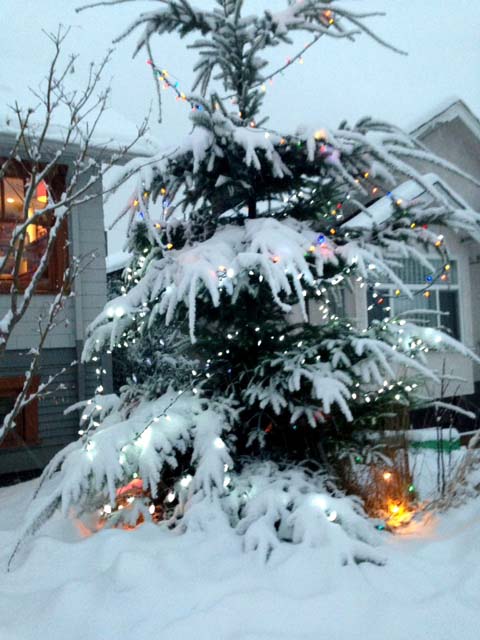
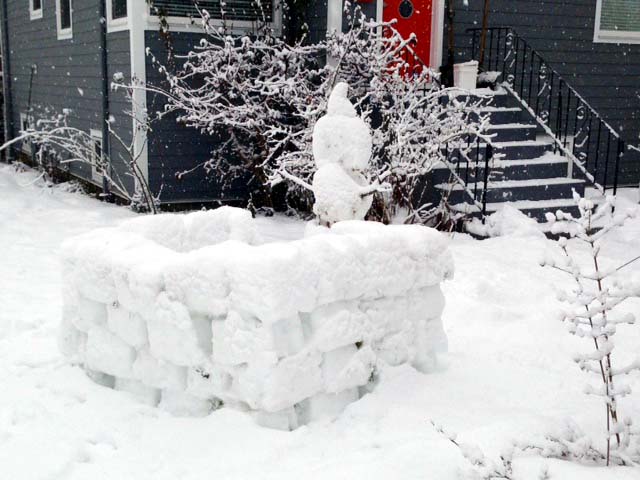
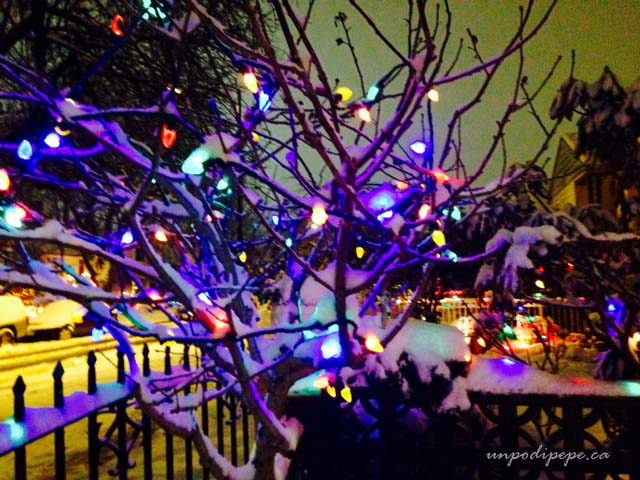
It snowed 2 weeks ago and did not go away.  It just got icy and then it snowed again-and yesterday another nevicata.  Mannaggia! Sono bloccato dalla neve – I am snowed in!  Vancouver can not cope with this kind of weather.  Eastern Canadians actually make fun of us for this-ci prendono in giro 😠! The city does not have enough snow plough equipment, the stores run out of salt and snow shovels, most people don’t have snow tires and they don’t know how to drive in the snow anyways, the buses have to cope with a lot more traffic….etc.  I am on ‘staycation’ until Christmas, so I did not have to go to work, but a lot of my plans had to be changed.  I’ve spent a lot of time at home making panettone and decorating!  I have also been walking everywhere since my car has been bloccato in ghiaccio most of this time.albero-di-natale Most of us are looking forward to saying arrivederci neve! It is very pretty, and for now it looks like a winter wonderland…now how would we say that in Italiano?  Un inverno incantata-an enchanted winter?  That’s as close as I can think of.  Here are some photos I took this week while walking, vicino casa, but I did do a rain dance when I got home!albero-di-natale2

My vicini di casa do not live in igloos, but they do like to build them!

My vicini di casa do not live in igloos, but they do like to build them!

This pupazzo di neve (snowman) has his own igloo

This pupazzo di neve (snowman) has his own igloo

Luci Natalizie di Mamma e Papa/ My parents' Christmas lights

Luci Natalizie di Mamma e Papa/ My parents’ Christmas lights

luci2luci3Ciao e Buon Natale dal ‘Snowmageddon’, Cristina

Share this:

  • Share on Facebook (Opens in new window) Facebook
  • Share on Pinterest (Opens in new window) Pinterest
  • Share on X (Opens in new window) X
  • Email a link to a friend (Opens in new window) Email
  • Share on WhatsApp (Opens in new window) WhatsApp
Like Loading...

Polignano a Mare

27 Thursday Oct 2016

Posted by Un po' di pepe in Italia, Photography, Puglia

≈ 38 Comments

Tags

Domenico Modugno, Guido il Flâneur, Nel blu dipinto di blu, photography, Polignano a Mare, Ponte Lama Monachile, Southern Italy, Spiaggia Lama Monachile, Vicolo della Poesia

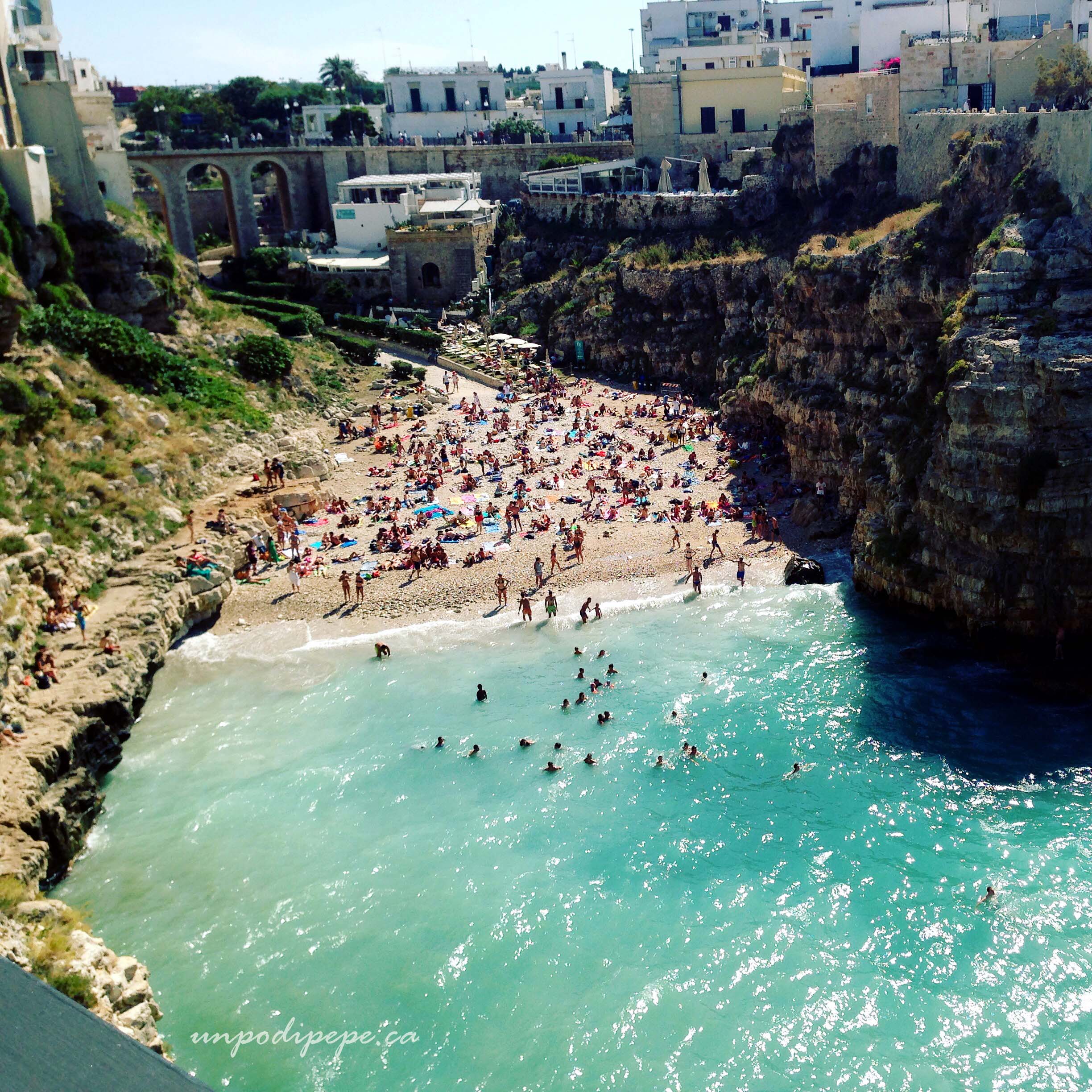
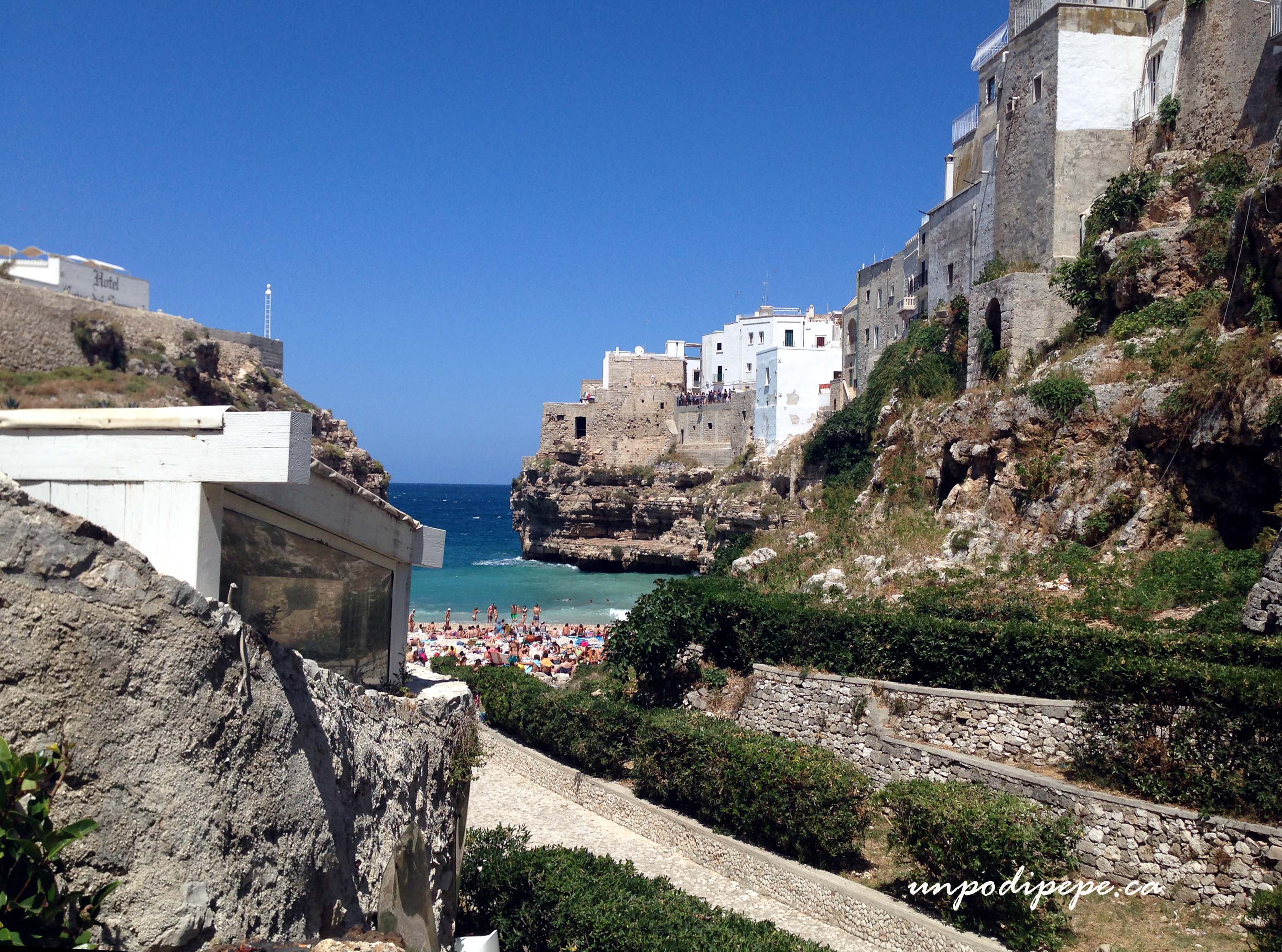
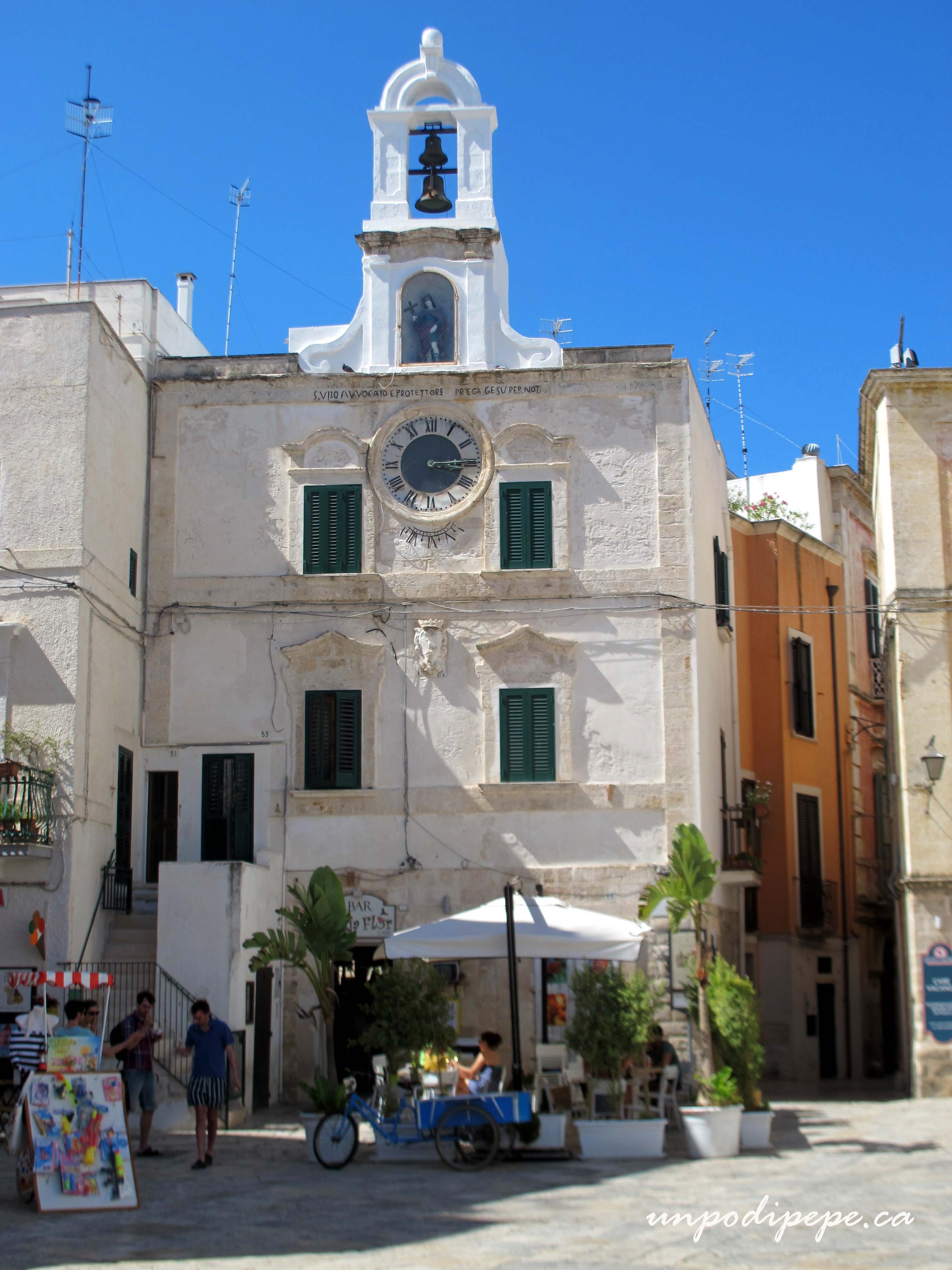
spiaggia-lama-monachile-polignanoPolignano a Mare sits atop limestone cliffs on the Adriatic coast just south of Bari.  From the white-washed Centro Storico with narrow, winding cobblestone streets, the crystal clear water, and 3 terrazze with views of the sea, everywhere you look, there are panorami mozzafiato (pah·noh·RAH·mee moz∙zah∙FYAH∙toh)-breathtaking views.  There is even a restaurant in a grotta, one of the caves overlooking the sea, the Grotta Palazzese.  Polignano was the ancient Greek city of Neapolis, founded in the 4th Century BC.  It was prosperous under the Romans too, because Ponte Lama Monachile, the Roman bridge, is right on the ancient Via Traiana.  This was an extension of Via Appia, going from Beneventum (Benevento) to Brundisium (Brindisi) by a shorter route. There was a monastery nearby and the name of the bridge literally means ‘monastic monk’.  Sounds a bit redundant, although better than the other possibility ‘monastic blade’.polignano-a-mare-ponte

polignano-a-mare-spiaggia2Beneath the bridge is Spiaggia Lama Monachile, a small ‘spiaggia libera’ or public beach, with blue-green crystalline water and small white pebbles called ciottoli (cheeot·TOH· lee). I climbed up on some rocks and could have just sat there all day feeling the wind in my hair and sun on my face. Near the water, I noticed a constant movement of people coming and going from a cave.  I was curious and walked over to try and see what was there.  It just looked dark.  A very nice older local gentleman saw me trying to peer in.  He came over and offered me his arm and said he would accompany me.  It was a ‘cave tunnel’ that had about 1 foot of water.  The other end was very windy and opened to the next cove.  We could see cliffs and the surf crashing onto the rocks, sending water over us.  It was incredibly beautiful, but of course I did not have my camera.  My escort told me that he lives in Polignano and comes to the spiaggia every day of the year!

The man in the white hat with his arm outstretched is the 'gentiluomo'.

The man in the white hat with his arm outstretched is the ‘gentiluomo’.

polignano-spiaggia-3When I took a dip  in the water, the waves were so big I was thrown into a seated position and lost one of my flip flops, known in Italia as infraditi (in·fra·DEE·tee). The spiaggia is too rocky to walk barefoot.  I retrieved my infradito and was immediately felled by another powerful wave, taking the other infradito off my foot.  This went on for a few more waves, and eventually my infradito was too far out.  Luckily a nice ragazzo retrieved it for me.  I returned to my heavenly place on the rocks, to find that my cugina had taken my camera and photographed of every stage of my ordeal with the infraditi!  Grazie Maria!polignano-a-mare-spiaggia

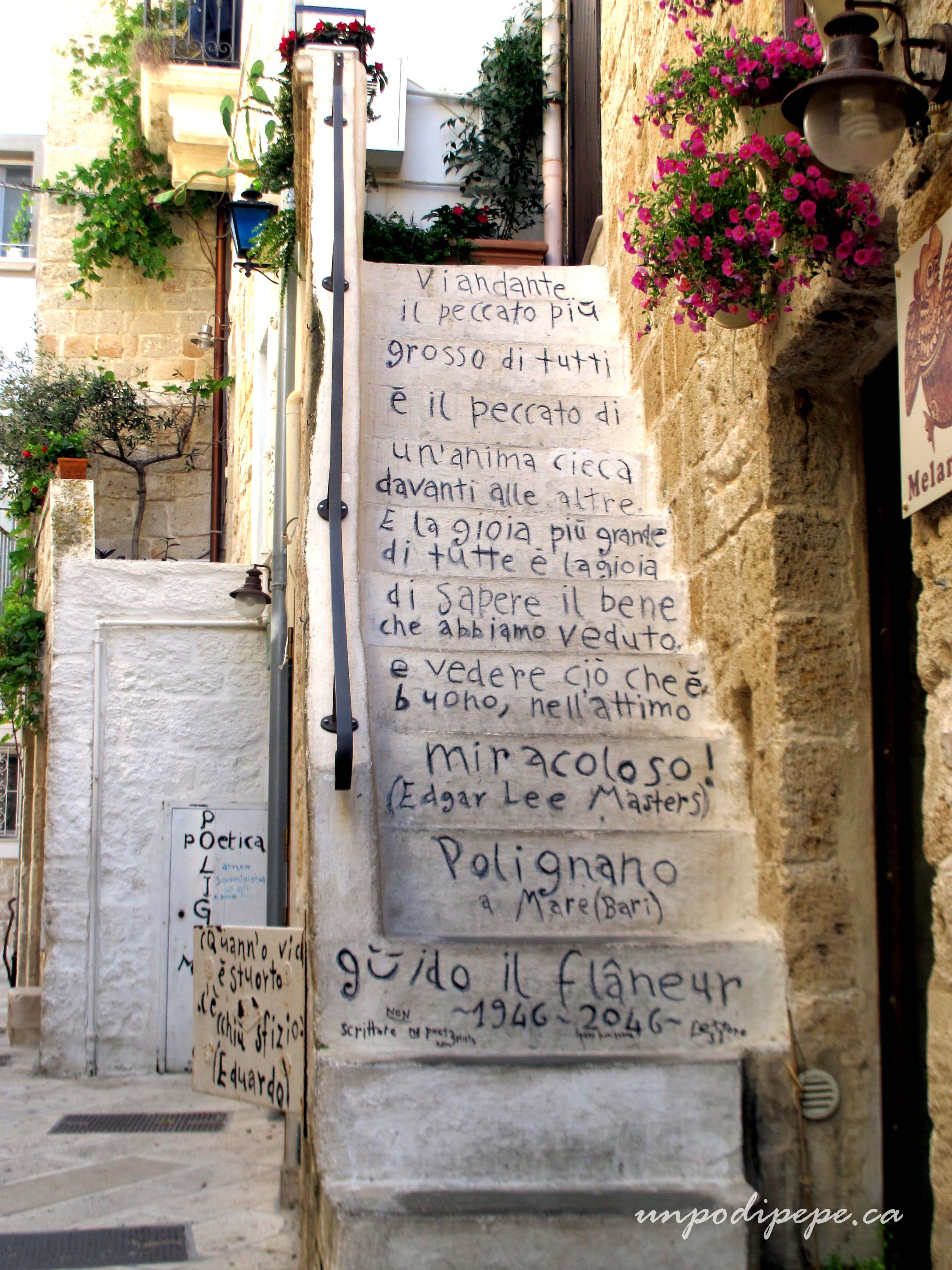
The town is a steep walk up the stairs beside Ponte Lama Monachile. The Centro Storico is entered via l’ Arco Marchesale, an old Roman gate. There is an interesting area called Vicolo della Poesia, with poetry written on staircases, walls and doorways. vicolo-della-poesia This ‘graffiti’ is signed ‘Guido Il Flâneur’. Guido is a poet, although the ‘graffiti’ is not his own poetry.  He left his job in Bari and moved to Polignano to pursue a writing career 32 years ago.  ‘Flâneur’ is an 18th Century term for french gentlemen who strolled the streets sharing their passion for literature. Apparently Guido goes for a swim every day, year round!  Hmmm, this sounds familiar.  I found a poor-quality foto of Guido online, and I think he may be the gentiluomo who escorted me through the cave tunnel!vicolo-della-poesia2

Polignano a Mare’s most famous citizen is Domenico Modugno, who shot to fame in 1958 when his song ‘Nel blu dipinto di blu’ (you probably know it as Volare) won the Festival di San Remo, then represented Italia in the Eurovision song contest.  In a piazza on the other side of the bridge is a statue of Modugno, with his arms stretched out like he is ready to take flight over Polignano. Our parking ran out before we could walk to the other side, so I’ll have to go back to visit Domenico.

An interesting building-it looks like it was once a church, but now there is a bar on the ground level!

An interesting building-it looks like it was once a church, but now there is a bar on the ground level!

In the right third of the photois Grotta Palazzese, where you can see 3 white posts of the railing.

In the right third of the photois Grotta Palazzese, where you can see 3 white posts of the railing.

I really enjoyed the day in Polignano a Mare, and so did my camera! It was not as crowded as I expected on a weekday in early August and the spiaggia was just perfect. The only thing I found kind of annoying was the amount of English signage in the Centro Storico, which is not typical for a town in Puglia.polignano-a-mare-loggiapolignanomuro

Polignano a Mare is easy to get to, as it is on Strada Statale 16 (SS 16) the main coastal road. It is also very easy to get to without a car, since it is on the Adriatic train route from Bari to Lecce.  From Bari, Polignano is a 20 min train ride and from the train station the Centro Storico is a 10 min walk.ponte-lama-monachile

Buon Viaggio, Cristina

Share this:

  • Share on Facebook (Opens in new window) Facebook
  • Share on Pinterest (Opens in new window) Pinterest
  • Share on X (Opens in new window) X
  • Email a link to a friend (Opens in new window) Email
  • Share on WhatsApp (Opens in new window) WhatsApp
Like Loading...

San Gimignano

15 Friday Apr 2016

Posted by Un po' di pepe in Firenze, Italia, Photography, Travel

≈ 6 Comments

Tags

Dante Alighieri, Firenze, Italian history, Italy travel tips, San Gimignano, Siena, Torre Grossa, Toscana, UNESCO World Heritage Sites, Vernaccia di San Gimignano

Torri di San GimignanoSan Gimignano’s skyline looks like a Medieval Metropolis, complete with early grattacieli (grat•tah•chee•EH•lee = skyscrapers). It was known as San Gimignano delle belle Torri -San Gimignano of the beautiful towers. The site was an Etruscan settlement, then a castello called Silvia with a walled village built around it.  Silvia was renamed San Gimignano in 450 after the Bishop of Modena, who spared it from Attila the Hun’s troops.San Gimignano Torre

San Gimignano became an independent town in 1199. It was prosperous, being a stopping point on La Via Francigena, the medieval pilgrimage route from Canterbury to Roma, via France.  San Gimignano also traded in local zafferano (zaf•fer•RAN•noh = saffron) and wine from the white Vernaccia grape. The earliest mention of Vernaccia di San Gimignano is in the archives of 1276! In 1966, 690 years later, it was the first Italian vino bianco to receive DOC recognition.

The 13 and 14th Centuries saw San Gimignano caught in the Guelph/Ghibelline conflicts.  Read about this in Dante’s post. Wealthy San Gimignanesi built tower houses as symbols of power and wealth, as well as for protection.  The height of these torri kept increasing, up to 70m high, to keep up with the neighbors. There were originally 72 torri and 14 still stand today.

Waves of plague and famine hit San Gimignano in the mid 1300’s. The ‘black death’ claimed almost half the population, and San Gimignano was now under the rule of Firenze.  Fiorentino control prevented any urban development that happened in other towns.  As a result, San Gimignano was preserved in a medieval ‘time warp’, retaining its original atmosphere and appearance.  Little changed until the 19th century when it became a tourism destination. Today the population is 7800 and it does have 1 traffic light! To protect San Gimignano from the effects of mass tourism, strict rules prevent modification to the appearance or intended use of buildings.

Bancomat Medievale/Medieval Bank Machine!

Bancomat Medievale/Medieval Bank Machine!

In 1990, the Historic Center of San Gimignano became a UNESCO World Heritage Site for its outstanding examples of medieval architecture and original urban layout.Piazza della Cisterna

The Cattedrale know as La Collegiata, has Masterpieces of 14th and 15th Century art.  Inside the front façade is the Fresco of Last Judgement, Heaven and Hell by Taddeo di Bartolo (1393). The Cappella di Santa Fina with frescoes by Domenico Ghirlandaio (1475) was featured in the 1990 Franco Zeffirelli film ‘Tea with Mussolini’.

In the Palazzo Comunale is the Sala di Dante where Dante Alighieri spoke as an ambassador for the Guelphs in May 1300. The Pinacoteca has treasures by Filippino Lippi, among others.  Climb the 218 steps of the adjacent 54m Torre Grossa for views of San Gimignano and the Val d’Elsa.  Admission is €6.View from Torre Grossa

Piazza della Cisterna is triangular with a well on an octagonal pedestal in the center, surrounded by medieval buildings. It is named for the underground cistern built in 1287 which was the main source of water for the San Gimignanesi.  Piazza della Cisterna is the meeting point of the Via Francigena and the road from Pisa to Siena, so it was a happening place in medieval times.

Piazza della Cisterna, seen from Torre Grossa

Piazza della Cisterna, seen from Torre Grossa

San Gimignano is an easy daytrip on the bus from Firenze, Siena or Poggibonsi. There is no direct train. The train route is to change trains at Empoli to Poggibonsi and then bus from there. It’s also nice to be there in the evening or overnight when all of the daytrippers have left.

Like Alberobello, no matter how many hordes of tourists it is overrun with, San Gimignano is incantevole (een•can•teh•VOH•leh = enchanting) and definitely worth a visit. I need to go back to do ‘research’, since I have a drawer full of unfinished sketches, monotypes and etchings!

Buon Viaggio, Cristina

Share this:

  • Share on Facebook (Opens in new window) Facebook
  • Share on Pinterest (Opens in new window) Pinterest
  • Share on X (Opens in new window) X
  • Email a link to a friend (Opens in new window) Email
  • Share on WhatsApp (Opens in new window) WhatsApp
Like Loading...

Il Pantheon

08 Monday Feb 2016

Posted by Un po' di pepe in Architecture, Art history, Italia, Photography, Roma

≈ 15 Comments

Tags

Ancient Roma, Pantheon, Piazza della Rotonda

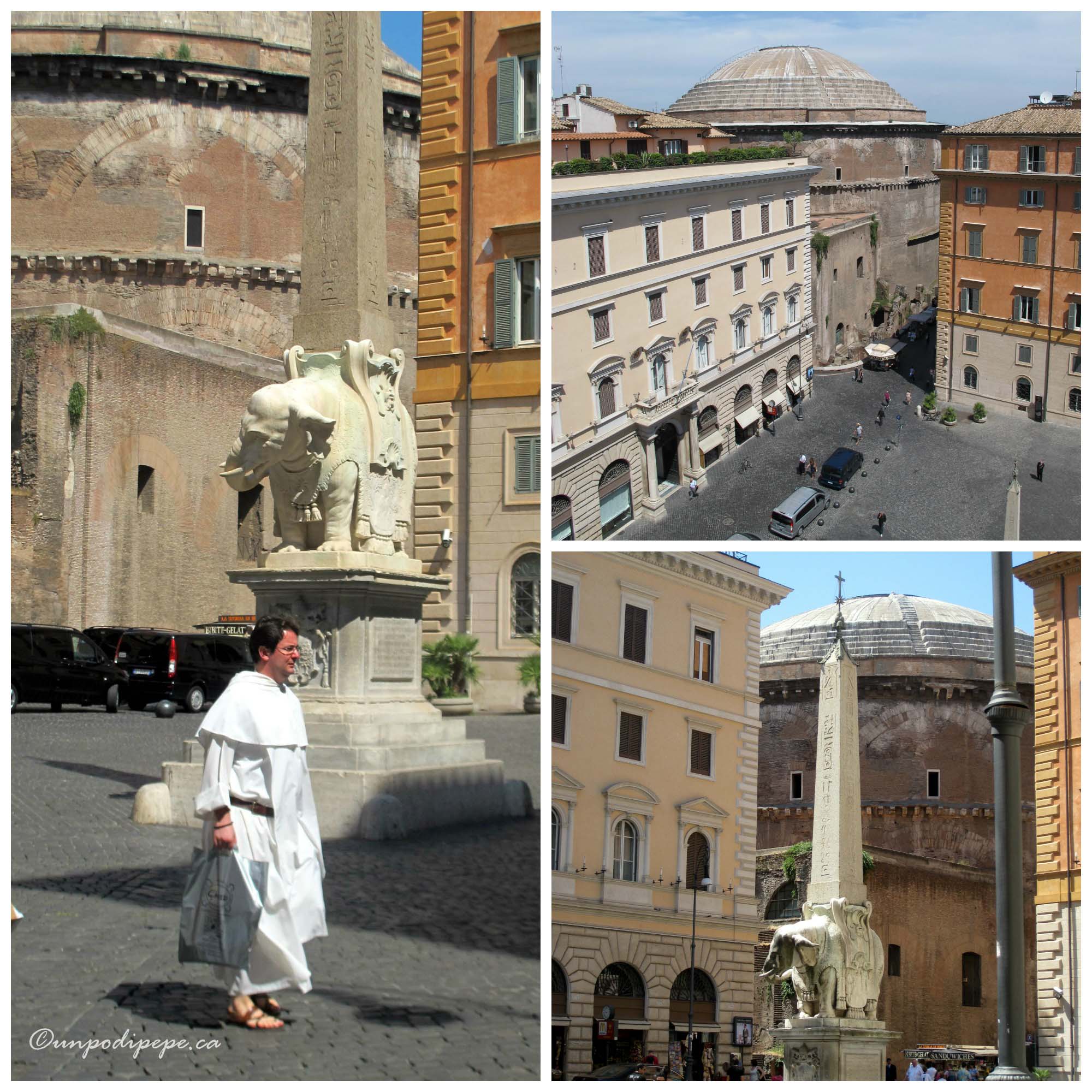
Piazzadellarotonda500 years ago, Michelangelo entered the Pantheon and stated that it looked more like the work of angels than humans. The Pantheon is an architectural masterpiece and the most well-preserved building from Ancient Rome.  This is probably because it has been in continuous use since it was built.  The original use of the Pantheon is not known.  Many think it was a temple to all the gods, since ‘Pan-theos’ is Greek for ‘all gods’, although Ancient Roman temples were dedicated to single gods.  ‘Pan-theos’ might also refer to the heavens, the territory of the gods.  According to legend the site is where Romulus, the founder of Roma ascended to the heavens.  IlPantheonMarcus Agrippa, Augustus’ commander in chief built the original Pantheon on his own land, so it may have been a private building.  This building burned down in 80 AD and then was struck by lightning and burned again in 110 AD! The Pantheon standing today was completed around 126 AD by Emperor Hadrian.  He kept the original inscription under the pediment ‘M.Agrippa.L.F.Costertium.Fecit’ (Made by Marcus Agrippa, son of Lucius in his third time as Consul) which caused confusion about the construction date.  The Pantheon was given to the Pope in 609, and it has been the Church of Santa Maria dei Martiri ever since, but it is usually still called the Pantheon.Pantheonfontana

From the outside, the Pantheon looks like a Greek temple. It is actually a round building (rotunda) with a portico of eight 12m (39 ft) high granite Corinthian columns up front and 8 more in behind. These columns are each a single 60 ton piece of stone quarried in Egypt.  Imagine the journey these huge stones made to get here….they were dragged through the desert, barged down the Nile to Alexandria, shipped across the Mediterranean to the port of Ostia, barged down the Tevere to Roma and then hauled overland to the site of the Pantheon!Pantheon oculus

Enter into the Pantheon and it is immediately clear what Michelangelo meant. Overhead is the largest unreinforced concrete dome in the world-still after almost 2,000 years! The Romans invented concrete, using a mixture of volcanic ash and soil from Pozzuoli, lime and rocks, but they did not have rebar, so this is amazing! The 8 m wide hole in the roof is the oculus and the shaft of light coming in from the sun moves slowly throughout the day like a sun-dial.  When looking up, the dome feels like it could rotate. The oculus and front door are the Pantheon’s only sources of natural light.  Concrete walls 6m (20 ft) thick support the dome, which is 6m thick at its base but narrows to 1.2m (3.9 ft) around the oculus.  Lighter materials, such as tufa, pumice and even broken terra cotta pots were used towards the top to further lighten the load.  The oculus also lightens the load at the very top, acting as a compression ring where the roof would be its weakest. Rainwater coming in through the oculus is drained off through holes and a drainage system under the slanted marble floor.

Is it a mask for Carnevale? No, these are drainage holes in the floor right below the oculus!

Is it a mask for Carnevale? No, these are drainage holes in the floor right below the oculus!

The height of the oculus is 43.3m (150 Roman feet) and the diameter of the building is also 43.3m. A perfect 43.3m sphere would fit inside the building. For another visual, if the dome was flipped upside down, it would fit perfectly inside the rotunda.

The perfect mathematical proportions of the Pantheon invoke harmony and symbolize the earth and the heavens. The Pantheon has provided inspiration to architects including Brunelleschi and Michelangelo for almost 2,000 years.  Public buildings throughout the world are modelled on the Pantheon’s ‘portico and dome’ design.Pantheonchapel

In the 17 the Century, the Barberini Pope Urbano VII removed the bronze ceiling from the portico and melted it down to make cannons for Castel Sant’Angelo. The outrage prompted the saying ‘Quello che non hanno fatto i barberi hanno fatto i Barberini’ (What the barbarians didn’t do, the Barberini did), implying that the Pantheon had survived numerous barbarian invasions, only to be looted by the Barberini family. In addition to functioning as a Classical Masterpiece and a Church, many notable Italiani are buried in the Pantheon.  Some of these include Vittorio Emanuele II, Umberto II and his wife Margherita di Savoia, Rafaelle Sanzio da Urbino (Raphael) and his fiancée Maria Bibbiena.

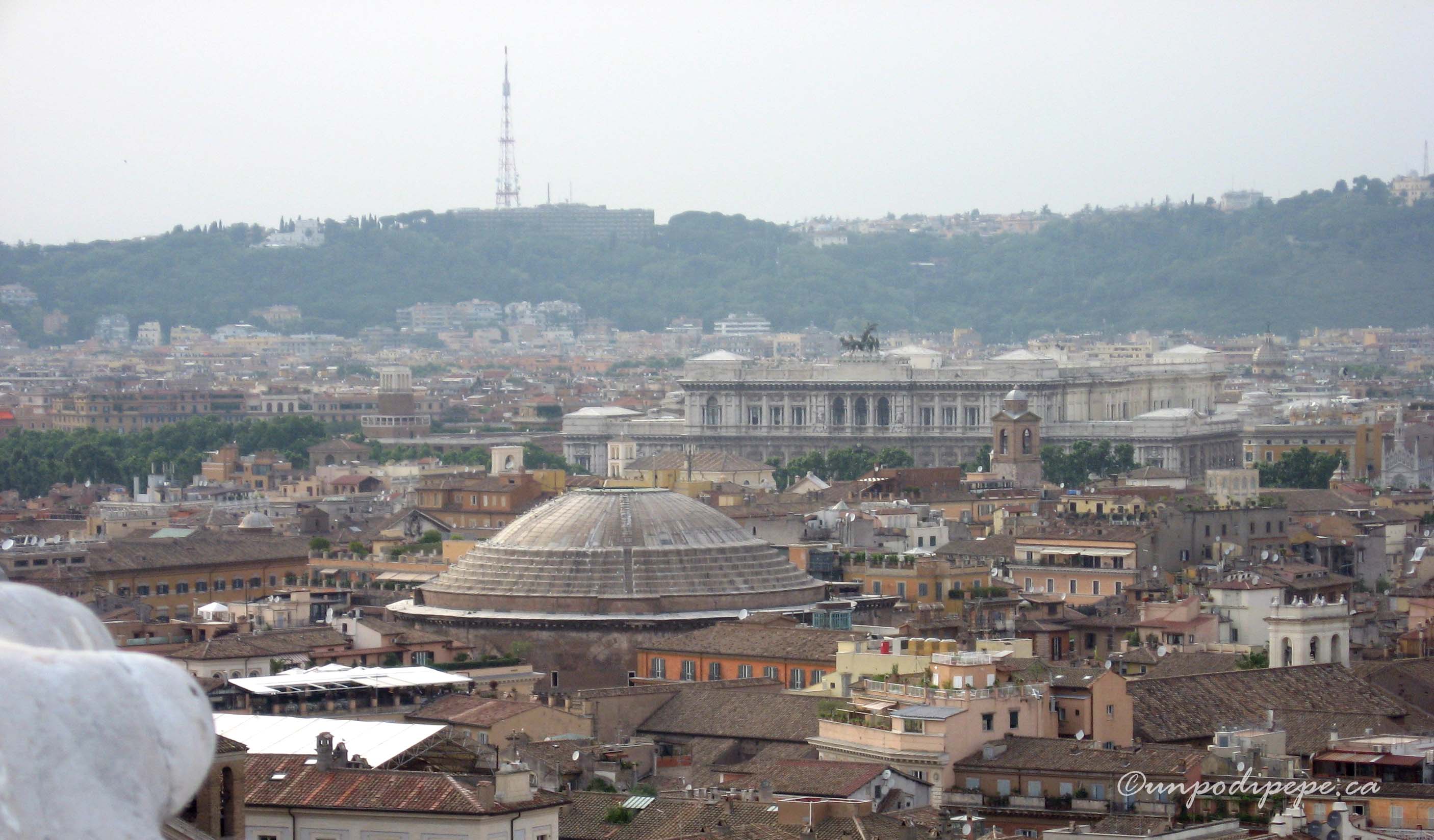
Il Pantheon from Il Vittoriano

Il Pantheon from Il Vittoriano

‘La Pioggia delle Rose al Pantheon’ (the rain of roses) is on my list of things to see. This takes place on Pentecost Sunday, 50 days after Easter.  At noon, right after Mass, Roma’s Vigili del Fuoco (fire fighters) climb to the top of the dome and drop thousands of rose petals through the oculus as choirs sing.  The rose petals symbolize the Holy Spirit coming down to earth.  Even Michelangelo would be impressed!

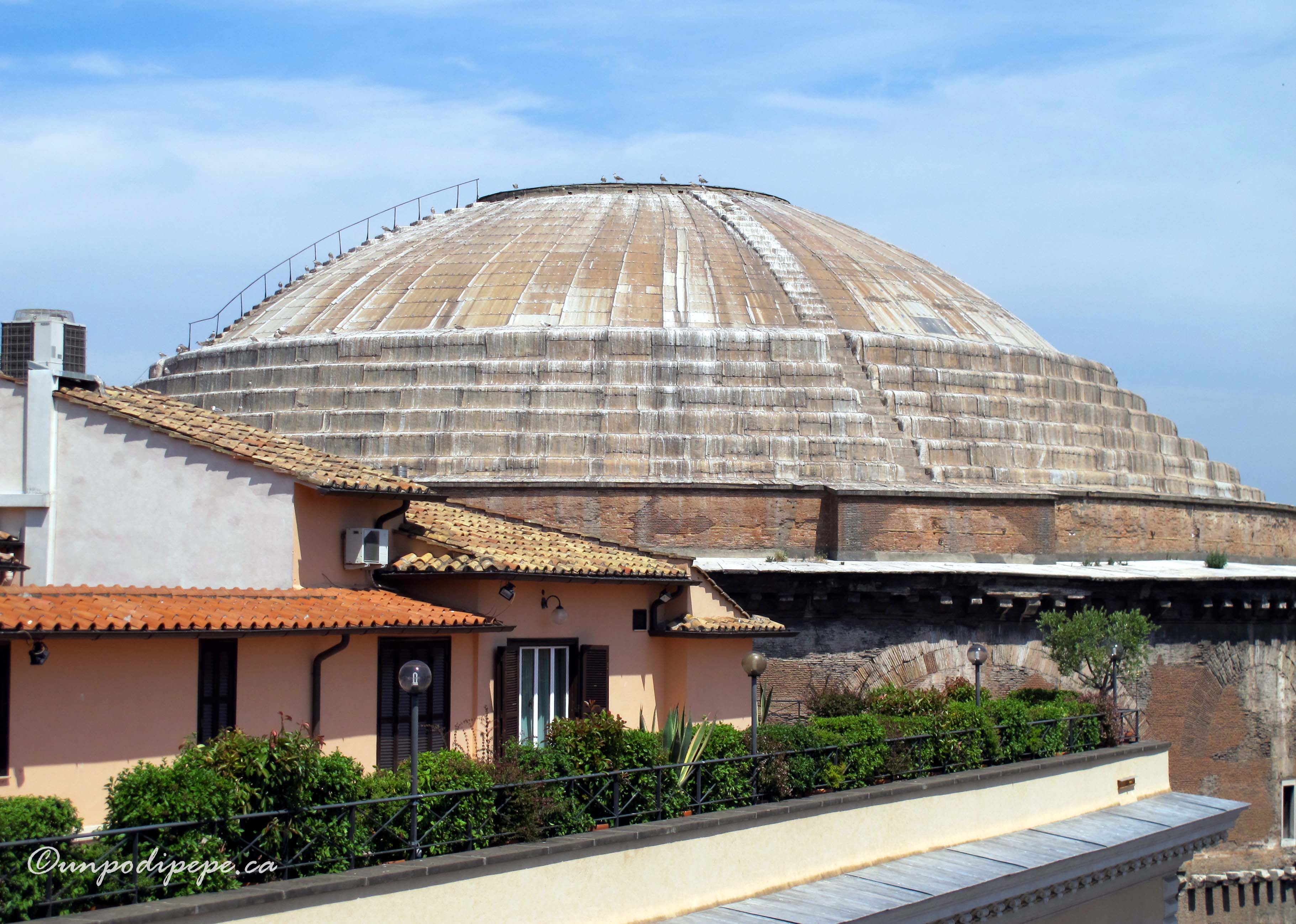
The dome and oculus, viewed from the roof of Grande Hotel de la Minerve

The dome and oculus, viewed from the roof of Grande Hotel de la Minerve

Il Pantheon from Piazza de la Minerva

Il Pantheon from Piazza de la Minerva

Il Pantheon is also featured in my post ‘Un Giorno a Roma’.

©2016 http://www.unpodipepe.ca


Share this:

  • Share on Facebook (Opens in new window) Facebook
  • Share on Pinterest (Opens in new window) Pinterest
  • Share on X (Opens in new window) X
  • Email a link to a friend (Opens in new window) Email
  • Share on WhatsApp (Opens in new window) WhatsApp
Like Loading...

Viste di Firenze

29 Sunday Nov 2015

Posted by Un po' di pepe in Firenze, Italia, Photography, Travel

≈ 12 Comments

Tags

Firenze, Florence, Piazzale Michelangelo, Ponte Vecchio, San Miniato al Monte, Santa Croce, Santa Maria del Fiore, Torre di Giotto

OLYMPUS DIGITAL CAMERA

When I travel I seem to be attracted to the view from the tallest thing I can find.  Maybe it’s because I’m ‘vertically challenged’?  It does lead to some spectacular views.  Here is a collection of my favourite scatti (shots) of viste(views) of Firenze .

La Terrazza degli Uffizi

La Terrazza degli Uffizi

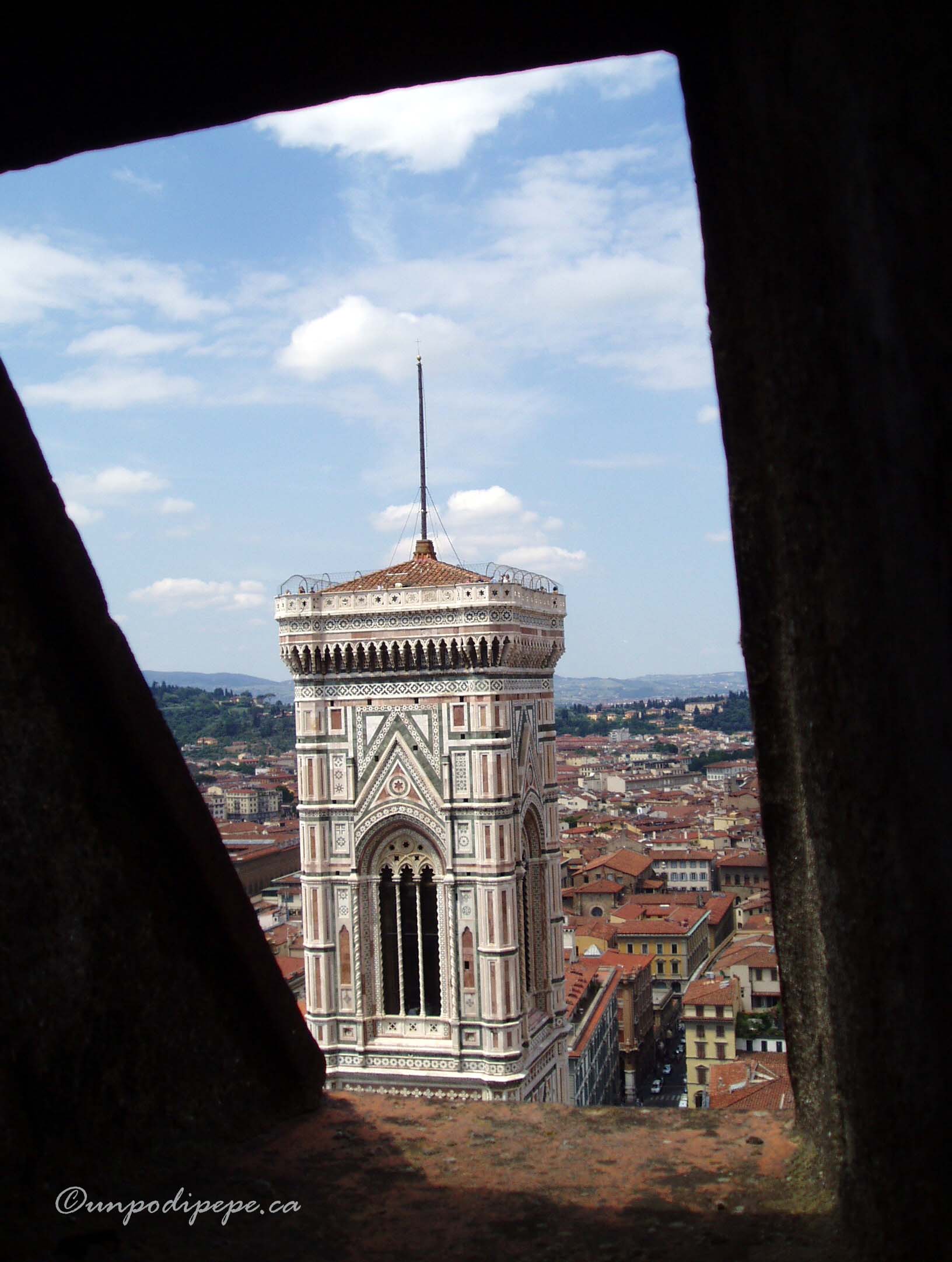
Il Duomo di Santa Maria del Fiore from la Torre di Giotto (Giotto's Tower)

Il Duomo di Santa Maria del Fiore from la Torre di Giotto (Giotto’s Tower)

La Torre di Giotto vista dal Duomo

La Torre di Giotto vista dal Duomo

'Santa Maria sotto restauro'

‘Santa Maria sotto restauro’

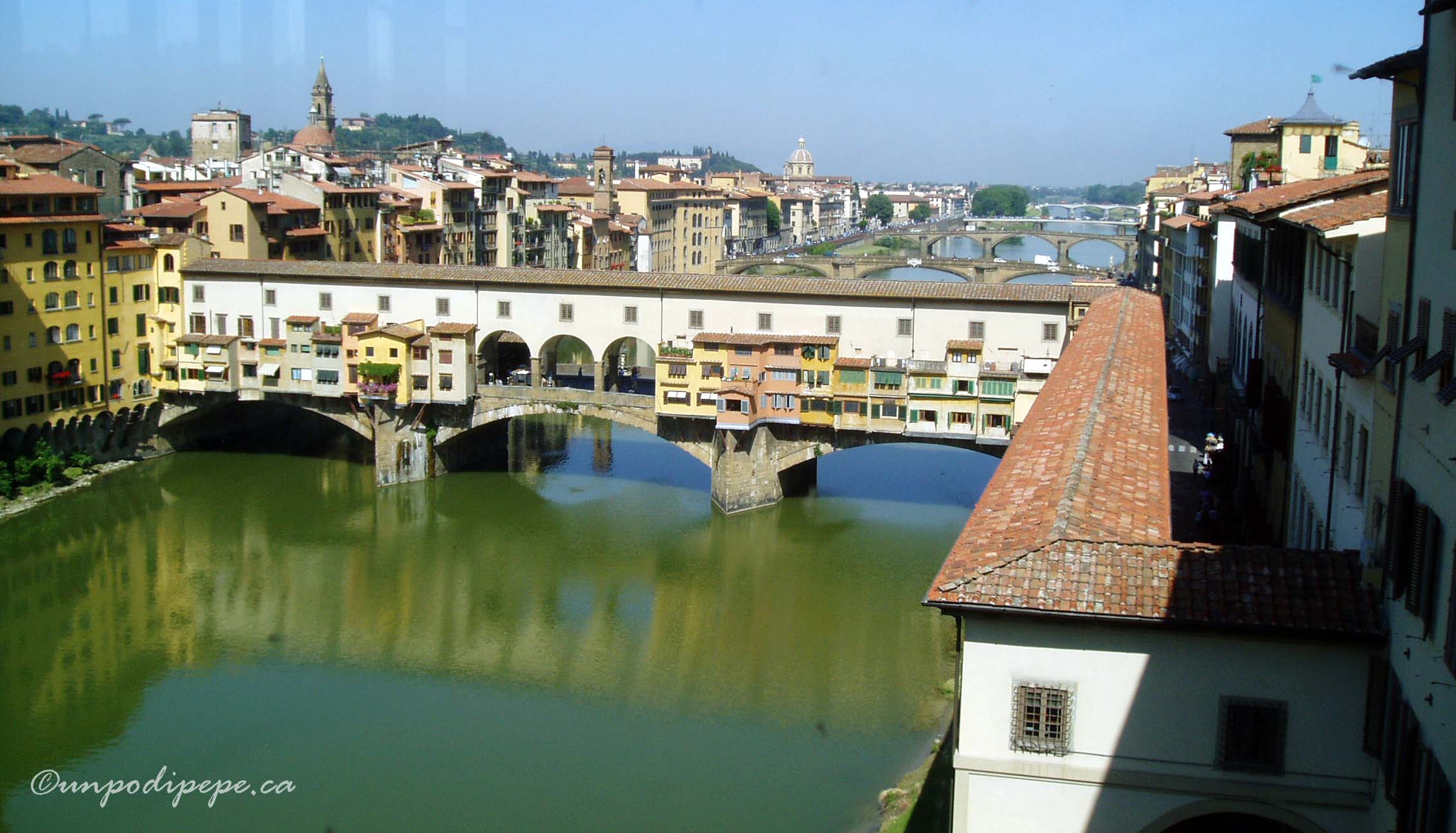
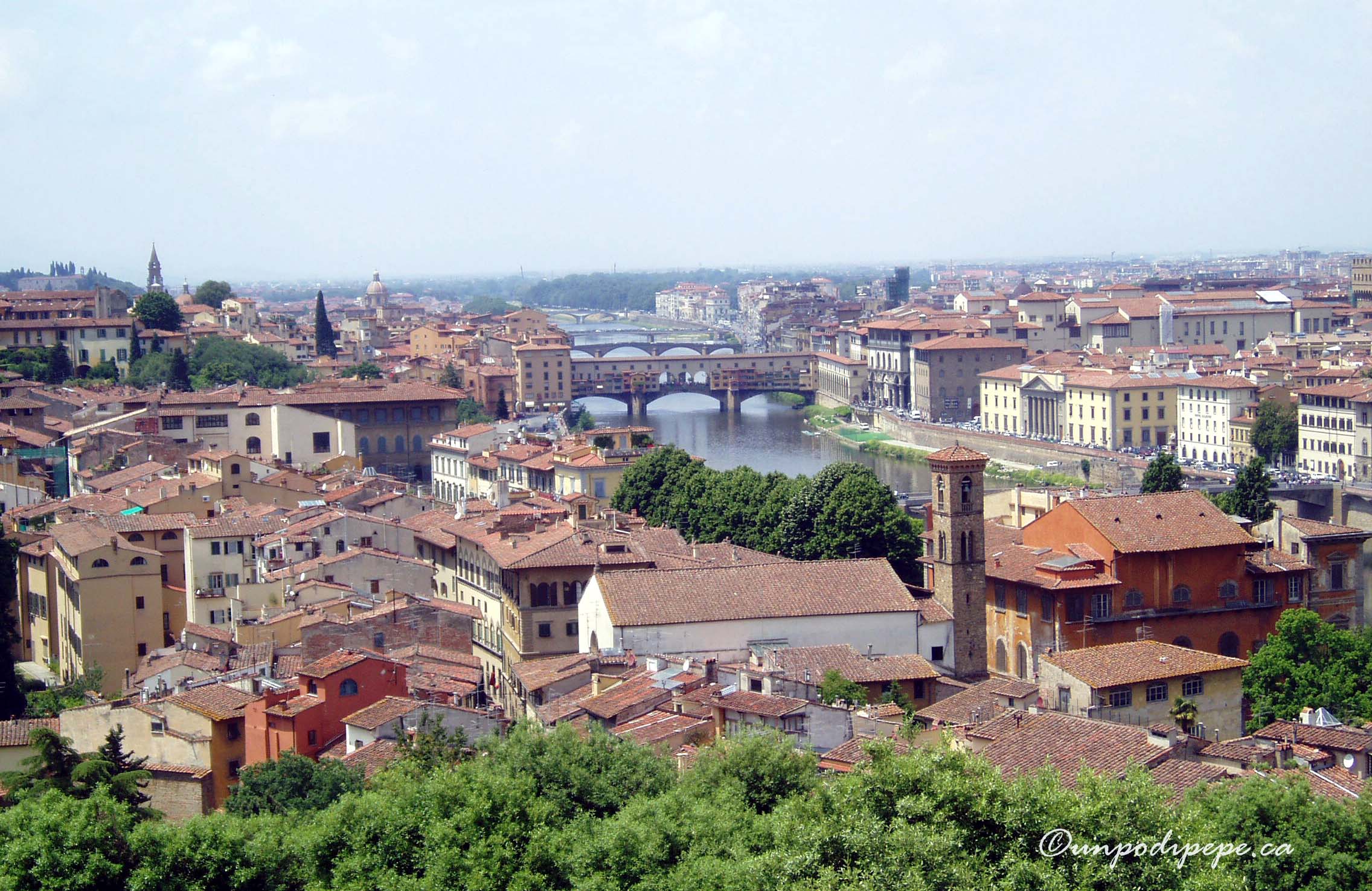
Vista dalla finestra degli Uffizi/View of the Ponte Vecchio from a window in the Uffizi Gallery

Vista dalla finestra degli Uffizi/View of the Ponte Vecchio from a window in the Uffizi Gallery

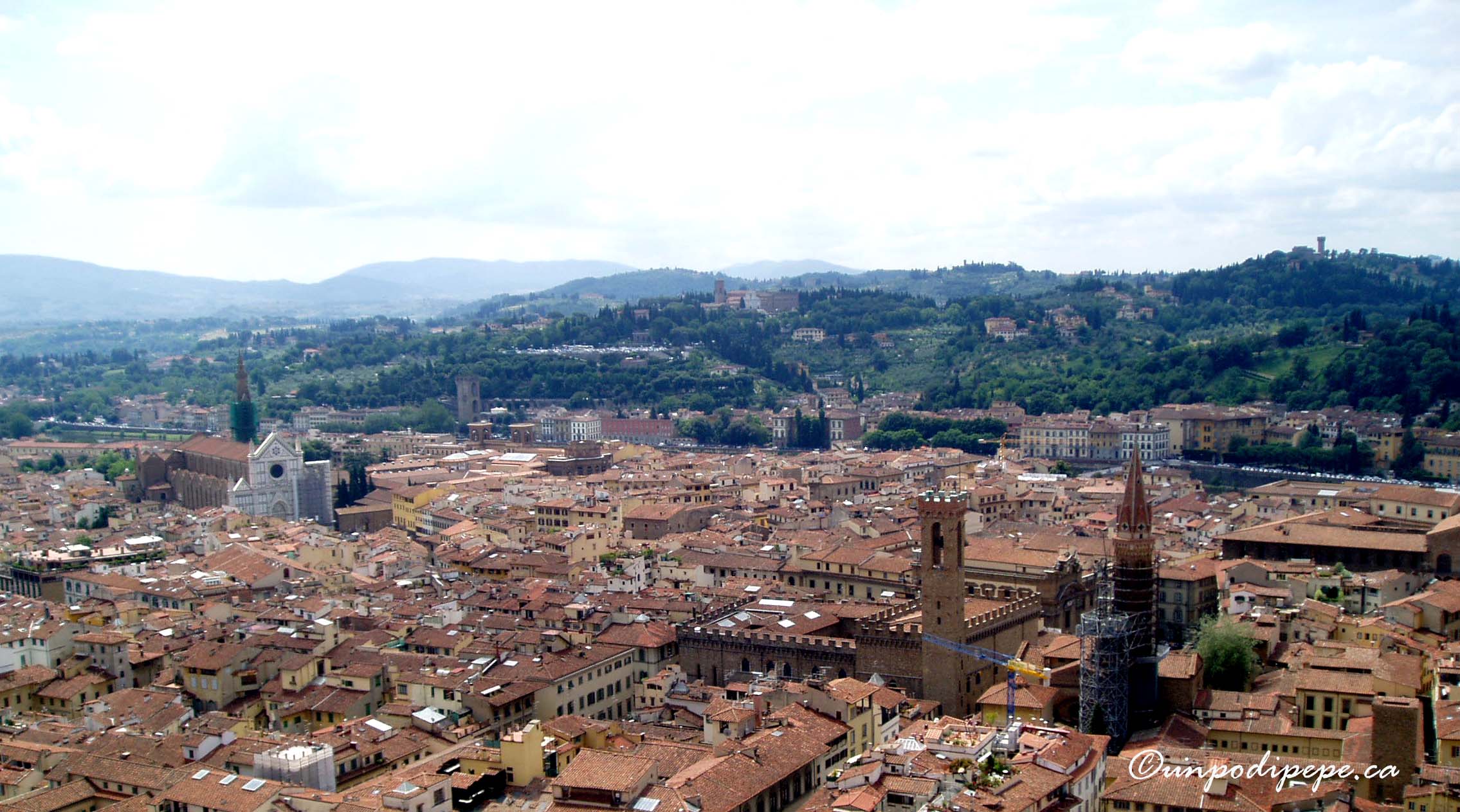
Vista di Santa Croce dalla Torre di Giotto

Vista di Santa Croce dalla Torre di Giotto

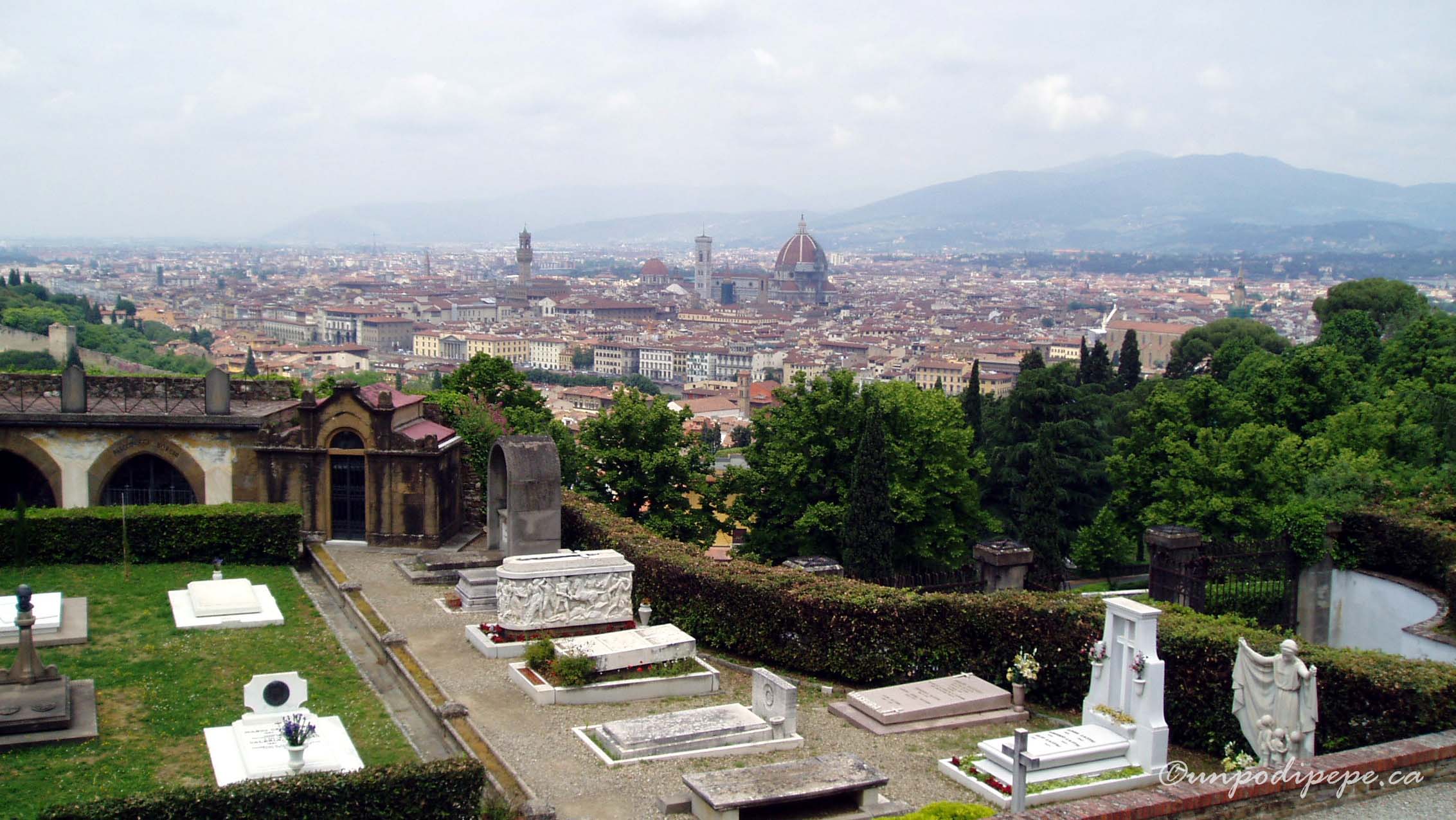
Firenze vista dal cimitero San Miniato al Monte/Firenze seen from the cemetery, San Miniato al Monte

Firenze vista dal cimitero San Miniato al Monte/Firenze seen from the cemetery, San Miniato al Monte

Vista da Piazzale Michelangelo

Vista da Piazzale Michelangelo

Ciao, Cristina
Share this:

  • Share on Facebook (Opens in new window) Facebook
  • Share on Pinterest (Opens in new window) Pinterest
  • Share on X (Opens in new window) X
  • Email a link to a friend (Opens in new window) Email
  • Share on WhatsApp (Opens in new window) WhatsApp
Like Loading...

The Whitsundays~Giù di Sotto Part 2

29 Thursday Oct 2015

Posted by Un po' di pepe in Photography, Travel

≈ 9 Comments

Tags

Australia, Australia travel, Cockatoo, Grande Barriera Corallina, Great Barrier Reef, Hamilton Island, Hardy Reef, Queensland, Rainbow Lorikeet, Whitehaven Beach, Whitsunday Islands, Whitsundays

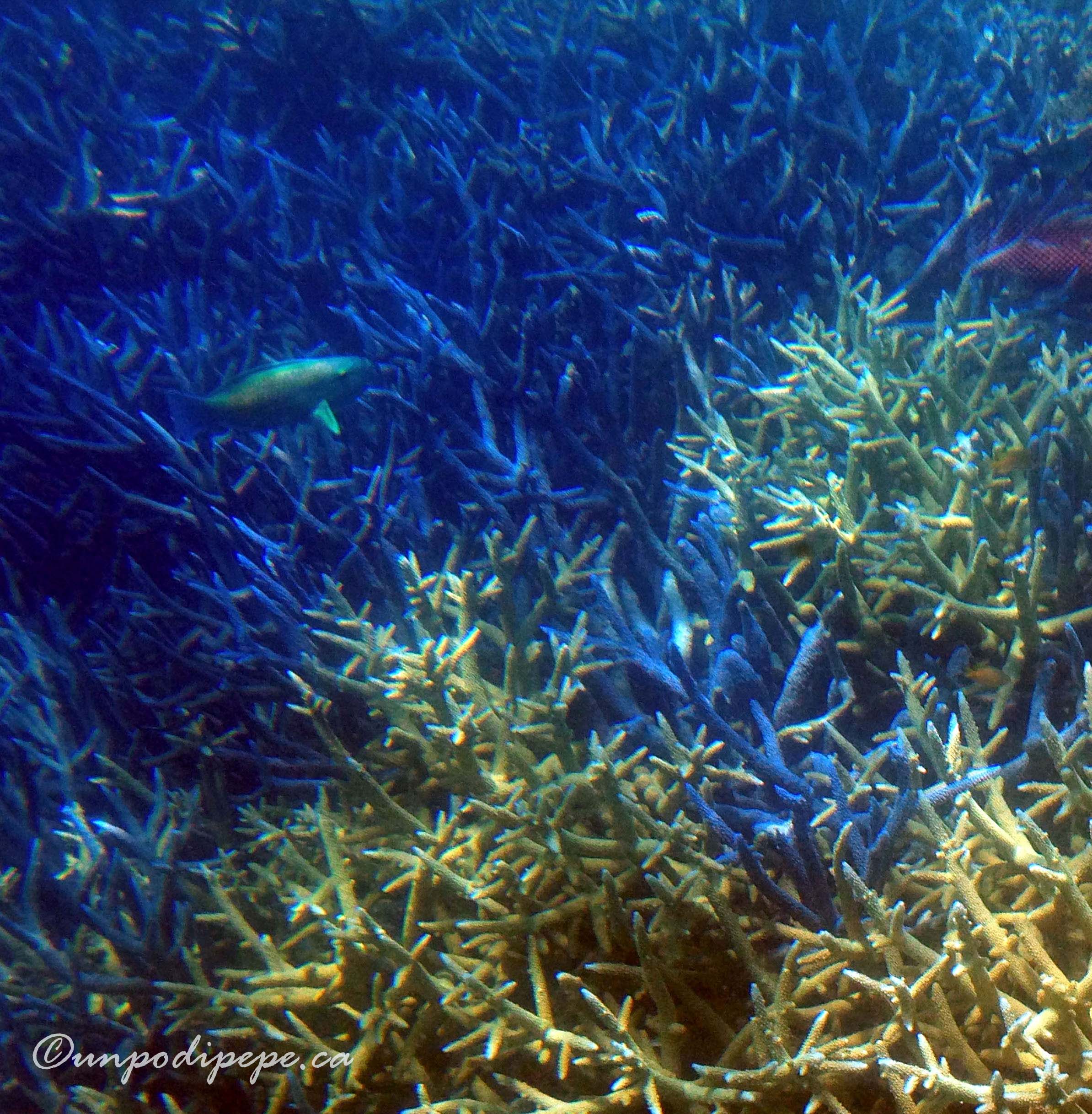
reefview2After attending a conference in Brisbane, I spent 5 days in the Whitsunday Islands.  If you read about my trip to Australia in Giù di Sotto, this is part 2. The Whitsundays are a group of 74 islands off the coast of Queensland, named incorrectly by Captain Cook.  He had crossed the International Date Line, so it was Monday! The islands are sheltered by La Grande Barriera Corallina-the Great Barrier Reef, making them a great place for boating. In 1988 I spent a few days sailing in the Whitsundays, and they are just as beautiful now.Catseyebeach

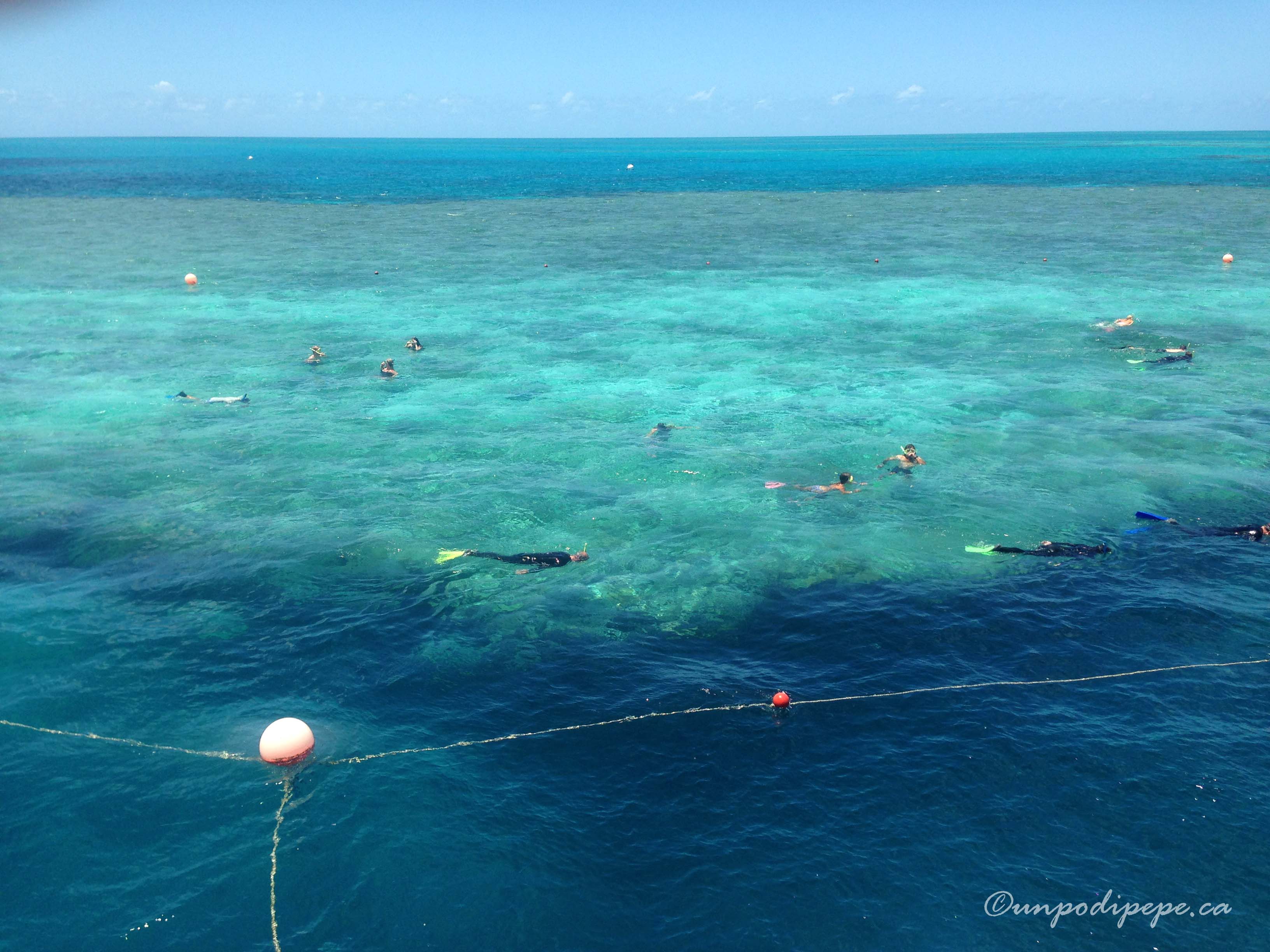
I took a daytrip to the Great Barrier Reef, a world heritage area which is the only living thing visible from space!  It took 2 hours to get to a large pontoon next to Hardy Reef where I spent 4 hours before heading back.  The pontoon had snorkel and scuba equipment, and a semi-submersible with glass sides.  I met someone on the pontoon who had done ‘Reefsleep’, spending the previous night on the deck.  He said ‘at 8 pm they turned off all the lights and God turned on the stars’.  Wow.Reefworld

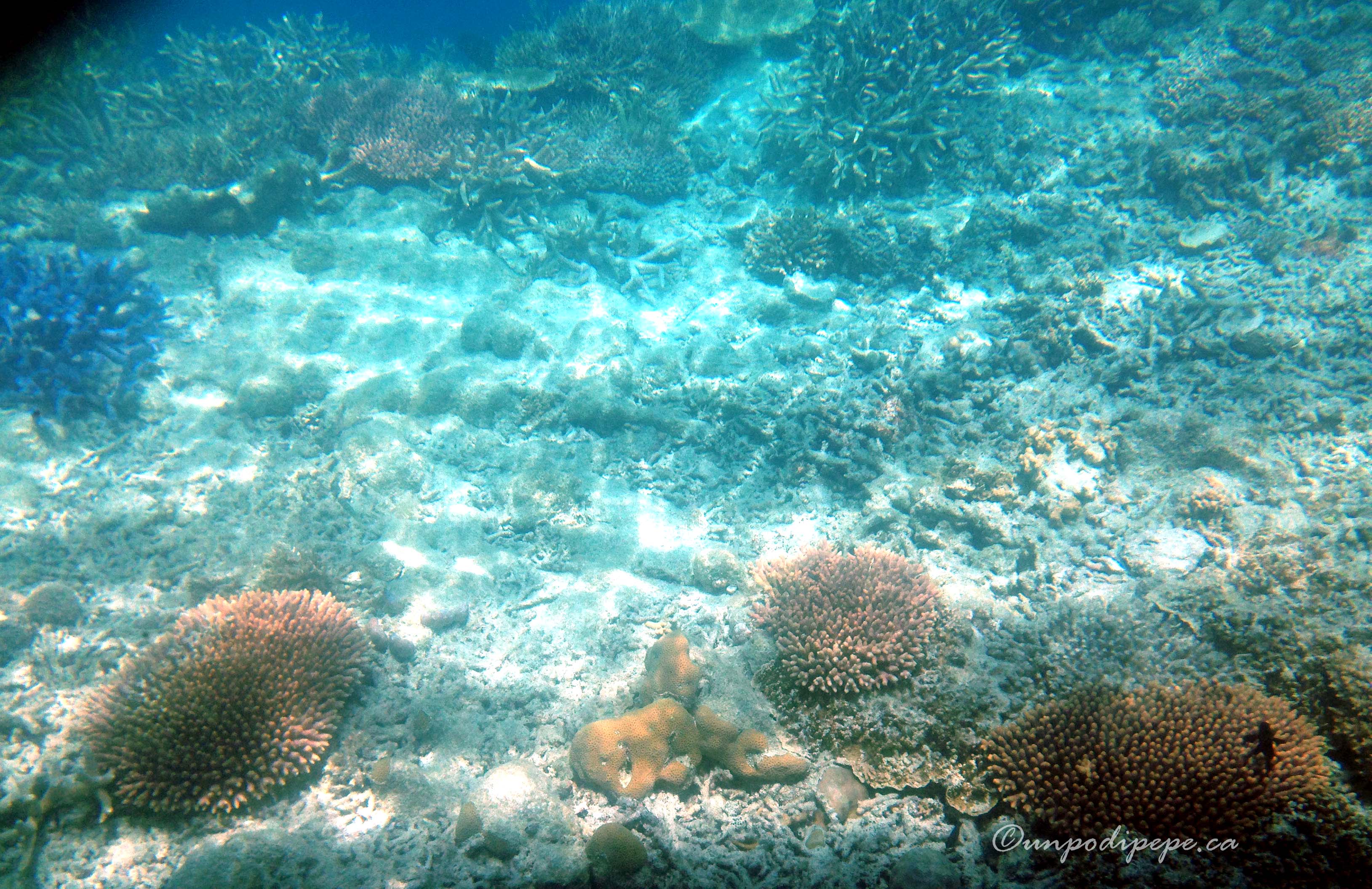
I went snorkeling and it was spectacular-although I must admit I was terrified.  I’m not a strong swimmer and don’t like to be in deep water.  They recommended we wear ‘stinger suits’ because in warm deep water there can be tiny jellyfish called Urukandji that are very dangerous.  They are found mostly in the Australian summer and farther north near Cairns, but everyone is extremely safety conscious.  Greatbarrierreef3I had trouble keeping the camera still, so my reef photos are a bit blurry.  The only time in my life I would have liked one of those ridiculous selfie sticks! Photos can’t capture the reef like being there.  I saw hundreds of little fishies, but did not end up finding Nemo. Greatbarrierereef1

Underwater sunshine!

Underwater sunshine!

ReeffishWhen I went for a ride in the semi-sub, I was so glad to be out of the water because I saw un squallo-a reef shark!  Eek!  I know, they are small, apparently ‘harmless’, eat small fish and are afraid of people, but I don’t think the words ‘harmless’ and ‘shark’ should ever be used in the same sentence. There was a scuba underwater marriage proposal.  Staff divers helped him roll out a big cloth that said ‘Will you marry me?’, and she said ‘yes’!

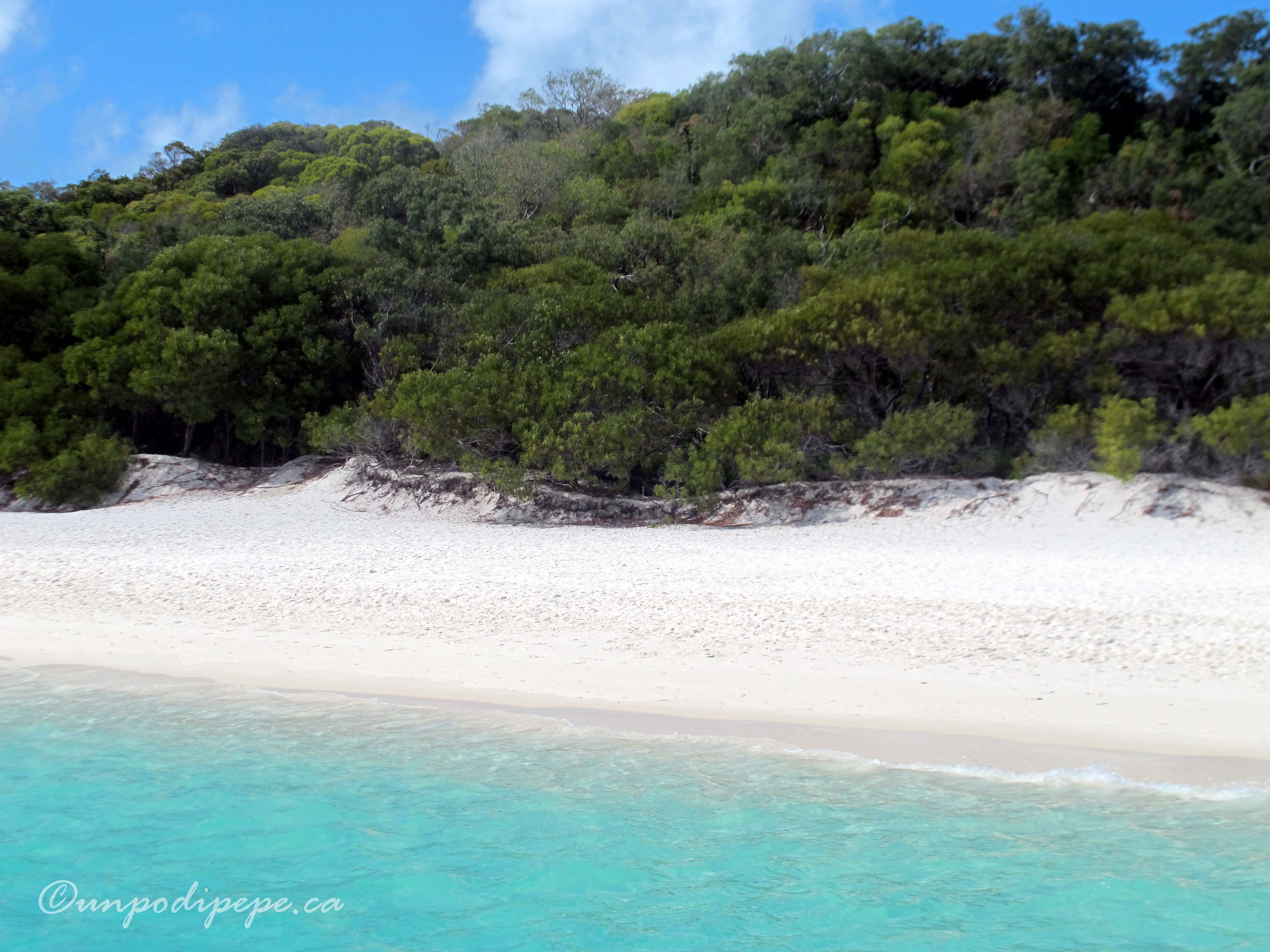
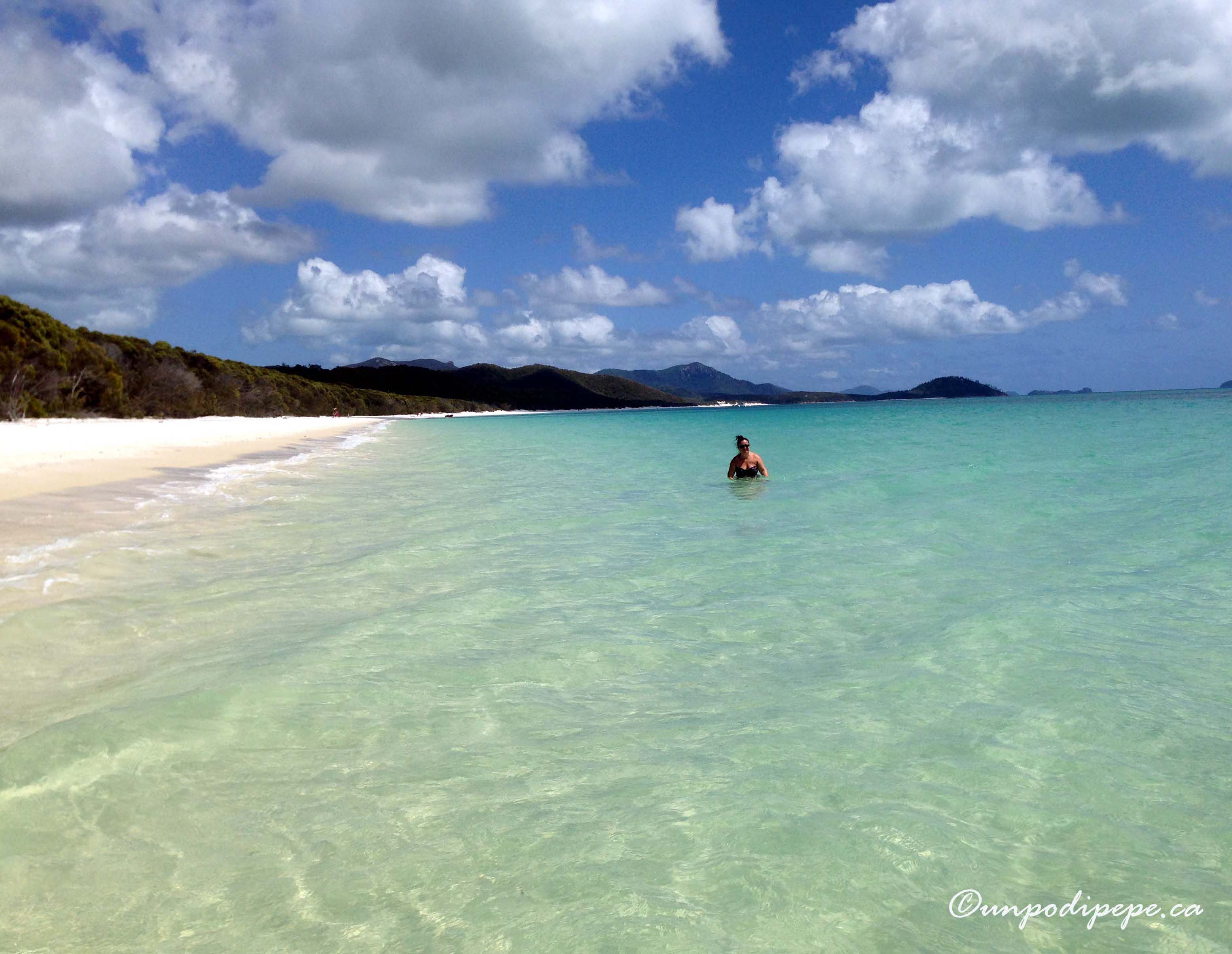
WhitehavenWhitehaven Beach, on Whitsunday Island really should be called ‘Whiteheaven Beach’.  It’s 7 km of pure white silica sand that doesn’t get hot no matter what the temperature is.  The island has been a protected National Park for 30 years and it looks just as stunning and unspoiled as it did in 1988.  Whitehaven is considered the most beautiful beach in Australia and among the top 10 in the world.whitehavenbeach

One evening I went kyacking to watch the sunset over Dent Island and Plum Pudding Island-yes there really is an island called Plum Pudding!  Along the way, a big slimy green head with droopy eyes came up out of the water beside my kyack, opened it’s mouth, took a giant breath then dove back in.  Then I saw it’s shell and realized it was not a sea monster, but a sea turtle.kyackingwhitsundays

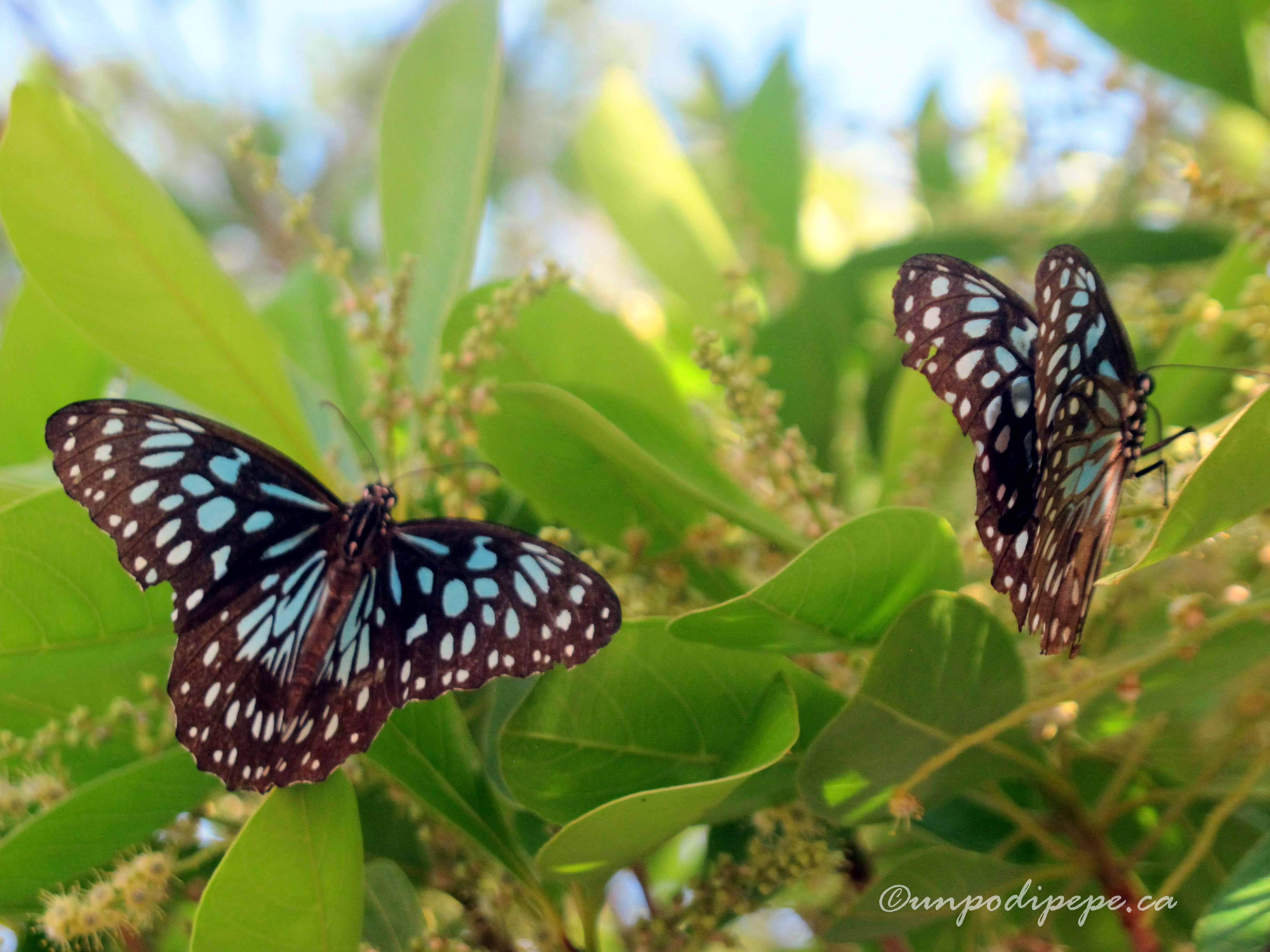
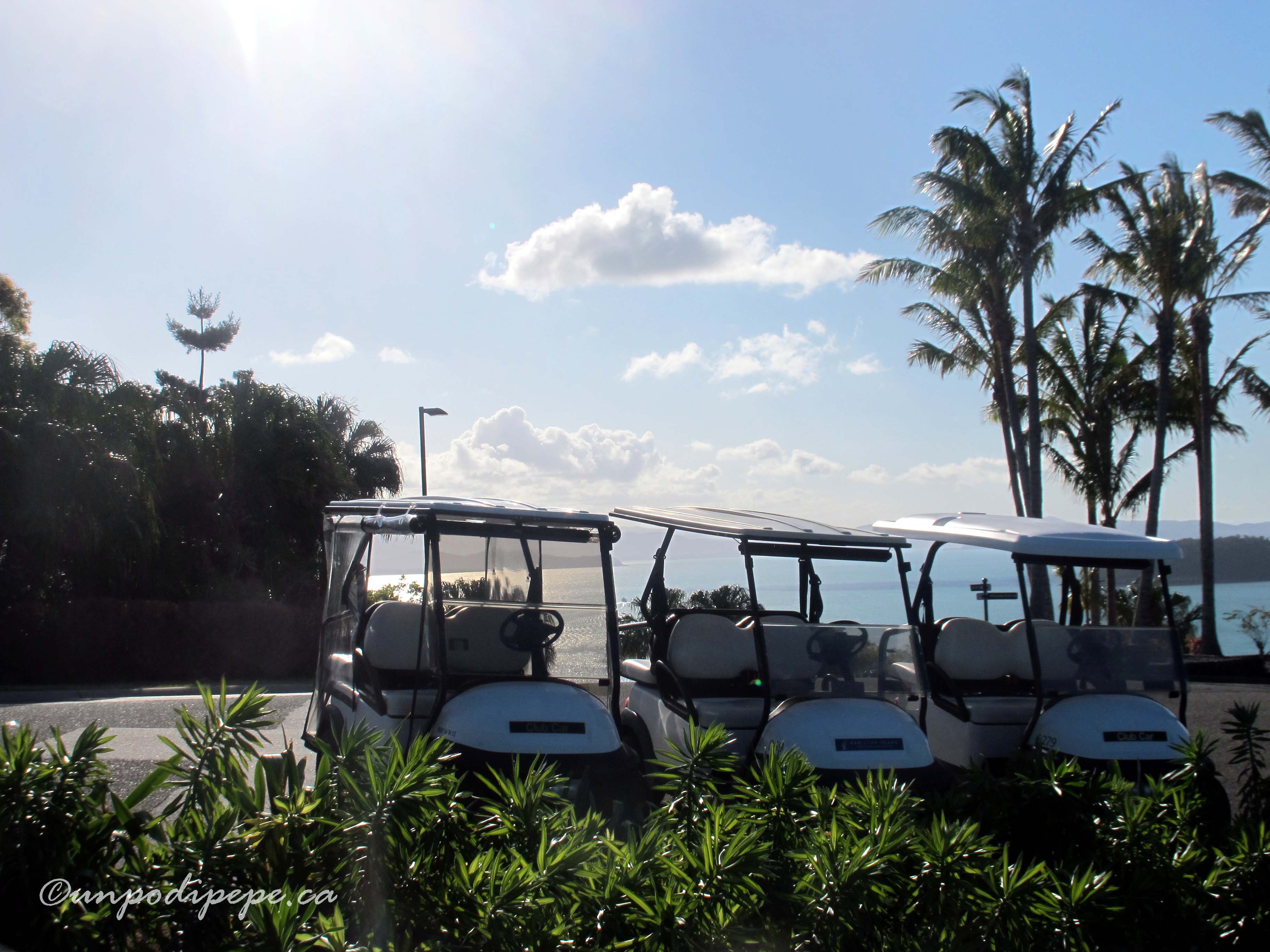
While kyacking, I was invited to Trivia Night at the Marina Tavern.  My team won and my prize was 24 hours of ‘buggy hire’.  The Whitsundays are car-free.  On Hamilton Island, you can get around on the free bus, or with a buggy-an electric golf cart.  BuggieshamiltonislandMy new friends from Argentina and I went cruising around and drove to the Church up the hill.  Since it was spring, there were farfalle (butterflies) everywhere.  Thousands of them!  They even flew through the open window while I was attempting to drive on the other side of the road.  Luckily I didn’t hit anything!ChurchhamiltonislandFarfallehamiltonisland

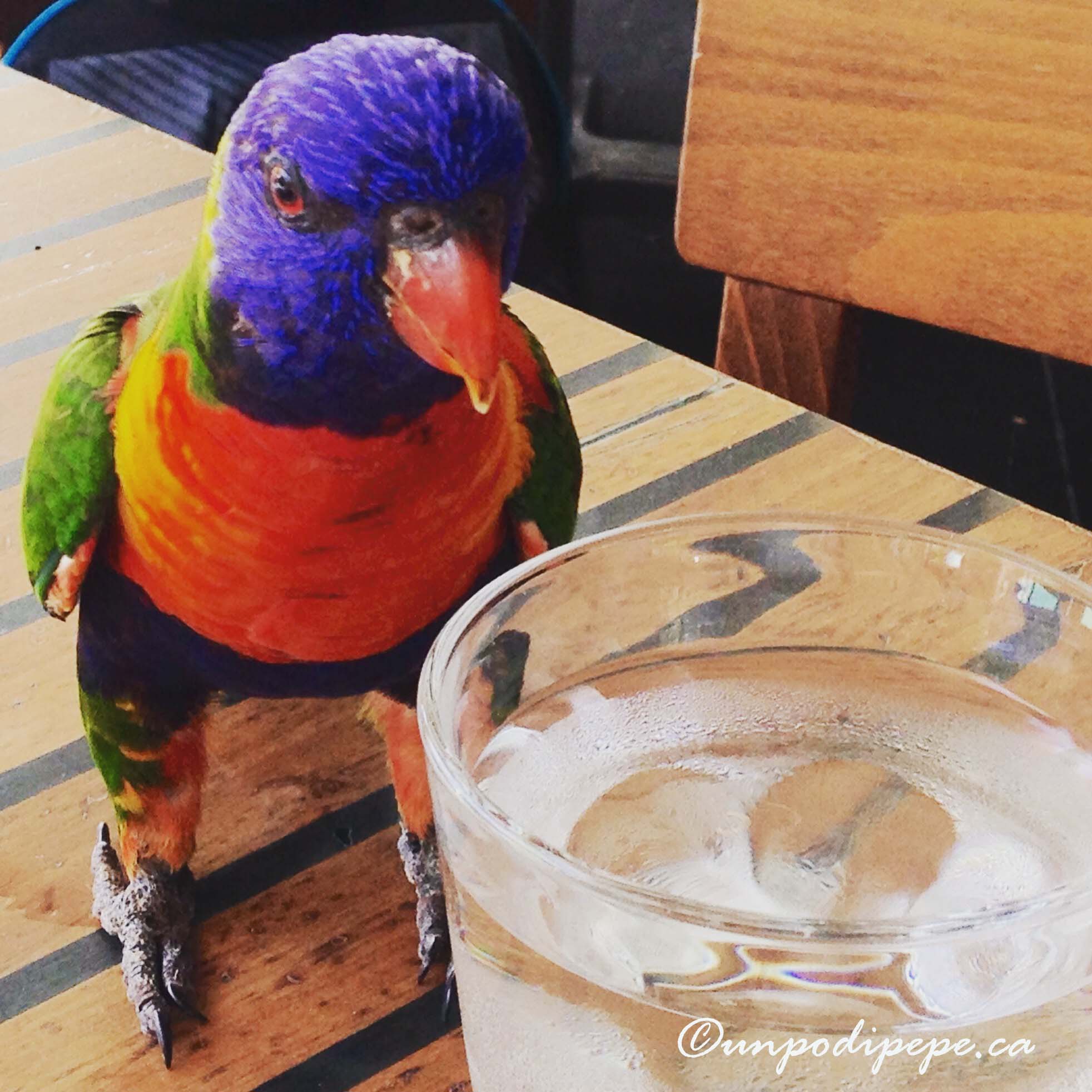
FarfalleThere was a lot of wildlife on Hamilton Island besides the farfalle.  One night I saw a wallaby as I walked back to the hotel, another night a possum.  Beautiful Rainbow Lorikeets flew all over, and became very friendly when they saw food!  Rainbowlorikeet2Lorenzo the cockatoo hung out on my balcony.  Why did I call him Lorenzo?  If you have seen paintings of Lorenzo de’ Medici’s naso (nose), you will understand!CockatooLorenzo  I hope you have enjoyed this photo journey to the Whitsundays!  Ciao, Cristina
Share this:

  • Share on Facebook (Opens in new window) Facebook
  • Share on Pinterest (Opens in new window) Pinterest
  • Share on X (Opens in new window) X
  • Email a link to a friend (Opens in new window) Email
  • Share on WhatsApp (Opens in new window) WhatsApp
Like Loading...
← Older posts
Newer posts →

Enter your email address to follow 'un po' di pepe' and receive notifications of new posts by email.

Join 511 other subscribers
Follow Un po' di pepe on WordPress.com

Popular Posts

  • Hairstyling in Ancient Roma
    Hairstyling in Ancient Roma
  • Caffè con Caravaggio a Roma
    Caffè con Caravaggio a Roma
  • L'ultimo Caravaggio
    L'ultimo Caravaggio
  • Artemisia Gentileschi
    Artemisia Gentileschi
  • Casino dell’Aurora~Villa Boncompagni Ludovisi
    Casino dell’Aurora~Villa Boncompagni Ludovisi
  • L'arte sa nuotare
    L'arte sa nuotare
  • Santa Maria in Aracoeli
    Santa Maria in Aracoeli

Recent Posts

  • Sanremo 2026
  • Cucina Italiana Patrimonio UNESCO
  • 2025~Un po’ di pepe Year in Review
  • Castel del Monte
  • ‘The Nuances of Love’
  • Hostaria Antica Roma~Eat like an Ancient Roman
  • Santa Maria in Aracoeli
  • Casino dell’Aurora~Villa Boncompagni Ludovisi
  • Nasoni di Roma
  • Bloghiversario #11
  • Fontana di Trevi
  • Acqua Vergine
  • Giubileo 2025
  • Sanremo 2025
  • In Vino there are Memories
  • A Literary Harvest
  • 2024~Un po’ di pepe Year in Review
  • Buon Natale 2024
  • Il Bicerin
  • Mercato Porta Palazzo
  • Torino
  • Catanzaro, Calabria
  • Il Pumo Pugliese
  • Artemisia Gentileschi
  • Cavalli di San Marco

Categories

Amici e Famiglia Architecture Art Art history Art projects Bilingual posts Blogging Canada Culture Feste Firenze Inspiration Italia Italian Folklore Italian language Italian life Italocanadesi Libri Mangiamo! Orsara di Puglia Parole piacevoli Photography Puglia Recipes Roma Travel Travel tips Uncategorized Vino

Archives

Un po’ di pepe on Facebook

Un po’ di pepe on Facebook

Start a Blog at WordPress.com.

  • Subscribe Subscribed
    • Un po' di pepe
    • Join 511 other subscribers
    • Already have a WordPress.com account? Log in now.
    • Un po' di pepe
    • Subscribe Subscribed
    • Sign up
    • Log in
    • Report this content
    • View site in Reader
    • Manage subscriptions
    • Collapse this bar
 

Loading Comments...
 

    %d