• Home
  • About me/Chi sono
  • Contact

Un po' di pepe

~ …… (oon∙poh∙dee∙PEH∙peh) Cristina writes about interesting stuff /Cristina scrive di cose interessanti

Un po' di pepe

Category Archives: Roma

Spaghetti all’Amatriciana

30 Tuesday Aug 2016

Posted by Un po' di pepe in Italia, Mangiamo!, Recipes, Roma

≈ 16 Comments

Tags

Amatrice, Croce Rossa Italiana, Cucina Romana, Earthquake relief Central Italy, Inspiration, Italian food, Pasta all'Amatriciana, Terremoto 2016, Traditional recipes

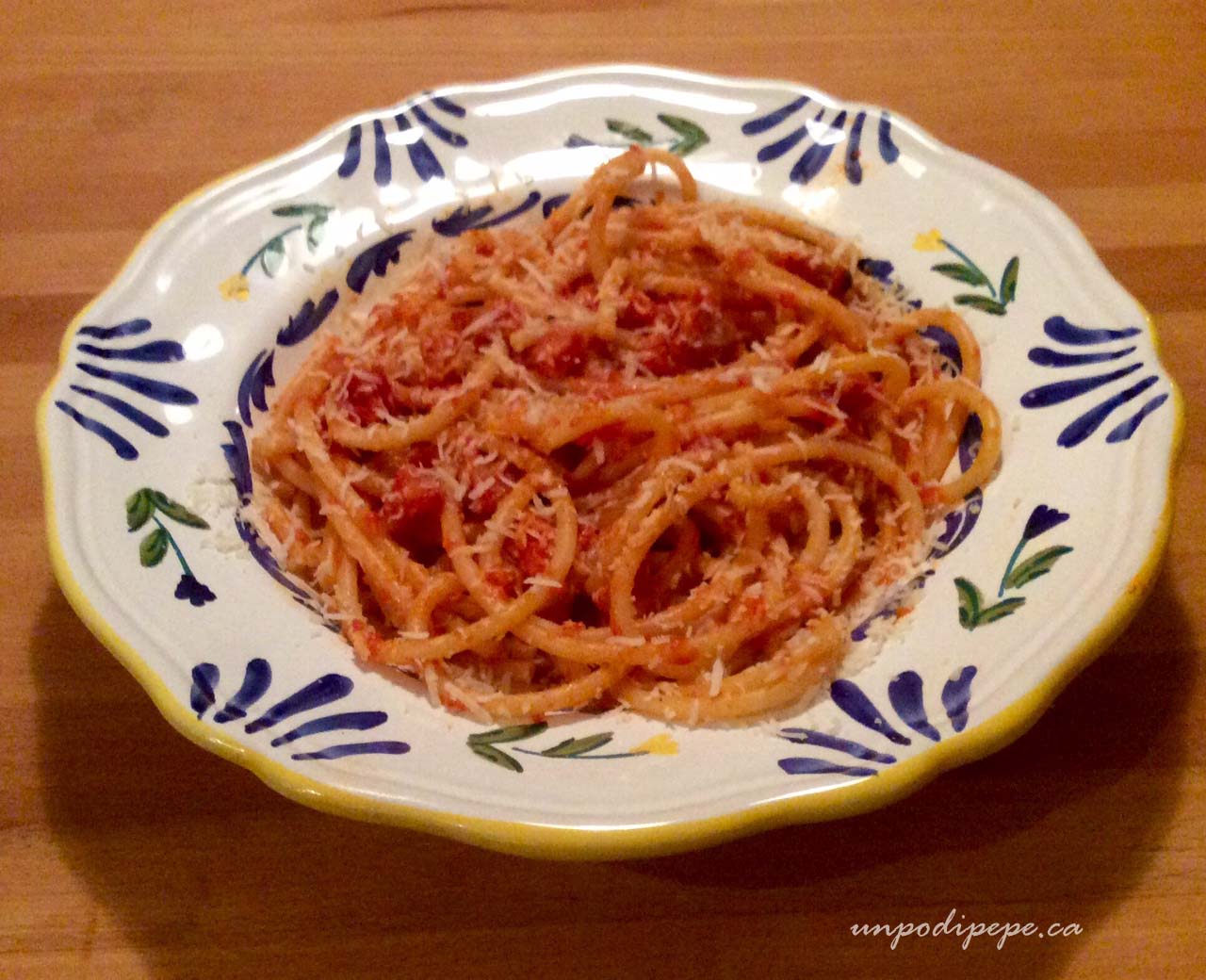
Pasta all'AmatricianaMy last post was about the terremoto in Italia and I listed ways you can help with earthquake relief.  One of these ways was to order Pasta all’Amatriciana at one of the many restaurants participating to raise money for the Croce Rossa Italiana.  I realized that not everyone will have a restaurant in their area participating, so I am posting a recipe, just in case anyone wants to host their own small fundraiser. August 27-28 would have been the Spaghetti all’Amatriciana festa in Amatrice.  Amatriciana

Pasta all’Amatriciana-also known as Pasta alla Matriciana in dialetto Romano, is made with guanciale (cured pork cheek), Pecorino Romano, and pomodoro (tomato).  Peperoncino is often added.  Pasta all’Amatriciana originated from Pasta alla Gricia, made with guanciale and Pecorino.  It is basically Pasta Carbonara with tomato instead of  eggs. Shepherds near Amatrice carried the simple ingredients with them into the fields.  The pomodoro had not been brought to Europe yet.  In Amatrice, they started making the Pasta alla Gricia with pomodoro, once it had been introduced.  When Amatriciani moved from the outlaying areas to Roma, the sauce became popular, and is now considered a staple of Cucina Romana.  In Roma, Amatriciana is made with bucatini, which are spaghetti with a hole down the middle, or rigatoni, but in Amatrice, it is only made with spaghetti! Making Amatriciana

Spaghetti all’Amatriciana

100g guanciale (pancetta can be used if guanciale not available)

350g passata di pomodoro, or pelati (peeled tomatoes)-about 1 500ml canning jar

75g Pecorino Romano, freshly grated

Black pepper, freshly grated

320g spaghetti or bucatini (80g per person)

Cut guanciale into strips or cubes. In a frying pan, cook guanciale until crispy.  When the white part becomes transparent, add tomatoes and pepper.  While this is simmering, cook spaghetti in a large pot of salted water.  Cook for 1 minute less than the time it says on the box! Drain well then add to the pan and toss in the sauce and add Pecorino.  Serve with extra Pecorino Romano on top.  Serves 4. Buon Appetito!Amatriciana

Share this:

  • Share on Facebook (Opens in new window) Facebook
  • Share on Pinterest (Opens in new window) Pinterest
  • Share on X (Opens in new window) X
  • Email a link to a friend (Opens in new window) Email
  • Share on WhatsApp (Opens in new window) WhatsApp
Like Loading...

The Original Cinquecento

21 Sunday Aug 2016

Posted by Un po' di pepe in Italian language, Roma

≈ 8 Comments

Tags

Cinquecento, Fiat 500, Fiat Cinquecento

Fiat CinquecentoMy love affair with the Fiat Cinquecento (cheen·kweh·CHEN·toh) began when I was 16.  I really wanted one, but it would not fit into my valigia, so I had to settle for something else.  I don’t know if I will ever own a super cute Cinquecento, but I have spent years photographing them all over Italia.  A few weeks ago in Roma, I took this photo of an adorable Cinquecento just around the corner from the Pantheon.

After posting the photo on Instagram, I learned that this is the original Cinquecento model, the 1957 Cinquecento Nuova!  It has a smaller engine, the cloth roof folds back all the way rather than half-way, and it has ‘porte di suicidio’ or ‘suicide doors’.  These are doors hinged at the rear rather than the front.  They are named so because before the use of seat belts, there was increased risk of falling out of the car if the doors accidentally opened.  Not only that, but the airflow of the moving car keeps the doors open, rather than closing them, as would happen with a front-hinged door.  This does make it easier to push someone out of the moving vehicle, which is probably why all the 1930’s gangster movies have cars with rear-hinged doors!

The Cinquecento was the first real ‘city’ car, a small, light-weight, fuel-efficient car.  Cinquecento means 500 in italiano.  The car was given this name because the engine was 500 cc and it weighed 500 kg (1100 lbs).  Today most cars weigh 3 times that amount!  The owner of this Cinquecento was a very old man with a cane.  He could well be the original owner.  I hope he buckles up his cintura!

Share this:

  • Share on Facebook (Opens in new window) Facebook
  • Share on Pinterest (Opens in new window) Pinterest
  • Share on X (Opens in new window) X
  • Email a link to a friend (Opens in new window) Email
  • Share on WhatsApp (Opens in new window) WhatsApp
Like Loading...

Roma: Passeggiata all’Aventino

19 Tuesday Jul 2016

Posted by Un po' di pepe in Italia, Roma

≈ 15 Comments

Tags

Aventine Hill, Bocca della Verita, Buco della Serratura, Giardino degli Aranci, Piazza Cavalieri di Malta, Roman walks, Santa Sabina

Giardino degli Aranci

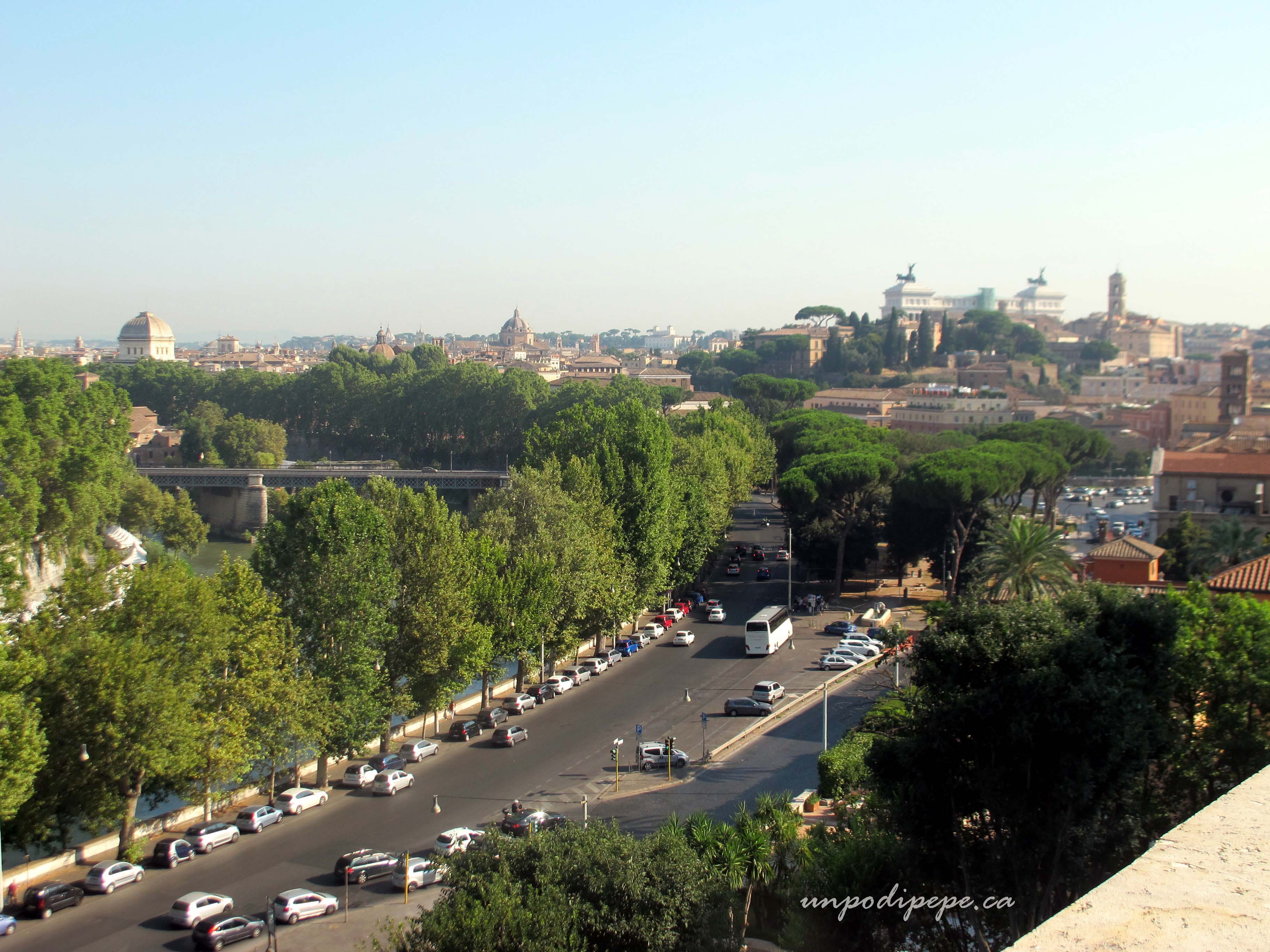
As usual I was awake far too early on my first morning in Roma. I set out on a mission to take some photos and a passeggiata before the Roman heat set in. The city of Roma was built on 7 hills.  L’Aventino-the Aventine Hill, is the furthest south. In the legend of the founding of Roma, l’Aventino was picked by Remo as the spot to build a new city, but his twin Romolo disagreed.  Remo was killed in the dispute, and Romolo built Roma on the Palatino-Palatine Hill.  L’Aventino was originally outside the city, and it was populated by refugees from areas Roma had conquered.   Then wealthy Ancient Romans started to build homes there and today it is still an elegant residential part of Roma. It is also the perfect place for a long, quiet passeggiata with beautiful views of Roma- without the crowds.Giardinodegliaranci2

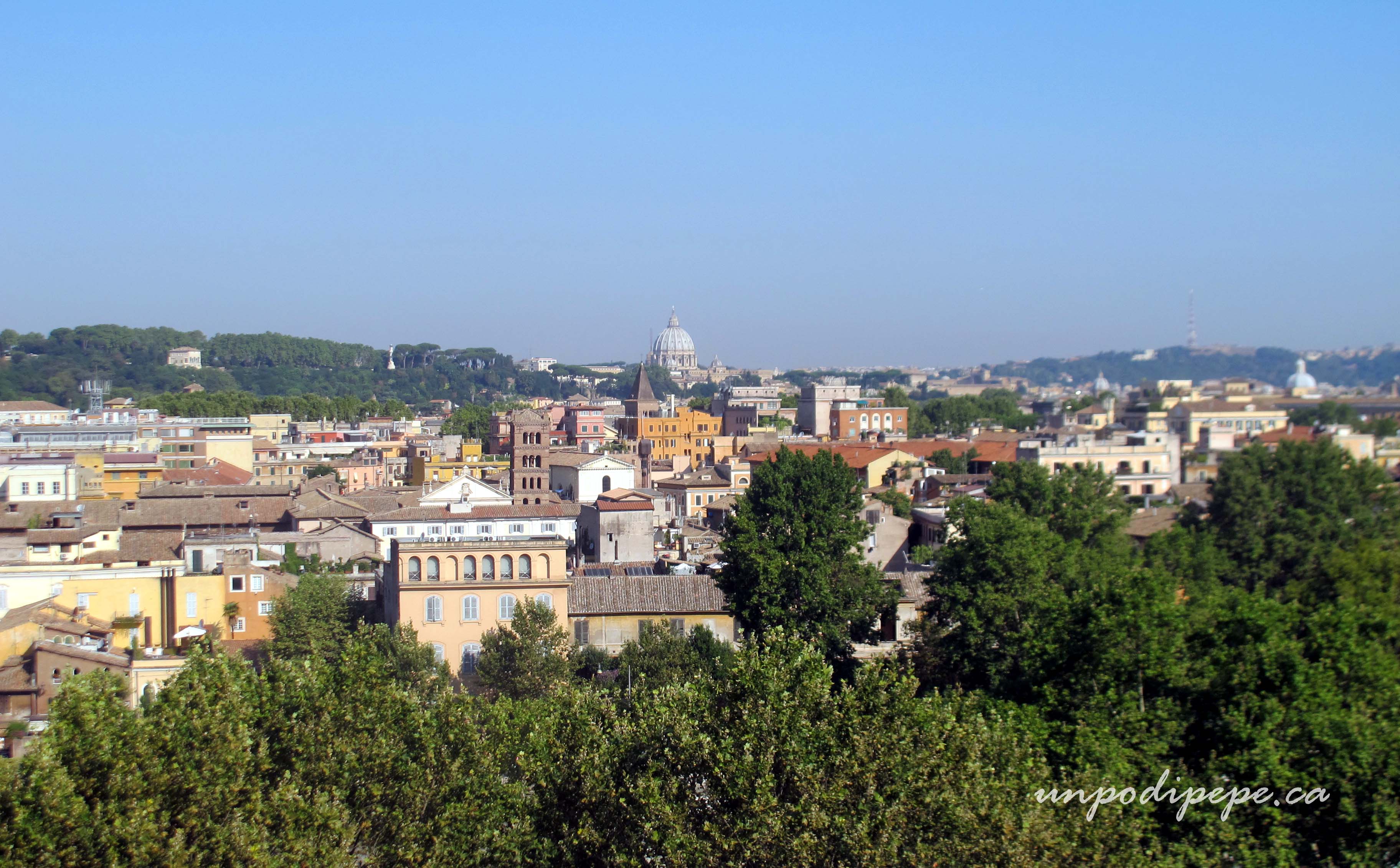
I started off by taking the Metro blue line to Circo Massimo, then heading up Viale Aventino, which was originally the ancient road between the 2 high spots of the hill. I passed beautiful homes and quiet streets as I walked uphill.  My first stop on Via di Santa Sabina was the walled Giardino degli Aranci. The orange grove was originally planted in the 13th Century by the Dominican monks of Santa Sabina, who brought the seeds from Spain . The Giardino has a platform at the end with beautiful panoramic views of Roma and the cupola of San Pietro.  A Roman friend once told me that when he was young, he and his friends used to have ‘arance’ fights in the Giardino with the oranges that fell on the ground!Fontana del Mascherone

In the piazza in front of Santa Sabina, near the door to Giardino degli Aranci is a wall fountain built in 1593. La Fontana del Mascherone floods an ancient Roman bathtub-a smaller version of the 2 giant ones in Piazza Farnese.  Santa Sabina all’Aventino, built right at the top of the hill in 422 AD is one of the oldest Roman basilicas.

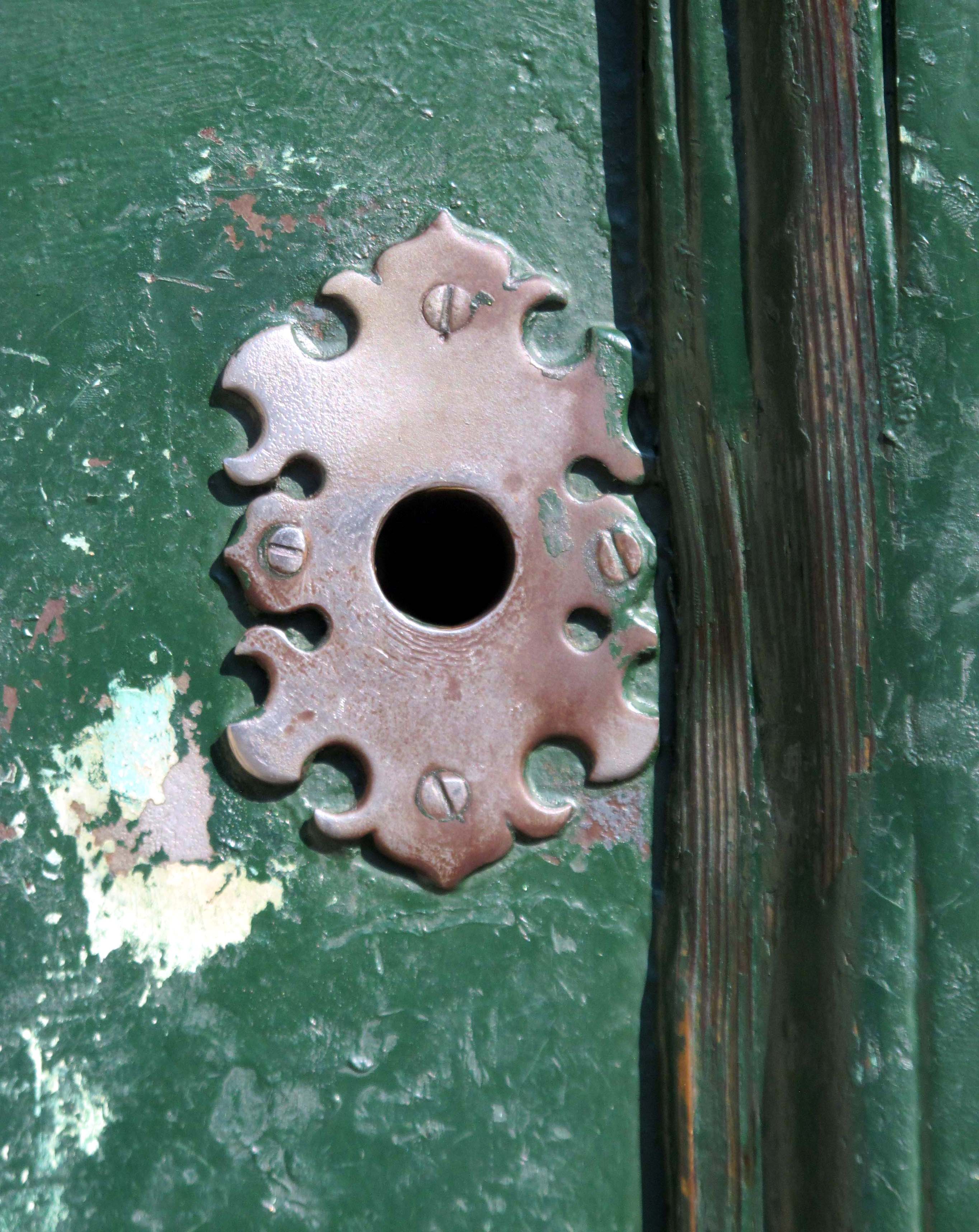
A short walk away, through a tree-lined residential neighborhood, is Piazza Cavalieri di Malta. This morning I had the whole piazza to myself! It is usually very crowded and full of taxis and people waiting in line in front of a heavy green door.  Cavalliere di MaltaThe door belongs to La Villa del Priorato di Malta.  I Cavalieri di Malta are a military order of knights founded in the 11th Century to look after the wounded in the Holy Land during the Crusades.  In 1798, Napoleon kicked them out of Malta and they moved their headquarters to Roma. The villa and the church inside, Santa Maria del Priorato, are not usually accessible to the public. The people standing in line are waiting to look through the keyhole, known as ‘il buco della serratura’.  I won’t spoil the surprise, so my photo is blurry on purpose.  You will have to see for yourself—unless you have seen La Grande Bellezza and the surprise has been spoiled!IMG_4218

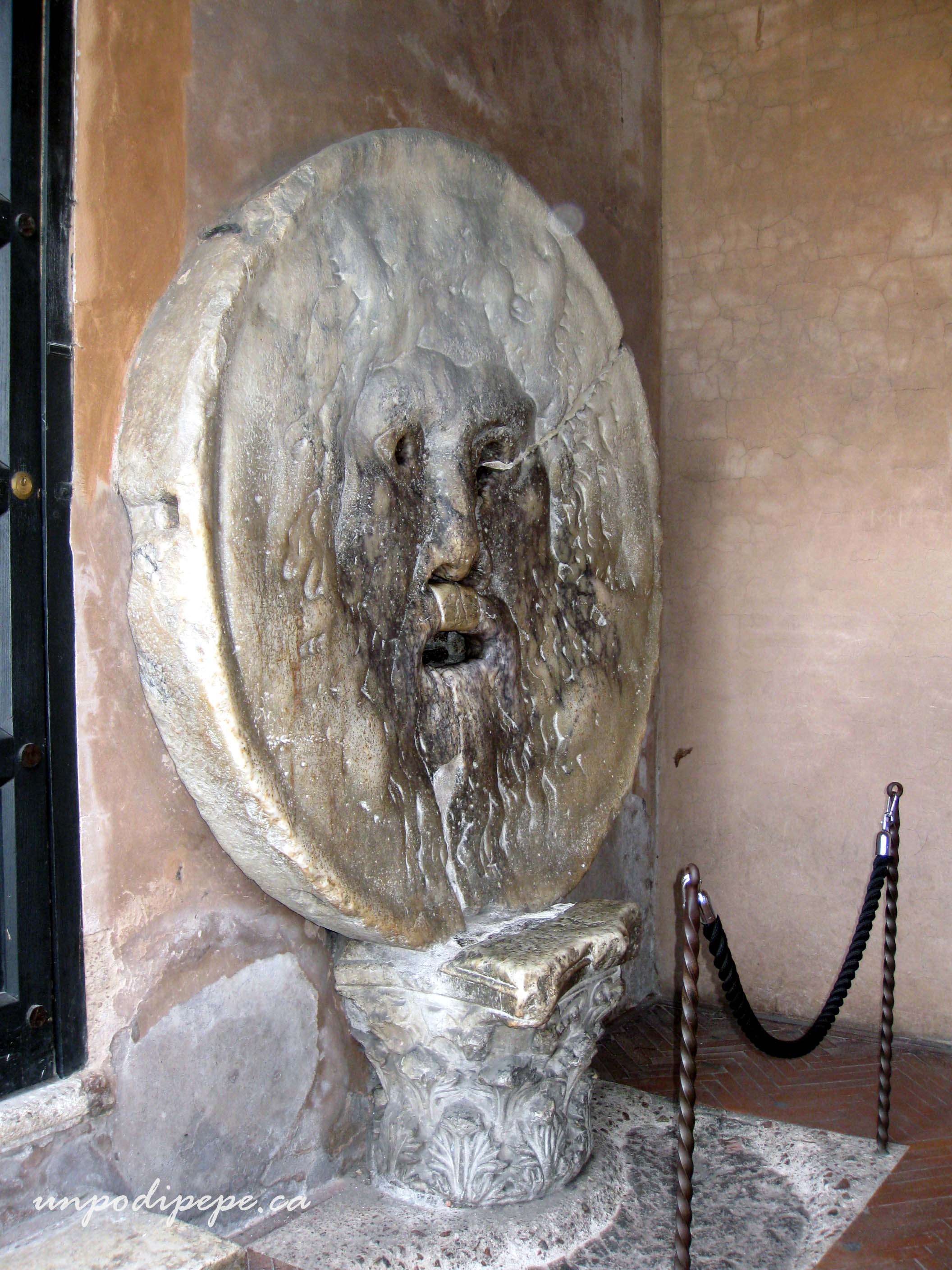
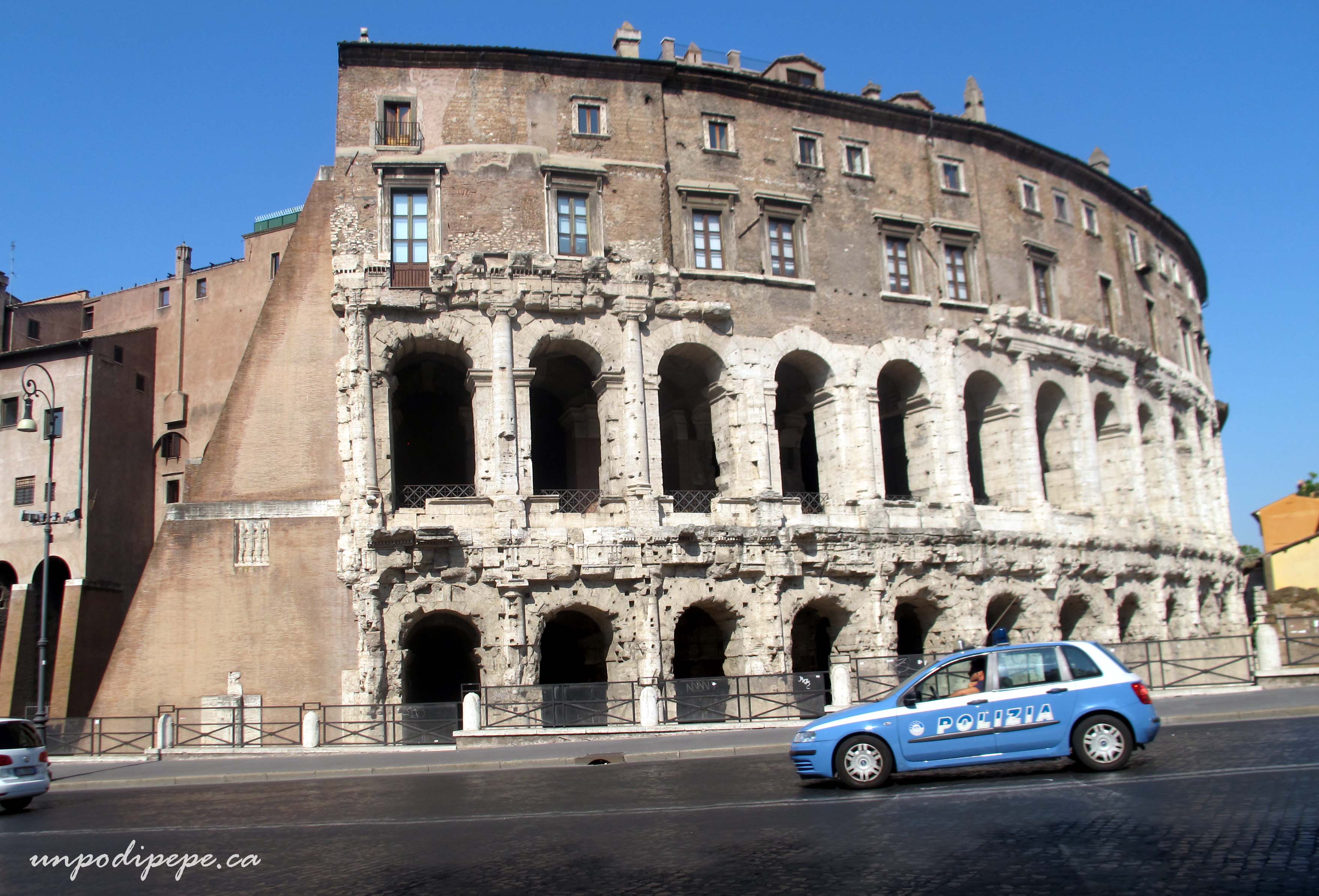
IMG_2385The walk back downhill was nice and I was able to admire the scenery and views as I walked back down Via Santa Sabina, then past Santa Maria in Cosmedin. This is the home of the famous ‘Bocca della Verità’ featured in the movie Roman Holiday.  There is usually a line of people waiting to stick their hand in its mouth!BoccadellaveritaAs I walked past il Teatro di Marcello, I was surprised to notice that there are private residences on the top floor.  Can you imagine living in Teatro Marcello!  I have heard about first time visitors to Roma thinking that Teatro Marcello is the Colosseo and being very confused! Teatro Marcello Polizia

By the time I reached Il Vittoriano, it was getting hot. Time for a granita di caffè! Arrivederci da Roma, Cristina

To read more about walking in Roma click on Un Giorno a Roma and Il Pantheon.

Share this:

  • Share on Facebook (Opens in new window) Facebook
  • Share on Pinterest (Opens in new window) Pinterest
  • Share on X (Opens in new window) X
  • Email a link to a friend (Opens in new window) Email
  • Share on WhatsApp (Opens in new window) WhatsApp
Like Loading...

Il Pantheon

08 Monday Feb 2016

Posted by Un po' di pepe in Architecture, Art history, Italia, Photography, Roma

≈ 15 Comments

Tags

Ancient Roma, Pantheon, Piazza della Rotonda

Piazzadellarotonda500 years ago, Michelangelo entered the Pantheon and stated that it looked more like the work of angels than humans. The Pantheon is an architectural masterpiece and the most well-preserved building from Ancient Rome.  This is probably because it has been in continuous use since it was built.  The original use of the Pantheon is not known.  Many think it was a temple to all the gods, since ‘Pan-theos’ is Greek for ‘all gods’, although Ancient Roman temples were dedicated to single gods.  ‘Pan-theos’ might also refer to the heavens, the territory of the gods.  According to legend the site is where Romulus, the founder of Roma ascended to the heavens.  IlPantheonMarcus Agrippa, Augustus’ commander in chief built the original Pantheon on his own land, so it may have been a private building.  This building burned down in 80 AD and then was struck by lightning and burned again in 110 AD! The Pantheon standing today was completed around 126 AD by Emperor Hadrian.  He kept the original inscription under the pediment ‘M.Agrippa.L.F.Costertium.Fecit’ (Made by Marcus Agrippa, son of Lucius in his third time as Consul) which caused confusion about the construction date.  The Pantheon was given to the Pope in 609, and it has been the Church of Santa Maria dei Martiri ever since, but it is usually still called the Pantheon.Pantheonfontana

From the outside, the Pantheon looks like a Greek temple. It is actually a round building (rotunda) with a portico of eight 12m (39 ft) high granite Corinthian columns up front and 8 more in behind. These columns are each a single 60 ton piece of stone quarried in Egypt.  Imagine the journey these huge stones made to get here….they were dragged through the desert, barged down the Nile to Alexandria, shipped across the Mediterranean to the port of Ostia, barged down the Tevere to Roma and then hauled overland to the site of the Pantheon!Pantheon oculus

Enter into the Pantheon and it is immediately clear what Michelangelo meant. Overhead is the largest unreinforced concrete dome in the world-still after almost 2,000 years! The Romans invented concrete, using a mixture of volcanic ash and soil from Pozzuoli, lime and rocks, but they did not have rebar, so this is amazing! The 8 m wide hole in the roof is the oculus and the shaft of light coming in from the sun moves slowly throughout the day like a sun-dial.  When looking up, the dome feels like it could rotate. The oculus and front door are the Pantheon’s only sources of natural light.  Concrete walls 6m (20 ft) thick support the dome, which is 6m thick at its base but narrows to 1.2m (3.9 ft) around the oculus.  Lighter materials, such as tufa, pumice and even broken terra cotta pots were used towards the top to further lighten the load.  The oculus also lightens the load at the very top, acting as a compression ring where the roof would be its weakest. Rainwater coming in through the oculus is drained off through holes and a drainage system under the slanted marble floor.

Is it a mask for Carnevale? No, these are drainage holes in the floor right below the oculus!

Is it a mask for Carnevale? No, these are drainage holes in the floor right below the oculus!

The height of the oculus is 43.3m (150 Roman feet) and the diameter of the building is also 43.3m. A perfect 43.3m sphere would fit inside the building. For another visual, if the dome was flipped upside down, it would fit perfectly inside the rotunda.

The perfect mathematical proportions of the Pantheon invoke harmony and symbolize the earth and the heavens. The Pantheon has provided inspiration to architects including Brunelleschi and Michelangelo for almost 2,000 years.  Public buildings throughout the world are modelled on the Pantheon’s ‘portico and dome’ design.Pantheonchapel

In the 17 the Century, the Barberini Pope Urbano VII removed the bronze ceiling from the portico and melted it down to make cannons for Castel Sant’Angelo. The outrage prompted the saying ‘Quello che non hanno fatto i barberi hanno fatto i Barberini’ (What the barbarians didn’t do, the Barberini did), implying that the Pantheon had survived numerous barbarian invasions, only to be looted by the Barberini family. In addition to functioning as a Classical Masterpiece and a Church, many notable Italiani are buried in the Pantheon.  Some of these include Vittorio Emanuele II, Umberto II and his wife Margherita di Savoia, Rafaelle Sanzio da Urbino (Raphael) and his fiancée Maria Bibbiena.

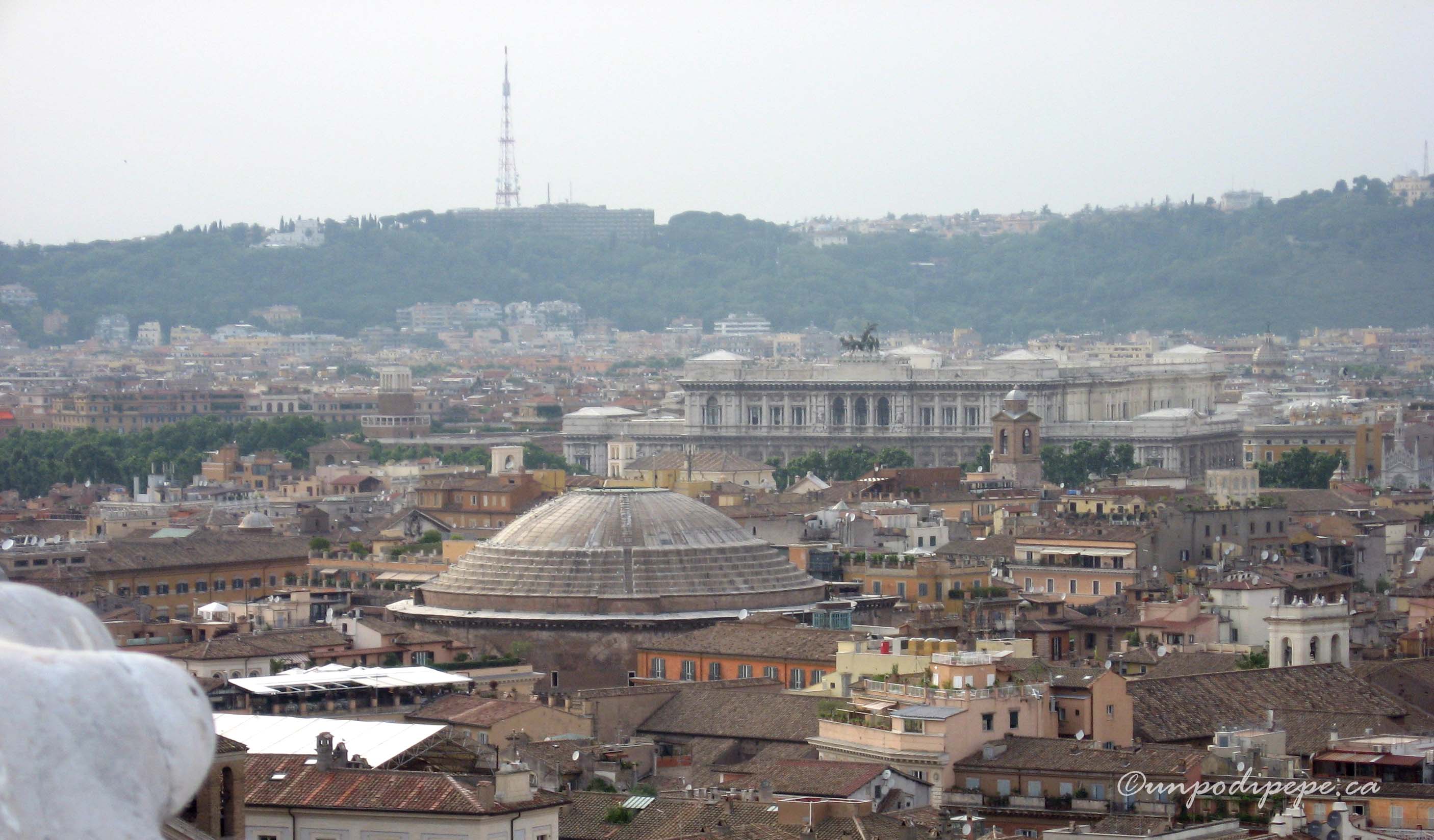
Il Pantheon from Il Vittoriano

Il Pantheon from Il Vittoriano

‘La Pioggia delle Rose al Pantheon’ (the rain of roses) is on my list of things to see. This takes place on Pentecost Sunday, 50 days after Easter.  At noon, right after Mass, Roma’s Vigili del Fuoco (fire fighters) climb to the top of the dome and drop thousands of rose petals through the oculus as choirs sing.  The rose petals symbolize the Holy Spirit coming down to earth.  Even Michelangelo would be impressed!

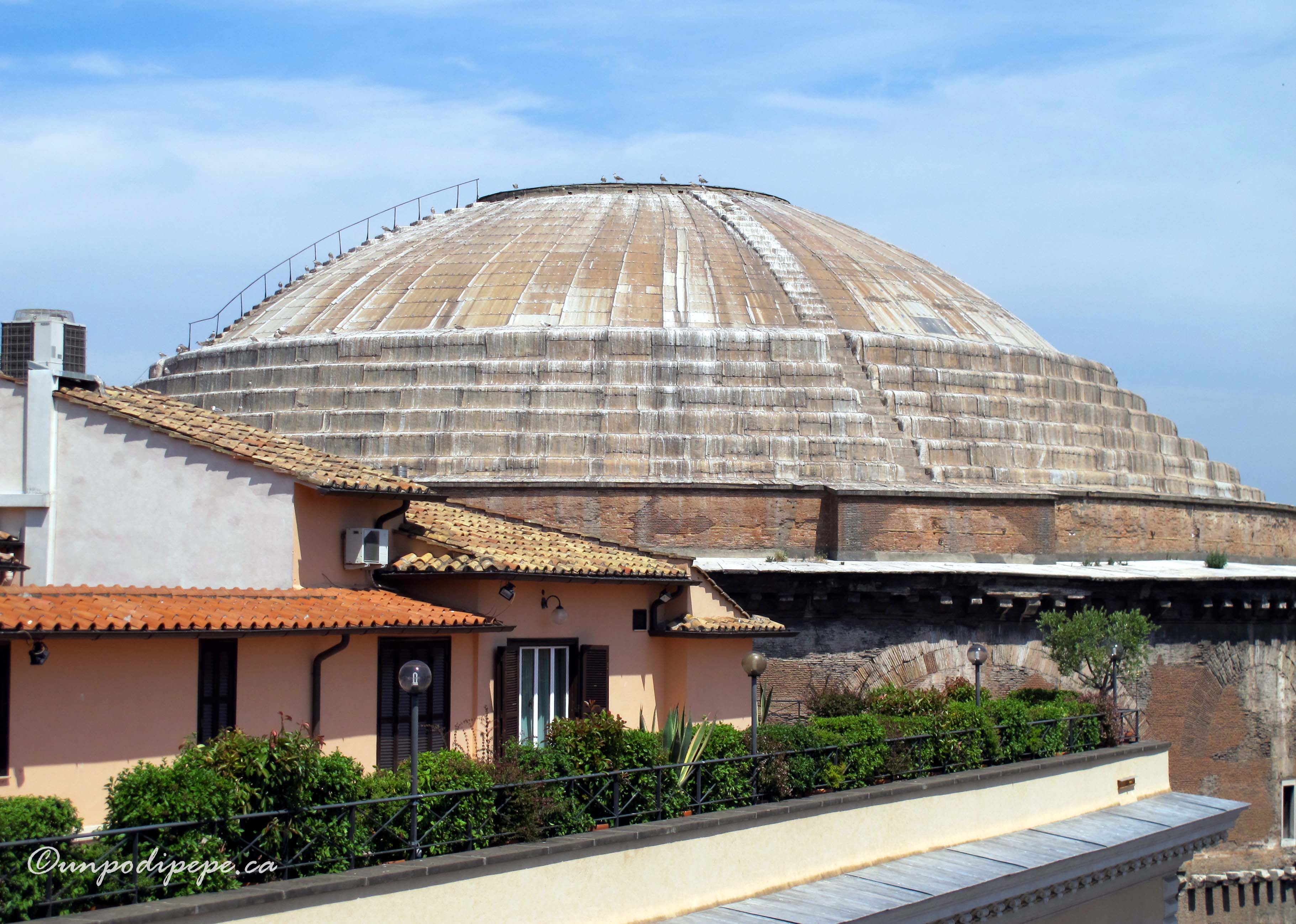
The dome and oculus, viewed from the roof of Grande Hotel de la Minerve

The dome and oculus, viewed from the roof of Grande Hotel de la Minerve

Il Pantheon from Piazza de la Minerva

Il Pantheon from Piazza de la Minerva

Il Pantheon is also featured in my post ‘Un Giorno a Roma’.

©2016 http://www.unpodipepe.ca


Share this:

  • Share on Facebook (Opens in new window) Facebook
  • Share on Pinterest (Opens in new window) Pinterest
  • Share on X (Opens in new window) X
  • Email a link to a friend (Opens in new window) Email
  • Share on WhatsApp (Opens in new window) WhatsApp
Like Loading...

The Miracle Players, Roma

15 Monday Jun 2015

Posted by Un po' di pepe in Culture, Italia, Roma, Travel tips

≈ 8 Comments

Tags

Foro Romano, Italian history, Italy travel tips, Roma, Roma english speaking theater, Roman Forum, The Miracle Players

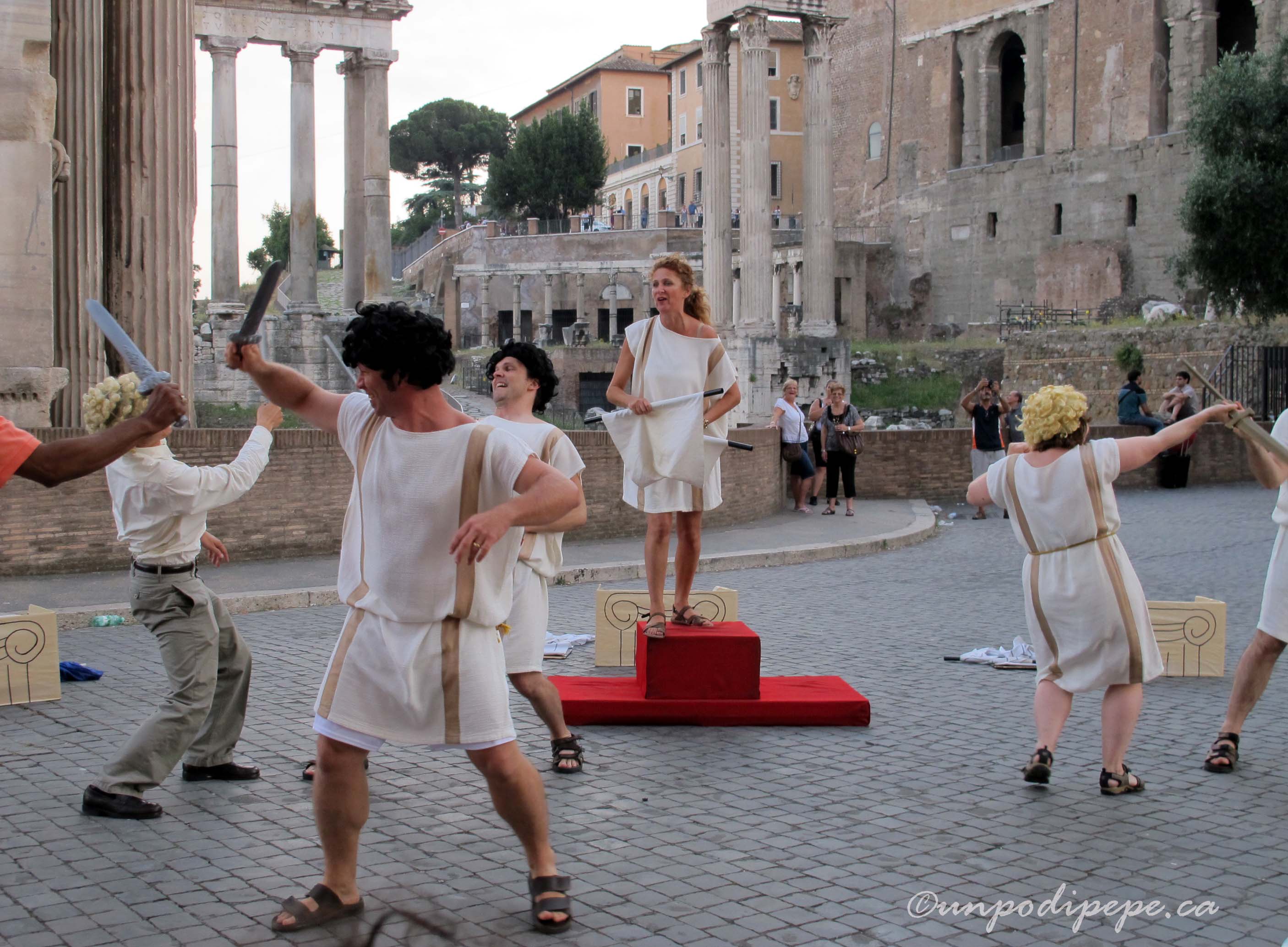
Miracle PlayersIf Monty Python meets the history of the Roman Empire sounds appealing, you will love the Miracle Players.  They are an English speaking theater group in Roma made up of expats from around the world.  They perform hysterically historical original comic works at the Foro Romano (Roman Forum) each summer.

Miracle Players2

Miracle Players performances feature volunteer swordfighters and high tech special effects!

Miracle Players performances feature volunteer swordfighters and high tech special effects!

I have been to 3 of their performances; ‘Caesar-More than just a Salad’, ‘The Life of Michelangelo’, and ‘The Seven Kings of Rome’.  This year they are performing the rhyming ‘Rome in a Nutshell’.

Miracle Players4

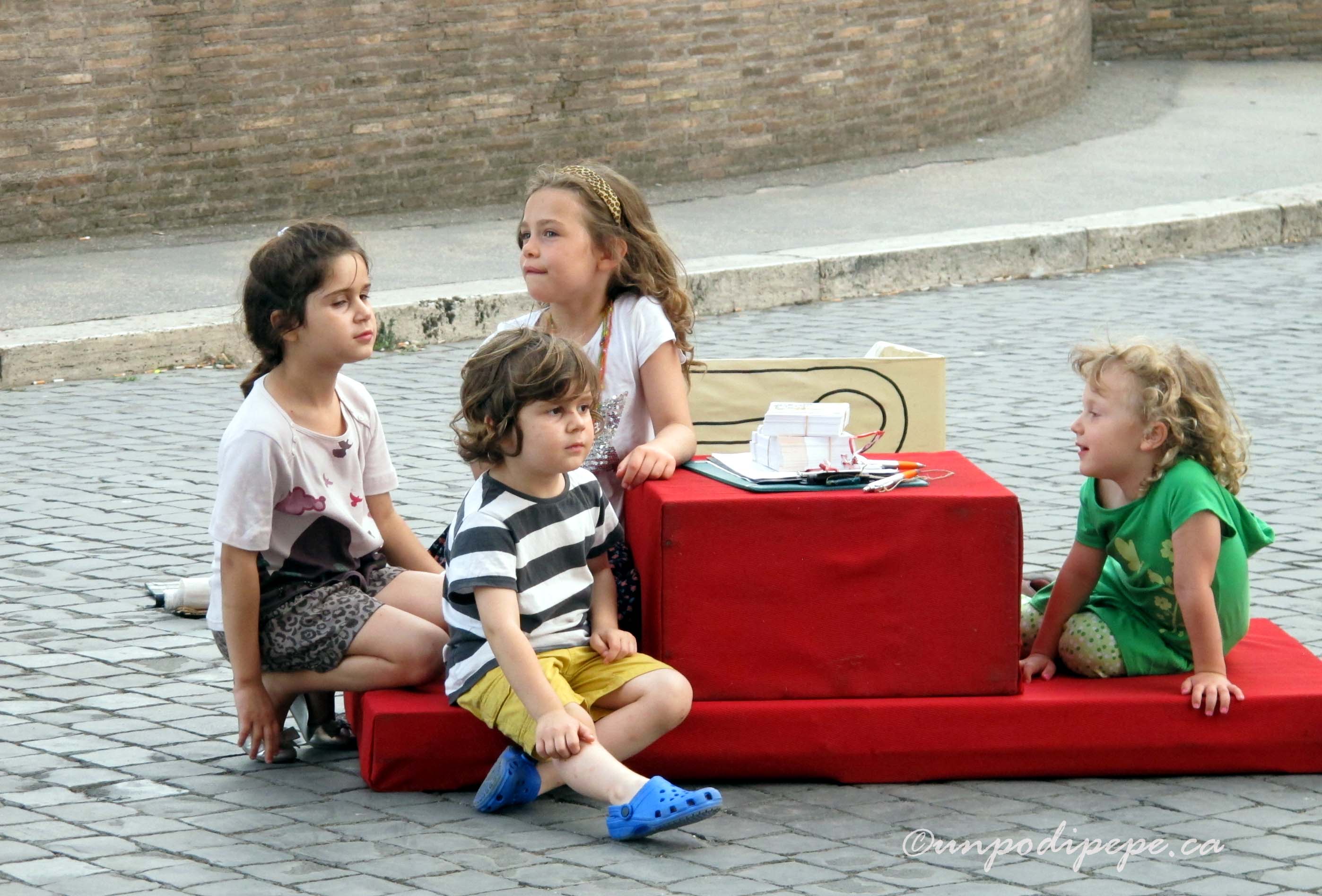
If you will be in Roma on a Friday between June 26 and July 31, check out the performance at 7:30pm sharp.  It is free and no reservation required. Get there early to sit on the stairs of the church facing the action-Chiesa dei Santi Luca e Martina. Bring something to sit on if your culetto doesn’t like hard stairs or pavement.

The production crew takes a break

The production crew takes a break

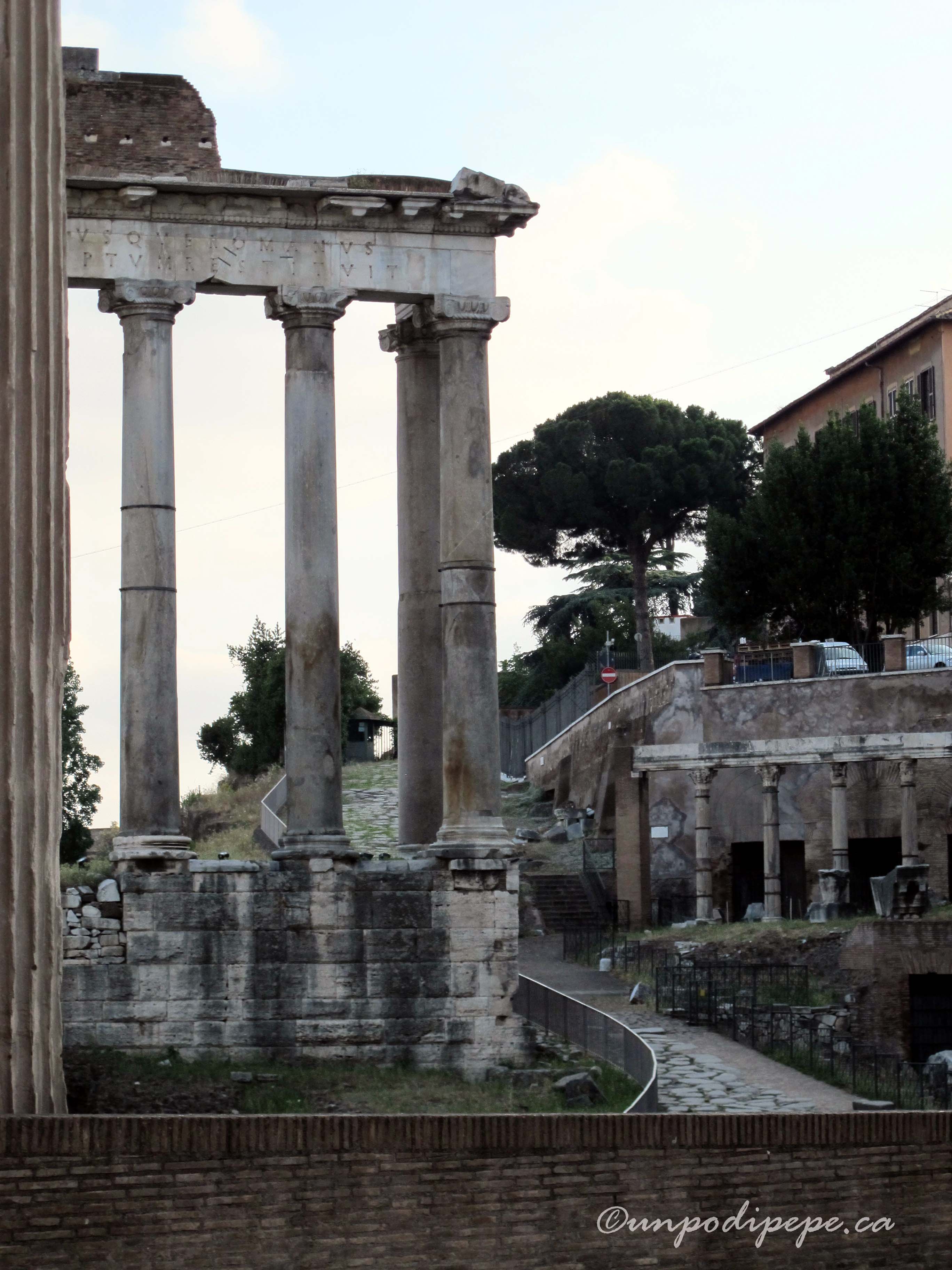
The performance is across from the Carcere Mamertino (Mamertine Prison) at the Roman Forum.  This is below the Campidoglio and behind Il Vittoriano.  The location is easy to get to.  Take the Metro B blue line to Colosseo and walk down Via dei Fori Imperiali.  There is a map on The Miracle Players website. The stage backdrop is the Roman Forum itself-how can you top that!  ForoRomano

Share this:

  • Share on Facebook (Opens in new window) Facebook
  • Share on Pinterest (Opens in new window) Pinterest
  • Share on X (Opens in new window) X
  • Email a link to a friend (Opens in new window) Email
  • Share on WhatsApp (Opens in new window) WhatsApp
Like Loading...

Centrale Montemartini

15 Sunday Feb 2015

Posted by Un po' di pepe in Architecture, Art, Art history, Culture, Italia, Photography, Roma

≈ 13 Comments

Tags

Al Biondo Tevere, Art history, Art Nouveau, Basilica San Paolo Fuori le Mura, Capitoline Museum, Centrale Montemartini, Cleopatra, Industrial archeology, Italy travel tips, Roma, Stile Liberty, Temple of Apollo Sosiano, Via Ostiense

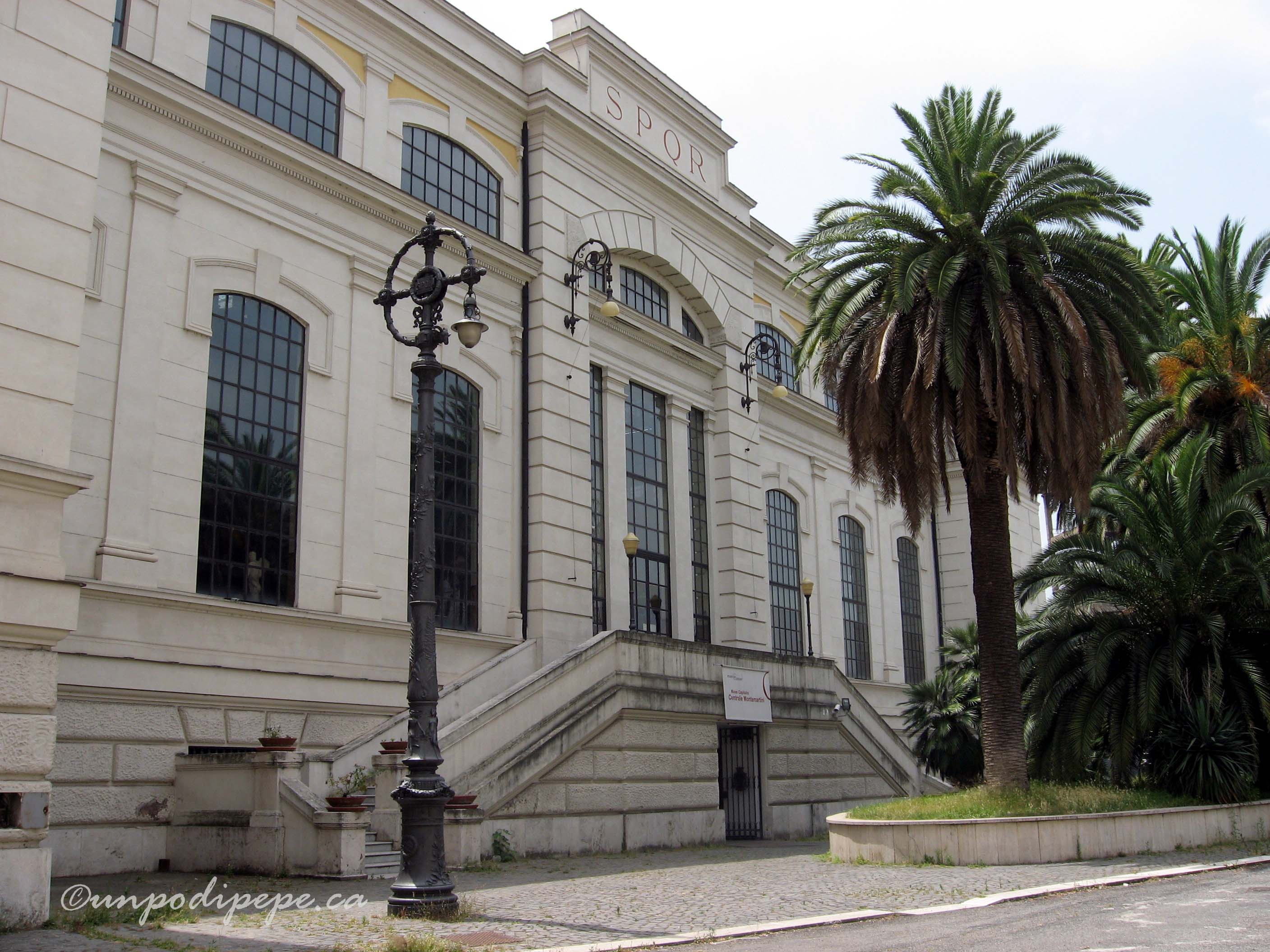
Centrale Montemartini is an amazingly awesome, undervisited museum and a stunning example of 20th Century industrial archeology.  Built in 1912 in Art Nouveau style (Stile Liberty), it was the first public electric plant in Roma, providing power for the surrounding area until it was abandoned in 1963.  Luckily the amazing architecture and historical importance saved it from demolition!

Amazon warrior in front of a diesel engine

Amazon warrior in front of a diesel engine

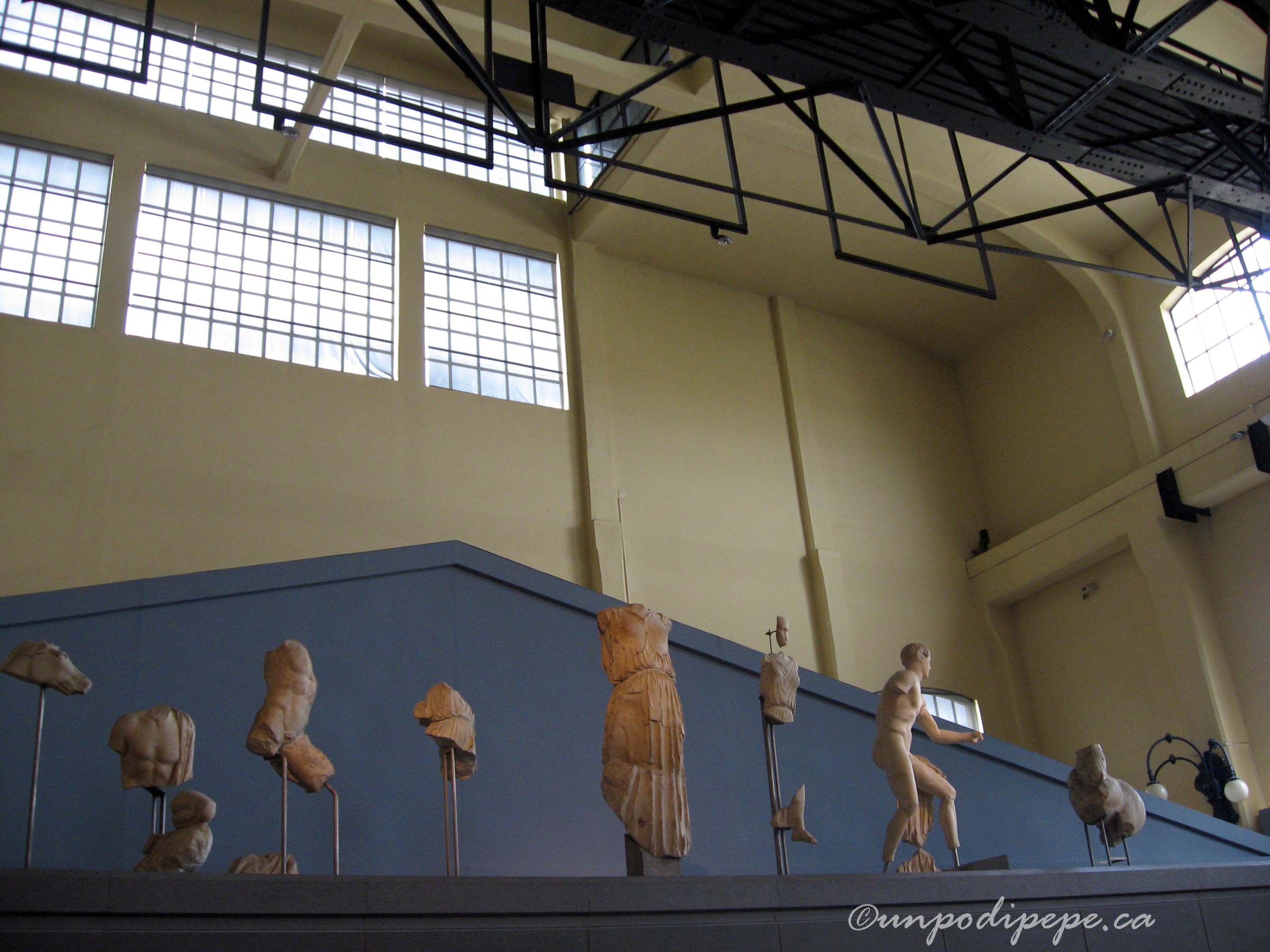
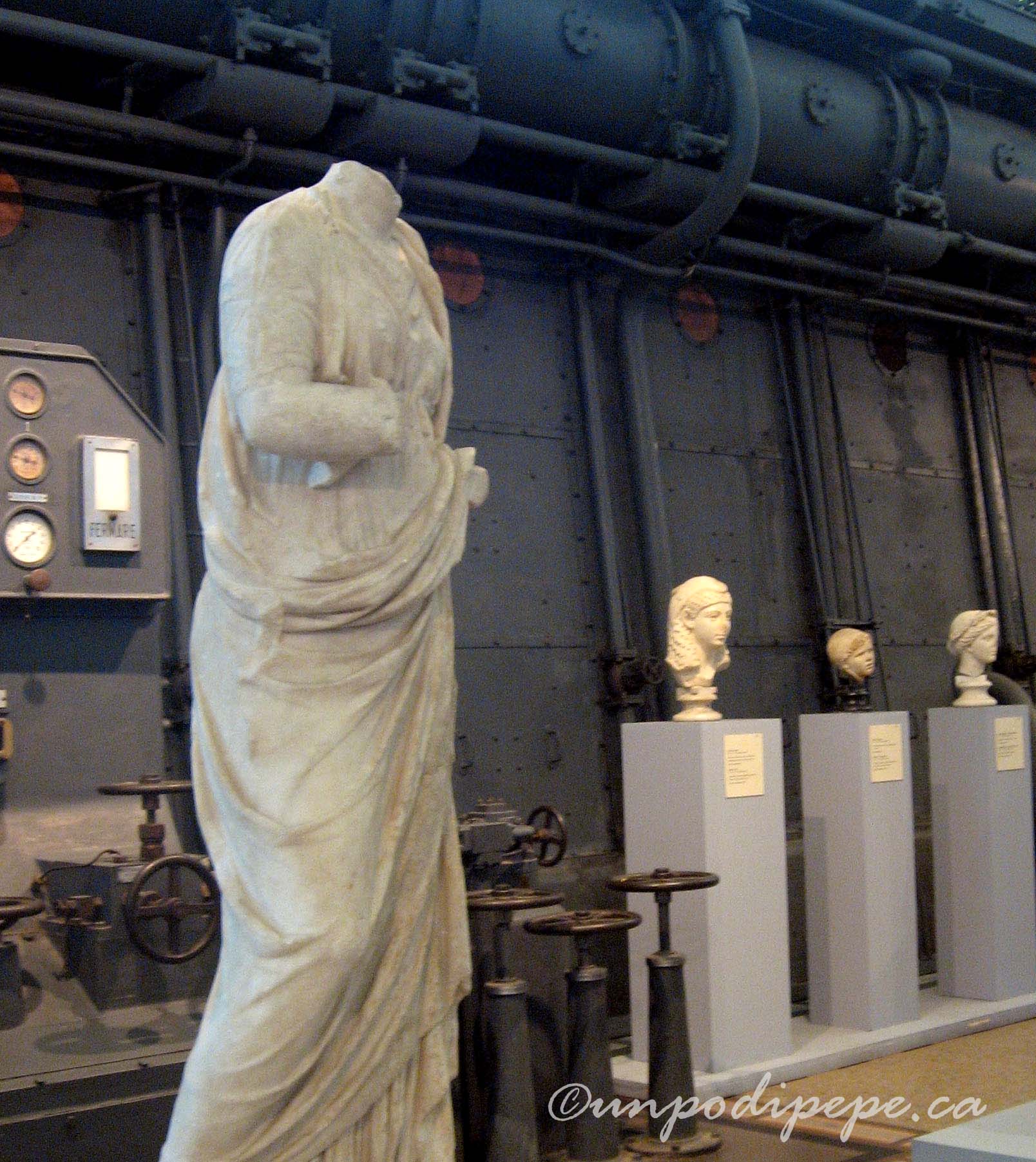
In 1997 during the Capitoline Museum renovation, Centrale Montemartini was used for a temporary exhibition ‘Le Macchine e gli Dei’ (The Machines and the Gods).  In 2005 it became a permanent space for part of the Capitoline collection, with all of the original thermoelectric equipment left in place.  Now you can visit a unique display of classical sculpture against an industrial  backdrop of steam boilers, diesel engines, catwalks twisting pipes and gauges.  It’s a blend of ‘vecchio e più vecchio’ (old and older), a stark contrast of ancient and industrial, art and science.  Antique white marble appears translucent against the blackness of the machinery.  The space is immense and silent, with high ceilings and tall windows providing natural light. The works of art are carefully chosen and placed so there is space to appreciate their beauty while you walk among them and contemplate the passage of time.Centrale Montemartini Sala Macchine3

The 400 pieces include ancient Roman sculptures, rare Greek originals brought to Roma, and Roman copies of Greek originals. They date from the 5th Century BC to the 4th Century AD and were found in the late 19th and early 20th Century. Most of the works are on the upper floor in 2 massive rooms.

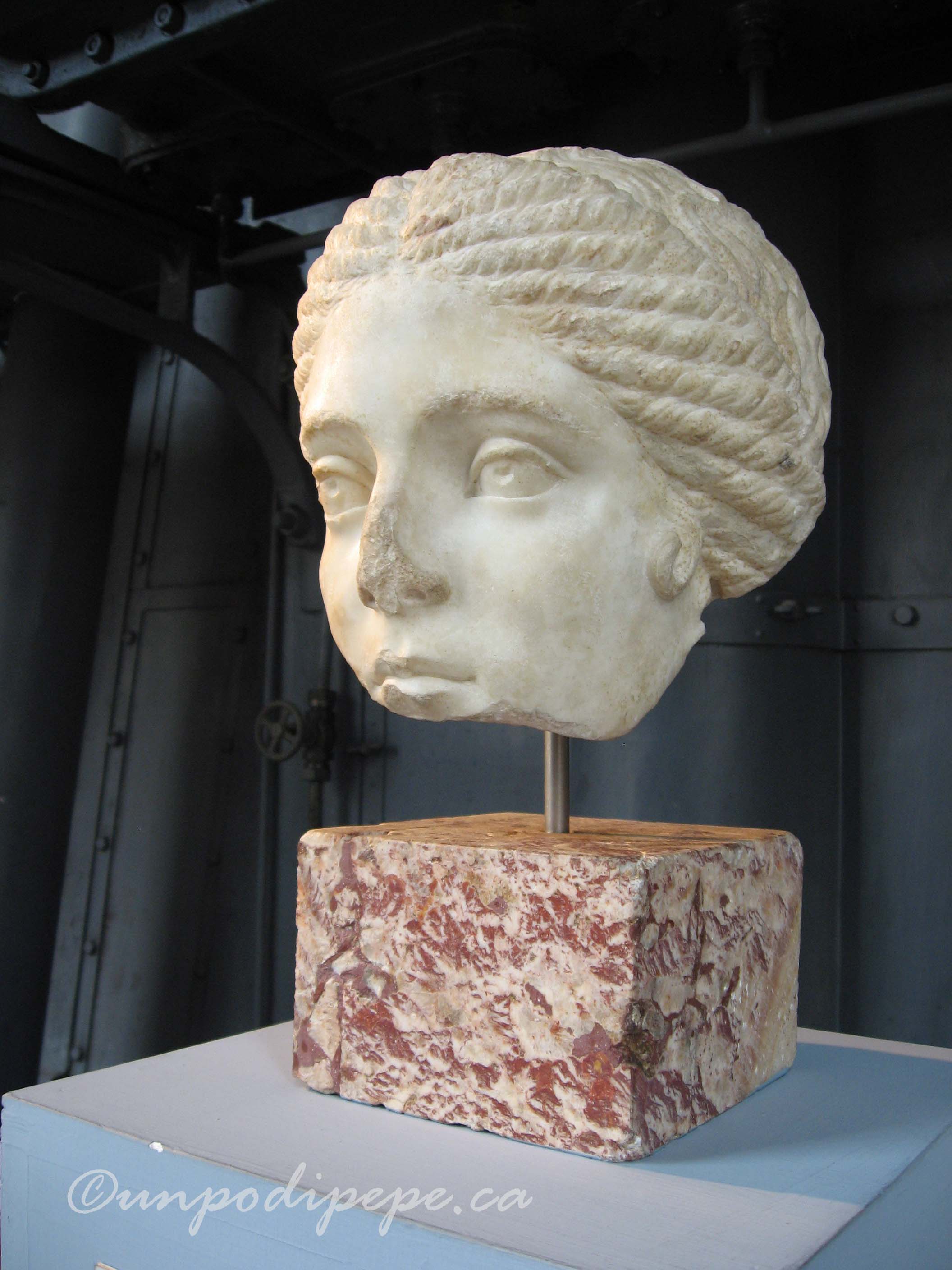
Partial female head, discovered in the garden of Villa Rivaldi in 1933 during construction of Via dei Fori Imperiali

Partial female head, discovered in the garden of Villa Rivaldi in 1933 during construction of Via dei Fori Imperiali

In Sala Macchine (Machine Room or Hall of the Machines) 2 hulking diesel engines are surrounded by Roman replicas of Greek statues.  At one end, a reconstruction of the pediment of the Temple of Apollo Sosiano depicts a battle between Greeks and Amazons.  These pieces are Greek originals found in the 1930’s near the Theater of Marcellus.  Above this installation hangs the old ‘carroponte‘ (Gantry crane).

Centrale Montemartini, Sala Macchine

Centrale Montemartini, Sala Macchine

Centrale Montemartini Apollo Sosiano

Other ‘meraviglie’ (wonders) include a bust of Cleopatra and the giant head, right arm and feet of an 8m high statue of the Goddess Fortuna found near Largo Argentina.  Her feet look very modern with their ‘infraditi’-thong style sandals!piedidifortuna

Sala Macchine. Bust of Cleopatra (to the right of the large statue)

Sala Macchine. Bust of Cleopatra (to the right of the large statue)

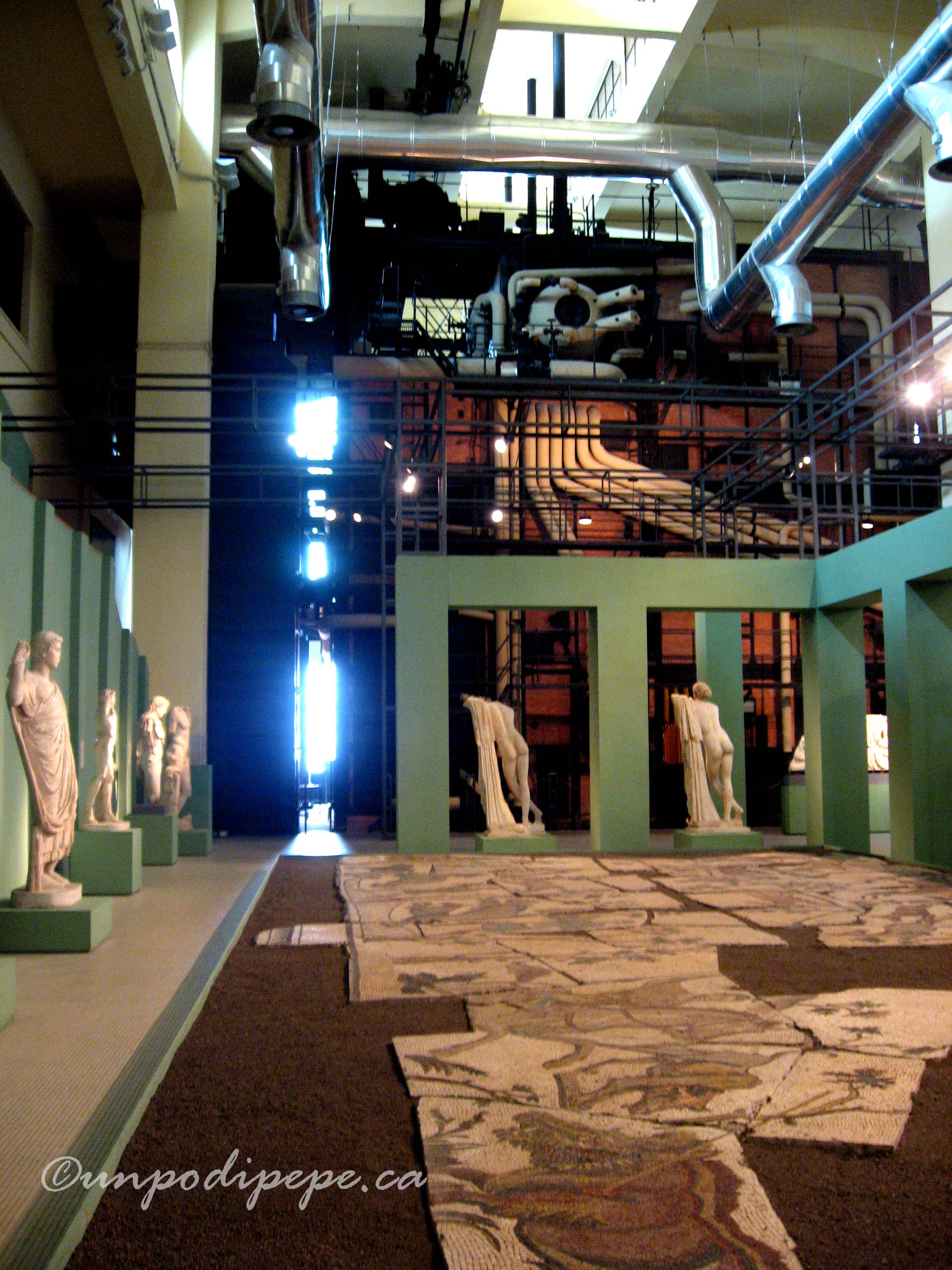
cleopatraSala Caldaie (Boiler Room) is named for its 15m steam boiler and features a large mosaic of a hunting scene found near Santa Bibiana.  The mosaic is surrounded by sculptures once adorning lavish Roman homes.Centrale Montemartini Sala Caldaie

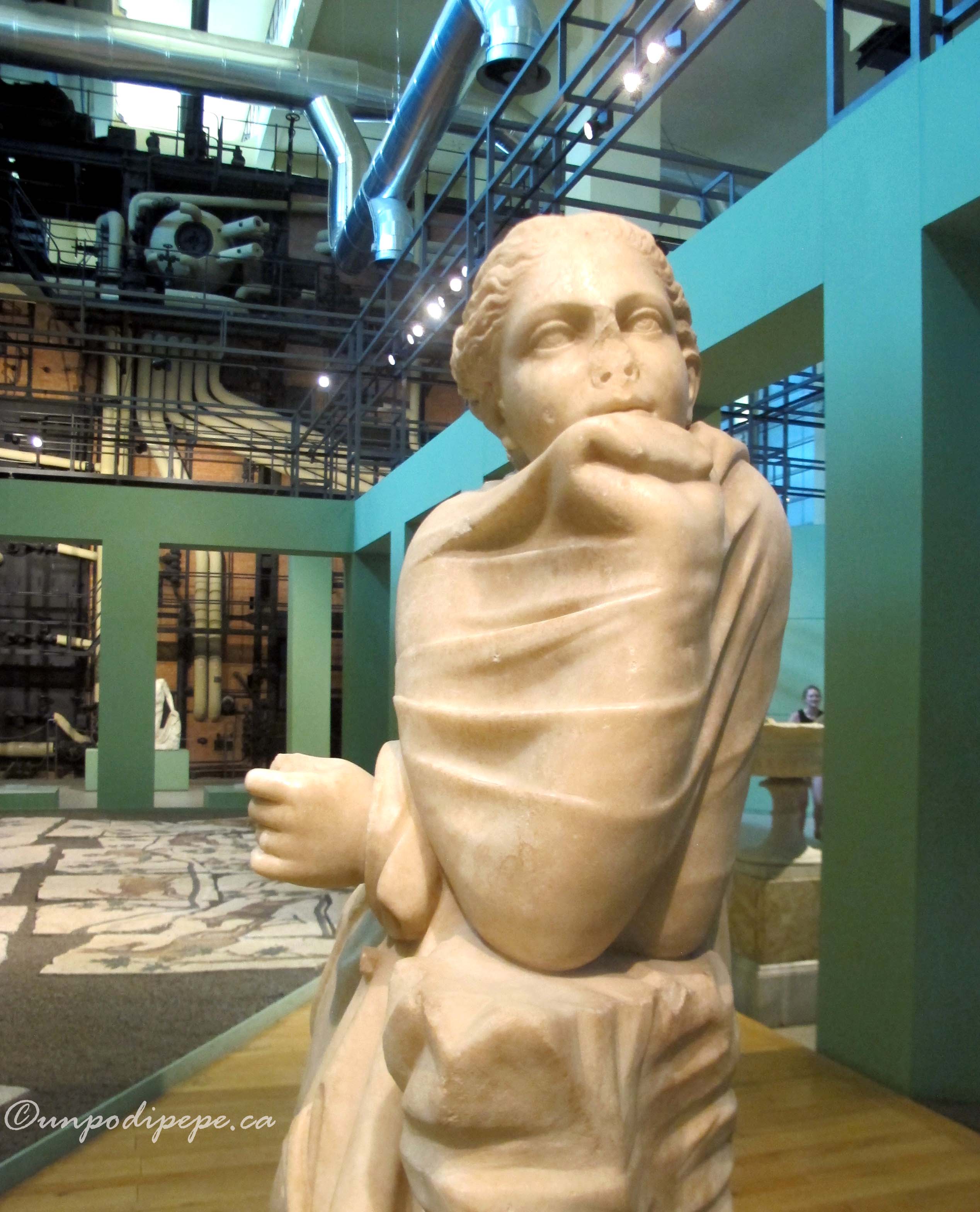
PolimniaI especially like the statue of Polimnia, muse of poetry and dance.  She has her elbows resting on a pillar and her shawl casually wrapped around her.  My other favourite in Sala Caldaie is the Sphinx Frieze, which seems to glow against the red brick wall.

Sala Caldaie. Sphinx Frieze with Acanthus Spirals. This was part of the Gardens of Sallust and likely represents the victory over Antony and Cleopatra.

Sala Caldaie. Sphinx Frieze with Acanthus Spirals. This was part of the Gardens of Sallust and likely represents the victory over Antony and Cleopatra.

There were only 4 or 5 other people in the museum both times I visited.  One of the staff told me that from October to May they have a lot of school groups visiting through their educational program, but June to September is not very busy.  This is opposite to most other museums!  I definitely recommend this amazing place, especially if you want to get away from crowds and lineups and see something truly unique. Even people who don’t like museums will appreciate this one-or at least find it oddly fascinating!Centrale Montemartini WarriorTorso

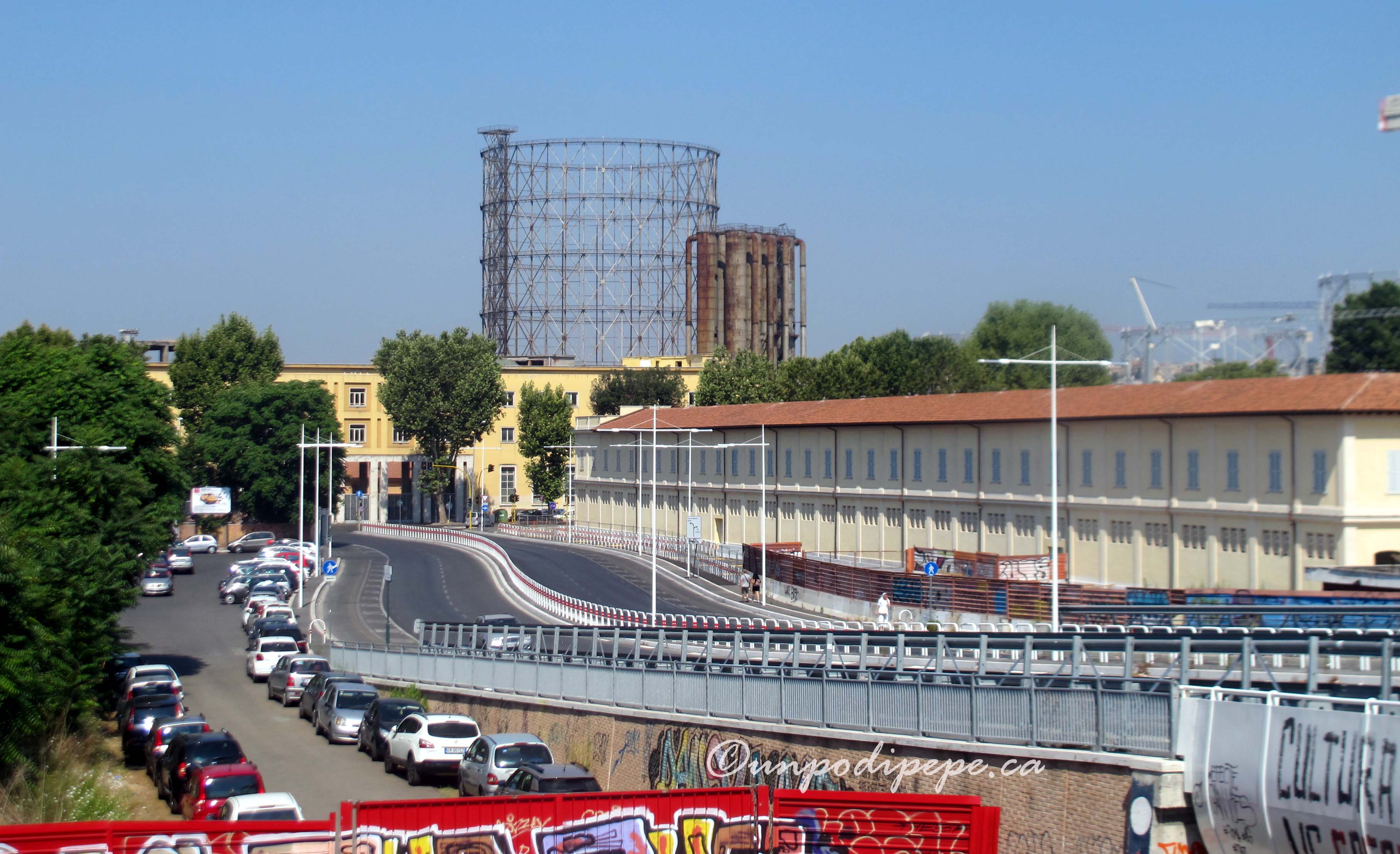
Centrale Montemartini is in the Ostiense area on the left bank of the Tevere.  It is south of Roma’s historic center but very accessible by Metro B line Garbatella stop.  When leaving the metro stop, you will cross a pedestrian bridge and then reach Via Ostiense.  Bus 23 goes along Via Ostiense and Stazione Ostiense is also nearby.

The view on exiting Garbatella Metro Stop.  Via Ostiense is in front, where the yellow building is.  Il Gasometro is behind it.  Centrale Montemartini is just to the left.

The view on exiting Garbatella Metro Stop. Via Ostiense is in front, where the yellow building is. Il Gasometro is behind it. Centrale Montemartini is just to the left.

The Basilica of San Paolo Fuori le Mura is walking distance, one metro stop away.  In between the Basilica and Centrale Montemartini is one of the oldest restaurants in Roma, Al Biondo Tevere at Via Ostiense 178 www.albiondotevere.it  serving Roman cuisine overlooking the Tevere.

Centrale Montemartini

Centrale Montemartini

www.centralemontemartini.org  Via Ostiense 106, open Tues-Sun from 09-19.  Admission is € 7.50 for adults or €16 for the Capitolini Card (valid 7 days).  The Romapass can also be used.  Don’t forget your sketchbook!

Ciao, Cristina

Share this:

  • Share on Facebook (Opens in new window) Facebook
  • Share on Pinterest (Opens in new window) Pinterest
  • Share on X (Opens in new window) X
  • Email a link to a friend (Opens in new window) Email
  • Share on WhatsApp (Opens in new window) WhatsApp
Like Loading...

Un Giorno a Roma

15 Monday Sep 2014

Posted by Un po' di pepe in Italia, Roma, Travel, Travel tips

≈ 11 Comments

Tags

Bernini, Caravaggio, Colosseo, Elefantino, Fontana di Trevi, Il Vittoriano, Italia, La Barcaccia, Pantheon, Roma, Roma photography, Roma walking tour, Roman Forum, San Luigi dei Francesi, Tazza d'oro

TreviRoma truly is ‘la Città Eterna‘-the eternal city! I usually fly in and out of Roma then take the train to Foggia on my way to Orsara di Puglia. I often have one full day in the city at the beginning or end of my trip. When i’m in Roma for just 1 day, I have a usual ‘itinerary’. I do not actually recommend anyone go to Roma for just one day, especially for the first time. 5 days will do but more is better.  One day only gives you enough time to visit a few sites, so it is mostly an entire day of exploring the city on foot. The sites I choose to visit change a bit each time, but the route is basically the same.

I stay with a friend in the Basilica San Paolo area so I take the Metro blue line to the Colosseo stop, exit the station and take a few minutes to absorb the view across the street, which never fails to impress.

The view across the street from the 'Colosseo' metro stop!

The view across the street from the ‘Colosseo’ metro stop!

Then I turn right and walk along Via dei Fori Imperiali.  If you visit Il Colosseo, the ticket includes entry to the Forum, so you can walk through there.  Visiting these 2 awesome sites will take all morning, so they are not usually part of my ‘1 day’ itinerary.

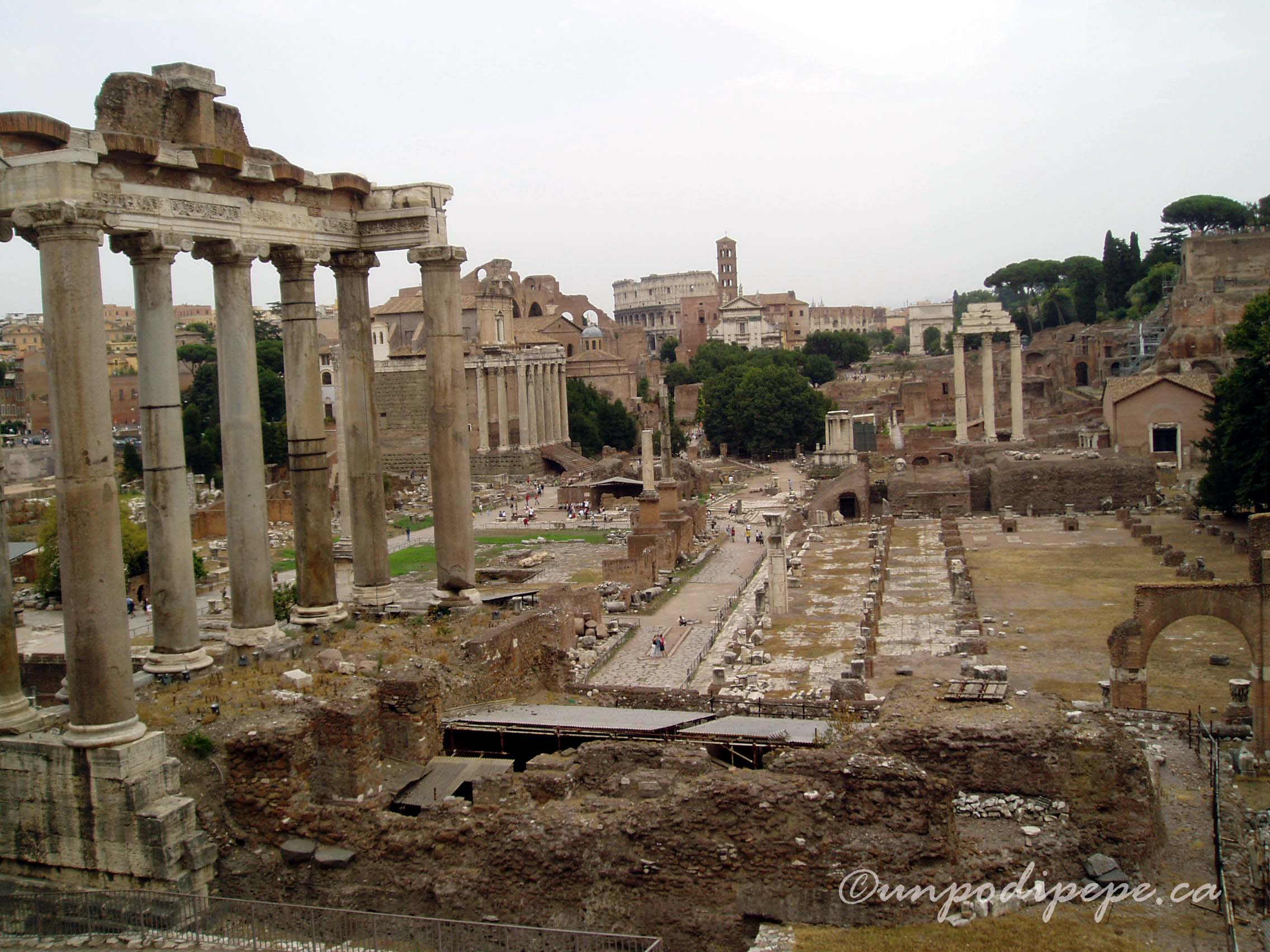
View of the Roman Forum (Foro Romano)

View of the Roman Forum (Foro Romano)

Old meets new at the Foro Romano

Old meets new at the Foro Romano

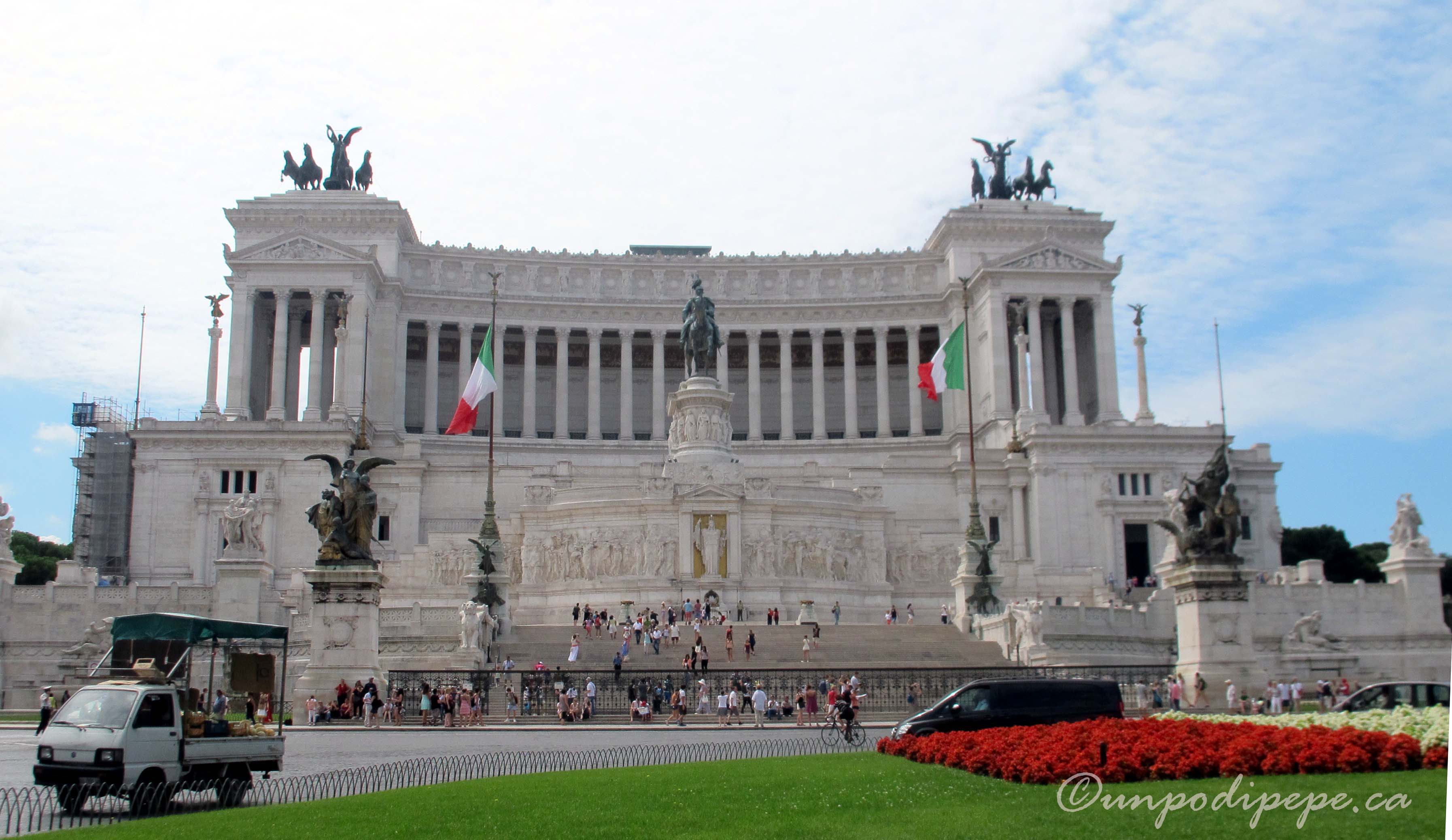
I walk along Via dei Fori Imperiali all the way to Piazza Venezia and Il Vittoriano, which is the neo-classical monument that looks like a giant wedding cake .

Il Vittoriano

Il Vittoriano

If you want some great views of Roma and are not afraid of heights, take the glass elevator to the rooftop terrace.

'Roma dal cielo' view from the roof of Il Vittoriano

‘Roma dal cielo’ view from the roof of Il Vittoriano

Then I turn right again and cross Piazza Venezia, which can be a bit of a challenge, and walk along Via del Corso. Via del Corso is lined with shops and goes all the way to Piazza del Popolo.
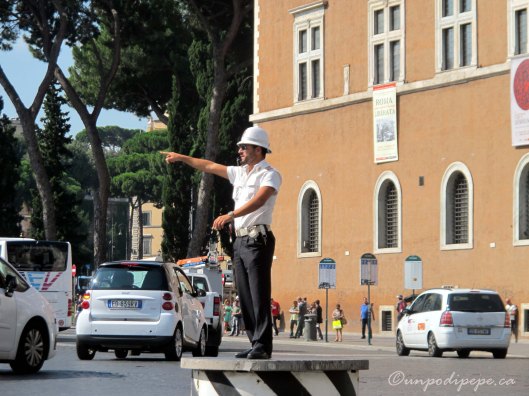
Crossing the street can be challenging! Photo taken by Vito!

Crossing the street can be challenging! Photo taken by Vito!

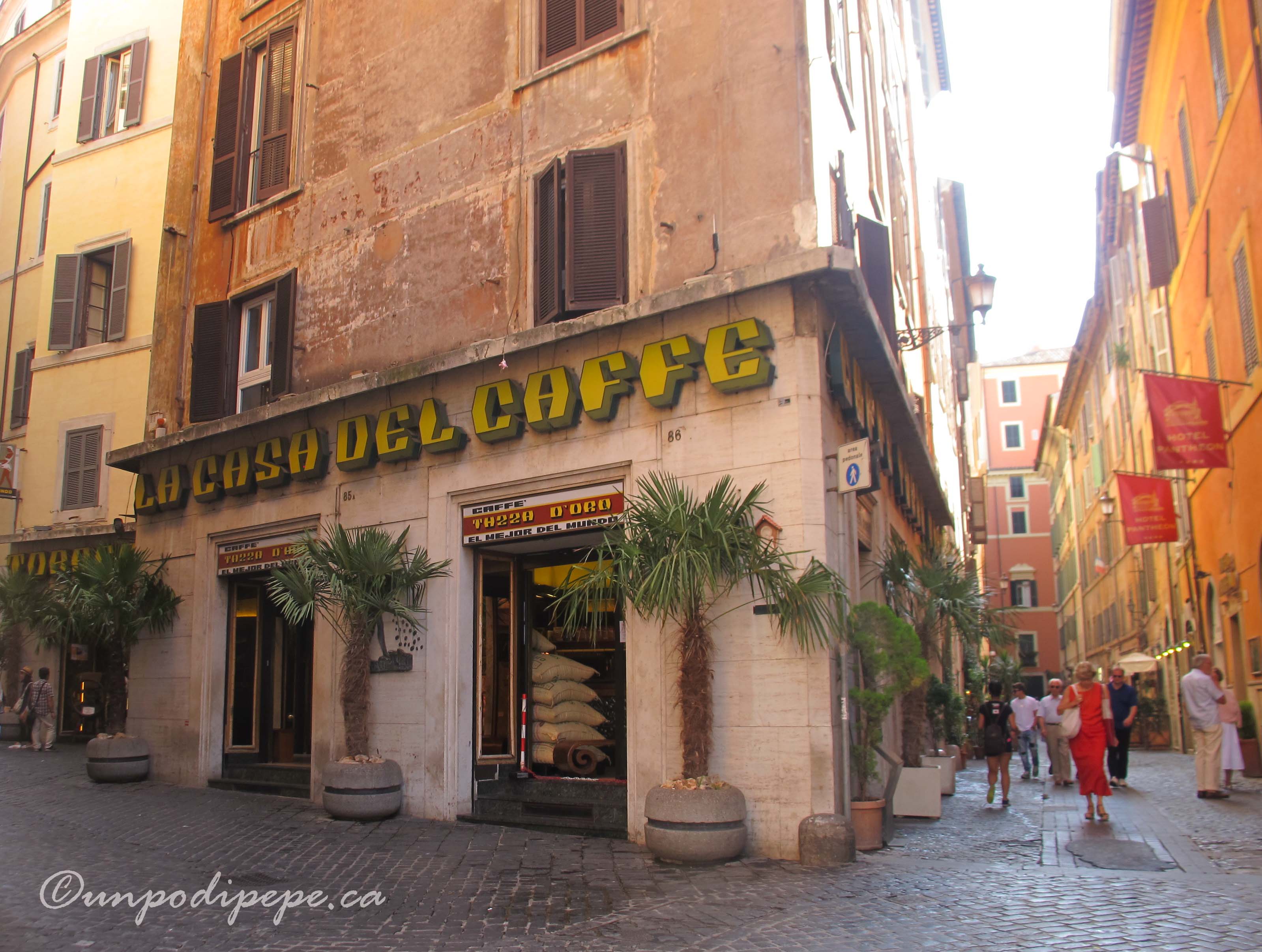
I turn into one of the side streets on the left and walk to the Pantheon-the domed architectural masterpiece that is absolutely not to be missed! The 2000 year old roof is the largest unreinforced concrete dome in the world. IlPantheonAcross the street I have an incredible granita di caffè at Tazza d’Oro.

Tazza d'Oro, Via degli Orfani 84

Tazza d’Oro, Via degli Orfani 84

Granita di caffe

Granita di caffe

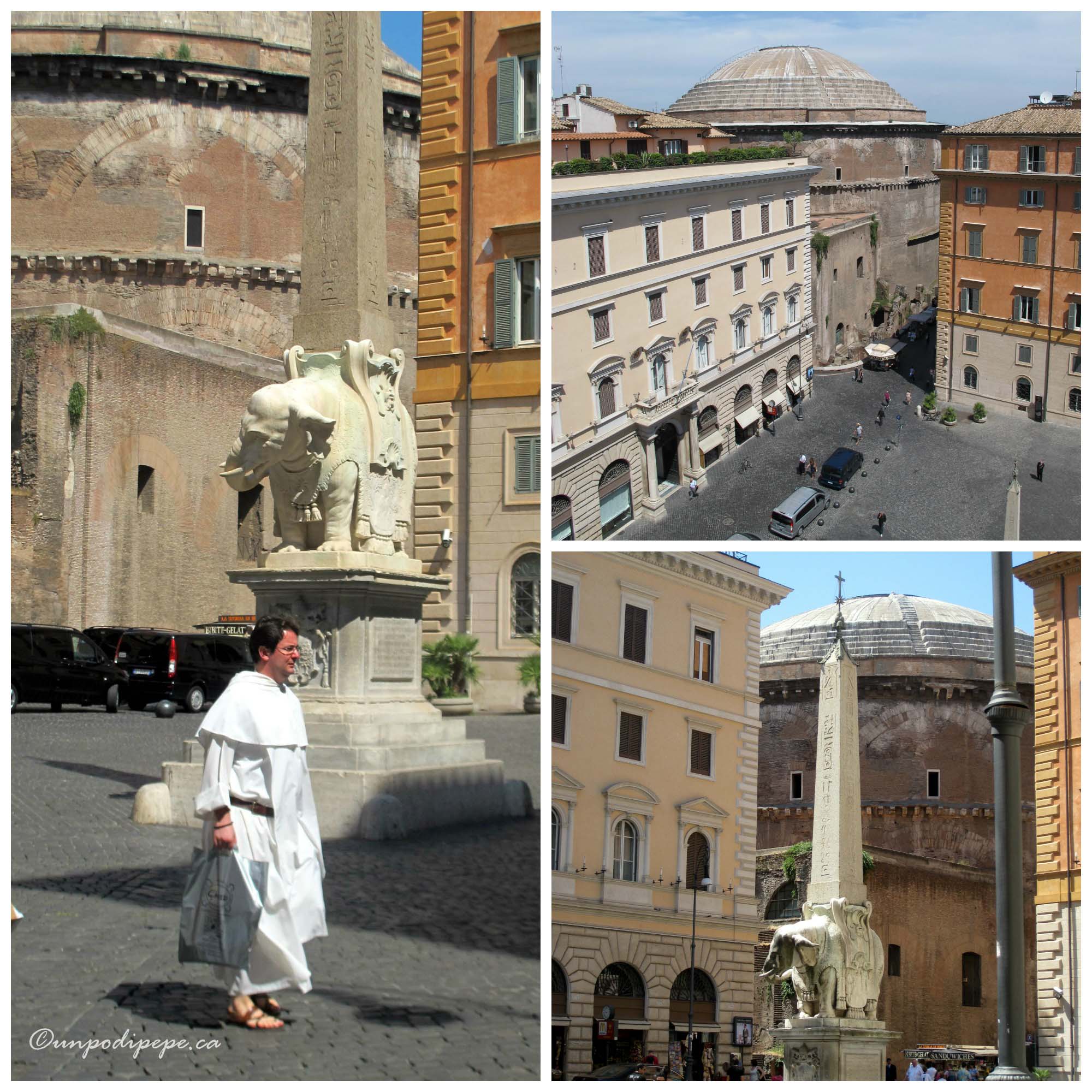
Behind the Pantheon is Santa Maria Sopra Minerva with Bernini’s adorable ‘elefantino’ sculpture in the piazza.  I sometimes like to sit and sketch the pudgy little elephant carrying a 5m Egyptian obelisk on its back.

Bernini's elefantino in Piazza Minerva. Behind the obelisk, you can see the domed roof of the Pantheon.

Bernini’s elefantino in Piazza Minerva. Behind the obelisk, you can see the domed roof of the Pantheon.

The molto fancy ‘Grande Hotel de la Minerve’ across from the church has a roof bar with incredible views. Down a side street – Via del Gesù- is Poggi art supplies www.poggi1825.it , so of course I have to stop there and drool at all the stuff I can’t carry home. I also pop into the little Baroque gem San Luigi dei Francesi, which is the National church of France in Roma. It has 3 incredible Caravaggio paintings-the ‘San Matteo’ cycle, in the Capella Contarelli which you can see for free! No lineups, no online bookings!  I always put a coin in the box and light a candle when I visit a church. If you have more time, go on my Caffè con Caravaggio walking tour.

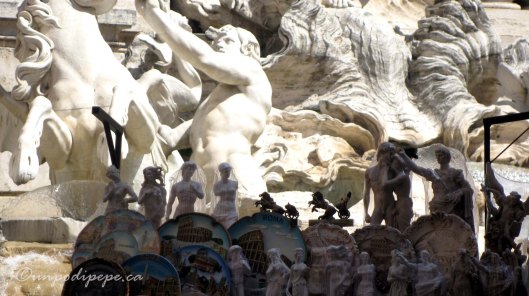
I walk down some side streets and get back onto Via del Corso going left.  A few blocks down I cross the street and walk to the Fontana di Trevi to toss in my coin. I am very superstitious about this, so I have to do the coin toss or I’m afraid I might not return to Roma!  That would be awful! Fontanaditrevi
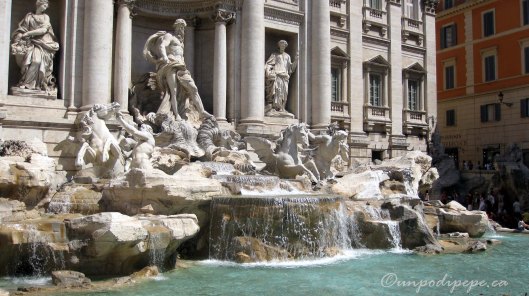
Fontana di Trevi

Fontana di Trevi

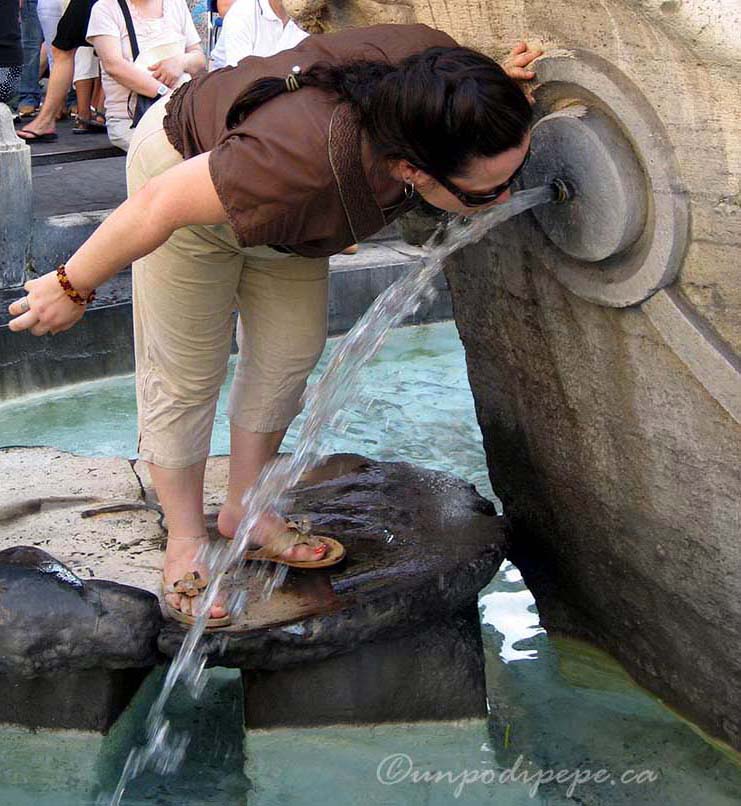
I look at all the tourists then head to my last stop- Piazza di Spagna. I never miss drinking from the Fontana della Barcaccia.  This is the Baroque fountain at the bottom of the steps that looks like a sinking ship. It was sculpted by both Bernini, Pietro and Gianlorenzo (father and son).  La Barcaccia has the best water ever, especially on a hot day –it comes straight from an ancient acqueduct Acqua Vergine and is always ice cold and refreshing.

La Barcaccia, Piazza di Spagna

La Barcaccia, Piazza di Spagna

Mmmm! Acqua freddissima!

Mmmm! Acqua freddissima!

From here I usually walk all the way back to the Colosseo metro stop to take the metro back home to San Paolo and pick up take-out suppli on the way. If I am too tired or have evening plans, I take the metro at Piazza di Spagna (red line) to Stazione Termini then change to the blue line for San Paolo.

Ci vediamo a Roma! Buon viaggio, Cristina

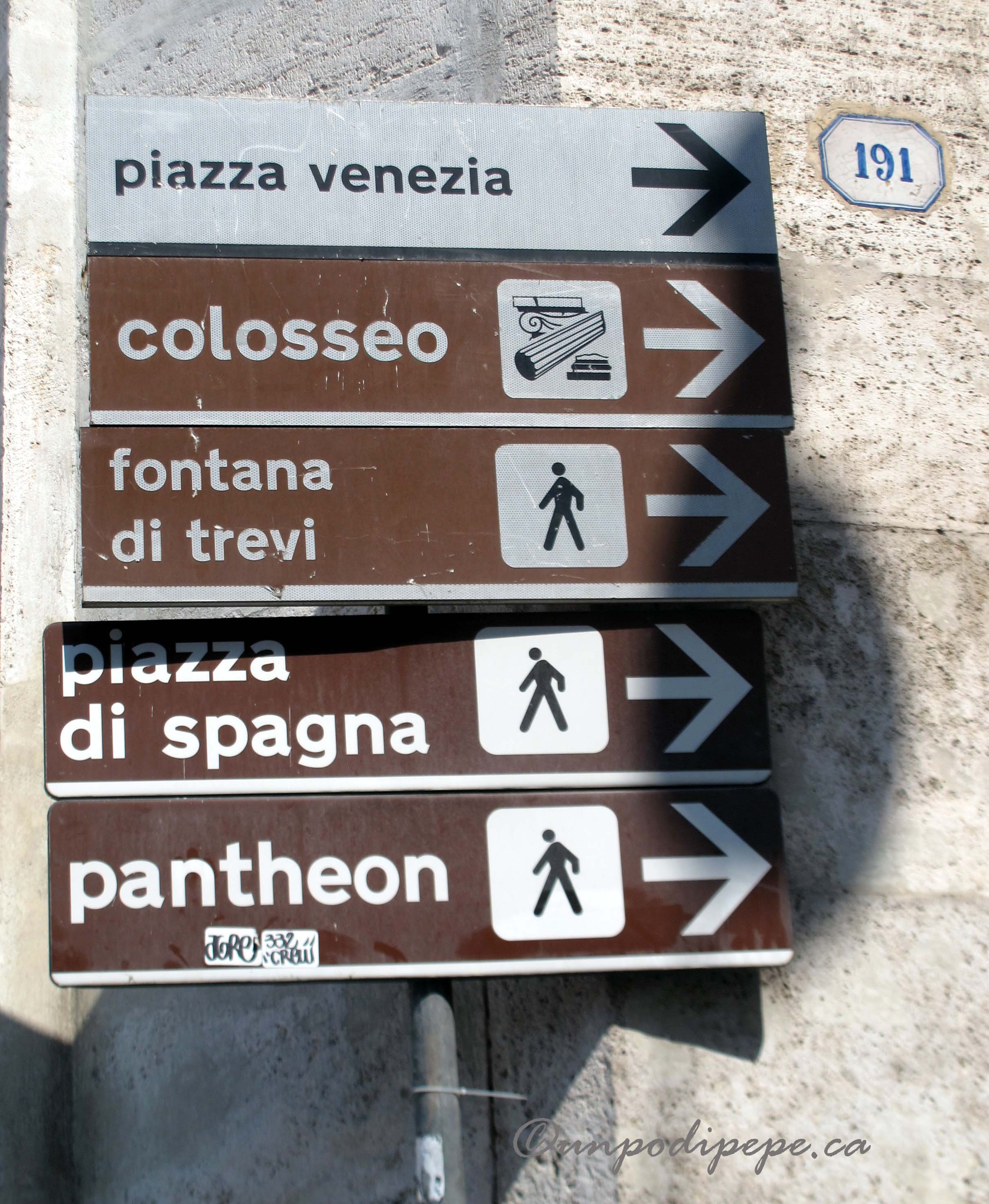
Handy signs at Piazza del Popolo

Handy signs at Piazza del Popolo

PS Stay tuned for future posts on things I like to do if I have more than one day in Roma:

  • Spend the day at the Vatican
  • Trastevere at night
  • Centrale Montemartini
  • Palazzo Massimo
  • Sketching at Piazza Navona
  • Visit more Caravaggio paintings for free at Santa Maria del Popolo
  • Go to Mass sung by cloistered nuns at Santa Brigida near Piazza Farnese

©2014 unpodipepe.ca

Piccoli gladiatori! Beware of fierce gladiators in training!
Piccoli gladiatori! Beware of fierce gladiators in training!
Share this:

  • Share on Facebook (Opens in new window) Facebook
  • Share on Pinterest (Opens in new window) Pinterest
  • Share on X (Opens in new window) X
  • Email a link to a friend (Opens in new window) Email
  • Share on WhatsApp (Opens in new window) WhatsApp
Like Loading...
Newer posts →

Enter your email address to follow 'un po' di pepe' and receive notifications of new posts by email.

Join 511 other subscribers
Follow Un po' di pepe on WordPress.com

Popular Posts

  • Hairstyling in Ancient Roma
    Hairstyling in Ancient Roma
  • Cucina Italiana Patrimonio UNESCO
    Cucina Italiana Patrimonio UNESCO
  • Grano Arso
    Grano Arso
  • Napoli Street Art
    Napoli Street Art
  • Hostaria Antica Roma~Eat like an Ancient Roman
    Hostaria Antica Roma~Eat like an Ancient Roman
  • Italiano per Ristoranti~How to pronounce your restaurant menu
    Italiano per Ristoranti~How to pronounce your restaurant menu
  • Cinquecento Love
    Cinquecento Love

Recent Posts

  • Cucina Italiana Patrimonio UNESCO
  • 2025~Un po’ di pepe Year in Review
  • Castel del Monte
  • ‘The Nuances of Love’
  • Hostaria Antica Roma~Eat like an Ancient Roman
  • Santa Maria in Aracoeli
  • Casino dell’Aurora~Villa Boncompagni Ludovisi
  • Nasoni di Roma
  • Bloghiversario #11
  • Fontana di Trevi
  • Acqua Vergine
  • Giubileo 2025
  • Sanremo 2025
  • In Vino there are Memories
  • A Literary Harvest
  • 2024~Un po’ di pepe Year in Review
  • Buon Natale 2024
  • Il Bicerin
  • Mercato Porta Palazzo
  • Torino
  • Catanzaro, Calabria
  • Il Pumo Pugliese
  • Artemisia Gentileschi
  • Cavalli di San Marco
  • Panzerotti

Categories

Amici e Famiglia Architecture Art Art history Art projects Bilingual posts Blogging Canada Culture Feste Firenze Inspiration Italia Italian Folklore Italian language Italian life Italocanadesi Libri Mangiamo! Orsara di Puglia Parole piacevoli Photography Puglia Recipes Roma Travel Travel tips Uncategorized Vino

Archives

Un po’ di pepe on Facebook

Un po’ di pepe on Facebook

Start a Blog at WordPress.com.

  • Subscribe Subscribed
    • Un po' di pepe
    • Join 511 other subscribers
    • Already have a WordPress.com account? Log in now.
    • Un po' di pepe
    • Subscribe Subscribed
    • Sign up
    • Log in
    • Report this content
    • View site in Reader
    • Manage subscriptions
    • Collapse this bar
 

Loading Comments...
 

    %d