• Home
  • About me/Chi sono
  • Contact

Un po' di pepe

~ …… (oon∙poh∙dee∙PEH∙peh) Cristina writes about interesting stuff /Cristina scrive di cose interessanti

Un po' di pepe

Category Archives: Travel

Mercato Porta Palazzo

03 Sunday Nov 2024

Posted by Un po' di pepe in Italia, Photography, Travel

≈ 11 Comments

Tags

Italian food, Northern Italy, Piemonte, Torino

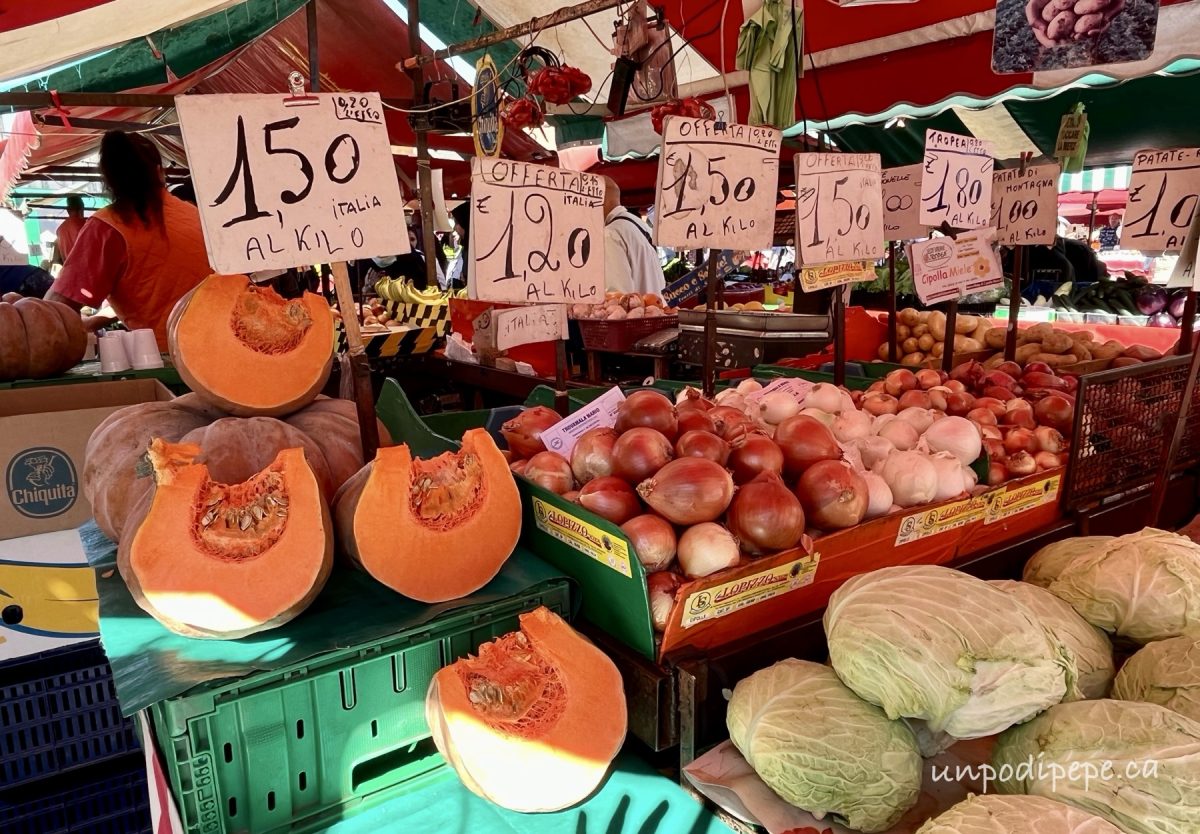
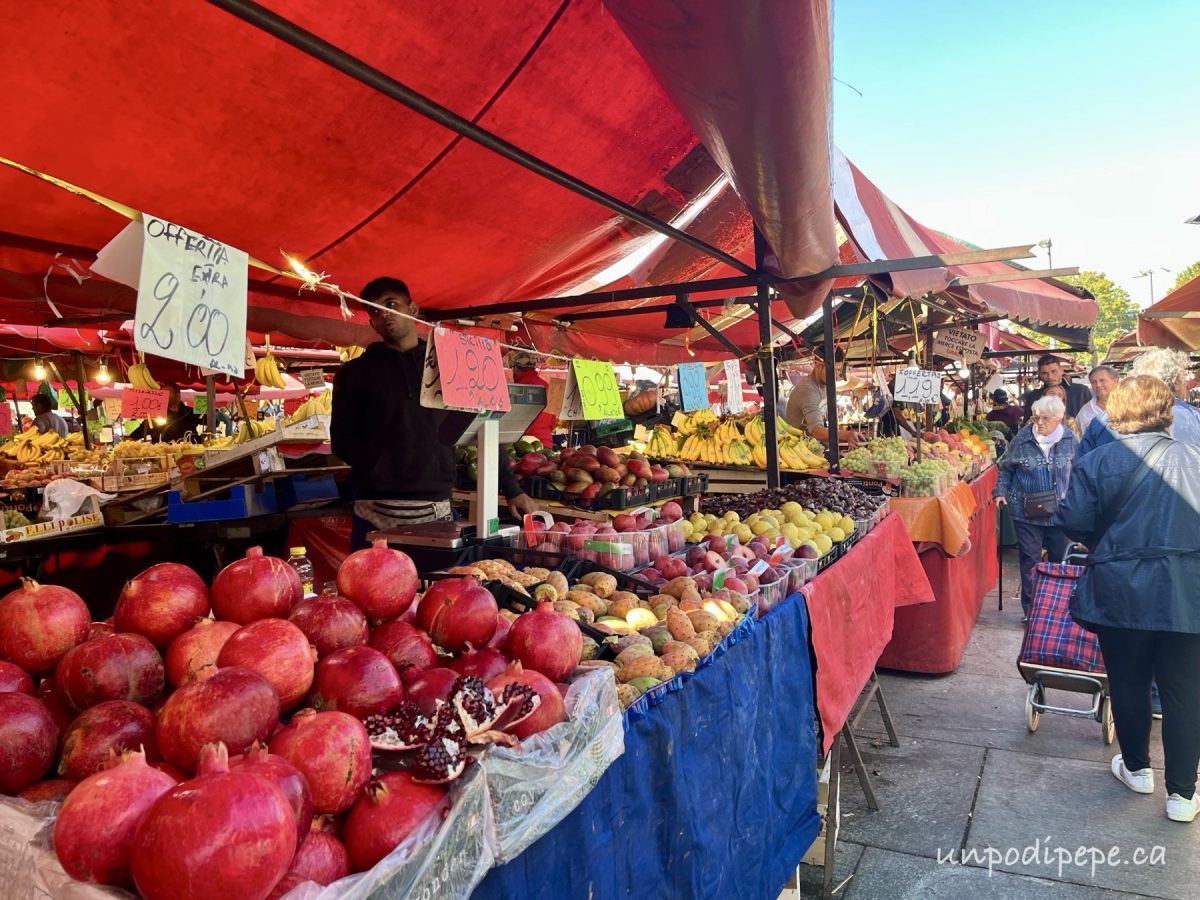
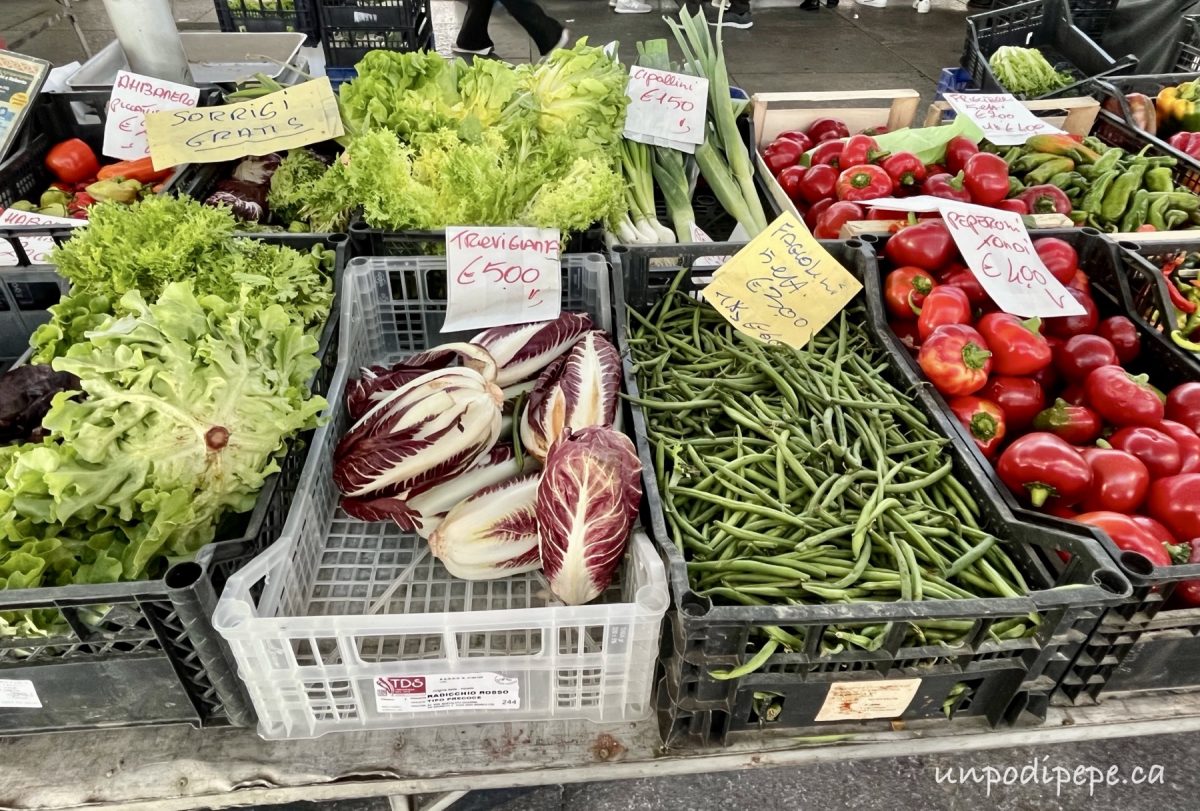
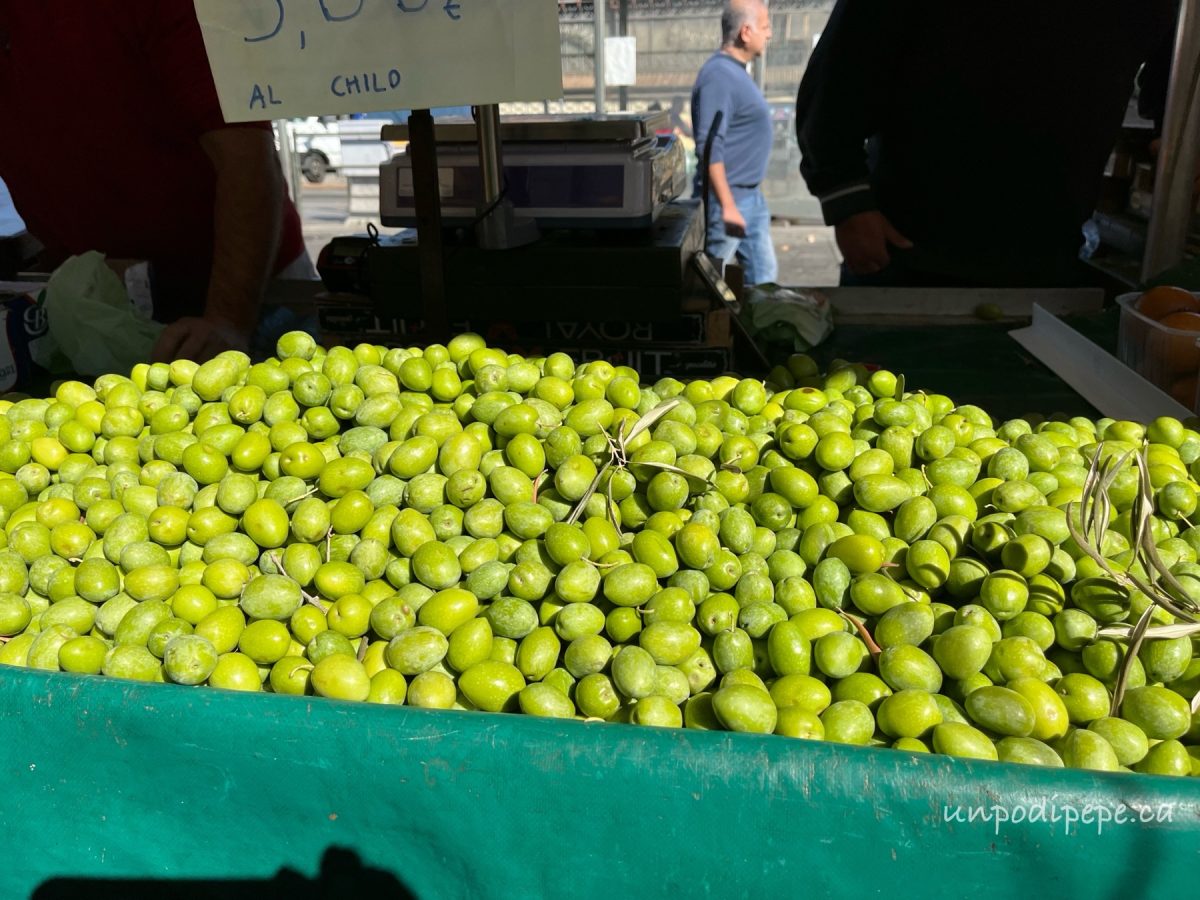
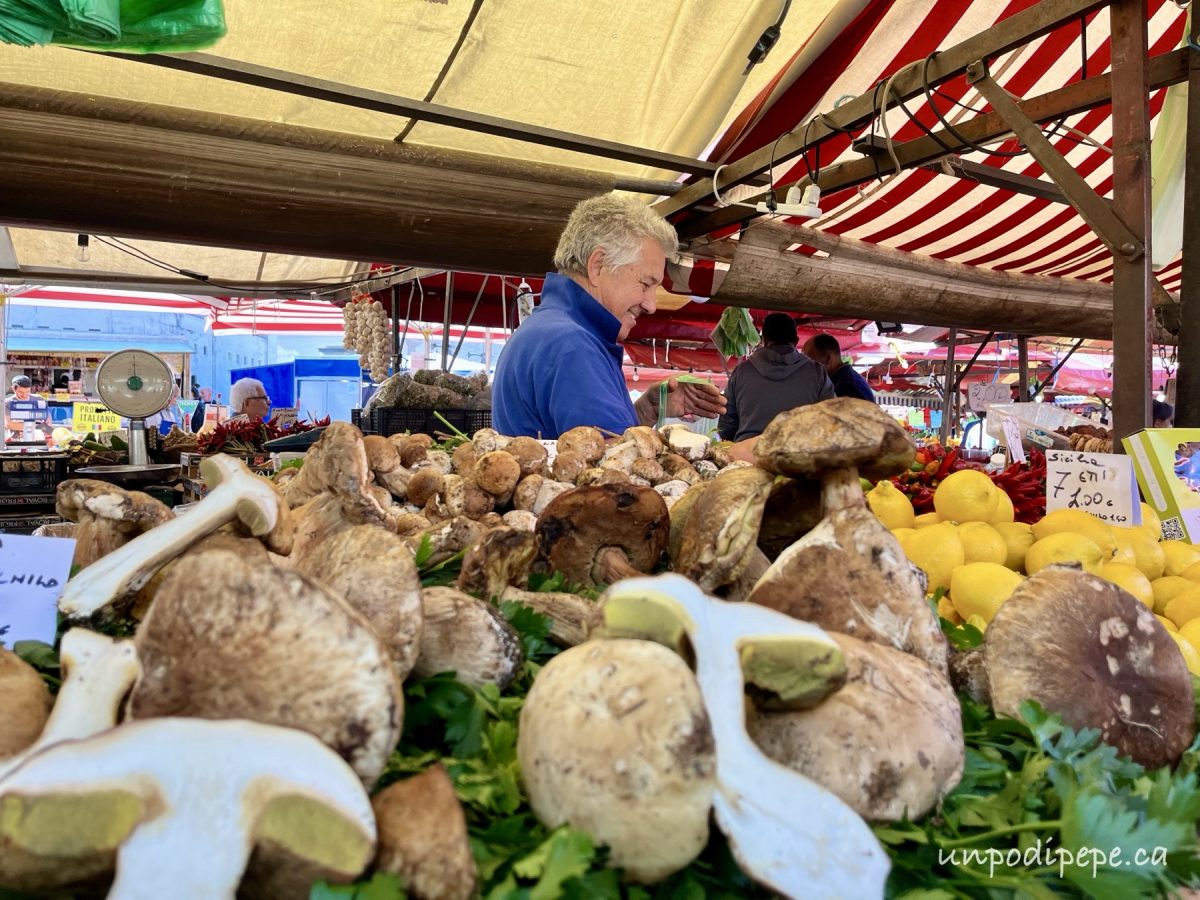
Torino’s Mercato Porta Palazzo in Piazza della Repubblica is the largest open-air market in Europe. My first morning in Torino, I took a walk through the mercato with Lucia from turinepi.  While we walked, I took so many photos of the produce and the bancarelle -the market stalls, that I had to dedicate an entire post to them. Established in 1835, Porta Palazzo is a collection of outdoor and covered market spaces. The bancarelle host vendors from all over, selling products from food and wine to flowers, clothing, shoes and housewares.

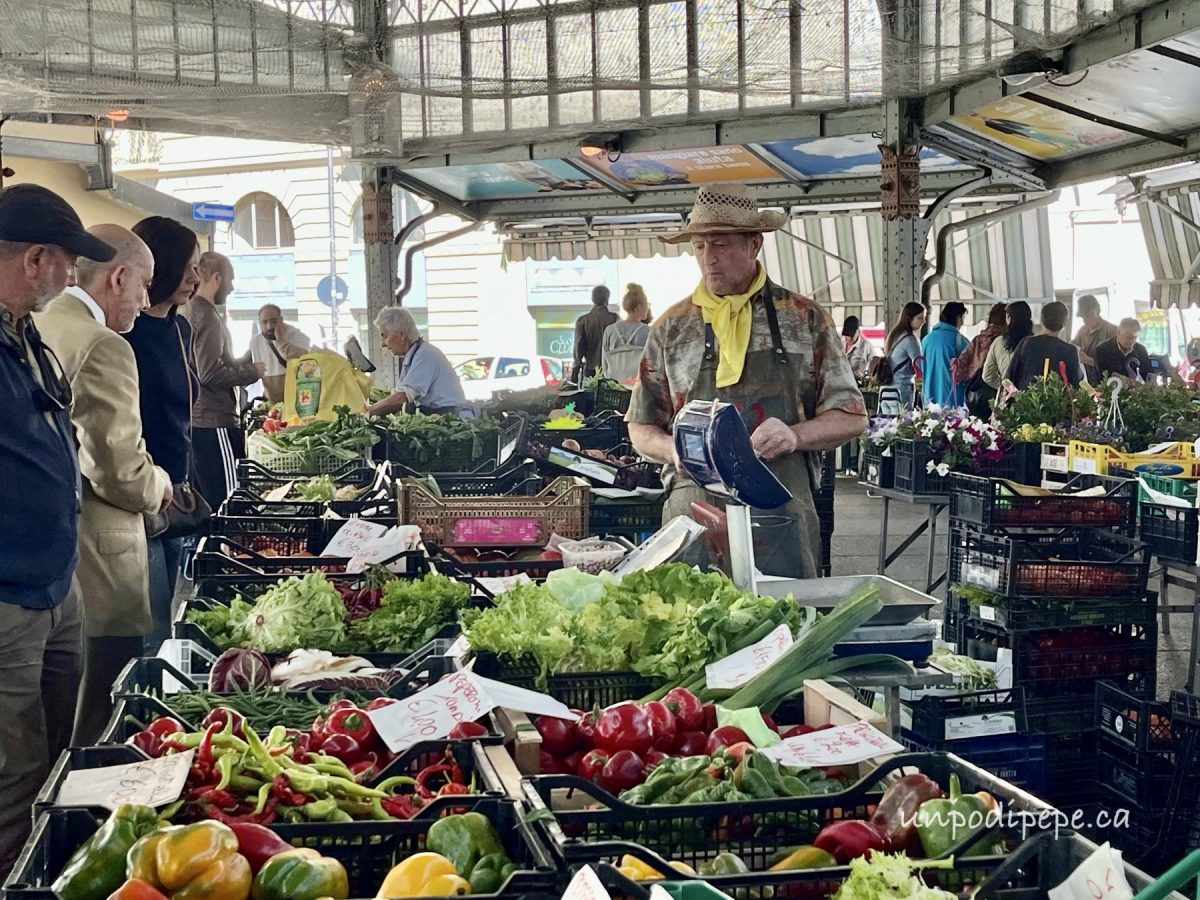
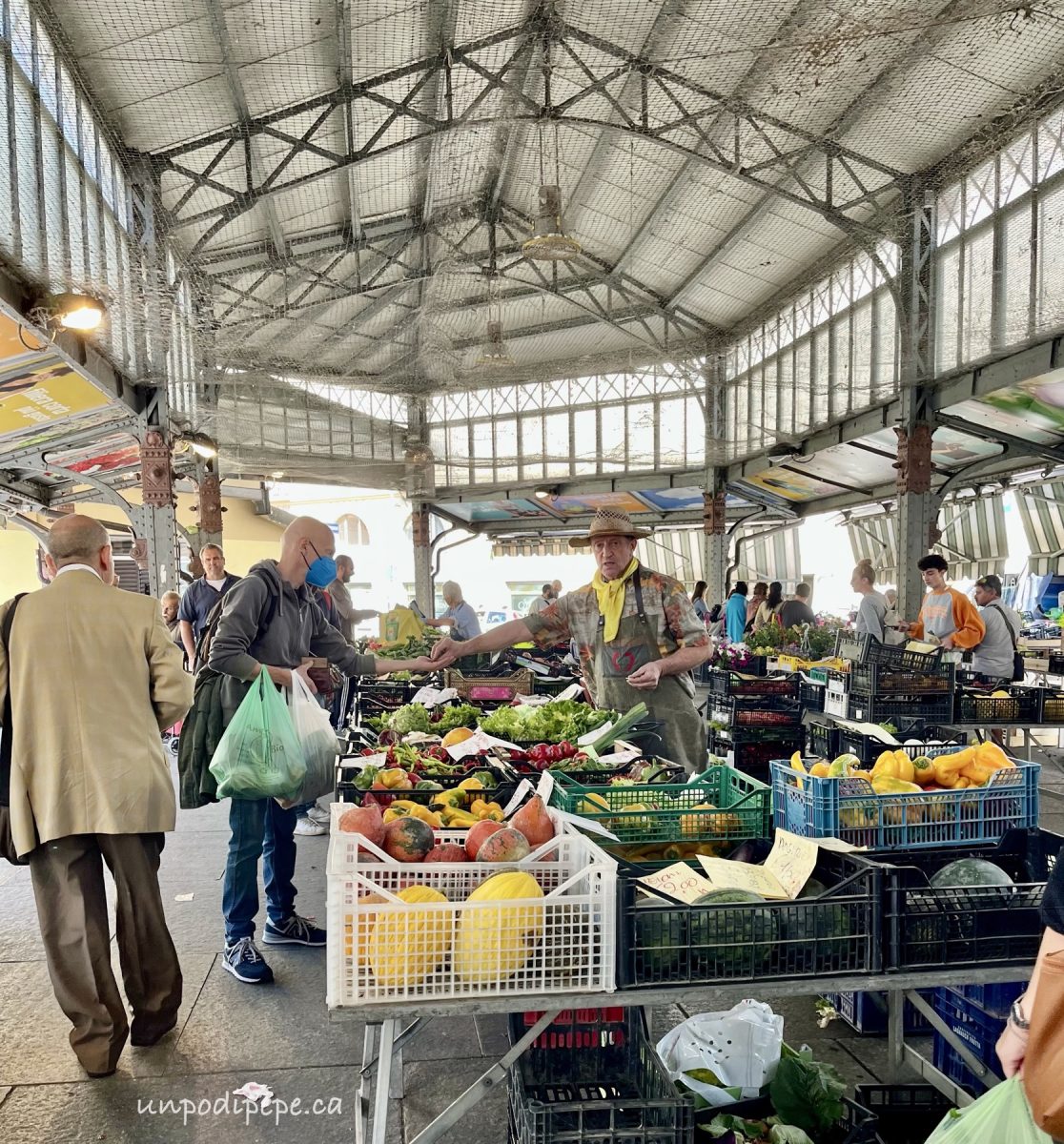
The covered glass pavilion is the local farmers market.  Look at the gorgeous radicchio.  This vendor with the hat is Lucia’s favourite.The produce is surprisingly well-priced.  Porta Palazzo is a clean and lively space.  The Torinesi call it Porta Pila, and do much of their shopping here. The space is huge, so there can be thousands, of people, especially on Saturdays, when many shoppers even drive in from France!A good place to snack, or to taste and see local food, as well as other ethnic specialties. Porta Palazzo is an explosion of colour and a feast for all of the senses-flavours, aromas, colours, sounds and languages.
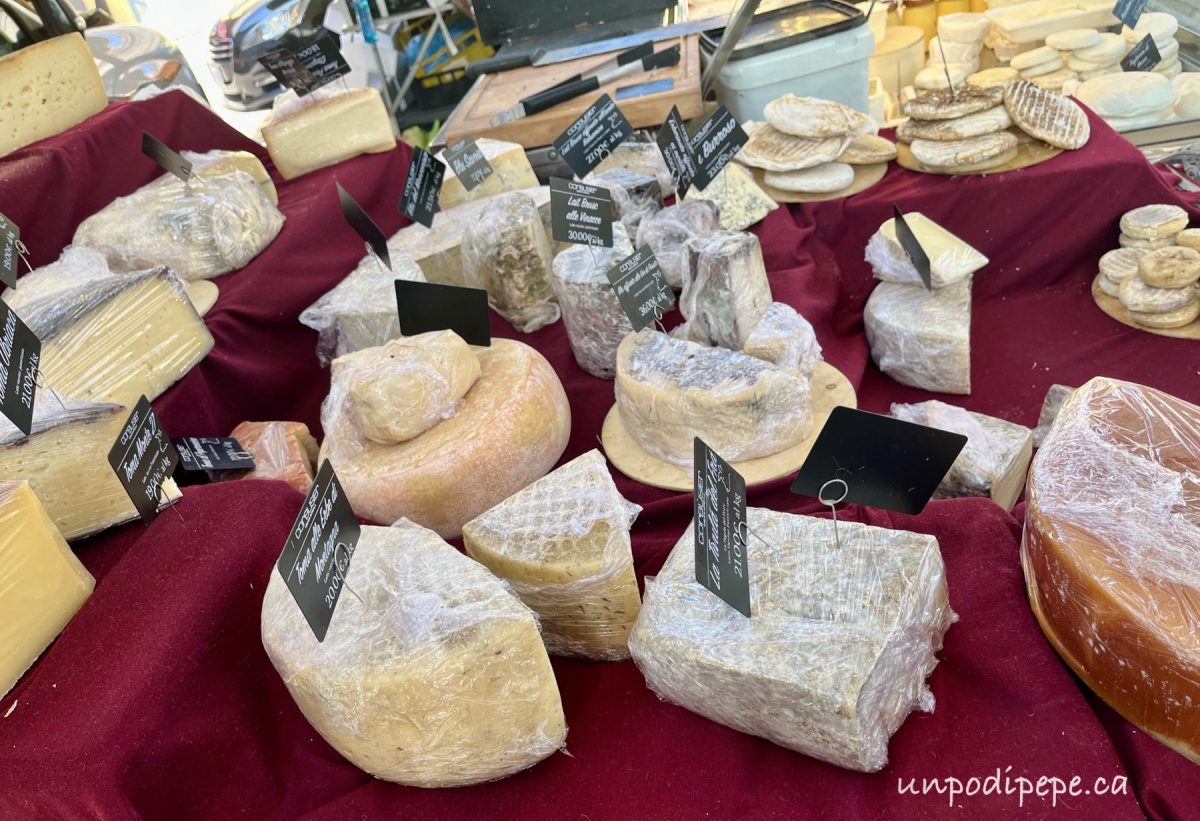
Formaggi can be found from Piemonte and every region of Italia

Besides the bancarelle and pavilion, there are also 4 structures on the site: Mercato Ittico e Alimentare, built in 1826, L’antica Tettoia dell’Orologio, a 1916 metal art deco building, Mercato dell’abbigliamento-the clothing market, and Mercato Centrale di Torino, built in 2011.  A food lover’s Heaven! Also, more formaggi!

Mercato Porta Palazzo is a 5 minute walk from Piazza Castello.  From Piazza Castello, take Via Garibaldi, turn right onto Via Milano, then walk straight until you reach Piazza della Repubblica and the mercato.

Mercato Porta Palazzo is open from 8:00-12:00 Tuesday to Friday, and 7:00-19:30 Saturday. The mercato is closed Sunday and Monday.

More info on Mercato Porta Palazzo can be found on their website.

Buon viaggio, Cristina

Share this:

  • Click to share on Facebook (Opens in new window) Facebook
  • Click to share on Pinterest (Opens in new window) Pinterest
  • Click to share on X (Opens in new window) X
  • Click to email a link to a friend (Opens in new window) Email
  • Click to share on WhatsApp (Opens in new window) WhatsApp
Like Loading...

Torcello

13 Monday May 2024

Posted by Un po' di pepe in Italia, Travel, Travel tips

≈ 12 Comments

Tags

Daytrips from Venezia, Locanda Cipriani, Risotto di go', Torcellum, Venetian lagoon, Veneto, Venice

The first time I visited tiny Torcello was with my family in 1984. We were staying with family friends in Mestre and their daughter had just gotten married there. One look at her wedding photos and all 9 of us set off on the vaporetto to Torcello for lunch the next morning!

The Romans called it ‘Torcellum’ meaning tower to the sky. Torcello was the first of the Venetian lagoon islands to be populated in 452 after the fall of the Roman Empire, by refugees from Altino fleeing the mainland from Hun invasions.  They brought the relics of their patron saint, San Heliodorus with them. Torcello had a cathedral and Bishop before San Marco was even built.  Santa Maria Assunta built in 638 is the oldest parish in the lagoon and was the Bishop’s official seat for over 1000 years.

Pre medieval Torcello was a more powerful trade center than Venezia, having close trade ties with Constantinople and Ravenna. In the 10th century, the population was >10,000.  Hard to imagine on 441 m², but it sounds like there was more available land at that time.  Commercial activity included fishing, glass making, and export of salt, fruit, wine and even cucumbers.

As Venezia’s prosperity increased in the 15th century, silting and swamping of Torcello made navigating the ‘laguna morta’ impossible.  This led to malaria and depopulation.  It was slowly abandoned for Murano, Burano and Venezia-even the bishop was moved to Murano.  Most of the 12 churches, cloisters, a monastery and palazzi were looted over time for building materials. The full-time population of Torcello is now 11, including the parish priest.

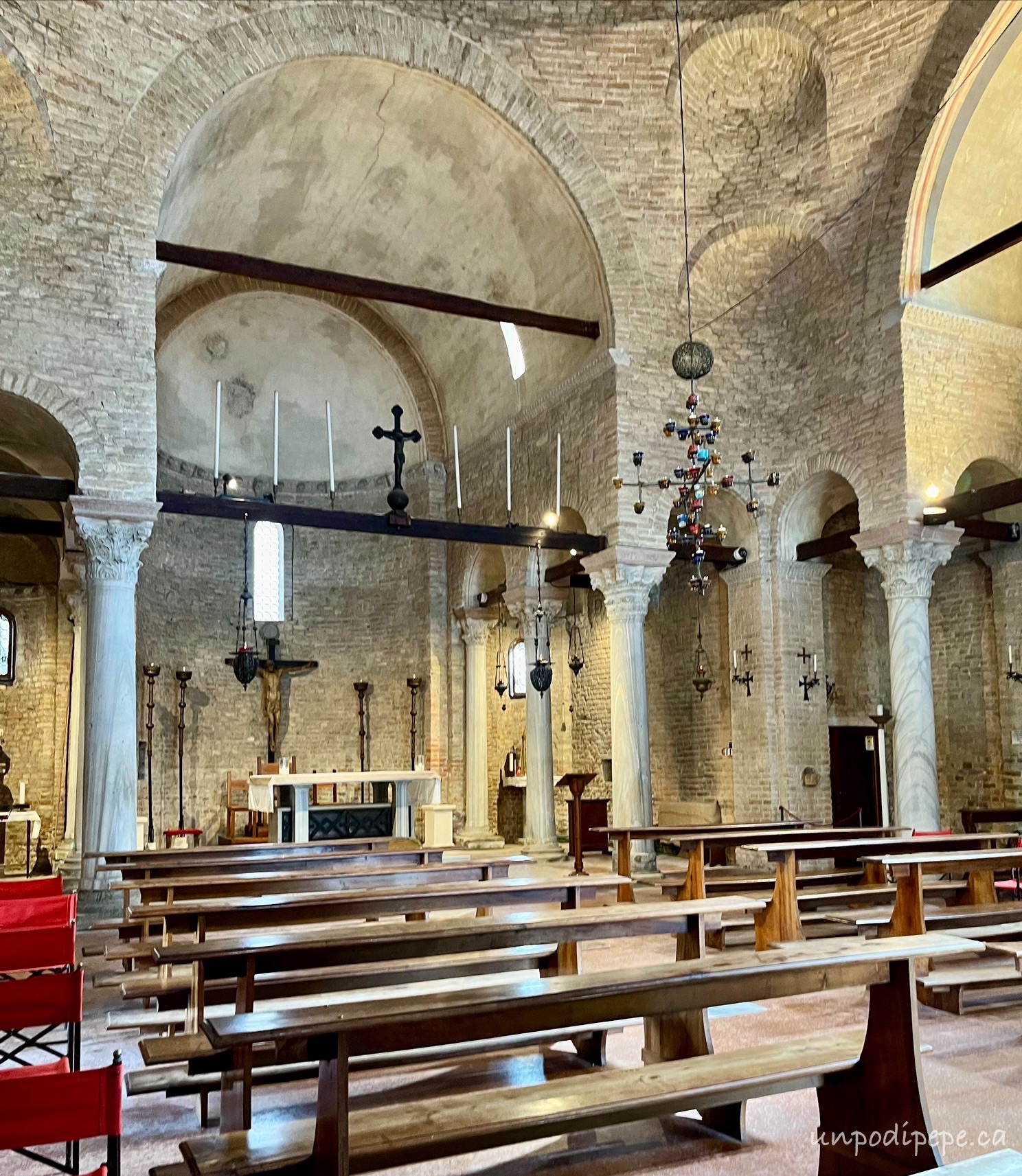
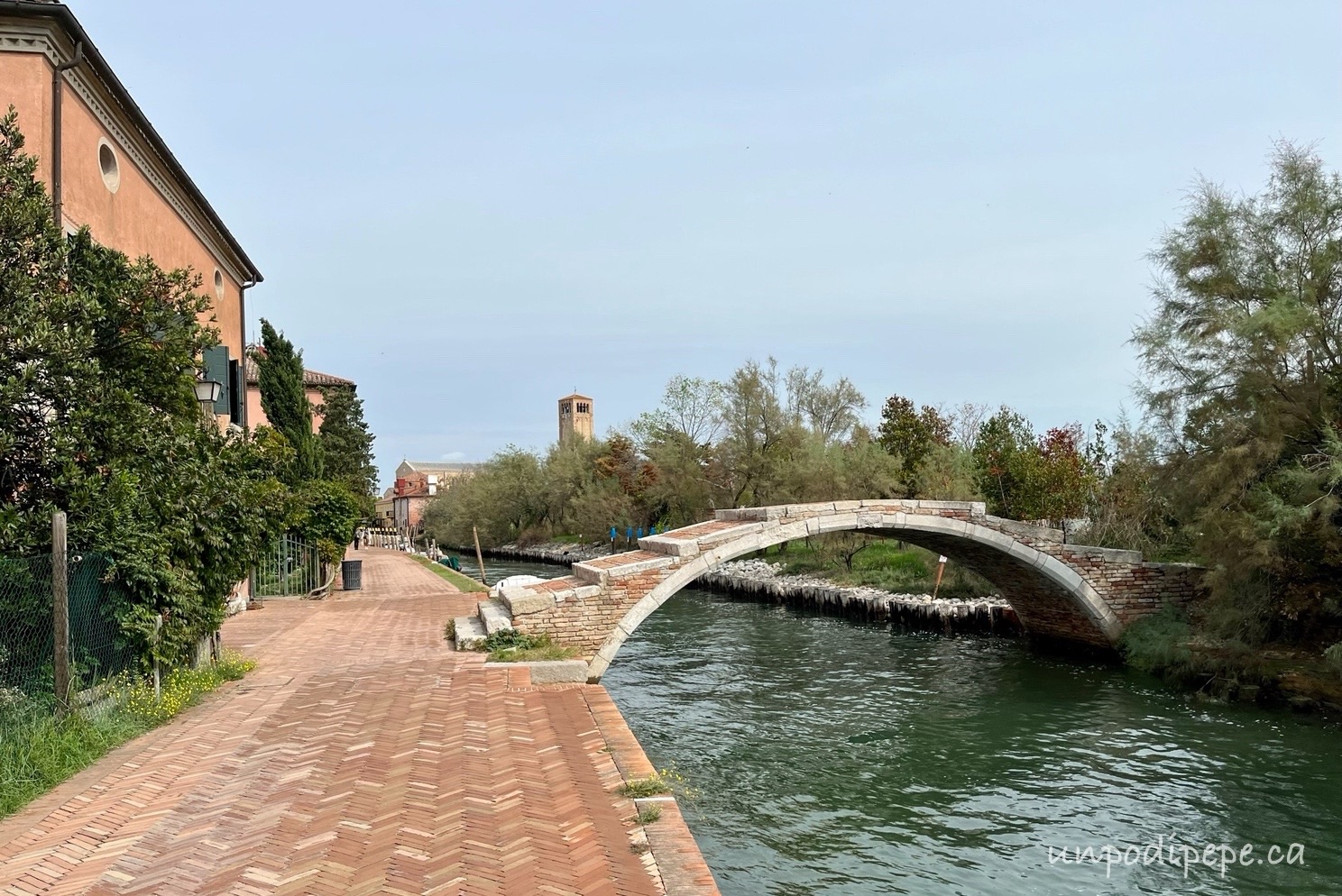
Torcello is a lovely sanctuary from the crowds, and an opportunity to see the original Venezia.  Strada della Rosina connects the pier to the main piazza along a canal.  On the right is Ponte del Diavolo, a bridge without parapets (railings). There are several versions of a legend about the ponte, regarding a young couple in love, a witch and the devil.  You will pass all the restaurants on the way to Piazza Santa Fosca.  The Basilica Santa Fosca is an 11th century Byzantine church in the form of a Greek cross.  Byzantine architecture is one of my favourites, and this one is a gem with a gorgeous interior.  It was built to house the remains of Santa Fosca da Ravenna.  

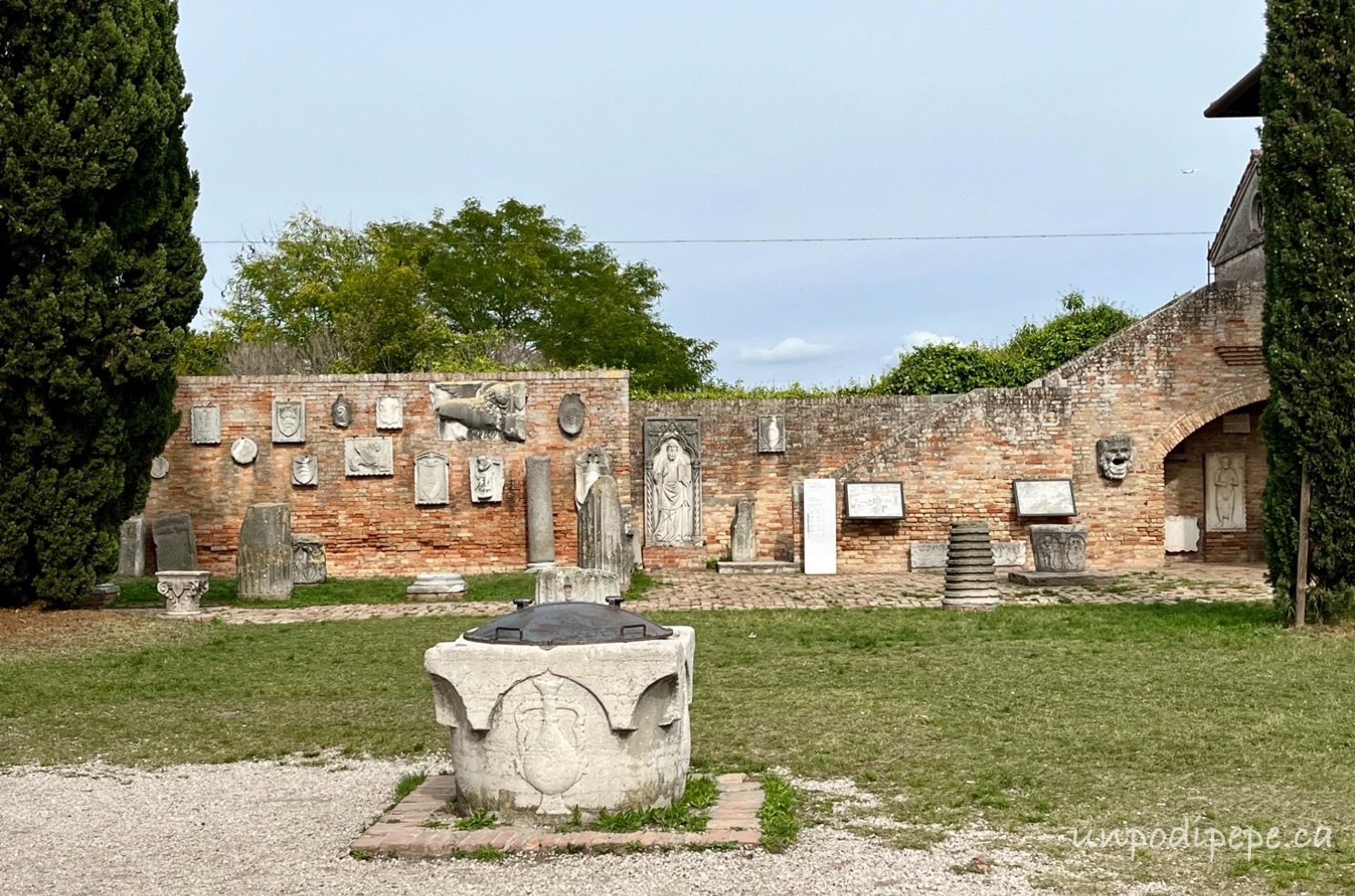
Next door is Santa Maria Assunta which was rebuilt in 1008 and has incredible Venetian Byzantine mosaics. The 11th century Campanile is open 10-17:30 for views over Torcello, Burano, and the lagoon. Admission to the campanile is €6. The Torcello museo is in the former council chambers, admission €3.

Venetian Byzantine mosaics Santa Maria Assunta, Torcello

Aironi and fenicotteri rosa (herons and pink flamingos) can be seen in the marshes from March to September at Casa Museo Andrich-an artist home, museum, nature reserve and educational farm garden.  Admission €12.  To get there, when getting off the vaporetto, instead of going straight to Strada della Rosina, turn left. I have not been here, but it sounds nice if you have the time.

Torcello is a great place to eat!  Local specialties include risotto di gò, made with a small local fish-also called risotto alla Buranella, moeche-a soft shell crab, baccalà mantecato, and carciofi Sant’Erasmo in spring.  The first place after the pier is the informal Taverna Tipica Veneziana, a shack in a field with picnic tables serving a limited but yummy local menu.

At Osteria al Ponte del Diavolo (closed Monday), I had a simple radicchio and balsamico salad here with an amazing glass of vino bianco, Torcellum from the golden Dorona grape, which was almost extinct.  Unfortunately, the island only produces enough grapes to supply the local restaurants with wine.

Ristorante Villa ‘600 (closed Wednesday) an old 17th century farmhouse and gardens. This is where my family had seafood risotto in 1984!  I still have the receipt!

Ristorante Al Trono d’ Attila (closed Monday) I believe this is where the 1984 wedding reception was held!

The Locanda Cipriani (the same Cipriani as in Harry’s Bar) is a five room upscale resort and restaurant on Torcello since 1935.  In 1948, Ernest Hemingway wrote ‘Across the River and into the Trees’ here. Celebrities and royalty have been known to stay here. The restaurant is not as pricey as one would expect.Do not miss the last vaporetto, as there are only 2 places to stay on Torcello- Locanda Cipriani and Bed and Breakfast Ca’ Torcello!  There are also 2 places to stay on Burano and 1 on Mazzorbo-which is connected to Burano by a bridge.  On the weekends, restaurants can be open till 2300, which is after vaporetto hours. Water taxi back to Venezia is very expensive. Oh and in case you are wondering, there is no shopping on Torcello!

Torcello 1984

Torcello is 10km away from Venezia and accessible from Burano via a 10 minute vaporetto ride daily from 0800-2000.  Let me know if any of you have been to Torcello!

Share this:

  • Click to share on Facebook (Opens in new window) Facebook
  • Click to share on Pinterest (Opens in new window) Pinterest
  • Click to share on X (Opens in new window) X
  • Click to email a link to a friend (Opens in new window) Email
  • Click to share on WhatsApp (Opens in new window) WhatsApp
Like Loading...

Burano

11 Thursday Apr 2024

Posted by Un po' di pepe in Italia, Photography, Travel

≈ 9 Comments

Tags

Daytrips from Venezia, UNESCO World Heritage Sites, Venetian lagoon, Veneto, Venezia

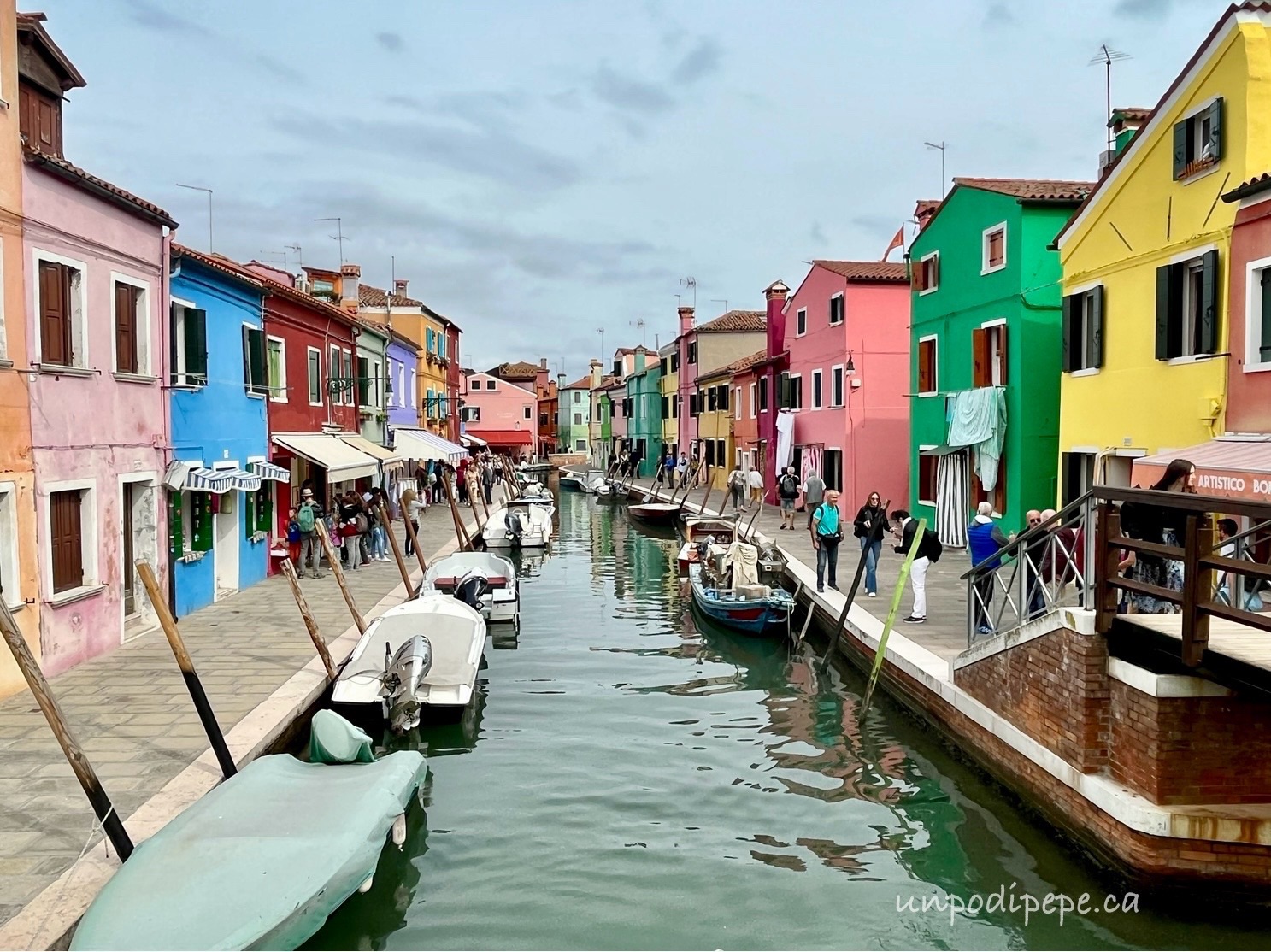
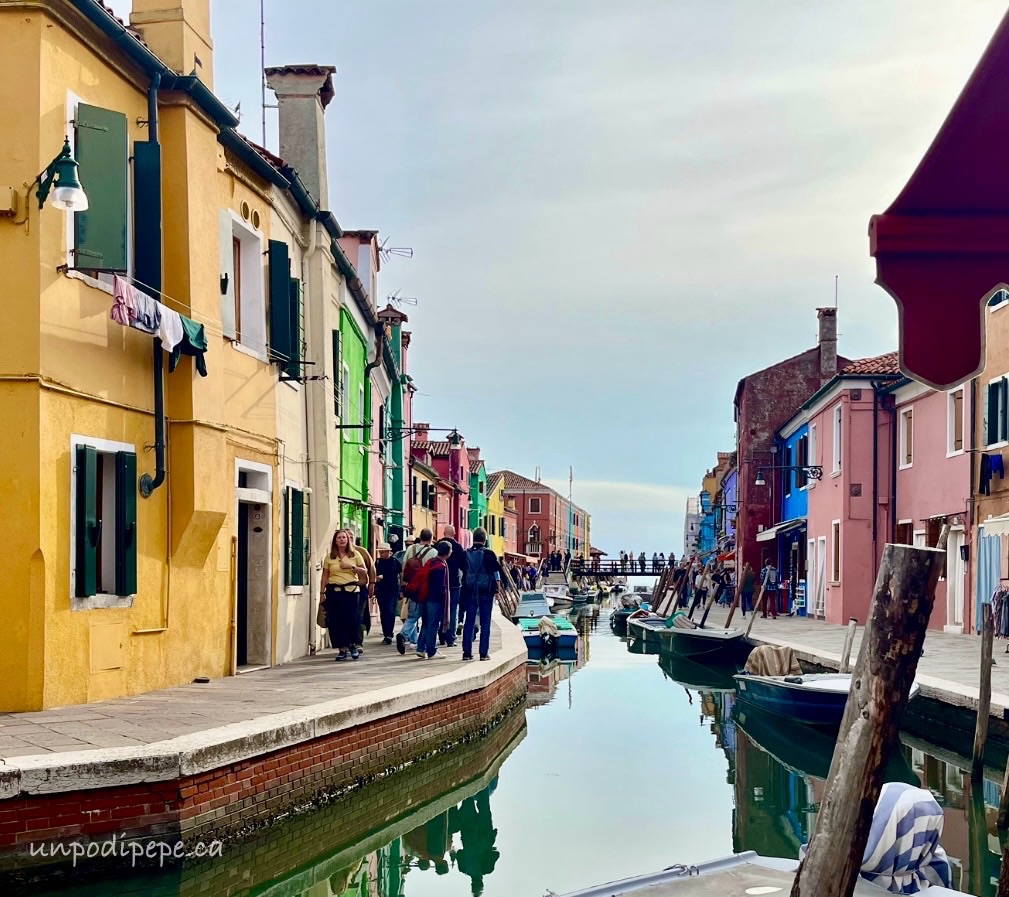
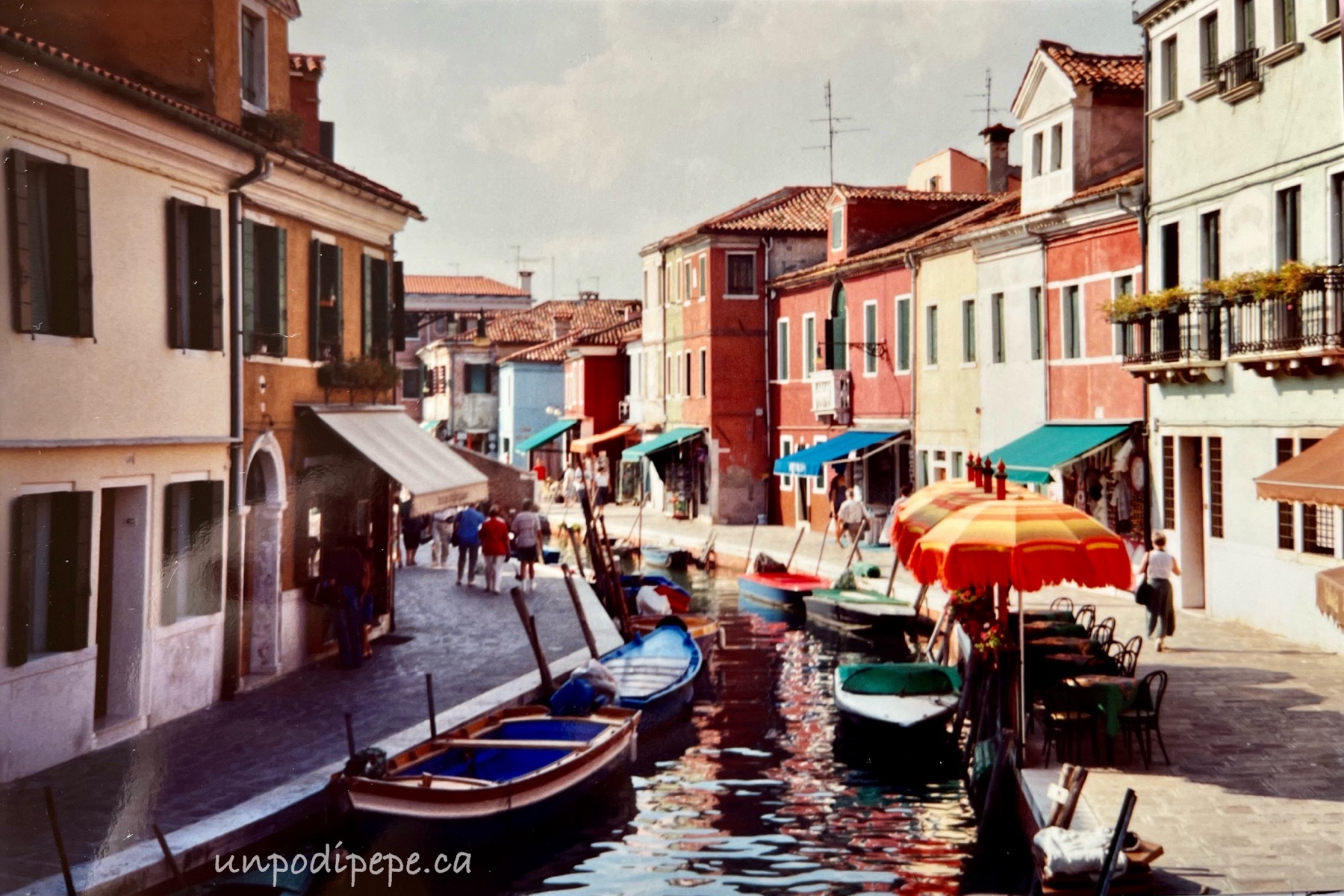
Burano, an island in the north end of the Venetian lagoon, is one of the most colourful places in the world.  It is known for merletto (lace) and houses painted in bright contrasting colours.  Burano is only 210 m² with a population of 2,800.  That is a lot of people for such a tiny place- 13,000 per km². Burano is actually made up of 4 islands separated by 3 canals and connected by bridges. The highest elevation is only 1m! There are no cars-not even for residents, since there are no roads!  Burano is part of the city of Venezia, 7 km away.

Burano was settled in the 6th century by residents of Altino fleeing invaders.  They called the island Boreana because it faces north.  In the 16th Century, women on the island started making intricate lace with needles from Cyprus.  The lace trade was booming until the 18th Century, then revived in 1872 with the opening of the Scuola del Merletto (school of lacemaking).  I remember when I first visited Burano in 1994, women sat outside their homes doing lacework. There are not many lacemakers now.  It is extremely time consuming to make, and as a result, incredibly expensive.  Many of the lace works, especially the larger pieces, are machine made imitations, many of them from China.

Emilia Burano, Via Galuppi 1994

For authentic Burano lace, try La Perla Gallery, or Emilia Burano  Via San Martino Sinistro 376, and 205 just off Via Galuppi.  Handmade monogrammed fazzoletti (handkerchiefs) start at €49.

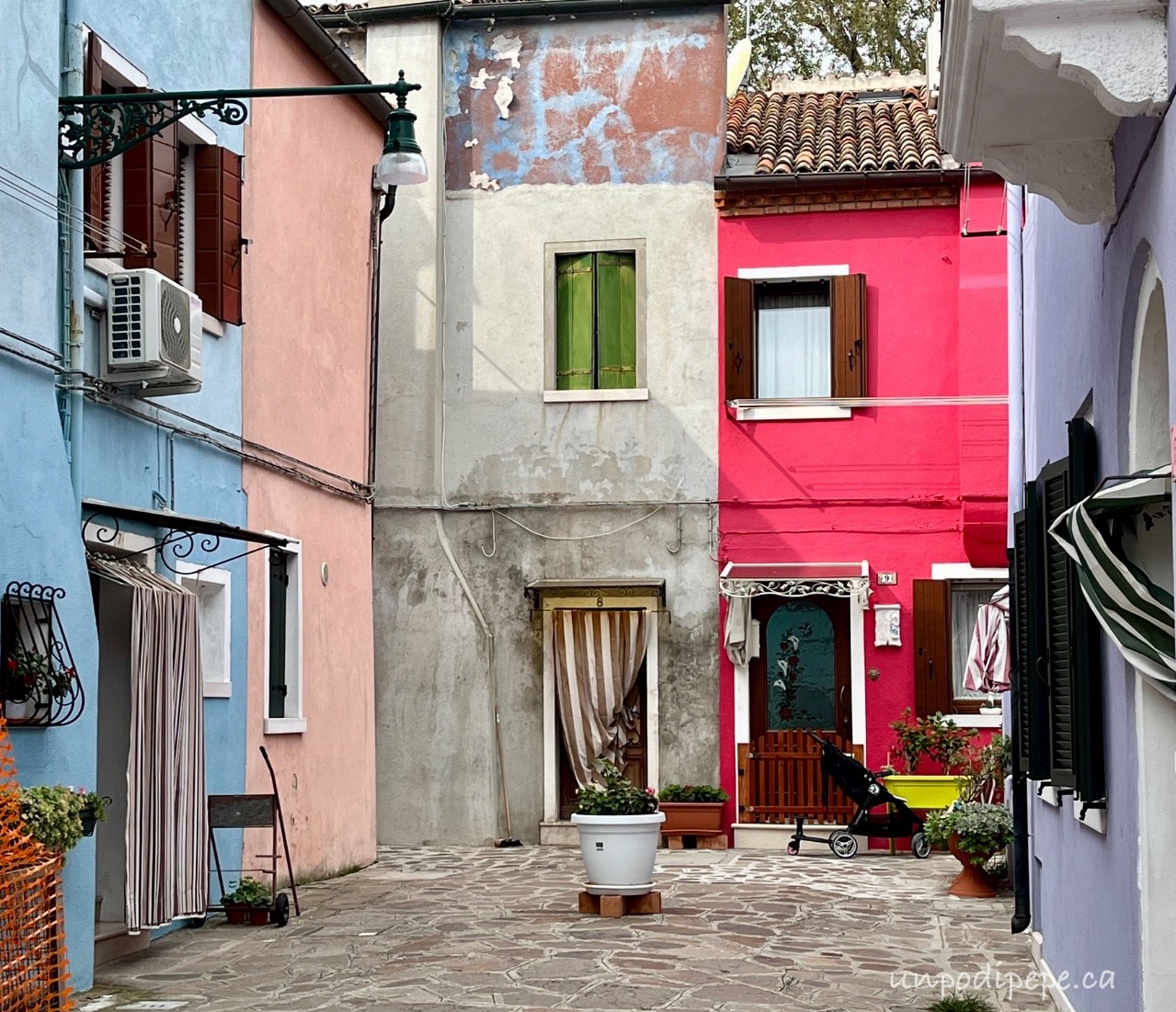
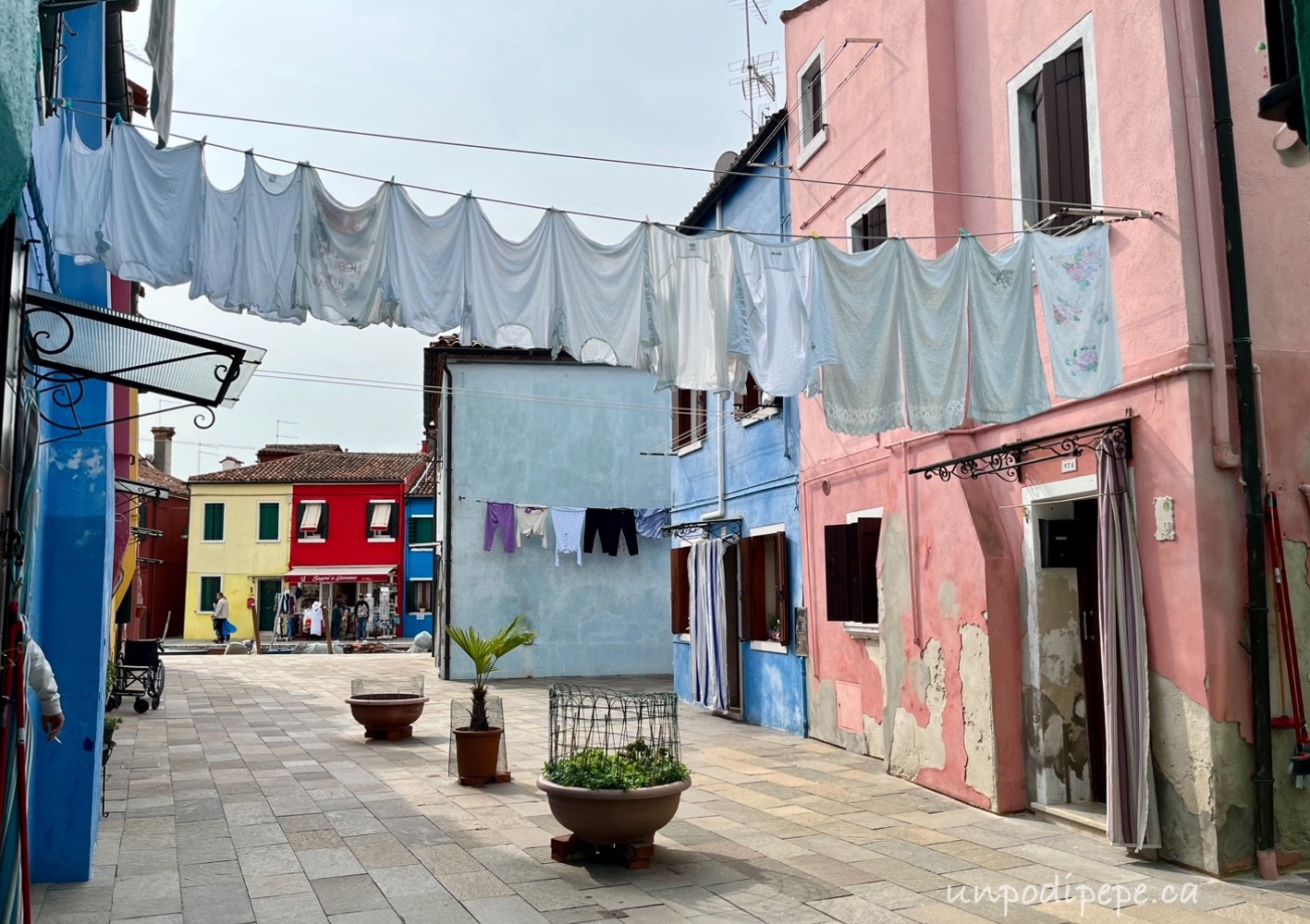
Houses on Burano have been brightly painted since the 15th Century.  This was common in fishing communities so that fishermen out on the water could find their way home in the fog.  Burano is still a working fishing island, although the primary economy is now tourism. An official government request must be sent in to paint a home on Burano as there is a system to the colour scheme.  The response lists the colours allowed for that particular site!  No 2 houses side by side can be the same colour.

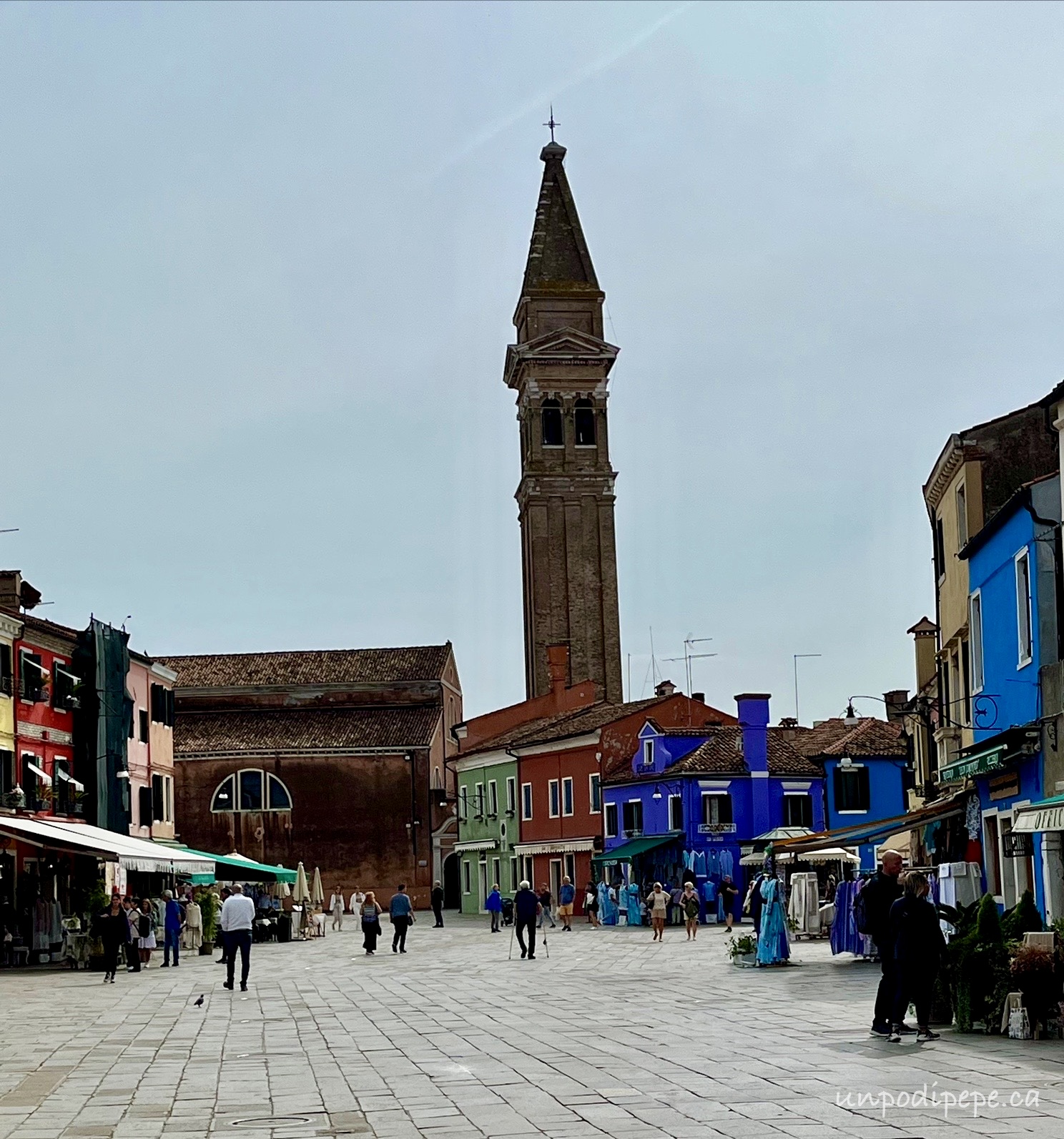
Piazza Baldassare Galuppi is the only piazza on Burano.  The church of San Martino Vescovo has a 53m high leaning campanile and a 1727 Crucifixion by Tiepolo. The piazza also has the Museo del Merletto, which has examples of 16th and 17th century lace as well as a 6th Century Istrian stone well, shops, and the comune (town hall).Burano is a photographer’s dream with the rainbow houses, laundry hanging, fishing boats, canals and narrow streets.  It is hard to take a bad shot! The wooden Tre Ponti bridge is a great selfie spot. My usual advice would be to just wander and get lost, but Burano is too small to even get lost on! A quick walk around the island only takes about half an hour.

Explore the quieter side streets, browse the shops and have lunch along one of the canals.  Being a fishing island, the seafood is exceptional. Try take out fritto misto, assorted fried fish in a paper cone, or the family run Trattoria Al Gatto Nero.  a reservation-even in October!

Visit Burano if you are in Venezia for more than 2 days, or if it is not your first visit. Burano and Torcello make a nice daytrip.  The busiest time on Burano is from 11am-3pm.  Not many visitors stay overnight, but apparently the sunset is gorgeous.

View of Burano from the campanile di Santa Maria Assunta, Torcello

With an ACTV Vaporetto (Venetian water bus) €25 day pass, you can go to 2 of the islands, then cruise around Venezia when you get back. Burano is 45 min by vaporetto #14 (SZ-Lido-Burano) from San Zaccaria, near Piazza San Marco, in front of Hotel Danieli.  Vaporetto #12 from Fondamente Nove A goes to Murano and Burano.  From Burano, the #9 vaporetto is a 10 minute ride to Torcello.  There are also many organized daytrips to the lagoon islands.

For those of you who love this colourful island as much as I do, there is a 2022 trilogy of Hallmark movies about a Burano lace wedding veil bought by 3 friends at an antique store.  In the second movie, one of them takes the veil to Burano to find out its history.  The family run shop in the movie is based on Emilia Burano, the one in my 1994 photo!

Burano canal 1994

Buon viaggio, Cristina

Share this:

  • Click to share on Facebook (Opens in new window) Facebook
  • Click to share on Pinterest (Opens in new window) Pinterest
  • Click to share on X (Opens in new window) X
  • Click to email a link to a friend (Opens in new window) Email
  • Click to share on WhatsApp (Opens in new window) WhatsApp
Like Loading...

Ostia Antica

27 Tuesday Feb 2024

Posted by Un po' di pepe in Art history, Italia, Roma, Travel

≈ 9 Comments

Tags

Ancient Roma, Archeology, Daytrips from Roma, Italian history, Lazio, Roma, Roman walks

Ostia Antica, 30 km southwest of Rome was once a thriving town and commercially important seaport. It is now a well-preserved archeological site and at 150 hectares, one of the largest archeological parks in Europe. Founded in 620 BC to harvest sea salt at the ‘ostium’ or mouth of the Tevere (Tiber River), Ostia Antica was Rome’s first colony, a naval base and main ancient seaport.  With a population of 60,000 in the 2nd and 3rdcenturies AD, it was the hub for import of grain, olive oil, wine, marble, cloth and other goods destined for Rome.

Originally located on the coast, Ostia Antica is now 3 km inland. After the fall of Rome and barbarian raids, the port was neglected and the harbour eventually silted up. It was completely abandoned in the 9th century AD.  Sand dunes and mud covered the city, helping to preserve the ruins and mosaics for us like a time capsule from Ancient Rome.

Ostia Antica was a working class port city, as opposed to Pompeii, which was a resort getaway and playground for the rich and famous.  The ruins provide insight into regular, daily life in Ancient Rome and give us a sense of urban planning for the time.  There are well preserved cobbled streets, magnificent mosaics, temples, shops, apartment buildings, warehouses, private homes, public baths, warehouses, taverns, inns, a public laundry, theater and even a firefighting service.  The earliest identified synagogue in Western Europe (41-54 AD) was discovered in 1961.

Excavation started in the early 19th Century, but most of it was done from 1938-1942. Only 40% of the site has been excavated! There is a lot to see in Ostia Antica.  Here are some of the highlights:

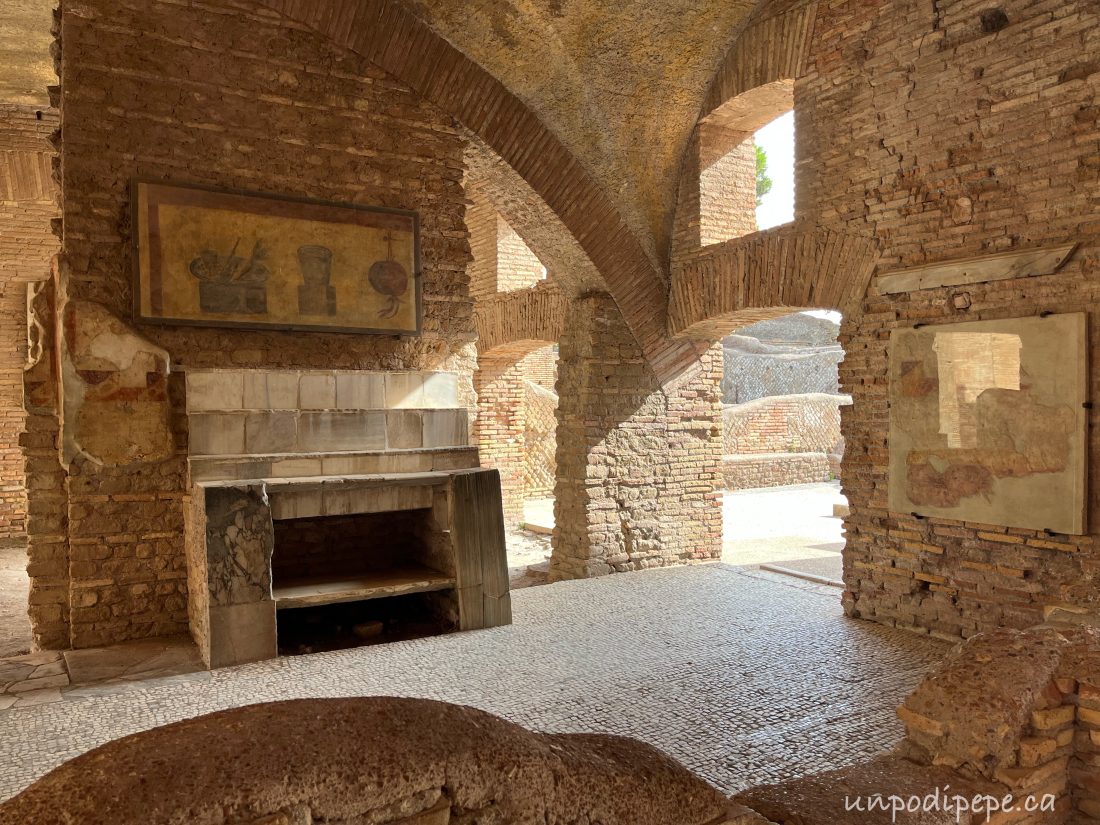
Thermopolium di Via di Diana Thermopolium is Greek for ‘place where hot food is sold’.  A 3rd C ancient fast-food joint and wine bar with windows that open out onto the street and a marble take-out counter, long table to serve hot food, shelves and a courtyard with a fountain for outdoor dining. Amphorae with cheap wine were stored under the counter.  A large fresco ‘menu’ on one wall shows a plate with carrots and beans, a glass of wine, a jar of olives and large onions or pomegranates.
Customers likely topped their food with an ancient condiment called Garum.  It was a pungent rotten fish sauce and makes ketchup sound appetizing.  On the side of the Thermopolium is a single gated public toilet!

Mulino di Silvano A multiroom bakery built in 120 AD. One room has 3 intact lava millstones for grinding the grain into flour, one for kneading the flour into dough and another still has the ovens for baking the loaves.  The bread was sold on site and also transported to sell in Rome.

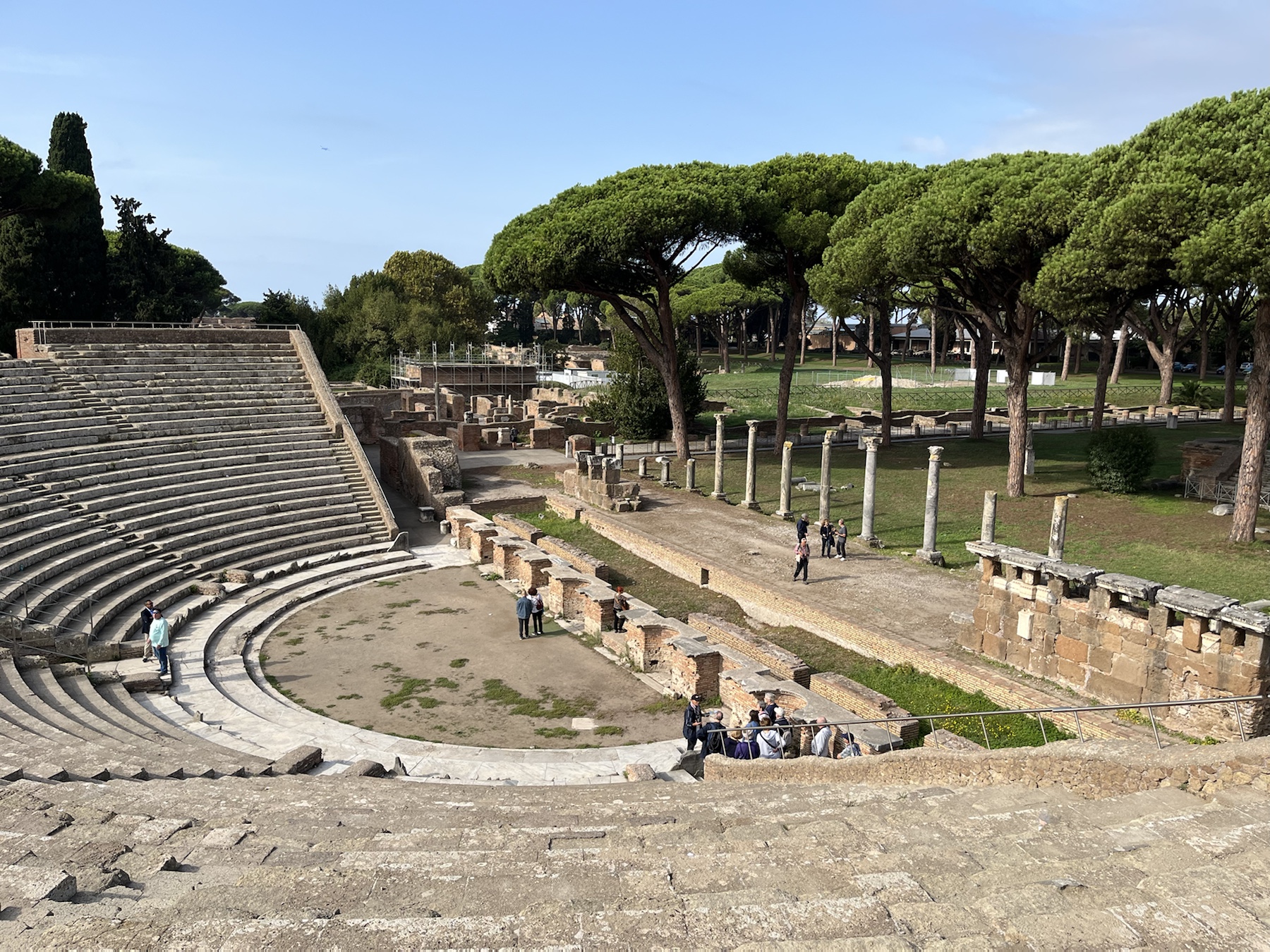
Teatro Ostia’s semicircular theater survives in excellent condition.  Built in the first century BC and expanded later, it is one of the oldest masonry theaters in the world.  It can seat 4,000 spectators and is still used for summer concerts.

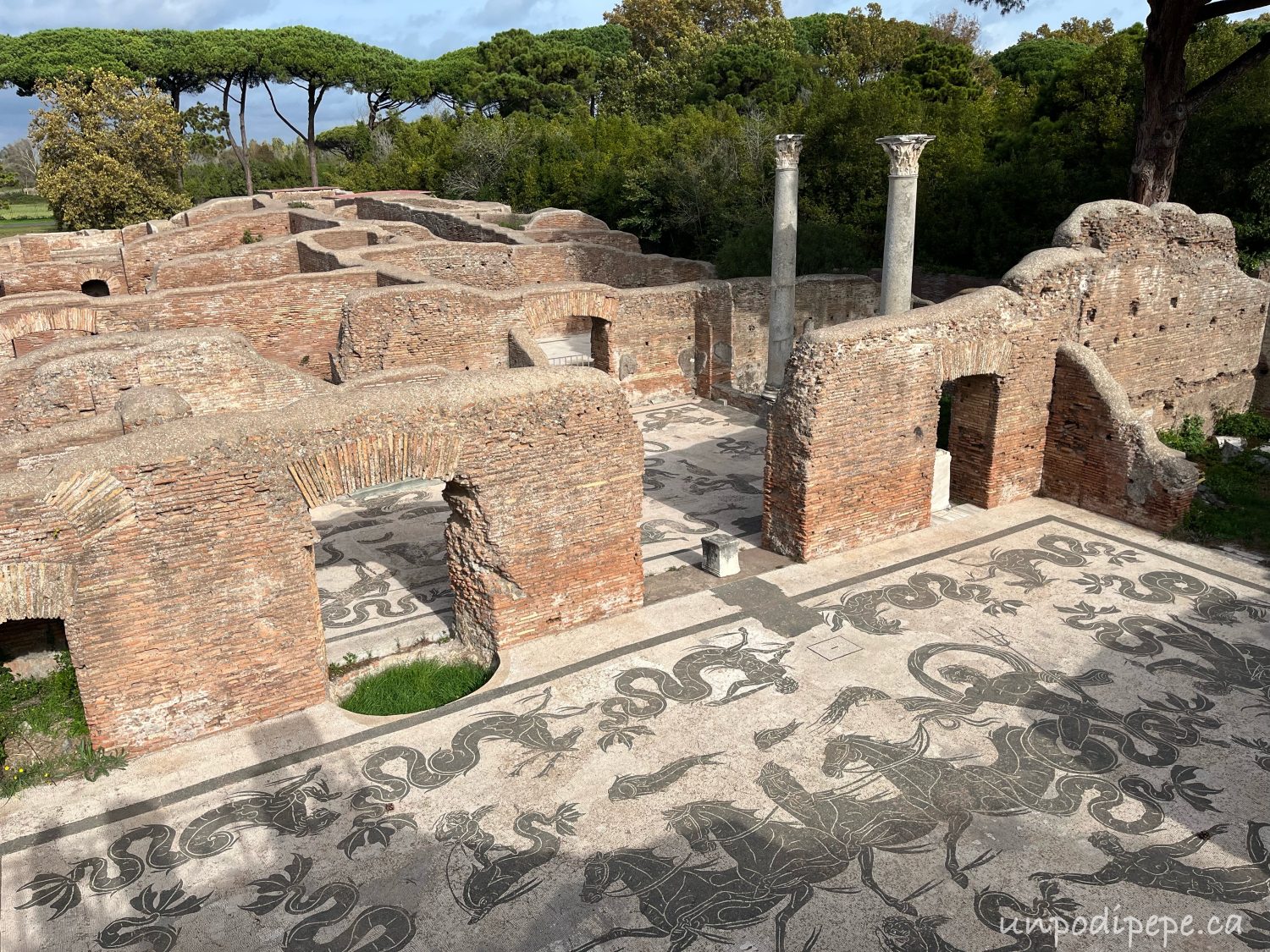
Public Baths  There are several public baths in Ostia.   The Baths of Neptune have incredibly preserved mosaic floors of Neptune and sea creatures.  We can thank the mud that covered them for centuries!  These are often covered up in the winter to protect from the harsh weather.

Public toilets A fine example of Roman plumbing. The toilets consist of a communal marble bench along 3 walls with 20 seats. Each seat had a hole leading down towards a single drain channel fed with running water to flush away waste. Since toilet paper was not a thing yet, a sea sponge attached to a stick was kept in a bucket of saltwater or vinegar for patrons of the toilets to wipe themselves. Yuck!

Piazzale delle Corporazioni (Piazza of the Corporations/Guilds) Located behind the theater, the piazza is a large open air market square with stalls along all 4 sides. Merchants and craftsmen from all over the Mediterranean sold their goods.A small metal model of the piazzale has descriptions written in Braille and Italian.The beautiful black and white mosaics in front of the stalls advertised the goods or services being sold. Stalls included shipbuilders, ropemakers, leather tanners, sailmakers, grain and wine importers, as well as fish and food products.  One of the stalls with fish mosaics likely sold the pungent Garum fish gut sauce!

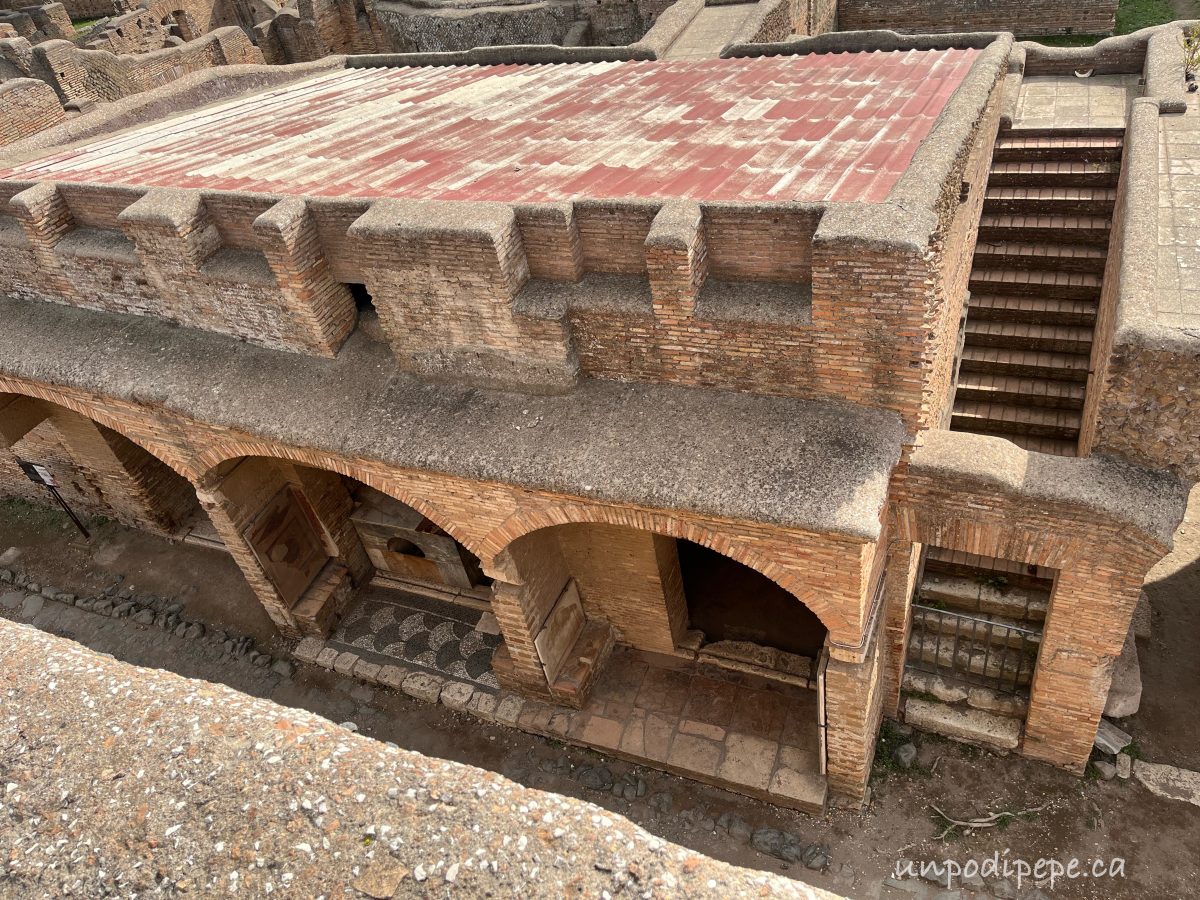
Casa di Diana A complex multifunction residential building -urban planning centuries ahead of its time.  Called an insula, this multilevel apartment has ground floor shops, accommodation for the shopkeepers on the 1stfloor and more modest accommodation on the upper floors.  A 150 AD painting of Diana was found inside.  It is possible to climb the stairs of other insulae to get to the upper floors.

A visit to Ostia Antica is a nice, half day trip from Roma, although it can be a whole day excursion if you explore more of the huge site and have lunch at one of the restaurants nearby.  Ostia Antica is grossly under visited, so it is never crowded! Bring water, a hat, sunscreen and good walking shoes.

Open Tues to Sat 8:30-4:30 in winter 8:30- 7 pm in summer. Admission fee is €18. Free admission the first Sunday of the month.  Tickets can be booked online on the official website .  A PDF guide can also be downloaded from the website.  The museum is worth seeing, but is closed at present.

Getting there by public transportation is easy and cheap: Take Metro line B (Blue line) to San Paolo (or Piramide*) metro station and take the ‘Lido’ commuter train to Ostia. Get off at ‘Ostia Antica’. The ride is 23 minutes. (Do not get off at Ostia Lido Nord or Ostia Lido Centro unless you are going to the beach!)

Use the footbridge to cross the road and walk 5-10 minutes to the main entrance of the Parco Archeologico Ostia Antica. Trains leave every 20 minutes and use the regular metro/bus tickets €1.50.

*If getting there from Piramide, walk out of the metro station and go to Porta San Paolo train station next door to find the Lido commuter train.

Buon viaggio!

Share this:

  • Click to share on Facebook (Opens in new window) Facebook
  • Click to share on Pinterest (Opens in new window) Pinterest
  • Click to share on X (Opens in new window) X
  • Click to email a link to a friend (Opens in new window) Email
  • Click to share on WhatsApp (Opens in new window) WhatsApp
Like Loading...

Procida

31 Thursday Aug 2023

Posted by Un po' di pepe in Italia, Photography, Travel

≈ 13 Comments

Tags

Campania, Chiaiolella, Ischia, Italian Capital of Culture, Italian islands, Marina di Corricella, Napoli, Slow travel, Southern Italy

When I mentioned to anyone that i was going to Procida, the response was ‘Where is that?’  It was the 2022 Italian Capital of Culture, but still not well known outside of Italia.  Procida (pronounced PRO·cheedah) is one of the Flegrean Islands off the coast of Napoli and is part of the city of Napoli.  It was created by the eruption of 4 volcanoes, which are now submerged and dormant.   Overshadowed by its sexier neighbours Capri and Ischia, Procida is the least visited of the 3 islands.  It has a tiny area of 4.1 km², but with a population of 11,000, Procida is one of the most populated Italian islands. It is still mainly a fisherman’s island, a living, working place where real people live.  The main industries on the island are the port and fishing. Tourism is #3.

Procida has a laid-back, slow travel vibe-even in the most popular areas. You will not find any resorts, fancy spas or tour groups and the shops cater more to locals, closing for ‘la pausa pranzo’ from 1-5 pm.  Even finding somewhere to buy a few souvenirs was hard! In the summer and on weekends, many of the visitors to Procida are Napoletani going to the beach.

Procida has been featured in movies, most notably the beautiful, multi award winning 1994 film Il Postino and the 1999 psychological thriller The Talented Mr Ripley. Both films were set in the 1950’s-60’s.  In the 1963 Elizabeth Taylor/Richard Burton film Cleopatra, Procida -with the baroque duomo clearly in the background-was briefly featured as the ancient city of Tarsus where Cleo’s barge arrived to meet Marc Antony.  There are signs posted at various filming locations on the island.

Marina Grande is the main port where ferries (traghetti) and hydrofoils (aliscafi) arrive. Here you will find sorbetto coloured buildings, the main bus stop and ferry terminal, several restaurants and bars, a gluten free bakery Il Piccolo Forno Senza Glutine, and ONE gift/souvenir shop.

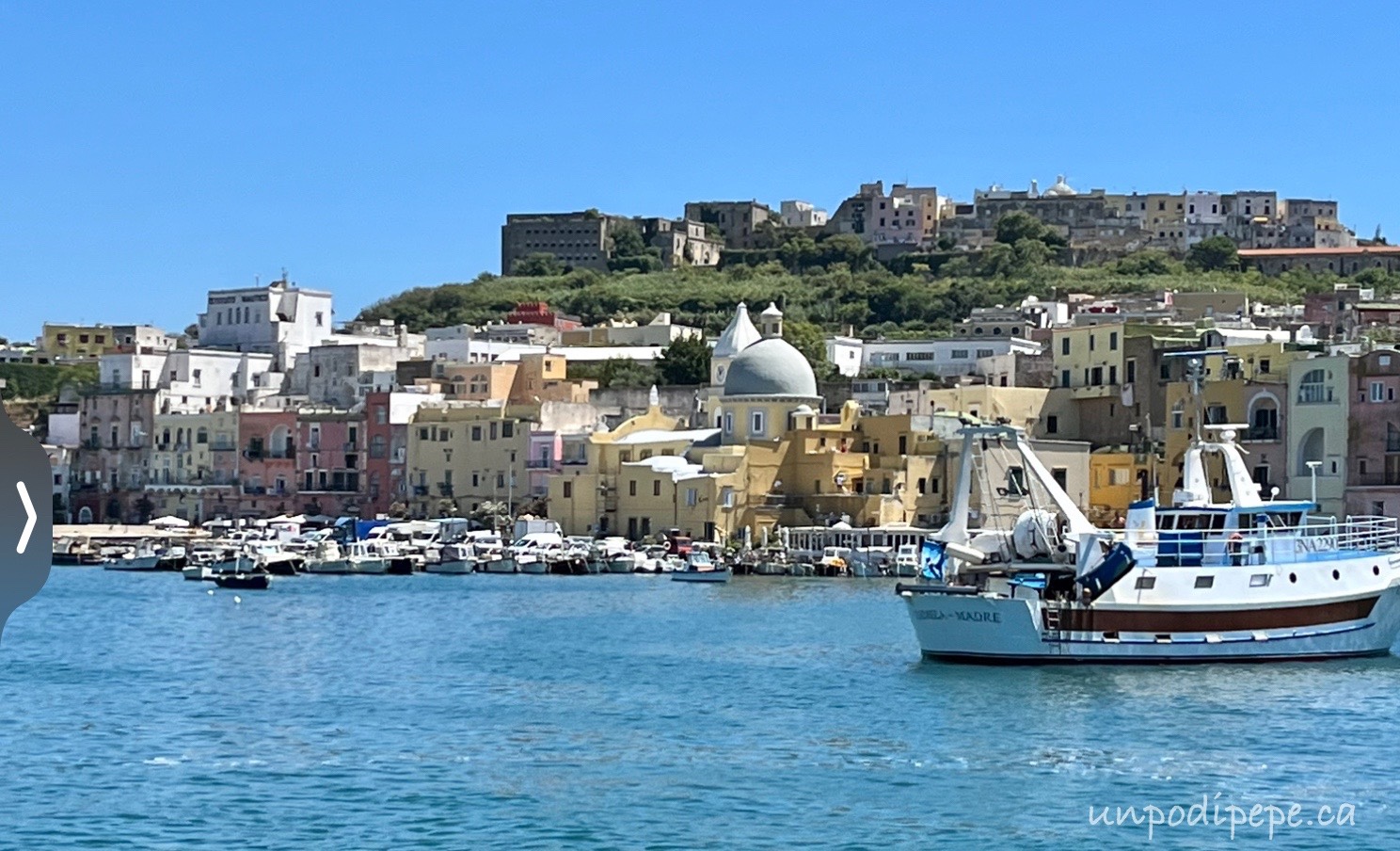
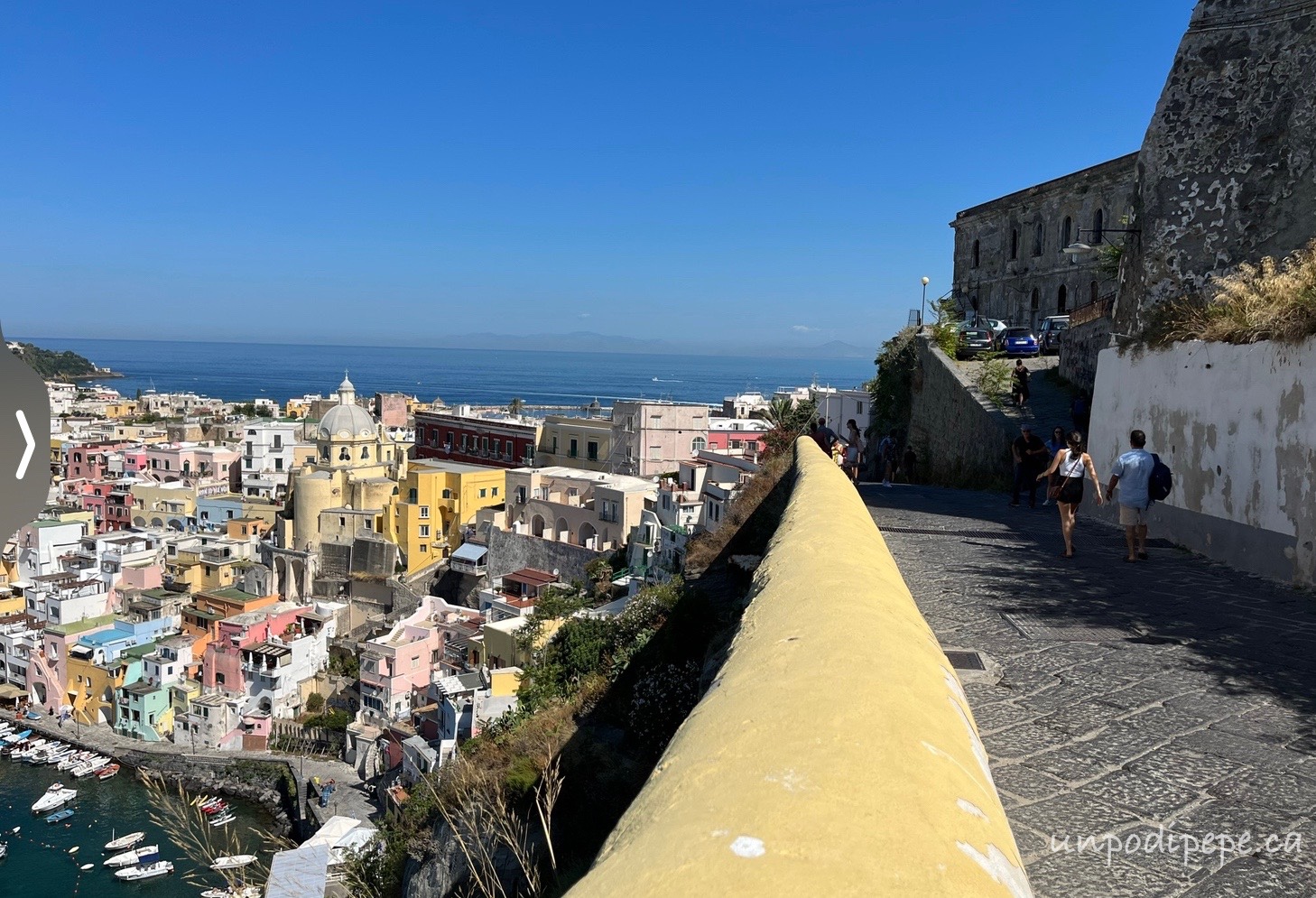
A 20 minute uphill walk from Marina Grande to the other side of the island (~20 min) brings you to the most visited area.  Walking uphill towards Terra Murata is the spectacular view of Marina di Corricella with its limoncello and pink grapefruit coloured 17th century fisherman’s houses and the duomo of Santa Maria delle Grazie Incoronata.  I found Marina Grande colourful and cute, but nothing compared to this view.  The walk is steep, but if mobility is an issue the C2 bus stops here.

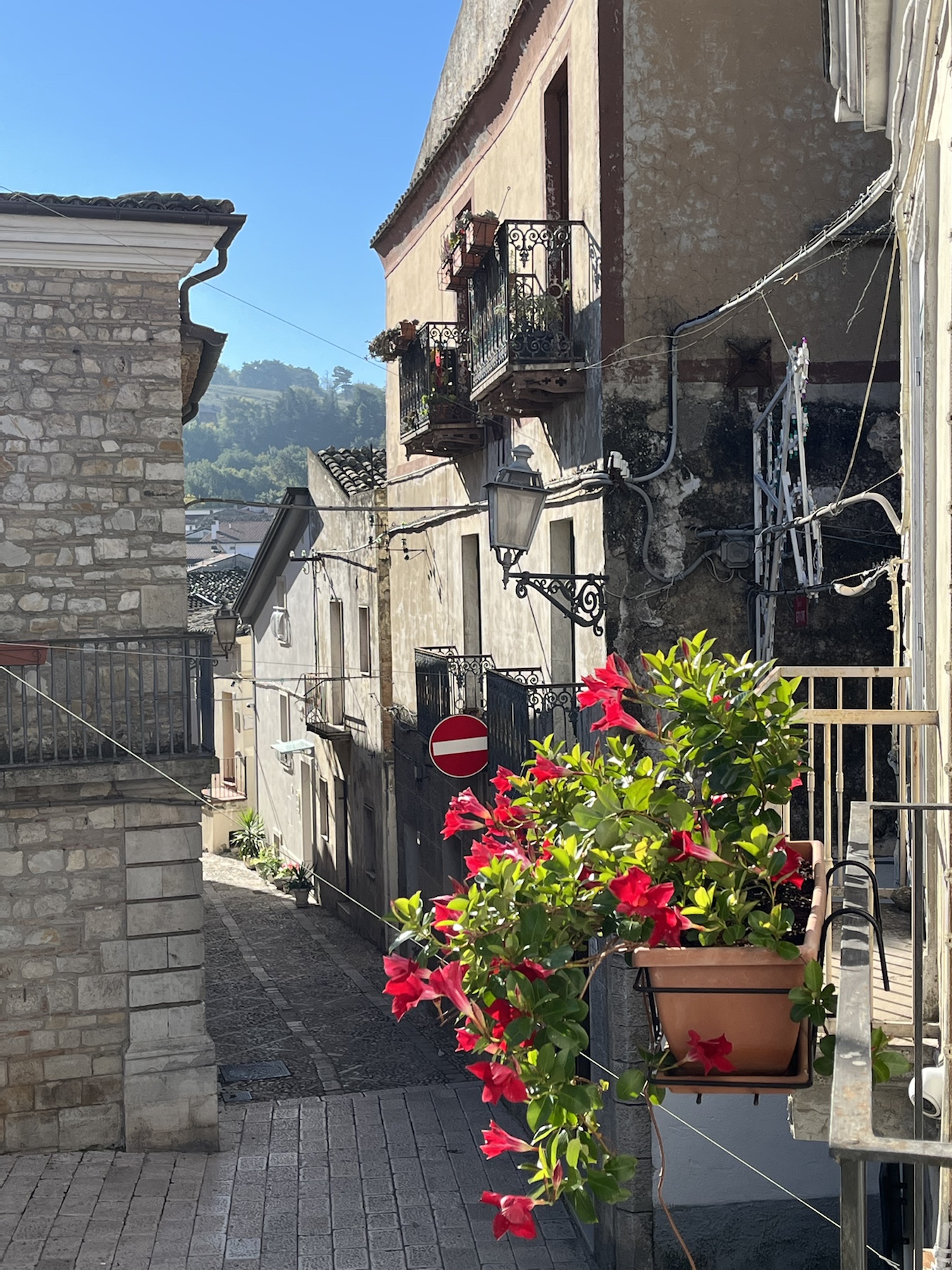
Terra Murata (walled land) the highest and oldest part of Procida, is a fortified medieval village at the top of the island.  Abbazia San Michele Archangelo is an 11th Century Benedictine Abbey turned into a church.  Palazzo d’Avalos built in 1563 became a prison in the 1800’s until it closed down in 1988.  Tours of the prison (€13,) need to be booked at least 2 days in advance so I was not able to go. The roof has sweeping views of the entire Bay of Napoli, including Ischia, Capri and the Amalfi coast.  Check out John’s blog post about the prison  for more information.  The 15th Century Santa Margherita Nuova monastery was under renovation, so I was not able to see that either.  The postcard views from up here are absolutely mozzafiato-breathtaking!  A friend asked me how I took the cover photo over Marina di Corricella. ‘Hai volato?’  Did you fly over it?

The walk down to Marina di Corricella (Kor·ree·CHEL·lah) with houses built on top of each other, is steep and looks lived in with plants and laundry hanging out to dry.  Some typical features of Procidano architecture, besides the pastel colours, include exterior staircases and arched windows.  This area is completely vehicle free.

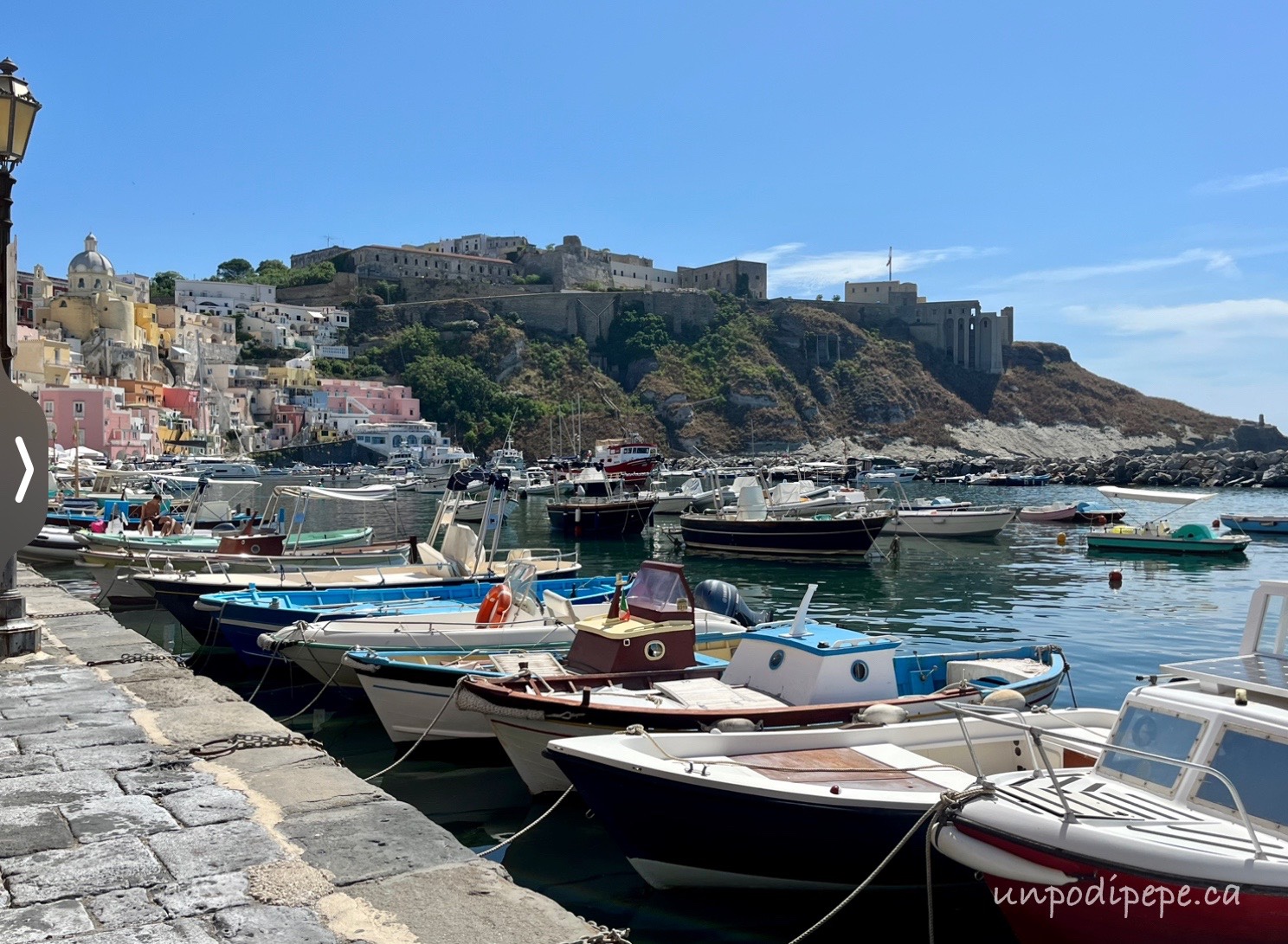
The marina is a full working harbour with colourful fishing boats, and fishermen with their nets.  There are several restaurants, bars and gelaterie.  I enjoyed a limoncello spritz and taralli while watching the fishing boats.  La Locanda del Postino is a restaurant where Mario, il Postino, sat to write poetry to Beatrice in the movie.  Some fishing boats offer a ‘giro dell’isola’ from here.  Terra Murata can be seen from  the Marina below.Chiaiolella (Kyay·oh·LEL·lah) on the West tip of the island is the area where I stayed.  Spiaggia Chiaiolella is a dark volcanic sand beach with warm, shallow water and amazing sunsets.  At the end of the beach is a long walking bridge to Vivara, a tiny green satellite island and nature reserve. Ischia is seen past Vivara in the photo.Around the corner is Marina di Chiaiolella, full of boats and seafood restaurants.  I enjoyed a delicious, reasonably priced seafood meal with a glass of Falanghina at Crescenzo.  The walk back up to the hotel is up a narrow street lined with useful stuff like small supermercati, shops carrying   beach essentials, a Tabacchino and a few takeout restaurants.  There is also a gorgeous jewellery store and a linen shop where I bought Franco a coppola.

There are 4 other beaches on Procida.  Spiaggia Cala del Pozzo Vecchio is the one where Il Postino was filmed.  I will have to go there on my next visit.  The beaches   all have black volcanic sand, except for the small beach by the port, La Lingua which is rocky.

Procida can only be accessed by sea. Unless you have a private boat, that means by ferry or hydrofoil from Napoli, Pozzuoli or Ischia. Napoli to Procida is 1 hour by ferry and 40 min by hydrofoil.  Ischia is 20 min away by hydrofoil-the same boat stops at both islands.  From Napoli the hydrofoil cost me €19 to go and €18 to return.  The ferry is about €15.
Procida can be a daytrip from Napoli or Ischia, but I would recommend staying overnight if you can.  The sunsets are worth it! **Note that from November to March there are less ferries running and some restaurants and hotels are closed.

From April until October, only residents of Procida are allowed to bring cars onto the island.  Scooters, bicycles and ebikes are available for rent.  4 minibuses cross the island; from the port to Chiaiolella (L1 and L2), Corricella (C2) and Il Postino Beach (C1).  Tickets are €1.60 each, or get a daypass and use it like a ‘hop on/hop off’ bus.  These buses go fast and the streets are only about 8 inches wider than the bus!  In the mornings, you may have to wait for a few buses, as they are full of people going to the beach and going to work.  Even the motorini and bikes go fast, so crossing the narrow streets can be a challenge.  Everyone is in a hurry to get to the beach and drives like they are in Napoli!

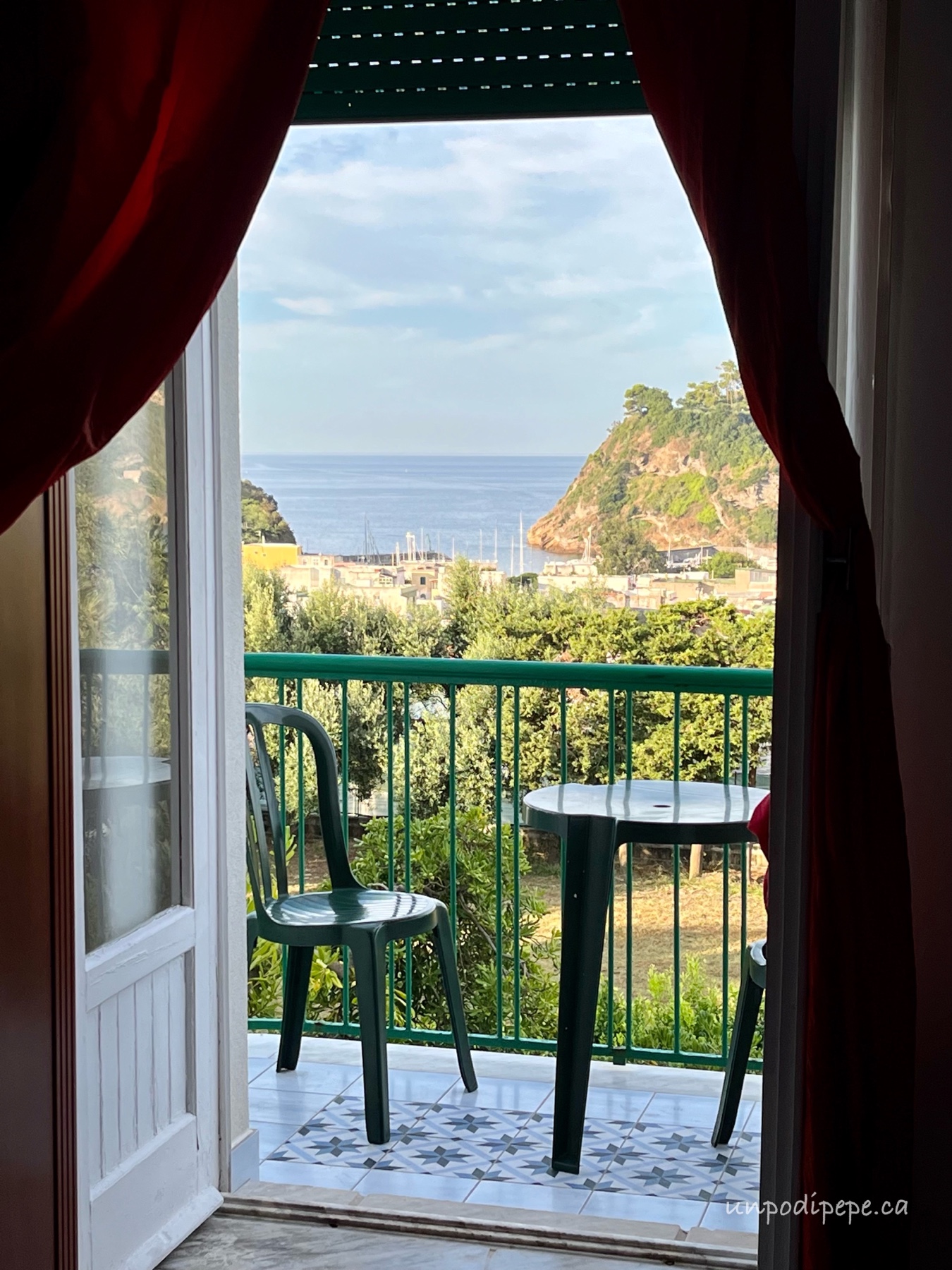
A bit about my trip….. I was in Procida with my cugina Maria from Ontario August 8th and 9th.  It was not a weekend.  We took the 7 am bus from Orsara di Puglia to Foggia, then the bus from Foggia to Napoli.  In Napoli, we took the metro from Stazione Garibaldi to Municipio and walked the short distance to Porto Molo Beverello where we took the hydrofoil to Procida.  Quite the trek to get there!  We did not book the ferry in advance.  We arrived at our hotel at about 2:30 pm. I booked the hotel only 2 weeks in advance.  Ideally, we wanted to stay 2 nights at Hotel La Casa sul Mare which is near Santa Maria delle Grazie in Marina Corricella, but they only accept summer reservations for a 3 night minimum stay.  I booked Hotel Riviera which was only available for 1 night, so we spent the second night in Napoli.  Hotel Riviera was absolutely lovely-right at the bus stop and walking distance to Spiaggia Chiaiolella.  We were pleasantly surprised that our room had a balcony with a view of Marina Chiaiolella, Vivara and Ischia!  This is where I sat to write all of these notes while drinking €1.60 red wine and watching the sunset!

Buon viaggio, Cristina

Share this:

  • Click to share on Facebook (Opens in new window) Facebook
  • Click to share on Pinterest (Opens in new window) Pinterest
  • Click to share on X (Opens in new window) X
  • Click to email a link to a friend (Opens in new window) Email
  • Click to share on WhatsApp (Opens in new window) WhatsApp
Like Loading...

Polpo e patate

20 Tuesday Jun 2023

Posted by Un po' di pepe in Italia, Mangiamo!, Photography, Puglia, Recipes, Travel

≈ 6 Comments

Tags

Cooking octopus, Imerovigli, Mattinata, Octopus and potato salad, Polpo, Santorini, Southern Italy, Traditional recipes

Polpo is one of the joys of visiting the Adriatic in summer.  Polpo or polipo is octopus, from the ancient Greek polypous, meaning ‘many footed.’  In Italiano, polpo and polipo are both correct terms for octopus! It is one of my favourite foods…I love it grilled, or in a summer salad, especially polpo e patate, a cold potato and octopus salad.  Last year, between camping on the beach in Mattinata, a family wedding, a side trip to Santorini, and mamma’s kitchen, there was a lot of polpo in my life.  In this post, I will share some of my polpo photos, instructions for cooking, and how to make polpo e patate.

I had polpo each of the 5 days I was in Santorini.  There it is called Octapodi χταπόδι, meaning ‘eight footed’. The view from the landing outside my hotel room in Thira was the perfect place to sketch.  When I finished sketching, it was too nice to leave.  Instead of going out to dinner, I walked to a restaurant and got takeout octapodi with couscous.  I brought my feast back and ate it at my sketching spot while watching the sunset.  Yiasou!

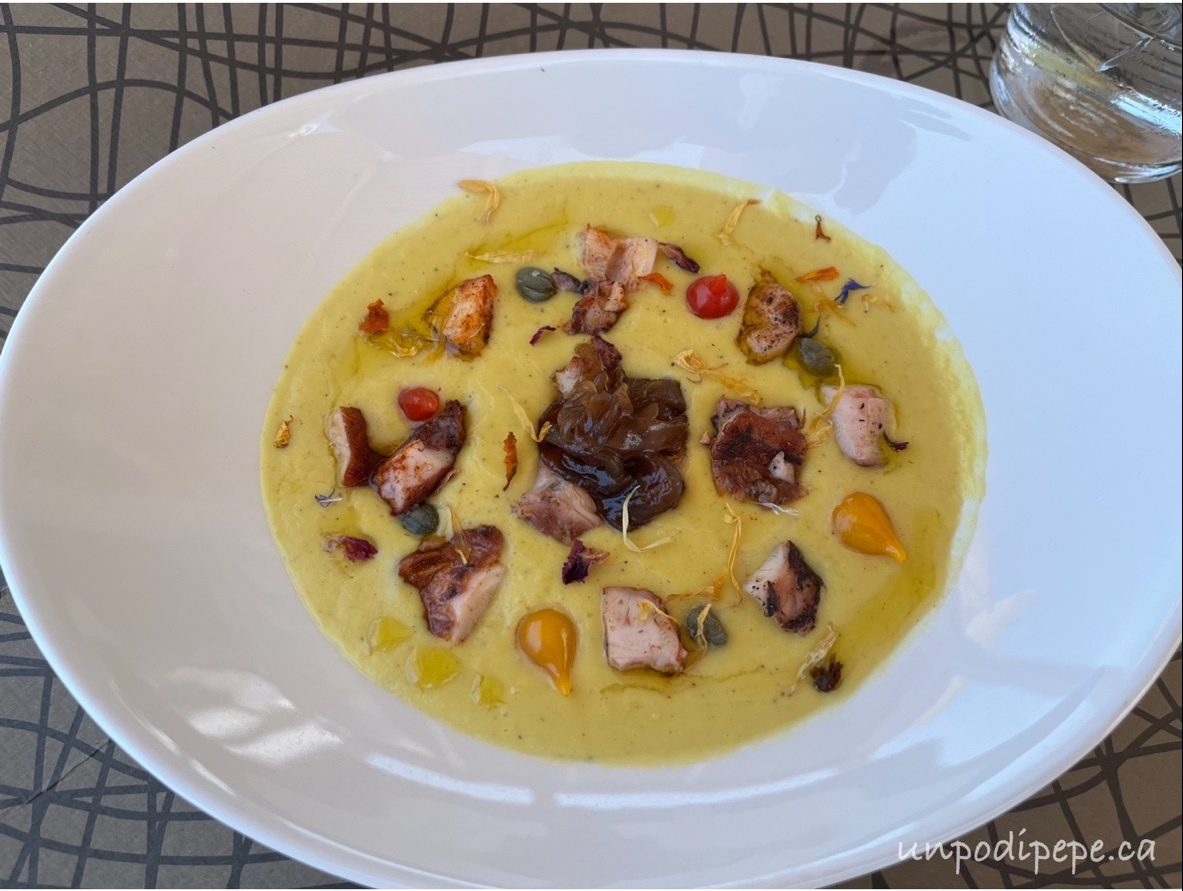
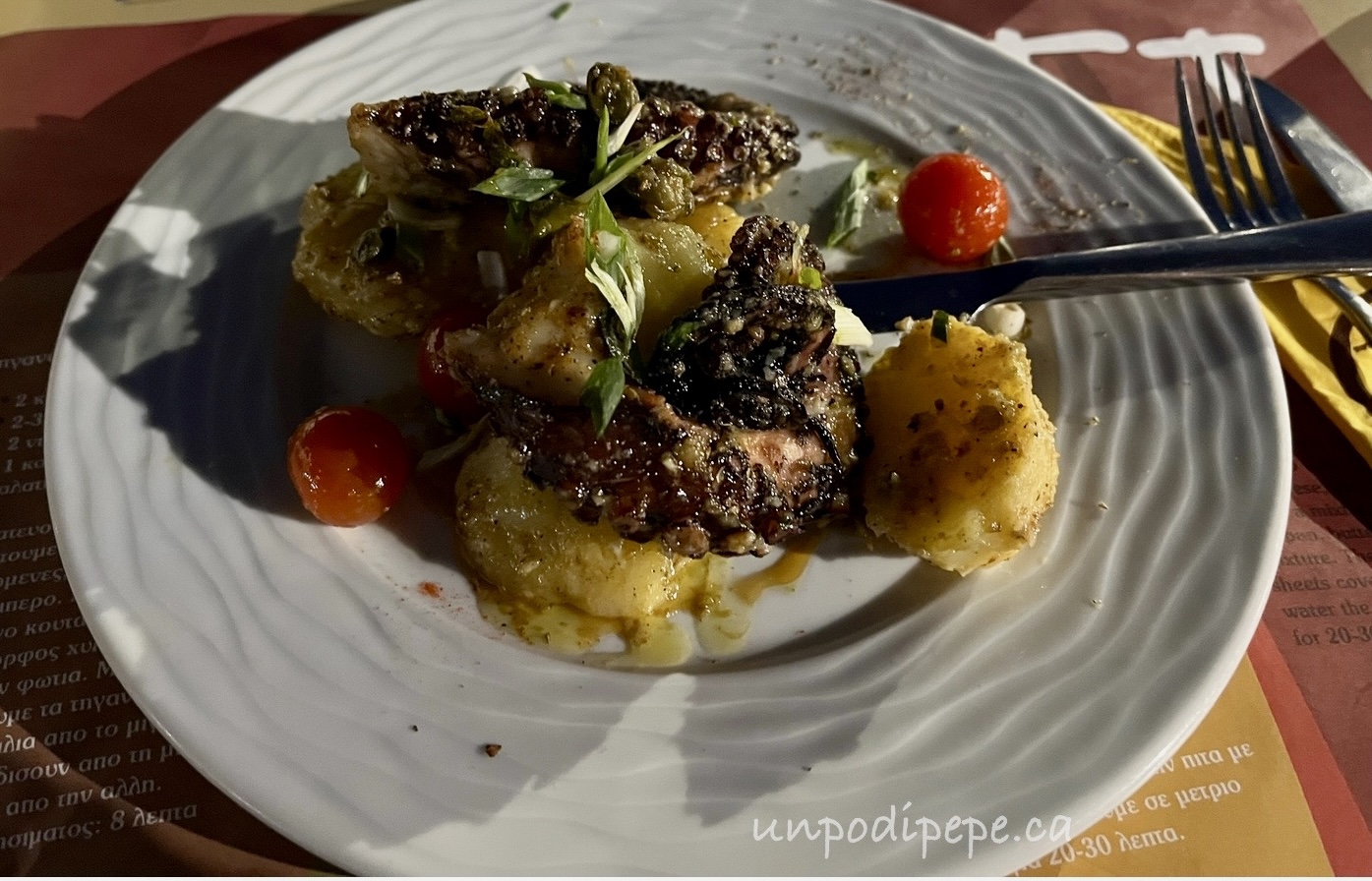
In Imerovigli, I had this orgasmic fava bean puree with grilled polpo, caramelized onions and capers. I have to try making this some time. Also in Imerovigli, I had a late night dinner of grilled octopodi on potatoes.

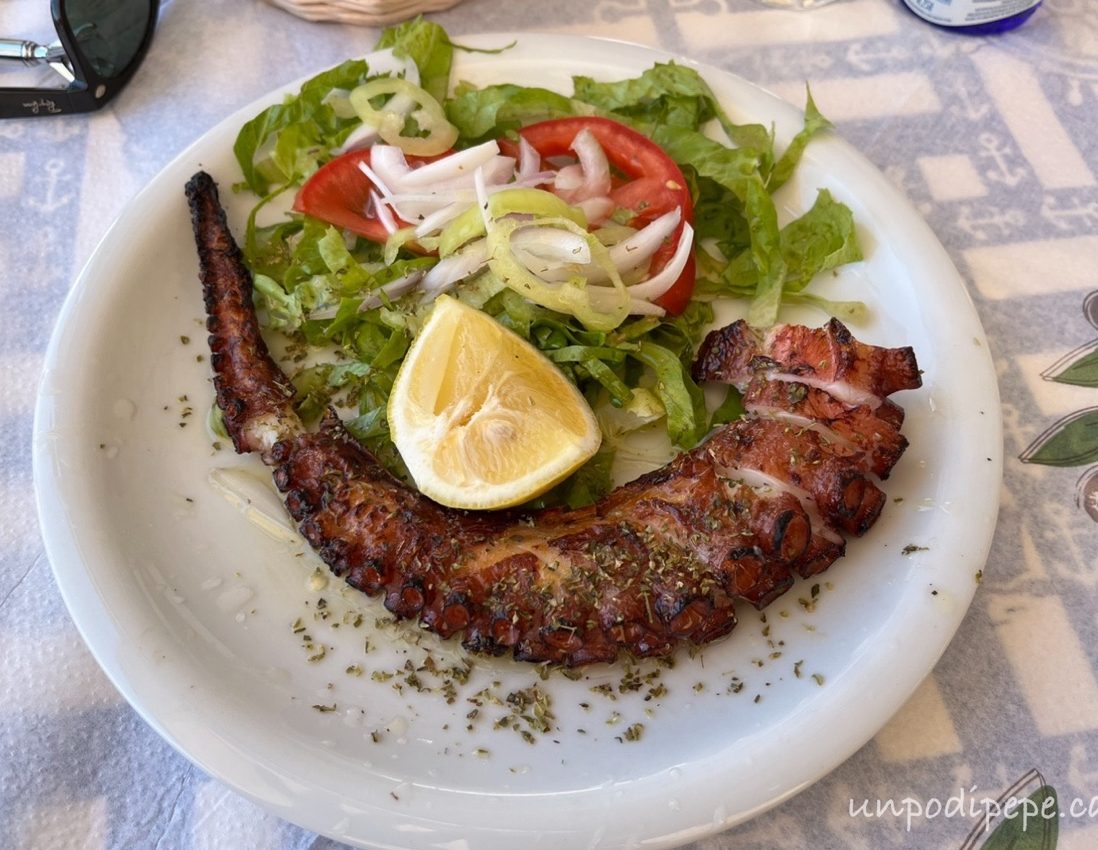
Santorini’s small port has a few seafood restaurants, where I had this very Greek grilled octopodi with oregano.

This photo was taken at the outlet mall in Molfetta.  Yes, polpo is mall food in Puglia!

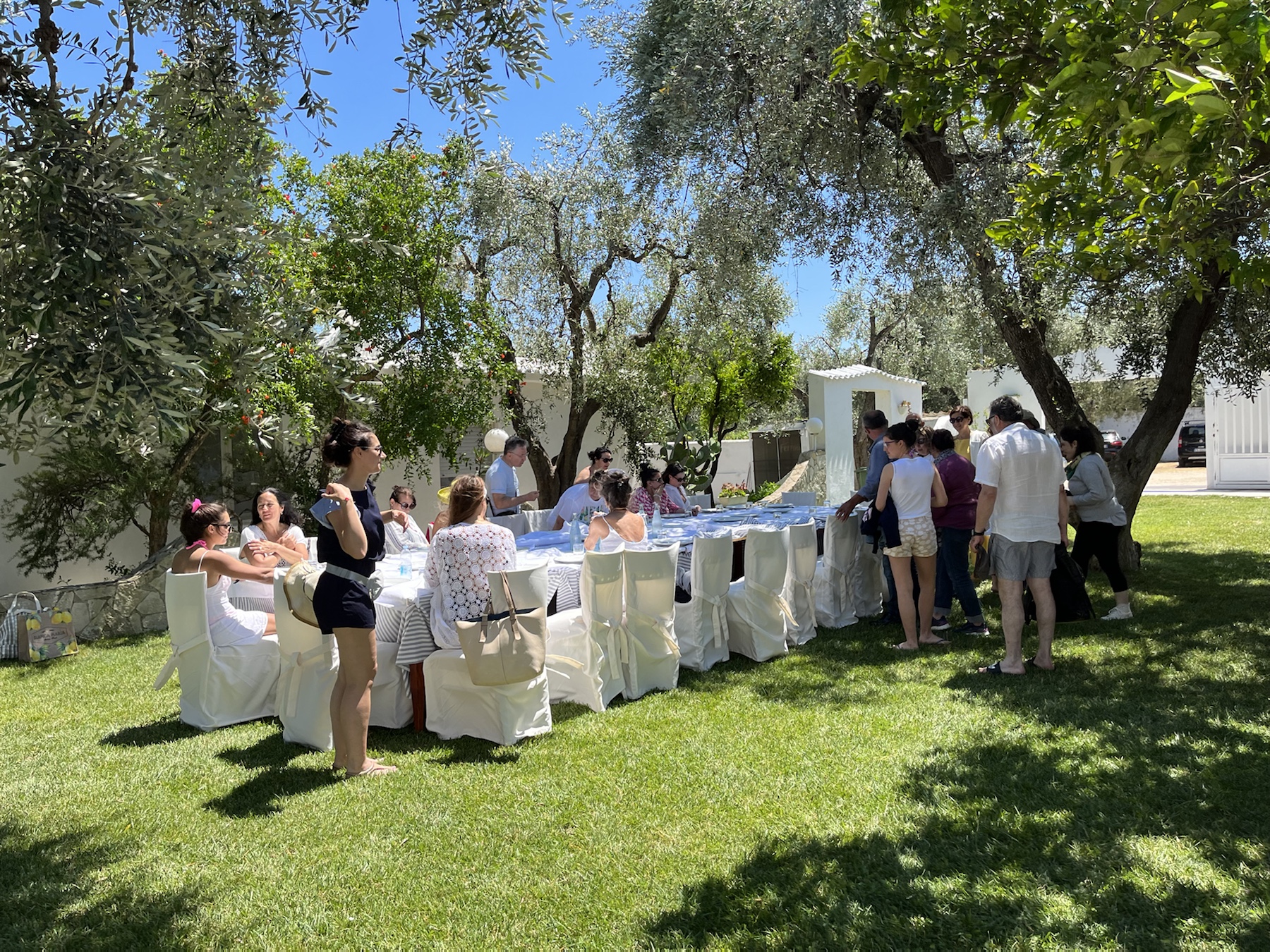
The day after the matrimonio in Puglia we had a long table dinner in an olive grove by the beach in Mattinata.  This is the gorgeous polpo e patate!  #cookinggoals!

When camping on the beach with my cugini, we often grill polpo and then make a salad with it. The mobile fishmonger il pescivendolo  (pesh·ee·ven·DOH·loh) drives around to the different campsites selling fresh seafood. More about this in Campeggio sul Gargano.  We also have polpo on the grill when we go to my nonno’s olive grove for a grigliata.

This photo of mamma washing polpo in our tiny kitchen in Orsara di Puglia was popular on Instagram.  She made a salad, without potatoes but still yummy! The second one was cooked in a tomato sauce the following day.washing octopus

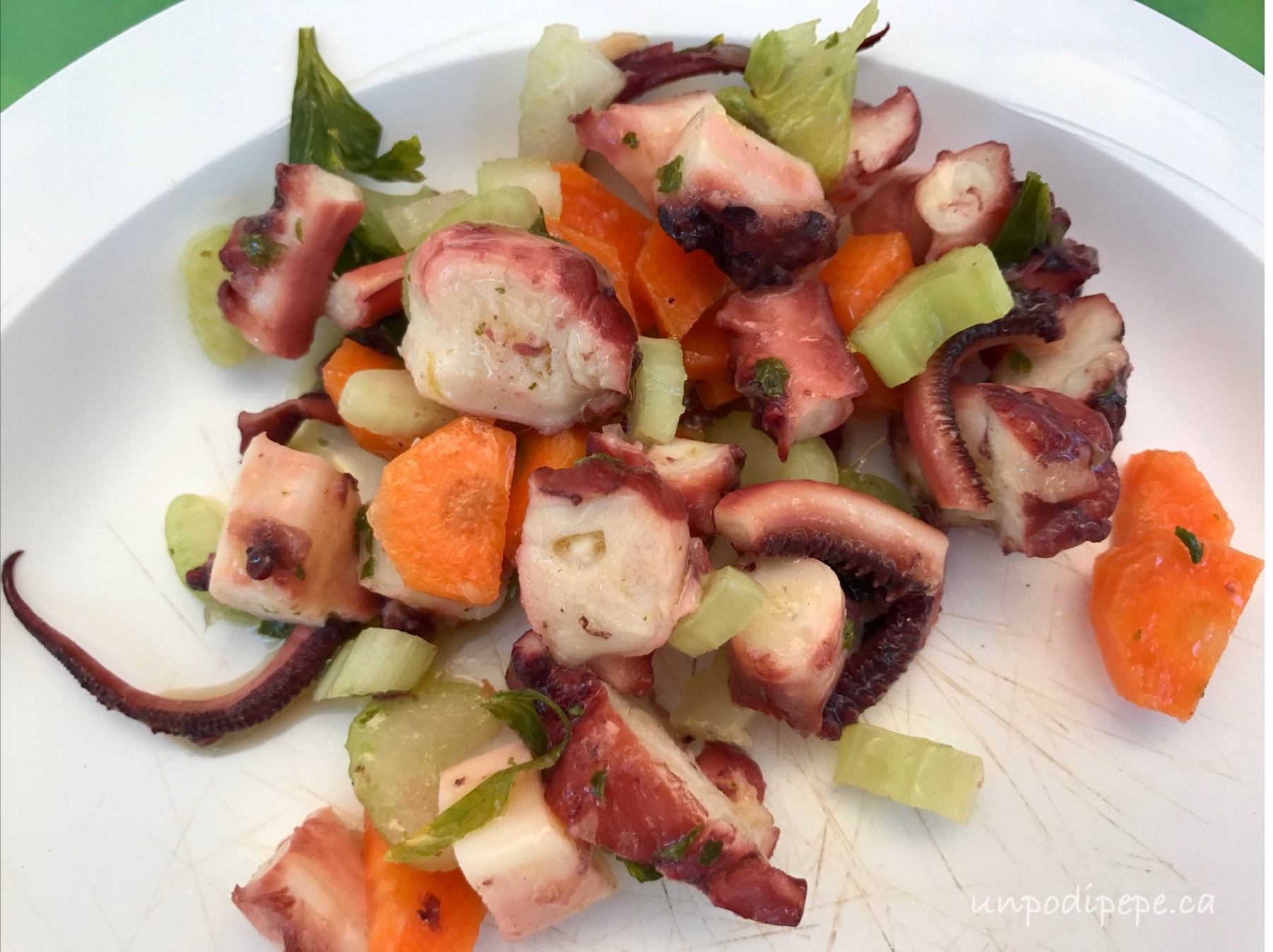
Octopus saladPeople apparently do all sorts of crazy things to tenderize polpo.  It does not need to be beaten against rocks, bashed with a meat tenderizer, or hung on the clothesline!  It just needs to cook in water long enough to tenderize the tough chewy collagen, which is about 1 hour per kg.  Once cooked, it can be eaten, grilled, pan seared in olive oil or saved to use later.  Freezing also helps tenderize, so previously frozen polpo does not need to cook for as long.

Polpo is hard to find in Canada!  I bought a pack of 4 legs/tentacles from Spain, but then had to freeze it as I could not use it right away.  Here is my ‘measurements optional’, flexible recipe for polpo e patate.  It is made with the legs only, as I am not as adventurous as mamma!

Ingredients:      1 kg (2.2 lbs) polpo

                         500 g (1.1 lb) potatoes

                         Good quality extra virgin olive oil

                         10 ml (2 tsp) lemon juice, freshly squeezed

                         10 ml (2 tsp) chopped prezzemolo-Italian parsley

                         2-3 cherry tomatoes

                         1 bay leaf

                         Splash of vinegar

                         100g chopped celery and/or carrots

                         15 ml (1 tsp) capers

                         1 garlic clove, finely chopped (optional)

                         Peperoncino (optional)

                         sale, black pepper

Instructions:

  • Wash and rinse the polpo. I had already done this before freezing it.
  • In a pan, add salt, bay leaf, cherry tomatoes, lemon slices and a splash of vinegar. Cover with water
  • Bring to boil, then lower heat and cook 1 hour. It should be tender enough so that a knife can pierce the polpo with little resistance.
  • Turn off heat and let sit in the cooking water to cool
  • Pick up and immerse 3 times in the hot water if you want the tentacles to curl.
  • When cooled, polpo can either be grilled, pan seared, made into a salad, or stored in the fridge for up to 3 days
  • While cooling, cook potatoes in boiling salted water. Peel and cut into pieces
  • Cut cooled polpo into rounds or pieces. Add to a bowl with potatoes, olive oil, pepper, lemon juice and prezzemolo. You can also add finely chopped garlic and capers, or peperoncino for a little spice.  Add celery, carrots and cherry tomatoes and mix. Add extra prezzemolo and lemon slices for garnish

I didn’t have any celery and was out of capers.  Use whichever of these ingredients you have at the time.  The photos weren’t taken in the best light, but it was delicious! My next one will look like the one I had in Mattinata!

Are you a polpo fan too?  Have you ever cooked it yourself? Let me know in the comments.  Buon appetito, Cristina

Share this:

  • Click to share on Facebook (Opens in new window) Facebook
  • Click to share on Pinterest (Opens in new window) Pinterest
  • Click to share on X (Opens in new window) X
  • Click to email a link to a friend (Opens in new window) Email
  • Click to share on WhatsApp (Opens in new window) WhatsApp
Like Loading...

Pantheon update

28 Sunday May 2023

Posted by Un po' di pepe in Architecture, Photography, Roma, Travel

≈ 11 Comments

Tags

Ancient Roma, Italy travel tips, Lazio, Pantheon, Roma photography, Roma travel, Santa Maria ad Martyres, UNESCO World Heritage Sites

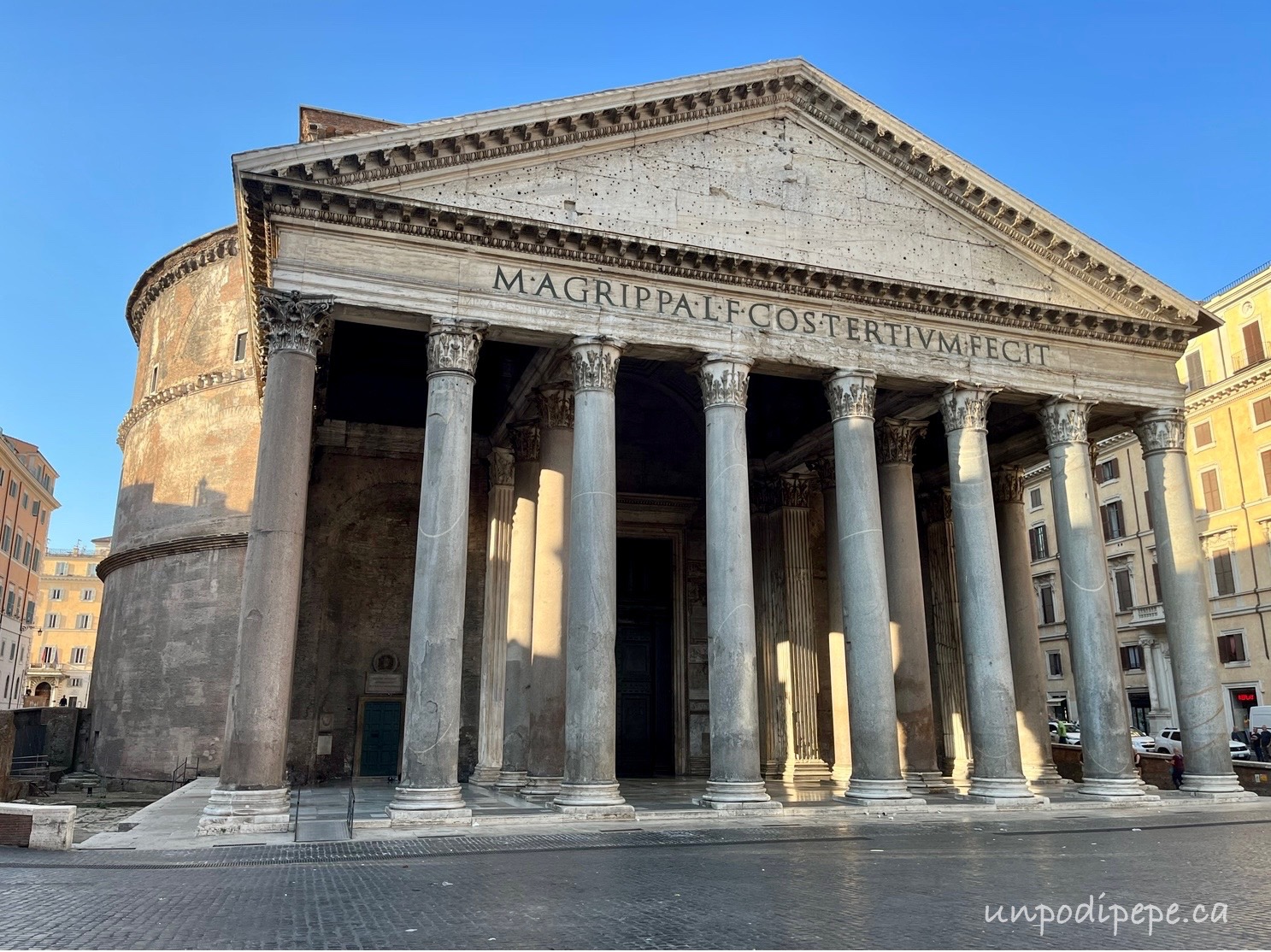
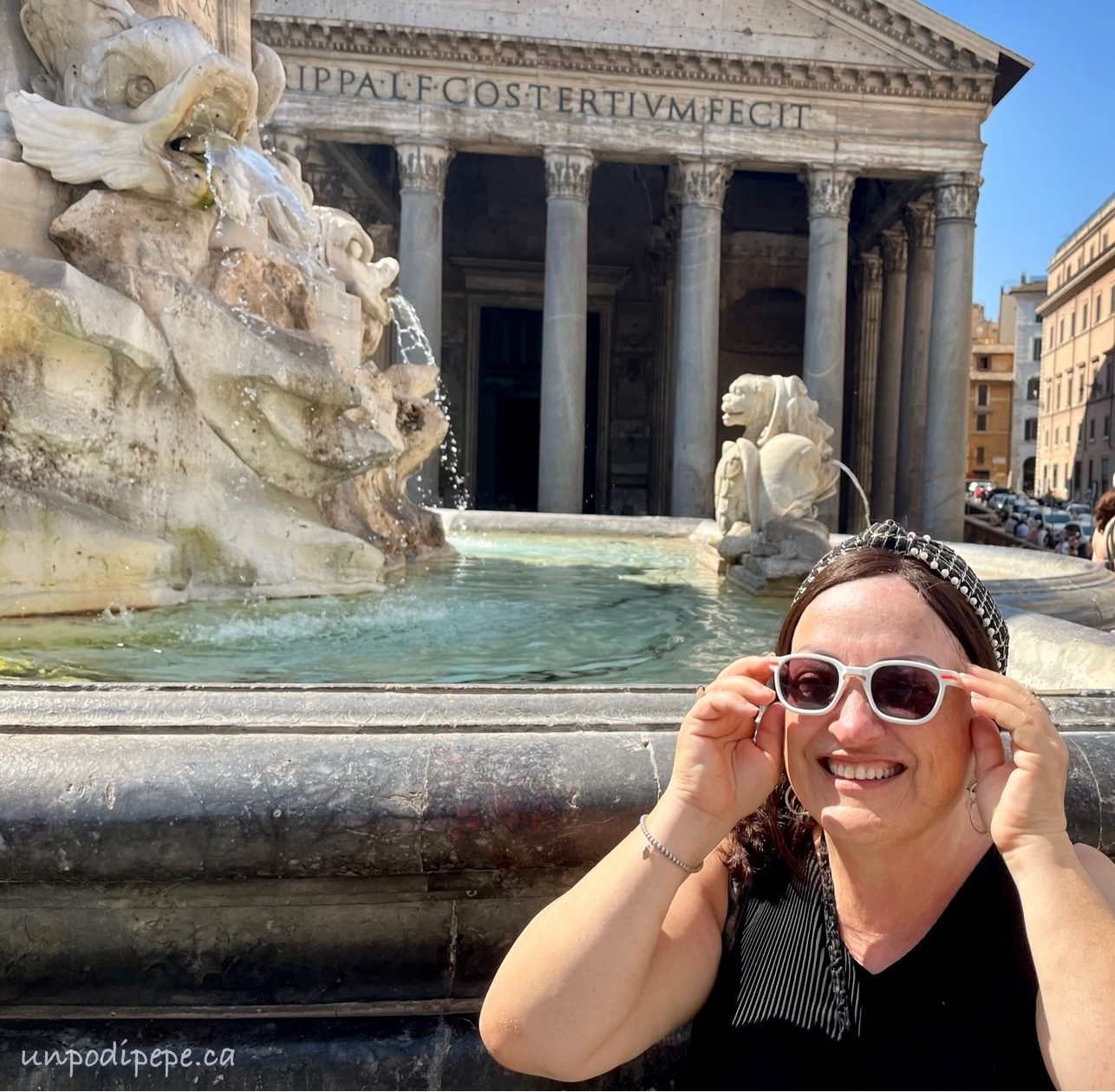
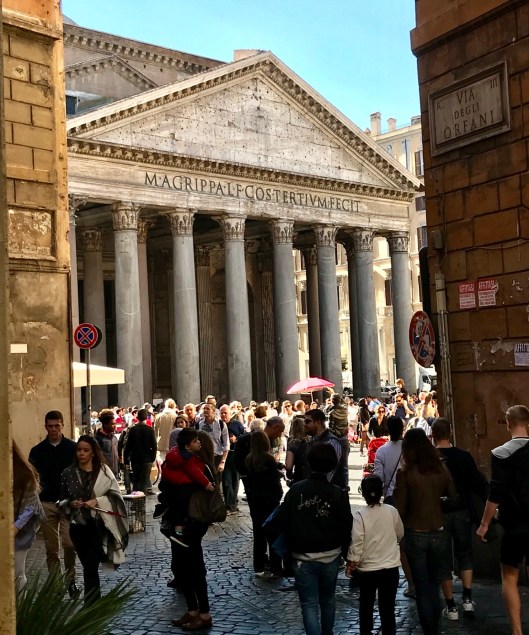
Roma is full of amazing buildings. The most amazing and best-preserved of all is the Pantheon.  Imagine Michelangelo entering the Pantheon 500 years ago, looking up and saying “this looks more like the work of angels than humans’-that is how amazing it is! The perfect mathematical proportions of the Pantheon have provided inspiration for architects for almost 2,000 years. Check out the post Il Pantheon for more details on the history and structure.Admission has always been free, and there has been talk of charging an entry fee for many years…in fact, it has been ‘announced’ several times.  Well….purtroppo, the time has come.  Starting July 1st 2023, there will be a €5 admission fee for entry for tourists/visitors.  Admission will still be free for residents of Roma, those under 18 years old and those attending Mass. Until then, admission remains free, with booking required at least 1 day in advance only on weekends and holidays.

The Pantheon is a classical masterpiece and a monument that requires expensive upkeep, so the need for a modest admission fee is understandable. Since the 7th century it also functions as the Church of Santa Maria ad Martyres.  In Roma entry into churches is free-so that is why there has been so much effort to not charge an admission fee.

Mass is at 5 pm Saturdays, 10:30 am Sundays and public holidays, and midnight on Christmas Eve.  Shoulders, midriff and knees need to be covered, although this is not as strictly enforced as the Vatican.

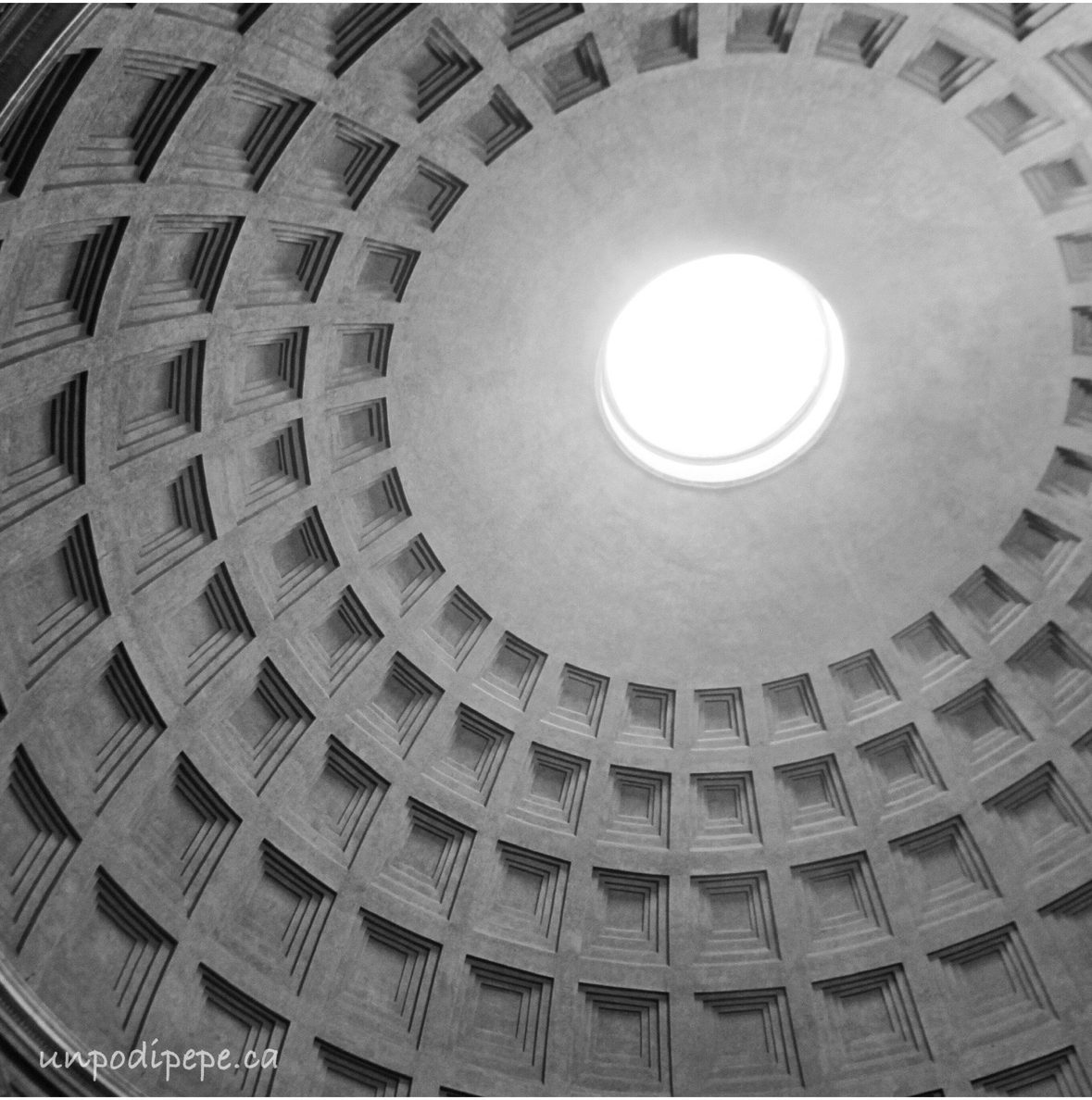
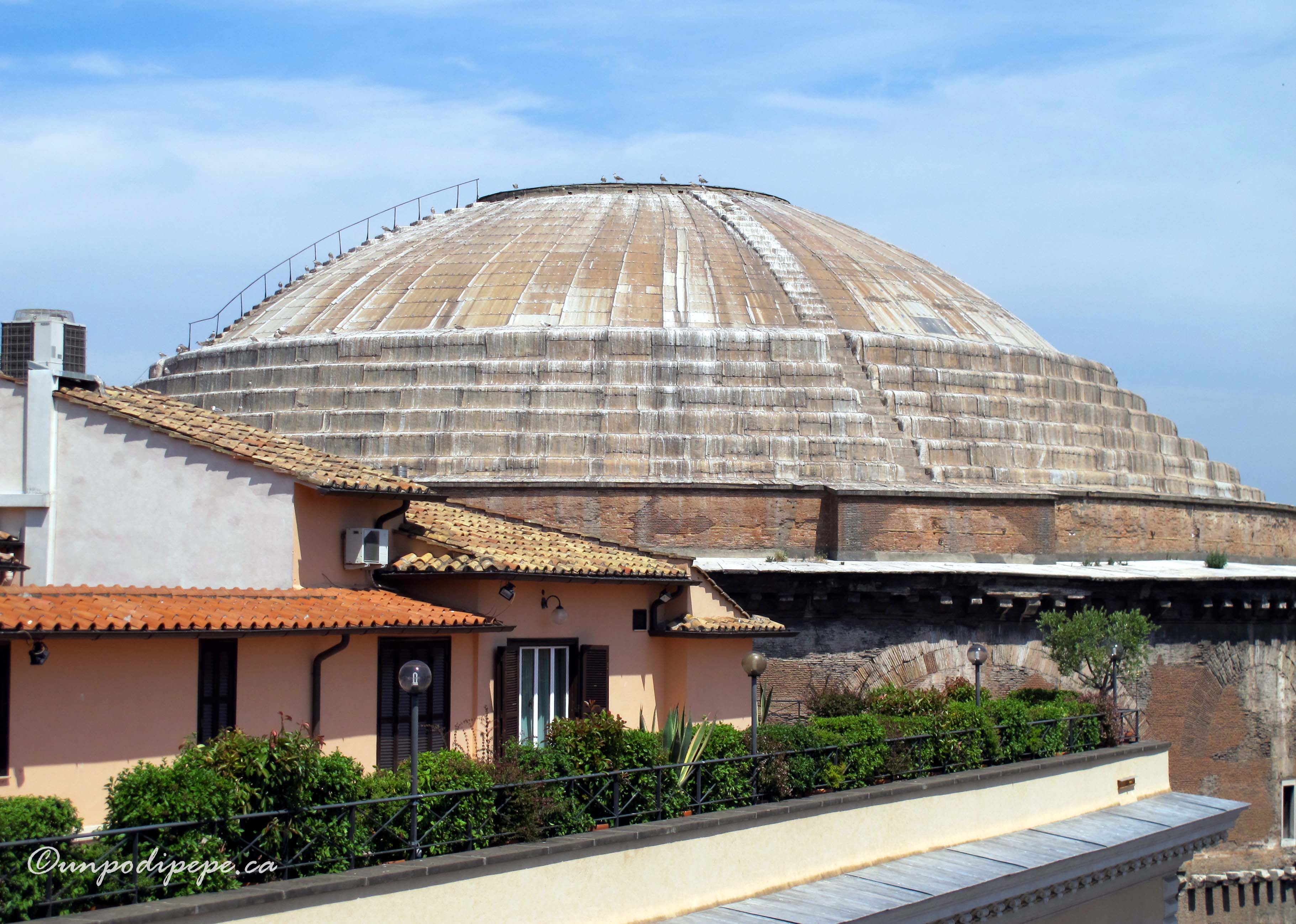
‘La Pioggia delle Rose al Pantheon’ (the rain of roses) is on my list of things to see in my lifetime. This takes place on Pentecost Sunday, 50 days after Easter.  At noon, right after Mass, Roma’s Vigili del Fuoco (fire fighters) climb to the top of the dome and drop thousands of rose petals through the oculus as choirs sing.  The rose petals symbolize the Holy Spirit coming down to earth.  Pentecost Sunday happens to be today! I saw a video of the event this morning, and even Michelangelo would be impressed! Tickets or advance booking are not available for this event.  Arriving by 7am for the 10:30 Mass is apparently necessary to get a spot inside! The ladder used by the vigili to get to the oculus is visible in the foto:

The dome and oculus, viewed from the roof of Grande Hotel de la Minerve

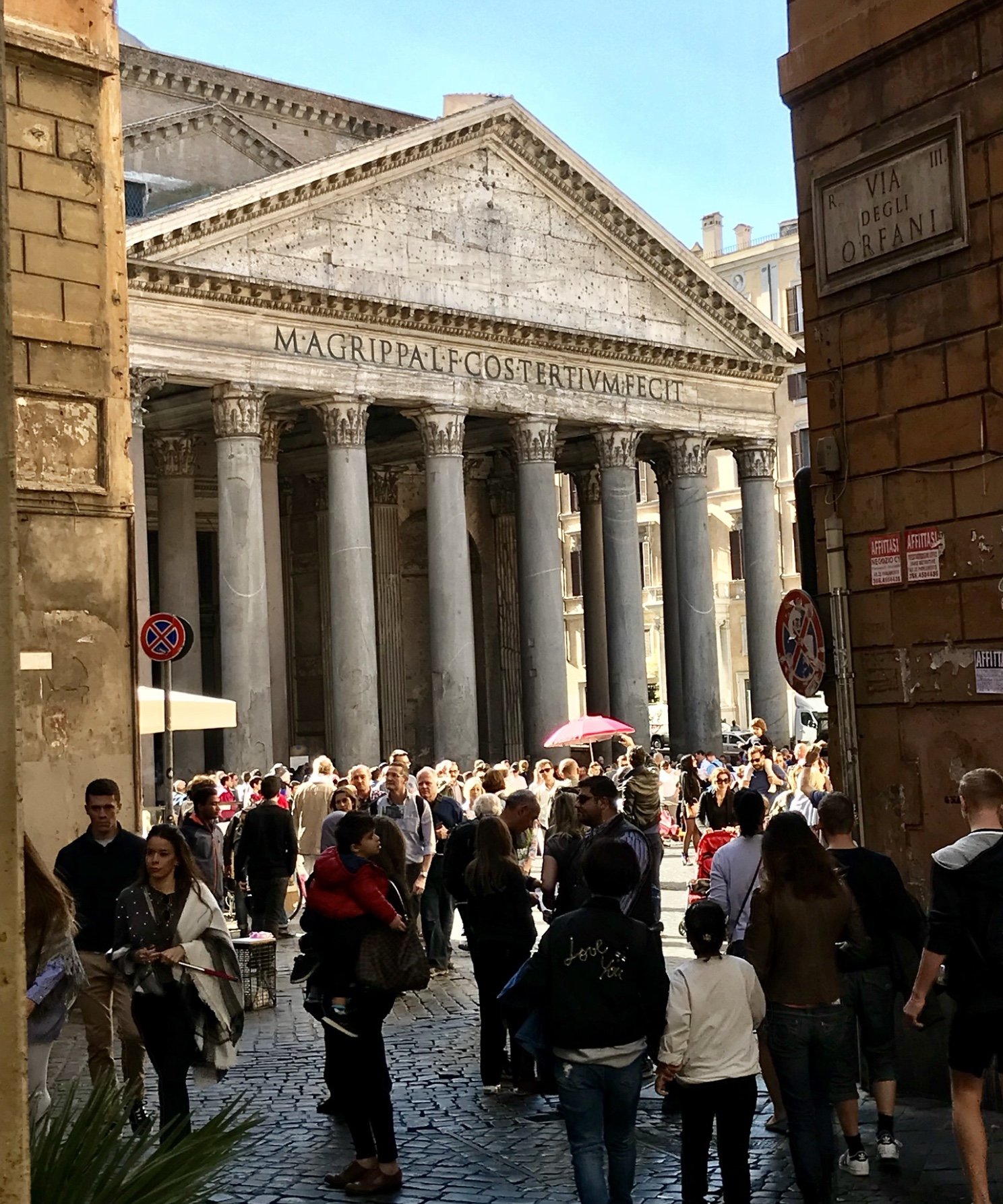
Visiting the Pantheon takes about 45 minutes. It is open daily 0900-1700 Sun 09-1800 with last entry at 18:30. The Pantheon is closed Jan 1, May 1, Aug 15 and Dec 25.  An audio guide with an App can be prebooked for ~€8.50, or a 45 minute guided tour for ~€20.

Details are not yet available on how to book admission, but they should be available soon on the website. Roma is a popular weekend destination for European and Italian travelers, so I imagine tickets will easier to book during the week.  There is really no ‘off season’ except for possibly the period from January 7 until the end of February.

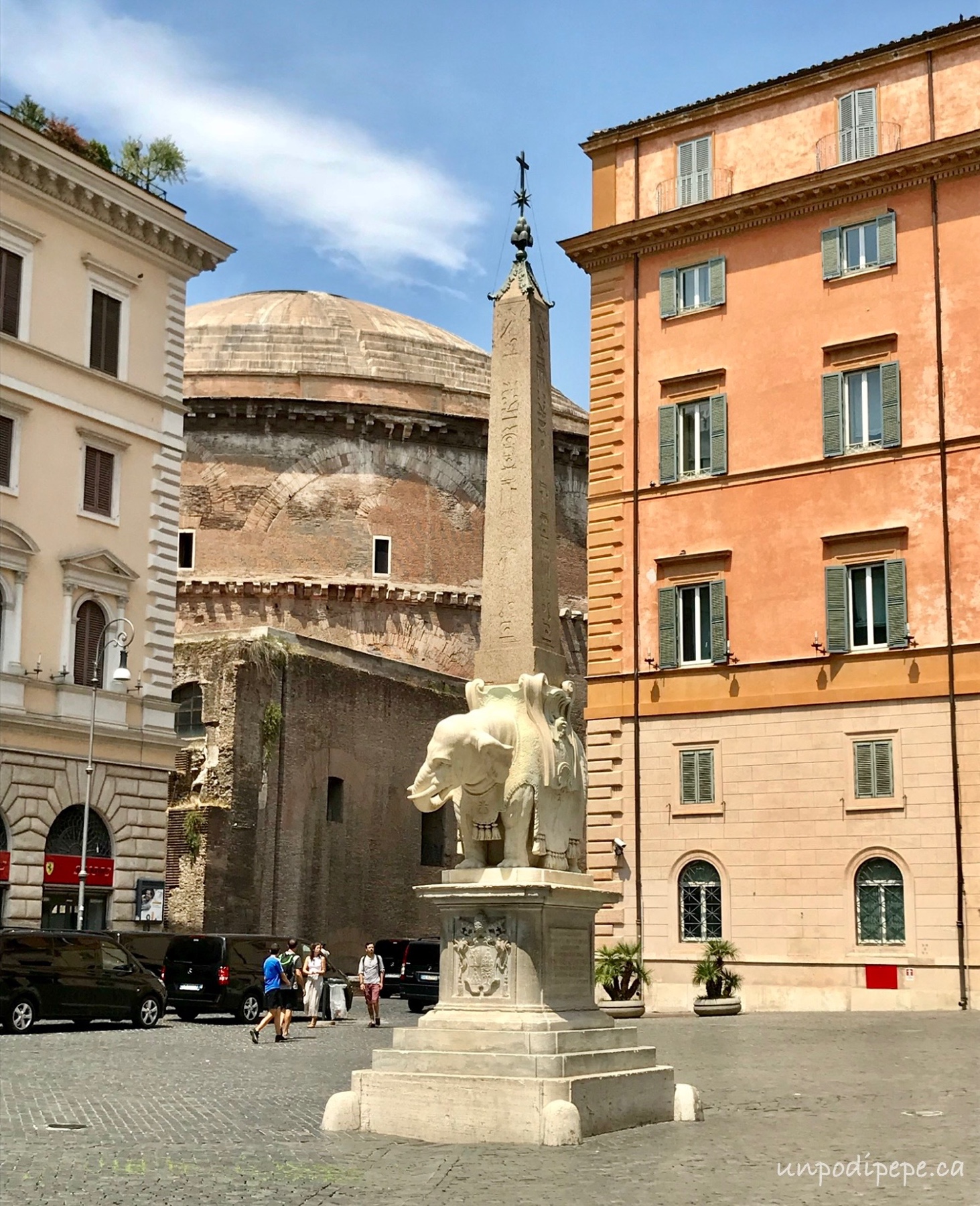
The Pantheon is centrally located, in Piazza della Rotonda.  I walk slower than most people, but it is about a 20 minute walk to Piazza di Spagna, the closest Metro stop.  It is about a 20 minute walk to the Fontana di Trevi, 10 minutes to Piazza Navona and 40 minutes to Colosseo.

Read more about the Pantheon in Caffè con Caravaggio a Roma, Un Giorno a Roma  and Autunno in Italia.

Buon Viaggio, Cristina

Share this:

  • Click to share on Facebook (Opens in new window) Facebook
  • Click to share on Pinterest (Opens in new window) Pinterest
  • Click to share on X (Opens in new window) X
  • Click to email a link to a friend (Opens in new window) Email
  • Click to share on WhatsApp (Opens in new window) WhatsApp
Like Loading...

Un altro giorno a Napoli

12 Friday May 2023

Posted by Un po' di pepe in Italia, Photography, Travel

≈ 10 Comments

Tags

Caravaggio, Napoli, Napoli Centro Storico, Southern Italy, Street art, UNESCO World Heritage Sites

Last week, after 33 years, SSC Napoli won the Series A title and the 2022/23 Scudetto.  The last time they won was 1990, when Maradona played for the team.  This is a big deal!  The streets of Napoli are always vibrant and exciting, but I would have loved to see the celebrations.  The stalls of San Gregorio Armeno likely sold more Napoli team figurines than Presepio pieces this week!

In honour of the big win, I am writing about Napoli-the city. If you have already read my post Un giorno a Napoli, this one is a continuation…..another day in Napoli! In June, I took a spontaneous trip to Santorini, flying in and out of Capodichino, Napoli’s airport. On the way back, I stayed the night and took the bus back to Orsara di Puglia the following afternoon.

My primary objective was to finally see l’ultimo Caravaggio, the artist’s last painting, which up until 1990 was attributed to one of his followers.  Read about my adventure seeing the ‘wrong’ Caravaggio in the post.

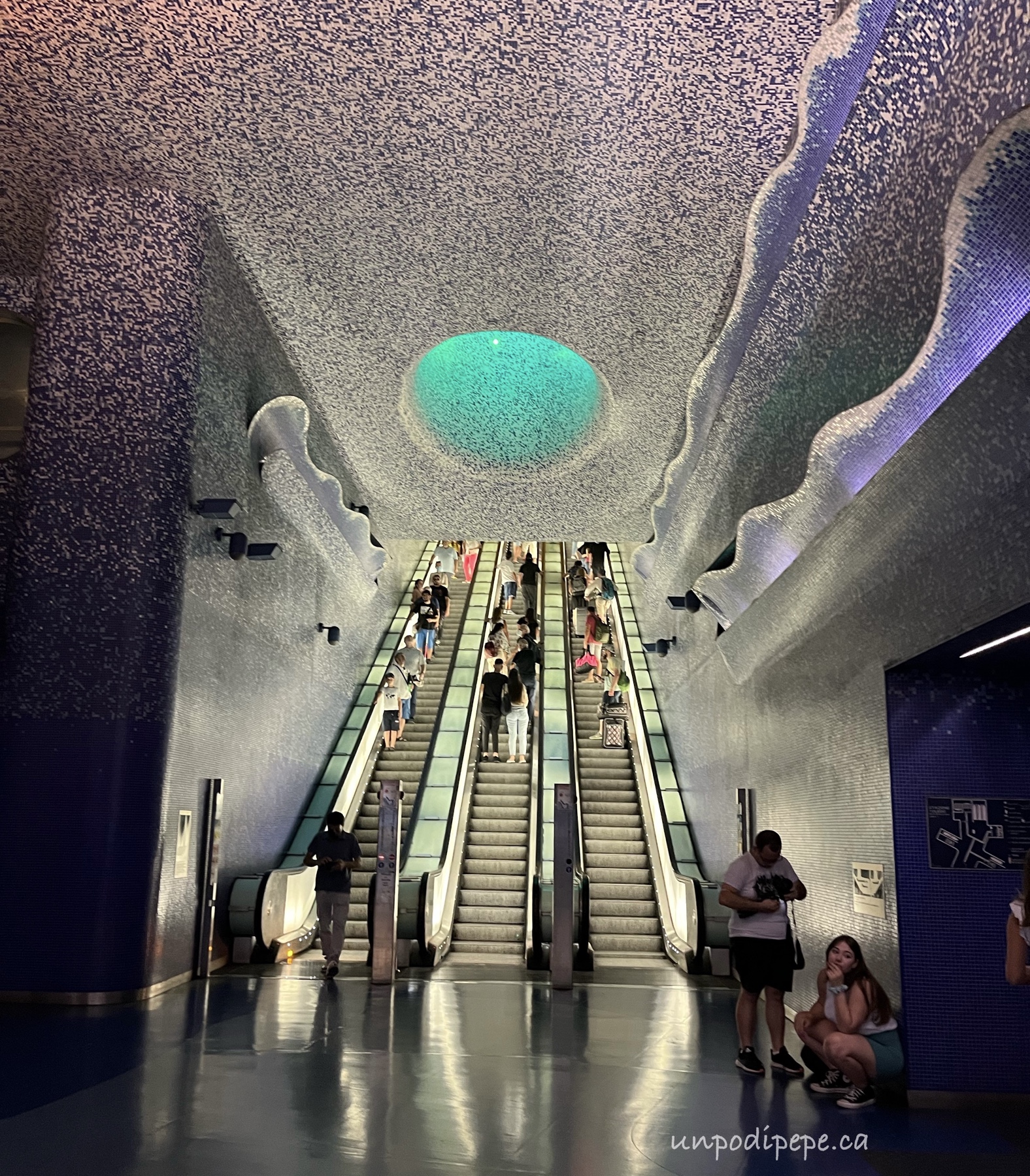
Since it was close to the new location of the painting, I stayed on lively Via Toledo, near the award winning Toledo metro station and in between the port and Quartieri Spagnoli. Read about the new exhibition space and my visit in Gallerie d’Italia Napoli. There is still 1 Caravaggio painting left for me to see in Napoli on my next visit-at the Museo di Capodimonte!

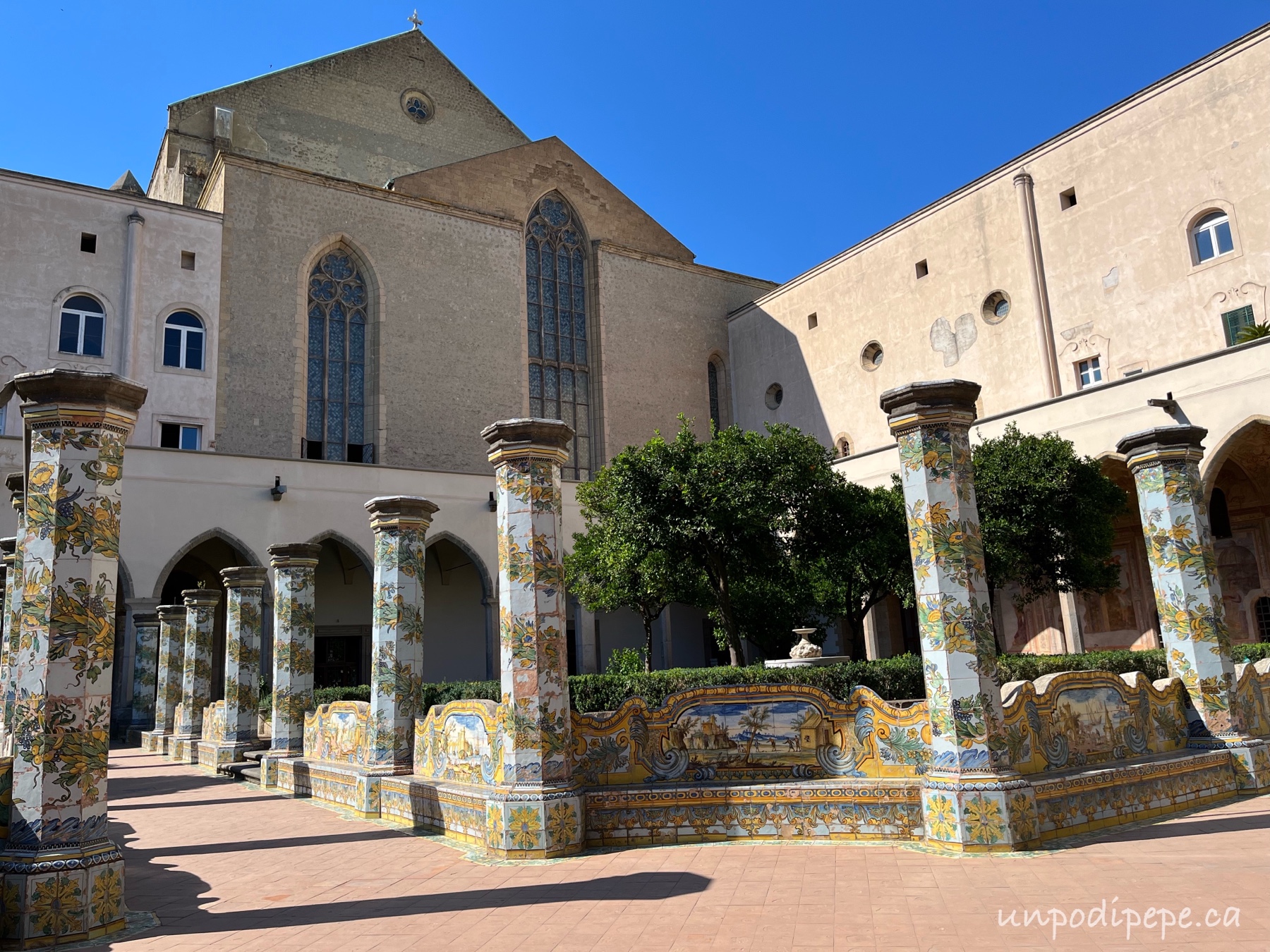
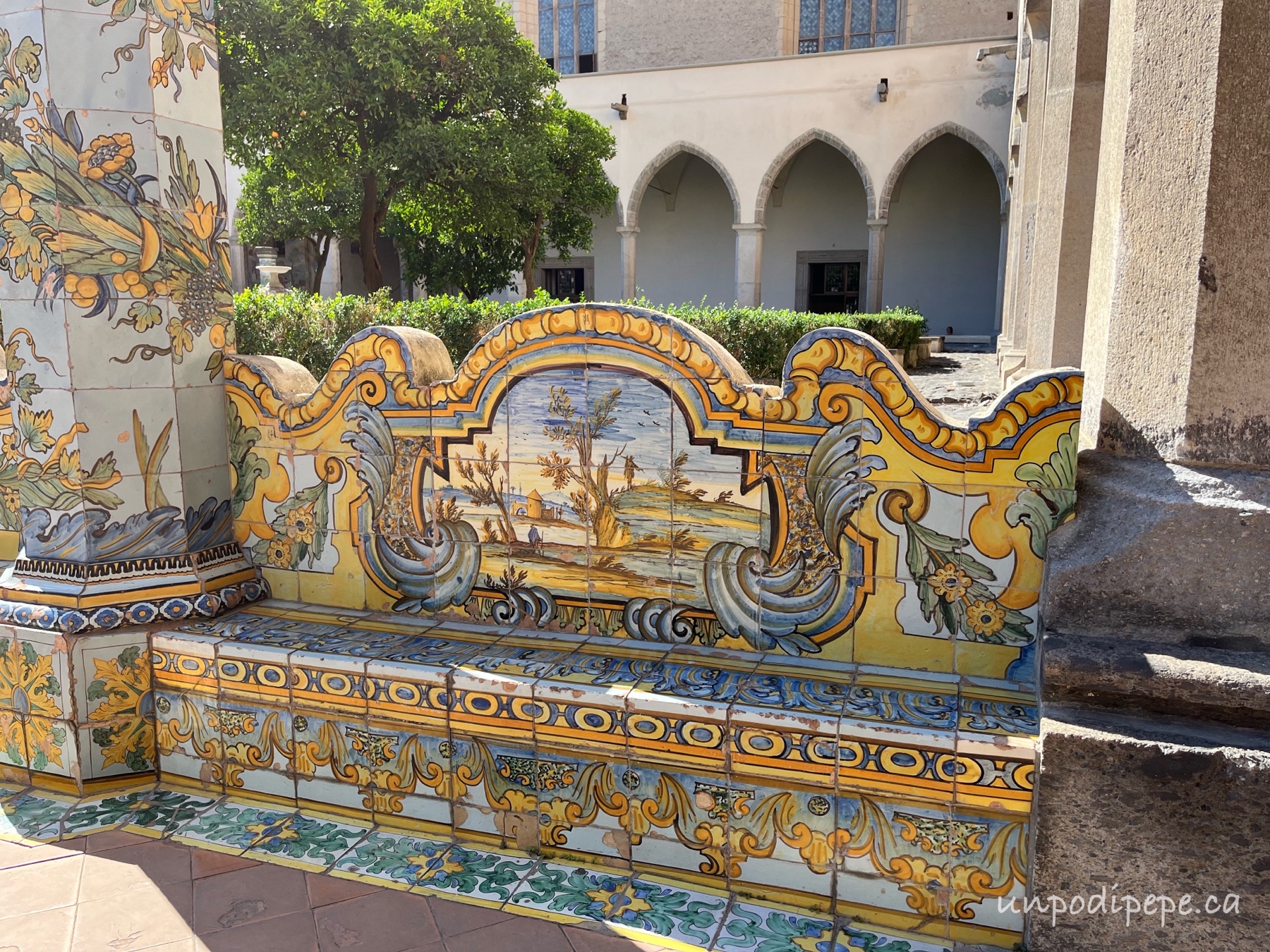
The Chiostro di Santa Chiara is another place I missed on previous day trips. The church was built starting in 1310 and the chiostro or cloister is well known for the addition of Rococo style majolica tiles in 1742.
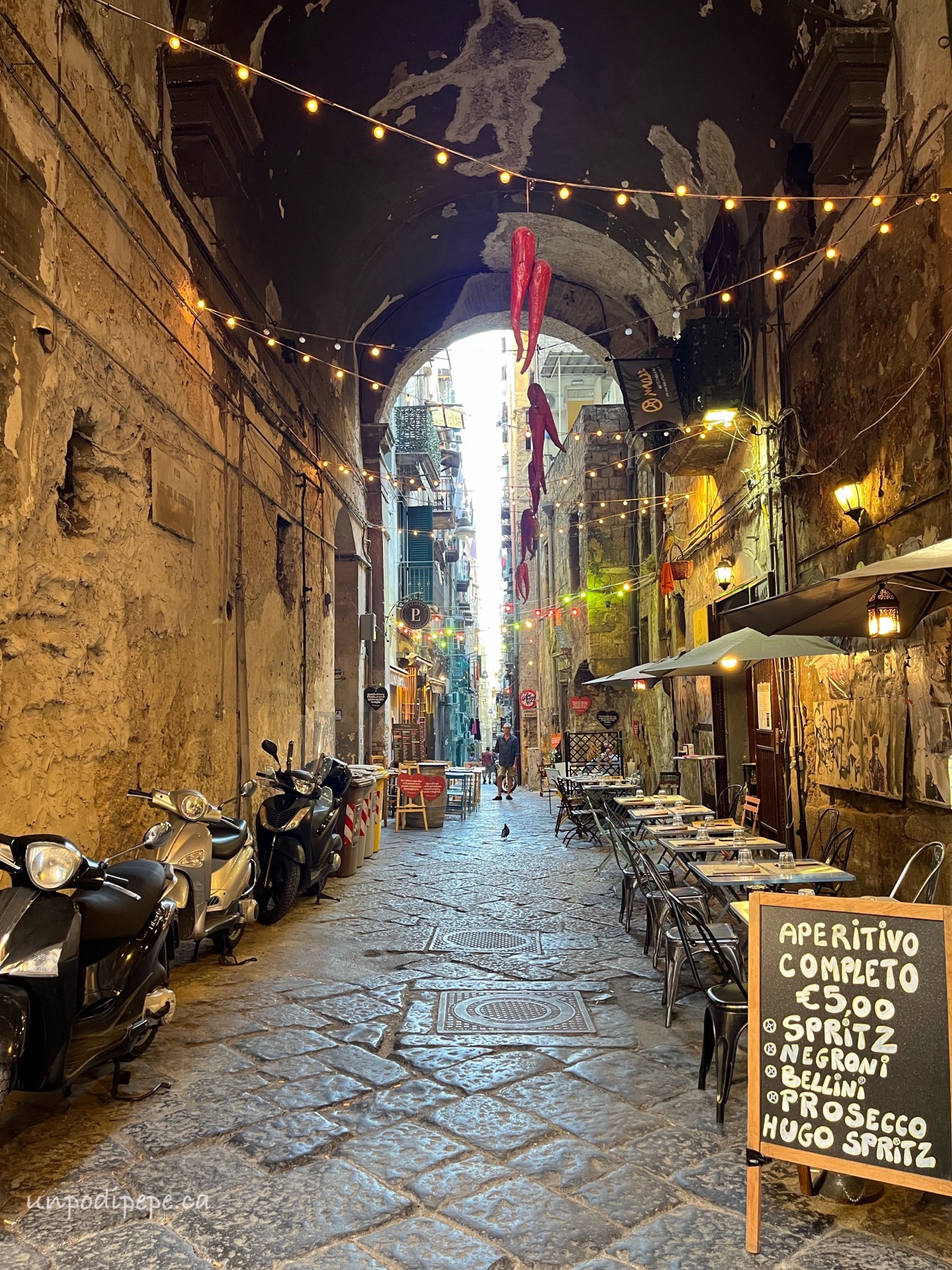
Santa Chiara is located on the 2km long street known as ‘Spaccanapoli’ meaning ‘cut across Napoli’ because it cuts the centro storico in half. It is one of the 3 Decumani, east/west streets in the grid layout of the Greco-Roman city of Neapolis.

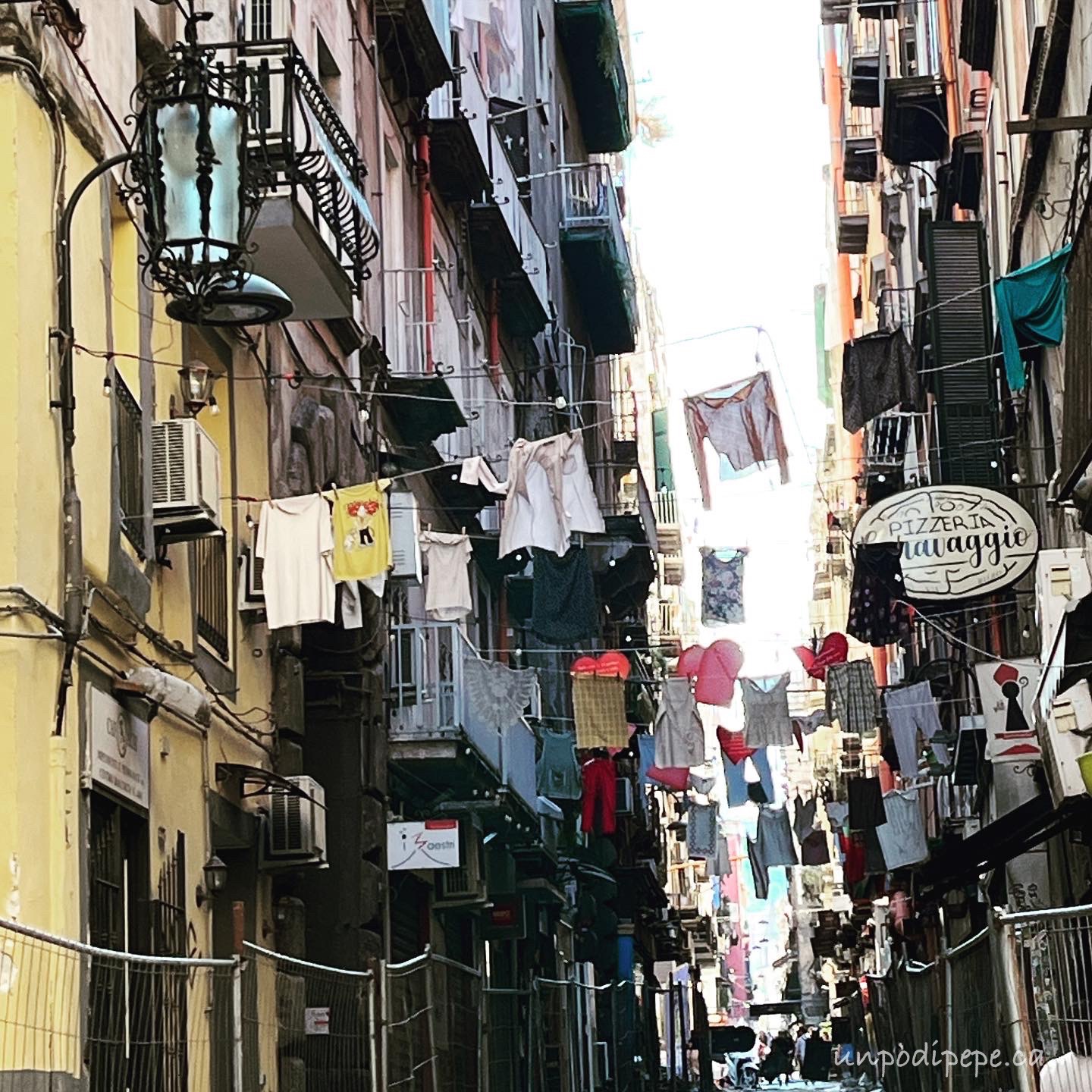
Napoli has the largest Centro Storico in Europe and has been a UNESCO World Heritage Site since 1995. Think of it as an open air museum.  Via dei Tribunali was decorated with a lot of laundry for some reason!

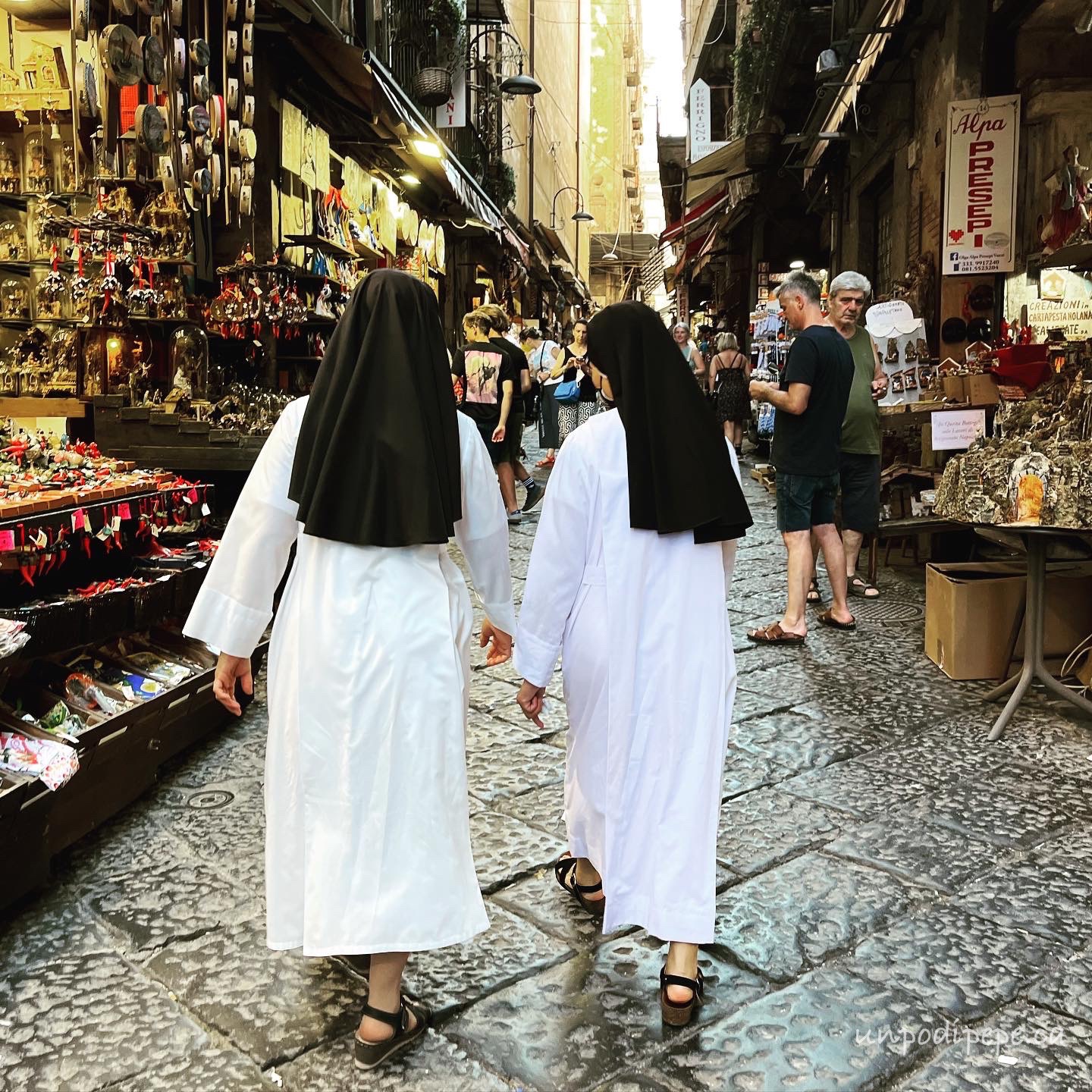
Nunspotting on Via San Gregorio Armeno.  I did not buy any Presepio accessories or Napoli team figurines, but perhaps these sisters did?

I walked past the Duomo just in time to see a dramatic wedding kiss.  The bride was clearly satisfied!  The Duomo Santa Maria Assunta was built over the site of a temple to Neptune.  It was damaged in a 15th century earthquake and repeatedly renovated, resulting in a mishmash of styles and a Neogothic facade.

Walking down Via Toledo to the end, passing Piazza Plebescito, I ended up at the waterfront and a view of Vesuvio.  Hopefully I will be back here at the port in a few months to take the ferry to Procida.

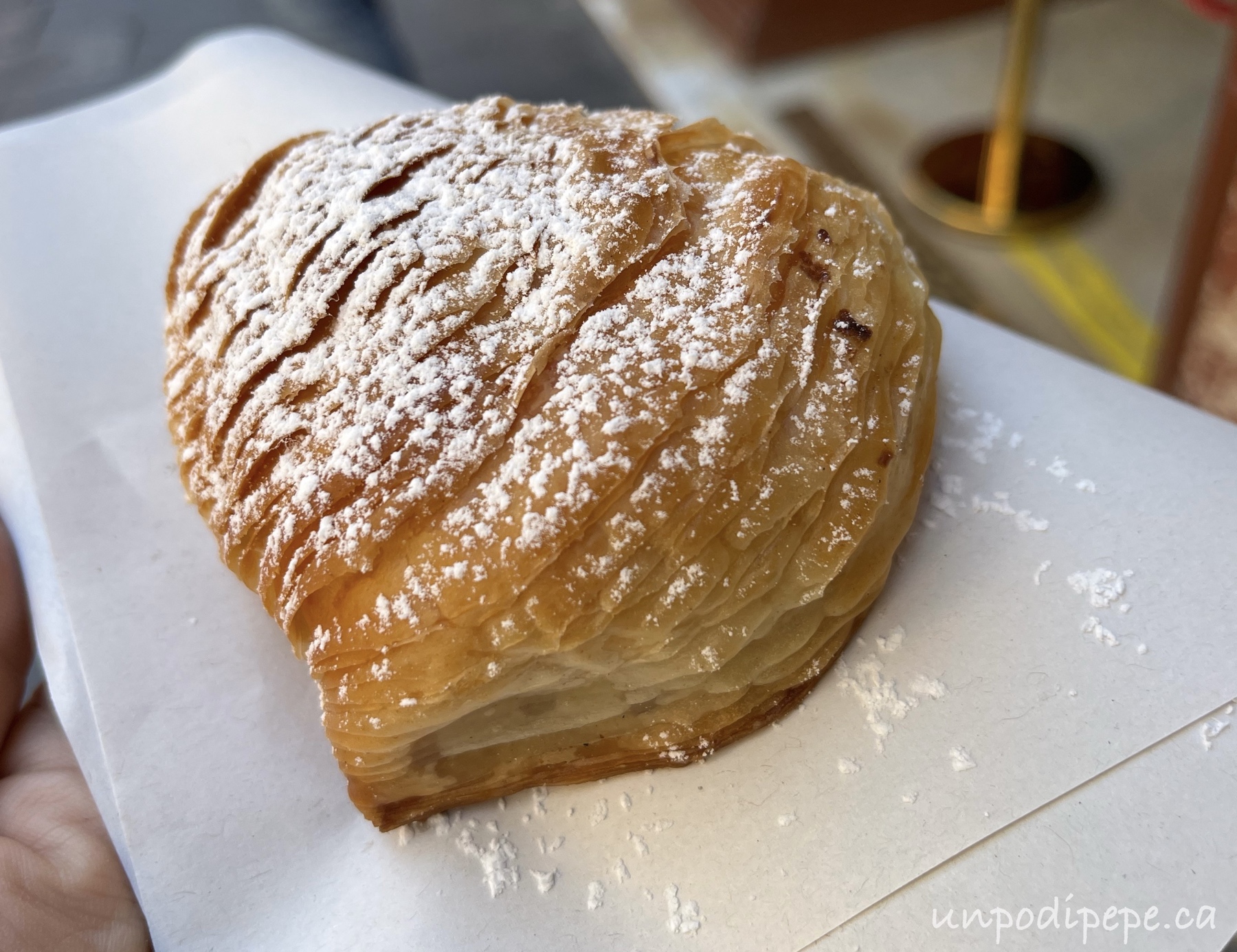
Sfogliatelle were consumed, of course.  This crunchy layered pastry, filled with sweet ricotta, lemon and candied peel is amazing. Sfogliatelle in Napoli are delicious and inexpensive.  I had one served hot from the oven at Antico Forno Attanasio, Via Ferrovia 1-4 just a few blocks from Piazza Garibaldi.  At €1.30, why stop at just one?  I bought a whole bag to bring back to Orsara!  I also had one from Pintauro on Via Toledo 275, the oldest sfogliatelle place in Napoli.  It was heavenly!

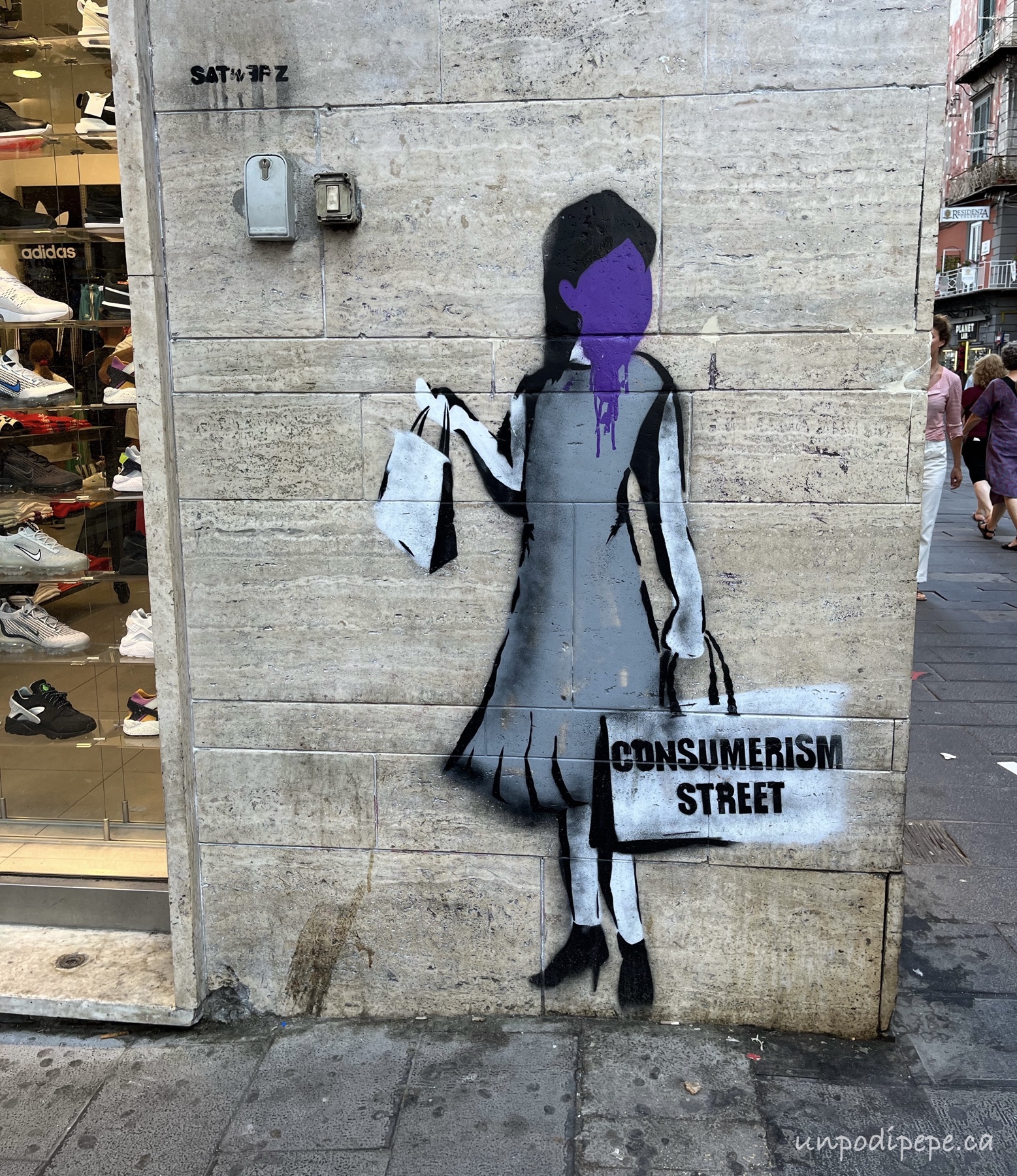
More street food heaven… I had a cuopo friggitori Napoletano.  This is a paper cone filled with fritto misto-a mixture of fried stuff-fish, vegetables and pizze fritte. Yum!Graffiti is elevated to a fine art form in Napoli.  I wrote a post on Napoli street art, and saw some new stuff. ‘Consumerism Street’ was taken on Via Toledo.  The small print under the sardine can says ‘Alla fine siamo tutti uguali’/In the end we are all equal.

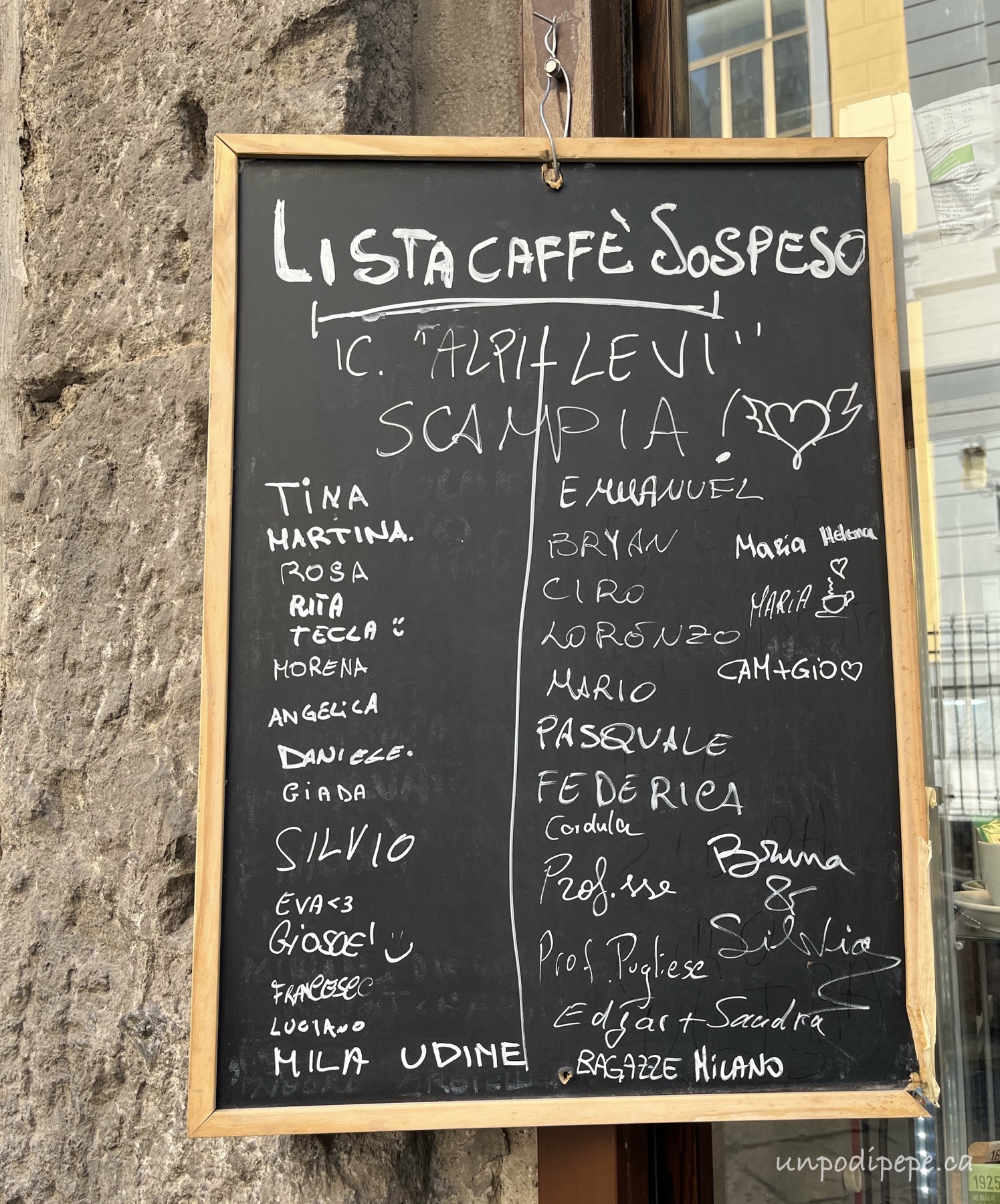
In a tradition of pay it forward, Napoli has ‘caffè sospeso‘. This is a ‘pending caffè’, paid for in advance as an anonymous gift.  Someone asking if there is a caffè sospeso available would receive it for free. This is actually an old tradition that has recently had a resurgence.

Still haven’t visited Napoli?  What are you waiting for?  To quote myself …’Napoli is underrated, misunderstood and does not get the love it deserves, except from fans of Elena Ferrante novels. News of corruption, the Camorra and ongoing garbage crises give it a bad rep. It it ironic that everyone-including many Italians- fears for their life and thinks it is just a crime pit, when Napoli is actually safer than most large North American cities. It is vibrant, wonderfully chaotic, full of life and passionate, friendly people. Napoli has an ‘edge’ to it and is anything but boring’.

According to an old saying ‘Vedi Napoli e mori’. I hope you enjoyed un altro giorno a Napoli!  When you go, have an extra sfogliatella for me! Buon viaggio, Cristina

Share this:

  • Click to share on Facebook (Opens in new window) Facebook
  • Click to share on Pinterest (Opens in new window) Pinterest
  • Click to share on X (Opens in new window) X
  • Click to email a link to a friend (Opens in new window) Email
  • Click to share on WhatsApp (Opens in new window) WhatsApp
Like Loading...

Post Pandemic Travel Postcard

20 Sunday Nov 2022

Posted by Un po' di pepe in Puglia, Travel

≈ 21 Comments

Tags

AICW, COVID19 pandemic, Måneskin, Paris, Polpo, Post-pandemic travel, Torino, Venezia

Like most travel postcards, this one is arriving after the vacation is over. Things have been quiet on the blog, with only 3 posts published since May.  Perché? Partly creative block, but also because I tried to make up for almost 3 years of no travel all at once. I did quite the epic job of it too!  If you follow me on Instagram or Facebook, you already have an idea what I have been up to. Here is the short version of my adventures.  More info to follow in future posts.

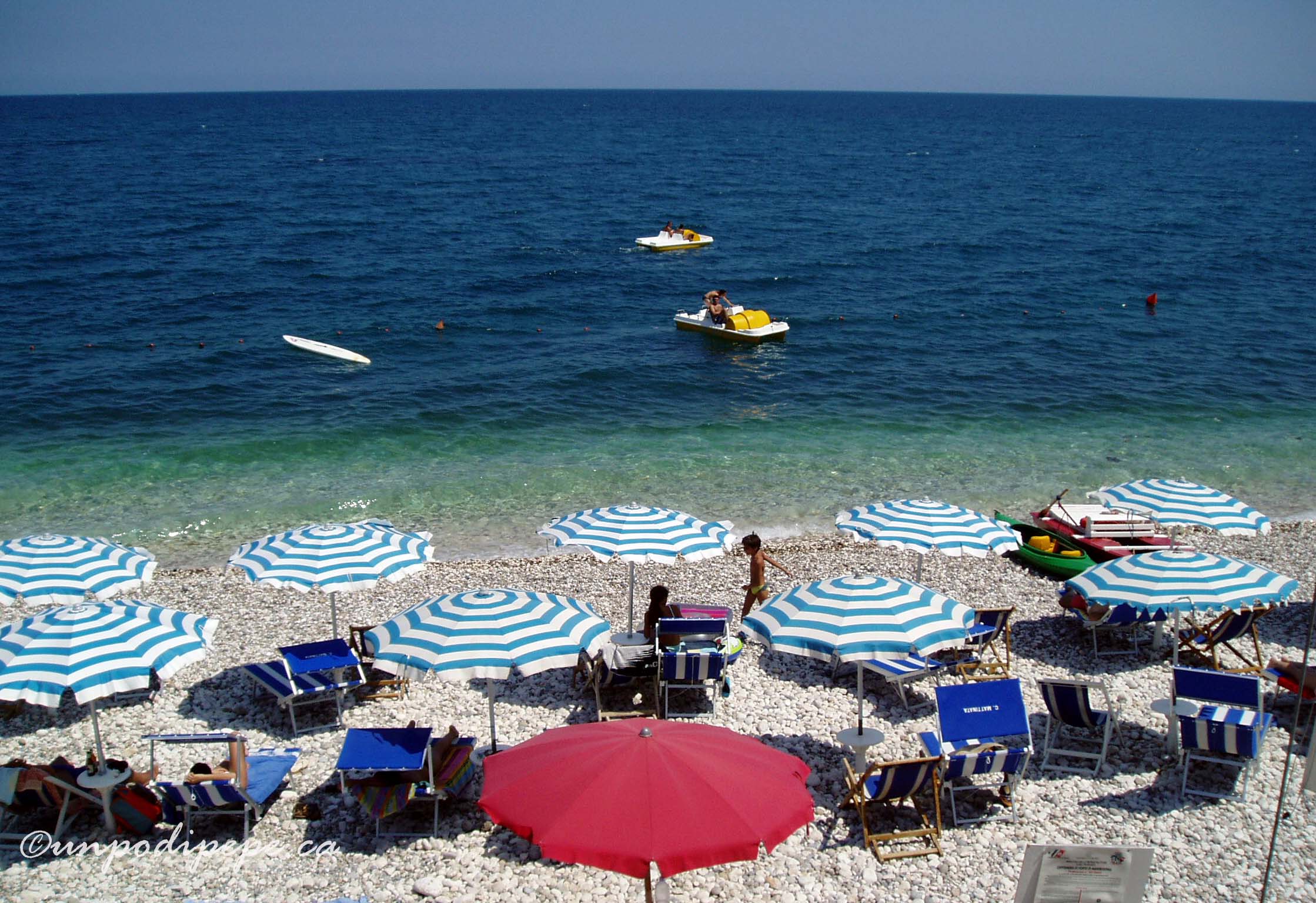
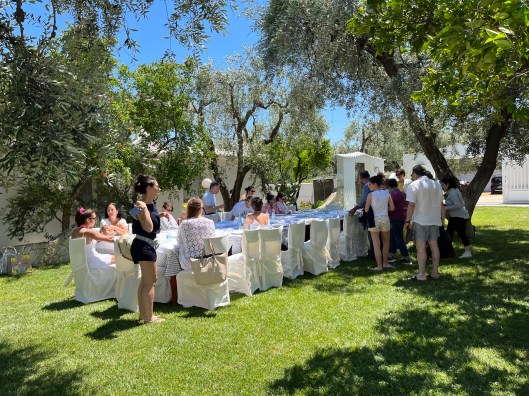
In June, my parents, sister, nipotine* and I attended a family wedding in Manfredonia.  Read all about it in Un Matrimonio in Puglia. The rest of the weekend was full of post-wedding activities, including a long table meal under olive trees by the beach in Mattinata.  We also spent a day in Polignano a Mare.
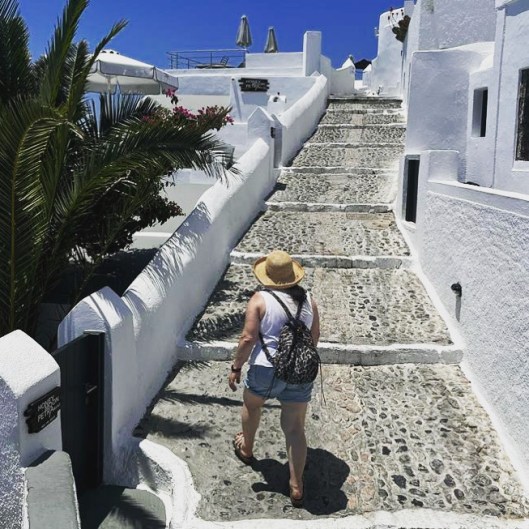
I took an unexpected ‘extra’ trip to Santorini to keep my nipotina Francesca company for a few days before she met her cousins.  Who knew you could fly direct to Santorini from Napoli for €70? I had been to Santorini in 1990 and it is still just as breathtaking but more crowded and expensive.  Bring lots of $ if you go!
On my way back to Puglia, I stayed in Napoli, since it is one of my favourite places.  Finalmente, I was able to see L’Ultimo Caravaggio in person!!! Also more sfogliatelle.

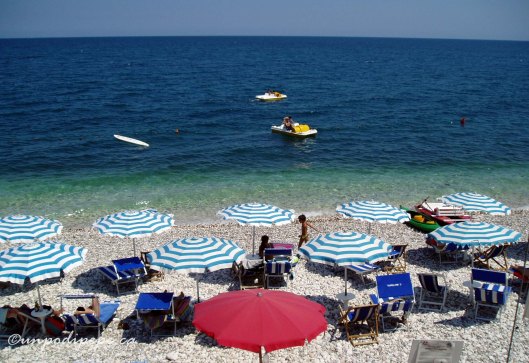
The rest of my time was spent in Orsara di Puglia trying to stay cool.  It was HOT!  The mornings and evenings were amazing.  My weekend camping on the beach in Mattinata was spent almost entirely in the water.
I had pizza one night in the smallest town in Puglia, Celle San Vito, population about 200.  Papà says that is only if you include the cats and dogs, but he was joking…I think.  The pizza was yummy! Apparently there are more than 200 people from Celle who immigrated to Brantford, Ontario.

Between Puglia and Greece, I ate a lot of polpo.  Many photos were posted, and this one of Mamma washing polpo in the sink was popular on Instagram. Stay tuned for a recipe post polpo e patate.washing octopus

My last few days were spent in Roma, where I had to follow my own advice to Beat the heat-Surviving summer in Roma.  My mission was to finish crossing all of the Caravaggio paintings in Roma off my list.  I have now seen them all-except for the ceiling fresco that is in a private home.
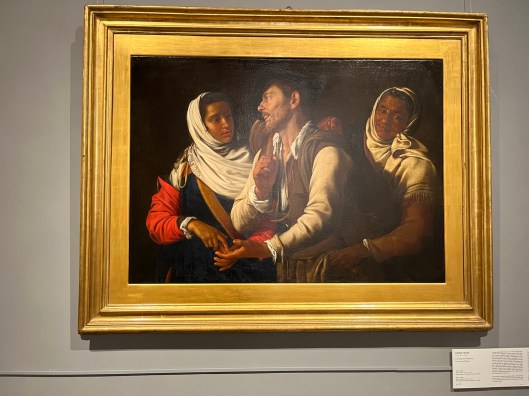
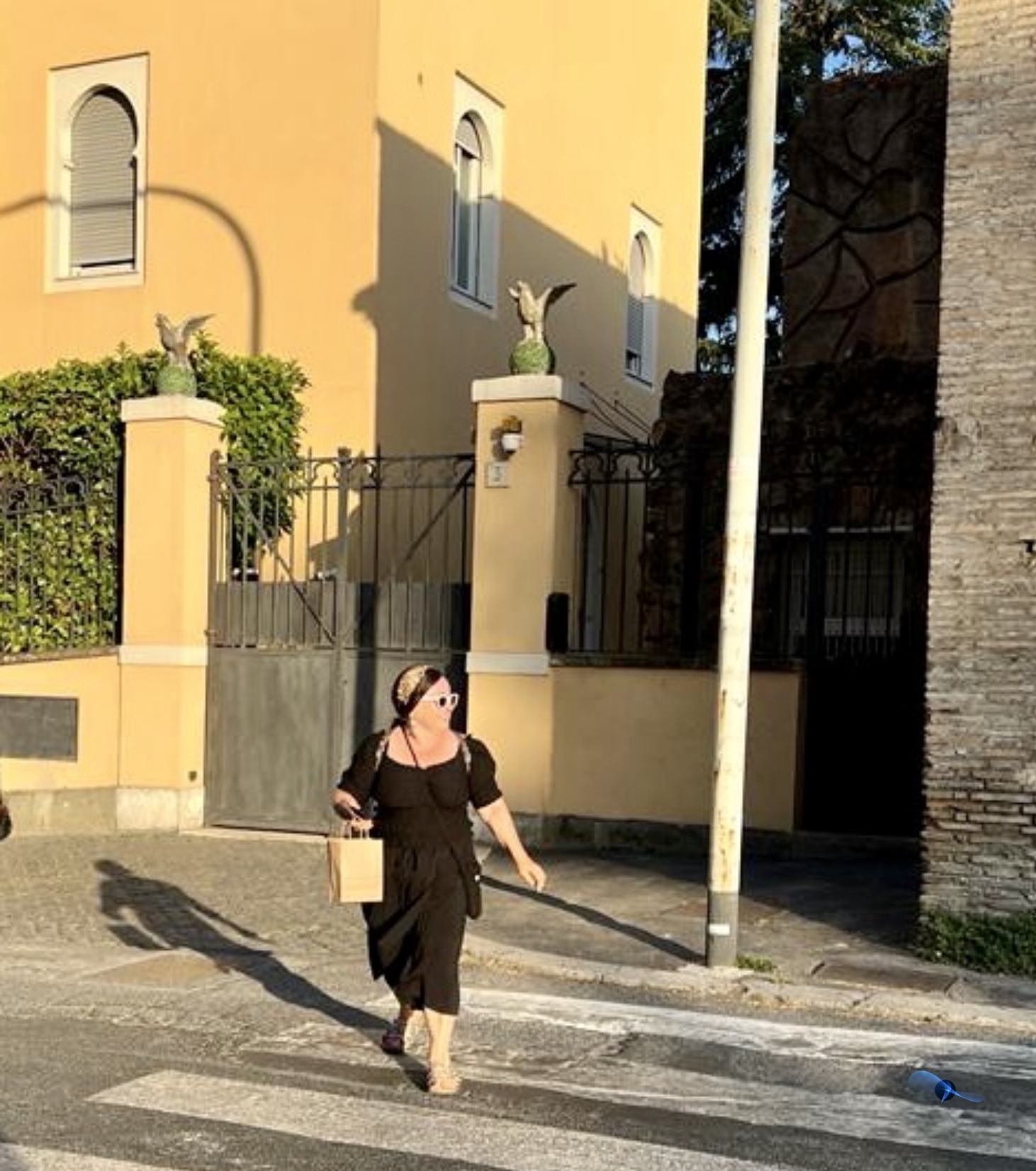
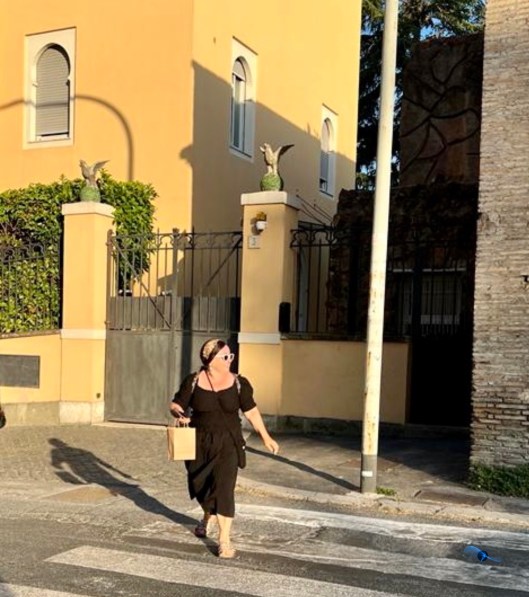
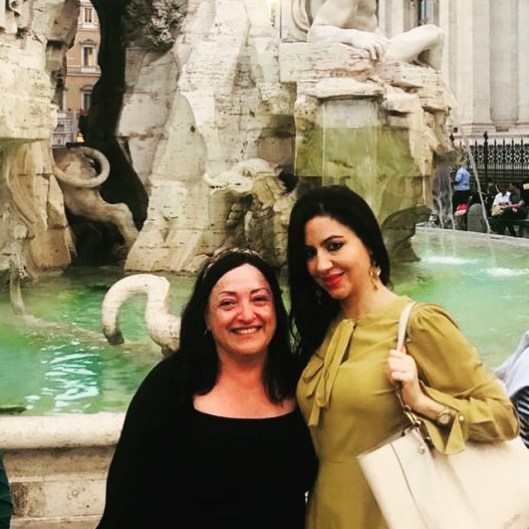
I spent a day with friend and fellow AICW member David, who works at Santa Maria Maggiore for the summer, and I ate at a few Roman restaurants I had wanted to try.  ‘Research’ was required for the post I am editing on Pasta Romana. My amica Shannon from the post Val d’Orcia day trip and I overlapped for 1 day in Roma.  She photographed me crossing the street in style on the Gianicolo, and we made plans to meet in San Francisco in November.
At the end of July, I flew back to Vancouver to work and take care of my garden.  I even managed to publish a post In my kitchen in Puglia.

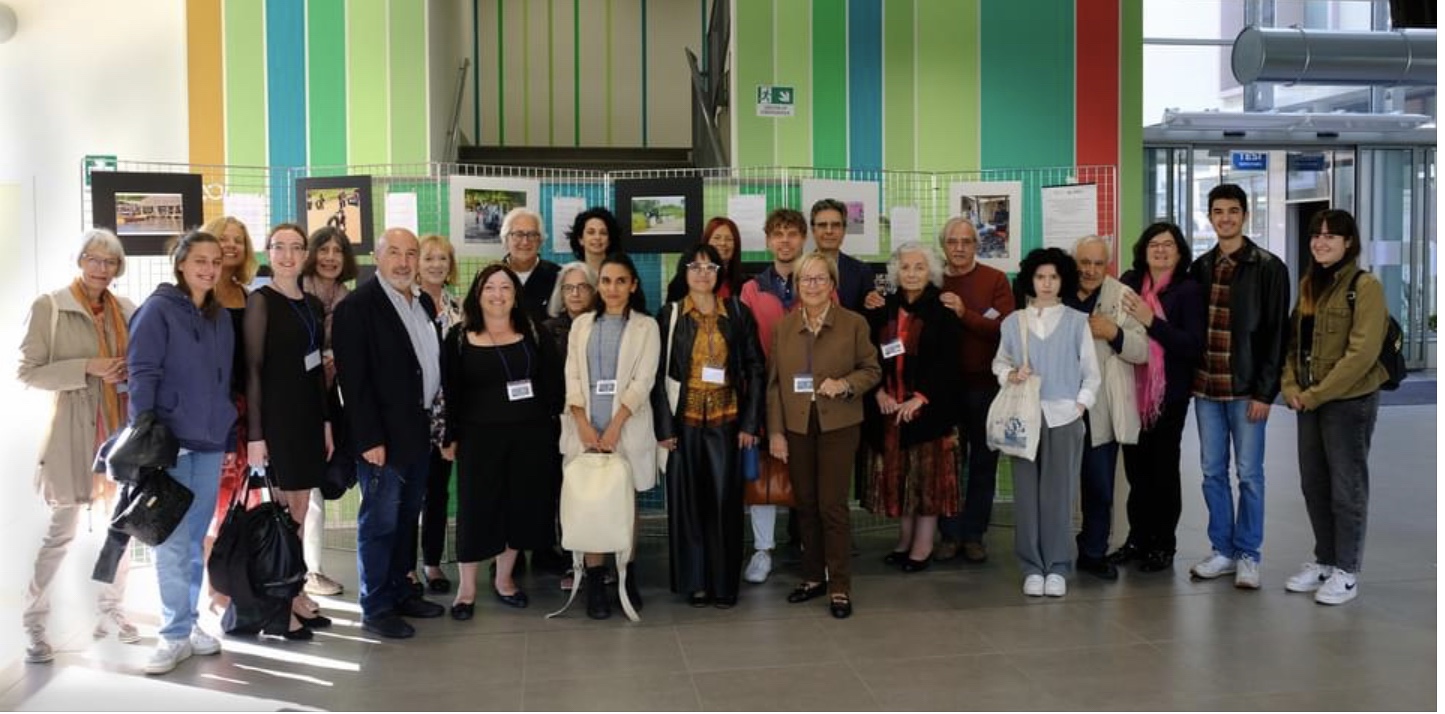
The Association of Italian Canadian Writers- AICW conference in Torino was postponed 3 times due to the pandemic, and was happening the last week of September. My cousin lives in Nice, and she informed me that the high speed TGV train travels from Paris to Torino in 5½ hours. She knew I had never been to Paris, and suggested we meet there before the conference.  A brilliant idea-the travel planning gene definitely runs in our famiglia!

September 22 I flew to Paris and spent 4 amazing days with Elia.  I will save the details for another post.  The TGV was comfy and the scenery through the Alps beautiful.

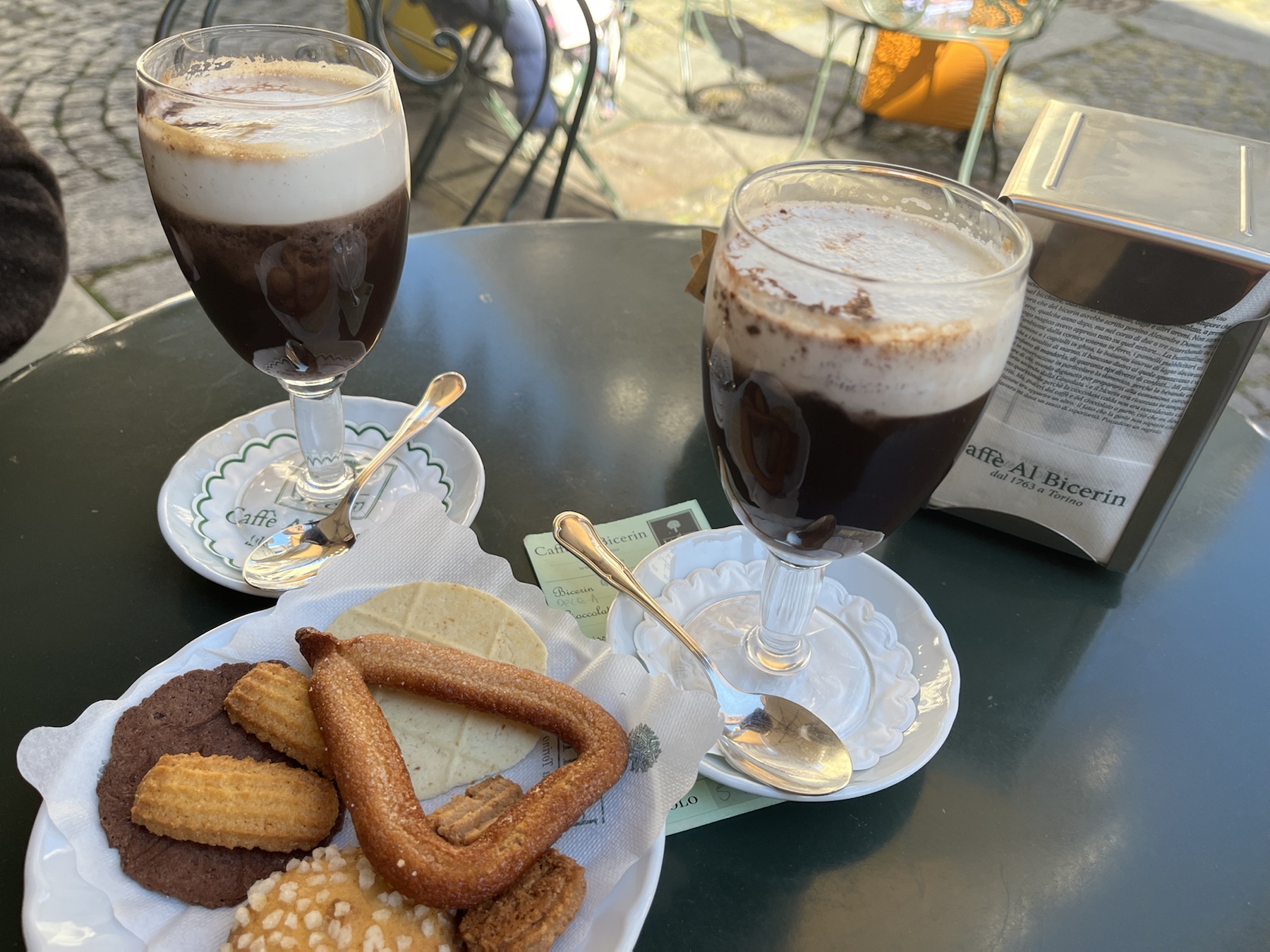
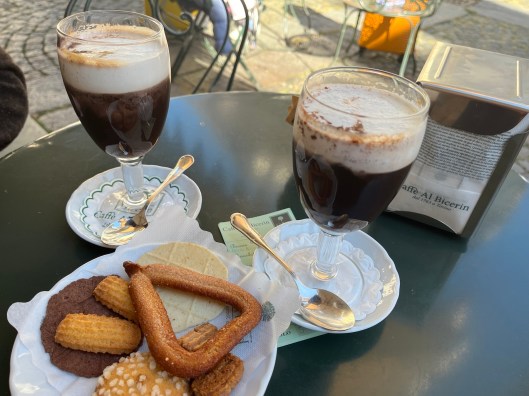
I arrived in Torino the day before the conference started, and met Lucia from Turinepi for a morning walking tour and Bicerin.  The afternoon was spent at il Museo Egizio– the largest collection of Egyptology outside of Cairo.  Torino was a pleasant surprise.  It is walkable, has grand architecture and hardly any tourists in early October! Autumn is a perfect time to visit Piemonte, especially for the seasonal food….zucca, porcini, castagne, salsiccia, with tajarin and agnelotti del plin.
The conference was at l’Università di Torino and featured 4 days of inspirational presentations.  Mine was called ‘A Nzalat d’Purtuall‘, inspired by this blog post. I made lots of new Italocanadesi friends and also Italiani who study Italian Canadian literature—yes, that is a thing!

Following the conference, the plan was to go to Venezia for 3 days.  I have been many times, but the last time was 24 years ago!  I wanted to stay right in Venezia, as I previously stayed in Mestre or went as a day trip.  Things do not always go as planned.  For reasons I won’t elaborate on, I left booking my accommodation too late, and could not find a reasonably priced place to stay-even in Mestre.

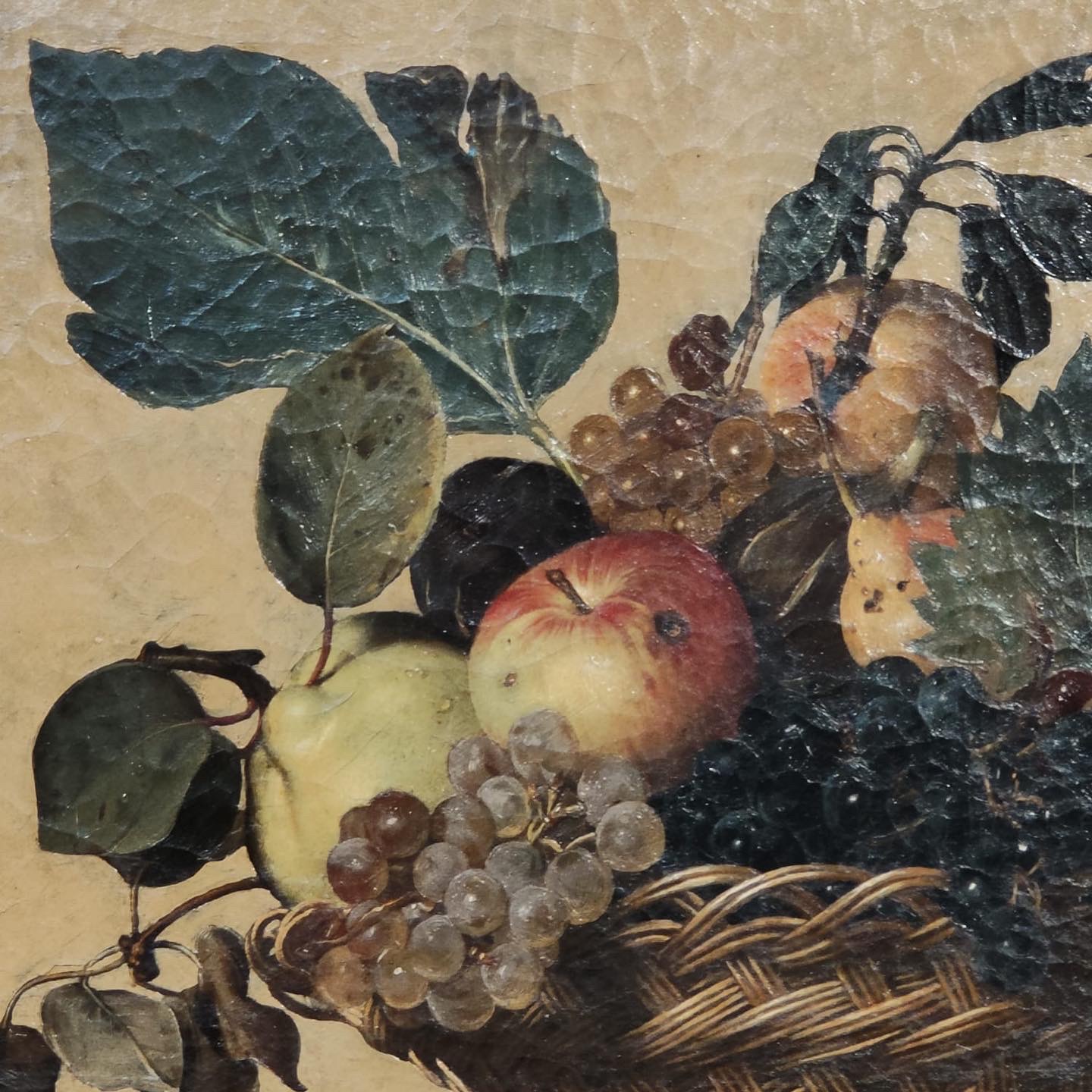
So… I took the train to Milano while I figured out what to do.  I stayed with the new sposini from Un Matrimonio in Puglia and also visited other cugini.  3 cuginetti came with me to the Pinacoteca Ambrosiana to see Caravaggio’s Canestra di Frutta and they may have been even more awestruck than me!

I did manage to find a last minute deal on accommodation in Venezia.  It was even half price!!! I spent 3 days/2 nights in Venezia the first week of October, and no one got the memo that it was not summer!  The crowds were crazy, but the weather was gorgeous. Everything required online reservations and lineups so I mostly just walked and walked.  I finally made it to the Peggy Guggenheim Museum and spent a day on Burano and Torcello.

Venezia was not only crowded, but definitely more expensive than the rest of Italia.  it reminded me of Santorini.  Gorgeous, but expensive.  I can only imagine what it was like in the summer.  I spoke to several Italian business owners and they are not sure if this year was a post pandemic exception or if it will be the new normal. Next year will tell.

The next train journey was Venezia to Foggia (6 hours).  I spent 2 weeks at home in Orsara di Puglia going for walks, meeting friends for caffè, eating good food and just hanging out like a local.  The weather was mostly really nice, but I did have to sleep with 3 blankets, as nights were cold and there is no heat in our little casa.
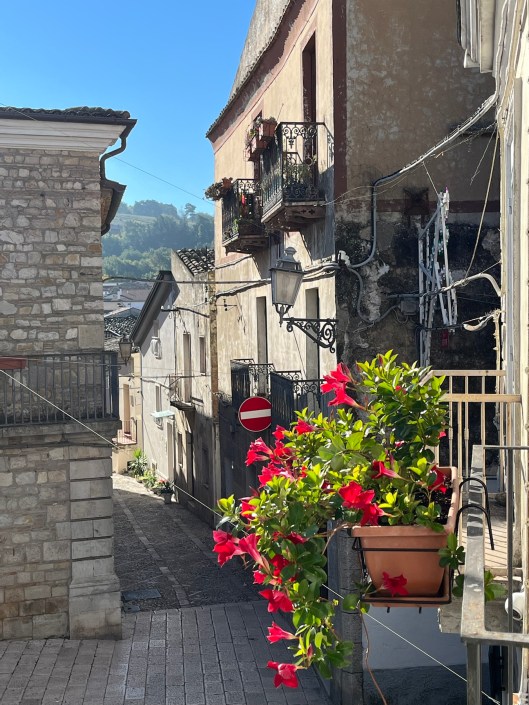
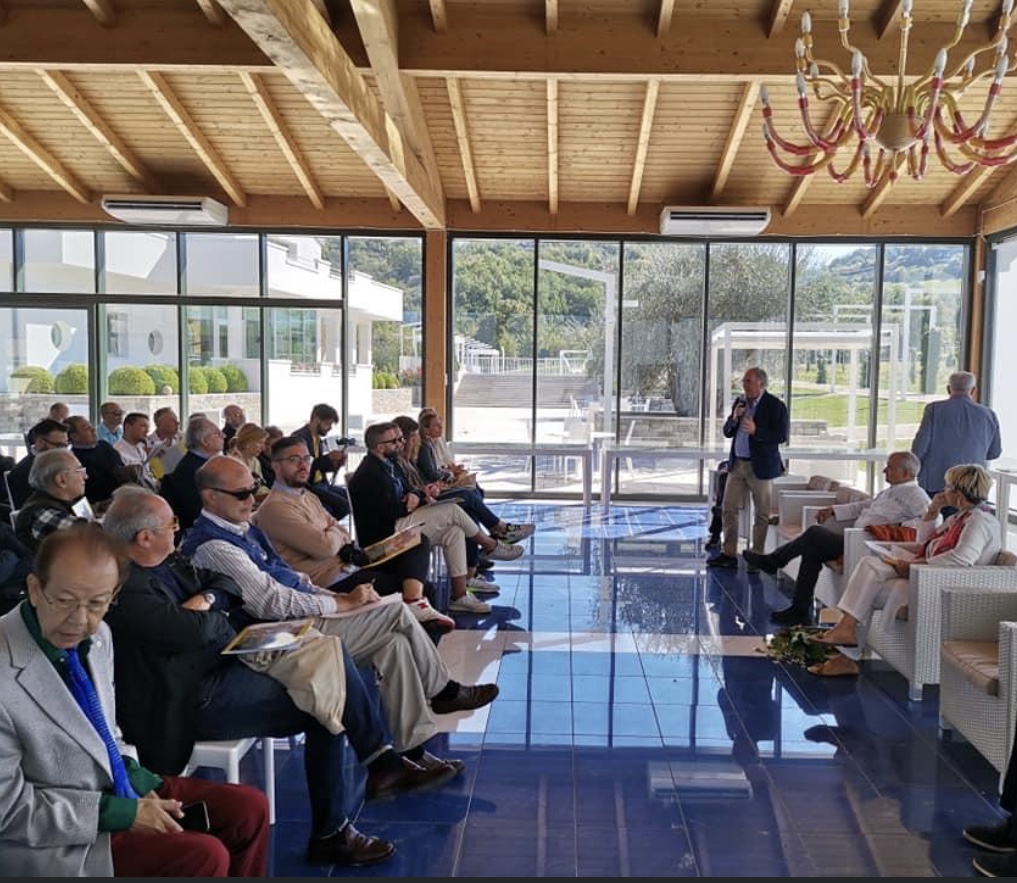
October 17th I attended ‘Appuntamento con la Daunia‘ an annual event hosted by amico Peppe Zullo.  Every year I receive an invite but am not usually in Italia in October.   It is a Slow Food/Farm to Table type of event featuring speakers, tours and local food.  It was attended by food and wine journalists, chefs, RAI, and other enogastronomic types.  Read more about it in my next post.
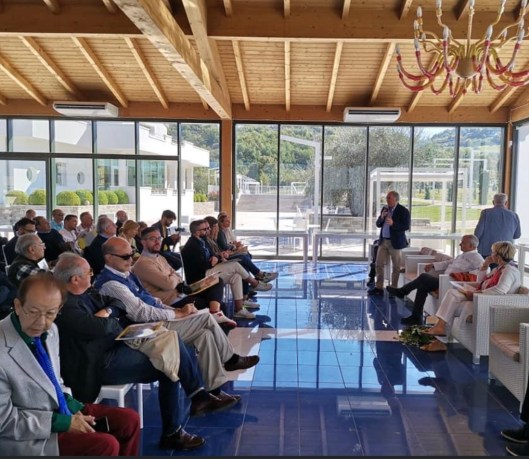
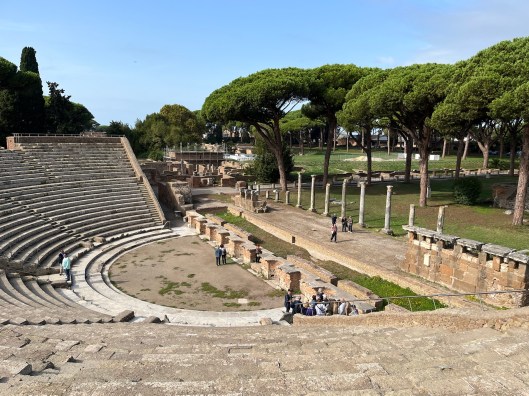
The final train journey was to Roma where I mostly visited with friends. 2 places I had not been to since age 11 were revisited-Ostia Antica and the Musei Vaticani.I also had aperitivo with the Italian Senate representative for Italiani all’Estero, On. Francesca La Marca.  We met earlier this year at a function in Vancouver.
10 days after flying home from Roma, I went to San Francisco.  Shannon and I met there to see Måneskin live at The Masonic.  Read about them here. It was amazing and we felt like teenagers.  Listening to a North American audience singing along to all of the Italian lyrics was so cool.  We were glad to have attended this concert, since we doubt the band will be playing 4,000 seat venues any longer now that they are selling out stadiums!

This brings me to the end of my post-covid travelpalooza.  If anyone is still worried about travelling, I did not have any issues at all. I do not have any travel plans right now, but I am sure something will come up! Got any plans?  Let me know in the comments!  Buon Viaggio, Cristina
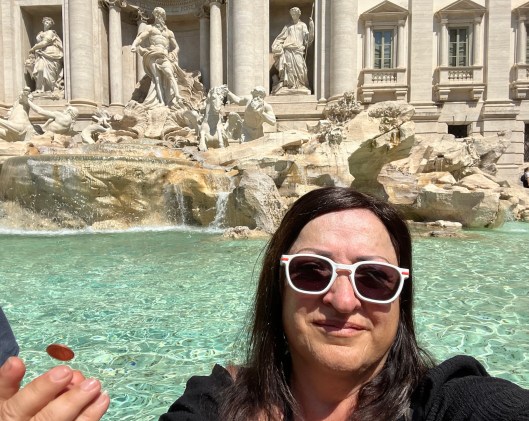
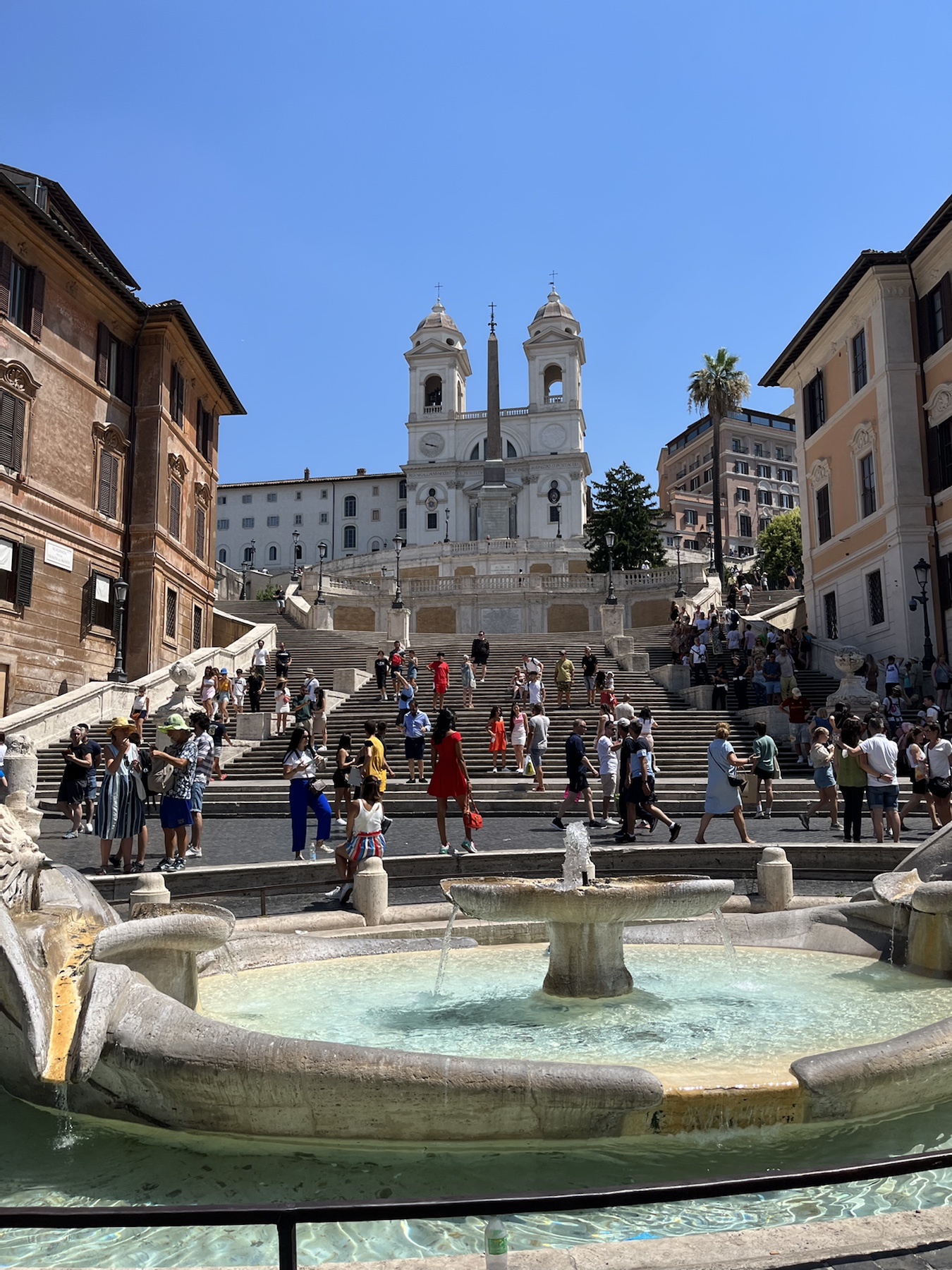
PS My nipotina* Isabella gave me selfie taking lessons, so I practiced during all my travels. At the Fontana di Trevi I impressed myself, managing to capture the coin toss mid air and not cut my head off, while avoiding the 500 other people trying to do the same!

*nipotine can mean nieces or granddaughters.  In this case it is nieces!

AICW Photo by Vincenzo Pietrapaolo

Me crossing the street in style-photo by Shannon Milar
Share this:

  • Click to share on Facebook (Opens in new window) Facebook
  • Click to share on Pinterest (Opens in new window) Pinterest
  • Click to share on X (Opens in new window) X
  • Click to email a link to a friend (Opens in new window) Email
  • Click to share on WhatsApp (Opens in new window) WhatsApp
Like Loading...

Beat the heat: Surviving Summer in Roma

19 Sunday Jun 2022

Posted by Un po' di pepe in Italia, Roma, Travel, Travel tips

≈ 16 Comments

Tags

Ferragosto, Italy travel tips, Musei Nazionale Romano, Roma, Roma travel, Summer in Italy, Summer in Roma, Surviving summer in Italy

Visiting Roma this summer? Summer in Roma can be hot, humid, sticky and crowded.  The temperature is usually >30° C (85°F) and the humidity can make it feel even hotter. I often hear people say ‘the worst time to go to Roma/Italy is in the summer-it’s too hot!’  Well…anytime is a good time to go.  Whatever time works for you.  You will just have a different experience depending on the season.  Teachers, students, school employees and families with bambini in school can only travel in summer, so advising them to visit at another time is not helpful.

For those of us that go to visit family, especially in smaller villages, August is often the best time to be there.  In my small mountain village in Puglia there are feste and concerts, my friends and relatives have time off work, and those who have moved away for work come back to visit. This is why I go in summer.

Roma will have a decreased amount of Romans for the 2 weeks around Ferragosto Aug 15th. Many Romans head to ‘la spiaggia’ so it will be less crowded with fewer cars on the road.  Office and public workers are off or have decreased working hours. A lot of smaller businesses are closed as well. Do not worry, there will be more than enough restaurants open that nobody will starve. August 15th is a national holiday, so definitely avoid travel on that particular day. Public transportation will be reduced and nearly everything will be closed. Museums and cultural sites will be open. July is actually more crowded than August. For more info on this, read the post Chiuso per Ferie.

I visit Roma for a few days every summer at the beginning or end of my trip to Puglia and consider myself quite the expert on managing the intense heat and crowds. Here are my tips for surviving summer in Roma:

1-Schedule the day like an Italian!  Quando a Roma, fai come i Romani/ When in Roma…..
A- Mattina/Morning Wake up early and do your stuff in the morning. Visit ‘non shady’ sites in the morning, as they will be too hot to do in the afternoon. These include the Colosseo, Foro Romano, Piazza Navona and Passeggiata all’Aventino.

B Pomeriggio/afternoon During the hottest part of the day-1-5 pm, participate in the riposo or ‘pausa pranzo’.  (**Note that this is not known as siesta in Italian) This is a ‘rest period’ and many places are closed. This is not always the case in the larger cities or touristy areas, but it makes sense to follow when it is hot.  Have pranzo-the main meal, at 1pm, enjoying the interior of a cool restaurant, then if your lodgings are close by, have a rest, take a nap or check email. Keep it dark with closed shutters/curtains while staying indoors, and also while you are out, so it stays cool.

If it is not feasible or you do not want to participate in the ‘pausa pranzo’  visit cool places during this time. For example:

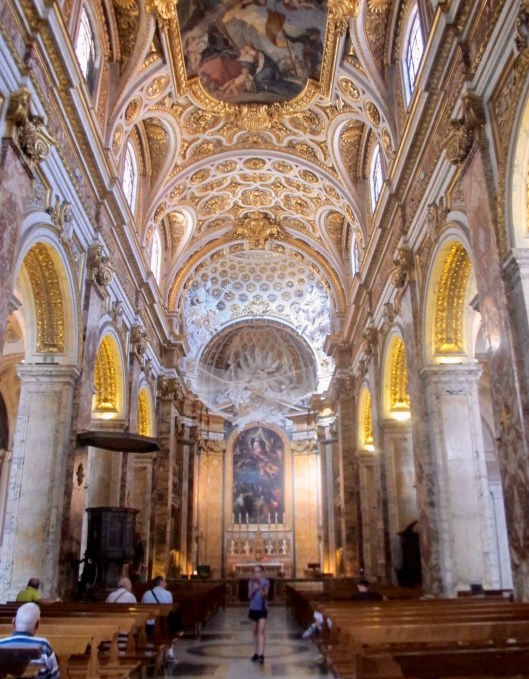
1-Visit churches! Roma has >900 churches- they are dark, cool, free and may even have seats.  Some, like San Luigi dei Francesi and Sant’Agostino even have their own Caravaggio works for you to drool over. For the full walking tour, go to  Caffè con Caravaggio a Roma.  Santa Maria Sopra Minerva, the Pantheon and Santa Prassede are 3 other favourites of mine.  Smaller churches may be closed during pausa pranzo, but many are open. Sometimes you even find things by happy accident. I once stepped into Santa Brigida, a very traditional Scandinavian church in Piazza Farnese for a 3 pm Mass which included otherworldly sounding chanting and singing by cloistered nuns.

***Important Note about churches – Churches are primarily places of worship, so please be respectful.  Dress appropriately, speak quietly-if the artwork does not render you speechless. Avoid Mass times, especially on Sundays.  It may not be possible to visit unless you are attending Mass. There is no charge to visit most churches, but I always like to light a candle when I visit (€.50-€1).

2 –Visit museums Most are air conditioned and open until 1900 (7pm). My favourites are Centrale Montemartini and Palazzo Massimo alle Terme which is downright cold-especially the top  floor where the fresco villas are.

Both of these museums are never crowded, even in high season. Galleria Borghese requires a reservation and you can only stay 2 hours.  If you time the visit right, go to Villa Borghese afterwards and find shade under a tree.

Smaller museums might not have air conditioning.  **A note on AC.  Electricity is expensive in Europe.  The AC is cool, but not cold like it usually is in North America. Read my amusing post Aria Pericolosa for more on this topic!

3- Go underground and visit the Catacombs of Domitilla, 12 km of cool underground tunnels from the 2nd to the 5th Century or the Basilica San Clemente which has 3 layers of churches, ending in a Mithrean temple.

C Sera/evening Get back out in the early evening, then stay out late enjoying the fresh air and longer days. Go for aperitivo! Pop up restaurants, wine bars and stands line the Tevere in summer near Ponte Sisto and Isola Tiberina.

Villa Celimontana holds an outdoor evening jazz festival from June-August. This is also a great time for a passeggiata in Piazza Navona or Trastevere.  There is a  Colosseo night tour as well as tour of the underground and the Forum. These can be booked online.  Roma also has several roof bars including the Terrazza Borromeo, Hotel Pantheon and Hotel Minerva.

More hot weather advice:

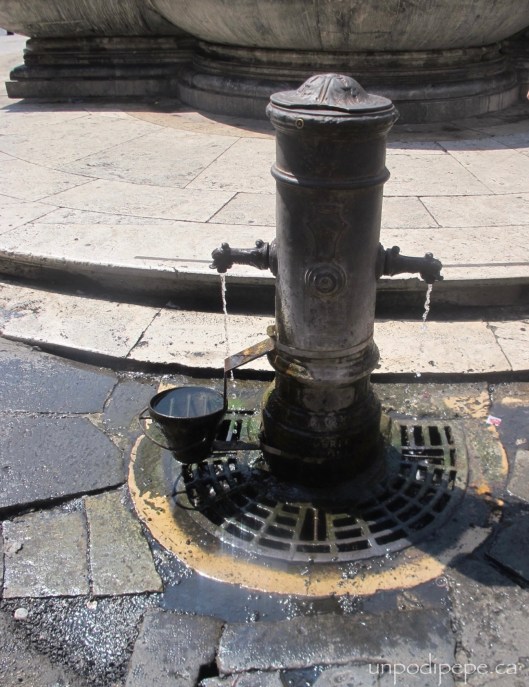
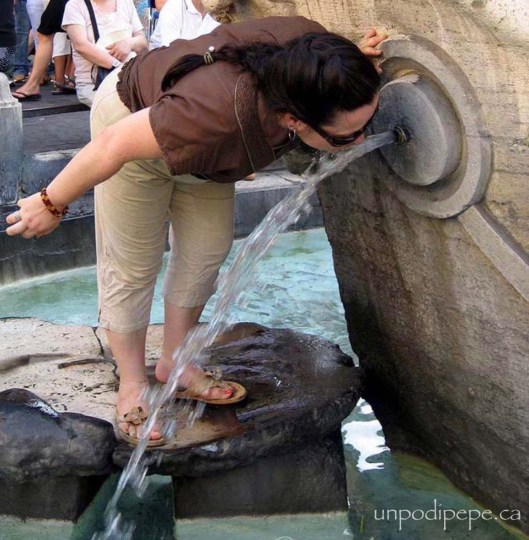
2 Keep hydrated Bring a water bottle and drink from from the >2500 cast iron nasoni or ‘big noses’.  These are running water fountains all over the city, most with SPQR stamped on the front.  This one in front of the Pantheon is one of the 3 oldest nasoni, with dragon spouts.

Nasoni were installed in 1874 to make cold drinking water from acqueducts free and accessible to all. Place your hand under the main flow and drink from the gush out the top. My favourite place to drink is La Barcaccia in Piazza di Spagna. The water comes straight from Acqua Vergine, an ancient aqueduct, and is absolutely freddissima!

3 Granita e gelato! Gelato will keep you cool. As if an excuse for more gelato is ever needed! I find the fruit flavors most refreshing, especially limone and pompelmo rosa (pink grapefruit).  You must try a granita di caffè at Tazza d’oro near the Pantheon. Also refreshing are Caffé Shakerato, Affogato and Grattachecca. It is hard to find bad gelato. There is Gelato del Teatro, Grom, Gelato San Crispino and 9 locations of Fatamorgana. My favourite is Danielgelo, a small family run gelateria near where I usually stay, in the San Paolo area.

Granita di caffe

4 Dress appropriately Wear a hat! Use sunscreen and dress lightly in layered breathable fabrics such as linen or cotton. Bring a light shawl or coverup if planning to visit churches, especially the Vatican. Walk on the shady side of the street, if possible. Buy a souvenir folding Roma fan.  They are available at all the souvenir stands for 2-3 Euro.

Should you avoid going to Italia in August? Absolutely not! If that is when you are able to go-then do it! Hopefully my tips will help. Be sure to click on the post links. Also remember the positive things about summer in Italia-the long days and wonderfully cool evenings, sky so blue it does not look real, the cast shadows of the mid afternoon sun and the seasonal summer food 😋.

Buon viaggio, Cristina

Share this:

  • Click to share on Facebook (Opens in new window) Facebook
  • Click to share on Pinterest (Opens in new window) Pinterest
  • Click to share on X (Opens in new window) X
  • Click to email a link to a friend (Opens in new window) Email
  • Click to share on WhatsApp (Opens in new window) WhatsApp
Like Loading...
← Older posts

Enter your email address to follow 'un po' di pepe' and receive notifications of new posts by email.

Join 511 other subscribers
Follow Un po' di pepe on WordPress.com

Popular Posts

  • Hairstyling in Ancient Roma
    Hairstyling in Ancient Roma
  • Espresso Cookies
    Espresso Cookies
  • Il Pumo Pugliese
    Il Pumo Pugliese
  • Panforte di Siena
    Panforte di Siena
  • Internment of Italian Canadians
    Internment of Italian Canadians
  • San Nicola
    San Nicola
  • Panettone Fatto in Casa
    Panettone Fatto in Casa

Recent Posts

  • Castel del Monte
  • ‘The Nuances of Love’
  • Hostaria Antica Roma~Eat like an Ancient Roman
  • Santa Maria in Aracoeli
  • Casino dell’Aurora~Villa Boncompagni Ludovisi
  • Nasoni di Roma
  • Bloghiversario #11
  • Fontana di Trevi
  • Acqua Vergine
  • Giubileo 2025
  • Sanremo 2025
  • In Vino there are Memories
  • A Literary Harvest
  • 2024~Un po’ di pepe Year in Review
  • Buon Natale 2024
  • Il Bicerin
  • Mercato Porta Palazzo
  • Torino
  • Catanzaro, Calabria
  • Il Pumo Pugliese
  • Artemisia Gentileschi
  • Cavalli di San Marco
  • Panzerotti
  • Torcello
  • 10 years of Un po’ di pepe!

Categories

Amici e Famiglia Architecture Art Art history Art projects Bilingual posts Blogging Canada Culture Feste Firenze Inspiration Italia Italian Folklore Italian language Italian life Italocanadesi Libri Mangiamo! Orsara di Puglia Parole piacevoli Photography Puglia Recipes Roma Travel Travel tips Uncategorized Vino

Archives

Un po’ di pepe on Facebook

Un po’ di pepe on Facebook

Start a Blog at WordPress.com.

  • Subscribe Subscribed
    • Un po' di pepe
    • Join 511 other subscribers
    • Already have a WordPress.com account? Log in now.
    • Un po' di pepe
    • Subscribe Subscribed
    • Sign up
    • Log in
    • Report this content
    • View site in Reader
    • Manage subscriptions
    • Collapse this bar
 

Loading Comments...
 

    %d