• Home
  • About me/Chi sono
  • Contact

Un po' di pepe

~ …… (oon∙poh∙dee∙PEH∙peh) Cristina writes about interesting stuff /Cristina scrive di cose interessanti

Un po' di pepe

Category Archives: Travel

In Partenza!

28 Saturday Oct 2017

Posted by Un po' di pepe in Amici e Famiglia, Italia, Parole piacevoli, Travel

≈ 13 Comments

Tags

Art retreat, Fucacoste e Cocce Priatorje, Italia in November, Ritiro artistico

Sono in partenza!  I am going on a recently planned trip to Roma, Orsara di Puglia and Lucca!  My amica Shannon, who some of you may remember from this post, has organized an artist retreat just outside of Lucca…so of course I have to go.  It just so happened I already had vacation scheduled for the week before, with no plans!  The week before the retreat includes November 1, which is the festa Fucacoste e Cocce Priatorje in Orsara di Puglia. For years I have been hearing about what an incredible experience the festa is.  Even my parents tell me stories about it. I have not ever attended because…. well really, who goes to Italia in November??? Apparently now I do!  I managed to rearrange my schedule and piece together another week to my vacation and off I go! Have a look at this lively 47 second video.

I had to find out how to say ‘artist retreat’ in italiano so I could explain what I was going to be doing to my famiglia.  The 2 best options I found are ritiro artistico and soggiorno creativo.

I arrive in Roma for the weekend, then will take the train to Orsara for the festa and a few days of hanging out and visiting with amici e famiglia.  I must admit I am a bit concerned because my little casa does not have heat!  Luckily the forecast is sunshine, and I have 2 of my Nonna‘s big blankets. I may buy a space heater or else bake biscotti every night so I can use the oven! My next stop is Lucca.  I will be at the retreat for a week and at the end of it we are having una mostra, an exhibit in Pietrasanta.  After the retreat I have a day and a half free, which I will probably spend in Firenze, since that is where I fly home from. As I explained in my summer post ‘Chiuso per Ferie’, which hardly anyone read, new posts will have to wait until I am back.  I will be posting to Instagram regularly, so check that out to see what I am up to!

Arrivederci, Cristina

PS The photo was taken while flying over Stanley Park and downtown Vancouver

Share this:

  • Share on Facebook (Opens in new window) Facebook
  • Share on Pinterest (Opens in new window) Pinterest
  • Share on X (Opens in new window) X
  • Email a link to a friend (Opens in new window) Email
  • Share on WhatsApp (Opens in new window) WhatsApp
Like Loading...

Ruote di Trani

09 Monday Oct 2017

Posted by Un po' di pepe in Italia, Photography, Puglia, Travel

≈ 13 Comments

Tags

Fiat 126, Fiat 500 Giardiniera, Fiat Cinquecento, Piaggio Ape, Renault 4, Southern Italy, Trani

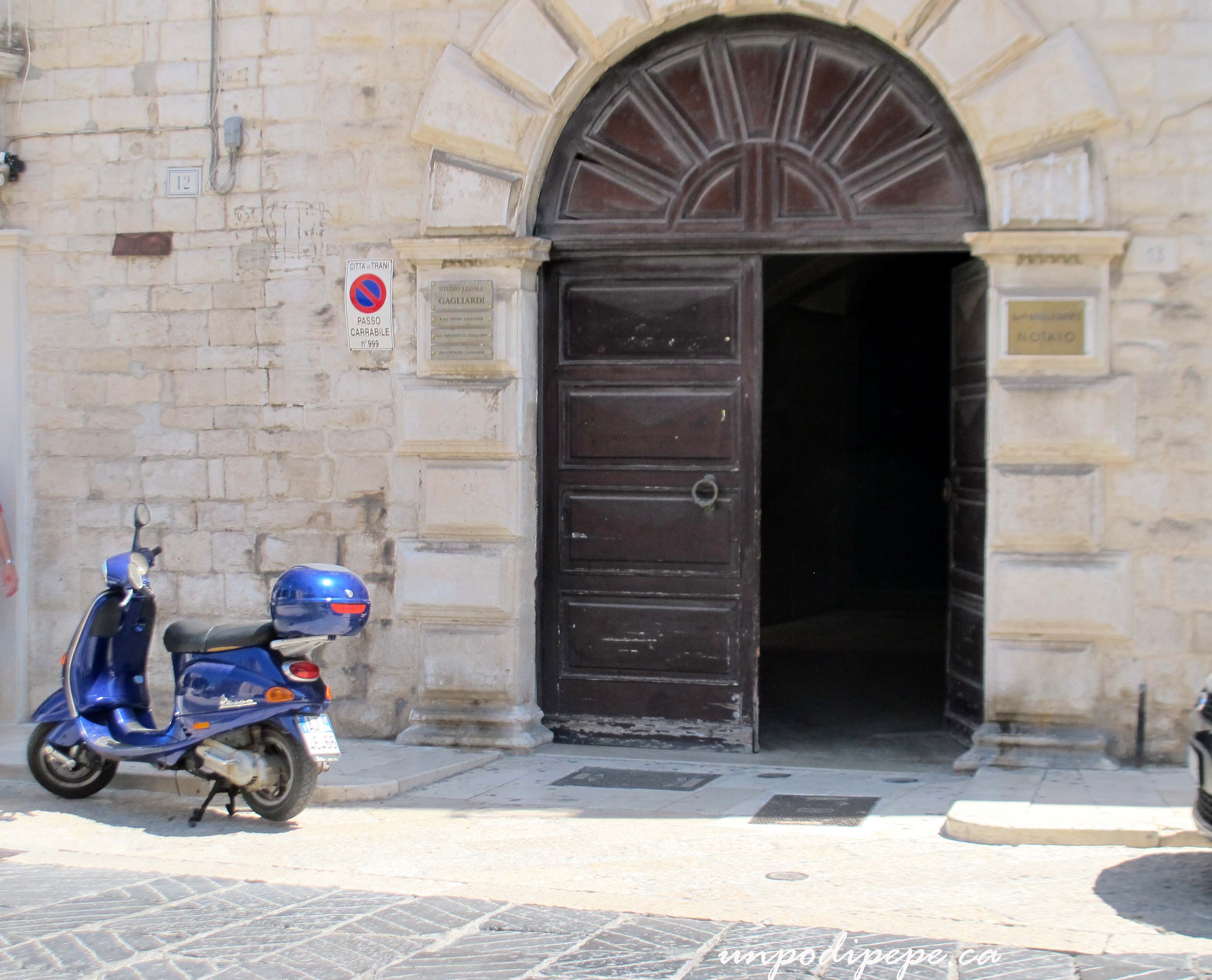
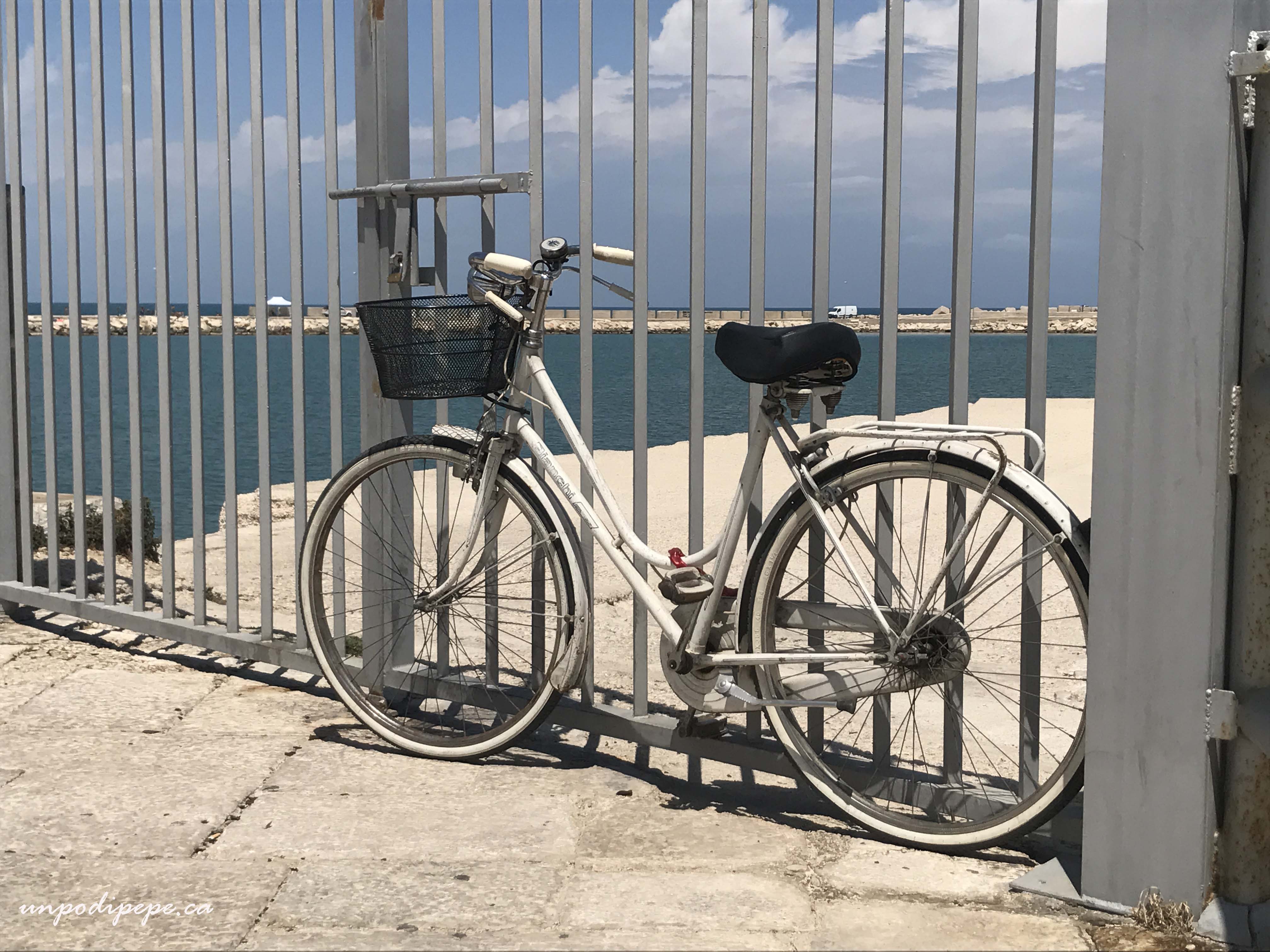
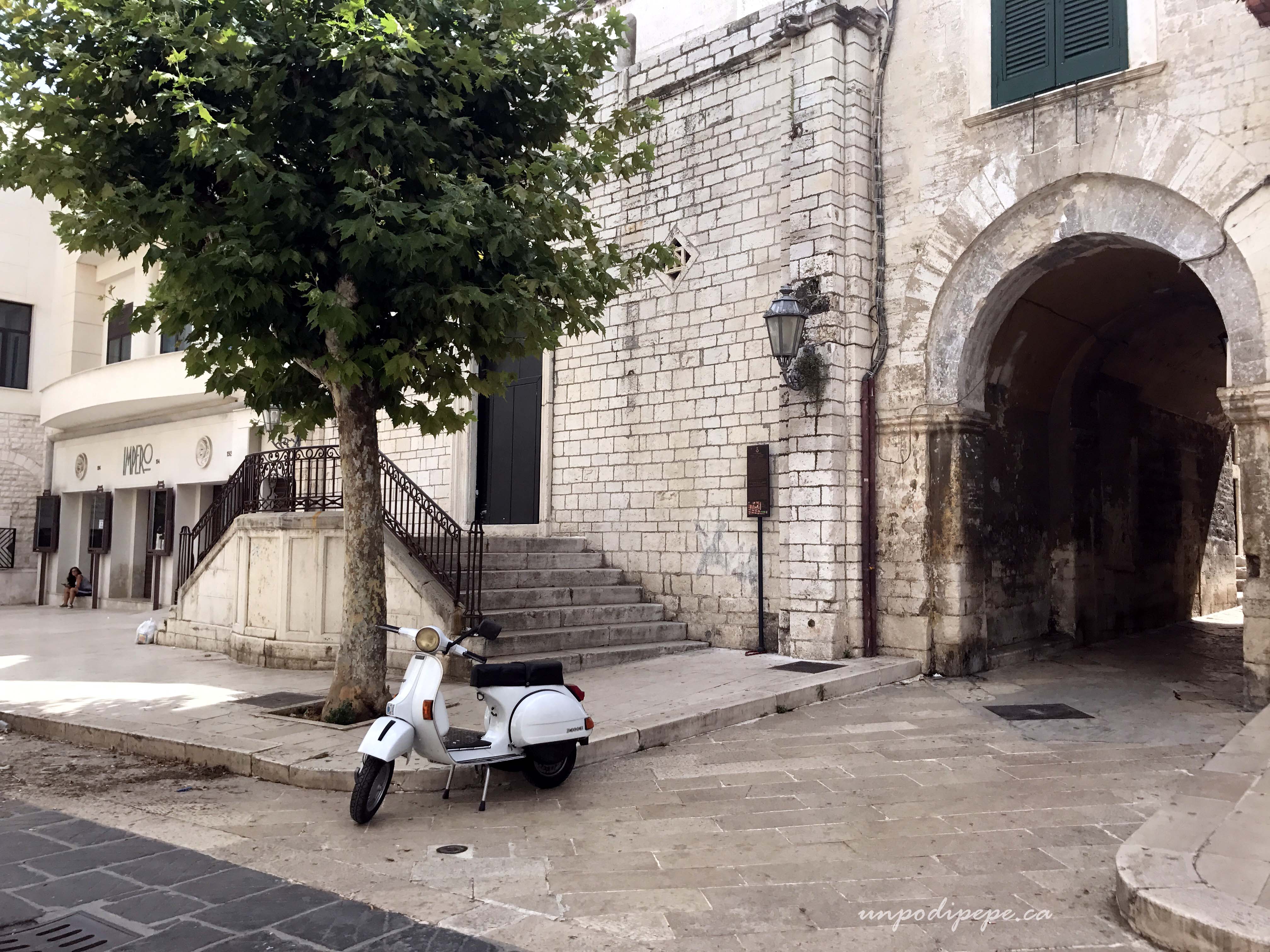
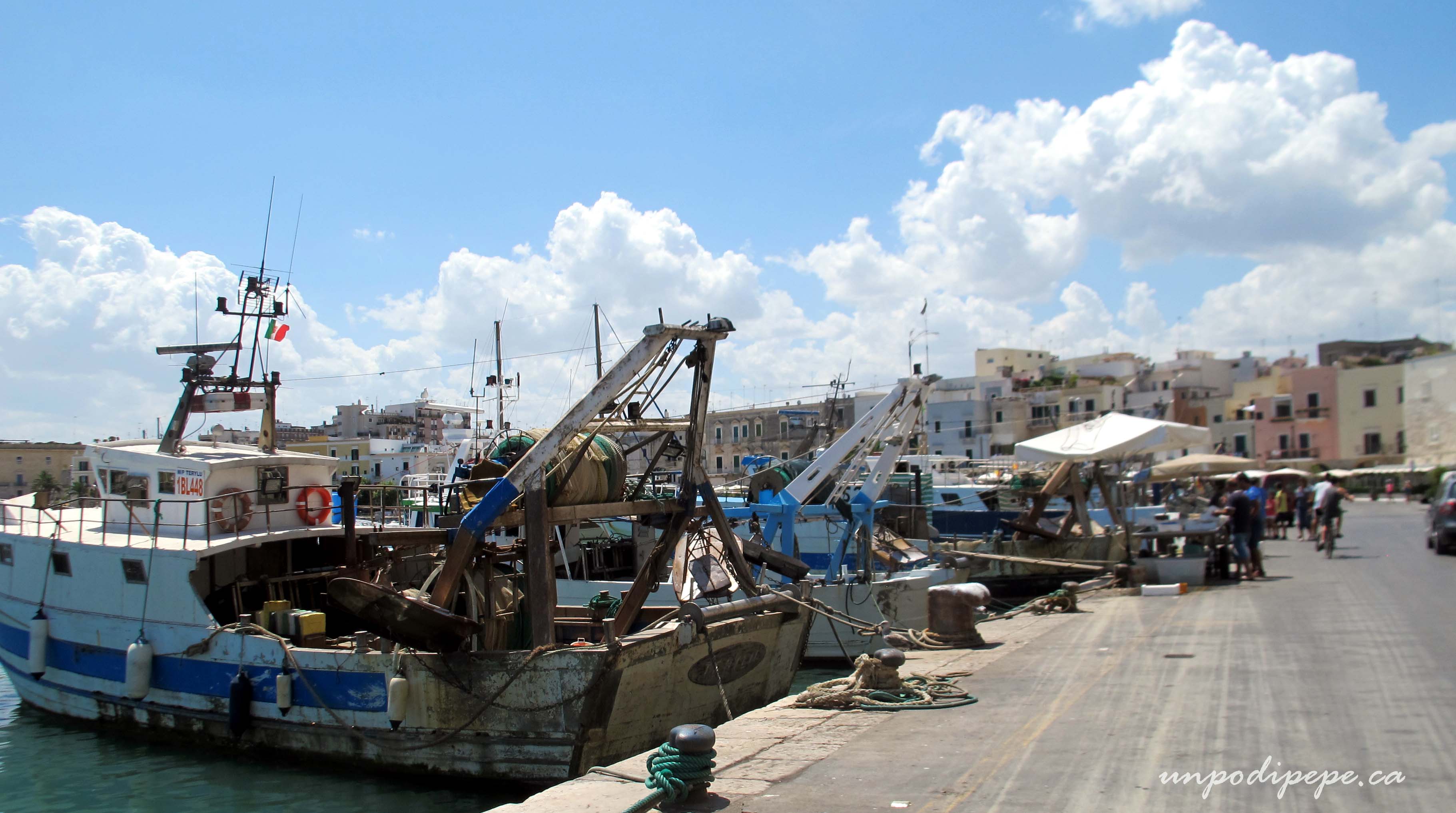
In August I took a lovely daytrip to Trani, a quiet, sun drenched fishing port on the Adriatic.  While walking through town and the port in the late morning/early afternoon there were times I felt like I was walking through a movie set! One of the reasons is because of all the macchine d’epoca or vintage cars that I saw, as well as motorini and biciclette. I have compiled a few photos of these vehicles in this post and, for lack of a better title, I am calling it Ruote di Trani or Wheels of Trani.

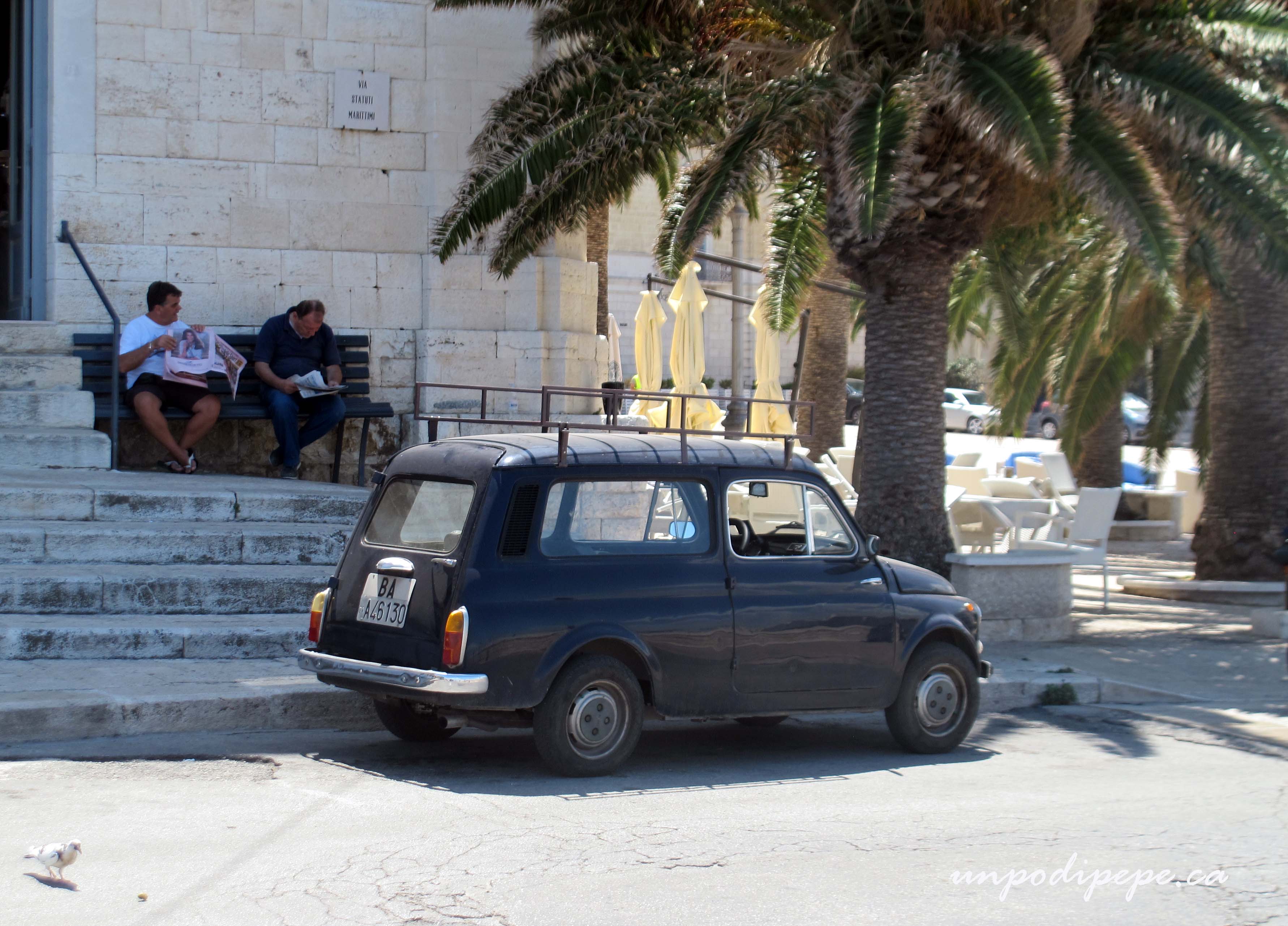
I was disappointed because I did not take any photos of my favourite macchina, as every time I saw a Cinquecento, a Fiat 500, it was speeding past me too quick to snap a photo! I have a bit of an obsession with them-but only the old ones.  It turns out I actually did photograph one though! 

This is a Fiat Cinquecento Giardiniera, also known as the 500K or the Autobianchi Giardiniera.  It is basically a Cinquecento station wagon, made from 1960-1977.  If you think I am joking, cover the back half of the car, and you will see that the front half is totally 500ish!  In 1970, production was transferred to Autobianchi, a Fiat subsidiary in Monza.  Later models were branded as Autobianchi rather than Fiat. Notice this one has porte di suicidio or suicide doors, which are hinged at the rear instead of the front.  They make it easier to get in and out of the car, but are a safety hazard at higher speeds.  I wrote about porte di suicidio here. Notice the bird photobomb in the corner!

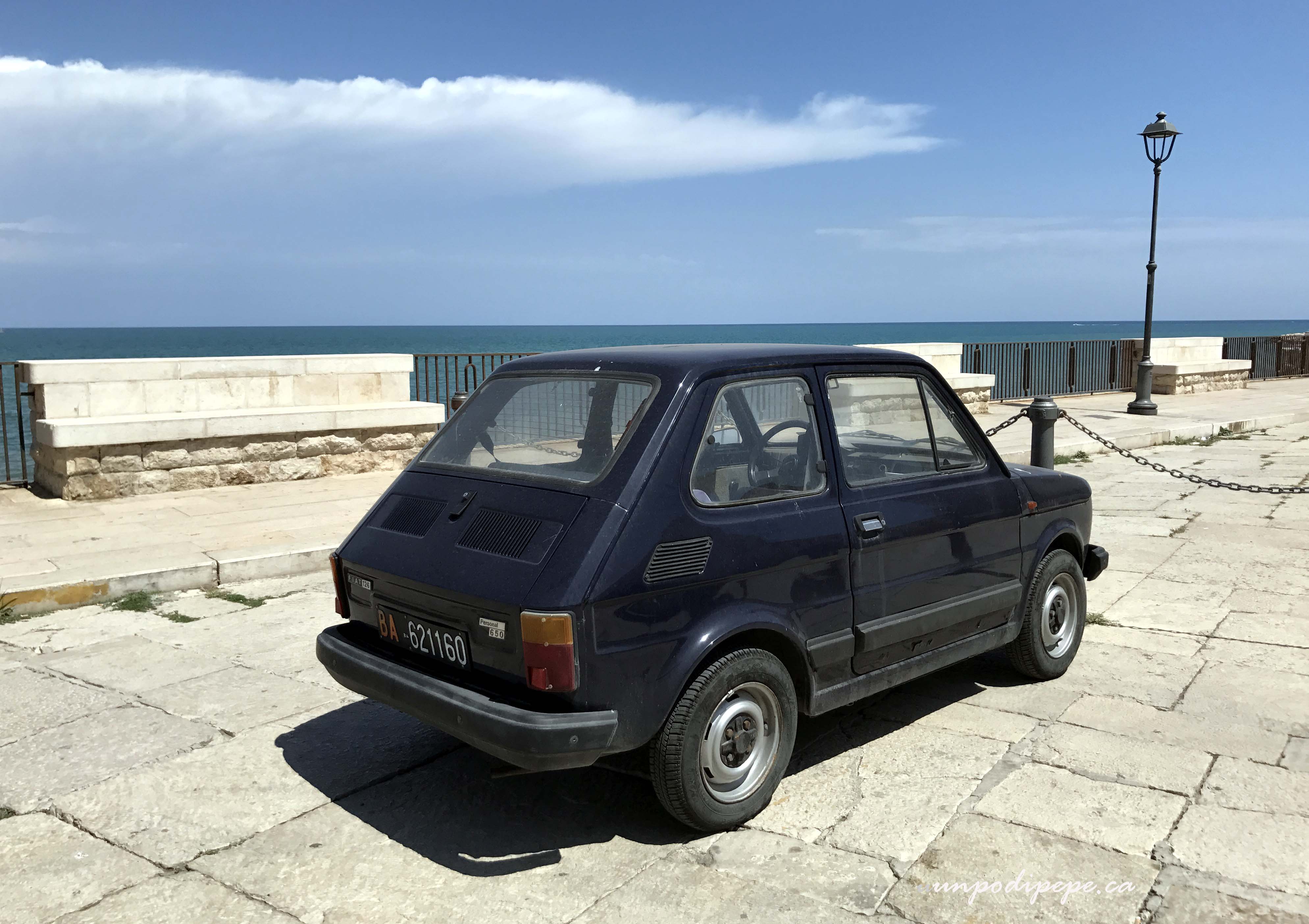
The Centoventisei or Fiat 126 was a more modern model to replace the Cinquecento in 1973.  The 126 never became as popular.  My Zio used to have one that was a Robin’s egg blue.  It were very popular in the former eastern bloc countries because of its fuel efficiency.  Later models were made in Poland as the Polski 126p.

This ‘vintage’ photo of a white Fiat 126 was taken by me on my previous visit to Trani, in 1994.  My Zio had one just like this.  I think it even had the same dented front.  Thankfully, not much has changed to the look of Trani since 1994!

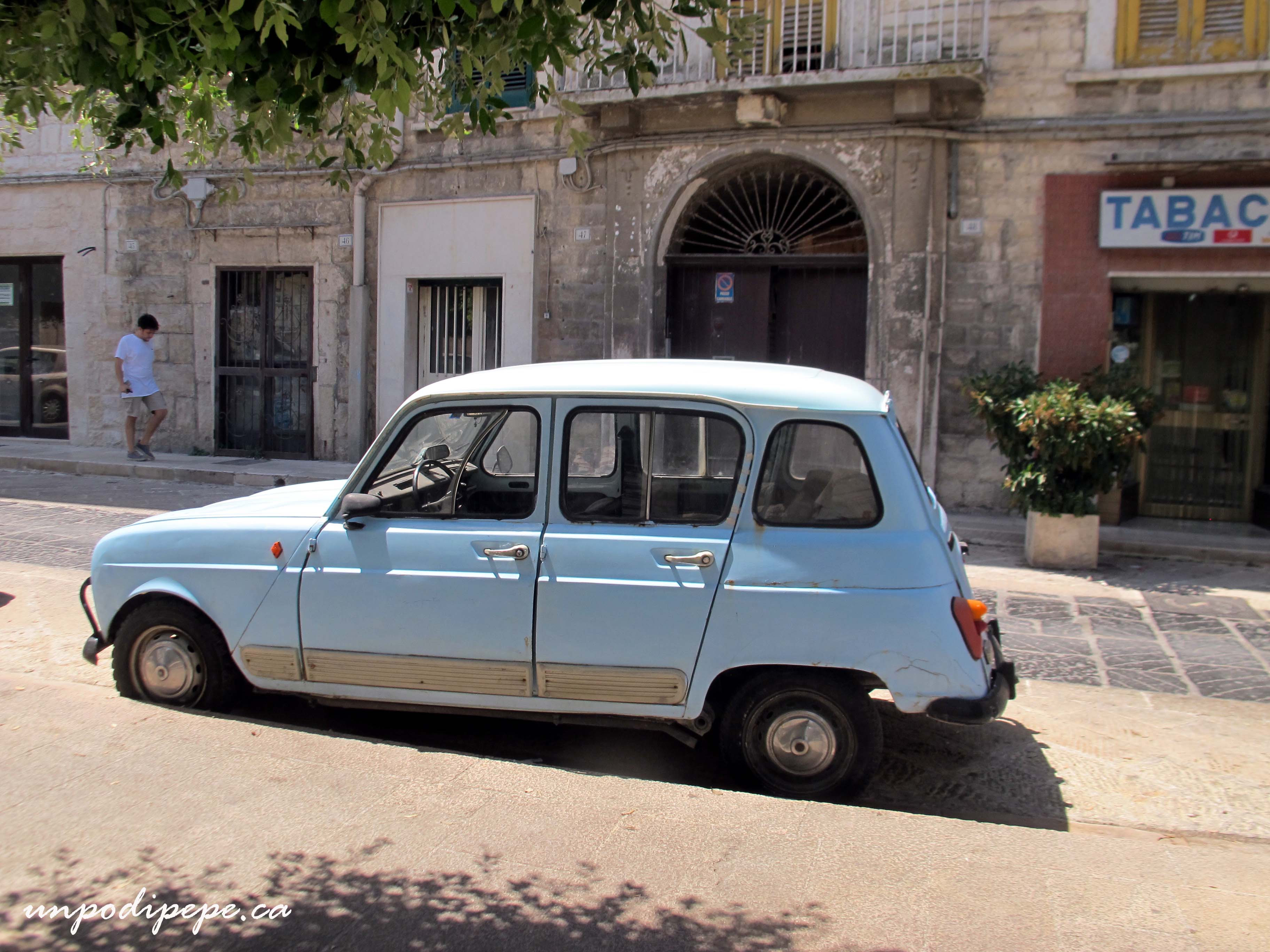
This photo of a late 1960’s/early 1970’s Renault 4 GTL on the street in front of old buildings looks like it was taken 50 years ago rather than just 2 months ago!

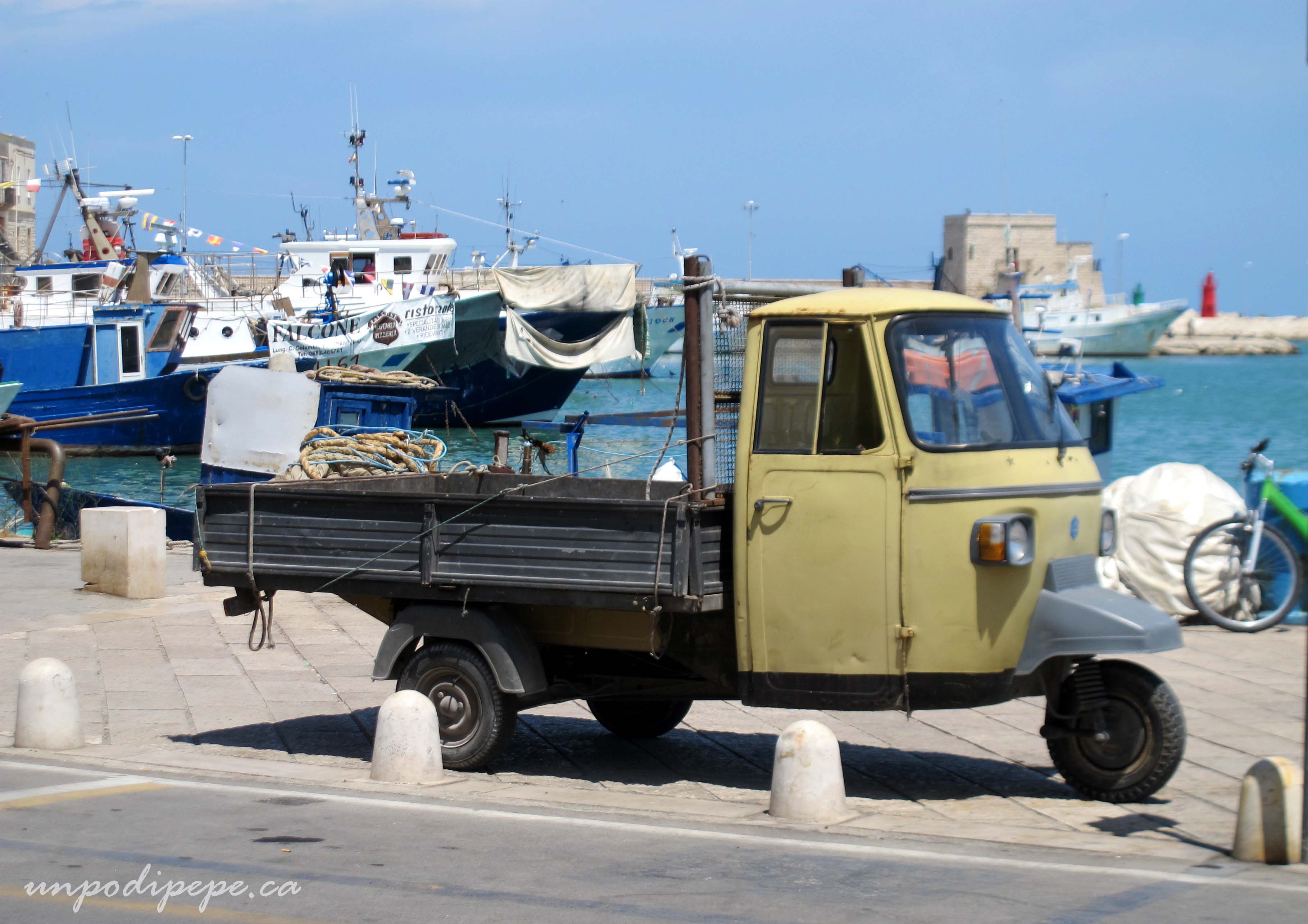
I spotted this Piaggio Ape (AH·peh) 3 wheeled vehicle at the port.  Piaggio also makes the Vespa motorino.  An Ape is basically a Vespa with 2 wheels at the back supporting a flatbed.  Piaggio started making the Ape in 1948 to fill the post-war need for inexpensive light commercial transport.  Ape means bee.  I thought it was named for the cute buzzing sound it makes while driving, but it could also be referring to the work ethic of this ‘worker bee’ hardworking vehicle.  Api make great delivery vehicles for narrow cobblestone streets and alleyways.

I hope you enjoyed your phototour of Trani’s ruote. Grazie mille to Franco for helping me identify them! Ciao, Cristina

Share this:

  • Share on Facebook (Opens in new window) Facebook
  • Share on Pinterest (Opens in new window) Pinterest
  • Share on X (Opens in new window) X
  • Email a link to a friend (Opens in new window) Email
  • Share on WhatsApp (Opens in new window) WhatsApp
Like Loading...

Trani

30 Saturday Sep 2017

Posted by Un po' di pepe in Architecture, Italia, Photography, Puglia, Travel

≈ 24 Comments

Tags

Diomedes, Italy travel tips, Puglia, Romanico Pugliese, San Nicola Pellegrino, Southern Italy, Trani, UNESCO World Heritage Sites

A crescent shaped port, fishermen selling their catch on the waterfront, a timeless, picturesque centro storico that looks like it could be a movie set, a castle, and a stunning limestone Romanesque cathedral right at the water’s edge where you expect to find a lighthouse.  These are some of the reasons why Trani is one of my favourite day trips.  It is a beautiful, peaceful, uncrowded fishing port on the Adriatic, between Barletta and Bari.  Trani is on the main ‘Adriatico’ railway line so it is easily accessible without a car.

Trani is ancient Tirenum, allegedly founded by Tirenus, son of Diomede.  Trani is famous for issuing the ‘Ordinamenta et consultudo Maris’ in 1063.  This is the oldest surviving maritime law code in the west. The street along the harbor is called ‘Via Statuti Marittimi’.  Trani is also known for Moscato di Trani, figs, almonds and olive oil.

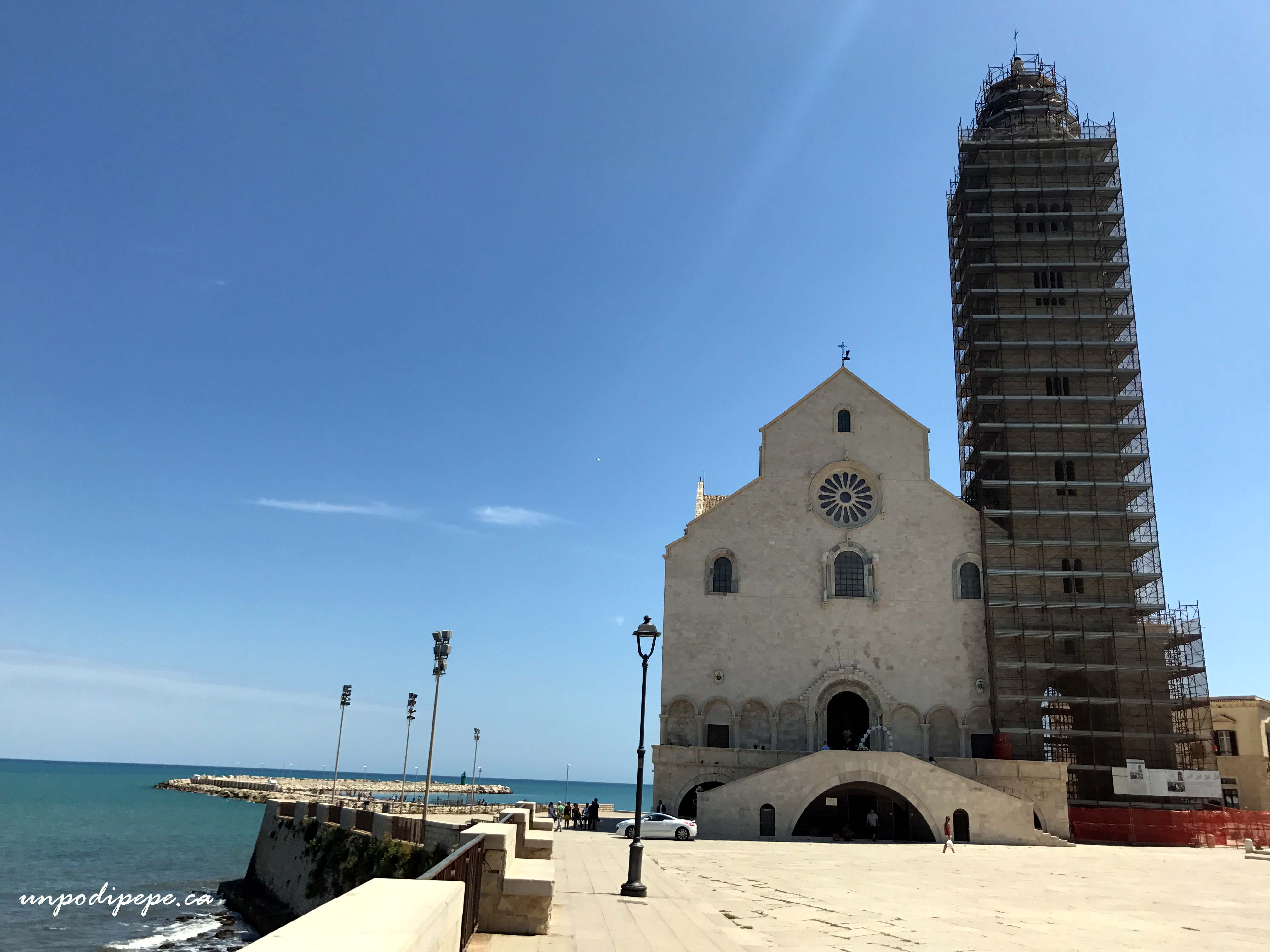
During the rule of Federico Secondo (aka Holy Roman Emperor Frederick II) in the early 13th Century, Trani became an important political center and trading port with the Orient.  Since Trani was on the pilgrimage route to the Holy Land it grew and prospered.  Trani also had a close diplomatic and trading relationship with Venezia.When I got off the train in Trani, I walked about half an hour, straight to the cathedral.  I am a big fan of Romanico Pugliese (Pugliese Romanesque), an 11th-13th Century architectural style unique to Puglia.  Romanico Pugliese includes classic Romanesque features such as tall facades, campanili and rose windows, blended with Byzantine and Islamic architectural details.  In fact, since 2006, the Romanico Pugliese churches in Puglia are on the the UNESCO World Heritage Sites tentative list.  This is the step before becoming a World Heritage Site.The Trani cathedral was built in 1099 out of local tufo, a creamy coloured limestone that almost seems to glow in the sun.  One of the oldest and largest cathedrals in Puglia, it was used as a model for the ones built later. It was named for San Nicola Pellegrino (the Pilgrim), a 19 year old Greek shepherd who died while on pilgrimage in Trani in 1094.  His bones are in the crypt.  Note….this is not the same San Nicola who is buried in Bari and is the inspiration for Santa Claus.  Trani’s cathedral was constructed on layers of history.  It was built over the foundations of a 5th Century Byzantine church, Santa Maria della Scala, which was built over the Roman crypt of San Leucio.  Both of these ‘layers’ are accessible. The beautiful bronze doors are a copy.  The original doors are on display inside.  The 32 panels were sculpted by Barisano di Trani who also did work on the cathedrals in Ravenna and Monreale. The 60m high campanile built in 1239 has square corners and an octagonal spire.  The number of windows increase with each floor. The campanile was being renovated when I was there, so I have included a photo I took in 1994 without the scaffolding.

Trani 1994

Right on the harbour is the Chiesa di Ognissanti, built in the 12th Century by the Knights Templar in the courtyard of their hospital.  Trani was on the route to the Holy Land and the knights had a hospital here for those wounded in the crusades.  It is not open to the public.At the far end of the harbour, the Villa Comunale is a park with benches and a seaside walk.  The breakwater near the Cathedral is a nice place to sit and soak up the sun or go for a swim.

Federico II built the Castello Svevo in 1249.  It has square towers at each corner.  The sea water moat was filled in.  From the 1800’s-1974 the castello was used as a prison. Now it is open to visitors and hosts cultural events.  Admission is €3.

Trani once had southern Italia’s largest Giudecca community or Jewish neighborhood.  It was not a ghetto, as it was not closed off.  There were once 4 synagogues.  The Scolanova Synagogue spent centuries as a church, but in 2006 it was rededicated as a synagogue.

Trani is small enough that you can walk everywhere.  From the Stazione, walk straight out and turn left at Piazza della Repubblica.  There is an info point here.  It is about a half hour walk along quiet streets with beautiful palazzi to the cathedral and port.  Just ask a local for ‘Il Porto’ if you need directions.  Shops are closed from 1-5 pm.

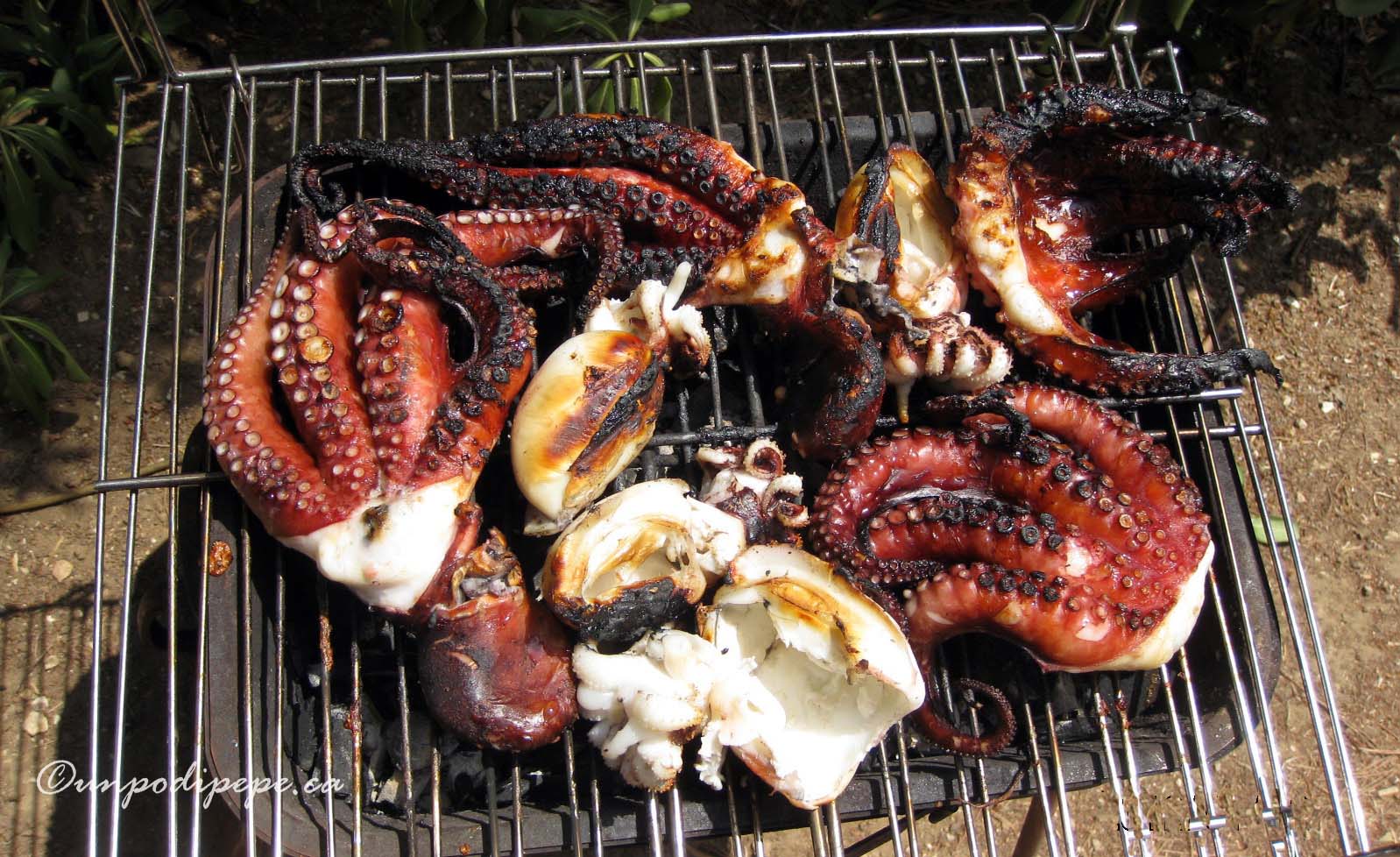
For seafood lovers, the port has many excellent restaurants.  My cousins had given me 3 restaurant recommendations.  It was such a beautiful sunny day I just wanted to sit near the breakwater and enjoy the sea.  I had a mad craving for polipo-octopus.  I ended up getting a take away insalata di polipo and a glass of Falanghina.  It was perfect!

Trani is a great base to stay for exploring several UNESCO World Heritage Sites.  Castel del Monte, Alberobello and Matera are all about 1 hour away.

Ciao e buon viaggio, Cristina

Share this:

  • Share on Facebook (Opens in new window) Facebook
  • Share on Pinterest (Opens in new window) Pinterest
  • Share on X (Opens in new window) X
  • Email a link to a friend (Opens in new window) Email
  • Share on WhatsApp (Opens in new window) WhatsApp
Like Loading...

A Smoky Haze

13 Sunday Aug 2017

Posted by Un po' di pepe in Italia, Travel

≈ 11 Comments

Tags

Granville Island, Incendi, Napoli, Vancouver, Vesuvio

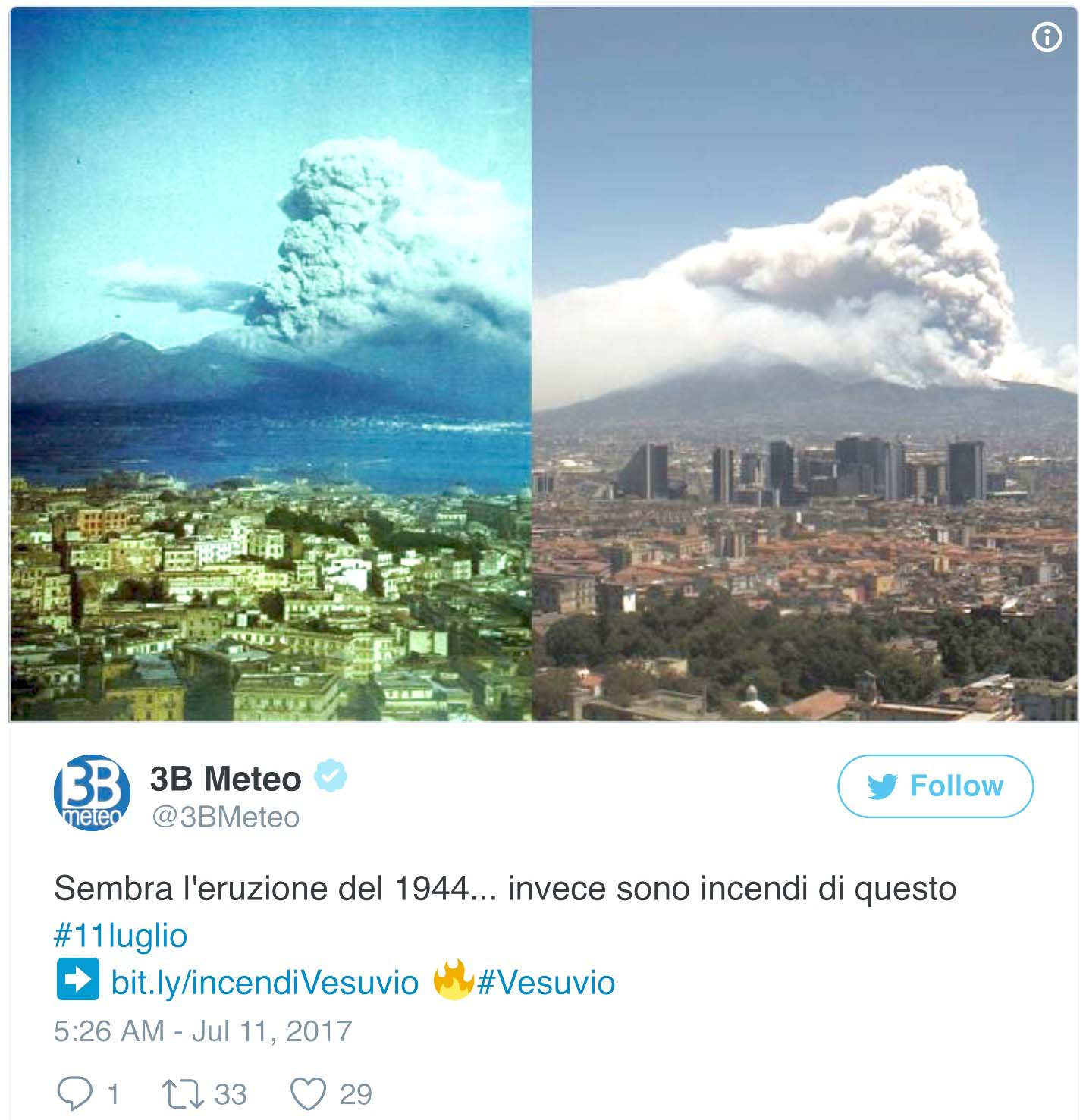
It seems a smoky haze has been following me around-and I am not talking about jet lag!  When I arrived in Napoli on July 11th, the air was grey and smoky.  As we were driving from Capodichino airport, my cugino said ‘è il fumo da Vesuvio’.  I looked over at the imposing volcano and the crater was engulfed in smoke!  I immediately thought the worst and started to panic and wonder why the 3,000,000 people living in the area were not being evacuated!  Then it was clarified…..the smoke from Vesuvio was from incendi, wildfires burning on the slopes of the volcano. The cause is thought to be intentional, although no one is really sure.  I am not even going to discuss some of the ridiculous rumours I heard. The hot weather, dry soil and wind is not helping.  This is really awful, although looking on the bright side, it is less awful than a volcanic eruption in an area with a population of 3,000,000.

July 11th tweet from 3B Meteo comparing photo of 1944 Vesuvio eruption and today’s fires!

A month later, the air in Napoli was still an atmospheric gray zone.  The day I flew home was also slightly windy.  This caused my flight to be delayed and my connecting flight in Munich left without me.  Mannaggia! I was not impressed.

A day late, I finally arrived home, and was surprised to find the air conditions to be the same smoky haze I left in Napoli!  Was this gray blanket of fog following me? To top it all off, the mountains were missing from the landscape!  It had been this way for 2 weeks due to over 150 wildfires burning in the interior of British Columbia.  The air was so smoky and gray the mountains were not visible.

Yesterday I was at Granville Island. If you are not familiar with it, this photo may look normal. There is something missing…..some very large mountains in the background!

Today the mountains were slightly visible.  Luckily it is just starting to rain now, so that will improve our air quality, and hopefully help to put out the fires.  Speriamo che piove anche a Napoli!

I wrote about my internet issues and difficulty keeping up with blogging in my last post Chiuso per Ferie.  Now that I am home, I will be catching up on reading and soon I will be publishing posts from my travels.

A presto, Cristina

Share this:

  • Share on Facebook (Opens in new window) Facebook
  • Share on Pinterest (Opens in new window) Pinterest
  • Share on X (Opens in new window) X
  • Email a link to a friend (Opens in new window) Email
  • Share on WhatsApp (Opens in new window) WhatsApp
Like Loading...

Campeggio sul Gargano

29 Wednesday Mar 2017

Posted by Un po' di pepe in Italia, Photography, Puglia, Travel

≈ 13 Comments

Tags

Arco San Felice, Baia delle Zagare, Gargano campsites, Il Gargano, Isole Tremiti, Italy travel tips, Mattinata, Parco Nazionale del Gargano, Puglia, Trabucchi del Gargano, Vieste, Vignanotica

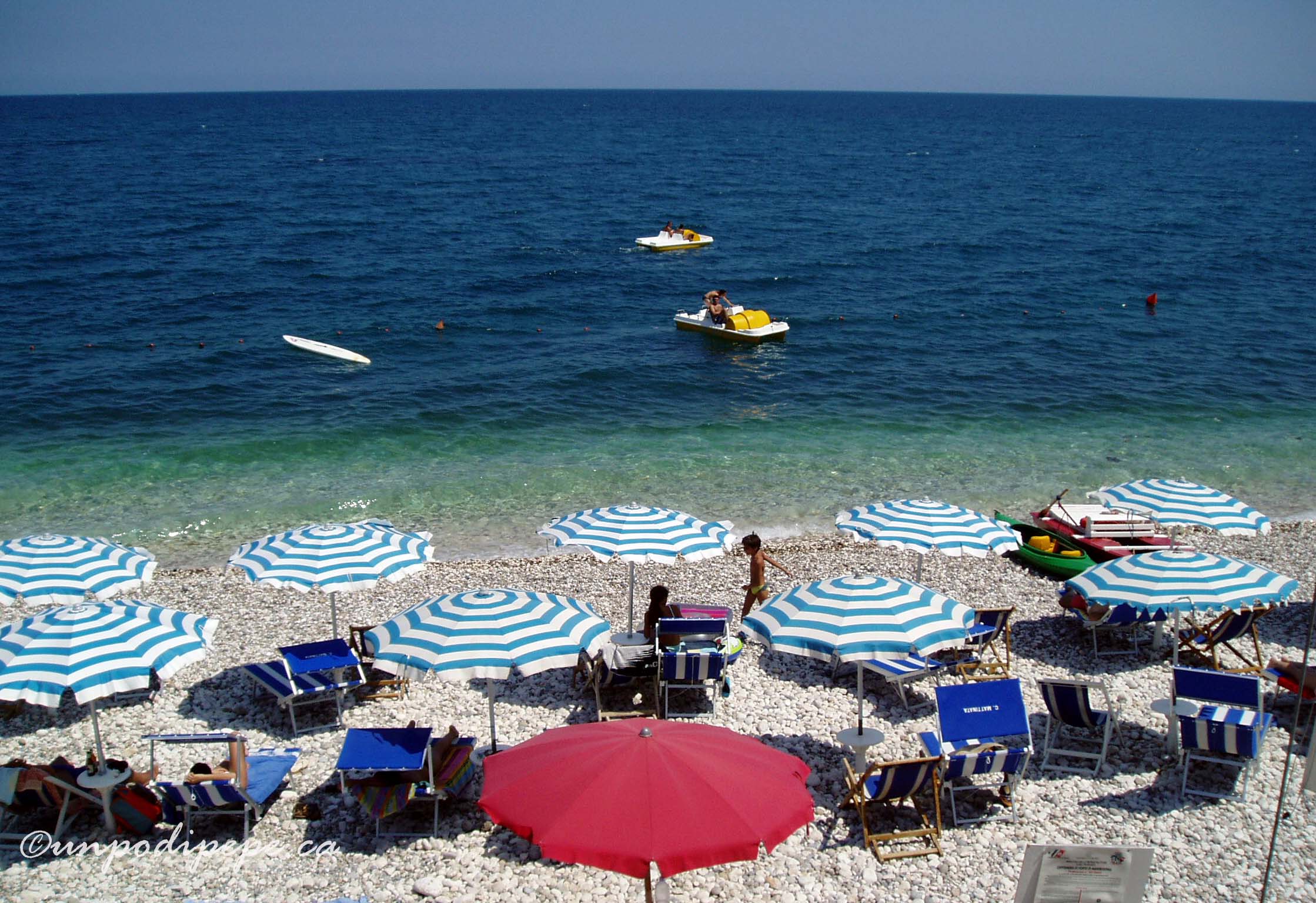
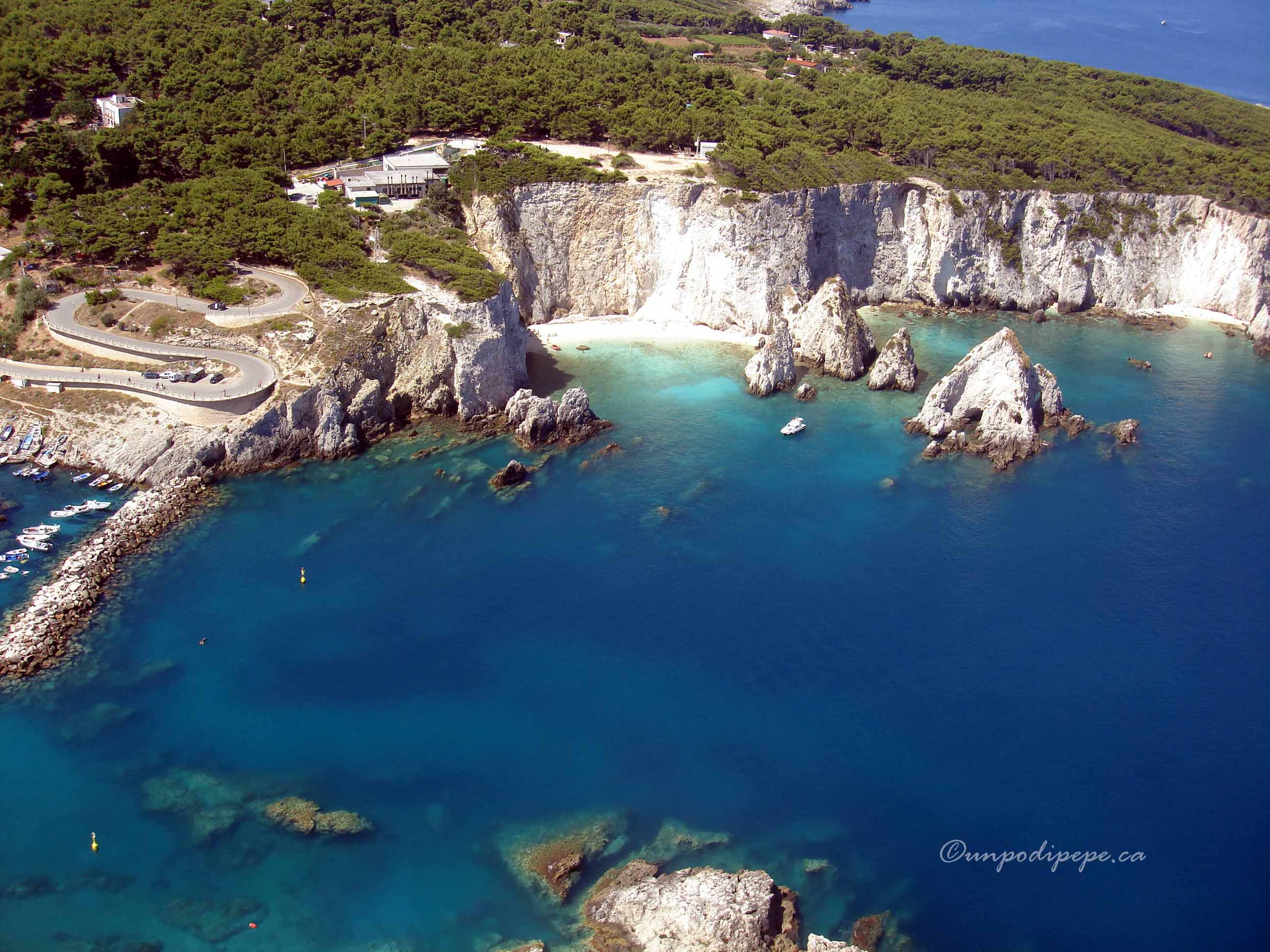
Dovè la primavera?  It was a long, cold winter, with far too much snow.  Now la pioggia has set in.  I am dreaming about il caldo, il sole e la spiaggia-warm weather, sunshine and the beach! I have had the opportunity over the last few years, to spend many weekends at different sites in the Gargano (gar·GAH·noh) with my cugini and their camper.  I would love to be there now!  To get ready for summer and welcome warmer weather, I am sharing my favourite scatti from my Gargano travels.

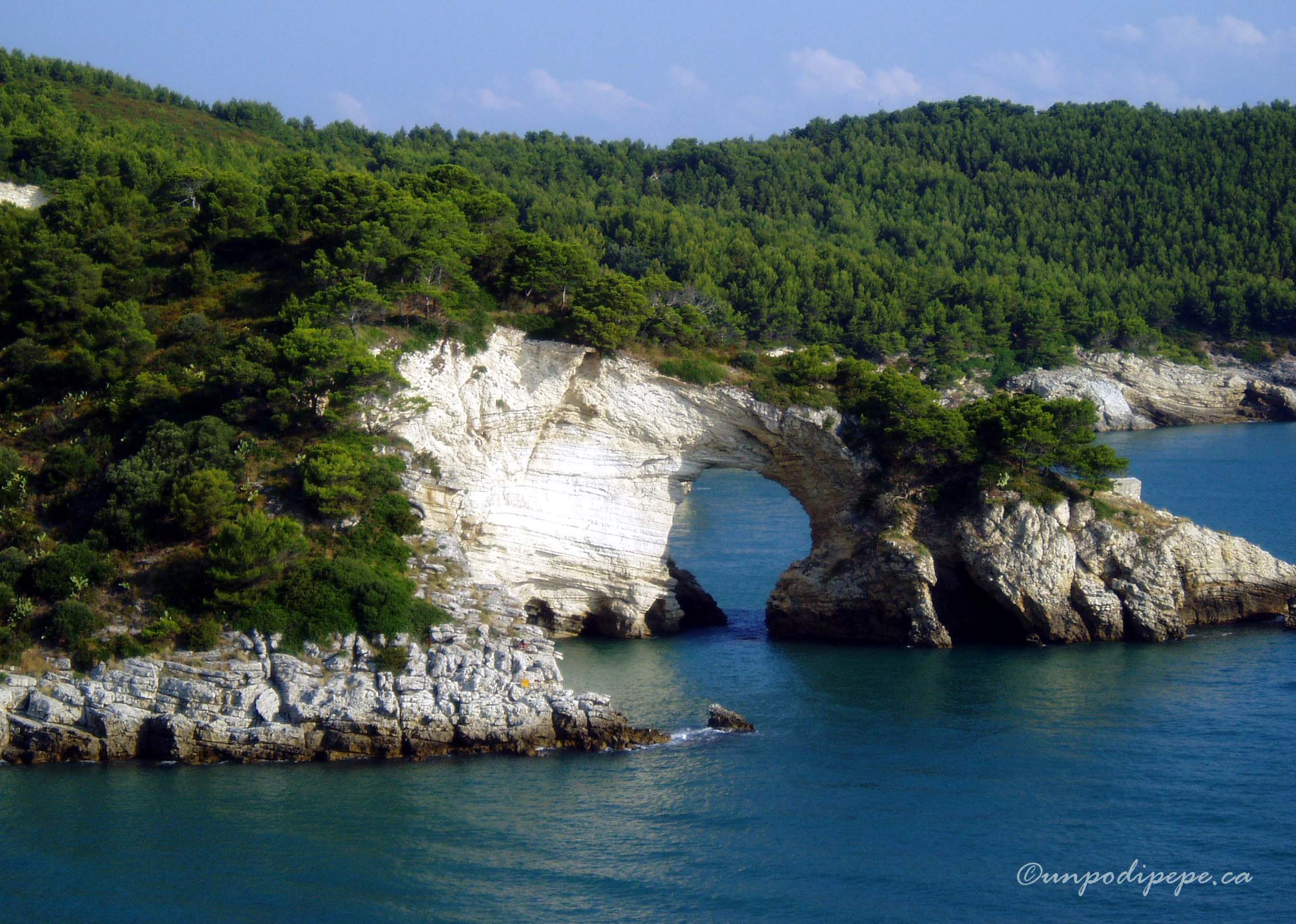
II Arco San Felice

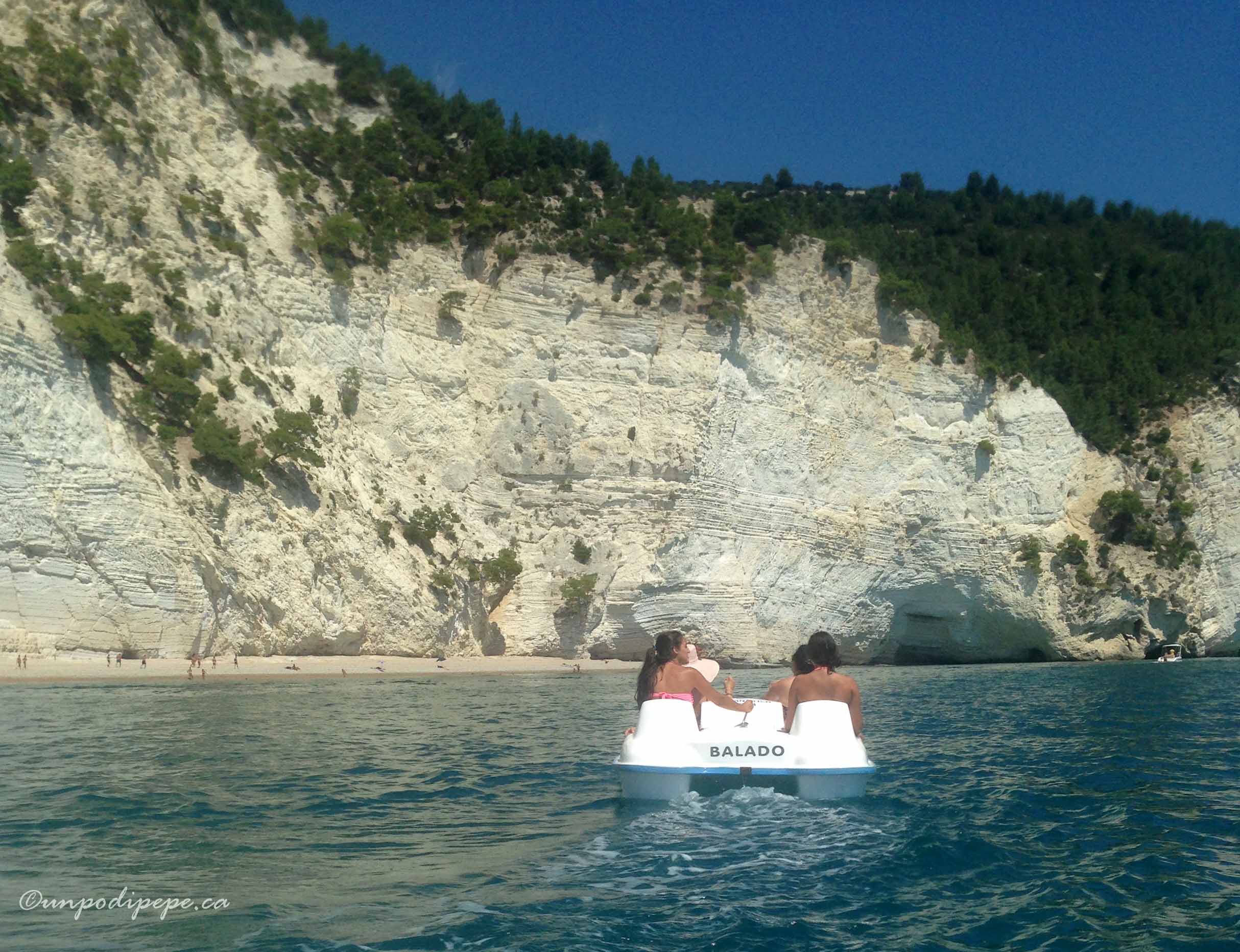
Il Promontorio del Gargano is the promontory sticking out above ‘il tacco’, the heel of Italia.  You can also think of it as la caviglia-the ankle spur of Italia.  One of the most beautiful areas on earth, Il Gargano has unique flora and fauna.  Biodiversity wise the area is more like an island-an island surrounded on 3 sides by the Adriatico with 1 side attached to Italia.  Most of the promontorio is a protected area and marine reserve, Il Parco Nazionale del Gargano, which includes le Isole Tremiti and the ancient Foresta Umbra. Luckily this has prevented the area from being overdeveloped with large multinational hotels and resorts.

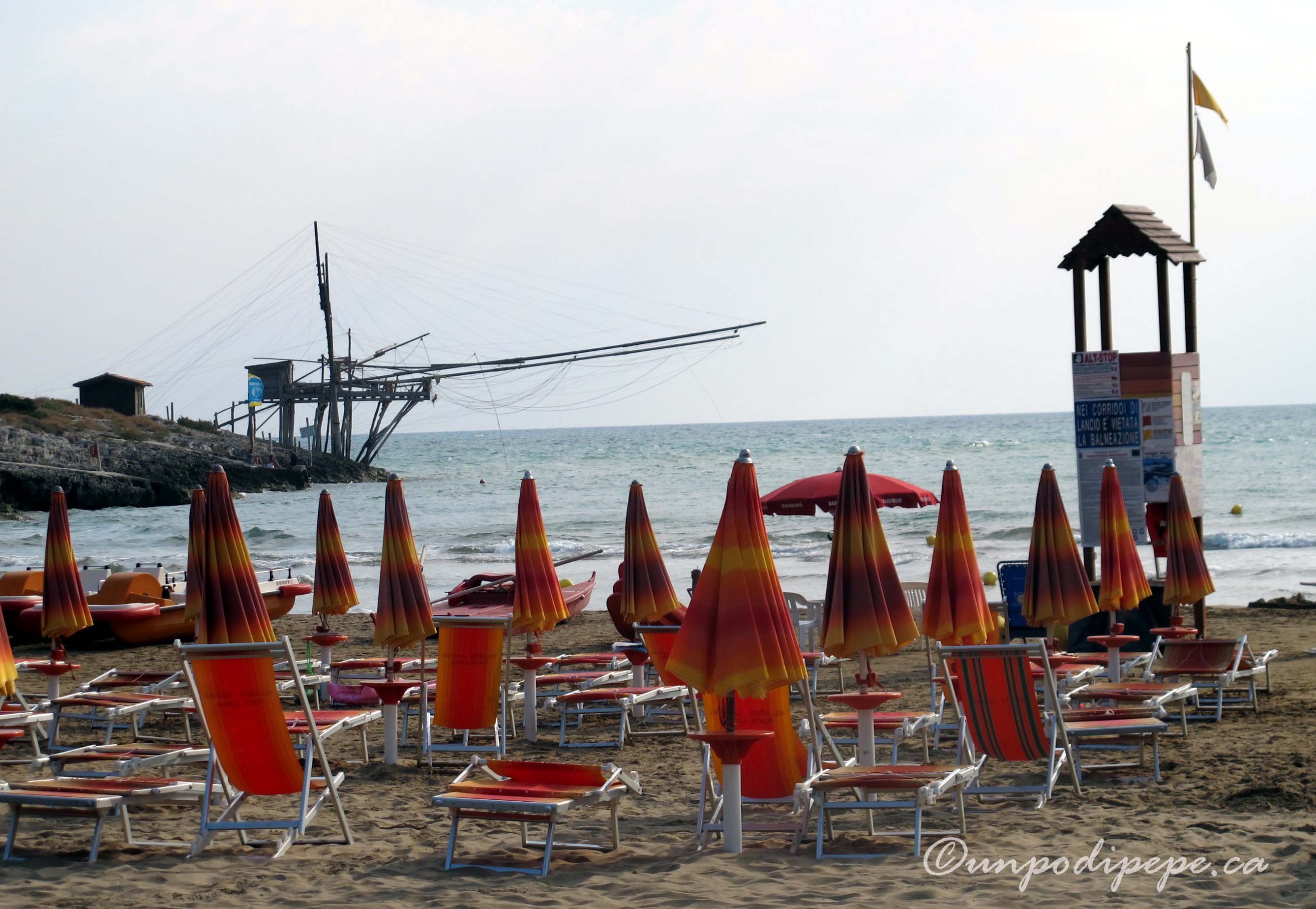
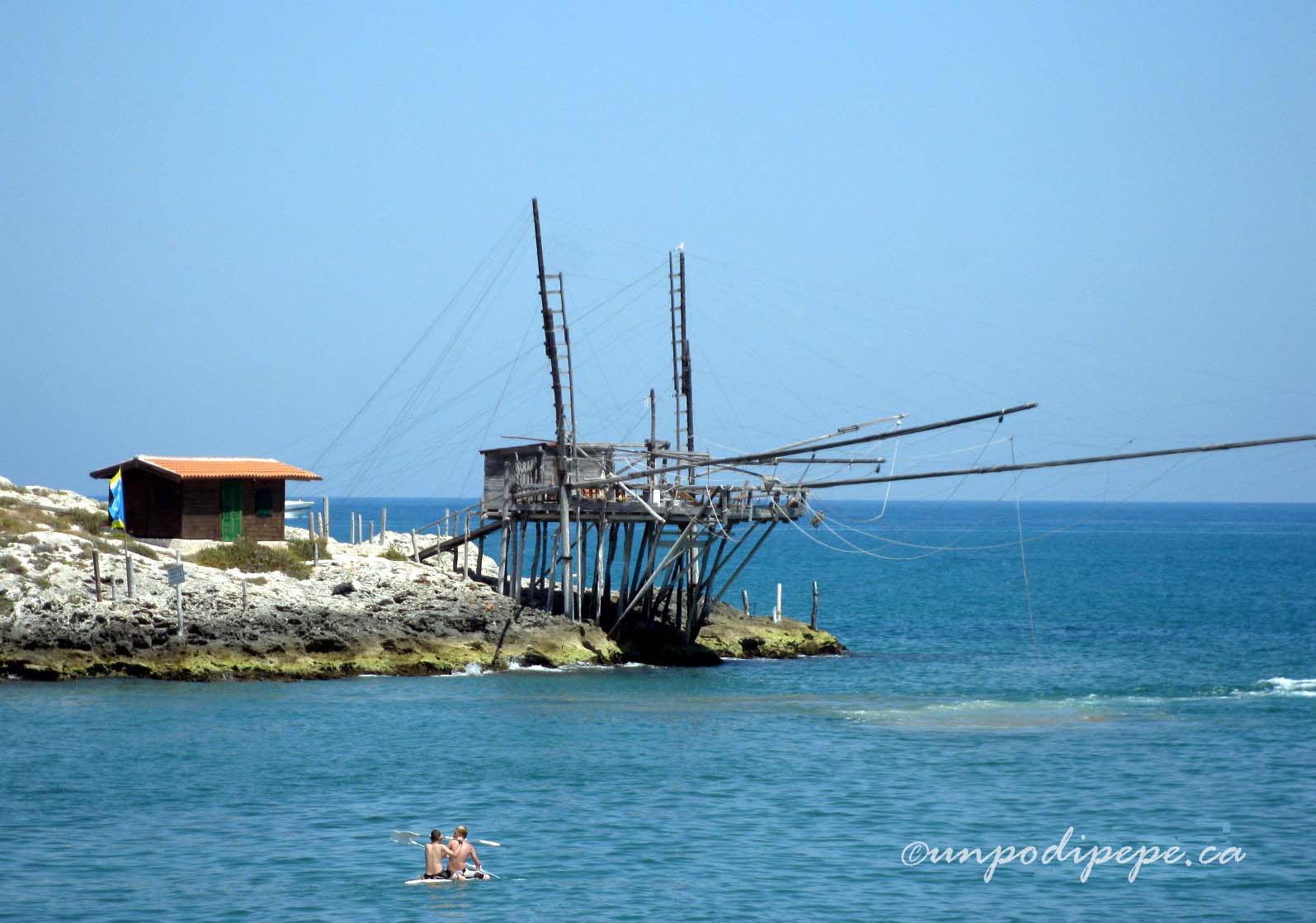
Il Gargano is famous for picchi (woodpeckers) and many other birds, 300 varieties of orchids, almonds and olives.  There are also endless ancient hillside olive groves, pine forests, sea grotte, limestone cliffs, rocky shores, crystalline water and fresh seafood.  The coast between Peschici and Vieste has 13 working trabucchi, fascinating ancient fishing contraptions which I wrote about in this post.

Trabucco Punta Lunga

The winding road around the Gargano, SS 89 from Foggia, has sharp turns and viste mozzafiato (VIS·teh moz·zah·FYAH·toh)-breathtaking views. One of my favourite viewpoints is La Baia delle Zagare. Here you can see the clifftop 4 star resort of the same name, and its private spiaggia.  There is a glass elevator built into the cliff-something I have to see for myself one of these days!

Baia delle Zagare

View of Vieste from the SS89

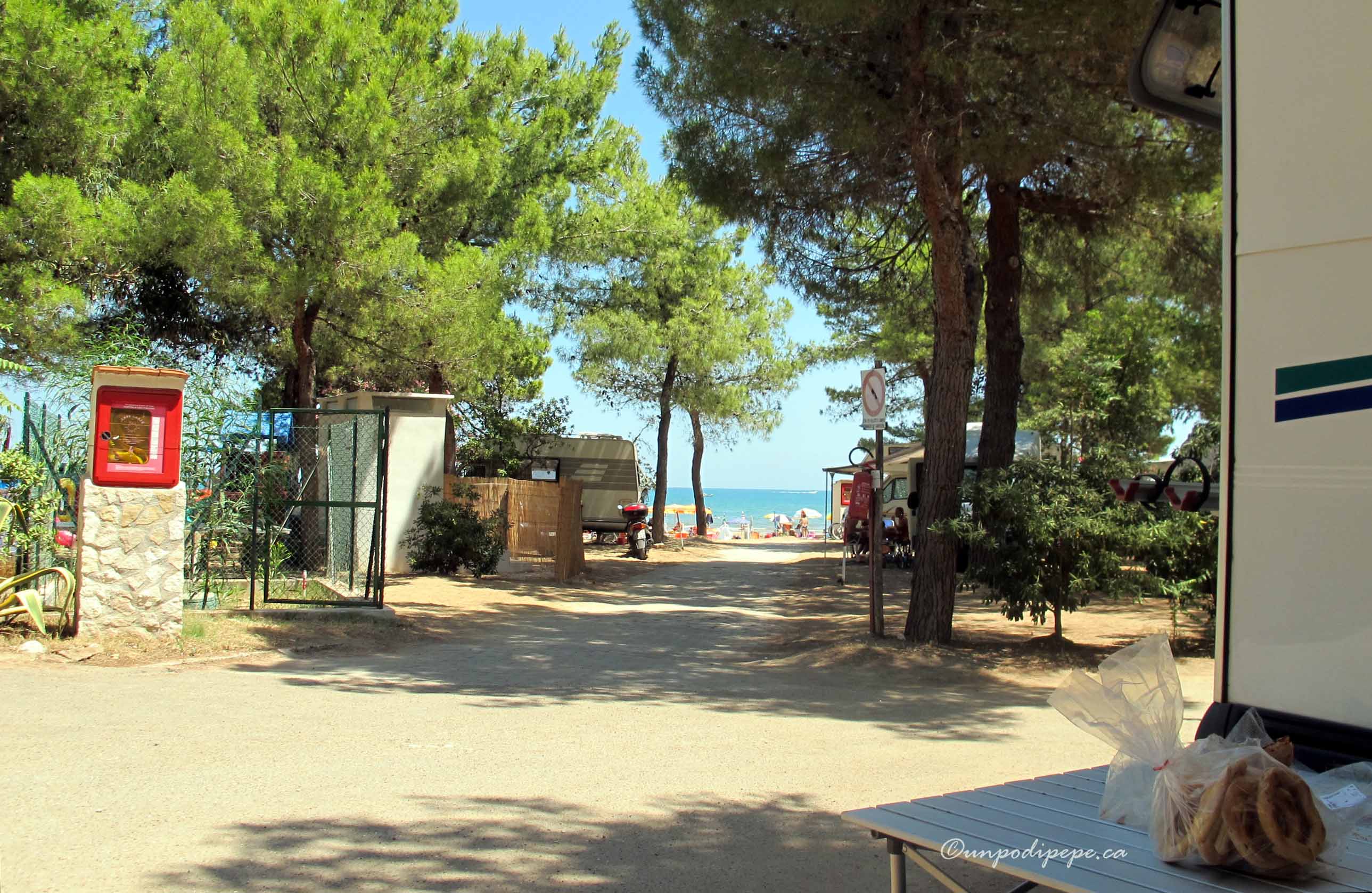
Il Gargano is full of campsites, inexpensive accommodation and B & B’s.  The campeggi e villaggi turistici -campsites and tourist villages, are ben attrezzati (well-equipped). You can camp with a camper and all the accessories, or just a vehicle and a tent.  There are also villette-little cabins that can be rented, but you have to bring your own sheets and towels, so these are mostly used by locals.  Some campsites even have a small hotel attached. This website (in Italiano) lists Gargano campsites. I have stayed right by the water and in an olive grove near Mattinata, and had a view of the beach near Vieste.

View from the camper, Punta Lunga, Vieste

Our setup is always comfortable and rustic, but some of the things you see at the campeggi are hard to believe. Families set up for the whole summer, with those working joining in on the weekends. I have seen TV with satellite, ceiling fans, generators and portable kitchen tents. Last year at Camping degli Ulivi in Mattinata, the family across from us had brought 5 kinds of brooms!

Ancient olive trees provide an interesting handwashing station, and a place to store 5 different brooms at Camping degli Ulivi

No yucky dehydrated camping food is found here! Fresh seafood is available from the mobile fishmonger il pescivendolo (pesh·ee·ven·DOH·loh) driving around to the different campsites. At Villaggio Camping Punta Lunga, we walked 2 km to Vieste to il pescivendolo along the amazing clifftop trail.

View from the 2km clifftop trail to Vieste

Vignanotica is between Mattinata and Pugnochiuso, closer to Pugnochiuso. It is surrounded by a wall of limestone cliffs and is only accessible by walking down the steep hill. Inaccessibility prevents development on the spiaggia. Parking is available in an olive grove, right under the olive trees for €7 and there is a shuttle down to the beach. Vignanotica can be crowded on Sundays in the summer. There is a small bar on the beach. Vignanotica is in sun until about 2pm, then it is in full shade from the cliffs. Some of the Gargano beaches, including Vignanotica, Mattinata and l’Isole Tremiti are rocky, so water shoes are needed to walk in the water.

Vignanotica. The tiny people walking on the beach provide scale for the limestone cliffs.

Most of the tourists visiting the Gargano area are Italian, especially in the summer.  Many Germans bring their campers too, but you do not meet a lot of North Americans here.  Il Gargano is the place to visit if you want to improve your Italiano.The closest major airport for Il Gargano is Bari. The airport in Foggia sometimes has flights to and from Milano, but usually it just has Alidaunia helicopter service to le Isole Tremiti, San Giovanni Rotondo, Vieste and Peschici. It is difficult to get around the Gargano without a car unless you have lots of time. The SS 89 from Foggia is the major road. On the way, be sure to stop and visit Santa Maria di Siponto near Manfredonia. There is no rail service after Foggia, except a local train from San Severo to Peschici. Ferrovie del Gargano buses outside the Foggia stazione leave for towns in the Gargano, but they are not frequent . Parkinbici is a bikesharing service between Gargano towns. For visitors, a weekly card is € 20 and weekend € 12.

Flying into San Domino by helicopter

As the Gargano website says, visit il Gargano ‘per una vacanza tra natura, mare e cultura’…for a holiday among nature, sea and culture!  Buon Viaggio, Cristina

Share this:

  • Share on Facebook (Opens in new window) Facebook
  • Share on Pinterest (Opens in new window) Pinterest
  • Share on X (Opens in new window) X
  • Email a link to a friend (Opens in new window) Email
  • Share on WhatsApp (Opens in new window) WhatsApp
Like Loading...

Palazzo Massimo alle Terme, Roma

16 Monday Jan 2017

Posted by Un po' di pepe in Art, Culture, Italia, Roma, Travel

≈ 15 Comments

Tags

Augustan Villa of the Farnesina, Musei Nazionale Romano, Palazzo Massimo alle Terme, Roma, Villa Livia

giardinovillaliviaOne of the best museums in Roma is nascosto in piena vista. Hidden in plain sight near Stazione Termini, Palazzo Massimo alle Terme contains one of the most important collections of classical art.  It is right across the street from Stazione Termini, visible from the bus loop on the way to Piazza dei Cinquecento. The first time I visited Palazzo Massimo was in 2006 when my friend who lives in Roma recommended it. There were only about 10 other people in the building!palazzomassimo

When I was in Roma this summer, it was too hot to be out in the afternoon, so I decided to visit the museum. This turned out to be a great idea, since the top floor with the mosaics and detached frescos is downright cold!  Brrrr!  It was so refreshing! There were more than 10 people in the museum this time, but I still felt like I almost had the place to myself.

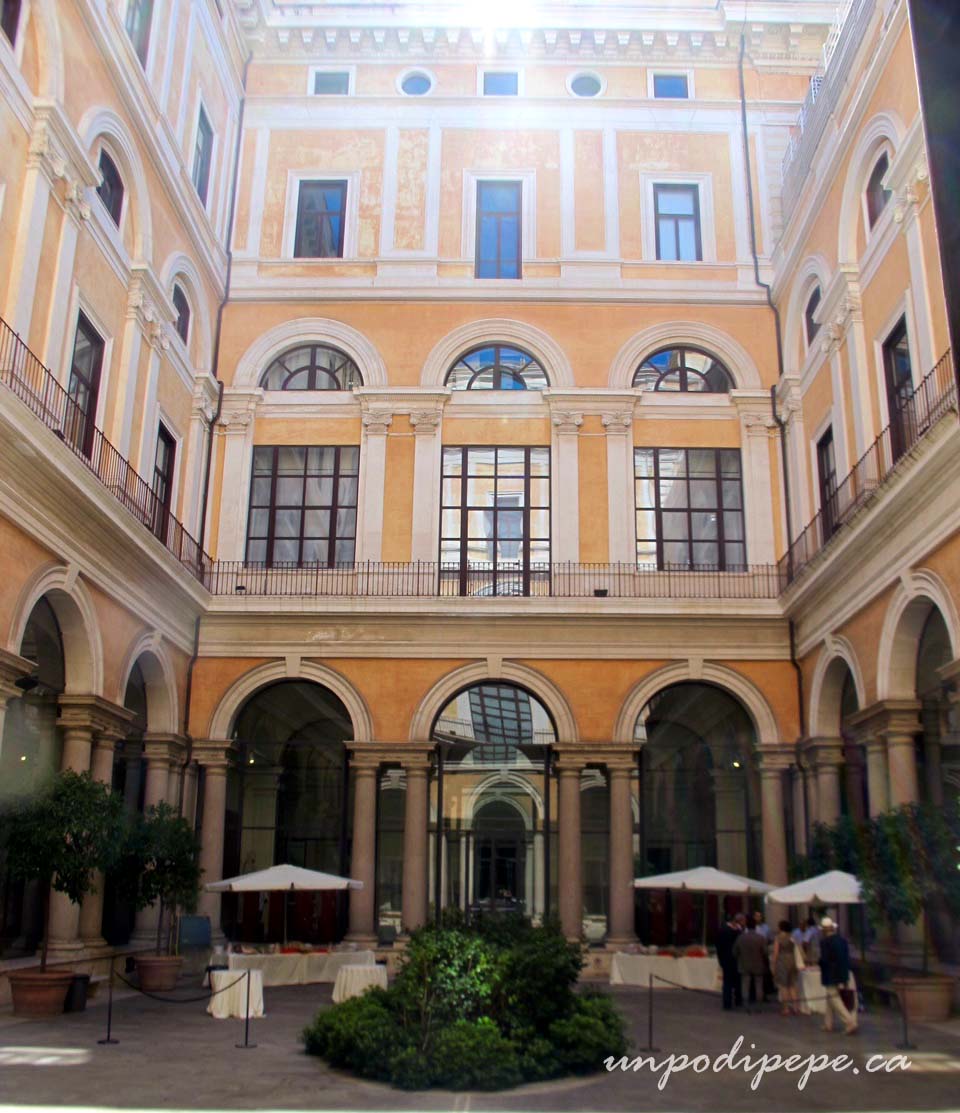
Built by Principe Massimiliano Massimo for the Jesuit Collegio Romano, the Palazzo became the first Liceo (high school) in Roma in 1871. Except for a brief period as a WWII military hospital,l the Liceo was open until 1960.  In the 1980’s, in a state of neglect, it was purchased for the Museo Nazionale Romano.  Renovations were completed in 1998.  Palazzo Massimo is now 4 stories of classical amazingness.  700 years (200 BC to 500 AD) of Ancient Roman history, myths, artistic culture and everyday life are on display in the form of sculpture, fresco, mosaic, jewellery and coins.
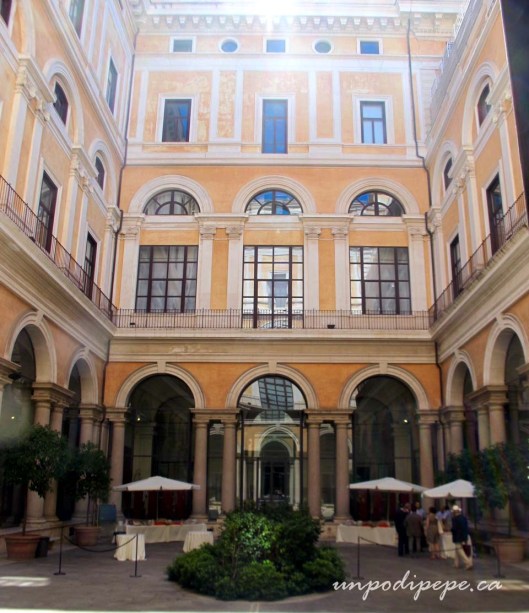
Central Courtyard, Palazzo Massimo

Central Courtyard, Palazzo Massimo

What is extra cool about the artifacts in Palazzo Massimo is how they got to be there. Previous to the museum opening, most of this priceless stuff was in storage in the Roma city works yard!  In a city as old as Roma, anywhere you break dirt, something will be found.  During construction of the Metro, new roads, or any municipal work involving digging, artifacts were found, tagged and stored. Every piece in the museum has a sign with a written description in Italian and English.  In between the two is stated (in Italiano only) precisely where and when it was found, and in some cases by whom.  For example ‘Roma, Piazza Venezia, Construction of National Monument to Vittorio Emanuele II’, or ‘Subiaco, recovered by the Guardia di Finanza (revenue or tax police, involved in recovery of stolen artifacts)’.  Reading these signs is exciting because you may have walked over that very spot the day before!  Ok, maybe you won’t be as excited as me, but I am a total archeology geek so I find this fascinating!

The ground floor of Palazzo Massimo displays Greek originals discovered in Roma, such as The Dying Niobid, and the magnificent Pugile in riposo, the 2nd Century BC bronze Boxer at Rest, wearing leather hand wraps.  He is so realistic with his broken nose, cuts and deformed ears, you can feel the emotion in his face.

'Pugile a Riposo' Found in 1885 on the Quirinale Hill, where the Baths of Constantine once were.

‘Pugile a Riposo’ Found in 1885 on the Quirinale Hill, where the Baths of Constantine once were.

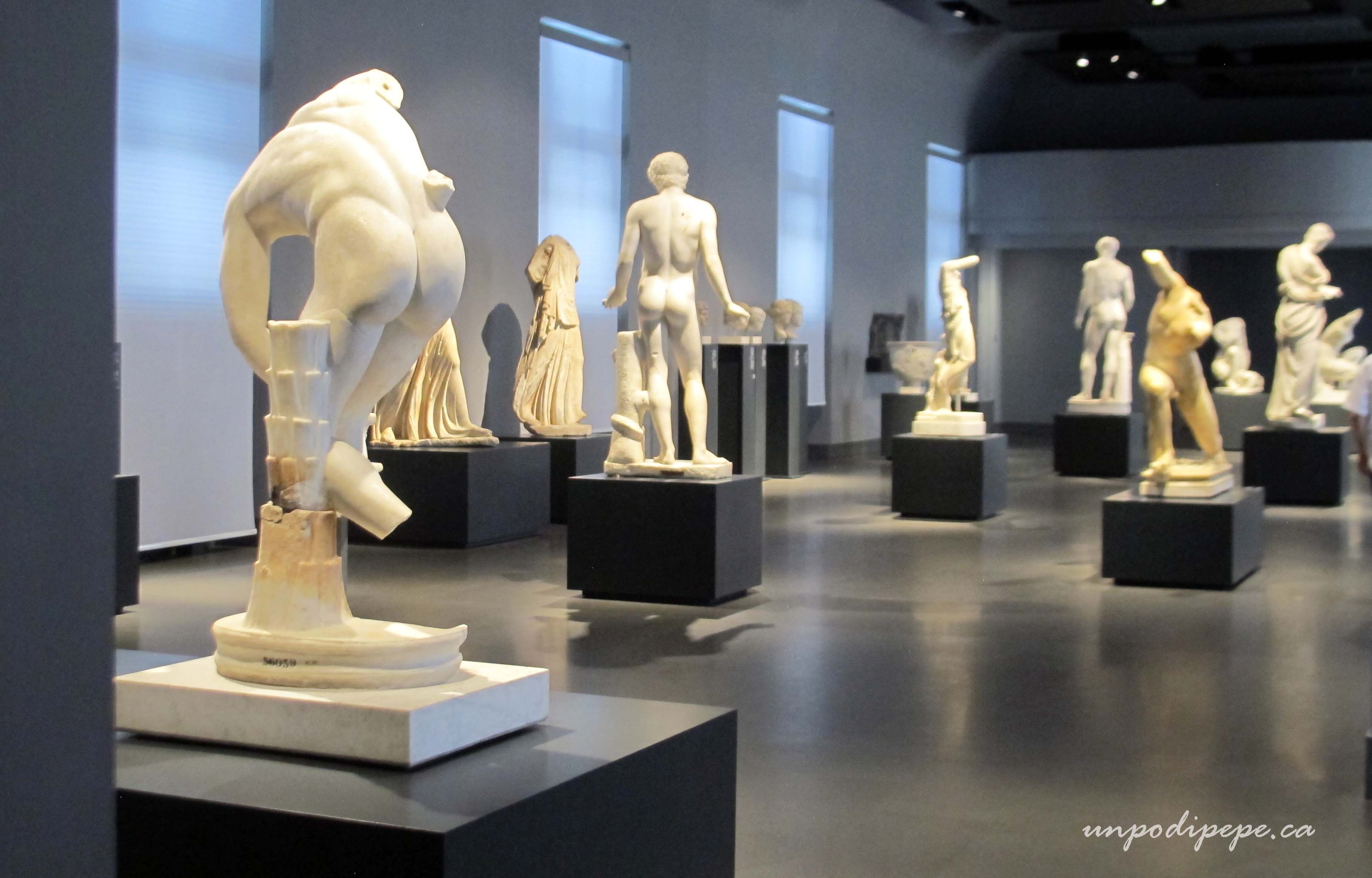
This floor also has a Roman calendar, portraiture from the Republican and Imperial ages, and sarcophagi, such as the sarcophagus of Portonacci with battle scenes carved in relief.statuarypalazzomassimo

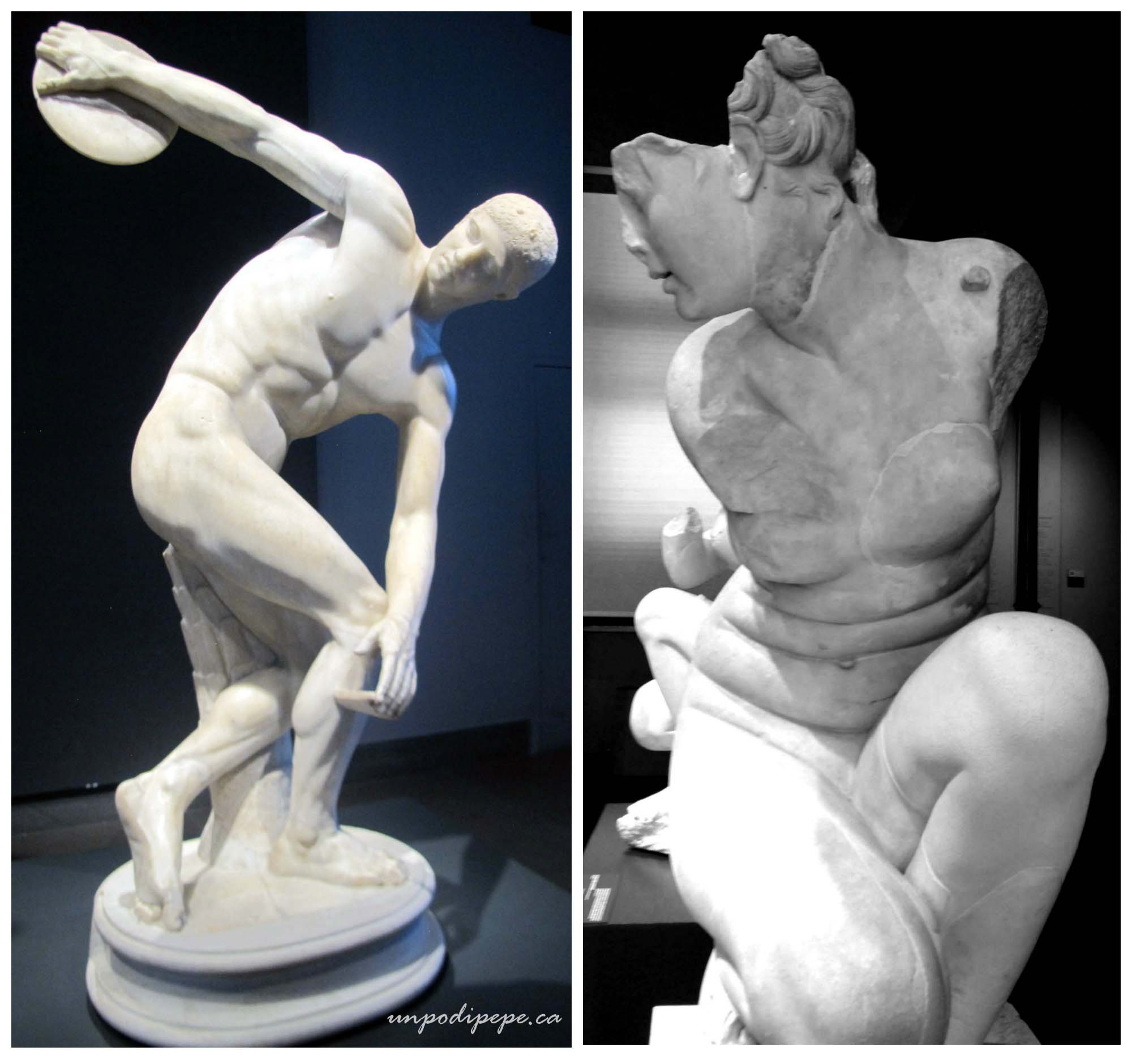
The first floor (2nd floor to North Americans) has masterpieces of statuary, including the Maiden of Antium, Il Discobolo, a Crouching Aphrodite after Diodalses found at Villa Adriana in Tivoli in 1920, and the Sleeping Hermaphrodite.  There are also all the surviving bronze sculptures, fittings and a head of Medusa that decorated Caligula’s floating palaces, the Nemi ships.  These vessels were recovered in the 1920’s by draining Lago di Nemi, only to be destroyed by enemy fire in 1944.

Il Discobolo and a Crouching Aphrodite from Villa Adriana in Tivoli. Both are Roman reproductions of Greek originals

Il Discobolo and a Crouching Aphrodite from Villa Adriana in Tivoli. Both are Roman reproductions of Greek originals

The top floor takes us on an intimate tour of the domestic decor inside Roman homes. An amazing discovery was made right across the street in 1947, during the renovations to Termini and construction of Metro line B. It was a complex from 130-140 AD built in a grid system of private homes, public baths, warehouses, and apartments with shops at street level.  There was pavement and a functioning drainage system. It was all destroyed to make way for quick construction of the new buildings! Aaaahhh!  Luckily the site was well-documented so that the 270 m² of wall frescos and pavement mosaics that were preserved could be reassembled. Part of it is displayed here where 3 rooms of a Domus (Roman house) have been reconstructed to their original size.  Ironically, these rooms face a window looking out at where they used to be.

The 1948 photo from Palazzo Massimo of the site across the street. You can see that the mosaic is the same one that is now in the museum

The 1948 photo from Palazzo Massimo of the site across the street. You can see that the mosaic is the same one that is now in the museum

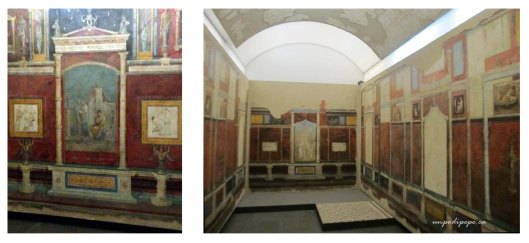
The Augustan Villa of the Farnesina was discovered in Trastevere in 1879 during work along the river.  The site has since been destroyed, but the vibrantly coloured frescoes were detached and stored for 120 years before being installed in Palazzo Massimo, in accurately reconstructed rooms of their original dimensions.  There is a portico, dining room and 2 Vermillion coloured cubicola (bedrooms) with mythological and erotic paintings, and several hallways.  The rooms are reassembled how they were, so it is like walking through a Roman villa.  Decorating the walls of upper class houses with paintings of mythological or literary subjects was supposed to stimulate cultured conversation. In this villa, there are many references to the Egyptian world in the decorations, celebrating the conquest of Egypt. The owner is thought to have been General Marcus Vipsanius Agrippa, son-in-law of Augustus, who defeated Marc Anthony and Cleopatra at the Battle of Actium in 31 BC.villafarnesinacollage
The final treasure is the 1st Century BC frescoes from Villa Livia, discovered on Via Flaminia in 1863.  The villa belonged to Livia Drusilla, wife of Emperor Augustus.  The paintings of a lush green garden with birds, pomegranate and lemon trees, roses, irises and other plants decorated a vaulted room that was half underground. The large room is recreated here.  It was probably a cool triclinium, a living and dining room for  the summer. villaliviaThe basement has the history of the Roman Empire in coins. It has been converted into a vault for the Medagliere, the coin cabinet and jewellery.

Palazzo Massimo is one of 4 musei that make up the Museo Nazionale Romano. Tickets are €7 for adults, valid for 3 days for all 4 sites.  The other sites are:  Terme di Diocleziano, Palazzo Altemps and Crypta Balbi. Open Tues to Sunday 0900-1945. If you love antiquities, don’t miss it! Ciao, Cristina
Share this:

  • Share on Facebook (Opens in new window) Facebook
  • Share on Pinterest (Opens in new window) Pinterest
  • Share on X (Opens in new window) X
  • Email a link to a friend (Opens in new window) Email
  • Share on WhatsApp (Opens in new window) WhatsApp
Like Loading...

La Certosa di Padula

27 Sunday Nov 2016

Posted by Un po' di pepe in Architecture, Italia, Travel

≈ 14 Comments

Tags

AICW, Association of Italian Canadian Writers, Campania, La Certosa di Padula, Parco Nazionale del Cilento e Vallo di Diano, Scagliola, Southern Italy, UNESCO World Heritage Sites

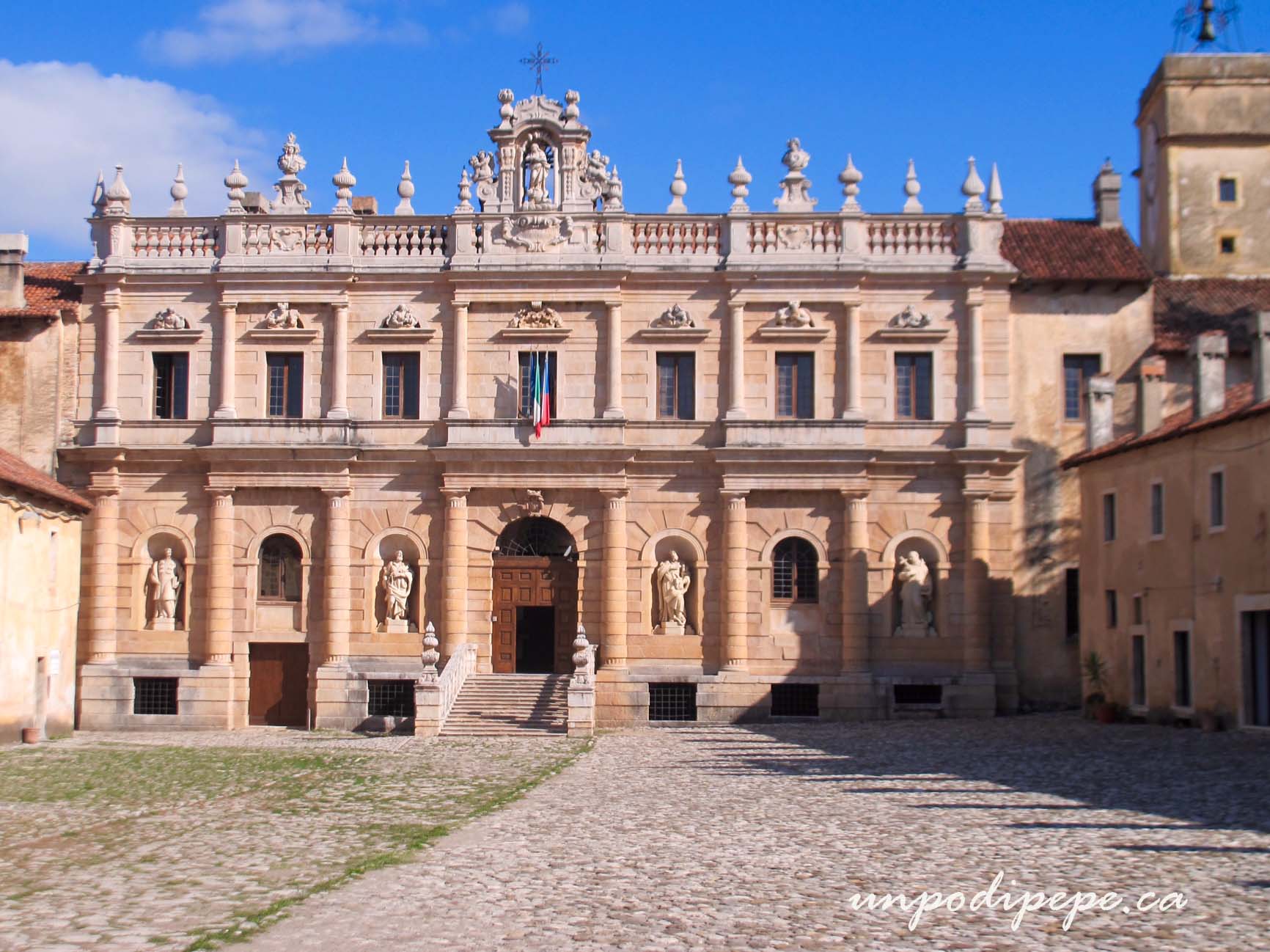
la-certosa-di-padula-facciataIn August, I attended the Association of Italian Canadian Writers (AICW) 16th biennial conference ‘Italian Canadian Literature: Departures, Journeys, Destinations’ where I read my first short story in public.  38 speakers, AICW members and friends came from across Canada, Italy, Germany, Spain, the United States and the United Kingdom.  The conference presentations were amazing and an anthology will be published next year.

View from Conference Room

View from Conference Room

The conference was held in Padula (Salerno, Campania) at La Certosa di Padula, a Carthusian Monastery built in 1306 and added onto over the next 450 years. Dedicated to San Lorenzo, the style is mostly Baroque and it is the largest monastery in Italia. Chiostro Grande is the largest cloister in the world, surrounded by 84 columns.  The place is huge with a total of 320 rooms! In 1998, it became a UNESCO World Heritage Site along with the Parco Nazionale del Cilento e Vallo di Diano and the archeological sites of Paestum and Velia.  I have now been to all of them except Velia.padulachiostro

The Certosa site is made up of spaces for contemplation -the cloisters, library and chapels, and spaces for work -the kitchen, cantina, laundry, stables and gardens.padulafrescocloister

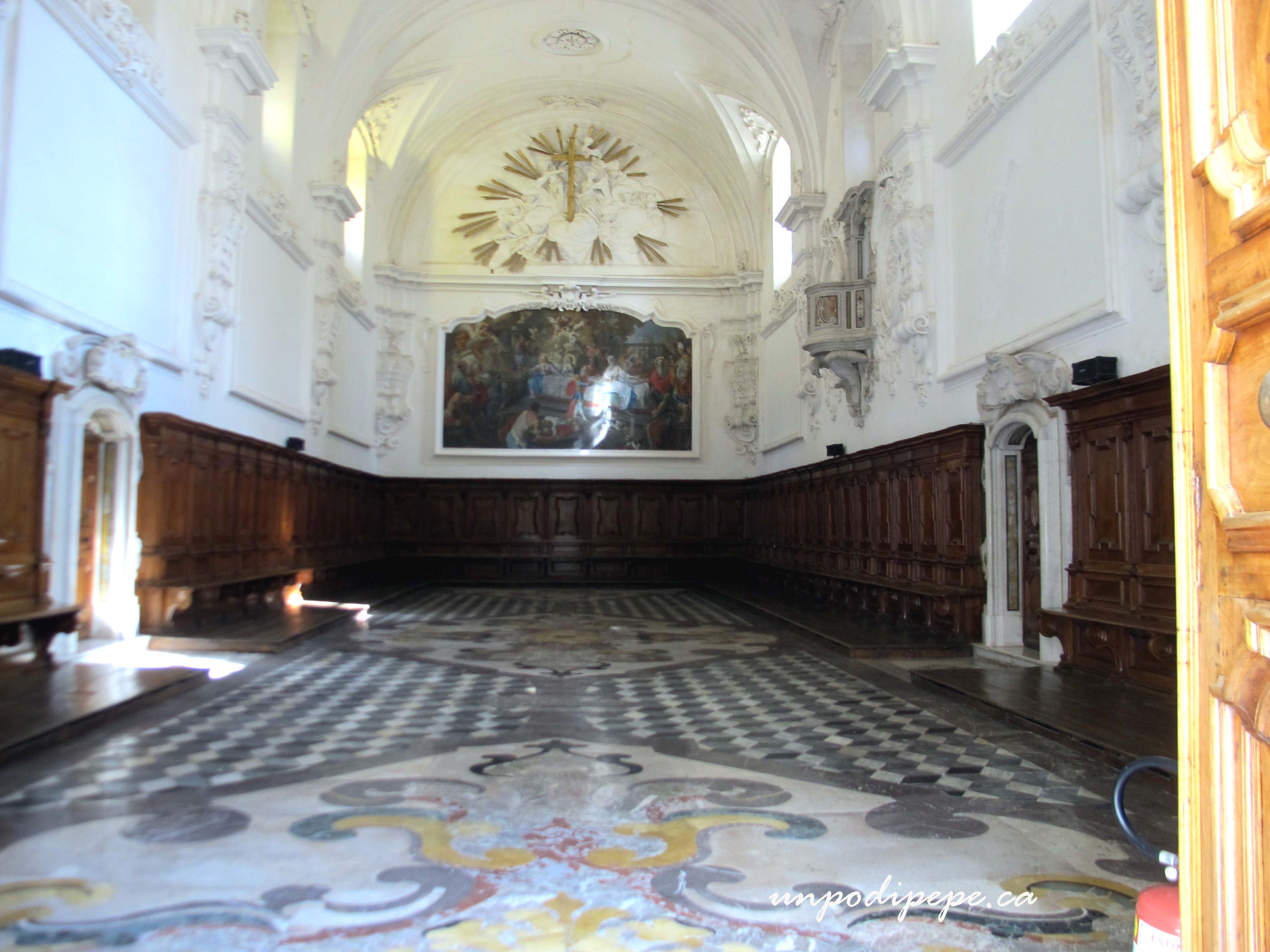
While I was there, due to restoration work the upper floor was not accessible. This meant I was not able to see the monks’ cells or take the white marble scala elittico to the large biblioteca (library) which has a Maiolica tile floor from Vietri sul Mare and 2000 remaining manuscripts. I was also not able to see the last construction added to the site in 1799, the famous Scalone Elicoidale –an ornate double ramped, double helix shaped staircase in an octagonal tower with 8 large open windows overlooking a garden.  The Scalone spirals incorporating the Fibonacci sequence and the Golden Section, which I find fascinating.  It connects the upper floor to the Chiostro Grande and was used by the cloistered monaci for their passeggiata settimanale –weekly walk. Being a lover of staircases, books and libraries, the closure was disappointing, but luckily there was still a lot left to see. padulasanlorenzoMost of the chapels are Baroque and very ornate, with the largest collection of Scagliola work found anywhere. Scagliola (sca·LYOH·lah) is a technique for painting stucco columns, sculptures, and other architectural features to look like inlays in marble and semi-precious stones, such as madre di perla. Those monaci were frugal and talented!  Now I know what to call the areas of my house that I have painted to look like Carrara marble!padulacucina2

The Monastery kitchen, renovated in 1742, could have been the perfect setting for ‘Masterchef: Medieval edition’. It is brightened by yellow and green Maiolica tiles which look completely out of place.  The colours were chosen to keep the flies away- at least that is what the guard told me!  padulacucinaThe most striking feature in the cucina is an enormous cappa or hood, on a furnace with an antique boiler and a base covered in maiolica tiles.  The inside of the cappa is blackened from hundreds of years of use.  Stone work tables are in place and on the back wall is a large fresco, painted in 1650, obscured by time and smoke.  This part of the cucina with its barrel vaulted ceiling used to be a rectory before the 1742 reno. The cucina has its own cloister and small garden, with the cantina and laundries next to it.
Chi lava i piatti?

Chi lava i piatti?

The monaci ate frugal, meatless meals in solitude in their cells, except during special occasions. The refettorio (rectory) hall with 61 stalls carved of walnut wood is where they sat at meal times on feast days and during Lent.  The 1749 fresco is of Le Nozze di Cana.  refettorioOccasionally the cucina was used to prepare rich meals for visits by important guests, most famously the one organized for Emperor Carlo V on his return from Tunisia in 1535.  The monaci prepared him a frittata with 1,000 eggs.  My first night in Padula, August 10th, was the annual Festa della Frittata di Mille Uova, recreating this event. The modern contraption used to make the frittata was made in 1996 and looks like a colossal pizzelle iron that flips over and rolls across a massive fire pit!  Unfortunately we don’t know what the monaci used to make their frittata.

Frittatta di mille uova making contraption!

Frittatta di mille uova making contraption!

In 1802, the monaci had to abandon La Certosa, and Napoleonic troops took away any treasures that were cartable. They returned a few years later, but abandoned La Certosa for the last time in 1866.  20 years later, it was declared a national monument. During the 2 World Wars the complex was mostly abandoned, being used briefly as a prison camp, and as a children’s holiday camp.  Padula received funds for restoration in 1982.view-from-hotel-certosa

Padula is a very nice town of 5,000. Getting there without your own car is extremely difficult.  Padula is on the A3 Salerno-Reggio Calabria road, exit Buonabitacolo.  The closest train station is Sapri on the Cilento coast. There are a couple of buses a day from Napoli, which make stops in every town along the way. Although very out of the way, Padula is worth the detour!  The drive there from Paestum was stunning.  Admission to La Certosa di Padula is €4 for adults. Make sure you have at least 4 hours to visit. There are 2 very nice, affordable hotels in Padula, Grand Hotel Certosa and Villa Cosilinum. padula

Buon Viaggio!

Share this:

  • Share on Facebook (Opens in new window) Facebook
  • Share on Pinterest (Opens in new window) Pinterest
  • Share on X (Opens in new window) X
  • Email a link to a friend (Opens in new window) Email
  • Share on WhatsApp (Opens in new window) WhatsApp
Like Loading...

Paestum

10 Monday Oct 2016

Posted by Un po' di pepe in Architecture, Italia, Travel

≈ 12 Comments

Tags

Campania, Doric temples, Magna Grecia, Paestum, photography, Poseidonia, Southern Italy, UNESCO World Heritage Sites

tempiodinettuno2The first time I saw Paestum I was 11 years old. Even then, I was an archeology and mythology nerd and was fascinated by the wonders of this place.  It took many years, but I finally went back to Paestum this year! It was every bit as enchanting as it was then-maybe even more!paestumforum

Paestum was founded around 600 BC by Greek colonists from Sybaris, a Greek colony in Calabria. They named it Poseidonia, after Poseidon, Greek God of the sea. Poseidonia became a prosperous trade center in Magna Grecia, the Greek colonies in Southern Italia. They even minted their own coins.  The Lucanians took over around 390 BC and called it Paistom.  In 273 BC, the Romans conquered, Latinized the name to Paestum, and constructed more buildings. Paestum was partially damaged by an earthquake after the eruption of Vesuvius in 79 AD.  In the 5th Century AD with Christianity came a Paleochristian church and a Bishop.  Deforestation and other factors led to conditions that brought malaria.  The malaria plus Saracen attacks caused the abandonment of Paestum by 877 AD.  The inhabitants retreated to higher ground at Capaccio, 6 km away.  Overgrown by forest and buried by swamps, Paestum remained hidden and forgotten for almost 900 years. In 1748, the temples were rediscovered by road builders, who apparently kept ploughing right through.la-basilica

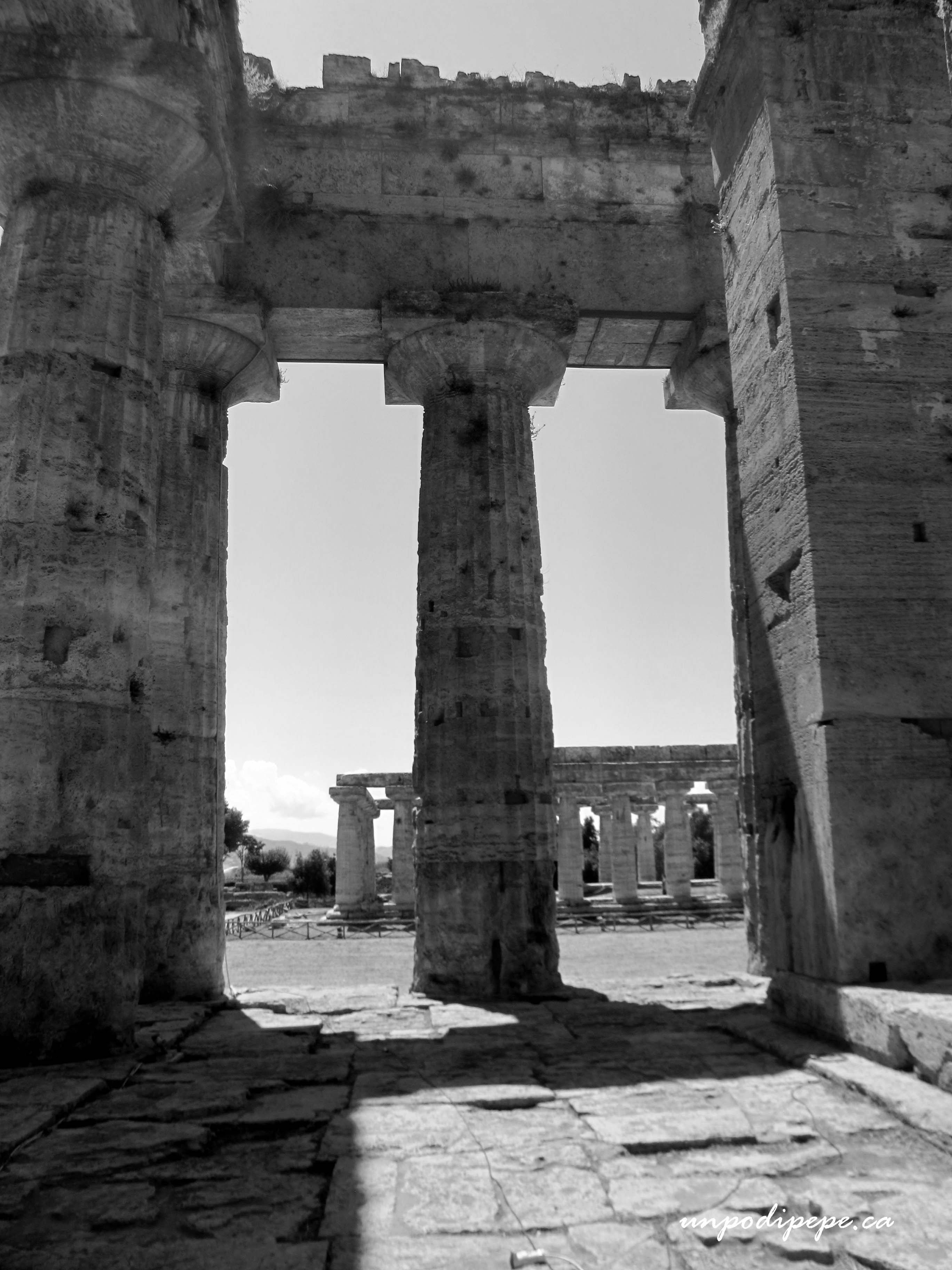
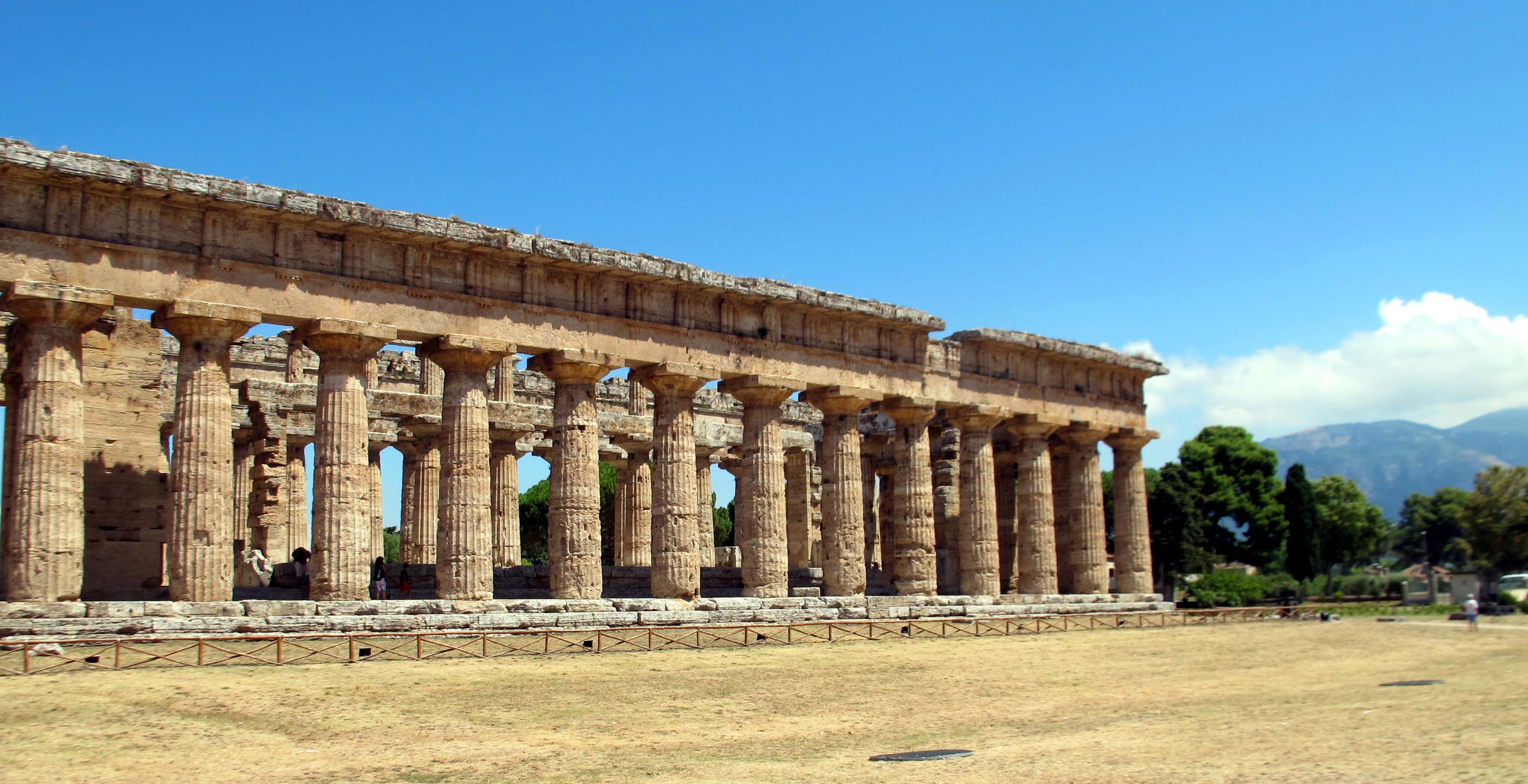
Paestum is in a quiet, idyllic setting in the countryside, surrounded by farmland. 3 well-preserved majestic Greek temples rise up out of the plain. La Basilica is the oldest of the temples, built in 550 BC and is actually a temple to Hera.  18th century archeologists mistakenly identified it as a Roman building used as a meeting place.

La Basilica

La Basilica

Right next to it, the Tempio di Nettuno (Neptune is the Roman equivalent of Poseidon) resembles the Parthenon.  It was built in 460 BC and is the best preserved Doric temple outside of Greece.  It is almost intact, with only the roof and a bit of the inside missing. You can actually walk inside both of these temples!

Tempio di Nettuno

Tempio di Nettuno

A bit farther away from the other 2 temples is the Tempio di Cerere (Temple of Ceres/ Demeter) which was actually a temple to Athena.  18th Century archeologists must have been very confused. It was built in 500 BC and the architecture is part Doric, part Ionic. At some point, it was used as a church and has 3 medieval tombs in the floor.  The inside of this temple is not accessible.

Tempio di Cerere

Tempio di Cerere

The remains of the ancient city also include a Roman Forum, paved streets, the foundations of public buildings and many residential Roman houses, an amphitheater, and a swimming pool/gymnasium. Walking through the overgrown areas provides some of the best views and glimpses of some mosaic floors.  paestumforum2The city walls, almost 5 km long, are mostly intact with 24 towers and 4 gates.  Only 20% of the site has been excavated.  80% of Paestum is still buried under agricultural land, most of it privately owned. A road cuts the site in 2 and has a few restaurants, bars, souvenir shops, a small piazza, the Paleochristian church, an information center, and the museum.  The amphitheater is only half exposed as the road was enlarged in the 1930’s and buried the east half of it!paestummatrimonio

The Museo Nazionale contains all of the items found in tombs in and around Paestum and the Metopes from a temple 9 km away. There are also Giovanni Piranesi’s etchings of the site, printed in 1778. The most amazing thing in the museum was on loan and I did not get to see it!  It is the 470 BC Tomba del Tuffatore, tomb of the diver, a fresco painted on the underside of a tomb which portrays a young man in mid-air diving off a cliff into water.  It is thought to portray the harmonious passage from life to death.paestumtempiodinettuno

The Archeological site of Paestum is a UNESCO World Heritage Site, along with the Cilento coast, Vallo di Diano National Park, the archeological site of Velia and the Certosa di Padula.   Today, Paestum is a Frazione or hamlet of Capaccio in the province of Salerno.  It is accessible by bus or local train from Salerno (30 minutes), but the best way to get there is by car.  The drive is spectacular and it is worth going out of the way for.  Even on a ‘busy’ summer day, the site is not crowded.  Staying the night is a great idea, as you can visit the ruins just before sunset.  A combination ticket to the site and museum is €9.

Buon Viaggio, Cristina

Share this:

  • Share on Facebook (Opens in new window) Facebook
  • Share on Pinterest (Opens in new window) Pinterest
  • Share on X (Opens in new window) X
  • Email a link to a friend (Opens in new window) Email
  • Share on WhatsApp (Opens in new window) WhatsApp
Like Loading...

San Gimignano

15 Friday Apr 2016

Posted by Un po' di pepe in Firenze, Italia, Photography, Travel

≈ 6 Comments

Tags

Dante Alighieri, Firenze, Italian history, Italy travel tips, San Gimignano, Siena, Torre Grossa, Toscana, UNESCO World Heritage Sites, Vernaccia di San Gimignano

Torri di San GimignanoSan Gimignano’s skyline looks like a Medieval Metropolis, complete with early grattacieli (grat•tah•chee•EH•lee = skyscrapers). It was known as San Gimignano delle belle Torri -San Gimignano of the beautiful towers. The site was an Etruscan settlement, then a castello called Silvia with a walled village built around it.  Silvia was renamed San Gimignano in 450 after the Bishop of Modena, who spared it from Attila the Hun’s troops.San Gimignano Torre

San Gimignano became an independent town in 1199. It was prosperous, being a stopping point on La Via Francigena, the medieval pilgrimage route from Canterbury to Roma, via France.  San Gimignano also traded in local zafferano (zaf•fer•RAN•noh = saffron) and wine from the white Vernaccia grape. The earliest mention of Vernaccia di San Gimignano is in the archives of 1276! In 1966, 690 years later, it was the first Italian vino bianco to receive DOC recognition.

The 13 and 14th Centuries saw San Gimignano caught in the Guelph/Ghibelline conflicts.  Read about this in Dante’s post. Wealthy San Gimignanesi built tower houses as symbols of power and wealth, as well as for protection.  The height of these torri kept increasing, up to 70m high, to keep up with the neighbors. There were originally 72 torri and 14 still stand today.

Waves of plague and famine hit San Gimignano in the mid 1300’s. The ‘black death’ claimed almost half the population, and San Gimignano was now under the rule of Firenze.  Fiorentino control prevented any urban development that happened in other towns.  As a result, San Gimignano was preserved in a medieval ‘time warp’, retaining its original atmosphere and appearance.  Little changed until the 19th century when it became a tourism destination. Today the population is 7800 and it does have 1 traffic light! To protect San Gimignano from the effects of mass tourism, strict rules prevent modification to the appearance or intended use of buildings.

Bancomat Medievale/Medieval Bank Machine!

Bancomat Medievale/Medieval Bank Machine!

In 1990, the Historic Center of San Gimignano became a UNESCO World Heritage Site for its outstanding examples of medieval architecture and original urban layout.Piazza della Cisterna

The Cattedrale know as La Collegiata, has Masterpieces of 14th and 15th Century art.  Inside the front façade is the Fresco of Last Judgement, Heaven and Hell by Taddeo di Bartolo (1393). The Cappella di Santa Fina with frescoes by Domenico Ghirlandaio (1475) was featured in the 1990 Franco Zeffirelli film ‘Tea with Mussolini’.

In the Palazzo Comunale is the Sala di Dante where Dante Alighieri spoke as an ambassador for the Guelphs in May 1300. The Pinacoteca has treasures by Filippino Lippi, among others.  Climb the 218 steps of the adjacent 54m Torre Grossa for views of San Gimignano and the Val d’Elsa.  Admission is €6.View from Torre Grossa

Piazza della Cisterna is triangular with a well on an octagonal pedestal in the center, surrounded by medieval buildings. It is named for the underground cistern built in 1287 which was the main source of water for the San Gimignanesi.  Piazza della Cisterna is the meeting point of the Via Francigena and the road from Pisa to Siena, so it was a happening place in medieval times.

Piazza della Cisterna, seen from Torre Grossa

Piazza della Cisterna, seen from Torre Grossa

San Gimignano is an easy daytrip on the bus from Firenze, Siena or Poggibonsi. There is no direct train. The train route is to change trains at Empoli to Poggibonsi and then bus from there. It’s also nice to be there in the evening or overnight when all of the daytrippers have left.

Like Alberobello, no matter how many hordes of tourists it is overrun with, San Gimignano is incantevole (een•can•teh•VOH•leh = enchanting) and definitely worth a visit. I need to go back to do ‘research’, since I have a drawer full of unfinished sketches, monotypes and etchings!

Buon Viaggio, Cristina

Share this:

  • Share on Facebook (Opens in new window) Facebook
  • Share on Pinterest (Opens in new window) Pinterest
  • Share on X (Opens in new window) X
  • Email a link to a friend (Opens in new window) Email
  • Share on WhatsApp (Opens in new window) WhatsApp
Like Loading...

Viste di Firenze

29 Sunday Nov 2015

Posted by Un po' di pepe in Firenze, Italia, Photography, Travel

≈ 12 Comments

Tags

Firenze, Florence, Piazzale Michelangelo, Ponte Vecchio, San Miniato al Monte, Santa Croce, Santa Maria del Fiore, Torre di Giotto

OLYMPUS DIGITAL CAMERA

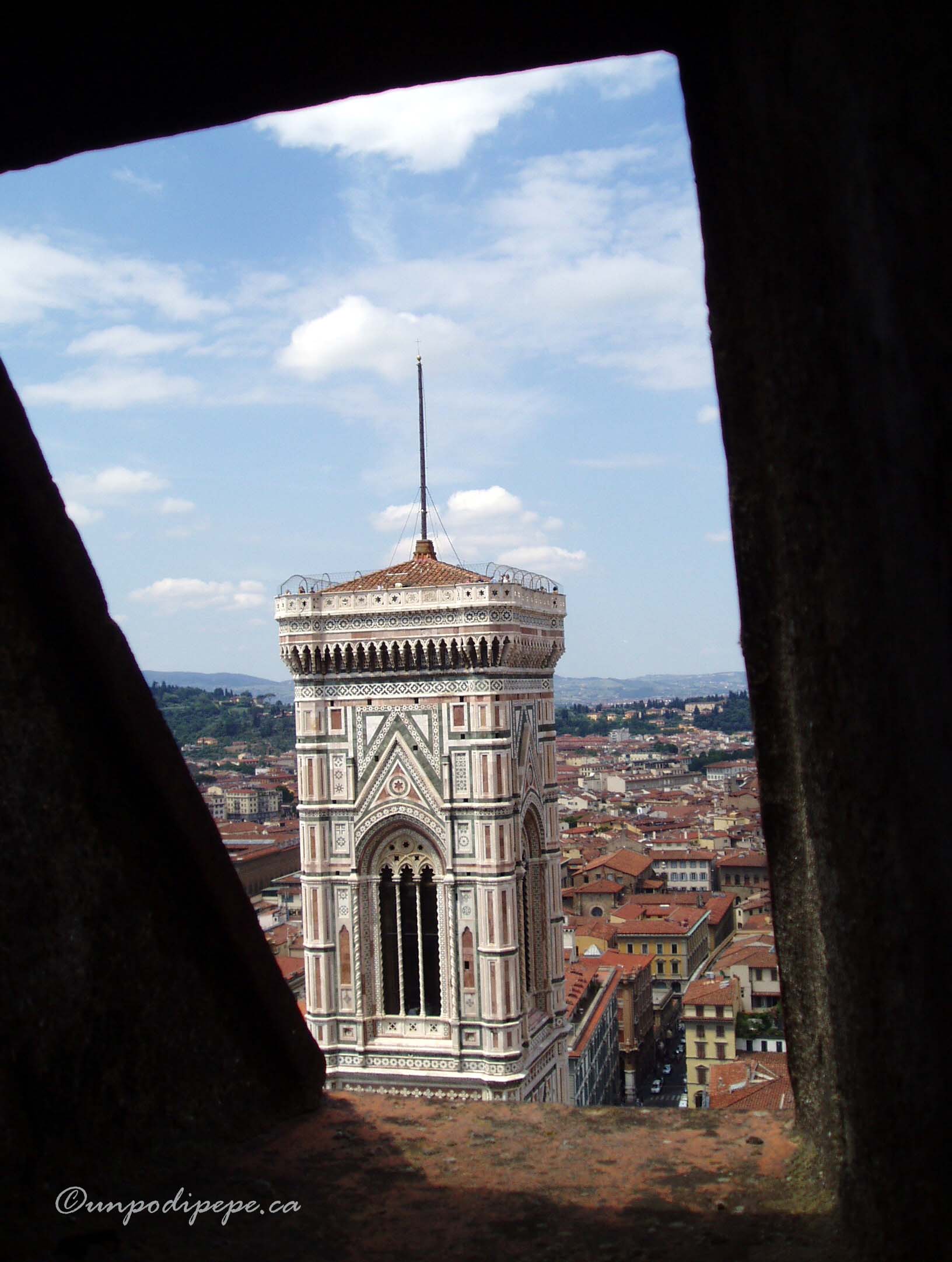
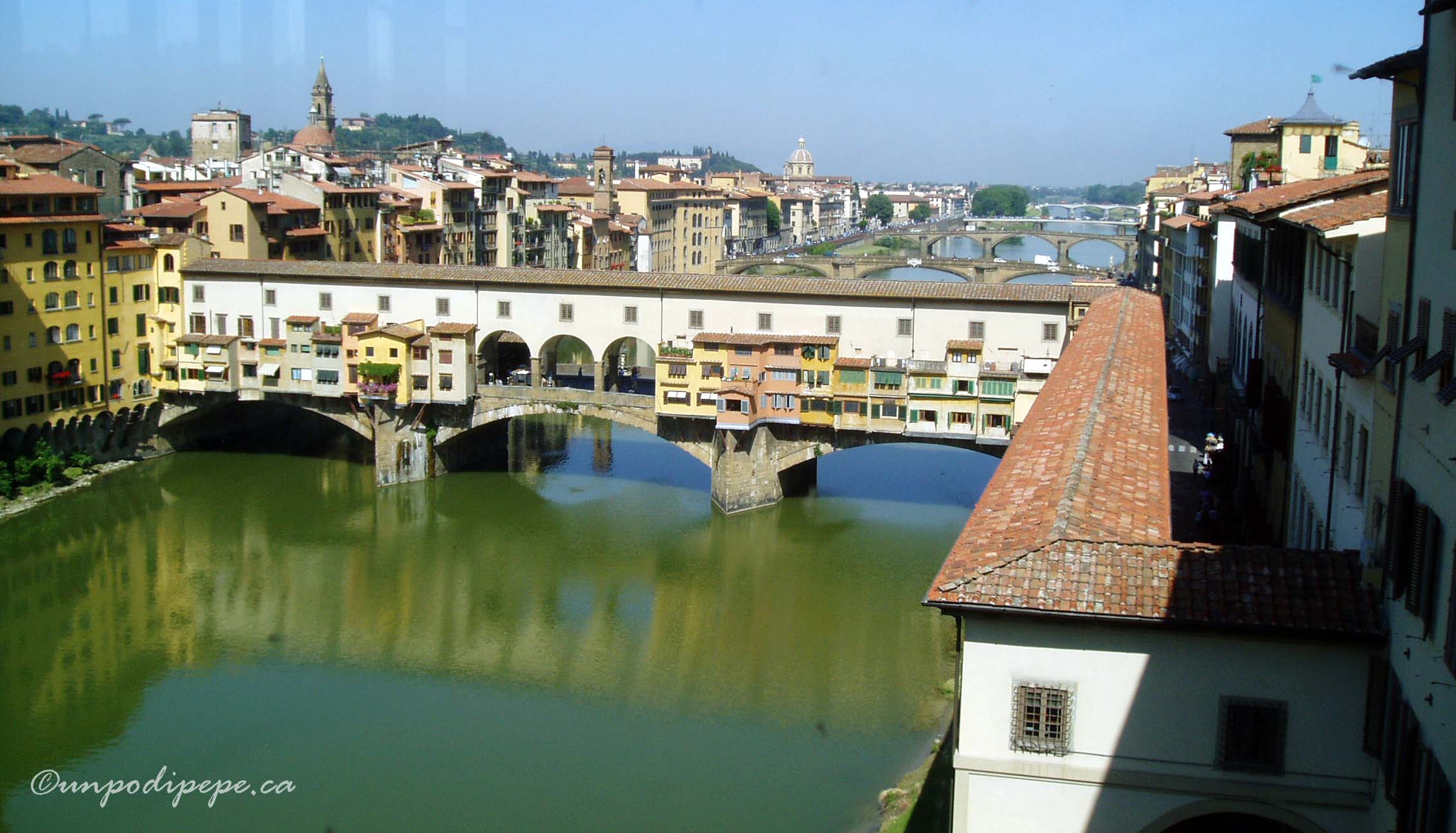
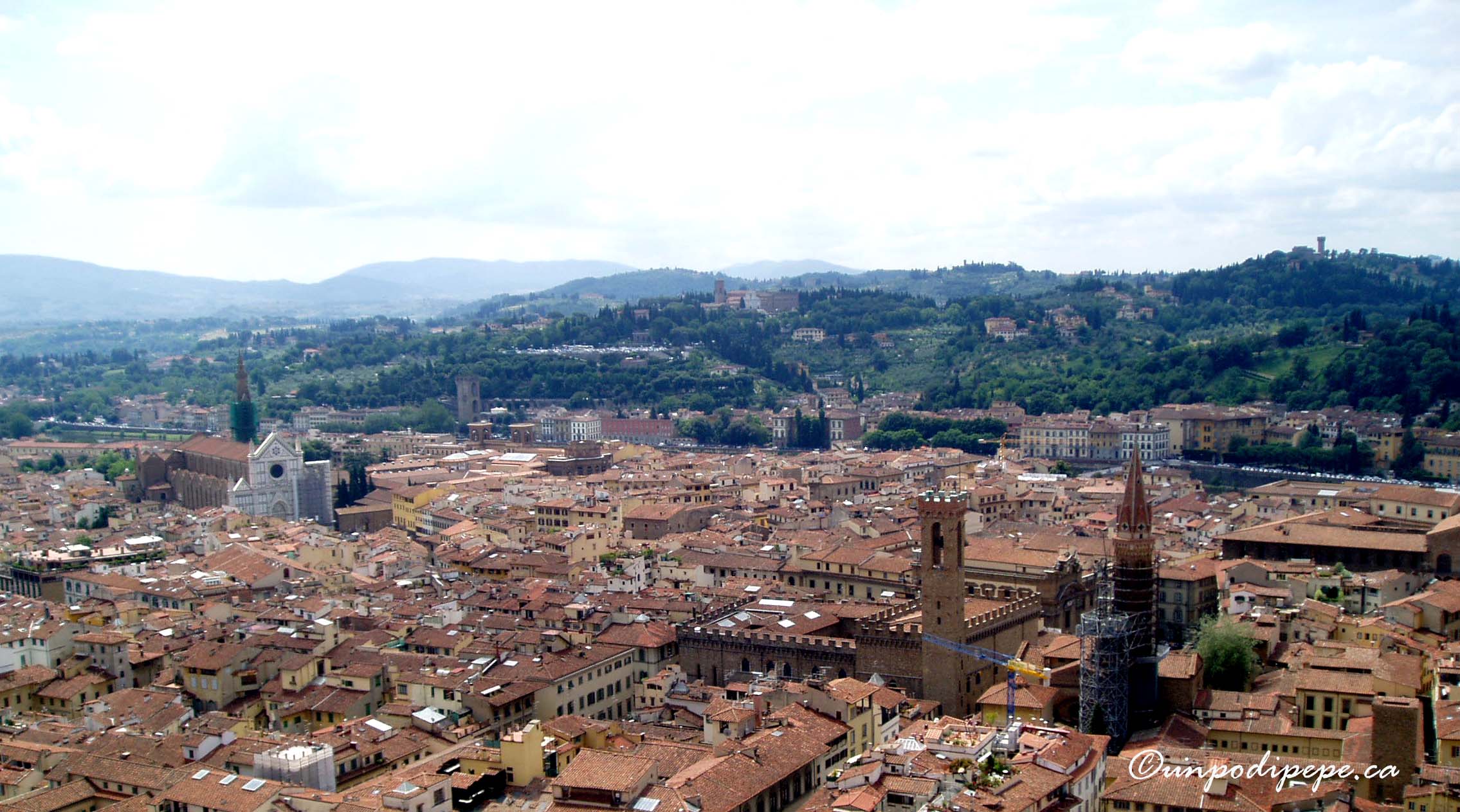
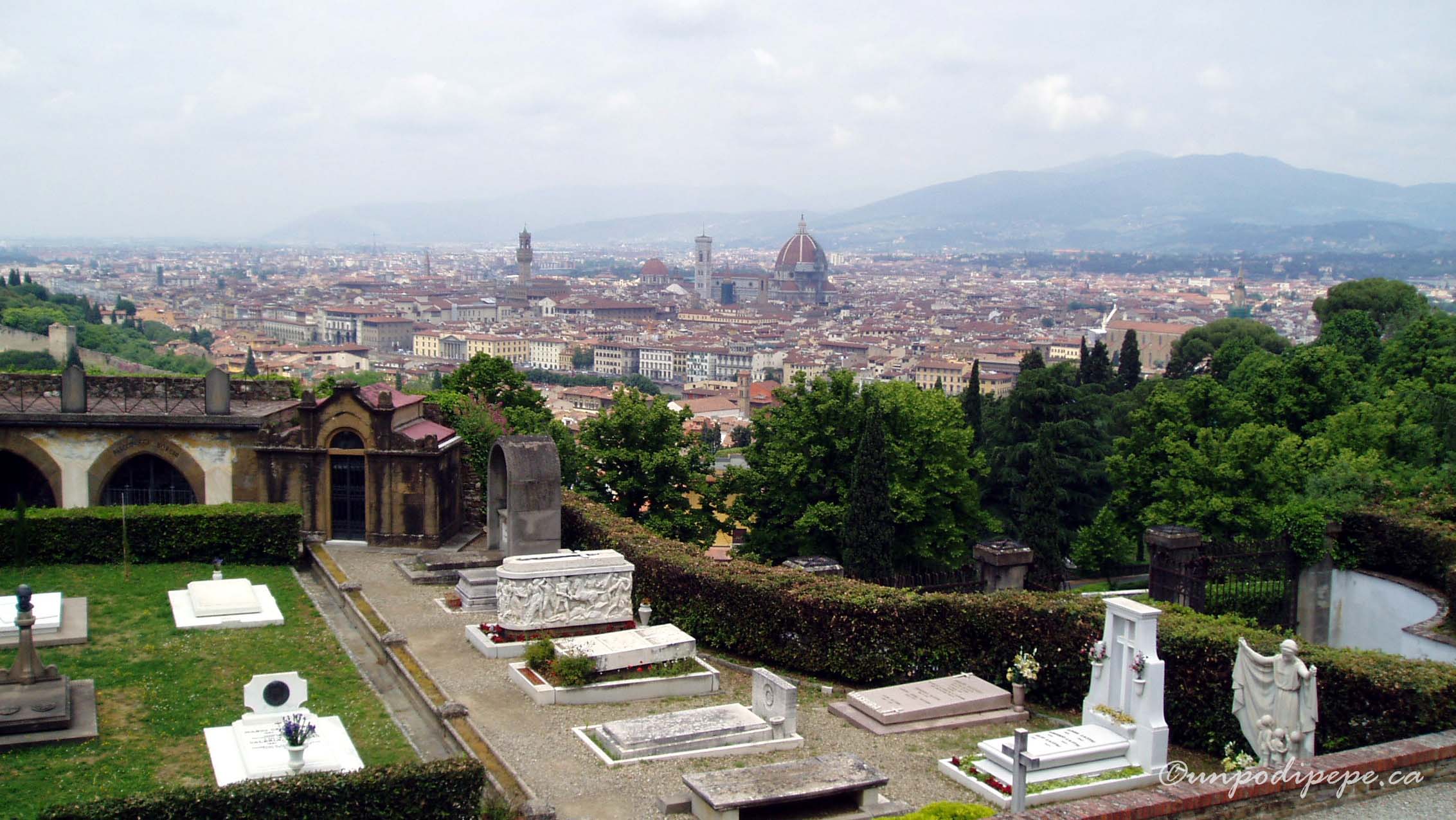
When I travel I seem to be attracted to the view from the tallest thing I can find.  Maybe it’s because I’m ‘vertically challenged’?  It does lead to some spectacular views.  Here is a collection of my favourite scatti (shots) of viste(views) of Firenze .

La Terrazza degli Uffizi

La Terrazza degli Uffizi

Il Duomo di Santa Maria del Fiore from la Torre di Giotto (Giotto's Tower)

Il Duomo di Santa Maria del Fiore from la Torre di Giotto (Giotto’s Tower)

La Torre di Giotto vista dal Duomo

La Torre di Giotto vista dal Duomo

'Santa Maria sotto restauro'

‘Santa Maria sotto restauro’

Vista dalla finestra degli Uffizi/View of the Ponte Vecchio from a window in the Uffizi Gallery

Vista dalla finestra degli Uffizi/View of the Ponte Vecchio from a window in the Uffizi Gallery

Vista di Santa Croce dalla Torre di Giotto

Vista di Santa Croce dalla Torre di Giotto

Firenze vista dal cimitero San Miniato al Monte/Firenze seen from the cemetery, San Miniato al Monte

Firenze vista dal cimitero San Miniato al Monte/Firenze seen from the cemetery, San Miniato al Monte

Vista da Piazzale Michelangelo

Vista da Piazzale Michelangelo

Ciao, Cristina

Share this:

  • Share on Facebook (Opens in new window) Facebook
  • Share on Pinterest (Opens in new window) Pinterest
  • Share on X (Opens in new window) X
  • Email a link to a friend (Opens in new window) Email
  • Share on WhatsApp (Opens in new window) WhatsApp
Like Loading...
← Older posts
Newer posts →

Enter your email address to follow 'un po' di pepe' and receive notifications of new posts by email.

Join 509 other subscribers
Follow Un po' di pepe on WordPress.com

Popular Posts

  • Hairstyling in Ancient Roma
    Hairstyling in Ancient Roma
  • La Trinità di Masaccio
    La Trinità di Masaccio
  • Italiano per Ristoranti~How to pronounce your restaurant menu
    Italiano per Ristoranti~How to pronounce your restaurant menu
  • Santa Maria in Aracoeli
    Santa Maria in Aracoeli
  • Internment of Italian Canadians
    Internment of Italian Canadians
  • Limoncello Ricotta Cookies
    Limoncello Ricotta Cookies
  • In my Kitchen in Puglia, 2019
    In my Kitchen in Puglia, 2019

Recent Posts

  • Bloghiversario #12
  • Pane e Salute
  • Sanremo 2026
  • Cucina Italiana Patrimonio UNESCO
  • 2025~Un po’ di pepe Year in Review
  • Castel del Monte
  • ‘The Nuances of Love’
  • Hostaria Antica Roma~Eat like an Ancient Roman
  • Santa Maria in Aracoeli
  • Casino dell’Aurora~Villa Boncompagni Ludovisi
  • Nasoni di Roma
  • Bloghiversario #11
  • Fontana di Trevi
  • Acqua Vergine
  • Giubileo 2025
  • Sanremo 2025
  • In Vino there are Memories
  • A Literary Harvest
  • 2024~Un po’ di pepe Year in Review
  • Buon Natale 2024
  • Il Bicerin
  • Mercato Porta Palazzo
  • Torino
  • Catanzaro, Calabria
  • Il Pumo Pugliese

Categories

Amici e Famiglia Architecture Art Art history Art projects Bilingual posts Blogging Canada Culture Feste Firenze Inspiration Italia Italian Folklore Italian language Italian life Italocanadesi Libri Mangiamo! Orsara di Puglia Parole piacevoli Photography Puglia Recipes Roma Travel Travel tips Uncategorized Vino

Archives

Un po’ di pepe on Facebook

Un po’ di pepe on Facebook

Start a Blog at WordPress.com.

  • Subscribe Subscribed
    • Un po' di pepe
    • Join 509 other subscribers
    • Already have a WordPress.com account? Log in now.
    • Un po' di pepe
    • Subscribe Subscribed
    • Sign up
    • Log in
    • Report this content
    • View site in Reader
    • Manage subscriptions
    • Collapse this bar

Loading Comments...

    %d