• Home
  • About me/Chi sono
  • Contact

Un po' di pepe

~ …… (oon∙poh∙dee∙PEH∙peh) Cristina writes about interesting stuff /Cristina scrive di cose interessanti

Un po' di pepe

Category Archives: Travel

The Whitsundays~Giù di Sotto Part 2

29 Thursday Oct 2015

Posted by Un po' di pepe in Photography, Travel

≈ 9 Comments

Tags

Australia, Australia travel, Cockatoo, Grande Barriera Corallina, Great Barrier Reef, Hamilton Island, Hardy Reef, Queensland, Rainbow Lorikeet, Whitehaven Beach, Whitsunday Islands, Whitsundays

reefview2After attending a conference in Brisbane, I spent 5 days in the Whitsunday Islands.  If you read about my trip to Australia in Giù di Sotto, this is part 2. The Whitsundays are a group of 74 islands off the coast of Queensland, named incorrectly by Captain Cook.  He had crossed the International Date Line, so it was Monday! The islands are sheltered by La Grande Barriera Corallina-the Great Barrier Reef, making them a great place for boating. In 1988 I spent a few days sailing in the Whitsundays, and they are just as beautiful now.Catseyebeach

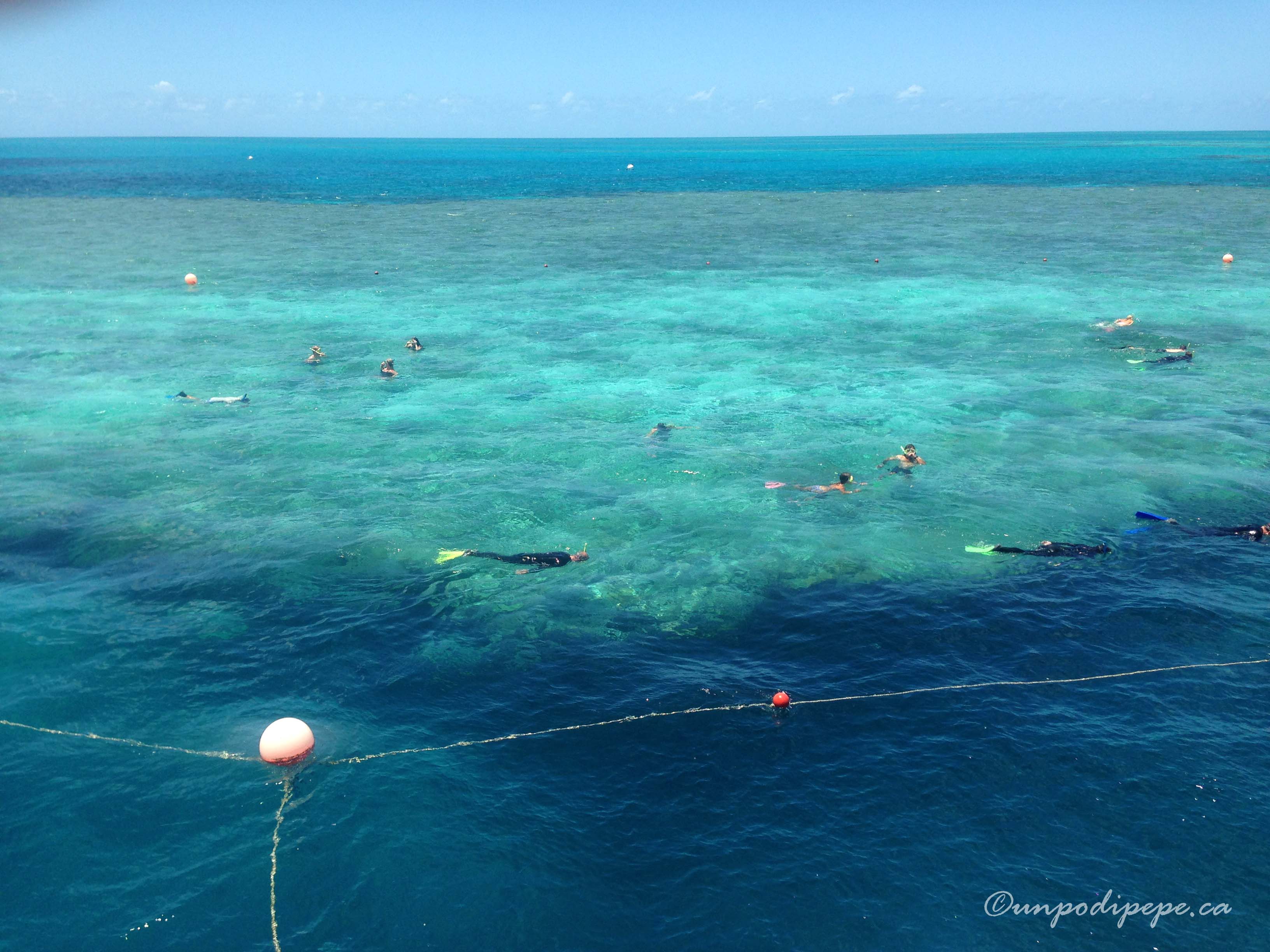
I took a daytrip to the Great Barrier Reef, a world heritage area which is the only living thing visible from space!  It took 2 hours to get to a large pontoon next to Hardy Reef where I spent 4 hours before heading back.  The pontoon had snorkel and scuba equipment, and a semi-submersible with glass sides.  I met someone on the pontoon who had done ‘Reefsleep’, spending the previous night on the deck.  He said ‘at 8 pm they turned off all the lights and God turned on the stars’.  Wow.Reefworld

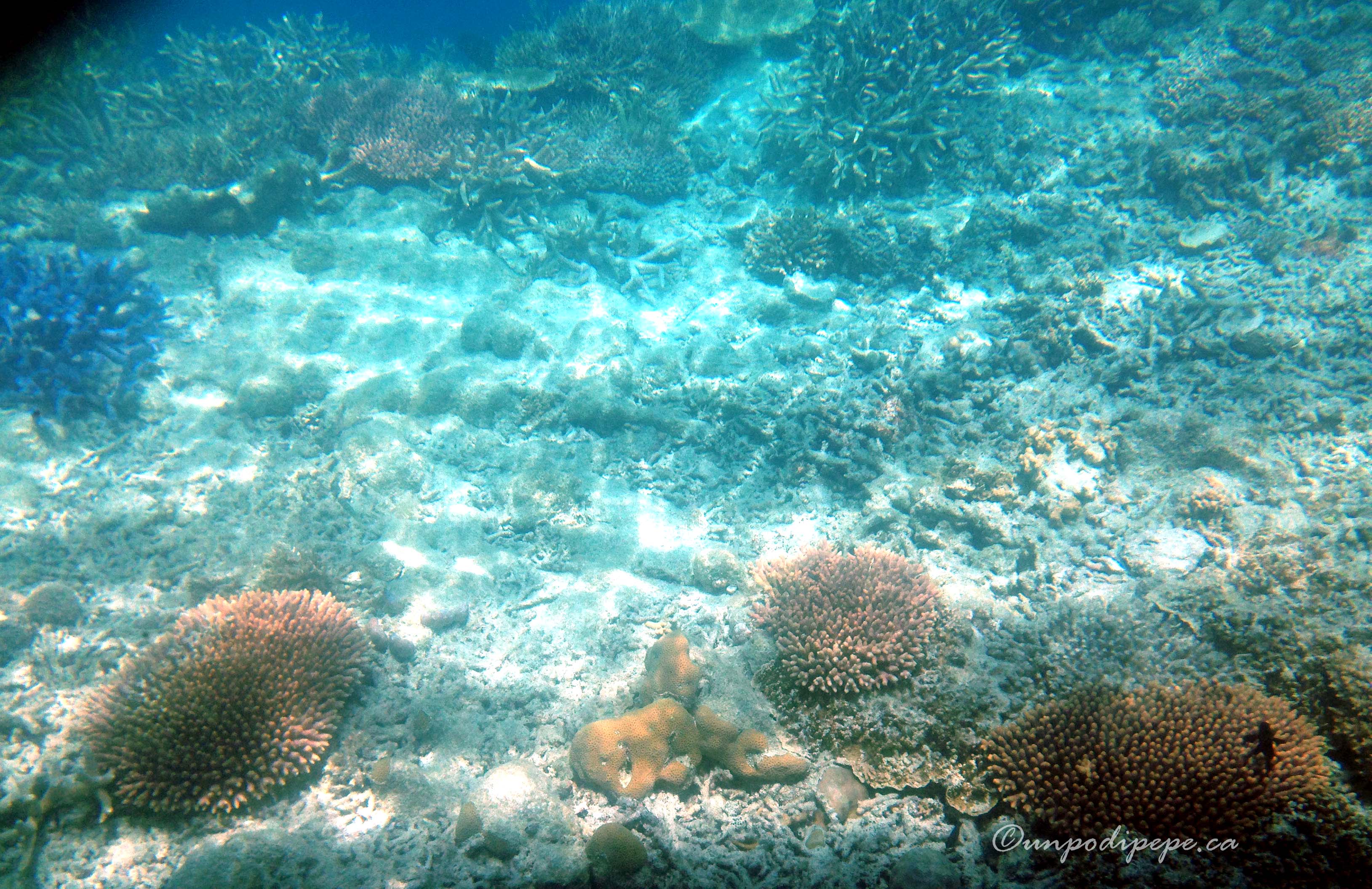
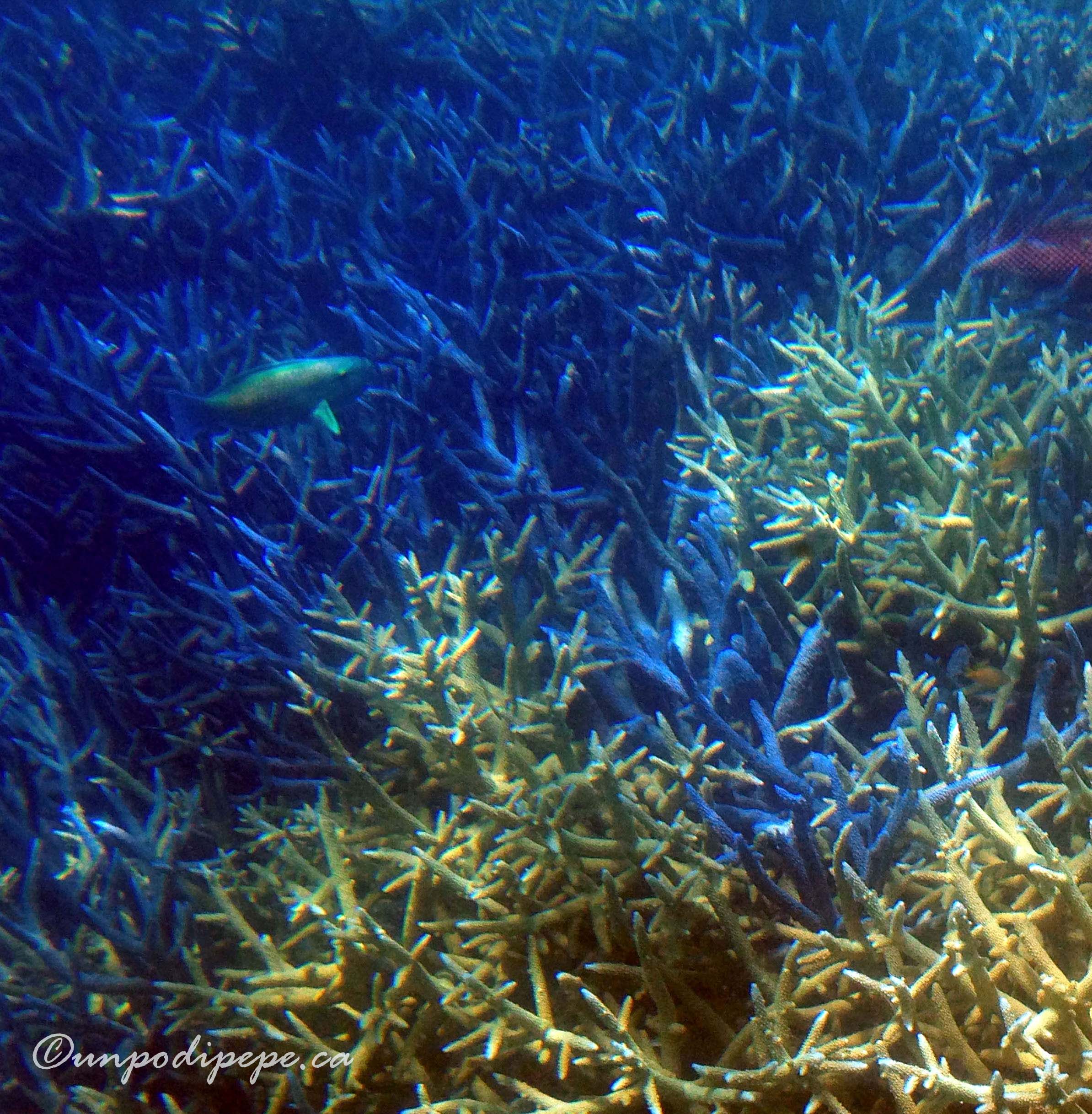
I went snorkeling and it was spectacular-although I must admit I was terrified.  I’m not a strong swimmer and don’t like to be in deep water.  They recommended we wear ‘stinger suits’ because in warm deep water there can be tiny jellyfish called Urukandji that are very dangerous.  They are found mostly in the Australian summer and farther north near Cairns, but everyone is extremely safety conscious.  Greatbarrierreef3I had trouble keeping the camera still, so my reef photos are a bit blurry.  The only time in my life I would have liked one of those ridiculous selfie sticks! Photos can’t capture the reef like being there.  I saw hundreds of little fishies, but did not end up finding Nemo. Greatbarrierereef1
Underwater sunshine!

Underwater sunshine!

ReeffishWhen I went for a ride in the semi-sub, I was so glad to be out of the water because I saw un squallo-a reef shark!  Eek!  I know, they are small, apparently ‘harmless’, eat small fish and are afraid of people, but I don’t think the words ‘harmless’ and ‘shark’ should ever be used in the same sentence. There was a scuba underwater marriage proposal.  Staff divers helped him roll out a big cloth that said ‘Will you marry me?’, and she said ‘yes’!
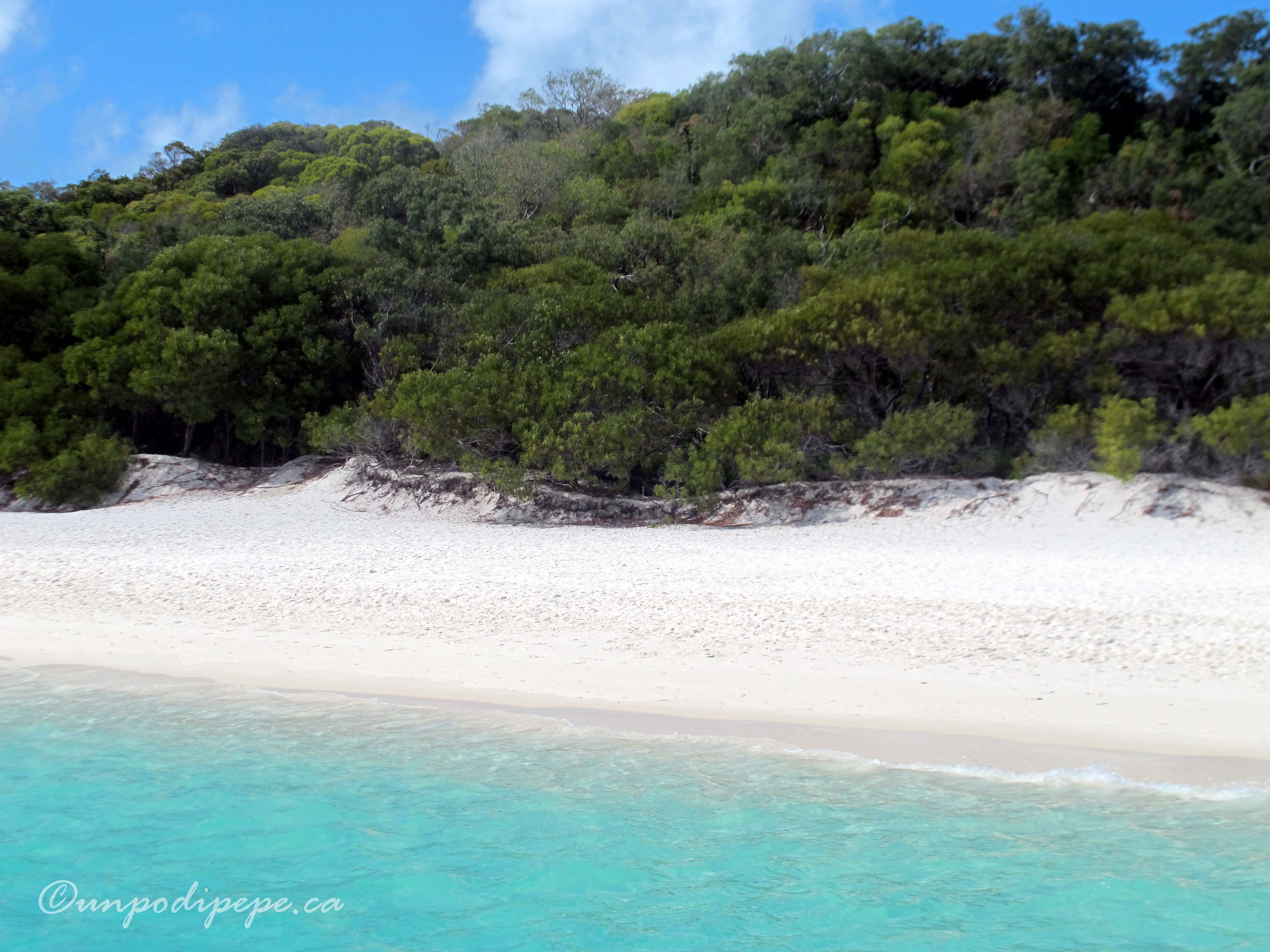
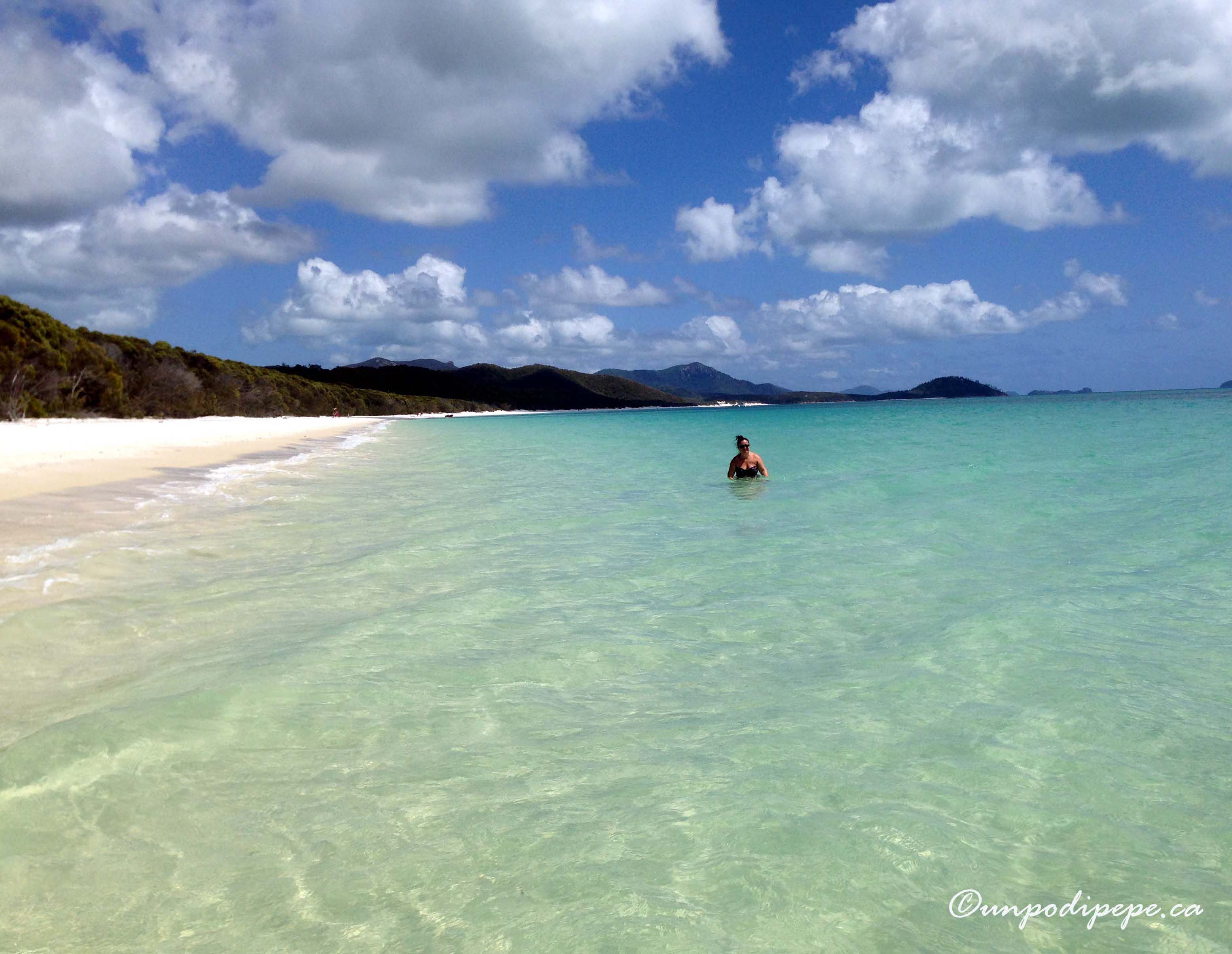
WhitehavenWhitehaven Beach, on Whitsunday Island really should be called ‘Whiteheaven Beach’.  It’s 7 km of pure white silica sand that doesn’t get hot no matter what the temperature is.  The island has been a protected National Park for 30 years and it looks just as stunning and unspoiled as it did in 1988.  Whitehaven is considered the most beautiful beach in Australia and among the top 10 in the world.whitehavenbeach
One evening I went kyacking to watch the sunset over Dent Island and Plum Pudding Island-yes there really is an island called Plum Pudding!  Along the way, a big slimy green head with droopy eyes came up out of the water beside my kyack, opened it’s mouth, took a giant breath then dove back in.  Then I saw it’s shell and realized it was not a sea monster, but a sea turtle.kyackingwhitsundays

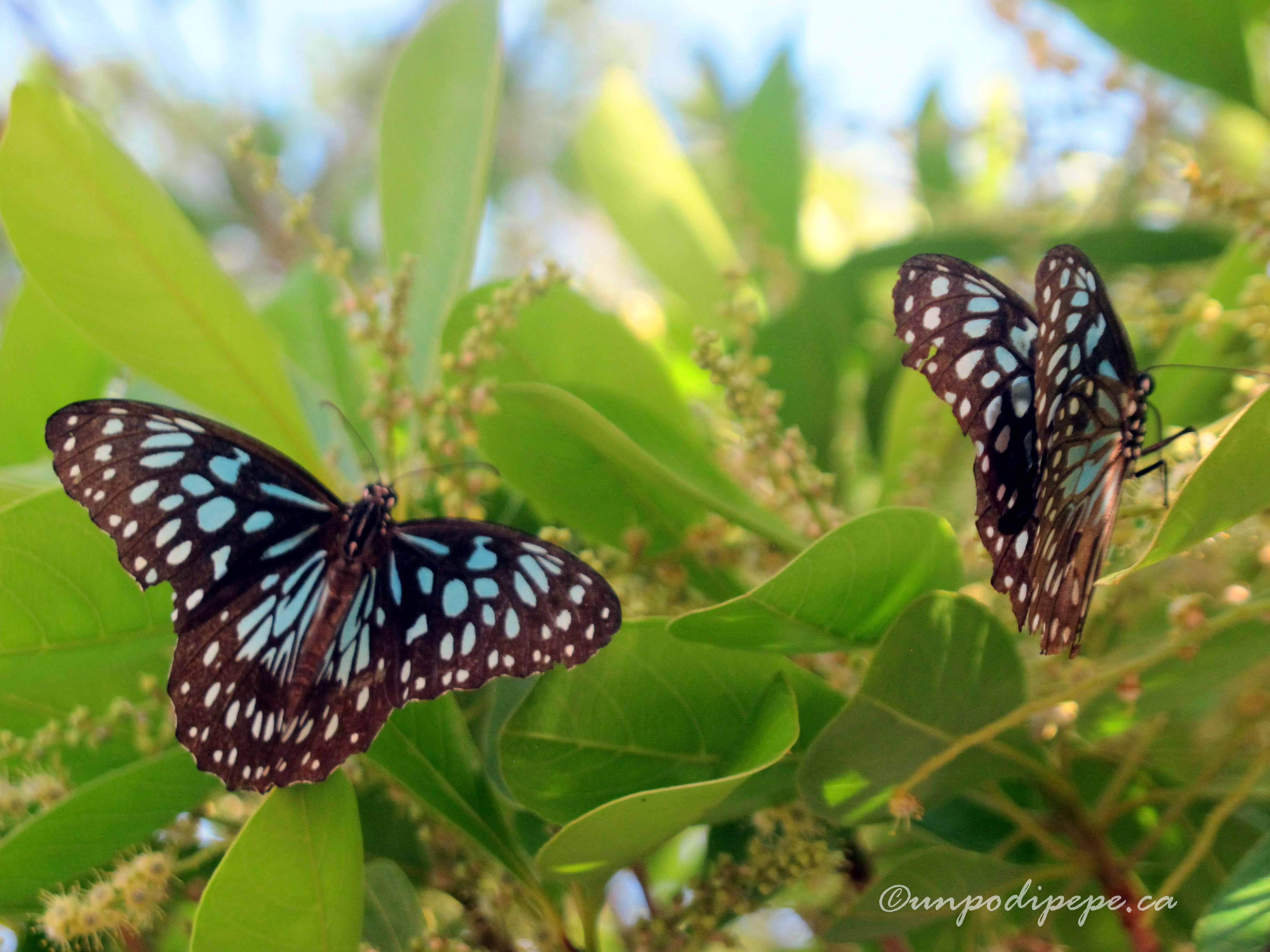
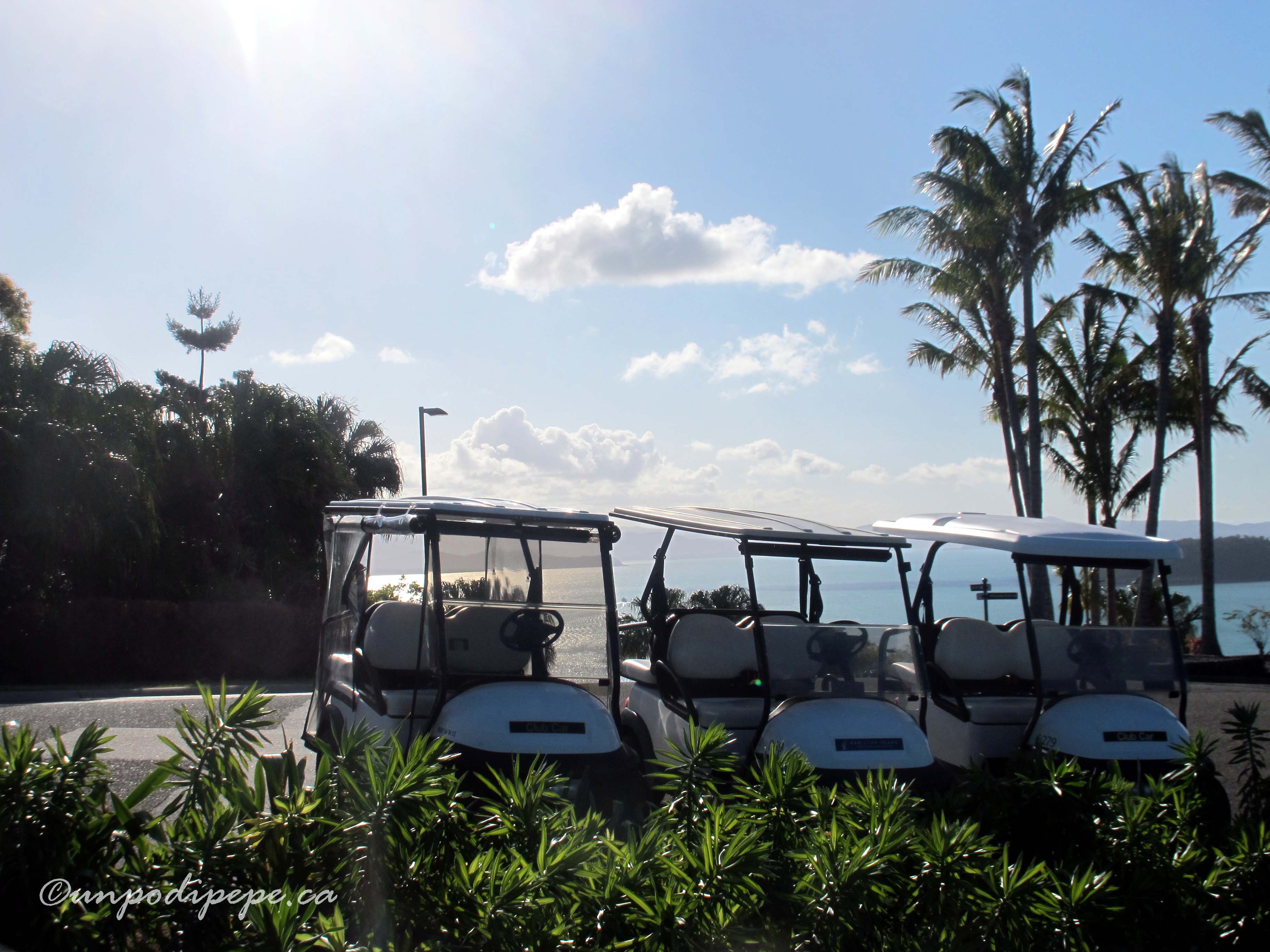
While kyacking, I was invited to Trivia Night at the Marina Tavern.  My team won and my prize was 24 hours of ‘buggy hire’.  The Whitsundays are car-free.  On Hamilton Island, you can get around on the free bus, or with a buggy-an electric golf cart.  BuggieshamiltonislandMy new friends from Argentina and I went cruising around and drove to the Church up the hill.  Since it was spring, there were farfalle (butterflies) everywhere.  Thousands of them!  They even flew through the open window while I was attempting to drive on the other side of the road.  Luckily I didn’t hit anything!ChurchhamiltonislandFarfallehamiltonisland
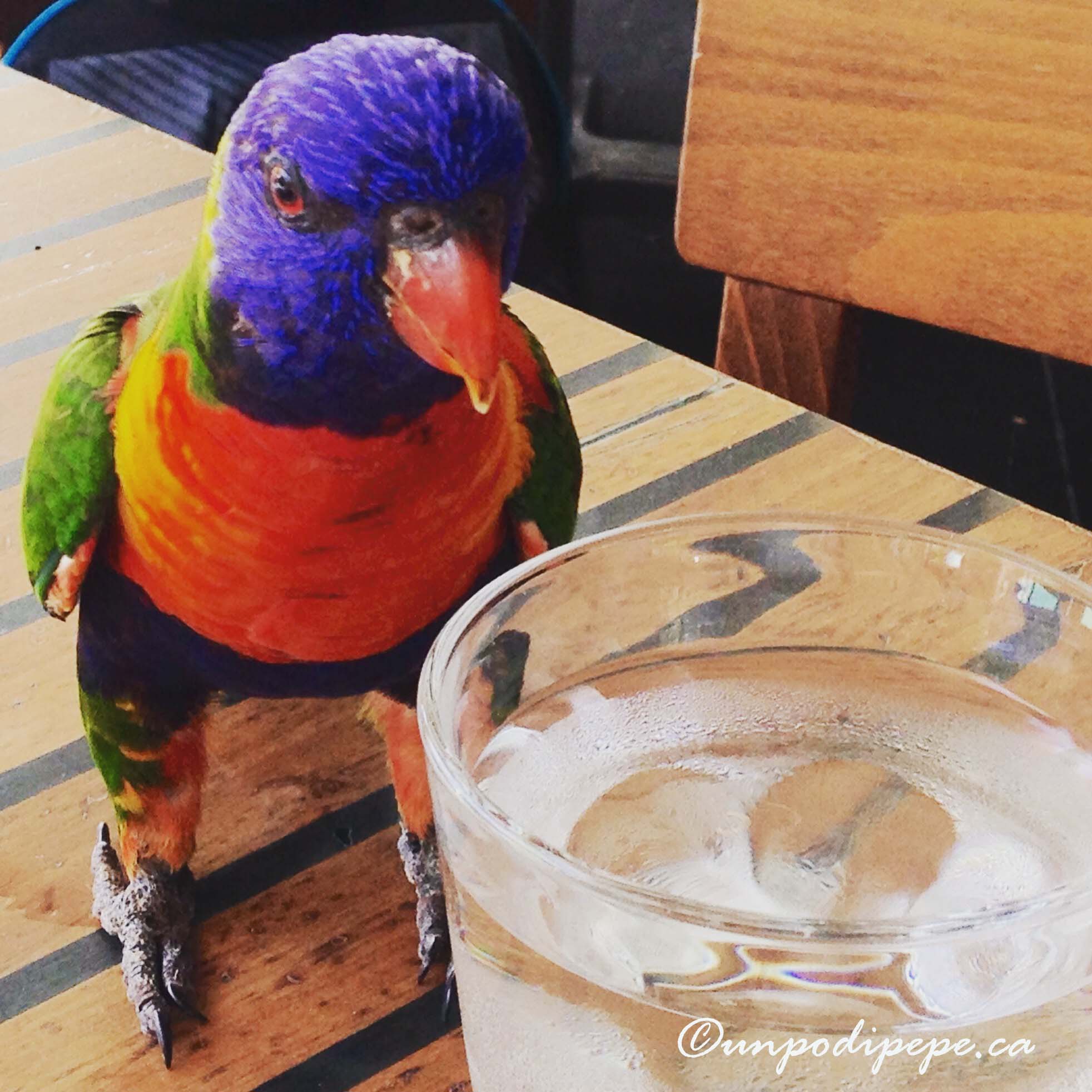
FarfalleThere was a lot of wildlife on Hamilton Island besides the farfalle.  One night I saw a wallaby as I walked back to the hotel, another night a possum.  Beautiful Rainbow Lorikeets flew all over, and became very friendly when they saw food!  Rainbowlorikeet2Lorenzo the cockatoo hung out on my balcony.  Why did I call him Lorenzo?  If you have seen paintings of Lorenzo de’ Medici’s naso (nose), you will understand!CockatooLorenzo  I hope you have enjoyed this photo journey to the Whitsundays!  Ciao, Cristina
Share this:

  • Share on Facebook (Opens in new window) Facebook
  • Share on Pinterest (Opens in new window) Pinterest
  • Share on X (Opens in new window) X
  • Email a link to a friend (Opens in new window) Email
  • Share on WhatsApp (Opens in new window) WhatsApp
Like Loading...

Giù di Sotto

21 Wednesday Oct 2015

Posted by Un po' di pepe in Photography, Travel

≈ 18 Comments

Tags

Australia, Australia travel, Brisbane, Lone Pine Koala Sanctuary, Manly, Manly Beach, Queensland, Redcliffe, Sydney, Whitsundays

Sydneyharbour‘Giù di Sotto’… is my attempt at ‘Down Under’ in Italiano. As some of you know, or figured out from my Instagram posts, I was in Australia for a few weeks. 8 days in Brisbane for a work-related course and conference, then a week of vacation. A week isn’t long, so I had to plan wisely. When I visited Australia in 1988, sailing in the Whitsundays was my most memorable place, so I decided to spend 5 days there and 2 days in Sydney before flying home. This is the first of 2 blog posts with a few scatti (shots) to highlight my quick but fabulous trip.

The Lone Pine Koala Sanctuary in Brisbane is the oldest and largest in Australia.  Koalas are molto cute.  I cuddled a koala named Cat right after she woke up from her nap and she smelled like eucalyptus. Koalas sleep 18-20 hours a day!  Their diet is only eucalyptus leaves, so their bodies have adapted to this very low energy diet.  So much for the theory that you can lose weight by eating very little!Koaladiptych

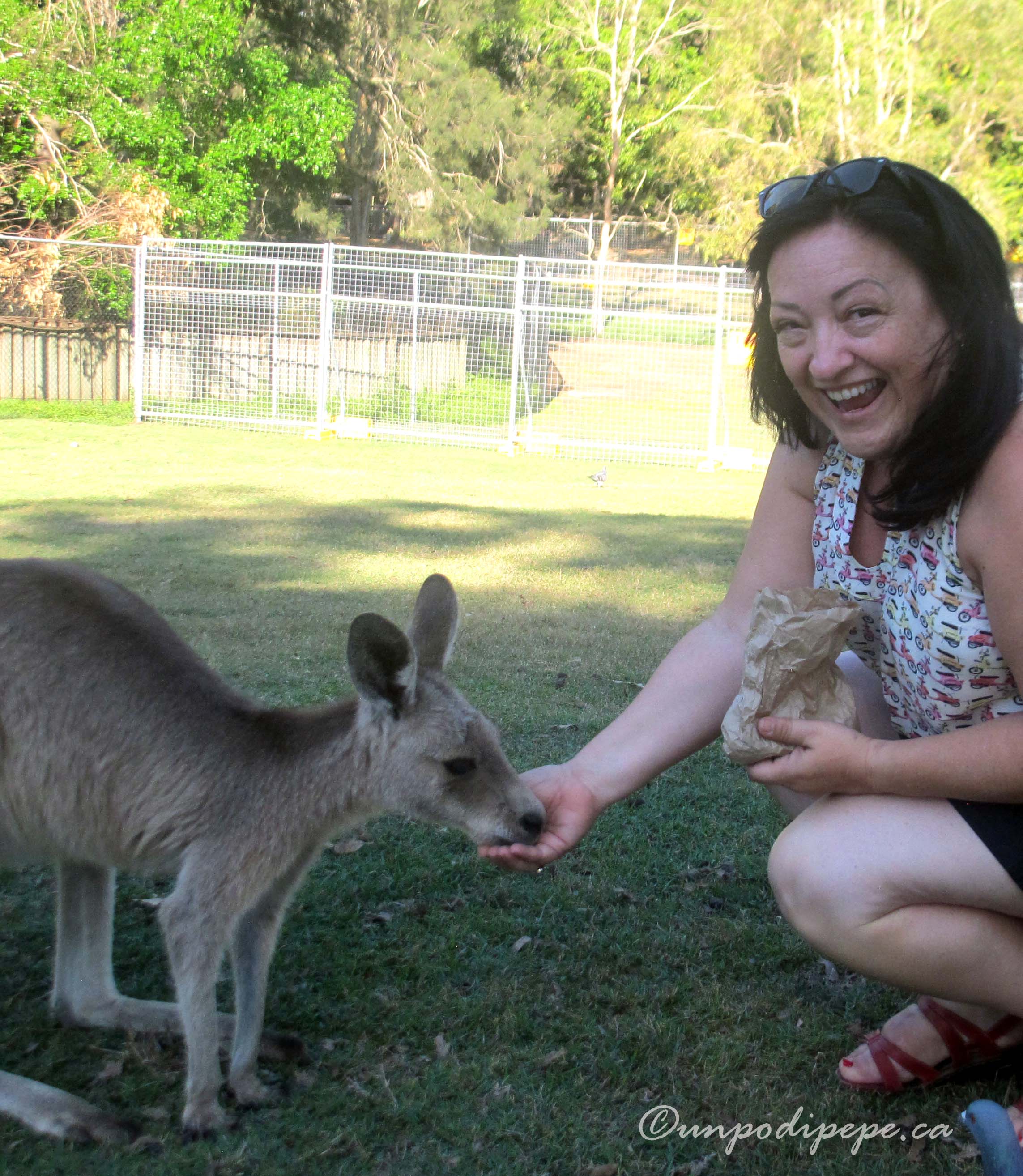
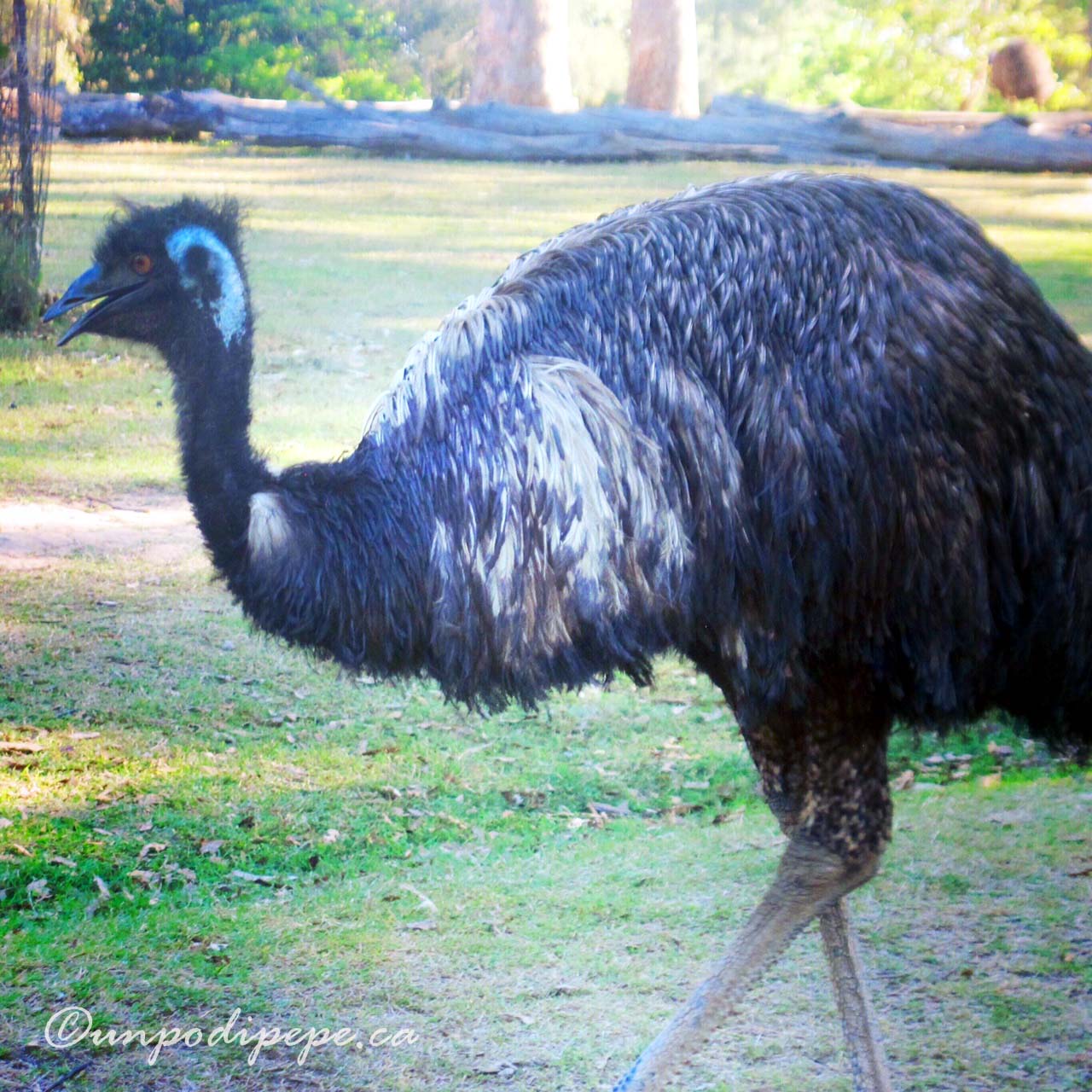
I also fed free-roaming canguri (kangaroos) while trying to keep an aggressive emu and Australian Bush Turkey from stealing my bag of kangaroo food.Canguro

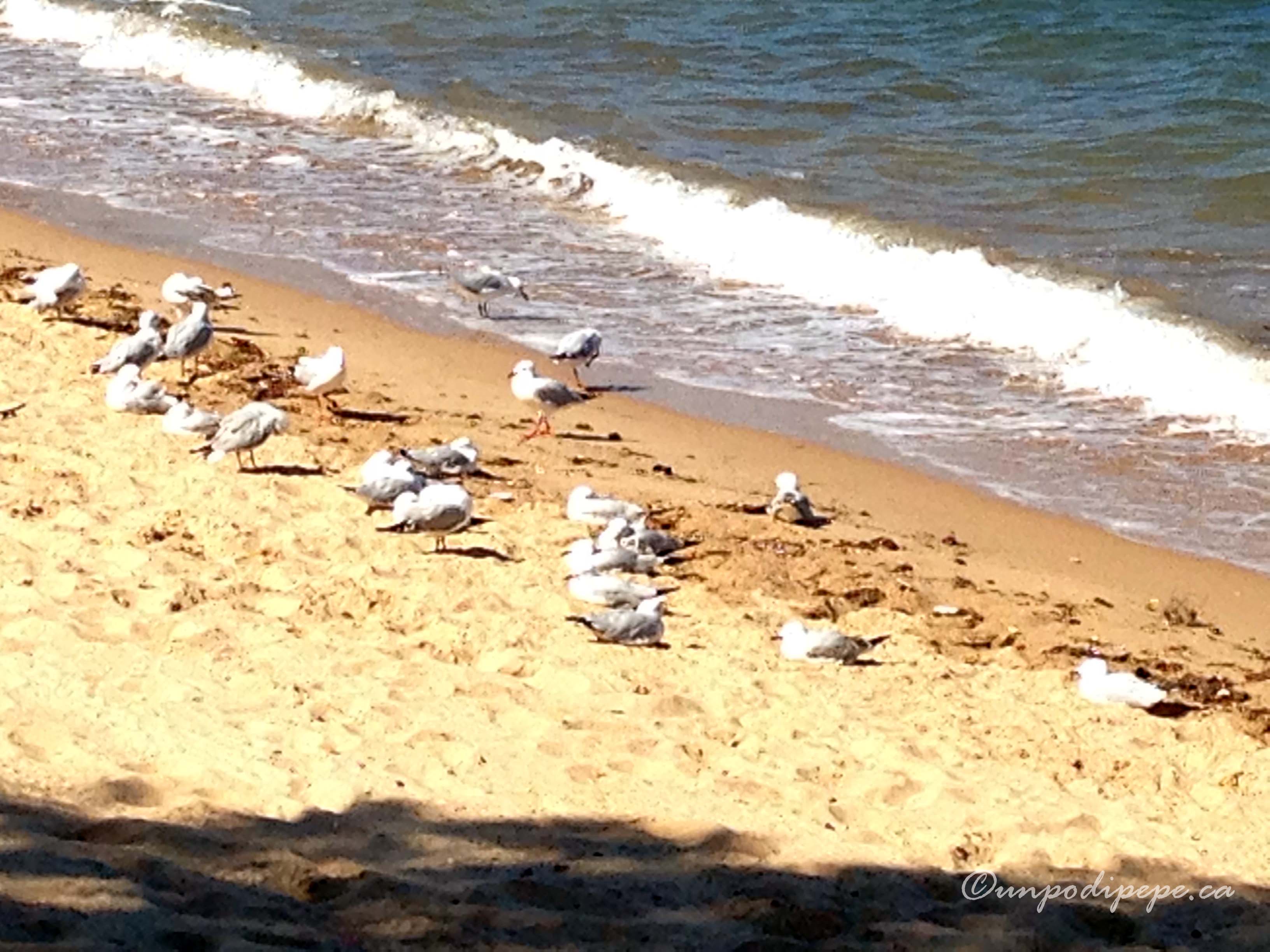
aggressiveemuI met up with Lyn and  Zoë, 2 virtual friends/fellow bloggers in Brisbane, which was molto cool. Lyn and I went to Redcliffe, where the Bee Gees are from.  The beach was nice, and we saw Australian gabbiani (seagulls).  They are so tiny!Redcliffegabbiani

One night while walking along Brisbane’s South Bank, I noticed people holding paper lanterns and I knew I should investigate.  I bought a lantern and joined the crowd.  It was the ‘Light the Night’ 3Km walk for leukemia, held all over Australia.Brisbanelightthenight

My last day and a half was in Sydney and I actually had to wear a jacket at night!   Sydney is a really large, spread out city of 4.8 million.  About 23 million people live in Australia, so that is 20% of the whole population! I spent a lot of time on ferries, which is a great way to see the city if you don’t have a lot of time.Sydneyoperahouse

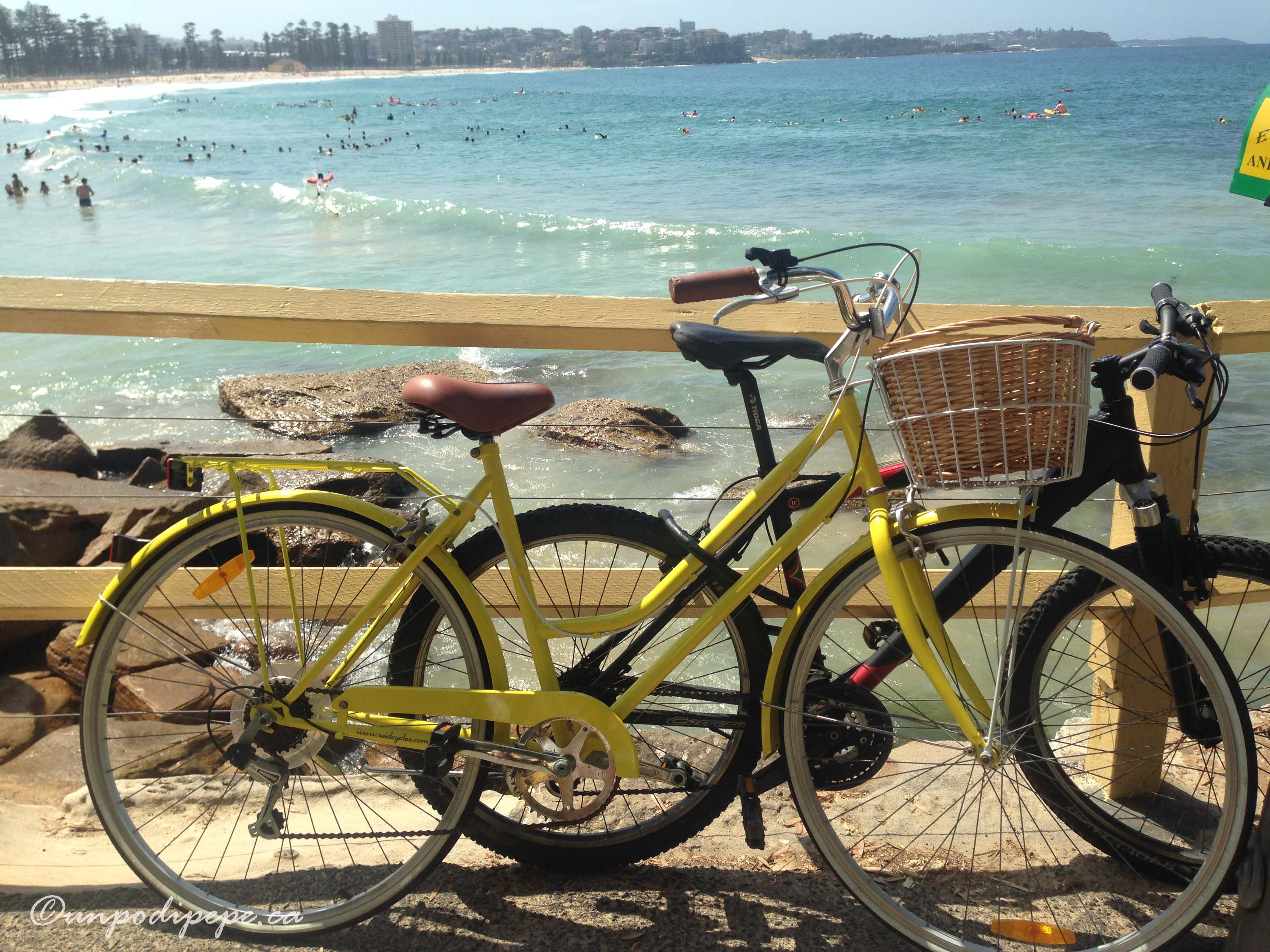
I took the ferry to Manly and met a friend.  Jelena and I had a wonderful day at the beach, walking and watching surfers ride the waves.Manlybicicletta

ManlysurfOn the ferry back to Sydney, the harbour was filled with sailboats.  SydneysailboatsChe peccato l’Australia è troppo lontano!  What a pity Australia is so far away!  I didn’t meet a single grumpy person the whole time I was there!  Hopefully it won’t be another 27 years before we meet again!  Check out some seriously beautiful Queensland scatti in ‘The Whitsundays~Giù di Sotto Part 2’.  Ciao, Cristina
Share this:

  • Share on Facebook (Opens in new window) Facebook
  • Share on Pinterest (Opens in new window) Pinterest
  • Share on X (Opens in new window) X
  • Email a link to a friend (Opens in new window) Email
  • Share on WhatsApp (Opens in new window) WhatsApp
Like Loading...

I Sassi di Matera

04 Sunday Oct 2015

Posted by Un po' di pepe in Italia, Photography, Travel

≈ 15 Comments

Tags

Basilicata, Carlo Levi, Chiese Rupestri, European Capital of Culture, I Sassi di Matera, Italian history, Italy travel tips, Luisa Levi, Matera, Sasso Barisano, Sasso Caveoso, Southern Italy, UNESCO World Heritage Sites

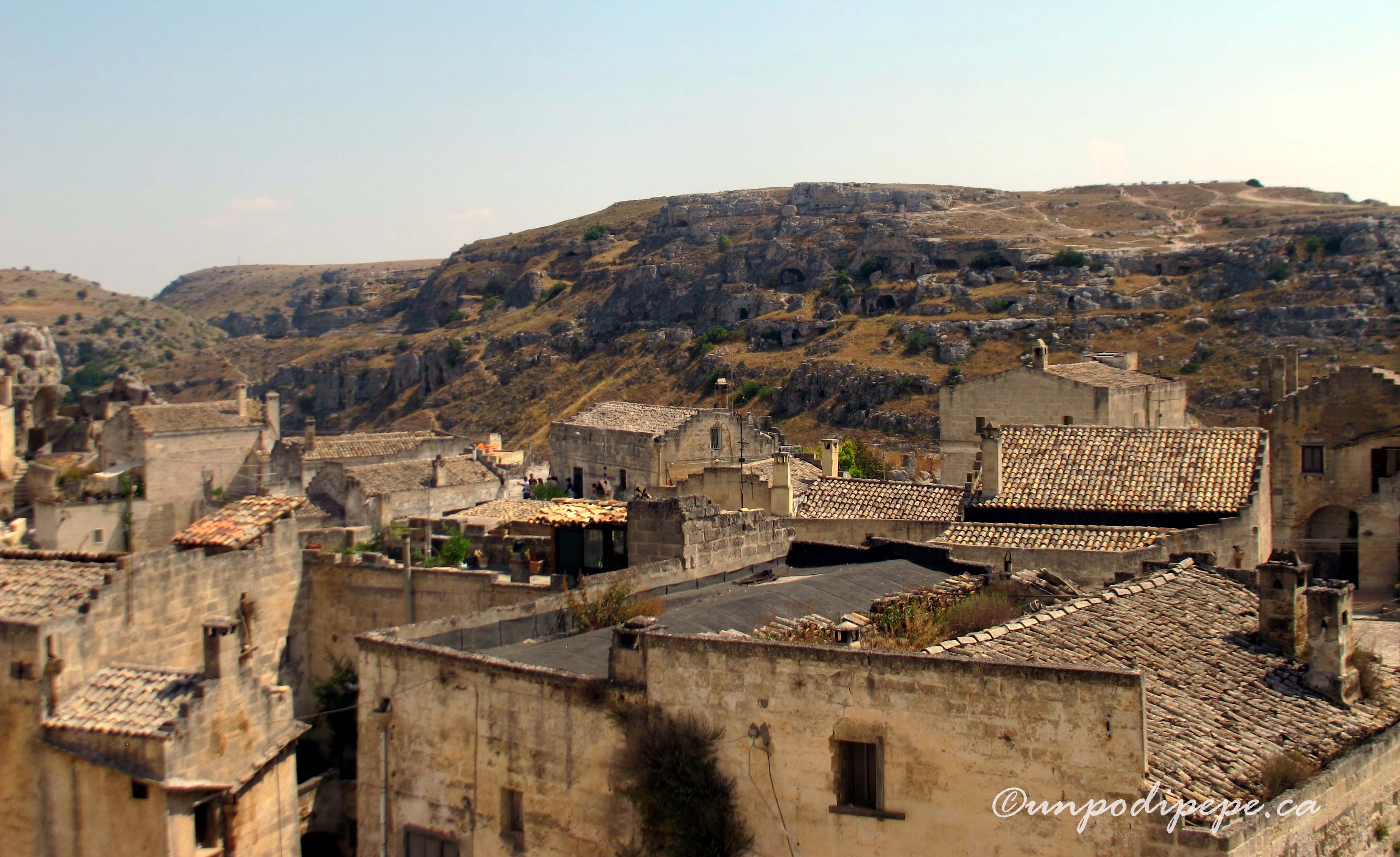
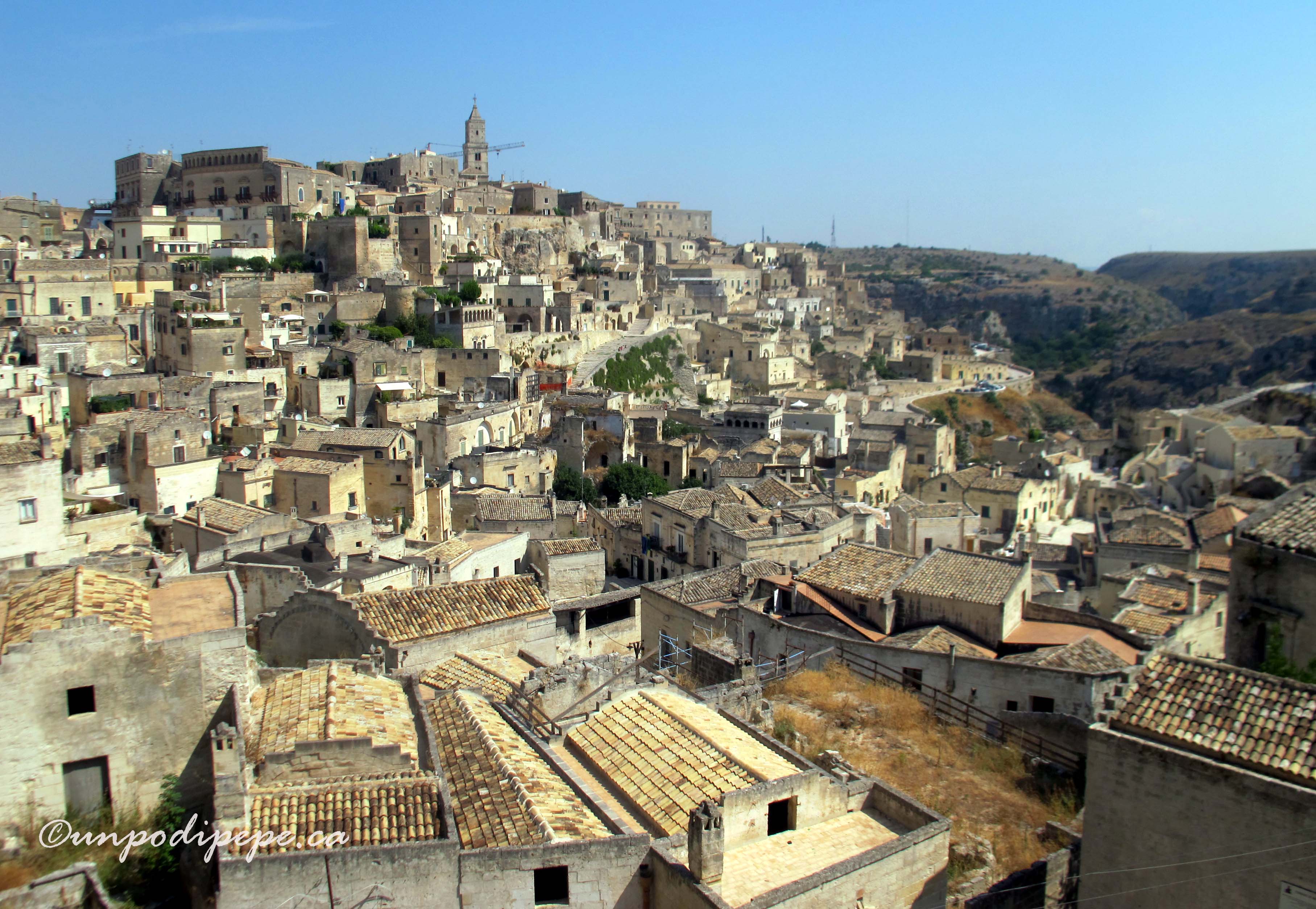
MateraMatera is a rock-cut settlement in Basilicata, the most isolated, least visited region of Italia. It is one of the world’s oldest living cities, continuously inhabited for over 9,000 years.  Clinging to a 300m gravina (ravine) carved out by the river below, Matera seems to rise straight up from the earth, built in 2 natural basins. These basins are the ‘Sassi’ districts, Sasso Caveoso and Sasso Barisano. Sassi means stones and refers to the rock cut cave dwellings. The higher ground in between the 2 Sassi districts is the Civita.  Above the Sassi, on the Piano (plain/plateau) modern Matera is barely visible. The Piano was originally used for agriculture and water collection.Materagravina

Across the canyon, the west side of the gravina is the Murgia Plateau and the Parco Archeologico Storico Naturale delle Chiese Rupestre Materano. The original stone-age settlement was on this side.  The Parco Archeologico is filled with grotte (caves), Chiese Rupestri (churches carved into the rock), Neolithic villages and tombs. From Matera, the grotte look like little mouseholes. With the invention of tools it was easier to dig into the softer tufo (calcareous rock) on the east side of the gravina and Matera was excavated from this rock.

Grotte (caves) across the ravine from Matera

Grotte (caves) across the ravine from Matera

Materapanorama2The Sassi developed in layers over time, as Matera was home to every passing civilization. On the surface the Sassi look deceiving. House fronts are facades-built in front of, on top of and around caves! Incredible systems of underground cisterns and canals were built to collect and distribute rainwater.Materapanorama5

Matera’s isolated location made the area attractive to religious communities. Between the 8th and 13th centuries, Byzantine Basilian monks escaping religious persecution lived in the grotte. There are over 150 Chiese Rupestri with priceless Byzantine frescoes throughout Matera and the Parco delle Chiese Rupestri. By the 15th century, peasants and animals occupied the grotte left by the monks.

Things moved along for the next few centuries. When Matera was the provincial capital 1663-1806, increased activity caused a rise in population. In the 18th and 19th centuries, the wealthier Materani moved into the newer town on the Piano, leaving only contadini and artigiani (farmers and artisans) in the Sassi. By the early 20th century, the Sassi could not accommodate the increased population. Overcrowding plus development of the Piano also affected the water collection systems and led to poor sanitary conditions. With less farmland available, the poverty was unbelievable. Large families shared dark, crowded case grotte (cave homes) with sheep, pigs and goats. Some were only accessible by a trapdoor and ladder. There was no electricity, running water or sewage. It’s hard to imagine these kind of living conditions.

Matera’s situation continued on unnoticed- until the 1945 release of ‘Cristo si è Fermato a Eboli’ (Christ Stopped at Eboli), Carlo Levi’s memoir about his year as a political prisoner in Basilicata in 1935/36. Levi was a doctor, writer and artist from a wealthy family in Torino. He was exiled to a small town near Matera for his Anti-fascist views. Near the beginning of the book, his sister Luisa, also a doctor, needs a permission form stamped in Matera so she can visit him. She describes the Sassi as ‘a schoolboy’s idea of Dante’s Inferno’. She states ‘I felt, under the blinding sun as if I were in a city stricken by the plague. I have never in all my life seen such a picture of poverty. ..This is how 20,000 people live!’ There was a 50% infant mortality rate, malaria, dysentery and trachoma. Eboli is south of Napoli and the title is a local expression suggesting that Christ didn’t make it as far as Basilicata so they are beyond civilization and hope.Materasassibn

Carlo spends a few hours in Matera near the end of the book and says ‘I had time to see the town and then I understood my sister’s horror, although at the same time I was struck by it’s tragic beauty’. I’ve read this book twice and definitely recommend it. It is very philosophical and it is obvious from Levi’s writing and painting that this experience affected him profoundly. His paintings from Basilicata are on display in the Museo di Arte Medievale e Moderna in Palazzo Lanfranchi.

Levi’s book became internationally known and brought to light the living conditions in Basilicata. Matera became ‘La Vergogna Nazionale’ the National Shame. The Sassi were declared unsafe and unsanitary, although only 30% were actually unsafe. US experts on rural relocation were brought in as consultants. Instead of temporarily relocating the residents while the structurally unsafe areas were fixed, the government forcibly relocated almost everyone to poorly planned government housing. Starting in 1952, 16,000 people were removed from the Sassi to new apartments in the ‘modern town’ that were built facing away from the Sassi. The move isolated families and the community and made them feel ashamed for being poor. An unfortunate example of a patronizing, poorly conceived plan to help people without consulting them or addressing the real problem.Materasassocaveoso3

The Sassi became an archeological ghost town in the 1960’s,mostly abandoned except for a few families who had stayed or moved back in. In the 1970’s squatters, local hippies, artists and drug dealers lived in the Sassi. A group of young locals formed Circolo La Scaletta, an organization that lobbied for restoration of the Sassi and protection of the frescoes. One of their supporters was Carlo Levi, now an Italian senator. Yeah Carlo! In the 1980’s laws were passed protecting the Sassi and Chiese Rupestri.

In 1993 the Sassi finally went from shame to fame when UNESCO declared I Sassi di Matera e il Parco delle Chiese Rupestri a world heritage site. Calling it ‘the most outstanding intact example of a troglodyte (cave dweller) settlement in the Mediterranean region, perfectly adapted to its terrain and ecosystem’. Today about 3,000 people live in the Sassi. 50% are occupied and more continue to be restored. In Sasso Caveoso, some areas are still unsafe and blocked off. Now Matera has sassi hotels, bed and breakfasts, ristoranti, offices, artisan shops and galleries as well as homes.Materauccelli

Photogenic Matera has played ancient Jerusalem in several movies, including Pasolini’s ‘Il Vangelo Secondo San Matteo’ (1964), Mel Gibson’s ‘The Passion of the Christ’ (2004), and ‘Ben Hur’ (2016).

Matera was selected as the European Capital of Culture for 2019 and will host cultural events raising its visibility and profile internationally.  Luckily, Matera is not the easiest place to get to, which will prevent it from becoming an overcrowded tourist theme park like Capri!

Exploring Matera.  Photo by D Goodheart

Exploring Matera. Photo by D Goodheart

There is something very special about this hauntingly beautiful place.  As I wandered through the alleys and mazes of Matera, I was reminded once again of the amazing courage and resilience of our contadini ancestors.

Stay tuned for more posts about Matera!

Share this:

  • Share on Facebook (Opens in new window) Facebook
  • Share on Pinterest (Opens in new window) Pinterest
  • Share on X (Opens in new window) X
  • Email a link to a friend (Opens in new window) Email
  • Share on WhatsApp (Opens in new window) WhatsApp
Like Loading...

I Trulli di Alberobello

24 Wednesday Jun 2015

Posted by Un po' di pepe in Italia, Photography, Puglia, Travel

≈ 26 Comments

Tags

Alberobello, Architecture, Bandiera Arancione, Italian history, Italy travel tips, Puglia, Rione Aja Piccola, Rione Monti, Southern Italy, Trulli, UNESCO World Heritage Sites, Val d'Itria, Vernacular architecture, Zona dei Trulli

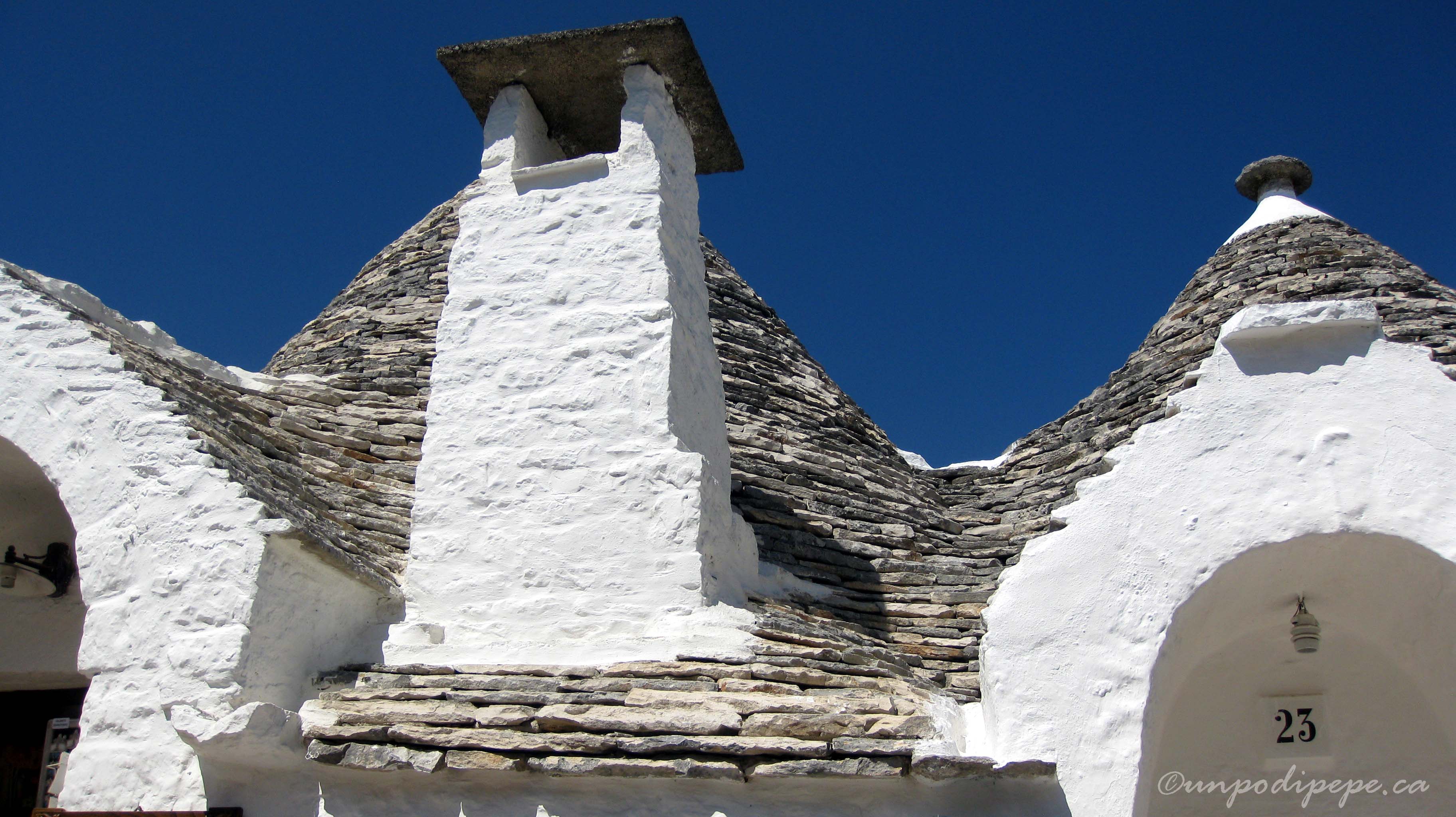
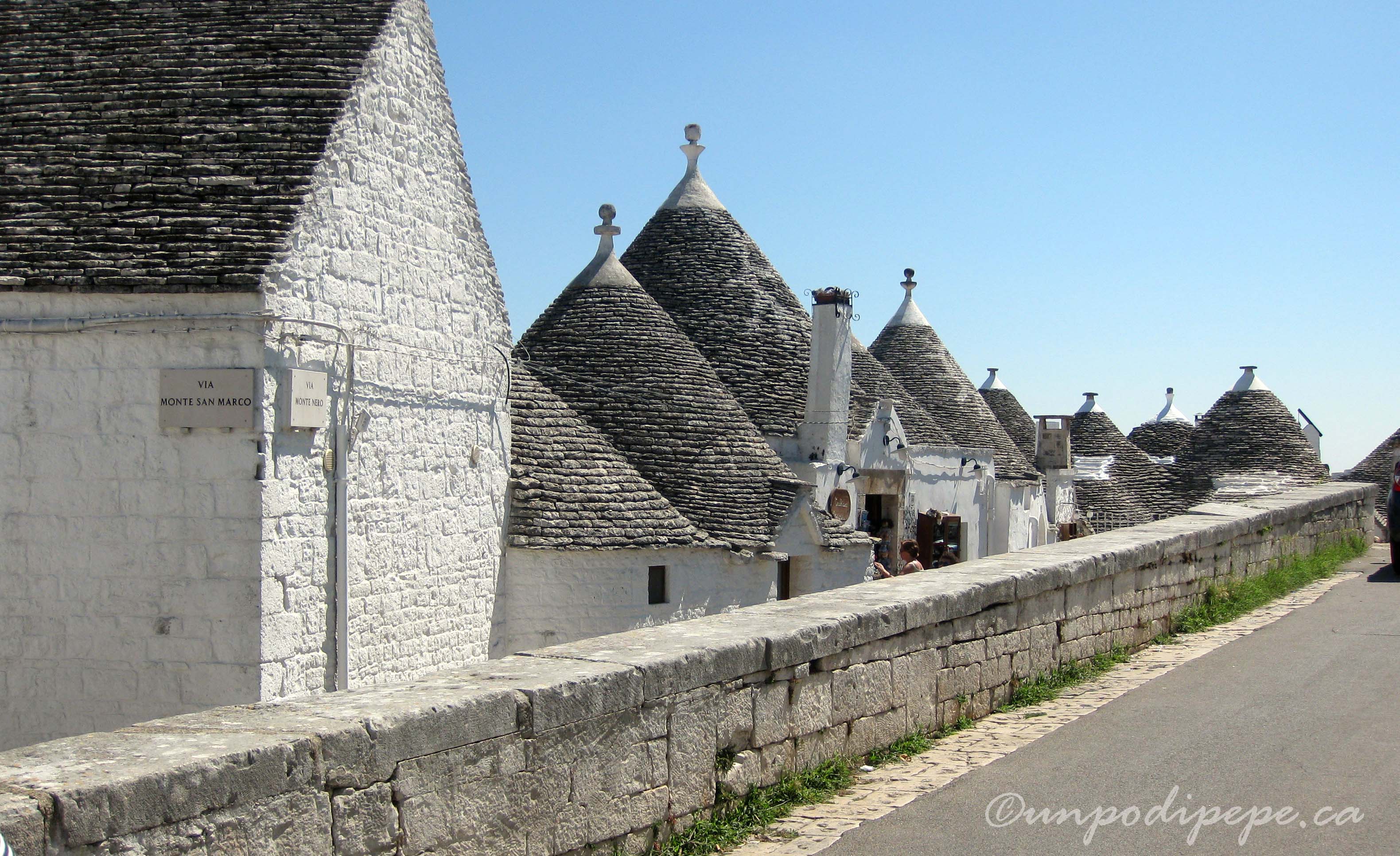
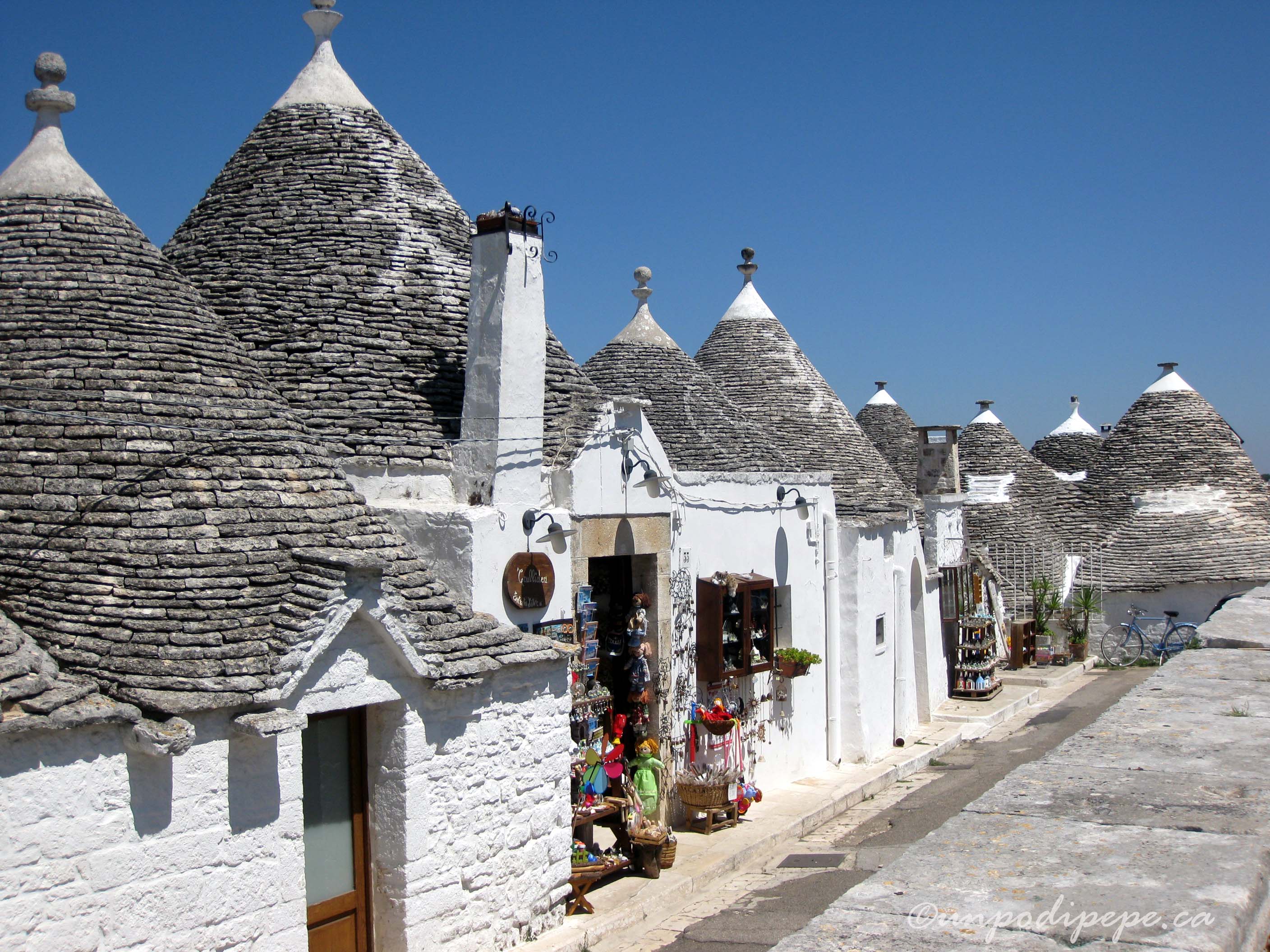
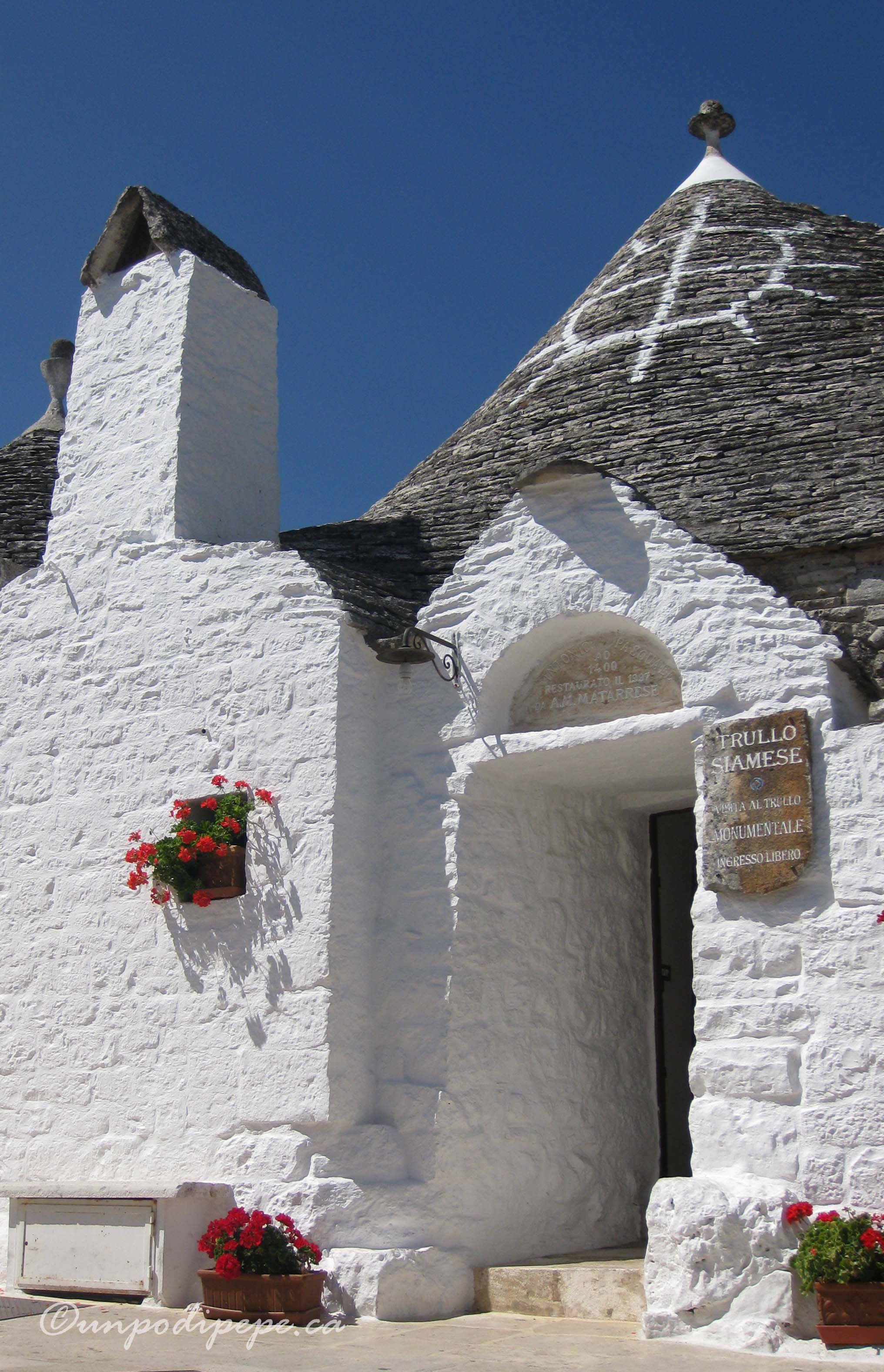
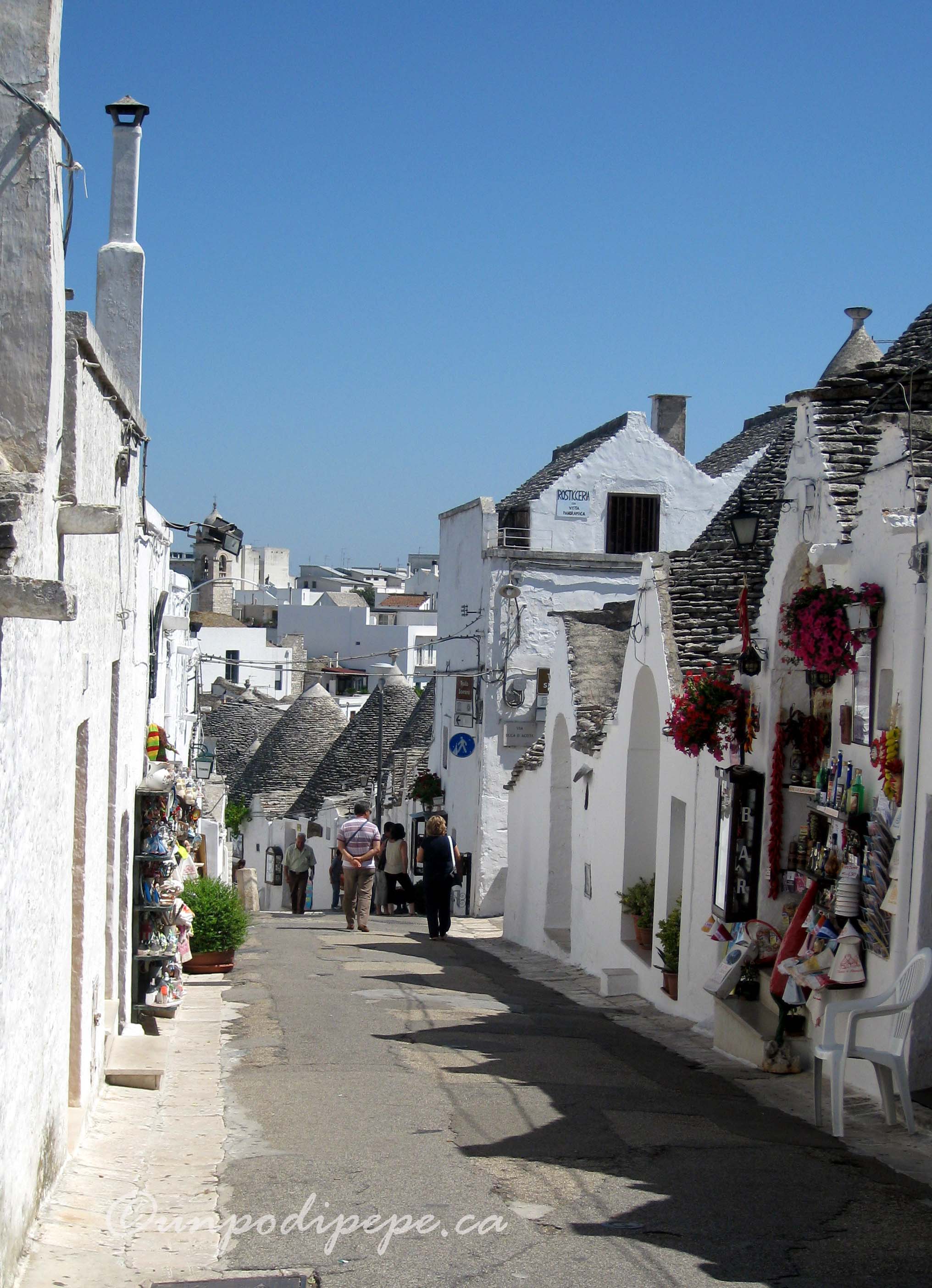
TrulliecielobluAs the car nears Alberobello, trulli (TROOL•lee) start to appear in the rural landscape and my imagination goes into overtime.  I hear the tune ‘La-la-la-la-la-la, la-la-la-la-la’ in my head and I expect i Puffi (the Smurfs) to start dancing around the whitewashed trulli! Too much midday Pugliese sun maybe?  Trulli are traditional limestone houses unique to the Val d’Itria in Southern Puglia.  They were built ‘a secco’, which means dry-without mortar.  Trulli have domed cone-shaped roofs built up of overlapping chiancharelle (kyan•ka•REL•leh)-grey limestone slabs.  On the capstone at the top is a decorative pinnacolo (pinnacle).  The shape of the pinnacolo is said to be a signature of the stonemason who built it.  Some roofs also have mythologic or religious symbols painted on them.

Alberobellostrada‘La Zona dei Trulli’ includes the areas around Locorotondo, Fasano, Cisternino, Martina Franca, Ceglie Massapica and the largest concentration of 1,620 trulli in Alberobello.  Alberobello and its trulli are aUNESCO World Heritage Site. UNESCO believes Alberobello is an exceptional example of the survival of prehistoric building techniques that are still in use. The fact that the buildings are so well-preserved and still occupied make the site unique.Alberobellobiancheria

The word trullo comes from tholos (τρούλος) a variation of the Greek word for cupola or dome. There were already scattered trulli settlements in the Val d’Itria around the year 1000.  These gradually grew into villages, later called Aja Piccola and Monti-the 2 trulli districts in Alberobello today. The oldest trulli we know of date back to about 1350 when the Counts Acquaviva of Conversano were given land for their service during the Crusades and colonized the area by moving people from their nearby areas.Alberobellostrada2

Tradition has it that building ‘a secco’ was imposed on the settlers so their houses could be dismantled quickly and easily. At first this was so the Count could easily dispossess villagers of their homes. Later it was a way to evade taxation imposed on each new construction by the King of Napoli. Trulli could be dismantled when the tax collector came by for an inspection, and then reconstructed just as quickly when he left. Trulli came to be known as temporary, unstable field shelters that were not worth taxing.

Trullo Siamese.  2 brothers in love with the same woman lived here.  They split it in half and the single brother installed a door into the lane.

Trullo Siamese. 2 brothers in love with the same woman lived here. They split it in half and the single brother installed a door into the lane.

In reality, trulli are anything but unstable or primitive. They are built directly on the underlying natural rock and their internal structure is very durable. The thick double walls keep the trullo warm in winter and cool in summer. There are systems for collecting rainwater using eaves projecting at the base of the roof diverting water through a channelled slab into a cistern underneath the trullo. Some trullo homes are made up of groups of 2- 5 trulli.  Most historians agree that the building technique for trulli came about due to the area’s geographical conditions and abundance of limestone. The quickie evictions and tax evasion scam came later.trulliombra

In the early 1600’s there was a group of about 40 trulli in Rione Monti (Monti District) then settlement and trullo construction really expanded with the addition of a bakery, mill, tavern and butcher shop.   In 1797 the feudal rule of the Acquaviva family ended when Ferdinand IV, King of Napoli proclaimed the community a ‘citta regia’, or royal town.  Alberobello took its name from silva arboris belli, the Latin name for the region.

Inner-city trulli?

Inner-city trulli?

Today Rione Monti has 1,030 trulli and Rione Aja Piccola has 590 trulli, many of which are still inhabited as homes by some of Alberobello’s 11,000 residents.  You can also find the trullo church of Sant’Antonio di Padova, trullo souvenir shops and ristoranti, and a trullo hotel.  In the surrounding countryside there are many trullo masserie (farmhouses) that can be rented.

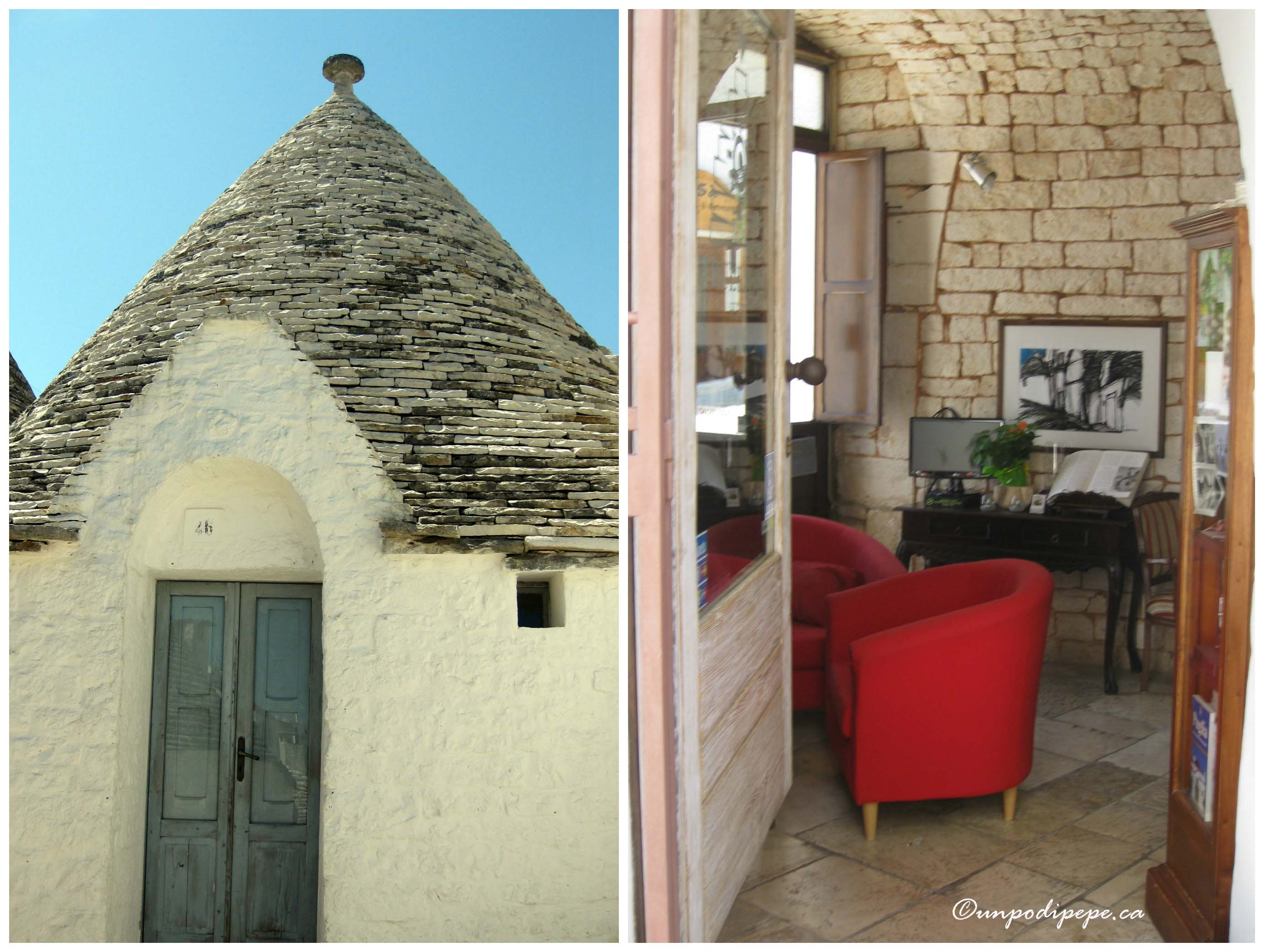
Exterior of a single trullo and interior of a trullo photo and art gallery

Exterior of a single trullo and interior of a trullo photo and art gallery

In 2010 along with Orsara di Puglia, Alberobello was distinguished with a Bandiera Arancione (orange flag) designation, a seal of quality from the Touring Club Italiano.  Alberobello can be accessed by train or bus from Bari. Although Alberobello is quite ‘touristy’, it still retains its charm and is definitely worth a visit.  If you can brave the mid-day sun in the summer, the cast shadows against whitewashed walls are an artist’s and photographer’s dream….but if you start dreaming about i Puffi, you had better go find some shade!

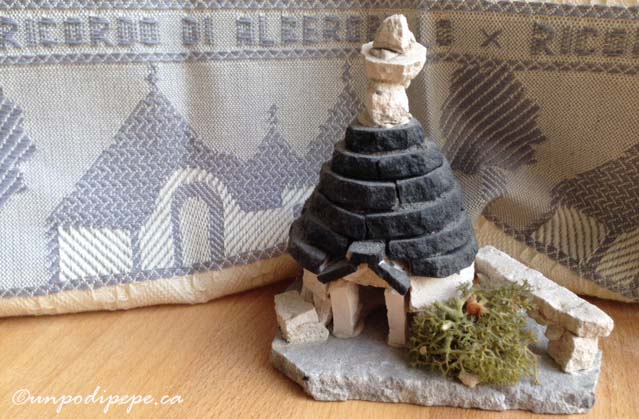
Alberobello souvenirs.  A linen towel and my very own very cute trullo.  I bought it the first time I visited Alberobello.  It's made of real limestone and chiancharelle.

Alberobello souvenirs. A linen towel and my very own very cute trullo. I bought it the first time I visited Alberobello. It’s made of real limestone and chiancharelle.

Not all of the buildings in Alberobello are trulli

Not all of the buildings in Alberobello are trulli

alberobelloombra

Ciao, Cristina

Share this:

  • Share on Facebook (Opens in new window) Facebook
  • Share on Pinterest (Opens in new window) Pinterest
  • Share on X (Opens in new window) X
  • Email a link to a friend (Opens in new window) Email
  • Share on WhatsApp (Opens in new window) WhatsApp
Like Loading...

Over Lago Maggiore

22 Sunday Mar 2015

Posted by Un po' di pepe in Amici e Famiglia, Italia, Photography, Travel

≈ 8 Comments

Tags

Angera, Eremo Santa Caterina del Sasso, Isola Bella, Isola Pescatori, Isole Borromee, Italy travel tips, La Rocca d'Angera, Lago Maggiore, Lounge Bar La Noce, Milano daytrips, Palazzo Borromeo

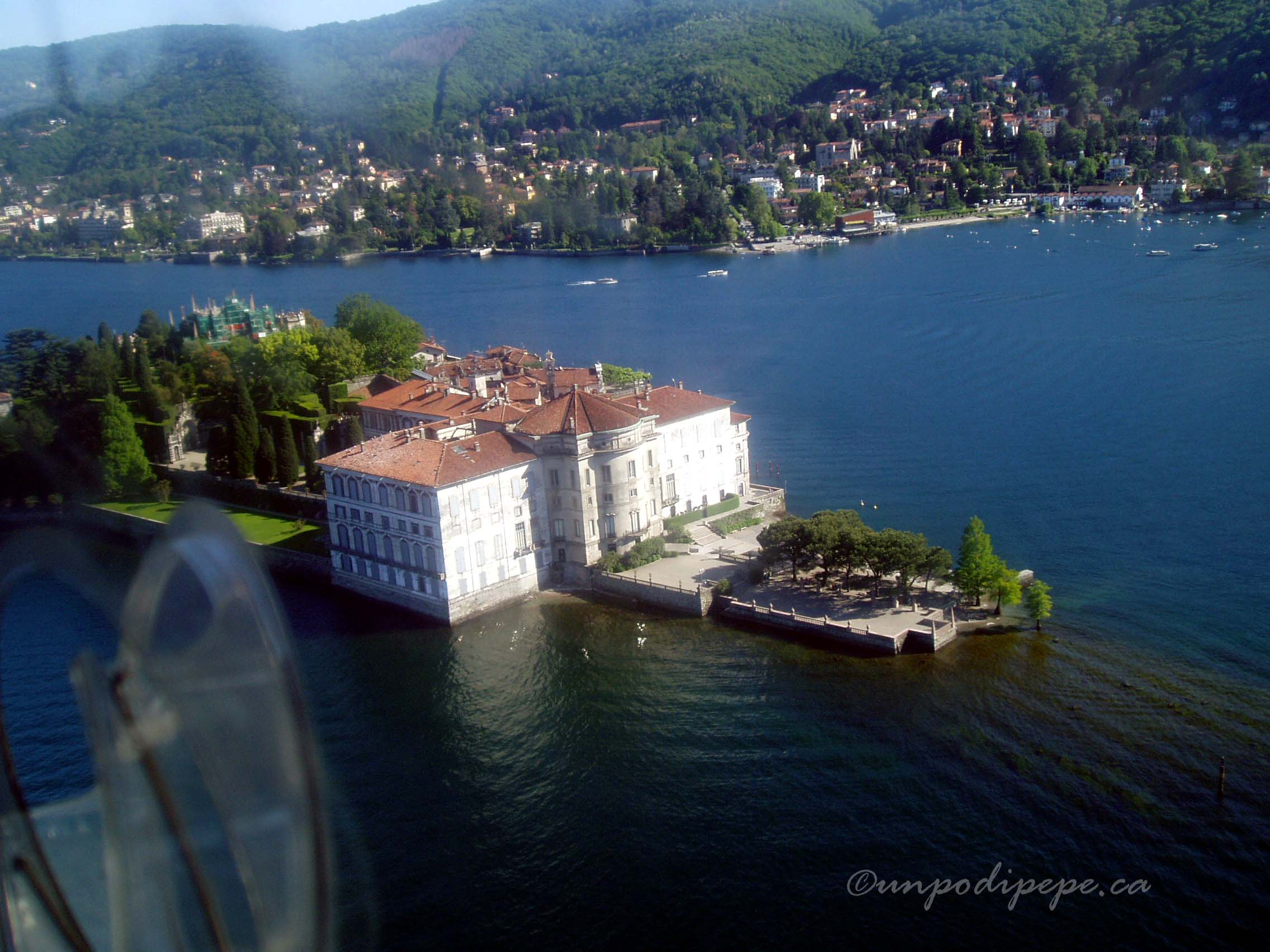
A few years ago I went to Angera on the eastern shore of Lago Maggiore to visit my cugini Rosa and Pasquale and their family.  They own Lounge Bar La Noce which is right on the lake. Pasquale took me up for a spin in his ultralight and I ended up with some ‘vista d’uccello’ (bird’s eye view) shots of l’Isole Borromee, 3 small islands in the Italian part of Lago Maggiore.

Isola Bella

Isola Bella is named for Contessa Isabella D’Adda, wife of Carlo Borromeo III.  It was once a big flat rock in the lake with a tiny fishing village.  Over a 40 year period in the 1600’s soil was brought in to build 10 terraces for the gardens and a summer palace.  Famous palace guests include Napoleon and Josephine.

Isola Madre

Isola Madre is the largest of the 3 islands.  The 16th Century Palazzo Borromeo was built by Count Lancillotto Borromeo -what an awesome name!  The English style Giardini Botanici dell’Isola Madre (Botanical Gardens) were built in the 18th Century on the site of a citrus grove.

Isola Pescatori

Isola Superiore dei Pescatori -usually just called Isola Pescatori, is named for the fisherman.  The village has about 50 permanent residents, and a few of them are actually still fishermen. Isola Pescatori was owned by the Borromeo family until the middle ages but is now part of Stresa. There are several hotels and restaurants on the island and taxi boat service from Stresa.

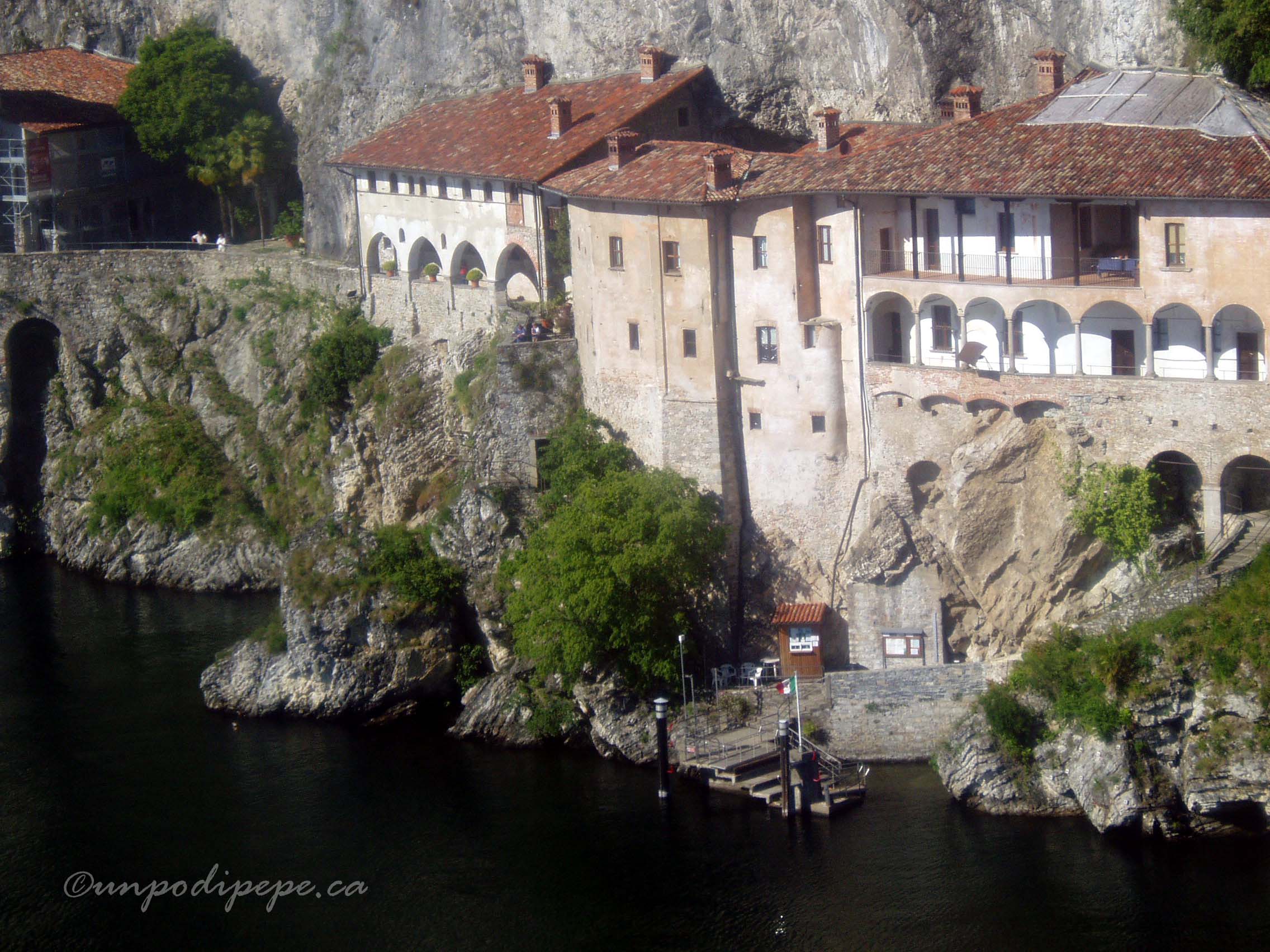
Eremo Santa Caterina del Sasso, a monastery founded by a man shipwrecked during a storm.  He swore that if he survived he would dedicate his life to building a monastery on the site.

Eremo Santa Caterina del Sasso, a monastery founded by a man shipwrecked during a storm. He swore that if he survived he would dedicate his life to building a monastery on the site.

La cabina di pilotaggio (cockpit) & i piloti!  I don't remember how we managed to take this blurry selfie in the cockpit?

La cabina di pilotaggio (cockpit) & i piloti! I don’t remember how we managed to take this blurry selfie in the cockpit?

La Rocca d'Angera on the hill with Lounge Bar La Noce below.  Photo Pasquale D'Ambrosio.

La Rocca d’Angera on the hill with Lounge Bar La Noce below. Photo Pasquale D’Ambrosio.

Angera (pop 5600) was an important lake point in Roman times, when it was called Angheria.  Today it is most famous for La Rocca d’Angera (Castello Borromeo) a fortress on top of a 200m hill overlooking Lago Maggiore.  The 1989 RAI miniseries ‘I Promessi Sposi’, based on the 1827 novel by Alessandro Manzoni was filmed here.  La Rocca is also home to Il Museo delle Bambole, a doll museum.  The Borromeo family still owns La Rocca d’Angera, Isola Bella and Isola Madre but they are accessible to the public. Boats to l’Isole Borromee (www.navigazionelaghi.it) are available from the lakefront towns of Stresa, Laverno, Pallanza and Intra.  Some hotels and restaurants also have their own private boat service.

Angera is a nice day trip from Milano.  There is no direct train but the closest route is the train to Sesto Calende then bus to Angera or the train to Arona and then a ferry across the lake to Angera. Buon Viaggio!

Cigne Angera

Share this:

  • Share on Facebook (Opens in new window) Facebook
  • Share on Pinterest (Opens in new window) Pinterest
  • Share on X (Opens in new window) X
  • Email a link to a friend (Opens in new window) Email
  • Share on WhatsApp (Opens in new window) WhatsApp
Like Loading...

Un Giorno a Roma

15 Monday Sep 2014

Posted by Un po' di pepe in Italia, Roma, Travel, Travel tips

≈ 11 Comments

Tags

Bernini, Caravaggio, Colosseo, Elefantino, Fontana di Trevi, Il Vittoriano, Italia, La Barcaccia, Pantheon, Roma, Roma photography, Roma walking tour, Roman Forum, San Luigi dei Francesi, Tazza d'oro

TreviRoma truly is ‘la Città Eterna‘-the eternal city! I usually fly in and out of Roma then take the train to Foggia on my way to Orsara di Puglia. I often have one full day in the city at the beginning or end of my trip. When i’m in Roma for just 1 day, I have a usual ‘itinerary’. I do not actually recommend anyone go to Roma for just one day, especially for the first time. 5 days will do but more is better.  One day only gives you enough time to visit a few sites, so it is mostly an entire day of exploring the city on foot. The sites I choose to visit change a bit each time, but the route is basically the same. I also recommend reading Beat the heat-Surviving Summer in Roma.

I stay with a friend in the Basilica San Paolo area so I take the Metro blue line to the Colosseo stop, exit the station and take a few minutes to absorb the view across the street, which never fails to impress.

The view across the street from the 'Colosseo' metro stop!

The view across the street from the ‘Colosseo’ metro stop!

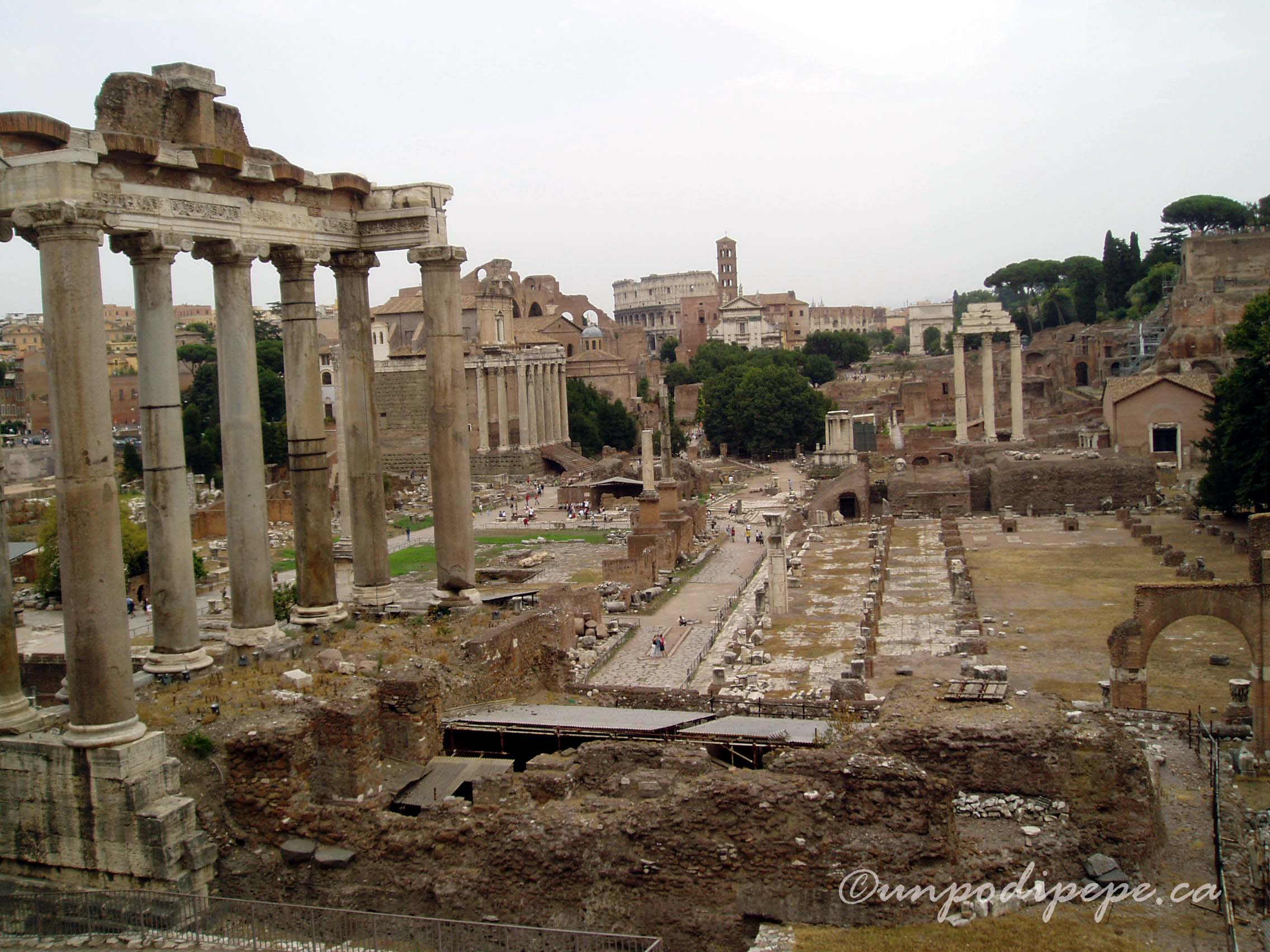
Then I turn right and walk along Via dei Fori Imperiali.  If you visit Il Colosseo, the ticket includes entry to the Forum, so you can walk through there.  Visiting these 2 awesome sites will take all morning, so they are not usually part of my ‘1 day’ itinerary.

View of the Roman Forum (Foro Romano)

View of the Roman Forum (Foro Romano)

Old meets new at the Foro Romano

Old meets new at the Foro Romano

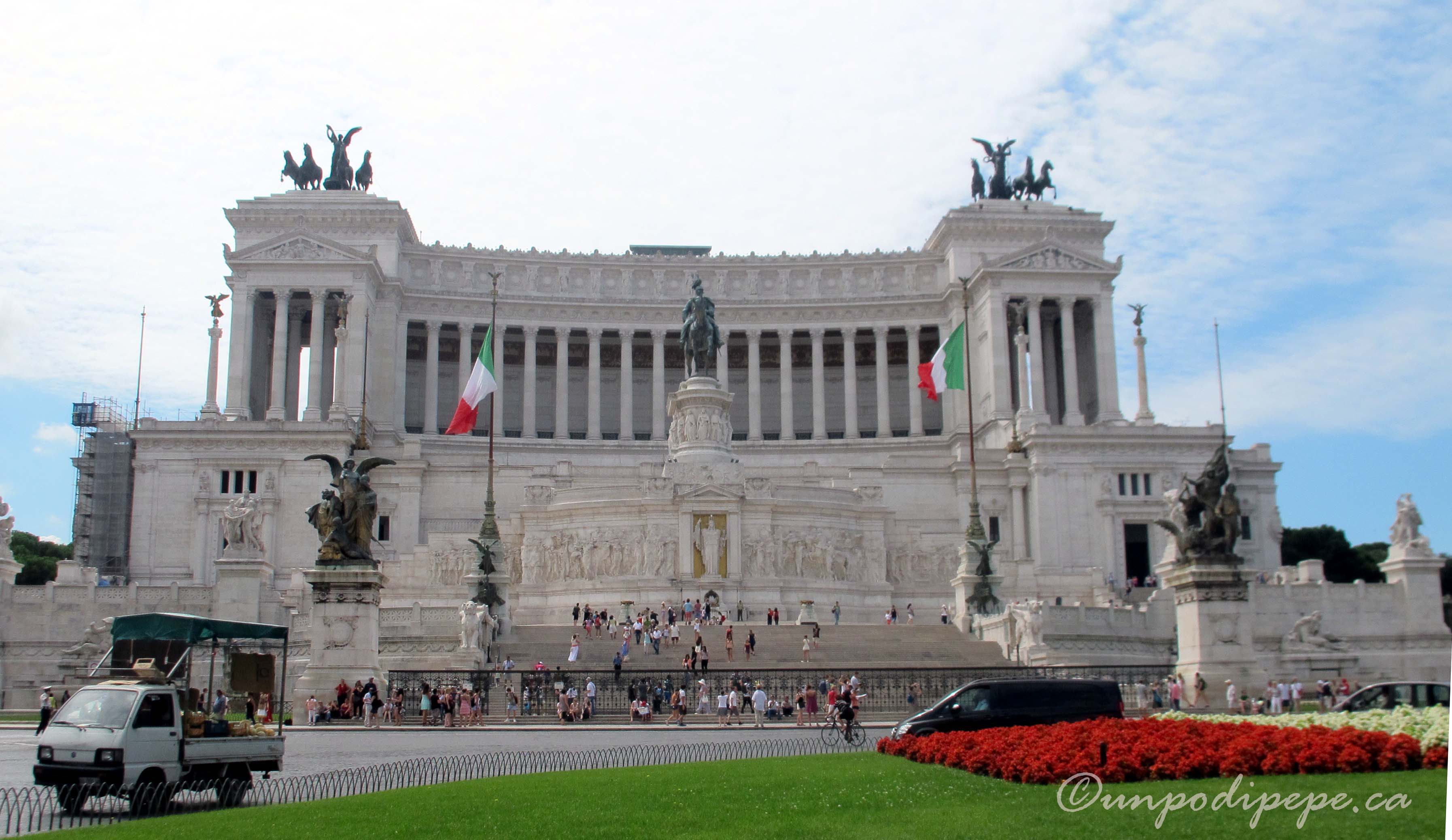
I walk along Via dei Fori Imperiali all the way to Piazza Venezia and Il Vittoriano, which is the neo-classical monument that looks like a giant wedding cake .

Il Vittoriano

Il Vittoriano

If you want some great views of Roma and are not afraid of heights, take the glass elevator to the rooftop terrace.

'Roma dal cielo' view from the roof of Il Vittoriano

‘Roma dal cielo’ view from the roof of Il Vittoriano

Then I turn right again and cross Piazza Venezia, which can be a bit of a challenge, and walk along Via del Corso. Via del Corso is lined with shops and goes all the way to Piazza del Popolo.

Crossing the street can be challenging! Photo taken by Vito!

Crossing the street can be challenging! Photo taken by Vito!

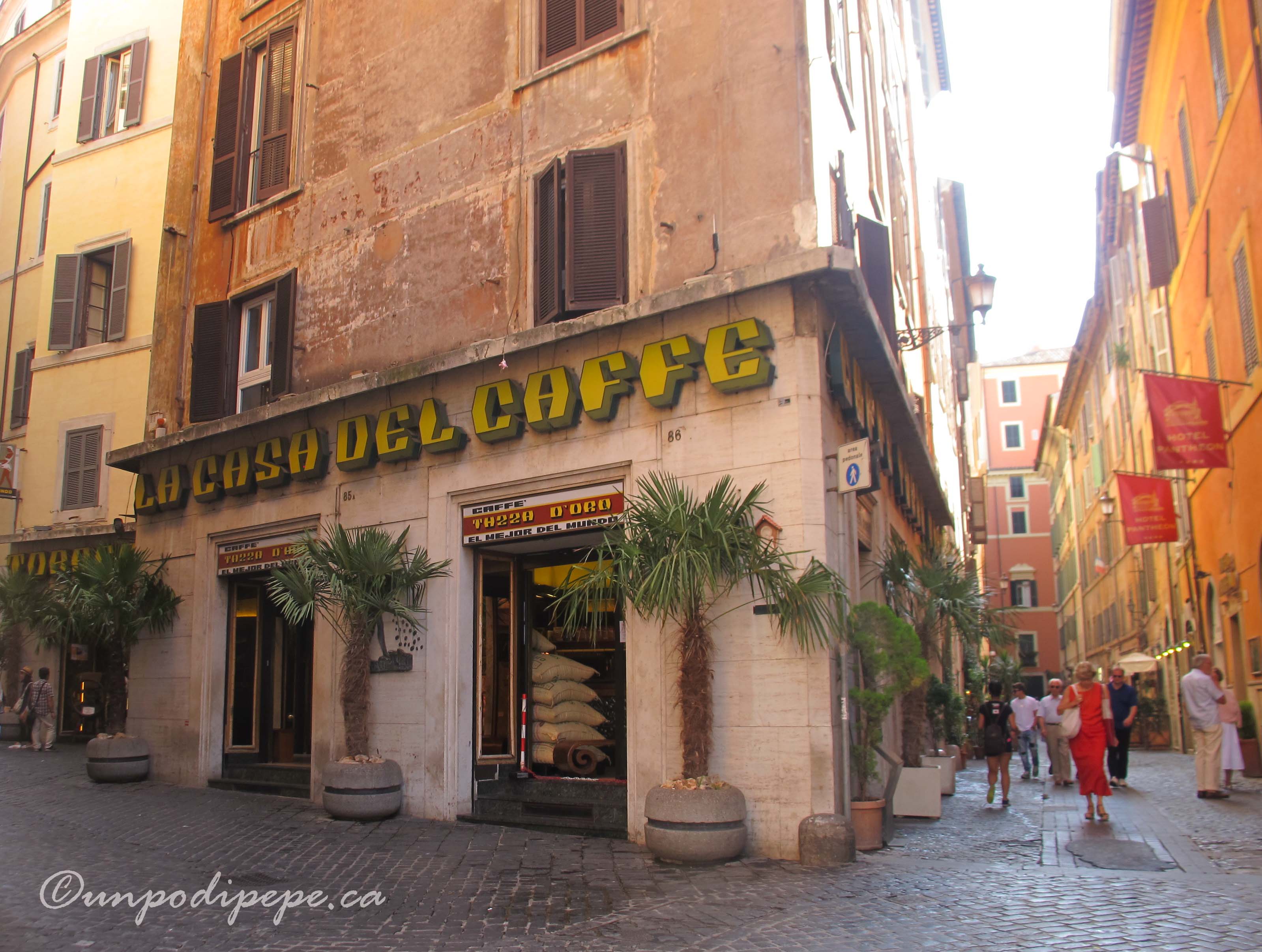
I turn into one of the side streets on the left and walk to the Pantheon-the domed architectural masterpiece that is absolutely not to be missed! The 2000 year old roof is the largest unreinforced concrete dome in the world.*IlPantheonAcross the street I have an incredible granita di caffè at Tazza d’Oro.

Tazza d'Oro, Via degli Orfani 84

Tazza d’Oro, Via degli Orfani 84

Granita di caffe

Granita di caffe

Behind the Pantheon is Santa Maria Sopra Minerva with Bernini’s adorable ‘elefantino’ sculpture in the piazza.  I sometimes like to sit and sketch the pudgy little elephant carrying a 5m Egyptian obelisk on its back.

Bernini's elefantino in Piazza Minerva. Behind the obelisk, you can see the domed roof of the Pantheon.

Bernini’s elefantino in Piazza Minerva. Behind the obelisk, you can see the domed roof of the Pantheon.

The molto fancy ‘Grande Hotel de la Minerve’ across from the church has a roof bar with incredible views. Down a side street – Via del Gesù- is Poggi art supplies www.poggi1825.it , so of course I have to stop there and drool at all the stuff I can’t carry home. I also pop into the little Baroque gem San Luigi dei Francesi, which is the National church of France in Roma. It has 3 incredible Caravaggio paintings-the ‘San Matteo’ cycle, in the Capella Contarelli which you can see for free! No lineups, no online bookings!  I always put a coin in the box and light a candle when I visit a church. If you have more time, go on my Caffè con Caravaggio walking tour.

I walk down some side streets and get back onto Via del Corso going left.  A few blocks down I cross the street and walk to the Fontana di Trevi to toss in my coin. I am very superstitious about this, so I have to do the coin toss or I’m afraid I might not return to Roma!  That would be awful! Fontanaditrevi

Fontana di Trevi

Fontana di Trevi

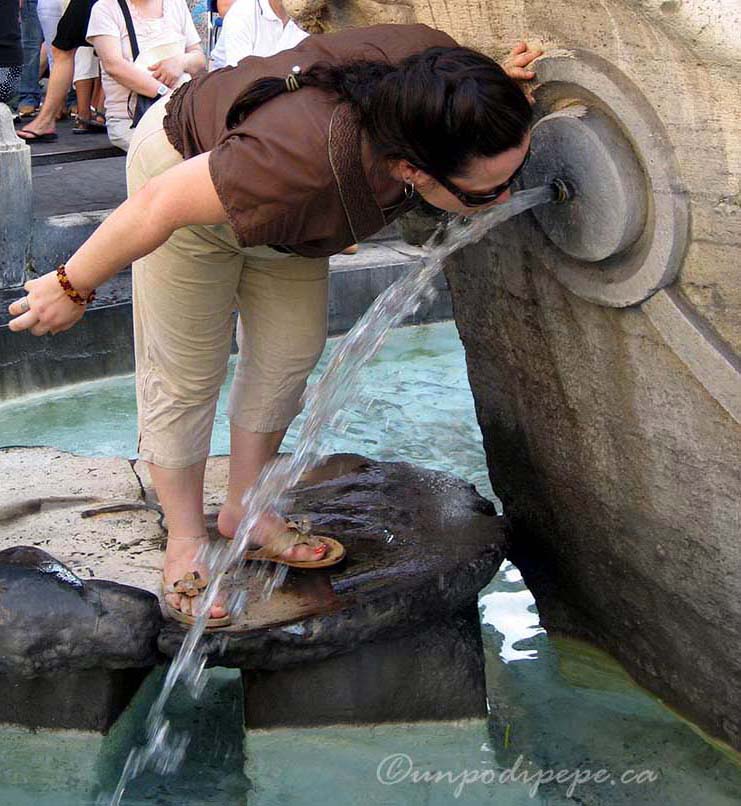
I look at all the tourists then head to my last stop- Piazza di Spagna. I never miss drinking from the Fontana della Barcaccia.  This is the Baroque fountain at the bottom of the steps that looks like a sinking ship. It was sculpted by both Bernini, Pietro and Gianlorenzo (father and son).  La Barcaccia has the best water ever, especially on a hot day –it comes straight from an ancient acqueduct Acqua Vergine and is always ice cold and refreshing. Bring a water bottle to fill up at I Nasoni di Roma, all over the city.

La Barcaccia, Piazza di Spagna

La Barcaccia, Piazza di Spagna

Mmmm! Acqua freddissima!

Mmmm! Acqua freddissima!

From here I usually walk all the way back to the Colosseo metro stop to take the metro back home to San Paolo and pick up take-out suppli on the way. If I am too tired or have evening plans, I take the metro at Piazza di Spagna (red line) to Stazione Termini then change to the blue line for San Paolo.

Ci vediamo a Roma! Buon viaggio, Cristina

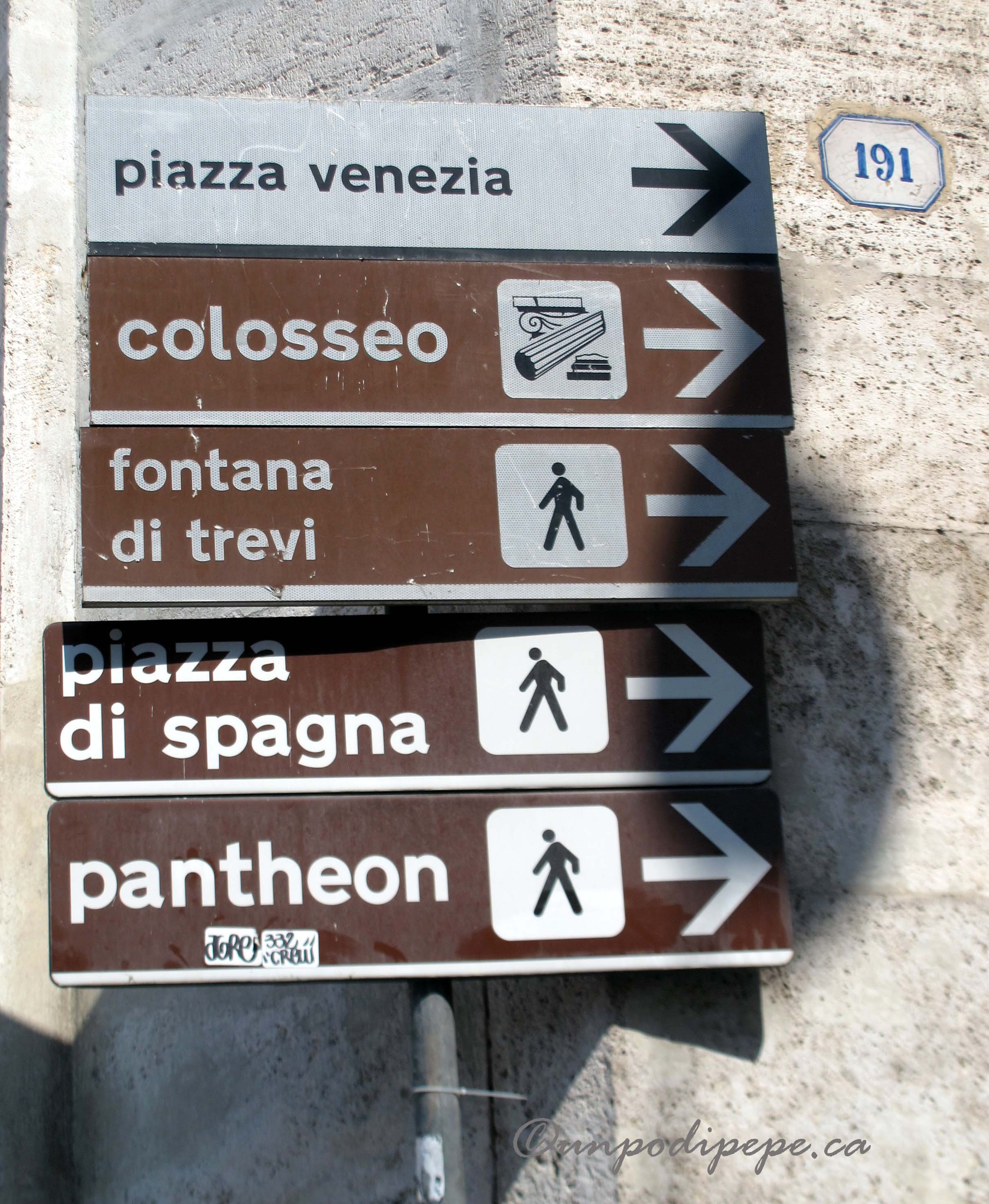
Handy signs at Piazza del Popolo

Handy signs at Piazza del Popolo

*Update:  Entry into the Pantheon was free until july 2023.  Now there is a €5 entry fee for adults.  Tickets can be prebooked online on the official Italian Museums site here or puchased onsite with cash or credit card.  They can also be bought online on site, by scanning a barcodeat the entrance-to avoid the ticket lineup.  Do not buy from other sites, as they are 3rd party sites. Tickets are usually only available 2-3 weeks in advance.  Admission is free the first Sunday of the month, but there are usually long lines, unless you go in January. Since the Pantheon is a church, admission is also free during specific religious services.  Church dress code applies, so shoulders and knees need to be covered.

The Pantheon is open from 0900-1830 every day except January 1, August 15 and December 25.

Check out more posts on things I like to do if I have more than one day in Roma:

  • Trastevere at night
  • Centrale Montemartini
  • Palazzo Massimo
  • Galleria Borghese
  • Visit more Caravaggio paintings for free at Santa Maria del Popolo
  • Go to Mass sung by cloistered nuns at Santa Brigida near Piazza Farnese

©2014 unpodipepe.ca

Piccoli gladiatori! Beware of fierce gladiators in training!

Piccoli gladiatori! Beware of fierce gladiators in training!

Share this:

  • Share on Facebook (Opens in new window) Facebook
  • Share on Pinterest (Opens in new window) Pinterest
  • Share on X (Opens in new window) X
  • Email a link to a friend (Opens in new window) Email
  • Share on WhatsApp (Opens in new window) WhatsApp
Like Loading...

Le Isole Tremiti

16 Wednesday Jul 2014

Posted by Un po' di pepe in Italia, Photography, Puglia, Travel

≈ 13 Comments

Tags

Alidaunia, Diomedes, Fellini, Il Gargano, Isole Tremiti, Italia, Italian history, Italy travel tips, Parco Nazionale del Gargano, photography, Puglia, Southern Italy

San Nicola and Cretaccio seen from above the helipad, San Domino

San Nicola and Cretaccio seen from above the helipad, San Domino

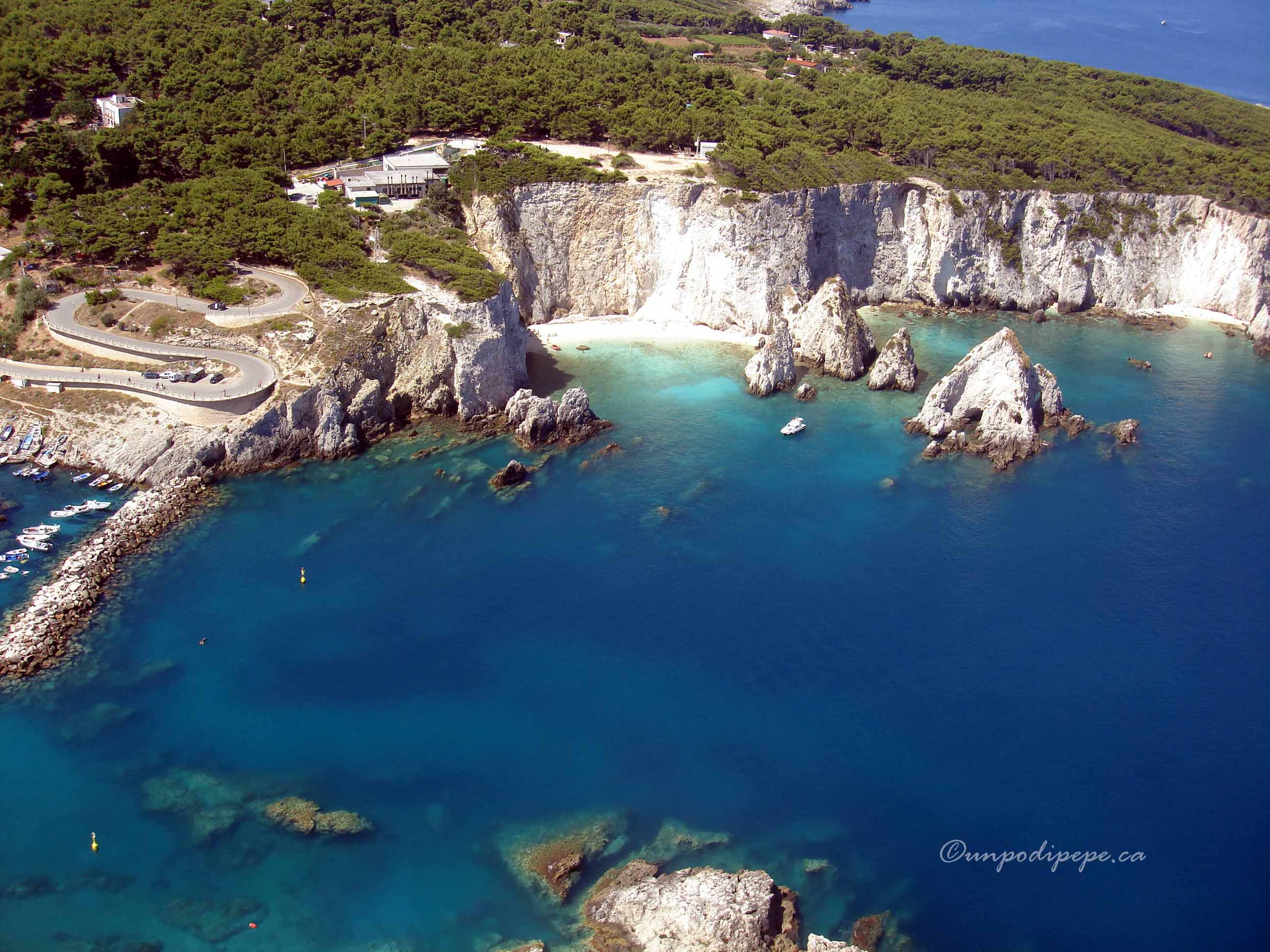
The Isole Tremiti (ee∙SOH∙leh treh∙MEE∙tee) are an archipelago of 3-5 islands-depending on what you consider an island-in the Adriatic Sea, 22 km off the coast of Italia. The Tremiti, considered ‘le perle dell’Adriatico’ (the pearls of the Adriatic), have been inhabited since at least the 4th century BC.  They are part of the Parco Nazionale del Gargano (Gargano National Park) http://www.parcogargano.it and have been a protected Marine Nature Reserve (Riserva Naturale Marina Isole Tremiti) since 1989. The clear waters make the islands a popular spot for snorkeling, scuba diving and even bird watching.

Isole Tremiti Satellite View

Isole Tremiti Satellite View

Flying into San Domino by helicopter

Flying into San Domino by helicopter

San Domino is the largest island and has most of the facilities such as hotels, restaurants, the Tremiti Diving Center, and the heliport. It is covered by lush Aleppo pine forest, capers and rosemary, and surrounded by small coves and sea caves. San Domino has the Tremiti’s only sandy beach –Cale delle Arene. The rocky coves are beautiful to explore and swim-but don’t go barefoot! My friend stepped on a riccio di mare (sea urchin) and it was not fun.  There is a 2 hour walk around part of the island and bicycles are available for rent.

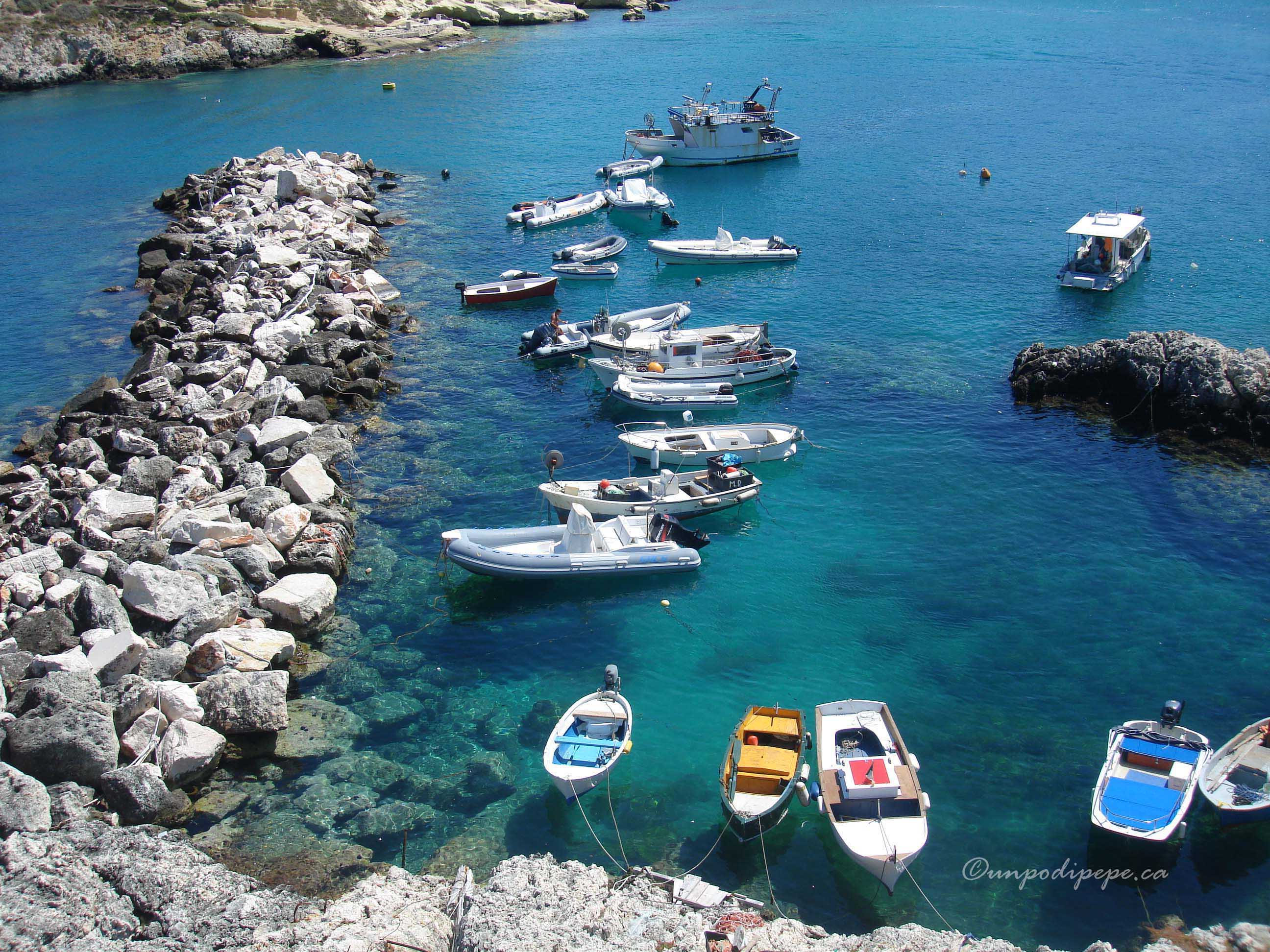
The small port, San Domino

The small port, San Domino

Cale delle Arene, San Domino-the only sandy beach on the Isole Tremiti

Cale delle Arene, San Domino-the only sandy beach on the Isole Tremiti

Scoglio dell 'Elefante, San Domino, looks like a giant sitting elephant drinking from the sea

Scoglio dell ‘Elefante, San Domino, looks like a giant sitting elephant drinking from the sea

San Nicola is the administrative and historic center of the islands, and where most of the 400 or so permanent residents live. The 11th Century Benedictine abbey and church of Santa Maria del Mare seem to rise up out of the limestone cliffs, with fortified walls starting at the port. The church has a beautiful 11th century mosaic floor and a Byzantine painted wood crucifix that was likely brought here by monks fleeing from the Crusades.

San Nicola, seen from San Domino

San Nicola, seen from San Domino

San Nicola Porto

San Nicola Porto

Bagnetto anyone?

Bagnetto anyone?

Capraia (or Caprara) is rocky and uninhabited except for sea birds. It is named for the capers that grow there. There is no organized transport to Capraia, but local fishermen can be hired to take people over.

San Nicola and Capraia.  Yes those are solar panels down there!

San Nicola and Capraia. Yes those are solar panels down there!

Cretaccio is an uninhabited halfmoon shaped block of yellowish clay between San Domino and San Nicola.  Cretaccio literally means ‘big hunk of clay’.
Pianosa is 11 km away from the other islands and is the most northern point of Puglia.  It can be covered by waves during storms, as the elevation is only 15 m.  The waters surrounding Pianosa are in zone A of the Marine Reserve, so access is strictly prohibited except for approved marine research.

Cretaccio and San Domino, seen from Santa Maria al Mare, San Nicola

Cretaccio and San Domino, seen from Santa Maria al Mare, San Nicola

The islands are sometimes known by their former name ‘Le Diomedee’ or ‘I Sassi di Diomede’ and you see a lot of things in the Gargano area called ‘Diomede’. According to legend/mythology, after the Trojan War, the Greek hero Diomedes settled in the Daunia area (Province of Foggia) and created the islands with 3 rocks he threw into the Adriatic.  He was also shipwrecked on the islands with his crew and possibly died here.

La tomba di Diomede on San Nicola.

La tomba di Diomede on San Nicola.

There is an unmarked Hellenic period tomb on San Nicola that is known as ‘la tomba di Diomede’. His crew was so upset at the loss of their captain that the Goddess Venus took pity on the grieving men and turned them into birds that continue to cry for their loss. The scientific name for the Great Albatross which is common in the area, is ‘Diomedea’.  These birds look a lot like seagulls and make a noise that can sound like a crying newborn.  In Fellini’s ‘Otto e mezzo’ (8½) there is a scene where a cardinal tells this story to Guido (Marcello Mastroianni).

A Diomedea, San Domino

A Diomedea, San Domino

The islands also have a long history as a place of exile. Emperor Octavius Augustus confined his granddaughter Giulia to San Nicola for adultery with a Roman senator. She remained there until her death 20 years later. One of the necropoli beneath the abbey could be her tomb.  Ferdinand, king of Napoli turned the abbey into a penal colony. A hundred years later, another Ferdinand tried to repopulate the islands with criminals and people moved in from the slums. For many years, the Fascists imprisoned those considered a danger to the public on the Isole Tremiti. One of the prisoners held there was Sandro Pertini, future president of the Italian Republic.

Alidaunia flies from Foggia to San Domino daily

Alidaunia flies from Foggia to San Domino daily

I have visited the islands several times by helicopter.  As you can see in the photos, the emerald water is so crystal clear you can see the bottom from the air!  The wonderful thing about visiting the Isole Tremiti is that there are no large hotels or resorts.  All of the hotels are small and surrounded by pine forest, so although this is a tourist destination, it doesn’t feel overrun with people. The Isole Tremiti are accessible by 1-2 hour ferry ride from Vieste, Peschici, Rodi Garganico, Manfredonia and Termoli, or by half hour helicopter ride from Foggia http://www.alidaunia.it .

Over San Nicola

Over San Nicola

Buon Viaggio!

Share this:

  • Share on Facebook (Opens in new window) Facebook
  • Share on Pinterest (Opens in new window) Pinterest
  • Share on X (Opens in new window) X
  • Email a link to a friend (Opens in new window) Email
  • Share on WhatsApp (Opens in new window) WhatsApp
Like Loading...
Newer posts →

Enter your email address to follow 'un po' di pepe' and receive notifications of new posts by email.

Join 509 other subscribers
Follow Un po' di pepe on WordPress.com

Popular Posts

  • Hairstyling in Ancient Roma
    Hairstyling in Ancient Roma
  • La Trinità di Masaccio
    La Trinità di Masaccio
  • Italiano per Ristoranti~How to pronounce your restaurant menu
    Italiano per Ristoranti~How to pronounce your restaurant menu
  • Santa Maria in Aracoeli
    Santa Maria in Aracoeli
  • Internment of Italian Canadians
    Internment of Italian Canadians
  • Limoncello Ricotta Cookies
    Limoncello Ricotta Cookies
  • Cristo si è Fermato a Eboli
    Cristo si è Fermato a Eboli

Recent Posts

  • Bloghiversario #12
  • Pane e Salute
  • Sanremo 2026
  • Cucina Italiana Patrimonio UNESCO
  • 2025~Un po’ di pepe Year in Review
  • Castel del Monte
  • ‘The Nuances of Love’
  • Hostaria Antica Roma~Eat like an Ancient Roman
  • Santa Maria in Aracoeli
  • Casino dell’Aurora~Villa Boncompagni Ludovisi
  • Nasoni di Roma
  • Bloghiversario #11
  • Fontana di Trevi
  • Acqua Vergine
  • Giubileo 2025
  • Sanremo 2025
  • In Vino there are Memories
  • A Literary Harvest
  • 2024~Un po’ di pepe Year in Review
  • Buon Natale 2024
  • Il Bicerin
  • Mercato Porta Palazzo
  • Torino
  • Catanzaro, Calabria
  • Il Pumo Pugliese

Categories

Amici e Famiglia Architecture Art Art history Art projects Bilingual posts Blogging Canada Culture Feste Firenze Inspiration Italia Italian Folklore Italian language Italian life Italocanadesi Libri Mangiamo! Orsara di Puglia Parole piacevoli Photography Puglia Recipes Roma Travel Travel tips Uncategorized Vino

Archives

Un po’ di pepe on Facebook

Un po’ di pepe on Facebook

Start a Blog at WordPress.com.

  • Subscribe Subscribed
    • Un po' di pepe
    • Join 509 other subscribers
    • Already have a WordPress.com account? Log in now.
    • Un po' di pepe
    • Subscribe Subscribed
    • Sign up
    • Log in
    • Report this content
    • View site in Reader
    • Manage subscriptions
    • Collapse this bar

Loading Comments...

    %d