
 Ostia Antica, 30 km southwest of Rome was once a thriving town and commercially important seaport. It is now a well-preserved archeological site and at 150 hectares, one of the largest archeological parks in Europe. Founded in 620 BC to harvest sea salt at the ‘ostium’ or mouth of the Tevere (Tiber River), Ostia Antica was Rome’s first colony, a naval base and main ancient seaport. With a population of 60,000 in the 2nd and 3rdcenturies AD, it was the hub for import of grain, olive oil, wine, marble, cloth and other goods destined for Rome.
Originally located on the coast, Ostia Antica is now 3 km inland. After the fall of Rome and barbarian raids, the port was neglected and the harbour eventually silted up. It was completely abandoned in the 9th century AD. Sand dunes and mud covered the city, helping to preserve the ruins and mosaics for us like a time capsule from Ancient Rome. 
Ostia Antica was a working class port city, as opposed to Pompeii, which was a resort getaway and playground for the rich and famous. The ruins provide insight into regular, daily life in Ancient Rome and give us a sense of urban planning for the time. There are well preserved cobbled streets, magnificent mosaics, temples, shops, apartment buildings, warehouses, private homes, public baths, warehouses, taverns, inns, a public laundry, theater and even a firefighting service. The earliest identified synagogue in Western Europe (41-54 AD) was discovered in 1961.
Excavation started in the early 19th Century, but most of it was done from 1938-1942. Only 40% of the site has been excavated! There is a lot to see in Ostia Antica. Here are some of the highlights:
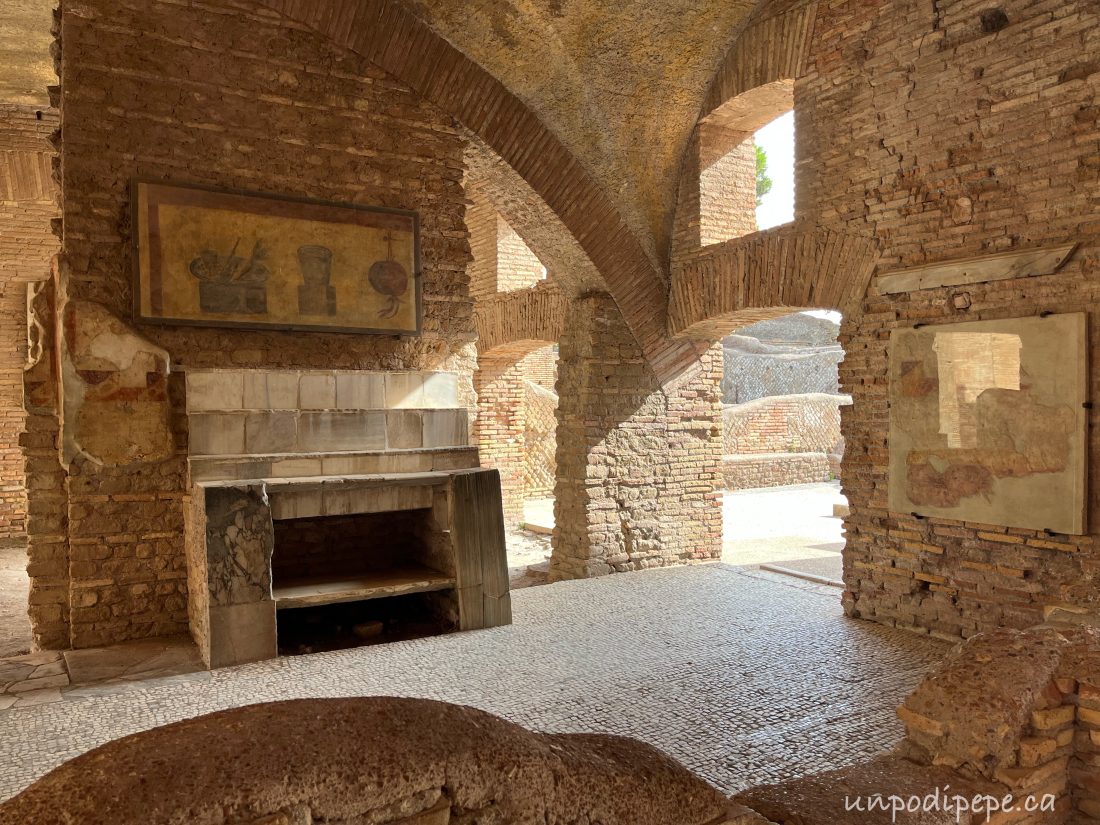 Thermopolium di Via di Diana Thermopolium is Greek for ‘place where hot food is sold’. A 3rd C ancient fast-food joint and wine bar with windows that open out onto the street and a marble take-out counter, long table to serve hot food, shelves and a courtyard with a fountain for outdoor dining.
  Amphorae with cheap wine were stored under the counter. A large fresco ‘menu’ on one wall shows a plate with carrots and beans, a glass of wine, a jar of olives and large onions or pomegranates.
 Customers likely topped their food with an ancient condiment called Garum. It was a pungent rotten fish sauce and makes ketchup sound appetizing.
  On the side of the Thermopolium is a single gated public toilet!
 Mulino di Silvano A multiroom bakery built in 120 AD. One room has 3 intact lava millstones for grinding the grain into flour, one for kneading the flour into dough and another still has the ovens for baking the loaves. The bread was sold on site and also transported to sell in Rome.
 Teatro Ostia’s semicircular theater survives in excellent condition. Built in the first century BC and expanded later, it is one of the oldest masonry theaters in the world. It can seat 4,000 spectators and is still used for summer concerts.
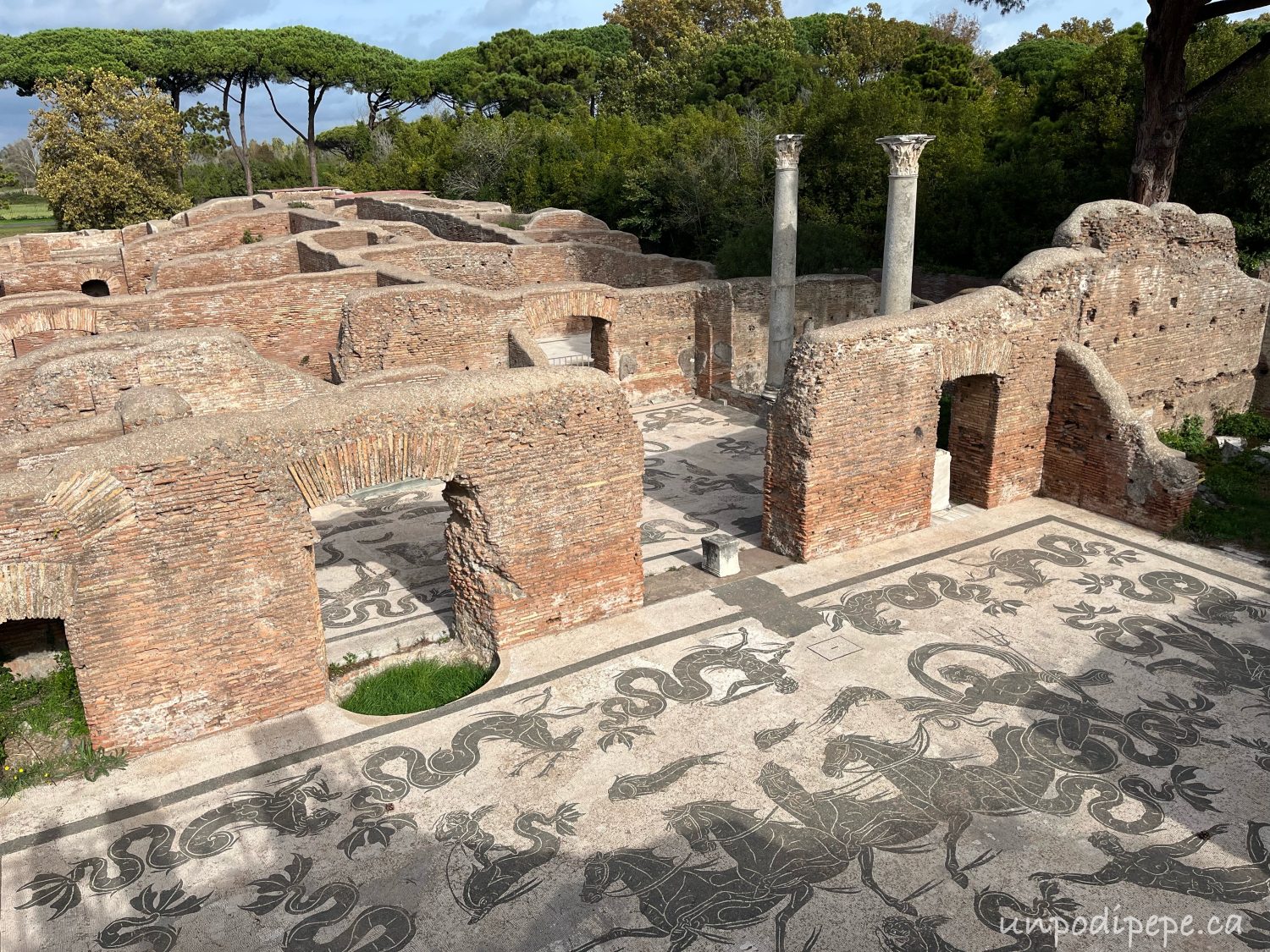 Public Baths There are several public baths in Ostia. The Baths of Neptune have incredibly preserved mosaic floors of Neptune and sea creatures. We can thank the mud that covered them for centuries! These are often covered up in the winter to protect from the harsh weather.
 Public toilets A fine example of Roman plumbing. The toilets consist of a communal marble bench along 3 walls with 20 seats. Each seat had a hole leading down towards a single drain channel fed with running water to flush away waste. Since toilet paper was not a thing yet, a sea sponge attached to a stick was kept in a bucket of saltwater or vinegar for patrons of the toilets to wipe themselves. Yuck!
 Piazzale delle Corporazioni (Piazza of the Corporations/Guilds) Located behind the theater, the piazza is a large open air market square with stalls along all 4 sides. Merchants and craftsmen from all over the Mediterranean sold their goods.
 A small metal model of the piazzale has descriptions written in Braille and Italian.
 The beautiful black and white mosaics in front of the stalls advertised the goods or services being sold. Stalls included shipbuilders, ropemakers, leather tanners, sailmakers, grain and wine importers, as well as fish and food products. One of the stalls with fish mosaics likely sold the pungent Garum fish gut sauce!
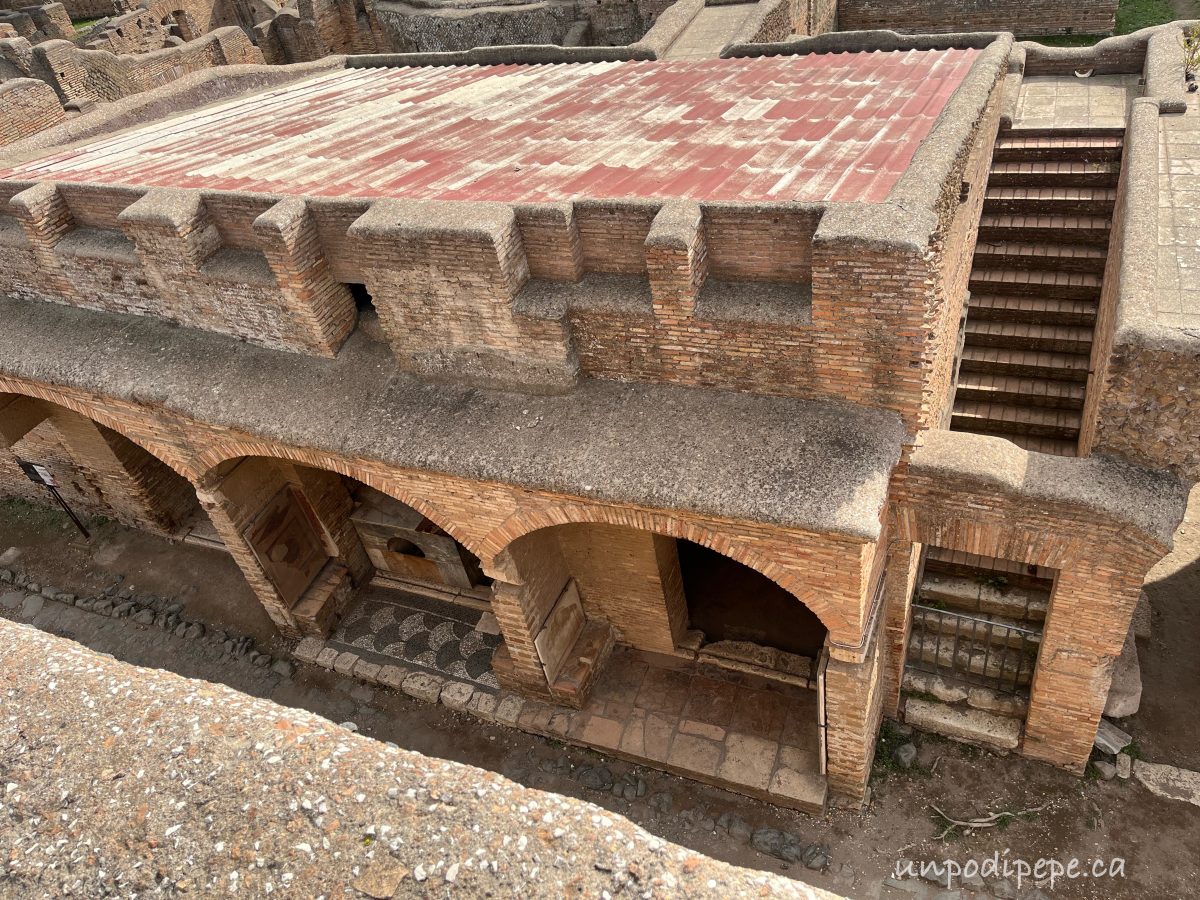 Casa di Diana A complex multifunction residential building -urban planning centuries ahead of its time. Called an insula, this multilevel apartment has ground floor shops, accommodation for the shopkeepers on the 1stfloor and more modest accommodation on the upper floors. A 150 AD painting of Diana was found inside. It is possible to climb the stairs of other insulae to get to the upper floors.
A visit to Ostia Antica is a nice, half day trip from Roma, although it can be a whole day excursion if you explore more of the huge site and have lunch at one of the restaurants nearby. Ostia Antica is grossly under visited, so it is never crowded! Bring water, a hat, sunscreen and good walking shoes.
Open Tues to Sat 8:30-4:30 in winter 8:30- 7 pm in summer. Admission fee is €18. Free admission the first Sunday of the month. Tickets can be booked online on the official website . A PDF guide can also be downloaded from the website. The museum is worth seeing, but is closed at present.
Getting there by public transportation is easy and cheap: Take Metro line B (Blue line) to San Paolo (or Piramide*) metro station and take the ‘Lido’ commuter train to Ostia. Get off at ‘Ostia Antica’. The ride is 23 minutes. (Do not get off at Ostia Lido Nord or Ostia Lido Centro unless you are going to the beach!)
Use the footbridge to cross the road and walk 5-10 minutes to the main entrance of the Parco Archeologico Ostia Antica. Trains leave every 20 minutes and use the regular metro/bus tickets €1.50.
*If getting there from Piramide, walk out of the metro station and go to Porta San Paolo train station next door to find the Lido commuter train.
Buon viaggio!



 Un po' di pepe