• Home
  • About me/Chi sono
  • Contact

Un po' di pepe

~ …… (oon∙poh∙dee∙PEH∙peh) Cristina writes about interesting stuff /Cristina scrive di cose interessanti

Un po' di pepe

Tag Archives: Italian food

Il Pomodoro

07 Monday Sep 2015

Posted by Un po' di pepe in Italian life, Mangiamo!

≈ 24 Comments

Tags

Acqua sale, Antonio Latini, Conserva di pomodoro, Francesco Leonardi, History of the tomato, Italian food, Mediterranean diet, Passata di pomodoro, Pomodori, Tomato sauce, Traditional recipes

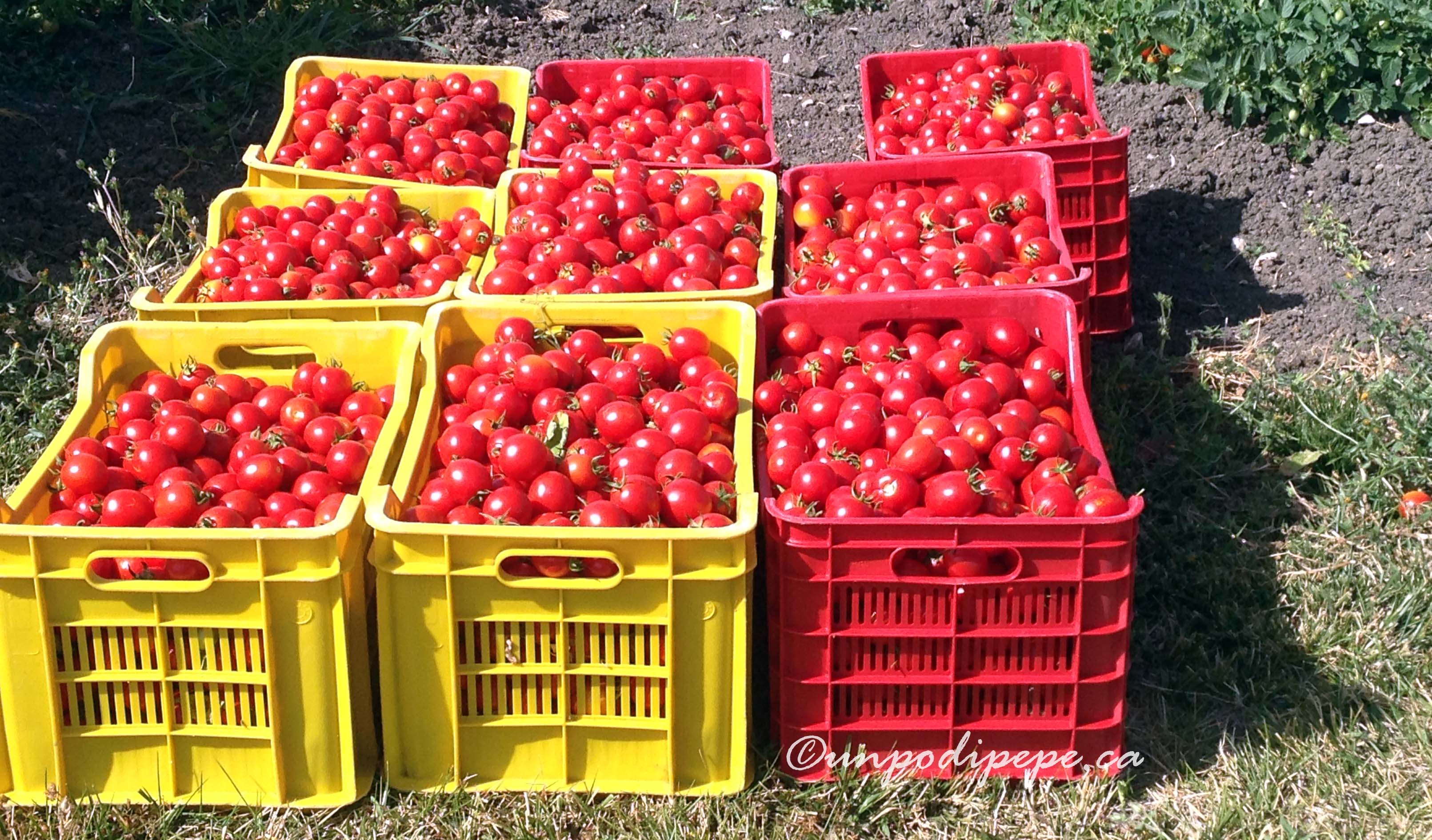
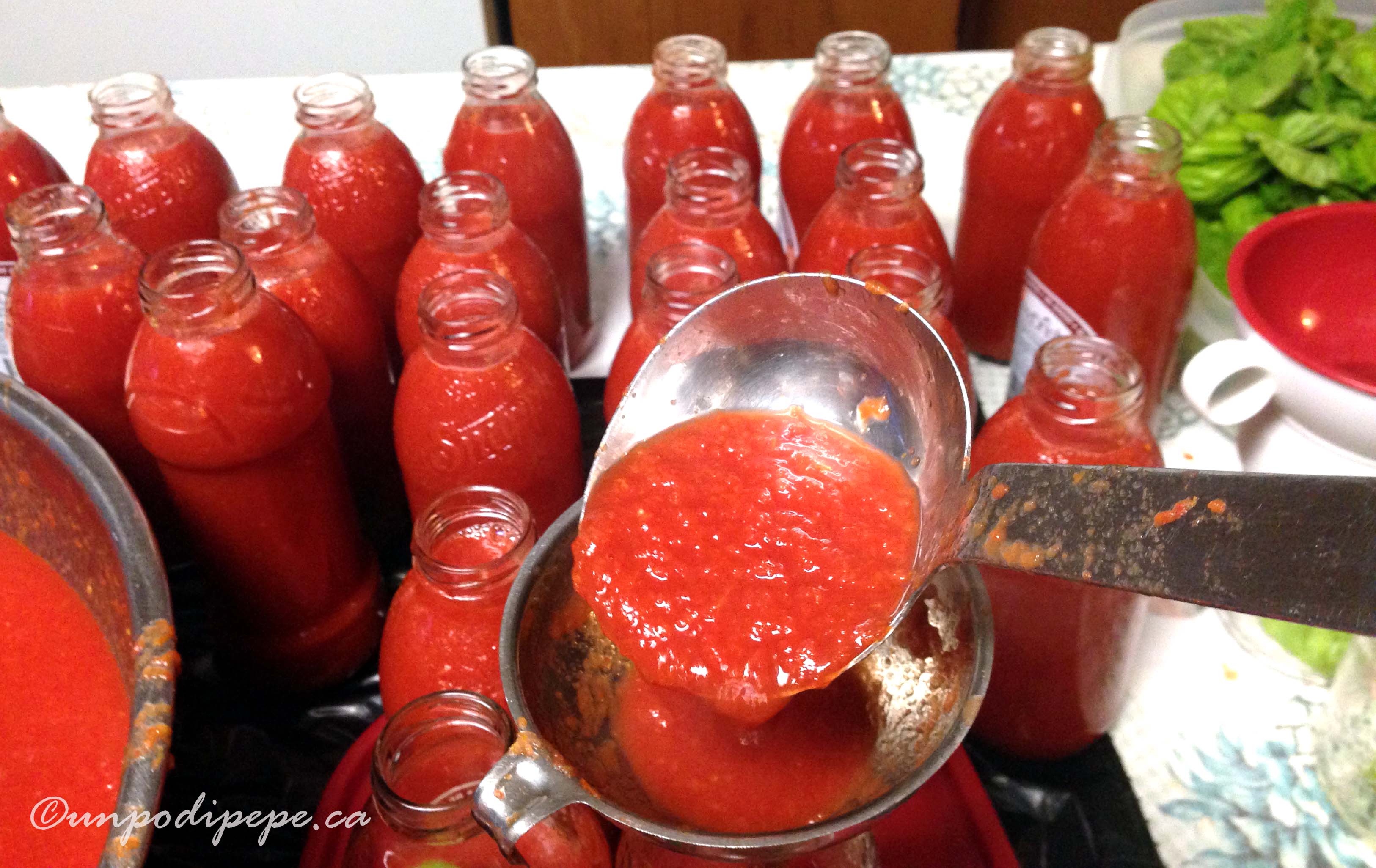
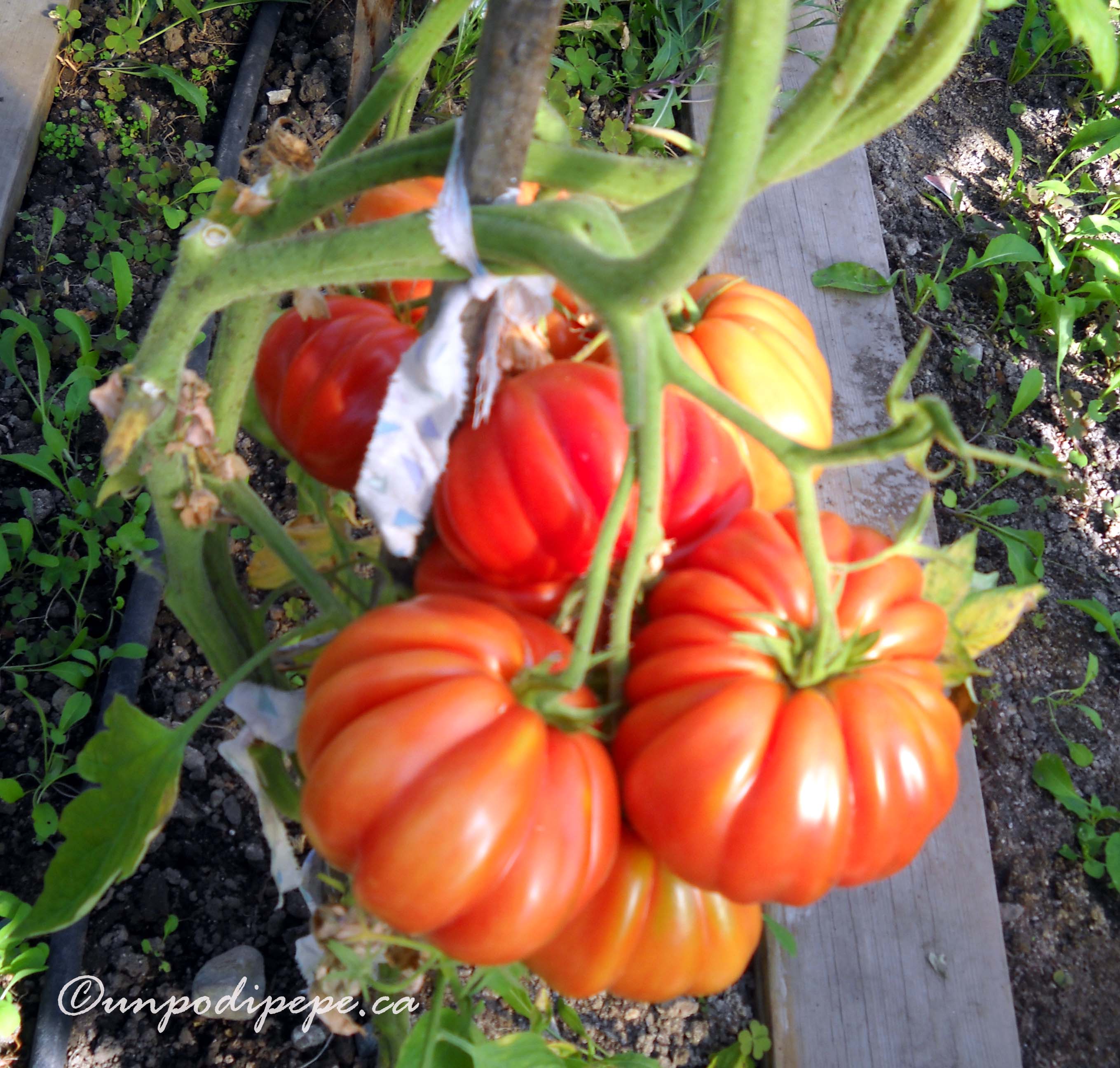
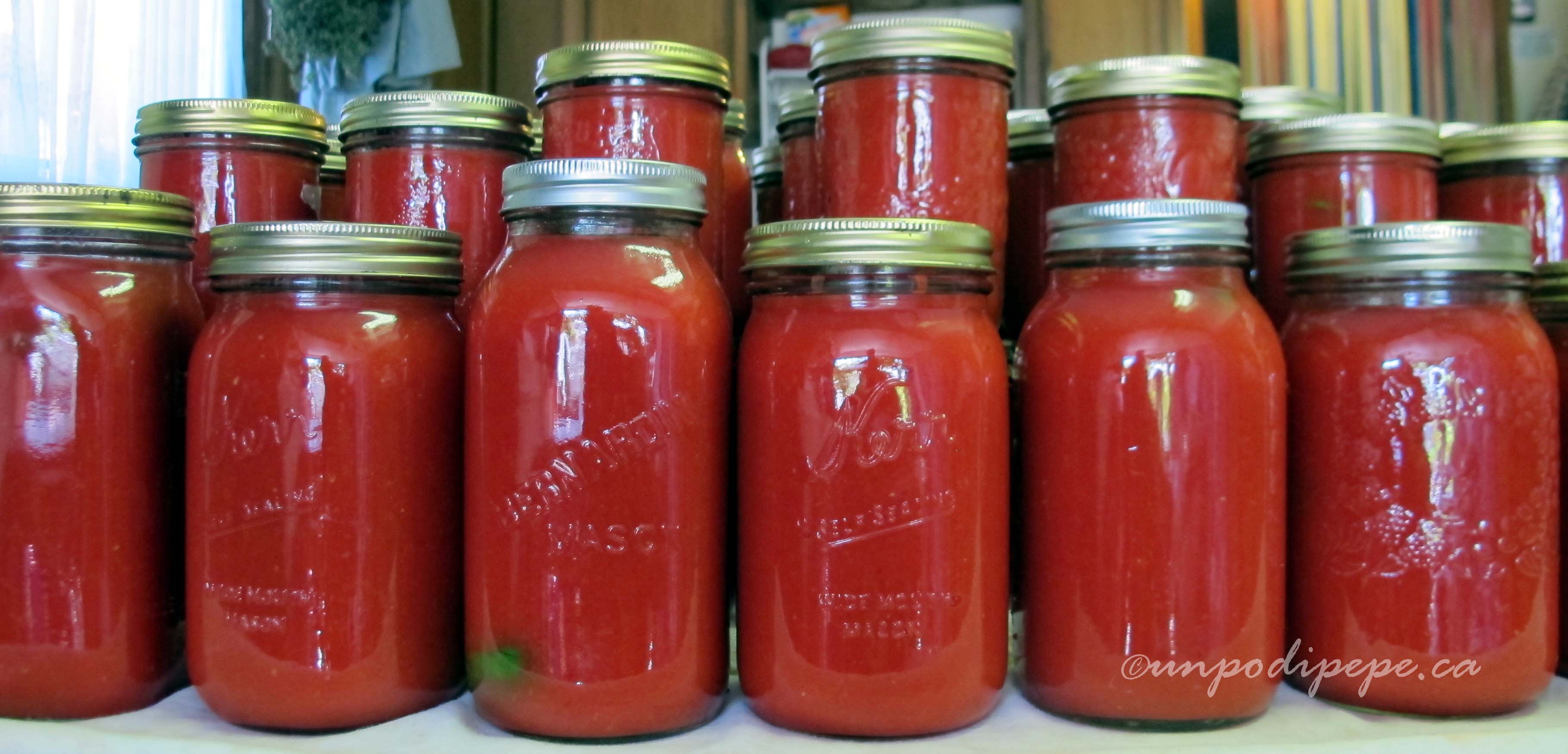
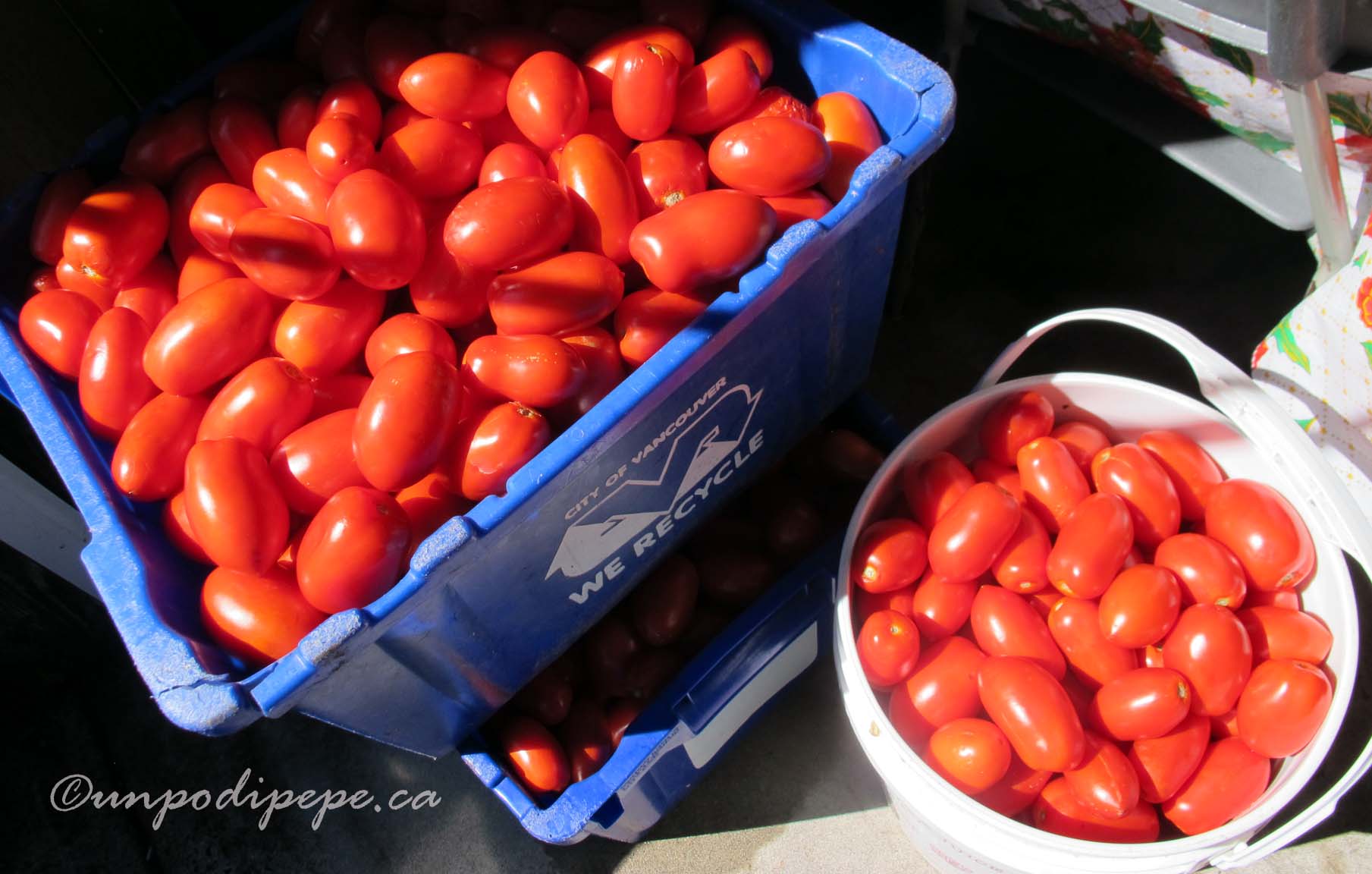
PomodorivillajameleLate August/early September is pomodoro season. Last weekend my family made passata di pomodoro and pomodori pelati in the garage. If you haven’t read last year’s post, check ‘Passata di Pomodoro’ out for a step by step commentary! Passata di pomodoro, or simply ‘salsa’ as we usually call it, is very versatile. It is used to make sugo (tomato sauce) or ragù (meat sauce) and pizza, or added to fagioli (beans) and lenticchie (lentils), minestrone and other zuppe (soups).Salsa2015

To make pomodori pelati, pomodori are cut into quarters, the seeds removed, and then tightly packed into vasetti (jars) with basilico and a spoonful of salt. The vasetti are sealed and cooked, then turned upside down to cool. Pelati are used for pizza al pomodoro and zuppe. They can also be used for making sauces, although I am not a fan of skins and seeds in my sugo!pomodoripelati2015Pelati2015

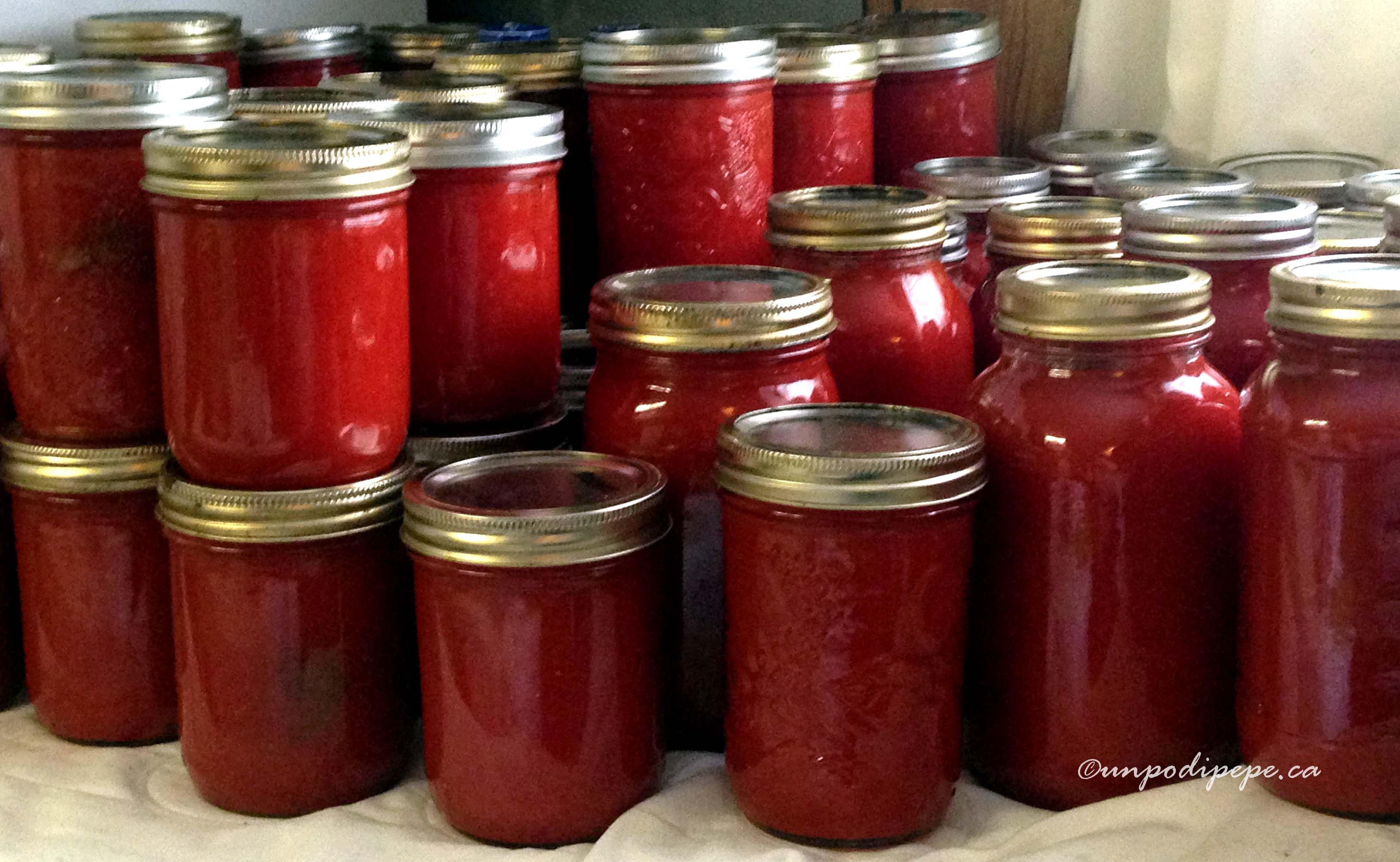
Canning or bottling pomodori is a yearly domestic ritual for many Italian and Italocanadese families. It’s a lot of work, but totally worth it. All year round you have the taste of summer in a jar!Vasetti2015

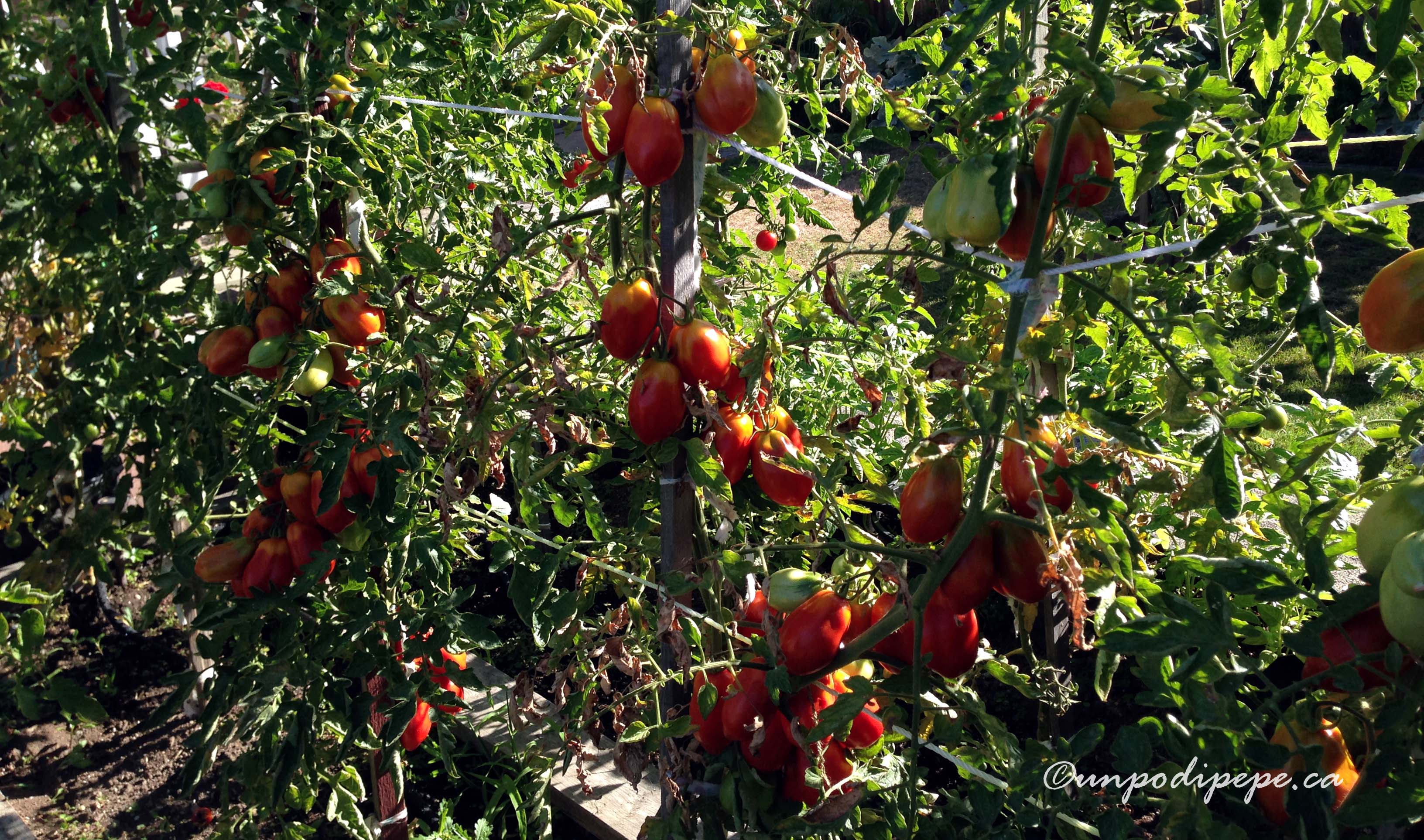
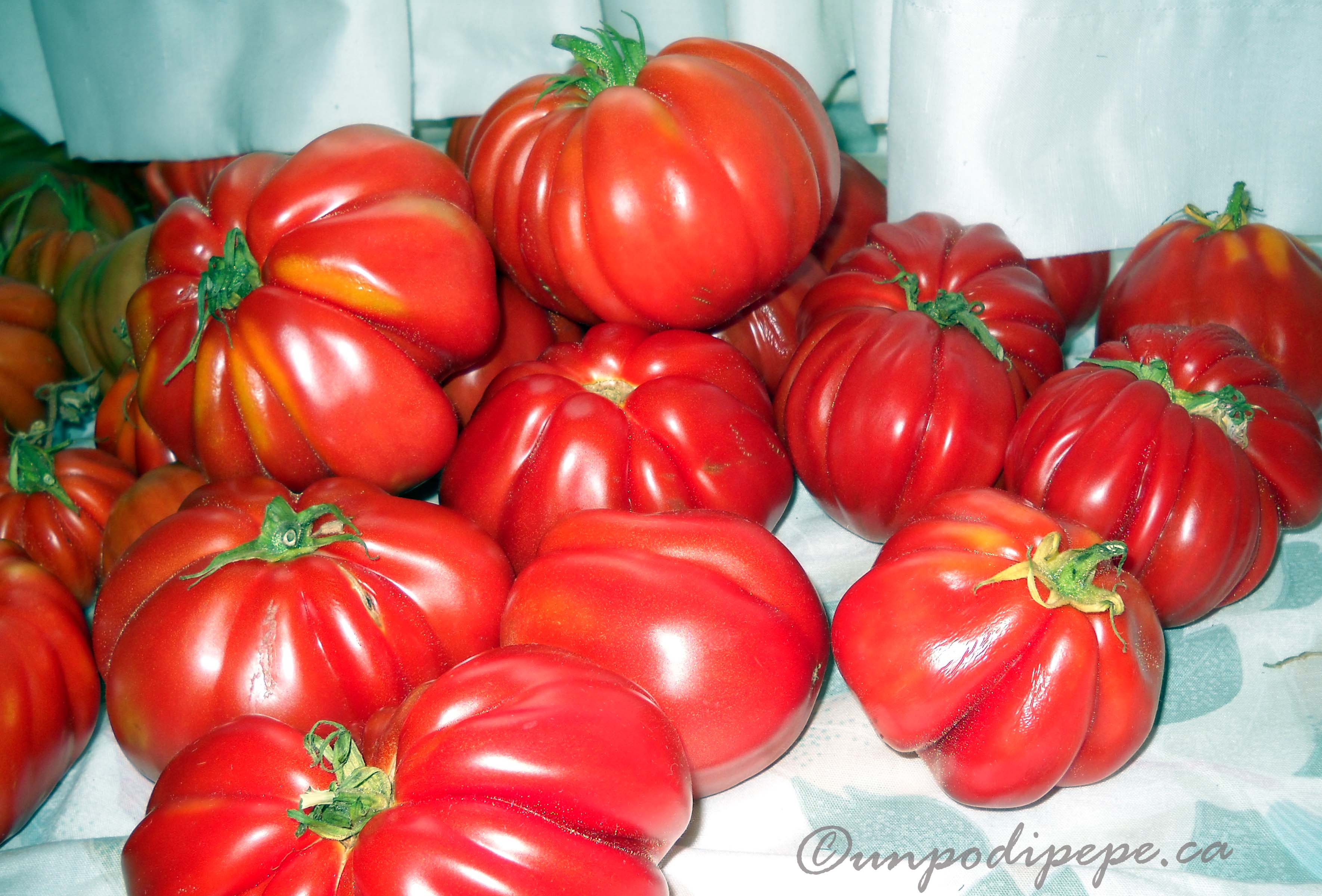
The pomodoro was not always such a staple in the Italian cucina. First grown by the Aztecs in Mexico, then also in the South American Andes, the pomodoro was brought to Europe by the Spanish in the 16th Century. The first documentation of pomodori in Italia is a 1548 note from Cosimo de’ Medici’s household to his secretary. The note states that ‘un cestino di pomodori’ (a basket of tomatoes) from one of the Medici estates had been received.  At this time, pomodori were not eaten or used in cooking. They were exotic but their taste was considered really gross, so they were mostly ornamental and sometimes used in potions as an aphrodisiac.  Hmmmm.pomodori2015b

Early pomodori did not taste anything like they do today, and some varieties were even toxic. Fortunately, the Mediterranean climate was ideal for growing the pomodoro.  It was able to mutate and create better tasting, sweeter versions of itself. It did take awhile for anyone to figure out what to do with the pomodoro. I’m really glad someone thought of adding olive oil, basilico, salt and of course, un po’ di pepe!

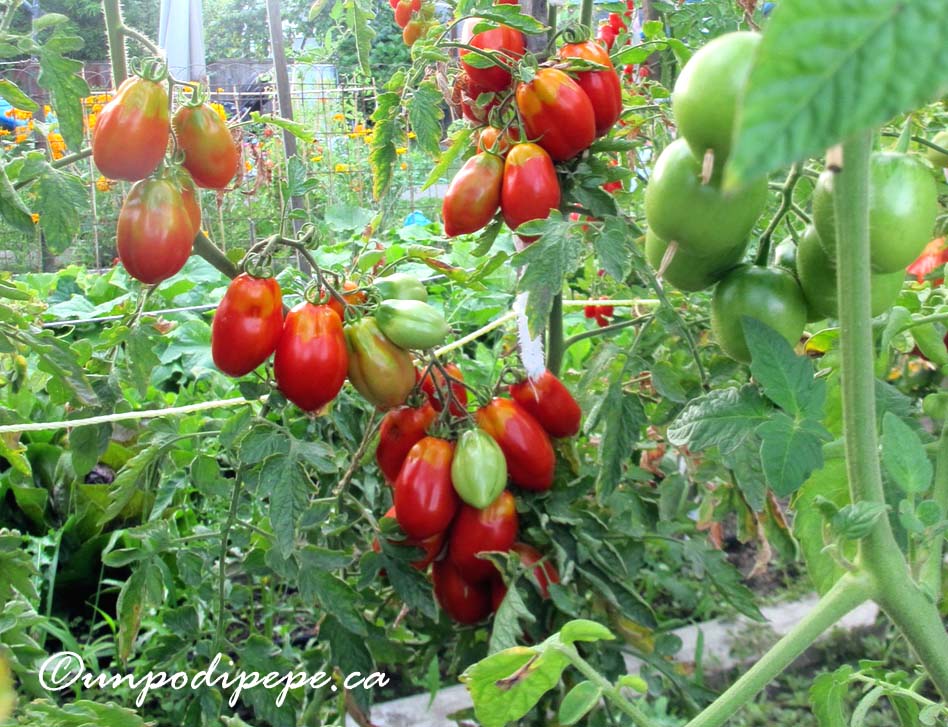
The earliest recorded recipe using pomodori was in Napoli, in Antonio Latini’s book ‘Il Scalco alla Moderna’.  This translates to something like ‘The Modern Butler’. The recipe was for ‘Salsa alla Spagnuola’, a Spanish condiment made with pomodoro, melanzane (eggplant) and cipolla (onion). Sounds a bit like ratatouille.  The first recipe using pomodori on pasta was in Roman chef Francesco Leonardi’s 1790 cookbook ‘L’Apicio Moderno’. By the mid 1800’s the pomodoro was a staple food of Italian contadini. The ‘Contadino diet’ was mostly raw or cooked pomodori and other vegetables, legumes, bread or pasta, salt and olive oil. Today they call this the ‘Mediterranean diet’.Pomodori2012

‘Acqua Sale’ is a classic Orsarese comfort food. Older bread slices are soaked in water and then pomodori are squished over it. A drizzle of olive oil, salt, and basilico or oregano and it’s an instant delicious meal, similar to Panzanella Toscana. This tastes even better on freshly baked bread-minus the soaking in water! We always ate ‘pan’ e pomodoro’ when the bread came out of the oven. Yum. So simple yet so delicious.

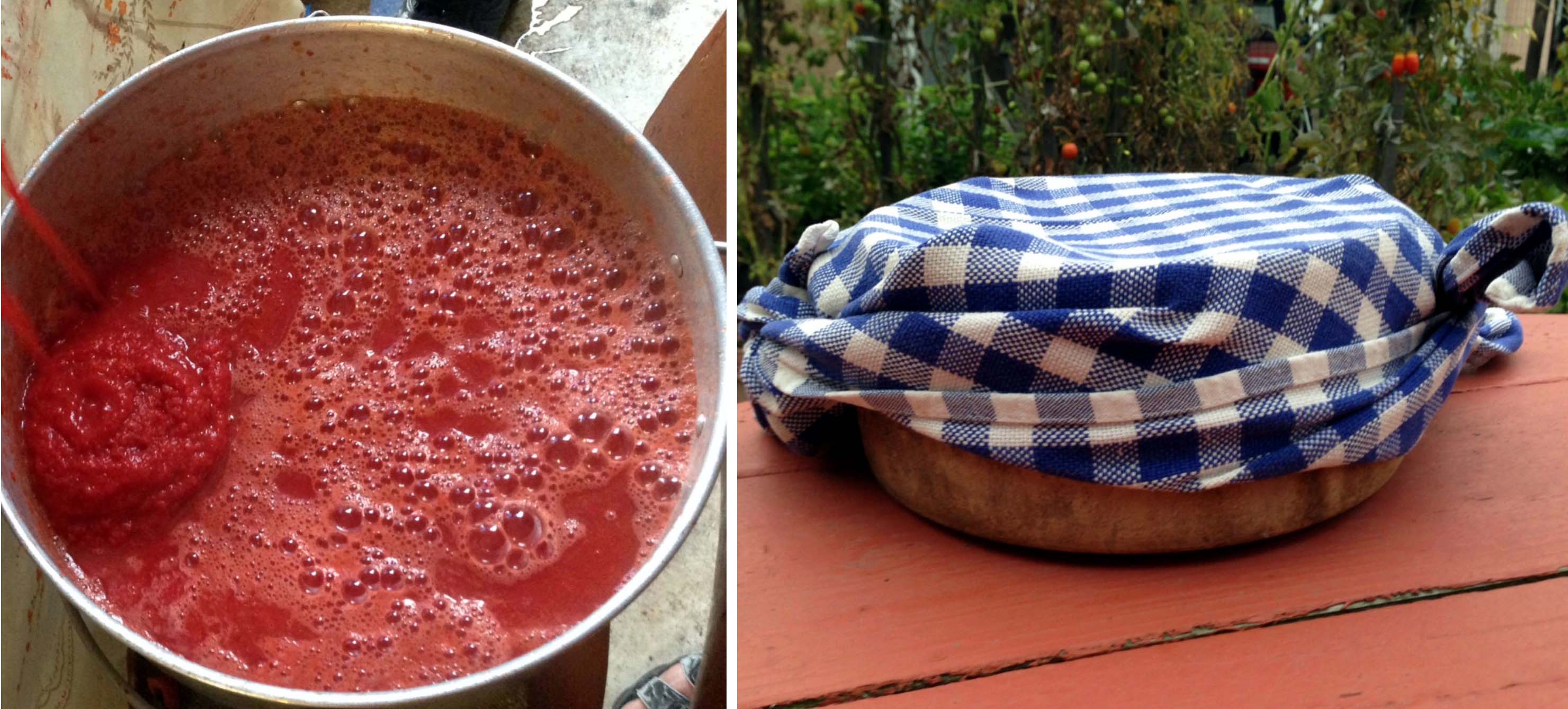
I asked Mamma what they did before glass vasetti and other modern canning conveniences were available. She said they made ‘la conserva’ which was like a tomato paste that could be stored. It was used in winter to make sugo for pasta or to add flavor to other foods. In August, pomodori were cooked with skins and seeds removed, similar to passata. This salsa was salted, placed in large earthenware dishes and left out in the sun for several days. Once it was dark and thick, la conserva was transferred to terracotta or glass containers and covered with a film of olive oil and fig leaves or basilico to seal it. The container was then covered and tied with un straccio (a dishrag). Quartered pomodori were also sundried to use in winter.

My recreation of 'la conserva'. The passata was dried in the sun, then the thickened stuff was placed in an earthenware bowl, covered with a film of olive oil and fig leaves, then covered with a dishrag

My recreation of ‘la conserva’. The passata was dried in the sun, then the thickened stuff was placed in an earthenware bowl, covered with a film of olive oil and fig leaves, then covered with a dishrag

Talking about pomodori is making me hungry! I’ll go pick some in the garden and make some pan’ e pomodoro!pomodori2015a

Share this:

  • Click to share on Facebook (Opens in new window) Facebook
  • Click to share on Pinterest (Opens in new window) Pinterest
  • Click to share on X (Opens in new window) X
  • Click to email a link to a friend (Opens in new window) Email
  • Click to share on WhatsApp (Opens in new window) WhatsApp
Like Loading...

Torta Caprese all’ Arancia

25 Saturday Jul 2015

Posted by Un po' di pepe in Mangiamo!, Recipes

≈ 28 Comments

Tags

Cannolo Award, Capri, Dolci, Gluten-free chocolate cake, Italian food, Southern Italy, Torta Caprese, Traditional recipes

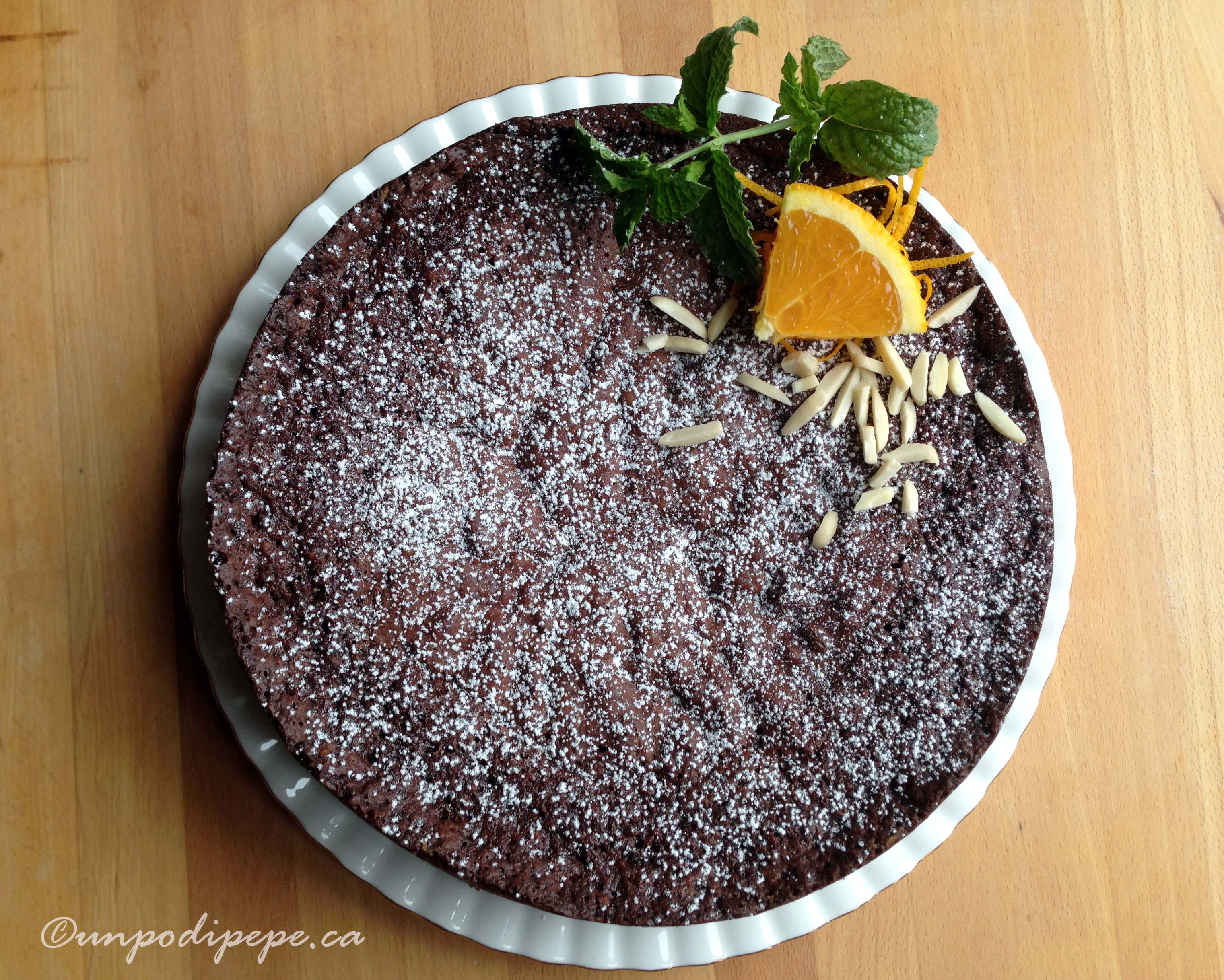
Tortacaprese2In honour of my recent Cannolo Award, I thought this post should be food related.  What is a Cannolo Award?  Read about it here.  Although I love them, I will not be writing about cannoli, but rather about Torta Caprese.

The super cute-issimo cannolo logo

The super cute-issimo cannolo logo

Caprese (cah•PREH•seh) means ‘from Capri’ (CAP•ree) the beautiful island off the coast of Napoli.  I suppose caprese could also mean ‘goatlike’ since capra is goat?  We’ll stick with ‘from Capri’.

There are a few different stories about how Torta Caprese came to be.  The most likely is that it was invented by mistake in the 1920’s or 30’s by a kitchen worker who added ground almonds (mandorle tritate) instead of flour while trying to make something similar to an Austrian Sachertorte for visitors at an Austrian owned pensione on Capri.  It was a big hit, and went on to be served at all of the hotels and tea rooms on the island.

The basic recipe involves mixing melted butter and chocolate in a ‘bagno-maria’ with sugar and egg yolks, then adding whipped egg whites and ground almonds.  Liqueur, usually Strega, is added.  The cake has a hard thin shell and moist interior and the center tends to sink in a bit from the sides.

I recently tasted a yummy orange Torta Caprese, so I decided to try my own version.  After a bit of experimentation, and substituting Gran Marnier for Strega, I ended up with a very nice Torta Caprese all’ Arancia.  It is a 3 bowl recipe, so be prepared to wash lots of dishes!

Torta Caprese all’ Arancia

Ingredients:

  • 250g dark chocolate 70%
  • 175g (¾ cup) butter at room temperature
  • 110g (½ cup) sugar
  • 110g (½ cup) brown or golden sugar
  • grated peel of a large orange
  • 3 tablespoons Gran Marnier, Mandarino, or other orange liqueur
  • 6 eggs, separated
  • 150g (1½ cups) ground blanched almonds (also called almond flour or almond meal)
  • ½ a bustina (packet) Lievito Bertolini or Pane degli Angeli (substitute 2½ teaspoons baking powder if you can’t find these)
  • pinch of salt
  • Icing sugar for dusting

1.  Preheat oven to 180° C (350° F).

2.  Butter the sides of a round springform pan and line the bottom with parchment paper.

3.  Melt butter and chocolate in a double boiler or ‘bagno-maria’ (a stainless steel bowl in a pan of hot water) and let cool.  This can also be done with a glass bowl in the microwave but be careful-only heat in 30 second intervals and stir well.

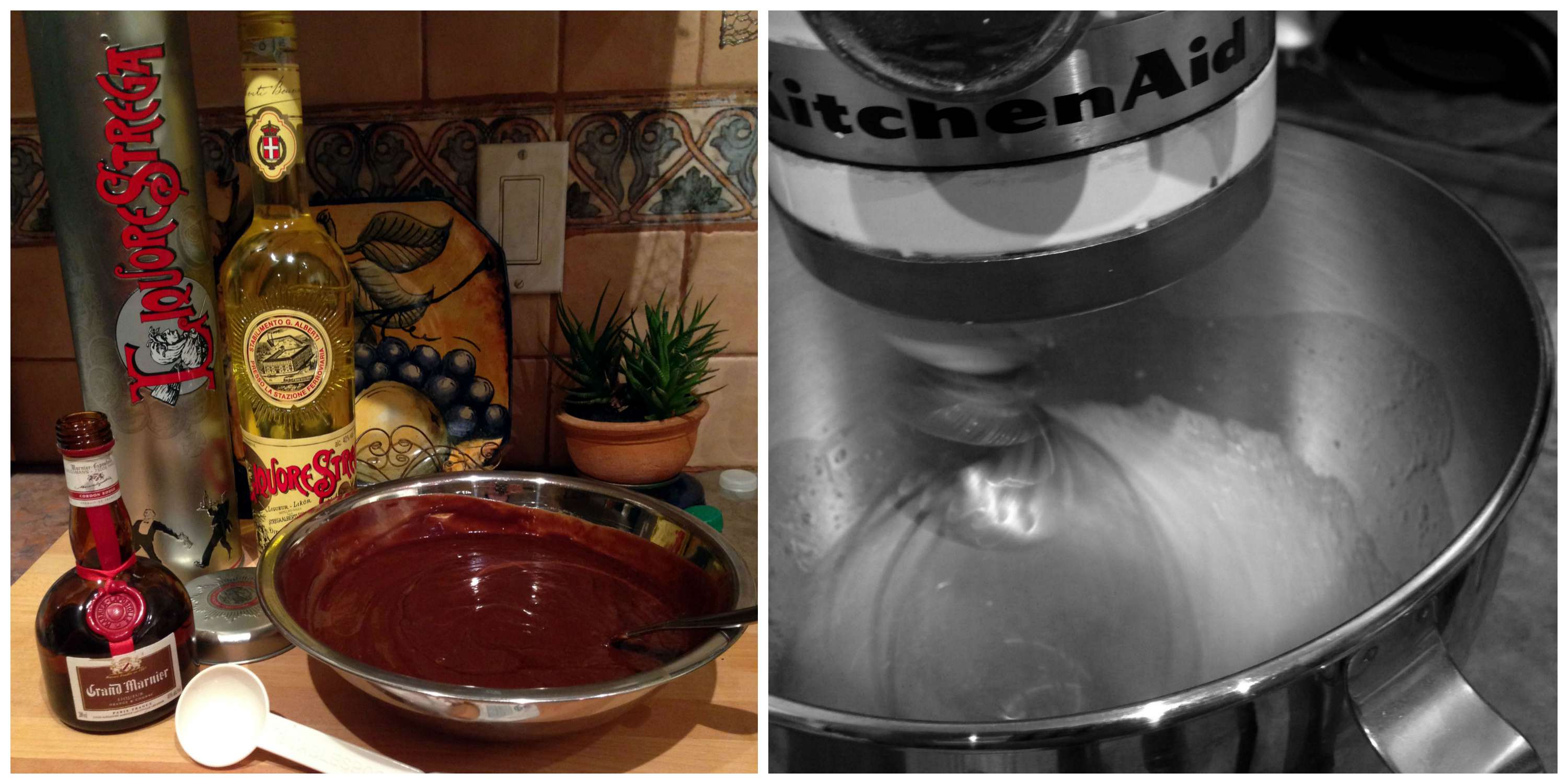
4.  In another bowl, whisk the egg yolks and brown sugar, then add to the chocolate.  Stir in alcohol and grated orange peel.

PicMonkey Collage

5.  Whip egg whites with an electric mixer until stiff peaks form.  Add the white sugar.

Torta Caprese Collage4

6.  In another bowl, mix almond flour, lievito or baking powder and salt together with a fork.  Fold the chocolate mixture in with a rubber spatula, then fold in egg whites.

Torta Caprese Collage3

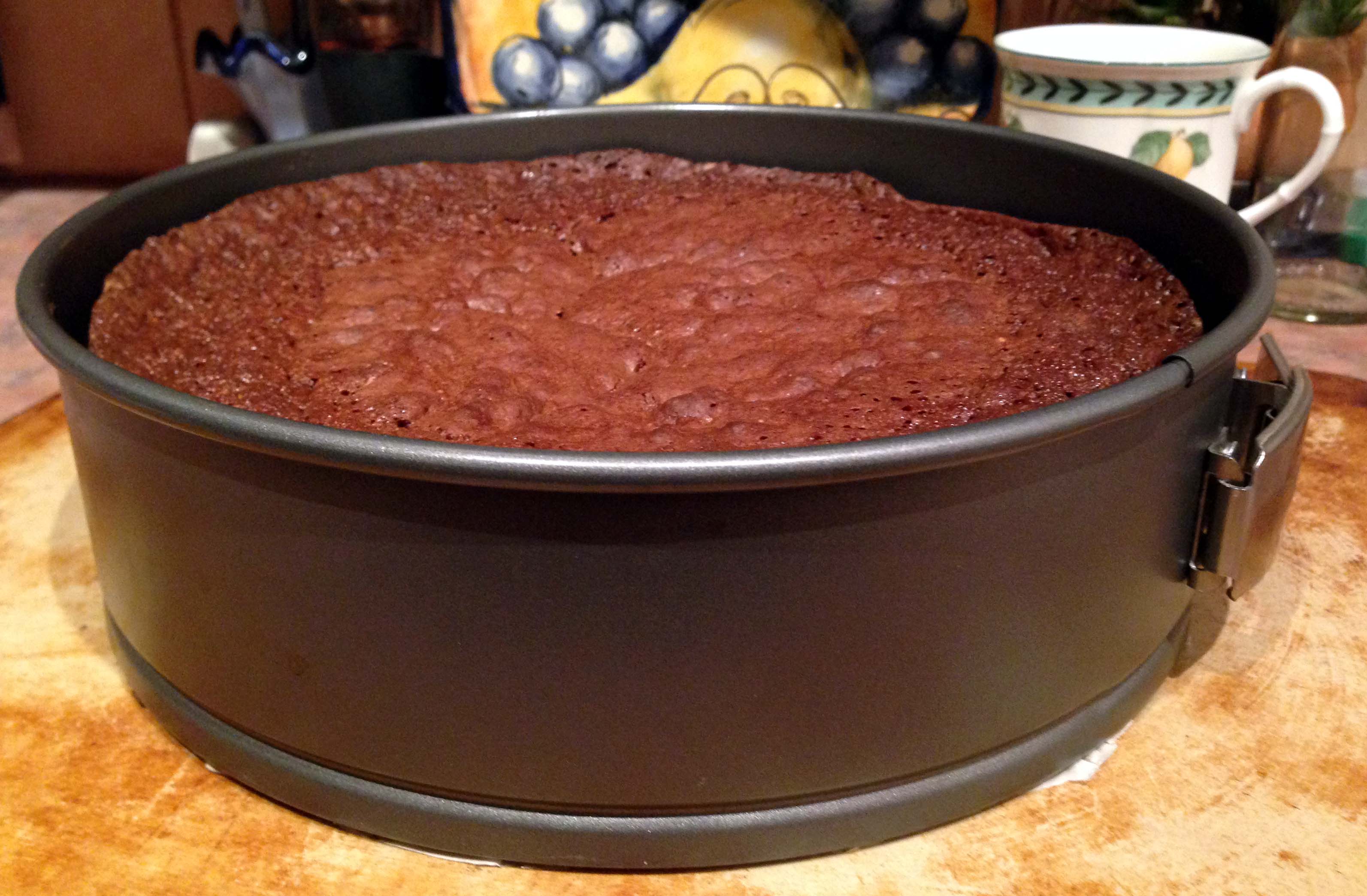
7.  Pour batter into pan and bake for 55 minutes to 1 hour, until center is firm.  The center sink in a bit.  Remove the sides of the pan and slide the cake onto a platter.

8.  Dust with icing sugar and serve with orange slices and whipped cream or gelato.  Store at room temperature for up to 3 days…if it lasts that long!

Torta Caprese

Buon Appetito!  Mille grazie to my amiche Anna and Shannon who were very motivated to help me photograph the finished cake.  I wouldn’t let them cut it and have a piece until the photos were done!

torta caprese tagliata

Torta Caprese pezzo

Here is me posing on my first visit to Capri when I was 16. Unfortunately I didn't know about Torta Caprese at the time.

Here is me posing on my first visit to Capri when I was 16. Unfortunately I didn’t know about Torta Caprese at the time.

Downloadable recipe and recipe in italiano will be added as soon as I am home from Italia.  Buon Appetito!

©2015unpodipepe.ca

Share this:

  • Click to share on Facebook (Opens in new window) Facebook
  • Click to share on Pinterest (Opens in new window) Pinterest
  • Click to share on X (Opens in new window) X
  • Click to email a link to a friend (Opens in new window) Email
  • Click to share on WhatsApp (Opens in new window) WhatsApp
Like Loading...

Grano Arso

12 Sunday Apr 2015

Posted by Un po' di pepe in Amici e Famiglia, Culture, Mangiamo!, Puglia

≈ 33 Comments

Tags

Cucina povera, Farina di grano arso, Foggia, Italian food, Monte Dauni, Pasta nera, Peppe Zullo, Pugliese Traditions, Southern Italy

farinagranoarsoorecchietteGrano arso literally means burnt wheat.  Flour made with it is ‘farina di grano arso’ and has a history going back many centuries as part of the gastronomic tradition of ‘cucina povera’ in Northern Puglia. Farina di grano arso was traditionally made from the bits of wheat left in the field after the harvest.  The stubble, called stoppie (STOHP•pyeh) or la ristoccia (rees•TOCH•chya) that was left in the fields was burned, then plowed back into the soil.  This was done as a quick and cheap way of clearing the fields.  It was also thought to aerate and fertilize the soil and kill weeds and pests.
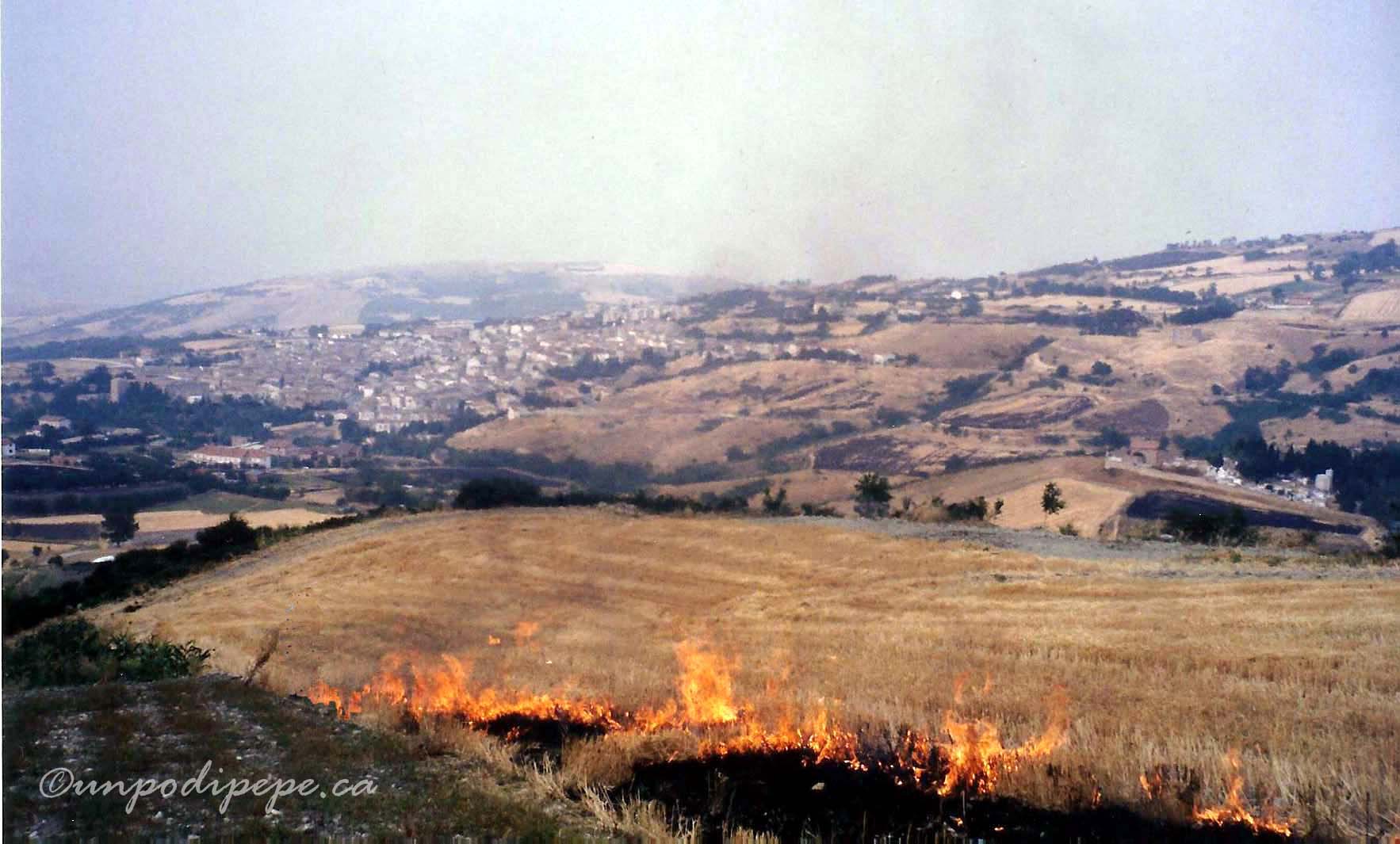
Bruciatura della ristoccia 1990

Bruciatura della ristoccia 1990

Ristoccia90In the short span of time between the burning and the plowing, poor farm workers (contadini) gathered burnt bits of wheat that were still usable and ground them by hand into farina di grano arso.  It was mixed with white flour, making pasta and bread more affordable, or traded to buy other foods.  ‘Pane nero’ (PAN•eh NEH•roh) or ‘pasta nera’ were considered the lowest quality of food and became a symbol of poverty-‘la miseria’ (mees•EH•ryah). ‘Pasta Nera’, an award-winning documentary that is not about grano arso, uses the title to accentuate the poverty in Southern Italia during and after the war.orecchiettepanoramo

We know that food is more than just nutrition.  The traditions and customs around food and its preparation are an integral part of a culture and teach us about the history of people and places at points in time.  Cucina povera (coo•CHEE•nah poh•VEH•rah)and cibo dei poveri (CHEE•boh dei poh•VEH•ree) literally translate to poor cooking and food of the poor, but what is meant is ‘peasant cooking’.  Farina di grano arso is important in a historical and cultural context as it really symbolizes the resilience and instinct to survive of our contadini ancestors.farinadigranoarso

Grano arso was nowhere to be found for many years, but today many Pugliese chefs, including mio amico, il ‘cuoco contadino’ Peppe Zullo use farina di grano arso.  It is used to make fresh traditional Pugliese pasta- orecchiette, cavatelli, fusilli, and sometimes bread and focacce. Peppe is representing Puglia for the month of May in the Italian Pavilion at Expo2015 Milano. The theme is ‘Nutrire il Pianeta; Energia per la Vita’/ ‘Feeding the Planet; Energy for Life’.   Appropriately, his feature dish for this event is cavatelli di grano arso e punti di asparagi verde.

Peppe Zullo's 'Cavatelli di grano arso con punti di asparagi verde' for Expo 2015

Peppe Zullo’s ‘Cavatelli di grano arso con punti di asparagi verde’ for Expo 2015

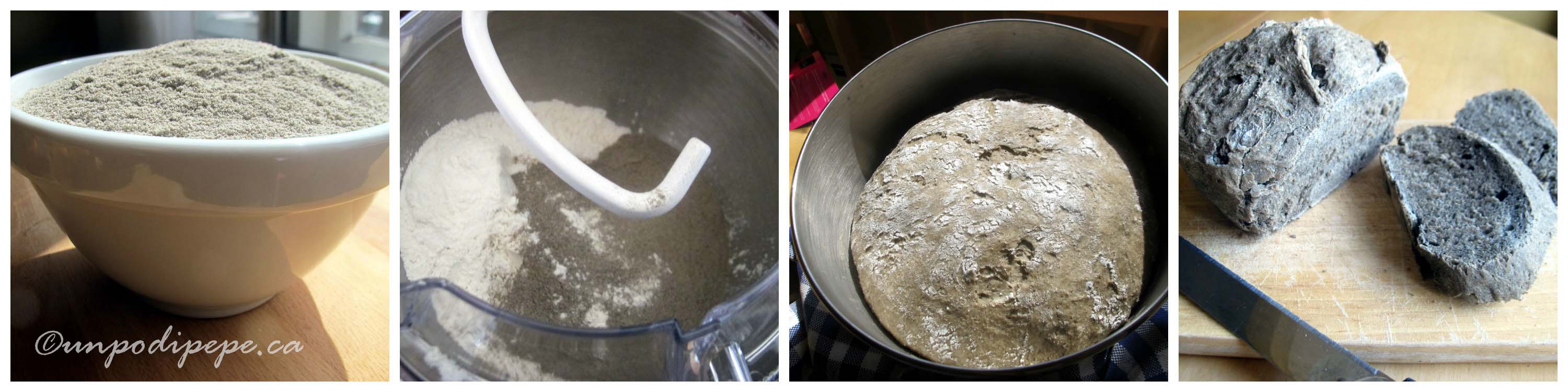
Bruciatura della ristoccia (broo∙chya•TOO•rah DEL•la rees•TOCH•chya), the burning of the stubble in the fields is now illegal due to carcinogenic concerns, destruction of soil nutrients, pollution and risk of forest fire. Today farina di grano arso is not completely burnt, it is commercially toasted.  The flavor, colour, texture and smell of pasta or bread made with farina di grano arso are really intense and unique. The flour is slightly grainy and the colour is grey like ashes- grigio cenere (gree•GEE•oh cheh•NEH•reh).  Pasta can range from grey to brown in colour depending on the percentage of farina grano arso used.  The smoked, nutty flavor reminds me a bit of toasted hazelnuts and the smell can be compared to lightly charred brick oven pizza crust. Most of the gluten is burnt off, so farina di grano arso can’t be used alone.  It absorbs more water than other flours and will become a sticky mess that doesn’t hold together. Mixing 10% to maximum 25% with other flours that contain gluten produces the best results.  Many people find pasta di grano arso easier to digest.

Panegranoarsocollage4

Not everyone is embracing the return of grano arso to the kitchen.  It disappeared because it is ‘un ricordo della miseria’-a reminder of poverty and there was vergogna (ver•GOH•nyah) or shame associated with having to eat pasta nera.  This is something that most Italians who lived through the war don’t want to be reminded of.  When I made the bread to photograph for this post, I brought it to my parents’ house for dinner.  Papà made a sour face and said ‘Solo che vedo questo pane mi viene la paura!’ (Just looking at this bread puts fear in me!)  He was kidding…sort of…I think?  Well he did eat 2 pieces anyways!

Making orecchiette di grano arso with my Mamma

Making orecchiette di grano arso with my Mamma

Farina di grano arso is available in Foggia and Andria.  Pietro Zito in Andria sells 1 kg bags online for 6 €, as well as pasta di grano arso. Even if it was possible to send to North America though, the cost would be astronomic.  Can you imagine Poste Italiane sending a bag of flour in the mail?  You could try toasting durum wheat semola yourself on a baking tray in the oven, but it will probably result in a visit from i pompieri (pohm∙•pee•EH•ree) -the fire department- when the smoke detector goes off.  I have a better idea- take a trip to Puglia and try pasta di grano arso in its natural environment! Buon Appetito!

Orecchiette di grano arso al sugo, Ristorante  Peppe Zullo Orsara di Puglia

Orecchiette di grano arso al sugo, Ristorante Peppe Zullo Orsara di Puglia

Share this:

  • Click to share on Facebook (Opens in new window) Facebook
  • Click to share on Pinterest (Opens in new window) Pinterest
  • Click to share on X (Opens in new window) X
  • Click to email a link to a friend (Opens in new window) Email
  • Click to share on WhatsApp (Opens in new window) WhatsApp
Like Loading...

Cauzuncill’

19 Friday Dec 2014

Posted by Un po' di pepe in Italian life, Mangiamo!, Orsara di Puglia

≈ 3 Comments

Tags

Calzoncini di ceci, Dolci di Natale, Italian food, Natale, Orsara di Puglia, Pugliese Traditions, vino cotto

cauzuncillI know Natale (Christmas) is around the corner when we make cauzuncill’  (cow•zoon•cheel).  Cauzuncill’ is Orsarese for calzoncini, which means piccoli calzoni or ‘little pants’.

Cauzuncill’ are ‘a forma di mezzaluna’ (half moon shaped) turnovers traditionally filled with mashed ceci (chick peas), vino cotto, mandarin orange and lemon zest, grated chocolate, sugar and of course alcohol. We also made some with ground almonds instead of ceci.  Castagne (chestnuts) are sometimes mixed in with the ceci filling.

Cauzuncill'collage copy

Cauzuncill' Collage3 copyCauzuncill’ are fried and then served drizzled with vino cotto.  Don’t know what vino cotto is?  When making wine, some of the freshly pressed grape juice (mosto) is slowly cooked all day until it is reduced and caramelized.  It’s like a thick wine syrup that is used for desserts, muscitaglia on November 1st, and even drizzled on snow!

Cauzuncill' (cow-zoon-cheel) with almond and vino cotto filling, drizzled with vino cotto

Cauzuncill’ (cow-zoon-cheel) with almond and vino cotto filling, drizzled with vino cotto

Dolci di Natale similar to cauzuncill’ are made in Basilicata and Molise, but the name, fillings and even the pastry change depending on the region.  What kind of dolci di Natale does your family make?


Share this:

  • Click to share on Facebook (Opens in new window) Facebook
  • Click to share on Pinterest (Opens in new window) Pinterest
  • Click to share on X (Opens in new window) X
  • Click to email a link to a friend (Opens in new window) Email
  • Click to share on WhatsApp (Opens in new window) WhatsApp
Like Loading...

Passata di Pomodoro

01 Monday Sep 2014

Posted by Un po' di pepe in Italian life, Mangiamo!

≈ 24 Comments

Tags

Italian food, Passata di pomodoro, Tomato sauce, Traditional recipes

Passata di pomodoro
Every year my family gets together to make ‘la salsa’, or passata di pomodoro. Everyone participates, even the nipotini. It is a 2 day event and we are all tired today, as we made about 180 litres of salsa/passata! Some of the tomatoes came from our gardens, but most of them were purchased.

Pomodori ready to be washed

Pomodori ready to be washed

Pomodori from the garden

Pomodori from the garden

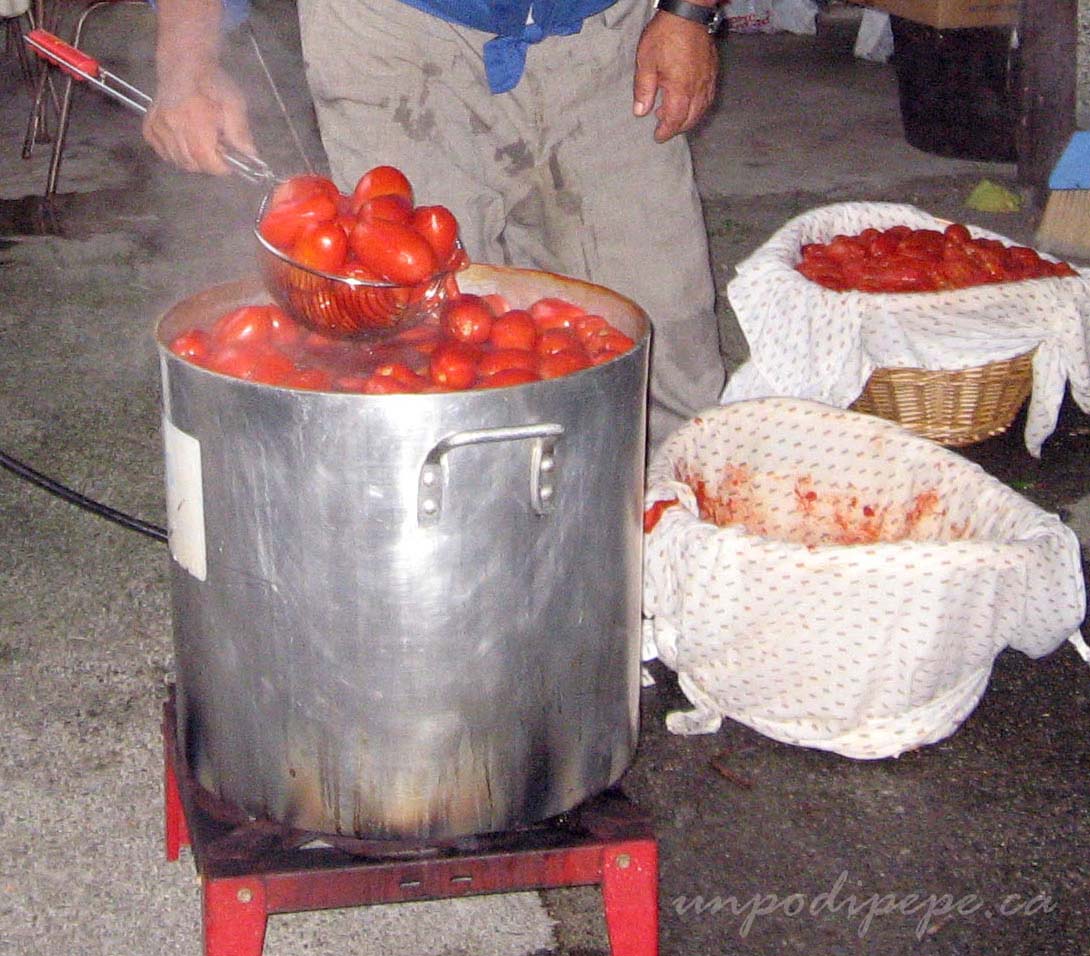
La pentola per i pomodori-a really big pot to cook the tomatoes!

La pentola per i pomodori-a really big pot to cook the tomatoes!

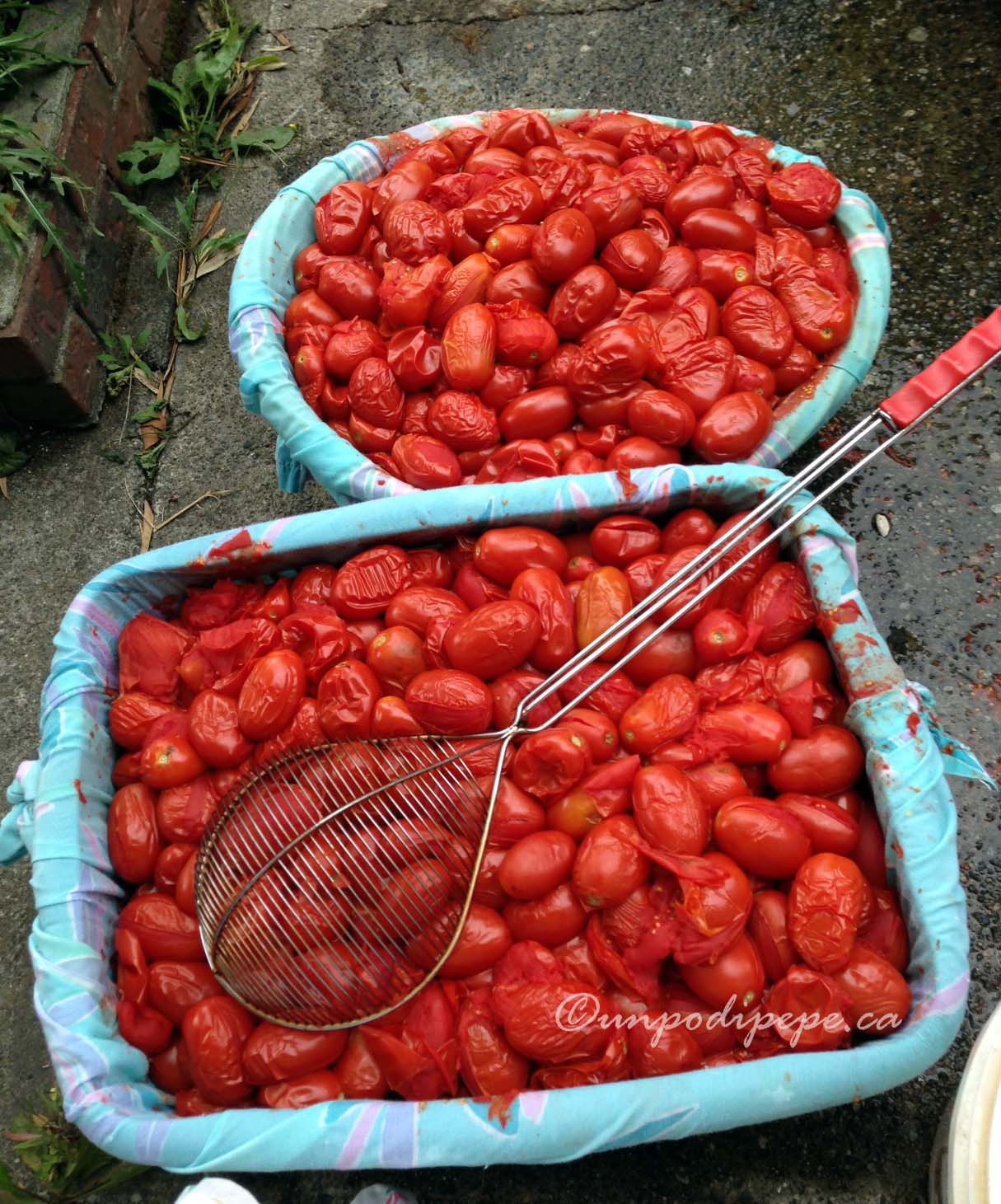
The ripe pomodori are washed, then cooked in a really big pot until soft. Then they are drained in baskets lined with cloth. If they aren’t drained well, then the passata will be too watery.  To make ‘pomodori pelati’ (peeled tomatoes) instead of passata, the skin is removed by hand and the whole pomodori are put in jars.

Cooked pomodori drained in baskets lined with cloth

Cooked pomodori drained in baskets lined with cloth

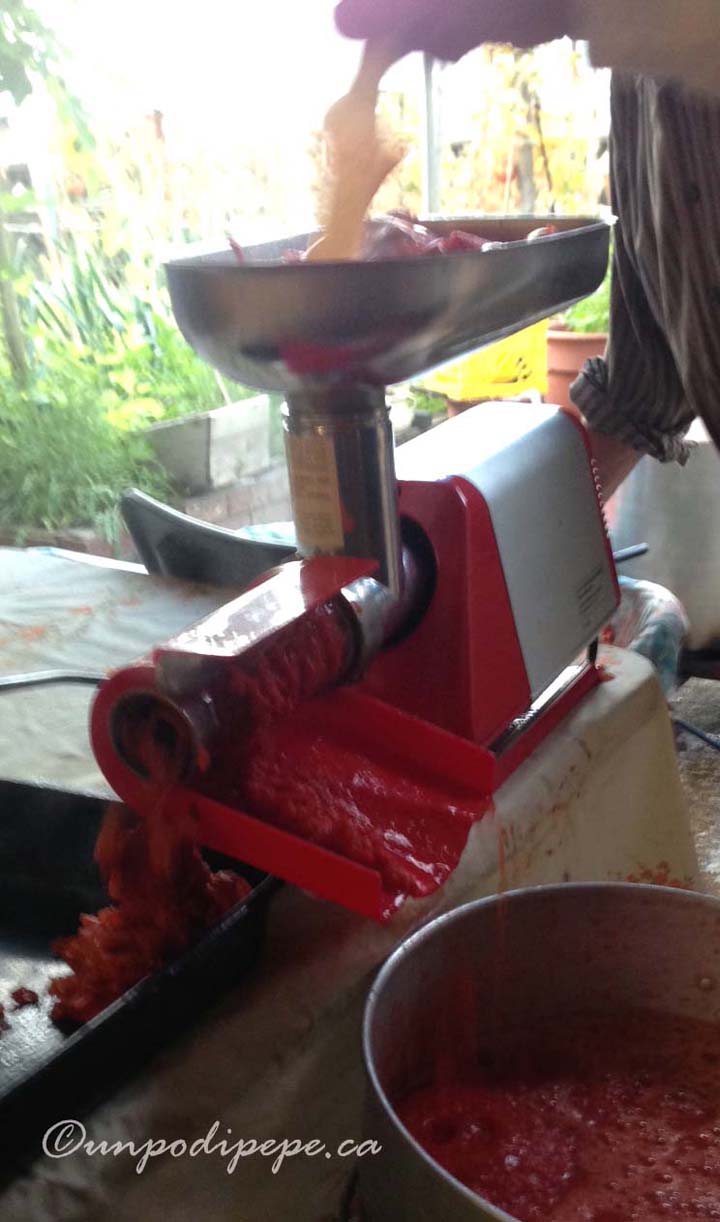
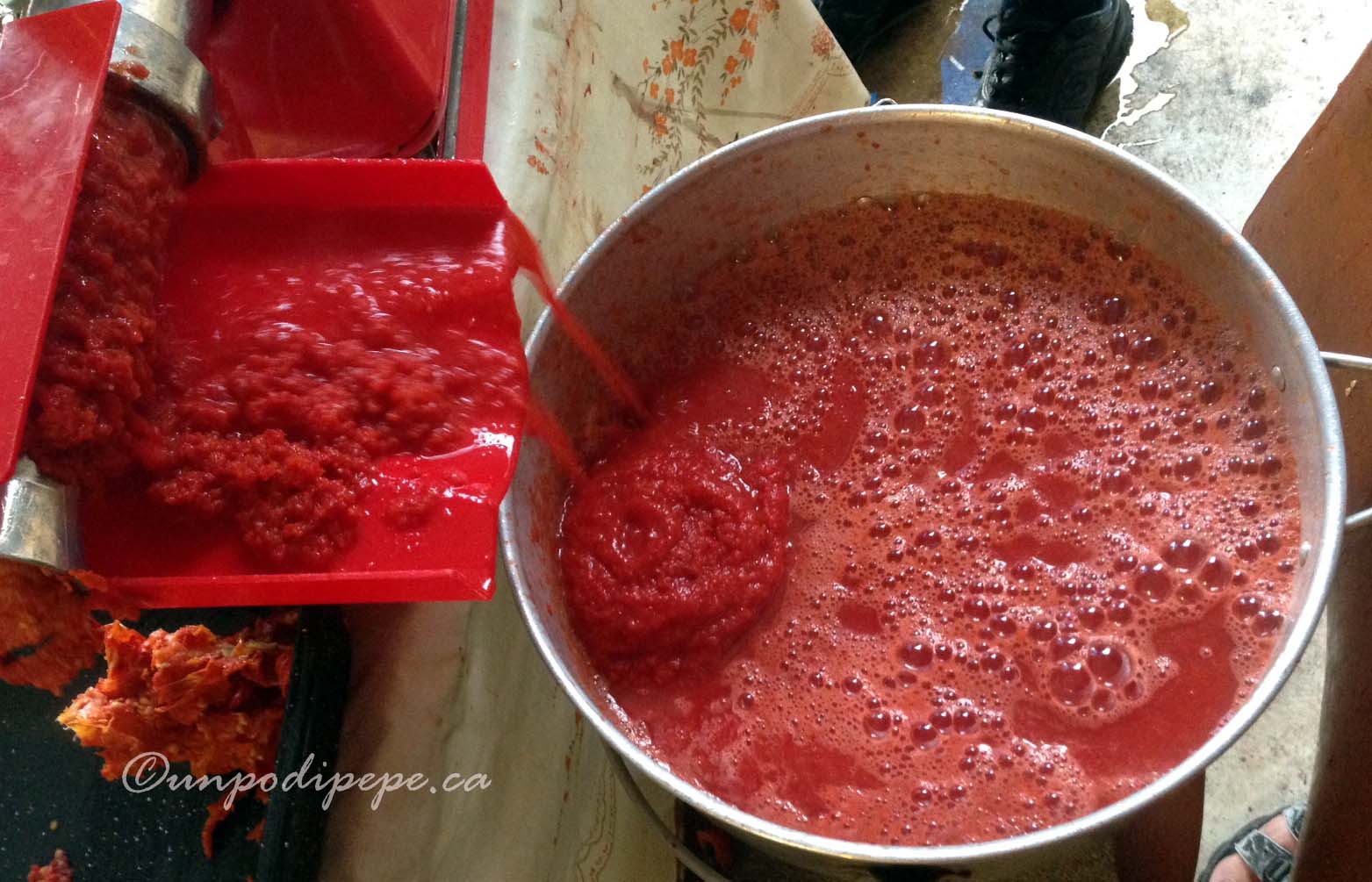
Passata refers to ‘passed’ through a sieve, a passapomodoro, or an electric machine to extract the juice and pulp and remove the skin and seeds. Our machine is called a ‘spremipomodori‘(tomato squeezer!). We thought it bit the dust last year, and bought a new one which didn’t work.  So we had to dig out the old one and give it a try.  This thing just keeps on ticking!

Our 'spremipomodoro' hard at work. The salsa/passata comes out the front and the skins and seeds come out the side.

Our ‘spremipomodoro’ hard at work. The salsa/passata comes out the front and the skins and seeds come out the side.

Passata di pomodoro

Passata di pomodoro

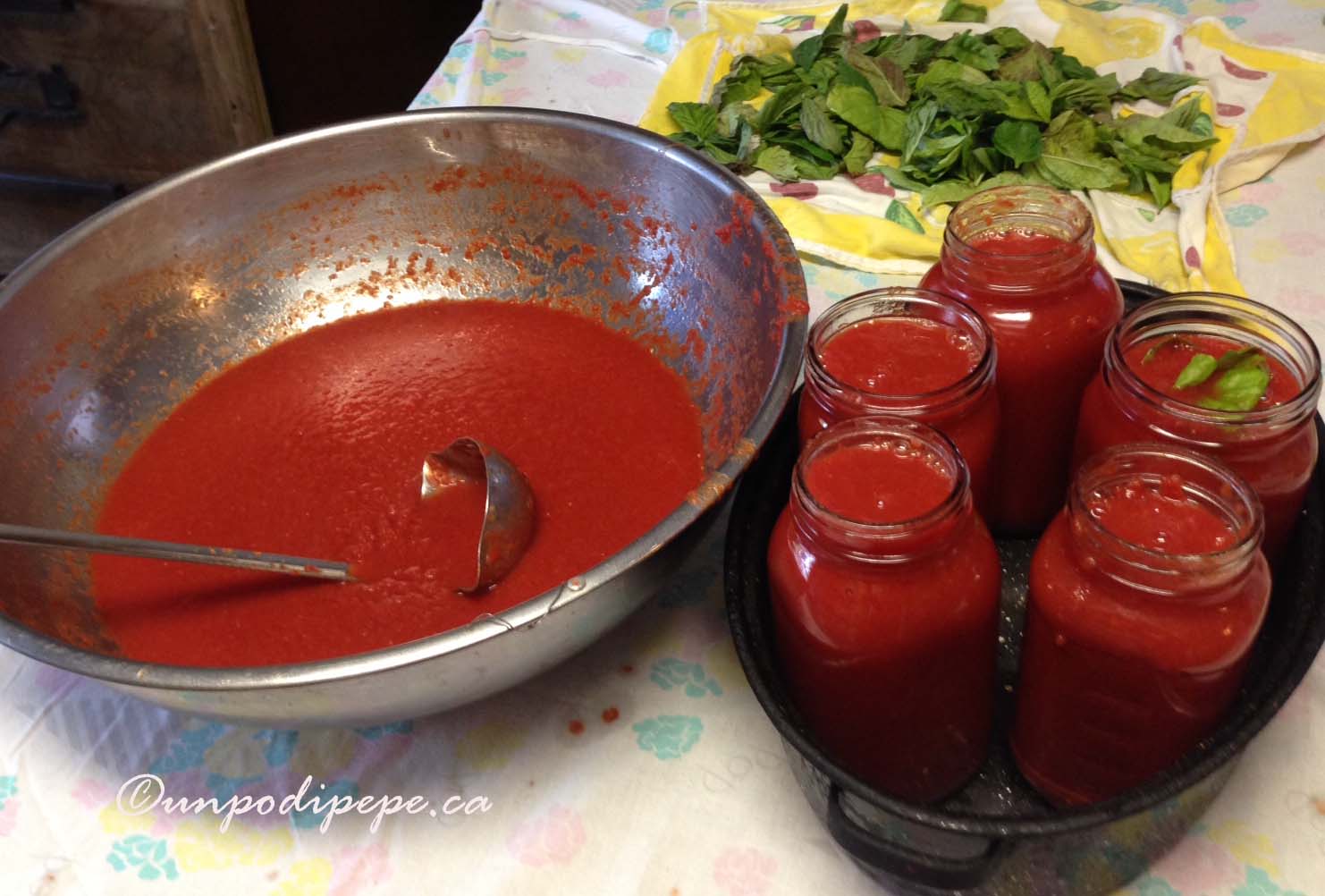
Salt is added to the passata/salsa as a preservative and it is ladled into jars with fresh basilico (basil). We use canning jars and juice bottles.  My relatives in Italia used to ladle their salsa into big amber beer bottles!
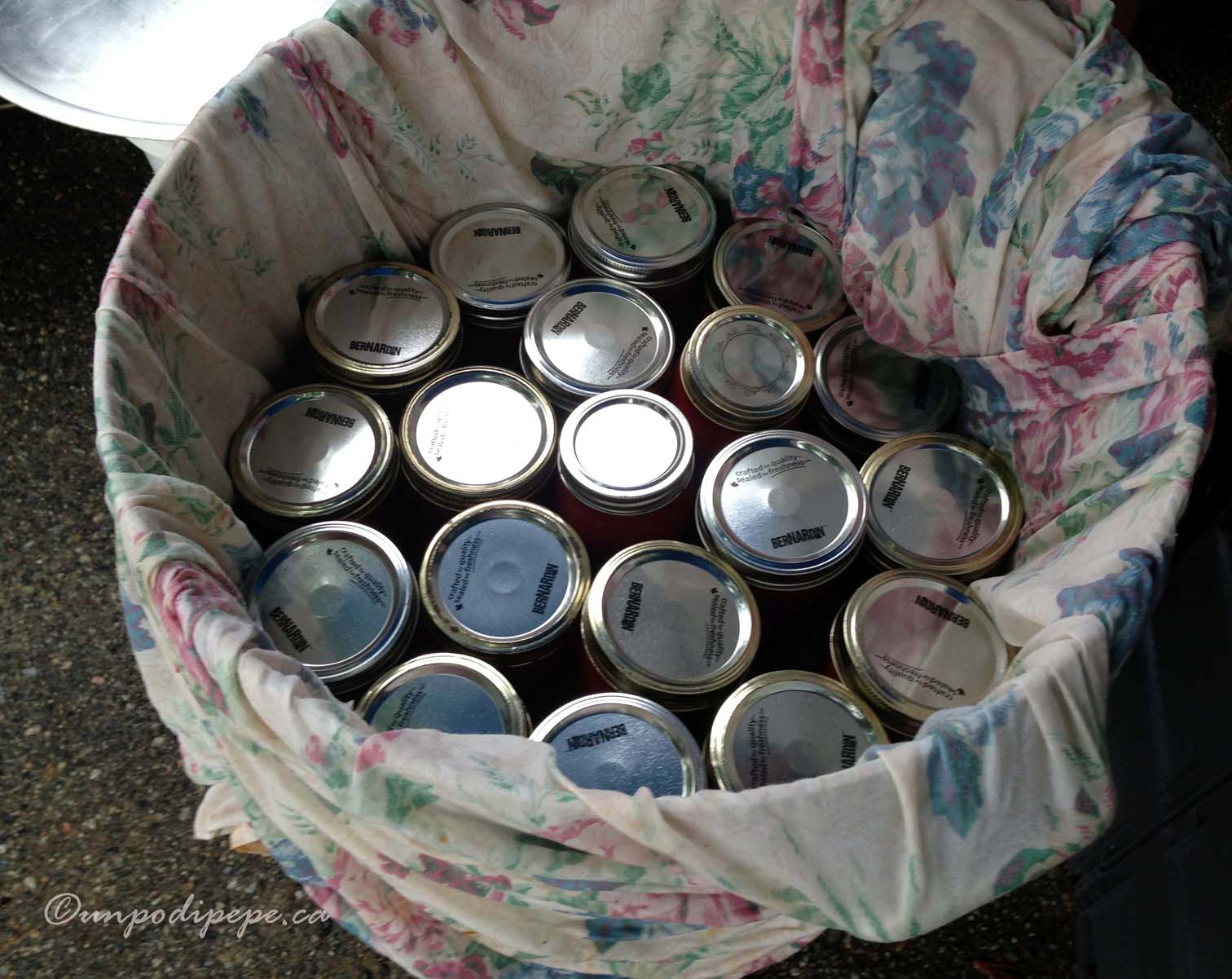
Passatadipomodoro3Sterilized lids are screwed on tightly, and the jars are place back in the large pot, which is lined with cloth so they don’t clang together. The pot is brought to a soft boil for about half an hour.

Vasetti (jars) of passata in a huge cloth lined pot

Vasetti (jars) of passata in a huge cloth lined pot

The warm jars are placed upside down and covered in blankets until the next day when they have cooled. Then they are stored in the cantina!

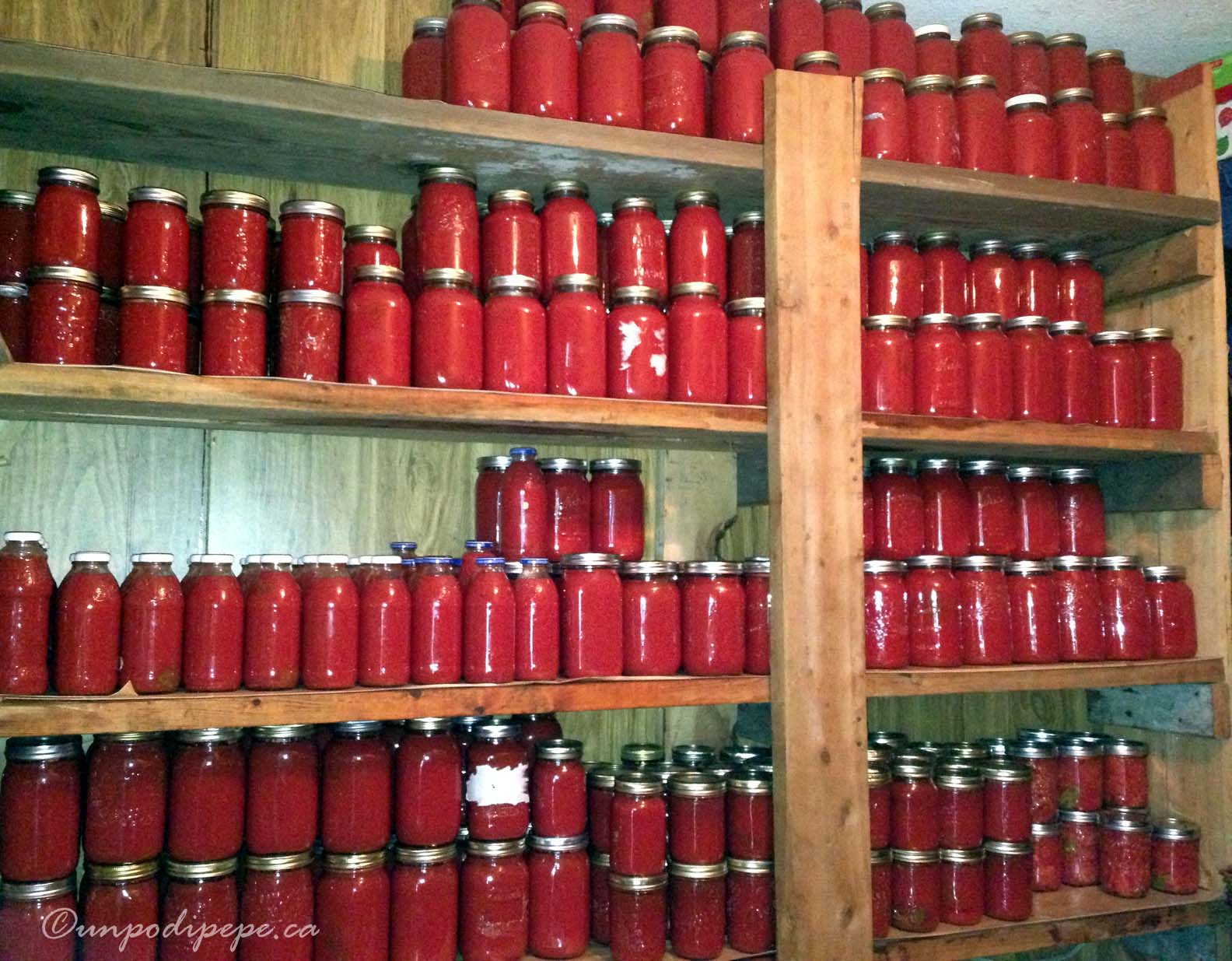
La cantina! The bottom shelf is from last year.

La cantina! The bottom shelf is from last year.

I hope you enjoyed your passata di pomodoro tour! Now I’m in the mood for orecchiette con sugo! Ciao, Cristina


Share this:

  • Click to share on Facebook (Opens in new window) Facebook
  • Click to share on Pinterest (Opens in new window) Pinterest
  • Click to share on X (Opens in new window) X
  • Click to email a link to a friend (Opens in new window) Email
  • Click to share on WhatsApp (Opens in new window) WhatsApp
Like Loading...
Newer posts →

Enter your email address to follow 'un po' di pepe' and receive notifications of new posts by email.

Join 511 other subscribers
Follow Un po' di pepe on WordPress.com

Popular Posts

  • Hairstyling in Ancient Roma
    Hairstyling in Ancient Roma
  • Espresso Cookies
    Espresso Cookies
  • Panforte di Siena
    Panforte di Siena
  • Il Pumo Pugliese
    Il Pumo Pugliese
  • San Nicola
    San Nicola
  • Panettone Fatto in Casa
    Panettone Fatto in Casa
  • Internment of Italian Canadians
    Internment of Italian Canadians

Recent Posts

  • Castel del Monte
  • ‘The Nuances of Love’
  • Hostaria Antica Roma~Eat like an Ancient Roman
  • Santa Maria in Aracoeli
  • Casino dell’Aurora~Villa Boncompagni Ludovisi
  • Nasoni di Roma
  • Bloghiversario #11
  • Fontana di Trevi
  • Acqua Vergine
  • Giubileo 2025
  • Sanremo 2025
  • In Vino there are Memories
  • A Literary Harvest
  • 2024~Un po’ di pepe Year in Review
  • Buon Natale 2024
  • Il Bicerin
  • Mercato Porta Palazzo
  • Torino
  • Catanzaro, Calabria
  • Il Pumo Pugliese
  • Artemisia Gentileschi
  • Cavalli di San Marco
  • Panzerotti
  • Torcello
  • 10 years of Un po’ di pepe!

Categories

Amici e Famiglia Architecture Art Art history Art projects Bilingual posts Blogging Canada Culture Feste Firenze Inspiration Italia Italian Folklore Italian language Italian life Italocanadesi Libri Mangiamo! Orsara di Puglia Parole piacevoli Photography Puglia Recipes Roma Travel Travel tips Uncategorized Vino

Archives

Un po’ di pepe on Facebook

Un po’ di pepe on Facebook

Start a Blog at WordPress.com.

  • Subscribe Subscribed
    • Un po' di pepe
    • Join 511 other subscribers
    • Already have a WordPress.com account? Log in now.
    • Un po' di pepe
    • Subscribe Subscribed
    • Sign up
    • Log in
    • Report this content
    • View site in Reader
    • Manage subscriptions
    • Collapse this bar
 

Loading Comments...
 

    %d