• Home
  • About me/Chi sono
  • Contact

Un po' di pepe

~ …… (oon∙poh∙dee∙PEH∙peh) Cristina writes about interesting stuff /Cristina scrive di cose interessanti

Un po' di pepe

Category Archives: Culture

Fucacoste e Cocce Priatorje

01 Sunday Nov 2015

Posted by Un po' di pepe in Culture, Feste, Italian Folklore, Orsara di Puglia, Puglia

≈ 5 Comments

Tags

Falò e Teste del Purgatorio, Festa dei Morti, Italian Folklore, Italian history, Muscitaglia, November 1st, Orsara di Puglia, Puglia, Pugliese Traditions, Pumpkin carving, Southern Italy, Traditional Festivals in Puglia, Tutti i Santi Festa, Zucche

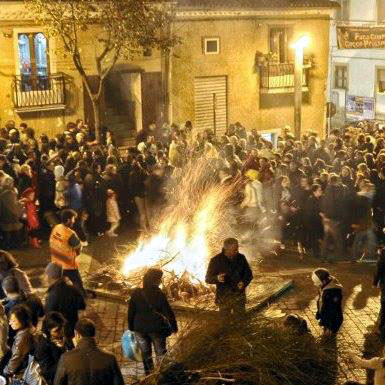
Piazza San Pietro. Photo courtesy of International Photo Correspondent Donato Narducci

Piazza San Pietro. Photo courtesy of International Photo Correspondent Donato Narducci

Tonight is a big festa in Orsara di Puglia, so I am reposting this from last year.

Fucacoste e cocce priatorje is dialetto Orsarese for ‘Falò e teste del Purgatorio’.  This translates to ‘Bonfires and heads from purgatory’. It is an ancient festival unique to Orsara di Puglia celebrated on November 1st, the night of ‘Tutti i Santi’ (All Saints Day).  All Saints Day was created in the 9th century when the Pope superimposed a Christian feast day onto existing rituals, so this festa has been around for a very long time.  It is a night where people have the opportunity to honour, reconnect and pay respect to the spirits of their loved ones.  Carabinieri estimate that the town of 3,000 had 40,000 visitors attend the festa tonight, with 9,000 cars parked up to 3 km away!

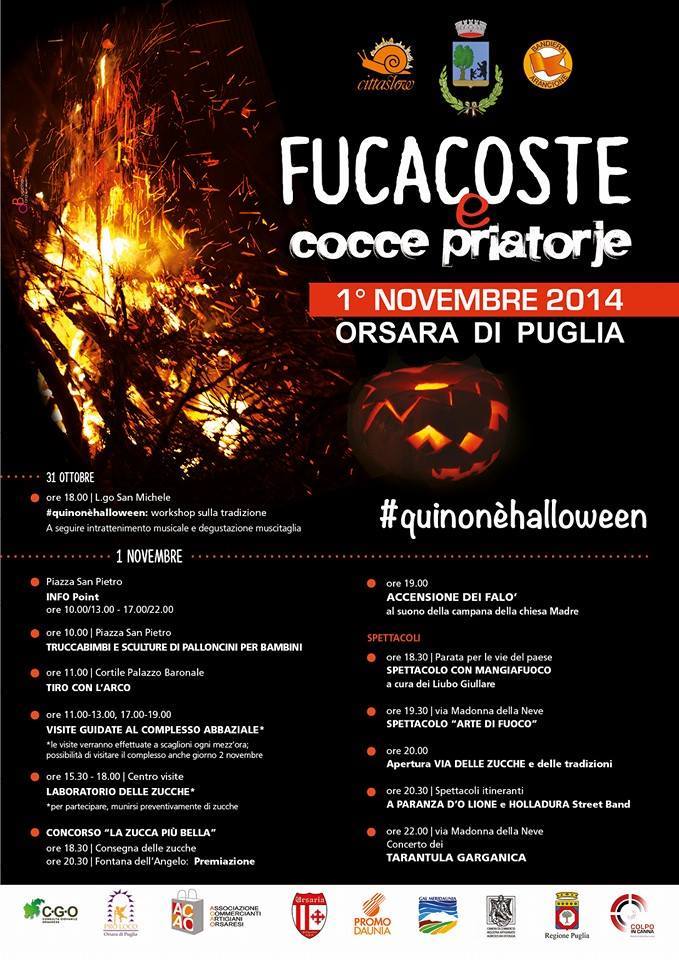
2014 poster for Fucacoste e cocce priatorje

2014 poster for Fucacoste e cocce priatorje

It is believed that the souls of the dead return among the living to visit their relatives and their former homes before moving on to Paradiso.  The bonfires are lit with wood and branches of ginestra (broom). The light of the fires and the crackling and sparks of the ginestra attract the spirits to reunite the living with those who continue to live only in their memories.  The souls of the dead loved ones collect ashes from the fires. The gleam of light inside ‘cocce priatorje’, pumpkins carved to look like heads-light their way to find their former home.

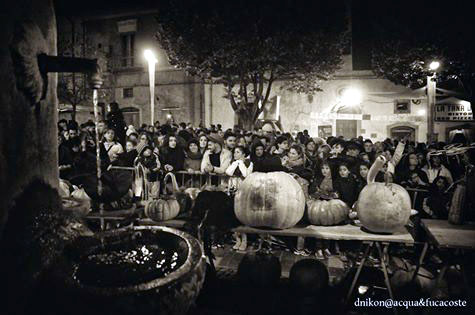
Preparation for the  festa involves gathering firewood and ginestra, preparing food and carving zucche (pumpkins).  There is even a BYOZ (bring your own zucca) pumpkin carving workshop.  Later in the evening zucche are exhibited and there is a contest for ‘la zucca più bella’-the best zucca.

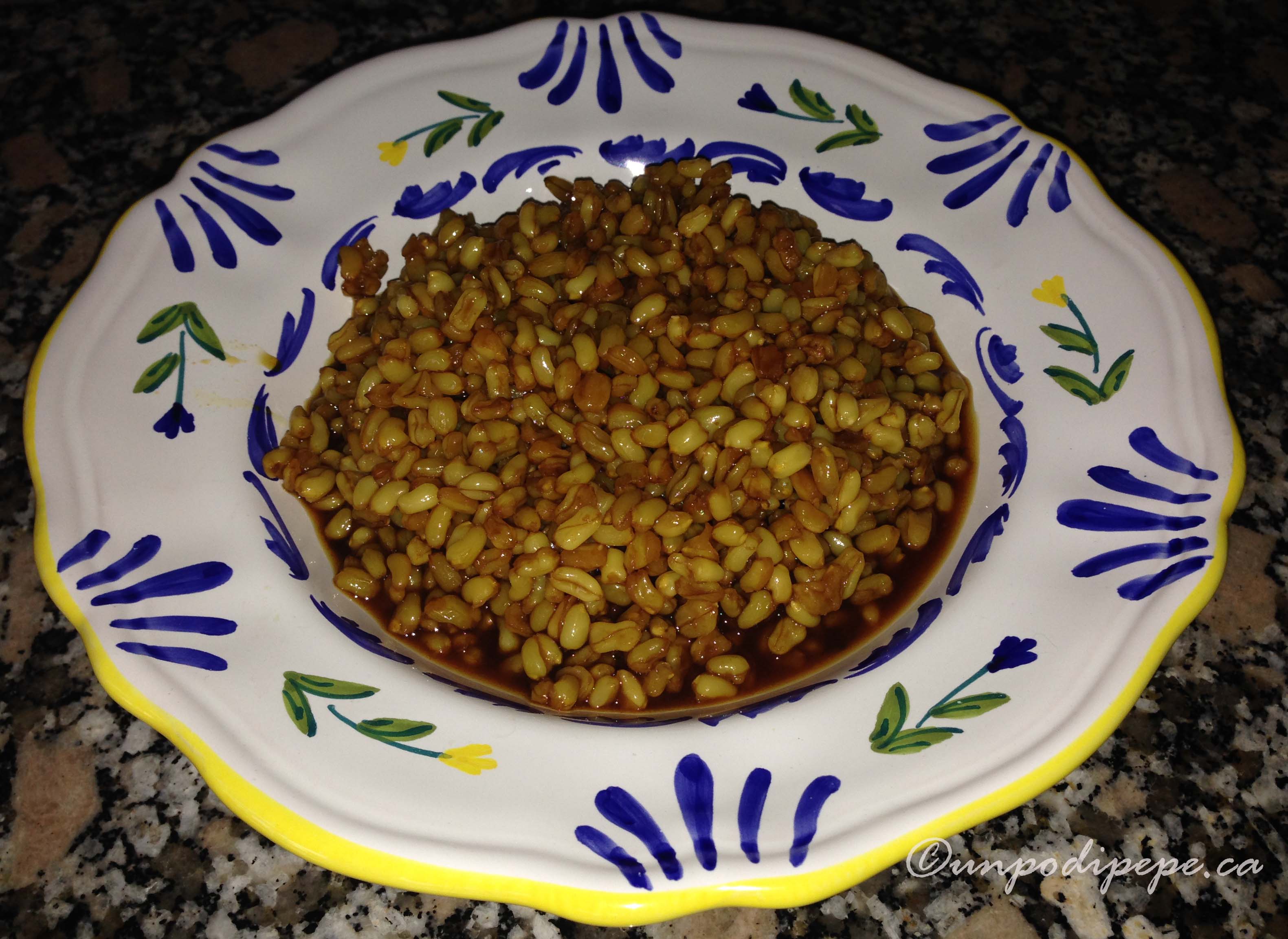
In honour of the dead, simple but symbolic foods are prepared.  These include potatoes, onions, salsicce (sausages) and castagne (chestnuts) cooked in open fire. Muscitaglia is a traditional dish served on November 1st which probably dates back from the ancient Greeks and Byzantines. Muscitaglia (moo•shee•tah•lyah) in both Greek and Latin is made up of the words mosto (wine must) and talia (grain). The ingredients include boiled grain and vino cotto (literally cooked wine-also called mosto cotto). Pomegranate seeds and walnut pieces are sometimes added. These ingredients are symbols of fertility and abundance, but also of honour and respect for the dead.

Muscitaglia

Muscitaglia

When the campanile (church bell tower) strikes 1900 hours (7 pm), Orsara di Puglia ‘catches fire’. Over 100 bonfires are simultaneously lit in every street and piazza and remain lit through the night.  The fires, pumpkin lanterns, music and people in the streets create a magical, enchanted atmosphere.

Fucacoste e Cocce Priatorje has often been confused with Hallowe’en, but it is a very different event.  Besides the fact that the date is different, dressing up in costume is not part of the custom, there is nothing scary about it and there are no evil spirits to chase away. It has more similarities with the Mexican Dia de los Muertos, Day of the Dead.  This is an event about being together in community to celebrate the bond between the living and those who we remember in our hearts, and to remind us that our time on earth is precious.

Watch the video ‘#quinonèhalloween’ featuring 94 year old Z’Gaetan talking about the festa and its significance  https://www.youtube.com/watch?v=9W5RD0-9H-A

Read about tonight’s festa (in Italiano) on the Comune di Orsara di Puglia website.  For more about Orsara di Puglia read the post ‘Benvenuti ad Orsara di Puglia’.  Ci vediamo alla festa!

Fucacoste e Cocce Priatorje, Fontana Sant'Angelo, Orsara di Puglia 2014. Photo courtesy of Donato Narducci

Fucacoste e Cocce Priatorje, Fontana Sant’Angelo, Orsara di Puglia 2014. Photo courtesy of Donato Narducci

Share this:

  • Click to share on Facebook (Opens in new window) Facebook
  • Click to share on Pinterest (Opens in new window) Pinterest
  • Click to share on X (Opens in new window) X
  • Click to email a link to a friend (Opens in new window) Email
  • Click to share on WhatsApp (Opens in new window) WhatsApp
Like Loading...

The Miracle Players, Roma

15 Monday Jun 2015

Posted by Un po' di pepe in Culture, Italia, Roma, Travel tips

≈ 8 Comments

Tags

Foro Romano, Italian history, Italy travel tips, Roma, Roma english speaking theater, Roman Forum, The Miracle Players

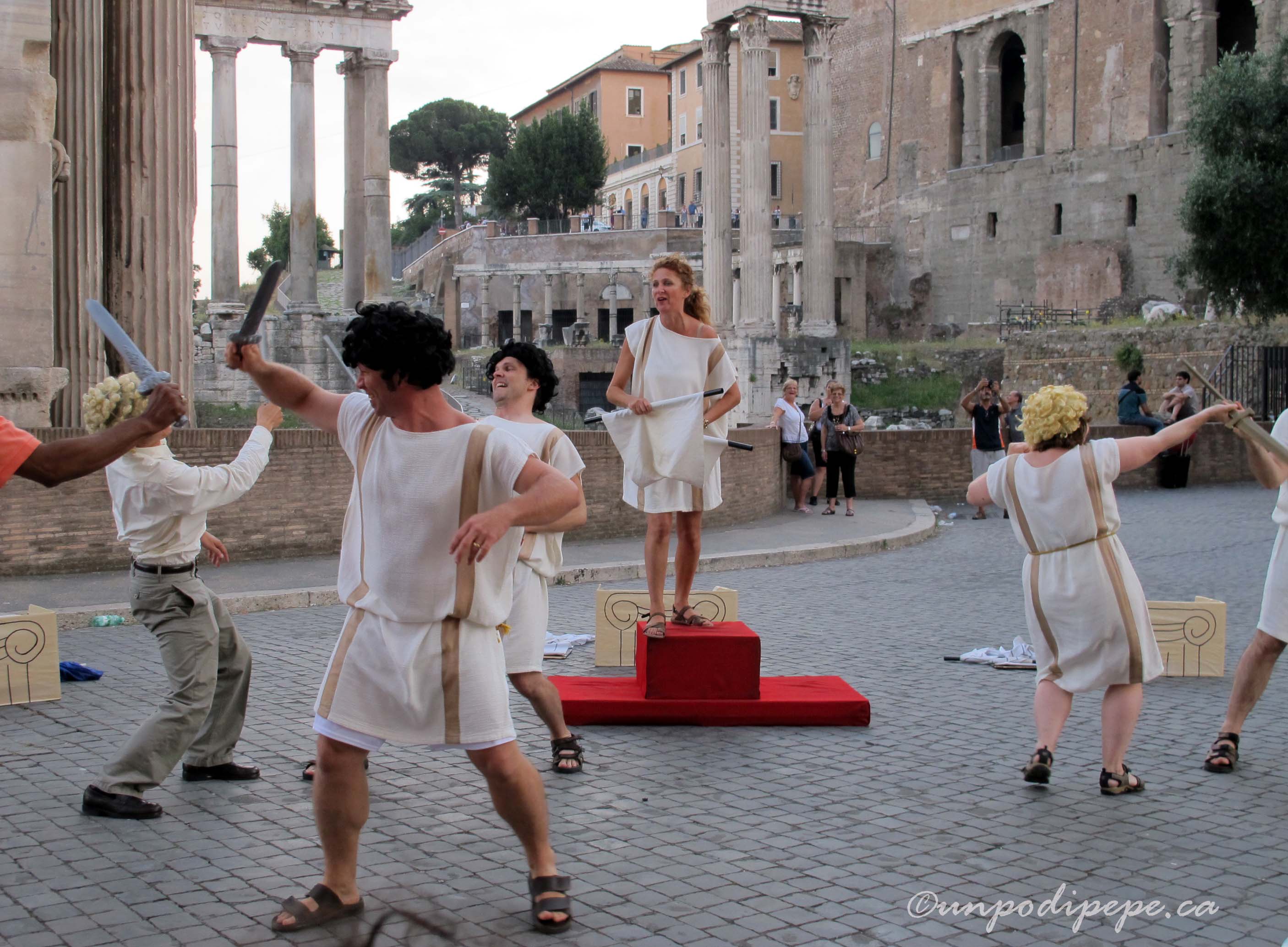
Miracle PlayersIf Monty Python meets the history of the Roman Empire sounds appealing, you will love the Miracle Players.  They are an English speaking theater group in Roma made up of expats from around the world.  They perform hysterically historical original comic works at the Foro Romano (Roman Forum) each summer.

Miracle Players2

Miracle Players performances feature volunteer swordfighters and high tech special effects!

Miracle Players performances feature volunteer swordfighters and high tech special effects!

I have been to 3 of their performances; ‘Caesar-More than just a Salad’, ‘The Life of Michelangelo’, and ‘The Seven Kings of Rome’.  This year they are performing the rhyming ‘Rome in a Nutshell’.

Miracle Players4

If you will be in Roma on a Friday between June 26 and July 31, check out the performance at 7:30pm sharp.  It is free and no reservation required. Get there early to sit on the stairs of the church facing the action-Chiesa dei Santi Luca e Martina. Bring something to sit on if your culetto doesn’t like hard stairs or pavement.

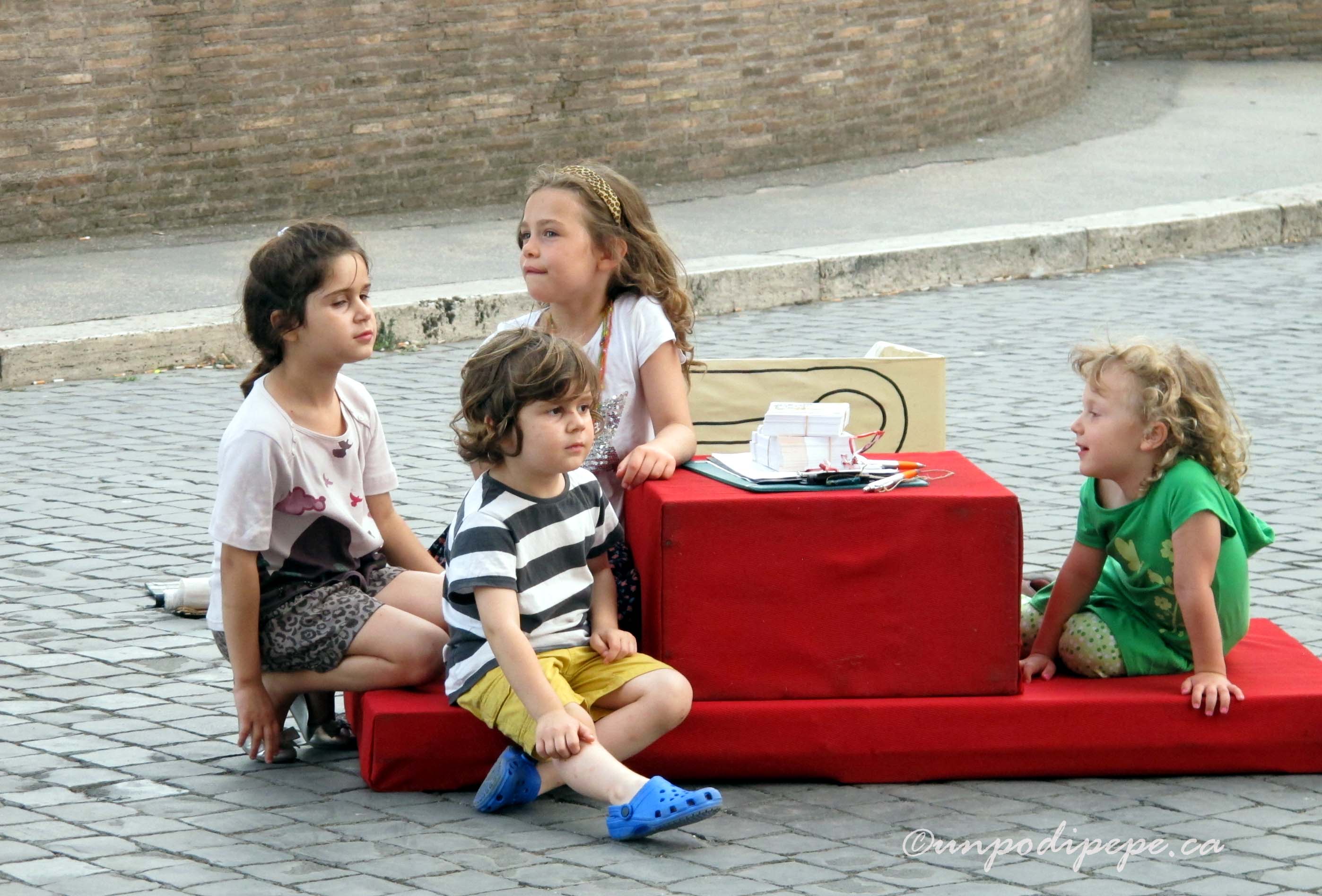
The production crew takes a break

The production crew takes a break

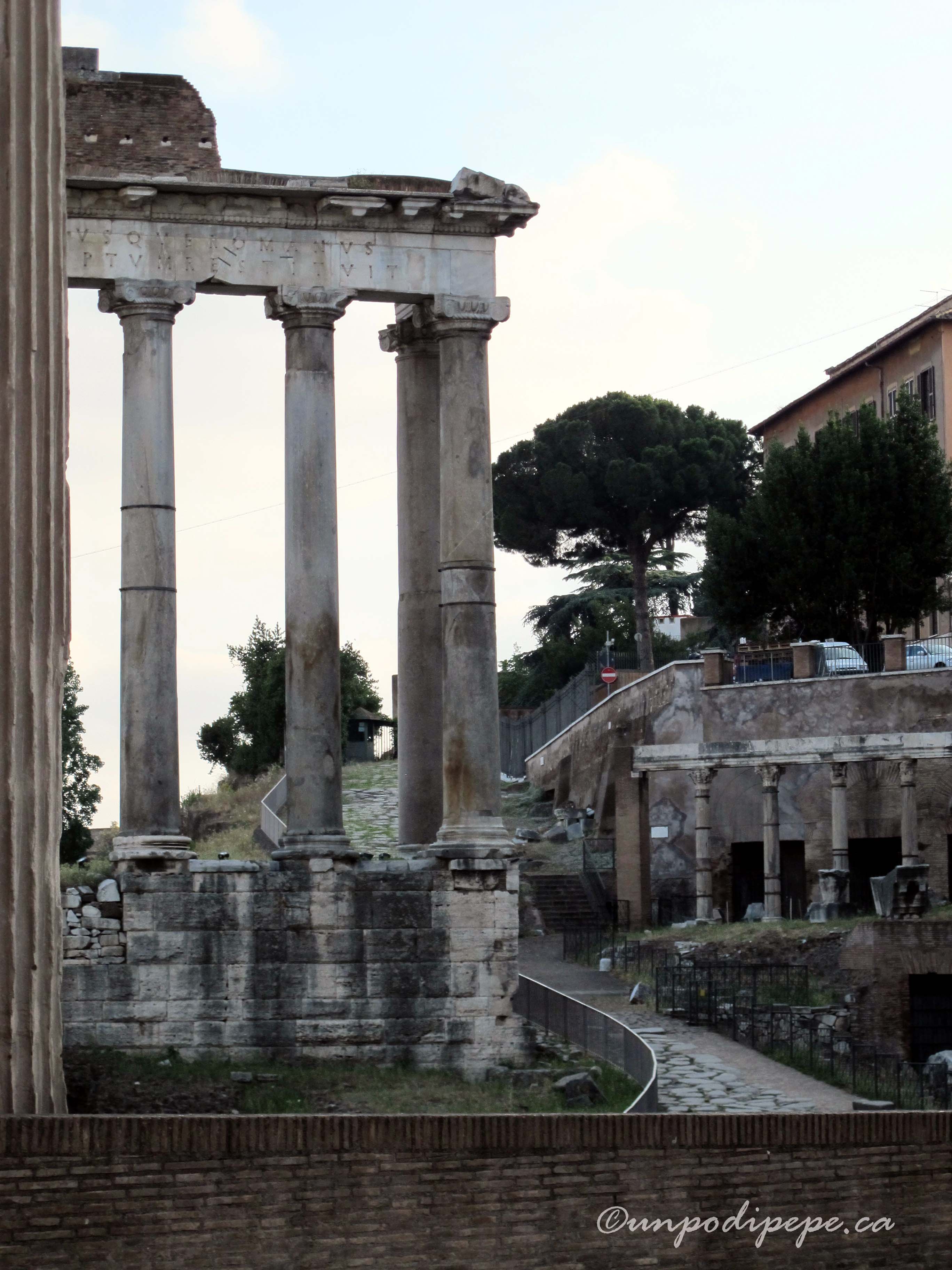
The performance is across from the Carcere Mamertino (Mamertine Prison) at the Roman Forum.  This is below the Campidoglio and behind Il Vittoriano.  The location is easy to get to.  Take the Metro B blue line to Colosseo and walk down Via dei Fori Imperiali.  There is a map on The Miracle Players website. The stage backdrop is the Roman Forum itself-how can you top that!  ForoRomano

Share this:

  • Click to share on Facebook (Opens in new window) Facebook
  • Click to share on Pinterest (Opens in new window) Pinterest
  • Click to share on X (Opens in new window) X
  • Click to email a link to a friend (Opens in new window) Email
  • Click to share on WhatsApp (Opens in new window) WhatsApp
Like Loading...

Grano Arso

12 Sunday Apr 2015

Posted by Un po' di pepe in Amici e Famiglia, Culture, Mangiamo!, Puglia

≈ 33 Comments

Tags

Cucina povera, Farina di grano arso, Foggia, Italian food, Monte Dauni, Pasta nera, Peppe Zullo, Pugliese Traditions, Southern Italy

farinagranoarsoorecchietteGrano arso literally means burnt wheat.  Flour made with it is ‘farina di grano arso’ and has a history going back many centuries as part of the gastronomic tradition of ‘cucina povera’ in Northern Puglia. Farina di grano arso was traditionally made from the bits of wheat left in the field after the harvest.  The stubble, called stoppie (STOHP•pyeh) or la ristoccia (rees•TOCH•chya) that was left in the fields was burned, then plowed back into the soil.  This was done as a quick and cheap way of clearing the fields.  It was also thought to aerate and fertilize the soil and kill weeds and pests.
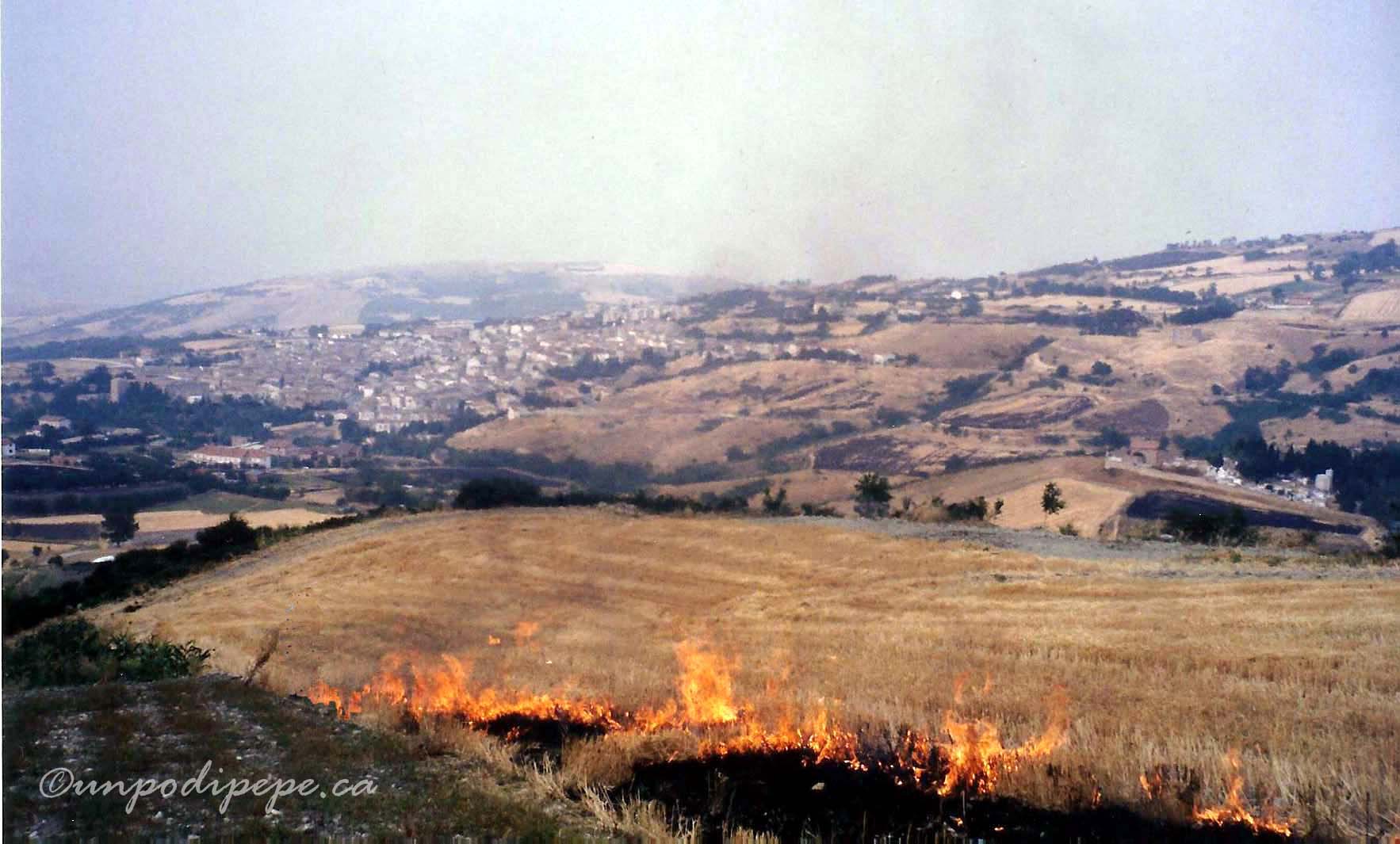
Bruciatura della ristoccia 1990

Bruciatura della ristoccia 1990

Ristoccia90In the short span of time between the burning and the plowing, poor farm workers (contadini) gathered burnt bits of wheat that were still usable and ground them by hand into farina di grano arso.  It was mixed with white flour, making pasta and bread more affordable, or traded to buy other foods.  ‘Pane nero’ (PAN•eh NEH•roh) or ‘pasta nera’ were considered the lowest quality of food and became a symbol of poverty-‘la miseria’ (mees•EH•ryah). ‘Pasta Nera’, an award-winning documentary that is not about grano arso, uses the title to accentuate the poverty in Southern Italia during and after the war.orecchiettepanoramo

We know that food is more than just nutrition.  The traditions and customs around food and its preparation are an integral part of a culture and teach us about the history of people and places at points in time.  Cucina povera (coo•CHEE•nah poh•VEH•rah)and cibo dei poveri (CHEE•boh dei poh•VEH•ree) literally translate to poor cooking and food of the poor, but what is meant is ‘peasant cooking’.  Farina di grano arso is important in a historical and cultural context as it really symbolizes the resilience and instinct to survive of our contadini ancestors.farinadigranoarso

Grano arso was nowhere to be found for many years, but today many Pugliese chefs, including mio amico, il ‘cuoco contadino’ Peppe Zullo use farina di grano arso.  It is used to make fresh traditional Pugliese pasta- orecchiette, cavatelli, fusilli, and sometimes bread and focacce. Peppe is representing Puglia for the month of May in the Italian Pavilion at Expo2015 Milano. The theme is ‘Nutrire il Pianeta; Energia per la Vita’/ ‘Feeding the Planet; Energy for Life’.   Appropriately, his feature dish for this event is cavatelli di grano arso e punti di asparagi verde.

Peppe Zullo's 'Cavatelli di grano arso con punti di asparagi verde' for Expo 2015

Peppe Zullo’s ‘Cavatelli di grano arso con punti di asparagi verde’ for Expo 2015

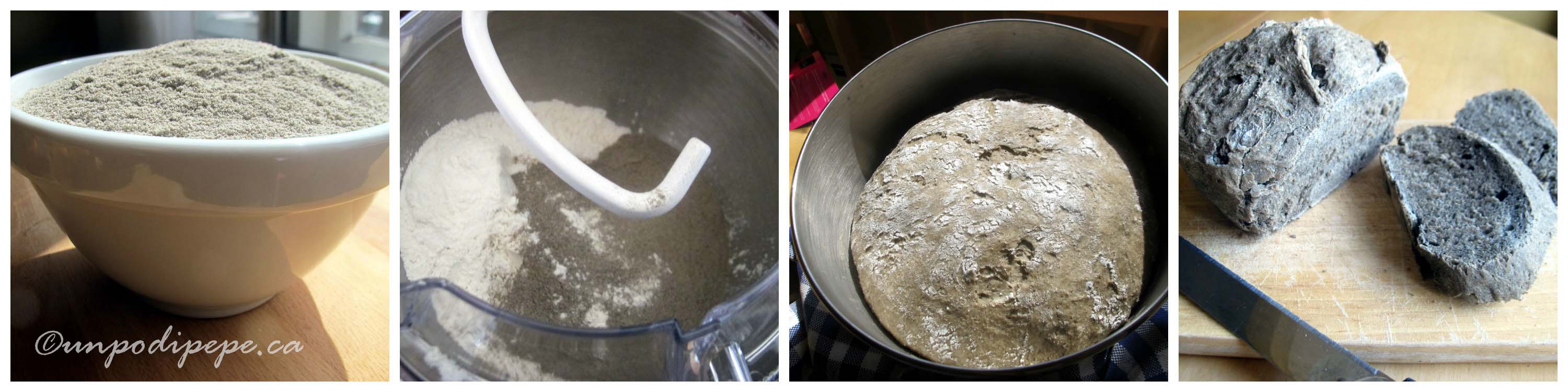
Bruciatura della ristoccia (broo∙chya•TOO•rah DEL•la rees•TOCH•chya), the burning of the stubble in the fields is now illegal due to carcinogenic concerns, destruction of soil nutrients, pollution and risk of forest fire. Today farina di grano arso is not completely burnt, it is commercially toasted.  The flavor, colour, texture and smell of pasta or bread made with farina di grano arso are really intense and unique. The flour is slightly grainy and the colour is grey like ashes- grigio cenere (gree•GEE•oh cheh•NEH•reh).  Pasta can range from grey to brown in colour depending on the percentage of farina grano arso used.  The smoked, nutty flavor reminds me a bit of toasted hazelnuts and the smell can be compared to lightly charred brick oven pizza crust. Most of the gluten is burnt off, so farina di grano arso can’t be used alone.  It absorbs more water than other flours and will become a sticky mess that doesn’t hold together. Mixing 10% to maximum 25% with other flours that contain gluten produces the best results.  Many people find pasta di grano arso easier to digest.

Panegranoarsocollage4

Not everyone is embracing the return of grano arso to the kitchen.  It disappeared because it is ‘un ricordo della miseria’-a reminder of poverty and there was vergogna (ver•GOH•nyah) or shame associated with having to eat pasta nera.  This is something that most Italians who lived through the war don’t want to be reminded of.  When I made the bread to photograph for this post, I brought it to my parents’ house for dinner.  Papà made a sour face and said ‘Solo che vedo questo pane mi viene la paura!’ (Just looking at this bread puts fear in me!)  He was kidding…sort of…I think?  Well he did eat 2 pieces anyways!

Making orecchiette di grano arso with my Mamma

Making orecchiette di grano arso with my Mamma

Farina di grano arso is available in Foggia and Andria.  Pietro Zito in Andria sells 1 kg bags online for 6 €, as well as pasta di grano arso. Even if it was possible to send to North America though, the cost would be astronomic.  Can you imagine Poste Italiane sending a bag of flour in the mail?  You could try toasting durum wheat semola yourself on a baking tray in the oven, but it will probably result in a visit from i pompieri (pohm∙•pee•EH•ree) -the fire department- when the smoke detector goes off.  I have a better idea- take a trip to Puglia and try pasta di grano arso in its natural environment! Buon Appetito!

Orecchiette di grano arso al sugo, Ristorante  Peppe Zullo Orsara di Puglia

Orecchiette di grano arso al sugo, Ristorante Peppe Zullo Orsara di Puglia

Share this:

  • Click to share on Facebook (Opens in new window) Facebook
  • Click to share on Pinterest (Opens in new window) Pinterest
  • Click to share on X (Opens in new window) X
  • Click to email a link to a friend (Opens in new window) Email
  • Click to share on WhatsApp (Opens in new window) WhatsApp
Like Loading...

Centrale Montemartini

15 Sunday Feb 2015

Posted by Un po' di pepe in Architecture, Art, Art history, Culture, Italia, Photography, Roma

≈ 13 Comments

Tags

Al Biondo Tevere, Art history, Art Nouveau, Basilica San Paolo Fuori le Mura, Capitoline Museum, Centrale Montemartini, Cleopatra, Industrial archeology, Italy travel tips, Roma, Stile Liberty, Temple of Apollo Sosiano, Via Ostiense

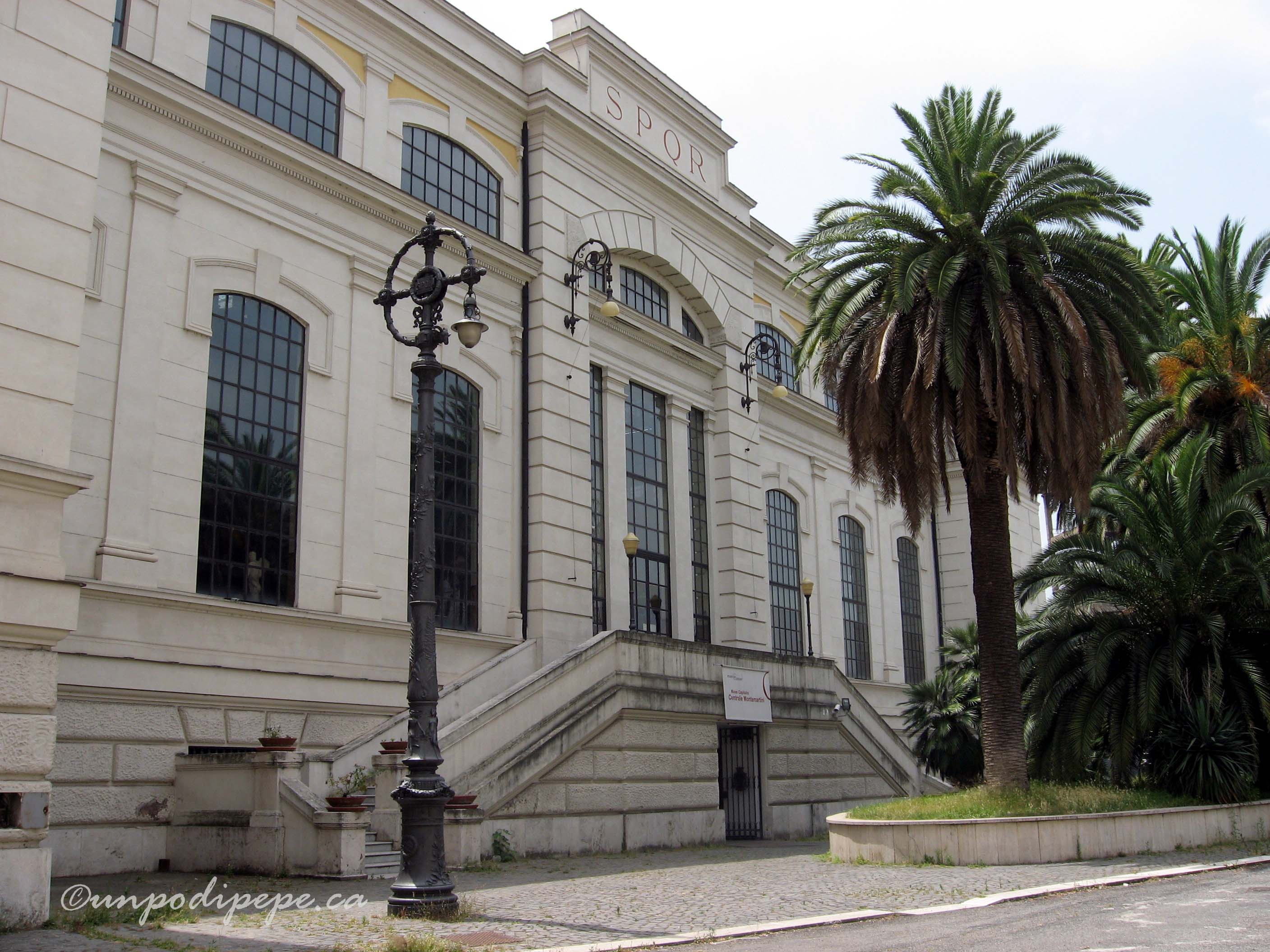
Centrale Montemartini is an amazingly awesome, undervisited museum and a stunning example of 20th Century industrial archeology.  Built in 1912 in Art Nouveau style (Stile Liberty), it was the first public electric plant in Roma, providing power for the surrounding area until it was abandoned in 1963.  Luckily the amazing architecture and historical importance saved it from demolition!

Amazon warrior in front of a diesel engine

Amazon warrior in front of a diesel engine

In 1997 during the Capitoline Museum renovation, Centrale Montemartini was used for a temporary exhibition ‘Le Macchine e gli Dei’ (The Machines and the Gods).  In 2005 it became a permanent space for part of the Capitoline collection, with all of the original thermoelectric equipment left in place.  Now you can visit a unique display of classical sculpture against an industrial  backdrop of steam boilers, diesel engines, catwalks twisting pipes and gauges.  It’s a blend of ‘vecchio e più vecchio’ (old and older), a stark contrast of ancient and industrial, art and science.  Antique white marble appears translucent against the blackness of the machinery.  The space is immense and silent, with high ceilings and tall windows providing natural light. The works of art are carefully chosen and placed so there is space to appreciate their beauty while you walk among them and contemplate the passage of time.Centrale Montemartini Sala Macchine3

The 400 pieces include ancient Roman sculptures, rare Greek originals brought to Roma, and Roman copies of Greek originals. They date from the 5th Century BC to the 4th Century AD and were found in the late 19th and early 20th Century. Most of the works are on the upper floor in 2 massive rooms.

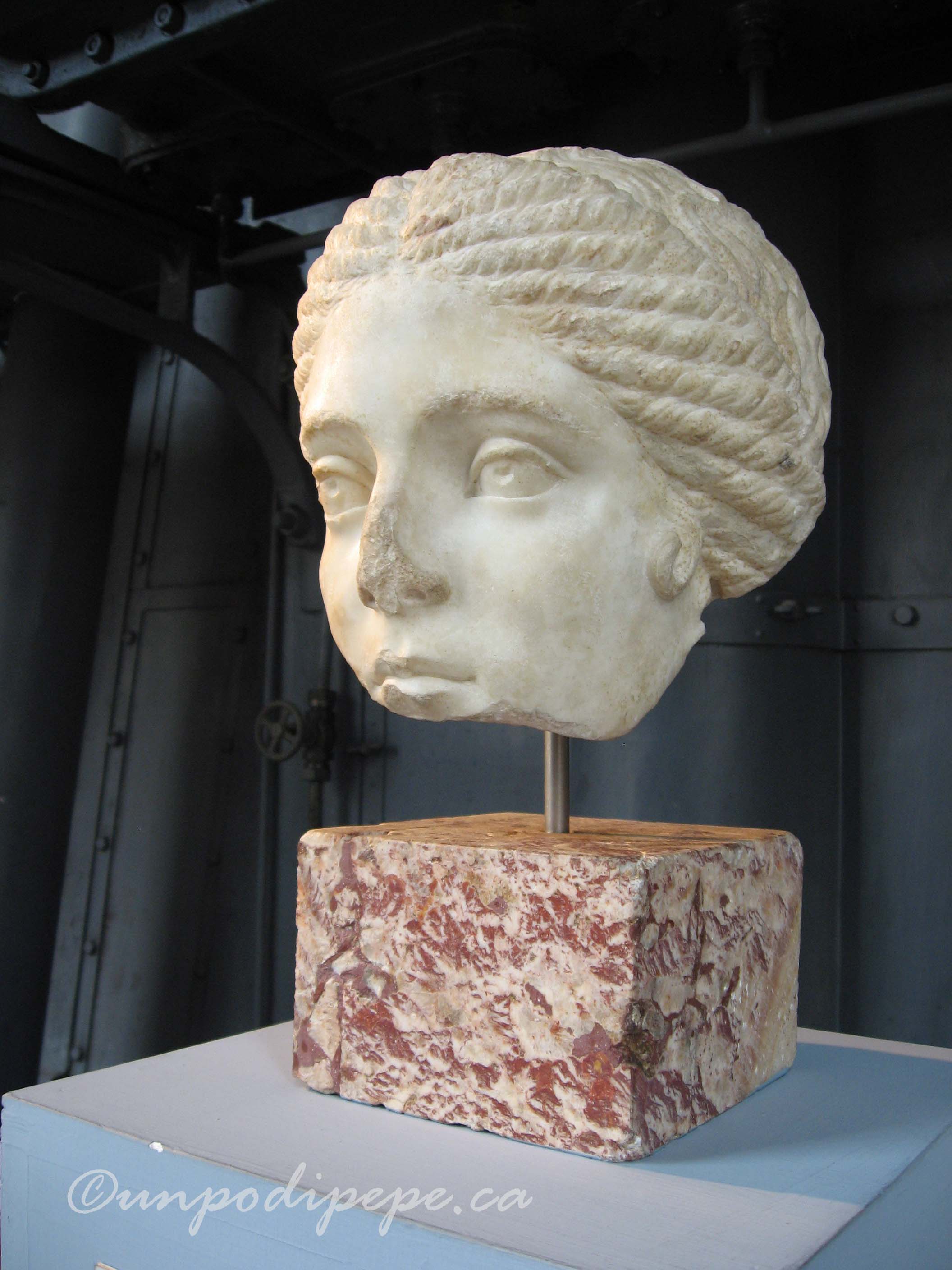
Partial female head, discovered in the garden of Villa Rivaldi in 1933 during construction of Via dei Fori Imperiali

Partial female head, discovered in the garden of Villa Rivaldi in 1933 during construction of Via dei Fori Imperiali

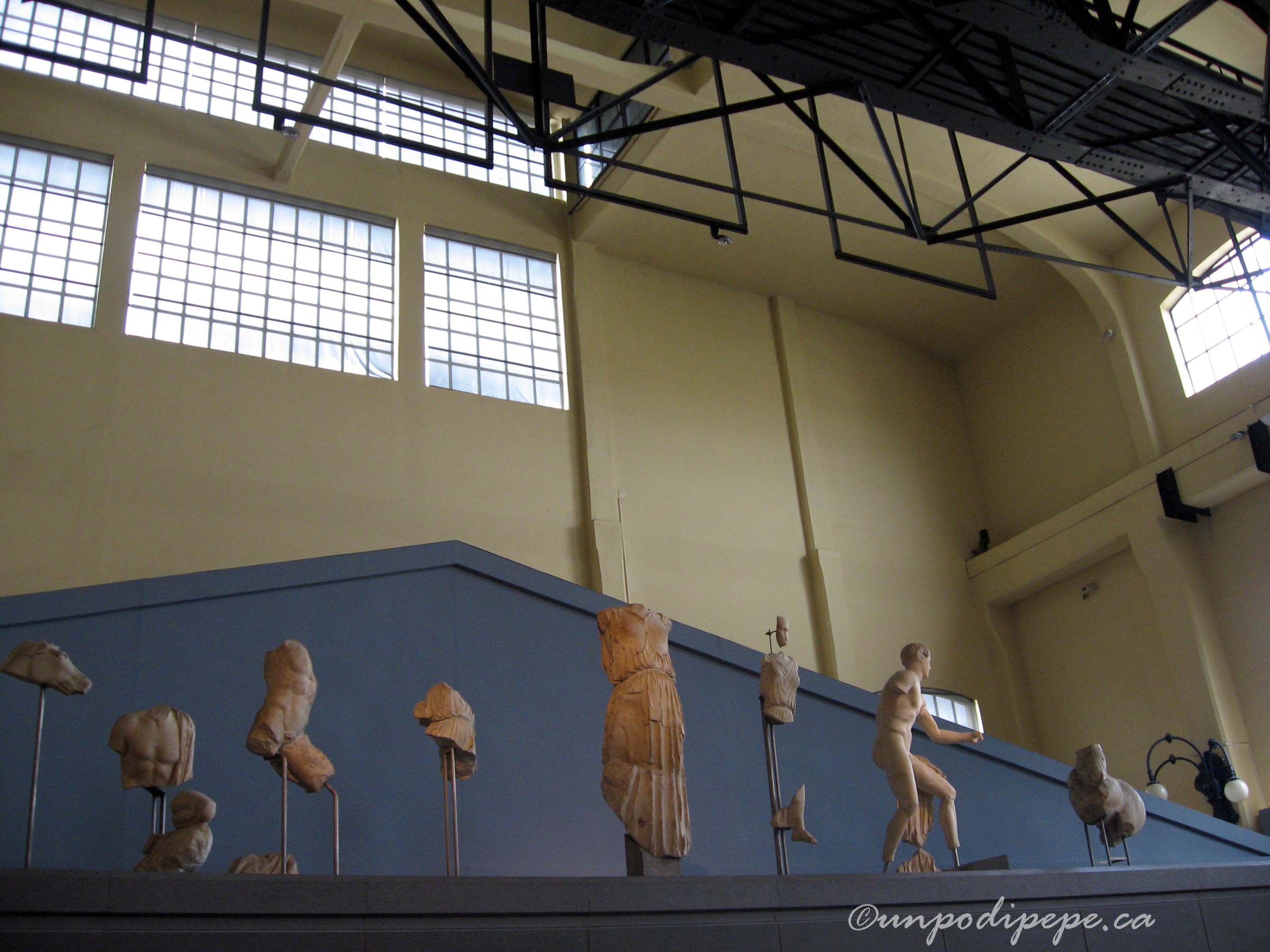
In Sala Macchine (Machine Room or Hall of the Machines) 2 hulking diesel engines are surrounded by Roman replicas of Greek statues.  At one end, a reconstruction of the pediment of the Temple of Apollo Sosiano depicts a battle between Greeks and Amazons.  These pieces are Greek originals found in the 1930’s near the Theater of Marcellus.  Above this installation hangs the old ‘carroponte‘ (Gantry crane).

Centrale Montemartini, Sala Macchine

Centrale Montemartini, Sala Macchine

Centrale Montemartini Apollo Sosiano

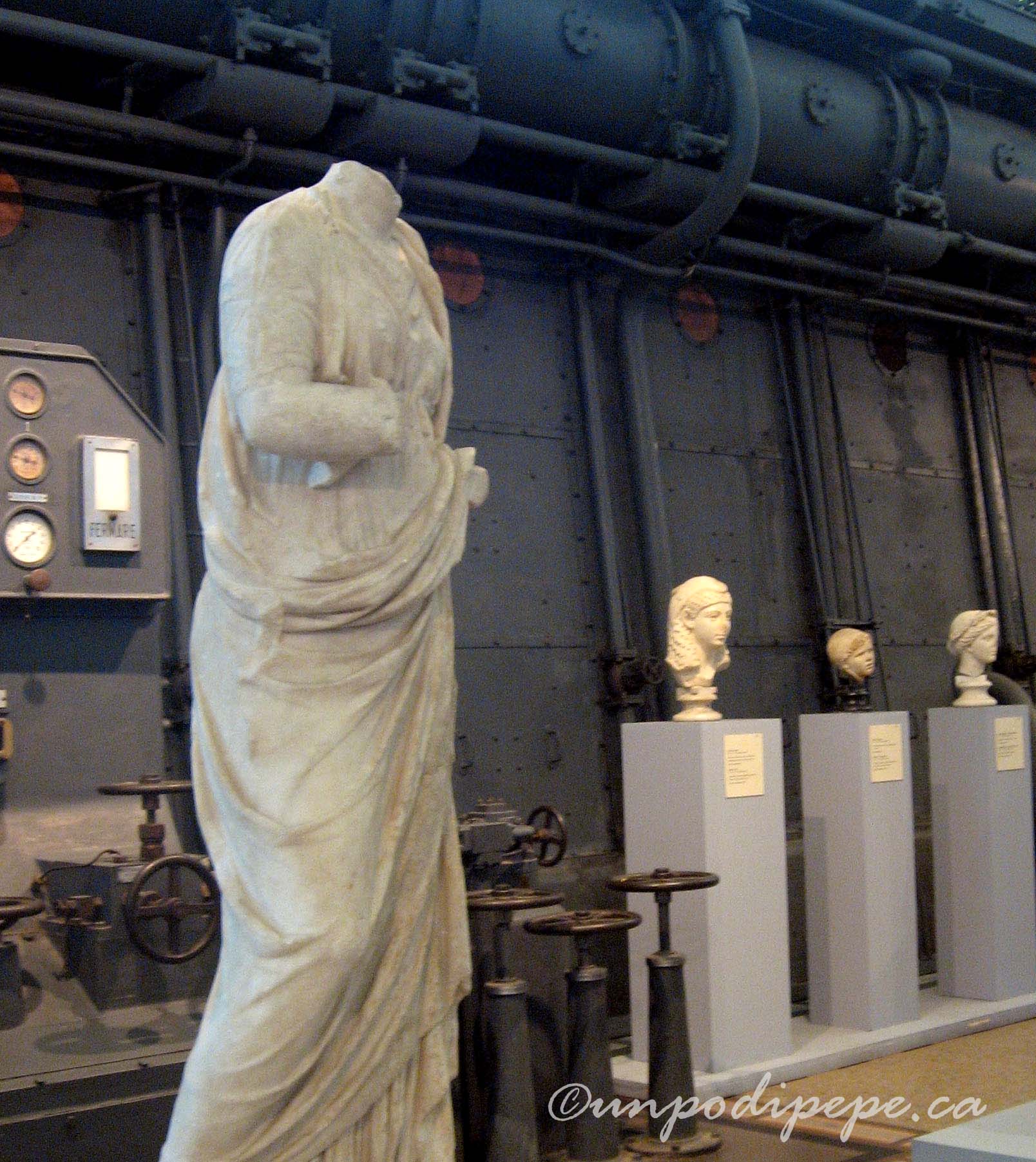
Other ‘meraviglie’ (wonders) include a bust of Cleopatra and the giant head, right arm and feet of an 8m high statue of the Goddess Fortuna found near Largo Argentina.  Her feet look very modern with their ‘infraditi’-thong style sandals!piedidifortuna

Sala Macchine. Bust of Cleopatra (to the right of the large statue)

Sala Macchine. Bust of Cleopatra (to the right of the large statue)

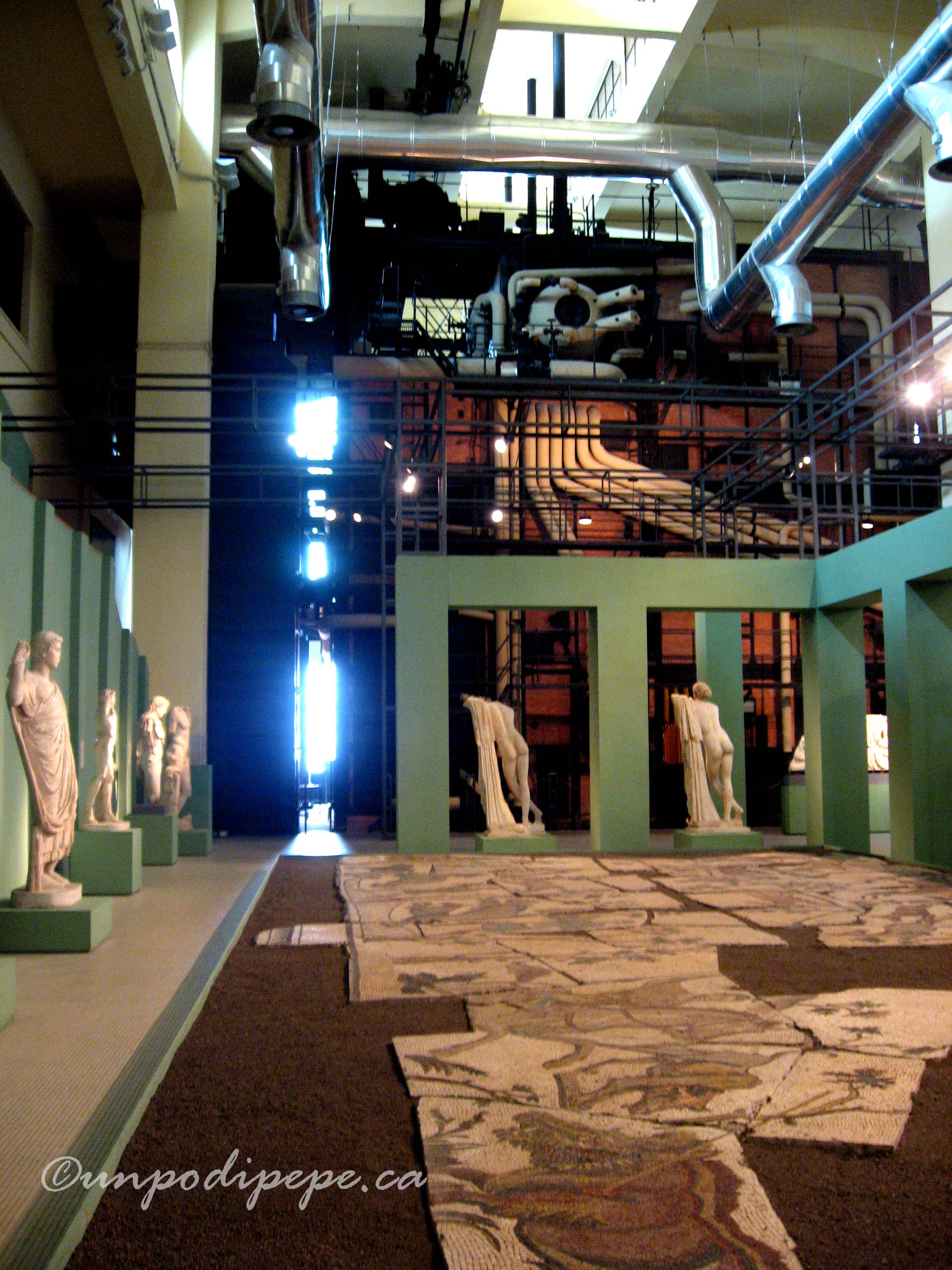
cleopatraSala Caldaie (Boiler Room) is named for its 15m steam boiler and features a large mosaic of a hunting scene found near Santa Bibiana.  The mosaic is surrounded by sculptures once adorning lavish Roman homes.Centrale Montemartini Sala Caldaie

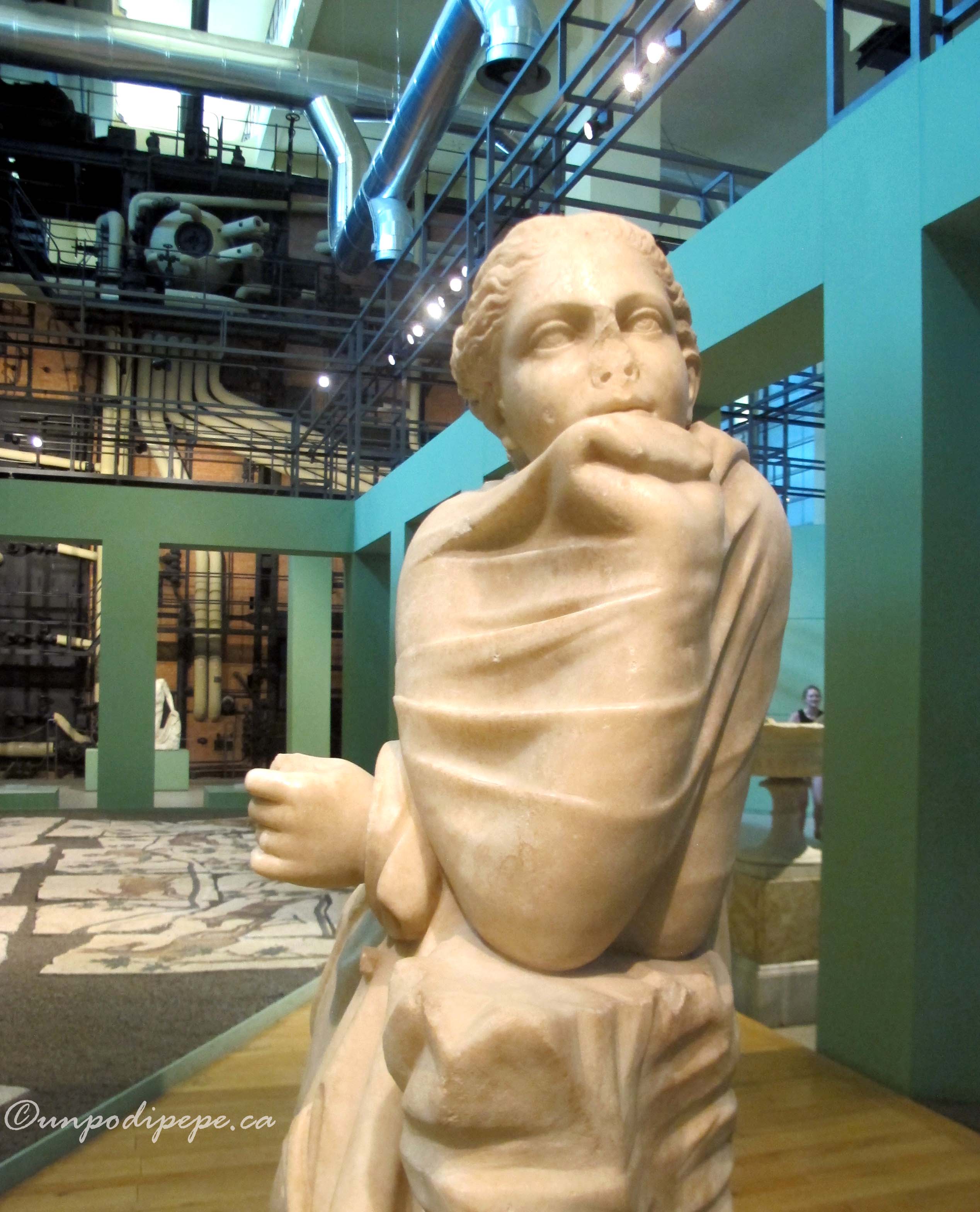
PolimniaI especially like the statue of Polimnia, muse of poetry and dance.  She has her elbows resting on a pillar and her shawl casually wrapped around her.  My other favourite in Sala Caldaie is the Sphinx Frieze, which seems to glow against the red brick wall.

Sala Caldaie. Sphinx Frieze with Acanthus Spirals. This was part of the Gardens of Sallust and likely represents the victory over Antony and Cleopatra.

Sala Caldaie. Sphinx Frieze with Acanthus Spirals. This was part of the Gardens of Sallust and likely represents the victory over Antony and Cleopatra.

There were only 4 or 5 other people in the museum both times I visited.  One of the staff told me that from October to May they have a lot of school groups visiting through their educational program, but June to September is not very busy.  This is opposite to most other museums!  I definitely recommend this amazing place, especially if you want to get away from crowds and lineups and see something truly unique. Even people who don’t like museums will appreciate this one-or at least find it oddly fascinating!Centrale Montemartini WarriorTorso

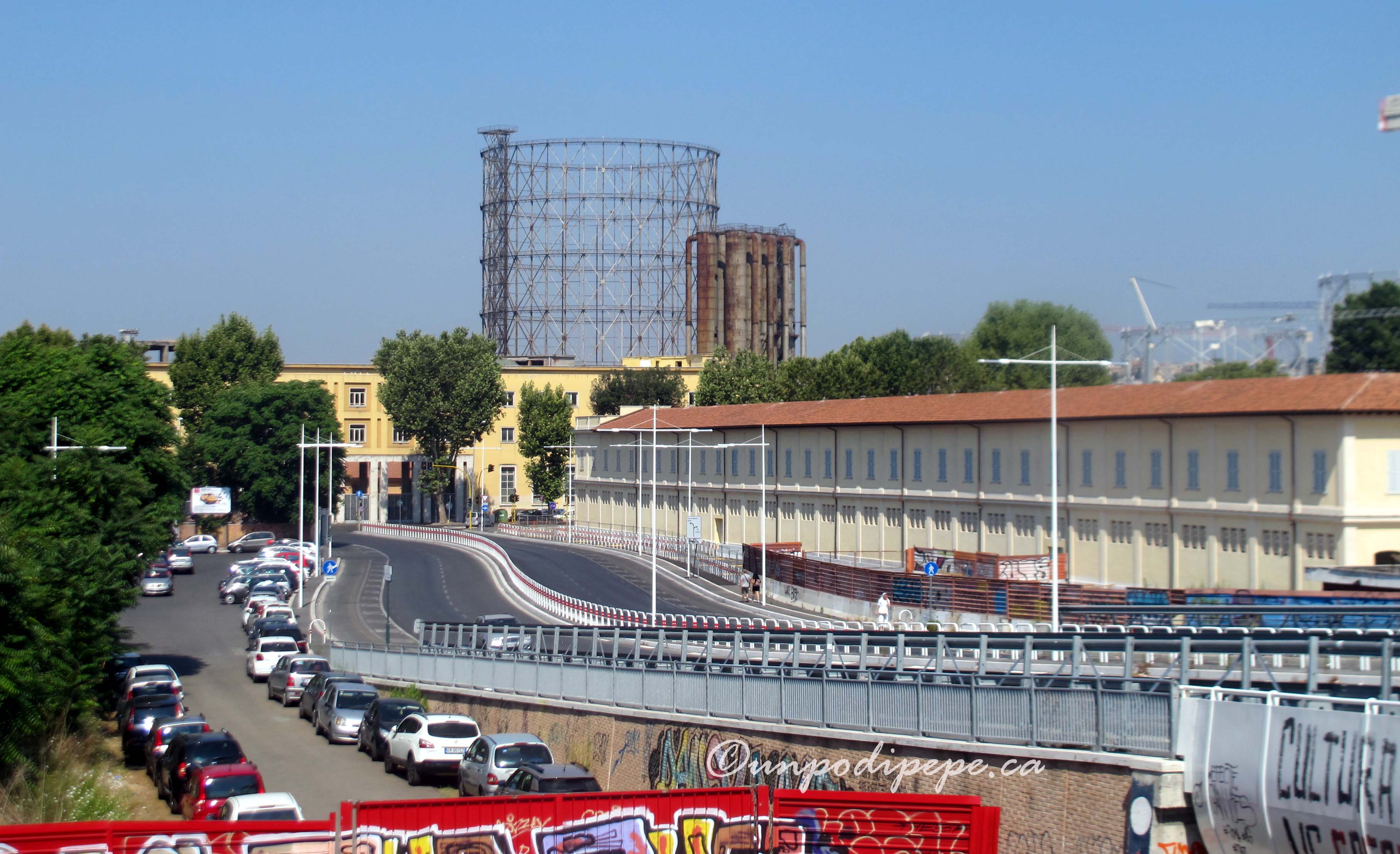
Centrale Montemartini is in the Ostiense area on the left bank of the Tevere.  It is south of Roma’s historic center but very accessible by Metro B line Garbatella stop.  When leaving the metro stop, you will cross a pedestrian bridge and then reach Via Ostiense.  Bus 23 goes along Via Ostiense and Stazione Ostiense is also nearby.

The view on exiting Garbatella Metro Stop.  Via Ostiense is in front, where the yellow building is.  Il Gasometro is behind it.  Centrale Montemartini is just to the left.

The view on exiting Garbatella Metro Stop. Via Ostiense is in front, where the yellow building is. Il Gasometro is behind it. Centrale Montemartini is just to the left.

The Basilica of San Paolo Fuori le Mura is walking distance, one metro stop away.  In between the Basilica and Centrale Montemartini is one of the oldest restaurants in Roma, Al Biondo Tevere at Via Ostiense 178 www.albiondotevere.it  serving Roman cuisine overlooking the Tevere.

Centrale Montemartini

Centrale Montemartini

www.centralemontemartini.org  Via Ostiense 106, open Tues-Sun from 09-19.  Admission is € 7.50 for adults or €16 for the Capitolini Card (valid 7 days).  The Romapass can also be used.  Don’t forget your sketchbook!

Ciao, Cristina

Share this:

  • Click to share on Facebook (Opens in new window) Facebook
  • Click to share on Pinterest (Opens in new window) Pinterest
  • Click to share on X (Opens in new window) X
  • Click to email a link to a friend (Opens in new window) Email
  • Click to share on WhatsApp (Opens in new window) WhatsApp
Like Loading...

‘Ratto delle Sabine’

13 Tuesday Jan 2015

Posted by Un po' di pepe in Art, Art history, Culture, Firenze, Italia

≈ 3 Comments

Tags

Art, Art history, Giambologna, Loggia dei Lanzi, Piazza della Signoria, Ratto delle Sabine, Renaissance art, Sculpture

OLYMPUS DIGITAL CAMERAOne of my favourite works of art is moving!  After 432 years in the Loggia dei Lanzi in Piazza della Signoria Firenze, Giambologna’s ‘Ratto delle Sabine’  (Abduction of the Sabine Women) is being moved to the Galleria degli Uffizi.  In November 2014 the Ministero dei beni e delle attività culturali e turismo (Ministry of cultural works and tourism) announced that the sculpture would be moving once a reproduction is made for the Loggia and funds are secured for the move.  If needs to be moved indoors to protect it from damage caused by pollution, rain, wind and even snow.

The sculpture was carved from a single block of flawed marble.  Does that sound familiar?  Remember the ‘Il Gigante-Michelangelo’s David’ post?.  It features 3 figures intertwined in a ‘figura serpentina’- a serpentine composition.  A man is lifting a woman into the air while another man crouches, and what they are doing is not really clear.  There is no dominant viewpoint or ‘good side’ to this sculpture. It has multiple viewpoints and makes the viewer want to move around and observe it from every angle.  This was probably the first work of art with more than one point of view.

There are 2 interesting things to note about the sculpture’s misleading title.  First of all, it is usually incorrectly translated into English as ‘Rape of the Sabine Women’.  ‘Ratto’ comes from the latin ‘raptio’ meaning abduction.  The second thing is that the subject matter was entirely made up-it was not the artist who gave this work its title!  Giambologna had no subject in mind when he sculpted this piece.  This was very unusual, but he was trying to demonstrate his ability to create a perfect upward spiralling vortex.  He was the official sculptor of the Medici family and you could say he was showing off.  When the work was completed in 1583, Francesco I de’Medici decided to put it on public display at the Loggia dei Lanzi.  The Loggia is like a large covered porch in the Piazza della Signoria, with 2 walls and 2 open sides.  Some guy named Vincenzo Borghini suggested the title and apparently no one could come up with a better one.  Am I the only one who finds this annoying?

I’ve had the opportunity to view this masterpiece many times and have even sketched it from different viewpoints.  I’m sure a lot of people don’t realize this is still the original sculpture and not a copy! I can totally understand that it needs to be protected from the elements, but once it is moved, you will have to book tickets online, wait in lineups……and you won’t be able to admire it for free on a midnight walk in the Piazza. If you have not seen ‘Ratto delle Sabine’ in the Loggia dei Lanzi yet, there is still time to get to Firenze before ‘il trasloco’-moving day!

Share this:

  • Click to share on Facebook (Opens in new window) Facebook
  • Click to share on Pinterest (Opens in new window) Pinterest
  • Click to share on X (Opens in new window) X
  • Click to email a link to a friend (Opens in new window) Email
  • Click to share on WhatsApp (Opens in new window) WhatsApp
Like Loading...

Fucacoste e Cocce Priatorje

01 Saturday Nov 2014

Posted by Un po' di pepe in Culture, Feste, Italian Folklore, Orsara di Puglia, Puglia

≈ 7 Comments

Tags

Falò e Teste del Purgatorio, Italian history, Muscitaglia, November 1st, Orsara di Puglia, Puglia, Pugliese Traditions, Pumpkin carving, Southern Italy, Traditional Festivals in Puglia, Tutti i Santi Festa

Piazza San Pietro. Photo courtesy of International Photo Correspondent Donato Narducci Piazza San Pietro. Photo courtesy of International Photo Correspondent Donato Narducci

Fucacoste e cocce priatorje is dialetto Orsarese for ‘Falò e teste del Purgatorio’.  This translates to ‘Bonfires and heads from purgatory’. It is an ancient festival unique to Orsara di Puglia celebrated on November 1st, the night of ‘Tutti i Santi’ (All Saints Day).  All Saints Day was created in the 9th century when the Pope superimposed a Christian feast day onto existing rituals, so this festa has been around for a very long time.  It is a night where people have the opportunity to honour, reconnect and pay respect to the spirits of their loved ones.  Carabinieri estimate that Orsara (pop 3,000) had 40,000 visitors attend the festa tonight, with 9,000 cars parked up to 3 km away!

2014 poster for Fucacoste e cocce priatorje 2014 poster for Fucacoste e cocce priatorje

It is believed that the souls of the dead return among the living to visit their relatives and their former homes before moving on to Paradiso.  The bonfires are lit with wood and branches of ginestra (broom). The light of the fires and the crackling and sparks of the ginestra attract the spirits to reunite the living with those who continue to live only in their memories.  The souls of the dead loved ones collect ashes from the fires. The gleam of light inside ‘cocce priatorje’, pumpkins carved to look like heads-light their way to find their former home.

Preparation for the  festa involves gathering firewood and ginestra, preparing food and carving zucche (pumpkins).  There is even a BYOZ (bring your own zucca) pumpkin carving workshop.  Later in the evening zucche are exhibited and there is a contest for ‘la zucca più bella’-the best zucca.

In honour of the dead, simple but symbolic foods are prepared.  These include potatoes, onions, salsicce (sausages) and castagne (chestnuts) cooked in open fire. Muscitaglia is a traditional dish served on November 1st which probably dates back from the ancient Greeks and Byzantines. Muscitaglia (moo•shee•tah•lyah) in both Greek and Latin is made up of the words mosto (wine must) and talia (grain). The ingredients include boiled grain and vino cotto (literally cooked wine-also called mosto cotto). Pomegranate seeds and walnut pieces are sometimes added. These ingredients are symbols of fertility and abundance, but also of honour and respect for the dead.

Muscitaglia Muscitaglia

When the campanile (church tower bell) strikes 1900 hours (7 pm), Orsara di Puglia ‘catches fire’. Over 100 bonfires are simultaneously lit in every street and piazza and remain lit through the night.  The fires, pumpkin lanterns, music and people in the streets create a magical, enchanted atmosphere. In 2017 I attended the festa and took photos.  They are in the post Tutti i Santi.

Fucacoste e Cocce Priatorje has often been confused with Hallowe’en, but it is a very different event.  Besides the fact that the date is different, dressing up in costume is not part of the custom, there is nothing scary about it and there are no evil spirits to chase away. It has more similarities with the Mexican Dia de los Muertos/Day of the Dead.  This is an event about being together in community to celebrate the bond between the living and those who we remember in our hearts, and to remind us that our time on earth is precious.

Watch the video ‘#quinonèhalloween’ featuring 94 year old Z’Gaetan talking about the festa and its significance  https://www.youtube.com/watch?v=9W5RD0-9H-A

Read about tonight’s festa (in Italiano) on the Comune di Orsara di Puglia website.  For more about Orsara di Puglia read the post ‘Benvenuti ad Orsara di Puglia’.  Ci vediamo alla festa!

Fucacoste e Cocce Priatorje, Fontana Sant'Angelo, Orsara di Puglia 2014. Photo courtesy of Donato Narducci Fucacoste e Cocce Priatorje, Fontana Sant’Angelo, Orsara di Puglia 2014. Photo courtesy of Donato Narducci

Share this:

  • Click to share on Facebook (Opens in new window) Facebook
  • Click to share on Pinterest (Opens in new window) Pinterest
  • Click to share on X (Opens in new window) X
  • Click to email a link to a friend (Opens in new window) Email
  • Click to share on WhatsApp (Opens in new window) WhatsApp
Like Loading...

Bambini, Soccer and World Peace

23 Saturday Aug 2014

Posted by Un po' di pepe in Culture, Inspiration, Italia, Italian life, Orsara di Puglia

≈ 4 Comments

Tags

Calcio, Inspiration, Orsara di Puglia, Soccer

orsaracampetto
Bambini are amazing. My 9 year old nipotino (nephew) Vito loves soccer (aka calico/football/futbol) and all things associated. He had predicted Germany would win the World Cup before it even started. Vito came to Orsara di Puglia this year, and really wanted to play, so our Zia called a friend whose son played and arranged to have them meet ‘sotto la sveglia’ (under the clock) at Porta San Pietro at 9pm. When we went to meet him, I also saw my friends’ son and asked him if he liked to play. Within minutes, all of the 10-11 year old boys in the area had gathered and enthusiastically arranged to meet the next morning at ‘il campetto’ (the small soccer field) for a game, then they all went for a passeggiata. It was the cutest thing ever and could have been a TV advertisement for the next world cup!
The next morning, they all showed up and there were enough boys for 2 teams. They played for 2 hours and Vito was excited that they all played as enthusiastically as he did. He understands Italian quite well, and even with all the loud ‘friendly arguing’ in dialetto and hand gestures, they had no problems communicating.  They were adorable, and got together to play 2 more times while Vito was there.  They even played in the afternoons in the narrow streets, and went out for pizza Margherita or a passeggiata in the evenings. I think that if bambini were in charge….. maybe there would be hope for world peace?

Share this:

  • Click to share on Facebook (Opens in new window) Facebook
  • Click to share on Pinterest (Opens in new window) Pinterest
  • Click to share on X (Opens in new window) X
  • Click to email a link to a friend (Opens in new window) Email
  • Click to share on WhatsApp (Opens in new window) WhatsApp
Like Loading...

Sbandieratori~Accenti Magazine Photo Contest

04 Sunday May 2014

Posted by Un po' di pepe in Culture, Italia, Orsara di Puglia, Photography, Puglia

≈ 6 Comments

Tags

Accenti magazine, Accenti photo contest, Culture, History, Italia, Orsara di Puglia, photography, Puglia

Sbandieratori

The 7th annual Accenti Magazine ‘Capture an Italian Moment’ Photo Competition results were just released at the Accenti Magazine Awards during the Blue Metropolis Montreal International Literary Festival. My photo, ‘Sbandieratori’ came in second place!

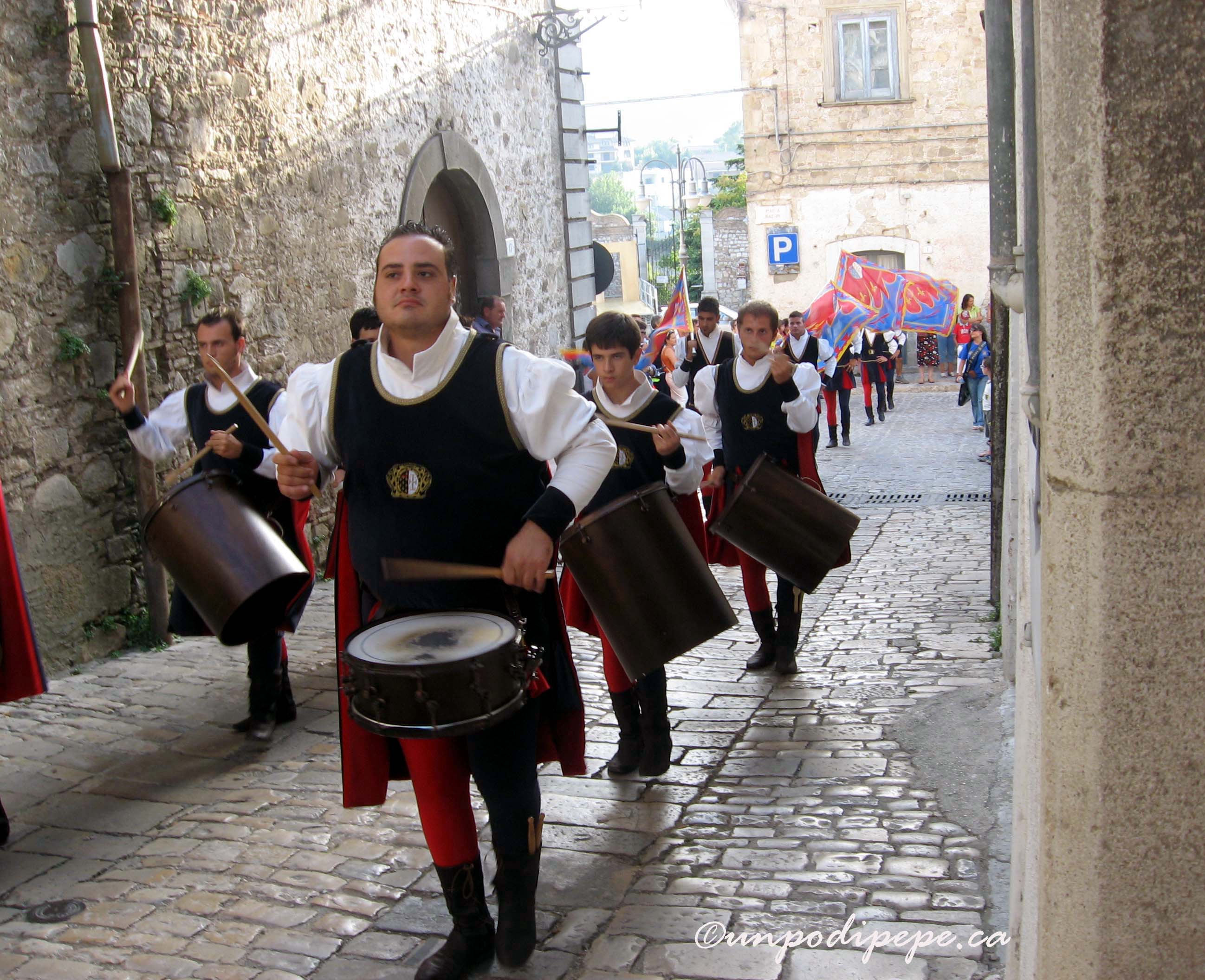
This photo was taken in Orsara di Puglia during the ‘Corteo Storico’, a parade in period costume, reenacting the history of the village. These sbandieratori (flag throwers) came from nearby Lucera to perform. Here, they are in between performances, engaged in casual conversation. What struck me about this image were the bold colours and composition of the costumes and flags. I was also curious to know what their conversation was about….was it early Renaissance gossip, or the latest cell phone app?

In Italiano:

Questa foto è stata scattata ad Orsara di Puglia durante il ‘corteo storico’, una sfilata in costume medioevale, che racconta la storia del paese.  Questi sbandieratori sono venuti da Lucera.  Qui li vediamo in attesa di sfilare, impegnati in una conversazione.  Quello che mi ha colpito sono stati I colori vibranti e la composizione che si è create tra I costume e le bandiere.  Ero anche curiosa di sapere di cosa parlavono…..chiacchiere medioevale o dell’uscita di una nuova app per il telefono?

The mission of Accenti, “the magazine with an Italian accent,” and Accenti Online http://www.accenti.ca is to bring together readers and writers around the idea of shared cultural experience, encourage creative expression, and act as a bridge between cultures. The 2015 photo and writing competition is now accepting submissions. If you are interested in finding out more, go to http://www.accenti.ca/photo-contest or http://www.accenti.ca/writing-contest.

The word Sbandieratori is related to the word bandiera (flag) and is pronounced zban∙ dee∙ ear ∙a∙ tow∙ ree. Say it a few times….now say it faster.

Here are a few more photos from the ‘Corteo Storico’ in Orsara di Puglia:

Sbandieratori, corteo storico, Orsara di Puglia

Sbandieratori, corteo storico, Orsara di Puglia

Corteo Storico, Orsara di Puglia

Corteo Storico, Orsara di Puglia

Share this:

  • Click to share on Facebook (Opens in new window) Facebook
  • Click to share on Pinterest (Opens in new window) Pinterest
  • Click to share on X (Opens in new window) X
  • Click to email a link to a friend (Opens in new window) Email
  • Click to share on WhatsApp (Opens in new window) WhatsApp
Like Loading...

‘Il Gigante’- Michelangelo’s David

27 Sunday Apr 2014

Posted by Un po' di pepe in Art, Art history, Culture, Firenze, Italia

≈ 16 Comments

Tags

Art, Art history, Culture, Firenze, Italia, Italian history, Michelangelo

Davide
The sculpture of David by Michelangelo Buonarroti is one of the most recognizable pieces of art in the world. David was in progress from 1501-1504, carved from a ginormous piece of ‘flawed’ Carrara marble. It weighed over 6,000 kilos! 2 other sculptors had previously attempted to use it, and there was a big gaping hole going right through it-between where the legs were going to go. It was nicknamed ‘Il Gigante’ and was sitting in the Opera del Duomo (the works yard of Santa Maria del Fiore) for over 30 years. Several other artists had been to see it, but it was considered useless; too tall and too thin on one side for a figure…and then there was that hole.

Michelangelo was already a bit of a minor celebrity, having just completed his first ‘capolavoro’ (masterpiece), La Pietá, in Roma at the age of 25. He convinced the Operai to let him have the marble. He decided to use it for the originally intended subject; David, the boy who killed the Philistine giant Goliath with his slingshot, 1 rock, and a lot of help from God.  Michelangelo strategically planned his figure in contrapposto, with most of the weight on the right leg, so that it would fit precisely around the large hole in the marble. He even had to leave some of the chisel marks on the chest area made by Simone da Fiesole, one of the previous sculptors because it was such a tight fit. David was supposed to go on one of the pedestals at the end of the buttresses on the roofline of Santa Maria del Fiore (often referred to simply as Il Duomo) with 12 other Old Testament sculptures.

David was originally planned for one of these pedestals on the buttresses of Santa Maria del Fiore

David was originally planned for one of these pedestals on the buttresses of Santa Maria del Fiore

When David was completed in 1504, he was so big-9 arms lengths or 3 times human size, it became apparent they were not going to be able to hoist him up to the roofline of Il Duomo! He was so magnificent that it was also thought to be a waste to put him so high up where no one could see him. According to the original art historian, Giorgio Vasari,  ‘To be sure, anyone who sees this statue need not be concerned with seeing any other piece of sculpture done in our times or in any period by any other artist’. Not everyone was a fan though-some said he didn’t look like a boy, he looked like a grown man, others thought he should be wearing armour-or at least something, and there was no head of Goliath at his feet. This David was captured in the moments before slaying Goliath. His right hand is starting to tense, and the contrapposto stance makes it seem like his body could twist to the left to be in line with his head.

A committee was formed to decide where David should live. Members included Leonardo da Vinci, Sandro Botticelli, and Filippino Lippi. They decided to place David on a pedestal outside the Palazzo Vecchio, the town hall of Firenze in the Piazza della Signoria. This was partly a political statement. David was the ‘little guy’ who defeated the giant. He became of symbol of the new Republic of Firenze, democratic ideals, and a warning to enemies. It was not an accident that his eyes faced Roma. Moving ‘Il Gigante’ took 40 men 4 days to move the distance of less than 1 km from the studio. David was suspended in a sling in a tall cart and rolled over 14 greased logs. The men would take the back log and move it to the front as the cart moved along.

In 1527, during an anti-Medici protest, David’s left arm was broken in 3 pieces by a bench thrown out the window of the Palazzo Vecchio to ward off the protesters. The pieces were picked up by 2 boys who braved the mob. I’ve read in a few places that one of these boys was Giorgio Vasari, who would have been 16 at the time. He doesn’t mention this in his 1560’s bestseller ‘The Lives of the Most Excellent Painters, Sculptors and Architects’, which makes me think this might just be Renaissance urban legend. The 3 pieces were eventually reattached with copper nails, and the 2 joint lines are visible. In 1873, David was moved to his present home in the Galleria dell’Accademia to prevent further environmental damage.

'Galleria dell'Accademia' 2004. My preferred view of David.

‘Galleria dell’Accademia’ 2004. My preferred view of David.

In 1910, ‘Falso Davide’, as I like to call the replica, was installed outside the Palazzo Vecchio where the original stood for 369 years.

'Falso Davide' as I like to call him, outside the Palazzo Vecchio in Piazza della Signoria

‘Falso Davide’ as I like to call him, outside the Palazzo Vecchio in Piazza della Signoria

Share this:

  • Click to share on Facebook (Opens in new window) Facebook
  • Click to share on Pinterest (Opens in new window) Pinterest
  • Click to share on X (Opens in new window) X
  • Click to email a link to a friend (Opens in new window) Email
  • Click to share on WhatsApp (Opens in new window) WhatsApp
Like Loading...

Perché questo blog? / Why write a blog?

25 Friday Apr 2014

Posted by Un po' di pepe in Bilingual posts, Blogging, Culture, Inspiration

≈ 20 Comments

Tags

Art, Culture, Inspiration, Italy, Zero to hero

Sono contenta che hai trovato il mio blog/ I’m glad you found my blog. Why did I decide to start writing a blog? I’ve been thinking about it for a long time. The biggest reason is creative inspiration and stimulation. I don’t remember when I didn’t have a passion for words and images. I could always be found with my nose in a book, reading, writing, or sketching. This is a place I can combine all of my interests; writing, art, photography, travel, and exploring Italian culture. I can share my photos, images, and all of the half-drafted ideas I have lying around. Whenever I think of something interesting, I scribble notes down on scraps of paper… post-it notes… menus….the computer, and now even on my phone, because ‘one day’ I’ll write an article about it. Well, ‘one day’ isn’t happening. I also have several emails I keep sending over and over to friends who are planning travel to Italy, and this is a better place to share that information. I have a strong belief in maintaining cultural ties, and I travel to Italy every year. I hope to encourage the same in other ‘italocanadesi’ who read my blog and to connect with others who have a passion for art, Italy,and anything else I think is interesting. I hope you learn something new every time you visit, whether it’s about a new place you’d like to visit, discovering a new artwork, learning a few new words in Italian, or maybe you’ll even be inspired to pick up a brush and starting painting yourself! I might write a few of my posts in Italian, but for now, it will be just little snippets. I’ll apologize in advance for any grammatical errors I might make! I don’t like to use online translating because it makes more mistakes than I do! Let me know if you have any suggestions for new posts. You can read more in ‘About me/Chi sono’  and L’Intervista con Silvia. The name ‘Un po’ di pepe’ means ‘a bit of pepper’….because everything can use some spicing up! Iniziamo l’avventura! / Let’s start the adventure!

In Italiano:
Sono contenta che hai trovato il mio blog! Perché ho iniziato a scrivere un blog? Ho vari motivi. È da tanto tempo che ci sto pensando. Mi piace scrivere, e questo è un posto dove posso scrivere di tutte le cose che mi piacciono. Posso usare tutte quelle cose scritta a metà e poi abbandonate, scritte o schizzate su un pezzetto di carta strappata…su un menù….sul computer, e adesso anche sul telefono, perché ‘un giorno’, queste mi serviranno per scrivere un articolo interessante. Nel frattempo, questo ‘un giorno’ sembra non arrivare mai!
Credo molto nel significato di mantenere legami con le miei radici italiane, e vado in Italia tutti gli anni. Spero con il mio blog di incoraggiare lo stesso interesse in altri italocanadesi. Scriveró di tutto quello che mi piace, soprattutto di arte e cultura italiana. Spero che ogni volta che lo visitarete, vi possiate imparare una cosa nuova…che si tratti di scoprire un’opera d’arte nuova, un posto da visitare, di imparare qualche parola nuova in italiano (o per quelli che parlano già l’italiano, di imparare qualche nuova parola in inglese!) o di essere ispirati a prendere un pennello in mano e cominciare un’opera d’arte tutta vostra! Forse scriveró anche delle volte in Italiano, ma per ora saranno piccolo frammenti. Fatemi sapere se avete qualche suggerimento per nuovi post. Chiedo scusa in anticipo per i miei eventuali errori grammaticali! Potete leggere un po’di più in ‘About me/ Chi sono’  o in L’Intervista con Silvia.

Ponte Vecchio, Firenze. Photo Shannon Milar

Ponte Vecchio, Firenze. Photo Shannon Milar

Share this:

  • Click to share on Facebook (Opens in new window) Facebook
  • Click to share on Pinterest (Opens in new window) Pinterest
  • Click to share on X (Opens in new window) X
  • Click to email a link to a friend (Opens in new window) Email
  • Click to share on WhatsApp (Opens in new window) WhatsApp
Like Loading...
Newer posts →

Enter your email address to follow 'un po' di pepe' and receive notifications of new posts by email.

Join 511 other subscribers
Follow Un po' di pepe on WordPress.com

Popular Posts

  • Hairstyling in Ancient Roma
    Hairstyling in Ancient Roma
  • Espresso Cookies
    Espresso Cookies
  • Panforte di Siena
    Panforte di Siena
  • Il Pumo Pugliese
    Il Pumo Pugliese
  • Panettone Fatto in Casa
    Panettone Fatto in Casa
  • San Nicola
    San Nicola
  • Internment of Italian Canadians
    Internment of Italian Canadians

Recent Posts

  • Castel del Monte
  • ‘The Nuances of Love’
  • Hostaria Antica Roma~Eat like an Ancient Roman
  • Santa Maria in Aracoeli
  • Casino dell’Aurora~Villa Boncompagni Ludovisi
  • Nasoni di Roma
  • Bloghiversario #11
  • Fontana di Trevi
  • Acqua Vergine
  • Giubileo 2025
  • Sanremo 2025
  • In Vino there are Memories
  • A Literary Harvest
  • 2024~Un po’ di pepe Year in Review
  • Buon Natale 2024
  • Il Bicerin
  • Mercato Porta Palazzo
  • Torino
  • Catanzaro, Calabria
  • Il Pumo Pugliese
  • Artemisia Gentileschi
  • Cavalli di San Marco
  • Panzerotti
  • Torcello
  • 10 years of Un po’ di pepe!

Categories

Amici e Famiglia Architecture Art Art history Art projects Bilingual posts Blogging Canada Culture Feste Firenze Inspiration Italia Italian Folklore Italian language Italian life Italocanadesi Libri Mangiamo! Orsara di Puglia Parole piacevoli Photography Puglia Recipes Roma Travel Travel tips Uncategorized Vino

Archives

Un po’ di pepe on Facebook

Un po’ di pepe on Facebook

Start a Blog at WordPress.com.

  • Subscribe Subscribed
    • Un po' di pepe
    • Join 511 other subscribers
    • Already have a WordPress.com account? Log in now.
    • Un po' di pepe
    • Subscribe Subscribed
    • Sign up
    • Log in
    • Report this content
    • View site in Reader
    • Manage subscriptions
    • Collapse this bar
 

Loading Comments...
 

    %d