• Home
  • About me/Chi sono
  • Contact

Un po' di pepe

~ …… (oon∙poh∙dee∙PEH∙peh) Cristina writes about interesting stuff /Cristina scrive di cose interessanti

Un po' di pepe

Tag Archives: Italy travel tips

Venezia~La Serenissima

25 Monday Mar 2024

Posted by Un po' di pepe in Architecture, Art history, Italia, Photography

≈ 12 Comments

Tags

Acqua alta, Grand Canal Venice, Italy travel tips, Overtourism, UNESCO World Heritage Sites, Veneto, Venice

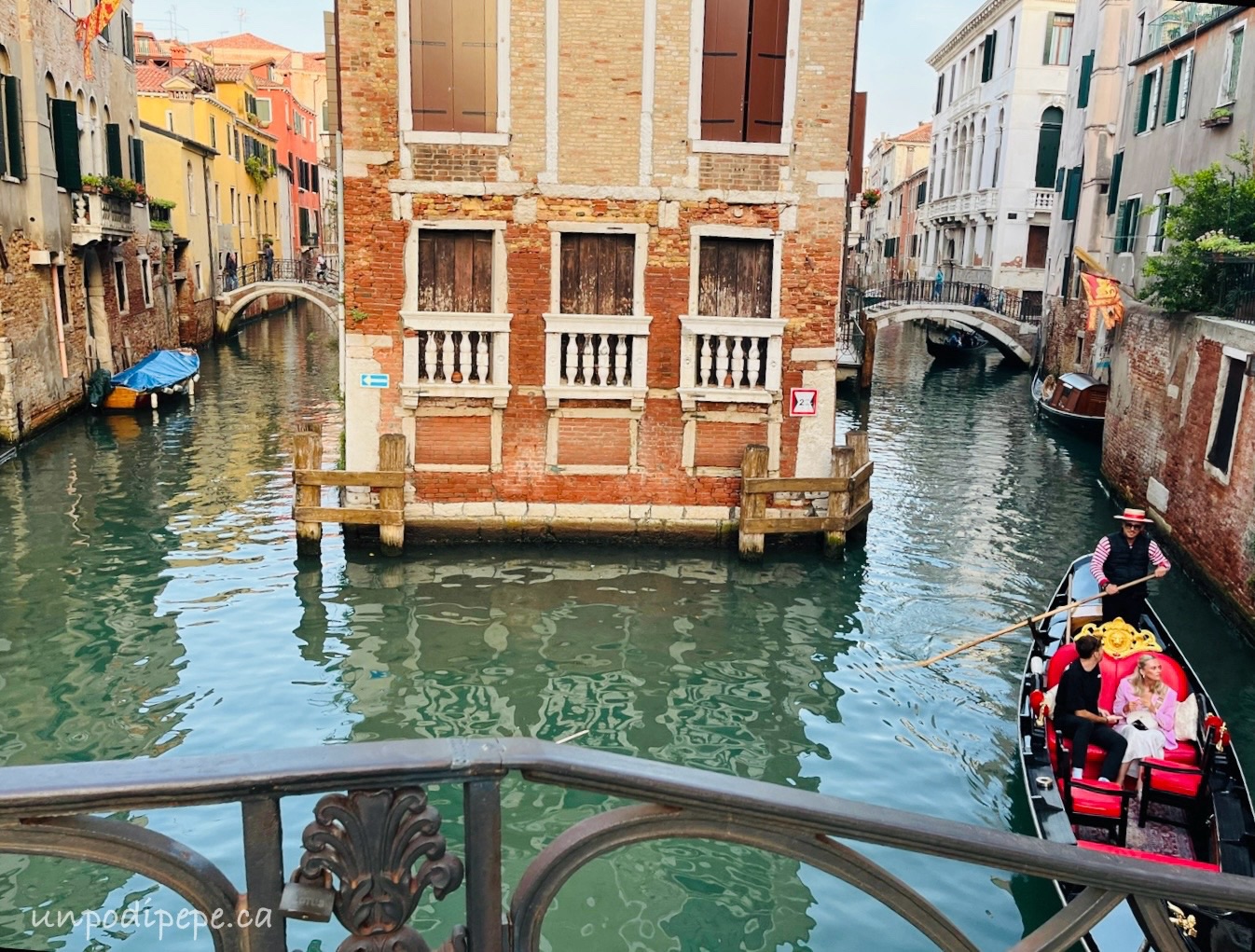
La Serenissima turns 1603 today!  Venezia, a geographically unique engineering marvel, is built on a group of 118 tiny islands in the Venetian lagoon.  They are separated by open water and 170 canals, linked by over 400 footbridges.  Named after the ancient Veneti people of the 10th Century BC, Venezia was founded March 25, 421 by refugees from the Roman cities of Padua, Aquilea and Treviso, and the surrounding countryside fleeing Longobard and Hun invasions.  They first settled on the sandy islands of Torcello and Jesolo. The land of the islands in the lagoon was muddy, some of it barely above water, and not suitable to build on.  Millions of wooden poles or pilings were submerged into the mud and sand to reach the solid layer of earth underneath.  The pilings were covered with wooden boards to form the base that the city was built on.  Since there was no forest in the area, the wood came from Croatia, Slovenia and Montenegro.

Venezia was the capital of the Venetian Republic for almost a century, from 810 until 1797 when it was defeated by Napoleon.  In 1866, along with the rest of the Veneto region, it became part of the Kingdom of Italy.  The title ‘La Serenissima’ refers to its stability as a government compared to others at the time. Venezia was a wealthy city for most of its history, especially the 13th-17th centuries.  It was as an influential financial and maritime power and important center of art, commerce, and trade of silk, grain and spices between East and West.  This east/west connection is apparent in the art and architecture of the city. The Venetian Lagoon and historical parts of the city within the lagoon became a UNESCO World Heritage Site in 1987. The population of Venezia is now about 55,000 and the PATREVE (Padua, Treviso, Venezia) metro area has a population of 2.6 million.

I have been to Venezia 5 times and my most recent visit was following an unintentional 28 year absence!  I still remember stepping out of Stazione Santa Lucia the first time, and immediately being filled with wonder and awe at the view.  That part hasn’t changed a bit since 1980. This time I was there for 3 days in early October but the weather was like summer.  So were the crowds!  It was unbelievable how many people were in the streets and waiting in lines! Someone forgot to tell everyone it was not July! I also noted much more expensive it was than the rest of Italia.  When I saw the lineups for everything in Piazza San Marco-even for those with reservations, I decided to concentrate on exploring outside. I enjoyed the beautiful weather and only visited a few places that were new to me. I definitely want to see the incredible interior of Basilica San Marco and the 4 Cavalli again, but will wait for a rainy day!

Signore in piazza, Cannareggio

Venezia is shaped like a fish and there are 6 sestieri or neighbourhoods:

  • Santa Croce the west end ‘mouth’ of the fish is the transportation hub, with the bus and train stations, harbour of San Basilio, and parking garage in Piazzale Roma.
  • San Marco is the touristy center with Piazza San Marco and Rialto
  • Dorsoduro is the trendy Southeastern area across Canal Grande and includes Giudecca, Piazza and Ponte Accademia, Collezione Peggy Guggenheim and Santa Maria della Salute
  • San Polo across the Ponte Rialto, is the oldest sestiere and includes Rialto fruit and fish mercato
  • Cannareggio the most northern area is less crowded and touristy, more of the ‘real’ Venezia.  It includes the Jewish quarter.  It is picturesque and the best place to get lost among the calli (streets)
  • Castello the eastern ‘tail’ of the fish and largest sestiere is host to the Biennale in the Arsenale Naval base

    Calcio in Castello
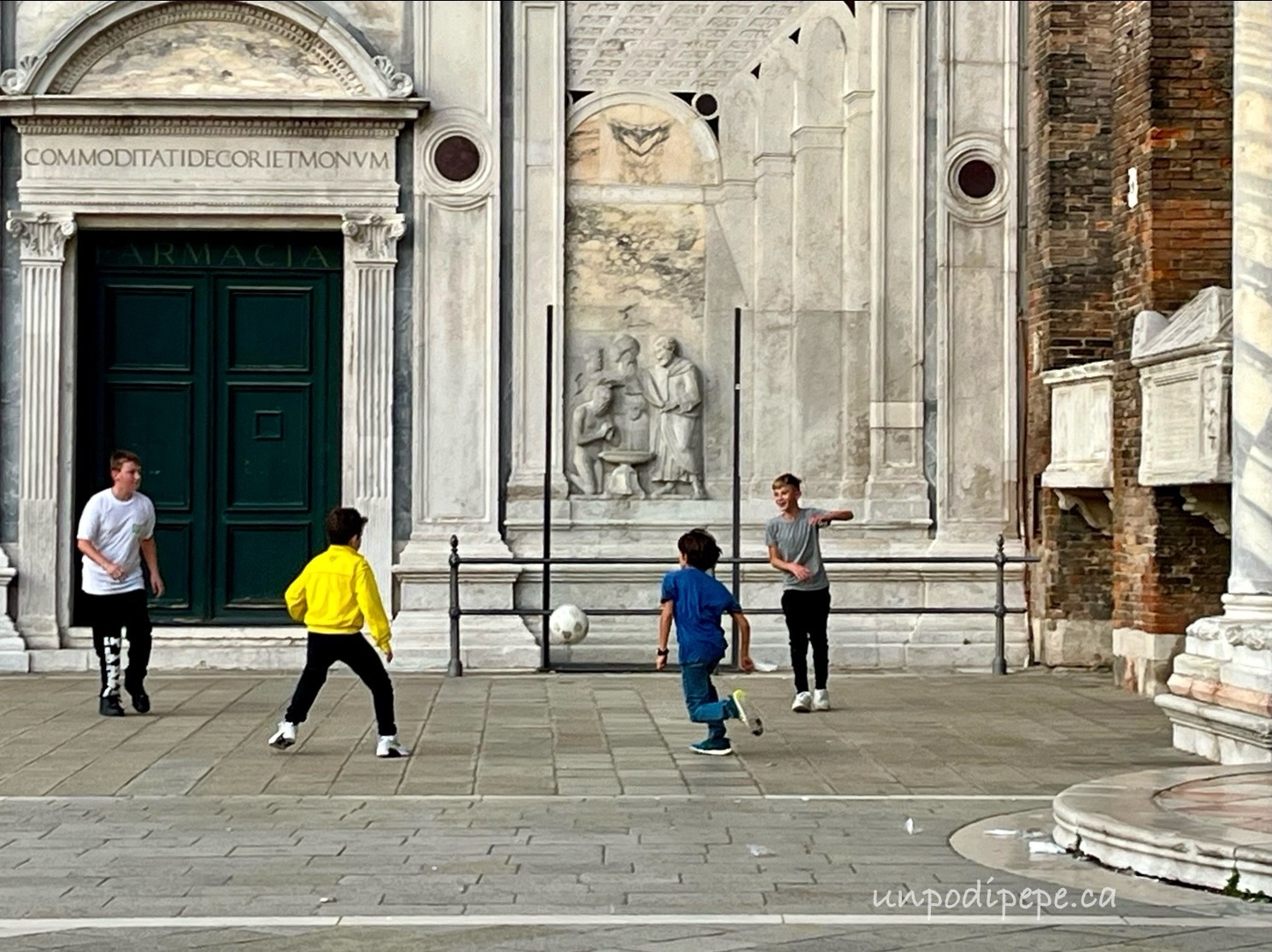
Main things to see and do:Wander aimlessly, get lost and explore! Venezia is a photographer’s paradise, a walkable city and many of the sights are clustered.  Walk from Piazzale Roma to Piazza San Marco (40 min-1 hour), explore the ponti (bridges) and narrow calle (streets) look for cisterne (rainwater collection wells), walk along Riva degli Schiavoni to see the gondole bobbing up and down in the water and stop for cicchetti (Venetian snacks).

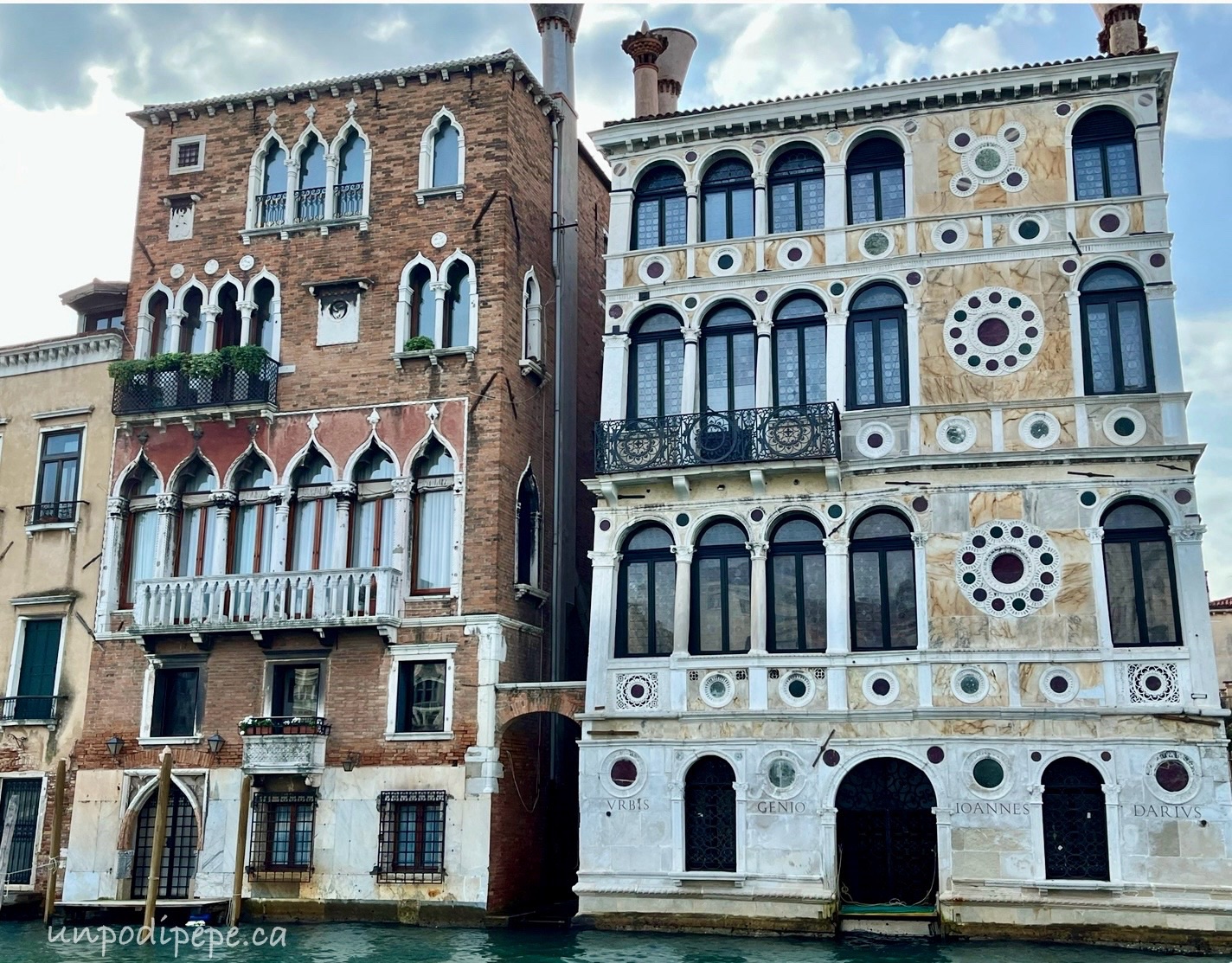
Cruise Canal Grande. Buy a Vaporetto pass and explore the Canal Grande from the water. Get on in front of Stazione Santa Lucia and cruise to San Marco or vice versa. Canal Grande is S shaped and lined with ~170 majestic palazzi, buildings from the 13-18th  Many of them are fondaco houses, meaning the ground floor was a warehouse and merchants lived on the upper floors with their families. 3 of my favourite palazzi are the Fondaco dei Turchi, the Venetian Gothic Ca’ d’Oro, and Palazzo Dario, which is funky because it started out Gothic but was renovated in Renaissance style. I love to spot interesting boats… the ambulance boat, the dry-cleaning delivery boat, etc.
Piazza San Marco is the main piazza in Venezia and is full of things to see. The multi domed Basilica is at the east end, and the rest is lined with arcades.  These were once homes and offices, now shops and restaurants.  In the piazza is a 4.5m bronze winged lion, the symbol of San Marco and the Venetian Republic.  It is on top of Egyptian granite column brought here in the 12th  Napoleon moved it to Paris but it was returned in 1815.  Torre dell’Orologio, the clocktower dates back to the 15th Century.
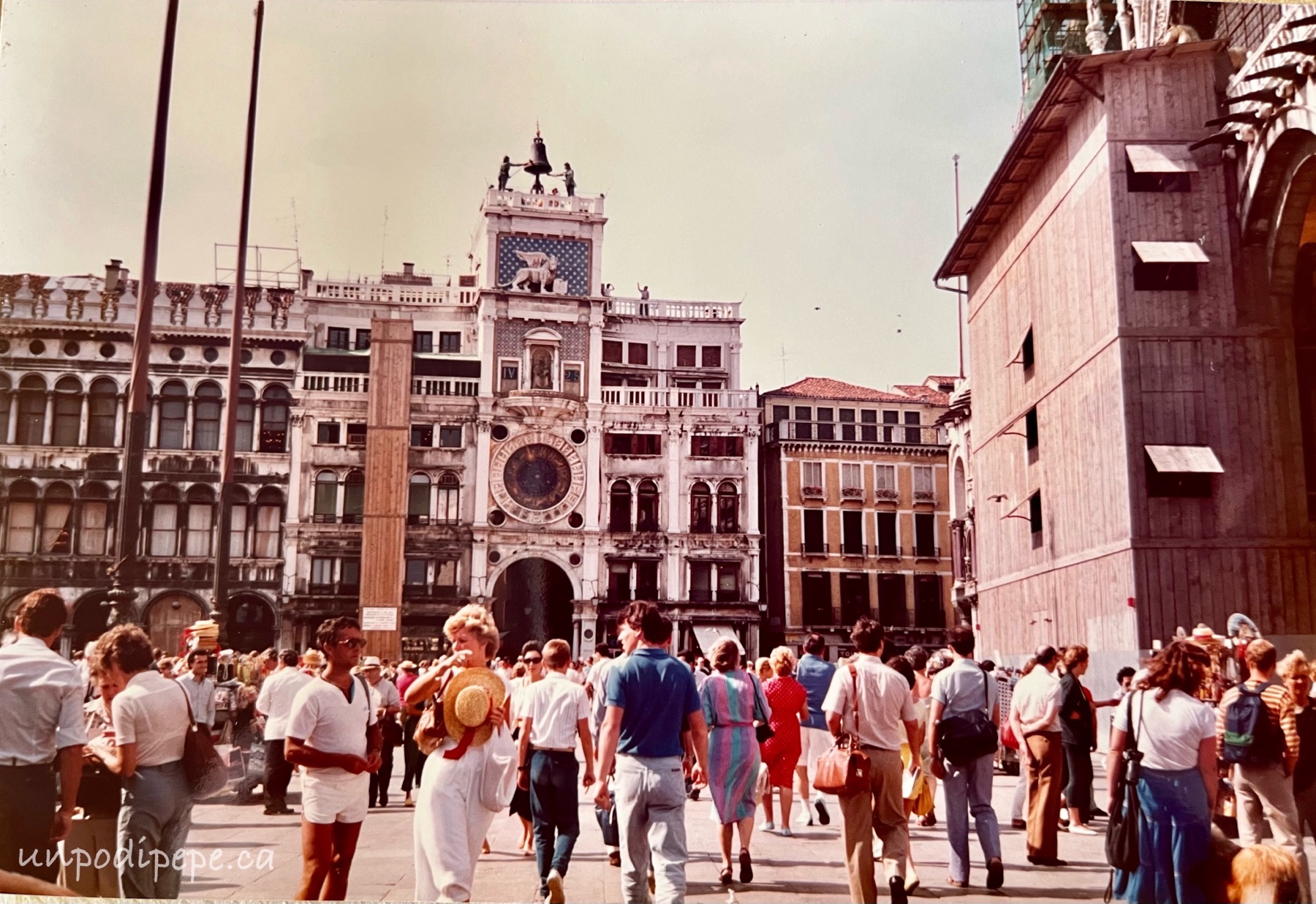
Torre dell’Orologio 1980

Visit Basilica San Marco, built in the 9th century and enlarged in 1063. Over 8 centuries, golden mosaics and other treasures were added.  The exterior is magnificent, with a combination of Byzantine, Romanesque and Gothic features. The Western side has mosaic archways while the Southern side has gothic adornments.  The Interior has 8000 m² of golden mosaics.  Gold leaf is sandwiched between 2 layers of glass tile, giving an illumination effect.  The evening tour is apparently spectacular as it is lit up. The Cavalli di San Marco, 4 magnificent ancient Greek bronze horses were brought from Constantinople in 1204.  Since 1974, replicas are on the terrace above the entrance, and the originals are inside.  They need their own blog post!  Admission €3 onsite, €6 online in advance.  Extra €5 to see Pala d’oro altar piece and Cavalli. Open 0930—1715, 1400-1715 Sundays.  Note….even if booked online, you still have to arrive early and wait in lineups for security.

Palazzo Ducale-Venetian Gothic style former residence of the Doges and Palazzo di Giustizia (courthouse) next to Basilica San Marco. It is now a museum.  Cross Ponte dei Sospiri (bridge of sighs) to see prisoners’ last view on their way to execution. Admission €25 Open 0900-1800 daily

Climb Campanile-Take the elevator to the top of the belltower for amazing views. Reservations are booked for a specific time slot €10 Euro, €12 online.  May be closed during maltempo-bad weather.

Collezione Peggy Guggenheim Former home of the heiress, now a museum of modern art in the Dorsoduro area. Take a €2 traghetto gondola ride across Canal Grande from San Marco or walk across Ponte dell’ Accademia.  Admission €16 open 1000-1800 Closed Tuesdays. Read my post here.Terrace Horse, Peggy Guggenheim Collection VeniceSanta Maria della Salute the Baroque church at the entrance to Canal Grande next to Punta della Dogana, has been immortalized by artists Canaletto, Sargent, Turner and Monet. The octagonal church made of Istrian stone has 2 domes and 2 bell towers in the back. Built in 1687 to celebrate the end of the plague (black death) that killed 1/3 of the population.  Santa Maria della Salute means ‘Our Lady of Good Health’.
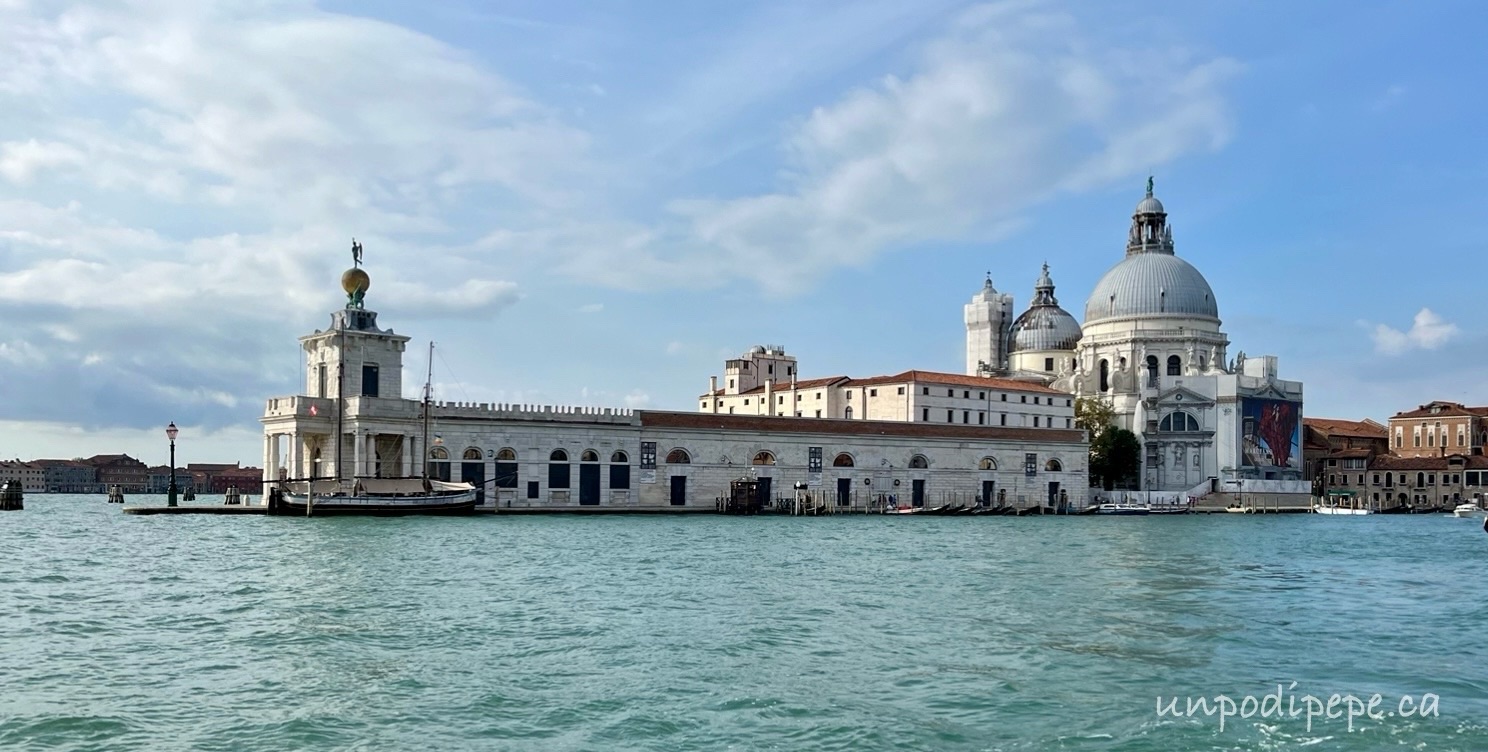
Entrance to the Basilica is free, climb steps to the cupola €4  Open 0900-1200 and 1500-1730.  Cupola closed Mondays. Take the ‘ferry gondola’ across from Piazza San Marco for €2. Nov 21 is the Festa della Salute featuring a parade from San Marco to La Salute over a pontoon bridge.

Ponte dell’ Accademia walk over the old wooden bridge for the best views of Canal Grande

Ponte Rialto a covered footbridge lined with shops has great views from both sides. It is the oldest of 4 bridges that span the Canal Grande.  The original was built in 1173 and it was rebuilt several times.  The present bridge was built in 1591.

Gondola ride Ponte Rialto 1995

Ride in a gondola Gondolas are unique, symbolic of Venezia and have been a means of transport on waterways here for over 10 Centuries, so you really do need to do this! Gondola rides are usually €80 for a 30-40 minute ride and €100 in the evening. If this is not in your budget, or you are travelling solo like me, there are inexpensive traghetti, or gondola ferries you can take with others to cross to the other side of Canal Grande for € Best deal in town!  Look for the green ‘traghetti’ sign.  There is now a special dock at Piazzale Roma for those with mobility issues to safely get into a gondola.Scala Contarini del Bovolo Cool external 26 m multi arch spiral staircase near Piazza San Marco. It was added to the palazzo in 1499. View of rooftops, the Campanile, the cupole of San Marco and La Salute.  €8 admission Open 1000-1800 daily.
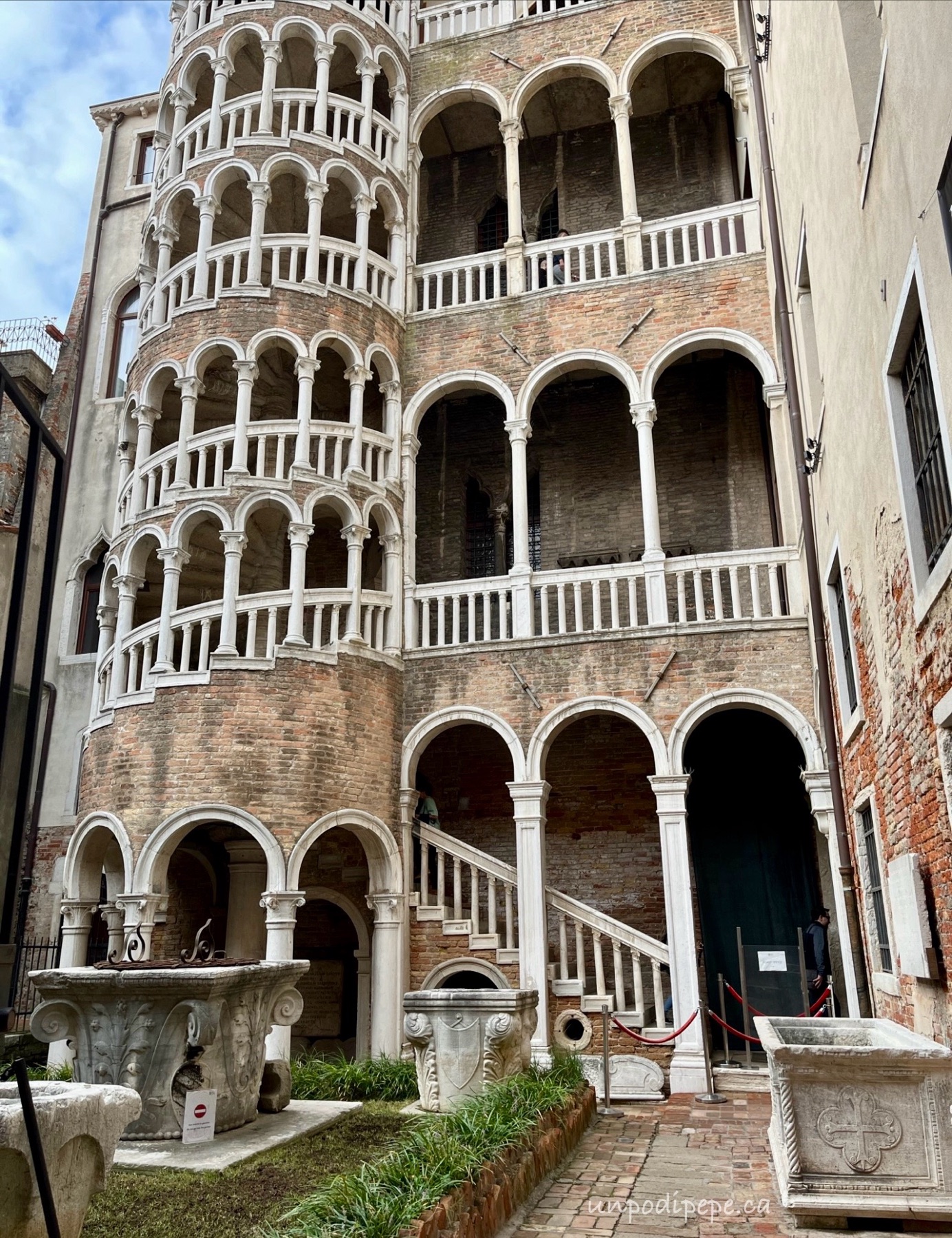
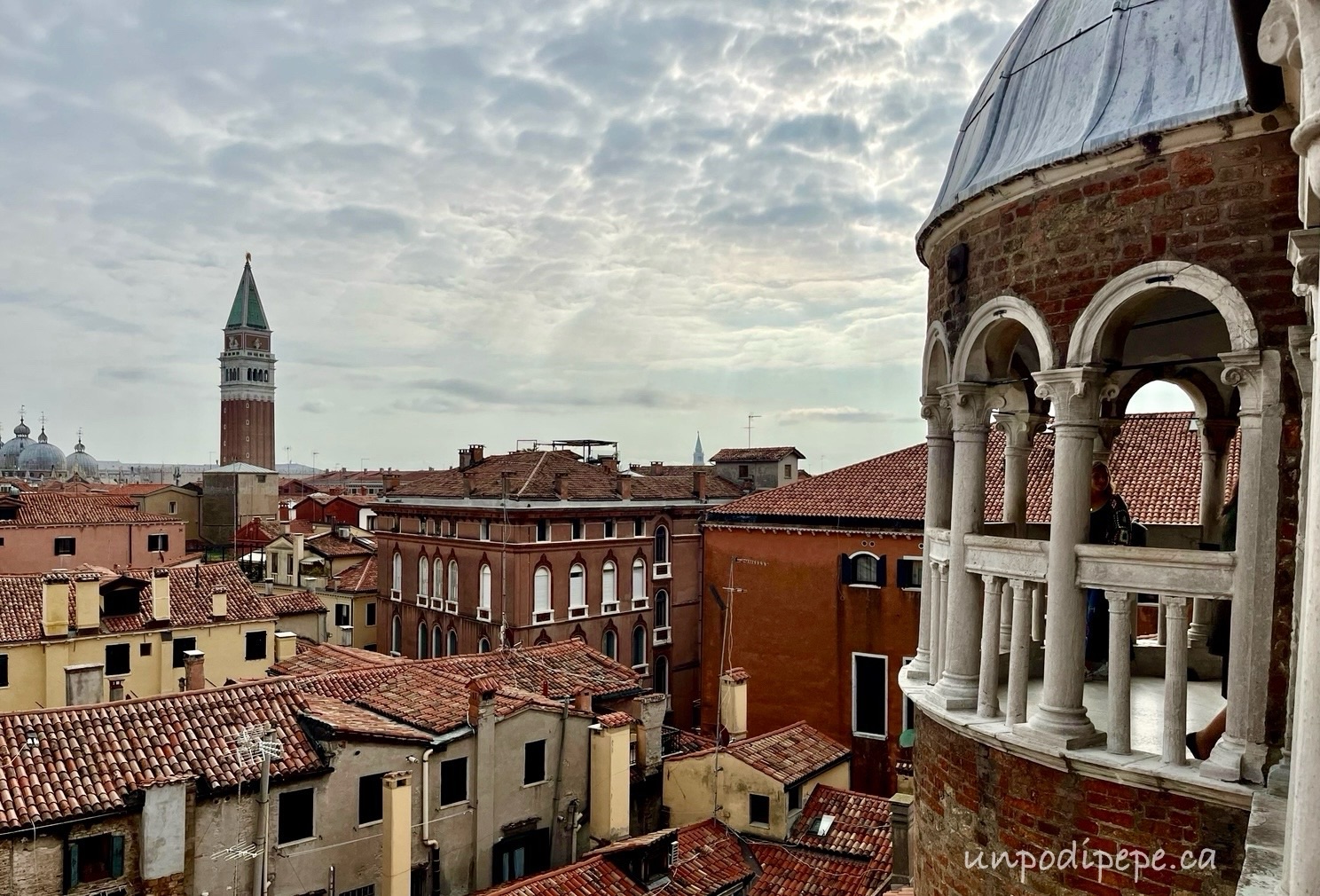
La Fenice The opera house was well named! Like the Phoenix it has risen from the ashes after being destroyed by fire 3 times, most recently in 1996. It was reopened in 2003. Admission €12 including audioguide tour.  Open 0900-1800

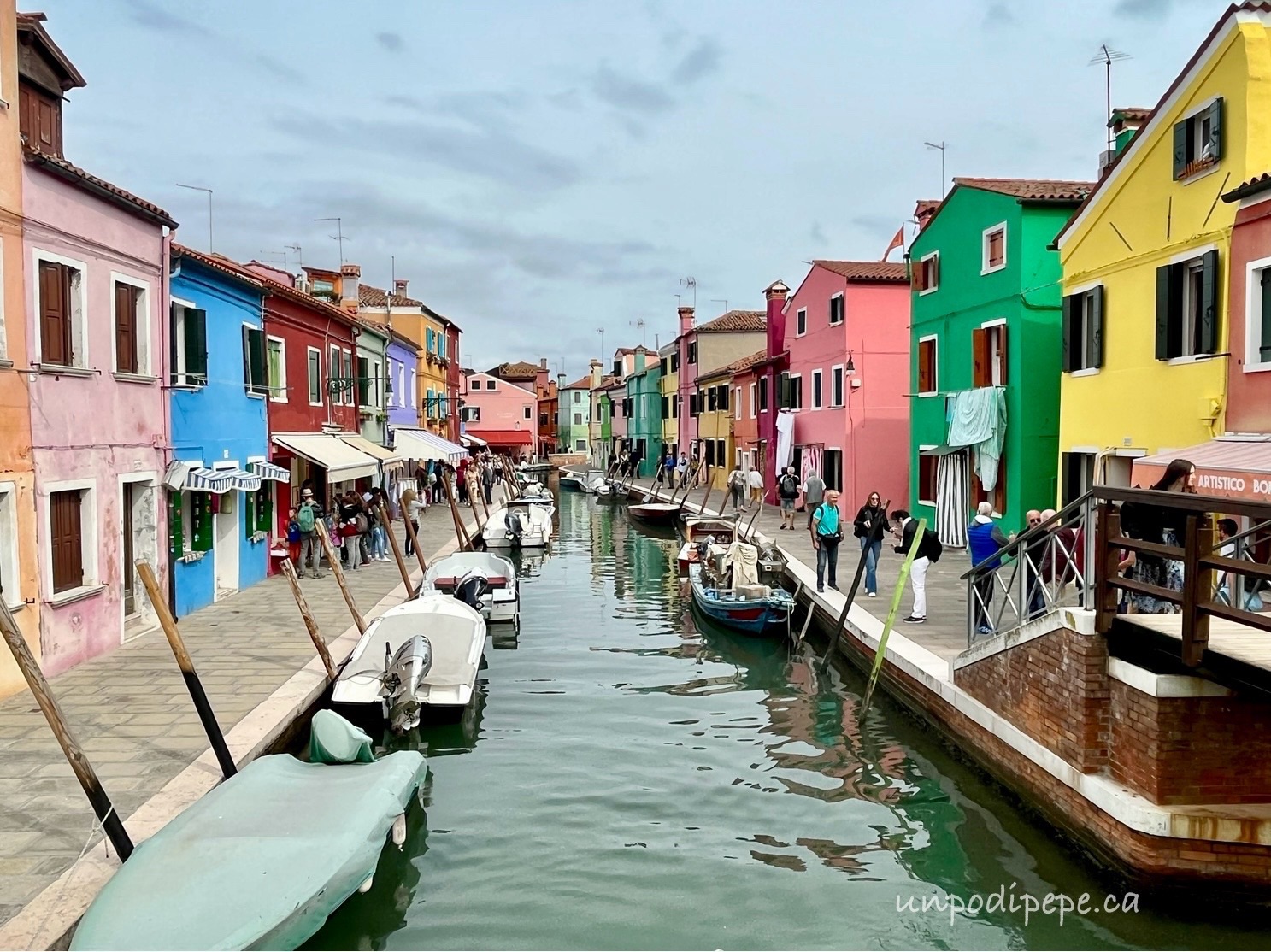
Visit the islands Take the vaporetto to Murano, Burano, Torcello, Lido and San Giorgio Maggiore.
Terrazza Fondaco dei Tedeschi (T Fondaco).  Tedeschi are Germans. This was the German merchants’ warehouse, then the post office, now a luxury department store. It is at the foot of Ponte Rialto, northwest end.  The rooftop terrace has panoramic views over Canal Grande. Open daily 1015-1800.  Entrance is free, reservations are required and the timeslot is only 15 minutes.  Reservations must be made on their website.

Feste: Venezia has feste all year round, most of them involve gondola races!

  • January 6th Regatta delle Befane-50 rowing club members dress up as La Befana and race from San Tomà to Ponte Rialto, where the finish line is a giant stocking hanging from the bridge!
  • February-Carnevale the 10 days before Ash Wednesday (22 Feb -4 Mar in 2025).
  • March 25th anniversary of Venezia and festa of the Annunciation
  • Biennale d’Arte held even years. 20 April-24 Nov, 2024
  • April 25 Festa di San Marco, patron Saint of Venezia
  • May-1st since the 11th Century, the Sunday after Ascension Day is Sensa, the marriage of Venezia with the sea
  • May-Vogalonga, a non-competitive 30Km rowing celebration between canals and the islands.  A peaceful protest against damage due to waves from motorboats.
  • July-the 3rd Sunday Redentore Fireworks July 20-21, 2024
  • Late August/early Sept Venice Film Festival on Lido di Venezia Aug 28-Sept7, 2024
  • September, 1st Sunday Regatta Storica
  • October Venice Marathon Oct 24, 2004 38th annual
  • November 21 Salute Celebration.  Feast of Santa Maria della Salute celebrating the end of the devastating Black plague that killed 1/3 of population
  • December 7th-lighting of tree in Piazzetta San Marco
  • December-Mercatino di Natale in Dorsoduro

Getting there and around:The main airport Marco Polo is 10 km away.  Ryanair and some other budget airlines use Treviso airport 40 km away. An airport express bus takes you to Piazzale Roma in half an hour for €10.  Then walk or take vaporetto to hotel. Alilaguna waterbus is €15 and has several stops.  Shared watertaxi is €35 per person with several stops along the 1 hour route.  Private watertaxi is much more expensive.

Train-Stazione Santa Lucia in Santa Croce area.  Walk or take vaporetto to hotel.     Car parking garage ‘Tronchetto parking’ in Piazzale Roma has a capacity of 4500 cars

Actv Vaporetto is a waterbus and an affordable way to sightsee.  Also used by residents to get around and get to work.  Single ticket one way €9.50, daypass €25. Passes for 2, 3 and 7 days are also available.  It is not necessary to buy these in advance.  With my daypass, I cruised to San Marco, then took another vaporetto at San Zaccaria (in front of Hotel Danieli) to Burano and Torcello.

Venezia is a one of the most visited destinations in the world, with over 20 million tourists per year.  It is crowded, more expensive than anywhere else in Italia, and struggling with the effects of overtourism.   Acqua Alta, high water flooding happens in late autumn to early spring.  Usually predictable and lasts only a few hours.  Read my post on MOSE.

Cannareggio

I have talked about the crowds, the lines, the expense….but do not let that put you off.  There is nowhere else like Venezia with its intricate maze of waterways, art, and unique architecture.  Around every corner is another magical scene. The entire city is an extraordinary masterpiece, so I definitely recommend visiting.  It can be compared to Santorini, which is crowded and expensive, but incredibly unique and historically rich.  My recommendation is to stay 3-4 days. In 2022, only 3.2 million visitors out of 30 million stayed overnight.

As of June 1, 2024, in an effort to decrease the effects of mass tourism, regulate huge crowds and improve life for local residents, Venezia will be trialing a €5 entry charge.   Residents, commuters, students and children under 14 will be exempt, as well as anyone who has booked an overnight stay.  Personally, I think the entry fee is too low to be effective.  Constant maintenance to prevent more water damage is expensive.  Tour groups will also be limited to 25 people (=½ the capacity of a bus) and loudspeakers are banned(yeah!!!).  Cruise ships have been banned from the lagoon since 2021 after threats from UNESCO to put it on the endangered list. That is the UNESCO equivalent to ‘the naughty list’!

Hope you all make it to Venezia at some point!  Buon viaggio, Cristina

**Photo credits: 1995 Lucia and Donato on honeymoon taken by unknown gondolier.  All other photos by me!
Share this:

  • Click to share on Facebook (Opens in new window) Facebook
  • Click to share on Pinterest (Opens in new window) Pinterest
  • Click to share on X (Opens in new window) X
  • Click to email a link to a friend (Opens in new window) Email
  • Click to share on WhatsApp (Opens in new window) WhatsApp
Like Loading...

Pantheon update

28 Sunday May 2023

Posted by Un po' di pepe in Architecture, Photography, Roma, Travel

≈ 11 Comments

Tags

Ancient Roma, Italy travel tips, Lazio, Pantheon, Roma photography, Roma travel, Santa Maria ad Martyres, UNESCO World Heritage Sites

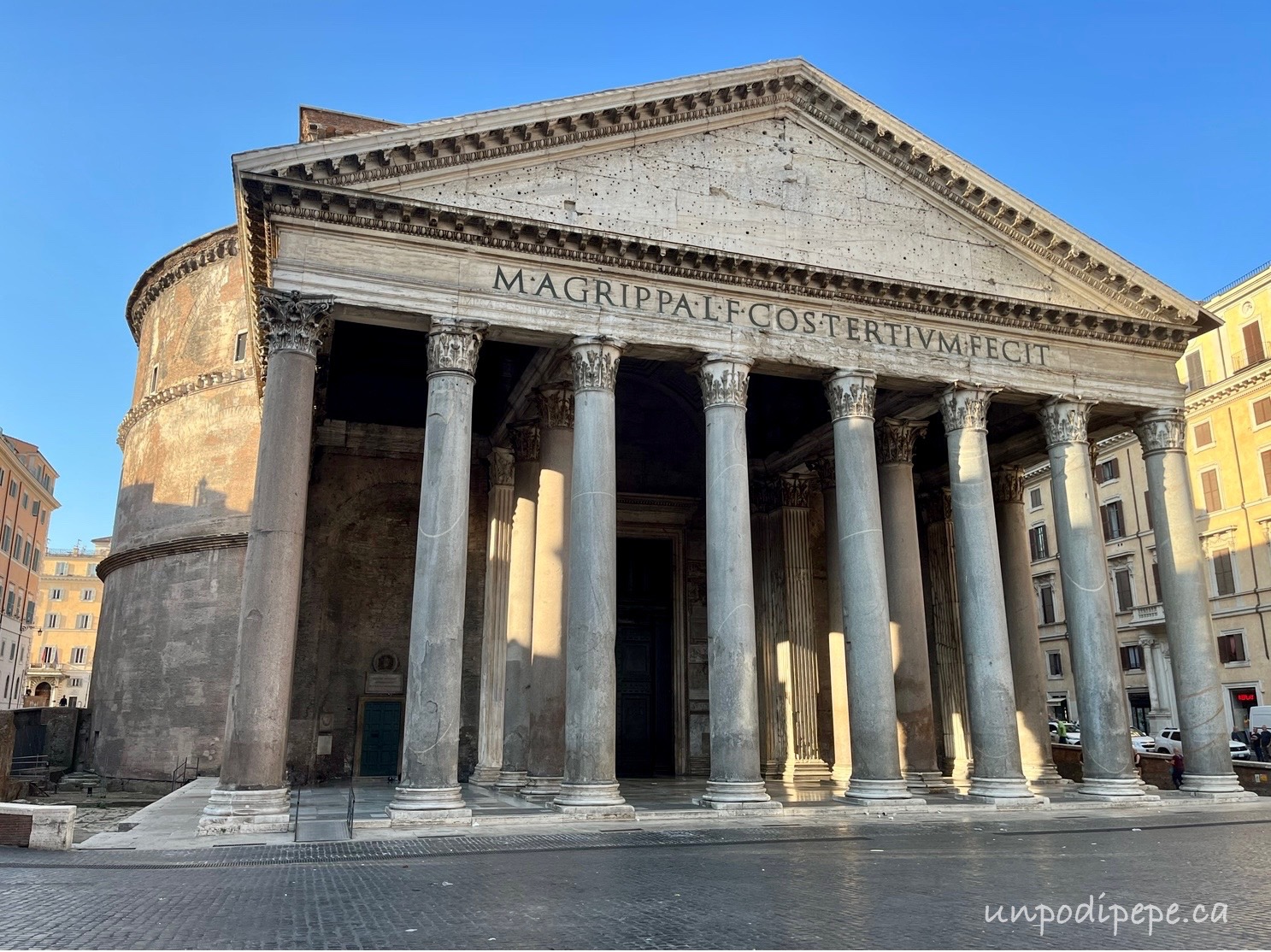
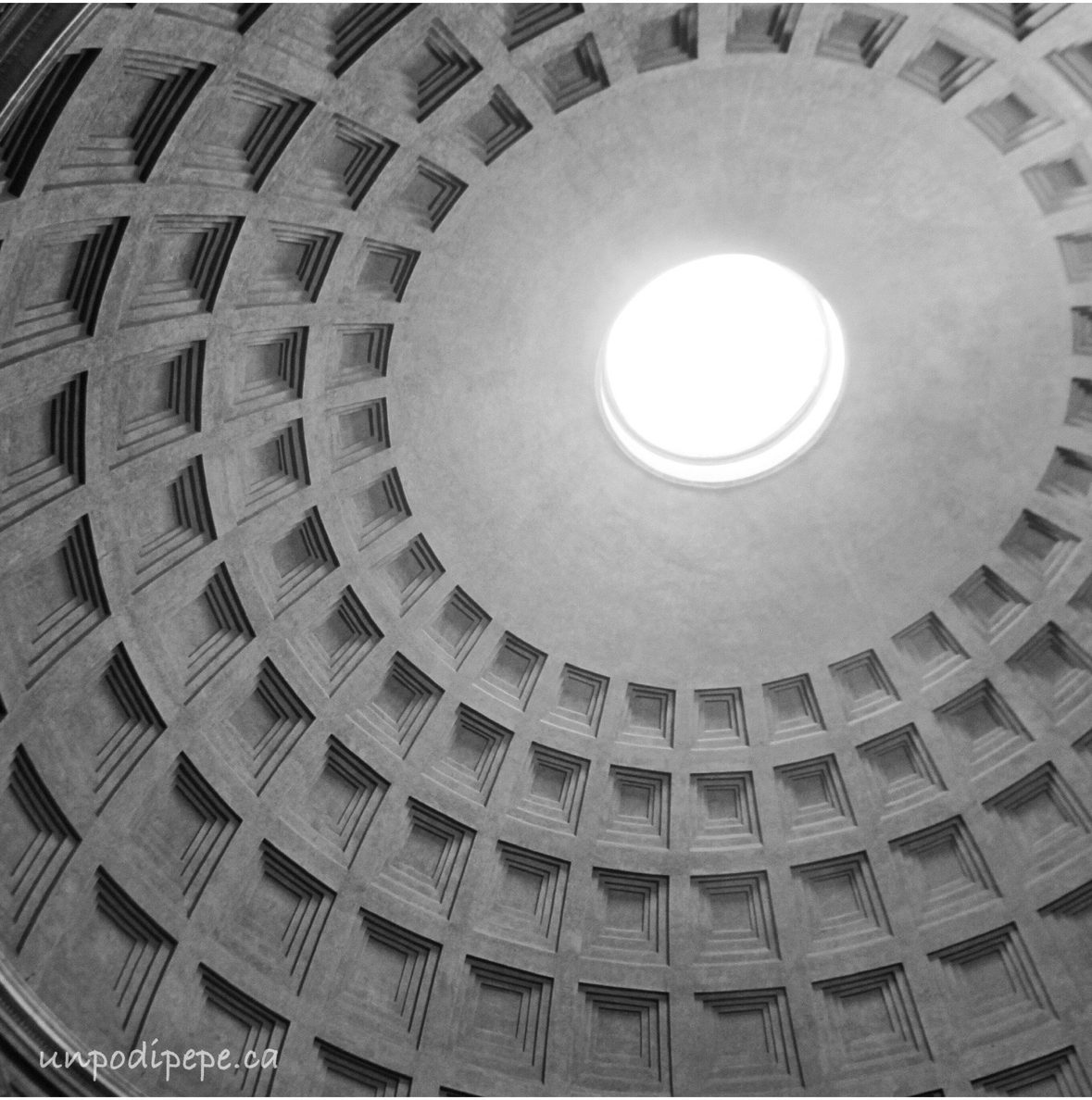
Roma is full of amazing buildings. The most amazing and best-preserved of all is the Pantheon.  Imagine Michelangelo entering the Pantheon 500 years ago, looking up and saying “this looks more like the work of angels than humans’-that is how amazing it is! The perfect mathematical proportions of the Pantheon have provided inspiration for architects for almost 2,000 years. Check out the post Il Pantheon for more details on the history and structure.Admission has always been free, and there has been talk of charging an entry fee for many years…in fact, it has been ‘announced’ several times.  Well….purtroppo, the time has come.  Starting July 1st 2023, there will be a €5 admission fee for entry for tourists/visitors.  Admission will still be free for residents of Roma, those under 18 years old and those attending Mass. Until then, admission remains free, with booking required at least 1 day in advance only on weekends and holidays.

The Pantheon is a classical masterpiece and a monument that requires expensive upkeep, so the need for a modest admission fee is understandable. Since the 7th century it also functions as the Church of Santa Maria ad Martyres.  In Roma entry into churches is free-so that is why there has been so much effort to not charge an admission fee.

Mass is at 5 pm Saturdays, 10:30 am Sundays and public holidays, and midnight on Christmas Eve.  Shoulders, midriff and knees need to be covered, although this is not as strictly enforced as the Vatican.

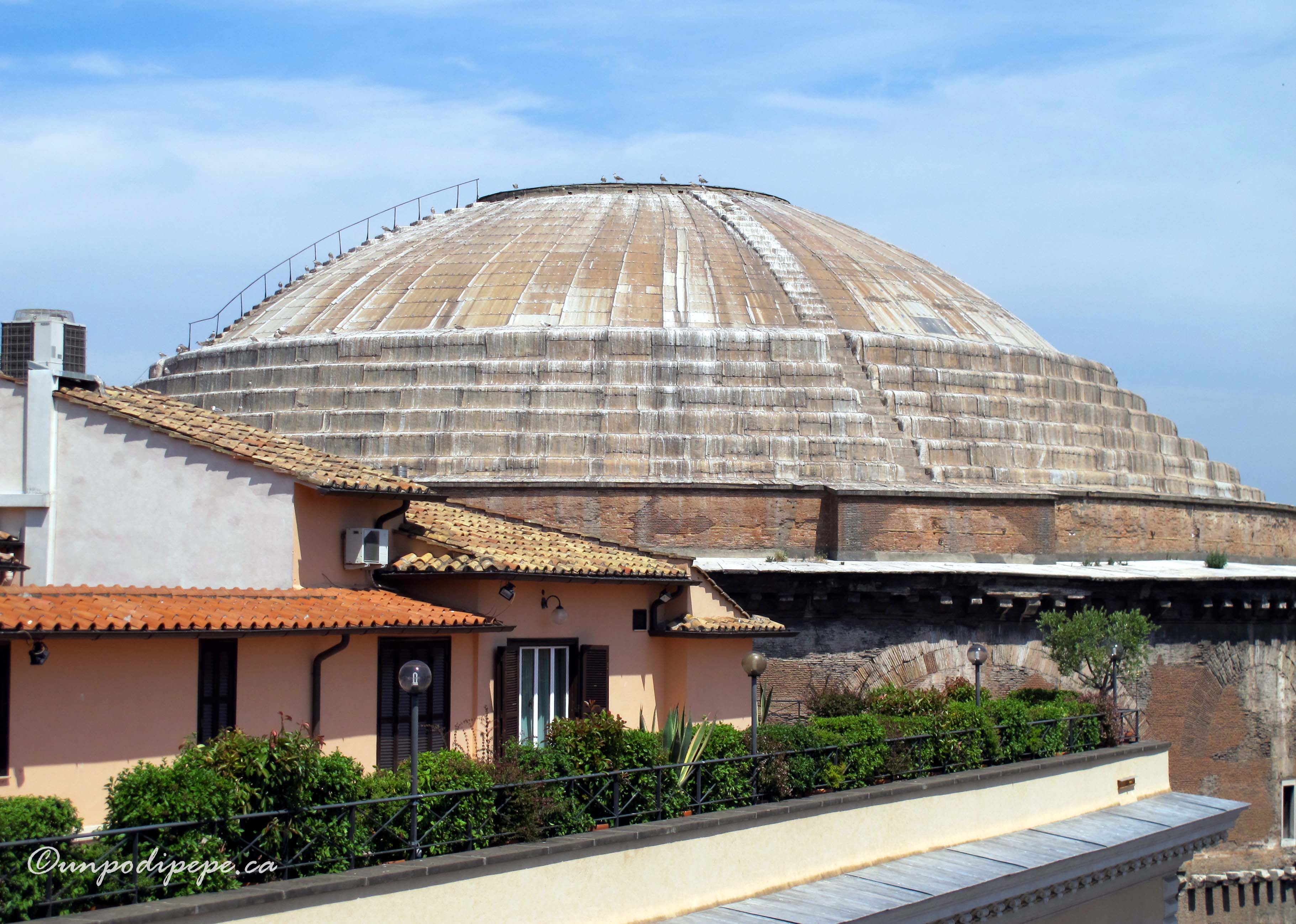
‘La Pioggia delle Rose al Pantheon’ (the rain of roses) is on my list of things to see in my lifetime. This takes place on Pentecost Sunday, 50 days after Easter.  At noon, right after Mass, Roma’s Vigili del Fuoco (fire fighters) climb to the top of the dome and drop thousands of rose petals through the oculus as choirs sing.  The rose petals symbolize the Holy Spirit coming down to earth.  Pentecost Sunday happens to be today! I saw a video of the event this morning, and even Michelangelo would be impressed! Tickets or advance booking are not available for this event.  Arriving by 7am for the 10:30 Mass is apparently necessary to get a spot inside! The ladder used by the vigili to get to the oculus is visible in the foto:

The dome and oculus, viewed from the roof of Grande Hotel de la Minerve

Visiting the Pantheon takes about 45 minutes. It is open daily 0900-1700 Sun 09-1800 with last entry at 18:30. The Pantheon is closed Jan 1, May 1, Aug 15 and Dec 25.  An audio guide with an App can be prebooked for ~€8.50, or a 45 minute guided tour for ~€20.

Details are not yet available on how to book admission, but they should be available soon on the website. Roma is a popular weekend destination for European and Italian travelers, so I imagine tickets will easier to book during the week.  There is really no ‘off season’ except for possibly the period from January 7 until the end of February.

The Pantheon is centrally located, in Piazza della Rotonda.  I walk slower than most people, but it is about a 20 minute walk to Piazza di Spagna, the closest Metro stop.  It is about a 20 minute walk to the Fontana di Trevi, 10 minutes to Piazza Navona and 40 minutes to Colosseo.

Read more about the Pantheon in Caffè con Caravaggio a Roma, Un Giorno a Roma  and Autunno in Italia.

Buon Viaggio, Cristina

Share this:

  • Click to share on Facebook (Opens in new window) Facebook
  • Click to share on Pinterest (Opens in new window) Pinterest
  • Click to share on X (Opens in new window) X
  • Click to email a link to a friend (Opens in new window) Email
  • Click to share on WhatsApp (Opens in new window) WhatsApp
Like Loading...

Beat the heat: Surviving Summer in Roma

19 Sunday Jun 2022

Posted by Un po' di pepe in Italia, Roma, Travel, Travel tips

≈ 16 Comments

Tags

Ferragosto, Italy travel tips, Musei Nazionale Romano, Roma, Roma travel, Summer in Italy, Summer in Roma, Surviving summer in Italy

Visiting Roma this summer? Summer in Roma can be hot, humid, sticky and crowded.  The temperature is usually >30° C (85°F) and the humidity can make it feel even hotter. I often hear people say ‘the worst time to go to Roma/Italy is in the summer-it’s too hot!’  Well…anytime is a good time to go.  Whatever time works for you.  You will just have a different experience depending on the season.  Teachers, students, school employees and families with bambini in school can only travel in summer, so advising them to visit at another time is not helpful.

For those of us that go to visit family, especially in smaller villages, August is often the best time to be there.  In my small mountain village in Puglia there are feste and concerts, my friends and relatives have time off work, and those who have moved away for work come back to visit. This is why I go in summer.

Roma will have a decreased amount of Romans for the 2 weeks around Ferragosto Aug 15th. Many Romans head to ‘la spiaggia’ so it will be less crowded with fewer cars on the road.  Office and public workers are off or have decreased working hours. A lot of smaller businesses are closed as well. Do not worry, there will be more than enough restaurants open that nobody will starve. August 15th is a national holiday, so definitely avoid travel on that particular day. Public transportation will be reduced and nearly everything will be closed. Museums and cultural sites will be open. July is actually more crowded than August. For more info on this, read the post Chiuso per Ferie.

I visit Roma for a few days every summer at the beginning or end of my trip to Puglia and consider myself quite the expert on managing the intense heat and crowds. Here are my tips for surviving summer in Roma:

1-Schedule the day like an Italian!  Quando a Roma, fai come i Romani/ When in Roma…..

A- Mattina/Morning Wake up early and do your stuff in the morning. Visit ‘non shady’ sites in the morning, as they will be too hot to do in the afternoon. These include the Colosseo, Foro Romano, Piazza Navona and Passeggiata all’Aventino.

B Pomeriggio/afternoon During the hottest part of the day-1-5 pm, participate in the riposo or ‘pausa pranzo’.  (**Note that this is not known as siesta in Italian) This is a ‘rest period’ and many places are closed. This is not always the case in the larger cities or touristy areas, but it makes sense to follow when it is hot.  Have pranzo-the main meal, at 1pm, enjoying the interior of a cool restaurant, then if your lodgings are close by, have a rest, take a nap or check email. Keep it dark with closed shutters/curtains while staying indoors, and also while you are out, so it stays cool.

If it is not feasible or you do not want to participate in the ‘pausa pranzo’  visit cool places during this time. For example:

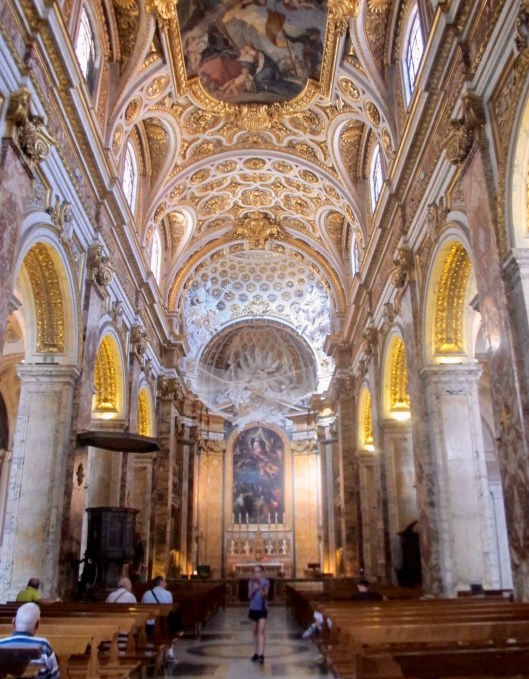
1-Visit churches! Roma has >900 churches- they are dark, cool, free and may even have seats.  Some, like San Luigi dei Francesi and Sant’Agostino even have their own Caravaggio works for you to drool over. For the full walking tour, go to  Caffè con Caravaggio a Roma.  Santa Maria Sopra Minerva, the Pantheon and Santa Prassede are 3 other favourites of mine.  Smaller churches may be closed during pausa pranzo, but many are open. Sometimes you even find things by happy accident. I once stepped into Santa Brigida, a very traditional Scandinavian church in Piazza Farnese for a 3 pm Mass which included otherworldly sounding chanting and singing by cloistered nuns.
***Important Note about churches – Churches are primarily places of worship, so please be respectful.  Dress appropriately, speak quietly-if the artwork does not render you speechless. Avoid Mass times, especially on Sundays.  It may not be possible to visit unless you are attending Mass. There is no charge to visit most churches, but I always like to light a candle when I visit (€.50-€1).

2 –Visit museums Most are air conditioned and open until 1900 (7pm). My favourites are Centrale Montemartini and Palazzo Massimo alle Terme which is downright cold-especially the top  floor where the fresco villas are.

Both of these museums are never crowded, even in high season. Galleria Borghese requires a reservation and you can only stay 2 hours.  If you time the visit right, go to Villa Borghese afterwards and find shade under a tree.

Smaller museums might not have air conditioning.  **A note on AC.  Electricity is expensive in Europe.  The AC is cool, but not cold like it usually is in North America. Read my amusing post Aria Pericolosa for more on this topic!

3- Go underground and visit the Catacombs of Domitilla, 12 km of cool underground tunnels from the 2nd to the 5th Century or the Basilica San Clemente which has 3 layers of churches, ending in a Mithrean temple.

C Sera/evening Get back out in the early evening, then stay out late enjoying the fresh air and longer days. Go for aperitivo! Pop up restaurants, wine bars and stands line the Tevere in summer near Ponte Sisto and Isola Tiberina.

Villa Celimontana holds an outdoor evening jazz festival from June-August. This is also a great time for a passeggiata in Piazza Navona or Trastevere.  There is a  Colosseo night tour as well as tour of the underground and the Forum. These can be booked online.  Roma also has several roof bars including the Terrazza Borromeo, Hotel Pantheon and Hotel Minerva.

More hot weather advice:

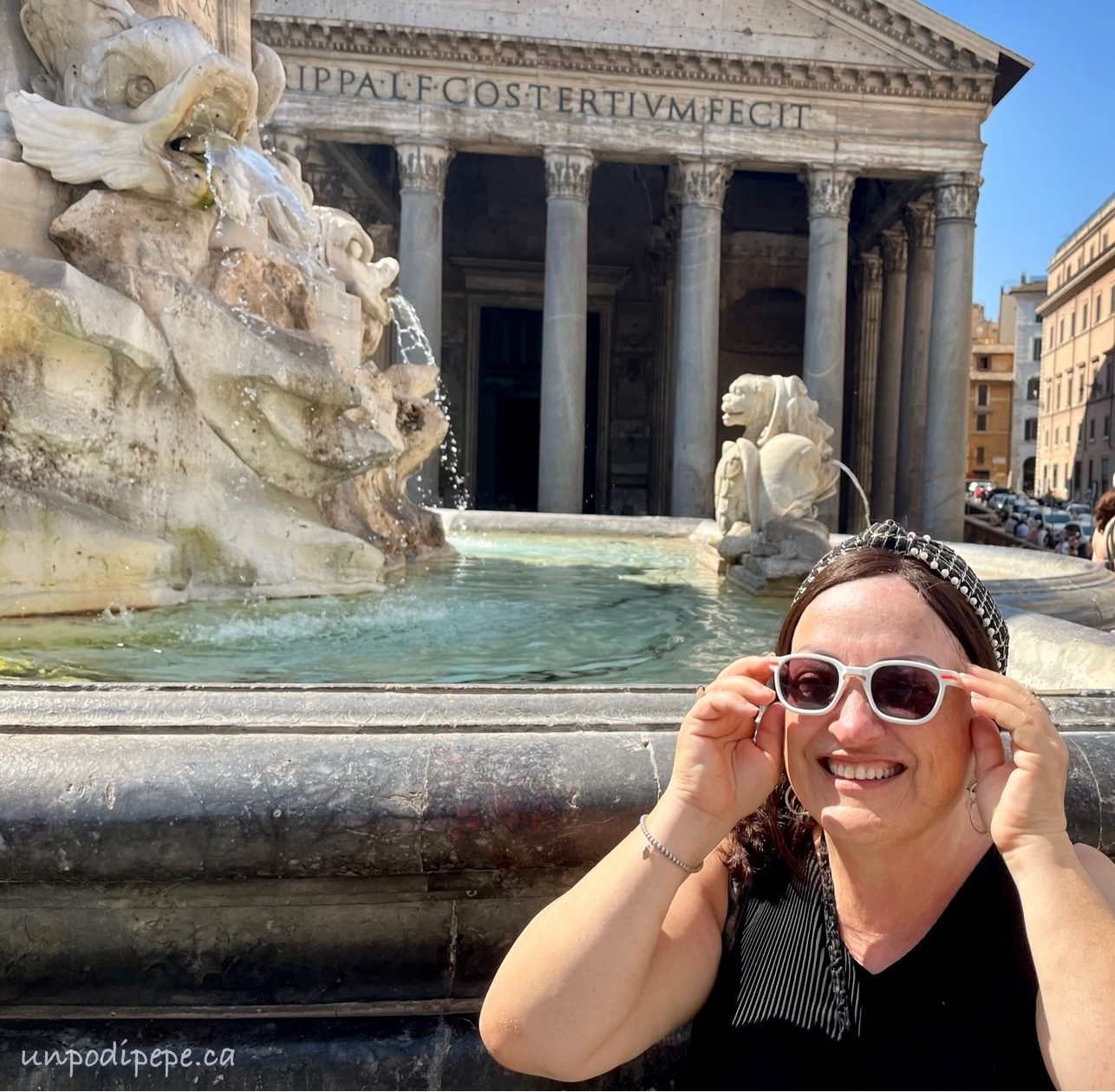
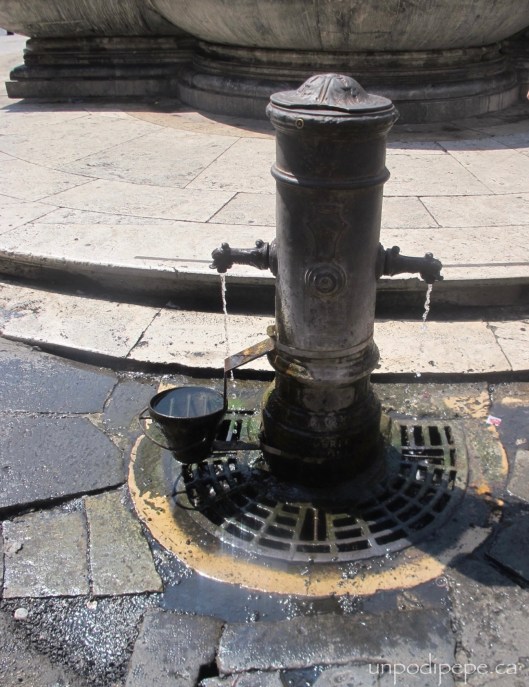
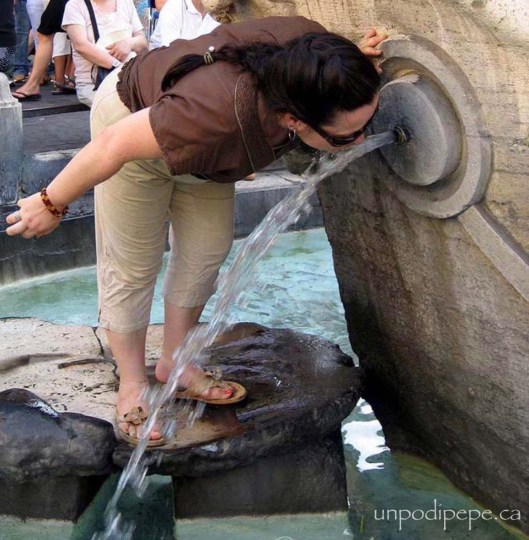
2 Keep hydrated Bring a water bottle and drink from from the >2500 cast iron nasoni or ‘big noses’.  These are running water fountains all over the city, most with SPQR stamped on the front.  This one in front of the Pantheon is one of the 3 oldest nasoni, with dragon spouts.

Nasoni were installed in 1874 to make cold drinking water from acqueducts free and accessible to all. Place your hand under the main flow and drink from the gush out the top. My favourite place to drink is La Barcaccia in Piazza di Spagna. The water comes straight from Acqua Vergine, an ancient aqueduct, and is absolutely freddissima!

3 Granita e gelato! Gelato will keep you cool. As if an excuse for more gelato is ever needed! I find the fruit flavors most refreshing, especially limone and pompelmo rosa (pink grapefruit).  You must try a granita di caffè at Tazza d’oro near the Pantheon. Also refreshing are Caffé Shakerato, Affogato and Grattachecca. It is hard to find bad gelato. There is Gelato del Teatro, Grom, Gelato San Crispino and 9 locations of Fatamorgana. My favourite is Danielgelo, a small family run gelateria near where I usually stay, in the San Paolo area.

Granita di caffe

4 Dress appropriately Wear a hat! Use sunscreen and dress lightly in layered breathable fabrics such as linen or cotton. Bring a light shawl or coverup if planning to visit churches, especially the Vatican. Walk on the shady side of the street, if possible. Buy a souvenir folding Roma fan.  They are available at all the souvenir stands for 2-3 Euro.

Should you avoid going to Italia in August? Absolutely not! If that is when you are able to go-then do it! Hopefully my tips will help. Be sure to click on the post links. Also remember the positive things about summer in Italia-the long days and wonderfully cool evenings, sky so blue it does not look real, the cast shadows of the mid afternoon sun and the seasonal summer food 😋.

Buon viaggio, Cristina

Share this:

  • Click to share on Facebook (Opens in new window) Facebook
  • Click to share on Pinterest (Opens in new window) Pinterest
  • Click to share on X (Opens in new window) X
  • Click to email a link to a friend (Opens in new window) Email
  • Click to share on WhatsApp (Opens in new window) WhatsApp
Like Loading...

Viaggio con Isabella

20 Wednesday May 2020

Posted by Un po' di pepe in Amici e Famiglia, Firenze, Italia, Photography, Travel

≈ 32 Comments

Tags

Firenze, Galleria degli Uffizi, Italy travel tips, Lucca, Milano, Monteriggioni, Oltrarno, Torre di Giotto, Vernazza, Viaggi in pultrona

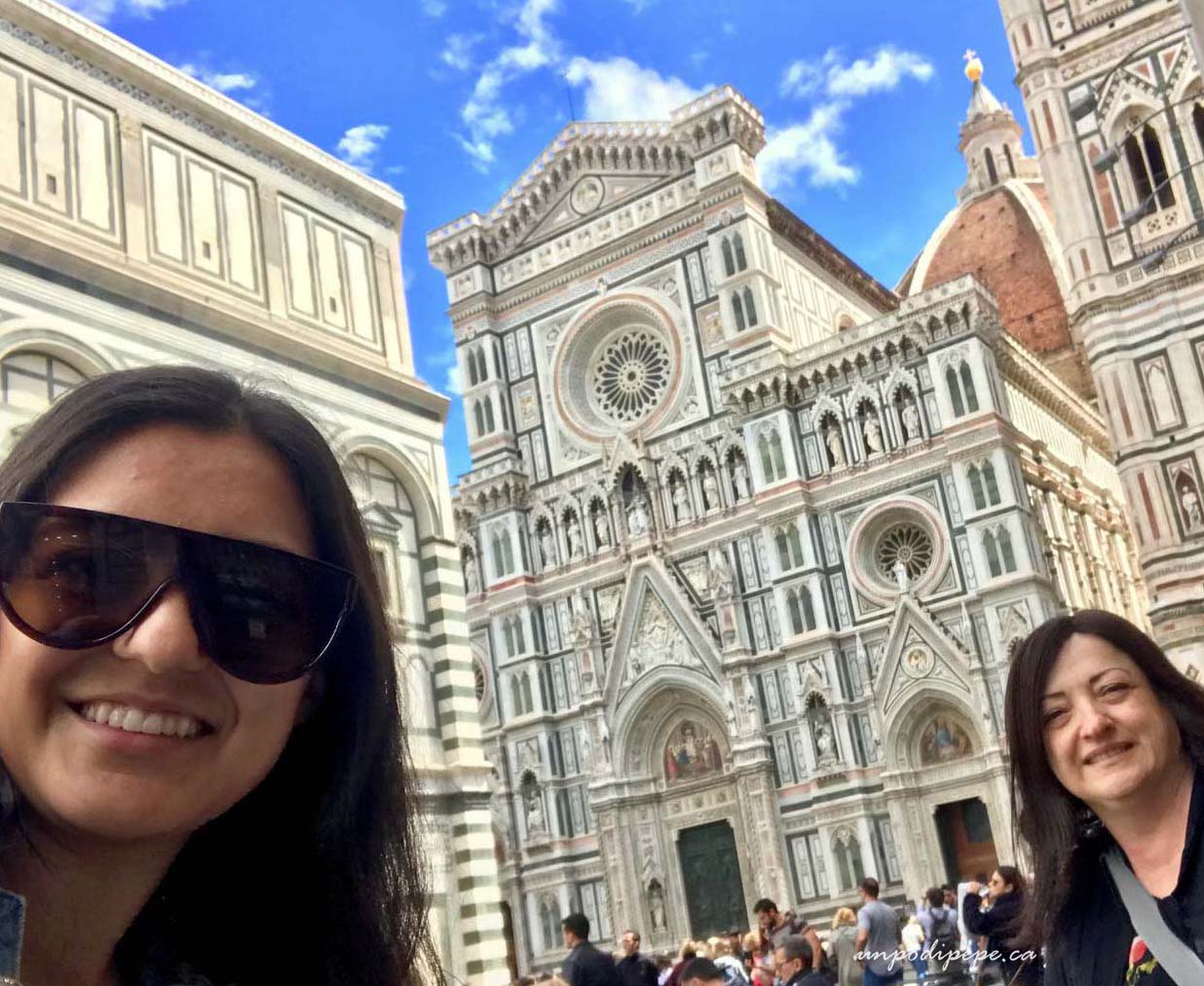
Duomo Selfie FirenzeOne year ago I was just returning from Italia with my nipotina Isabella. Since we are not able to travel in real life, viaggiamo in pultrona, let’s armchair travel and revisit our trip.

A bit of backstory…when Isabella was about 8 years old, she saw a photo of me on the Ponte Vecchio and asked ‘Zia, where is this?’.  I replied ‘Firenze’ and she asked if we could go there together one day.  I was thrilled at the opportunity to share my love of Firenze with her, so of course I said ‘Si! We can go when you graduate’.  We were delayed a few years due to scheduling issues, but last year in between Isabella finishing her university classes and starting a summer job, we managed to squeeze in a 2 week trip!Ponte Vecchio Firenze

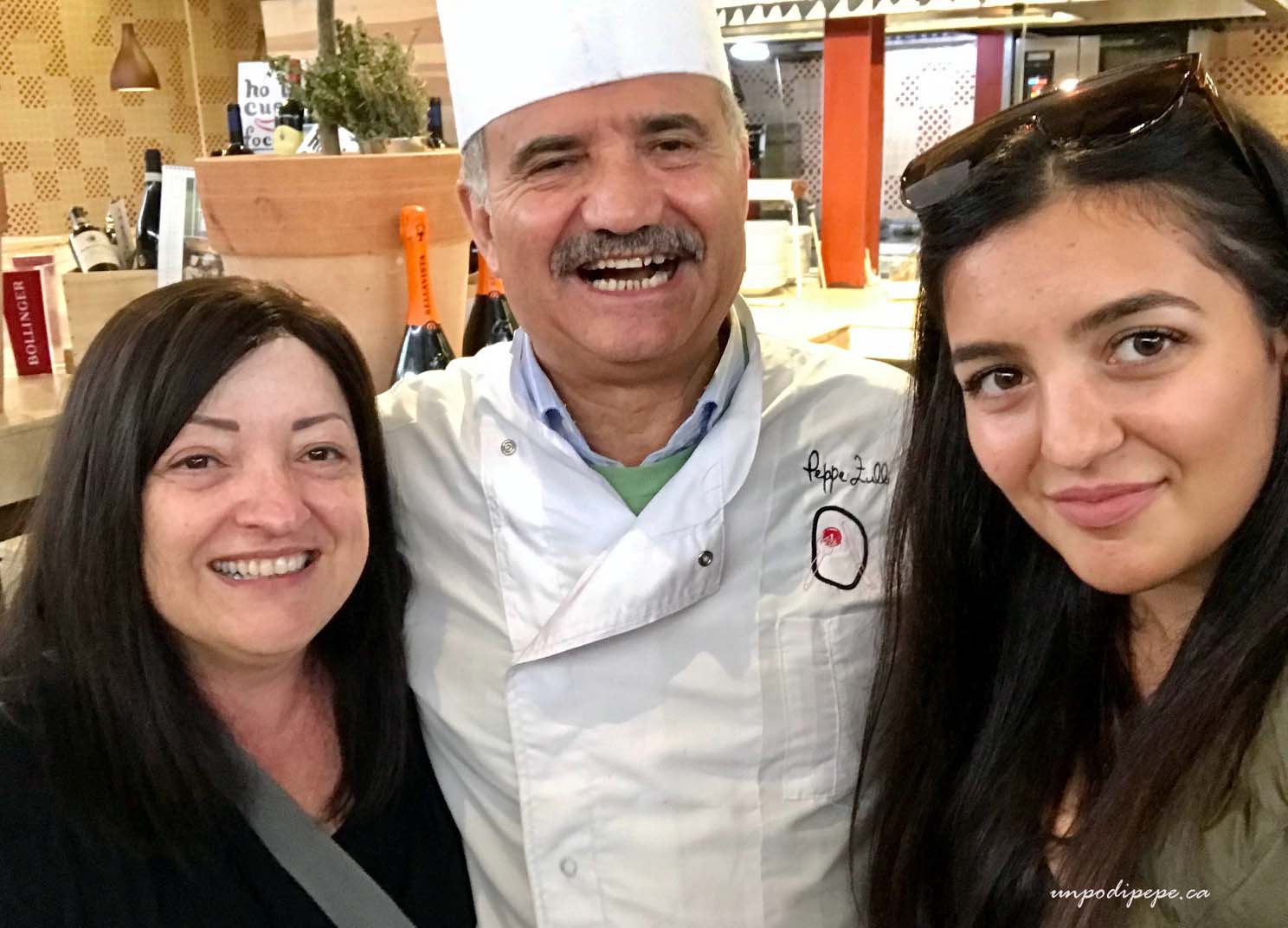
We flew to Firenze, where we rented a studio apartment in the Oltrarno for a week.  It was in a renovated stone tower a short walk from the Ponte Vecchio and down a narrow alley from Piazza della Passera.Peppe Zullo, Mercato Centrale

Chef Peppe Zullo, our amico from Orsara, was in town our first day.  We met him at the Mercato Centrale where he and his son Michele had recently taken over a restaurant upstairs called Tosca.

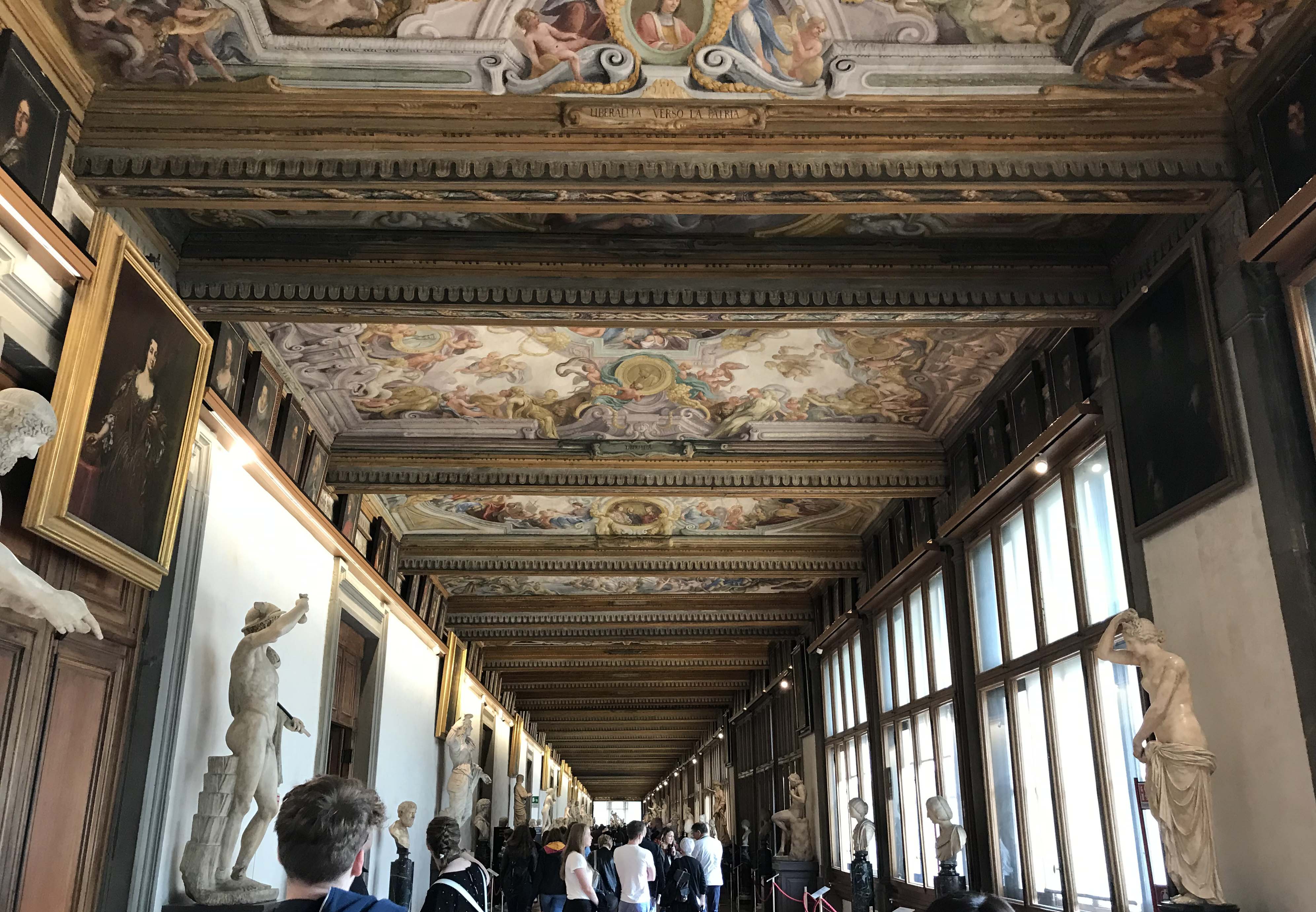
Galleria degli UffiziWe had prebooked only 1 museum-the Uffizi of course, for the Saturday so that Gaetano, our cugino in med school could join us.  New Caravaggio rooms have opened since my last visit!  Galleria degli UffiziI noticed many portraits of Anna Maria Luisa de Medici on display.  We have her to thank for all of this! Isabella loved the Uffizi, not just for the artwork, also the building itself, so Gaetano suggested she visit Palazzo Pitti another day.Palazzo Pitti Firenze interior

I am ‘vertically challenged’, which may be why I like to climb to the top of things, especially if there is a view involved. We climbed almost everything in Firenze, starting with a walk to Piazzale Michelangelo via Porta San Niccolò for views of the city, then continuing up to San Miniato al Monte. We climbed the dizzying narrow stairs to the top of Brunelleschi’s Duomo to see the views and the Torre Giotto.  Duomo FirenzeAnother day we climbed the Torre Giotto and saw the Duomo!  These climbs were vital to working off gelato! For more photos taken from above see Viste di Firenze.

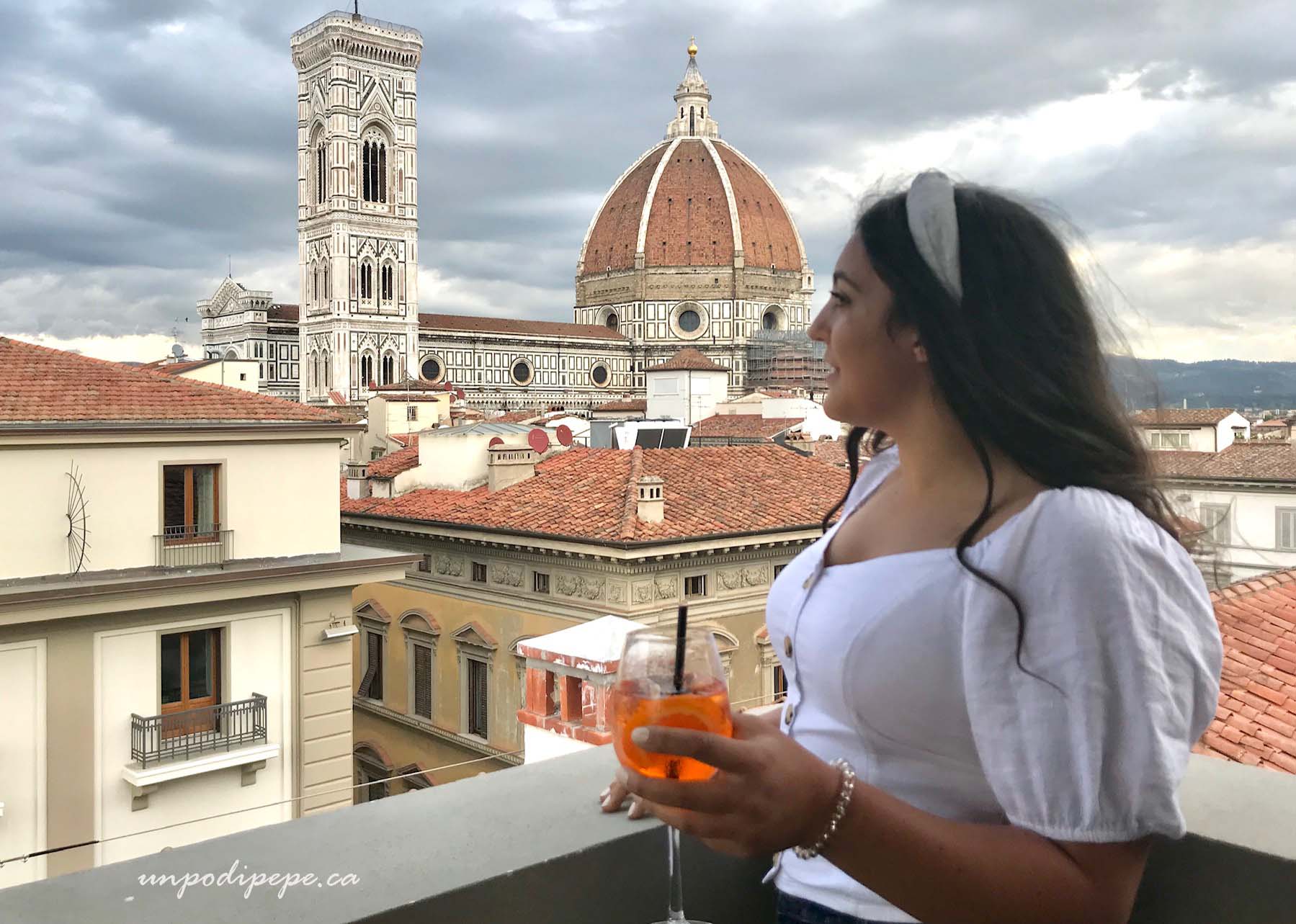
We also enjoyed the view, modern art and caffè from la terrazza degli Uffizi.  This is the title of one of my monotypes, so I had to throw that in there!  The Aperol Spritz from the roof bar of La Rinascente in Piazza della Repubblica was the best I have had.  With her new headband and puffy sleeves, Isabella looked like a Renaissance principessa enjoying a spritz!Isabella Aperol Spritz Duomo Firenze

We were on constant lookout for street art by Blub-even Gaetano when he was with us.  The results of our Blub hunt are in the post L’arte sa Nuotare.Blub street art Firenze

Isabella loves caffè.  She started ordering caffè lungo because both times she ordered un americano, they repeated ‘American coffee’ and tried to serve her drip coffee!   Mannaggia!   What has the world come to!Caffe a Firenze We had caffè at a different place every morning, including Caffè degli Artigiani in Piazza della Passera, Bar d’ Angolo in Porta Romana, one of my old favourites I Dolci di Patrizio Cosi, and one place way too close to Ponte Vecchio. They were all wonderful!  Isabella kept track of the cost of a cornetto and 2 caffè lunghi…..as expected, she found the price decreased and the quality increased the farther out we went!  Valuable life lessons!

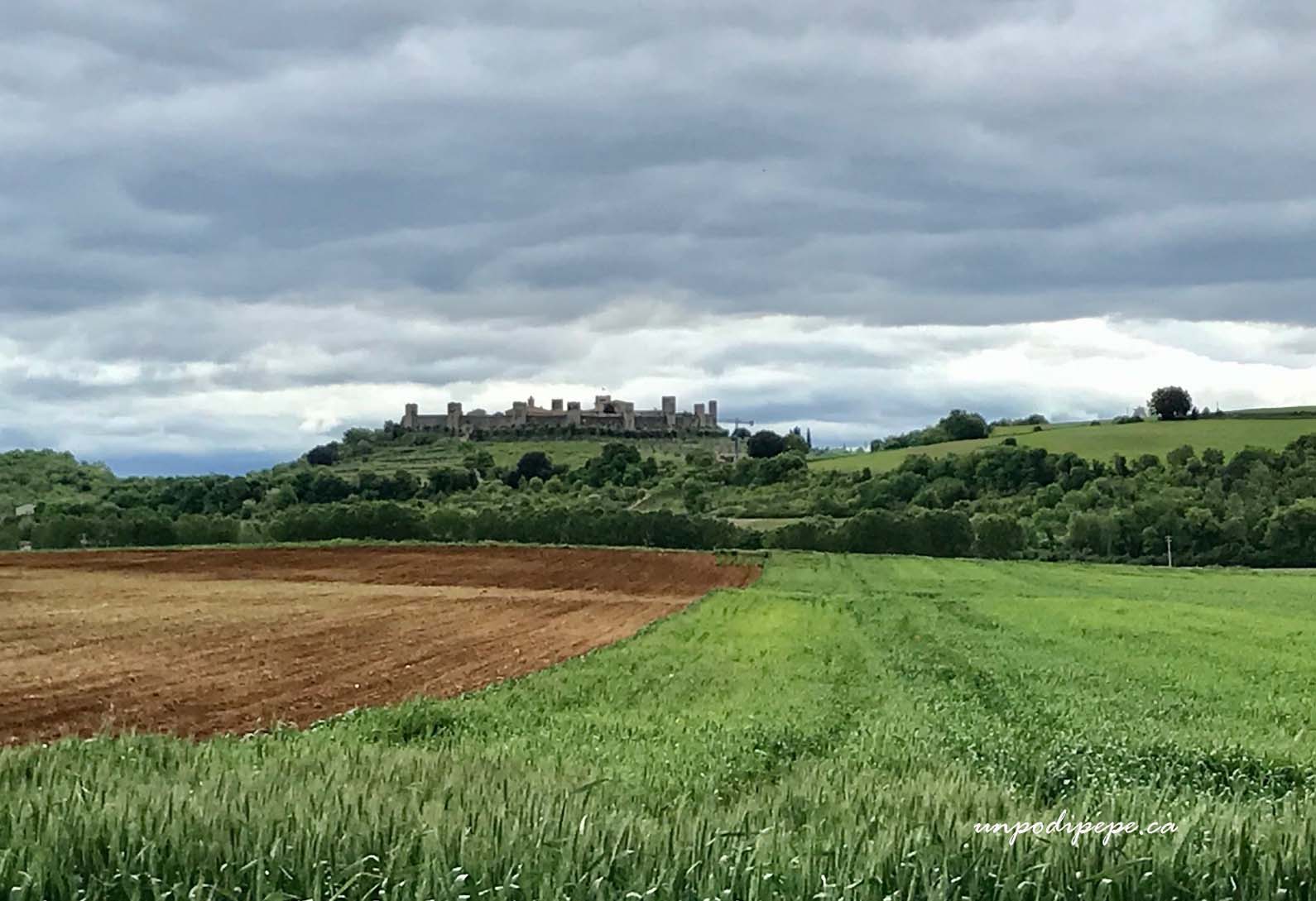
San GimignanoWe joined 5 others on a lovely daytrip from San Gimignano to Siena with Piero of Bike Florence and Tuscany.  The weather was ominous, either sprinkling or threatening to rain all day.  Bicicletta ToscanaMonteriggioni was a stop for wine tasting and we cycled parts of the Via Francigena. In Siena we had a few hours to explore the city and have Panforte.Monteriggioni Siena

The weather was not very warm for May.  I think this is the first time I have ever packed a small umbrella, but glad I did!  We had to dress in layers, or ‘a la cipolla’ as they say in italiano.  Some evenings in Firenze, it seemed like we were wearing ALL of the clothes in our valigia! Despite this, we walked everywhere.

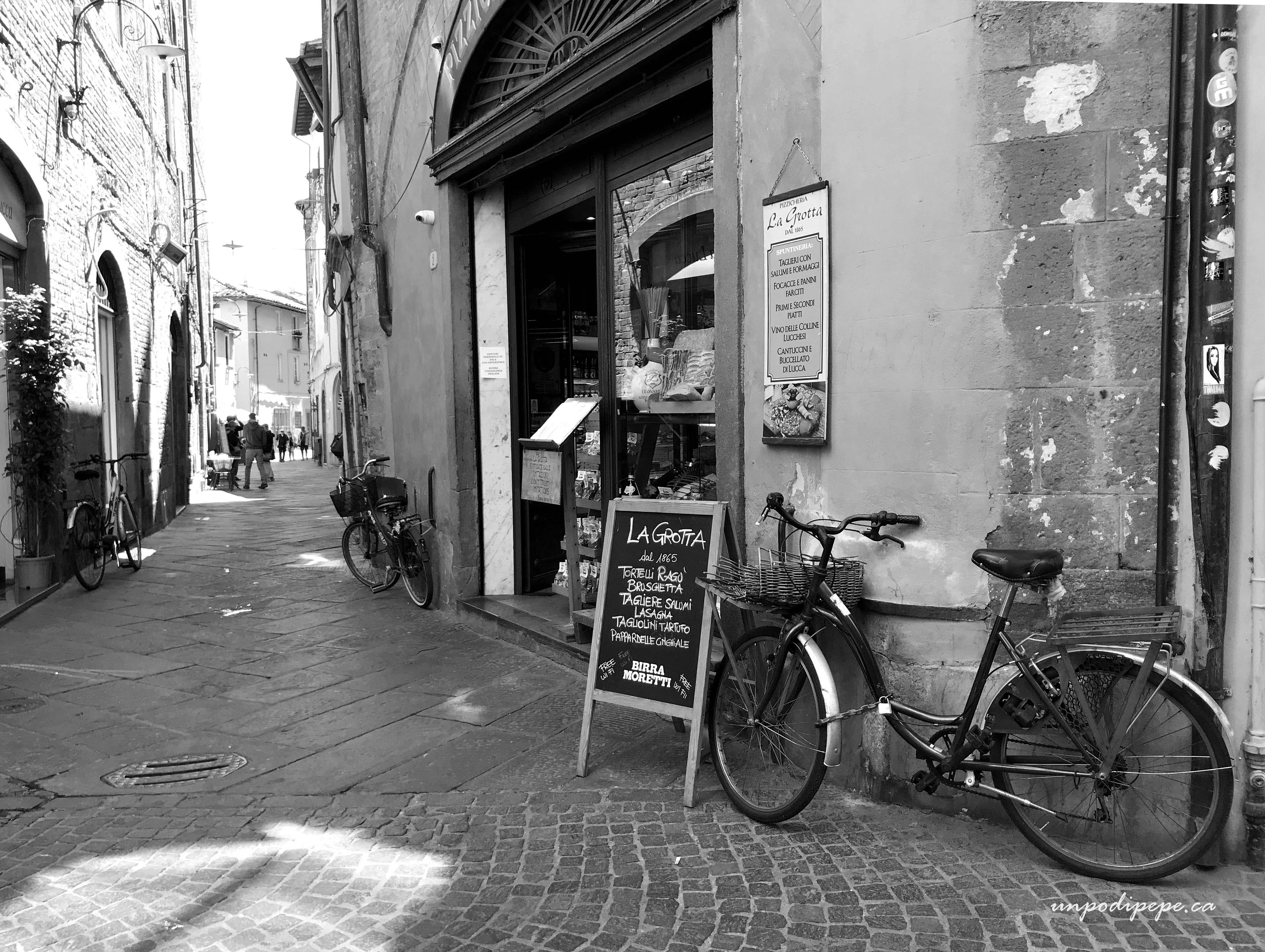
Here is our map –YES- a map-of where we walked.  Maps of the city centre are great for getting oriented.  It is much easier than trying to look at a GPS on a tiny phone screen.  We did not have time to take the bus to Fiesole or get to L’Accademia to see Michelangelo’s David or attend Mass at Santa Croce.  Isabella will definitely need to get back to Firenze.  While shopping, she did receive many compliments every day on her Italiano, even bartering down the price of a cute leather jacket!Biciclette, LuccaLucca was our next stop, 1.5 hours away by train.  Lucca is one of my favourite places in Italia!  We stayed at a small B&B near Torre Guinigi.  The owners found out we lived in Vancouver and told us about their nipote in Vancouver who is Isabella’s age.  I started to say that Vancouver was a big city…… when Isabella said ‘Uh….Zia….I actually do know him….  Che mondo piccolo!  After that, every time they saw Isabella, with no subtlety at all, they went on about what a nice boy he was!Riding the medieval walls Lucca

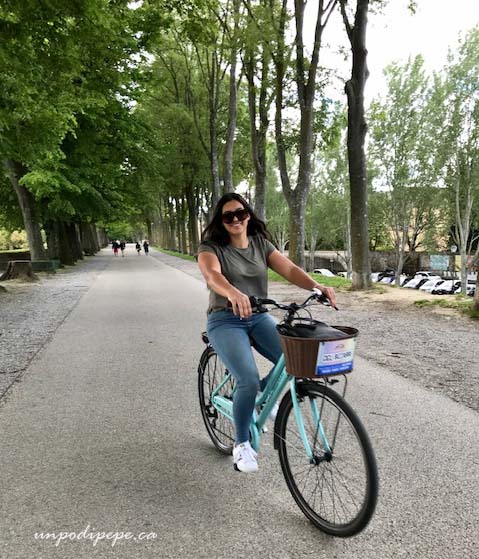
Lucca is known for its intact medieval walls.  We rented biciclette to ride the path on top of the walls.  The forecast was for good weather.  We had done 4 laps of the tree lined 4 km route, when unexpectedly a torrential downpour started.  It rained so hard we could barely see.Lucca medieval walls

We tried to get off the path, but visibility was so bad we could not tell which gate and ‘onramp’ we had taken to get up to the wall.  This was important because we had to return the bikes where we rented them.  Isabella wore her new jacket, and rather than get it ruined in the rain, she had folded it up inside out in a plastic bag in the cestino -the basket- leaving her in short sleeves.  Brrrr!

Piazza Anfiteatro LuccaBy the time we got to Piazza Anfiteatro to warm up and wait for the rain to stop, we looked like wet rats.  The restaurants are outdoor, so they had large heaters, and even blankets.  Piazza Anfiteatro Lucca A friend was coming from Viareggio for aperitivo later, but she had to cancel due to the weather.  Even in the rain, Lucca is spectacular. It is also a great place to shop!  I never spend enough time in Lucca.Monterosso a mare, Sentiero Azzurro

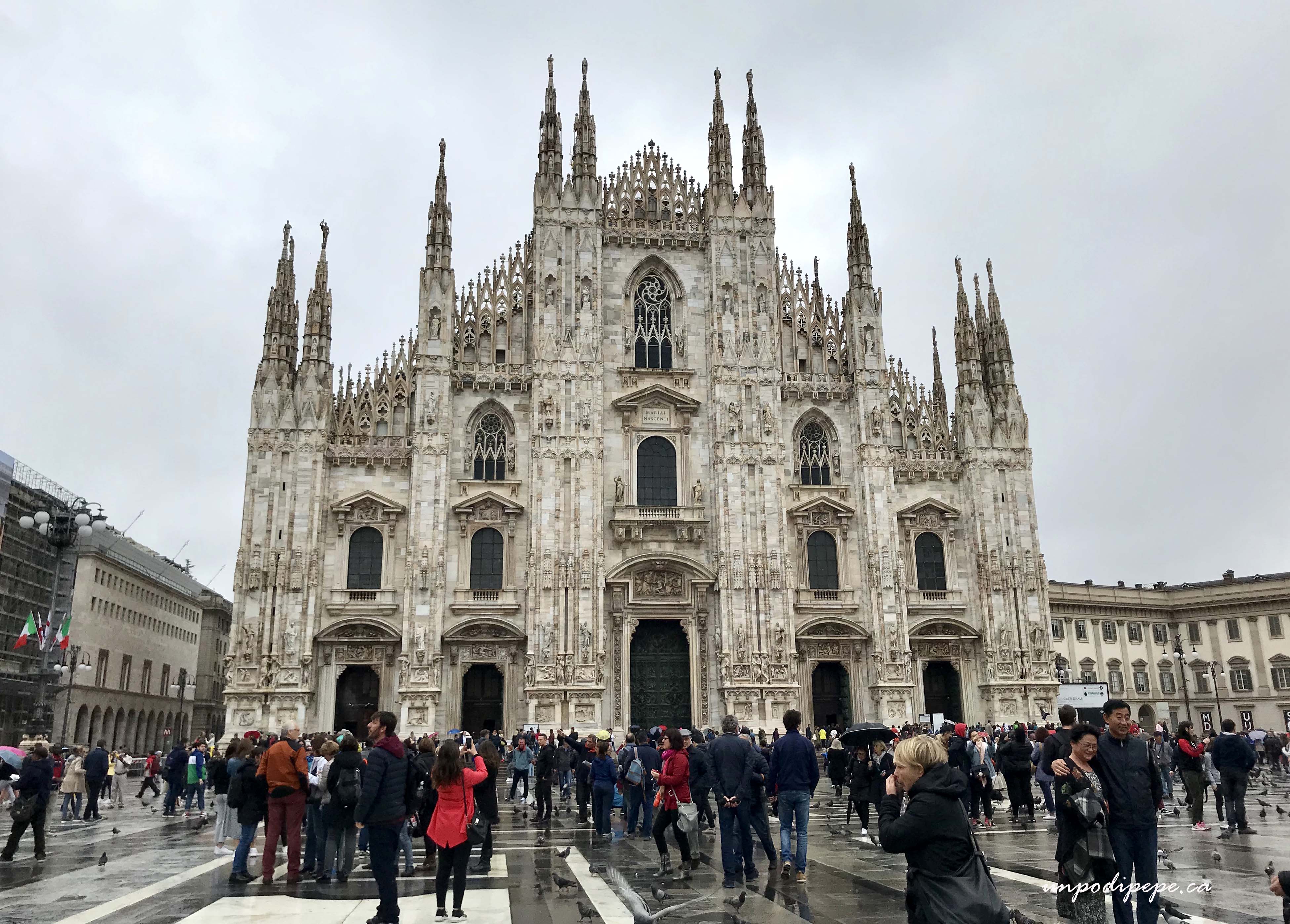
Our next stop was La Spezia via Pisa and on to Vernazza, our home base in the Cinque Terre.  I wrote about our time there in 2 posts- Le Cinque Terre and Exploring le Cinque Terre. The second post is specifically about our adventures.  The weather was beautiful, which is good, as there are no indoor activities there!  Hiking all day with a 19 year old is hard work, so luckily there was wine tasting in the evening!Milano Naviglio GrandeThe morning we left Vernazza was raining almost as much as on the walls of Lucca!  Isabella had been to Roma several times, but not to Milano, so we booked to fly home from there.  We met our cugina Federica, who we stayed with, and went to the Navigli area to have dinner with more cugini. Our visit was too short.  We spent the next day walking and window shopping around the Cento Storico and had a few ‘streetside reunions’ and phone calls with more cugini and a friend.  I have been to Milano many times but have yet to see L’Ultima Cenacola, Da Vinci’s Last Supper.  Even 2 weeks in advance, I was not able to book admission.  Another reason to return!Milano Duomo nella pioggiaWe hope you have enjoyed this piccolo viaggio virtuale with us!  Hopefully we can travel again soon.  Ciao, Cristina & IsabellaPiazza della Repubblica selfie

Share this:

  • Click to share on Facebook (Opens in new window) Facebook
  • Click to share on Pinterest (Opens in new window) Pinterest
  • Click to share on X (Opens in new window) X
  • Click to email a link to a friend (Opens in new window) Email
  • Click to share on WhatsApp (Opens in new window) WhatsApp
Like Loading...

Troia 1019-2019

05 Saturday Oct 2019

Posted by Un po' di pepe in Architecture, Italia, Photography, Puglia

≈ 8 Comments

Tags

Diomedes, Italy travel tips, Romanico Pugliese, Southern Italy, UNESCO World Heritage Sites, Wines of Puglia

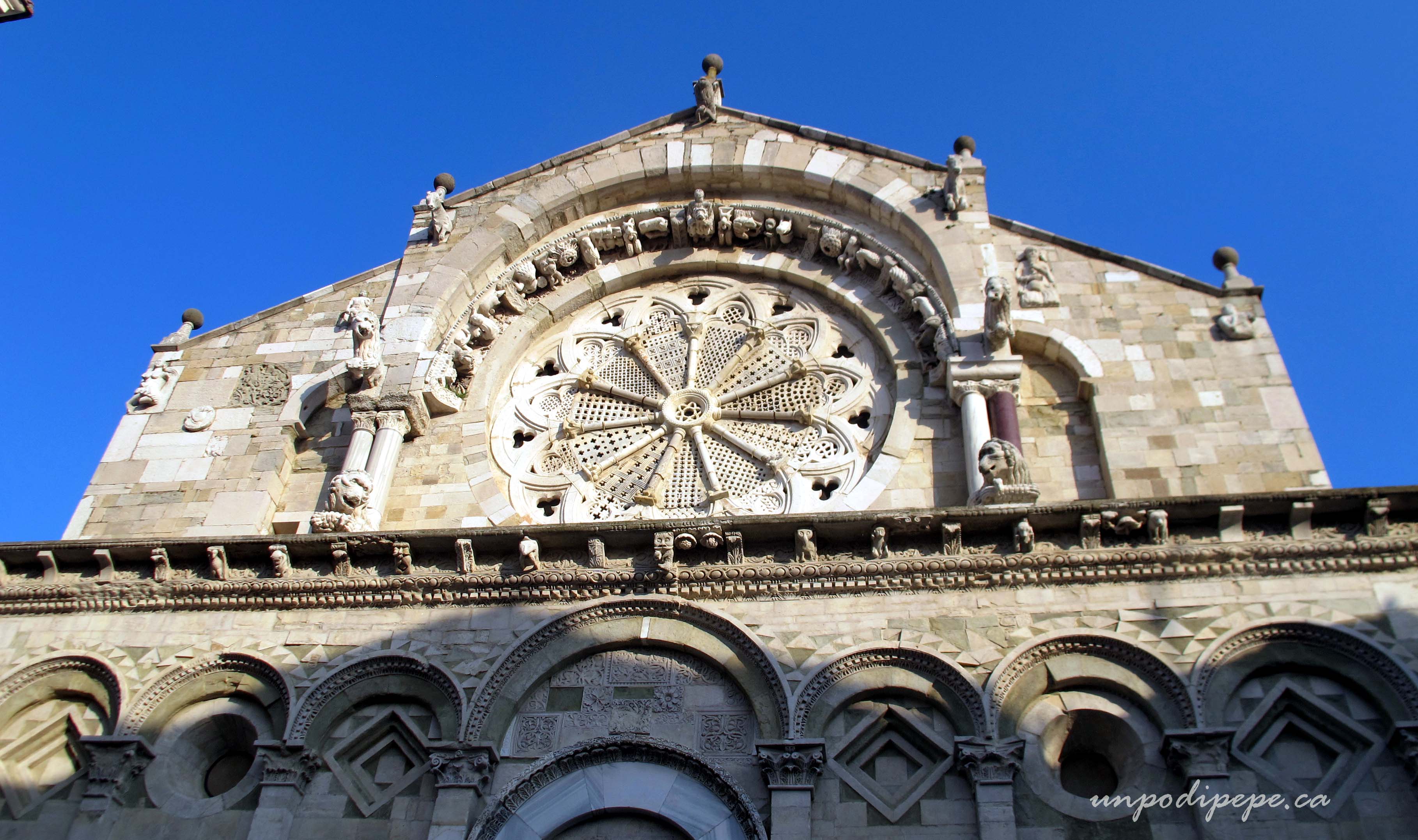
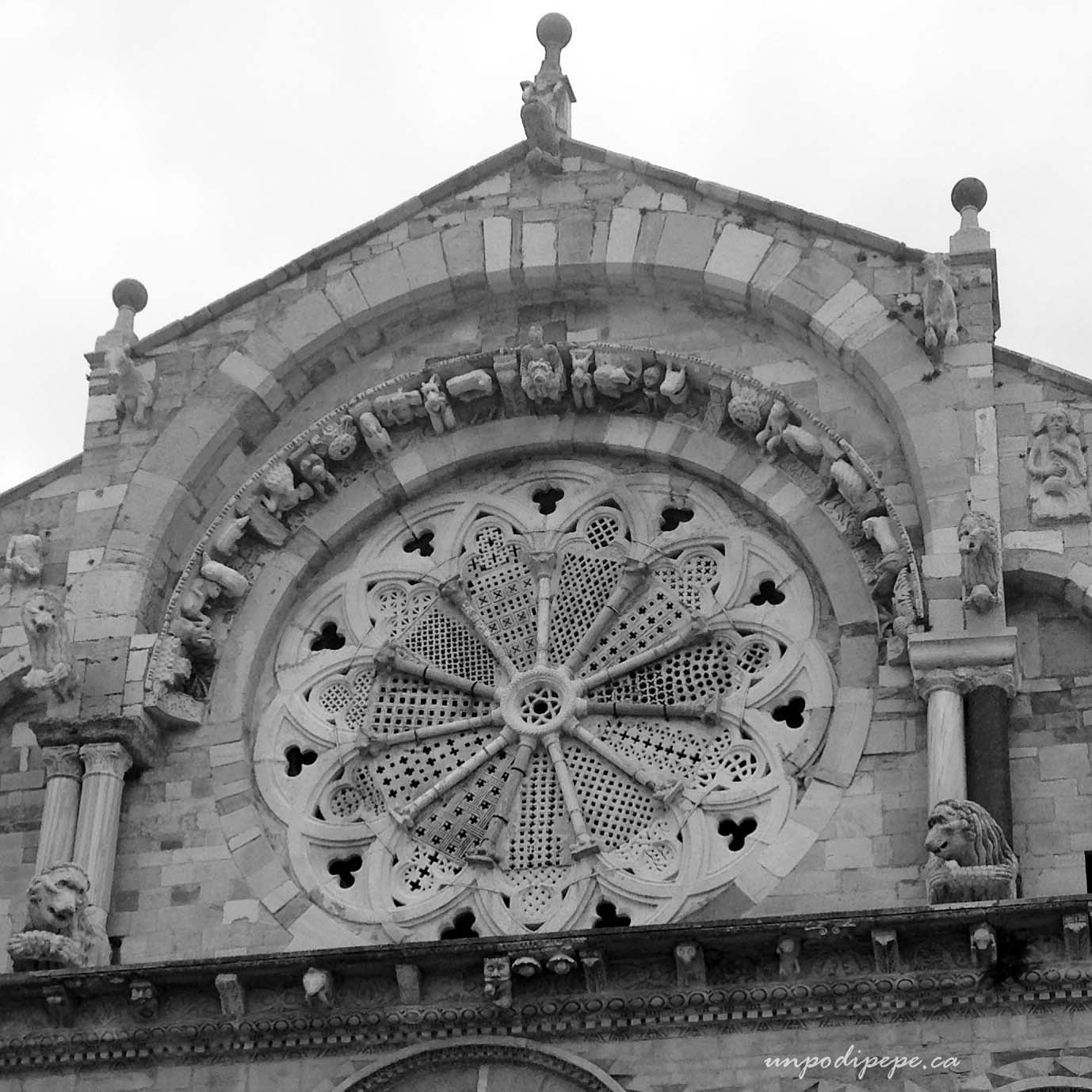
Rosone, Cattedrale di TroiaAccording to legend, Troia (TROH∙yah) was founded by the Trojan War hero Diomede (Diomedes) in the 10th century BC.  After the fall of Troy, he found out his wife was unfaithful.  Instead of going home to Argos, Diomede travelled around the Adriatic, settling in the Daunia area of Puglia.  Troia, also spelled Troja, was at the junction of the Via Traiana –the road from Benevento to Brindisi, and the road to Siponto (Sipontium).  The Romans called it Aecae.  In 1010, a medieval settlement was built on the ruins of the ancient city, and in 1017 a Byzantine fortress to protect against Saracen invaders.  Modern Troia was founded in 1019, making this year its millennia!!!  Auguri Troia!Troia Millenio 1019-2019

Troia was ruled by powerful bishops, and they built a magnificent cattedrale (cathedral), an exquisite example of Romanico Pugliese, a unique architectural mix of Pisan Romanesque, Arab and Byzantine inspired features.  It was an important connection between the Norman kingdoms of Southern Italia and the Pope. Completed in 1119, this architectural capolavoro or masterpiece is celebrating its 900th anniversary!Troia cattedrale Romanica Pugliese

The stunning rosone-rose window is made up of 11 thin columns, each with a delicate stone ‘screen’ finely carved with Islamic inspired geometric designs.  The 11 ‘petals’ or segments each have a different pattern.  They look like they are woven out of stone.  11 is an unusual number of sections for a rose window, or for anything, actually. There could be some interesting numerology related to this building.Cattedrale di Troia, Puglia 2011

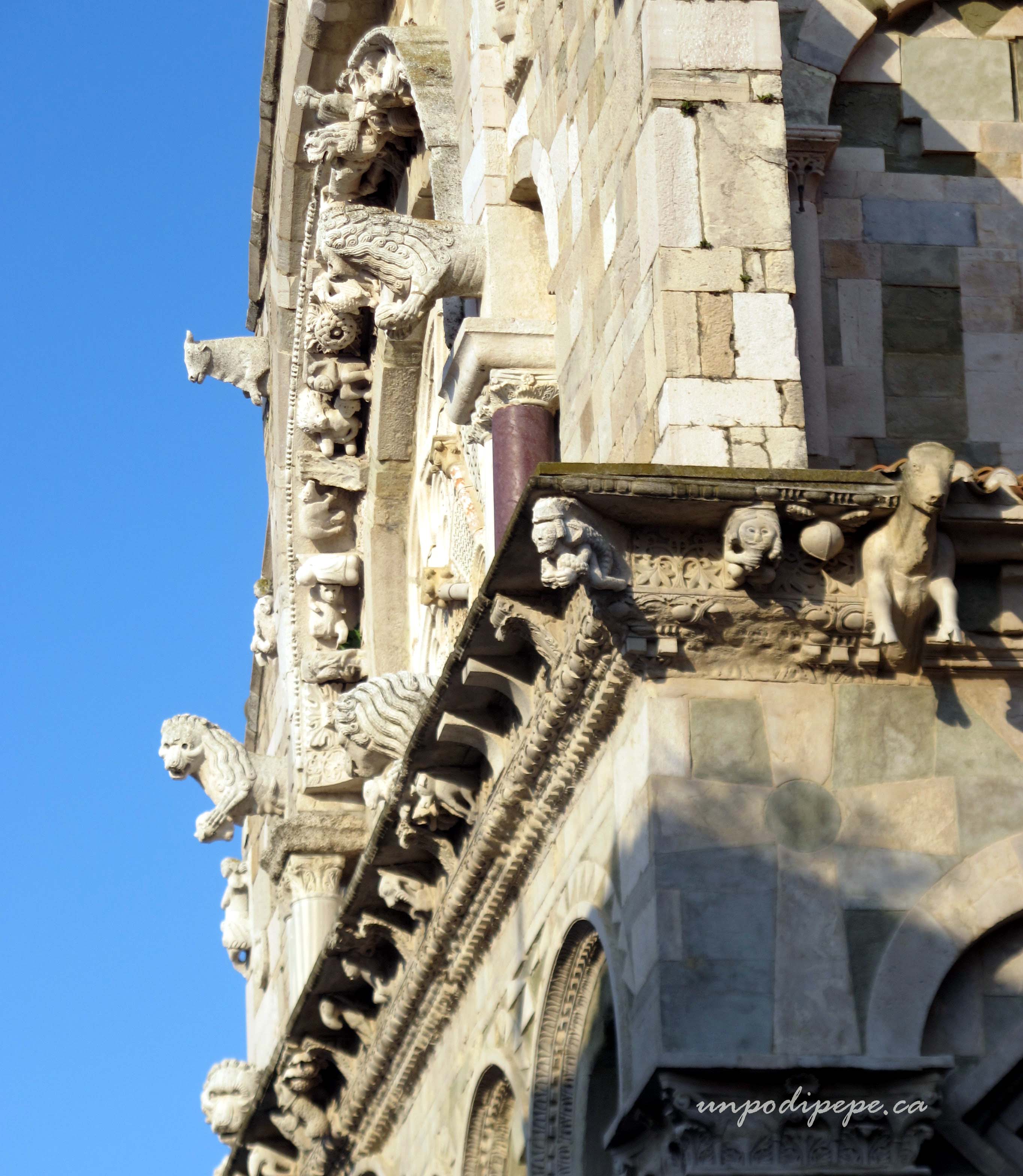
The upper façade is elaborate, with the rosone and gargoyles. The arches around the window are decorated with an odd but fascinating assortment of primitive looking animal and human sculptures and are held up on either side by Pugliese lions. Side view, Troia Cathedral, PugliaTroia Cathedral bronze doors

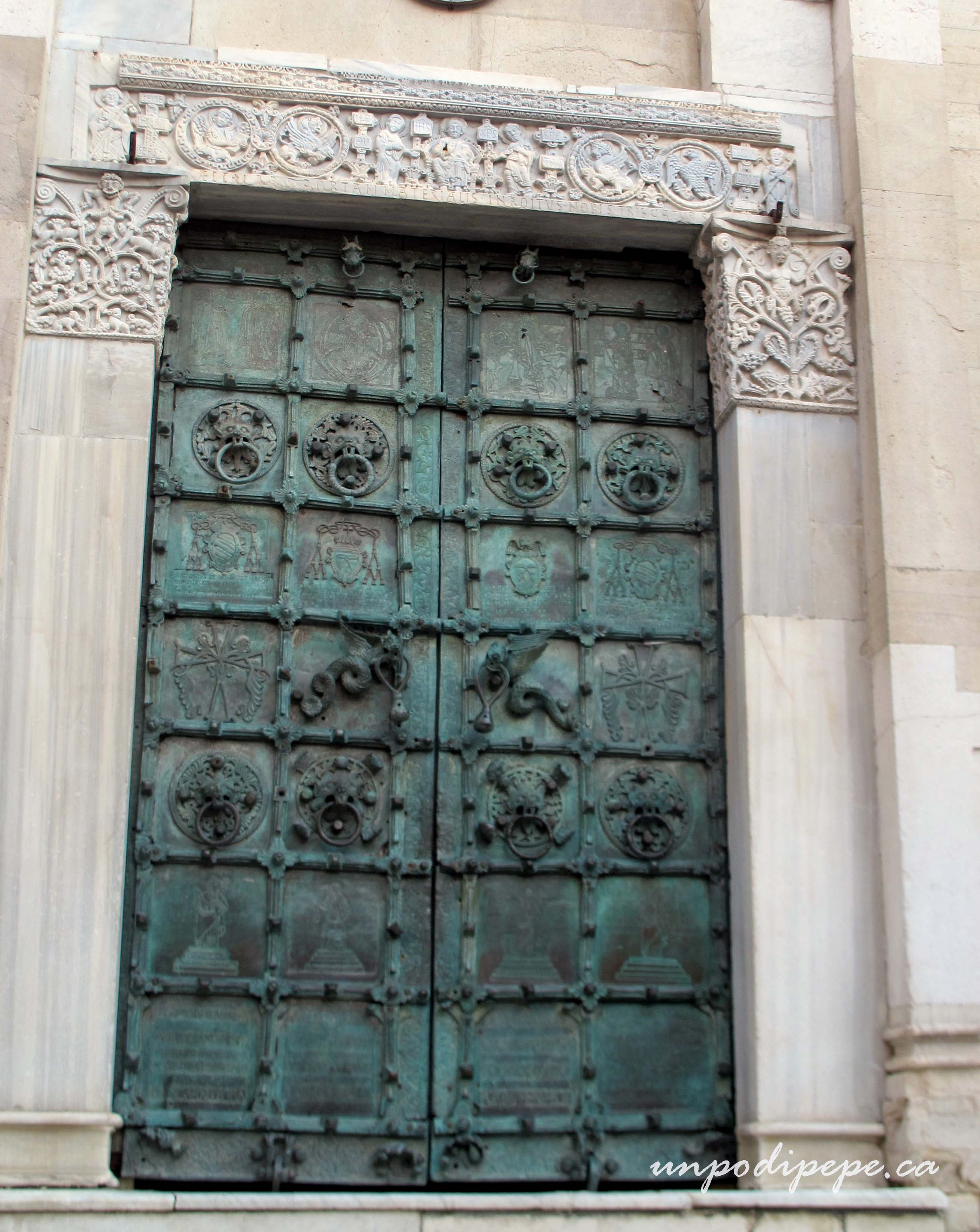
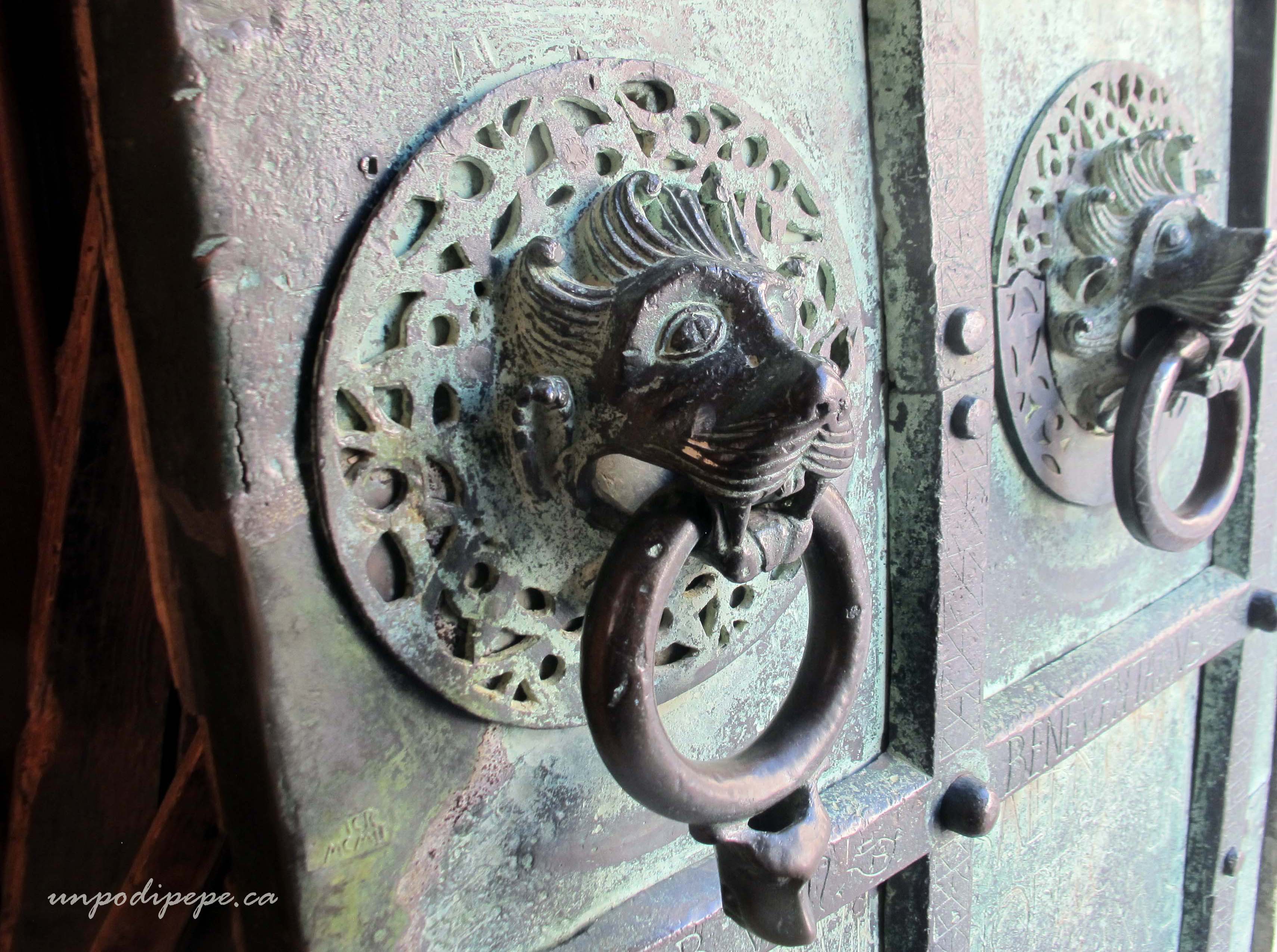
The lower front is a 7 arch façade-the center one being the main entrance through bronze doors with the most magnificent dragon handles. They look straight out of Trono di Spada (Game of Thrones)! The doors were built in 1127 by Oderisio da Benevento. Troia cathedral dragon door handles and lion knockers The doors are decorated with reliefs and inscriptions.  There are 10 knockers; 8 lions and 2 wyverns, which are small 2 legged dragons.  On each side of the door are 3 blind arches topped with geometric carvings and a round window on the middle arch.  The arches on the side of the building are topped with geometric sun and moon patterns in green stone. The main doors are closed and entry is only through the side door, another bronze by Oderisio da Benevento.  The church is usually open during the day, and of course during Masses.Troia Cathedral bronze door lion door knockers

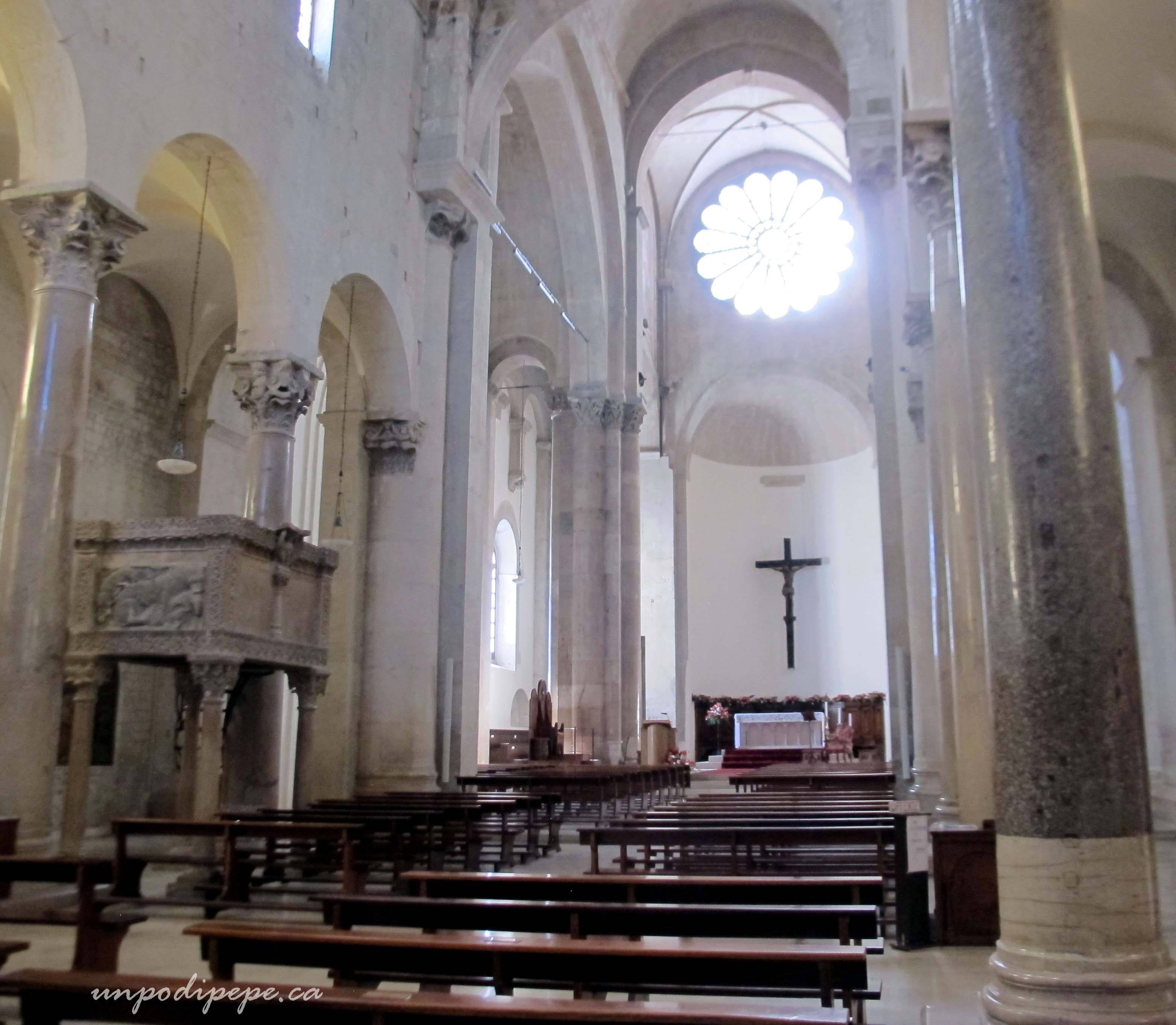
In contrast to the ornate exterior, the interior of the cattedrale is simple.  The design is a Latin cross plan with 3 aisles separated by 13 Corinthian columns, 2 rows of 6 and a 3rd row in the SW corner with only one column, as seen in the photo below.  These represent the 12 apostles and Christ. There is no ceiling, the beamed wood roof is exposed. The Cathedrals in the Romanico Pugliese style, including Troia’s, are on the tentative list for UNESCO World Heritage Sites.  This is the step before becoming a heritage site!Interior of the Cathedral of Troia, with a view of the 13th column

The 1169 pulpit dates to 1169 has an interesting relief carved on one side. It is a dog biting the back of a lion, who is biting the neck of a lamb and is visible in the photo below.  The dog symbolizes God, who is faithful and vigilant, preventing poor judgement and heresy (the lion) from devouring the church (the lamb). Troia Cathedral, relief sculpture on pulpit

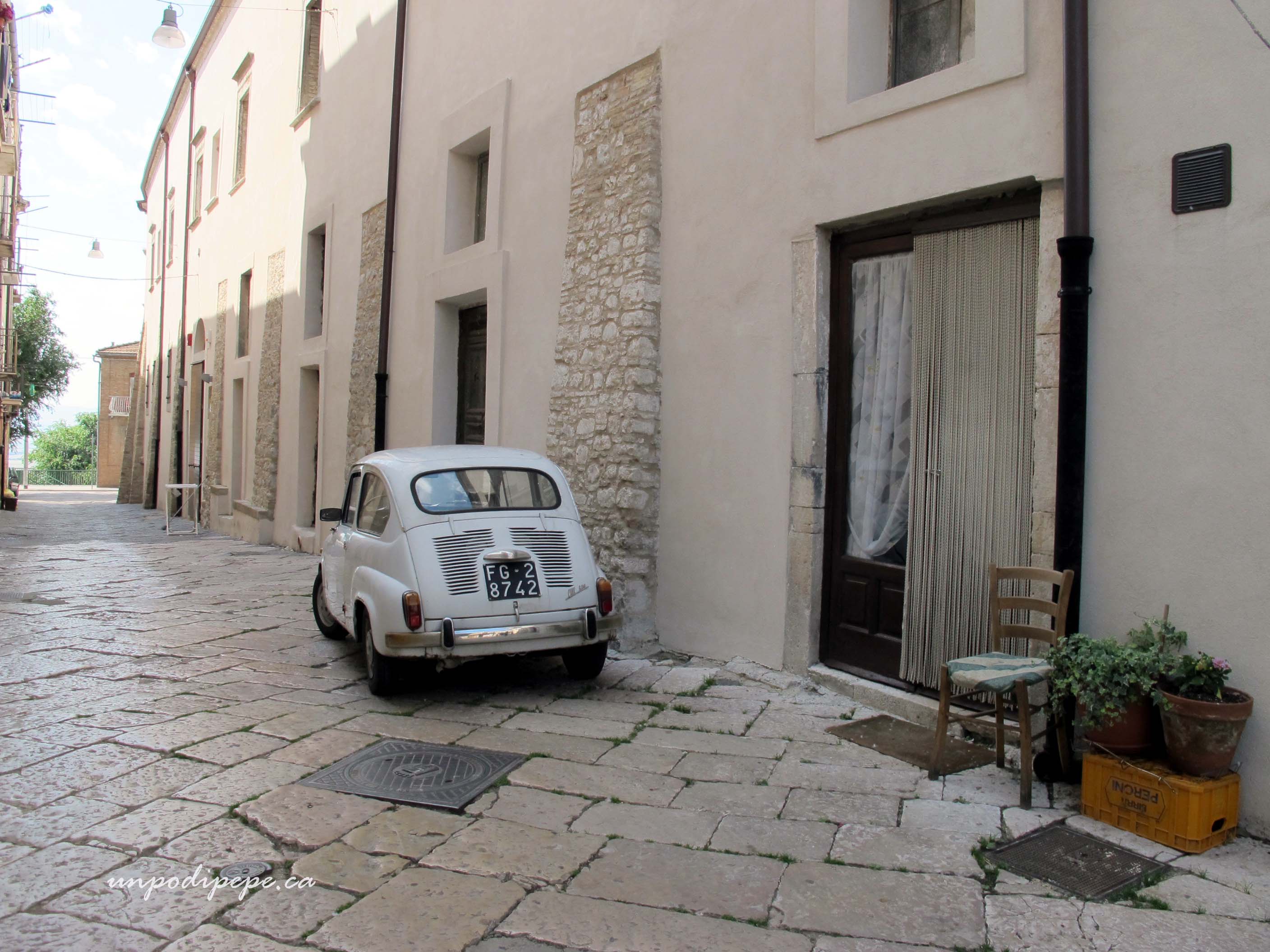
Il Museo del Tesoro della Cattedrale di Troia (the cathedral treasury) is worth a visit for rare 11th century parchments and other medieval sacred artifacts. There are only 32 illuminated Exultet codes (Easter scrolls) in the world, and 3 of them are here.  Also worth seeing is Il Capitello delle Quatre Razze (Column of the 4 Races).  This is a 13th Century column with 4 heads, one on each corner, depicting the 4 races of man known before 1492- European, African, Asian and Arab.  Admission is free, but it is only open Tuesday and Thursday 17:30-20 and Saturday 10-13.  Mondays are only open for school groups with appointments.  Call ahead, as they may open for groups 0881 97 00 20.Cattedrale di Troia, PugliaTroia is named for the ancient city, but unfortunately ‘troia’ is also Italian slang for ‘slut’.  My best guess is that the origin of this term is from Elena di Troia (Helen of Troy) who was an adultress.  Don’t let the name put you off though.  Troia is a charming town with a beautiful centro storico.  It is also way off the radar for most visitors to Puglia, so you will not find any crowds.Side street in Troia with Fiat Seicento (600) As an added bonus, you can find Nero di Troia vino everywhere!  Read more about this lovely vino in Vini di Puglia. My Zia lives in Troia, so I have been there a lot.  Here are some interesting Troia facts… #1-I had my confirmation at the Cattedrale di Troia when I was 15!  Interesting fact #2-Troia is the only municipality in Italia providing free public transportation! Via Regina Margherita doorway Troia, Puglia

Get off the bus from Foggia or park the car near La Villa Comunale and Bar Cluny.  Walk down Via Regina Margherita to explore the centro storico.  The Cattedrale is half way down this long, narrow street, which is lined with shops and interesting doorways.  Stop at the award-winning Pasticceria e Gelateria Artigianale Aquilino for a decadent treat. Visit the oldest church in Troia, the Byzantine San Basilio with ox heads around the altar.  It was originally a Greek Orthodox temple. The haunted Palazzo D’Avolos is now home to the Civic offices and Civic Museum. Wander into the narrow side streets and you may come across a Fiat 600 or some work by local artist Leon Marino.House in Troia, Puglia with Leon Marino angel mural

Troia has a population of  about 7000.  It is situated on a hill, 439 m above the Tavoliere plain, 22 km SW of Foggia, 15 km south of Lucera and 14 km east of Orsara di Puglia.  The surrounding landscape is a beautiful blanket of wheat fields, vineyards and olive groves- like the view from the abandoned Celle Sant’Antonio, just outside of Troia.  Celle Sant'Antonio, Troia Puglia

Ferrovie del Gargano buses arrive regularly from Foggia and Lucera. The ticket is €1.80.  If taking the train to Foggia, the bus station is conveniently next door. Troia has several B&B’s including Alba d’Oro, Stella and Svegliarsi nei Borghi.  There is even a car rental agency, Automottola, on the edge of town, towards Foggia.  For more information check out Troia’s website.Troia Cathedral and Via Regina MargheritaRead more about Troia and Diomede in Puglia-Mia Regione Preferita.  Have any of you readers who are not related to me been to Troia?

Ciao e buon viaggio, Cristina

Share this:

  • Click to share on Facebook (Opens in new window) Facebook
  • Click to share on Pinterest (Opens in new window) Pinterest
  • Click to share on X (Opens in new window) X
  • Click to email a link to a friend (Opens in new window) Email
  • Click to share on WhatsApp (Opens in new window) WhatsApp
Like Loading...

Visiting Galleria Borghese

26 Sunday Aug 2018

Posted by Un po' di pepe in Art, Art history, Roma, Travel tips

≈ 29 Comments

Tags

Bernini, Caravaggio, Galleria Borghese, Italy travel tips

La Galleria Borghese was an opulent 17thCentury suburban home of Cardinal Scipione Borghese, nephew of Pope Paul V.  It was also home to his amazing personal art collection.  In 1808, Prince Camillo Borghese was forced to sell the Roman sculpture and antiquities collection to his brother in law Napoleon, for below what it was worth. 340 or so pieces, including the Borghese Gladiator from Ephesus are now in the Borghese collection at the Musée du Louvre.  The Borghese estate in Roma was sold to the Italian government in 1902 and turned into a museum and urban park.

Even though I go to Roma every year, I had yet to visit la Galleria Borghese. It requires booking tickets in advance, which is something I really do not like doing.  Prebooking interferes with my spontaneity!  I tried to book online 2 and 3 years ago when I had a longer time in Roma, but kept getting forwarded to secondary resell sites charging double the price, which really annoyed me.  This year, I decided to try booking a few days before my departure for Roma.

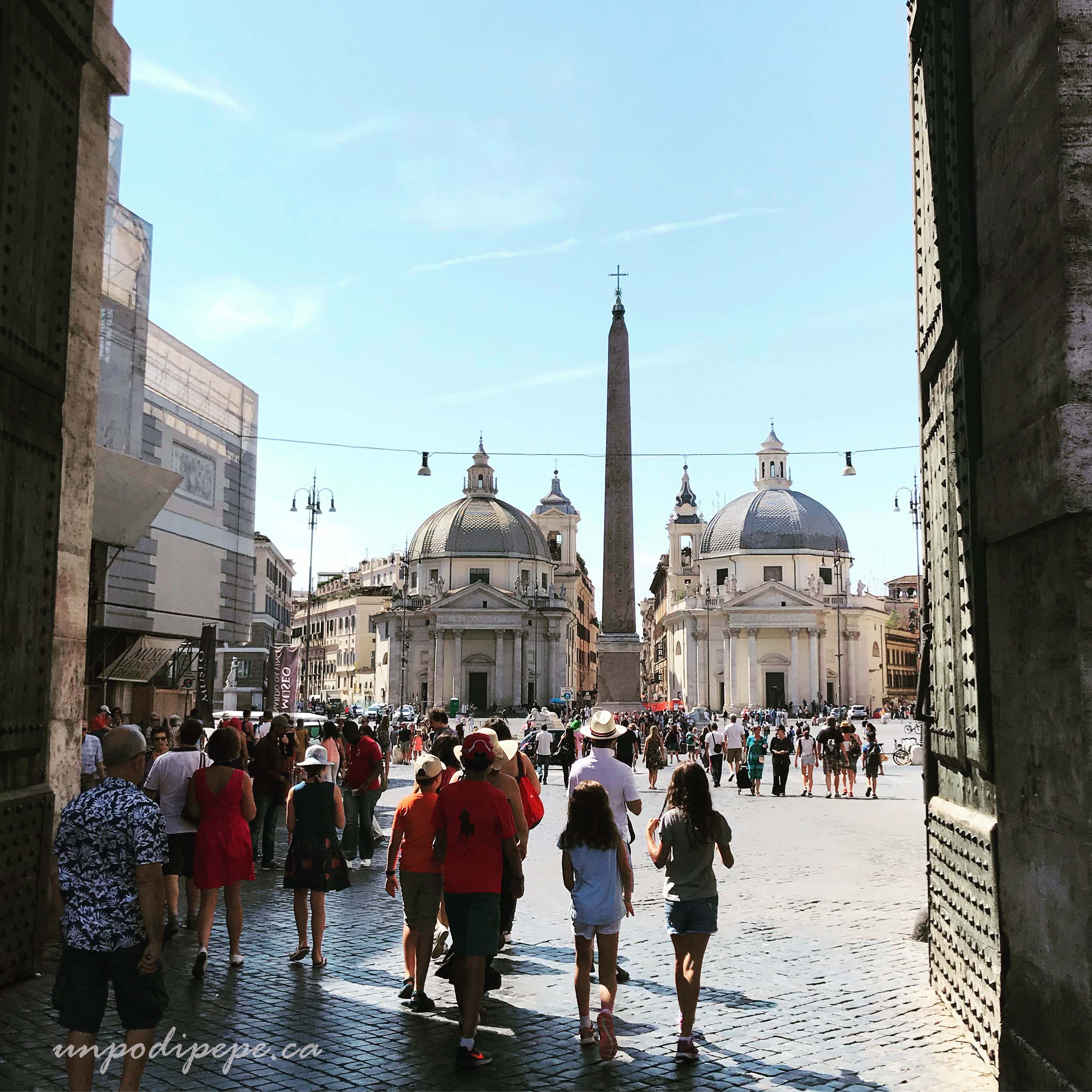
The Galleria is not that easily accessible. It is at the far end of Villa Borghese, a large (200 acre) urban green space. Buses #92, 217, 360 and 919 from Stazione Termini stop at the Galleria. The other most direct route is to take the Metro A line (red) to Flaminio, just outside of Piazza del Popolo. Enter Villa Borghese by the unmistakeable big gates and walk about ½ hour to Galleria Borghese.  Keep right until the bike rentals then left.  It is an uphill walk.  An alternative ….to avoid being late and losing the reservation, is to take the Metro to Flaminio and then take bus #61, 160, 490, 491, or 495 to the Galleria, or even a taxi if you are running late.  It will not cost much, then walk back to Piazzale Flaminio, as it is downhill or take a bus down.  Do not follow the ‘Villa Borghese’ signs at the Spagna Metro station.  These lead to a long underground walk, and then up an escalator to a random forested area in Villa Borghese-the park, nowhere near the museum!

Piazza del Popolo

Tickets must to be reserved. The price of admission is €13 plus €2 for the reservation fee, and if booking online, another €2 for the online booking site-Ticket One.  If using the RomaPass for admission, a reservation is still required. Domenica al Museo, the first Sunday of every month, admission is free, but a reservation is required and the €2 fee.  This is the website for Galleria Borghese.  Reservations can be made by emailing info@tosc.it or calling 39 06 32810 (dial 011 before this number if calling from North America).  I booked online, but had to register for an account with Ticket One, and enter my codice fiscale, which most visitors will not have. Ticket One charges an extra €2 booking fee, so my total cost was €17. I think booking by email is easier! Tours can also be booked with the reservation, but I prefer to wander on my own.  There are also independent tour groups that you can book, which include admission.

Bookings are Tuesday to Sunday for 2 hours, from 9-11am, 11-1pm, 3-5pm and 5-7pm.  The ticket office is in the lower floor-the central lower door in my photo- and you need to arrive 30 minutes before the reservation time or risk losing the spot.  This is not a convenient location to just show up and see if there are any last minute cancellations.  Security is strict and all bags, backpacks, helmets and selfie sticks must be checked before entering.  This includes purses.  Cameras are ok, and photos are allowed.  To rent the 90 minute audioguide (€5), make sure to pay before checking bags or carry pocket cash.

There are 360 reservations per 2 hour time slot. To spread everyone out over the 22 rooms, half of the ticketholders are directed to the Pinacoteca (picture gallery) upstairs and half to the main floor sculpture gallery.  It does not feel too crowded unless you happen to be in a room with more than one tour group.  I was worried about being rushed with a 2 hour limit, but I found it was enough time to see all of the works  It is not enough time to sit and sketch though. Do not forget to look up and admire the ornate painted ceilings and tromp l’oeil painting in every room. 

Cardinal Borghese considered himself an amateur architect and had an eye for art.  He was an early patron of Bernini and collected Caravaggio works.  He also had a knack for unscrupulously swooping in and getting a bargain.  For example, he acquired the Madonna dei Palafrenieri from Caravaggio in 1606 for a pittance when the patrons, the Papal grooms, immediately rejected it.

Madonna dei Palafrenieri. Photo Wikimedia

The painting is also known as Madonna and Child with Serpent or Madonna and Child with St Anne. Why did the Palafrenieri reject this incredible painting?  They did not like that their patron, St Anne, appeared as a passive old woman, nor did they like the Madonna’s ample cleavage, or the fact that Jesus was a naked older boy. There are 5 Caravaggio paintings in Galleria Borghese, all in one room! Some of you may know that I am a huge Caravaggio fan!

Gianlorenzo Bernini is also well represented in the Galleria Borghese with 4 early sculptures.  His Baroque masterpiece David capture the intense moment just before hurling the stone from his slingshot, while his body is twisting and he has a look of fierce determination on his face. 

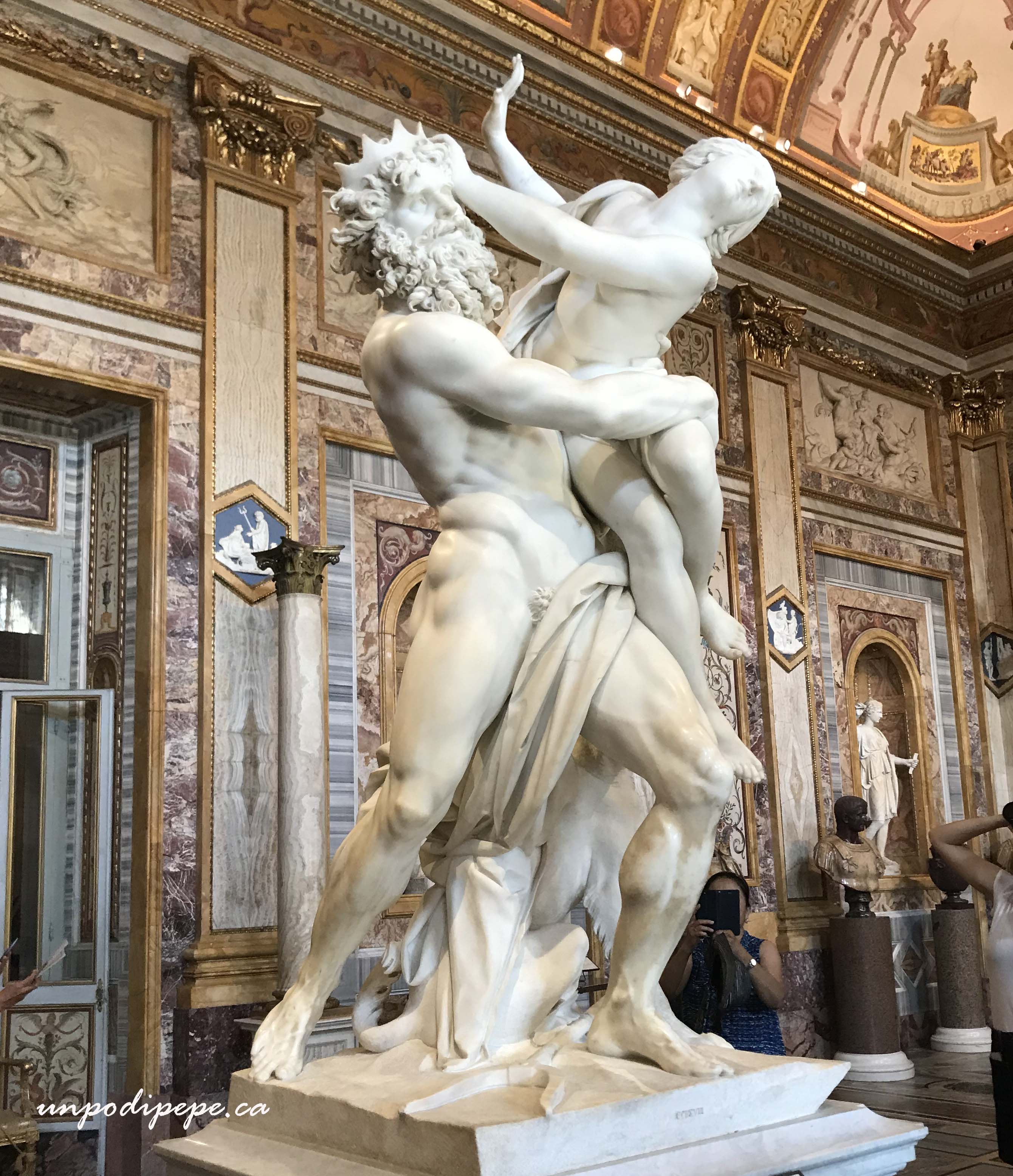
Bernini’s realism is incredible, he has the ability to turn marble into flesh, as with Hades grip on Proserpina/Persephone’s back and thigh.

Bernini’s sculptures are so lifelike, he is known for attention to detail, such as sculpting the inside of his figures mouths and their tongues! This is really apparent on the figure of Daphne in the sculpture Apollo & Daphne seen below.  I love the way he portrays her fingers growing leaves and branches, roots growing from her toes, and her hair becoming leaves as she turns into a laurel tree.  Stay tuned for a post about this work.

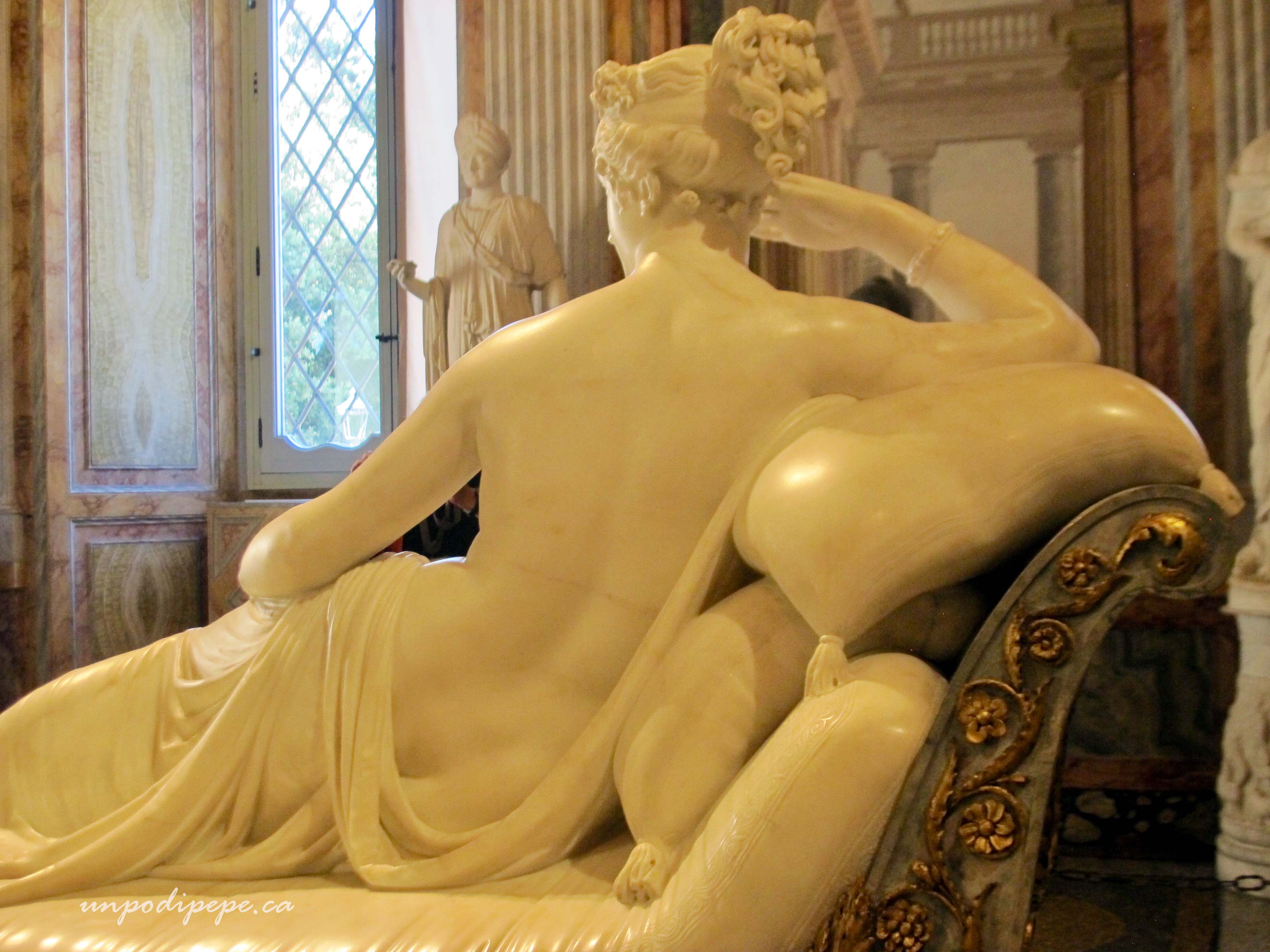
There are countless other fabulous pieces in the Borghese collection, such as Paolina Bonaparte as Venus by Antonio Canova.  The upper floor has paintings by Raphael, Titian, Rubens and Antonello da Messina, to name just a few. I left the Galleria Borghese in a Caravaggio/Bernini art coma!  What did I do before going to have a rest?  Well, I stopped in at Santa Maria del Popolo after my walk down from Villa Borghese to see the 2 Caravaggio paintings there! Then I walked to Piazza Navona to meet a friend. We went to Sant’Agostino to see the Madonna dei Pellegrini then stopped to have a caffè freddo and had an hour long discussion about Caravaggio!  By that time, I was really in a stupor-a happy one, and I did go and have a much needed rest!

Have you been to the Galleria Borghese? What did you think?  Let me know in the comments.  Ciao, Cristina

Share this:

  • Click to share on Facebook (Opens in new window) Facebook
  • Click to share on Pinterest (Opens in new window) Pinterest
  • Click to share on X (Opens in new window) X
  • Click to email a link to a friend (Opens in new window) Email
  • Click to share on WhatsApp (Opens in new window) WhatsApp
Like Loading...

Autunno in Italia

30 Thursday Nov 2017

Posted by Un po' di pepe in Firenze, Italia, Orsara di Puglia, Photography, Roma, Travel tips

≈ 31 Comments

Tags

Autumn in Italy, Casa Berti, Catalyst Art Retreat, Falò e Teste del Purgatorio, Firenze, Gugliano, Italy travel tips, Lucca, Orsara di Puglia, Piazzale Michelangelo, Roma, Tutti i Santi Festa

Returning from my short trip to Italia, as usual I was back to work the next morning.  This did not help with the cambiamento di fuso orario. I have so many posts to write, but now they will have to wait until after Christmas. Until then, here is a quick summary with some highlights from my viaggietto.  It was a bit of a blur….at 17 days, I think this was my shortest ever trip to Italia!

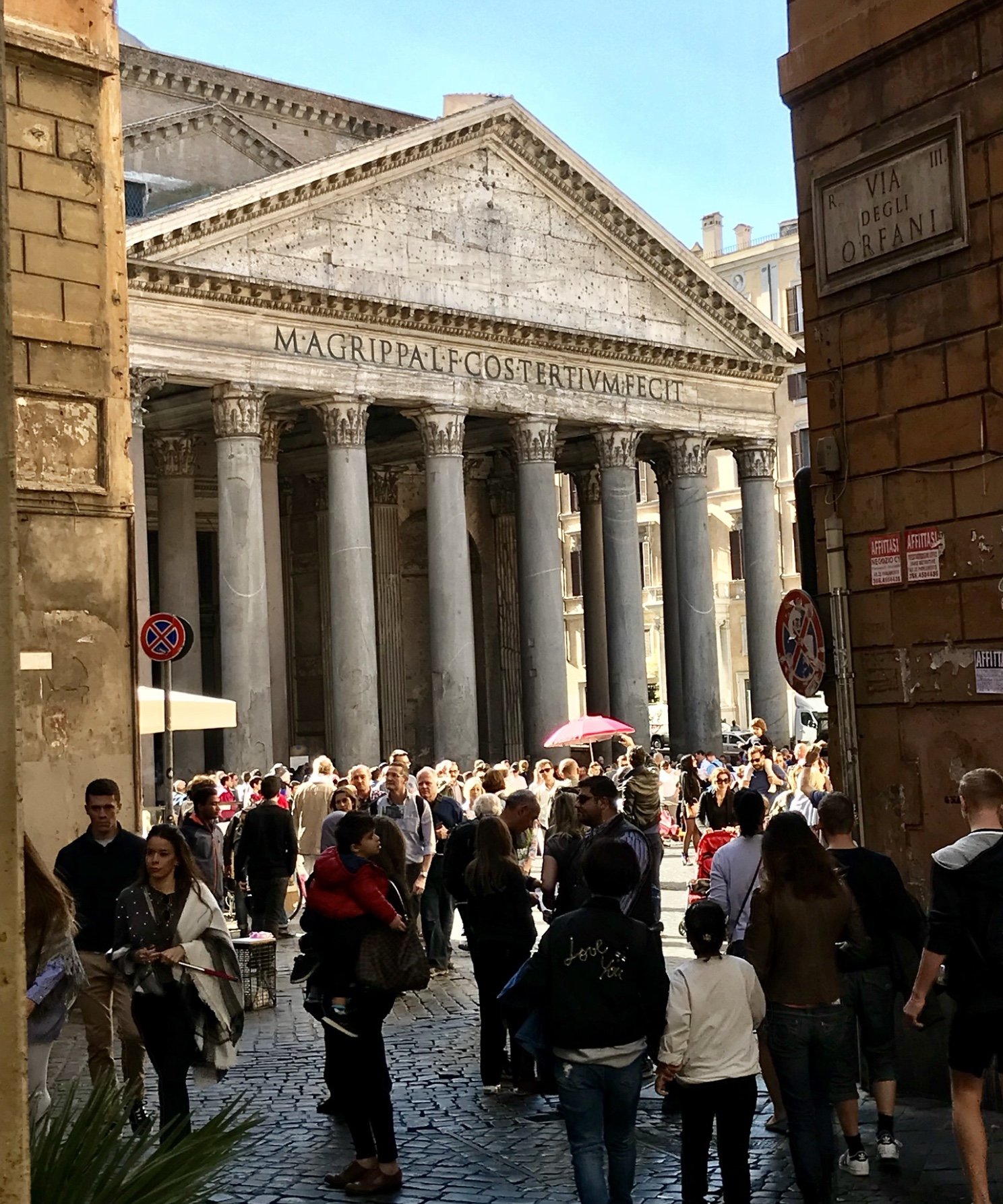
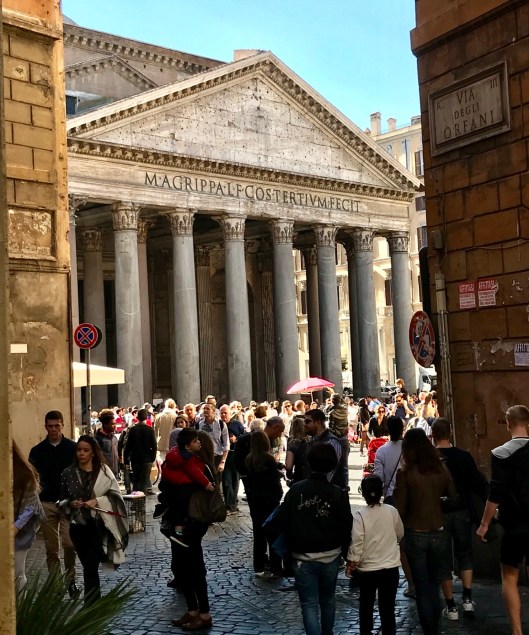
I had not been to Italia in autunno before. The fall weather was mostly clear and sunny, with a few days of serious rain. I envisioned myself having every piazza practically to myself….was I ever mistaken!  My first few days were in Roma the last weekend of October.  The Pantheon was packed with more people than I have ever seen in July! I could barely make it through the crowd to throw my coin into the Fontana di Trevi!  I found out that some European countries have their school midterm break around this time.  In Italia November 1st, All Saints’ Day, is a holiday and many Italians take ‘il ponte al primo novembre’, an extra-long weekend.  Even so, the guard at the Pantheon said ‘Qui non c’è bassa stagione’-there is no low season here.  My 2 partial weekends in Firenze were similar.  Smaller places, especially the seaside are quiet at this time of year, but the cities always have a lot of visitors, especially on the weekend.  Despite my utter shock at the hoardes of tour groups I was not expecting, Roma was glorious as usual. One day I want to spend a whole month in Roma.

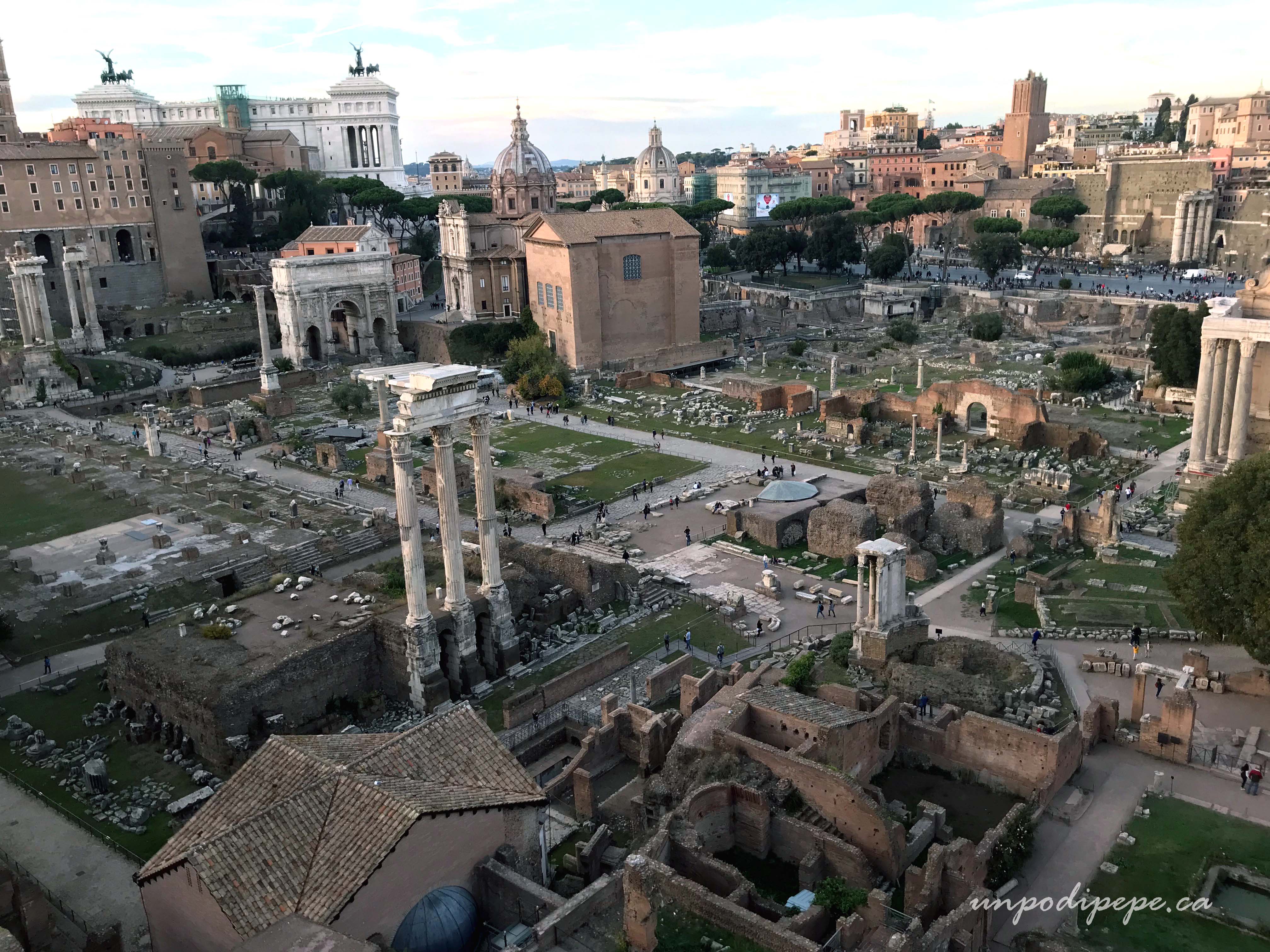
Franco joined me for the first 9 days-this was only confirmed a week before leaving! He had not been to Roma in a very long time, so we decided to visit the Colosseo and Foro Romano.  I took way too many photos of this.  I was obsessed with the way the sunlight struck this green door on the Tempio di Romolo in the Foro Romano. The rest of the day involved a lot of walking. It was centered around a visit to Poggi to buy Fabriano Rosaspina paper for my art retreat, and meeting a friend in Monti.  We ended up doing everything on my Un Giorno a Roma itinerary and a few extras.

Monti

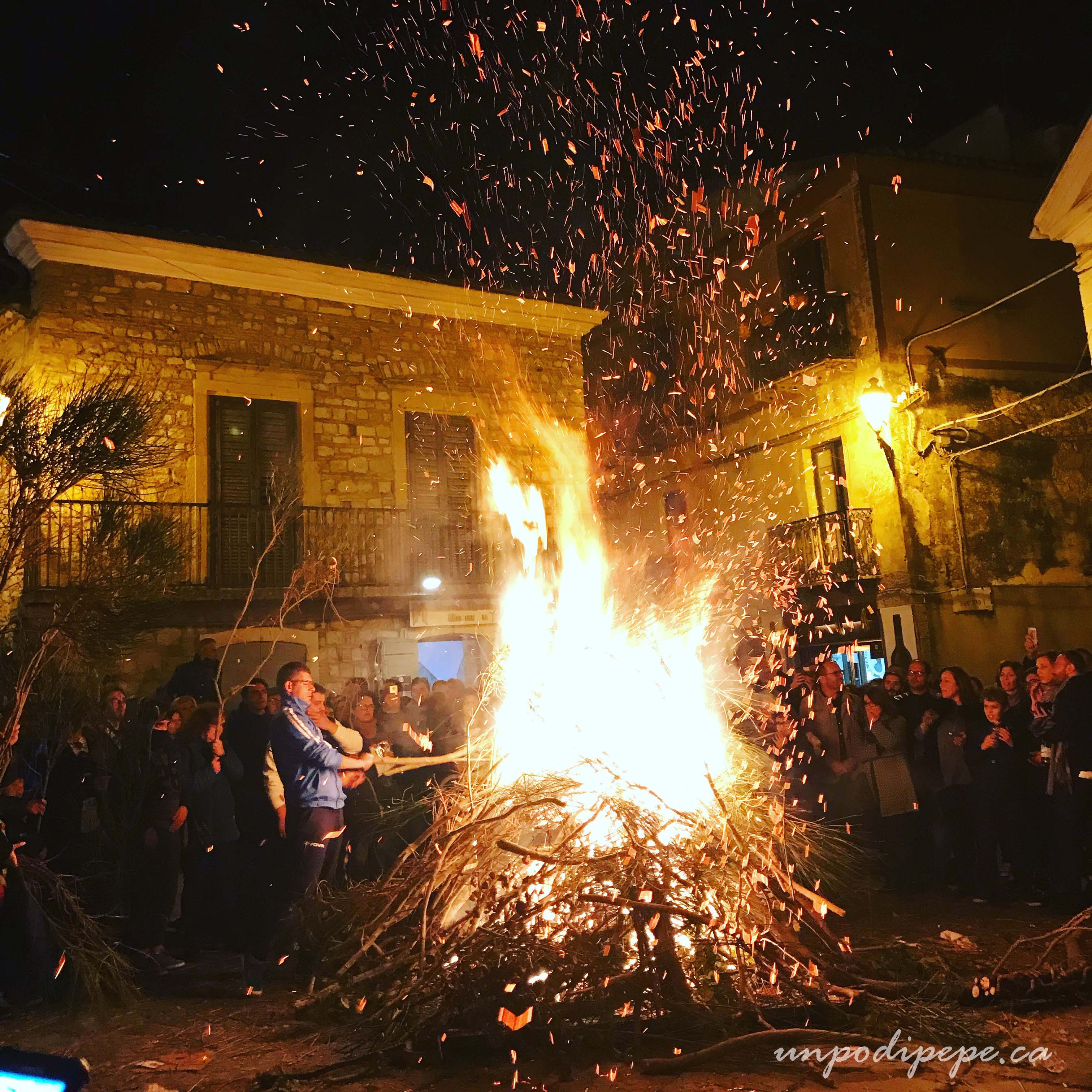
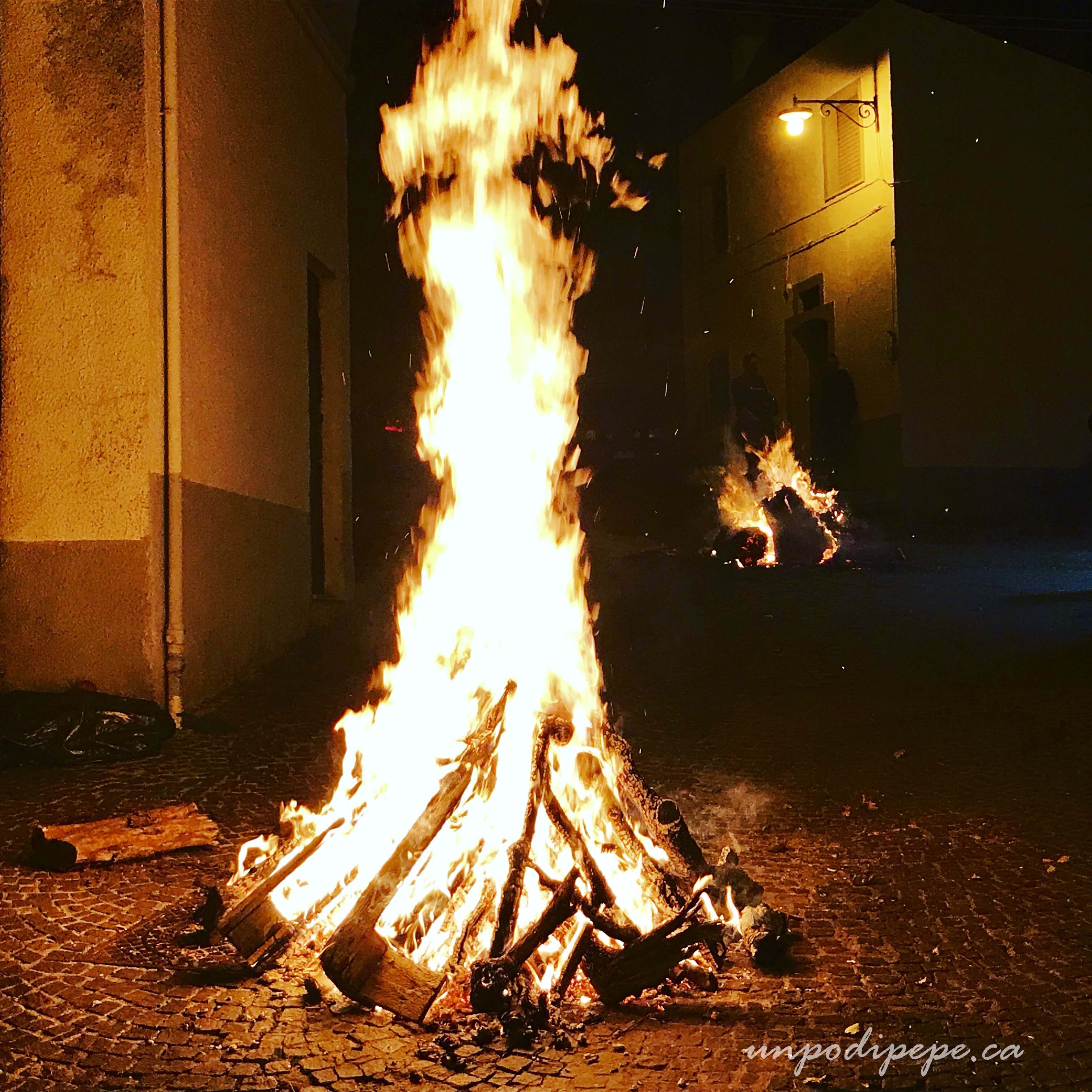
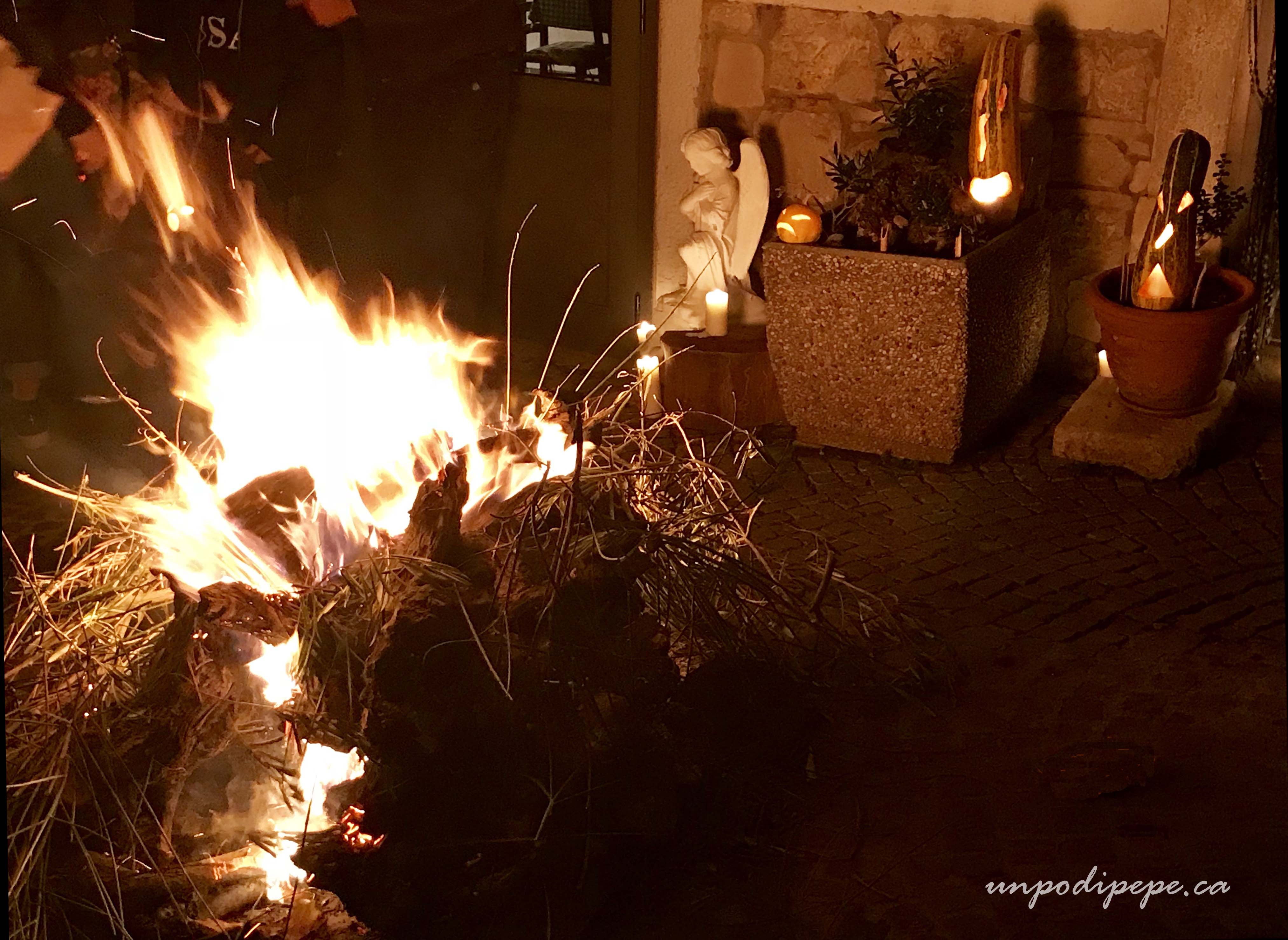
Spending just 4 days in Orsara di Puglia was a mad dash. This was not enough time to visit family and friends, so I greeted a lot of them in the street.  I heard the same phrase from anyone who was not expecting me ‘Ma sei fuori stagione!’. I guess I was out of season, but technically so were they!  It was hard to recognize people bundled up in their puffy piumini. November 1 is a holiday, and in Orsara also the festa Fucacoste e Cocce Priatorje.  In Italiano this would be Falò e Teste del Purgatorio (bonfires and heads from purgatory). Sometimes we simply call it ‘Tutti Santi’.  I wrote about the festa in this post, and now that I have been there myself, I will add photos or write a new post.  There were zucche and bonfires everywhere.  My balcony was decorated with zucche.  I took so many photos I am still going through them, but here are a few. 

Il fuoco e le zucche di Antonella e Domenico

The festa was absolutely amazing and also a moving, sprirtual experience-for me and 20,000 others. The weather was clear and crisp, but it was very cold at night.  My little casa has no heat, so I borrowed an electric space heater.  Brrrrr.

I encountered a lot of olives on this trip. It seemed every road near Orsara was full of parked cars and people with crates and olive nets.  I was not used to seeing the trees full of ripe olives!  I enjoyed spending a day at my Nonno’s olive grove. One evening we walked past the frantoio, the olive mill, which is always closed the rest of the year.  The divine smell of pressed olives lured me in.  I photo-documented the entire olive oil extraction process for a future post.  Then it was arrivederci Orsara until July.  Unfortunately, I missed my family’s olive harvest by one day, but I was able to pick olives in Gugliano.

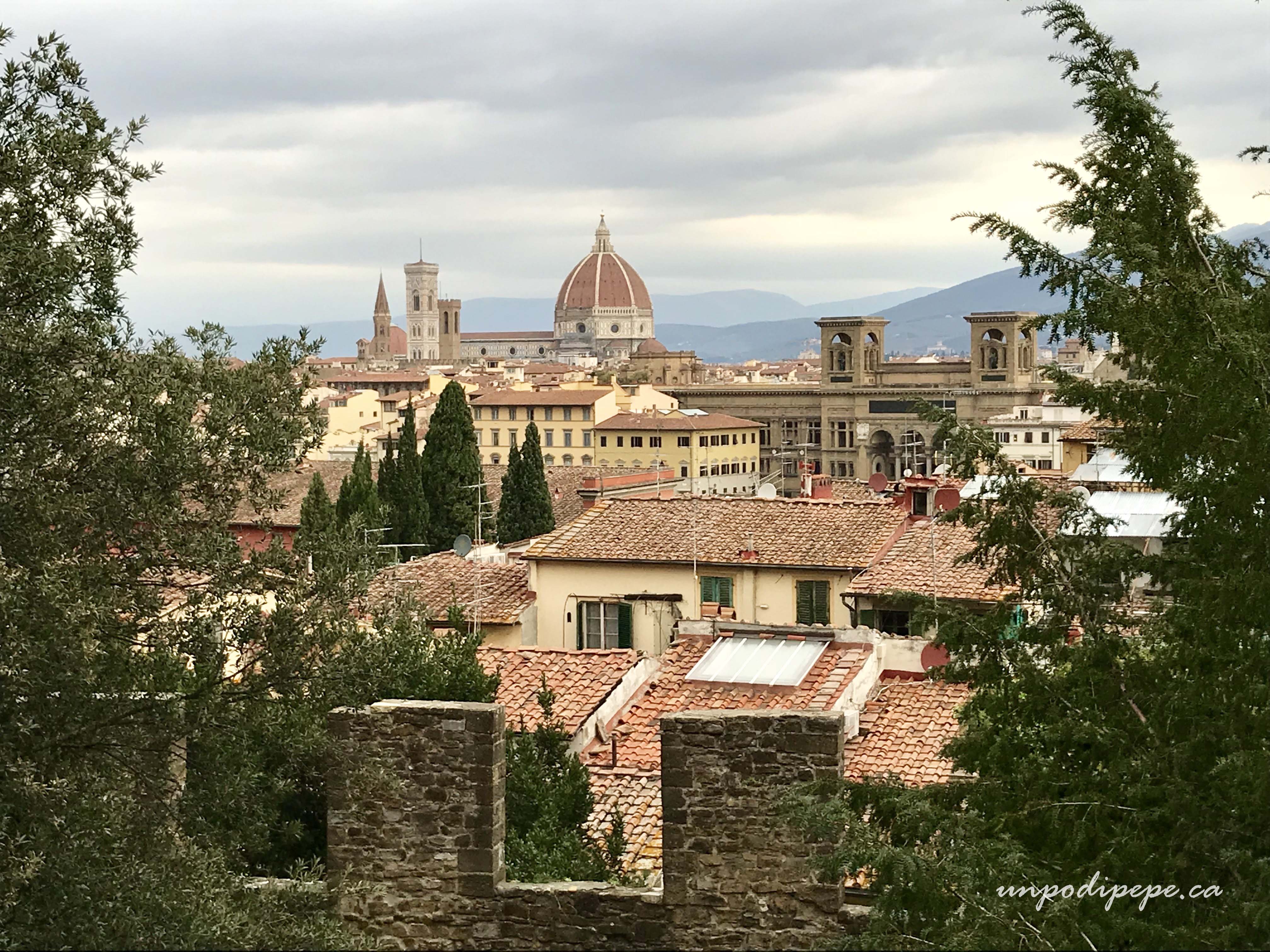
Next was Firenze for 2 half days. I had not been for several years and it felt good to be back. A spectacular view was the reward for a long morning walk along and across the Arno to Piazzale Michelangelo. A torrential downpour started just as we arrived, so the return trip was very wet. I had to blow dry myself, then got back out in the rain to catch the train to Lucca.  We arrived in Lucca just as thousands of attendees were leaving the Lucca Comics and Games Convention.  For security reasons, the front of the stazione was closed off.  My ride was waiting out front, so by the time we got there, I looked like I had been through the spin cycle.  The imposing medieval walls of Lucca were barely visible through the rain and the mist.  Next came the bumpy half hour ride to Casa Berti near Gugliano for the Catalyst Art Retreat.

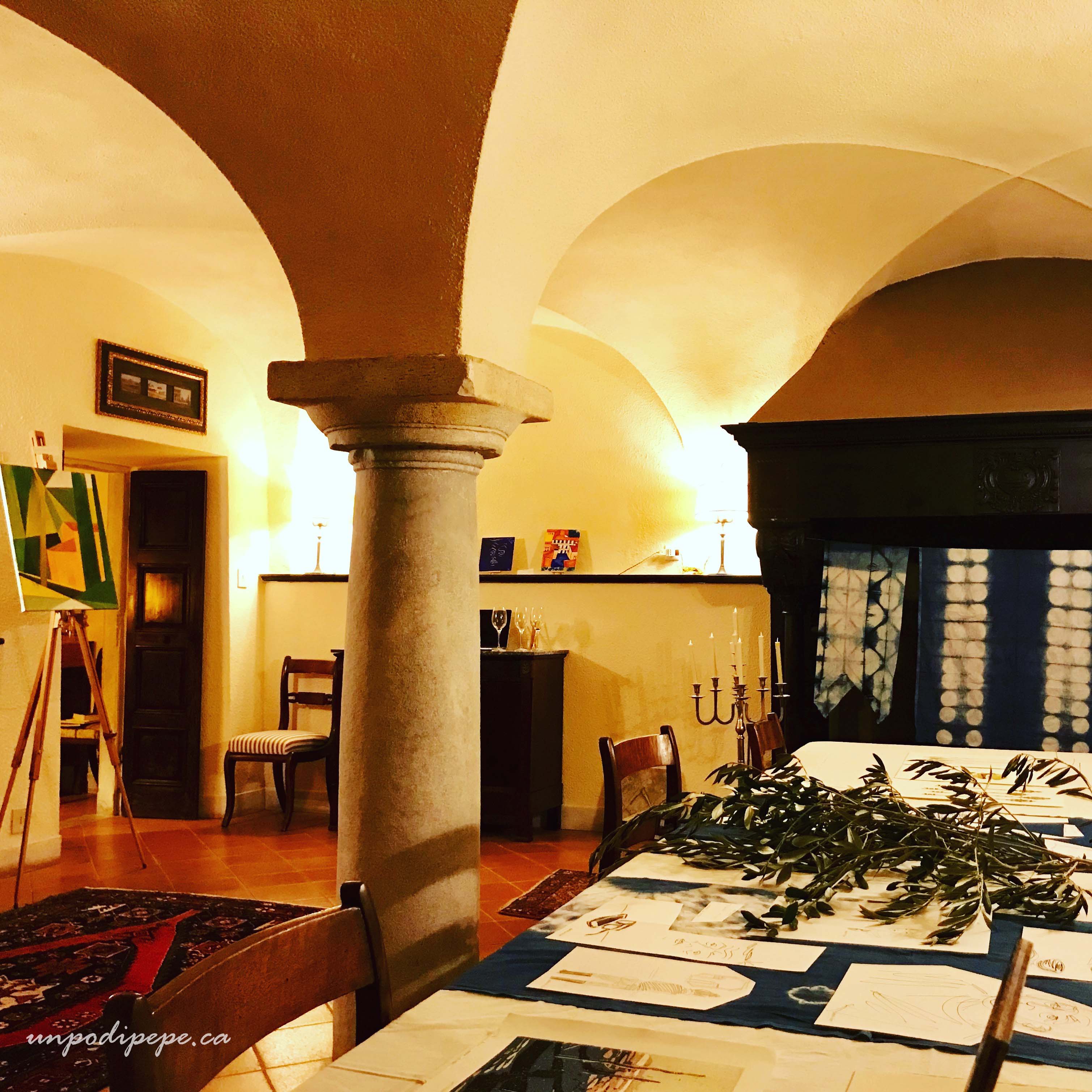
Casa Berti

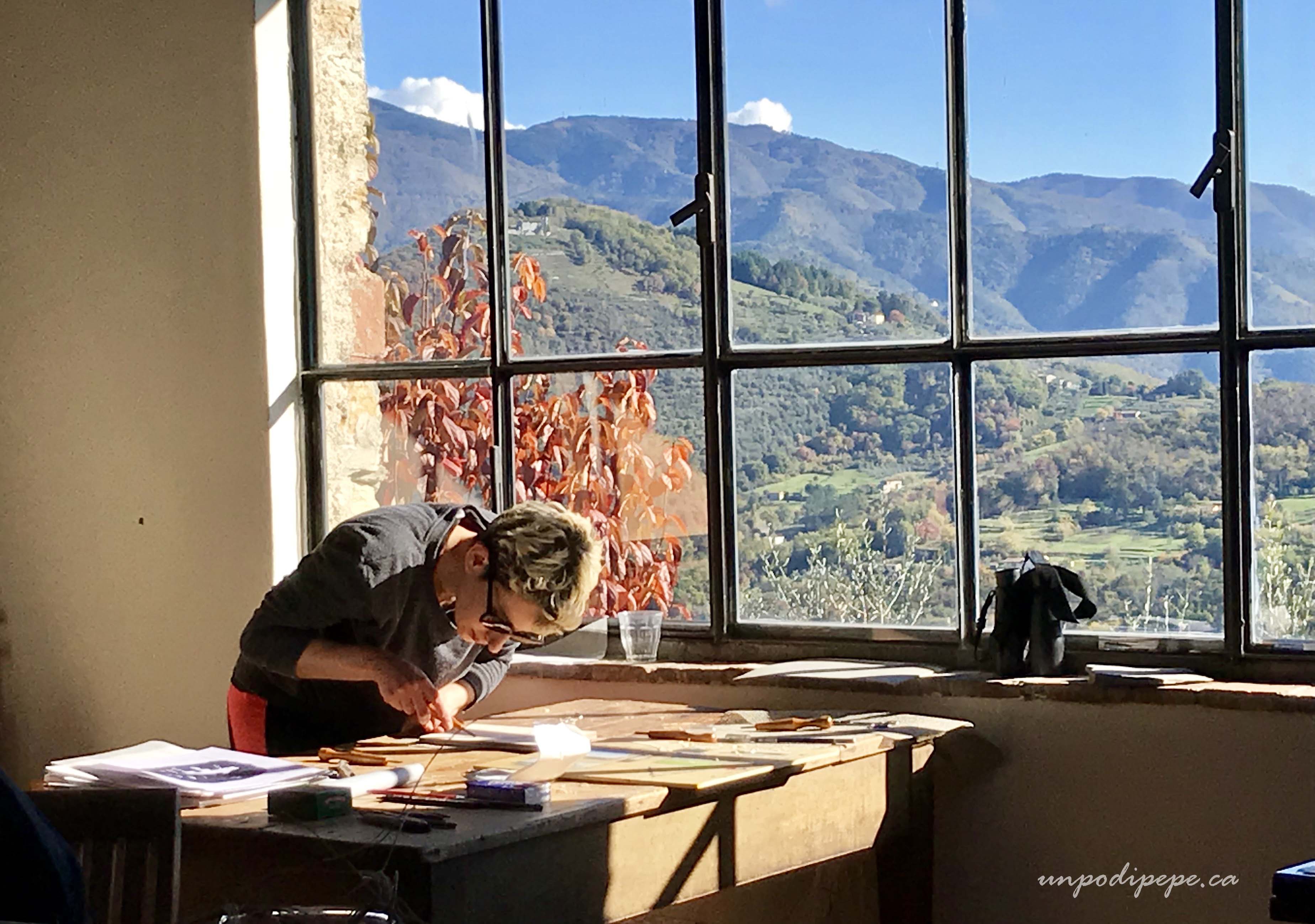
Luckily a fire was waiting.  Franco was in charge of roasting castagne, then he caught the last train back to Firenze to fly home in the am. The retreat was wonderful and the location stunning.  My fellow artists were an inspiration.

My corner of the studio at Casa Berti, looking out over olive trees

Artist Mary Cinque working on a woodcut in the studio

The retreat ended with an exhibit at Villa Coloreda near Pietrasanta

I also found time to visit Lucca, pick olives and cachi, make limoncello cake with freshly pressed olive oil and finally try Bistecca alla Fiorentina.  Lots of material for future posts.

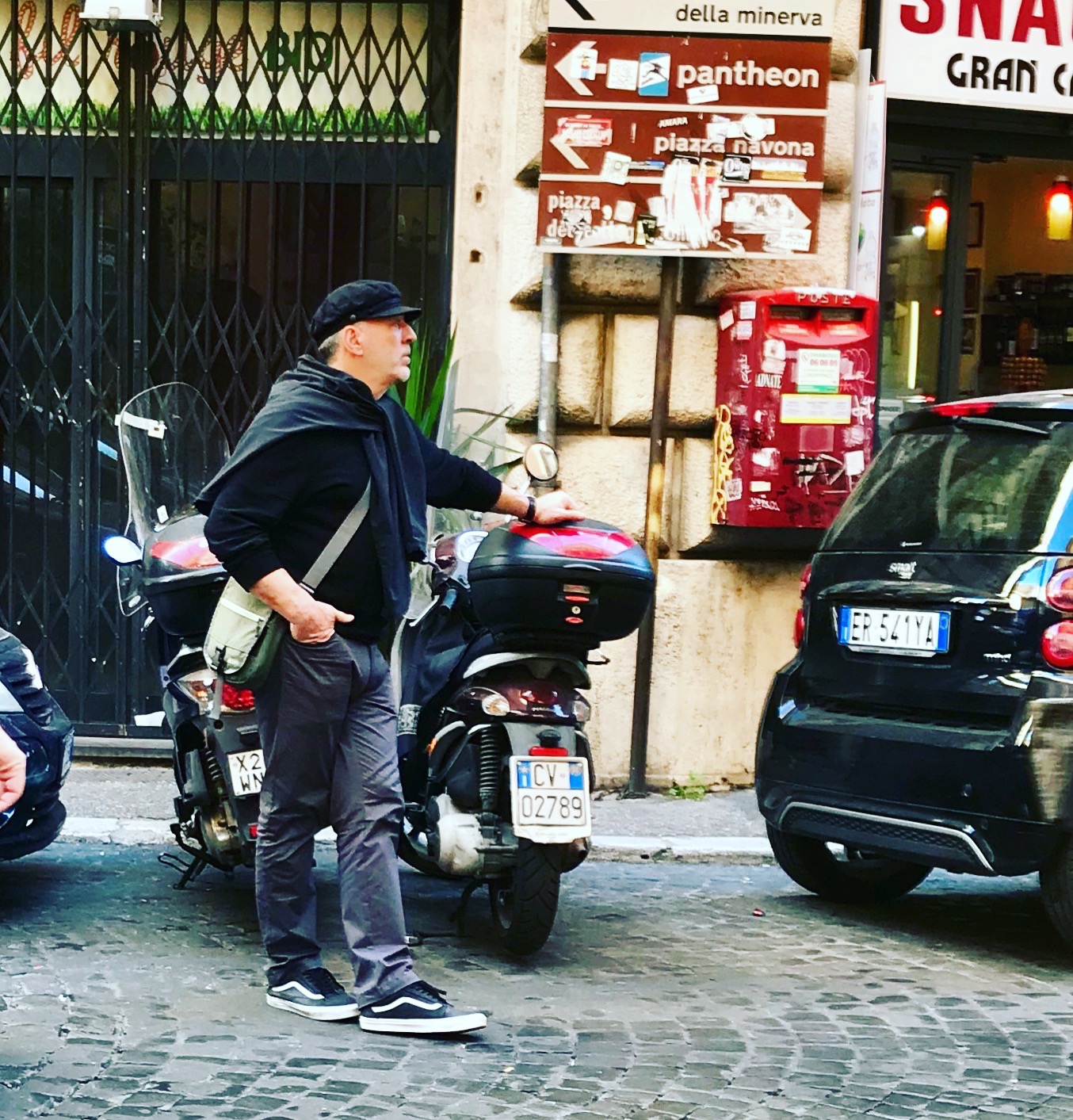
#cooldudesroma

So much for a ‘quick’ summary! I’ll end with a few notes about travelling to Italia in autunno:

-It may be ‘low season’ for airfares, but unless your destination is a small town or a seaside area, do not expect to be alone! This is especially true on weekends. In the cities, midweek hotel prices are lower, but they go up on weekends.

-Dancing around an almost empty Piazza Navona is possible……before 8am!

-The days are shorter.  It gets dark at 16:30 to be exact. Take this into account when making plans for the day.

-The weather can be variable. Even if the days are sunny, nights are cold.  Dress ‘a la cipolla’, in layers like an onion, and be prepared for rain too!

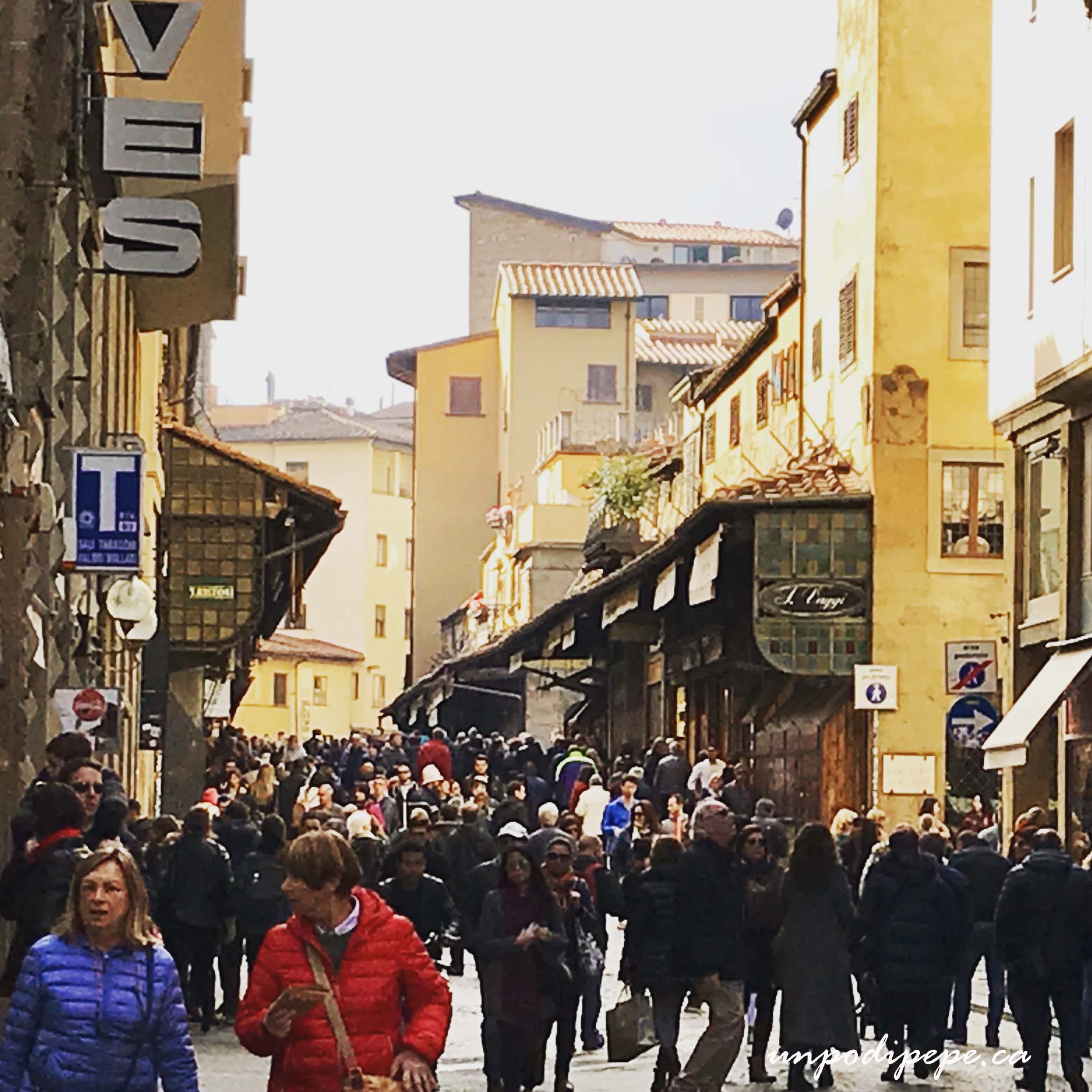
Il Ponte Vecchio 12 Novembre

Buon Viaggio, Cristina

Share this:

  • Click to share on Facebook (Opens in new window) Facebook
  • Click to share on Pinterest (Opens in new window) Pinterest
  • Click to share on X (Opens in new window) X
  • Click to email a link to a friend (Opens in new window) Email
  • Click to share on WhatsApp (Opens in new window) WhatsApp
Like Loading...

Trani

30 Saturday Sep 2017

Posted by Un po' di pepe in Architecture, Italia, Photography, Puglia, Travel

≈ 24 Comments

Tags

Diomedes, Italy travel tips, Puglia, Romanico Pugliese, San Nicola Pellegrino, Southern Italy, Trani, UNESCO World Heritage Sites

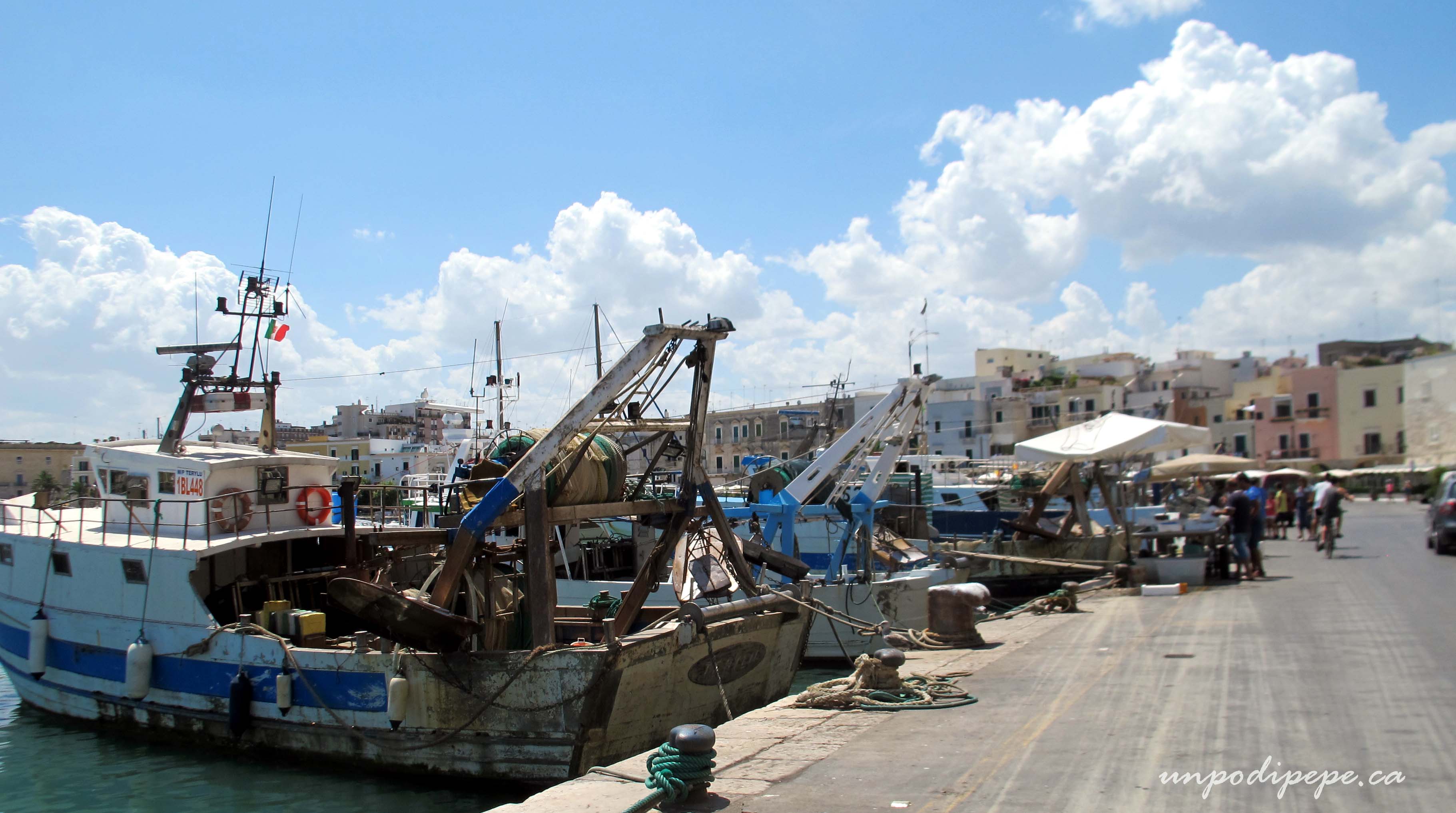
A crescent shaped port, fishermen selling their catch on the waterfront, a timeless, picturesque centro storico that looks like it could be a movie set, a castle, and a stunning limestone Romanesque cathedral right at the water’s edge where you expect to find a lighthouse.  These are some of the reasons why Trani is one of my favourite day trips.  It is a beautiful, peaceful, uncrowded fishing port on the Adriatic, between Barletta and Bari.  Trani is on the main ‘Adriatico’ railway line so it is easily accessible without a car.

Trani is ancient Tirenum, allegedly founded by Tirenus, son of Diomede.  Trani is famous for issuing the ‘Ordinamenta et consultudo Maris’ in 1063.  This is the oldest surviving maritime law code in the west. The street along the harbor is called ‘Via Statuti Marittimi’.  Trani is also known for Moscato di Trani, figs, almonds and olive oil.

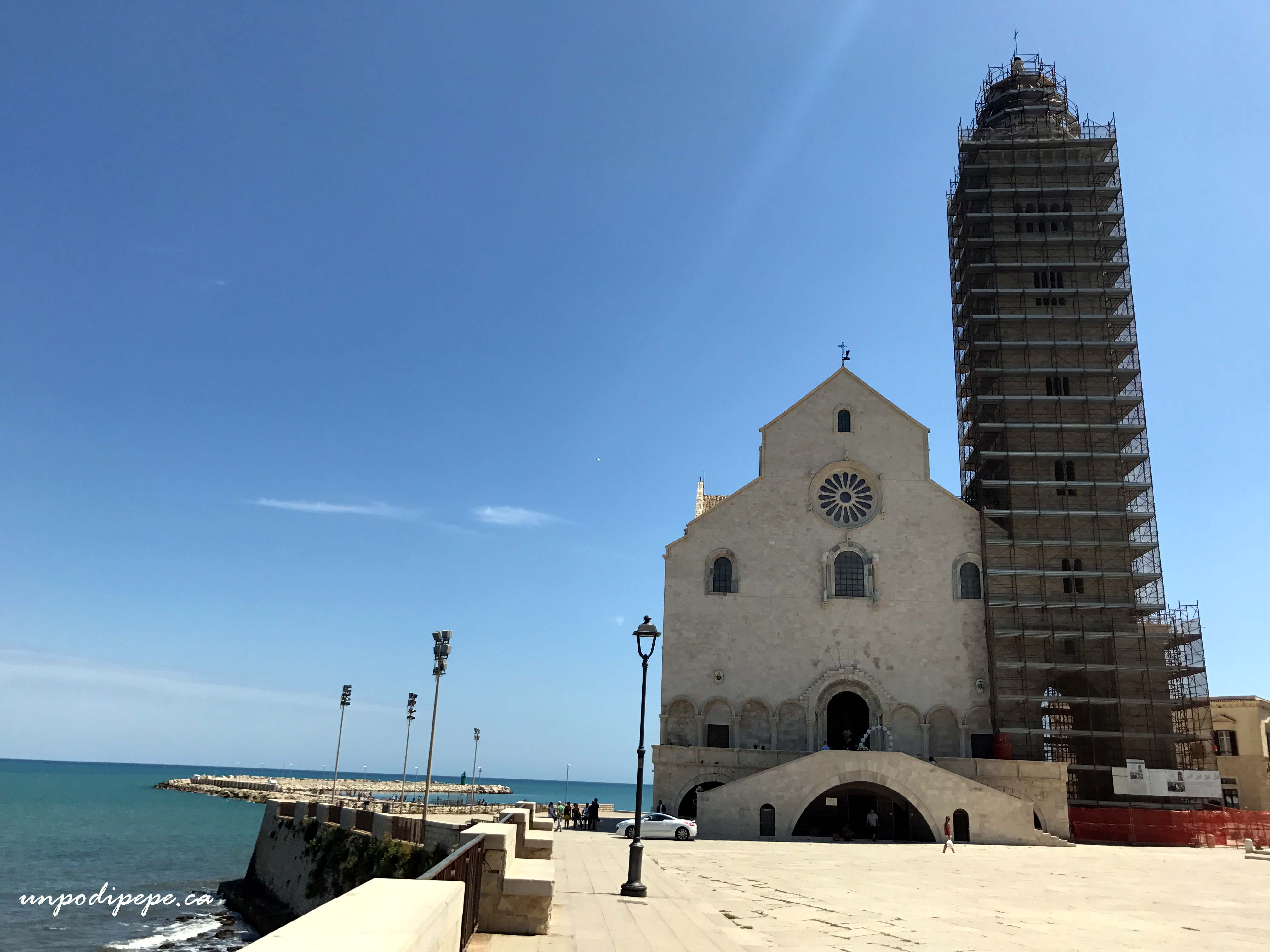
During the rule of Federico Secondo (aka Holy Roman Emperor Frederick II) in the early 13th Century, Trani became an important political center and trading port with the Orient.  Since Trani was on the pilgrimage route to the Holy Land it grew and prospered.  Trani also had a close diplomatic and trading relationship with Venezia.When I got off the train in Trani, I walked about half an hour, straight to the cathedral.  I am a big fan of Romanico Pugliese (Pugliese Romanesque), an 11th-13th Century architectural style unique to Puglia.  Romanico Pugliese includes classic Romanesque features such as tall facades, campanili and rose windows, blended with Byzantine and Islamic architectural details.  In fact, since 2006, the Romanico Pugliese churches in Puglia are on the the UNESCO World Heritage Sites tentative list.  This is the step before becoming a World Heritage Site.The Trani cathedral was built in 1099 out of local tufo, a creamy coloured limestone that almost seems to glow in the sun.  One of the oldest and largest cathedrals in Puglia, it was used as a model for the ones built later. It was named for San Nicola Pellegrino (the Pilgrim), a 19 year old Greek shepherd who died while on pilgrimage in Trani in 1094.  His bones are in the crypt.  Note….this is not the same San Nicola who is buried in Bari and is the inspiration for Santa Claus.  Trani’s cathedral was constructed on layers of history.  It was built over the foundations of a 5th Century Byzantine church, Santa Maria della Scala, which was built over the Roman crypt of San Leucio.  Both of these ‘layers’ are accessible. The beautiful bronze doors are a copy.  The original doors are on display inside.  The 32 panels were sculpted by Barisano di Trani who also did work on the cathedrals in Ravenna and Monreale. The 60m high campanile built in 1239 has square corners and an octagonal spire.  The number of windows increase with each floor. The campanile was being renovated when I was there, so I have included a photo I took in 1994 without the scaffolding.

Trani 1994

Right on the harbour is the Chiesa di Ognissanti, built in the 12th Century by the Knights Templar in the courtyard of their hospital.  Trani was on the route to the Holy Land and the knights had a hospital here for those wounded in the crusades.  It is not open to the public.At the far end of the harbour, the Villa Comunale is a park with benches and a seaside walk.  The breakwater near the Cathedral is a nice place to sit and soak up the sun or go for a swim.

Federico II built the Castello Svevo in 1249.  It has square towers at each corner.  The sea water moat was filled in.  From the 1800’s-1974 the castello was used as a prison. Now it is open to visitors and hosts cultural events.  Admission is €3.

Trani once had southern Italia’s largest Giudecca community or Jewish neighborhood.  It was not a ghetto, as it was not closed off.  There were once 4 synagogues.  The Scolanova Synagogue spent centuries as a church, but in 2006 it was rededicated as a synagogue.

Trani is small enough that you can walk everywhere.  From the Stazione, walk straight out and turn left at Piazza della Repubblica.  There is an info point here.  It is about a half hour walk along quiet streets with beautiful palazzi to the cathedral and port.  Just ask a local for ‘Il Porto’ if you need directions.  Shops are closed from 1-5 pm.

For seafood lovers, the port has many excellent restaurants.  My cousins had given me 3 restaurant recommendations.  It was such a beautiful sunny day I just wanted to sit near the breakwater and enjoy the sea.  I had a mad craving for polipo-octopus.  I ended up getting a take away insalata di polipo and a glass of Falanghina.  It was perfect!

Trani is a great base to stay for exploring several UNESCO World Heritage Sites.  Castel del Monte, Alberobello and Matera are all about 1 hour away.

Ciao e buon viaggio, Cristina

Share this:

  • Click to share on Facebook (Opens in new window) Facebook
  • Click to share on Pinterest (Opens in new window) Pinterest
  • Click to share on X (Opens in new window) X
  • Click to email a link to a friend (Opens in new window) Email
  • Click to share on WhatsApp (Opens in new window) WhatsApp
Like Loading...

Campeggio sul Gargano

29 Wednesday Mar 2017

Posted by Un po' di pepe in Italia, Photography, Puglia, Travel

≈ 13 Comments

Tags

Arco San Felice, Baia delle Zagare, Gargano campsites, Il Gargano, Isole Tremiti, Italy travel tips, Mattinata, Parco Nazionale del Gargano, Puglia, Trabucchi del Gargano, Vieste, Vignanotica

Dovè la primavera?  It was a long, cold winter, with far too much snow.  Now la pioggia has set in.  I am dreaming about il caldo, il sole e la spiaggia-warm weather, sunshine and the beach! I have had the opportunity over the last few years, to spend many weekends at different sites in the Gargano (gar·GAH·noh) with my cugini and their camper.  I would love to be there now!  To get ready for summer and welcome warmer weather, I am sharing my favourite scatti from my Gargano travels.

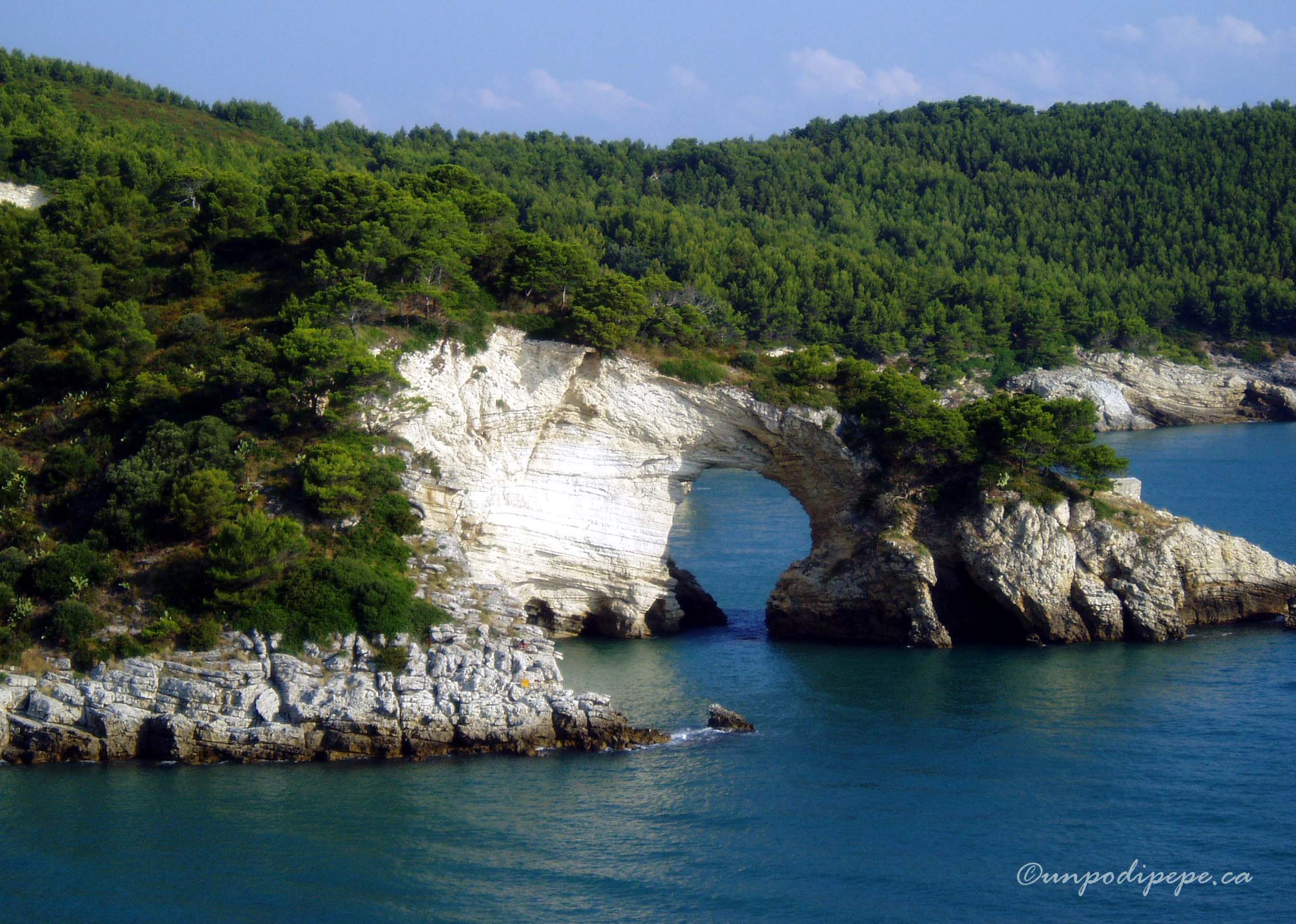
II Arco San Felice

Il Promontorio del Gargano is the promontory sticking out above ‘il tacco’, the heel of Italia.  You can also think of it as la caviglia-the ankle spur of Italia.  One of the most beautiful areas on earth, Il Gargano has unique flora and fauna.  Biodiversity wise the area is more like an island-an island surrounded on 3 sides by the Adriatico with 1 side attached to Italia.  Most of the promontorio is a protected area and marine reserve, Il Parco Nazionale del Gargano, which includes le Isole Tremiti and the ancient Foresta Umbra. Luckily this has prevented the area from being overdeveloped with large multinational hotels and resorts.

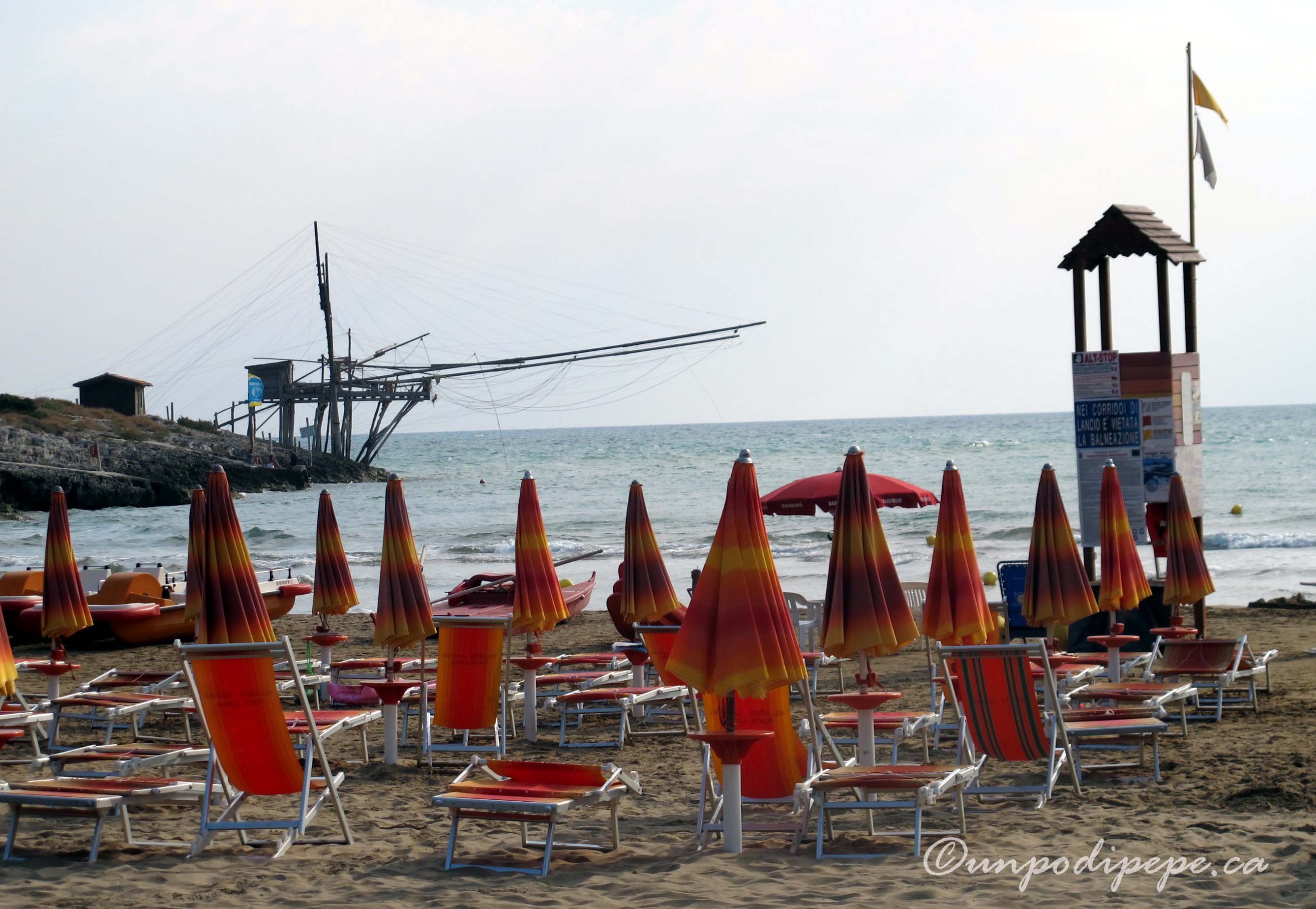
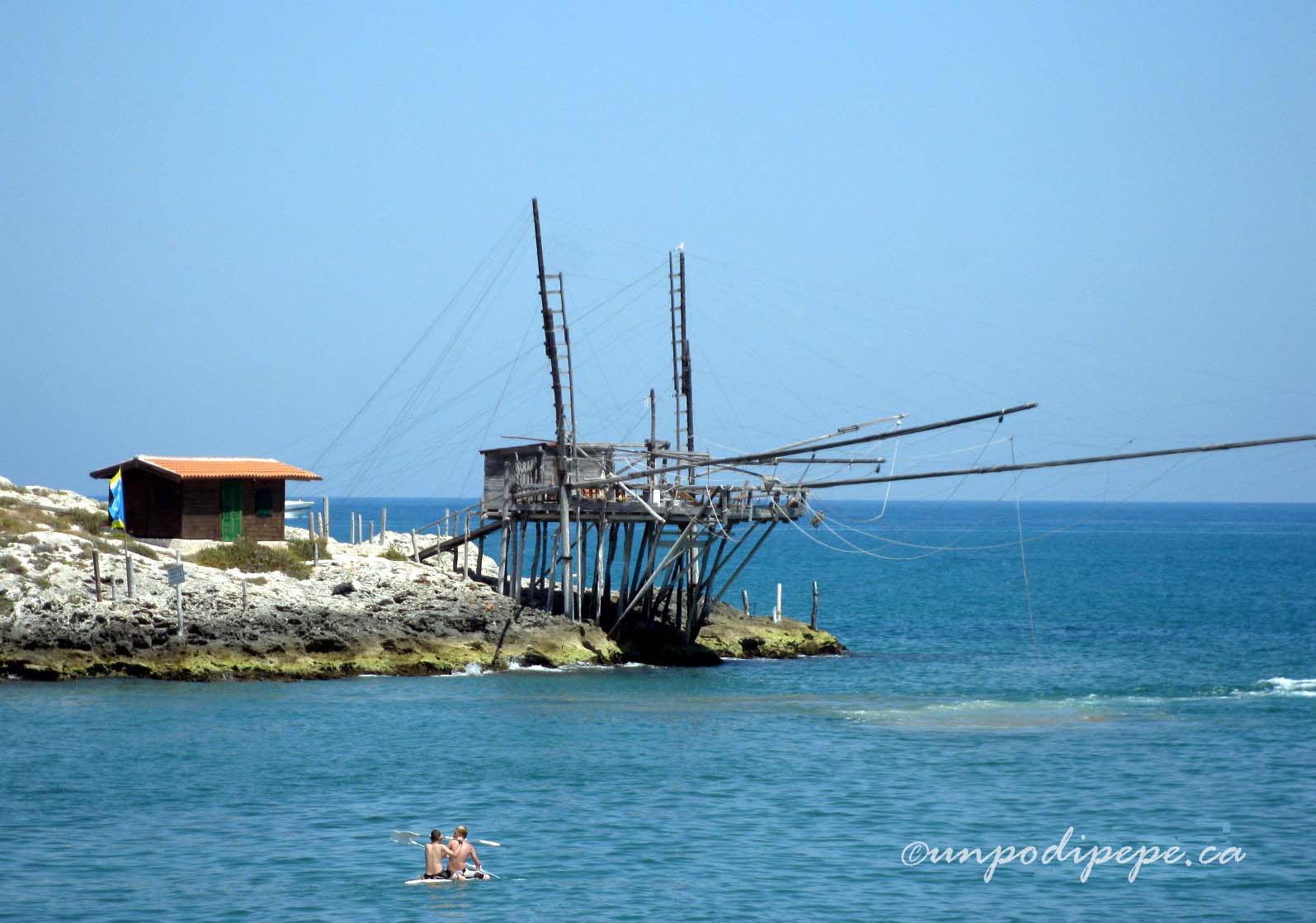
Il Gargano is famous for picchi (woodpeckers) and many other birds, 300 varieties of orchids, almonds and olives.  There are also endless ancient hillside olive groves, pine forests, sea grotte, limestone cliffs, rocky shores, crystalline water and fresh seafood.  The coast between Peschici and Vieste has 13 working trabucchi, fascinating ancient fishing contraptions which I wrote about in this post.

Trabucco Punta Lunga

The winding road around the Gargano, SS 89 from Foggia, has sharp turns and viste mozzafiato (VIS·teh moz·zah·FYAH·toh)-breathtaking views. One of my favourite viewpoints is La Baia delle Zagare. Here you can see the clifftop 4 star resort of the same name, and its private spiaggia.  There is a glass elevator built into the cliff-something I have to see for myself one of these days!

Baia delle Zagare

View of Vieste from the SS89

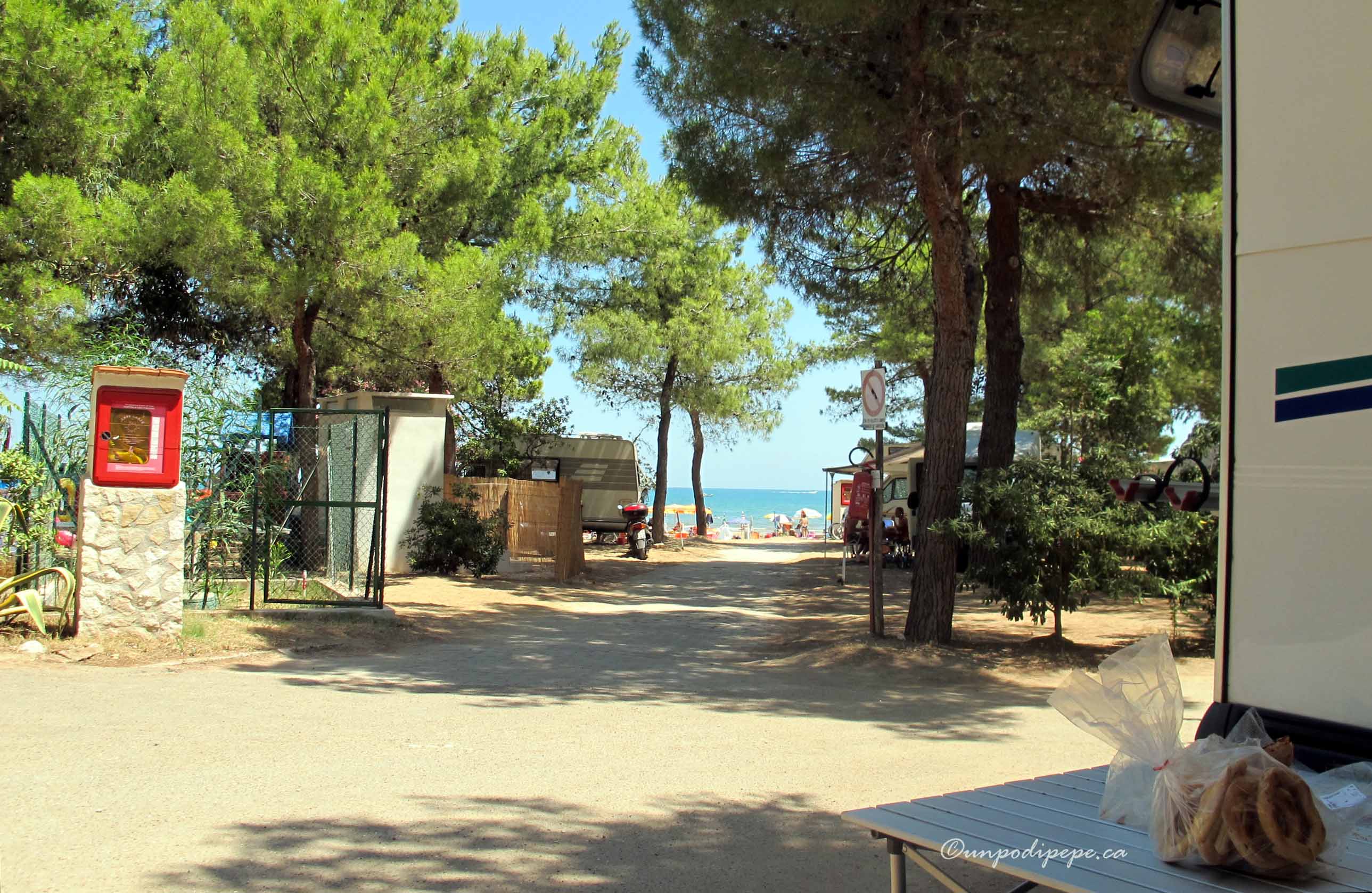
Il Gargano is full of campsites, inexpensive accommodation and B & B’s.  The campeggi e villaggi turistici -campsites and tourist villages, are ben attrezzati (well-equipped). You can camp with a camper and all the accessories, or just a vehicle and a tent.  There are also villette-little cabins that can be rented, but you have to bring your own sheets and towels, so these are mostly used by locals.  Some campsites even have a small hotel attached. This website (in Italiano) lists Gargano campsites. I have stayed right by the water and in an olive grove near Mattinata, and had a view of the beach near Vieste.

View from the camper, Punta Lunga, Vieste

Our setup is always comfortable and rustic, but some of the things you see at the campeggi are hard to believe. Families set up for the whole summer, with those working joining in on the weekends. I have seen TV with satellite, ceiling fans, generators and portable kitchen tents. Last year at Camping degli Ulivi in Mattinata, the family across from us had brought 5 kinds of brooms!

Ancient olive trees provide an interesting handwashing station, and a place to store 5 different brooms at Camping degli Ulivi

No yucky dehydrated camping food is found here! Fresh seafood is available from the mobile fishmonger il pescivendolo (pesh·ee·ven·DOH·loh) driving around to the different campsites. At Villaggio Camping Punta Lunga, we walked 2 km to Vieste to il pescivendolo along the amazing clifftop trail.

View from the 2km clifftop trail to Vieste

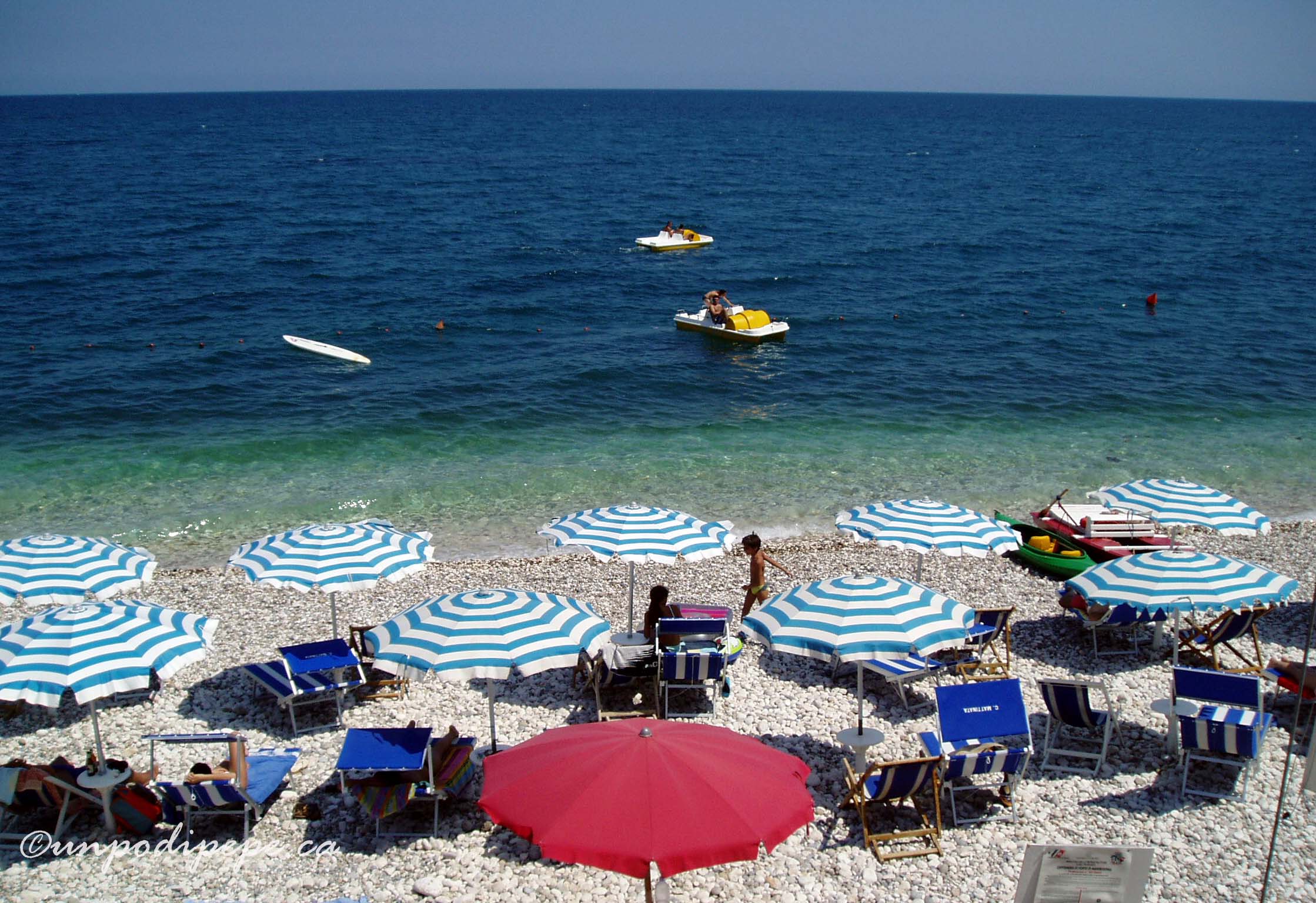
Vignanotica is between Mattinata and Pugnochiuso, closer to Pugnochiuso. It is surrounded by a wall of limestone cliffs and is only accessible by walking down the steep hill. Inaccessibility prevents development on the spiaggia. Parking is available in an olive grove, right under the olive trees for €7 and there is a shuttle down to the beach. Vignanotica can be crowded on Sundays in the summer. There is a small bar on the beach. Vignanotica is in sun until about 2pm, then it is in full shade from the cliffs. Some of the Gargano beaches, including Vignanotica, Mattinata and l’Isole Tremiti are rocky, so water shoes are needed to walk in the water.

Vignanotica. The tiny people walking on the beach provide scale for the limestone cliffs.

Most of the tourists visiting the Gargano area are Italian, especially in the summer.  Many Germans bring their campers too, but you do not meet a lot of North Americans here.  Il Gargano is the place to visit if you want to improve your Italiano.The closest major airport for Il Gargano is Bari. The airport in Foggia sometimes has flights to and from Milano, but usually it just has Alidaunia helicopter service to le Isole Tremiti, San Giovanni Rotondo, Vieste and Peschici. It is difficult to get around the Gargano without a car unless you have lots of time. The SS 89 from Foggia is the major road. On the way, be sure to stop and visit Santa Maria di Siponto near Manfredonia. There is no rail service after Foggia, except a local train from San Severo to Peschici. Ferrovie del Gargano buses outside the Foggia stazione leave for towns in the Gargano, but they are not frequent . Parkinbici is a bikesharing service between Gargano towns. For visitors, a weekly card is € 20 and weekend € 12.

Flying into San Domino by helicopter

As the Gargano website says, visit il Gargano ‘per una vacanza tra natura, mare e cultura’…for a holiday among nature, sea and culture!  Buon Viaggio, Cristina

Share this:

  • Click to share on Facebook (Opens in new window) Facebook
  • Click to share on Pinterest (Opens in new window) Pinterest
  • Click to share on X (Opens in new window) X
  • Click to email a link to a friend (Opens in new window) Email
  • Click to share on WhatsApp (Opens in new window) WhatsApp
Like Loading...

San Gimignano

15 Friday Apr 2016

Posted by Un po' di pepe in Firenze, Italia, Photography, Travel

≈ 6 Comments

Tags

Dante Alighieri, Firenze, Italian history, Italy travel tips, San Gimignano, Siena, Torre Grossa, Toscana, UNESCO World Heritage Sites, Vernaccia di San Gimignano

Torri di San GimignanoSan Gimignano’s skyline looks like a Medieval Metropolis, complete with early grattacieli (grat•tah•chee•EH•lee = skyscrapers). It was known as San Gimignano delle belle Torri -San Gimignano of the beautiful towers. The site was an Etruscan settlement, then a castello called Silvia with a walled village built around it.  Silvia was renamed San Gimignano in 450 after the Bishop of Modena, who spared it from Attila the Hun’s troops.San Gimignano Torre

San Gimignano became an independent town in 1199. It was prosperous, being a stopping point on La Via Francigena, the medieval pilgrimage route from Canterbury to Roma, via France.  San Gimignano also traded in local zafferano (zaf•fer•RAN•noh = saffron) and wine from the white Vernaccia grape. The earliest mention of Vernaccia di San Gimignano is in the archives of 1276! In 1966, 690 years later, it was the first Italian vino bianco to receive DOC recognition.

The 13 and 14th Centuries saw San Gimignano caught in the Guelph/Ghibelline conflicts.  Read about this in Dante’s post. Wealthy San Gimignanesi built tower houses as symbols of power and wealth, as well as for protection.  The height of these torri kept increasing, up to 70m high, to keep up with the neighbors. There were originally 72 torri and 14 still stand today.

Waves of plague and famine hit San Gimignano in the mid 1300’s. The ‘black death’ claimed almost half the population, and San Gimignano was now under the rule of Firenze.  Fiorentino control prevented any urban development that happened in other towns.  As a result, San Gimignano was preserved in a medieval ‘time warp’, retaining its original atmosphere and appearance.  Little changed until the 19th century when it became a tourism destination. Today the population is 7800 and it does have 1 traffic light! To protect San Gimignano from the effects of mass tourism, strict rules prevent modification to the appearance or intended use of buildings.

Bancomat Medievale/Medieval Bank Machine!

Bancomat Medievale/Medieval Bank Machine!

In 1990, the Historic Center of San Gimignano became a UNESCO World Heritage Site for its outstanding examples of medieval architecture and original urban layout.Piazza della Cisterna

The Cattedrale know as La Collegiata, has Masterpieces of 14th and 15th Century art.  Inside the front façade is the Fresco of Last Judgement, Heaven and Hell by Taddeo di Bartolo (1393). The Cappella di Santa Fina with frescoes by Domenico Ghirlandaio (1475) was featured in the 1990 Franco Zeffirelli film ‘Tea with Mussolini’.

In the Palazzo Comunale is the Sala di Dante where Dante Alighieri spoke as an ambassador for the Guelphs in May 1300. The Pinacoteca has treasures by Filippino Lippi, among others.  Climb the 218 steps of the adjacent 54m Torre Grossa for views of San Gimignano and the Val d’Elsa.  Admission is €6.View from Torre Grossa

Piazza della Cisterna is triangular with a well on an octagonal pedestal in the center, surrounded by medieval buildings. It is named for the underground cistern built in 1287 which was the main source of water for the San Gimignanesi.  Piazza della Cisterna is the meeting point of the Via Francigena and the road from Pisa to Siena, so it was a happening place in medieval times.

Piazza della Cisterna, seen from Torre Grossa

Piazza della Cisterna, seen from Torre Grossa

San Gimignano is an easy daytrip on the bus from Firenze, Siena or Poggibonsi. There is no direct train. The train route is to change trains at Empoli to Poggibonsi and then bus from there. It’s also nice to be there in the evening or overnight when all of the daytrippers have left.

Like Alberobello, no matter how many hordes of tourists it is overrun with, San Gimignano is incantevole (een•can•teh•VOH•leh = enchanting) and definitely worth a visit. I need to go back to do ‘research’, since I have a drawer full of unfinished sketches, monotypes and etchings!

Buon Viaggio, Cristina

Share this:

  • Click to share on Facebook (Opens in new window) Facebook
  • Click to share on Pinterest (Opens in new window) Pinterest
  • Click to share on X (Opens in new window) X
  • Click to email a link to a friend (Opens in new window) Email
  • Click to share on WhatsApp (Opens in new window) WhatsApp
Like Loading...
← Older posts

Enter your email address to follow 'un po' di pepe' and receive notifications of new posts by email.

Join 511 other subscribers
Follow Un po' di pepe on WordPress.com

Popular Posts

  • Hairstyling in Ancient Roma
    Hairstyling in Ancient Roma
  • Espresso Cookies
    Espresso Cookies
  • Panforte di Siena
    Panforte di Siena
  • Il Pumo Pugliese
    Il Pumo Pugliese
  • San Nicola
    San Nicola
  • Panettone Fatto in Casa
    Panettone Fatto in Casa
  • Internment of Italian Canadians
    Internment of Italian Canadians

Recent Posts

  • Castel del Monte
  • ‘The Nuances of Love’
  • Hostaria Antica Roma~Eat like an Ancient Roman
  • Santa Maria in Aracoeli
  • Casino dell’Aurora~Villa Boncompagni Ludovisi
  • Nasoni di Roma
  • Bloghiversario #11
  • Fontana di Trevi
  • Acqua Vergine
  • Giubileo 2025
  • Sanremo 2025
  • In Vino there are Memories
  • A Literary Harvest
  • 2024~Un po’ di pepe Year in Review
  • Buon Natale 2024
  • Il Bicerin
  • Mercato Porta Palazzo
  • Torino
  • Catanzaro, Calabria
  • Il Pumo Pugliese
  • Artemisia Gentileschi
  • Cavalli di San Marco
  • Panzerotti
  • Torcello
  • 10 years of Un po’ di pepe!

Categories

Amici e Famiglia Architecture Art Art history Art projects Bilingual posts Blogging Canada Culture Feste Firenze Inspiration Italia Italian Folklore Italian language Italian life Italocanadesi Libri Mangiamo! Orsara di Puglia Parole piacevoli Photography Puglia Recipes Roma Travel Travel tips Uncategorized Vino

Archives

Un po’ di pepe on Facebook

Un po’ di pepe on Facebook

Start a Blog at WordPress.com.

  • Subscribe Subscribed
    • Un po' di pepe
    • Join 511 other subscribers
    • Already have a WordPress.com account? Log in now.
    • Un po' di pepe
    • Subscribe Subscribed
    • Sign up
    • Log in
    • Report this content
    • View site in Reader
    • Manage subscriptions
    • Collapse this bar
 

Loading Comments...
 

    %d