• Home
  • About me/Chi sono
  • Contact

Un po' di pepe

~ …… (oon∙poh∙dee∙PEH∙peh) Cristina writes about interesting stuff /Cristina scrive di cose interessanti

Un po' di pepe

Author Archives: Un po' di pepe

Acqua Vergine

28 Friday Mar 2025

Posted by Un po' di pepe in Architecture, Roma

≈ 5 Comments

Tags

Ancient Roma, Ancient Roman engineering, Fontana di Trevi, La Barcaccia, Roman Fountains, UNESCO World Heritage Sites

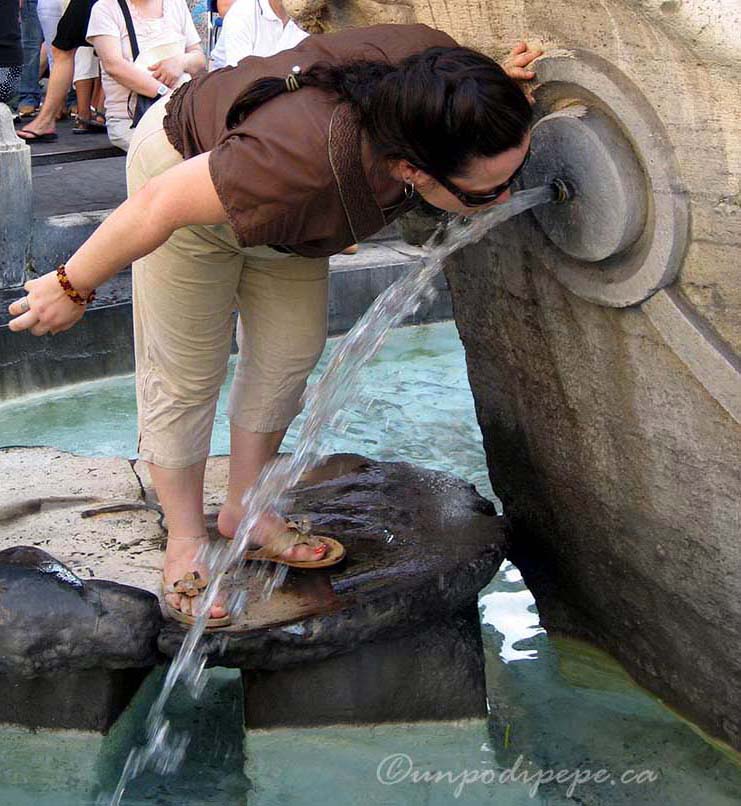
The Ancient Romans were masters of engineering.  One of the greatest examples of this is their aqueducts.  These systems of waterways transported fresh water from springs and melting snow long distances via pipes and tunnels.  The ability to provide a fresh, safe supply of drinking water is one of the reasons the Roman Empire became so powerful. In Roma, 11 aqueducts were built over a period of ~500 years.  Aqueduct #6 out of 11, called Aqua Virgo (Acqua Vergine in Italiano) lives on today.  Not only is it still with us, but it is still functioning, providing water to the most important fountains in central Roma.  The pure, cold, fresh water is drinkable*, constantly flowing and powered by gravity.

Mmmm! Acqua freddissima!

Aqua Virgo was constructed in 19 BC by Marcus Vipsamius Agrippa, son in law and general of Emperor Octavian Augustus.  Yes- the same Marcus Agrippa whose name is carved into the front of the Pantheon. He constructed the original Pantheon, before it burnt down.  Marcus had the aqueduct built to supply water for the thermal baths of Agrippa in the Campo Marzio area near the Pantheon.

Aqua Virgo/Acqua Vergine probably refers to the freshness and purity of the water, but according to legend, in 19 BC, a young girl led Roman soldiers to a spring -the source for the aqueduct.  The source is in the hills 13 km away, at Agro Lucellano between Via Tiburtina and the 8th milestone of Via Collatina (2 of the roads that led to Roma) near present day Salone.  The source is actually only 24m (79 ft) above sea level. Aqua Virgo is 21 km long via indirect route to Roma, making a wide arc.  This is to make use of gravity by shallow downward gradient. 19 km of Acqua Vergine are 9m below ground, with short stretches of brick arches above ground.

There were 1352 fountains in Roma in the 4th Century.  Aqua Virgo was damaged by the invasion of 537 and repaired. It remained in use through the Middle Ages with a few renovations during the Renaissance.  Early Renaissance Popes started to decorate the end point of restored aqueducts with large, ornate fountains.The Fontana di Trevi is the final destination of the original Acqua Vergine and Piazza del Popolo the end of an offshoot.  Carved above the statues next to Oceanus on the Fontana di Trevi, 2 bas reliefs illustrate Marcus Agrippa ordering construction of the aqueduct and the young girl leading Roman soldiers to the source.  They can both be seen in the photo below:

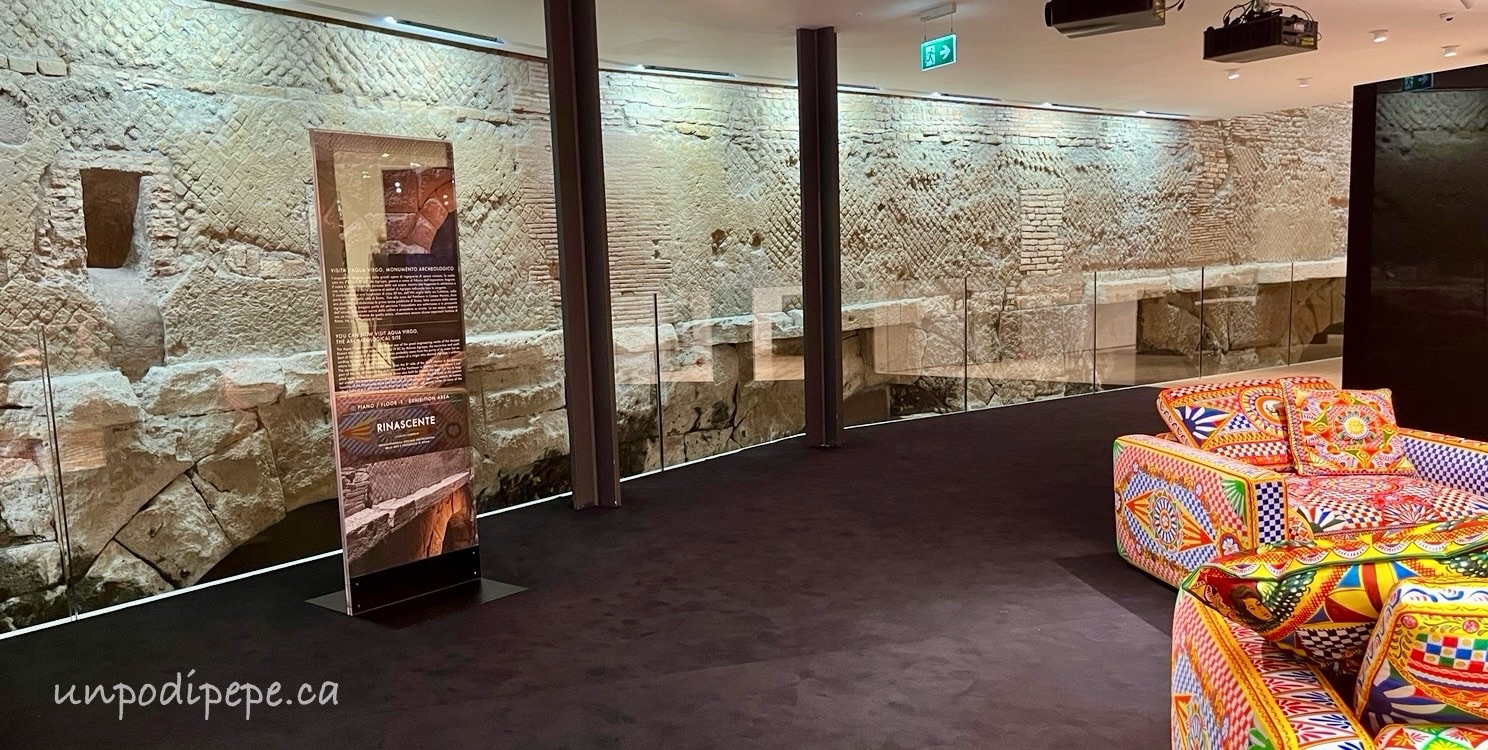
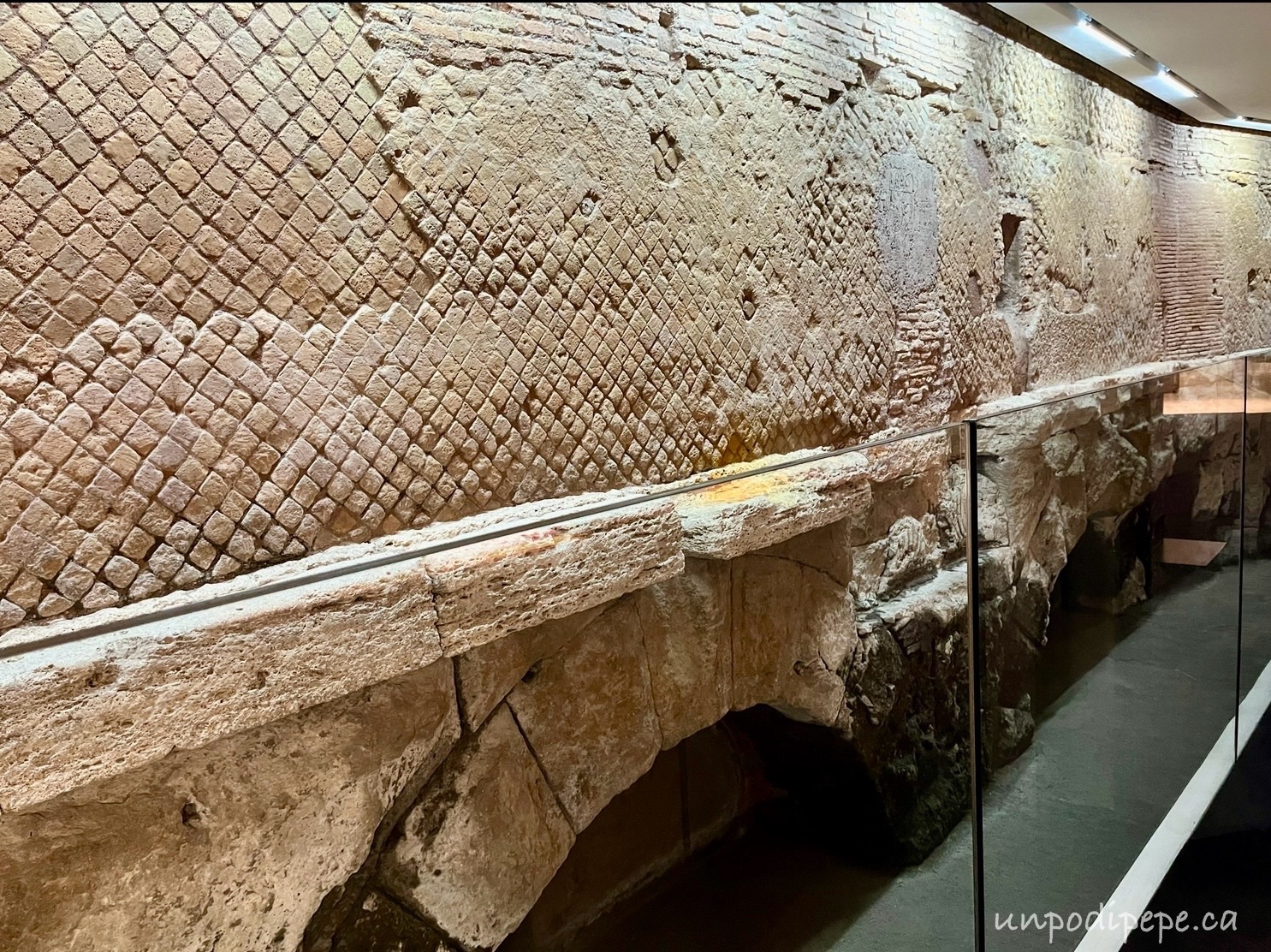
Acqua Vergine Antica runs under Villa Borghese and Villa Medici to Piazza di Spagna and Fontana di Trevi. In 1930 renovated Aqua Vergine Nuova goes behind Piazza di Spagna to Piazza through Giardini Borghese to Piazza Flaminio and Piazza del Popolo. Most of the aqueduct’s 21 km are 9m underground, except for the last stretch running partly on arches as it approached the Campo Marzio area, emerging from the hill by the present La Rinascente Department store. There is also an arch standing on Via del Nazareno, north of Trevi.  Part of Aqua Virgo was found during construction of the new La Rinascente department store location, delaying the opening by 2 years. In 2017 the new Flagship La Rinascente store on Via Tritone 61 opened, including a basement archeological site with a 60 m (197 ft) section of Aqua Virgo on display. Admission is free.  When I went, there was a Dolce and Gabbana furniture exhibit! Just take the escalator down to the bottom floor any time the store is open. Where else but Roma can you combine high end shopping and archeology?

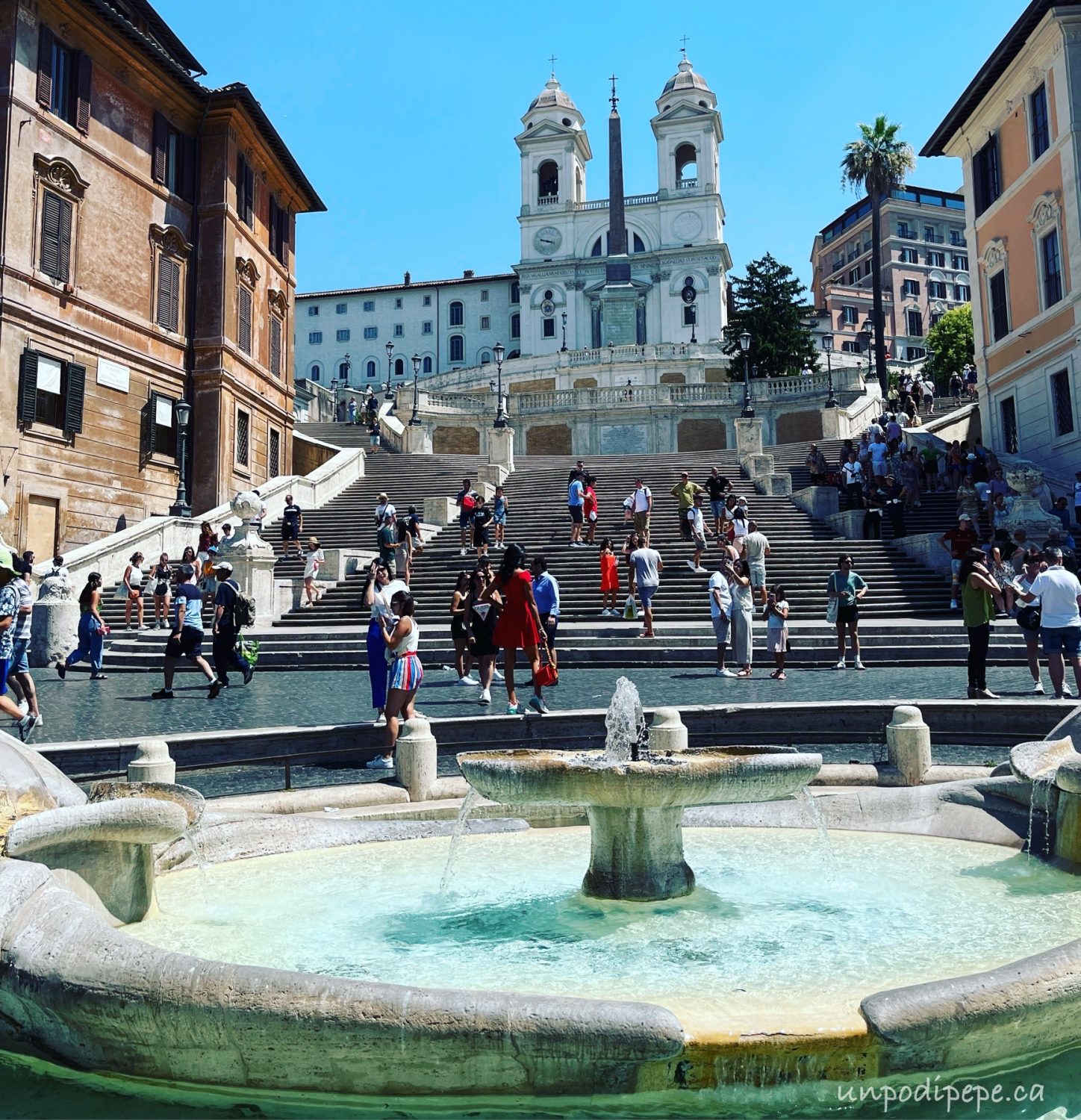
Today Acqua Vergine supplies water to the fountains in Piazza della Rotonda outside the Pantheon, Piazza Mattei (Fontana delle Tartarughe) Fontana del Babuino, Piazza Navona (the 2 outer ones, not the Fontana dei Quattro Fiumi), Campo dei Fiori, Piazza del Popolo (Fontana dei quattro leoni, Fontana di Nettuno and Fontana della Dea di Roma), Piazza Trevi, and my all-time favourite in Piazza di Spagna, La Barcaccia which resembles a sinking ship.  

Don’t forget to bring a water bottle to Roma!  Buon Viaggio, Cristina

*Since 1998, the water in the Fontana di Trevi is recycled, so no longer drinkable.  With €3000 of coins thrown in daily, it was hardly drinkable anyways! Read more about this in my next post!

Photo credits:  Drinking from La Barcaccia by Shannon Milar, Photo with bas reliefs by my sorella Lucia.

Share this:

  • Share on Facebook (Opens in new window) Facebook
  • Share on Pinterest (Opens in new window) Pinterest
  • Share on X (Opens in new window) X
  • Email a link to a friend (Opens in new window) Email
  • Share on WhatsApp (Opens in new window) WhatsApp
Like Loading...

Giubileo 2025

17 Monday Feb 2025

Posted by Un po' di pepe in Feste, Italia, Roma

≈ 4 Comments

Tags

Jubilee2025, Roma photography, UNESCO World Heritage Sites, Vatican City

2025 is a Giubileo or Jubilee, also known as a Holy Year or Anno Santo-a Vatican celebration of spirituality and reconciliation, held every 25 years.  Roma and Vatican City- the smallest country in the world, will be a destination for millions of pilgrims.  The event is expected to attract 32 million people from all over the world.  As a reference, in 2023 Roma had 13 million visitors!

The Jubilee has been a tradition in the Catholic Church since the year 1300, started by Pope Boniface VIII as a special year for spiritual renewal, works of mercy, forgiveness and celebration.  It was also seen as an opportunity for a fresh start.  Originally held every 100 years, the timing was changed to every 25 years to give each generation an opportunity to participate.

The theme of Giubileo 2025 is Pellegrini di Speranza– Pilgrims of Hope.  The theme was chosen by Pope Francesco to emphasize hope as a driving force of the Christian faith.  He calls on everyone to embrace values such as peace, solidarity and unity, reflecting on the broader world and the role each person can play in fostering a hopeful, compassionate society. The Giubileo is for anyone-those who are Catholic, curious or just passing through.  In addition to religious observance, it also a cultural celebration, with special exhibitions, concerts and cultural events.

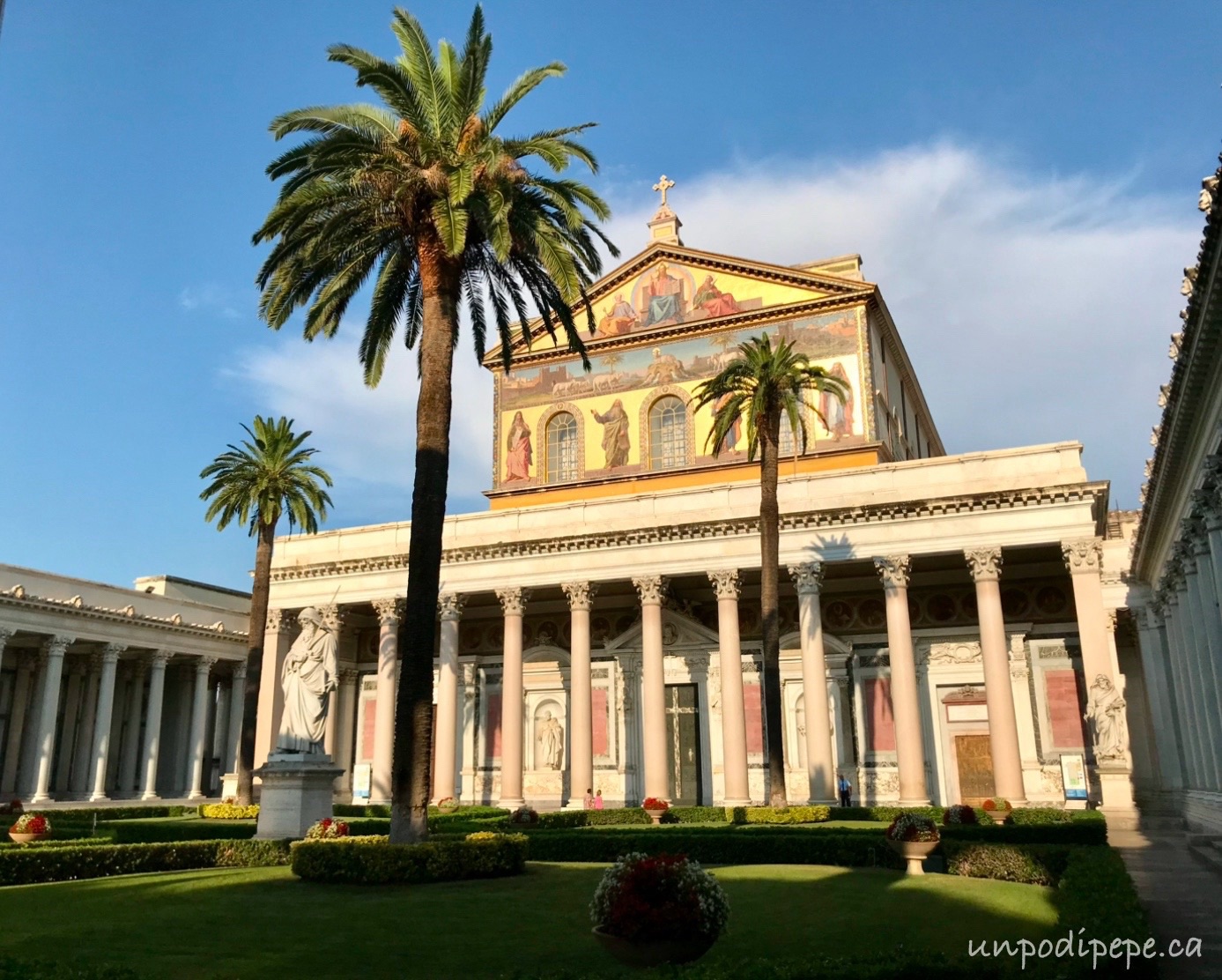
A central part of the pilgrimage is passing through the Holy Doors, which symbolizes the transition from sin to grace.  Each of the 4 Papal Basilicas has a Holy Door.  They are usually sealed shut and opened only during a Holy Year.  The main one, San Pietro at the Vatican, was the first to be opened on Dec 24th.  The other 3 in Roma are- Santa Maria Maggiore, San Giovanni in Laterano and San Paolo Fuori le Mura.  The doors will be sealed shut again on Jan 6th, 2026 until the next Holy Year in 2050.

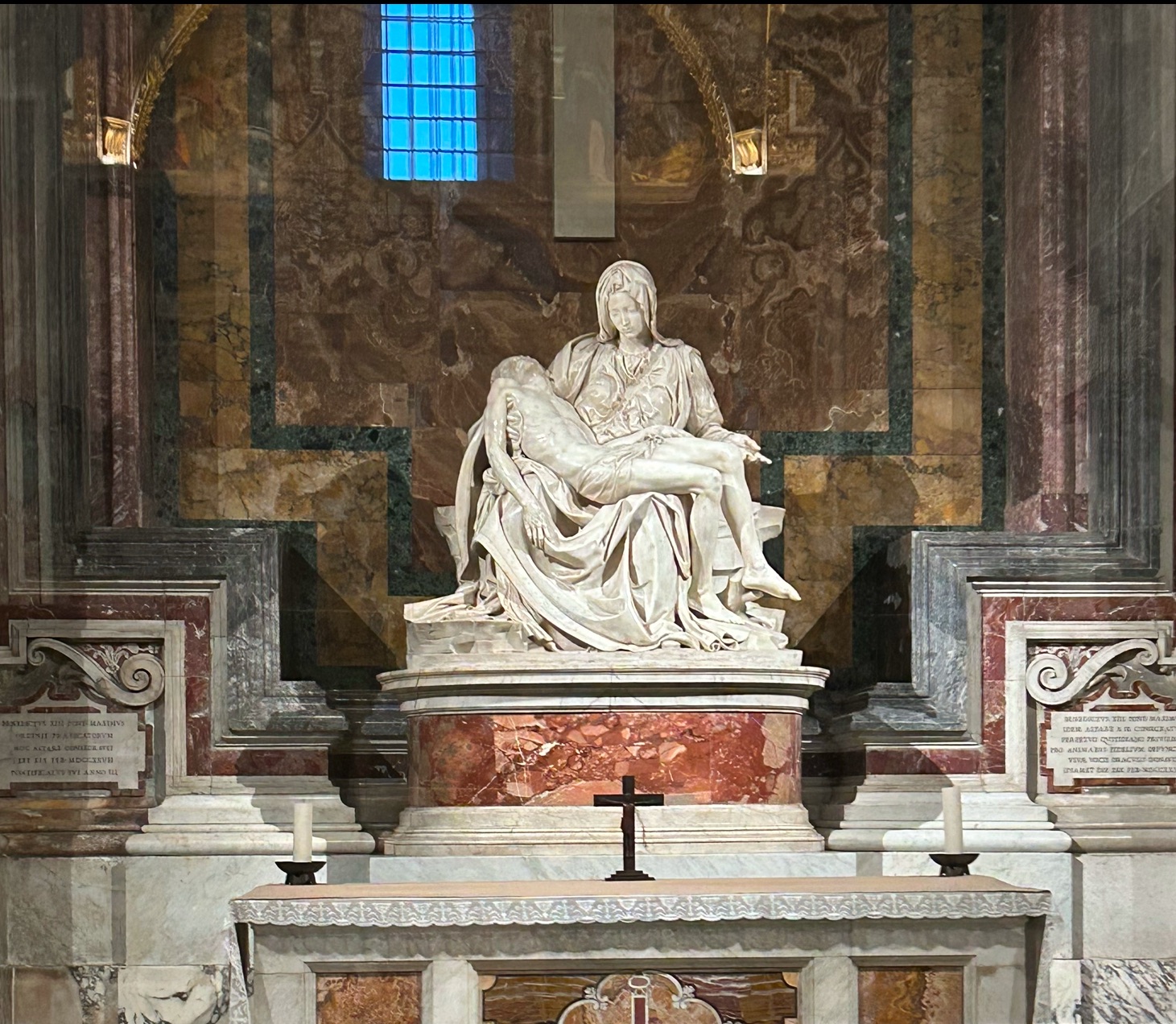
In July, I will be in Roma to attend a family wedding!  We are all excited-and not afraid of crowds or heat!  This will not be my first Holy Year in Roma.  In 1975, very young me and my family spent 3 days in Roma with Don Michele, Papa’s cousin who was a priest.  Not only did I pass through all 4 Holy Doors, but I actually touched Michelangelo’s Pietà before it was surrounded by bulletproof glass, and we may have visited every major church in Roma!  I also had my introduction to Pasta Carbonara at a Vatican cafeteria for pilgrims.  Carbonara should NOT be made for large groups….but I will leave that story for another time.

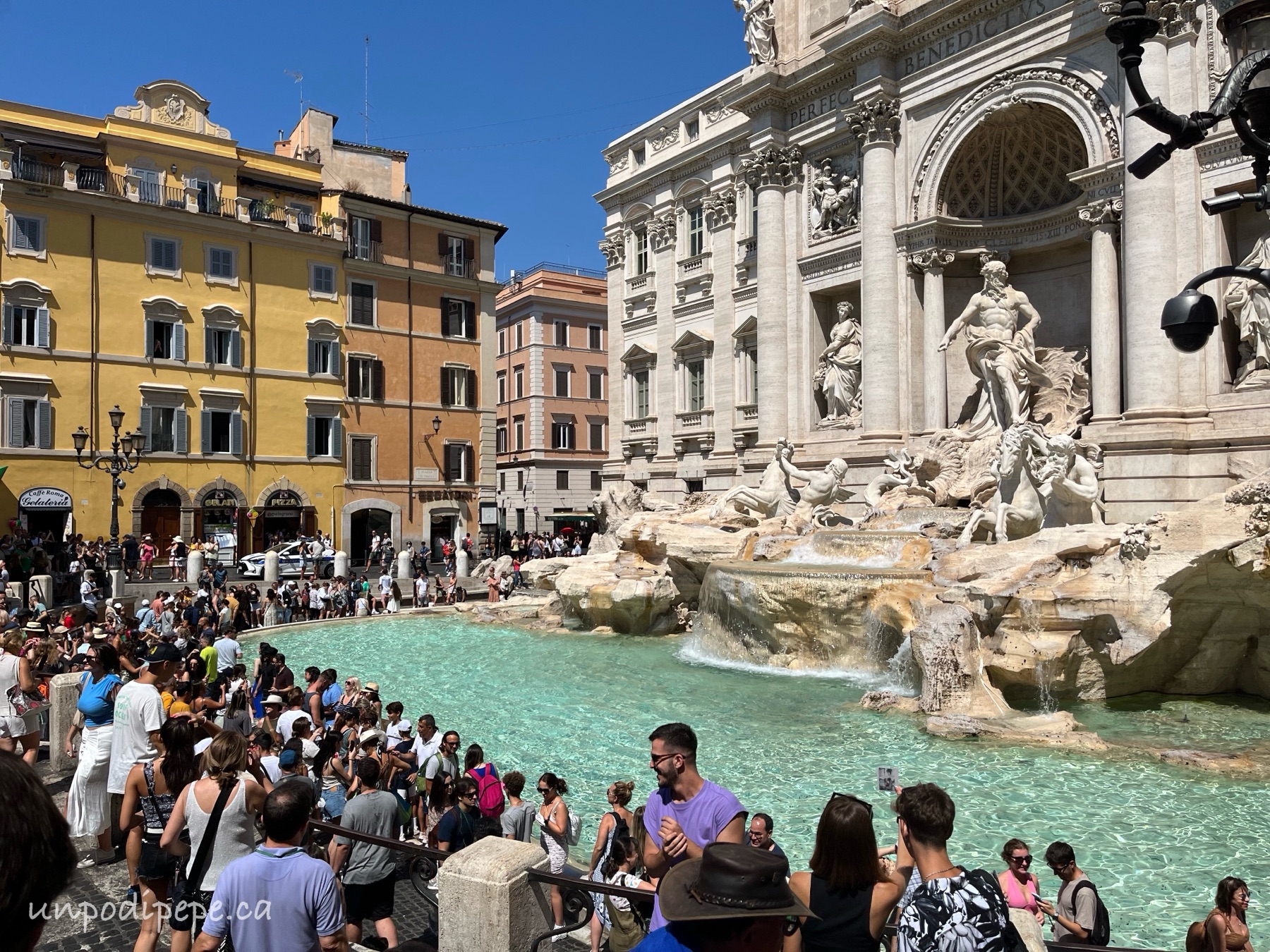
Roma has been a massive construction zone in preparation for 2025, so it should be all shiny and clean, hopefully with improved public transit.  There will still be ongoing work on Metro line C at Piazza Venezia, but most of the other renovation projects are completed.  Ancient monuments have been restored and refinished.  Bernini’s 29 meter high (94 feet) Baldacchino (altar canopy) in San Pietro has been polished for the first time in 150 years. A large area between Vatican City and Castel Sant’Angelo are now pedestrian only, since they have built an underground tunnel for car traffic.  Like everything in Roma, tunnel construction was delayed because during construction, they found ruins -the remains of a 2nd Century Roman wash house. 55 fountains have been restored including the one in front of the Pantheon, Fontana dei Quattro Fiumi in Piazza Navona and the Fontana di Trevi.  There will now only be 400 people at one time allowed to enter the small piazza to throw throw in their coins  and take photos.

Caravaggio 2025 at Galleria d’Arte Antica at Palazzo Barberini is on from March 7th -July 6th!!!!  This is one of the most ambitious Caravaggio exhibits ever.  More info here. I arrive in Roma July 7th.  Mannaggia!  Ecce Homo, which lives at the Prado Museum in Madrid and has only recently been attributed to Caravaggio will be included in the exhibit, as well as Napoli’s Sant’Orsola, the last Caravaggio, painted shortly before his death!  Martirio di Sant'Orsola Caravaggio's last paintingAdmission is €18 for adults.  Book your tickets now!  Run!  Make me jealous!  If they run out of tickets and you want to see 6 Caravaggio works for free, take yourself on my Caffè con Caravaggio walking tour!

What to expect in Roma this year?

Roma always has lots of visitors, even in ‘low’ season, which is only from January 7th until the beginning of March.  This year there will be increased crowds, especially in the areas around the Vatican.  If you are crowd-averse and not interested in any of the Giubileo activities in Roma, you may want to consider delaying your visit to Roma until 2026.  The busiest times are expected during Easter/Holy Week April 13-21st, Pentecost June 5th and at Christmas.  Different times of year are also aimed at various groups, for example, Jubilee of the sick and health care workers April 5-6th, teens Apr 25-27th, persons with disabilities April 28-30th. Artists, volunteers, public service workers and migrants all have their dates too.  It looks like April is definitely a month to avoid, unless you are attending a specific event!  Luckily none of the special dates are in the summer.  Here is the link to the calendar of events  Tickets are not required but you may need to book on the App.

Tickets for Colosseo, Galleria Borghese, Musei Vaticani and admission to the Basilica di San Pietro and the Pantheon will be in high demand.  Book early! If possible, plan to visit in the early am or evening. Look for accommodation that is not near the Vatican. for more info on how to ‘schedule like an Italian’, read Surviving Summer in Roma.

Download the Iubilaeum 25 APP  from the App store or Play store (android) and apply for a Pilgrim’s card a free digital pass needed for most Jubilee events.  This Portal allows individual or groups to register for events and highlight any special needs or access requirements.

It may be worth buying a 72 hour Roma Pass for €58.50.  The 36 hour Roma pass is already sold out! A Metro pass is always a good idea.

Don’t forget to read my post ‘Beat the heat:  Surviving Summer in Roma’

For some of my favourite things to do in Roma-‘Un Giorno a Roma‘.

If you need to get out of town to get away from the crowds, go to ‘Ostia Antica‘.  Buon Viaggio e Buon Giubileo!  Cristina

Grazie to Lucia for a few of the Vatican photos!

Share this:

  • Share on Facebook (Opens in new window) Facebook
  • Share on Pinterest (Opens in new window) Pinterest
  • Share on X (Opens in new window) X
  • Email a link to a friend (Opens in new window) Email
  • Share on WhatsApp (Opens in new window) WhatsApp
Like Loading...

Sanremo 2025

03 Monday Feb 2025

Posted by Un po' di pepe in Culture, Feste, Italian life

≈ 2 Comments

Tags

Liguria, Festival di Sanremo, Musica Italiana, Eurovision, Italian song contest, Sanremo viewing guide

The 75th edition of the Festa della Canzone Italiana di Sanremo is February 11-15, 2025, broadcast live on RAI.  Once again this year, I have put together a handy viewing guide to the annual 5 day song competition held in the town of Sanremo, Liguria. The Festival di Sanremo is the world’s longest running national televised music competition.

In 1950. Piero Bussetti of the Sanremo Casino and Giulio Razzi, conductor of the RAI orchestra launched a competition for previously unreleased songs to boost the local economy.  The first edition was broadcast live on RAI radio in January 1951 with 3 artists performing the 20 songs.  Since 1955 it is broadcast live on television.

From 1951-1977 the festival was held at the Sanremo Casino.  Since 1977 it has been at the iconic Teatro Ariston. The Festival is a massive media event in Italia and has launched many careers, including Domenico Modugno, Zucchero, Mina, Andrea Bocelli, Il Volo, Giorgia, Laura Pausini, Eros Ramazzotti, Mahmood and most recently Måneskin and Angelina Mango. I love to watch Sanremo every year with Mamma!

The winner will have the first option to represent Italia at the 68th annual Eurovision Song Contest in Basel, Switzerland May 13, 15 and 17, 2025.  Eurovision is huge in Europe with 39 countries participating, but hardly known at all in North America.  2021 Sanremo winners, Måneskin won Eurovision with their brilliant song ‘Zitti e Buoni’.  As the reigning country, Italia hosted Eurovision 2022 in Torino.

The 75th edition of the Festival di Sanremo  February 11-15, 2025 will be broadcast live on RAI (RAI International for the rest of us) and on the RAIplay App, hosted by Carlo Conti, with different cohosts each night.  They are: February 11th Antonella Clerici and Gery Scotti, February 12th Bianca Balti, Nino Frassica and Cristiano Malgioglio, February 13th Katia Follesa, Elettra Lamborghini and Miriam Leone, February 14th Geppi Cucciari and Mahmoud and February 15th Alessandro Cattelan and Alessia Mancuzzi. Former winners and guest artists will perform, including Jovanotti February 11th and Damiano David February 12th.

The Sanremo prize goes to the winning song, although in most cases the performers are involved in the songwriting.  This year, there are 29 contestants, plus the top 4 winners from the junior contest, ‘Sanremo Giovani’.  Judging is complex and contestants perform with the full RAI orchestra-complete with maestro.

A summary of what happens each night:

Night #1 February 11th.  All 29 contestants perform their competing song, with no eliminations.  Voting is 100% by press jury-(accredited journalists from press comprising of print, TV and web).

Night #2 and #3 February 12th and 13th. 15 of the contestants perform each night and there are no eliminations.  Voting is 50% televote and 50% radio jury.

Night #4 February 14th is ‘Duetto night’.  Each artist performs a cover song or medley of their choice as a duet with an Italian or international artist as a guest, or another competitor.  Voting is 34% televote, 33% press jury and 33% radio jury. A winner will be announced.  Unlike previous years though, the night’s results will NOT be added to the overall score, which is why performing with another competitor is permitted.

Final night #5 February 15th.  There are 2 rounds the final night.  In round 1, all 29 acts perform and voting is 100% televote.  The top 5 artists of the combination ranking are announced and advanced to the superfinal. For round 2, voting is reset, the top 5 perform again, and there is a new, final vote. The winner is decided by juries and  televoting.
The lineup of concorrenti /contestants includes 3 former Sanremo winners, 4 who have represented Italia at Eurovision, many former contestants, and some first time acts.  Below is a list of all 29 performers, the song titles and a few other details to help you watch and enjoy the festival:

  • Achille Lauro –‘Incoscianti Giovani’-This is Achille’s 4th time as a Sanremo participant. In 2021, he gave 4 stunning ‘shock glam’ guest performances.  In 2022 his song Domenica was sung with the Harlem Gospel Choir.  Achille also won the 2022 San Marino song contest and represented San Marino at Eurovision in Torino. In 2024, he was an XFactor judge.  I am looking forward to his duet night performance with Elodie.
  • Bresh –‘La Tana del Granchio’. Bresh (Andrea Brasi) released his first album in 2020 and his 2021 single ‘Angelina Jolie’ was 4X platinum.  At Sanremo 2023, he was a guest, performing ‘Guasto d’amore‘, dedicated to Genoa, and joining Emma on Covers night.  This is his first time as a competitor.
  • Brunori Sas –‘L’Albero delle noci‘. Dario Brunori released his first album in 2020.  He has also written several film soundtracks and goes on tour in March.  This is his first time in the competition.
  • Clara –‘Febbre’. Clara Socini is the winner of 2024 Sanremo Giovani, the first female to win in 14 years! Clara has released 4 singles since 2020.  In 2023-2024, she played the role of Giulia/Crazy J on the RAI series Mare Fiori and her 2024 collaboration with Mr Rain ‘Un Millione di Notte‘ made the top 10. For Duet Night, she is singing ‘The Sound of Silence’ with Il Volo!!!
  • Coma_Cose –‘Cuoricini’. Milanese indie duo,  life and music partners since 2016 Fausto Zanardelli (aka Fausto Lama) and Francesca Mesiano (aka California).  They participated in Sanremo 2021 with the song ‘Fiamme negli occhi’ which went gold in 3 weeks.  They were married after their 2023 performance. This is Coma_Cose’s third time at Sanremo.
  • Elodie -‘Dimenticarsi alle 7‘ The Roman singer participated in Amici* in 2016, and Sanremo in 2017 with ‘Tutta colpa mia‘ and in 2020 with ‘Andromeda‘.  In 2020 Elodie was the most listened to female artist on Spotify Italia. In 2021 she was the cohost for Sanremo night #2.  Most recently, Elodie is the voice of Sarabi in ‘Mufasa: Il Rè Leone’. This is her 4th time competing.
  • Fedez -‘Battito‘. Rapper Fedez (Federico Lucia) is one of Italia’s most influential performers.  He placed 2nd at Sanremo 2021 with Francesca Michielin with  ‘Chiamami per nome‘.  His catchy hit ‘La Dolce Vita’ with guests Tananai and Mara Sattei was the tormentone** of summer 2022. In November he started ‘Pulp Podcast’.  This is Fedez’s 2nd time competing at Sanremo. For Duet night, he is performing ‘Bella Stronza‘ with Marco Masini.
  • Francesca Michielin –‘Fango in Paradiso’. Francesca won XFactor at age 16 and debuted at Sanremo in 2016, coming in 2nd place and representing Italia at Eurovision with ‘Nessun Grado di Separazione‘.  In 2021, she came in 2nd place again, with Fedez, and in 2022 Francesca was back as an orchestra conductor for Emma. She has also been nominated for the David di Donatello*** for musical score. This is her 3rd time as a competitor. She is duetting with Rkomi.
  • Francesco Gabbani -‘Viva la Vita‘. The winner of Sanremo 2017 with ‘Occidentali’s Karma‘, everyone will remember Francesca performing with a gorilla.  He won the newcomers category in 2016 and came in 2nd at Sanremo 2020. This is his 4th time competing.
  • Gaia -‘Chiamo io chiami tu‘. The XFactor 2016 runner up and winner of the 2020 Amici* talent contest, Gaia competed at Sanremo 2021 and was a guest in 2024 on covers night, singing with Big Mama. She has collaborated with Madame, Rkomi and Guè.  Gaia mixes Italian and Brazilian Portuguese in her songs, and will be opening for Elodie.
  • Giorgia –‘La Cura per me’ Giorgia Todrani has 12 top 10 albums, 24 top 10 singles, and a vocal range that spans 4 octaves.  In 1994 she placed second in the Nuovi Proposti (newcomers category), losing to Andrea Bocelli!  Giorgia won Sanremo 1995 with ‘Come Saprei’, came in 3rd in 1996, and 2nd in 2001. She even won a David di Donatello*** in 2004 for original movie song. She has performed with Pavarotti, Mina, Eros Ramazzotti, Elton John, Alicia Keys, Jovanotti, Ray Charles, and Andrea Bocelli (‘Vivo per Lei‘). Giorgia was a musical guest at Sanremo 2017 and a cohost in 2024.  In 2024 she also made her acting debut in the film ‘Scordato‘.This is her 5th time in the competion and the 30th anniversary of her Sanremo win. For Duet night, she will belt it out with Annalisa doing ‘Skyfall’.
  • Irama -‘Lentamente‘ In 2016 Irama was in the Newcomers category and his 2019 song went double platinum.  His 2020 song ‘Mediterranea‘ was the most listened to song of the summer.  In 2021, Irama was not able to perform live due to one of his staff testing COVID positive, although he still placed 5th based on his pre-recorded rehearsal performance! In 2022, he was my favourite to win, with the 4th placed ballad ‘Ovunque Sarai’ dedicated to his recently deceased nonna.  Irama has several recent collaborations with Rkomi, including the game show Celebrity Hunted. In 2024, Irama sold out L’Arena di Verona. This is his 6th time competing at Sanremo. He is duetting with Arisa, singing ‘Say Something’.
  • Joan Thiele -‘Eco’. Joan grew up between Columbia and Italia.  She won the 2023 David di Donatello*** for best original song ‘Proiettili‘ for the movie ‘Ti mangio il cuore‘  This is her first time at Sanremo.
  • The Kolors –‘Tu con chi fai l’amore’.  Formed in 2009 by cugini Antonio ‘Stash’ and Alex Fiordispino and Dario Iaculli with a distinct 80’s funk vibe.  They were the resident band in the Milanese club ‘Le Scimmie‘ and won the Amici* talent show in 2015 with Elisa as their coach. The Kolors made their Sanremo debut in 2018 with their first song in Italian ‘Frida (Mai, mai, mai)’. They have done many collaborations and Stash has been an Amici judge.  Their 2023 hit ‘Italdisco‘ was the tormentone** of the summer! Their 2024 Sanremo entry ‘Un ragazzo, una ragazza’ went double platinum, and even gold in Poland! The Kolors are in the middle of their first European tour. This is their 3rd time competing at Sanremo.
  • Lucio Corsi -‘Volevo essere un Duro‘. Lucio has released 3 albums since 2017.  In 2023, he opened for The Who at Firenze Rocks. This is Lucio’s first time at Sanremo.  For Duet night, his partner is Topo Gigio!
  • Marcella Bella -‘Pelle Diamante’. Following an absence of 18 years, this is Marcella’s 9th time competing at Sanremo, including in 1990 and 2007 with her older brother Gianni. Her first recording contract was in 1969, at age 18, and she had several hit songs in the 1980’s.
  • Massimo Ranieri -‘Tra le mani un cuore’ 1988 Sanremo winner for ‘Perdere l’amore’. In 2022, after a 25 year Sanremo absence, his song ‘Lettera di là dal mare’ received the Mia Martini Critic’s Prize.  This is his 7th time participating, as well as guest appearances, and judging Sanremo Giovani in 2016. Massimo represented Italia at Eurovision in 1971 and 1973.
  • Modà -‘Non ti dimentico‘ One of my favourite bands, Modà was started in Milano in 2000 by Francesco ‘Kekko’ Silvestre.  This is their 4th time competing at Sanremo.  In 2011 their song ‘Arriverà’ with Emma Marrone came in 2nd place and in 2013 ‘Se si potesse non morire’ came in 3rd place. 2023 was the 20th anniversary of the release of their first album. On duet night they perform with Francesco Renga.
  • Noemi -‘Se ti Innamori muori’  In her 15 year career, Noemi has had 3 gold records and 18 platinum.  She was on X Factor in 2009 and a judge for The Voice of Italy 2013-15.  In 2022 she and Ermal Meta were conductors for the 1°Maggio concert at Circo Massimo.  This is her 8th time in competition at Sanremo and her song was written by Mahmoud.
  • Olly -‘Balorda nostalgia‘ ’The Genovese rapper has collaborated with singer Arisa and earned a spot in 2023 via Sanremo Giovani.  His song ‘Polvere‘ was one of my favourites that year.  He released ‘Per due come noi’ with 2024 winner Angelina Mango and is back at Sanremo for the 2nd time.
  • Rkomi –‘Il Ritmo Delle Cose’ The successful Italian rapper released his first album in 2017.  His first time at Sanremo was 2022 with the hit song ‘Insuperabile‘.  In 2023 he was an XFactor judge and did several side projects with Irama.  This is his 2nd time competing at Sanremo. He performs with Francesca Michielin on Duets Night.
  • Rocco Hunt –‘Mille volte ancora’. The urban poet/rapper from Salerno has 40 platinum albums in Italia, Spain and France.  He has collaborated with and written for many international artists.  This is his first time at Sanremo.
  • Rose Villain -‘Fuorilegge’.This is Goth singer/rapper Rosa Luini’s 2nd time competing at Sanremo.  In 2023, she performed on Covers night with Rosa Chemical.  She also released her first album ‘Radio Gotham‘ and ‘Fragile‘ a single with Achille Lauro. Her hit ‘Io, me e altri guai‘ is awesomely described as ‘Tainted love meets Wednesday Addams’. Her 2024 Sanremo entry was the catchy hit ‘Click Boom’. Rose opened for Coldplay their 4 nights at Stadio Olympic Roma!
  • Sarah Toscano -‘Amarcord’. 19 year old Sarah is the winner of Amici* 2023. Last July, she opened for the Black Eyed Peas in Milano.  This is her first appearance at Sanremo.
  • Serena Brancale -‘Anema e Core‘. A Pugliese polyinstrumental performer and composer with a passion for soul, R&B and jazz, Serena has written for many international artists.  She participated in Sanremo 2015 and is back for the 2nd time. She performs with Alessandra Amoroso for Duet night.
  • Simone Cristicchi –‘Quando sarai piccola’. 2007 Sanremo winner with ‘Ti regalerò una rosa‘.  Simone became director of Teatro Stabile d’Abruzzo and wrote several books. He was back in 2019 receiving the critic’s prize for ‘Abbia Cura di me’.  This is his 3rd time at Sanremo.
  • Shablo featuring Gué, Joshua and Tormento-‘L’amore in Bocca‘. Shablo is an Italo Argentinian musician, producer, DJ, and talent scout.  He has worked with Achille Lauro, Rkomi, Irama and Madame and produced several Sanremo songs, including Irama’s beautiful ‘Ovunque Sarai‘.  This is his first time performing.  Gué was in the rap/hip-hop group Sacre Scuole with Dargen D’Amico.  In 2011 he went solo and has had an eventful career.  He has been to Sanremo twice as a guest, performing with Mahmood in 2019 and Geolier in 2024. Joshua Bale is an Italoamerican R&B singer and rapper.  His first single was produced by Shablo in 2024.  Soul singer and rapper Tormento was in a hip hop band for 17 years called i Sottotono.  They split up in 2011 and he has had a solo career.  He participated in Sanremo in 2001 with i Sottotono and was a guest for Covers Night in 2019.
  • Tony Effe -‘Damme ‘na mano’. In 2014, founded an Italian trap band Dark Polo Gang.  In 2021 he released his firs solo disc and has since collaborated with many rap and pop artists, including ‘Michelle Pfeiffer‘ with Rose Villain.  In 2024, he and Gaia released the summer hit ‘Sesso e Samba‘.  This is his 1st time at Sanremo. He performs with Noemi on Duets night.
  • Willy Peyote ‘Grazie ma no grazie‘ since 2013, an interesting figure in the Italian Indy music scene.  In 2021 at Sanremo, he received the Mia Martini Critic’s Prize for ‘Mai dire mai‘.  He is back at Sanremo for the 2nd time.

The 4 winners of Sanremo Giovani:

  • Alex Wyse-‘Rockstar‘-Alex was on Amici* 2022.  In 2024, his tour was called ‘A Night with Alex Wyse’.
  • Maria Tomba-‘Goodbye (Voglio good vibes)’ -Maria started songwriting and poetry in Verona at age 14.  She participated in XFactor 2023.
  • Settembre-‘Vertebre‘-Andrea Settembre from Napoli started dancing at age 6.  In 2019, he participated in The Voice of Italy on team Gigi D’Alessio, and was a semi-finalist on XFactor in 2023.  His version of Amandoti in Napoletano went viral.
  • Vale LP & Lil Jolie-‘Dimmi tu quando se pronto per fare l’amore‘-Valentina is a singer/rapper from Napoli.  In 2024 she released her first album ‘Guagliona’.  Lil Jolie, a rock/pop singer was on Amici* in 2023.

*Amici is an Italian talent show on television since 2001.  20 ‘students’ aged 16-30 years, interested in being professional singers, songwriters and dancers participate. **Un tormentone is a catchy song that replays in your head, like an ‘ear worm‘! ***David di Donatello is a film award-the Italian equivalent of an Oscar

Read the contestants’ full bios on the Festival di Sanremo website.  RAI International usually airs the shows twice-once live at 1900 -0100ish Italian time, and a replay later.  Check the local listings for your country.  The RaiPlay app is another way to watch -and it will not be Geoblocked!

Will you be watching the Festival di Sanremo?  Let me know which performances you are looking forward to or which ones were your favourites!

Ciao, Cristina

Share this:

  • Share on Facebook (Opens in new window) Facebook
  • Share on Pinterest (Opens in new window) Pinterest
  • Share on X (Opens in new window) X
  • Email a link to a friend (Opens in new window) Email
  • Share on WhatsApp (Opens in new window) WhatsApp
Like Loading...

In Vino there are Memories

24 Friday Jan 2025

Posted by Un po' di pepe in Amici e Famiglia, Bilingual posts, Italocanadesi, Vino

≈ 14 Comments

Tags

Food writing, Italian Canadian Literature, Italocanadesi, Pugliese Traditions, vino cotto, Winemaking

To celebrate my birthday, today I am posting my story from the recently published anthology ‘A Literary Harvest: Canadian Writing about Wine and other Libations’.  I hope you enjoy it as much as I enjoyed writing it.  It is followed by an Italian translation.  Per l’italiano, leggi sotto.  Salute!….

When I look into a glass of wine, I see more than a delicious beverage to sip and enjoy. I see tradition and family, and a piece of my cultural heritage. I think of my Nonno’s vineyard in Puglia and I imagine my ancestors tilling the soil. I also imagine the journey the grapes made, coming from Greece and the Balkans millennia ago, then again across the Atlantic to North America. Immigrant journeys, similar to ours.

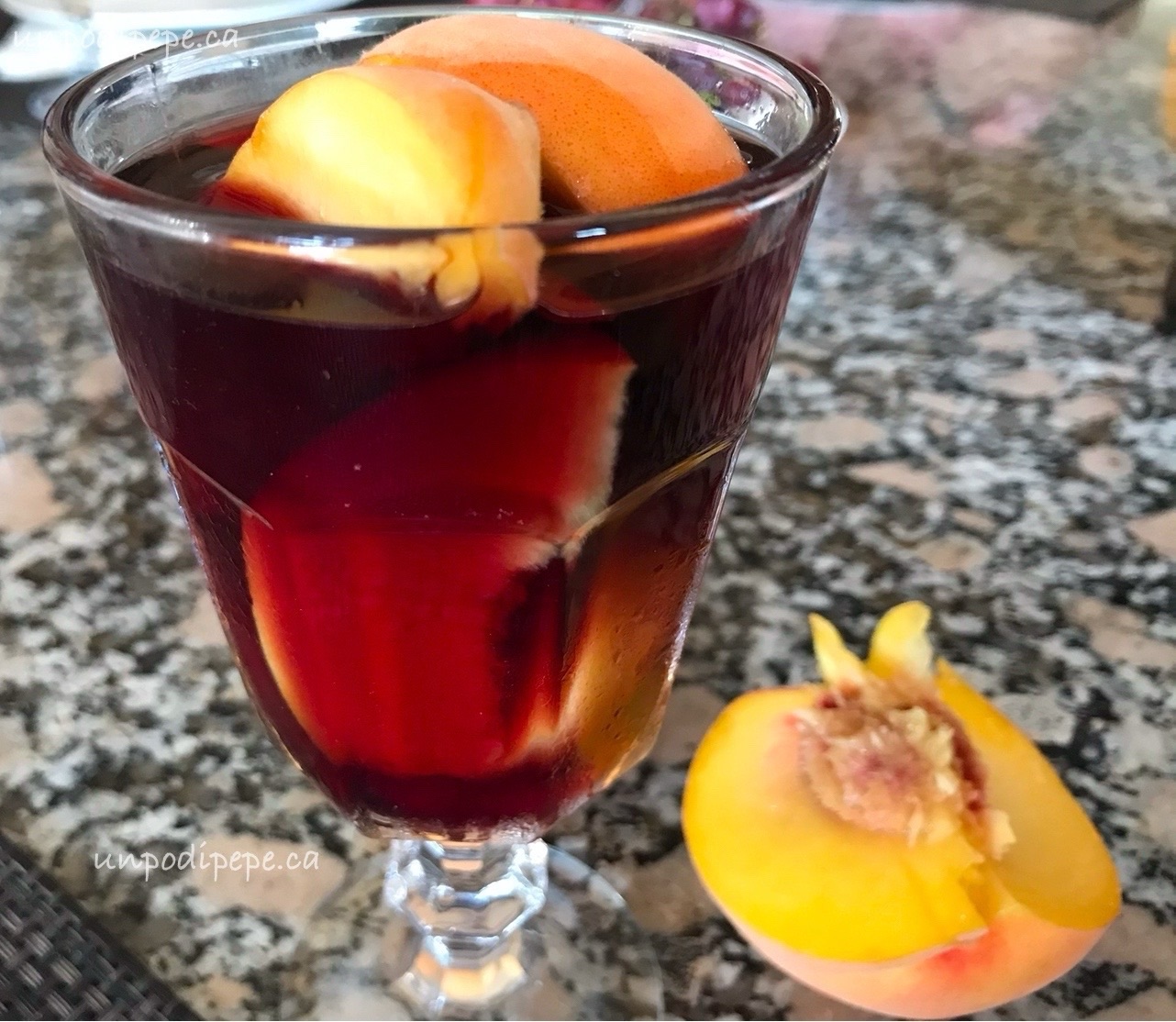
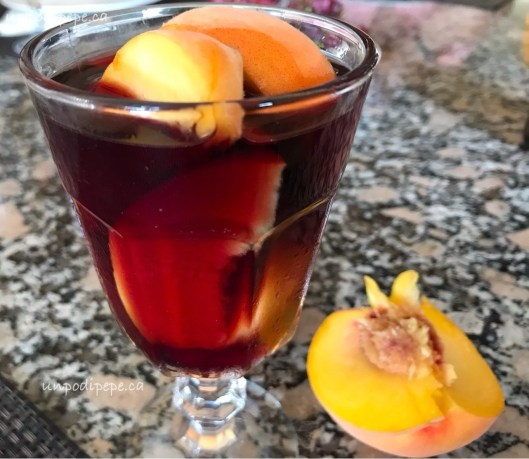
Wine is an integral part of growing up in an italocanadese family and is a staple of every family function. Everyone was allowed to have a bit of vino with dinner – it was exciting and made us feel grown up. Even when we were little … at first with 7-Up, Sprite or Ginger Ale, and eventually straight vino. In the summer, everyone looks forward to la pesca in vino. This involves cutting up a fresh peach, placing the slices in a glass, then filling it with vino. After the wine is consumed, lovely, sweet, wine-saturated peach slices await you for dessert. The peach slices take up most of the space in the glass, so the amount of wine to drink is really very little.
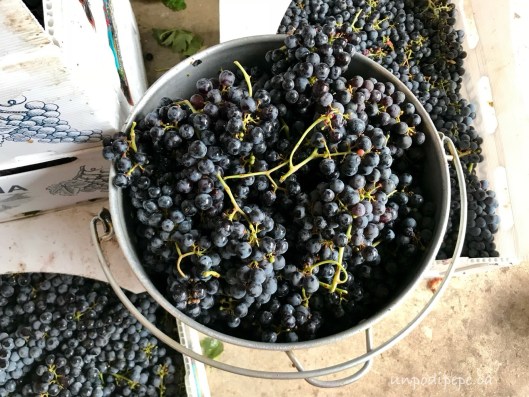
Wine making season is mid- to late-September, right after the pomodori are canned and stored in the cantina. The grapes grown in the back-yard garden are mostly for eating, so wine grapes are purchased from the Okanagan Valley. This is an area with summer weather similar to southern Italia … hot and dry during the day and colder at night. This combination produces the sweetest grapes.

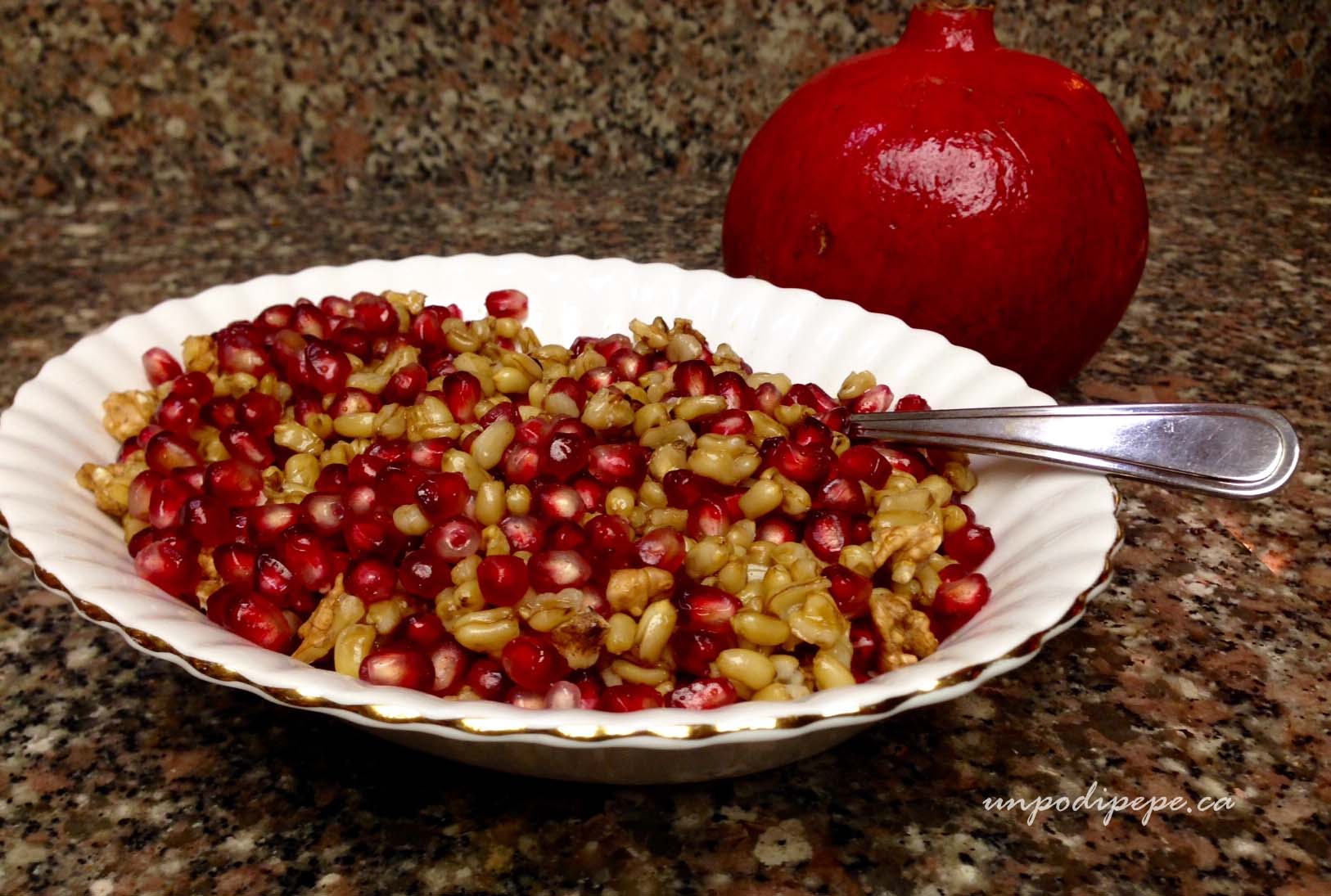
Making vino is a real family affair. When the grapes arrive, everyone who is free lends a hand, even the little ones, the nipotini. We help cart the boxes of grapes from the truck and empty them straight into the hand cranked grape crusher on top of a barrel.  Everything goes in;  skins, seeds and stems. Then we break apart the boxes, or else the wasps soon descend- Vespe know a good thing when they smell it! All month the aroma of fermenting grapes fills the garage!Mamma takes some of the mosto, the wine must, and boils it down like molasses to make vino cotto.  It really should be called mosto cotto, but we have always called it vino cotto. The thick, sweet liquid is poured over boiled wheat berries on November 1st to celebrate Tutti i Santi, All Saints’ Day. This traditional dish, in the local dialect, is called muscitaglia, from the words in Greek and Latin mosto and talia (grain). Walnut pieces and pomegranate seeds are added when available. Vino cotto is also drizzled on cartellate, a traditional Pugliese Christmas treat, and even on snow, like a vino cotto slushie!
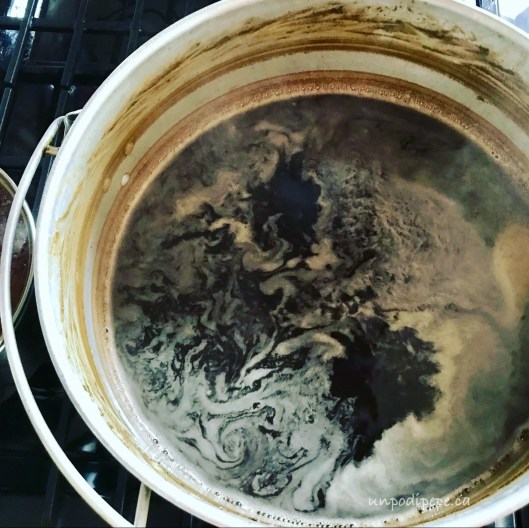
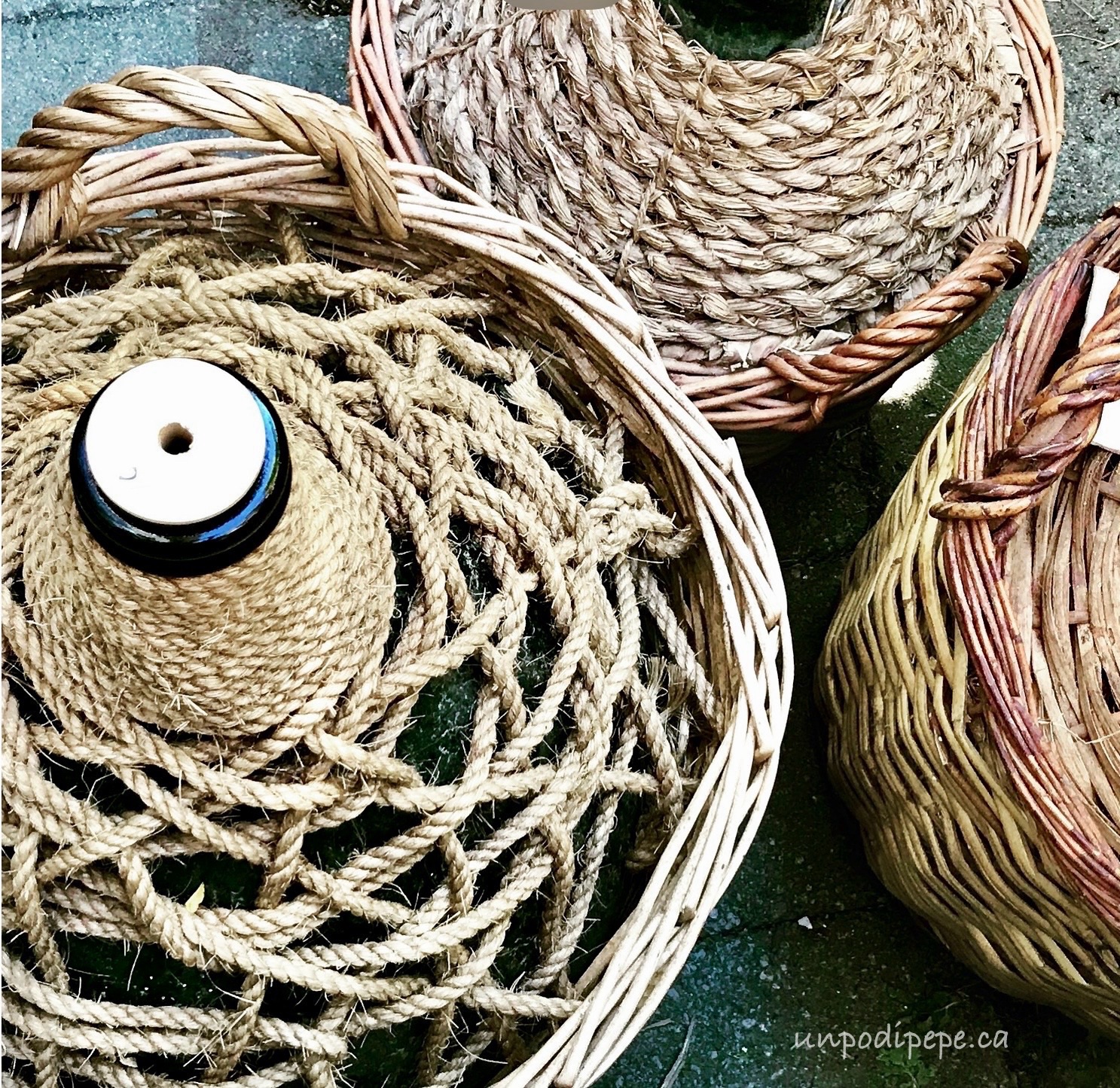
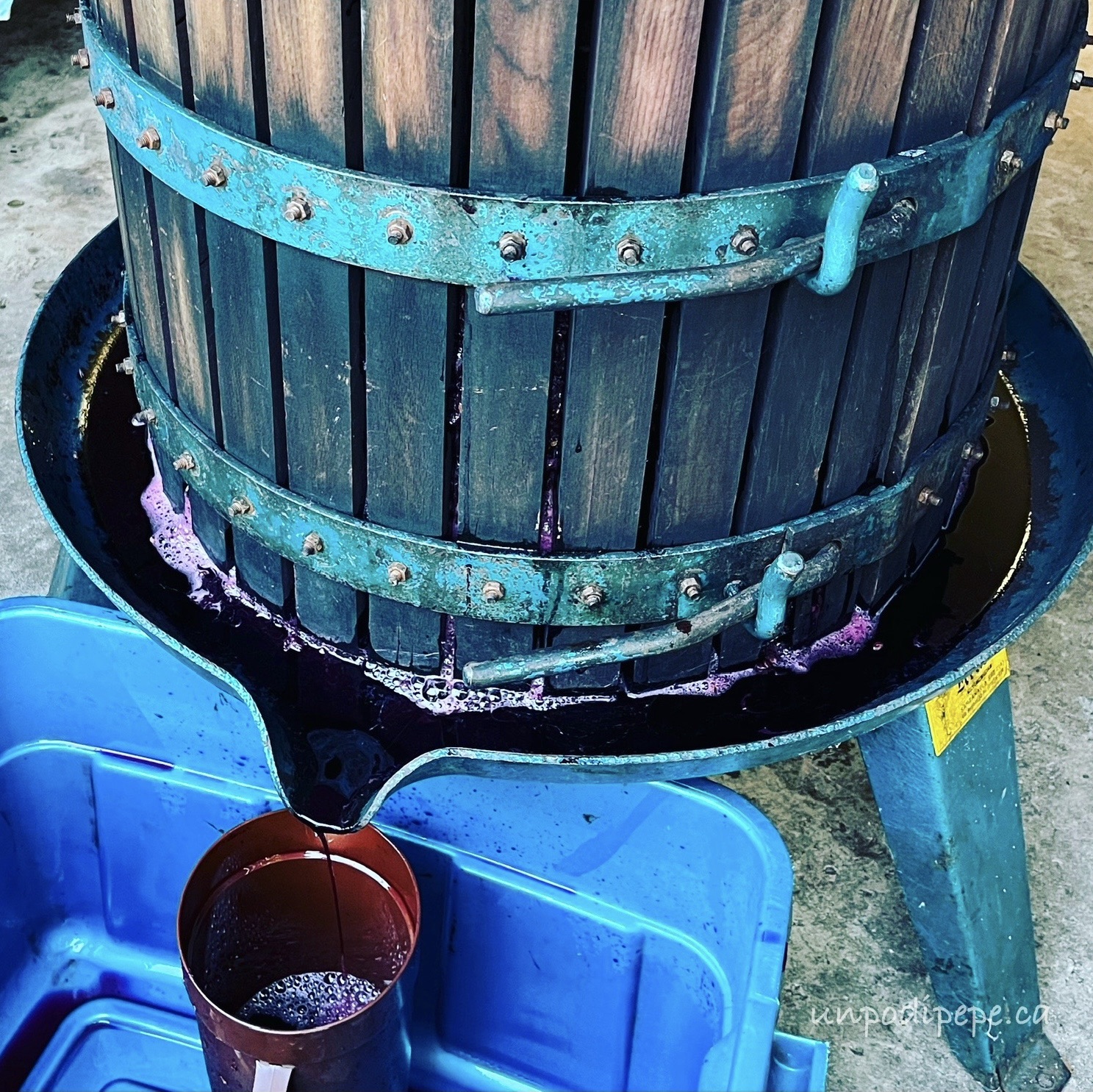
When ready, the fermented grapes are transferred to the old wooden torchio, for pressing. Since there are no preservatives added, our vino is stored in large, bell-shaped, wicker-covered glass damigiane, and siphoned into bottles only as needed. The wine needs to be tramutato a few times. This involves transferring it from one damigiana to another, to remove sediment. Like everything else Papà does, this is done according to the phases of the moon. Vino is tramutato during la luna calante, the waning moon, although the damigiane are still left open to air. On November 11th, the feast day of Saint Martin, the new vino is tasted and then the damigiane are closed until bottling. The old proverbs say “A San Martino, ogni mosto diventa vino” which means “On St Martin’s Day, every must turns into wine”, and ‘A San Martino, si lascia l’acqua e si beve vino’, ‘On Saint Martin’s Day, one abandons water and drinks wine’.

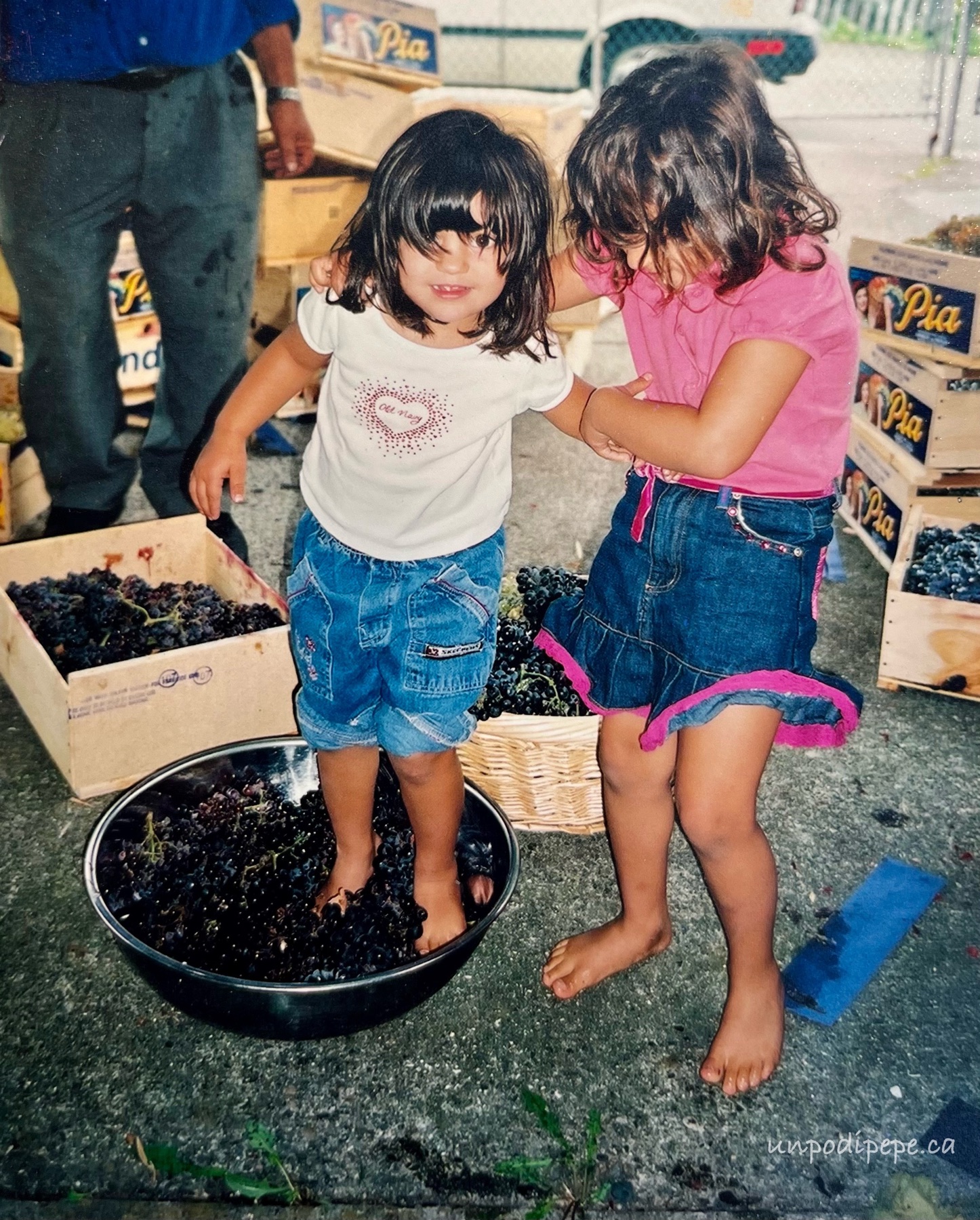
Papà makes the best vino. No sulfites or preservatives, just pure fermented grape juice. It has a full, robust flavour and does not leave you with a headache. Whenever anyone (anyone non-Italian, that is), asks him how he makes such good vino, he always has the same answer. “Ok … I tell you” … then he gets all dramatic… “for 2 weeks … I no wash the feet…” You can see where this is going. It is amazing how many people sit there open-mouthed for a few minutes and actually believe him! That is, until they see the mischievous smirk on his face. Just for fun, all of my nipotini have had photos taken à la “I Love Lucy,” crushing grapes in a half barrel or tub with their bare feet. These grapes are not added to il torchio, even though they did wash their feet. Salute!

         Published in ‘A Literary Harvest:  Canadian Writing about Wine and Other Libations. Editors Licia Canton, Giulia De Gasperi & Decio Cusmano.  Longbridge Books, 2025, p 94-96.

In Italiano:

Nel Vino ci sono Ricordi

Quando guardo dentro un bicchiere di vino, vedo più di una bevanda deliziosa da sorseggiare e gustare. Vedo tradizione e famiglia, e un pezzo del mio patrimonio culturale. Penso al vigneto di mio nonno in Puglia e immagino i miei antenati che coltivano la terra. Immagino anche il viaggio che hanno fatto le uve, provenienti dalla Grecia e dai Balcani millenni fa, poi di nuovo attraverso l’Atlantico fino al Nord America. Viaggi di immigrazione, simili ai nostri.

Il vino è parte integrante della crescita in una famiglia italocanadese ed è un elemento fondamentale di ogni festa familiare. A tutti era permesso bere un po’ di vino a cena: era emozionante e ci faceva sentire grandi. Anche quando eravamo piccoli… all’inizio con 7-Up, Sprite o Ginger Ale, e alla fine vino puro. In estate, tutti aspettano con ansia la pesca in vino. Ciò comporta tagliare una pesca fresca, mettere le fette in un bicchiere, quindi riempirlo di vino. Dopo aver consumato il vino, deliziose, dolci, fette di pesca sature di vino ti aspettano. Le fette di pesca occupano la maggior parte dello spazio nel bicchiere, quindi la quantità di vino da bere è davvero molto ridotta.

La stagione della vinificazione va da metà a fine settembre, subito dopo che i pomodori sono stati inscatolati e conservati in cantina. L’uva coltivata nel orto sul retro è destinata al consumo umano, quindi l’uva da vino viene acquistata nella Okanagan Valley. Questa è una zona con un clima estivo simile a quello dell’Italia meridionale… caldo e secco durante il giorno e più freddo di notte. Questa combinazione produce l’uva più dolce.

La produzione del vino è una vera e propria faccenda di famiglia. Quando arriva l’uva, tutti quelli che sono liberi danno una mano, anche i più piccoli, i nipotini. Aiutiamo a trasportare le casse di uva dal camion e le svuotiamo direttamente nella pigiatrice a manovella in cima a una botte. Ci mettiamo dentro tutto: bucce, semi e raspi. Poi rompiamo le casse, altrimenti le vespe scenderanno presto: le vespe sanno riconoscere una cosa buona quando la sentono! Per tutto il mese l’aroma dell’uva in fermentazione riempie il garage!

Mamma prende un po’ di mosto di vino, e lo fa bollire come la melassa per fare il vino cotto. Dovrebbe chiamarsi mosto cotto, ma noi lo abbiamo sempre chiamato vino cotto. Il liquido denso e dolce viene versato sui chicchi di grano bolliti il ​​1° novembre per celebrare la festa di Tutti i Santi, il giorno di Ognissanti. Questo piatto tradizionale, nel dialetto locale, è chiamato muscitaglia, dalle parole in greco e latino mosto e talia (grano). Pezzi di noce e semi di melograno vengono aggiunti quando disponibili. Il vino cotto viene anche versato sulle cartellate, un dolce natalizio tradizionale pugliese, e anche sulla neve, come un granita di vino cotto!

Quando è pronto, l’uva fermentata viene trasferita nel vecchio torchio di legno, per la pressatura. Poiché non vengono aggiunti conservanti, il nostro vino viene conservato in grandi damigiane di vetro a forma di campana, ricoperte di vimini, e travasato nelle bottiglie solo quando necessario. Il vino deve essere travasato un paio di volte. Ciò comporta il trasferimento da una damigiana all’altra, per rimuovere i sedimenti. Come ogni altra cosa che fa Papà, questo viene fatto in base alle fasi lunari. Il vino viene travasato durante la luna calante, anche se le damigiane vengono comunque lasciate all’aria aperta. L’11 novembre, giorno della festa di San Martino, si assaggia il vino nuovo e poi le damigiane vengono chiuse fino all’imbottigliamento. I vecchi proverbi dicono “A San Martino, ogni mosto diventa vino” e “A San Martino, si lascia l’acqua e si beve vino”.

Papà fa il miglior vino. Niente solfiti o conservanti, solo puro succo d’uva fermentato. Ha un sapore pieno e robusto e non ti lascia il mal di testa. Ogni volta che qualcuno (chiunque non sia italiano, ovviamente) gli chiede come fa a fare un vino così buono, lui ha sempre la stessa risposta. “Ok… ti dico”… poi diventa tutto drammatico… “per due settimane… non si lavano i piedi…” Puoi capire dove vogliamo arrivare. È incredibile quante persone se ne stanno lì a bocca aperta per qualche minuto e ci credono davvero! Cioè, finché non vedono il sorrisetto malizioso sul suo viso. Solo per divertimento, tutti i miei nipotini si sono fatti fotografare alla “I Love Lucy”, mentre schiacciavano l’uva in una mezza botte a piedi nudi. Quest’uva non si aggiunge al torchio, anche se si lavano i piedi. Salute!

Pubblicato in ‘A Literary Harvest: Canadian Writing about Wine and Other Libations. editors Licia Canton, Giulia De Gasperi & Decio Cusmano. Longbridge Books, 2025, p 94-96.
Share this:

  • Share on Facebook (Opens in new window) Facebook
  • Share on Pinterest (Opens in new window) Pinterest
  • Share on X (Opens in new window) X
  • Email a link to a friend (Opens in new window) Email
  • Share on WhatsApp (Opens in new window) WhatsApp
Like Loading...

A Literary Harvest

10 Friday Jan 2025

Posted by Un po' di pepe in Canada, Libri, Vino

≈ 13 Comments

Tags

Accenti magazine, AICW, Italian Canadian Literature, Italocanadese life, Winemaking

It is finally here!  Today I received ‘A LITERARY HARVEST: Canadian Writing about Wine and other Libations’ (previously known as The Canadian Wine Anthology). When a book with your writing arrives in the mail, it is so exciting!  I am one of the 42 writers in this anthology.

A LITERARY HARVEST:  Canadian Writing about Wine and Other Libations, Eds. Licia Canton, Giulia De Gasperi and Decio Cusmano.  From the blurb ‘The writings presented in A Literary Harvest give us new understanding and diverse perspectives in making and drinking wine and other libations.  This volume introduces or re introduces the writing of 42 authors.  Their text and unique drinking voices form a potable Canadian Literature’.

Contributors:  Nic Battigelli Carolyn Bennett, Licia Canton, Glenn Carley, George Elliott Clarke, Renée Cohen, V.A. Colucci, Joan Crate, Sheldon Currie, Domenic Cusmano, Victoria Dickenson, Francesca Favaro, Terri Favro, Amanda Feder, Anna Fornari, Anna Foschi Ciampolini, Keith Foster, Veena Gokhale, Jacob Hogeterp, Karen Klassen, Alexandra Korey, Penelope Laurence, CarolL. Mackay, Antonio Mauriello, Aislinn McDougall, Adam McDowell, Heather McGuire, Rosanna Micelotta Battigelli, Carmelo Militano, Earl Murphy, Mariam S. Pal, Cristina Pepe, Damiano Pietrapaolo, Giovanna Riccio, Peppino Ruggeri, Laura Sanchini, Jeremy R. Saunders, Christopher Sisca, Christine Sigismondo, Glen Sorestad, Carmine Starnino and Carolyne Van Der Meer

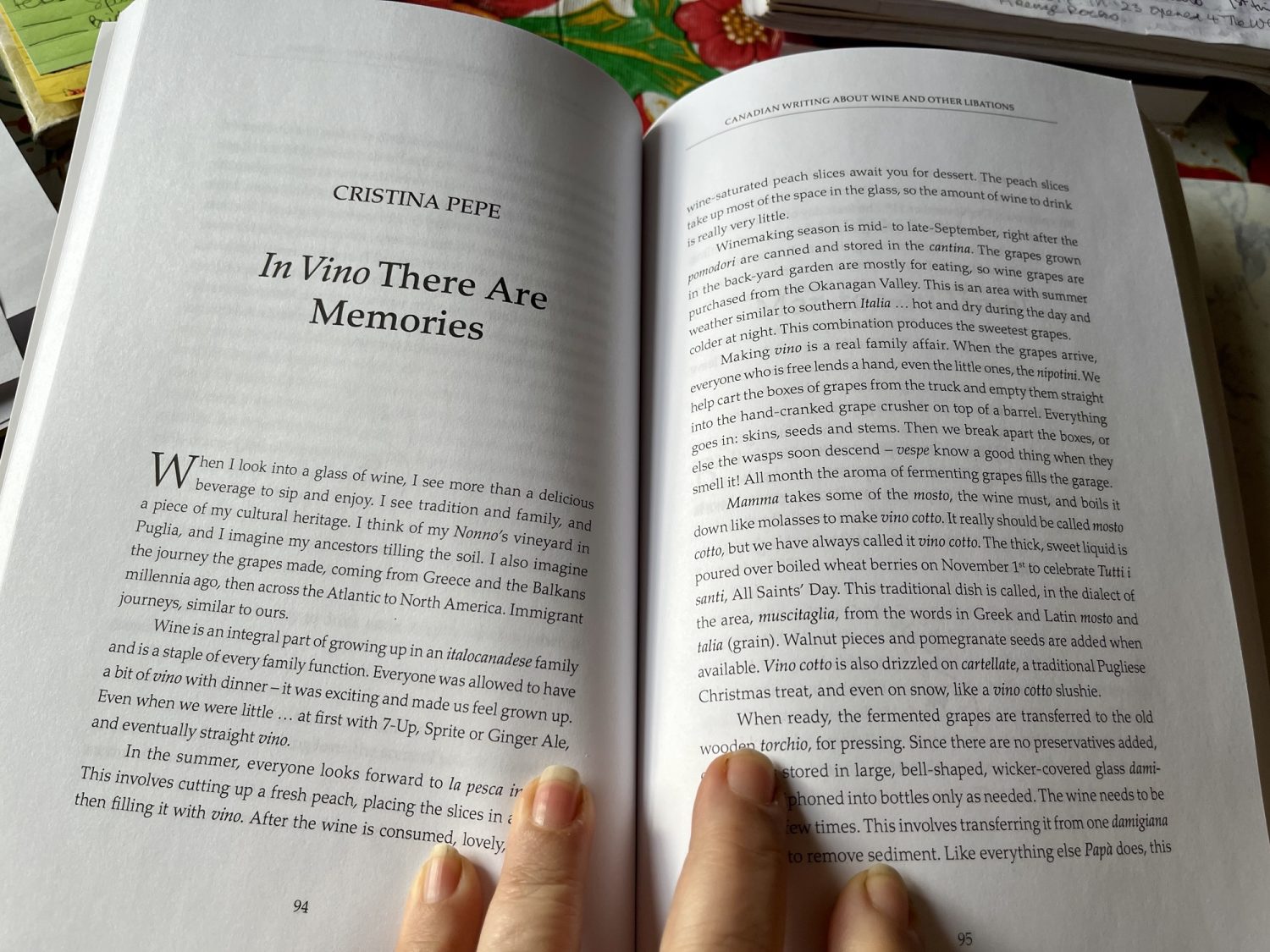
My contribution is titled ‘In Vino there are Memories‘ and it is about my family’s wine and winemaking traditions. It may be featured it in a blog post soon, but for now, if you have great vision, try and read a few paragraphs here:

To order a copy for yourself or for all of the wine enthusiasts in your life, order on the Accenti magazine site here or email info@longbridgebooks.com.  Publication date January 2025, ISBN:  978-1-928065-27-2, 310 pages, $34.95.  Free delivery in Canada/US for orders of $60 or more. The gorgeous cover will go well with any wine collection. Grazie mille to the editors for all of their hard work!

Salute, Cristina

Share this:

  • Share on Facebook (Opens in new window) Facebook
  • Share on Pinterest (Opens in new window) Pinterest
  • Share on X (Opens in new window) X
  • Email a link to a friend (Opens in new window) Email
  • Share on WhatsApp (Opens in new window) WhatsApp
Like Loading...

2024~Un po’ di pepe Year in Review

31 Tuesday Dec 2024

Posted by Un po' di pepe in Blogging, Inspiration

≈ 4 Comments

Tags

Blog year in review, Blogging, Italia, Top 10 blog list

As we prepare to ring in 2025, here is a look back at 2024 on Un po’ di pepe. Same amount of posts were published as last year, but with a lot more views. I am still hoping to write more post-there are many partially written ones in progress!

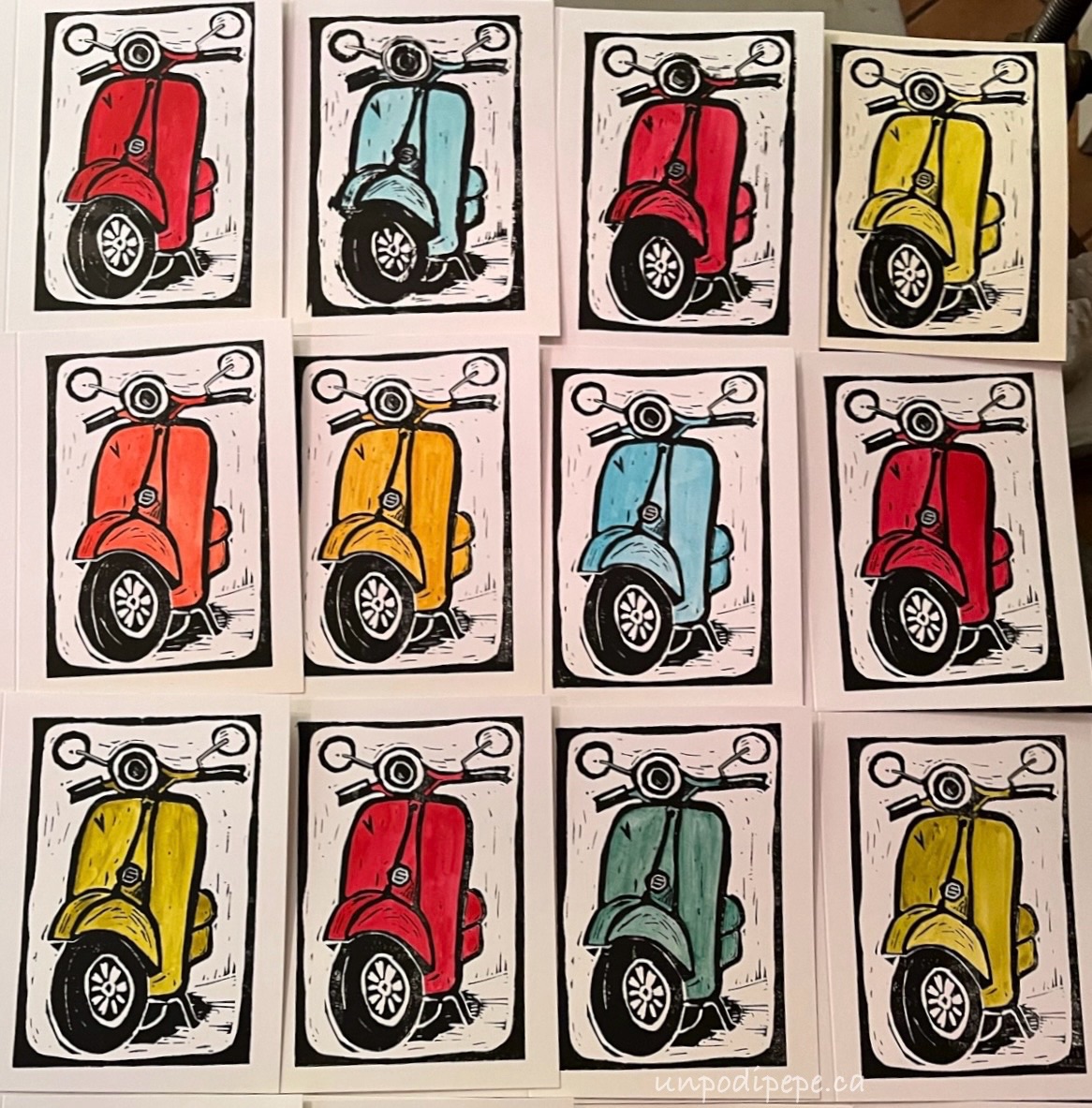
In April Un po’ di pepe celebrated 10 years of blogging, and I had a ‘Vespa’ hand printed linocut card giveaway for 10 readers. I still have to find 2 of you-Frank and Kathryn!

During my annual trips to Italia, I always try to visit 1 or 2 new places.  In 2024 I went to Calabria for the first time-definitely not the last time. Read about it in the post Catanzaro, Calabria.

In September I attended the AICW Biennial Conference in Toronto, reading a humorous, updated version of Aria Pericolosa.

WordPress sends me end of year stats which I love to share because they are so interesting.* In 2024, Un po’ di pepe had a huge increase in viewers-over 21,500 views from 131 different countries!  I know you are wondering, so I looked it up and there are 195 countries in the world! There were also over 12,000 google searches.

The top 10 posts (11 actually because of a tie) of 2024 are listed below, with links included in red, in case you missed any of them.  7 of the top posts of the year appear on the first page of a google search.  This is fantastic!  Most are not commonly searched topics but I am still impressed. 

Based on the number of views, the top posts of 2024 are:

#10 Che Cavolo-Non Rompere le Scatole! To celebrate Week of the Italian language in the World 2023, I published a post to liven up your language skills, using euphemisms to swear ‘politely’. Why is there a photo of flying genitalia?  Read the post to find out!

Flying cazzi amulet mobile at the Napoli Airport gift shop


#9 Artemisia Gentileschi
 I have wanted to write this 2024 post on one of my favourite artists since starting the blog, so I am thrilled it got some love. Art history rocks!

Self-portrait as the Allegory of Painting 1638-39 Royal Collection, Windsor Castle

#8 Espresso Cookies  My 2016 espresso cookie recipe is consistently viewed, but it has only appeared in the top 10 once before this year.

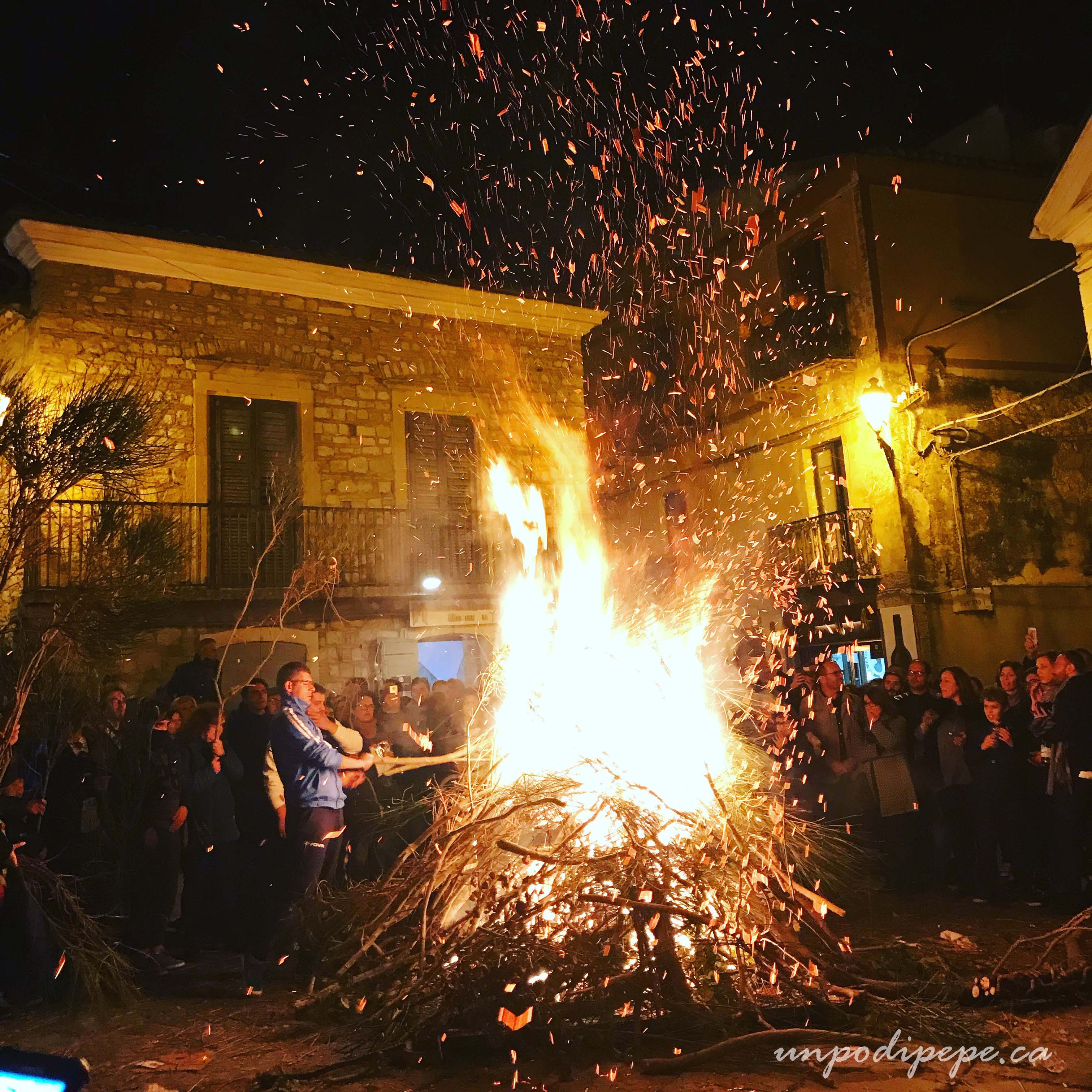
#7 Tutti i Santi This 2018 post was written after I attended the annual November 1 festa in Orsara di Puglia to honour the departed with bonfires and carved pumpkins. I previously wrote about this event in another post Fucacoste e Cocce Priatorje, but at the time had not attended in person yet.

#6  Polignano a Mare In this 2016 post about the stunning clifftop town on the coast of Puglia, read about my probable encounter with the mysterious ‘stair poet’  and learn what infraditi are. I was in Polignano again this year, so need to write a Polignano a Mare 2.0 post.

#5b La Madonna della Neve  August 5th is the feast day of la Madonna della Neve, one of Orsara di Puglia‘s patron saints.  This is the first time this 2016 post has been in the top 10, and it is fitting, because in 2024, the statue celebrated its 400th anniversary. Orsara’s beloved Madonna della Neve statue was carved out of a single piece of quercia (oak) by Napoletano sculptor Aniello Stallato in 1624. #5a Internment of Italian Canadians  This 2021 post was written on the 81st anniversary of the internment if Italian Canadians during World War 2, to coincide with a formal apology from the Canadian government.  It always amazes me how little is known about this subject.  This is the first time this post appears in the top 10 list.

#4 Italiano per Ristoranti-How to Pronounce your Restaurant Menu, this 2014 handy Italian menu pronunciation guide was #1 for many years, and has always been in the top 4.  In a google search for ‘Italian menu pronunciation’ it comes out as the top suggestion! Molto cool! A 6 page downloadable PDF is available via a link at the end of the post. It was downloaded 94 times in 2024! I would like to expand and turn it into an ebook someday. Speriamo! If any of you have experience or advice on this, let me know! Ravioli di ricotta e spinaci

#3 Napoli Street Art I absolutely love Napoli, a perfect place for self-expression since only the last few thousand years. Join me on a graffiti/street art tour in the Centro Storico. This 2020 post comes up 3rd in a Google search .I have  been to Napoli several times since writing this, and have enough new street art photos for a 2.0 version.volto di Sophia Loren Napoli street art#2 Sanremo 2024 For the third year in a row, I wrote a handy viewing guide to the 5 day Festival di Sanremo Italian song contest held in February, and it was well received, so I plan to keep doing it every year. In 2025 the festival is February 11-15.

#1 Hairstyling in Ancient Roma This 2017 post was on the top 10 list last year for the second time, and I am sooooo thrilled to see it is in first place again this year-by a landslide!  I am not sure why? I know some views have been referred via Pinterest and it now ranks 2nd in Google search, after Wikipedia. Another art history post of mine that suddenly had lots of views was because it was being used for a class by a college in California. Join me as I study ancient hairstyling practices by looking at Classical sculptures and paintings. Most of the research was done at Palazzo Massimo.  Yeah for archeology nerds!

For 2025 my goals are simple and the same as usual….less stress, more exercise, more art, travel and writing! 

I was just recently published in an Anthology along with 41 other writers.  You will be hearing about A Literary Harvest soon!

In July I will be attending a family wedding in Roma! Yipee!!!

To find out what I am up to, check out the Un po’ di pepe Facebook page and Instagram (@unpodipepe).  I know many of you read new posts only when they are posted on Facebook, but with the new algorithms, you are likely to miss them most of the time.  To get notified of new posts, it is best to sign up with your email in the top right hand corner of the home page. You will only receive an email when I publish a new post.

I would love to hear which post you liked best, and what you would like to read more about in 2025 on Un po’ di pepe?  Let me know in the comments.  Looking forward to writing more cose interresanti /interesting stuff in 2025. 
Buon Anno a tutti i lettori di ‘Un po’ di pepe’, vicini e lontani!  Spero che 2025 porta buona salute e gioia a voi e ai vostri cari.  Happy New Year readers of  ‘Un po’ di pepe’, near and far.  I hope 2025 brings good health and joy to you and your loved ones!

Vi auguro un 2025 piena di gioia e buona salute!  Ciao, Cristina

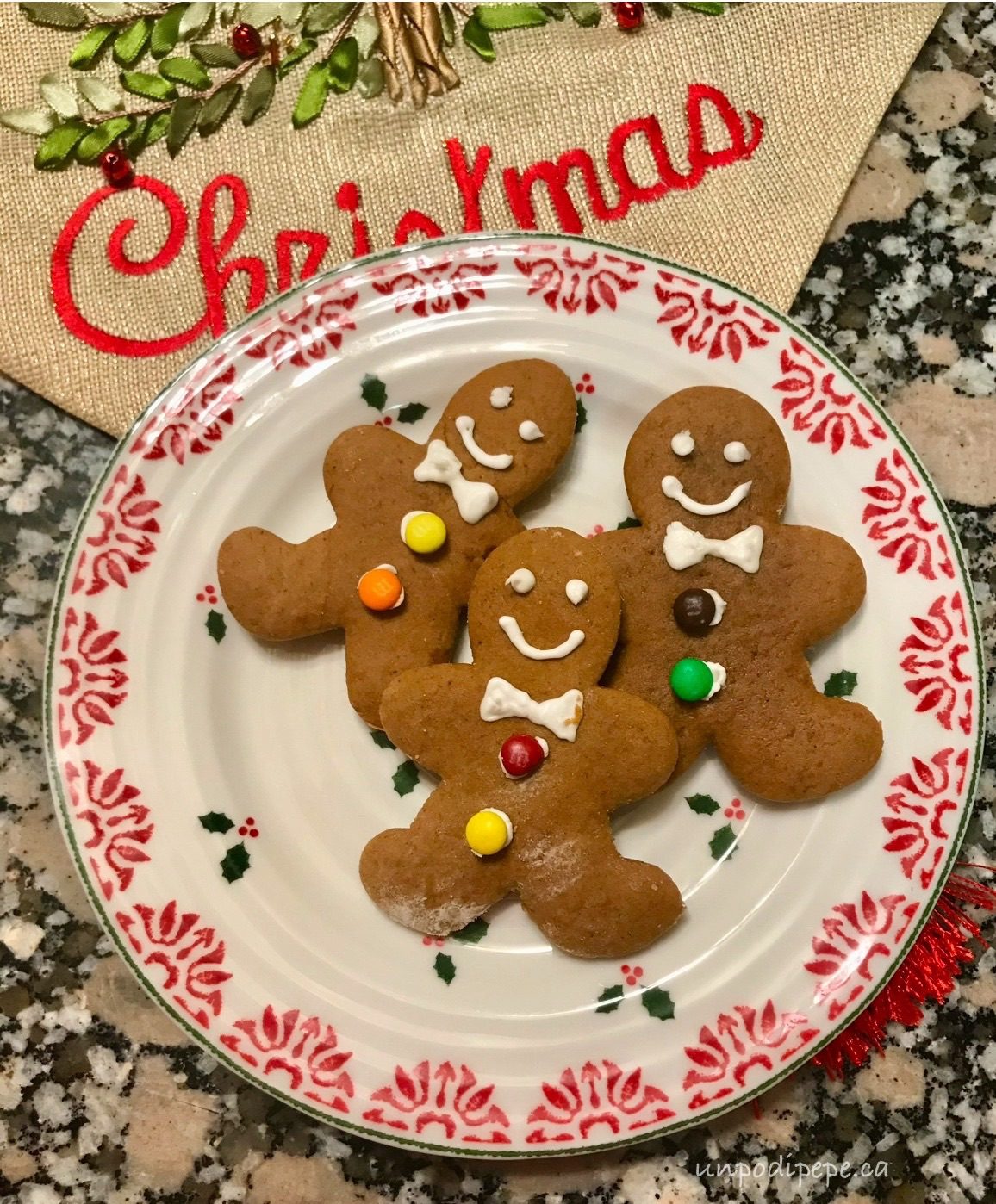
Check out Italian Christmas Vocabulary for help understanding my seasonal greetings,

*Note…WordPress’ method of collecting stats is odd.  The newest post counts as a ‘Home page’ view until the next one is published and this definitely does affect the results, especially for those of us that do not post often.

Share this:

  • Share on Facebook (Opens in new window) Facebook
  • Share on Pinterest (Opens in new window) Pinterest
  • Share on X (Opens in new window) X
  • Email a link to a friend (Opens in new window) Email
  • Share on WhatsApp (Opens in new window) WhatsApp
Like Loading...

Buon Natale 2024

24 Tuesday Dec 2024

Posted by Un po' di pepe in Feste

≈ 7 Comments

Tags

Italian Christmas, Natale

Cari amici di ‘Un po’ di pepe’, auguro un buonissimo Natale e un meraviglioso nuovo anno piena di gioia e salute a voi e alle vostre famiglie!

Dear friends of ‘Un po’ di pepe’, wishing you and your families an incredibly Merry Christmas and a marvelous new year filled with joy and good health.

I love addobbi di Natale-Christmas ornaments and decorations.  They help me make it through the blah winter weather!  Here are some photos taken in and around my house to spread the cheer, starting with my corona dell’Avvento /Advent wreath.

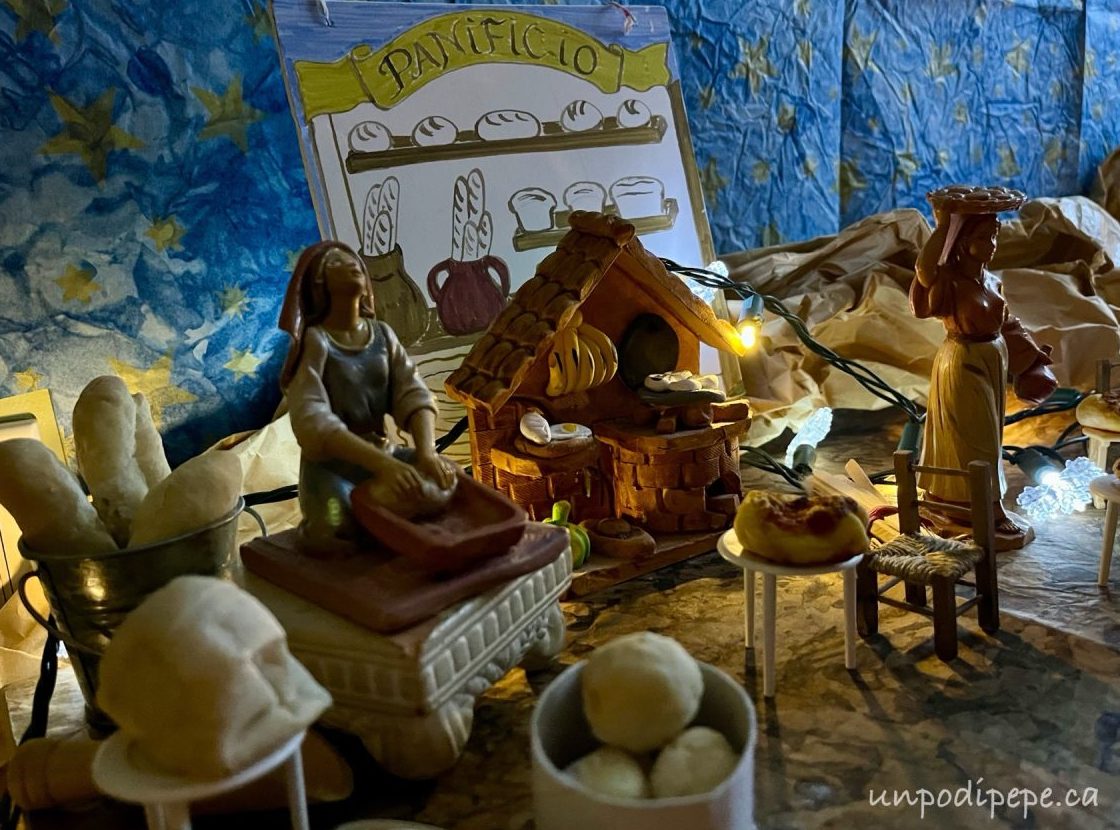
My newest addobbo/ornament was a gift from Roma in July. I love how it sparkles in the tree.The title photo is of my presepio.  I may have to find a bigger space for it next year.  Below is the panificio corner of Mamma’s presepio.  Notice how she bakes tiny bread loaves and baguettes-even focaccia Pugliese!Next is Mamma’s vicolo dei lavandai/ washerwomen’s alley.  I love the attention to detail, especially the washboards and clothesline.  The lavandaia on the left with the red scarf is from Via San Gregorio Armeni in Napoli.

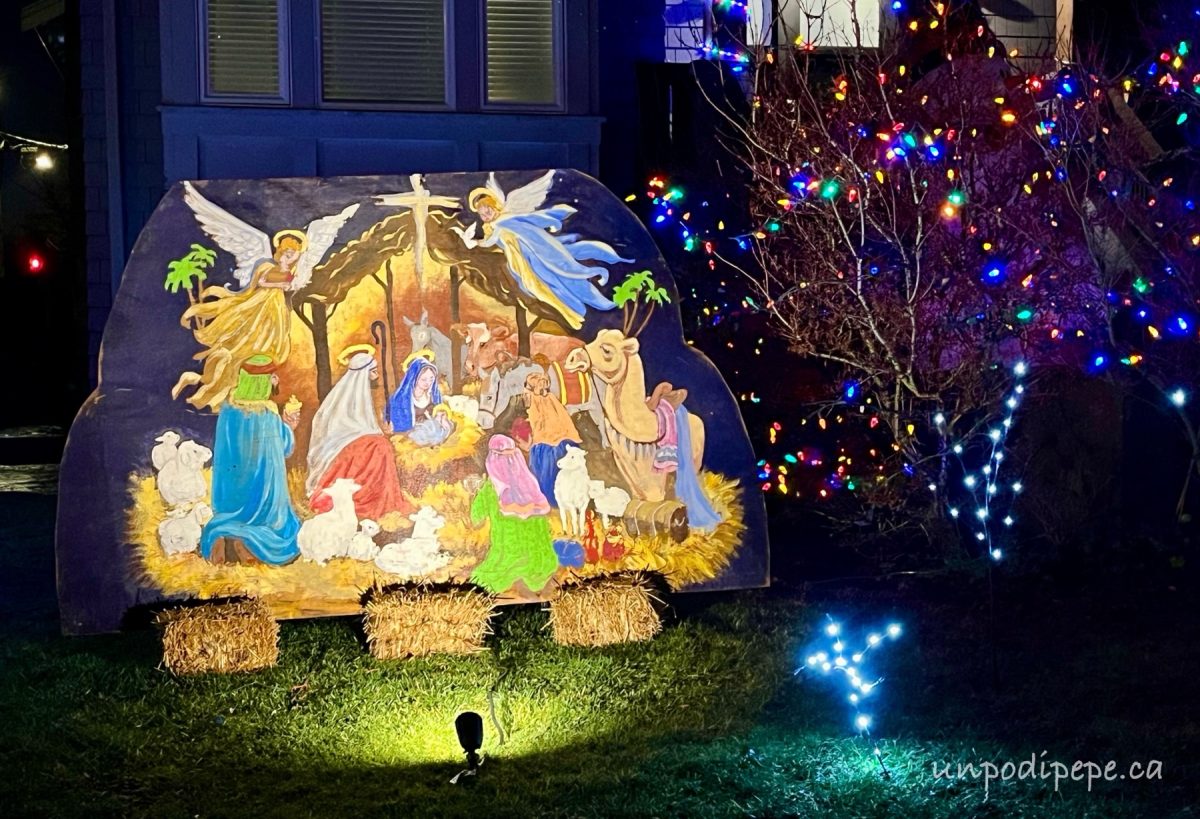
This beautiful outdoor presepio in my neighbourhood looks like it was handpainted.

On the same street, Santa’s sleigh is pulled by weiner dogs!These classic old homes look beautiful all lit up-minus the inflatable Santa and Frosty.
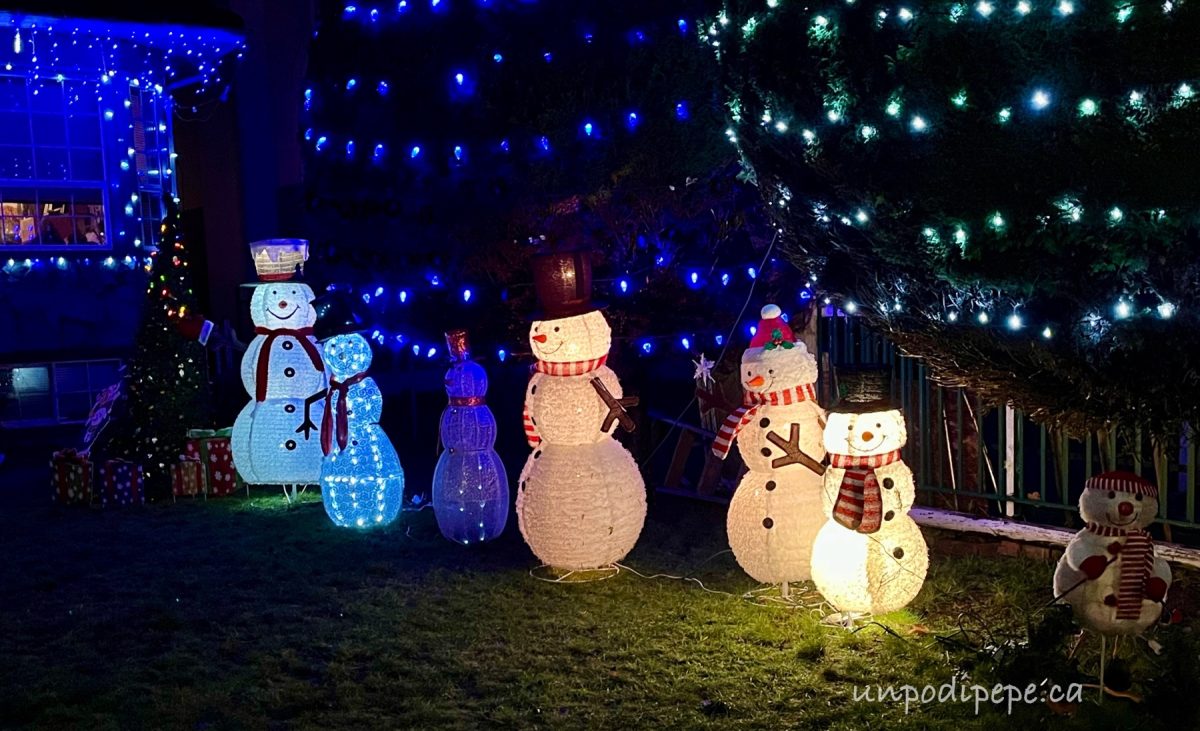
And finally, the snowman family is adorable!Un abbraccio, Cristina

Share this:

  • Share on Facebook (Opens in new window) Facebook
  • Share on Pinterest (Opens in new window) Pinterest
  • Share on X (Opens in new window) X
  • Email a link to a friend (Opens in new window) Email
  • Share on WhatsApp (Opens in new window) WhatsApp
Like Loading...

Il Bicerin

23 Saturday Nov 2024

Posted by Un po' di pepe in Italia, Mangiamo!, Recipes

≈ 20 Comments

Tags

Northern Italy, Piemonte, Torino, Traditional recipes

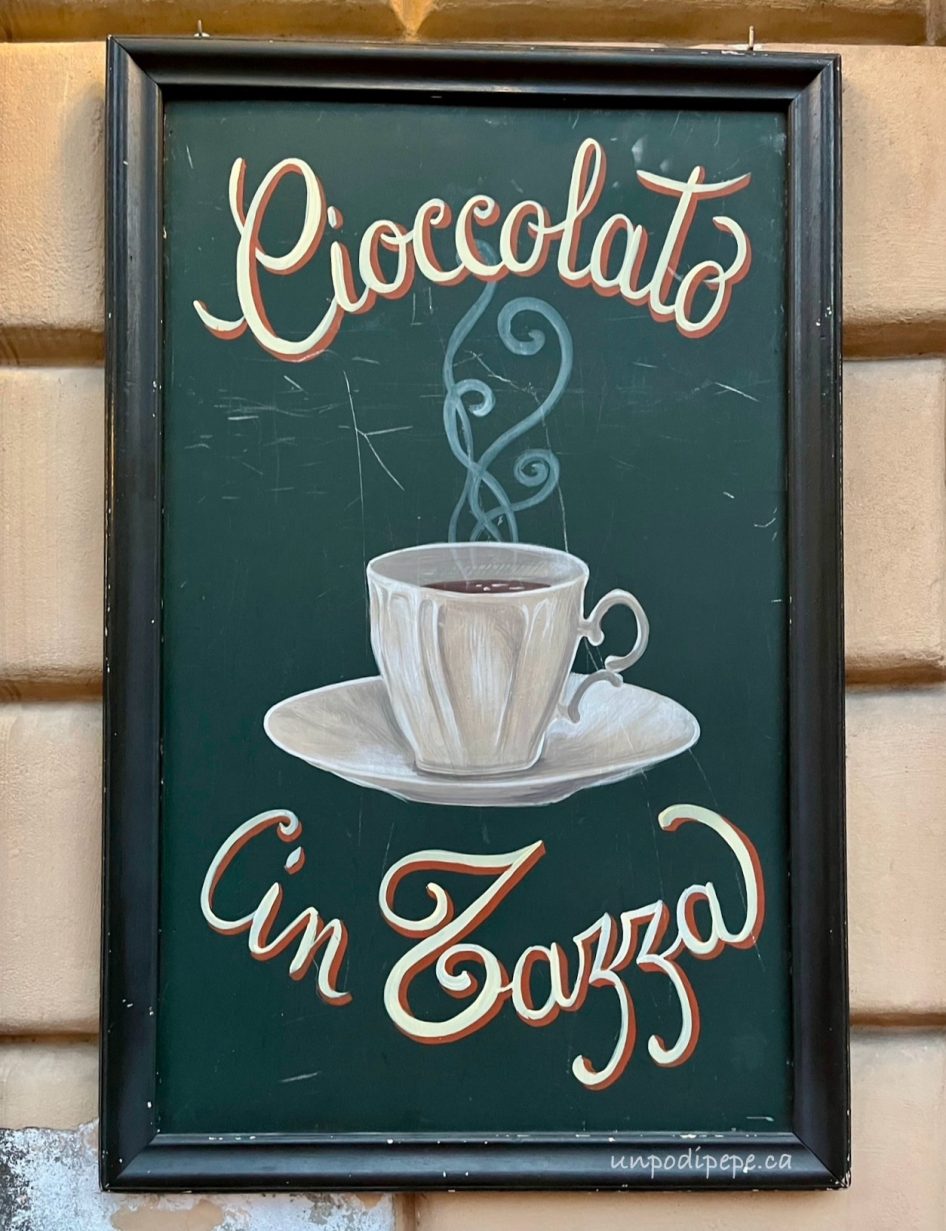
November weather is dark and dreary, and has me craving a nice warm Bicerin. Bicerin (bee • SHEH • reen) is the official, historic drink of Torino.  The Bicerin was invented in 1763, at the newly opened Caffè Confetteria Al Bicerin in Piazza della Consolata.

Al Bicerin’s strategic location opposite the Santuario della Consolata, where the King and Royal Family attended Mass on Sundays, made it a popular spot and the beverage became well-known.

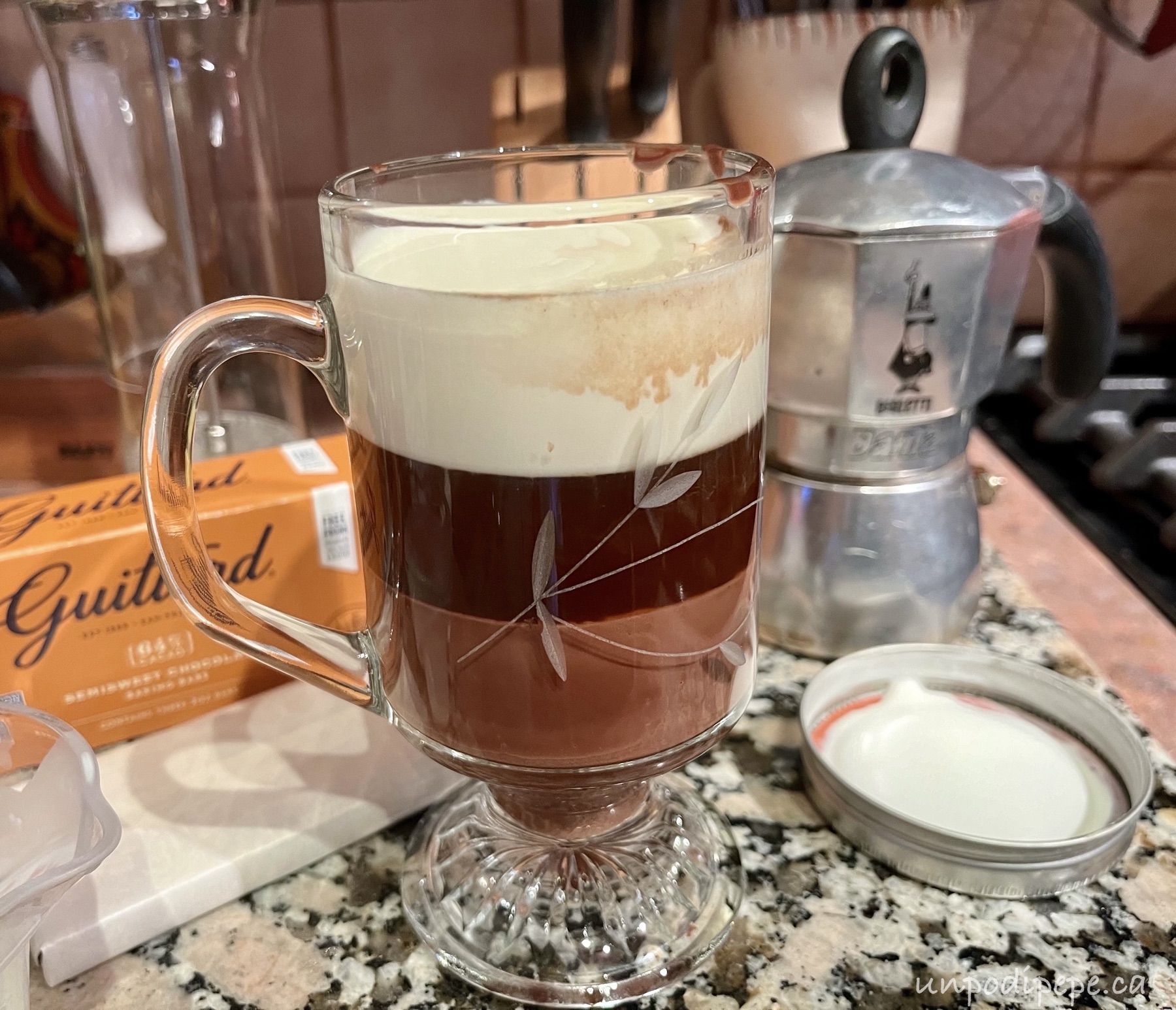
The secret recipe is made with local dark chocolate, espresso and frothed fior di latte, and served in a small stemmed glass.  The drink is actually named after the glass, Bicerin being local dialetto for bicchierino, meaning small glass. The glass is clear so that all 3 layers are visible.  A Bicerin is not supposed to be stirred, so that the temperature and texture of each layer can be tasted separately and blend on the palate.

The facade of Al Bicerin is still original and stepping inside is like travelling back in time. The counter, the cabinet filled with glass jars of Confetti and the woodwork is from the 19th Century.

I went to Al Bicerin twice while I was in Torino.  Since the weather was nice, I sat outside both times, but the inside is inviting and cozy.  Perfect for a cold, wet November day. The photo below was taken just before closing.

Count Camillo Cavour, the first Italian Prime Minister always sat in the same corner on his daily visit to Al Bicerin. Now there is a photo of him in his angolo. Other famous patrons include Picasso, Puccini, Nietzsche, Alexandre Dumas, Umberto Eco, and Ernest Hemingway, who apparently called the Bicerin one of the 100 things in the world worth saving!

A fun fact about Caffè Confetteria Al Bicerin is that since 1763, it has always been managed by women!

In 2001, the Bicerin was finally recognized by the region of Piemonte as a traditional Piemontese beverage. Order with a plate of local cookies, which can include canestrelli, torcetti, krumiri, savoiardi and baci di dama.

Bicerin is now served in all of the historic caffè places in Torino but it will be slightly different than the original recipe at Caffè Confetteria Al Bicerin, located at Piazza della Consolata 5 in the Quadrilatero area.

Other historic places to have Bicerin in Torino include:

Baratti e Milano- Piazza Castello 29

Caffè Torino- Piazza San Carlo 29

Caffè Fiorio- Via Po 8/C

Farmacia del Cambio- Piazza Carignano 2

Pepino Piazza Carignano- 8

Pfatish Via Paolo Scacchi- 42

I did some experimenting at home to try and reproduce a Bicerin.  My final product did not taste or look exactly the same, but it was delicious, and the taste-testing ‘research’ was fun.  It takes a bit of juggling to have all 3 layers ready to assemble at once, so do not get discouraged if the first attempt does not look pretty.

Cristina’s attempt at Bicerin

Ingredients:

  • 60 ml (2 oz) light cream*
  • 60 ml (2 oz) chopped 70% dark chocolate, ideally Venchi or other quality brand**
  • 60 ml (2 oz) freshly made espresso doppio/double shot
  • 60 ml (2 oz) frothed whole milk or light cream (must be cold)*

A 300-360 ml (10-12 oz) clear, heat-proof stemmed glass

Instructions:

  • Prepare heat-proof glass by warming with hot water
  • Prepare caffettiera for espresso
  • Pour light cream* and chopped chocolate into a small pan over low heat and whisk until thick.  Meanwhile, make espresso
  • Shake milk/cream in a small jar for 2-3 minutes

Assemble the Bicerin:

  • Pour hot chocolate into warm glass
  • Using the back of a spoon, carefully pour espresso towards the side of glass
  • Carefully add shaken milk/cream
  • Do not stir!

*Consistency wise, there is no North American equivalent to Italian fior di latte (milk cream) or panna (cream).  I experimented using combinations of whipping cream and milk.  My best results were using a mixture of half whipping cream and half whole milk (3%).  This is what I recommend using for both the hot chocolate and the topping. 1 part whipping cream and 2 parts whole milk also works.

**A Torino produced chocolate such as Venchi is best to use.  I used Guillard as it was the best good quality chocolate I had available.

Espresso cookies go perfectly with Bicerin.  Buon appetito, Cristina

Share this:

  • Share on Facebook (Opens in new window) Facebook
  • Share on Pinterest (Opens in new window) Pinterest
  • Share on X (Opens in new window) X
  • Email a link to a friend (Opens in new window) Email
  • Share on WhatsApp (Opens in new window) WhatsApp
Like Loading...

Mercato Porta Palazzo

03 Sunday Nov 2024

Posted by Un po' di pepe in Italia, Photography, Travel

≈ 11 Comments

Tags

Italian food, Northern Italy, Piemonte, Torino

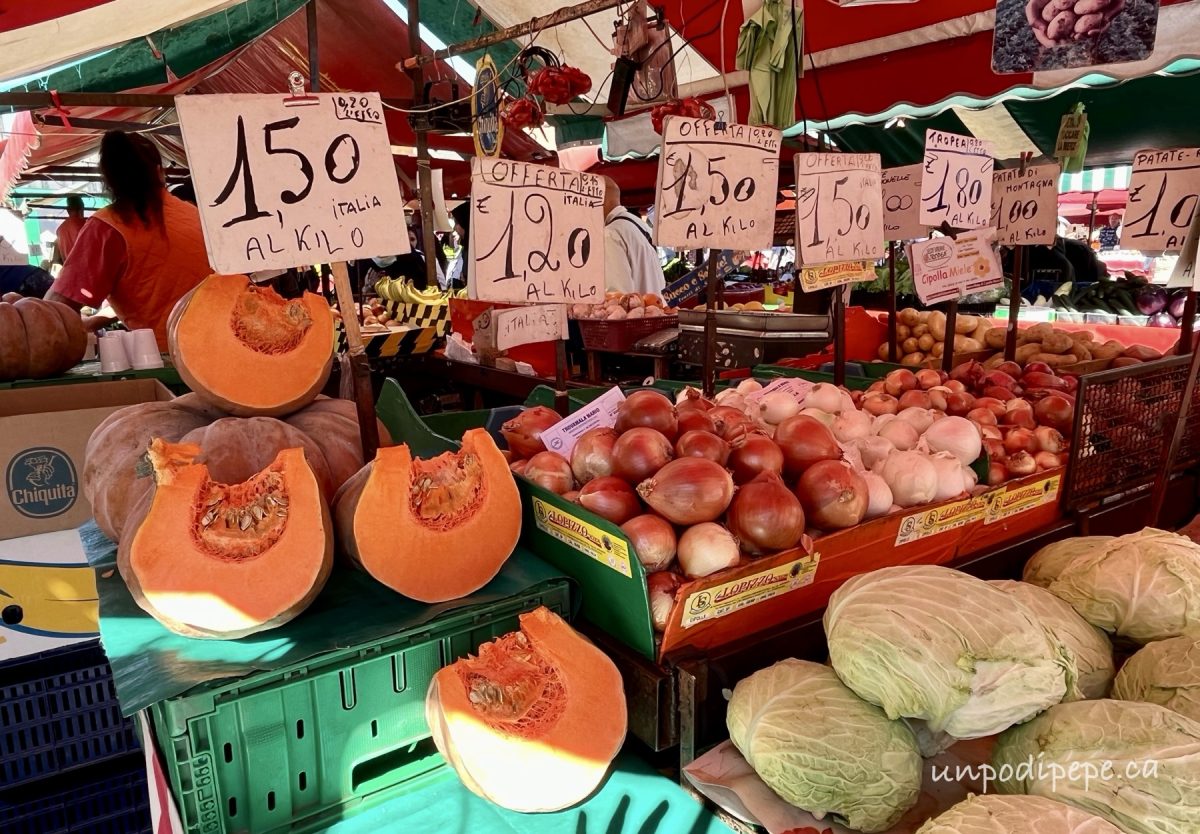
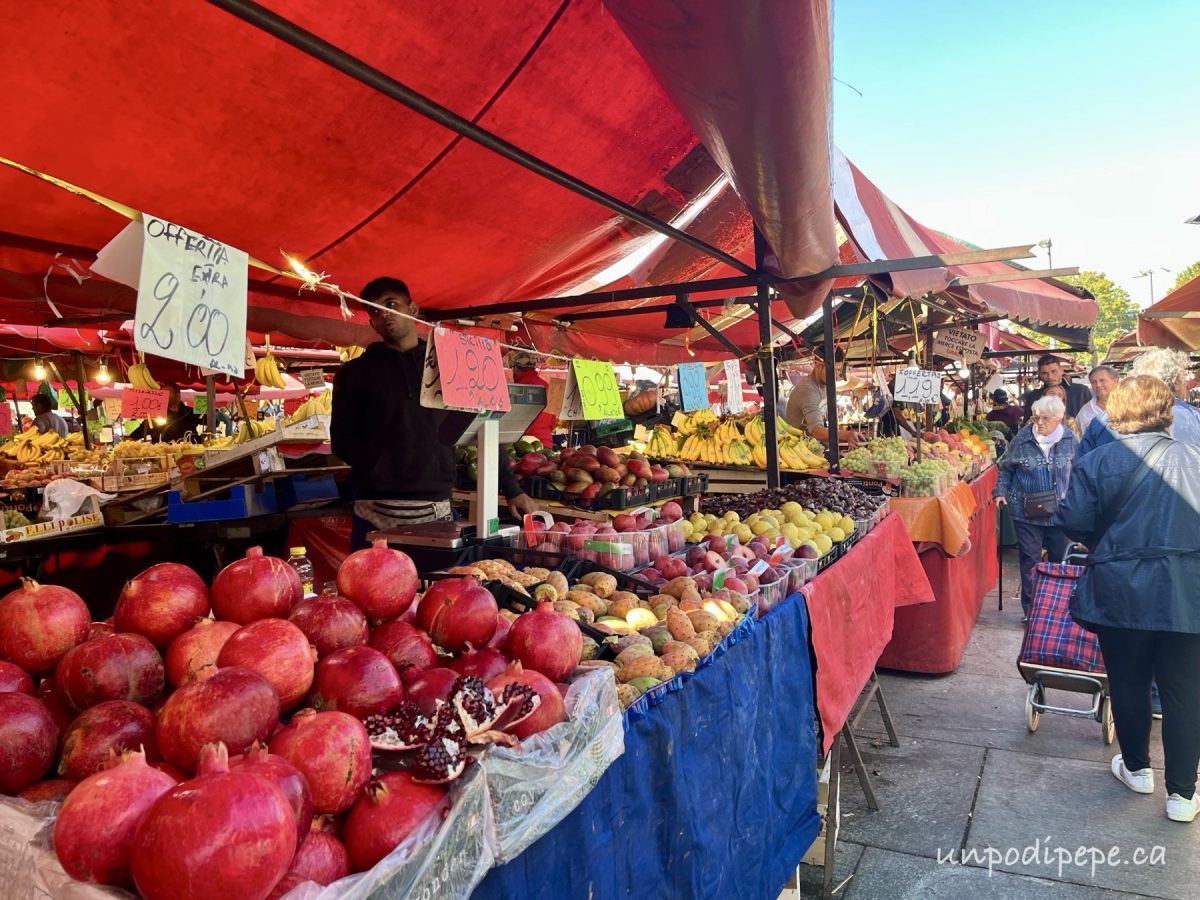
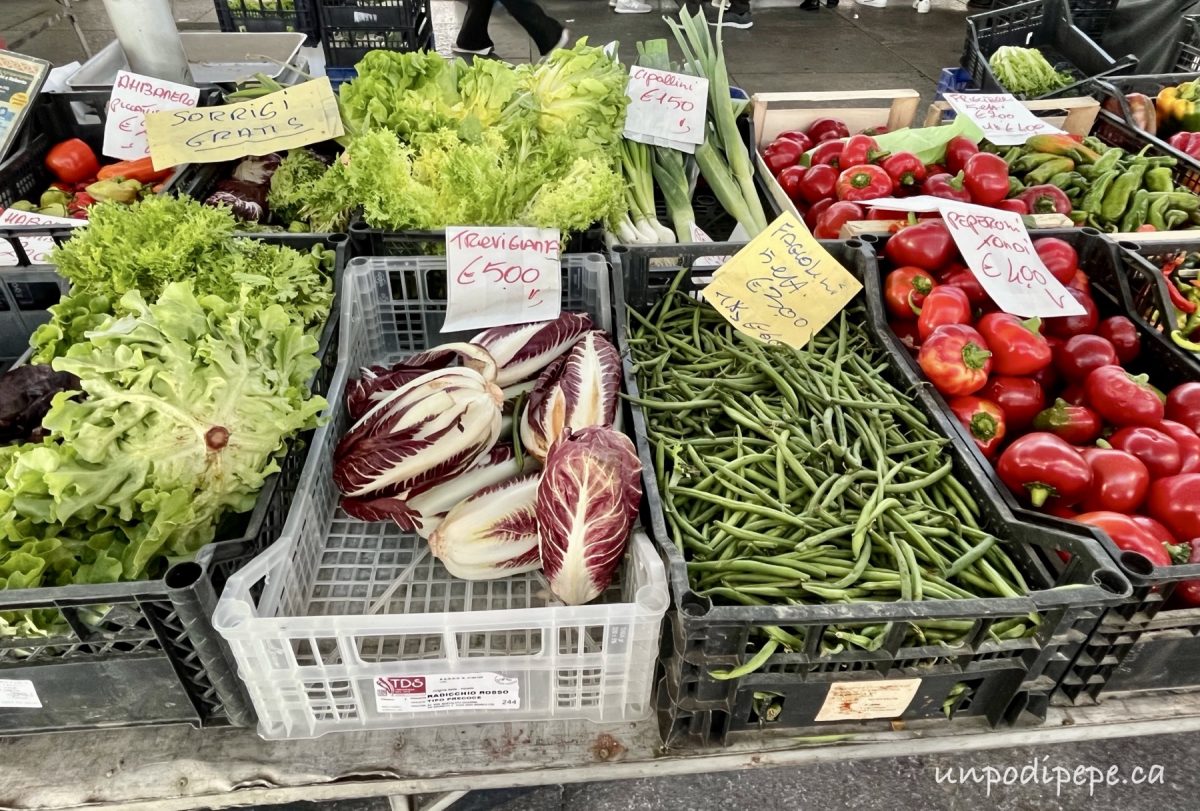
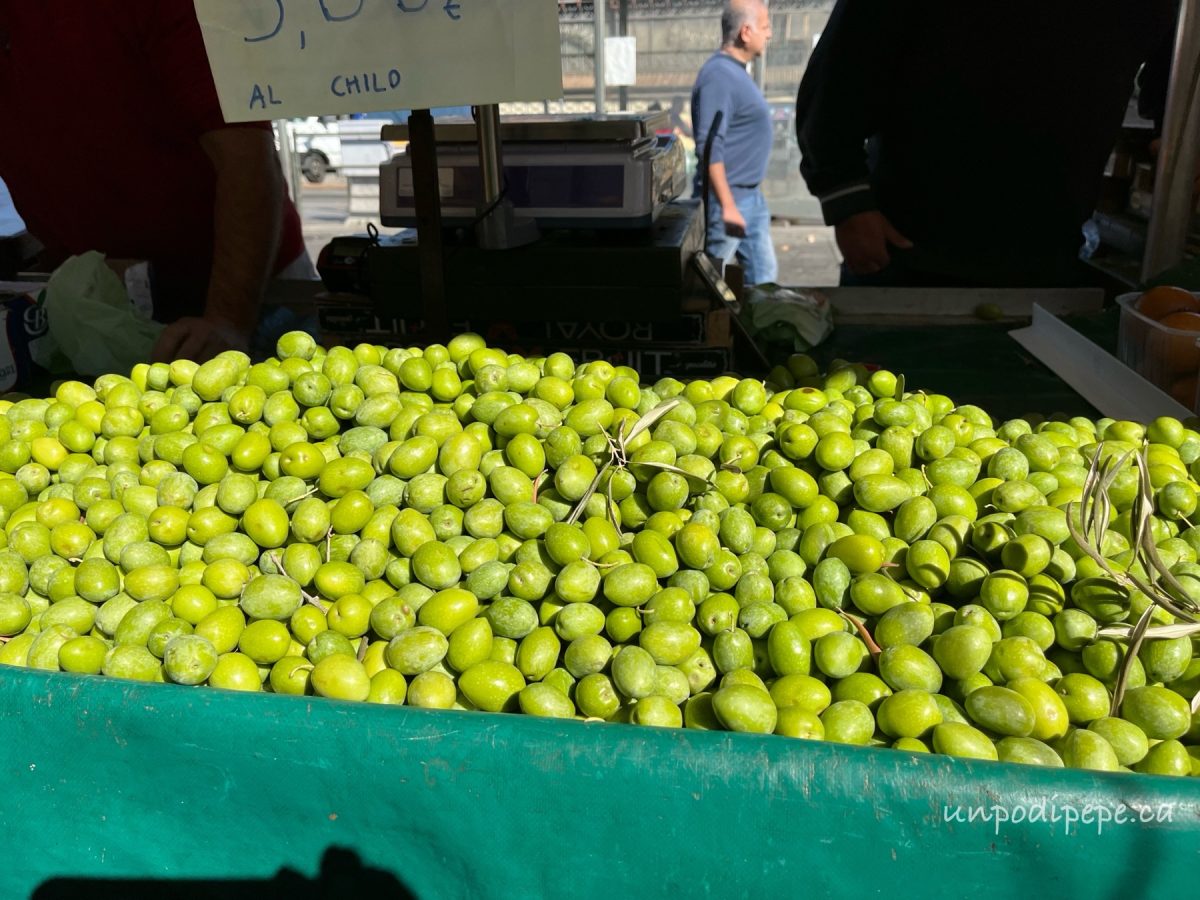
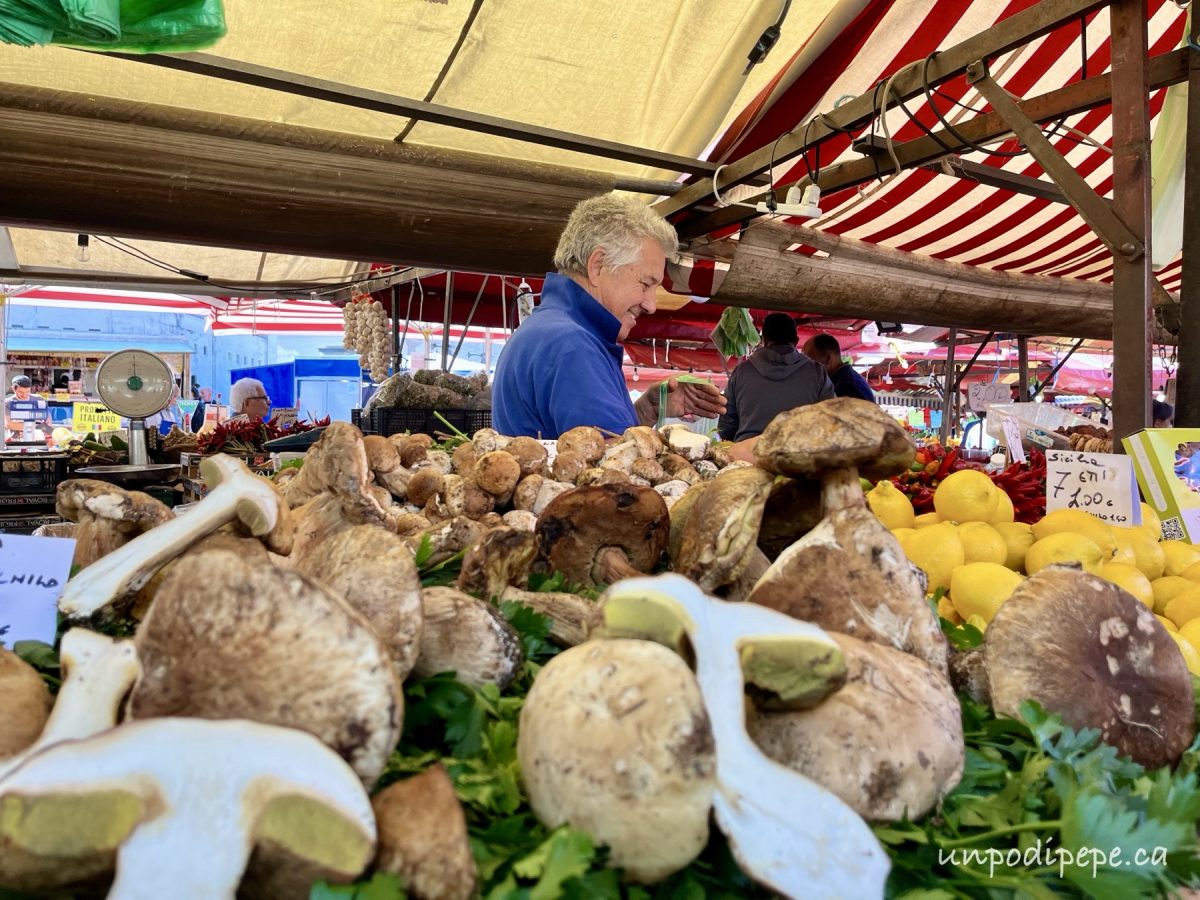
Torino’s Mercato Porta Palazzo in Piazza della Repubblica is the largest open-air market in Europe. My first morning in Torino, I took a walk through the mercato with Lucia from turinepi.  While we walked, I took so many photos of the produce and the bancarelle -the market stalls, that I had to dedicate an entire post to them. Established in 1835, Porta Palazzo is a collection of outdoor and covered market spaces. The bancarelle host vendors from all over, selling products from food and wine to flowers, clothing, shoes and housewares.

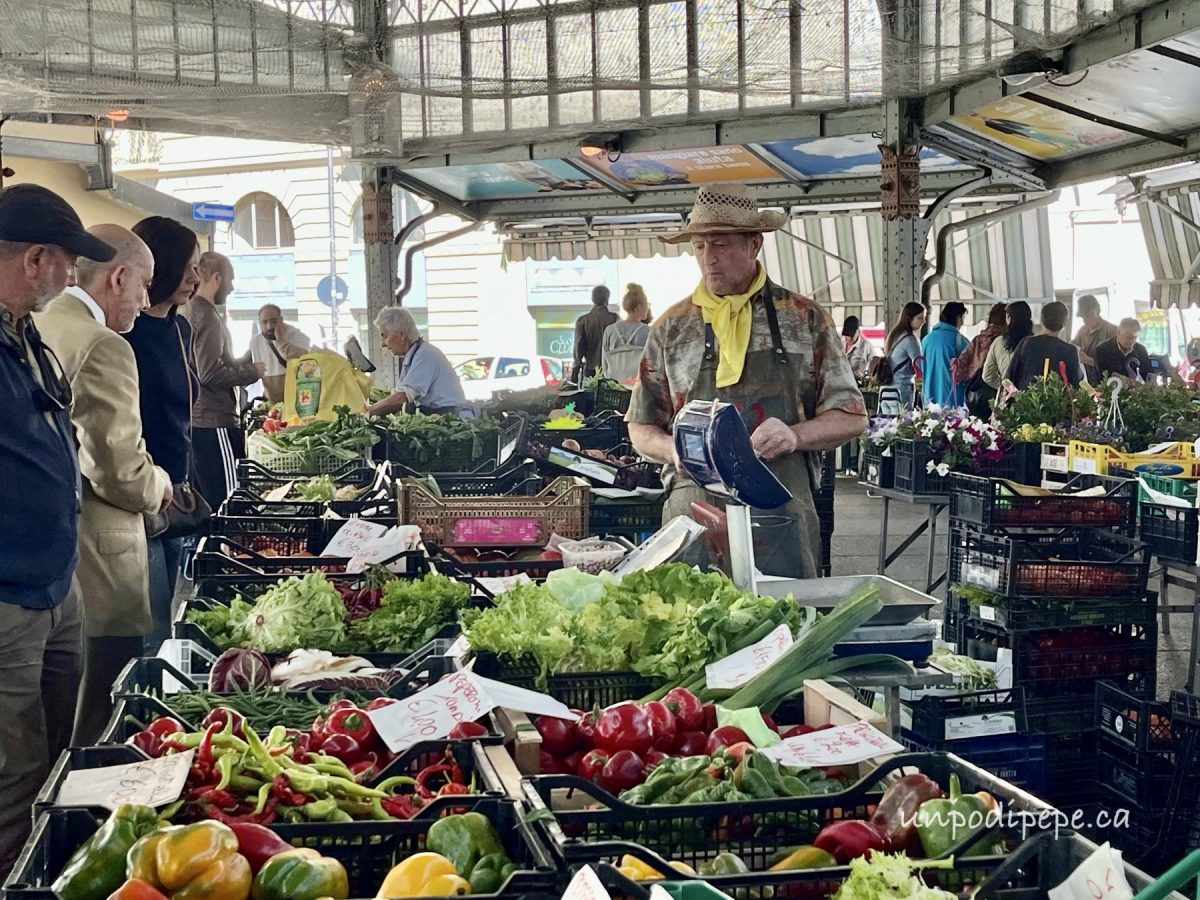
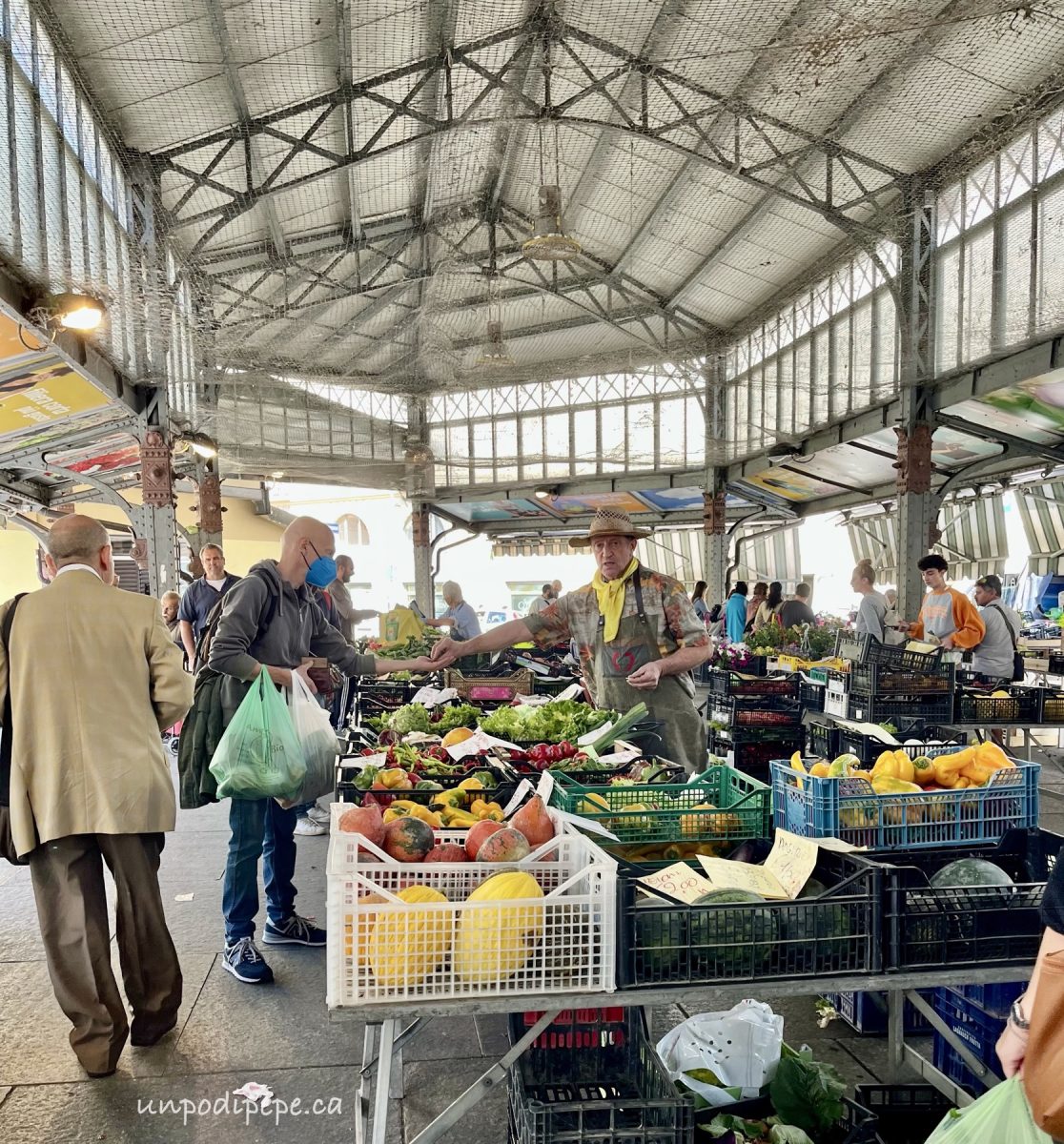
The covered glass pavilion is the local farmers market.  Look at the gorgeous radicchio.  This vendor with the hat is Lucia’s favourite.The produce is surprisingly well-priced.  Porta Palazzo is a clean and lively space.  The Torinesi call it Porta Pila, and do much of their shopping here. The space is huge, so there can be thousands, of people, especially on Saturdays, when many shoppers even drive in from France!A good place to snack, or to taste and see local food, as well as other ethnic specialties. Porta Palazzo is an explosion of colour and a feast for all of the senses-flavours, aromas, colours, sounds and languages.
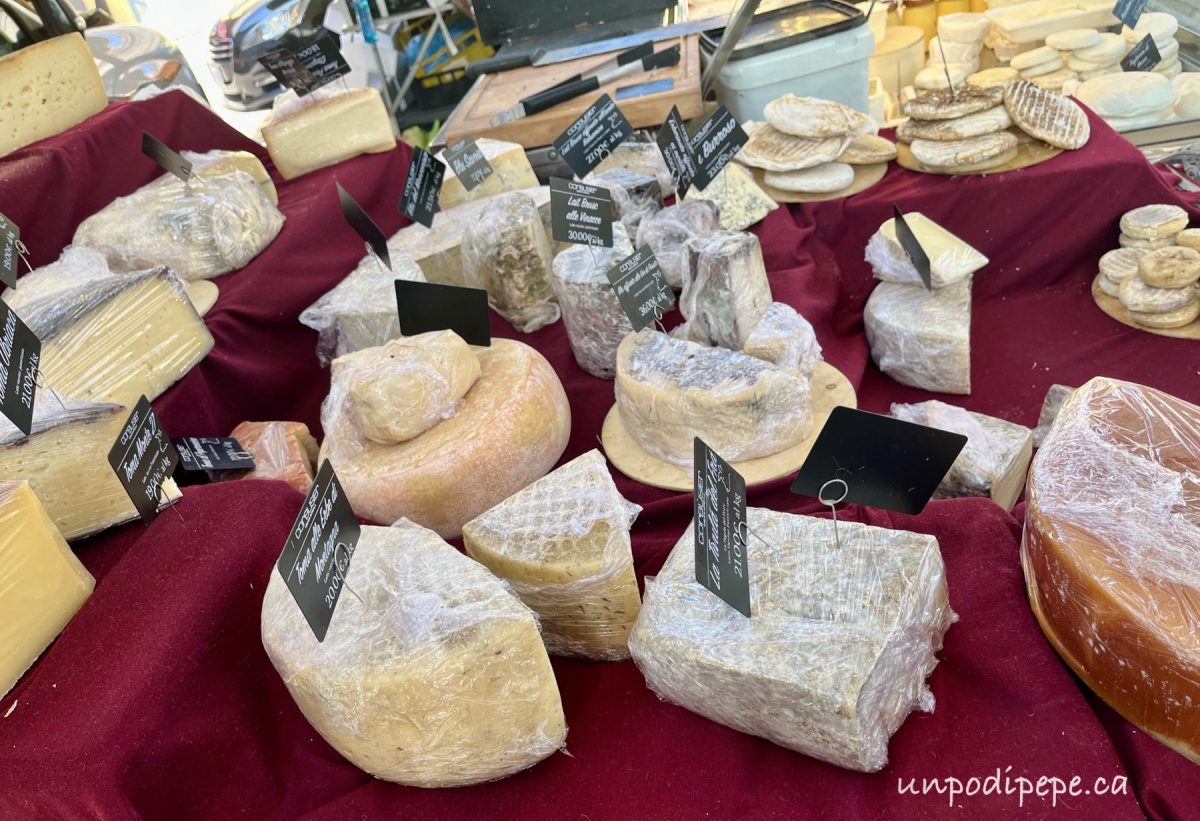
Formaggi can be found from Piemonte and every region of Italia

Besides the bancarelle and pavilion, there are also 4 structures on the site: Mercato Ittico e Alimentare, built in 1826, L’antica Tettoia dell’Orologio, a 1916 metal art deco building, Mercato dell’abbigliamento-the clothing market, and Mercato Centrale di Torino, built in 2011.  A food lover’s Heaven! Also, more formaggi!

Mercato Porta Palazzo is a 5 minute walk from Piazza Castello.  From Piazza Castello, take Via Garibaldi, turn right onto Via Milano, then walk straight until you reach Piazza della Repubblica and the mercato.

Mercato Porta Palazzo is open from 8:00-12:00 Tuesday to Friday, and 7:00-19:30 Saturday. The mercato is closed Sunday and Monday.

More info on Mercato Porta Palazzo can be found on their website.

Buon viaggio, Cristina

Share this:

  • Share on Facebook (Opens in new window) Facebook
  • Share on Pinterest (Opens in new window) Pinterest
  • Share on X (Opens in new window) X
  • Email a link to a friend (Opens in new window) Email
  • Share on WhatsApp (Opens in new window) WhatsApp
Like Loading...

Torino

13 Sunday Oct 2024

Posted by Un po' di pepe in Architecture, Italia, Photography, Travel tips

≈ 14 Comments

Tags

Bicerin, Italian history, Northern Italy, Piemonte, UNESCO World Heritage Sites

I had no expectations when I visited Torino.  I knew that many of my paesani had moved to the area in the 1970-80’s to look for work, but did not know much about the city itself.  Torino turned out to be a pleasant surprise-a truly underrated, overlooked city on the banks of the river Po, at the foothills of the Alps. With a population of almost 850,000, it is the fourth largest city in Italia but practically unknown to English speaking travellers. It is much less crowded, quieter and cheaper than most other major cities.

L’Universita’ di Torino

I arrived in Torino by highspeed train (TGV) from Paris, to attend an AICW conference at the Università di Torino.  Once the conference started, I only had the evenings to explore the city, so could not visit any buildings/museums.  This is why many of my photos were taken at night!  I need to return to Torino to visit the indoor things!

Named for the ancient Taurini people, the Roman Colony of Taurinorum was founded in 28 BC.  Via Garibaldi, the main shopping street traces the exact path of the ancient Roman street or Decumanus.

Torino was the capital of the Duchy of Savoia, the political center of the Risorgimento (birth of the nation) leading to unification of Italy, and the first capital of the Kingdom of Italy after unification in 1861. The capital moved to Roma in 1865.  Torino was also the center of anti-fascist movements and the Italian resistance movement during WW2.  A lot of history here!

Elegant and sophisticated, Torino has an old world feel, like Paris or Prague, but with an Italian accent.  There is a definite French influence from the Savoia family, even on the local dialetto. The stunning architecture in the centro includes Baroque, Rococo, Neoclassical, Romanesque and Art Nouveau. Most buildings were built between the 16-18th centuries.  In 1997, the historical Center of Torino and residences of the Royal House of Savoia became a UNESCO World Heritage Site.

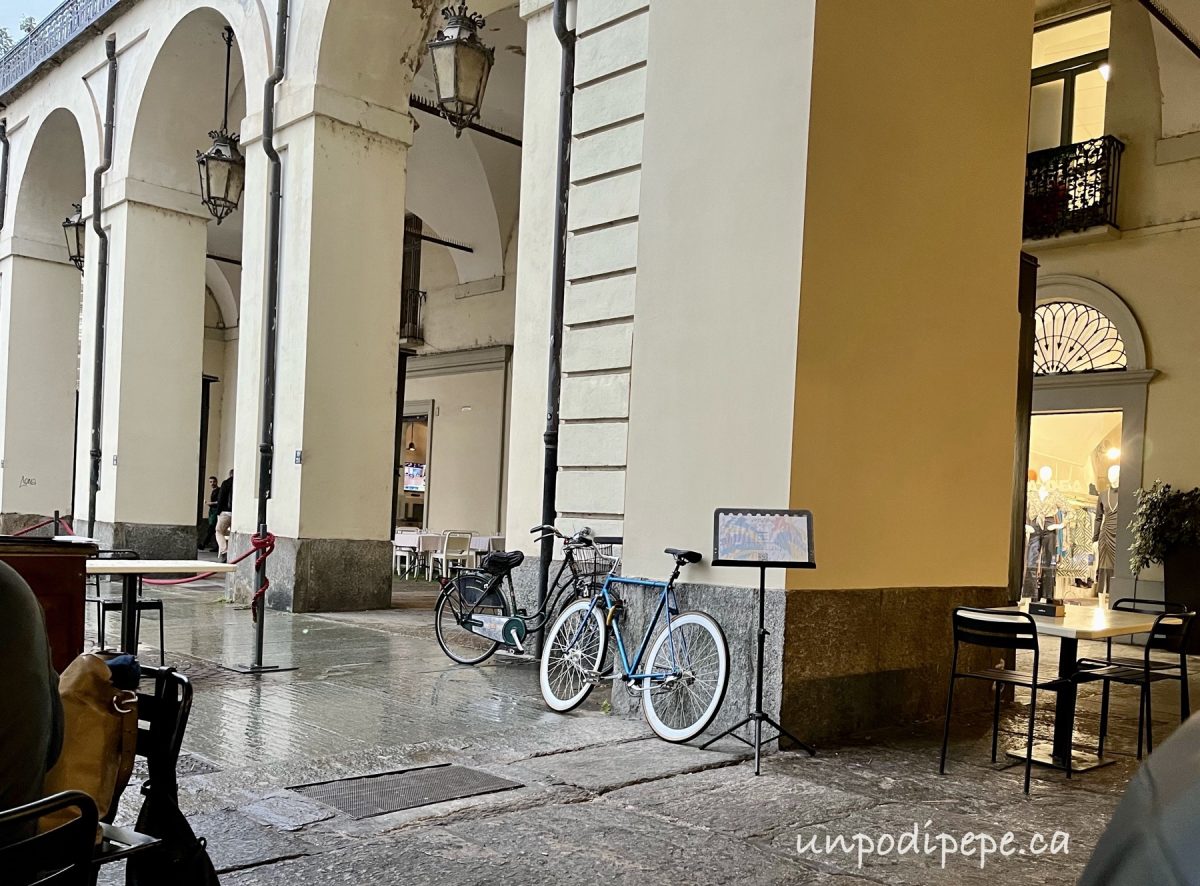
Torino’s centro, the largest pedestrian area in Europe, is easy to navigate. A defining characteristic of Torino’s architecture are the portici (porticoes). 18 km (7 miles) of portici provide shade in summer and shelter from rain, snow and wind.  12.4 km are continuous.  According to legend, King Vittorio Emanuele I wanted Torino to be elegant and also wanted to go on his daily walk to the river Po without getting wet.  So he had the portici built -and now everyone can window shop in all weather conditions.  A whole day can be devoted to walking the portici. Torinesi use them a lot!

Torino is known for, the Shroud of Turin, artisanal chocolate, museums, Royal Palazzi of Savoia, FIAT, Juventus, 2006 winter Olympics, Eurovision 2022, and home to the automotive industry with headquarters for Fiat, Lancia and Alfa Romeo. Torino is also the birthplace of Italian caffè culture, aperitivo, Nutella, Ferrero Rocher, gianduja, Lavazza, FIAT, Vermouth and the Slow food movement!

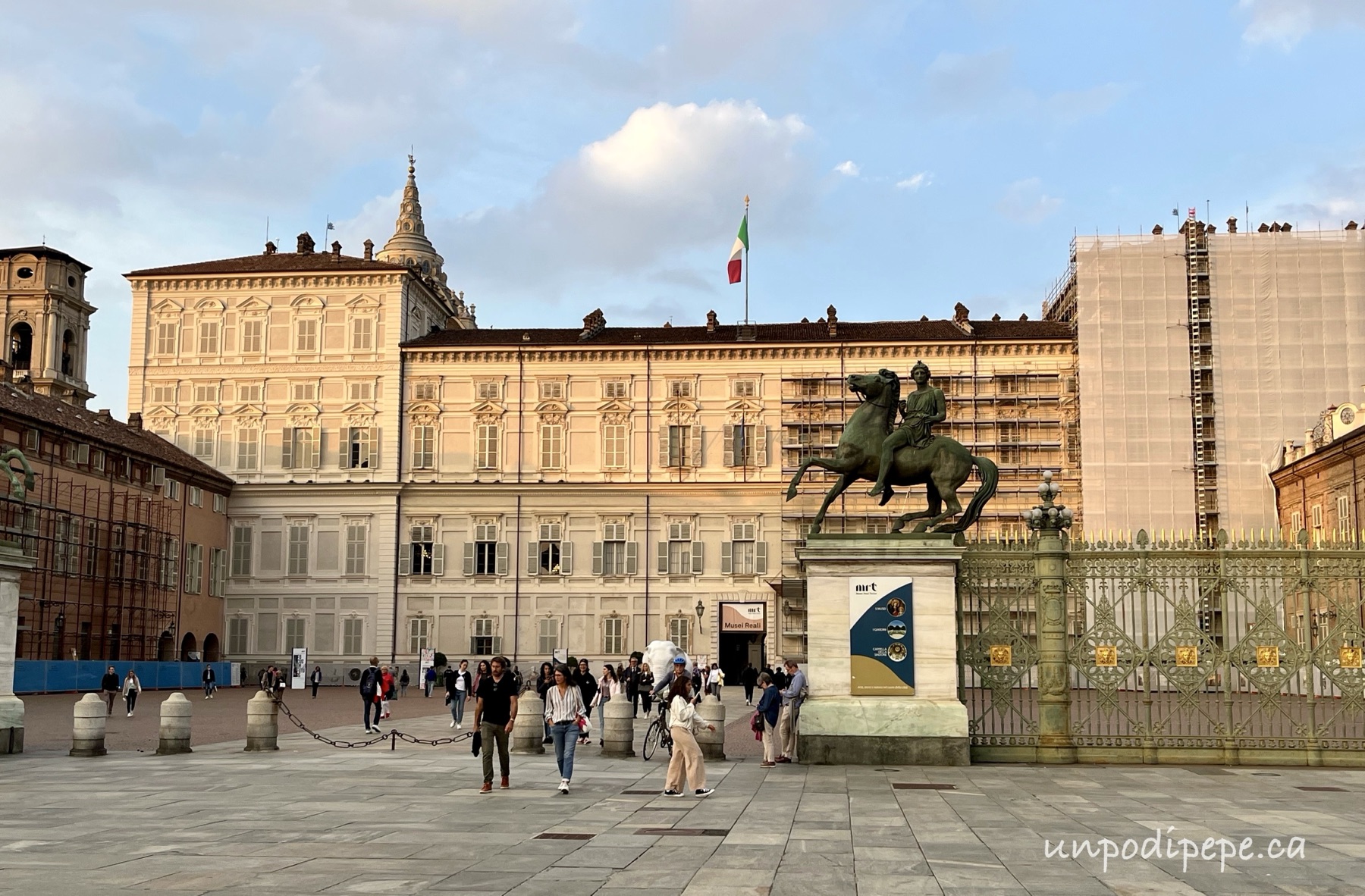
There are many large piazze, full of amazing architectural details, chocolate shops and places to have aperitivo.  Piazza Castello has the Royal Palaces, Palazzo Reale and Palazzo Madama.  Palazzo Madama was the residence of 2 Savoia queens, which explains the name.  It was also the 1st Senate of Italy.  Since 1934 it is a museum of ancient art-although mostly from middle-ages to 18th Century.  Palazzo Reale at the north end, with iron gates contains Armeria Reale, Galleria Sabauda and the Museo di Antichità. The Museo Nazionale del Risorgimento (unification museum) is in Palazzo Carignano.

I had the day before the conference free and met local expert Lucia Hannau from Turinepi for a morning walking tour.  We started in Il Quadrilatero, the oldest part of city, dating back to Roman times.  Piazza della Consolata is home to Caffè Al Bicerin since 1763. They make it in other historic bars, but this is the home of the original Bicerin- with the accompanying plate of local cookies. Bicerin is the iconic drink of Torino, with 3 layers, chocolate, caffè and frothed milk-no stirring!  Stay tuned for a future post! Santuario della Consolata, is across the piazza.  The Baroque exterior looks more like a neoclassical temple, the interior ornate and colourful, gilded and decorated with marble of different colours.

We ended at Mercato Porta Palazzo, Europe’s largest open-air market. My many photos will need a separate post. I had time for only 1 museum visit after my walk with Lucia, and it was Museo Egizio–the world’s oldest Egyptian museum and the largest collection of Egyptology outside of Cairo. Buy €14 tickets online as numbers entering at one time is limited.  If you go to Torino, do not miss this! Stay tuned for a future post.

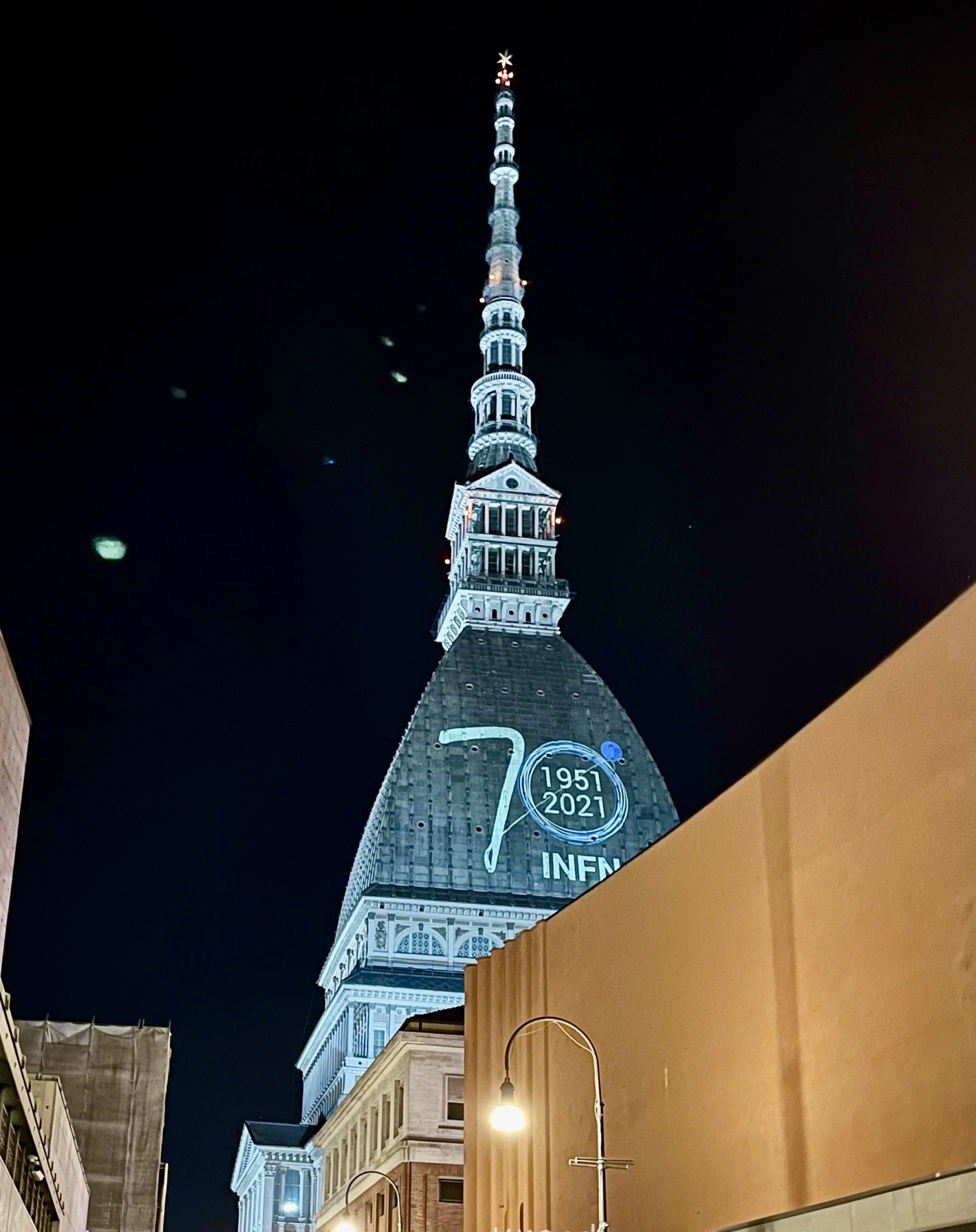
The 167 m (550 ft) tall Mole Antonelliana is featured on the back side of the 2 € coin. Mole means ‘big mound’ and Antonelli was the architect who kept making it taller.  Originally planned as a synagogue, it barely escaped bombing during WW2.  Since 2000 it houses the Museo Nazionale del Cinema, an interactive cinema museum and the tallest museum in the world. It is also the tallest unreinforced brick building in the world (without steel girder skeleton). The top has impressive views of Torino and the Alps.  

The Holy Shroud (Sindone di Torino) is a linen cloth said to have covered the body of Jesus.  An important icon for pilgrims, kept in the Cathedral of San Giovanni Battista, but only displayed for the Jubilee every 25 years.  It will be on display in 2025.

Autumn is a perfect time to visit Piemonte, especially for the seasonal food….zucca, porcini, castagne, tartufo bianco, salsiccia,tajarin and agnolotti del plin.

Tajarin integrale con porcini, salsicce e formaggio Piemontese

Torino has a chocolate festival in November and the Salone dei Libri in May. Milano is only 1 hour by train. Stay 3-4 days if you can, as there is a lot to see in Torino!  I definitely recommend a walking tour with Lucia, Bicerin and the train from Paris!

Buon Viaggio, Cristina

Share this:

  • Share on Facebook (Opens in new window) Facebook
  • Share on Pinterest (Opens in new window) Pinterest
  • Share on X (Opens in new window) X
  • Email a link to a friend (Opens in new window) Email
  • Share on WhatsApp (Opens in new window) WhatsApp
Like Loading...
← Older posts
Newer posts →

Enter your email address to follow 'un po' di pepe' and receive notifications of new posts by email.

Join 511 other subscribers
Follow Un po' di pepe on WordPress.com

Popular Posts

  • Cucina Italiana Patrimonio UNESCO
    Cucina Italiana Patrimonio UNESCO
  • Hairstyling in Ancient Roma
    Hairstyling in Ancient Roma
  • Grano Arso
    Grano Arso
  • 2025~Un po' di pepe Year in Review
    2025~Un po' di pepe Year in Review
  • Dolci di Natale
    Dolci di Natale
  • Hostaria Antica Roma~Eat like an Ancient Roman
    Hostaria Antica Roma~Eat like an Ancient Roman
  • About me/Chi sono
    About me/Chi sono

Recent Posts

  • Cucina Italiana Patrimonio UNESCO
  • 2025~Un po’ di pepe Year in Review
  • Castel del Monte
  • ‘The Nuances of Love’
  • Hostaria Antica Roma~Eat like an Ancient Roman
  • Santa Maria in Aracoeli
  • Casino dell’Aurora~Villa Boncompagni Ludovisi
  • Nasoni di Roma
  • Bloghiversario #11
  • Fontana di Trevi
  • Acqua Vergine
  • Giubileo 2025
  • Sanremo 2025
  • In Vino there are Memories
  • A Literary Harvest
  • 2024~Un po’ di pepe Year in Review
  • Buon Natale 2024
  • Il Bicerin
  • Mercato Porta Palazzo
  • Torino
  • Catanzaro, Calabria
  • Il Pumo Pugliese
  • Artemisia Gentileschi
  • Cavalli di San Marco
  • Panzerotti

Categories

Amici e Famiglia Architecture Art Art history Art projects Bilingual posts Blogging Canada Culture Feste Firenze Inspiration Italia Italian Folklore Italian language Italian life Italocanadesi Libri Mangiamo! Orsara di Puglia Parole piacevoli Photography Puglia Recipes Roma Travel Travel tips Uncategorized Vino

Archives

Un po’ di pepe on Facebook

Un po’ di pepe on Facebook

Start a Blog at WordPress.com.

  • Subscribe Subscribed
    • Un po' di pepe
    • Join 511 other subscribers
    • Already have a WordPress.com account? Log in now.
    • Un po' di pepe
    • Subscribe Subscribed
    • Sign up
    • Log in
    • Report this content
    • View site in Reader
    • Manage subscriptions
    • Collapse this bar
 

Loading Comments...
 

    %d