• Home
  • About me/Chi sono
  • Contact

Un po' di pepe

~ …… (oon∙poh∙dee∙PEH∙peh) Cristina writes about interesting stuff /Cristina scrive di cose interessanti

Un po' di pepe

Category Archives: Amici e Famiglia

Santa Maria in Aracoeli

12 Friday Sep 2025

Posted by Un po' di pepe in Amici e Famiglia, Architecture, Roma

≈ 2 Comments

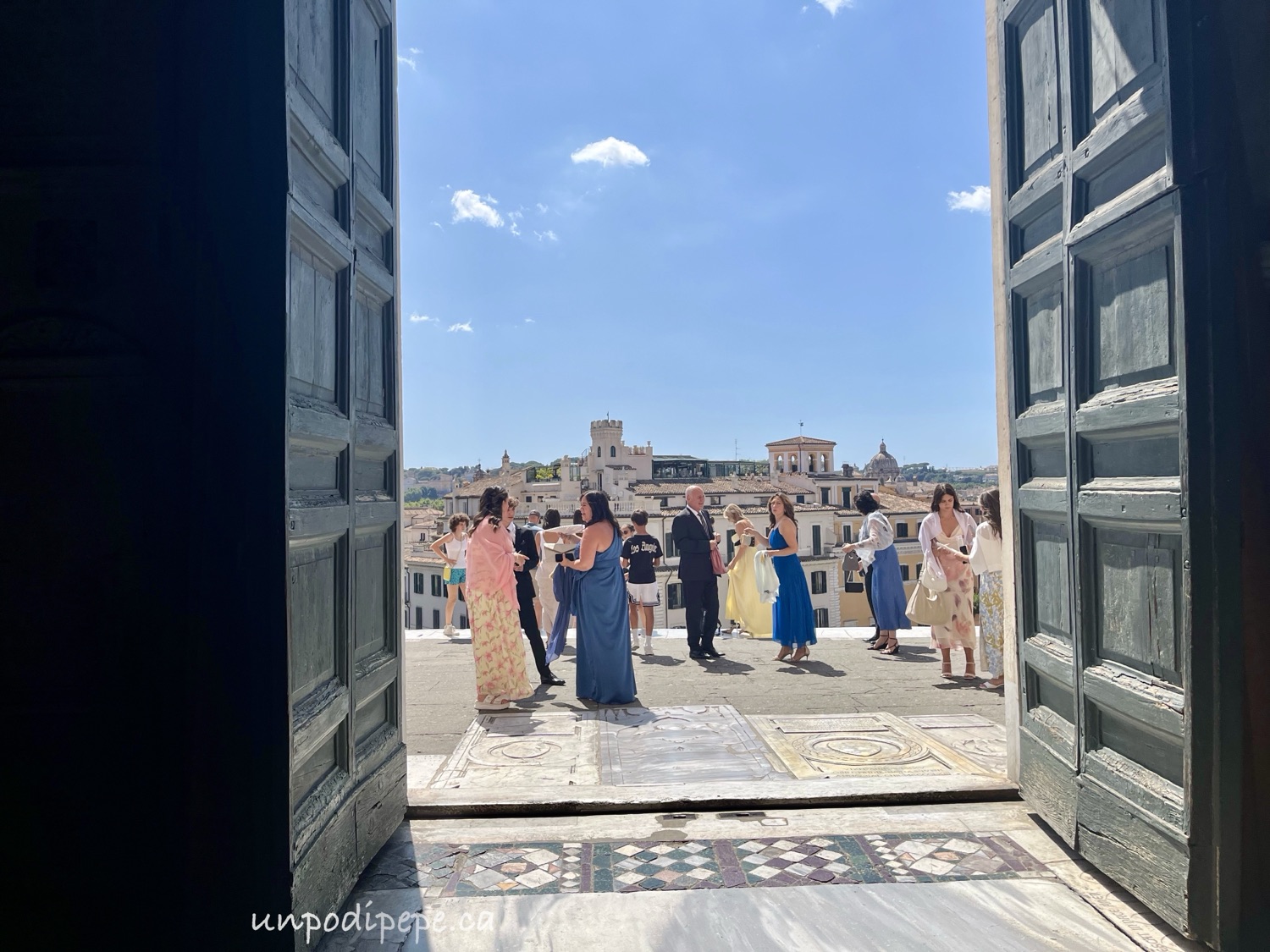
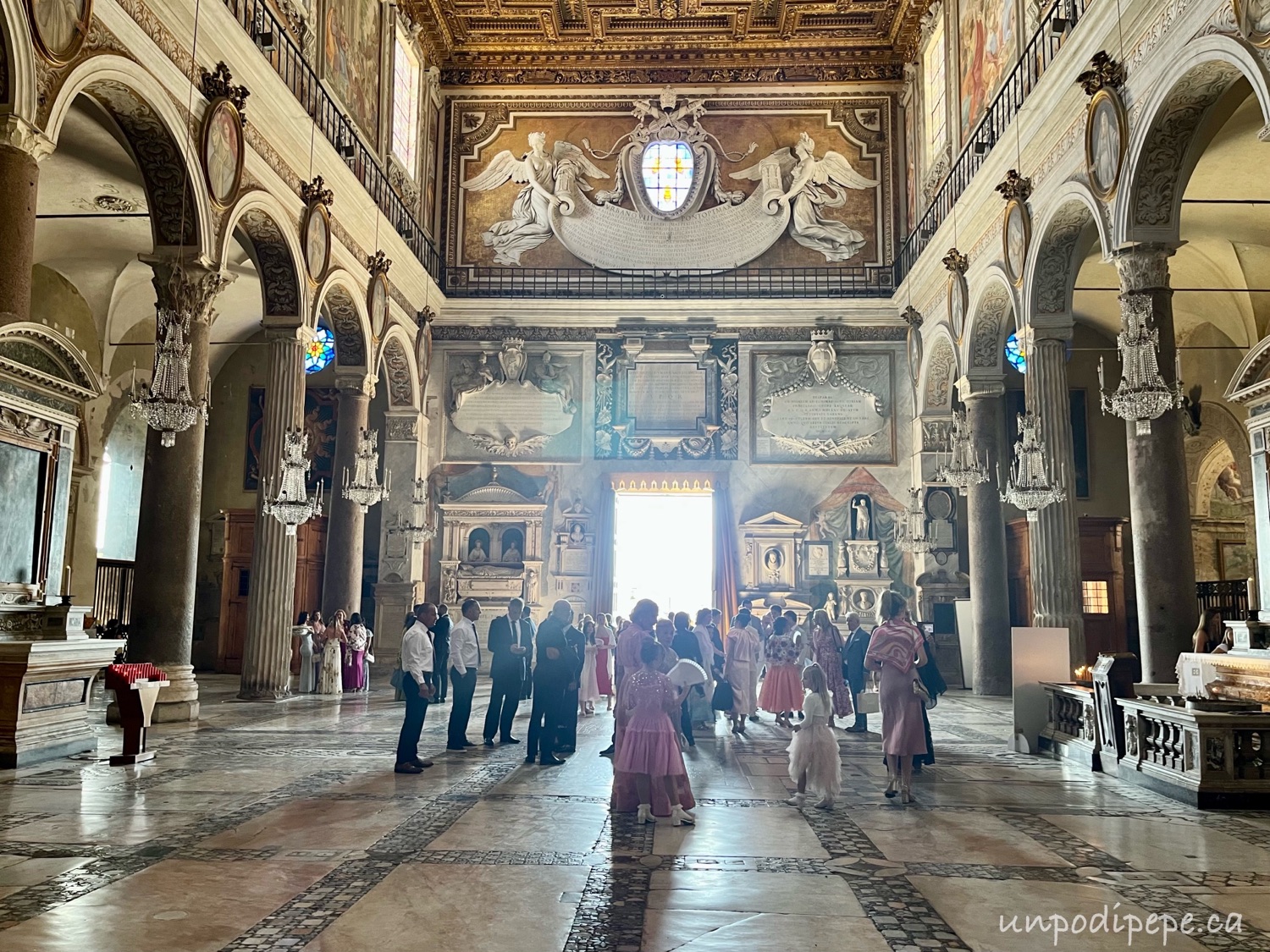
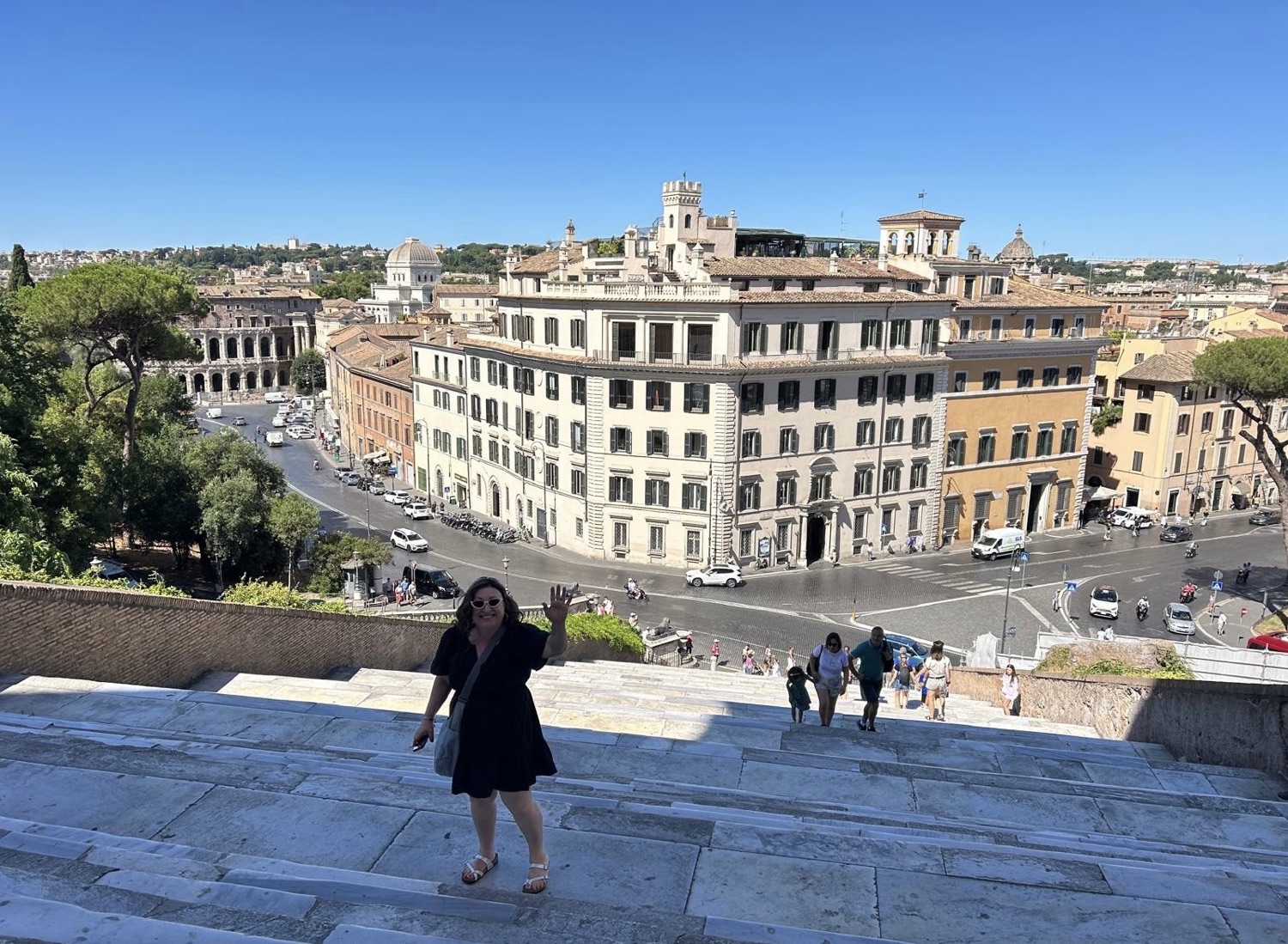
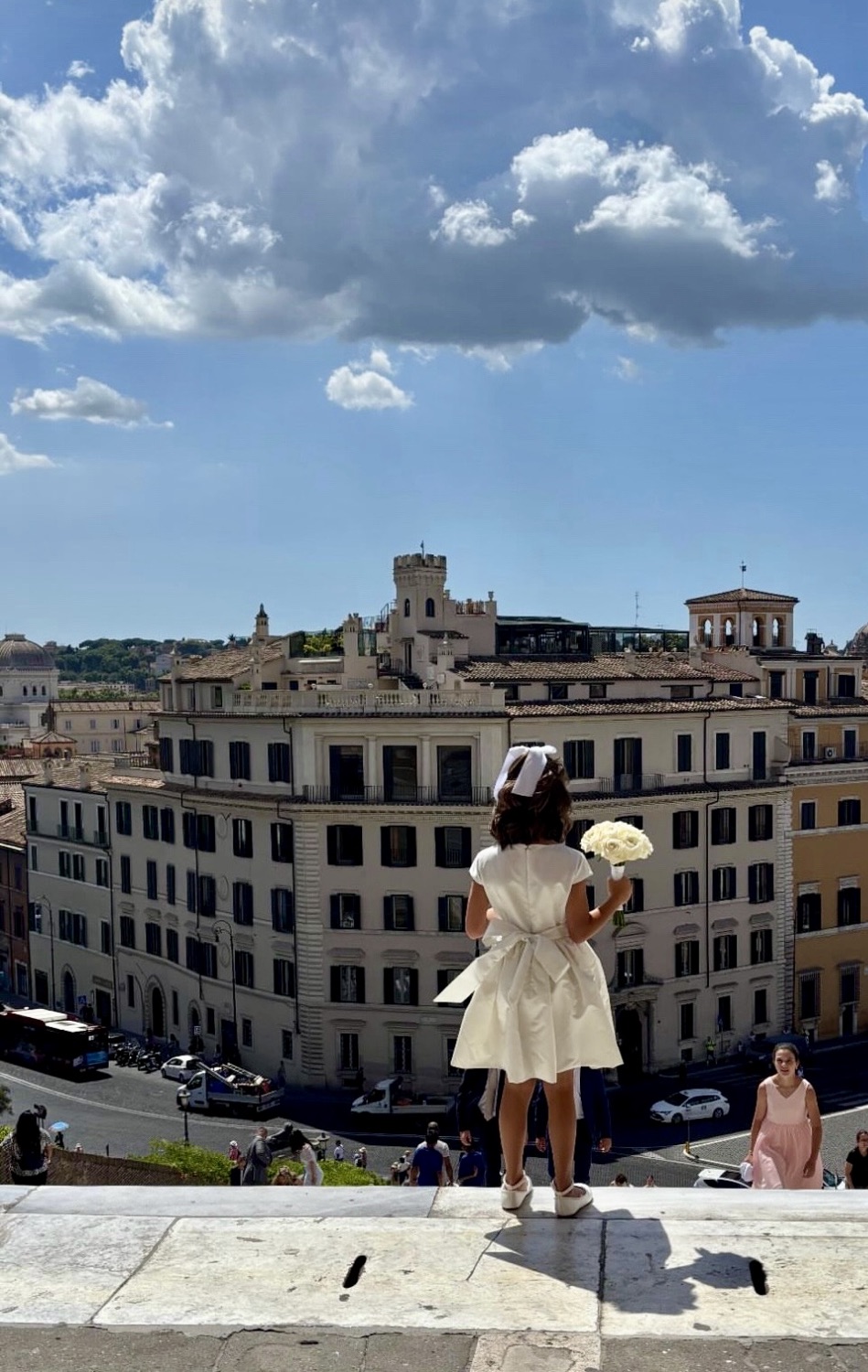
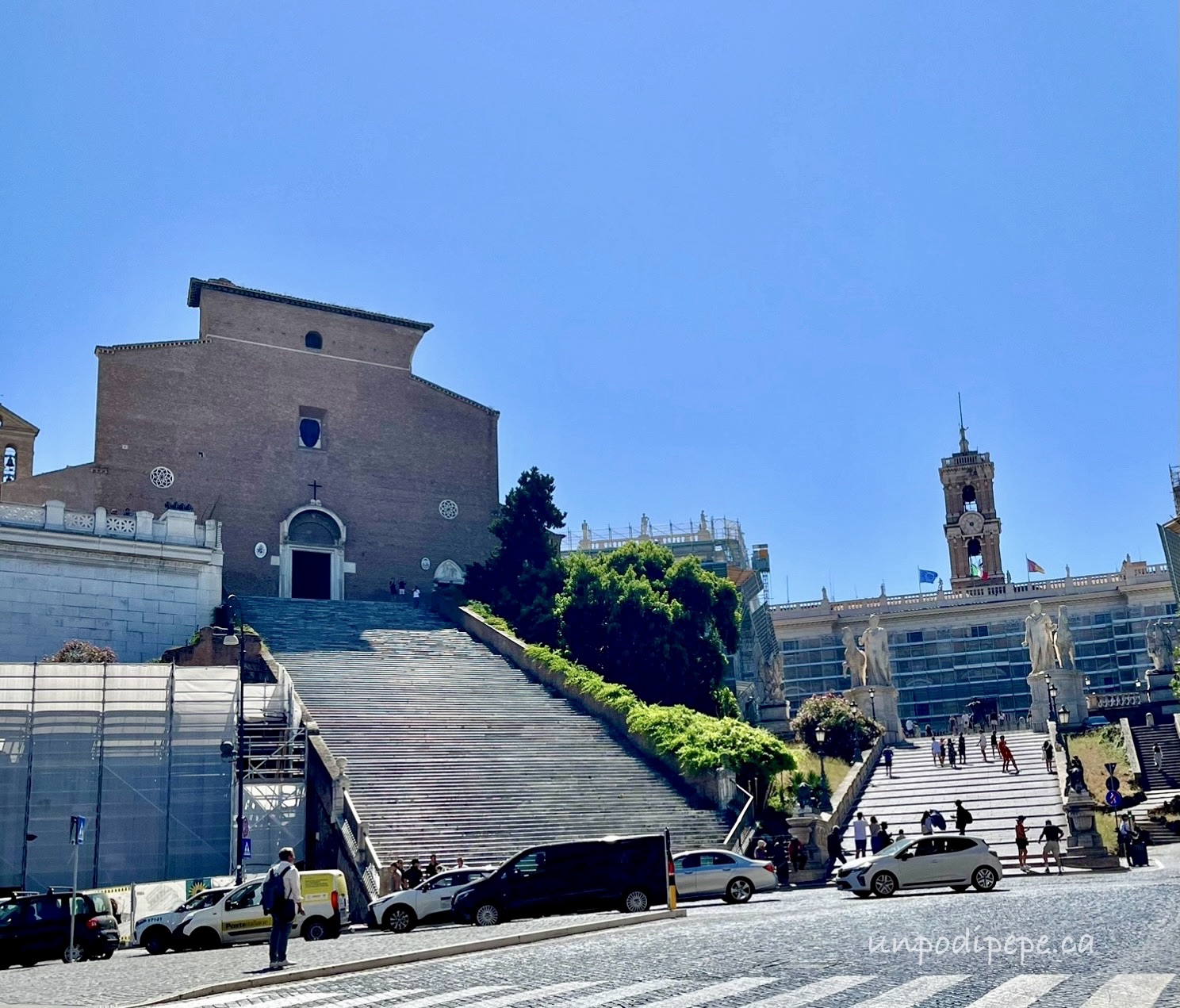
I recently attended a family wedding in one of the most beautiful churches in Roma, the Basilica Santa Maria in Aracoeli (pronounced Ah*rah*CHEH*lee). Because of its location on the highest point of the Capitoline Hill, sandwiched between Il Vittoriano and the staircase to Il Campidoglio, most visitors have seen it from the outside-but they have no idea what treasures the interior holds. Photos in this post are from the July rehearsal and wedding of Isabella and John.Translated from Latin, Santa Maria in Aracoeli means ‘Santa Maria of the altar in Heaven’. The Romanesque Gothic Basilica was built on the site of a Temple to Giunone (Juno) in the year 574.  Originally a Greek Byzantine church, it was taken over by the Benedictines in the 9th Century, then later the Franciscans in 1249.  Santa Maria in Aracoeli is one of the principal churches of Roma and the designated church of the city council and the Senate and people of Roma (SPQR). The Municipio, or City Hall of Roma is conveniently located behind the Basilica, on the Campidoglio.  During the French occupation of 1797, the Basilica was turned into a stable for the French cavalry!  It was almost demolished in the 1880’s during construction of its massive neighbour Il Vittoriano /L’Altare della Patria. In the photo above, the white monument is Il Vittoriano, the building behind it with the steep staircase is Santa Maria in Aracoeli and the staircase on the right leads to Piazza del Campidoglio, where the Capitoline Museum and Municipio are located.The interior is elaborately decorated, with a coffered and gilded wooden ceiling (1575).  The exquisite cream and pink marble floor is decorated with Cosmati, an inlay geometric style of Medieval stonework. The arches are supported on 22 columns scavenged and upcycled from diverse ancient ruins throughout the city. This is why no 2 of the columns are alike.  52 gorgeous Murano glass chandeliers hang in the nave and sanctuary. They were all lit during the wedding.

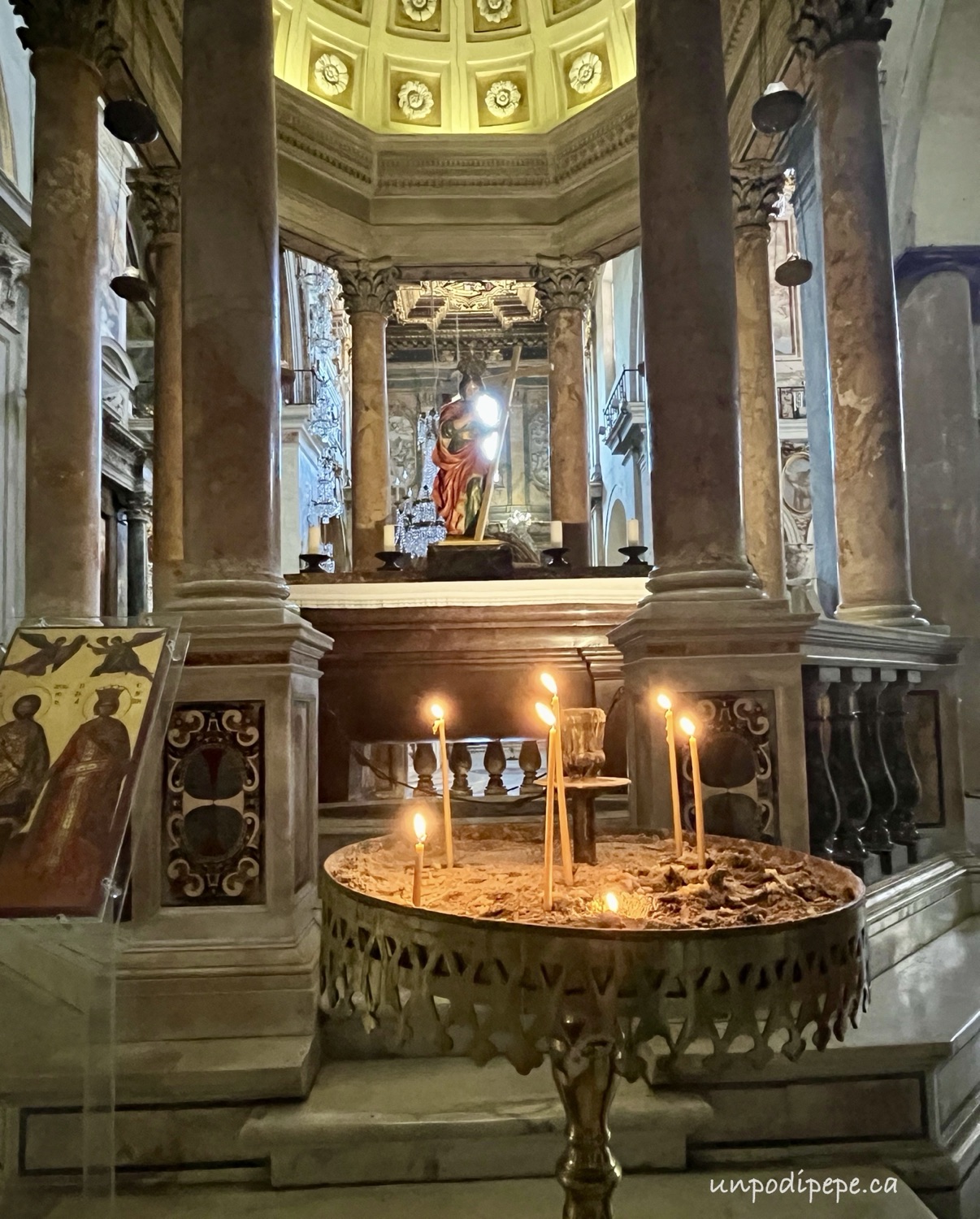
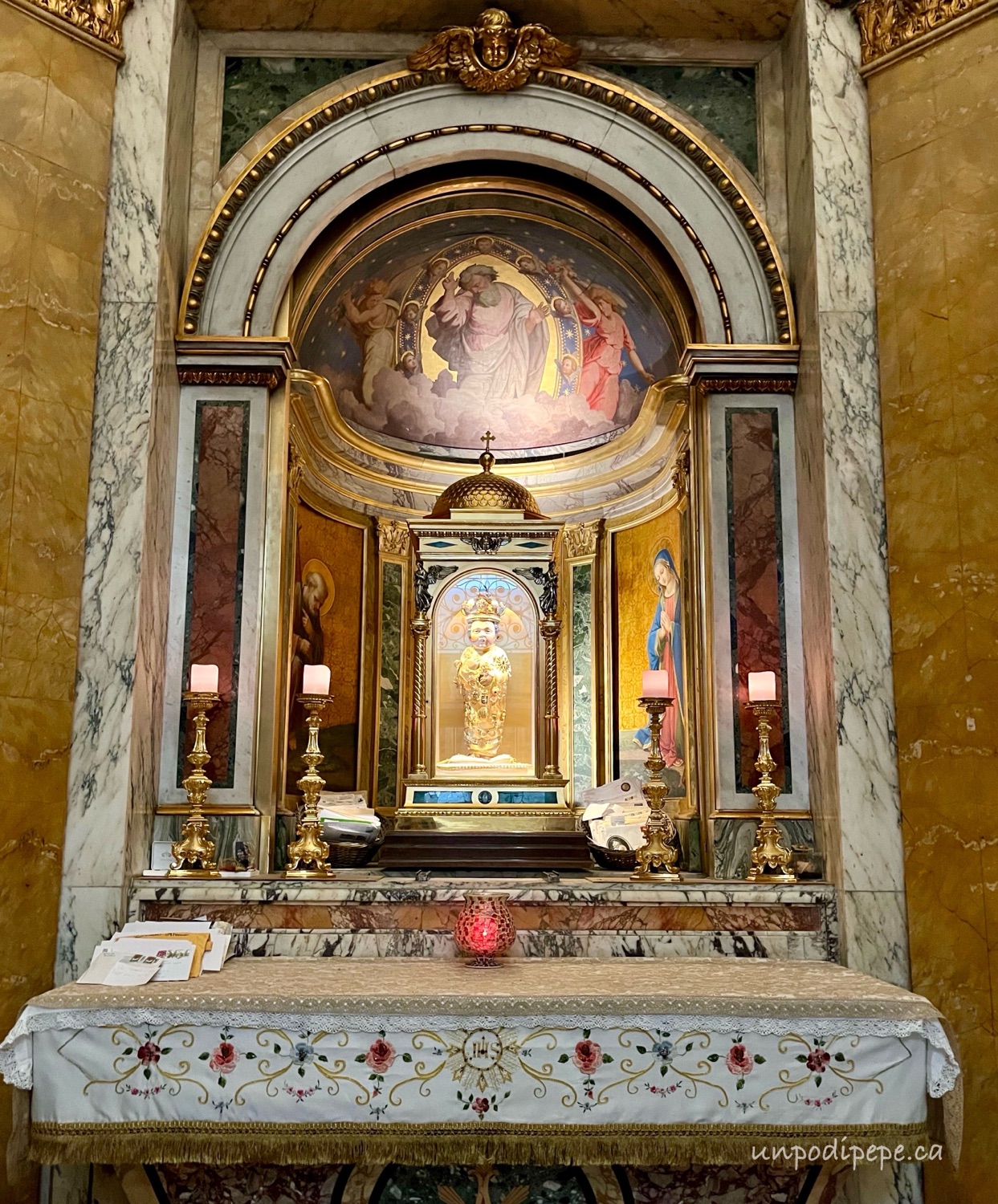
On the altar, is a 10th Century Byzantine icon painted on beech wood, la Madonna di Aracoeli. She is holding up her hand, which is painted in gold.  La Madonna di Aracoeli was carried through the streets of Roma during the Black Plague outbreak in 1348, and is credited with the shorter duration of the epidemic. To the left of the altar an octagonal tempietto or shrine contains the Byzantine relics of Sant’ Elena (St. Helena), the mother of Emperor Constantine. Cappella Bufalini, the first chapel on the right of the entrance, contains a series of 15th Century frescoes by Pinturicchio.  There are also frescoes by Pietro Cavallini and Arnolfo di Cambio, and countless other works of art.The most famous item in the church is the Santissimo Bambinello, a 15th Century bejewelled wooden sculpture of baby Jesus carved out of olive wood from the gardens of Gethsemane in Jerusalem, and baptised in the river Jordan.  It is believed to have healing powers. Unfortunately, he was stolen in 1994, and is still missing.  Today, the Bambinello in a private chapel by the small gift shop is a replica.

La Scala Santa, the staircase of 124 marble steps leading to the main entrance of the church, was designed in 1348 on the occasion of the end of the Black Death. The stairs are considered sacred, and people have been known to climb up on their knees, hoping for a miracle.  Luckily, none of the wedding guests chose to do this, but there were many wobbly stilettos climbing the stairs, and one extremely dirty wedding train!  Viva gli sposi!

Ciao, Cristina

Share this:

  • Click to share on Facebook (Opens in new window) Facebook
  • Click to share on Pinterest (Opens in new window) Pinterest
  • Click to share on X (Opens in new window) X
  • Click to email a link to a friend (Opens in new window) Email
  • Click to share on WhatsApp (Opens in new window) WhatsApp
Like Loading...

In Vino there are Memories

24 Friday Jan 2025

Posted by Un po' di pepe in Amici e Famiglia, Bilingual posts, Italocanadesi, Vino

≈ 14 Comments

Tags

Food writing, Italian Canadian Literature, Italocanadesi, Pugliese Traditions, vino cotto, Winemaking

To celebrate my birthday, today I am posting my story from the recently published anthology ‘A Literary Harvest: Canadian Writing about Wine and other Libations’.  I hope you enjoy it as much as I enjoyed writing it.  It is followed by an Italian translation.  Per l’italiano, leggi sotto.  Salute!….

When I look into a glass of wine, I see more than a delicious beverage to sip and enjoy. I see tradition and family, and a piece of my cultural heritage. I think of my Nonno’s vineyard in Puglia and I imagine my ancestors tilling the soil. I also imagine the journey the grapes made, coming from Greece and the Balkans millennia ago, then again across the Atlantic to North America. Immigrant journeys, similar to ours.

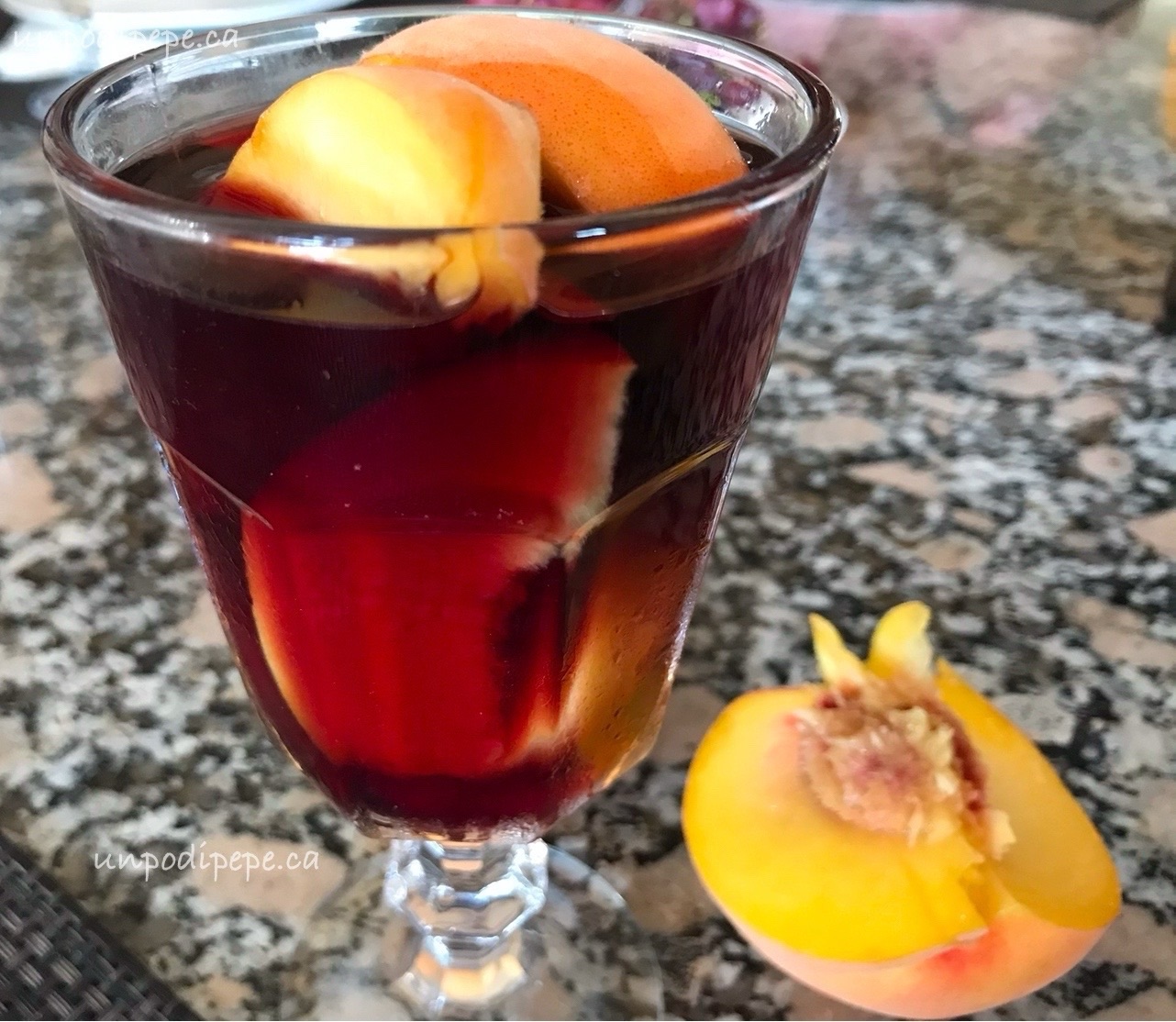
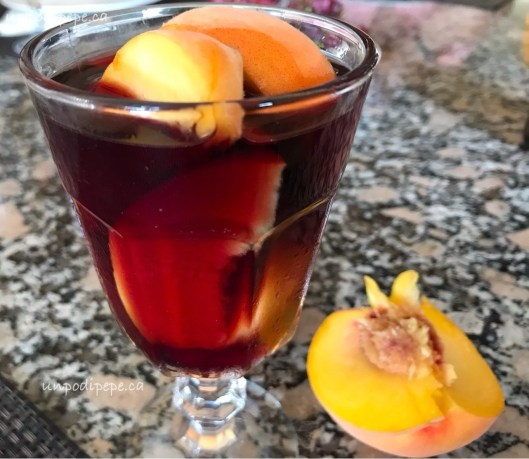
Wine is an integral part of growing up in an italocanadese family and is a staple of every family function. Everyone was allowed to have a bit of vino with dinner – it was exciting and made us feel grown up. Even when we were little … at first with 7-Up, Sprite or Ginger Ale, and eventually straight vino. In the summer, everyone looks forward to la pesca in vino. This involves cutting up a fresh peach, placing the slices in a glass, then filling it with vino. After the wine is consumed, lovely, sweet, wine-saturated peach slices await you for dessert. The peach slices take up most of the space in the glass, so the amount of wine to drink is really very little.
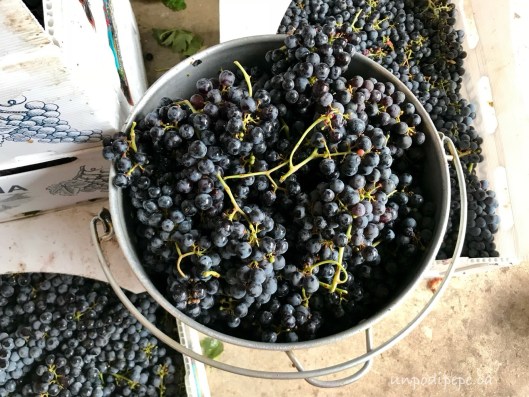
Wine making season is mid- to late-September, right after the pomodori are canned and stored in the cantina. The grapes grown in the back-yard garden are mostly for eating, so wine grapes are purchased from the Okanagan Valley. This is an area with summer weather similar to southern Italia … hot and dry during the day and colder at night. This combination produces the sweetest grapes.

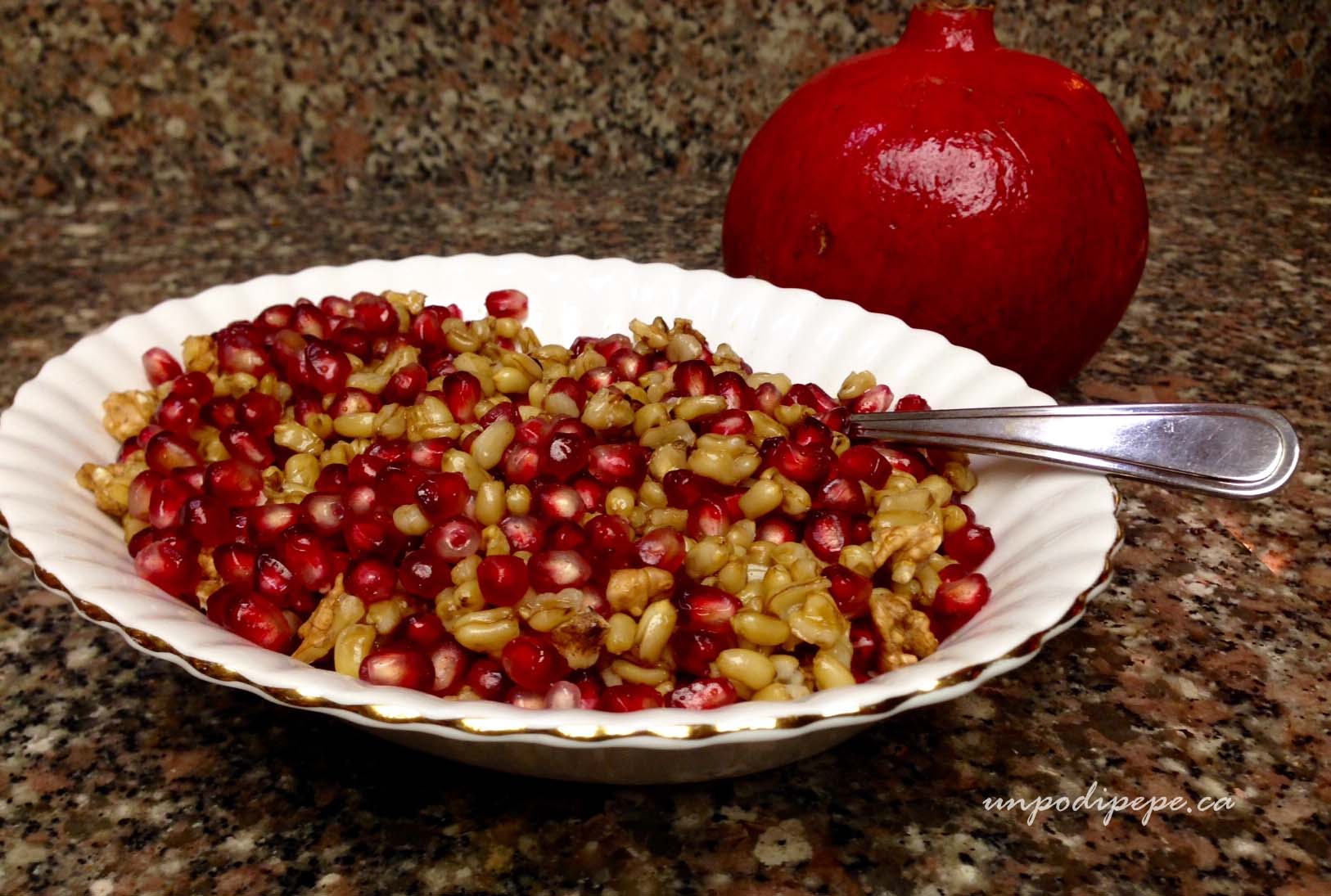
Making vino is a real family affair. When the grapes arrive, everyone who is free lends a hand, even the little ones, the nipotini. We help cart the boxes of grapes from the truck and empty them straight into the hand cranked grape crusher on top of a barrel.  Everything goes in;  skins, seeds and stems. Then we break apart the boxes, or else the wasps soon descend- Vespe know a good thing when they smell it! All month the aroma of fermenting grapes fills the garage!Mamma takes some of the mosto, the wine must, and boils it down like molasses to make vino cotto.  It really should be called mosto cotto, but we have always called it vino cotto. The thick, sweet liquid is poured over boiled wheat berries on November 1st to celebrate Tutti i Santi, All Saints’ Day. This traditional dish, in the local dialect, is called muscitaglia, from the words in Greek and Latin mosto and talia (grain). Walnut pieces and pomegranate seeds are added when available. Vino cotto is also drizzled on cartellate, a traditional Pugliese Christmas treat, and even on snow, like a vino cotto slushie!
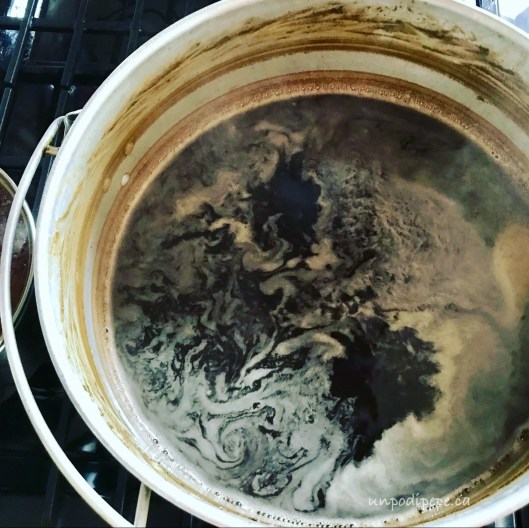
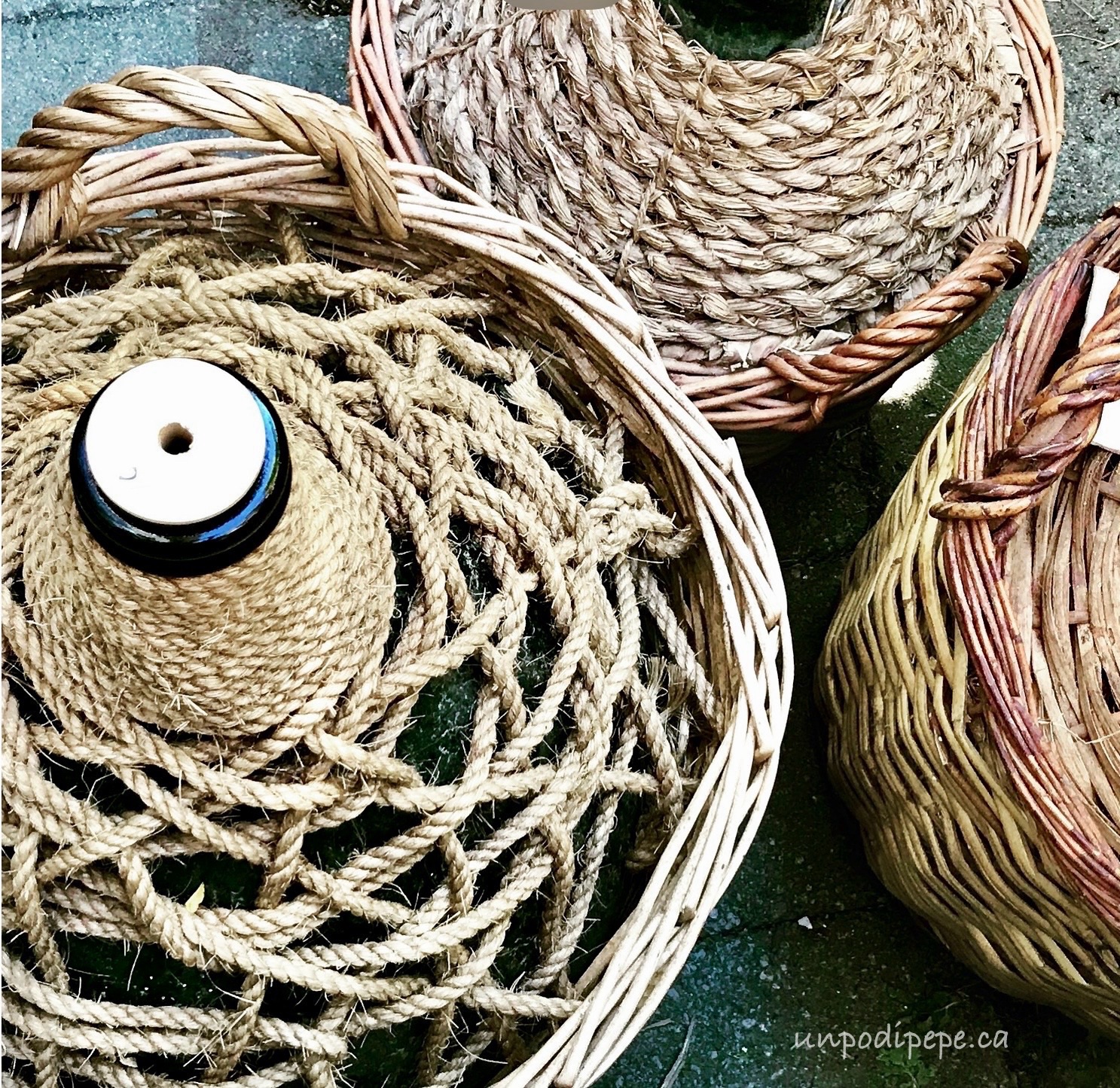
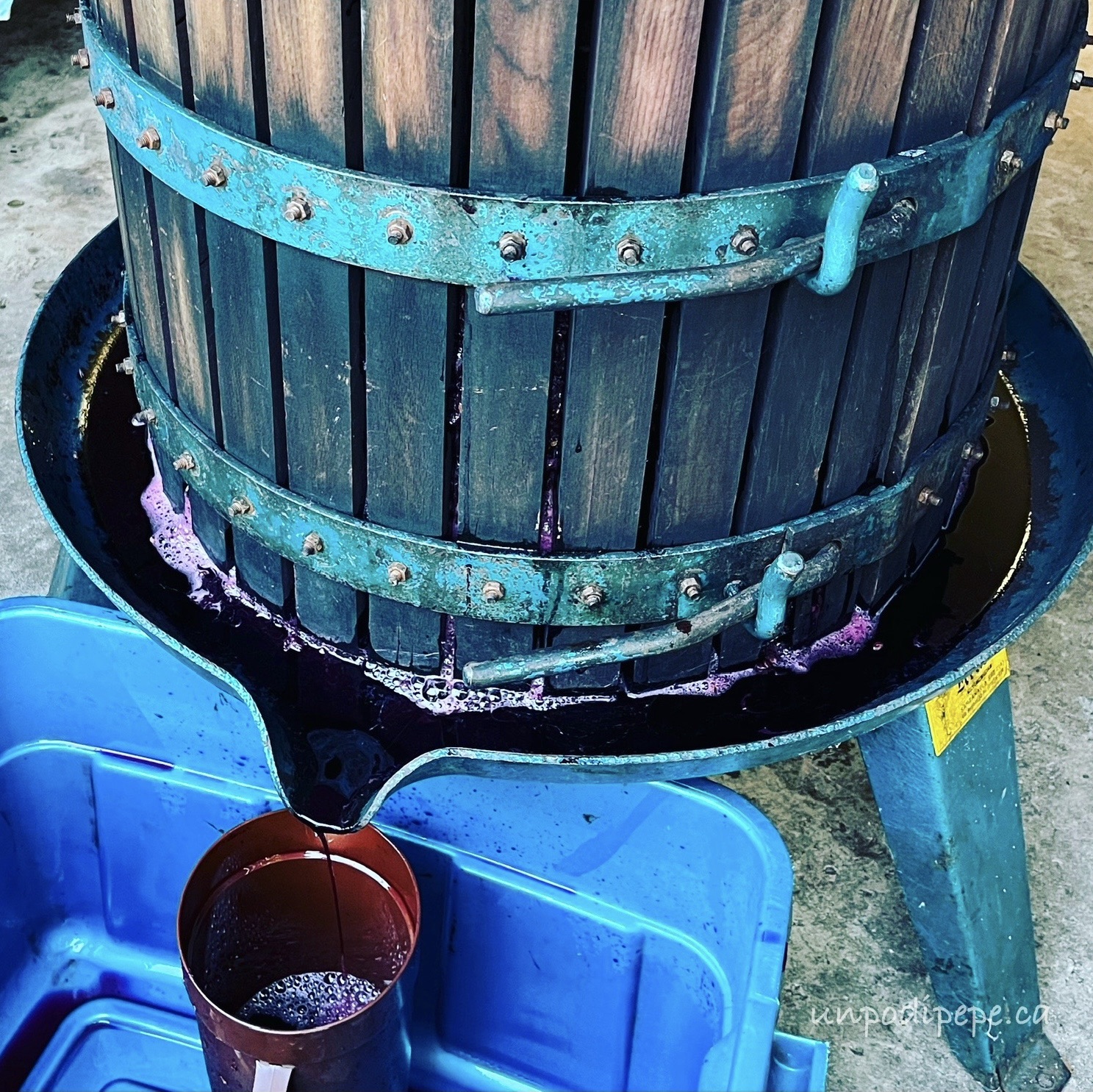
When ready, the fermented grapes are transferred to the old wooden torchio, for pressing. Since there are no preservatives added, our vino is stored in large, bell-shaped, wicker-covered glass damigiane, and siphoned into bottles only as needed. The wine needs to be tramutato a few times. This involves transferring it from one damigiana to another, to remove sediment. Like everything else Papà does, this is done according to the phases of the moon. Vino is tramutato during la luna calante, the waning moon, although the damigiane are still left open to air. On November 11th, the feast day of Saint Martin, the new vino is tasted and then the damigiane are closed until bottling. The old proverbs say “A San Martino, ogni mosto diventa vino” which means “On St Martin’s Day, every must turns into wine”, and ‘A San Martino, si lascia l’acqua e si beve vino’, ‘On Saint Martin’s Day, one abandons water and drinks wine’.

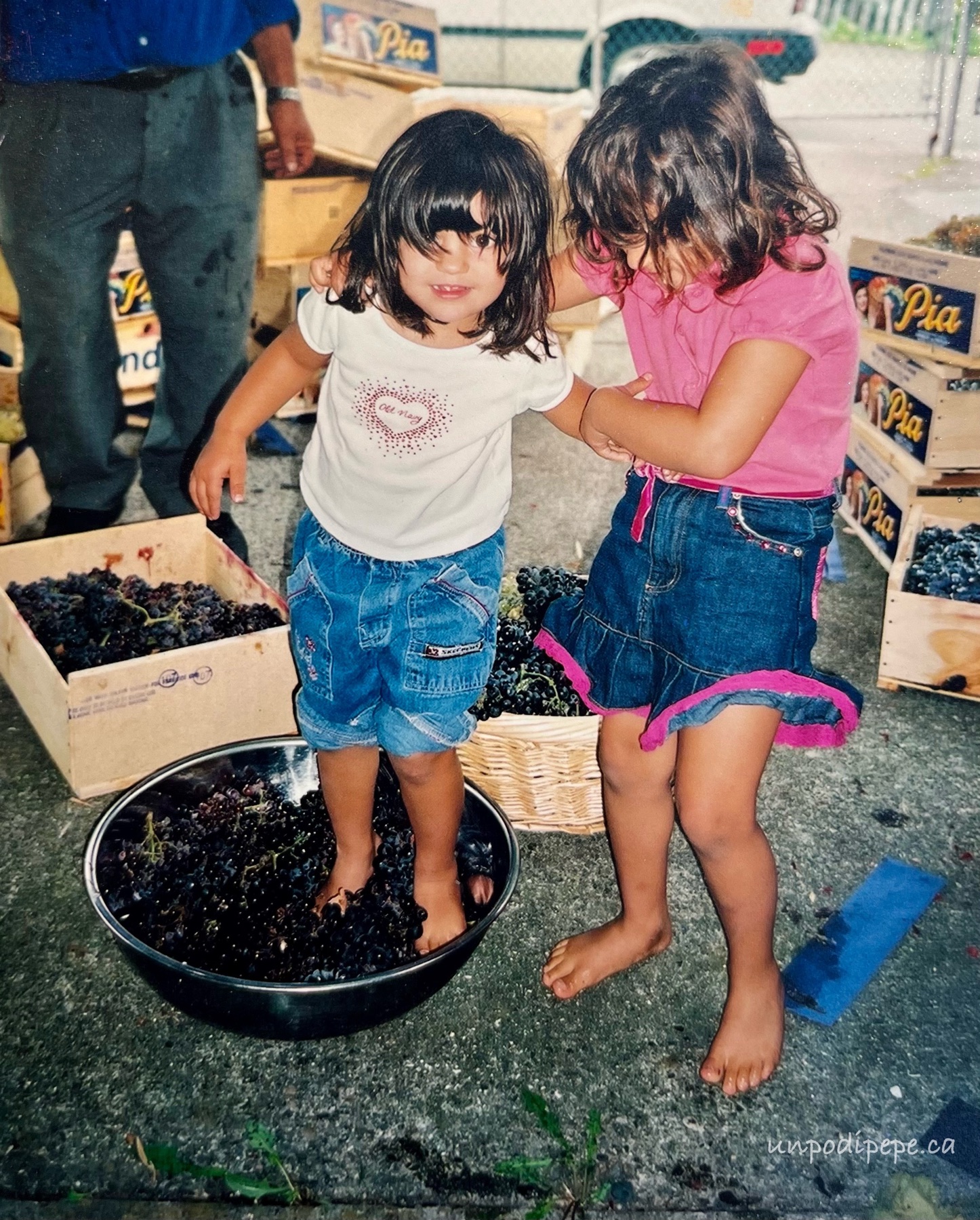
Papà makes the best vino. No sulfites or preservatives, just pure fermented grape juice. It has a full, robust flavour and does not leave you with a headache. Whenever anyone (anyone non-Italian, that is), asks him how he makes such good vino, he always has the same answer. “Ok … I tell you” … then he gets all dramatic… “for 2 weeks … I no wash the feet…” You can see where this is going. It is amazing how many people sit there open-mouthed for a few minutes and actually believe him! That is, until they see the mischievous smirk on his face. Just for fun, all of my nipotini have had photos taken à la “I Love Lucy,” crushing grapes in a half barrel or tub with their bare feet. These grapes are not added to il torchio, even though they did wash their feet. Salute!

         Published in ‘A Literary Harvest:  Canadian Writing about Wine and Other Libations. Editors Licia Canton, Giulia De Gasperi & Decio Cusmano.  Longbridge Books, 2025, p 94-96.

In Italiano:

Nel Vino ci sono Ricordi

Quando guardo dentro un bicchiere di vino, vedo più di una bevanda deliziosa da sorseggiare e gustare. Vedo tradizione e famiglia, e un pezzo del mio patrimonio culturale. Penso al vigneto di mio nonno in Puglia e immagino i miei antenati che coltivano la terra. Immagino anche il viaggio che hanno fatto le uve, provenienti dalla Grecia e dai Balcani millenni fa, poi di nuovo attraverso l’Atlantico fino al Nord America. Viaggi di immigrazione, simili ai nostri.

Il vino è parte integrante della crescita in una famiglia italocanadese ed è un elemento fondamentale di ogni festa familiare. A tutti era permesso bere un po’ di vino a cena: era emozionante e ci faceva sentire grandi. Anche quando eravamo piccoli… all’inizio con 7-Up, Sprite o Ginger Ale, e alla fine vino puro. In estate, tutti aspettano con ansia la pesca in vino. Ciò comporta tagliare una pesca fresca, mettere le fette in un bicchiere, quindi riempirlo di vino. Dopo aver consumato il vino, deliziose, dolci, fette di pesca sature di vino ti aspettano. Le fette di pesca occupano la maggior parte dello spazio nel bicchiere, quindi la quantità di vino da bere è davvero molto ridotta.

La stagione della vinificazione va da metà a fine settembre, subito dopo che i pomodori sono stati inscatolati e conservati in cantina. L’uva coltivata nel orto sul retro è destinata al consumo umano, quindi l’uva da vino viene acquistata nella Okanagan Valley. Questa è una zona con un clima estivo simile a quello dell’Italia meridionale… caldo e secco durante il giorno e più freddo di notte. Questa combinazione produce l’uva più dolce.

La produzione del vino è una vera e propria faccenda di famiglia. Quando arriva l’uva, tutti quelli che sono liberi danno una mano, anche i più piccoli, i nipotini. Aiutiamo a trasportare le casse di uva dal camion e le svuotiamo direttamente nella pigiatrice a manovella in cima a una botte. Ci mettiamo dentro tutto: bucce, semi e raspi. Poi rompiamo le casse, altrimenti le vespe scenderanno presto: le vespe sanno riconoscere una cosa buona quando la sentono! Per tutto il mese l’aroma dell’uva in fermentazione riempie il garage!

Mamma prende un po’ di mosto di vino, e lo fa bollire come la melassa per fare il vino cotto. Dovrebbe chiamarsi mosto cotto, ma noi lo abbiamo sempre chiamato vino cotto. Il liquido denso e dolce viene versato sui chicchi di grano bolliti il ​​1° novembre per celebrare la festa di Tutti i Santi, il giorno di Ognissanti. Questo piatto tradizionale, nel dialetto locale, è chiamato muscitaglia, dalle parole in greco e latino mosto e talia (grano). Pezzi di noce e semi di melograno vengono aggiunti quando disponibili. Il vino cotto viene anche versato sulle cartellate, un dolce natalizio tradizionale pugliese, e anche sulla neve, come un granita di vino cotto!

Quando è pronto, l’uva fermentata viene trasferita nel vecchio torchio di legno, per la pressatura. Poiché non vengono aggiunti conservanti, il nostro vino viene conservato in grandi damigiane di vetro a forma di campana, ricoperte di vimini, e travasato nelle bottiglie solo quando necessario. Il vino deve essere travasato un paio di volte. Ciò comporta il trasferimento da una damigiana all’altra, per rimuovere i sedimenti. Come ogni altra cosa che fa Papà, questo viene fatto in base alle fasi lunari. Il vino viene travasato durante la luna calante, anche se le damigiane vengono comunque lasciate all’aria aperta. L’11 novembre, giorno della festa di San Martino, si assaggia il vino nuovo e poi le damigiane vengono chiuse fino all’imbottigliamento. I vecchi proverbi dicono “A San Martino, ogni mosto diventa vino” e “A San Martino, si lascia l’acqua e si beve vino”.

Papà fa il miglior vino. Niente solfiti o conservanti, solo puro succo d’uva fermentato. Ha un sapore pieno e robusto e non ti lascia il mal di testa. Ogni volta che qualcuno (chiunque non sia italiano, ovviamente) gli chiede come fa a fare un vino così buono, lui ha sempre la stessa risposta. “Ok… ti dico”… poi diventa tutto drammatico… “per due settimane… non si lavano i piedi…” Puoi capire dove vogliamo arrivare. È incredibile quante persone se ne stanno lì a bocca aperta per qualche minuto e ci credono davvero! Cioè, finché non vedono il sorrisetto malizioso sul suo viso. Solo per divertimento, tutti i miei nipotini si sono fatti fotografare alla “I Love Lucy”, mentre schiacciavano l’uva in una mezza botte a piedi nudi. Quest’uva non si aggiunge al torchio, anche se si lavano i piedi. Salute!

Pubblicato in ‘A Literary Harvest: Canadian Writing about Wine and Other Libations. editors Licia Canton, Giulia De Gasperi & Decio Cusmano. Longbridge Books, 2025, p 94-96.
Share this:

  • Click to share on Facebook (Opens in new window) Facebook
  • Click to share on Pinterest (Opens in new window) Pinterest
  • Click to share on X (Opens in new window) X
  • Click to email a link to a friend (Opens in new window) Email
  • Click to share on WhatsApp (Opens in new window) WhatsApp
Like Loading...

Catanzaro, Calabria

15 Sunday Sep 2024

Posted by Un po' di pepe in Amici e Famiglia, Italia

≈ 4 Comments

Tags

Calabria, Catanzaro Lido, Scolacium, Southern Italy, Soverato, Squillace

Calabria for beginners-I finally made it to Calabria!  Just a little slice of it, as an unexpected detour!  I have been wanting to see Calabria for years, but it never seemed to work out.  My amica Rosetta, lives in Northern Italia but spends the summers in Calabria.  She saw on a Facebook post that I was in Puglia and wrote me a comment ‘Vienici a trovare in Calabria’.  Of course, I said ‘si!’ and even managed to find a ride from one of my paesani who lives in Catanzaro Lido. Sometimes the stars just align.

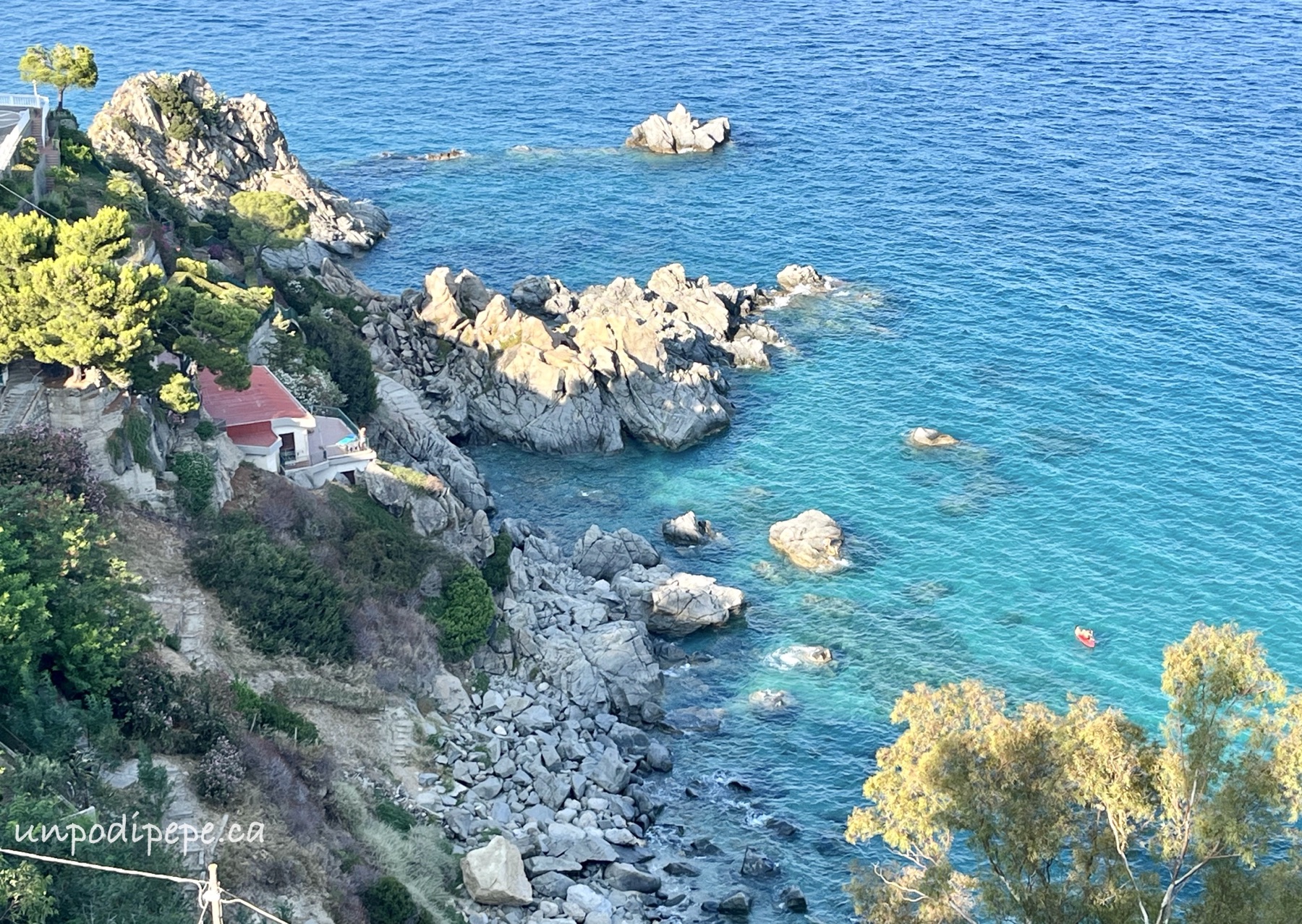
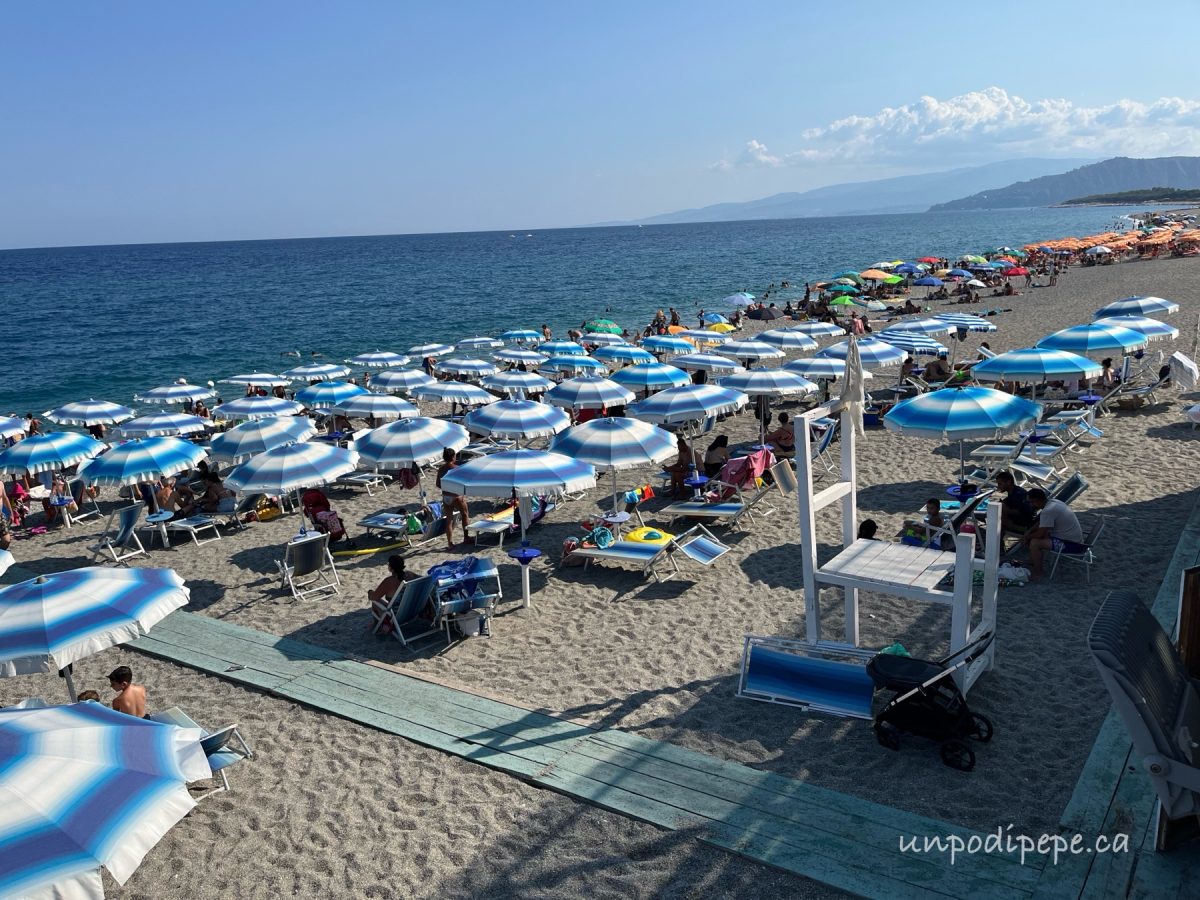
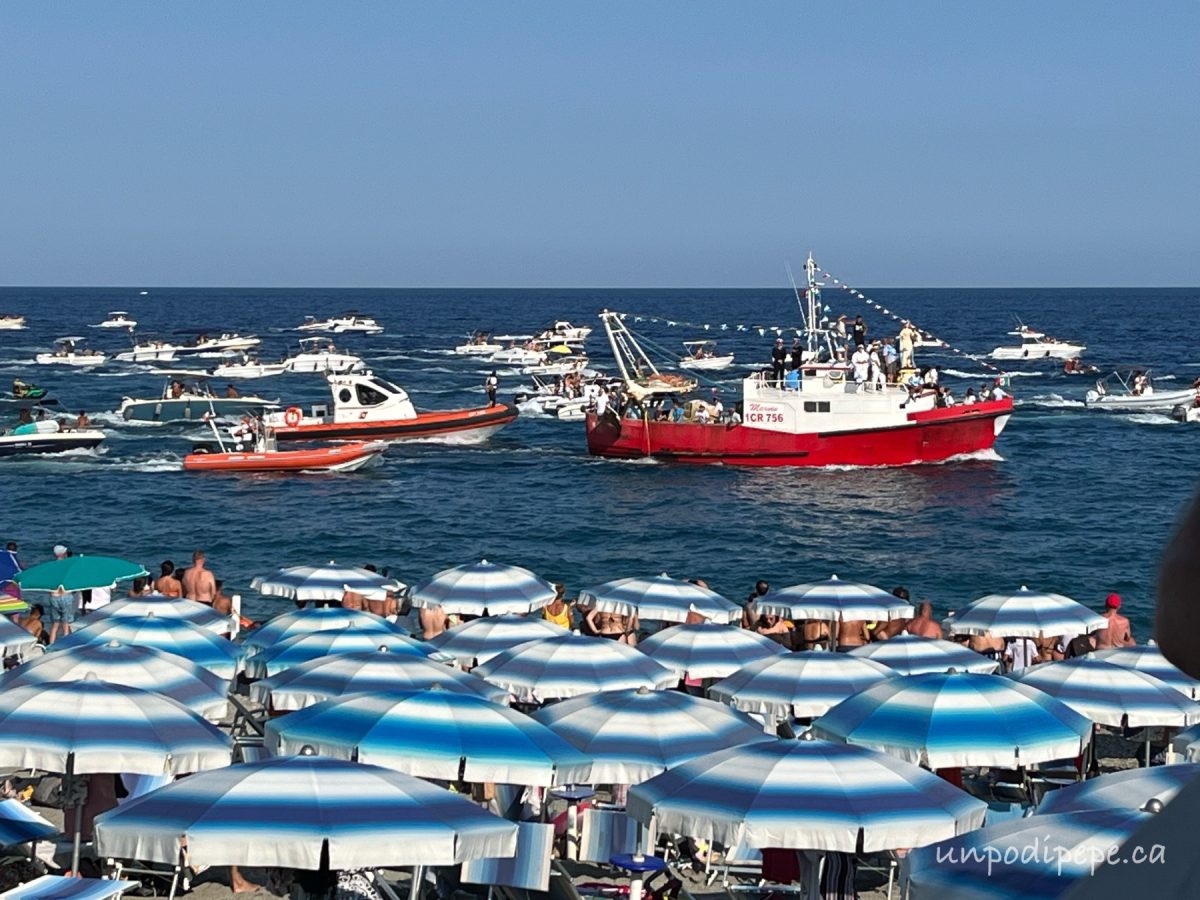
Calabria, the ‘toe’ and ‘foot’ of the Italian boot, is one of the lesser travelled areas of the country, and also one of the least expensive to visit.  I was there during the last week of July and it was not crowded where I was.  Calabria is known for rocky coastlines, crystal clear water, beautiful beaches, ancient mountain villages, castles and archeological sites.  I saw all of the above.I only went to a small area of Calabria on the Ionian Sea (east coast) around the Golfo di Squillace, in the province of Catanzaro. This is the narrowest part of Calabria, so it is possible to drive to the west coast, to Tropea, in an hour and a half.  My friends are in Squillace Lido, and as soon as I arrived, we went to Catanzaro Lido for the Festa della Madonna di Porto Salvo.  The highlight of the festa was a sea procession.  The Madonna was in the large red-hulled boat and all the other boats followed.

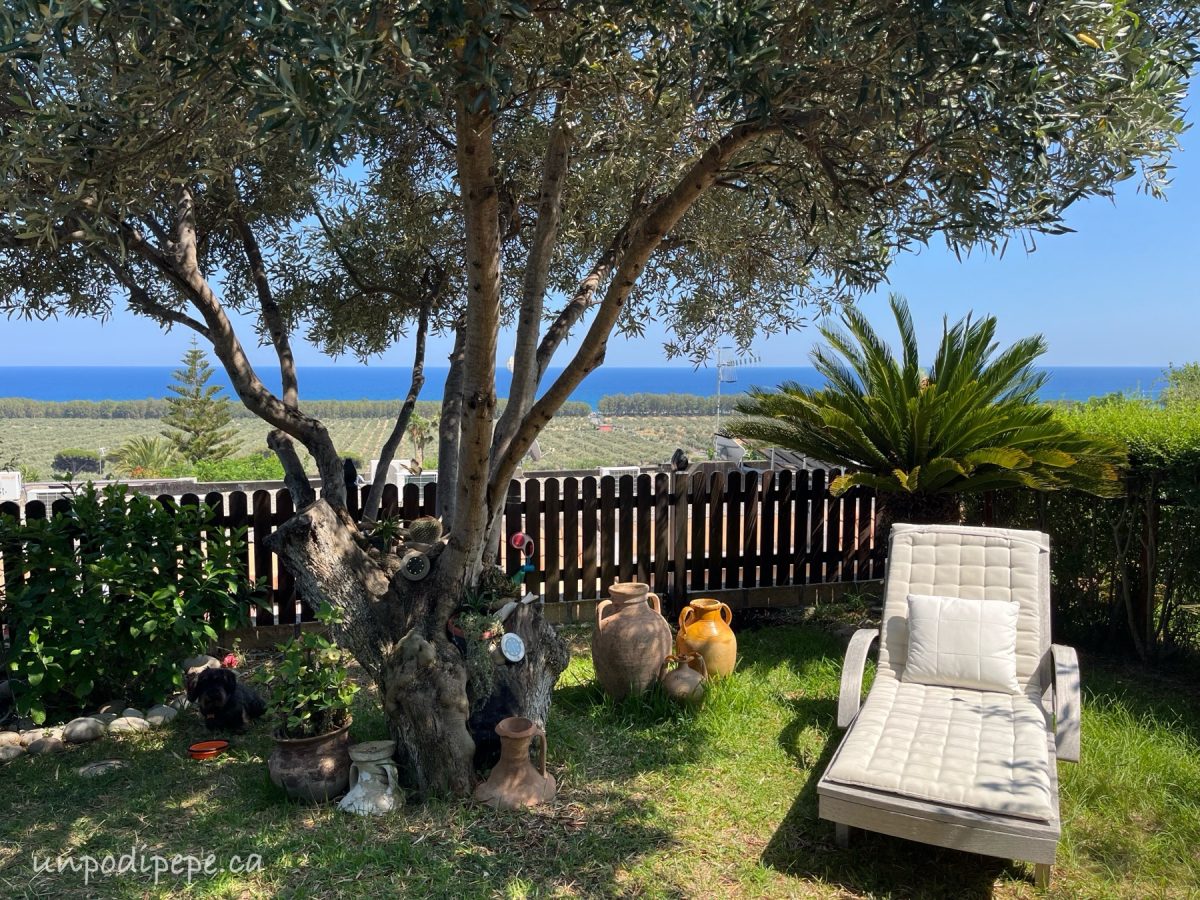
Rosetta’s back yard was heavenly, with an olive tree and a view of the Ionian Sea.  She decided we had to wake up at 0543 to watch l’alba, the sunrise.  I am not a morning person, but it was totally worth getting up for, as you can see.

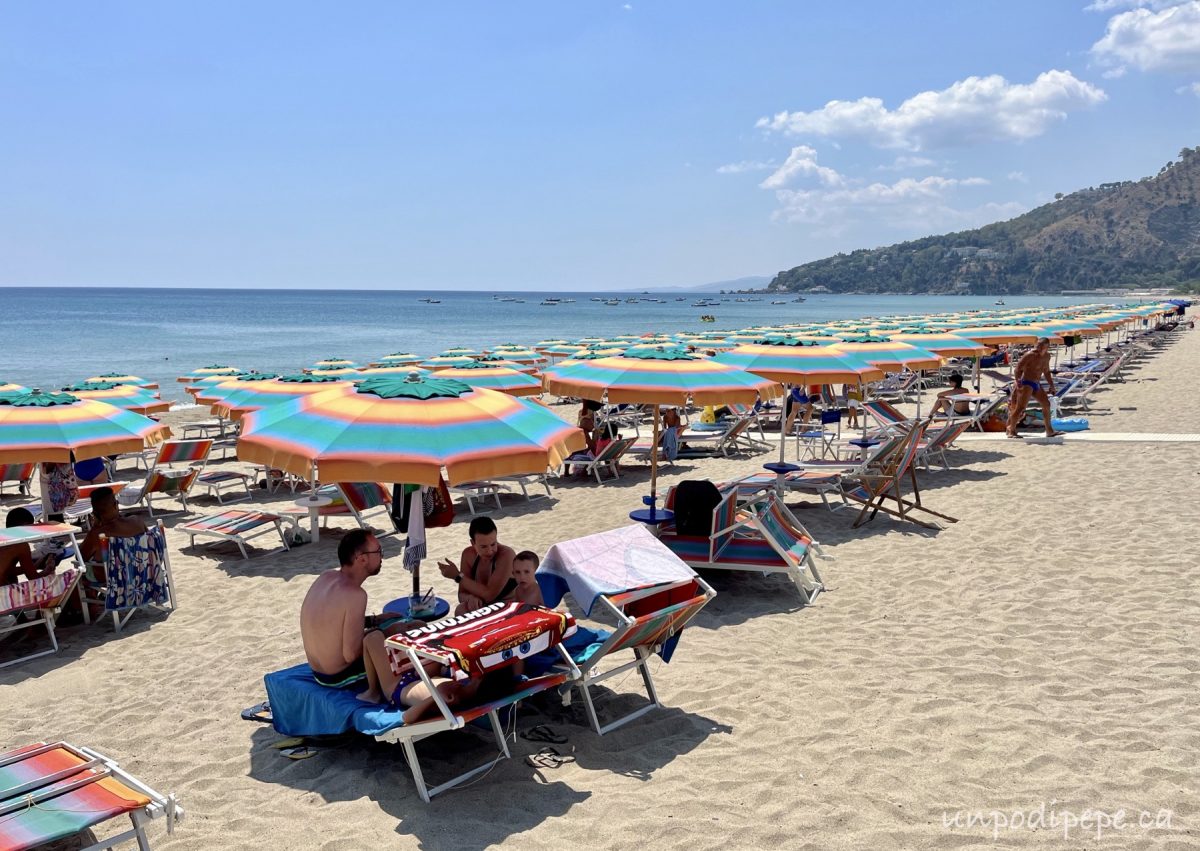
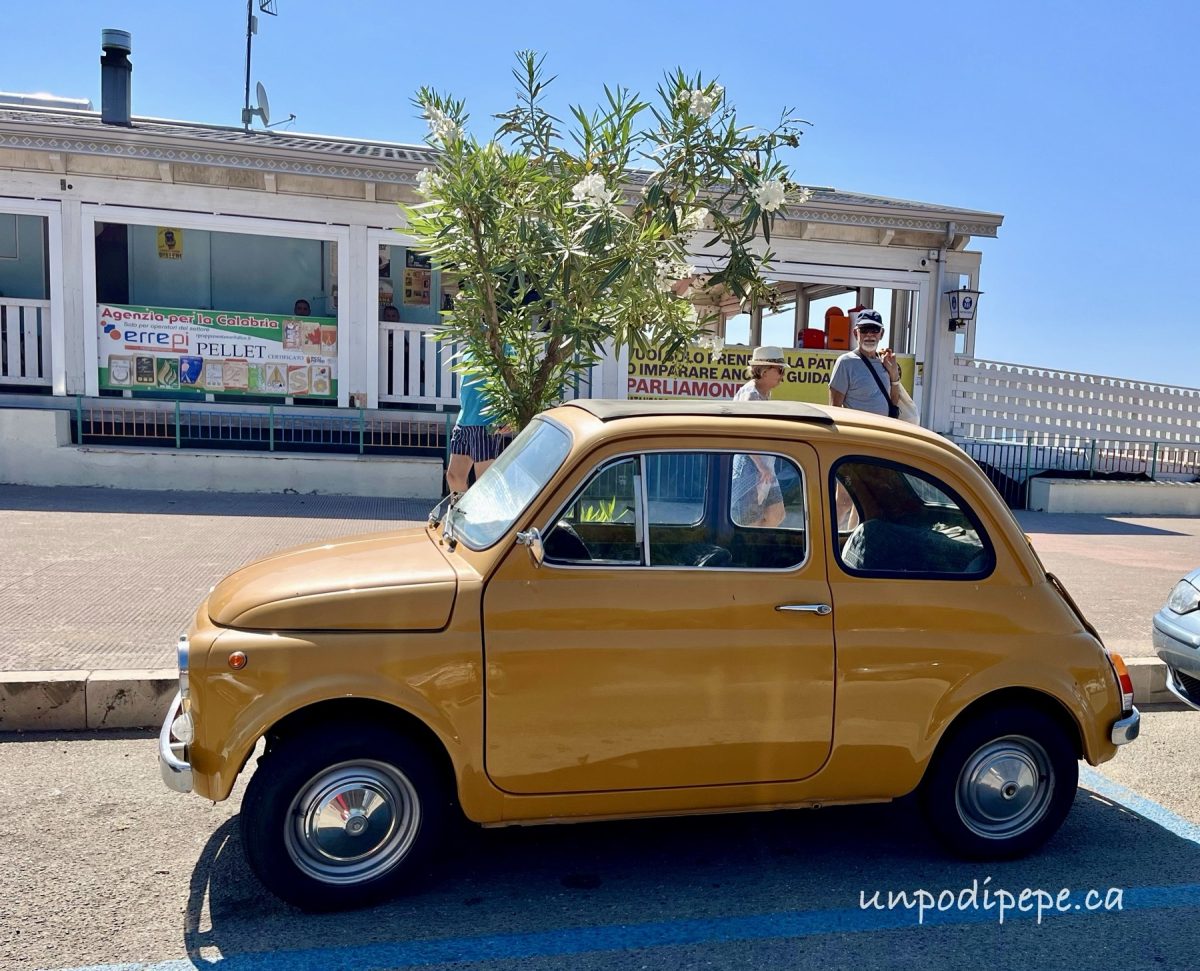
Every morning, we went to the beach -to Squillace Lido, and everyone I met-both on the beach, under an ombrellone, or in the water-was a cousin of Rosetta or her husband Enrico!  Some of these cugini lived in the area and some had moved to other parts of Italia, returning for the summer.  What an amazing thing!  It was so hot, I stayed in the water most of the time.  The sand was coarse, and my feet had a nice daily exfoliation.Even on the beach in Calabria, my Cinquecento radar was on high alert!

Squillace (skwee•LAH•cheh) population ~3500, was originally the Greek colony of Scylletium and then the Roman town of Scolacium.  I visited the Parco Archeologico Scolacium, which was formerly a large olive farm and orchard by the sea.  The site has Roman, Byzantine and Norman ruins.  It was discovered in the 1800’s by farmers, but not excavated until 1965. The residence of the former owner, Baron Mazza, is now the museum and you can also walk through the old olive mill.  The statues in the museum are covered in scrapes made by farm implements!  Ouch! Please read my friend Karen in Calabria’s post about Scolacium, she took better photos than mine.

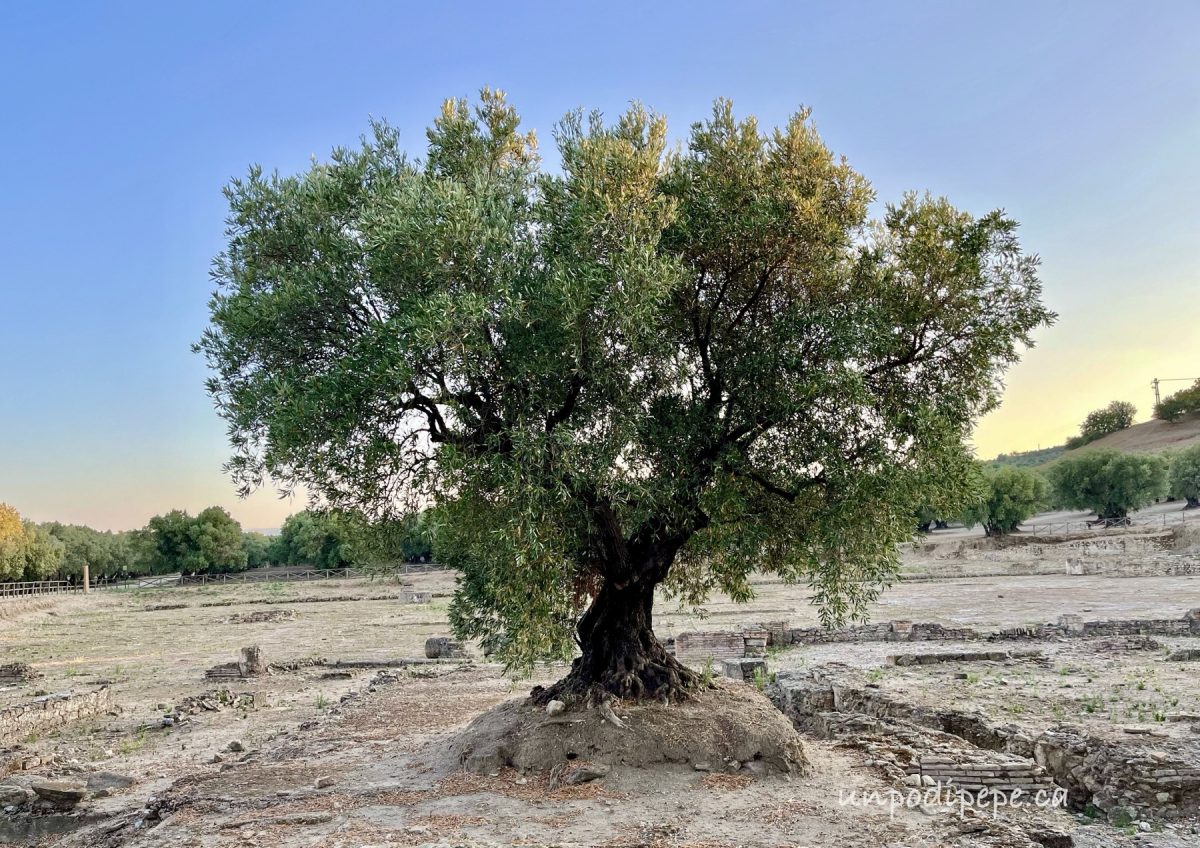
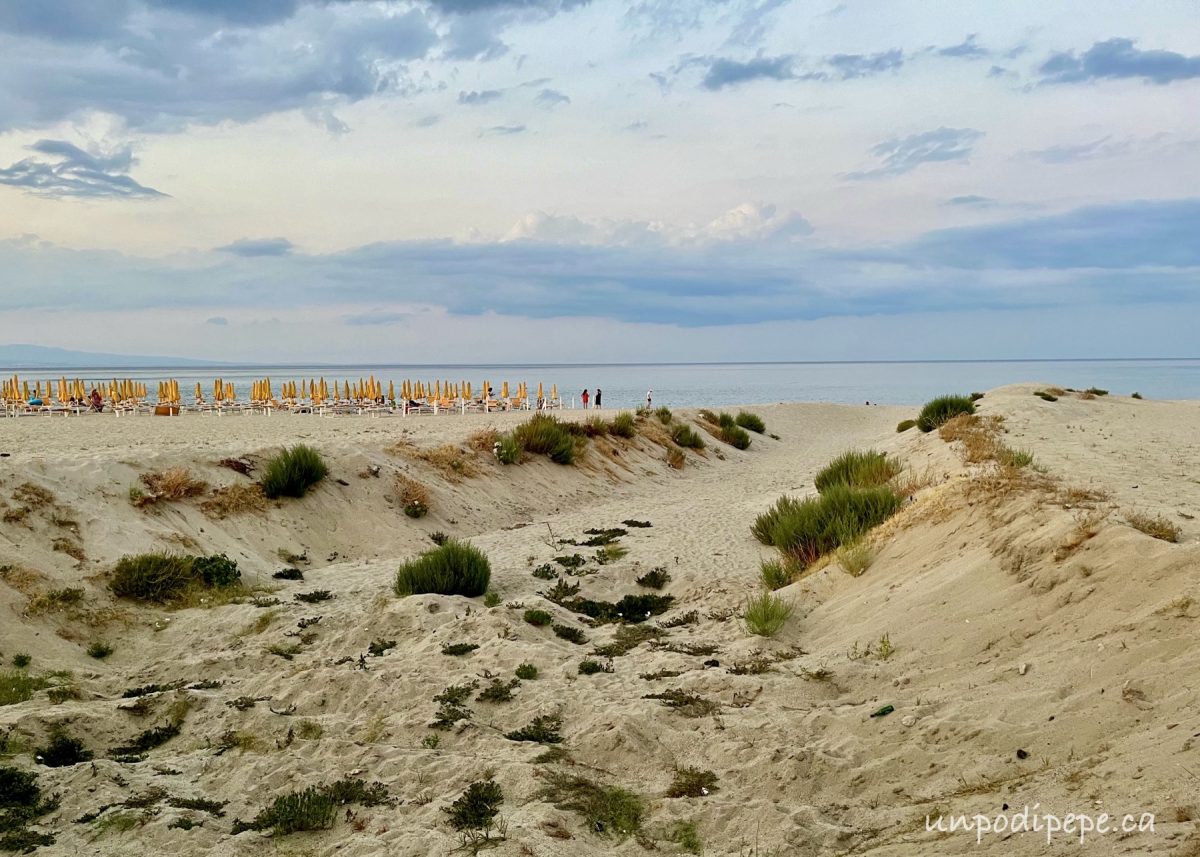
Only a small part of the site has been excavated and it is still ongoing.  There are extensive mosaics that get worked on, then covered again until there is time and $ to excavate some more. Surrounding this magnificent olive tree, you can see stones ready to be excavated.Called ‘the pearl of the Ionian Sea’, Soverato was recently named the 3rd most beautiful beach in Calabria.  Soverato, population ~9000, is known for its beaches, boardwalk and nightlife.  I visited for an evening stroll along the boardwalk.  The beach looked almost otherworldly before sunset!

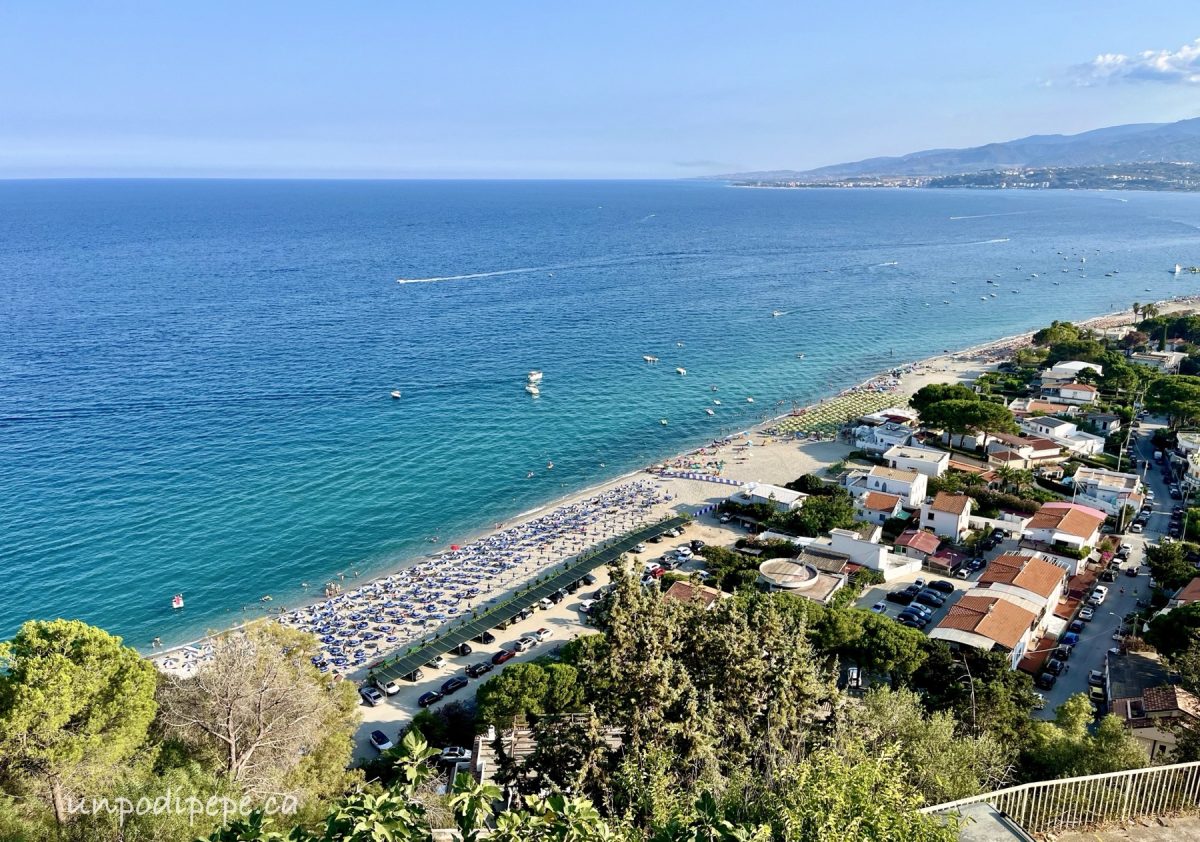
This night shot was taken from Baia dell’Est where we had pizza. Caminia is right below, then Pietragrande, and Soverato in the far distance. Below is the daytime version of this view.

What did I bring back from Calabria?  Peperoncini, also known as ‘Viagra Calabrese‘, Bergamotto-the citrus fruit used to flavour Earl Grey tea, and the famous cipolla rossa di Tropea -Tropea red onions.  This is where I bought my goodies.  Behind the Lanzellotti bancarella is a pepper tree-growing pepe rosso-red peppercorns!  Un po’di pepe!

Getting back to Orsara di Puglia was not so easy.  My options were to go to Lamezia Terme, take the train to Napoli and then take the bus to Foggia and another bus to Orsara, or take a 7.5 hour overnight bus from Catanzaro Lido to Foggia.  I chose the overnight bus so I could have an extra day at the beach!  At 7am my cugina met me for colazione in Foggia, then I took the bus to Orsara.  As mamma would say ‘una sfacchinata’!

Calabria seems to be even more badly connected with transportation than Puglia! Mannaggia! This makes it harder to get around without renting a car, but it is also one of the reasons these areas are less crowded and less pricey.  Tropea was apparently extremely crowded this year, as it has been getting a lot of attention since 2021. Despite the lack of convenient transportation, I will definitely be going back to see more of Calabria some time in the future!

Grazie to Rosetta and Enrico for inviting me to visit their little corner of paradise in Calabria!  Ciao, Cristina

Share this:

  • Click to share on Facebook (Opens in new window) Facebook
  • Click to share on Pinterest (Opens in new window) Pinterest
  • Click to share on X (Opens in new window) X
  • Click to email a link to a friend (Opens in new window) Email
  • Click to share on WhatsApp (Opens in new window) WhatsApp
Like Loading...

In my Kitchen in Puglia, 2023

12 Tuesday Sep 2023

Posted by Un po' di pepe in Amici e Famiglia, Italian life, Mangiamo!, Orsara di Puglia, Puglia

≈ 23 Comments

Tags

Barrel vaulted ceiling, Cucina Pugliese, Fiori di zucca, In my kitchen, Mozzarella di bufala, Orsarosa, Parmigiana di melanzane, Pugliese Traditions, Ravioli

I recently returned from 6 weeks at our little casa in Orsara di Puglia.  As usual, there was a lot of activity in the kitchen. Cucina povera, literally ‘food of the poor’, is what you will mostly find in Puglia.  Simple foods made with fresh local ingredients. Here are just a few of the things my family and I were up to in our tiny but functional summer kitchen in Orsara di Puglia. Since I have so much material to write about, I have kept it to gifts of food received from amici, parenti e vicini di casa -friends, relatives and neighbours.

About the space, the whole place is only 40m² (about 450 square feet) including a bedroom and bathroom.  That is about the size of a double garage.  The room with the cucina is also the living room, guest room (aka my room) and art studio. The highlight of the room is the amazing barrel vaulted stone ceiling, which is hard to fit in a photo. There is even the face of a Madonnina on one of the stones.We had a lot of visitors, many who came bearing gifts.  This lovely cestino, filled with locally grown vegetables was dropped off by one of our neighbours.

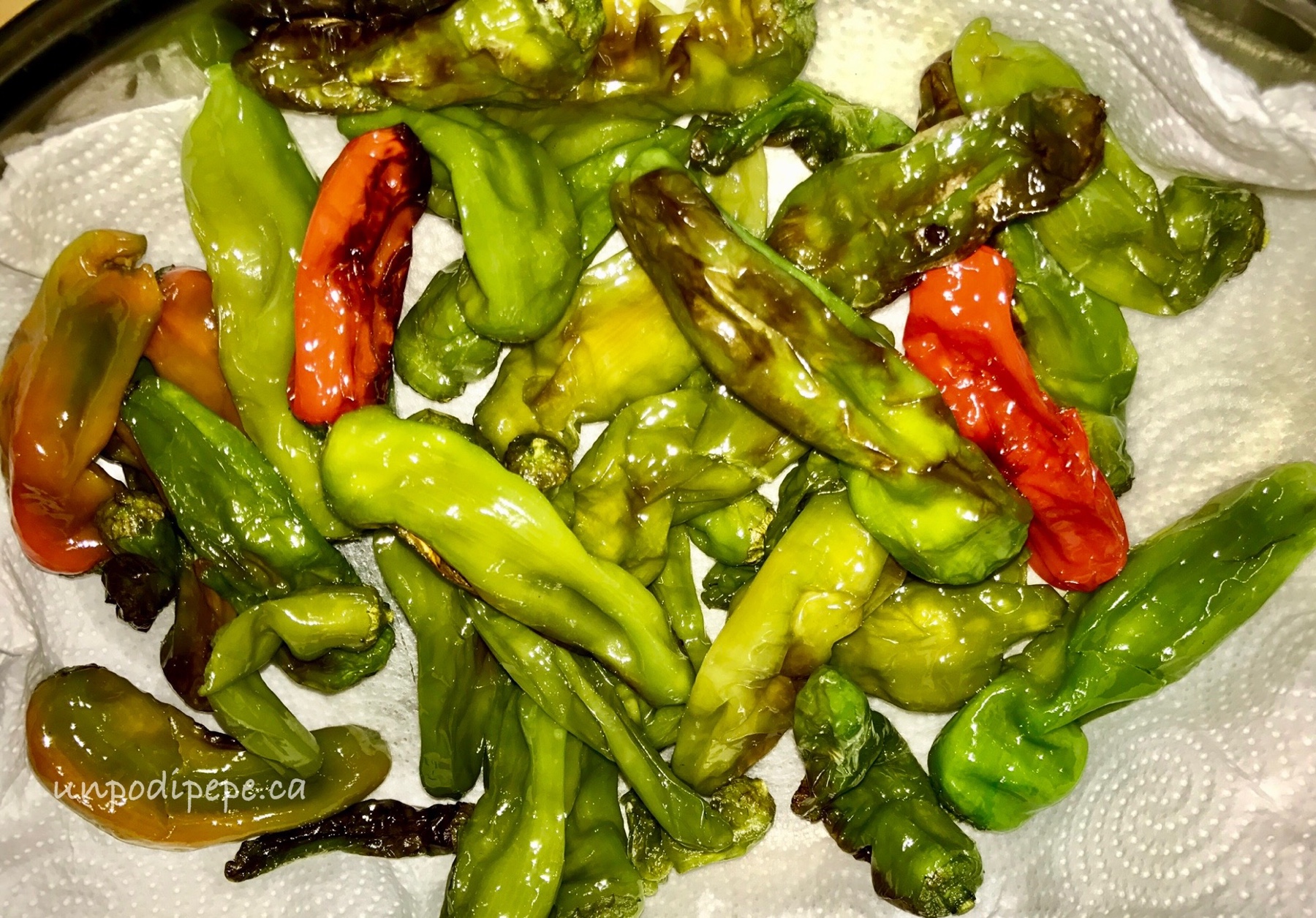
The melanzane (eggplant, or aubergine for the Brits) were stuffed and baked. The pulp was fried up with a bit of ground beef and pork, garlic, breadcrumbs and parmigiano, then stuffed and topped with tomato sauce and mozzarella. They were soooo yummy, but we only made them once, as it was so hot that having the oven on was painful!The long green and red peperoni or peppers in the cestino are called friarill’. They are sweet tasting, and as the name implies, are usually fried. Friarill’ on fresh bread taste heavenly!The gift of fresh eggs is amazing.  I used half of them to make fresh egg pasta for ravioli di ricotta e spinaci.  I froze them for the festa della Madonna della Neve Aug 5th. Freezing them was hard, as the freezer is so tiny. I make these often in Vancouver, and they are good-but the goat milk ricotta here is so incredibly good that they taste better.I was happy to use my spianatoia one more time.  That is the wooden pasta rolling board. It has a lip on one end so it stays put on the table and a handy carrying handle, just like the chair.

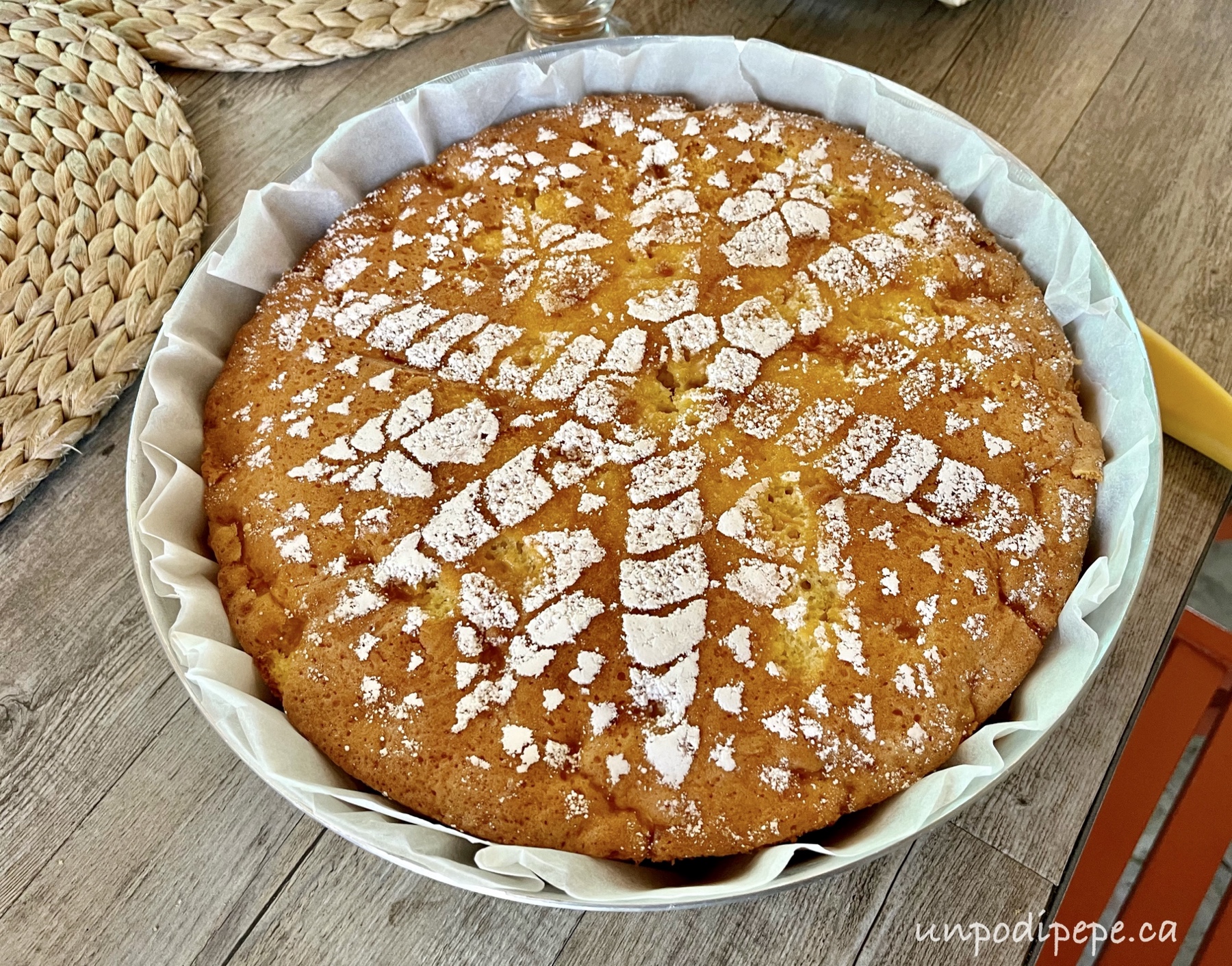
Mamma and I used the rest of the eggs to make Torta di mela, an apple cake.  We made it to bring to our family grigliata -BBQ- at the olive grove that was my Nonno’s. It had to be baked at 1 am as it was just too painful to turn the oven on during the day.La torta looked a bit plain, so I placed a clean crochet doily over the top and sprinkled icing sugar all over. The fancy shmancy design was left on the cake. I often have to do this to my Torta Caprese because the top always collapses a bit. Fiori di zucca are one of my favourite summer foods-and my favourite bouquet of flowers. My Zio brought over a LOT of them one day, an hour before we were going to be eating.  I stuffed some of them with what I had available. There were a few trecce-fresh, braided mozzarella, in the fridge and basilico growing out on the tiny terrazza. Once they were stuffed, I battered them in flour and mineral water with a few bonus ingredients like parmigiano and basilico, and then fried them.

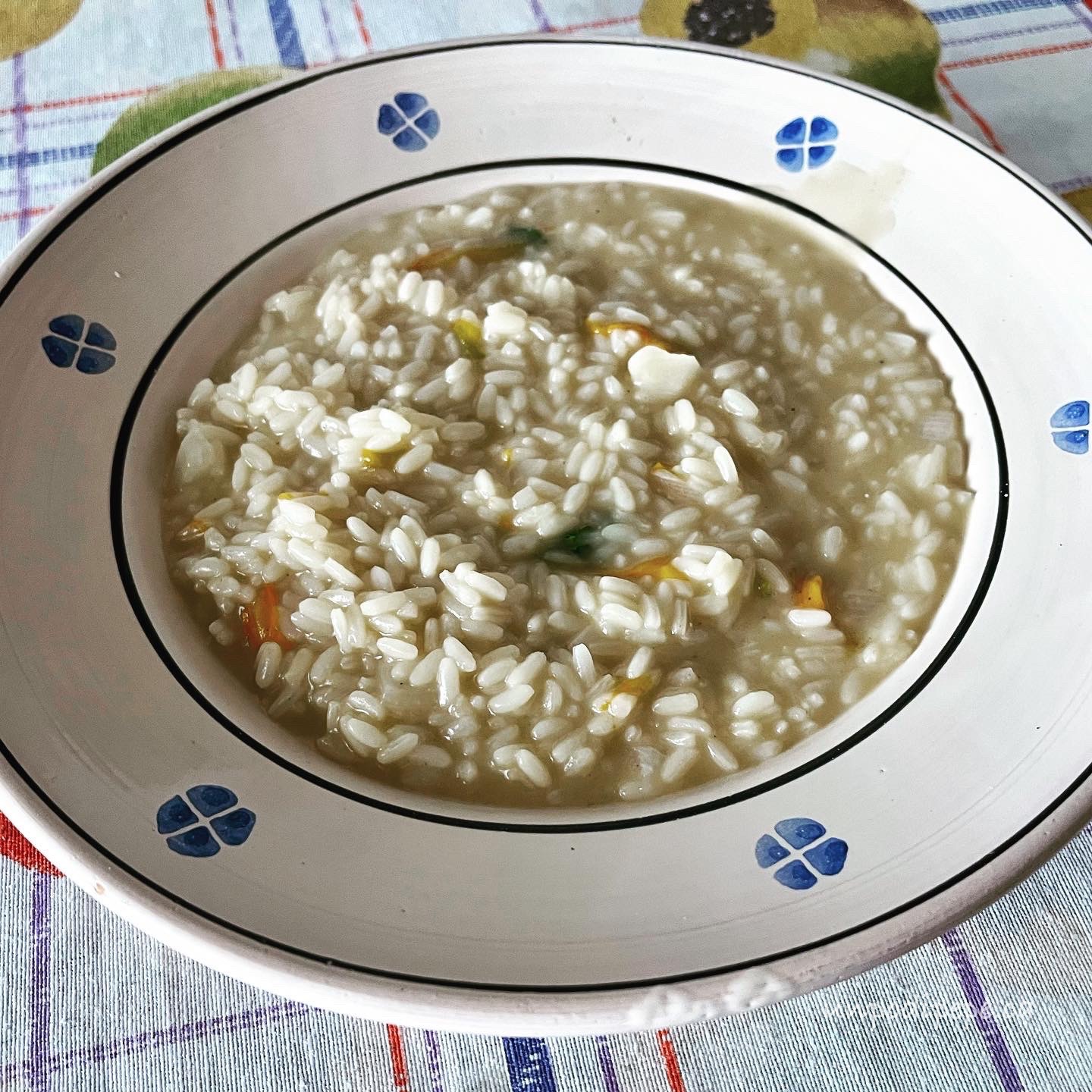
They were crunchy and delicious, but I only had time to use up less than half of my precious fiori.  Fiori di zucca are extremely delicate.  They only last a day 2 and do not freeze well.  Not wanting to waste them, once I finished the dishes, I drizzled olive oil on a baking pan, borrowed some caciocavallo from my neighbour, and stuffed a bunch more.  The stuffed fiori were placed in the pan, which went straight into the freezer to use a 4 days later.  Great idea, no?  Well-yes and no.  They had to be baked, since attempting to fry these beauties after freezing would turn them into mush. Baking them at 1am was not an option. We had to endure the heat but they were worth the sweat!A few fiori were saved to make risotto the next day.  This was a new thing for me, as I have never had so many fiori that I could make risotto.  More recipe ideas and harvesting tips can be found in the post Fiori di zucca. My amico Peppe Zullo gave me a few bottles of his vino rosato Amarosa.  Apparently the name Amarosa has been trademarked by someone else, so the vino is getting a name change.  It will now be named after Orsara’s women’s soccer (or football for the Brits) team….Orsarosa!Mercoledi/Wednesday is mozzarella di bufala day.  I came home from Procida on a Thursday and a friend had left me these melt in your mouth ones. They are from Masseria Li Gatti near Torremaggiore, SanSevero (FG). The mozzarella are in the new Pugliese serving bowls my sister brought from Polignano a Mare. The piattaia is full so I will need to find somewhere to display them.I hope this post has made you either hungry and drooling or wishing you could visit Puglia yourself.  Perhaps it has done both? Perché no?  I am already planning my next visit!  Buon appetito e buon viaggio, Cristina

Thanks Sherry from Australia for hosting the monthly food blogging event, In My Kitchen (IMK). Click the link to Sherry’s Pickings to read about other world kitchens this month. Buon appetito, Cristina

Share this:

  • Click to share on Facebook (Opens in new window) Facebook
  • Click to share on Pinterest (Opens in new window) Pinterest
  • Click to share on X (Opens in new window) X
  • Click to email a link to a friend (Opens in new window) Email
  • Click to share on WhatsApp (Opens in new window) WhatsApp
Like Loading...

Appuntamento con la Daunia

18 Wednesday Jan 2023

Posted by Un po' di pepe in Amici e Famiglia, Mangiamo!, Orsara di Puglia, Puglia

≈ 11 Comments

Tags

Amarosa, Dalla terra alla tavola, Italian food, Monti Dauni, Peppe Zullo, Pugliese Traditions, Southern Italy, Villa Jamele

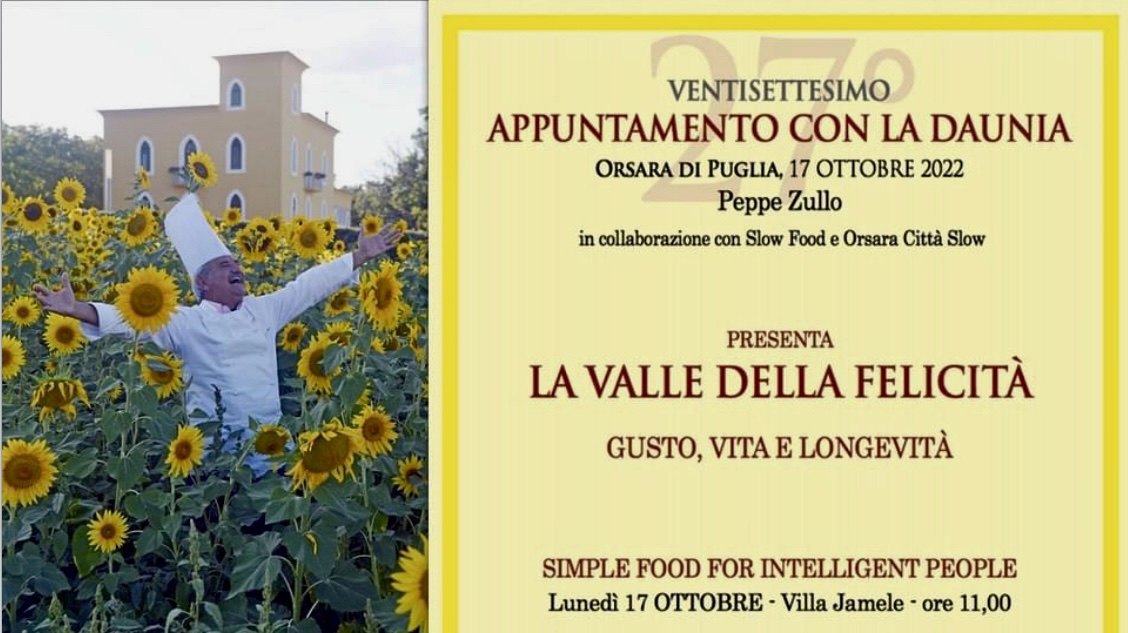
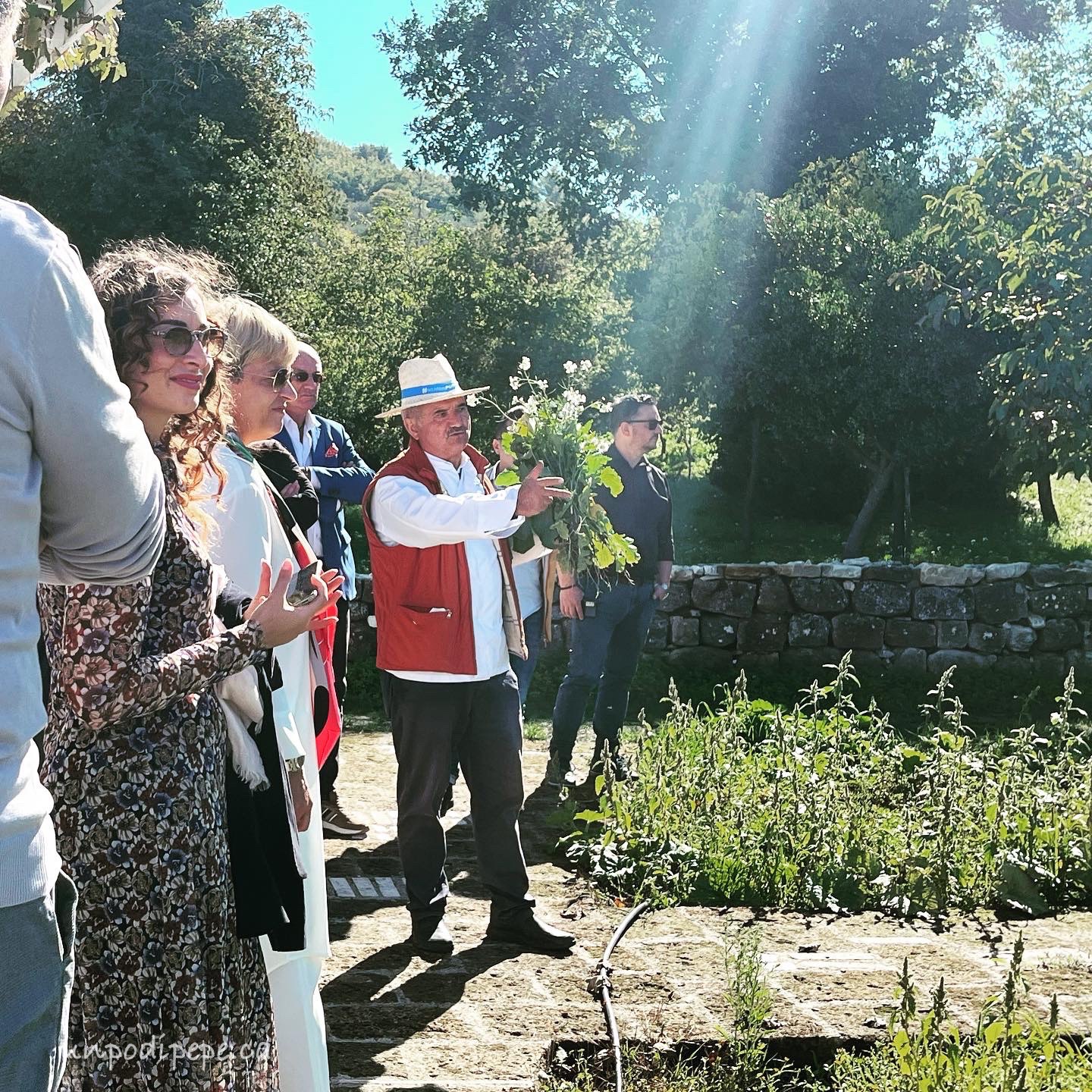
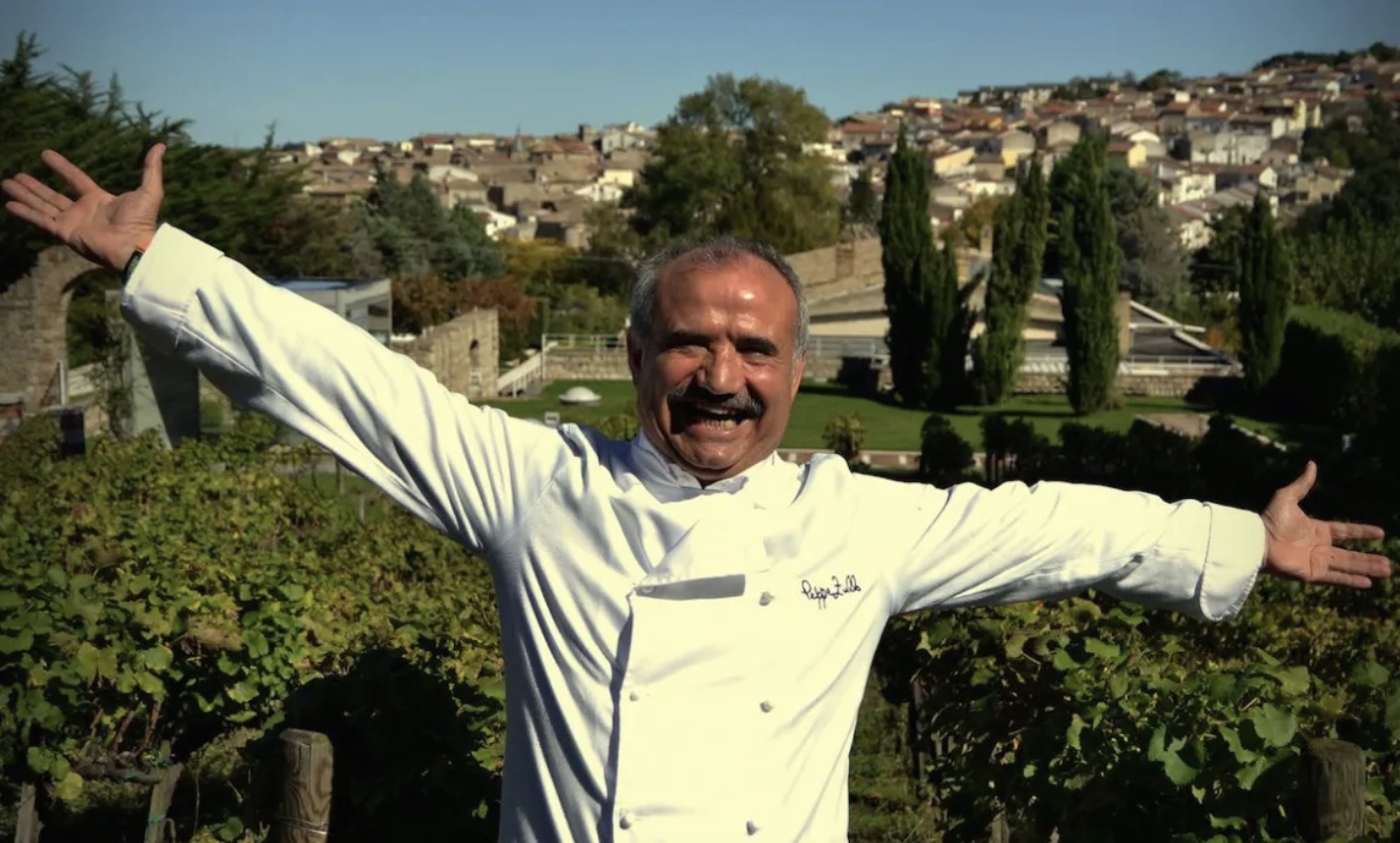
On October 17th, I attended the 27th edition of Appuntmento con la Daunia, hosted by my amico Peppe Zullo. Every year I receive an invitation, but this was the first time I was actually in Italia in October.   La Daunia is the modern day Provincia di Foggia, named after the people who lived there under King Daunus.

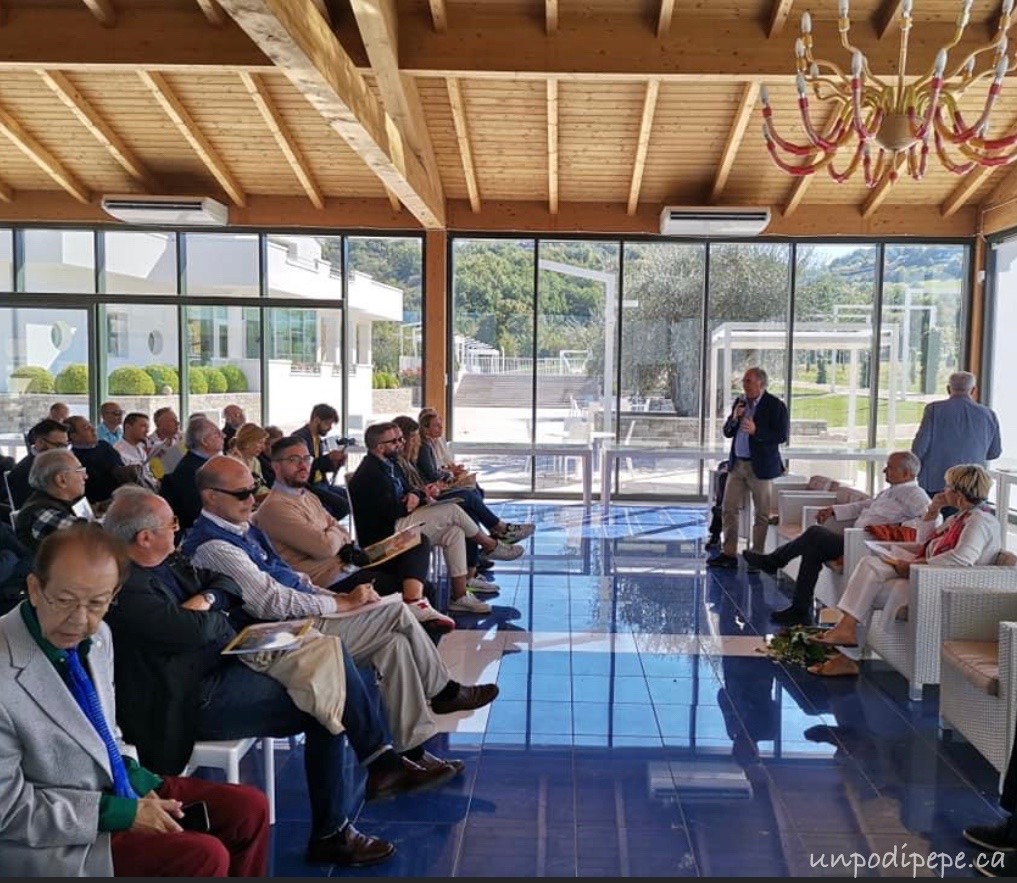
Held at Villa Jamele in Orsara di Puglia, the event featured local food and wine, focusing on the biodiversity of the area.  It was attended by journalists, food writers, and those involved in the local enogastronomic industry. There were various site tours, then a round table discussion with 6 speakers from the enogastronomic industry and the Director of tourism for the Regione Puglia.  There was discussion and sharing of information and research for growth, development and sustainability concerning local food and culture.

New research was presented from the University of Foggia further confirming that the soil in the Monti Dauni area is rich in the antioxidant Selenium.  This is likely why there are a higher than usual number of centenarians in the area. Nature, nutrients and culture…ingredients of the Daunia.

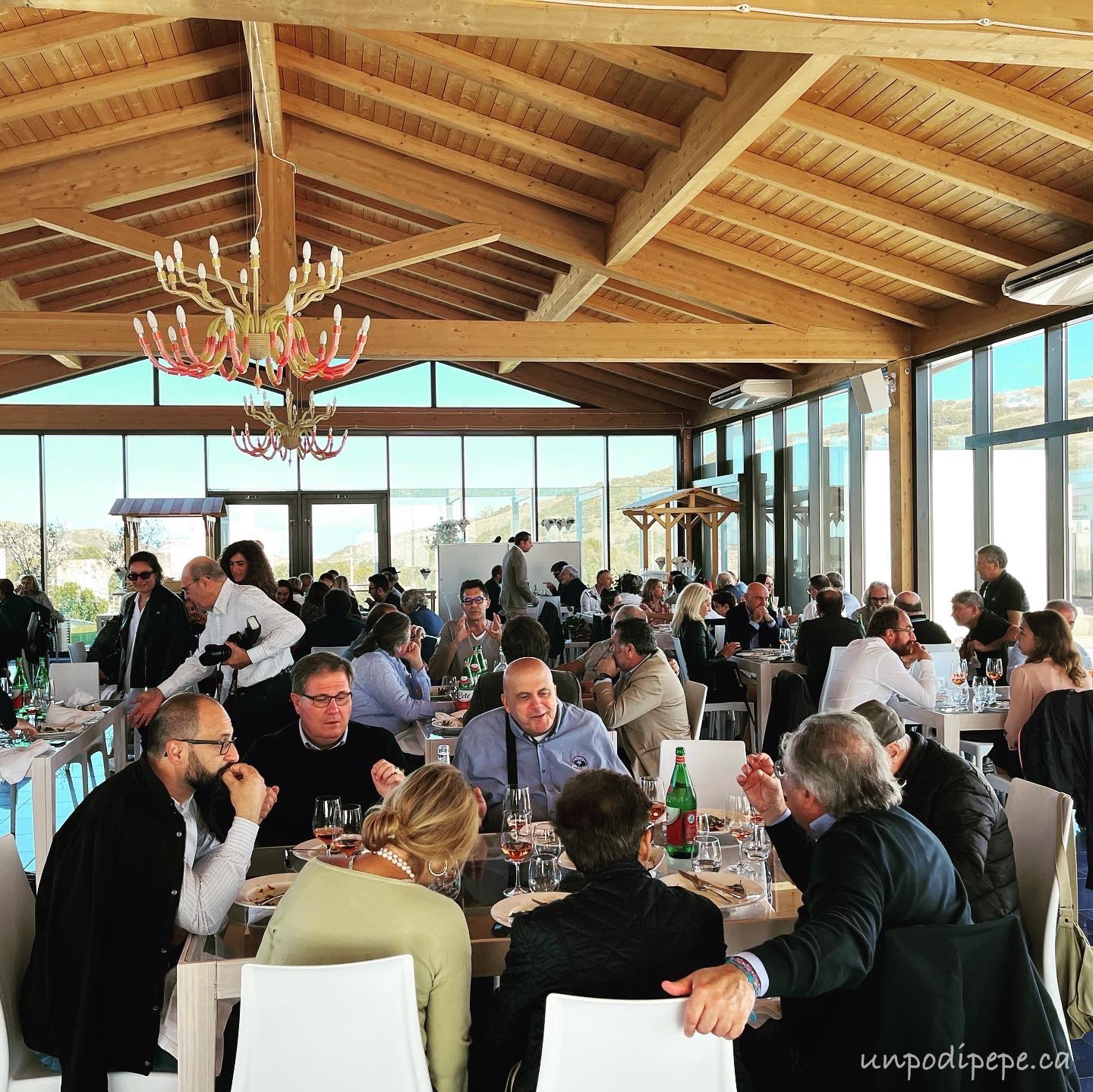
The event concluded with a meal made entirely with locally sourced, seasonal ingredients. Dalla terra alla tavola-from the earth to the table-you won’t get any fresher than this!

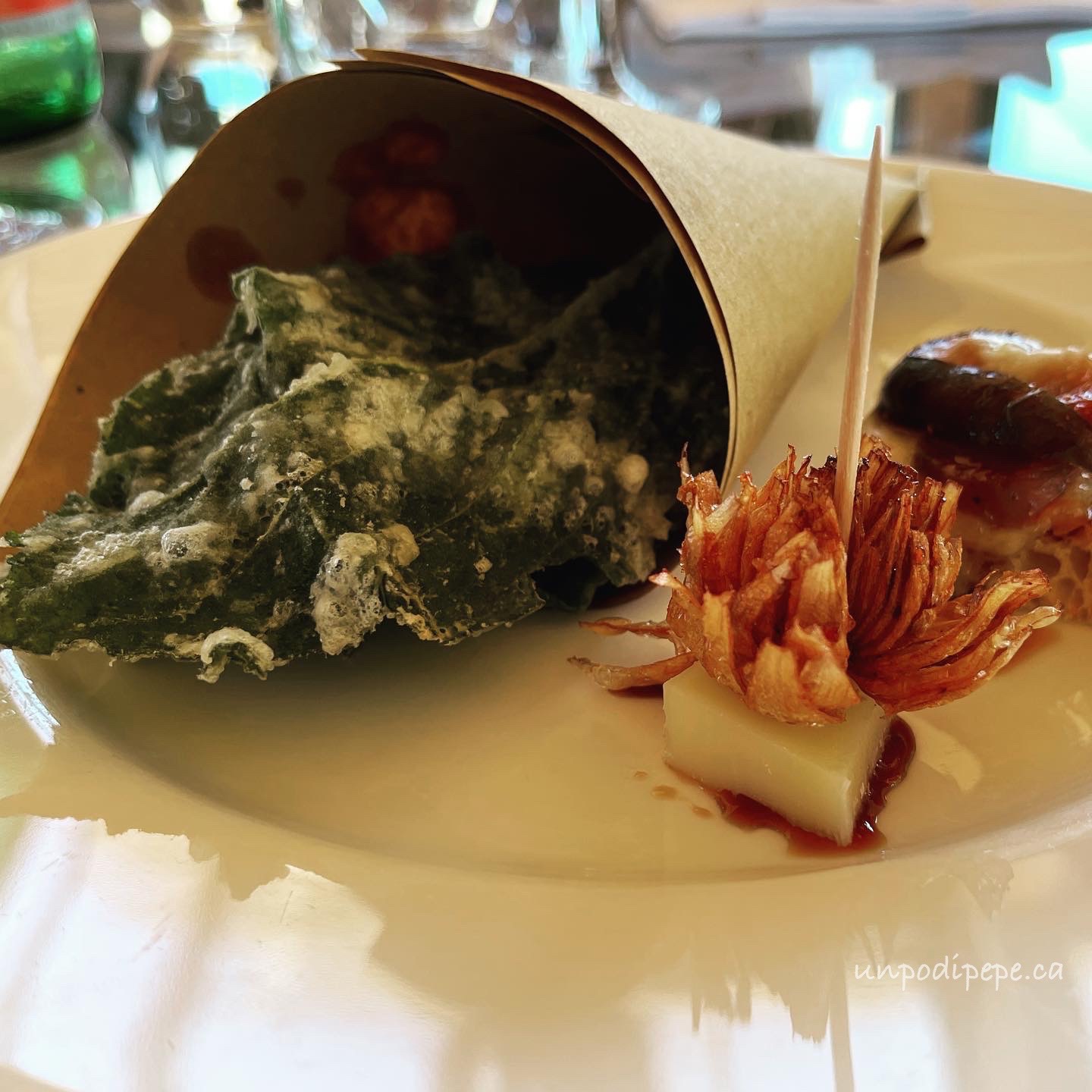
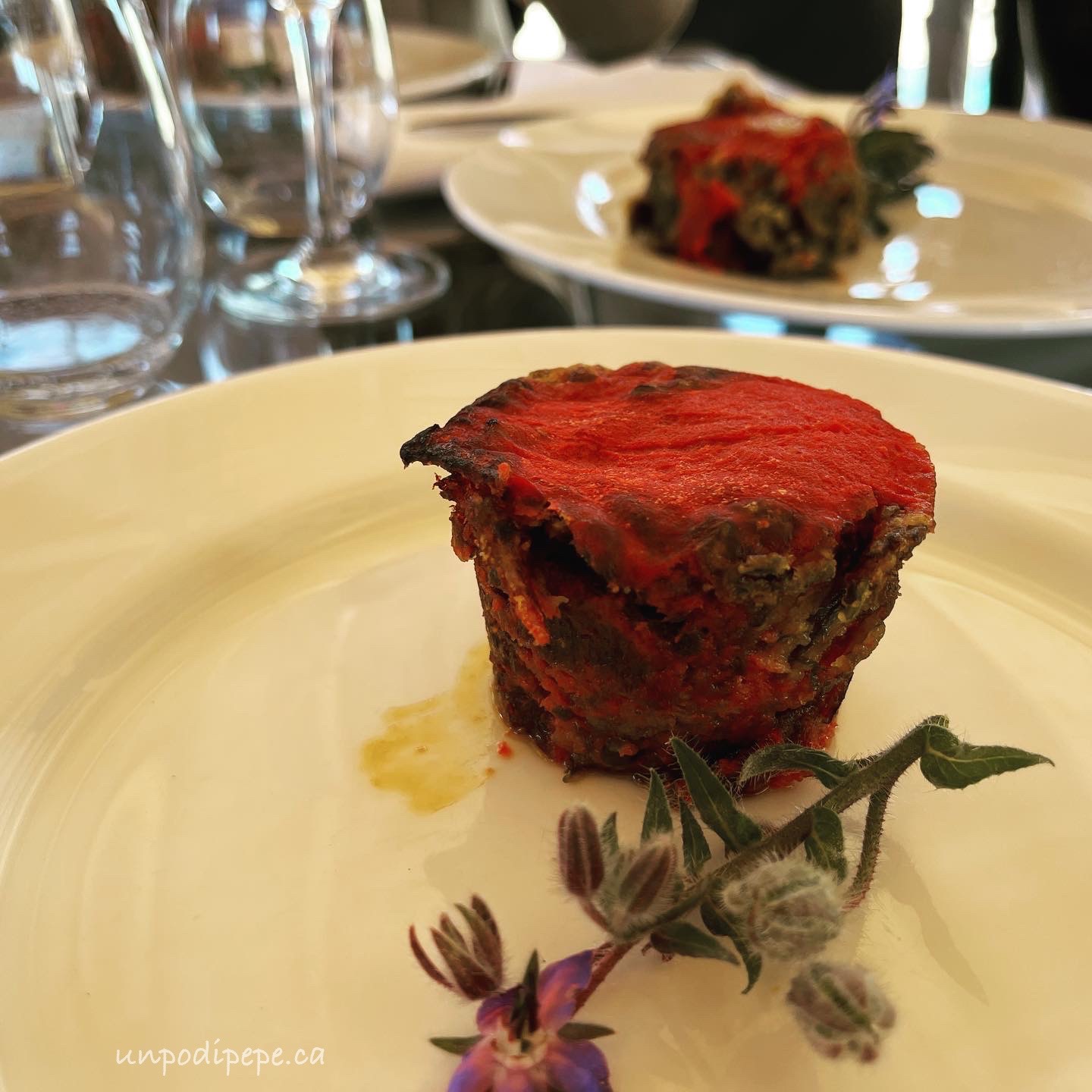
‘Ostriche di montagna’ which means ‘mountain oysters’.  They are actually fried borragine/borage leaves, served with lampascione con pecorino (fried wild onion on pecorino) and crostino di salsiccia e fico (sausage and fig crostino)Parmigiana di borragine, similar to parmigiana di melanzane, but layered with borage leaves instead of eggplant.

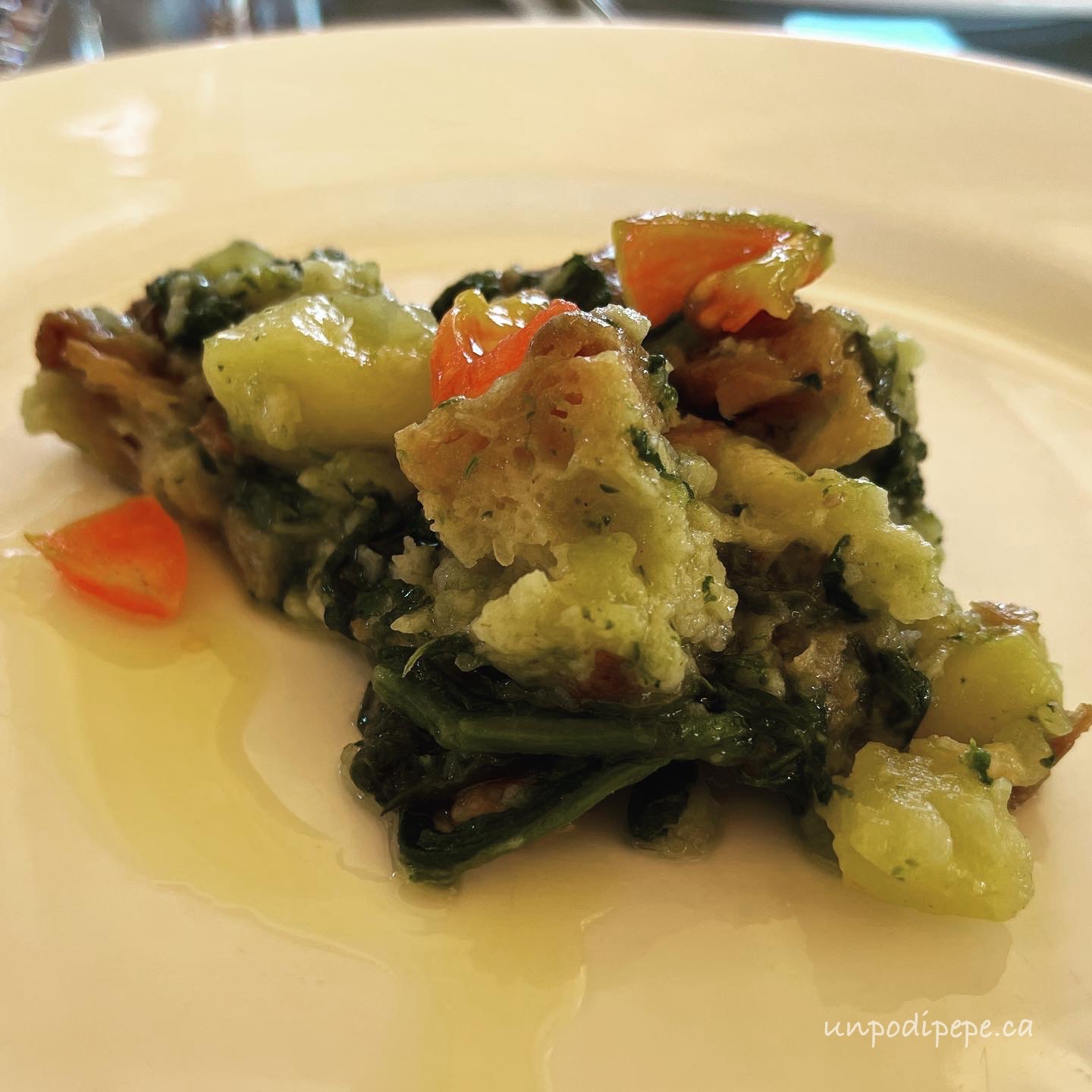
Pancotto e patate con verdure e pomodorini (cooked bread and potatoes with wild greens and tomatoes). Pancotto e patate is Cucina Povera at its best-my favourite comfort food.

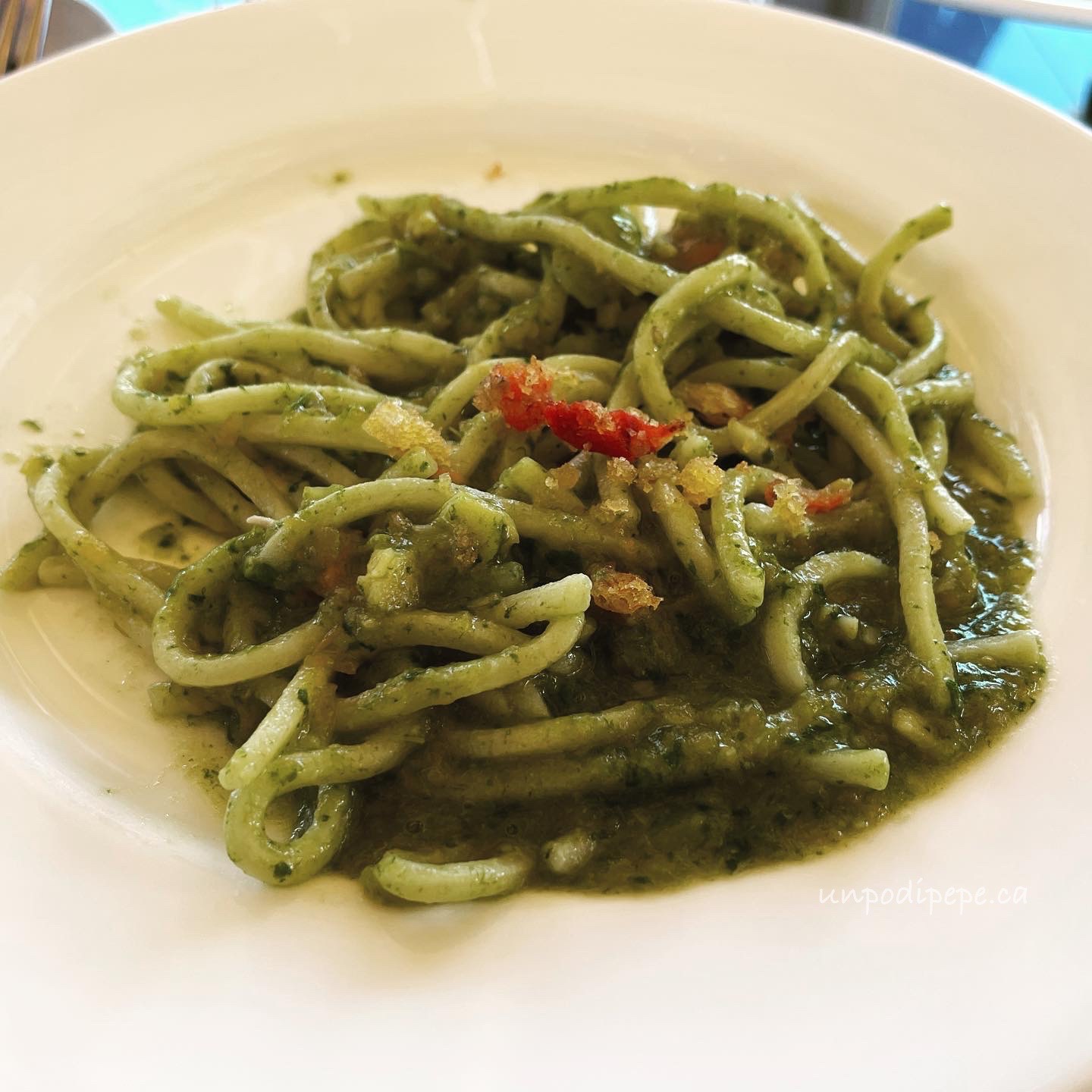
Troccoli con zucca, cicerchi e cime di rapa (Handmade Troccoli with squash, local chick peas and rapini)

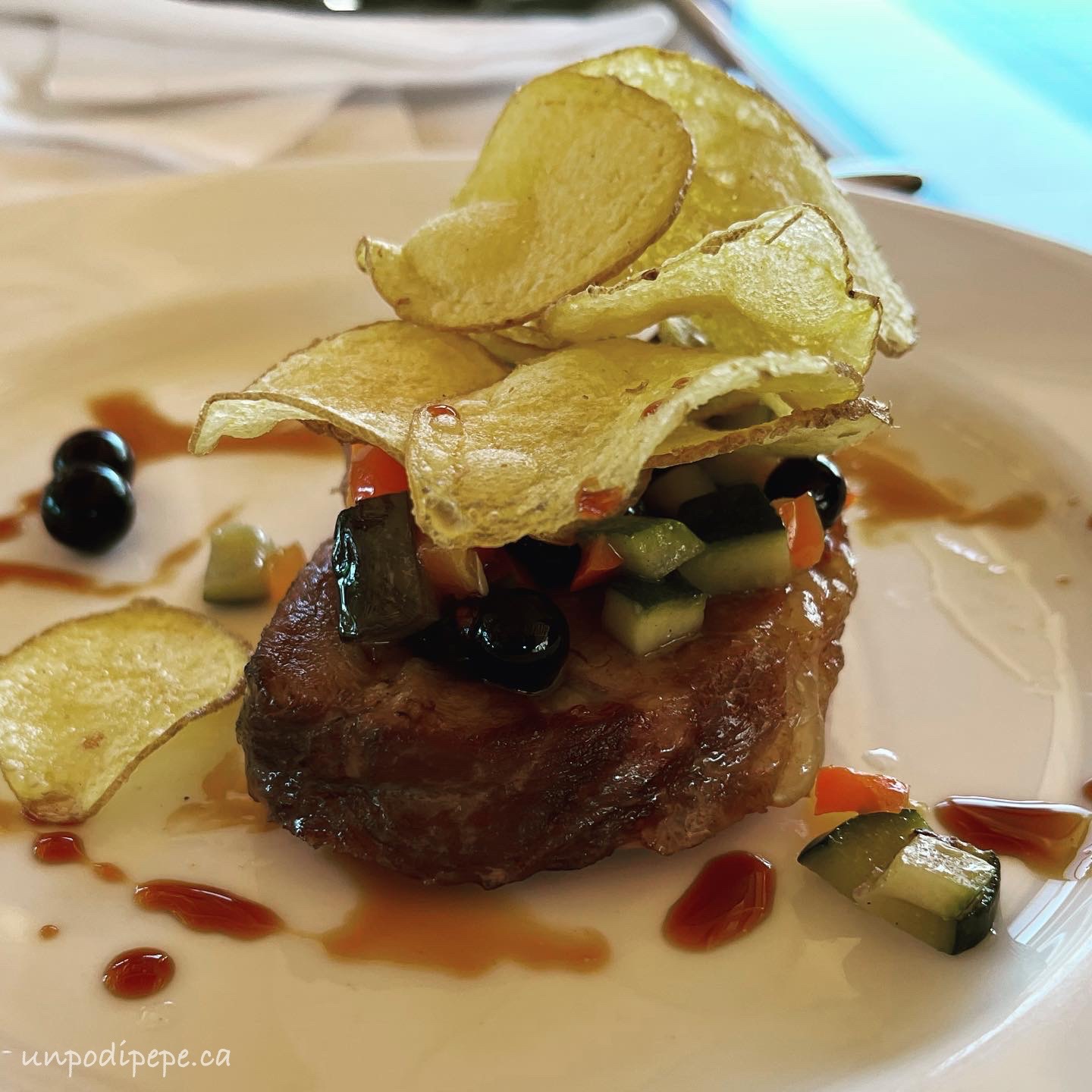
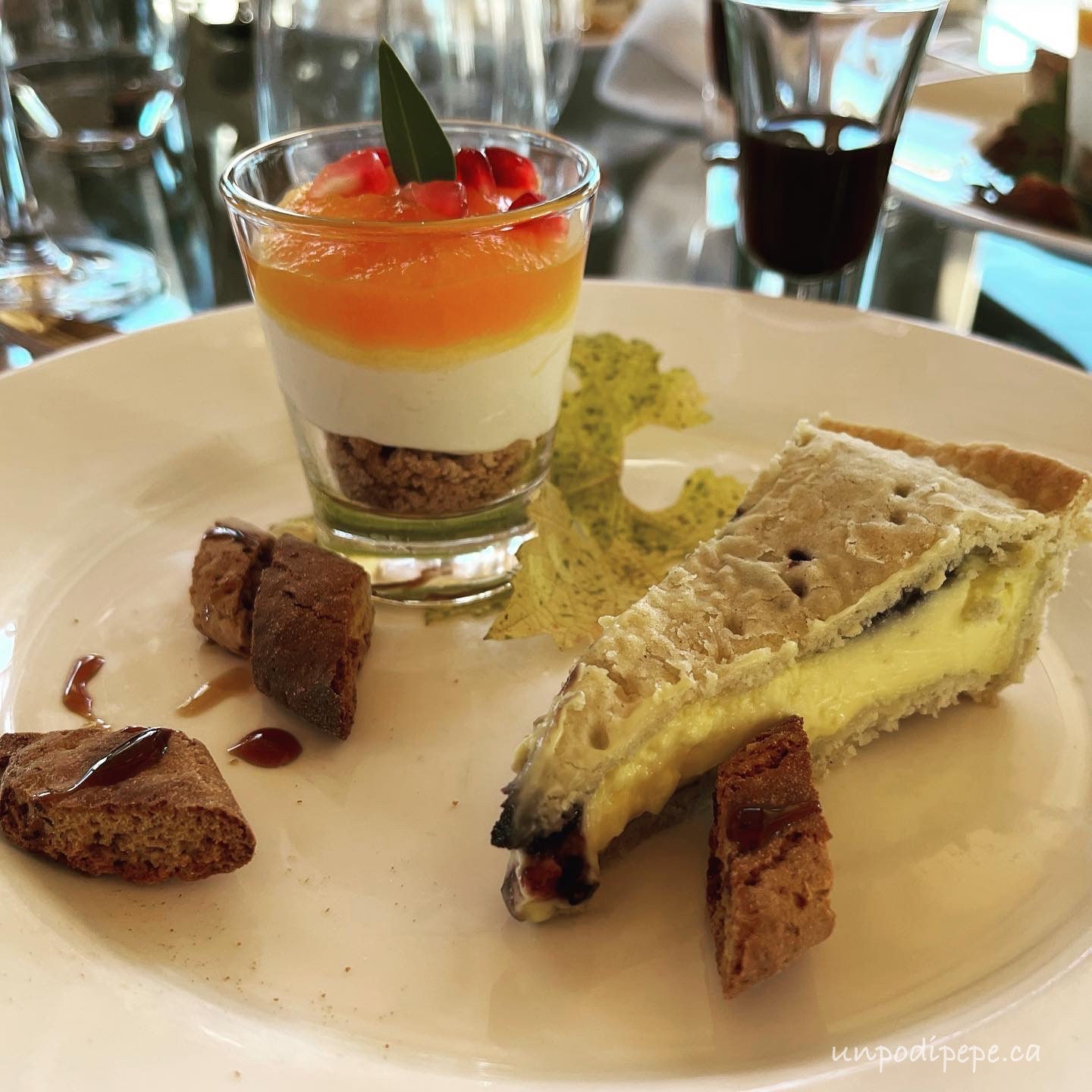
Maiale con zucchine e uva fragole e patate fritte (Pork with zucchine and sweet grapes topped with fried potatoesSemifreddo di zucca, torta con crema e biscottini di grano arso (pumpkin semifreddo with pomegranate seeds, cream cake and tiny biscotti made with grano arso, a burnt wheat flour

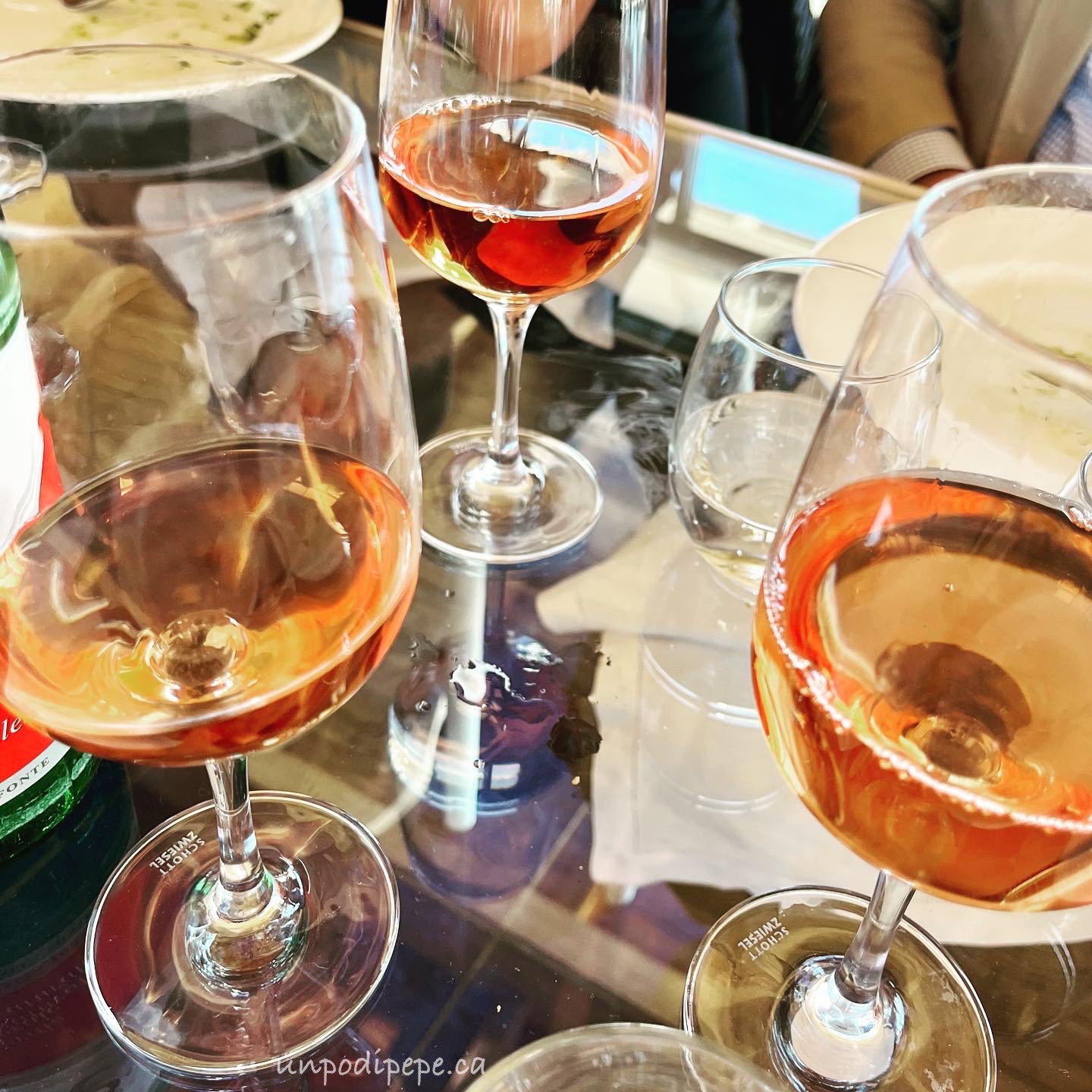
To drink, we had Peppe’s Amarosa vino rosato / Amorosa rosé.  It is made from the Nero di Troia grape, which according to legend was brought by Diomedes who settled in the Daunia area after the Trojan War. Read more in Vini di Puglia.

Peppe Zullo was recently voted one of the 10 best local restaurants in Italia and the best in Puglia by the online gastronomic guide TasteAtlas!  Here is a link to an article in Italian in Rec24 and in Corriere.it. Tantissimi auguri Peppe!!!!

Ciao, Cristina

Share this:

  • Click to share on Facebook (Opens in new window) Facebook
  • Click to share on Pinterest (Opens in new window) Pinterest
  • Click to share on X (Opens in new window) X
  • Click to email a link to a friend (Opens in new window) Email
  • Click to share on WhatsApp (Opens in new window) WhatsApp
Like Loading...

Diamond Anniversary

29 Thursday Dec 2022

Posted by Un po' di pepe in Amici e Famiglia, Orsara di Puglia, Photography

≈ 15 Comments

Tags

Foto d'epoca, Matrimonio d'epoca, Matrimonio Orsara di Puglia, Vintage wedding photos, Wedding in Puglia, Winter wedding

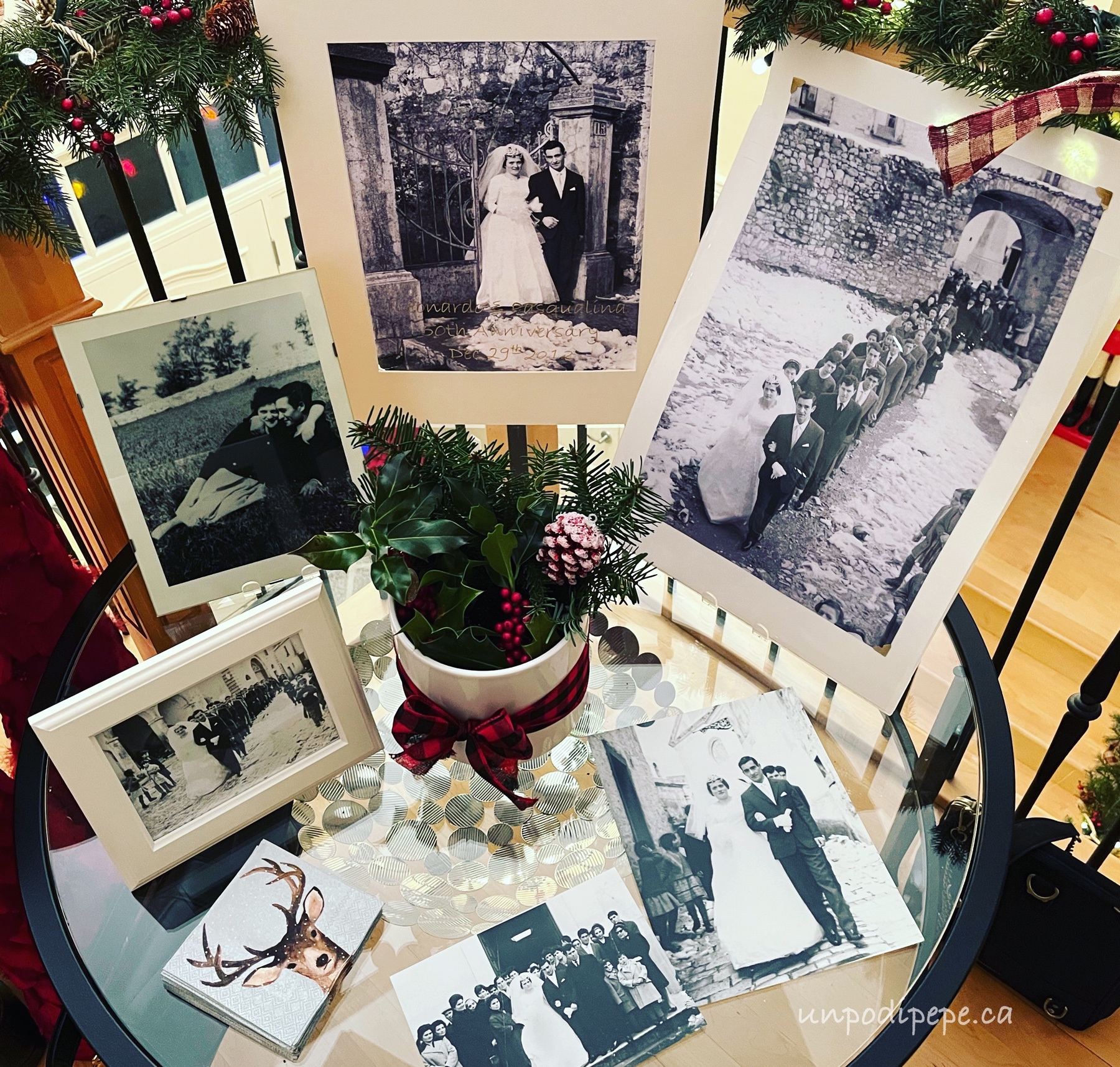
My parents Leonardo and Pasqualina celebrated their 60th wedding anniversary a few days ago.  60 years is the Nozze di Diamante or Diamond Anniversary, and it is a big deal since less than 1% of married couples reach this milestone. Last year at my cousin’s wedding, his new wife did not throw her bouquet to the unmarried ladies-she gave it to Mamma for being married the longest and providing inspiration!

They wanted to celebrate at home with just immediate family and all of our cugini. It was a lovely event and we all had fun.  There was a display of just a few of their December 27, 1962 vintage winter wedding photos.  I also posted them on FB and IG, where they received so much love that I am posting them here as well.  

It was, and still is the custom in Orsara di Puglia for all of the wedding guests and family to depart from the bride’s house and walk behind her to the church. This is called a processione.  Following the ceremony at San Nicola di Bari, the processione continues to the reception location or wherever the vehicles are located.  In 1962 there were not many cars in town.This photo in the Portone Giudice was taken from Palazzo Baronale. It is my favourite as the snow is more visible!This one is in Piazza Mazzini.  The 2 arches in the background is the Fontana Nuova, where the women used to wash clothes.

Since there was snow on the ground, they got a ride in an old Mini.  At their 50th anniversary in 2012, the wedding dress and veil were on display on a mannequin. We could not display it this time since we were at home and the Christmas tree took up all the extra space.

They still look almost the same! I hope you have enjoyed the photos as much as we do.  Viva gli sposi! Auguri Mamma e Papà!

Share this:

  • Click to share on Facebook (Opens in new window) Facebook
  • Click to share on Pinterest (Opens in new window) Pinterest
  • Click to share on X (Opens in new window) X
  • Click to email a link to a friend (Opens in new window) Email
  • Click to share on WhatsApp (Opens in new window) WhatsApp
Like Loading...

Un Matrimonio in Puglia

08 Thursday Sep 2022

Posted by Un po' di pepe in Amici e Famiglia, Feste, Italia, Italian life, Puglia

≈ 15 Comments

Tags

Pugliese Traditions, Santa Maria di Siponto, Southern Italy, Wedding in Puglia

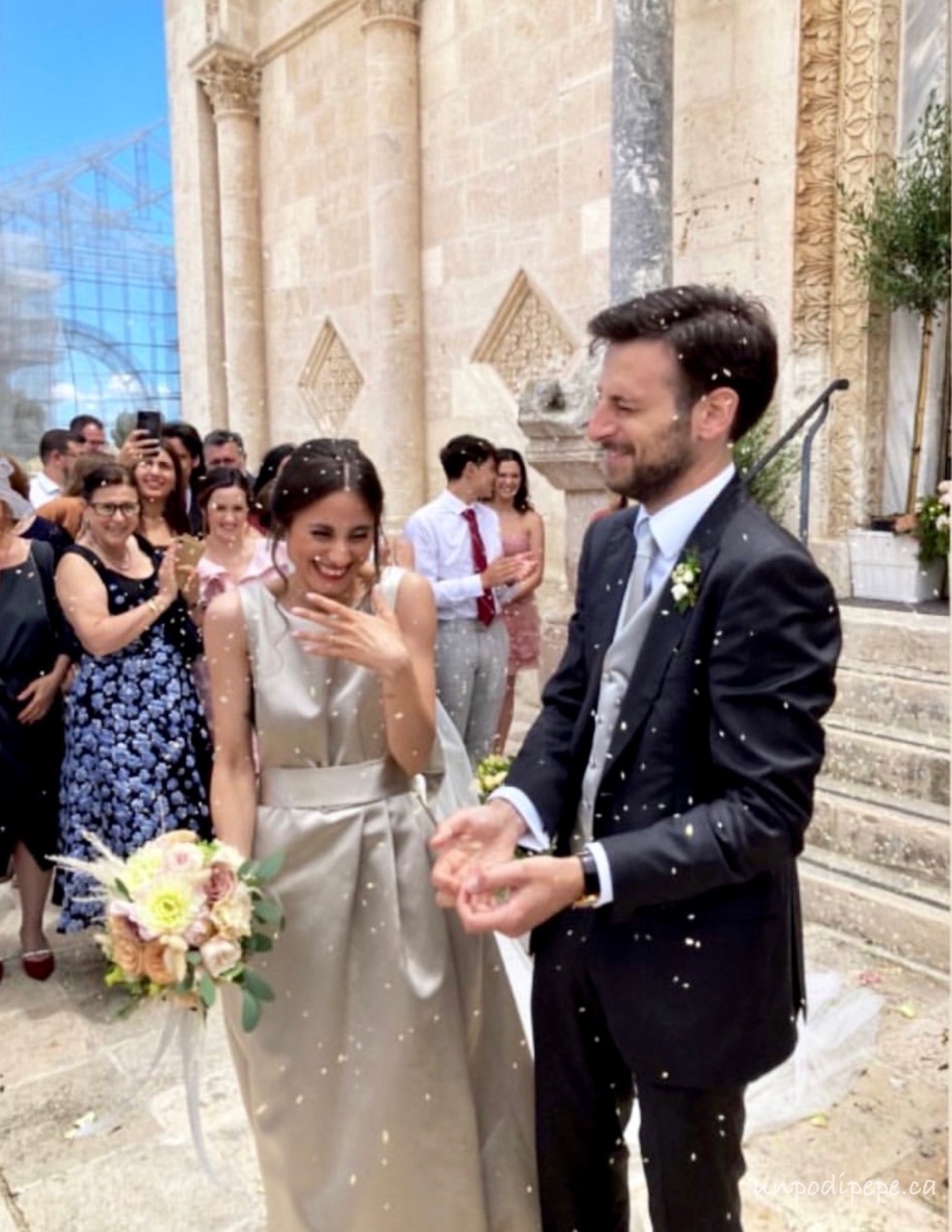
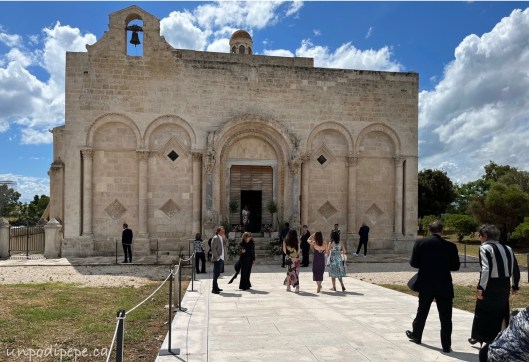
Viva gli sposi!  After a 3 year ‘pandemic hiatus’ I finally made it back to Puglia. My trip was earlier than usual to attend un matrimonio in famiglia -a family wedding in June.  Gli sposi were Federica and Antonio. The wedding was held at the 900 year old Santa Maria di Siponto. The church is in the architectural style Romanica Pugliese, Pugliese Romanesque. Byzantine and Islamic influences are evident in the pure, simple lines and geometric patterns. The building is square, which is unusual for a church.

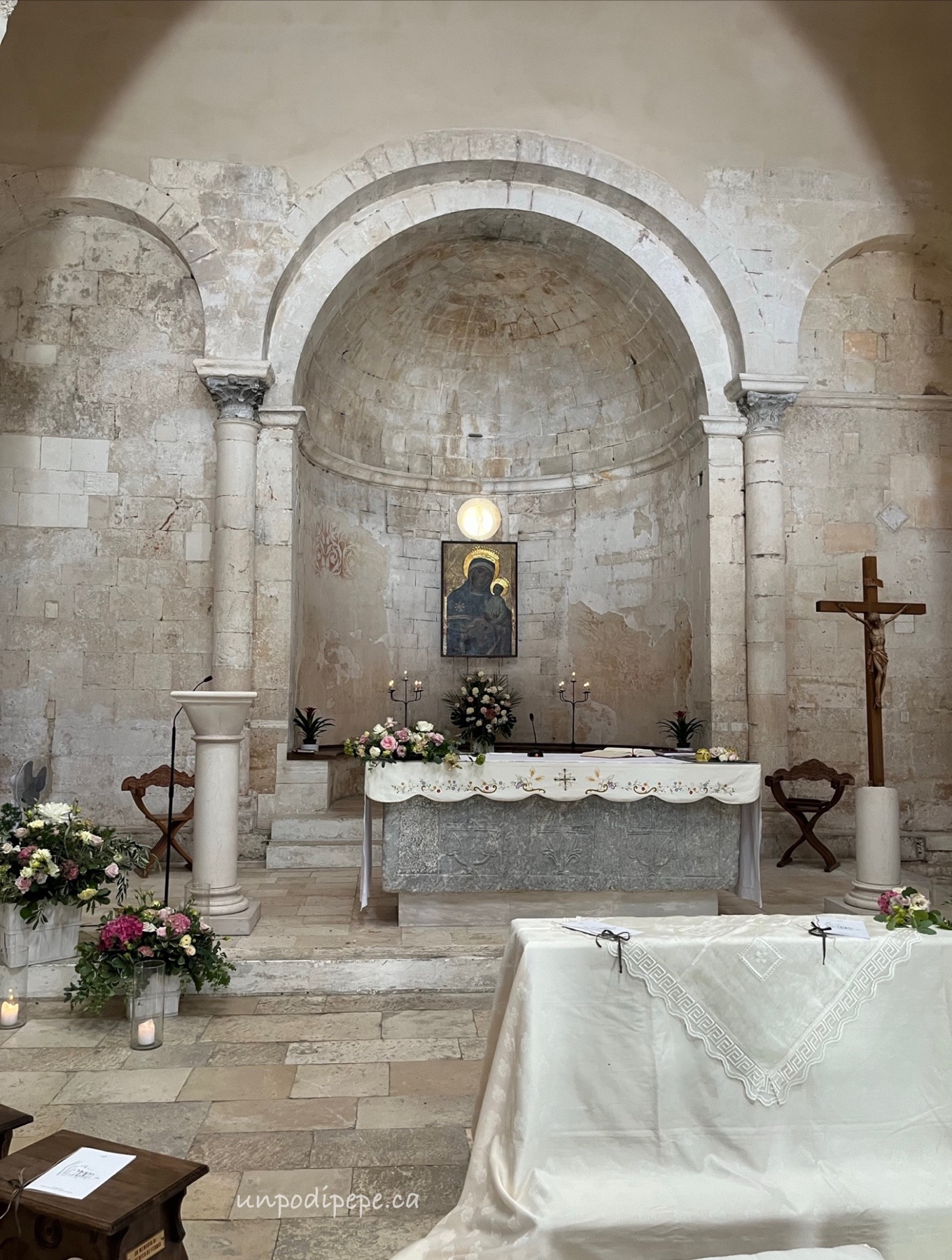
Our day started out with heavy rain.  My parents, sister, nieces and I ran to the car with our umbrellas for the 1½ hour drive from Orsara di Puglia. Luckily it was sunny by the time we arrived. The ceremony was held at 11 am and the stark white interior of the church was bathed in light!The look on Antonio’s face when he sees Federica at the altar is priceless. 

The 4 witnesses, called compari, and the parents of the bride and groom also take part in the ceremony.Federica looked stunning.  The wedding dress was handmade by her 91 year old nonna!  Nonna Celestina made it with fabric she had kept from the time when she owned a fabric store in Foggia many years ago. The dress is ‘a portafoglio‘ which means that it had a short skirt underneath, visible only when the slit opened. Nonna even made a spare dress, just in case!

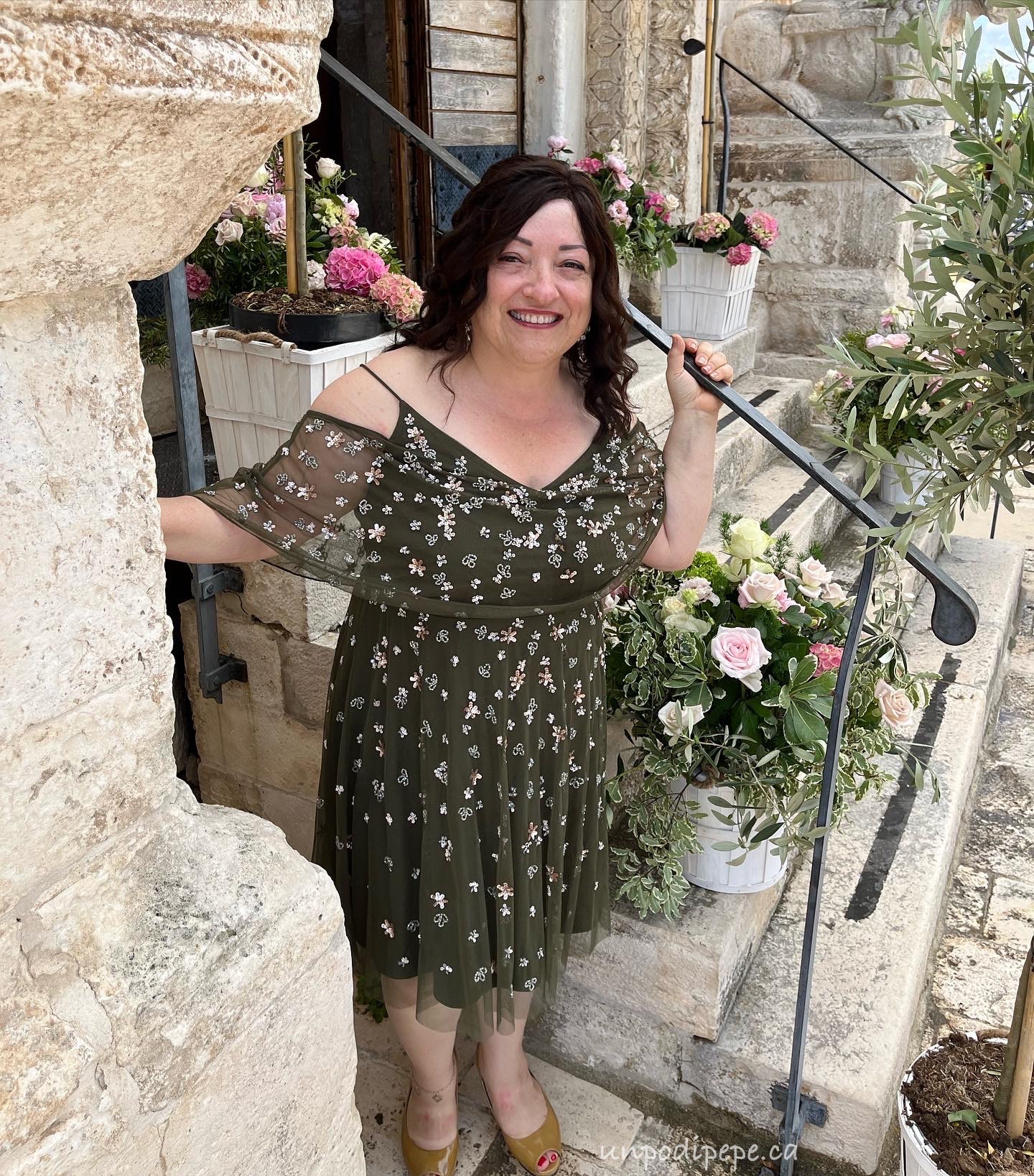
Since we were in Puglia, we were surrounded by olive trees. I fit right into the floral arrangements with my olive coloured dress with pink and silver flowers.The reception was held at Tenimento San Giuseppe, 4 km from Foggia. We started out with aperitivo in the main building, then moved to another section for the main meal.

There was un mastro casaro-a master cheesemaker-making nodini, knots of fresh mozzarella.

Later we moved into the cantina for degustazione di vino, where I found a tasty Susumaniello that was too good! Dessert was back in the main building.  All of this moving around really helps with digestion!

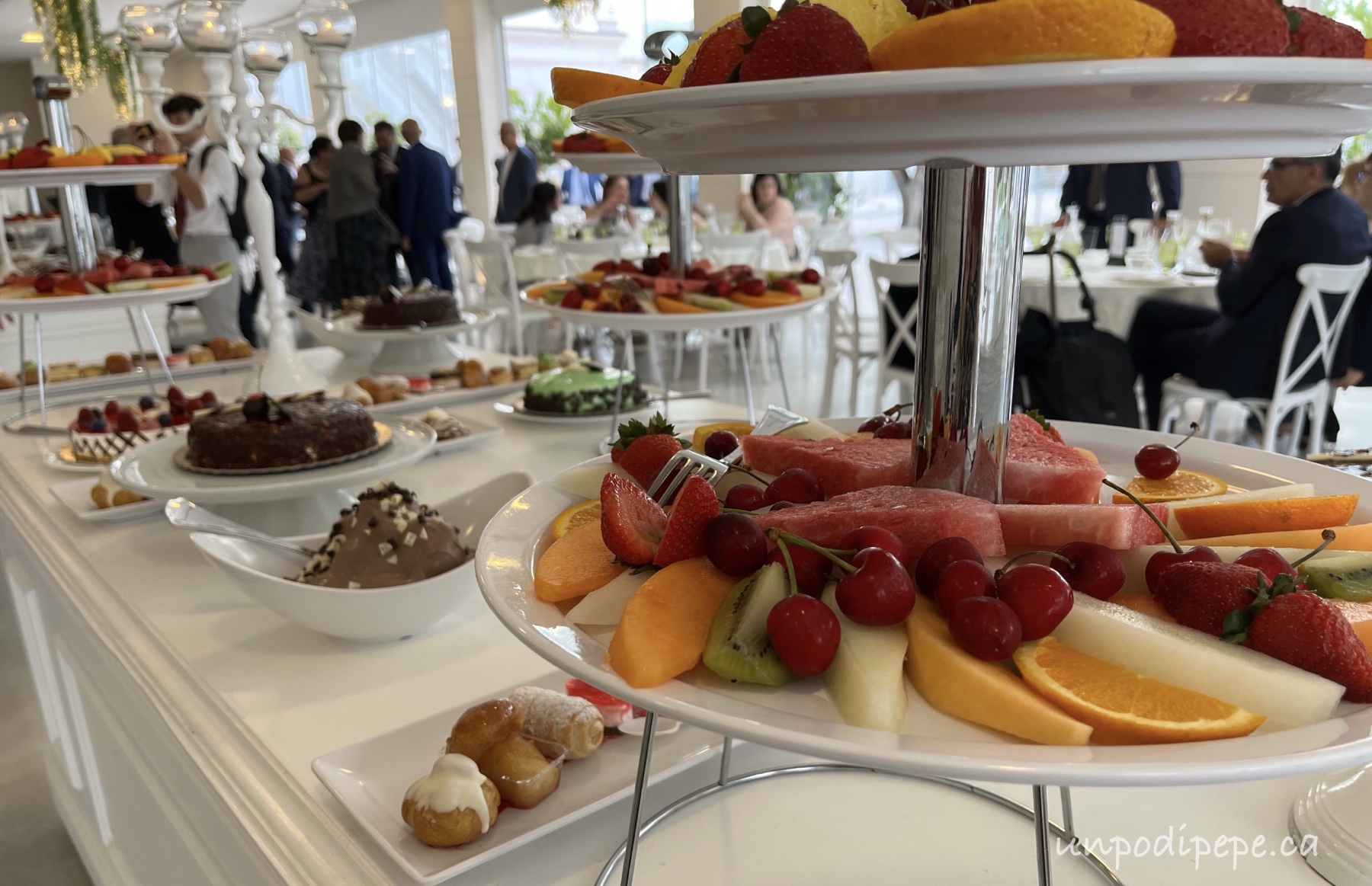
The dish in the photo above is ‘mezzi paccheri rigate con salsa di gamberl e astice’, pasta with shrimp and lobster sauce.  The black smudge on the plate is squid ink. I was too busy socializing and eating to take many food photos, so read the menu and imagine it yourself!Dancing was everywhere.  Instead of having to sit through the entire meal and a bunch of speeches and wait for the end of the night to dance, dancing happens throughout the reception. Also good for digestion!One course is served…then dancing, more food, then more dancing, etc.  Since the wedding was in Puglia, there was also dancing outside under the olive trees.

Federica likes swing dancing, so there was a swing band and later in the evening, my cousin (father of the bride) and his band played their funky music.

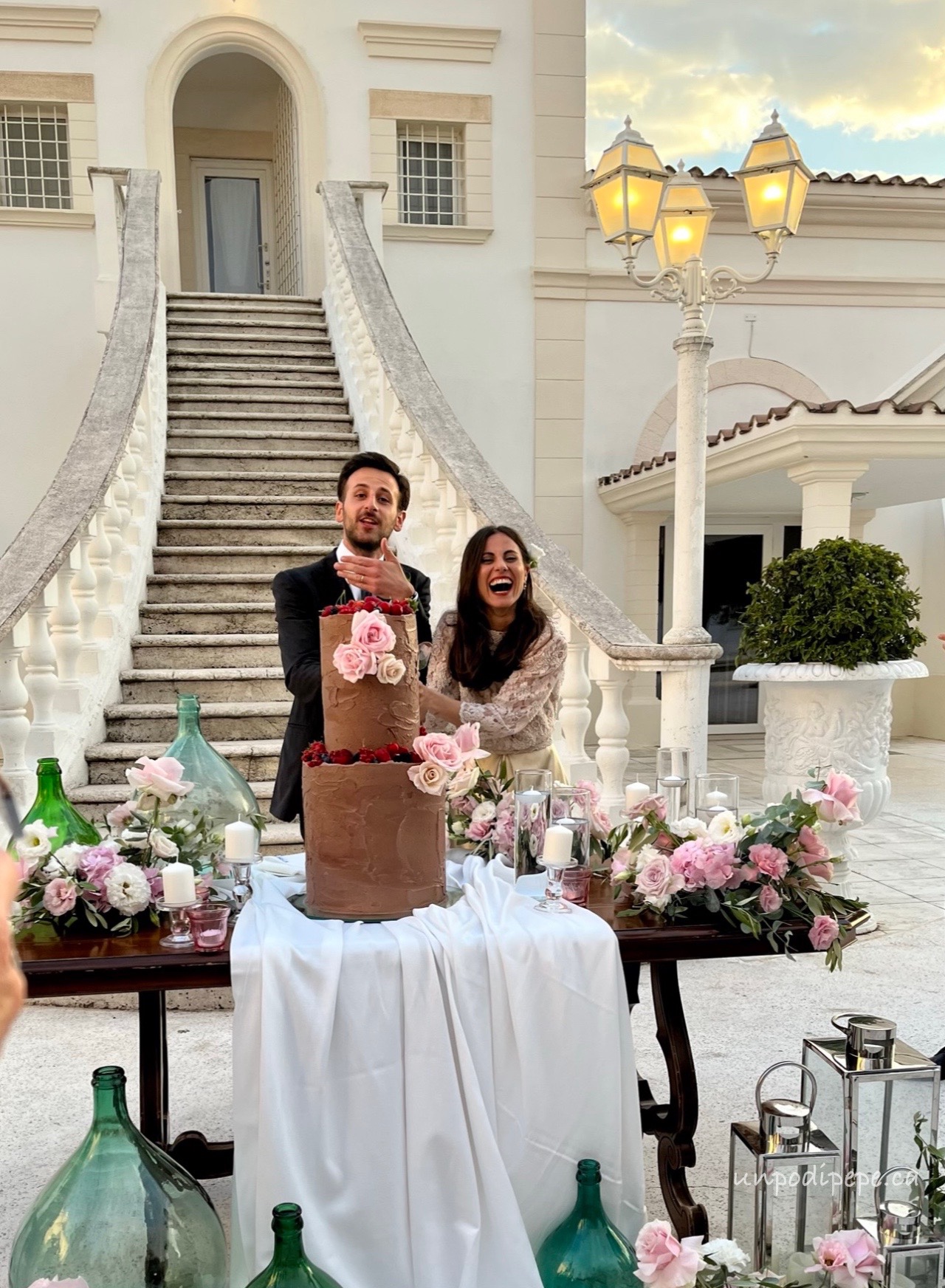
Cake cutting was held outside, at the bottom of the dramatic staircase.  In the photo, you can see a bit of Federica’s ‘spare’ dress, while Antonio gestures for us to move out of the way.  He probably said ‘livt da nanz’.

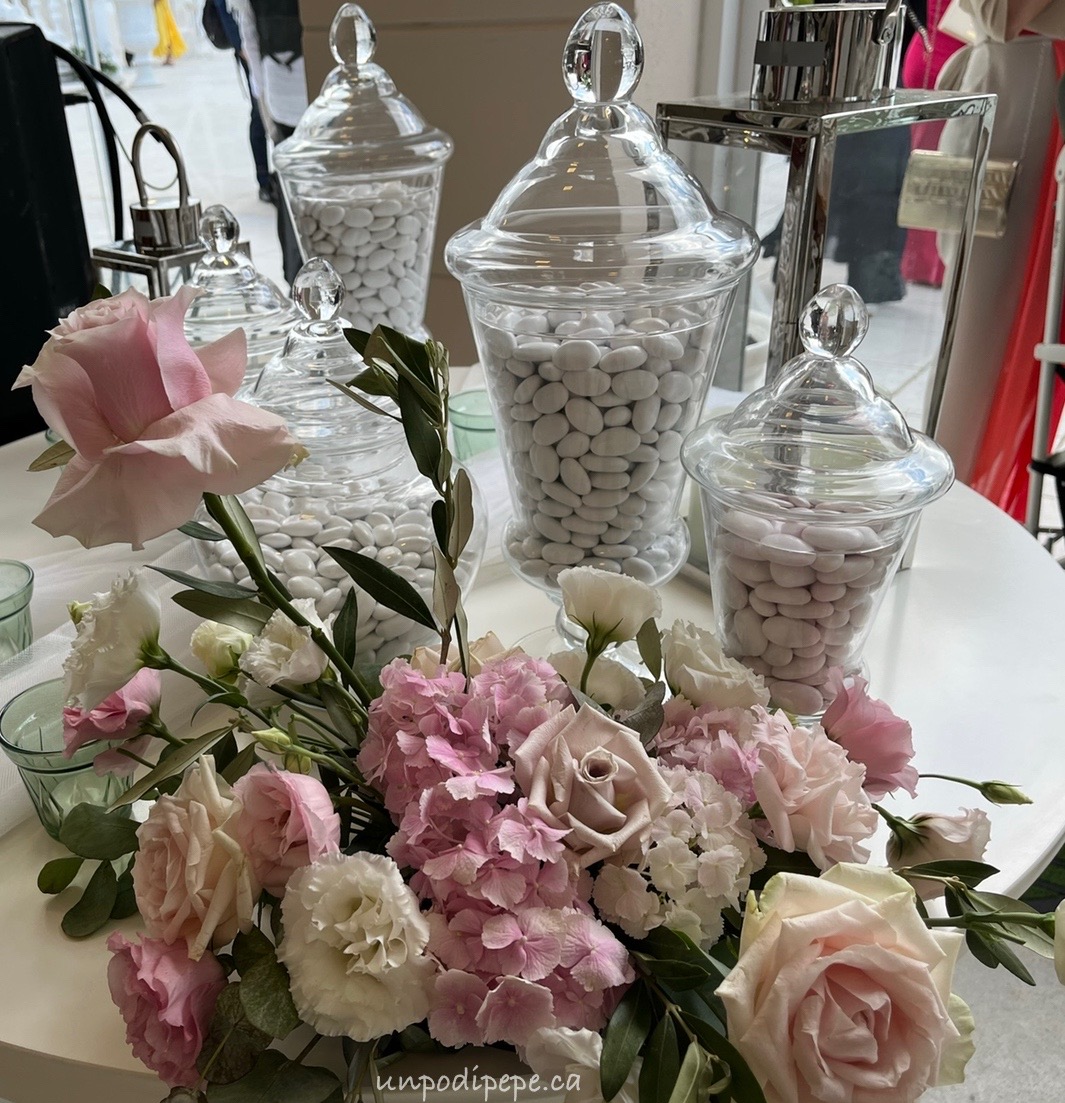
Guests take home a little bag of confetti for good luck.  These are not what you throw at the bride and groom.  They are sugared roasted almonds, sometimes with a chocolate filling.  Traditionally there are 5 almonds that represent health, wealth, happiness, fertility and long life. Bomboniere are also handed out at the end of the night.  These are a small gift from the bride and groom to thank the guests for celebrating their special day with them.

I hope you enjoyed this peak at a wedding in Puglia!  Auguri Federica e Antonio! Ciao, Cristina

Share this:

  • Click to share on Facebook (Opens in new window) Facebook
  • Click to share on Pinterest (Opens in new window) Pinterest
  • Click to share on X (Opens in new window) X
  • Click to email a link to a friend (Opens in new window) Email
  • Click to share on WhatsApp (Opens in new window) WhatsApp
Like Loading...

Viaggio con Isabella

20 Wednesday May 2020

Posted by Un po' di pepe in Amici e Famiglia, Firenze, Italia, Photography, Travel

≈ 32 Comments

Tags

Firenze, Galleria degli Uffizi, Italy travel tips, Lucca, Milano, Monteriggioni, Oltrarno, Torre di Giotto, Vernazza, Viaggi in pultrona

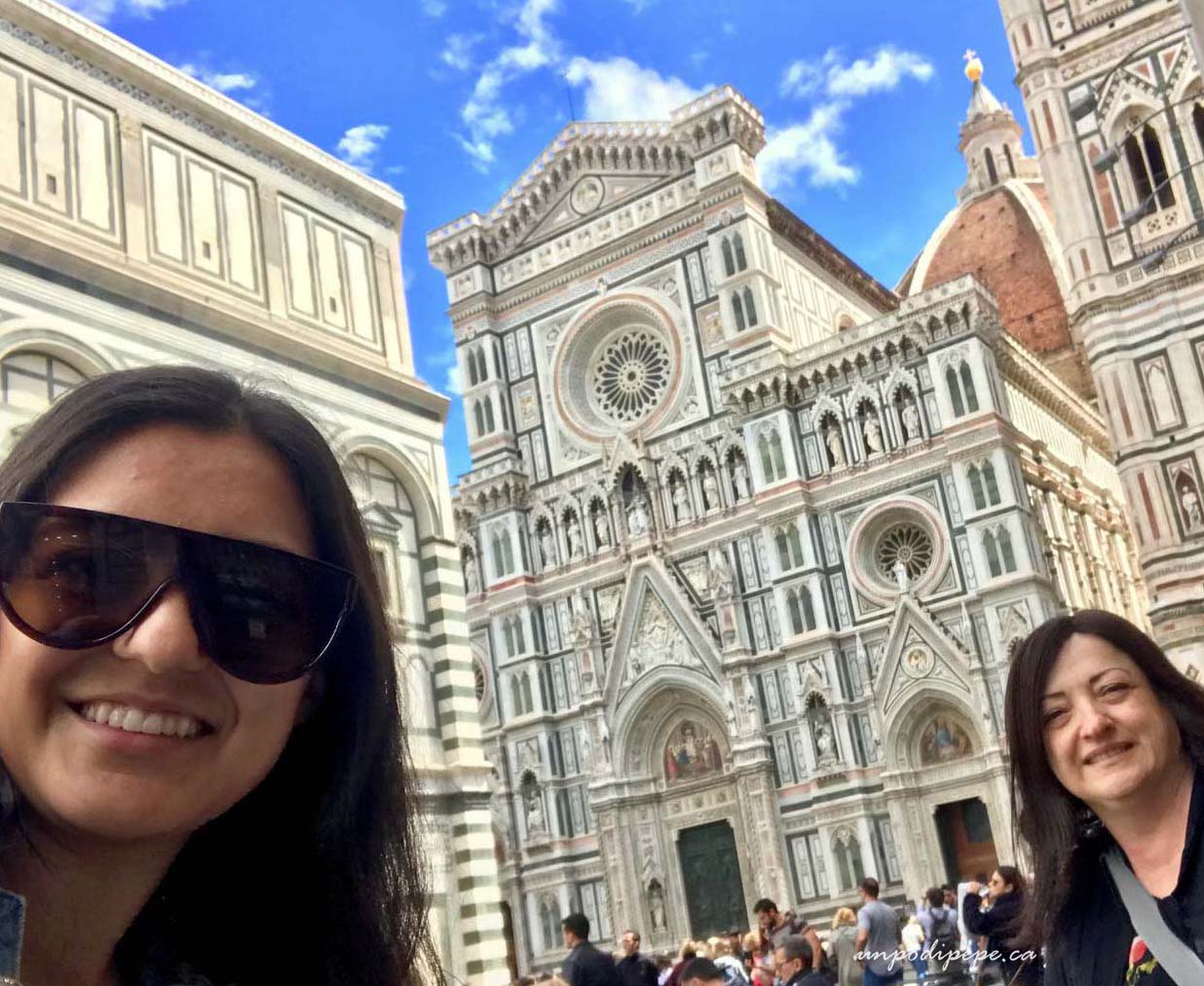
Duomo Selfie FirenzeOne year ago I was just returning from Italia with my nipotina Isabella. Since we are not able to travel in real life, viaggiamo in pultrona, let’s armchair travel and revisit our trip.

A bit of backstory…when Isabella was about 8 years old, she saw a photo of me on the Ponte Vecchio and asked ‘Zia, where is this?’.  I replied ‘Firenze’ and she asked if we could go there together one day.  I was thrilled at the opportunity to share my love of Firenze with her, so of course I said ‘Si! We can go when you graduate’.  We were delayed a few years due to scheduling issues, but last year in between Isabella finishing her university classes and starting a summer job, we managed to squeeze in a 2 week trip!Ponte Vecchio Firenze

We flew to Firenze, where we rented a studio apartment in the Oltrarno for a week.  It was in a renovated stone tower a short walk from the Ponte Vecchio and down a narrow alley from Piazza della Passera.Peppe Zullo, Mercato Centrale

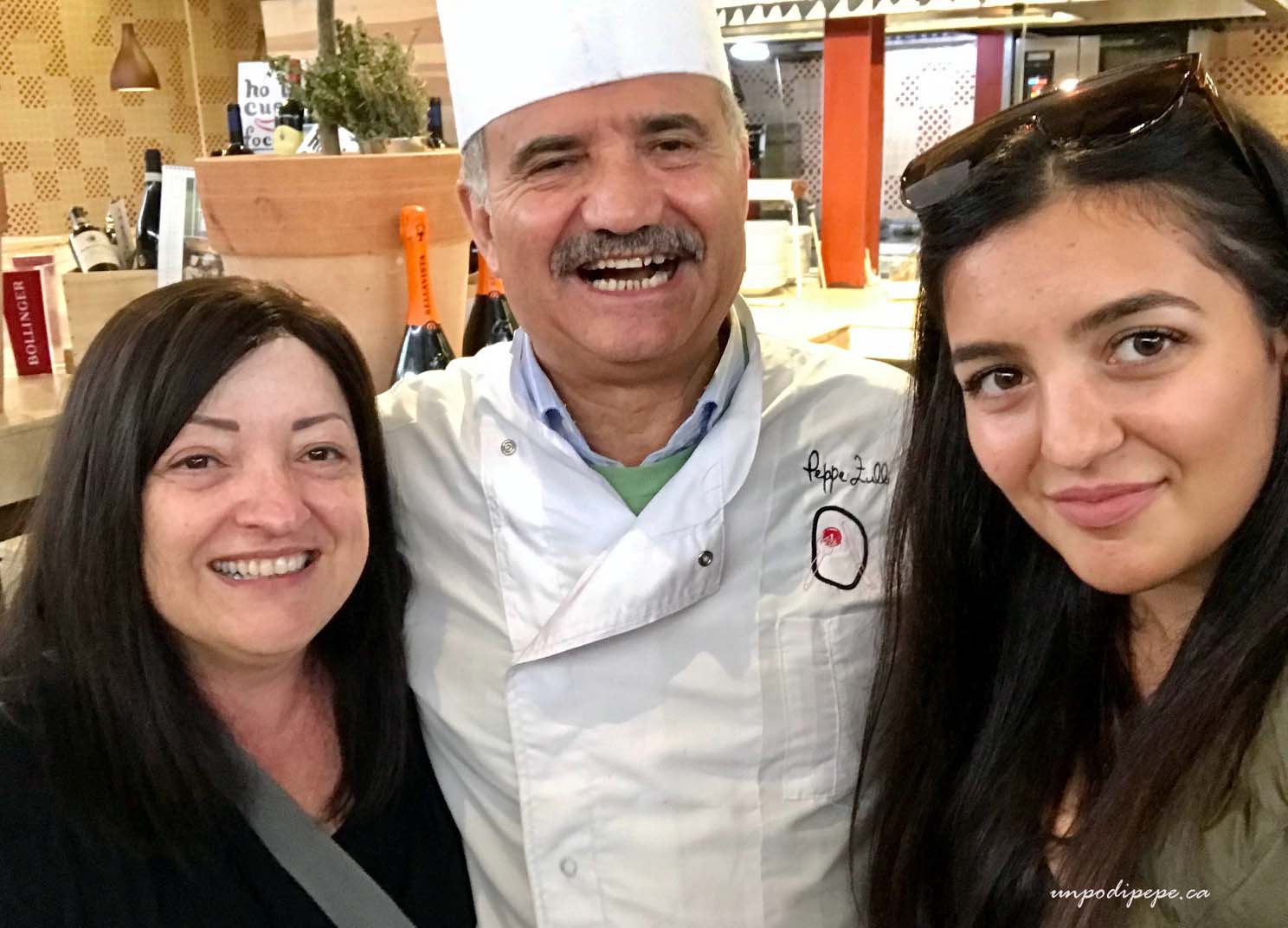
Chef Peppe Zullo, our amico from Orsara, was in town our first day.  We met him at the Mercato Centrale where he and his son Michele had recently taken over a restaurant upstairs called Tosca.

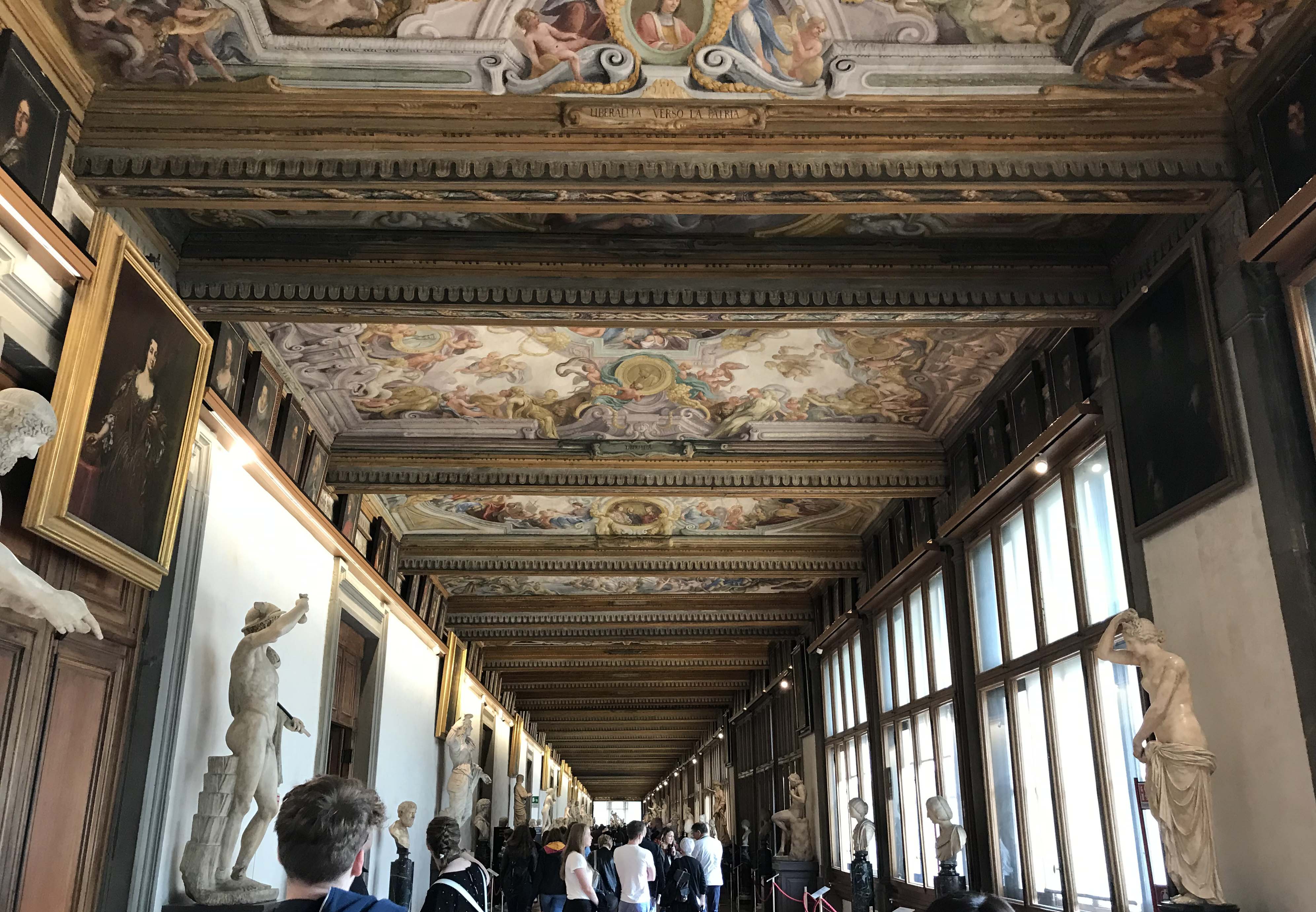
Galleria degli UffiziWe had prebooked only 1 museum-the Uffizi of course, for the Saturday so that Gaetano, our cugino in med school could join us.  New Caravaggio rooms have opened since my last visit!  Galleria degli UffiziI noticed many portraits of Anna Maria Luisa de Medici on display.  We have her to thank for all of this! Isabella loved the Uffizi, not just for the artwork, also the building itself, so Gaetano suggested she visit Palazzo Pitti another day.Palazzo Pitti Firenze interior

I am ‘vertically challenged’, which may be why I like to climb to the top of things, especially if there is a view involved. We climbed almost everything in Firenze, starting with a walk to Piazzale Michelangelo via Porta San Niccolò for views of the city, then continuing up to San Miniato al Monte. We climbed the dizzying narrow stairs to the top of Brunelleschi’s Duomo to see the views and the Torre Giotto.  Duomo FirenzeAnother day we climbed the Torre Giotto and saw the Duomo!  These climbs were vital to working off gelato! For more photos taken from above see Viste di Firenze.

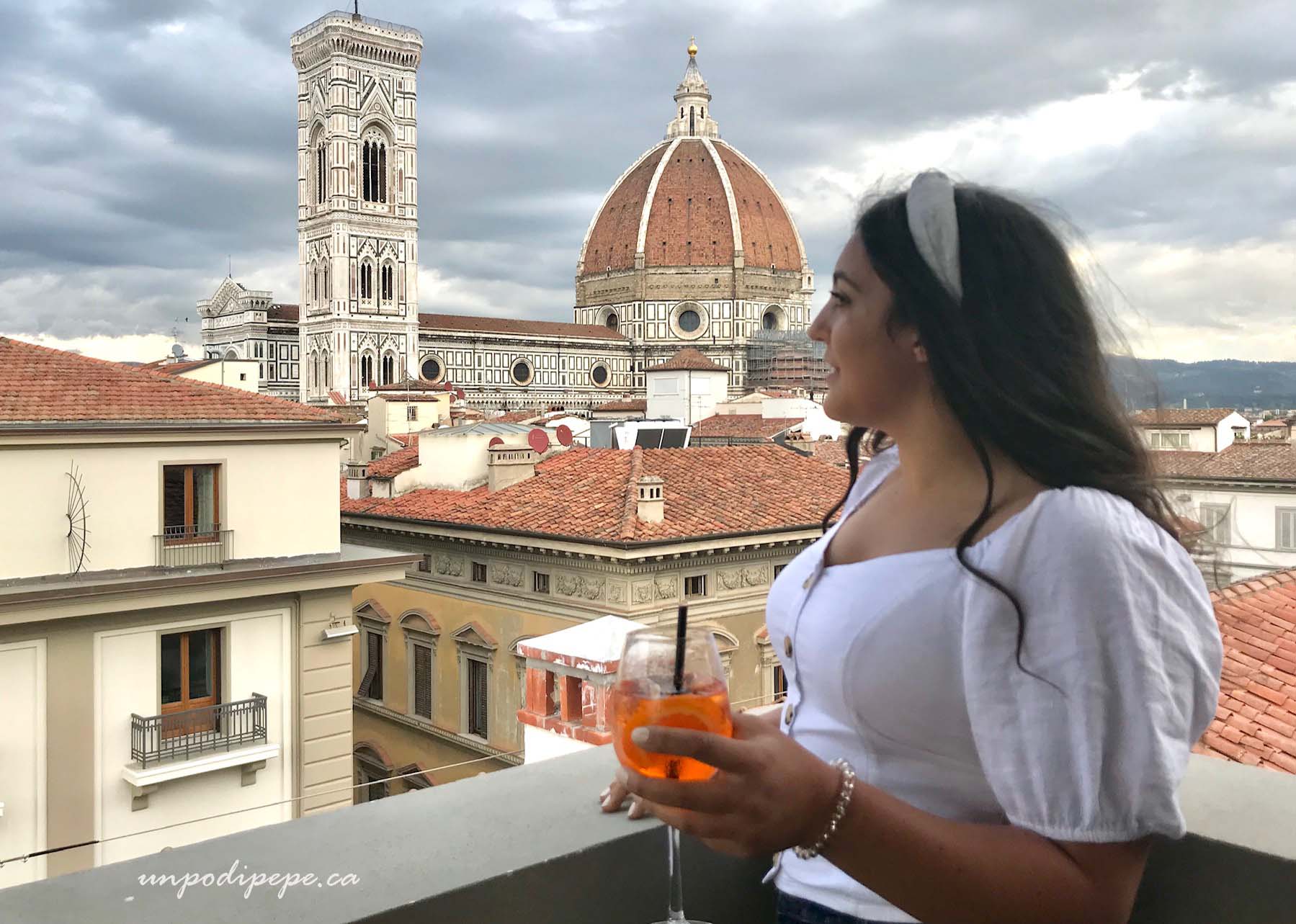
We also enjoyed the view, modern art and caffè from la terrazza degli Uffizi.  This is the title of one of my monotypes, so I had to throw that in there!  The Aperol Spritz from the roof bar of La Rinascente in Piazza della Repubblica was the best I have had.  With her new headband and puffy sleeves, Isabella looked like a Renaissance principessa enjoying a spritz!Isabella Aperol Spritz Duomo Firenze

We were on constant lookout for street art by Blub-even Gaetano when he was with us.  The results of our Blub hunt are in the post L’arte sa Nuotare.Blub street art Firenze

Isabella loves caffè.  She started ordering caffè lungo because both times she ordered un americano, they repeated ‘American coffee’ and tried to serve her drip coffee!   Mannaggia!   What has the world come to!Caffe a Firenze We had caffè at a different place every morning, including Caffè degli Artigiani in Piazza della Passera, Bar d’ Angolo in Porta Romana, one of my old favourites I Dolci di Patrizio Cosi, and one place way too close to Ponte Vecchio. They were all wonderful!  Isabella kept track of the cost of a cornetto and 2 caffè lunghi…..as expected, she found the price decreased and the quality increased the farther out we went!  Valuable life lessons!

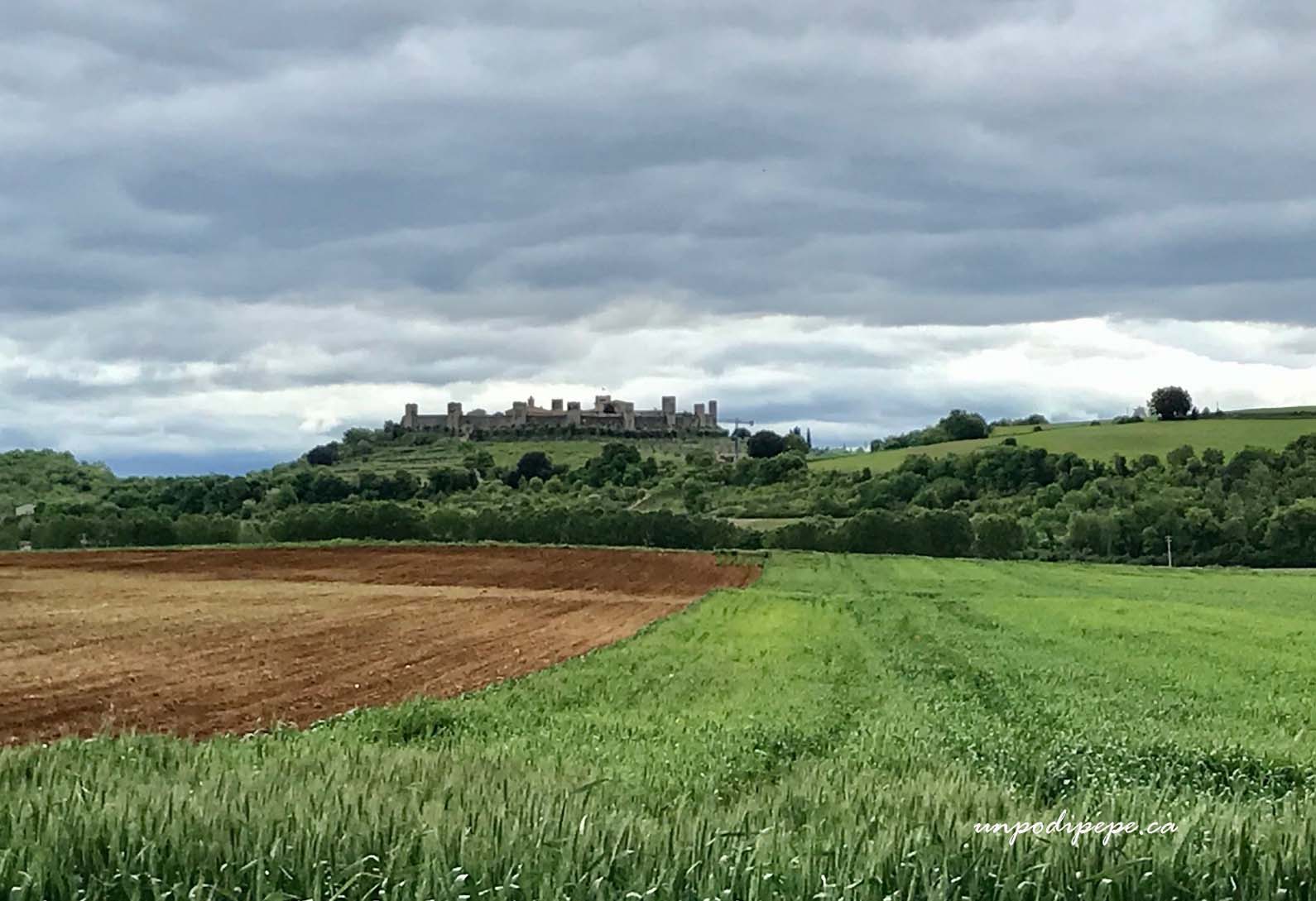
San GimignanoWe joined 5 others on a lovely daytrip from San Gimignano to Siena with Piero of Bike Florence and Tuscany.  The weather was ominous, either sprinkling or threatening to rain all day.  Bicicletta ToscanaMonteriggioni was a stop for wine tasting and we cycled parts of the Via Francigena. In Siena we had a few hours to explore the city and have Panforte.Monteriggioni Siena

The weather was not very warm for May.  I think this is the first time I have ever packed a small umbrella, but glad I did!  We had to dress in layers, or ‘a la cipolla’ as they say in italiano.  Some evenings in Firenze, it seemed like we were wearing ALL of the clothes in our valigia! Despite this, we walked everywhere.

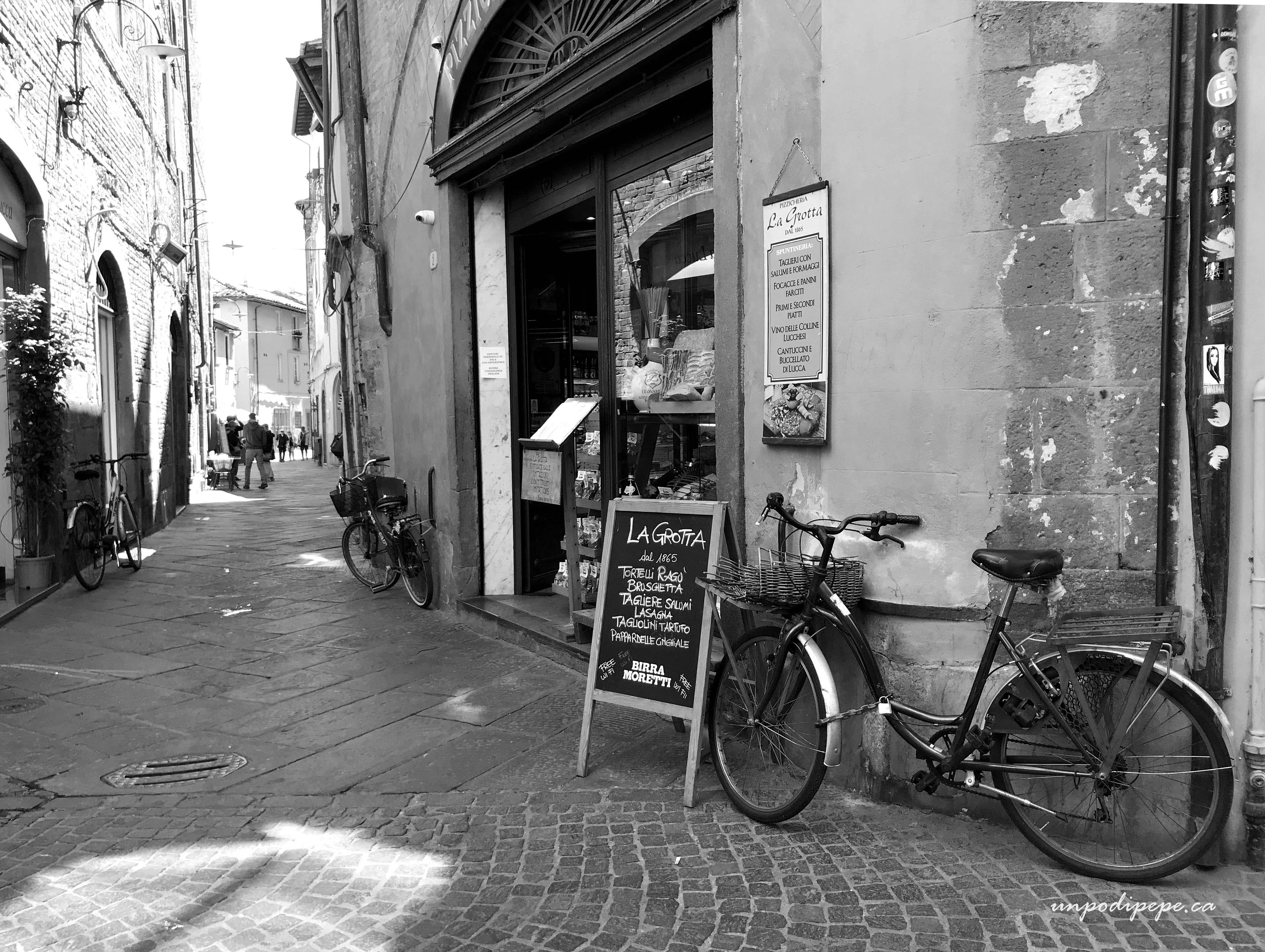
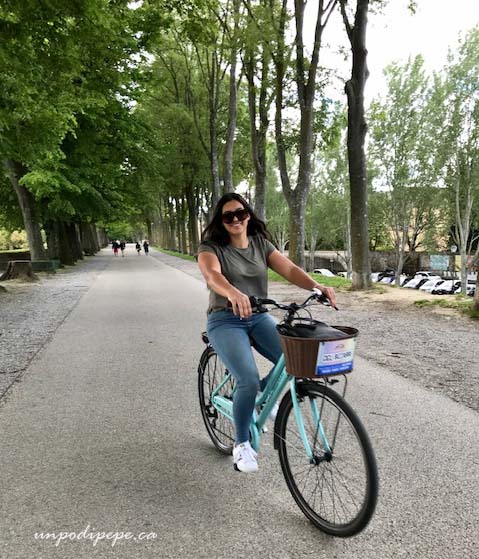
Here is our map –YES- a map-of where we walked.  Maps of the city centre are great for getting oriented.  It is much easier than trying to look at a GPS on a tiny phone screen.  We did not have time to take the bus to Fiesole or get to L’Accademia to see Michelangelo’s David or attend Mass at Santa Croce.  Isabella will definitely need to get back to Firenze.  While shopping, she did receive many compliments every day on her Italiano, even bartering down the price of a cute leather jacket!Biciclette, LuccaLucca was our next stop, 1.5 hours away by train.  Lucca is one of my favourite places in Italia!  We stayed at a small B&B near Torre Guinigi.  The owners found out we lived in Vancouver and told us about their nipote in Vancouver who is Isabella’s age.  I started to say that Vancouver was a big city…… when Isabella said ‘Uh….Zia….I actually do know him….  Che mondo piccolo!  After that, every time they saw Isabella, with no subtlety at all, they went on about what a nice boy he was!Riding the medieval walls Lucca

Lucca is known for its intact medieval walls.  We rented biciclette to ride the path on top of the walls.  The forecast was for good weather.  We had done 4 laps of the tree lined 4 km route, when unexpectedly a torrential downpour started.  It rained so hard we could barely see.Lucca medieval walls

We tried to get off the path, but visibility was so bad we could not tell which gate and ‘onramp’ we had taken to get up to the wall.  This was important because we had to return the bikes where we rented them.  Isabella wore her new jacket, and rather than get it ruined in the rain, she had folded it up inside out in a plastic bag in the cestino -the basket- leaving her in short sleeves.  Brrrr!

Piazza Anfiteatro LuccaBy the time we got to Piazza Anfiteatro to warm up and wait for the rain to stop, we looked like wet rats.  The restaurants are outdoor, so they had large heaters, and even blankets.  Piazza Anfiteatro Lucca A friend was coming from Viareggio for aperitivo later, but she had to cancel due to the weather.  Even in the rain, Lucca is spectacular. It is also a great place to shop!  I never spend enough time in Lucca.Monterosso a mare, Sentiero Azzurro

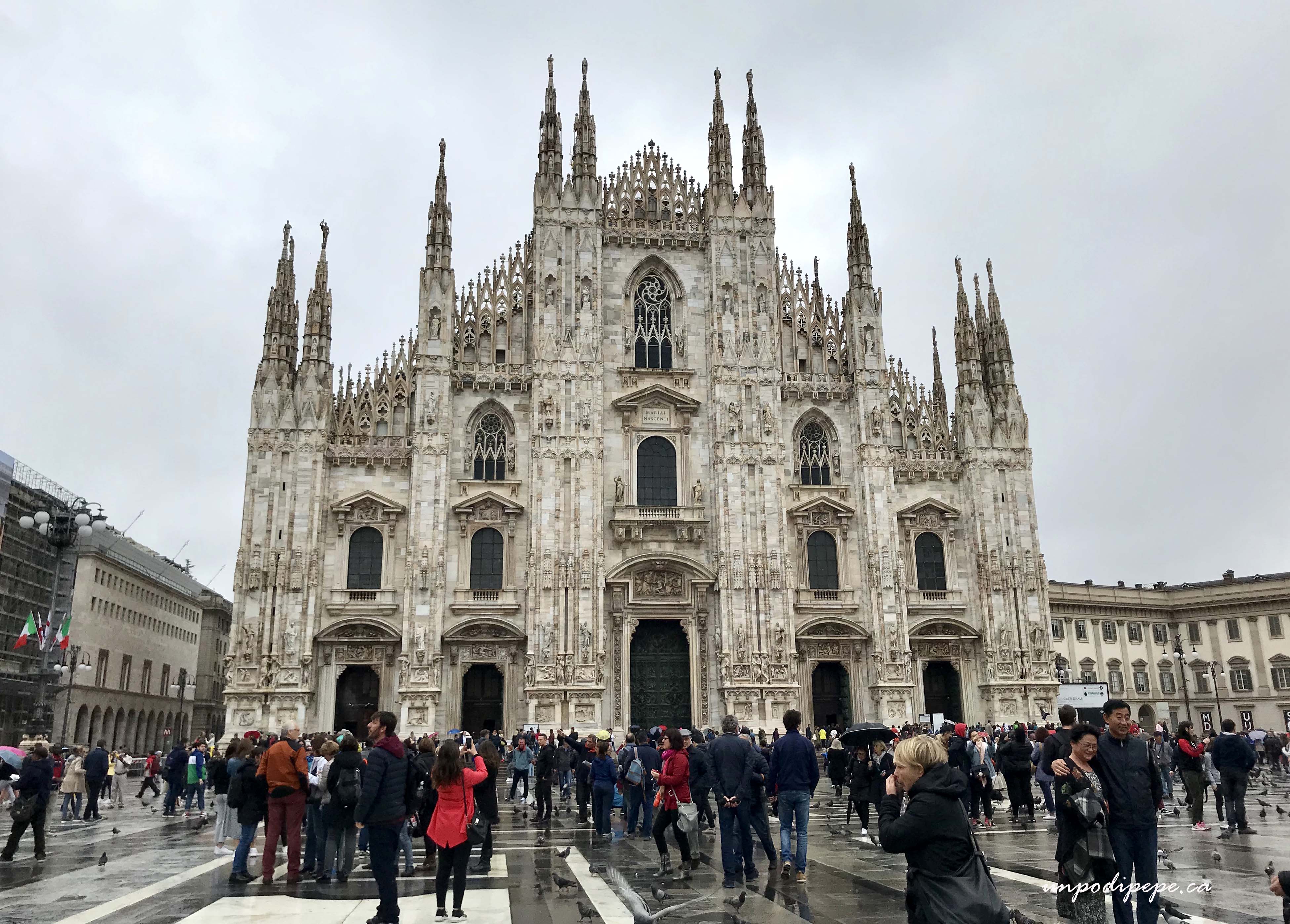
Our next stop was La Spezia via Pisa and on to Vernazza, our home base in the Cinque Terre.  I wrote about our time there in 2 posts- Le Cinque Terre and Exploring le Cinque Terre. The second post is specifically about our adventures.  The weather was beautiful, which is good, as there are no indoor activities there!  Hiking all day with a 19 year old is hard work, so luckily there was wine tasting in the evening!Milano Naviglio GrandeThe morning we left Vernazza was raining almost as much as on the walls of Lucca!  Isabella had been to Roma several times, but not to Milano, so we booked to fly home from there.  We met our cugina Federica, who we stayed with, and went to the Navigli area to have dinner with more cugini. Our visit was too short.  We spent the next day walking and window shopping around the Cento Storico and had a few ‘streetside reunions’ and phone calls with more cugini and a friend.  I have been to Milano many times but have yet to see L’Ultima Cenacola, Da Vinci’s Last Supper.  Even 2 weeks in advance, I was not able to book admission.  Another reason to return!Milano Duomo nella pioggiaWe hope you have enjoyed this piccolo viaggio virtuale with us!  Hopefully we can travel again soon.  Ciao, Cristina & IsabellaPiazza della Repubblica selfie

Share this:

  • Click to share on Facebook (Opens in new window) Facebook
  • Click to share on Pinterest (Opens in new window) Pinterest
  • Click to share on X (Opens in new window) X
  • Click to email a link to a friend (Opens in new window) Email
  • Click to share on WhatsApp (Opens in new window) WhatsApp
Like Loading...

COVID19-Andrà tutto bene

13 Friday Mar 2020

Posted by Un po' di pepe in Amici e Famiglia, Italia, Italian life

≈ 27 Comments

Tags

#andràtuttobene, #iorestoacasa, Coronavirus, COVID19, COVID19 Italia, COVID19 pandemic

This is a blog post I did not want to have to write.  A few weeks ago, I was hoping the COVID19 outbreak in Italia would just fizzle out on its own.  That has not happened, and Italia-my other home-has been absolutely devastated.  My family and friends there are all safe, but they are worried and confused, with things changing every day.

Yesterday, I overheard a group discussing the cancellation of NBA and NHL games and how that was ‘drastic, fear-mongering because more people die of the seasonal flu’ and ‘only sick people over 80 are dying’.  Most of you readers may not know this, but my ‘real job’ is at BC Childrens’ Hospital in Vancouver.  As a healthcare professional, I need to discuss the situation and present the facts.

COVID19 stands for ‘Corona Virus Disease 19’ and is in the same family as SARS.   Some of you may remember the SARS outbreak in Asia and Toronto in 2003?  SARS was more deadly (10% mortality), but COVID19 has far more cases and has been spreading like wildfire.  The coronavirus family cause disease in animals.  The genetic code for COVID 19 has been linked to bats.  It originated in Wuhan, China and likely passed to another animal before being passed on to humans.

The death rate for COVID19 about 3.4%, much higher than the seasonal flu. Death is not likely for those under 60 and healthy, but it can be spread to grandparents, parents, friends who are immunosuppressed or have other health issues.  Children do not seem to be affected, but can spread the virus. 20% of cases will develop severe pneumonia and ARDS (acute respiratory distress syndrome) needing oxygen therapy and possibly ICU and mechanical ventilation.

The situation in Italia-as of 13 March 2020, there have been 17,660 confirmed cases, 1,266 deaths, and 1,439 recoveries, leaving 14,955 active cases.  This data is updated daily here.

Why are there so many cases in Italia?  There are many reasons, including the fact the government has been transparent about reporting the #’s and facts from the beginning and they have tested over 60,000 people, revealing asymptomatic cases.  There is a large elderly population, the hardest group hit, and also the fact that Italians are probably the world’s most cuddly, affectionate population-which in any other situation is a positive thing.

For those of you who are not aware, restrictions started on Feb 22nd in Lombardia with the ‘red zone’ areas  being quarantined.  On March 4th schools are closed for 2 weeks.  March 8th the red zone is extended to include areas of Veneto and Emilia Romagna, Piemonte and Le Marche.

March 9th the whole country is declared a red zone. 60 million people are in quarantine until April 3rd-including travel restrictions and a ban on public gatherings.  The hashtag #iorestoacasa (I am staying home) is started to encourage limited movement and social distancing. Travel between towns requires printing an online ‘autodeclaration’ form stating the reason-medical appointment/going to work/family emergency.  Everyone has to stay 1 m apart and bars and restaurant close at 6pm.  Meanwhile, cases continue to climb. ‘Smartworking’ is the buzz word for those able to work from home.

March 11 Prime Minister Giuseppe Conte extends the restrictions to what is basically a complete shutdown.  Only essential services are allowed to stay open –pharmacies and stores selling food and other essential items. In his words:

Rimaniamo distanti oggi, per abbracciarci con piu calore e per correre insieme piu veloci domani/Let’s keep our distance today, to hug each other stronger tomorrow.

March 11 the WHO declares a pandemic.  A pandemic is ‘the sustained and continuous transmission of a disease in 3 or more different geographical regions at the same time’.  This does not necessarily refer to how lethal the disease is.  In less than 2 months COVID19 has spread to 116 countries.

At the macelleria (butcher/meat shop) in Orsara di Puglia, my Zia reports that only 1 person is allowed to enter at a time and everyone else has to stand in line outside, 1m apart from each other.  Many shops have attached tape lines on the floor 1m apart. Below is a photo from my cousin’s store selling cleaning products.  They have sold out of hand sanitizer, alcohol and mascherine-facemasks, but have lots of toilet paper left.

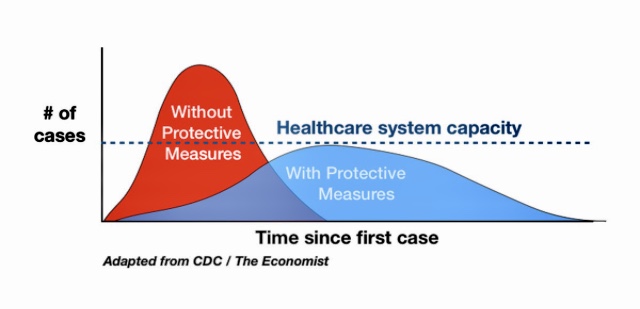
The containment measures may seem drastic, and they are, especially since it has been only 20 days-but it is the only way to stop cross contamination.  Without hosts, the virus cannot spread.  It will be contained if people are isolated. In epidemiology lingo, intervening to try and slow the spread and prevent the # of severe cases is called ‘flattening the curve’.  This is also to prevent system overload and ensure that health care resources can keep up.  20% of cases will develop severe respiratory distress, possibly needing ICU and ventilation.  This is not the seasonal flu and will overwhelm the system.  In Italia on March 10th there were 600 people in 55 ICU’s.  The median age is 65, meaning that there are younger people in ICU too.  An ICU physician in Lombardia calls it ‘worse than a bomb’. ICU beds in the north are full and doctors have to make decisions about resource allocation.

Many other countries are now where Italia was on February 22nd and need to follow her example and implement measures early.  Today in Canada, our Prime Minister is in isolation as his wife has come back from the UK and tested positive. This is unfortunate, but has got people listening.  There needs to be a balance between staying calm to avoid panic and hysteria, but also being proactive and prepared.

COVID19 is not an airborne disease.  It is spread by droplet and close contact with an infected person. Respiratory droplets are produced by a sneeze or cough.  They can travel up to 1.8m (6ft) and directly enter the body through the eyes, mouth or nose.  Contact refers to touching an infected person or object such as doorknob or railings directly.  Unwashed hands contaminated with COVID 19 can introduce the virus into the body when touching eyes, mouth and nose.  With these facts in mind, here are the most important things to help prevent the spread of the COVID19:

  • Wash hands! Soap and water or alcohol based hand sanitizers are both effective.
  • Avoid touching the face
  • Keep 2m away from sick people
  • Cough and sneeze into sleeve/elbow
  • If you are sick, stay home! There is no treatment for viruses-stay home, rest and drink fluids.
  • Go to the Dr or emergency department only if you are truly unwell. Call your local public health service first to ask what to do/where to go.
  • Depending on your location and the number of cases, follow the local health department recommendations re physical distancing, mask wearing, travel, etc.
  • Masks will not prevent you getting sick, but should definitely be worn if physical distancing is not possible-especially indoors.
  • Do not stockpile disposable masks and hand sanitizer-they are needed by hospitals.
  • Make sure you have 2 months supply of any medications.  There is no need to stockpile other food and supplies-and especially not toilet paper!

Autoritratto con mascherinaShort term pain for long-term gain.  There will definitely be short term repercussions to the economy, but health and safety have to come first.

Let’s hope that things settle down in a few weeks to a month.  Today, Friday the 13th at 6pm in Roma, Firenze and several other cities, balcony flash mobs occurred, with everyone banging pots and pans and singing out on their balconies!   Warmer weather creates a less friendly climate for viruses, so bring on the sun! These will be happening all weekend. Once this is all over, those of you who had to cancel trips to Italia will be able to rebook.  The economy will need you.  Remember #andràtuttobene-everything will be all right.  Forza Italia/Stay strong Italia!  Grazie mille to all of the front line health care workers!  Please read the next post: COVID19-Insieme ce la Faremo  Ciao, Cristina

Share this:

  • Click to share on Facebook (Opens in new window) Facebook
  • Click to share on Pinterest (Opens in new window) Pinterest
  • Click to share on X (Opens in new window) X
  • Click to email a link to a friend (Opens in new window) Email
  • Click to share on WhatsApp (Opens in new window) WhatsApp
Like Loading...

Buon Natale~Il Presepio di Mamma

24 Monday Dec 2018

Posted by Un po' di pepe in Amici e Famiglia, Feste, Italian life

≈ 13 Comments

Tags

Italian Christmas, Italian Christmas traditions, La Befana, Natale, Presepio, Via San Gregorio Armeno

It is probably obvious from my photos that I love le feste Natalizie-the Christmas season.  Festive décor, lights, music and baking help me get through the early darkness and awful weather at this time of year.  I decorate every room in my house, but my favourite piece of Christmas is definitely the Presepio.  A few years ago, I wrote a blog post about the history of Il Presepio and have included photos of mine in previous December posts.

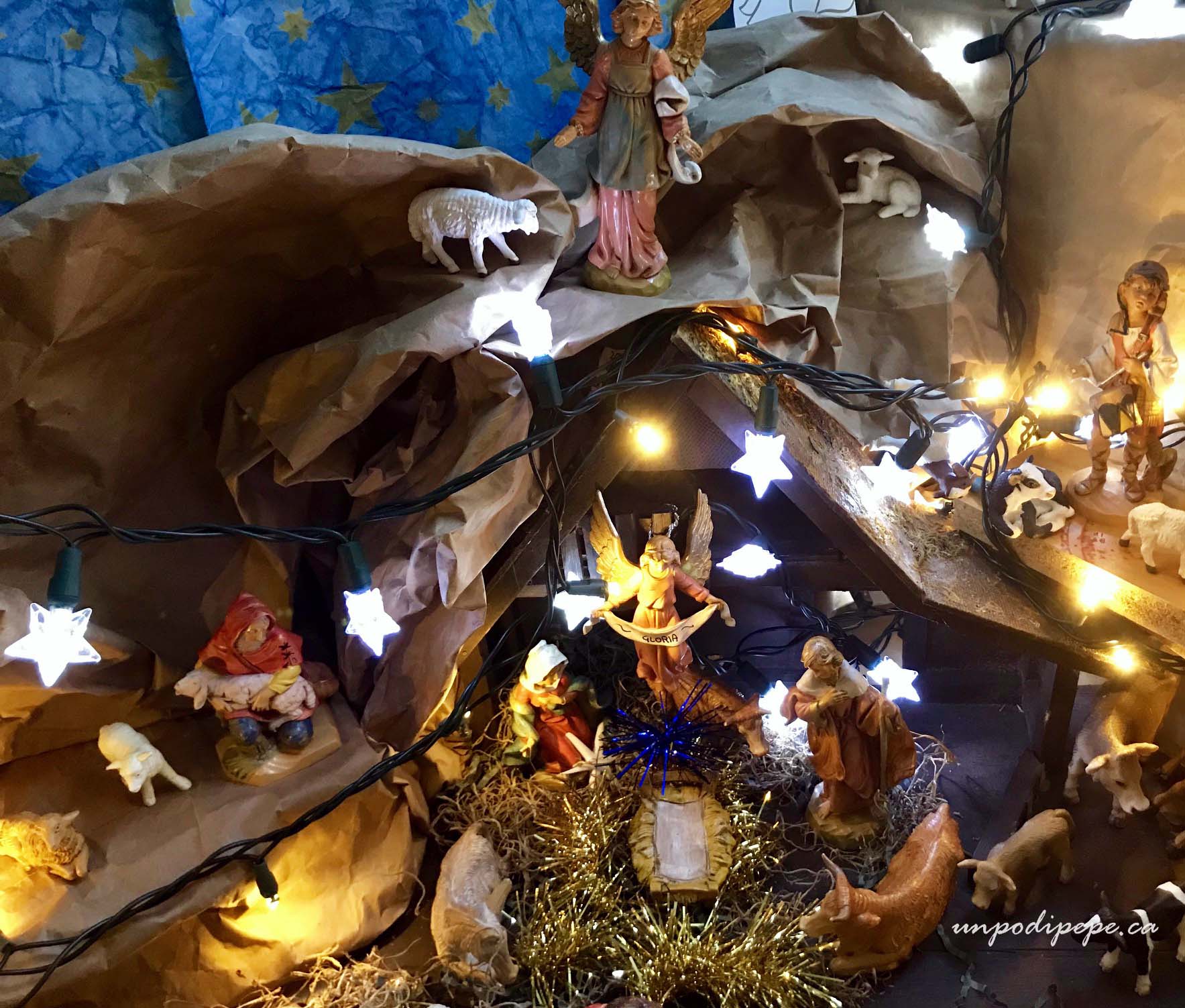
My Presepio has grown over the years, but includes mostly the ‘main players’.  My Mamma’s Presepio also started out this way, but is now a whole village.  It was originally placed under the tree, since l’albero di Natale was a new tradition for most new italocanadesi.  It was eventually moved to the fireplace hearth, and then to a table.  The stable was originally ‘rustic’, made with one of those large paper grocery bags, with the rim folded down many times and a window cut out the back for a light, or a mandarin orange box covered in brown butcher paper. The figures were the Holy Family, an angel, and ox and donkey, a shepherd with a few sheep and the 3 Wise Men. The manger is empty in the photo, as Baby Gesù does not get placed there until tonight, la Vigilia di Natale.www.unpodipepe.caThe 3 Wise Men or Rè Magi are far off in the hills since they do not arrive in Bethlehem until the l’Epifania, January 6th. Trailing behind is La Befana trying to catch up to them.  www.unpodipepe.ca

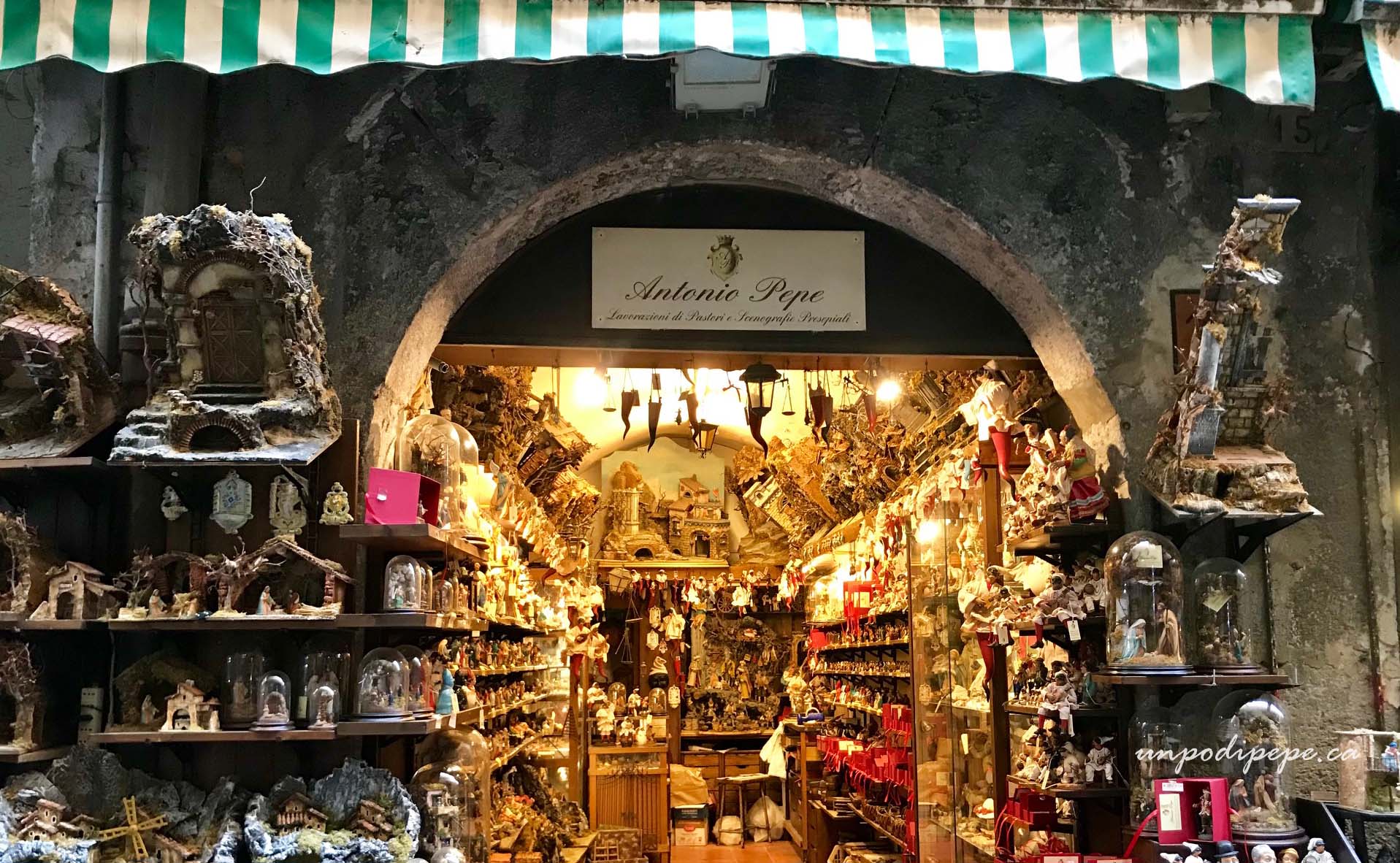
Presepio figures are not easy to find in Vancouver, but she slowly acquired village people, more shepherds, camels and lots of other animals.  Various pieces were purchased in Assisi, the Vatican and Mexico, even a napkin holder from Venezuela doubles as il forno.  The beautiful starry sky was brought by a friend from Roma. In August I went to Via San Gregorio Armeno in Napoli, the street famous for Presepio making artigiani.

Via San Gregorio Armeni Napoli, Antonio Pepe, www.unpodipepe.ca

‘Lavorazioni di Pastori e Scenografie Presepiati Antonio Pepe’, Via San Gregorio Armeno, Napoli (no relation!)

The Presepio inventory is low in summer, but I bought a terra cotta prosciutto, capicollo and cacciotta and a cestino of eggs which you can see in the photo below. I also bought 2 tiny chairs just like the ones we have in Orsara. I forgot to buy a zampognaro-an Abruzzese bagpiping shepherd-so I will have to go back to Napoli!

Mamma gets very detailed and creative with her Presepio. She starts working on it mid November and really enjoys putting it together. I am often asked to help create accessories.  The cutest detail is the tiny loaves of bread, panini and focaccia Pugliese that she bakes for the forno.Presepio

It is interesting to note that San Francesco d’Assisi created the first Presepio in 1223 in an attempt to return to the true meaning of Christmas and take the focus off of gift-giving.  So Charlie Brown was not the first to search for ‘the true meaning of Christmas’! If any of you have a Presepio, I would love to hear about it!

Cari lettori di Un po’ di pepe, Vi augura un Buonissimo Natale e un meraviglioso 2019 piena di gioia e salute!

Dear readers of Un po’ di pepe, I wish you a very Merry Christmas and a marvelous 2019 filled with health and joy!

Ciao, Cristina

Share this:

  • Click to share on Facebook (Opens in new window) Facebook
  • Click to share on Pinterest (Opens in new window) Pinterest
  • Click to share on X (Opens in new window) X
  • Click to email a link to a friend (Opens in new window) Email
  • Click to share on WhatsApp (Opens in new window) WhatsApp
Like Loading...
← Older posts

Enter your email address to follow 'un po' di pepe' and receive notifications of new posts by email.

Join 511 other subscribers
Follow Un po' di pepe on WordPress.com

Popular Posts

  • Panforte di Siena
    Panforte di Siena
  • Hairstyling in Ancient Roma
    Hairstyling in Ancient Roma
  • Panettone Fatto in Casa
    Panettone Fatto in Casa
  • Polpo e patate
    Polpo e patate
  • Dolci di Natale
    Dolci di Natale
  • Acqua Vergine
    Acqua Vergine
  • Espresso Cookies
    Espresso Cookies

Recent Posts

  • Castel del Monte
  • ‘The Nuances of Love’
  • Hostaria Antica Roma~Eat like an Ancient Roman
  • Santa Maria in Aracoeli
  • Casino dell’Aurora~Villa Boncompagni Ludovisi
  • Nasoni di Roma
  • Bloghiversario #11
  • Fontana di Trevi
  • Acqua Vergine
  • Giubileo 2025
  • Sanremo 2025
  • In Vino there are Memories
  • A Literary Harvest
  • 2024~Un po’ di pepe Year in Review
  • Buon Natale 2024
  • Il Bicerin
  • Mercato Porta Palazzo
  • Torino
  • Catanzaro, Calabria
  • Il Pumo Pugliese
  • Artemisia Gentileschi
  • Cavalli di San Marco
  • Panzerotti
  • Torcello
  • 10 years of Un po’ di pepe!

Categories

Amici e Famiglia Architecture Art Art history Art projects Bilingual posts Blogging Canada Culture Feste Firenze Inspiration Italia Italian Folklore Italian language Italian life Italocanadesi Libri Mangiamo! Orsara di Puglia Parole piacevoli Photography Puglia Recipes Roma Travel Travel tips Uncategorized Vino

Archives

Un po’ di pepe on Facebook

Un po’ di pepe on Facebook

Start a Blog at WordPress.com.

  • Subscribe Subscribed
    • Un po' di pepe
    • Join 511 other subscribers
    • Already have a WordPress.com account? Log in now.
    • Un po' di pepe
    • Subscribe Subscribed
    • Sign up
    • Log in
    • Report this content
    • View site in Reader
    • Manage subscriptions
    • Collapse this bar
 

Loading Comments...
 

    %d