• Home
  • About me/Chi sono
  • Contact

Un po' di pepe

~ …… (oon∙poh∙dee∙PEH∙peh) Cristina writes about interesting stuff /Cristina scrive di cose interessanti

Un po' di pepe

Category Archives: Italia

COVID19-Insieme ce la faremo

22 Sunday Mar 2020

Posted by Un po' di pepe in Italia, Italian life

≈ 28 Comments

Tags

#insiemecelafaremo, #iorestoacasa, COVID19, COVID19 Italia, COVID19 pandemic

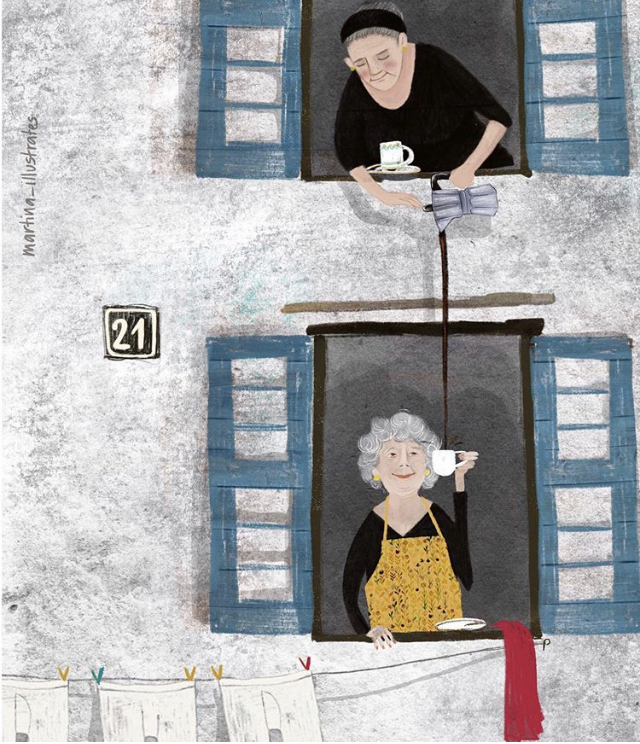
Coffee? Martina_illustratesWhat a week it has been!  The COVID 19 pandemic has changed life for everyone. Last week, I wrote about COVID 19 and the situation in Italia.  Then the world became emotional watching videos of neighourhoods all over the country singing in solidarity from their balconies and windows.  There was also a collective round of applause at noon for frontline health care workers.  This uplifting show of resilience and community support was much needed. Rainbow paintings by bambini, and the positive messages #iorestoacasa and #andratuttobene spread positivity throughout the country in a show of mass cooperation and unity.

This week in Italia there is discouragement and low morale, with new cases going up daily.  Stats are updated here.  Things are getting worse instead of better. There are now more deaths than in China and the numbers keep rising, despite extreme social distancing measures.  We all saw the morbid images from Bergamo of a convoy of army vehicles transporting coffins elsewhere because there is no room for them.  I feel terrible when I think of all the people dying alone in ICU, without their families, not even given the dignity of a funeral.  It is natural to feel demoralized under the circumstances, and the mental health effects of quarantine and social distancing, but it is important to stay positive and hopeful.

What we all have to remember is that the COVID 19 virus can incubate for 14 days.  Knowing this, it makes sense that measures taken today will take 2 weeks to have an effect, and the increase in cases were mostly infected before the whole country was in quarantine. Now there are even stricter measures in place.

China has had 4 days with no new cases. We also need to remember they are on day 81 (since Jan 1st), while Italia is only at day 32 (Feb 20th there were 3 cases).  If all of this is correct, it should start getting better next week ……  if everyone stays home!  Movement of people will just keep feeding  the virus.

What I do not understand is why other countries are not learning from what is happening in Italia and acting sooner?  It is not if, but when. For example, the UK now has more cases than Italia did at the same point, but they only just closed bars yesterday!  Despite social distancing measures, we see videos of socially and morally irresponsible spring break partying in Florida, and a packed Bondi Beach in Sydney.  The only way to contain this thing is to STAY HOME!  Wake up and smell the cappuccino already! The super strict rules need to be stricter and need to be enforced.  This cartoon sent to me on Facebook shows what is needed to kick COVID 19.  The coronavirus says:  ‘I’m leaving, there is no one here’.

I hope the balcony singing resumes, because music is the universal language and it is so important for social and mental health. Forza!  Insieme ce la faremo-together we will do it!  Stay strong everyone…and unless you are an essential service, STAY AT HOME!  Ciao, Cristina

Image: Coffee? used with permission by Martina Heiduczek IG @martina_illustrates

Coffee? Martina_illustrates

To lighten the mood I am attaching a hilarious video from Rimbamband of ‘Virus Corona’ (pronounced VEE∙roos Corona) to the tune of the 80’s hit My Sharona.  The lyrics are hilarious, but even if you don’t understand Italiano, it is still funny.


Share this:

  • Share on Facebook (Opens in new window) Facebook
  • Share on Pinterest (Opens in new window) Pinterest
  • Share on X (Opens in new window) X
  • Email a link to a friend (Opens in new window) Email
  • Share on WhatsApp (Opens in new window) WhatsApp
Like Loading...

COVID19-Andrà tutto bene

13 Friday Mar 2020

Posted by Un po' di pepe in Amici e Famiglia, Italia, Italian life

≈ 27 Comments

Tags

#andràtuttobene, #iorestoacasa, Coronavirus, COVID19, COVID19 Italia, COVID19 pandemic

This is a blog post I did not want to have to write.  A few weeks ago, I was hoping the COVID19 outbreak in Italia would just fizzle out on its own.  That has not happened, and Italia-my other home-has been absolutely devastated.  My family and friends there are all safe, but they are worried and confused, with things changing every day.

Yesterday, I overheard a group discussing the cancellation of NBA and NHL games and how that was ‘drastic, fear-mongering because more people die of the seasonal flu’ and ‘only sick people over 80 are dying’.  Most of you readers may not know this, but my ‘real job’ is at BC Childrens’ Hospital in Vancouver.  As a healthcare professional, I need to discuss the situation and present the facts.

COVID19 stands for ‘Corona Virus Disease 19’ and is in the same family as SARS.   Some of you may remember the SARS outbreak in Asia and Toronto in 2003?  SARS was more deadly (10% mortality), but COVID19 has far more cases and has been spreading like wildfire.  The coronavirus family cause disease in animals.  The genetic code for COVID 19 has been linked to bats.  It originated in Wuhan, China and likely passed to another animal before being passed on to humans.

The death rate for COVID19 about 3.4%, much higher than the seasonal flu. Death is not likely for those under 60 and healthy, but it can be spread to grandparents, parents, friends who are immunosuppressed or have other health issues.  Children do not seem to be affected, but can spread the virus. 20% of cases will develop severe pneumonia and ARDS (acute respiratory distress syndrome) needing oxygen therapy and possibly ICU and mechanical ventilation.

The situation in Italia-as of 13 March 2020, there have been 17,660 confirmed cases, 1,266 deaths, and 1,439 recoveries, leaving 14,955 active cases.  This data is updated daily here.

Why are there so many cases in Italia?  There are many reasons, including the fact the government has been transparent about reporting the #’s and facts from the beginning and they have tested over 60,000 people, revealing asymptomatic cases.  There is a large elderly population, the hardest group hit, and also the fact that Italians are probably the world’s most cuddly, affectionate population-which in any other situation is a positive thing.

For those of you who are not aware, restrictions started on Feb 22nd in Lombardia with the ‘red zone’ areas  being quarantined.  On March 4th schools are closed for 2 weeks.  March 8th the red zone is extended to include areas of Veneto and Emilia Romagna, Piemonte and Le Marche.

March 9th the whole country is declared a red zone. 60 million people are in quarantine until April 3rd-including travel restrictions and a ban on public gatherings.  The hashtag #iorestoacasa (I am staying home) is started to encourage limited movement and social distancing. Travel between towns requires printing an online ‘autodeclaration’ form stating the reason-medical appointment/going to work/family emergency.  Everyone has to stay 1 m apart and bars and restaurant close at 6pm.  Meanwhile, cases continue to climb. ‘Smartworking’ is the buzz word for those able to work from home.

March 11 Prime Minister Giuseppe Conte extends the restrictions to what is basically a complete shutdown.  Only essential services are allowed to stay open –pharmacies and stores selling food and other essential items. In his words:

Rimaniamo distanti oggi, per abbracciarci con piu calore e per correre insieme piu veloci domani/Let’s keep our distance today, to hug each other stronger tomorrow.

March 11 the WHO declares a pandemic.  A pandemic is ‘the sustained and continuous transmission of a disease in 3 or more different geographical regions at the same time’.  This does not necessarily refer to how lethal the disease is.  In less than 2 months COVID19 has spread to 116 countries.

At the macelleria (butcher/meat shop) in Orsara di Puglia, my Zia reports that only 1 person is allowed to enter at a time and everyone else has to stand in line outside, 1m apart from each other.  Many shops have attached tape lines on the floor 1m apart. Below is a photo from my cousin’s store selling cleaning products.  They have sold out of hand sanitizer, alcohol and mascherine-facemasks, but have lots of toilet paper left.

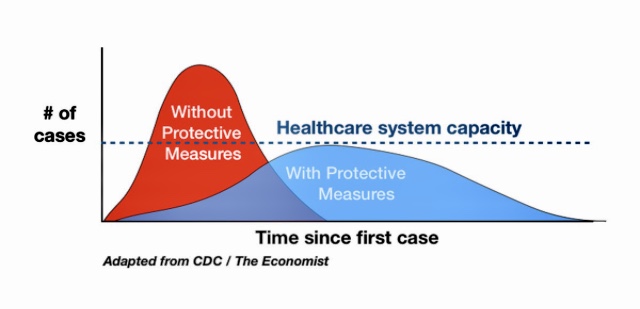
The containment measures may seem drastic, and they are, especially since it has been only 20 days-but it is the only way to stop cross contamination.  Without hosts, the virus cannot spread.  It will be contained if people are isolated. In epidemiology lingo, intervening to try and slow the spread and prevent the # of severe cases is called ‘flattening the curve’.  This is also to prevent system overload and ensure that health care resources can keep up.  20% of cases will develop severe respiratory distress, possibly needing ICU and ventilation.  This is not the seasonal flu and will overwhelm the system.  In Italia on March 10th there were 600 people in 55 ICU’s.  The median age is 65, meaning that there are younger people in ICU too.  An ICU physician in Lombardia calls it ‘worse than a bomb’. ICU beds in the north are full and doctors have to make decisions about resource allocation.

Many other countries are now where Italia was on February 22nd and need to follow her example and implement measures early.  Today in Canada, our Prime Minister is in isolation as his wife has come back from the UK and tested positive. This is unfortunate, but has got people listening.  There needs to be a balance between staying calm to avoid panic and hysteria, but also being proactive and prepared.

COVID19 is not an airborne disease.  It is spread by droplet and close contact with an infected person. Respiratory droplets are produced by a sneeze or cough.  They can travel up to 1.8m (6ft) and directly enter the body through the eyes, mouth or nose.  Contact refers to touching an infected person or object such as doorknob or railings directly.  Unwashed hands contaminated with COVID 19 can introduce the virus into the body when touching eyes, mouth and nose.  With these facts in mind, here are the most important things to help prevent the spread of the COVID19:

  • Wash hands! Soap and water or alcohol based hand sanitizers are both effective.
  • Avoid touching the face
  • Keep 2m away from sick people
  • Cough and sneeze into sleeve/elbow
  • If you are sick, stay home! There is no treatment for viruses-stay home, rest and drink fluids.
  • Go to the Dr or emergency department only if you are truly unwell. Call your local public health service first to ask what to do/where to go.
  • Depending on your location and the number of cases, follow the local health department recommendations re physical distancing, mask wearing, travel, etc.
  • Masks will not prevent you getting sick, but should definitely be worn if physical distancing is not possible-especially indoors.
  • Do not stockpile disposable masks and hand sanitizer-they are needed by hospitals.
  • Make sure you have 2 months supply of any medications.  There is no need to stockpile other food and supplies-and especially not toilet paper!

Autoritratto con mascherinaShort term pain for long-term gain.  There will definitely be short term repercussions to the economy, but health and safety have to come first.

Let’s hope that things settle down in a few weeks to a month.  Today, Friday the 13th at 6pm in Roma, Firenze and several other cities, balcony flash mobs occurred, with everyone banging pots and pans and singing out on their balconies!   Warmer weather creates a less friendly climate for viruses, so bring on the sun! These will be happening all weekend. Once this is all over, those of you who had to cancel trips to Italia will be able to rebook.  The economy will need you.  Remember #andràtuttobene-everything will be all right.  Forza Italia/Stay strong Italia!  Grazie mille to all of the front line health care workers!  Please read the next post: COVID19-Insieme ce la Faremo  Ciao, Cristina

Share this:

  • Share on Facebook (Opens in new window) Facebook
  • Share on Pinterest (Opens in new window) Pinterest
  • Share on X (Opens in new window) X
  • Email a link to a friend (Opens in new window) Email
  • Share on WhatsApp (Opens in new window) WhatsApp
Like Loading...

Napoli Street Art

29 Saturday Feb 2020

Posted by Un po' di pepe in Art, Italia, Photography

≈ 20 Comments

Tags

Banksy, Blub, Contemporary art Napoli, Exit/Enter, Jorit, Napoli Centro Storico, Roxy in the box, Southern Italy

volto di Sophia Loren Napoli street artNapoli is gritty, wonderfully chaotic, passionate and anything but boring, making it a perfect place for self-expression.  Graffiti is not a new concept to the Napoletani.  Ancient graffiti can be found in Pompeii, including ‘I was here’ type messages and suggestive notes written on the walls of the brothel.  In the historic center of Napoli graffiti, posters and murals have been elevated to a fine art form.  I was in Napoli on a search for Blub street art and ended up finding so much more.

Volto di Sophia, a colourful Bollywood inspired portrait of iconic Napoletana Sophia Loren is on Vico dei Zuroli, just off of Via dei Tribunali.  The artist is Stikki Peaches, originally from Montreal.Madonna con la Pistola Banksy Napoli street art

Madonna con la Pistola is the only work in Italia by the elusive and mysterious English street artist Banksy.  It is in Piazza Gerolamini, off of Via dei Tribunali.  The Madonna in ecstasy with a gun in place of a halo is the artist’s exploration of the relationship between religion and organized crime.  It has now been covered by glass for protection from the elements.

Street portrait of San Gennaro by Jorit AgochSan Gennaro, a hyperrealistic 15m high portrait of Napoli’s patron saint is by Italian- Dutch artist Jorit Agoch (Jorit Ciro Cerullo).  It is on Via Forcella near the Duomo.  The model is the artist’s friend, a mechanic also named Gennaro.  This could be an homage to Caravaggio, who would take ordinary people off the street to be his models for paintings of extraordinary people. There are more ginormous Jorit murals in the Ponticelli Graffiti park near the airport and in the financial district.Pizza vs McDonalds

Exit/Enter is a street artist from Firenze who paints whimsical, expressive stick figures. There are a few Exit/Enter works around Napoli, including this one which I though was an angry pizza and a clown.  Then I realized the clown looked like a skinny Ronald McDonald.  Sure enough-it is titled ‘Pizza vs McDonald’s’! I do not remember the name of the street, but it was also just off of Via dei Tribunali.

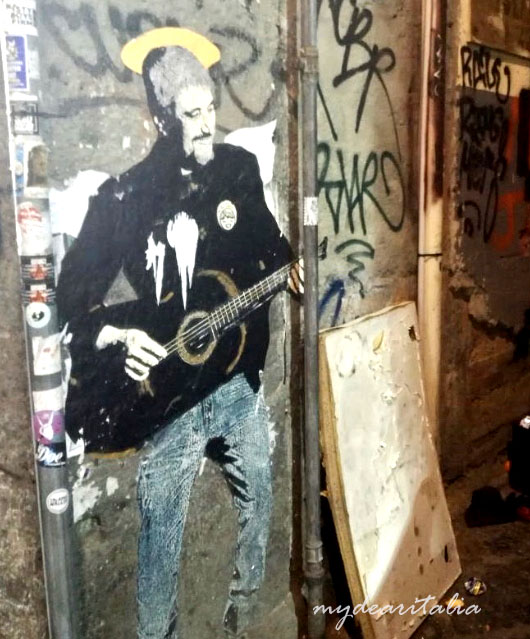
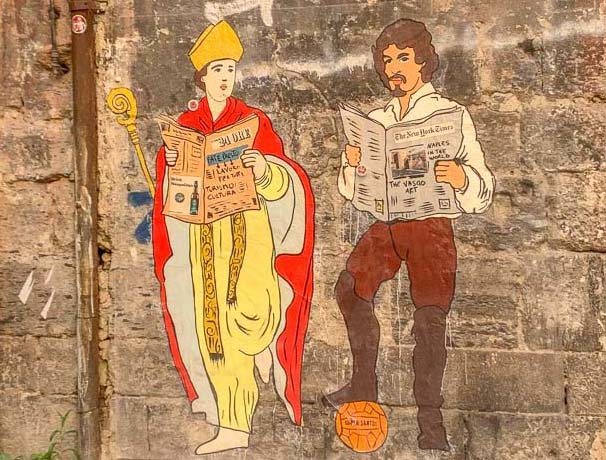
San Pio Daniele TvBoy Street ArtBeloved Napoletano singer Pino Daniele passed away in 2015. Pino with his smile and guitar is sainted by artist TvBoy in San Pino Daniele found in Vico dei Panettieri.  Grazie to Sara from My Dear Italia for the photo.Mission Possible is the colourful mural by Napoletana artist Roxy in the box (Rosaria Bosso). She includes 2 important figures in the history of Napoli; San Gennaro and Caravaggio. They are casually hanging out reading the New York Times and 24 Ore.  It is in Piazza Cardinale Sisto Riario Sforza, near the Duomo, Pio Monte della Misericordia and Via dei Tribunali.

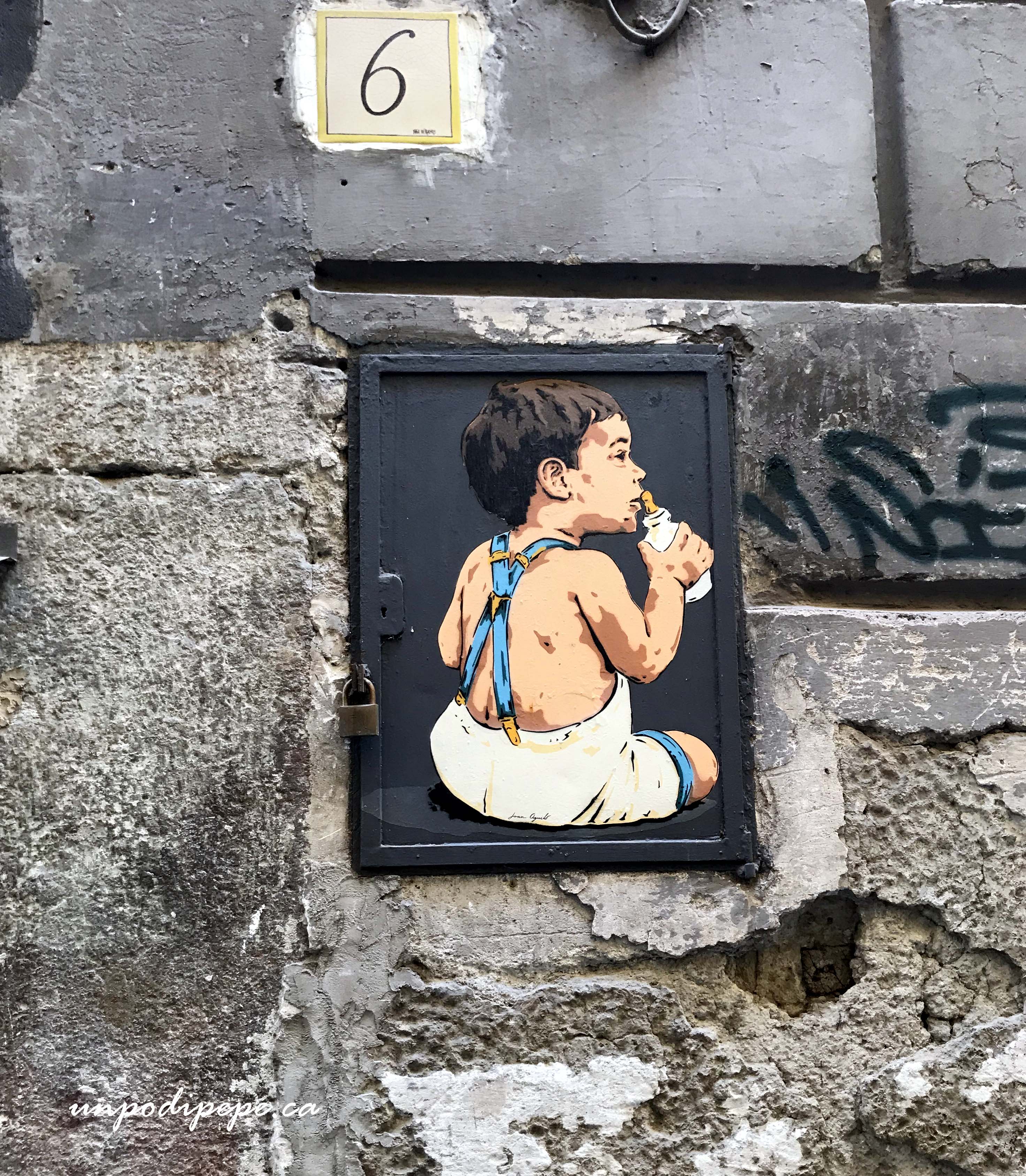
Napoli Street Art StencilThis stencil baby is on an electrical panel is near the lineup to get into the Cappella San Severo.  The signature on the bum says Joan Aquito.

Blub Verdi, NapoliGiuseppe Verdi and a Renaissance woman covered by a shop door are the only Blub work I found on the street after visiting the Blub Pompeii inspired exhibit at the Museo Archeologico Nazionale Napoli.  I was disappointed not to find Totò, another iconic Napoletano.  For more Blub love, read Blub a Napoli and L’arte sa Nuotare.Renaissance woman by Blub

I hope you enjoyed this street art tour of Napoli Centro Storico! More Napoli information can be found in Un Giorno a Napoli. Banksy Madonna con la Pistola Napoli Ciao, Cristina

Share this:

  • Share on Facebook (Opens in new window) Facebook
  • Share on Pinterest (Opens in new window) Pinterest
  • Share on X (Opens in new window) X
  • Email a link to a friend (Opens in new window) Email
  • Share on WhatsApp (Opens in new window) WhatsApp
Like Loading...

Un Giorno a Napoli

06 Thursday Feb 2020

Posted by Un po' di pepe in Art, Italia, Travel

≈ 25 Comments

Tags

Campania, Museo Archeologico Nazionale di Napoli, Napoli, Napoli Centro Storico, Southern Italy, UNESCO World Heritage Sites

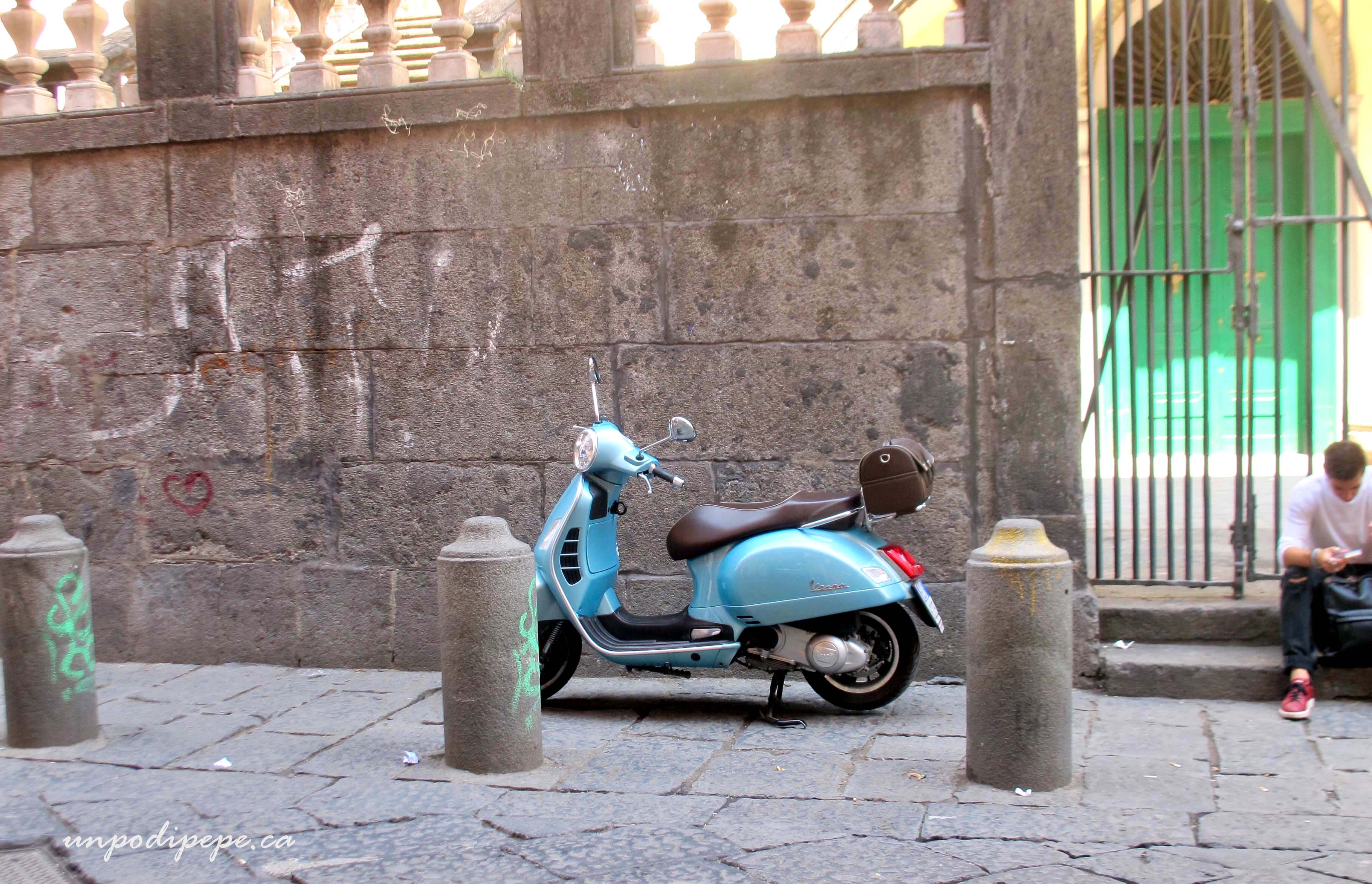
Vespa Napoli Centro StoricoNapoli is one of the oldest continually inhabited urban areas in the world.  It was founded by Greek sailors from Rhodes in 680 BC.  They named her Parthenope after the siren who tried to lure Ulysses. In 474 BC it was renamed Neapolis, meaning ‘new city’ giving us the present name as well as the anglicized Naples.  After Roma and Milano,  Napoli is the 3rd largest city in Italia.

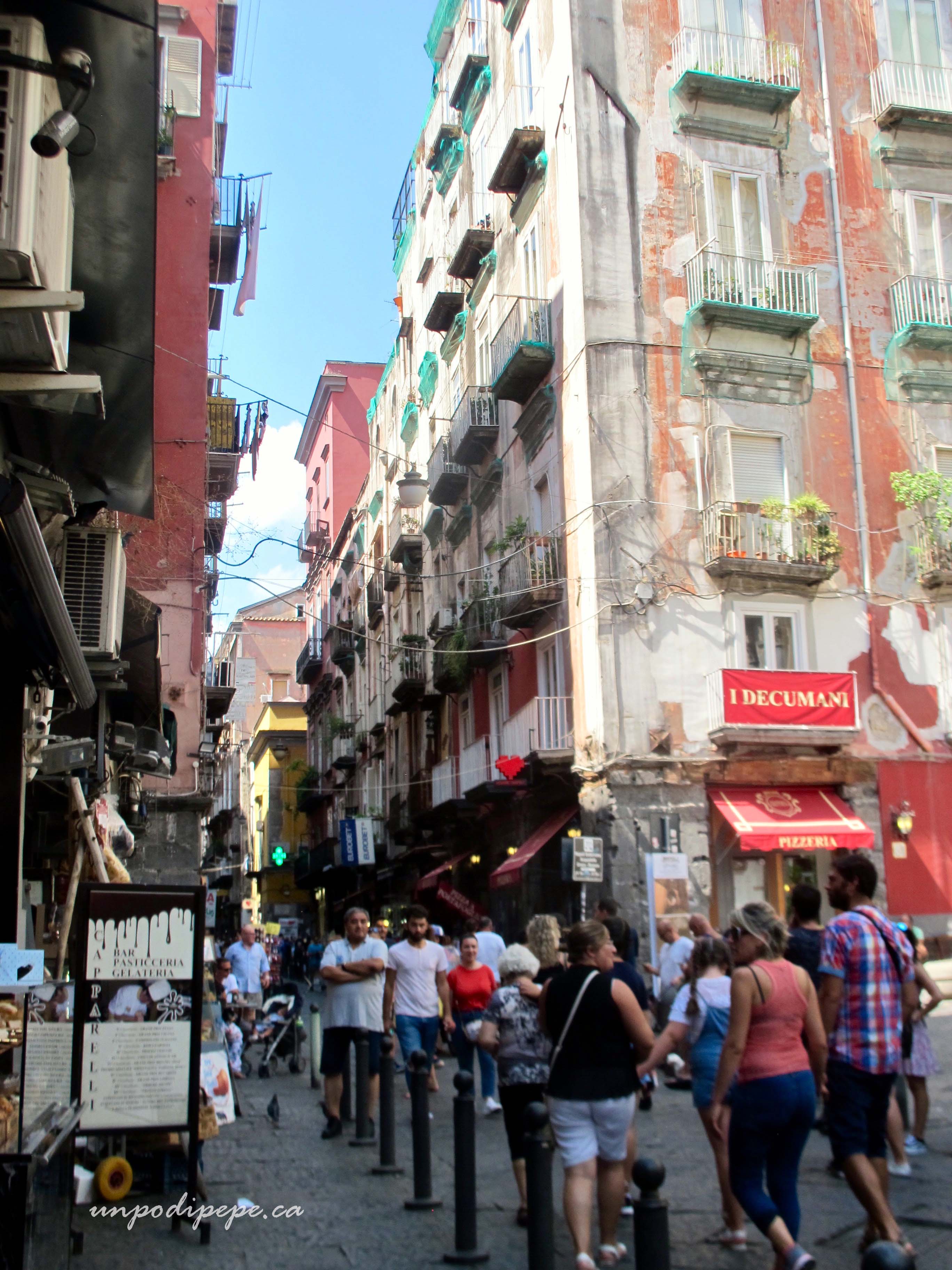
Napoli is an open air museum layered with 2800 years of history-from Ancient to Medieval, Renaissance and Baroque, with ruins, castles, historic buildings and monuments.  It was one of the wealthiest cities in Europe before Italian unification of 1860.  Allied bombing during WWII caused severe damage, resulting in extensive reconstruction after 1945. Napoli’s Centro Storico, the largest in Europe, still has the rectangular grid layout of the original Greek streets, called Decumani and has been a UNESCO World Heritage Site since 1995.Napoli
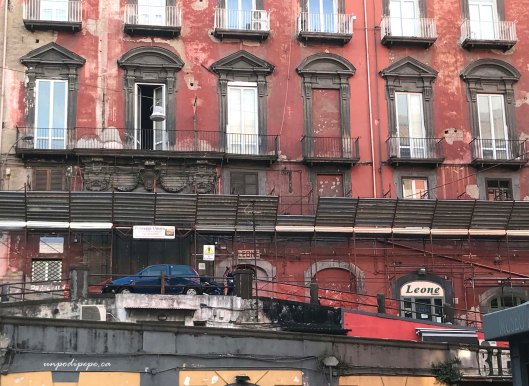
Napoli is underrated, misunderstood and does not get the love it deserves, except from fans of Elena Ferrante novels. News of corruption, the Camorra and ongoing garbage crises give it a bad rep. It it ironic that everyone-including many Italians fears for their life and thinks it is just a crime pit, when Napoli is actually safer than most large North American cities. It is vibrant, wonderfully chaotic, full of life and passionate, friendly people. Napoli has an ‘edge’ to it and is anything but boring! Via dei Tribunali Napoli

Not even 2 hours from Orsara di Puglia, I had only been to Napoli to take ferries or fly home.  2 years ago, I decided just days in advance to arrive by bus the day before my flight and stay 24 hours.  Best plan ever!  Last year I went for the day with my cugino who had an airport pickup, and took the bus home for €11.
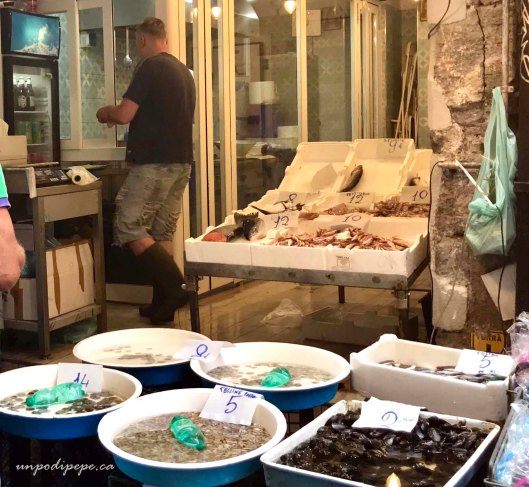
I would not advise anyone to see Napoli in one day. 3-4 days is needed, not including daytrips to Pompeii, the Amalfi Coast, Capri or Ischia.  However, if you have only un giorno-one day to spare, because you are headed somewhere else or taking a daytrip, this is my suggested itinerary!

My first full day in Napoli was a last minute plan.  I had 4 ‘must see’ things on my list. They were all walking distance from Piazza Dante, so I booked a night at the wonderfully named ‘Il Paradiso di Dante’. If arriving at the Stazione in Piazza Garibaldi or the bus terminal behind it, all of the destinations are easily reached on foot or by Metro.  A day ticket for the Metro is €4.50. From Capodichino airport, the Alibus is a 15 min non-stop ride to Piazza Garibaldi for €5.

I realize few people will drool over ancient frescos or Caravaggio for as much time as I do, so I am adding a few extra sites along the way.  This itinerary can be done in reverse and/or in different order. Antico forno Attanasio sfogliatelle
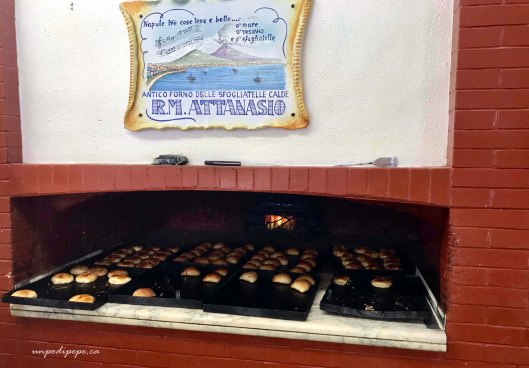
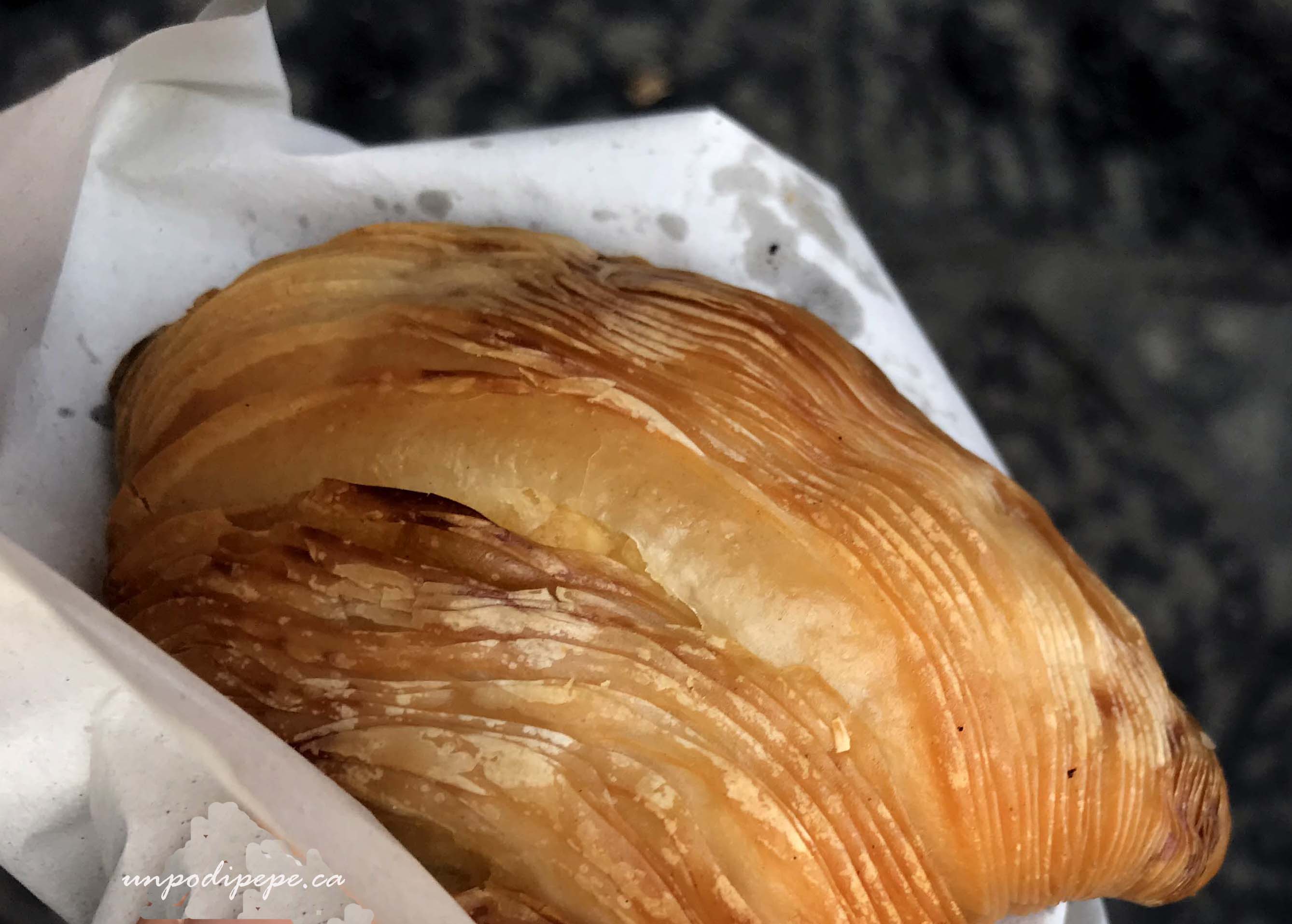
The first stop on any visit to Napoli is for Sfogliatelle –crunchy layered pastry, filled with sweet ricotta, lemon and candied peel. Sfogliatelle in Napoli are delicious and inexpensive.  The best are served straight from the oven at Antico Forno Attanasio, Via Ferrovia 1-4 just a few blocks from Piazza Garibaldi.  At €1.30, why stop at just one?  The lineup moves quickly.  The sign above the oven says ‘Napule tre cose tene belle….o’ mare o’ vesuvio e sfogliatelle’ / Napoli has 3 beautiful things….the sea, Vesuvius and sfogliatelle.sfogliatella
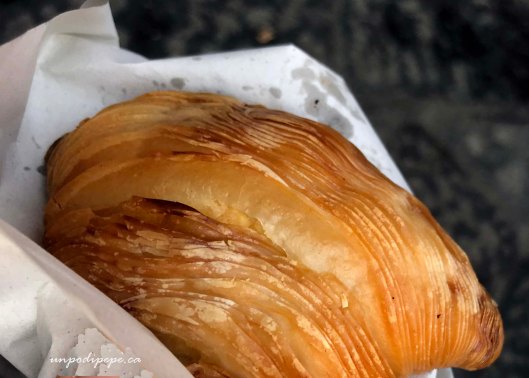
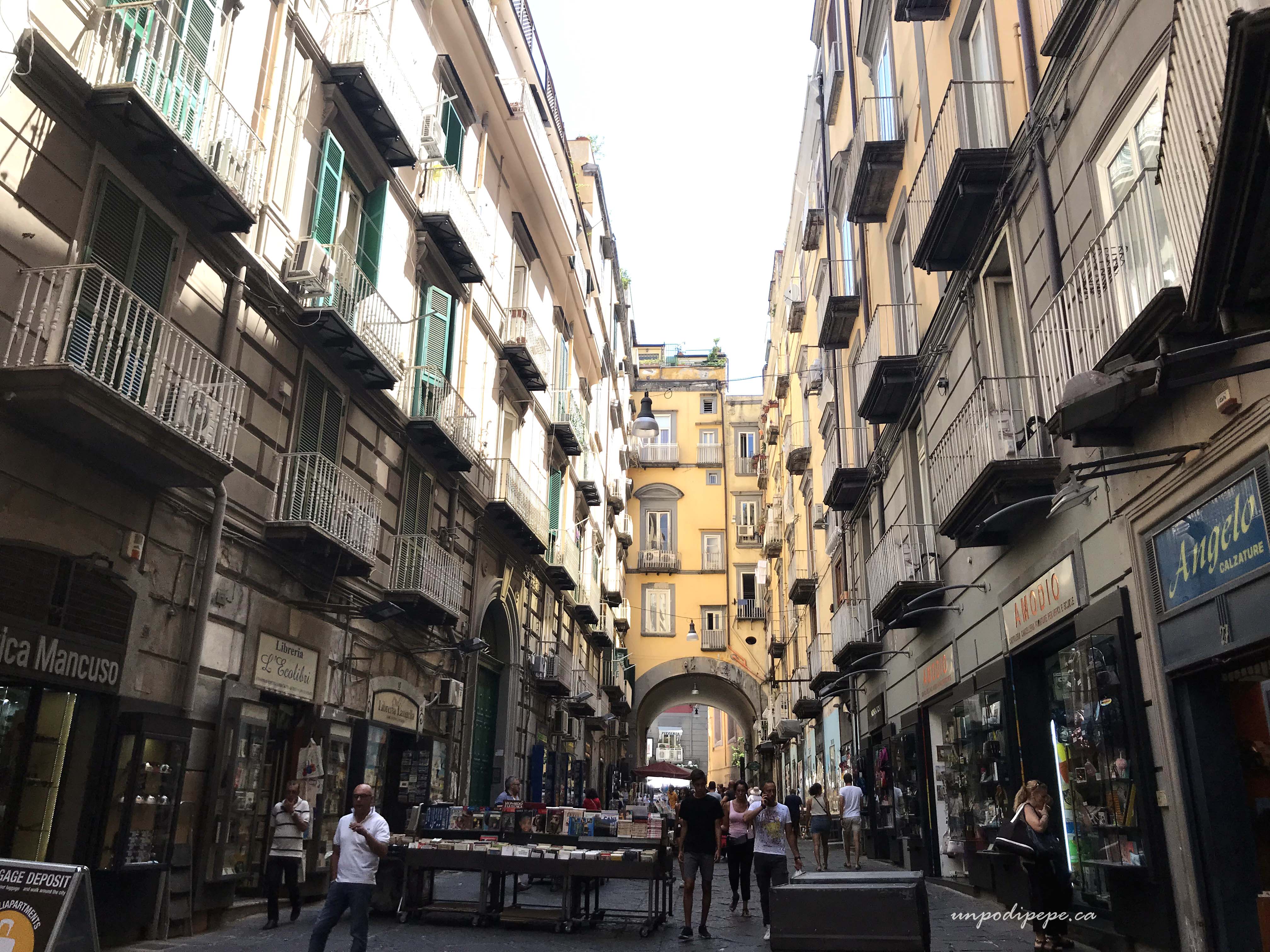
Walk down Corso Umberto I to Via Duomo (or Metro to Museo if reversing).  Turn right on Via dei Tribunali a long narrow street packed with great stuff.  It is one of the original Greek Decumani. Napoli has elevated graffiti into an art form, so keep an eye out for cool street art.

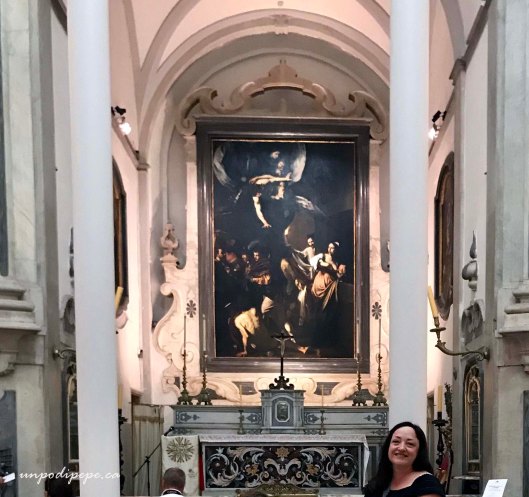
Blub Verdi, NapoliFirst stop is the small octagonal church Pio Monte della Misericordia to see Caravaggio’s masterpiece 7 opere di Misericordia-7 Acts of Mercy hanging where it has been for over 400 years. Napoli has been a capital of the Baroque since the 1606 artistic revolution following the arrival of Caravaggio. Admission is €8.  Open daily from 9:00-18:00 except Sunday it closes at 14:30. Do not miss this and click the link to read my post!Pio Monte della Misericordia
Not even 100 m away is the Duomo Santa Maria Assunta built on the site of a temple of Neptune.  It was ruined in the 1456 earthquake and repeatedly renovated, resulting in a mishmash of styles and a Neogothic facade.  The church is often called San Gennaro- Napoli’s patron saint.  The Cappella di San Gennaro contains an ampule of his blood that is brought out on the 1st Saturday in May, September 19th and December 16th for the miracle of his blood liquefying.
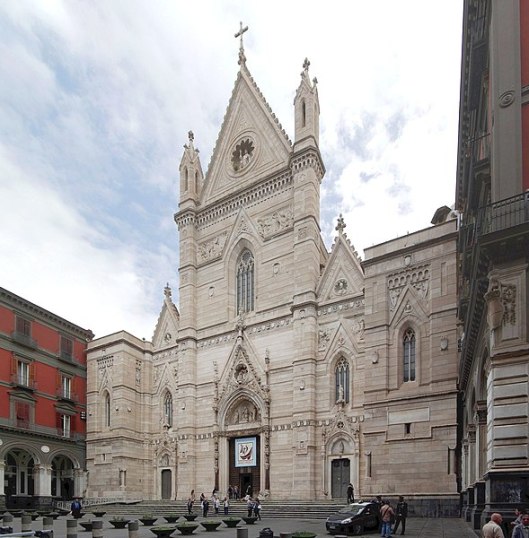
Facciata Duomo di Napoli

Duomo di Napoli. Image Wikimedia Commons

The entrance to Napoli Sotterranea is close by on Via dei Tribunali.  Napoli’s stratified history is visible here…..40 m below street level are Greek structures, Roman aqueducts and cisterns, catacombs, a Bourbon royal escape tunnel and stuff left over from 1945 when the underground was an air raid shelter! The tour is 1.5 hours so I have never had enough time, but it sounds fascinating!

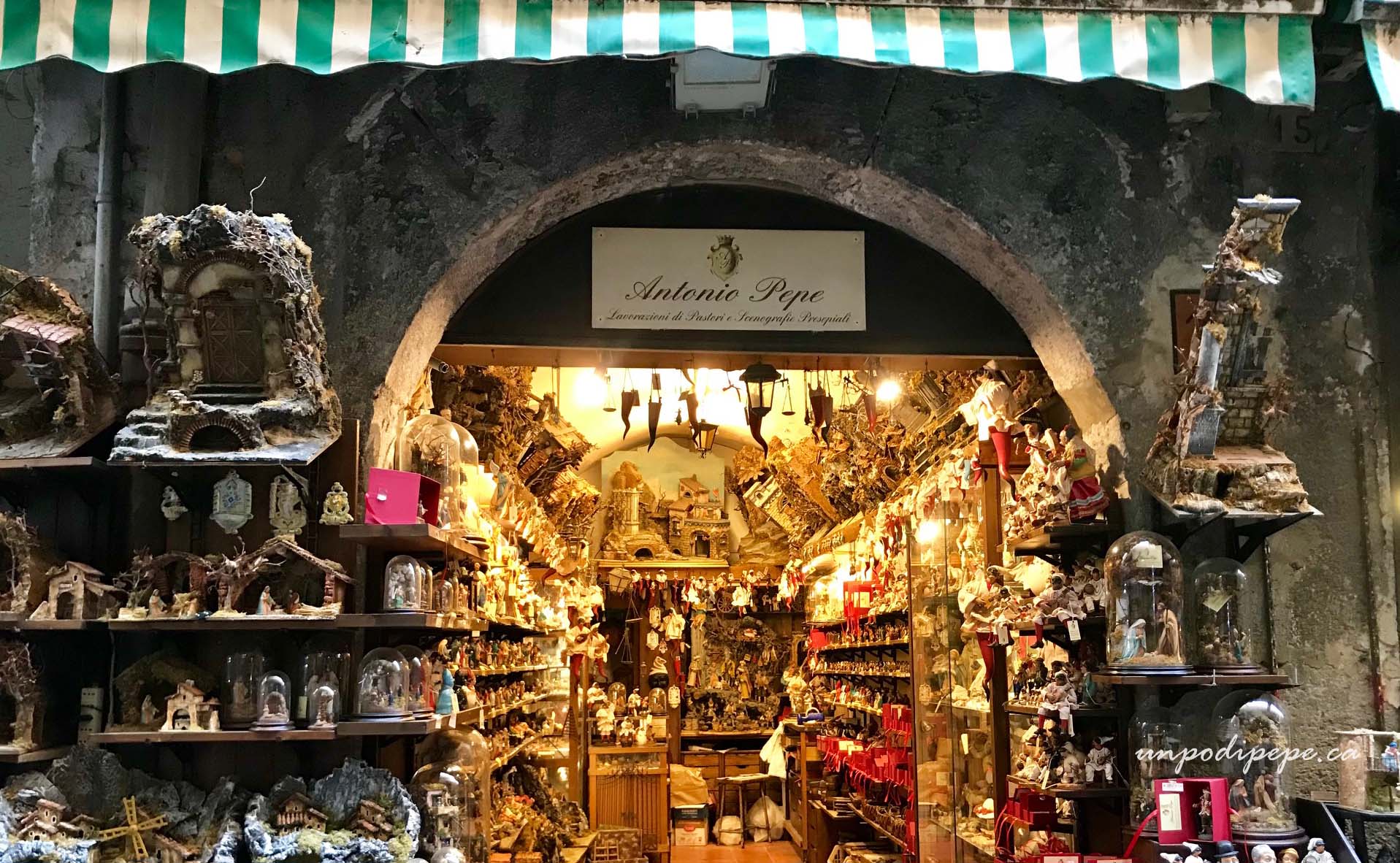
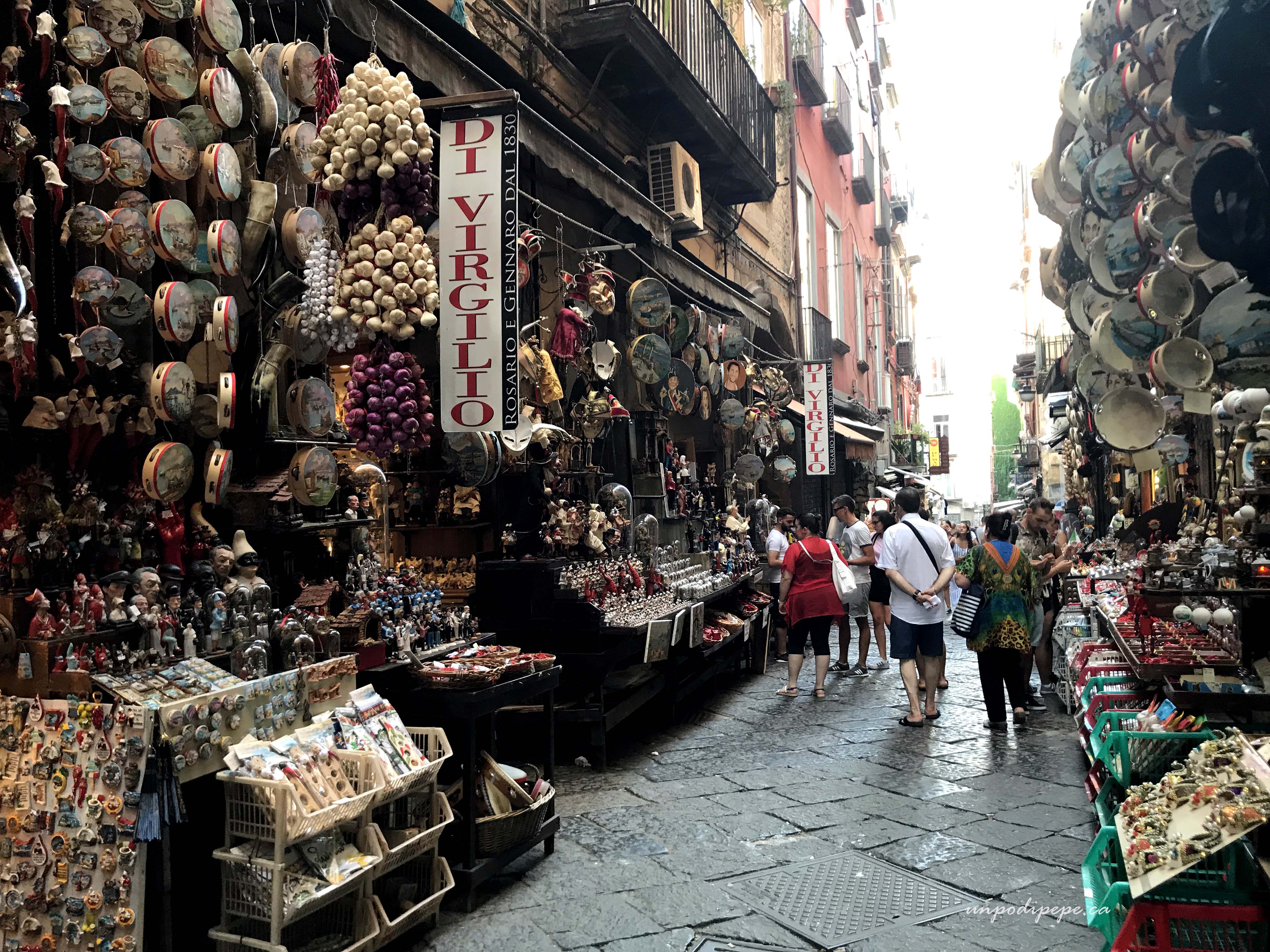
Presepio Via San Gregorio ArmenoAt Piazza San Gaetano turn left onto Via San Gregorio Armeno.  Napoli has a long presepio– Nativity Scene tradition. This street is full of artigiani– artisans making presepio pieces along with figurines of contemporary personalities.  I like to visit the bottega of Antonio Pepe.
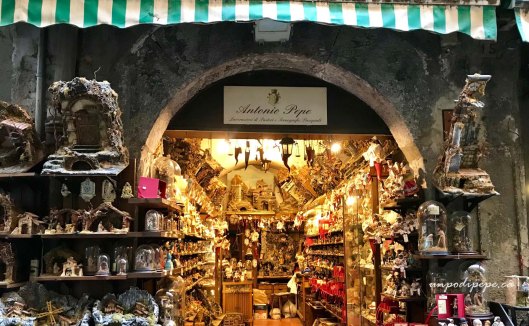
Via San Gregorio Armeni Napoli, Antonio Pepe, www.unpodipepe.ca

‘Lavorazioni di Pastori e Scenografie Presepiati Antonio Pepe’, Via San Gregorio Armeno, Napoli (no relation!)

The end of this street intersects with the one parallel to Via dei Tribunali, another of the Decumani, called ‘Spaccanapoli’ meaning ‘cut across Napoli’ because it cuts the centro storico in half.  There may be time later to visit the Chiostro di Santa Chiara, cloisters with beautiful majolica tile work.

Back on Via dei Tribunali turn left at Piazza Luigi Miraglia to Via Francesco de Sanctis 19, the Cappella San Severo.  My Zia told me not to miss this! It is a Baroque chapel with strict security, admission limits and no photography allowed.  Lineups can be long, but I only waited 30 minutes.

The main attraction is Giuseppe Sammartino’s jaw dropping 1753 sculpture Cristo Vellato- Christ laying on a  mattress, covered in a sheer veil with a lace edge-all sculpted out of marble.  It is so lifelike, the urge to reach out and touch it is hard to resist.  The owner, Prince Raimondo di Sangro dabbled in alchemy.  Baroque urban legend is that he taught the artist how to calcify a veil with marble crystals…but it is actually sculpted. The small Chapel is filled with other magnificent works of art. Admission is €8 or online €10.  Open 9:00-18:00.  Closed Tuesdays! It may be better to see this first then walk back to Via S Gregorio Armeno.San Gregorio Armeno Napoli

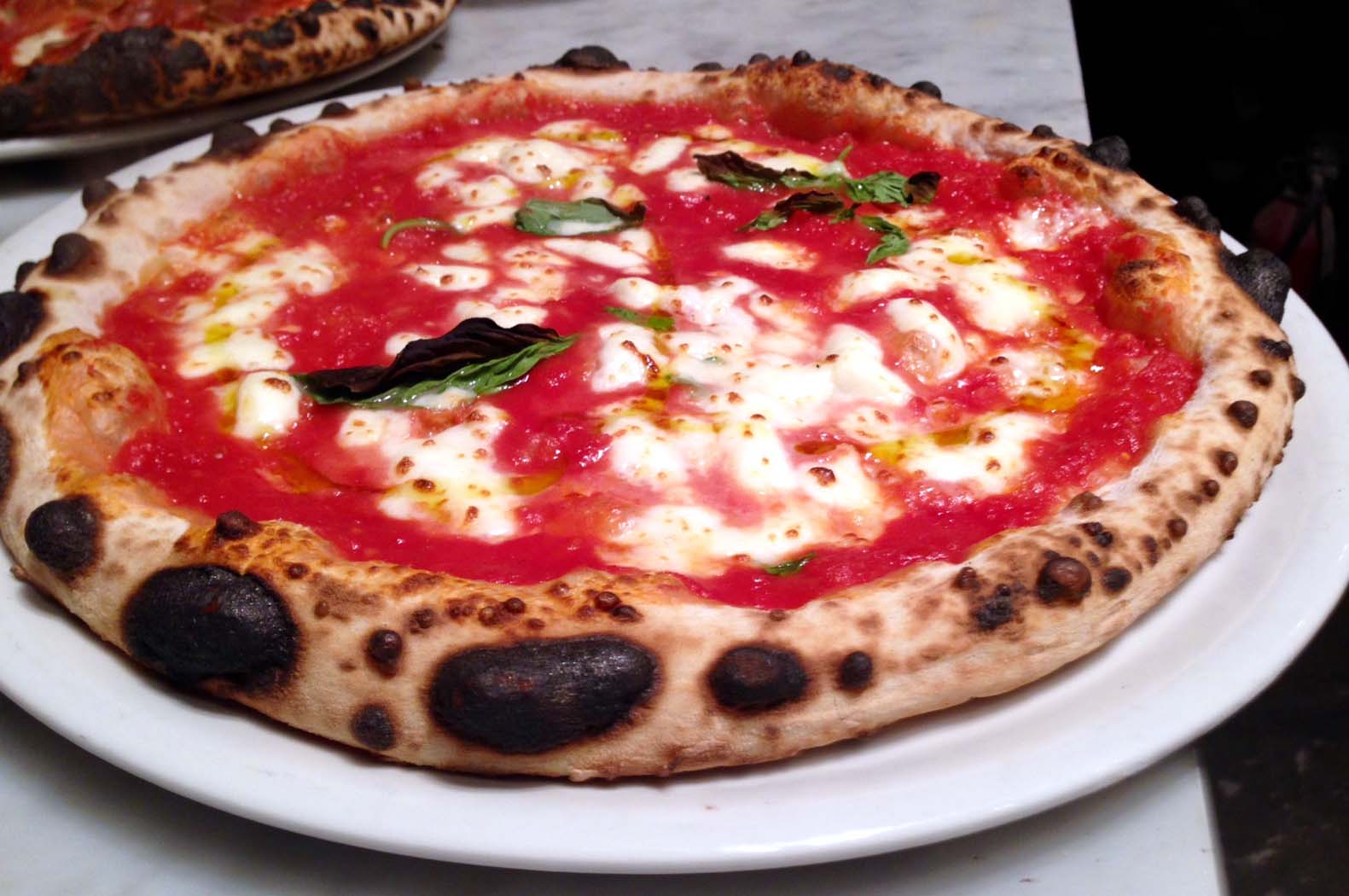
When hunger strikes, there is plenty of cibo di strada-street food available on Via dei Tribunali and Spaccanapoli. Fritto misto –fried fish or vegetables in paper cones, pizze fritte and pizza al portafoglio are all delicious. Sfogliatelle and babà are €1! Pizza Margherita

Via dei Tribunali is also home to Gino Sorbillo pizza, which always has lineups. The line moves quickly, but with a shortage of time, try one of the less known places.  It is hard to find bad pizza in Napoli!Port'Alba Via dei Tribunali Napoli
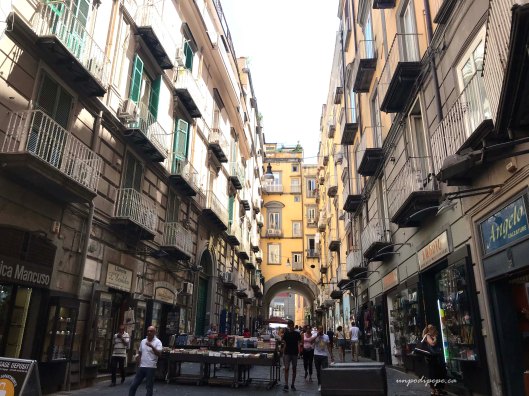
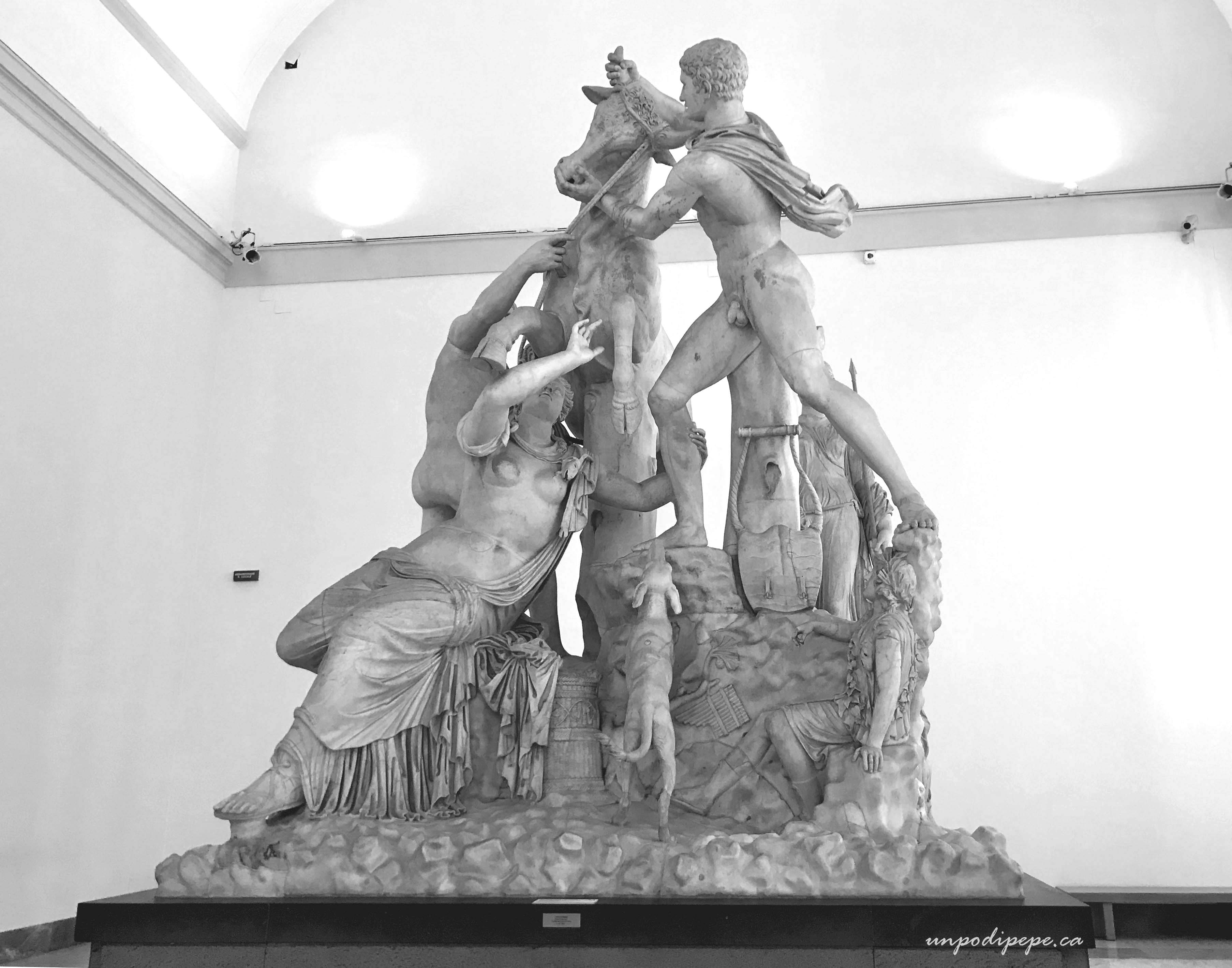
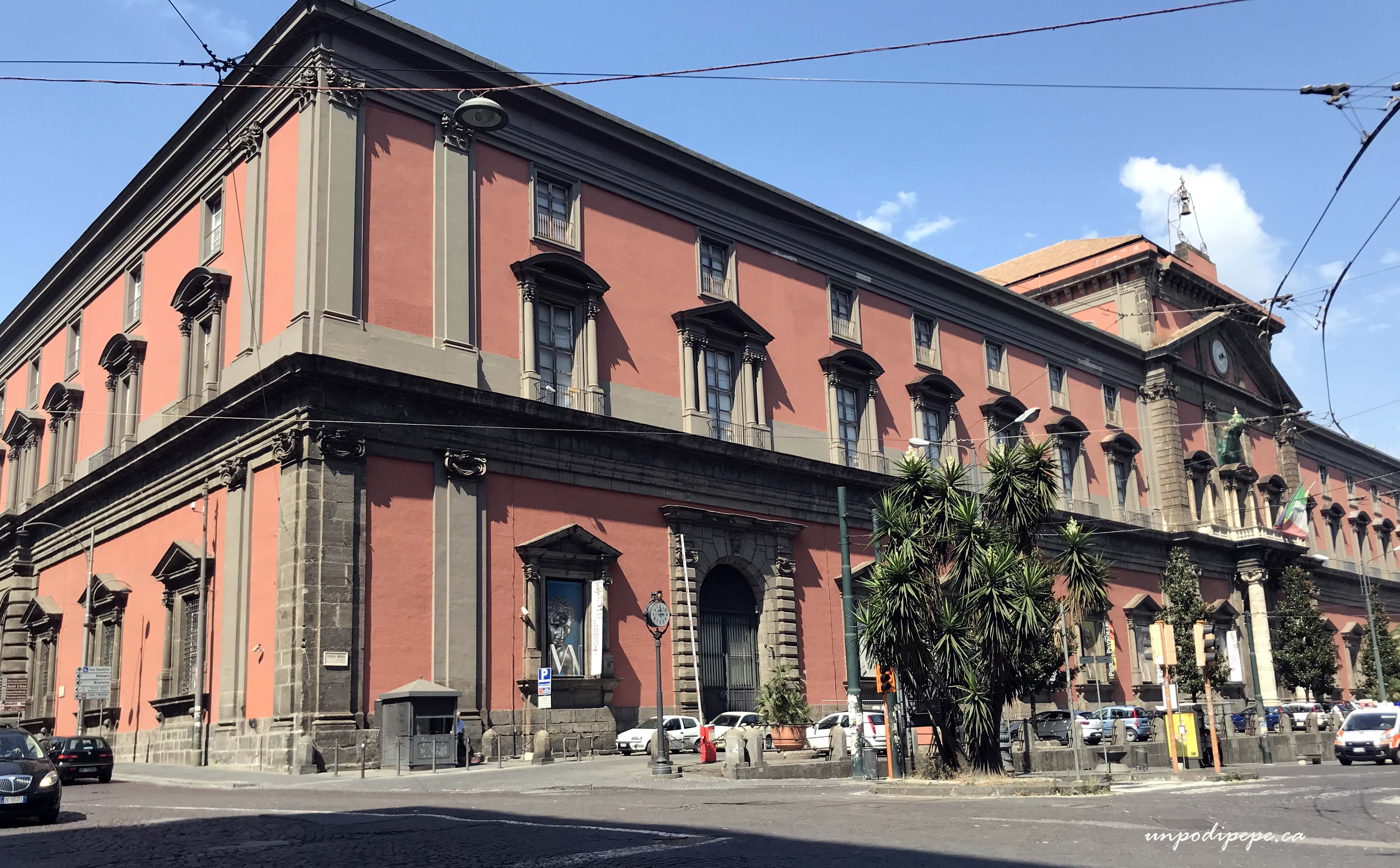
Exit Via dei Tribunali through the Port’Alba to Piazza Dante on Via Toledo. From here, walk or take the Metro 1 stop to Museo.  Walking will take almost the same amount of time.  The Museo Archeologico Nazionale Napoli (MANN) is massive and has the world’s biggest collection of Greco Roman art and artifacts.  For archeology nerds like me, this is Heaven and it needs its own post.  The frescoes and artifacts from Pompeii and Ercolano/Herculaneum are here, and the massive Farnese collection sculptures such as Toro Farnese. Marble sculpture Toro Farnese in MANNapoliThe Gabbinetto Segreto is a secret room full of ancient erotica, mostly from Pompeii’s brothel.  Admission is €18 and well worth it.  Tickets can be bought online.  Open from 9:00-19:30- later than other places, but it is closed Tuesdays! Read more about MANN in Blub a Napoli.  The day can also start at MANN, doing the itinerary in reverse.Museo Archeologico Nazionale Napoli

Depending on how much time is spent walking, visiting all of the above and when you need to leave, there may be time for more.  Take the Metro 2 stops to the award winning Toledo station, walk to the end of Via Toledo to Piazza del Plebescito, one of the largest piazze in Italia.  Piazza del Plebescito NapoliOn Via Chiaia is Caffè Gambrinus the historic caffè letterario where European intellectuals including Oscar Wilde, Hemingway, D’Annunzio and Totò hung out.  Caffe Gambrinus NapoliMussolini shut it down for being antifascist.  That alone is reason to have another sfogliatella there-even take-out will cost more due to the location, but worth it.Caffe Gambrinus Napoli
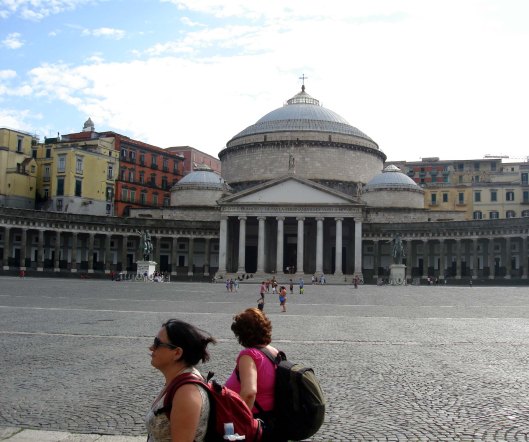
If you somehow still have time left, walk to Galleria Umberto I, Teatro San Carlo Opera House or Via Santa Lucia by the harbour and Castel dell’Ovo. Need more sfogliatelle? Stop at Pintauro, Via Toledo 275.  Then take the Metro back to Piazza Garibaldi.

Napoli is great to visit any time of year! Remember that MANN and the Cappella San Severo are closed Tuesdays.   Busier times include December for the Presepi on display and the 3 San Gennaro dates. I have only been in July or August when a lot of Napoletani are at the beach.  There are less cars on the road-according to my taxi driver-named Gennaro of course!  He was so impressed that I was able to understand him!  We had many neighbours and friend from Napoli when I was growing up so I understand Napoletano quite well.Via San Gregorio Armeno

An old saying goes ‘Vedi Napoli e mori’. I hope you enjoyed un giorno a Napoli-I guarantee you will be back! Have an extra sfogliatella for me! Buon viaggio, Cristina

Stay tuned for my next post on Napoli street art!
Share this:

  • Share on Facebook (Opens in new window) Facebook
  • Share on Pinterest (Opens in new window) Pinterest
  • Share on X (Opens in new window) X
  • Email a link to a friend (Opens in new window) Email
  • Share on WhatsApp (Opens in new window) WhatsApp
Like Loading...

Sapori d’Autunno

22 Tuesday Oct 2019

Posted by Un po' di pepe in Italia, Italian language, Mangiamo!

≈ 19 Comments

Tags

Autumn harvest in Italy, Autumn in Italy, Dalla terra alla tavola, Dolcevitabloggers, Italian food

La Cupa, Orsara di Puglia, cachi, noceDalla terra alla tavola, farm to table cooking has always been a thing in Italia.  Food is prepared using local, seasonal ingredients which are at their optimum flavor.  Each season features its own specialties.  I sapori d’autunno, the flavours of autumn, feature the fruits of the harvest. Visiting Italia in the autumn will not leave you hungry or thirsty!  This is also a time to seek out sagre-wonderful food festivals dedicated to local specialties. There are regional differences, and specialties are prepared according to local tradition, but I will provide a general review of what you might find on your piatto. I am also including links to related previous posts and recipes.roasted chestnuts, castagne in campagna

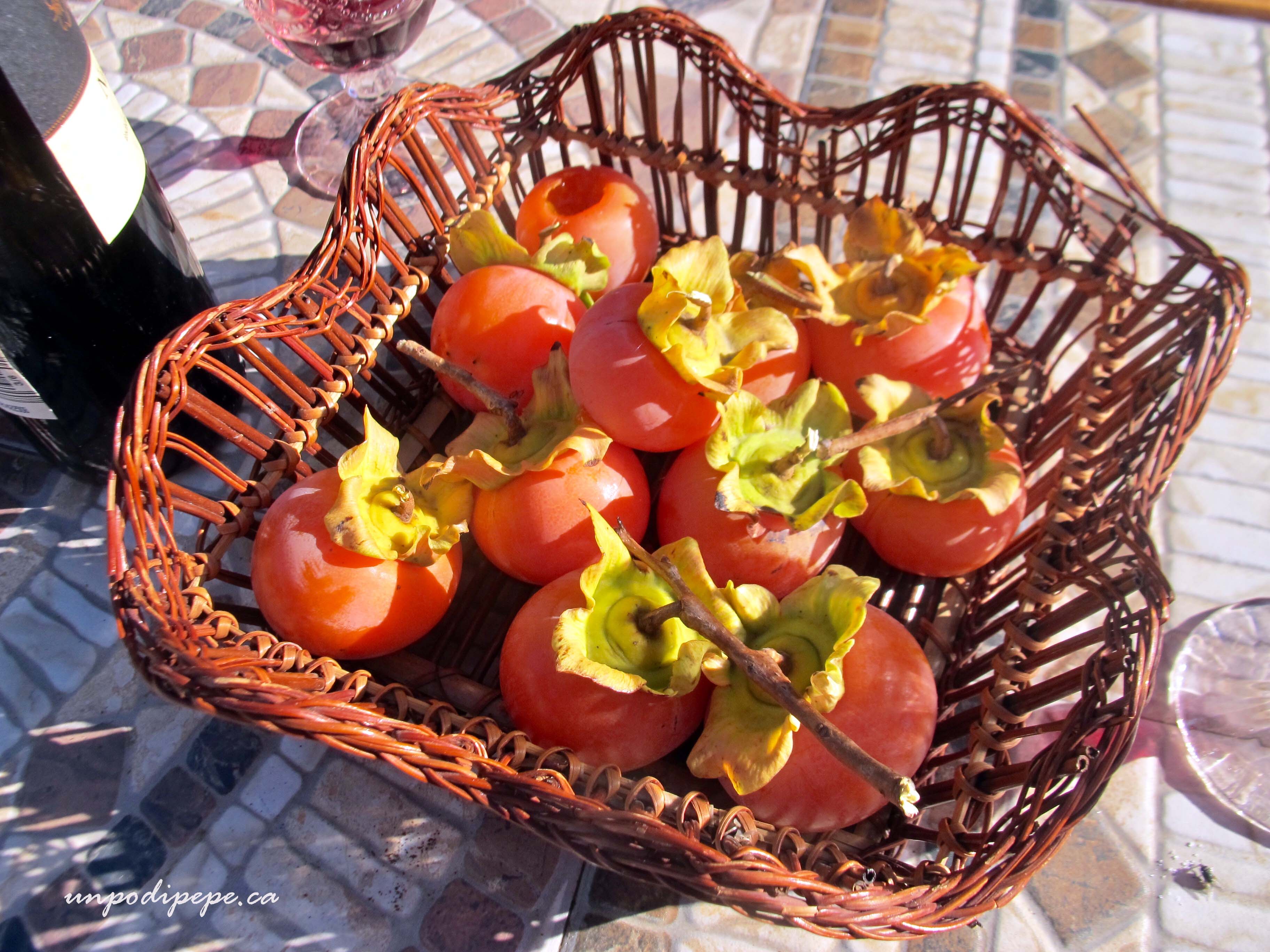
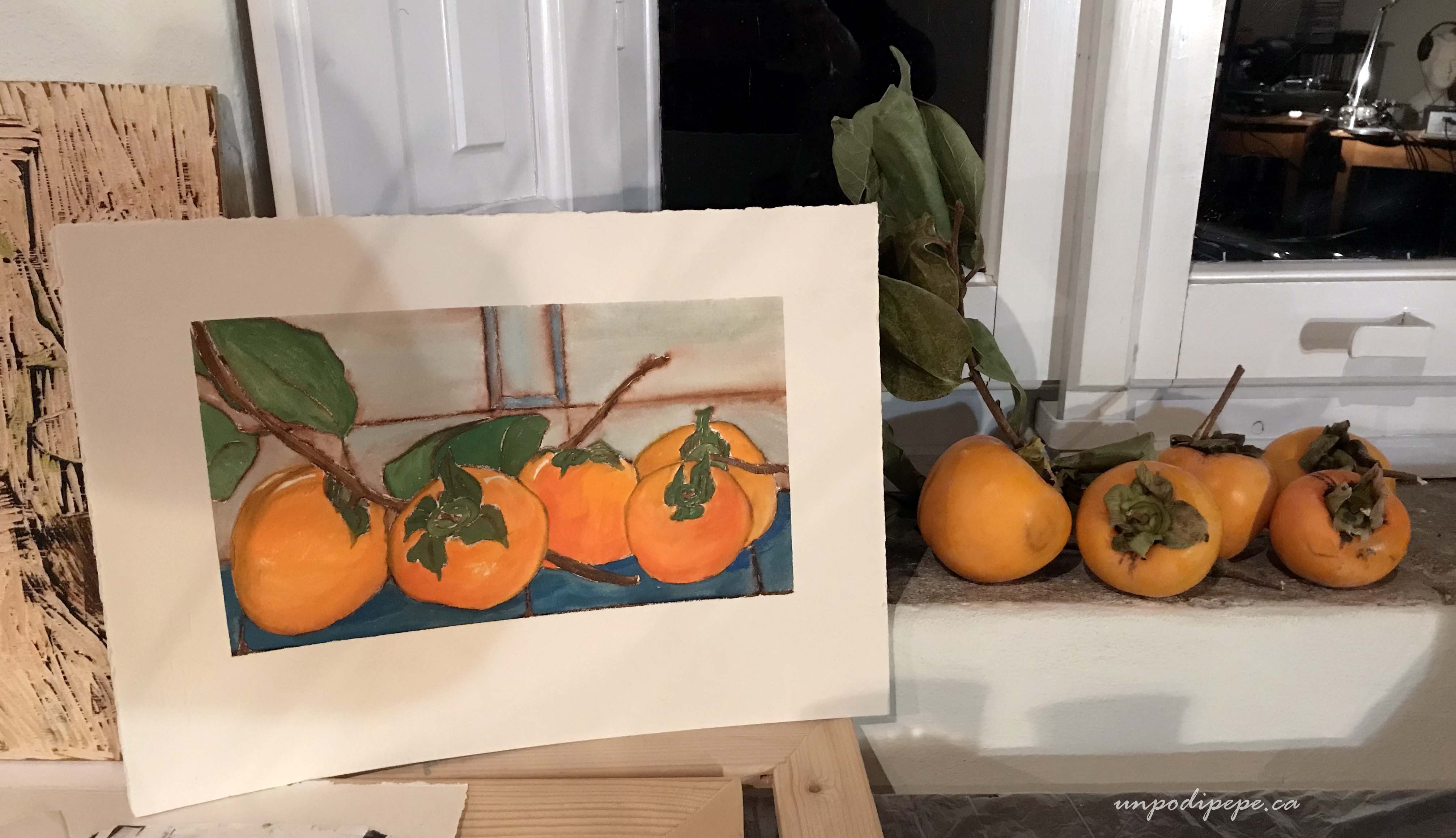
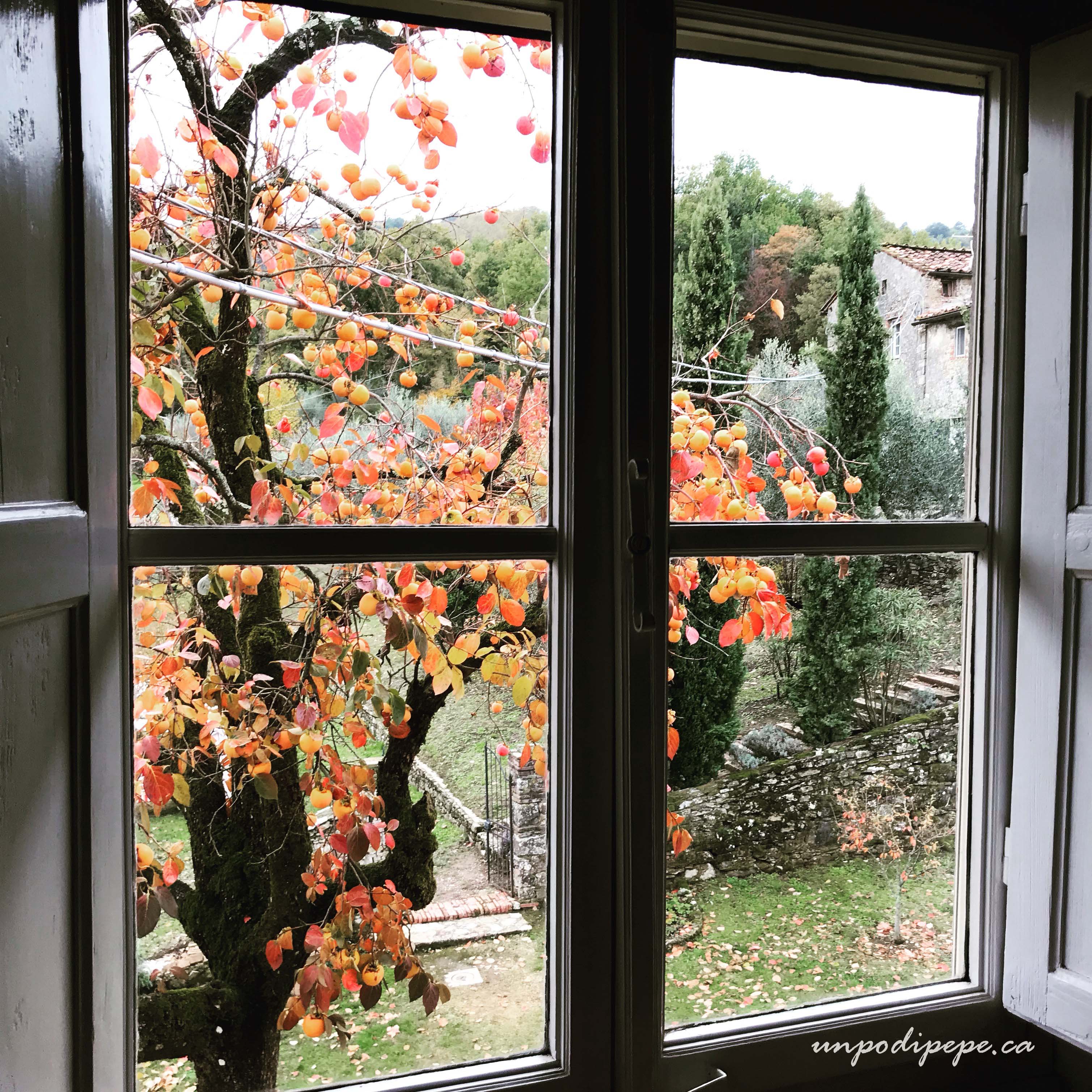
Castagne (cas·TAH·nyeh). Chestnut trees have been growing in Italia since at least 2000 BC, the oldest ones being in Calabria.  Pushcarts selling castagne calde in paper cones will be found all over the country.  Everyone I know has an old pan at home with holes punched out the bottom to use for roasting castagne.  Don’t you have one?  Castagne can also be boiled with bay leaves or made into soup or chestnut honey, miele di castagne.  Chestnut flour is used to make pasta which is eaten with pesto in Liguria, and Castagnaccio, a chestnut flour cake with olive oil, raisins, pine nuts, rosemary and orange rind.  This cake is originally Tuscan, but can be found in other areas too.  I tasted some in Roma, but it did not last long enough for a photo. Below is a poster for a Sagra della Castagna this weekend in Potenza, Basilicata.Basilicata Sagra della Castagna poster Zucca (ZOO·kah)  Zucca and zucca gialla are pumpkin and squash.  I adore zucca!Zucca Orsara di PugliaIt is used to make delicacies such as risotto di zucca, gnocchi di zucca and tortellini, ravioli or agnelotti stuffed with zucca, cheese, nutmeg and amaretti.  Mmmm.  No food goes to waste, so any leftover zucca goes to feed the pigs! gnocchi di zuccaSpeaking of decreasing waste, I like to recycle my Hallowe’en pumpkin into gnocchi.  Here you will find my recipe for gnocchi di zucca.Albero di cachi orsara di Puglia, Persimmon treeCachi (KAH•kee) are called persimmons in English.  There are 2 kinds, hard and soft and both delicious.  They are mostly eaten raw on their own or in salads.  Cachi La Cupa Orsara di PugliaI picked these ones from the tree in the upper photo.  It is in the olive grove that belonged to my Nonno.  Papà has 2 trees full of cachi in Vancouver.  We will pick them all in about a week and let them ripen in the garage.The incredibly gorgeous colour of cachi make them equally desirable as a painting subject.Cachi persimmon painting Casa Berti Lucca

Funghi (FOON·gee) e tartufi (tar·TOO·fee). Funghi porcini are available dried all year, but only in autunno can you find the fresh meaty fungus. I also love funghi cardoncelli and any other kind of funghi on pasta or in risotto.funghi porcini RomaTartufi are truffles- but not the chocolate covered kind!  Autunno is truffle foraging season. They are like underground funghi and are an expensive seasonal delicacy shaved onto pasta, eggs and risotto. I find too much tartufo gives food a moldy taste, so luckily you need a delicate hand and do not need to use much.  They are only fresh from October to December, otherwise they are frozen or preserved in oil.Cestino di fichi

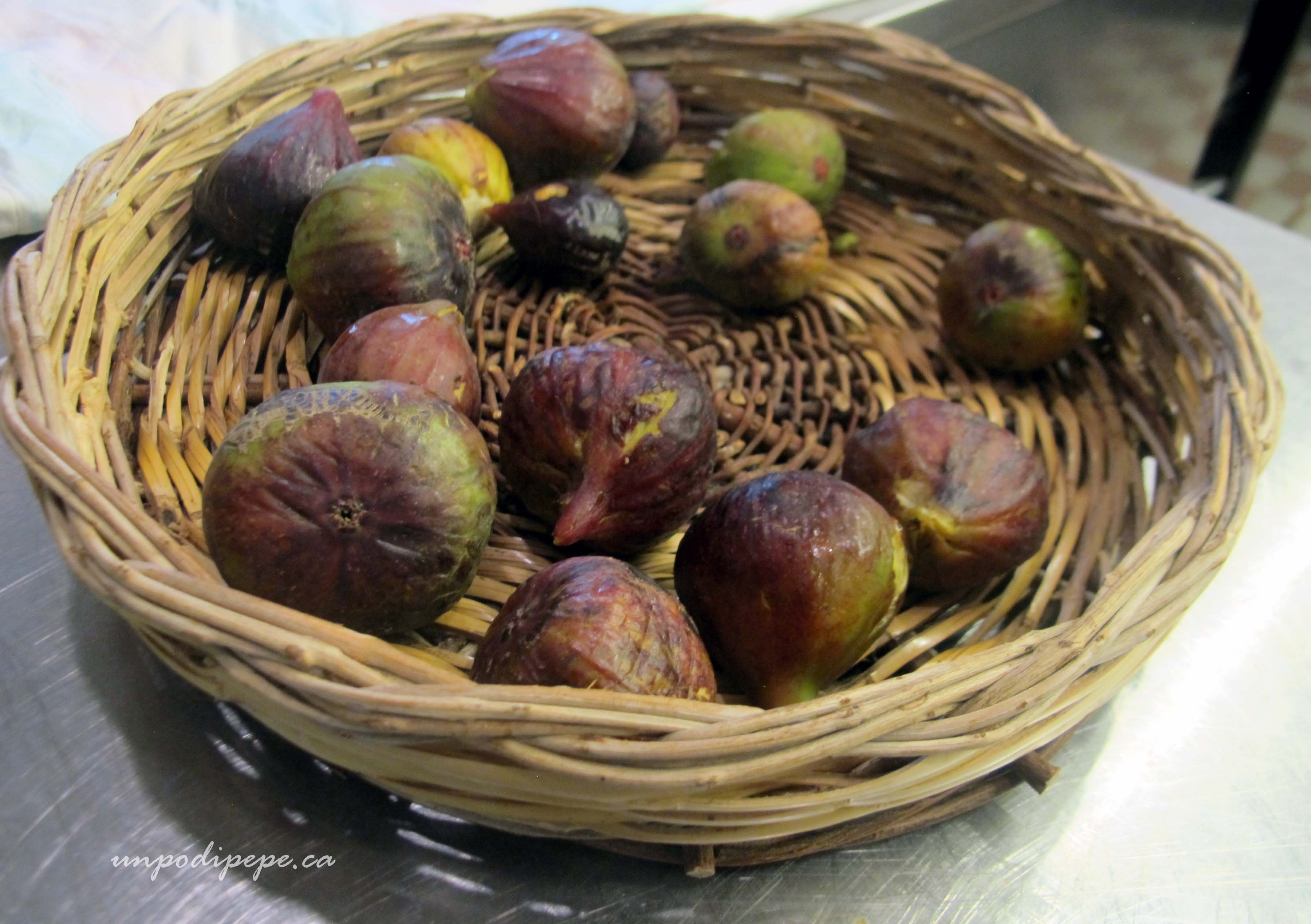
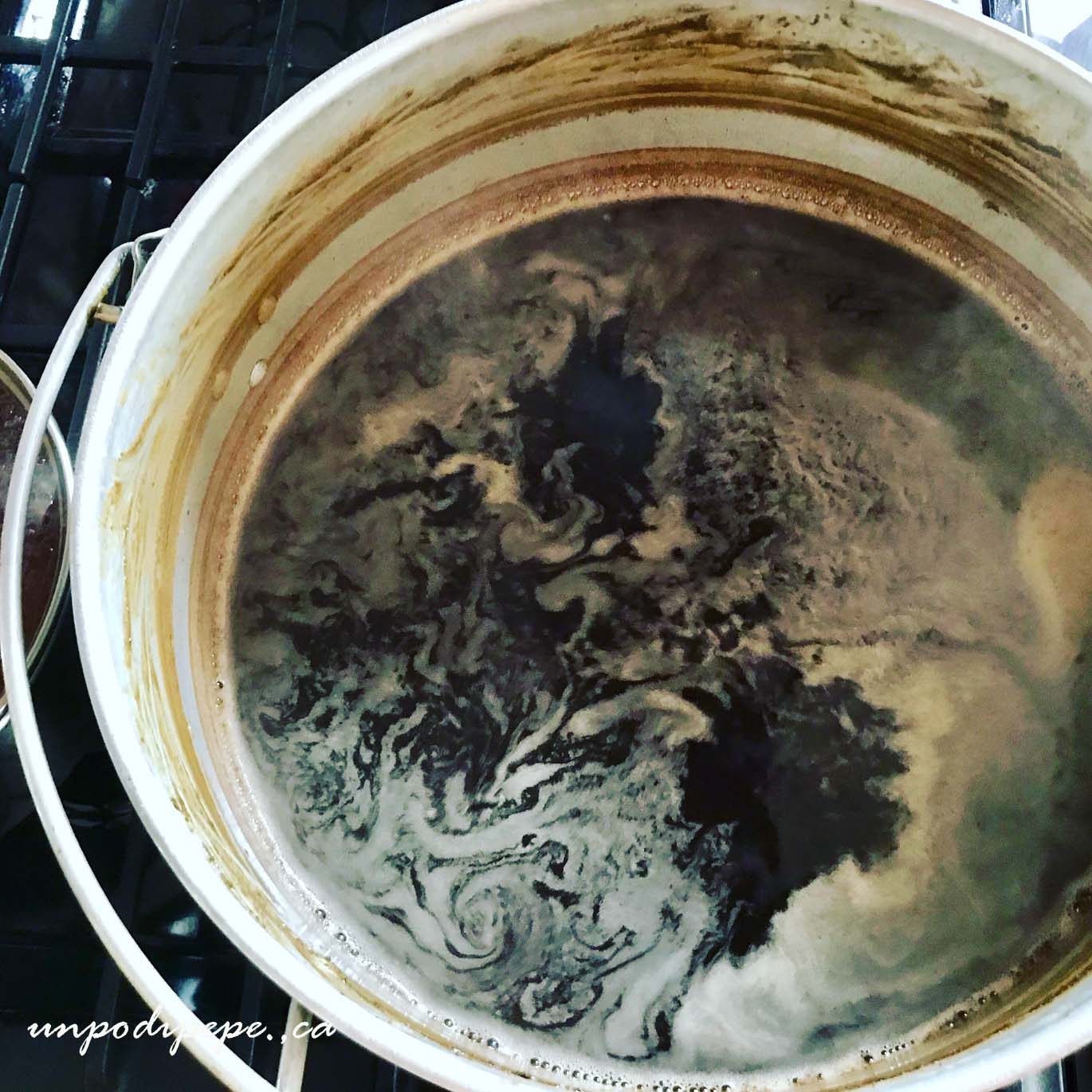
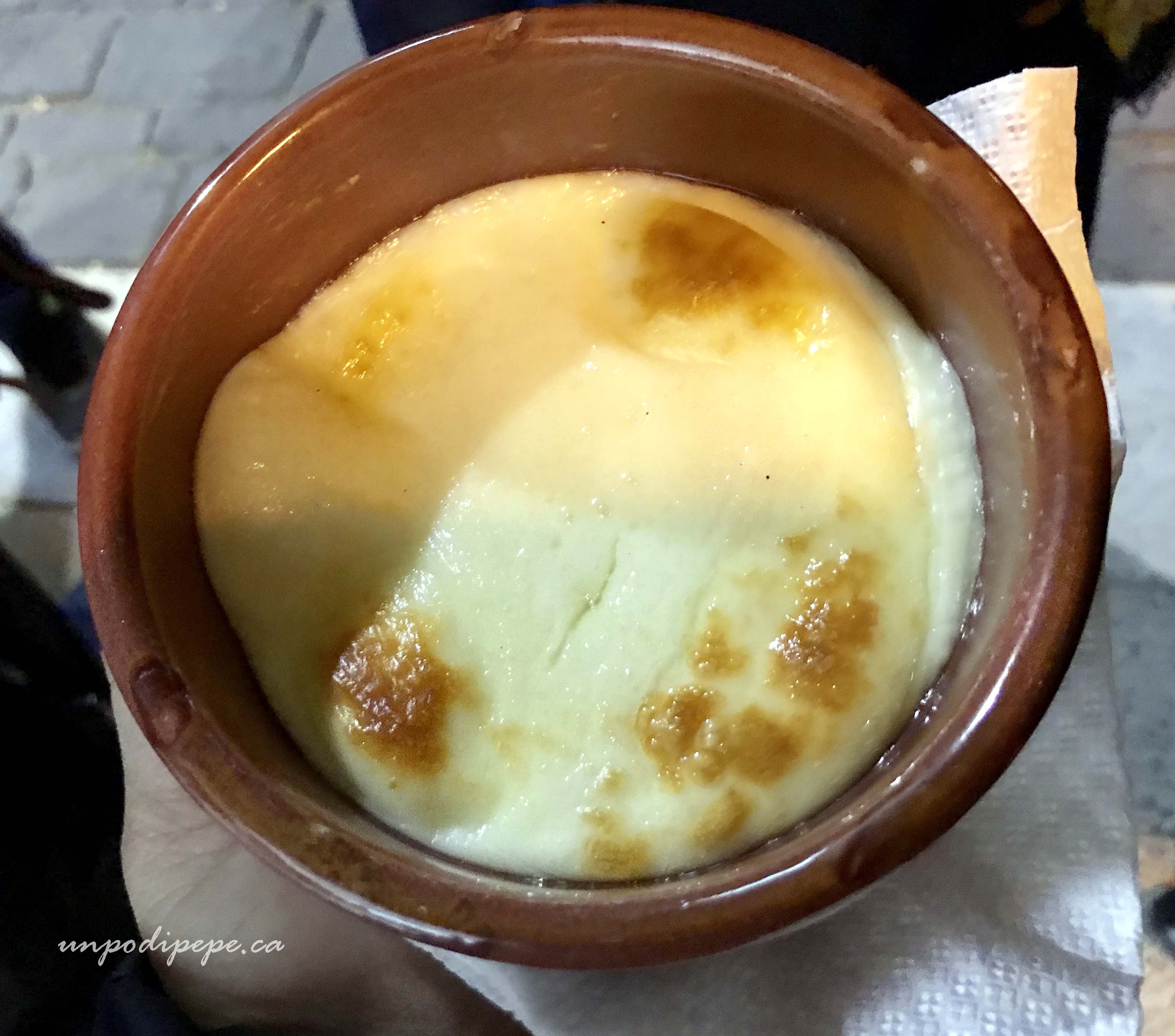
Fichi (FEE·kee).  The second harvest of figs is ready in September/October, depending on the weather. Other fruits of the autumn harvest include bitter, spicy radicchio, mostly used in salads, but also cooked alla griglia and added to risotto and rapini which is used to make the Pugliese favourite orechiette con cime di rapa.  Trees are full of noce – walnuts and nocciole-hazelnuts.  Stay tuned for Corzetti with walnut and mushroom sauce recipe in an upcoming post about my new Corzetti stamp from Vernazza.  Insalata Purtuall, Orange and fennel saladMy favourite winter salad is Insalata Purtuall’ made with finocchio-fennel, oranges and black olives with a drizzle of olive oil and salt.  Read about my interesting history with this salad in the link.  Melograna-pomegranate adds extra flavour and colour.Grapes in the wine press Vino nel torchioUva (OO·vah).  La vendemmia, the grape harvest, usually happens in September and then it is vino making time! A glossary of viniculture terms in Italiano can be found in this post on vino. Each region has their own traditional dishes made during this time, including schiacciata con l’uva, a focaccia made with grapes.Schiacciata con l'uvaI made this schiacciata from a recipe on Luca’s blog. It was delicious, but I would recommend using a smaller, seedless grape! Vino cotto, which is technically actually mosto cotto is grape must boiled down to a sweet molasses type syrup.  Vino cotto, mosto cottoVino cotto is used for Christmas dolci, sweetening snow cones, and poured on cooked wheat berries with walnuts and pomegranate to make muscitaglia for All Saints’ Day November 1st.muscitagliaOlive (o•LEE•veh).  Late October and November is la raccolta delle olive-the olive harvest. This is an incredible experience, if you ever have a chance to participate. Everyone who lives in a rural area participates and it usually involves a picnic with many of the ingredients I have mentioned.  I wrote a post describing the entire olive harvesting/oil extraction process-La Raccolta delle Olive.Nothing compares to the flavour and aroma of olio novello, fresh pressed olive oil.  It is ‘liquid gold’.  Even if you do not have access to freshly pressed oil, you can make the Olive oil limoncello cake that I made at Casa Berti in Lucca after harvesting olives.Olive oil limoncello cakeNovember is also hunting season, which means pappardelle al cinghiale and pappardelle al lepere, pasta with a wild boar sauce and pasta with wild rabbit sauce. As the temperature drops, warm comfort foods increase.  Polenta is found mostly in Northern Italia, but in the cold months, it is made in homes all over the country.  Polenta, Casa Berti, LuccaOther autumn comfort foods include pancotto e patate, pasta e fagioli and risotto made with almost any of the ingredients mentioned in this post-even radicchio. Drool over my November street food-fire baked caciocavallo in its own little terracotta dish.  Mmmm!baked caciocavallo

‘Italy in the Autumn’ is the topic for the final Dolce Vita Bloggers linkup.  Since I already published a post about travelling to Italia in the autumn called Autunno in Italia, I wrote about the wonderful food available in autumn instead!Cachi Casa Berti Lucca

Grazie mille to Kelly, Jasmine and Kristy for hosting the Dolcevitabloggers linkup for the past 2 years.  It has been fun participating!  Check out the rest of the posts here.

Hopefully I made you hungry!  Buon appetite e buon viaggio, Cristina

Share this:

  • Share on Facebook (Opens in new window) Facebook
  • Share on Pinterest (Opens in new window) Pinterest
  • Share on X (Opens in new window) X
  • Email a link to a friend (Opens in new window) Email
  • Share on WhatsApp (Opens in new window) WhatsApp
Like Loading...

Troia 1019-2019

05 Saturday Oct 2019

Posted by Un po' di pepe in Architecture, Italia, Photography, Puglia

≈ 8 Comments

Tags

Diomedes, Italy travel tips, Romanico Pugliese, Southern Italy, UNESCO World Heritage Sites, Wines of Puglia

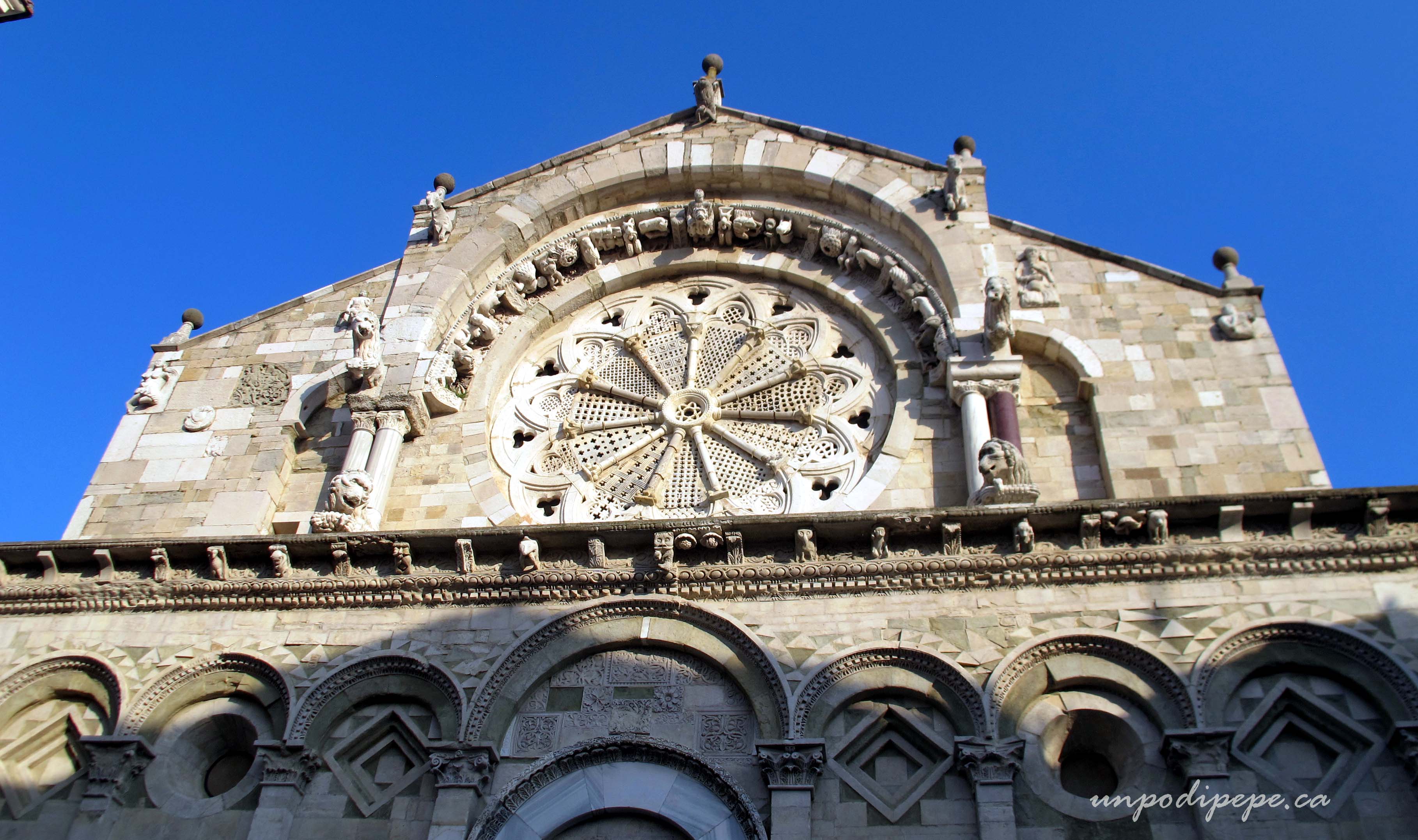
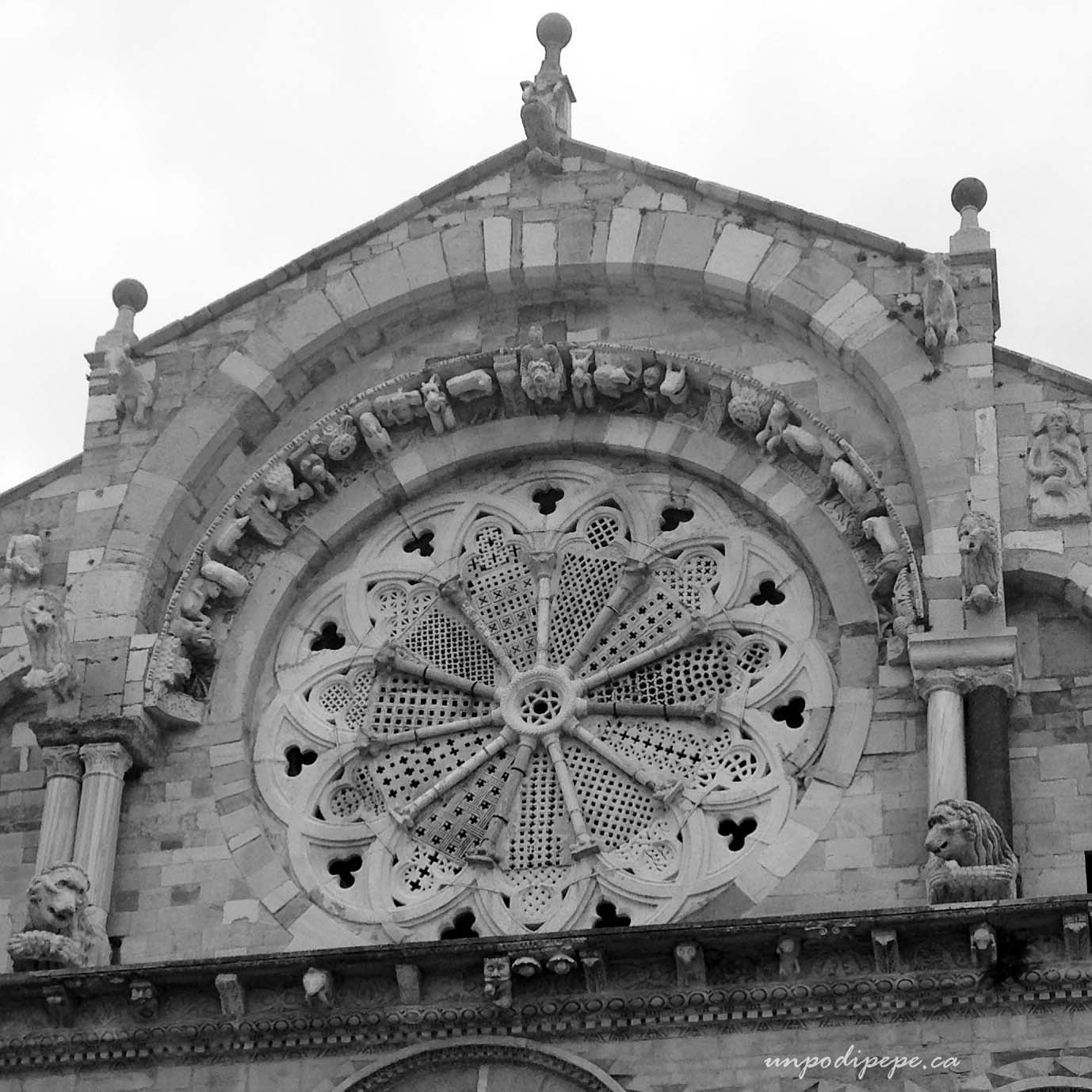
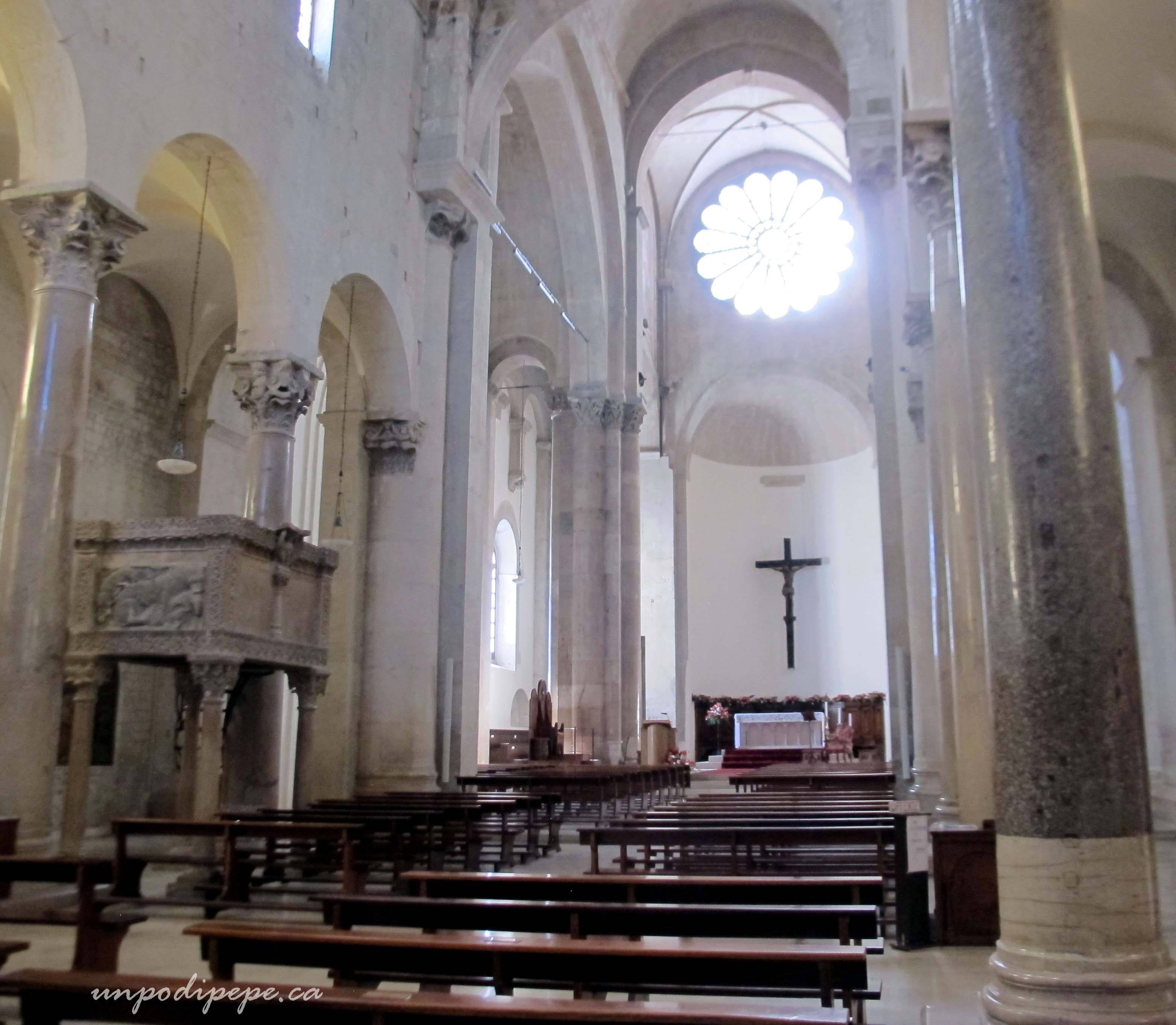
Rosone, Cattedrale di TroiaAccording to legend, Troia (TROH∙yah) was founded by the Trojan War hero Diomede (Diomedes) in the 10th century BC.  After the fall of Troy, he found out his wife was unfaithful.  Instead of going home to Argos, Diomede travelled around the Adriatic, settling in the Daunia area of Puglia.  Troia, also spelled Troja, was at the junction of the Via Traiana –the road from Benevento to Brindisi, and the road to Siponto (Sipontium).  The Romans called it Aecae.  In 1010, a medieval settlement was built on the ruins of the ancient city, and in 1017 a Byzantine fortress to protect against Saracen invaders.  Modern Troia was founded in 1019, making this year its millennia!!!  Auguri Troia!Troia Millenio 1019-2019

Troia was ruled by powerful bishops, and they built a magnificent cattedrale (cathedral), an exquisite example of Romanico Pugliese, a unique architectural mix of Pisan Romanesque, Arab and Byzantine inspired features.  It was an important connection between the Norman kingdoms of Southern Italia and the Pope. Completed in 1119, this architectural capolavoro or masterpiece is celebrating its 900th anniversary!Troia cattedrale Romanica Pugliese

The stunning rosone-rose window is made up of 11 thin columns, each with a delicate stone ‘screen’ finely carved with Islamic inspired geometric designs.  The 11 ‘petals’ or segments each have a different pattern.  They look like they are woven out of stone.  11 is an unusual number of sections for a rose window, or for anything, actually. There could be some interesting numerology related to this building.Cattedrale di Troia, Puglia 2011

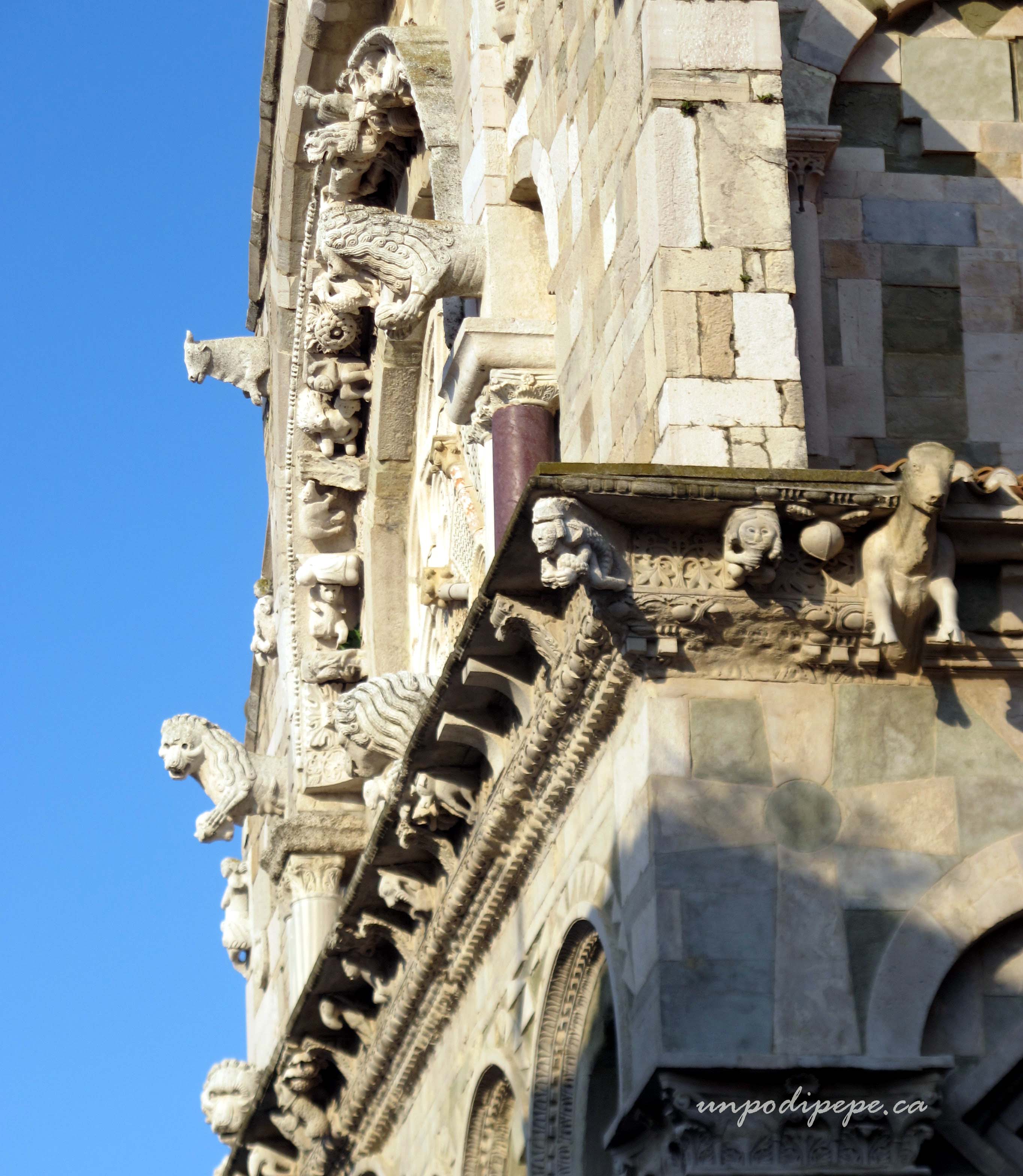
The upper façade is elaborate, with the rosone and gargoyles. The arches around the window are decorated with an odd but fascinating assortment of primitive looking animal and human sculptures and are held up on either side by Pugliese lions. Side view, Troia Cathedral, PugliaTroia Cathedral bronze doors

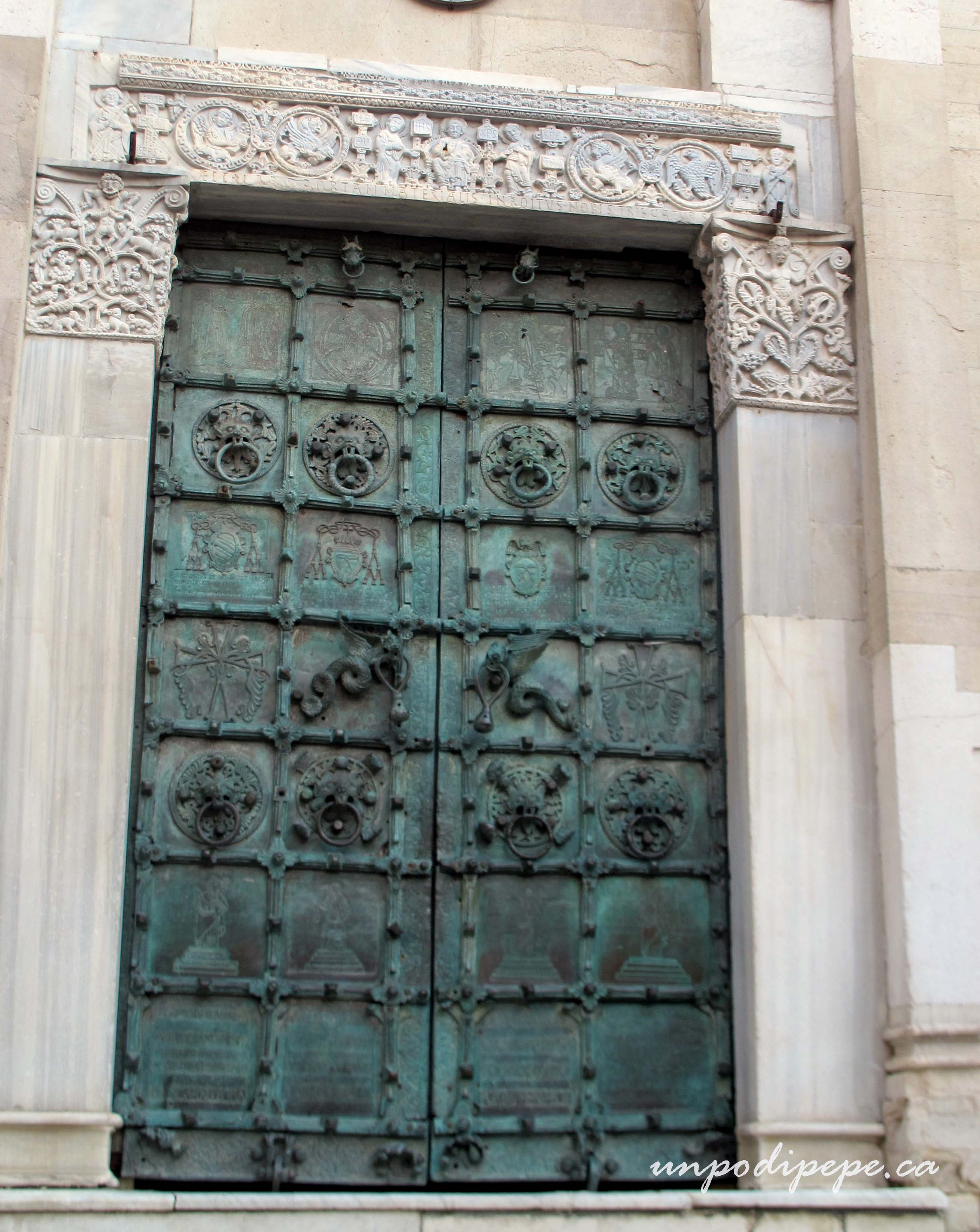
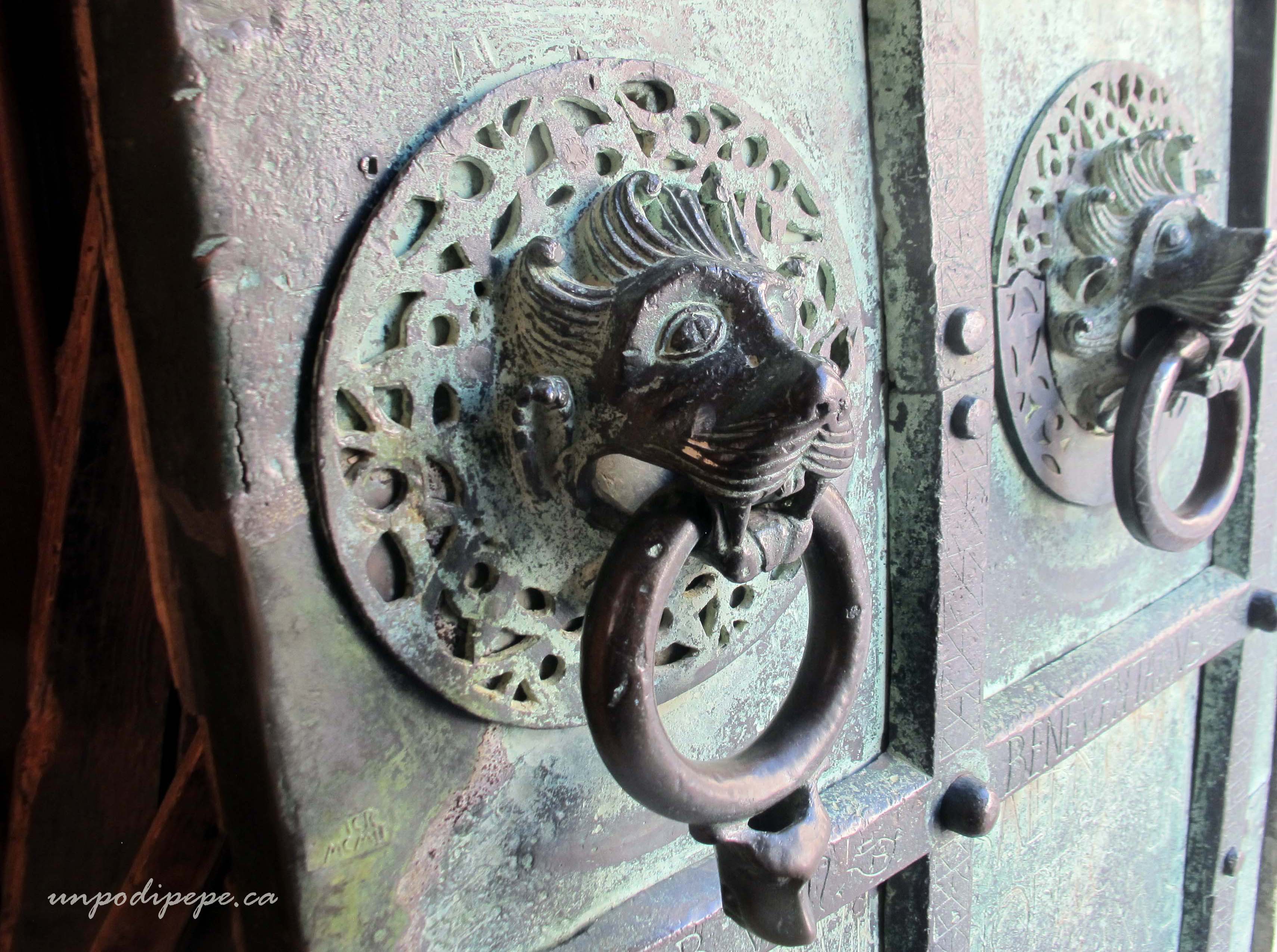
The lower front is a 7 arch façade-the center one being the main entrance through bronze doors with the most magnificent dragon handles. They look straight out of Trono di Spada (Game of Thrones)! The doors were built in 1127 by Oderisio da Benevento. Troia cathedral dragon door handles and lion knockers The doors are decorated with reliefs and inscriptions.  There are 10 knockers; 8 lions and 2 wyverns, which are small 2 legged dragons.  On each side of the door are 3 blind arches topped with geometric carvings and a round window on the middle arch.  The arches on the side of the building are topped with geometric sun and moon patterns in green stone. The main doors are closed and entry is only through the side door, another bronze by Oderisio da Benevento.  The church is usually open during the day, and of course during Masses.Troia Cathedral bronze door lion door knockers

In contrast to the ornate exterior, the interior of the cattedrale is simple.  The design is a Latin cross plan with 3 aisles separated by 13 Corinthian columns, 2 rows of 6 and a 3rd row in the SW corner with only one column, as seen in the photo below.  These represent the 12 apostles and Christ. There is no ceiling, the beamed wood roof is exposed. The Cathedrals in the Romanico Pugliese style, including Troia’s, are on the tentative list for UNESCO World Heritage Sites.  This is the step before becoming a heritage site!Interior of the Cathedral of Troia, with a view of the 13th column

The 1169 pulpit dates to 1169 has an interesting relief carved on one side. It is a dog biting the back of a lion, who is biting the neck of a lamb and is visible in the photo below.  The dog symbolizes God, who is faithful and vigilant, preventing poor judgement and heresy (the lion) from devouring the church (the lamb). Troia Cathedral, relief sculpture on pulpit

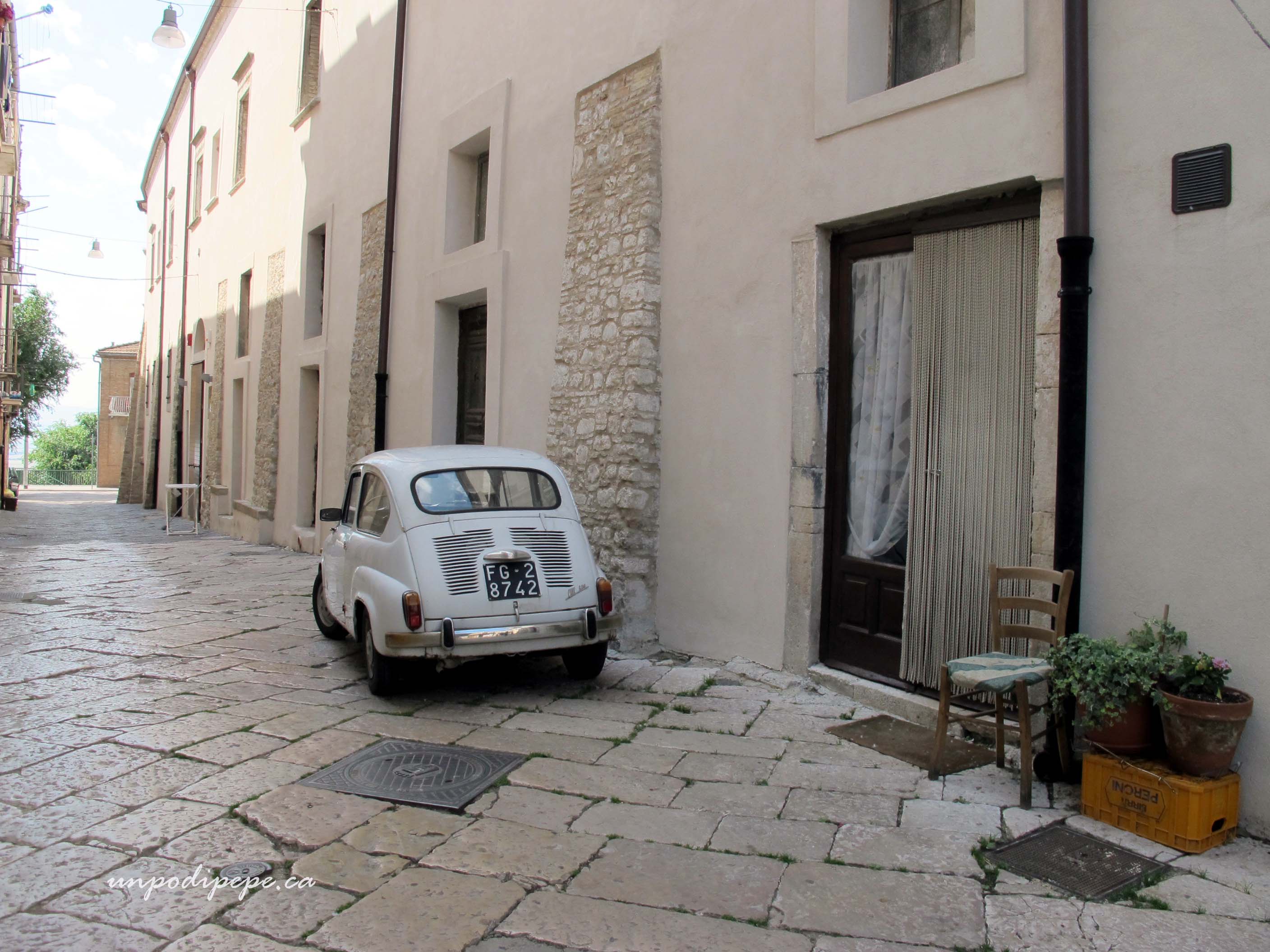
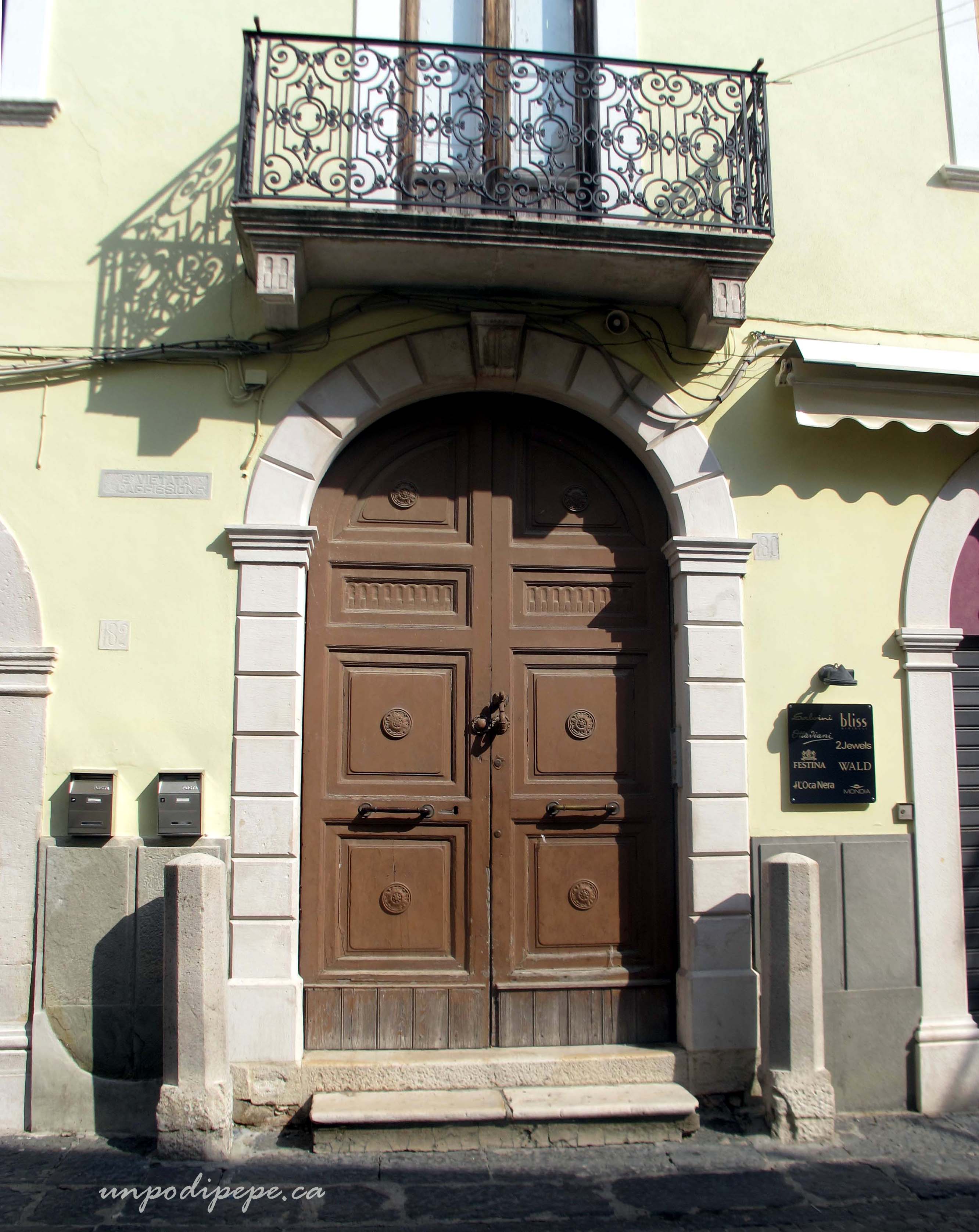
Il Museo del Tesoro della Cattedrale di Troia (the cathedral treasury) is worth a visit for rare 11th century parchments and other medieval sacred artifacts. There are only 32 illuminated Exultet codes (Easter scrolls) in the world, and 3 of them are here.  Also worth seeing is Il Capitello delle Quatre Razze (Column of the 4 Races).  This is a 13th Century column with 4 heads, one on each corner, depicting the 4 races of man known before 1492- European, African, Asian and Arab.  Admission is free, but it is only open Tuesday and Thursday 17:30-20 and Saturday 10-13.  Mondays are only open for school groups with appointments.  Call ahead, as they may open for groups 0881 97 00 20.Cattedrale di Troia, PugliaTroia is named for the ancient city, but unfortunately ‘troia’ is also Italian slang for ‘slut’.  My best guess is that the origin of this term is from Elena di Troia (Helen of Troy) who was an adultress.  Don’t let the name put you off though.  Troia is a charming town with a beautiful centro storico.  It is also way off the radar for most visitors to Puglia, so you will not find any crowds.Side street in Troia with Fiat Seicento (600) As an added bonus, you can find Nero di Troia vino everywhere!  Read more about this lovely vino in Vini di Puglia. My Zia lives in Troia, so I have been there a lot.  Here are some interesting Troia facts… #1-I had my confirmation at the Cattedrale di Troia when I was 15!  Interesting fact #2-Troia is the only municipality in Italia providing free public transportation! Via Regina Margherita doorway Troia, Puglia

Get off the bus from Foggia or park the car near La Villa Comunale and Bar Cluny.  Walk down Via Regina Margherita to explore the centro storico.  The Cattedrale is half way down this long, narrow street, which is lined with shops and interesting doorways.  Stop at the award-winning Pasticceria e Gelateria Artigianale Aquilino for a decadent treat. Visit the oldest church in Troia, the Byzantine San Basilio with ox heads around the altar.  It was originally a Greek Orthodox temple. The haunted Palazzo D’Avolos is now home to the Civic offices and Civic Museum. Wander into the narrow side streets and you may come across a Fiat 600 or some work by local artist Leon Marino.House in Troia, Puglia with Leon Marino angel mural

Troia has a population of  about 7000.  It is situated on a hill, 439 m above the Tavoliere plain, 22 km SW of Foggia, 15 km south of Lucera and 14 km east of Orsara di Puglia.  The surrounding landscape is a beautiful blanket of wheat fields, vineyards and olive groves- like the view from the abandoned Celle Sant’Antonio, just outside of Troia.  Celle Sant'Antonio, Troia Puglia

Ferrovie del Gargano buses arrive regularly from Foggia and Lucera. The ticket is €1.80.  If taking the train to Foggia, the bus station is conveniently next door. Troia has several B&B’s including Alba d’Oro, Stella and Svegliarsi nei Borghi.  There is even a car rental agency, Automottola, on the edge of town, towards Foggia.  For more information check out Troia’s website.Troia Cathedral and Via Regina MargheritaRead more about Troia and Diomede in Puglia-Mia Regione Preferita.  Have any of you readers who are not related to me been to Troia?

Ciao e buon viaggio, Cristina

Share this:

  • Share on Facebook (Opens in new window) Facebook
  • Share on Pinterest (Opens in new window) Pinterest
  • Share on X (Opens in new window) X
  • Email a link to a friend (Opens in new window) Email
  • Share on WhatsApp (Opens in new window) WhatsApp
Like Loading...

Blub a Napoli

28 Wednesday Aug 2019

Posted by Un po' di pepe in Art, Italia, Photography

≈ 23 Comments

Tags

Art history, Blub, Contemporary art Napoli, Fresco painting, L'arte sa nuotare, Museo Archeologico Nazionale di Napoli, Napoli, Pompeii, Street art

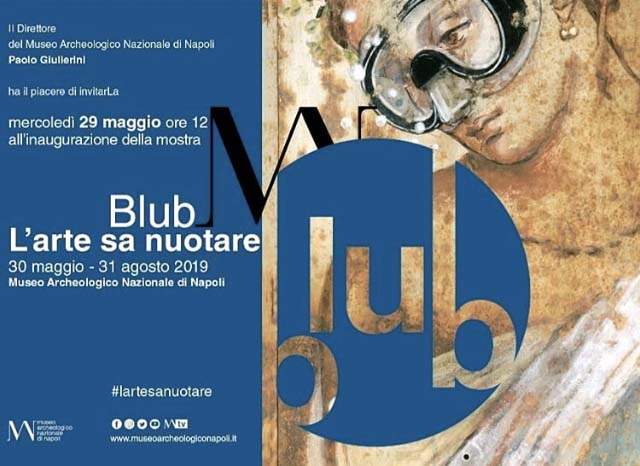
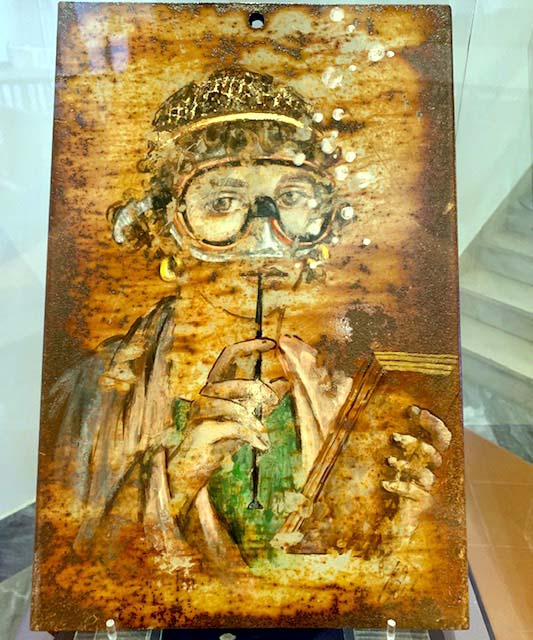
Blub Il Volo di Dedalo e la caduta di Icaro fresco MANNA few weeks ago I took a daytrip to Napoli for sfogliatelle-but also to see the Blub exhibit at MANN (Museo Archeologico Nazionale di Napoli).  If you do not know about the street artist from Firenze, make sure to read my Blub post L’Arte sa Nuotare.  Blub (Bloob) takes famous works of art and gives them a new look, immersing them underwater, complete with blue background, snorkel masks and bollicine-bubbles.  Prints are organically glued to the metallic doors of gas and electrical panels, which provide ready-made frames.

To prepare for the exhibit, Napoli’s Centro Storico was ‘Blubified’ with 40 works plastered on sportelli-the doors of gas and electrical panels. A few are specific to Napoli, for example Totò and Re Carlo III Borbone (King Charles III).Blub, Re Carlo III Borbone a Napoli

In the exhibit, which only includes 5 new works, the project ‘L’Arte sa Nuotare’ (Art knows how to swim) is extended to Pompeii.  4 paintings on metal are inspired by affreschi (frescoes) from the ruins of Pompeii.  There is also the portrait of Carlo III and some sculptures have been adorned with masks and fins, as well as the tomb in the photo below.Museo Archeologico Nazionale Napoli Blub

The nymph is a detail from the fresco ‘Il Volo di Dedalo e la caduta di Icaro’(the flight of Dedalus and the fall of Icarus) from Villa Imperiale, Pompeii.  It is an acrylic painting on a metal door and I love how the rust has been incorporated. Detail from Il Volo di Dedalo e la caduta di Icaro Blub pompeii

Terentius Neo e la moglie (Terentius Neo and his wife) is a fresco from 55-79 AD found in 1868 in the house of baker Terentius Neo, which was also the bakery. The middle class couple is well-dressed, and he holds a scroll with seal, his wife a stylus and wax tablet to demonstrate that they are literate and cultured.  His wife is portrayed as an equal, in fact she seems to be standing in front of her husband.Blub Terentius Neo e la moglie

Here is the original fresco in MANN:Terentius Neo e la moglie Pompeii

Donna con tavolette cerate e stilo (Woman with wax tablets and pen) is a tondo, a round painting found in 1760 in the Insula Occidentalis house in Pompeii.  It depicts a wealthy woman with gold earrings and a gold hair net. She is holding a stylus and 4 wax tablets, to demonstrate learning and culture.  This  fresco is known as Sappho, although it is not a portrait of the poetess, in fact the stylus and wax tablets were more likely used for accounting than poetry. Blub again incorporates the rust on the metal door to add ‘age’ to the work.'Sappho' by Blub Napoli

The original fresco in MANN:Sappho MANN

My favourite Blub here is Maschera Teatrale di Donna (Woman’s theater mask) inspired by a fresco in Casa del braciale d’oro (House of the golden bracelet) in Pompeii. The work is under glass, so my photo has glare issues.  The tag says that this Blub work is an acrylic on metal door and is in a private collection in Hingham, Massachusetts, so I think that means Blub made a sale!

Maschera Teatrale subacqua, from L’Arte sa Nuotare Facebook page

Blub quote Napoli MANN exhibit

‘….water is my element.  Life is born from water, it is the hidden side of matter.  When you are immersed, time stops and becomes weightless, while thoughts flow freely in a suspended dimension…for this I propose personalities that have transmitted an example of greatness that survives still today, as if underwater, without time.’  Blub

Seeing all the affreschi from Pompeii in MANN really inspired me to get out my bucket of plaster and pigments.  Fresco painting is not a very ‘modern’ art form, but I have dabbled in it a bit and really love it.  Below is my detail of La Cappella Sistina. My next fresco painting might be one of Giotto’s angels. I’ll be looking for rusty metal doors to paint on! Let me know if you have any.Cappella Sistina Cristina Pepe

Blub hunting in the Centro Storico was not very productive.  We found a peek-a boo Blub….a Renaissance woman mostly covered by the propped open door of a store! Blub NapoliGiuseppe Verdi looks very distinguished among the graffiti.  I was disappointed to not find a Totò, but did find a Banksy and lots of other interesting street art-which I will leave for another post!Blub Verdi, Napoli

The exhibit in MANN ends in a few days.  I hope you enjoyed this virtual Blub tour and that all of you can some day view real life ‘Blubi’! Ciao, Cristina

*Photo credit-Both photos of Terentius Neo e la moglie and Blub’s Sappho taken by my cugino and Napoli travel partner Mark ‘Peperotti‘ Pepe

Share this:

  • Share on Facebook (Opens in new window) Facebook
  • Share on Pinterest (Opens in new window) Pinterest
  • Share on X (Opens in new window) X
  • Email a link to a friend (Opens in new window) Email
  • Share on WhatsApp (Opens in new window) WhatsApp
Like Loading...

Ferragosto

15 Thursday Aug 2019

Posted by Un po' di pepe in Feste, Italia, Italian life

≈ 17 Comments

Tags

15 Agosto, Assumption of the Virgin Mary, August 15th, Chiuso per fei, Ferragosto

Ferragosto refers to August 15th and up to a week before and after. August 15th is a national holiday, celebrating l’Assunzione di Maria-the Assumption of the Virgin Mary to Heaven at the end of her life on earth. If you know anyone named Maria Assunta, she was probably born on August 15th!

Most Italiani take their holidays at this time, heading to the mountains or seaside for cooler weather. At the very least, most are away for ‘il ponte di Ferragosto’ the long weekend around August 15th.

Ferragosto goes way back….the name comes from the Latin Feriae Augusti or holidays of the Emperor Octavius Augustus, started in 31 BC. There were already several other Roman festivals the same month, such as Consualia, celebrating the harvest. They were combined into a longer rest and feasting period after months of heavy labour in the fields. The celebration originally included horse races. Il Palio dell’Assunta in Siena every August 16th still keeps this tradition going. Taking a trip mid-August became popular in the 1920’s. The fascist government set up discounted trains for Ferragosto Aug 13-15 to give the less well off an opportunity to see other Italian cities. In the 1960’s it became common for factories and large businesses in the bigger cities such as Torino and Milano to shut down for 2 weeks in August, or sometimes even the entire month.

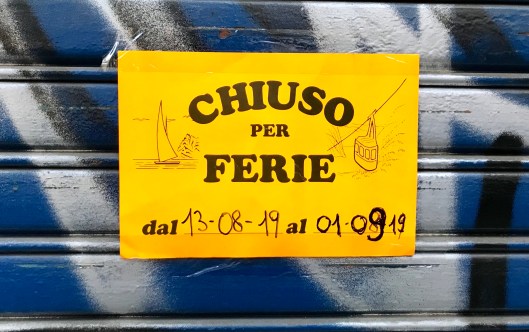
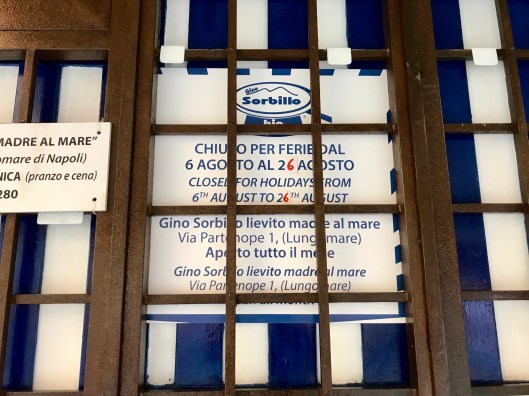
This gave workers from the south or small villages the opportunity to return home and spend time with family, and also to get away from the summer heat in the city. This tradition continues, although not as much as in previous years. It is common to see Chiuso per ferie signs for 2 weeks in August, but many small businesses now close in June or September instead.
     

I am often asked why small, independent businesses shut down for 2 weeks instead of having more staff and staying open. The main reason is that in Italia it is very expensive to have dipendenti-employees.  It often makes more financial sense for a local, family run place to simply close for a few weeks. Spending time with family is also valued more than in some cultures, so shutting down to be with family is an accepted, even encouraged practice.

2 weeks ago I was in Napoli and tried to go to the popular Pizzeria Gino Sorbillo. The lineup was ridiculously long, so I went somewhere else and had a delicious pizza Margherita. Last year on August 17th, the sign pictured above was on the door of the same place. They were closed for 3 weeks and their other location near the harbour was open.

Should you avoid going to Italia in August? Absolutely not! If that is when you are able to go-then do it! Just do not attempt to travel on August 15th, as public transportation will be greatly reduced and nearly everything will be closed. Museums and cultural sites will be open though. Roma, for example, will be empty of Romans for the week, so it will be less crowded with fewer cars on the road. It is a great time to visit air-conditioned museums and cool stone churches. There will be more than enough restaurants open that nobody will starve.

I usually go to Italia in August as this is the best time of year to go to my small mountain village. There are feste and concerts all month, my friends and relatives have time off and those who have moved away for work come back to visit.

What are you doing for Ferragosto?

Buon Ferragosto, Cristina

This post is written as part of the monthly blogging linkup Dolce Vita Bloggers  hosted by Kelly , Jasmine and Kristy.

Share this:

  • Share on Facebook (Opens in new window) Facebook
  • Share on Pinterest (Opens in new window) Pinterest
  • Share on X (Opens in new window) X
  • Email a link to a friend (Opens in new window) Email
  • Share on WhatsApp (Opens in new window) WhatsApp
Like Loading...

Exploring le Cinque Terre

05 Friday Jul 2019

Posted by Un po' di pepe in Italia, Photography, Travel tips, Vino

≈ 18 Comments

Tags

Cinque Terre card, Corniglia, Corzetti, Liguria, Manarola, Monterosso a mare, Pesto Genovese, UNESCO World Heritage Sites, Vernazza

Le Cinque Terre are 5 stunning clifftop villages on the Coast of Liguria, between La Spezia and Levanto.  In my last post I described the area, the villages, how to get there and around.  In this post, I write specifically about the experiences I had visiting the area 6 weeks ago with my nipotina* Isabella. Hiking between the 5 villages was our plan. They are connected by rail and also by a series of ancient donkey trails.  Along the sea is the ‘Sentiero Azzurro (blue trail) which is flat between Riomaggiore and Manarola, but otherwise gains quite a bit of elevation. The other series of trails is the Sentiero Rosso (red trail), higher up into and over the mountains and terraced vineyards.  These are longer and much more challenging, and include trails going to 5 Sanctuaries-one above each village.Manarola da Volastra

Rain and mudslides periodically damage the trails. It is important to check the conditions on the Cinque Terre website. 2 of the 4 sections of Sentiero Azzurro have been closed for a while and are apparently not scheduled to reopen until 2021!  We knew this before arriving, but did not know that the trail from Corniglia to Vernazza was also recently closed!Monterosso a mare, Sentiero Azzurro

At the Cinque Terre Info Point in La Spezia buying Cinque Terre cards, we were informed of the extra closure. This left us with only 1 accessible section, the Vernazza to Monterosso al Mare section-the most strenuous, of course. To make things worse, they would not sell us a 2 day Cinque Terre card. Perché? Because the next day was going to be one of those dreaded ‘sciopero dei treni’– train strike. Mannaggia!  These unexpected things happen when travelling, and no amount of planning ahead will prevent them-so we just adjusted our plans and made the best of it.

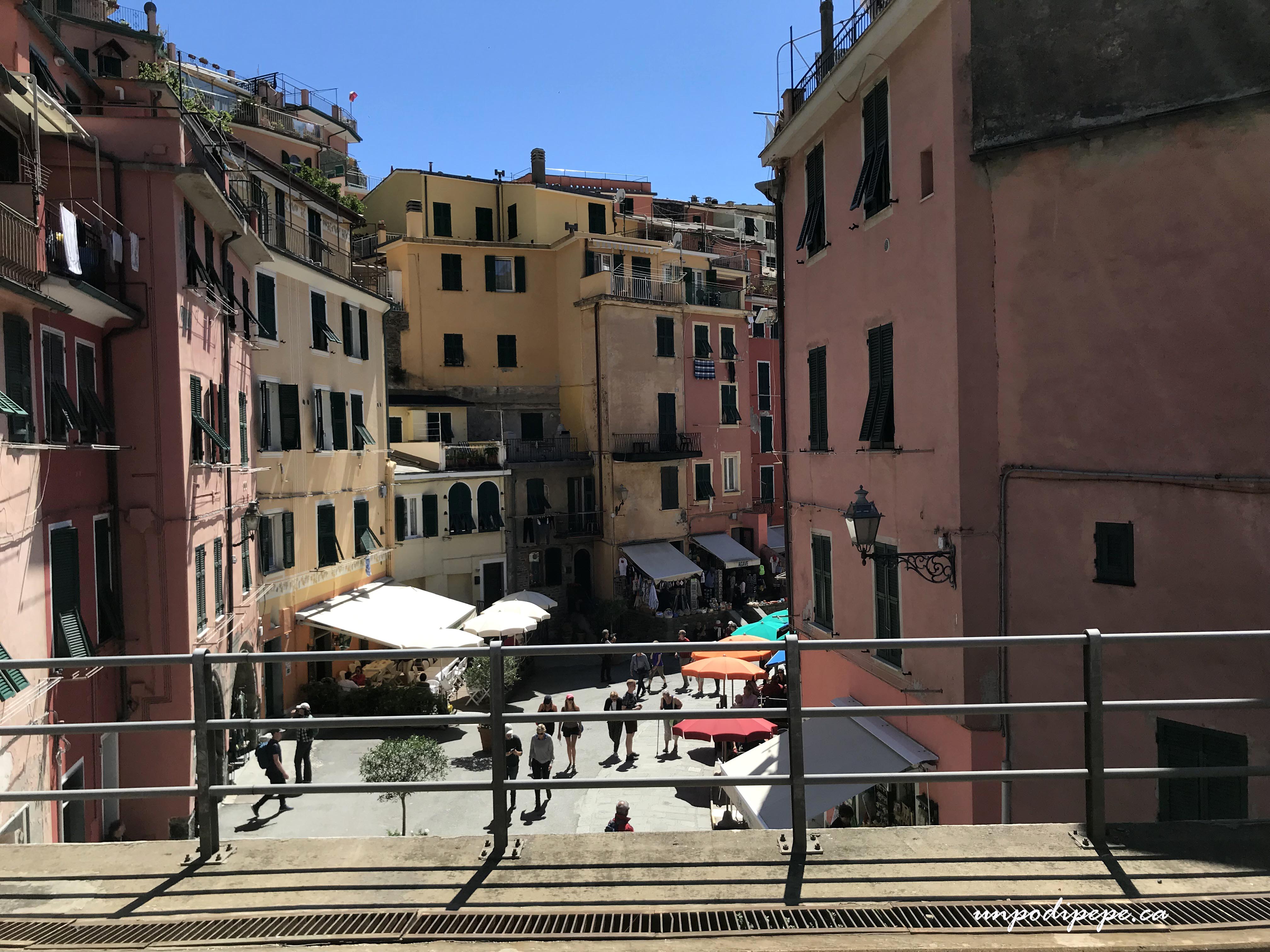
Vernazza Piazza Marconi, Cinque Terre LiguriaOur accomodation was in Vernazza, so we headed there first. Getting off the train at noon, my first thought was ‘mannaggia a te Rick Steeves!’ Via Roma, the main street of this beautiful but tiny village was so packed with people we barely had elbow room!  It was loud, crowded, and probably the worst time of day to be there.  I could hear the waiters approach everyone in english-a pet peeve of mine. This was mid-May-I can only imagine summer!

Vernazza, Cinque TerreAfter pushing our way down Via Roma to Piazza Marconi at the harbour, we checked in at the restaurant renting our room. The room was waaaaay up a series of 6 narrow staircases winding through tiny streets and alleys, just below Castello Doria.  I was glad I did not have a lot of luggage!  The view from the top was worth the climb!  The roof had a terrazza with chairs and a view of the sea. I could have sat there with a book, but since there were no trains the next day, it was time to do some exploring.

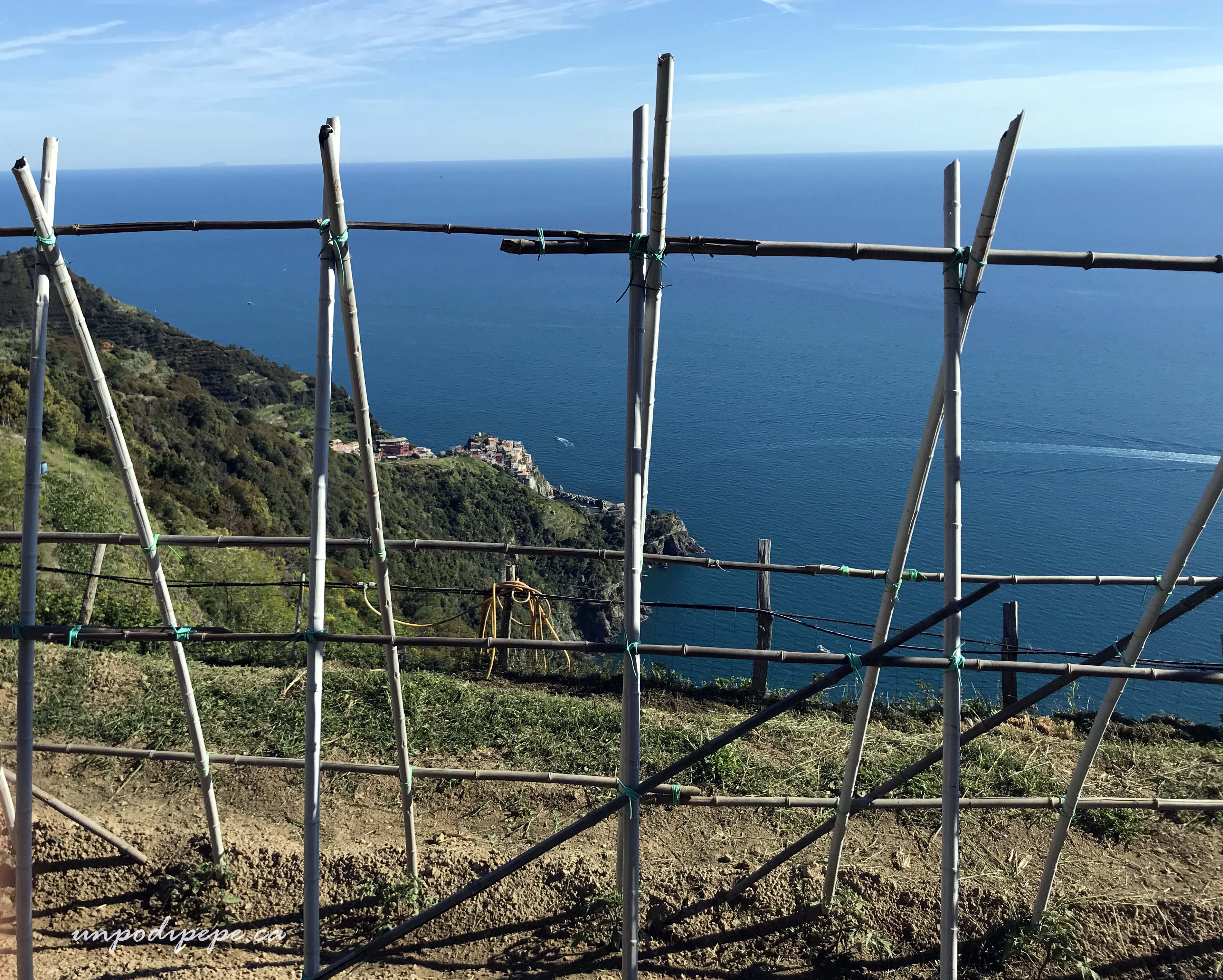
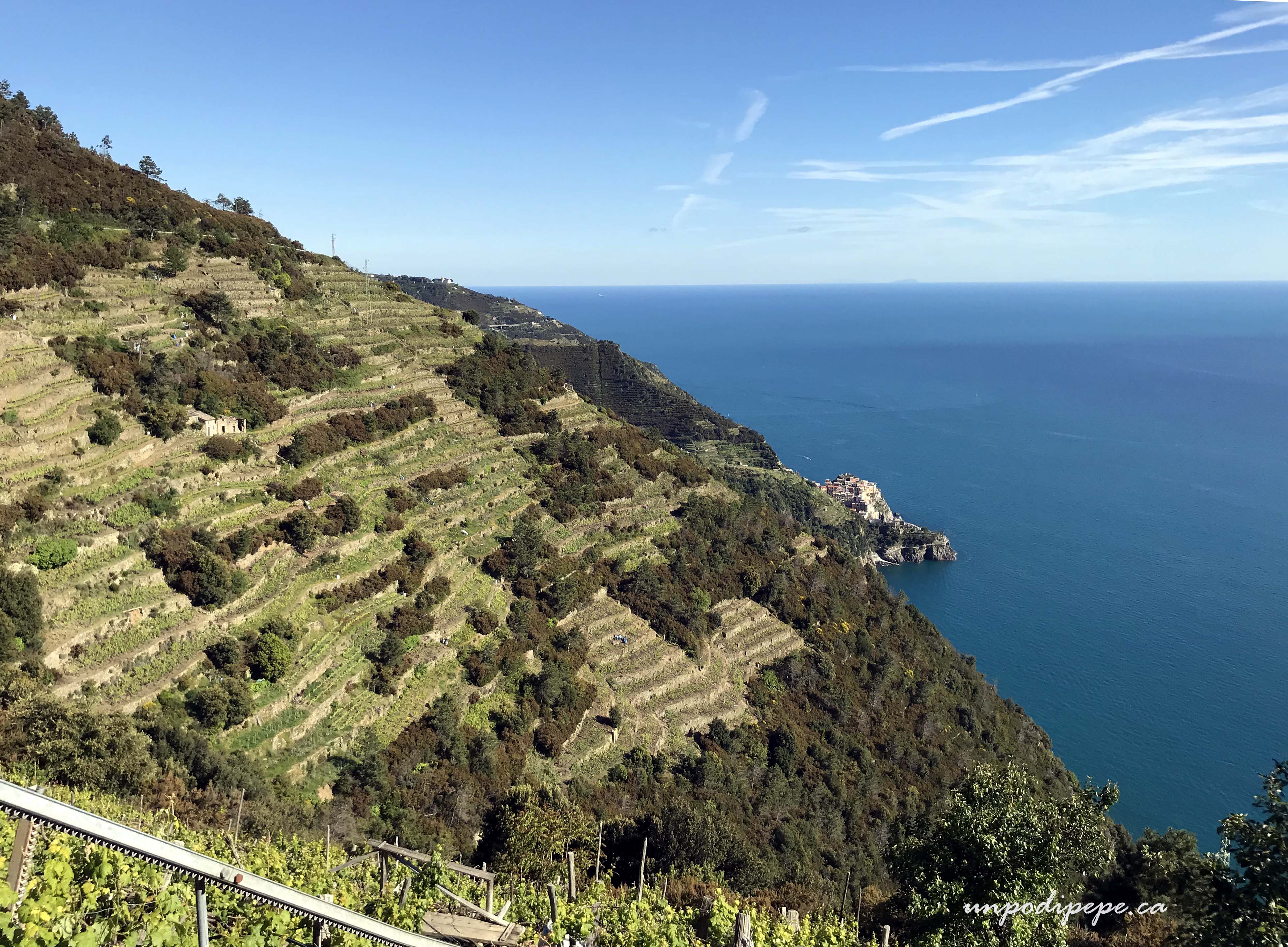
Corniglia la Lardarina, Cinque TerreTo get to Corniglia, we took the train and climbed the almost 400 steps up from the stazione.  Cute and quieter, Corniglia is the only village not on the sea. Corniglia, Cinque TerreI looked around for a Corzetti stamp with no luck, then we set off on the much longer and steeper Sentiero Rosso to Manarola via an inland town called Volastra. Manarola vista dal Sentiero RossoThere were viste mozzafiate-breathtaking views in every direction and the trail not crowded at all.  It took us right through ‘vertical farmland’ high above the sea. They are called terrazzamenti a fasce -strip terraced vineyards and olive groves. I thought these long metal poles and brackets were to give support against rock and mudslides, but the next day I found out what they were for.Terrazzamenti a fasce, terraced strips of farmland Volastra Cinque Terre

It took almost 3 hours to reach Manarola, a lovely town with a cute harbour and several viewpoints to walk to and watch the sunset. ManarolaWe decided not to go to Riomaggiore, as trains are less frequent in the evening and our visits to both towns would have been too rushed. Arriving by train back to Vernazza, the daytrippers were long gone and it was a beautiful evening for walking along the tiny harbour, taking photos and watching people try to fish.Vernazza di notte

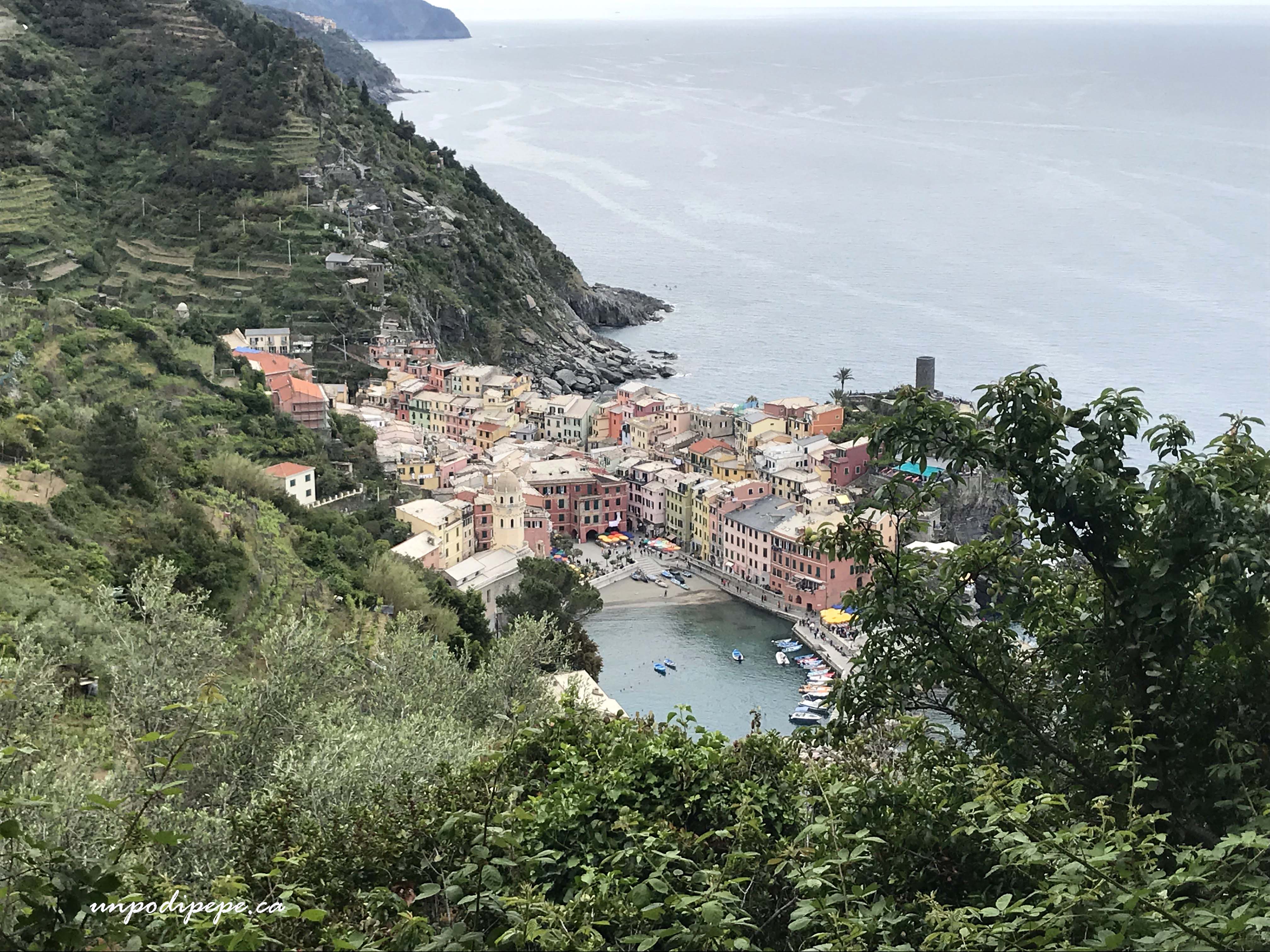
The next morning, after colazione-breakfast on another terrazza overlooking the sea, we climbed up to Castello Doria, a few flights of stairs above our room. We had 360° views over Vernazza, the mountains and the sea.  Vernazza dal Castello DoriaThen we headed out of town on the Sentiero Azzurro to Monterosso a Mare before the onslaught of daytrippers stepped off the train. The trail started just above Vernazza. Vernazza, Cinque Terre, LiguriaIt was a steep uphill climb for awhile and then we were rewarded with birds’ eye views directly over Vernazza. Vernazza, Sentiero Azzurro, Cinque TerreThere were many more hikers on this trail than on the one yesterday, but it was not overly crowded. I did say ‘Buongiorno’ a lot!  The scenery was amazing and included walks through more terraced vineyards, olive and lemon groves.  Vernazza machinery for transporting grapesI even had a closer look at some of the mysterious looking machinery and contraptions for transporting grapes down the mountain that I had seen the day before.

Monterosso a Mare dal Sentiero AzzurroMonterosso was visible long before we reached it. The beach was long and sandy with a lungomare, a seaside walkway.  We spotted fritto misto da asporto-takeout mixed fried seafood and veggies sold in paper cones.  Despite the sciopero, a few local trains went by.  We thought about taking the train to Riomaggiore, but were concerned about getting stuck there without a train back. We returned to Vernazza and bought pesto focaccia and a paper cone of fritto misto to have on the terrazza.Vernazza, Cinque Terre

I was excited to finally find my stampo per Corzetti! Corzetti (Croxetti in Genovese) are traditional Ligurian pasta shaped like large coins with a design stamped on both sides.  The design holds the sauce better!  It was hand carved by a local fisherman and I can’t wait to try it.  One design is an ear of wheat and the other a ‘swirly thing’. I looked for one in every town, and ended up finding it right in Vernazza.  The shop owner and Isabella could not believe how excited I was to find it! Stay tuned for a corzetti pasta post in the future.

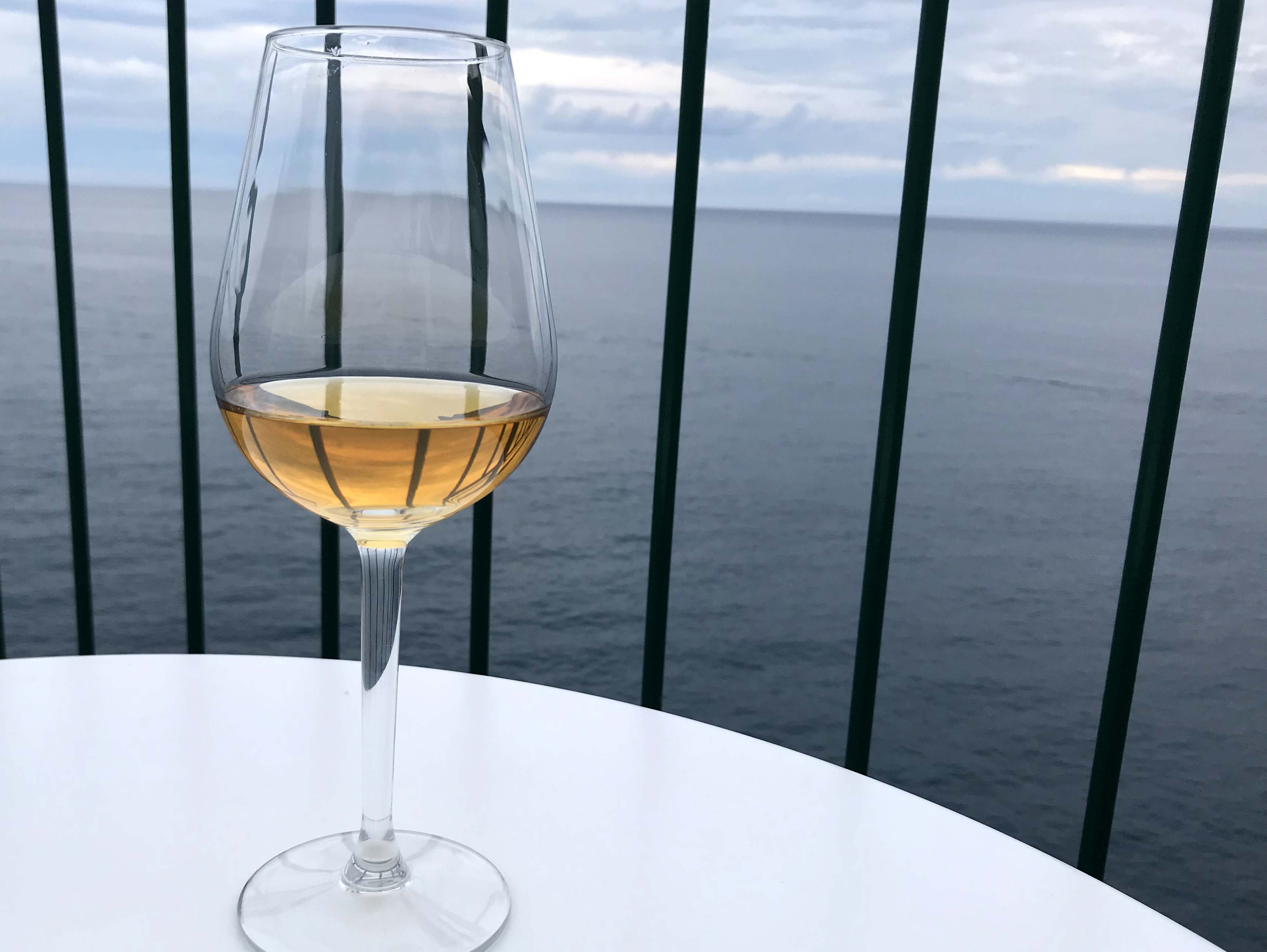
Later we walked part of the Vernazza to Corniglia trail, turning back at the point where it was closed. The views of Vernazza from the other side were amazing, but the weather was starting to change.   VernazzaThe Sentiero Rosso can get to Corniglia, via the Sanctuary of San Bernardino, but it takes 3.5 hours! In the evening I attended a Cinque Terre wine tasting  event hosted by Alessandro, a local sommelier on the terrazza.  I tasted 3 Cinque Terre whites while looking out at the sea.  Hiking with a 19 year old is exhausting, so this was a perfect way to end the day! Salute!Cinque Terre Wine Experience Vernazza

We loved our 2 days/nights in le Cinque Terre and could have used another day to go to Riomaggiore, and possibly take a boat.  In our case, it is better we did not stay an extra day though-as we left for Milano in a torrential downpour. In bad weather, there are no indoor activities in the Cinque Terre villages-except reading a book on a terrazza.  Travel to the area is best between April and September.  October and November are rainy, then it gets cold.

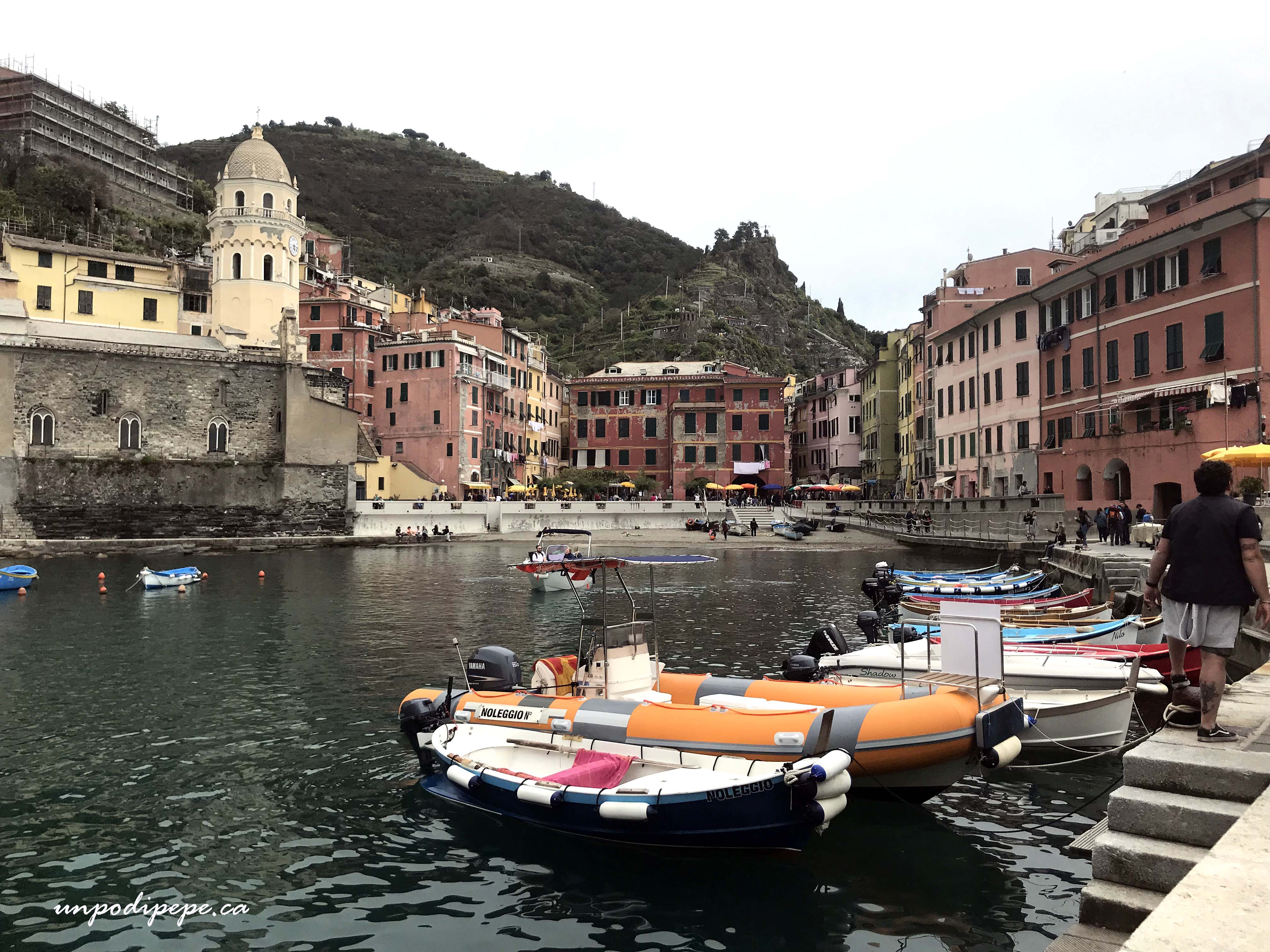
Vernazza porto, Cinque TerreIn case you think that in my photos it does not look crowded, this is because I could not move my elbows wide enough to take a photo during the peak times! Le Cinque Terre are no longer an undiscovered gem but are definitely still worth visiting.  If planning a visit, I would definitely recommend staying in one of the villages, for a calmer experience and to enjoy the mornings and evenings when the crowds of daytrippers have left for the day.  During the busy hours, go hiking and exploring.  The best way to see the area is on the trails! Many visitors stay in Portovenere or La Spezia for cheaper accomodation, but I do not think the experience is the same at all.  Day tours also arrive from Firenze and Milano, 2.5-3 hours away, leaving little time to see the area.  Be a daytripper only if you have no other option to ever visit the area.  Staying in one of the villages may not be advisable for those with mobility issues or a lot of luggage.Vernazza Stazione

Individual train tickets between La Spezia and Levanto are €4 and valid for 75 minutes. If you plan to hike and take the train, buy a Cinque Terre Card.  The combo card (trekking and treno) includes unlimited train travel between La Spezia and Levanto, use of all the trails, and wifi that actually works! It costs €16 per day. For trekking only, it is €7.50 per day.  The card is available for 2 and 3 days- except in the case of un sciopero! There are also family and low season prices.  For more information, check here. Open toed shoes and smooth soles are not allowed on trails.Fritto misto, Vernazza Cinque Terre

Eat as much seafood as possible, and pesto, not necessarily together-although Fooderia Manarola (@fooderia_manarola on instagram) does have panino con polpo (octopus) e pesto!  My pesto is very good (recipe here) but the besto pesto is in Liguria! You can choose traditional trofie con pesto, lasagne con pesto and pesto focaccia.  Pesto heaven!  The paper cones of fritto misto -assorted seafood and veggies are delicious takeout food.Fritto misto, Monterosso a mare

Have you visited le Cinque Terre? What did you think?  Buon viaggio, Cristina

*Nipote or nipotina means both niece and granddaughter.  In this case, it means niece!Manarola, Cinque Terre

Share this:

  • Share on Facebook (Opens in new window) Facebook
  • Share on Pinterest (Opens in new window) Pinterest
  • Share on X (Opens in new window) X
  • Email a link to a friend (Opens in new window) Email
  • Share on WhatsApp (Opens in new window) WhatsApp
Like Loading...

Le Cinque Terre

28 Friday Jun 2019

Posted by Un po' di pepe in Italia, Photography, Travel, Vino

≈ 20 Comments

Tags

Cinque Terre card, Corniglia, Liguria, Manarola, Monterosso a mare, Terrazzamenti a fasce, UNESCO World Heritage Sites, Vernazza

Manarola, Cinque TerreLe Cinque Terre are 5 villages precariously perched on the Coast of Liguria, between La Spezia and Levanto.  Cinque Terre literally means ‘5 lands’, but in this case terre refers to villages.  Inhabited since at least the 11th Century, they likely date back to Roman times.  The 5 villages are connected by rail, bus, boat and ancient trails that follow the coastline and go up into the mountains. The area was almost inaccessible except by sea, until the Genoa to La Spezia railway was built in 1870.Vernazza porto, cinque Terre liguria

In 1997, the Cinque Terre was designated a UNESCO World Heritage Site as an example of a cultural, evolved organic landscape transformed by man over centuries. The inhabitants have adapted and shaped the steep, rugged, uneven coastal landscape so they could use the land vertically. Terrazzamenti a fasce (terraced strips of land) extend along the steep slopes, up to 400 m above sea level for growing grape vines, olive trees and lemon trees.   They are held in place by 100’s of km of muretti a secco (dry stone walls). These are thought to have been built in the 12th century, when Saracen raids from the sea decreased.  In 1999 il Parco Nazionale delle Cinque Terre was established, becoming Italia’s smallest yet most densely populated (~4,000 people) national park.Terrazzamenti a fasce Cinque Terre Volastra, Manarola

Aside from clifftop villages of colourful houses, viste mozzafiato (breathtaking views), hiking trails and terrazzamenti, the Cinque Terre area is known for fresh seafood, pesto Genovese made with local basilico and olio, lemons, and white grapes.  The grapes are made into white wines, including Sciacchetrà, a sweet wine which is a blend of Bosco, Albarola and Vermentino grapes.Limoni, Vernazza, Cinque Terre

The 5 villages are less than 10 minutes apart by train. Going from South to North, they are:

#1 Riomaggiore is the most Southern village with a population of 1500- including Manarola, Volastra and Groppo.  Brightly coloured buildings are stacked on either side of a steep ravine down to the tiny harbour.  The main Cinque Terre park office is in Riomaggiore and the start of the Sentiero Azzurro (blue trail) the 12 km old donkey trail along the sea, connecting all the villages.  The section from Riomaggiore to Manarola, less than 1 km away, is the fairly flat Via del Amore, which is presently closed until 2021. Sadly, I did not make it to Riomaggiore-find out why in my next post!Manarola, Cinque Terre

#2 Manarola is surrounded by vineyards and famous for wine.  The brightly coloured houses seem to follow the natural form of the coastline and lead down to the small harbour, boat ramp and several viewpoints.  Carrugi-steep, narrow alleys all lead to the sea. Manarola is a perfect place to watch the sunset. From December 8th into January the hills behind Manarola are illuminated with more than 200 figures and 12.000 lights for the biggest lighted Presepio (Nativity scene) in the world.Corniglia, Cinque Terre, dal Sentiero Rosso

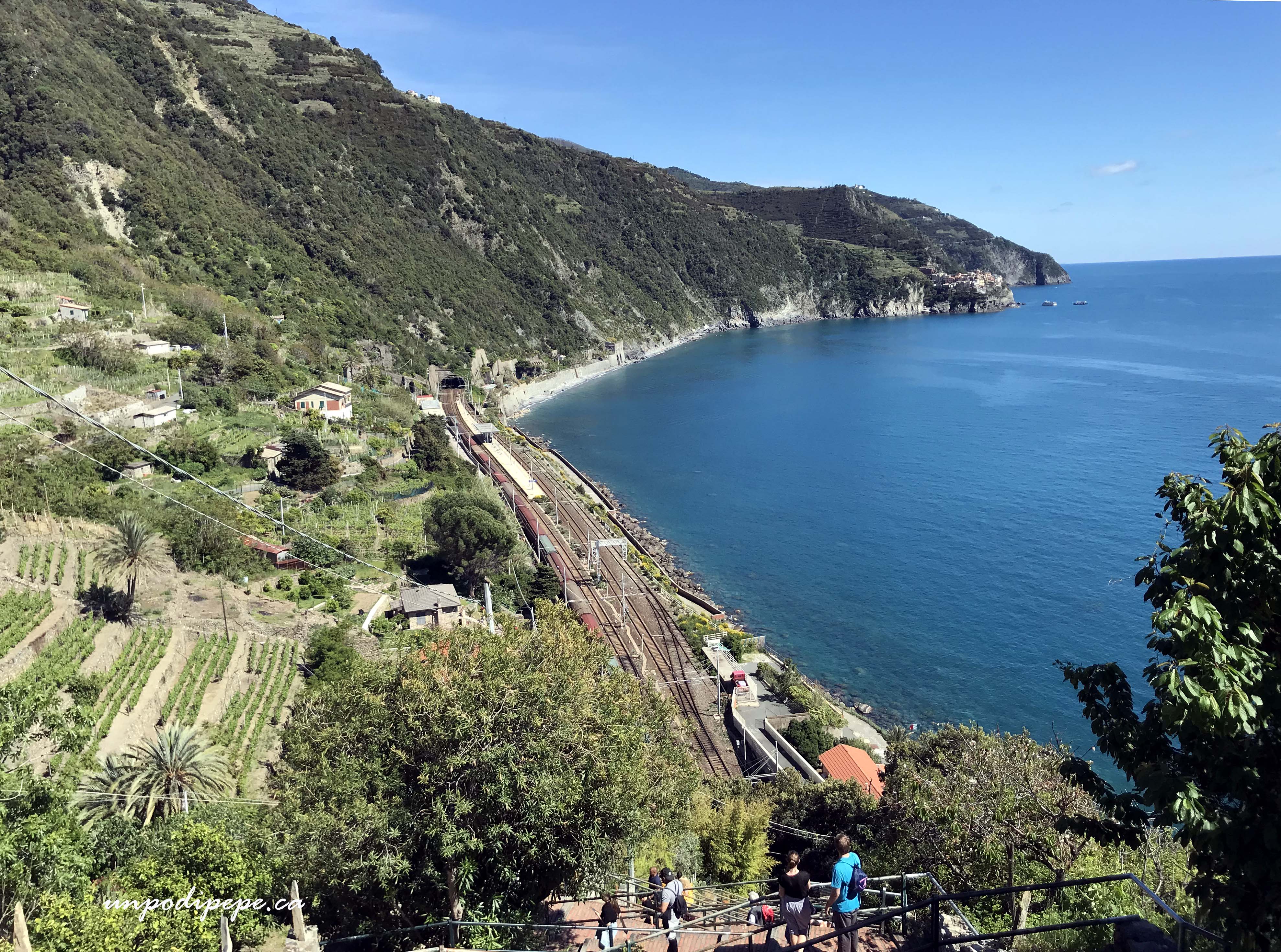
#3 Corniglia population ~150 is considered part of Vernazza.  It is the quietest village and the only one not on the coast.  It is on a 100m high promontory, going steeply down to the sea.  Surrounded by terrazzamenti on three sides Corniglia has views of the other villages. Ferries and boats do not stop here, since there is no harbour.  Corniglia Stazione, Cinque TerreCorniglia’s stazione is down near the sea, and the village, is accessed by climbing a wide staircase with 400 steps, called Lardarina.  This probably explains why Corniglia is the quietest! There are buses too, although I did not see any.  Corniglia was named for the Roman family who owned the land, and it was acquired in 1276 by the Repulic of Genoa. Corniglia’s vino is mentioned in Giovanni Boccaccio’s 14th Century literary masterpiece Decameron:

 e allora in una tovagliuola bianchissima gli portò due fette di pane arrostito e un gran bicchiere di vernaccia da Corniglia“. Translation by Cristina–‘and then, in an immaculately white napkin, I brought him 2 slices of toasted bread and a large glass of Vernaccia from Corniglia

Vernazza dal Sentiero Azzurro#4 Vernazza is the most beautiful of the towns, with its tiny beach, picturesque natural harbour and breakwater, surrounded by terraced olive groves.  The population is ~825 including Corniglia.  Vernazza is first mentioned in 1080 as the fortified naval base of the Obertenghi family to protect the area from pirates. Verna refers to native or indigenous.  The local vino is called Vernaccia, which is probably where Vernazza gets its name.  Vernazza dal Castello DoriaA climb to the 15th Century  Castello Doria (admission €1.50) will reward you with stunning views over the harbour.  The harbour church, Santa Margherita di Antiochia was built in 1251, and the octagonal tower added in the 16th C.  The Sanctuary Nostra Signora di Reggio is a 1 hour steep walk away.Vernazza Cinque Terre

In 2011 rainstorms caused massive flooding and mudslides.  Vernazza and its stazione were buried under 4m of mud and debris and 7 people were killed.  Along the main street is a large black and white photo display of the flooding.

Monterosso a mare dal Sentiero Azzurro#5 Monterosso al Mare pop 1425 is the largest and most northern village.  It is the most accessible by car and has more hotels and amenities and a large beach, the only sand beach in the area. There is an old and new town, separated by a tunnel and the stazione.  Monterosso is famous for lemons and anchovies.

How to get there and around– Taking a car to Cinque Terre is a bit of a pain. It is possible to drive there, but the villages are car free, so the car has to be parked somewhere. Parking is more available in and around Monterosso, Levanto and La Spezia.

Boats and ferries leave from La Spezia, Portovenere, Lerici and Genova. Note that many of them do not operate from October to March.Vernazza Stazione

Train is the easiest, cheapest and most efficient way to travel. There are frequent local trains between La Spezia and Levanto.  Many people go on daytours from other cities, but note that Firenze is 2.5 hours away and Milano is 3 hours away, which does not leave much time for enjoying the area.  It is possible to stay in La Spezia, Pisa Portovenere, Genova, Levanto, Lerici or even Santa Margherita Ligure and commute by train, but you can read more about that in the next post!

Individual train tickets between La Spezia and Levanto are €4 and valid for 75 minutes. If you plan to hike and take the train, buy a Cinque Terre Card.  The combo card (trekking and treno) includes unlimited train travel between La Spezia and Levanto, use of all the trails, and wifi that actually works! It costs €16 per day. For trekking only, it is €7.50 per day.  The card is available for 2 and 3 days, except in my case! There are also family and low season prices.  For more information, check here.

**Note that proper footwear is required on all the trails. Open toed shoes and smooth soles are not allowed and there are fines.

In the next post, I will tell you the details of my own Cinque Terre experience last month, including why I did not go to Riomaggiore!Vernazza di notte

Buon viaggio, Cristina

Share this:

  • Share on Facebook (Opens in new window) Facebook
  • Share on Pinterest (Opens in new window) Pinterest
  • Share on X (Opens in new window) X
  • Email a link to a friend (Opens in new window) Email
  • Share on WhatsApp (Opens in new window) WhatsApp
Like Loading...
← Older posts
Newer posts →

Enter your email address to follow 'un po' di pepe' and receive notifications of new posts by email.

Join 511 other subscribers
Follow Un po' di pepe on WordPress.com

Popular Posts

  • Hairstyling in Ancient Roma
    Hairstyling in Ancient Roma
  • Cucina Italiana Patrimonio UNESCO
    Cucina Italiana Patrimonio UNESCO
  • Grano Arso
    Grano Arso
  • Napoli Street Art
    Napoli Street Art
  • Italiano per Ristoranti~How to pronounce your restaurant menu
    Italiano per Ristoranti~How to pronounce your restaurant menu
  • Hostaria Antica Roma~Eat like an Ancient Roman
    Hostaria Antica Roma~Eat like an Ancient Roman
  • Italian Christmas Vocabulary
    Italian Christmas Vocabulary

Recent Posts

  • Cucina Italiana Patrimonio UNESCO
  • 2025~Un po’ di pepe Year in Review
  • Castel del Monte
  • ‘The Nuances of Love’
  • Hostaria Antica Roma~Eat like an Ancient Roman
  • Santa Maria in Aracoeli
  • Casino dell’Aurora~Villa Boncompagni Ludovisi
  • Nasoni di Roma
  • Bloghiversario #11
  • Fontana di Trevi
  • Acqua Vergine
  • Giubileo 2025
  • Sanremo 2025
  • In Vino there are Memories
  • A Literary Harvest
  • 2024~Un po’ di pepe Year in Review
  • Buon Natale 2024
  • Il Bicerin
  • Mercato Porta Palazzo
  • Torino
  • Catanzaro, Calabria
  • Il Pumo Pugliese
  • Artemisia Gentileschi
  • Cavalli di San Marco
  • Panzerotti

Categories

Amici e Famiglia Architecture Art Art history Art projects Bilingual posts Blogging Canada Culture Feste Firenze Inspiration Italia Italian Folklore Italian language Italian life Italocanadesi Libri Mangiamo! Orsara di Puglia Parole piacevoli Photography Puglia Recipes Roma Travel Travel tips Uncategorized Vino

Archives

Un po’ di pepe on Facebook

Un po’ di pepe on Facebook

Start a Blog at WordPress.com.

  • Subscribe Subscribed
    • Un po' di pepe
    • Join 511 other subscribers
    • Already have a WordPress.com account? Log in now.
    • Un po' di pepe
    • Subscribe Subscribed
    • Sign up
    • Log in
    • Report this content
    • View site in Reader
    • Manage subscriptions
    • Collapse this bar
 

Loading Comments...
 

    %d