• Home
  • About me/Chi sono
  • Contact

Un po' di pepe

~ …… (oon∙poh∙dee∙PEH∙peh) Cristina writes about interesting stuff /Cristina scrive di cose interessanti

Un po' di pepe

Category Archives: Puglia

Castel del Monte

22 Saturday Nov 2025

Posted by Un po' di pepe in Architecture, Puglia

≈ 9 Comments

Tags

Federico II, Italian history, Puglia, Romanica Pugliese, Southern Italy, UNESCO World Heritage Sites


Castel del Monte overlooks the Murgia plateau near Andria, Puglia, rising like a massive, imposing stone crown. The flawless design is awe-inspiring, and it can even be seen from the sea. Castel del Monte ‘castle of the mountain’, is a mysterious place, that has intrigued scholars with speculation regarding its purpose and symbolism for almost 800 years.

Federico Secondo /Frederick II Hohenstaufen (1194-1250) Holy Roman Emperor and King of Sicily built Castel del Monte between 1240 -1250.  He was a visionary, considered an early Humanist-a lover of art, architecture, science and poetry, and also a skilled warrior, hunter and falconer.  He spoke 6 languages and wrote books, including a guide to falconry.  At his court in Palermo, he brought together Greek, Arab, Italian and Jewish scholars so that experts in science, theology, philosophy, and alchemy could exchange their Eastern and Western knowledge. A cultured, cosmopolitan ruler, and probably a megalomaniac, he was called ‘Stupor Mundi’ wonder of the world.
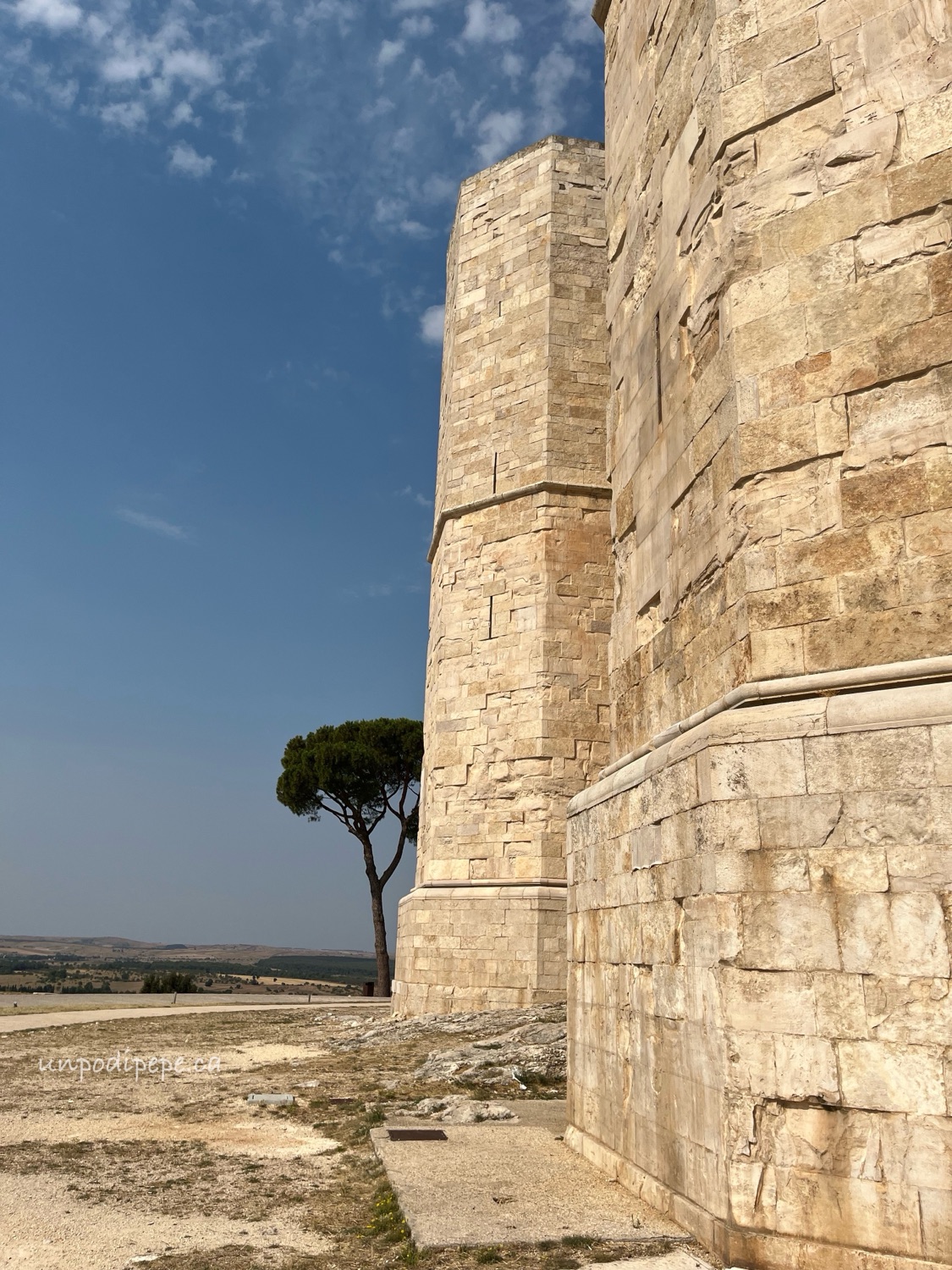
No one knows why he built Castel del Monte– the location at an altitude of 540m (1770 ft), has a great view, but is not strategic, and the building has no defensive measures, such as a moat or arrow slits, so was not built as a fort. Some think it was built as a fancy hunting lodge, but there is no sign of a kitchen or cooking facilities on site.  Federico died not long before it was completed, so he never actually stayed there.

The octagonal design is unusual. According to medieval beliefs and mathematical symbolism, the octagon represented the union of the divine perfection of the circle and the natural perfection of the square into one shape. In many cultures and religions, the number 8 is associated with power, good judgement, efficiency, prosperity, strength and stability.  A sideways 8, the infinity sign is a symbol of continuous balance.  8 is repeated throughout the design of Castel del Monte-an octagonal shape with 8 interconnecting rooms on each floor, 8 octagonal towers, and an octagonal internal courtyard. Many details in the sculptures, bas-reliefs, marble columns and keystones have decorations with 8 elements.
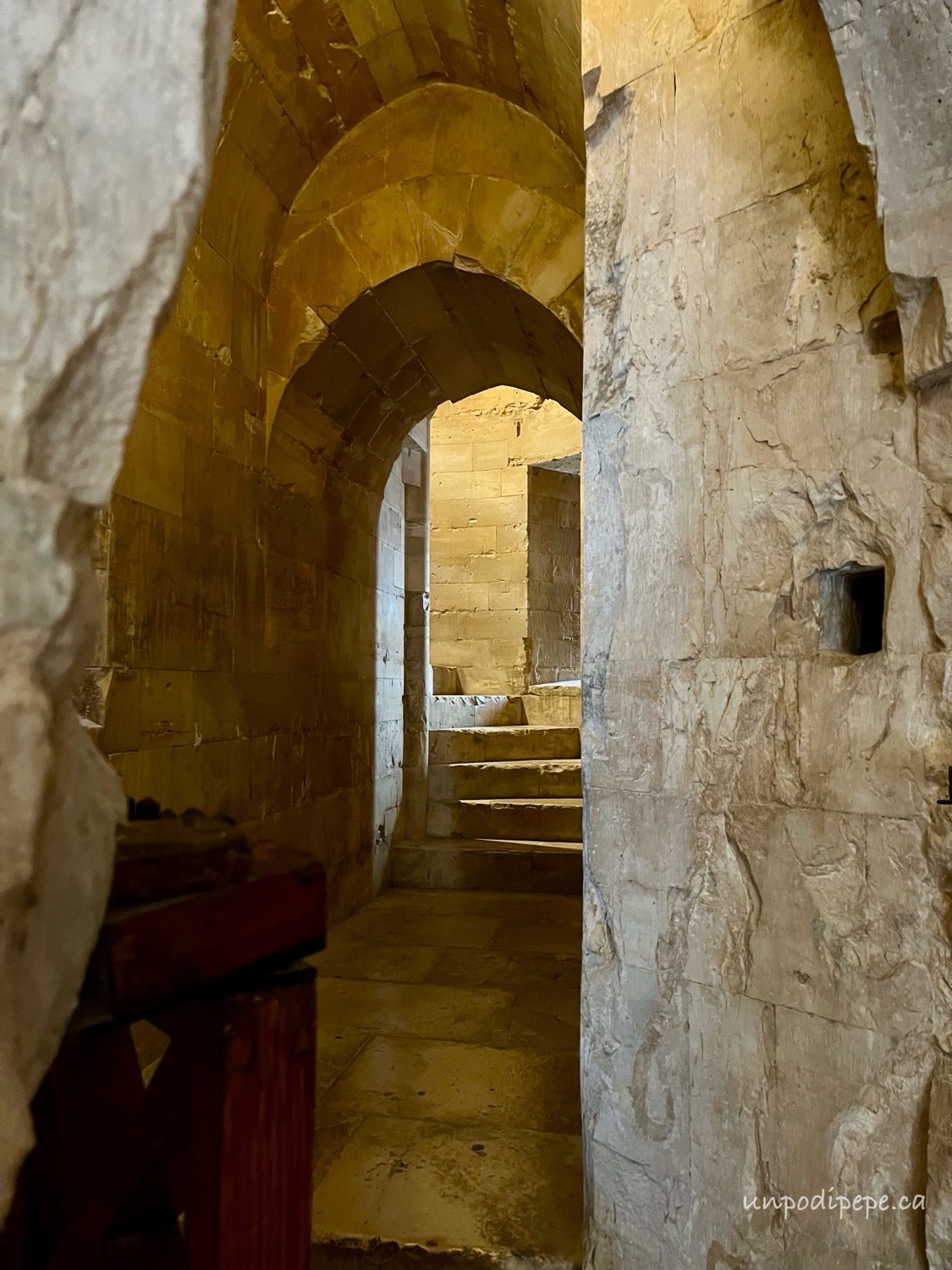
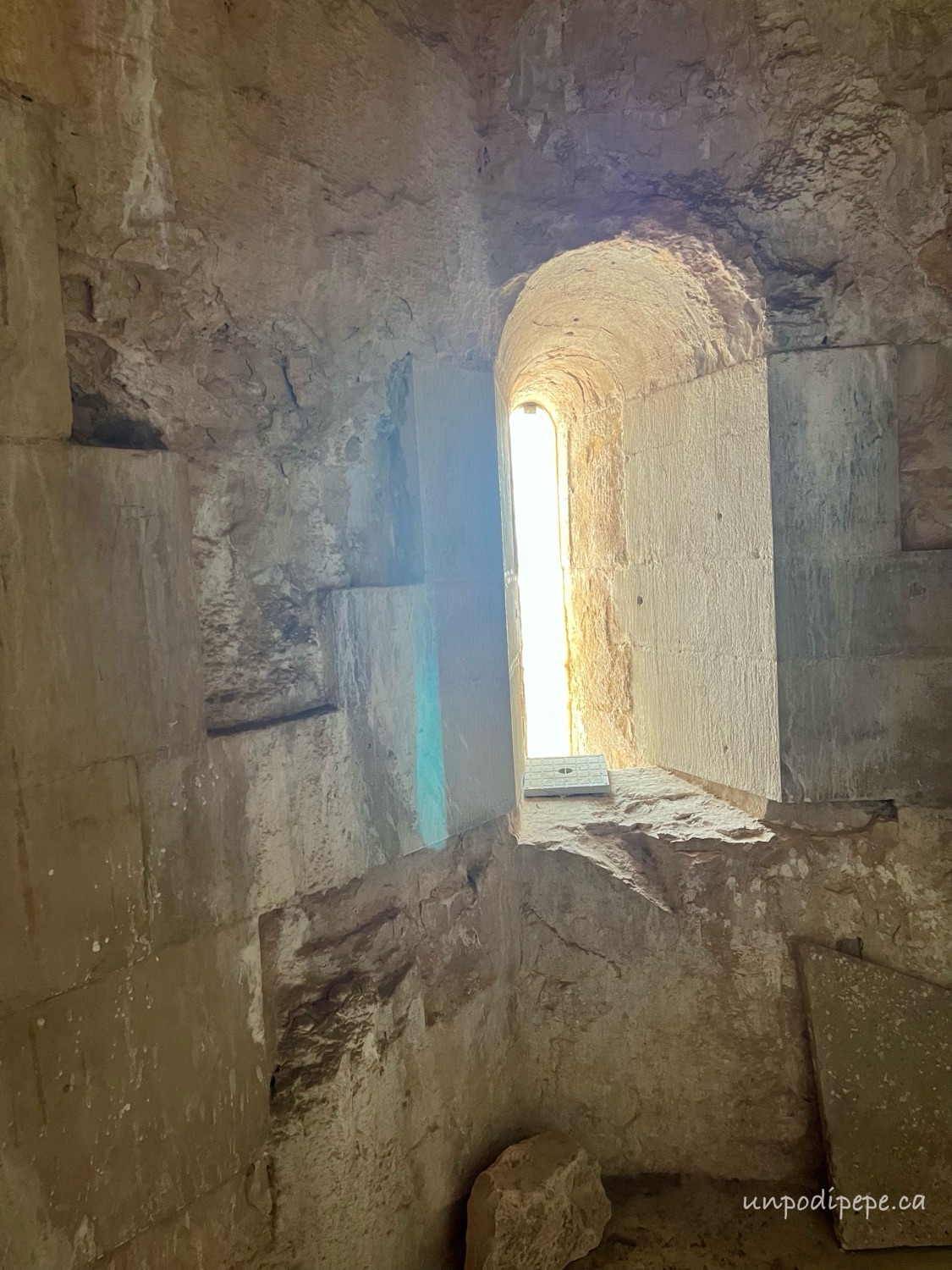
The upper rooms have decorative marble columns and 8 fireplaces, The doorways and Gothic windows are framed in corallite stone. 3 of the towers have stairs and at least one has a room with what may have been Europe’s first flushing toilets. Castel del Monte also had advanced hydraulic engineering with an air heating/cooling system (ancient HVAC?) in the walls and a rainwater collection and filtration system.  Water passed through the walls into cisterns in the foundation. In the alcoves beside some of the windows on the upper floor, you can see evidence of these systems.
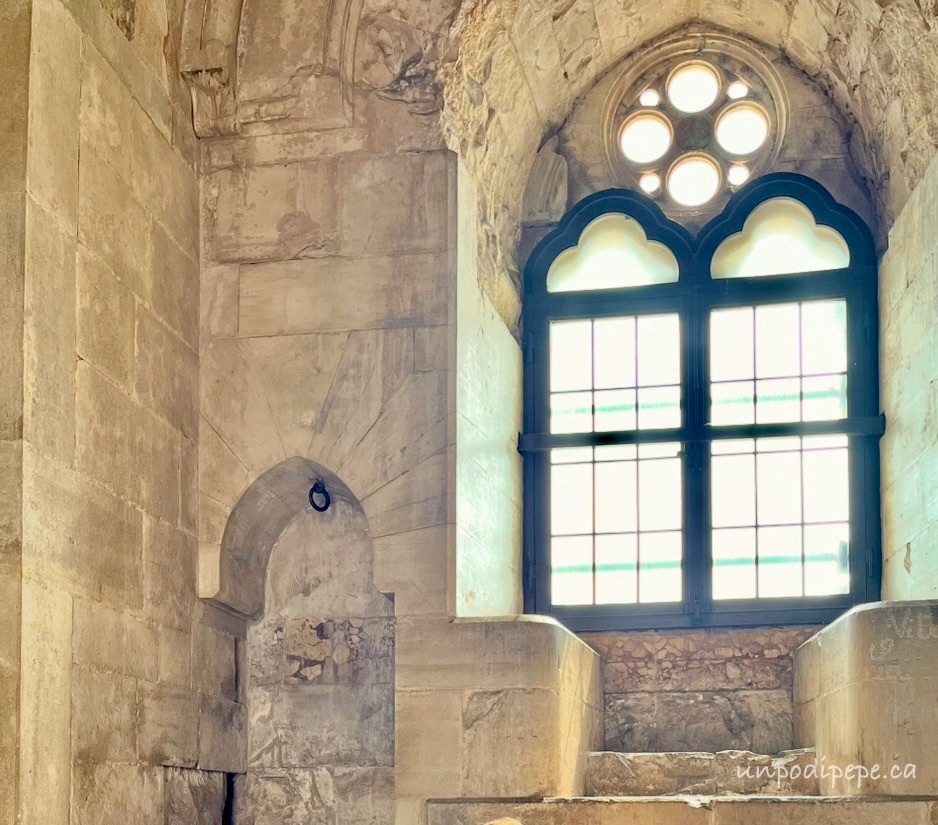
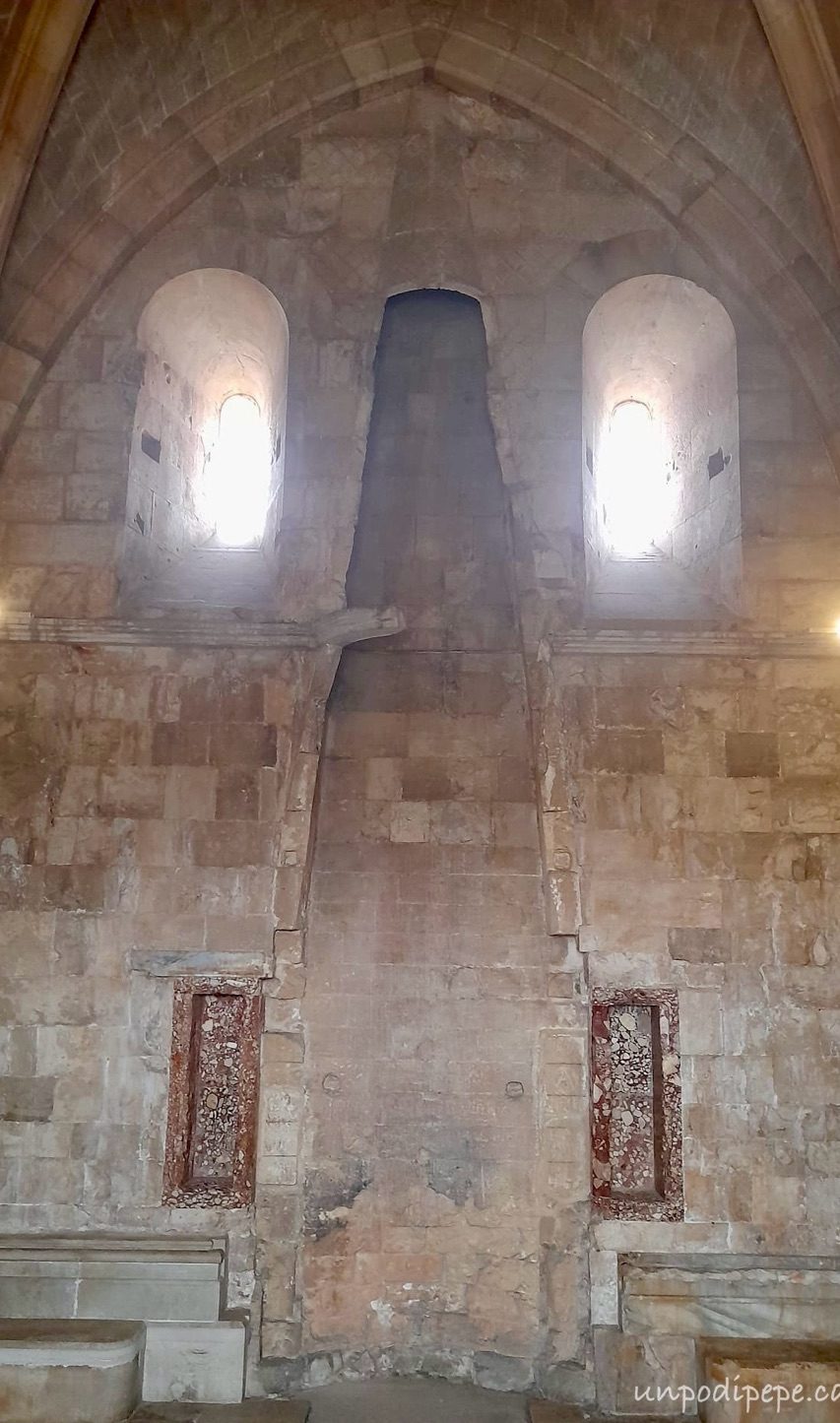
Similar to Federico’s cultural perspective, elements of diverse architectural styles and traditions from different times in history are effortlessly blended in Castel del Monte. These include classical antiquity, the Islamic Orient and north-European Gothic. To me it looks similar to Romanica Pugliese.  The layout and orientation are designed with advanced mathematical and astronomic precision. The positions of windows and light slits is designed to create specific light and shadow effects during the solstice and equinox. Secret messages perhaps? The light cast by the slits also serve as a clock/sundial.  I actually thought the light slits were ridiculously long arrow slits! Mathematician Leonardo Fibonacci was a guest of Federico’s in 1240, so he may have even been a consultant!
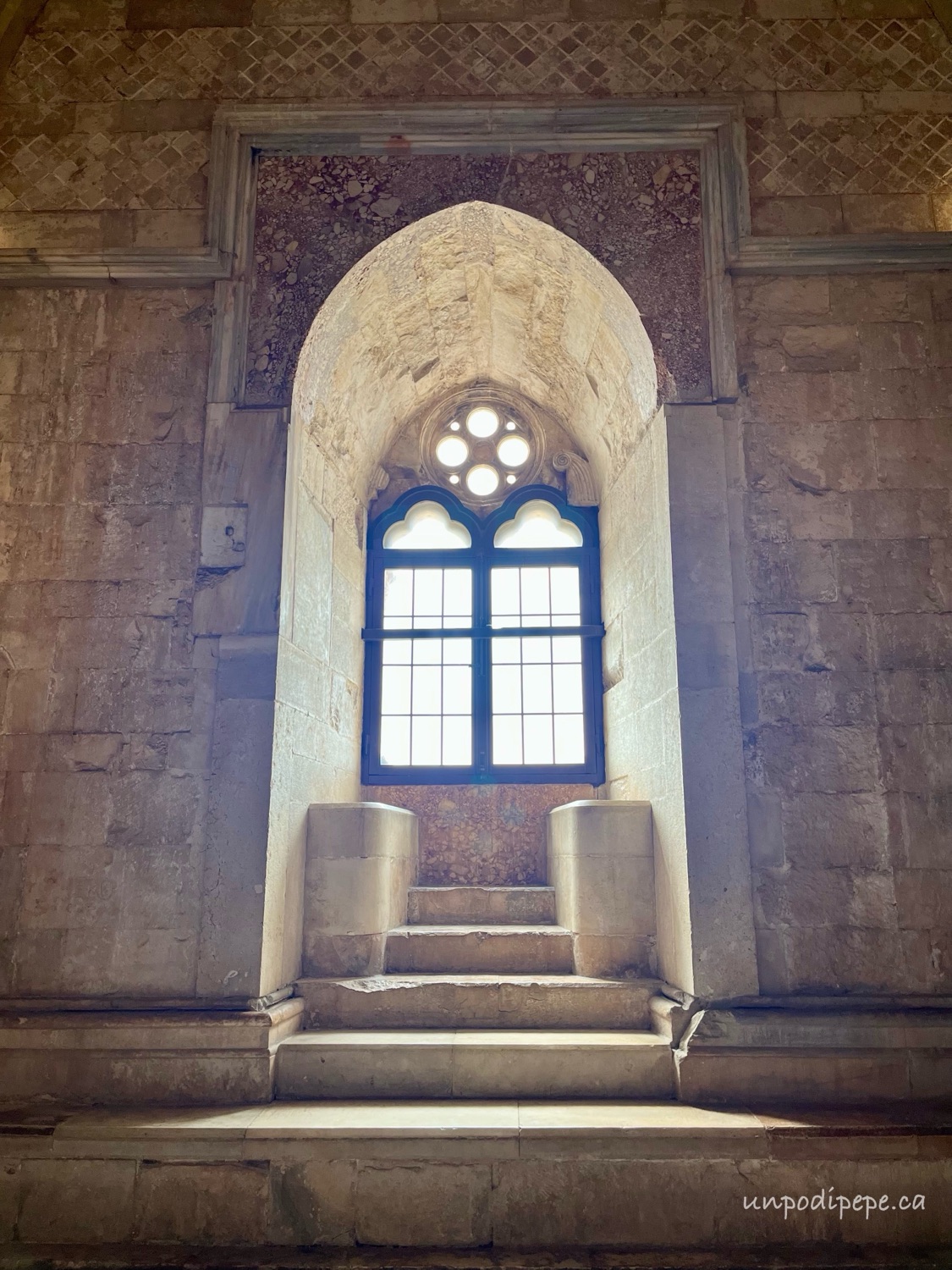
Castel del Monte was purchased by the Italian State in 1876 for 25,000 Lire, and is now protected under strict laws. It was declared a UNESCO World Heritage Site in 1996, as a unique and beautiful masterpiece of medieval military architecture and for its lack of structural alteration.  Castel del Monte is featured on the Italian one euro cent coin.
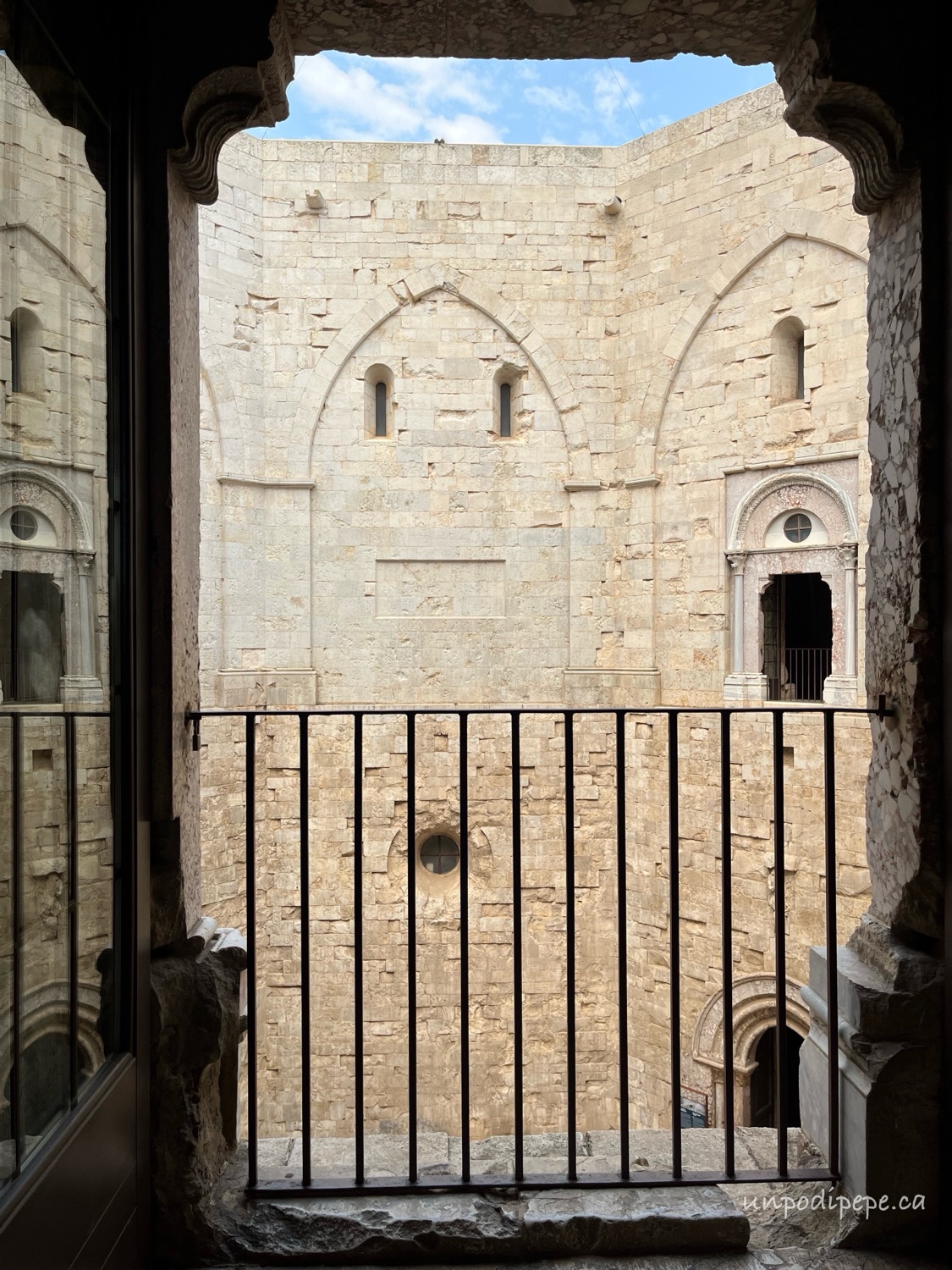
So what was the overall purpose of Castel del Monte if it was not built as a fort or hunting lodge?  Was it a celestial observatory, or a giant sundial?  Likely the primary purposes were to symbolize the power and personal genius of Federico II to reflect his cultural, pre-Humanist perspective, and to celebrate the relationship/balance between the spiritual and material world.

I have wanted to visit Castel del Monte for years. Since it is on a remote hilltop, 20 km from Andria, 35 km from Trani, getting to Castel del Monte without a car is not easy.  I got together with 6 of my friends from Orsara di Puglia and we hired a friend with an 8 passenger van to take us there.  We arrived early and then went to the Trulli di Alberobello in the afternoon. We had an amazing time! I was expecting Castel del Monte to be fascinating-but it surpassed my expectations!
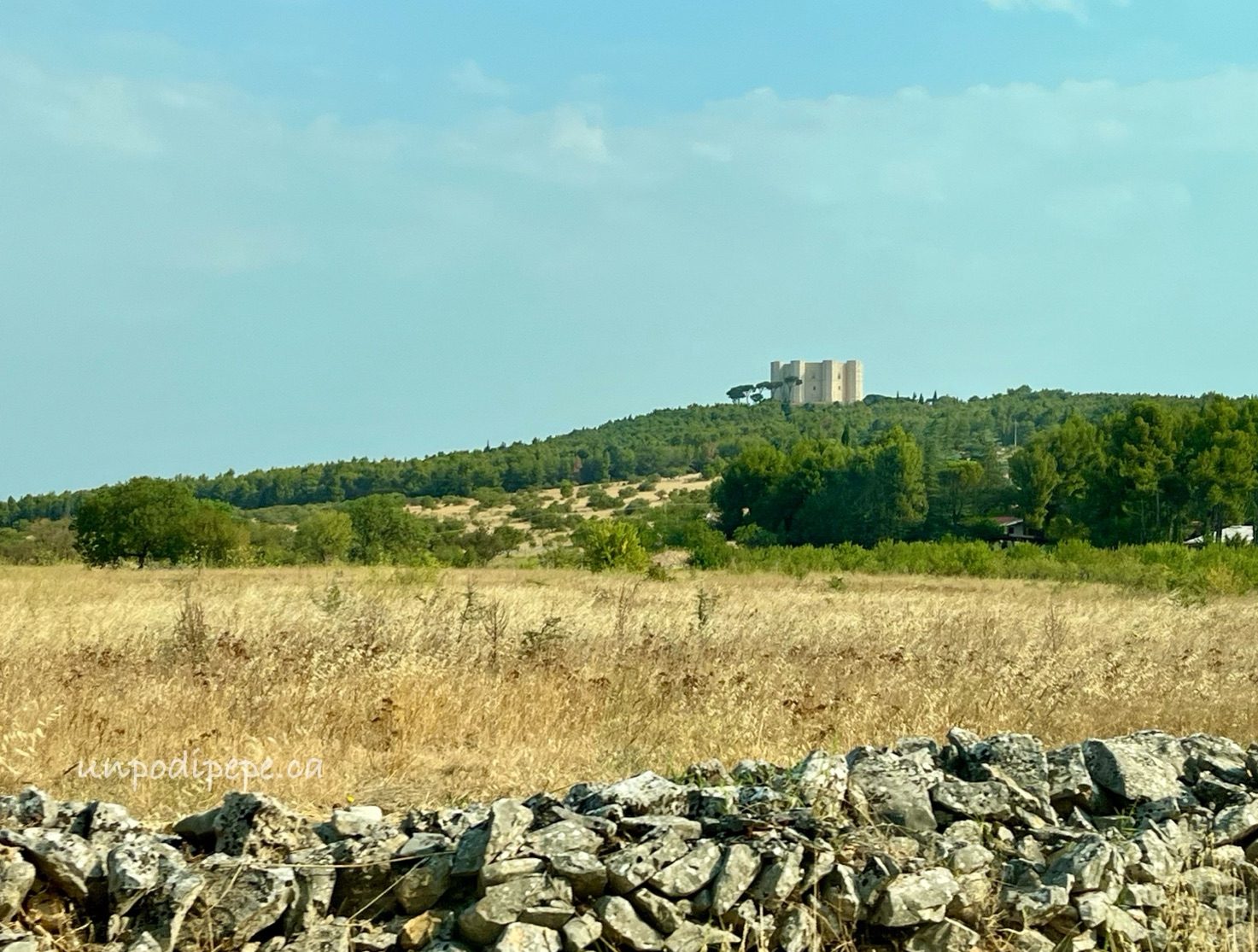
To get there by train/bus:  From Bari, take the Ferrovia Bari-Nord train to Andria.  Then either take bus # 6 from Andria station to Castel del Monte (35 minutes, five buses daily, April to October only) or take a taxi or hired car from Andria.  Trani is 35 km away and would be my choice if I was planning to stay the night.  A small parking site down the hill charges €5 for a car, and sometimes there is a €1 shuttle up the short, steepish walk to Castel del Monte.  There are a few souvenir stalls close to the parking area, and a Bar is open at the same seasonal entry times.

Opening hours: April 1-Sept 30 1000 to 1845.  Oct 1-Mar 31 0900 to 1745 Closed Dec 25 and Jan 1st.

Adult admission is €10 Audio guides (€6) are also available to maximise visit. Skip the line tickets are available but not necessary, since there are only 250,000 visitors per year. There are likely to be more visitors during the summer or winter Solstice and the Federico II festival in April.

The inside visit takes about 1 hour, but allow more time to walk around the outside, enjoy the views and take photos.  In summer, try to go in the morning, as the afternoons are hot and there is little shade.Buon viaggio, Cristina
Share this:

  • Click to share on Facebook (Opens in new window) Facebook
  • Click to share on Pinterest (Opens in new window) Pinterest
  • Click to share on X (Opens in new window) X
  • Click to email a link to a friend (Opens in new window) Email
  • Click to share on WhatsApp (Opens in new window) WhatsApp
Like Loading...

Il Pumo Pugliese

25 Sunday Aug 2024

Posted by Un po' di pepe in Bilingual posts, Italian Folklore, Puglia

≈ 7 Comments

Tags

Italian lucky charms, Portafortuna, Pugliese Traditions, Pumo, Pumo Pugliese, Southern Italy

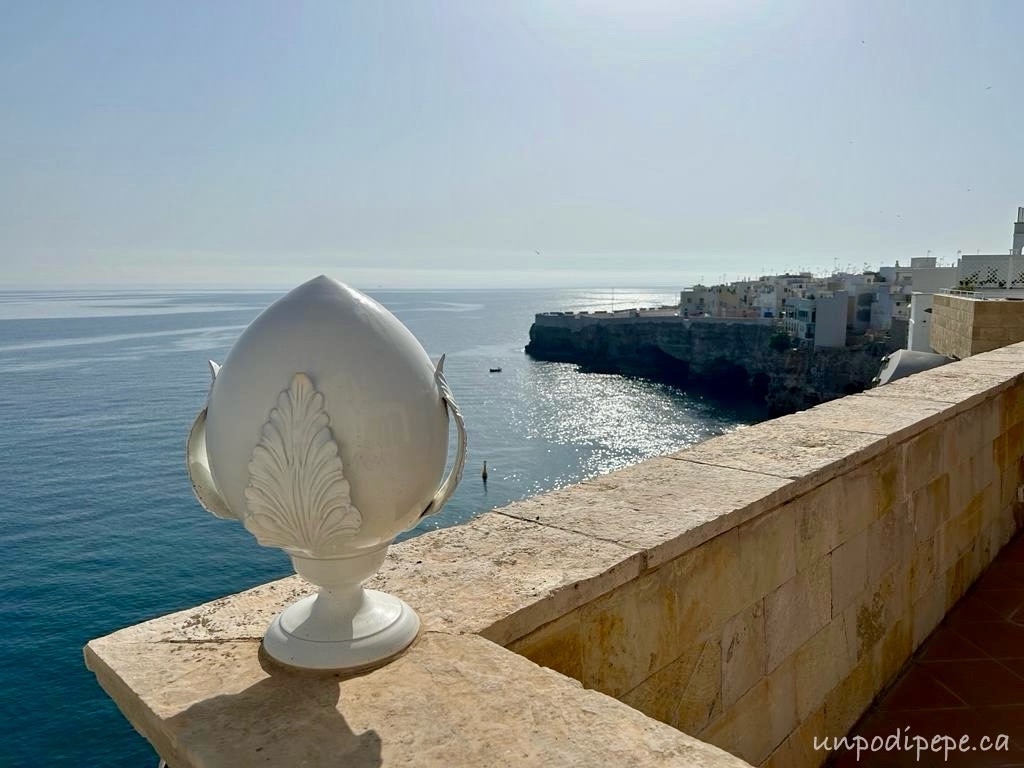
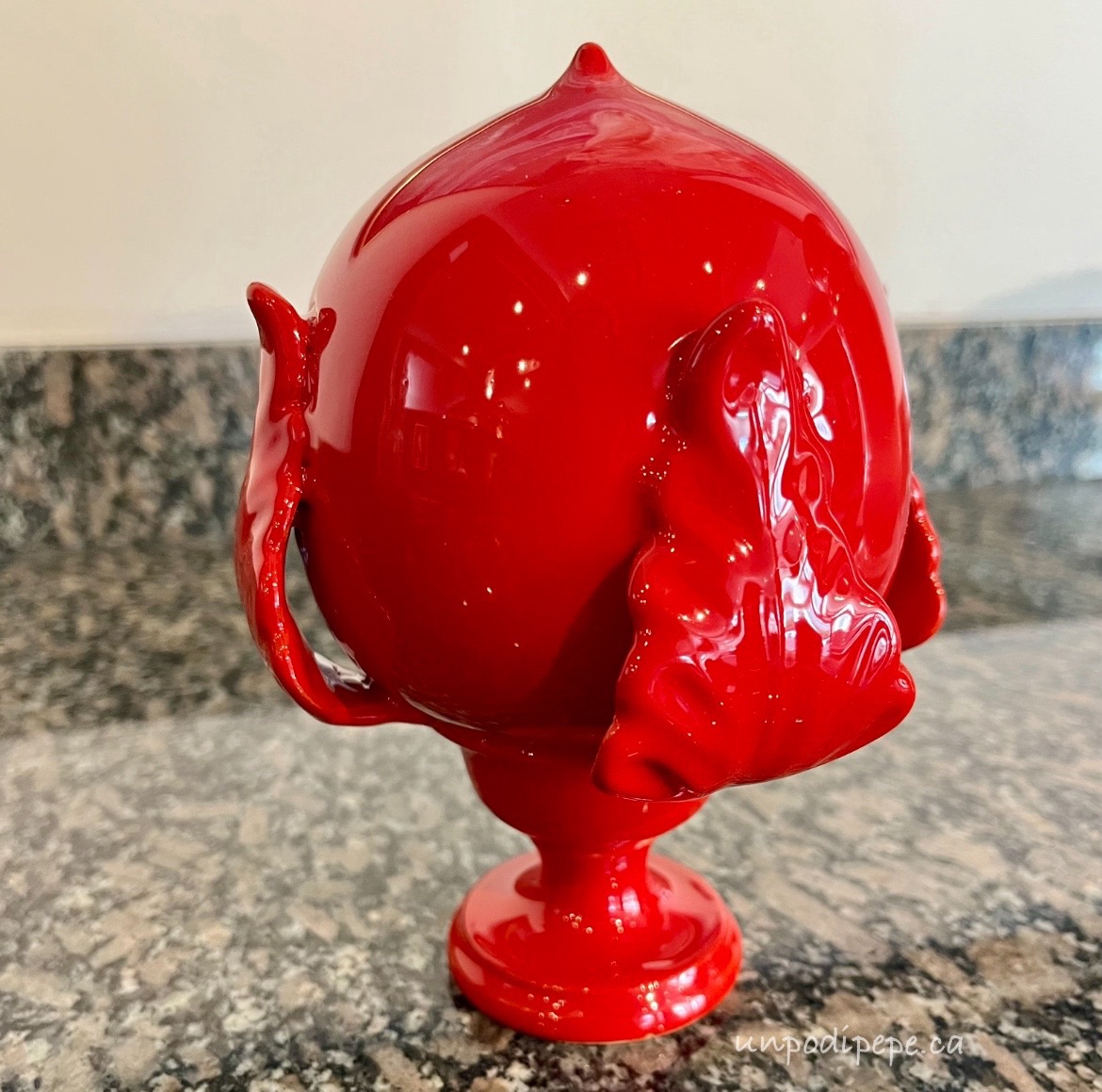
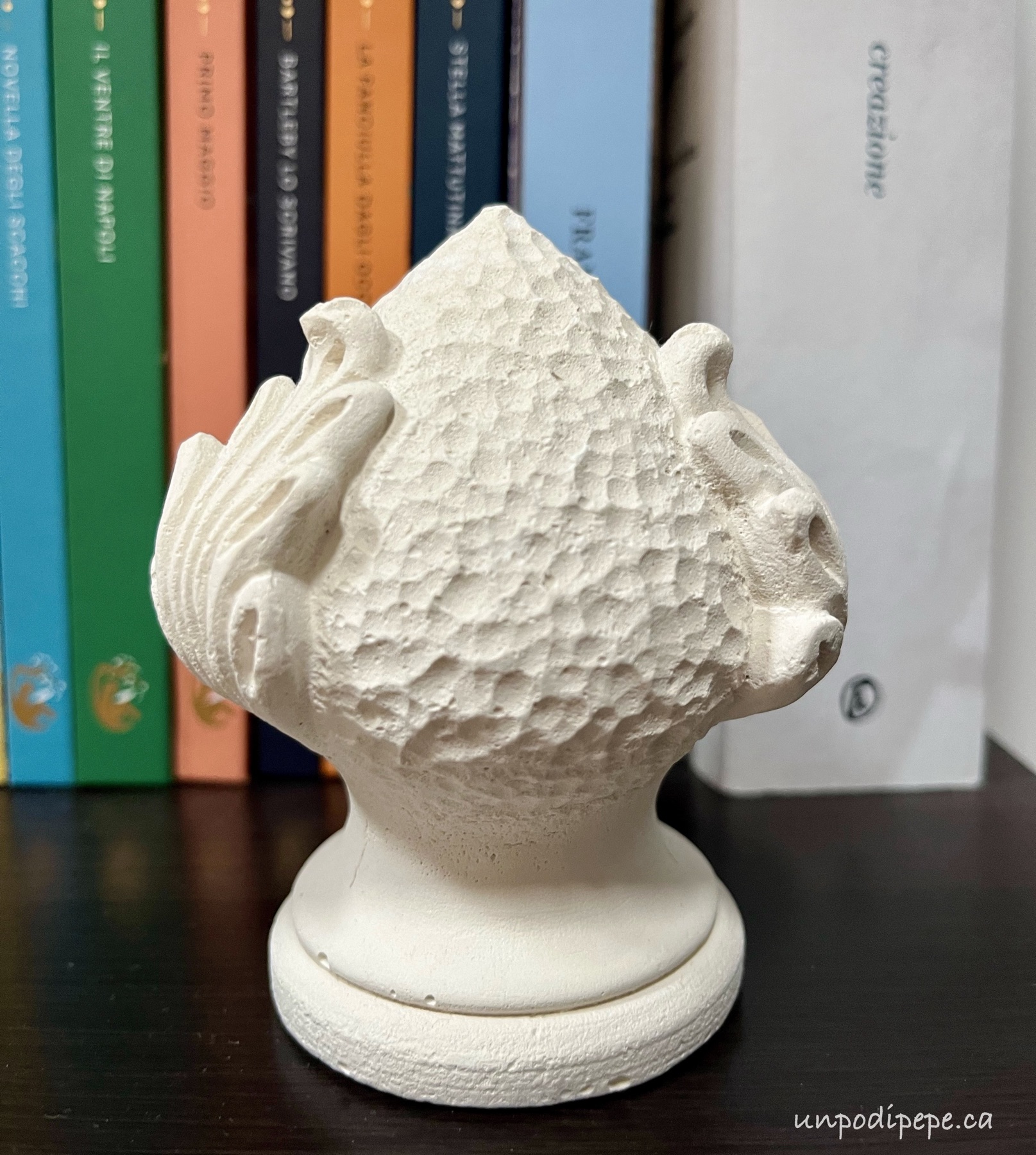
The Pumo is an artisanal decorative ceramic object in the form of a bud just about to flower, enclosed by acanthus leaves. It symbolizes the capacity to regenerate and form new life.  The acanthus leaves, the same ones found on ancient Greek and Roman Corinthian columns, symbolize long life and immortality.  For these reasons the pumo is a traditional Pugliese good luck charm, providing protection and bringing prosperity, happiness, good fortune and fertility.

The name pumo comes from the latin words pomum (fruit) and pumum (pine cone) and is tied to the cult of the goddess Pomona, protector of fruit.

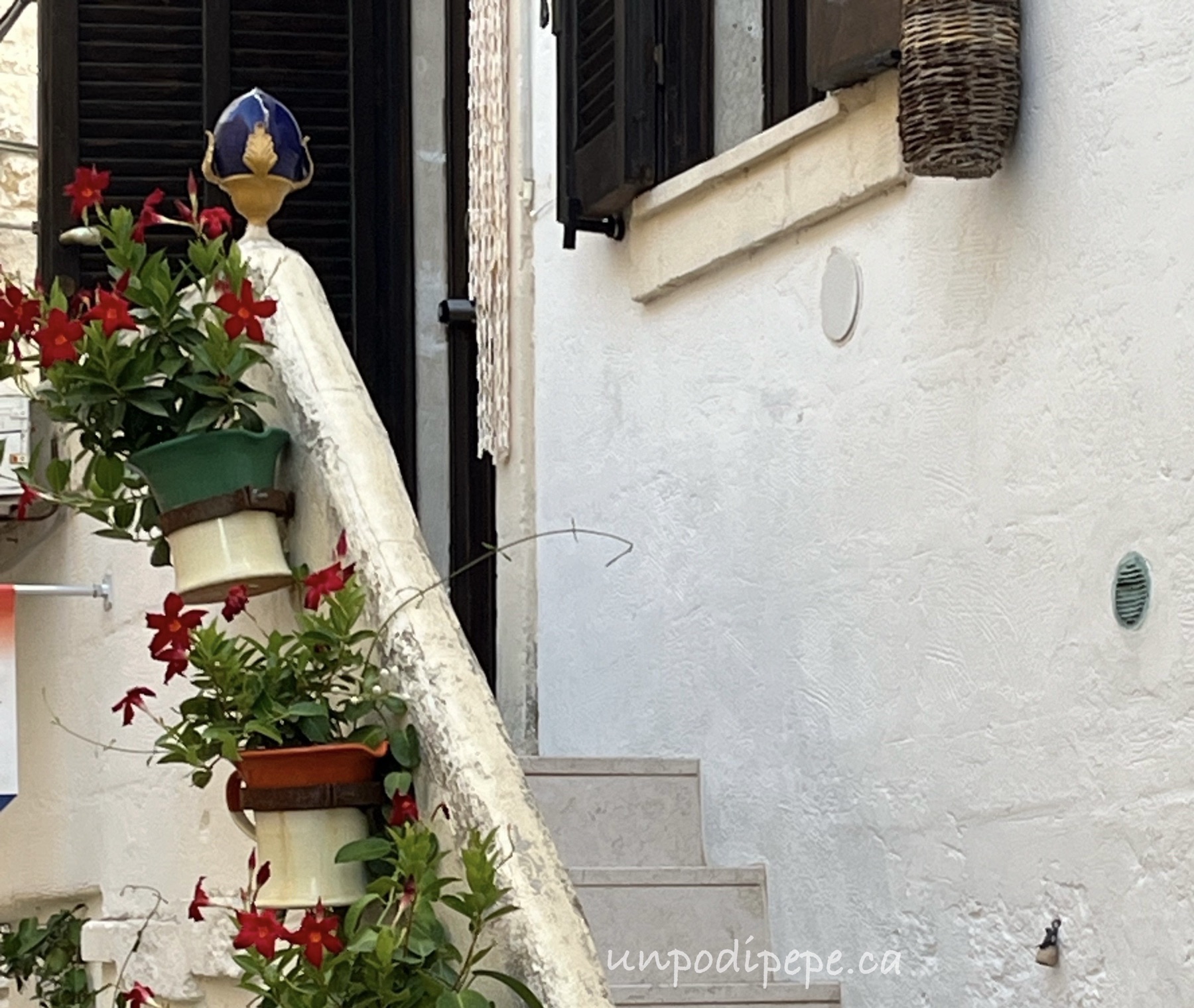
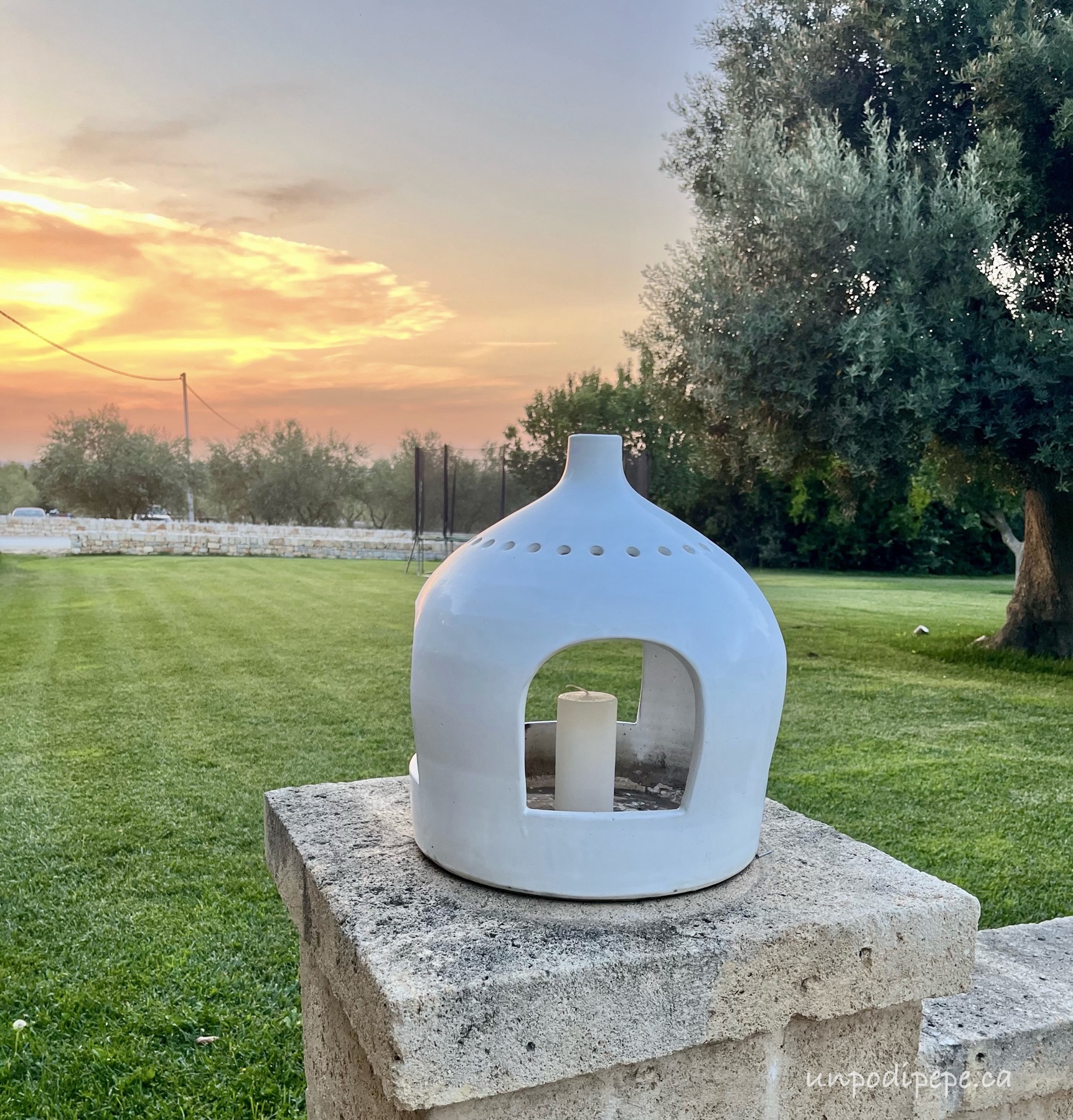
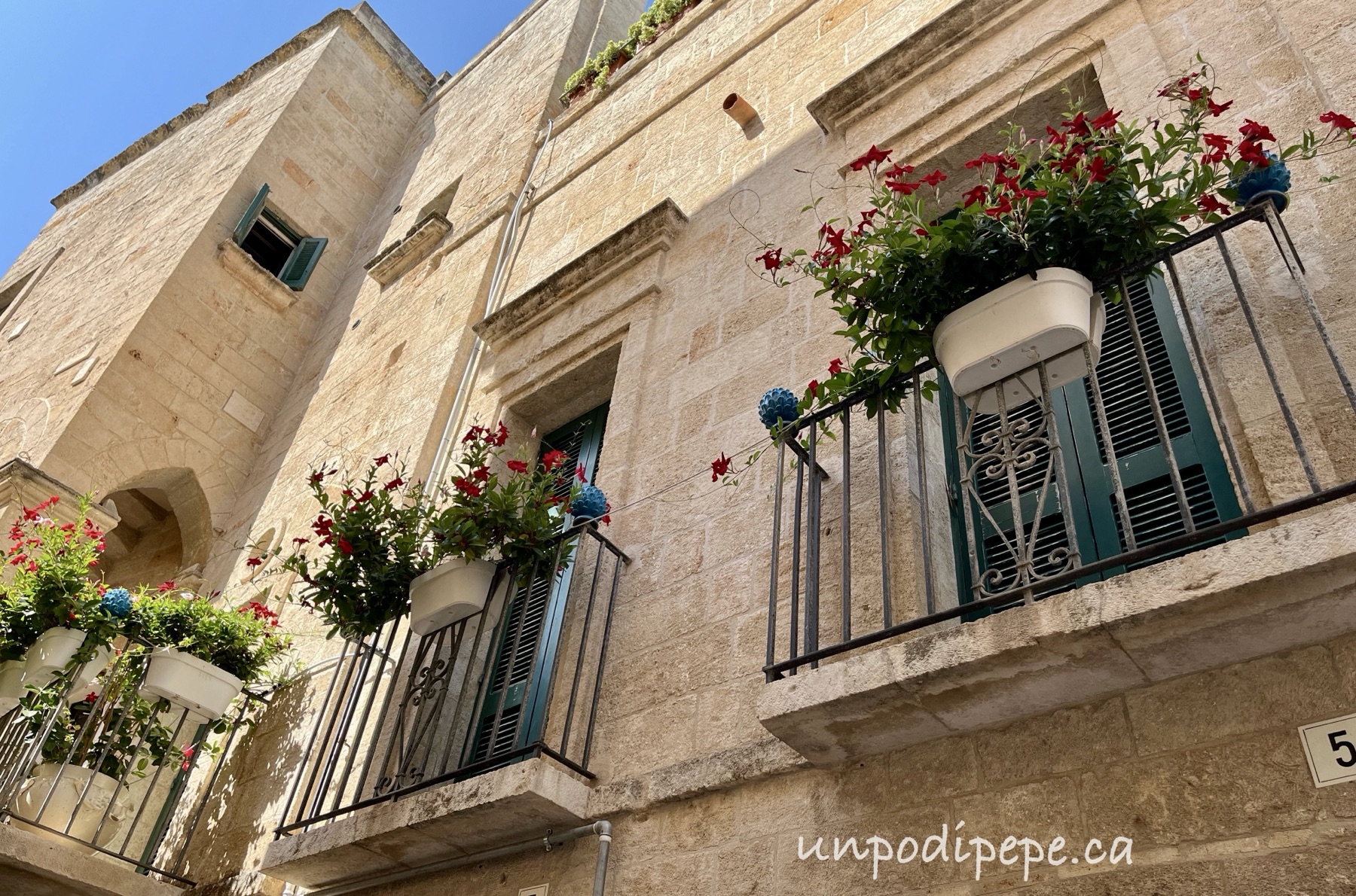
Centuries ago, noble Pugliese families used pumi (plural) as ornaments on building facades, staircases, balconies, and at the foot of the bed of newly married couples. They were also frequently given as wedding gifts.  Pumi were originally only available to wealthy families, since they were the only ones who could afford decorative ceramics.  Today the pumo is an emblem of Puglia and is often used as a piece of jewellery, a bomboniera (wedding favour) or a souvenir from Puglia.   Sometimes they are in the shape of a rose bud or pine cone and can even be room fragrance diffusers, decorative lamps, candleholders or bottles.

In Italiano

Il Pumo è un oggetto decorativo artigianale in ceramica a forma di un bocciolo in procinto di sbocciare, chiuso tra foglie di acanto. Simboleggia la capacità di rigenerarsi e formare nuova vita. Le foglie di acanto, le stesse che si trovano sulle antiche colonne corinzie greche e romane, simboleggiano lunga vita e immortalità. Per queste ragioni il pumo è un portafortuna tradizionale pugliese, che fornisce protezione e porta prosperità, felicità, buona fortuna e fertilità.

Il nome pumo deriva dalle parole latine pomum (frutto) e pumum (pigna) ed è legato al culto della dea Pomona, protettrice della frutta.

Secoli fa, le famiglie nobili pugliesi utilizzavano i pumi come ornamenti sulle facciate degli palazzi, sulle scale, sui angoli delle ringhiere dei balconi e ai piedi del letto delle coppie di novelli sposi. Venivano anche spesso offerti come regali di nozze. I pumi erano originariamente disponibili solo per le famiglie ricche, poiché erano le uniche che potevano permettersi ceramiche decorative.Oggi il pumo è un emblema della Puglia e viene spesso utilizzato come gioiello, bomboniera o souvenir pugliese.  A volte ha la forma di un bocciolo di rosa o di una pigna e può anche essere un diffusore di fragranze per ambienti, una lampada decorativa, un portacandele o una bottiglia.

Buona fortuna, Cristina

Share this:

  • Click to share on Facebook (Opens in new window) Facebook
  • Click to share on Pinterest (Opens in new window) Pinterest
  • Click to share on X (Opens in new window) X
  • Click to email a link to a friend (Opens in new window) Email
  • Click to share on WhatsApp (Opens in new window) WhatsApp
Like Loading...

Panzerotti

26 Sunday May 2024

Posted by Un po' di pepe in Mangiamo!, Puglia, Recipes

≈ 7 Comments

Tags

brea, Cucina povera, Cucina Pugliese, Italian food, pan, Pizze fritte, Pugliese Traditions, Southern Italy

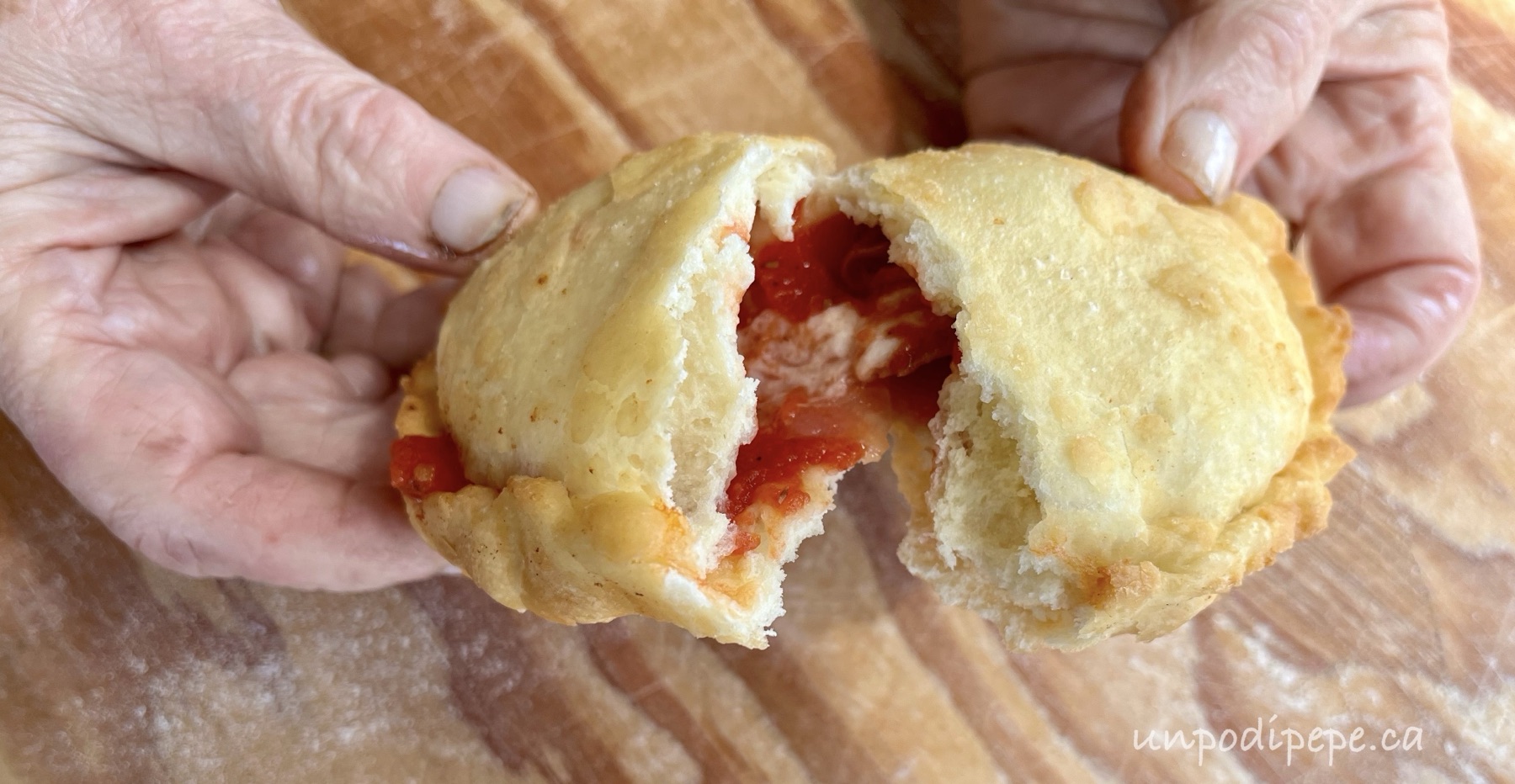
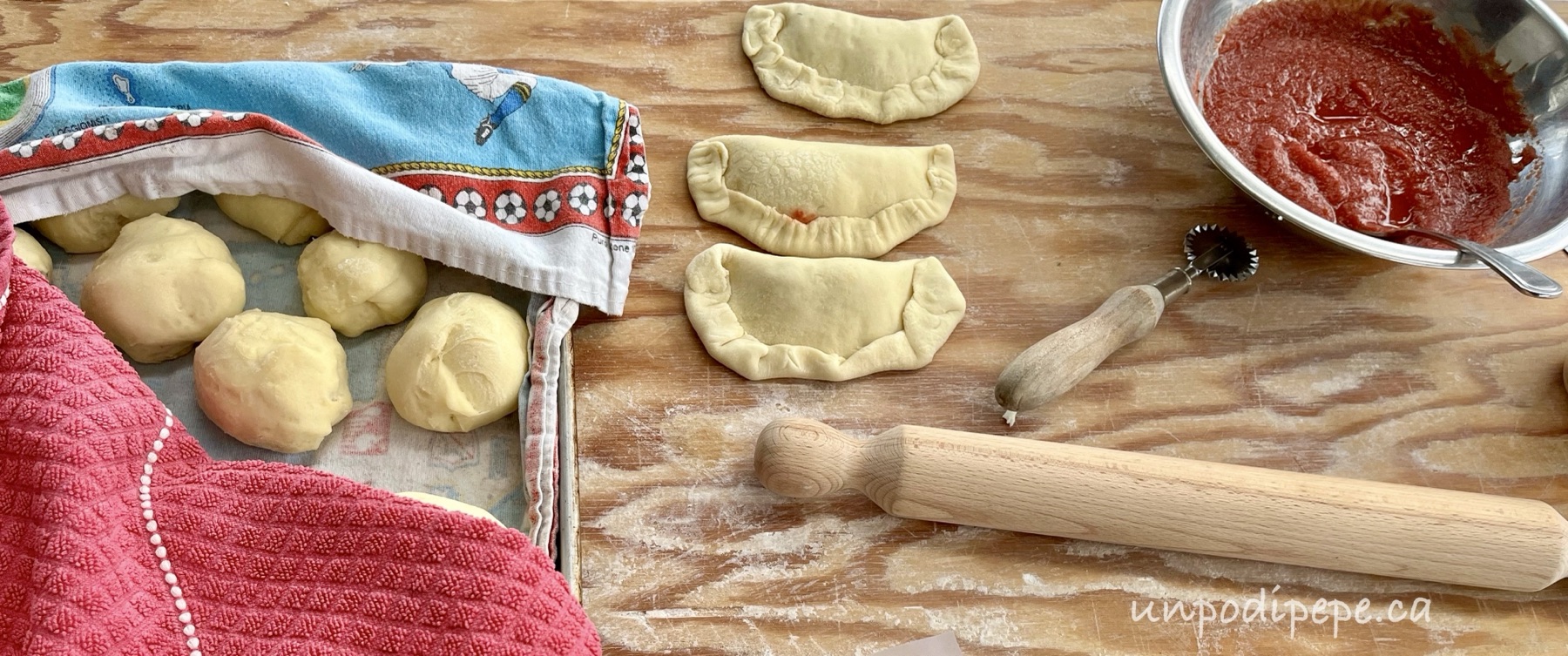
Panzerotti are a popular Pugliese street food.  In the spirit of ‘cucina povera’ where nothing is wasted, they came about from using leftover bread or pizza dough to make small, fried stuffed pizze. They are crispy outside, fluffy inside and mezzaluna (half moon) shaped.  Panzerotti can have a simple tomato and mozzarella filling, or prosciutto, prosciutto cotto (ham), or fresh sausage cut out of its casing and fried can be added.  Other common fillings include onion, olive, capers anchovies and tomato, and spicy pork, similar to a porchetta.

Panzerotto (singular) is the diminutive form of panza, dialetto for pancia, which means belly, because the dough swells up like a bloated belly when fried in oil!

Panzerotti Recipe:

Dough:

500 g total of flour:  -250g 00 flour (1¾ cups)

                                     -250g semola rimacinata*(2 cups)

10g (2 teaspoons) instant dried yeast

250 ml warm water

Pinch of sugar

60 ml (¼ cup) olive oil, plus more to grease the bowl

125 ml (½ cup) milk

5g (1 tsp) salt

Filling:

250 g passata di pomodoro or a tin of Mutti Polpa, which may need to be strained

Mozzarella -if using fresh mozzarella, drain first to decrease moisture

Prosciutto

Oregano or basil

My favourite ingredient-un po’ di pepe-a bit of pepper!

Sunflower oil for frying

Instructions:  Disolve the yeast in 1 cup water and a pinch of sugar or honey and let sit for 10 minutes.  Add all the flour(s) to a large mixing bowl or on a spianatoia (pasta board).  Make a hole in the center and add the milk, oil and water /yeast.  Mix together with a fork, slowly incorporating more flour.  Add salt last, then knead on a lightly floured surface for 10 minutes, until the dough is smooth and elastic. Add more flour if it is too wet, and more milk if it is too dry.

Lightly oil the bowl and place the dough back in.  Cover with a damp tea towel/cloth so it does not dry out, and let rise 2 hours or until doubled in size.

Roll out 14-15 balls (~ 50g each) and place on a cookie sheet lined with parchment paper.  Cover with a damp tea towel/cloth and let rise for 1 hour. The panzerotti will cook more evenly if they are all about the same size.

Add oregano or basil, and pepper to the tomato passata or polpa.  I do not add salt if using an already salty filling like prosciutto. Drain mozzarella to avoid extra moisture if using fresh.

One at a time, roll a ball of dough into a thin circle.  Add ½ to 1 tablespoon tomato mixture in the center and smooth it around with a spoon.  Do NOT go too close to the edges, and add more in the bottom half of circle.  Add other ingredients to the bottom half of the circle.  Fold in half, pressing edges firmly together, then double seal by folding the edge over again and pinch with fingers to make a fancy design. You do not want the panzerotti to open during frying.  This will make a mess of the oil.  Too much filling and /or too much moisture will also cause them to open.

Keep aside a small piece of dough to test the oil to see if it is hot enough. Fry in sunflower oil in batches of 2-3 panzerotti for 2-3 minutes per side or until golden and puffy.  You can spoon a bit of oil over the top to prevent bubbles-although I like the bubbles!  Drain on paper towels so they stay crispy and do not get soggy.  Fry right away, as if they sit, the dough continues to rise, making them more likely to open.  It is best to make panzerottiwith 2 people-1 to assemble and 1 to fry.  If you do not have 4 hands, put the filled panzerotti in the fridge as you make them, until ready to fry them all.  They are best served soon after frying. Makes about 14-15 panzerotti.  I usually double this recipe and freeze them.

Raw, stuffed panzerotti can also be frozen.  Fry them still frozen, as defrosting may turn them into soup.  Place a splash screen on top of the pan in case the oil spatters!

Panzerotti can also be baked at 200°C (295°F) for 20 minutes, although technically this makes them calzone. Brush the top with egg yolk or oil before baking or they may be dry.

*Semola or semolina is the yellow durum wheat endosperm.  Semola rimacinata has been ground once more.  It gives the dough more of a bite to it.  You can just use 500 g All Purpose flour, but I find the best results using a combination of 00 and semola rimacinata.  It is also common to just use simple pizza or bread dough to make panzerotti, but those are more like stuffed pizze fritte.

**as with all recipes involving flour, it is always best to weigh with a scale rather than measure with cups.

Buon appetito!  Cristina

Share this:

  • Click to share on Facebook (Opens in new window) Facebook
  • Click to share on Pinterest (Opens in new window) Pinterest
  • Click to share on X (Opens in new window) X
  • Click to email a link to a friend (Opens in new window) Email
  • Click to share on WhatsApp (Opens in new window) WhatsApp
Like Loading...

In my Kitchen in Puglia, 2023

12 Tuesday Sep 2023

Posted by Un po' di pepe in Amici e Famiglia, Italian life, Mangiamo!, Orsara di Puglia, Puglia

≈ 23 Comments

Tags

Barrel vaulted ceiling, Cucina Pugliese, Fiori di zucca, In my kitchen, Mozzarella di bufala, Orsarosa, Parmigiana di melanzane, Pugliese Traditions, Ravioli

I recently returned from 6 weeks at our little casa in Orsara di Puglia.  As usual, there was a lot of activity in the kitchen. Cucina povera, literally ‘food of the poor’, is what you will mostly find in Puglia.  Simple foods made with fresh local ingredients. Here are just a few of the things my family and I were up to in our tiny but functional summer kitchen in Orsara di Puglia. Since I have so much material to write about, I have kept it to gifts of food received from amici, parenti e vicini di casa -friends, relatives and neighbours.

About the space, the whole place is only 40m² (about 450 square feet) including a bedroom and bathroom.  That is about the size of a double garage.  The room with the cucina is also the living room, guest room (aka my room) and art studio. The highlight of the room is the amazing barrel vaulted stone ceiling, which is hard to fit in a photo. There is even the face of a Madonnina on one of the stones.We had a lot of visitors, many who came bearing gifts.  This lovely cestino, filled with locally grown vegetables was dropped off by one of our neighbours.

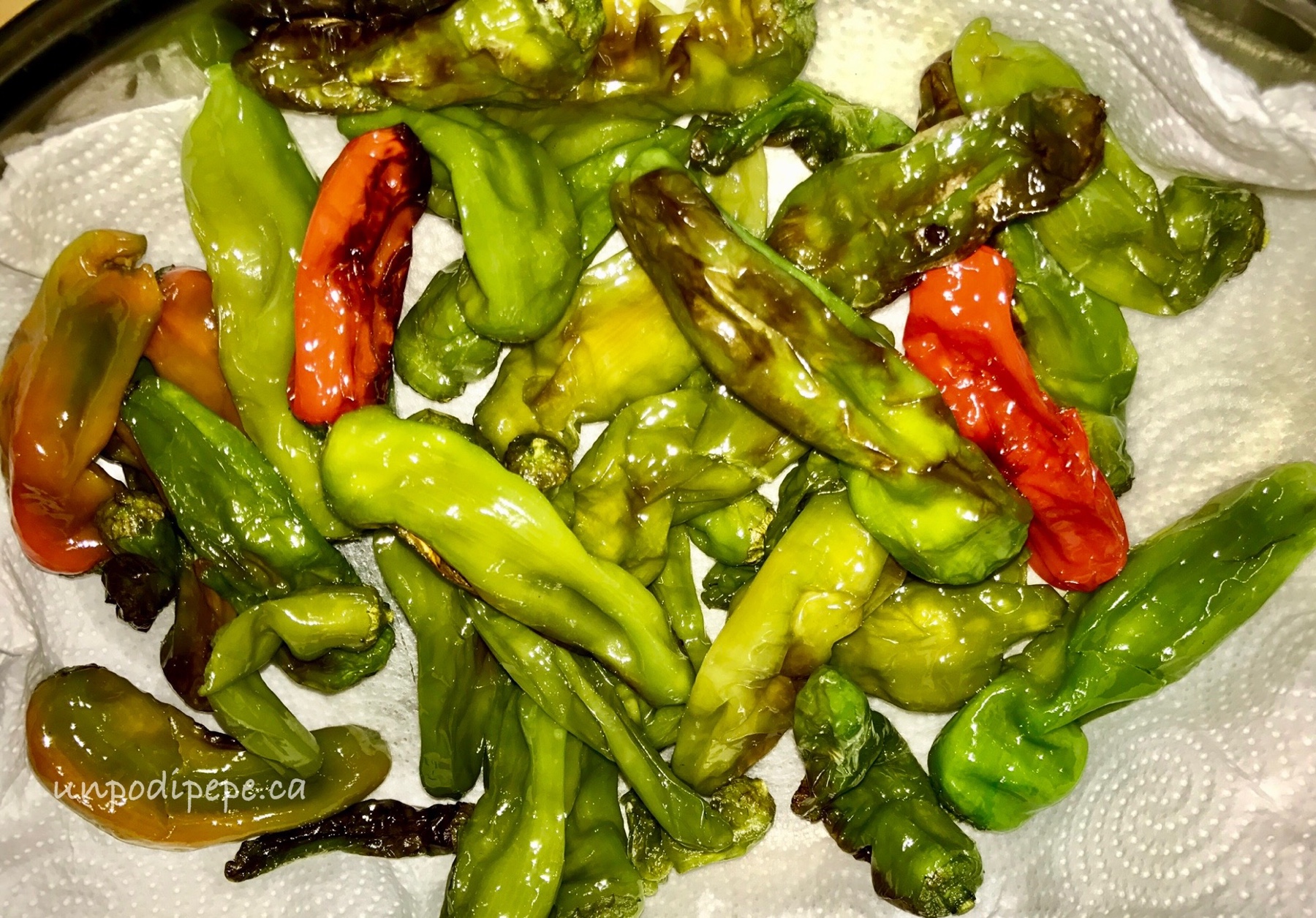
The melanzane (eggplant, or aubergine for the Brits) were stuffed and baked. The pulp was fried up with a bit of ground beef and pork, garlic, breadcrumbs and parmigiano, then stuffed and topped with tomato sauce and mozzarella. They were soooo yummy, but we only made them once, as it was so hot that having the oven on was painful!The long green and red peperoni or peppers in the cestino are called friarill’. They are sweet tasting, and as the name implies, are usually fried. Friarill’ on fresh bread taste heavenly!The gift of fresh eggs is amazing.  I used half of them to make fresh egg pasta for ravioli di ricotta e spinaci.  I froze them for the festa della Madonna della Neve Aug 5th. Freezing them was hard, as the freezer is so tiny. I make these often in Vancouver, and they are good-but the goat milk ricotta here is so incredibly good that they taste better.I was happy to use my spianatoia one more time.  That is the wooden pasta rolling board. It has a lip on one end so it stays put on the table and a handy carrying handle, just like the chair.

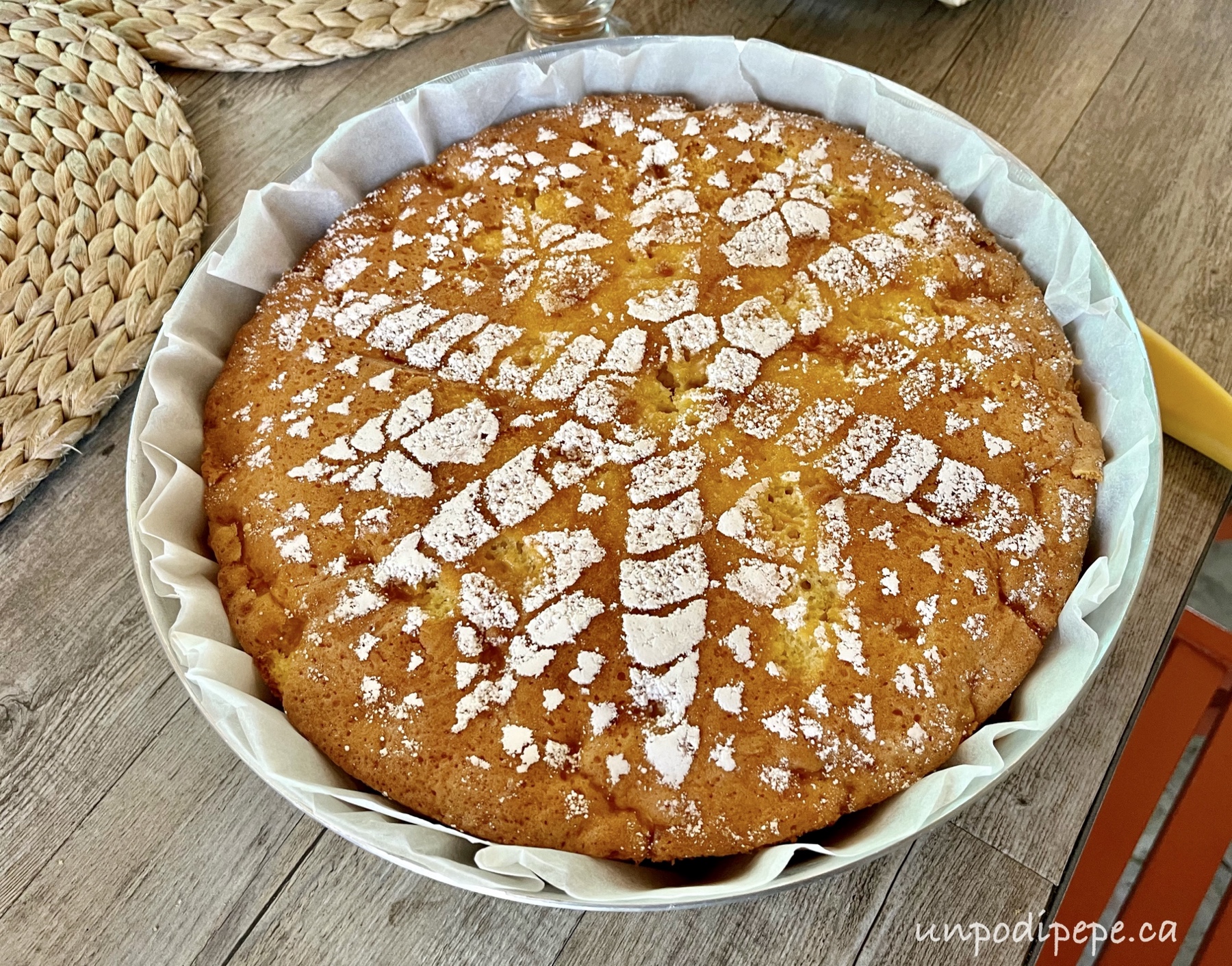
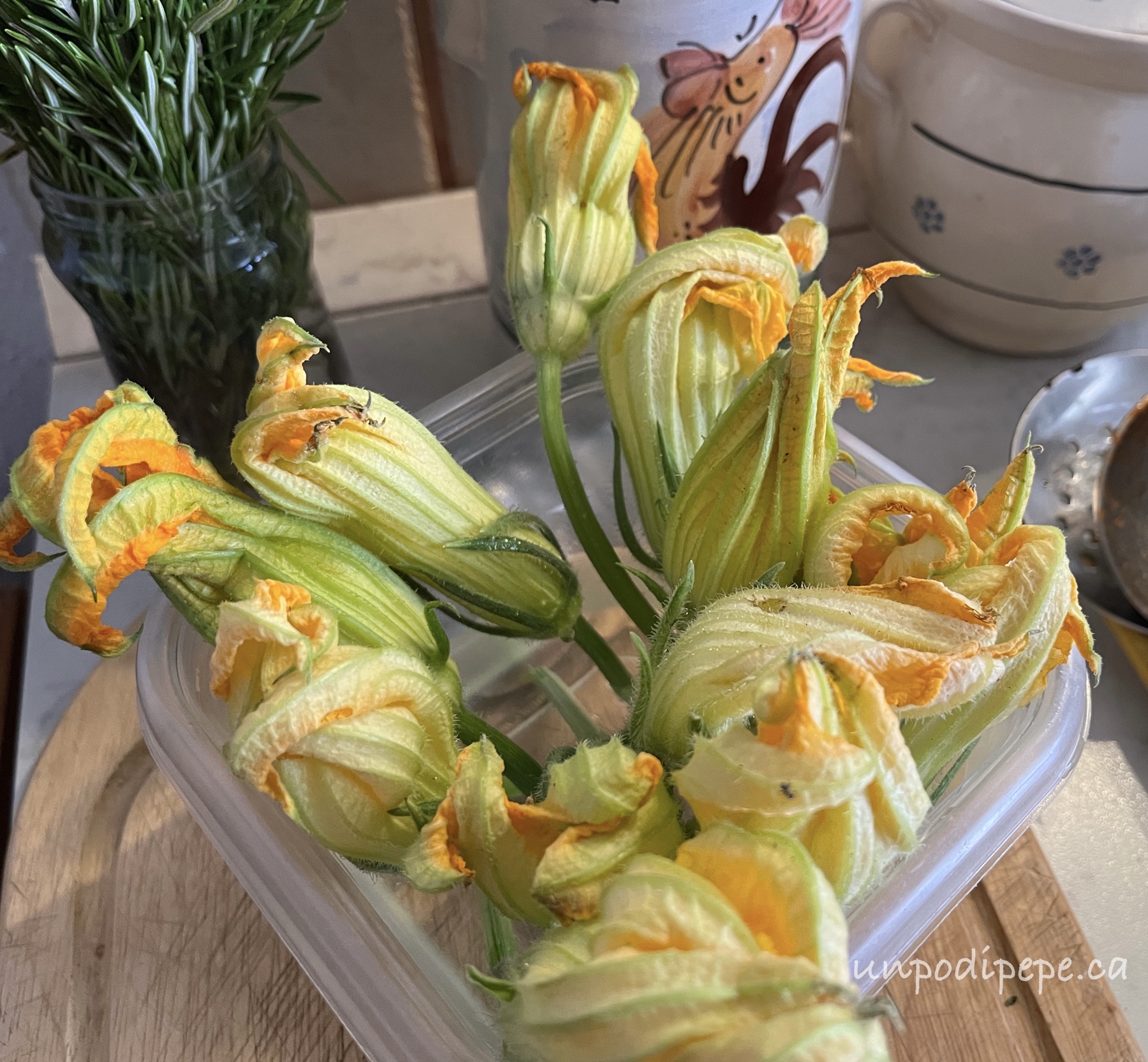
Mamma and I used the rest of the eggs to make Torta di mela, an apple cake.  We made it to bring to our family grigliata -BBQ- at the olive grove that was my Nonno’s. It had to be baked at 1 am as it was just too painful to turn the oven on during the day.La torta looked a bit plain, so I placed a clean crochet doily over the top and sprinkled icing sugar all over. The fancy shmancy design was left on the cake. I often have to do this to my Torta Caprese because the top always collapses a bit. Fiori di zucca are one of my favourite summer foods-and my favourite bouquet of flowers. My Zio brought over a LOT of them one day, an hour before we were going to be eating.  I stuffed some of them with what I had available. There were a few trecce-fresh, braided mozzarella, in the fridge and basilico growing out on the tiny terrazza. Once they were stuffed, I battered them in flour and mineral water with a few bonus ingredients like parmigiano and basilico, and then fried them.

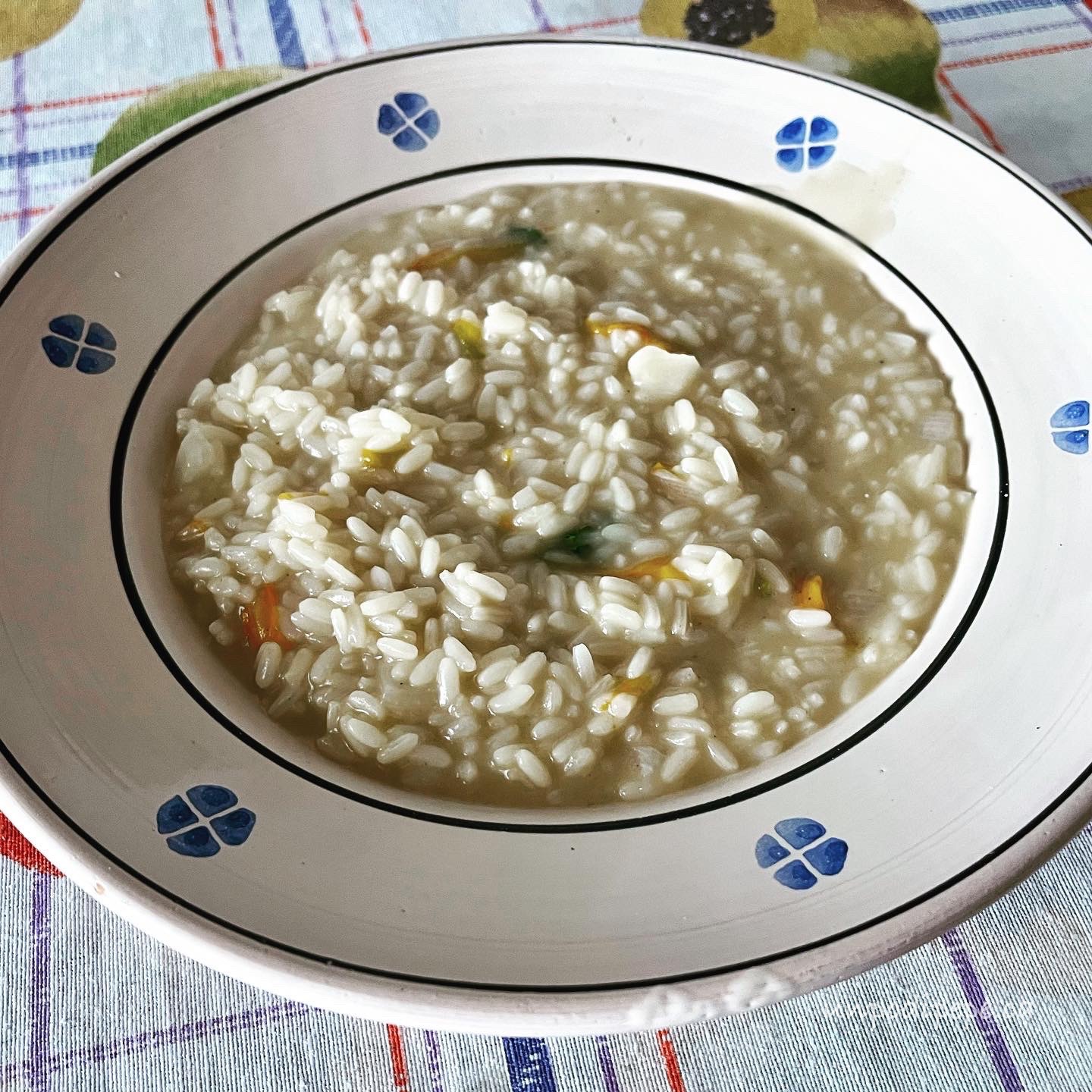
They were crunchy and delicious, but I only had time to use up less than half of my precious fiori.  Fiori di zucca are extremely delicate.  They only last a day 2 and do not freeze well.  Not wanting to waste them, once I finished the dishes, I drizzled olive oil on a baking pan, borrowed some caciocavallo from my neighbour, and stuffed a bunch more.  The stuffed fiori were placed in the pan, which went straight into the freezer to use a 4 days later.  Great idea, no?  Well-yes and no.  They had to be baked, since attempting to fry these beauties after freezing would turn them into mush. Baking them at 1am was not an option. We had to endure the heat but they were worth the sweat!A few fiori were saved to make risotto the next day.  This was a new thing for me, as I have never had so many fiori that I could make risotto.  More recipe ideas and harvesting tips can be found in the post Fiori di zucca. My amico Peppe Zullo gave me a few bottles of his vino rosato Amarosa.  Apparently the name Amarosa has been trademarked by someone else, so the vino is getting a name change.  It will now be named after Orsara’s women’s soccer (or football for the Brits) team….Orsarosa!Mercoledi/Wednesday is mozzarella di bufala day.  I came home from Procida on a Thursday and a friend had left me these melt in your mouth ones. They are from Masseria Li Gatti near Torremaggiore, SanSevero (FG). The mozzarella are in the new Pugliese serving bowls my sister brought from Polignano a Mare. The piattaia is full so I will need to find somewhere to display them.I hope this post has made you either hungry and drooling or wishing you could visit Puglia yourself.  Perhaps it has done both? Perché no?  I am already planning my next visit!  Buon appetito e buon viaggio, Cristina
Thanks Sherry from Australia for hosting the monthly food blogging event, In My Kitchen (IMK). Click the link to Sherry’s Pickings to read about other world kitchens this month. Buon appetito, Cristina

Share this:

  • Click to share on Facebook (Opens in new window) Facebook
  • Click to share on Pinterest (Opens in new window) Pinterest
  • Click to share on X (Opens in new window) X
  • Click to email a link to a friend (Opens in new window) Email
  • Click to share on WhatsApp (Opens in new window) WhatsApp
Like Loading...

Polpo e patate

20 Tuesday Jun 2023

Posted by Un po' di pepe in Italia, Mangiamo!, Photography, Puglia, Recipes, Travel

≈ 6 Comments

Tags

Cooking octopus, Imerovigli, Mattinata, Octopus and potato salad, Polpo, Santorini, Southern Italy, Traditional recipes

Polpo is one of the joys of visiting the Adriatic in summer.  Polpo or polipo is octopus, from the ancient Greek polypous, meaning ‘many footed.’  In Italiano, polpo and polipo are both correct terms for octopus! It is one of my favourite foods…I love it grilled, or in a summer salad, especially polpo e patate, a cold potato and octopus salad.  Last year, between camping on the beach in Mattinata, a family wedding, a side trip to Santorini, and mamma’s kitchen, there was a lot of polpo in my life.  In this post, I will share some of my polpo photos, instructions for cooking, and how to make polpo e patate.

I had polpo each of the 5 days I was in Santorini.  There it is called Octapodi χταπόδι, meaning ‘eight footed’. The view from the landing outside my hotel room in Thira was the perfect place to sketch.  When I finished sketching, it was too nice to leave.  Instead of going out to dinner, I walked to a restaurant and got takeout octapodi with couscous.  I brought my feast back and ate it at my sketching spot while watching the sunset.  Yiasou!

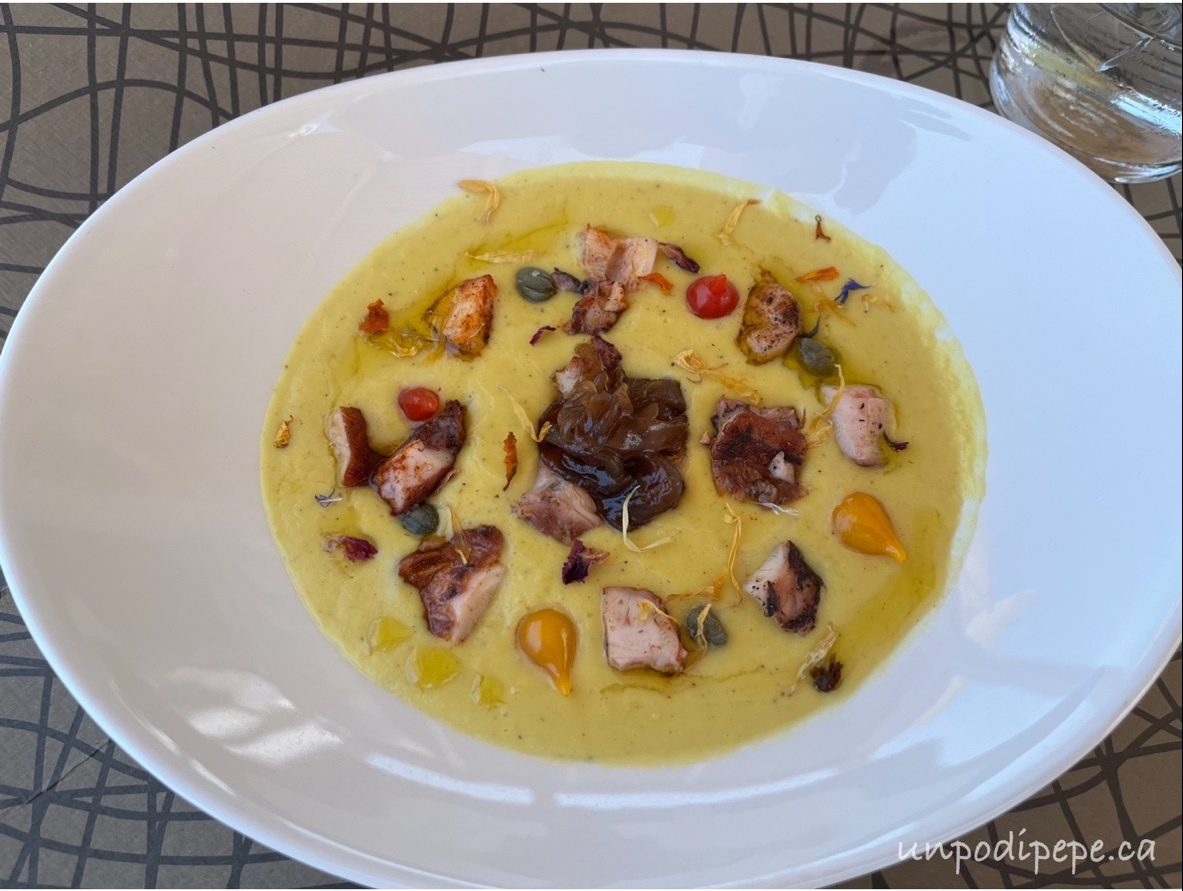
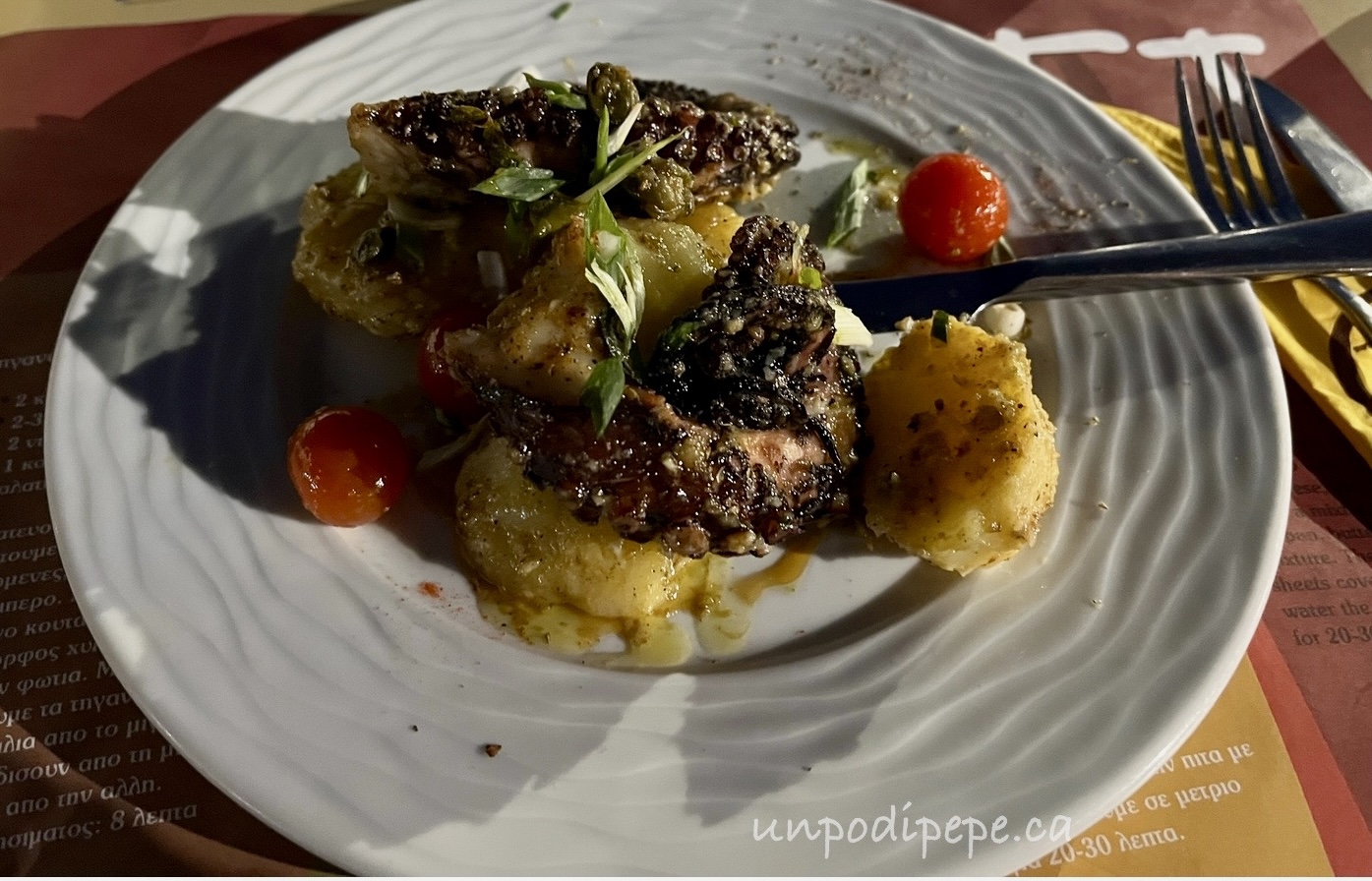
In Imerovigli, I had this orgasmic fava bean puree with grilled polpo, caramelized onions and capers. I have to try making this some time. Also in Imerovigli, I had a late night dinner of grilled octopodi on potatoes.

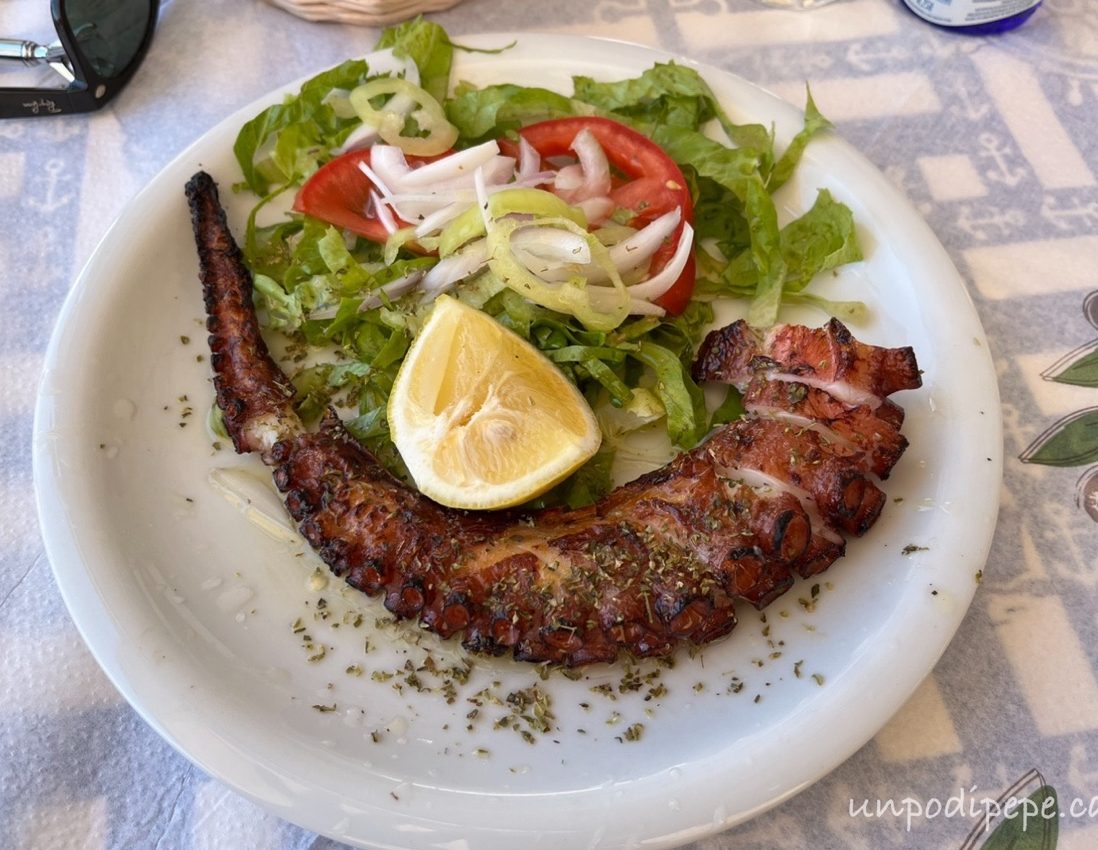
Santorini’s small port has a few seafood restaurants, where I had this very Greek grilled octopodi with oregano.

This photo was taken at the outlet mall in Molfetta.  Yes, polpo is mall food in Puglia!

The day after the matrimonio in Puglia we had a long table dinner in an olive grove by the beach in Mattinata.  This is the gorgeous polpo e patate!  #cookinggoals!

When camping on the beach with my cugini, we often grill polpo and then make a salad with it. The mobile fishmonger il pescivendolo  (pesh·ee·ven·DOH·loh) drives around to the different campsites selling fresh seafood. More about this in Campeggio sul Gargano.  We also have polpo on the grill when we go to my nonno’s olive grove for a grigliata.

This photo of mamma washing polpo in our tiny kitchen in Orsara di Puglia was popular on Instagram.  She made a salad, without potatoes but still yummy! The second one was cooked in a tomato sauce the following day.washing octopus

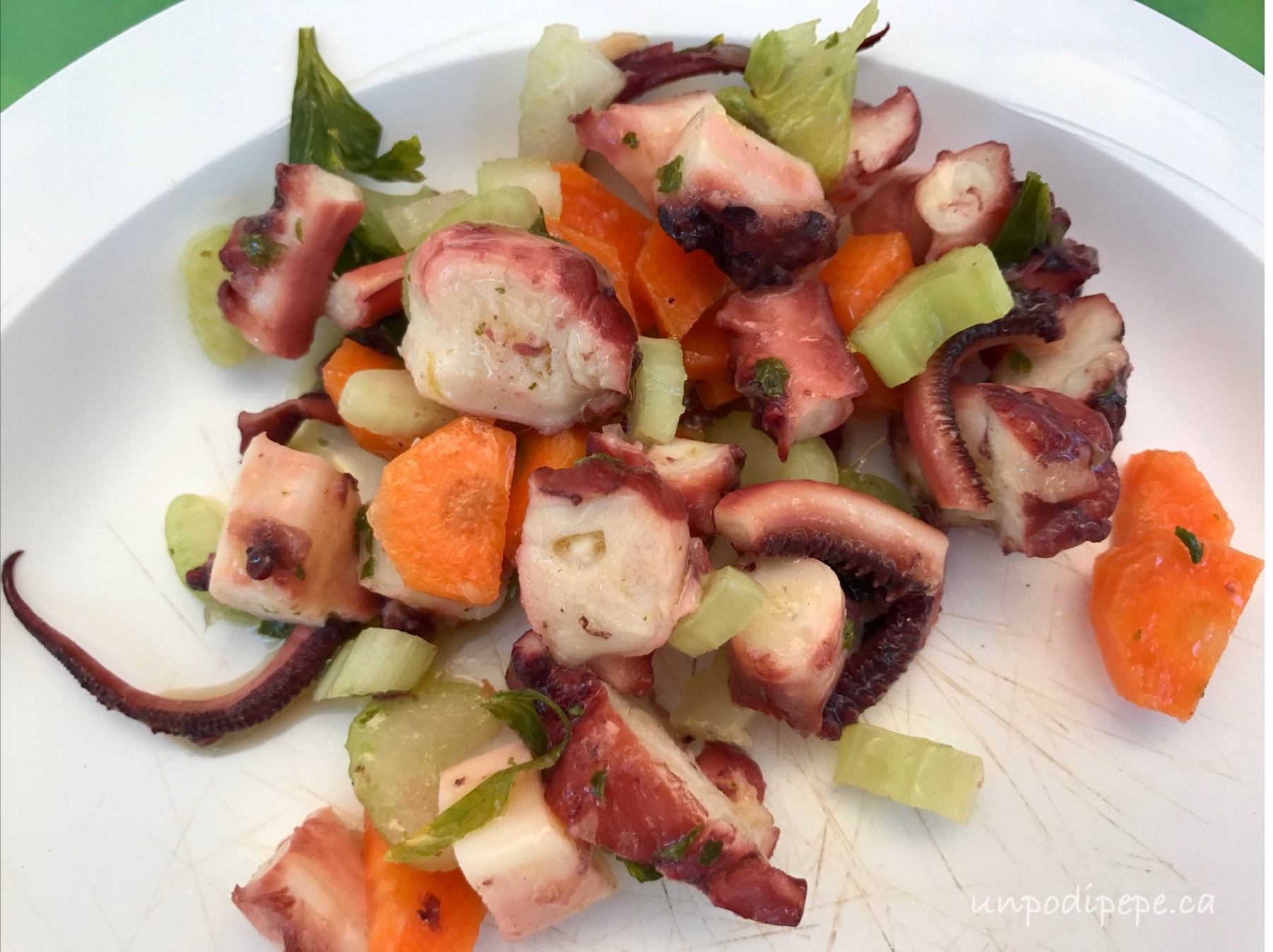
Octopus saladPeople apparently do all sorts of crazy things to tenderize polpo.  It does not need to be beaten against rocks, bashed with a meat tenderizer, or hung on the clothesline!  It just needs to cook in water long enough to tenderize the tough chewy collagen, which is about 1 hour per kg.  Once cooked, it can be eaten, grilled, pan seared in olive oil or saved to use later.  Freezing also helps tenderize, so previously frozen polpo does not need to cook for as long.

Polpo is hard to find in Canada!  I bought a pack of 4 legs/tentacles from Spain, but then had to freeze it as I could not use it right away.  Here is my ‘measurements optional’, flexible recipe for polpo e patate.  It is made with the legs only, as I am not as adventurous as mamma!

Ingredients:      1 kg (2.2 lbs) polpo

                         500 g (1.1 lb) potatoes

                         Good quality extra virgin olive oil

                         10 ml (2 tsp) lemon juice, freshly squeezed

                         10 ml (2 tsp) chopped prezzemolo-Italian parsley

                         2-3 cherry tomatoes

                         1 bay leaf

                         Splash of vinegar

                         100g chopped celery and/or carrots

                         15 ml (1 tsp) capers

                         1 garlic clove, finely chopped (optional)

                         Peperoncino (optional)

                         sale, black pepper

Instructions:

  • Wash and rinse the polpo. I had already done this before freezing it.
  • In a pan, add salt, bay leaf, cherry tomatoes, lemon slices and a splash of vinegar. Cover with water
  • Bring to boil, then lower heat and cook 1 hour. It should be tender enough so that a knife can pierce the polpo with little resistance.
  • Turn off heat and let sit in the cooking water to cool
  • Pick up and immerse 3 times in the hot water if you want the tentacles to curl.
  • When cooled, polpo can either be grilled, pan seared, made into a salad, or stored in the fridge for up to 3 days
  • While cooling, cook potatoes in boiling salted water. Peel and cut into pieces
  • Cut cooled polpo into rounds or pieces. Add to a bowl with potatoes, olive oil, pepper, lemon juice and prezzemolo. You can also add finely chopped garlic and capers, or peperoncino for a little spice.  Add celery, carrots and cherry tomatoes and mix. Add extra prezzemolo and lemon slices for garnish

I didn’t have any celery and was out of capers.  Use whichever of these ingredients you have at the time.  The photos weren’t taken in the best light, but it was delicious! My next one will look like the one I had in Mattinata!

Are you a polpo fan too?  Have you ever cooked it yourself? Let me know in the comments.  Buon appetito, Cristina

Share this:

  • Click to share on Facebook (Opens in new window) Facebook
  • Click to share on Pinterest (Opens in new window) Pinterest
  • Click to share on X (Opens in new window) X
  • Click to email a link to a friend (Opens in new window) Email
  • Click to share on WhatsApp (Opens in new window) WhatsApp
Like Loading...

Appuntamento con la Daunia

18 Wednesday Jan 2023

Posted by Un po' di pepe in Amici e Famiglia, Mangiamo!, Orsara di Puglia, Puglia

≈ 11 Comments

Tags

Amarosa, Dalla terra alla tavola, Italian food, Monti Dauni, Peppe Zullo, Pugliese Traditions, Southern Italy, Villa Jamele

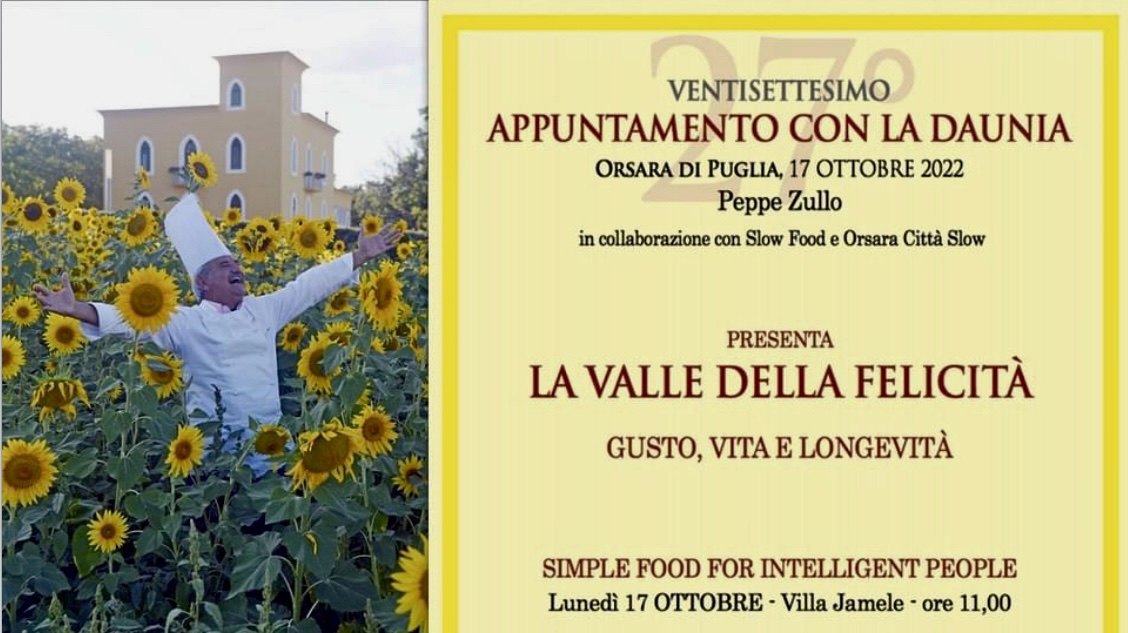
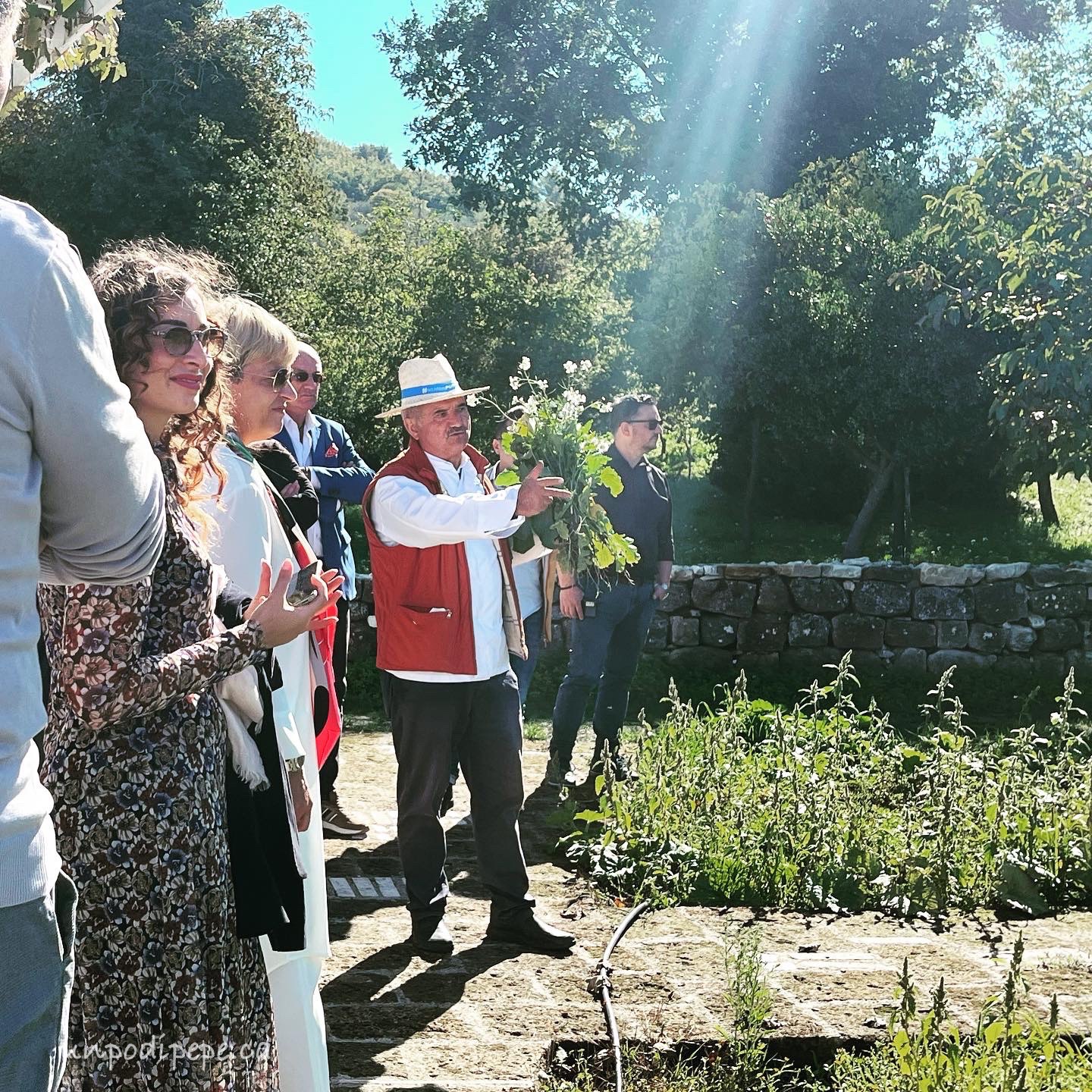
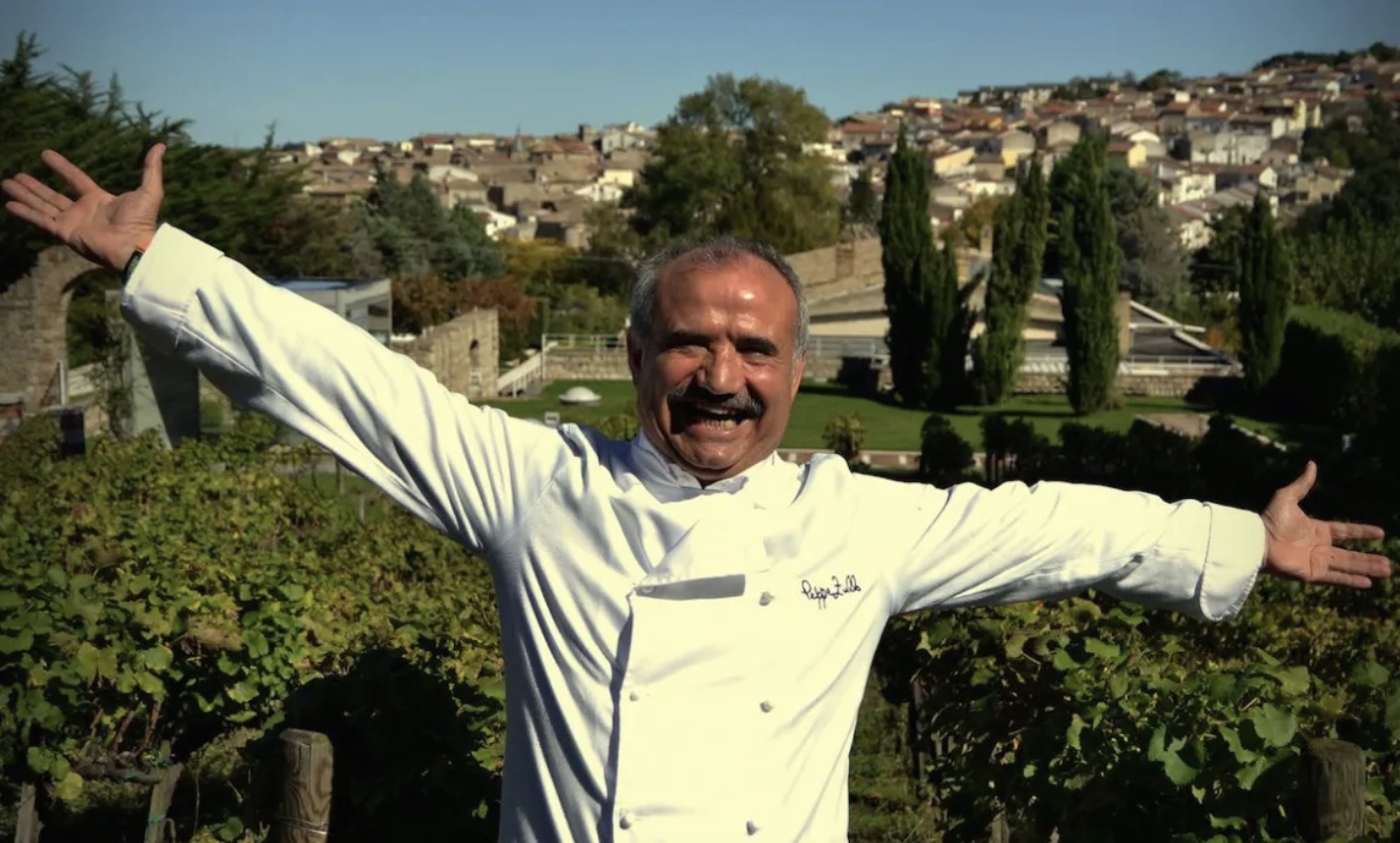
On October 17th, I attended the 27th edition of Appuntmento con la Daunia, hosted by my amico Peppe Zullo. Every year I receive an invitation, but this was the first time I was actually in Italia in October.   La Daunia is the modern day Provincia di Foggia, named after the people who lived there under King Daunus.

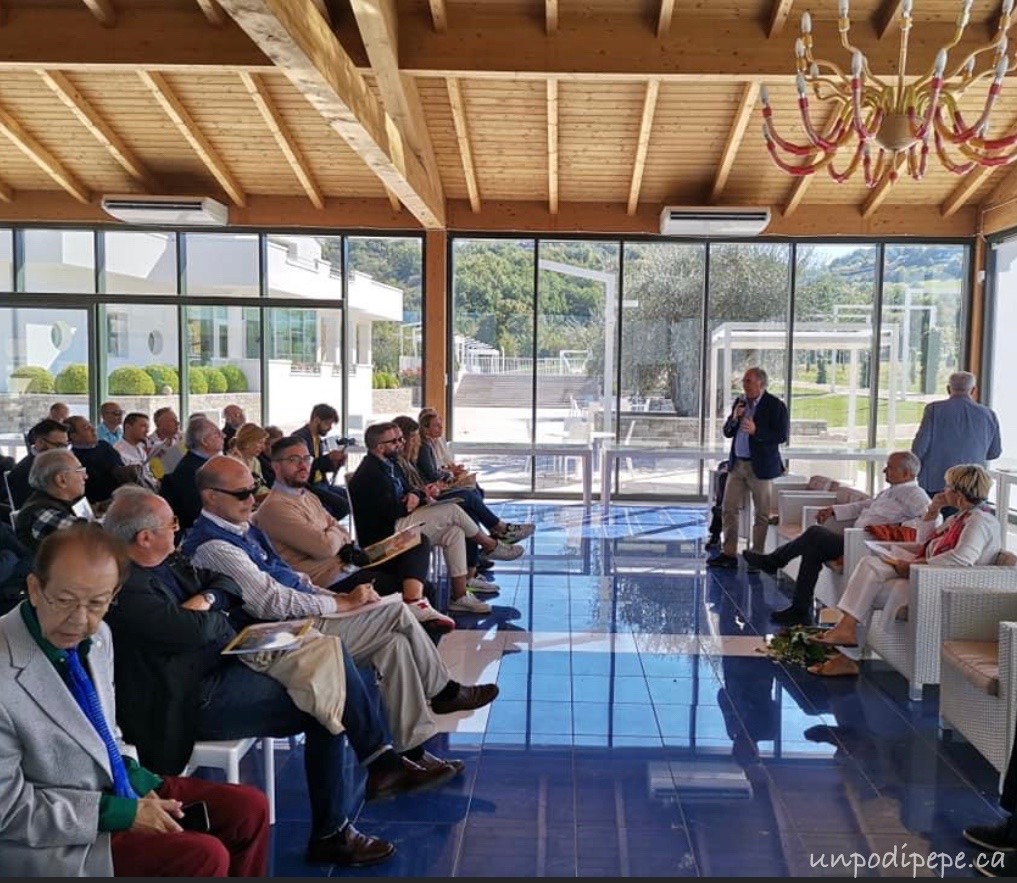
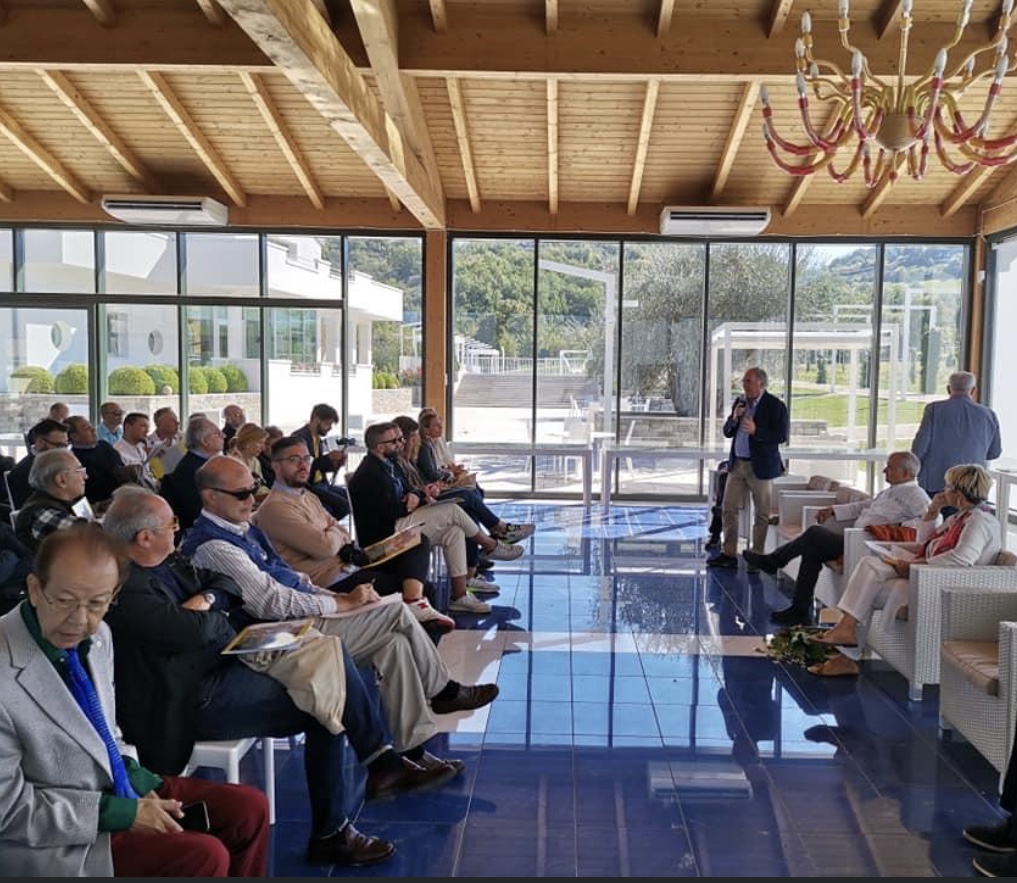
Held at Villa Jamele in Orsara di Puglia, the event featured local food and wine, focusing on the biodiversity of the area.  It was attended by journalists, food writers, and those involved in the local enogastronomic industry. There were various site tours, then a round table discussion with 6 speakers from the enogastronomic industry and the Director of tourism for the Regione Puglia.  There was discussion and sharing of information and research for growth, development and sustainability concerning local food and culture.

New research was presented from the University of Foggia further confirming that the soil in the Monti Dauni area is rich in the antioxidant Selenium.  This is likely why there are a higher than usual number of centenarians in the area. Nature, nutrients and culture…ingredients of the Daunia.

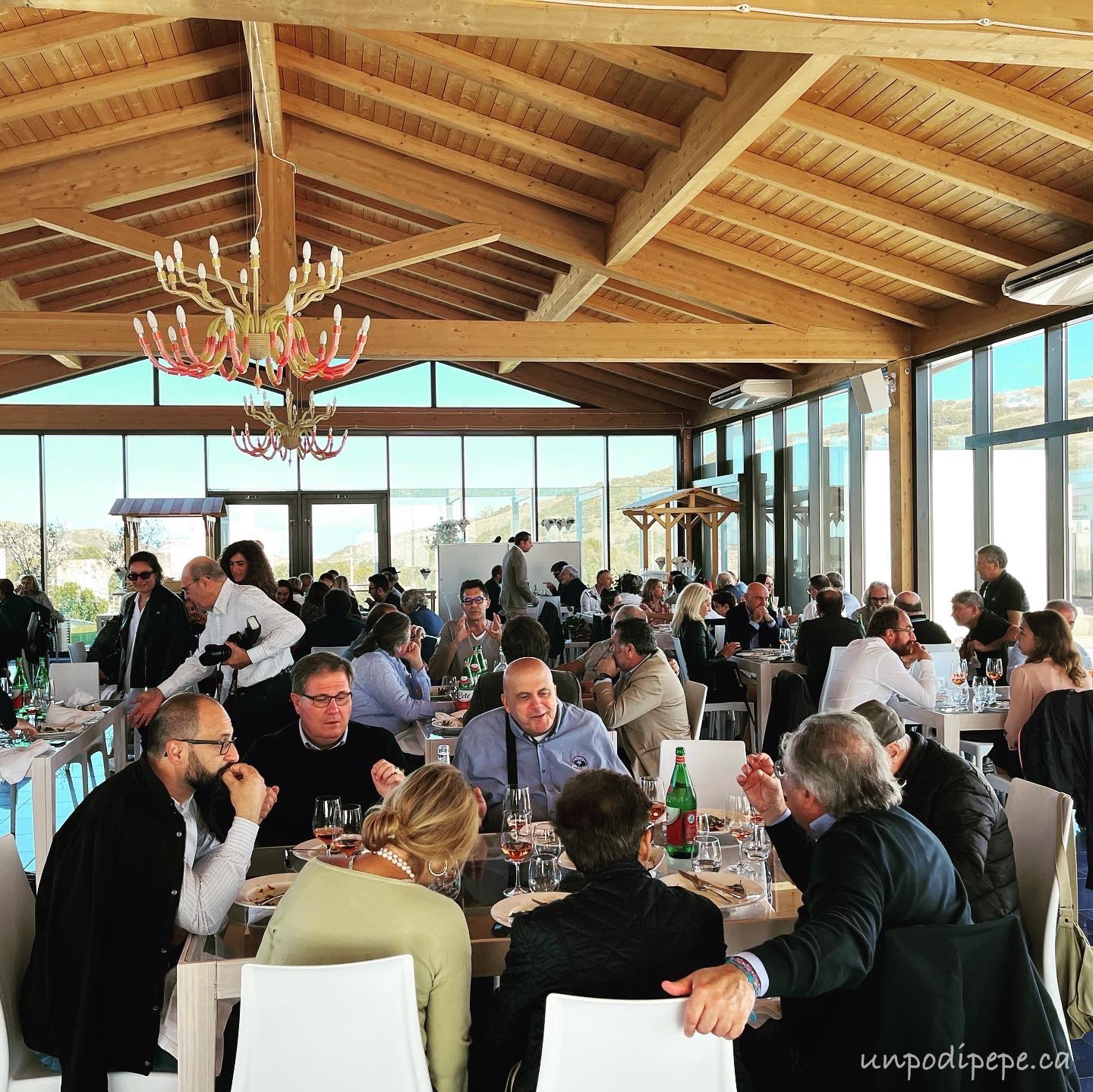
The event concluded with a meal made entirely with locally sourced, seasonal ingredients. Dalla terra alla tavola-from the earth to the table-you won’t get any fresher than this!

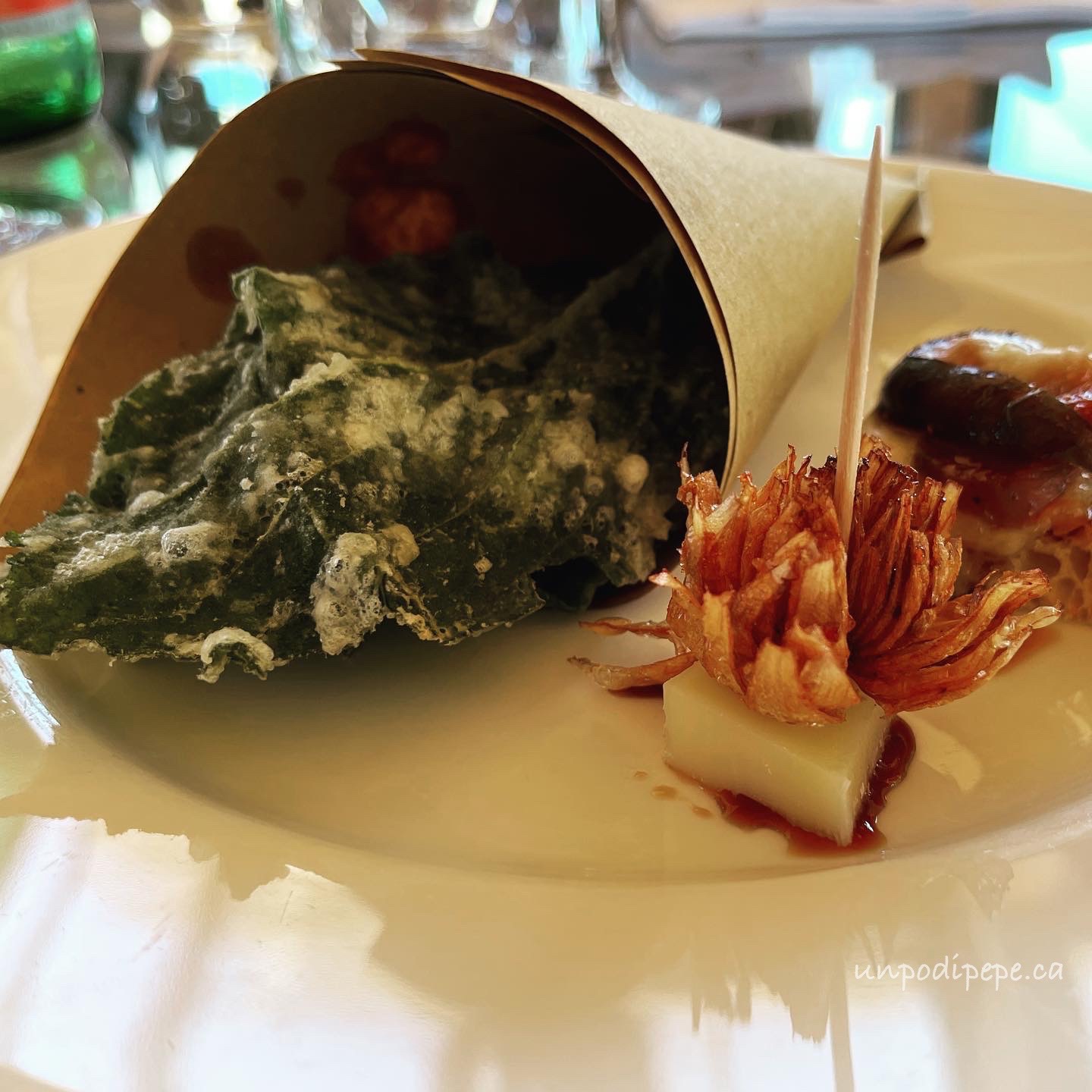
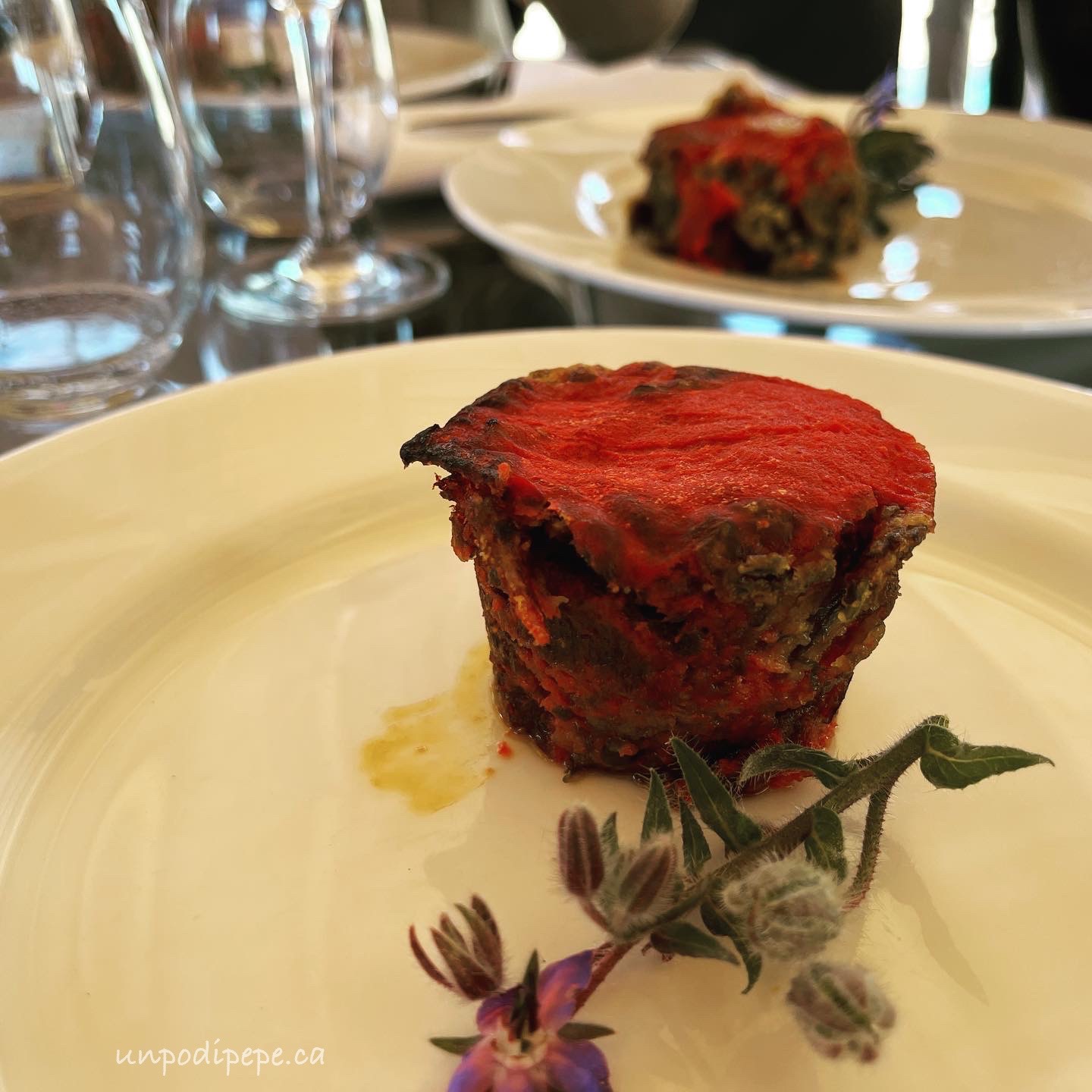
‘Ostriche di montagna’ which means ‘mountain oysters’.  They are actually fried borragine/borage leaves, served with lampascione con pecorino (fried wild onion on pecorino) and crostino di salsiccia e fico (sausage and fig crostino)Parmigiana di borragine, similar to parmigiana di melanzane, but layered with borage leaves instead of eggplant.

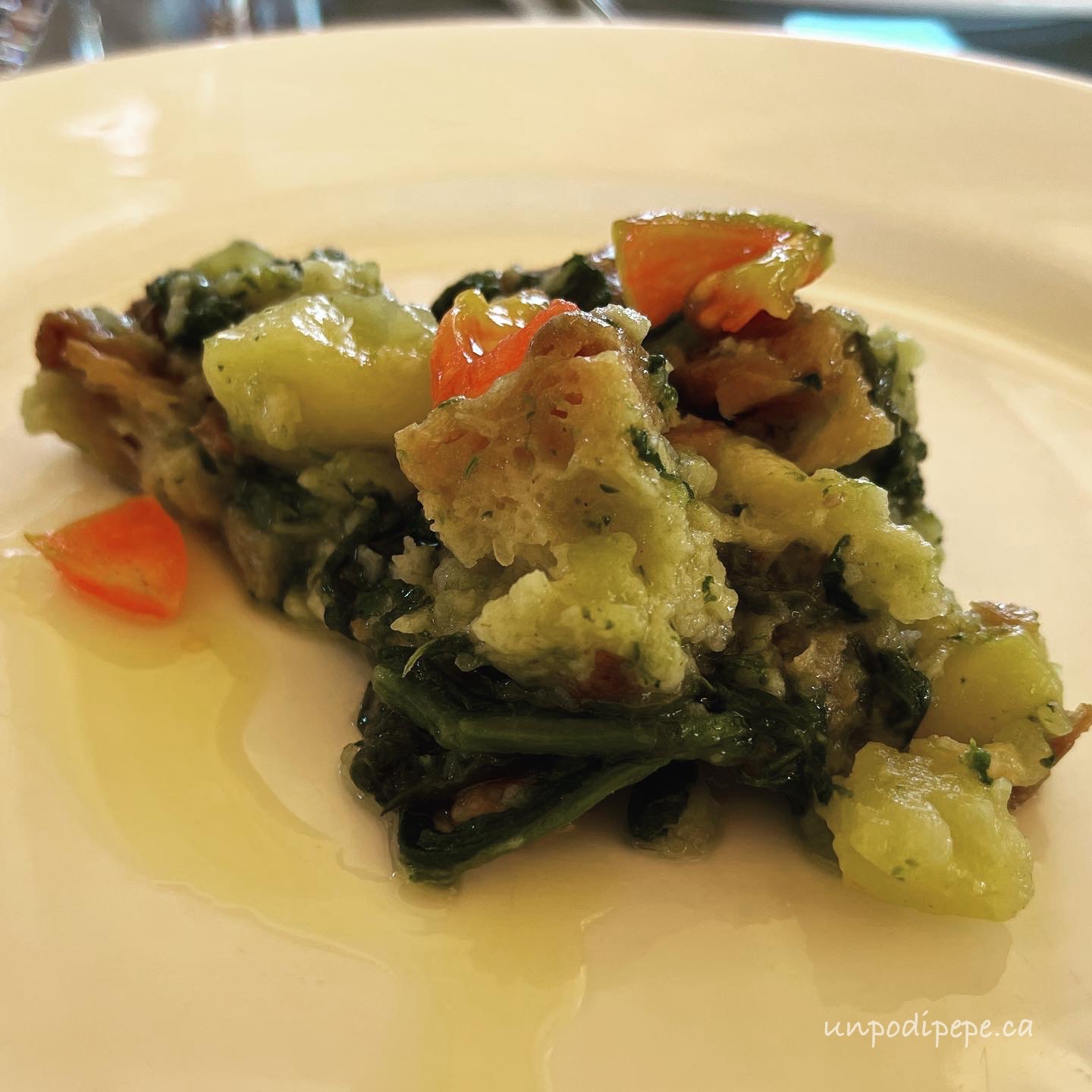
Pancotto e patate con verdure e pomodorini (cooked bread and potatoes with wild greens and tomatoes). Pancotto e patate is Cucina Povera at its best-my favourite comfort food.

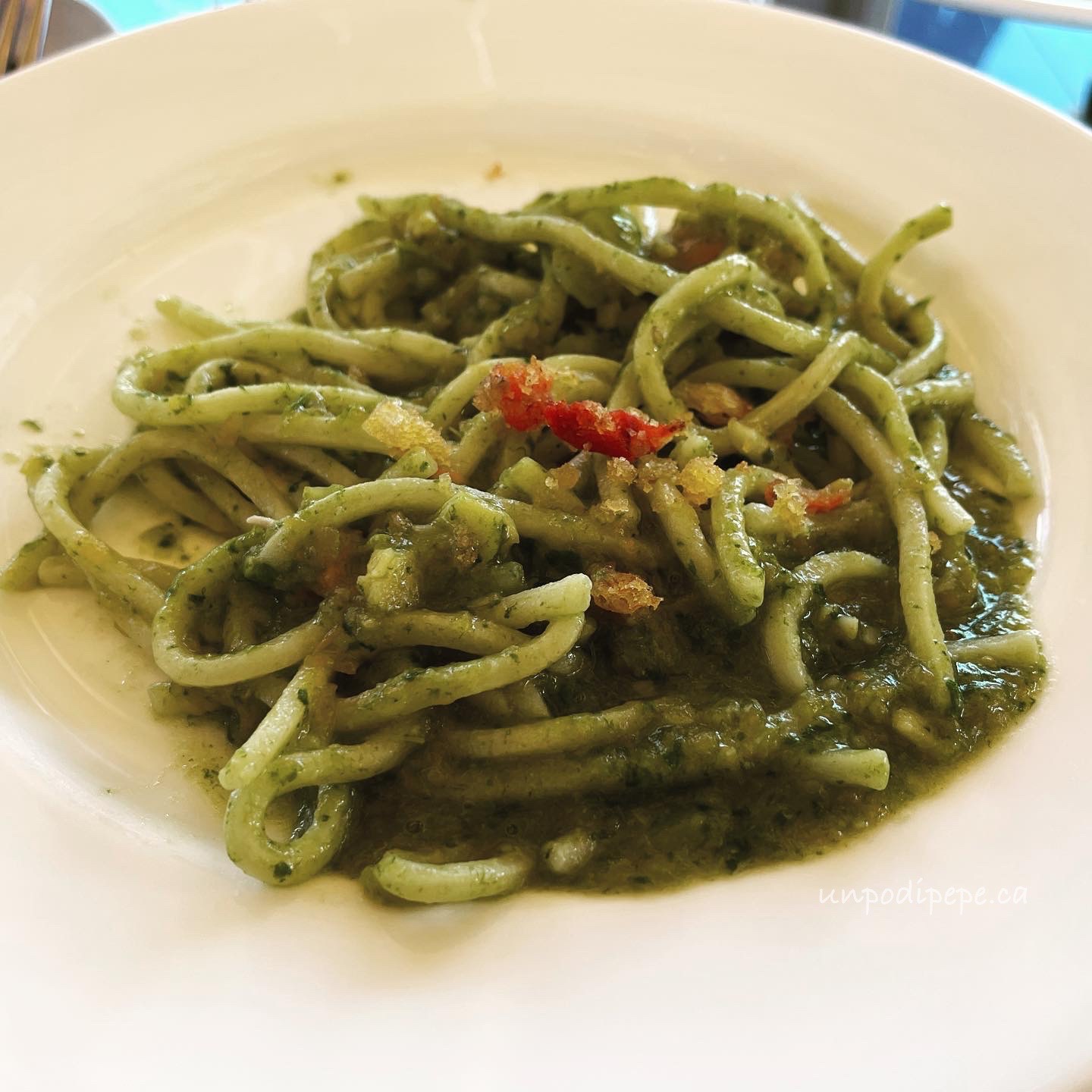
Troccoli con zucca, cicerchi e cime di rapa (Handmade Troccoli with squash, local chick peas and rapini)

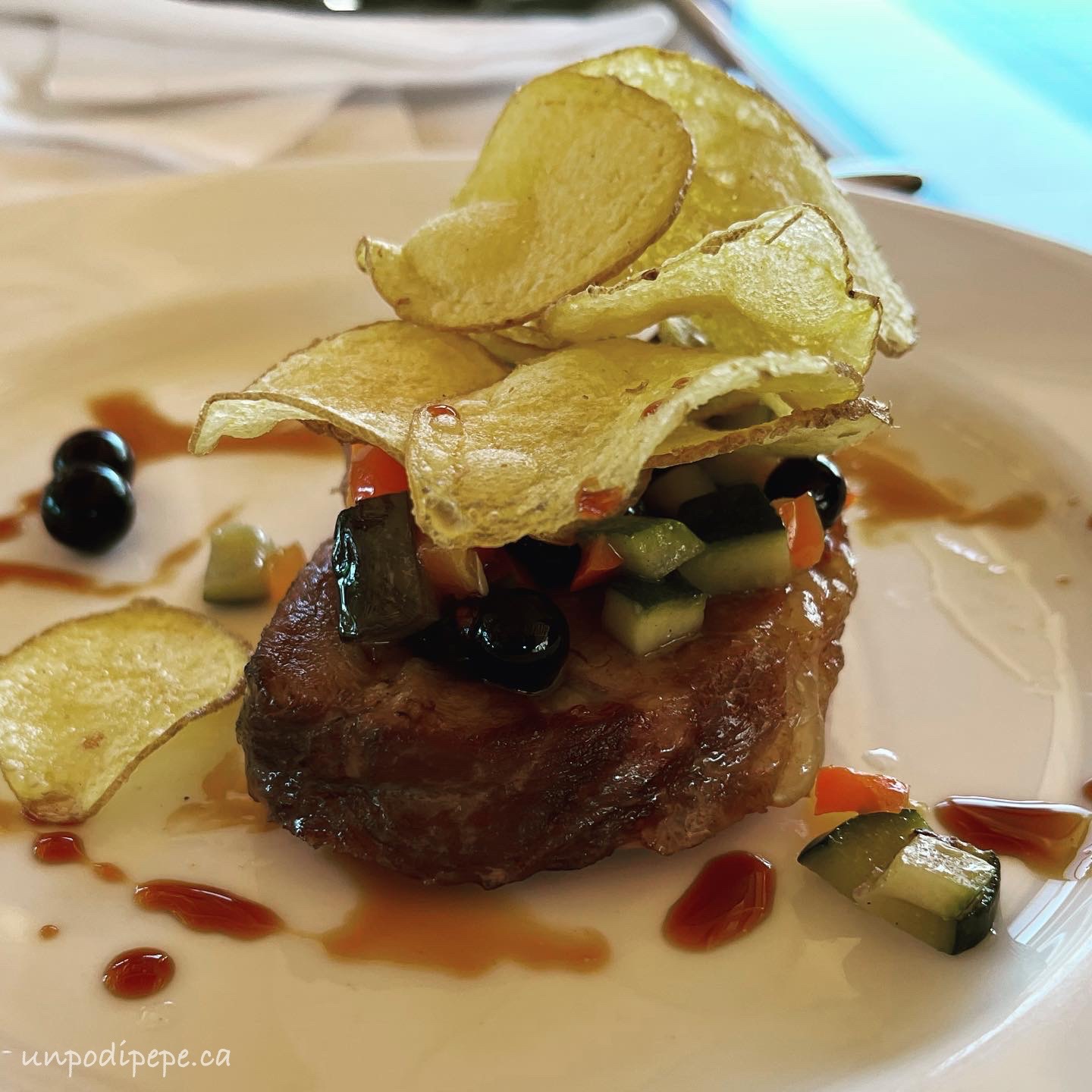
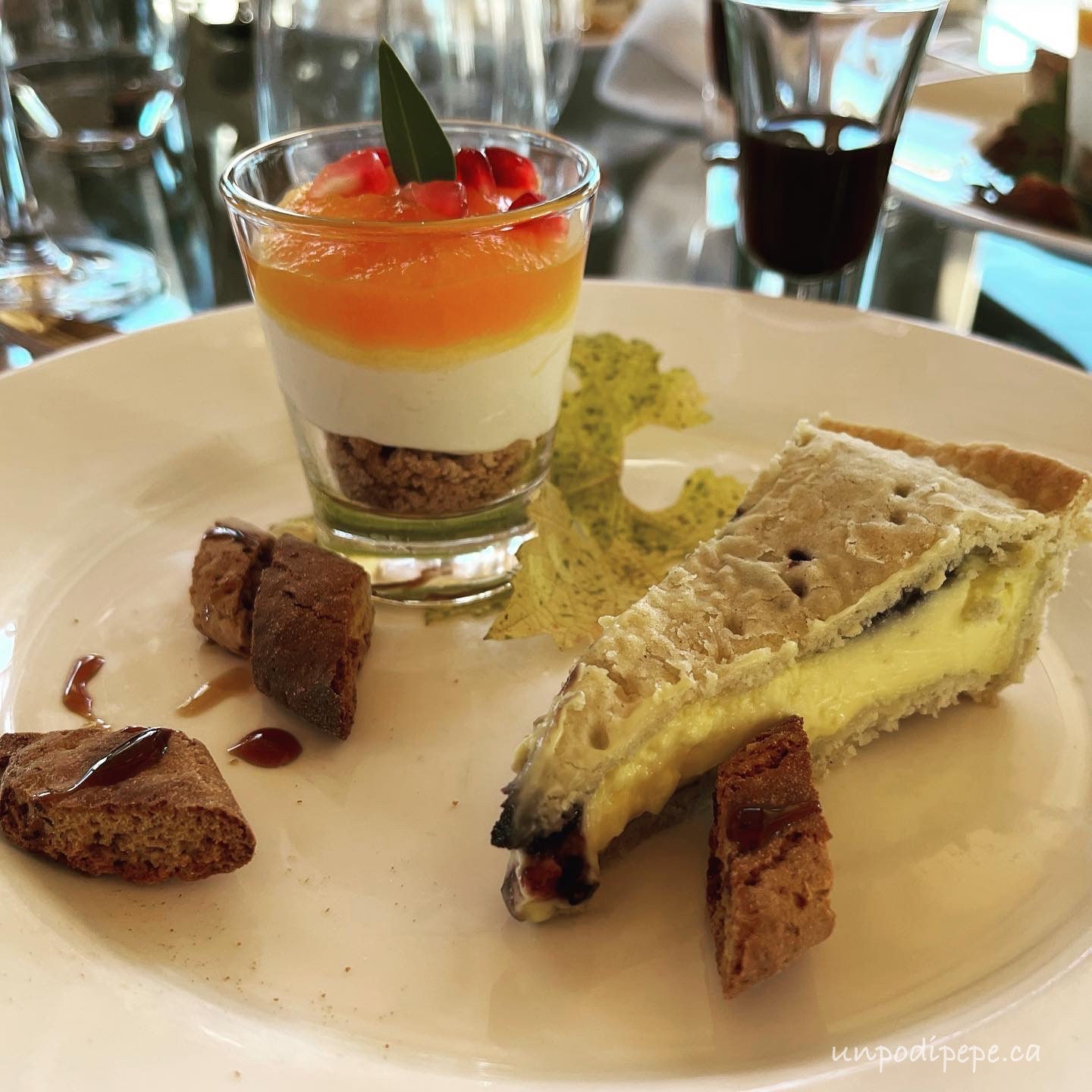
Maiale con zucchine e uva fragole e patate fritte (Pork with zucchine and sweet grapes topped with fried potatoesSemifreddo di zucca, torta con crema e biscottini di grano arso (pumpkin semifreddo with pomegranate seeds, cream cake and tiny biscotti made with grano arso, a burnt wheat flour

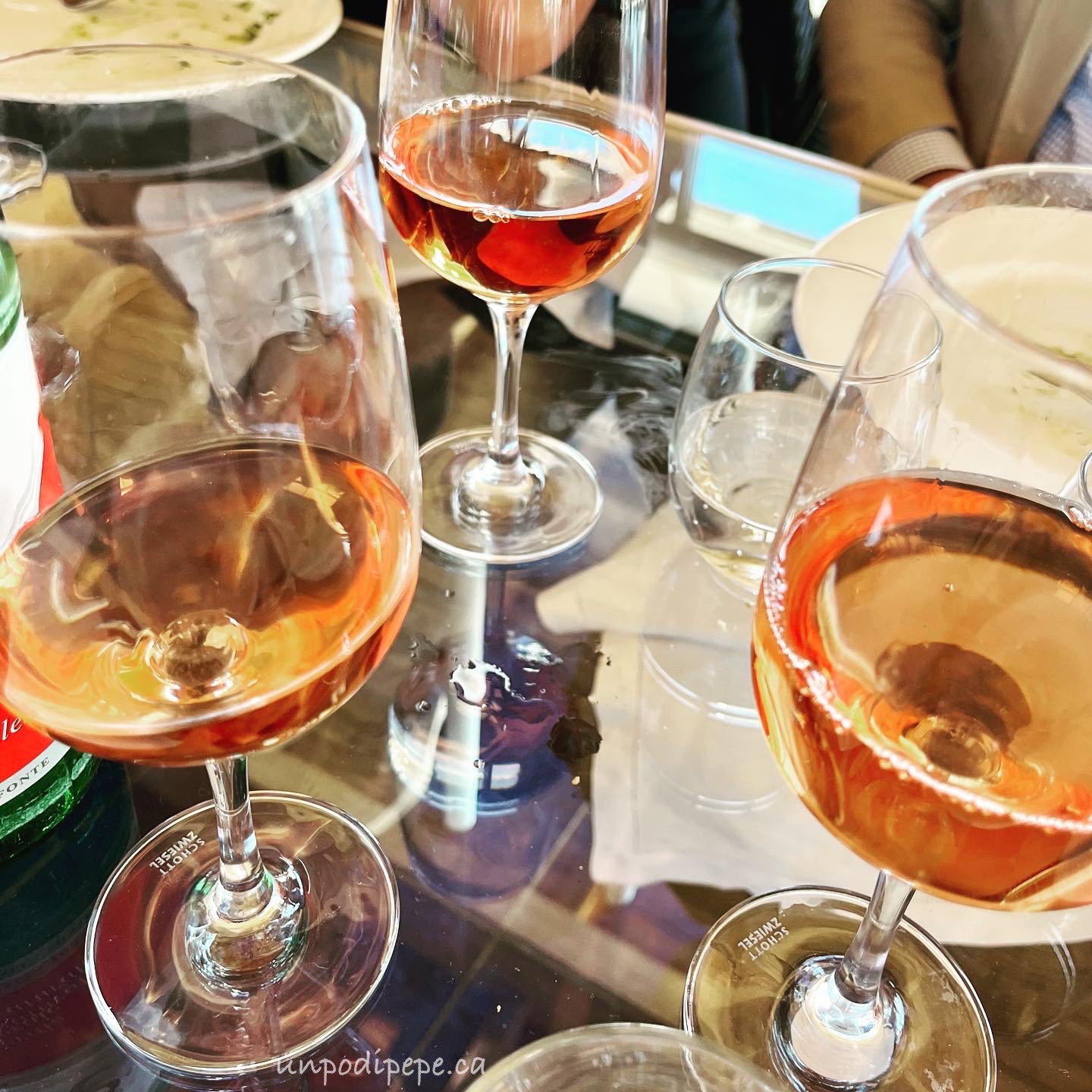
To drink, we had Peppe’s Amarosa vino rosato / Amorosa rosé.  It is made from the Nero di Troia grape, which according to legend was brought by Diomedes who settled in the Daunia area after the Trojan War. Read more in Vini di Puglia.

Peppe Zullo was recently voted one of the 10 best local restaurants in Italia and the best in Puglia by the online gastronomic guide TasteAtlas!  Here is a link to an article in Italian in Rec24 and in Corriere.it. Tantissimi auguri Peppe!!!!

Ciao, Cristina

Share this:

  • Click to share on Facebook (Opens in new window) Facebook
  • Click to share on Pinterest (Opens in new window) Pinterest
  • Click to share on X (Opens in new window) X
  • Click to email a link to a friend (Opens in new window) Email
  • Click to share on WhatsApp (Opens in new window) WhatsApp
Like Loading...

Post Pandemic Travel Postcard

20 Sunday Nov 2022

Posted by Un po' di pepe in Puglia, Travel

≈ 21 Comments

Tags

AICW, COVID19 pandemic, Måneskin, Paris, Polpo, Post-pandemic travel, Torino, Venezia

Like most travel postcards, this one is arriving after the vacation is over. Things have been quiet on the blog, with only 3 posts published since May.  Perché? Partly creative block, but also because I tried to make up for almost 3 years of no travel all at once. I did quite the epic job of it too!  If you follow me on Instagram or Facebook, you already have an idea what I have been up to. Here is the short version of my adventures.  More info to follow in future posts.

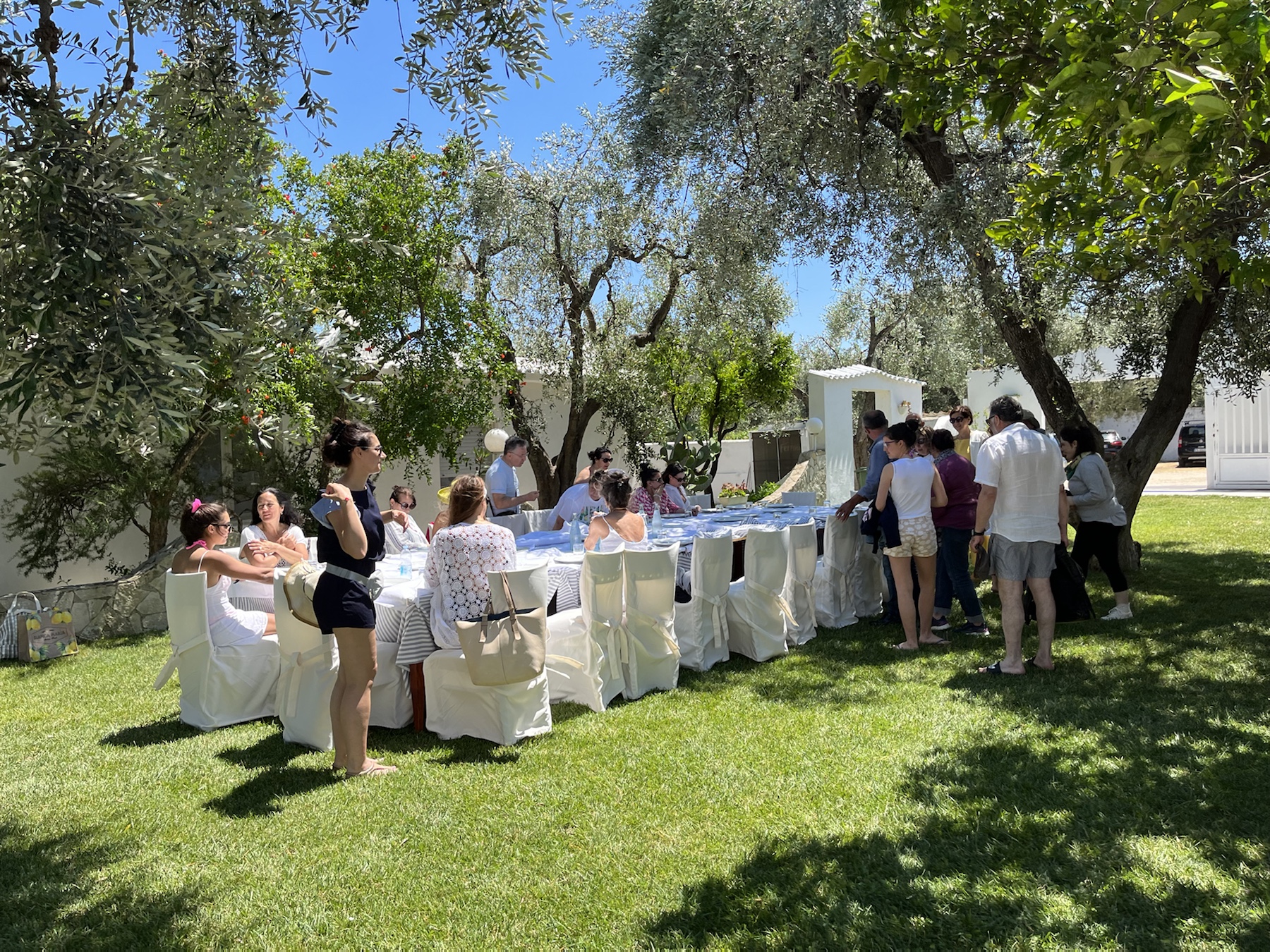
In June, my parents, sister, nipotine* and I attended a family wedding in Manfredonia.  Read all about it in Un Matrimonio in Puglia. The rest of the weekend was full of post-wedding activities, including a long table meal under olive trees by the beach in Mattinata.  We also spent a day in Polignano a Mare.

I took an unexpected ‘extra’ trip to Santorini to keep my nipotina Francesca company for a few days before she met her cousins.  Who knew you could fly direct to Santorini from Napoli for €70? I had been to Santorini in 1990 and it is still just as breathtaking but more crowded and expensive.  Bring lots of $ if you go!

On my way back to Puglia, I stayed in Napoli, since it is one of my favourite places.  Finalmente, I was able to see L’Ultimo Caravaggio in person!!! Also more sfogliatelle.

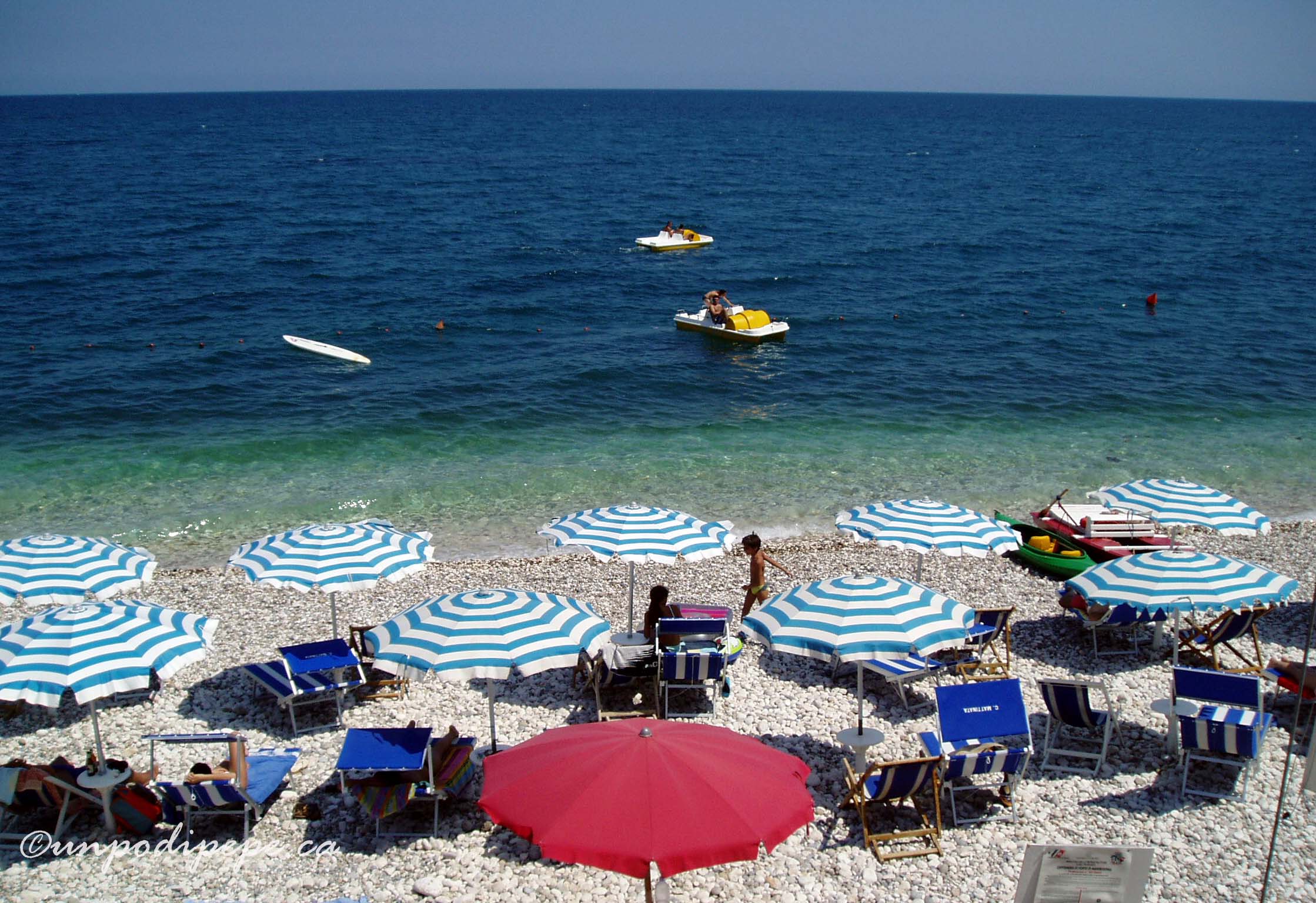
The rest of my time was spent in Orsara di Puglia trying to stay cool.  It was HOT!  The mornings and evenings were amazing.  My weekend camping on the beach in Mattinata was spent almost entirely in the water.

I had pizza one night in the smallest town in Puglia, Celle San Vito, population about 200.  Papà says that is only if you include the cats and dogs, but he was joking…I think.  The pizza was yummy! Apparently there are more than 200 people from Celle who immigrated to Brantford, Ontario.

Between Puglia and Greece, I ate a lot of polpo.  Many photos were posted, and this one of Mamma washing polpo in the sink was popular on Instagram. Stay tuned for a recipe post polpo e patate.washing octopus

My last few days were spent in Roma, where I had to follow my own advice to Beat the heat-Surviving summer in Roma.  My mission was to finish crossing all of the Caravaggio paintings in Roma off my list.  I have now seen them all-except for the ceiling fresco that is in a private home.

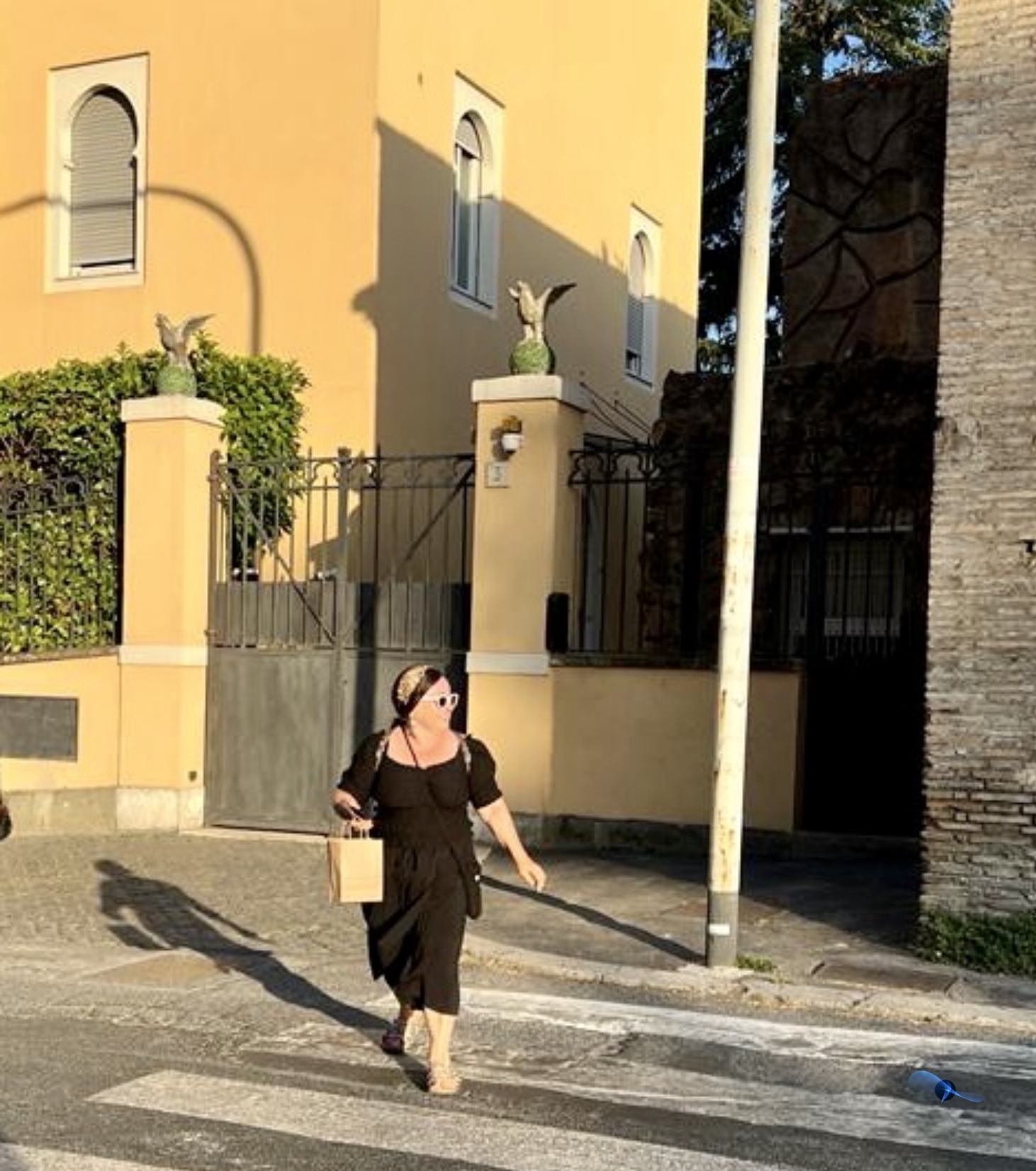
I spent a day with friend and fellow AICW member David, who works at Santa Maria Maggiore for the summer, and I ate at a few Roman restaurants I had wanted to try.  ‘Research’ was required for the post I am editing on Pasta Romana. My amica Shannon from the post Val d’Orcia day trip and I overlapped for 1 day in Roma.  She photographed me crossing the street in style on the Gianicolo, and we made plans to meet in San Francisco in November.

At the end of July, I flew back to Vancouver to work and take care of my garden.  I even managed to publish a post In my kitchen in Puglia.

The Association of Italian Canadian Writers- AICW conference in Torino was postponed 3 times due to the pandemic, and was happening the last week of September. My cousin lives in Nice, and she informed me that the high speed TGV train travels from Paris to Torino in 5½ hours. She knew I had never been to Paris, and suggested we meet there before the conference.  A brilliant idea-the travel planning gene definitely runs in our famiglia!

September 22 I flew to Paris and spent 4 amazing days with Elia.  I will save the details for another post.  The TGV was comfy and the scenery through the Alps beautiful.

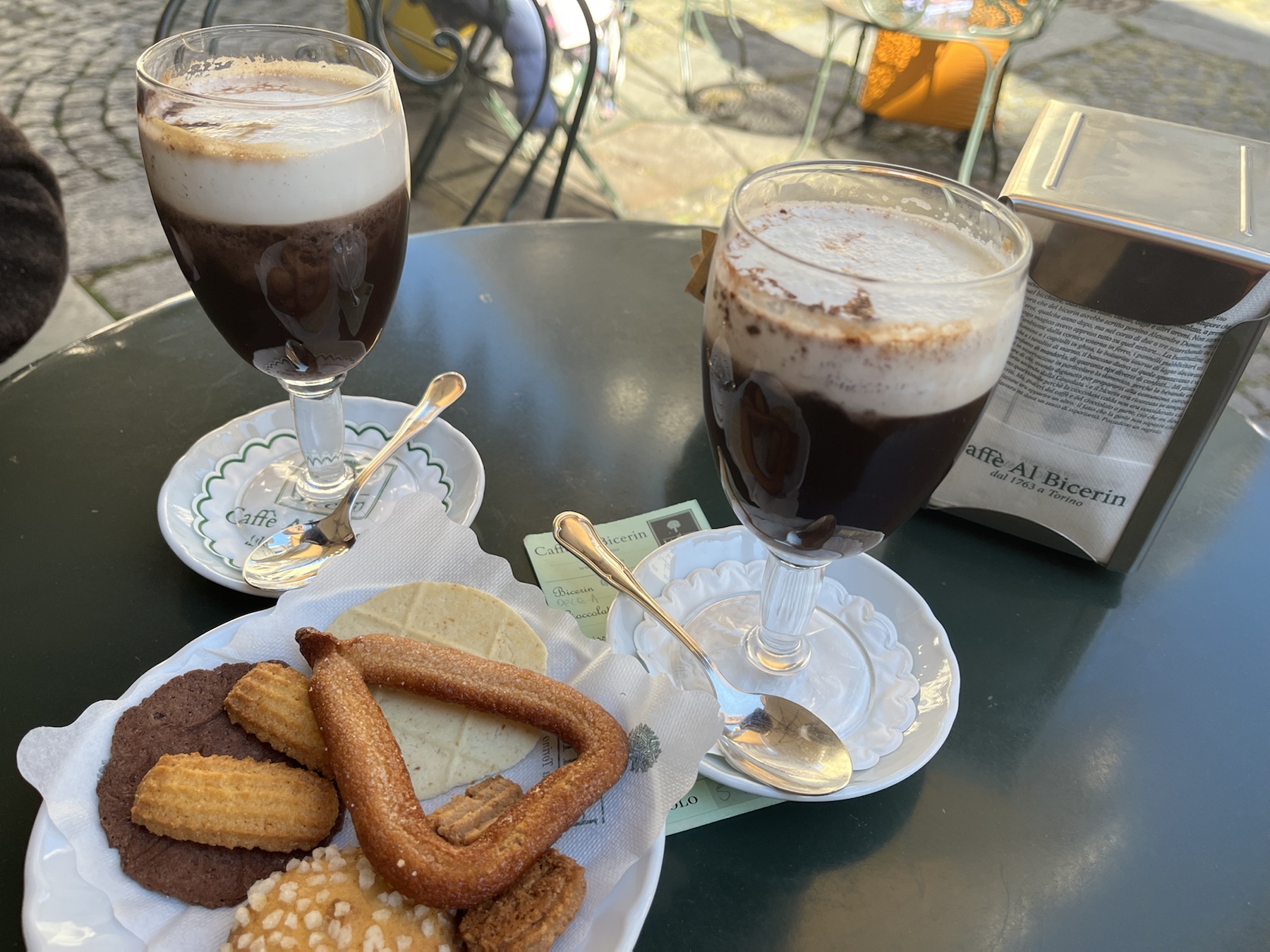
I arrived in Torino the day before the conference started, and met Lucia from Turinepi for a morning walking tour and Bicerin.  The afternoon was spent at il Museo Egizio– the largest collection of Egyptology outside of Cairo.  Torino was a pleasant surprise.  It is walkable, has grand architecture and hardly any tourists in early October! Autumn is a perfect time to visit Piemonte, especially for the seasonal food….zucca, porcini, castagne, salsiccia, with tajarin and agnelotti del plin.

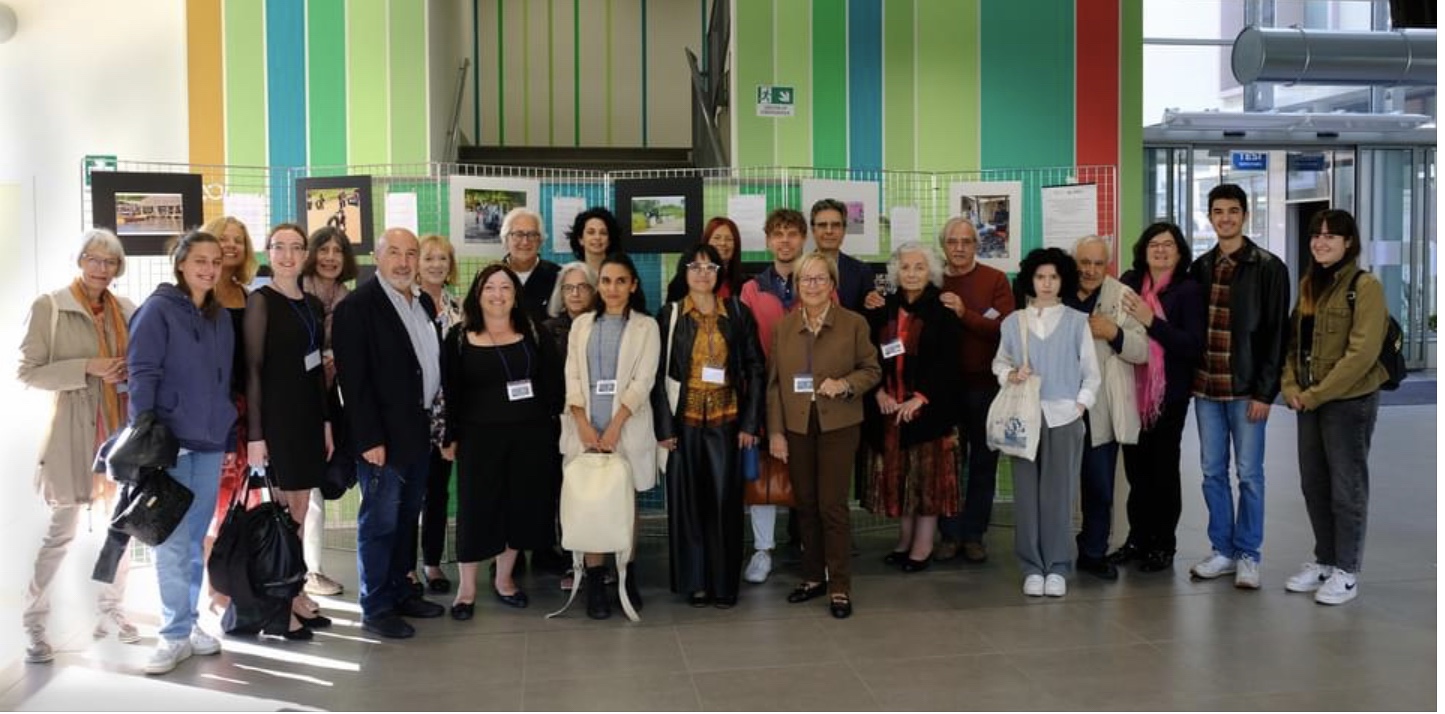
The conference was at l’Università di Torino and featured 4 days of inspirational presentations.  Mine was called ‘A Nzalat d’Purtuall‘, inspired by this blog post. I made lots of new Italocanadesi friends and also Italiani who study Italian Canadian literature—yes, that is a thing!

Following the conference, the plan was to go to Venezia for 3 days.  I have been many times, but the last time was 24 years ago!  I wanted to stay right in Venezia, as I previously stayed in Mestre or went as a day trip.  Things do not always go as planned.  For reasons I won’t elaborate on, I left booking my accommodation too late, and could not find a reasonably priced place to stay-even in Mestre.

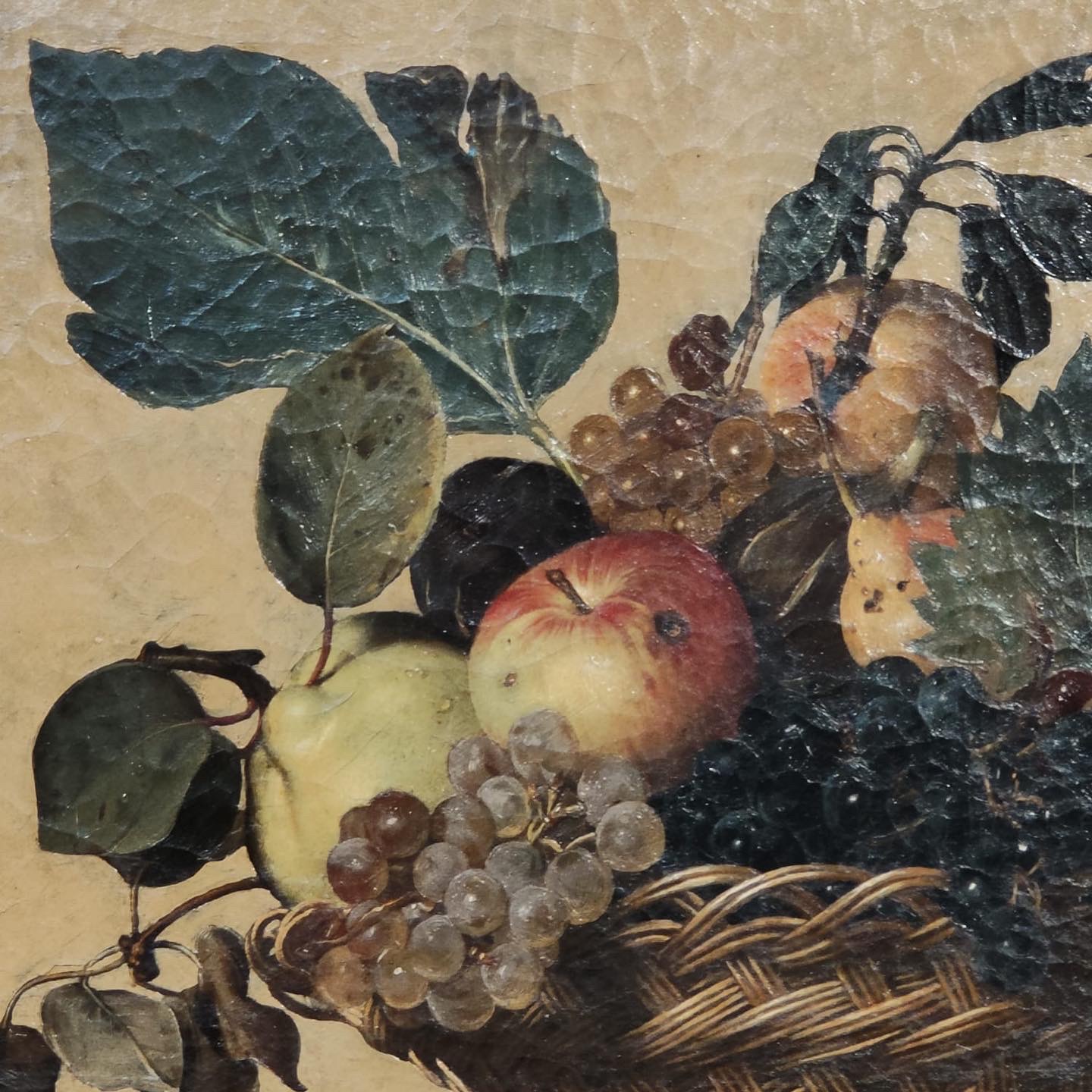
So… I took the train to Milano while I figured out what to do.  I stayed with the new sposini from Un Matrimonio in Puglia and also visited other cugini.  3 cuginetti came with me to the Pinacoteca Ambrosiana to see Caravaggio’s Canestra di Frutta and they may have been even more awestruck than me!

I did manage to find a last minute deal on accommodation in Venezia.  It was even half price!!! I spent 3 days/2 nights in Venezia the first week of October, and no one got the memo that it was not summer!  The crowds were crazy, but the weather was gorgeous. Everything required online reservations and lineups so I mostly just walked and walked.  I finally made it to the Peggy Guggenheim Museum and spent a day on Burano and Torcello.

Venezia was not only crowded, but definitely more expensive than the rest of Italia.  it reminded me of Santorini.  Gorgeous, but expensive.  I can only imagine what it was like in the summer.  I spoke to several Italian business owners and they are not sure if this year was a post pandemic exception or if it will be the new normal. Next year will tell.

The next train journey was Venezia to Foggia (6 hours).  I spent 2 weeks at home in Orsara di Puglia going for walks, meeting friends for caffè, eating good food and just hanging out like a local.  The weather was mostly really nice, but I did have to sleep with 3 blankets, as nights were cold and there is no heat in our little casa.

October 17th I attended ‘Appuntamento con la Daunia‘ an annual event hosted by amico Peppe Zullo.  Every year I receive an invite but am not usually in Italia in October.   It is a Slow Food/Farm to Table type of event featuring speakers, tours and local food.  It was attended by food and wine journalists, chefs, RAI, and other enogastronomic types.  Read more about it in my next post.

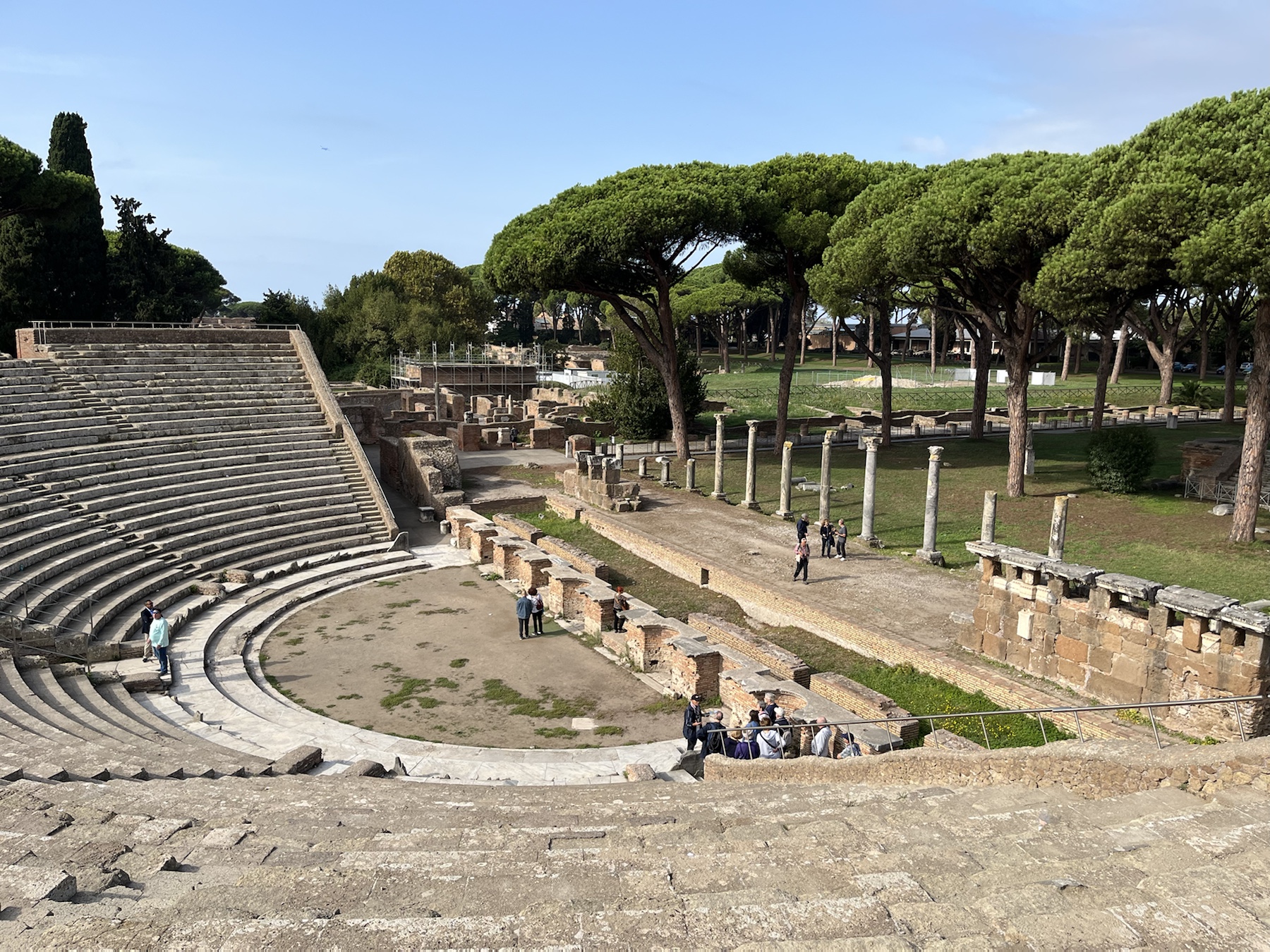
The final train journey was to Roma where I mostly visited with friends. 2 places I had not been to since age 11 were revisited-Ostia Antica and the Musei Vaticani.I also had aperitivo with the Italian Senate representative for Italiani all’Estero, On. Francesca La Marca.  We met earlier this year at a function in Vancouver.

10 days after flying home from Roma, I went to San Francisco.  Shannon and I met there to see Måneskin live at The Masonic.  Read about them here. It was amazing and we felt like teenagers.  Listening to a North American audience singing along to all of the Italian lyrics was so cool.  We were glad to have attended this concert, since we doubt the band will be playing 4,000 seat venues any longer now that they are selling out stadiums!

This brings me to the end of my post-covid travelpalooza.  If anyone is still worried about travelling, I did not have any issues at all. I do not have any travel plans right now, but I am sure something will come up! Got any plans?  Let me know in the comments!  Buon Viaggio, Cristina

PS My nipotina* Isabella gave me selfie taking lessons, so I practiced during all my travels. At the Fontana di Trevi I impressed myself, managing to capture the coin toss mid air and not cut my head off, while avoiding the 500 other people trying to do the same!

*nipotine can mean nieces or granddaughters.  In this case it is nieces!

AICW Photo by Vincenzo Pietrapaolo

Me crossing the street in style-photo by Shannon Milar

Share this:

  • Click to share on Facebook (Opens in new window) Facebook
  • Click to share on Pinterest (Opens in new window) Pinterest
  • Click to share on X (Opens in new window) X
  • Click to email a link to a friend (Opens in new window) Email
  • Click to share on WhatsApp (Opens in new window) WhatsApp
Like Loading...

Un Matrimonio in Puglia

08 Thursday Sep 2022

Posted by Un po' di pepe in Amici e Famiglia, Feste, Italia, Italian life, Puglia

≈ 15 Comments

Tags

Pugliese Traditions, Santa Maria di Siponto, Southern Italy, Wedding in Puglia

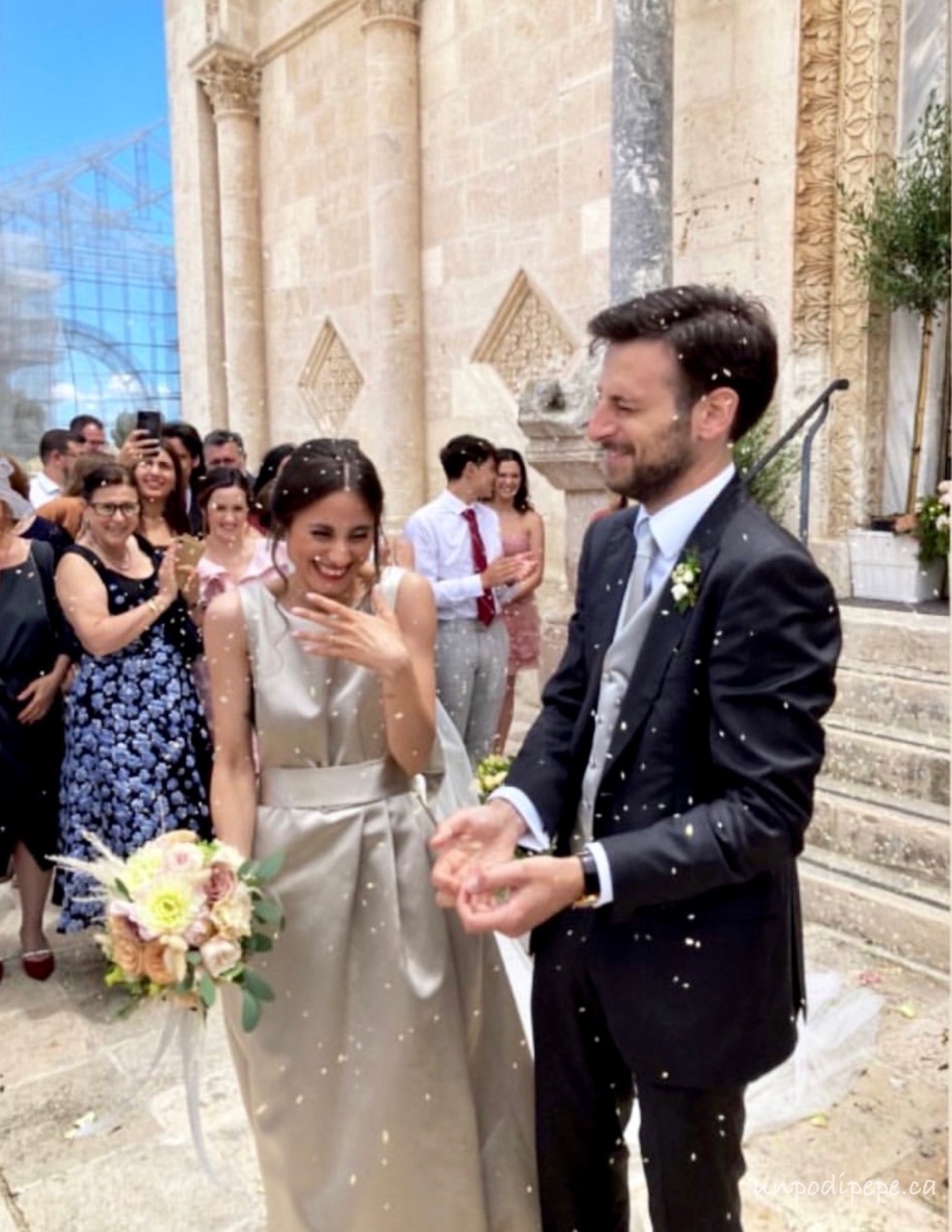
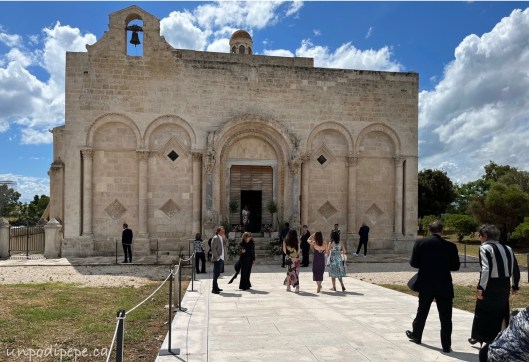
Viva gli sposi!  After a 3 year ‘pandemic hiatus’ I finally made it back to Puglia. My trip was earlier than usual to attend un matrimonio in famiglia -a family wedding in June.  Gli sposi were Federica and Antonio. The wedding was held at the 900 year old Santa Maria di Siponto. The church is in the architectural style Romanica Pugliese, Pugliese Romanesque. Byzantine and Islamic influences are evident in the pure, simple lines and geometric patterns. The building is square, which is unusual for a church.

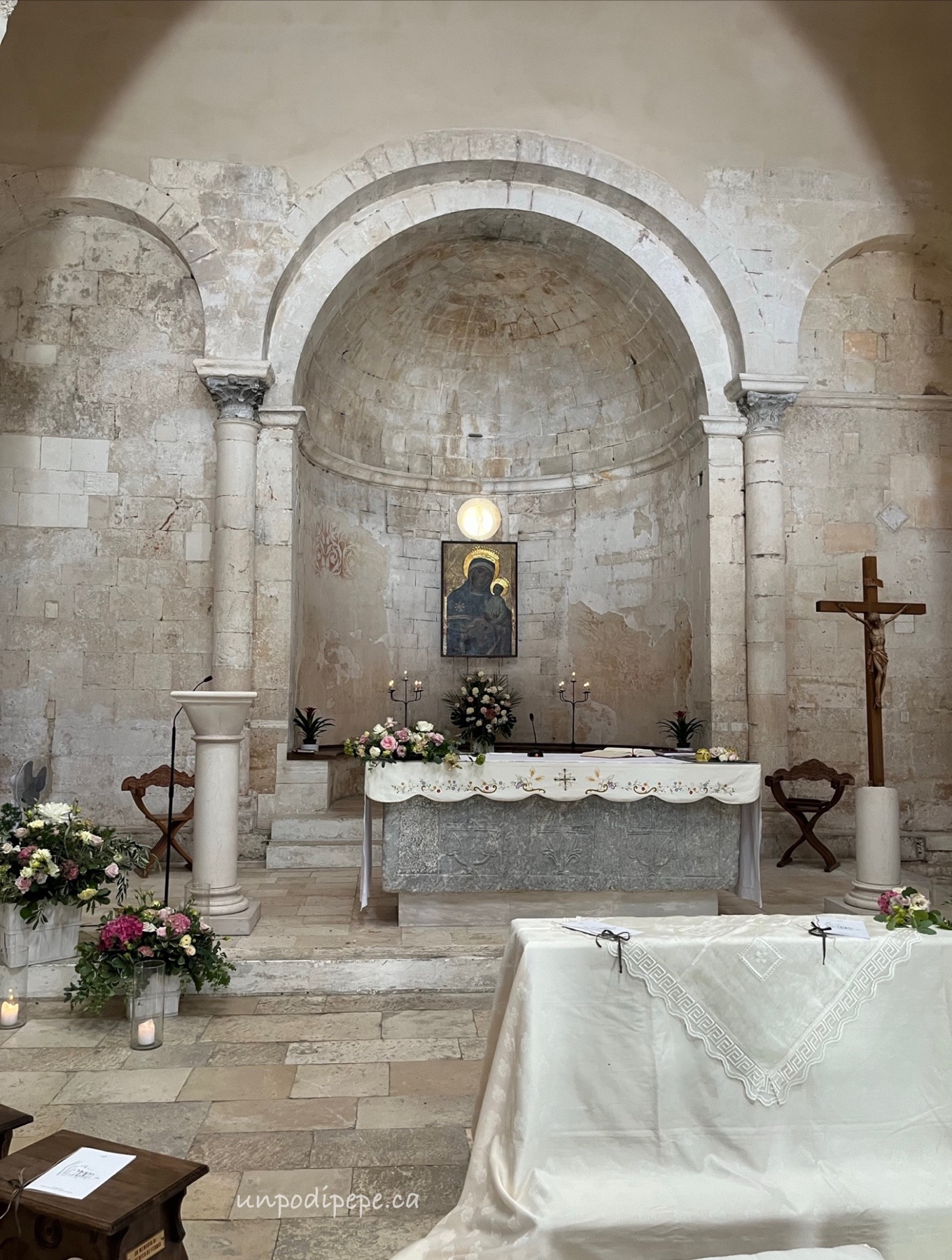
Our day started out with heavy rain.  My parents, sister, nieces and I ran to the car with our umbrellas for the 1½ hour drive from Orsara di Puglia. Luckily it was sunny by the time we arrived. The ceremony was held at 11 am and the stark white interior of the church was bathed in light!The look on Antonio’s face when he sees Federica at the altar is priceless. 

The 4 witnesses, called compari, and the parents of the bride and groom also take part in the ceremony.Federica looked stunning.  The wedding dress was handmade by her 91 year old nonna!  Nonna Celestina made it with fabric she had kept from the time when she owned a fabric store in Foggia many years ago. The dress is ‘a portafoglio‘ which means that it had a short skirt underneath, visible only when the slit opened. Nonna even made a spare dress, just in case!

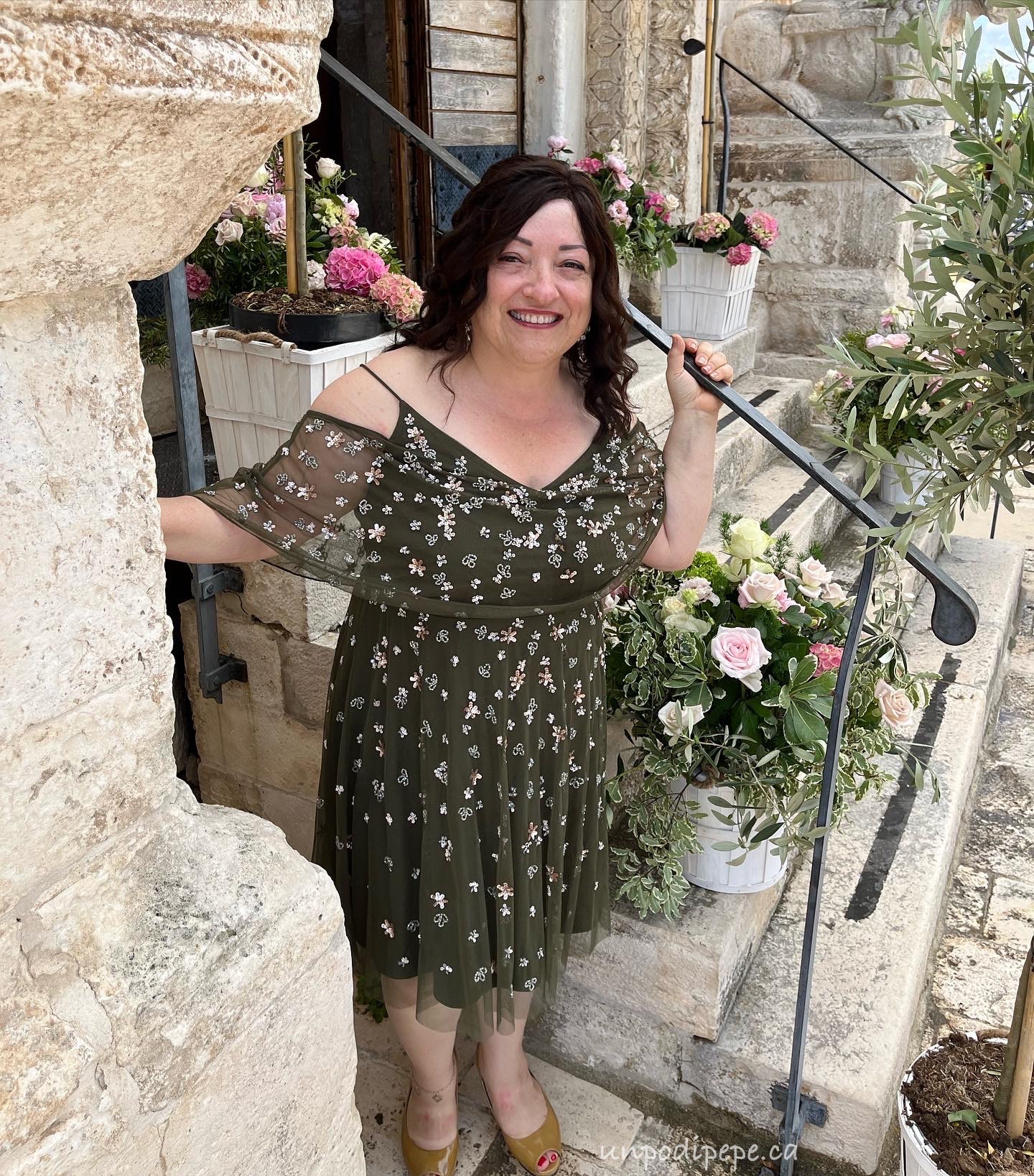
Since we were in Puglia, we were surrounded by olive trees. I fit right into the floral arrangements with my olive coloured dress with pink and silver flowers.The reception was held at Tenimento San Giuseppe, 4 km from Foggia. We started out with aperitivo in the main building, then moved to another section for the main meal.

There was un mastro casaro-a master cheesemaker-making nodini, knots of fresh mozzarella.

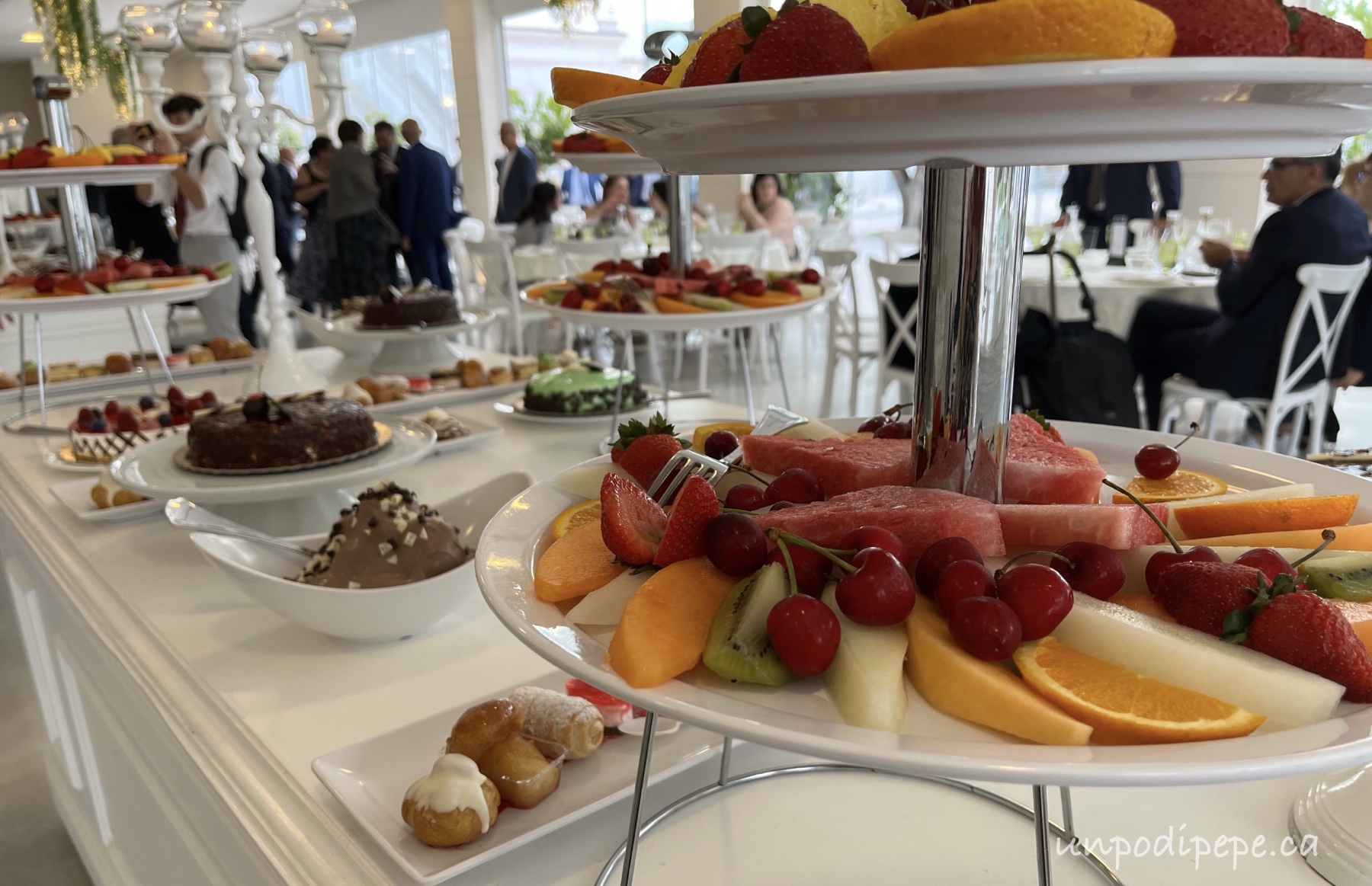
Later we moved into the cantina for degustazione di vino, where I found a tasty Susumaniello that was too good! Dessert was back in the main building.  All of this moving around really helps with digestion!

The dish in the photo above is ‘mezzi paccheri rigate con salsa di gamberl e astice’, pasta with shrimp and lobster sauce.  The black smudge on the plate is squid ink. I was too busy socializing and eating to take many food photos, so read the menu and imagine it yourself!Dancing was everywhere.  Instead of having to sit through the entire meal and a bunch of speeches and wait for the end of the night to dance, dancing happens throughout the reception. Also good for digestion!One course is served…then dancing, more food, then more dancing, etc.  Since the wedding was in Puglia, there was also dancing outside under the olive trees.

Federica likes swing dancing, so there was a swing band and later in the evening, my cousin (father of the bride) and his band played their funky music.

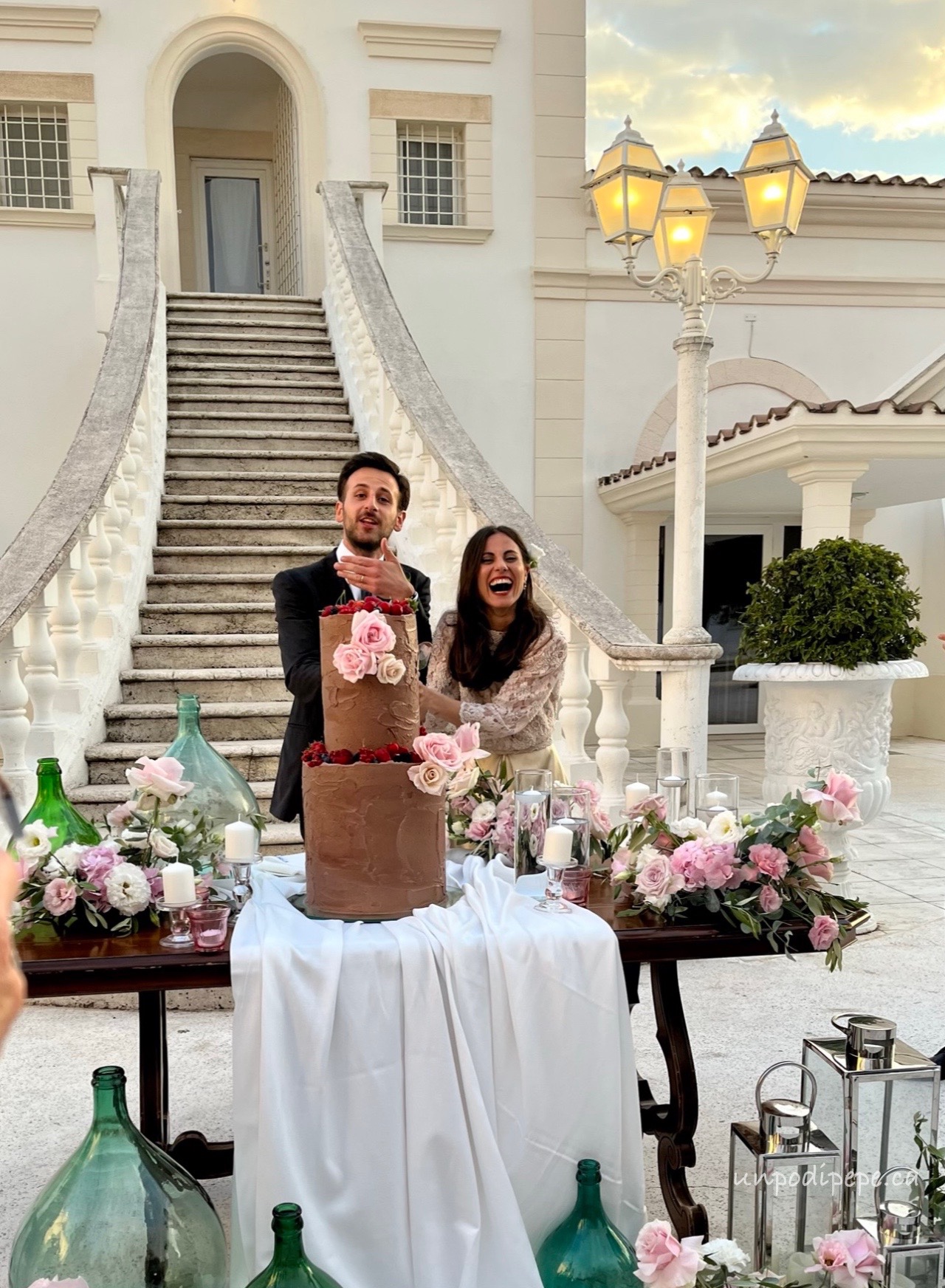
Cake cutting was held outside, at the bottom of the dramatic staircase.  In the photo, you can see a bit of Federica’s ‘spare’ dress, while Antonio gestures for us to move out of the way.  He probably said ‘livt da nanz’.

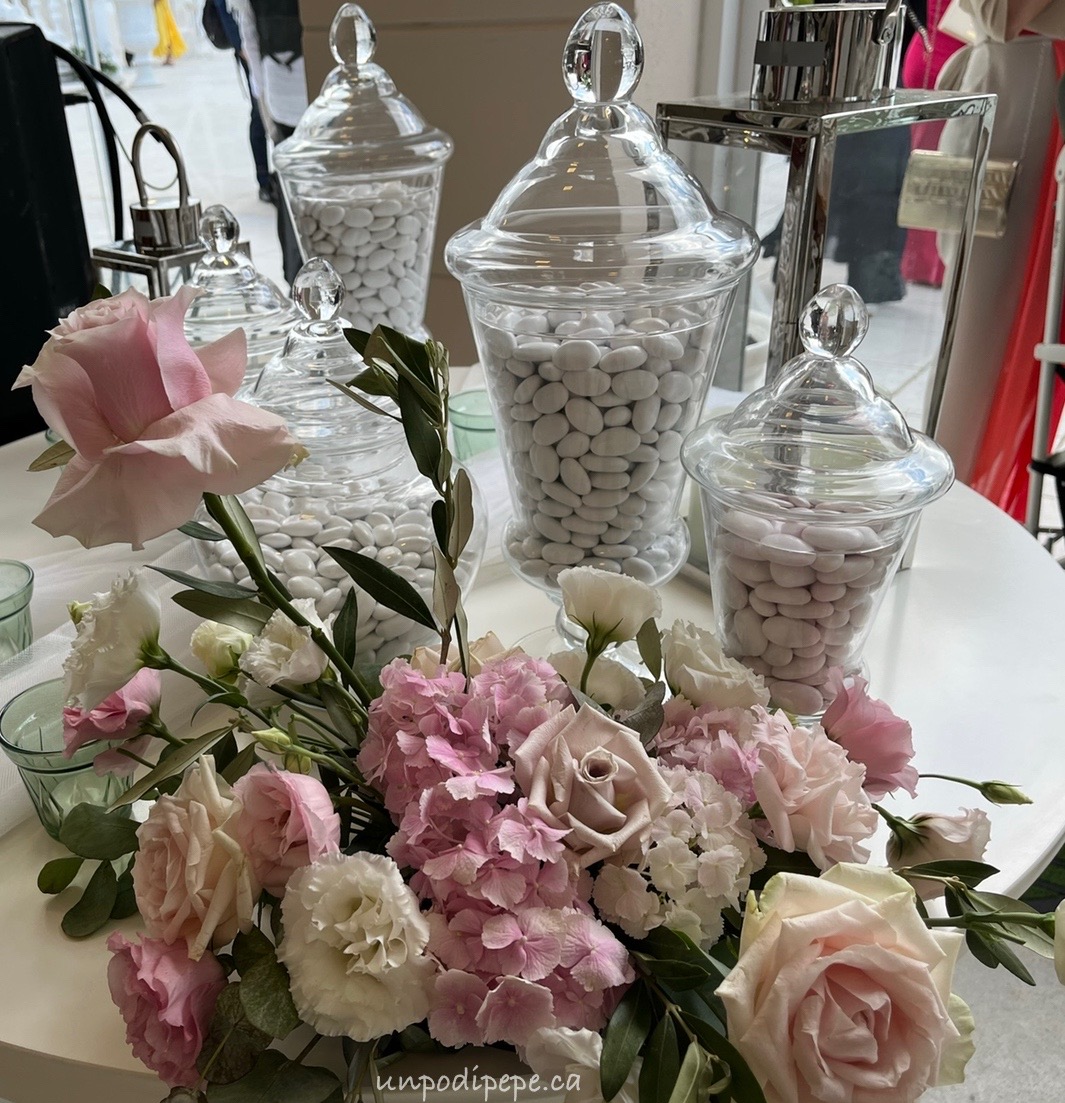
Guests take home a little bag of confetti for good luck.  These are not what you throw at the bride and groom.  They are sugared roasted almonds, sometimes with a chocolate filling.  Traditionally there are 5 almonds that represent health, wealth, happiness, fertility and long life. Bomboniere are also handed out at the end of the night.  These are a small gift from the bride and groom to thank the guests for celebrating their special day with them.

I hope you enjoyed this peak at a wedding in Puglia!  Auguri Federica e Antonio! Ciao, Cristina

Share this:

  • Click to share on Facebook (Opens in new window) Facebook
  • Click to share on Pinterest (Opens in new window) Pinterest
  • Click to share on X (Opens in new window) X
  • Click to email a link to a friend (Opens in new window) Email
  • Click to share on WhatsApp (Opens in new window) WhatsApp
Like Loading...

In my Kitchen in Puglia, 2022

13 Saturday Aug 2022

Posted by Un po' di pepe in Italian life, Mangiamo!, Orsara di Puglia, Puglia

≈ 45 Comments

Tags

Amarena, Cucina Pugliese, Fiori di zucca, In my kitchen, Mozzarella di bufala, Orecchiette, Parmigiana di melanzane, Polpo, Pugliese Traditions, Ravioli

I recently returned from a long trip to Italia, after an unplanned 3 year ‘pandemic break’. We missed our little casa in Orsara di Puglia.  Once we cleaned up a bit, there was a lot of activity in the kitchen. Cucina povera, literally ‘food of the poor’, is what you mostly find in Puglia.  Simple foods made with fresh local ingredients. Here are just a few of the things my family and I were up to in our tiny but functional summer kitchen in Orsara di Puglia.

Starting with the space itself, the whole casa is 40m² (about 450 square feet) including a bedroom and bathroom.  That is about the size of a double garage.  The room with the cucina is also the living room, guest room (aka my room) and art studio. The highlight of the room is the amazing barrel vaulted stone ceiling, which is hard to fit in a photo.

We had a lot of visitors who came bearing gifts.  My favourite gift was the anguria -the huge watermelon on the counter.  It was grown by a friend and was delicious!  He also grew the cipolle.

Melanzane (eggplant, or aubergine for the Brits) and zucchine are plentiful in summer.  We made Parmigiana di melanzane e zucchine.  It was soooo yummy, but we only made it once as cooking it was painful.  It was too hot to have the oven on! Now this is my idea of a bouquet of flowers! Fiori di zucca are one of my favourite summer foods. I stuffed them with caciocavallo and basilico, then battered and fried them.  It was too hot to bake them in the oven.  They were eaten before I could take a photo.  Luckily they are easy to find here. I grow fiori di zucca in my garden in Vancouver, because they are impossible to find. Recipes and harvesting tips can be found in the post Fiori di zucca. 

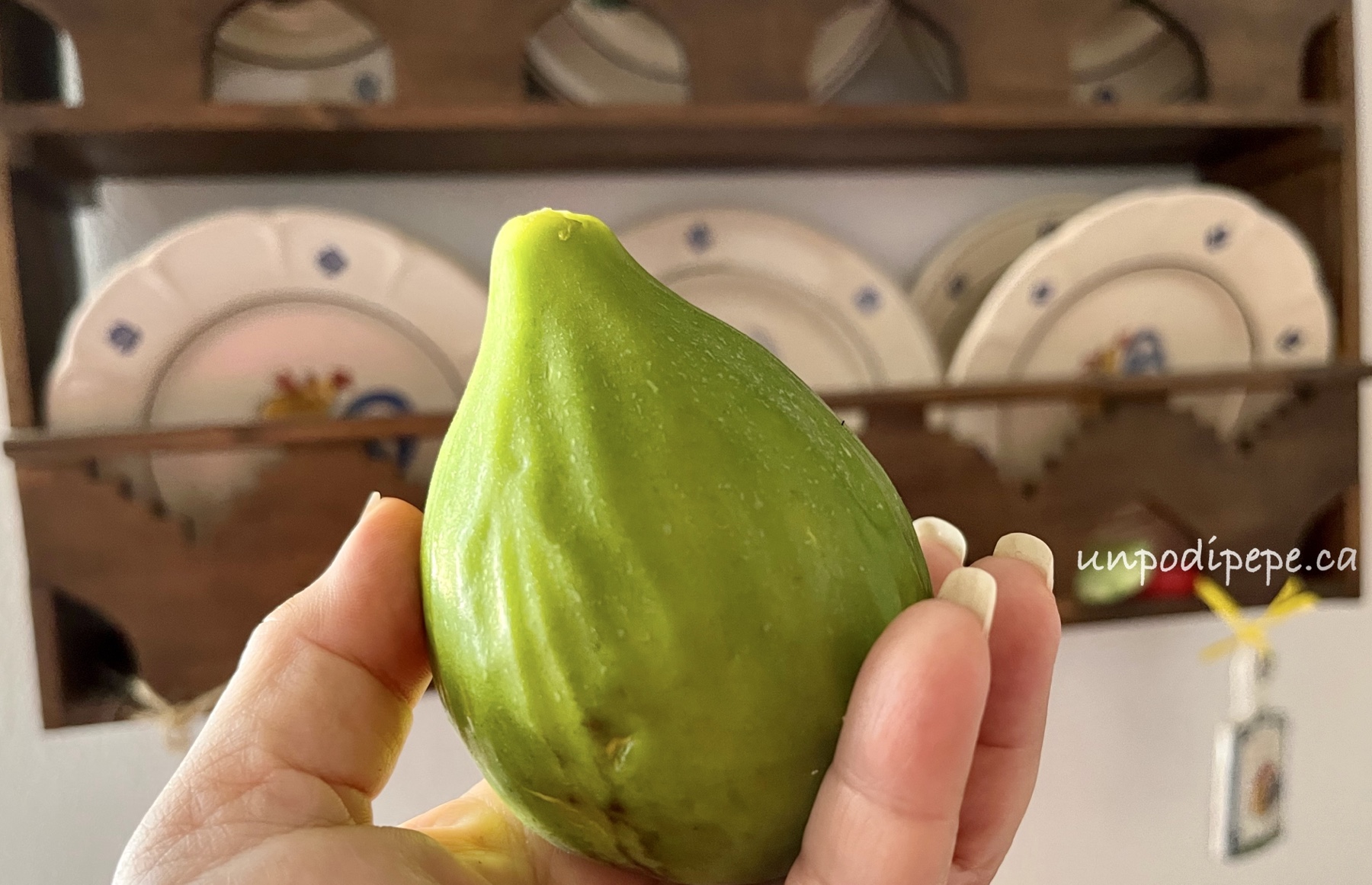
Fichi-figs-were everywhere.  Green, purple, small, big…even ginormous like this one in my hand.More fichi!basket of figsLast time I was here, I bought a spianatoia, although I only knew what is was called in dialetto.  It is a pasta rolling board with a lip on one end so it stays put on the table.  This one also has a handy carrying handle. I was only able to use it once in 2019, so I wanted to get some use out of it. I made ravioli di ricotta e spinaci a few times and filled the freezer.  I make them often in Vancouver, and they are good-but the goat milk ricotta here is so incredibly good that they taste better.

I did not get a chance to make my own orecchiette as I was too busy socializing, but we did eat them often.  I need to practice my technique!

Orecchiette con sugo

The cheese products in Puglia and Campania are drool-worthy!  Orsara has its own DOP cheese called cacioricotta, made with goat milk, but it never stays around long enough to be photographed!  Wednesday is mozzarella di bufala day. These melt in your mouth ones are from Masseria Li Gatti near Torremaggiore, SanSevero (FG).  

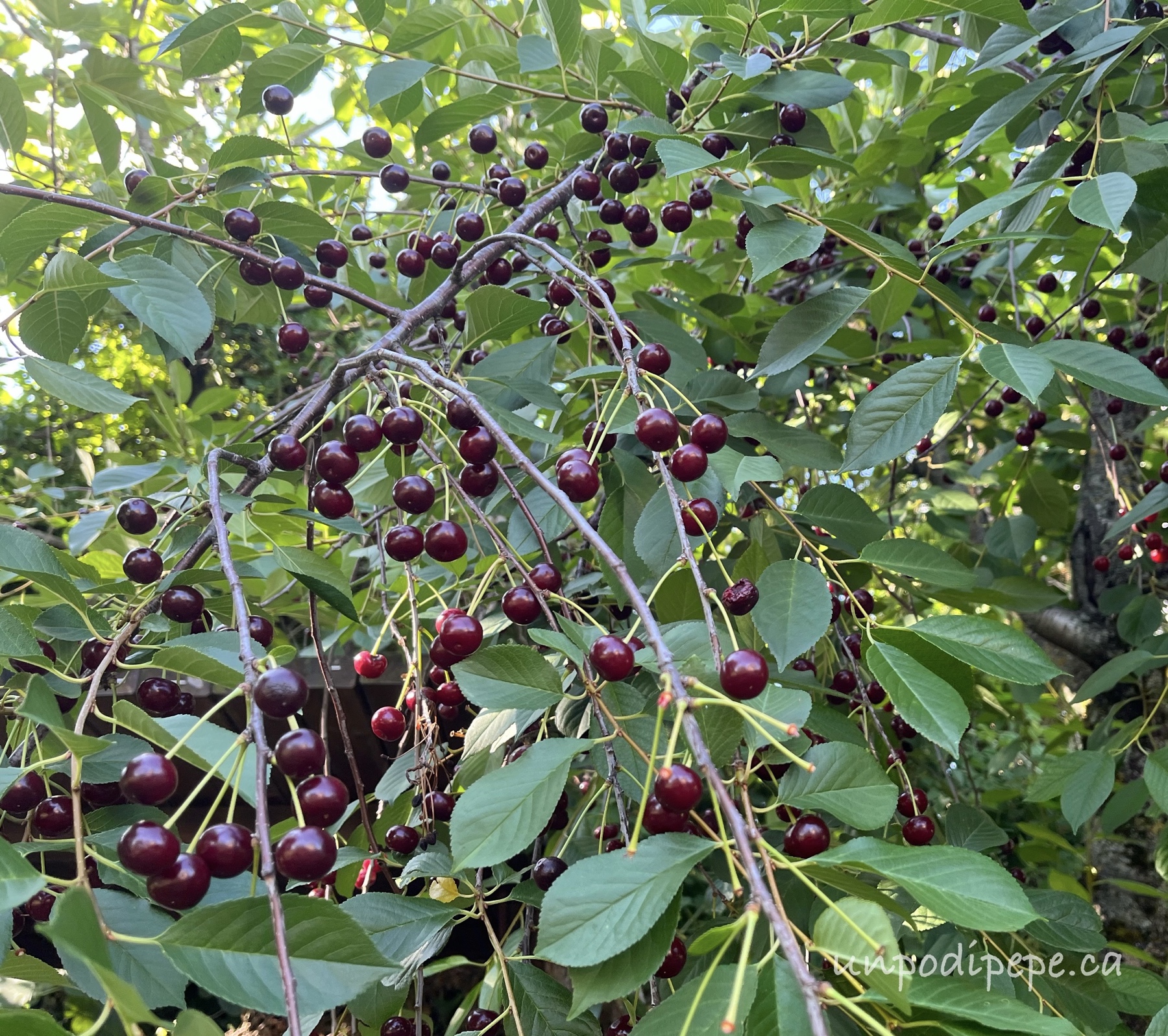
June is amarena season.  Amarene are sour wild cherries.  The word amaro means sour or bitter.  Everyone is busy picking them, making jam, canning them and making crostate.  I went amarena picking in my cousin’s olive grove.  Aren’t they gorgeous?Amarena cherries on the tree

Friends and relatives gave us amarene in syrup.  The absolute best place to use it is on top of gelato! I ate a lot of polpo or polipo on this trip.  They both mean Octopus and it is one of my favourite foods.  I will have to publish a post with all of my polpo photos.  This one of Mamma washing polpo in the kitchen sink was popular on instagram.washing octopusThis is the insalata di polpo that she made.  No leftovers.  Sorry, not sorry!Octopus salad

Cooking fish needs to be coordinated with umido day which is 3 times a week, otherwise the entire house will be puzzolente -stinky. Orsara now does la raccolta differenziata for garbage and recycling and it is extremely efficient!  Roma, are you listening?  The town has never looked so clean.  I will have to write a post about this.  Here is a sunny photo of l’umido pickup day.  This is not the kitchen, but these stairs do lead to it!

We went to a post-wedding meal in Alberona and stopped off at the caciocavallo store on the way home.  It was actually a farm and it was super-puzzolente!

Fresh caciocavallo needs to hang to dry.  The kitchen stone ceiling has a catnill’.  This is a metal ring like the ones outside that were used to tie up your donkey.  We couldn’t reach it to hang the caciocavallo, plus they tend to ‘sweat’ and leak a small amount of fluid until they dry.  Yuck.  who wants caciocavallo sweat to fall on their head?  It was hung from the fridge, next to the piattaia full of Pugliese plates.

I will leave you with one last photo of the cute little Ichnusa Sardinian beer bottle I brought home from camping in Mattinata.  I hope this post has made you either hungry and drooling or wishing you could visit Puglia yourself.  Maybe it has done both? Perché no?  I am already planning my next visit!  Buon appetito e buon viaggio, Cristina
Thanks Sherry from Australia for hosting the monthly food blogging event, In My Kitchen (IMK). Click the link to Sherry’s Pickings to read about other world kitchens. Buon appetito, Cristina

Share this:

  • Click to share on Facebook (Opens in new window) Facebook
  • Click to share on Pinterest (Opens in new window) Pinterest
  • Click to share on X (Opens in new window) X
  • Click to email a link to a friend (Opens in new window) Email
  • Click to share on WhatsApp (Opens in new window) WhatsApp
Like Loading...

Percorso della Memoria

28 Sunday Feb 2021

Posted by Un po' di pepe in Italian life, Orsara di Puglia, Photography, Puglia

≈ 16 Comments

Tags

Fine Confine Festival, Italy photography, Montaguto, Monti Dauni, Nicola Tramonte, Orsara di Puglia

Largo San Michele Orsara di Puglia

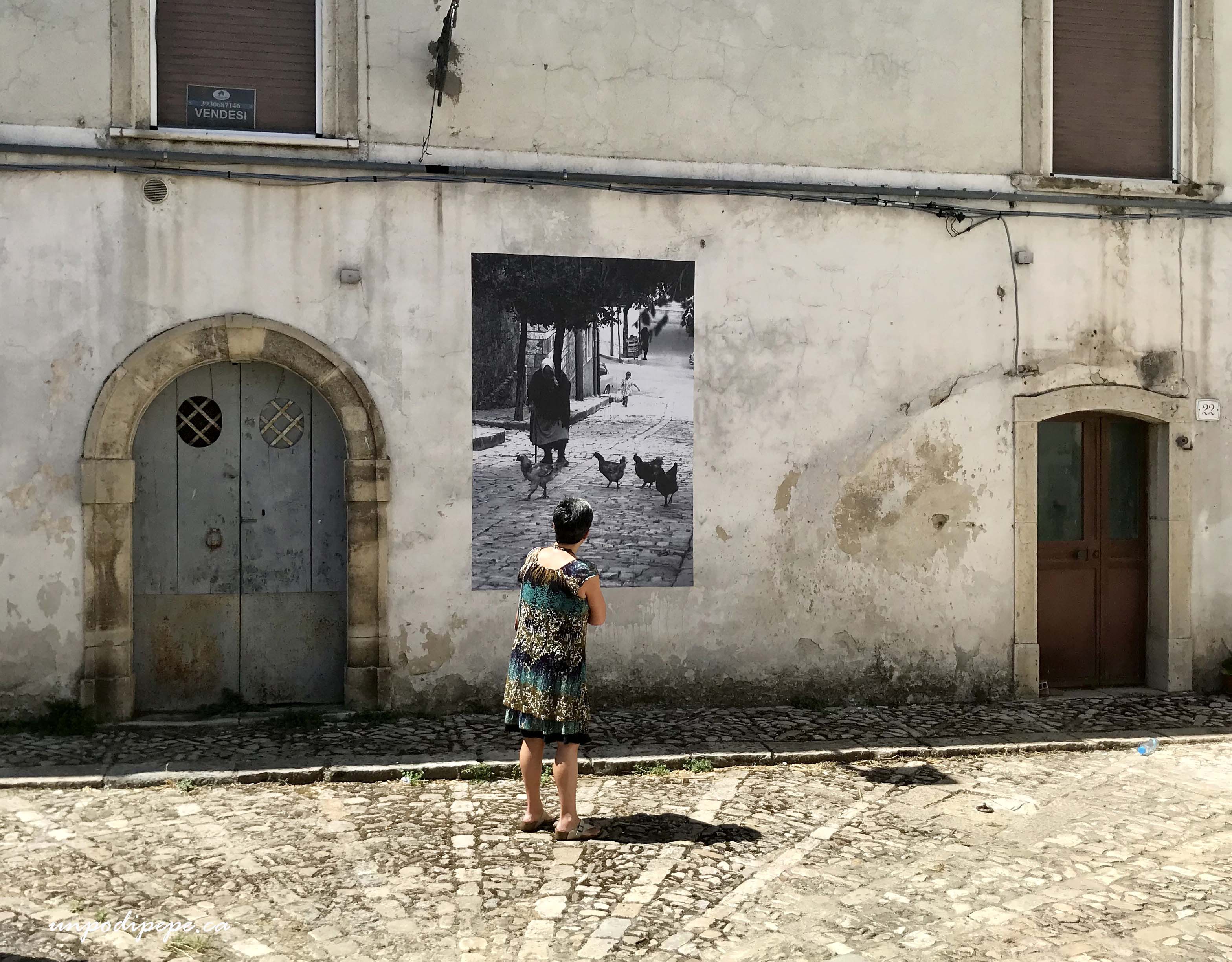
During my last trip to Orsara di Puglia in July 2019, I arrived just in time for a new event, the Fine Confine Festival held in conjunction with Montaguto.  Montaguto is the closest town, less than 7 km away, but it is ‘across the border’ because it is in Campania.  Fine Confine means ‘no more borders’.  Of course, there is no actual border between Puglia and Campania, it was meant to be an emotional reflection on borders and walls.  

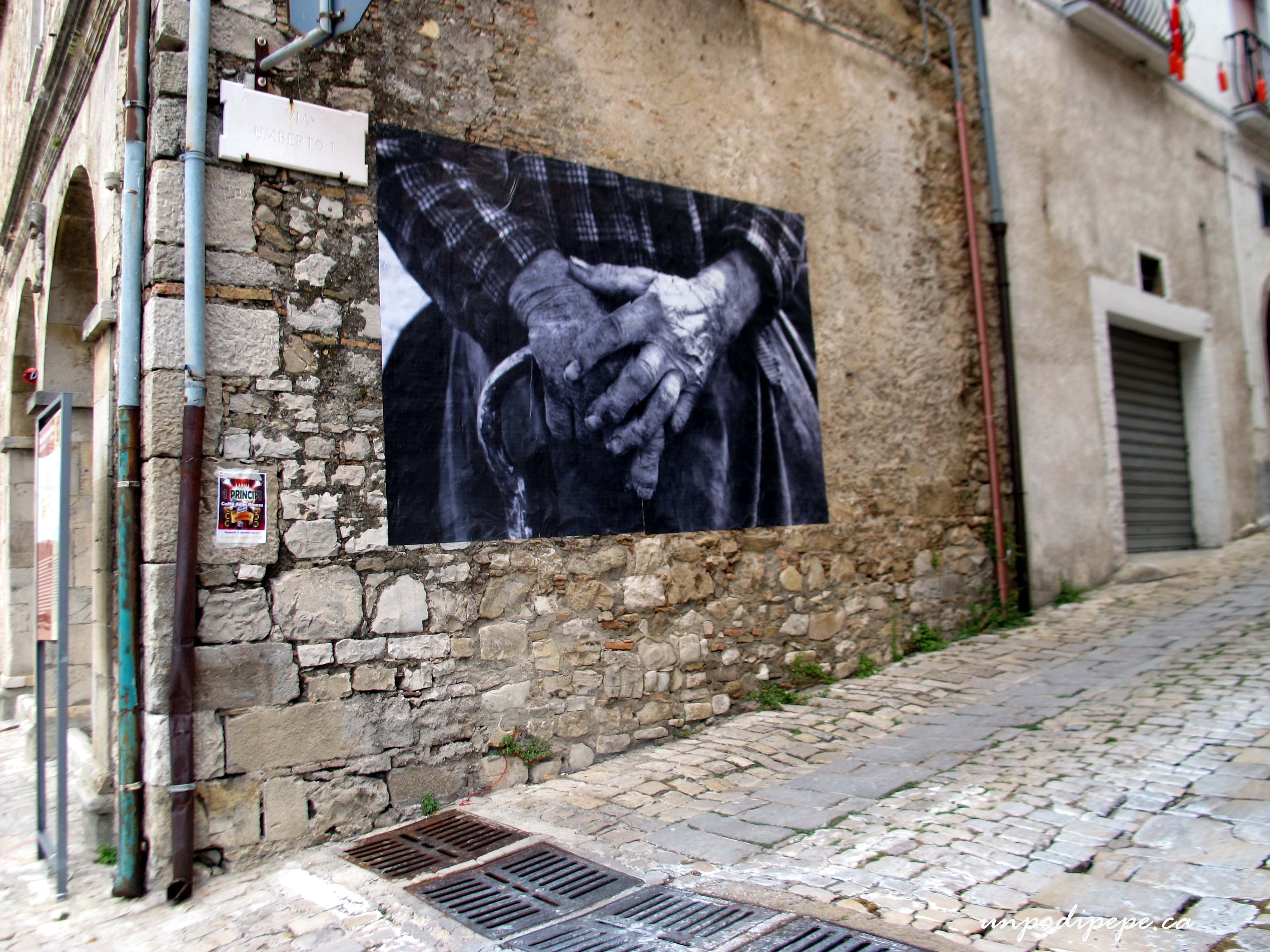
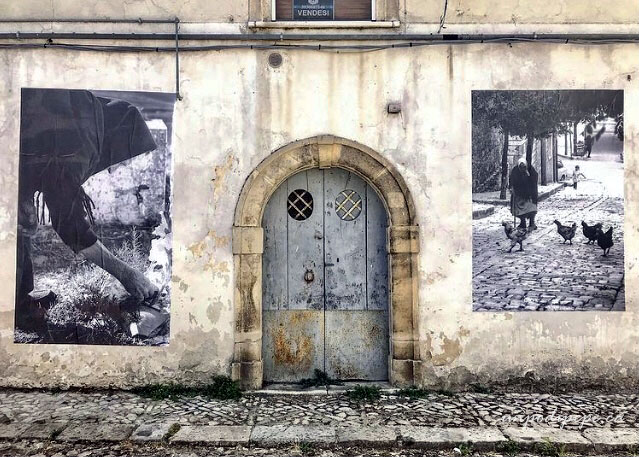
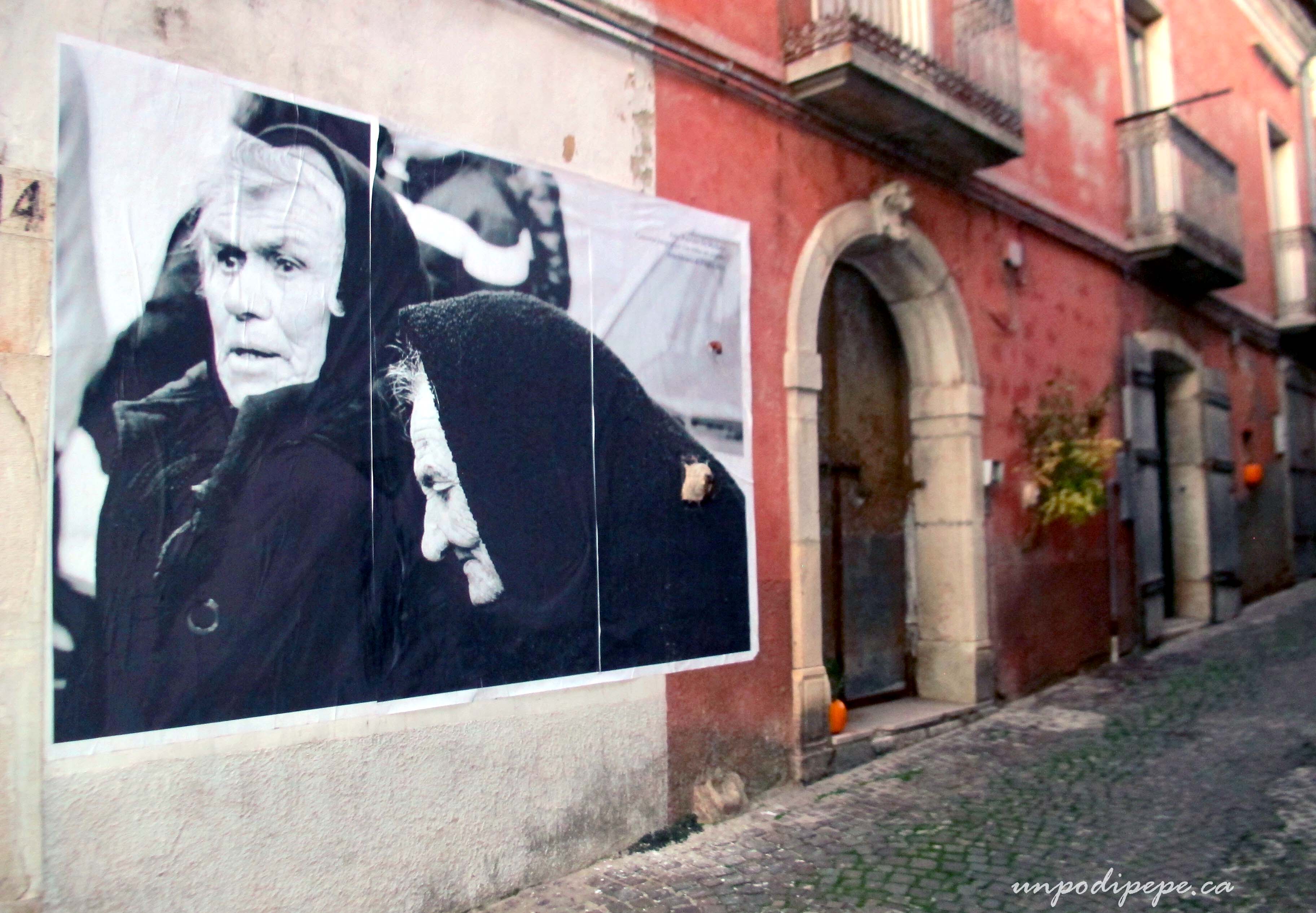
The 3 day festa had a jam-packed creative program.  One of the featured events was an open air exhibit, Percorso della Memoria.  The exhibit featured black and white photos taken by local architect Nicola G Tramonte between 1972 – 2008, super mega enlarged and affixed to the textured stone exteriors of buildings in the Centro Storico.  The photos are from his 2016 book Consegna di un Mondo (Surrender of a World).  It weighs almost 2kg, so I left my copy in Orsara!  Percorso della memoria, literally ‘path of the memory’, is best translated as ‘a stroll down memory lane’.  

My favourite piece, both for image and location is of Z’Ndunett (Zia Antonietta), my friend’s bisnonna, with her nose in a book.  It is on the imposing portone of Palazzo Varo in Largo San Michele.  I wonder what she is reading-it looks like it could be a prayer book? It was rare for anyone of her generation to make it past grade 2, which make the photo even more interesting.

True amicizia.  These two vecchiette were likely the best of friends for almost a century. Vecchiette are little old ladies.  Isn’t that what LOL meant before texting?

Un centesimo for her thoughts?  If only we knew what she was thinking.

This image is on the outer side wall of the 17th Century Fontana Nuova, where my Mamma used to wash clothes.  These gnarled, wrinkled, sturdy hands have worked and tilled the soil.  Likely they hand washed a lot of laundry too!

The only colour photo in the exhibit, this one is on the portone of an abandoned building I have always been fond of.  I refer to it as la casa del cappero because there is a caper tree growing from the inside. The owner died long ago, and apparently a disinterested heiress in New York does not give it much thought.  The subject lived around the corner and she fits right in,  seeming to become part of the building.  I remember her from the 1980’s when she was scandalized by my sister’s short shorts.  She would mumble ‘puttanella, puttanella’ when 8 year old Lucia walked by!

My friend Antonietta’s dress blends nicely into the colour palette as she admires this photo.  I adore these chickens who look like they are doing ‘lo struscio‘ – a passeggiata up the main street of Orsara! There were actually 2 photos on this wall, as you can see in the next photo.  This beauty is one of my favourite doors in town.

The ragazzo in this portrait with his infectious gap-toothed laugh absolutely radiates the joy of childhood! The wire his hand is gripping is mirrored in the real wire of the clothesline and the cast shadow it leaves. Unlike the rest of the photos in the exhibit which are on crumbling exteriors, this one is on a clean, newly painted surface.  My nonno Luigi used to live around the corner to the right.

There is another photo across the narrow street, but I did not get a close image of it.  I love the afternoon cast shadows on the walls. I am  constantly on the lookout for cast shadows when I wander the streets of Orsara-you can see some of my discoveries in  Il Sole di Metà Pomeriggio.

This last photo by Nicola is actually from an earlier exhibit during Fucacost e Cocce Priatorje, the November 1st festa in 2017.  I had to include it here because it was affixed to the wall of a wall down and across the narrow street from my casa in Orsara.  The red palazzo belongs to the same owner as la casa del cappero.  They are painted the same colour.  You can see the street is decorated for the festa with zucche (pumpkins) and ginestra (Scotch broom).  In case anyone is wondering ….small cars do drive these  narrow streets!

I hope you have enjoyed this virtual tour.  Hopefully there will be another Fine Confine Festival soon, when travel is possible again.  To see more of Nicola’s photos, check out his instagram account @nicolagtramonte.  

Buon viaggio (speriamo), Cristina

Share this:

  • Click to share on Facebook (Opens in new window) Facebook
  • Click to share on Pinterest (Opens in new window) Pinterest
  • Click to share on X (Opens in new window) X
  • Click to email a link to a friend (Opens in new window) Email
  • Click to share on WhatsApp (Opens in new window) WhatsApp
Like Loading...
← Older posts

Enter your email address to follow 'un po' di pepe' and receive notifications of new posts by email.

Join 511 other subscribers
Follow Un po' di pepe on WordPress.com

Popular Posts

  • Hairstyling in Ancient Roma
    Hairstyling in Ancient Roma
  • Espresso Cookies
    Espresso Cookies
  • Il Pumo Pugliese
    Il Pumo Pugliese
  • Panforte di Siena
    Panforte di Siena
  • Internment of Italian Canadians
    Internment of Italian Canadians
  • San Nicola
    San Nicola
  • Panettone Fatto in Casa
    Panettone Fatto in Casa

Recent Posts

  • Castel del Monte
  • ‘The Nuances of Love’
  • Hostaria Antica Roma~Eat like an Ancient Roman
  • Santa Maria in Aracoeli
  • Casino dell’Aurora~Villa Boncompagni Ludovisi
  • Nasoni di Roma
  • Bloghiversario #11
  • Fontana di Trevi
  • Acqua Vergine
  • Giubileo 2025
  • Sanremo 2025
  • In Vino there are Memories
  • A Literary Harvest
  • 2024~Un po’ di pepe Year in Review
  • Buon Natale 2024
  • Il Bicerin
  • Mercato Porta Palazzo
  • Torino
  • Catanzaro, Calabria
  • Il Pumo Pugliese
  • Artemisia Gentileschi
  • Cavalli di San Marco
  • Panzerotti
  • Torcello
  • 10 years of Un po’ di pepe!

Categories

Amici e Famiglia Architecture Art Art history Art projects Bilingual posts Blogging Canada Culture Feste Firenze Inspiration Italia Italian Folklore Italian language Italian life Italocanadesi Libri Mangiamo! Orsara di Puglia Parole piacevoli Photography Puglia Recipes Roma Travel Travel tips Uncategorized Vino

Archives

Un po’ di pepe on Facebook

Un po’ di pepe on Facebook

Start a Blog at WordPress.com.
  • Subscribe Subscribed
    • Un po' di pepe
    • Join 511 other subscribers
    • Already have a WordPress.com account? Log in now.
    • Un po' di pepe
    • Subscribe Subscribed
    • Sign up
    • Log in
    • Report this content
    • View site in Reader
    • Manage subscriptions
    • Collapse this bar
 

Loading Comments...
 

    %d