• Home
  • About me/Chi sono
  • Contact

Un po' di pepe

~ …… (oon∙poh∙dee∙PEH∙peh) Cristina writes about interesting stuff /Cristina scrive di cose interessanti

Un po' di pepe

Category Archives: Puglia

Villa Jamele

21 Wednesday Jun 2017

Posted by Un po' di pepe in Amici e Famiglia, Italia, Orsara di Puglia, Photography, Puglia

≈ 9 Comments

Tags

Dalla terra alla tavola, Orsara di Puglia, Peppe Zullo, Southern Italy, Villa Jamele

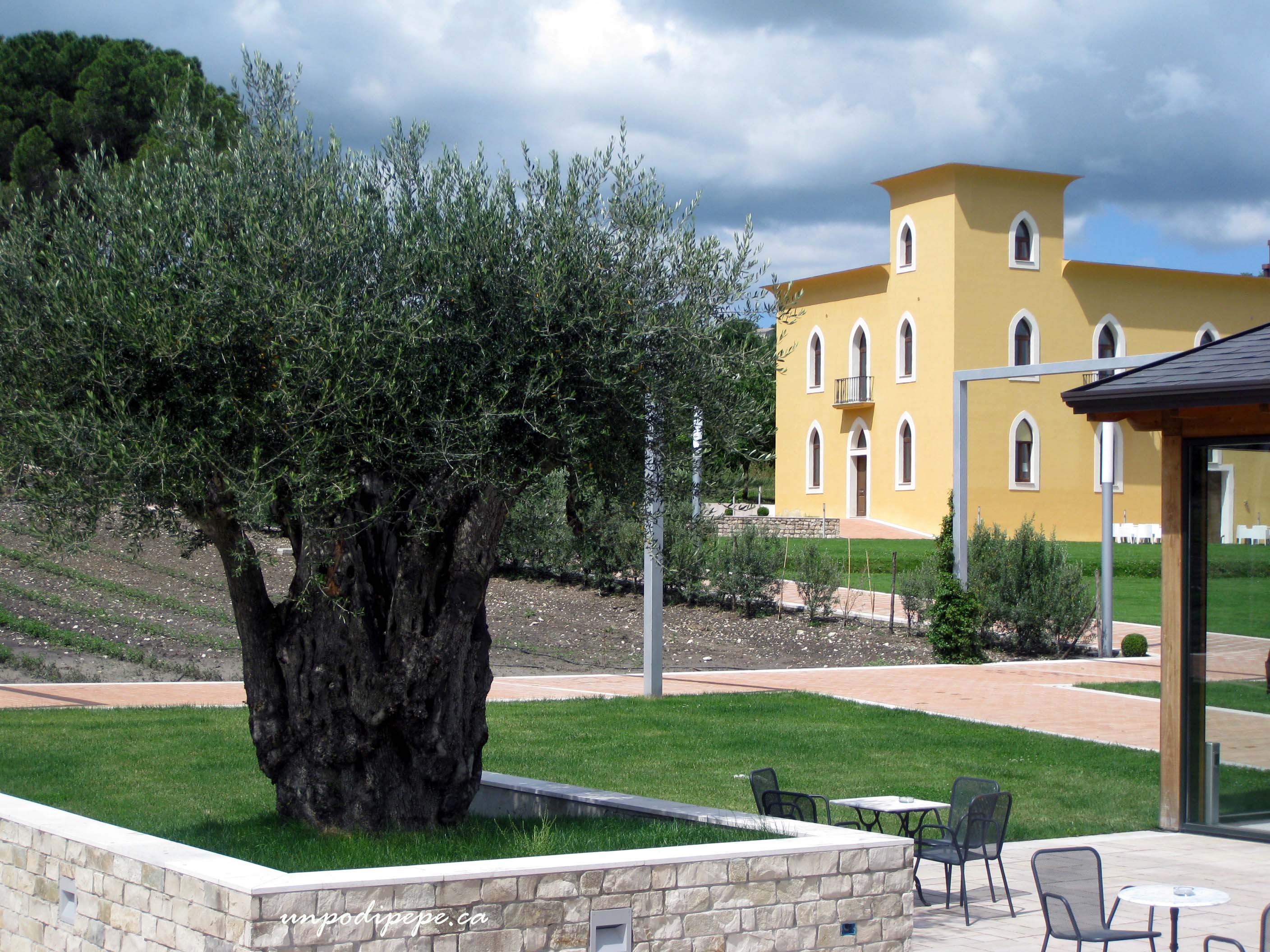
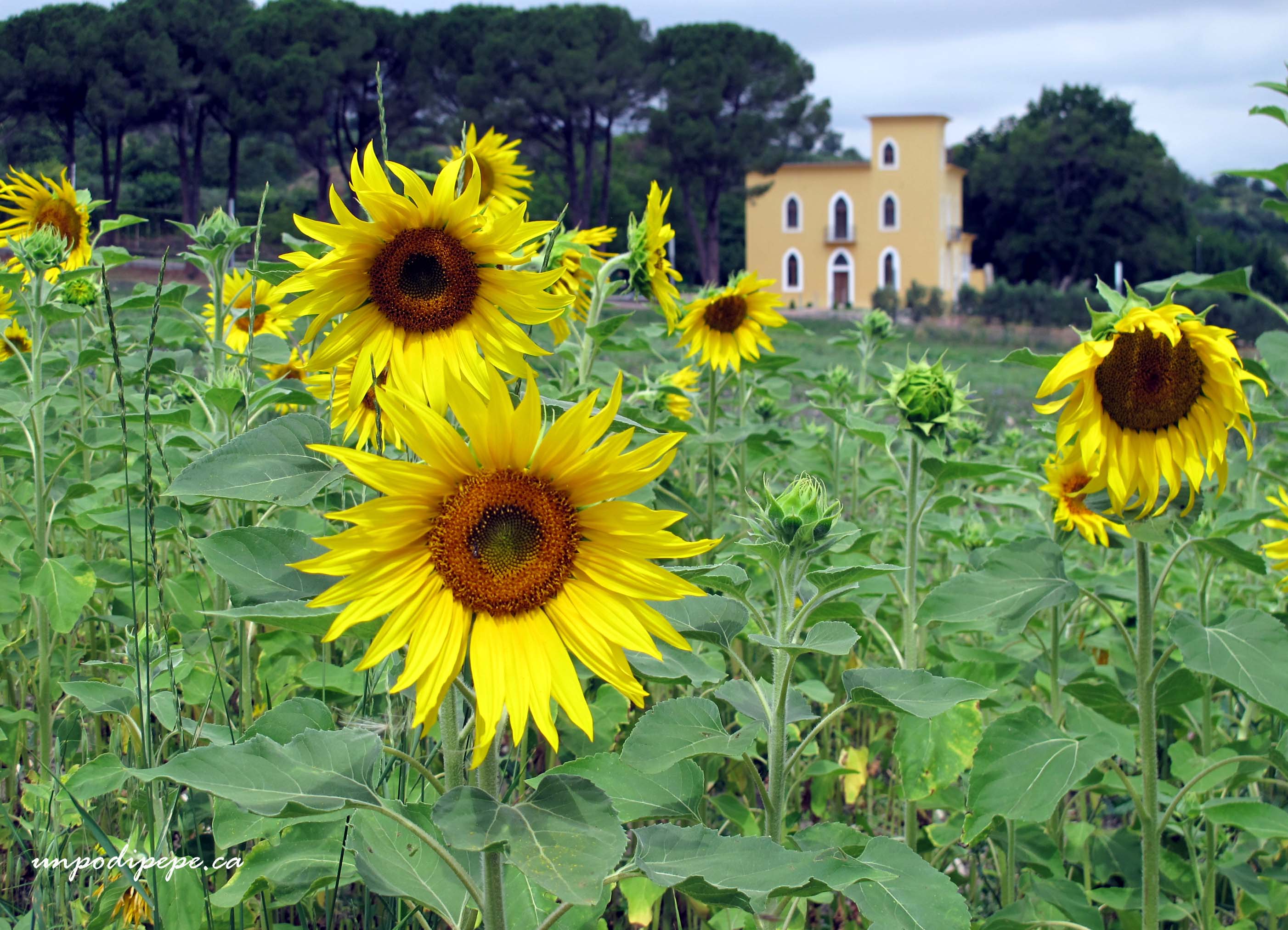
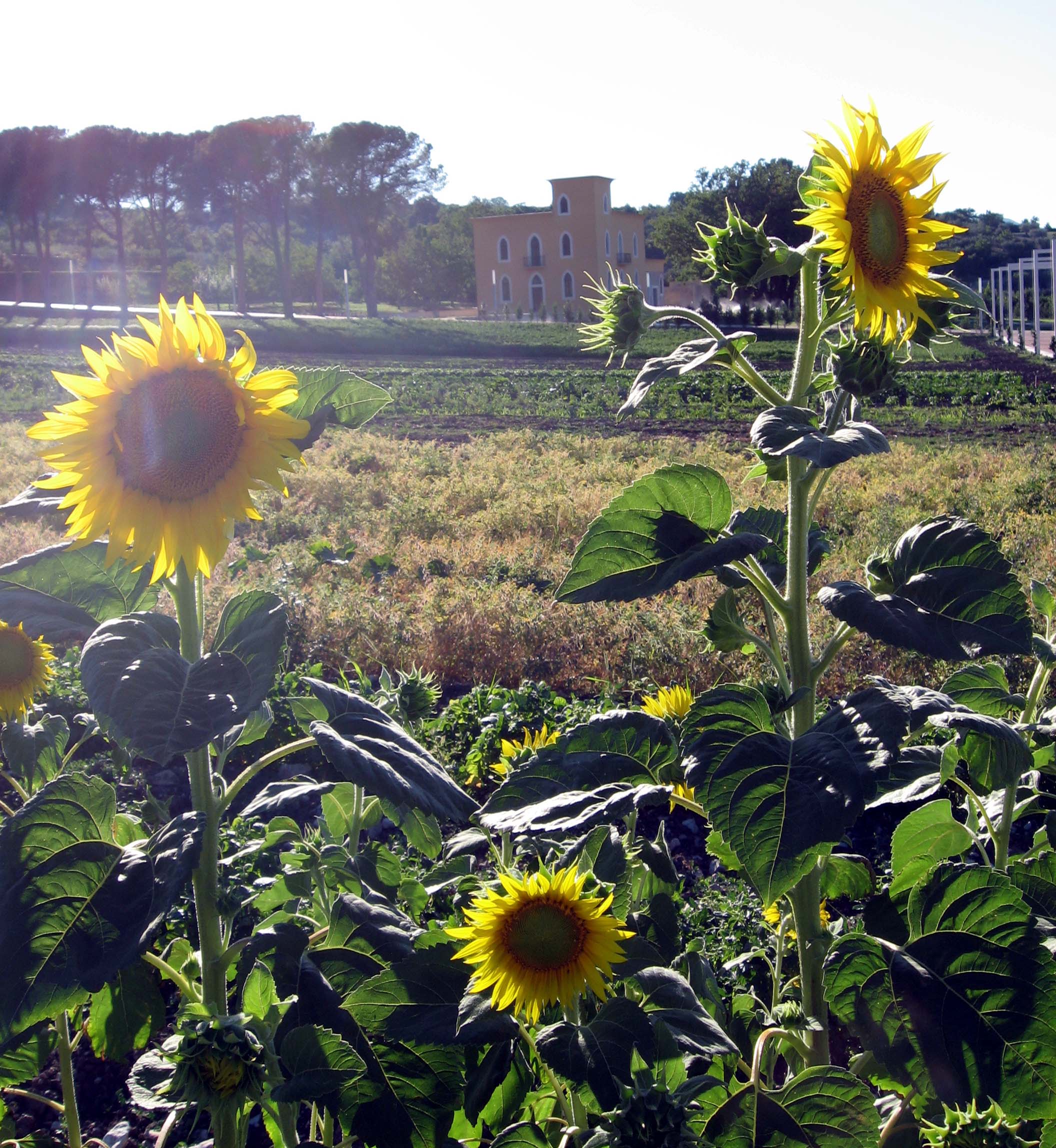
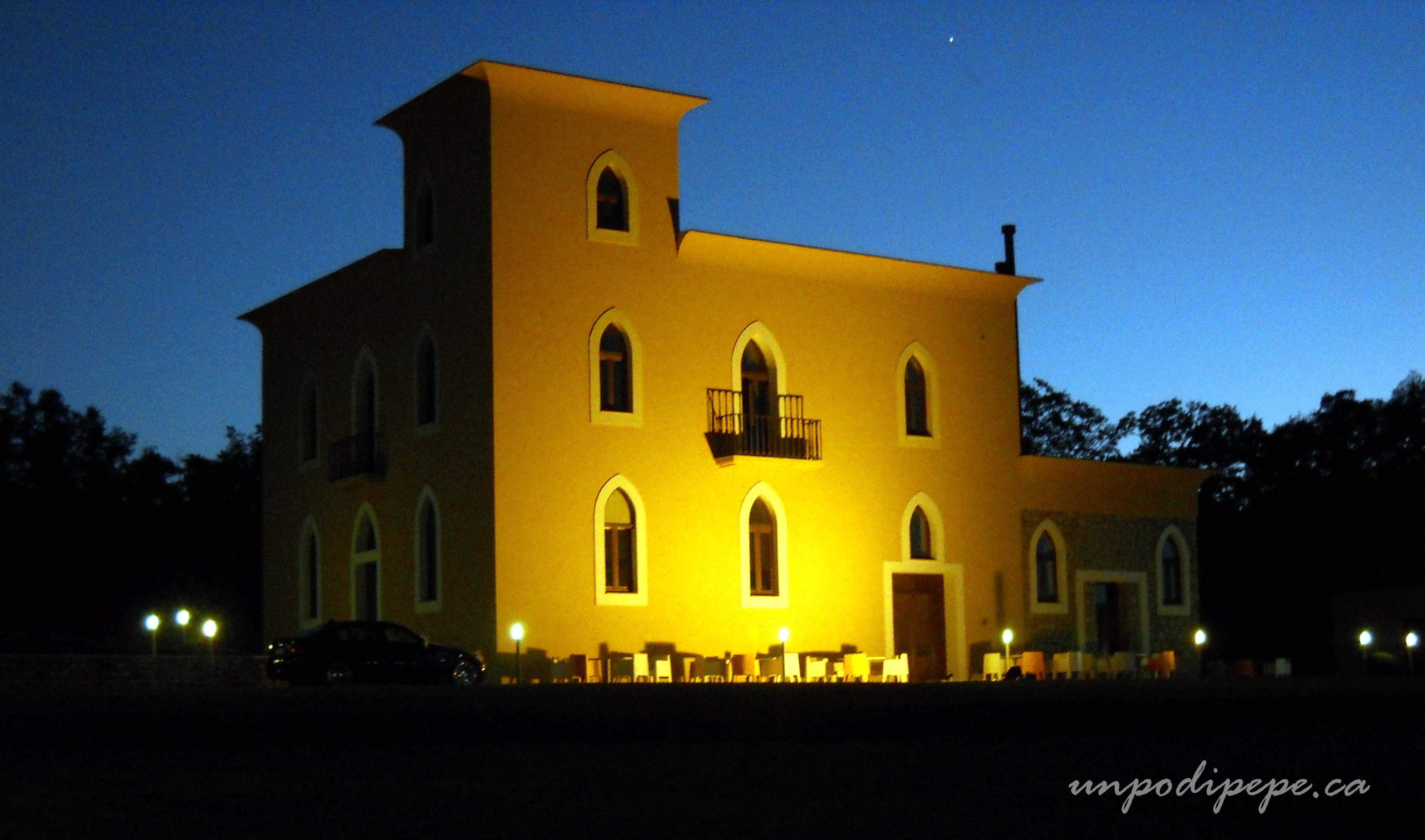
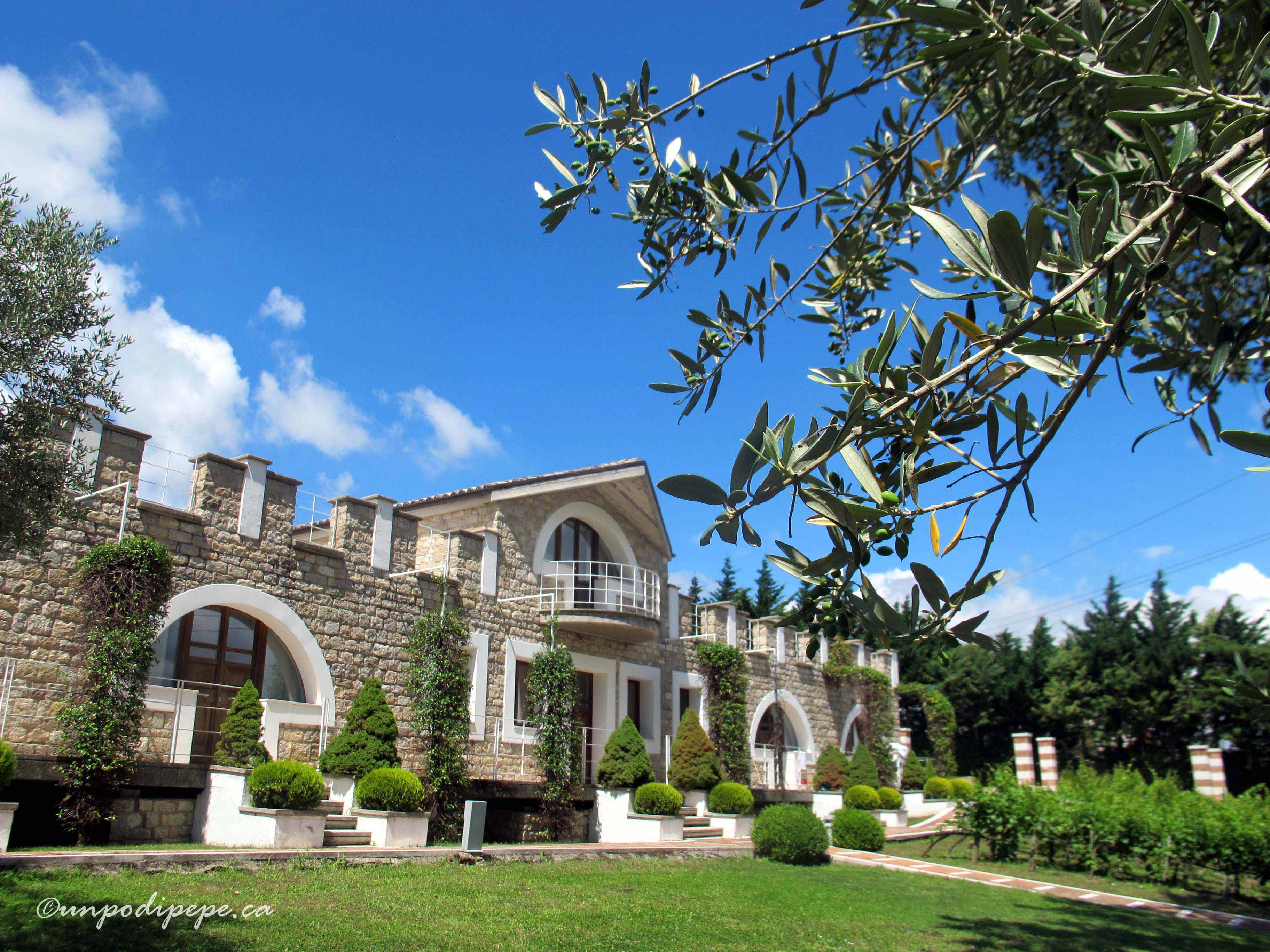
Villa Jamele (ya·MEH·leh) was mentioned in my post Peppe Zullo~Il Cuoco Contadino. Peppe’s 180,000 m² azienda agricola (agricultural estate) includes this second location acquired in 2004.  Villa Jamele is a few km down the road from Orsara di Puglia, towards Troia.  The property takes its name from the historic 1700’s villa of Hector Jamele, which has been reconstructed and is now home to an international cooking school and 5 guest rooms on the upper floor.

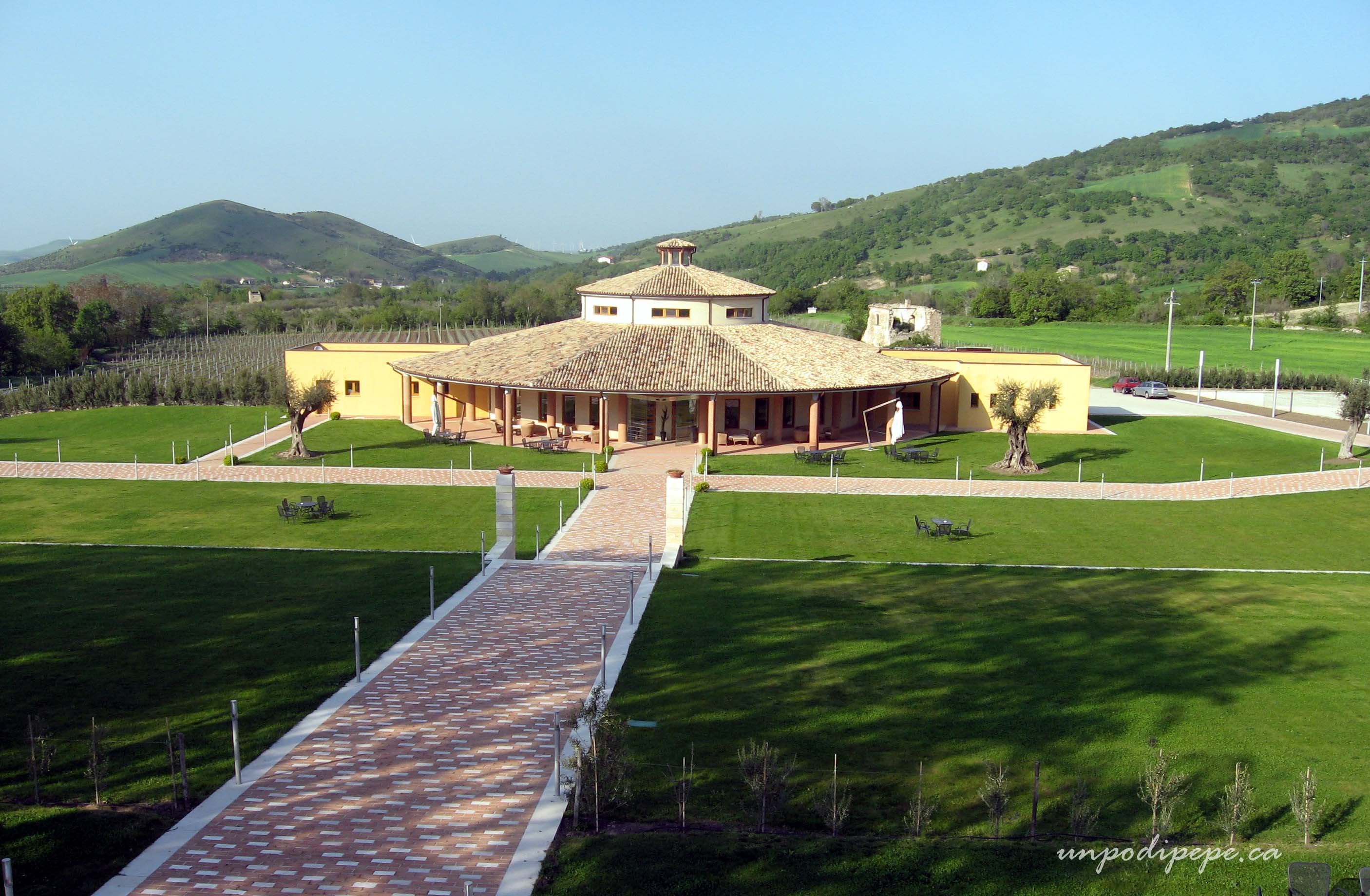
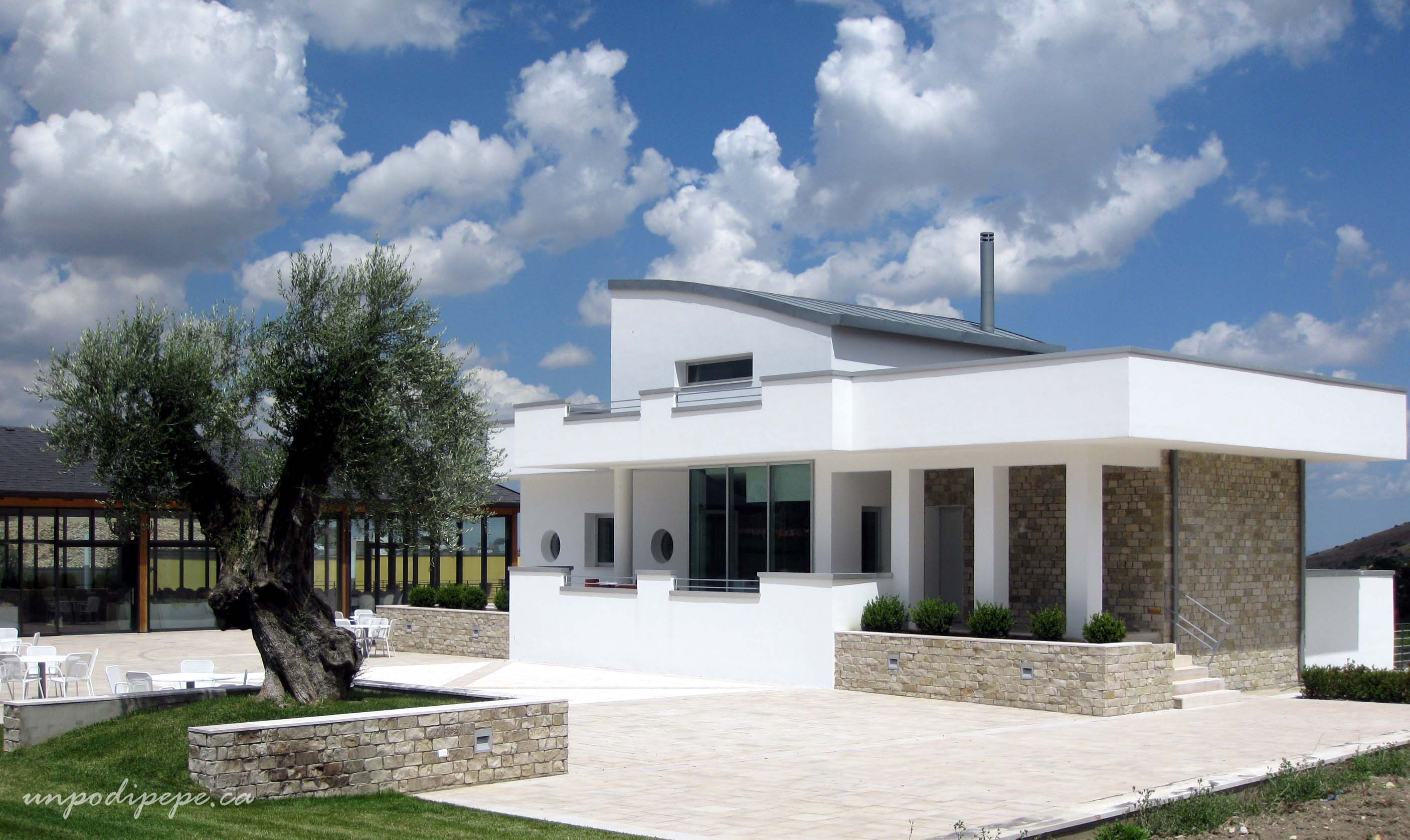
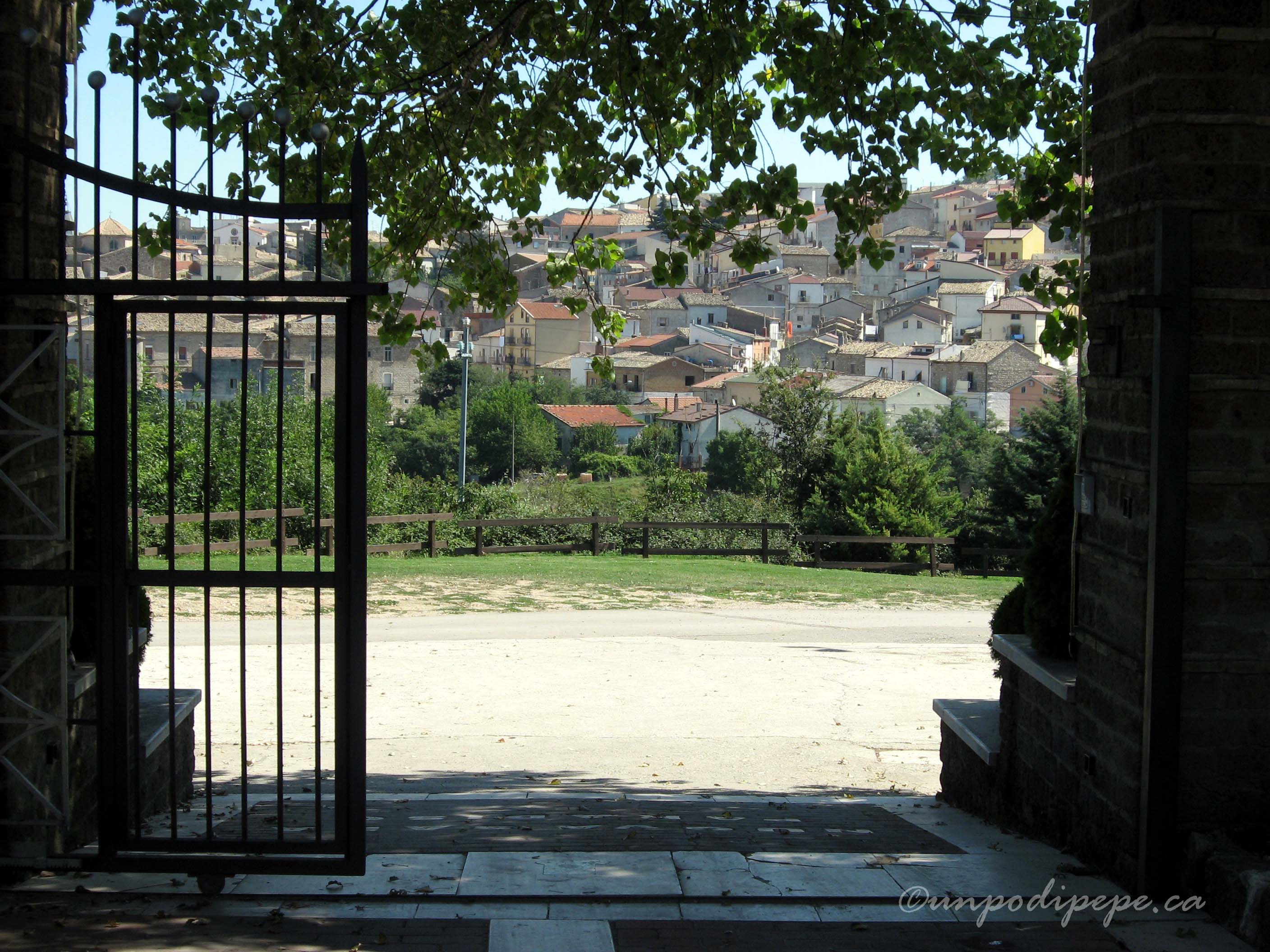
Sala Guadalajara is a large circular reception hall.  There is also a glass reception room, Sala Veracruz.  The photo below was taken from the roof terrace of Villa Jamele.

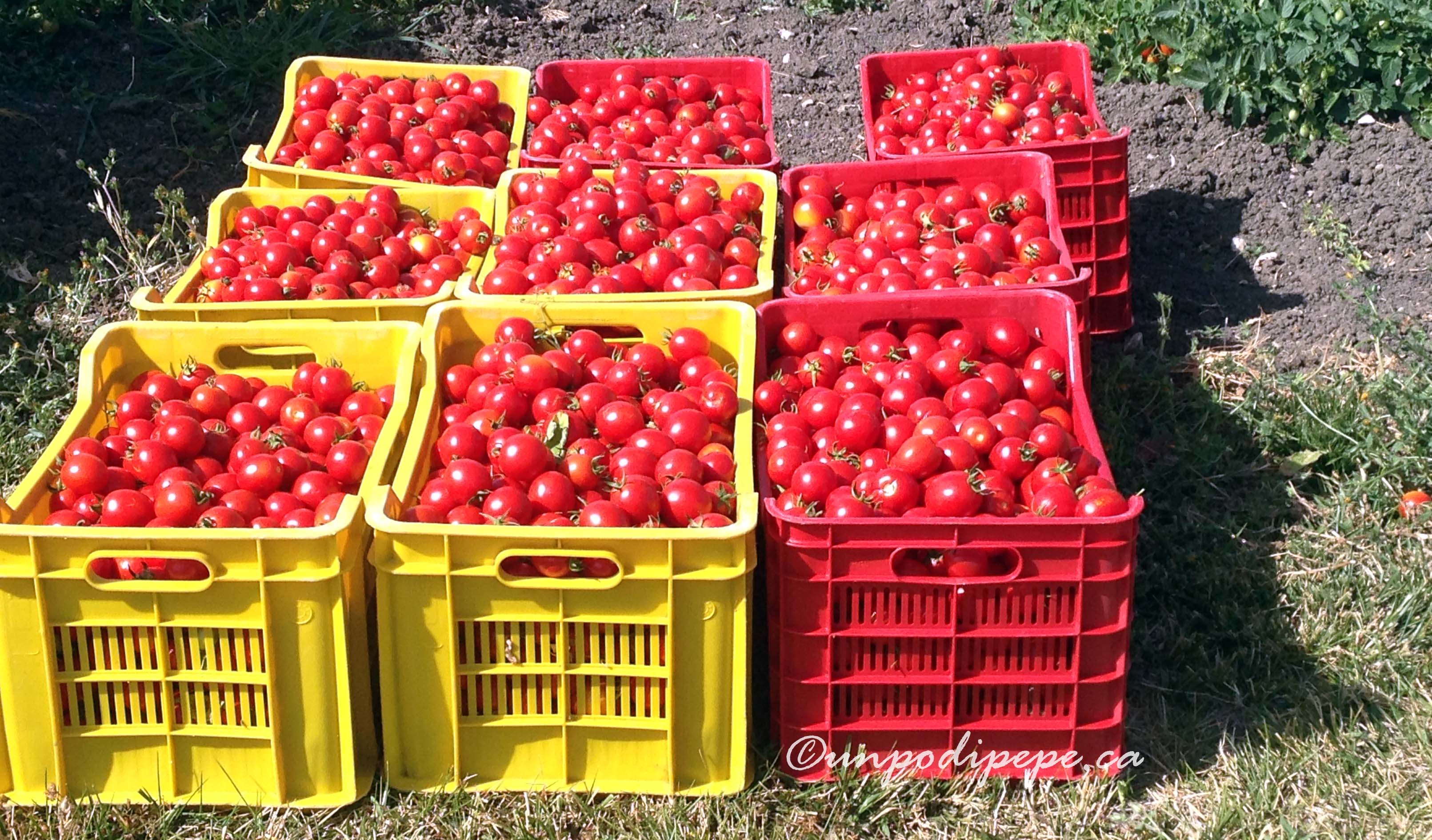
Dalla terra alla tavola is the philosophy at Villa Jamele.  This translates to ‘Field to table’. Food does not get any fresher. In addition to producing wine and olive oil, Peppe Zullo grows most of his own vegetables here at Villa Jamele, including pomodori which are canned on site in August. 

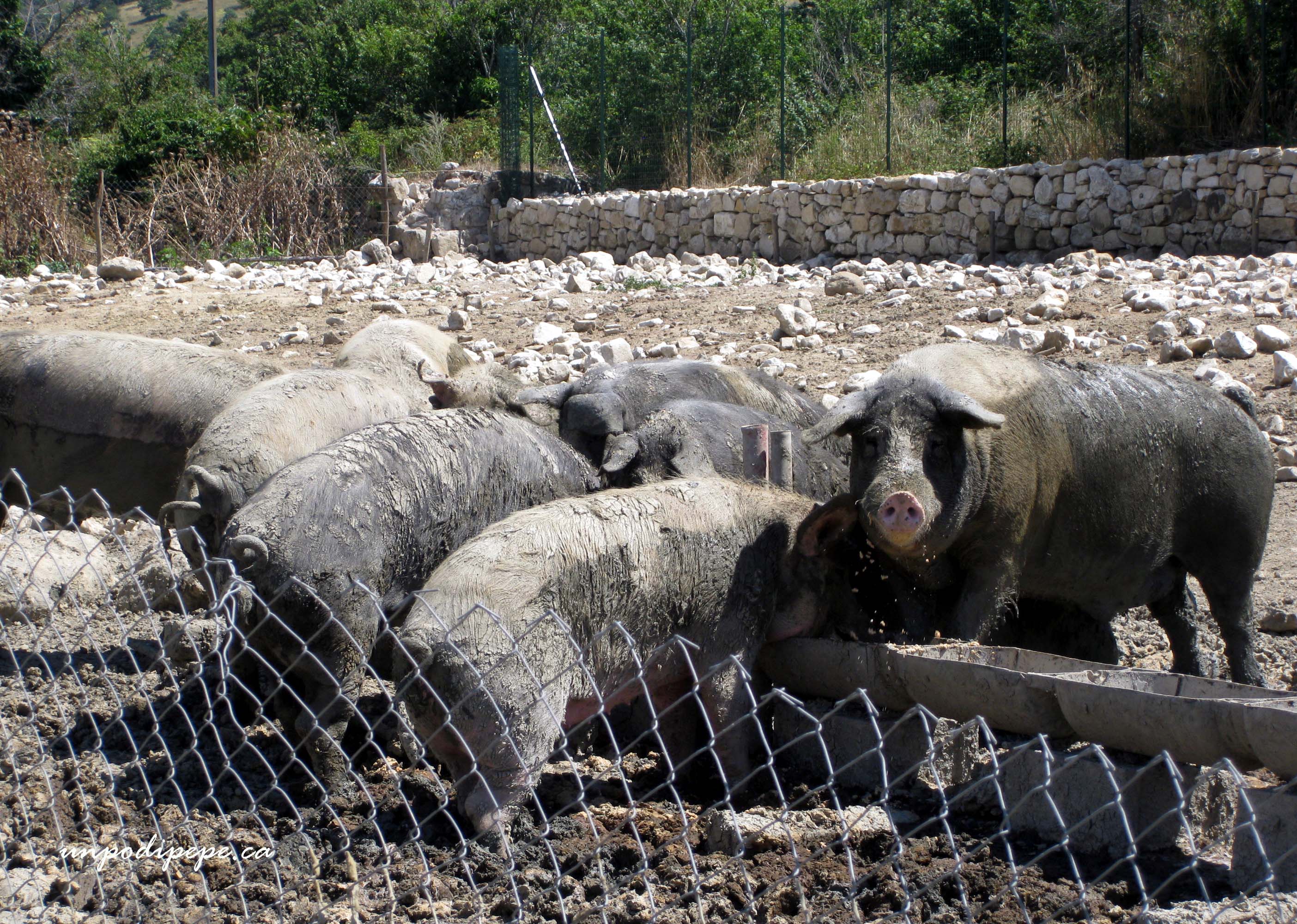
Il Bosco dei Sapori Perduti is a biodiverse orchard which includes over 50 varieties of fruit trees and herbs.  Peppe uses local, traditional products in his cooking, including wild greens and herbs such as boragine (borage), marasciuolo –a type of wild rucola found in Puglia, fiori di zucca, and wild asparagus. Behind Sala Guadalajara, past a reconstructed stone archway is a large vineyard where grapes for Peppe’s vini, Ursaria and Aliuva are grown.  Read more about them in this post.Also on the grounds is a pond and various animals, including ducks, geese, a donkey and one muddy but very photogenic maiale nero and his famiglia.

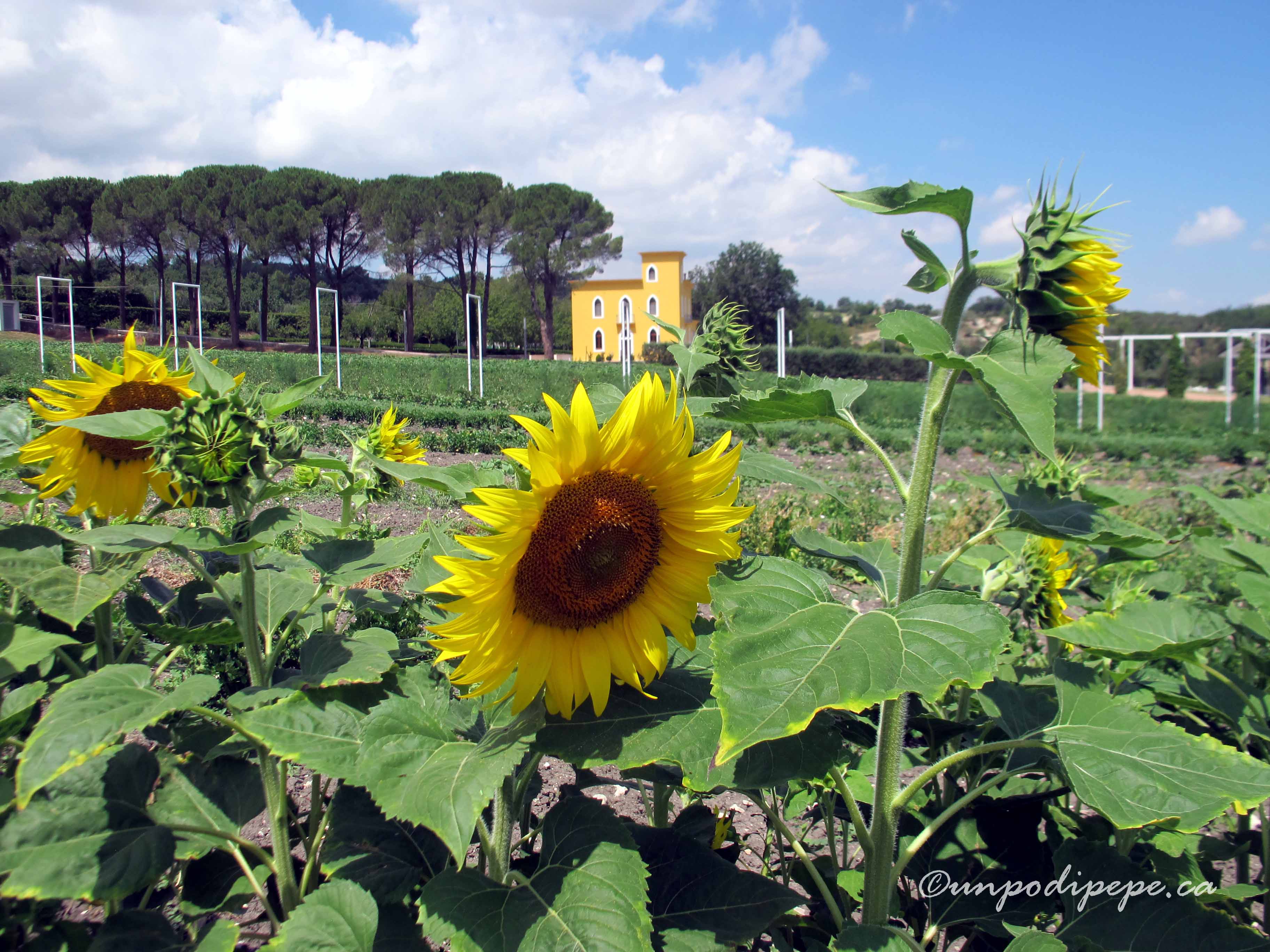
The Villa Jamele site is a tranquil oasis of green, dotted with ancient olive trees. My favourite area of Villa Jamele is the campo dei girasoli-a field of sunflowers blooming every July. 

La Scuola Internazionale di Cucina at Villa Jamele is open from September to November and February to April.  Classes can be organized for 8-16 participants. To book an event, suite, destination wedding , or make a reservation at Ristorante Peppe Zullo, call or email 39 0881 964763 info@peppezullo.it

Villa Jamele, Piano della Corte, Orsara di Puglia (FG) http://www.peppezullo.it

I hope you have enjoyed my favourite ‘scatti‘ of Villa Jamele! Ciao, Cristina

Share this:

  • Click to share on Facebook (Opens in new window) Facebook
  • Click to share on Pinterest (Opens in new window) Pinterest
  • Click to share on X (Opens in new window) X
  • Click to email a link to a friend (Opens in new window) Email
  • Click to share on WhatsApp (Opens in new window) WhatsApp
Like Loading...

Peppe Zullo~Il Cuoco-Contadino

28 Sunday May 2017

Posted by Un po' di pepe in Amici e Famiglia, Orsara di Puglia, Puglia, Vino

≈ 16 Comments

Tags

Italian food, Orsara di Puglia, Peppe Zullo, Pugliese Traditions, Southern Italy, Tuccanese, Wines of Puglia

My amico Peppe Zullo is known as ‘Il Cuoco-Contadino’. At the age of 24, Peppe left Orsara di Puglia to work in Boston and Puerto Vallarta Mexico, where he opened a restaurant.  He moved back to Orsara and opened his ristorante in 1992 on his family land in the Piano Paradiso area.  Piano Paradiso is an idyllic setting facing Orsara di Puglia, with spectacular views.  Peppe greets visitors with the appropriate salutation ‘Benvenuti in Paradiso’.

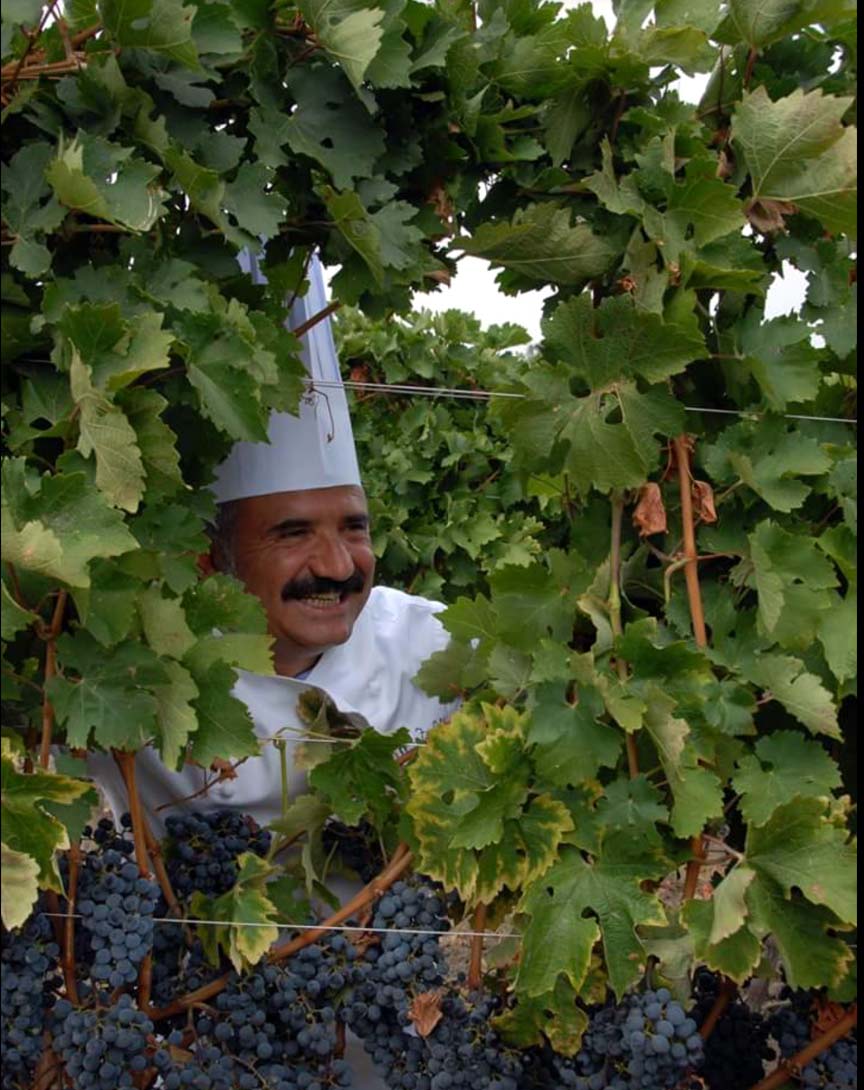
Peppe Zullo nel vigneto. Photo Nicola Tramonte

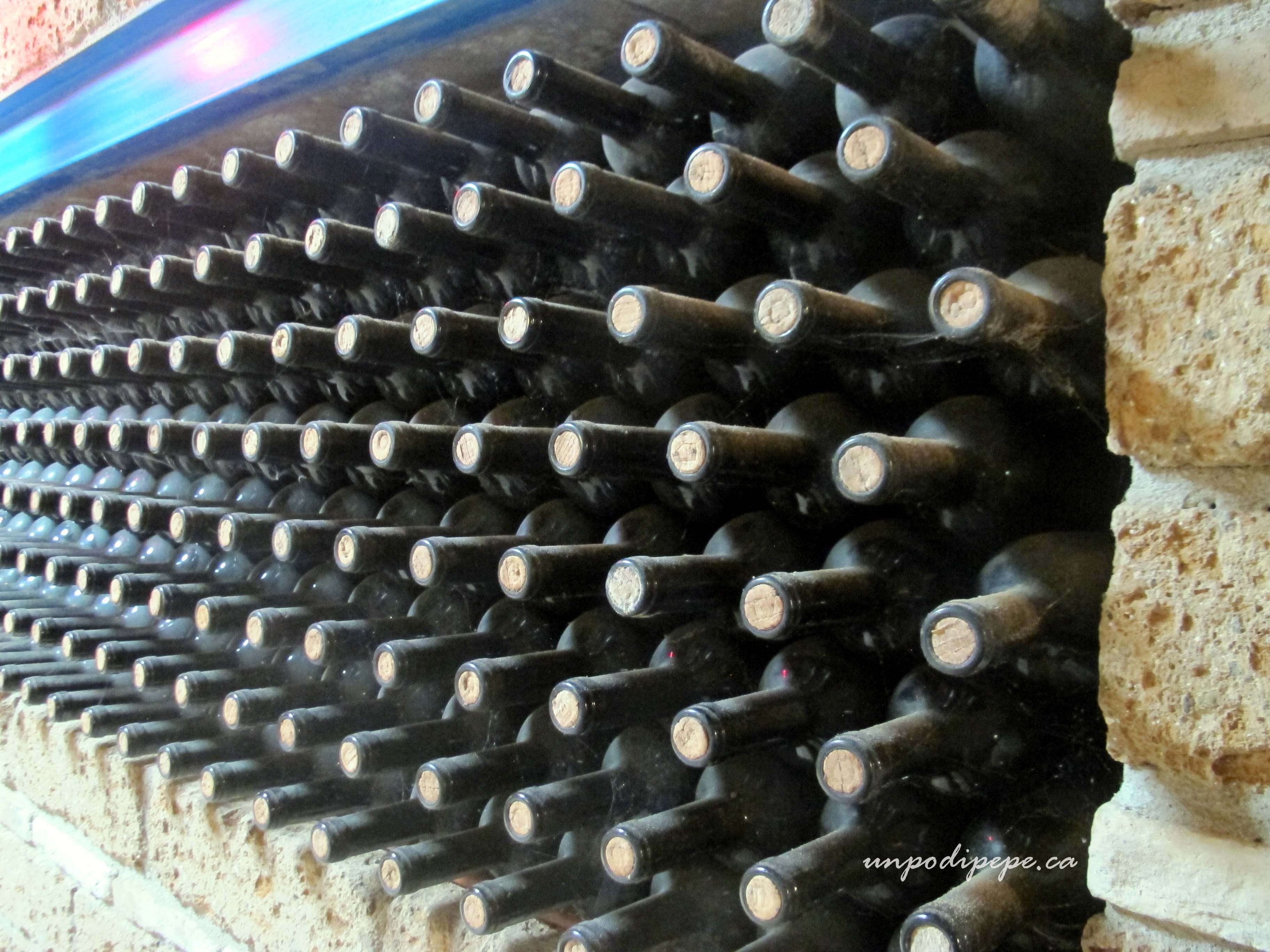
The Piano Paradiso site also includes a reception hall, Nuova Sala Paradiso and the award winning cantina. Peppe’s wine cellar La Cantina del Paradiso, designed by Nicola Tramonte was featured in the exhibit ‘Le Cattedrali del Vino’ at the Biennale di Venezia Archittetura in 2010. It is built into the side of a hill, with a vineyard on top! As Peppe likes to say, it’s the only cantina where you have to climb up stairs! This is the best place in town on a hot day! The cantina is built to resemble a subterranean small town with narrow streets and rooms. It also features colourful, whimsical original artwork by Leon Marino, an artist from Troia.

L’angelo contadino by Leon Marino

La Cantina is full of vino! Peppe Zullo produces about 25,000 bottles per year. His 2 wines are Aliuva and Ursaria. Aliuva is 80% Tuccanese 20% Uva di Troia (Nero di Troia) and Merlot.  Ursaria is 80% Tuccanese, 20% Uva di Troia and Cabernet, and is aged for 5 years in wood barrels. Peppe’s vino is served in his restaurant and event facilities and sold on site and at Peppe Zullo Point in Foggia. Read more in part 3 of my Vini di Puglia series- Il Tuccanese.

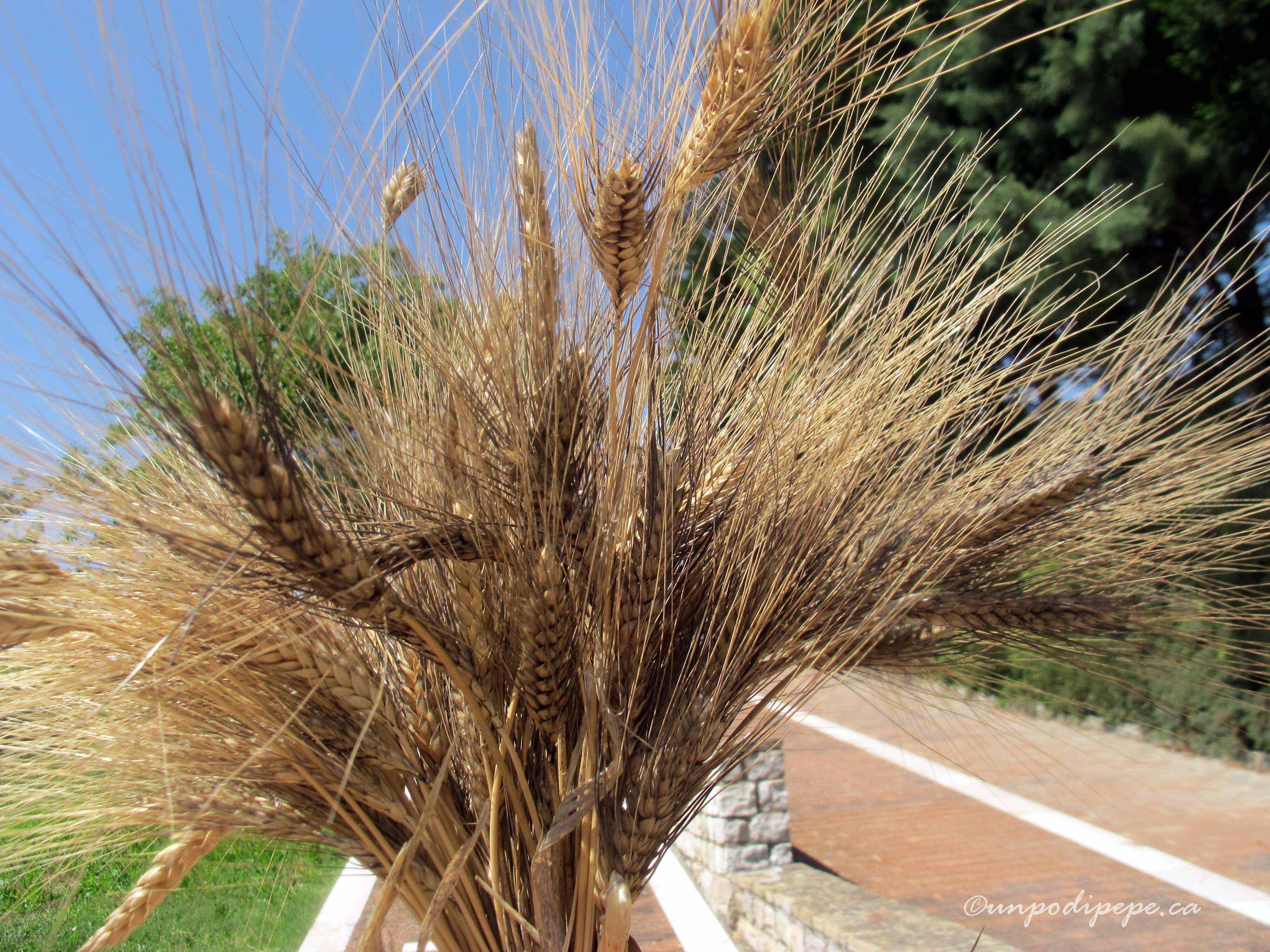
At the top of the hill, looking out over the vigna, are the Suites del Paradiso, 5 rental suites with a view of the rooftops of Orsara. Above the suites, at the top of the estate is a wheat field growing an ancient Pugliese strain called Senatore Cappelli.  We call it  ‘Strambell’ in Orsarese. Pale Eoliche, wind turbines belonging to Montaguto can be seen behind the field.  Also on site are Peppe’s home, offices, several places for outdoor receptions or enjoying the scenery and a fenced in area with fruit trees, sheep and horses.

Peppe’s 180,000 m² azienda agricola (agricultural estate) also includes a second location acquired in 2004.  Villa Jamele is a few km down the road towards Troia.  The reconstructed 1700’s villa is home to an international cooking school, with rooms on the upper floor. Villa Jamele is featured in the next post.

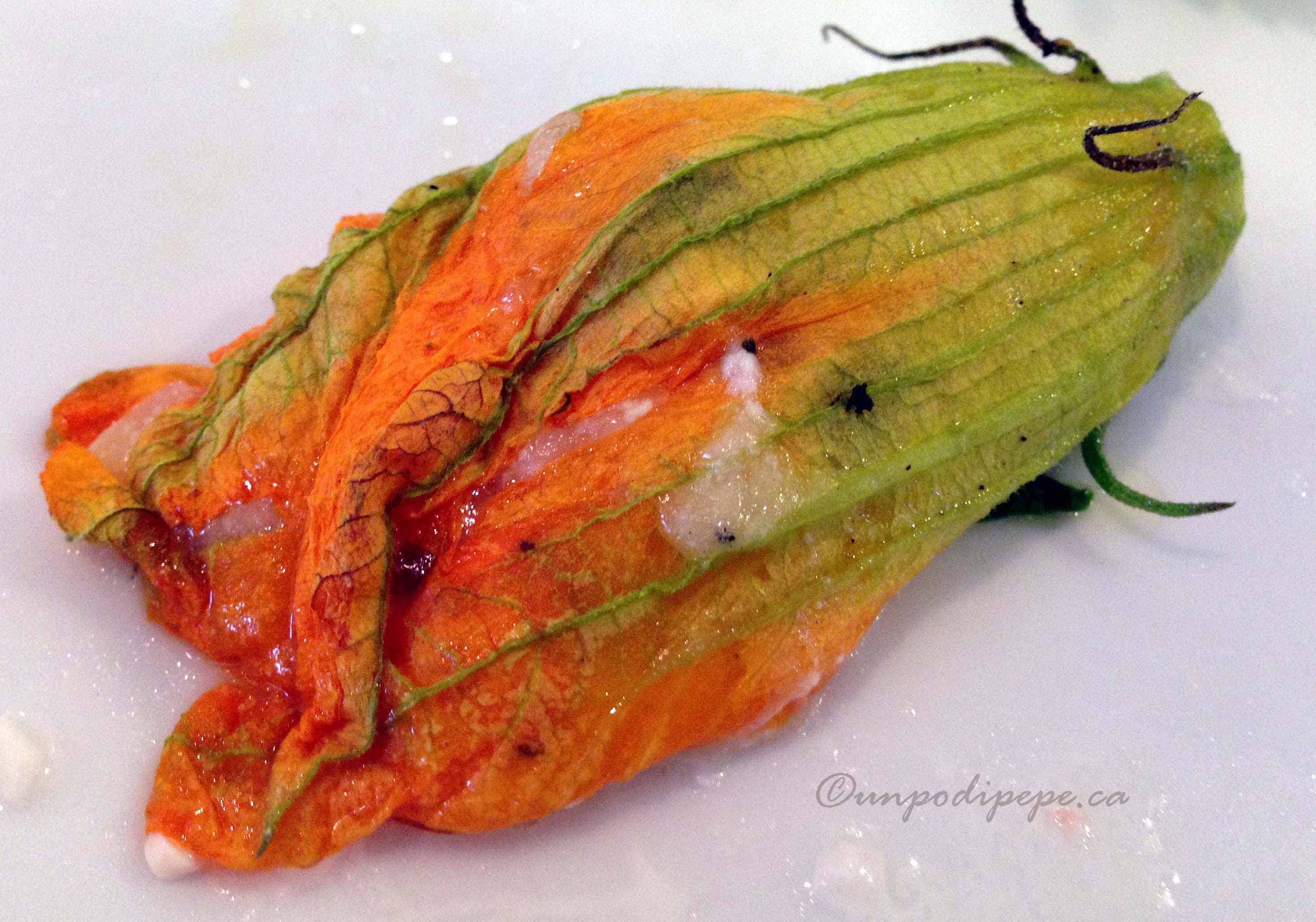
Dalla terra alla tavola or Cibo a km 0 is the philosophy here.  This translates to ‘Field to table’ or the ‘100 mile diet’. Food does not get any fresher. In addition to producing wine and olive oil, Peppe grows most of his own vegetables at Villa Jamele, including pomodori which are canned on site in August.  Il Bosco dei Sapori Perduti is a biodiverse orchard which includes over 50 varieties of fruit trees and herbs.  Peppe uses local, traditional products including wild greens and herbs such as boragine (borage), marasciuolo (a type of wild rucola found in Puglia), fiori di zucca, wild asparagus, Greek mint and Cacioricotta, a DOP goat cheese made only in Orsara. He makes bread and pasta with zucca and grano arso and also produces his own cheeses. One of Peppe favourite antipasti are ‘ostriche di montagne’ or ‘mountain oysters’.  These are lightly battered and fried foglie di Boragine – borage leaves. My favourite antipasto is fiori di zucca al forno ripieni di caciocavallo!

Orecchiette di grano arso al sugo, Ristorante Peppe Zullo Orsara di Puglia

Peppe is an ambassador for cucina povera and the gastronomic traditions of Puglia.  In the last few years, he has made frequent television appearances on RAI’s Uno Mattina and Geo & Geo. Check them ou on his Youtube channel. Appuntamento con la Daunia, a 2 day event celebrating local cuisine and products is held at Villa Jamele every year, the second week in October. I receive an invitation every year but have not been able to attend…yet.

Peppe was the chef representing Puglia for the month of May at Expo 2015 in Milano. They served a lot of orecchiette di grano arso!  That same year, along with another Pugliese chef, he catered an Indian wedding for 1,000 guests in Borgo Egnazio, near Ostuni. In 2016 he catered the 80th birthday party for Lino Banfi-who plays the adorable Nonno on RAI’s ‘Un Medico in Famiglia’.

Peppe Zullo & Lino Banfi

Ristorante Peppe Zullo is open daily for pranzo, the mid-day meal. They are not open in the evening.  Afterwards, visit the cantina, vigneto or take a short passeggiata to Orsara.  La Scuola di Cucina at Villa Jamele is open from September to November and February to April.  Classes are 5 hours per day 6 days a week and can be organized for 8-16 participants. To make a reservation at Ristorante Peppe Zullo, book a suite, cooking class or destination wedding, call or email 39 0881 964763  info@peppezullo.it

Via Piano Paradiso, Orsara di Puglia FG www.peppezullo.it

Peppe is on Facebook, Instagram(@peppezullo), Twitter(@peppezullo2), and Youtube

Stay tuned for posts on Villa Jamele and La Cantina del Paradiso.  Ciao, Cristina

Share this:

  • Click to share on Facebook (Opens in new window) Facebook
  • Click to share on Pinterest (Opens in new window) Pinterest
  • Click to share on X (Opens in new window) X
  • Click to email a link to a friend (Opens in new window) Email
  • Click to share on WhatsApp (Opens in new window) WhatsApp
Like Loading...

Campeggio sul Gargano

29 Wednesday Mar 2017

Posted by Un po' di pepe in Italia, Photography, Puglia, Travel

≈ 13 Comments

Tags

Arco San Felice, Baia delle Zagare, Gargano campsites, Il Gargano, Isole Tremiti, Italy travel tips, Mattinata, Parco Nazionale del Gargano, Puglia, Trabucchi del Gargano, Vieste, Vignanotica

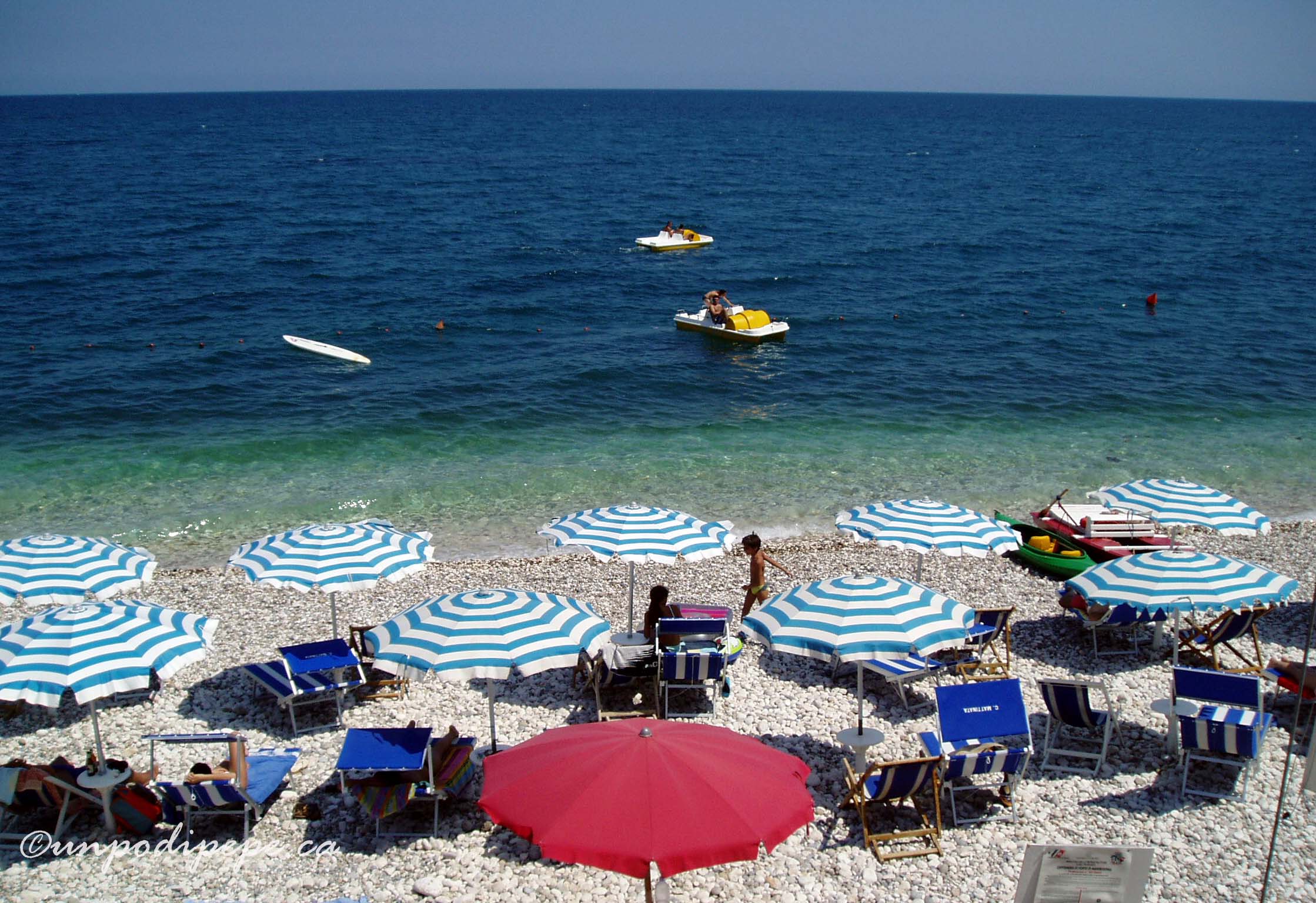
Dovè la primavera?  It was a long, cold winter, with far too much snow.  Now la pioggia has set in.  I am dreaming about il caldo, il sole e la spiaggia-warm weather, sunshine and the beach! I have had the opportunity over the last few years, to spend many weekends at different sites in the Gargano (gar·GAH·noh) with my cugini and their camper.  I would love to be there now!  To get ready for summer and welcome warmer weather, I am sharing my favourite scatti from my Gargano travels.

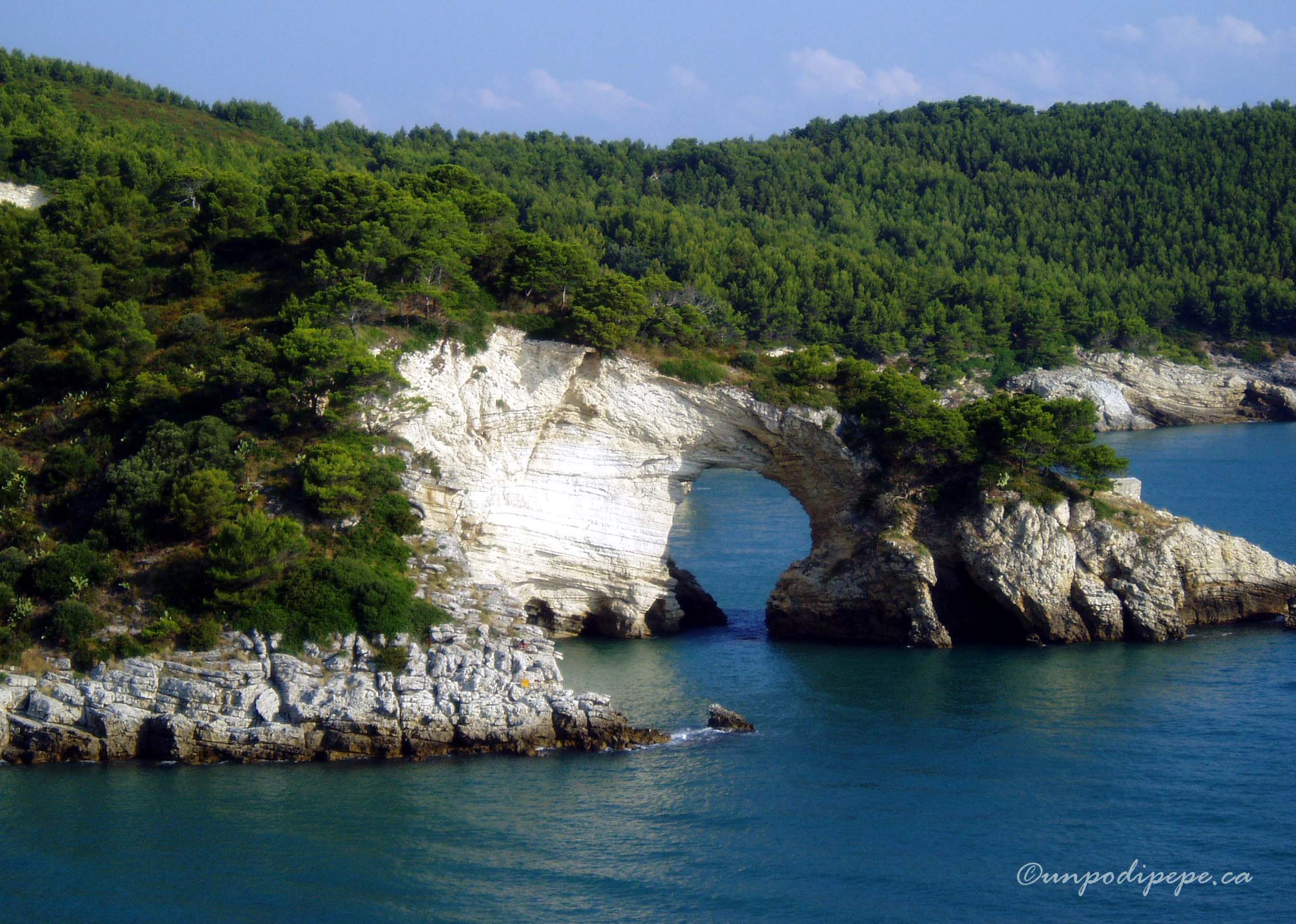
II Arco San Felice

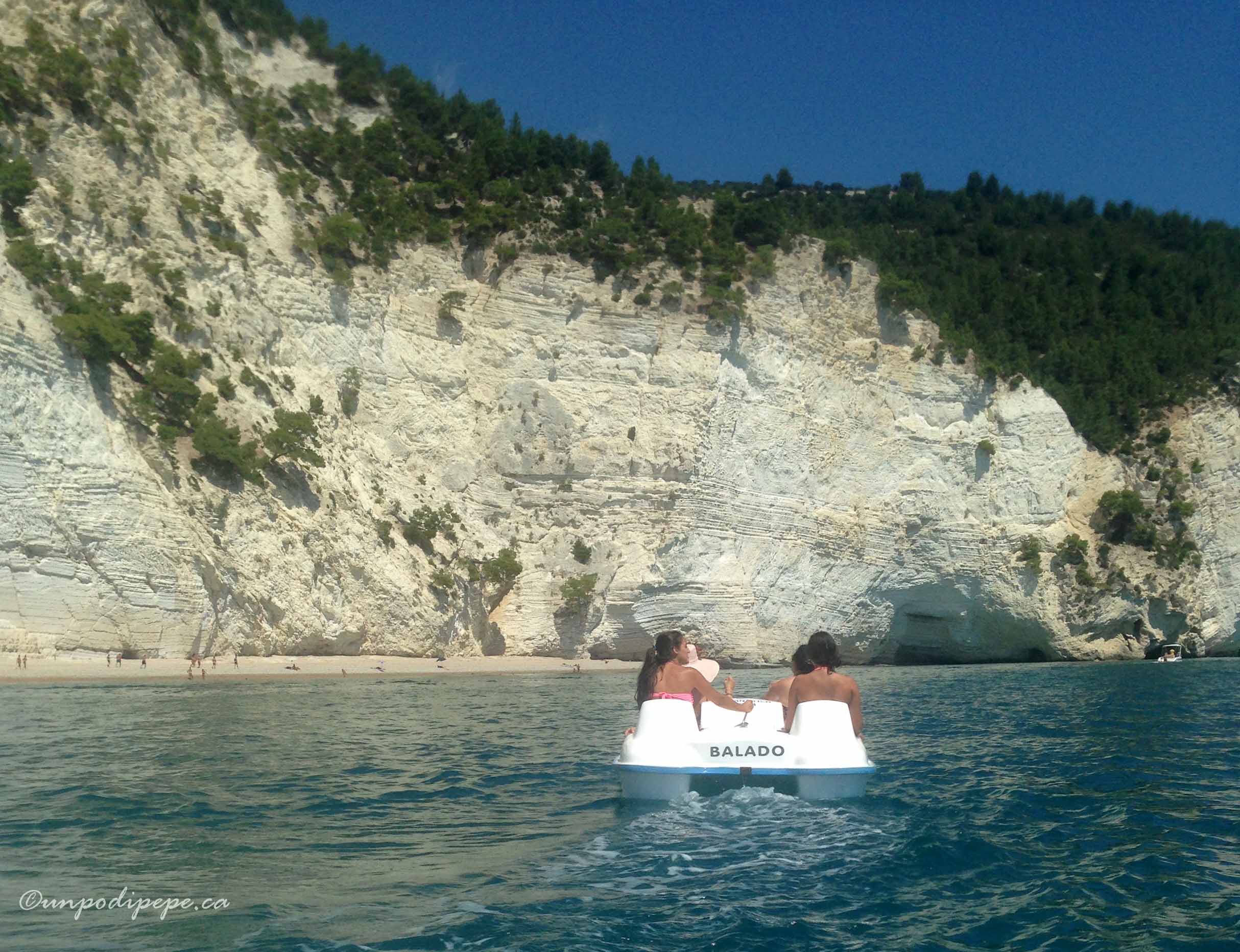
Il Promontorio del Gargano is the promontory sticking out above ‘il tacco’, the heel of Italia.  You can also think of it as la caviglia-the ankle spur of Italia.  One of the most beautiful areas on earth, Il Gargano has unique flora and fauna.  Biodiversity wise the area is more like an island-an island surrounded on 3 sides by the Adriatico with 1 side attached to Italia.  Most of the promontorio is a protected area and marine reserve, Il Parco Nazionale del Gargano, which includes le Isole Tremiti and the ancient Foresta Umbra. Luckily this has prevented the area from being overdeveloped with large multinational hotels and resorts.

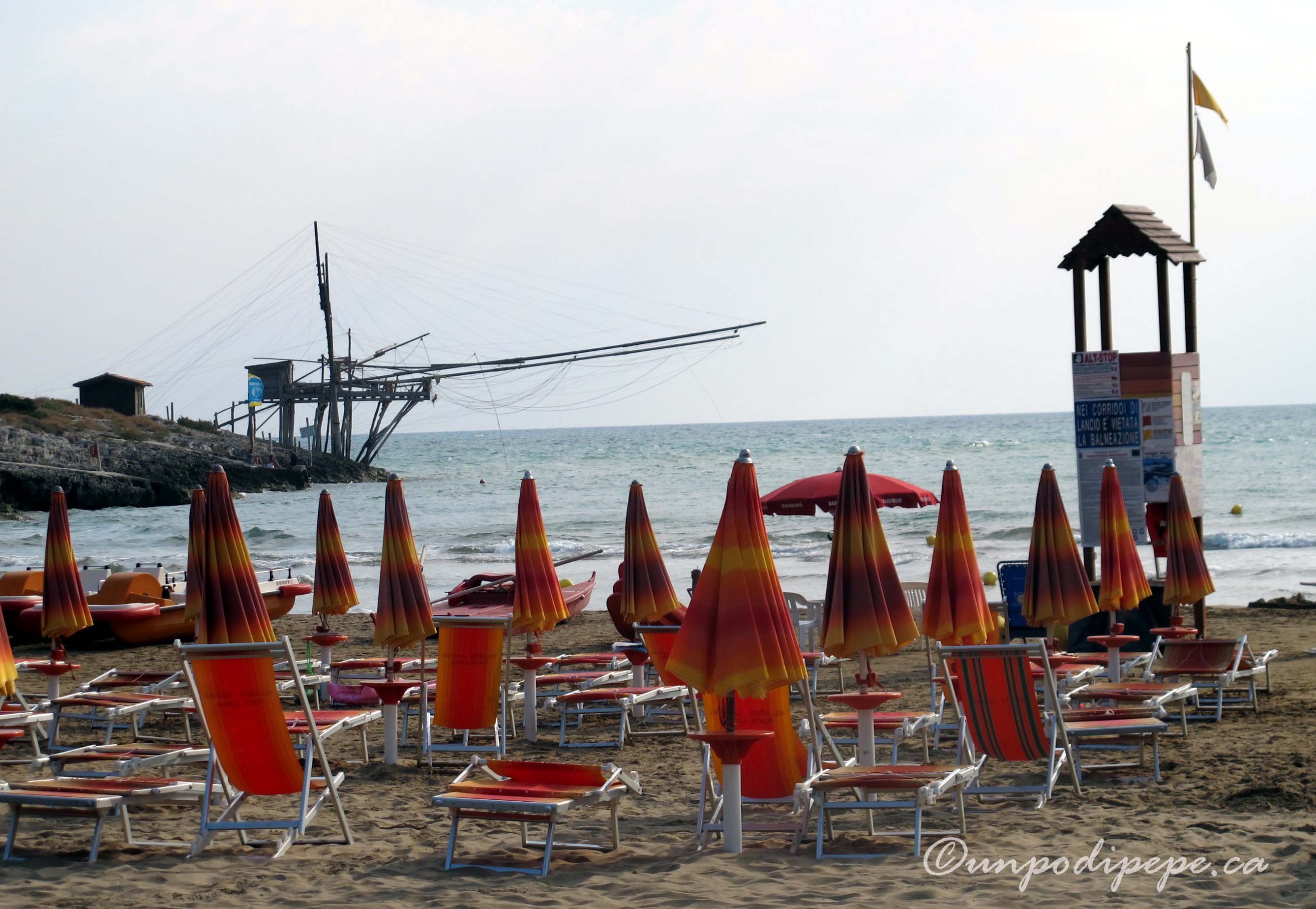
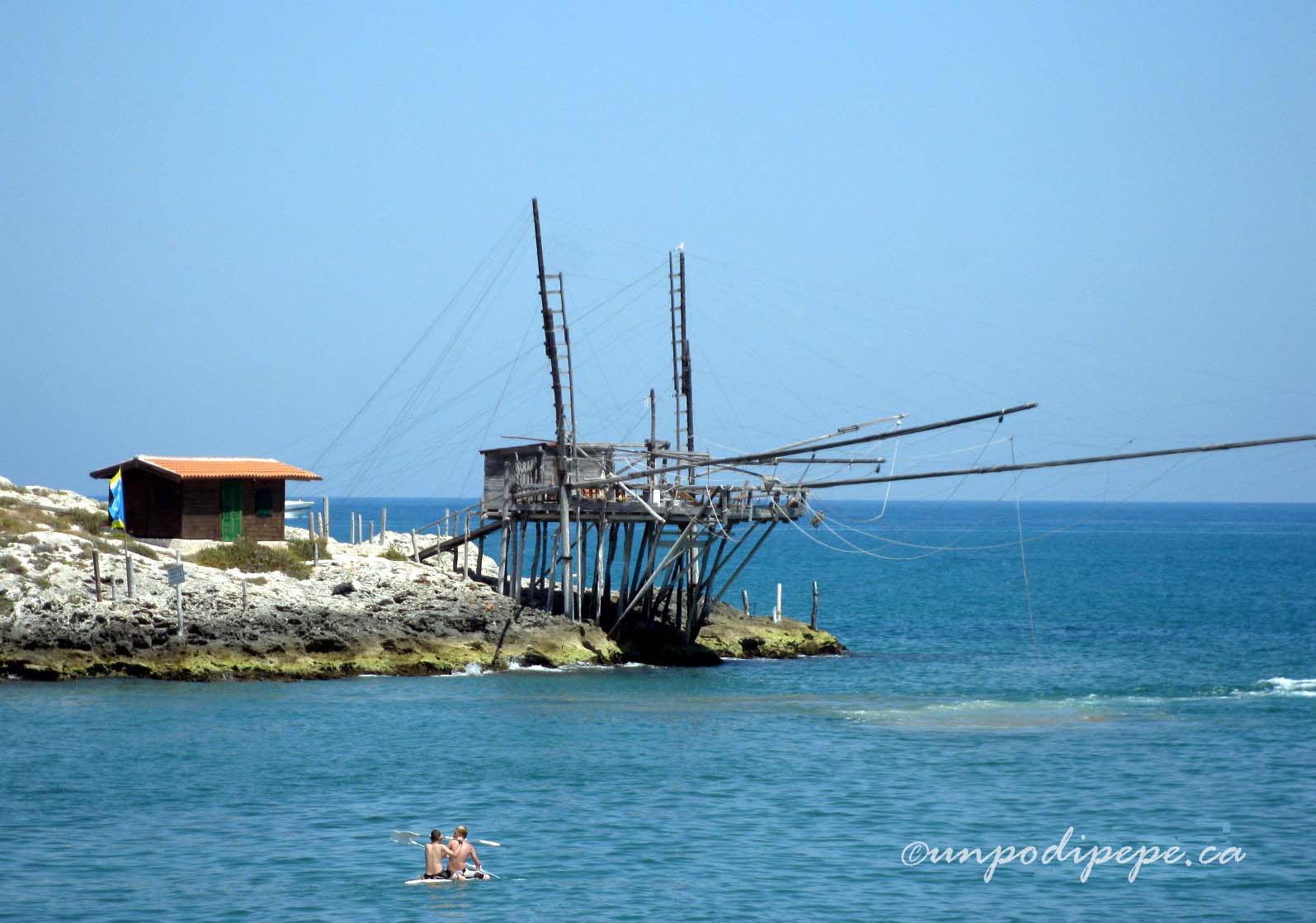
Il Gargano is famous for picchi (woodpeckers) and many other birds, 300 varieties of orchids, almonds and olives.  There are also endless ancient hillside olive groves, pine forests, sea grotte, limestone cliffs, rocky shores, crystalline water and fresh seafood.  The coast between Peschici and Vieste has 13 working trabucchi, fascinating ancient fishing contraptions which I wrote about in this post.

Trabucco Punta Lunga

The winding road around the Gargano, SS 89 from Foggia, has sharp turns and viste mozzafiato (VIS·teh moz·zah·FYAH·toh)-breathtaking views. One of my favourite viewpoints is La Baia delle Zagare. Here you can see the clifftop 4 star resort of the same name, and its private spiaggia.  There is a glass elevator built into the cliff-something I have to see for myself one of these days!

Baia delle Zagare

View of Vieste from the SS89

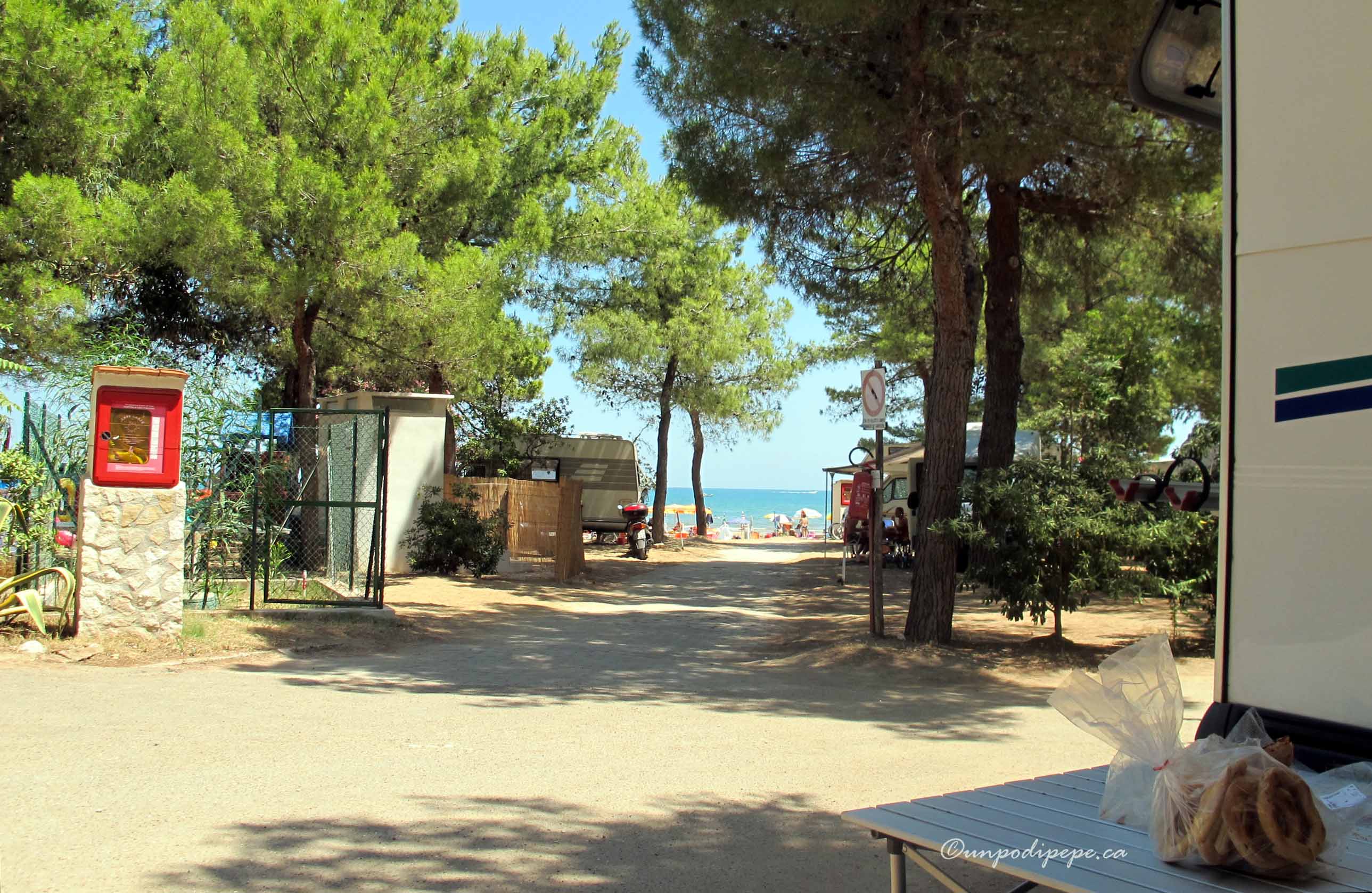
Il Gargano is full of campsites, inexpensive accommodation and B & B’s.  The campeggi e villaggi turistici -campsites and tourist villages, are ben attrezzati (well-equipped). You can camp with a camper and all the accessories, or just a vehicle and a tent.  There are also villette-little cabins that can be rented, but you have to bring your own sheets and towels, so these are mostly used by locals.  Some campsites even have a small hotel attached. This website (in Italiano) lists Gargano campsites. I have stayed right by the water and in an olive grove near Mattinata, and had a view of the beach near Vieste.

View from the camper, Punta Lunga, Vieste

Our setup is always comfortable and rustic, but some of the things you see at the campeggi are hard to believe. Families set up for the whole summer, with those working joining in on the weekends. I have seen TV with satellite, ceiling fans, generators and portable kitchen tents. Last year at Camping degli Ulivi in Mattinata, the family across from us had brought 5 kinds of brooms!

Ancient olive trees provide an interesting handwashing station, and a place to store 5 different brooms at Camping degli Ulivi

No yucky dehydrated camping food is found here! Fresh seafood is available from the mobile fishmonger il pescivendolo (pesh·ee·ven·DOH·loh) driving around to the different campsites. At Villaggio Camping Punta Lunga, we walked 2 km to Vieste to il pescivendolo along the amazing clifftop trail.

View from the 2km clifftop trail to Vieste

Vignanotica is between Mattinata and Pugnochiuso, closer to Pugnochiuso. It is surrounded by a wall of limestone cliffs and is only accessible by walking down the steep hill. Inaccessibility prevents development on the spiaggia. Parking is available in an olive grove, right under the olive trees for €7 and there is a shuttle down to the beach. Vignanotica can be crowded on Sundays in the summer. There is a small bar on the beach. Vignanotica is in sun until about 2pm, then it is in full shade from the cliffs. Some of the Gargano beaches, including Vignanotica, Mattinata and l’Isole Tremiti are rocky, so water shoes are needed to walk in the water.

Vignanotica. The tiny people walking on the beach provide scale for the limestone cliffs.

Most of the tourists visiting the Gargano area are Italian, especially in the summer.  Many Germans bring their campers too, but you do not meet a lot of North Americans here.  Il Gargano is the place to visit if you want to improve your Italiano.The closest major airport for Il Gargano is Bari. The airport in Foggia sometimes has flights to and from Milano, but usually it just has Alidaunia helicopter service to le Isole Tremiti, San Giovanni Rotondo, Vieste and Peschici. It is difficult to get around the Gargano without a car unless you have lots of time. The SS 89 from Foggia is the major road. On the way, be sure to stop and visit Santa Maria di Siponto near Manfredonia. There is no rail service after Foggia, except a local train from San Severo to Peschici. Ferrovie del Gargano buses outside the Foggia stazione leave for towns in the Gargano, but they are not frequent . Parkinbici is a bikesharing service between Gargano towns. For visitors, a weekly card is € 20 and weekend € 12.

Flying into San Domino by helicopter

As the Gargano website says, visit il Gargano ‘per una vacanza tra natura, mare e cultura’…for a holiday among nature, sea and culture!  Buon Viaggio, Cristina

Share this:

  • Click to share on Facebook (Opens in new window) Facebook
  • Click to share on Pinterest (Opens in new window) Pinterest
  • Click to share on X (Opens in new window) X
  • Click to email a link to a friend (Opens in new window) Email
  • Click to share on WhatsApp (Opens in new window) WhatsApp
Like Loading...

Muscitaglia

01 Tuesday Nov 2016

Posted by Un po' di pepe in Culture, Feste, Italian Folklore, Orsara di Puglia, Puglia

≈ 8 Comments

Tags

Falò e Teste del Purgatorio, Fucacoste e Cocce Priatorje, Italian Folklore, Muscitaglia, November 1st, Orsara di Puglia, Pugliese Traditions, Southern Italy, Traditional Festivals in Puglia, Tutti i Santi Festa

muscitaglia2016

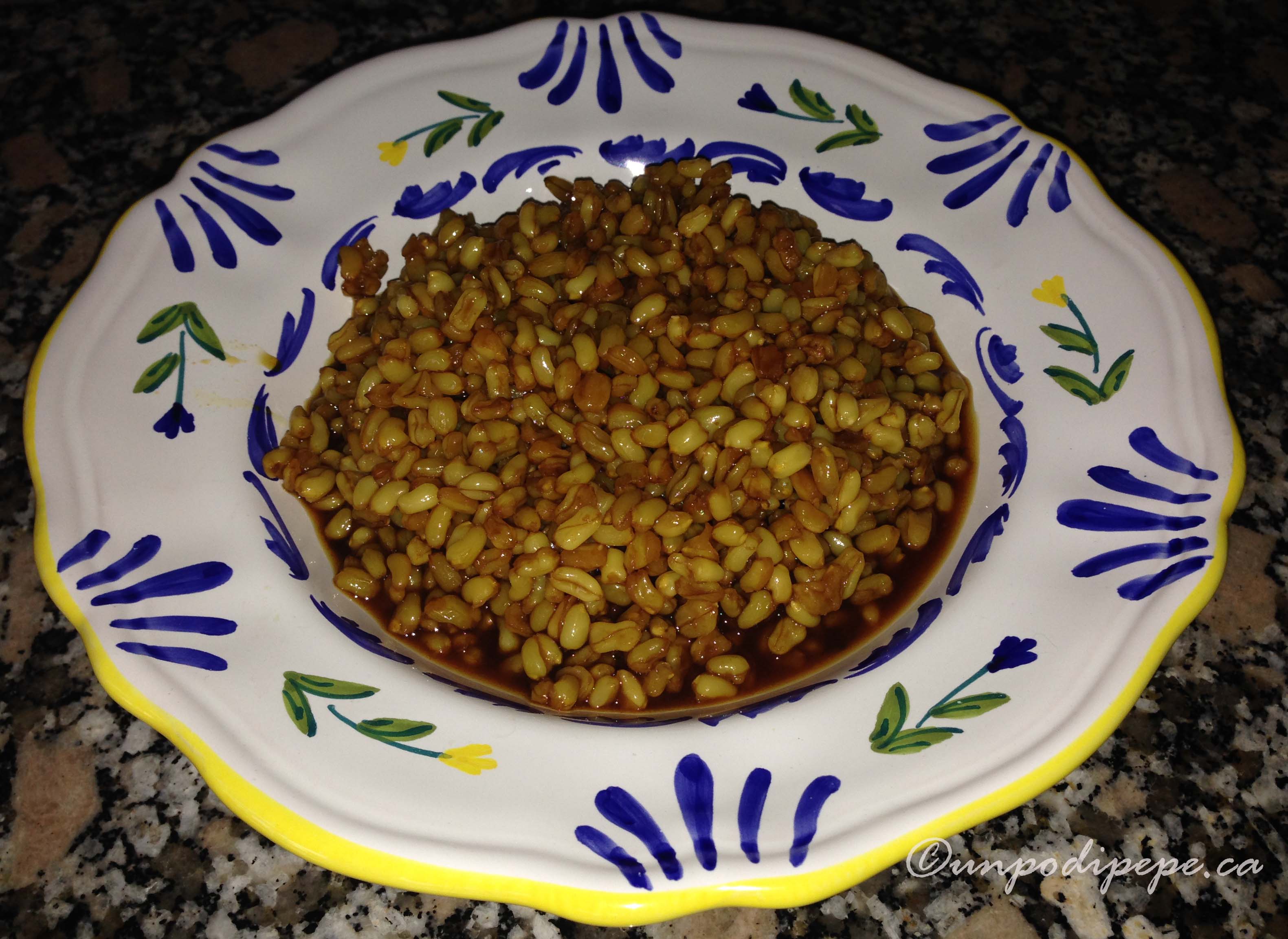
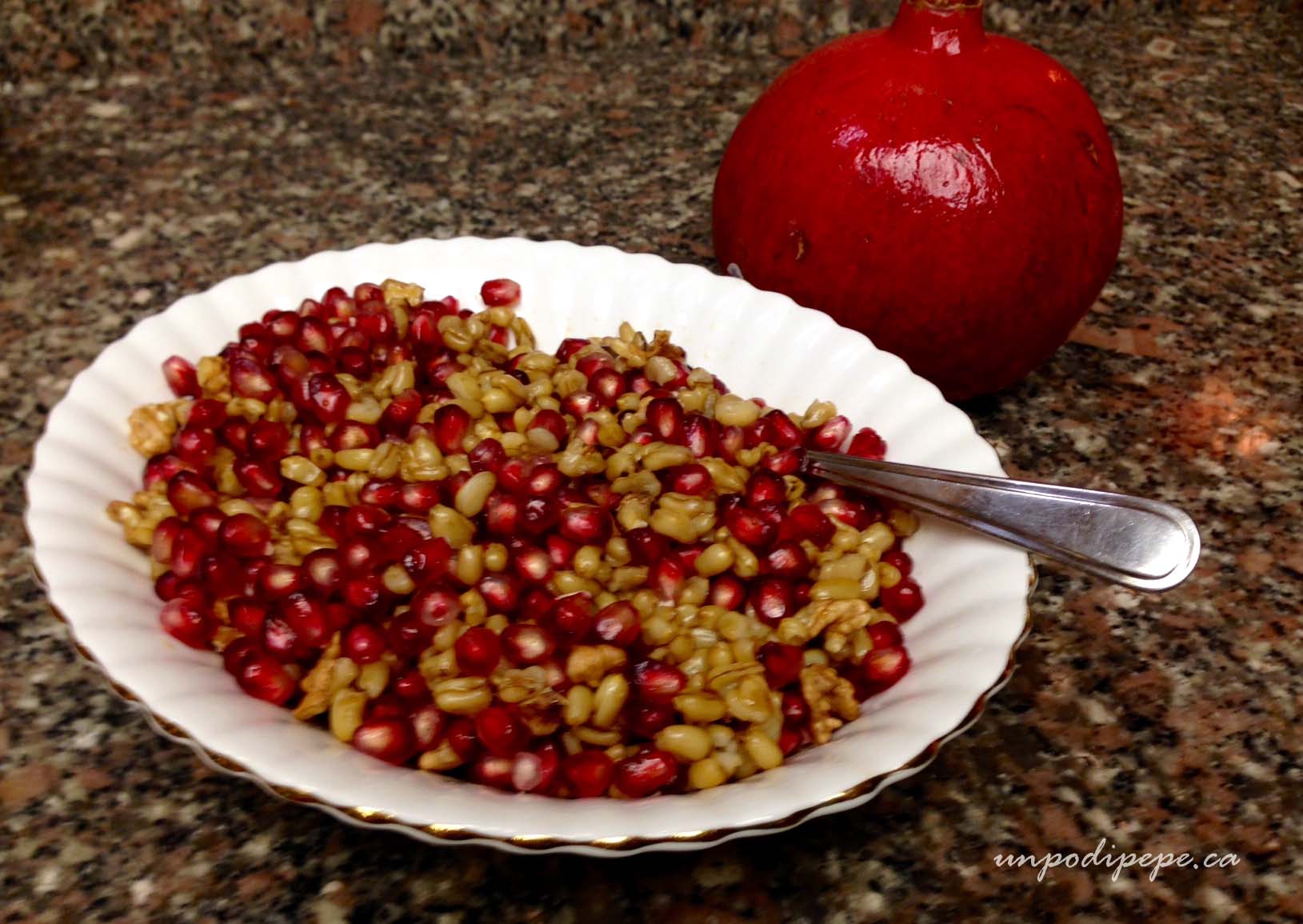
Muscitaglia (moo•shee•TAH•lyah) is a traditional dish served on November 1st in Orsara di Puglia. It probably dates back from the ancient Greeks and Byzantines. Muscitaglia, in both Greek and Latin is made up of the words mosto (wine must) and talia (grain). The ingredients include boiled grain and vino cotto, which is actually mosto cotto- boiled down grape must which becomes a thick, sweet liquid. Pomegranate seeds and walnut pieces are also added when available. These  ingredients are simple and symbolic of fertility and abundance, but also of honour and respect for the dead.

November 1st is the night of Tutti i Santi (All Saints), a night which provides the opportunity to reconnect and pay respects to deceased loved ones.  My post on the ancient festival Fucacoste e Cocce Priatorje which takes place in Orsara di Puglia has more information on the traditions and festivities.

Muscitaglia

Muscitaglia

Watch the video ‘#quinonèhalloween’ featuring recently deceased Zi’ Gaetan talking about Fucacoste e Cocce Priatorje and its significance.   I’m sure a few homes in Orsara will put out a chair tonight for Zi’ Gaetan so he can rest on his way to Paradiso.  https://www.youtube.com/watch?v=9W5RD0-9H-A

Read about tonight’s festa (in Italiano) on the Comune di Orsara di Puglia website.  For more about Orsara di Puglia, check out ‘Benvenuti ad Orsara di Puglia’.  Ci vediamo alla festa!  Cristinamuscitaglia3

Share this:

  • Click to share on Facebook (Opens in new window) Facebook
  • Click to share on Pinterest (Opens in new window) Pinterest
  • Click to share on X (Opens in new window) X
  • Click to email a link to a friend (Opens in new window) Email
  • Click to share on WhatsApp (Opens in new window) WhatsApp
Like Loading...

Polignano a Mare

27 Thursday Oct 2016

Posted by Un po' di pepe in Italia, Photography, Puglia

≈ 38 Comments

Tags

Domenico Modugno, Guido il Flâneur, Nel blu dipinto di blu, photography, Polignano a Mare, Ponte Lama Monachile, Southern Italy, Spiaggia Lama Monachile, Vicolo della Poesia

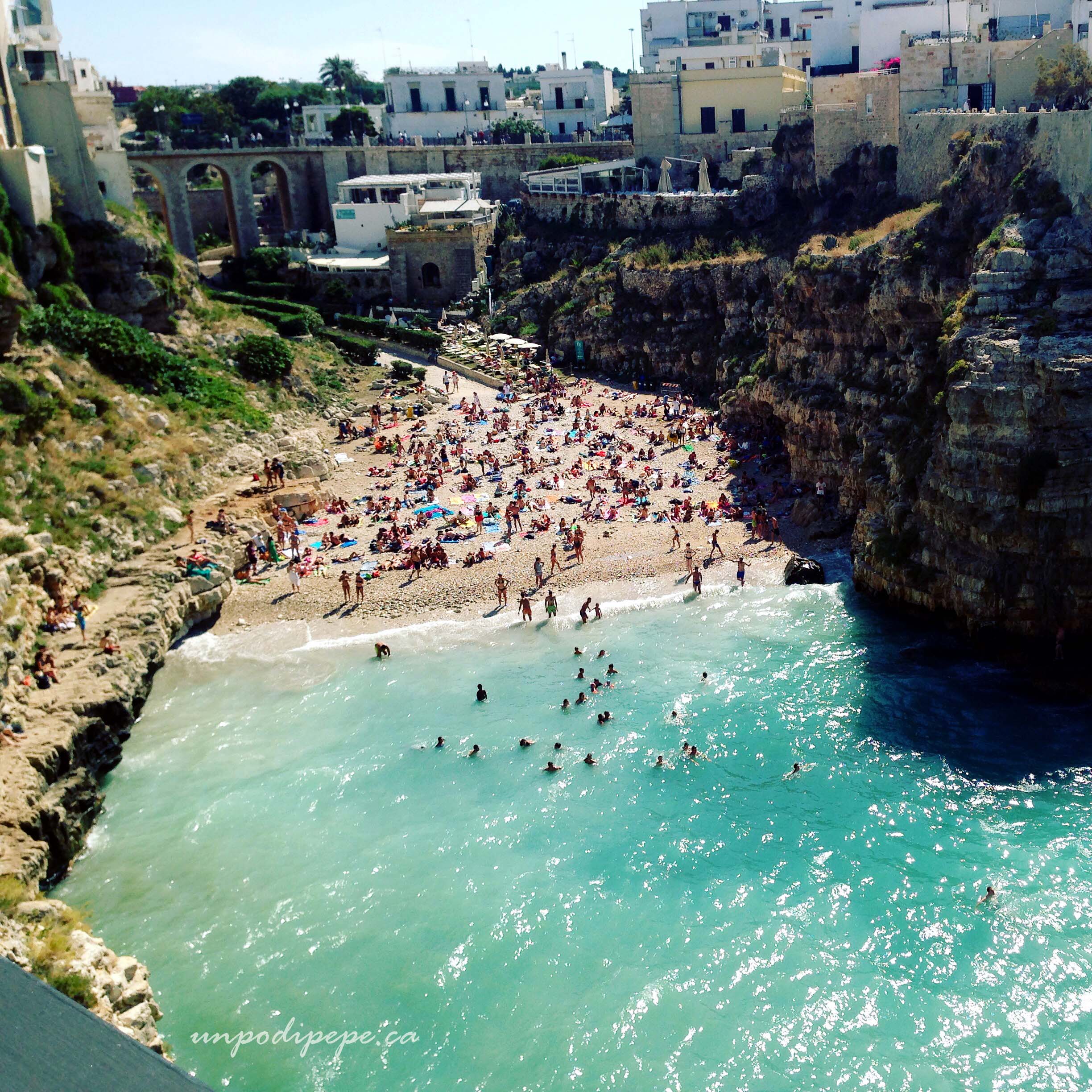
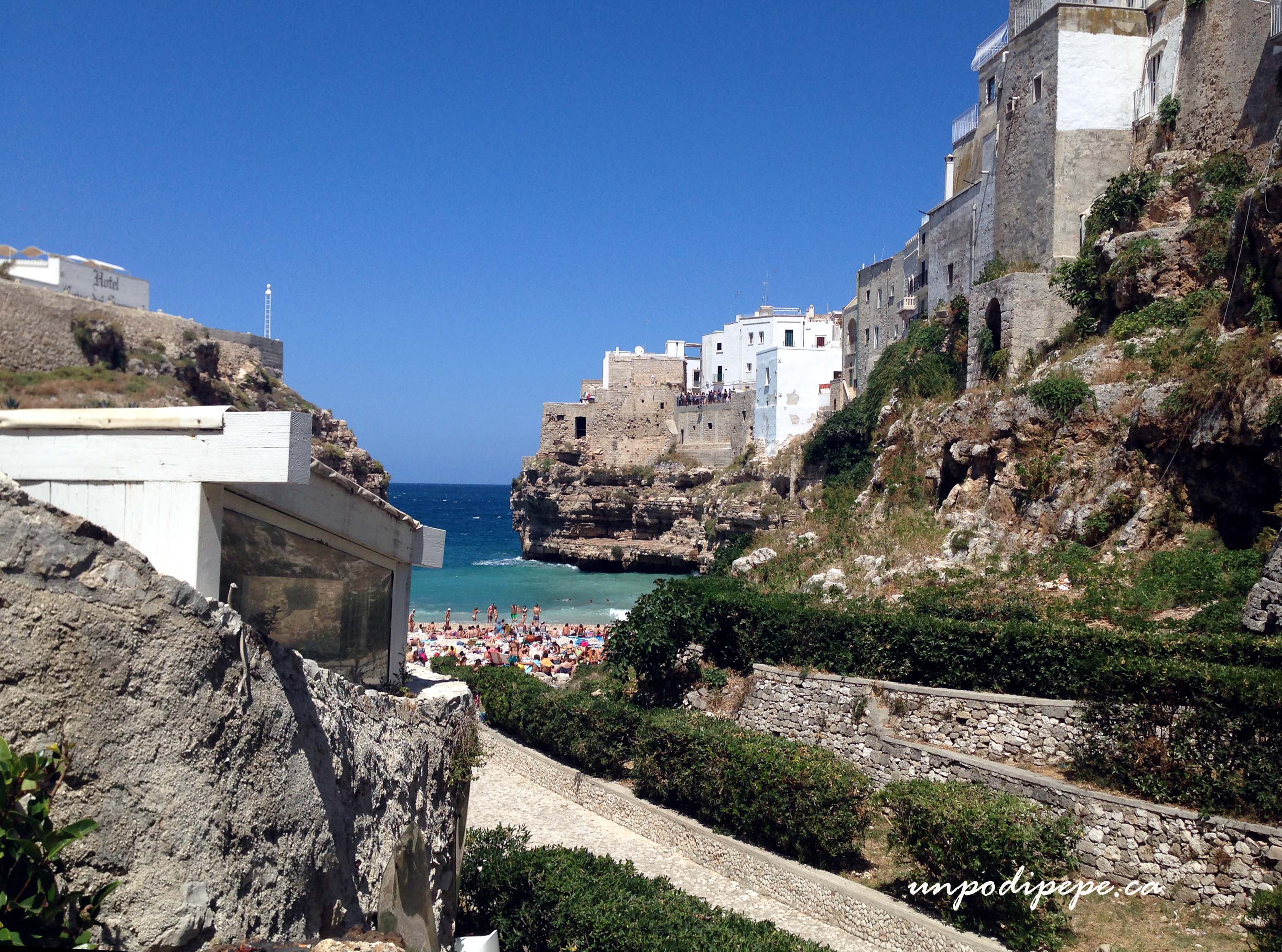
spiaggia-lama-monachile-polignanoPolignano a Mare sits atop limestone cliffs on the Adriatic coast just south of Bari.  From the white-washed Centro Storico with narrow, winding cobblestone streets, the crystal clear water, and 3 terrazze with views of the sea, everywhere you look, there are panorami mozzafiato (pah·noh·RAH·mee moz∙zah∙FYAH∙toh)-breathtaking views.  There is even a restaurant in a grotta, one of the caves overlooking the sea, the Grotta Palazzese.  Polignano was the ancient Greek city of Neapolis, founded in the 4th Century BC.  It was prosperous under the Romans too, because Ponte Lama Monachile, the Roman bridge, is right on the ancient Via Traiana.  This was an extension of Via Appia, going from Beneventum (Benevento) to Brundisium (Brindisi) by a shorter route. There was a monastery nearby and the name of the bridge literally means ‘monastic monk’.  Sounds a bit redundant, although better than the other possibility ‘monastic blade’.polignano-a-mare-ponte

polignano-a-mare-spiaggia2Beneath the bridge is Spiaggia Lama Monachile, a small ‘spiaggia libera’ or public beach, with blue-green crystalline water and small white pebbles called ciottoli (cheeot·TOH· lee). I climbed up on some rocks and could have just sat there all day feeling the wind in my hair and sun on my face. Near the water, I noticed a constant movement of people coming and going from a cave.  I was curious and walked over to try and see what was there.  It just looked dark.  A very nice older local gentleman saw me trying to peer in.  He came over and offered me his arm and said he would accompany me.  It was a ‘cave tunnel’ that had about 1 foot of water.  The other end was very windy and opened to the next cove.  We could see cliffs and the surf crashing onto the rocks, sending water over us.  It was incredibly beautiful, but of course I did not have my camera.  My escort told me that he lives in Polignano and comes to the spiaggia every day of the year!

The man in the white hat with his arm outstretched is the 'gentiluomo'.

The man in the white hat with his arm outstretched is the ‘gentiluomo’.

polignano-spiaggia-3When I took a dip  in the water, the waves were so big I was thrown into a seated position and lost one of my flip flops, known in Italia as infraditi (in·fra·DEE·tee). The spiaggia is too rocky to walk barefoot.  I retrieved my infradito and was immediately felled by another powerful wave, taking the other infradito off my foot.  This went on for a few more waves, and eventually my infradito was too far out.  Luckily a nice ragazzo retrieved it for me.  I returned to my heavenly place on the rocks, to find that my cugina had taken my camera and photographed of every stage of my ordeal with the infraditi!  Grazie Maria!polignano-a-mare-spiaggia

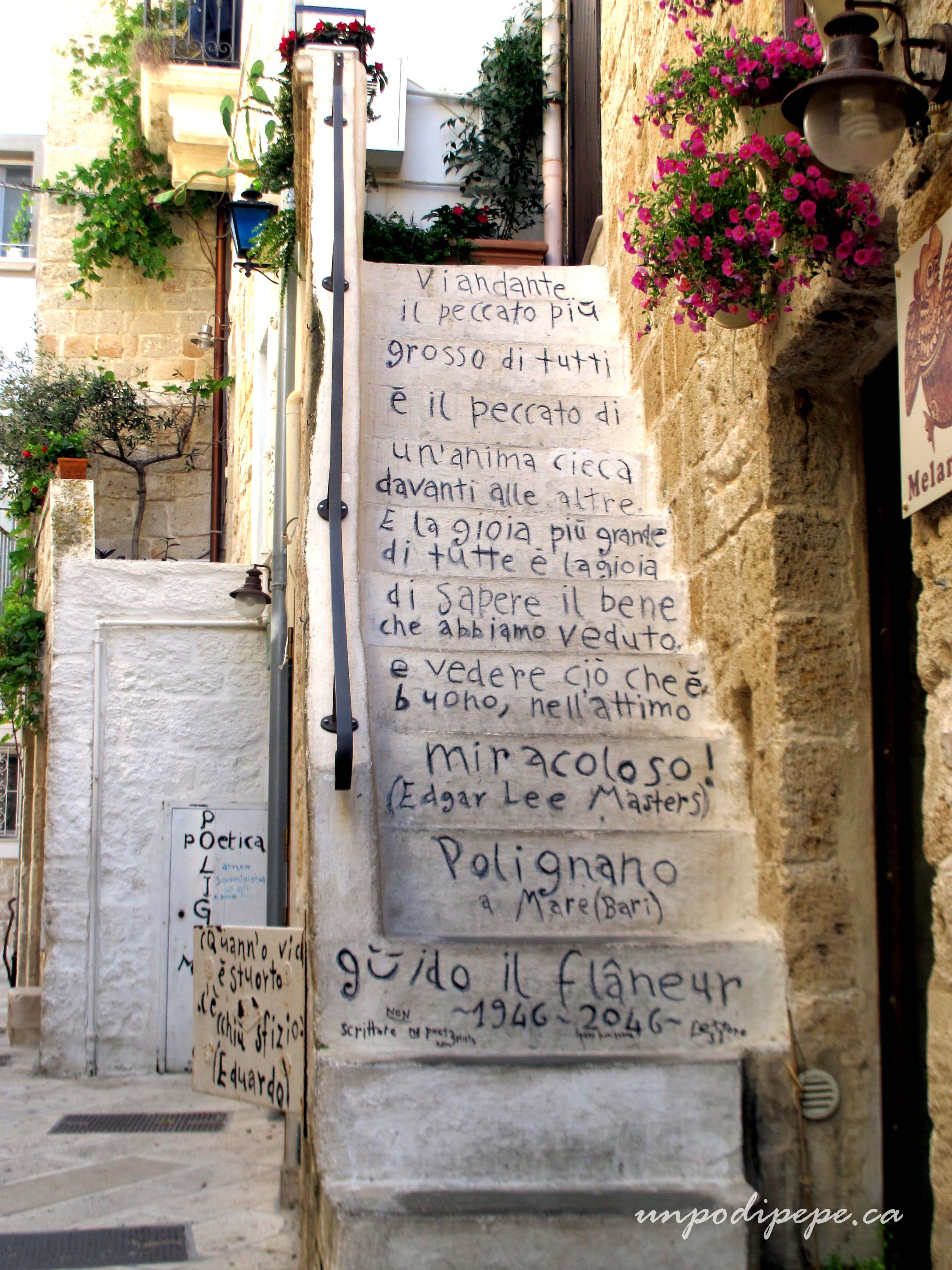
The town is a steep walk up the stairs beside Ponte Lama Monachile. The Centro Storico is entered via l’ Arco Marchesale, an old Roman gate. There is an interesting area called Vicolo della Poesia, with poetry written on staircases, walls and doorways. vicolo-della-poesia This ‘graffiti’ is signed ‘Guido Il Flâneur’. Guido is a poet, although the ‘graffiti’ is not his own poetry.  He left his job in Bari and moved to Polignano to pursue a writing career 32 years ago.  ‘Flâneur’ is an 18th Century term for french gentlemen who strolled the streets sharing their passion for literature. Apparently Guido goes for a swim every day, year round!  Hmmm, this sounds familiar.  I found a poor-quality foto of Guido online, and I think he may be the gentiluomo who escorted me through the cave tunnel!vicolo-della-poesia2

Polignano a Mare’s most famous citizen is Domenico Modugno, who shot to fame in 1958 when his song ‘Nel blu dipinto di blu’ (you probably know it as Volare) won the Festival di San Remo, then represented Italia in the Eurovision song contest.  In a piazza on the other side of the bridge is a statue of Modugno, with his arms stretched out like he is ready to take flight over Polignano. Our parking ran out before we could walk to the other side, so I’ll have to go back to visit Domenico.

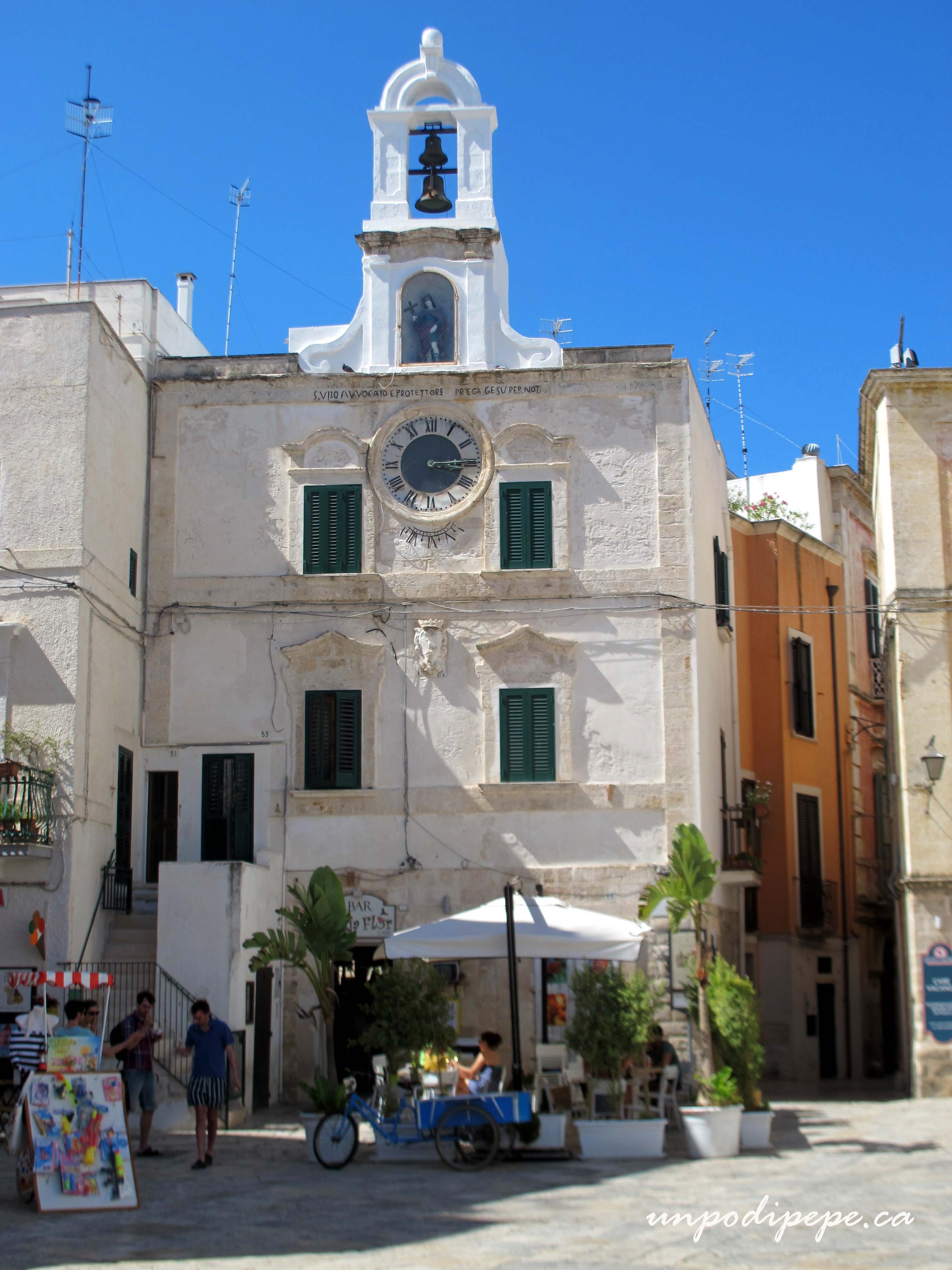
An interesting building-it looks like it was once a church, but now there is a bar on the ground level!

An interesting building-it looks like it was once a church, but now there is a bar on the ground level!

In the right third of the photois Grotta Palazzese, where you can see 3 white posts of the railing.

In the right third of the photois Grotta Palazzese, where you can see 3 white posts of the railing.

I really enjoyed the day in Polignano a Mare, and so did my camera! It was not as crowded as I expected on a weekday in early August and the spiaggia was just perfect. The only thing I found kind of annoying was the amount of English signage in the Centro Storico, which is not typical for a town in Puglia.polignano-a-mare-loggiapolignanomuro

Polignano a Mare is easy to get to, as it is on Strada Statale 16 (SS 16) the main coastal road. It is also very easy to get to without a car, since it is on the Adriatic train route from Bari to Lecce.  From Bari, Polignano is a 20 min train ride and from the train station the Centro Storico is a 10 min walk.ponte-lama-monachile

Buon Viaggio, Cristina

Share this:

  • Click to share on Facebook (Opens in new window) Facebook
  • Click to share on Pinterest (Opens in new window) Pinterest
  • Click to share on X (Opens in new window) X
  • Click to email a link to a friend (Opens in new window) Email
  • Click to share on WhatsApp (Opens in new window) WhatsApp
Like Loading...

Santa Maria di Siponto~ Art reconstructs time

21 Wednesday Sep 2016

Posted by Un po' di pepe in Architecture, Italia, Puglia

≈ 13 Comments

Tags

Edoardo Tresoldi, Il Gargano, Parco Archeologico Santa Maria di Siponto, Puglia, Santa Maria di Siponto, Southern Italy


santamariadisiponto1Santa Maria di Siponto is just off the SS 89 Garganica highway, 3km from Manfredonia. The church was built in 1117 over an existing early Christian structure.  The architectural style is Romanica Pugliese, Pugliese Romanesque with Byzantine and Islamic influences evident in its pure, simple lines and geometric patterns.  The building is unusual as it is square and there are 2 independent churches; the upper church and the crypt below, with an external staircase.santamariadisiponto5

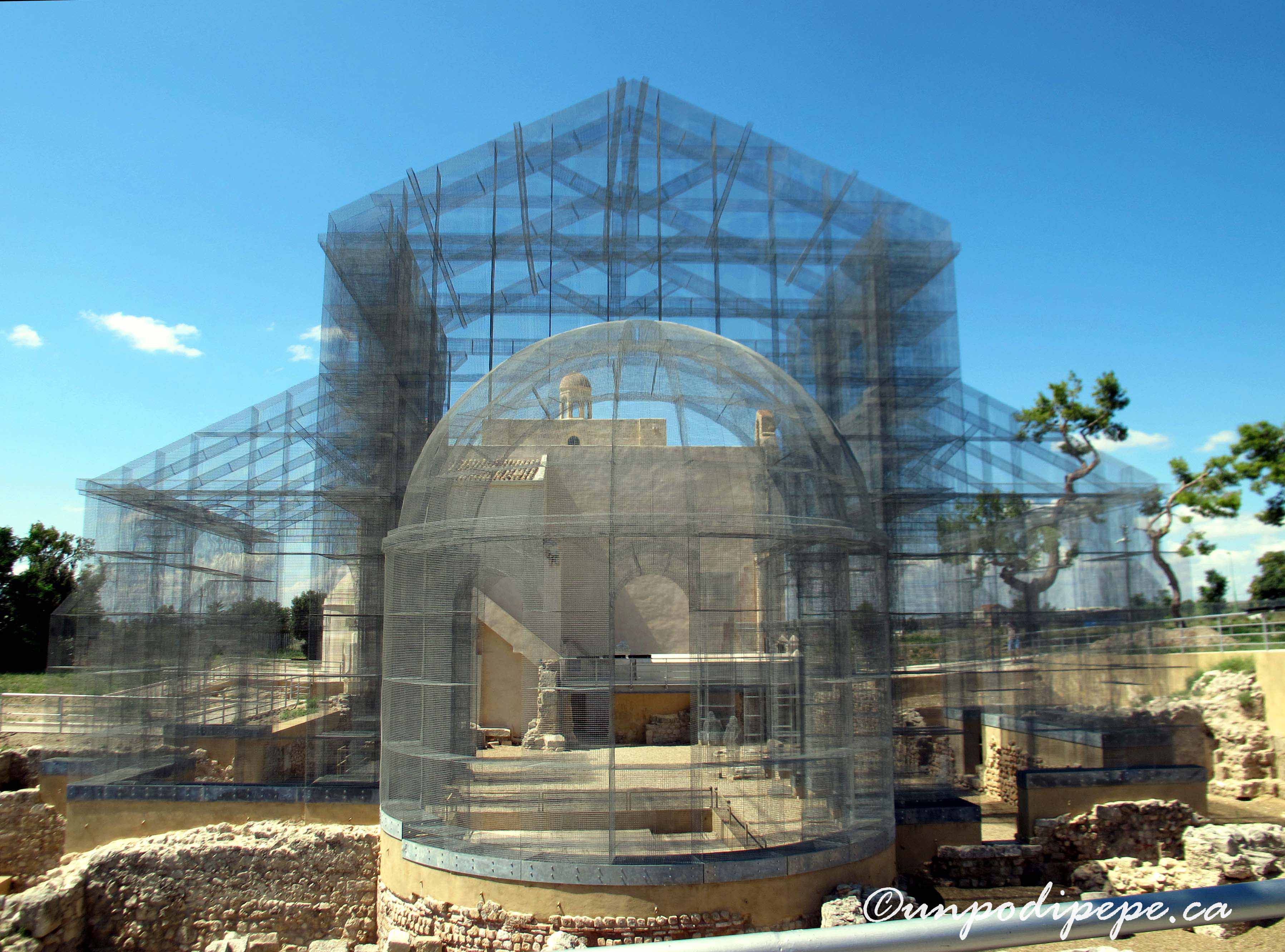
To the left of the church is the Parco Archeologico di Santa Maria di Siponto. Until March 2016, this consisted of the ruins of a Paleochristian basilica (250 AD) with a semi-circular apse and mosaic pavement, and the partially excavated remains of Ancient Roman Sipontium.  Now the space once occupied by the basilica has been transformed into a magnificent sculpture titled ‘Dove l’arte riconstruisce il tempo’ which means ‘Where art reconstructs time’. The permanent installation took 3 months to construct and is built right onto the foundations of the archeological remains.santamariadisiponto2

The installation/sculpture is made of layers of wire mesh that overlap and intersect, interpreting and reclaiming the space and volume once occupied by a structure that no longer exists. The lightness and transparency of the material makes it look like a hologram of the original church…it is there, but it is no longer there. The site is also illuminated at night, creating a ‘ghostly’ effect.  Contemporary art and archeology intersect to form a link with the past. 14 m high and weighing 6,000 kg, this is probably the largest structure in the world made entirely of wire mesh.santamariadisiponto6

I have been to Santa Maria di Siponto many times since I was a child. I am a total archeology nerd, and I was excited to see this construction breathing new life into this small archeological site, relatively unknown outside of Puglia. It feels like the basilica has been resurrected from the ruins.  I have not seen anything like this before and it is already a distinctive landmark, especially since it is visible from the highway. In 5 months it has already brought 100,000 visitors to the site and contributed to the local economy.

The artist, Edoardo Tresoldi, a 29 year old set designer and sculptor in Roma, is known for his monumental metallic wire mesh sculptures, integrating into their surroundings.  His website is still under construction.  He must be too busy making great art!santamariadisiponto4Santa Maria di Siponto is definitely worth a visit.  If you have plans to visit the Gargano area, especially Monte Sant’ Angelo, San Giovanni Rotondo, Manfredonia or Mattinata, it is fairly close by. It is definitely easiest to get there with your own vehicle, although it is possible to get to Foggia, then Manfredonia by train or bus and then taxi to the site. Buon Viaggio, Cristina

Share this:

  • Click to share on Facebook (Opens in new window) Facebook
  • Click to share on Pinterest (Opens in new window) Pinterest
  • Click to share on X (Opens in new window) X
  • Click to email a link to a friend (Opens in new window) Email
  • Click to share on WhatsApp (Opens in new window) WhatsApp
Like Loading...

La Madonna della Neve

05 Friday Aug 2016

Posted by Un po' di pepe in Culture, Feste, Italia, Italian life, Orsara di Puglia, Puglia

≈ 13 Comments

Tags

August 5th, Italia, Madonna della Neve, Orsara di Puglia, Pugliese Traditions, Southern Italy

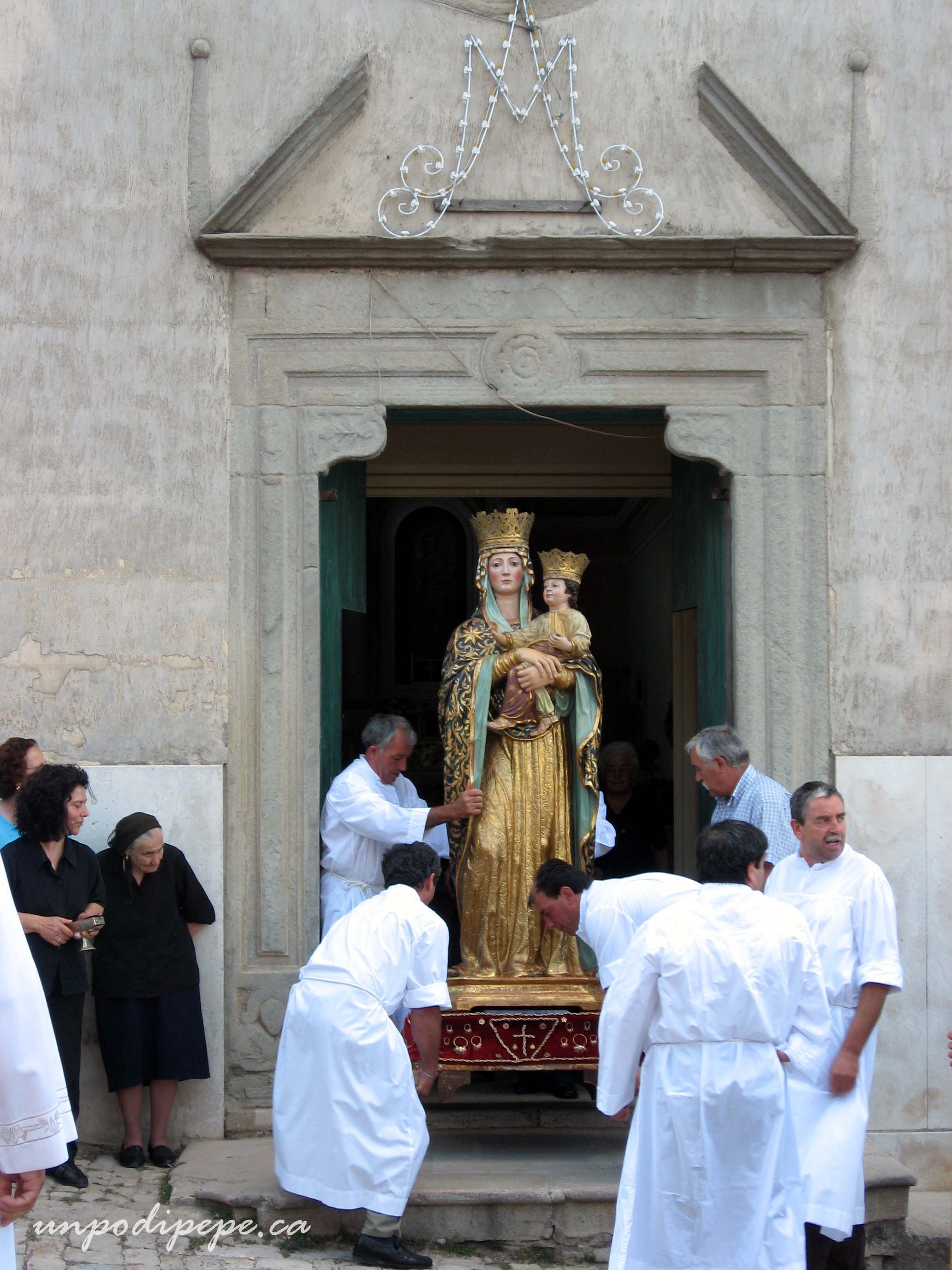
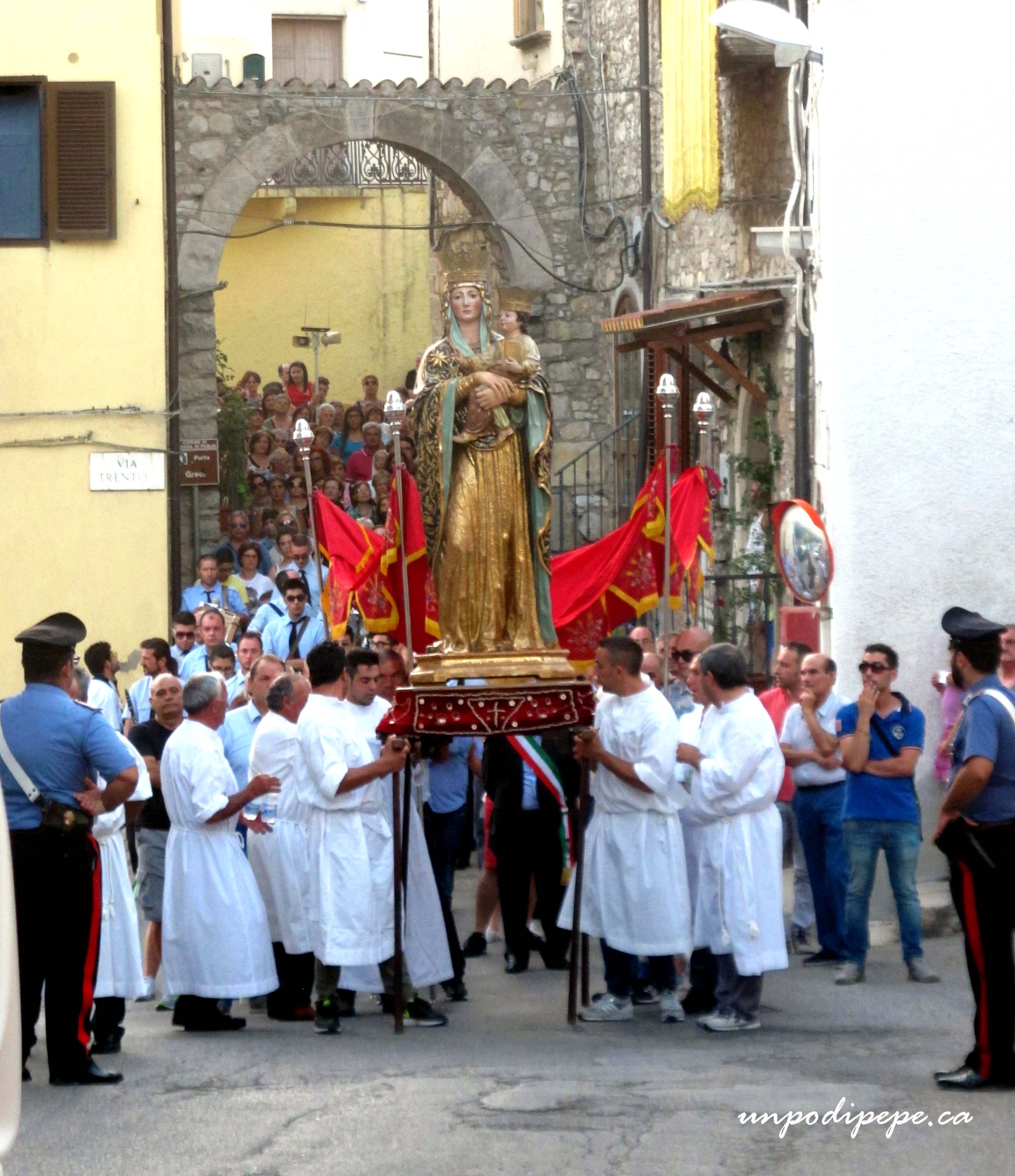
MadonnanevechiesaAugust 5th is the feast day of La Madonna della Neve (the Madonna of the Snow).  She is one of the Patron Saints of Orsara di Puglia and there is a big festa.  She is carried through Orsara in a procession and returned to her usual spot in the main church. In the evening there is a Mass, then music and fireworks in her honour.  La Madonna della Neve is the protectoress and Patron Saint of many paesi montani or mountain villages because, of course, it snows!

La Madonna della Neve is tied to the origins of the Basilica Santa Maria Maggiore in Roma.  According to legend, in the year 352, the night between August 4th and 5th, the Madonna appeared in a dream to a wealthy couple who wanted to build a church.  She asked them to build a church where snow had fallen during the night.  They went to tell Pope Liberio and it turns out he had the exact same dream during the night!

In the middle of a hot Roman summer, snow had fallen on L’Esquilino, the Esquiline Hill.  The perimeter of the snowed on area was where the church of Santa Maria ‘Ad Nives’ (of the snow) was built. The church is usually known as Santa Maria Maggiore.Madonnaneve06

Orsara’s Madonna della Neve statue was carved out of a single piece of quercia (oak) by Napoletano sculptor Aniello Stallato in 1624. I have been familiar with this beautiful sculpture since I was 11, but I had no idea she was almost 400 years old! Here are some photos of the processione!Madonnaneve10

Madonnaneve2MadonnanevestradadirittaMadonnanevearco

Ciao, Cristina

Share this:

  • Click to share on Facebook (Opens in new window) Facebook
  • Click to share on Pinterest (Opens in new window) Pinterest
  • Click to share on X (Opens in new window) X
  • Click to email a link to a friend (Opens in new window) Email
  • Click to share on WhatsApp (Opens in new window) WhatsApp
Like Loading...

Vini di Puglia Part 3~Il Tuccanese

25 Saturday Jun 2016

Posted by Un po' di pepe in Amici e Famiglia, Feste, Italia, Orsara di Puglia, Puglia, Vino

≈ 21 Comments

Tags

Festa del Vino Orsara di Puglia, Leonardo Guidacci, Peppe Zullo, Pugliese Traditions, Traditional Festivals in Puglia, Tuccanese, Wines of Puglia

iltuccaneseguidacci

Tuccanese (too∙can∙NEH∙seh) is a rare grapevine grown almost exclusively in and around Orsara di Puglia, Provincia di Foggia. It was previously thought to be a clone of Sicilian Perricone brought to Orsara by a Sicilian noble family or that it was a clone of Piedirosso.  A 2008 Italian DNA study found a close genetic relationship between Sangiovese, the well-known ‘Chianti’ grape and 10 other grapes including Tuccanese. Sangiovese has many ‘strains’ but the grapes and resulting wine are very different. The name Tuccanese is probably a corruption of ‘Toscanese’ or ‘Tuscanese’ meaning ‘from Toscana’.  Tuccanese may have been brought from Toscana by the Majorca-Strozzi family from Firenze, who held a duchy near Avellino in the 1600’s. Small pockets of Tuccanese grapes grown for private family use are also found in Campania, in Calitri, Montecalvo Irpino and Bagnoli Irpino, the farthest being 80 km from Orsara.

Vigneto Tuccanese. Photo Leonardo Guidacci

Vigneto Tuccanese. Photo Leonardo Guidacci

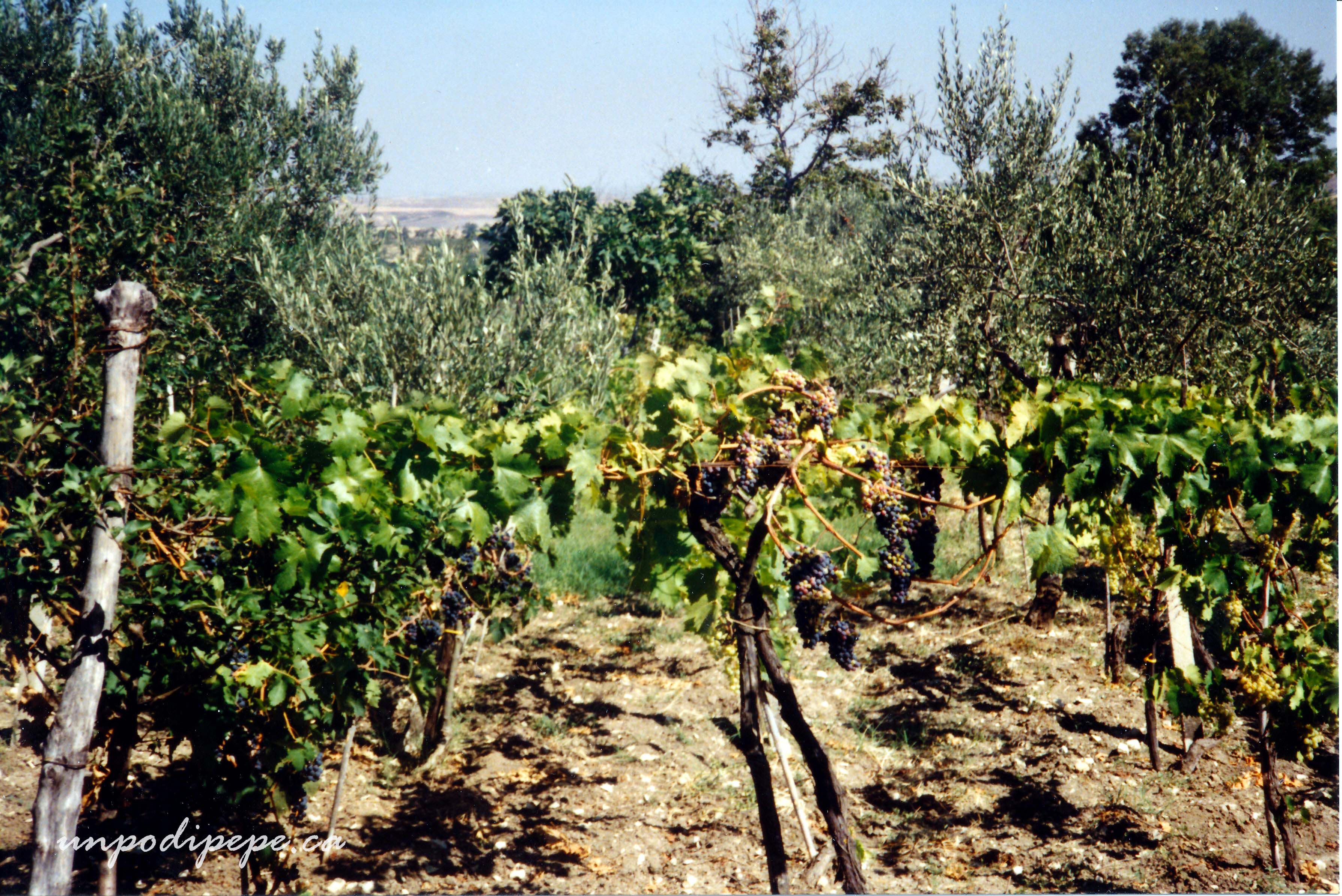
Tuccanese was in danger of extinction but attention to local viniculture in the last 20 years has resurrected it.  Now Tuccanese is an example of Artigianato vitivinicolo-artisan winemaking. The vines do well at Orsara’s 650m altitude and the high calcium and clay content of the soil.  Tuccanese grapes are very resistant to environmental conditions, immune to illnesses, and mature late- in the first 2 weeks of October.  Wines made with Tuccanese are a dark ruby red, dry, tannic and full bodied with a high alcohol content. They have notes of berry, plum, licorice and pepper. Tuccanese is definitely ‘un vitigno locale’, as it is really known only in and around Orsara, where several families grow it for their own table wine.  Really good table wine. My Bisnonno grew Tuccanese on his land at La Cupa, although the vines are no longer there.  Now the land has 81 beautiful olive trees.

Vigneto, La Cupa 1994

Vigneto, La Cupa 1994

BottiglieCantinaParadiso

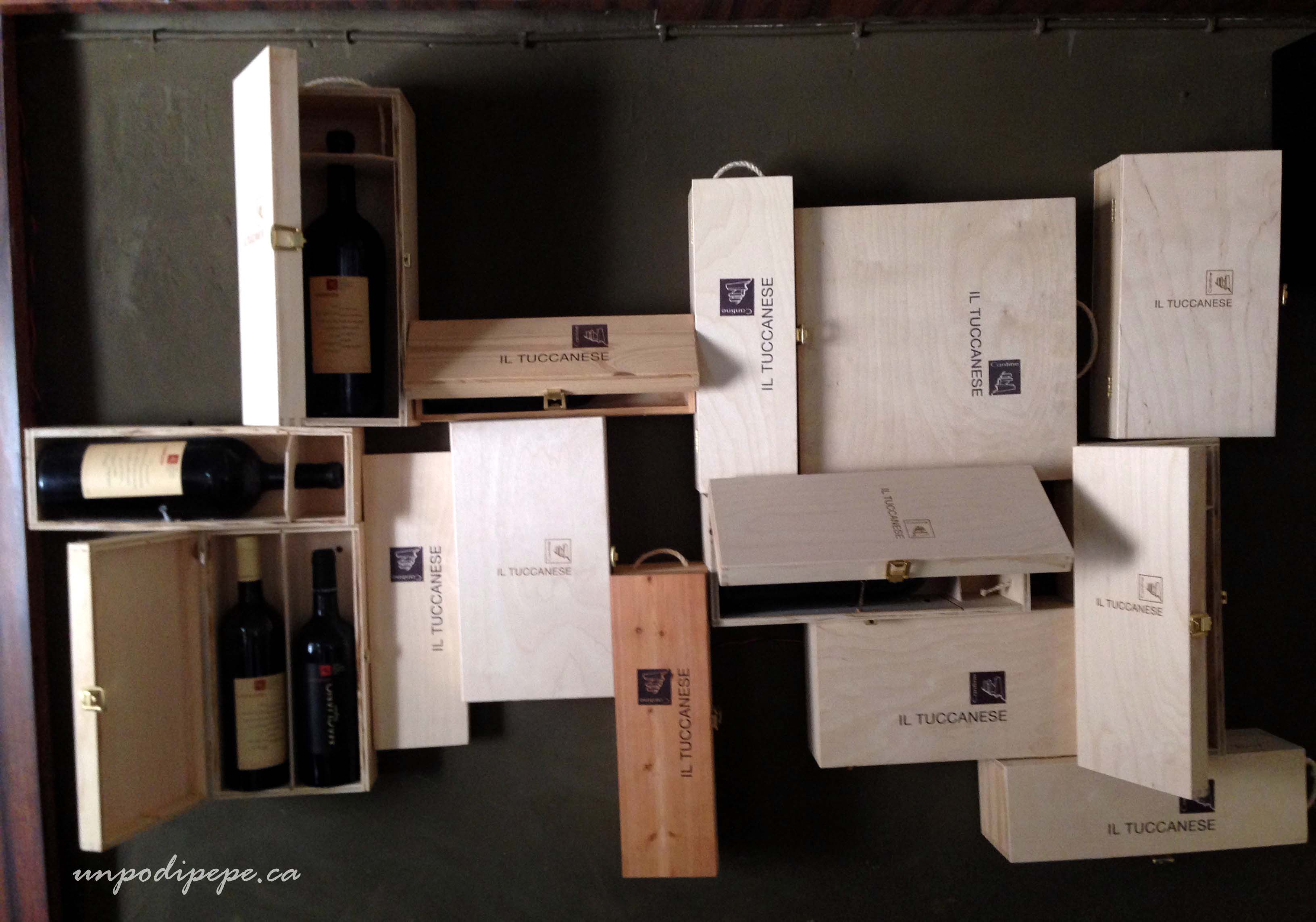
Tuccanese has not yet been discovered by the world, but there are 2 commercial producers, both in Orsara di Puglia. One is my amico, il cuoco-contadino Peppe Zullo and the other is my neighbour, architect Leonardo Guidacci! You won’t find these bottles at your local liquor store!

Peppe Zullo nel vigneto. Photo Nicola Tramonte

Peppe Zullo nel vigneto. Photo Nicola Tramonte

Peppe Zullo produces 20-25,000 bottles per year. His 2 wines are Ursaria and Aliuva. Aliuva is 80% Tuccanese 20% Uva di Troia (Nero di Troia) and Merlot.  Ursaria is 80% Tuccanese, 20% Uva di Troia and Cabernet, and is aged for 5 years in wood barrels. Peppe’s vino is used in his restaurant and event facilities and the rest sold on site. Peppe’s wine cellar La Cantina del Paradiso, designed by Nicola Tramonte was featured in the architectural exhibit ‘Le Cattedrali del Vino’ at the Biennale di Venezia in 2010. It is built into the side of a hill, with a vineyard on top! As he likes to say it’s the only cantina where you have to climb up stairs! Stay tuned for a post about the cantina.Vignetodelparadiso

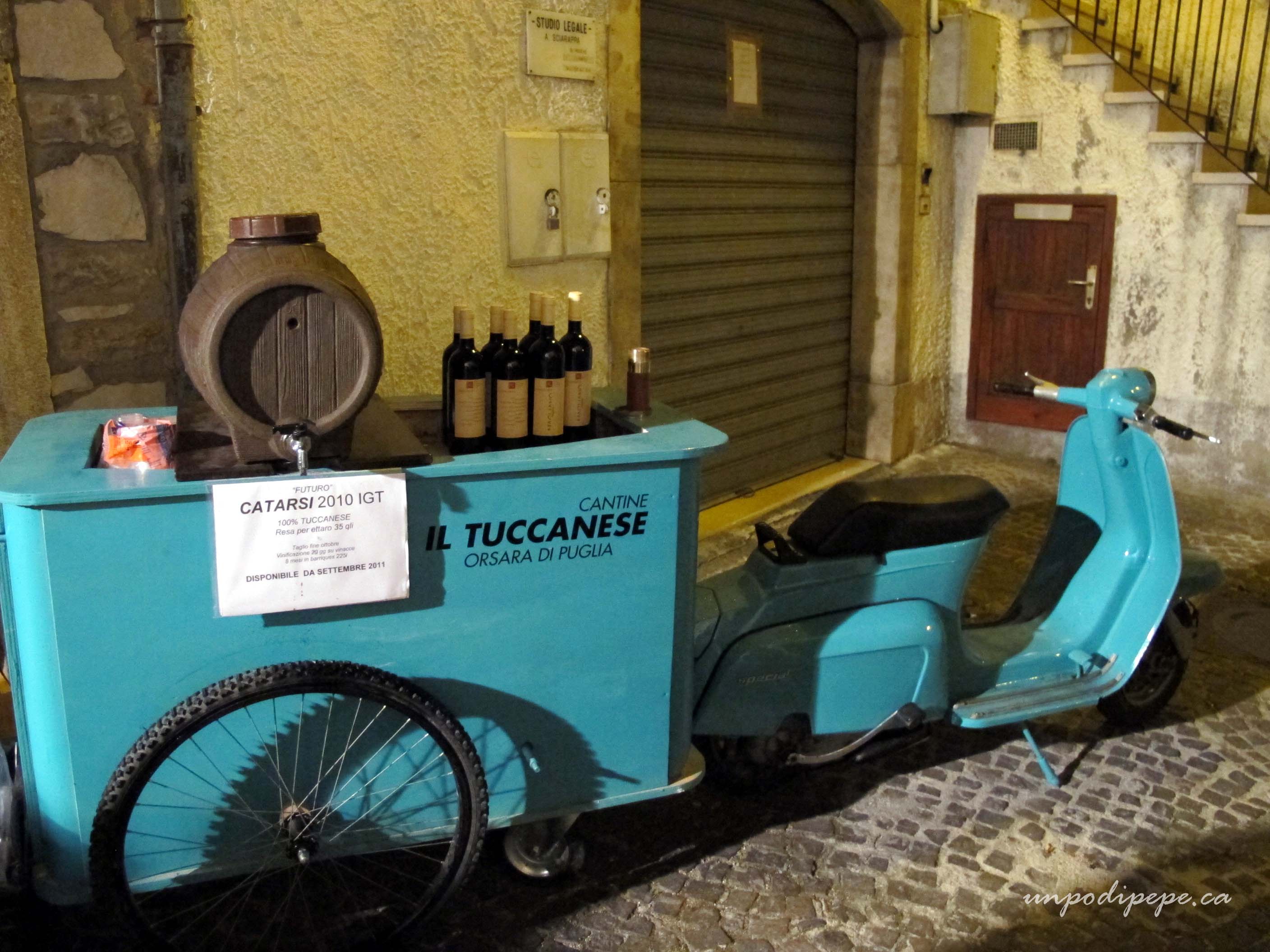
Leonardo Guidacci has been making wine since 1997. His cantina called ‘Il Tuccanese’ after the grape, produces 5,000 bottles per year. Leonardo’s 2 wines are Magliano and Sannoro. Magliano is 100% Tuccanese. It is named after the Contrada (district) of Magliano, where the grapes are grown. Sannoro is 80% Tuccanese 20% Aglianico. His showroom/tasting room/architectural office is in Piazza Municipio, around the corner from my house. You can go for wine tasting and also discuss plans for home renovation!

'Architettura e Vino', Leonardo Guidacci's showroom and studio in Piazza Municipio.

‘Architettura e Vino’, Leonardo Guidacci’s showroom and studio in Piazza Municipio.

iltuccaneseshowroom

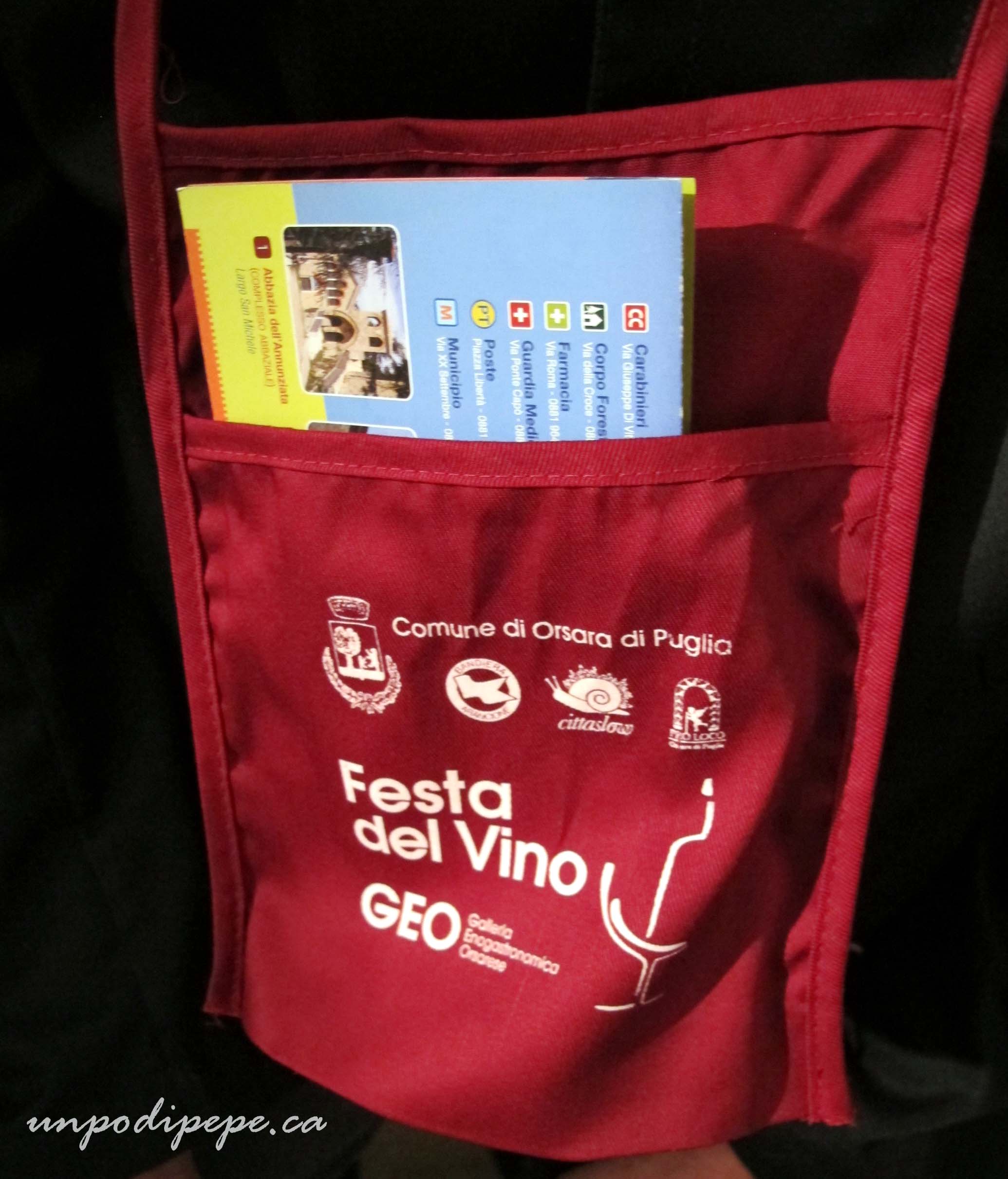
Festadelvino2011Orsara di Puglia hosts the 29th annual Festa del Vino tonight-the last Saturday in June.  Salute!Tuccanesefestadelvino

This is the third in a series of 3 Vini di Puglia posts.  Click on these links to read Vini di Puglia Part 1 and Vini di Puglia Part 2~Aglianico-Zibbibo.  The second post includes a glossary of Italian wine terms.  Salute, Cristina.

Share this:

  • Click to share on Facebook (Opens in new window) Facebook
  • Click to share on Pinterest (Opens in new window) Pinterest
  • Click to share on X (Opens in new window) X
  • Click to email a link to a friend (Opens in new window) Email
  • Click to share on WhatsApp (Opens in new window) WhatsApp
Like Loading...

Vini di Puglia Part 2~Aglianico to Zibibbo

12 Sunday Jun 2016

Posted by Un po' di pepe in Italia, Italian language, Puglia, Vino

≈ 16 Comments

Tags

Aglianico, Aleatico, Autochthonous vines, Bombino Bianco, Cacc'e Mmitt, Falanghina, Italian language wine glossary, Italian wines, Malvasia Nera, Moscato di Trani, Susumaniello, Verdeca, Wines of Puglia, Zibibbo

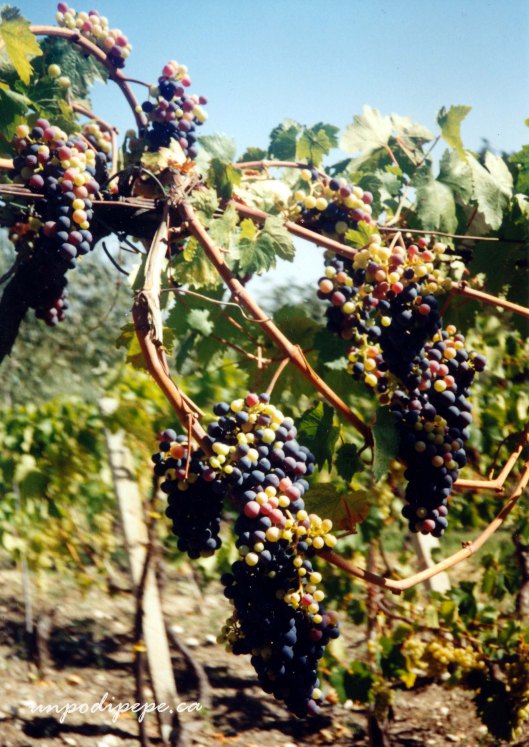
UvaLaCupa1994In my last post I wrote about the history of vini di Puglia and featured the 3 most common grapes. Puglia has many vitigni autoctoni (Autochthonous grapes or native grapes) that are not very well-known.  You might not ever try them unless you visit Puglia!  Many of these grapes were on the verge of extinction but are recently becoming more popular and grown with more care. You may have also noticed that most vini Pugliese are red.  80% of grapes grown are red, as the climate is too hot for most white grapes.
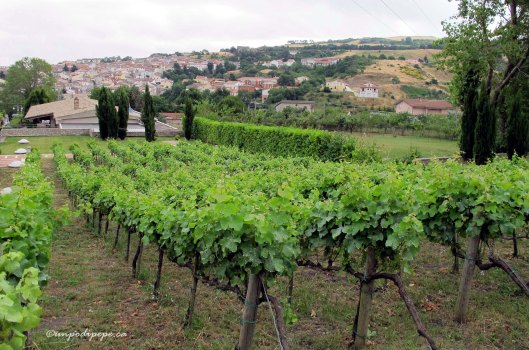
Il Vigneto del Paradiso, Orsara di Puglia

Il Vigneto del Paradiso, Orsara di Puglia

Aglianico (ahl·yah·NEE·koh) is named for ‘Hellanico’ meaning Greek or from Apulianicum, the Latin name for Puglia.  Brought to Italia by Greek settlers, it is found in Basilicata, Campania and in Puglia near the Basilicata border. It thrives in volcanic soil and is grown mostly near Monte Vulture, an extinct volcano in Basilicata (Aglianico del Vulture DOC).  Ripening late in October, it is full-bodied and musky with berry flavours, chocolate and plum aromas, firm tannins and high acidity. In Ancient Roma it may have been the main grape in the prized red Falernian wine, but there is no real evidence.

Aleatico (al·eh·ah·TEE·koh) Not the same grape as Aglianico.  Aleatico is a member of the Moscato famiy, so it is a sweet grape.  It is believed to be native to Puglia or possibly brought by the Ancient Greeks.  Grown in the Bari area and Salento, it is used for dessert wine and has the aroma of roses, berries and lychee. Aleatico di Puglia DOC, known for its pomegranate colour, is Aleatico with Negroamaro and Malvasia Nera.  Aleatico is also grown on Elba, where Aleatico di Portoferraio was enjoyed by Napoleon while he was in exile.UvaOrsaradiPuglia

Bombino Bianco means little white bomb.  The name may come from the word bonvino. Bombino Bianco is often confused with Trebbiano. In fact, in Abruzzo it is known as Trebbiano d’Abruzzo, but it is not the same as the Trebbiano grape that is grown in other parts of Italia.  So confusing! It is a late ripening, high yield crop that produces an inexpensive mild white vino. Because of the high yield and amount of juice it was known as ‘pagadebito’ or ‘straccia cambiale’ (‘debt payer’ or ‘invoice ripper’).  In the past, Bombino was grown as a ‘cash crop’ and shipped straight to Northern Europe, without even bottling, to be sold as generic white table wine.  It is now grown with more care, especially in the San Severo area of Foggia.  San Severo uses Bombino Bianco with Malvasia Bianca, Falanghina or Verdeca. There is also a Bombino Nero grape, used in Castel del Monte DOC red and rosé wines.Vignaorsaradipuglia

Cacc’e Mitt (KAH∙cheh∙MMEE∙te) is produced in the Monti Dauni of Foggia, in Lucera, Biccari and Troia.  It is made up of Uva di Troia with Montepulciano, Malvasia Nera, Susumaniello, and sometimes Bombino Bianco.  The name of this vino is dialetto for ‘togli e metti’ meaning ‘take out and put back’. This is often thought to mean the glass is always refilled because it is so drinkable. It actually refers to old winemaking techniques. The cantina and equipment were borrowed and shared, so the wine was made quickly and tubs emptied to give space to the next contadino.  Cacc’e Mitt was ‘vino dei poveri’ wine of the poor.  After the vendemmia, contadini would pass through again and collect what was left of the various grapes. This is why white grapes are also included.  The Cacc’e Mitt Festival is held every year in Lucera at the end of August/beginning of September.

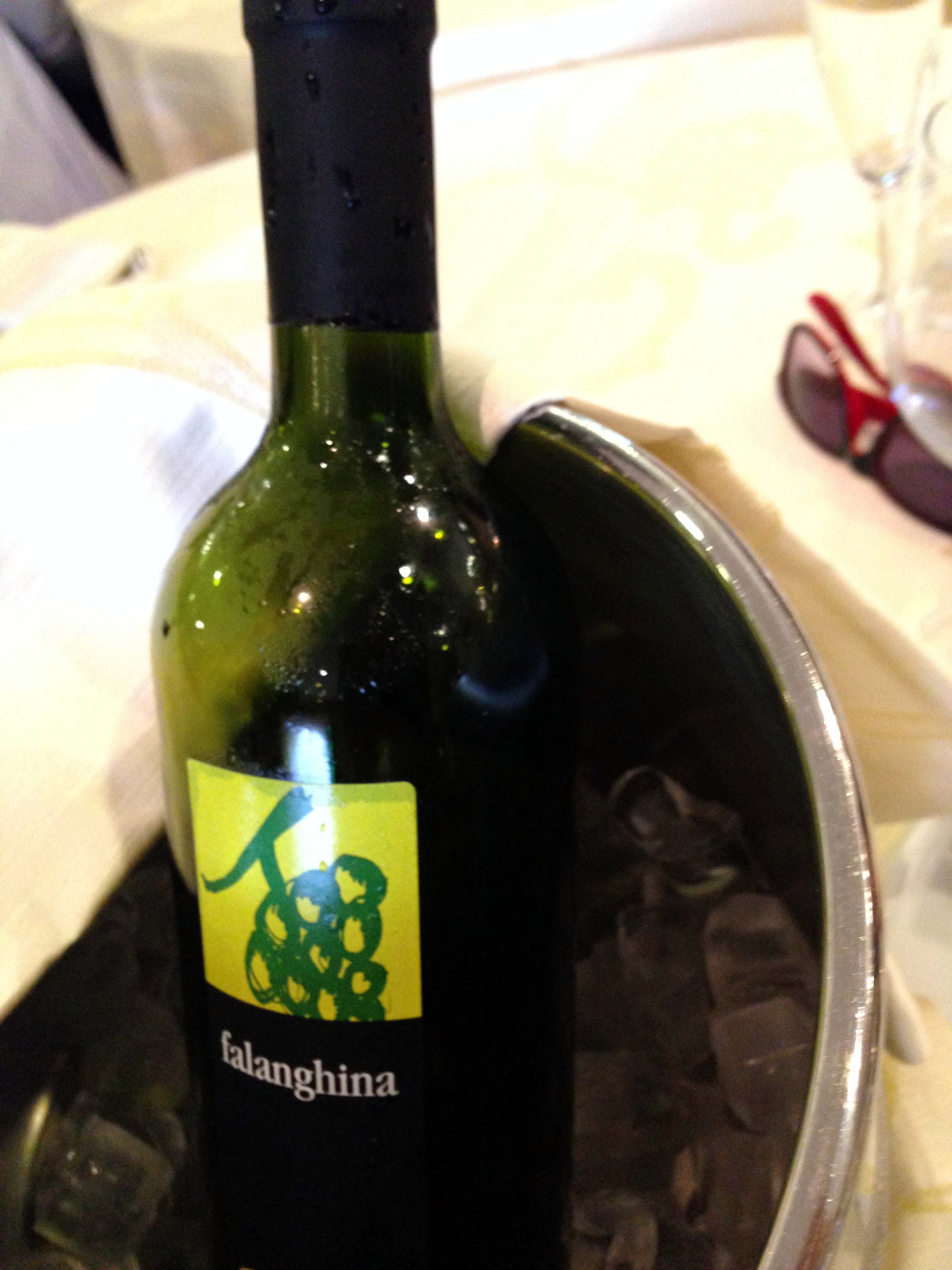
Falanghina is an ancient white grape brought by Greek settlers in the 7-8th Century BC.  The name comes from the Latin ‘falanghae’, the stakes that supported the grapevines.  I wonder if this is related to ‘phalanges’, the anatomical name for the finger bones? Grown in Puglia, but more common in Campania, Falanghina is yellow skinned and has a slight pine scent and orange, apple and pear aromas. Falanghina may have been one of the grapes in Falernian white, the most famous wine of Ancient Roma.Falanghina

Malvasia is the name of a group of related grapes from the Mediterranean, mostly white, with a handful of reds for blending.  Of ancient origin, the name comes from the Monemvasia fortress near Sparta or Malevizi on Crete. Malvasia is related to the Athiri grape grown all over Greece.  Malvasia was 1 of 3 major wines exported from Greece in the middle ages.  It grows well in dry climates, sloping terrain and well-drained soil.

Malvasia Nera –parents are Negroamaro and Malvasia Bianca Lunga. It is mostly a blending grape used with Negroamaro.  Salice Salentino wine is Negroamaro with 15% Malvasia Nera, Nardò is Negroamaro with Malvasia Nera di Lecce.  It has a dark colour and smells like chocolate covered cherries!villajamelevigna

Moscato di Trani The main grape in Moscato di Trani is Moscato Bianco, of Ancient Greek origins.  Trani is a beautiful port town that is definitely worth seeing. Wines from Puglia were traded via Trani to Venezia, starting in the 11th century.  In 1974, Moscato di Trani 1974, was one of the first vini Pugliese to achieve DOC status in.  It is vino dolce, a sweet dessert wine that goes well with almonds, pastries, and mild cheeses.  It is a gold colour with woody and spicy aromas.  Moscato di Trani is produced in the Trani and Bari areas and also in Cerignola and Trinitapoli, Provincia di Foggia.

Susumaniello, also called Somarello is among the most obscure grape varieties.  An ancient grape only found in Puglia, it is originally from Greece or Croatia.  It is the offspring of Sangiovese with the white Garganega grape. It is high yield and usually blended with Negroamaro and Malvasia Nera.  It is a deep ruby colour with the aroma of red berries, plums and peppery dark chocolate.  Somarello is dialetto for asinello or little donkey, implying the grapevines are heavily loaded like a donkey.

Tuccanese-Featured in Vini di Puglia post #3, coming soon!

Verdeca is a white blending grape from Croatia.  Verdeca + Primitivo are the parents for Plavina Crna, a red grape found only in Croatia. Interestingly, Verdeca is not found in Croatia today.  Verdeca is grown in the ‘trulli’ areas of Alberobello, Locorotondo, Cisternino, Fasano, Martina France, Ceglie Messapica and Ostuni.  Locorotondo DOC and Martina Franca DOC are delicate dry whites and spumanti made with Verdeca, Bombino Bianco and Malvasia grapes.Uvapianoparadiso
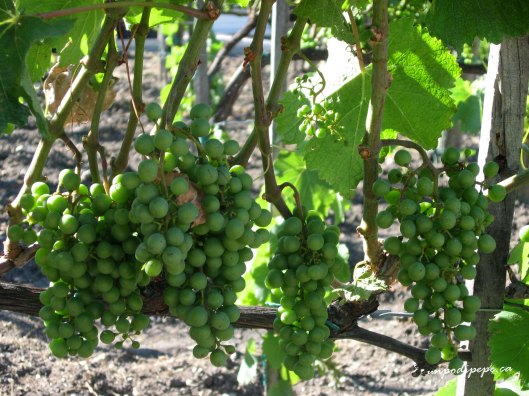
Zibibbo This last one is not a common grape in Puglia, but I had to include it for sentimental reasons.  I asked Papà what grapes were grown at La Cupa in my Nonno’s campagna. He said ‘Tuccanese, Malvasia Bianca, Mene di vacca and Zibib’.  Zibib?  What is a Zibib??? I looked it up and there actually is a grape called Zibibbo or Zibib.  It means ‘dried grape’ in Egyptian (Zibib) or Arabic (Zabib).  One of the oldest unmodified vines in existence, it is also called Moscato d’Alessandria. It is used to make Passito di Pantelleria, a white moscato from the Sicilian volcanic island of Pantelleria. The Zibib at La Cupa was planted by my Bisnonno Antonio in the early 1900’s so who knows how it got there!
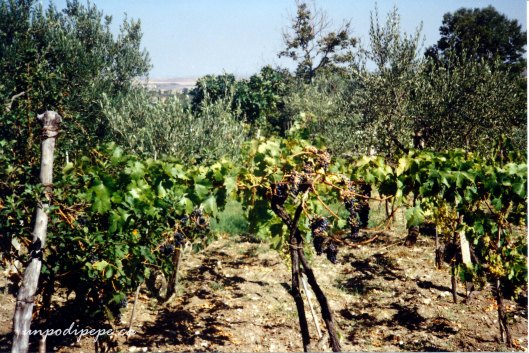
Vigneto, La Cupa 1994

Vigneto, La Cupa 1994

Un Lessico per Vinicolture/A Glossary of Viniculture terms

Botte=wood barrels

Contadino=farmer

Corposo=full-bodied

DOC/DOCG=Denominazione di Origine Controllata (G=e Garantita) =controlled designation of origin/controlled and guaranteed designation of origin.  A quality assurance label for Italian food products.

Raccolta=harvest

Uva=grape Uve=grapes

Vendemmia=the grape harvest

Vendemmiare=to harvest the grapes

Vigneto=vineyard

Vigna =vineyard

Viticoltura=viniculture/grape growing

Viticoltore=grape grower

Vitigno=species of grapevine

Vitigni autoctoni=autochthonous grapes, which are native or indigenous

Salute! Vini di Puglia Part 3, Il Tuccanese coming soon!
Share this:

  • Click to share on Facebook (Opens in new window) Facebook
  • Click to share on Pinterest (Opens in new window) Pinterest
  • Click to share on X (Opens in new window) X
  • Click to email a link to a friend (Opens in new window) Email
  • Click to share on WhatsApp (Opens in new window) WhatsApp
Like Loading...

Vini di Puglia

01 Wednesday Jun 2016

Posted by Un po' di pepe in Italia, Puglia, Vino

≈ 26 Comments

Tags

Autochthonous vines, Diomedes, Italian wines, Negroamaro, Nero di Troia, Primitivo, Pugliese Traditions, Southern Italy, Vini di Puglia, Wines of Puglia

Uvadipuglia

Oenotria, ‘Land of Wine’. This is the name the ancient Greeks gave to Puglia. 425 km long, Puglia has a diverse agricultural landscape with mountains, plains, the Mediterranean sun, coastal sea breezes and fertile soil.  The climate is hot and dry, especially during the summer months.  The name Puglia comes from the Latin ‘a pluvia’ meaning without rain. These environmental features, plus the presence of vitigni autoctoni (Native or Indigenous species of grapes) provide an ideal environment for growing grapes and producing vino.

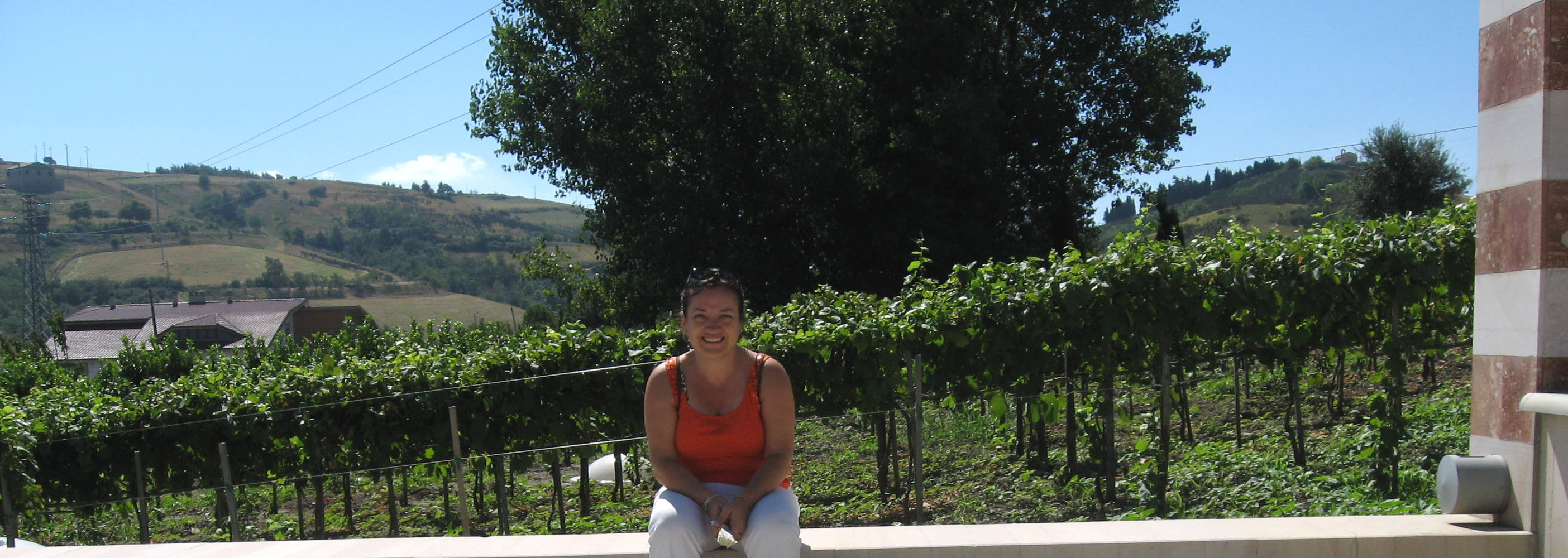
Grape harvesting and winemaking are an ancient tradition in Puglia, where the soil has been tilled for centuries.  The vines are deeply rooted to an ancestral bond with the earth and local traditions. I find the surreal peace and tranquility in the vigneti to be very therapeutic and meditative.VillaJamelevigneto

The history of vinicoltura in Puglia is based on a bit of science, and a lot of legend. According to legend, after the fall of Troy the mythical hero Diomede (Diomedes) found out his wife had been unfaithful.  Instead of returning home to Argos, he sailed about the Adriatic, created the Isole Tremiti, and then was invited by Daunus, King of the Daunia (modern Provincia di Foggia) to settle there.  Diomede allegedly planted the first vines in Puglia, brought with him from Greece and beyond.Vignastradacupa

Vino Pugliese has always been consumed and enjoyed locally. In the past, Pugliese grapes were often harvested for quantity rather than quality. They were used to blend with underwhelming Italian and European grapes that needed substance or a boost in the alcohol content.  In Puglia, grapes develop high levels of sugar over the hot summer, resulting in wines that are high in alcohol.  Mass production decreased the value of Pugliese grapes and wine.  In the 1970’s and 1980’s, government funds were available for contadini to plant wheat.  Half of Puglia’s ancient vigneti/vineyards were cut down to make way for fields of wheat.  Some ancient vines were all but lost.  Now many are being replanted and there has been a resurgence of forgotten native grapes and lesser known grapes.  Vini Pugliese are finally getting the love they deserve! There are now over 30 Pugliese DOC wines and they are generally very well priced for the quality. I still say the best stuff doesn’t leave the region.  It is made in batches too small to export and is consumed locally.

La Cantina del Paradiso, Orsara di Puglia

La Cantina del Paradiso, Orsara di Puglia

Puglia can be roughly divided into 3 wine producing areas. The first is Northern Puglia including the Daunia (Provincia di Foggia) and the northern part of the Provincia di Bari, around Castel del Monte.  The second is the Provincia di Bari including Gioia del Colle and the Val d’Itria and the third is the Salento area or the ‘heel’ of italia.  It includes the Provincia di Lecce, most of the Provincia di Brindisi and part of the Provincia di Taranto. (I will add a map soon)
This is the first of 3 blog posts about Puglia and its native vines. I have been conducting my own personal research on this topic for many years.  The sacrifices I make for my readers knows no limits!

This post will include the 3 main grapes, Primitivo, Negroamaro and Nero di Troia.  Post number 2 Aglianico to Zibibbo will feature the lesser known vigni autoctoni and a wine vocabulary, and post number 3 will be dedicated to Tuccanese. Salute!

Vini Pugliese available at my local BC Liquor Store

Vini Pugliese available at my local BC Liquor Store

3 Main Vitigni Pugliese/Grapevines:

Primitivo is the most internationally well-known Pugliese grape.  It is grown across Puglia, especially in Taranto (Primitivo di Manduria) and the Gioia del Colle area in Bari.  The production of Primitivo has increased in recent years.  The name was given by a late 18th Century monk who studied botany.  It does not mean primitive, but comes from the Latin ‘Primatirus’ which means early ripening.  La vendemmia (the grape harvest) for Primitivo is August to early September.  It was previously known by other names, including Zagarese, possibly meaning from Zagreb.  In 1881, Primitivo vines were first brought to Manduria from Gioia del Colle as part of the dowry of Contessa Sabini di Altamura. Including vines in a dowry may sound strange, but also implies they must have been considered valuable!
Primitivo is ‘corposo’ (full bodied) and has lots of anthocyanins. The grape can turn much of its sugar content into alcohol, reaching up to 18% alcohol!  It is aromatic with hints of sour and black cherry, fig, blueberry and blackberry. Primitivo has a spiciness of pepper and licorice when grown in certain types of soil and it is often aged in oak. Not a productive vine, it gives low to medium yields. Primitivo ripens unevenly and will over ripen quickly.  If the tips are pruned in spring, a second harvest with a lower alcohol content is possible mid September to October. In Manduria, Primitivo grows on red soil.  It is also grown on volcanic soil, and even sand near the sea.
Primitivo arrived in Puglia from across the Adriatic thousands of years ago with the ancient Greeks. It may have crossed the Adriatic again in the 15th Century with Slavs and Greek Albanians arriving in Puglia to seek refuge from the Ottoman Turks.

Like all Italians, Primitivo has cugini, or cousins. Zinfandel has been proven by genetic analysis to be a clone of Primitivo and Crljenak Kastelanskj (Plavina) a vine on the coast and islands of Croatia. Pugliese immigrants in the 1800’s and early 1900’s likely brought their native grapes to California. Primitivo is also one of the parents of Plavac Mali, another Croatian grape.Stradacupaprimitivo

Negroamaro is grown almost exclusively in Puglia and is one of Italia’s most ancient vines.  It is grown all over Puglia, but especially in the Salento, the ‘heel’ of Puglia.  Since ‘niger’ is Latin for black and ‘amaro’ means bitter in Italiano, the name is thought to mean ‘Black bitter’, after its strong colour and tannins. The amaro part of Negroamaro is actually from ‘Mavros’ the Greek word for black.  In this case, Negroamaro actually means ‘black black’.  It is thought to have been brought to Puglia by Greek colonists around the 8th Century BC so it makes sense that the grape developed a hybrid Latin/Greek name.

Puglia is an ideal habitat for Negroamaro grapes as they tolerate hot and dry well, and are very adaptable to different soils, even in rocky areas. Negroamaro has a rich dark red colour and is corposo but not too tannic or acidic, making it very easy to drink! It has flavours of ripe plums and baked raspberries with hints of cinnamon and anise, and is rich in polyphenols including the antioxidant resveratrol.  La vendemmia for Negroamaro is after Sept 10 to the beginning of October. Negroamaro is usually used on its own, or blended with Malvasia Nera. The first rosé bottled in italia in 1943 was a Negroamaro rosé. My favourite Italian rock band is Negramaro without the ‘o’, from Lecce. I recommend listening to Negramaro with a glass of Negroamaro!

Nero di Troia (also called Uva di Troia) is named after and grown around Troia, in the Monti Dauni area of Foggia and near Castel del Monte.  Troia is only 14 km from Orsara di Puglia so I know it well!  Nero di Troia is thought to be those very vines brought by Diomedes from Troy when he was welcomed by the king of the Daunia!  Genetic analysis does show it originates in the Adriatic area.  We also know Nero di Troia was around in the 13th century during the reign of Federico II of Svevia.

Nero di Troia is a late ripening grape, with vendemmia in mid to late October. It is very purple skinned, rich in polyphenols and especially tannins but is not too acidic or tannic tasting. It has a spiced woody taste with hints of blackberry, licorice, cherry, black currant, black pepper and violets. Nero di Troia goes down nicely and leaves a silky feel on the palate.  Traditionally it has been blended with other grapes.  For example, Castel del Monte wines blend 75% Nero di Troia with 25% Montepulciano. In recent years, there has been a move towards appreciating the unique characteristics of Nero di Troia on its own and it is becoming increasingly well-known and appreciated.NerodiTroia

In Orsara Papà often buys Nero di Troia to drink at home with meals. It comes in a 3L plastic bottle at the grocery store for €5.50!  Seriously.  It has an expiry date and he transfers it into 4x 750 ml glass bottles.  It may not be the best Nero di Troia available, but it’s very good and the best value for $. Now you all know for sure I am not a wine snob!  Visit Troia the last Sunday in July for ‘La notte del Nero di Troia’. Maybe I’ll see you there?  Salute! CristinaPianoParadiso

Read the rest of the trilogy:

Vini di Puglia Part 2 Aglianico to Zibibbo

Vini di Puglia Part 3 Il Tuccanese

Ciao, Cristina

Share this:

  • Click to share on Facebook (Opens in new window) Facebook
  • Click to share on Pinterest (Opens in new window) Pinterest
  • Click to share on X (Opens in new window) X
  • Click to email a link to a friend (Opens in new window) Email
  • Click to share on WhatsApp (Opens in new window) WhatsApp
Like Loading...
← Older posts
Newer posts →

Enter your email address to follow 'un po' di pepe' and receive notifications of new posts by email.

Join 511 other subscribers
Follow Un po' di pepe on WordPress.com

Popular Posts

  • Hairstyling in Ancient Roma
    Hairstyling in Ancient Roma
  • Panforte di Siena
    Panforte di Siena
  • Panettone Fatto in Casa
    Panettone Fatto in Casa
  • Polpo e patate
    Polpo e patate
  • Italiano per Ristoranti~How to pronounce your restaurant menu
    Italiano per Ristoranti~How to pronounce your restaurant menu
  • Dolci di Natale
    Dolci di Natale
  • Acqua Vergine
    Acqua Vergine

Recent Posts

  • Castel del Monte
  • ‘The Nuances of Love’
  • Hostaria Antica Roma~Eat like an Ancient Roman
  • Santa Maria in Aracoeli
  • Casino dell’Aurora~Villa Boncompagni Ludovisi
  • Nasoni di Roma
  • Bloghiversario #11
  • Fontana di Trevi
  • Acqua Vergine
  • Giubileo 2025
  • Sanremo 2025
  • In Vino there are Memories
  • A Literary Harvest
  • 2024~Un po’ di pepe Year in Review
  • Buon Natale 2024
  • Il Bicerin
  • Mercato Porta Palazzo
  • Torino
  • Catanzaro, Calabria
  • Il Pumo Pugliese
  • Artemisia Gentileschi
  • Cavalli di San Marco
  • Panzerotti
  • Torcello
  • 10 years of Un po’ di pepe!

Categories

Amici e Famiglia Architecture Art Art history Art projects Bilingual posts Blogging Canada Culture Feste Firenze Inspiration Italia Italian Folklore Italian language Italian life Italocanadesi Libri Mangiamo! Orsara di Puglia Parole piacevoli Photography Puglia Recipes Roma Travel Travel tips Uncategorized Vino

Archives

Un po’ di pepe on Facebook

Un po’ di pepe on Facebook

Start a Blog at WordPress.com.

  • Subscribe Subscribed
    • Un po' di pepe
    • Join 511 other subscribers
    • Already have a WordPress.com account? Log in now.
    • Un po' di pepe
    • Subscribe Subscribed
    • Sign up
    • Log in
    • Report this content
    • View site in Reader
    • Manage subscriptions
    • Collapse this bar
 

Loading Comments...
 

    %d