Artemisia Gentileschi

Tags

, , , ,

Artemisia Gentileschi was born July 8, 1593, 431 years ago today.  One of the greatest artists of the Baroque period, she is best known for using her paintbrush to create empowered female subjects, portraying them from a female perspective, in ways male artists rarely had. Rather than sitting passively, Artemisia’s women are active participants, strong, capable and defiant.

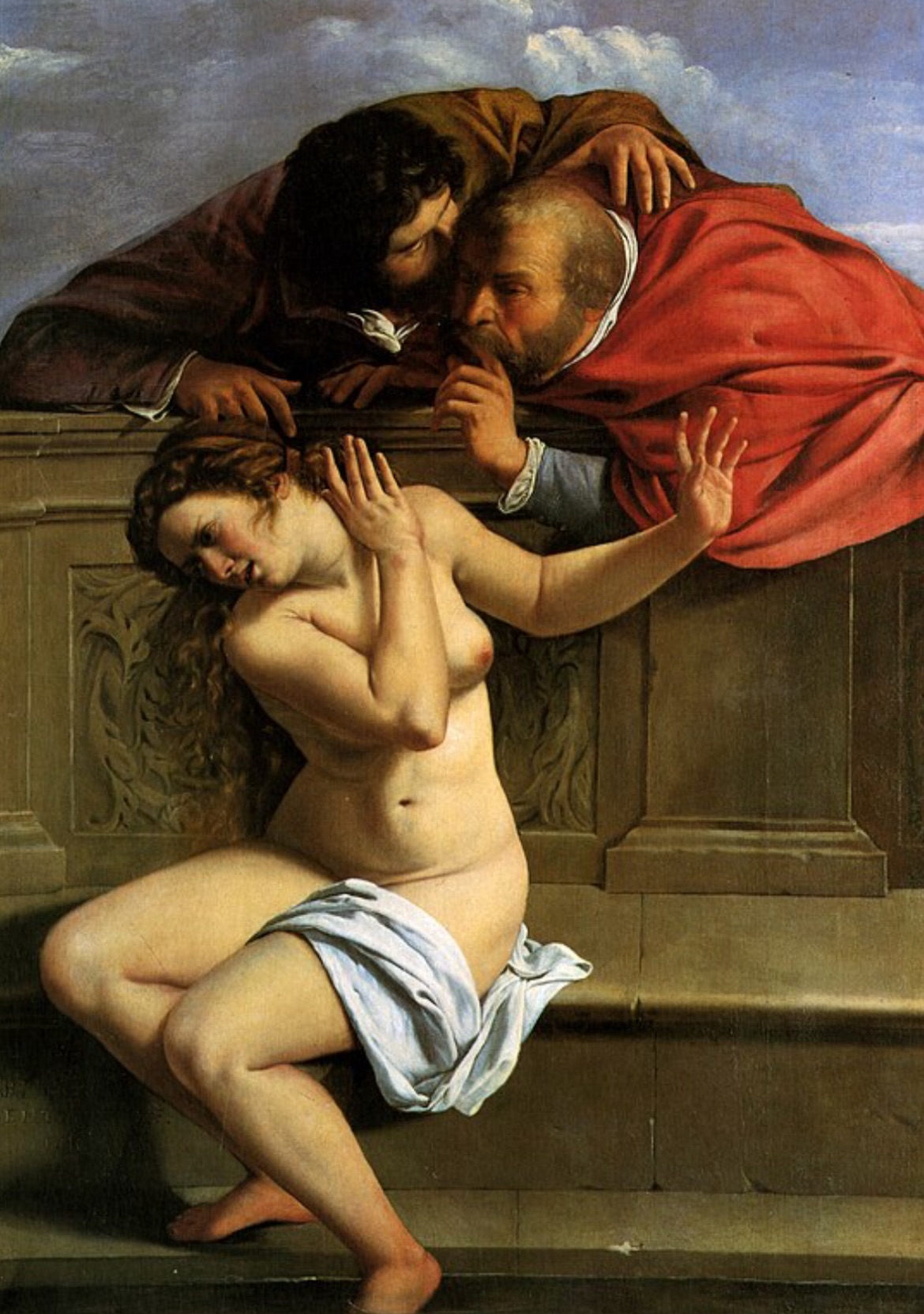
Introduced to art and trained by her father Orazio Gentileschi, an early follower of the dramatic style of Caravaggio, Artemisia worked along with her 3 younger brothers.  She was the only one to show talent and interest, producing her own work by age 15. In 1610, at age 17, she painted her earliest surviving work ‘Susanna and the Elders’ which for years was incorrectly attributed to Orazio. Unlike other painters’ versions, her Susanna is distraught and shields herself from the oglers, as an early depiction of sexual harassment. Artemisia painted this subject 7 times.

Susanna and the Elders (1610)

In 1611 Orazio decorated a palazzo in Rome with painter Agostino Tassi.  He hired Tassi to tutor 17-year-old Artemisia to help refine her painting skills.  During one of their sessions, he raped her.  They started a relationship, since she believed they were going to be married, as societal norms of the time required.  When it became apparent that Tassi was not going to marry Artemisia, Orazio took the unusual route of pressing charges against him for rape.  The trial went on for 7 months, revealing scandalous details -that Tassi had an affair with his sister-in-law and allegedly hired bandits to murder his missing wife.  Artemisia was subjected to a gynecological exam, and tortured with thumbscrews to verify the truthfulness of her testimony!  Luckily there was no permanent damage to her fingers and this did not affect her ability to paint. Tassi was convicted, and sentenced to 2 years in prison.  He was also exiled from Roma, but this was never enforced.

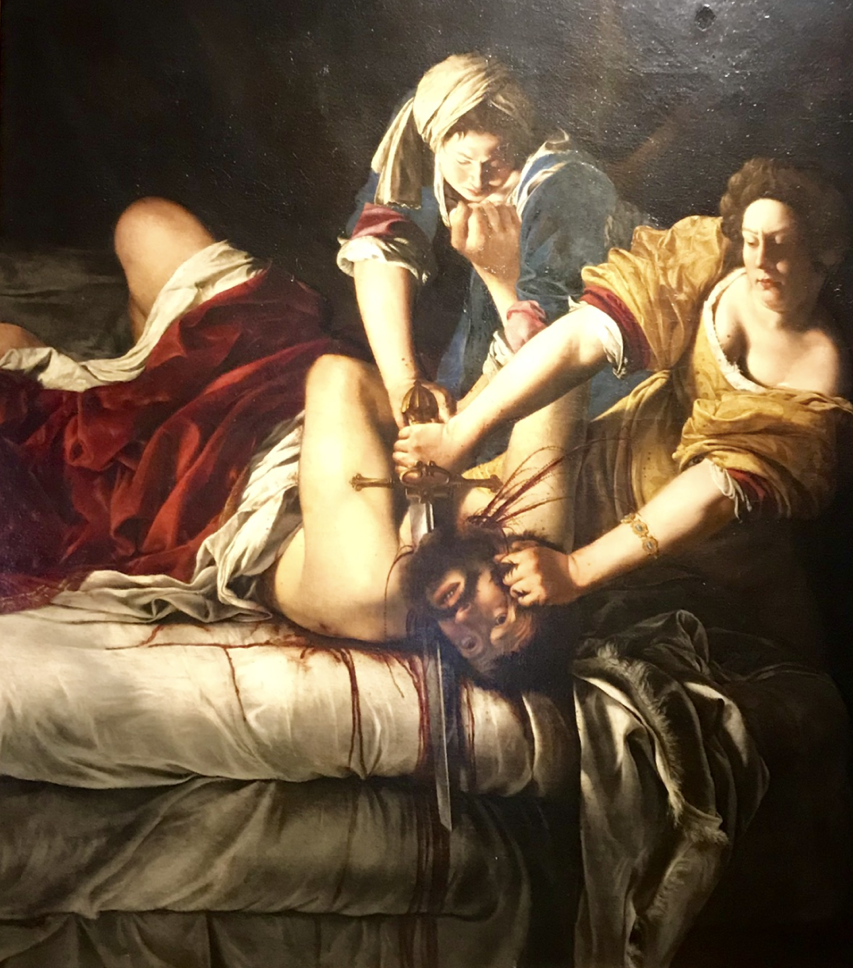
Judith Slaying Holofernes 1620 Galleria degli Uffizi, Firenze

After this ordeal, many of Artemisia’s paintings feature women being attacked or in positions of power, seeking revenge. In 1612 she painted her first of 6 versions of Judith Slaying Holofernes, which is in Museo Capodimonte, Napoli.  The 1620 version in the Galleria degli Uffizi, Firenze is ‘bloodier’ than the first one. I like to imagine Artemisia having a scientific discussion with Galileo about realistic blood spatter patterns!  Below is Caravaggio’s 1598-99 version of the scene, which is a masterpiece, but Judith looks like the 90 pound weakling who is worried about breaking a nail or getting blood on her dress, and her servant just stands there.  In Artemisia’s version, both women mean business, practically sitting on Holofernes to get the job done. 

Judith Beheading Holofernes Caravaggio 1598-99 Palazzo Barberini

After the trial, Orazio arranged for Artemisia to marry artist Pierantonio Stiattesi and they moved to his home city Firenze, where she had a successful career as an artist and an impressive clientele.  She had the support of Cosimo II de Medici and was friends with Galileo.

Allegory of Inclination (1615) Casa Buonarroti

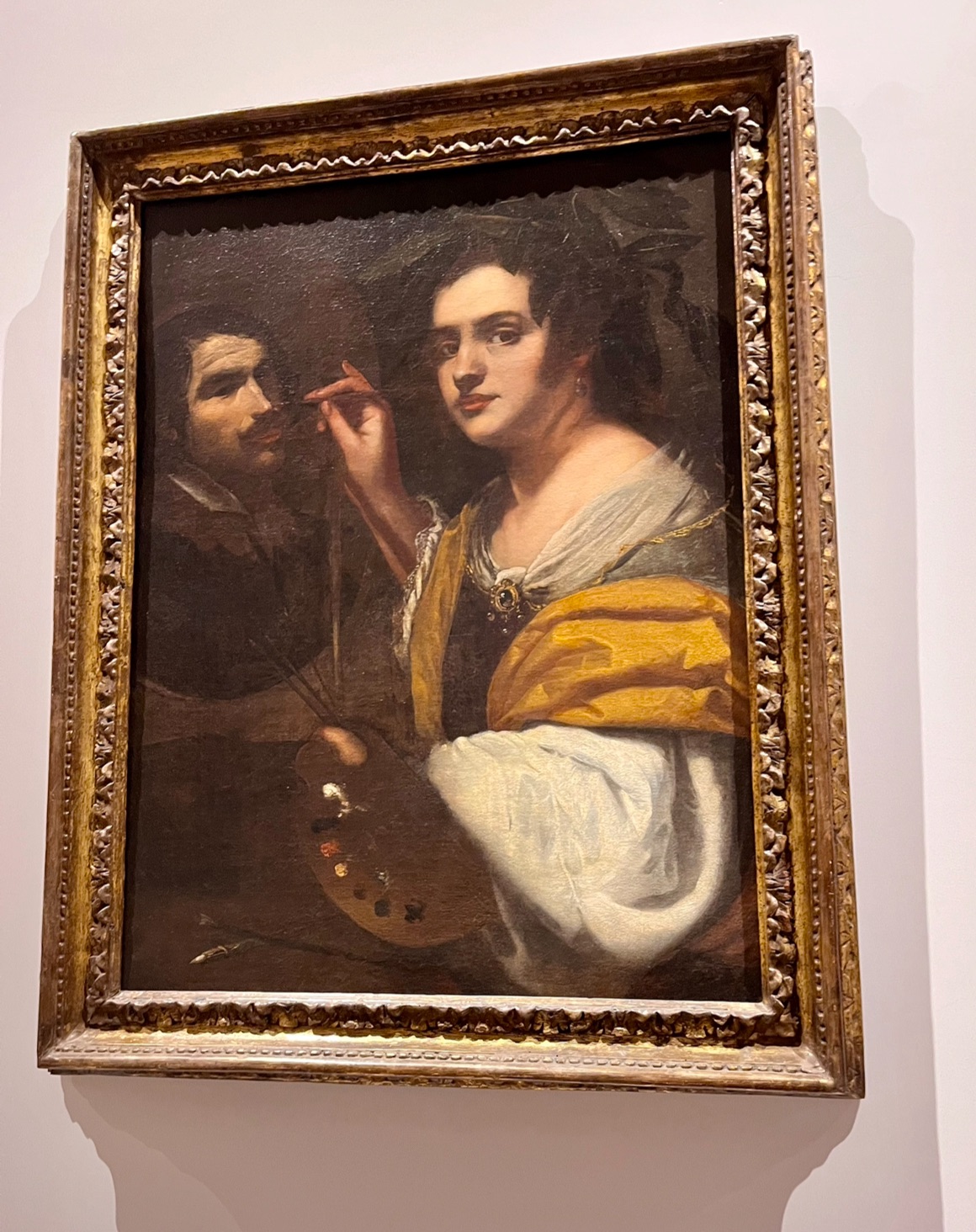
At age 21, Artemisia was the first woman accepted into the prestigious Firenze Accademia delle Arte del Disegno.  This was a major accomplishment!  She was now able to sign her own contracts and purchase art materials without permission from her husband!  In 1615, she was commissioned to paint one of the ceiling frescoes at Casa Buonarroti, former home of Michelangelo, being turned into a museum by his great-nephew. Artemisia was paid more than the male artists working on the frescoes were! ‘Allegory of Inclination’, like many of her paintings, was likely a self-portrait.  Why self-portraits?  The model is free and always available!

Self-portrait, Galleria Barberini 1630-35

In 1618 Artemisia had a daughter named Prudentia, the only one of her 5 children to survive infancy.  She trained Prudentia as an artist, although none of her work survives that we know of.  Artemisia had an affair with Florentine nobleman Francesco Maria di Niccolo Maringhi, which is documented in a series of 36 letters, discovered in 2011.  Her husband also corresponded with Maringhi, who helped support them financially.  Fed up with her husband’s financial and legal issues, she returned to Roma with her daughter in 1621-1626.  Artemisia continued to be influenced by Caravaggio as she worked with some of his followers, Carravagisti, including Simon Vonet.  She also spent 3 years in Venezia working on commissions.

Sansone e Dalila/Samson and Delilah 1630-38 Galleria d’Italia, Napoli

Artemisia relocated to Napoli in 1630 and worked with many well-known artists such as Massimo Stanzione. In 1638, she was invited to the court of Charles I of England in London, where Orazio had been court painter for 12 years. He was the only Italian painter in London and the first to introduce the style of Caravaggio there.  Orazio and Artemisia had not seen each other for 17 yrs.  She worked alongside Orazio on an allegorical fresco for Greenwich, residence of the Queen. Orazio was 75 and needed her help to complete the work before he died suddenly in 1639.  Artemisia painted some of her most famous works while in England, including Self Portrait as Allegory of Painting (1639), which she likely painted with 2 mirrors, one on either side of her. In 2017 I had the opportunity to see this painting at the Vancouver Art Gallery exhibit from the Royal Collection.

Self-portrait as the Allegory of Painting 1638-39 Royal Collection, Windsor Castle

Once she finished her commissions, Artemisia left England before 1642, returning to Napoli.  The last letter from her agent was dated 1650, which implies she was still painting.  There is additional evidence to suggest she was still working in Napoli in 1654 and likely died during the plague in 1656.

Artemisia’s legacy is complex and full of controversy.  She defied the odds and was well respected as an artist during her own lifetime.  She thrived in a time when women had few opportunities to pursue artistic training, let alone actually work as professional artists.  After her death, Artemisia Gentileschi was almost omitted from the history of art.  The fact that her style was much like her father’s and some of her works were incorrectly attributed to Orazio and even Caravaggio may have something to do with that.  More likely, those documenting art history did not think a woman was worth mentioning.

In the early 1900’s, her work was rediscovered and championed by Caravaggio scholar Roberto Longhi.  In all accounts of her life, Artemisia’s talent and achievements are overshadowed by the story of her rape and trial.  This is partly due to a 1947 over-sexualized fictional novel by Longhi’s wife Anna Banti.  1970’s and 80’s feminist art historians began to reassess Artemisia and her reputation, focusing on her significant artistic achievements and influence on the course of art history rather than events that happened in her life.

A 1976 exhibition ‘Women artists 1550-1950’ proposed that Artemisia was the first female in the history of Western art to make a significant and important contribution to the art of her time.  Following centuries of near obscurity, today Artemisia’s paintings are again celebrated around the world.  An ornate plate rests in her honour at the table of contemporary feminist art as part of Judy Chicago’s iconic 1979 work ‘The Dinner Party’.

Artemisia has left us with 60 paintings, not including collaborations with Orazio.  40 of them feature females from the Bible or mythology. Only 19 of her paintings are signed and 13 are in Private collections!  Can you imagine owning your own Artemisia??? Famous quotes from Artemisia include ‘My illustrious lordship, I’ll show you what a female can do’ and ‘As long as I live, I will have control of my being’.

Enjoy the Monologue ‘Becoming Artemisia'(May 2024) directed by Antonio D’Alfonso, text by Mary Melfi (17 min).

Google doodle of Artemisia GentileschiBuon Compleanno Artemisia!

Photo credits: Susanna and the Elders and Allegory of Inclination, Wikipedia

Google Doodle by Hélène Leroux, July 8, 2020

All other photos taken by Cristina

Cavalli di San Marco

Tags

, , , ,

I Cavalli di San Marco are a set of gilded copper statues of 4 horses, originally attached to a quadriga, a four horse carriage used in chariot racing.  Also known as the ‘Triumphal Quadriga’ and the ‘Horses of the Hippodrome of Constantinople’. The sculptures date from classical antiquity.  Because of the style, they were thought to be Greek, by the 4th C BC sculptor Lysippos, but carbon dating shows they are from the 1st-3rd C AD, which makes them 1700-1900 years old. An 8th century document mentions ‘four gilt horses that stand above the Hippodrome brought from the island of Chios by Theodosius II’ (AD 408-450)

The sculptures are expressive and magnificent!  The realism is incredible-bulging veins, rippling muscles, flaring nostrils, raised hooves, and the way they are in sync, with their heads turned to each other.  Streaks of gold leaf are still visible on their bodies.  The poet Francesco Petrarca (1304-1374) remarked ‘they seem to be neighing and pawing at the ground, as if alive’.  They are made using the lost wax method.  A wax sculpture is used to make a mold, usually of clay.  The sculpture is then cast with the mold. Each cavallo weighs close to 900 kg (2000 lbs).  Very few metal masterpieces have survived from antiquity as they were all melted down in medieval times to make weapons.

There is a lot of history to this foursome representing Apollo, God of the sun.  They were likely made on the Greek island of Chios and brought by Emperor Constantine to the new capital Constantinople (modern Istanbul) in 330 AD to adorn the chariot racetrack or by Theodosius 100 years later.  During the sack and looting of Constantinople in 1204, the Venetians took them as spoils of war. The cavalli were in storage in the Arsenale and in 1254 were placed on the terrace above the main door to the Basilica San Marco, as a symbol of military and political power. Small marble columns held up their feet.  Collars on the horses were added to hide where they had to be decapitated for transport from Constantinople.  They lived on the terrace for almost 600 years, until Napoleon looted them in 1797, taking them to Paris. In Paris, they were installed outside the Louvre on top of the Arc de Triomphe du Carrousel, along with a new quadriga. Upon the defeat of Napoleon in 1815, they were actually returned to the terrace in Venezia by the Duke of Wellington- minus their ruby pupils.  Replicas are now on the Paris monument. The cavalli were restored in 1977 and to protect from environmental oxidation they made their final journey in the early 1980’s.  The cavalli were moved inside the Basilica to the Loggia dei Cavalli and replicas made by Fonderia Battaglia di Milano were placed on the terrace

Classical art has a long history as a trophy of war taken by victorious generals.  Greater than art, it had power, and was a symbol of triumph, survival and to how each civilization built on the previous one.  Regardless of how you feel about looted art, for these 4 brothers, it is what saved them.  There is almost zero chance they would have survived if left in Constantinople.  They would have been melted down for ammunition or building materials.

Do not miss a visit to these beauties. Admission to the Basilica San Marco on site is €3 plus admission to the Museum, outdoor terrace and Loggia dei cavalli €7 for a total of €10.

Tickets can also be purchased online in advance for the Basilica €6, and the museum €9 for a total of €15. Have you seen I Cavalli di San Marco?

*Photo credit-Prethika Kumar!

Panzerotti

Tags

, , , , , , ,

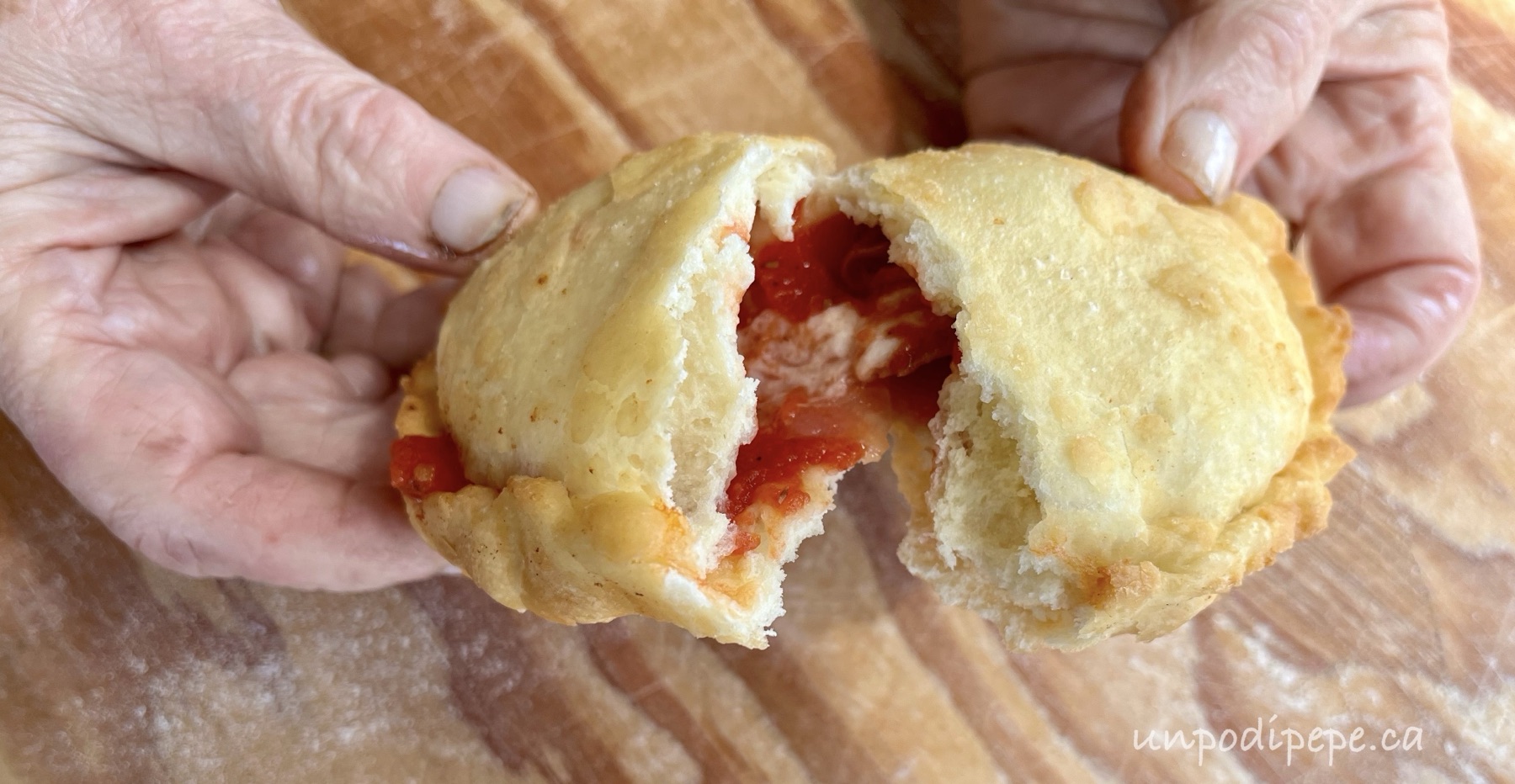
Panzerotti are a popular Pugliese street food.  In the spirit of ‘cucina povera’ where nothing is wasted, they came about from using leftover bread or pizza dough to make small, fried stuffed pizze. They are crispy outside, fluffy inside and mezzaluna (half moon) shaped.  Panzerotti can have a simple tomato and mozzarella filling, or prosciutto, prosciutto cotto (ham), or fresh sausage cut out of its casing and fried can be added.  Other common fillings include onion, olive, capers anchovies and tomato, and spicy pork, similar to a porchetta.

Panzerotto (singular) is the diminutive form of panza, dialetto for pancia, which means belly, because the dough swells up like a bloated belly when fried in oil!

Panzerotti Recipe:

Dough:

500 g total of flour:  -250g 00 flour (1¾ cups)

                                     -250g semola rimacinata*(2 cups)

10g (2 teaspoons) instant dried yeast

250 ml warm water

Pinch of sugar

60 ml (¼ cup) olive oil, plus more to grease the bowl

125 ml (½ cup) milk

5g (1 tsp) salt

Filling:

250 g passata di pomodoro or a tin of Mutti Polpa, which may need to be strained

Mozzarella -if using fresh mozzarella, drain first to decrease moisture

Prosciutto

Oregano or basil

My favourite ingredient-un po’ di pepe-a bit of pepper!

Sunflower oil for frying

Instructions:  Disolve the yeast in 1 cup water and a pinch of sugar or honey and let sit for 10 minutes.  Add all the flour(s) to a large mixing bowl or on a spianatoia (pasta board).  Make a hole in the center and add the milk, oil and water /yeast.  Mix together with a fork, slowly incorporating more flour.  Add salt last, then knead on a lightly floured surface for 10 minutes, until the dough is smooth and elastic. Add more flour if it is too wet, and more milk if it is too dry.

Lightly oil the bowl and place the dough back in.  Cover with a damp tea towel/cloth so it does not dry out, and let rise 2 hours or until doubled in size.

Roll out 14-15 balls (~ 50g each) and place on a cookie sheet lined with parchment paper.  Cover with a damp tea towel/cloth and let rise for 1 hour. The panzerotti will cook more evenly if they are all about the same size.

Add oregano or basil, and pepper to the tomato passata or polpa.  I do not add salt if using an already salty filling like prosciutto. Drain mozzarella to avoid extra moisture if using fresh.

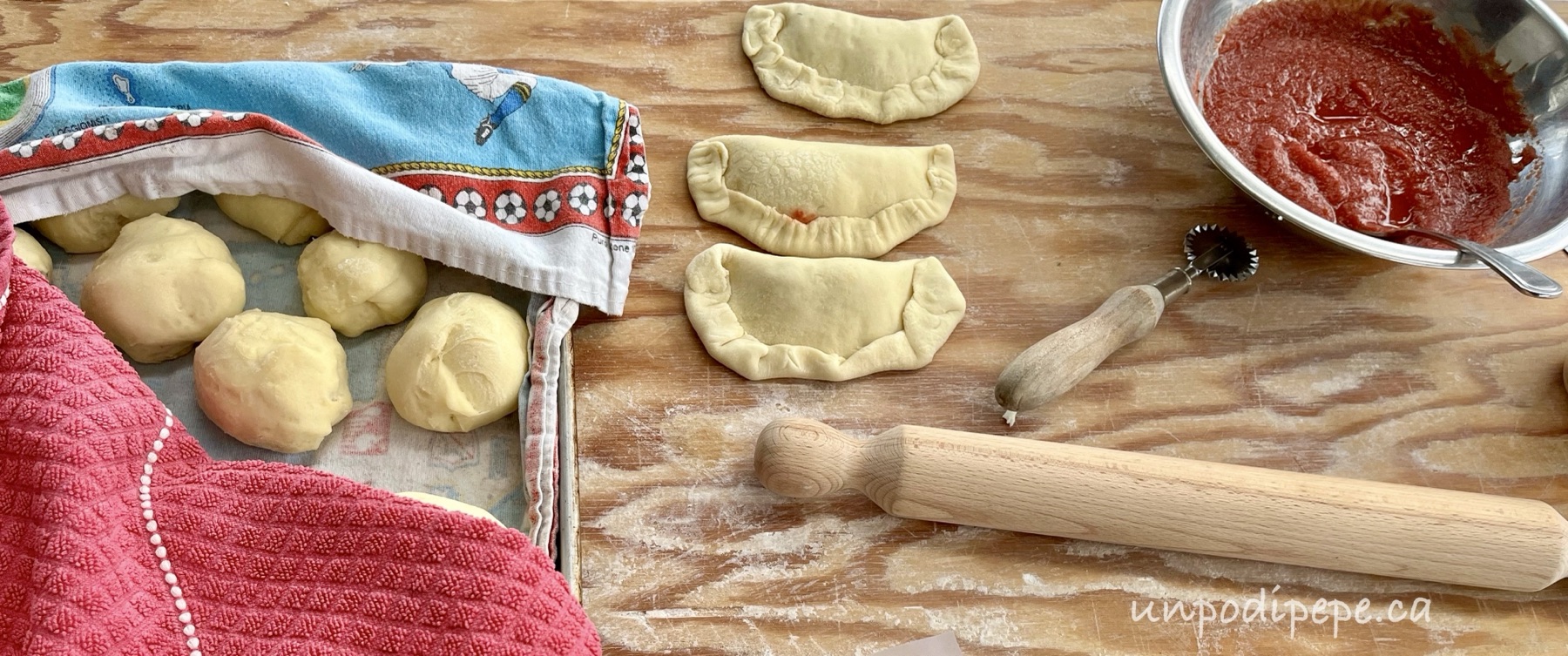
One at a time, roll a ball of dough into a thin circle.  Add ½ to 1 tablespoon tomato mixture in the center and smooth it around with a spoon.  Do NOT go too close to the edges, and add more in the bottom half of circle.  Add other ingredients to the bottom half of the circle.  Fold in half, pressing edges firmly together, then double seal by folding the edge over again and pinch with fingers to make a fancy design. You do not want the panzerotti to open during frying.  This will make a mess of the oil.  Too much filling and /or too much moisture will also cause them to open.

Keep aside a small piece of dough to test the oil to see if it is hot enough. Fry in sunflower oil in batches of 2-3 panzerotti for 2-3 minutes per side or until golden and puffy.  You can spoon a bit of oil over the top to prevent bubbles-although I like the bubbles!  Drain on paper towels so they stay crispy and do not get soggy.  Fry right away, as if they sit, the dough continues to rise, making them more likely to open.  It is best to make panzerottiwith 2 people-1 to assemble and 1 to fry.  If you do not have 4 hands, put the filled panzerotti in the fridge as you make them, until ready to fry them all.  They are best served soon after frying. Makes about 14-15 panzerotti.  I usually double this recipe and freeze them.

Raw, stuffed panzerotti can also be frozen.  Fry them still frozen, as defrosting may turn them into soup.  Place a splash screen on top of the pan in case the oil spatters!

Panzerotti can also be baked at 200°C (295°F) for 20 minutes, although technically this makes them calzone. Brush the top with egg yolk or oil before baking or they may be dry.

*Semola or semolina is the yellow durum wheat endosperm.  Semola rimacinata has been ground once more.  It gives the dough more of a bite to it.  You can just use 500 g All Purpose flour, but I find the best results using a combination of 00 and semola rimacinata.  It is also common to just use simple pizza or bread dough to make panzerotti, but those are more like stuffed pizze fritte.

**as with all recipes involving flour, it is always best to weigh with a scale rather than measure with cups.

Buon appetito!  Cristina

Torcello

Tags

, , , , , ,

The first time I visited tiny Torcello was with my family in 1984. We were staying with family friends in Mestre and their daughter had just gotten married there. One look at her wedding photos and all 9 of us set off on the vaporetto to Torcello for lunch the next morning!

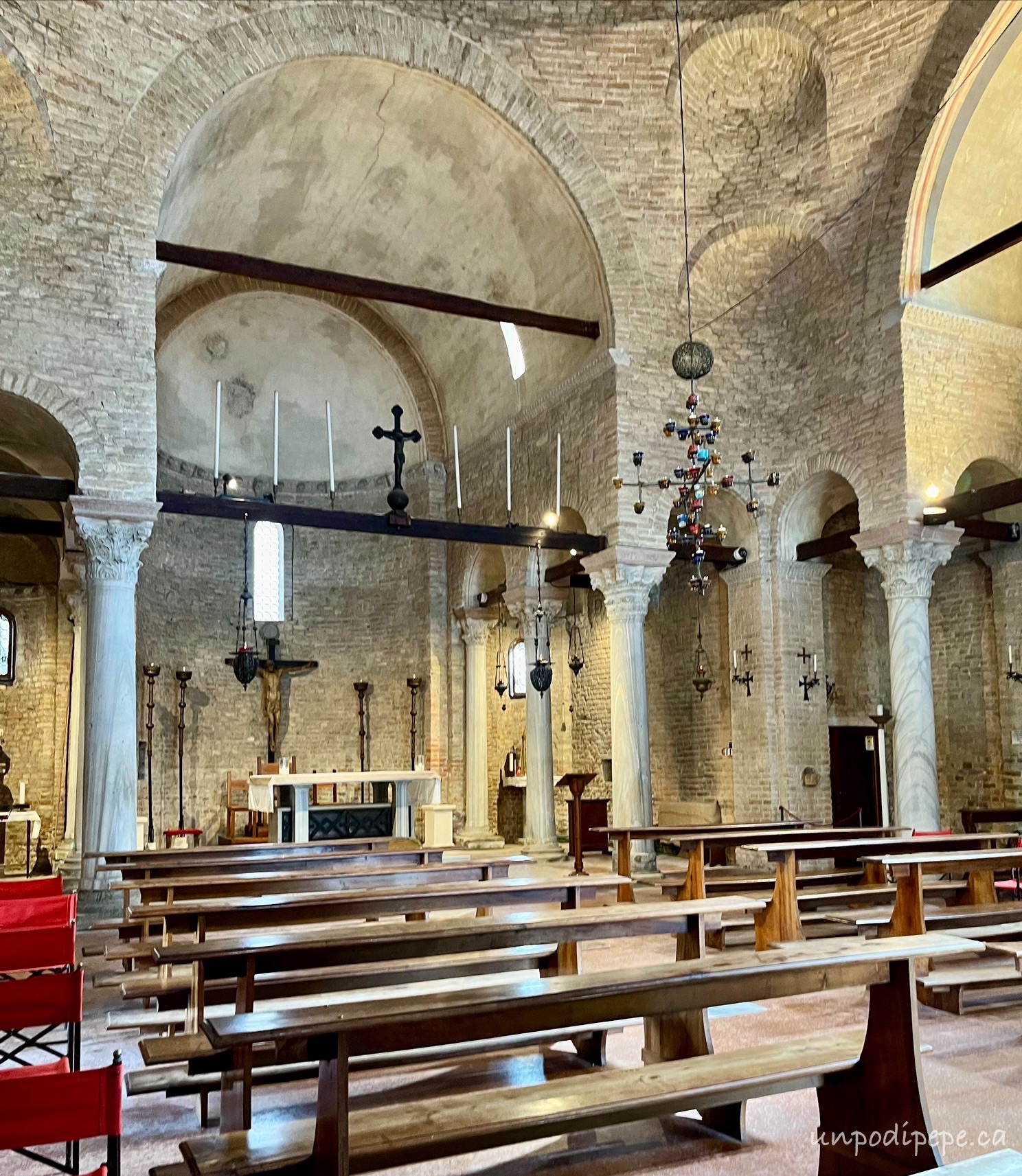
The Romans called it ‘Torcellum’ meaning tower to the sky. Torcello was the first of the Venetian lagoon islands to be populated in 452 after the fall of the Roman Empire, by refugees from Altino fleeing the mainland from Hun invasions.  They brought the relics of their patron saint, San Heliodorus with them. Torcello had a cathedral and Bishop before San Marco was even built.  Santa Maria Assunta built in 638 is the oldest parish in the lagoon and was the Bishop’s official seat for over 1000 years.

Pre medieval Torcello was a more powerful trade center than Venezia, having close trade ties with Constantinople and Ravenna. In the 10th century, the population was >10,000.  Hard to imagine on 441 m², but it sounds like there was more available land at that time.  Commercial activity included fishing, glass making, and export of salt, fruit, wine and even cucumbers.

As Venezia’s prosperity increased in the 15th century, silting and swamping of Torcello made navigating the ‘laguna morta’ impossible.  This led to malaria and depopulation.  It was slowly abandoned for Murano, Burano and Venezia-even the bishop was moved to Murano.  Most of the 12 churches, cloisters, a monastery and palazzi were looted over time for building materials. The full-time population of Torcello is now 11, including the parish priest.

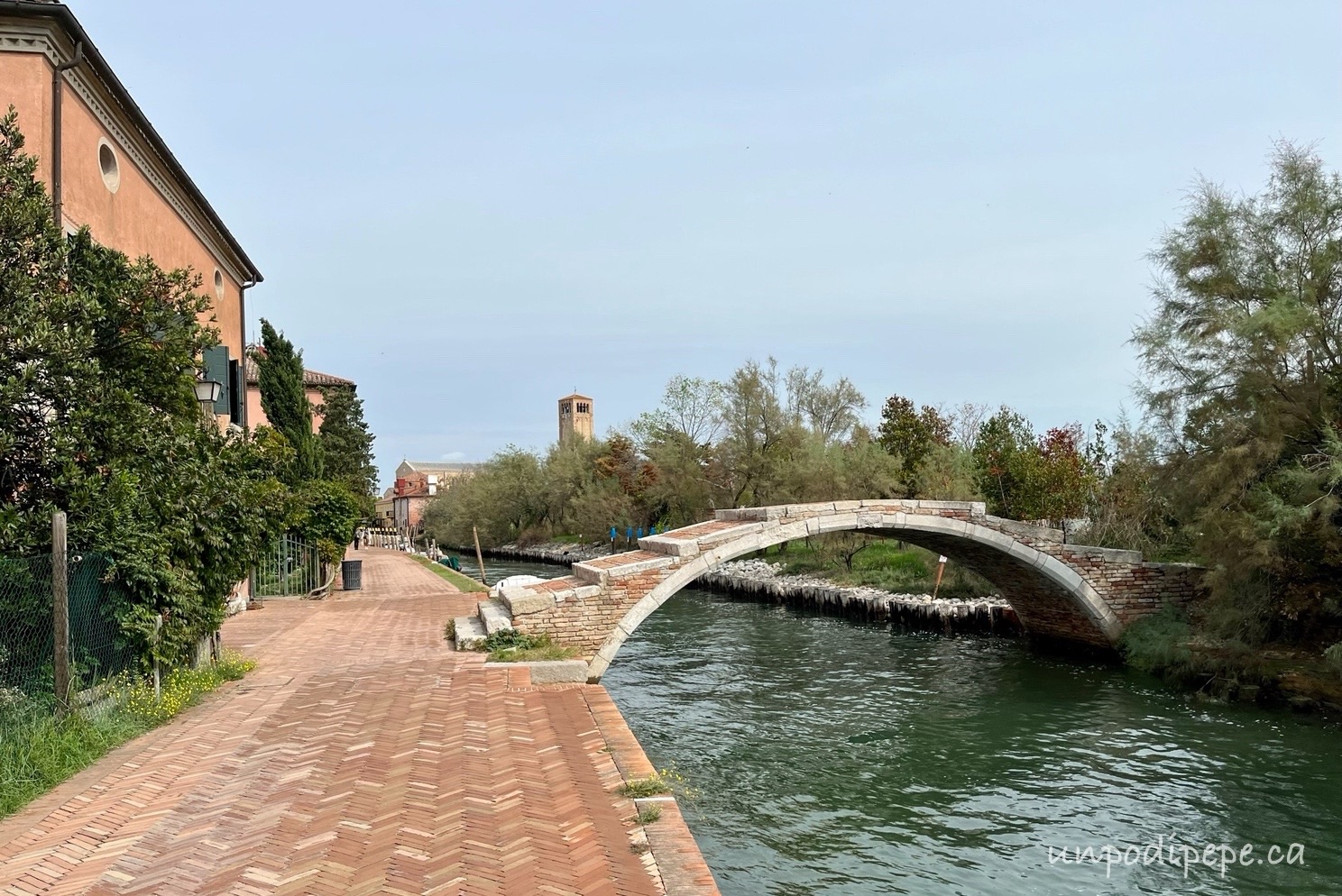
Torcello is a lovely sanctuary from the crowds, and an opportunity to see the original Venezia.  Strada della Rosina connects the pier to the main piazza along a canal.  On the right is Ponte del Diavolo, a bridge without parapets (railings). There are several versions of a legend about the ponte, regarding a young couple in love, a witch and the devil.  You will pass all the restaurants on the way to Piazza Santa Fosca.  The Basilica Santa Fosca is an 11th century Byzantine church in the form of a Greek cross.  Byzantine architecture is one of my favourites, and this one is a gem with a gorgeous interior.  It was built to house the remains of Santa Fosca da Ravenna.  

Next door is Santa Maria Assunta which was rebuilt in 1008 and has incredible Venetian Byzantine mosaics. The 11th century Campanile is open 10-17:30 for views over Torcello, Burano, and the lagoon. Admission to the campanile is €6. The Torcello museo is in the former council chambers, admission €3.

Venetian Byzantine mosaics Santa Maria Assunta, Torcello

Aironi and fenicotteri rosa (herons and pink flamingos) can be seen in the marshes from March to September at Casa Museo Andrich-an artist home, museum, nature reserve and educational farm garden.  Admission €12.  To get there, when getting off the vaporetto, instead of going straight to Strada della Rosina, turn left. I have not been here, but it sounds nice if you have the time.

Torcello is a great place to eat!  Local specialties include risotto di gò, made with a small local fish-also called risotto alla Buranella, moeche-a soft shell crab, baccalà mantecato, and carciofi Sant’Erasmo in spring.  The first place after the pier is the informal Taverna Tipica Veneziana, a shack in a field with picnic tables serving a limited but yummy local menu.

At Osteria al Ponte del Diavolo (closed Monday), I had a simple radicchio and balsamico salad here with an amazing glass of vino bianco, Torcellum from the golden Dorona grape, which was almost extinct.  Unfortunately, the island only produces enough grapes to supply the local restaurants with wine.

Ristorante Villa ‘600 (closed Wednesday) an old 17th century farmhouse and gardens. This is where my family had seafood risotto in 1984!  I still have the receipt!

Ristorante Al Trono d’ Attila (closed Monday) I believe this is where the 1984 wedding reception was held!

The Locanda Cipriani (the same Cipriani as in Harry’s Bar) is a five room upscale resort and restaurant on Torcello since 1935.  In 1948, Ernest Hemingway wrote ‘Across the River and into the Trees’ here. Celebrities and royalty have been known to stay here. The restaurant is not as pricey as one would expect.Do not miss the last vaporetto, as there are only 2 places to stay on Torcello- Locanda Cipriani and Bed and Breakfast Ca’ Torcello!  There are also 2 places to stay on Burano and 1 on Mazzorbo-which is connected to Burano by a bridge.  On the weekends, restaurants can be open till 2300, which is after vaporetto hours. Water taxi back to Venezia is very expensive. Oh and in case you are wondering, there is no shopping on Torcello!

Torcello 1984

Torcello is 10km away from Venezia and accessible from Burano via a 10 minute vaporetto ride daily from 0800-2000.  Let me know if any of you have been to Torcello!

10 years of Un po’ di pepe!

Tags

, , , ,

Auguri a me! Today is bloghiversario #10 for Un po’ di pepe! 10 years ago today, I hit the big blue ‘publish’ button and started this blog.  Where did the time go?  It feels like only yesterday I had trouble coming up with a cool name that was not already taken. This has been an amazing, rewarding experience and I have ‘met’ so many virtual friends and even reconnected with old ones. In the end, that is what this is all about-connecting with people to share ideas and experiences.

To those of you who have been with Un po’ di pepe since the beginning -most of you are related to me- grazie mille for your encouragement and support! To those who discovered the blog more recently or visit occasionally, Benvenuto!  Find out more about me by reading Perché questo blog?/Why write a blog?’, ‘About me/Chi sono’ and bilingual interview L’Intervista con Silvia.

What does 10 years look like? 485 subscribers, 217 posts, ~50 views/day from 99 countries, 24 recipe posts, 7 posts that come up on the first page of a google search, 5 Caravaggio posts, 2 or 3 posts that have been used by art history courses, 1 Cannolo Award, 1 interview by a fellow blogger, and 1 global pandemic.

The top 10 posts from the past 10 years are*:

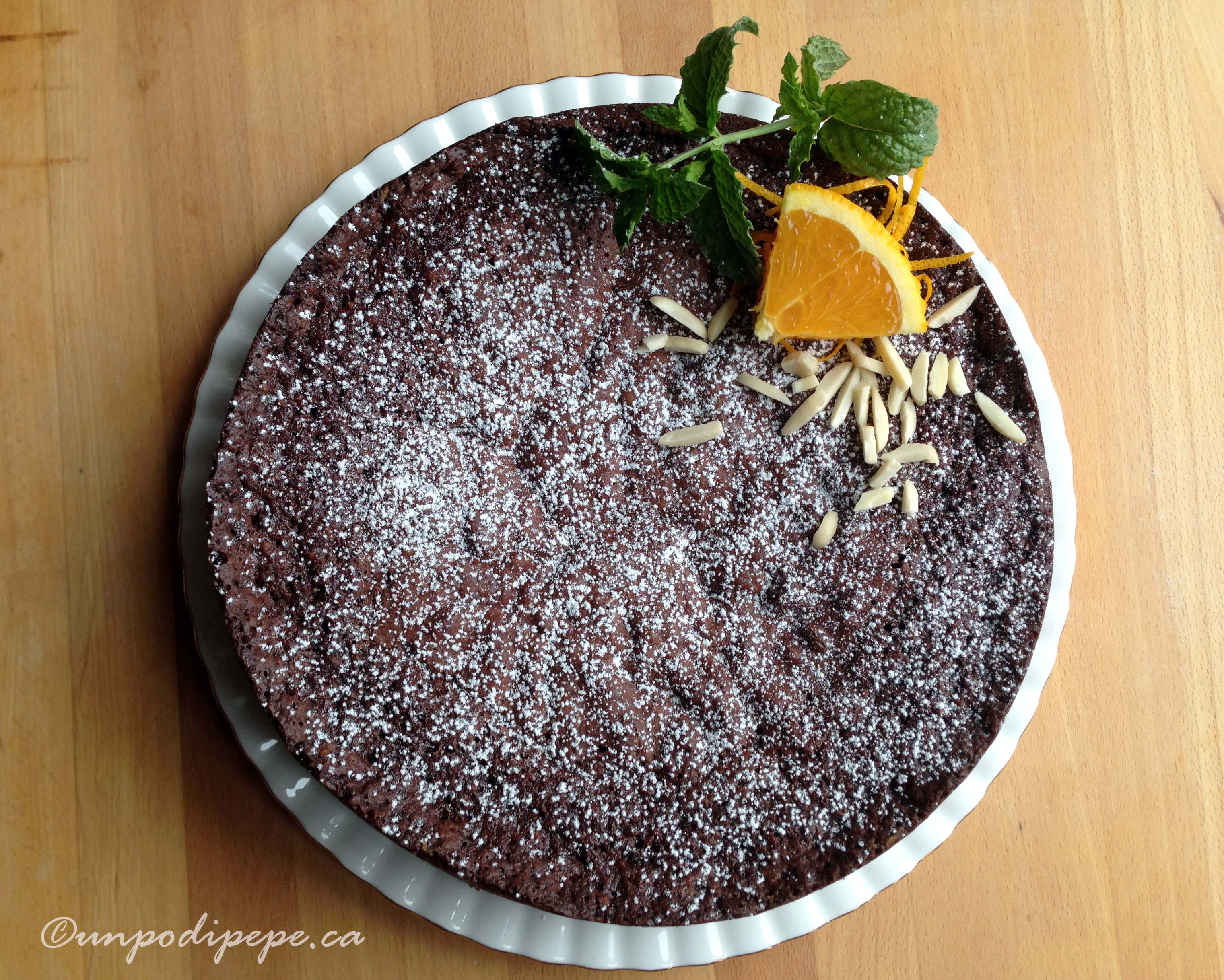
#10 Torta Caprese all’Arancia (2015) a flourless chocolate cake recipe written to celebrate receiving a Cannolo Award for authentic Italian food blogging.


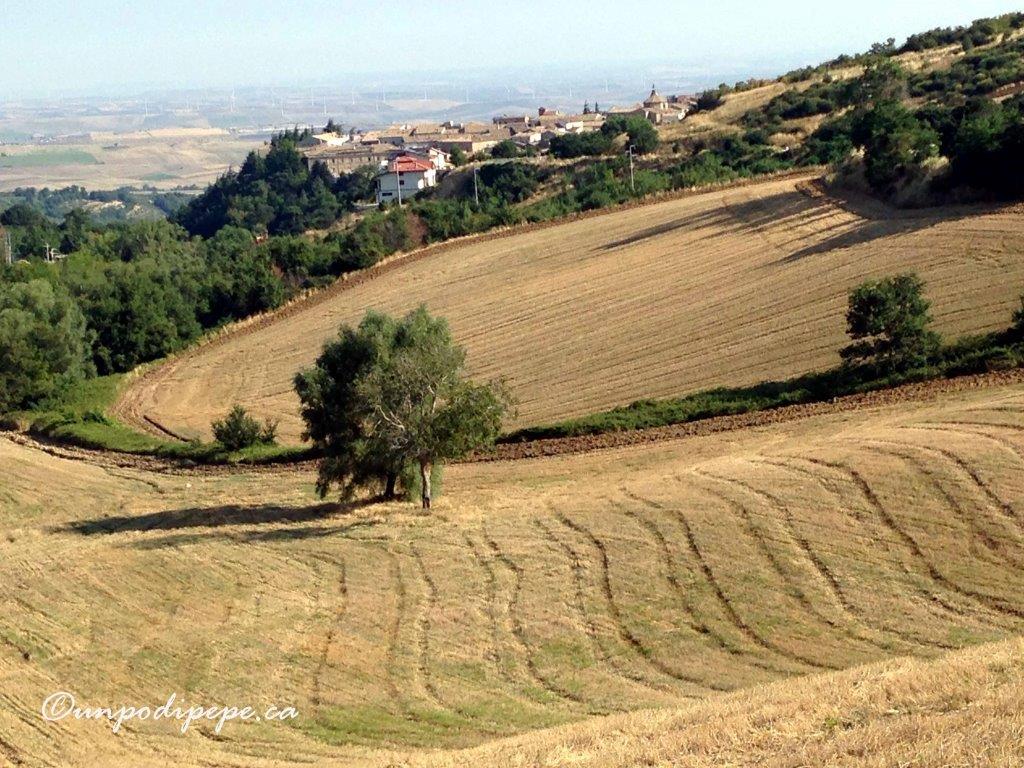
#9 Benvenuti ad Orsara di Puglia (2014) an introduction to my little paese.Orsara di Puglia landscape

#8 The Last Medici (2020) As an art history nerd, this was my personal thanks to Anna Maria Luisa De’ Medici (AMLDM) last of the Medici family, for leaving Firenze and the world her family’s legacy of art treasures.  If you have been to the Uffizi or Palazzo Pitti, you will know what I mean. This post comes up 4th in google search both for the topic and her name

#7 La Trinità di Massaccio (2018) When I first published this art history lesson, it did not get much love.  A few years later, I discovered that it came up as the 1st listing after Wikipedia in a Google search! This explains the steady trickle of views. I think it was also on reading lists for art history classes in the US, since a lot of views were referred from the course websites of Santa Monica College and a Pittsburgh high school! Molto cool!

My quick sketches of the vanishing point, perspective lines and triangular composition. The colour image is my entry ticket from 2004!

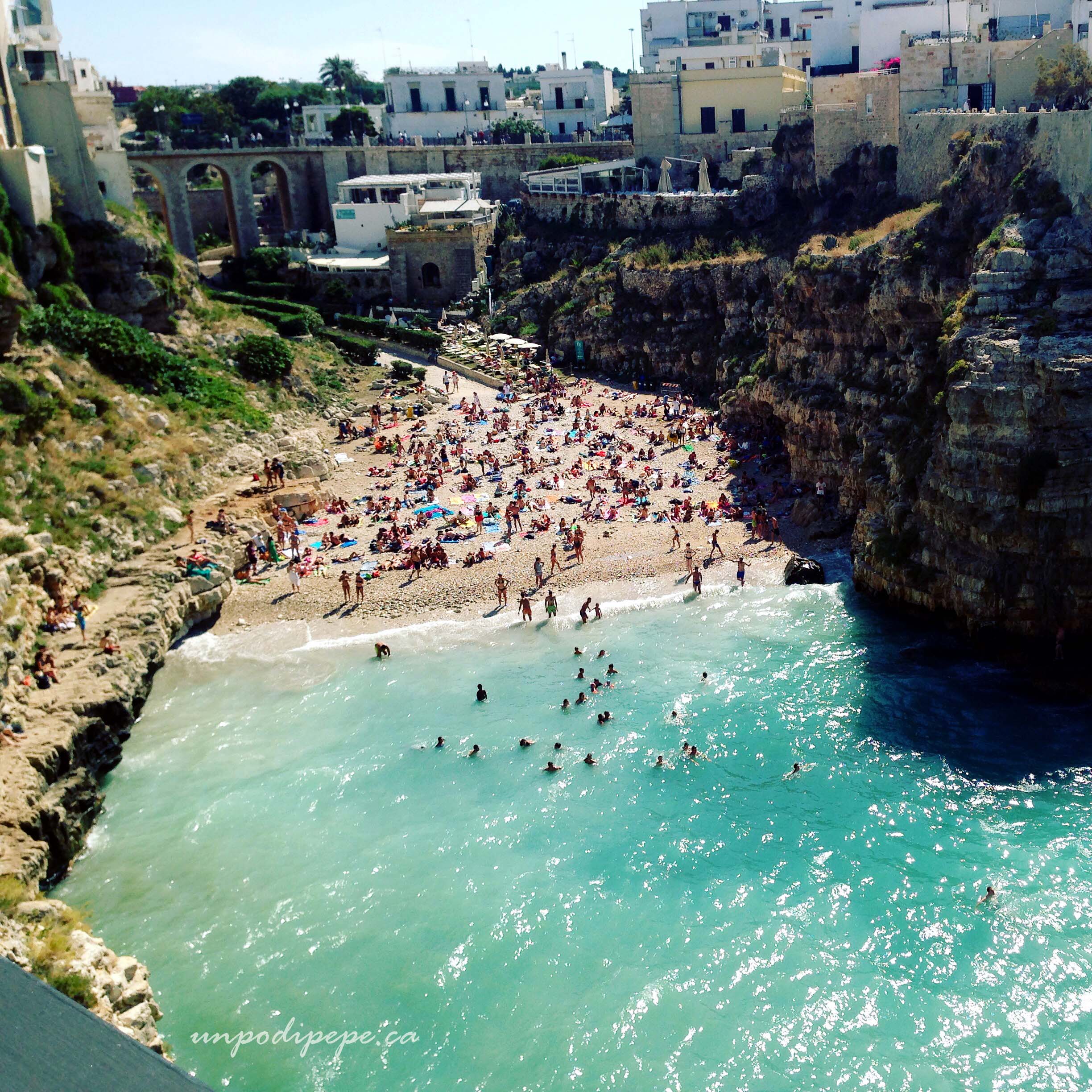
#6 Polignano a Mare (2016) In this post about the stunning clifftop town on the coast of Puglia, read about infraditi and my probable encounter with the mysterious ‘stair poet’.

#5 Napoli Street Art (2020) Napoli-the perfect place for self-expression since the last few thousand years. Join me on a graffiti/street art tour in the Centro Storico. This post comes up 3rd in Google search. I have enough new street art photos for a 2.0 version soon.Madonna con la Pistola Banksy Napoli street art

#4 Hairstyling in Ancient Roma (2017) This post was ignored until 2022, then in 2023 it was the most viewed!  I am not sure why? I know some views have been referred via Pinterest and it now ranks 3rd in Google search. Join me as I study ancient hairstyling practices by looking at Classical sculptures and paintings. Most of my research was done at Palazzo Massimo.  Yeah for archeology nerds!

#3 L’Arte sa Nuotare (2019) During a trip to Firenze with my nipotina Viaggio con Isabella we were on constant lookout for street art by Blub, the mysterious street artist who plunges famous works of art underwater. This post also comes up 2nd on the first page of a Google search, after the artist’s Instagram page!  More Blub love in Blub a Napoli.Putto Raffaello Firenze street art Blub

#2 Grano Arso (2015) Burnt grain, a Pugliese gastronomic tradition honouring the resilience of our contadini ancestors. There is not a lot written in English about grano arso, which explains why it is always on my most viewed list and comes up 5th on a Google search.

#1 Italiano per Ristoranti (2014) This handy Italian menu pronunciation guide is the top suggestion in google search for ‘Italian menu pronunciation’.  A link to a six page downloadable PDF is available at the end of the post. I would still like to expand and turn it into an ebook someday. If you have experience with this, any advice would be appreciated!

Bruschetta (broo.SKET.tah)

Those are the top 10 posts, now let’s take a look back at 10 of my favourite older posts that did not get the love I think they deserved:

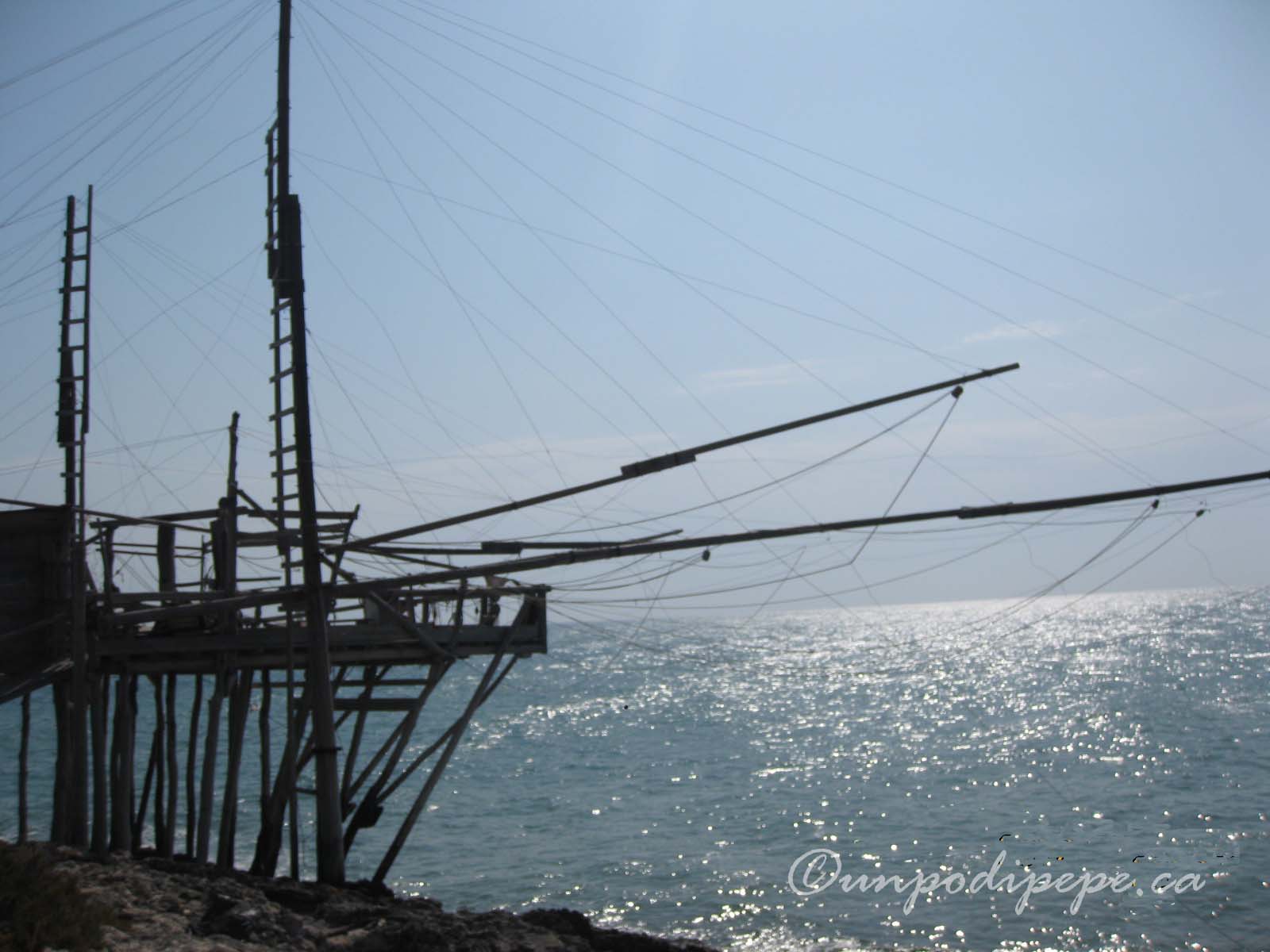
I Trabucchi del Gargano (2014)  the fascinating fishing contraptions found along the Adriatic Coast, specifically the Northern coast of Puglia

Passata di Pomodoro (2014) Highlights of my family’s annual tomato canning day!

Le Isole Tremiti (2015) A helicopter trip to islands in the Adriatic.San Domino Isole Tremiti, Puglia

Nel blu dipinto di Azzurro (2015) The long, amazing history of blue pigment and the colour blue.

I Sassi di Matera (2015) the ancient city in Basilicata has a mystical, otherworldly feel about it and a fascinating history.

Margherita di Savoia (2016) This post is about random associations I have to Regina Margherita di Savoia.

Caffè con Caravaggio a Roma (2018) A walk through Roma visiting 3 churches where you can see 6 Caravaggio paintings for free, hanging where they have been for over 400 years, and stops for caffè along the way.

Il Sole di metà pomeriggio (2018) Sunny mid-afternoon summer photos taken in Orsara di Puglia while everyone is resting-except me.

Percorso della Memoria (2021) A tour of Orsara di Puglia with giant old black and white photos displayed in the Centro Storico.

Che cavolo!  Non rompere le scatole! (2023) I love this language post about euphemisms!  Even photos of flying genitalia did not entice readers!

Flying cazzi amulet mobile at the Napoli Airport gift shop

Did you know a few of my posts are not Italian themed?!  They include Halifax and the Titanic, 100 years of Insulin, Madame Gautreau, 2 Australia posts and 4 Covid 19 related posts.

Upcoming stuff:  In the next few months, I have ‘In Vino there are Memories’ being published in ‘A Literary Harvest:  Canadian Writing about Wine and Other Brews’ edited by Licia Canton, Giulia De Gasperi and Decio Cusmano.  Upcoming posts include Torcello, Artemisia Gentilleschi, more Caravaggio and some book reviews. The list is long!

April 25th is also La Festa della Liberazione d’Italia, the anniversary of the liberation from Fascist occupation in 1945.  Since 1946, it has been a national holiday.  Viva la libertà!

Grazie to all of you for taking the time to read, send messages and especially for giving me an excuse to share my images and research and write about things that interest me!   You know ….’Devo fare ricerca per il blog’ (I need to do research for my blog) is now my reason to do all the things I want to do! If you have any suggestions for future posts or just want to say ‘ciao’, leave me a comment.

Grazie a tutti i lettori di ‘Un po’ di pepe’ per continuare a leggere e per avermi dato una scusa per condividere le foto che ho scattato e per scrivere di cose che mi piacciono. Ormai posso usare la scusa ‘devo fare ricerca per il blog’ per tutto quello che voglio fare. Lasciatemi un messaggio se avete delle idee per un post o se semplicemente volete dire ‘ciao’.

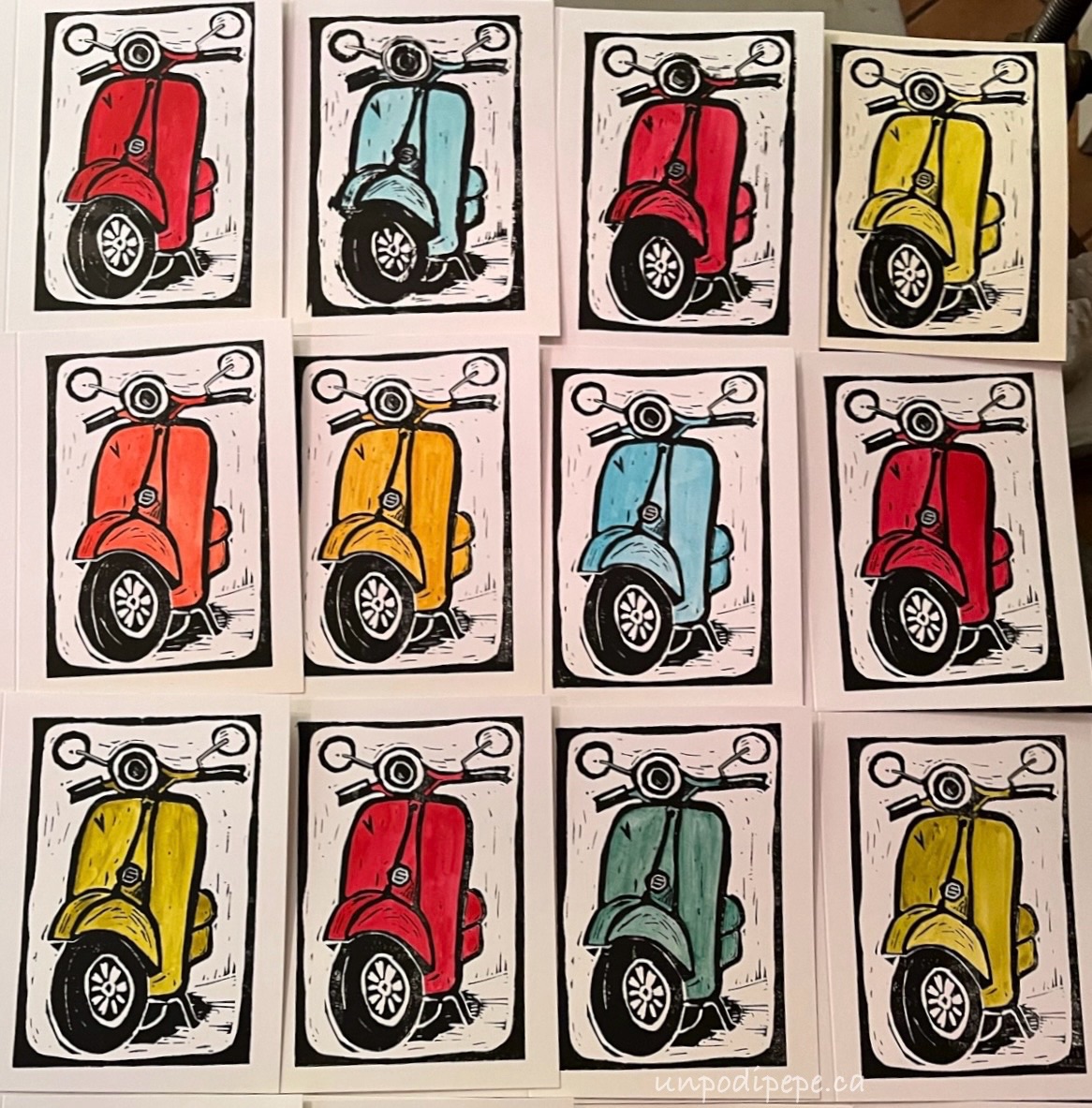
To celebrate bloghiversario #10, I am giving away 10 signed ‘Vespa‘ hand printed cards.  Next week, I will put the names of everyone who left a comment into a hat and Mamma will draw 10 winners.  In bocca al lupo! It has been an amazing decade and I look forward to the next one!  I’ll leave you with a link to my very first post Il Gigante, about Michelangelo’s David.  Ciao, Cristina

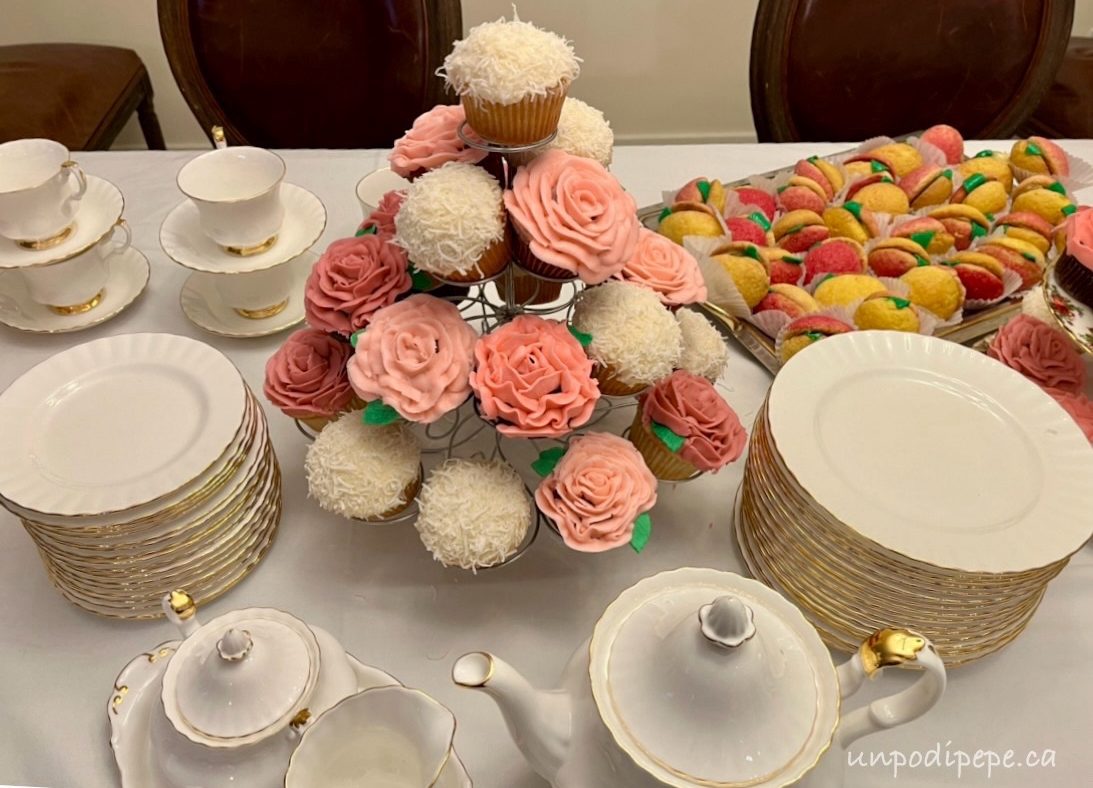
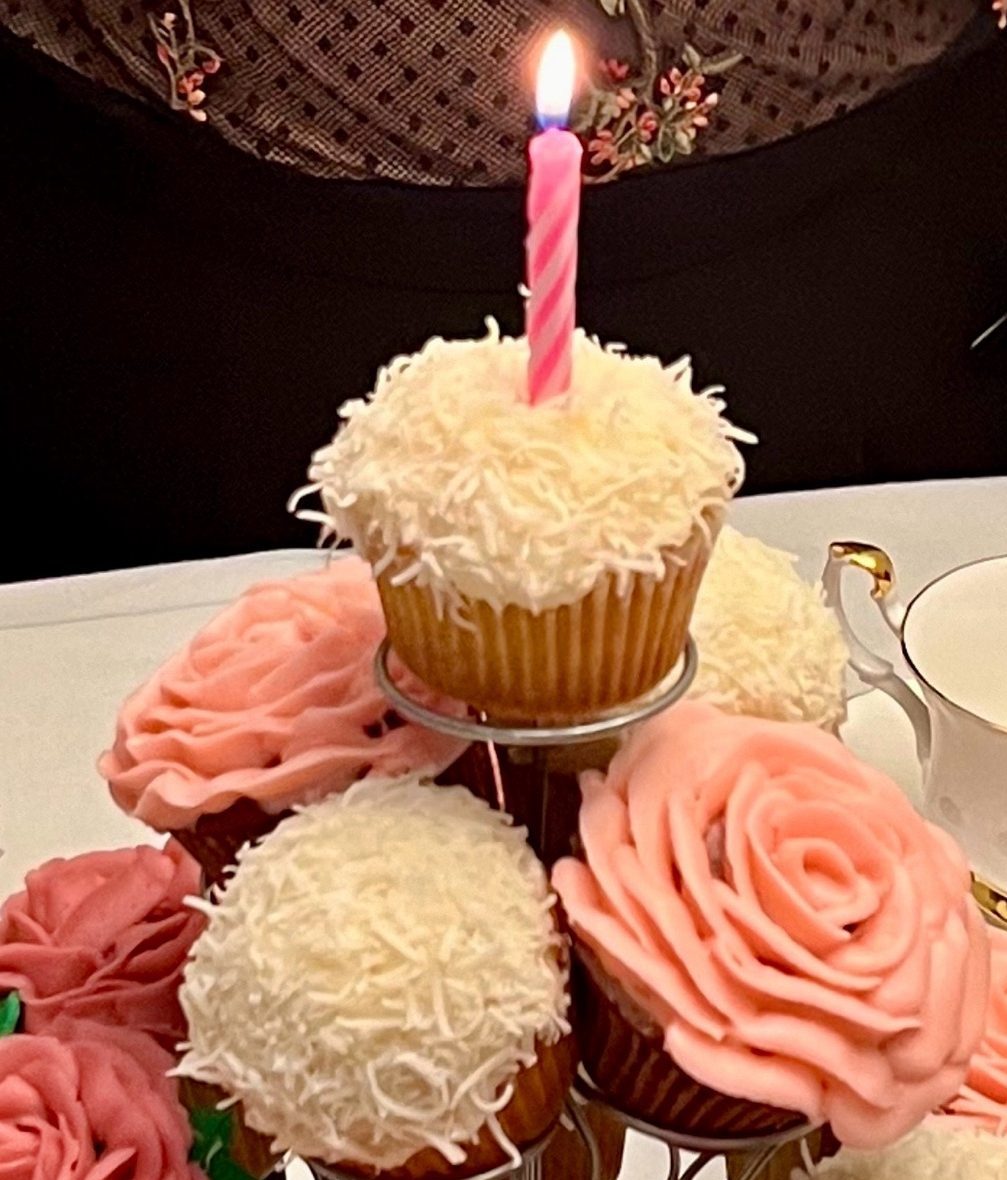
Grazie mille to Isabella for the pink cupcakes and Mamma for the pesche made for my big compleanno in January!

*Note…Stats are really interesting, but WordPress’ method of collecting stats is odd.  The newest post counts as a ‘Home page’ view until the next one is published and I am not sure how much this changes the results.

Burano

Tags

, , , ,

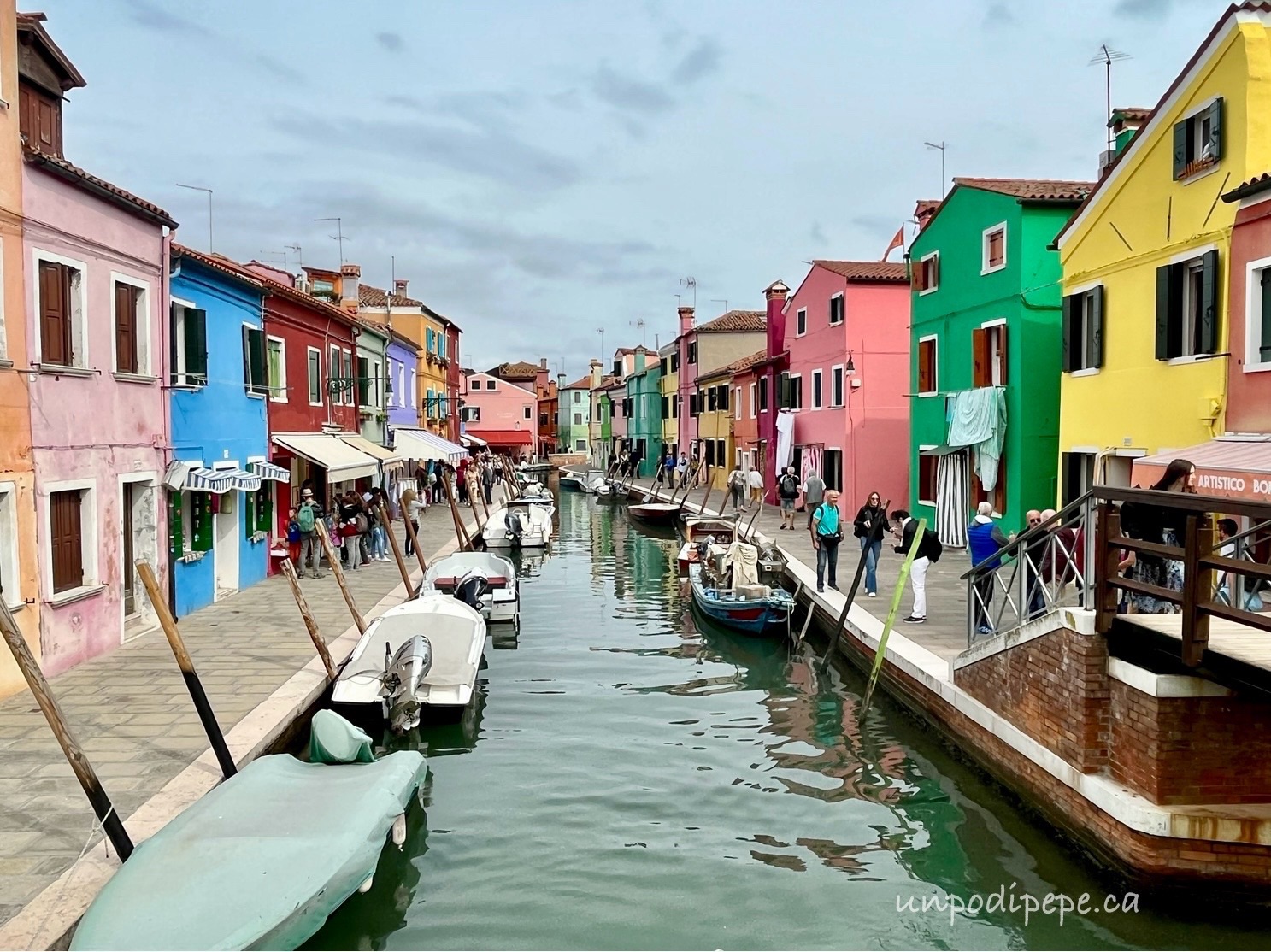
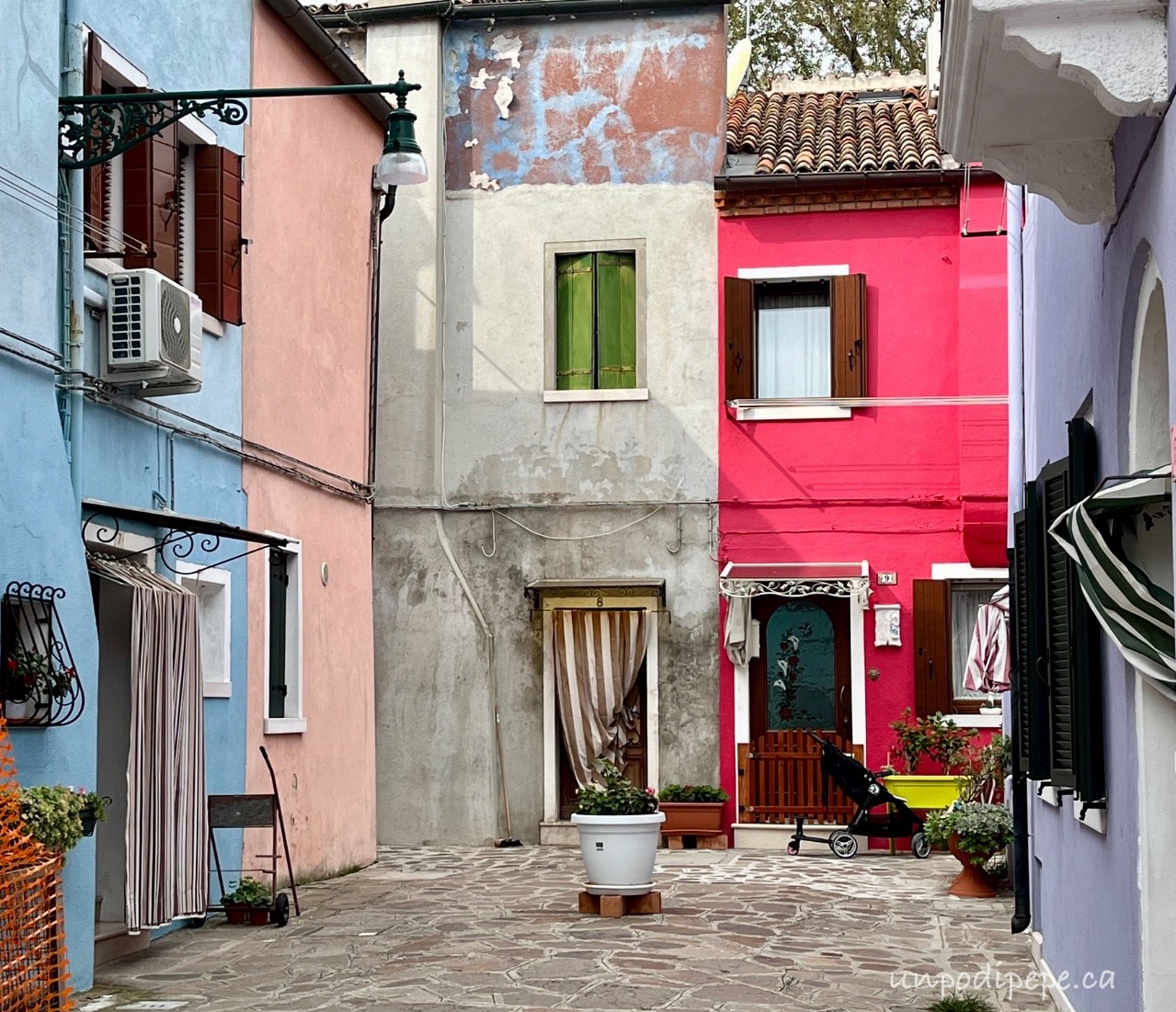
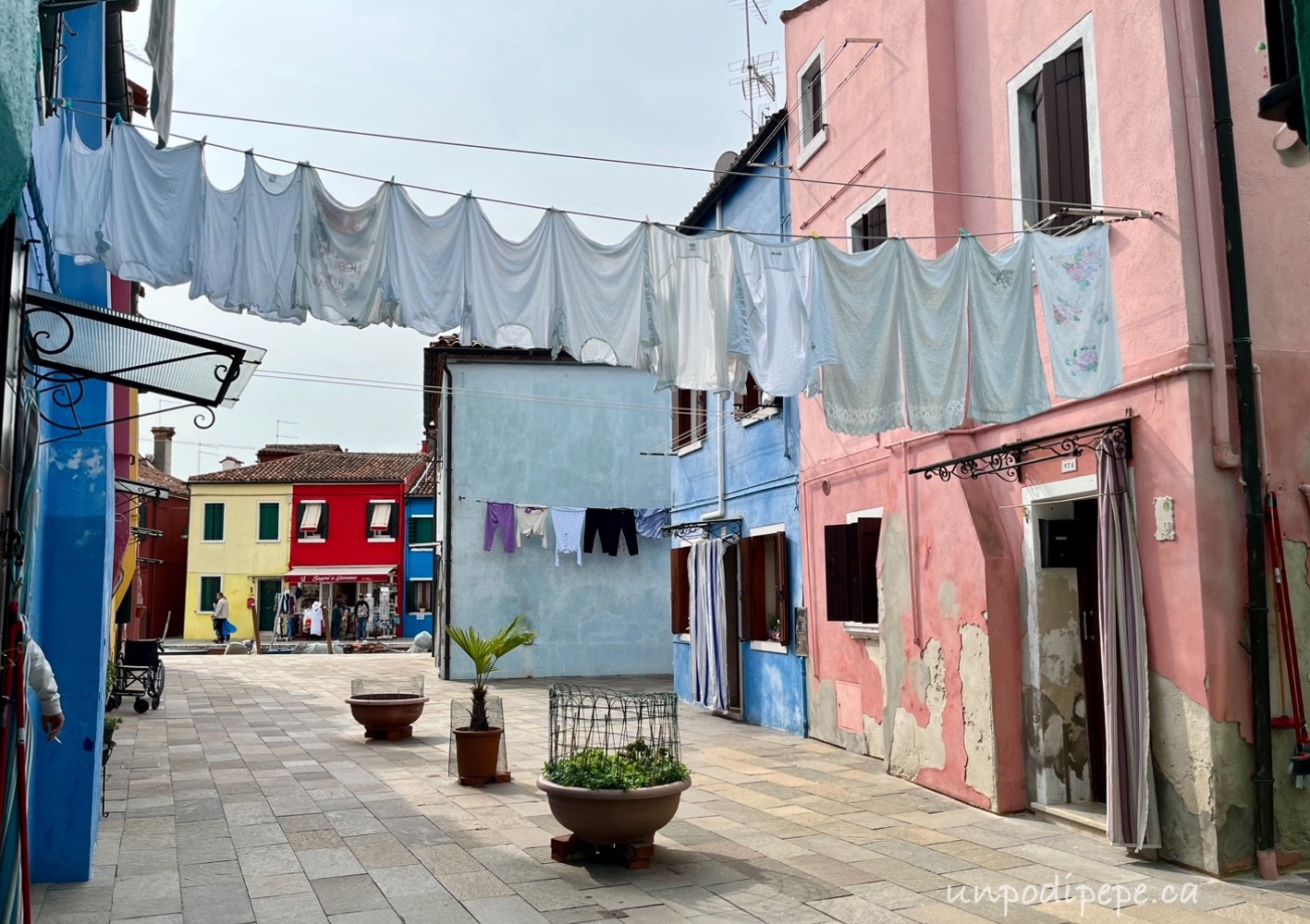
Burano, an island in the north end of the Venetian lagoon, is one of the most colourful places in the world.  It is known for merletto (lace) and houses painted in bright contrasting colours.  Burano is only 210 m² with a population of 2,800.  That is a lot of people for such a tiny place- 13,000 per km². Burano is actually made up of 4 islands separated by 3 canals and connected by bridges. The highest elevation is only 1m! There are no cars-not even for residents, since there are no roads!  Burano is part of the city of Venezia, 7 km away.

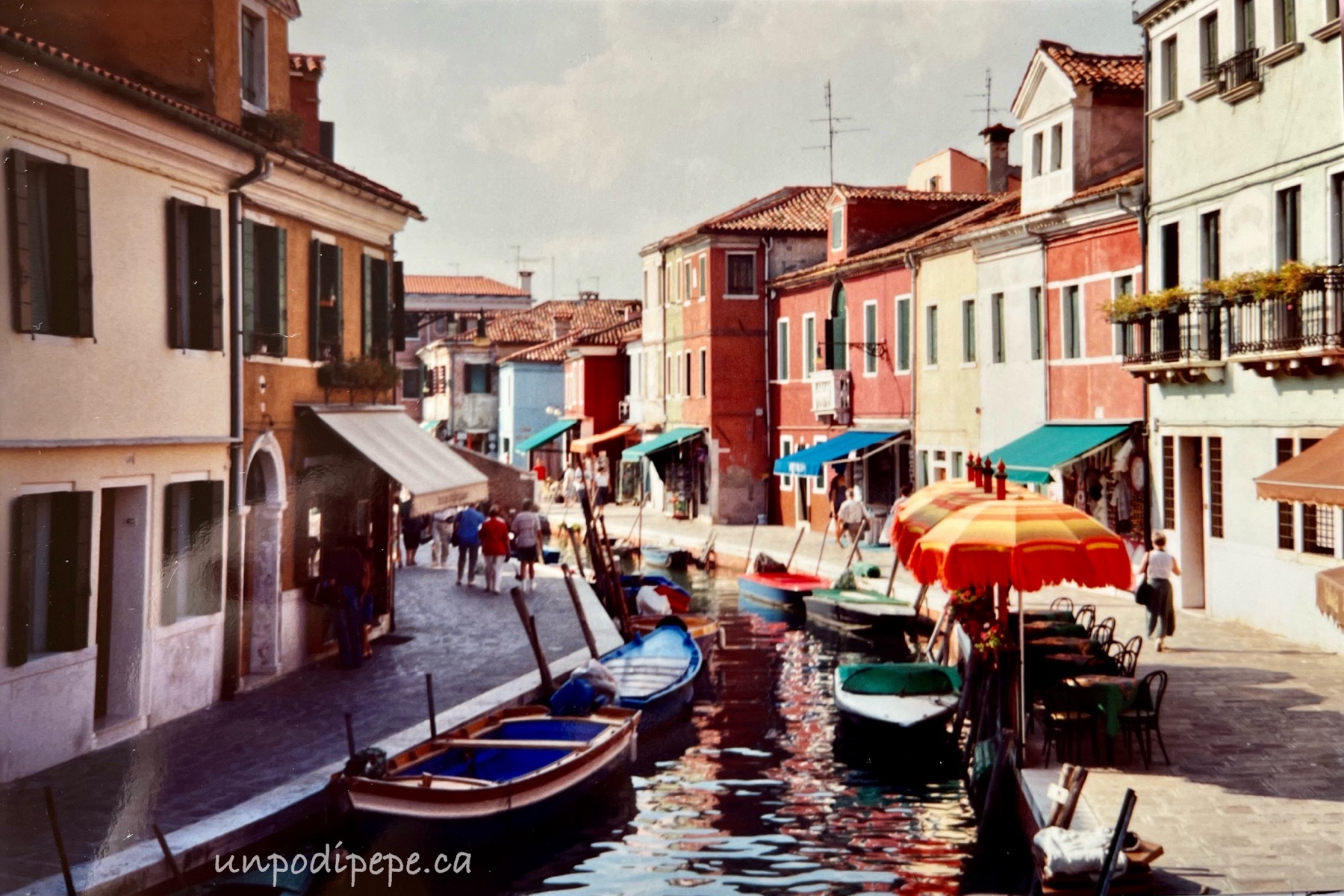
Burano was settled in the 6th century by residents of Altino fleeing invaders.  They called the island Boreana because it faces north.  In the 16th Century, women on the island started making intricate lace with needles from Cyprus.  The lace trade was booming until the 18th Century, then revived in 1872 with the opening of the Scuola del Merletto (school of lacemaking).  I remember when I first visited Burano in 1994, women sat outside their homes doing lacework. There are not many lacemakers now.  It is extremely time consuming to make, and as a result, incredibly expensive.  Many of the lace works, especially the larger pieces, are machine made imitations, many of them from China.

Emilia Burano, Via Galuppi 1994

For authentic Burano lace, try La Perla Gallery, or Emilia Burano  Via San Martino Sinistro 376, and 205 just off Via Galuppi.  Handmade monogrammed fazzoletti (handkerchiefs) start at €49.

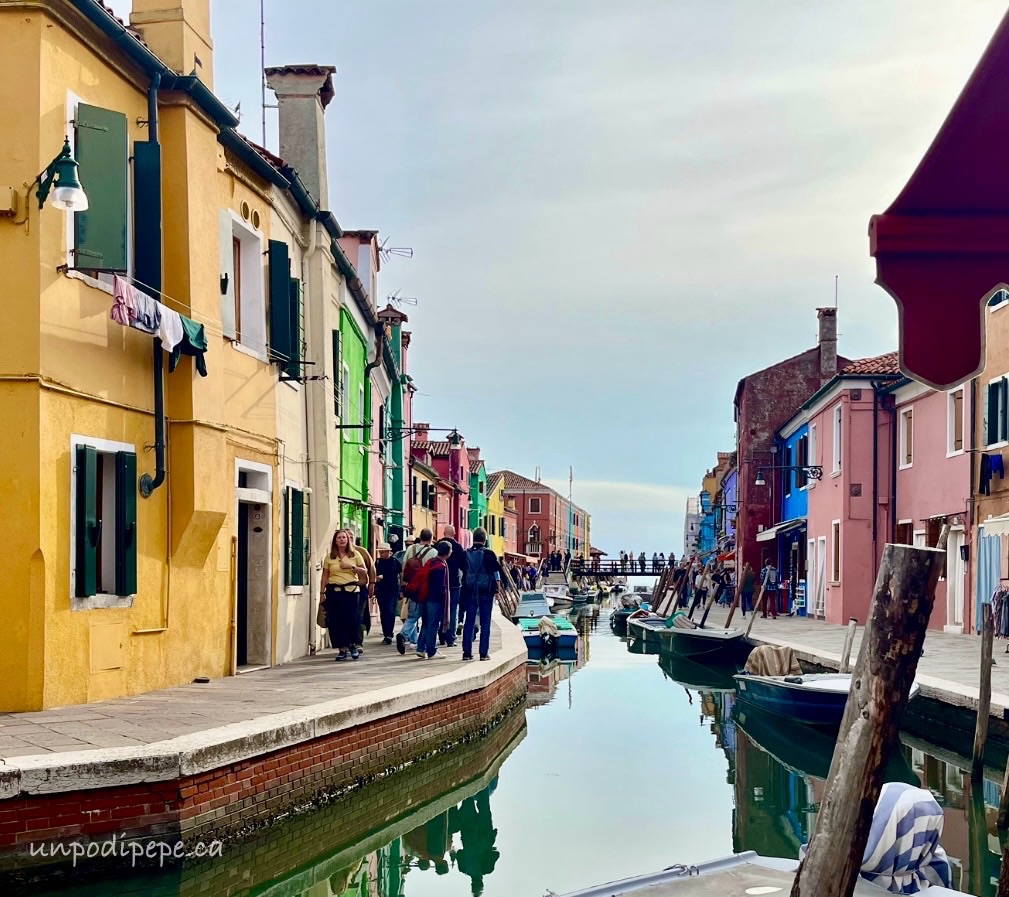
Houses on Burano have been brightly painted since the 15th Century.  This was common in fishing communities so that fishermen out on the water could find their way home in the fog.  Burano is still a working fishing island, although the primary economy is now tourism. An official government request must be sent in to paint a home on Burano as there is a system to the colour scheme.  The response lists the colours allowed for that particular site!  No 2 houses side by side can be the same colour.

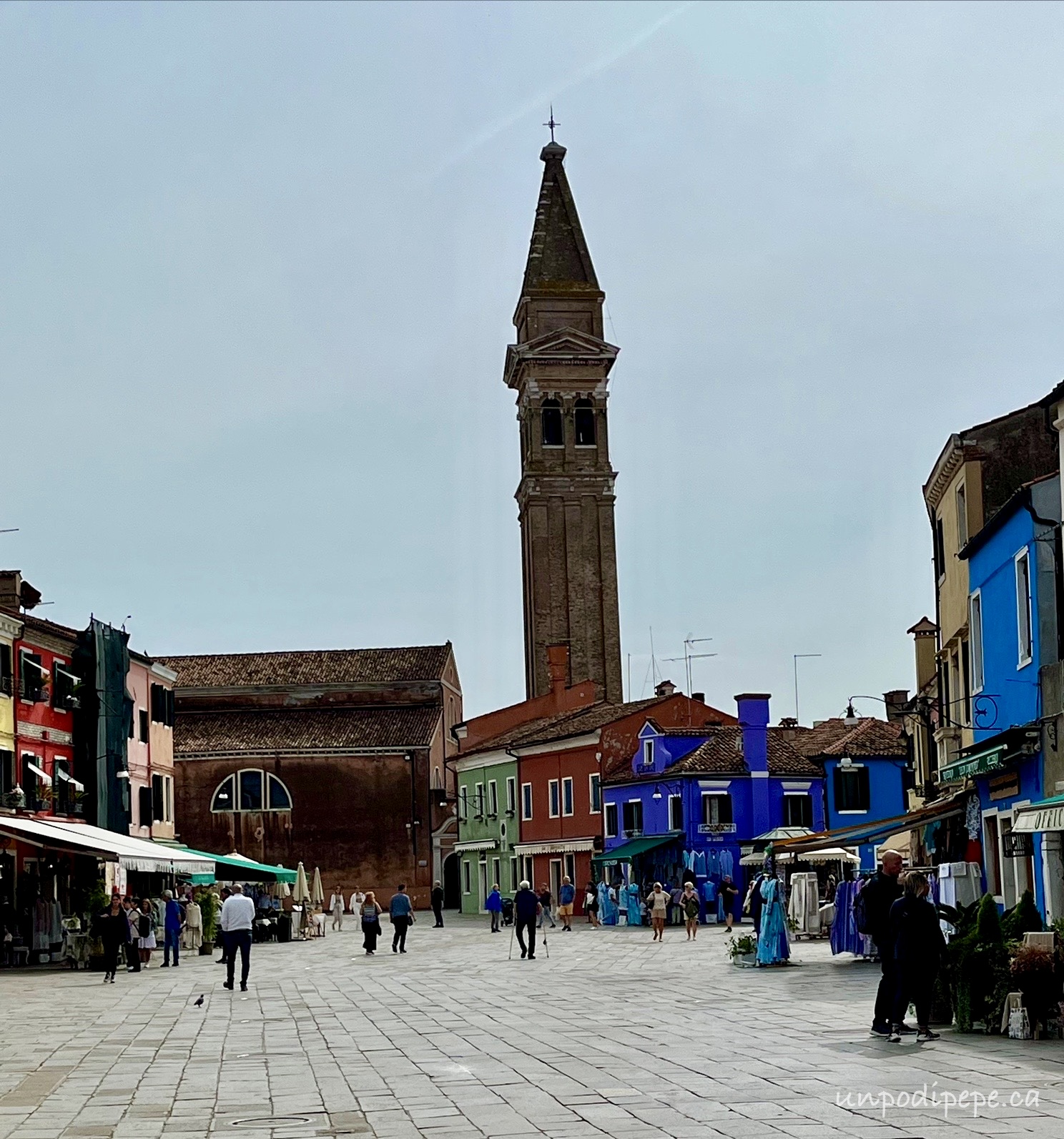
Piazza Baldassare Galuppi is the only piazza on Burano.  The church of San Martino Vescovo has a 53m high leaning campanile and a 1727 Crucifixion by Tiepolo. The piazza also has the Museo del Merletto, which has examples of 16th and 17th century lace as well as a 6th Century Istrian stone well, shops, and the comune (town hall).Burano is a photographer’s dream with the rainbow houses, laundry hanging, fishing boats, canals and narrow streets.  It is hard to take a bad shot! The wooden Tre Ponti bridge is a great selfie spot. My usual advice would be to just wander and get lost, but Burano is too small to even get lost on! A quick walk around the island only takes about half an hour.

Explore the quieter side streets, browse the shops and have lunch along one of the canals.  Being a fishing island, the seafood is exceptional. Try take out fritto misto, assorted fried fish in a paper cone, or the family run Trattoria Al Gatto Nero.  a reservation-even in October!

Visit Burano if you are in Venezia for more than 2 days, or if it is not your first visit. Burano and Torcello make a nice daytrip.  The busiest time on Burano is from 11am-3pm.  Not many visitors stay overnight, but apparently the sunset is gorgeous.

View of Burano from the campanile di Santa Maria Assunta, Torcello

With an ACTV Vaporetto (Venetian water bus) 25 day pass, you can go to 2 of the islands, then cruise around Venezia when you get back. Burano is 45 min by vaporetto #14 (SZ-Lido-Burano) from San Zaccaria, near Piazza San Marco, in front of Hotel Danieli.  Vaporetto #12 from Fondamente Nove A goes to Murano and Burano.  From Burano, the #9 vaporetto is a 10 minute ride to Torcello.  There are also many organized daytrips to the lagoon islands.

For those of you who love this colourful island as much as I do, there is a 2022 trilogy of Hallmark movies about a Burano lace wedding veil bought by 3 friends at an antique store.  In the second movie, one of them takes the veil to Burano to find out its history.  The family run shop in the movie is based on Emilia Burano, the one in my 1994 photo!

Burano canal 1994

Buon viaggio, Cristina

Venezia~La Serenissima

Tags

, , , , , ,

La Serenissima turns 1603 today!  Venezia, a geographically unique engineering marvel, is built on a group of 118 tiny islands in the Venetian lagoon.  They are separated by open water and 170 canals, linked by over 400 footbridges.  Named after the ancient Veneti people of the 10th Century BC, Venezia was founded March 25, 421 by refugees from the Roman cities of Padua, Aquilea and Treviso, and the surrounding countryside fleeing Longobard and Hun invasions.  They first settled on the sandy islands of Torcello and Jesolo. The land of the islands in the lagoon was muddy, some of it barely above water, and not suitable to build on.  Millions of wooden poles or pilings were submerged into the mud and sand to reach the solid layer of earth underneath.  The pilings were covered with wooden boards to form the base that the city was built on.  Since there was no forest in the area, the wood came from Croatia, Slovenia and Montenegro.

Venezia was the capital of the Venetian Republic for almost a century, from 810 until 1797 when it was defeated by Napoleon.  In 1866, along with the rest of the Veneto region, it became part of the Kingdom of Italy.  The title ‘La Serenissima’ refers to its stability as a government compared to others at the time. Venezia was a wealthy city for most of its history, especially the 13th-17th centuries.  It was as an influential financial and maritime power and important center of art, commerce, and trade of silk, grain and spices between East and West.  This east/west connection is apparent in the art and architecture of the city. The Venetian Lagoon and historical parts of the city within the lagoon became a UNESCO World Heritage Site in 1987. The population of Venezia is now about 55,000 and the PATREVE (Padua, Treviso, Venezia) metro area has a population of 2.6 million.

I have been to Venezia 5 times and my most recent visit was following an unintentional 28 year absence!  I still remember stepping out of Stazione Santa Lucia the first time, and immediately being filled with wonder and awe at the view.  That part hasn’t changed a bit since 1980. This time I was there for 3 days in early October but the weather was like summer.  So were the crowds!  It was unbelievable how many people were in the streets and waiting in lines! Someone forgot to tell everyone it was not July! I also noted much more expensive it was than the rest of Italia.  When I saw the lineups for everything in Piazza San Marco-even for those with reservations, I decided to concentrate on exploring outside. I enjoyed the beautiful weather and only visited a few places that were new to me. I definitely want to see the incredible interior of Basilica San Marco and the 4 Cavalli again, but will wait for a rainy day!

Signore in piazza, Cannareggio

Venezia is shaped like a fish and there are 6 sestieri or neighbourhoods:

  • Santa Croce the west end ‘mouth’ of the fish is the transportation hub, with the bus and train stations, harbour of San Basilio, and parking garage in Piazzale Roma.
  • San Marco is the touristy center with Piazza San Marco and Rialto
  • Dorsoduro is the trendy Southeastern area across Canal Grande and includes Giudecca, Piazza and Ponte Accademia, Collezione Peggy Guggenheim and Santa Maria della Salute
  • San Polo across the Ponte Rialto, is the oldest sestiere and includes Rialto fruit and fish mercato
  • Cannareggio the most northern area is less crowded and touristy, more of the ‘real’ Venezia.  It includes the Jewish quarter.  It is picturesque and the best place to get lost among the calli (streets)
  • Castello the eastern ‘tail’ of the fish and largest sestiere is host to the Biennale in the Arsenale Naval base

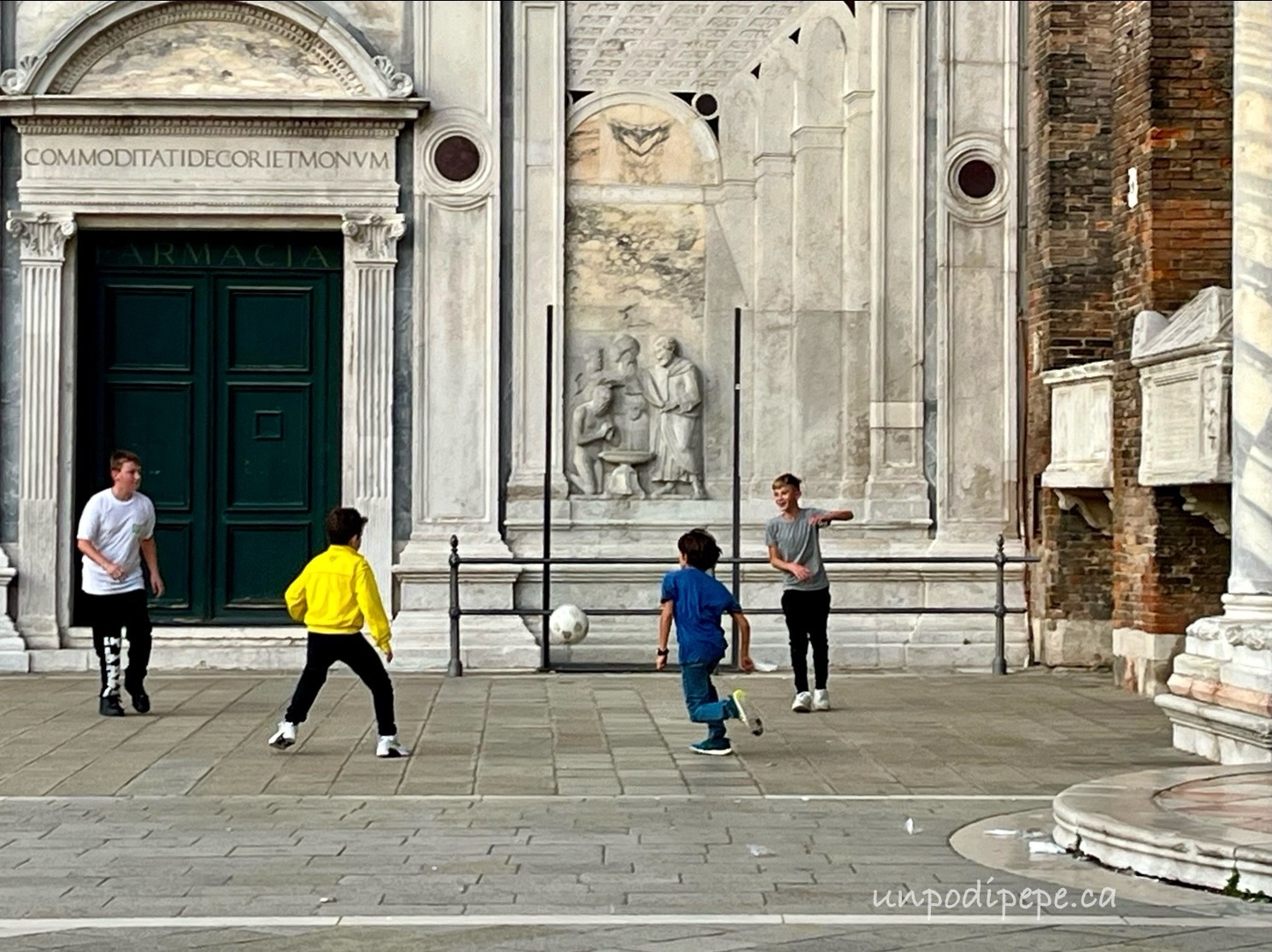
    Calcio in Castello

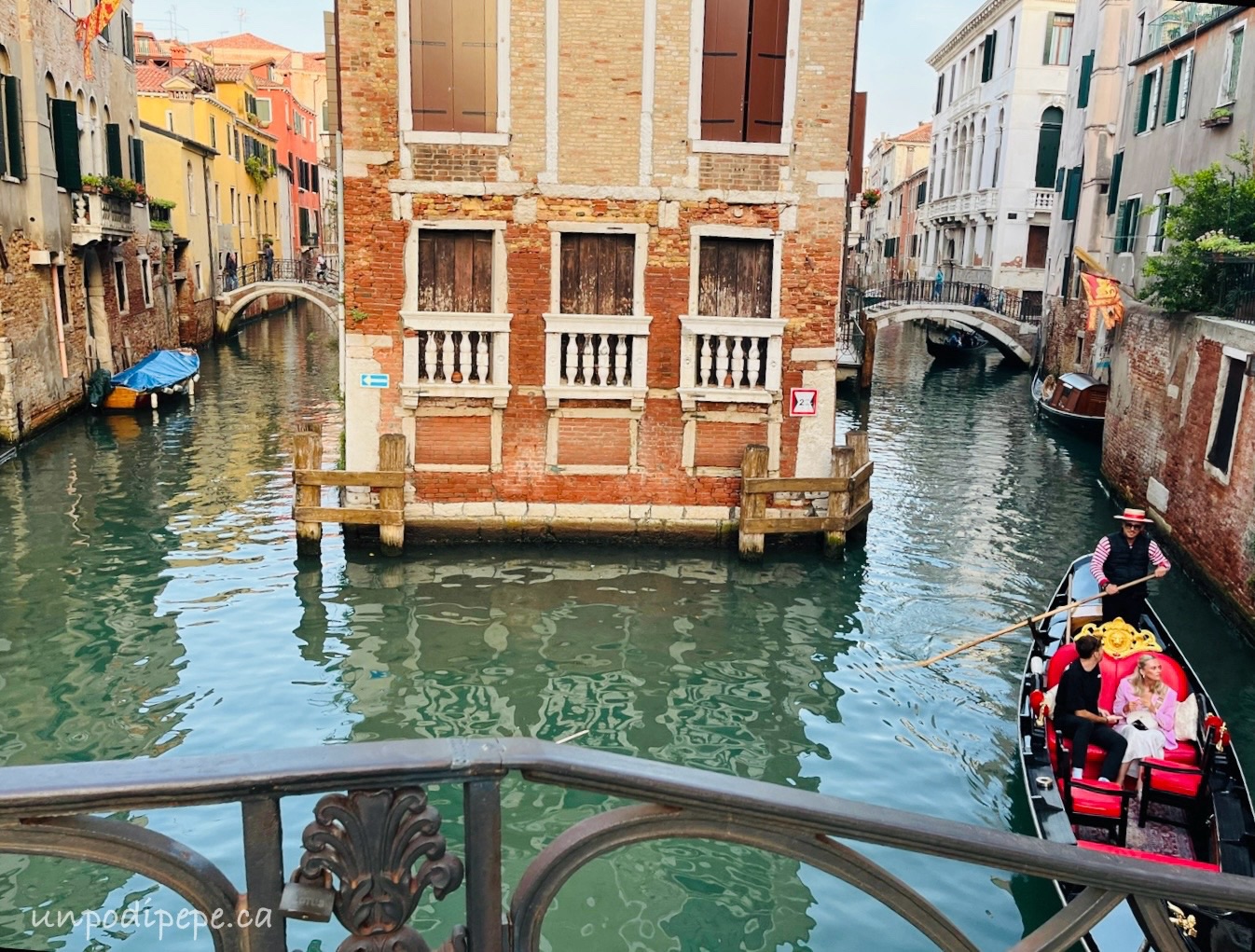
Main things to see and do:Wander aimlessly, get lost and explore! Venezia is a photographer’s paradise, a walkable city and many of the sights are clustered.  Walk from Piazzale Roma to Piazza San Marco (40 min-1 hour), explore the ponti (bridges) and narrow calle (streets) look for cisterne (rainwater collection wells), walk along Riva degli Schiavoni to see the gondole bobbing up and down in the water and stop for cicchetti (Venetian snacks).

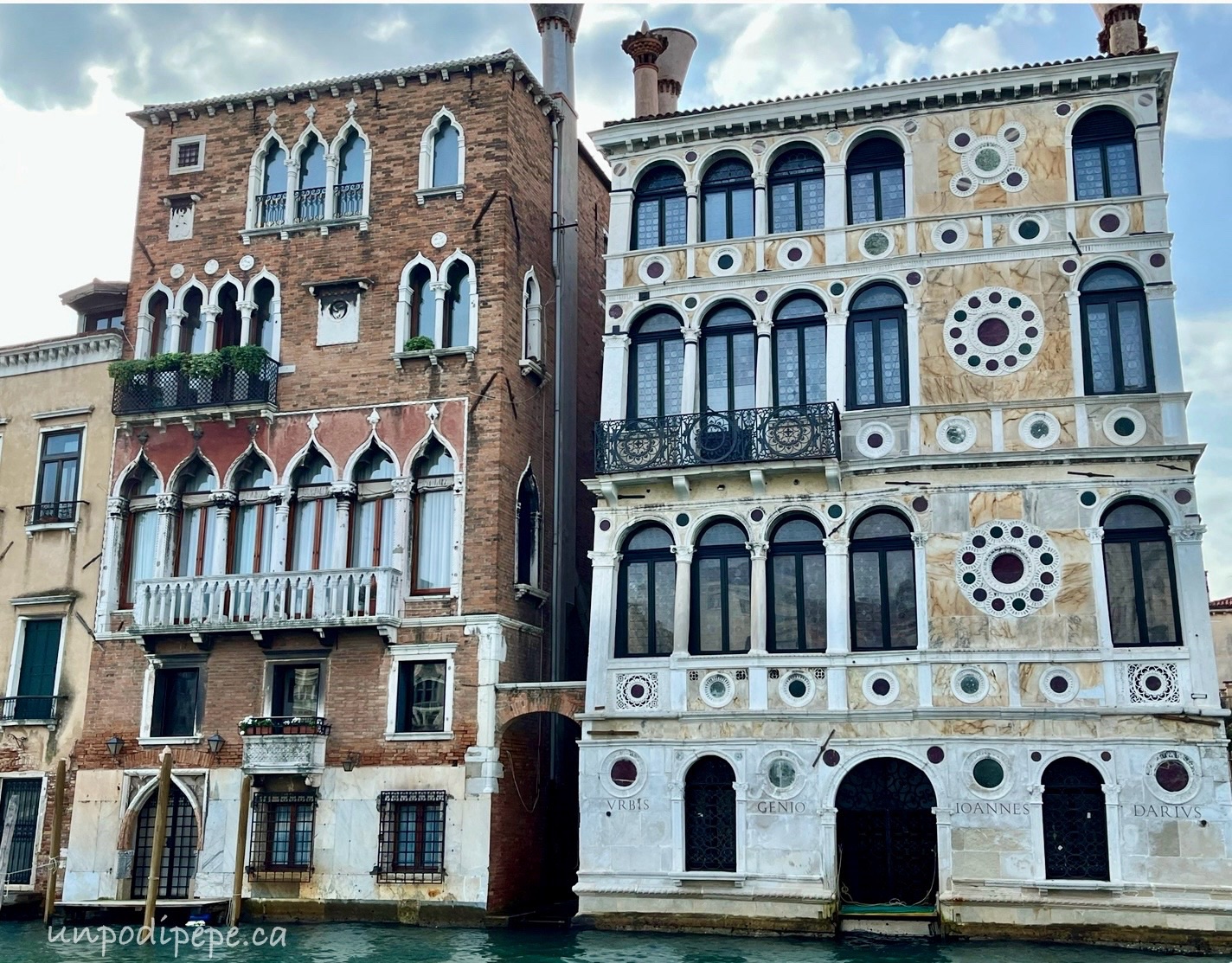
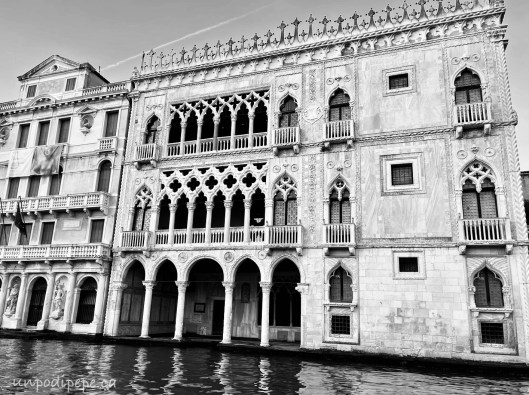
Cruise Canal Grande. Buy a Vaporetto pass and explore the Canal Grande from the water. Get on in front of Stazione Santa Lucia and cruise to San Marco or vice versa. Canal Grande is S shaped and lined with ~170 majestic palazzi, buildings from the 13-18th  Many of them are fondaco houses, meaning the ground floor was a warehouse and merchants lived on the upper floors with their families. 3 of my favourite palazzi are the Fondaco dei Turchi, the Venetian Gothic Ca’ d’Oro, and Palazzo Dario, which is funky because it started out Gothic but was renovated in Renaissance style. I love to spot interesting boats… the ambulance boat, the dry-cleaning delivery boat, etc.
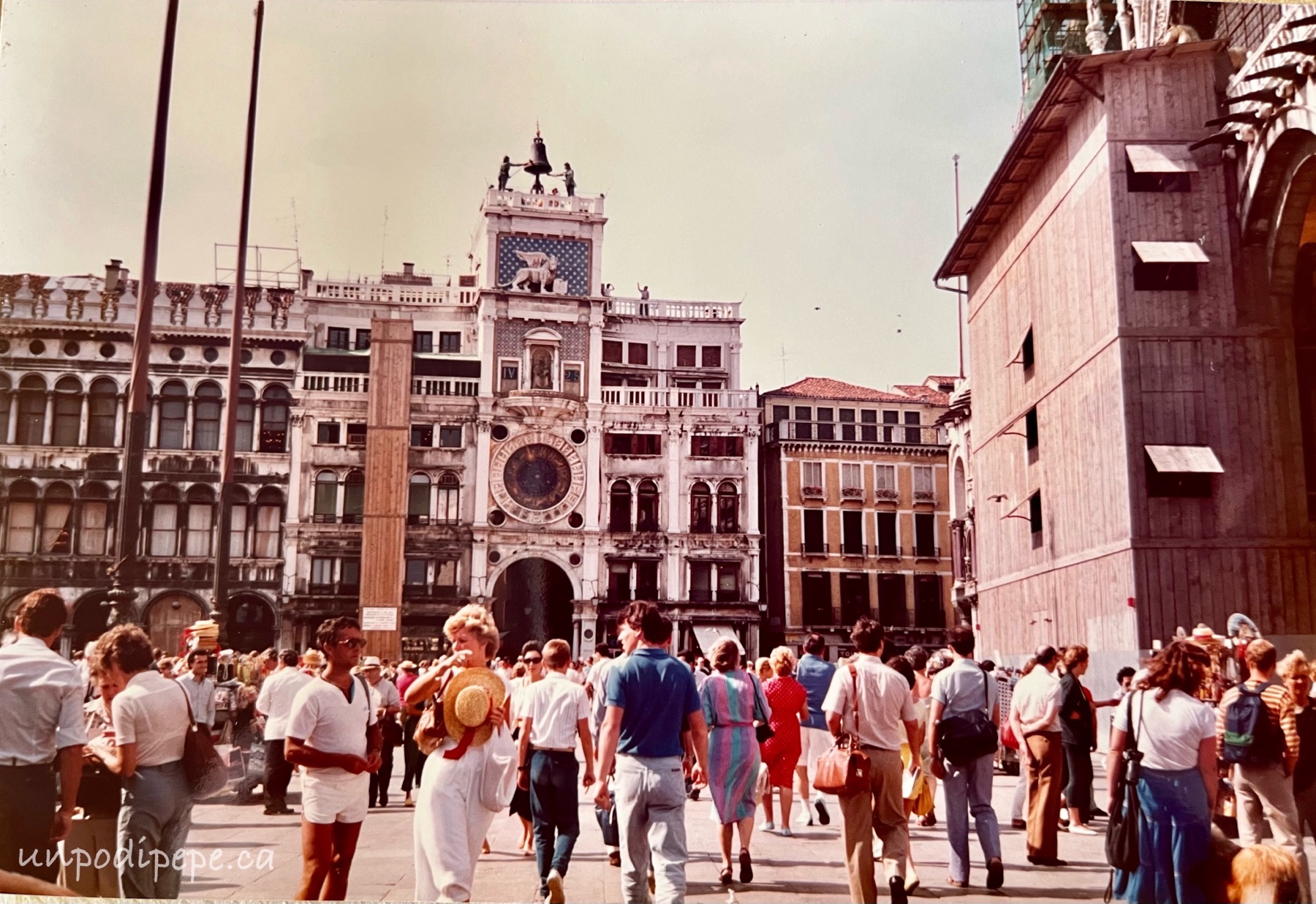
Piazza San Marco is the main piazza in Venezia and is full of things to see. The multi domed Basilica is at the east end, and the rest is lined with arcades.  These were once homes and offices, now shops and restaurants.  In the piazza is a 4.5m bronze winged lion, the symbol of San Marco and the Venetian Republic.  It is on top of Egyptian granite column brought here in the 12th  Napoleon moved it to Paris but it was returned in 1815.  Torre dell’Orologio, the clocktower dates back to the 15th Century.
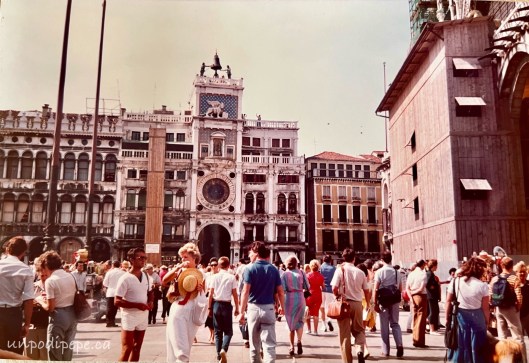
Torre dell’Orologio 1980

Visit Basilica San Marco, built in the 9th century and enlarged in 1063. Over 8 centuries, golden mosaics and other treasures were added.  The exterior is magnificent, with a combination of Byzantine, Romanesque and Gothic features. The Western side has mosaic archways while the Southern side has gothic adornments.  The Interior has 8000 m² of golden mosaics.  Gold leaf is sandwiched between 2 layers of glass tile, giving an illumination effect.  The evening tour is apparently spectacular as it is lit up. The Cavalli di San Marco, 4 magnificent ancient Greek bronze horses were brought from Constantinople in 1204.  Since 1974, replicas are on the terrace above the entrance, and the originals are inside.  They need their own blog post!  Admission €3 onsite, €6 online in advance.  Extra €5 to see Pala d’oro altar piece and Cavalli. Open 0930—1715, 1400-1715 Sundays.  Note….even if booked online, you still have to arrive early and wait in lineups for security.

Palazzo Ducale-Venetian Gothic style former residence of the Doges and Palazzo di Giustizia (courthouse) next to Basilica San Marco. It is now a museum.  Cross Ponte dei Sospiri (bridge of sighs) to see prisoners’ last view on their way to execution. Admission €25 Open 0900-1800 daily

Climb Campanile-Take the elevator to the top of the belltower for amazing views. Reservations are booked for a specific time slot €10 Euro, €12 online.  May be closed during maltempo-bad weather.

Collezione Peggy Guggenheim Former home of the heiress, now a museum of modern art in the Dorsoduro area. Take a €2 traghetto gondola ride across Canal Grande from San Marco or walk across Ponte dell’ Accademia.  Admission €16 open 1000-1800 Closed Tuesdays. Read my post here.Terrace Horse, Peggy Guggenheim Collection VeniceSanta Maria della Salute the Baroque church at the entrance to Canal Grande next to Punta della Dogana, has been immortalized by artists Canaletto, Sargent, Turner and Monet. The octagonal church made of Istrian stone has 2 domes and 2 bell towers in the back. Built in 1687 to celebrate the end of the plague (black death) that killed 1/3 of the population.  Santa Maria della Salute means ‘Our Lady of Good Health’.
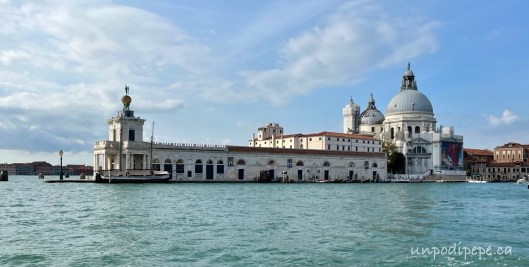
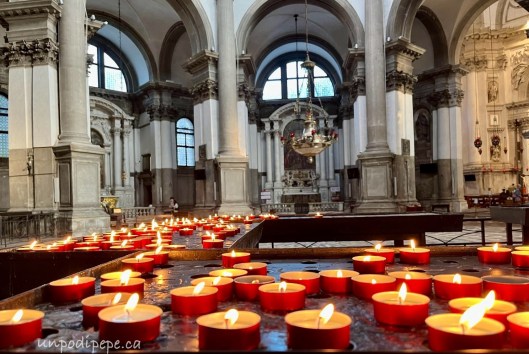
Entrance to the Basilica is free, climb steps to the cupola €4  Open 0900-1200 and 1500-1730.  Cupola closed Mondays. Take the ‘ferry gondola’ across from Piazza San Marco for €2. Nov 21 is the Festa della Salute featuring a parade from San Marco to La Salute over a pontoon bridge.
Ponte dell’ Accademia walk over the old wooden bridge for the best views of Canal Grande

Ponte Rialto a covered footbridge lined with shops has great views from both sides. It is the oldest of 4 bridges that span the Canal Grande.  The original was built in 1173 and it was rebuilt several times.  The present bridge was built in 1591.

Gondola ride Ponte Rialto 1995

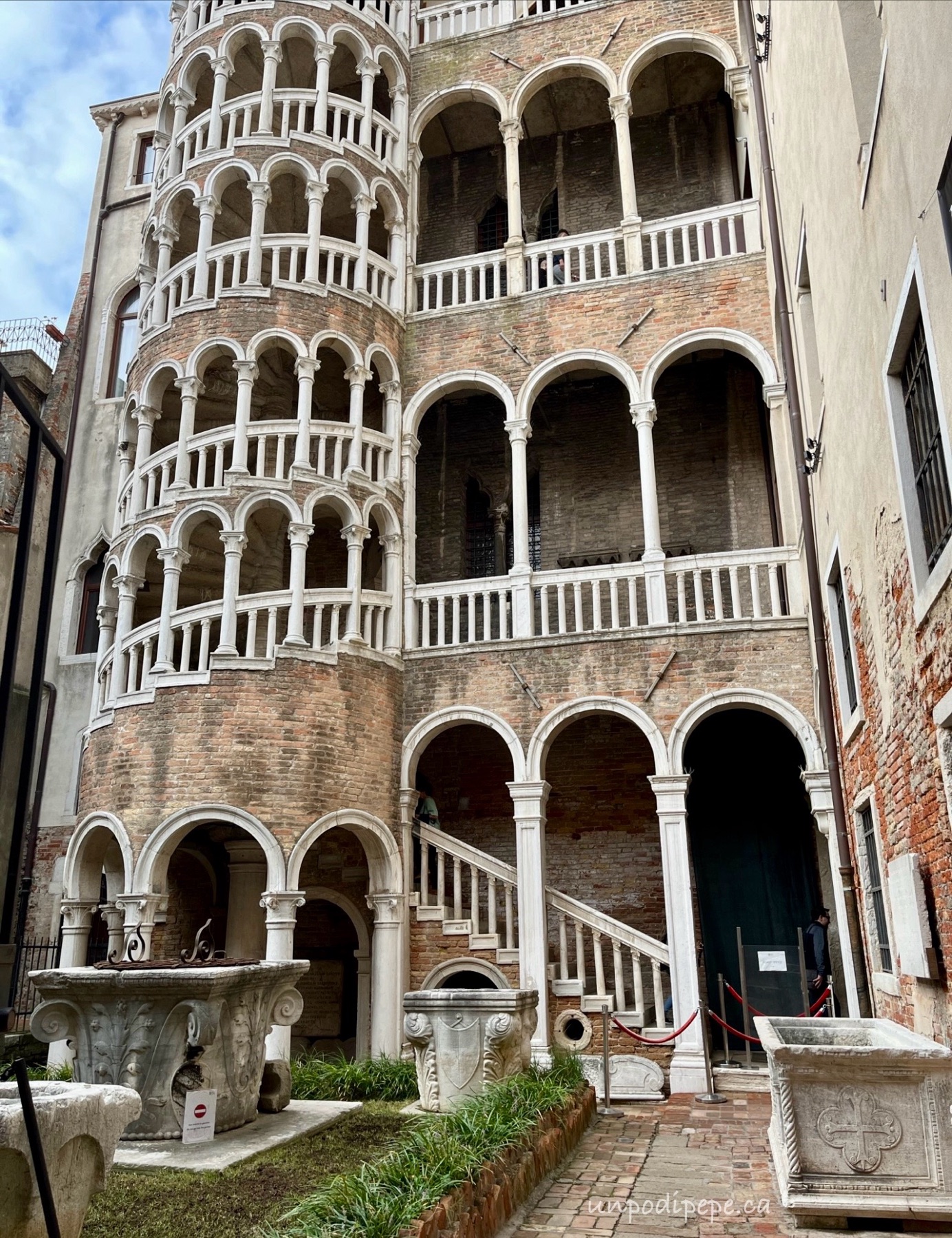
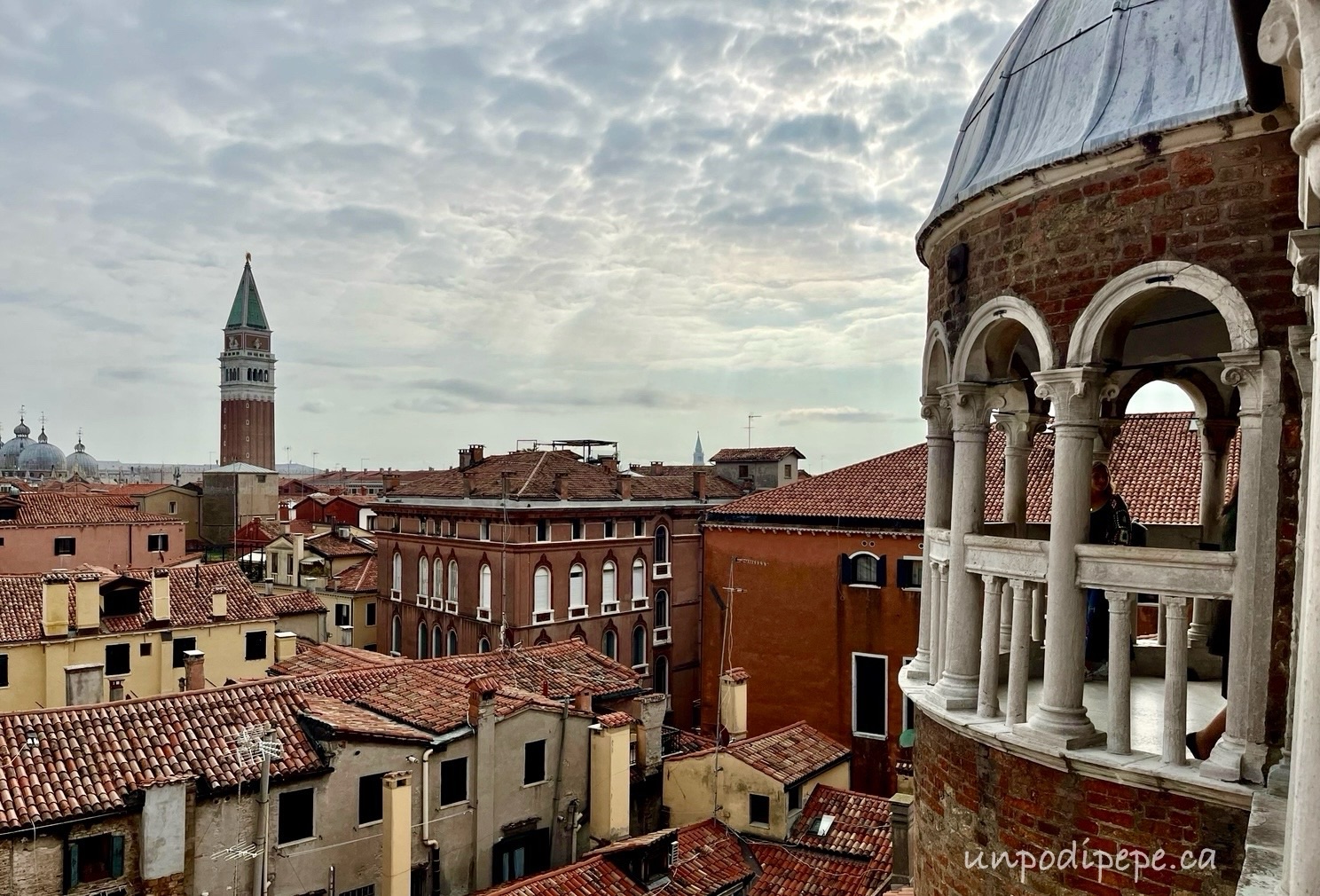
Ride in a gondola Gondolas are unique, symbolic of Venezia and have been a means of transport on waterways here for over 10 Centuries, so you really do need to do this! Gondola rides are usually €80 for a 30-40 minute ride and €100 in the evening. If this is not in your budget, or you are travelling solo like me, there are inexpensive traghetti, or gondola ferries you can take with others to cross to the other side of Canal Grande for € Best deal in town!  Look for the green ‘traghetti’ sign.  There is now a special dock at Piazzale Roma for those with mobility issues to safely get into a gondola.Scala Contarini del Bovolo Cool external 26 m multi arch spiral staircase near Piazza San Marco. It was added to the palazzo in 1499. View of rooftops, the Campanile, the cupole of San Marco and La Salute.  €8 admission Open 1000-1800 daily.

La Fenice The opera house was well named! Like the Phoenix it has risen from the ashes after being destroyed by fire 3 times, most recently in 1996. It was reopened in 2003. Admission €12 including audioguide tour.  Open 0900-1800

Visit the islands Take the vaporetto to Murano, Burano, Torcello, Lido and San Giorgio Maggiore.

Terrazza Fondaco dei Tedeschi (T Fondaco).  Tedeschi are Germans. This was the German merchants’ warehouse, then the post office, now a luxury department store. It is at the foot of Ponte Rialto, northwest end.  The rooftop terrace has panoramic views over Canal Grande. Open daily 1015-1800.  Entrance is free, reservations are required and the timeslot is only 15 minutes.  Reservations must be made on their website.

Feste: Venezia has feste all year round, most of them involve gondola races!

  • January 6th Regatta delle Befane-50 rowing club members dress up as La Befana and race from San Tomà to Ponte Rialto, where the finish line is a giant stocking hanging from the bridge!
  • February-Carnevale the 10 days before Ash Wednesday (22 Feb -4 Mar in 2025).
  • March 25th anniversary of Venezia and festa of the Annunciation
  • Biennale d’Arte held even years. 20 April-24 Nov, 2024
  • April 25 Festa di San Marco, patron Saint of Venezia
  • May-1st since the 11th Century, the Sunday after Ascension Day is Sensa, the marriage of Venezia with the sea
  • May-Vogalonga, a non-competitive 30Km rowing celebration between canals and the islands.  A peaceful protest against damage due to waves from motorboats.
  • July-the 3rd Sunday Redentore Fireworks July 20-21, 2024
  • Late August/early Sept Venice Film Festival on Lido di Venezia Aug 28-Sept7, 2024
  • September, 1st Sunday Regatta Storica
  • October Venice Marathon Oct 24, 2004 38th annual
  • November 21 Salute Celebration.  Feast of Santa Maria della Salute celebrating the end of the devastating Black plague that killed 1/3 of population
  • December 7th-lighting of tree in Piazzetta San Marco
  • December-Mercatino di Natale in Dorsoduro
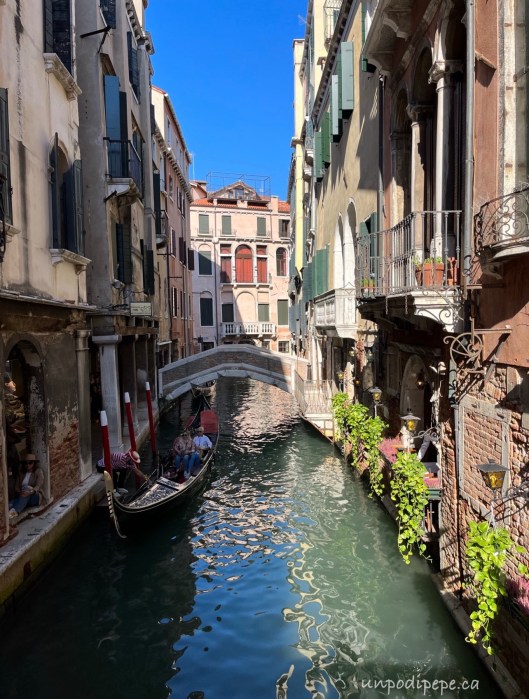
Getting there and around:The main airport Marco Polo is 10 km away.  Ryanair and some other budget airlines use Treviso airport 40 km away. An airport express bus takes you to Piazzale Roma in half an hour for €10.  Then walk or take vaporetto to hotel. Alilaguna waterbus is €15 and has several stops.  Shared watertaxi is €35 per person with several stops along the 1 hour route.  Private watertaxi is much more expensive.

Train-Stazione Santa Lucia in Santa Croce area.  Walk or take vaporetto to hotel.     Car parking garage ‘Tronchetto parking’ in Piazzale Roma has a capacity of 4500 cars

Actv Vaporetto is a waterbus and an affordable way to sightsee.  Also used by residents to get around and get to work.  Single ticket one way €9.50, daypass €25. Passes for 2, 3 and 7 days are also available.  It is not necessary to buy these in advance.  With my daypass, I cruised to San Marco, then took another vaporetto at San Zaccaria (in front of Hotel Danieli) to Burano and Torcello.

Venezia is a one of the most visited destinations in the world, with over 20 million tourists per year.  It is crowded, more expensive than anywhere else in Italia, and struggling with the effects of overtourism.   Acqua Alta, high water flooding happens in late autumn to early spring.  Usually predictable and lasts only a few hours.  Read my post on MOSE.

Cannareggio

I have talked about the crowds, the lines, the expense….but do not let that put you off.  There is nowhere else like Venezia with its intricate maze of waterways, art, and unique architecture.  Around every corner is another magical scene. The entire city is an extraordinary masterpiece, so I definitely recommend visiting.  It can be compared to Santorini, which is crowded and expensive, but incredibly unique and historically rich.  My recommendation is to stay 3-4 days. In 2022, only 3.2 million visitors out of 30 million stayed overnight.

As of June 1, 2024, in an effort to decrease the effects of mass tourism, regulate huge crowds and improve life for local residents, Venezia will be trialing a €5 entry charge.   Residents, commuters, students and children under 14 will be exempt, as well as anyone who has booked an overnight stay.  Personally, I think the entry fee is too low to be effective.  Constant maintenance to prevent more water damage is expensive.  Tour groups will also be limited to 25 people (=½ the capacity of a bus) and loudspeakers are banned(yeah!!!).  Cruise ships have been banned from the lagoon since 2021 after threats from UNESCO to put it on the endangered list. That is the UNESCO equivalent to ‘the naughty list’!

Hope you all make it to Venezia at some point!  Buon viaggio, Cristina

**Photo credits: 1995 Lucia and Donato on honeymoon taken by unknown gondolier.  All other photos by me!
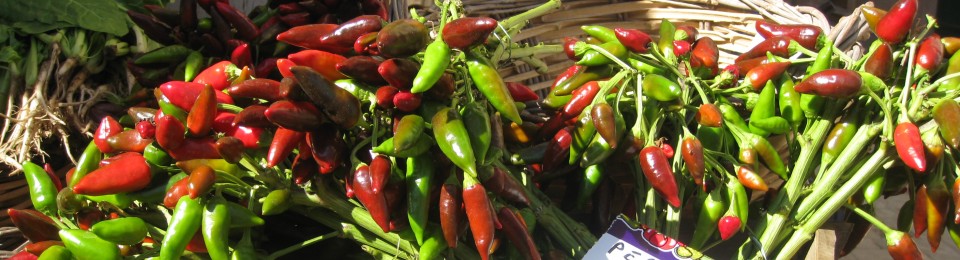
Ostia Antica

Tags

, , , , , ,

Ostia Antica, 30 km southwest of Rome was once a thriving town and commercially important seaport. It is now a well-preserved archeological site and at 150 hectares, one of the largest archeological parks in Europe. Founded in 620 BC to harvest sea salt at the ‘ostium’ or mouth of the Tevere (Tiber River), Ostia Antica was Rome’s first colony, a naval base and main ancient seaport.  With a population of 60,000 in the 2nd and 3rdcenturies AD, it was the hub for import of grain, olive oil, wine, marble, cloth and other goods destined for Rome.

Originally located on the coast, Ostia Antica is now 3 km inland. After the fall of Rome and barbarian raids, the port was neglected and the harbour eventually silted up. It was completely abandoned in the 9th century AD.  Sand dunes and mud covered the city, helping to preserve the ruins and mosaics for us like a time capsule from Ancient Rome.

Ostia Antica was a working class port city, as opposed to Pompeii, which was a resort getaway and playground for the rich and famous.  The ruins provide insight into regular, daily life in Ancient Rome and give us a sense of urban planning for the time.  There are well preserved cobbled streets, magnificent mosaics, temples, shops, apartment buildings, warehouses, private homes, public baths, warehouses, taverns, inns, a public laundry, theater and even a firefighting service.  The earliest identified synagogue in Western Europe (41-54 AD) was discovered in 1961.

Excavation started in the early 19th Century, but most of it was done from 1938-1942. Only 40% of the site has been excavated! There is a lot to see in Ostia Antica.  Here are some of the highlights:

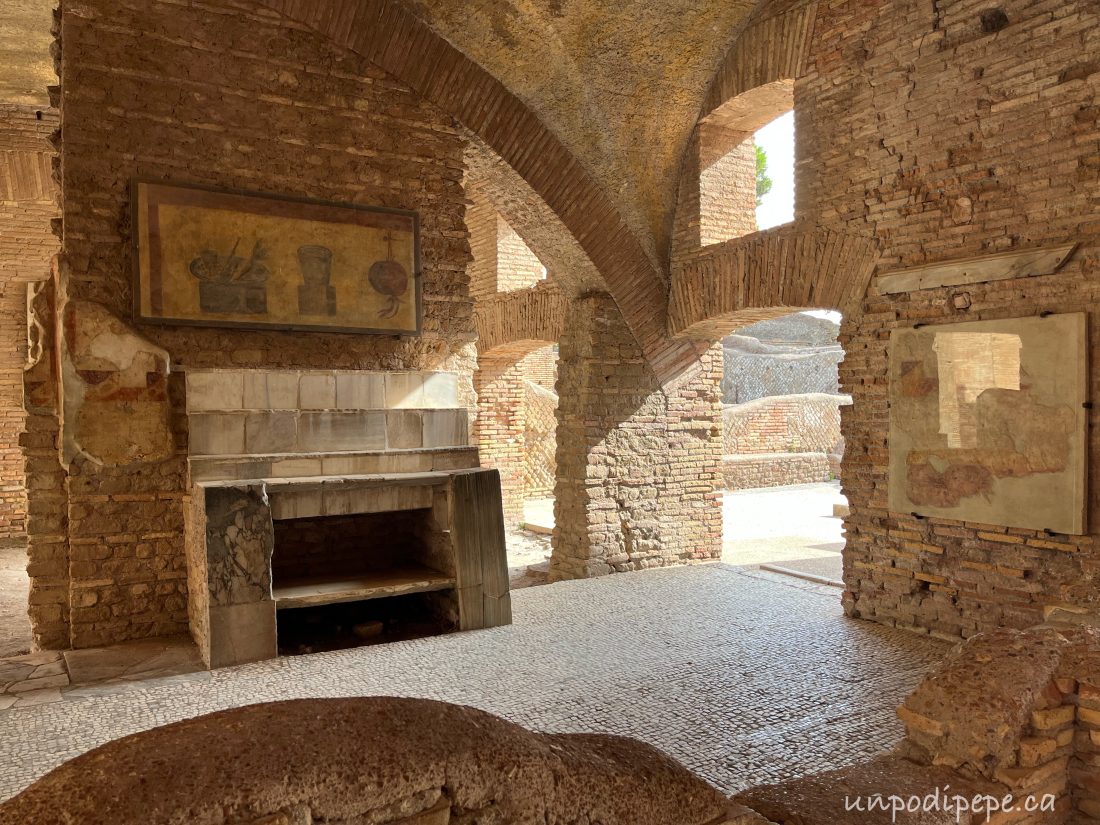
Thermopolium di Via di Diana Thermopolium is Greek for ‘place where hot food is sold’.  A 3rd C ancient fast-food joint and wine bar with windows that open out onto the street and a marble take-out counter, long table to serve hot food, shelves and a courtyard with a fountain for outdoor dining. Amphorae with cheap wine were stored under the counter.  A large fresco ‘menu’ on one wall shows a plate with carrots and beans, a glass of wine, a jar of olives and large onions or pomegranates.
Customers likely topped their food with an ancient condiment called Garum.  It was a pungent rotten fish sauce and makes ketchup sound appetizing.  On the side of the Thermopolium is a single gated public toilet!

Mulino di Silvano A multiroom bakery built in 120 AD. One room has 3 intact lava millstones for grinding the grain into flour, one for kneading the flour into dough and another still has the ovens for baking the loaves.  The bread was sold on site and also transported to sell in Rome.

Teatro Ostia’s semicircular theater survives in excellent condition.  Built in the first century BC and expanded later, it is one of the oldest masonry theaters in the world.  It can seat 4,000 spectators and is still used for summer concerts.

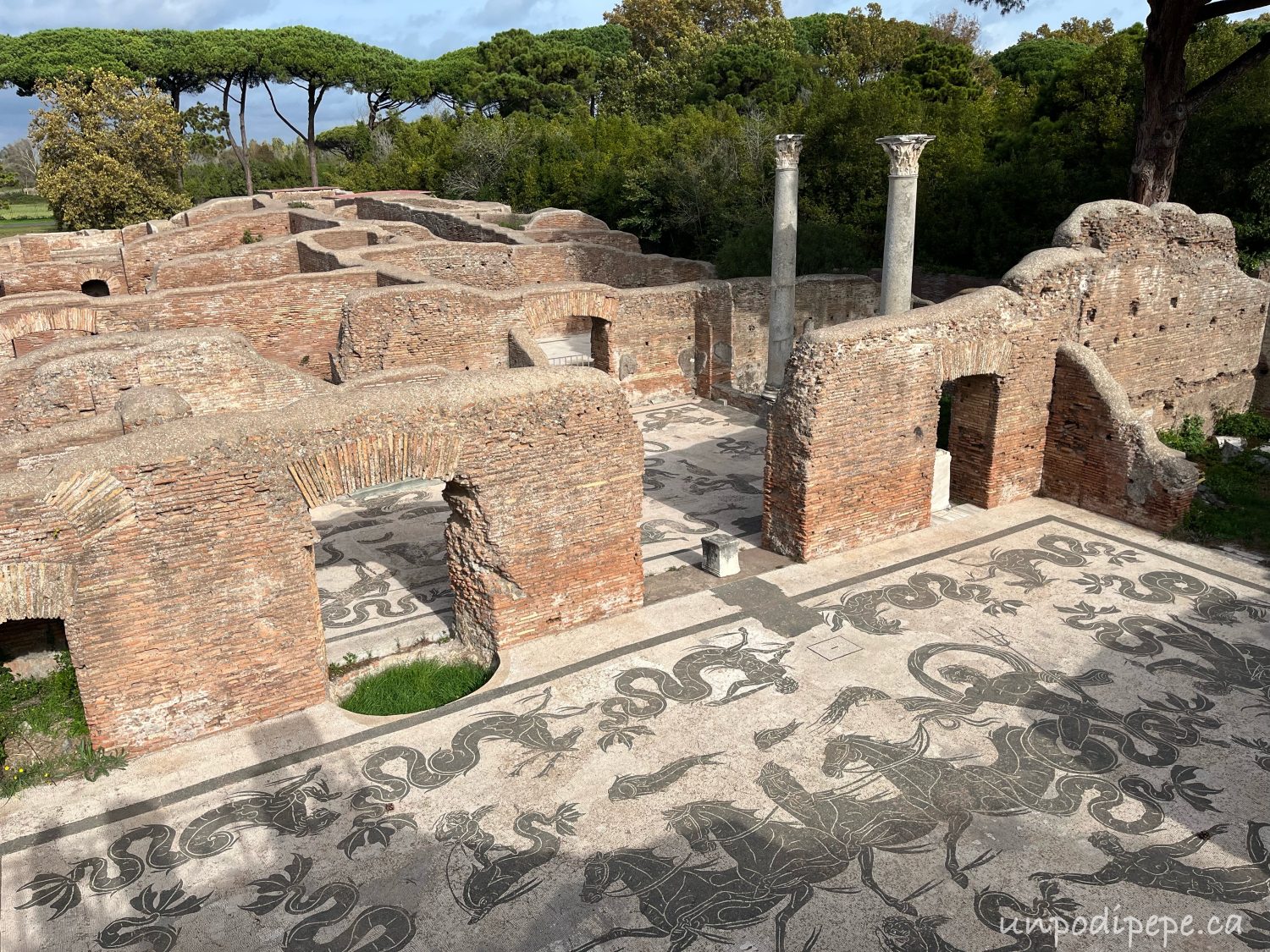
Public Baths  There are several public baths in Ostia.   The Baths of Neptune have incredibly preserved mosaic floors of Neptune and sea creatures.  We can thank the mud that covered them for centuries!  These are often covered up in the winter to protect from the harsh weather.

Public toilets A fine example of Roman plumbing. The toilets consist of a communal marble bench along 3 walls with 20 seats. Each seat had a hole leading down towards a single drain channel fed with running water to flush away waste. Since toilet paper was not a thing yet, a sea sponge attached to a stick was kept in a bucket of saltwater or vinegar for patrons of the toilets to wipe themselves. Yuck!

Piazzale delle Corporazioni (Piazza of the Corporations/Guilds) Located behind the theater, the piazza is a large open air market square with stalls along all 4 sides. Merchants and craftsmen from all over the Mediterranean sold their goods.A small metal model of the piazzale has descriptions written in Braille and Italian.The beautiful black and white mosaics in front of the stalls advertised the goods or services being sold. Stalls included shipbuilders, ropemakers, leather tanners, sailmakers, grain and wine importers, as well as fish and food products.  One of the stalls with fish mosaics likely sold the pungent Garum fish gut sauce!
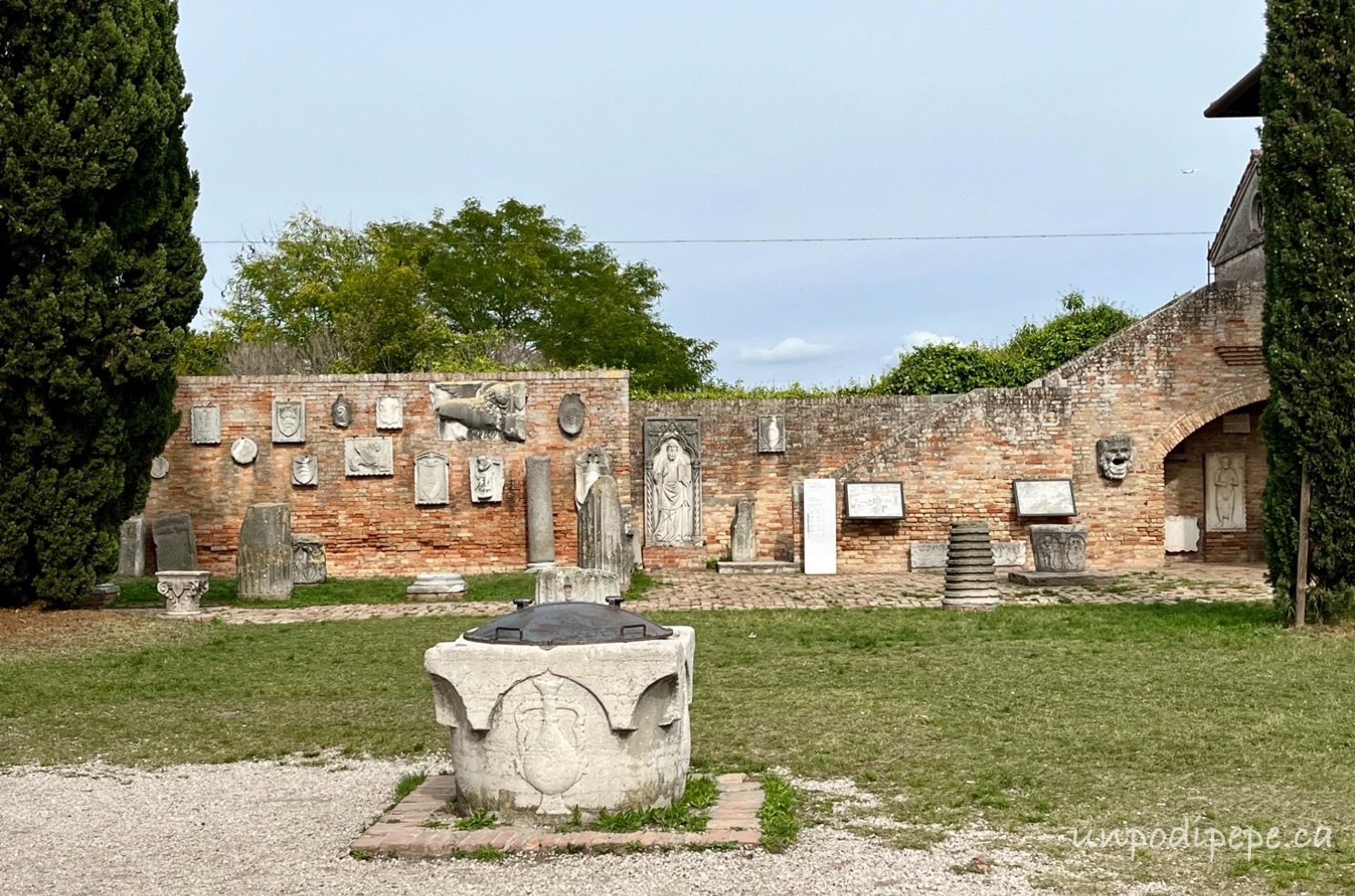
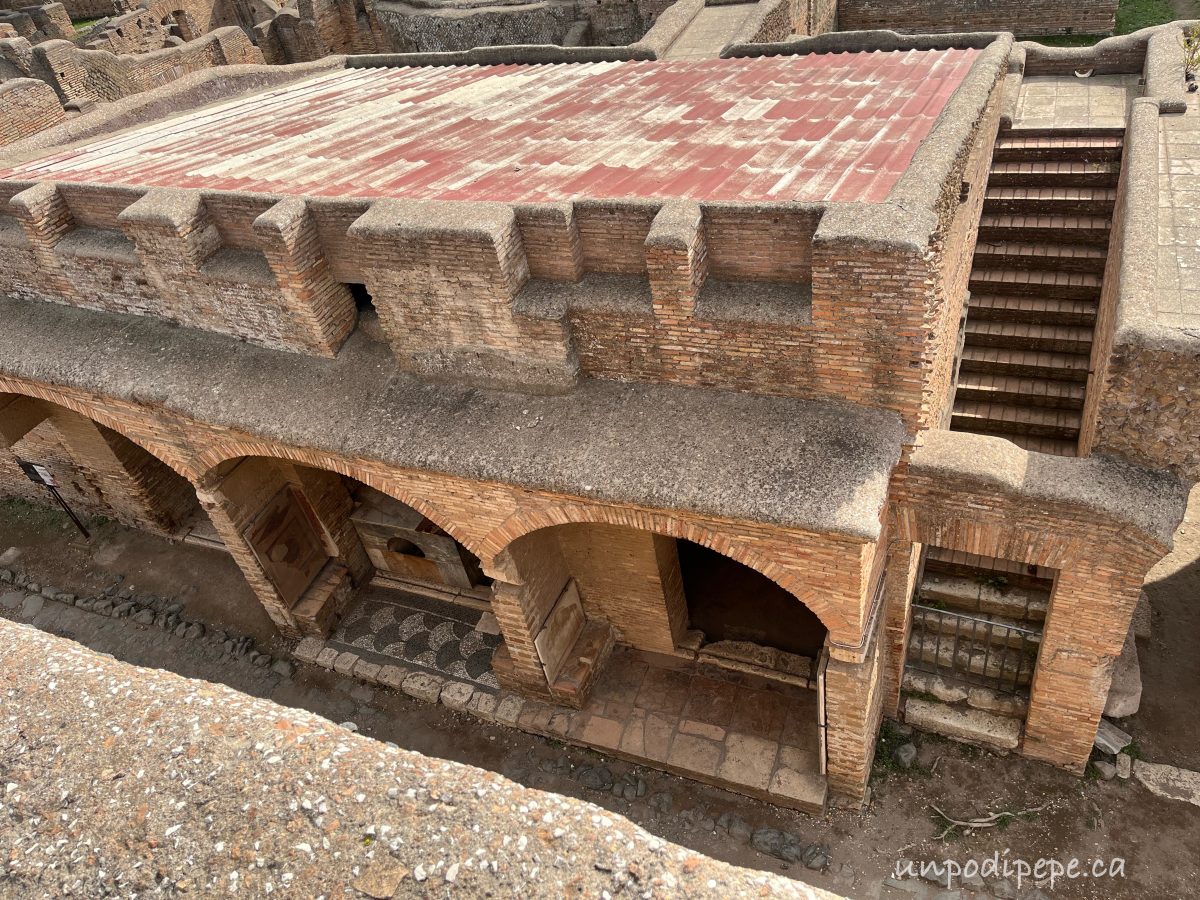
Casa di Diana A complex multifunction residential building -urban planning centuries ahead of its time.  Called an insula, this multilevel apartment has ground floor shops, accommodation for the shopkeepers on the 1stfloor and more modest accommodation on the upper floors.  A 150 AD painting of Diana was found inside.  It is possible to climb the stairs of other insulae to get to the upper floors.

A visit to Ostia Antica is a nice, half day trip from Roma, although it can be a whole day excursion if you explore more of the huge site and have lunch at one of the restaurants nearby.  Ostia Antica is grossly under visited, so it is never crowded! Bring water, a hat, sunscreen and good walking shoes.

Open Tues to Sat 8:30-4:30 in winter 8:30- 7 pm in summer. Admission fee is €18. Free admission the first Sunday of the month.  Tickets can be booked online on the official website .  A PDF guide can also be downloaded from the website.  The museum is worth seeing, but is closed at present.

Getting there by public transportation is easy and cheap: Take Metro line B (Blue line) to San Paolo (or Piramide*) metro station and take the ‘Lido’ commuter train to Ostia. Get off at ‘Ostia Antica’. The ride is 23 minutes. (Do not get off at Ostia Lido Nord or Ostia Lido Centro unless you are going to the beach!)

Use the footbridge to cross the road and walk 5-10 minutes to the main entrance of the Parco Archeologico Ostia Antica. Trains leave every 20 minutes and use the regular metro/bus tickets €1.50.

*If getting there from Piramide, walk out of the metro station and go to Porta San Paolo train station next door to find the Lido commuter train.

Buon viaggio!

Sanremo 2024

Tags

, , , , ,

The 74th edition of Festa della Canzone Italiana di Sanremo is February 6-10, 2024, broadcast live on RAI.  Once again this year, I have put together a viewing guide to the annual 5 day song competition held in the town of Sanremo, Liguria. The Festival di Sanremo is the world’s longest running national televised music competition.

In 1950. Piero Bussetti of the Sanremo Casino and Giulio Razzi, conductor of the RAI orchestra launched a competition for previously unreleased songs to boost the local economy.  The first edition was broadcast live on RAI radio in January 1951 with 3 artists performing 20 songs.  Since 1955 it is broadcast live on television.

From 1951-1977 the festival was held at the Sanremo Casino.  Since 1977 it has been at the iconic Teatro Ariston. The Festival is a massive media event in Italia and has launched many careers, including Domenico Modugno, Zucchero, Mina, Andrea Bocelli, Il Volo, Giorgia, Laura Pausini, Eros Ramazzotti, Mahmood and most recently Måneskin. I love to watch Sanremo every year with Mamma!

The winner has the first option to represent Italia at the 68th annual Eurovision Song Contest in Malmö, Sweden May 7, 9 and 11, 2024.  Eurovision is huge in Europe with 39 countries participating, but hardly known at all in North America.  2021 Sanremo winners, Måneskin won Eurovision with their brilliant song ‘Zitti e Buoni’.  As the reigning country, Italia hosted Eurovision 2022 in Torino.

The 74th edition of the Festival di Sanremo  February 6-10, 2024 will be broadcast live on RAI (RAI International for the rest of us) and the RAIplay App, hosted for the fifth time by Amedeus, with a different cohost each night.  They are Marco Mengoni (2023 winner), Giorgia, Teresa Manneno, Lorella Cuccarini and comedian Fiorello. Former winners, Italian and international guest artists will perform.

Special guests, on Feb 6th, cohost Marco Mengoni will perform.  Feb 7th special guests are Giovanni Allevi, and Giorgia, who celebrates the 30th anniversary of ‘E poi‘.  Feb 8th, Russell Crowe will perform with his band, Indoor Garden Party, and Eros Ramazzotti celebrates the 40th anniversary of ‘Terra Promessa’.  Finally on Feb 10th, Italian ballet dancer Roberto Bollè performs and Gigliola Cinquetti celebrates 60 years of ‘Non ho l’età’.

The Sanremo prize goes to the winning song, although in most cases the performers are involved in the songwriting.  This year, there are 30 contestants, including the top 3 winners from the junior contest, ‘Sanremo Giovani’.  Judging is complex and contestants perform with the full RAI orchestra-complete with maestro.

A summary of what happens each night:

Night #1 February 6th.  All 30 contestants perform, with no eliminations.  Voting is 100% by press jury-(accredited journalists from press comprising of print, TV and web).

Night #2 and #3 February 7th and 8th. 15 of the contestants perform each night and there are no eliminations.  The contestants will be introduced by one of the artists not performing that night.  Voting is 50% televote and 50% radio jury.

Night #4 February 9 is ‘Covers night’.  Each artist/group performs a cover song of their choice.  They can perform solo or invite an Italian or international artist as a guest.  Voting is 34% televote, 33% press jury and 33% radio jury.

Final night #5 February 10th.  There are 2 rounds the final night.  All 30 acts perform and voting is 100% from televote.  The top 5 are announced, then voting is reset and there is a new, final vote. The winner is decided by 34% televoting, 33% press jury and 33% radio jury.

The lineup of concorrenti /contestants includes 6 former Sanremo winners, 1 two-time winner, 5 who have represented Italia at Eurovision, many former contestants, and some first time acts.  Below is a list of all 30 performers, the song titles and a few other details to help you watch and enjoy the festival:

  • Alfa‘Vai’.  This is Genovese rapper Andrea De Filippi’s first time at Sanremo.  He released his debut mix tape in 2017 and collaborated with Rosa Chemical on ‘Snob’ in 2021.
  • Alessandra Amoroso –‘Fino a qui’.  Alessandra is the 2009 winner of the talent show ‘Amici’.  She has received 2 MTV awards and 2 MTV Europe music awards.  In 2017 she sold out L’arena di Verona for 2 nights.  This is her first time at Sanremo.
  • Angelina Mango ‘La Noia‘. Angelina had an amazing 2023.  She won the talent show Amici and released an EP ‘Voglia di Vivere‘.  ‘Ci Pensiamo Domani’ went triple platinum.  This is her first time at Sanremo, with a song co-written by Madame.
  • Annalisa ‘Sinceramente’.  Annalisa placed 2nd in the 2010 edition of Amici.  She has collaborated with many Italian artists and has 31 platinum and 14 gold records.  Her 2023 song Disco Paradise with Fedez and Articolo 31 went triple platinum.  This is her 6th time at Sanremo since 2013.  In 2018 she came in 3rd place.  Fun fact:  her 2016 song ‘Used to You/Potrei abituarmi’ was written by Dua Lipa!!!
  • Big Mama -‘La Rabba non ti Basta‘. Avellino native Marianna Mammone promotes body positivity and anti bullying.  In 2022 she was chosen as one of 10 up and coming Italian artists by the streaming platform RADAR.  In 2023 she was a guest on covers night, singing ‘American Woman’ with Elodie.  This is her first time competing at Sanremo.
  • Bnkr44 ‘Governo Punk’. Bnkr44 was formed in 2019 by 7 young men from Villanova, near Firenze.  They are Erin, Piccolo, Faster, JxN, Caph, Fares, and their artistic director ghenayO. Their music is urban pop/nuovo pop Italiano.  In 2023 they appeared on Covers night, duetting with Sethu on ‘Charlie fa surf RMX’.  They have collaborated with several Italian artists, including Madame, Ghali, Rkomi, Elisa and Tananai. Bnkr44 placed in the top 3 of Sanremo Giovani.
  • Clara -‘Diamanti grezzi‘. Clara Socini aka Clara or Crazy J. She is the winner of Sanremo Giovani, the first female to win in 14 years! Clara has released 4 singles since 2020.  In 2023, she played the role of Giulia on the RAI series Mare Fiori 3 and her collaboration with Mr Rain on ‘Un Millione di Notte‘ made the top 10.
  • Dargen D’Amico -‘Onda Alta‘. Milanese rapper and producer Jacopo D’Amico wrote 2 songs for Sanremo 2021.  In 2022 ‘Dove is Balla‘ came in 9th place and went on to be platinum.  Dargen was a judge on XFactor Italia 2022 and 2023. This is his 2nd time competing.
  • Diodato -‘Ti muovi‘. Diodato is the winner of Sanremo 2020 with ‘Fai Rumore‘.  He also participated in 2014 and 2018.  He was to represent Italia at Eurovision 2020 but it was cancelled due to the pandemic. He performed as a guest at Eurovision 2022 in Torino. Diodato has a docuseries on RAIplay.
  • Emma –‘Apnea’. Emmanuela Marrone is the 2012 Sanremo winner with ‘Non è l’inferno’. She won the talent show Amici in 2010 and in 2011 came in 2nd place with Modá at Sanremo.  She also cohosted in 2015. Emma was invited to represent Italia at Eurovision 2014 with ‘La Mia Cittá‘. In 2018 she performed onstage with U2 during their Italia tour!  Emma was a Sanremo super guest in 2020 and an Amici and XFactor judge in 2020/21.  She came in 6th place in 2022 and in 2023 was a guest on covers night with Lazza. Emma’s docufilm is on Prime Video.
  • Fiorella Mannoia -‘Mariposa‘.  Fiorella has collaborated with many Italian artists, including Lucio Dalla, Pino Daniele, Loredana Bertè and Giuliano Sangiorgi.  Her  musical debut was in 1968.  She participated in Sanremo 1981, 1984 and 1987, when she won the Critics Prize with ‘Quello che le Donne non Dicono‘.  In 2000 Fiorella appeared as a Superguest. In 2017 she participated with the song ‘Che sia Benedetta’ and placed 2nd.
  • Fred DePalma -‘Il Cielo non ci Vuole‘.  Federico Palana discovered hip hop in 2008.  He has had 28 platinum records and 6 gold.  Fred has 4 million monthly streams on Spotify and has collaborated with several international artists, including 3 with Ana Mena.  This is his first time participating at Sanremo.
  • Gazelle‘Tutto qui. A first time participant at Sanremo, Gazelle has released 4 albums, with over a billion streams and his concert tour included the Stadio Olimpico Roma in June 2023.
  • Geolier -‘I p’me, tu p’te. Napoletano rapper Emanuele Palumbo had the 2023 bestselling album in Italia with ‘Il Coraggio dei Bambini‘.  This is his first time at Sanremo.
  • Ghali -‘Casa Mia’. Ghali Amdouni is a Milanese rapper. His first album ‘Album‘ was the 5th highest selling in Italia in 2017. He collaborated with Ed Sheeran in 2020 on a remake of Antisocial and also appeared as a super guest at Sanremo with a medley of his hits.  In 2021 he also created a new capsule Collection for Benetton.  This is Ghali’s first time competing at Sanremo.
  • Il Tre –Fragili. Roman hip hop artist Guido Senai.  Il Tre’s career started in 2016 when he won the show ‘One shot game’.  This is his first time at Sanremo
  • Il Volo -‘Capolavoro‘.  Piero Barone, Ignazio Boschetto and Gianluca Ginoble, 2 tenors and a baritone, won the children’s talent show ‘Ti lascia una canzone‘ in 2009 and have since had an incredible international career.  This is their 3rd time participating at Sanremo.  In 2015 they won with ‘Grande Amore‘ and in 2019 placed 3rd with ‘Musica che Resta‘. Il Volo represented Italia at Eurovision 2015 in Vienna and placed 3rd..
  • Irama -‘Tu no’. This is Irama’s 5th time competing at Sanremo.  In 2016 he was in the Newcomers category and his 2019 song went double platinum.  His 2020 song ‘Mediterranea‘ was the most listened to song of the summer.  Irama was not able to perform live in 2021 due one of his staff testing COVID positive, although he still placed 5th based on his pre-recorded rehearsal performance! His ballad ‘Ovunque Sarai’ dedicated to his recently deceased nonna was my favourite to win in 2022.  It placed 4th.  Irama has several recent collaborations with Rkomi, including the game show Celebrity Hunted.
  • La Sad -‘Autodistruttivo’.TheΦ, Plant and Fiks, 3 solo rap, metalcore, and emo punk artists got together to form La Sad.  They released their first album in 2022, and in 2023 premiered their single ‘Toxic‘ on TV.  They spent the summer touring Italia on the Summersad Tour.  This is their first time at Sanremo
  • Loredana Bertè -‘Pazza‘. Loredana can be recognized by her short skirts and long blue hair.  Her first LP in 1974 ‘Streaking‘ was censored at the time!  After seeing Bob Marley live in Jamaica in 1979, she released the first reggae music in Italian ‘È la Luna Bassò’.  Loredana’s 1982 album ‘Traslocando‘ is #24 on the Rolling Stone Italia list of 100 best Italian albums ever.  She has competed at Sanremo 11 times and in 2008, was presented the city of Sanremo career prize.  In 2019 her song ‘Cosa ti Aspetta da me‘ placed 4th, which caused a minor outrage among fans. In 2015, she released her autobiography ‘Traslocando, è andata così’.  Since 2015, Loredana has been an Amici judge various times and since 2020 a coach on The Voice Senior and The Voice Kids. In 2022 on Covers night, she performed her 1975 hit ‘Sei Bellissima‘ with Achille Lauro.
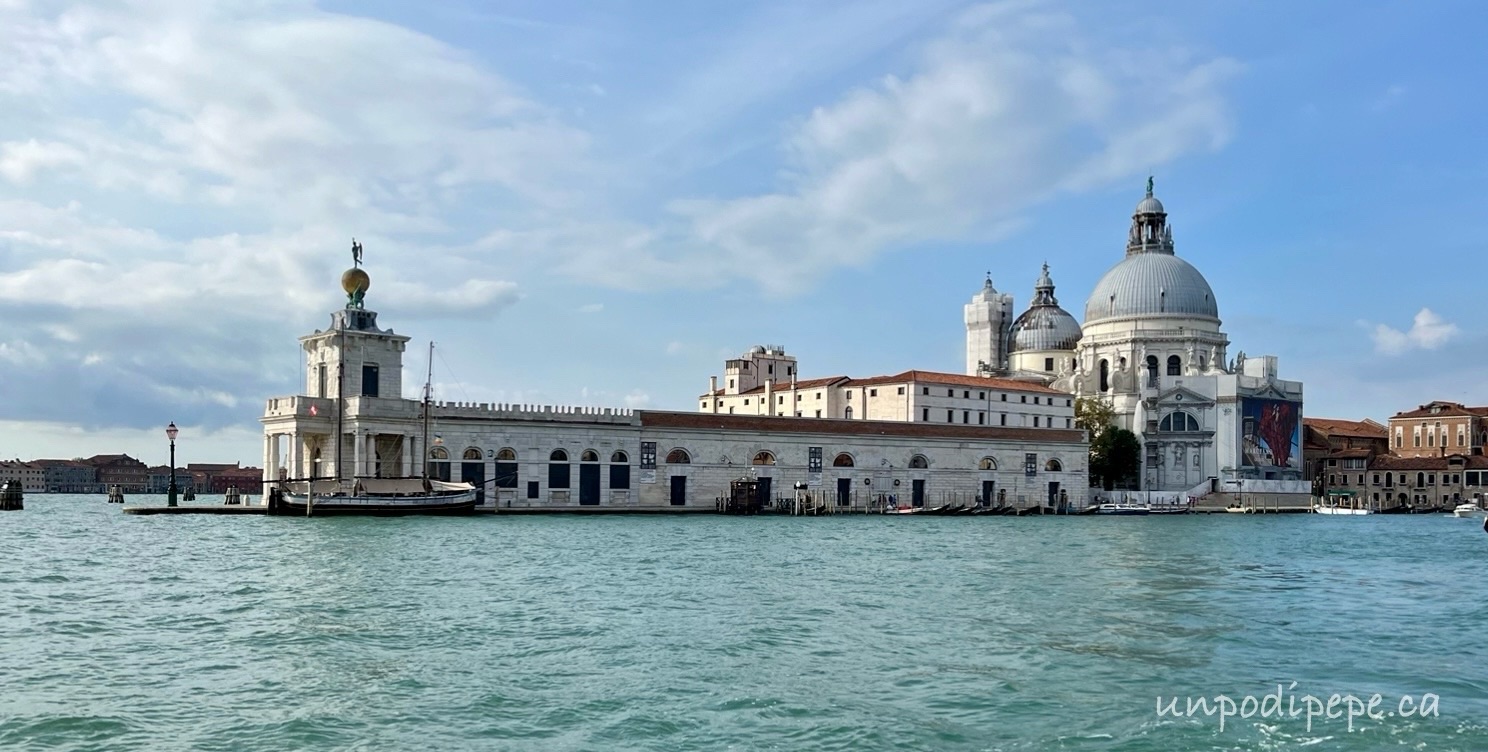
  • Mahmood -‘Tuta gold’.  Mahmood (Alessandro Mahmoud) won Sanremo Giovani in 2018, which got him a spot in the 2019 competition.  He is the 2019 Sanremo winner and 2ndplace Eurovision winner with the catchy ‘Soldi’. He also received the Eurovision prize for best musical composition.  Mahmood also won Sanremo in 2022 with Blanco with ‘Brividi‘. I believe this is the only love ballad performed by 2 men.  They placed 6 at Eurovision in Torino.  In 2023 Mahmood was a special guest the final night of the Eurovision Festival in Liverpool.  He was a guest performer at Sanremo 2020 and 2021 and has written songs for Elodie, Michele Bravi, Marco Mengoni and others. He starts his European tour in April 2024. Fun fact:  Mahmood voices Sebastian in the Italian version of the live action ‘La Sirenetta/The Little Mermaid’!
  • Maninni -‘Spettacolare’. Alessio Mininni released several singles in 2022 and 2023.  He opened for The Kolors on various dates of their tour.  This is Maninni’s first time at Sanremo.
  • Mister Rain -‘Due Altalene. Rapper and ex Amici participant Mattia Balardi from Brescia, known as ‘Mr Rain’ has been performing since 2014.  At Sanremo 2023 Mr Rain placed 3rd with ‘Supereroi‘, which he performed harmonizing with 8 talented bambini. He also released a platinum single with Sangiovanni ‘La Fina del Mondo‘.
  • NegramaroRecominciamo Tutto’. Negramaro, made up of Giuliano Sangiorgi, Emanuele Spedicato, Ermanno Carta, Danilo Tasco, Andrea Manasco and Andrea DeRocco are one of my favourite bands- and not just because they are Pugliesi!   In 2001 they were finalists in MTV’s new talent contest.  They released their first album in 2003.  In 2005 the album ‘Mentre tutto Scorre‘ put them on the map.  They competed at the Festival Sanremo with the title song and received the Sala Stampa radio and TV critics award.  They also received an MTV Europe award.  Negramaro has collaborated with everyone in Italian music and also international acts, including the beautiful duet ‘Senza Fiato’ with the late Dolores O’Riordan. Negramaro was the first Italian band on the cover of Billboard Magazine. They were Sanremo superguests in 2018 and in 2019 released a docufilm on the occasion of their 20 years together.  In 2022 they had a 40 date Unplugged European Tour.  19 years later, they are back competing at Sanremo for the 2nd time.
  • Renga e Nek -‘Pazzo di te. Francesco Renga and Filippo Neviani aka Nek have each been in the Italian music industry for over 35 years.  Francesco is the 2005 Sanremo winner with ‘Angelo’ and this is his 8th time in the competition.  Last year he and Nek were guest performers and they released an album together ‘Renganek’.  This is Nek’s 5th time competing at Sanremo. In 2015 he placed 2nd with ‘Fatti Avanti Amore’ and also won the prize for best arrangement. In 2017 he was the Italian artist most played on radio, with 4 singles.
  • Ricchi e Poveri -‘Ma non Tutta la vita. Originally formed in 1968 as a quartet Franco Gatti, Angela Brambati, Marina Occhiena and Angelo Sotgiu. In their 1970 Sanremo debut, they came in 2nd place with ‘La Prima Cosa Bella‘ together with Nicola di Bari. They also came in 2nd place in 1971 with ‘Che Sarà’.  In 1978 they represented Italia at Eurovision.  In 1981 they came in 5th with ‘Sará Perché ti Amo‘ and Marina left the group.  They won Sanremo 1985 with ‘Se m’Innamoro’.  In 2013, they received the Premio della carriera Città di Sanremo and in 2016 Franco also left the group.  To celebrate half a century of Ricchi e Poveri, they held a concert at the Teatro di Torino in 2018.  In 2020 their manager reunited the 4 and they were superguests at Sanremo. Franco passed away in 2022.  This will be their 13th time competing at the Festival Sanremo.
  • Rose Villain -‘Click boom!’.  This is Goth singer/rapper Rosa Luini’s first time competing at Sanremo.  Last year she performed on Covers night with Rosa Chemical.  She also released her first album ‘Radio Gotham‘ and ‘Fragile‘ a single with Achille Lauro. Her new hit ‘Io, me e altri guai‘ is described as ‘Tainted love meets Wednesday Addams’. Rose will be performing with Italian legend Gianna Nannini for Covers night!
  • Sangiovanni –‘Finiscimi’. Since his Sanremo debut in 2022, the 20 year old has had great success. His song ‘Malibu’ had the most listens on Spotify Italy in 2021. For Covers night, he will perform ‘Mariposas‘, the Spanish version of his hit ‘Farfalle’ with Spanish singer Aitana.
  • Santi Francesi -‘L’amore in Bocca‘.  Santi Francesi is made up of 2022 XFactor winners Alessandro DeSantis and Mario Francese-see what they did with their name?.  They released their first album in 2019 and opened for Madame and Blanco at the Ferrara Summer Festival. This is their first time at Sanremo.
  • The Kolors -‘Un Ragazzo, una Ragazza’. Formed in Milano in 2009 by cugini Antonio ‘Stash’ and Alex Fiordispino and Dario Iaculli with a distinct 80’s funk vibe.  They were the resident band in the club ‘Le Scimmie’ and won the Amici talent show in 2015. The Kolors made their Sanremo debut in 2018 with their first song in Italian ‘Frida (Mai, mai, mai)’. They have done many collaborations and Stash has been an Amici judge.  Their 2023 hit ‘Italdisco‘ was the tormentone** of the summer!

*Amici is an Italian talent show on television since 2001.  20 ‘students’ aged 16-30 years, interested in being professional singers, songwriters and dancers participate. **Un tormentone is a catchy song that you can’t get out of your head, like an ‘ear worm‘!

Read the contestants’ full bios on the Festival di Sanremo website.  RAI International usually airs the shows twice-once live at 1900 -0100ish Italian time, and a replay later.  Check the local listings for your country.  The RaiPlay app is another way to watch -and it will not be Geoblocked!

Will you be watching the Festival di Sanremo?  Let me know which performances you are looking forward to or which ones were your favourites!

Ciao, Cristina

2023~Un po’ di pepe Year in Review

Tags

, , , ,

As we prepare to ring in 2024, here is a look back at 2023 on Un po’ di pepe. More posts were published than last year (yeah!) although still not as many as I was hoping for. The post pandemic creative slump is still lingering, but things are slowly improving. There are many half written things in progress!

I did manage to participate in a Countering Isolation with Creativity project for seniors. Click on the link to view the 1.5 hour mixed media selfie collage workshop on Youtube. Early in the year, post #200 was published, and I had an ‘Espresso per uno‘ print giveaway for 3 readers.  

During my yearly trips to Italia, I try to visit 1 or 2 new places.  In 2023, I went to Procida for the first time-definitely not the last time.  I also took an unexpected short trip to Costa Rica and saw lots of monkeys!   It is probably news to most of you that I am a huge U2 fan. In October, I went to see them in Las Vegas at the Sphere! It was amazing, and we even had surprise guest Lady Gaga for 3 songs!  The visuals and acoustics at the Sphere are so good it has ruined me for any future concerts.  Have a look at my 2 minute video-make sure  to watch it till the end:


To celebrate Week of the Italian language in the World, I published a post to liven up your language skills ‘Che Cavolo! Non rompere le Scatole!‘. 

WordPress sends me end of year stats which I love to share because they are so interesting.* In 2023, Un po’ di pepe had over 14,000 views from 112 different countries!  I wish I could visit them all!  The top 10 posts (11 actually because of a tie) of 2023 are listed below, with links included in red, in case you missed any of them.  7 of the top posts of the year appear on the first page of a google search.  This is fantastic!  Granted, they are not commonly searched topics but I am still impressed. The art history related posts seem to do well-I will have to write more of them in future!

Based on the number of views, the top posts of 2023 are:

#10a In my kitchen in Puglia 2023 Once again, my summer cucina with its amazing barrel-vaulted stone ceiling was well read.  This post was written as part of the ‘In my kitchen’ worldwide blog linkup hosted monthly by Sherry of Sherry’s Pickings

#10b tied with #10a Appuntamento con la Daunia.  Every October I receive an invitation to this event and I was finally in Italy at the right time! Hosted by my amico Peppe Zullo at Villa Jamele, this event features local food and wine, focusing on the biodiversity of the Monti Dauni area of Foggia.

#9 Tutti i Santi This 2018 post was written after I attended the annual November 1 festa in Orsara di Puglia to honour the departed with bonfires and carved pumpkins. I previously wrote about this event in Fucacoste e Cocce Priatorje, but at the time I had not attended in person yet. 

#8 Grano Arso A Pugliese gastronomic tradition that honours the resilience of our contadini ancestors. There is not a lot written in English about grano arso, which explains why this 2015 post is in my top 10 every year and comes up 5th on the first page of Google.

#7 L’Arte sa Nuotare  made the top list again! During a 2019 trip to Firenze with my nipotina Viaggio con Isabella we were on constant lookout for street art by Blub, the talented artist who plunges famous works of art underwater. This post also comes up 2nd on the first page of a Google search!  Spread the Blub love- read about more Blub in Blub a Napoli.Ragazza con l'orecchina di perla Blub street artist Firenze, Girl with a pearl earring#6 The Last Medici As an art history nerd, this 2020 post was my personal thanks to Anna Maria Luisa De’ Medici (AMLDM) the last of the Medici family, for leaving Firenze and the world her family’s legacy of art treasures.  If you have been to the Uffizi or Palazzo Pitti, you will know what I mean.  I was thrilled to see it on the list again! It  comes up #4 in google search both for the topic and for her name!

#5 Bialetti Moka A 2023 post about the history and invention of the beloved Moka caffettiera which revolutionized caffè for Italian households around the world.  The best invention to come out of observing laundry!

#4 Italiano per Ristoranti-How to Pronounce your Restaurant Menu, this handy Italian menu pronunciation guide is usually #1.  In a google search for ‘Italian menu pronunciation’ it comes out as the top suggestion! Molto cool! A 6 page downloadable PDF is available via a link at the end of the post. I would still like to expand and turn it into an ebook someday. Speriamo! If any of you have experience or advice on this, let me know! Ravioli di ricotta e spinaci

#3 Sanremo 2023 For the second year in a row, I wrote a handy viewing guide to the 5 day Festival di Sanremo Italian song contest held the first week of February and it was well received, so I plan to keep doing it every year.

#2 Napoli Street Art I absolutely love Napoli a perfect place for self-expression since the last few thousand years. Join me on a graffiti/street art tour in the Centro Storico. This 2020 post comes up 3rd in Google search .I have  been to Napoli a few times since and probably have enough new street art photos to make a 2.0 version.volto di Sophia Loren Napoli street art#1 Hairstyling in Ancient Roma This 2017 post was on the top 10 list last year for the first time, but I am sooooo beyond thrilled to see it is in first place for 2023!  I am not sure why? I know some views have been referred via Pinterest and it now ranks 3rd in Google search. Another art history post of mine that suddenly had lots of views was because it was being used for a class by a college in California.  It is hard to know for sure why? Join me as I study ancient hairstyling practices by looking at Classical sculptures and paintings. Most of the research was done at Palazzo Massimo.  Yeah for archeology nerds!

For 2024 my goals are simple and the same as usual…. travel, less stress, more exercise, more art and writing! 

I would love to hear which post you liked best, and what you would like to read more about in 2024 on Un po’ di pepe?  Let me know in the comments.  Looking forward to writing more cose interresanti /interesting stuff in 2024. In April, Un po’ di pepe celebrates 10 years of blogging, so I will have to plan something special!

To find out what I’m up to, check out the Un po’ di pepe Facebook page and Instagram (@unpodipepe).  I know many of you read new posts when they are posted on Facebook, but with the new algorithms, you are likely to miss them most of the time.  To get notified of new posts, it is best to sign up with your email in the top right hand corner of the home page.

Buon Anno a tutti i lettori di ‘Un po’ di pepe’, vicini e lontani!  Spero che 2024 porta buona salute e gioia a voi e ai vostri cari.  Happy New Year readers of  ‘Un po’ di pepe’, near and far.  I hope 2024 brings good health and joy to you and your loved ones!

Vi auguro un 2024 piena di gioia e buona salute!  Ciao, Cristina

Check out Italian Christmas Vocabulary for help understanding my seasonal greetings,

*Note…WordPress’ method of collecting stats is odd.  The newest post counts as a ‘Home page’ view until the next one is published and this definitely does affect the results, especially for those of us that do not post often.