• Home
  • About me/Chi sono
  • Contact

Un po' di pepe

~ …… (oon∙poh∙dee∙PEH∙peh) Cristina writes about interesting stuff /Cristina scrive di cose interessanti

Un po' di pepe

Author Archives: Un po' di pepe

Campeggio sul Gargano

29 Wednesday Mar 2017

Posted by Un po' di pepe in Italia, Photography, Puglia, Travel

≈ 13 Comments

Tags

Arco San Felice, Baia delle Zagare, Gargano campsites, Il Gargano, Isole Tremiti, Italy travel tips, Mattinata, Parco Nazionale del Gargano, Puglia, Trabucchi del Gargano, Vieste, Vignanotica

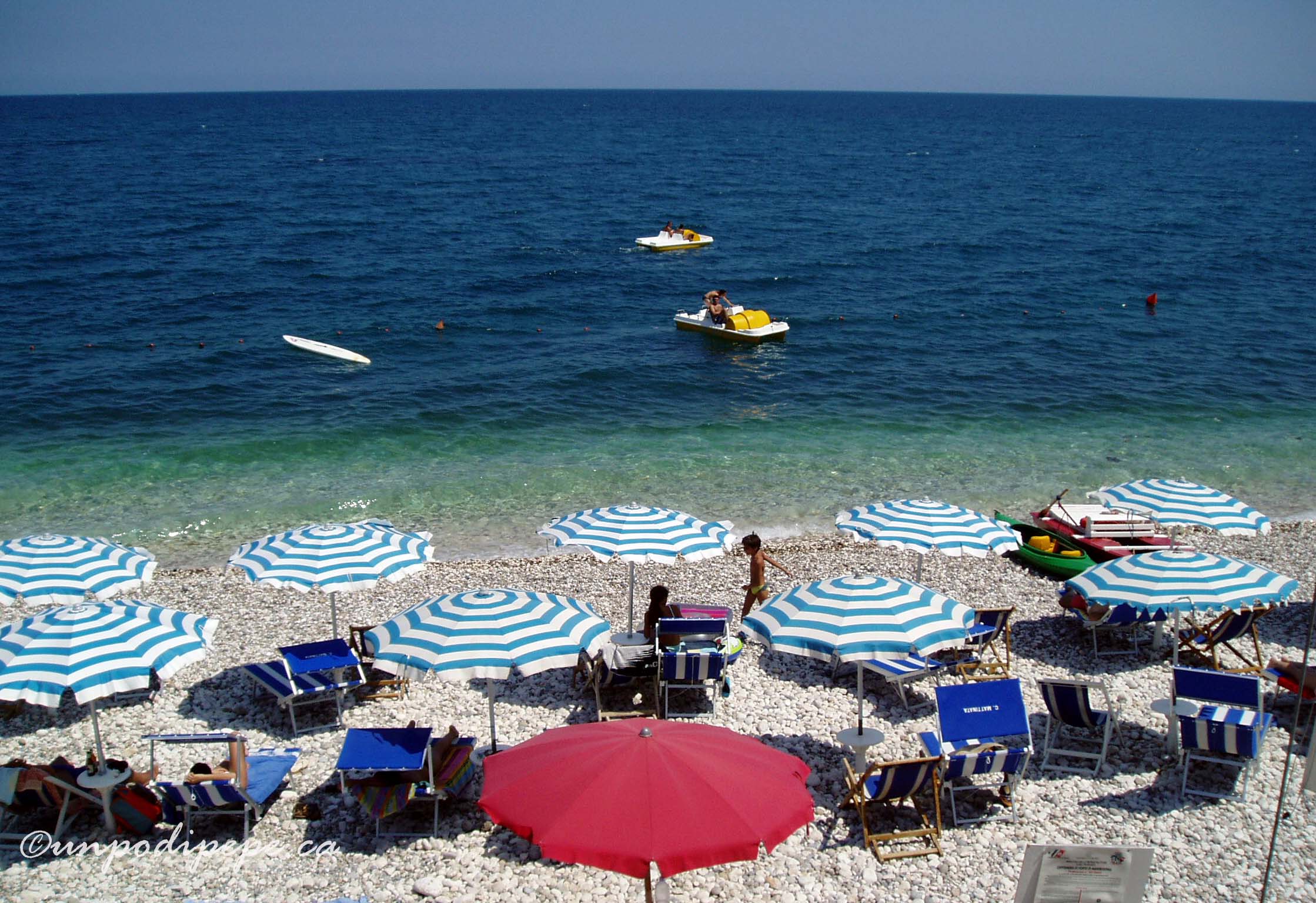
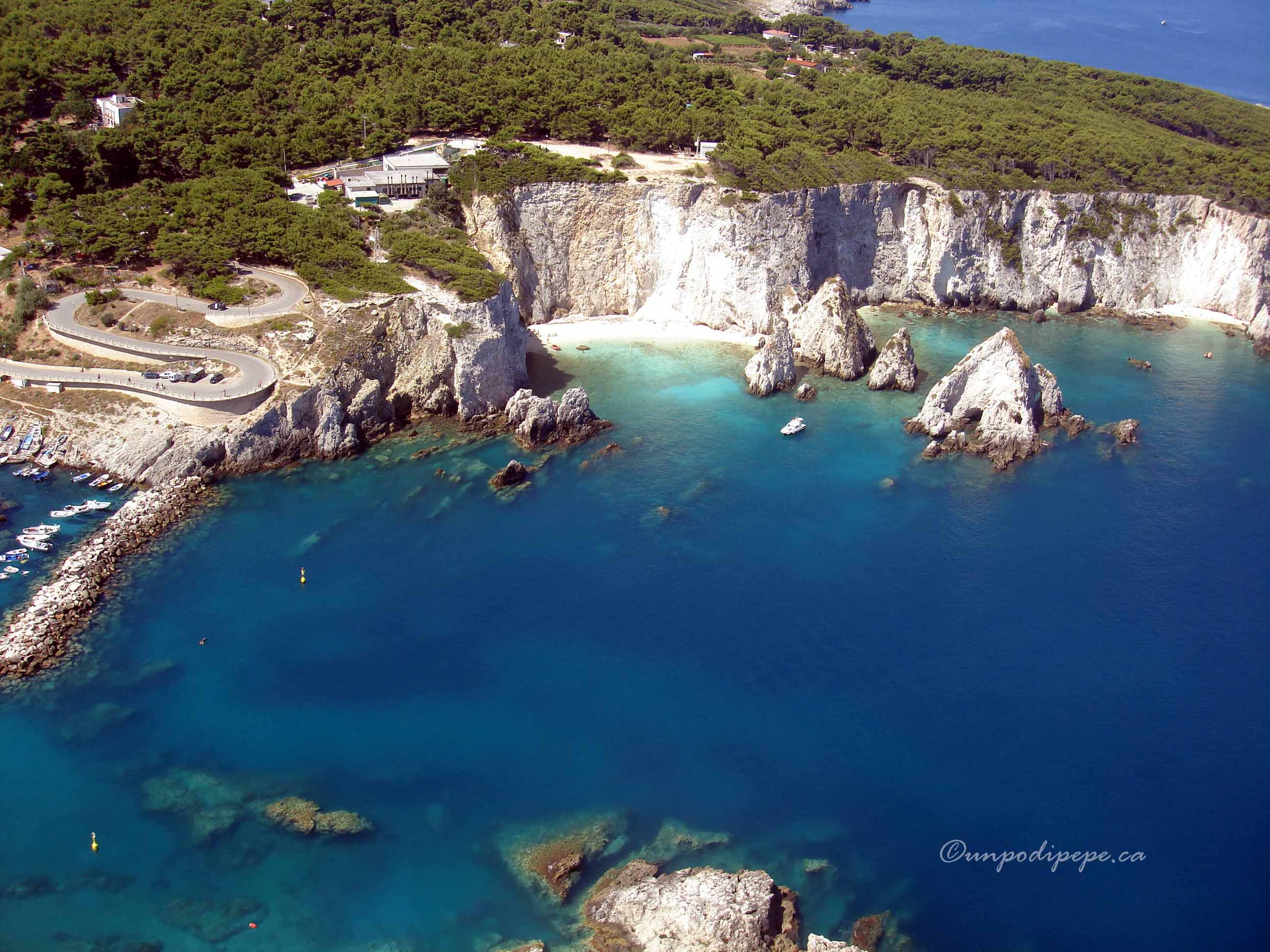
Dovè la primavera?  It was a long, cold winter, with far too much snow.  Now la pioggia has set in.  I am dreaming about il caldo, il sole e la spiaggia-warm weather, sunshine and the beach! I have had the opportunity over the last few years, to spend many weekends at different sites in the Gargano (gar·GAH·noh) with my cugini and their camper.  I would love to be there now!  To get ready for summer and welcome warmer weather, I am sharing my favourite scatti from my Gargano travels.

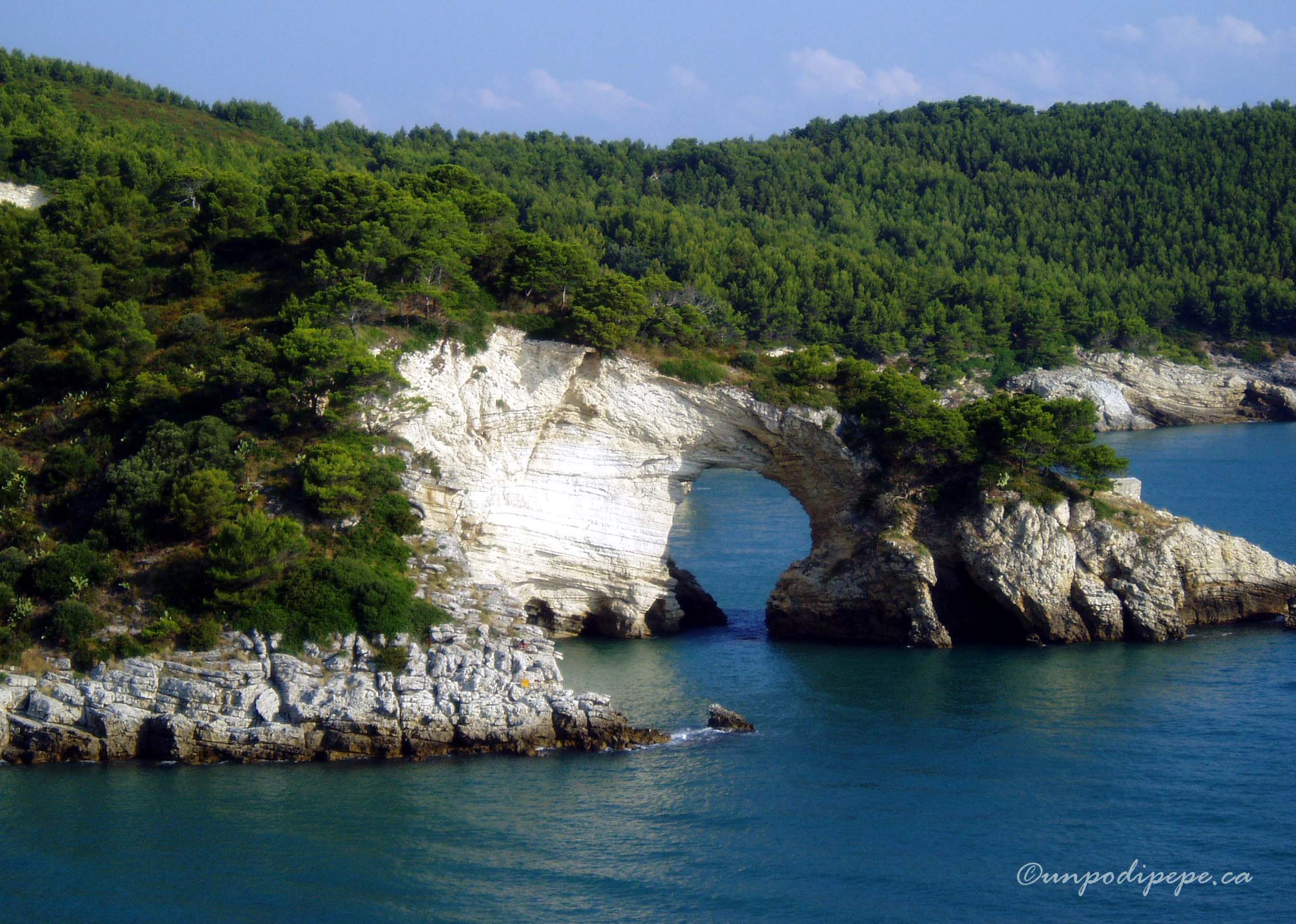
II Arco San Felice

Il Promontorio del Gargano is the promontory sticking out above ‘il tacco’, the heel of Italia.  You can also think of it as la caviglia-the ankle spur of Italia.  One of the most beautiful areas on earth, Il Gargano has unique flora and fauna.  Biodiversity wise the area is more like an island-an island surrounded on 3 sides by the Adriatico with 1 side attached to Italia.  Most of the promontorio is a protected area and marine reserve, Il Parco Nazionale del Gargano, which includes le Isole Tremiti and the ancient Foresta Umbra. Luckily this has prevented the area from being overdeveloped with large multinational hotels and resorts.

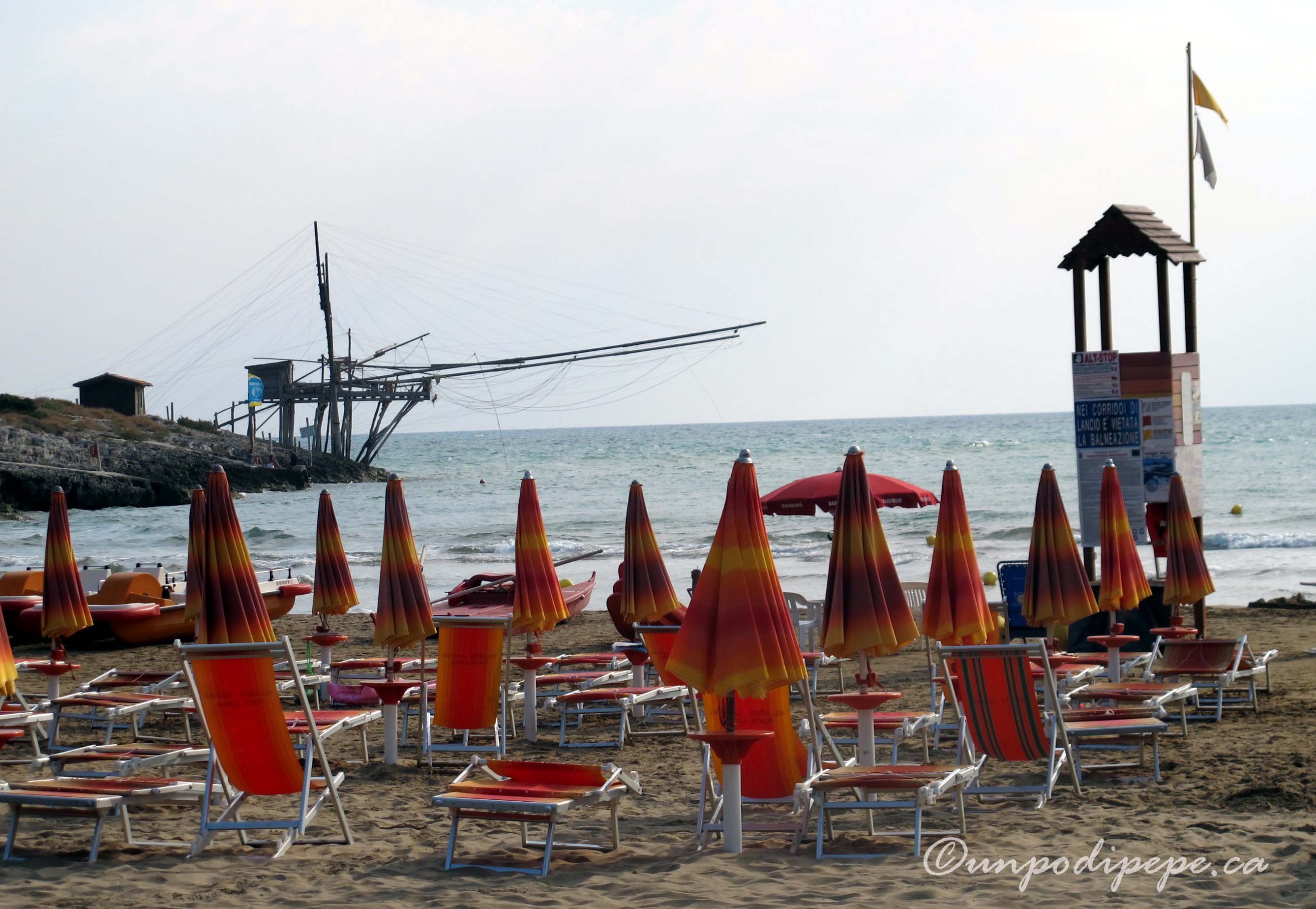
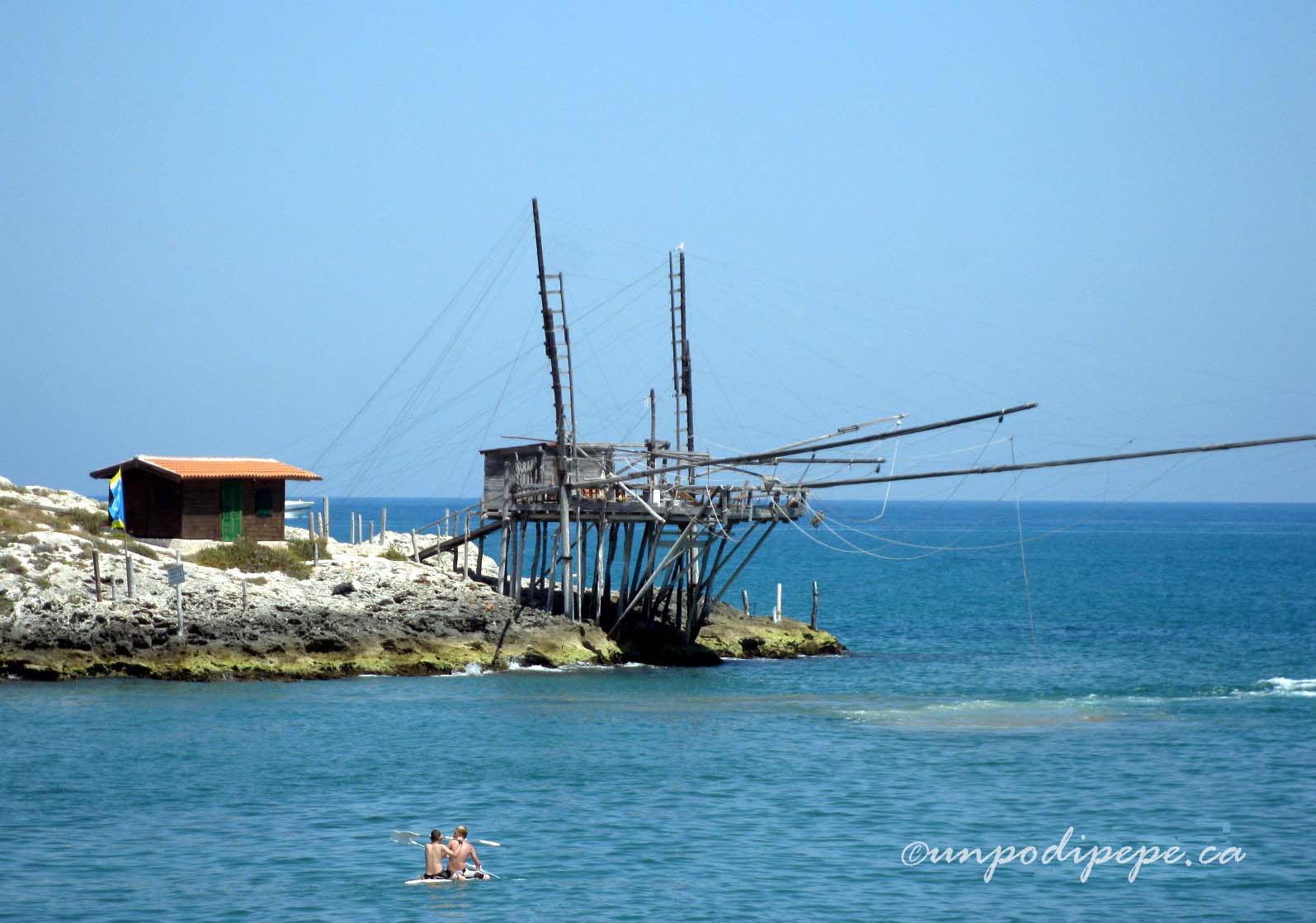
Il Gargano is famous for picchi (woodpeckers) and many other birds, 300 varieties of orchids, almonds and olives.  There are also endless ancient hillside olive groves, pine forests, sea grotte, limestone cliffs, rocky shores, crystalline water and fresh seafood.  The coast between Peschici and Vieste has 13 working trabucchi, fascinating ancient fishing contraptions which I wrote about in this post.

Trabucco Punta Lunga

The winding road around the Gargano, SS 89 from Foggia, has sharp turns and viste mozzafiato (VIS·teh moz·zah·FYAH·toh)-breathtaking views. One of my favourite viewpoints is La Baia delle Zagare. Here you can see the clifftop 4 star resort of the same name, and its private spiaggia.  There is a glass elevator built into the cliff-something I have to see for myself one of these days!

Baia delle Zagare

View of Vieste from the SS89

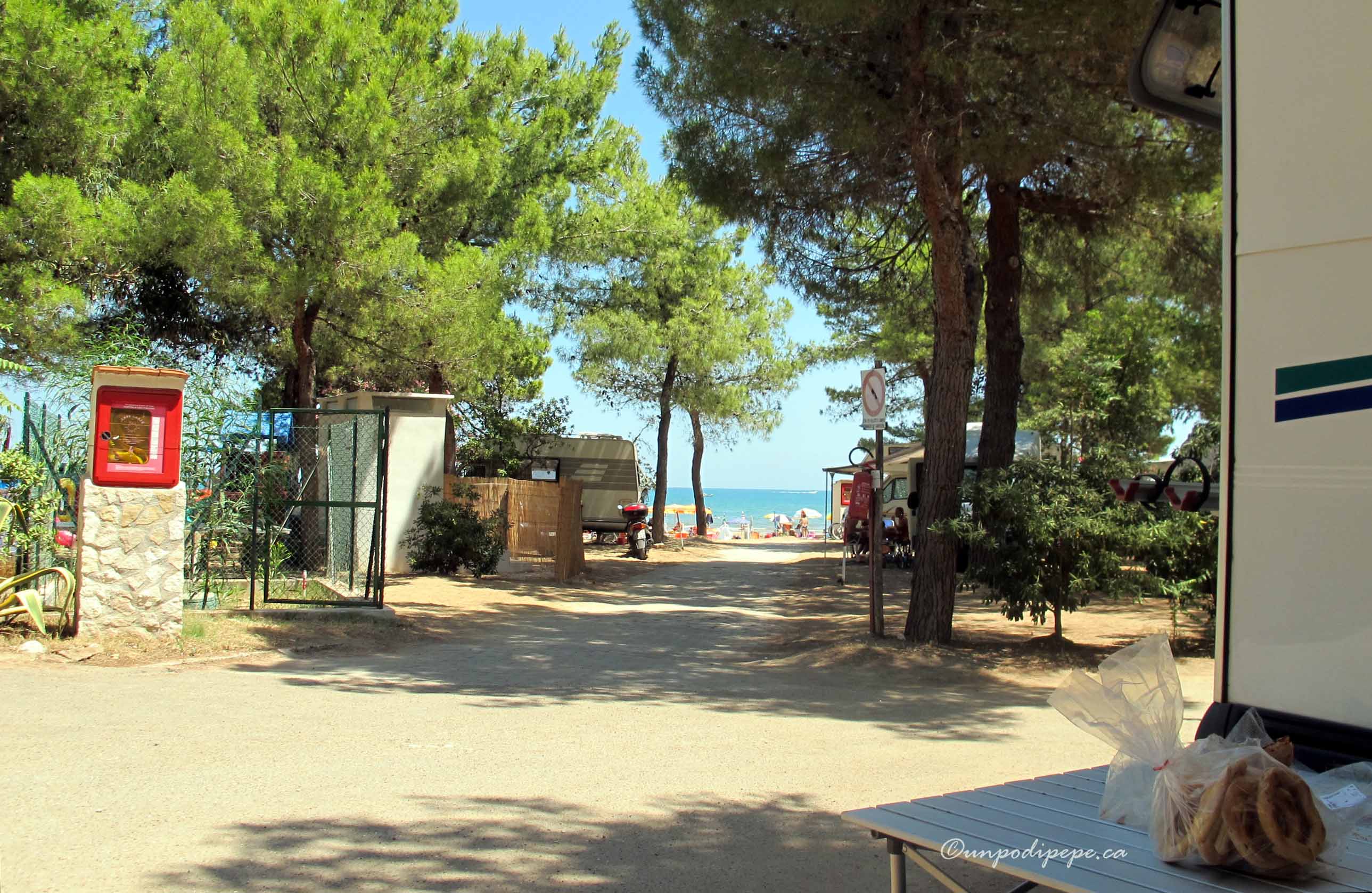
Il Gargano is full of campsites, inexpensive accommodation and B & B’s.  The campeggi e villaggi turistici -campsites and tourist villages, are ben attrezzati (well-equipped). You can camp with a camper and all the accessories, or just a vehicle and a tent.  There are also villette-little cabins that can be rented, but you have to bring your own sheets and towels, so these are mostly used by locals.  Some campsites even have a small hotel attached. This website (in Italiano) lists Gargano campsites. I have stayed right by the water and in an olive grove near Mattinata, and had a view of the beach near Vieste.

View from the camper, Punta Lunga, Vieste

Our setup is always comfortable and rustic, but some of the things you see at the campeggi are hard to believe. Families set up for the whole summer, with those working joining in on the weekends. I have seen TV with satellite, ceiling fans, generators and portable kitchen tents. Last year at Camping degli Ulivi in Mattinata, the family across from us had brought 5 kinds of brooms!

Ancient olive trees provide an interesting handwashing station, and a place to store 5 different brooms at Camping degli Ulivi

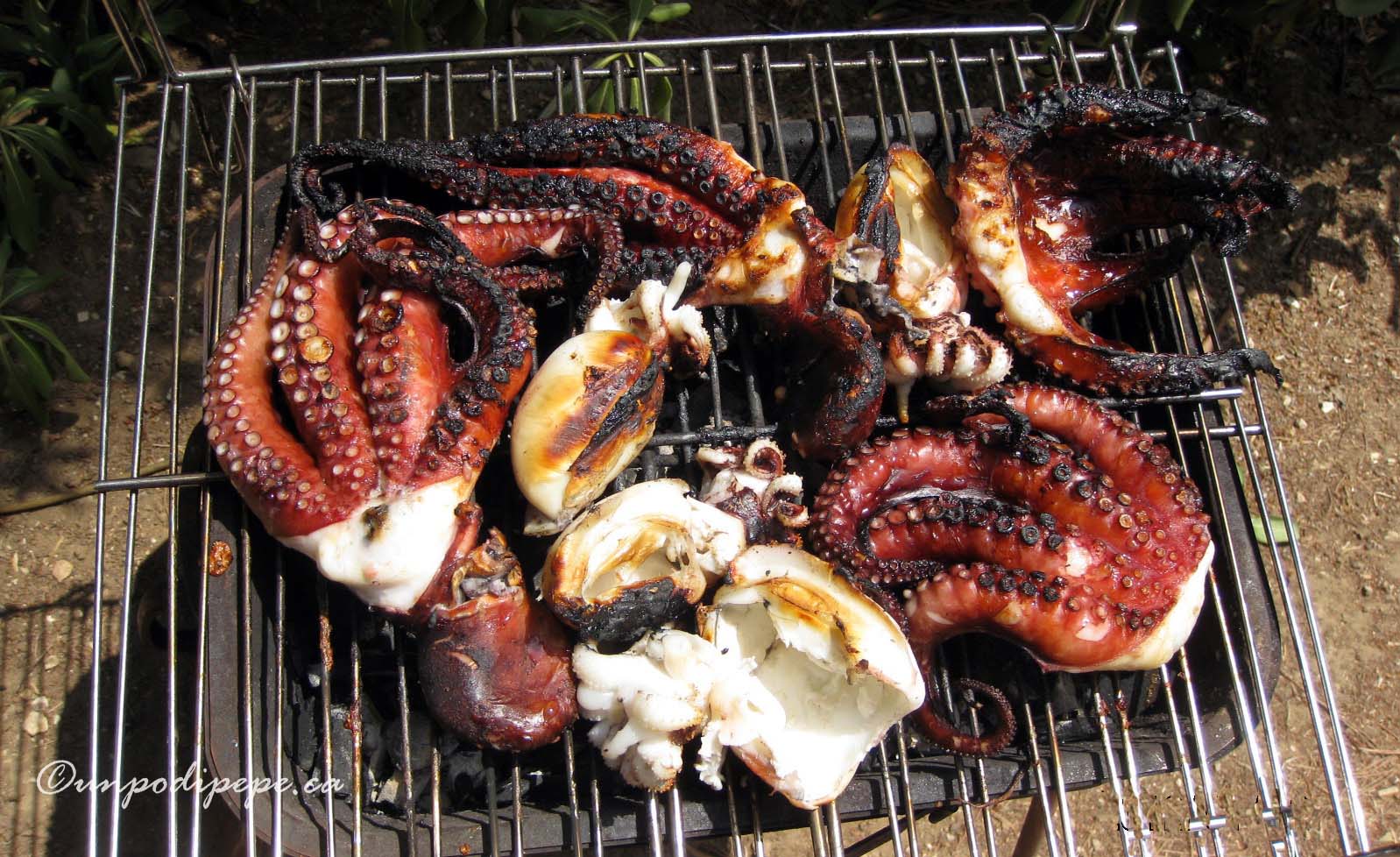
No yucky dehydrated camping food is found here! Fresh seafood is available from the mobile fishmonger il pescivendolo (pesh·ee·ven·DOH·loh) driving around to the different campsites. At Villaggio Camping Punta Lunga, we walked 2 km to Vieste to il pescivendolo along the amazing clifftop trail.

View from the 2km clifftop trail to Vieste

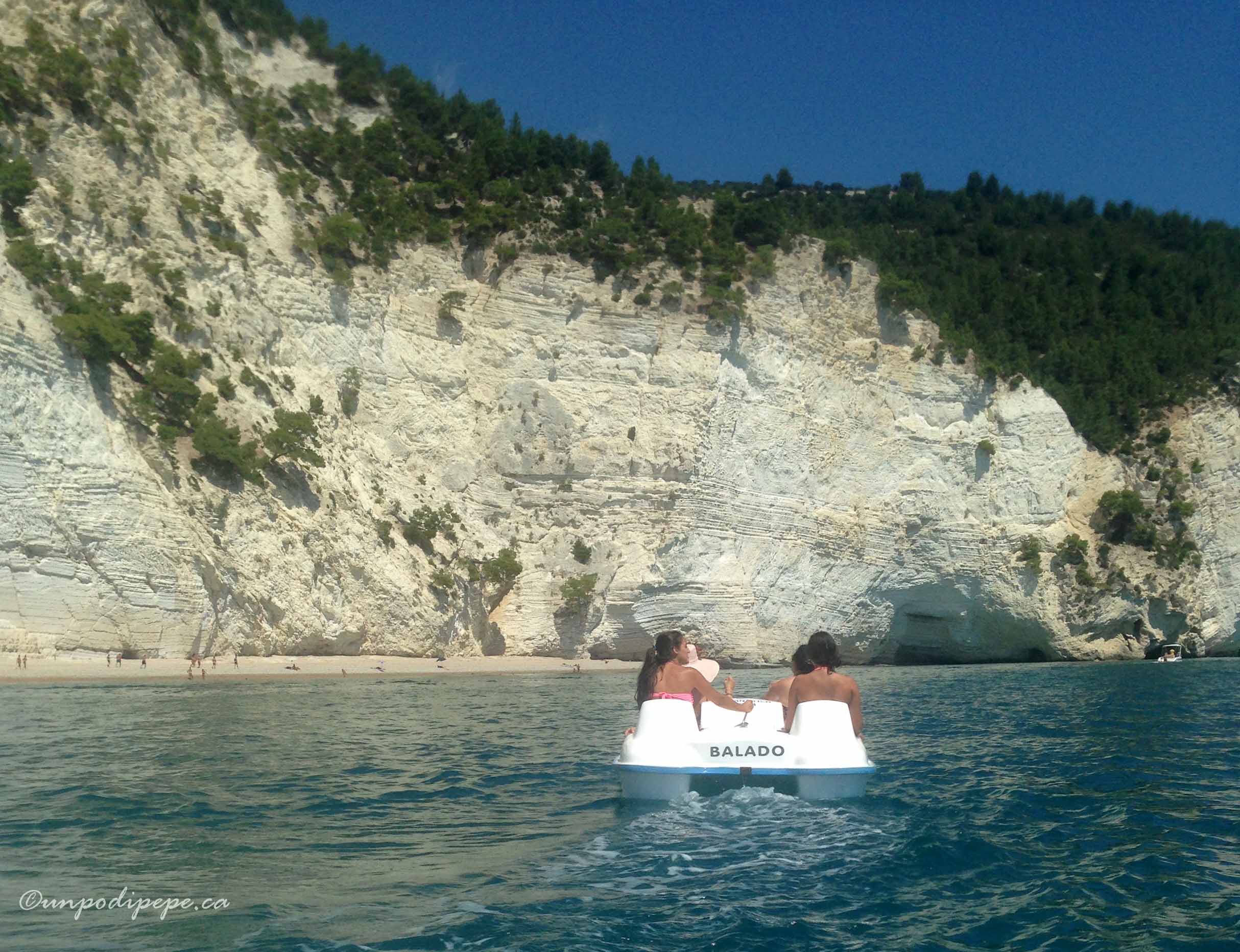
Vignanotica is between Mattinata and Pugnochiuso, closer to Pugnochiuso. It is surrounded by a wall of limestone cliffs and is only accessible by walking down the steep hill. Inaccessibility prevents development on the spiaggia. Parking is available in an olive grove, right under the olive trees for €7 and there is a shuttle down to the beach. Vignanotica can be crowded on Sundays in the summer. There is a small bar on the beach. Vignanotica is in sun until about 2pm, then it is in full shade from the cliffs. Some of the Gargano beaches, including Vignanotica, Mattinata and l’Isole Tremiti are rocky, so water shoes are needed to walk in the water.

Vignanotica. The tiny people walking on the beach provide scale for the limestone cliffs.

Most of the tourists visiting the Gargano area are Italian, especially in the summer.  Many Germans bring their campers too, but you do not meet a lot of North Americans here.  Il Gargano is the place to visit if you want to improve your Italiano.The closest major airport for Il Gargano is Bari. The airport in Foggia sometimes has flights to and from Milano, but usually it just has Alidaunia helicopter service to le Isole Tremiti, San Giovanni Rotondo, Vieste and Peschici. It is difficult to get around the Gargano without a car unless you have lots of time. The SS 89 from Foggia is the major road. On the way, be sure to stop and visit Santa Maria di Siponto near Manfredonia. There is no rail service after Foggia, except a local train from San Severo to Peschici. Ferrovie del Gargano buses outside the Foggia stazione leave for towns in the Gargano, but they are not frequent . Parkinbici is a bikesharing service between Gargano towns. For visitors, a weekly card is € 20 and weekend € 12.

Flying into San Domino by helicopter

As the Gargano website says, visit il Gargano ‘per una vacanza tra natura, mare e cultura’…for a holiday among nature, sea and culture!  Buon Viaggio, Cristina

Share this:

  • Share on Facebook (Opens in new window) Facebook
  • Share on Pinterest (Opens in new window) Pinterest
  • Share on X (Opens in new window) X
  • Email a link to a friend (Opens in new window) Email
  • Share on WhatsApp (Opens in new window) WhatsApp
Like Loading...

Giornata Internazionale della Donna

08 Wednesday Mar 2017

Posted by Un po' di pepe in Feste

≈ 11 Comments

Tags

Festa della Donna, Giornata Internazionale della Donna, International Womens Day, Mimosa, Torta Mimosa

Auguri per la Festa della Donna! Today is la Giornata Internazionale della Donna/ International Women’s Day-originally known as International Working Women’s Day. There is no one specific organization or event behind International Women’s Day, but it is celebrated in many countries around the world. It is a collective day to celebrate the achievements of women and a call to action towards gender equality.

The early 1900’s were a time of great unrest for women, who did not yet have the right to vote.  In New York in 1908, 15,000 women marched for better pay and shorter hours. The following year, on February 28th, the Socialist Party of America held the first National Women’s Day, which was observed until 1913.  In 1910, an international conference of working women was held in Copenhagen.  It was proposed that each year on the same day, every country would have a Women’s Day. The first International Women’s Day was held on March 19th in 1911 in Austria, Denmark, Germany and Switzerland as well as rallies campaigning for women’s rights to work and vote.  Unfortunately, a week later in New York, 146 women were killed or jumped to their deaths in the Triangle Shirtwaist Factory fire.  The women were mostly Jewish and Italian immigrants.  The exit doors had been locked to prevent unauthorized breaks! This horrible event brought attention to working conditions and was the focus of future International Women’s Day events.

Russian women held a strike for bread and peace in 1917 in response to Russia’s losses in the war, and following this they were given the right to vote.  The date translated to March 8th on the Gregorian calendar (that’s the one we use!) and this has been the date for International Women’s Day ever since.

International Women’s Day was first celebrated by the United Nations in 1975, and in 1977 the UN General Assembly invited member countries to proclaim March 8th as UN Day for Women’s rights and world peace.

In Italia, the symbol for IWD is yellow Mimosa flowers (Acacia Dealbata).  This was started in 1946 by Teresa Mattei and Rita Montagnana, activists fighting for women’s equality. They felt that the symbols used in France, violets and Lily of the valley, were too scarce, making them too expensive to use in Italia.  Mimosa flowers bloom in early March.  The pillowy yellow flowers look delicate and fragile, but are actually very resilient and able to resist harsh conditions.  Good qualities for an symbol for women! Originally women gave small Mimosa bouquets to each other.

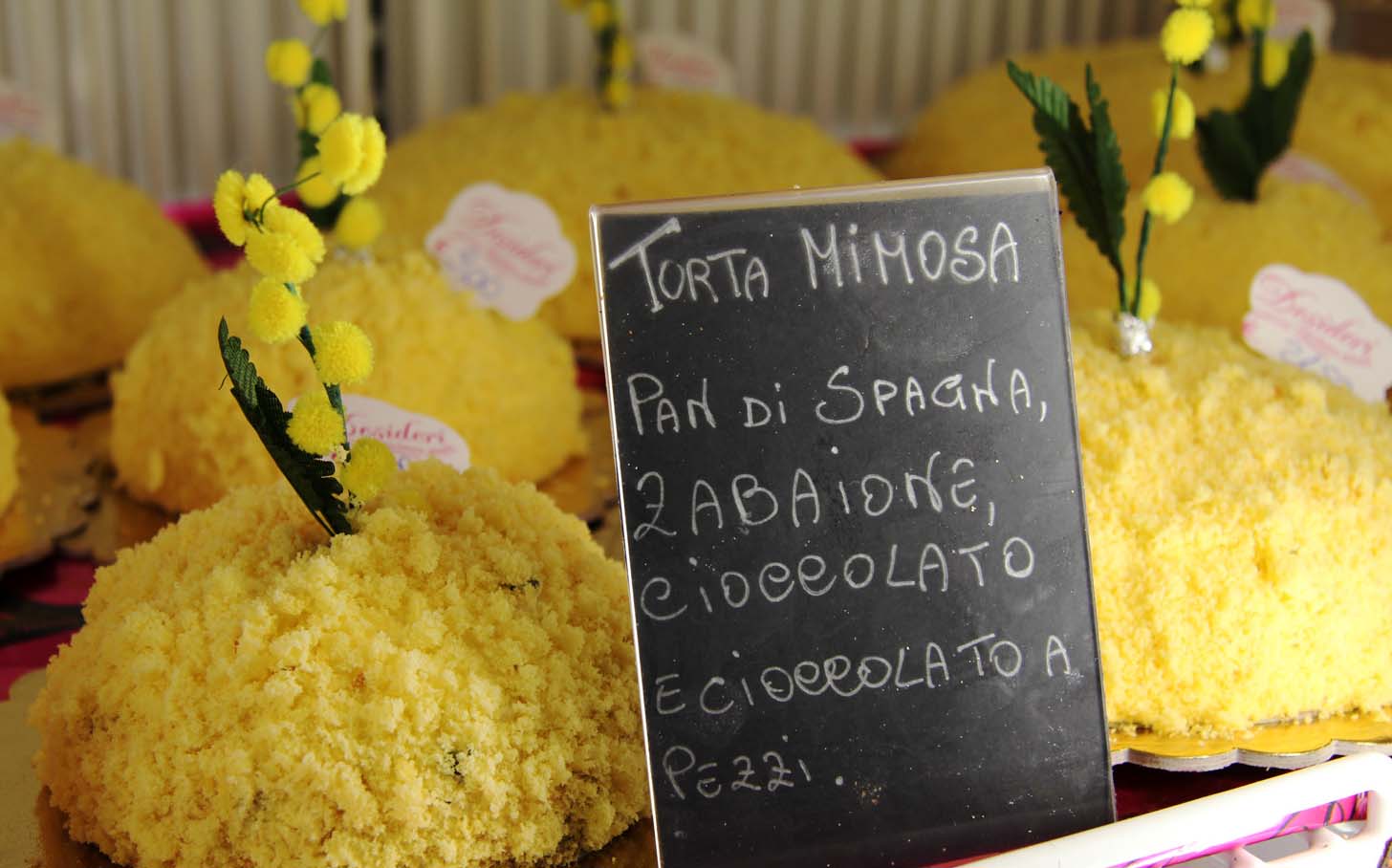
For those with pollen allergies, there is now also Torta Mimosa, a cake that resembles the flower, and chocolates and cookies.  My amica Anna photographed these lovely torte yesterday at Dolci Desideri on Via Gozzi in Roma.

Just like Valentine’s Day, not everyone likes the idea of a ‘Women’s Day’ because love and respect need to be shown more than once a year.  I agree every day should be a giornata della donna, but I also think any excuse to be extra nice to someone is a good thing!  Auguri a tutte le donne!

Ciao, Cristina

Photo credits-Cover photo Wikimedia Commons, Torta Mimosa photos Anna Ambrosini

Share this:

  • Share on Facebook (Opens in new window) Facebook
  • Share on Pinterest (Opens in new window) Pinterest
  • Share on X (Opens in new window) X
  • Email a link to a friend (Opens in new window) Email
  • Share on WhatsApp (Opens in new window) WhatsApp
Like Loading...

Crustoli per Carnevale

19 Sunday Feb 2017

Posted by Un po' di pepe in Feste, Mangiamo!, Parole piacevoli, Recipes

≈ 27 Comments

Tags

Bugie, Carnevale, Cenci, Chiacchiere, Crustoli, Frappe

crustolipercarnevaleCarnevale season is here.  From the Latin Carnem Vale meaning farewell meat, Carnevale is the week leading up to la Quaresima (Lent). La Quaresima is the period of 40 days between Mercoledi delle Ceneri (Ash Wednesday) and Pasqua (Easter).  There are actually 46 days, but the Sundays are not included. Carnevale was traditionally a period of overindulgence before the more humble days of Lent when there was no meat, dairy, fat or sugar and sometimes even days of fasting.  Martedi Grasso (Mardi Gras or Fat Tuesday) is the last day of Carnevale and the last opportunity for excesses.

Like most religious events/festivals, Carnevale and Lent took over from pagan and folk rituals.  This time of year brings the transition from winter to spring and the return of increased daylight. I can’t wait for sunshine and more daylight! For most people, Carnevale was their last opportunity to eat well.  They did not have freezers or refrigerators, so the winter stores of food would be running out or starting to rot.  The avoiding of meat, dairy and fat was not originally for religious reasons-it was going to happen anyways. Lent was a way to mentally prepare and get through this last bit of winter!  Today it is common to not eat meat on Ash Wednesday and on Fridays during Lent.

The Carnevale di Venezia was first recorded in 1268.  It involved masked balls, parades, decorations, costumes and masks, and even dressing as the opposite sex.  You can imagine things often got out of hand!  Napoleon outlawed Carnevale in 1797, and it was only restored 182 years later, in 1979.mazatlanparade

Today Carnevale in Italia is celebrated in Venezia, Viareggio, Ivrea and Putignano. Carnevale in Viareggio is known for its parades featuring political and satirical floats.  I would like to experience Carnevale di Venezia one of these days.  Carnevale is also celebrated in other parts of the world, including Rio di Janeiro, New Orleans and Mazatlan.  For many years, I was involved with the ‘Carnaval‘ in Mazatlan, Mexico with the Seattle Seafair Clowns,  participating in 2 parades and a childrens’ festival.

crustoli2Crustoli are fried, sweet shapes of dough made for Carnevale-as well as Christmas and Easter.  They are known by different names all over Italia.  They are Crustoli or Galani in Puglia, Bugie (lies) in Piemonte and Liguria, Cenci ( rags) in Toscana, Chiacchiere (chitchat or gossip) in Lombardia and Calabria, Crostoli in Veneto and Friuli, Frappe in Lazio and Umbria and Sfrappole in Emilia Romagna!  I hope I got them all right!  In Poland, they are known as Chušciki. Recipes vary as well, but they are all very similar.  Some have milk or baking powder and some do not.  Here is my recipe, which is quite simple:

Crustoli

1egg

15 ml (1 tablespoon) sugar

15 ml (1 tablespoon) Anice liqueur (or Grappa or Sambuca)

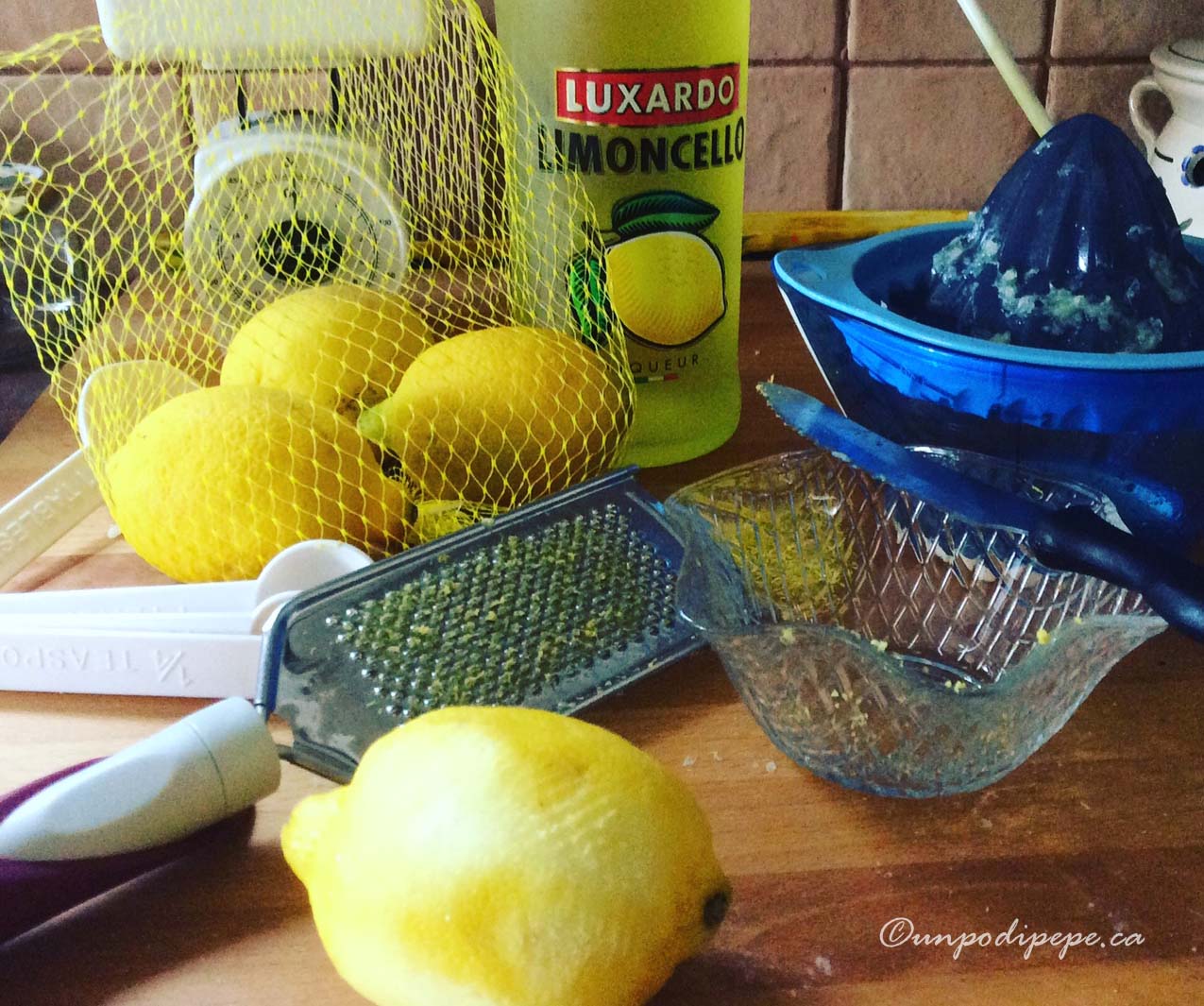
Grated rind of 1 orange or lemon

15 ml (1 tablespoon) olive oil or sunflower oil

~150 grams (1 cup) flour, 00 is best

Salt

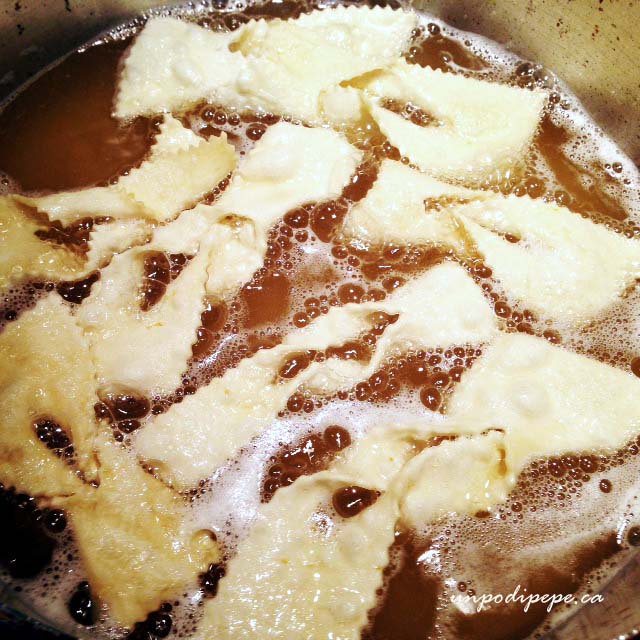
Mix all ingredients together and form into a ball. Roll half of the dough at a time out thin with a mattarello (rolling pin) or use a pasta machine.  If you like them very thin and crispy, the pasta machine will work better.  I like mine a little chewier.  Cut crustoli into shapes with a pastry wheel.  I like to make mine into bows or tie them in knots, but you can also just cut rectangles or triangles.  Fry them in oil.  I use sunflower or olive oil.  Grapeseed oil can also be used.  They cook very quickly!  Drain on parchment paper or paper towels and dust with icing sugar. Note-this recipe does not make a large amount so you may want to double it!  crustoli

Buon Appetito, Cristina

Share this:

  • Share on Facebook (Opens in new window) Facebook
  • Share on Pinterest (Opens in new window) Pinterest
  • Share on X (Opens in new window) X
  • Email a link to a friend (Opens in new window) Email
  • Share on WhatsApp (Opens in new window) WhatsApp
Like Loading...

Hairstyling in Ancient Roma

31 Tuesday Jan 2017

Posted by Un po' di pepe in Art history, Italia, Roma

≈ 23 Comments

Tags

Ancient Roman hairdressing, Hadrianic Turban, Hercules Knot, Nodus, Orbis Comarum, Palazzo Massimo alle Terme, Roma

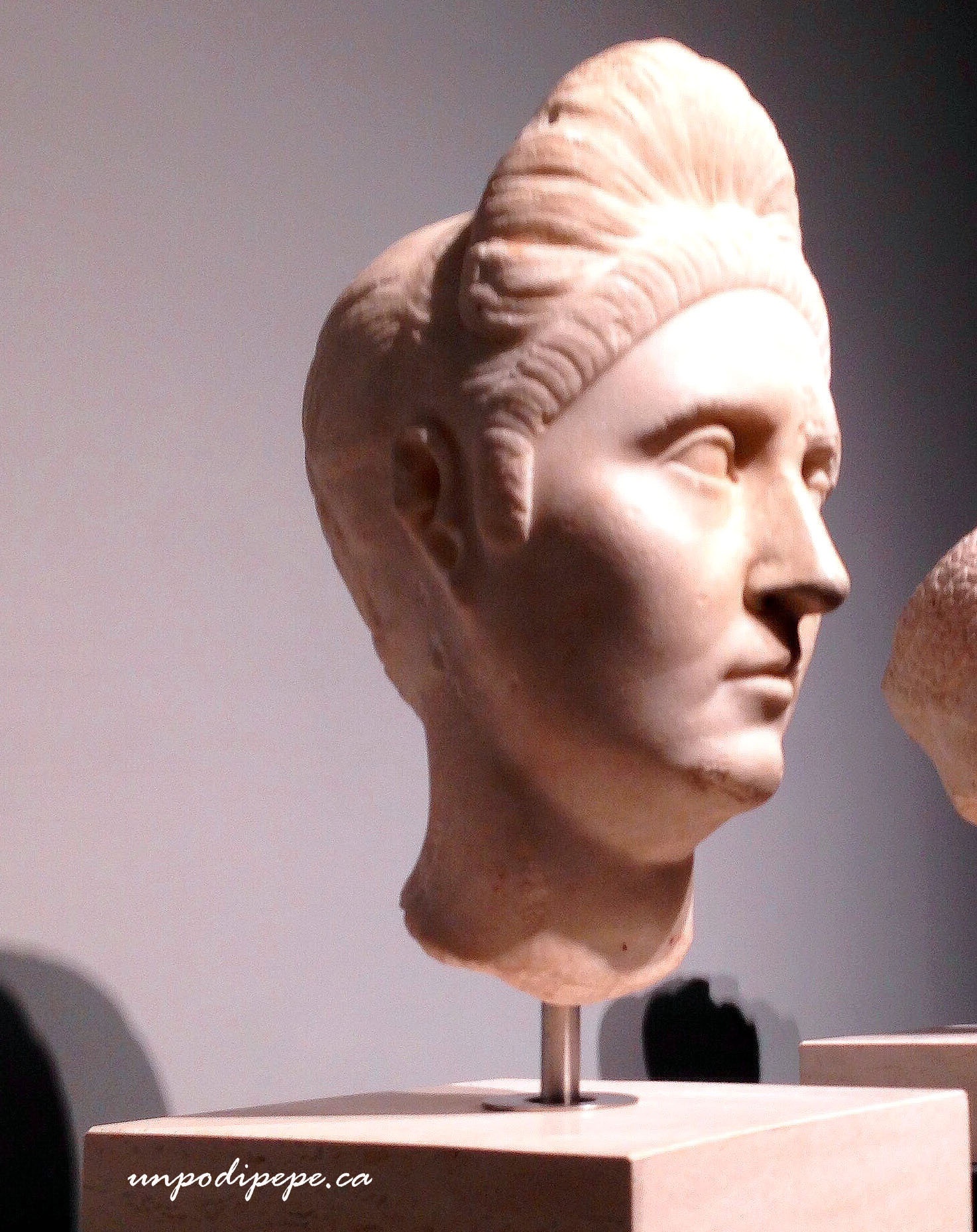
villa-of-the-mysteriesOn a recent visit to Palazzo Massimo alle Terme, I walked the corridors lined with ancient Roman busts and was struck by the variety and realism of sculpted hairstyles. Many of them are so detailed, the hair looks like it is moving. Roman women originally wore their hair in simple styles with a circular band around the head, a bun at the nape of the neck or on top of the head. In Imperial Roma (1st -3rd C AD), hairstyles were always changing. Archeologists are actually able to identify and date coins and busts based on the hairstyle, which was often worn by the empress of the time.vibiasabina3

During the reign of Emperor Augustus elaborate updos for married women became fashionable, and really got big and complex in the Flavian and Trajanic eras. Clothing styles for women were simple, and unlike men, whose status could be reflected in their clothes, there was no special dress code to distinguish status. Women could only display their status, wealth and age via their hairstyles and jewellery. A natural hairstyle was considered barbarian, and implied a lack of both wealth and taste.  For Roman noblewomen, complex, unnatural hairstyles requiring hours of daily attention showed wealth and culture to the max. It was the job of slave hairdressers called ornatrice and their assistants to put hair up and take it down. Scenes of hairdressing and mirror-gazing were popular subjects in portraiture and reliefs, such as the 50 BC fresco from the Villa of the Mysteries in Pompeii.

Reticula (hairnet) of finely woven gold, found on Via Tiburtina, Palazzo Massimo. In behind is the poet Sappho wearing a hairnet, from a Pompeiian fresco.

Reticula (hairnet) of finely woven gold, found on Via Tiburtina, Palazzo Massimo. In behind is the poet Sappho wearing a hairnet, from a Pompeiian fresco.

Ornatrice curled hair in ringlets by wrapping it around a tapered bronze rod called a Calamistrum, which was heated in hot ashes or open flame. Hair was twisted, braided, curled, teased, wrapped and tied with cords or ribbons to bind around the head. Carefully arranged styles, braids and buns were stitched up with blunt bone needle and wool thread, held with wire, painted bone, ivory or jeweled hairpins and combs, and hairnets called reticulae of finely woven gold wire. Beeswax pomade was the only styling product available-the closest thing to hairspray they had!

My similated 'Ornatrice Toolbox' containing blunt needle and wool thread. hair piece and hair bodkin, leaf spring scissors, camel bone comb, beeswax and a 'calamistrum' which is actually my ring mandrel, but it is the right shape!

My similated ‘Ornatrice Toolbox’ containing blunt needle and wool thread. hair piece and hair bodkin, leaf spring scissors, camel bone comb, beeswax and a ‘calamistrum’ which is actually my ring mandrel, but it is the right shape!
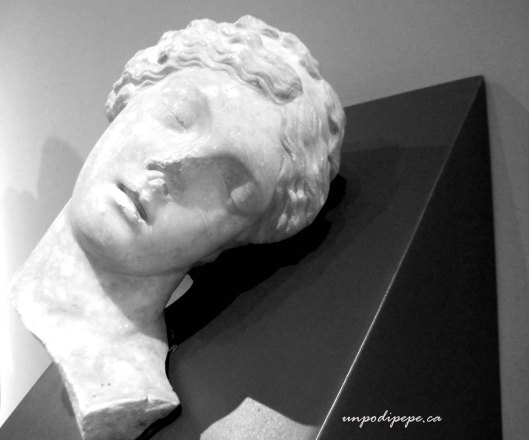
Fanciulla Dormiente, Palazzo Massimo

Fanciulla Dormiente, Palazzo Massimo

Romans dyed their hair with everything from herbs to yucky potions. Hair was lightened with lemons, chamomile, henna, saffron, turmeric, baking soda, ammonia, and even pigeon poop. Hair was reddened with henna from Egypt or animal fat mixed with wood ashes. According to Pliny the Elder, hair could be dyed black by applying leeches that had been rotting in red wine and vinegar for 40 days. Yuck! Hair was also darkened with lead oxide, copper filings, or burned walnut shells and leeks. A paste of herbs and crushed earthworms was applied at night to prevent gray. Che schifo!

Women kept their hair as long as it grew, so styles were done with very long hair. Over time, all of this pulling, pinning, colouring, and frequent curling at high temperature led to hair thinning and damage. The only ‘hair products’ available were olive oil, honey and eggs.  As they got older, women often had to use hairpieces, extensions and wool pads to make their hair look thicker or longer. These were braided into existing hair, pinned, or sewn in with wool thread, twine or wire and a blunt bone needle. In extreme cases, a capellamentum or full wig could be worn. Busts were sometimes even made with detachable marble hairpieces so the style could be updated without the expense of commissioning a new bust.

Lucilla wearing a palla, Palazzo Massimo

Lucilla wearing a palla, Palazzo Massimo

Most adult Roman women wore a palla when they left the house. This was a long cloth wrapped around the body and draped over the back of the head as a veil.  A woman wearing her hair uncovered and loose in the street could be mistaken for a prostitute!

Bust of Livia, Palazzo Massimo

Bust of Livia, Palazzo Massimo

The ancient Nodus hairstyle was worn by Livia Drusilla, wife of Augustus and also his sister Octavia. The hair was parted in 3 sections. The side hair was tied into a bun at the back and the middle section looped back on itself like a pompadour and then braided to join the bun.
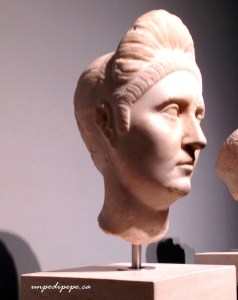
Plotina Pompeia, wife of Trajan, Palazzo Massimo. Her nodus is a high cascading ponytail.
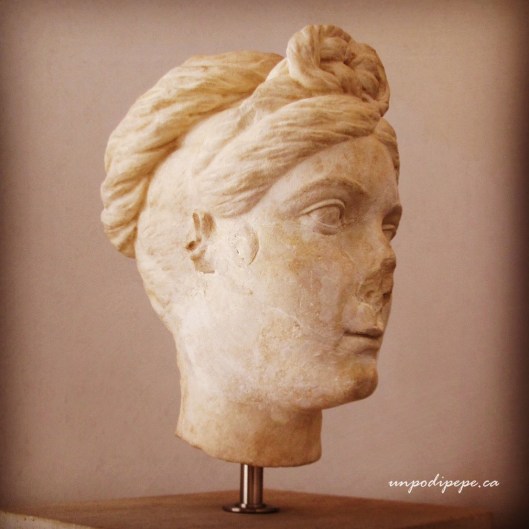
Plotina Pompeia, wife of Trajan, Palazzo Massimo. Her nodus is a high cascading ponytail.

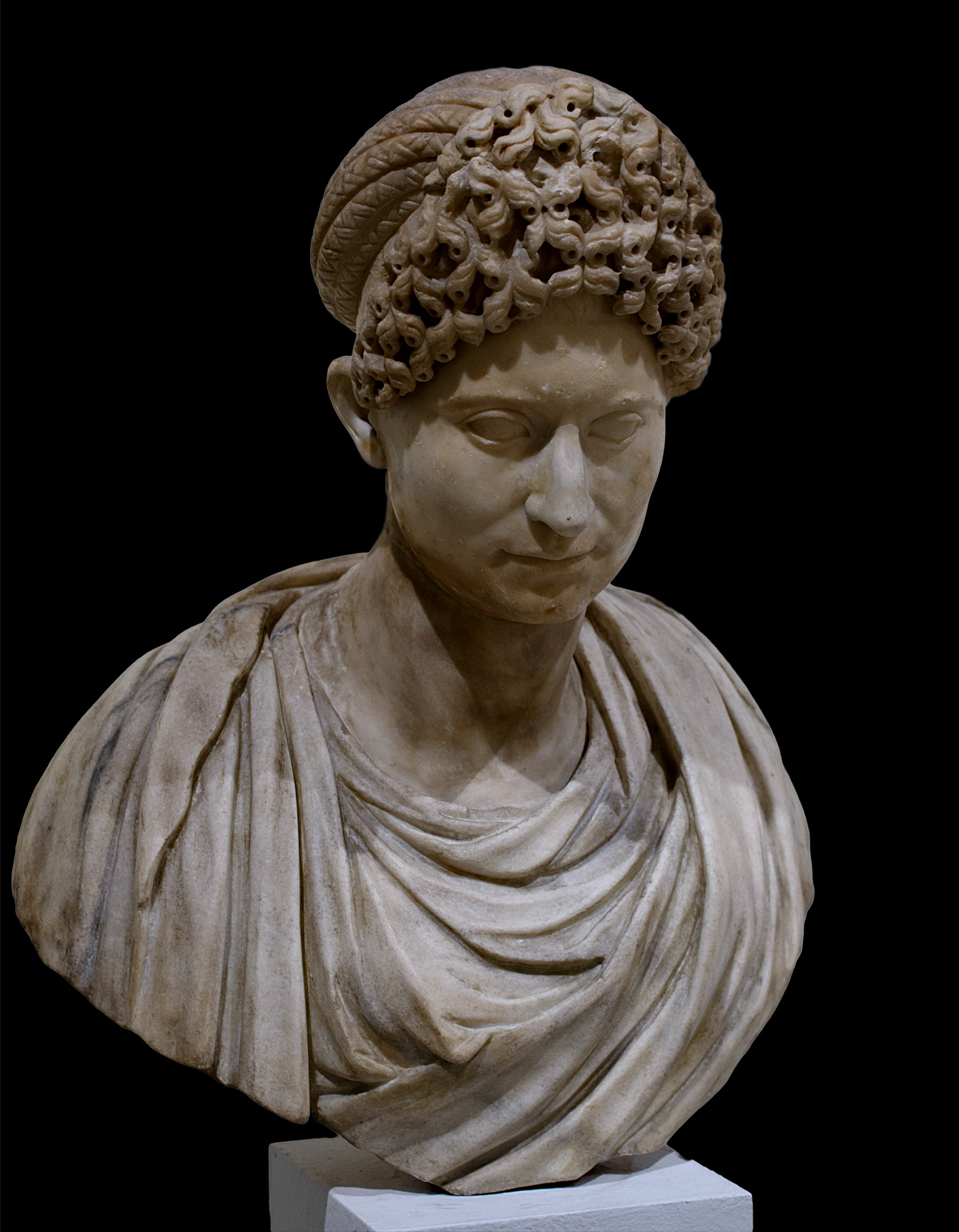
Fanciulla Romana, young woman with Hercules knot, Palazzo Massimo

Fanciulla Romana, young woman with Hercules knot, Palazzo Massimo

Roman women even tied their hair in knots.  Above  is a Hercules Knot, also called a reef knot or square knot.  Left over right, right over left!   Roman brides often wore a belt with a Hercules knot, which is where the phrase ‘to tie the knot’ comes from, but the hairstyle was not associated with marriage. Vibia Sabina also wore this style.
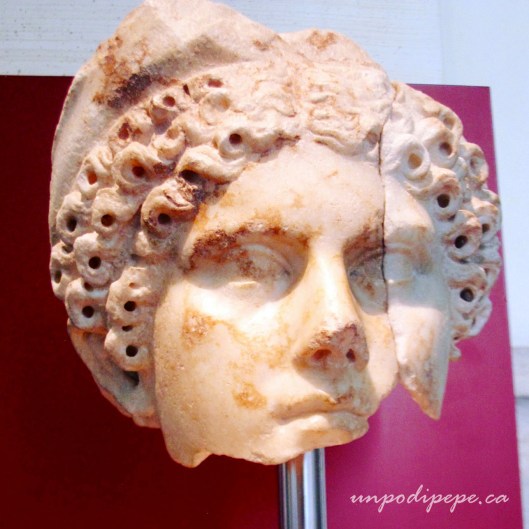
Agrippina Minor, Palazzo Massimo

Agrippina Minor, Palazzo Massimo

This partial bust of Agrippina Minor (15-59 AD), mother of Nero, found in Ostia has tightly curled short front hair with a diadem (tiara). We have to imagine the rest of the hairstyle, with a bun and ringlets in the back, coming over her shoulders.

Poppaea Sabina, Palazzo Massimo

Poppaea Sabina, Palazzo Massimo

Poppea Sabina (31-65 AD) the wife of Nero had a talented, hardworking ornatrice!  Her bust features two rows of interesting looped tight curls under the diadem and ringlets down the back.  Look at those fine little curlicues around her face.  They were probably held in place with beeswax pomade.hadrianicturban-copy

The Hadrianic Turban or tower hairstyle was like a turban of parallel braids that were sewn together on top of the head. This style was often worn by Vibia Sabina (88-137 AD) wife of Emperor Hadrian and can also be seen on the Egyptian Mummy portrait at the end of this post.

Vibia Sabina, wife of Hadrian, Vienna Kunsthistorisches Museum. Photo, Wikimedia commons

Vibia Sabina, wife of Hadrian, Vienna Kunsthistorisches Museum. Photo, Wikimedia commons

This back view of one of Vibia Sabina’s hairstyles is an absolute masterpiece- un capolavoro.  This sculptor wins the best stone hairdressing prize.  You can feel the weight of that massive coil of knotted braids on her head. The details are amazing, like the tendrils on the back of the neck, and that little curl beside the ear.
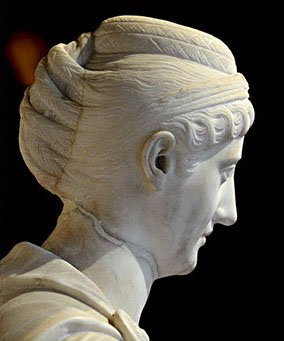
Faustina Maggiore, Musei Capitolini. Photo Wikimedia Commons

Faustina Maggiore, Musei Capitolini. Photo Wikimedia Commons

The hairstyle of Faustina Maggiore (the Elder) is another work of art.  It is like a French roll made with braids, then rolled into a coiled bun at the top of her head like a Jackie-O pillbox hat.

During the Flavian and Trajanic eras (late 1st, early 2nd C AD) the ‘orbis comarum’ or circle of hair with really big, tall front hair was in fashion.  A shorter fringe of tall tight curls or ringlets was piled high in the front, and braids wound into a big wreath bun in back. The big front hair was often curled, teased, and then sewn in place and supported by wires and padded with a wool pad or hairpiece.fonsecabust

The Fonseca Bust in the Musei Capitolini is a portrait of an unknown Flavian woman with the Orbis Comarum.  The front ringlets are sculpted using a hand drill.  Can you imagine making a mistake drilling one of those fine deep holes!  The back view of the bust looks like a straw hat on the head. That big front hair looks mega-teased.  It is amazing this was possible without hairspray! The side view is my favourite.  I love how you can see the origin of all the braids.
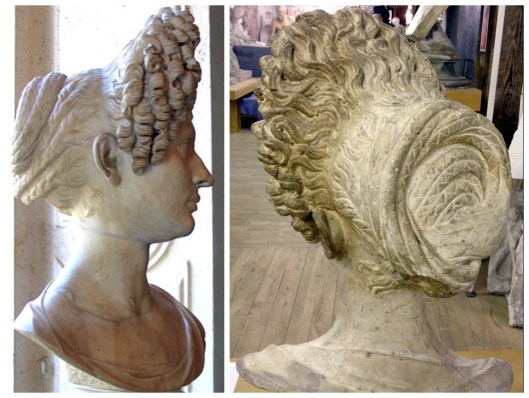
Fonseca bust, side and back view (the back view is of a plaster cast ) Photos Wikimedia Commons
Fonseca bust, side and back view (the back view is of a plaster cast ) Photos Wikimedia Commons

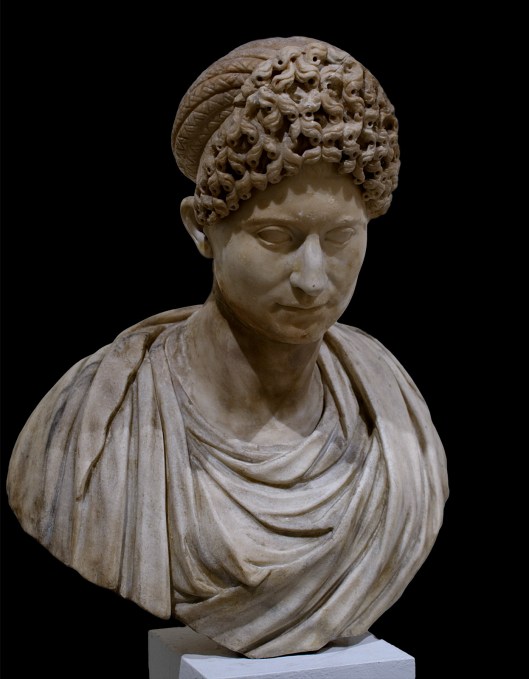
Flavian Woman, Museo Nazionale Venezia. Photo Wikimedia Commons.

Flavian Woman, Museo Nazionale Venezia. Photo Wikimedia Commons.

On this bust of an unknown Flavian era woman (75-100 AD), the small tight ringlets are sculpted with a hand drill. They almost look like fusilli!  The big front hair looks like it is being propped up by the ropes of braids, wound high on her head.

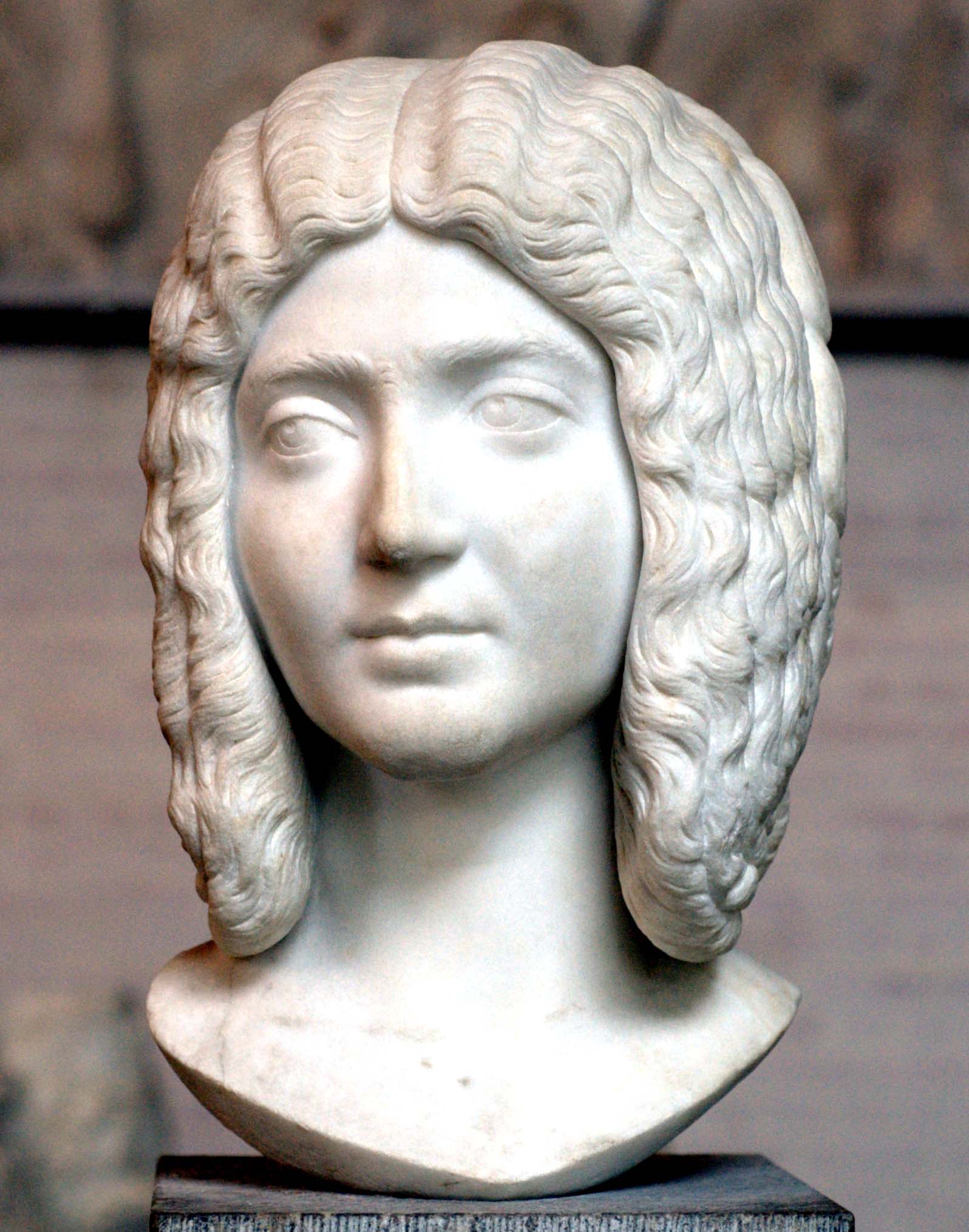
Giulia Domna, Glyptothek, Munich. Photo Wikimedia Commons

Giulia Domna, Glyptothek, Munich. Photo Wikimedia Commons

Giulia Domna (170-218 AD) the Syrian wife of Emperor Septimus Severus had a very distinctive hairstyle-and a nose similar to Lorenzo di Medici.  Great sculpted eyebrows too!  Her hair was twisted loosely in strands and draped around her face, then brought up the back of her head and sewn into a long, flat bun, which you can see in the side view.  I guess she didn’t have to move around much! juliadomna2

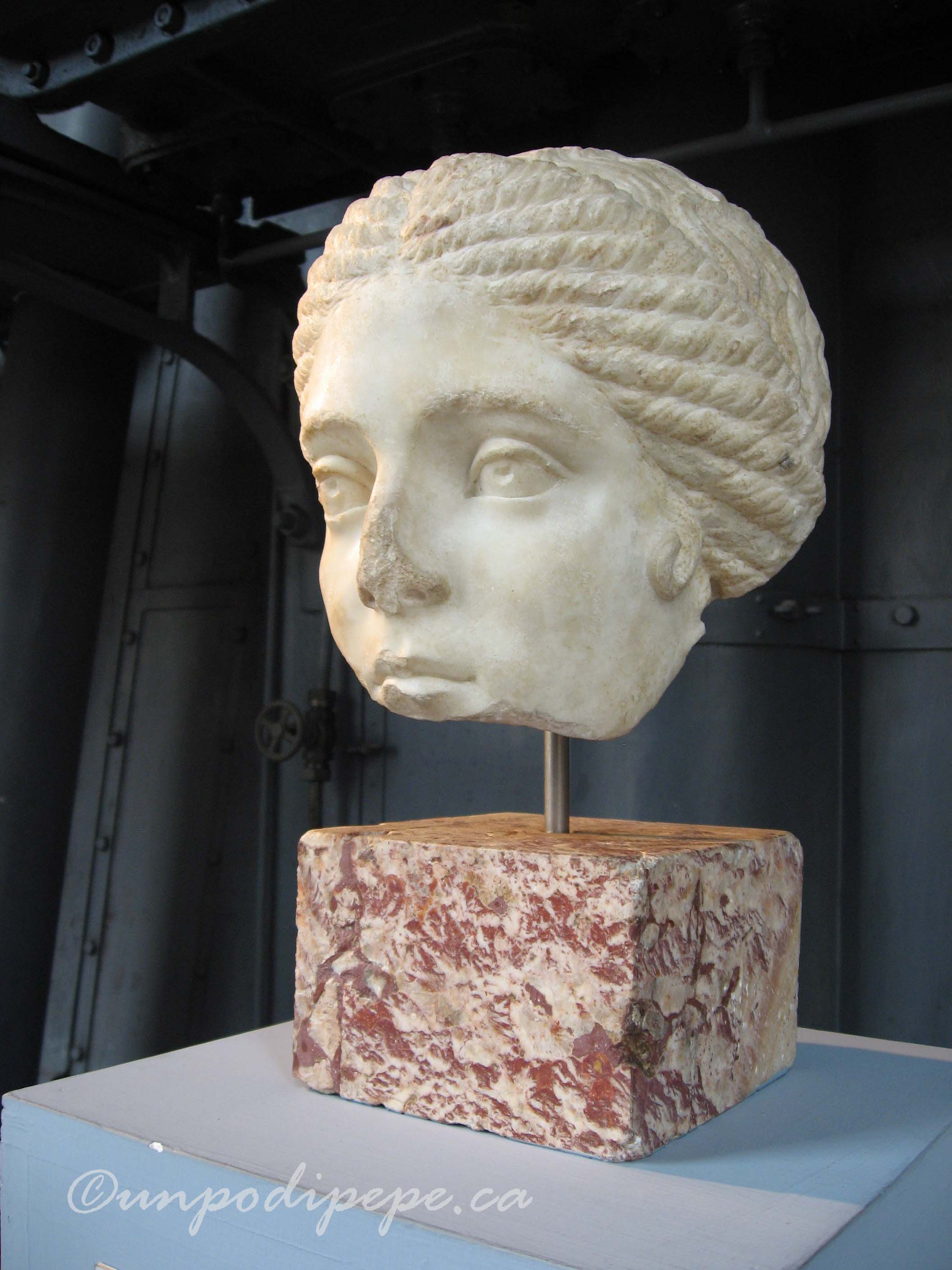
Female portrait, Centrale Montemartini

Female portrait, Centrale Montemartini

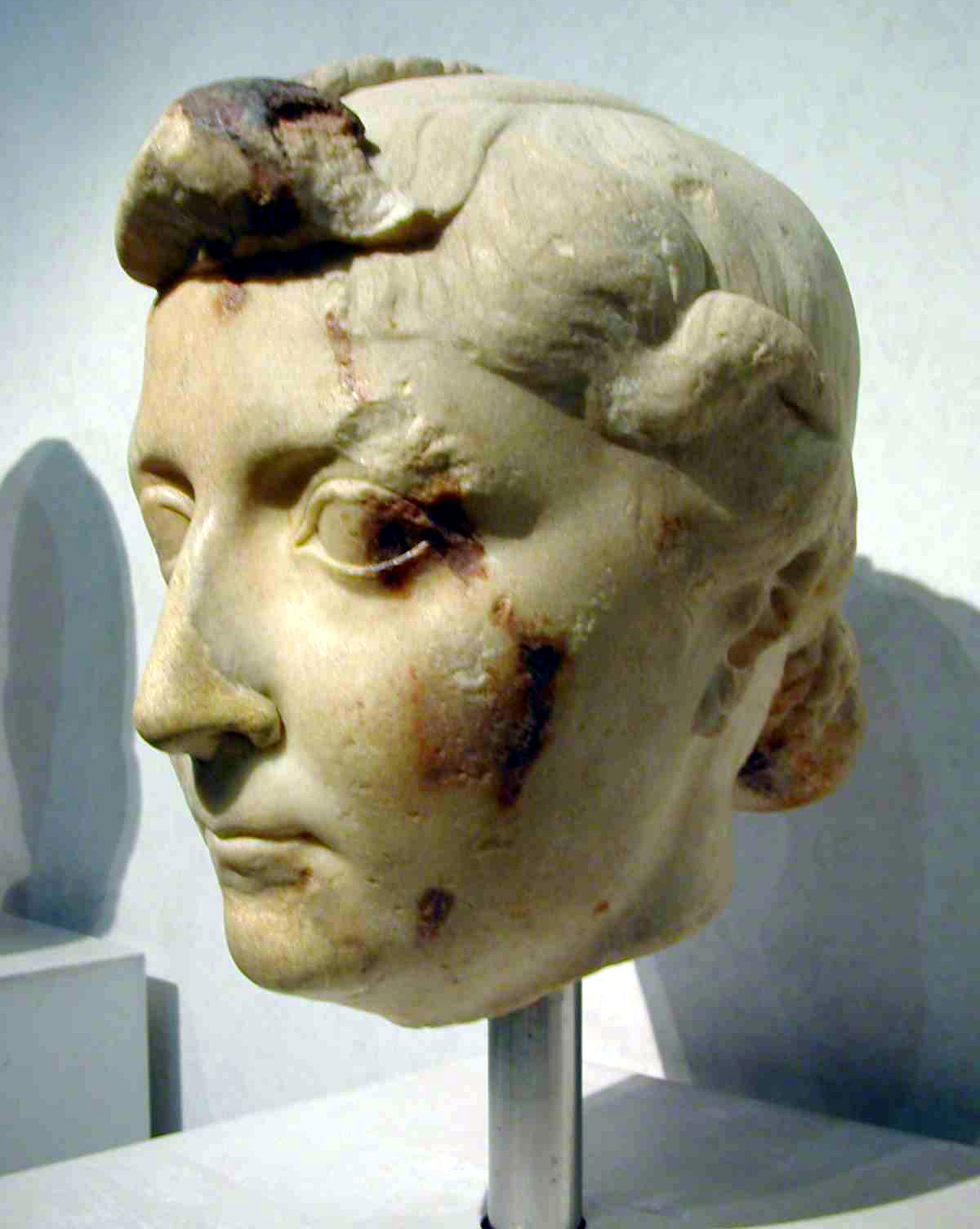
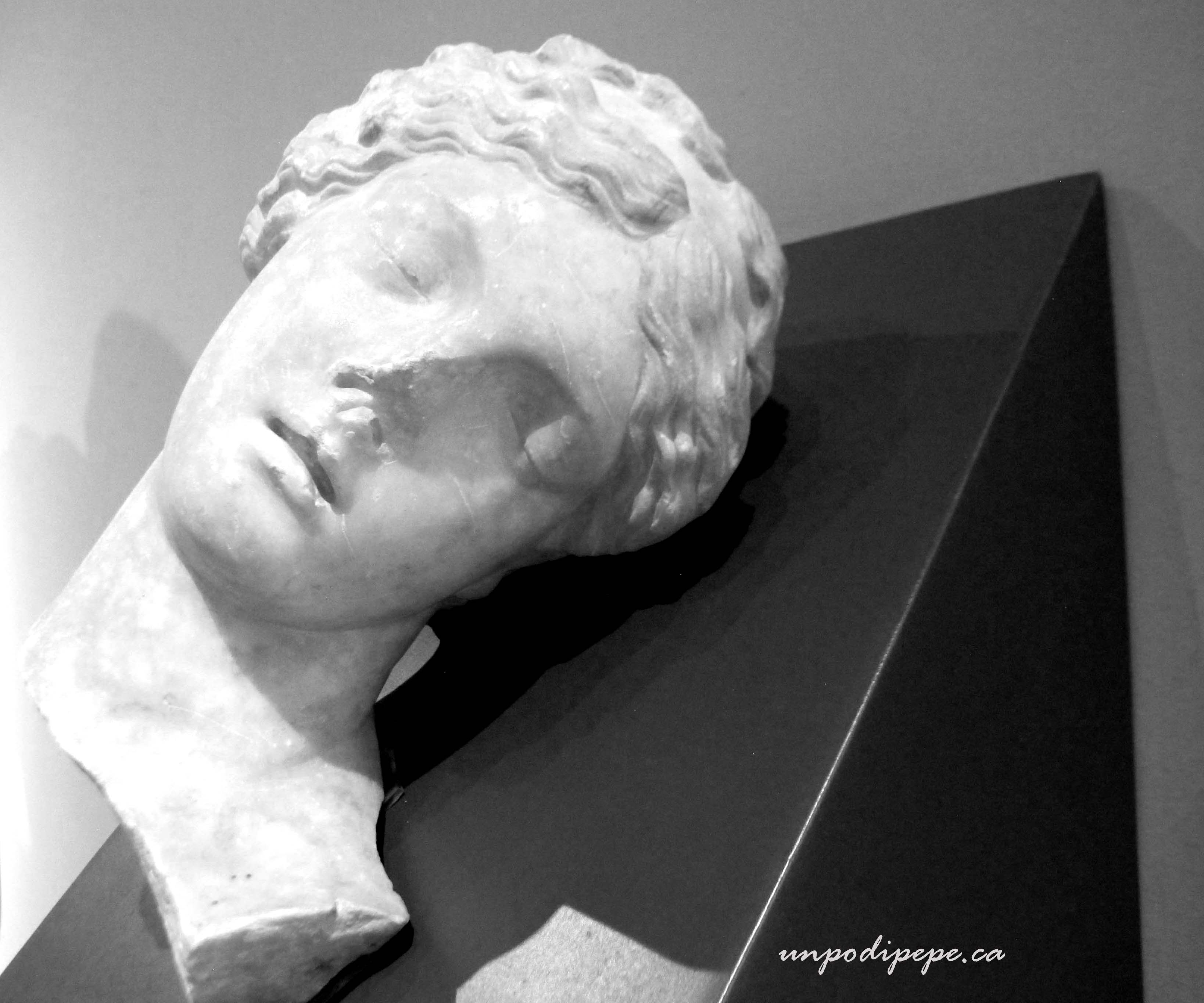
This lovely late 2nd C, early 3rd C AD partial Roman woman’s head was discovered in 1933, while Mussolini was constructing Via dei Fori Imperiali. Her front hair is twisted in small strands almost like Rastafarian corn rows to frame the face, and the back is twisted in a large, loose bun. She now sits in Centrale Montemartini in front of a caldaia -a giant boiler.
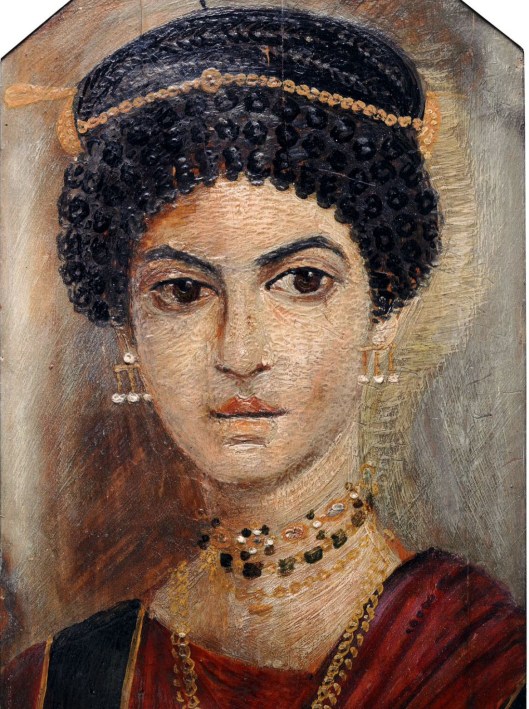
Exquisite mummy portrait in encaustic wax on wood panel, Hawara, Middle Egypt, 120 AD. Photo National Museum of Scotland

Exquisite mummy portrait in encaustic wax on wood panel, Hawara, Middle Egypt, 120 AD. Photo National Museum of Scotland

I hope you enjoyed this tour of Ancient Roman hair.  To see some of these styles recreated by a modern hairdresser, visit the youTube channel of Janet Stephens.  Ciao, Cristina
Share this:

  • Share on Facebook (Opens in new window) Facebook
  • Share on Pinterest (Opens in new window) Pinterest
  • Share on X (Opens in new window) X
  • Email a link to a friend (Opens in new window) Email
  • Share on WhatsApp (Opens in new window) WhatsApp
Like Loading...

Palazzo Massimo alle Terme, Roma

16 Monday Jan 2017

Posted by Un po' di pepe in Art, Culture, Italia, Roma, Travel

≈ 15 Comments

Tags

Augustan Villa of the Farnesina, Musei Nazionale Romano, Palazzo Massimo alle Terme, Roma, Villa Livia

giardinovillaliviaOne of the best museums in Roma is nascosto in piena vista. Hidden in plain sight near Stazione Termini, Palazzo Massimo alle Terme contains one of the most important collections of classical art.  It is right across the street from Stazione Termini, visible from the bus loop on the way to Piazza dei Cinquecento. The first time I visited Palazzo Massimo was in 2006 when my friend who lives in Roma recommended it. There were only about 10 other people in the building!palazzomassimo

When I was in Roma this summer, it was too hot to be out in the afternoon, so I decided to visit the museum. This turned out to be a great idea, since the top floor with the mosaics and detached frescos is downright cold!  Brrrr!  It was so refreshing! There were more than 10 people in the museum this time, but I still felt like I almost had the place to myself.

Built by Principe Massimiliano Massimo for the Jesuit Collegio Romano, the Palazzo became the first Liceo (high school) in Roma in 1871. Except for a brief period as a WWII military hospital,l the Liceo was open until 1960.  In the 1980’s, in a state of neglect, it was purchased for the Museo Nazionale Romano.  Renovations were completed in 1998.  Palazzo Massimo is now 4 stories of classical amazingness.  700 years (200 BC to 500 AD) of Ancient Roman history, myths, artistic culture and everyday life are on display in the form of sculpture, fresco, mosaic, jewellery and coins.

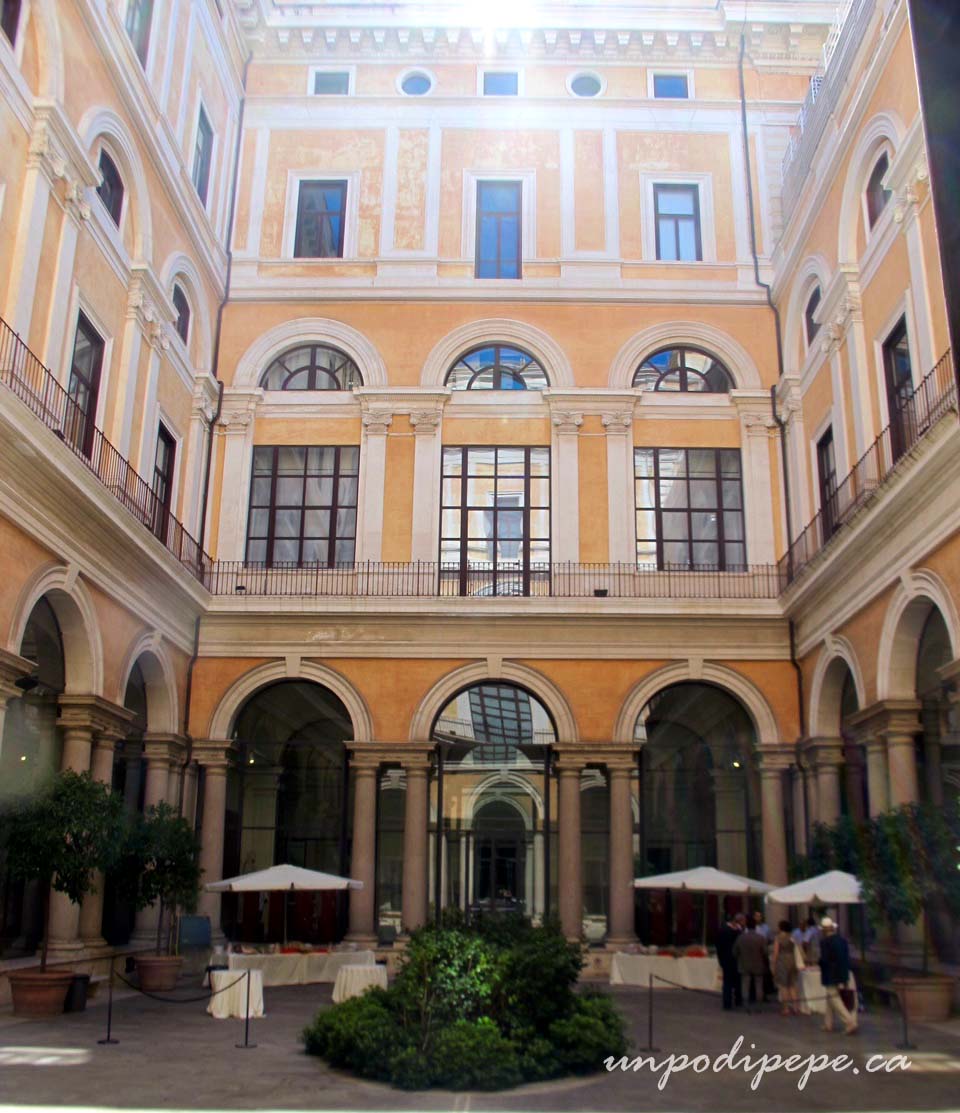
Central Courtyard, Palazzo Massimo

Central Courtyard, Palazzo Massimo

What is extra cool about the artifacts in Palazzo Massimo is how they got to be there. Previous to the museum opening, most of this priceless stuff was in storage in the Roma city works yard!  In a city as old as Roma, anywhere you break dirt, something will be found.  During construction of the Metro, new roads, or any municipal work involving digging, artifacts were found, tagged and stored. Every piece in the museum has a sign with a written description in Italian and English.  In between the two is stated (in Italiano only) precisely where and when it was found, and in some cases by whom.  For example ‘Roma, Piazza Venezia, Construction of National Monument to Vittorio Emanuele II’, or ‘Subiaco, recovered by the Guardia di Finanza (revenue or tax police, involved in recovery of stolen artifacts)’.  Reading these signs is exciting because you may have walked over that very spot the day before!  Ok, maybe you won’t be as excited as me, but I am a total archeology geek so I find this fascinating!

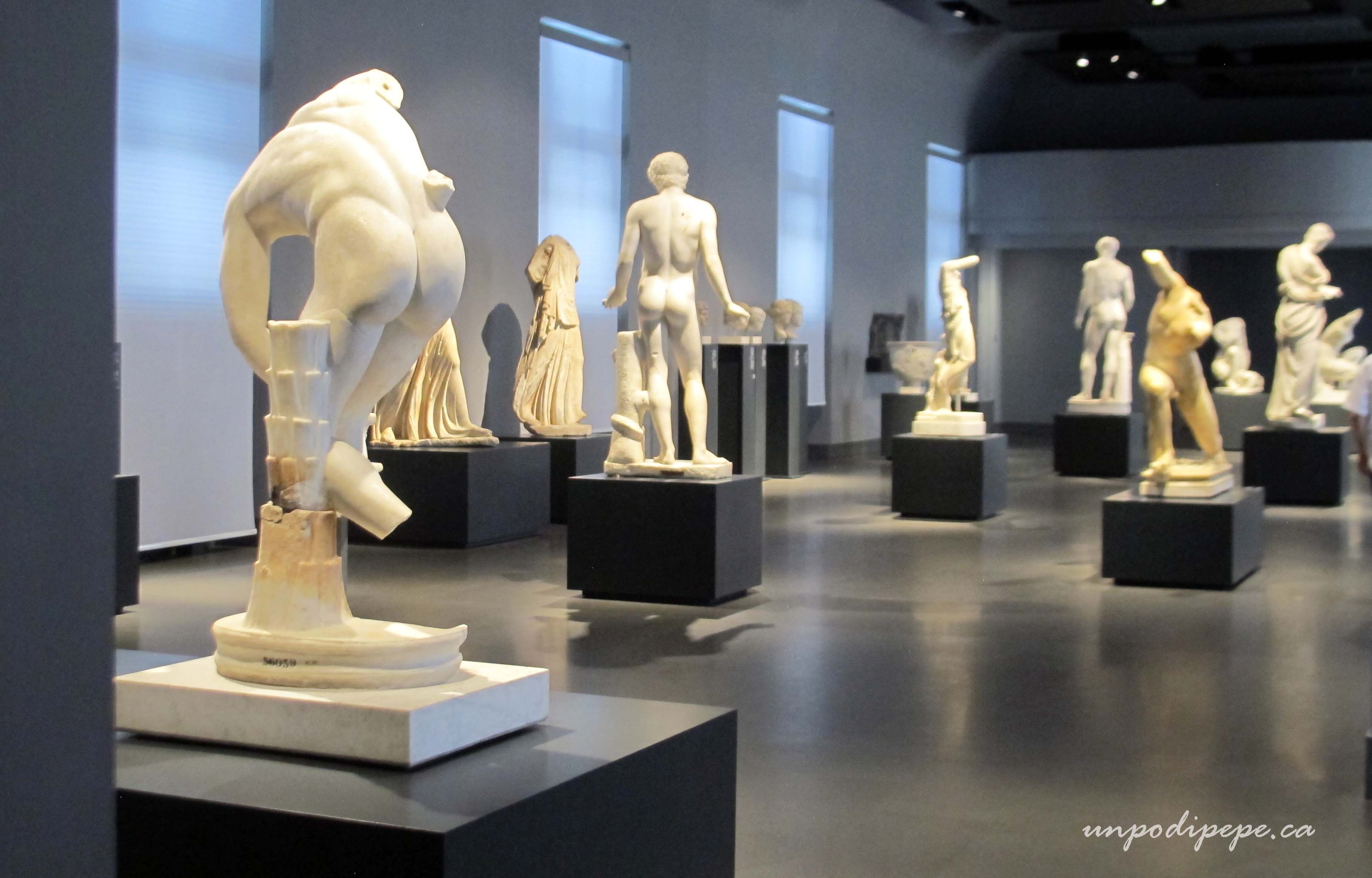
The ground floor of Palazzo Massimo displays Greek originals discovered in Roma, such as The Dying Niobid, and the magnificent Pugile in riposo, the 2nd Century BC bronze Boxer at Rest, wearing leather hand wraps.  He is so realistic with his broken nose, cuts and deformed ears, you can feel the emotion in his face.

'Pugile a Riposo' Found in 1885 on the Quirinale Hill, where the Baths of Constantine once were.

‘Pugile a Riposo’ Found in 1885 on the Quirinale Hill, where the Baths of Constantine once were.

This floor also has a Roman calendar, portraiture from the Republican and Imperial ages, and sarcophagi, such as the sarcophagus of Portonacci with battle scenes carved in relief.statuarypalazzomassimo

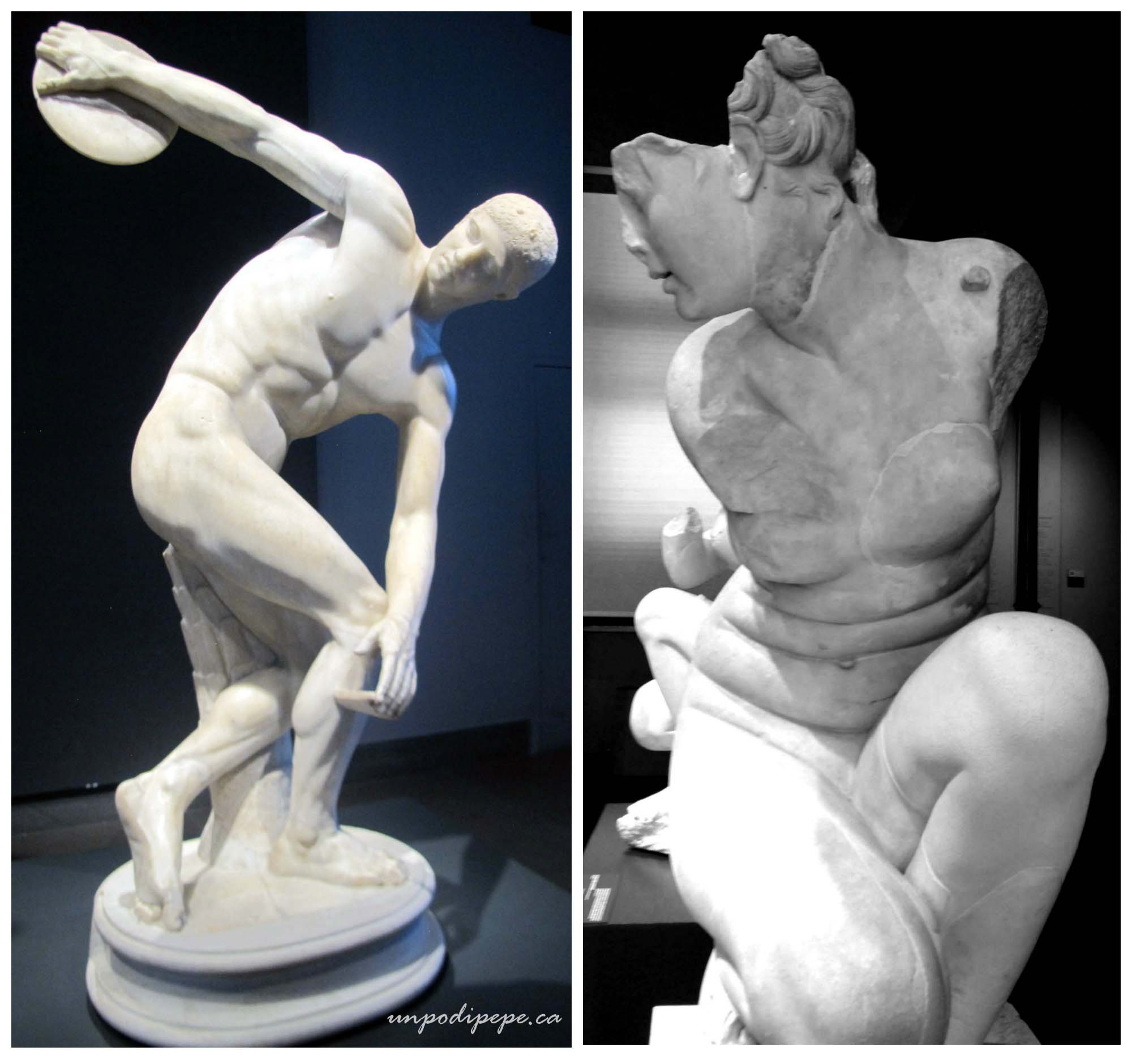
The first floor (2nd floor to North Americans) has masterpieces of statuary, including the Maiden of Antium, Il Discobolo, a Crouching Aphrodite after Diodalses found at Villa Adriana in Tivoli in 1920, and the Sleeping Hermaphrodite.  There are also all the surviving bronze sculptures, fittings and a head of Medusa that decorated Caligula’s floating palaces, the Nemi ships.  These vessels were recovered in the 1920’s by draining Lago di Nemi, only to be destroyed by enemy fire in 1944.

Il Discobolo and a Crouching Aphrodite from Villa Adriana in Tivoli. Both are Roman reproductions of Greek originals

Il Discobolo and a Crouching Aphrodite from Villa Adriana in Tivoli. Both are Roman reproductions of Greek originals

The top floor takes us on an intimate tour of the domestic decor inside Roman homes. An amazing discovery was made right across the street in 1947, during the renovations to Termini and construction of Metro line B. It was a complex from 130-140 AD built in a grid system of private homes, public baths, warehouses, and apartments with shops at street level.  There was pavement and a functioning drainage system. It was all destroyed to make way for quick construction of the new buildings! Aaaahhh!  Luckily the site was well-documented so that the 270 m² of wall frescos and pavement mosaics that were preserved could be reassembled. Part of it is displayed here where 3 rooms of a Domus (Roman house) have been reconstructed to their original size.  Ironically, these rooms face a window looking out at where they used to be.

The 1948 photo from Palazzo Massimo of the site across the street. You can see that the mosaic is the same one that is now in the museum

The 1948 photo from Palazzo Massimo of the site across the street. You can see that the mosaic is the same one that is now in the museum

The Augustan Villa of the Farnesina was discovered in Trastevere in 1879 during work along the river.  The site has since been destroyed, but the vibrantly coloured frescoes were detached and stored for 120 years before being installed in Palazzo Massimo, in accurately reconstructed rooms of their original dimensions.  There is a portico, dining room and 2 Vermillion coloured cubicola (bedrooms) with mythological and erotic paintings, and several hallways.  The rooms are reassembled how they were, so it is like walking through a Roman villa.  Decorating the walls of upper class houses with paintings of mythological or literary subjects was supposed to stimulate cultured conversation. In this villa, there are many references to the Egyptian world in the decorations, celebrating the conquest of Egypt. The owner is thought to have been General Marcus Vipsanius Agrippa, son-in-law of Augustus, who defeated Marc Anthony and Cleopatra at the Battle of Actium in 31 BC.villafarnesinacollage

The final treasure is the 1st Century BC frescoes from Villa Livia, discovered on Via Flaminia in 1863.  The villa belonged to Livia Drusilla, wife of Emperor Augustus.  The paintings of a lush green garden with birds, pomegranate and lemon trees, roses, irises and other plants decorated a vaulted room that was half underground. The large room is recreated here.  It was probably a cool triclinium, a living and dining room for  the summer. villaliviaThe basement has the history of the Roman Empire in coins. It has been converted into a vault for the Medagliere, the coin cabinet and jewellery.

Palazzo Massimo is one of 4 musei that make up the Museo Nazionale Romano. Tickets are €7 for adults, valid for 3 days for all 4 sites.  The other sites are:  Terme di Diocleziano, Palazzo Altemps and Crypta Balbi. Open Tues to Sunday 0900-1945. If you love antiquities, don’t miss it! Ciao, Cristina

Share this:

  • Share on Facebook (Opens in new window) Facebook
  • Share on Pinterest (Opens in new window) Pinterest
  • Share on X (Opens in new window) X
  • Email a link to a friend (Opens in new window) Email
  • Share on WhatsApp (Opens in new window) WhatsApp
Like Loading...

Viva La Befana!

06 Friday Jan 2017

Posted by Un po' di pepe in Bilingual posts, Feste, Italian Folklore

≈ 4 Comments

Tags

Befana, Italian Christmas, L'Epifania, La Befana, Natale

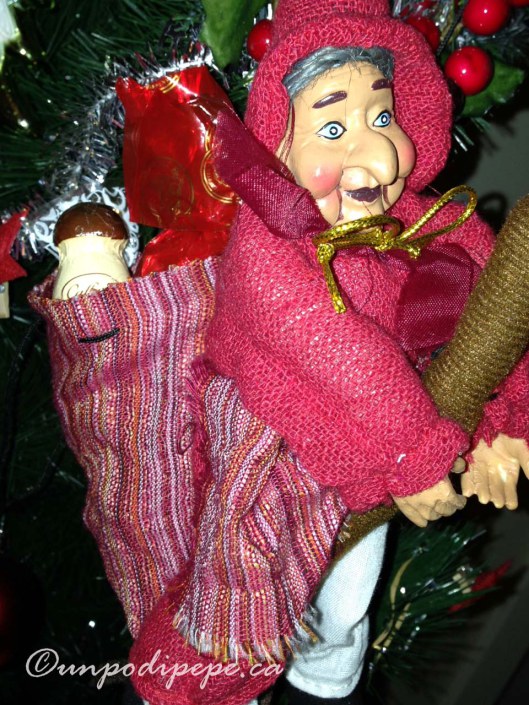
La Befana di AnnaOgni anno, nella notte tra il 5 e 6 di gennaio, volando cavalcando la scopa, La Befana porta regali ai bambini nella speranza che uno di loro sia il Bambino Gesù……

Today is la Festa dell’Epifania in Italia, celebrating the arrival of i Re Magi (the 3 Wise Men) Gasparre, Melchiorre & Baldassarre with their gifts of oro, incenso e mirra (gold, frankincense …

Continue reading original post: La Befana in English and Italiano.  Buona Befana!

Share this:

  • Share on Facebook (Opens in new window) Facebook
  • Share on Pinterest (Opens in new window) Pinterest
  • Share on X (Opens in new window) X
  • Email a link to a friend (Opens in new window) Email
  • Share on WhatsApp (Opens in new window) WhatsApp
Like Loading...

Buon Anno 2017

01 Sunday Jan 2017

Posted by Un po' di pepe in Blogging

≈ 18 Comments

Buon Anno a tutti i lettori di ‘Un po’ di pepe’!  Spero che quest’ anno porta salute e gioia a voi e ai vostri cari. Happy New Year readers of ‘Un po’ di pepe’.  I hope this year brings you and your loved ones joy and good health!

2016 was a great blogging year and WordPress sent me some stats.  Un po’ di pepe had almost 6,000 views from 94 different countries!  I wish I could visit them all!  Your favourite posts of 2016, based on the number of views were:

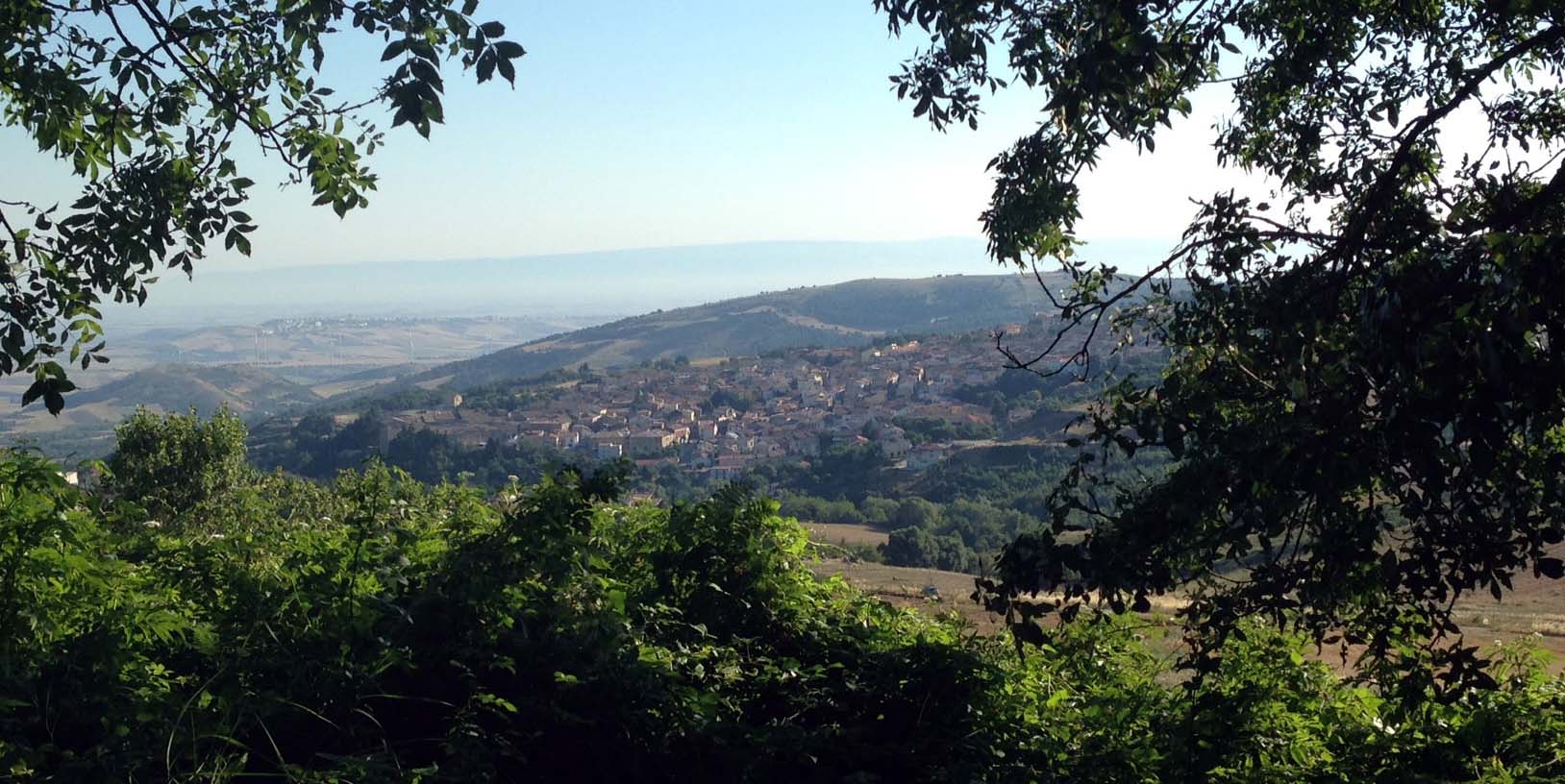
#7 My frequently requested recipe for Limoncello CheesecakeLimoncellocheesecake5#6 A visit to I Trulli di AlberobelloAlberobellobiancheria#5 Is my About me/Chi sono page, but since it is not an actual post, the #5 spot goes to one of my favourites, Benvenuti ad Orsara di Puglia, an introduction to my paeseItalia2013orsaravista1blog

#4 Grano Arso, about a resurfaced gastronomic tradition in Puglia that honours the resilience of our contadini ancestorsfarinagranoarsoorecchiette

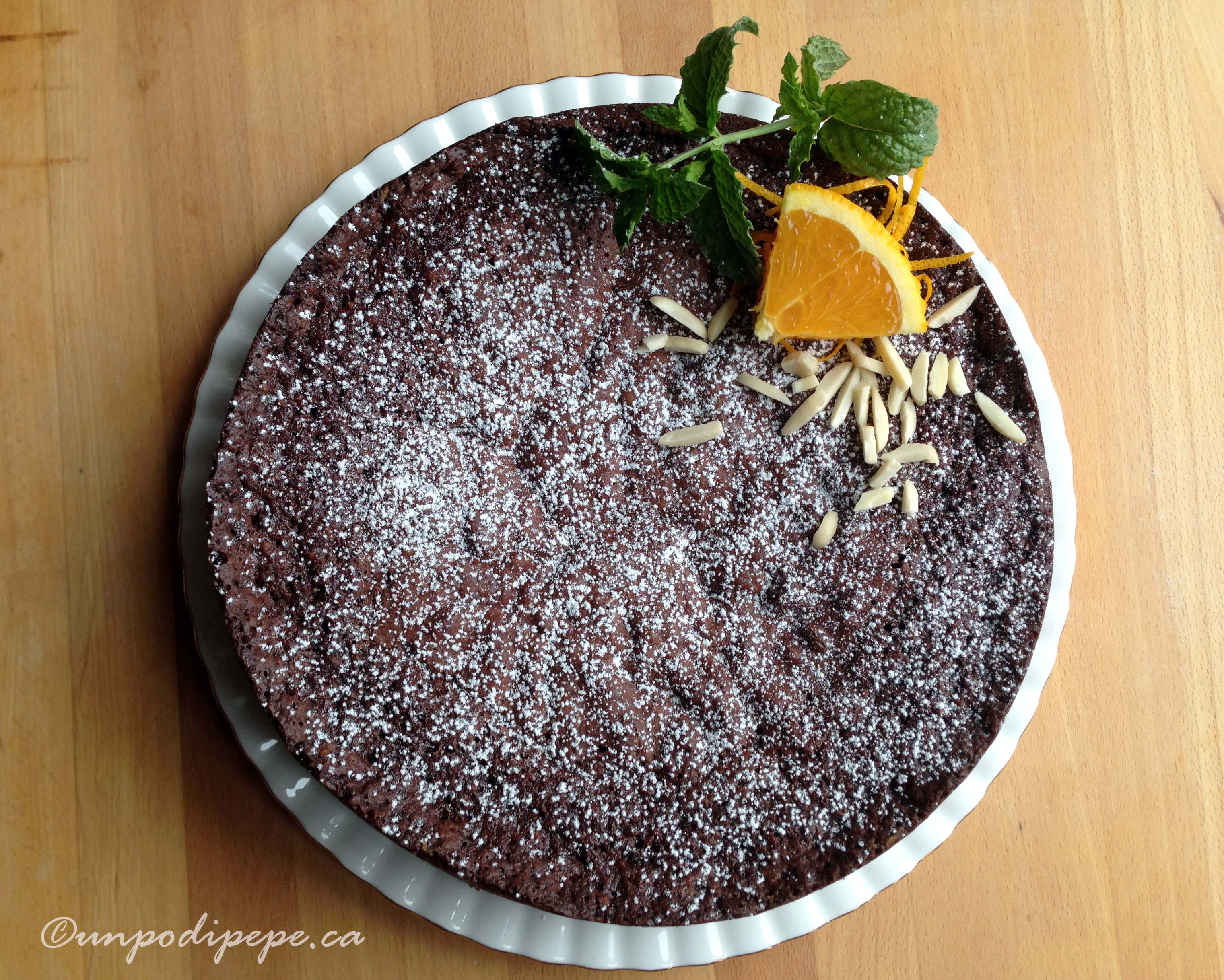
#3 Torta Caprese all’ Arancia, the delicious flourless chocolate cake recipe I posted to celebrate receiving a Cannolo AwardTortacaprese2

#2 Terremoto in Italia-How to help.  I wrote this post in an effort to spread the word on how we could provide relief to victims of the earthquake in Central Italia in August.  It was followed by a post on Spaghetti all’ Amatriciana

Vigili del Fuoco in Amatrice-Winnipeg Free Press

Vigili del Fuoco in Amatrice-Winnipeg Free Press

#1 Your favourite post of 2016 by far was Italiano per Ristoranti-How to Pronounce your Restaurant Menù my handy Italian pronunciation guide.  This post is from June 2014, but this year, I updated it and finally made it available as a downloadable PDF.  I would like to expand on this post and make it into an ebook, once I figure out how to do that! Italiano per Ristoranti is now your favourite blog post ever, surpassing the previous favourite, Passata di Pomodoro.

Bruschetta (broo.SKET.tah)

Bruschetta (broo.SKET.tah)

You may notice that only 2 of my top 7 posts were written this year!  This is partly due to the way WordPress keeps stats.  The newest post often gets counted as a ‘Home page’ view until the next post is published. I am not sure how much this would have changed the results.

I also published a few posts this year that are were among my favourites, but did not get a lot of love!  Read about my potential new career as un falsaria d’arte, an art forger, in Madame Gautreau Madame Gautreau Drinking a Toast. After John Singer Sargent. Cristina Pepe 2016Several completely random connections that I have to Margherita di Savoia make for an interesting postMargheritadisavoia2014bI thought wine was everyone’s favourite topic, but my 3 part series about the native grapes and wines of Puglia did not make the top 10. Uvadipuglia Vini di Puglia trilogy:  Vini di Puglia, Aglianico to Zibbibo, and Il Tuccanese CristinaPianoParadiso

I’d love to hear which post was your favourite.  What would you like to read more about?  Looking forward to writing more cose interresanti /interesting stuff in 2017.

Vi auguro un 2017 piena di gioia e salute!  Ciao, Cristina

Share this:

  • Share on Facebook (Opens in new window) Facebook
  • Share on Pinterest (Opens in new window) Pinterest
  • Share on X (Opens in new window) X
  • Email a link to a friend (Opens in new window) Email
  • Share on WhatsApp (Opens in new window) WhatsApp
Like Loading...

Dolci di Natale

23 Friday Dec 2016

Posted by Un po' di pepe in Feste, Italian life, Mangiamo!

≈ 15 Comments

Tags

Cartellate, Cauzuncill, Crustoli, Dolci di Natale, Panettone, Pizza con la ricotta, Pugliese Traditions

crustoli2If you have seen my Instagram photos, you know that my famiglia and I have been busy making dolci di Natale.  I decided to compile them together in a blog post. There are many other Italian dolci di Natale, but I have only included the ones we make every at home:

Cartellatecartellate

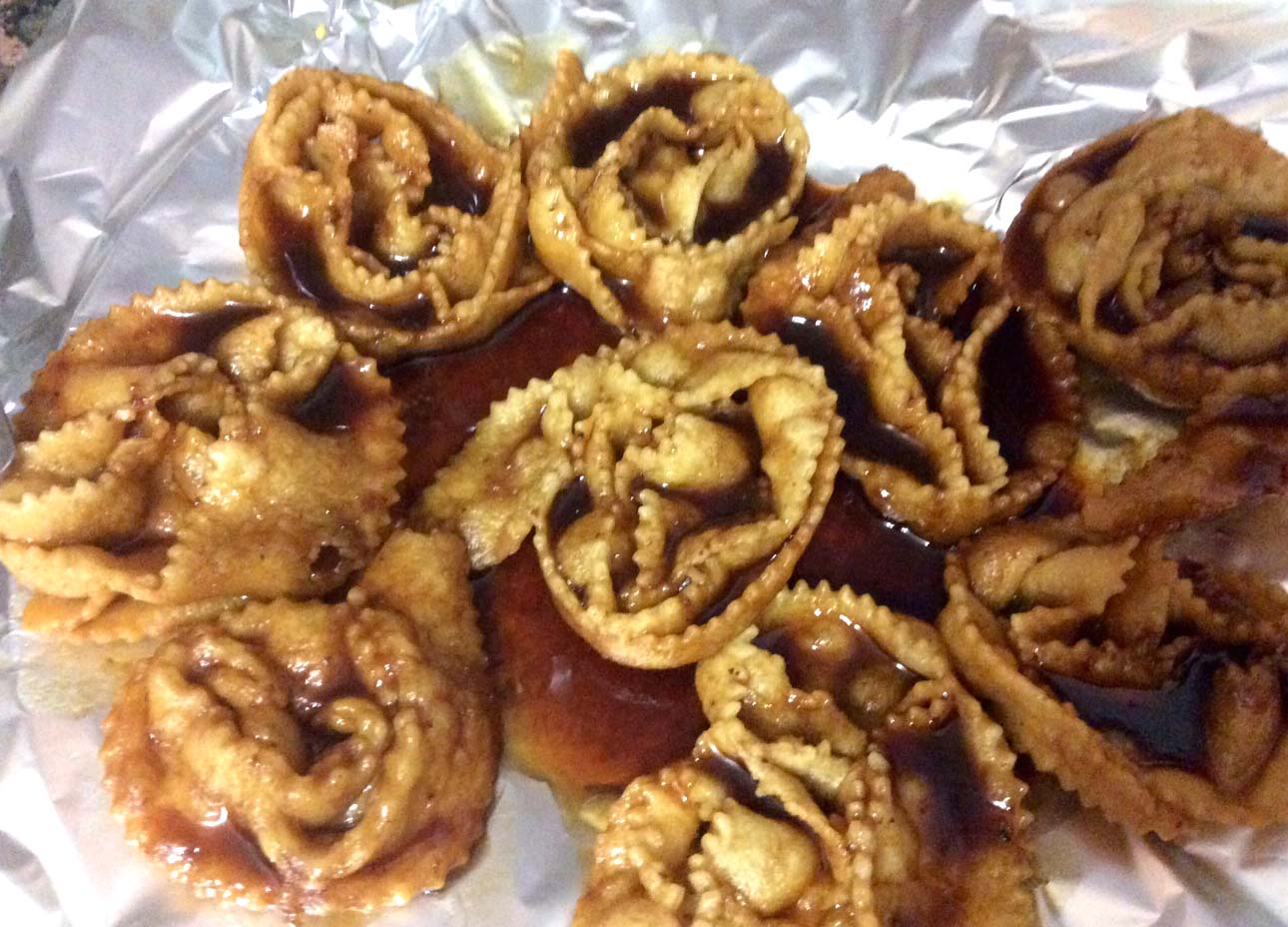
You can’t get more Pugliese than Cartellate (called Carteddate in Bari).  My Mamma and I made them last week. The dough is pinched and rolled into pinwheel or thorny rose shapes, fried, and then vino cotto is poured over them. Their shape is apparently  symbolizes the crown of thorns worn by Jesus. Vino cotto is really mosto cotto, but we call it vino cotto for some reason. The wine must is boiled and boiled down to a thick syrup and bottled.  It is like a yummy wine molasses.  cartellate2

cartellate3Cauzuncill’cauzuncillIt wouldn’t be Natale without Cauzuncill’ (cow·ZOON·cheel)  They already have their own entire blog post.  Read more about them here.

Cauzuncill' (cow-zoon-cheel) with almond and vino cotto filling, drizzled with vino cotto

Cauzuncill’ (cow-zoon-cheel) with almond and vino cotto filling, drizzled with vino cotto

Crustolicrustoli

We call these crustoli, but they are also called crostoli, chiacchiere, cenci, bugie and frappe in other parts of Italia.  The sweet dough is cut into strips or bows, fried and then dusted with icing sugar. They are also traditionally made for Carnevale.  The recipe is in this post.crustolipentola

Panettonepanettone2

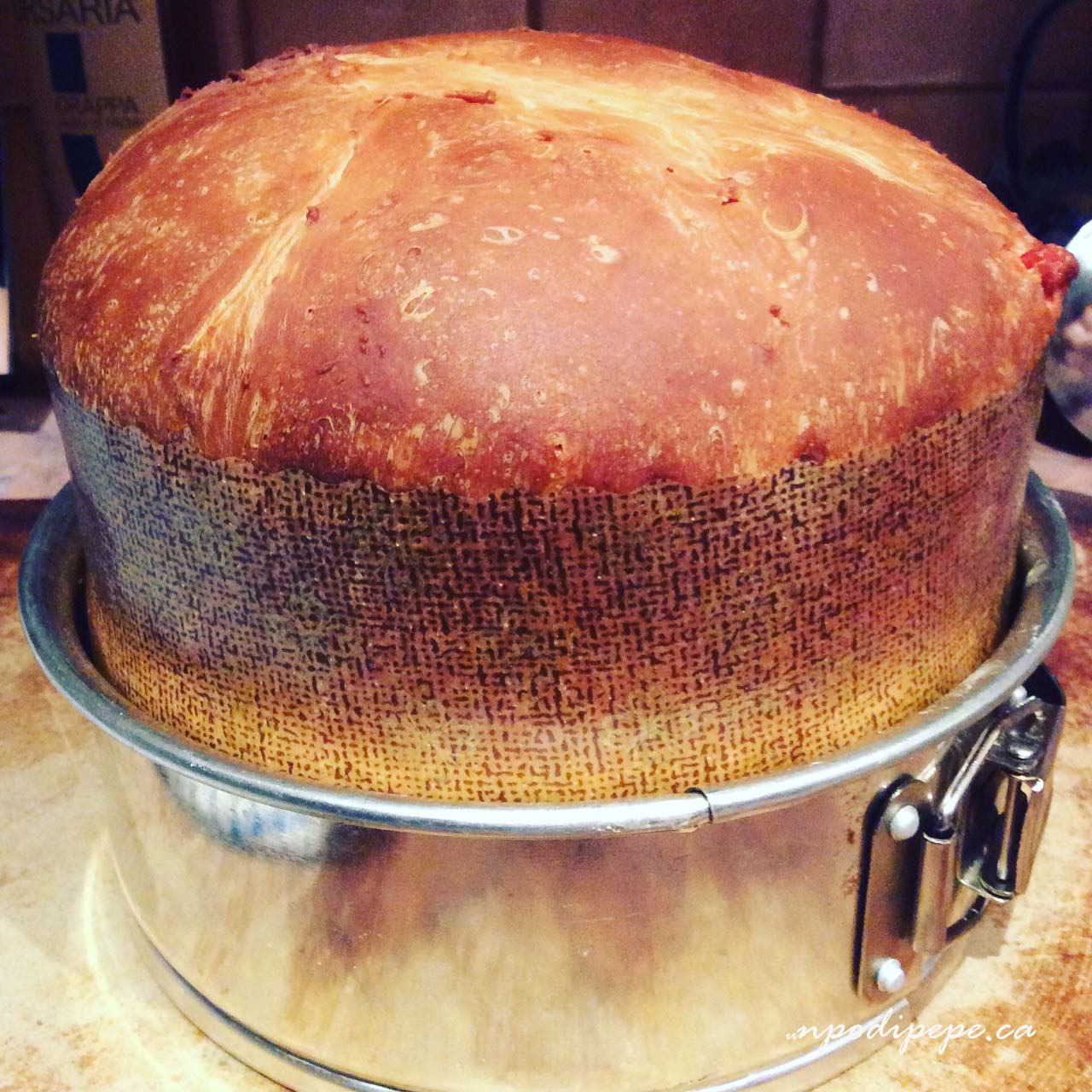
Panettone is traditionally from Milano, while Pandoro, the fruitless, star-shaped version, originated in Verona.  They are eaten throughout Italia and it wouldn’t be Natale without panettone and leftover panettone.  I love panettone french toast with fresh ricotta.  This year, I made my own panettone, and it came out quite decent!  I still have a bit of experimenting to do, but will hopefully be able to post about it for Natale 2017. The recipe is now posted here.

My first panettone fatto in casa

My first panettone fatto in casa

Pettolepettole

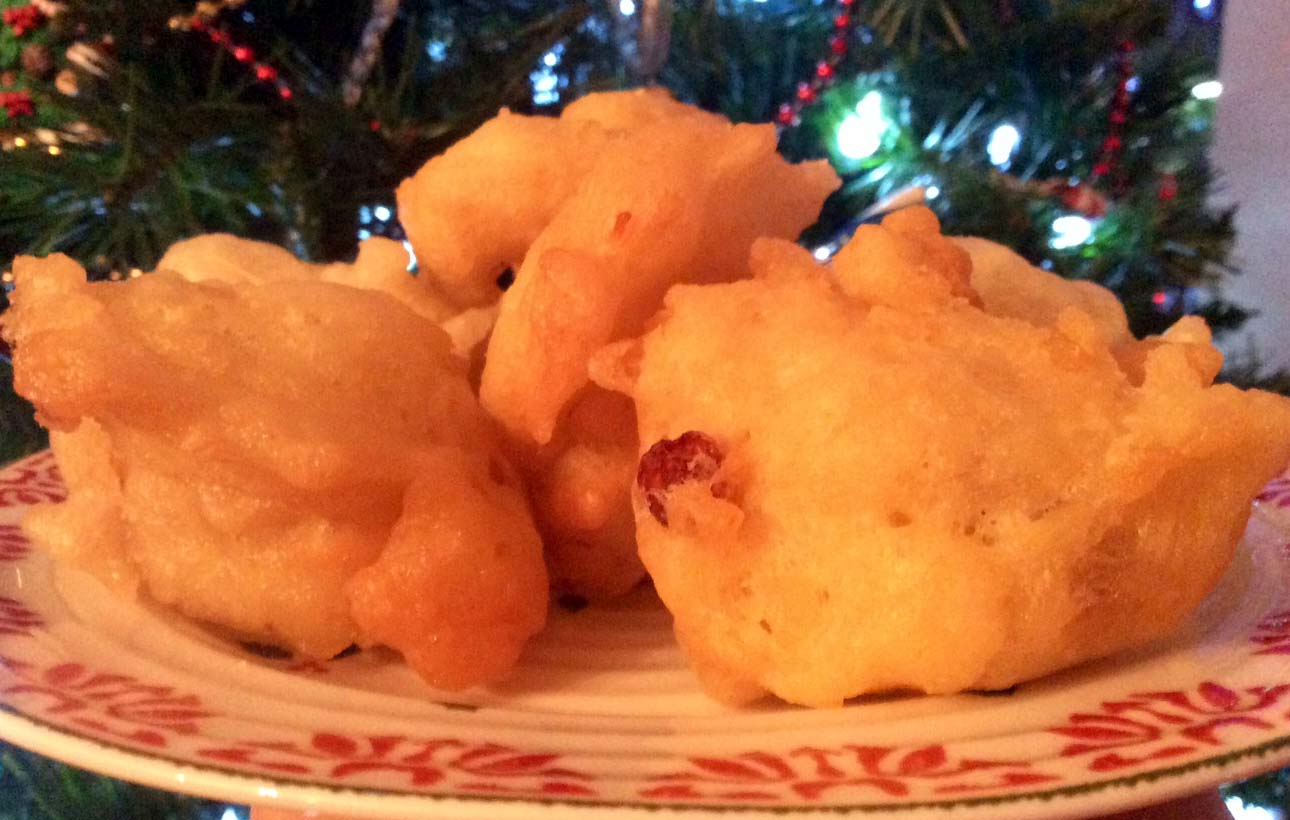
Pettole are fried balls of dough.  They are made with or without raisins and are covered in honey or vino cotto.  Pettole are traditionally eaten on the feast of l’Immacolata, Dec 8th, and on la Vigilia di Natale, Christmas Eve.  I believe these are usually called zeppole in Calabria and in the US.  In Puglia, zeppole are a completely different dolce, eaten on the feast of San Giuseppe.

Pizza con la Ricottapizzaconlaricotta

Pizza con la ricotta is another traditional Pugliese dolce, and we only make it at Natale and Pasqua.  I’m not sure why we only make it twice a year, as it is so delicious!  It is a crostata (tart) made with pasta frolla (short crust pastry) and filled with fresh ricotta, sugar, eggs and alcohol (Sambuca or Strega).  The word ‘pizza’ actually means flat and round.  Pizza con la ricotta is usually round, but today ours is rectangular.  I was not allowed to cut into it to take a cross sectional photo, so I will have to add it later!

Which dolci di Natale will be on your table tomorrow night? Buon Natale e Buon Appetito, Cristina

Share this:

  • Share on Facebook (Opens in new window) Facebook
  • Share on Pinterest (Opens in new window) Pinterest
  • Share on X (Opens in new window) X
  • Email a link to a friend (Opens in new window) Email
  • Share on WhatsApp (Opens in new window) WhatsApp
Like Loading...

Bloccato dalla Neve

19 Monday Dec 2016

Posted by Un po' di pepe in Parole piacevoli, Photography

≈ 17 Comments

Tags

Canada, Inverno incantata, Vancouver, Winter wonderland

hollyI was tempted to call this post ‘Snowmageddon’!  Living in Canada, I’ve always been asked crazy questions when I’m travelling.  These were mostly pre-internet, but I’ve been asked questions like ‘In Canada abitati nelle case di ghiaccio?‘ and ‘I tuoi vicini di casa sono Eschimesi?‘ I don’t live in an igloo and I don’t think any of my neighbours are Eskimo/Inuit.  My response is usually something like ‘Io vivo sulla parte ovest del Canada.  Non fa freddo, e nevica un giorno all’anno!’ No, Vancouver is not cold, and it snows less than one day a year.  Even when it does snow, it usually only lasts a day and then it starts to rain and turns to slush……until now.  finestra

It snowed 2 weeks ago and did not go away.  It just got icy and then it snowed again-and yesterday another nevicata.  Mannaggia! Sono bloccato dalla neve – I am snowed in!  Vancouver can not cope with this kind of weather.  Eastern Canadians actually make fun of us for this-ci prendono in giro 😠! The city does not have enough snow plough equipment, the stores run out of salt and snow shovels, most people don’t have snow tires and they don’t know how to drive in the snow anyways, the buses have to cope with a lot more traffic….etc.  I am on ‘staycation’ until Christmas, so I did not have to go to work, but a lot of my plans had to be changed.  I’ve spent a lot of time at home making panettone and decorating!  I have also been walking everywhere since my car has been bloccato in ghiaccio most of this time.albero-di-natale Most of us are looking forward to saying arrivederci neve! It is very pretty, and for now it looks like a winter wonderland…now how would we say that in Italiano?  Un inverno incantata-an enchanted winter?  That’s as close as I can think of.  Here are some photos I took this week while walking, vicino casa, but I did do a rain dance when I got home!albero-di-natale2

My vicini di casa do not live in igloos, but they do like to build them!

My vicini di casa do not live in igloos, but they do like to build them!

This pupazzo di neve (snowman) has his own igloo

This pupazzo di neve (snowman) has his own igloo

Luci Natalizie di Mamma e Papa/ My parents' Christmas lights

Luci Natalizie di Mamma e Papa/ My parents’ Christmas lights

luci2luci3Ciao e Buon Natale dal ‘Snowmageddon’, Cristina
Share this:

  • Share on Facebook (Opens in new window) Facebook
  • Share on Pinterest (Opens in new window) Pinterest
  • Share on X (Opens in new window) X
  • Email a link to a friend (Opens in new window) Email
  • Share on WhatsApp (Opens in new window) WhatsApp
Like Loading...

Espresso Cookies

13 Tuesday Dec 2016

Posted by Un po' di pepe in Mangiamo!, Recipes

≈ 13 Comments

Tags

Dolci di Natale, Espresso cookies, Espresso shortbread cookies, Maccinacaffè

espressobiscottiI make these yummy biscottini often, and receive a lot of requests for the recipe, especially at this time of year. They are not a traditional Italian dolce, but they have been ‘italianizzati’ 🇮🇹 by the espresso.  I have been making them for over 25 years, so I don’t remember where the original recipe came from.  It may have been an article in the local paper?  Really, any shortbread or butter cookie recipe can be adapted by adding vanilla extract and instant espresso powder.

These espresso cookies are perfect with a caffè and freeze very well. They even taste good congelati -straight out of the freezer.  For best results, freeze before dipping the ends in chocolate. instagramespressoThe espresso must be ground to a very fine powder in a macinacaffè, a coffee grinder.  Instant espresso is too coarse and chunky to add straight from the jar.  Grinding espresso beans does not work well, as they do not grind fine enough.  Using real caffè does not work either, as the batter will be too liquidy.  Espresso powder is the best option.  I use Medaglia d’Oro® or Bar Italia® brand instant espresso.  Last time I made them, I accidentally doubled the caffè (oops!). My coffee loving amici thought they were even better than usual, so ‘double shot’ works too.

Espresso Cookies

10g (20 ml, 4 teaspoons) instant espresso

225g (240 ml, 1 cup) butter, at room temperature

100g (120 ml, ½ cup) sugar

3 ml (½ teaspoon) pure vanilla extract

230g (415 ml, 1¾ cups) all-purpose flour

30g (¼ cup, 60 ml) cornstarch

120g (4 ounces) good quality chocolate, melted

Grind instant espresso in coffee grinder to a fine powder. Mix together butter and sugar.  Add espresso powder and vanilla extract.  Sift flour and cornstarch together and add to the rest of the ingredients.  Roll into 2 cm balls then flatten into palm of hand to mould into oval coffee bean shape/American football shape.  Place on a baking sheet.  Before baking, make a shallow indent lengthwise down the ‘bean’ with a knife. Indenting too deep will make the cookies spread.  Bake at 180⁰ C (325⁰ F) for 15-20 minutes. When cool, dip both ends in melted chocolate and place on wax or parchment paper to dry.  Makes 36 cookies. espresso-biscottini2Buon Appetito!

Share this:

  • Share on Facebook (Opens in new window) Facebook
  • Share on Pinterest (Opens in new window) Pinterest
  • Share on X (Opens in new window) X
  • Email a link to a friend (Opens in new window) Email
  • Share on WhatsApp (Opens in new window) WhatsApp
Like Loading...
← Older posts
Newer posts →

Enter your email address to follow 'un po' di pepe' and receive notifications of new posts by email.

Join 511 other subscribers
Follow Un po' di pepe on WordPress.com

Popular Posts

  • Hairstyling in Ancient Roma
    Hairstyling in Ancient Roma
  • Cucina Italiana Patrimonio UNESCO
    Cucina Italiana Patrimonio UNESCO
  • Grano Arso
    Grano Arso
  • Napoli Street Art
    Napoli Street Art
  • Gallerie d'Italia Napoli
    Gallerie d'Italia Napoli
  • Venezia~La Serenissima
    Venezia~La Serenissima
  • Un altro giorno a Napoli
    Un altro giorno a Napoli

Recent Posts

  • Cucina Italiana Patrimonio UNESCO
  • 2025~Un po’ di pepe Year in Review
  • Castel del Monte
  • ‘The Nuances of Love’
  • Hostaria Antica Roma~Eat like an Ancient Roman
  • Santa Maria in Aracoeli
  • Casino dell’Aurora~Villa Boncompagni Ludovisi
  • Nasoni di Roma
  • Bloghiversario #11
  • Fontana di Trevi
  • Acqua Vergine
  • Giubileo 2025
  • Sanremo 2025
  • In Vino there are Memories
  • A Literary Harvest
  • 2024~Un po’ di pepe Year in Review
  • Buon Natale 2024
  • Il Bicerin
  • Mercato Porta Palazzo
  • Torino
  • Catanzaro, Calabria
  • Il Pumo Pugliese
  • Artemisia Gentileschi
  • Cavalli di San Marco
  • Panzerotti

Categories

Amici e Famiglia Architecture Art Art history Art projects Bilingual posts Blogging Canada Culture Feste Firenze Inspiration Italia Italian Folklore Italian language Italian life Italocanadesi Libri Mangiamo! Orsara di Puglia Parole piacevoli Photography Puglia Recipes Roma Travel Travel tips Uncategorized Vino

Archives

Un po’ di pepe on Facebook

Un po’ di pepe on Facebook

Start a Blog at WordPress.com.

  • Subscribe Subscribed
    • Un po' di pepe
    • Join 511 other subscribers
    • Already have a WordPress.com account? Log in now.
    • Un po' di pepe
    • Subscribe Subscribed
    • Sign up
    • Log in
    • Report this content
    • View site in Reader
    • Manage subscriptions
    • Collapse this bar
 

Loading Comments...
 

    %d