• Home
  • About me/Chi sono
  • Contact

Un po' di pepe

~ …… (oon∙poh∙dee∙PEH∙peh) Cristina writes about interesting stuff /Cristina scrive di cose interessanti

Un po' di pepe

Category Archives: Mangiamo!

Ravioli Rossi

09 Tuesday Feb 2021

Posted by Un po' di pepe in Feste, Mangiamo!, Recipes

≈ 21 Comments

Tags

Beet pasta dough, Italian food, Pasta fatta a mano, Ravioli, Stuffed pasta, Valentine's Day, Vegetarian pasta

La festa di San Valentino is coming up.  I love the colour red and any excuse to spread love. I also spent many years on a pediatric heart surgery unit-so hearts are a special shape for me!  My nipotine* and I made ravioli rossi a forma di cuore-heart shaped red ravioli so that the whole family can share a fun meal-even though we will not all be together.
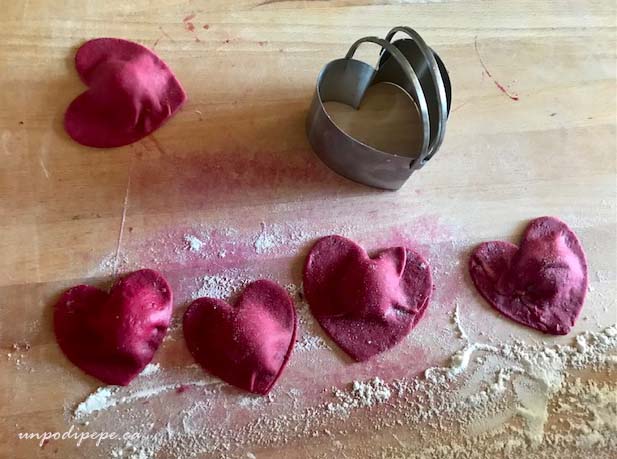
Cutting out heart shaped beet ravioli

The pasta is coloured with beets-not food colouring.  This is something I have always wanted to try, even though the thought of staining myself and everything in the kitchen is scary.  We adapted my Ravioli con ricotta e spinaci recipe published in the fall.  I posted a photo of our ravioli on Facebook and Instagram, and had many requests for the instructions.  The adaptations are reviewed here, but you will need to refer to the original post -unless you are already a ravioli making machine.

Start by roasting 4 small or 2 medium beets with a drizzle of olive oil and salt in aluminum foil for at least an hour.   Before they cool, remove skin with a paper towel or gloved hands.  Chop then puree the beets in a food processor or with an immersion blender.  

We made 2 ‘half’ doses of my usual ravioli dough so we could make 2 different shades of red.  

2 eggs

125 ml (½ cup) roasted beet puree

250g (almost 2 cups) 00 flour, plus extra

For the lighter colour, we used about 60 ml (¼ cup) beet puree and added an extra egg yolk-although just using less flour is also an option.  

Mix the beets and eggs, then add in the middle of the flour, if kneading by hand.  I usually knead my dough by hand, but red stained hands did not sound appealing, so I started with the food processor.  When the dough is partially mixed and a uniform colour, transfer to a well-floured surface.  Knead for 10 min, adding extra flour as needed.  The amount of flour will depend on how much moisture is in the beets.  I had to add at least an extra 50g (~1/3 cup).  The dough should spring back when you stick a finger in it, but not stick to the work surface.  It will look and feel like pink play doh!  Cover with an upside down bowl and let sit for at least half an hour.  

We used the same ricotta filling as in the original post, omitting the spinach and adding the zest of half a lemon for extra flavour. This is enough filling for 2 ‘half’ doses of dough.

Heart shaped beet ravioli being shaped

When rolling the dough, flour the work surface as needed.  If the dough is still too moist to go through the pasta machine, sprinkle with flour before rolling it out-but be careful not to use too much.  If the dough is toodry, the 2 pasta sheets will not stick together and the ravioli will open while cooking.  Yuck!

Cutting out heart shaped beet ravioli

Roll the dough to the second thinnest setting on the pasta machine-usually this is a 6.  Use a heart shaped tagliabiscotti – a cookie cutter about 6-7 cm (2¼-2¾ inches) wide.  It is handy to have a slightly smaller size too, for places where there is not quite enough dough to cut the bigger size.  This decreases dough wastage! Press around the filling to remove air before cutting, and seal around the edges with fingers after cutting.  Egg white can be brushed along the edges to seal, but I have never found this necessary.  If the heart shape is not working for you, a traditional shape looks festive too.  

The colour lightens a lot when cooking, so make them as dark as possible!  If you do not like beets, not to worry, they add very little taste to the pasta dough.

Heart shaped beet ravioli boiling

Each half portion of dough will make about 45 ravioli.  Freeze and cook them as described in the original post.  Serve with a simple sauce.  I heat up olive oil with whole or chopped sage leaves and slivered almonds or hazelnuts.  Spoon it on top of the ravioli and sprinkle with Parmigiano Reggiano.  Aglio, olio e peperoncinoalso works well, or a light cream sauce with walnuts. 
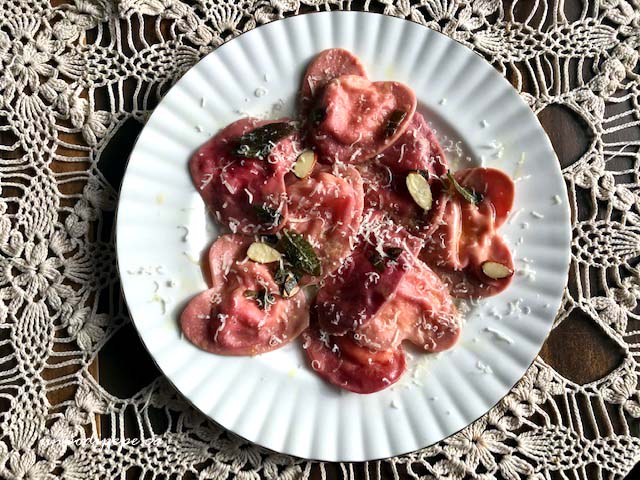
Note-If my instructions are not clear or detailed enough you can link to 2 different, but similar heart shaped beet ravioli recipe posts. If you need a video, watch Gabri’s. It is in Italiano, the visuals are helpful even if you do not understand. For a more professionally presented printable recipe, check out Pina’s post.

Buon appetito e auguri per la festa di San Valentino!  Viva l’amore, Cristina

*nipotine means nieces or granddaughters.  In this case it means nieces! Grazie Isabella e Francesca!
Share this:

  • Share on Facebook (Opens in new window) Facebook
  • Share on Pinterest (Opens in new window) Pinterest
  • Share on X (Opens in new window) X
  • Email a link to a friend (Opens in new window) Email
  • Share on WhatsApp (Opens in new window) WhatsApp
Like Loading...

Panforte di Siena

12 Saturday Dec 2020

Posted by Un po' di pepe in Feste, Mangiamo!, Recipes

≈ 26 Comments

Tags

Cucina Toscana, Dolci, Dolci di Natale, Gastronomic history, Italian Christmas, Natale, Panforte Margherita, Panpepato, Siena, Via Francigena

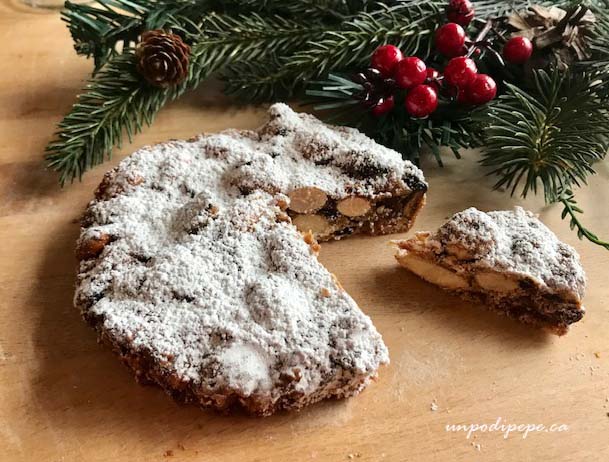
Panforte di Siena

Panforte is un dolce Natalizie- a seasonal treat from Siena, although it is sold all year round.  A chewy, sweet cake, panforte leaves a wonderful aftertaste of candied citrus, almonds and a bold hit of spices.

Panforte dates back to the introduction of exotic spices from the East, via the port of Pisa.  The earliest known record is from the 13th Century.  Documents in the State Archive of Siena state that a bread rich with pepper, spices and honey was paid as a tax to the monastery of Monte Celso on the seventh of February, 1205.

Panforte di Siena

Panforte was originally made with flour, water, honey and spices, mixed with chunks of fresh autumn fruits such as grapes, figs and plums.  The water content of the fruit kept the bread moist and after a few days, fermentation gave it an acidy flavour. This is where the name panes fortis, or ‘strong bread’ comes from.  It was also known as panpepato because of the abundance of pepper and other spices and the dusting of black pepper on top.

Panforte di Siena ingredients

Panpepato/panforte was made by speziali, spice sellers who could be considered medieval pharmacists.  It was valued not only as a food but also as a medicinal remedy because of the spices it contained.

Siena was on the Via Francigena, the ancient pilgrimage route running through France to Roma, then to Puglia where the ports of Bari, Brindisi and Otranto were transit points for the Holy Land.  This made Panforte known outside of Tuscany. A sweet cake with energy and sustenance, Crusaders carried it on their travels…like medieval energy bars! In 1515, a nun named Suor Berta changed the fruit to canditi-honeyed or candied fruit.  The canditi were usually citrus fruits (orange, lemon and cedro/citron) and dark melon or pumpkin.

Canditi, nuts and especially spices were $$$ costosissimi-making Panforte an extremely expensive item.  Only the wealthy could afford the extravagance.  It was also given to the clergy as a gift on special occasions such as Christmas or local feast days.Panforte confezionato

The recipe remained the same for centuries, almonds, flour, honey, canditi and spices, dusted with black pepper and held together at the bottom with foglie di ostie-a sheet of unconsecrated communion host! That was until 1879, when Regina Margherita di Savoia– of pizza Margherita fame-visited Siena. In her honour, a local speziero made a more delicate ‘white’ version of panforte, without the black candied melon and covered with a dusting of vanilla icing sugar instead of black pepper. It was called Panforte Margherita and is the version most often sold today.  In 2014, Panforte di Siena received the PGI (Protected Geographical Indication) European Union designation of quality label. Panforte di Siena with holly and greenery

In Siena it is thought that Panforte should contain 17 different ingredients.  This is because 17 is the number of Contrade or districts in Siena.  Representatives from the Contrade take part in the Palio di Siena horserace every July 2 and August 16.

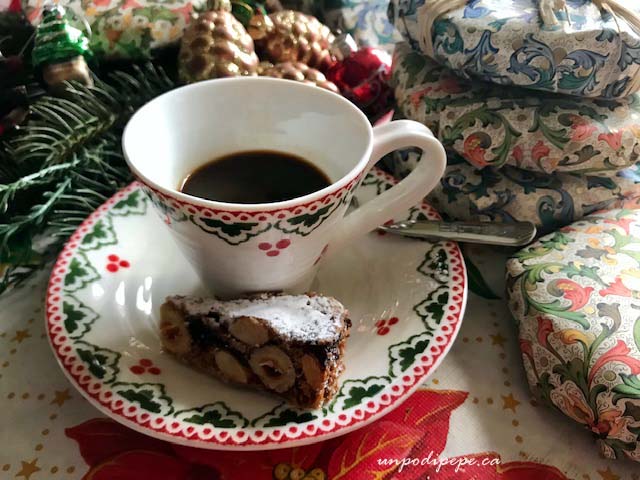
A thin wedge of panforte makes a delicious treat with caffè or liqueur after a meal. Panforte makes a beautiful edible gift-but only for very special people! I made mine small, wrapped them in parchment paper then in Florentine paper and sealed the bottom with a large gold sticker.Homemade panforte di Siena

I use white pepper, as the flavour is more delicate, while still providing heat.  It is hard to find good canditi, so I made my own with organic orange and lemon peels using Domenica’s recipe. canditi

My homemade canditi ran out after 2 batches, then I substituted chopped dried Kalamata and Mission figs and sour cherries. The zest of an orange added a bit of citrus flavour. For the ostie, I used something called ‘edible wafer paper’ made with potato starch. Edible rice paper is also available at specialty food stores.

Panforte di Siena

Ingredients:

125g (1 cup) hazelnuts

200g (1½ cups) blanched almonds

175g (1½ cups) icing sugar, sifted

200g (⅔ cup) good quality honey

30ml (2 tbsp) water

300g candied fruit peel (orange, lemon, citron) and/or dried fruit

Grated orange or lemon zest

5g (1 tsp) ground cinnamon

2g (¼ tsp) ground ginger

2g (¼ tsp) ground cloves

2g (¼ tsp) ground star anise

3g (½ tsp) ground coriander

2g (¼ tsp) ground nutmeg

2g (¼ tsp) ground white pepper

175g (1½ cup) flour, sifted

Ostie-unconsecrated communion wafer /wafer paper/rice paper

Icing sugar to coat

 Instructions:

  1. Using a heavy saucepan and a low flame, set the icing sugar, honey and water to boil. Stir frequently with a wooden spoon, being careful to keep the syrup from sticking. This will take a while, so in the meantime, do steps 2 and 3.
  2. Use tart pan(s) with removable bottoms.  Line with the ostie/wafer paper. If needed, grease and dust the sides with cocoa powder.
  3. Toast the nuts lightly for 6-10 min in a 200°C (400ºF) oven.Panforte dry ingredients
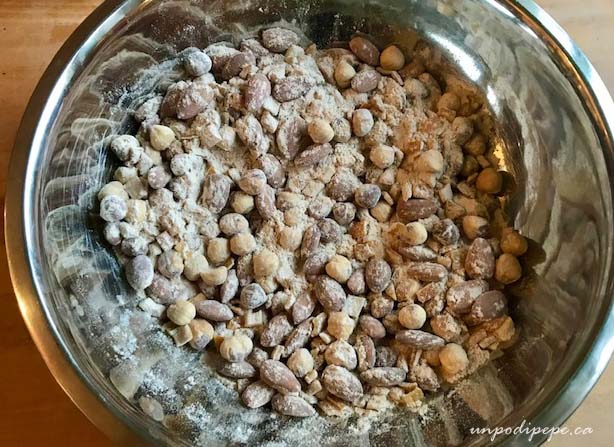
  4. Coarsely chop the nuts with a knife, or leave whole.  Dice the candied fruit and mix with the spices and nuts, then add in the sifted flour.
  5. When the syrup in step 1 reaches at least 100°C (200°F ), remove pot from heat and stir into the nut mixture. If you do not have a candy thermometer, use a toothpick to pick up a bit of syrup and pass it under cold water. If it becomes solid, it is ready.Panforte syrup in a pot
  6. Working quickly, using wet hands and 2 tablespoons, divide the batter into the tart pan(s), smoothing the top with damp fingers or the back of a wet spoon. It can also be pressed down with the bottom of a glass.Panforte crudo
  7. Bake in a 150° C (300°F) oven for 35-40 minutes. Do not let the panforte brown, or it will be too hard. Panforte cooking in the oven
  8. Remove the panforte from the pans and let it cool completely on a rack. Dust with icing sugar on all sides. and serve cut into thin wedges.
  9. Panforte keeps well for a month if wrapped in parchment paper or in an airtight container and stored in a cool, dark place. Do not store in the fridge.
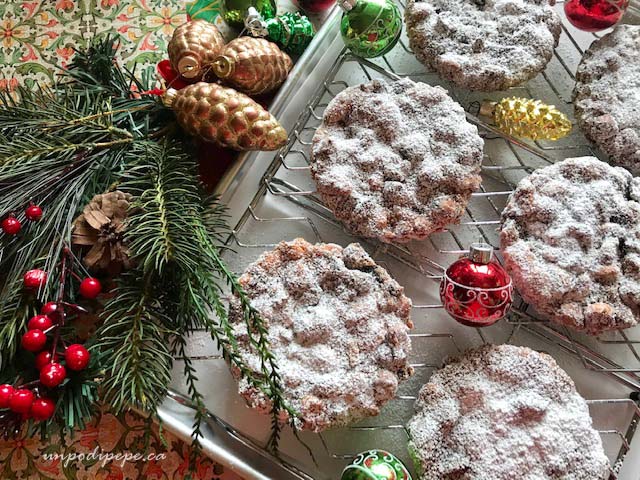
  10. This recipe makes one 22cm (9½ inch) panforte in a springform pan or six-seven 10cm (4 inch) panforte in tart pans. A 25cm (10 inch) round of parchment paper and fancy paper wraps the 10cm size.Panforte di Siena wedge with espresso and Christmas ornamentsDoubling the dose is not a great idea since you need to work fast. If you make 2-4 doses in a row like I do, you can prepare everything in advance.  I measure all the spices for each dose in a little jar so they are ready to add in, toast the nuts in advance, and have a separate bowl for each dose so I can work quickly. I also have the wafer paper cut in advance and the tart pans ready on a baking sheet.

Let me know how your panforte comes out! Buon appetito e Buone Feste, Cristina

Share this:

  • Share on Facebook (Opens in new window) Facebook
  • Share on Pinterest (Opens in new window) Pinterest
  • Share on X (Opens in new window) X
  • Email a link to a friend (Opens in new window) Email
  • Share on WhatsApp (Opens in new window) WhatsApp
Like Loading...

World Pasta Day

25 Sunday Oct 2020

Posted by Un po' di pepe in Mangiamo!, Recipes

≈ 10 Comments

Tags

Corzetti, Gnocchi di zucca, Pasta, Pasta all'Amatriciana, Pasta fatta a mano, Ravioli, Ricotta tortelloni, World Pasta Day


October 25th is World Pasta Day.  Am I the only one who thought that was every day?  I am not sure who comes up with these dates, but since it seems sort of official, I am posting links to 5 pasta recipe posts from the archives.

Gnocchi di zucca-I like to recycle my Hallowe’en pumpkin by turning it into Gnocchi di zucca.  If Hallowe’en is not happening this year, I will buy one anyways.  Squash will work too.  Zucca actually means both pumpkin and squash, although sometimes squash is called zucca gialla. gnocchi di zucca

These gnocchi are topped with a simple sauce of olive oil, sage and Parmigiano Reggiano.

Spaghetti all’Amatriciana–I posted this recipe for Spaghetti all’Amatriciana following the terremoto, the earthquake in Amatrice a few years ago.

Swap the eggs in Pasta Carbonara for tomato sauce, and you have Pasta Amatriciana! The other 4 ingredients stay the same.

Ravioli di ricotta e spinaci-Stuffed pasta is so fun to make, and turns any meal into a special occasion.  I made these lovely ravioli with my nipotina Francesca this summer.  Making them is not as hard as it looks!  They freeze well, and can go into the pot of boiling water straight from the freezer.Ravioli di ricotta e spinaci

Corzetti-Corzetti are a traditional pasta of Liguria.  The shape is based on medieval coins.  I bought a corzetti stamp in Vernazza during my trip to the Cinque Terre last year and have used it several times.  If you do not have a corzetti stamp, use a glass to cut the circles, and find something around the house to imprint a design.  Be creative. Corzetti pasta con pesto GenoveseThis post includes a few different sauces to try, including Pesto Genovese.

Tortelloni di ricotta– The first time I made these was as a recipe test for a cookbook.  It was during a snowstorm and I had to go out in the snow with a flashlight, dressed like an eskimo, to forage for sage in the garden!  The link to the recipe is in the post.  

The post Grano Arso does not include recipes, but is interesting to read if you are interested in pasta and gastronomic history.

Let me know which one is your favourite. I hope you all enjoy a delicious plate of pasta today. Buon appetito, Cristina

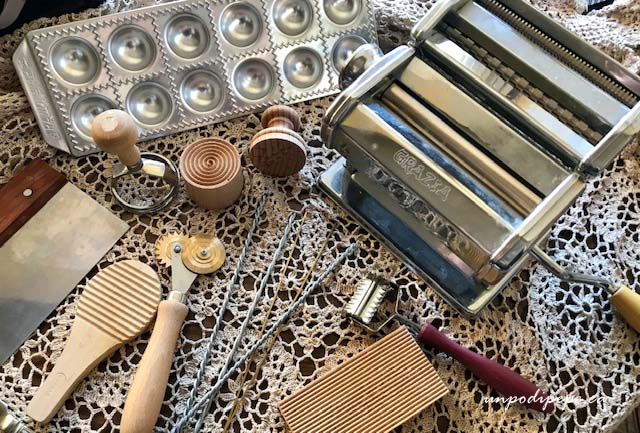
Pasta tools

Share this:

  • Share on Facebook (Opens in new window) Facebook
  • Share on Pinterest (Opens in new window) Pinterest
  • Share on X (Opens in new window) X
  • Email a link to a friend (Opens in new window) Email
  • Share on WhatsApp (Opens in new window) WhatsApp
Like Loading...

Writing about Italian Canadian Food Culture

04 Friday Sep 2020

Posted by Un po' di pepe in Bilingual posts, Italocanadesi, Mangiamo!

≈ 12 Comments

Tags

AICW, Culinary Culture, Food writing, Gastronomic history, Grano Arso, Italian Canadian Literature, Italocanadese life

The Italian Cultural Institute of Montreal and the Association of Italian Canadian Writers (AICW), as part of a webinar series dedicated to writing, an experience animated by Italian-Canadian authors, translators, journalists, publishers and bloggers, are pleased to present “Can you smell the garlic? Writing About Italian-Canadian Food Culture”

Tuesday, September 8, 2020 – 5:00 pm EST

Nonna stirs tomato sauce bubbling in a cauldron in the garage, papà proudly pours a glass of his homemade wine, zie gather to make taralli and biscotti in the basement kitchen…

These culinary traditions are a treasure trove of material for the Italian-Canadian writer. How does nostalgia affect the relationship to food and writing about food? Push past the clichés, what complicates the rosy images? Is it more difficult to write in a critical or unsentimental mode about food and Italian-Canadian identity?

Domenico Capilongo, Monica Meneghetti, Cristina Pepe and Jim Zucchero will read mouth-watering prose and poetry and talk about the connections between food and their writing. The webinar will be moderated by former restaurant critic, Francesca M. LoDico. The series is hosted by the Secretary of the AICW Executive, Giulia Verticchio.

Event details & bios: https://iicmontreal.esteri.it/iic_montreal/en/gli_eventi/calendario/2020/09/senti-l-aglio-scrivere-sulla-cultura.html

Italiano: https://iicmontreal.esteri.it/iic_montreal/it/gli_eventi/calendario/2020/09/senti-l-aglio-scrivere-sulla-cultura.html

I will be reading about Grano Arso.  The webinar will be available to view later on the Istituto Italiano di Cultura-Montreal’s website and Facebook page.

In Italiano:
L’Istituto Italiano di Cultura di Montréal e l’Associazione degli Scrittori italo-canadesi (AICW), nell’ambito della serie di webinar dedicata all’opera della scrittura, un’esperienza animata da autori italocanadesi, traduttori, registi, giornalisti, editori, bloggers…, sono lieti di presentare il webinar intitolato “Senti l’aglio? Scrivere sulla cultura culinaria italocanadese”.
Nonna mescola la salsa di pomodoro che ribolle in un calderone nel garage, papà versa orgoglioso un bicchiere del suo vino fatto in casa, le zie si riuniscono per fare taralli e biscotti nella cucina del seminterrato… Queste tradizioni culinarie sono un tesoro di materiale per lo scrittore italo-canadese. In che modo la nostalgia influenza il rapporto con il cibo e la scrittura sul cibo? Superare i cliché, cosa complica le rosee immagini? È più difficile scrivere in modo critico o non sentimentale sul cibo e sull’identità italo-canadese?
Domenico Capilongo, Monica Meneghetti, Cristina Pepe e Jim Zucchero leggeranno brani e poesie da “leccarsi i baffi” e parleranno delle connessioni tra il cibo e la loro scrittura. Il webinar sarà moderato dal già critico di ristoranti, Francesca M. LoDico. La serie è ospitata dalla Segretaria dell’Esecutivo AICW, Giulia Verticchio.
**********
Buon appetito, Cristina

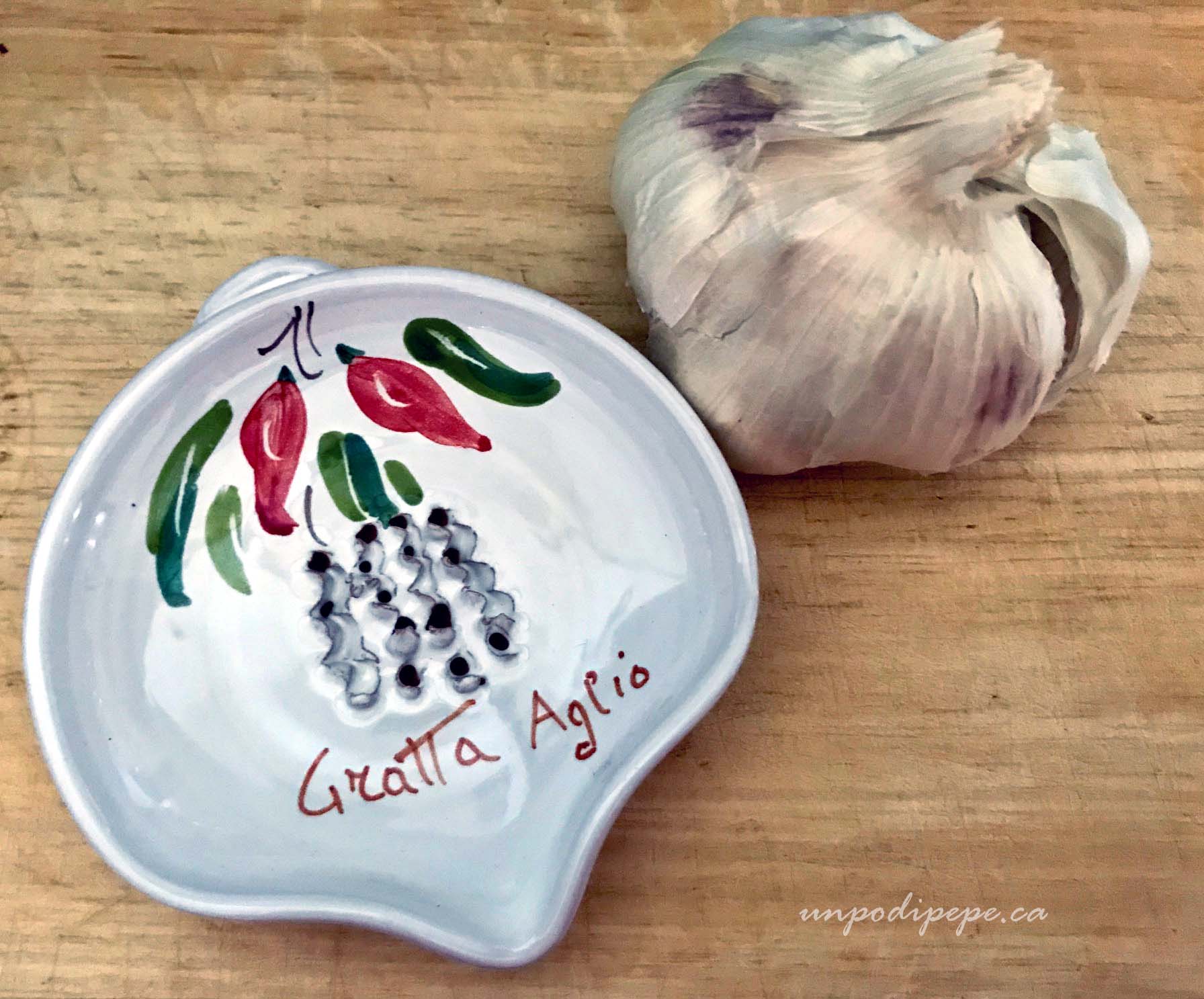
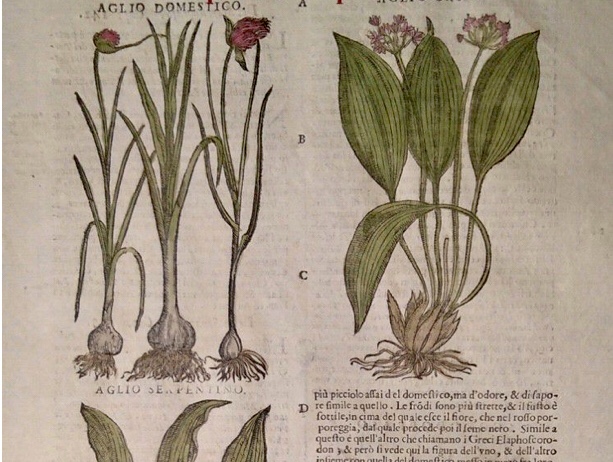
Garlic drawings

Share this:

  • Share on Facebook (Opens in new window) Facebook
  • Share on Pinterest (Opens in new window) Pinterest
  • Share on X (Opens in new window) X
  • Email a link to a friend (Opens in new window) Email
  • Share on WhatsApp (Opens in new window) WhatsApp
Like Loading...

Ravioli di Ricotta e Spinaci

30 Tuesday Jun 2020

Posted by Un po' di pepe in Mangiamo!, Recipes

≈ 26 Comments

Tags

Homemade ricotta, Italian cooking, Pasta, Pasta fatta a mano, Ravioli, Stuffed pasta, Vegetarian pasta

Ravioli di ricotta e spinaciStuffed pasta is more of a special occasion dish than an ‘everyday’ pasta, and really fun to make by hand. I especially like large ravioli, as they look like little gift packages-and everyone loves presents!

Making ravioli is more efficient and fun as a team effort.  I recently spent a morning with my nipotina Francesca making ravioli with a creamy ricotta and spinach filling. Since I needed to measure out the recipe for her, I decided to share it in a post.Ravioli di ricotta e spinaci

Pasta naming can be confusing, and there are also regional differences.  Ravioli are usually square, but can also be round or mezzalune –half moons.  They are usually made with a filling between 2 thin pasta sheets, sealed and cut.  Large ravioli are sometimes called agnolotti- a sub category of ravioli where pasta sheets are folded over a filling, sealed and cut.  One example is agnolotti del plin.  As you see in the photos, some of our ravioli were made folded over, and some not, so we just call them all ravioli.ravioli di ricotta e spinaci

To make the pasta:

Fresh egg pasta is generally made with 1 egg to every 100g flour.  I use finer OO (doppio zero) flour as it makes a more elastic dough which is more likely to stay al dente. All purpose flour can be used as well, or a combination of the 2.

Depending on the size of the eggs, an extra yolk may need to be added, or a bit less flour.  The dough should not be too dry, or the ravioli will not seal properly and will open while cooking.

I usually use 5 eggs and 500g 00 flour, which will use up all of the filling. This makes about 75-80 ravioli 5cm (2 inch) square.

Tip the flour onto a wooden board.  Make a wide hole in the center of the flour and add the eggs.  Move a few tablespoons of the flour off to the side in case it is not needed.  This prevents needing to add water because the pasta is too dry!Pasta all uovo

Beat the eggs with a fork and slowly start to mix in some flour.  Keep adding flour from the inner edge of the wall.  When the egg mixture is no longer runny, start kneading by hand.

Knead for 10 min using the whole hand.  Keep folding and turning until the dough is shiny and elastic.  Shape into a ball.  Cover with an overturned bowl and let the dough sit for 30-60 min.  This lets the gluten relax, and the dough will be more elastic and workable.

A stand mixer or food processor can be used to make the dough, but it does not come out as nice, plus I find it more work to wash the appliances than to mix it myself.

To make the filling:

The filling can be made the night before, or while the pasta is ‘relaxing’. I do not really measure the ingredients.  Use less ricotta and more spinach if you like.  I often make them without any spinach.  These are the approximate amounts:

500-600 g (~2 cups) ricotta, drained

80-100g Parmigiano Reggiano, grated (¾ -1 cup)

2 egg yolks

500g fresh spinach, cooked, drained and chopped finely, or 200g frozen spinach, thawed and drained

A pinch of freshly grated nutmeg

Salt and pepper qb*

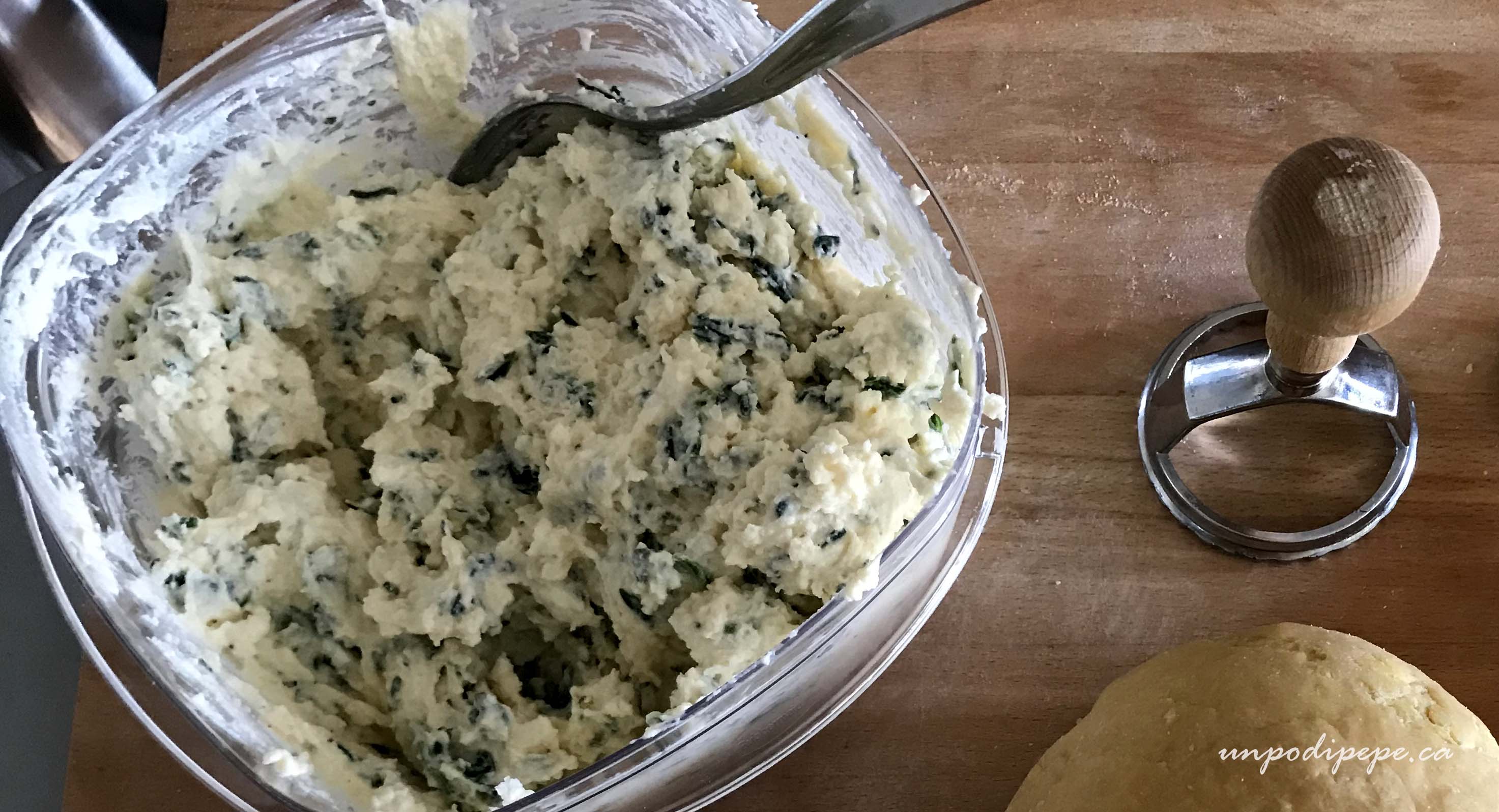
The ricotta I use comes in its own little draining basket.  The basket can sit in a colander over a bowl to drain for a few hours.  To make your own ricotta, check out the post Ricotta fatta in casa.  Make sure to squeeze out all of the water from the spinach as well. Extra moisture will produce soggy ravioli.  Yuck!  Mix all ingredients with a fork.  Cover and store in the fridge until the ravioli are ready to fill.

To make the ravioli:

Cut off one piece of dough at a time (~1/8th of the total) and leave the rest under the bowl so it does not dry out.  Lightly flatten the dough with fingers and run it through the pasta machine twice on the widest setting.  Gradually run the dough through at thinner settings, until the second thinnest setting.
Since ravioli is double layered, the pasta should be as thin as possible.  The green spinach should be visible through the pasta!Ravioli di ricotta e spinaci

The dough can also be rolled out by hand, but it takes real talent and years of practice to roll out a sfoglia thin enough for ravioli!

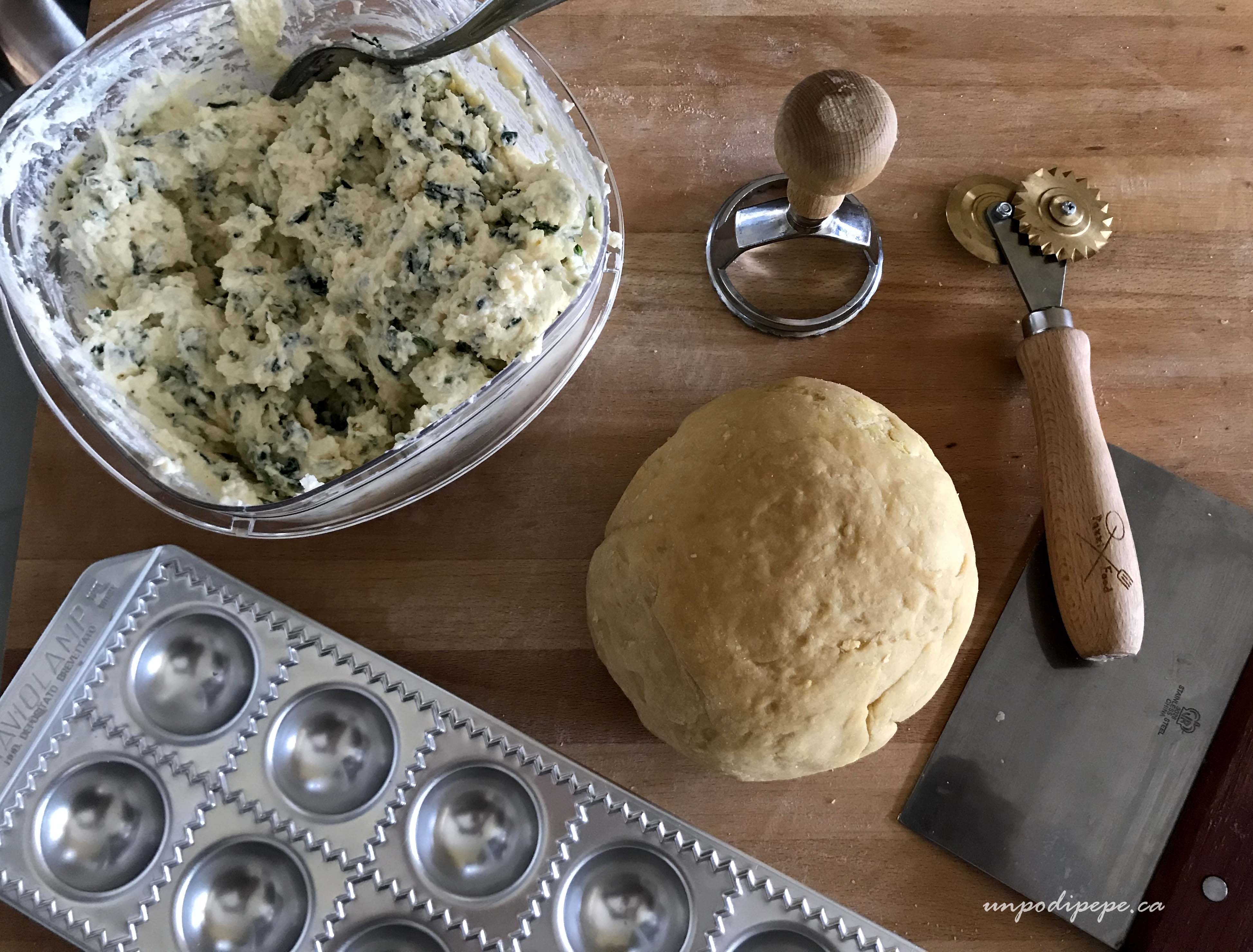
Work with only 1 piece of dough at a time-or the pasta will dry out and not stick together.  Try not to add any extra flour to the dough or the board when making stuffed pasta as this will also prevent sticking.Ravioli mold RaviolampRaviolamp ravioli mold

I have a ravioli mold called a Raviolamp, and a round ravioli cutter, but I also like to make them ‘freeform’.  We made a combination of all 3 so that Francesca could try them all!  They do not have to all look the same-but try to make them all the same size so they take the same time to cook.Ravioli di ricotta e spinaci

Using 2 teaspoons, drop 1 heaping teaspoon of filling on the pasta sheet 2 fingers apart.  Either use 2 sheets, 1 for the top and 1 for the bottom, or 1 long sheet and fold it over.  Press in between the filling with the heel of hand, making sure to remove any air. The filling can be piped out of a pastry bag if you want to get fancy.Ravioli di ricotta e spinaci

Cut the squares with a fluted pastry wheel or ravioli cutter.  The Raviolamp makes 12 ravioli stuck together, then they can be cut apart with the pastry wheel.Ravioli mold RaviolampI use the leftover dough to make a few ‘freeform’ ravioli rather than putting it through the pasta machine again.  Use the leftover bits as soon as possible so they do not dry out. The finished ravioli can go on a floured tea towel on a cookie sheet until they are ready to cook or be frozen. Ravioli di ricotta e spinaci

Cook the ravioli in a large pot of boiling salted water.  If cooking frozen ravioli, do not defrost.  Drop them into the boiling water directly from the freezer.  Cook for ~4 minutes, or 1 minute after they float to the top.  Remove with a slotted spoon.Ravioli di ricotta e spinaci

These ravioli should be served with simple sauces.  While they are cooking heat up olive oil with some garlic and fresh sage.  They are also delicious with a simple tomato sauce. For either sauce, top with freshly grated Parmigiano Reggiano and bite into them!Ravioli di ricotta e spinaci

Buon appetito, Cristina & Francesca

*qb=quanto basto meaning however much is needed.  This is what you commonly see in recipes written in Italian

Share this:

  • Share on Facebook (Opens in new window) Facebook
  • Share on Pinterest (Opens in new window) Pinterest
  • Share on X (Opens in new window) X
  • Email a link to a friend (Opens in new window) Email
  • Share on WhatsApp (Opens in new window) WhatsApp
Like Loading...

Corzetti

17 Friday Apr 2020

Posted by Un po' di pepe in Mangiamo!, Photography, Recipes

≈ 32 Comments

Tags

Cinque Terre, Corzetti, Corzetti with mushroom and walnut sauce, Italian cooking, Liguria, Pasta, Pasta fatta a mano, Pesto Genovese, Printmaking

Corzetti (cor∙ZET∙ti) are a traditional pasta of Liguria, also called croxetti (cro∙shet∙ti) or crosetti in Ligurian.  Corzetti are an embossed pasta shaped to look like gold coins.  The name comes from ‘crux’, latin for cross. They  have been around for a very long time. We know this because the Republic of Genoa had a medieval coin with a Genovese cross and there is a 1362 literary reference to pasta with crossetti served at a banquet.Stampo per corzetti

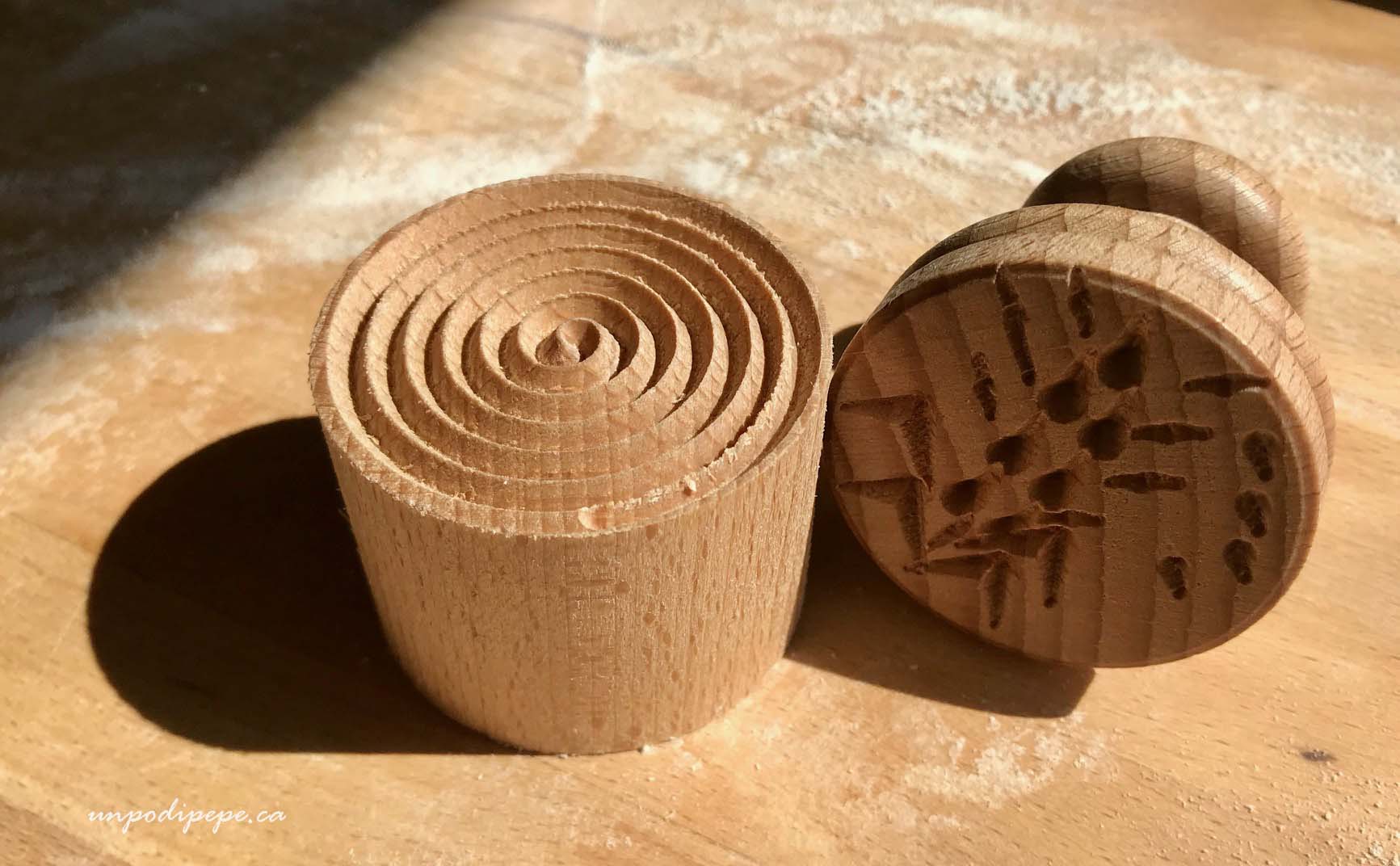
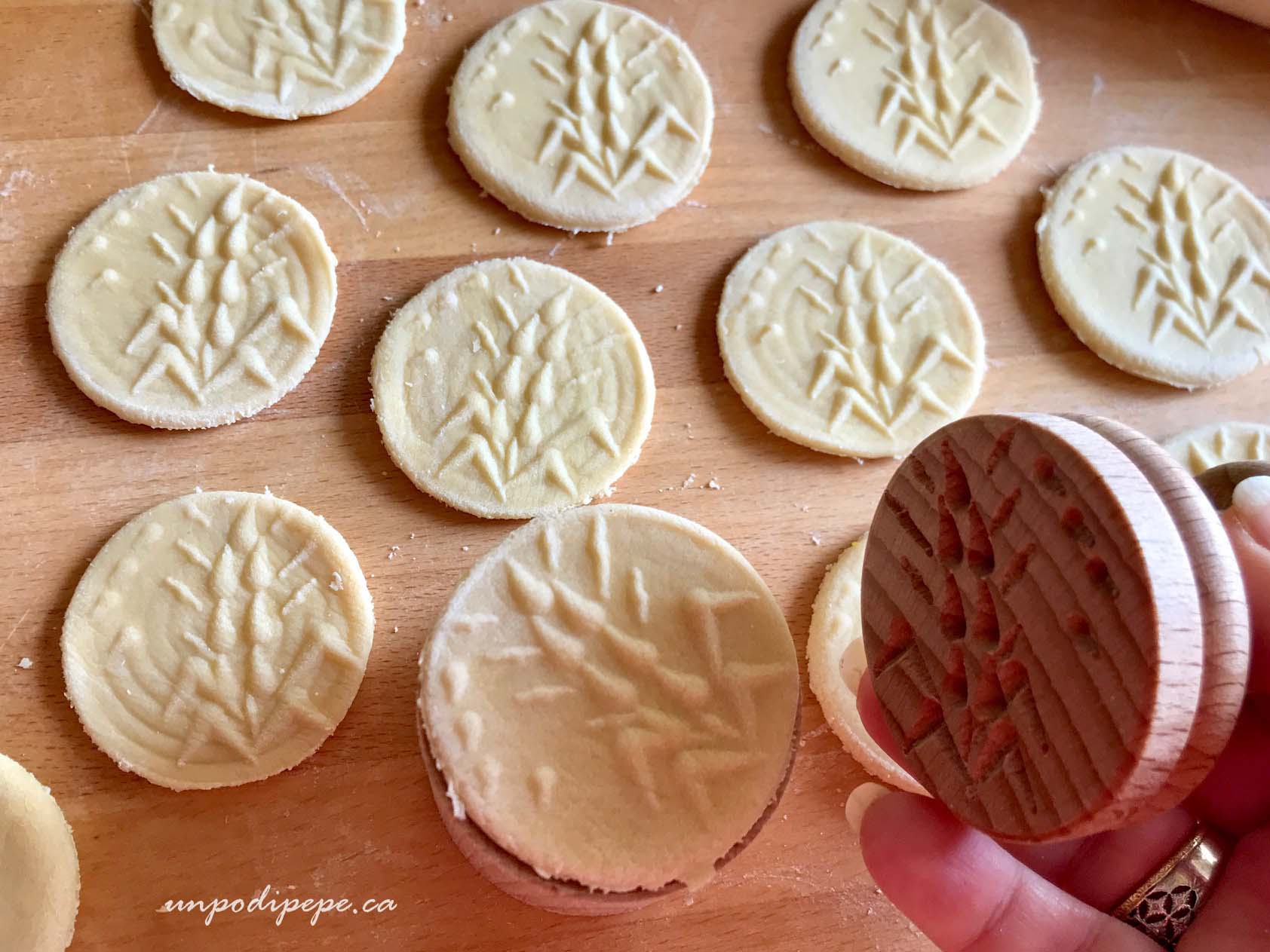
Corzetti are made with un stampo per corzetti- a corzetti stamp.  This is a 2 part device made of unfinished wood-usually pear wood.   The textured finish of the wood is functional-it transfers to the pasta and helps hold sauce, as does the embossed design. The bottom of the lower half is used to cut the circles. The top of the lower piece and the upper piece with the handle for pressing each have a carved design.Corzetti pasta con grano

Corzetti are like edible woodcut prints!  The perfect pasta for a printmaker.  This must be why I like making them so much!
If you read the posts Le Cinque Terre and Exploring le Cinque Terre, you may remember my determined quest to find a corzetti stamp.  In Corniglia, I found dried corzetti for sale, but no stamp.  I did not notice any restaurants serving them either, but I also did not look very hard.  I finally found a stamp by accident in a tiny shop in Vernazza, the town where we were staying. They were in a basket at the back, where no one could see them!

The design on my stamp is a stem of wheat, with a swirl on the other side.  It cost 11 Euro and was carved by a local fisherman.  I saw a similar one online for $72 US.  You can also custom order stamps but they can be very expensive.  It is much more fun to buy something like this where it is produced.

Noble Ligurian families had their family coat of arms engraved on the stamps.  Designs also include crosses, wheat, gigli (fleur de Lis) or the emblem of il pastaio, the pastamaker.

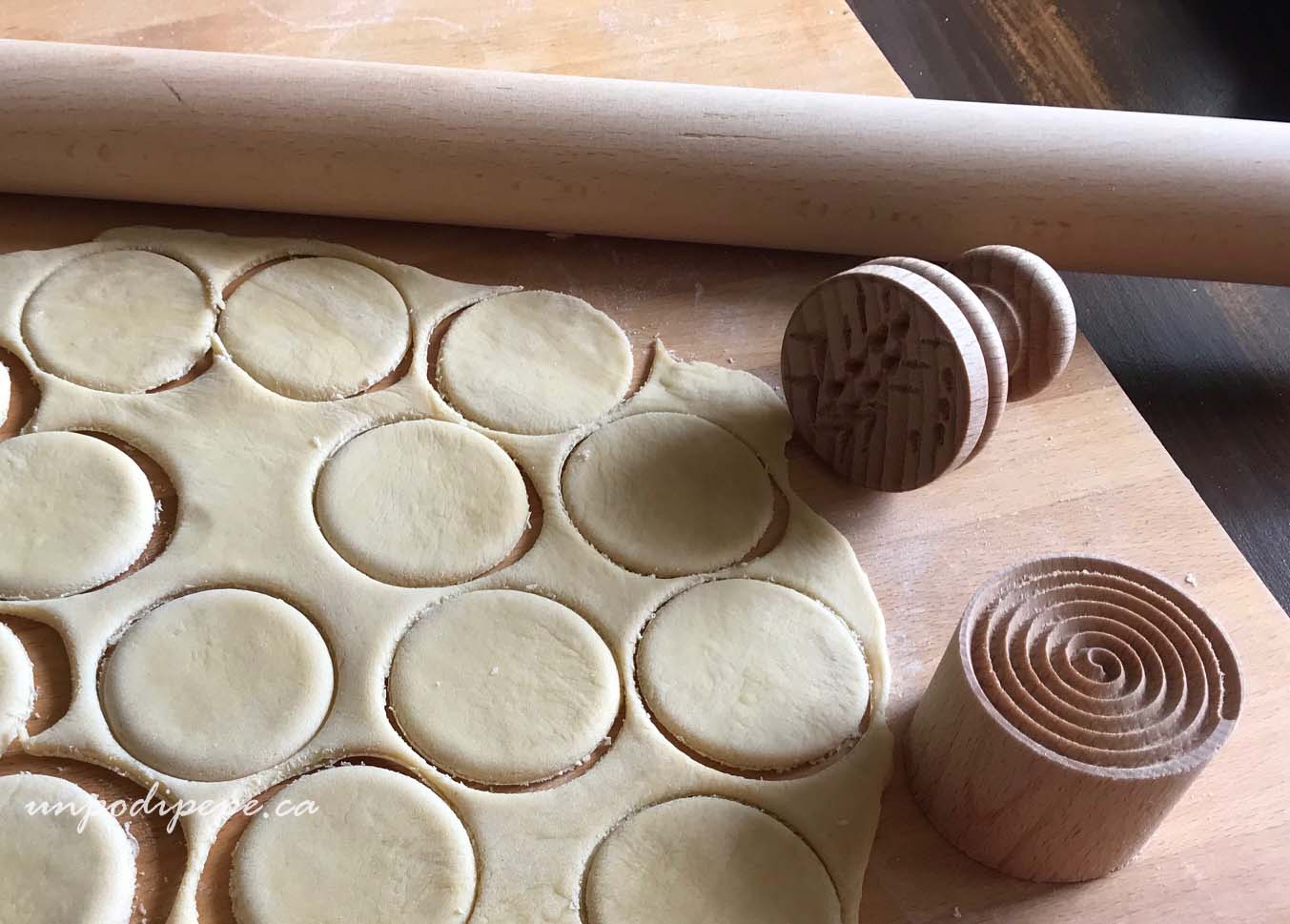
Circles are cut on a freshly rolled sfoglia or pasta sheet-not too thick, but thick enough to hold the embossing.  Each corzetto is pressed between the 2 parts of the stamp, embossing a design on each side.  If the pasta is rolled out too thin, the designs will transfer to the other side.Stampo per corzetti Corzetti stamp

Corzetti dough is traditionally made with eggs and white wine.  It is usually made with flour and semola rimacinata di grano duro (called semolina in North America) or chestnut flour.  Traditionally, corzetti are served with pesto or olive oil, herbs and pine nuts.  They can also be served with an herb and scallop or mushroom walnut sauce.  I have made corzetti several times now, and here is the dough combination I found works the best:

To make Corzetti:

200g (1.5 cups) 00 or All-Purpose flour

200g (1.5 cups) semola rimacinata (Semolina)

3 medium sized eggs plus 2 yolks-add an extra egg if they are small

60ml dry white wine (1/4 cup)

5ml (1 tsp) Extra virgin olive oil

Pinch of salt

Make a well with the flours on a wooden board.  Place the eggs, wine and EVOO in the center and beat with a fork, then slowly start to mix in the flour.  This dough needs to be soft and elastic to hold the embossing and you may not need all of the flour. Keep some to the side in case it is not needed. Once the mixture is less liquid, start to mix by hand.  Knead for 10 minutes.  Roll into a ball, cover and let rest for 30 min.

Use half the dough at a time, and keep the other half from drying out by covering with an upturned bowl.  Roll the dough out by hand 3mm thick.  You can use a pasta machine, but hand rolling will result in a better embossing.  Lightly flour the corzetti stamp.  Cut circles as close together as possible.  Pasta rolled out multiple times will not be consistent thickness and will dry out, and not take the embossing as well. Stand up while pressing down firmly on the top of the stamp with the palm of the hand to get the best quality embossing. This makes 60-65 corzetti.
Corzetti pasta con pesto Genovese

I like to serve corzetti with a traditional Pesto Genovese. This mushroom walnut sauce is also yummy.Corzetti con funghi e noce

Corzetti con Funghi e Noce / Corzetti with Mushrooms and Walnuts

200g porcini mushrooms or mixed mushrooms in season

1 onion, 1 carrot, 1 celery stalk

2 cloves garlic

Prezzemolo (Italian parsley)

200 g (~3/4 cup) walnuts shelled

30g (2 tablespoons) pine nuts

Dry white wine

EVOO, salt

Finely chop everything except the pine nuts.

Make a soffritto-Fry the onion in olive oil, add carrot and celery, half of the garlic and the pine nuts

In another pan, fry the mushrooms (these can be finely chopped or just separate the tops and bottoms) then add the soffritto. Add wine and cook for 30 min.

Before serving, add salt, the rest of the garlic, and prezzemolo

Cook corzetti in boiling salted water for 3-4 min.  Add mushroom sauce and sprinkle with the chopped walnuts and grated Parmigiano Reggiano.

Want to try making corzetti, but don’t have a stamp?  Cut circles out with a 5cm (2 inch) diameter drinking glass.  Use a cookie press for the design, or find something that can be lightly pressed to make a design in the dough-a wax seal, a ring, the crosshatch design on your meat tenderizer…..  get creative!Corzetti pasta con grano

It is hard to believe I was in Liguria 11 months ago.  Since we can not travel there-or anywhere at this time, I hope this helps you viaggiare in pultrona… armchair travel to the coast of Liguria and the Cinque Terre.  Buon viaggio and stay safe, Cristina

Share this:

  • Share on Facebook (Opens in new window) Facebook
  • Share on Pinterest (Opens in new window) Pinterest
  • Share on X (Opens in new window) X
  • Email a link to a friend (Opens in new window) Email
  • Share on WhatsApp (Opens in new window) WhatsApp
Like Loading...

In my Kitchen~Quarantine edition

06 Monday Apr 2020

Posted by Un po' di pepe in Mangiamo!, Photography

≈ 26 Comments

Tags

#iorestoacasa, COVID19 pandemic, In my kitchen, Quarantine

Sottosopra (sot•toh•SOH•prah)…upside down.  I know I am not the only one who feels like an extra in a sci-fi movie where everything in the world is upside down. Kisses and hugs can be disease spreaders, binge watching Netflix on the couch all day is responsible adult behaviour, and NOT visiting your family is a sign of love!

Everyone copes differently with the stress of quarantine.  Some of us are madly productive, and others binge watch Netflix all day.  It does not matter what we are doing, as long as we are doing it at home-staying home and helping everyone stay safe.  If you have been hiding under a rock and this is news to you, please read these 2 posts: COVID19~Andrá tutti bene and COVID19~Insieme ce la faremo.  

I am one of those ‘essential’ workers, but I am ‘freelance’ now, and happened to not have any work booked at the hospital the last 2 weeks. I have been at home, only leaving the house to buy groceries or walk to my parents’ back porch-the socially distant designated drop off/pick up point. This week I work a few days… and am not sure what to expect!

While home, I have done yoga class via zoom almost every day, and spent a lot of time in my kitchen.  I made a kitchen ‘to do’ list -mostly things I am not often home long enough to attempt.  Making pasta by hand is calming, almost meditative, punching dough is violently therapeutic, and my freezer is now full. It is also time for another ‘In my kitchen’ blog post.  Here are some of the things I crossed off my list:Tortelloni stuffed with meat

I have made a lot of stuffed pasta, but not filled with meat.  Ricotta, spinach, mushroom, pumpkin…but not meat.  These tortellini are stuffed with a mixture of veal, prosciutto, mortadella and parmigiano.  They were delicious, so I will be making them again, although I may vary the shape.Candied orange peel

In the spirit of using absolutely everything, I candied my orange peels, using a technique based on Domenica’s and then dipped half in chocolate.  They are a small flavour explosion and a nice garnish for a cheese plate, or served on the side with espresso.  I ate a lot of oranges, so made a lot of candied peel and will see if they freeze well.

I love making bread-and the kneading part is a great stress reliever.  Making pane senza impasto —no-knead bread, was anticlimactic, but i wanted to try it.  The ingredients were just barely mixed, rose for 24 hours, then baked in my heavy cast iron pot with the lid on.  The bread was delicious, with a nice crispy crust.  Unfortunately, you can only make 1 at a time.No knead bread

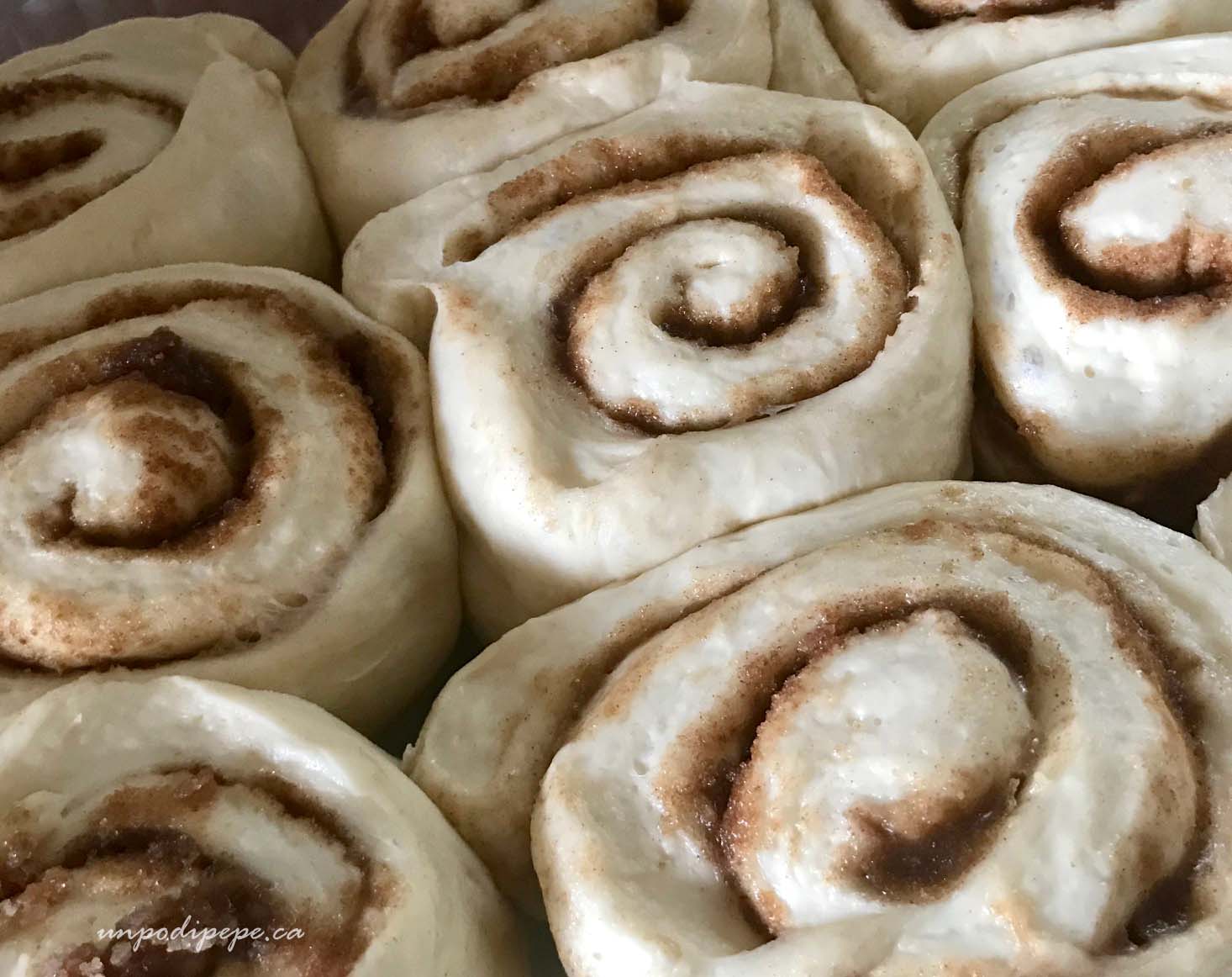
Alumni of the University of British Columbia will drool at the mention of the legendary, pillowy soft, caramelly UBC Cinnamon buns. These were made for over 50 years by UBC Food Services and sold at all of the campus food outlets.  The recipe was once a huge secret but is now available. UBC Cinnamon bunsI have wanted to make them for years, but the recipe sounded really difficult and time consuming.  It was not as involved as I thought and I will definitely be making them again.  There is even some kneading involved!  They were so good, I had to try one, keep one for the next day, and immediately arrange for the rest to be picked up so I did not eat them all.  I will try freezing them unbaked next time.unbaked ubc cinnamon buns

Freezer space is at a premium right now, so the frozen raspberries from my garden had to be used to make jam. In a few months there will be new berries to pick.

The south facing kitchen is the sunniest place in the house.  A few weeks ago -whenever the full moon was, I planted my pomodori seeds by the window.  The tomato seedlings are all looking good and growing well on the covered back porch now.

Orecchiette are not the easiest pasta to make, but they are extremely low tech. No pasta machine, not even a rolling pin is needed.  Only a knife.  Making them was very meditative, but also stressful, because this was the first time I ever made them without my Mamma. As a surprise, I delivered the orecchiette to their back porch.  Orecchiette

Forza!  Hang in there everyone!  Check out the rest of the monthly ‘In My Kitchen’ blogging community posts from around the world on host Sherry’s blog here.

A special ‘Grazie!’ to grocery store employees, farmers and truck drivers who are making sure we have food!

Ciao, Cristina.  Vancouver BC, Canada

Share this:

  • Share on Facebook (Opens in new window) Facebook
  • Share on Pinterest (Opens in new window) Pinterest
  • Share on X (Opens in new window) X
  • Email a link to a friend (Opens in new window) Email
  • Share on WhatsApp (Opens in new window) WhatsApp
Like Loading...

In my kitchen, December 2019

12 Thursday Dec 2019

Posted by Un po' di pepe in Art projects, Mangiamo!

≈ 31 Comments

Tags

Dolci di Natale, Espresso cookies, Fiat Cinquecento, In my kitchen, Natale, Panettone

Christmas villageIt’s beginning to look a lot like Christmas in my kitchen! The traditional dolci di Natale baking is not until next week, but here is what has been happening in my kitchen so far this month.

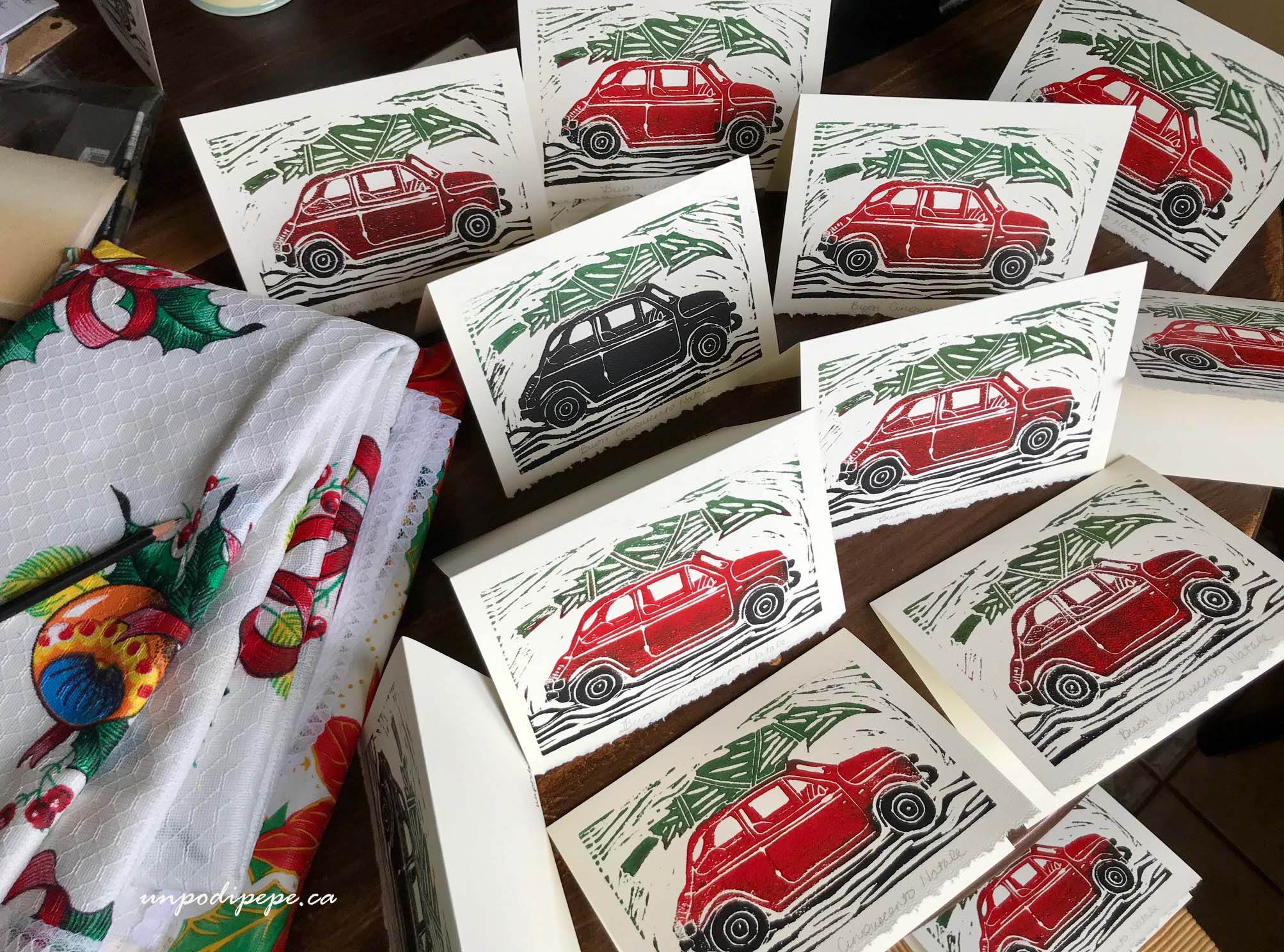
Once again, I had a bancarella at the Italian Christmas Mercato, selling handpulled  original prints and handmade cards.  A few days before the event, I decided to make another new Christmas card.  My kitchen table turned into a ‘studio annex’,  full of sketches and linoleum carving tools for a few days!Linocut printmaking Fiat 500

I carved a Fiat Cinquecento (500) carrying a tree on the roof.  The prints barely dried in time, but were very popular!  More photos are on my instagram feed, which is linked in the sidebar.  This is the original 1957 Cinquecento model, with porte di suicidio-suicide doors that hinge on the left.  Find out more in the post The Original Cinquecento. Many of the purchasers had personal stories to tell me about what attracted them to it.  A subject for another post!Linocut Christmas cards Fiat 500

As usual, I made cookies to offer friends who came to visit me at the mercato.  This time I made espresso cookies.  Recipe available in Espresso Cookies.Espresso cookies

Saturday was Papà’s birthday.  He had urgent heart surgery in September, so we were very happy to celebrate this birthday!  Mamma and I made his favourite pasta,  tagliatelle the week before and froze them in little nests on cookie sheets.  They were dropped into boiling water straight from the freezer.Tagliatelle, handmade pasta

Last Christmas a friend brought Baci made with ruby cocoa beans from Italy.  This year I received a box as a gift, purchased from my local Italian deli.  What is ruby chocolate?  It is not white chocolate with pink coloring!  It is milk chocolate made with Brazilian cocoa beans that are a dark purple colour.  They are only fermented for a few days, so they do not turn brown, then citric acid is added to keep the pinky colour.  This is the same idea as squirting lemon juice on apples when making apple pie, to keep them from going brown.  The taste is very slightly berryish and lemony-because of the citric acid.  There are no other ingredients or flavourings added.  Is this just a marketing ploy?  Yes!  But since raspberry and lemon are my 2 favourite flavours, I like them anyways.  Have you tried Ruby Baci?

Panettone is plentiful in December, and I love panettone french toast.  The panettone already has so much flavour that all you really need to do is soak it in eggs and milk then cook it on the stovetop, or even bake it.  I added a bit of orange zest and topped it with fresh ricotta and a drizzle of maple syrup-I do live in Canada after all! Do not use expensive or homemade panettone for this.  The cheap cellophane wrapped ones are good for french toast.Panettone french toast

I made my favourite winter salad, Insalata Purtuall’ with fennel and oranges.  Insalata Purtuall, Orange and fennel saladSince the oranges had to be peeled, I candied the rind to use later this month for panettone or biscotti.Canditi, candied orange rindThe only Christmas baking so far in my kitchen are cranberry pistachio orange biscotti.  It was my first time making them and will definitely make them again.Cranberry pistachio biscotti

Read more about my family’s traditional Christmas baking in a previous post Dolci di Natale. Links for my recipe for Panettone with Orange Walnuts and Figs and for Crustoli can be found in this post.  We will be making Cauzuncill’ and Cartellate in a few days.

Thanks Sherry from Australia for hosting the monthly food blogging event, In My Kitchen (IMK). Read about what is happening in other world kitchens in December by clicking the link to Sherry’s Pickings.

Buon appetito, Cristina

Share this:

  • Share on Facebook (Opens in new window) Facebook
  • Share on Pinterest (Opens in new window) Pinterest
  • Share on X (Opens in new window) X
  • Email a link to a friend (Opens in new window) Email
  • Share on WhatsApp (Opens in new window) WhatsApp
Like Loading...

Olio d’Oliva

15 Friday Nov 2019

Posted by Un po' di pepe in Italian life, Mangiamo!

≈ 22 Comments

Tags

EVOO, Extra virgin olive oil, Italian food, Olive harvest, Olive oil, Olive oil fraud

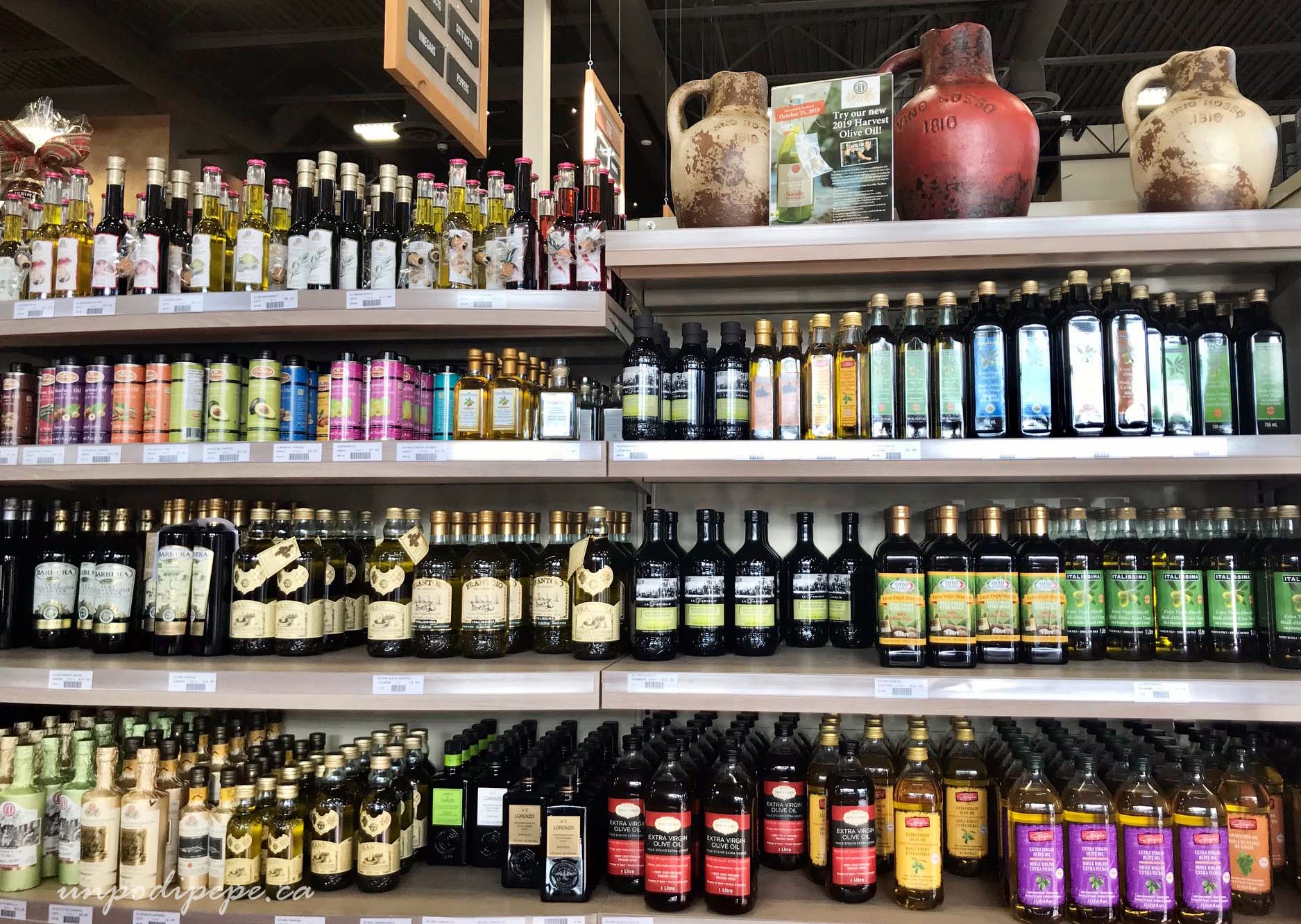
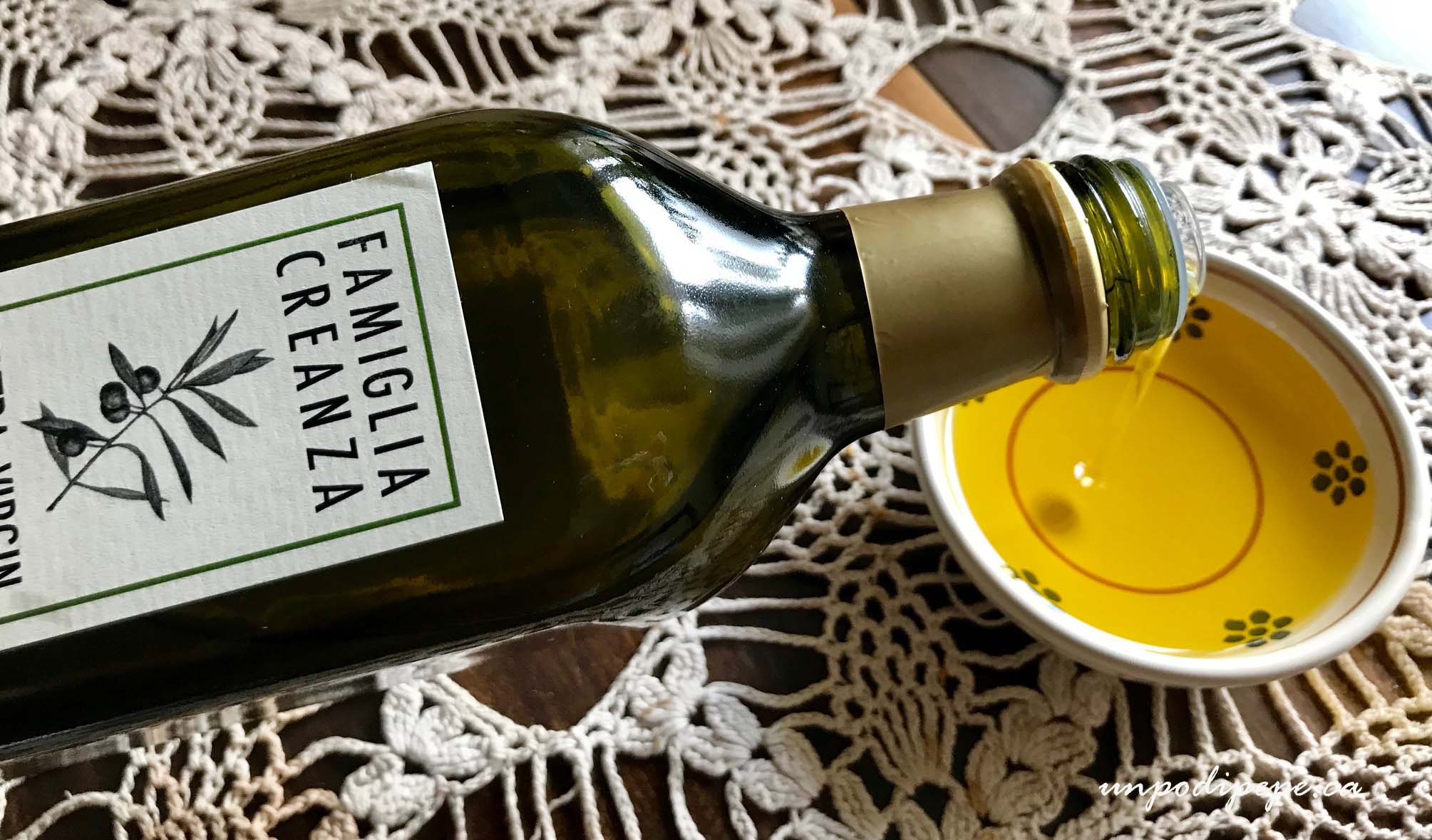
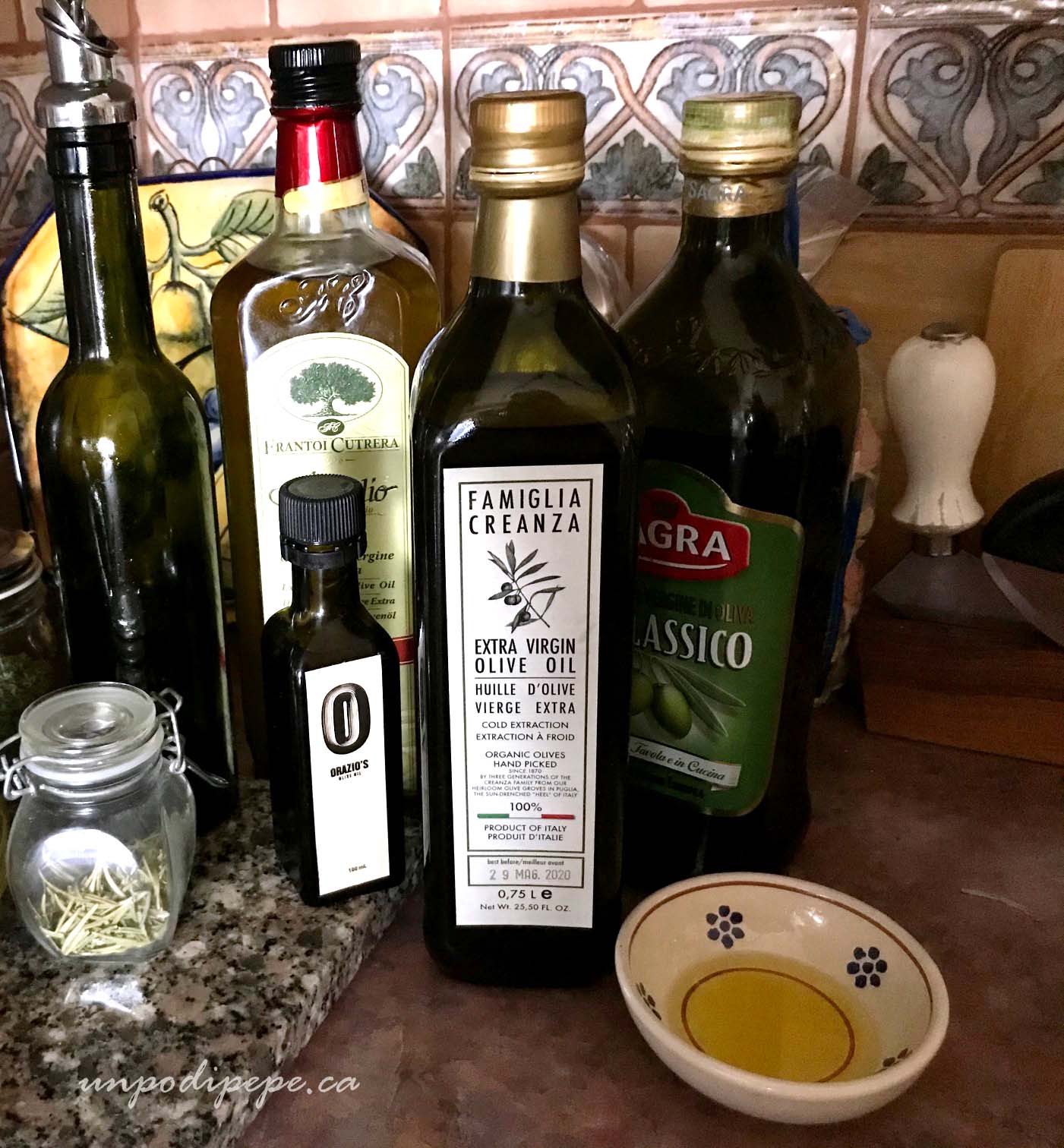
Olive oil section of supermercatoOlio d’oliva-olive oil has been essential to Mediterranean life for over 4,000 years.   It has been a major trading resource, is one of the main nutritional components of the Mediterranean diet and the healthiest source of fat, produced without the use of chemicals or industrial refining. Olive oil has also been used as a medication, soap, moisturizer and terra cotta lamp fuel.Pouring Famiglia Creanza Extra virgin olive oil

15 ml (1 tablespoon) of olive oil has 120 calories, 14g fat and no cholesterol. 75% of the fat is monounsaturated (MUFA-the good kind), 11% polyunsaturated (PUFA), 14% vegetable saturated fat and 0% trans fats.

Extra Virgin olive oil EVOO may be the healthiest thing in the kitchen. It has been associated with health benefits including protection from heart and blood vessel disease, decreased blood clotting, decreased risk of chronic diseases, improvement in bone and digestive health, stabilizing blood sugar and improved brain function.  These benefits are due to 2 main properties: Oleic acid and antioxidants.  Oleic acid, the main fat in olive oil is a MUFA with cholesterol lowering and antiinflammatory effects.La raccolta delle olive www.unpodipepe.ca

EVOO contains large amounts of antioxidants including tocopherols (vitamin E) and polyphenols (tyrosol, hydrotyrosol and oleocanthal) which protect against oxidation and spoilage in the oil—and also in the body ingesting the oil! That means you!  Antioxidants decrease oxidative damage caused by free radicals, which are believed to cause cell damage and contribute to cancer. Antioxidants also have antiinflammatory properties, especially oleocanthal which is nature’s ibuprofen.Olive, Casa Berti www.unpodipepe.ca

La Raccolta delle olive, the olive harvest is late October to early November, before the first frost. To produce the best quality oil, the olives are taken to il frantoio, the olive mill, within 24 hours of harvest.  My previous post La Raccolta delle Olive has a detailed explanation and photos of the entire harvest process, including the italian words for all of the steps.

The terms ‘first press’ and ‘cold pressed’ are outdated, and mainly used for marketing, since hydraulic presses are no longer used. Olives are crushed or ground-only once, then oil and water are separated from the olive paste using a centrifuge.  The colour of the oil ranges from grassy green to yellow gold, depending on the ripeness and type of olives and the amount of chlorophyll in the leaves. Oil is stored in stainless steel vats until it is bottled, to preserve nutrients, colour and flavour.

This fresh, pure olive juice is ‘virgin olive oil’ as it has not been refined or extracted using chemicals or heat. It can be considered ‘extra virgin olive oil’ if the acidity is less than 0.8%, with superior taste and aroma.  This is mostly related to the quality and freshness of the olives.

‘Pure’ ‘Fino’ or ‘Light’ are marketing terms for refined olive oil-not calorie or fat reduced oil. It is refined using solvents and high heat to neutralize the taste of the oil.  A small amount of EVOO is added for taste.  This allows the use of lower quality olives and blending oils from many sources, possibly increasing the shelf life and smoke point. Refining and heating destroys the antioxidants and vitamins in the oil, but it is still high in MUFA’s and has no trans fats.

Pomace olive oil is made from the pits, skin and sediment and removed using chemicals. It should not be eaten and is only used for deep frying or polishing furniture.

Fresh EVOO should taste clean, fresh and peppery and smell of olives, with a spicy/bitter ‘bite’ when it hits the back of the throat. This spiciness is the polyphenols!  Old or refined olive oil will not have this sensation.Ricotta fatta in casa

EVOO is used for pouring and drizzling directly on food crudo –raw, and for salads, vegetables, sauces, pasta, bread, soups.  There seems to be a notion-mostly in North America, that you cannot cook with olive oil.  This is not true!  Like most Mediterranean cooks, I use it almost exclusively.  In fact, I don’t think I knew other oils existed until I was in my 20’s!  The smoke point of olive oil is about 200°C (375-400°F) which is great for sautéing or shallow frying. Vegetables cooked in olive oil absorb the polyphenols from the oil, making them double antioxidanted!  Excessive heating such as deep frying destroys the antioxidant benefits, so only use older or lower quality olive oil. I have several different olive oils in my kitchen; a few decent ones for cooking and baking and a really good quality one for salads and drizzling.

Is your bottle of EVOO 100% real?  Unlike Europe, North American regulations do not require strict labeling of olive oil.  A 2010 report called ‘Oil Imposters’ from the UC Davis Olive Center stated that 69% of imported oil labeled as ‘Extra Virgin’ in California failed IOC standards.  Their lab found:

Poor quality oil-made with poor quality or improperly stored/processed olives

Oxidation- oil exposed to too much heat, light or age

Adulteration-oil cut with cheaper refined olive oil and soybean or canola oil

Tim Mueller discusses fraud in the olive oil market in his 2012 book Extra Virginity: The sublime and scandalous world of olive oil. I believe there has been a lot of improvement since 2012, but olive oil fraud still happens. It probably started in 4000 BC! In addition to the labeling, another problem is that most North American consumers do not know what real, fresh EVOO tastes like, and are used to poor quality oil.

How can you tell if your EVOO is the real? Here are some tips:

  • Taste-The oil should taste fruity, like olives and be peppery with a slight burn when it hits the back of the throat. The bitterness/spiciness is the polyphenols! This sensation decreases as the oil gets older or exposed to air and light.  Bitter is better!
  • Aroma. The oil should smell like olives or fruity. It should not smell moldy, or like hay, vinegar, sweaty gym socks or old salame.
  • Best before date and harvest date. Oxidation starts when the oil is produced. It is usually good for 18-24 months after extraction, if stored properly. Buy only amounts that will be consumed in a few months. Like wine, half full bottles of oil spoil faster. Unlike wine, olive oil does not age well! Keep bottles tightly capped.
  • Origins (same country, region, estate) ‘packaged in’ or ‘bottled in’ means the olives are not grown in that country. By the time of bottling and importing, the olives or oil is likely already 4-6 months old.
  • Marketing-Avoid products labelled ‘pure’, ‘fino’ or ‘light’.
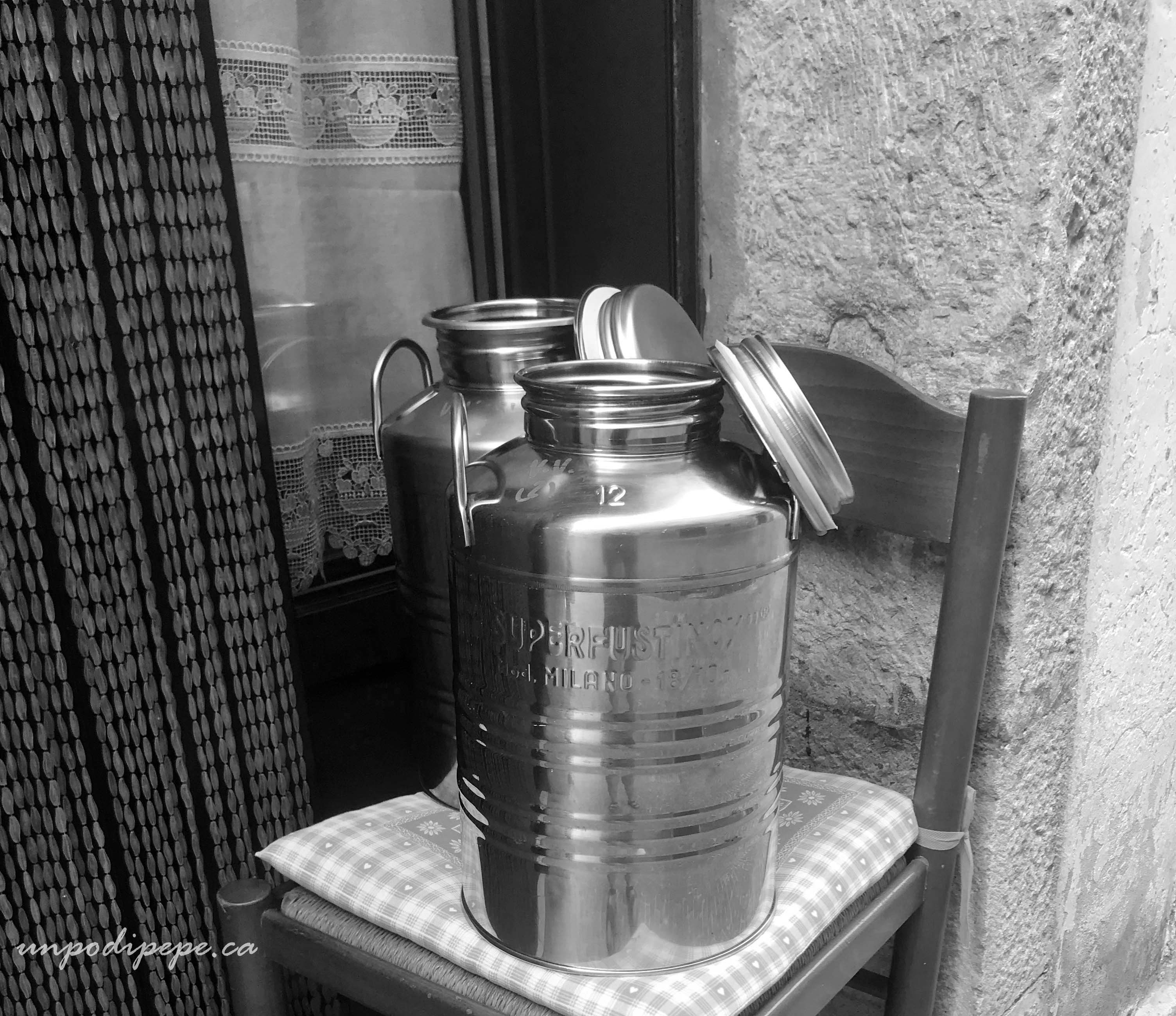
  • Packaging Olive oil should be packaged in dark glass bottles or large tins which block UV light. Do not buy olive oil in plastic bottles.
  • Cost-EVOO should not be cheap. Producing quality oil takes time, labour and expense. 1L of olive oil requires 2,000 olives!
  • Buy from the farmer, or from someone who buys from the farmer. This is not easy outside of Mediterranean countries, California or Australia, but it is possible to find good quality olive oil. For example, here in Vancouver I know of 2 vendors who import oil directly from their family olive groves in Italia.

Olive oil limoncello cakePs If you love EVOO, try my Olive Oil Limoncello Cake

Ciao e buon appetito, Cristina

Share this:

  • Share on Facebook (Opens in new window) Facebook
  • Share on Pinterest (Opens in new window) Pinterest
  • Share on X (Opens in new window) X
  • Email a link to a friend (Opens in new window) Email
  • Share on WhatsApp (Opens in new window) WhatsApp
Like Loading...

Sapori d’Autunno

22 Tuesday Oct 2019

Posted by Un po' di pepe in Italia, Italian language, Mangiamo!

≈ 19 Comments

Tags

Autumn harvest in Italy, Autumn in Italy, Dalla terra alla tavola, Dolcevitabloggers, Italian food

La Cupa, Orsara di Puglia, cachi, noceDalla terra alla tavola, farm to table cooking has always been a thing in Italia.  Food is prepared using local, seasonal ingredients which are at their optimum flavor.  Each season features its own specialties.  I sapori d’autunno, the flavours of autumn, feature the fruits of the harvest. Visiting Italia in the autumn will not leave you hungry or thirsty!  This is also a time to seek out sagre-wonderful food festivals dedicated to local specialties. There are regional differences, and specialties are prepared according to local tradition, but I will provide a general review of what you might find on your piatto. I am also including links to related previous posts and recipes.roasted chestnuts, castagne in campagna

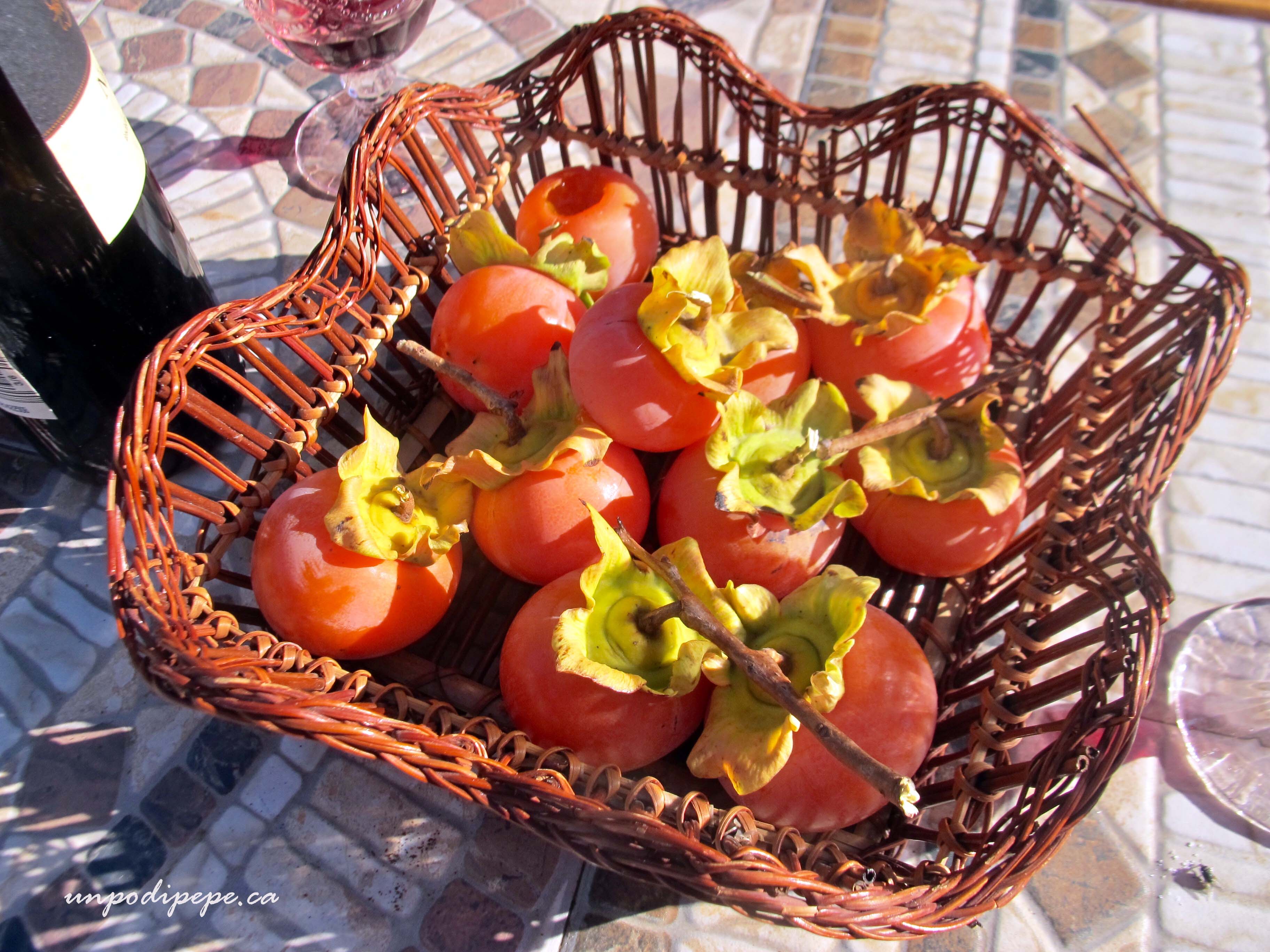
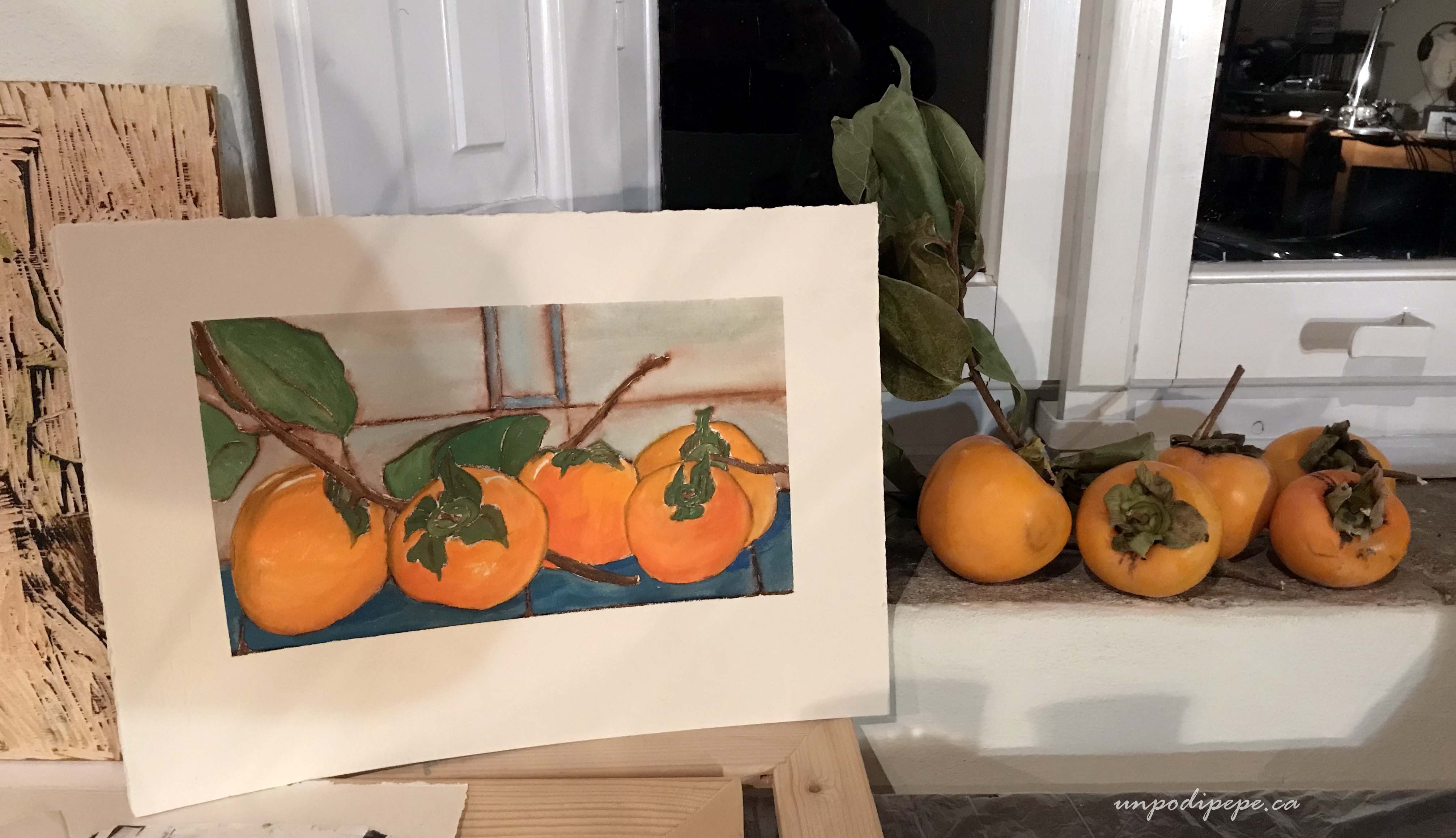
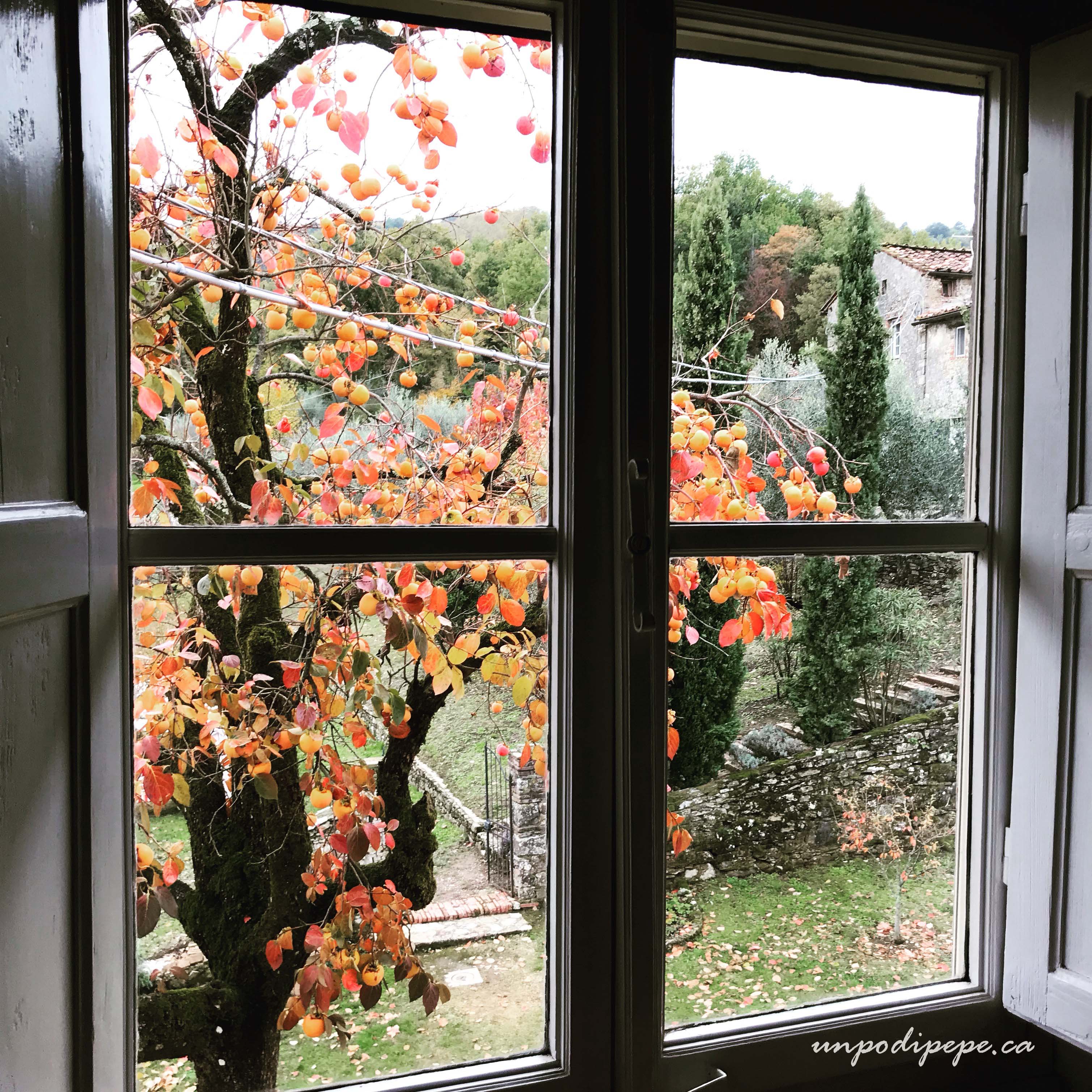
Castagne (cas·TAH·nyeh). Chestnut trees have been growing in Italia since at least 2000 BC, the oldest ones being in Calabria.  Pushcarts selling castagne calde in paper cones will be found all over the country.  Everyone I know has an old pan at home with holes punched out the bottom to use for roasting castagne.  Don’t you have one?  Castagne can also be boiled with bay leaves or made into soup or chestnut honey, miele di castagne.  Chestnut flour is used to make pasta which is eaten with pesto in Liguria, and Castagnaccio, a chestnut flour cake with olive oil, raisins, pine nuts, rosemary and orange rind.  This cake is originally Tuscan, but can be found in other areas too.  I tasted some in Roma, but it did not last long enough for a photo. Below is a poster for a Sagra della Castagna this weekend in Potenza, Basilicata.Basilicata Sagra della Castagna poster Zucca (ZOO·kah)  Zucca and zucca gialla are pumpkin and squash.  I adore zucca!Zucca Orsara di PugliaIt is used to make delicacies such as risotto di zucca, gnocchi di zucca and tortellini, ravioli or agnelotti stuffed with zucca, cheese, nutmeg and amaretti.  Mmmm.  No food goes to waste, so any leftover zucca goes to feed the pigs! gnocchi di zuccaSpeaking of decreasing waste, I like to recycle my Hallowe’en pumpkin into gnocchi.  Here you will find my recipe for gnocchi di zucca.Albero di cachi orsara di Puglia, Persimmon treeCachi (KAH•kee) are called persimmons in English.  There are 2 kinds, hard and soft and both delicious.  They are mostly eaten raw on their own or in salads.  Cachi La Cupa Orsara di PugliaI picked these ones from the tree in the upper photo.  It is in the olive grove that belonged to my Nonno.  Papà has 2 trees full of cachi in Vancouver.  We will pick them all in about a week and let them ripen in the garage.The incredibly gorgeous colour of cachi make them equally desirable as a painting subject.Cachi persimmon painting Casa Berti Lucca

Funghi (FOON·gee) e tartufi (tar·TOO·fee). Funghi porcini are available dried all year, but only in autunno can you find the fresh meaty fungus. I also love funghi cardoncelli and any other kind of funghi on pasta or in risotto.funghi porcini RomaTartufi are truffles- but not the chocolate covered kind!  Autunno is truffle foraging season. They are like underground funghi and are an expensive seasonal delicacy shaved onto pasta, eggs and risotto. I find too much tartufo gives food a moldy taste, so luckily you need a delicate hand and do not need to use much.  They are only fresh from October to December, otherwise they are frozen or preserved in oil.Cestino di fichi

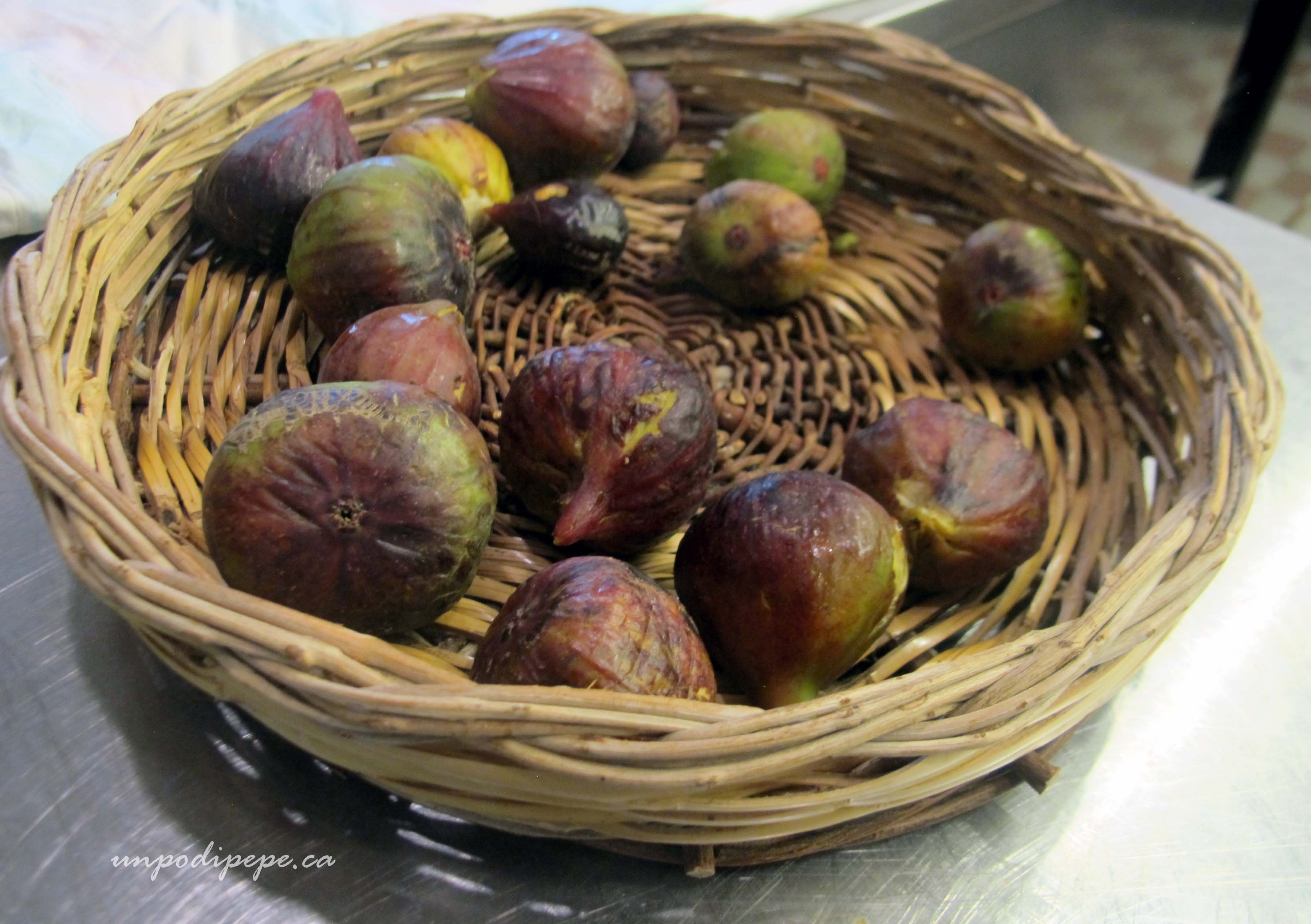
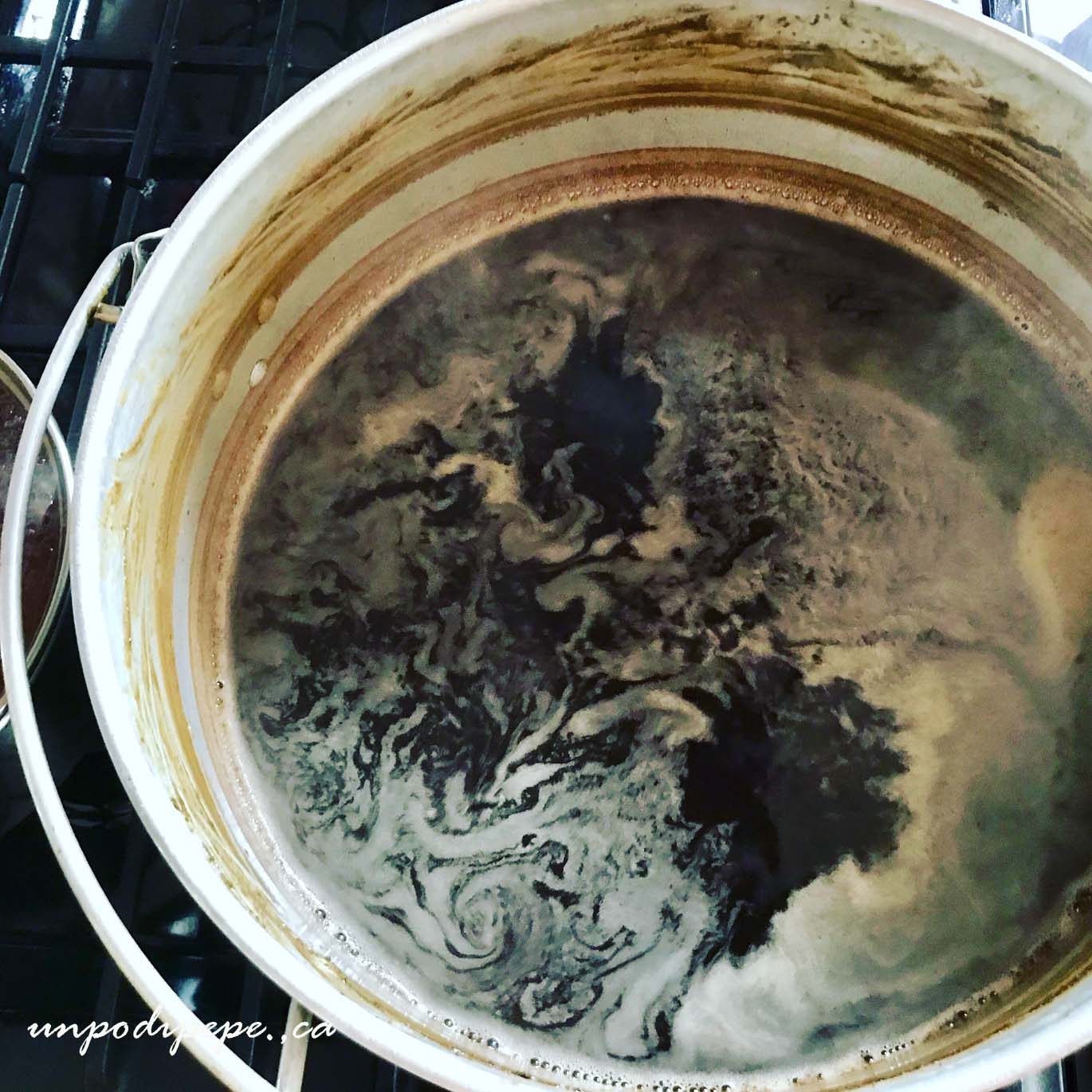
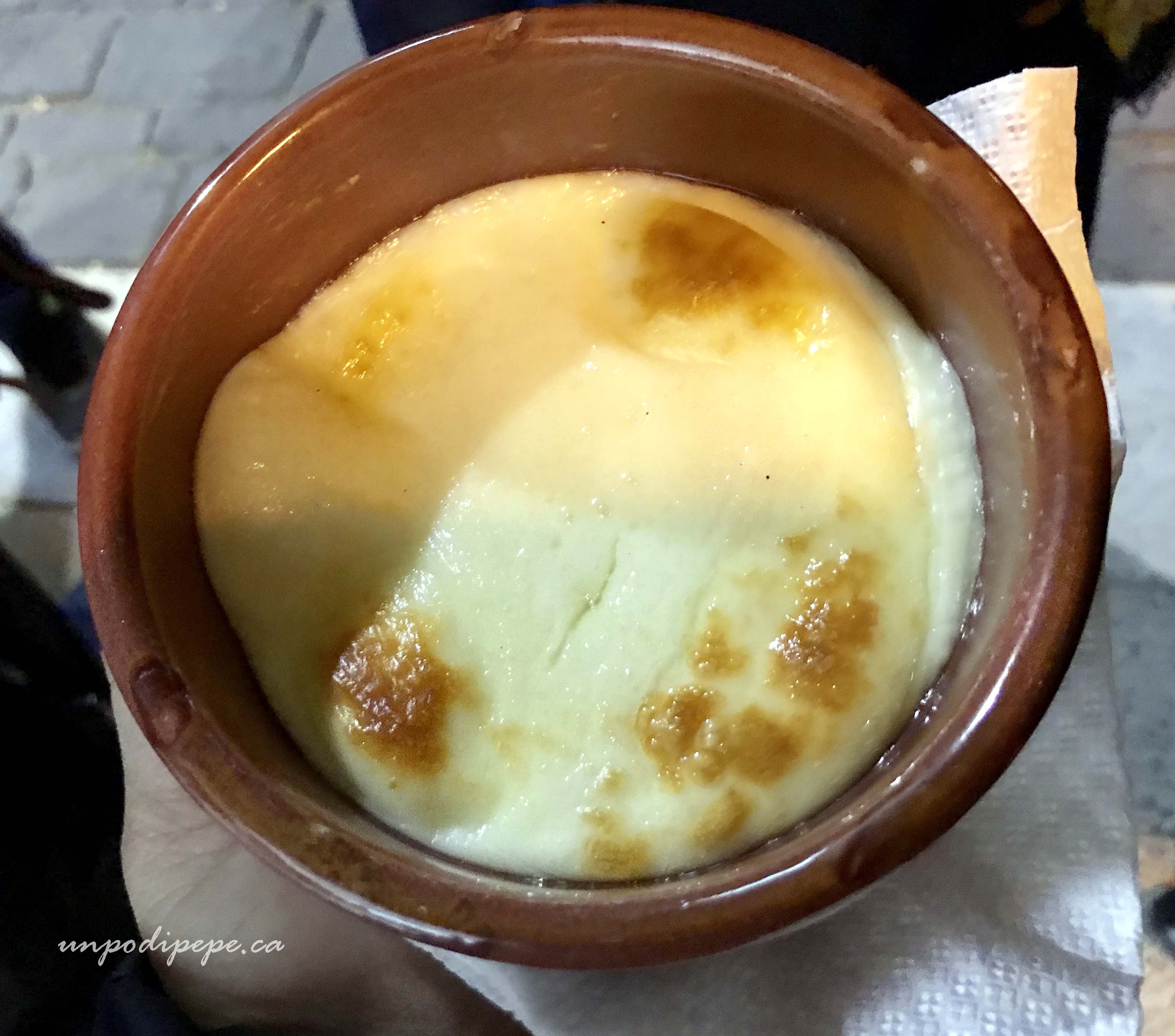
Fichi (FEE·kee).  The second harvest of figs is ready in September/October, depending on the weather. Other fruits of the autumn harvest include bitter, spicy radicchio, mostly used in salads, but also cooked alla griglia and added to risotto and rapini which is used to make the Pugliese favourite orechiette con cime di rapa.  Trees are full of noce – walnuts and nocciole-hazelnuts.  Stay tuned for Corzetti with walnut and mushroom sauce recipe in an upcoming post about my new Corzetti stamp from Vernazza.  Insalata Purtuall, Orange and fennel saladMy favourite winter salad is Insalata Purtuall’ made with finocchio-fennel, oranges and black olives with a drizzle of olive oil and salt.  Read about my interesting history with this salad in the link.  Melograna-pomegranate adds extra flavour and colour.Grapes in the wine press Vino nel torchioUva (OO·vah).  La vendemmia, the grape harvest, usually happens in September and then it is vino making time! A glossary of viniculture terms in Italiano can be found in this post on vino. Each region has their own traditional dishes made during this time, including schiacciata con l’uva, a focaccia made with grapes.Schiacciata con l'uvaI made this schiacciata from a recipe on Luca’s blog. It was delicious, but I would recommend using a smaller, seedless grape! Vino cotto, which is technically actually mosto cotto is grape must boiled down to a sweet molasses type syrup.  Vino cotto, mosto cottoVino cotto is used for Christmas dolci, sweetening snow cones, and poured on cooked wheat berries with walnuts and pomegranate to make muscitaglia for All Saints’ Day November 1st.muscitagliaOlive (o•LEE•veh).  Late October and November is la raccolta delle olive-the olive harvest. This is an incredible experience, if you ever have a chance to participate. Everyone who lives in a rural area participates and it usually involves a picnic with many of the ingredients I have mentioned.  I wrote a post describing the entire olive harvesting/oil extraction process-La Raccolta delle Olive.Nothing compares to the flavour and aroma of olio novello, fresh pressed olive oil.  It is ‘liquid gold’.  Even if you do not have access to freshly pressed oil, you can make the Olive oil limoncello cake that I made at Casa Berti in Lucca after harvesting olives.Olive oil limoncello cakeNovember is also hunting season, which means pappardelle al cinghiale and pappardelle al lepere, pasta with a wild boar sauce and pasta with wild rabbit sauce. As the temperature drops, warm comfort foods increase.  Polenta is found mostly in Northern Italia, but in the cold months, it is made in homes all over the country.  Polenta, Casa Berti, LuccaOther autumn comfort foods include pancotto e patate, pasta e fagioli and risotto made with almost any of the ingredients mentioned in this post-even radicchio. Drool over my November street food-fire baked caciocavallo in its own little terracotta dish.  Mmmm!baked caciocavallo

‘Italy in the Autumn’ is the topic for the final Dolce Vita Bloggers linkup.  Since I already published a post about travelling to Italia in the autumn called Autunno in Italia, I wrote about the wonderful food available in autumn instead!Cachi Casa Berti Lucca

Grazie mille to Kelly, Jasmine and Kristy for hosting the Dolcevitabloggers linkup for the past 2 years.  It has been fun participating!  Check out the rest of the posts here.

Hopefully I made you hungry!  Buon appetite e buon viaggio, Cristina

Share this:

  • Share on Facebook (Opens in new window) Facebook
  • Share on Pinterest (Opens in new window) Pinterest
  • Share on X (Opens in new window) X
  • Email a link to a friend (Opens in new window) Email
  • Share on WhatsApp (Opens in new window) WhatsApp
Like Loading...
← Older posts
Newer posts →

Enter your email address to follow 'un po' di pepe' and receive notifications of new posts by email.

Join 511 other subscribers
Follow Un po' di pepe on WordPress.com

Popular Posts

  • Hairstyling in Ancient Roma
    Hairstyling in Ancient Roma
  • Cucina Italiana Patrimonio UNESCO
    Cucina Italiana Patrimonio UNESCO
  • Grano Arso
    Grano Arso
  • Napoli Street Art
    Napoli Street Art
  • Hostaria Antica Roma~Eat like an Ancient Roman
    Hostaria Antica Roma~Eat like an Ancient Roman
  • Italiano per Ristoranti~How to pronounce your restaurant menu
    Italiano per Ristoranti~How to pronounce your restaurant menu
  • Italian Christmas Vocabulary
    Italian Christmas Vocabulary

Recent Posts

  • Cucina Italiana Patrimonio UNESCO
  • 2025~Un po’ di pepe Year in Review
  • Castel del Monte
  • ‘The Nuances of Love’
  • Hostaria Antica Roma~Eat like an Ancient Roman
  • Santa Maria in Aracoeli
  • Casino dell’Aurora~Villa Boncompagni Ludovisi
  • Nasoni di Roma
  • Bloghiversario #11
  • Fontana di Trevi
  • Acqua Vergine
  • Giubileo 2025
  • Sanremo 2025
  • In Vino there are Memories
  • A Literary Harvest
  • 2024~Un po’ di pepe Year in Review
  • Buon Natale 2024
  • Il Bicerin
  • Mercato Porta Palazzo
  • Torino
  • Catanzaro, Calabria
  • Il Pumo Pugliese
  • Artemisia Gentileschi
  • Cavalli di San Marco
  • Panzerotti

Categories

Amici e Famiglia Architecture Art Art history Art projects Bilingual posts Blogging Canada Culture Feste Firenze Inspiration Italia Italian Folklore Italian language Italian life Italocanadesi Libri Mangiamo! Orsara di Puglia Parole piacevoli Photography Puglia Recipes Roma Travel Travel tips Uncategorized Vino

Archives

Un po’ di pepe on Facebook

Un po’ di pepe on Facebook

Start a Blog at WordPress.com.

  • Subscribe Subscribed
    • Un po' di pepe
    • Join 511 other subscribers
    • Already have a WordPress.com account? Log in now.
    • Un po' di pepe
    • Subscribe Subscribed
    • Sign up
    • Log in
    • Report this content
    • View site in Reader
    • Manage subscriptions
    • Collapse this bar
 

Loading Comments...
 

    %d