• Home
  • About me/Chi sono
  • Contact

Un po' di pepe

~ …… (oon∙poh∙dee∙PEH∙peh) Cristina writes about interesting stuff /Cristina scrive di cose interessanti

Un po' di pepe

Tag Archives: Southern Italy

Polignano a Mare

27 Thursday Oct 2016

Posted by Un po' di pepe in Italia, Photography, Puglia

≈ 38 Comments

Tags

Domenico Modugno, Guido il Flâneur, Nel blu dipinto di blu, photography, Polignano a Mare, Ponte Lama Monachile, Southern Italy, Spiaggia Lama Monachile, Vicolo della Poesia
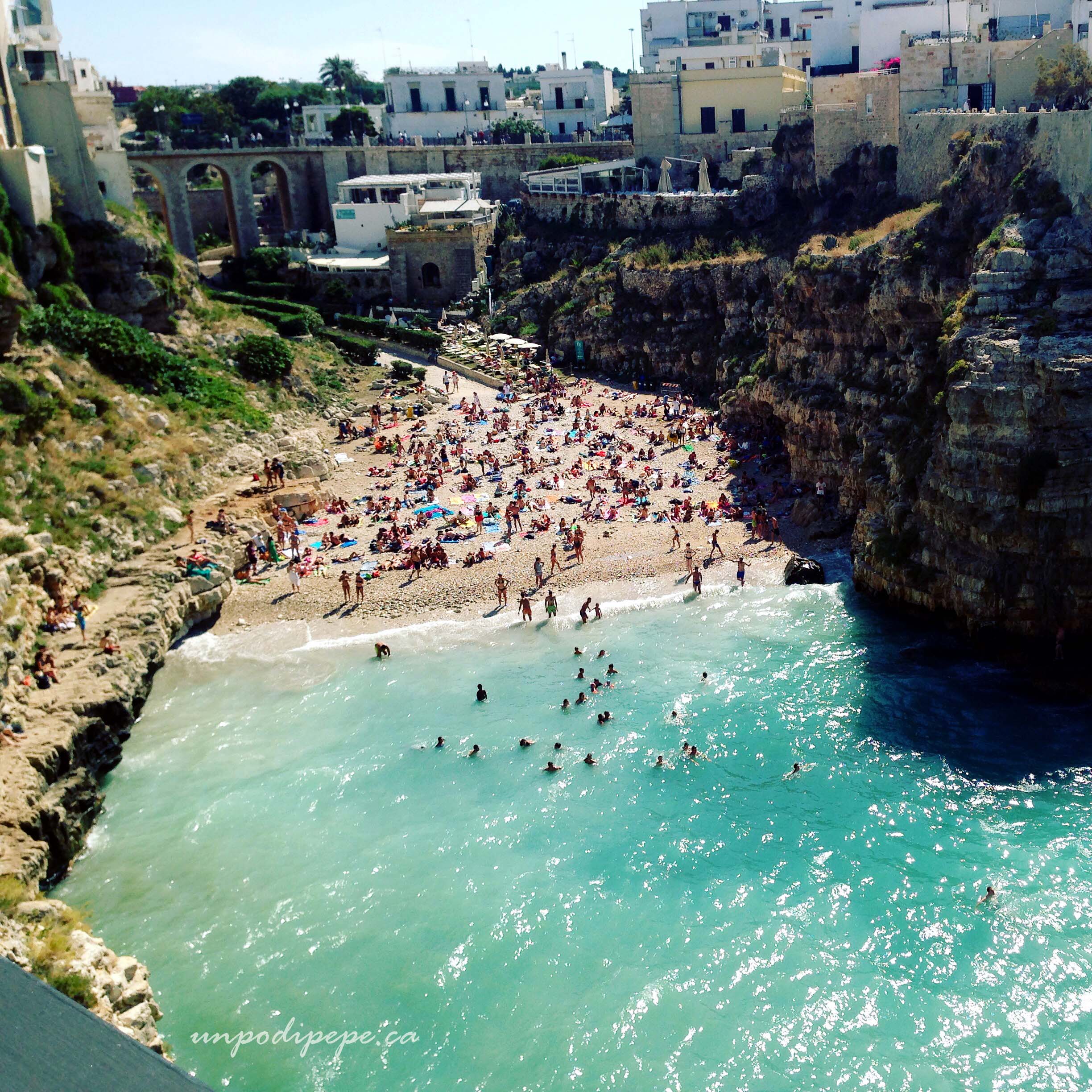
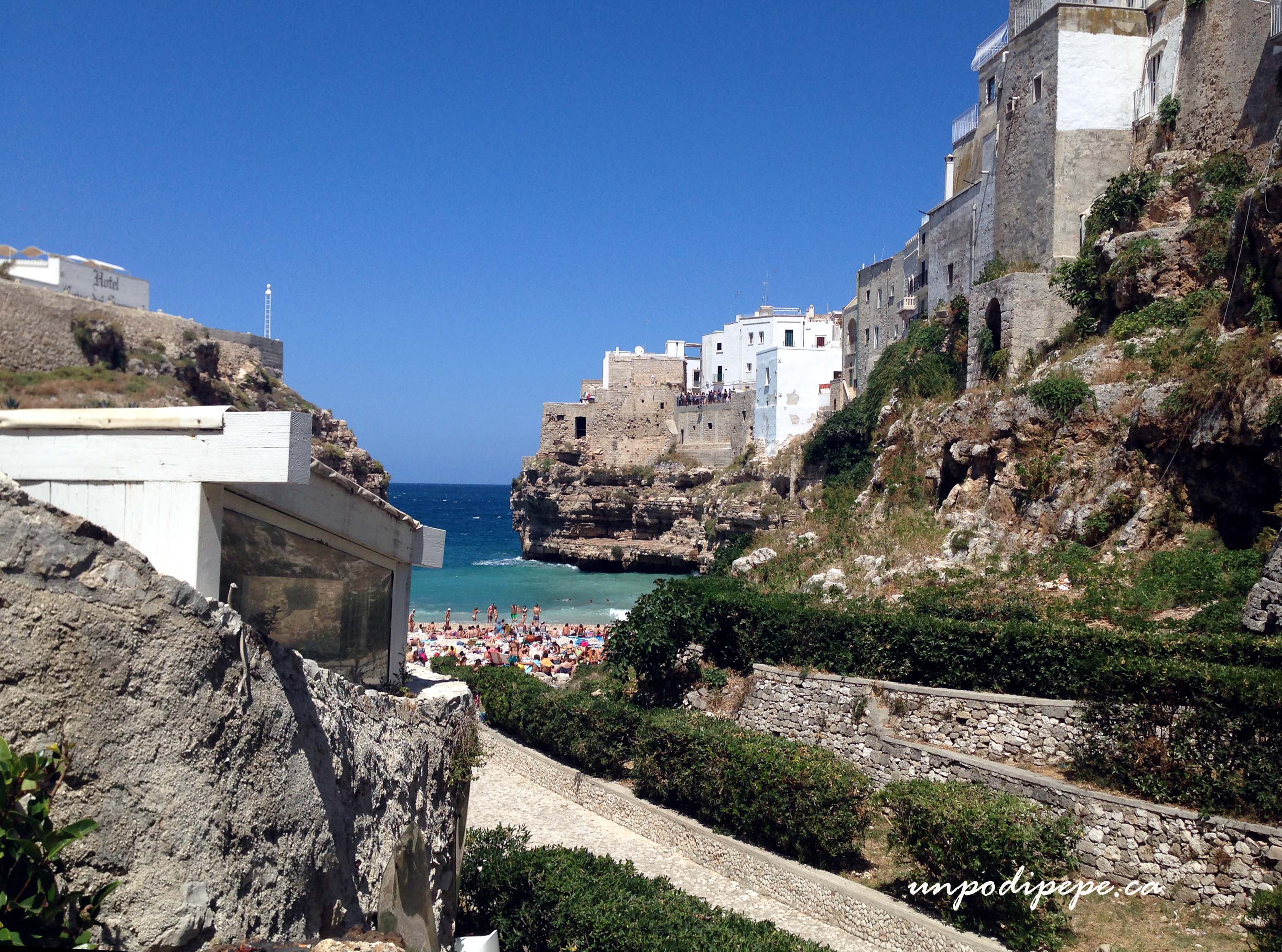
spiaggia-lama-monachile-polignanoPolignano a Mare sits atop limestone cliffs on the Adriatic coast just south of Bari.  From the white-washed Centro Storico with narrow, winding cobblestone streets, the crystal clear water, and 3 terrazze with views of the sea, everywhere you look, there are panorami mozzafiato (pah·noh·RAH·mee moz∙zah∙FYAH∙toh)-breathtaking views.  There is even a restaurant in a grotta, one of the caves overlooking the sea, the Grotta Palazzese.  Polignano was the ancient Greek city of Neapolis, founded in the 4th Century BC.  It was prosperous under the Romans too, because Ponte Lama Monachile, the Roman bridge, is right on the ancient Via Traiana.  This was an extension of Via Appia, going from Beneventum (Benevento) to Brundisium (Brindisi) by a shorter route. There was a monastery nearby and the name of the bridge literally means ‘monastic monk’.  Sounds a bit redundant, although better than the other possibility ‘monastic blade’.polignano-a-mare-ponte

polignano-a-mare-spiaggia2Beneath the bridge is Spiaggia Lama Monachile, a small ‘spiaggia libera’ or public beach, with blue-green crystalline water and small white pebbles called ciottoli (cheeot·TOH· lee). I climbed up on some rocks and could have just sat there all day feeling the wind in my hair and sun on my face. Near the water, I noticed a constant movement of people coming and going from a cave.  I was curious and walked over to try and see what was there.  It just looked dark.  A very nice older local gentleman saw me trying to peer in.  He came over and offered me his arm and said he would accompany me.  It was a ‘cave tunnel’ that had about 1 foot of water.  The other end was very windy and opened to the next cove.  We could see cliffs and the surf crashing onto the rocks, sending water over us.  It was incredibly beautiful, but of course I did not have my camera.  My escort told me that he lives in Polignano and comes to the spiaggia every day of the year!

The man in the white hat with his arm outstretched is the 'gentiluomo'.

The man in the white hat with his arm outstretched is the ‘gentiluomo’.

polignano-spiaggia-3When I took a dip  in the water, the waves were so big I was thrown into a seated position and lost one of my flip flops, known in Italia as infraditi (in·fra·DEE·tee). The spiaggia is too rocky to walk barefoot.  I retrieved my infradito and was immediately felled by another powerful wave, taking the other infradito off my foot.  This went on for a few more waves, and eventually my infradito was too far out.  Luckily a nice ragazzo retrieved it for me.  I returned to my heavenly place on the rocks, to find that my cugina had taken my camera and photographed of every stage of my ordeal with the infraditi!  Grazie Maria!polignano-a-mare-spiaggia

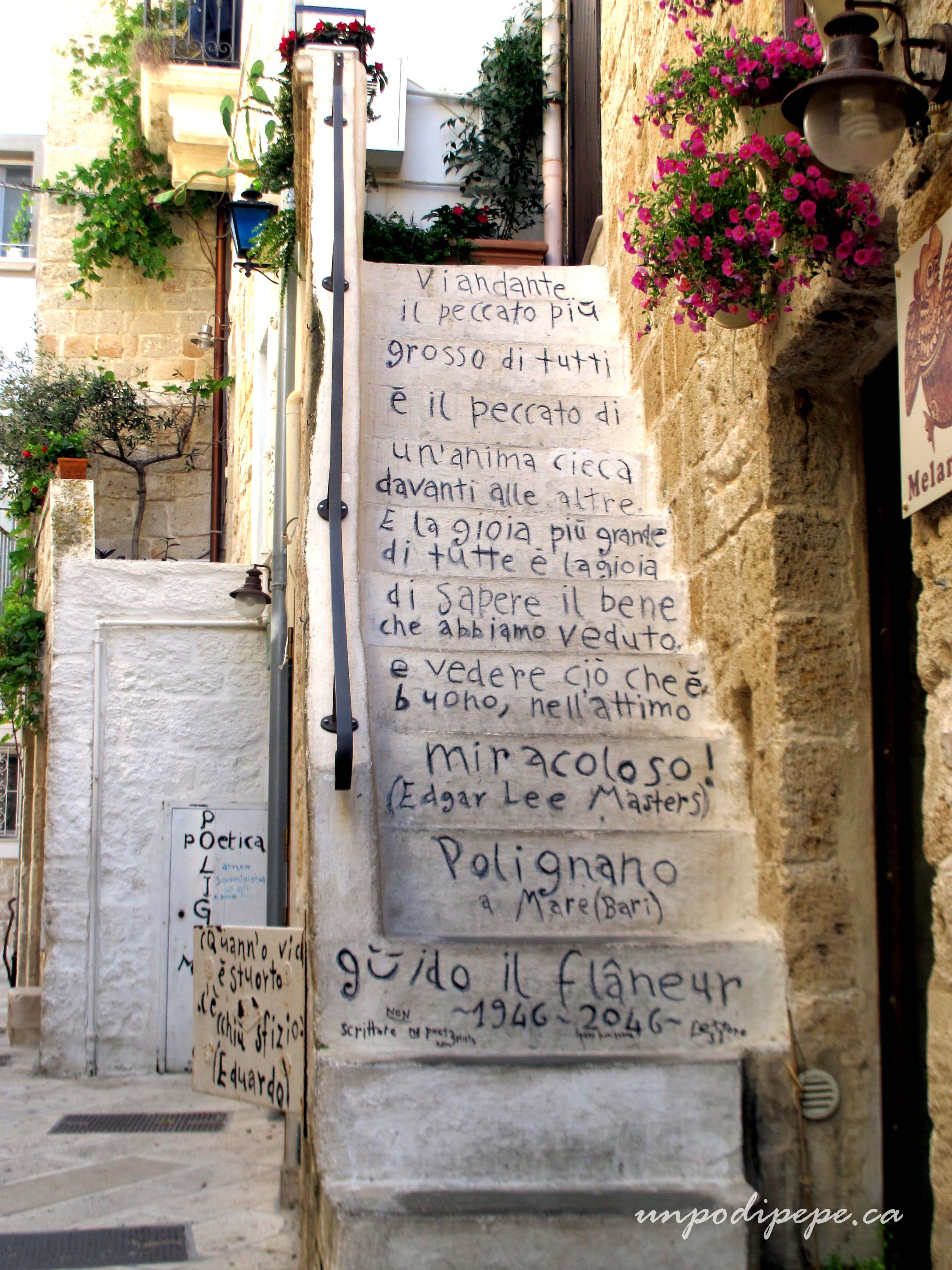
The town is a steep walk up the stairs beside Ponte Lama Monachile. The Centro Storico is entered via l’ Arco Marchesale, an old Roman gate. There is an interesting area called Vicolo della Poesia, with poetry written on staircases, walls and doorways. vicolo-della-poesia This ‘graffiti’ is signed ‘Guido Il Flâneur’. Guido is a poet, although the ‘graffiti’ is not his own poetry.  He left his job in Bari and moved to Polignano to pursue a writing career 32 years ago.  ‘Flâneur’ is an 18th Century term for french gentlemen who strolled the streets sharing their passion for literature. Apparently Guido goes for a swim every day, year round!  Hmmm, this sounds familiar.  I found a poor-quality foto of Guido online, and I think he may be the gentiluomo who escorted me through the cave tunnel!vicolo-della-poesia2
Polignano a Mare’s most famous citizen is Domenico Modugno, who shot to fame in 1958 when his song ‘Nel blu dipinto di blu’ (you probably know it as Volare) won the Festival di San Remo, then represented Italia in the Eurovision song contest.  In a piazza on the other side of the bridge is a statue of Modugno, with his arms stretched out like he is ready to take flight over Polignano. Our parking ran out before we could walk to the other side, so I’ll have to go back to visit Domenico.
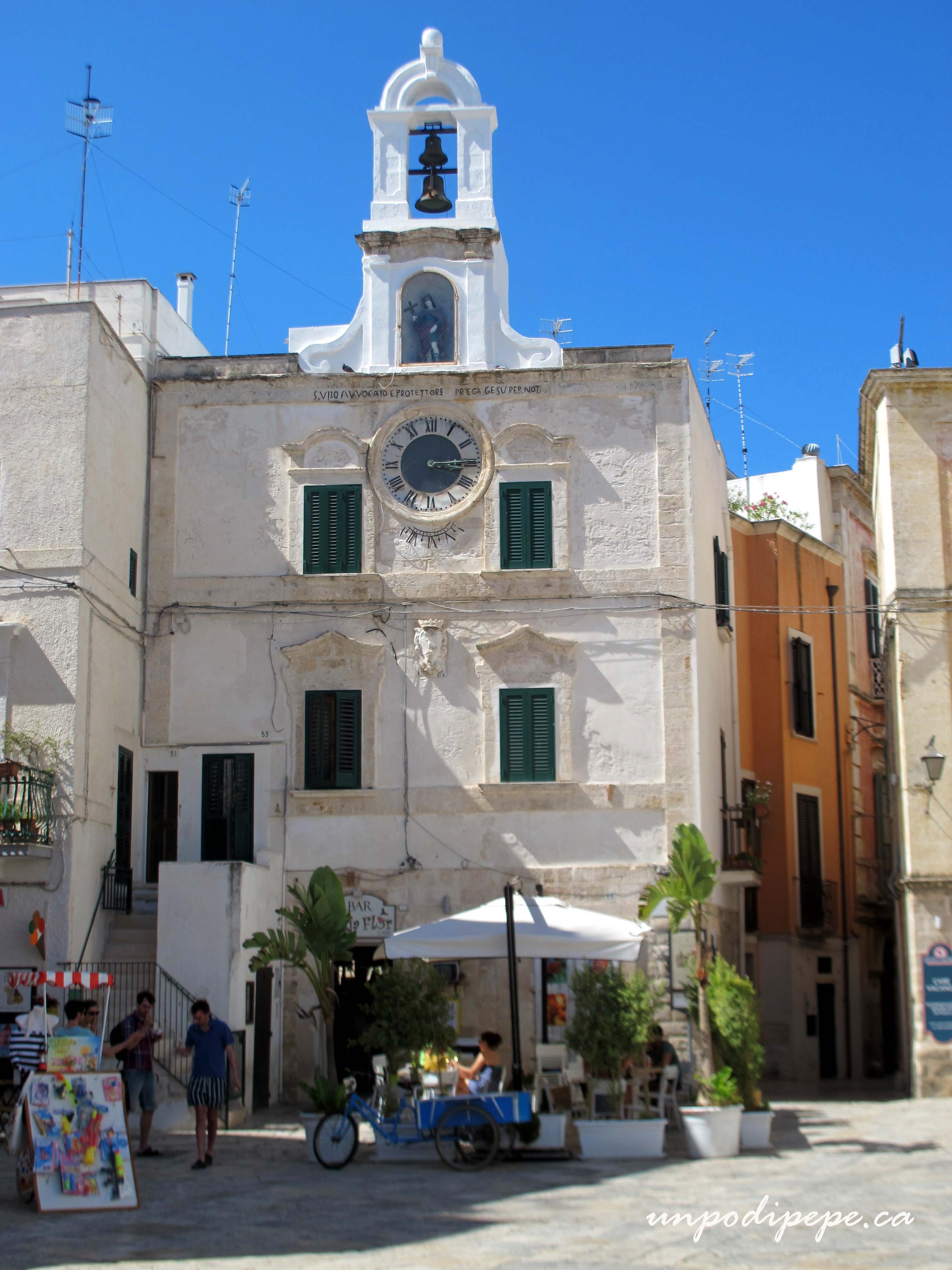
An interesting building-it looks like it was once a church, but now there is a bar on the ground level!

An interesting building-it looks like it was once a church, but now there is a bar on the ground level!

In the right third of the photois Grotta Palazzese, where you can see 3 white posts of the railing.

In the right third of the photois Grotta Palazzese, where you can see 3 white posts of the railing.

I really enjoyed the day in Polignano a Mare, and so did my camera! It was not as crowded as I expected on a weekday in early August and the spiaggia was just perfect. The only thing I found kind of annoying was the amount of English signage in the Centro Storico, which is not typical for a town in Puglia.polignano-a-mare-loggiapolignanomuro

Polignano a Mare is easy to get to, as it is on Strada Statale 16 (SS 16) the main coastal road. It is also very easy to get to without a car, since it is on the Adriatic train route from Bari to Lecce.  From Bari, Polignano is a 20 min train ride and from the train station the Centro Storico is a 10 min walk.ponte-lama-monachile

Buon Viaggio, Cristina

Share this:

  • Share on Facebook (Opens in new window) Facebook
  • Share on Pinterest (Opens in new window) Pinterest
  • Share on X (Opens in new window) X
  • Email a link to a friend (Opens in new window) Email
  • Share on WhatsApp (Opens in new window) WhatsApp
Like Loading...

Paestum

10 Monday Oct 2016

Posted by Un po' di pepe in Architecture, Italia, Travel

≈ 12 Comments

Tags

Campania, Doric temples, Magna Grecia, Paestum, photography, Poseidonia, Southern Italy, UNESCO World Heritage Sites

tempiodinettuno2The first time I saw Paestum I was 11 years old. Even then, I was an archeology and mythology nerd and was fascinated by the wonders of this place.  It took many years, but I finally went back to Paestum this year! It was every bit as enchanting as it was then-maybe even more!paestumforum

Paestum was founded around 600 BC by Greek colonists from Sybaris, a Greek colony in Calabria. They named it Poseidonia, after Poseidon, Greek God of the sea. Poseidonia became a prosperous trade center in Magna Grecia, the Greek colonies in Southern Italia. They even minted their own coins.  The Lucanians took over around 390 BC and called it Paistom.  In 273 BC, the Romans conquered, Latinized the name to Paestum, and constructed more buildings. Paestum was partially damaged by an earthquake after the eruption of Vesuvius in 79 AD.  In the 5th Century AD with Christianity came a Paleochristian church and a Bishop.  Deforestation and other factors led to conditions that brought malaria.  The malaria plus Saracen attacks caused the abandonment of Paestum by 877 AD.  The inhabitants retreated to higher ground at Capaccio, 6 km away.  Overgrown by forest and buried by swamps, Paestum remained hidden and forgotten for almost 900 years. In 1748, the temples were rediscovered by road builders, who apparently kept ploughing right through.la-basilica

Paestum is in a quiet, idyllic setting in the countryside, surrounded by farmland. 3 well-preserved majestic Greek temples rise up out of the plain. La Basilica is the oldest of the temples, built in 550 BC and is actually a temple to Hera.  18th century archeologists mistakenly identified it as a Roman building used as a meeting place.

La Basilica

La Basilica

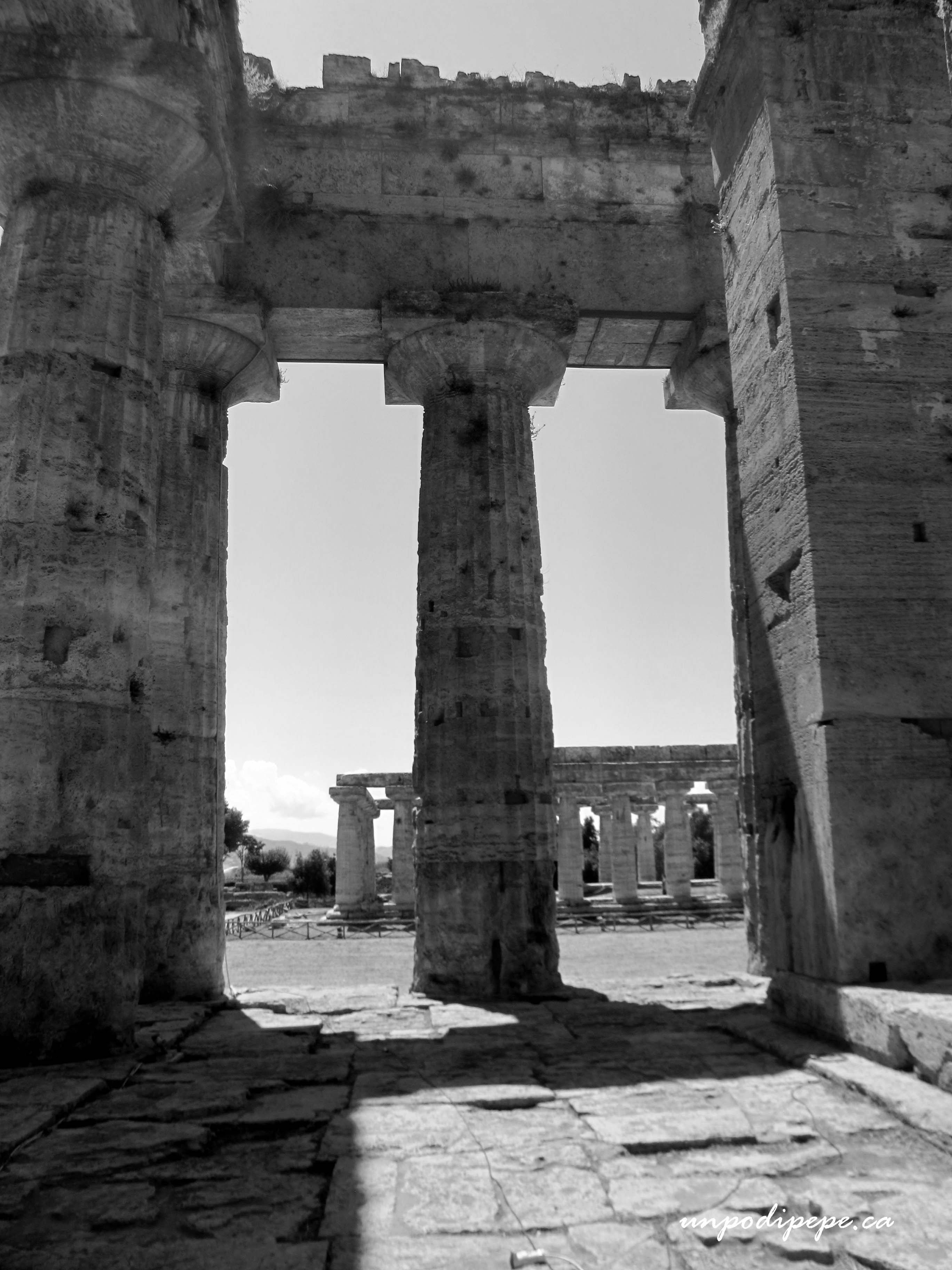
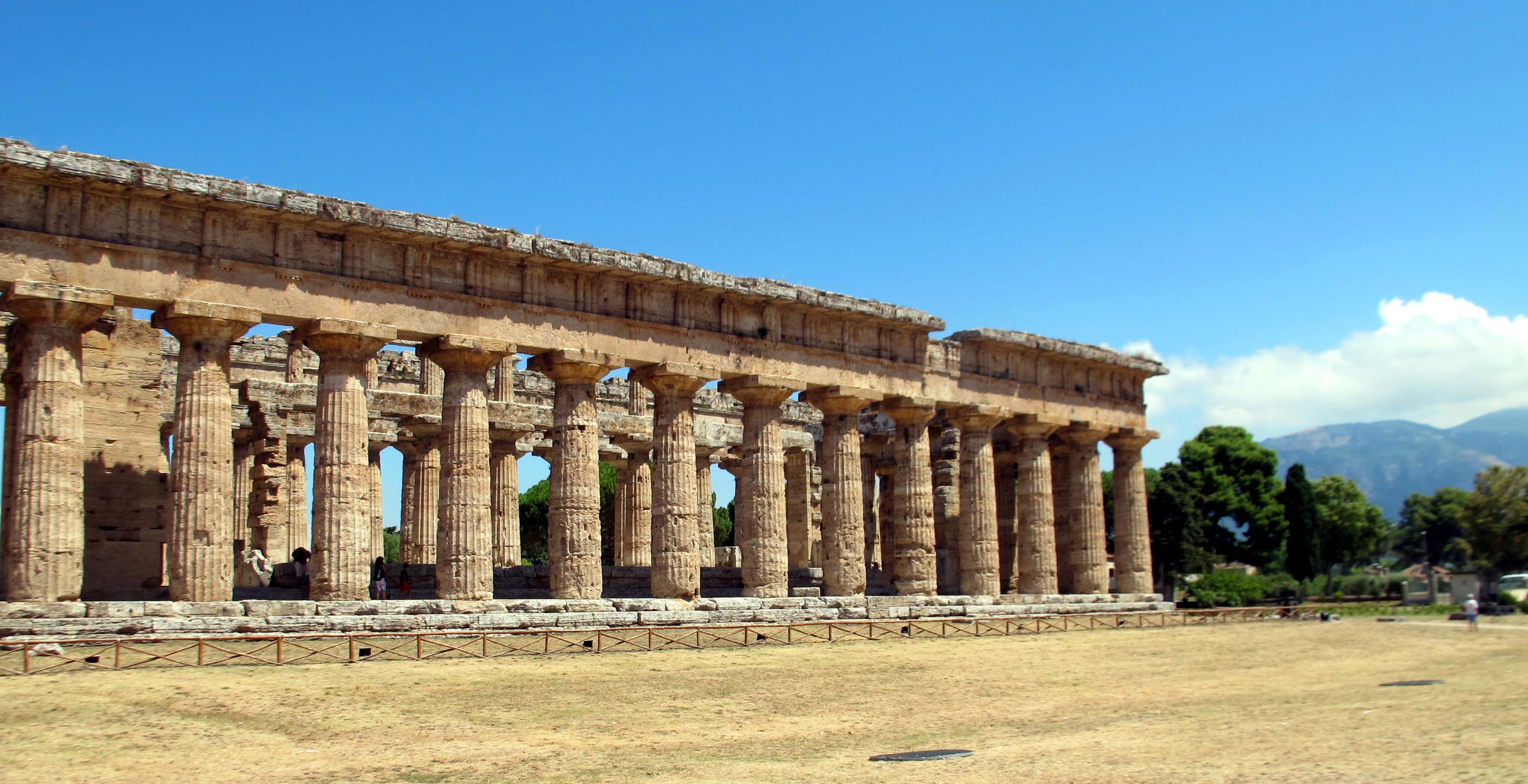
Right next to it, the Tempio di Nettuno (Neptune is the Roman equivalent of Poseidon) resembles the Parthenon.  It was built in 460 BC and is the best preserved Doric temple outside of Greece.  It is almost intact, with only the roof and a bit of the inside missing. You can actually walk inside both of these temples!

Tempio di Nettuno

Tempio di Nettuno

A bit farther away from the other 2 temples is the Tempio di Cerere (Temple of Ceres/ Demeter) which was actually a temple to Athena.  18th Century archeologists must have been very confused. It was built in 500 BC and the architecture is part Doric, part Ionic. At some point, it was used as a church and has 3 medieval tombs in the floor.  The inside of this temple is not accessible.

Tempio di Cerere

Tempio di Cerere

The remains of the ancient city also include a Roman Forum, paved streets, the foundations of public buildings and many residential Roman houses, an amphitheater, and a swimming pool/gymnasium. Walking through the overgrown areas provides some of the best views and glimpses of some mosaic floors.  paestumforum2The city walls, almost 5 km long, are mostly intact with 24 towers and 4 gates.  Only 20% of the site has been excavated.  80% of Paestum is still buried under agricultural land, most of it privately owned. A road cuts the site in 2 and has a few restaurants, bars, souvenir shops, a small piazza, the Paleochristian church, an information center, and the museum.  The amphitheater is only half exposed as the road was enlarged in the 1930’s and buried the east half of it!paestummatrimonio

The Museo Nazionale contains all of the items found in tombs in and around Paestum and the Metopes from a temple 9 km away. There are also Giovanni Piranesi’s etchings of the site, printed in 1778. The most amazing thing in the museum was on loan and I did not get to see it!  It is the 470 BC Tomba del Tuffatore, tomb of the diver, a fresco painted on the underside of a tomb which portrays a young man in mid-air diving off a cliff into water.  It is thought to portray the harmonious passage from life to death.paestumtempiodinettuno

The Archeological site of Paestum is a UNESCO World Heritage Site, along with the Cilento coast, Vallo di Diano National Park, the archeological site of Velia and the Certosa di Padula.   Today, Paestum is a Frazione or hamlet of Capaccio in the province of Salerno.  It is accessible by bus or local train from Salerno (30 minutes), but the best way to get there is by car.  The drive is spectacular and it is worth going out of the way for.  Even on a ‘busy’ summer day, the site is not crowded.  Staying the night is a great idea, as you can visit the ruins just before sunset.  A combination ticket to the site and museum is €9.

Buon Viaggio, Cristina
Share this:

  • Share on Facebook (Opens in new window) Facebook
  • Share on Pinterest (Opens in new window) Pinterest
  • Share on X (Opens in new window) X
  • Email a link to a friend (Opens in new window) Email
  • Share on WhatsApp (Opens in new window) WhatsApp
Like Loading...

Santa Maria di Siponto~ Art reconstructs time

21 Wednesday Sep 2016

Posted by Un po' di pepe in Architecture, Italia, Puglia

≈ 13 Comments

Tags

Edoardo Tresoldi, Il Gargano, Parco Archeologico Santa Maria di Siponto, Puglia, Santa Maria di Siponto, Southern Italy


santamariadisiponto1Santa Maria di Siponto is just off the SS 89 Garganica highway, 3km from Manfredonia. The church was built in 1117 over an existing early Christian structure.  The architectural style is Romanica Pugliese, Pugliese Romanesque with Byzantine and Islamic influences evident in its pure, simple lines and geometric patterns.  The building is unusual as it is square and there are 2 independent churches; the upper church and the crypt below, with an external staircase.santamariadisiponto5

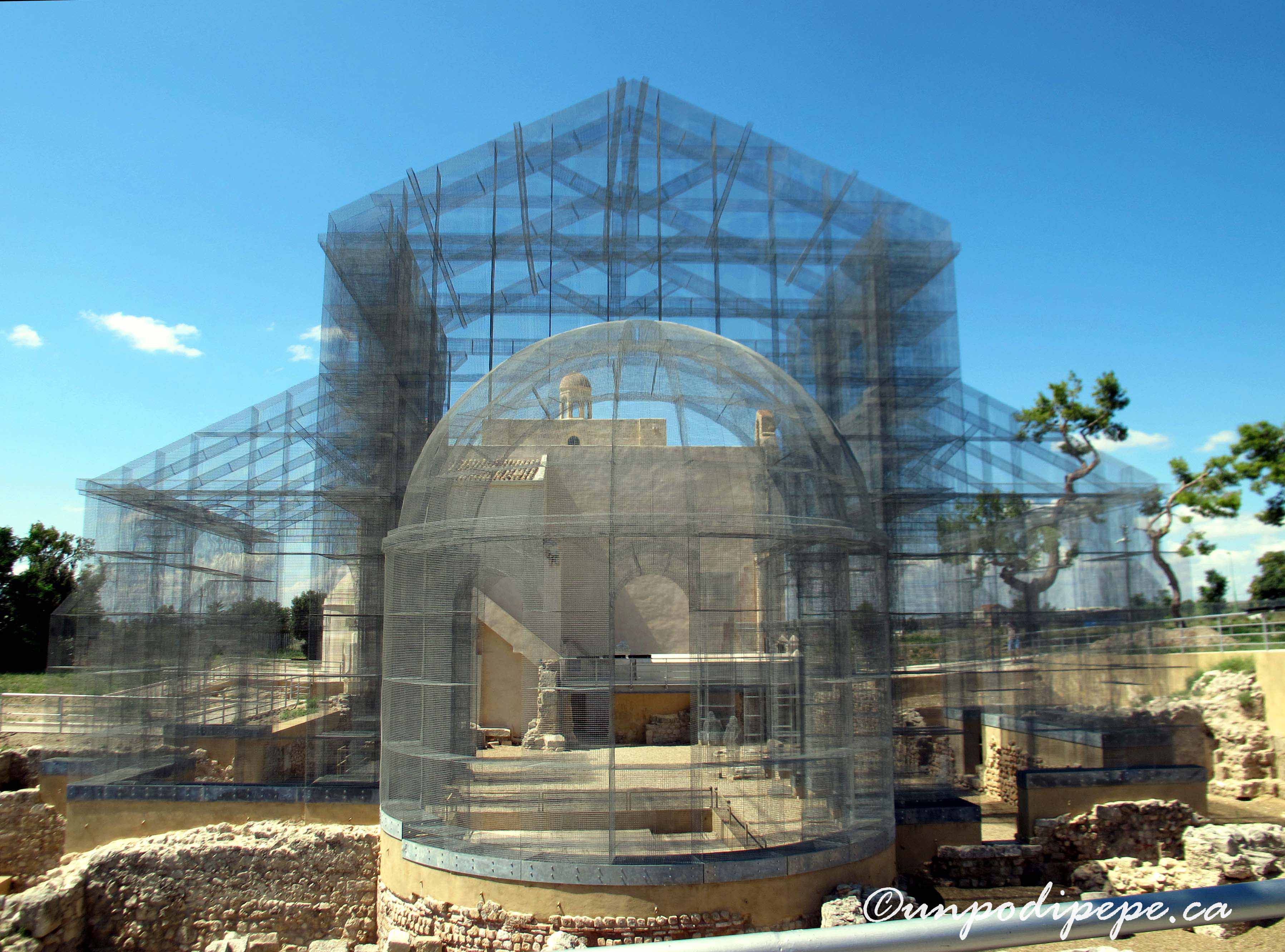
To the left of the church is the Parco Archeologico di Santa Maria di Siponto. Until March 2016, this consisted of the ruins of a Paleochristian basilica (250 AD) with a semi-circular apse and mosaic pavement, and the partially excavated remains of Ancient Roman Sipontium.  Now the space once occupied by the basilica has been transformed into a magnificent sculpture titled ‘Dove l’arte riconstruisce il tempo’ which means ‘Where art reconstructs time’. The permanent installation took 3 months to construct and is built right onto the foundations of the archeological remains.santamariadisiponto2

The installation/sculpture is made of layers of wire mesh that overlap and intersect, interpreting and reclaiming the space and volume once occupied by a structure that no longer exists. The lightness and transparency of the material makes it look like a hologram of the original church…it is there, but it is no longer there. The site is also illuminated at night, creating a ‘ghostly’ effect.  Contemporary art and archeology intersect to form a link with the past. 14 m high and weighing 6,000 kg, this is probably the largest structure in the world made entirely of wire mesh.santamariadisiponto6

I have been to Santa Maria di Siponto many times since I was a child. I am a total archeology nerd, and I was excited to see this construction breathing new life into this small archeological site, relatively unknown outside of Puglia. It feels like the basilica has been resurrected from the ruins.  I have not seen anything like this before and it is already a distinctive landmark, especially since it is visible from the highway. In 5 months it has already brought 100,000 visitors to the site and contributed to the local economy.

The artist, Edoardo Tresoldi, a 29 year old set designer and sculptor in Roma, is known for his monumental metallic wire mesh sculptures, integrating into their surroundings.  His website is still under construction.  He must be too busy making great art!santamariadisiponto4Santa Maria di Siponto is definitely worth a visit.  If you have plans to visit the Gargano area, especially Monte Sant’ Angelo, San Giovanni Rotondo, Manfredonia or Mattinata, it is fairly close by. It is definitely easiest to get there with your own vehicle, although it is possible to get to Foggia, then Manfredonia by train or bus and then taxi to the site. Buon Viaggio, Cristina

Share this:

  • Share on Facebook (Opens in new window) Facebook
  • Share on Pinterest (Opens in new window) Pinterest
  • Share on X (Opens in new window) X
  • Email a link to a friend (Opens in new window) Email
  • Share on WhatsApp (Opens in new window) WhatsApp
Like Loading...

La Madonna della Neve

05 Friday Aug 2016

Posted by Un po' di pepe in Culture, Feste, Italia, Italian life, Orsara di Puglia, Puglia

≈ 13 Comments

Tags

August 5th, Italia, Madonna della Neve, Orsara di Puglia, Pugliese Traditions, Southern Italy

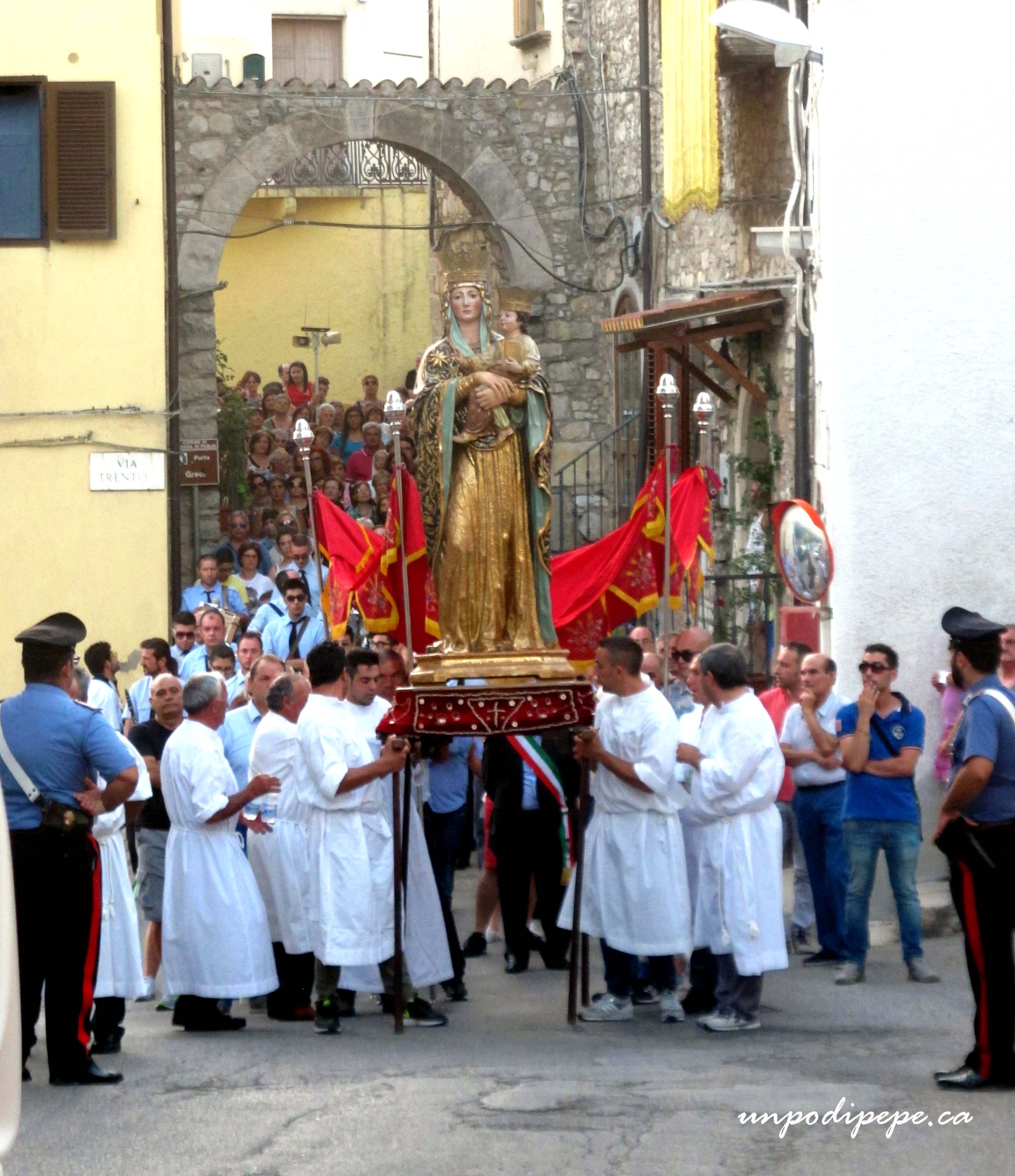
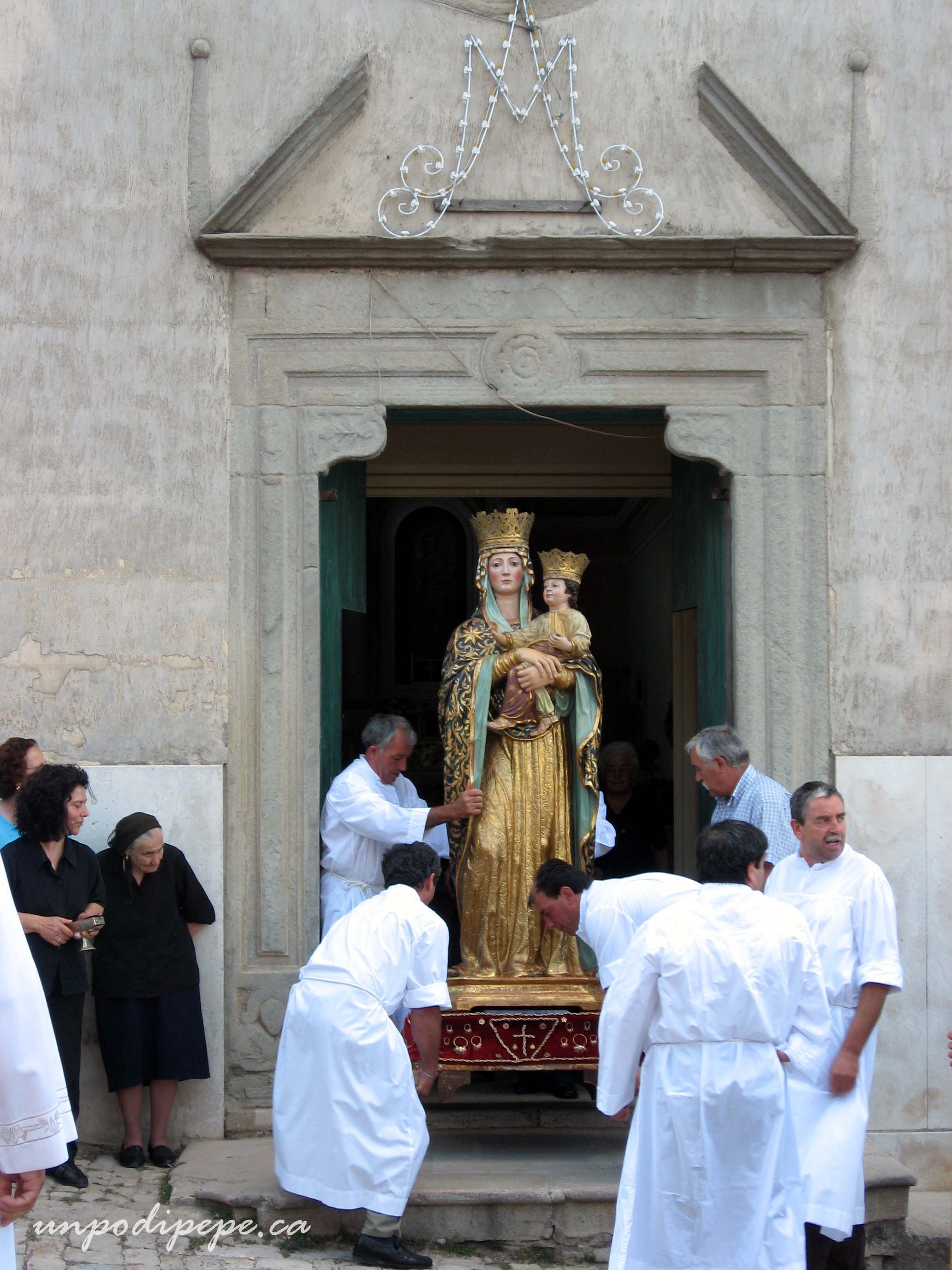
MadonnanevechiesaAugust 5th is the feast day of La Madonna della Neve (the Madonna of the Snow).  She is one of the Patron Saints of Orsara di Puglia and there is a big festa.  She is carried through Orsara in a procession and returned to her usual spot in the main church. In the evening there is a Mass, then music and fireworks in her honour.  La Madonna della Neve is the protectoress and Patron Saint of many paesi montani or mountain villages because, of course, it snows!

La Madonna della Neve is tied to the origins of the Basilica Santa Maria Maggiore in Roma.  According to legend, in the year 352, the night between August 4th and 5th, the Madonna appeared in a dream to a wealthy couple who wanted to build a church.  She asked them to build a church where snow had fallen during the night.  They went to tell Pope Liberio and it turns out he had the exact same dream during the night!

In the middle of a hot Roman summer, snow had fallen on L’Esquilino, the Esquiline Hill.  The perimeter of the snowed on area was where the church of Santa Maria ‘Ad Nives’ (of the snow) was built. The church is usually known as Santa Maria Maggiore.Madonnaneve06

Orsara’s Madonna della Neve statue was carved out of a single piece of quercia (oak) by Napoletano sculptor Aniello Stallato in 1624. I have been familiar with this beautiful sculpture since I was 11, but I had no idea she was almost 400 years old! Here are some photos of the processione!Madonnaneve10

Madonnaneve2MadonnanevestradadirittaMadonnanevearco

Ciao, Cristina
Share this:

  • Share on Facebook (Opens in new window) Facebook
  • Share on Pinterest (Opens in new window) Pinterest
  • Share on X (Opens in new window) X
  • Email a link to a friend (Opens in new window) Email
  • Share on WhatsApp (Opens in new window) WhatsApp
Like Loading...

Vini di Puglia

01 Wednesday Jun 2016

Posted by Un po' di pepe in Italia, Puglia, Vino

≈ 26 Comments

Tags

Autochthonous vines, Diomedes, Italian wines, Negroamaro, Nero di Troia, Primitivo, Pugliese Traditions, Southern Italy, Vini di Puglia, Wines of Puglia

Uvadipuglia

Oenotria, ‘Land of Wine’. This is the name the ancient Greeks gave to Puglia. 425 km long, Puglia has a diverse agricultural landscape with mountains, plains, the Mediterranean sun, coastal sea breezes and fertile soil.  The climate is hot and dry, especially during the summer months.  The name Puglia comes from the Latin ‘a pluvia’ meaning without rain. These environmental features, plus the presence of vitigni autoctoni (Native or Indigenous species of grapes) provide an ideal environment for growing grapes and producing vino.

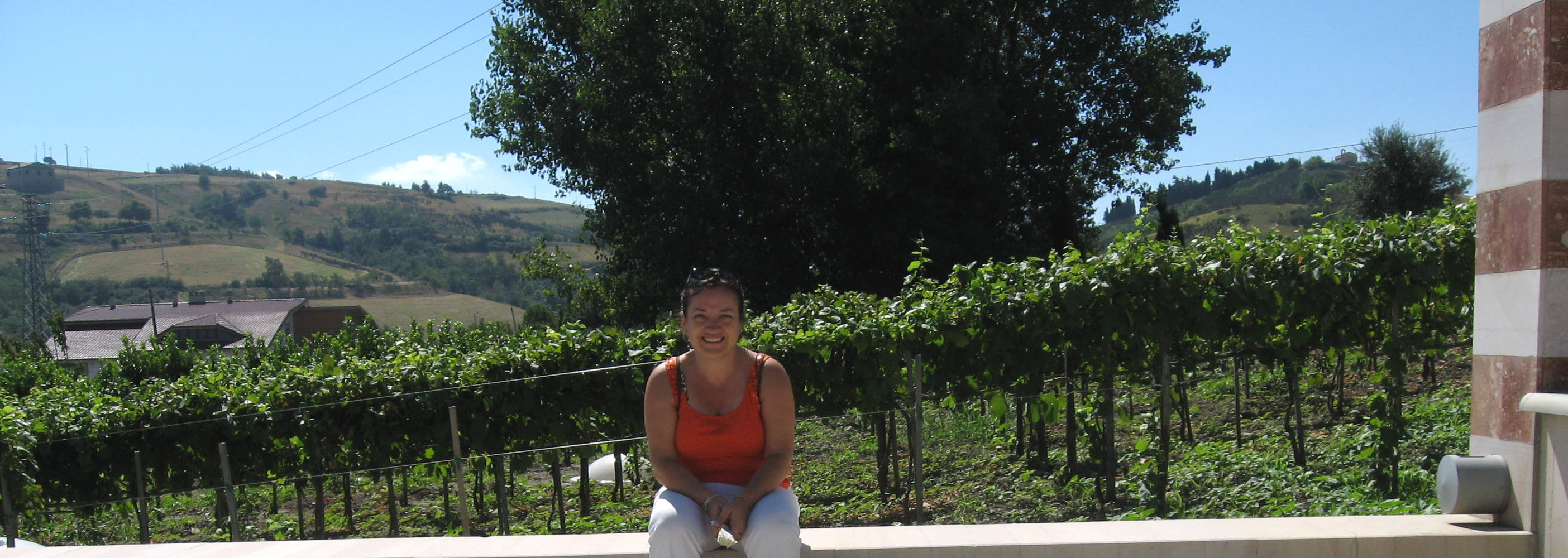
Grape harvesting and winemaking are an ancient tradition in Puglia, where the soil has been tilled for centuries.  The vines are deeply rooted to an ancestral bond with the earth and local traditions. I find the surreal peace and tranquility in the vigneti to be very therapeutic and meditative.VillaJamelevigneto

The history of vinicoltura in Puglia is based on a bit of science, and a lot of legend. According to legend, after the fall of Troy the mythical hero Diomede (Diomedes) found out his wife had been unfaithful.  Instead of returning home to Argos, he sailed about the Adriatic, created the Isole Tremiti, and then was invited by Daunus, King of the Daunia (modern Provincia di Foggia) to settle there.  Diomede allegedly planted the first vines in Puglia, brought with him from Greece and beyond.Vignastradacupa

Vino Pugliese has always been consumed and enjoyed locally. In the past, Pugliese grapes were often harvested for quantity rather than quality. They were used to blend with underwhelming Italian and European grapes that needed substance or a boost in the alcohol content.  In Puglia, grapes develop high levels of sugar over the hot summer, resulting in wines that are high in alcohol.  Mass production decreased the value of Pugliese grapes and wine.  In the 1970’s and 1980’s, government funds were available for contadini to plant wheat.  Half of Puglia’s ancient vigneti/vineyards were cut down to make way for fields of wheat.  Some ancient vines were all but lost.  Now many are being replanted and there has been a resurgence of forgotten native grapes and lesser known grapes.  Vini Pugliese are finally getting the love they deserve! There are now over 30 Pugliese DOC wines and they are generally very well priced for the quality. I still say the best stuff doesn’t leave the region.  It is made in batches too small to export and is consumed locally.

La Cantina del Paradiso, Orsara di Puglia

La Cantina del Paradiso, Orsara di Puglia

Puglia can be roughly divided into 3 wine producing areas. The first is Northern Puglia including the Daunia (Provincia di Foggia) and the northern part of the Provincia di Bari, around Castel del Monte.  The second is the Provincia di Bari including Gioia del Colle and the Val d’Itria and the third is the Salento area or the ‘heel’ of italia.  It includes the Provincia di Lecce, most of the Provincia di Brindisi and part of the Provincia di Taranto. (I will add a map soon)

This is the first of 3 blog posts about Puglia and its native vines. I have been conducting my own personal research on this topic for many years.  The sacrifices I make for my readers knows no limits!

This post will include the 3 main grapes, Primitivo, Negroamaro and Nero di Troia.  Post number 2 Aglianico to Zibibbo will feature the lesser known vigni autoctoni and a wine vocabulary, and post number 3 will be dedicated to Tuccanese. Salute!

Vini Pugliese available at my local BC Liquor Store

Vini Pugliese available at my local BC Liquor Store

3 Main Vitigni Pugliese/Grapevines:

Primitivo is the most internationally well-known Pugliese grape.  It is grown across Puglia, especially in Taranto (Primitivo di Manduria) and the Gioia del Colle area in Bari.  The production of Primitivo has increased in recent years.  The name was given by a late 18th Century monk who studied botany.  It does not mean primitive, but comes from the Latin ‘Primatirus’ which means early ripening.  La vendemmia (the grape harvest) for Primitivo is August to early September.  It was previously known by other names, including Zagarese, possibly meaning from Zagreb.  In 1881, Primitivo vines were first brought to Manduria from Gioia del Colle as part of the dowry of Contessa Sabini di Altamura. Including vines in a dowry may sound strange, but also implies they must have been considered valuable!

Primitivo is ‘corposo’ (full bodied) and has lots of anthocyanins. The grape can turn much of its sugar content into alcohol, reaching up to 18% alcohol!  It is aromatic with hints of sour and black cherry, fig, blueberry and blackberry. Primitivo has a spiciness of pepper and licorice when grown in certain types of soil and it is often aged in oak. Not a productive vine, it gives low to medium yields. Primitivo ripens unevenly and will over ripen quickly.  If the tips are pruned in spring, a second harvest with a lower alcohol content is possible mid September to October. In Manduria, Primitivo grows on red soil.  It is also grown on volcanic soil, and even sand near the sea.

Primitivo arrived in Puglia from across the Adriatic thousands of years ago with the ancient Greeks. It may have crossed the Adriatic again in the 15th Century with Slavs and Greek Albanians arriving in Puglia to seek refuge from the Ottoman Turks.

Like all Italians, Primitivo has cugini, or cousins. Zinfandel has been proven by genetic analysis to be a clone of Primitivo and Crljenak Kastelanskj (Plavina) a vine on the coast and islands of Croatia. Pugliese immigrants in the 1800’s and early 1900’s likely brought their native grapes to California. Primitivo is also one of the parents of Plavac Mali, another Croatian grape.Stradacupaprimitivo

Negroamaro is grown almost exclusively in Puglia and is one of Italia’s most ancient vines.  It is grown all over Puglia, but especially in the Salento, the ‘heel’ of Puglia.  Since ‘niger’ is Latin for black and ‘amaro’ means bitter in Italiano, the name is thought to mean ‘Black bitter’, after its strong colour and tannins. The amaro part of Negroamaro is actually from ‘Mavros’ the Greek word for black.  In this case, Negroamaro actually means ‘black black’.  It is thought to have been brought to Puglia by Greek colonists around the 8th Century BC so it makes sense that the grape developed a hybrid Latin/Greek name.

Puglia is an ideal habitat for Negroamaro grapes as they tolerate hot and dry well, and are very adaptable to different soils, even in rocky areas. Negroamaro has a rich dark red colour and is corposo but not too tannic or acidic, making it very easy to drink! It has flavours of ripe plums and baked raspberries with hints of cinnamon and anise, and is rich in polyphenols including the antioxidant resveratrol.  La vendemmia for Negroamaro is after Sept 10 to the beginning of October. Negroamaro is usually used on its own, or blended with Malvasia Nera. The first rosé bottled in italia in 1943 was a Negroamaro rosé. My favourite Italian rock band is Negramaro without the ‘o’, from Lecce. I recommend listening to Negramaro with a glass of Negroamaro!

Nero di Troia (also called Uva di Troia) is named after and grown around Troia, in the Monti Dauni area of Foggia and near Castel del Monte.  Troia is only 14 km from Orsara di Puglia so I know it well!  Nero di Troia is thought to be those very vines brought by Diomedes from Troy when he was welcomed by the king of the Daunia!  Genetic analysis does show it originates in the Adriatic area.  We also know Nero di Troia was around in the 13th century during the reign of Federico II of Svevia.

Nero di Troia is a late ripening grape, with vendemmia in mid to late October. It is very purple skinned, rich in polyphenols and especially tannins but is not too acidic or tannic tasting. It has a spiced woody taste with hints of blackberry, licorice, cherry, black currant, black pepper and violets. Nero di Troia goes down nicely and leaves a silky feel on the palate.  Traditionally it has been blended with other grapes.  For example, Castel del Monte wines blend 75% Nero di Troia with 25% Montepulciano. In recent years, there has been a move towards appreciating the unique characteristics of Nero di Troia on its own and it is becoming increasingly well-known and appreciated.NerodiTroia

In Orsara Papà often buys Nero di Troia to drink at home with meals. It comes in a 3L plastic bottle at the grocery store for €5.50!  Seriously.  It has an expiry date and he transfers it into 4x 750 ml glass bottles.  It may not be the best Nero di Troia available, but it’s very good and the best value for $. Now you all know for sure I am not a wine snob!  Visit Troia the last Sunday in July for ‘La notte del Nero di Troia’. Maybe I’ll see you there?  Salute! CristinaPianoParadiso

Read the rest of the trilogy:

Vini di Puglia Part 2 Aglianico to Zibibbo

Vini di Puglia Part 3 Il Tuccanese

Ciao, Cristina
Share this:

  • Share on Facebook (Opens in new window) Facebook
  • Share on Pinterest (Opens in new window) Pinterest
  • Share on X (Opens in new window) X
  • Email a link to a friend (Opens in new window) Email
  • Share on WhatsApp (Opens in new window) WhatsApp
Like Loading...

Fucacoste e Cocce Priatorje

01 Sunday Nov 2015

Posted by Un po' di pepe in Culture, Feste, Italian Folklore, Orsara di Puglia, Puglia

≈ 5 Comments

Tags

Falò e Teste del Purgatorio, Festa dei Morti, Italian Folklore, Italian history, Muscitaglia, November 1st, Orsara di Puglia, Puglia, Pugliese Traditions, Pumpkin carving, Southern Italy, Traditional Festivals in Puglia, Tutti i Santi Festa, Zucche

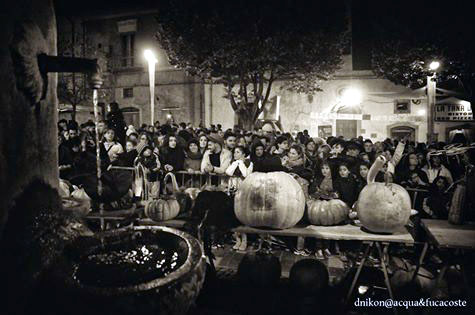
Piazza San Pietro. Photo courtesy of International Photo Correspondent Donato Narducci

Piazza San Pietro. Photo courtesy of International Photo Correspondent Donato Narducci

Tonight is a big festa in Orsara di Puglia, so I am reposting this from last year.

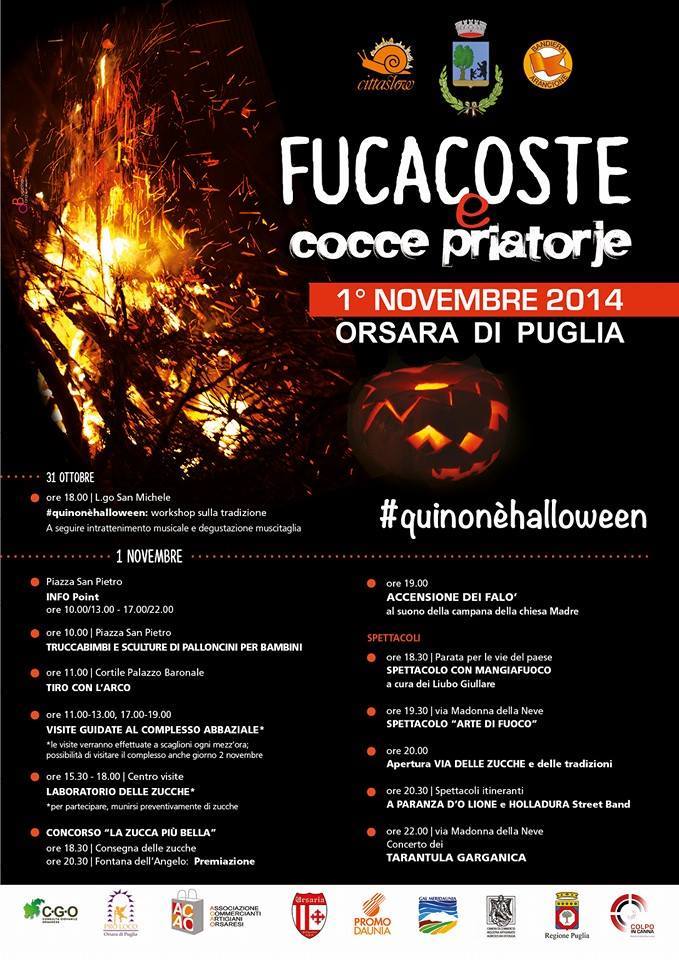
Fucacoste e cocce priatorje is dialetto Orsarese for ‘Falò e teste del Purgatorio’.  This translates to ‘Bonfires and heads from purgatory’. It is an ancient festival unique to Orsara di Puglia celebrated on November 1st, the night of ‘Tutti i Santi’ (All Saints Day).  All Saints Day was created in the 9th century when the Pope superimposed a Christian feast day onto existing rituals, so this festa has been around for a very long time.  It is a night where people have the opportunity to honour, reconnect and pay respect to the spirits of their loved ones.  Carabinieri estimate that the town of 3,000 had 40,000 visitors attend the festa tonight, with 9,000 cars parked up to 3 km away!

2014 poster for Fucacoste e cocce priatorje

2014 poster for Fucacoste e cocce priatorje

It is believed that the souls of the dead return among the living to visit their relatives and their former homes before moving on to Paradiso.  The bonfires are lit with wood and branches of ginestra (broom). The light of the fires and the crackling and sparks of the ginestra attract the spirits to reunite the living with those who continue to live only in their memories.  The souls of the dead loved ones collect ashes from the fires. The gleam of light inside ‘cocce priatorje’, pumpkins carved to look like heads-light their way to find their former home.

Preparation for the  festa involves gathering firewood and ginestra, preparing food and carving zucche (pumpkins).  There is even a BYOZ (bring your own zucca) pumpkin carving workshop.  Later in the evening zucche are exhibited and there is a contest for ‘la zucca più bella’-the best zucca.

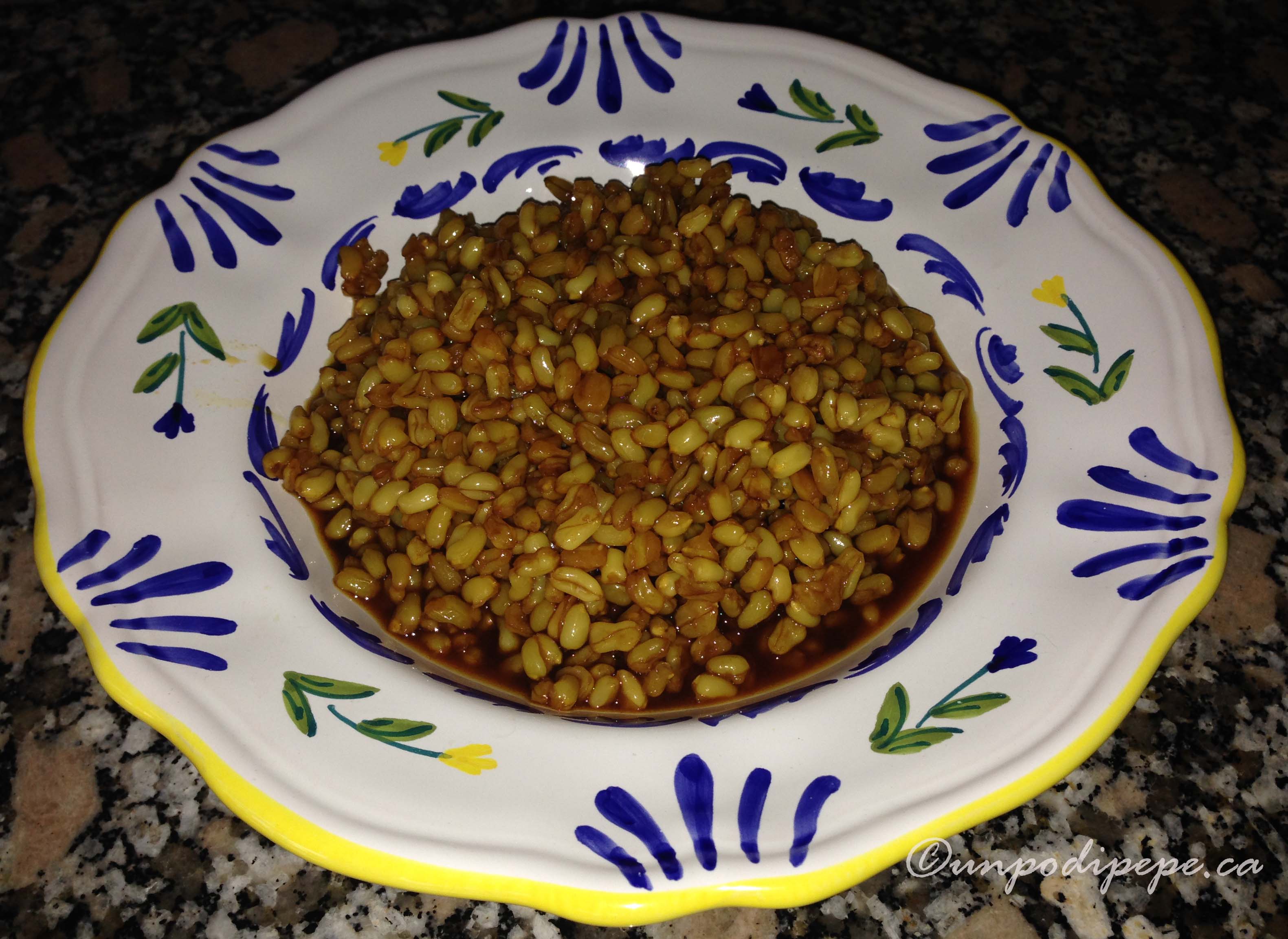
In honour of the dead, simple but symbolic foods are prepared.  These include potatoes, onions, salsicce (sausages) and castagne (chestnuts) cooked in open fire. Muscitaglia is a traditional dish served on November 1st which probably dates back from the ancient Greeks and Byzantines. Muscitaglia (moo•shee•tah•lyah) in both Greek and Latin is made up of the words mosto (wine must) and talia (grain). The ingredients include boiled grain and vino cotto (literally cooked wine-also called mosto cotto). Pomegranate seeds and walnut pieces are sometimes added. These ingredients are symbols of fertility and abundance, but also of honour and respect for the dead.

Muscitaglia

Muscitaglia

When the campanile (church bell tower) strikes 1900 hours (7 pm), Orsara di Puglia ‘catches fire’. Over 100 bonfires are simultaneously lit in every street and piazza and remain lit through the night.  The fires, pumpkin lanterns, music and people in the streets create a magical, enchanted atmosphere.

Fucacoste e Cocce Priatorje has often been confused with Hallowe’en, but it is a very different event.  Besides the fact that the date is different, dressing up in costume is not part of the custom, there is nothing scary about it and there are no evil spirits to chase away. It has more similarities with the Mexican Dia de los Muertos, Day of the Dead.  This is an event about being together in community to celebrate the bond between the living and those who we remember in our hearts, and to remind us that our time on earth is precious.

Watch the video ‘#quinonèhalloween’ featuring 94 year old Z’Gaetan talking about the festa and its significance  https://www.youtube.com/watch?v=9W5RD0-9H-A

Read about tonight’s festa (in Italiano) on the Comune di Orsara di Puglia website.  For more about Orsara di Puglia read the post ‘Benvenuti ad Orsara di Puglia’.  Ci vediamo alla festa!

Fucacoste e Cocce Priatorje, Fontana Sant'Angelo, Orsara di Puglia 2014. Photo courtesy of Donato Narducci

Fucacoste e Cocce Priatorje, Fontana Sant’Angelo, Orsara di Puglia 2014. Photo courtesy of Donato Narducci

Share this:

  • Share on Facebook (Opens in new window) Facebook
  • Share on Pinterest (Opens in new window) Pinterest
  • Share on X (Opens in new window) X
  • Email a link to a friend (Opens in new window) Email
  • Share on WhatsApp (Opens in new window) WhatsApp
Like Loading...

I Sassi di Matera

04 Sunday Oct 2015

Posted by Un po' di pepe in Italia, Photography, Travel

≈ 15 Comments

Tags

Basilicata, Carlo Levi, Chiese Rupestri, European Capital of Culture, I Sassi di Matera, Italian history, Italy travel tips, Luisa Levi, Matera, Sasso Barisano, Sasso Caveoso, Southern Italy, UNESCO World Heritage Sites

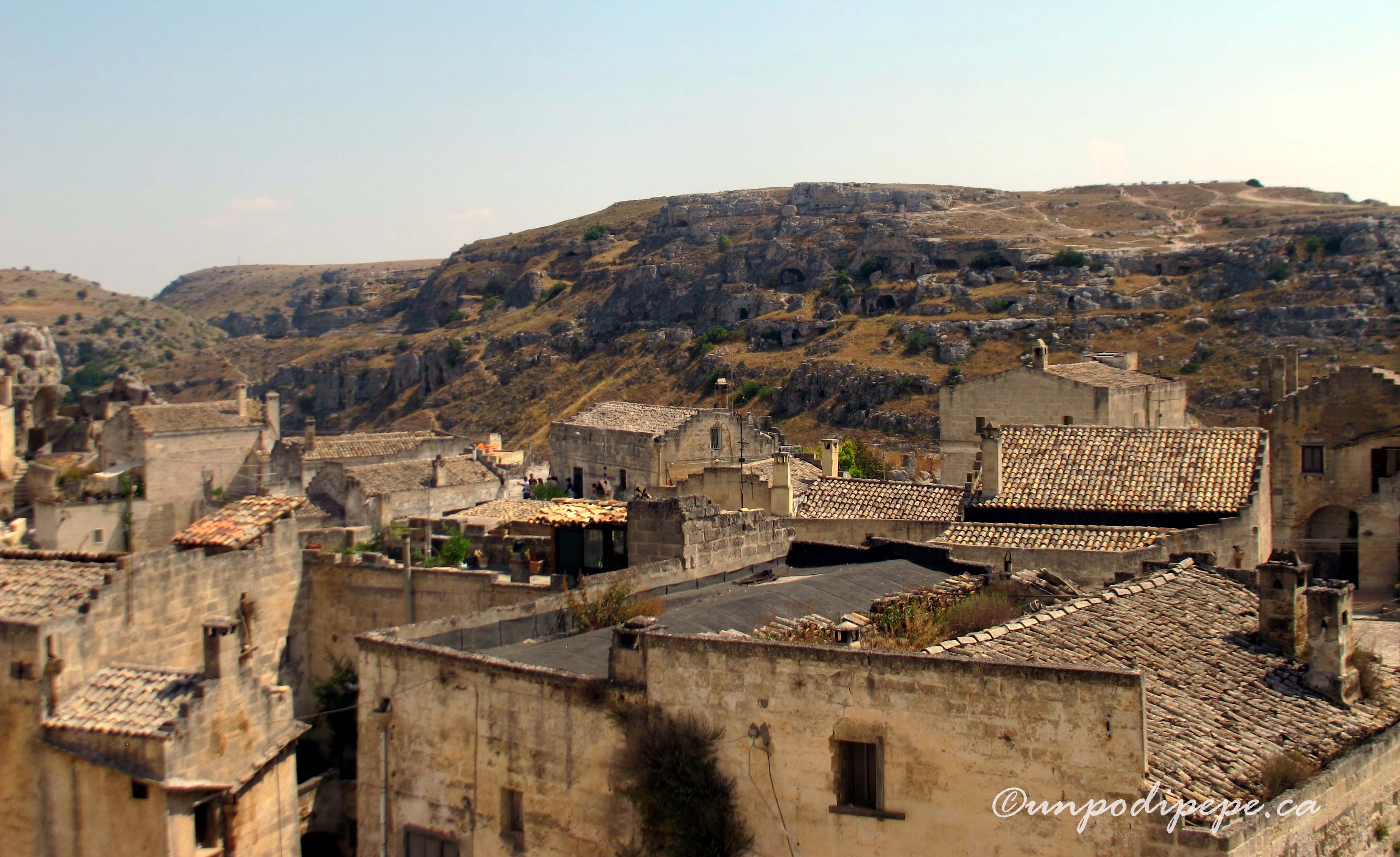
MateraMatera is a rock-cut settlement in Basilicata, the most isolated, least visited region of Italia. It is one of the world’s oldest living cities, continuously inhabited for over 9,000 years.  Clinging to a 300m gravina (ravine) carved out by the river below, Matera seems to rise straight up from the earth, built in 2 natural basins. These basins are the ‘Sassi’ districts, Sasso Caveoso and Sasso Barisano. Sassi means stones and refers to the rock cut cave dwellings. The higher ground in between the 2 Sassi districts is the Civita.  Above the Sassi, on the Piano (plain/plateau) modern Matera is barely visible. The Piano was originally used for agriculture and water collection.Materagravina

Across the canyon, the west side of the gravina is the Murgia Plateau and the Parco Archeologico Storico Naturale delle Chiese Rupestre Materano. The original stone-age settlement was on this side.  The Parco Archeologico is filled with grotte (caves), Chiese Rupestri (churches carved into the rock), Neolithic villages and tombs. From Matera, the grotte look like little mouseholes. With the invention of tools it was easier to dig into the softer tufo (calcareous rock) on the east side of the gravina and Matera was excavated from this rock.

Grotte (caves) across the ravine from Matera

Grotte (caves) across the ravine from Matera

Materapanorama2The Sassi developed in layers over time, as Matera was home to every passing civilization. On the surface the Sassi look deceiving. House fronts are facades-built in front of, on top of and around caves! Incredible systems of underground cisterns and canals were built to collect and distribute rainwater.Materapanorama5

Matera’s isolated location made the area attractive to religious communities. Between the 8th and 13th centuries, Byzantine Basilian monks escaping religious persecution lived in the grotte. There are over 150 Chiese Rupestri with priceless Byzantine frescoes throughout Matera and the Parco delle Chiese Rupestri. By the 15th century, peasants and animals occupied the grotte left by the monks.

Things moved along for the next few centuries. When Matera was the provincial capital 1663-1806, increased activity caused a rise in population. In the 18th and 19th centuries, the wealthier Materani moved into the newer town on the Piano, leaving only contadini and artigiani (farmers and artisans) in the Sassi. By the early 20th century, the Sassi could not accommodate the increased population. Overcrowding plus development of the Piano also affected the water collection systems and led to poor sanitary conditions. With less farmland available, the poverty was unbelievable. Large families shared dark, crowded case grotte (cave homes) with sheep, pigs and goats. Some were only accessible by a trapdoor and ladder. There was no electricity, running water or sewage. It’s hard to imagine these kind of living conditions.

Matera’s situation continued on unnoticed- until the 1945 release of ‘Cristo si è Fermato a Eboli’ (Christ Stopped at Eboli), Carlo Levi’s memoir about his year as a political prisoner in Basilicata in 1935/36. Levi was a doctor, writer and artist from a wealthy family in Torino. He was exiled to a small town near Matera for his Anti-fascist views. Near the beginning of the book, his sister Luisa, also a doctor, needs a permission form stamped in Matera so she can visit him. She describes the Sassi as ‘a schoolboy’s idea of Dante’s Inferno’. She states ‘I felt, under the blinding sun as if I were in a city stricken by the plague. I have never in all my life seen such a picture of poverty. ..This is how 20,000 people live!’ There was a 50% infant mortality rate, malaria, dysentery and trachoma. Eboli is south of Napoli and the title is a local expression suggesting that Christ didn’t make it as far as Basilicata so they are beyond civilization and hope.Materasassibn

Carlo spends a few hours in Matera near the end of the book and says ‘I had time to see the town and then I understood my sister’s horror, although at the same time I was struck by it’s tragic beauty’. I’ve read this book twice and definitely recommend it. It is very philosophical and it is obvious from Levi’s writing and painting that this experience affected him profoundly. His paintings from Basilicata are on display in the Museo di Arte Medievale e Moderna in Palazzo Lanfranchi.

Levi’s book became internationally known and brought to light the living conditions in Basilicata. Matera became ‘La Vergogna Nazionale’ the National Shame. The Sassi were declared unsafe and unsanitary, although only 30% were actually unsafe. US experts on rural relocation were brought in as consultants. Instead of temporarily relocating the residents while the structurally unsafe areas were fixed, the government forcibly relocated almost everyone to poorly planned government housing. Starting in 1952, 16,000 people were removed from the Sassi to new apartments in the ‘modern town’ that were built facing away from the Sassi. The move isolated families and the community and made them feel ashamed for being poor. An unfortunate example of a patronizing, poorly conceived plan to help people without consulting them or addressing the real problem.Materasassocaveoso3

The Sassi became an archeological ghost town in the 1960’s,mostly abandoned except for a few families who had stayed or moved back in. In the 1970’s squatters, local hippies, artists and drug dealers lived in the Sassi. A group of young locals formed Circolo La Scaletta, an organization that lobbied for restoration of the Sassi and protection of the frescoes. One of their supporters was Carlo Levi, now an Italian senator. Yeah Carlo! In the 1980’s laws were passed protecting the Sassi and Chiese Rupestri.

In 1993 the Sassi finally went from shame to fame when UNESCO declared I Sassi di Matera e il Parco delle Chiese Rupestri a world heritage site. Calling it ‘the most outstanding intact example of a troglodyte (cave dweller) settlement in the Mediterranean region, perfectly adapted to its terrain and ecosystem’. Today about 3,000 people live in the Sassi. 50% are occupied and more continue to be restored. In Sasso Caveoso, some areas are still unsafe and blocked off. Now Matera has sassi hotels, bed and breakfasts, ristoranti, offices, artisan shops and galleries as well as homes.Materauccelli

Photogenic Matera has played ancient Jerusalem in several movies, including Pasolini’s ‘Il Vangelo Secondo San Matteo’ (1964), Mel Gibson’s ‘The Passion of the Christ’ (2004), and ‘Ben Hur’ (2016).

Matera was selected as the European Capital of Culture for 2019 and will host cultural events raising its visibility and profile internationally.  Luckily, Matera is not the easiest place to get to, which will prevent it from becoming an overcrowded tourist theme park like Capri!

Exploring Matera.  Photo by D Goodheart

Exploring Matera. Photo by D Goodheart

There is something very special about this hauntingly beautiful place.  As I wandered through the alleys and mazes of Matera, I was reminded once again of the amazing courage and resilience of our contadini ancestors.

Stay tuned for more posts about Matera!

Share this:

  • Share on Facebook (Opens in new window) Facebook
  • Share on Pinterest (Opens in new window) Pinterest
  • Share on X (Opens in new window) X
  • Email a link to a friend (Opens in new window) Email
  • Share on WhatsApp (Opens in new window) WhatsApp
Like Loading...

Museo Diocesano, Orsara di Puglia

29 Saturday Aug 2015

Posted by Un po' di pepe in Art history, Italia, Italian life, Orsara di Puglia, Photography, Puglia

≈ 7 Comments

Tags

Italian history, Museo Diocesano Orsara di Puglia, Orsara di Puglia, Palazzo Varo, Puglia, Southern Italy

museodiocesanoorsaraThe last time I was in the Museo Diocesano di Orsara di Puglia was about 1980. It looks as if hardly anyone else has been there either! The Museo is right around the corner from my casa, and it is not usually open. To visit, you need to ask for the person who has the key.  Last week I was walking by and noticed it was open as there was a photo exhibit in one of the rooms. As I walked up the stone staircase it was like stepping through time.

My accidental selfie

My accidental selfie

The Museo occupies part of the upper floor of the Palazzo Varo, a 16th Century building that was part of the Abbazia dell’Angelo. The famiglia Varo sold the palazzo and it became a convent for the ‘Monache Bianche’ or white nuns. When the sisters moved in the 1960’s it became the Scuola Media until a new school was built. In the 1970’s, some of the rooms became a depository for archeological relics and museum items. The bottom floor was recently remodelled into a very nice meeting/conference area.  The upper floor has a separate entrance and is in an elegant state of decay, to match the artifacts it is housing.museodiocesanocollage2

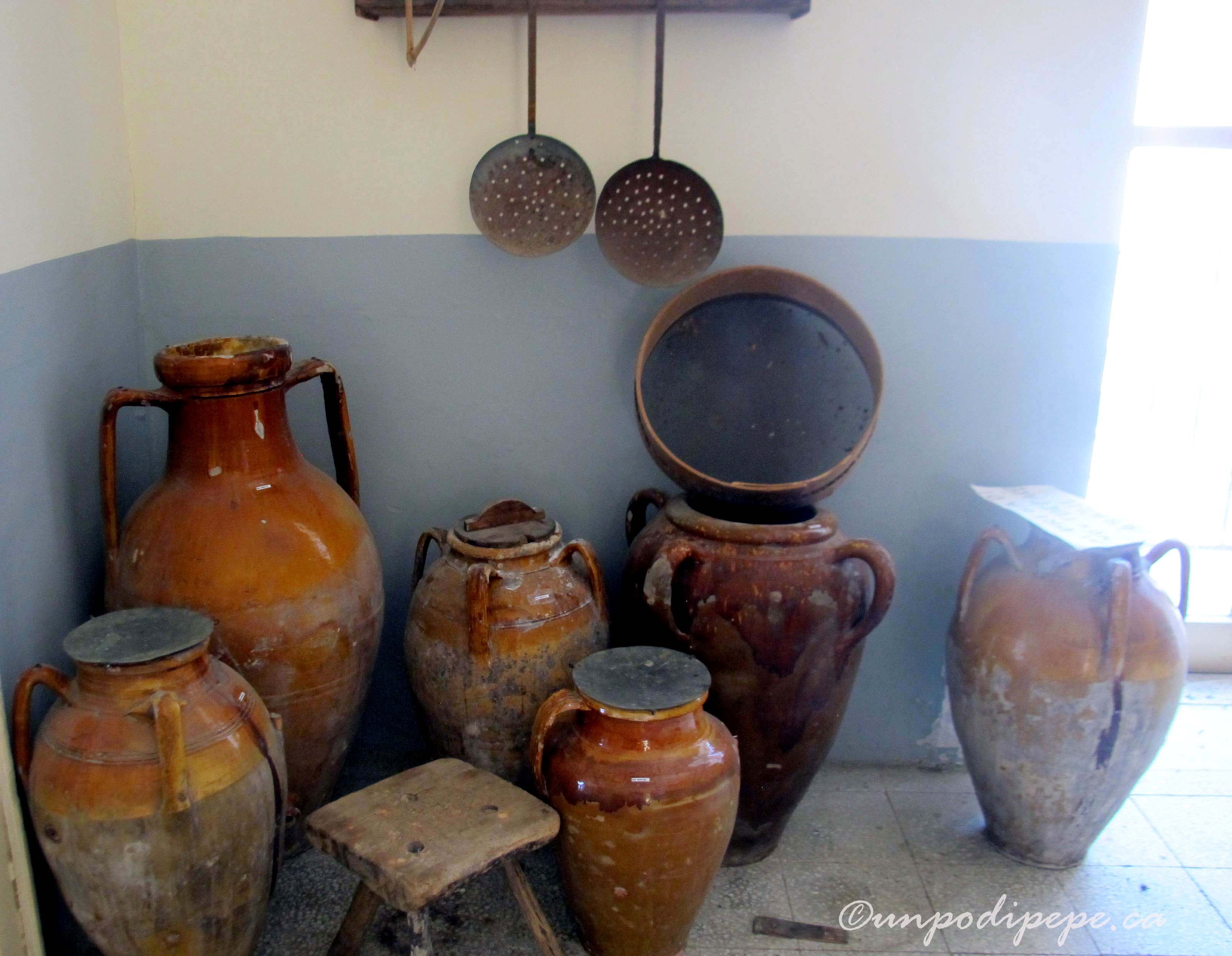
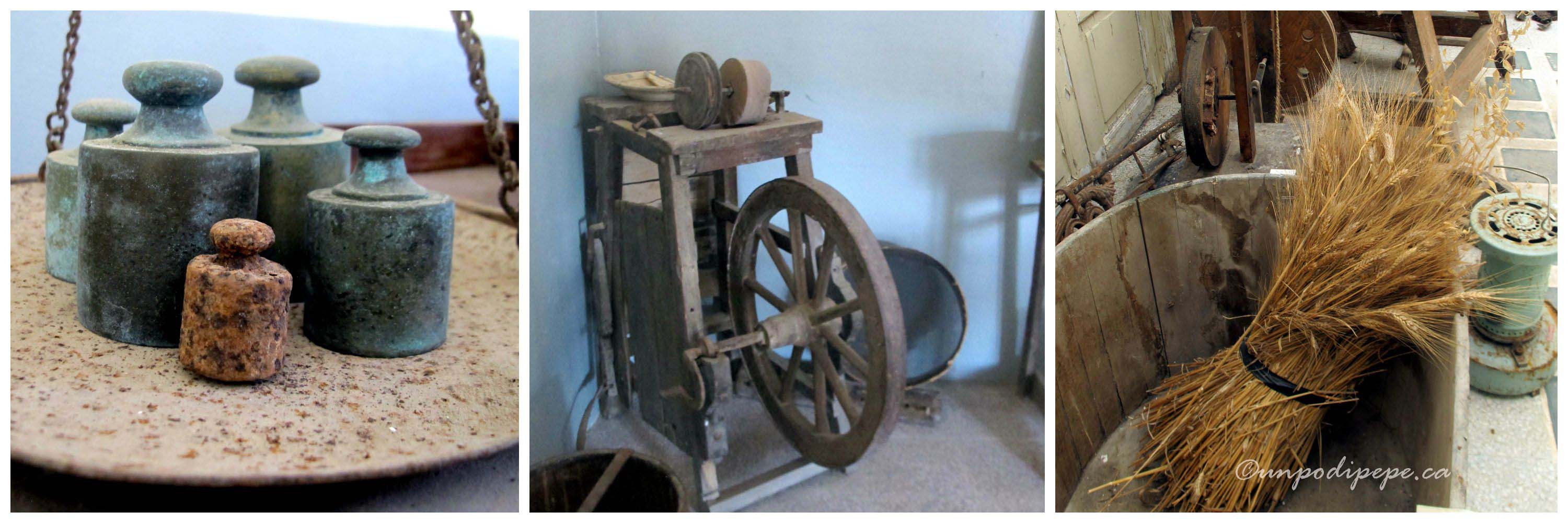
The collection is actually really impressive and reflects the history of the area.   Most of the artifacts, except the sacred items formerly used in the parish, have been donated, collected and collated by volunteers. The Museo encompasses a time span from Neolithic to mid 20th Century. That’s a really long time! The bronze and selce (flint) tools and utensils, earthenware vessels, lamps, tomb decorations and even fragments of a 10th Century pavimento (mosaic pavement) were dug up by contadini (farmers/peasants) while plowing their fields.

Roman lucerne -oil lamps

Roman lucerne -oil lamps

Ascia e lancie in Bronzo (bronze hatchet and spears)

Ascia e lancie in Bronzo (bronze hatchet and spears)

There are also farm implements, tools, utensils and household items used by local contadini in daily life. The lack of formal organization and cataloguing of the items makes the place so much more interesting. The crumbling, aging plaster walls of the formerly grand Palazzo provide a beautiful, yet ironic backdrop for the crumbling rusted work and field implements used by contadini Orsarese.

Museodiocesanocollage3 copymuseodiocesanosellaThe Museo is definitely worth a visit-you need to ask at the Parish or Comune (Town Hall) for someone to let you in.  Let me know if you need more info on this, and read Benvenuti ad Orsara di Puglia!

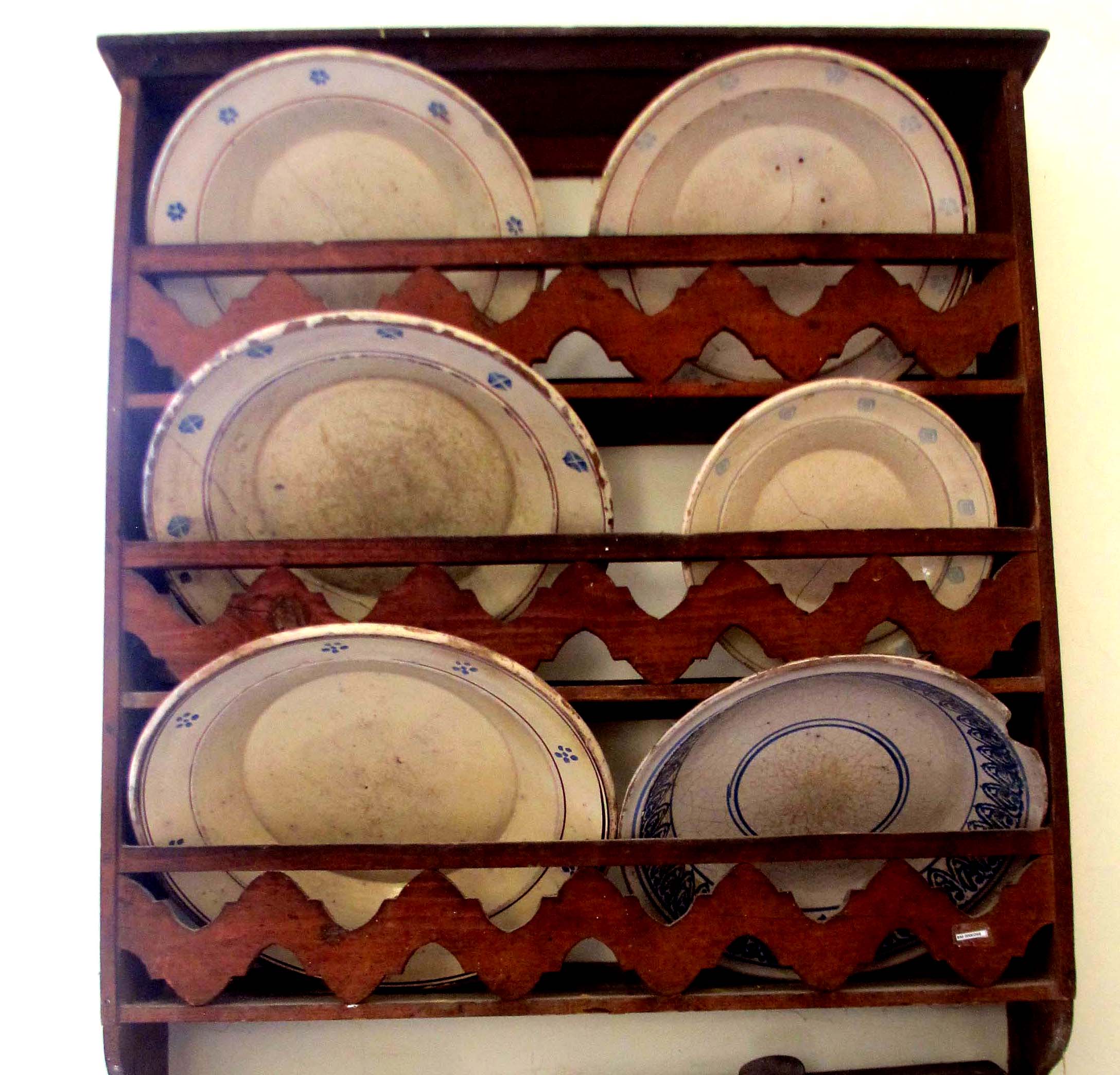
A piattaia, called a 'scudular' (scoo.doo.lahr) in Orsarese. I have one just like it, made by a friend of Papà's. My plates are quite a bit newer though!

A piattaia, called a ‘scudular’ (scoo.doo.lahr) in Orsarese. I have one just like it, made by a friend of Papà’s. My plates are quite a bit newer though!

museodiocesano3

Share this:

  • Share on Facebook (Opens in new window) Facebook
  • Share on Pinterest (Opens in new window) Pinterest
  • Share on X (Opens in new window) X
  • Email a link to a friend (Opens in new window) Email
  • Share on WhatsApp (Opens in new window) WhatsApp
Like Loading...

Torta Caprese all’ Arancia

25 Saturday Jul 2015

Posted by Un po' di pepe in Mangiamo!, Recipes

≈ 28 Comments

Tags

Cannolo Award, Capri, Dolci, Gluten-free chocolate cake, Italian food, Southern Italy, Torta Caprese, Traditional recipes

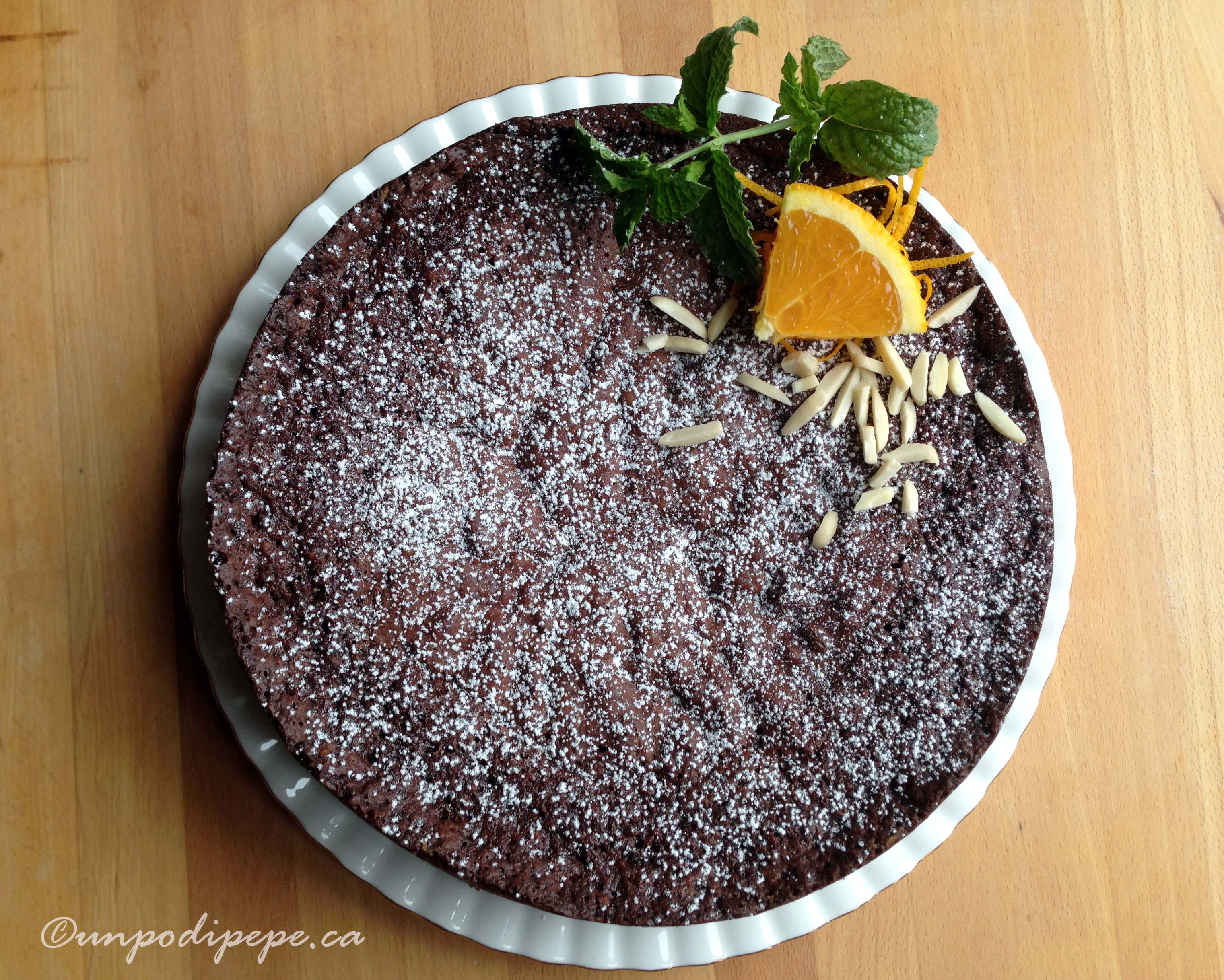
Tortacaprese2In honour of my recent Cannolo Award, I thought this post should be food related.  What is a Cannolo Award?  Read about it here.  Although I love them, I will not be writing about cannoli, but rather about Torta Caprese.

The super cute-issimo cannolo logo

The super cute-issimo cannolo logo

Caprese (cah•PREH•seh) means ‘from Capri’ (CAP•ree) the beautiful island off the coast of Napoli.  I suppose caprese could also mean ‘goatlike’ since capra is goat?  We’ll stick with ‘from Capri’.

There are a few different stories about how Torta Caprese came to be.  The most likely is that it was invented by mistake in the 1920’s or 30’s by a kitchen worker who added ground almonds (mandorle tritate) instead of flour while trying to make something similar to an Austrian Sachertorte for visitors at an Austrian owned pensione on Capri.  It was a big hit, and went on to be served at all of the hotels and tea rooms on the island.

The basic recipe involves mixing melted butter and chocolate in a ‘bagno-maria’ with sugar and egg yolks, then adding whipped egg whites and ground almonds.  Liqueur, usually Strega, is added.  The cake has a hard thin shell and moist interior and the center tends to sink in a bit from the sides.

I recently tasted a yummy orange Torta Caprese, so I decided to try my own version.  After a bit of experimentation, and substituting Gran Marnier for Strega, I ended up with a very nice Torta Caprese all’ Arancia.  It is a 3 bowl recipe, so be prepared to wash lots of dishes!

Torta Caprese all’ Arancia

Ingredients:

  • 250g dark chocolate 70%
  • 175g (¾ cup) butter at room temperature
  • 110g (½ cup) sugar
  • 110g (½ cup) brown or golden sugar
  • grated peel of a large orange
  • 3 tablespoons Gran Marnier, Mandarino, or other orange liqueur
  • 6 eggs, separated
  • 150g (1½ cups) ground blanched almonds (also called almond flour or almond meal)
  • ½ a bustina (packet) Lievito Bertolini or Pane degli Angeli (substitute 2½ teaspoons baking powder if you can’t find these)
  • pinch of salt
  • Icing sugar for dusting

1.  Preheat oven to 180° C (350° F).

2.  Butter the sides of a round springform pan and line the bottom with parchment paper.

3.  Melt butter and chocolate in a double boiler or ‘bagno-maria’ (a stainless steel bowl in a pan of hot water) and let cool.  This can also be done with a glass bowl in the microwave but be careful-only heat in 30 second intervals and stir well.

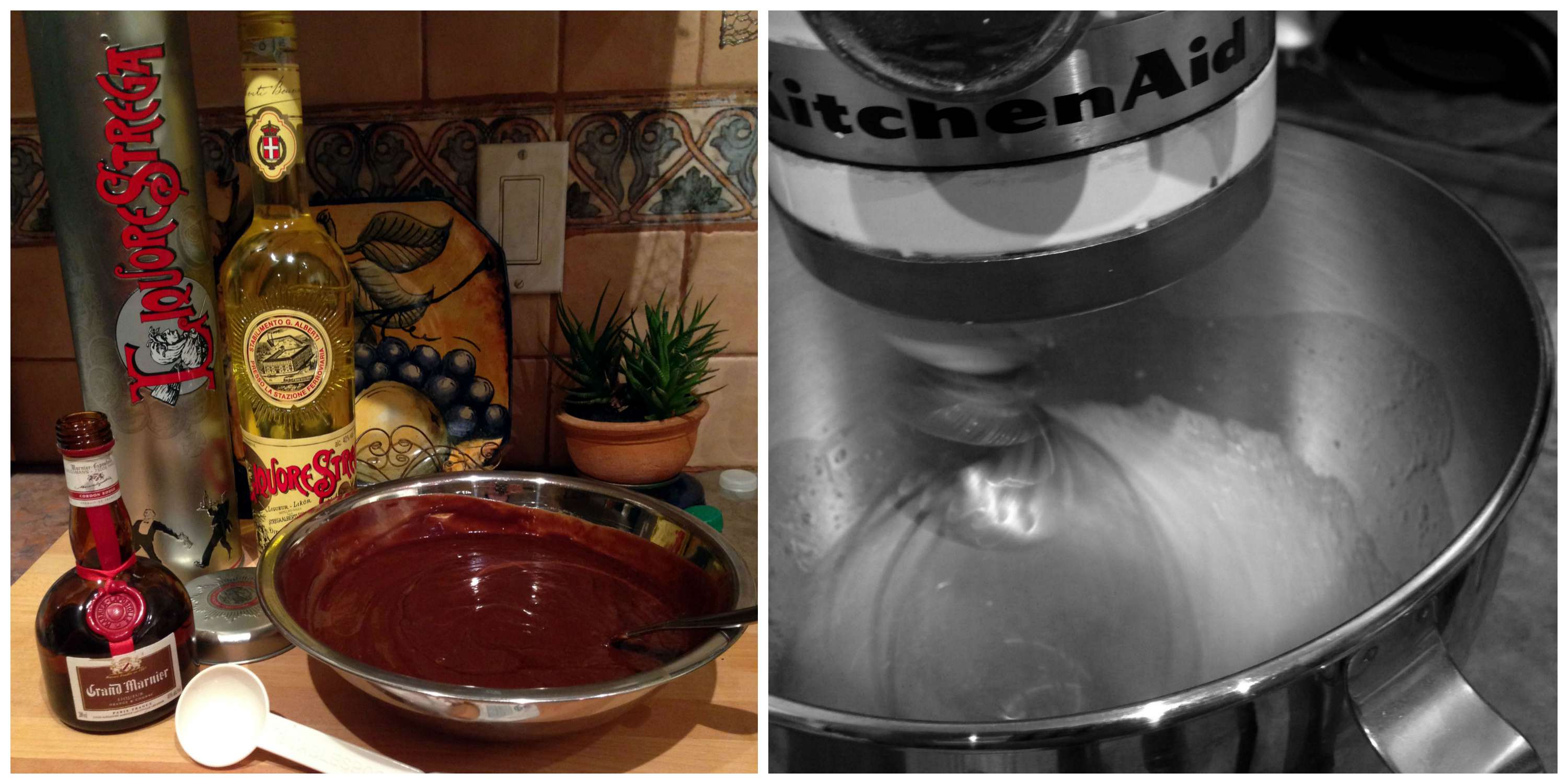
4.  In another bowl, whisk the egg yolks and brown sugar, then add to the chocolate.  Stir in alcohol and grated orange peel.

PicMonkey Collage

5.  Whip egg whites with an electric mixer until stiff peaks form.  Add the white sugar.

Torta Caprese Collage4

6.  In another bowl, mix almond flour, lievito or baking powder and salt together with a fork.  Fold the chocolate mixture in with a rubber spatula, then fold in egg whites.

Torta Caprese Collage3

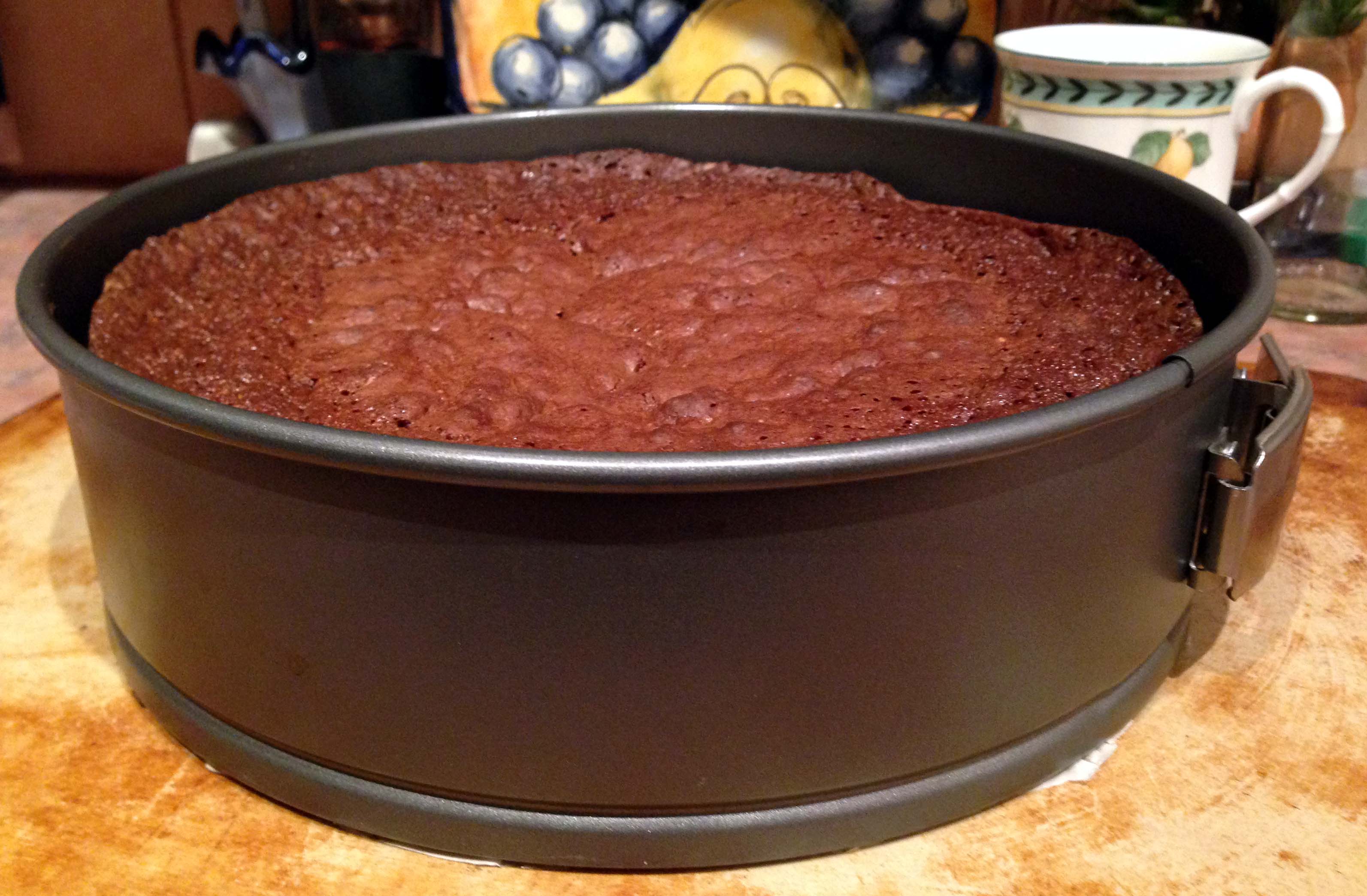
7.  Pour batter into pan and bake for 55 minutes to 1 hour, until center is firm.  The center sink in a bit.  Remove the sides of the pan and slide the cake onto a platter.

8.  Dust with icing sugar and serve with orange slices and whipped cream or gelato.  Store at room temperature for up to 3 days…if it lasts that long!

Torta Caprese

Buon Appetito!  Mille grazie to my amiche Anna and Shannon who were very motivated to help me photograph the finished cake.  I wouldn’t let them cut it and have a piece until the photos were done!

torta caprese tagliata

Torta Caprese pezzo

Here is me posing on my first visit to Capri when I was 16. Unfortunately I didn't know about Torta Caprese at the time.

Here is me posing on my first visit to Capri when I was 16. Unfortunately I didn’t know about Torta Caprese at the time.

Downloadable recipe and recipe in italiano will be added as soon as I am home from Italia.  Buon Appetito!

©2015unpodipepe.ca

Share this:

  • Share on Facebook (Opens in new window) Facebook
  • Share on Pinterest (Opens in new window) Pinterest
  • Share on X (Opens in new window) X
  • Email a link to a friend (Opens in new window) Email
  • Share on WhatsApp (Opens in new window) WhatsApp
Like Loading...

I Trulli di Alberobello

24 Wednesday Jun 2015

Posted by Un po' di pepe in Italia, Photography, Puglia, Travel

≈ 26 Comments

Tags

Alberobello, Architecture, Bandiera Arancione, Italian history, Italy travel tips, Puglia, Rione Aja Piccola, Rione Monti, Southern Italy, Trulli, UNESCO World Heritage Sites, Val d'Itria, Vernacular architecture, Zona dei Trulli

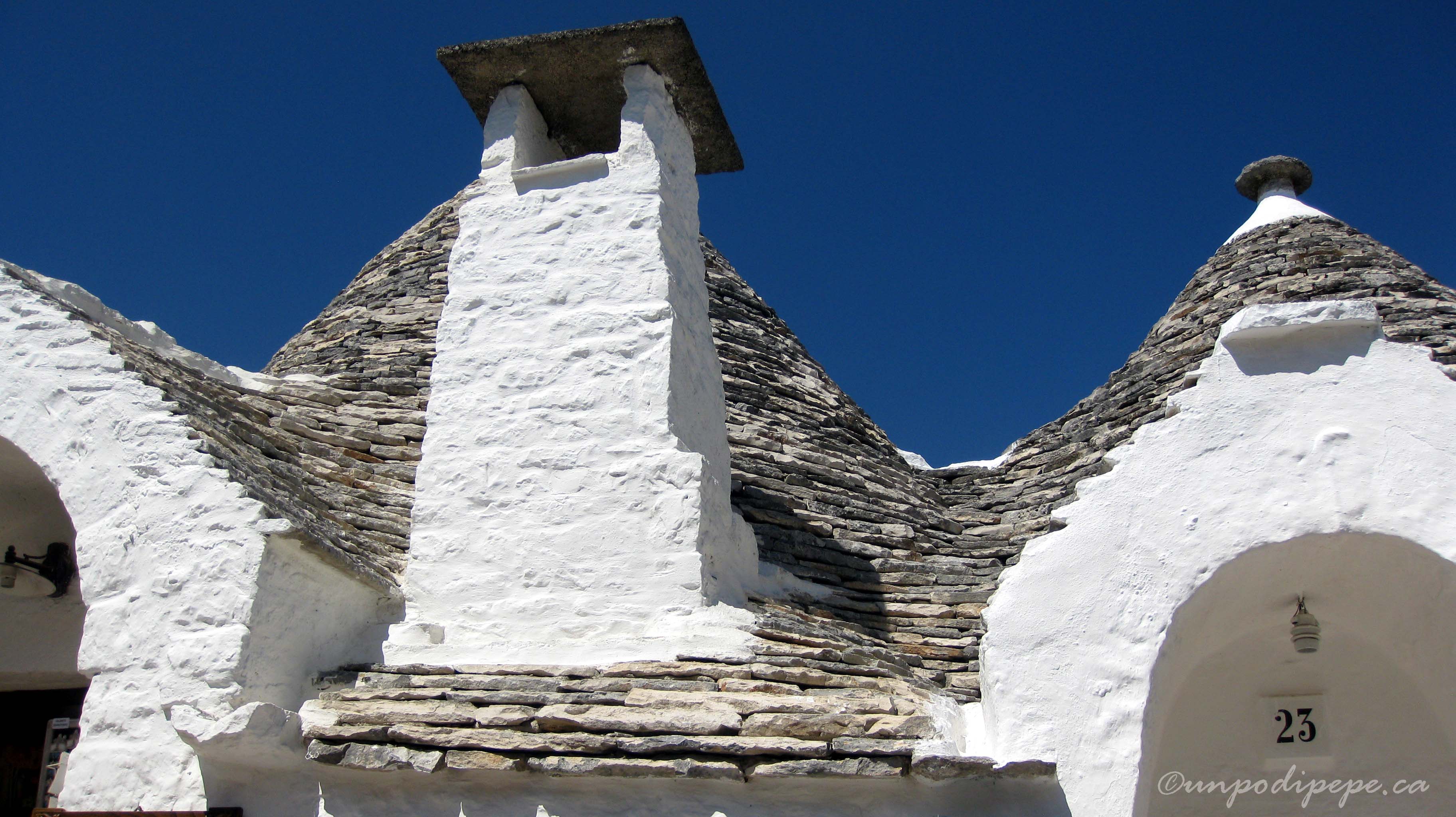
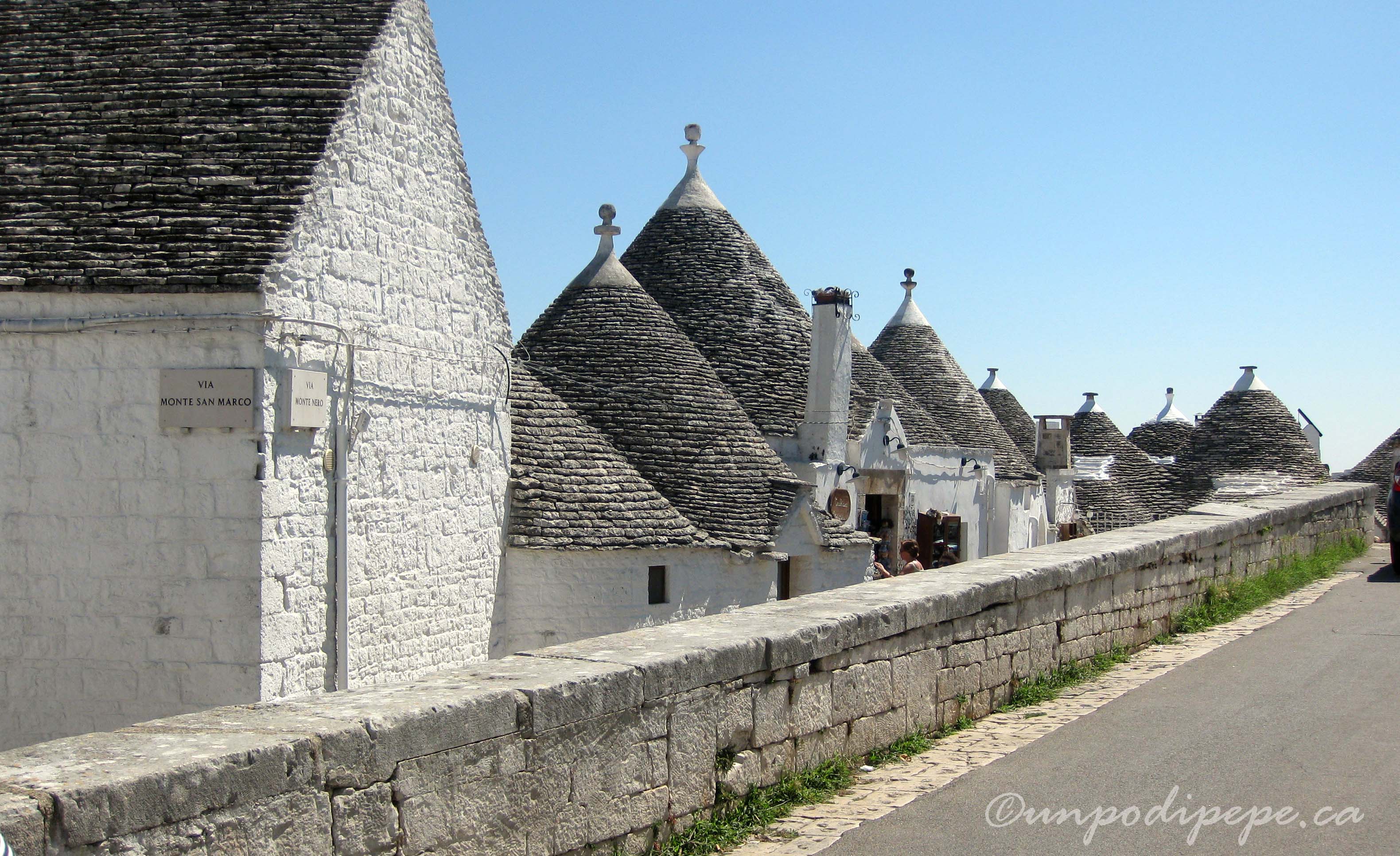
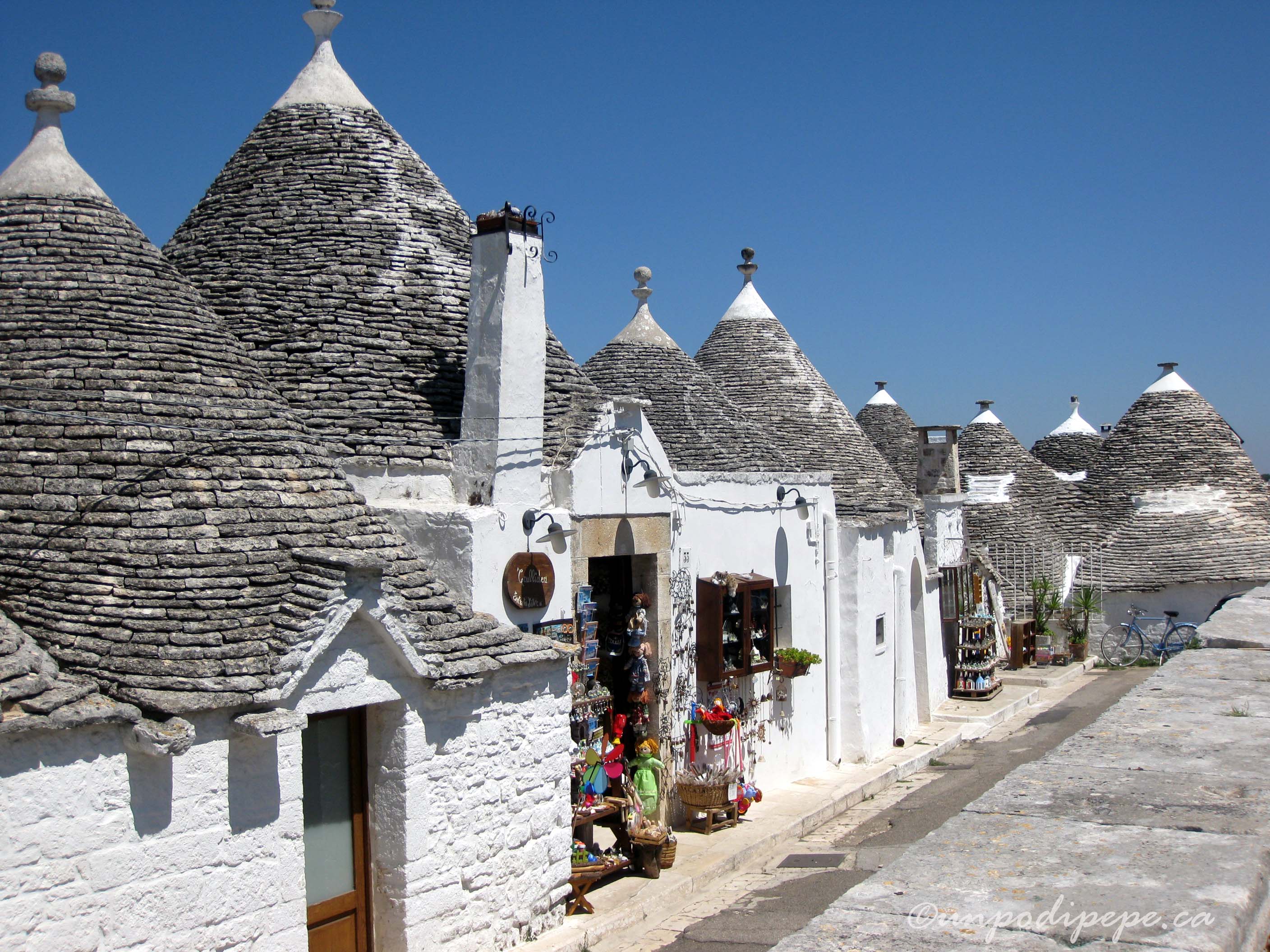
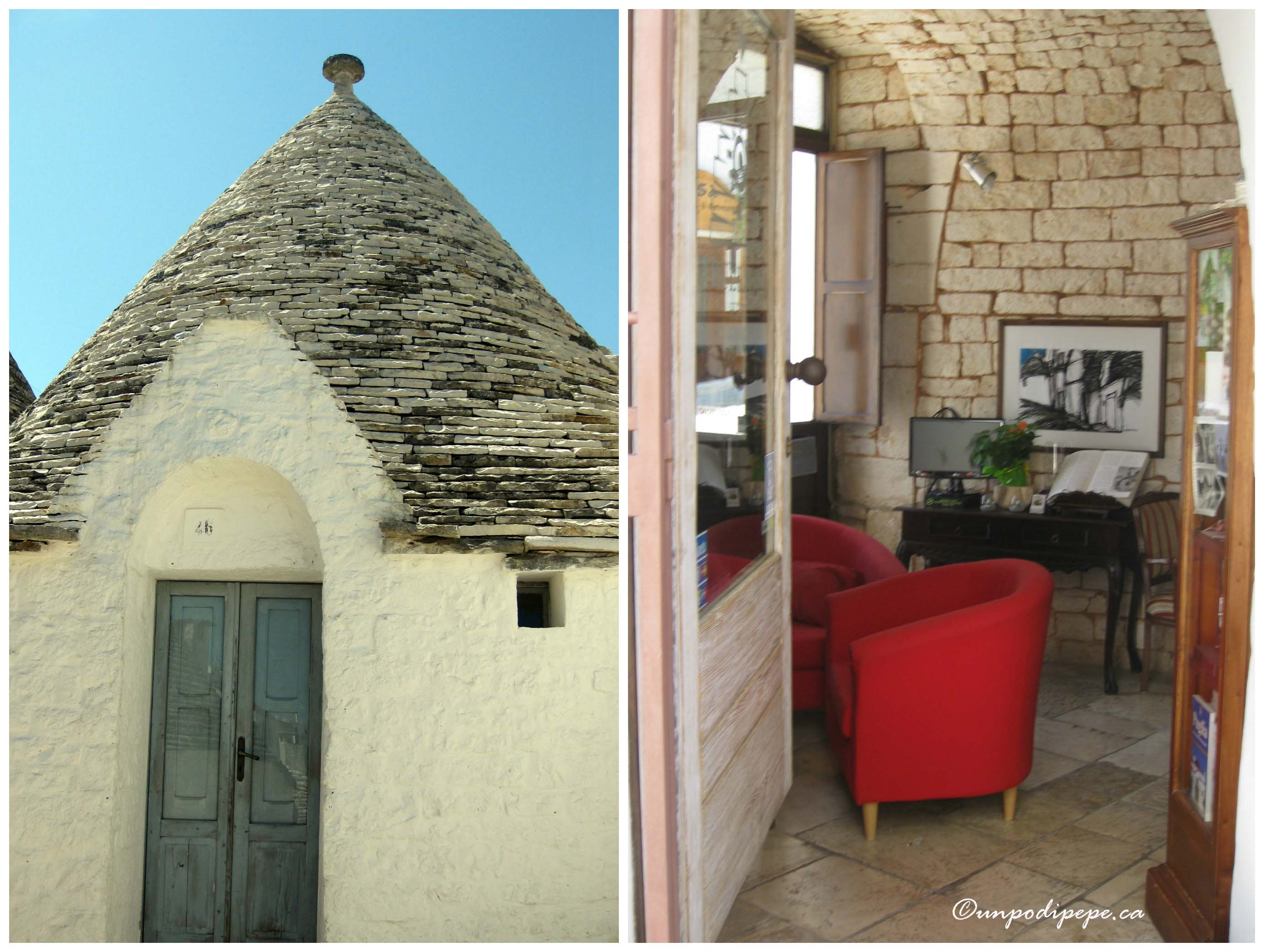
TrulliecielobluAs the car nears Alberobello, trulli (TROOL•lee) start to appear in the rural landscape and my imagination goes into overtime.  I hear the tune ‘La-la-la-la-la-la, la-la-la-la-la’ in my head and I expect i Puffi (the Smurfs) to start dancing around the whitewashed trulli! Too much midday Pugliese sun maybe?  Trulli are traditional limestone houses unique to the Val d’Itria in Southern Puglia.  They were built ‘a secco’, which means dry-without mortar.  Trulli have domed cone-shaped roofs built up of overlapping chiancharelle (kyan•ka•REL•leh)-grey limestone slabs.  On the capstone at the top is a decorative pinnacolo (pinnacle).  The shape of the pinnacolo is said to be a signature of the stonemason who built it.  Some roofs also have mythologic or religious symbols painted on them.

Alberobellostrada‘La Zona dei Trulli’ includes the areas around Locorotondo, Fasano, Cisternino, Martina Franca, Ceglie Massapica and the largest concentration of 1,620 trulli in Alberobello.  Alberobello and its trulli are aUNESCO World Heritage Site. UNESCO believes Alberobello is an exceptional example of the survival of prehistoric building techniques that are still in use. The fact that the buildings are so well-preserved and still occupied make the site unique.Alberobellobiancheria

The word trullo comes from tholos (τρούλος) a variation of the Greek word for cupola or dome. There were already scattered trulli settlements in the Val d’Itria around the year 1000.  These gradually grew into villages, later called Aja Piccola and Monti-the 2 trulli districts in Alberobello today. The oldest trulli we know of date back to about 1350 when the Counts Acquaviva of Conversano were given land for their service during the Crusades and colonized the area by moving people from their nearby areas.Alberobellostrada2

Tradition has it that building ‘a secco’ was imposed on the settlers so their houses could be dismantled quickly and easily. At first this was so the Count could easily dispossess villagers of their homes. Later it was a way to evade taxation imposed on each new construction by the King of Napoli. Trulli could be dismantled when the tax collector came by for an inspection, and then reconstructed just as quickly when he left. Trulli came to be known as temporary, unstable field shelters that were not worth taxing.

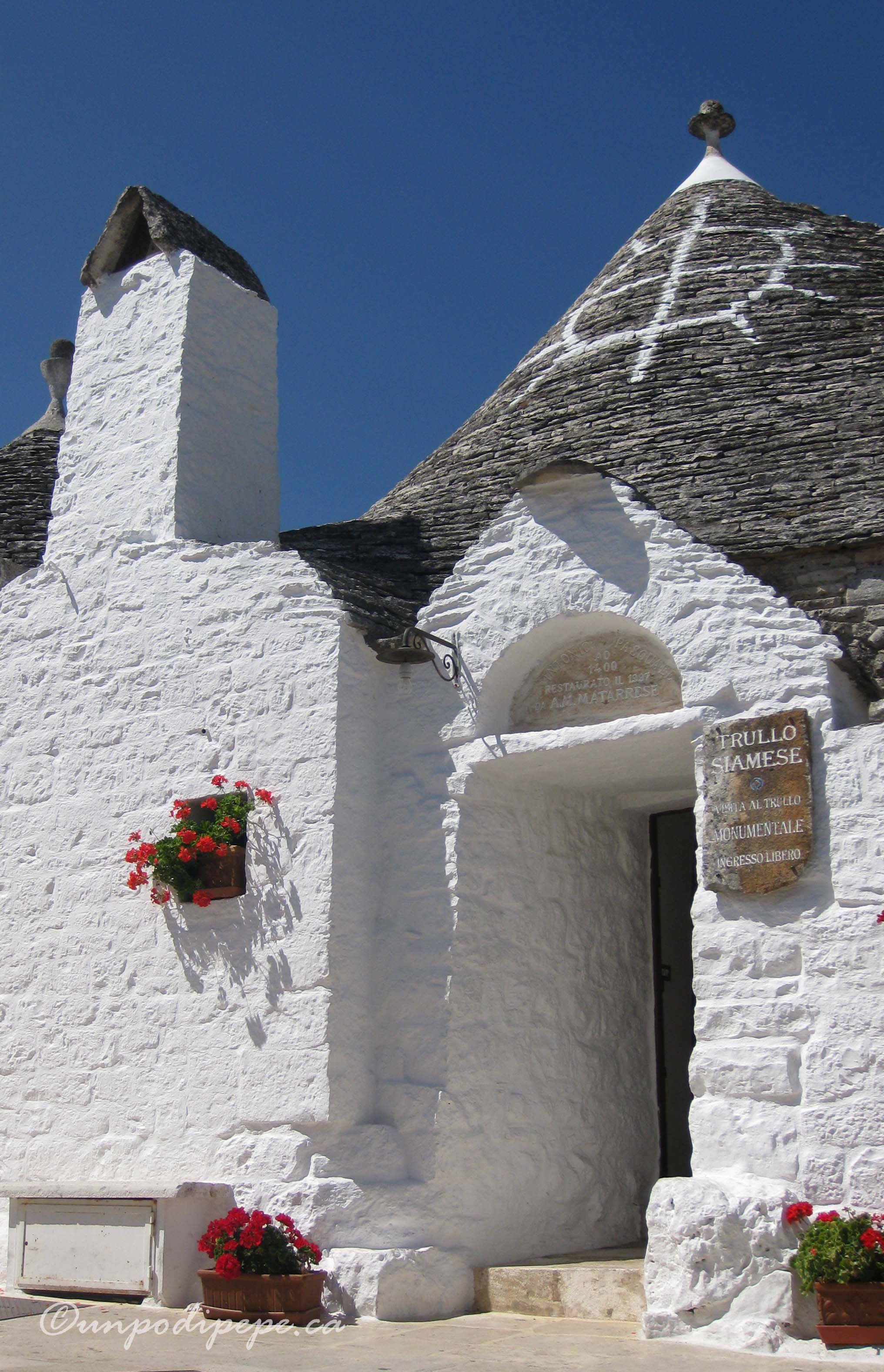
Trullo Siamese.  2 brothers in love with the same woman lived here.  They split it in half and the single brother installed a door into the lane.

Trullo Siamese. 2 brothers in love with the same woman lived here. They split it in half and the single brother installed a door into the lane.

In reality, trulli are anything but unstable or primitive. They are built directly on the underlying natural rock and their internal structure is very durable. The thick double walls keep the trullo warm in winter and cool in summer. There are systems for collecting rainwater using eaves projecting at the base of the roof diverting water through a channelled slab into a cistern underneath the trullo. Some trullo homes are made up of groups of 2- 5 trulli.  Most historians agree that the building technique for trulli came about due to the area’s geographical conditions and abundance of limestone. The quickie evictions and tax evasion scam came later.trulliombra

In the early 1600’s there was a group of about 40 trulli in Rione Monti (Monti District) then settlement and trullo construction really expanded with the addition of a bakery, mill, tavern and butcher shop.   In 1797 the feudal rule of the Acquaviva family ended when Ferdinand IV, King of Napoli proclaimed the community a ‘citta regia’, or royal town.  Alberobello took its name from silva arboris belli, the Latin name for the region.

Inner-city trulli?

Inner-city trulli?

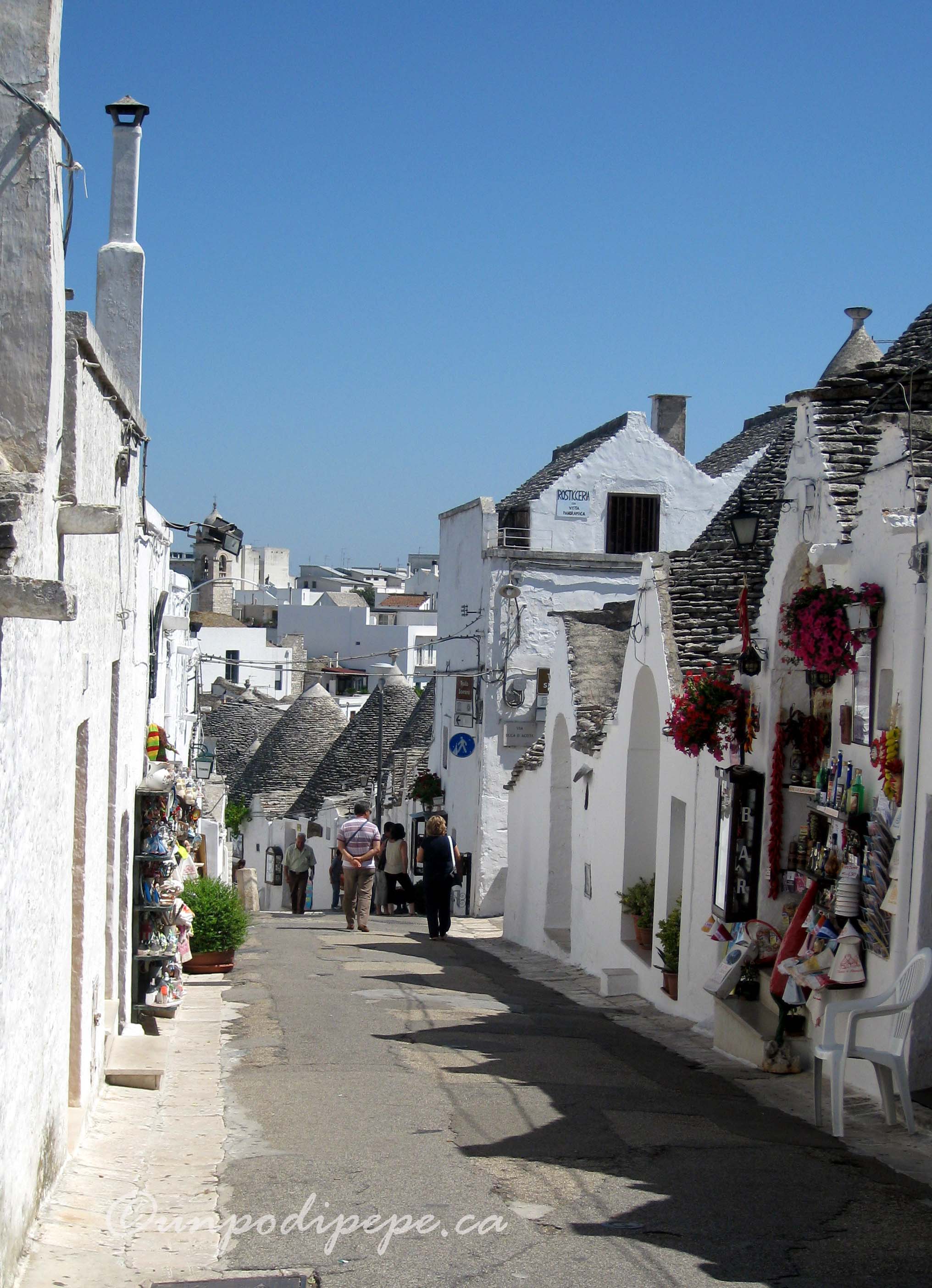
Today Rione Monti has 1,030 trulli and Rione Aja Piccola has 590 trulli, many of which are still inhabited as homes by some of Alberobello’s 11,000 residents.  You can also find the trullo church of Sant’Antonio di Padova, trullo souvenir shops and ristoranti, and a trullo hotel.  In the surrounding countryside there are many trullo masserie (farmhouses) that can be rented.

Exterior of a single trullo and interior of a trullo photo and art gallery

Exterior of a single trullo and interior of a trullo photo and art gallery

In 2010 along with Orsara di Puglia, Alberobello was distinguished with a Bandiera Arancione (orange flag) designation, a seal of quality from the Touring Club Italiano.  Alberobello can be accessed by train or bus from Bari. Although Alberobello is quite ‘touristy’, it still retains its charm and is definitely worth a visit.  If you can brave the mid-day sun in the summer, the cast shadows against whitewashed walls are an artist’s and photographer’s dream….but if you start dreaming about i Puffi, you had better go find some shade!

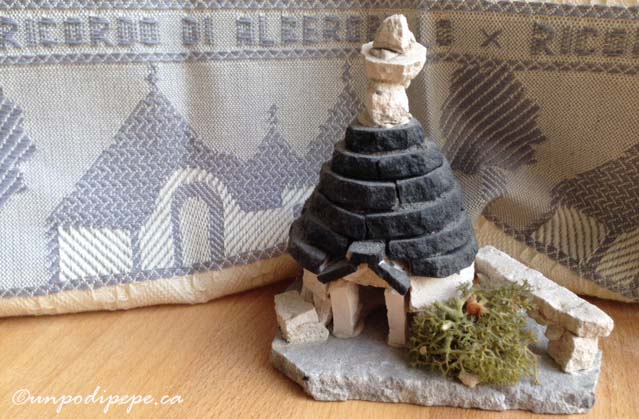
Alberobello souvenirs.  A linen towel and my very own very cute trullo.  I bought it the first time I visited Alberobello.  It's made of real limestone and chiancharelle.

Alberobello souvenirs. A linen towel and my very own very cute trullo. I bought it the first time I visited Alberobello. It’s made of real limestone and chiancharelle.

Not all of the buildings in Alberobello are trulli

Not all of the buildings in Alberobello are trulli

alberobelloombra

Ciao, Cristina
Share this:

  • Share on Facebook (Opens in new window) Facebook
  • Share on Pinterest (Opens in new window) Pinterest
  • Share on X (Opens in new window) X
  • Email a link to a friend (Opens in new window) Email
  • Share on WhatsApp (Opens in new window) WhatsApp
Like Loading...
← Older posts
Newer posts →

Enter your email address to follow 'un po' di pepe' and receive notifications of new posts by email.

Join 509 other subscribers
Follow Un po' di pepe on WordPress.com

Popular Posts

  • Hairstyling in Ancient Roma
    Hairstyling in Ancient Roma
  • La Trinità di Masaccio
    La Trinità di Masaccio
  • Italiano per Ristoranti~How to pronounce your restaurant menu
    Italiano per Ristoranti~How to pronounce your restaurant menu
  • Santa Maria in Aracoeli
    Santa Maria in Aracoeli
  • Internment of Italian Canadians
    Internment of Italian Canadians
  • Limoncello Ricotta Cookies
    Limoncello Ricotta Cookies
  • Cristo si è Fermato a Eboli
    Cristo si è Fermato a Eboli

Recent Posts

  • Bloghiversario #12
  • Pane e Salute
  • Sanremo 2026
  • Cucina Italiana Patrimonio UNESCO
  • 2025~Un po’ di pepe Year in Review
  • Castel del Monte
  • ‘The Nuances of Love’
  • Hostaria Antica Roma~Eat like an Ancient Roman
  • Santa Maria in Aracoeli
  • Casino dell’Aurora~Villa Boncompagni Ludovisi
  • Nasoni di Roma
  • Bloghiversario #11
  • Fontana di Trevi
  • Acqua Vergine
  • Giubileo 2025
  • Sanremo 2025
  • In Vino there are Memories
  • A Literary Harvest
  • 2024~Un po’ di pepe Year in Review
  • Buon Natale 2024
  • Il Bicerin
  • Mercato Porta Palazzo
  • Torino
  • Catanzaro, Calabria
  • Il Pumo Pugliese

Categories

Amici e Famiglia Architecture Art Art history Art projects Bilingual posts Blogging Canada Culture Feste Firenze Inspiration Italia Italian Folklore Italian language Italian life Italocanadesi Libri Mangiamo! Orsara di Puglia Parole piacevoli Photography Puglia Recipes Roma Travel Travel tips Uncategorized Vino

Archives

Un po’ di pepe on Facebook

Un po’ di pepe on Facebook

Start a Blog at WordPress.com.

  • Subscribe Subscribed
    • Un po' di pepe
    • Join 509 other subscribers
    • Already have a WordPress.com account? Log in now.
    • Un po' di pepe
    • Subscribe Subscribed
    • Sign up
    • Log in
    • Report this content
    • View site in Reader
    • Manage subscriptions
    • Collapse this bar

Loading Comments...

    %d