Tags
Eurovision, Festival di Sanremo, Italian song contest, Liguria, Musica Italiana, Sanremo viewing guide
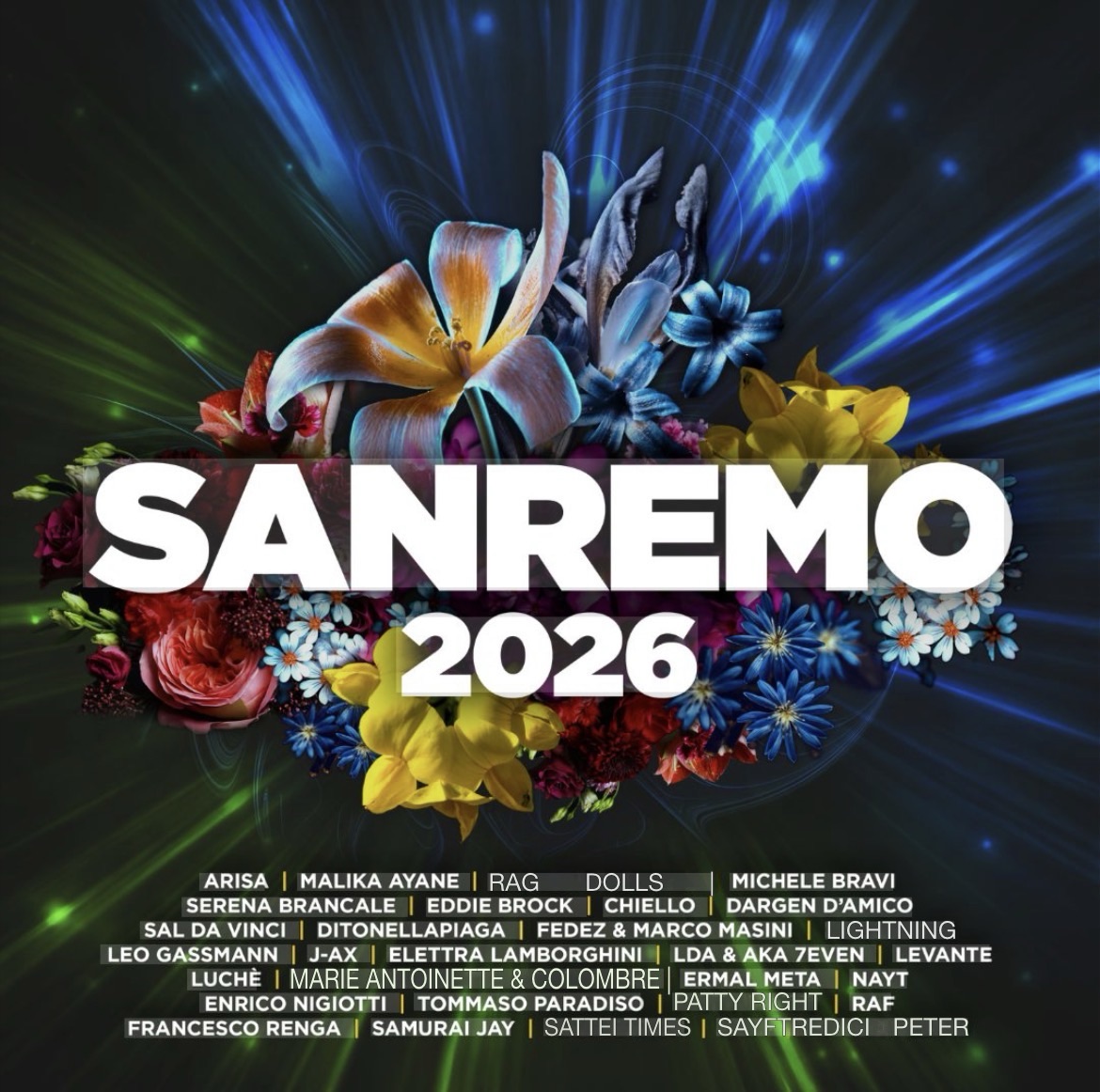
The 76th edition of the Festa della Canzone Italiana di Sanremo is February 24-28, 2026, broadcast live on RAI. It is usually the first week of February, but this year has been delayed due to the Winter Olympics in Milano/Cortina d’Ampezzo. Once again this year, I have put together a handy viewing guide to the annual 5 day song competition held in the town of Sanremo, Liguria. The Festival di Sanremo is the world’s longest running national televised music competition.
In 1950. Piero Bussetti of the Sanremo Casino and Giulio Razzi, conductor of the RAI orchestra launched a competition for previously unreleased songs to boost the local economy. The first edition was broadcast live on RAI radio in January 1951 with 3 artists performing the 20 songs. Since 1955 it is broadcast live on television.
From 1951-1977 the festival was held at the Sanremo Casino. Since 1977 it has been at the iconic Teatro Ariston. The Festival is a massive media event in Italia and has launched many careers, including Domenico Modugno, Zucchero, Mina, Andrea Bocelli, Il Volo, Giorgia, Laura Pausini, Eros Ramazzotti, Mahmood and most recently Måneskin and Angelina Mango. I love to watch Sanremo every year with Mamma!
The winner will have the first option to represent Italia at the 69th annual Eurovision Song Contest in Vienna, Austria May 12-16, 2026. Eurovision is huge in Europe with 39 countries participating, but hardly known at all in North America! 2021 Sanremo winners, Måneskin won Eurovision with their brilliant song ‘Zitti e Buoni’. As the reigning country, Italia hosted Eurovision 2022 in Torino.
The 76th edition of the Festival di Sanremo February 24-28, 2026 will be broadcast live on RAI (RAI International for the rest of us) and on the RAIplay App, hosted by Carlo Conti and Laura Pausini. 4 time Sanremo participant Achille Lauro will be an additional cohost Feb 25th. Hopefully he will perform as well! Former winners and guest artists will perform, including Andrea Bocelli on the final night, Feb 28th, and Eros Ramazzotti with Alicia Keys on Feb 27th. They will perform a duet of his beautiful song L’Aurora in Italian and Spanish.
The Sanremo prize goes to the winning song, although in most cases the performers were involved in the songwriting. This year, there are 30 contestants (‘BIG’ Artists), plus the top 4 winners from ‘Sanremo Giovani’, the age 16-29 junior contest. Judging is complex and contestants perform with the full RAI orchestra-complete with maestro.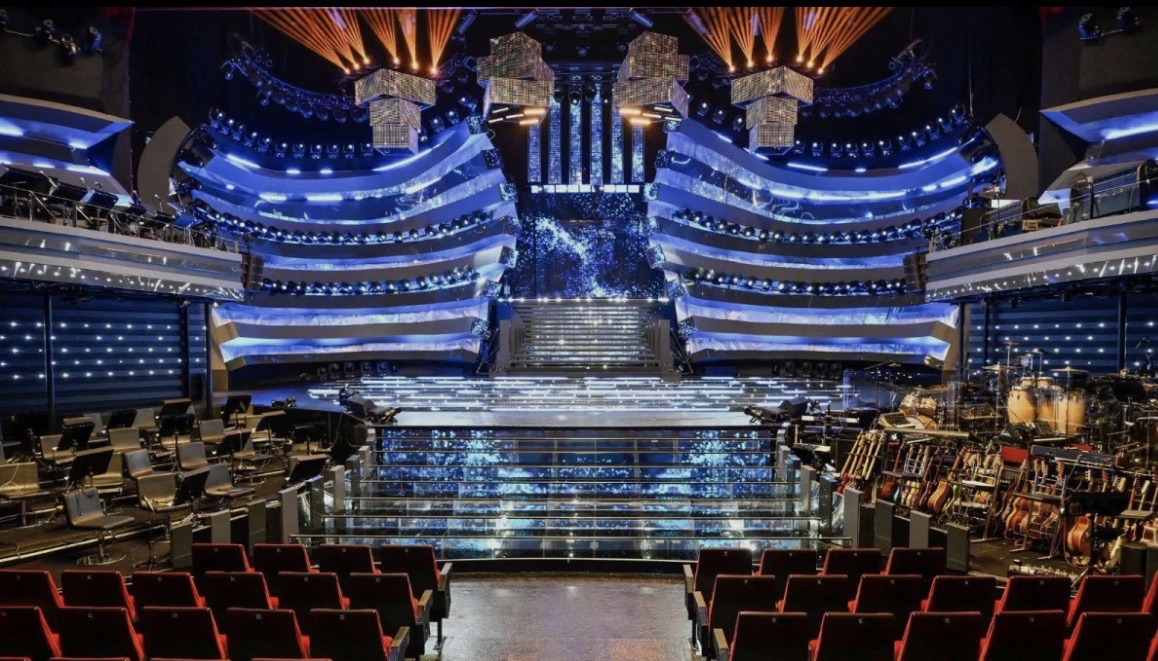
A summary of what happens each night:
Night #1 February 24th. All 30 contestants perform their entry, with no eliminations. Voting is 100% by press jury-(accredited journalists from press comprising of print, TV and web).
Night #2 and #3 February 25th and 26th. 15 of the contestants perform each night and there are no eliminations. Voting is 50% televote and 50% radio jury.
Night #4 February 27th is ‘Duetto night’ or Covers night. Each artist performs a cover song or medley of their choice as a duet with an Italian or international artist as a guest, or another competitor. Voting is 34% televote, 33% press jury and 33% radio jury. A winner will be announced. Unlike previous years though, the night’s results will NOT be added to the overall score, which is why performing with another competitor is now permitted.
Final night #5 February 28th. There are 2 rounds the final night. In round 1, all 30 acts perform and voting is 100% televote. The top 5 artists of the combination ranking are announced and advanced to the superfinal. For round 2, voting is reset, the top 5 perform again, and there is a new, final vote. The winner is decided by juries and televoting.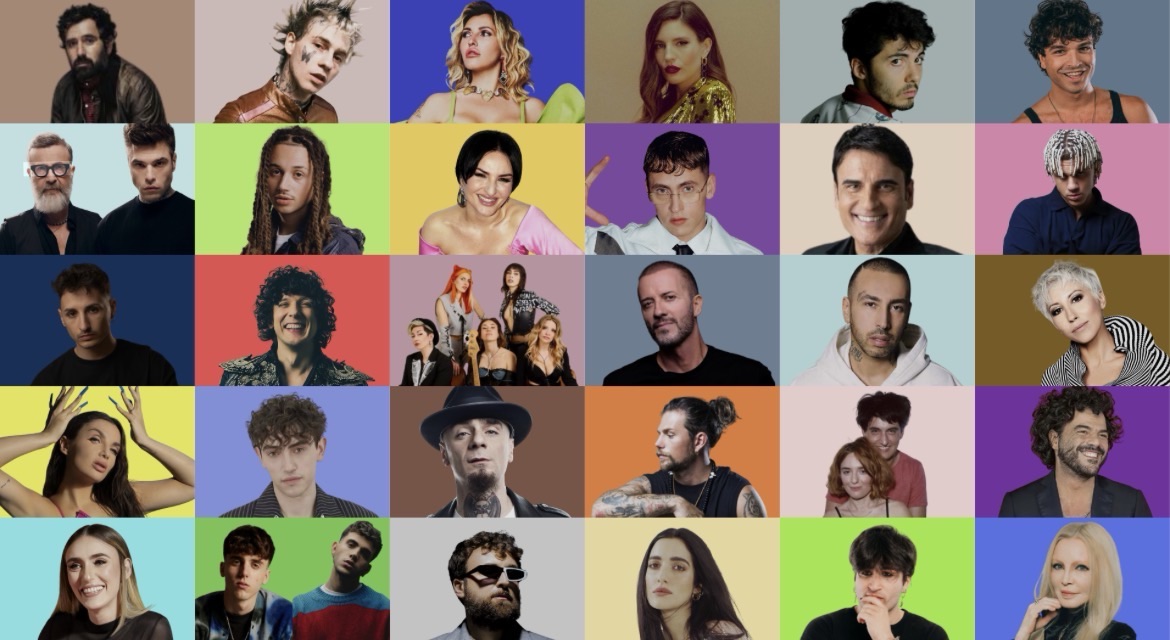 The lineup of concorrenti /contestants includes 5 former Sanremo winners, 2 who have represented Italia at Eurovision, many former contestants, and some first timers. Below is a list of all 30 ‘BIG’ Artists, the song titles and a few other details to help you watch and enjoy the festival:
- Arisa –‘Magica Favola’. This is Arisa’s 7th time as a contestant in the Festival di Sanremo. In 2009 she won the Giovani/newcomers category and the Mia Martini prize*** with ‘Sincerità’. In 2012 ‘La Notte‘ came in 2nd place, in 2014 she won with the song ‘Controvento‘ and cohosted Sanremo in 2015. Arisa won Ballando con le Stelle (Dancing with the Stars) in 2021 with dancer Vito Coppola, was a judge or coach for X factor, The Voice Kids and Amici*. In 2025 she won the Nastro d’Azzurro for best original song for the movie ‘Il ragazzo dai pantaloni rosa‘.
- Bambole di Pezze –‘Resta con me‘. An all female rock band formed in Milano in 2002 that has released 4 studio albums. In addition to making music, they are also committed to feminist issues, and the fight against gender violence. The present lineup is Morgana Blue and Dani on guitar, Kaj on bass, Xina on drums and vocalist Cleo. In 2023 they opened for Def Leppard and Motley Crüe and in 2024 played with the Sex Pistols and J-Ax. They just signed a new record deal in December.
- Chiello –‘Ti penso sempre’. Chiello, from Potenza, Basilicata released his first album in 2021. He has collaborated with Mahmoud, Madame, Rkomi, Colapesce and Guè. In 2025 he sang with Rose Villain on Covers night. This is his first time as a Sanremo contestant.
- Dargen D’Amico –‘Al Al’. Milanese rapper and producer Jacopo D’Amico wrote 2 songs for Sanremo 2021. In 2024 ‘Dove si Balla‘ came in 9th place and went on to be platinum. Dargen was a judge on XFactor Italia 2022 and 2023. This is his 3rd time competing at Sanremo.
- Ditonellapiaga –‘Che fastidio’. 2nd time at Sanremo. She participated in 2022 with 80’s icon Donatella Rettore and the song ‘Chimica’. She has released 2 albums and collaborated with Ornella Vanoni, Elodie and Willy Peyote.
- Eddie Brock–‘Avvoltoi’. This is Edoardo’s first Sanremo. He is preparing for his first tour later in 2026. For duetto/covers night, he will sing ‘Portami Via‘ with Fabrizio Mori.
- Elettra Lamborghini-‘Voila’. I always recognize Elettra by the leopard spot tattoo on her shoulder and back! This is her 2nd Sanremo, the first being in 2019. She is a pop star, model, actress and tv presenter, singing in Spanish and English, as well as Italian. For duetto night, she sings ‘Asereje’ with Las Ketchup!
- Enrico Nigiotti-‘Ogni volta che non so volare’ This is Enrico’s 4th Festival Sanremo. He was in the Giovani group in 2015, then a competitor in 2019 and 2020. He has collaborated with Laura Pausini, Olly, Eros Ramazzotti e Gianna Nannini and recently completed the ‘Maledetti Innamorati’ intimate theatre tour.
- Ermal Meta-‘Stella Stelline’. This is Ermal’s 3rd time at Sanremo. He released his first single in 2014. In 2017 his song ‘Vietato Morire‘ placed 3rd and won the Mia Martini Critics Prize***. He was the 2018 winner with Fabrizio Moro, singing ‘Non mi Avete fatto niente’. They represented Italia at Eurovision, placing 5th.
- Fedez e Masini–‘Male Necessario’. Rapper Fedez (Federico Lucia) is one of Italia’s most influential performers. He and Francesca Michielin placed 2nd at Sanremo 2021 with ‘Chiamami per nome‘. His catchy hit ‘La Dolce Vita‘ with guests Tananai and Mara Sattei was the tormentone** of summer 2022 and went 6X platinum. In November 2024 he started ‘Pulp Podcast’. This is Fedez’s 3rd time competing at Sanremo. Last year, his song ‘Battito‘ came in 4th place. Marco Masini’s ‘Disperato’ won the Giovani section, and the Mia Martini Critics Prize*** in 1990. He was the Sanremo winner in 2004 with ‘Uomo Volante’. Last year Marco performed ‘Bella Stronza‘ with Fedez on Duetto/Covers night.
- Francesco Renga-‘Il Meglio di me’. Francesco is the 2005 Sanremo winner with ‘Angelo’ and this is his 10th time in the competition. Last year he and Nek were guest performers and released an album together ‘Renganek’. For Covers night, he duets with Giusy Ferreri.
- Fulminacci–‘Stupida sfortuna’. Fulminacci released his first album in 2019 and competed at Sanremo 2021. This is his second time at Sanremo.
- J-Ax-‘Italia Starter Pack’ The rapper-hip hop artist/songwriter/producer has done a lot in his 30 year career. He was a judge on The Voice of Italy and Amici*, and started the label Newtopia with Fedez. 2023 was his first time as a Sanremo competitor, reuniting with DJ Jad as ‘Articolo 31’.
- LDA & Aka7even -‘Poesie Clandestine’. 21 year old rapper Luca D’Alessio is an Amici* 2021 participant and son of Napoletano singer Gigi D’Alessio. He started doing covers on YouTube at age 13. This is his second Sanremo competition. Luca Marzano (Aka7even) won Best Italian act at the MTV Europe Music Awards in 2021. He released his first album in May.
- Leo Gassman –‘Naturale’. The son of Alessandro Gassman and grandson of Vittorio Gassman was a semi-finalist in the 2018 edition of X factor. in 2020 he won the ‘newcomers’ category of Sanremo Giovani with ‘Vai bene cosi‘. This is his 3rd time as a regular contestant.
- Levante -‘Sei tu’ Sicilian singer Claudia Lagona released her first album in 2014 and competed in Sanremo in 2019 with ‘Tikibombom’. She was an X Factor judge in 2017 and has collaborated with Max Gazzè, Negramaro, J-Ax and Fedez. She has also published 3 romance novels. This is her 3rd time at Sanremo.
- Luchè -‘Labirinto’.Luca Imprudente is a Napoletano singer who has released 3 albums. His summer ‘Luchè Arena Tour’ sold out. This is his first Festival Sanremo.
- Malika Ayane –‘Animali Notturne’. This is Malika’s 5th time at Sanremo. In 2009 she competed in Sanremo Giovani, in 2010 won the Mia Martini Critics Prize*** for ‘Ricomincio da Qui‘ and in 2014 placed 3rd and won the Mia Martini Prize again. In 2024, she performed with The Kolors on Covers night.
- Mara Sattei-‘Le Cose che non sai di me‘ Roman singer Sara Mattei was a previous contestant on Amici* and guest on X factor. She became known for making YouTube videos with her brother Davide (known as thasup) starting in 2017 and released her first album in 2022. Her catchy 6X platinum single with Fedez and Tananai ‘La Dolce Vita‘ was the tormentone** of summer 2022. At her first Sanremo competition, her song was written by Damiano David of Måneskin!!! This is her 2nd time competing at Sanremo.
- Maria Antonella e Colombre -‘La Felicità e basta’. Maria Antonietta released her first album in 2012 and has opened for Lana del Rey and Paolo Nutini. In 2020 she was a guest of Levante for Covers night. Colombre has produced music for many famous Italian musical acts. Together they recently released the album ‘Luna di Miele’. This is their first time as Sanremo competitors.
- Michele Bravi -‘Prima o poi’. Michele is the 2014 winner of X Factor Italia. This is his 3rd time at Sanremo. For covers night, he performs with Fiorella Mannoia.
- Nayt -‘Prima che’ Nayt has released 5 Gold albums. After his sold out spring tour, he played 2 stadiums, in Roma and Milano. This is his first Festival Sanremo.
- Patty Pravo -‘Opera’ Patty Pravo has been making music for 6 decades. She has sung in 9 languages and competed in 10 Sanremo Festivals. Her debut single was released in 1966, and in 1968 she released the classic ‘La Bambola‘. At Sanremo, she has won the Mia Martini Critics Award***3 times. She also received the Globo d’oro (Italian Golden Globe Award) for best original song for ‘Com’è Bella far l’amore‘ from the movie of the same name.
- Raf -‘Ora e per sempre’ Raf is from Margherita di Savoia, Puglia! He has released 14 studio albums in his 40 year music career. In 1984, he had international success with his song ‘Self Control’, which was also released as a single by Laura Branigan. He has participated at Sanremo 4 times. In addition, in 1987, along with Umberto Tozzi and Giancarlo Bigazzi, Raf cowrote the winning song ‘Si può dare di più‘, sung by the trio Gianni Morandi, Enrico Ruggeri and Umberto Tozzi. For duetto night, he is singing with The Kolors.
- Sal Da Vinci-‘Per sempre si’ Sal is a singer, songwriter and actor, son of the Napoletano actor/singer Mario Da Vinci. In 1994, at age 15, he was the protagonist in the cult film ‘Il Motorino‘. In 1994 he won the Festival Italiano di Canale 5. From 2002-2006, he was the lead in the musical ‘C’era una Volta…Scugnizzi‘. In 2009, he placed 3rd at the Festival Sanremo with ‘Non Riesco A Farti Innamorare‘. His 2024 single ‘Rossetto e Caffè‘ was a phenomenal success, and he performed it with The Kolors at last year’s Sanremo Duetto/covers night.
- Samurai Jay–‘Ossessione’. Released his debut single in 2018 and the following year had a series of successful singles and collaborated with some big names, such as Elettra Lamborghini and Geolier. This is his first time at Sanremo.
- Sayf -‘Tu mi place tanto’- Genoese rapper, songwriter and trumpet player Sayf released his first EP ‘Se Dio Vuole‘ in 2025. His ‘Santissima Fest’ in Genoa is confirmed again for 2026.
- Serena Brancale -‘Qui con me’‘. A Pugliese polyinstrumental performer and composer with a passion for soul, R&B and jazz, Serena has written for many international artists. She participated in Sanremo 2015, 2025 and is back for the 3rd time. Last year, her song ‘Anema e Core’ was a platinum hit and the same named tour hit 40 cities.
- Tommaso Paradiso–‘Romantici’.-Tommaso released his first solo album in 2022, and had his cinematic debut as a director the same year. Among the artists he has written songs for are Arisa, Giusy Ferreri, Luca Carboni, Noemi, Gianni Morandi and Loredana Bertè. This is his first time in competition at Sanremo.
- Tredici Pietro-‘Uomo che cade‘.-This is the first Festival Sanremo for the rapper, singer/songwriter. He released his first single ‘Pizza e fichi’ in 2018 and began the ‘NON GUARDARE GIÙ’ club tour in December 2025.
The 4 ‘New’ Artists (winners of Sanremo Giovani, previously called Nuove Proposte):
- Angelica Bove –‘Mattone‘-Angelica was on XFactor Italia 2023, and participated in Sanremo Giovani 2024.
- Blind, El Ma & Soniko -‘Nel miei DM’-The 3 have been performing together since September. Blind came in 3rd place on XFactor Italia in 2020 and his first single ‘Cuore Nero‘ went platinum , El Ma was on X Factor Italia 2024 and released her first single in 2025, and Soniko won the 2019 Lunezia Teen Prize.
- Mazzariello-‘Manifestazione d’Amore’-He released first music in 2021, did the soundtrack for the TV series Summertime 3 in 2023, and participated in Sanremo Giovani in 2024.
- Niccolò Filippucci-‘Laguna‘-The 20 year old started singing in the choir of the Conservatorio di Perugia at age 9. He was on Amici*in 2024 and released his first single and EP May 2025.
*Amici is an Italian talent show on television since 2001. 20 ‘students’ aged 16-30 years, interested in being professional singers, songwriters and dancers participate. **Un tormentone is a catchy song that replays in your head, like an ‘ear worm‘! ***Mia Martini Critics Award/Premio Critica Mia Martini-a prestigious award given to high quality entries at the Festival Sanremo. Named after the late Mia Martini, who was the first recipient in 1982 and the sister of blue haired singer Loredana Bertè.
Read the contestants’ full bios on the Festival di Sanremo website. RAI International usually airs the shows twice-once live at 1900 – 0100ish Italian time, and a replay later. Check the local listings for your country. The RaiPlay app is another way to watch.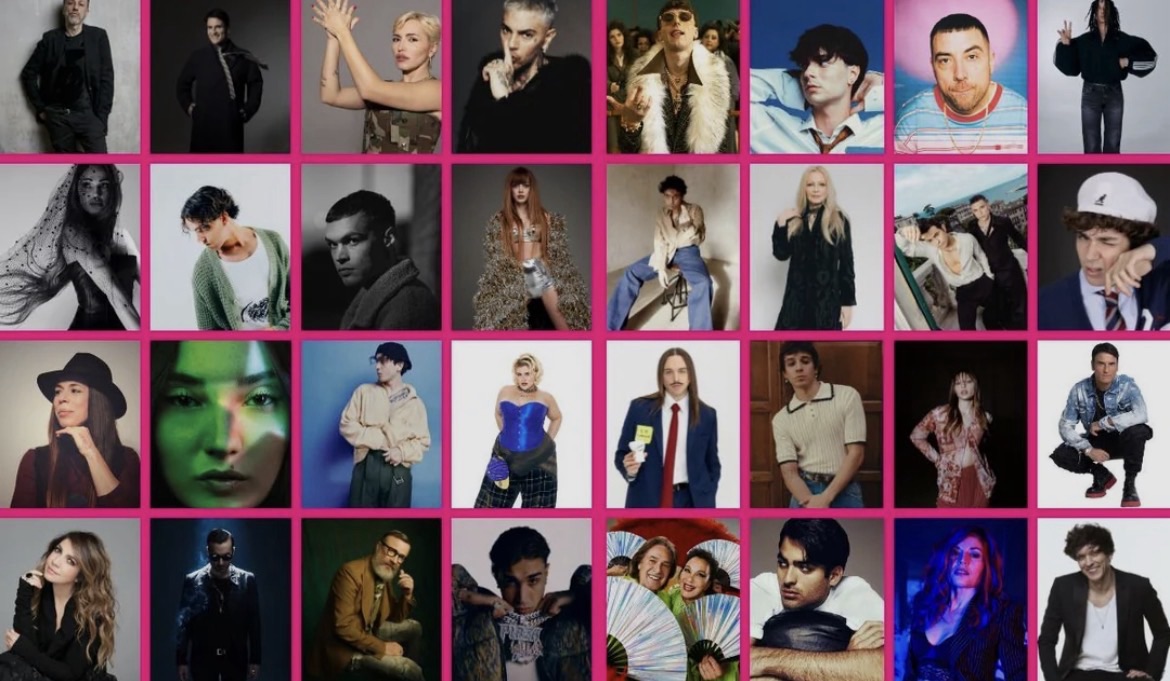
Will you be watching the Festival di Sanremo 2026? Let me know which performances you are looking forward to or which ones were your favourites!
**Update Feb 28th-I predicted Fulminacci, Sal DaVinci, Arisa, Fedez e Marco Masini and Bambole di Pezze would be the top 5. My other favourites were Ditonellapiaga and J-Ax.
The winner of Sanremo 2026 was Sal DaVinci with ‘Per Sempre si’! 2nd place went to Sayf ‘Tu mi place tanto‘, 3rd Ditonellapiaga ‘Che Fastidio‘, 4th Arisa ‘Magica Favola‘ and 5th Fedez and Marco Masini ‘Male Necessario’.
‘Che fastidio’ won the orchestra’s prize for musical composition, ‘Male Necessario’ won the award for best lyrics, ‘Stupida Sfortuna‘ won the Mia Martini Critic’s Prize, and ‘Qui con me’ won the Press Room Lucio Dalla Award and the TIM award for most voted song on TIM media platforms. Ci vediamo l’anno prossimo!
Ciao, Cristina



























 Un po' di pepe