• Home
  • About me/Chi sono
  • Contact

Un po' di pepe

~ …… (oon∙poh∙dee∙PEH∙peh) Cristina writes about interesting stuff /Cristina scrive di cose interessanti

Un po' di pepe

Category Archives: Mangiamo!

In my Kitchen in Puglia, 2019

07 Saturday Sep 2019

Posted by Un po' di pepe in Italian life, Mangiamo!, Orsara di Puglia, Puglia

≈ 36 Comments

Tags

Cavatelli, Fiori di zucca, In my kitchen, Nero di Troia, Orecchiette, Pancotto e patate, Pesto Genovese

August is always a busy month.  I am usually in Orsara di Puglia for at least half of it, and there is a lot of activity in my kitchen.  Here are just a few of the things my family and I were up to in our tiny but functional summer kitchen in Puglia.

Starting with the space itself, the whole casa is 40m² (about 450 square feet) including a bedroom and bathroom.  The room with the cucina is also the living room, guest room (aka my room) and art studio. The highlight of the room is the barrel vaulted stone ceiling. It is hard to get a photo of the whole thing, but this one gives you an idea what it looks like. Amazing, isn’t it?

August 5th is a feast day in Orsara.  It is la festa della Madonna della Neve which you can read about here.  My parents and I invited 7 family members over for pranzo, the 1pm meal.  Luckily we have a total of 10 chairs!

I had recently bought a spianatoia, although I only knew what is was called in dialetto.  It is a pasta rolling board with a lip on one end so it stays put on the table.  This one also has a handy carrying handle.  Cavatelli www.unpodipepe.caMamma and I decided to make orecchiette and cavatelli, even though both of us were out of practice. These are the most typical pasta shapes found in Puglia.Orecchiette www.unpodipepe.ca  Sugo con braciole They was served with sugo made with braciole which are thin cuts of meat rolled with prosciutto, parmigiano, parsley and garlic. Orecchiette con sugo

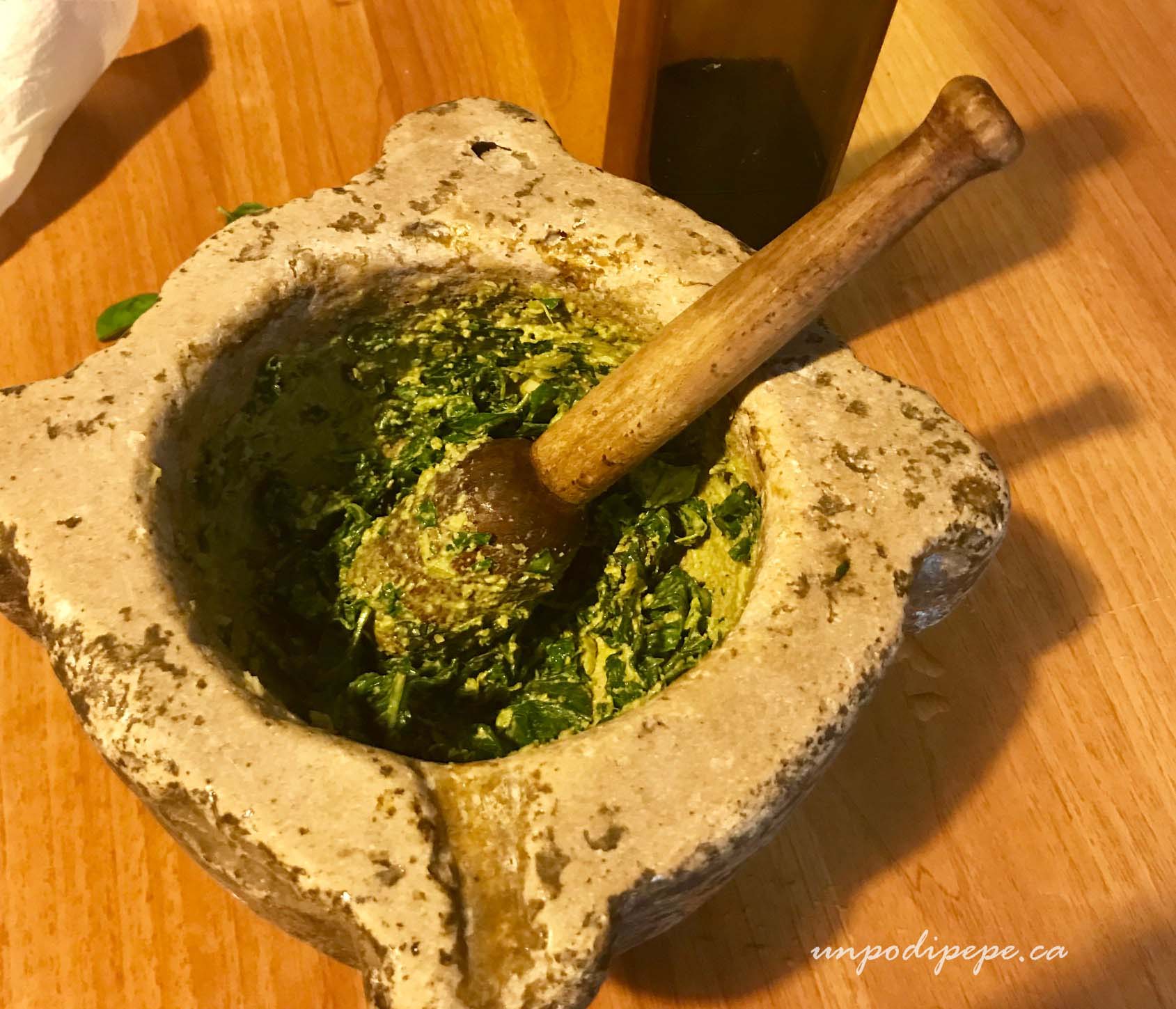
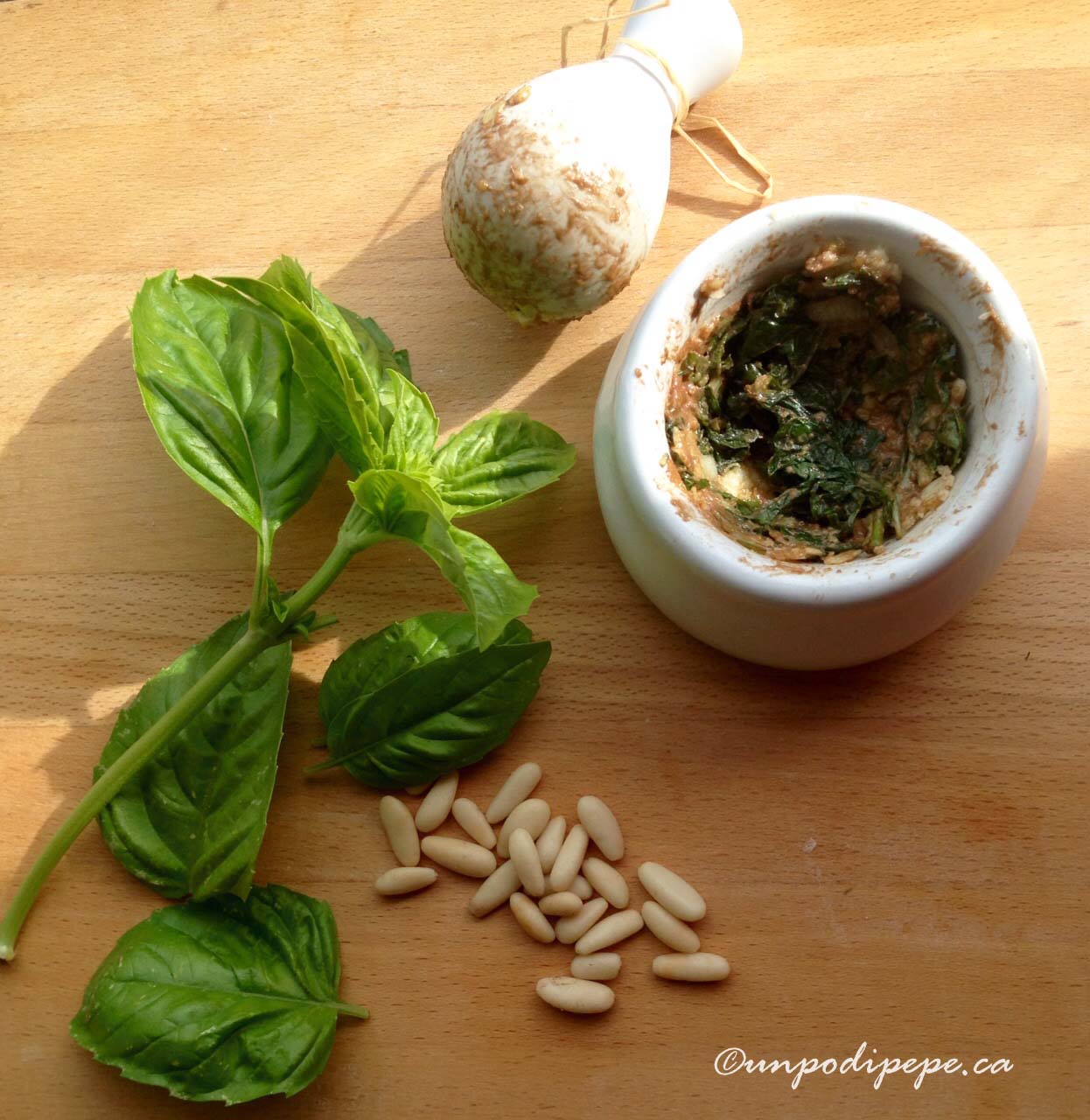
There are no fancy appliances in this kitchen.  I was given a bouquet of basilico and garlic from a friend’s garden and we made pesto ‘old school’ with her ancient and very heavy stone mortaio-mortar.Pesto made with old stone mortar/mortaio

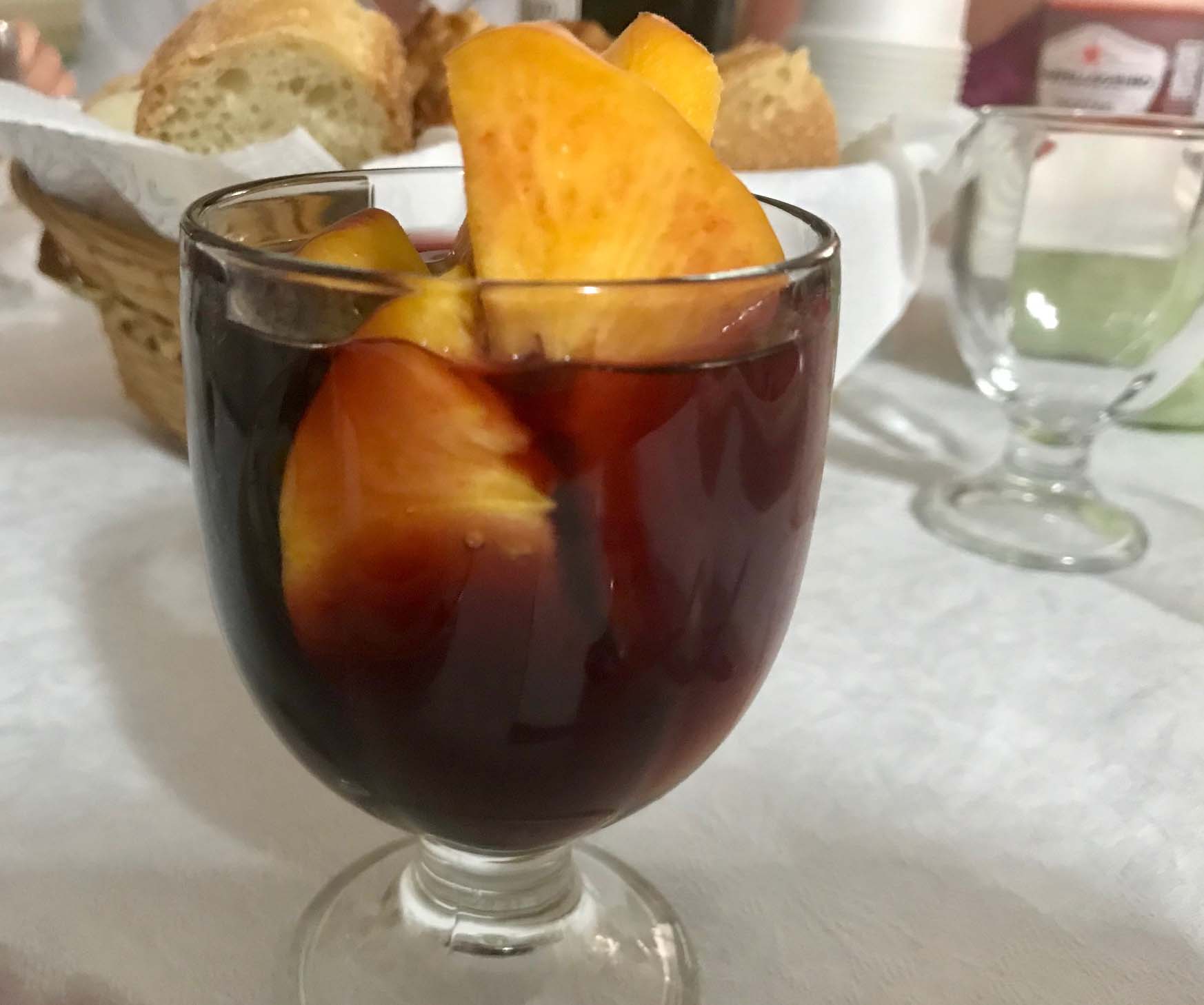
Vino is plentiful in Puglia.  Nero di Troia is a nice, full-bodied local wine.  Read more about it in Vini di Puglia, the first of a 3 part blog series.  It is available at the grocery store in a 3L plastic container for less than €6!  It is very good!  We bring it home and Papà transfers it to 4 750ml glass bottles.  Sure, you can spend more money, but even the inexpensive vino is good.  I love to drink pesche in vino -peaches in wine with pranzo.  Yum! In summer red wine is often served chilled.
The cheese products in Puglia and Campania are drool-worthy!  Orsara has its own DOP cheese called cacioricotta, a goat cheese, but it never stays around long enough to be photographed!  Here is a lovely white on white trio of burrata, ricotta and mozzarella di bufala.Burrata, ricotta e mozzarella di bufala

Fiori di zucca are one of my favourite summer foods.  Luckily they are readily available here.  These ones were grown by a friend.  They are stuffed with caciocavallo and basilico, ready to be baked or grilled.  More recipe and harvesting tips can be found in the post Fiori di zucca.  I grow them in my garden in Vancouver as well, but they are not that plentiful. Fiori di zucca

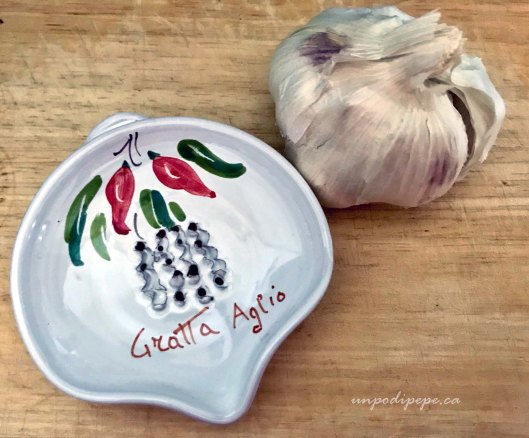
Cucina povera, literally ‘food of the poor’, is what you will find in Puglia.  Simple foods made with fresh local ingredients.  My favourite comfort food, very typical of Orsara di Puglia is pancotto e patate.  It is made with stale bread, boiled potatoes, oil and garlic.  Beans and rucola or other greens can also be added.  I will have to write a post on how to make it!Pancotto, patate e rucolaI took the train down to Lecce and Nardò for a few days and found this cute ceramic gratta aglio, a garlic grater.  Of course the peperoncini attracted me! Gratta aglioI hope this post has made you either hungry and drooling or wishing you could visit Puglia yourself.  Maybe it has done both? Buon appetito e buon viaggio, CristinaThanks Sherry from Australia for hosting the monthly food blogging event, In My Kitchen (IMK). Read about other world kitchens by clicking the link to Sherry’s Pickings . Buon appetito, Cristina
Share this:

  • Share on Facebook (Opens in new window) Facebook
  • Share on Pinterest (Opens in new window) Pinterest
  • Share on X (Opens in new window) X
  • Email a link to a friend (Opens in new window) Email
  • Share on WhatsApp (Opens in new window) WhatsApp
Like Loading...

In My Kitchen, April 2019

08 Monday Apr 2019

Posted by Un po' di pepe in Art projects, Mangiamo!

≈ 23 Comments

Tags

Caputo Fioreglut, Gluten-free baking, In my kitchen, Leftovers printmaking exchange, Pasta fatta a mano, Pomodori, Printmaking

The last few weeks, my kitchen table has been a multipurpose space, doubling as a greenhouse and an art studio.  For the 4th year in a row, I am participating in the ‘Leftovers’ printmaking exchange.  The idea is to use leftover paper and other materials to make an edition of small prints.  I need to send 15 hand pulled prints via Wingtip Press to the Idaho Hunger Relief Task Force in Boise.  1 print will be reserved for silent auction to support hunger relief and 2 will be part of travelling exhibitions. Last year, my print went on a Grand Tour to China, Wales, Whangarei New Zealand, Reno Nevada and Boise!  The remaining 12 prints are exchanged with other participating printmakers. In a few months, I will receive my ‘leftovers’ package in the mail with 12 prints  from around the world!

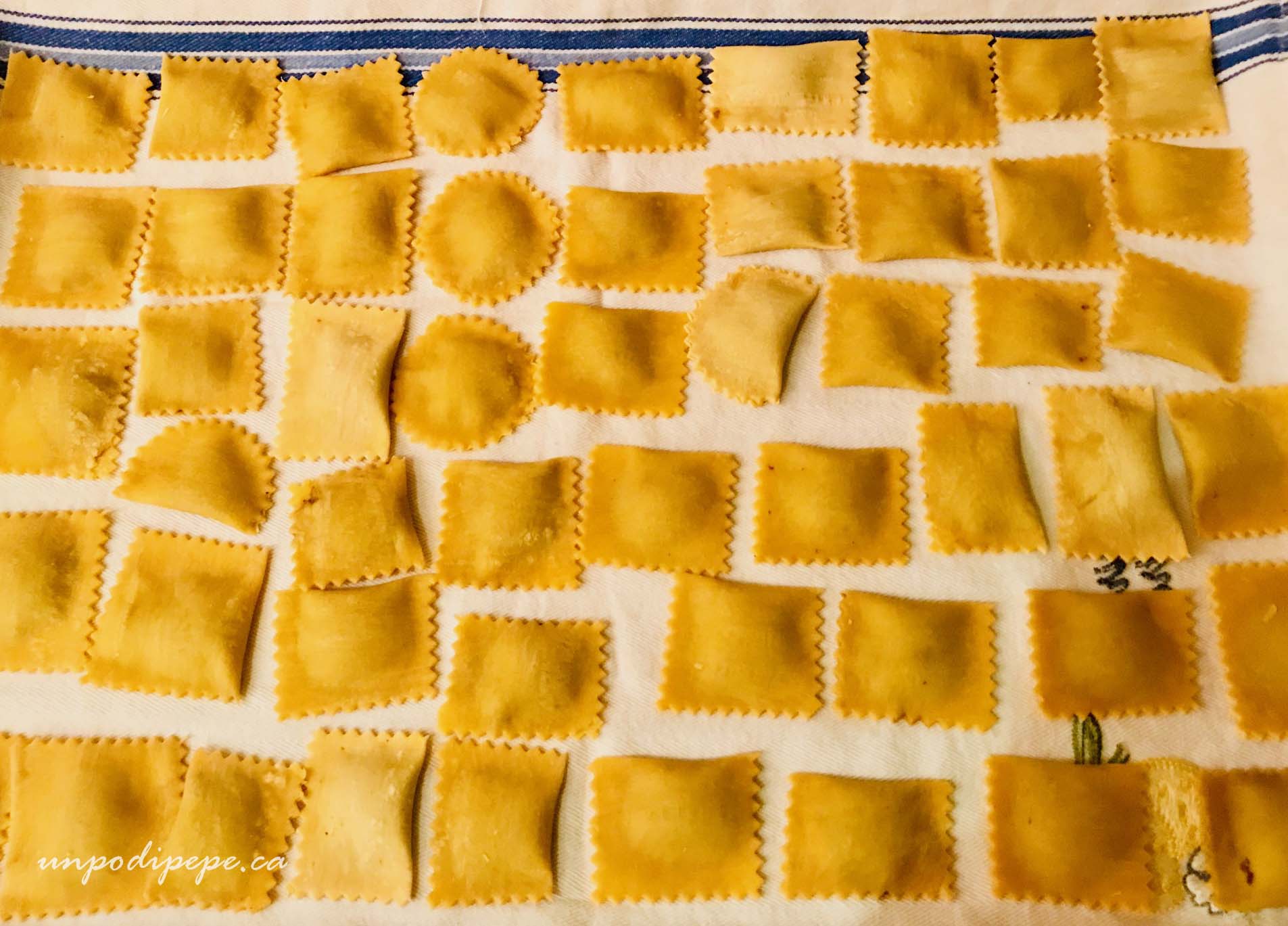
I have a beautiful old aluminum scolapasta (colander) in my kitchen that just oozes character.  I worked on my sketches and carved the linoleum here, but will do the printmaking in my little studio space.  I have to post the prints by April 10th! Papà has pomodoro seedlings growing on my back porch.  They are covered in plastic as it has been sunny, but cold.  I was given more seeds by a friend, so 2 weeks ago, right after la luna piena –the full moon, I started growing them at the end of the kitchen table by the big window.  Piselli and pepperoncini are growing nicely too!I made ravioli with funghi-mushroom filling but I could not seem to decide what size or shape to make my ravioli/agnolotti/mezzalune!  Despite the lack of symmetry, they tasted good, although I prefer my usual ricotta filling.

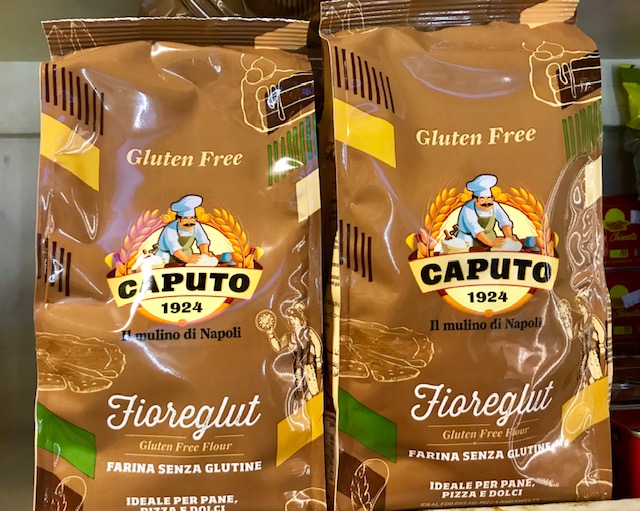
Some time this month, I plan to invite my coworkers over for pizza, but 2 of them have Celiac, so I need to make gluten free dough.  Mannaggia!  My experience with gluten free dough is that it tastes like crap, with the consistency of styrofoam.  Potato, rice and corn flour all result in a dense blob of yuck, yuck and yuck!  Bleh!  My local family run generi alimentari Renzullo’s finally started selling Caputo Fioreglut.  This is a gluten free flour from Italia that I read about on both Paola‘s and Silvia‘s blogs.  They are both in Australia and raved about it, but it was not available here.

I bought a bag for $12.00 (!) and decided to try focaccia first.  That way, if it came out as a sticky, unpalatable blob of yuck at least I did not waste ingredients on it.  Fioreglut has some rice and corn flour, but the main ingredient is farina di grano saraceno-buckwheat flour!  I followed the recipe on the bag, since it was almost the same as my usual recipe.  Making gluten free dough is the opposite of making regular bread dough.  Usually you want to knead the dough as much as you can to make it light and airy.  Gluten free dough must be handled as little as possible to keep it together.  My white blob of dough looked questionable, but it did rise.  I dimpled it with my fingers and added rosemary, salt and parmigiano, made the sign of the cross and put it in the oven. I could not believe the results-it was actually delicious!  Just look at the photo!  Before inviting my friends over, I will try focaccia Pugliese, then pizza.

This ‘In my kitchen’ post is linked to the worldwide monthly get together of food bloggers hosted by Sherry of Sherry’s Pickings.  Click to read the other participating posts.  Buon appetito, Cristina

Share this:

  • Share on Facebook (Opens in new window) Facebook
  • Share on Pinterest (Opens in new window) Pinterest
  • Share on X (Opens in new window) X
  • Email a link to a friend (Opens in new window) Email
  • Share on WhatsApp (Opens in new window) WhatsApp
Like Loading...

Zeppole di San Giuseppe

19 Tuesday Mar 2019

Posted by Un po' di pepe in Feste, Mangiamo!, Recipes

≈ 15 Comments

Tags

Dolci, Festa di San Giuseppe, La festa del Papa, Zeppole di San Giuseppe

Zeppole di San Giuseppe are a traditional pastry served in southern and central Italy on March 19th for la festa di San Giuseppe.  In Italia, March 19th is also La Festa del Papà -Father’s Day.  In North America, Father’s Day is the 3rd Sunday in June, but in Italia it is always on March 19th because San Giuseppe (St Joseph) was, of course, the papà of Jesus! He is also the patron saint of carpenters, the family, orphans and the homeless. March 19th is also a few days away from spring and the start of the agricultural year, in the fields and vineyards.

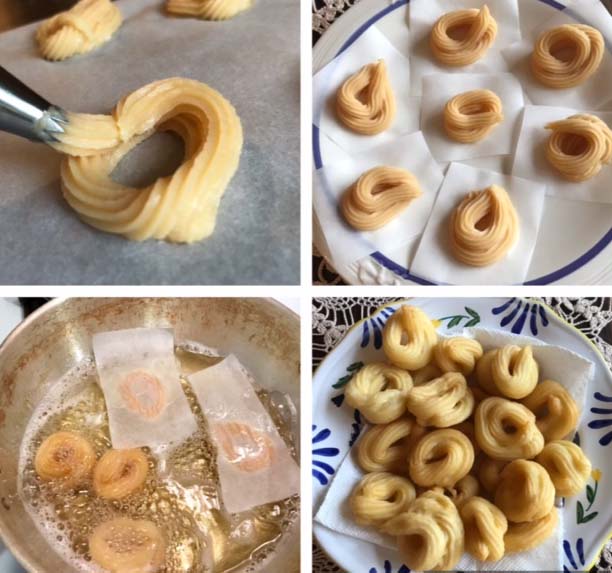
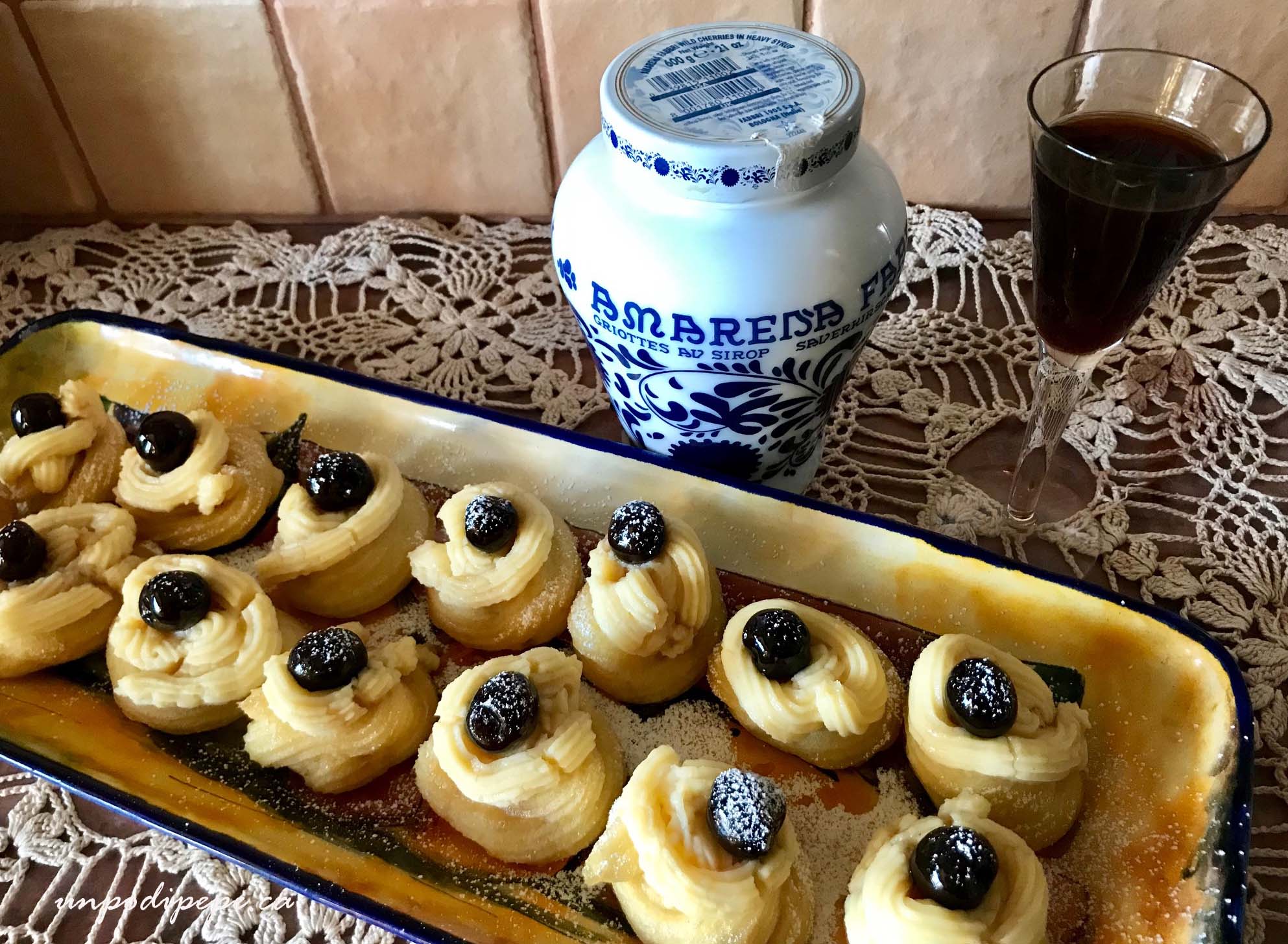
Zeppole di San Giuseppe are made with the same choux pastry as bignè di San Giuseppe, but the dough is piped out into ‘nests’ rather than spooned onto the baking sheet.  They can be baked or fried.  The hole in the center of the zeppola is filled with crema pasticcera, a creamy custard.  Finally, the signature detail of zeppole di San Giuseppe….they are topped with un amarena in sciroppo.  Amarene are dark, wild sour cherries and they are preserved in syrup.  Amarene in sciroppo are likely available at your local Italian market.  Note-the word zeppole, singular zeppola, is used in some regions, including Calabria, for a type of doughnut or fried dough.

Zeppole di San Giuseppe are not the easiest thing to make, especially if you are not a baker or used to a piping bag.  My first ones did not look beautiful, but they still tasted great. If you need a visual tutorial, there are quite a few good videos online, especially from Benedetta, and Zia Franca.

Zeppole di San Giuseppe

  • 150g (175ml, ¾ cup) water
  • 125g (½ cup) butter
  • pinch of salt
  • 150g (285 ml, 1 cup + 2 tablespoons) 00 flour
  • 4 medium eggs

Heat the water on low heat and add butter and sugar.  Stir until melted and bring to a boil.  Add the flour ALL AT ONCE and stir quickly until the mixture leaves the sides of the pan and forms a ball.  Remove from heat and let cool slightly, then add the eggs, 1 at a time.  A mixer at low speed can be used for this part, but I just used my wooden spoon-less stuff to wash!Zeppole di San Giuseppe

Put the dough in a pastry bag with a very large stella, star tip.  The tip needs to be at least 1 cm, preferably larger, or the zeppole will come out too small.  I was not able to find a bigger tip, so mine were actually zeppoline!  Pipe out circular nests with 2 rows of pastry onto carta forno –parchment paper.  Bake at 200ºC (400ºF) for 15 minutes, then lower the temperature to 180ºC (350ºF) for 10 minutes.  Turn off oven and leave the door partially open to let them cool.

Baked zeppole have a delicate taste.  Frying gives them a more robust taste.  To fry them, cut the parchement paper into squares.  Drop the whole square upside down into hot oil.  Remove the paper and turn them.  Enrica from Chiarapassion says her Mamma’s secret is to  bake them, then fries them so they do not absorb as much oil!  Sounds like twice as much work to me though.Zeppole di San Giuseppe fritte

Dust with icing sugar, top with crema pasticcera and amarena with syrup.  I served mine with my homemade liquore di foglie di amarena.

Crema Pasticcera

  • 2 whole eggs + 2 yolks
  • 80g (6 tbsp, 1/3 cup +1 tbsp) sugar
  • 70g (165 ml, ½ cup) flour
  • ½ L (500 ml, 2 cups) whole milk
  • lemon peel
  • vanilla bean(optional)

Heat the milk in a pot with the lemon peel.  I use the entire peel.  Start at the top and cut it like a corkscrew so you end up with one long peel.  In a bowl, beat eggs and yolks, add sugar and whisk. When milk is hot, remove lemon peel and add vanilla bean, if desired. Add other ingredients, whisk and heat until thick.  When cool, refrigerate with plastic wrap touching the crema.  When ready to use, fill a pasty bag and pipe onto zeppole with a large star tip.

Auguri a tutti i Papà del mondo e Buon Onomastico a tutti i Giuseppe, Giuseppina, Giuseppa, Peppe, Joe, Pina, Josie e Giusy!  Ciao, Cristina

PS In my post La Festa del Papà, you can see my absolutely favourite photo of me and papà.  Have a look.  Cute-issimo, no?

Share this:

  • Share on Facebook (Opens in new window) Facebook
  • Share on Pinterest (Opens in new window) Pinterest
  • Share on X (Opens in new window) X
  • Email a link to a friend (Opens in new window) Email
  • Share on WhatsApp (Opens in new window) WhatsApp
Like Loading...

Your Favourite Recipe

09 Sunday Sep 2018

Posted by Un po' di pepe in Mangiamo!, Recipes

≈ 25 Comments

Tags

Cannolo Award, Capri, Dolcevitabloggers, Dolci, Gluten-free baking, Gluten-free chocolate cake, Southern Italy, Torta Caprese, Traditional recipes

For the second time in 3 months, I wrote about the wrong topic for the monthly #dolcevitabloggers linkup!  I was frantically trying to finish a detailed review of my favourite book, only to find that other posts were on the topic of ‘favourite Italian recipe’. Mannaggia!  I had taken a screenshot of the list of topics, but a few of them were switched.

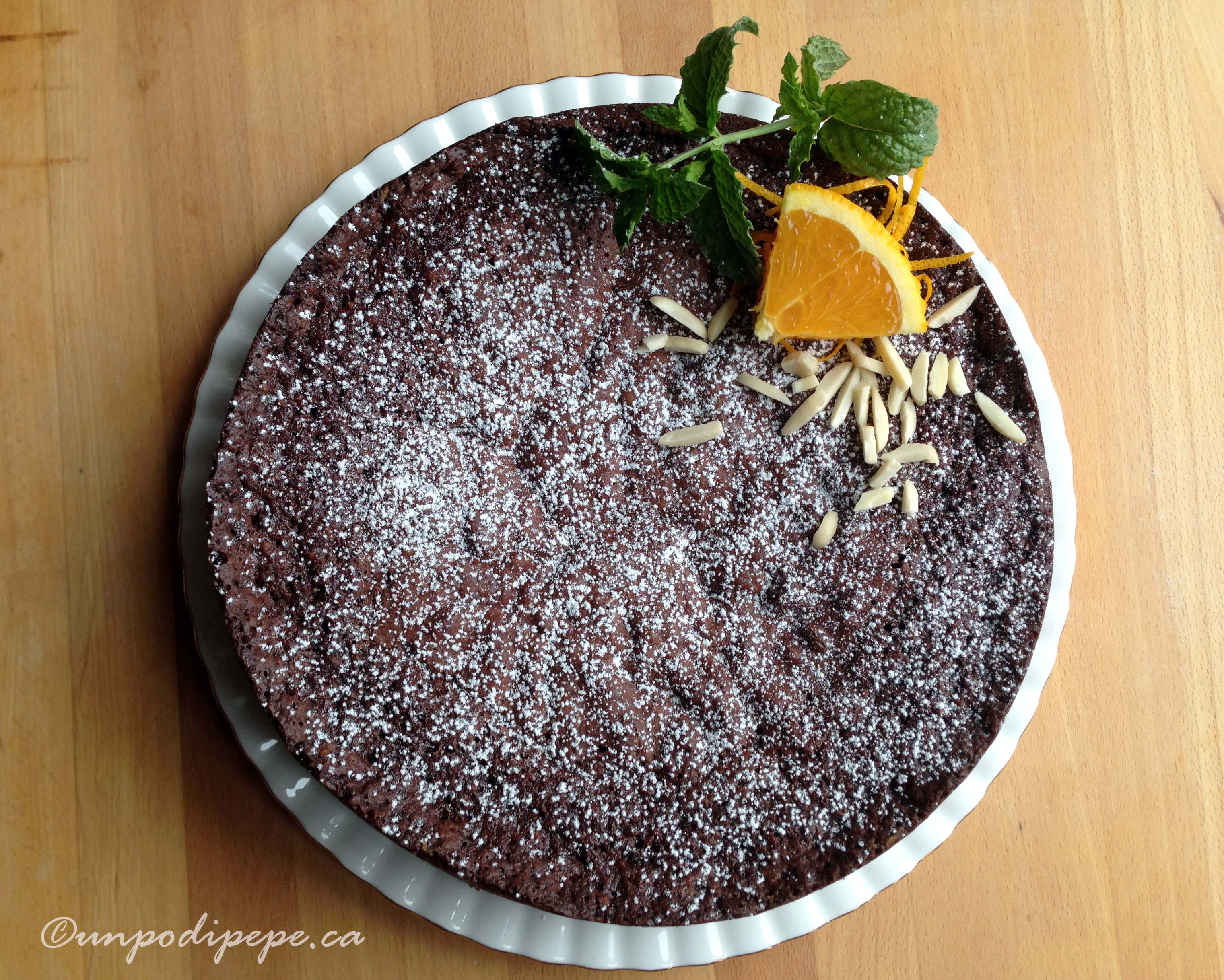
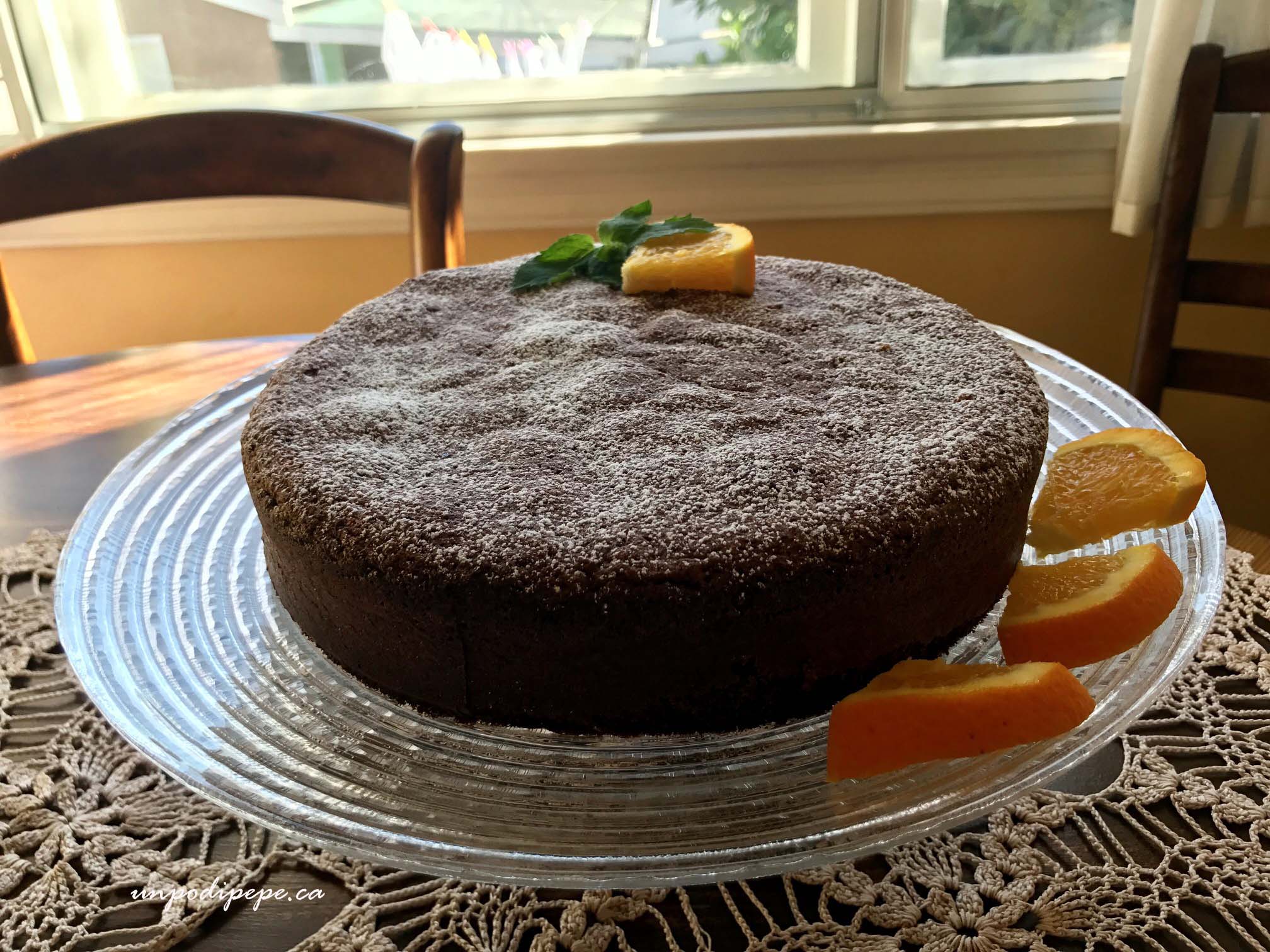
So…. my favourite recipe?  Hmmm.  That is almost like asking a mamma which one is her favourite child!  I love food and have too many faves to pick just one.  I think it is better if I write about your favourite recipe!  I had a look through the recipe category of my blog.  There are 14 recipe posts-half are desserts.  My favourite ingredients seem to be ricotta, limoncello, orange and olive oil! The most popular recipe post, by a massively huge margin, is Torta Caprese all’Arancia. I posted this recipe in honour of my 2015 Cannolo Award. 

Caprese (cah•PREH•seh) means ‘from Capri’ (CAP•ree) the beautiful island off the coast of Napoli.  I suppose caprese could also mean ‘goatlike’ since capra is goat?  We’ll stick with ‘from Capri’.

There are a few different stories about how Torta Caprese came to be.  The most likely is that it was invented by mistake in the 1920’s by a kitchen worker at an Austrian owned pensione on Capri.  He added mandorle tritate –ground almonds, instead of flour while trying to make something similar to an Austrian Sachertorte.  It was a big hit, and went on to be served at all of the hotels and tea rooms on Capri.

The basic recipe involves mixing melted butter and chocolate in a ‘bagno-maria’ with sugar and egg yolks, then adding whipped egg whites and ground almonds.  Liqueur, usually Strega, is added.  The cake has a hard thin shell and moist interior and the center tends to sink in a bit from the sides.

I recently tasted a yummy orange Torta Caprese, so I decided to try my own version.  After a bit of experimentation, and substituting Gran Marnier for Strega, I ended up with a very nice Torta Caprese all’ Arancia.  It is a 3 bowl recipe, so be prepared to wash them!

Read the rest of the original post Torta Caprese all’ Arancia to find the step-by-step recipe and find out what the Cannolo Award is all about.

This post is written as part of the monthly #dolcevitabloggers linkup, hosted by Jasmine of Questa Dolce Vita, Kelly of Italian at Heart and Kristie of Mamma Prada, the 7th -14th of every month. Hopefully next time I will prepare the correct topic!  You will have to wait until November to read about my favourite Italian book!

Here is me posing on my first visit to Capri when I was 16. Unfortunately I didn’t know about Torta Caprese at the time.

Ciao, Cristina

Share this:

  • Share on Facebook (Opens in new window) Facebook
  • Share on Pinterest (Opens in new window) Pinterest
  • Share on X (Opens in new window) X
  • Email a link to a friend (Opens in new window) Email
  • Share on WhatsApp (Opens in new window) WhatsApp
Like Loading...

In My Kitchen, September 2018

04 Tuesday Sep 2018

Posted by Un po' di pepe in Mangiamo!

≈ 32 Comments

Tags

Basilico, Fiori di zucca, In my kitchen, Oregano, Passata di pomodoro, Pesto Genovese, Pomodori, Pomodori secchi

Late August/early September is a busy time in my kitchen, and even busier in my parents’ garage.  The garage has a sink and propane burner, so it counts as a kitchen too!  Mid August, I am usually just getting home from 3-4 weeks in Italia and am right back to work the next day for a jet-lag infused reality check.

My garden is thirsty for water and full of erbacce-weeds that need to be pulled.  The fruits of the garden are ripe for picking. This was a good year for pomodori-4 different varieties.  My favourite are the ciliegine or cherry tomatoes.  I eat them like candy, and freeze some for making brodo-broth for the winter. My parents get back from Italia at the end of August, then we make passata di pomodoro to can for the year. We use whatever is ripe enough from our gardens, and purchase a lot more.  This is a major production involving the whole family, but is totally worth the effort.  I like to call it ‘Salsapalooza’.  Read more about our passata di pomodoro making in this post.

The origano-oregano was picked about a month ago and hung to dry in bundles.  It is ready to be crumbled and stored in jars.

My Mamma brings home pomodori secchi, sun-dried tomatoes from the mercato in Orsara di Puglia.  We put them in jars under oil with garlic, parsley and capers.  Yum!

In May, I planted basilico seeds in every available pot I could find and the crop was a good one, so I am making a lot of pesto this year.  I bought a stash of pine nuts while I was in Italia. My recipe for Pesto Genovese can be found here.

I am sad to pick the last of my fiori di zucca.  They are too delicate to keep or freeze.  I make them battered and fried, stuffed, battered and fried, or stuffed and baked.  Sometimes I use the broken bits to make frittelle or a frittata.  I am always shocked that so many people do not know these delicate morsels are edible!  To learn how to pick them and what to do with them, check out my post Fiori di zucca.

Some of my zucchine grew too big while I was away, so I have put those aside to make chocolate zucchini cake.  You would never know there is a lot of vegetable in it!  Sorry, it did not last long enough for a photo!

My raspberry bushes were producing a bowlful a day in June and July.  Now there are just 5-10 berries per day.  I have been hoarding them until I had just enough for one last batch of jam!

Rucola gets put in and on everything!  In my salad, on my pizza, on my thin cut sautéed beef. Some even goes into the freezer for making pasta patate e rucola, on of my favourite comfort foods in the winter.

That is about all from my kitchen (and my parents’ garage) this month.  What is happening in your cucina?  This post is part of the monthly ‘In my Kitchen’ linkup hosted by Sherry.  To read the other posts click this link to her blog Sherry’s Pickings

Ciao, Cristina

Share this:

  • Share on Facebook (Opens in new window) Facebook
  • Share on Pinterest (Opens in new window) Pinterest
  • Share on X (Opens in new window) X
  • Email a link to a friend (Opens in new window) Email
  • Share on WhatsApp (Opens in new window) WhatsApp
Like Loading...

Limoncello Ricotta Cookies

19 Thursday Jul 2018

Posted by Un po' di pepe in Mangiamo!, Recipes

≈ 15 Comments

Tags

Italian food, Limoncello, Limoncello ricotta cookies, Traditional recipes

Last week I had a bancarella at the Italian summer outdoor market. I like to bring dolci for friends who come to visit, or anyone who stops by to chat. Buy a card… get a cookie. It was an unusually hot day, and my espresso cookies would melt and make a mess all over the place, so I made refreshing, sweet and tangy limoncello ricotta cookies.  Limoncello and ricotta are 2 of my favourite ingredients.

When I was growing up, our Abruzzesi neighbours often made these soft cakey cookies-minus the limoncello. They used Anice (ah·Nee·cheh), a liqueur similar to Sambuca, and topped them with multi-coloured sprinkles.  The ricotta makes them soft, moist and chewy. If fresh is not available***, make your own ricotta!

Limoncello Ricotta Cookies:

350g flour (2½ cups)

5 g salt (1 tsp)

8g Pane degli Angeli (½ bustina/envelope, 2 teaspoons) *

100 g olive oil (½ cup) **

400 g sugar (2 cups)

2 eggs

450 g fresh ricotta (1 lb)

30g limoncello (30 ml, 2 tablespoons)

15 g freshly squeezed lemon juice (15 ml, 1 tablespoon)

Grated peel of 1 lemon

Glaze: same as for Casa Berti Olive Oil Limoncello Cake

200 g (1½ cups) powdered sugar/icing sugar

30g limoncello (30ml, 2 tablespoons)

15g freshly squeezed lemon juice (15 ml, 1 tablespoon)

Grated peel of 1 organic lemon

Preheat oven to 190°C (375°F)

Mix the 3 dry ingredients together. In another bowl, mix sugar and grated lemon peel together with the back of a spoon until the sugar becomes fragrant.  Add eggs, 1 at a time.  Add oil, then ricotta and limoncello. Stir in dry ingredients.

The dough is quite sticky. Use 2 tablespoons or a small cookie scoop to measure the dough onto a cookie sheet.  The dough may be easier to work with if it is left in the fridge for 30-60 minutes.  Bake for 15 minutes, being careful not to burn the edges.  Let cool.

To make glaze, mix the all ingredients except lemon peel in a small bowl until smooth.  If it is too thick and sticky, add more limoncello or lemon juice.  Add lemon peel last.  Use a teaspoon to spread glaze onto each cookie.  Leave glaze to harden and set for 1-2 hours.

Makes 40-60 cookies, depending on the size.  Store in a covered container.

* If Pane degli Angeli is not available, substitute 2 tsp baking powder and a tiny splash of vanilla extract

**if you prefer to use 125g unsalted butter (½ cup), mix the sugar and butter together first with a mixer, then add eggs one at a time, followed by the other ingredients

  ***Cottage cheese is NOT an appropriate substitute for ricotta!

Friends and customers often tell me I should be selling the cookies. I am not sure how to take that.  Are they trying to tell me my baking is more appealing than my artwork?  Hmmmm, I had better not overthink this one!

If you love limoncello and ricotta as much as I do, check out some of my other posts: Make your own Limoncello, Limoncello Cheesecake, Casa Berti Olive Oil Limoncello Cake, Ricotta fatta in casa, Tortelloni di Ricotta.

Read more about the mercato here.

Buon appetito, Cristina
Share this:

  • Share on Facebook (Opens in new window) Facebook
  • Share on Pinterest (Opens in new window) Pinterest
  • Share on X (Opens in new window) X
  • Email a link to a friend (Opens in new window) Email
  • Share on WhatsApp (Opens in new window) WhatsApp
Like Loading...

Insalata Purtuall’

18 Sunday Mar 2018

Posted by Un po' di pepe in Italian language, Mangiamo!, Recipes

≈ 28 Comments

Tags

Arancia, Gastronomic history, History of oranges, Insalata Purtuall', Italian language, Orange, Orange and fennel salad, Portokali, Traditional recipes

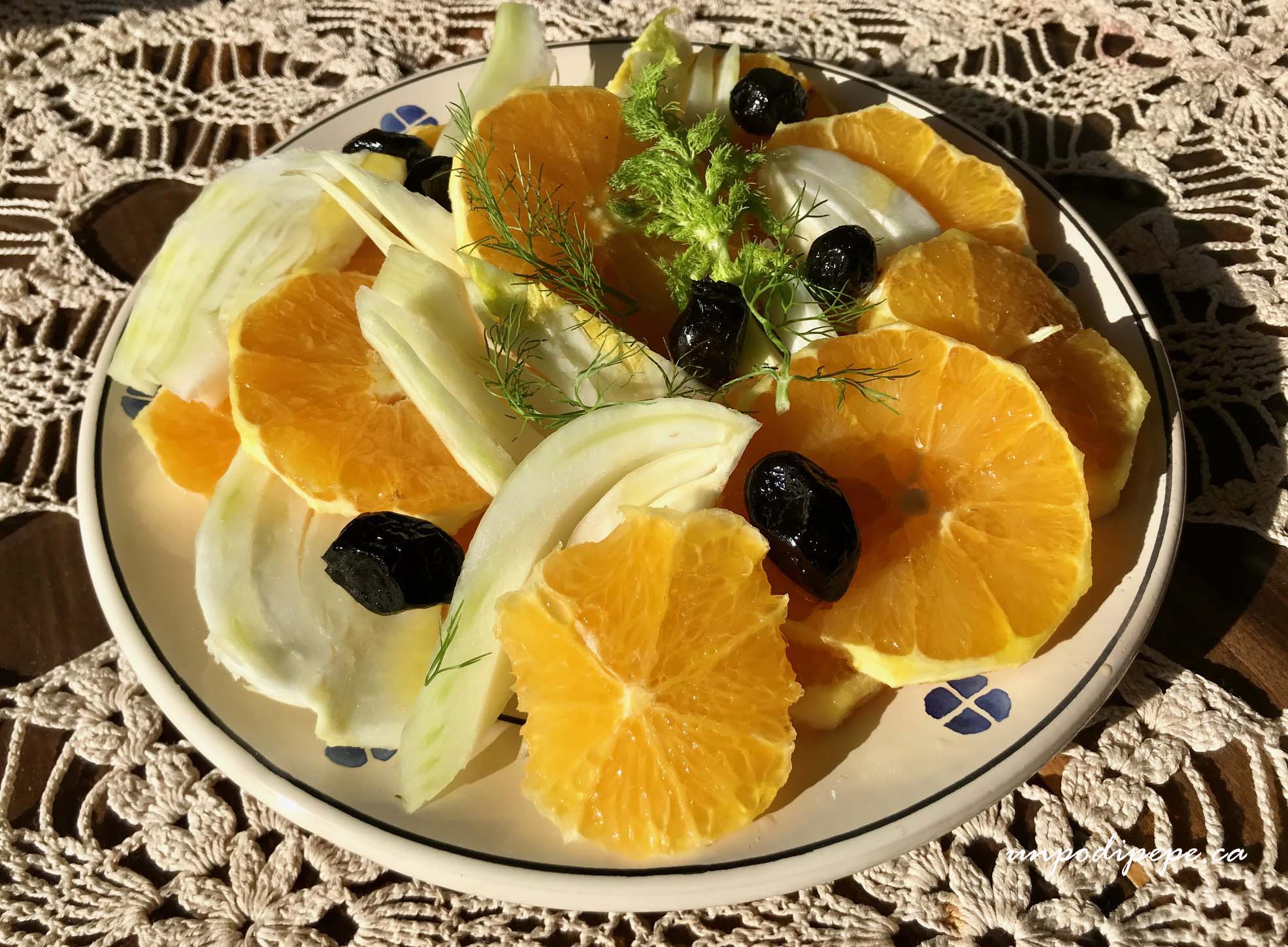
Insalata di arancia e finocchio-orange and fennel salad always brings back memories of my grade 1 lunchroom. My delicious lunches included home made crusty bread stuffed with melanzane and roasted peppers, prosciutto, capicollo or cotoletto di vitello, frittata, pizza or ‘chocolate sandwiches’ made with Nutella. Papà would often make me Insalata Purtuall’, with oranges cut crosswise in rounds, fennel and black olives, drizzled with olive oil and a bit of salt.  A true flavour explosion for 6 year old me.  I did not know why everyone at school thought my lunches were so weird.  The ‘Anglo’ kids made fun of them, and even the teachers eyed my food suspiciously.  Today all of these foods are available and trendy, so who is laughing now?  Ha! I do not remember being too bothered by the teasing.  I actually felt sorry for my classmates.  Their lunches were gross, usually consisting of ‘plastic’ cheese on bright white squishy bread that was sliced like cake! Poveretti. I will have to write more about my early gastronomic experiences in another post….

A while back, Frank from Memorie di Angelina wrote about orange and fennel salad, and I commented that we called it ‘Portugal’ salad, but did not know why. I asked Papà why we called it ‘Insalata Purtuall’. Purtuall’ is dialetto for Portogallo which is Portugal in italiano. His answer surprised me. He said it was not a Portuguese salad, but purtuall’ is what the orange were called. Hmmm.  Soon after this, I was at a writers’ conference and one of the presenters displayed a map showing the word for orange across Europe in various languages. Aha! I saw that the Greek word for orange is ‘portokali’. This was getting interesting!

Arancia amara, bitter orange, was known to the Romans. Sweet oranges were only introduced to Europe and the Mediterranean in the 14th century. Portuguese ships were the first to circumnavigate Africa and brought sweet oranges back from the Far East. In many countries, oranges were named after Portugal-the country that they seemed to be coming from! In Greek oranges are portokali, in North Africa and most Middle East countries burtuqall, in Iran purtuqol, in Turkey portakal and in Hungary and Romania portokal. In most of Western Europe, the Mediterranean and Britain, the word for orange comes from ‘narangas’, Sanskrit for orange tree. For example, in italiano arancia, in spanish naranja, portuguese laranja, and of course english orange. There are a few places in Italia where the dialetto still uses the ‘portuguese’ term. In Campania, Puglia, Basilicata and Abruzzo, purtuallo or portajalli, in Sicilian partualli (or aranciù), and in Piemonte portugaj. In modern Greek, bitter oranges are called ‘nerantzi’ while sweet oranges are called ‘portokali’. Who knew that the yummy salad I used to bring for lunch in elementary school reflects thousands of years of history, trade voyages and etymology between East and West!

A ‘recipe’ is not really needed for Insalata Purtuall’. Just peel a few oranges and remove as much of the pith as possible, then slice them crosswise and lay them on a plate. Cut half a fennel bulb and slice in either small or larger pieces. Add ‘un filo d’olio’, a drizzle of olive oil and salt, then a few black olives and garnish with fennel fronds. I sometimes like to throw in some pomegranate seeds or rucola. It is hard to mess up this healthy, refreshing winter insalata! I recently found out that Insalata Purtuall’ was served at my parents’ wedding in Orsara di Puglia in the 1960’s, so now it tastes even better!

Buon appetito, Cristina
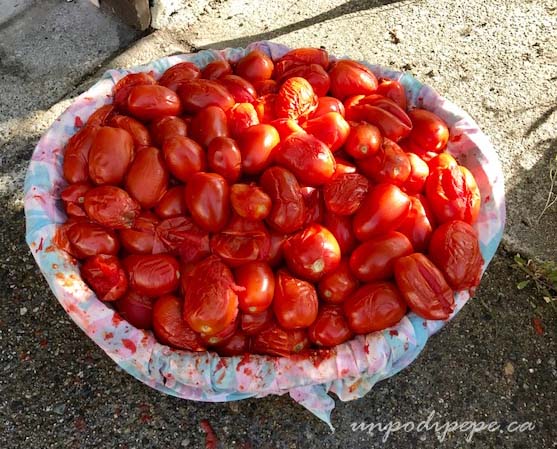
Share this:

  • Share on Facebook (Opens in new window) Facebook
  • Share on Pinterest (Opens in new window) Pinterest
  • Share on X (Opens in new window) X
  • Email a link to a friend (Opens in new window) Email
  • Share on WhatsApp (Opens in new window) WhatsApp
Like Loading...

Tortelloni di Ricotta in a Snowstorm

18 Sunday Feb 2018

Posted by Un po' di pepe in Mangiamo!

≈ 9 Comments

Tags

Italian food, Ostro, Pasta, Pasta fatta a mano, Ricotta tortelloni

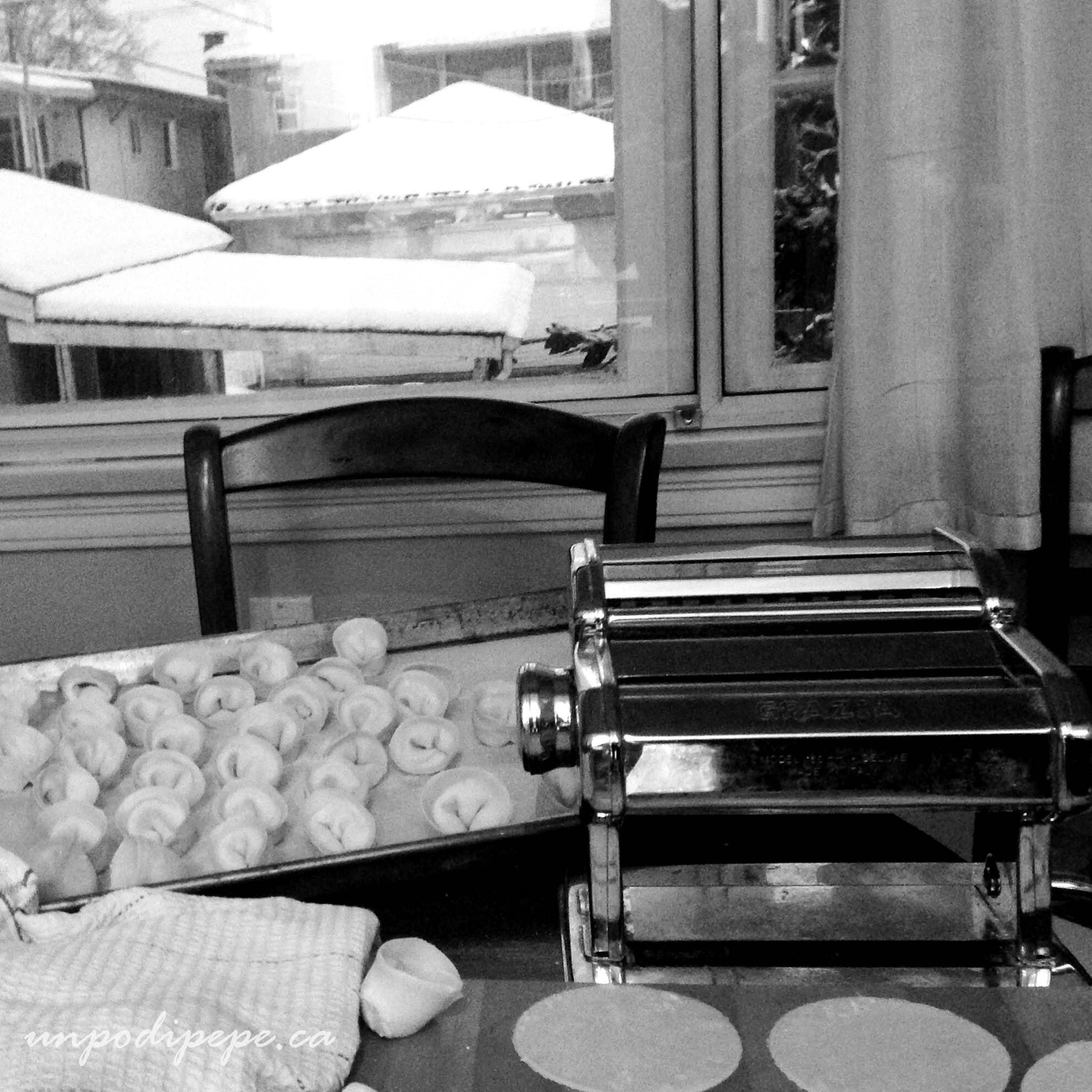
It snowed again last night.  Shoveling snow and picking ice cubes off of my poor olive tree is not my idea of a relaxing Sunday morning.  Yesterday, facebook sent me one of those ‘your memories from one year ago’ messages with this black and white photo.  It snowed a LOT last year, and this particular Saturday night, I was bloccato dalla neve -snowed in.  I decided this was a good time to do my recipe testing for Julia Busuttil Nishimura’s cookbook Ostro.  Ostro is also the name of Julia’s website.  The recipe was for Ricotta tortelloni with butter, sage and hazelnuts.  Tortelloni are super-size tortellini and I had not made them before.  Filling and shaping them was fun and easier than I thought.

I had to use a beer glass to cut the circles, so they came out quite big.  Once I was done making the tortelloni, I made the butter sage and hazelnut sauce-except I had to improvise.   It was dark outside and still snowing heavily.  The sage was growing in the backyard.  I had to dress like an Eskimo and go out with my flashlight to forage for sage under a foot of snow!  Brrrr.  I did not have any hazelnuts, and had even run out of butter making cookies.  Grocery shopping was not an option at this point, so I ended up making an olive oil, sage and toasted almond sauce instead. It was so delicious I did not even have a chance to take a decent photo of the finished dish!

I have made these ricotta tortelloni a few more times, even with ricotta fatta in casa.  Ostro is now out in print and is Gourmet Traveller Australia’s 2017 book of the year.  Auguri Julia!   I believe Ostro is available only in Australia for now.  In Canada, it is only available on kindle so far, so I have not seen it yet.  You can find the recipe here.More about my adventures in (and complaining about) the snow along with snowy photos can be found in Bloccato dalla neve.

Another recipe from Julia and a review of Ostro can be found on Emiko Davies’ blog here.

Ciao e buon appetito, Cristina

Share this:

  • Share on Facebook (Opens in new window) Facebook
  • Share on Pinterest (Opens in new window) Pinterest
  • Share on X (Opens in new window) X
  • Email a link to a friend (Opens in new window) Email
  • Share on WhatsApp (Opens in new window) WhatsApp
Like Loading...

Olive Oil Limoncello Cake

25 Thursday Jan 2018

Posted by Un po' di pepe in Mangiamo!, Recipes

≈ 28 Comments

Tags

Casa Berti, Catalyst Art Retreat, Cucina Italiana, Dolci, Gugliano, Italian food, Limoncello, Lucca, Olive oil harvest, Olive oil limoncello cake

In November I attended an art retreat, surrounded by 900 olive trees!  It was at Casa Berti near Gugliano, about 40 minutes outside of Lucca. There were also lemon trees in giant terra cotta pots on the terrace, not yet ready to be moved into the limonaia for the winter. Many of the lemons become limoncello.  I was so inspired and distracted by the olive trees that I took several breaks from art making to pick olives.  I could not help it-they were calling to me!  Every day or two, when there were enough picked, they would be taken to the frantoio or olive press and then return to Casa Berti as lush, fragrant oil.  Green gold as a friend calls it. The Casa Berti cucina had a stainless steel bidone full of new oil with a little spout for pouring.

Being surrounded by olives, freshly pressed oil, fresh lemons and limoncello, I had the urge to make an olive oil limoncello cake.  I have been making this cake for years, but I did not have the recipe with me.  I also left my art making to bake just when Ben, the owner of Casa Berti, had gone on another run to the frantoio with olives. I searched the kitchen but could not find any measuring utensils or a scale, so the measurements were all a big guess. ??? Luckily I knew where the limoncello was!

The cake came out better than usual, probably due to the quality and freshness of the ingredients.  I usually just dust it simply with zucchero in polvere-icing sugar.  For a fancier look, make a limoncello glaze with icing sugar and limoncello.  The cake is also nice with fresh fruit, especially raspberries or blueberries.  It goes equally well with a cup of espresso or a glass of limoncello and is also very easy to make-you don’t even need a mixer-just a wooden spoon and a whisk.  I adjusted some of the amounts to the recipe based on the Casa Berti cake, but if your measurements are not exact, non ti preoccupare, it will probably still taste good!

Casa Berti

Casa Berti Olive Oil Limoncello Cake

400g (~3 cups) flour

200g (almost 1 cup) sugar

4 medium sized eggs or 3 large eggs

160ml (~ ¾ cup) extra virgin olive oil

130 ml (~½ cup) milk

60 ml (¼ cup, 4 tablespoons) limoncello

Grated zest/peel of 2 organic lemons

16g packet Pane degli Angeli (or 15 ml/1 tablespoon baking powder)

  1. Preheat oven to 160°C (325°F)
  2. Butter and flour a 23 cm (9 inch) pan
  3. In a small bowl, add the lemon peel to the sugar and mix with fingers or the back of a spoon until they are well mixed and the sugar looks damp
  4. Whisk the eggs and add the sugar/peel mixture
  5. Add the olive oil, milk and limoncello
  6. Add flour a bit at a time and stir with a wooden spoon just until the flour is mixed in.  Do not over mix
  7. Add Pane degli Angeli
  8. Spoon into the pan and bake for 40-45 minutes.  Be careful not to overbake or it may come out dry
  9. Cool and dust with icing sugar
  10. For a fancier topping, make a limoncello glaze with 1 cup icing sugar and 30 ml (2 tablespoons) limoncello.  If it is too dry, add another 15 ml (1 tablespoon) limoncello or milk.  Mix together and drizzle onto cake.

For a post on how to make your own limoncello, click Limoncello.  Buon appetito, Cristina
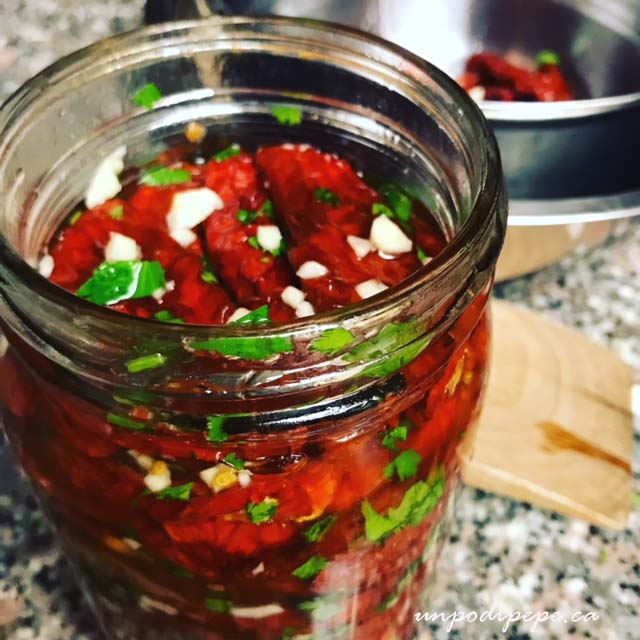
Share this:

  • Share on Facebook (Opens in new window) Facebook
  • Share on Pinterest (Opens in new window) Pinterest
  • Share on X (Opens in new window) X
  • Email a link to a friend (Opens in new window) Email
  • Share on WhatsApp (Opens in new window) WhatsApp
Like Loading...

Panettone Fatto in Casa

20 Wednesday Dec 2017

Posted by Un po' di pepe in Mangiamo!, Recipes

≈ 29 Comments

Tags

Biga, Dolci di Natale, Italian food, Lievito madre, Panettone, Panettone con fichi e noci, Panettone fatto in casa, Panettone recipe

I started experimenting with panettone last year. I did not do it intentionally… it was an act of desperation.  I had made lievito madre– mother yeast or bread starter that I was keeping for months, and needed to feed at least once or twice a week.  I had to do something with the part you need to give away or throw out.  It was invading my cucina! I ran out of people to give it to, and did not like throwing it away.  Then I found out I could use my lievito madre to make panettone. Yeast still had to be added, but the lievito madre added flavour and texture to the dough and helped it stay fresh longer.  I adapted this overnight panettone recipe, replacing 1 cup of flour with 1 cup of my starter.  It was pretty good.  This year, I no longer have my starter, plus I lost all of my recipe experimentation notes. Mannaggia!  So I had to start all over, but luckily my panettone turned out better.  This time I used a biga (BEE•gah), a sort of ‘mini starter’ that ferments overnight.  After trying a lot of different things, I can finally post the recipe, just in time for Natale.  Traditionally, panettone is made with uvetta and canditi-raisins and candied citrus peel.  I love panettone, and canditi, but I usually end up picking out the raisins, so I used dried figs soaked in grappa instead.  If you like raisins, they do grappa well too!  Panettone dough needs to rise 3 times, so this recipe is not recommended for the inpatient or inexperienced bread baker.  Be sure to read my notes at the bottom.  My previous post Panettone details the history of this lovely dolce.

Panettone con Fichi, Noci e Arancia/Panettone with Figs,Walnuts and Orange:

Make a biga the night before:

  • 100 g 00 flour or all-purpose flour (200 ml, ~¾cup)
  • 100 ml milk (85g, a bit more than ⅓ cup) at room temperature
  • 1 (7 g) package active dry yeast (not quick rise or instant) Lievito di birra is what I used*
  • 15 g honey (10 ml, 2 tsp)

In a glass bowl or measuring cup, dissolve the yeast in the milk.  Add honey, then flour.  Cover with a tea towel and leave overnight or longer. It should be bubbly and doubled in size

Soak fruit: 250-500 ml (1-2 cups) chopped dried figs (or apricots, cranberries, raisins or other mixed dried fruits).  Cover with 30ml (2 tablespoons or 1 ‘shot’) of grappa and soak overnight.

Make the dough the next morning:

  • Biga made the night before
  • 400g flour (~800 ml, 3 ¼cups)
  • 60 ml white wine (¼ cup, 4 tablespoons)
  • 100 g sugar (120 ml, ½ cup)
  • 100 g butter at room temperature (125 ml, ½ cup, 1 ‘stick’)
  • 6 g salt (1 tsp)
  • 3 eggs (plus one extra yolk if the eggs are small)
  • 5 ml (1tsp) Fiori di Sicilia (or 1 tsp vanilla extract or ⅓ a vanilla bean and 5 drops of orange oil) **

Make a well in the center of the flour. Add the biga and other ingredients.  Mix with a wooden spoon.  Knead by hand on a floured surface for 10-20 minutes or electric mixer 10 minutes followed by a few minutes by hand. Cover bowl with a tea towel and let rise for a minimum of 3 hours.  Longer is better*

Add fruit and canditi:

Deflate the dough and pull it into a rectangle. Top with:

  • Grated rind of 1 large orange
  • Drained figs or other dried fruit soaked in grappa
  • 125-250 ml (½ to 1 cup) Canditi-candied citrus peel
  • 125-250 ml (½-1 cup) chopped walnuts

Roll dough up into a log, then knead on a floured surface to evenly mix in the fruit, nuts, and canditi. Shape into a ball.

Place the ball in a 750g panettone paper mold, a metal coffee can lined with parchment paper, an 8 cup glass pyrex measuring cup lined with parchment paper, or a new terra cotta pot. Whatever you use, make sure the sides are tall enough to allow for the dough rising. Let rise 4-5 hours*** I had to let mine rise overnight in the oven-turned off with the light on.

Slash a cross on top of the panettone and place a small square of butter in the middle

Bake panettone in a preheated 190° C (375° F) oven for 45-50 minutes or until the top is done.  If the top is becoming too dark, cover with a piece of aluminum foil

Cool panettone upside down to prevent falling.  I could not find bamboo skewers, so I used my bamboo knitting needles to skewer the bottom then hung it upside down over a large pot. I don’t know if this step is really necessary, but after all this work, I am not willing to find out! It also looks cool.  See photo:

The panettone should keep fresh for 5 days in a plastic bag- if it lasts that long!

Notes:

Amounts can vary depending on temperature, humidity and type or size of ingredient.  I have included ml and cup measurements in brackets, but measuring ingredients by weight is the most accurate.

Fig and chocolate is also a nice panettone combination.  For best results, freeze the chocolate pieces before adding to the dough.

I made my own canditi-candied orange peels, using the instructions on Domenica’s post. It was easier than I thought and I won’t be buying canditi any more!

*Lievito di birra is beer yeast.  It is available from some Italian supermarkets in packets.  Use ‘active’ dry yeast, not instant or quick-rise.

**Fiori di Sicilia is a vanilla citrus mixture that smells like panettone in a bottle. It can be hard to find and expensive.  Vanilla extract and orange oil is a good substitute.

***Dough rising times are variable, especially in colder weather. If you are having difficulty getting your dough to rise, there are some things that can help.

  • Place the dough on the counter while a pot of water is simmering on the stove
  • Place the dough in the oven (turned off) with the light on
  • If really having difficulty, preheat the oven to a ‘keep warm’ setting, then turn it off and place the dough in there.
  • Abbia pazienza-Just be patient!

Buon appetito e Buon Natale, Cristina

Share this:

  • Share on Facebook (Opens in new window) Facebook
  • Share on Pinterest (Opens in new window) Pinterest
  • Share on X (Opens in new window) X
  • Email a link to a friend (Opens in new window) Email
  • Share on WhatsApp (Opens in new window) WhatsApp
Like Loading...
← Older posts
Newer posts →

Enter your email address to follow 'un po' di pepe' and receive notifications of new posts by email.

Join 511 other subscribers
Follow Un po' di pepe on WordPress.com

Popular Posts

  • Hairstyling in Ancient Roma
    Hairstyling in Ancient Roma
  • Cucina Italiana Patrimonio UNESCO
    Cucina Italiana Patrimonio UNESCO
  • Grano Arso
    Grano Arso
  • Napoli Street Art
    Napoli Street Art
  • Italiano per Ristoranti~How to pronounce your restaurant menu
    Italiano per Ristoranti~How to pronounce your restaurant menu
  • Hostaria Antica Roma~Eat like an Ancient Roman
    Hostaria Antica Roma~Eat like an Ancient Roman
  • Italian Christmas Vocabulary
    Italian Christmas Vocabulary

Recent Posts

  • Cucina Italiana Patrimonio UNESCO
  • 2025~Un po’ di pepe Year in Review
  • Castel del Monte
  • ‘The Nuances of Love’
  • Hostaria Antica Roma~Eat like an Ancient Roman
  • Santa Maria in Aracoeli
  • Casino dell’Aurora~Villa Boncompagni Ludovisi
  • Nasoni di Roma
  • Bloghiversario #11
  • Fontana di Trevi
  • Acqua Vergine
  • Giubileo 2025
  • Sanremo 2025
  • In Vino there are Memories
  • A Literary Harvest
  • 2024~Un po’ di pepe Year in Review
  • Buon Natale 2024
  • Il Bicerin
  • Mercato Porta Palazzo
  • Torino
  • Catanzaro, Calabria
  • Il Pumo Pugliese
  • Artemisia Gentileschi
  • Cavalli di San Marco
  • Panzerotti

Categories

Amici e Famiglia Architecture Art Art history Art projects Bilingual posts Blogging Canada Culture Feste Firenze Inspiration Italia Italian Folklore Italian language Italian life Italocanadesi Libri Mangiamo! Orsara di Puglia Parole piacevoli Photography Puglia Recipes Roma Travel Travel tips Uncategorized Vino

Archives

Un po’ di pepe on Facebook

Un po’ di pepe on Facebook

Start a Blog at WordPress.com.

  • Subscribe Subscribed
    • Un po' di pepe
    • Join 511 other subscribers
    • Already have a WordPress.com account? Log in now.
    • Un po' di pepe
    • Subscribe Subscribed
    • Sign up
    • Log in
    • Report this content
    • View site in Reader
    • Manage subscriptions
    • Collapse this bar
 

Loading Comments...
 

    %d