• Home
  • About me/Chi sono
  • Contact

Un po' di pepe

~ …… (oon∙poh∙dee∙PEH∙peh) Cristina writes about interesting stuff /Cristina scrive di cose interessanti

Un po' di pepe

Category Archives: Puglia

Fucacoste e Cocce Priatorje

01 Sunday Nov 2015

Posted by Un po' di pepe in Culture, Feste, Italian Folklore, Orsara di Puglia, Puglia

≈ 5 Comments

Tags

Falò e Teste del Purgatorio, Festa dei Morti, Italian Folklore, Italian history, Muscitaglia, November 1st, Orsara di Puglia, Puglia, Pugliese Traditions, Pumpkin carving, Southern Italy, Traditional Festivals in Puglia, Tutti i Santi Festa, Zucche
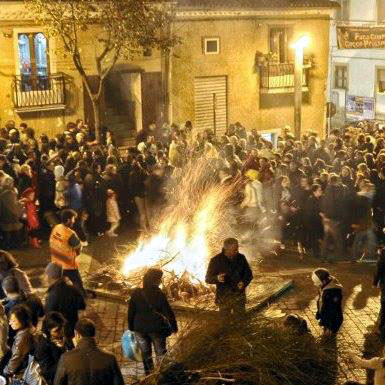
Piazza San Pietro. Photo courtesy of International Photo Correspondent Donato Narducci

Piazza San Pietro. Photo courtesy of International Photo Correspondent Donato Narducci

Tonight is a big festa in Orsara di Puglia, so I am reposting this from last year.

Fucacoste e cocce priatorje is dialetto Orsarese for ‘Falò e teste del Purgatorio’.  This translates to ‘Bonfires and heads from purgatory’. It is an ancient festival unique to Orsara di Puglia celebrated on November 1st, the night of ‘Tutti i Santi’ (All Saints Day).  All Saints Day was created in the 9th century when the Pope superimposed a Christian feast day onto existing rituals, so this festa has been around for a very long time.  It is a night where people have the opportunity to honour, reconnect and pay respect to the spirits of their loved ones.  Carabinieri estimate that the town of 3,000 had 40,000 visitors attend the festa tonight, with 9,000 cars parked up to 3 km away!
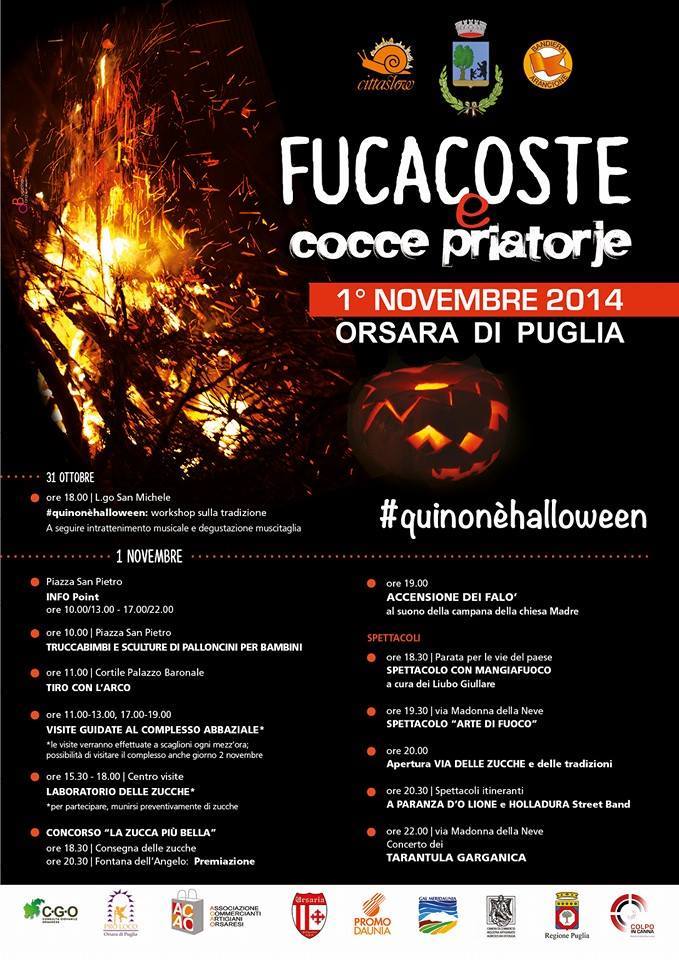
2014 poster for Fucacoste e cocce priatorje

2014 poster for Fucacoste e cocce priatorje

It is believed that the souls of the dead return among the living to visit their relatives and their former homes before moving on to Paradiso.  The bonfires are lit with wood and branches of ginestra (broom). The light of the fires and the crackling and sparks of the ginestra attract the spirits to reunite the living with those who continue to live only in their memories.  The souls of the dead loved ones collect ashes from the fires. The gleam of light inside ‘cocce priatorje’, pumpkins carved to look like heads-light their way to find their former home.

Preparation for the  festa involves gathering firewood and ginestra, preparing food and carving zucche (pumpkins).  There is even a BYOZ (bring your own zucca) pumpkin carving workshop.  Later in the evening zucche are exhibited and there is a contest for ‘la zucca più bella’-the best zucca.

In honour of the dead, simple but symbolic foods are prepared.  These include potatoes, onions, salsicce (sausages) and castagne (chestnuts) cooked in open fire. Muscitaglia is a traditional dish served on November 1st which probably dates back from the ancient Greeks and Byzantines. Muscitaglia (moo•shee•tah•lyah) in both Greek and Latin is made up of the words mosto (wine must) and talia (grain). The ingredients include boiled grain and vino cotto (literally cooked wine-also called mosto cotto). Pomegranate seeds and walnut pieces are sometimes added. These ingredients are symbols of fertility and abundance, but also of honour and respect for the dead.
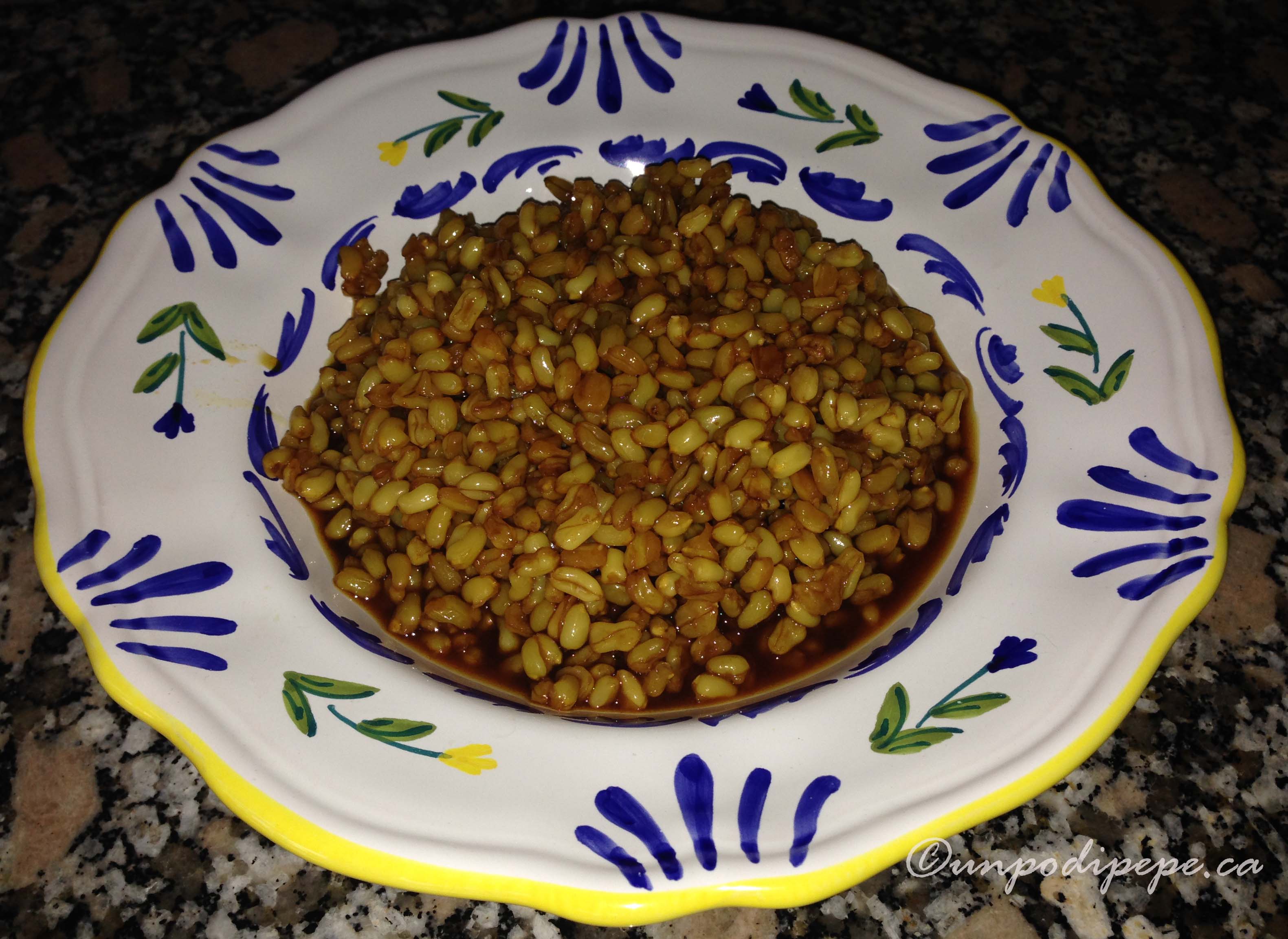
Muscitaglia

Muscitaglia

When the campanile (church bell tower) strikes 1900 hours (7 pm), Orsara di Puglia ‘catches fire’. Over 100 bonfires are simultaneously lit in every street and piazza and remain lit through the night.  The fires, pumpkin lanterns, music and people in the streets create a magical, enchanted atmosphere.

Fucacoste e Cocce Priatorje has often been confused with Hallowe’en, but it is a very different event.  Besides the fact that the date is different, dressing up in costume is not part of the custom, there is nothing scary about it and there are no evil spirits to chase away. It has more similarities with the Mexican Dia de los Muertos, Day of the Dead.  This is an event about being together in community to celebrate the bond between the living and those who we remember in our hearts, and to remind us that our time on earth is precious.

Watch the video ‘#quinonèhalloween’ featuring 94 year old Z’Gaetan talking about the festa and its significance  https://www.youtube.com/watch?v=9W5RD0-9H-A

Read about tonight’s festa (in Italiano) on the Comune di Orsara di Puglia website.  For more about Orsara di Puglia read the post ‘Benvenuti ad Orsara di Puglia’.  Ci vediamo alla festa!
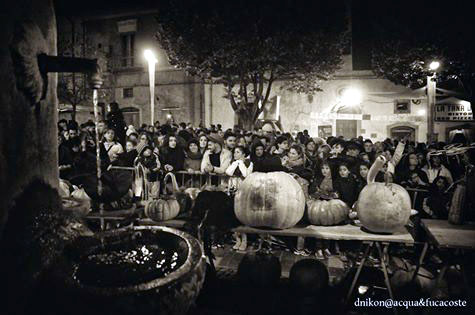
Fucacoste e Cocce Priatorje, Fontana Sant'Angelo, Orsara di Puglia 2014. Photo courtesy of Donato Narducci

Fucacoste e Cocce Priatorje, Fontana Sant’Angelo, Orsara di Puglia 2014. Photo courtesy of Donato Narducci
Share this:

  • Click to share on Facebook (Opens in new window) Facebook
  • Click to share on Pinterest (Opens in new window) Pinterest
  • Click to share on X (Opens in new window) X
  • Click to email a link to a friend (Opens in new window) Email
  • Click to share on WhatsApp (Opens in new window) WhatsApp
Like Loading...

Museo Diocesano, Orsara di Puglia

29 Saturday Aug 2015

Posted by Un po' di pepe in Art history, Italia, Italian life, Orsara di Puglia, Photography, Puglia

≈ 7 Comments

Tags

Italian history, Museo Diocesano Orsara di Puglia, Orsara di Puglia, Palazzo Varo, Puglia, Southern Italy

museodiocesanoorsaraThe last time I was in the Museo Diocesano di Orsara di Puglia was about 1980. It looks as if hardly anyone else has been there either! The Museo is right around the corner from my casa, and it is not usually open. To visit, you need to ask for the person who has the key.  Last week I was walking by and noticed it was open as there was a photo exhibit in one of the rooms. As I walked up the stone staircase it was like stepping through time.

My accidental selfie

My accidental selfie

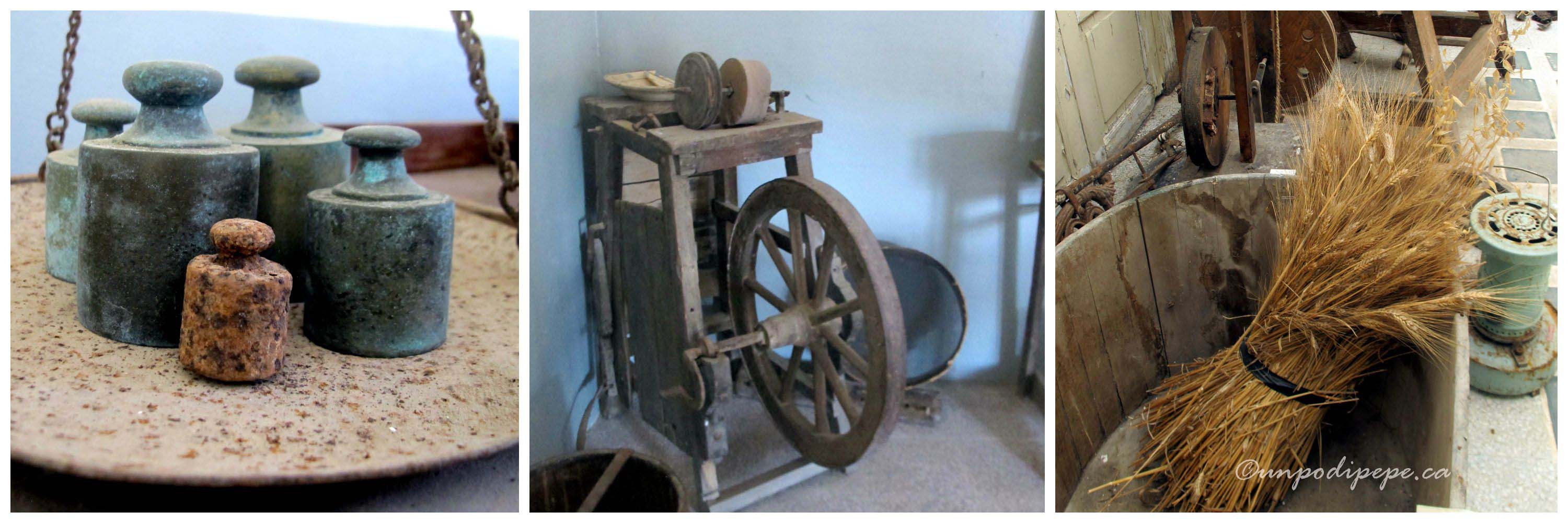
The Museo occupies part of the upper floor of the Palazzo Varo, a 16th Century building that was part of the Abbazia dell’Angelo. The famiglia Varo sold the palazzo and it became a convent for the ‘Monache Bianche’ or white nuns. When the sisters moved in the 1960’s it became the Scuola Media until a new school was built. In the 1970’s, some of the rooms became a depository for archeological relics and museum items. The bottom floor was recently remodelled into a very nice meeting/conference area.  The upper floor has a separate entrance and is in an elegant state of decay, to match the artifacts it is housing.museodiocesanocollage2

The collection is actually really impressive and reflects the history of the area.   Most of the artifacts, except the sacred items formerly used in the parish, have been donated, collected and collated by volunteers. The Museo encompasses a time span from Neolithic to mid 20th Century. That’s a really long time! The bronze and selce (flint) tools and utensils, earthenware vessels, lamps, tomb decorations and even fragments of a 10th Century pavimento (mosaic pavement) were dug up by contadini (farmers/peasants) while plowing their fields.

Roman lucerne -oil lamps

Roman lucerne -oil lamps

Ascia e lancie in Bronzo (bronze hatchet and spears)

Ascia e lancie in Bronzo (bronze hatchet and spears)

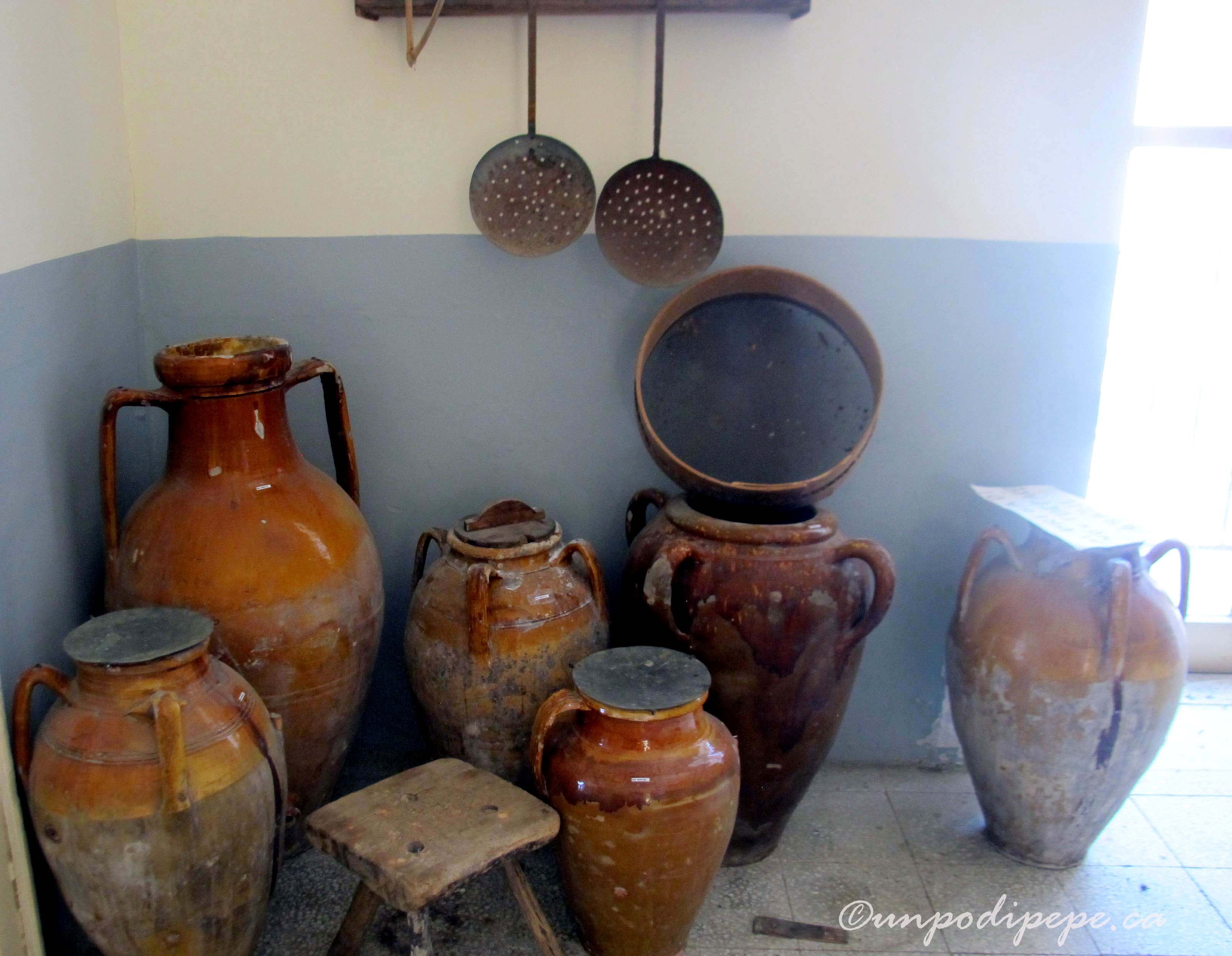
There are also farm implements, tools, utensils and household items used by local contadini in daily life. The lack of formal organization and cataloguing of the items makes the place so much more interesting. The crumbling, aging plaster walls of the formerly grand Palazzo provide a beautiful, yet ironic backdrop for the crumbling rusted work and field implements used by contadini Orsarese.

Museodiocesanocollage3 copymuseodiocesanosellaThe Museo is definitely worth a visit-you need to ask at the Parish or Comune (Town Hall) for someone to let you in.  Let me know if you need more info on this, and read Benvenuti ad Orsara di Puglia!

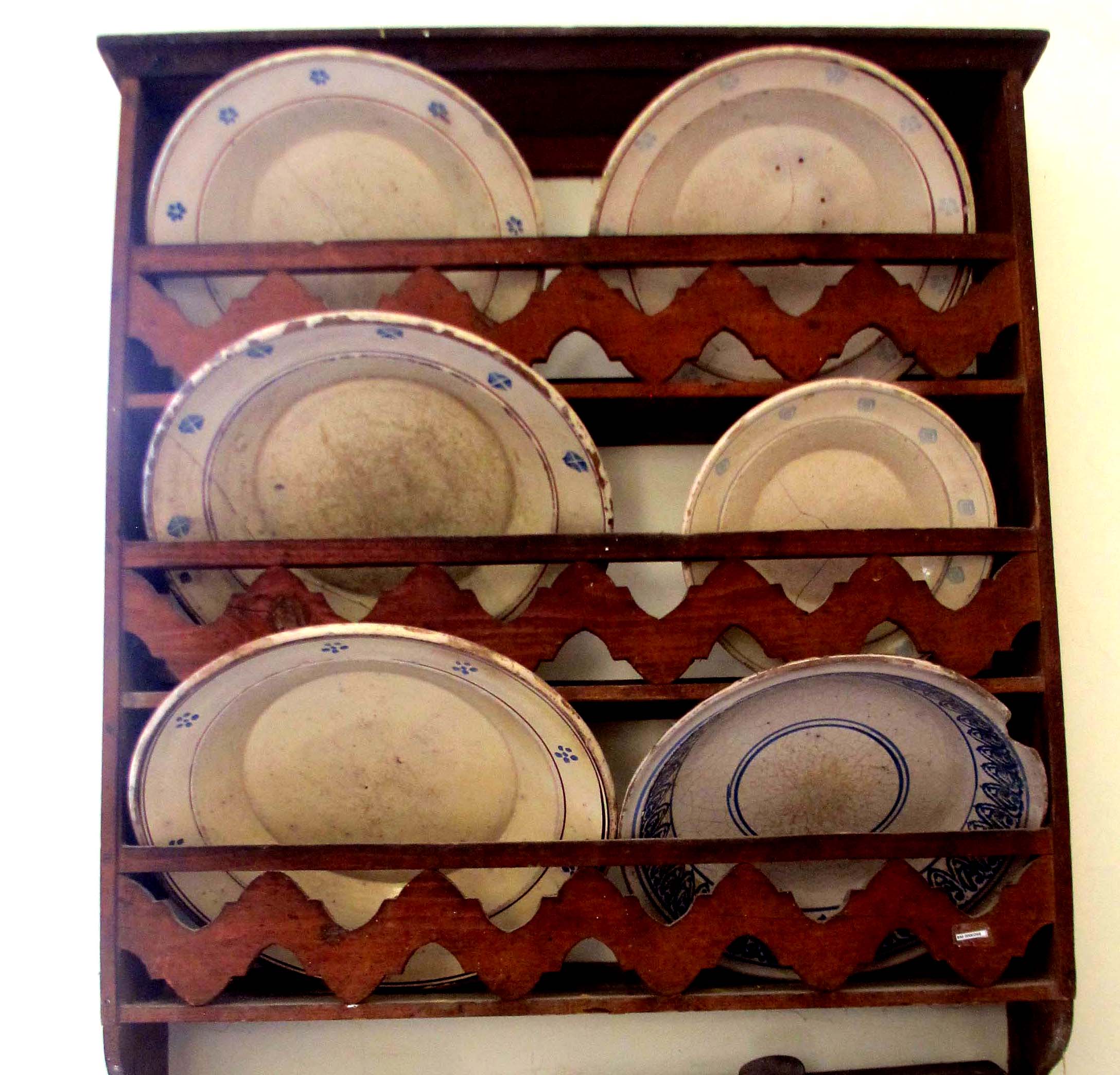
A piattaia, called a 'scudular' (scoo.doo.lahr) in Orsarese. I have one just like it, made by a friend of Papà's. My plates are quite a bit newer though!

A piattaia, called a ‘scudular’ (scoo.doo.lahr) in Orsarese. I have one just like it, made by a friend of Papà’s. My plates are quite a bit newer though!

museodiocesano3

Share this:

  • Click to share on Facebook (Opens in new window) Facebook
  • Click to share on Pinterest (Opens in new window) Pinterest
  • Click to share on X (Opens in new window) X
  • Click to email a link to a friend (Opens in new window) Email
  • Click to share on WhatsApp (Opens in new window) WhatsApp
Like Loading...

I Trulli di Alberobello

24 Wednesday Jun 2015

Posted by Un po' di pepe in Italia, Photography, Puglia, Travel

≈ 26 Comments

Tags

Alberobello, Architecture, Bandiera Arancione, Italian history, Italy travel tips, Puglia, Rione Aja Piccola, Rione Monti, Southern Italy, Trulli, UNESCO World Heritage Sites, Val d'Itria, Vernacular architecture, Zona dei Trulli

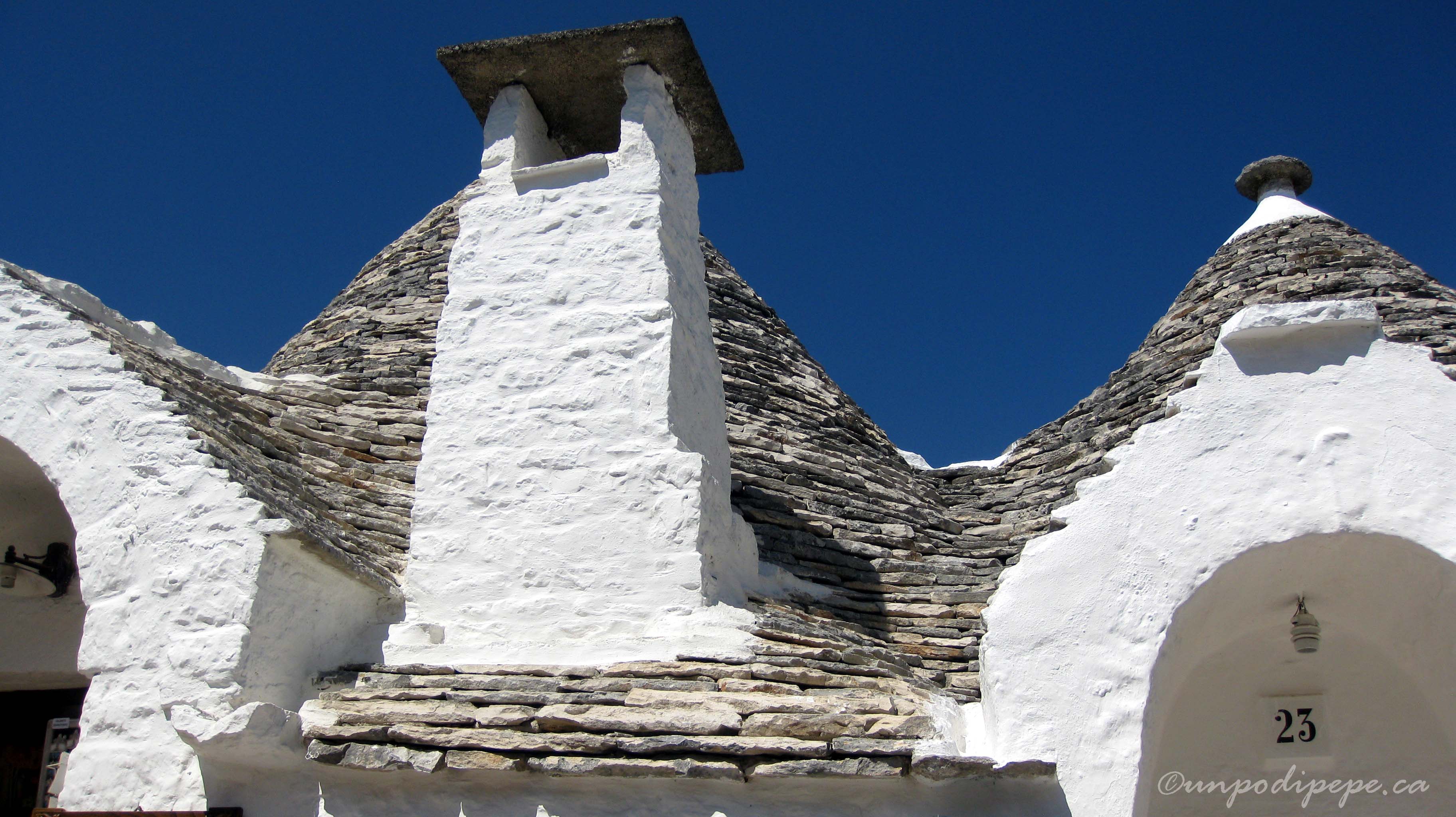
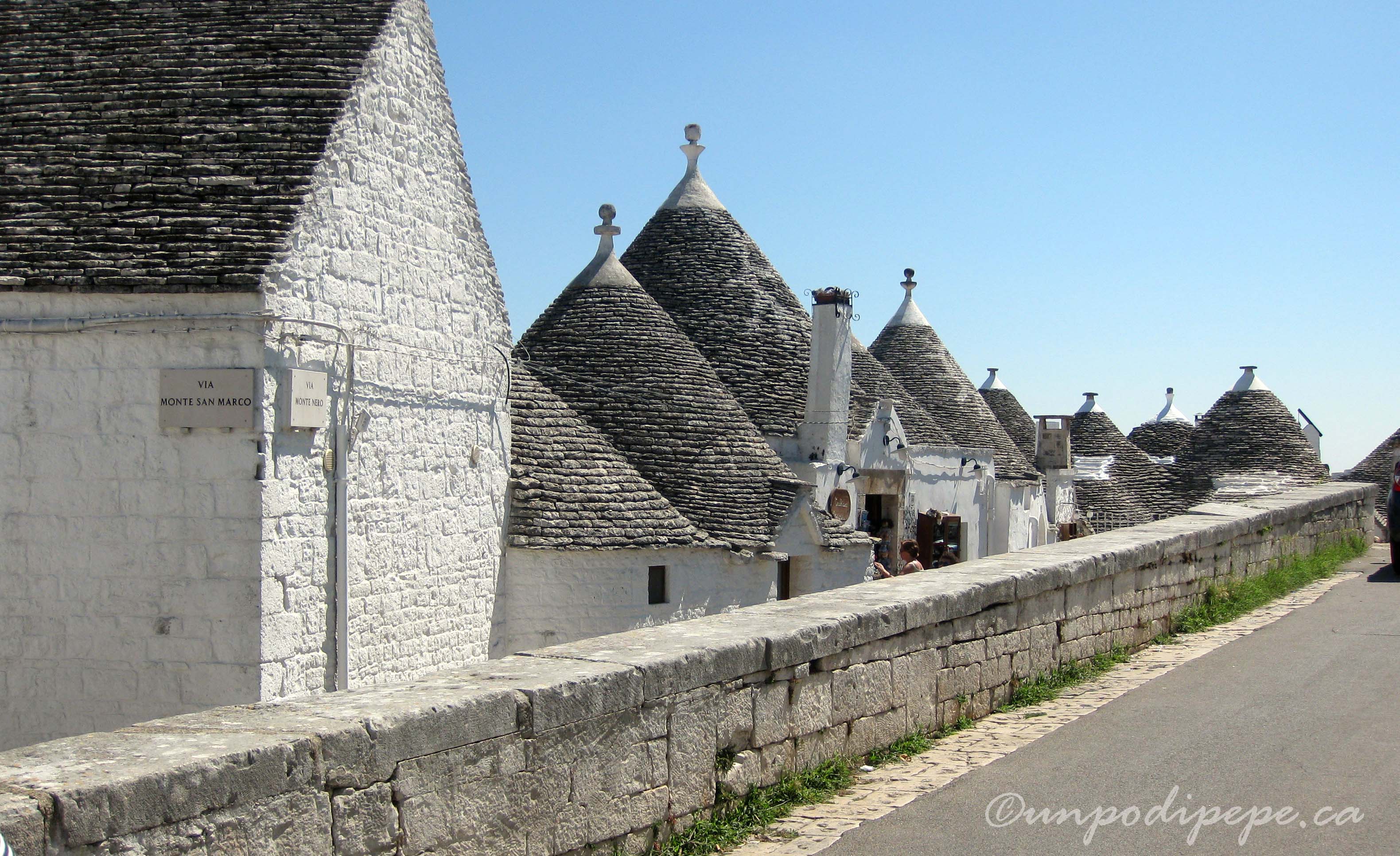
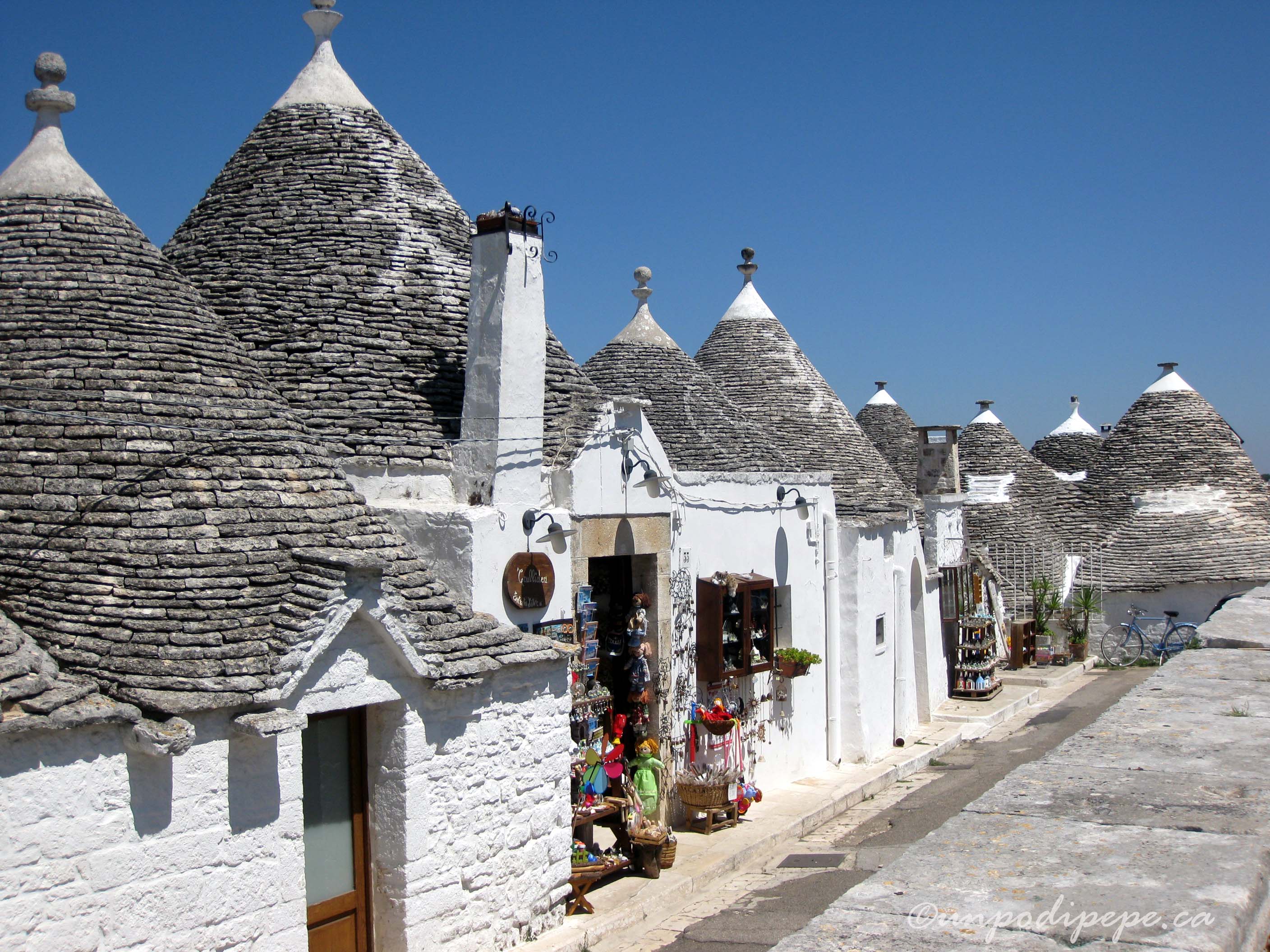
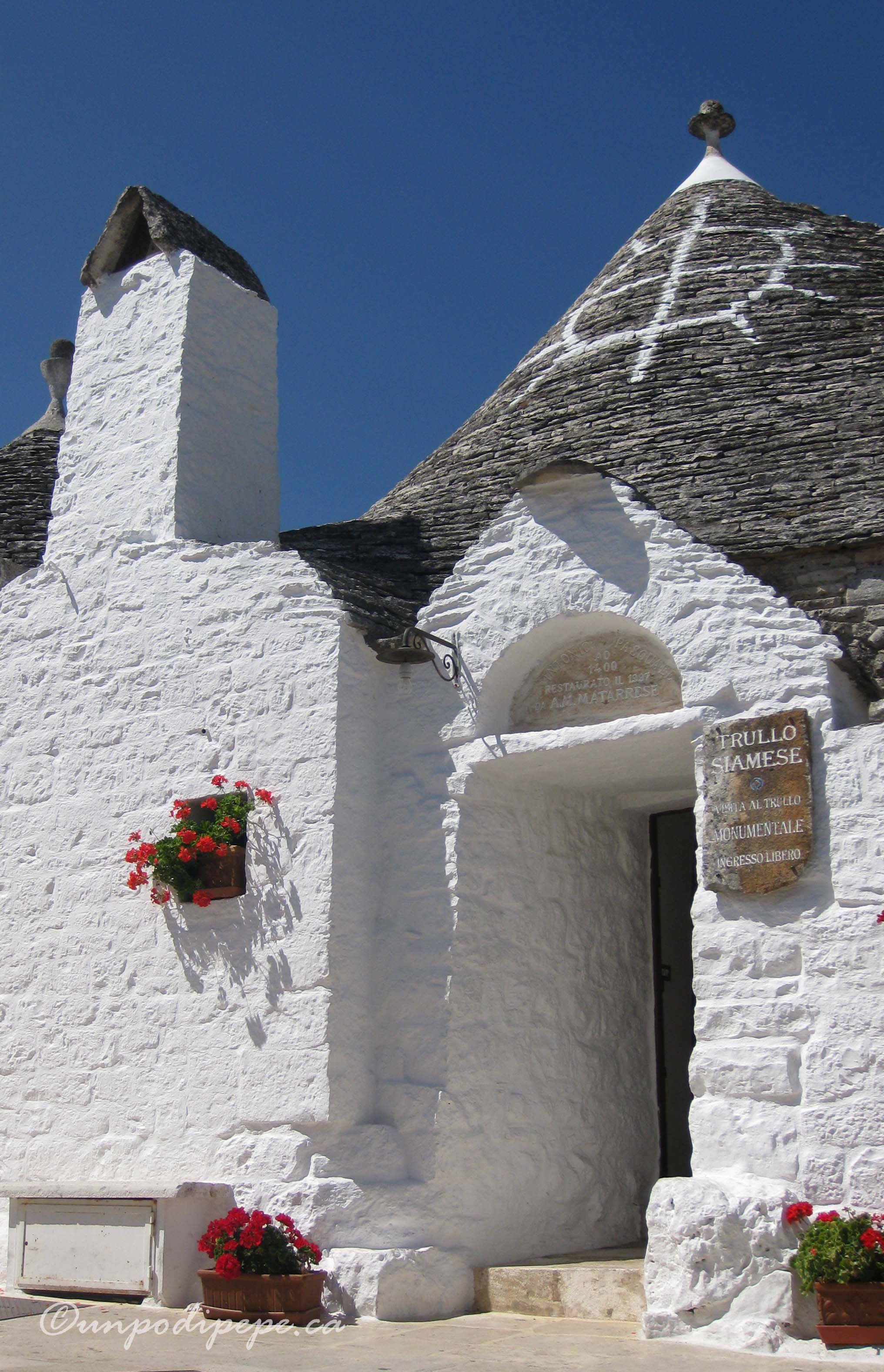
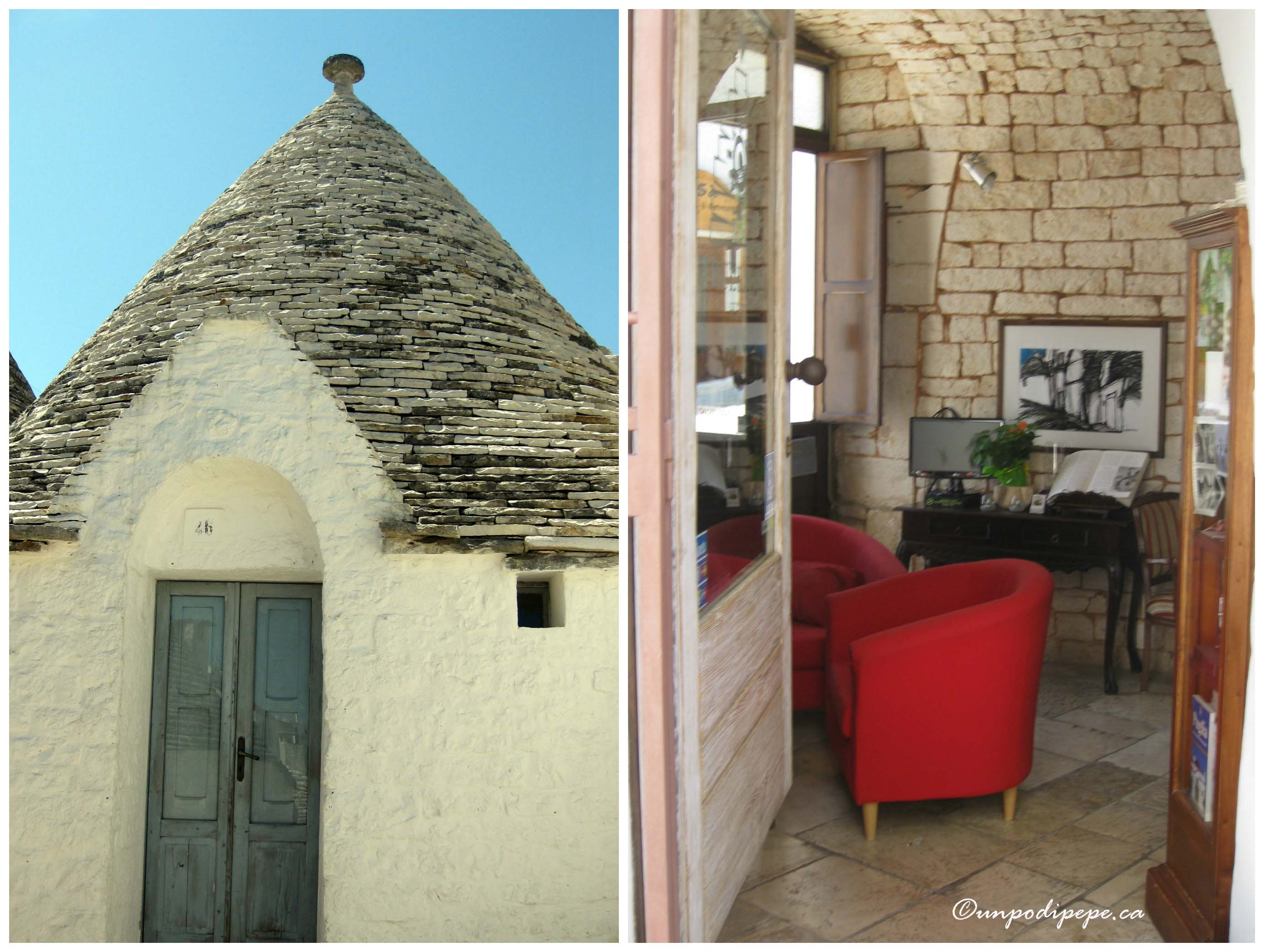
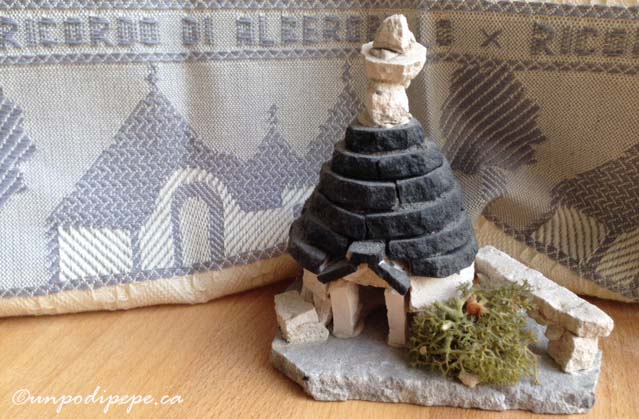
TrulliecielobluAs the car nears Alberobello, trulli (TROOL•lee) start to appear in the rural landscape and my imagination goes into overtime.  I hear the tune ‘La-la-la-la-la-la, la-la-la-la-la’ in my head and I expect i Puffi (the Smurfs) to start dancing around the whitewashed trulli! Too much midday Pugliese sun maybe?  Trulli are traditional limestone houses unique to the Val d’Itria in Southern Puglia.  They were built ‘a secco’, which means dry-without mortar.  Trulli have domed cone-shaped roofs built up of overlapping chiancharelle (kyan•ka•REL•leh)-grey limestone slabs.  On the capstone at the top is a decorative pinnacolo (pinnacle).  The shape of the pinnacolo is said to be a signature of the stonemason who built it.  Some roofs also have mythologic or religious symbols painted on them.

Alberobellostrada‘La Zona dei Trulli’ includes the areas around Locorotondo, Fasano, Cisternino, Martina Franca, Ceglie Massapica and the largest concentration of 1,620 trulli in Alberobello.  Alberobello and its trulli are aUNESCO World Heritage Site. UNESCO believes Alberobello is an exceptional example of the survival of prehistoric building techniques that are still in use. The fact that the buildings are so well-preserved and still occupied make the site unique.Alberobellobiancheria

The word trullo comes from tholos (τρούλος) a variation of the Greek word for cupola or dome. There were already scattered trulli settlements in the Val d’Itria around the year 1000.  These gradually grew into villages, later called Aja Piccola and Monti-the 2 trulli districts in Alberobello today. The oldest trulli we know of date back to about 1350 when the Counts Acquaviva of Conversano were given land for their service during the Crusades and colonized the area by moving people from their nearby areas.Alberobellostrada2

Tradition has it that building ‘a secco’ was imposed on the settlers so their houses could be dismantled quickly and easily. At first this was so the Count could easily dispossess villagers of their homes. Later it was a way to evade taxation imposed on each new construction by the King of Napoli. Trulli could be dismantled when the tax collector came by for an inspection, and then reconstructed just as quickly when he left. Trulli came to be known as temporary, unstable field shelters that were not worth taxing.

Trullo Siamese.  2 brothers in love with the same woman lived here.  They split it in half and the single brother installed a door into the lane.

Trullo Siamese. 2 brothers in love with the same woman lived here. They split it in half and the single brother installed a door into the lane.

In reality, trulli are anything but unstable or primitive. They are built directly on the underlying natural rock and their internal structure is very durable. The thick double walls keep the trullo warm in winter and cool in summer. There are systems for collecting rainwater using eaves projecting at the base of the roof diverting water through a channelled slab into a cistern underneath the trullo. Some trullo homes are made up of groups of 2- 5 trulli.  Most historians agree that the building technique for trulli came about due to the area’s geographical conditions and abundance of limestone. The quickie evictions and tax evasion scam came later.trulliombra

In the early 1600’s there was a group of about 40 trulli in Rione Monti (Monti District) then settlement and trullo construction really expanded with the addition of a bakery, mill, tavern and butcher shop.   In 1797 the feudal rule of the Acquaviva family ended when Ferdinand IV, King of Napoli proclaimed the community a ‘citta regia’, or royal town.  Alberobello took its name from silva arboris belli, the Latin name for the region.

Inner-city trulli?

Inner-city trulli?

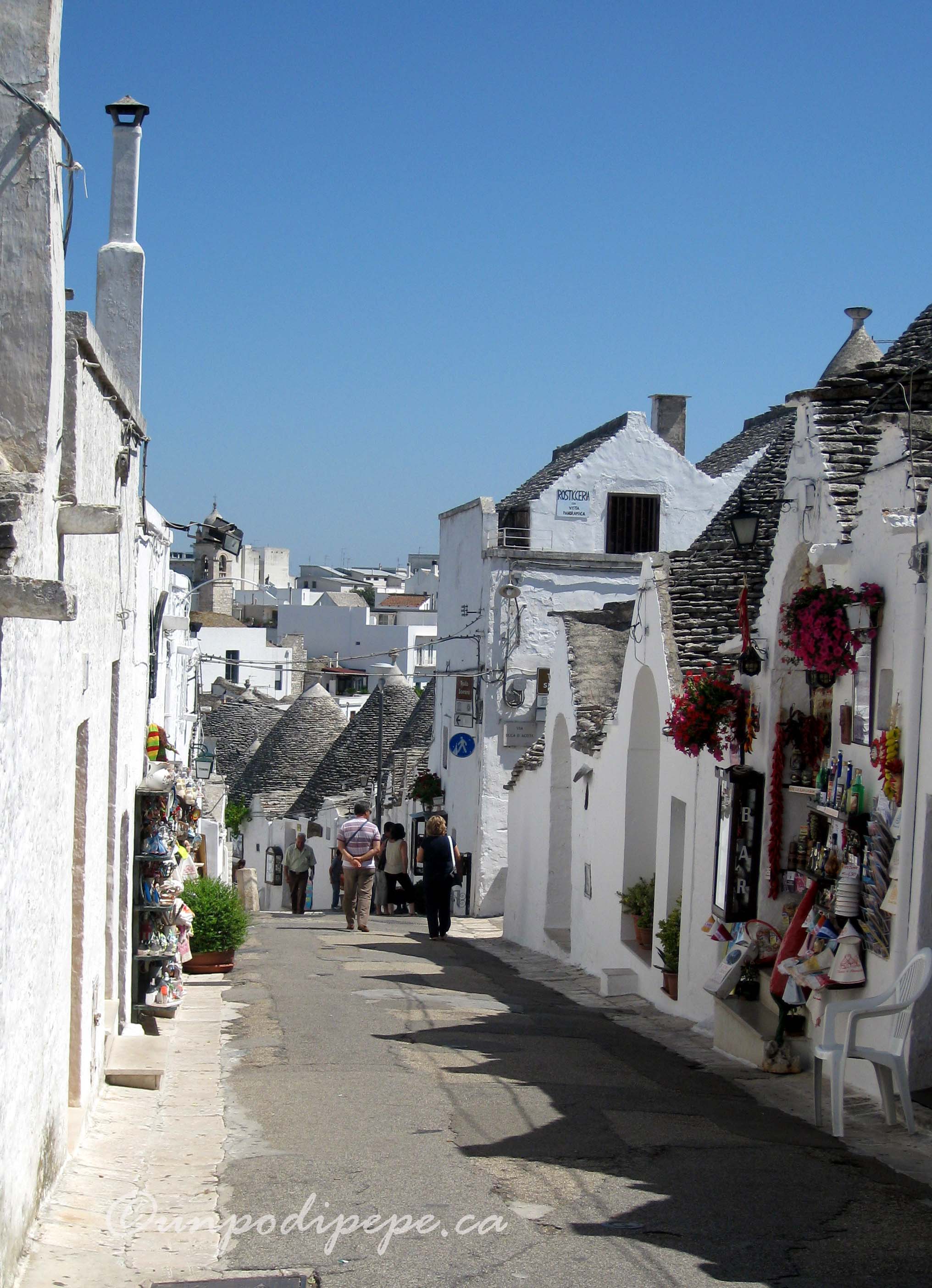
Today Rione Monti has 1,030 trulli and Rione Aja Piccola has 590 trulli, many of which are still inhabited as homes by some of Alberobello’s 11,000 residents.  You can also find the trullo church of Sant’Antonio di Padova, trullo souvenir shops and ristoranti, and a trullo hotel.  In the surrounding countryside there are many trullo masserie (farmhouses) that can be rented.

Exterior of a single trullo and interior of a trullo photo and art gallery

Exterior of a single trullo and interior of a trullo photo and art gallery

In 2010 along with Orsara di Puglia, Alberobello was distinguished with a Bandiera Arancione (orange flag) designation, a seal of quality from the Touring Club Italiano.  Alberobello can be accessed by train or bus from Bari. Although Alberobello is quite ‘touristy’, it still retains its charm and is definitely worth a visit.  If you can brave the mid-day sun in the summer, the cast shadows against whitewashed walls are an artist’s and photographer’s dream….but if you start dreaming about i Puffi, you had better go find some shade!

Alberobello souvenirs.  A linen towel and my very own very cute trullo.  I bought it the first time I visited Alberobello.  It's made of real limestone and chiancharelle.

Alberobello souvenirs. A linen towel and my very own very cute trullo. I bought it the first time I visited Alberobello. It’s made of real limestone and chiancharelle.

Not all of the buildings in Alberobello are trulli

Not all of the buildings in Alberobello are trulli

alberobelloombra

Ciao, Cristina

Share this:

  • Click to share on Facebook (Opens in new window) Facebook
  • Click to share on Pinterest (Opens in new window) Pinterest
  • Click to share on X (Opens in new window) X
  • Click to email a link to a friend (Opens in new window) Email
  • Click to share on WhatsApp (Opens in new window) WhatsApp
Like Loading...

La Montagna Spaccata

17 Sunday May 2015

Posted by Un po' di pepe in Italia, Orsara di Puglia, Photography, Puglia

≈ 18 Comments

Tags

Montagna Spaccata, Montaguto, Orsara di Puglia, Parco Eolico di Montaguto, Puglia, Southern Italy

Montagna Spaccata1

When I am in Orsara di Puglia, I go for a long passeggiata (walk) up the mountain almost every morning. When you spend weeks eating lots of yummy food, this is necessary. Orsara is already at 650-700 m elevation (2300 ft) and my walk is uphill a lot of the way so there is some good altitude there. I leave Orsara via Via Castagneto and take the Via Nuova, go past the Cimitero (cemetary) and then take the uphill zigzags to ‘La Montagna Spaccata’. At one time this was a steep windy dirt road, but now it is paved. I like to call it ‘la palestra di Madre Natura’ or ‘Mother Nature’s gym’.  In the early to mid morning and early evening many Orsaresi of all ages are out walking.

ViaNuova2

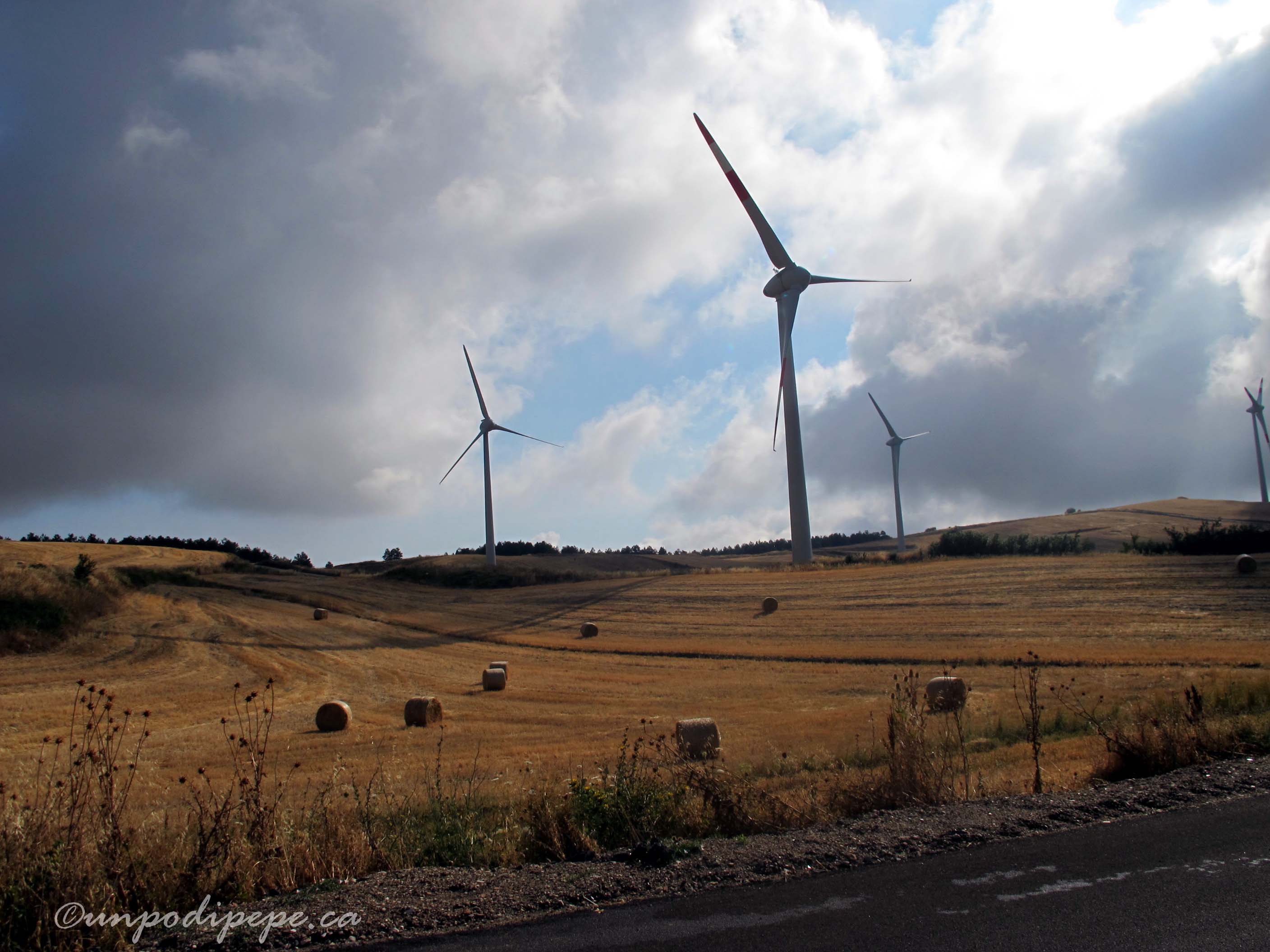
‘Spaccata’ means cracked or split, as in split into 2.  The reason for the name is that part of the mountain is in Puglia and part in Campania.  In fact, Montaguto, the closest village to Orsara, is in Campania, in the province of Avellino. Arriving at the ‘frontiera’ (border), you can see the difference in the asphalt where one regione has stopped paving and the other has started. Just beyond the border is the Parco Eolico di Montaguto (wind farm) and the road also flattens out a lot. I usually walk to this ‘frontiera’ and then walk back down.  Sometimes I go father, and a few times I have even walked all the way to Montaguto which is 6 km away.

Montaguto (AV) seen from a distance

Montaguto (AV) seen from a distance

I always thought Montagna Spaccata was just a ‘local’ name and that it had a real name.  I tried to find out, but no one seemed to know for sure.  I did some heavy duty research, consulting wikipedia….oops, I mean my amico Donato, who asked his amico Leonardo who consulted the official IGMI (Istituto Geografico Militare Italiano) military map …..and what do you know, Montagna Spaccata is the actual name!

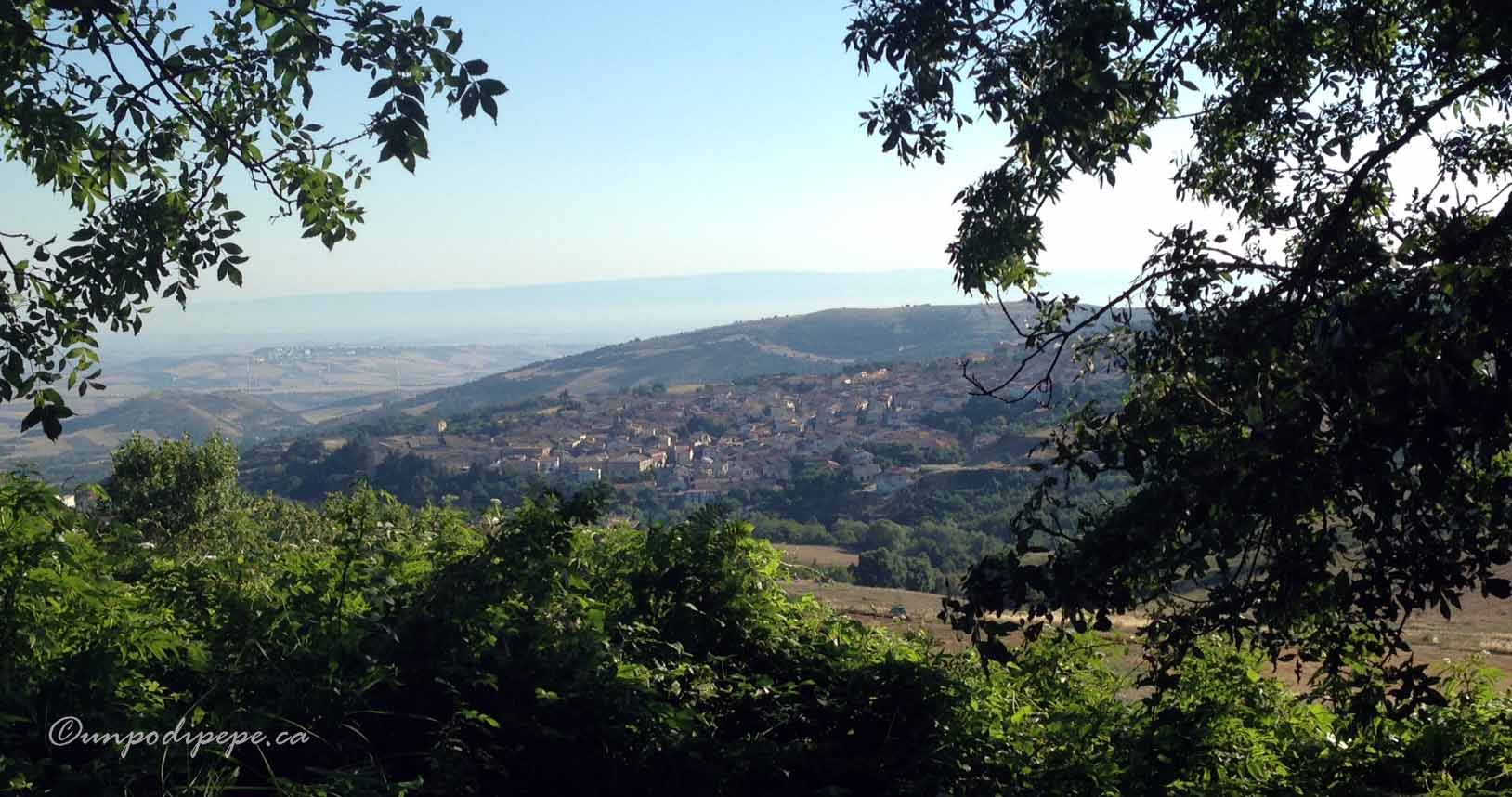
View of Orsara di Puglia

View of Orsara di Puglia

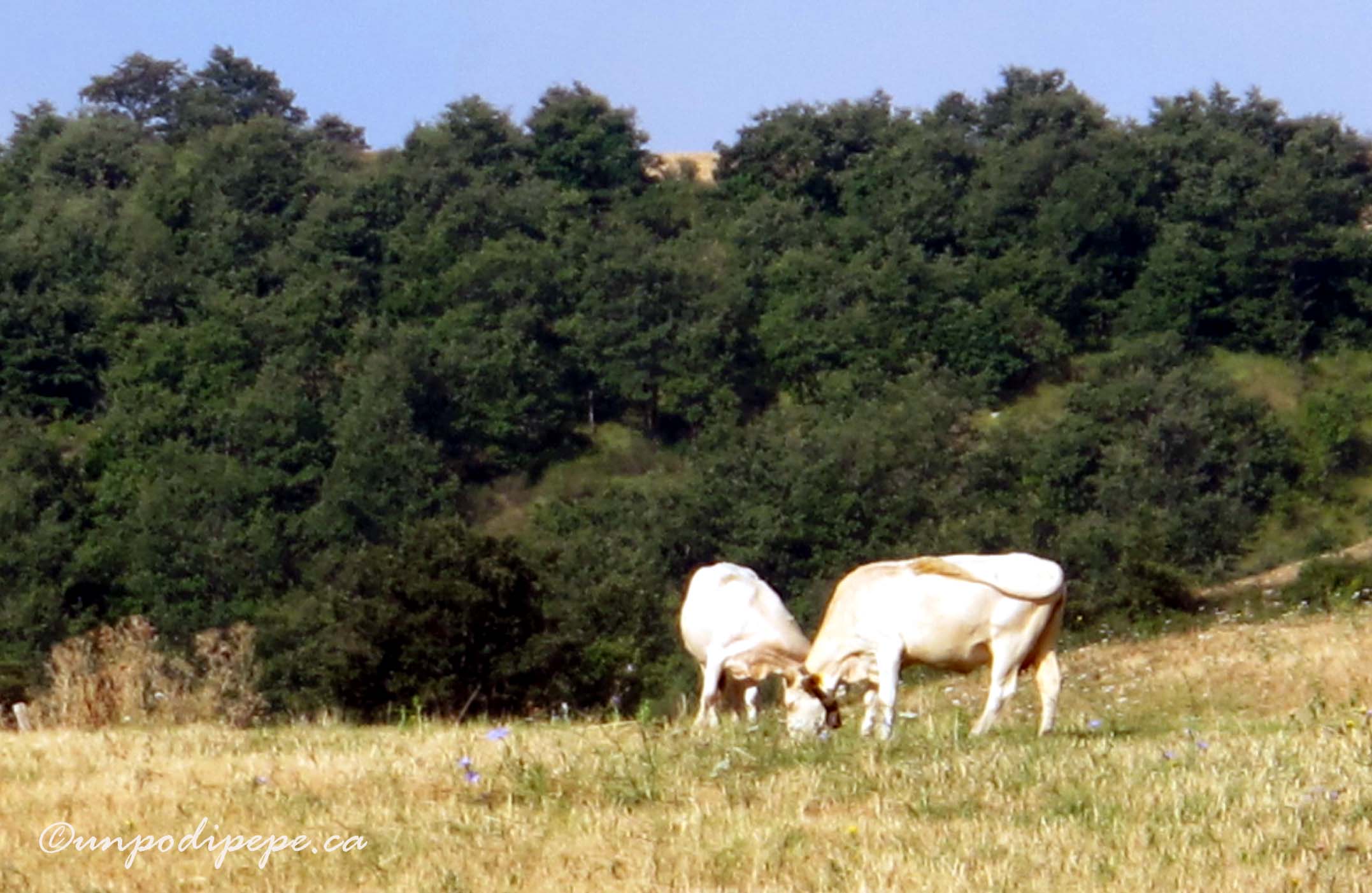
I love my morning passeggiata.  I can breathe in fresh aria di montagna (mountain air) and get some exercise-aka an excuse to eat more! I also enjoy and photograph some breathtaking scenery and views of Orsara di Puglia and even meet friends along the way.  See for yourself…..

Montagna Spaccata copy1

Orsaradipugliavista2

Pale eoliche (wind turbines) near Montaguto

Pale eoliche (wind turbines) near Montaguto

MuccheMontaguto

Share this:

  • Click to share on Facebook (Opens in new window) Facebook
  • Click to share on Pinterest (Opens in new window) Pinterest
  • Click to share on X (Opens in new window) X
  • Click to email a link to a friend (Opens in new window) Email
  • Click to share on WhatsApp (Opens in new window) WhatsApp
Like Loading...

Grano Arso

12 Sunday Apr 2015

Posted by Un po' di pepe in Amici e Famiglia, Culture, Mangiamo!, Puglia

≈ 33 Comments

Tags

Cucina povera, Farina di grano arso, Foggia, Italian food, Monte Dauni, Pasta nera, Peppe Zullo, Pugliese Traditions, Southern Italy

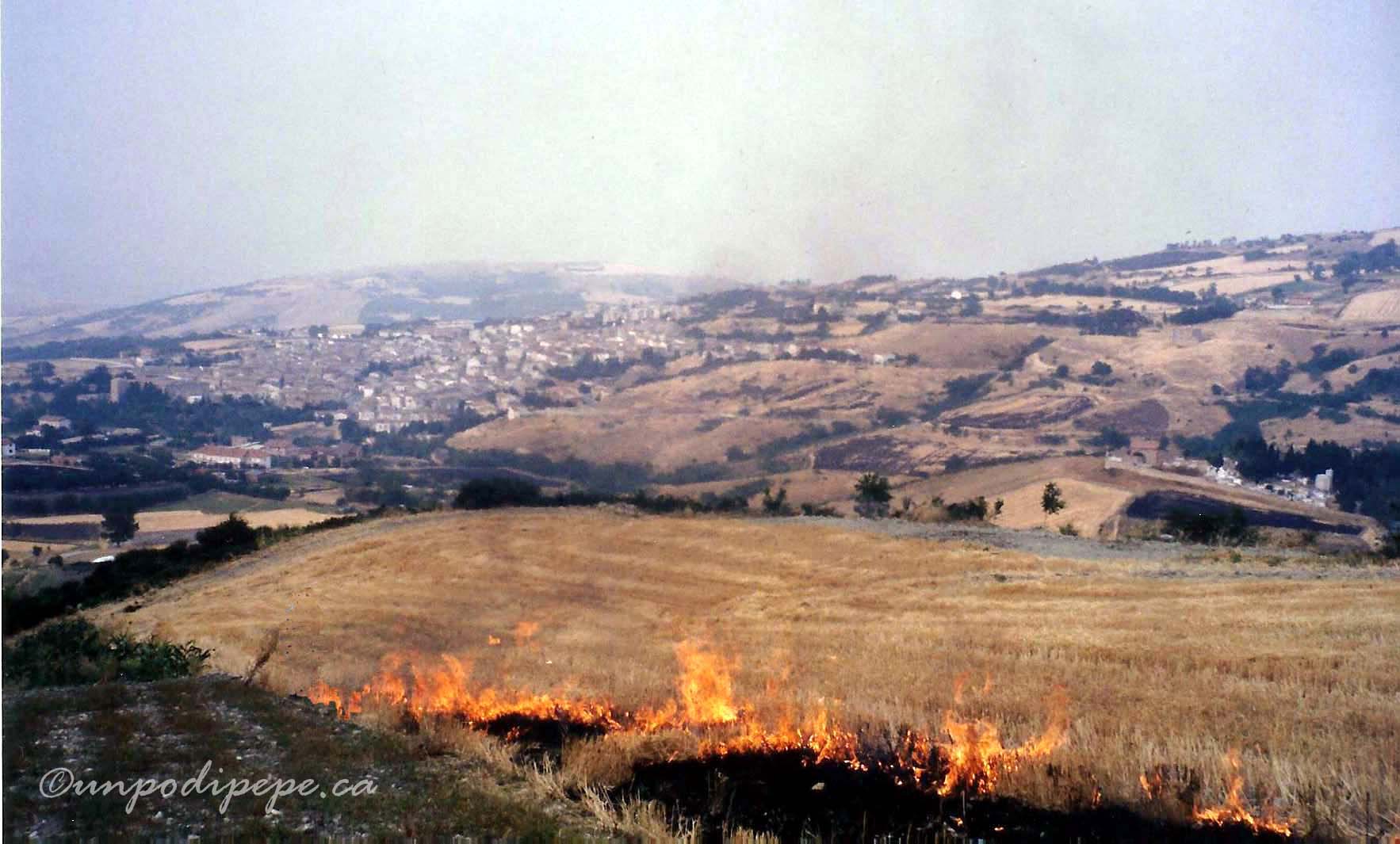
farinagranoarsoorecchietteGrano arso literally means burnt wheat.  Flour made with it is ‘farina di grano arso’ and has a history going back many centuries as part of the gastronomic tradition of ‘cucina povera’ in Northern Puglia. Farina di grano arso was traditionally made from the bits of wheat left in the field after the harvest.  The stubble, called stoppie (STOHP•pyeh) or la ristoccia (rees•TOCH•chya) that was left in the fields was burned, then plowed back into the soil.  This was done as a quick and cheap way of clearing the fields.  It was also thought to aerate and fertilize the soil and kill weeds and pests.

Bruciatura della ristoccia 1990

Bruciatura della ristoccia 1990

Ristoccia90In the short span of time between the burning and the plowing, poor farm workers (contadini) gathered burnt bits of wheat that were still usable and ground them by hand into farina di grano arso.  It was mixed with white flour, making pasta and bread more affordable, or traded to buy other foods.  ‘Pane nero’ (PAN•eh NEH•roh) or ‘pasta nera’ were considered the lowest quality of food and became a symbol of poverty-‘la miseria’ (mees•EH•ryah). ‘Pasta Nera’, an award-winning documentary that is not about grano arso, uses the title to accentuate the poverty in Southern Italia during and after the war.orecchiettepanoramo

We know that food is more than just nutrition.  The traditions and customs around food and its preparation are an integral part of a culture and teach us about the history of people and places at points in time.  Cucina povera (coo•CHEE•nah poh•VEH•rah)and cibo dei poveri (CHEE•boh dei poh•VEH•ree) literally translate to poor cooking and food of the poor, but what is meant is ‘peasant cooking’.  Farina di grano arso is important in a historical and cultural context as it really symbolizes the resilience and instinct to survive of our contadini ancestors.farinadigranoarso

Grano arso was nowhere to be found for many years, but today many Pugliese chefs, including mio amico, il ‘cuoco contadino’ Peppe Zullo use farina di grano arso.  It is used to make fresh traditional Pugliese pasta- orecchiette, cavatelli, fusilli, and sometimes bread and focacce. Peppe is representing Puglia for the month of May in the Italian Pavilion at Expo2015 Milano. The theme is ‘Nutrire il Pianeta; Energia per la Vita’/ ‘Feeding the Planet; Energy for Life’.   Appropriately, his feature dish for this event is cavatelli di grano arso e punti di asparagi verde.

Peppe Zullo's 'Cavatelli di grano arso con punti di asparagi verde' for Expo 2015

Peppe Zullo’s ‘Cavatelli di grano arso con punti di asparagi verde’ for Expo 2015

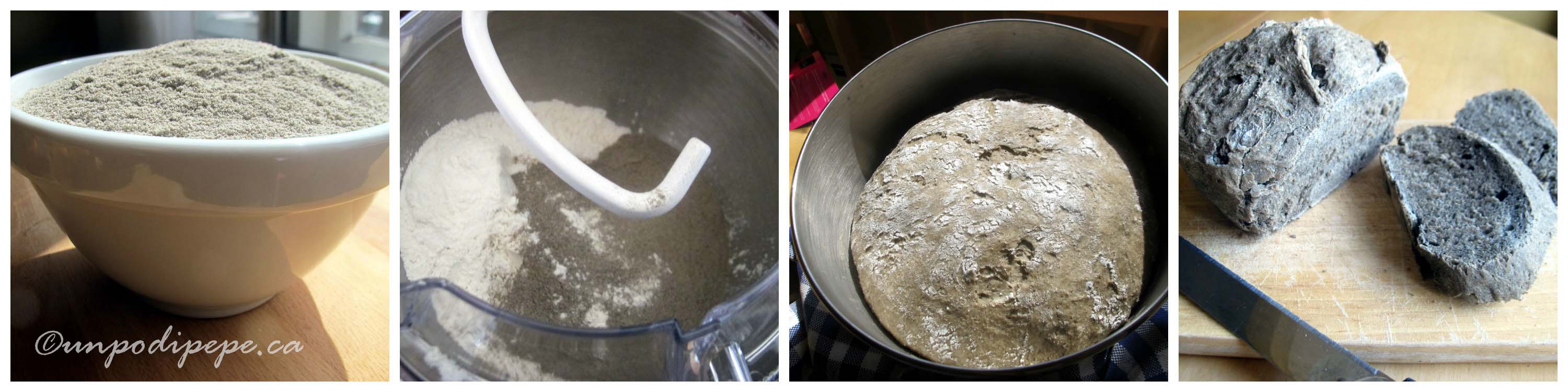
Bruciatura della ristoccia (broo∙chya•TOO•rah DEL•la rees•TOCH•chya), the burning of the stubble in the fields is now illegal due to carcinogenic concerns, destruction of soil nutrients, pollution and risk of forest fire. Today farina di grano arso is not completely burnt, it is commercially toasted.  The flavor, colour, texture and smell of pasta or bread made with farina di grano arso are really intense and unique. The flour is slightly grainy and the colour is grey like ashes- grigio cenere (gree•GEE•oh cheh•NEH•reh).  Pasta can range from grey to brown in colour depending on the percentage of farina grano arso used.  The smoked, nutty flavor reminds me a bit of toasted hazelnuts and the smell can be compared to lightly charred brick oven pizza crust. Most of the gluten is burnt off, so farina di grano arso can’t be used alone.  It absorbs more water than other flours and will become a sticky mess that doesn’t hold together. Mixing 10% to maximum 25% with other flours that contain gluten produces the best results.  Many people find pasta di grano arso easier to digest.

Panegranoarsocollage4

Not everyone is embracing the return of grano arso to the kitchen.  It disappeared because it is ‘un ricordo della miseria’-a reminder of poverty and there was vergogna (ver•GOH•nyah) or shame associated with having to eat pasta nera.  This is something that most Italians who lived through the war don’t want to be reminded of.  When I made the bread to photograph for this post, I brought it to my parents’ house for dinner.  Papà made a sour face and said ‘Solo che vedo questo pane mi viene la paura!’ (Just looking at this bread puts fear in me!)  He was kidding…sort of…I think?  Well he did eat 2 pieces anyways!

Making orecchiette di grano arso with my Mamma

Making orecchiette di grano arso with my Mamma

Farina di grano arso is available in Foggia and Andria.  Pietro Zito in Andria sells 1 kg bags online for 6 €, as well as pasta di grano arso. Even if it was possible to send to North America though, the cost would be astronomic.  Can you imagine Poste Italiane sending a bag of flour in the mail?  You could try toasting durum wheat semola yourself on a baking tray in the oven, but it will probably result in a visit from i pompieri (pohm∙•pee•EH•ree) -the fire department- when the smoke detector goes off.  I have a better idea- take a trip to Puglia and try pasta di grano arso in its natural environment! Buon Appetito!

Orecchiette di grano arso al sugo, Ristorante  Peppe Zullo Orsara di Puglia

Orecchiette di grano arso al sugo, Ristorante Peppe Zullo Orsara di Puglia

Share this:

  • Click to share on Facebook (Opens in new window) Facebook
  • Click to share on Pinterest (Opens in new window) Pinterest
  • Click to share on X (Opens in new window) X
  • Click to email a link to a friend (Opens in new window) Email
  • Click to share on WhatsApp (Opens in new window) WhatsApp
Like Loading...

I Trabucchi del Gargano

09 Monday Mar 2015

Posted by Un po' di pepe in Italia, Photography, Puglia

≈ 13 Comments

Tags

Il Gargano, Italia, Parco Nazionale del Gargano, Puglia, Punta Lunga, Southern Italy, Trabucchi del Gargano, Vieste

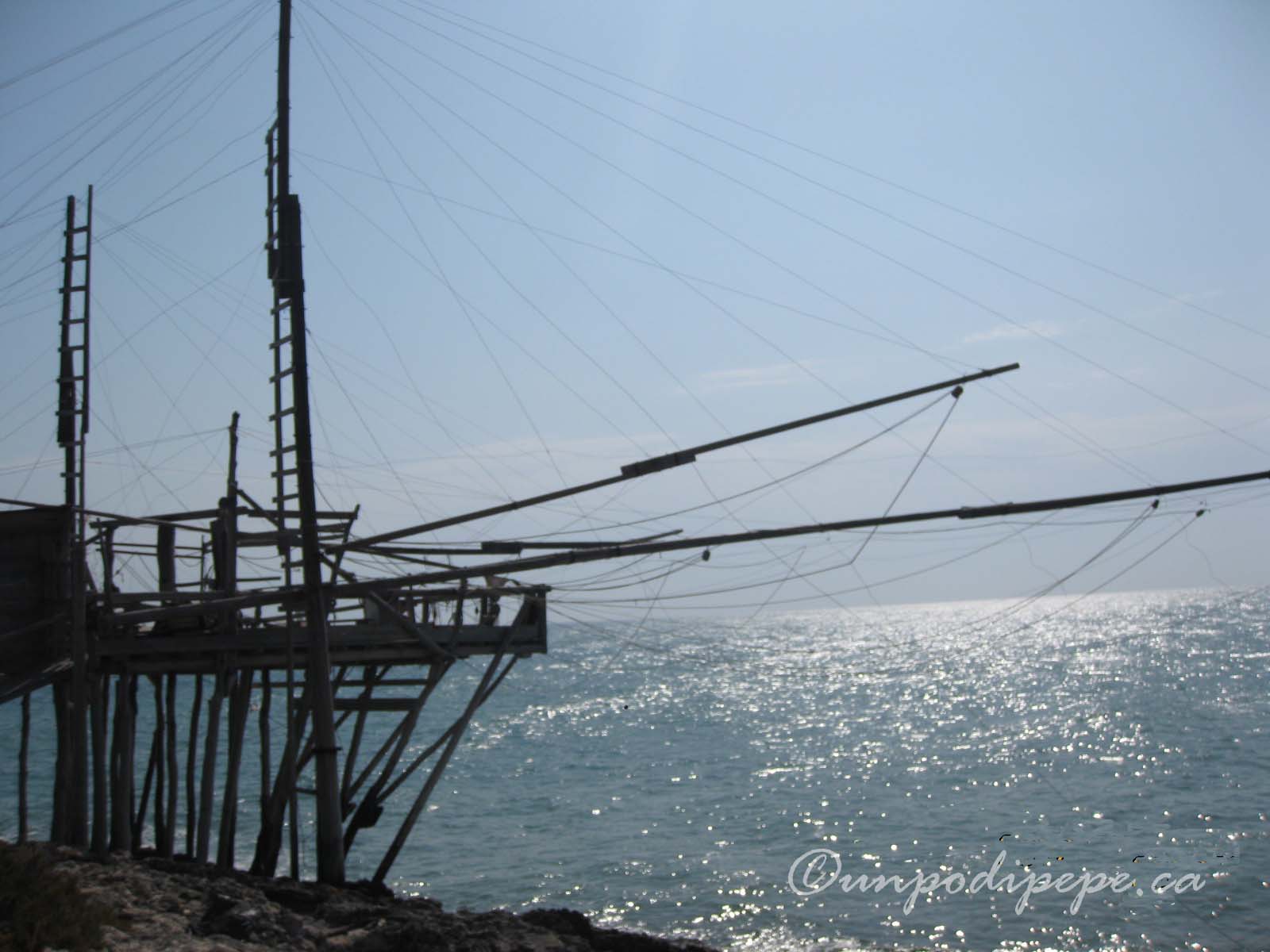
Il Trabucco Punta Lunga Mattina

Trabucchi (tra∙BOO∙kkee) are fascinating old fishing contraptions found on the Adriatic coast of Abruzzo, Molise and Puglia. When I was young, I remember taking ‘L’Adriatico’-the night train from Bologna to Foggia- on a stormy night. With the sound of the wind and the waves the crowded train was not a place I was going to get any sleep.  Once the train reached the coast, I spent most of the trip looking out the window watching the waves crashing onto these strange giant spidery things in the water.  To my wild imagination, they seemed like giant wooden aliens or octopi that would come to life at any moment with their tentacles thrashing in the surf.

Trabucco Torre Porticella

Trabucco Torre Porticella

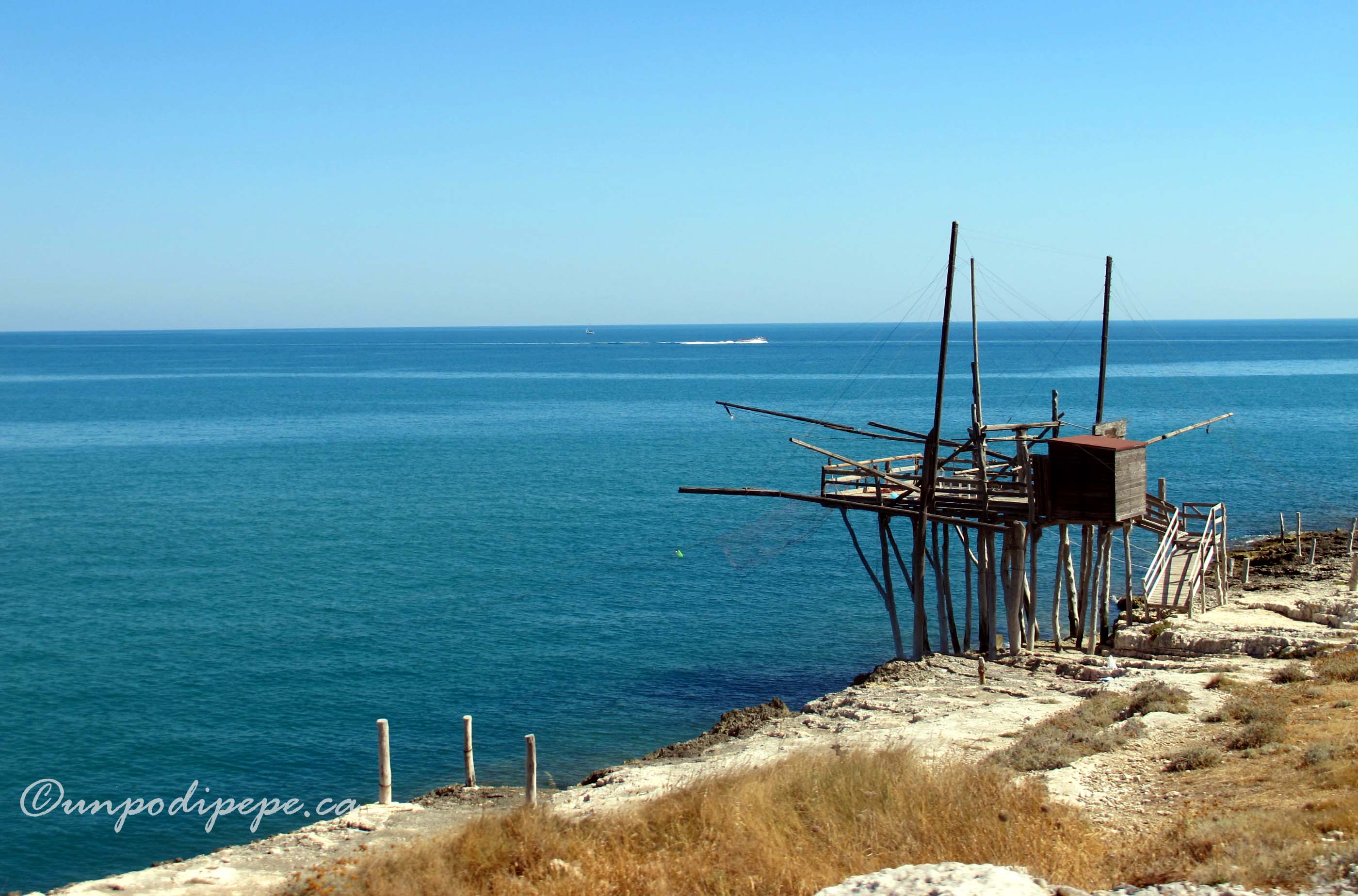
A trabucco is made up of a wooden platform on poles anchored to a rocky cliff or promontory, with several long wooden arms jutting out over the sea.  The arms have a system of ropes and winches suspending a giant narrow-mesh net called a trabocchetto.  Trabucchi are made of Aleppo pine which is abundant in the area and is resistant to salt and weather conditions.

Trabucco San Lorenzo

Along the coast of the Promontorio del Gargano (Gargano Promontory) there are 13 working trabucchi between Peschici and Vieste.  The oldest dates from the 18th century.   They are protected as National cultural heritage sites within the Parco Nazionale del Gargano.  Here is a link to a Trabucchi del Gargano map.

Trabucco Punta Lunga

Trabucco Punta Lunga

Although there is no documentation, Pugliese historians believe the trabucco design is imported from the ancient Phoenicians. They really are an ingenious way of fishing to take advantage of the rocky coastline and crystal clear waters of the Gargano. Trabucchi are built facing SE or NW and where the water is at least 5 m deep, to take maximum advantage of the marine currents.

Trabucco Molinella

A trabucco requires 3-4 operators or ‘trabuccolanti’.  1 or 2 trabuccolanti look out for schools of fish swimming along coastal currents.  They give word, then the other 2 operate winches to drop the trabocchetto (net) and quickly hoist it back up full of fish.  Gargano fisherman of old really created an extension of the land-with a trabucco they were able to fish from the rocky cliffs and did not have to ‘get their feet wet’ or take boats out in dangerous agitated seas.

The view below Trabucco Punta Lunga

The view below Trabucco Punta Lunga

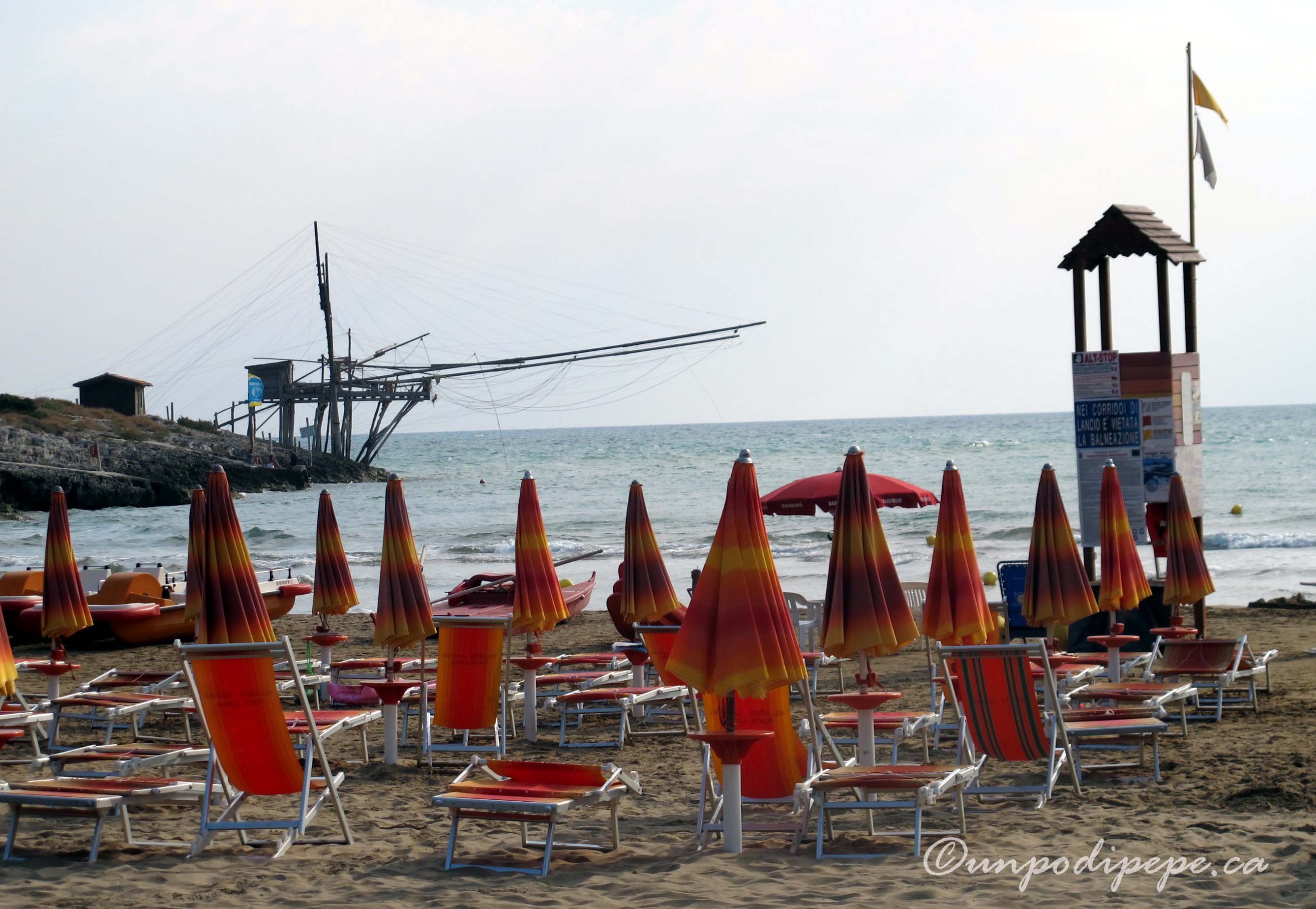
Trabucchi have become symbols of ancient maritime culture. I’ve been on several weekend camping trips in the Gargano with my cugini, and have been able to visit several trabucchi.  Imagine my excitement 2 years ago when the beach by our campsite at Punta Lunga, 2km north of Vieste had it’s very own trabucco!

Spiaggia Punta Lunga

Share this:

  • Click to share on Facebook (Opens in new window) Facebook
  • Click to share on Pinterest (Opens in new window) Pinterest
  • Click to share on X (Opens in new window) X
  • Click to email a link to a friend (Opens in new window) Email
  • Click to share on WhatsApp (Opens in new window) WhatsApp
Like Loading...

Fucacoste e Cocce Priatorje

01 Saturday Nov 2014

Posted by Un po' di pepe in Culture, Feste, Italian Folklore, Orsara di Puglia, Puglia

≈ 7 Comments

Tags

Falò e Teste del Purgatorio, Italian history, Muscitaglia, November 1st, Orsara di Puglia, Puglia, Pugliese Traditions, Pumpkin carving, Southern Italy, Traditional Festivals in Puglia, Tutti i Santi Festa

Piazza San Pietro. Photo courtesy of International Photo Correspondent Donato Narducci Piazza San Pietro. Photo courtesy of International Photo Correspondent Donato Narducci

Fucacoste e cocce priatorje is dialetto Orsarese for ‘Falò e teste del Purgatorio’.  This translates to ‘Bonfires and heads from purgatory’. It is an ancient festival unique to Orsara di Puglia celebrated on November 1st, the night of ‘Tutti i Santi’ (All Saints Day).  All Saints Day was created in the 9th century when the Pope superimposed a Christian feast day onto existing rituals, so this festa has been around for a very long time.  It is a night where people have the opportunity to honour, reconnect and pay respect to the spirits of their loved ones.  Carabinieri estimate that Orsara (pop 3,000) had 40,000 visitors attend the festa tonight, with 9,000 cars parked up to 3 km away!

2014 poster for Fucacoste e cocce priatorje 2014 poster for Fucacoste e cocce priatorje

It is believed that the souls of the dead return among the living to visit their relatives and their former homes before moving on to Paradiso.  The bonfires are lit with wood and branches of ginestra (broom). The light of the fires and the crackling and sparks of the ginestra attract the spirits to reunite the living with those who continue to live only in their memories.  The souls of the dead loved ones collect ashes from the fires. The gleam of light inside ‘cocce priatorje’, pumpkins carved to look like heads-light their way to find their former home.

Preparation for the  festa involves gathering firewood and ginestra, preparing food and carving zucche (pumpkins).  There is even a BYOZ (bring your own zucca) pumpkin carving workshop.  Later in the evening zucche are exhibited and there is a contest for ‘la zucca più bella’-the best zucca.

In honour of the dead, simple but symbolic foods are prepared.  These include potatoes, onions, salsicce (sausages) and castagne (chestnuts) cooked in open fire. Muscitaglia is a traditional dish served on November 1st which probably dates back from the ancient Greeks and Byzantines. Muscitaglia (moo•shee•tah•lyah) in both Greek and Latin is made up of the words mosto (wine must) and talia (grain). The ingredients include boiled grain and vino cotto (literally cooked wine-also called mosto cotto). Pomegranate seeds and walnut pieces are sometimes added. These ingredients are symbols of fertility and abundance, but also of honour and respect for the dead.

Muscitaglia Muscitaglia

When the campanile (church tower bell) strikes 1900 hours (7 pm), Orsara di Puglia ‘catches fire’. Over 100 bonfires are simultaneously lit in every street and piazza and remain lit through the night.  The fires, pumpkin lanterns, music and people in the streets create a magical, enchanted atmosphere. In 2017 I attended the festa and took photos.  They are in the post Tutti i Santi.

Fucacoste e Cocce Priatorje has often been confused with Hallowe’en, but it is a very different event.  Besides the fact that the date is different, dressing up in costume is not part of the custom, there is nothing scary about it and there are no evil spirits to chase away. It has more similarities with the Mexican Dia de los Muertos/Day of the Dead.  This is an event about being together in community to celebrate the bond between the living and those who we remember in our hearts, and to remind us that our time on earth is precious.

Watch the video ‘#quinonèhalloween’ featuring 94 year old Z’Gaetan talking about the festa and its significance  https://www.youtube.com/watch?v=9W5RD0-9H-A

Read about tonight’s festa (in Italiano) on the Comune di Orsara di Puglia website.  For more about Orsara di Puglia read the post ‘Benvenuti ad Orsara di Puglia’.  Ci vediamo alla festa!

Fucacoste e Cocce Priatorje, Fontana Sant'Angelo, Orsara di Puglia 2014. Photo courtesy of Donato Narducci Fucacoste e Cocce Priatorje, Fontana Sant’Angelo, Orsara di Puglia 2014. Photo courtesy of Donato Narducci

Share this:

  • Click to share on Facebook (Opens in new window) Facebook
  • Click to share on Pinterest (Opens in new window) Pinterest
  • Click to share on X (Opens in new window) X
  • Click to email a link to a friend (Opens in new window) Email
  • Click to share on WhatsApp (Opens in new window) WhatsApp
Like Loading...

Le Isole Tremiti

16 Wednesday Jul 2014

Posted by Un po' di pepe in Italia, Photography, Puglia, Travel

≈ 13 Comments

Tags

Alidaunia, Diomedes, Fellini, Il Gargano, Isole Tremiti, Italia, Italian history, Italy travel tips, Parco Nazionale del Gargano, photography, Puglia, Southern Italy

San Nicola and Cretaccio seen from above the helipad, San Domino

San Nicola and Cretaccio seen from above the helipad, San Domino

The Isole Tremiti (ee∙SOH∙leh treh∙MEE∙tee) are an archipelago of 3-5 islands-depending on what you consider an island-in the Adriatic Sea, 22 km off the coast of Italia. The Tremiti, considered ‘le perle dell’Adriatico’ (the pearls of the Adriatic), have been inhabited since at least the 4th century BC.  They are part of the Parco Nazionale del Gargano (Gargano National Park) http://www.parcogargano.it and have been a protected Marine Nature Reserve (Riserva Naturale Marina Isole Tremiti) since 1989. The clear waters make the islands a popular spot for snorkeling, scuba diving and even bird watching.

Isole Tremiti Satellite View

Isole Tremiti Satellite View

Flying into San Domino by helicopter

Flying into San Domino by helicopter

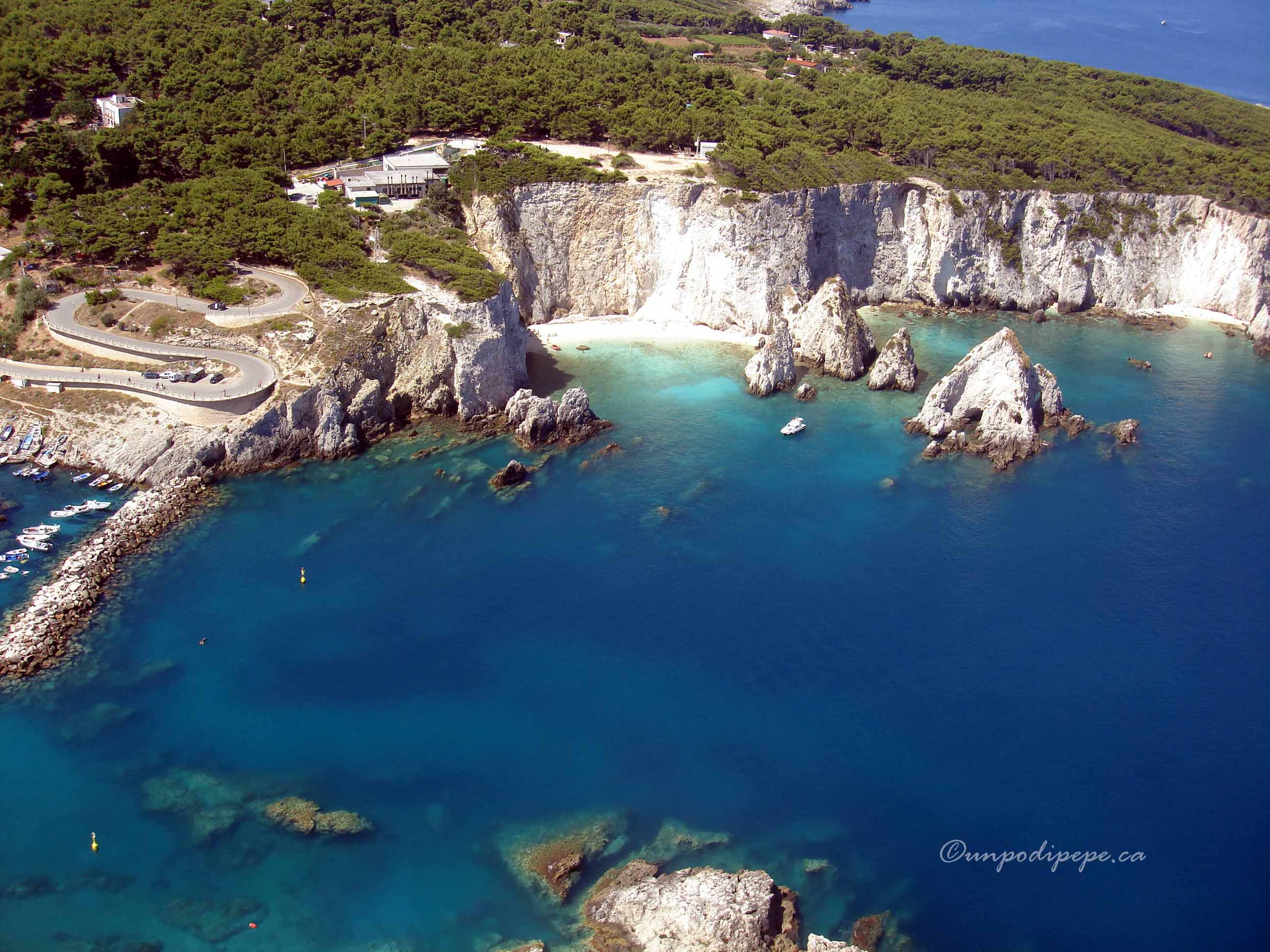
San Domino is the largest island and has most of the facilities such as hotels, restaurants, the Tremiti Diving Center, and the heliport. It is covered by lush Aleppo pine forest, capers and rosemary, and surrounded by small coves and sea caves. San Domino has the Tremiti’s only sandy beach –Cale delle Arene. The rocky coves are beautiful to explore and swim-but don’t go barefoot! My friend stepped on a riccio di mare (sea urchin) and it was not fun.  There is a 2 hour walk around part of the island and bicycles are available for rent.

The small port, San Domino

The small port, San Domino

Cale delle Arene, San Domino-the only sandy beach on the Isole Tremiti

Cale delle Arene, San Domino-the only sandy beach on the Isole Tremiti

Scoglio dell 'Elefante, San Domino, looks like a giant sitting elephant drinking from the sea

Scoglio dell ‘Elefante, San Domino, looks like a giant sitting elephant drinking from the sea

San Nicola is the administrative and historic center of the islands, and where most of the 400 or so permanent residents live. The 11th Century Benedictine abbey and church of Santa Maria del Mare seem to rise up out of the limestone cliffs, with fortified walls starting at the port. The church has a beautiful 11th century mosaic floor and a Byzantine painted wood crucifix that was likely brought here by monks fleeing from the Crusades.

San Nicola, seen from San Domino

San Nicola, seen from San Domino

San Nicola Porto

San Nicola Porto

Bagnetto anyone?

Bagnetto anyone?

Capraia (or Caprara) is rocky and uninhabited except for sea birds. It is named for the capers that grow there. There is no organized transport to Capraia, but local fishermen can be hired to take people over.

San Nicola and Capraia.  Yes those are solar panels down there!

San Nicola and Capraia. Yes those are solar panels down there!

Cretaccio is an uninhabited halfmoon shaped block of yellowish clay between San Domino and San Nicola.  Cretaccio literally means ‘big hunk of clay’.
Pianosa is 11 km away from the other islands and is the most northern point of Puglia.  It can be covered by waves during storms, as the elevation is only 15 m.  The waters surrounding Pianosa are in zone A of the Marine Reserve, so access is strictly prohibited except for approved marine research.

Cretaccio and San Domino, seen from Santa Maria al Mare, San Nicola

Cretaccio and San Domino, seen from Santa Maria al Mare, San Nicola

The islands are sometimes known by their former name ‘Le Diomedee’ or ‘I Sassi di Diomede’ and you see a lot of things in the Gargano area called ‘Diomede’. According to legend/mythology, after the Trojan War, the Greek hero Diomedes settled in the Daunia area (Province of Foggia) and created the islands with 3 rocks he threw into the Adriatic.  He was also shipwrecked on the islands with his crew and possibly died here.

La tomba di Diomede on San Nicola.

La tomba di Diomede on San Nicola.

There is an unmarked Hellenic period tomb on San Nicola that is known as ‘la tomba di Diomede’. His crew was so upset at the loss of their captain that the Goddess Venus took pity on the grieving men and turned them into birds that continue to cry for their loss. The scientific name for the Great Albatross which is common in the area, is ‘Diomedea’.  These birds look a lot like seagulls and make a noise that can sound like a crying newborn.  In Fellini’s ‘Otto e mezzo’ (8½) there is a scene where a cardinal tells this story to Guido (Marcello Mastroianni).

A Diomedea, San Domino

A Diomedea, San Domino

The islands also have a long history as a place of exile. Emperor Octavius Augustus confined his granddaughter Giulia to San Nicola for adultery with a Roman senator. She remained there until her death 20 years later. One of the necropoli beneath the abbey could be her tomb.  Ferdinand, king of Napoli turned the abbey into a penal colony. A hundred years later, another Ferdinand tried to repopulate the islands with criminals and people moved in from the slums. For many years, the Fascists imprisoned those considered a danger to the public on the Isole Tremiti. One of the prisoners held there was Sandro Pertini, future president of the Italian Republic.

Alidaunia flies from Foggia to San Domino daily

Alidaunia flies from Foggia to San Domino daily

I have visited the islands several times by helicopter.  As you can see in the photos, the emerald water is so crystal clear you can see the bottom from the air!  The wonderful thing about visiting the Isole Tremiti is that there are no large hotels or resorts.  All of the hotels are small and surrounded by pine forest, so although this is a tourist destination, it doesn’t feel overrun with people. The Isole Tremiti are accessible by 1-2 hour ferry ride from Vieste, Peschici, Rodi Garganico, Manfredonia and Termoli, or by half hour helicopter ride from Foggia http://www.alidaunia.it .
Over San Nicola

Over San Nicola

Buon Viaggio!

Share this:

  • Click to share on Facebook (Opens in new window) Facebook
  • Click to share on Pinterest (Opens in new window) Pinterest
  • Click to share on X (Opens in new window) X
  • Click to email a link to a friend (Opens in new window) Email
  • Click to share on WhatsApp (Opens in new window) WhatsApp
Like Loading...

Benvenuti ad Orsara di Puglia

25 Sunday May 2014

Posted by Un po' di pepe in Italia, Orsara di Puglia, Puglia

≈ 63 Comments

Tags

Bandiera Arancione, Cittaslow, Culture, Italia, Italian history, Orsara di Puglia, Puglia, San Michele, Southern Italy

View of Orsara di Puglia

View of Orsara di Puglia

Orsara di Puglia is ‘un borgo medioevale incantevole’ (an enchanting medieval village) on the slopes of Monte San Marco in the Dauno Subappenino area at an elevation of 650 m (~2100 ft). It is surrounded by forests, rolling hills, vineyards, wheat fields and olive groves. Until 1927, it was in the province of Avellino (Campania) which is why it is called Orsara di Puglia. In 1951, before mass emigration, the population was over 7,000. Today the permanent population is just under 3,000. I spent the first 27 months of my life here, and I return every year for some ‘aria di montagna’ (fresh mountain air). This post is an introduction…the first of many Orsarese posts!

Orsara di Puglia-NASA Satellite view

Orsara di Puglia-NASA Satellite view

Orsara is built on a site with natural caves, which made it favourable for settlement. There is evidence of settlement in the area in the 11th Century BC, and Greek colonization as early as the 8th Century BC. There are many legends about the origins of Orsara, but my favourite-definitely the coolest-is that it was founded by the Greek hero Diomedes, who came to Puglia after the Trojan War. Legend also has it that a bear and her cubs had a lair in one of the caves Orsara was built on. The name comes from the Latin Ursus (bear) and aria= Ursaria meaning a place of bears.

The oldest part of Orsara, the Centro Storico or historic town center, is built around the Complesso Abbaziale dell’Angelo.  This complex consists of the pre-7th Century cave church Grotta di San Michele Archangelo with a connecting 1527 church, the exquisite Romanesque Chiesa dell’ Annunziata, and Palazzo Baronale.  The last 2 were the former Abbazia di Sant’Angelo (Abbey of the Holy Angel), a monastery built in the 11th-13th Century.  The Abbazia included a hostel for pilgrims and was home to several orders of monks, incuding the Spanish Cavalieri di Calatrava (Knights of Calatrava) who arrived in 1224. The Calatrava expanded the abbazia, including a hospital, and were an important part of Orsara’s history.  Palazzo Baronale is now private homes except for the basement which is an archeological museum.  The Complesso Abbaziale has seasonal opening hours, and can also be visited by appointment.

Complesso Abbaziale dell'Angelo, seen from Piano Paradiso. The tall, tower-like building is the Chiesa dell'Annunziata.

Complesso Abbaziale dell’Angelo, seen from Piano Paradiso. The tall, tower-like building is the Chiesa dell’Annunziata.

Orsara di Puglia is a member of the Slow Food movement Cittaslow. A gastronomic paradise, Orsara has 8 restaurants, 4 pizzerie, an enoteca, a pub and a cooking school http://www.peppezullo.it. Orsara even has its own designated DOC cheese-cacioricotta, and 3 IGT designated wines. Thanks to the maze of steep, windy cobblestone streets and my morning walk to La Montagna Spaccata, I can eat lots yummy food and still fit into my clothes.

Caciocavallo, pecorino, capicollo & cacioricotta

Caciocavallo, pecorino, capicollo & cacioricotta

In 2010, along with Alberobello, Orsara became one of only 6 towns in Puglia to be distinguished with a Bandiera Arancione (orange flag), a seal of quality from the Touring Club Italiano. The Club certifies small inland towns that are welcoming to visitors and have historic, cultural and environmental significance. For more information http://www.paesiarancioni.net (in Italiano) and http://www.bestsmalltownsitaly.com/town/orsara-di-puglia-apulia-south-islands/ (in English). There are now 13 paesi Pugliesi with a Bandiera Arancione designation.

Via Vittorio Emanuele

Via Vittorio Emanuele

Via Buonarroti

Via Buonarroti

Since 1988, Orsara hosts a Festa del Vino the last weekend in June. The Orsara Musica Jazz Festival and Orsara International Jazz Workshop are held the last week in July. Orsara has 2 patron saints and protectors; Aug 5th is the Festa della Madonna della Neve, and Sept 29th the Festa di San Michele Arcangelo. The night between Nov 1st and Nov 2nd is the Festa dei Fucacoste e Cocce Priatorije, an ancient tradition to honour the dead. For more information on events, check Orsara di Puglia’s official website and blog.

Via Principe Amedeo

Via Principe Amedeo

Ci vediamo ad Orsara!  Buon Viaggio, Cristina

Share this:

  • Click to share on Facebook (Opens in new window) Facebook
  • Click to share on Pinterest (Opens in new window) Pinterest
  • Click to share on X (Opens in new window) X
  • Click to email a link to a friend (Opens in new window) Email
  • Click to share on WhatsApp (Opens in new window) WhatsApp
Like Loading...

Sbandieratori~Accenti Magazine Photo Contest

04 Sunday May 2014

Posted by Un po' di pepe in Culture, Italia, Orsara di Puglia, Photography, Puglia

≈ 6 Comments

Tags

Accenti magazine, Accenti photo contest, Culture, History, Italia, Orsara di Puglia, photography, Puglia

Sbandieratori

The 7th annual Accenti Magazine ‘Capture an Italian Moment’ Photo Competition results were just released at the Accenti Magazine Awards during the Blue Metropolis Montreal International Literary Festival. My photo, ‘Sbandieratori’ came in second place!

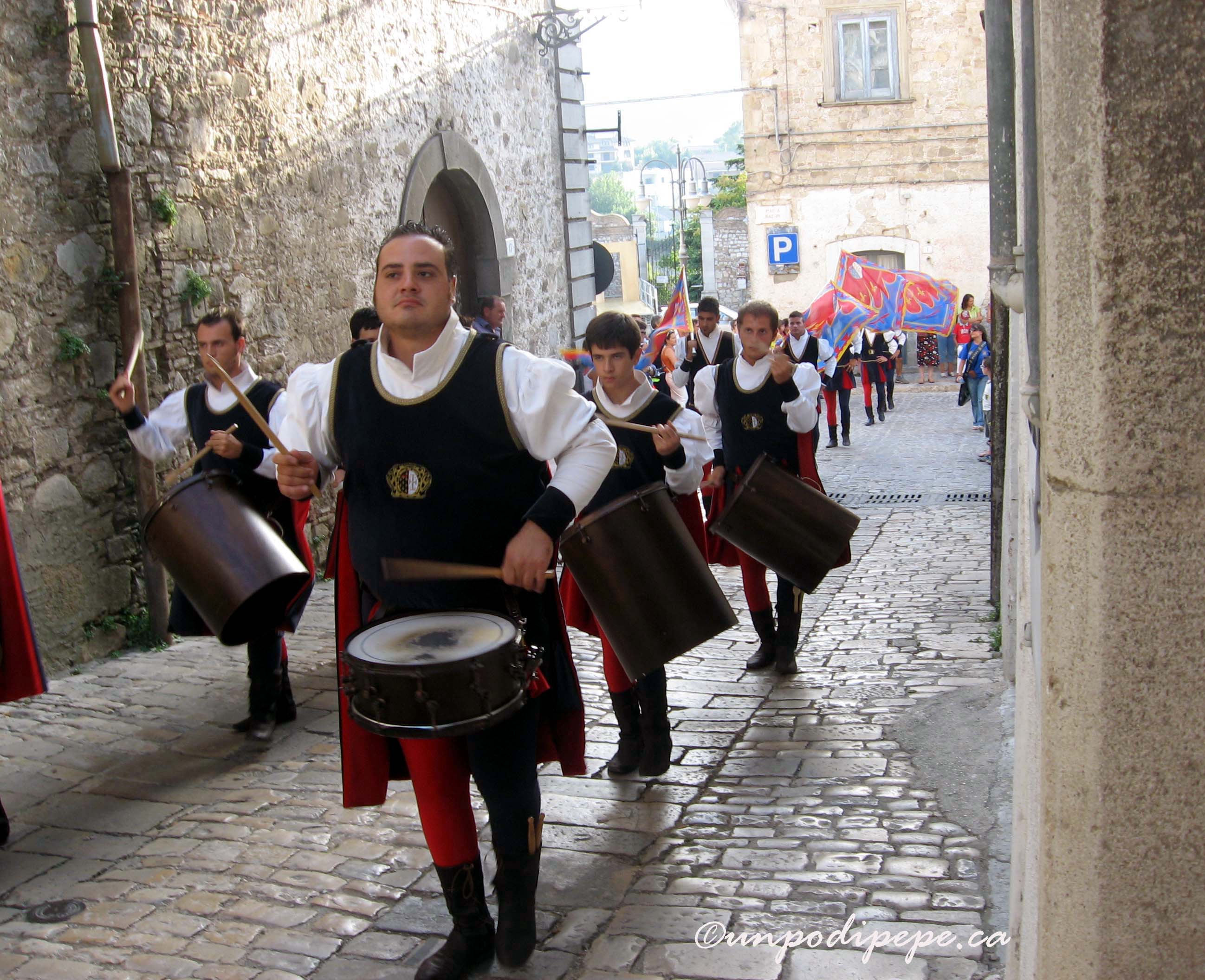
This photo was taken in Orsara di Puglia during the ‘Corteo Storico’, a parade in period costume, reenacting the history of the village. These sbandieratori (flag throwers) came from nearby Lucera to perform. Here, they are in between performances, engaged in casual conversation. What struck me about this image were the bold colours and composition of the costumes and flags. I was also curious to know what their conversation was about….was it early Renaissance gossip, or the latest cell phone app?

In Italiano:

Questa foto è stata scattata ad Orsara di Puglia durante il ‘corteo storico’, una sfilata in costume medioevale, che racconta la storia del paese.  Questi sbandieratori sono venuti da Lucera.  Qui li vediamo in attesa di sfilare, impegnati in una conversazione.  Quello che mi ha colpito sono stati I colori vibranti e la composizione che si è create tra I costume e le bandiere.  Ero anche curiosa di sapere di cosa parlavono…..chiacchiere medioevale o dell’uscita di una nuova app per il telefono?

The mission of Accenti, “the magazine with an Italian accent,” and Accenti Online http://www.accenti.ca is to bring together readers and writers around the idea of shared cultural experience, encourage creative expression, and act as a bridge between cultures. The 2015 photo and writing competition is now accepting submissions. If you are interested in finding out more, go to http://www.accenti.ca/photo-contest or http://www.accenti.ca/writing-contest.

The word Sbandieratori is related to the word bandiera (flag) and is pronounced zban∙ dee∙ ear ∙a∙ tow∙ ree. Say it a few times….now say it faster.

Here are a few more photos from the ‘Corteo Storico’ in Orsara di Puglia:

Sbandieratori, corteo storico, Orsara di Puglia

Sbandieratori, corteo storico, Orsara di Puglia

Corteo Storico, Orsara di Puglia

Corteo Storico, Orsara di Puglia

Share this:

  • Click to share on Facebook (Opens in new window) Facebook
  • Click to share on Pinterest (Opens in new window) Pinterest
  • Click to share on X (Opens in new window) X
  • Click to email a link to a friend (Opens in new window) Email
  • Click to share on WhatsApp (Opens in new window) WhatsApp
Like Loading...
Newer posts →

Enter your email address to follow 'un po' di pepe' and receive notifications of new posts by email.

Join 511 other subscribers
Follow Un po' di pepe on WordPress.com

Popular Posts

  • Hairstyling in Ancient Roma
    Hairstyling in Ancient Roma
  • Panforte di Siena
    Panforte di Siena
  • Panettone Fatto in Casa
    Panettone Fatto in Casa
  • Polpo e patate
    Polpo e patate
  • Italiano per Ristoranti~How to pronounce your restaurant menu
    Italiano per Ristoranti~How to pronounce your restaurant menu
  • Dolci di Natale
    Dolci di Natale
  • Acqua Vergine
    Acqua Vergine

Recent Posts

  • Castel del Monte
  • ‘The Nuances of Love’
  • Hostaria Antica Roma~Eat like an Ancient Roman
  • Santa Maria in Aracoeli
  • Casino dell’Aurora~Villa Boncompagni Ludovisi
  • Nasoni di Roma
  • Bloghiversario #11
  • Fontana di Trevi
  • Acqua Vergine
  • Giubileo 2025
  • Sanremo 2025
  • In Vino there are Memories
  • A Literary Harvest
  • 2024~Un po’ di pepe Year in Review
  • Buon Natale 2024
  • Il Bicerin
  • Mercato Porta Palazzo
  • Torino
  • Catanzaro, Calabria
  • Il Pumo Pugliese
  • Artemisia Gentileschi
  • Cavalli di San Marco
  • Panzerotti
  • Torcello
  • 10 years of Un po’ di pepe!

Categories

Amici e Famiglia Architecture Art Art history Art projects Bilingual posts Blogging Canada Culture Feste Firenze Inspiration Italia Italian Folklore Italian language Italian life Italocanadesi Libri Mangiamo! Orsara di Puglia Parole piacevoli Photography Puglia Recipes Roma Travel Travel tips Uncategorized Vino

Archives

Un po’ di pepe on Facebook

Un po’ di pepe on Facebook

Start a Blog at WordPress.com.

  • Subscribe Subscribed
    • Un po' di pepe
    • Join 511 other subscribers
    • Already have a WordPress.com account? Log in now.
    • Un po' di pepe
    • Subscribe Subscribed
    • Sign up
    • Log in
    • Report this content
    • View site in Reader
    • Manage subscriptions
    • Collapse this bar
 

Loading Comments...
 

    %d