Madame Gautreau

Tags

, , , , ,

Madame Gautreau Drinking a Toast. After John Singer Sargent. Cristina Pepe 2016Finalmente!  An unfinished painting after John Singer Sargent’s ‘Madame Gautreau Drinking a Toast’ was propped up on my bookshelf for 4 years.  She is finally finished!  I started it as part of an assignment for a painting course involving taking a drawing and turning it into a painting.  I got as far as the background and basic shape of the figure and glass.  My images tend to be landscapes, architecture or food.  Figures, especially ones in colour and with faces aren’t really my thing.  This was the first time I painted skintone. Scary! My painting was actually starting to look kind of like a human….. then I was afraid to work on it any more.  So it sat untouched for a few years.

Recently, with some coaching from the amazing Val Nelson, I completed the painting!  Below are the various stages. I didn’t think to photograph them all in the same place at the same time of day, so the lighting is not consistent.  You might notice she had a nose job, facelift, forehead enhancement, and ear repositioning.Madame Gautreau Drinking a Toast, Cristina Pepe 2016 www.unpodipepe.ca

John Singer Sargent is one of my favourite artists.  He was born in Firenze to expat American parents.  They lived off his mother’s small inheritance and he had a very Bohemian upbringing.  Sargent is mostly known as a formal portrait painter.  I love his acquerelli, the watercolours he painted of friends and family while on vacation.  They are so fluid, spontaneous, and bathed in light.  He could do so much with each brushstroke.  This painting was an oil sketch but has same spontaneity as his acquerelli.  It was a study in preparation for ‘Madame X’.

Madame Gautreau is the same subject of ‘Madame X’, a very famous, or shall we say ‘di cattiva fama’, a notorious Sargent painting. The subject, Virginie Avegno Gautreau was an expat American socialite married to an older Parisian banker.  Sargent thought a painting of her unusual features would bring him increased portrait commissions.  Madame Gautreau thought being painted by Sargent would elevate her social status and add a dash of celebrity.  Perhaps she is related to the Kardashians?She posed for the portrait wearing a slinky black velvet dress with an impossibly fitted bodice, her skin powdered in lavender.  While posing, the jeweled right strap of her dress slipped from her shoulder, and Sargent painted it that way.

When the painting premiered at the Paris Salon of 1884, it caused an outright scandal.  We could call it ‘Strap-Gate’.  ‘Madame X’ was considered sexually provocative and in extremely bad taste.  A humiliated Madame Gautreau retreated to the country and she refused to buy the painting.  Sargent was critically panned by the Salon.  He moved to London soon after the controversy and poor critical reception.

Sargent in his studio with Madame X. Image www.metmuseum.org

Sargent in his studio with Madame X. Image http://www.metmuseum.org

Sargent eventually repainted the strap back on the shoulder, and ‘Madame X’ was kept in his studio for 30 years. After the death of Madame Gautreau, he sold it to the Metropolitan Museum of Art in Manhattan for a pittance.  There is also an unfinished version with a single strap at the Tate Gallery in London.  I was lucky enough to see this one in person in 2001 at the Seattle Art Museum.  Madame Gautreau finally did get the fame and attention she craved.

'Madame X' Metropolitan Museum of Art and 'Unfinished Madame X' Tate Gallery. Images Wikimedia Commons

‘Madame X’ Metropolitan Museum of Art and ‘Unfinished Madame X’ Tate Gallery. Images Wikimedia Commons and jssgallery.org.

‘Madame X’ has been the subject of several books including ‘Strapless’ by Deborah Davis and ‘I am Madame X’ by Gioia Diliberto.  Just last month the one act ballet ‘Strapless’ premiered in London.

‘Madame Gautreau Drinking a Toast’ lives at the Isabella Stewart Gardner Museum in Boston.  The Gardner Museum has a large Sargent Collection including many of his acquerelli di vacanze and the amazing gypsy dance ‘Il Jaleo’.

At the moment, I have no plans for a new career as una falsaria d’arte-an art forger.  Studying and reproducing a Master painting is a valuable learning experience. They don’t call them ‘i Maestri’ for nothing! I think I will tackle Vermeer’s ‘Girl with a Pearl Earring’ next.  Or maybe my own scandalous full size version of Madame X? Che pensati?

©2016unpodipepe.ca

Fiadoni Abruzzesi

Tags

, , , ,

Fiadoni AbruzzesiThis weekend I had the pleasure of being a ‘recipe tester’ for Paola of Italy on my Mind for her upcoming cookbook on Italian street food and bar food. Paola is Italoaustraliana, living in Melbourne and her roots are in the Veneto and Istria.  She runs cooking classes in Melbourne.  In September she will be a guest instructor at the Anna Tasca Lanza Cooking School in Sicilia.  Paola was also a contestant on Masterchef Australia!

These cheese-filled Fiadoni were squisito and I will definitely be making them again soon.  I’m not able to share the recipe here-we’ll have to wait for Paola’s book!  Ciao, Cristina

‘Petaloso’

Tags

, , ,

Petaloso

Last week, #petaloso was one of the top trending topics in Italia.  Just over a month ago, an 8 year old boy named Matteo in 3rd year elementary in Ferrara used the adjective ‘petaloso’ to describe a flower.  His maestra (teacher) Margherita Aurora marked his assignment as incorrect, but she thought it was a beautiful word.  ‘Un errore bello’ to be exact.  So she said to Matteo ‘Chiediamolo alla Crusca’ (Let’s ask the Crusca).Fiore profumato petaloso

L’Accademia della Crusca, literally ‘The Academy of the Bran’, is the oldest linguistic academy in the world.  It was established in Firenze in the 16th Century to safeguard the study of the Italian language. They are notoriously purist-as they should be, and don’t like foreign words and anglicismi (Anglicisms).  The name sounds kind of strange, but it refers to separating the wheat from the bran, or as we would say in English ‘separating the wheat from the chaff’.

Petaloso is the noun petalo (petal) with the suffix ‘oso‘.  Petaloso means ‘full of petals’or ‘petalous’.  Matteo and Margherita submitted the word for valutazione (evaluation) by ‘La Crusca’.  I’ve been inventing Italian words by mistake my whole life and didn’t know this was possible! Most of my new adjectives are not appropriate for polite company so I don’t think La Crusca will be hearing from me!  Valutazione is usually a long and arduous process, but they received an adorable response from La Crusca in 3 weeks.

‘È una parola ben formata e potrebbe essere usata in italiano come sono usate parole formato nello stesso modo come peloso e coraggioso’.  (It is a well-formed word and could be used in Italian like we use words formed in the same way).  The letter went on to say that new words don’t enter the vocabulary unless they are used and understood by lots of people in everyday conversation.  For example, ‘le margherite sono fiori petalosi, mentre i papaveri non sono molto petalosi’ (Daisies are flowers full of petals, whereas poppies are not very petalous).

#petaloso was one of the top twitter tweets for Feb 23rd 2016, as everyone tried to help Matteo spread it around. Margherita’s response ‘per me vale come mille lezioni di italiano’ (for me this was worth a thousand lessons in Italian!’

Il Pantheon

Tags

, ,

Piazzadellarotonda500 years ago, Michelangelo entered the Pantheon and stated that it looked more like the work of angels than humans. The Pantheon is an architectural masterpiece and the most well-preserved building from Ancient Rome.  This is probably because it has been in continuous use since it was built.  The original use of the Pantheon is not known.  Many think it was a temple to all the gods, since ‘Pan-theos’ is Greek for ‘all gods’, although Ancient Roman temples were dedicated to single gods.  ‘Pan-theos’ might also refer to the heavens, the territory of the gods.  According to legend the site is where Romulus, the founder of Roma ascended to the heavens.  IlPantheonMarcus Agrippa, Augustus’ commander in chief built the original Pantheon on his own land, so it may have been a private building.  This building burned down in 80 AD and then was struck by lightning and burned again in 110 AD! The Pantheon standing today was completed around 126 AD by Emperor Hadrian.  He kept the original inscription under the pediment ‘M.Agrippa.L.F.Costertium.Fecit’ (Made by Marcus Agrippa, son of Lucius in his third time as Consul) which caused confusion about the construction date.  The Pantheon was given to the Pope in 609, and it has been the Church of Santa Maria dei Martiri ever since, but it is usually still called the Pantheon.Pantheonfontana

From the outside, the Pantheon looks like a Greek temple. It is actually a round building (rotunda) with a portico of eight 12m (39 ft) high granite Corinthian columns up front and 8 more in behind. These columns are each a single 60 ton piece of stone quarried in Egypt.  Imagine the journey these huge stones made to get here….they were dragged through the desert, barged down the Nile to Alexandria, shipped across the Mediterranean to the port of Ostia, barged down the Tevere to Roma and then hauled overland to the site of the Pantheon!Pantheon oculus

Enter into the Pantheon and it is immediately clear what Michelangelo meant. Overhead is the largest unreinforced concrete dome in the world-still after almost 2,000 years! The Romans invented concrete, using a mixture of volcanic ash and soil from Pozzuoli, lime and rocks, but they did not have rebar, so this is amazing! The 8 m wide hole in the roof is the oculus and the shaft of light coming in from the sun moves slowly throughout the day like a sun-dial.  When looking up, the dome feels like it could rotate. The oculus and front door are the Pantheon’s only sources of natural light.  Concrete walls 6m (20 ft) thick support the dome, which is 6m thick at its base but narrows to 1.2m (3.9 ft) around the oculus.  Lighter materials, such as tufa, pumice and even broken terra cotta pots were used towards the top to further lighten the load.  The oculus also lightens the load at the very top, acting as a compression ring where the roof would be its weakest. Rainwater coming in through the oculus is drained off through holes and a drainage system under the slanted marble floor.

Is it a mask for Carnevale? No, these are drainage holes in the floor right below the oculus!

Is it a mask for Carnevale? No, these are drainage holes in the floor right below the oculus!

The height of the oculus is 43.3m (150 Roman feet) and the diameter of the building is also 43.3m. A perfect 43.3m sphere would fit inside the building. For another visual, if the dome was flipped upside down, it would fit perfectly inside the rotunda.

The perfect mathematical proportions of the Pantheon invoke harmony and symbolize the earth and the heavens. The Pantheon has provided inspiration to architects including Brunelleschi and Michelangelo for almost 2,000 years.  Public buildings throughout the world are modelled on the Pantheon’s ‘portico and dome’ design.Pantheonchapel

In the 17 the Century, the Barberini Pope Urbano VII removed the bronze ceiling from the portico and melted it down to make cannons for Castel Sant’Angelo. The outrage prompted the saying ‘Quello che non hanno fatto i barberi hanno fatto i Barberini’ (What the barbarians didn’t do, the Barberini did), implying that the Pantheon had survived numerous barbarian invasions, only to be looted by the Barberini family. In addition to functioning as a Classical Masterpiece and a Church, many notable Italiani are buried in the Pantheon.  Some of these include Vittorio Emanuele II, Umberto II and his wife Margherita di Savoia, Rafaelle Sanzio da Urbino (Raphael) and his fiancée Maria Bibbiena.

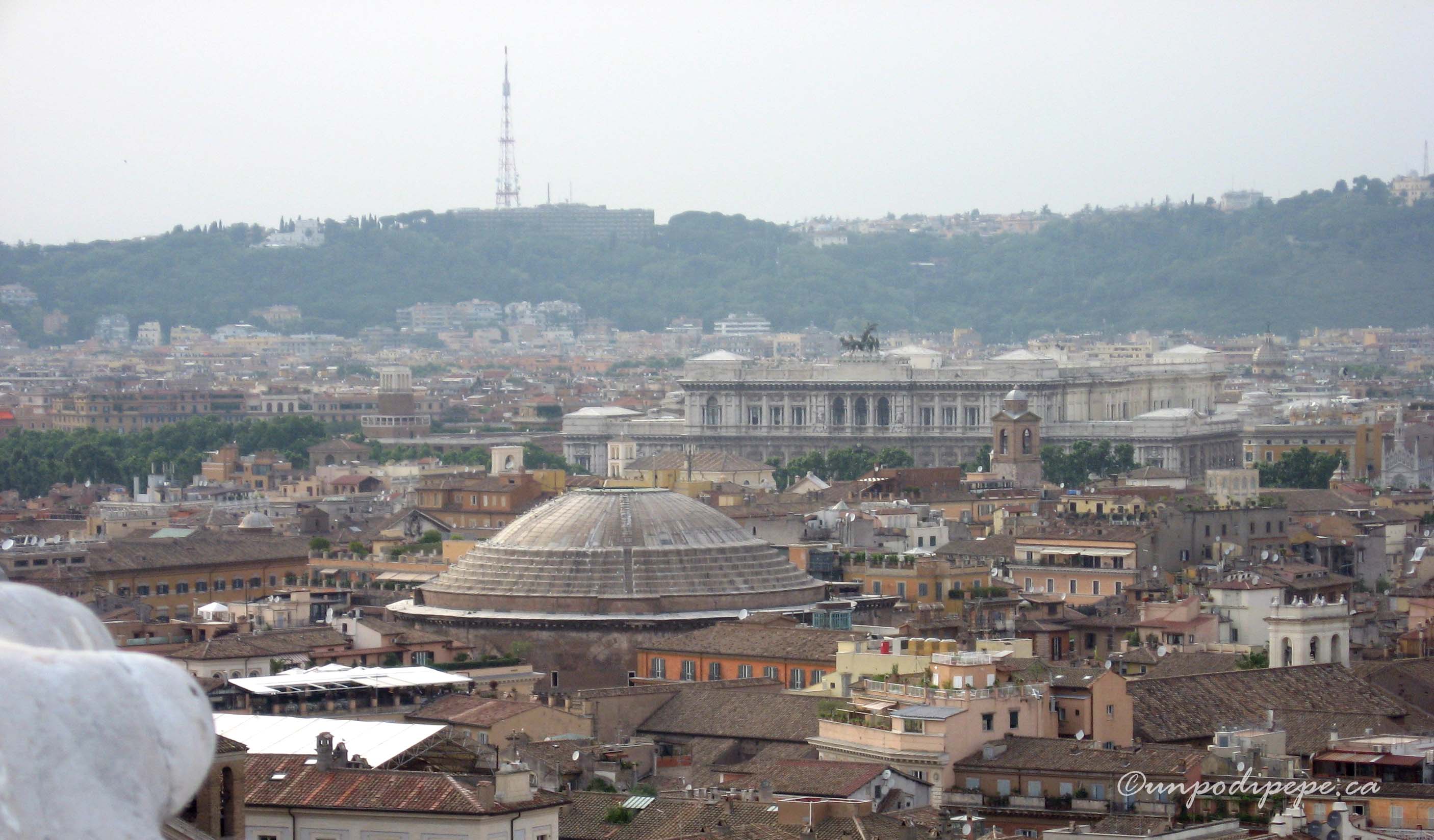
Il Pantheon from Il Vittoriano

Il Pantheon from Il Vittoriano

‘La Pioggia delle Rose al Pantheon’ (the rain of roses) is on my list of things to see. This takes place on Pentecost Sunday, 50 days after Easter.  At noon, right after Mass, Roma’s Vigili del Fuoco (fire fighters) climb to the top of the dome and drop thousands of rose petals through the oculus as choirs sing.  The rose petals symbolize the Holy Spirit coming down to earth.  Even Michelangelo would be impressed!

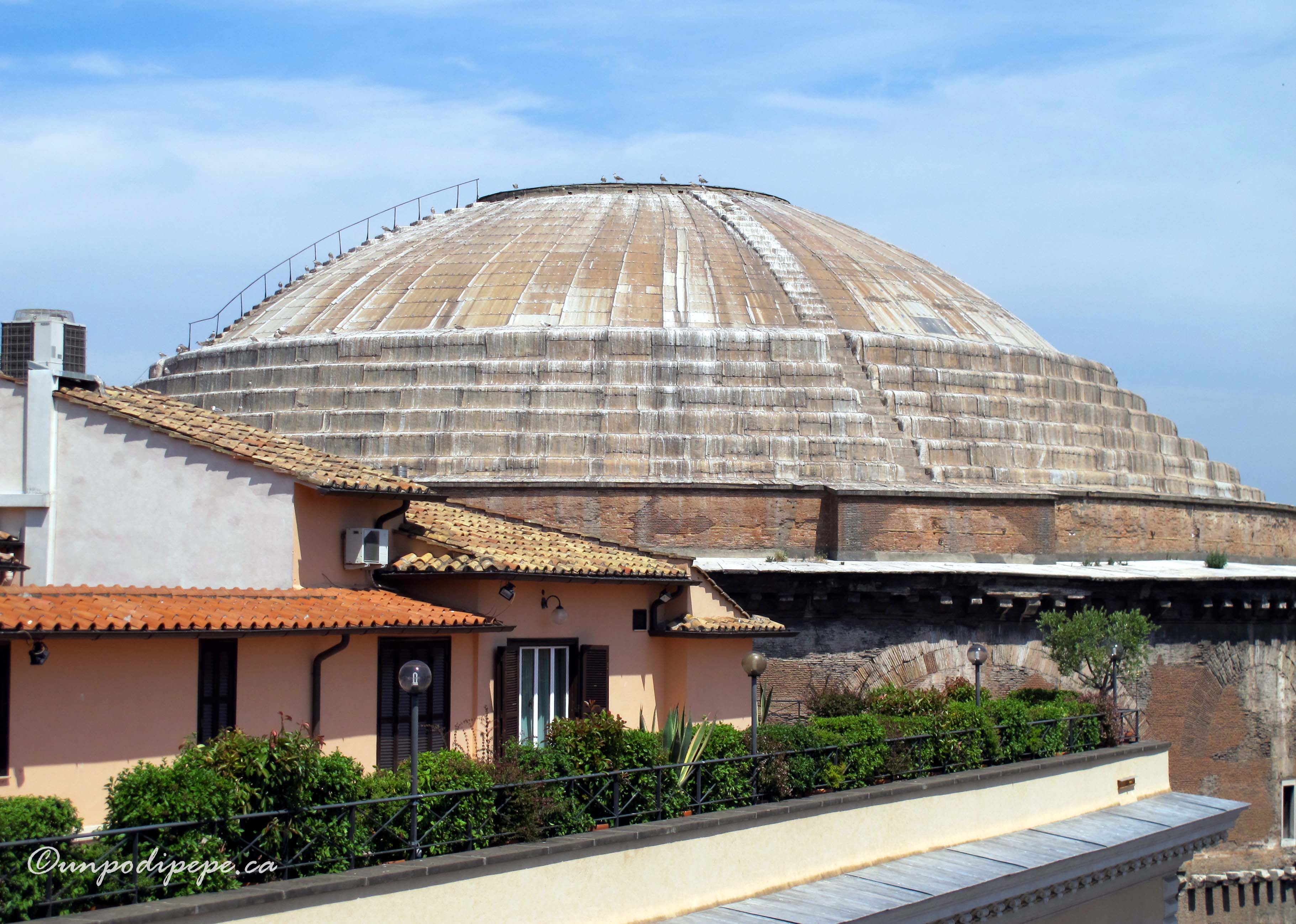
The dome and oculus, viewed from the roof of Grande Hotel de la Minerve

The dome and oculus, viewed from the roof of Grande Hotel de la Minerve

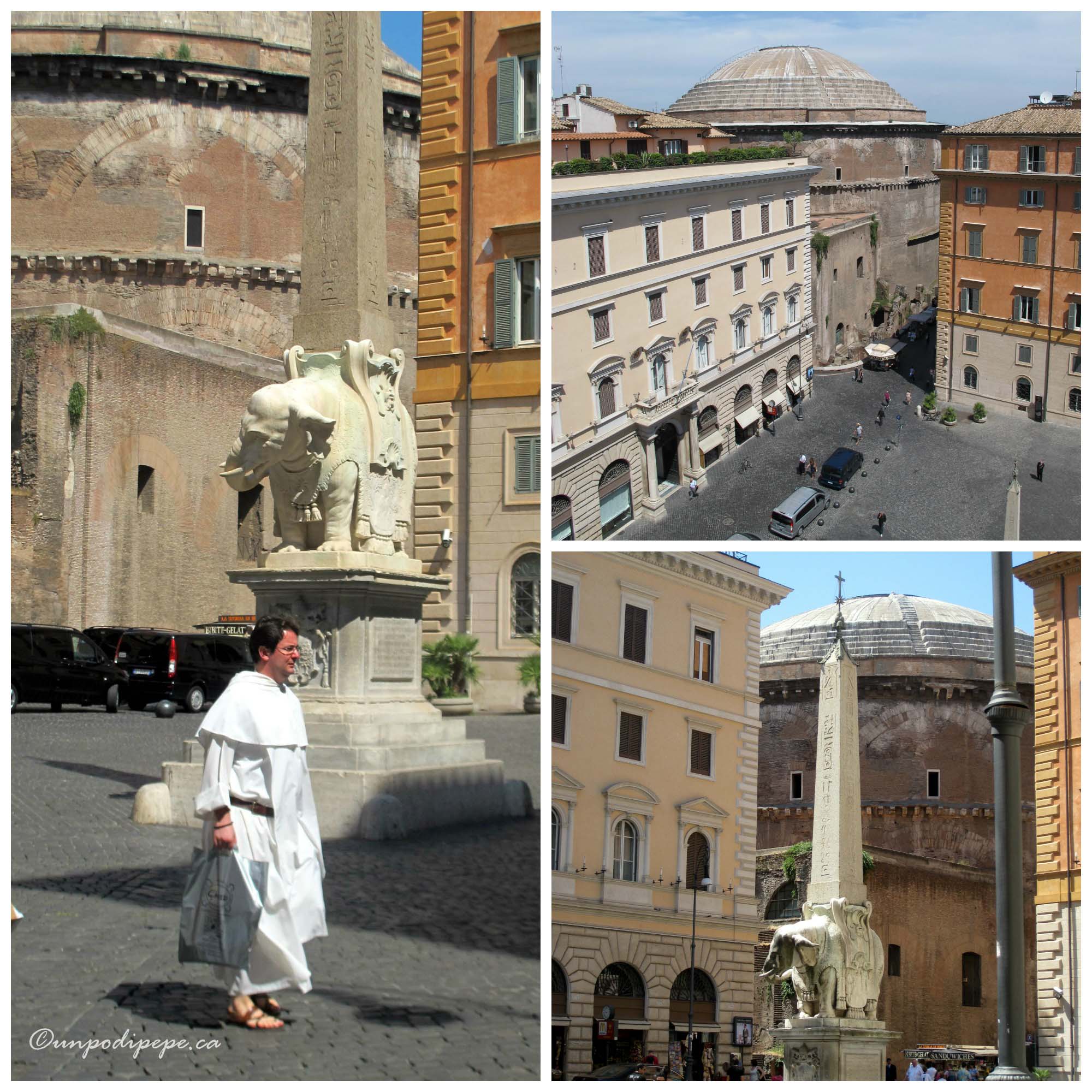
Il Pantheon from Piazza de la Minerva

Il Pantheon from Piazza de la Minerva

Il Pantheon is also featured in my post ‘Un Giorno a Roma’.

©2016 http://www.unpodipepe.ca
 

Margherita di Savoia

Tags

, , , , , , ,

Queen_Margharitha_di_SavoiaA few nights ago I was at my favourite pizzeria having a pizza Margherita. This made me think about Margherita di Savoia, and all the random connections to her name.  Margherita di Savoia (Mar·gehr∙EE∙tah dee Sah∙VOH∙yah) lived from 1851-1926.  She became the first Queen of Italia when her husband, Umberto I di Savoia became King.  They had one son born in 1870, and he became King Vittorio Emanuele III in 1900 after the assassination of Umberto by an anarchist.

Regina Margherita was a great supporter of the arts and ‘opere di beneficenza’ – charitable works. She encouraged artists and writers and was involved with the Red Cross. During the war, she turned her house in Roma into a hospital. Margherita loved hiking and driving.  The Royal garage was filled with cars named after birds.  After her death, the cars were auctioned off for charity. In 1893, she climbed the peak of Monte Rosa in the Alps for the opening of Capanna Regina Margherita, the highest mountain hut in Europe.

Margherita was extremely popular with the public. On her visit to Napoli in 1889, she took off her gloves to eat a chicken leg with her hands, which is the origin of the saying ‘Anche la regina Margherita mangia il pollo con le dita/ Even Regina Margherita eats chicken with her fingers’.  Unfortunately Margherita’s political views leaned towards fascism in her later years, but fortunately that isn’t one of my random connections!

My list of random connections to Margherita di Savoia:

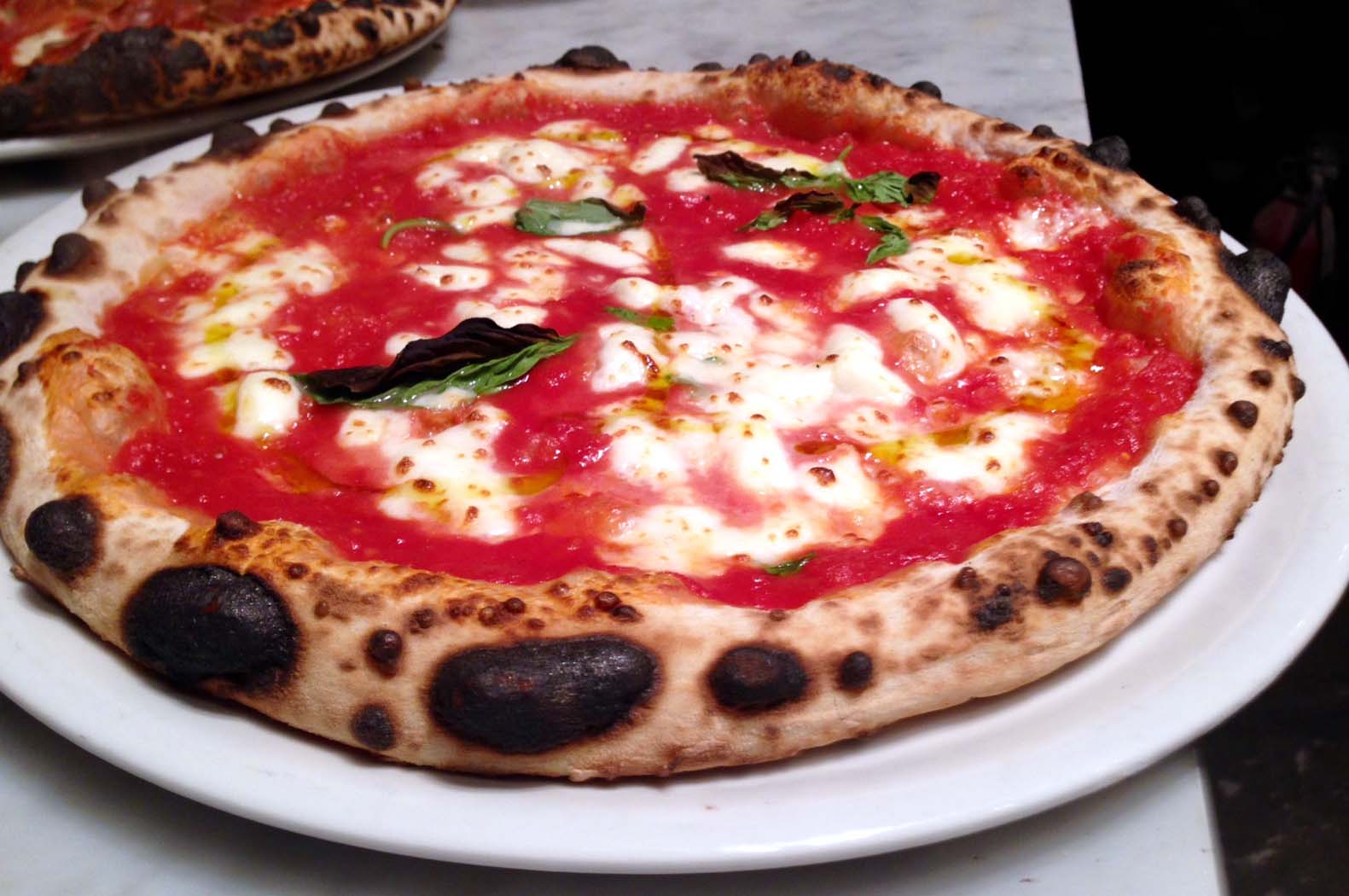
1-Pizza Margherita. In 1889, in honour of the royal visit to Napoli, Raffaele Esposito of Pizzeria Brandi ‘created’ pizza Margherita topped with pomodoro, mozzarella and basilico (tomato, mozzarella and basil) to represent the colours of the Italian flag.  In reality these pizza toppings were already being used in Napoli, so it was the name created by pizzaiolo Raffaele. I remember having a delicious calzone a long time ago in Montaguto called ‘Le Mutande della Regina’.  It was filled with Margherita toppings, and the calzone was left a bit open on the 2 sides, with sausage meat spilling out so they looked like frilly underwear!margherita

2-Margherita di Savoia, Puglia.  In the summer, there is a direct bus from Orsara di Puglia to Margherita di Savoia, a seaside thermal spa town in the province of Barletta 2 hours away. Before 1879, it was called Saline di Barletta because of the saltworks.  Salt has been collected here since the Roman times.  Approaching Margherita, the salt looks like snowy mountains by the beach.  The water is very salty and therapeutic, and the Grand Hotel Terme di Margherita is known for ‘fanghi’ salty mud treatments.Margheritadisavoia2015margheritasale

Margheritadisavoiaspiaggia3-The Pantheon.  Regina Margherita is buried with her husband Umberto in my favourite architectural masterpiece, the Pantheon.tombadimargherita

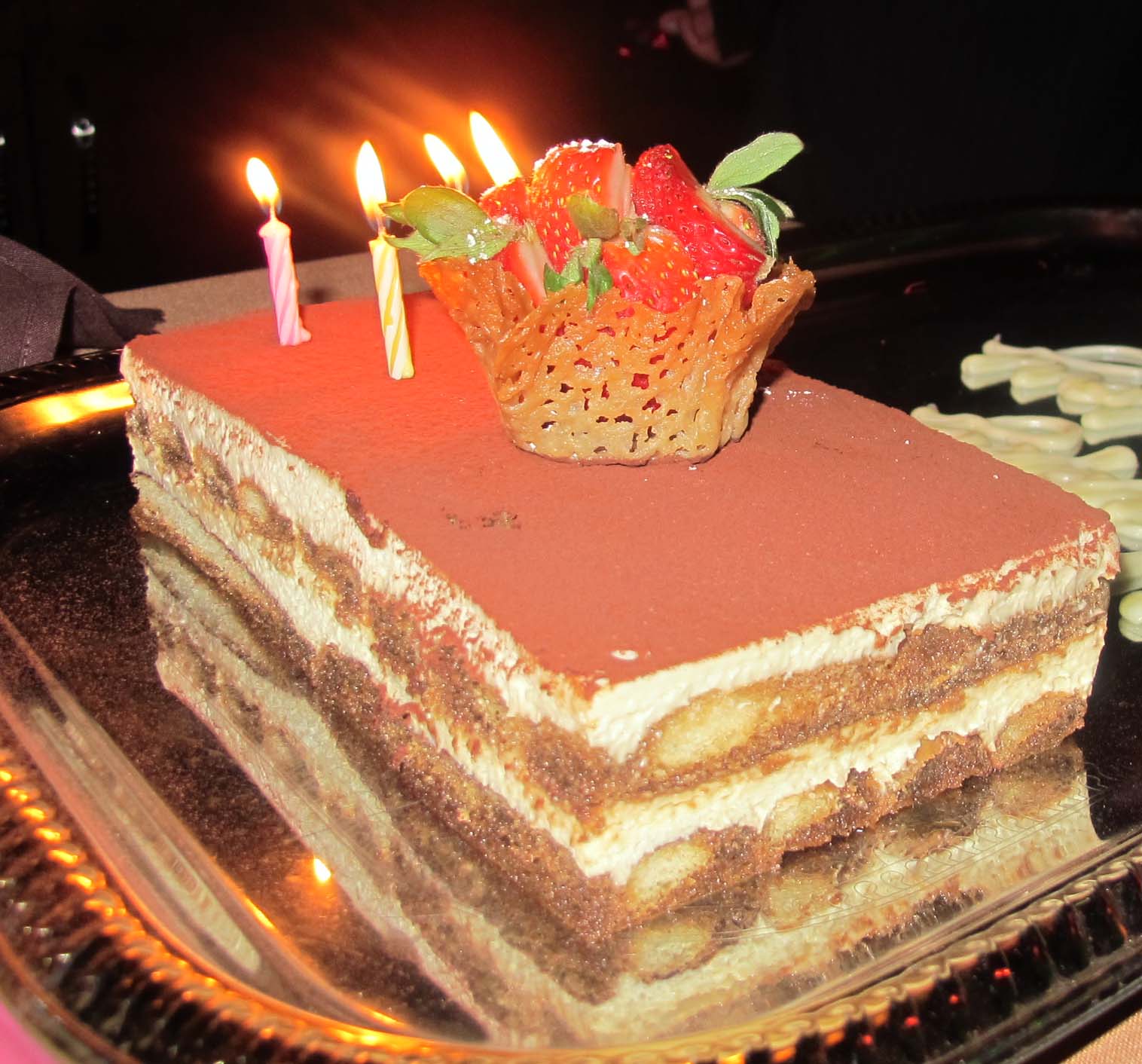
4-Tiramisù. Savoiardi are named after the Savoia family. They were the 15th Century official court biscuit of the House of Savoia, created in honour of a visit from the King of France.  Without savoiardi, there would be no tiramisù.Tiramisu

5-Forza Azzurri! The Italian National Team wear azzurro, the colour of the House of Savoia.

Forza Azzurri! Forza Azzurri!

6-My address! In Orsara di Puglia, I live on Via Regina Margherita.vrmargherita

viarmargheritaThe last one is my favourite Margherita! The word ‘margherita‘ means daisy, as in the flower.  Can you think of other random Margherita connections?

*Portrait of Margherita di Savoia 1881 from Wikimedia Commons

©2016www.unpodipepe.ca


La Befana

Buona Befana a tutti!

Un po' di pepe's avatarUn po' di pepe

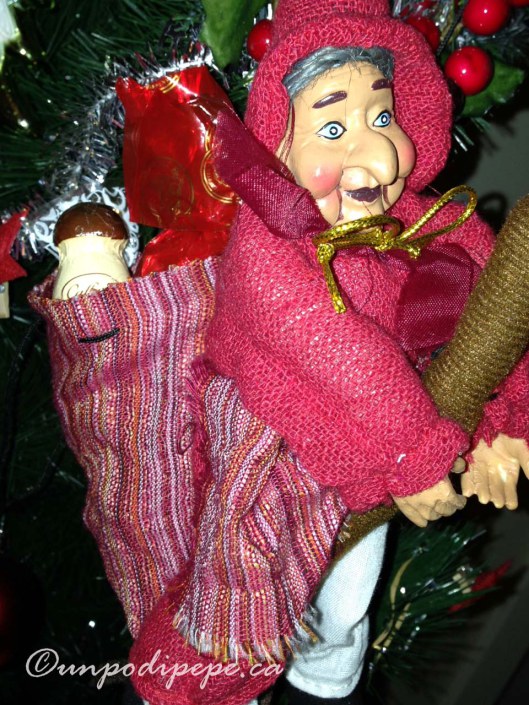
La Befana di Anna La Befana di Anna

Today is la Festa dell’Epifania in Italia, celebrating the arrival of i Re Magi (the 3 Wise Men) Gasparre, Melchiorre & Baldassarre with their gifts of oro, incenso e mirra (gold, frankincense and myrrh) for newborn Bambino Gesù (baby Jesus).

The night between January 5th and 6th is also the 12th night between Christmas and the Epiphany, and marks the end of the Christmas holiday season.  As the proverb says, ‘L’Epifania tutte le feste porta via’.  What does this have to do with La Befana, the ‘Buona Strega’?

La Befana is the traditional ‘gift-bringer’ in Italian folklore. According to legend, which varies from region to region, she is an old woman who prides herself on being a good housekeeper. While she was sweeping, the 3 Wise Men stopped at her house to ask for directions to Bethlehem. She didn’t know the way…

View original post 632 more words

Buon Anno 2016

Buon Anno a tutti i miei lettori-Happy New Year to all of my readers!  2015 has been a great blogging year and WordPress has sent me some stats.  Un po’ di pepe had 5,000 views from 80 countries!  Wow, if only i could visit a quarter of them! My top 5 posts of 2015, based on the number of views were:

#5 Val d’Orcia Daytrip, about a wonderful unplanned day in Toscana with my amica Shannon and a rental car.CappellaMadonnadiVitaleta
#4 Grano Arso, about a resurfaced gastronomic tradition in Puglia that demonstrates the resilience of our contadini ancestors.

farinagranoarsoorecchiette

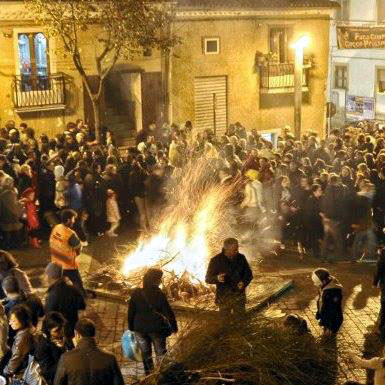
#3 Fucacoste e Cocce Priatorje, about the unique festa in Orsara di Puglia on November 1st.  This was actually reposted from Nov 1, 2014.  One day I hope to be there for this festa-but I’ll have to buy a space heater first!

Piazza San Pietro. Photo courtesy of International Photo Correspondent Donato Narducci

Piazza San Pietro. Photo courtesy of International Photo Correspondent Donato Narducci

#2 Italiano per Ristoranti-How to Pronounce your Menù, my handy Italian pronunciation guide.  This post is from June 2014.  Wordpress tells me that this means my writing has staying power and I should write more on this topic!  I’ll see what i can do. I still have to make it available as a downloadable PDF.  Oops!

Bruschetta (broo.SKET.tah)

Bruschetta (broo.SKET.tah)

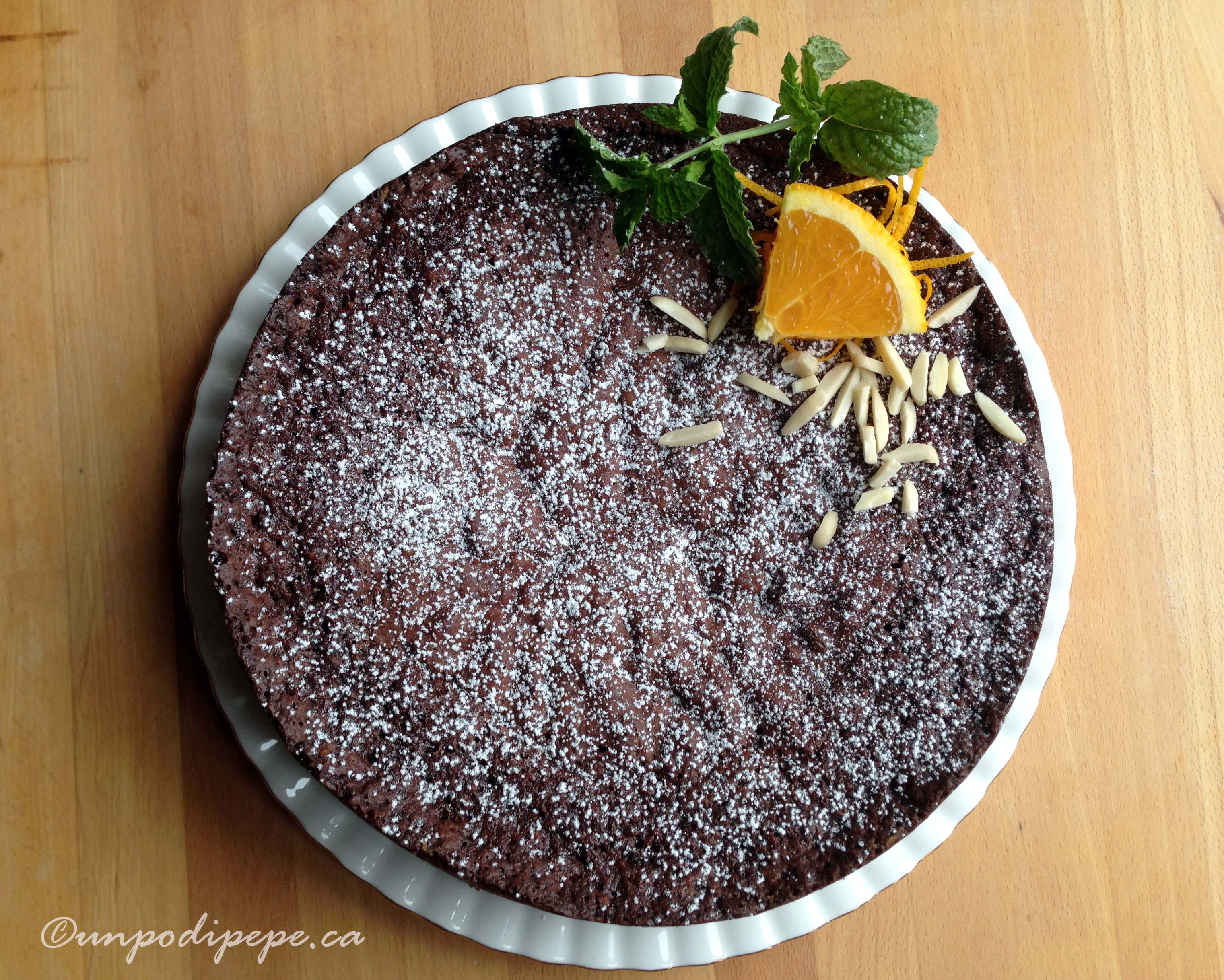
and #1 Torta Caprese all’ Arancia, the delicious flourless chocolate cake recipe I posted to celebrate my Cannolo award!Tortacaprese2

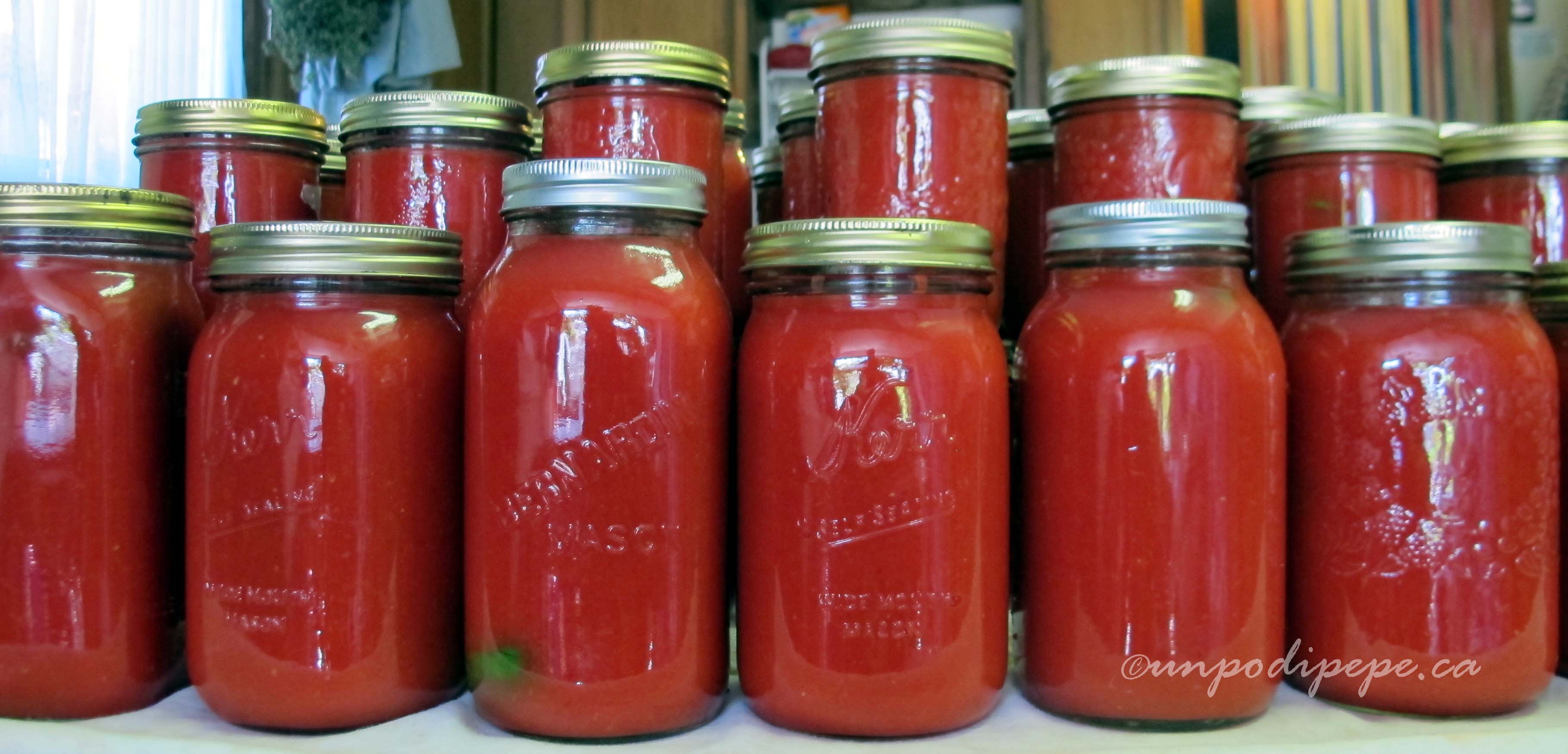
In case you were wondering, my all-time most-viewed post is still Passata di Pomodoro!  Passata di pomodoro

I also wrote a few post this year that I think are were among the best, but were hardly viewed by anyone!  Here are 3 posts needing some love:

#1 I Sassi di Matera about my recent visit to the ancient city in Basilicata.  The place has a mystical, otherworldly feel about it and a fascinating history.Materasassibn

#2 Centrale Montemartini in Roma, one of my favourite Museums.  What do you expect from an archeology nerd?

Amazon warrior in front of a diesel engine

Amazon warrior in front of a diesel engine

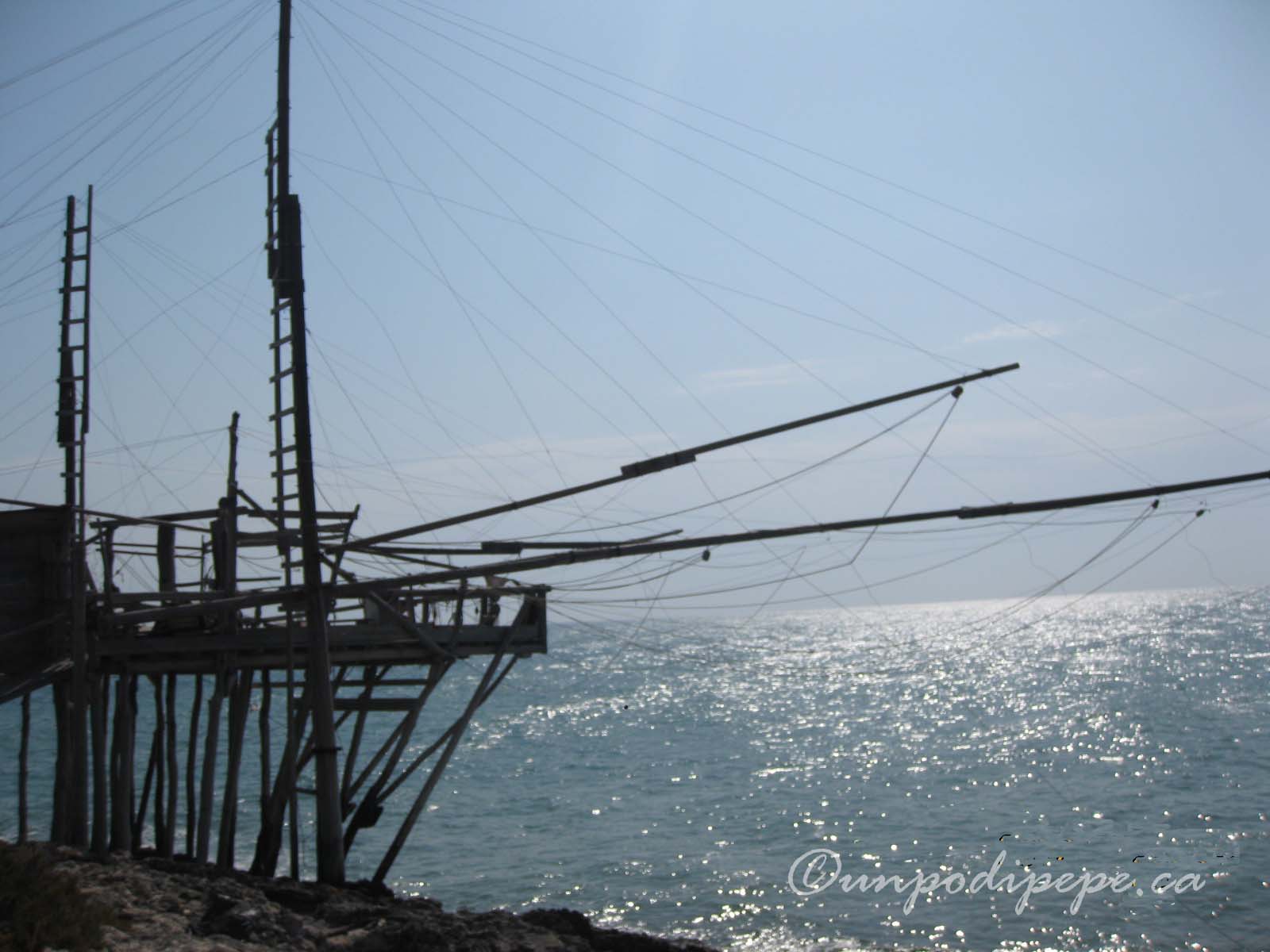
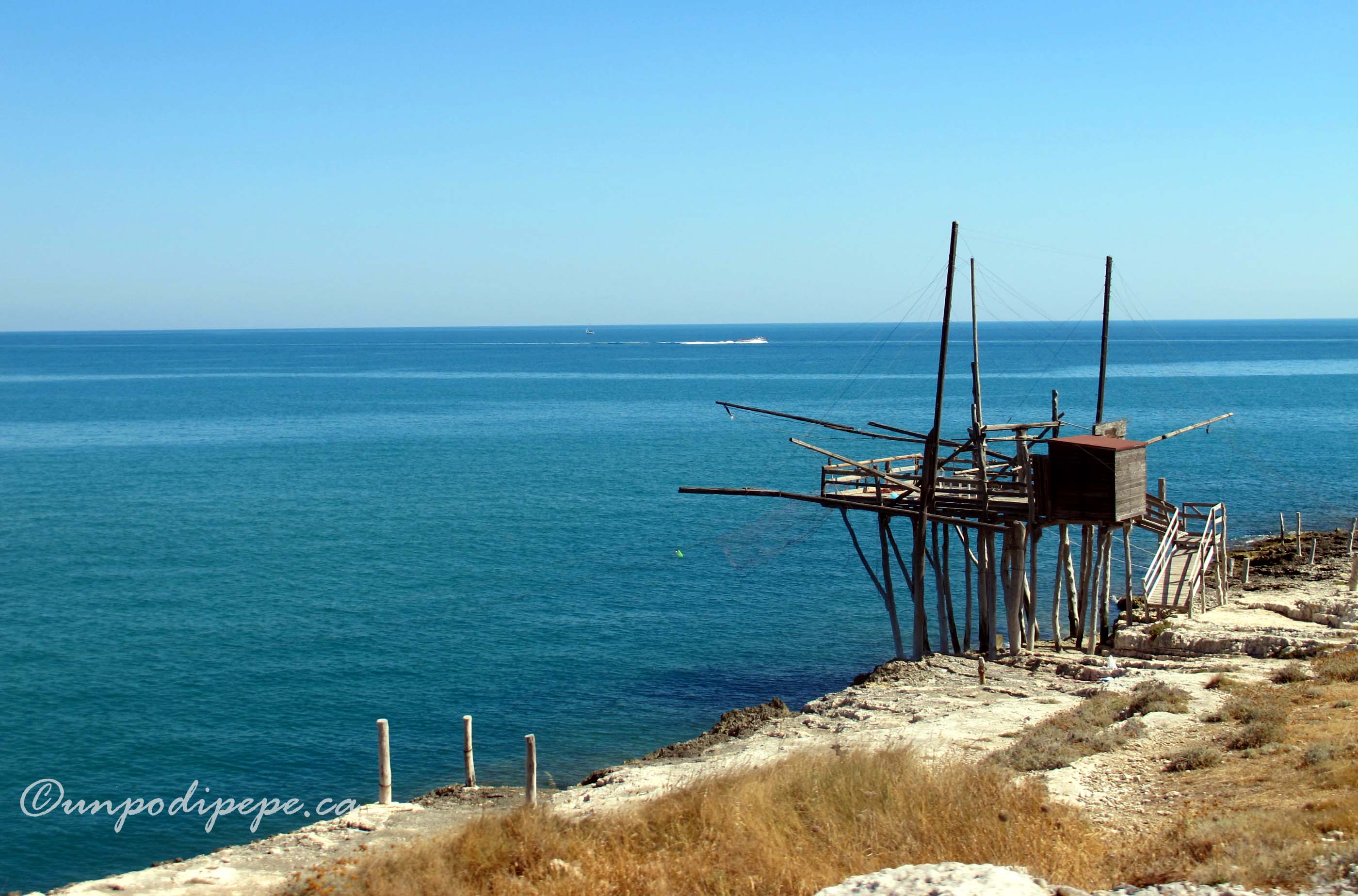
#3 I Trabucchi del Gargano about the fascinating fishing contraptions found along the Adriatic Coast, specifically the Northern coast of Puglia
Il Trabucco Punta Lunga Mattina

Let me know which was your favourite!  Looking forward to writing more posts in 2016.

Vi auguro un nuovo anno piena di gioia e salute!  Ciao, Cristina

Il Presepio

Tags

, , , , , ,

presepio2014L’Immacolata is the feast of the conception of the Virgin Mary on December 8th.  It is a national holiday in Italia and also the official beginning of the Feste Natalizie.  Italiani usually put up l’albero di Natale (the Christmas tree) and il Presepio (the Nativity scene) on this day.

San Francesco d’Assisi created the first Presepio in 1223 in a cave in Greccio.  He had been to the birthplace of Gesù (Jesus) in Bethlehem and was inspired to recreate the scene.  This was his attempt to return the emphasis of Christmas on the birth of Christ rather than gift-giving.  I find it interesting that the ‘commercialization’ of Christmas is not a new concept at all.  Searching for ‘the true meaning of Christmas’ did not start with Charlie Brown but in the 13th Century!

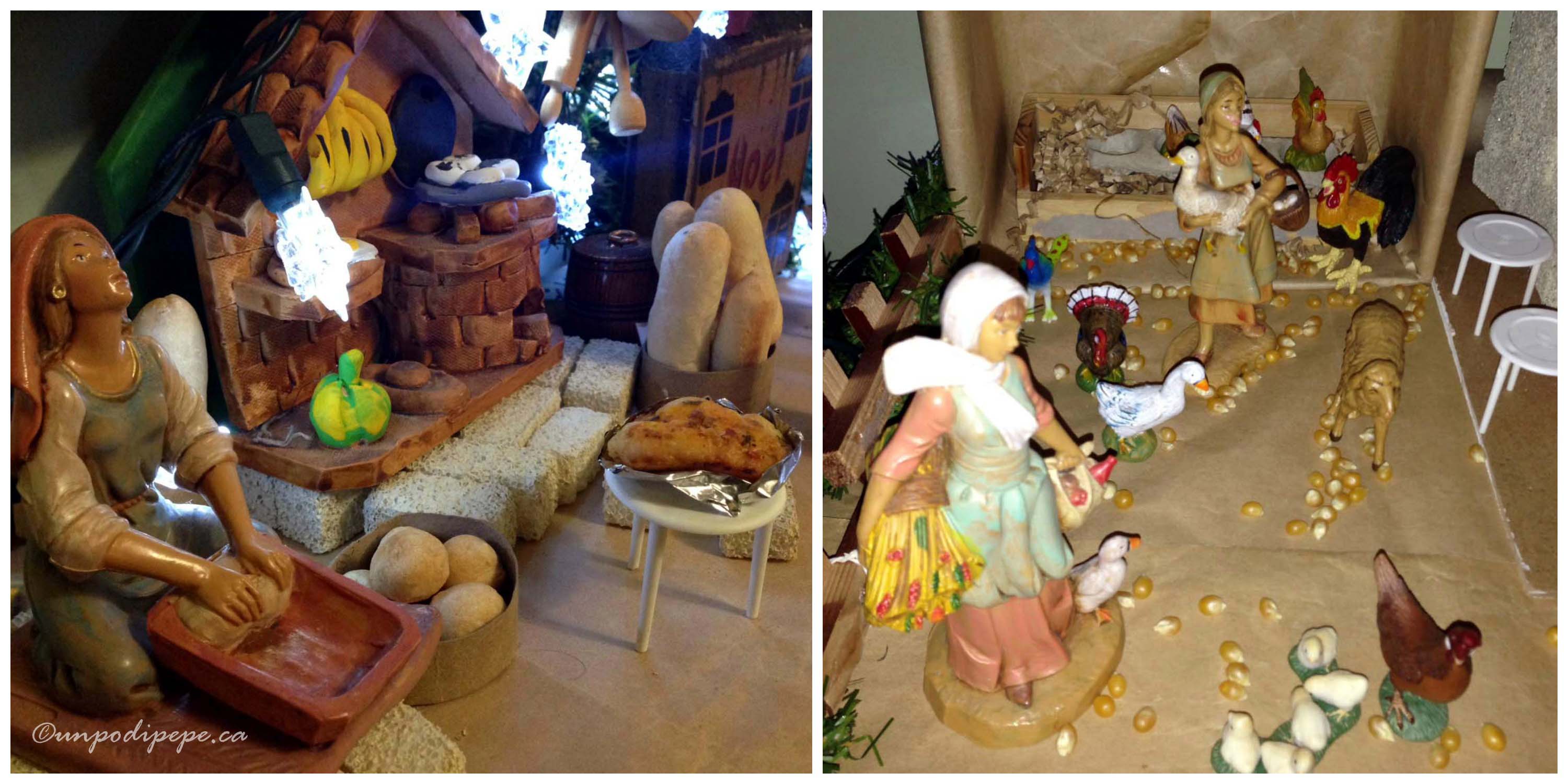
San Francesco’s was a ‘Presepio Vivente’, with real people and animals.  The live figures were eventually replaced by statues, and Presepi also started to be set up in homes.  The Presepio includes the Holy Family-although Bambino Gesù is not placed in the manger until after midnight Christmas Eve-angels, shepherds, animals, and the Re Magi (3 Wise Men).  The 3 Wise Men are at a distance, since they arrive on January 6th.  I also have my Befana figurine trailing behind them!  Several hundred years ago, Presepi also started to include scenes from village life.  Of course before Google Earth, Wikipedia, or even photography, no one actually knew what 1st Century Bethlehem looked like, so the village scenes resembled the local areas.  The tradition of the Presepio is popular throughout Italia, with most families having one. My Mamma gets very detailed and creative with her Presepio, even baking tiny bread, pizze and Panini.

Particolari del Presepio di Mamma-Details of Mamma's Presepio

Particolari del Presepio di Mamma-Details of Mamma’s Presepio

Via San Gregorio Armeno in Napoli is lined with artigiani (artisans) making presepio figurines and accessories all year round. The attention to detail is incredible! I must go and get myself a zampognaro (zam·poh·NYAH·roh) for my presepio.  This is a traditional Abruzzese bagpiping shepherd! The 2 photos below of San Gregorio Armeno artigiani were taken by my amica Anna.

san gregorio armeno 2san gregorio armeno 1

Many villages, including Orsara di Puglia, have a Presepe Vivente in December.  Like the original one, this features the live Nativity and also artisans in traditional costume working on trades and making traditional local dishes. I’d love to hear what you have in your Presepio!

Gloria2

A tutti i miei cari lettori, vi auguro un Buonissimo Natale, Cristina

San Nicola

Tags

, , , , , , , , , ,

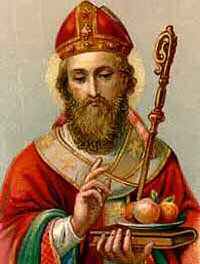
San NikolaosDecember 6th is the festa di San Nicola (Nee·KOHL·ah).  San Nicola-or St Nicolas, was Nikolaos of Myra, a 4th Century bishop in Greek Anatolia, which is now Turkey. He was the only child of wealthy parents who died when he was young.  He gave away all of his inheritance to help the poor and the sick and became known for his generosity, love of children, and the sea. Nicola is both a popular Christian and Orthodox Saint.  Many European and Eastern Orthodox countries celebrate his feast day with gifts for children, who leave their shoes out on the night of December 5th.  He is the Patron Saint of children, sailors, archers, pharmacists, harbours, the falsely accused, Amsterdam, Moscow, Russia, Galway and Greece!

San Nicola had a reputation for secret gift-giving and his legends grew after he died. In one of the most famous, he helped a poor man who could not afford dowries for his 3 daughters. Without dowries, they were unlikely to be able to marry, and would be assumed to be prostitutes or end up being sold into slavery. Nicola helped the family, but did not want to cause the father the humiliation of accepting charity.  Over a period of 3 nights he went to the house. On the first 2 nights, he threw a purse filled with gold coins in through the window.  The purses landed in stockings the daughters had hung by the chimney to dry.  On the third night, the father had closed the window and waited by the door, so he could find out who the gift-giver was.  Instead of going in through the door, Nicola dropped the bag down the chimney and it landed in the shoes drying by the fire.

San Nicola’s tomb in Anatolia became a popular place of pilgrimage. It seems things haven’t changed a lot since the 4th Century in that part of the world.  Due to wars in the area, there was concern for the safety of pilgrims and access to the tomb. In 1087, sailors from Bari took the bones from the tomb home and the Basilica of San Nicola di Bari was built over his crypt.  San Nicola di Bari was one of medieval Europe’s most famous places of pilgrimage. The Barese sailors must have been in a hurry because they left a few bones in the grave.  These fragments were taken to Venezia where the church of San Nicolò al Lido was built.  In the Middle Ages, people went crazy for relics-parts of holy persons’ bodies.  They were revered and thought to have magical powers. Scientific investigations proved that the bones in Bari and Venezia do belong to the same skeleton!

In a blending of folklore, legend and religion, San Nicola is the model for Santa Claus, whose name comes from phonetic derivation of ‘San Nikolaos’.  If you are ever in Bari, visit the tomb of San Nicola.  The traditional Italian gift-bearer is La Befana, who arrives on the 6th of January, but now there is also ‘Babbo Natale’ (Father Christmas).San Nicola

Buon Natale!

Viste di Firenze

Tags

, , , , , , ,

OLYMPUS DIGITAL CAMERA

When I travel I seem to be attracted to the view from the tallest thing I can find.  Maybe it’s because I’m ‘vertically challenged’?  It does lead to some spectacular views.  Here is a collection of my favourite scatti (shots) of viste(views) of Firenze .

La Terrazza degli Uffizi

La Terrazza degli Uffizi

Il Duomo di Santa Maria del Fiore from la Torre di Giotto (Giotto's Tower)

Il Duomo di Santa Maria del Fiore from la Torre di Giotto (Giotto’s Tower)

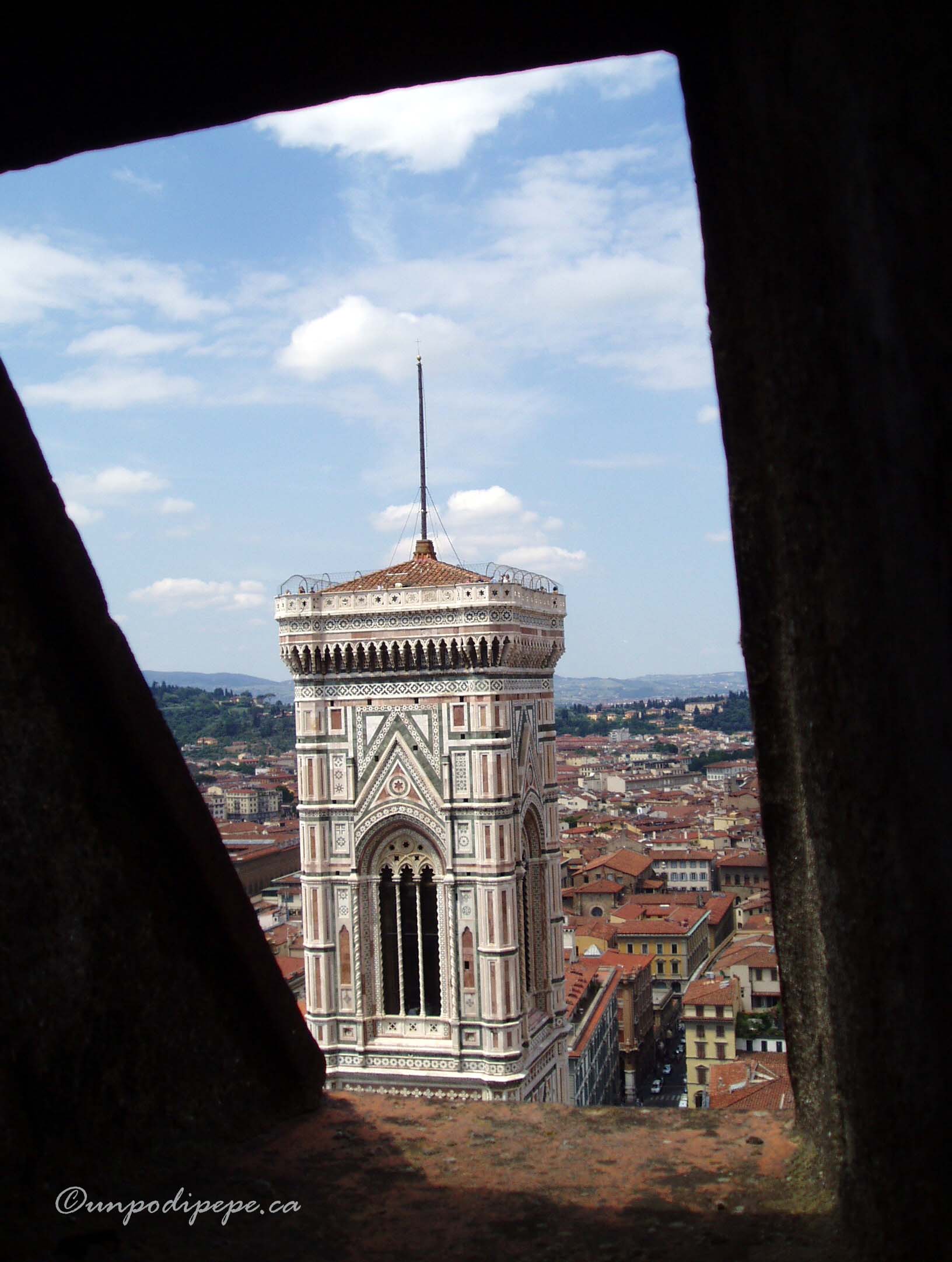
La Torre di Giotto vista dal Duomo

La Torre di Giotto vista dal Duomo

'Santa Maria sotto restauro'

‘Santa Maria sotto restauro’

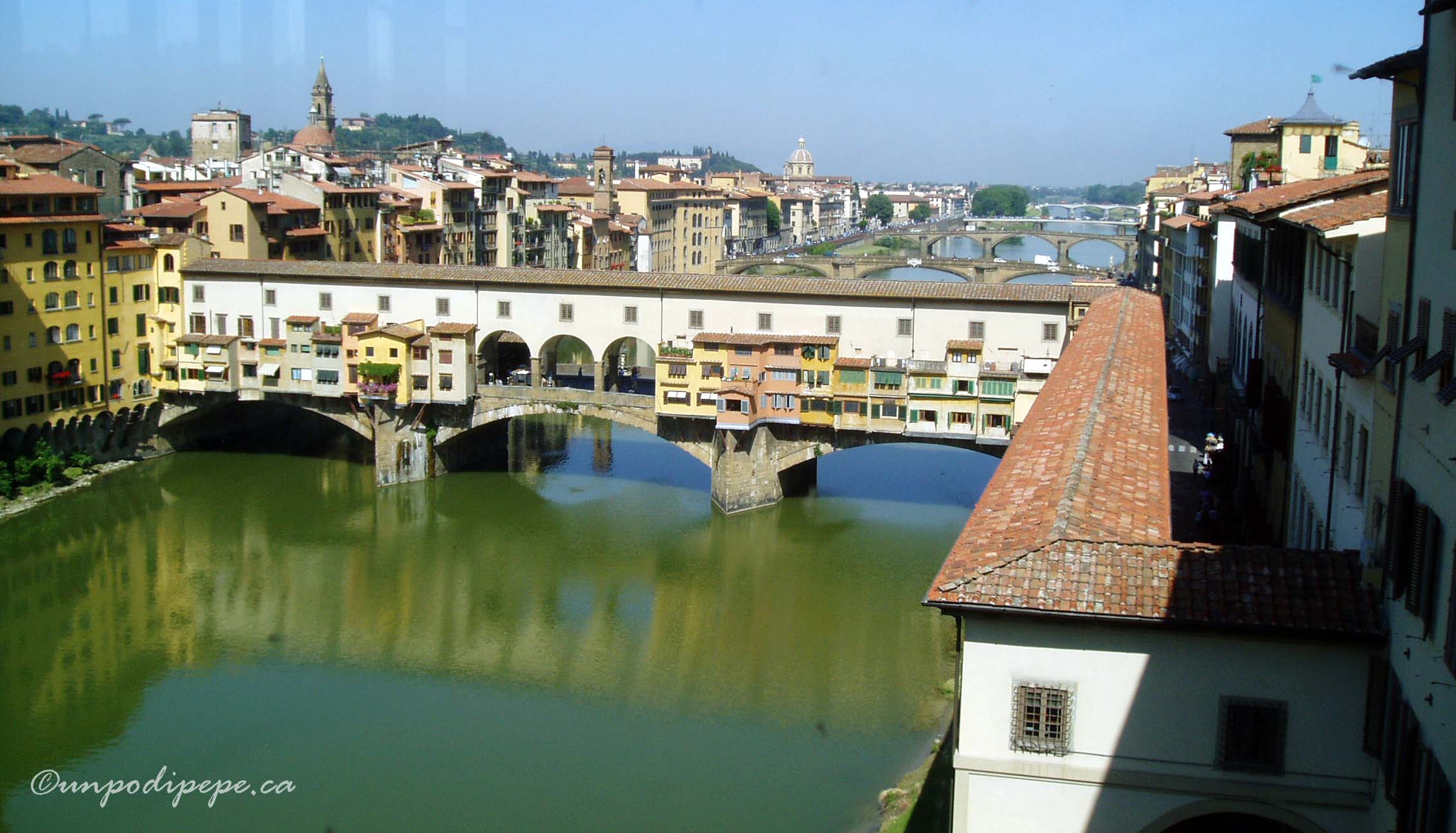
Vista dalla finestra degli Uffizi/View of the Ponte Vecchio from a window in the Uffizi Gallery

Vista dalla finestra degli Uffizi/View of the Ponte Vecchio from a window in the Uffizi Gallery

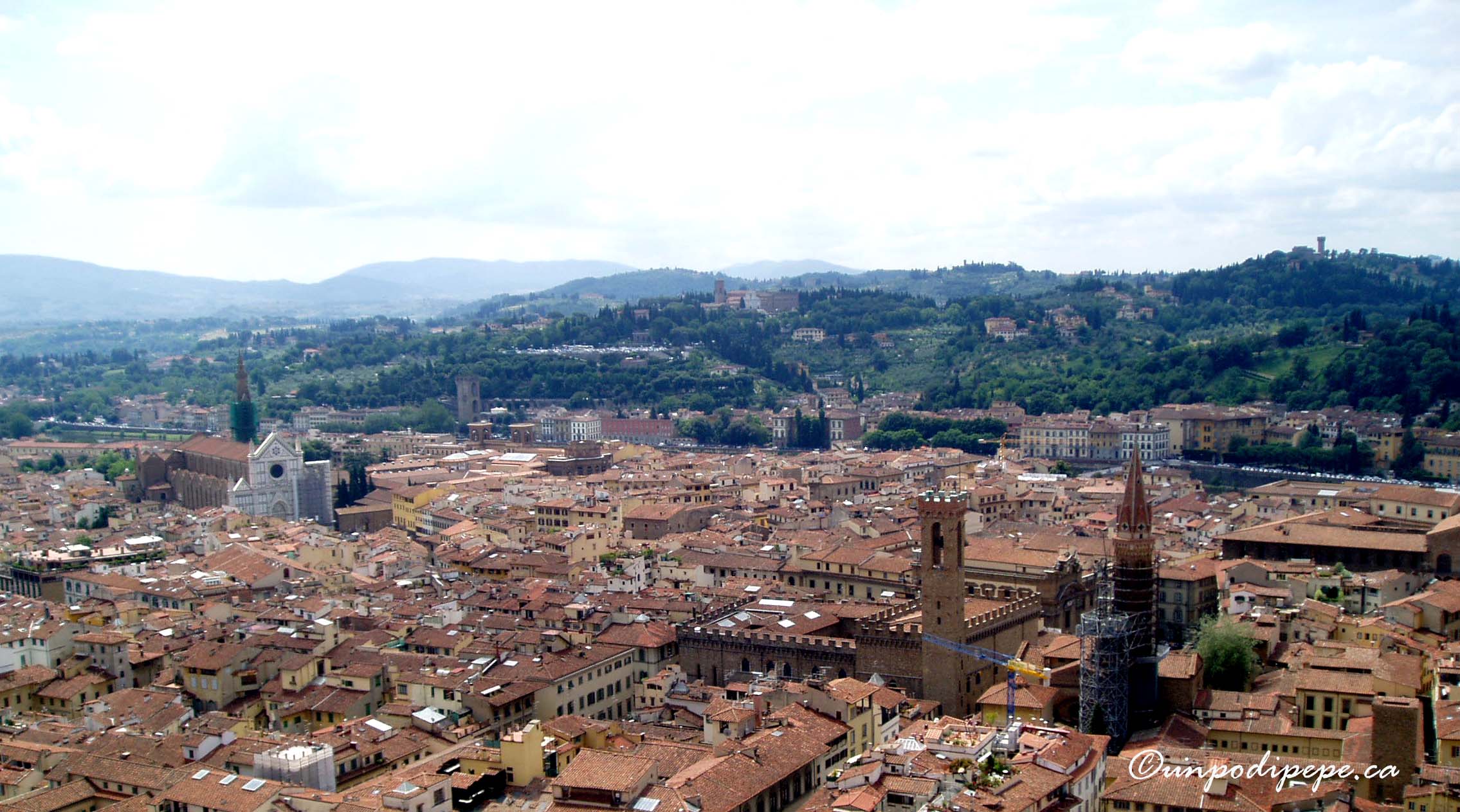
Vista di Santa Croce dalla Torre di Giotto

Vista di Santa Croce dalla Torre di Giotto

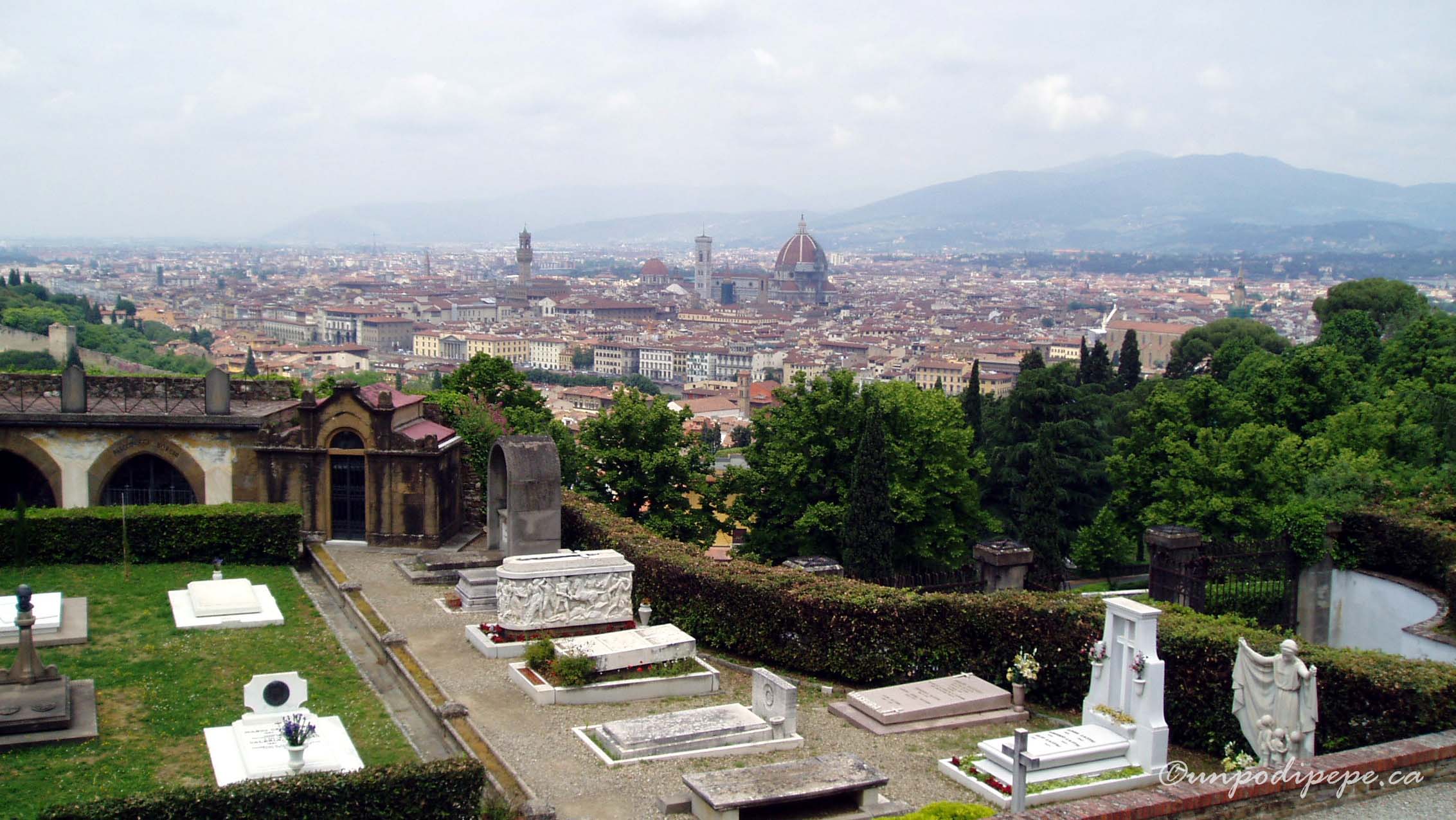
Firenze vista dal cimitero San Miniato al Monte/Firenze seen from the cemetery, San Miniato al Monte

Firenze vista dal cimitero San Miniato al Monte/Firenze seen from the cemetery, San Miniato al Monte

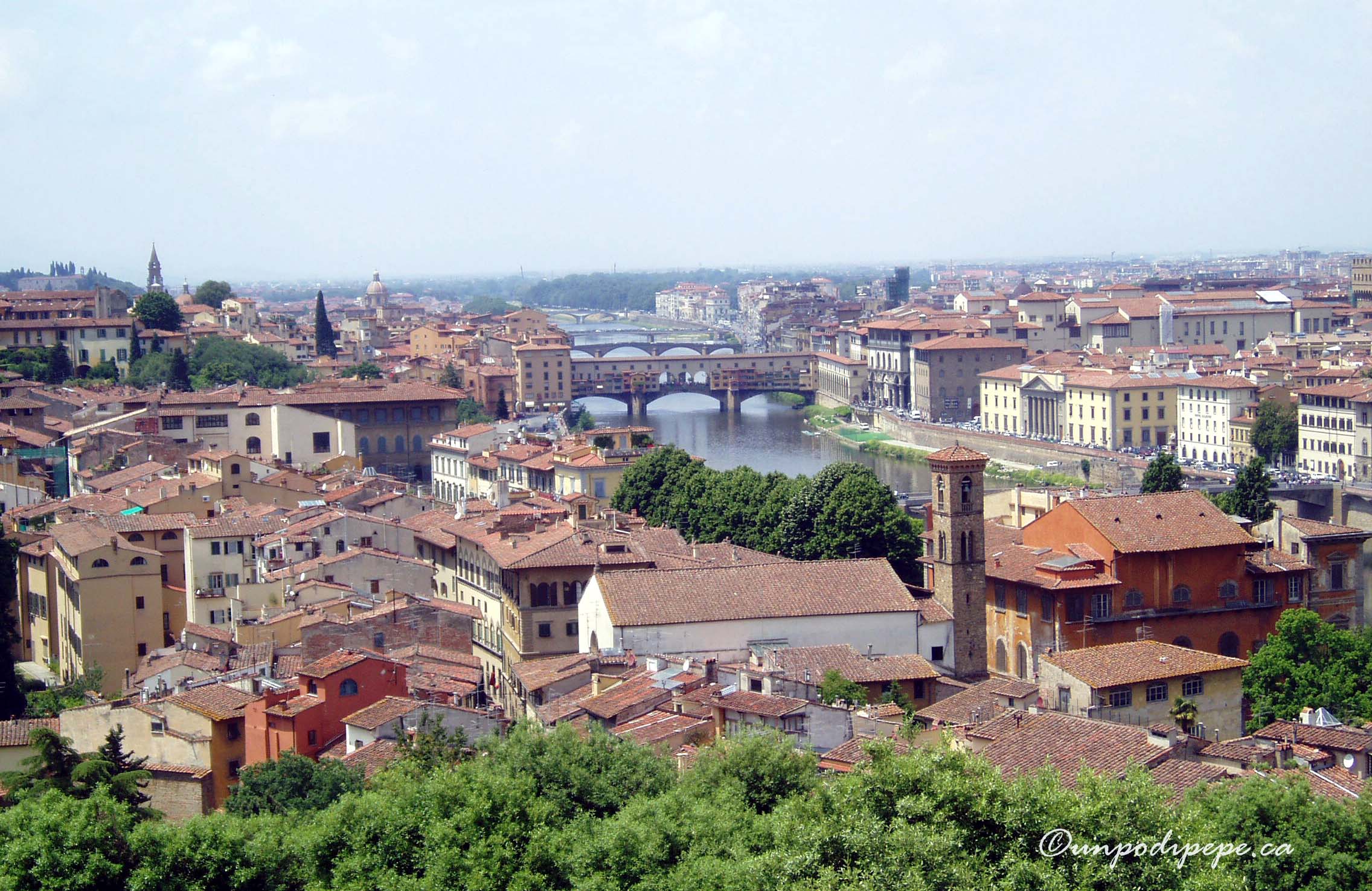
Vista da Piazzale Michelangelo

Vista da Piazzale Michelangelo

Ciao, Cristina